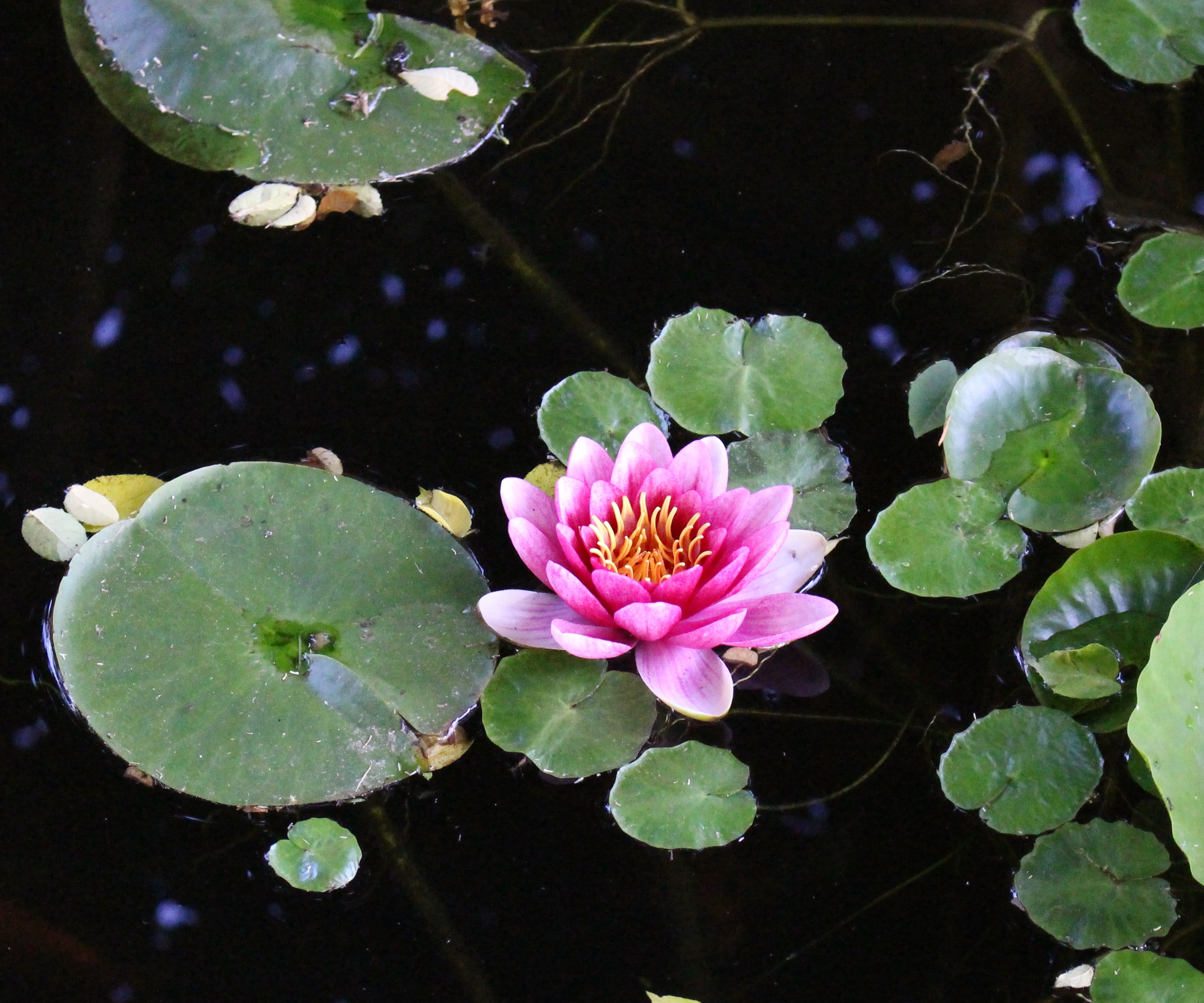
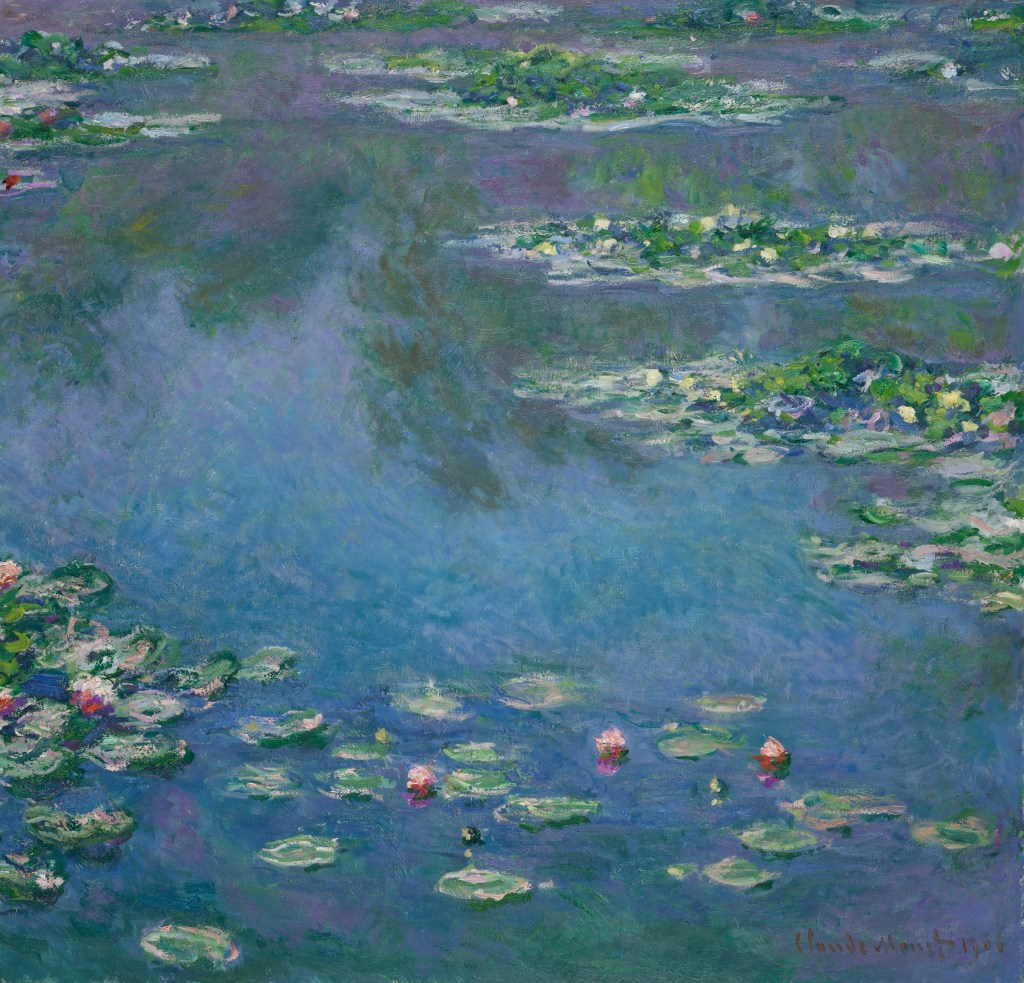
Today as the news from Selma and Saigon poisons the air like fallout, I come again to see the serene great picture that I love.
Here space and time exist in light the eye like the eye of faith believes. The seen, the known dissolve in iridescence, become illusive flesh of light that was not, was, forever is.
O light beheld as through refracting tears. Here is the aura of that world each of us has lost. Here is the shadow of its joy. ~Robert Hayden “Monet’s Waterlilies”
…The world is flux, and light becomes what it touches, becomes water, lilies on water, above and below water, becomes lilac and mauve and yellow and white and cerulean lamps, small fists passing sunlight so quickly to one another that it would take long, streaming hair inside my brush to catch it. To paint the speed of light! Our weighted shapes, these verticals, burn to mix with air and change our bones, skin, clothes to gases. Doctor, if only you could see how heaven pulls earth into its arms and how infinitely the heart expands to claim this world, blue vapor without end. ~Lisel Mueller, “Monet Refuses the Operation” from Second Language
We see things differently, don’t we? What seems ordinary to one person is extraordinary to another.
How might I learn to adjust my focus to see things as you do? How might I help others to see the world as I do?
The world is flux; my delight and dismay flows from moment to moment, from object to absence, from light to darkness, from color to gray. Perhaps the blur from the figurative (or real) cataract impeding my vision creates a deeper understanding, as I use my imagination to fill in what I can’t discern.
My heart and mind expands to claim this world and all that beauty has to offer, while heaven – all this while – is pulling me into its arms.
In heaven, my focus will be clear. It will all be extraordinarily holy.
One-Time
Monthly
Yearly
Make a one-time or recurring donation to support daily Barnstorming posts
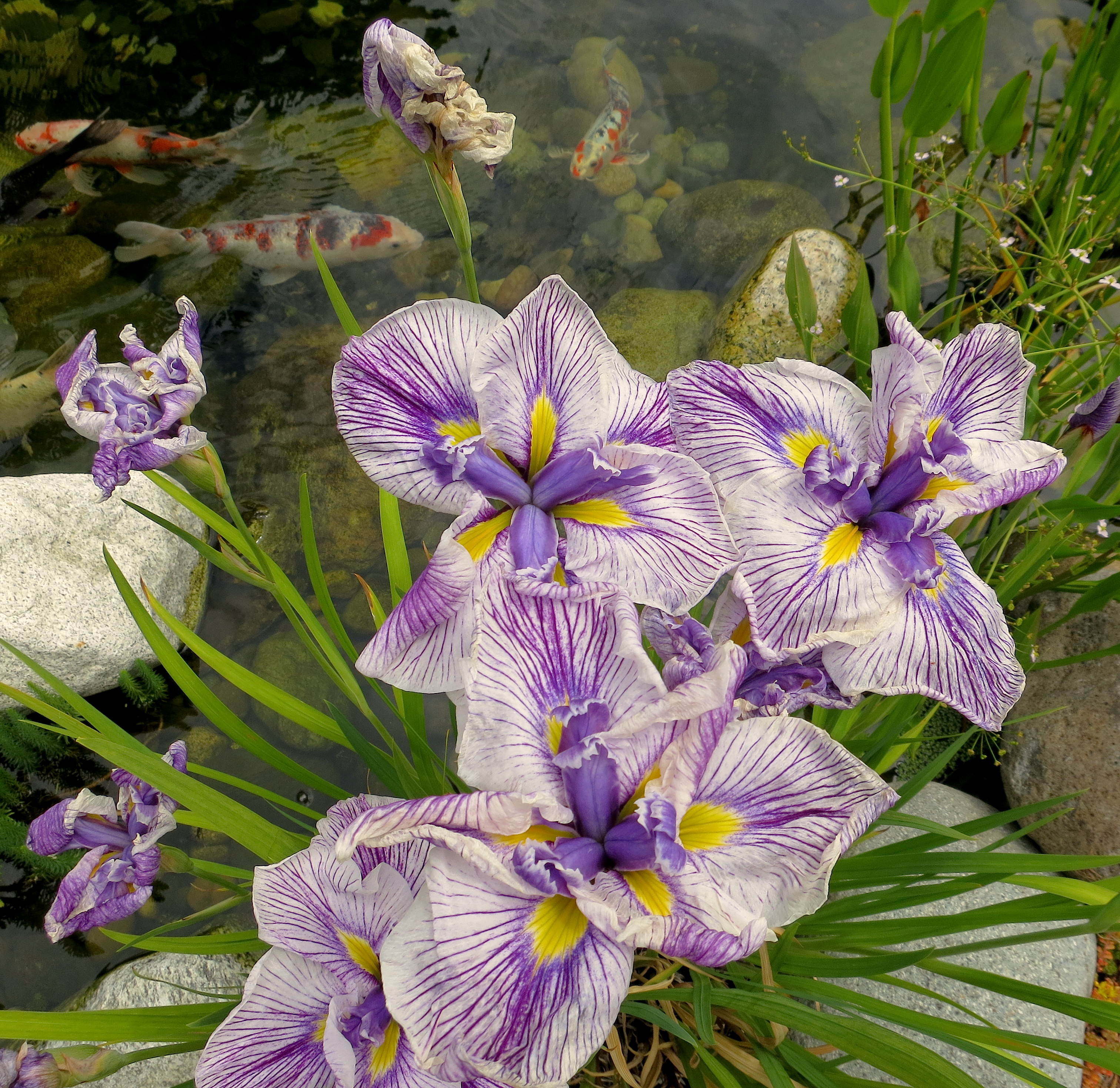
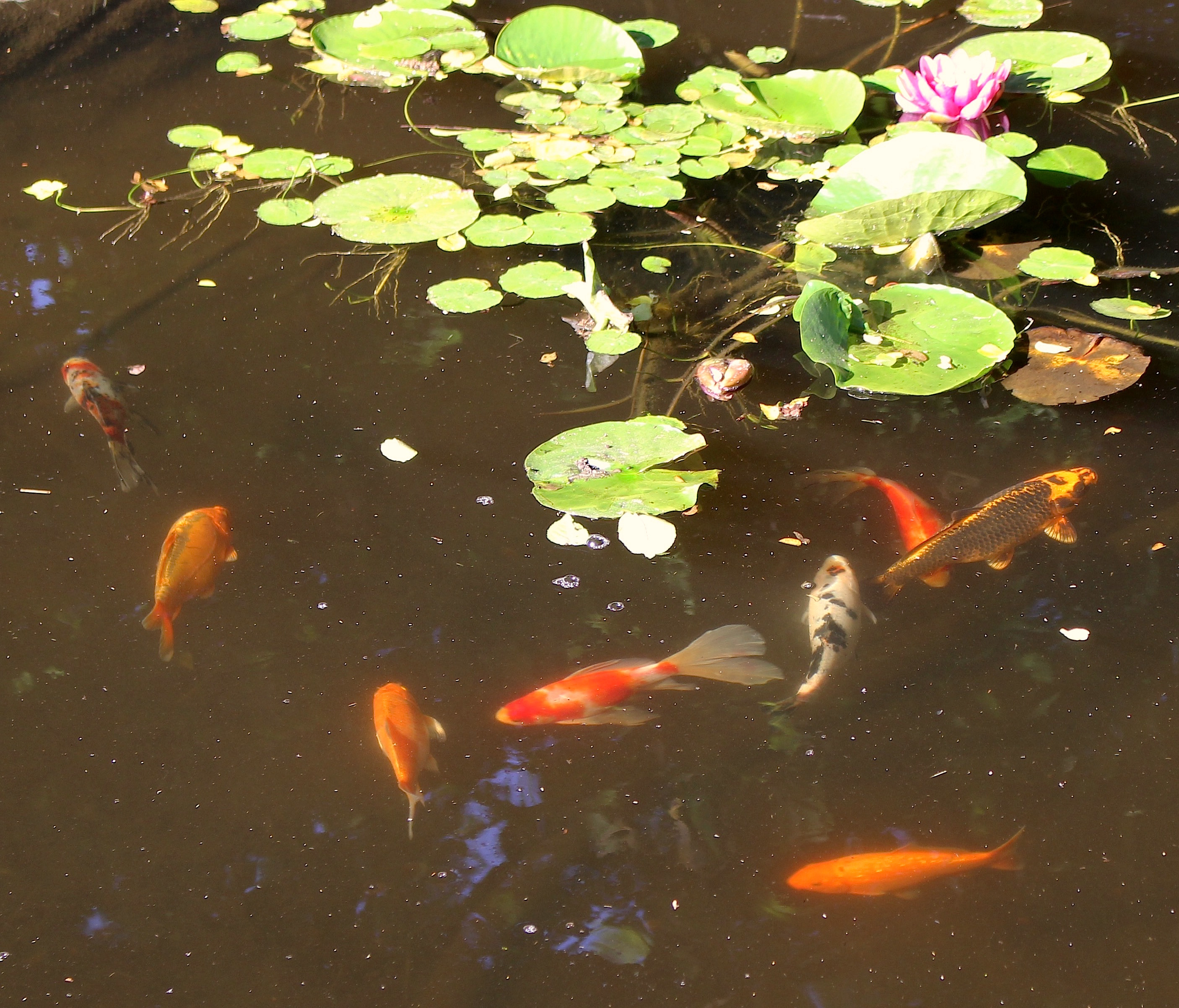
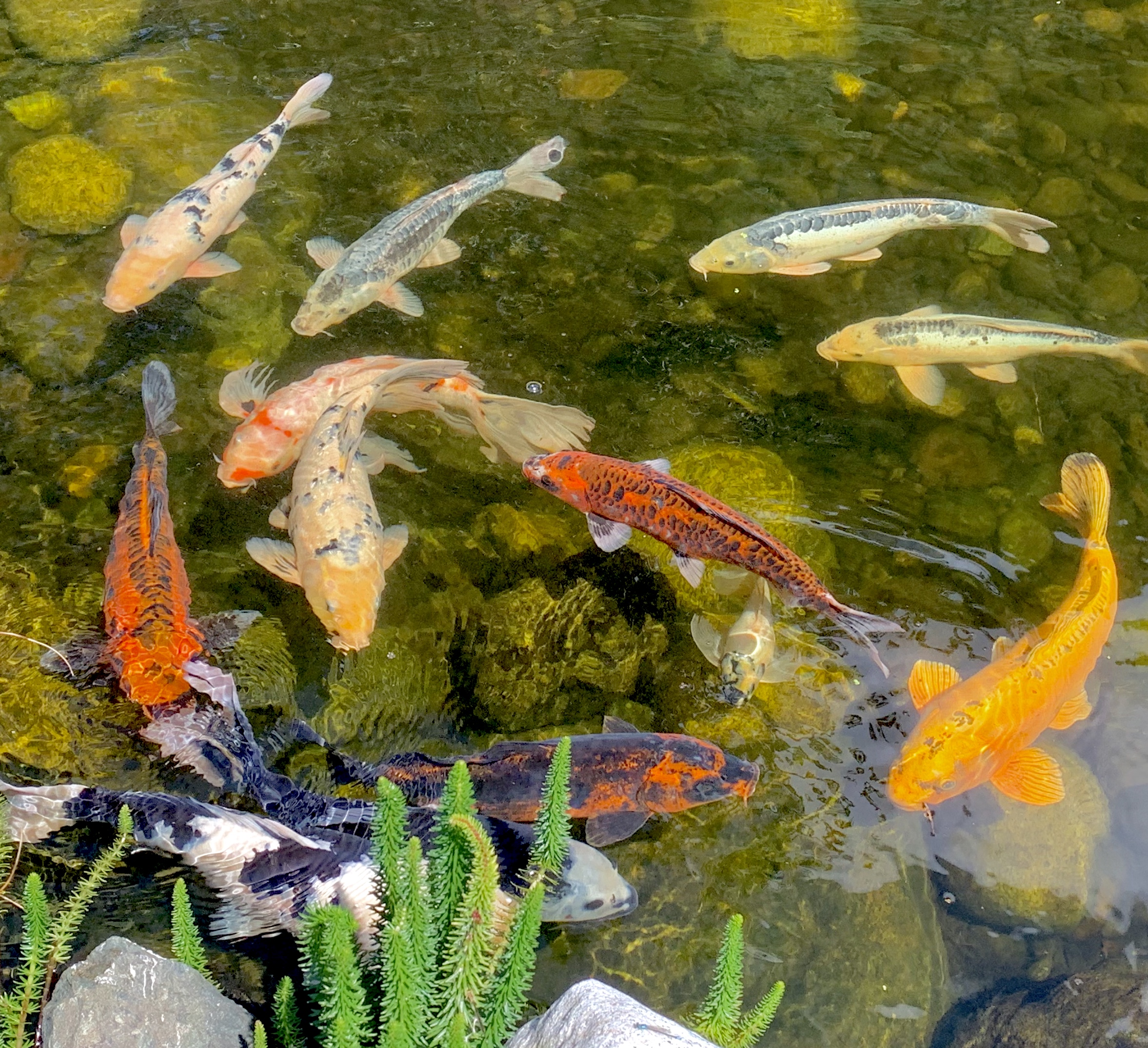
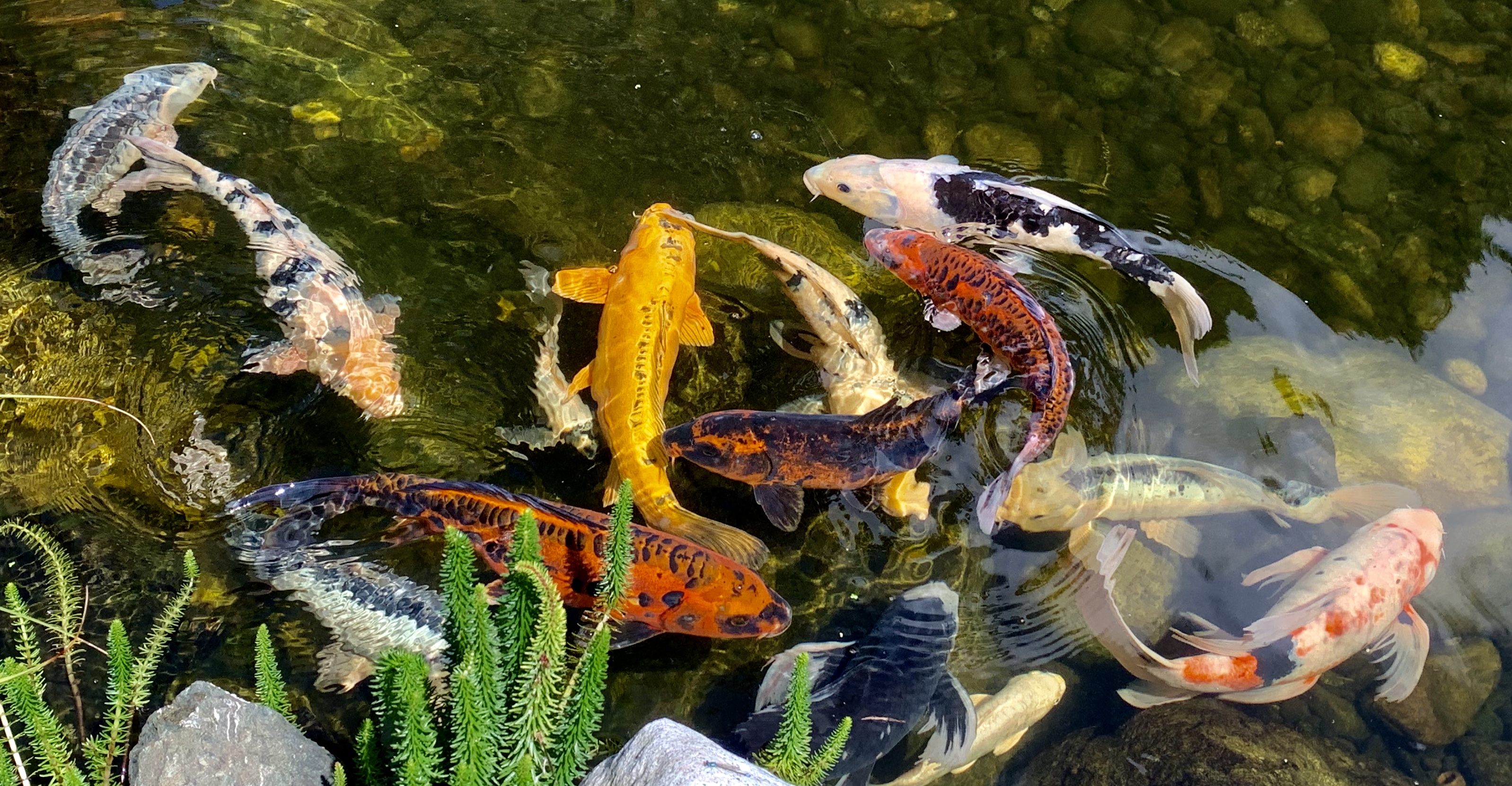
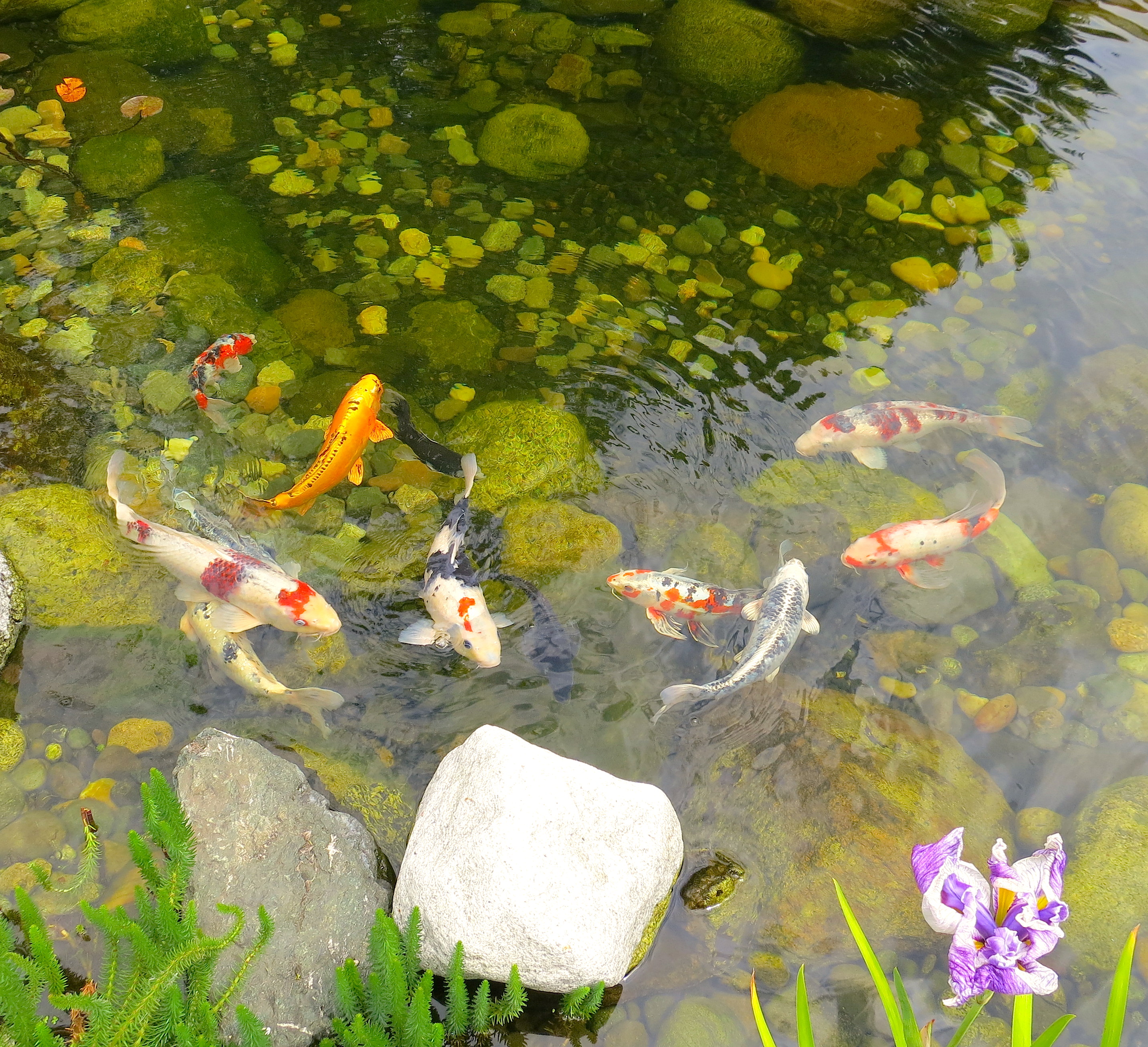
Our shadows bring them from the shadows: a yolk-yellow one with a navy pattern like a Japanese woodblock print of fish scales. A fat 18-karat one splashed with gaudy purple and a patch of gray. One with a gold head, a body skim-milk-white, trailing ventral fins like half-folded fans of lace. A poppy-red, faintly disheveled one, and one, compact, all indigo in faint green water. They wear comical whiskers and gather beneath us as we lean on the cement railing in indecisive late-December light, and because we do not feed them, they pass, then they loop and circle back. Loop and circle. Loop. “Look,” you say, “beneath them.” Beneath them, like a subplot or a motive, is a school of uniformly dark ones, smaller, unadorned, perhaps another species, living in the shadow of the gold, purple, yellow, indigo, and white, seeking the mired roots and dusky grasses, unliveried, the quieter beneath the quiet. ~Susan Kolodny “Koi Pond, Oakland Museum”
The boardwalk, a treachery of feathers ready to receive another broken bone, looms just above the surface. Step deliberately when approaching. With few exceptions, ice has claimed this part of the pond.
This is where you see her, moving through what free water remains: a sluggish ghost in the shadows, slow, conserving the fragile heat she still has in this late winter. A canopy of juniper dressed with light snow overhangs, watching.
Last year, a quorum of her kind was lost, turned to stone, to frigid silence. She doesn’t know that story, but some instinct guides her to keep what warmth she can, to cruise in stubborn torpor.
In her drift, she remembers the summer, her long, languid vowels, the accompanying texts of her companions. How they interwove manuscripts, narrations of sky, tree, sun, and moon. Warm days are a memory now, and thoughts rest lightly in her body.
She has held the same posture for an hour. Her bones have reached a conclusion— an idea about hope itself— there, near the indifferent bridge, inches from the force that will take her ~Carolyn Adams, “Koi Pond” from Going Out to Gather
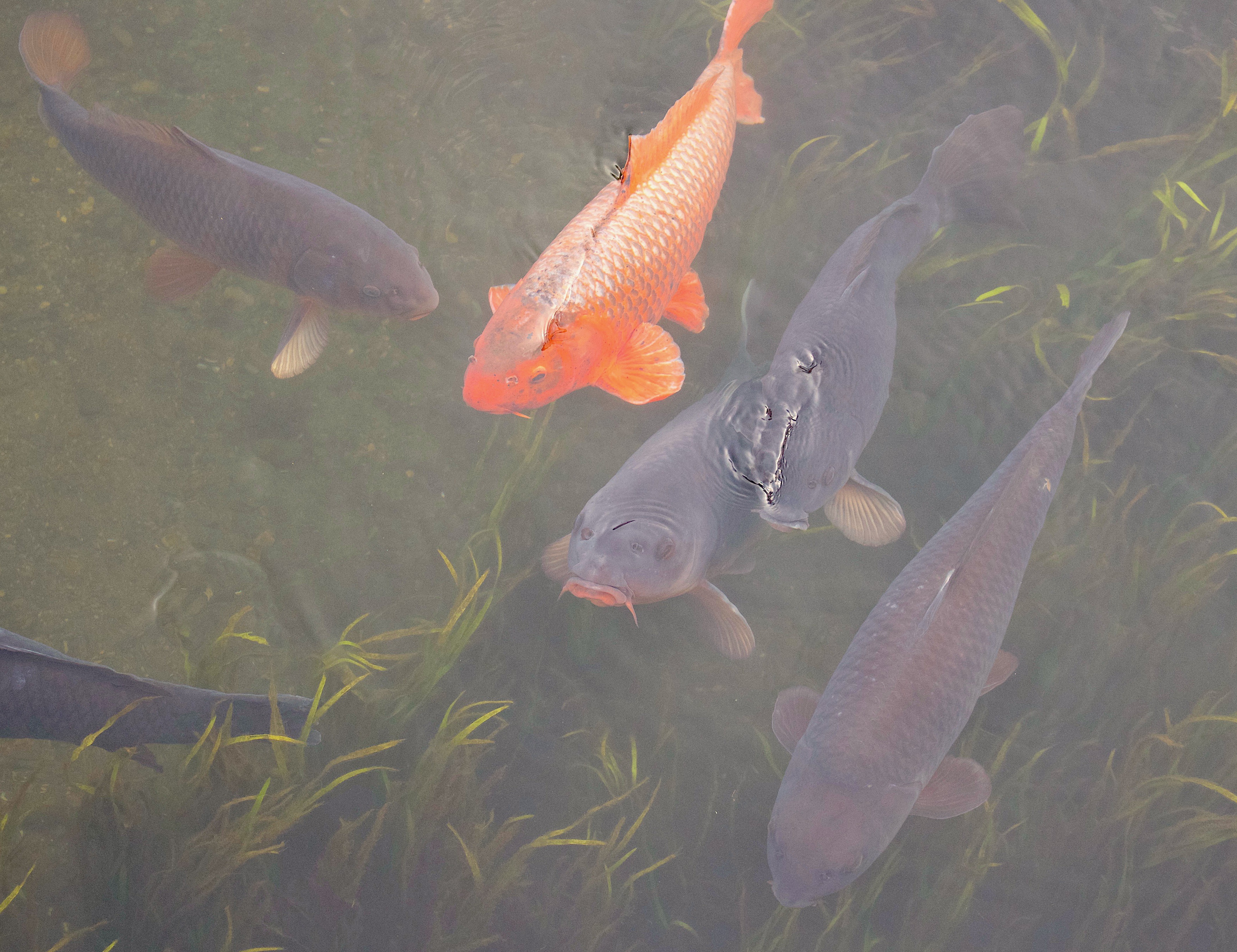
The water going dark only makes the orange seem brighter, as you race, and kiss, and spar for food, pretending not to notice me. For this gift of your indifference, I am grateful. I will sit until the pond goes black, the last orange spark extinguished. ~Robert Peake from “Koi Pond”
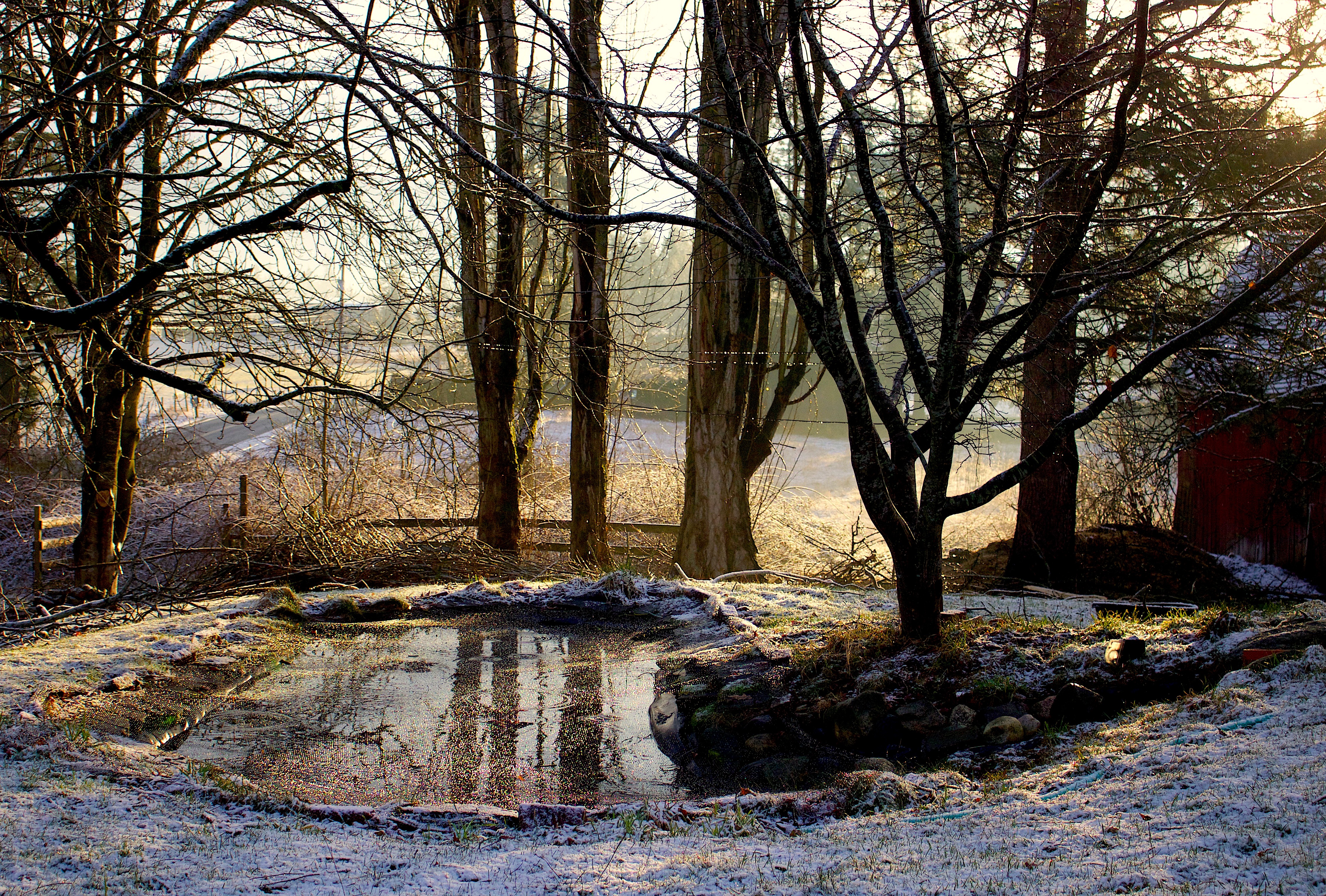
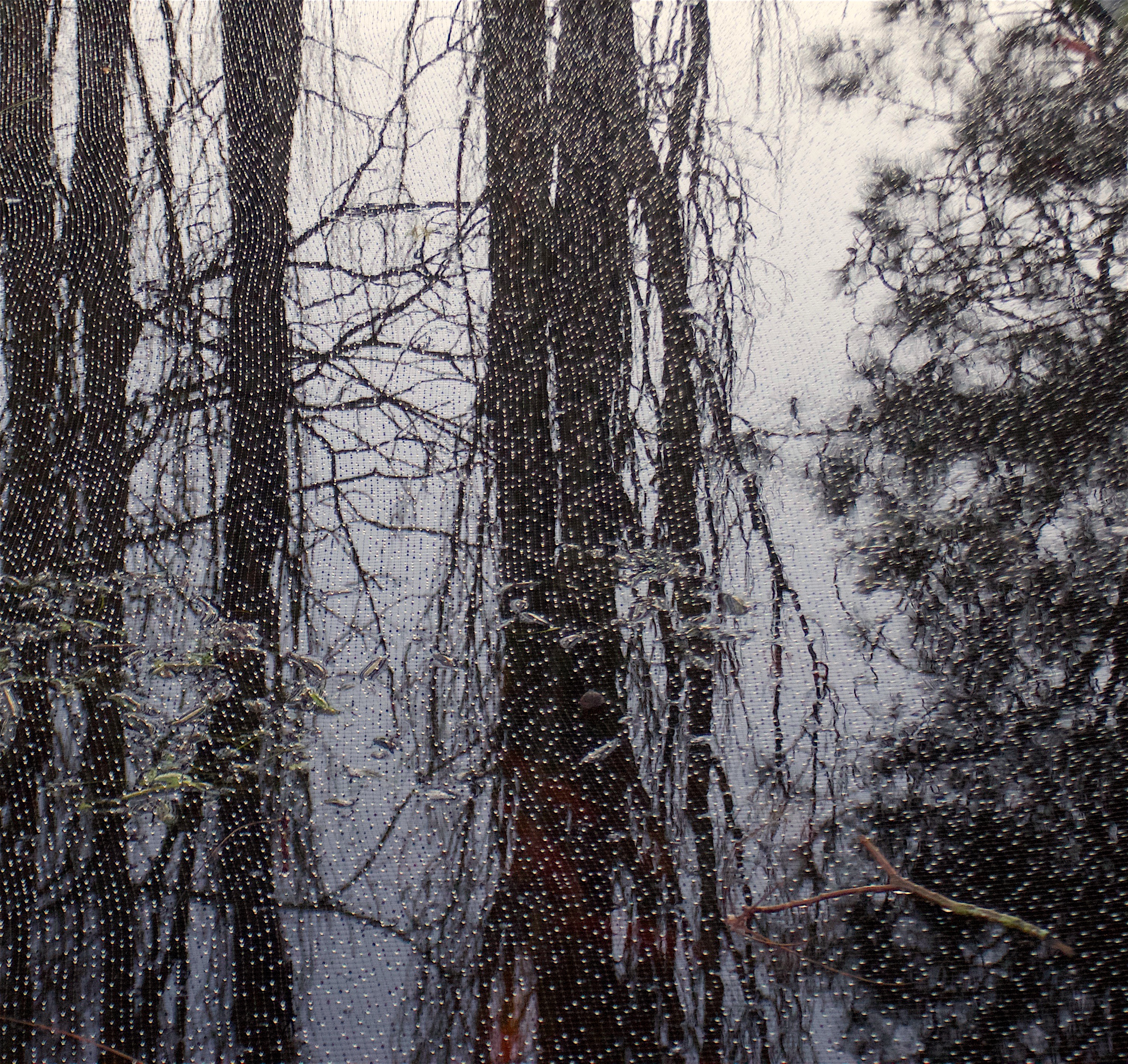
Koi and goldfish thrived in our pond after we covered it with netting, finally thwarting the herons arriving at dawn for breakfast.
Thus protected, our fish grew huge, celebrating each feeding with a flurry of tail flips and gaping mouths as I tossed pellets to them each evening.
When the pond cooled in the fall and sometimes ice-covered in winter, the fish settled at the bottom, barely moving silhouettes of color in the darkness. Spring would warm them to action again. As the water temperature rose, so did they, eager and hungry to flash their color and fins again.
Two winters ago, the chill winds and low temperatures lasted longer than usual. As the pond ice began to melt, the fish at the bottom remained still as stones. Netting them for burial felt like burying the sun and the moon and the stars, relegating their rainbows of light and color deep into the earth.
No longer would their colorful glory shine, an illumination now extinguished.
I haven’t had the heart to try again. I need a pond heater, a new filter system, and a total clean out of the pond if I am going to restock.
But then I remember the joy of feeding those flashes of fins and fish mouths, so I just might try again.
Rainbows promise to return, even from buried stone.
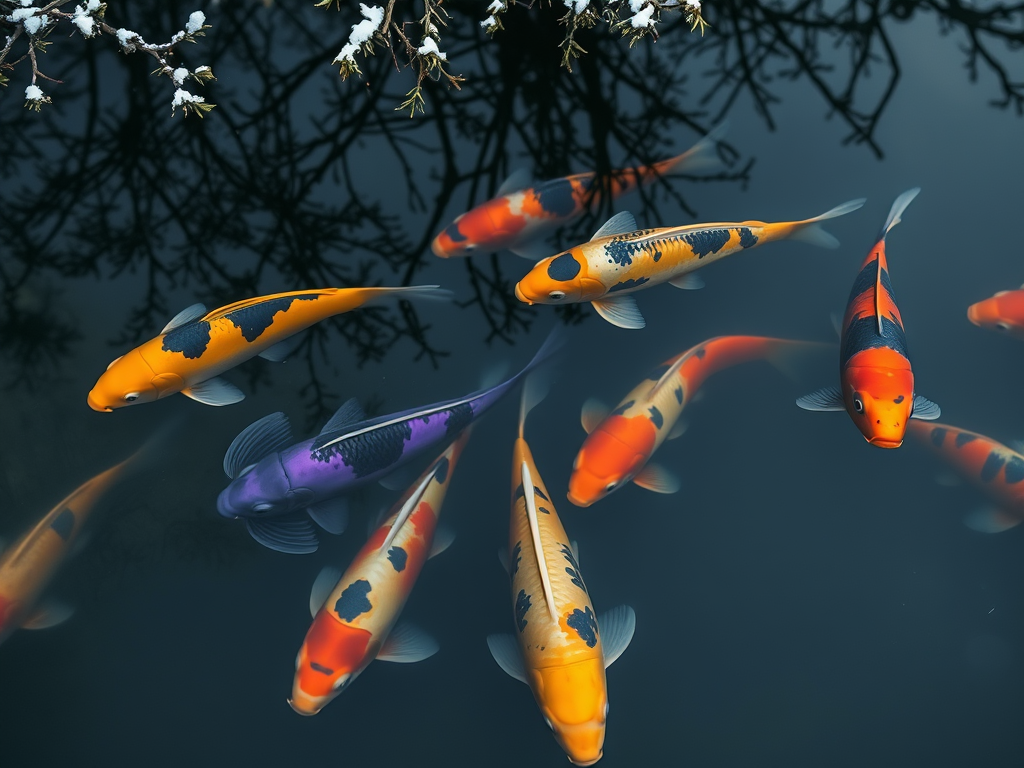
AI image created for this post
Lyrics From the love of my own comfort From the fear of having nothing From a life of worldly passions Deliver me O God From the need to be understood From the need to be accepted From the fear of being lonely Deliver me O God And I shall not want I shall not want When I taste Your goodness I shall not want From the fear of serving others From the fear of death or trial From the fear of humility Deliver me O God
One-Time
Monthly
Yearly
Make a one-time or recurring donation to support daily Barnstorming posts
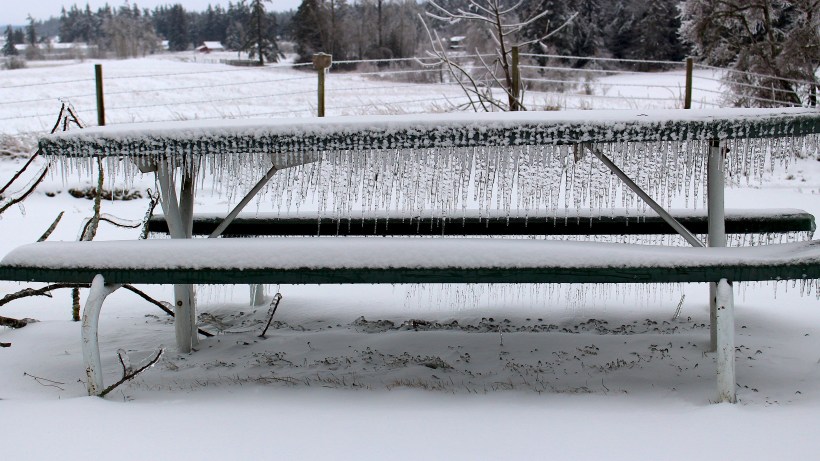
First day of February, and in the far corner of the yard the Adirondack chair, blown over by the wind at Christmas, is still on its back, the snow too deep for me to traipse out and right it, the ice too sheer to risk slamming these old bones to the ground.
In April I will walk out across the warming grass, and right the chair as if there had never been anything to stop me in the first place, listening for the buzz of hummingbirds which reminds me of how fast things are capable of moving. ~John Stanizzi “Ascension”
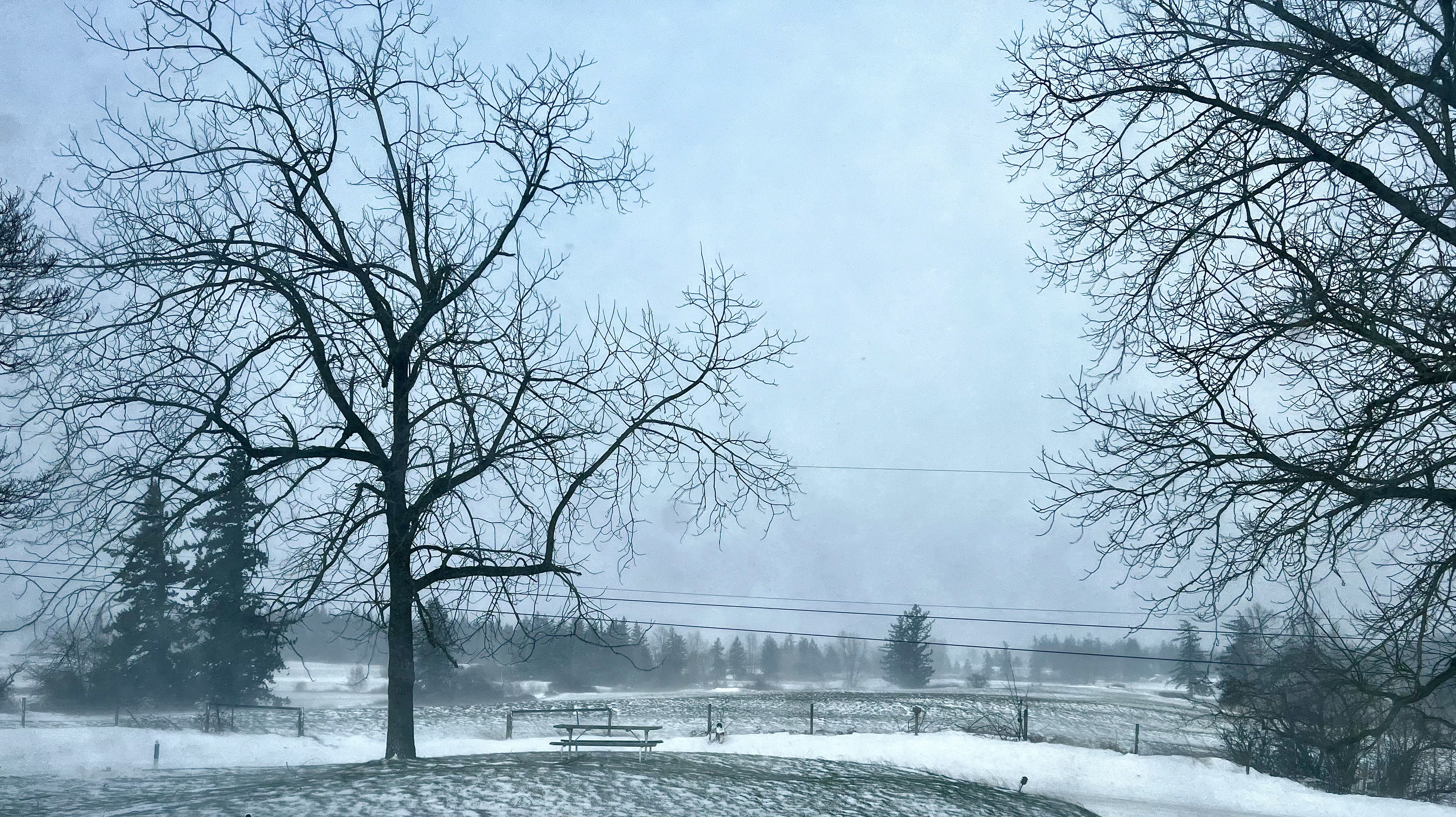
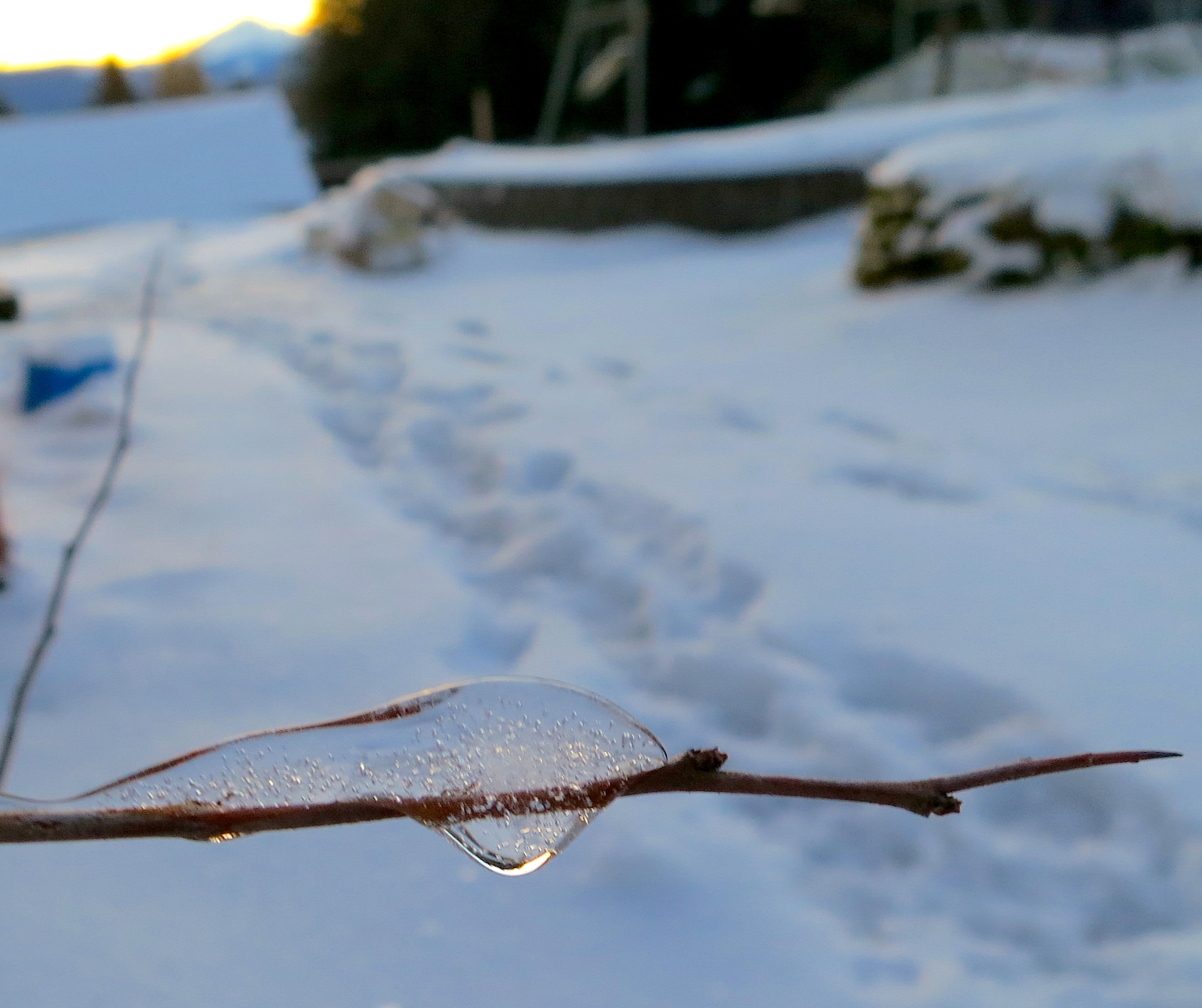
It has been a harsh and cold winter so far with more days of snow on the ground than not. For a couple weeks there was a constant challenge of finding safe footing when surfaces were snow and ice-covered; local orthopedists were busy putting together broken arms and legs and dislocated joints from too many unscheduled landings.
It seems sometimes winter will never be done with us. The saddest moment a week ago was the discovery as our iced-over fish pond was thawing that it had frozen solid during the sub-zero temperatures – and a dozen decade-old koi and goldfish frozen with it. Our sorrow at this loss is deeper than the pond proved to be; we assumed the depth of the water was sufficient to keep our fish safe from harm as it has for decades. Yet this winter stole them from us.
I know in my head that winter is not forever — February will wrap up its short stay on the calendar and once again I will traipse about with ease without worrying about iced-over walkways. But my heart is not so easily convinced about winter waning. The unexpected loss of our fish reminds me of my guilt from the past: times I have failed to help others when I could have – like the priest and Levite, seeing the dying man on the road to Jericho, cross to the other side and walk past.
So my heart and head and old bones need reminding: Those who traipse on ice always risk being broken. Those who have fallen will be righted and put together again. Those who suffer regret are forgiven even when pain is not forgotten. And time moves quickly on despite our efforts to hold on to now; my old bones and tender heart will heal so I can be of use to others.
From the love of my own comfort From the fear of having nothing From a life of worldly passions Deliver me O God
From the need to be understood From the need to be accepted From the fear of being lonely Deliver me O God Deliver me O God
And I shall not want I shall not want When I taste Your goodness I shall not want When I taste Your goodness I shall not want
From the fear of serving others From the fear of death or trial From the fear of humility Deliver me O God Deliver me O God ~Audrey Assad
One-Time
Monthly
Yearly
Make a one-time or recurring donation to support Barnstorming
Serene the silver fishes glide, Stern-lipped, and pale, and wonder-eyed! As through the aged deeps of ocean, They glide with wan and wavy motion. They have no pathway where they go, They flow like water to and fro, They watch with never-winking eyes, They watch with staring, cold surprise, The level people in the air, The people peering, peering there: Who wander also to and fro, And know not why or where they go, Yet have a wonder in their eyes, Sometimes a pale and cold surprise. ~ Max Eastman, “At the Aquarium” Max Eastman: A Life
The fish are drifting calmly in their tank between the green reeds, lit by a white glow that passes for the sun. Blindly, the blank glass that holds them in displays their slow progress from end to end, familiar rocks set into the gravel, murmuring rows of filters, a universe the flying fox and glass cats, Congo tetras, bristle-nose pleocostemus all take for granted. Yet the platys, gold and red, persist in leaping occasionally, as if they can’t quite let alone a possibility—of wings, maybe, once they reach the air? They die on the rug. We find them there, eyes open in surprise. ~Kim Addonizio “Aquarium,” from The Philosopher’s Club
Our shadows bring them from the shadows: a yolk-yellow one with a navy pattern like a Japanese woodblock print of fish scales. A fat 18-karat one splashed with gaudy purple and a patch of gray. One with a gold head, a body skim-milk-white, trailing ventral fins like half-folded fans of lace. A poppy-red, faintly disheveled one, and one, compact, all indigo in faint green water. They wear comical whiskers and gather beneath us as we lean on the cement railing in indecisive late-December light, and because we do not feed them, they pass, then they loop and circle back. Loop and circle. Loop. “Look,” you say, “beneath them.” Beneath them, like a subplot or a motive, is a school of uniformly dark ones, smaller, unadorned, perhaps another species, living in the shadow of the gold, purple, yellow, indigo, and white, seeking the mired roots and dusky grasses, unliveried, the quieter beneath the quiet. ~Susan Kolodny “Koi Pond, Oakland Museum”
The water going dark only makes the orange seem brighter, as you race, and kiss, and spar for food, pretending not to notice me. For this gift of your indifference, I am grateful. I will sit until the pond goes black, the last orange spark extinguished. ~Robert Peake from “Koi Pond”
…the kingdom of heaven is like a net that was let down into the lake and caught all kinds of fish.When it was full, the fishermen pulled it up on the shore. Then they sat down and collected the good fish in baskets, but threw the bad away. Matthew 13: 47-48
I caught a tremendous fish and held him beside the boat half out of water, with my hook fast in a corner of his mouth. He didn’t fight. He hadn’t fought at all. He hung a grunting weight, battered and venerable and homely. I looked into his eyes which were far larger than mine but shallower, and yellowed, the irises backed and packed with tarnished tinfoil seen through the lenses of old scratched isinglass. They shifted a little, but not to return my stare. – It was more like the tipping of an object toward the light. I admired his sullen face, the mechanism of his jaw, and then I saw that from his lower lip – if you could call it a lip grim, wet, and weaponlike, hung five old pieces of fish-line, or four and a wire leader with the swivel still attached, with all their five big hooks grown firmly in his mouth. Like medals with their ribbons frayed and wavering, a five-haired beard of wisdom trailing from his aching jaw. I stared and stared and victory filled up the little rented boat, from the pool of bilge where oil had spread a rainbow around the rusted engine to the bailer rusted orange, the sun-cracked thwarts, the oarlocks on their strings, the gunnels- until everything was rainbow, rainbow, rainbow! And I let the fish go. ~Elizabeth Bishop from “The Fish”
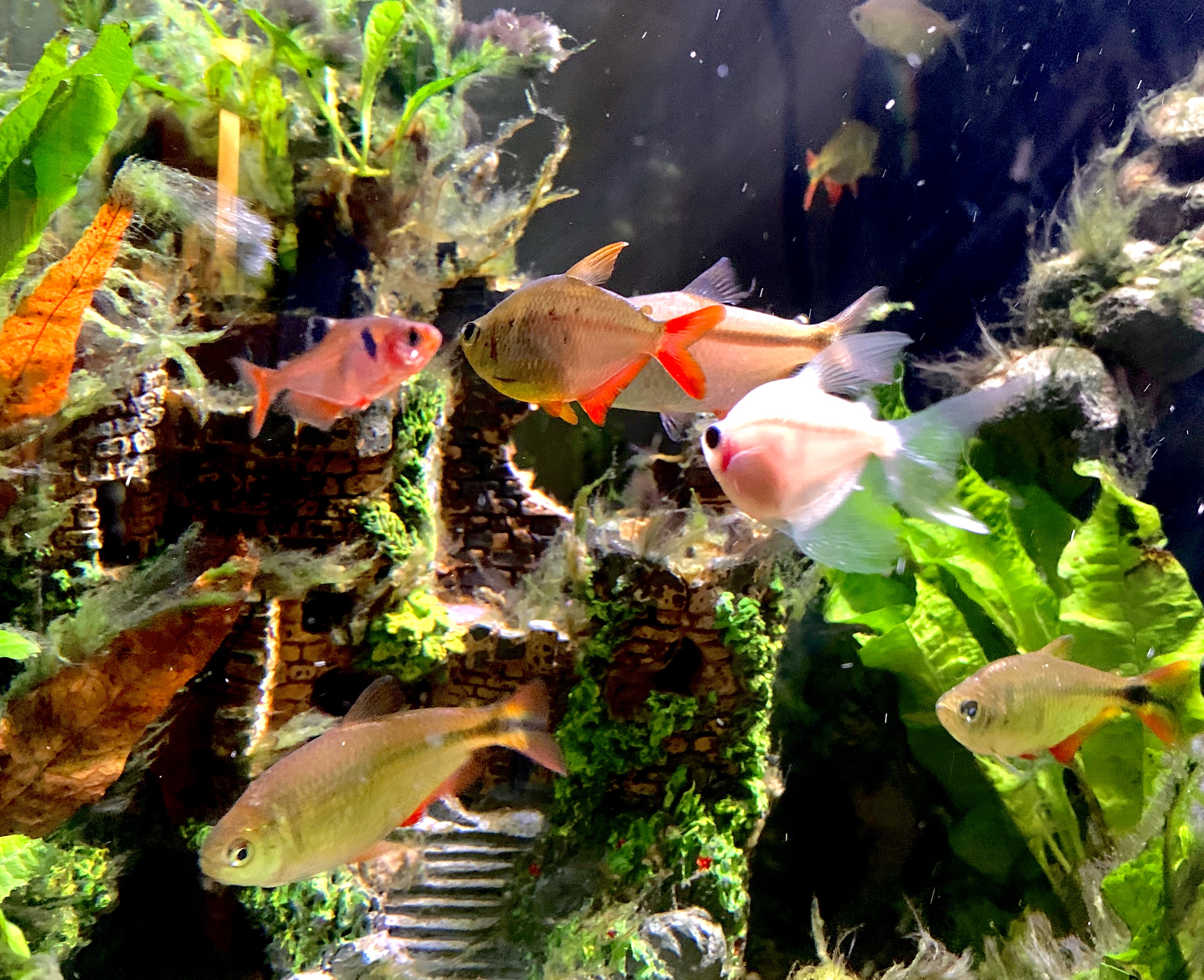
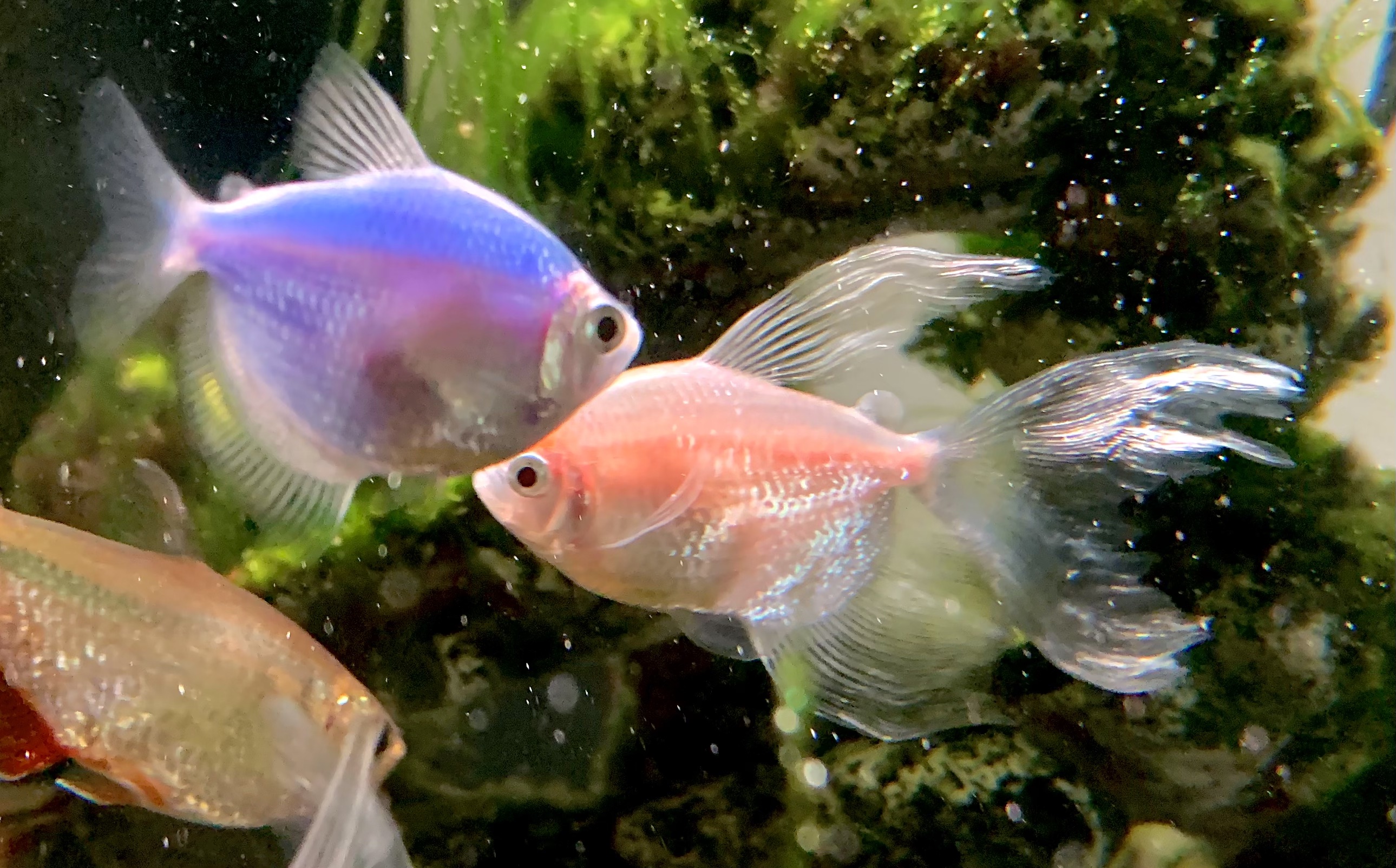
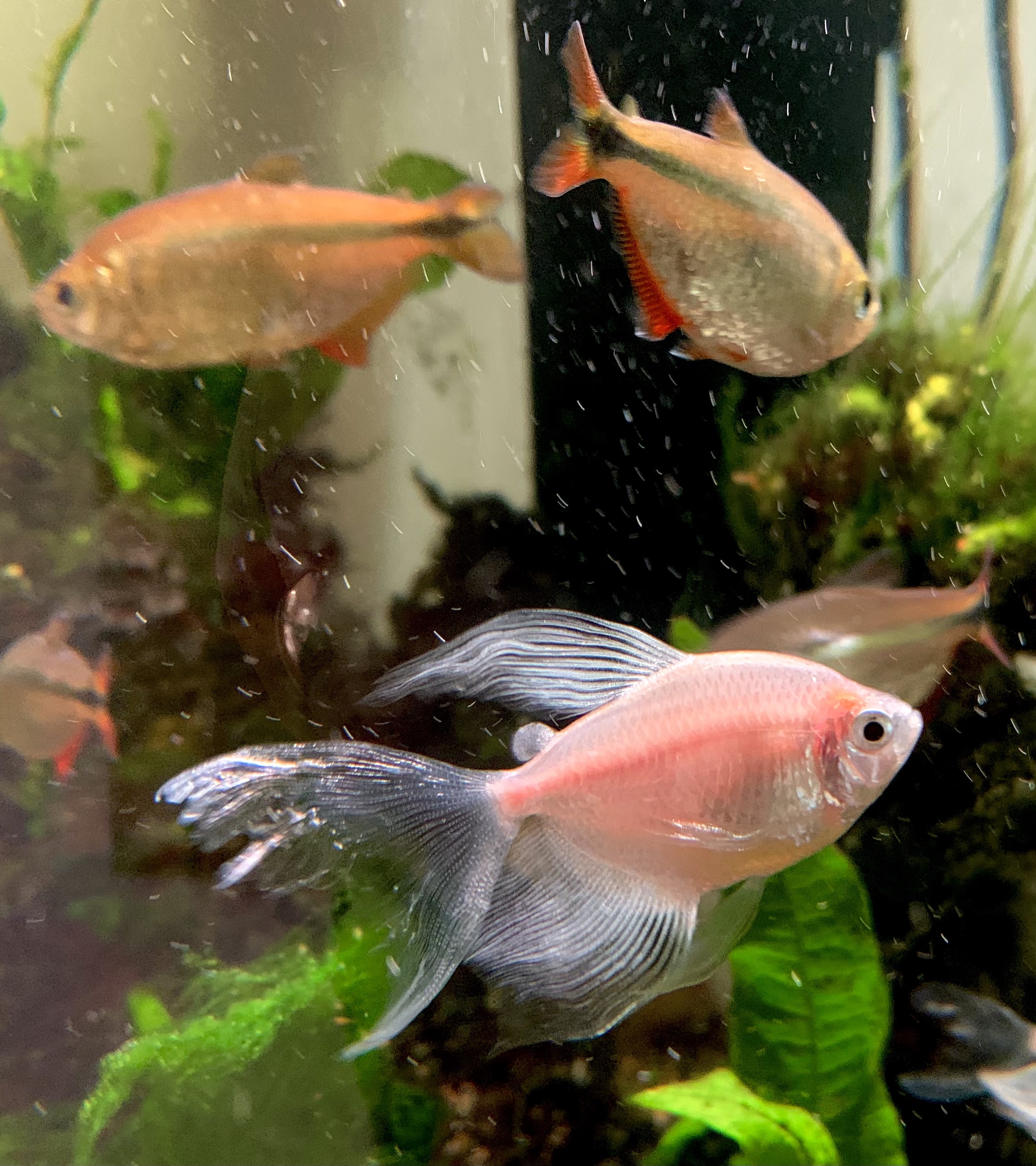
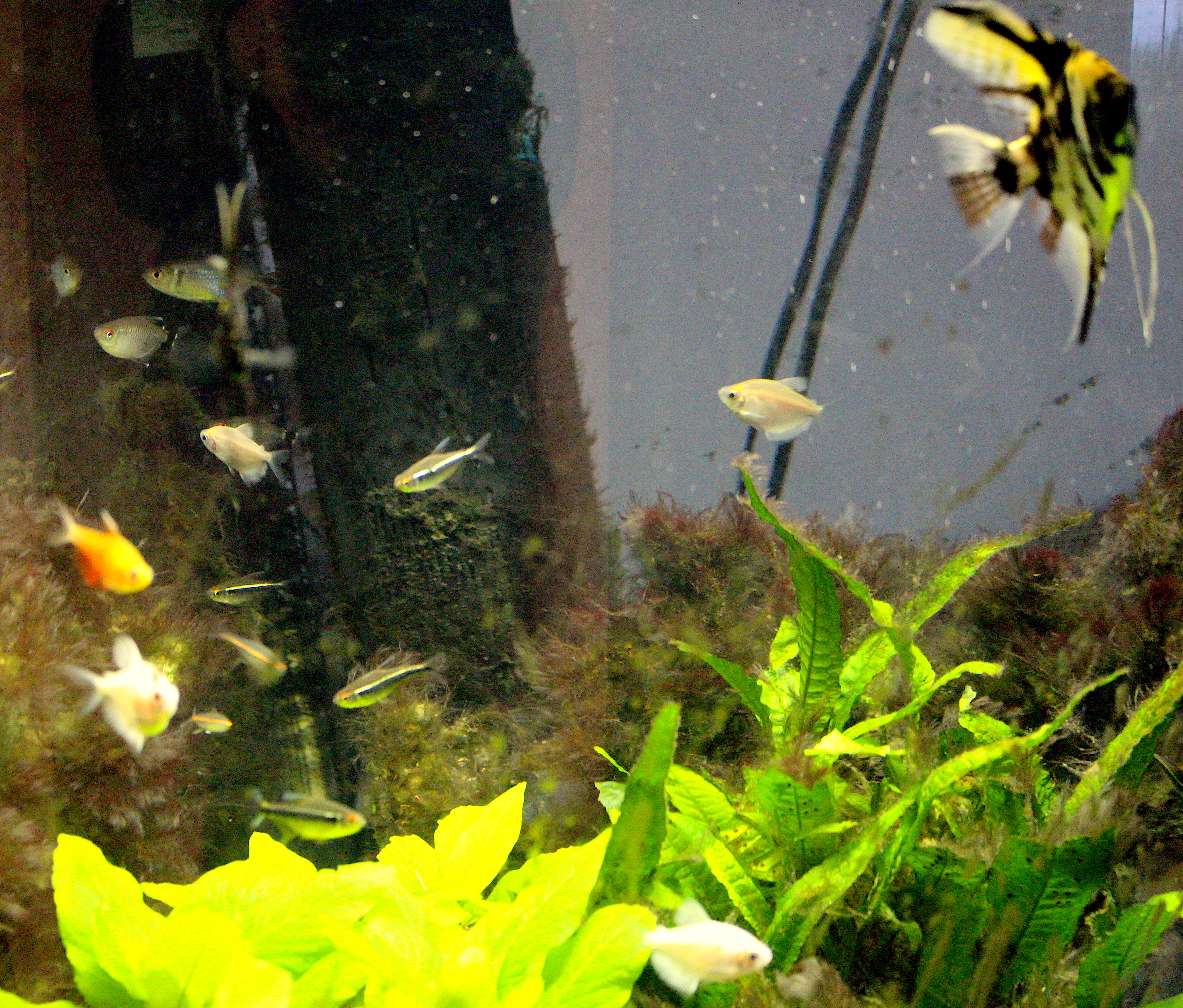
All my life, I’ve taken care of a variety of fish in tanks and ponds. As a child, I would watch, mesmerized, as our tropical fish glided around, happily exploring their little ten gallon world. I willingly cleaned away the algae, rinsed the gravel and changed the filter. As a teenager, I boasted at least three different tanks aerating away in my bedroom, my own little aqua-cultural world of bubbles and fins.
During college and medical school, I chose to share my room with goldfish and bettas, thriving on their apparent contentment within a clear glass bowl. I didn’t think of them as emotional support animals, but there was a joy obvious in their albeit limited existence: they still thrived when I was away, not missing me, but were always thrilled when I fed them, and tolerated my messing with their home maintenance.
My current thirty gallon aquarium is decades old and boasts over two dozen fish and plenty of furry algae and plants. Some of my watery friends have lived ten years or more and when they pass, I miss them. Even the dozen koi and goldfish in our farm pond have expressive faces and individual personalities that I’ve gotten to know well as they come when I call.
I know the heart of compassion I feel for any creature I’m responsible for, as I know and have experienced the compassion of our Creator.
I would hope when the time comes that I end up in His net, that He’ll look me in the eye, see the wonder there as I gape at Him. He’ll count my blemishes and wounds and the number of hooks in my mouth from the times I’ve been caught and escaped, and if He’s not yet ready to take me home, or deems me not yet ready to leave this world, He’ll throw me back rather than throw me away to keep trying to get it right.
He has promised us that.
Rainbows, rainbows, rainbows indeed…
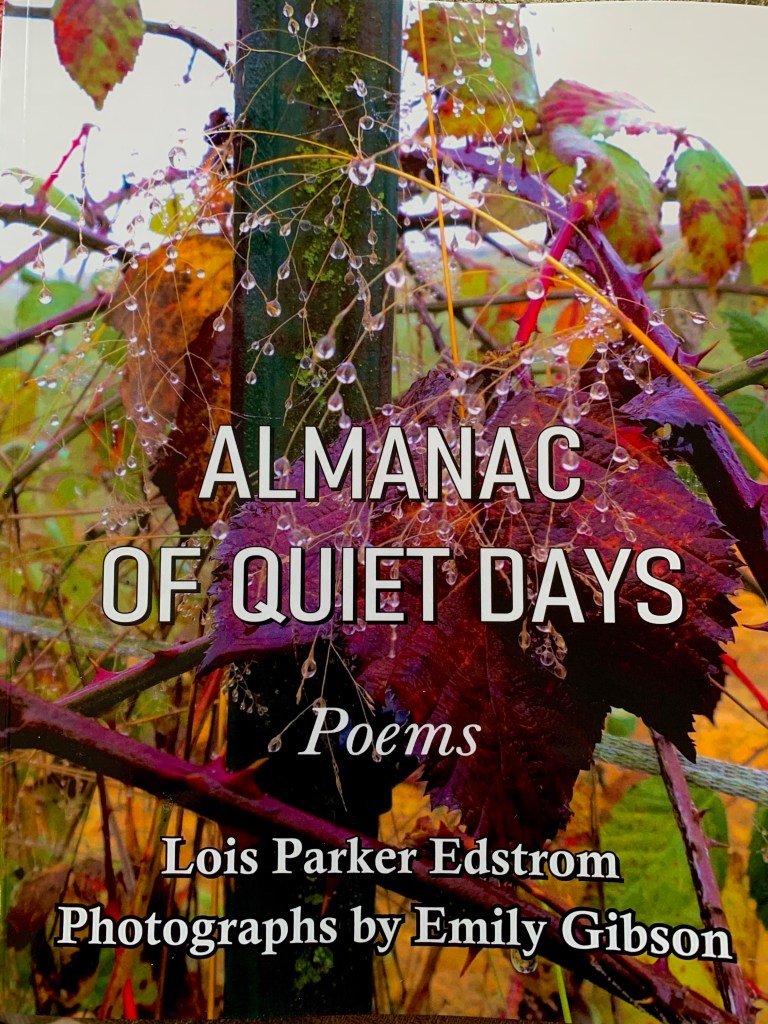
Interested in seeing more from Barnstorming? This new book is available for order here:
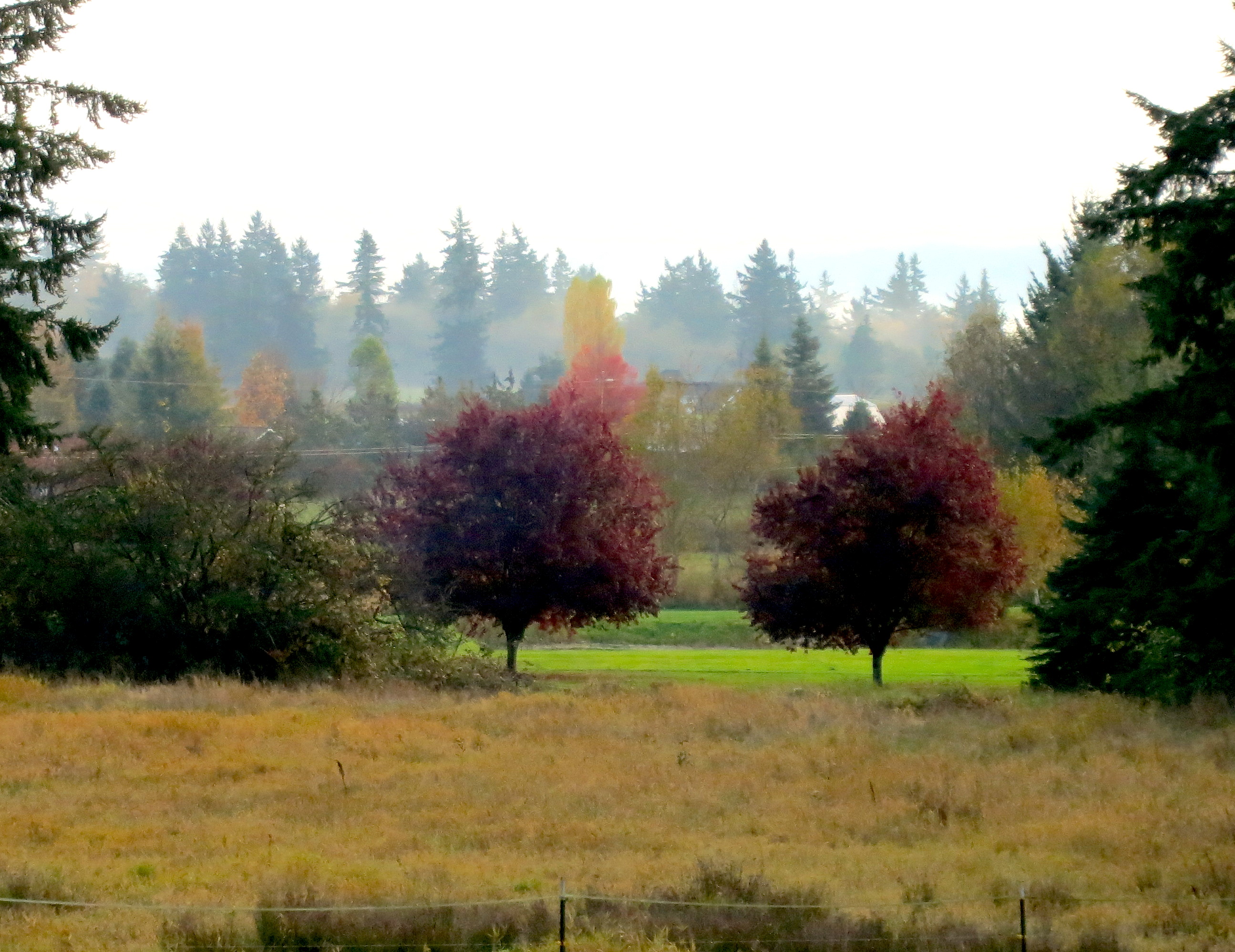
Spring flew swiftly by, and summer came; and if the village had been beautiful at first, it was now in the full glow and luxuriance of its richness. The great trees, which had looked shrunken and bare in the earlier months, had now burst into strong life and health; and stretching forth their green arms over the thirsty ground, converted open and naked spots into choice nooks, where was a deep and pleasant shade from which to look upon the wide prospect, steeped in sunshine, which lay stretched out beyond. The earth had donned her mantle of brightest green; and shed her richest perfumes abroad. It was the prime and vigour of the year; all things were glad and flourishing.” ~ Charles Dickens from Oliver Twist
Despite a pandemic, despite economic hardship, despite racial tensions and in-the-street protests, despite political maneuvering and posturing:
life is green and flourishing and vigorous even when we feel gray and withered and weakened.
May we not forget why we are here. May we never forget our calling and purpose to steward the earth and care for one another.
For today, I will memorize the two trees now in end-of-summer light
and the drifts of wood asters as the yard slopes away toward the black pond, blue
dragonflies in the clouds that shine and float there, as if risen
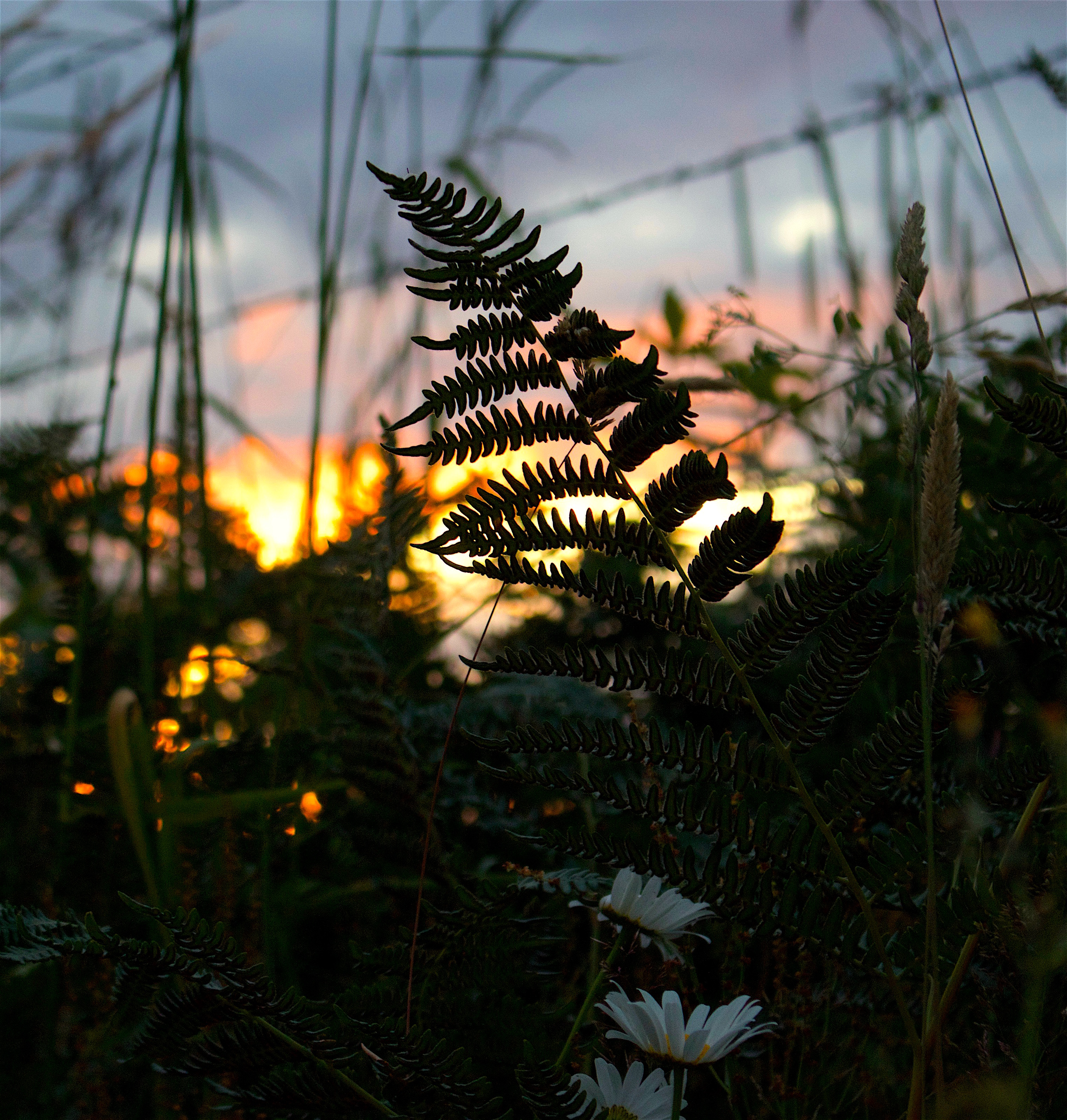
from the bottom, unbidden. Now, just over the fern— quick—a glimpse of it,
the plume, a fox-tail’s copper, as the dog runs in ovals and eights, chasing scent.
The yard is a waiting room. I have my chair. You, yours.
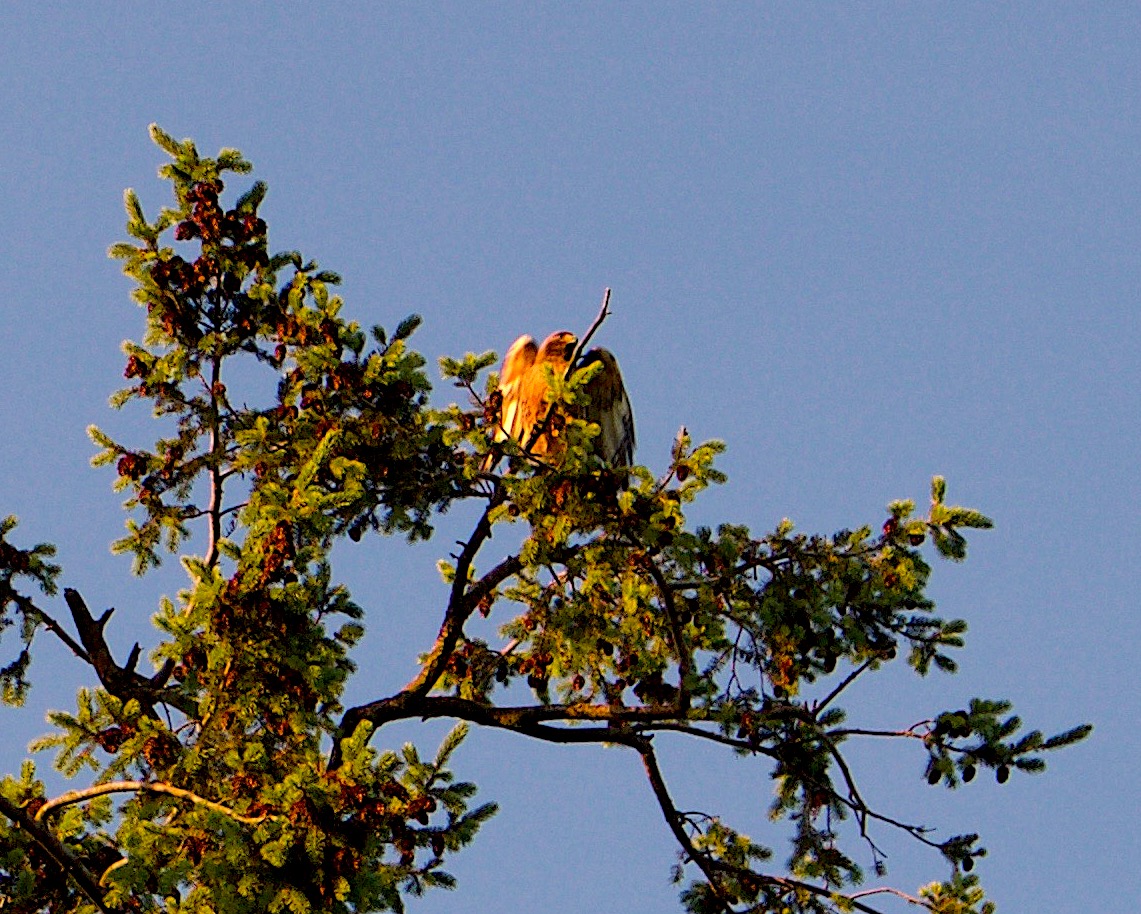
The hawk has its branch in the pine.
White petals ripple in the quiet light. ~Margaret Gibson from “Solitudes”
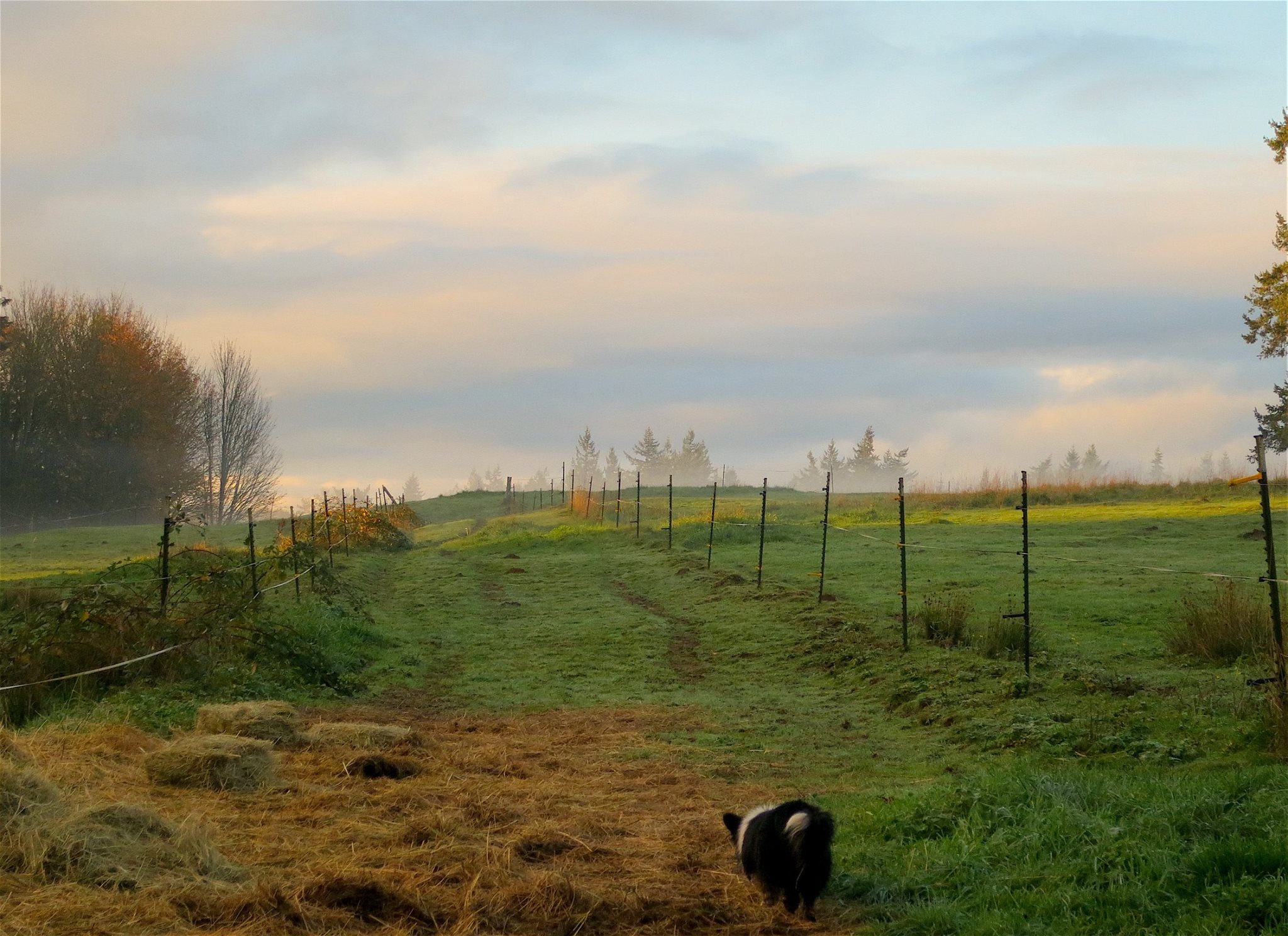
I want to memorize it all before it changes:
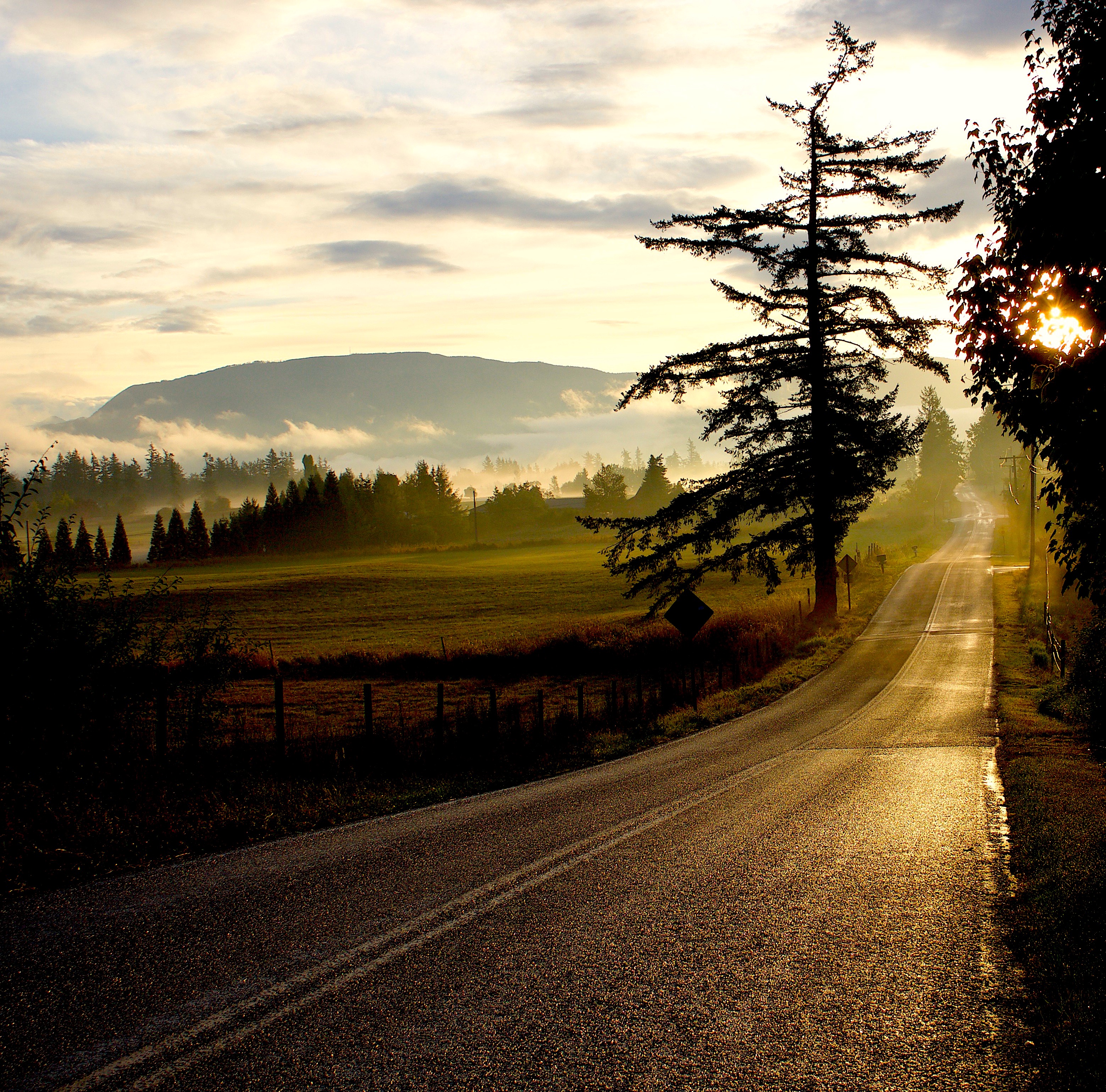
the shift of sun from north to south
balances on our east- west road at equinox.
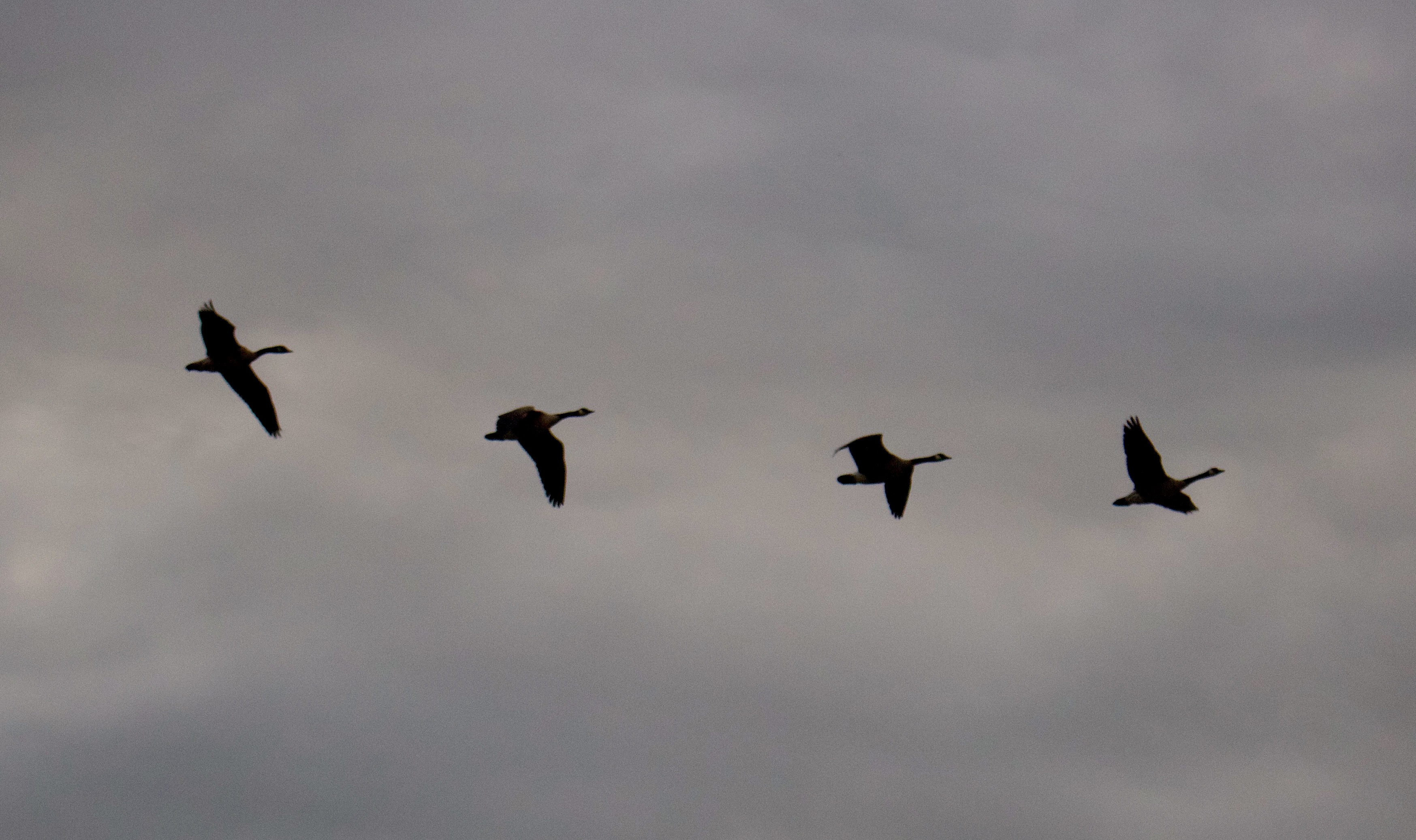
The flow of geese overhead, honking and waving farewell,
hawks’ screams in the firs,
dragonflies trapped in the barn light fixtures
several generations of coyotes hollering at dusk.
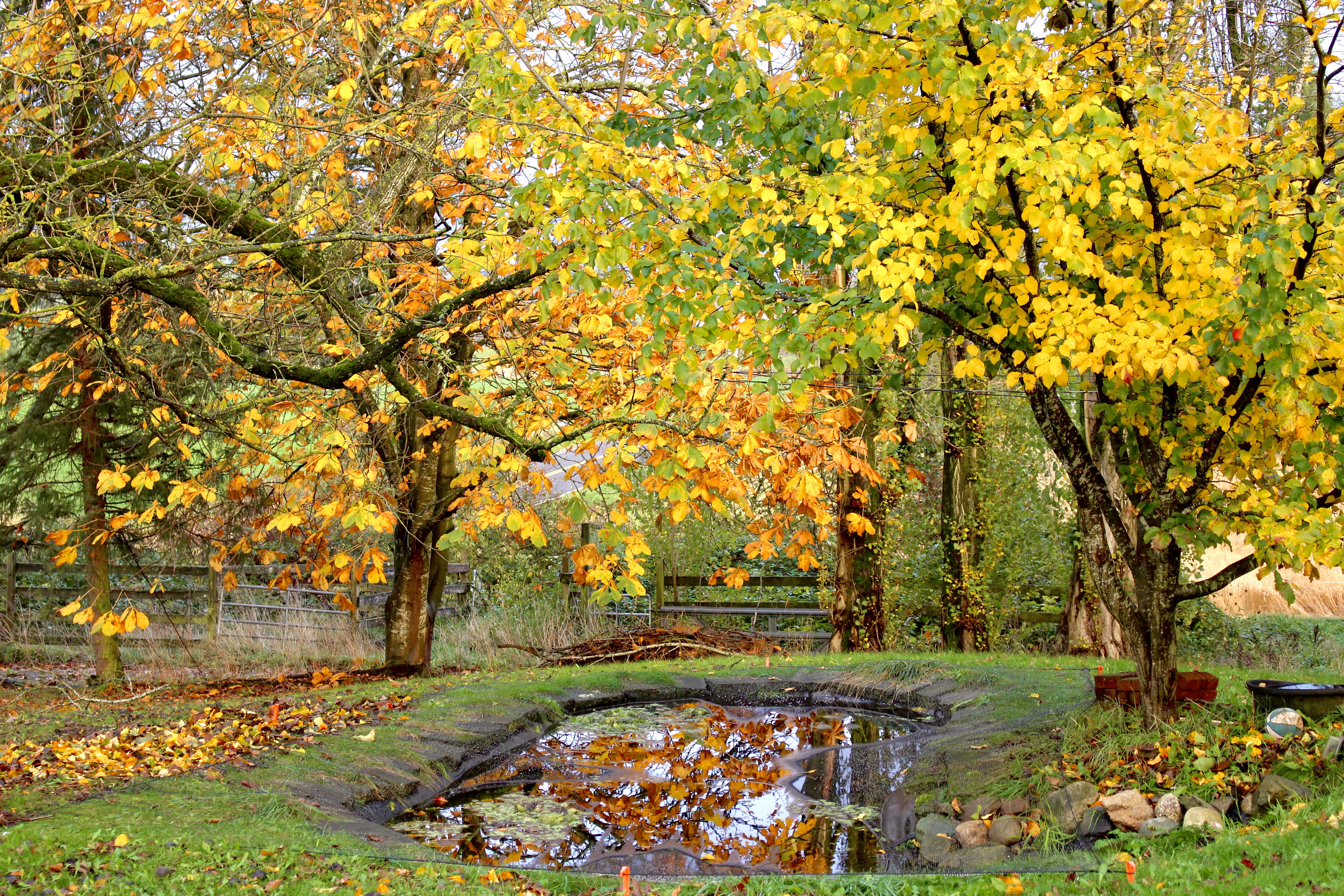
The koi pond quiets with cooler nights,
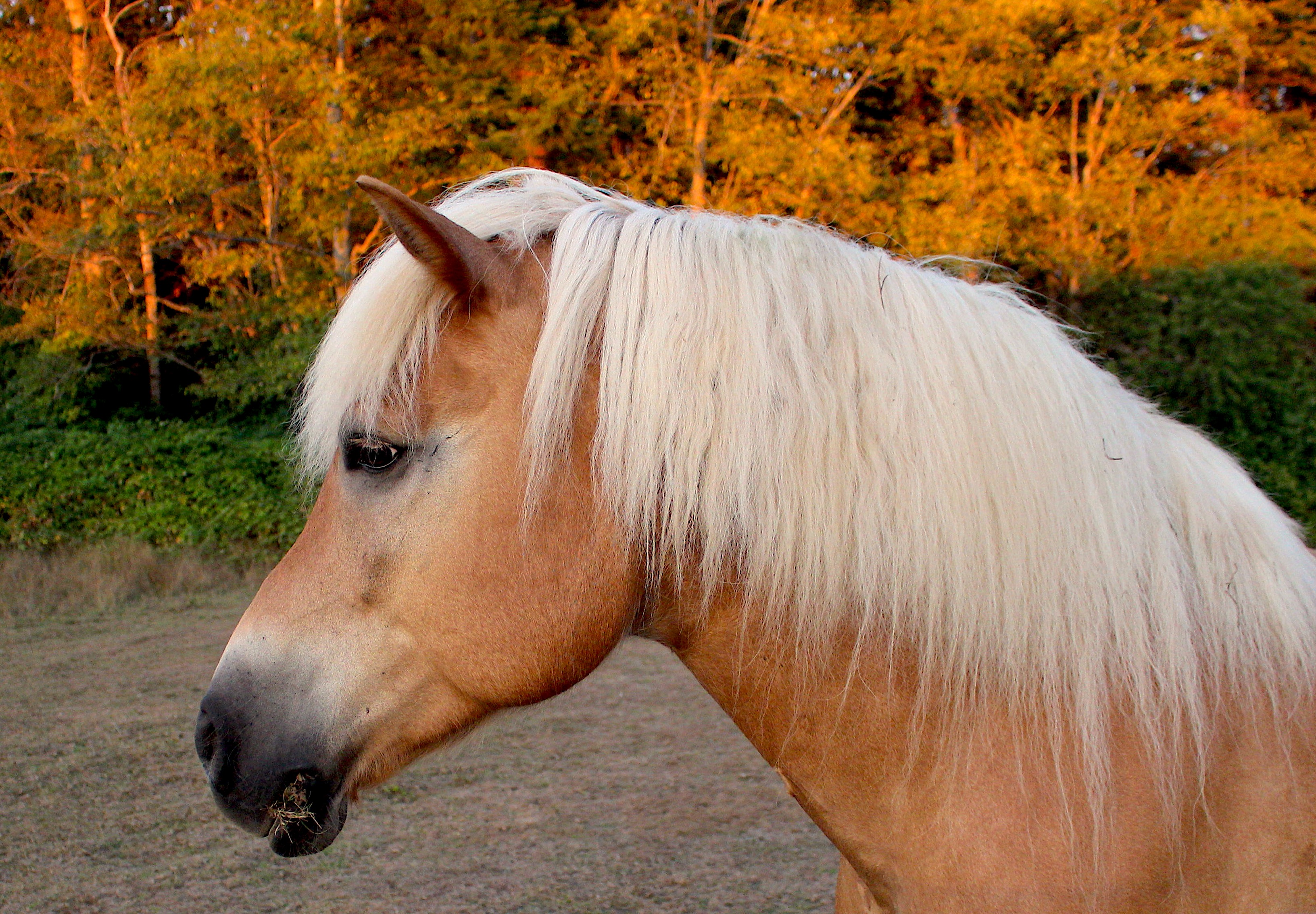
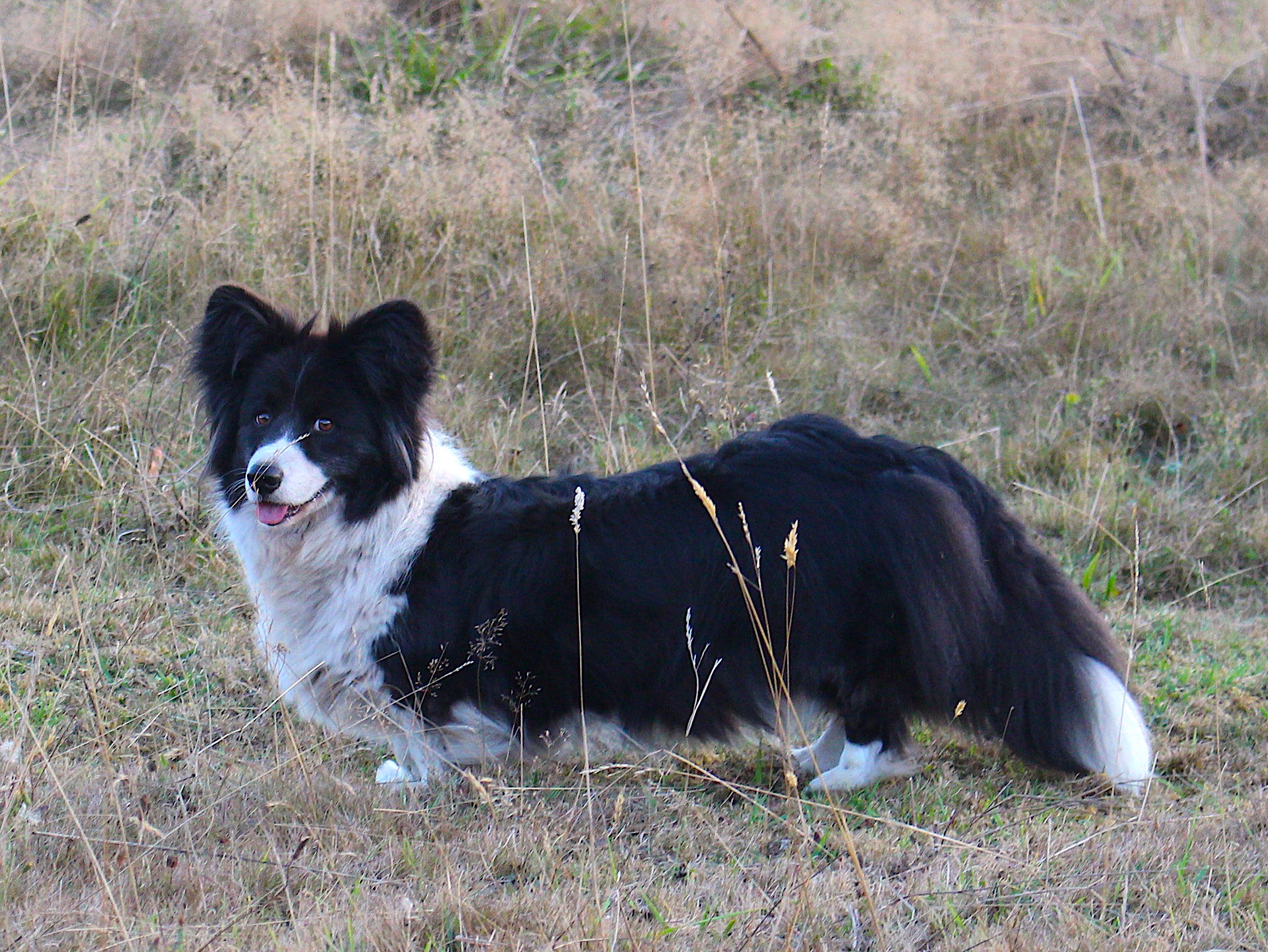
hair thickens on horses, cats and dogs,
dying back of the garden vines to reveal what lies unharvested beneath.
We part again, Summer –
your gifts were endless
until you ended.
I sit silenced and brooding, waiting for what comes next.
Once again, the kingdom of heaven is like a net that was let down into the lake and caught all kinds of fish.48 When it was full, the fishermen pulled it up on the shore. Then they sat down and collected the good fish in baskets, but threw the bad away. Matthew 13: 47-48
I caught a tremendous fish and held him beside the boat half out of water, with my hook fast in a corner of his mouth. He didn’t fight. He hadn’t fought at all. He hung a grunting weight, battered and venerable and homely. I looked into his eyes which were far larger than mine but shallower, and yellowed, the irises backed and packed with tarnished tinfoil seen through the lenses of old scratched isinglass. They shifted a little, but not to return my stare. – It was more like the tipping of an object toward the light. I admired his sullen face, the mechanism of his jaw, and then I saw that from his lower lip – if you could call it a lip grim, wet, and weaponlike, hung five old pieces of fish-line, or four and a wire leader with the swivel still attached, with all their five big hooks grown firmly in his mouth. Like medals with their ribbons frayed and wavering, a five-haired beard of wisdom trailing from his aching jaw. I stared and stared and victory filled up the little rented boat, from the pool of bilge where oil had spread a rainbow around the rusted engine to the bailer rusted orange, the sun-cracked thwarts, the oarlocks on their strings, the gunnels- until everything was rainbow, rainbow, rainbow! And I let the fish go.
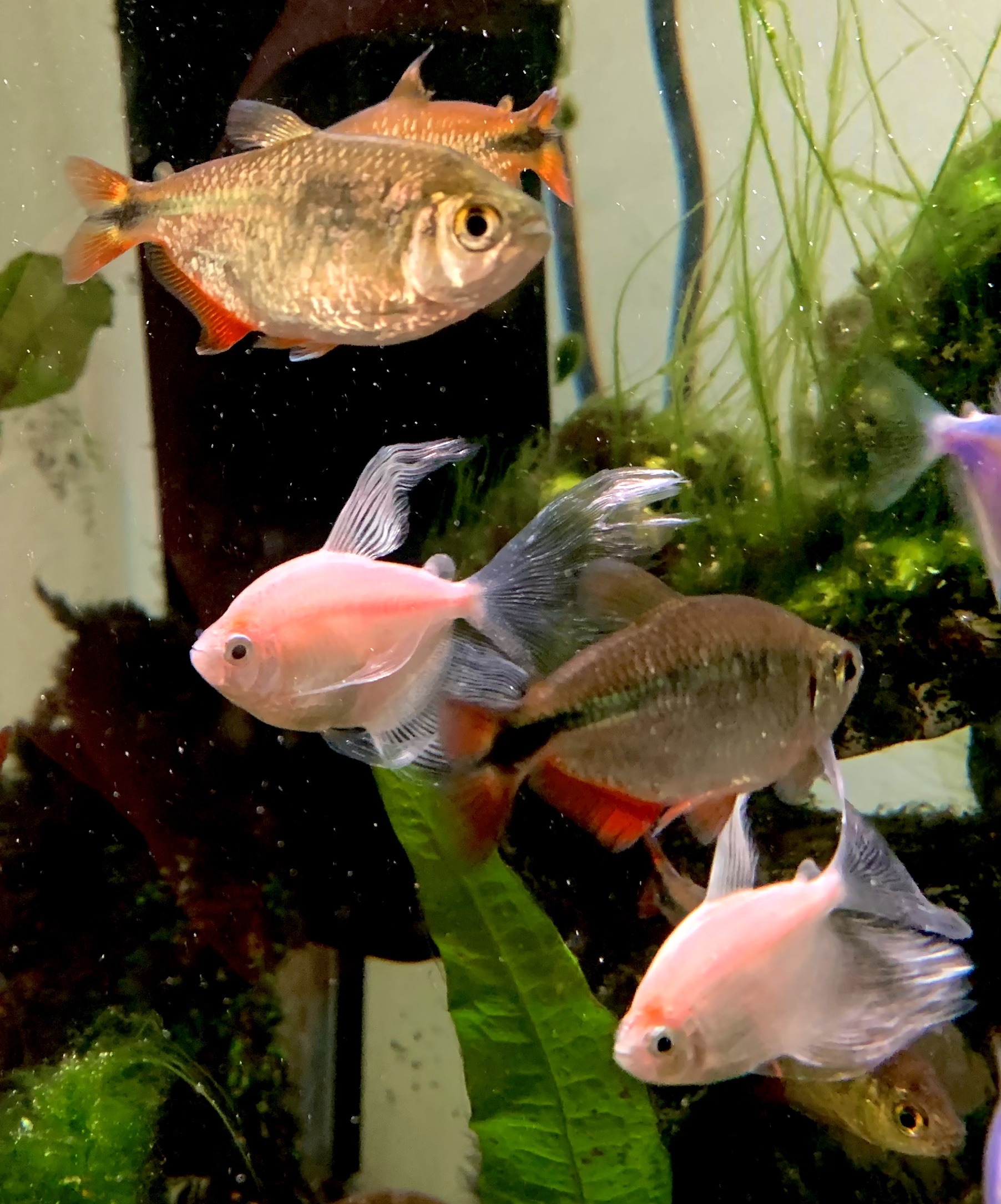
All my life, I’ve taken care of a variety of fish in tanks. As a child, I would watch, mesmerized, as our tropical fish glided around, happily exploring their little ten gallon world. I willingly cleaned away the algae, rinsed the gravel and changed the filter. As a teenager, I boasted at least three different tanks aerating away in my bedroom, my own little aquacultural world.
During college and medical school, I chose to share my room with goldfish and bettas, thriving on their contentment within a clear glass bowl. I didn’t think of them as emotional support animals, but there was a joy obvious in their albeit limited existence: they still thrived when I was away, not missing me, but were always thrilled when I fed them, and tolerated my messing with their home maintenance.
My current aquarium is over thirty years old and boasts over two dozen fish and plenty of furry algae and plants. Some of my watery friends have lived a decade or more and when they pass, I miss them. Even the dozen koi and goldfish in our farm pond have expressive faces and individual personalities that I’ve gotten to know well as they come when I call.
I’m not a fisherman so can’t imagine sorting these finned friends good from bad as the parable suggests will happen in the kingdom of God. I know the heart of compassion I feel for these animals I’m responsible for, as I know and have experienced the compassion of our Creator.
I would hope when the time comes that I end up in His net, that He’ll look at me, at my blemishes and wounds and the number of hooks in my mouth from the times I’ve been caught and escaped, and if He’s not yet ready to take me home, or deems me not yet ready to leave this world, He’ll throw me back to keep trying to get it right.
He has promised us that.
Rainbows, rainbows, rainbows.
May my eyes see, my ears hear, my heart understand. He prepares me with parable.
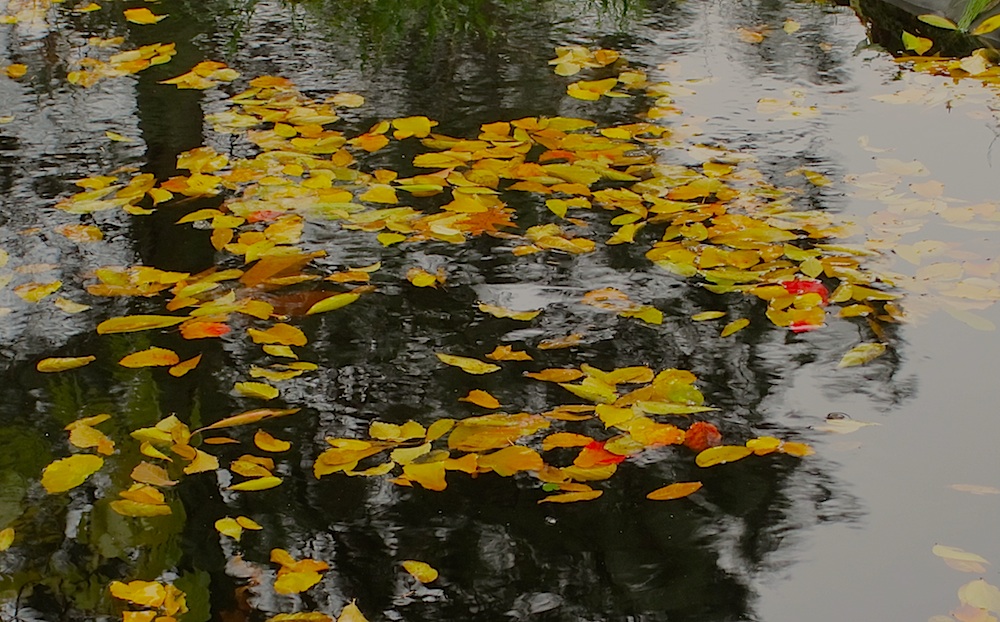
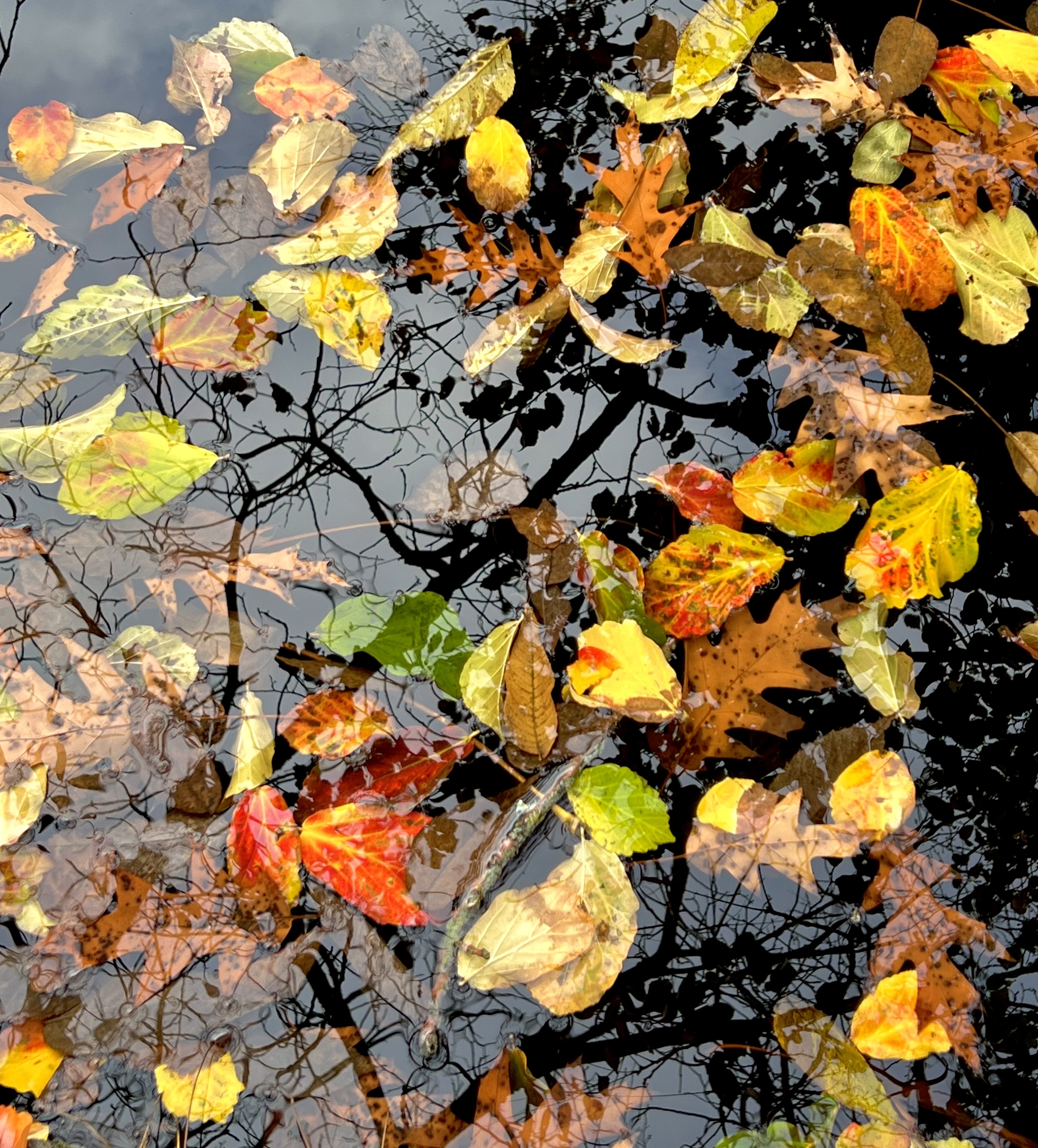
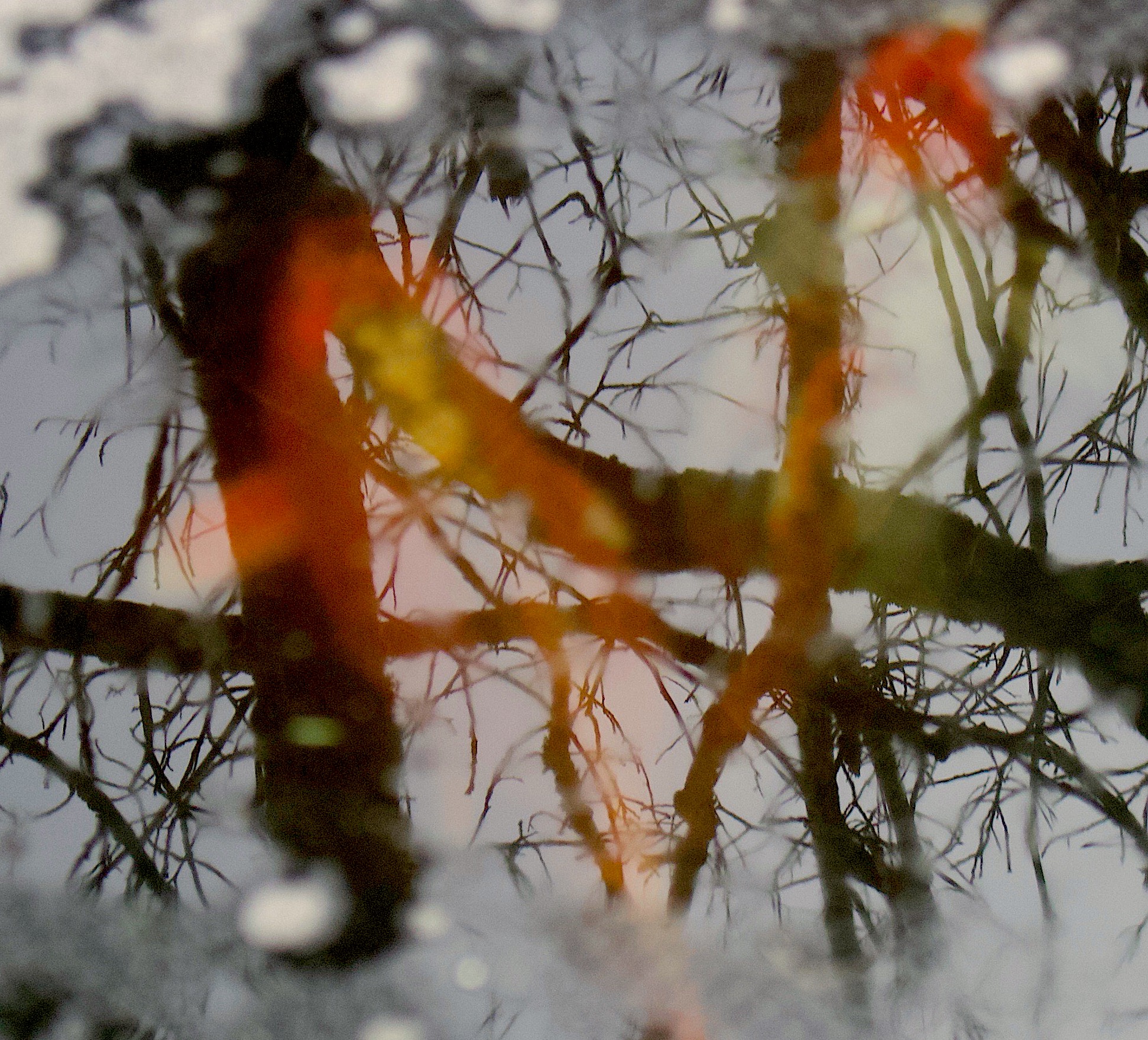
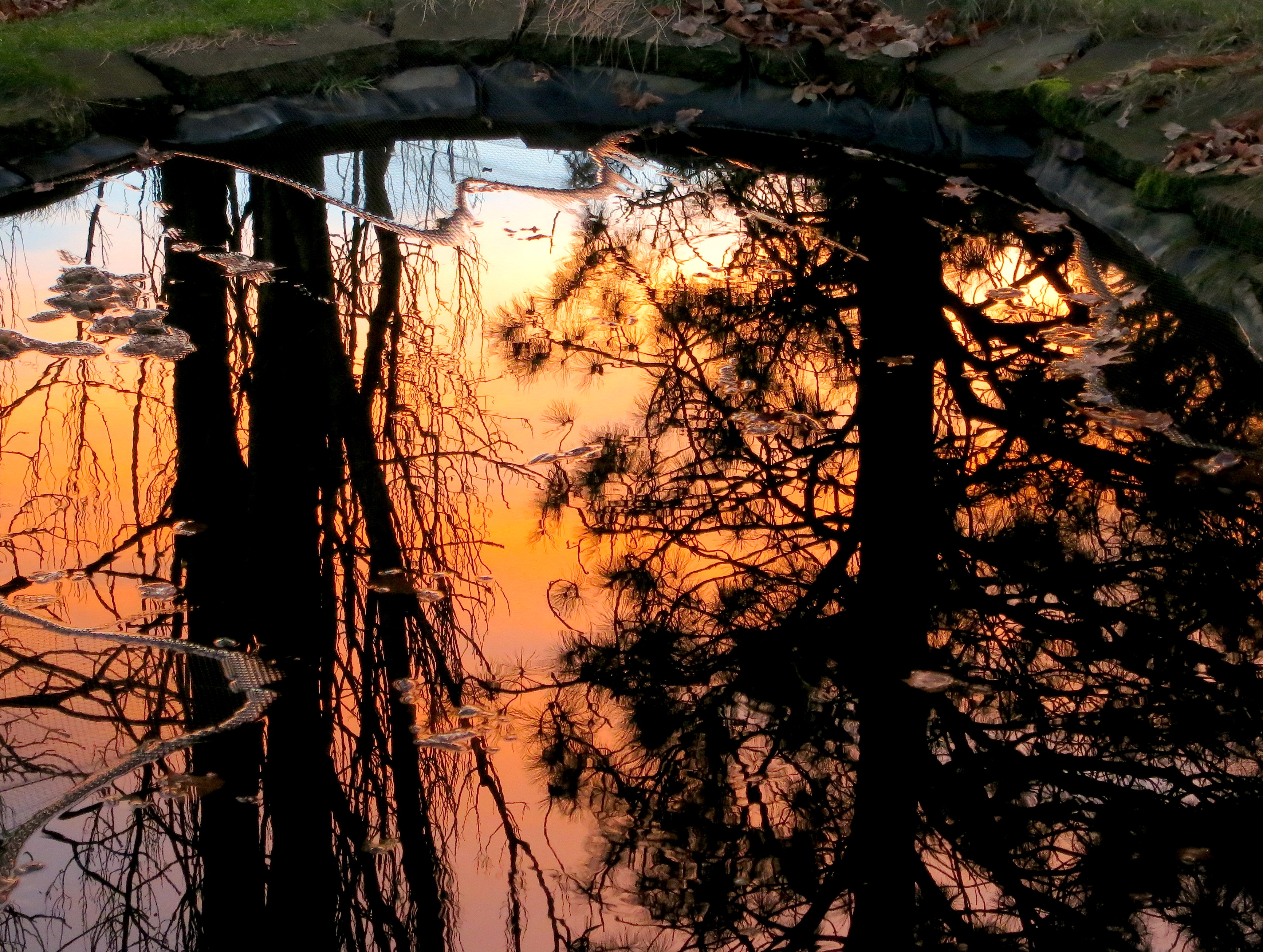
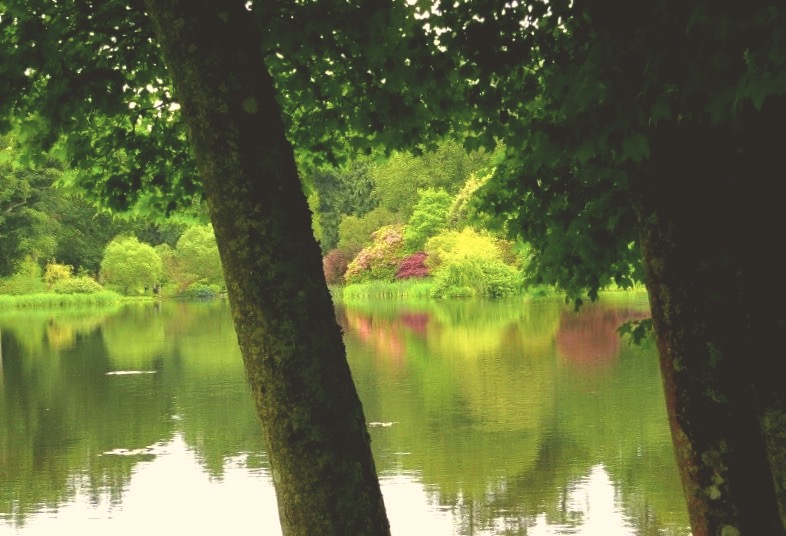
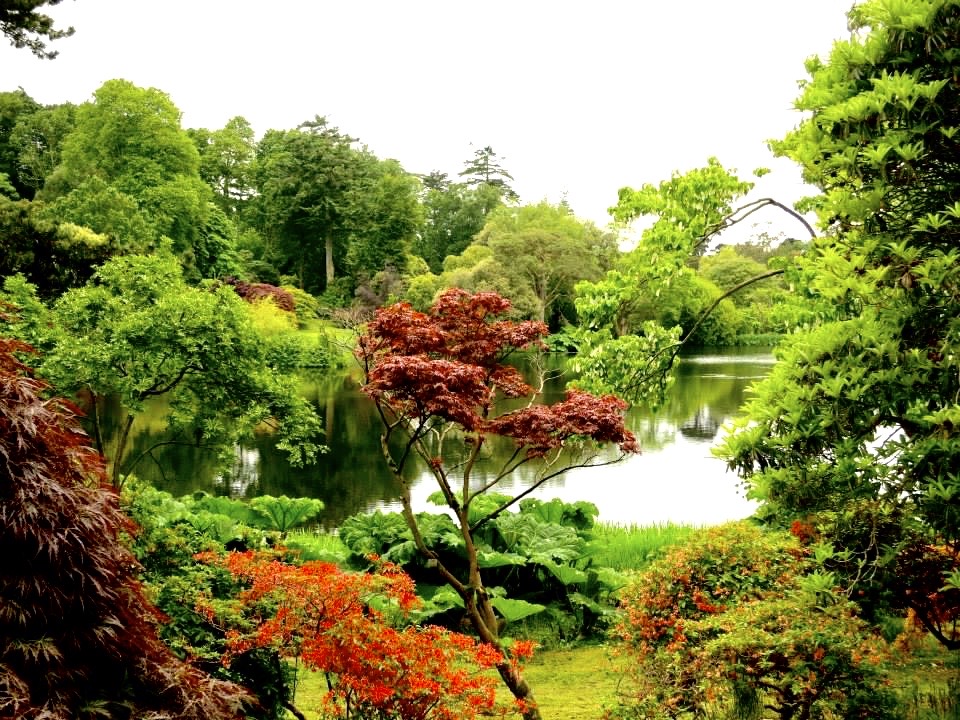
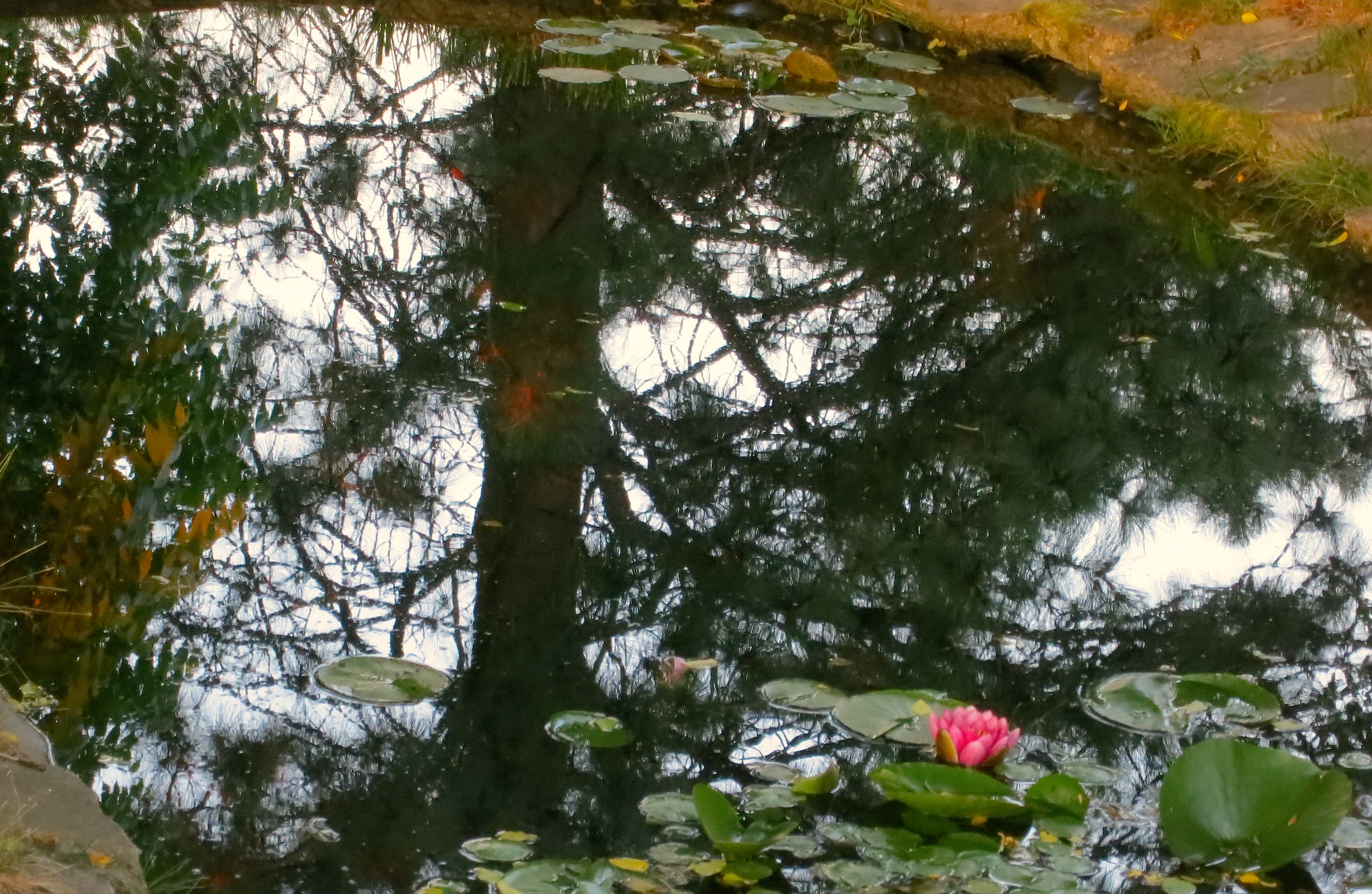
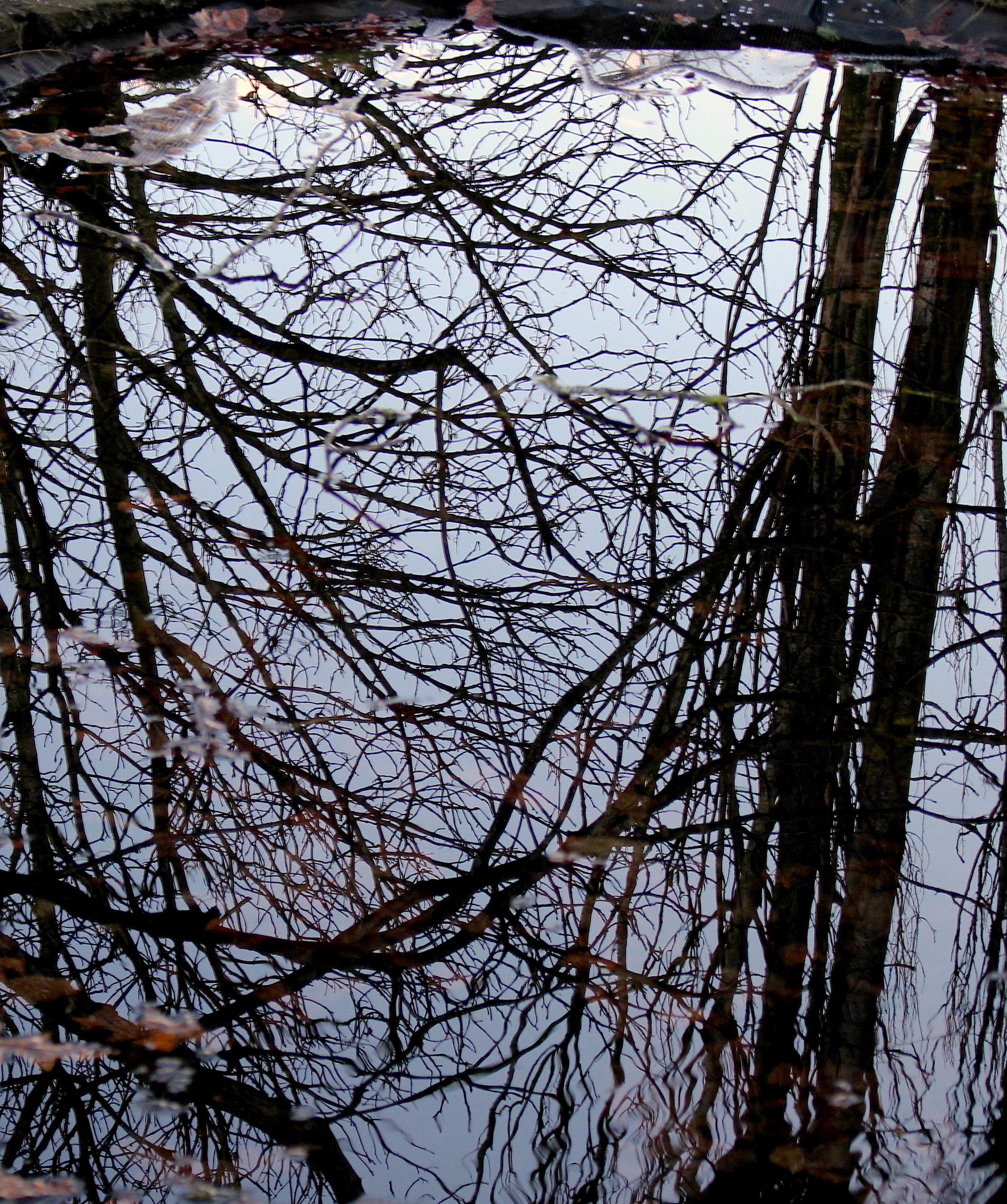
The winter woods beside a solemn river are twice seen– once as they pierce the brittle air, once as they dance in grace beneath the stream.
In air these trees stand rough and raw, branch angular in stark design– in water shimmer constantly, disconnect as in a dream, shadowy but more alive than what stands stiff and cold before our eyes.
Our eyes at peace are solemn streams and twice the world itself is seen– once as it is outside our heads, hard frozen now and winter-dead, once as it undulates and shine beneath the silent waters of our minds.
When rivers churn or cloud with ice the world is not seen twice– yet still is there beneath the blinded surface of the stream, livelier and lovelier than we can comprehend and waiting, always waiting, to be seen. ~Parker Palmer “The Winter Woods”
May today there be peace within. May I trust God that I am exactly where I am meant to be. May I not forget the infinite possibilities that are born of faith. May I use those gifts that I have received, and pass on the love that has been given to me. May I be content knowing I am a child of God. Let this presence settle into my bones, and allow my soul the freedom to sing, dance, praise and love. It is there for each and every one of us. ― adapted from Thérèse de Lisieux
And which am I today?
…the naked bones of trunk and branches reaching stark into the gray winter sky
or a shimmering reflection, soft and variable, in the water-mirror at my feet?
…do I change with the wind or the surfacing of a fish, one moment still and quiet and another moment churned and churning?
…or do I remain steadfast and predictable, unchanging in the storm?
Knowing there are infinite possibilities, I am content to be both, knowing as reflection, I’m still called to be an image of God, sometimes clear and unquestioning, and other times cloudy and barely discernible.
Yet I know, without seeing or reflecting Him perfectly, He is there.
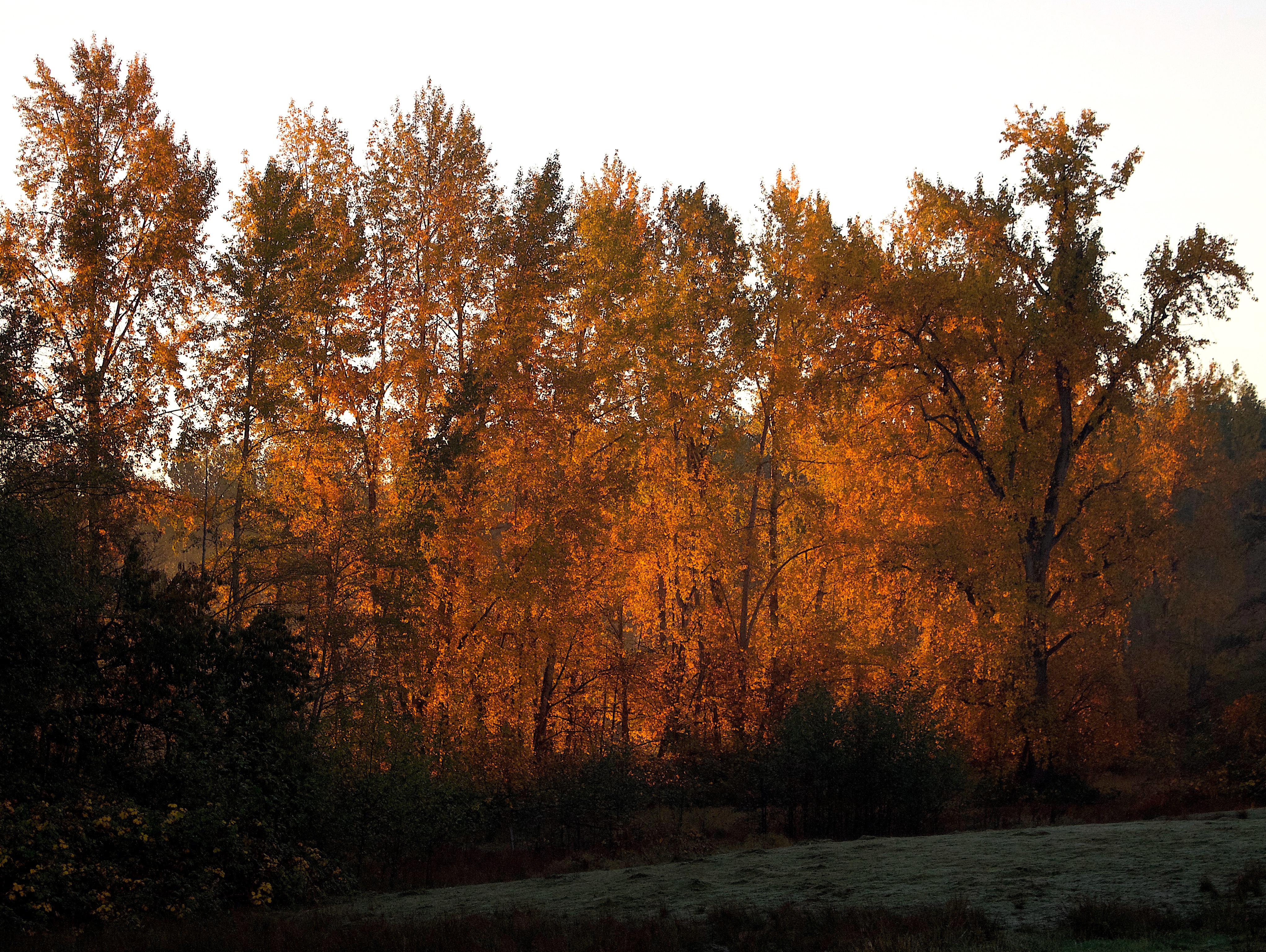
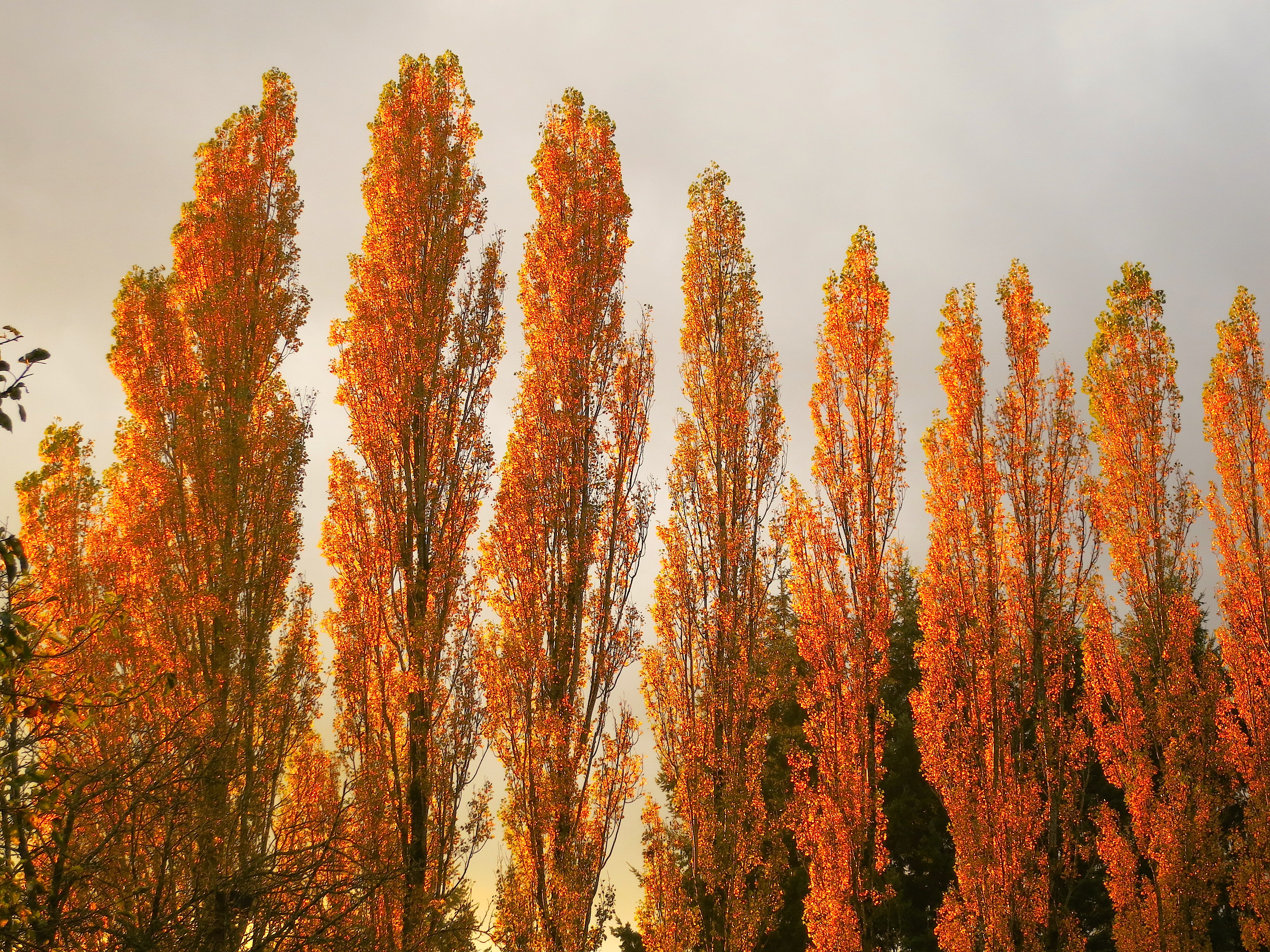
Look, the trees are turning their own bodies into pillars
of light, are giving off the rich fragrance of cinnamon and fulfillment,
the long tapers of cattails are bursting and floating away over the blue shoulders
of the ponds, and every pond, no matter what its name is, is
nameless now. Every year everything I have ever learned
in my lifetime leads back to this: the fires and the black river of loss whose other side
is salvation, whose meaning none of us will ever know. To live in this world
you must be able to do three things: to love what is mortal; to hold it
against your bones knowing your own life depends on it; and, when the time comes to let it go, to let it go. ~Mary Oliver, “In Blackwater Woods”
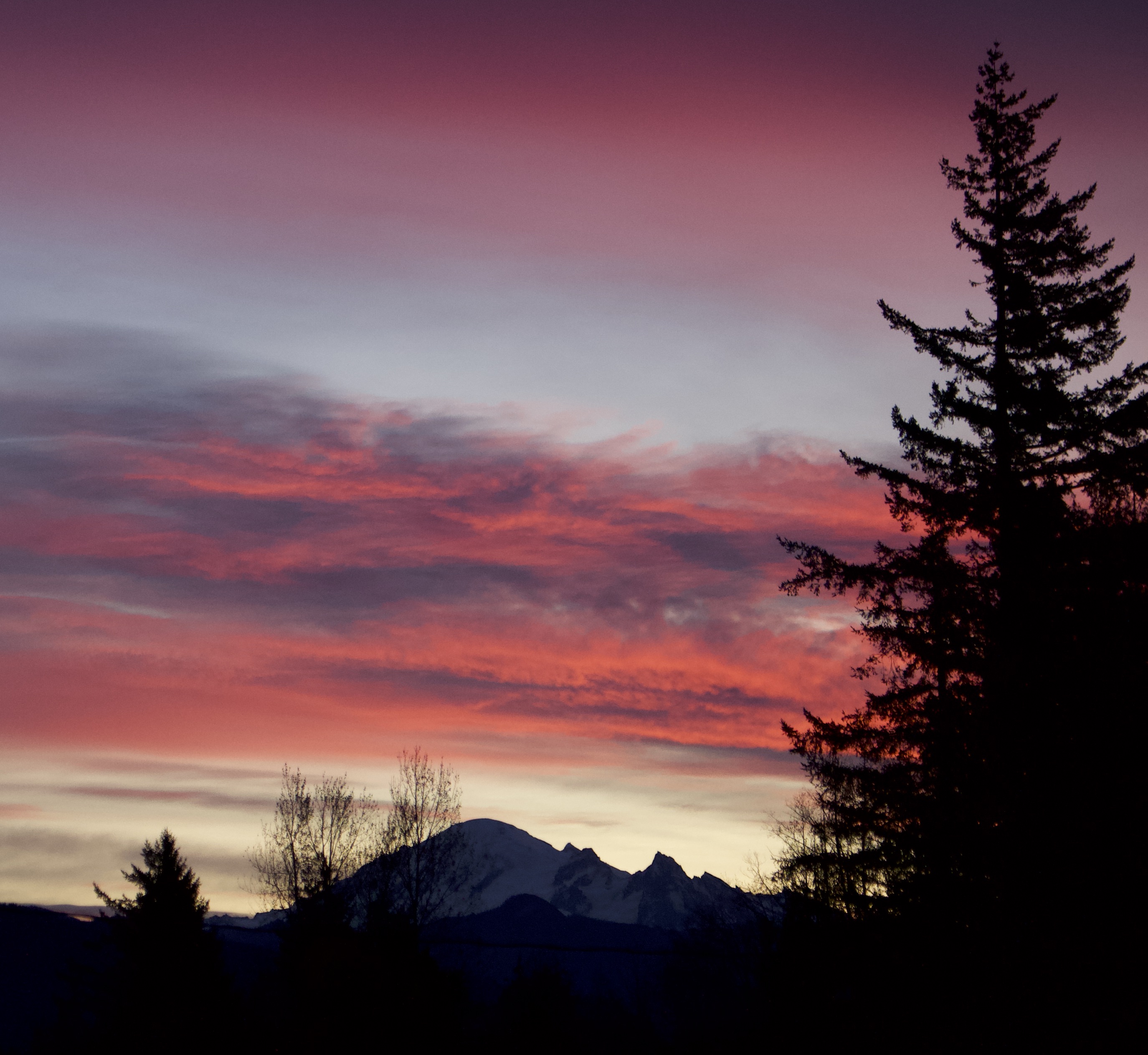
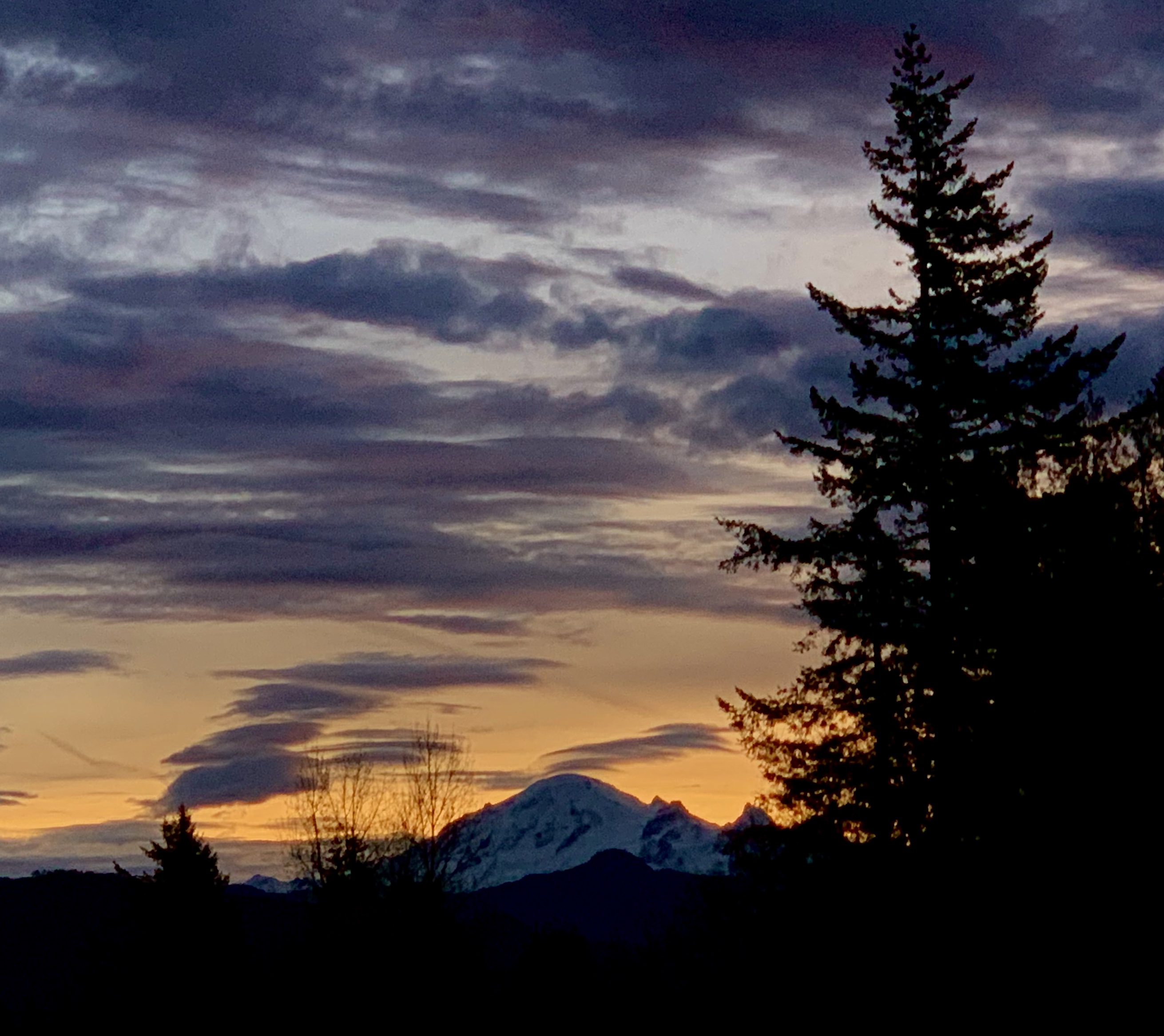
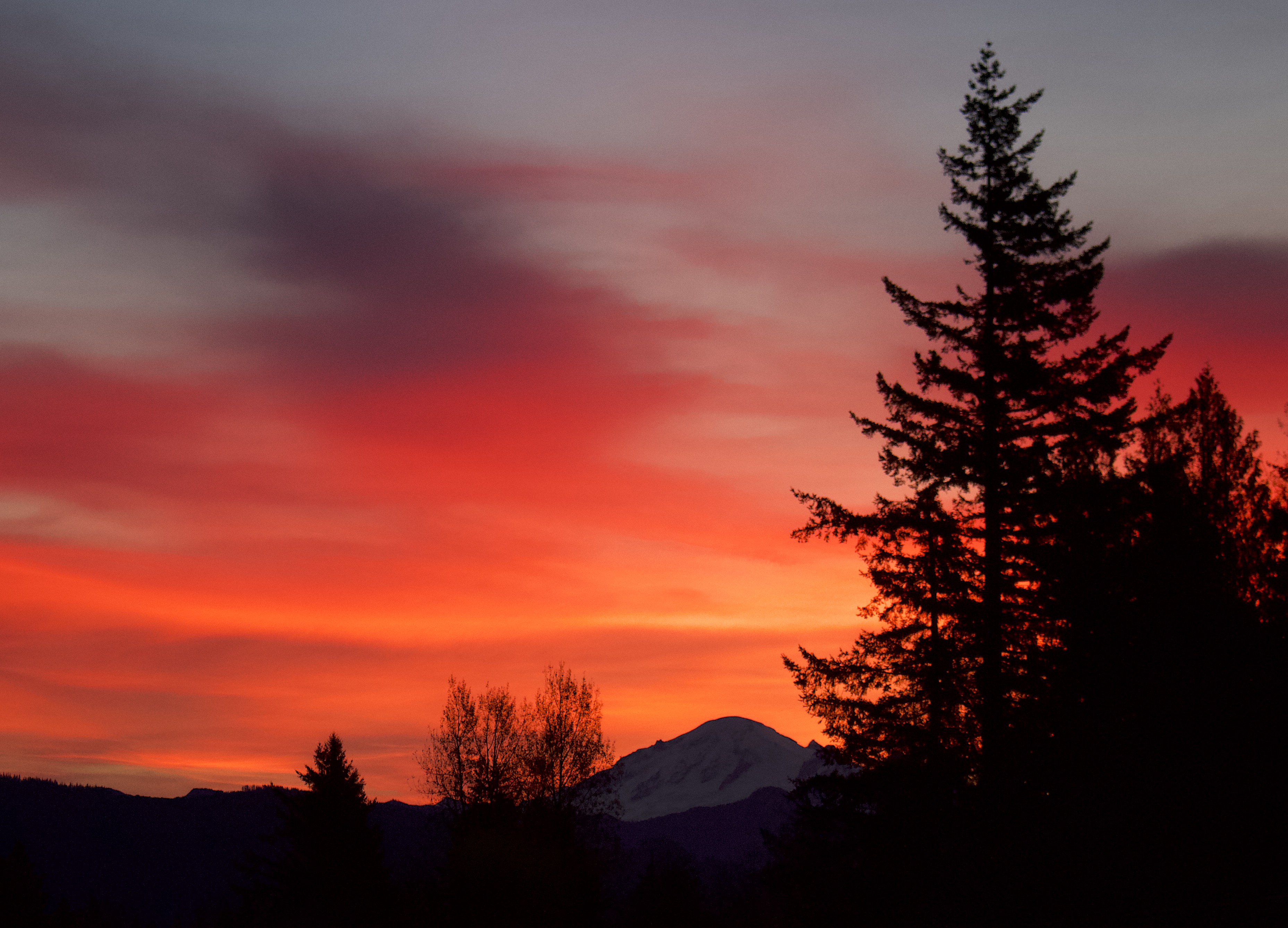
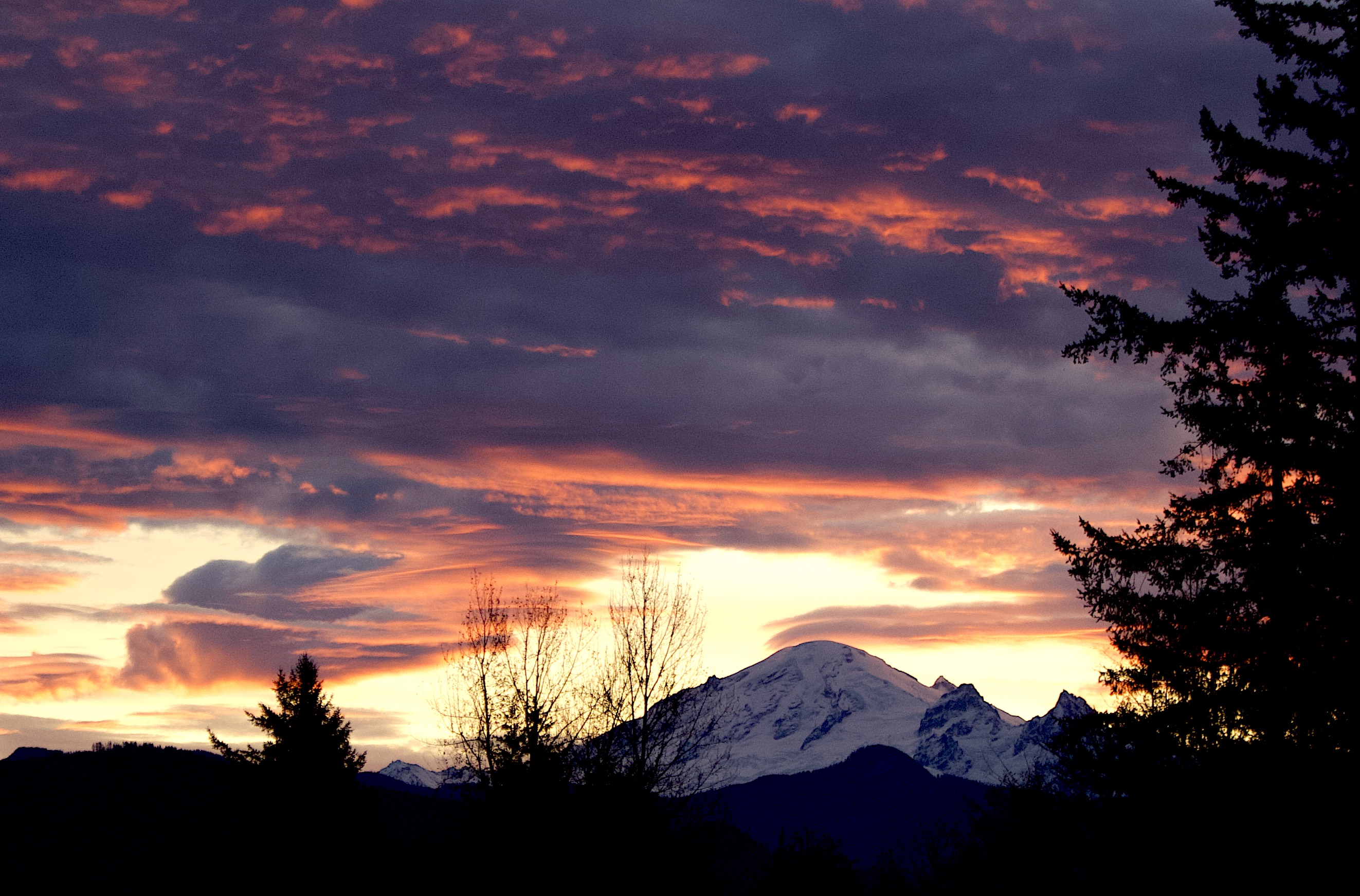
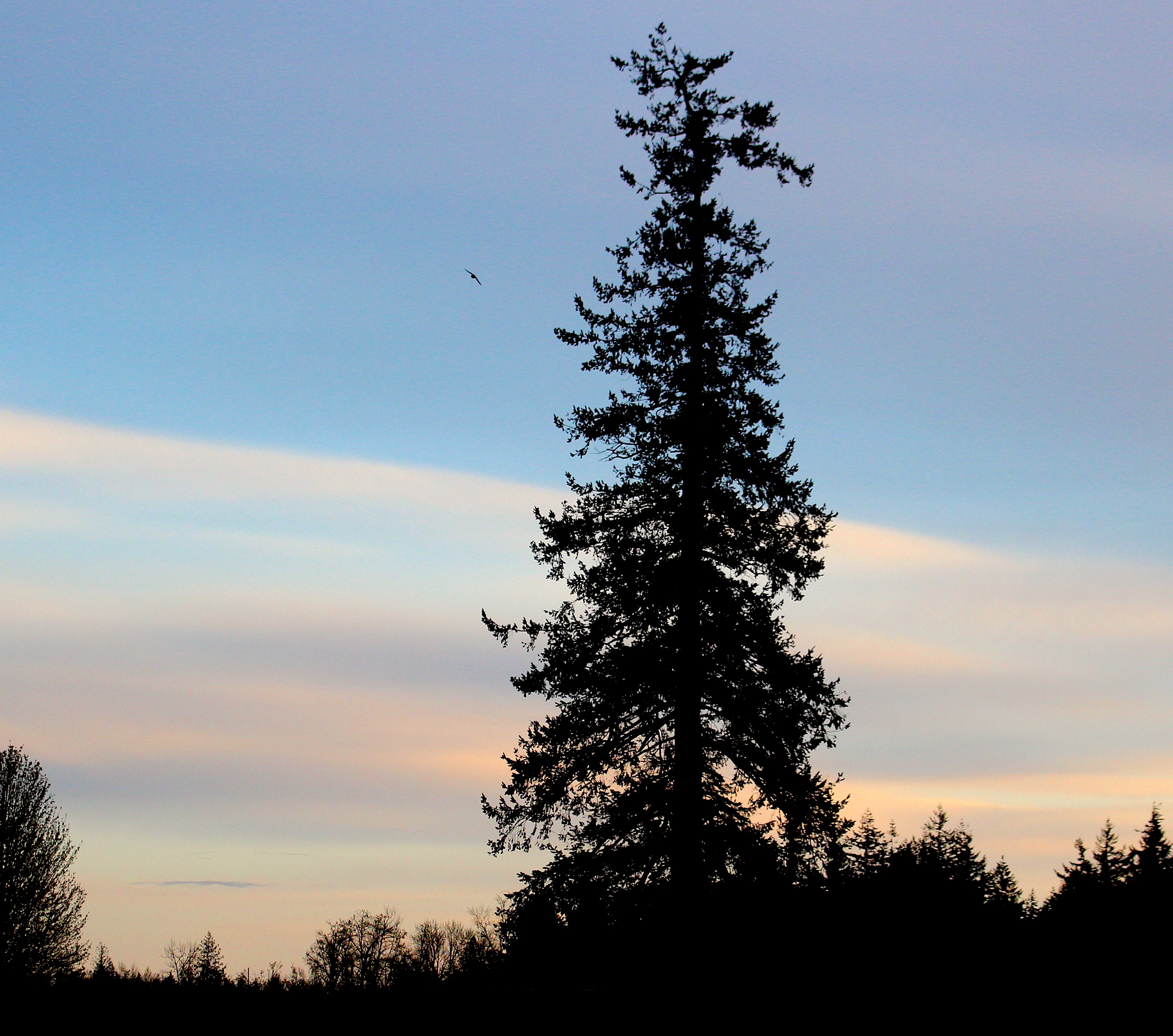
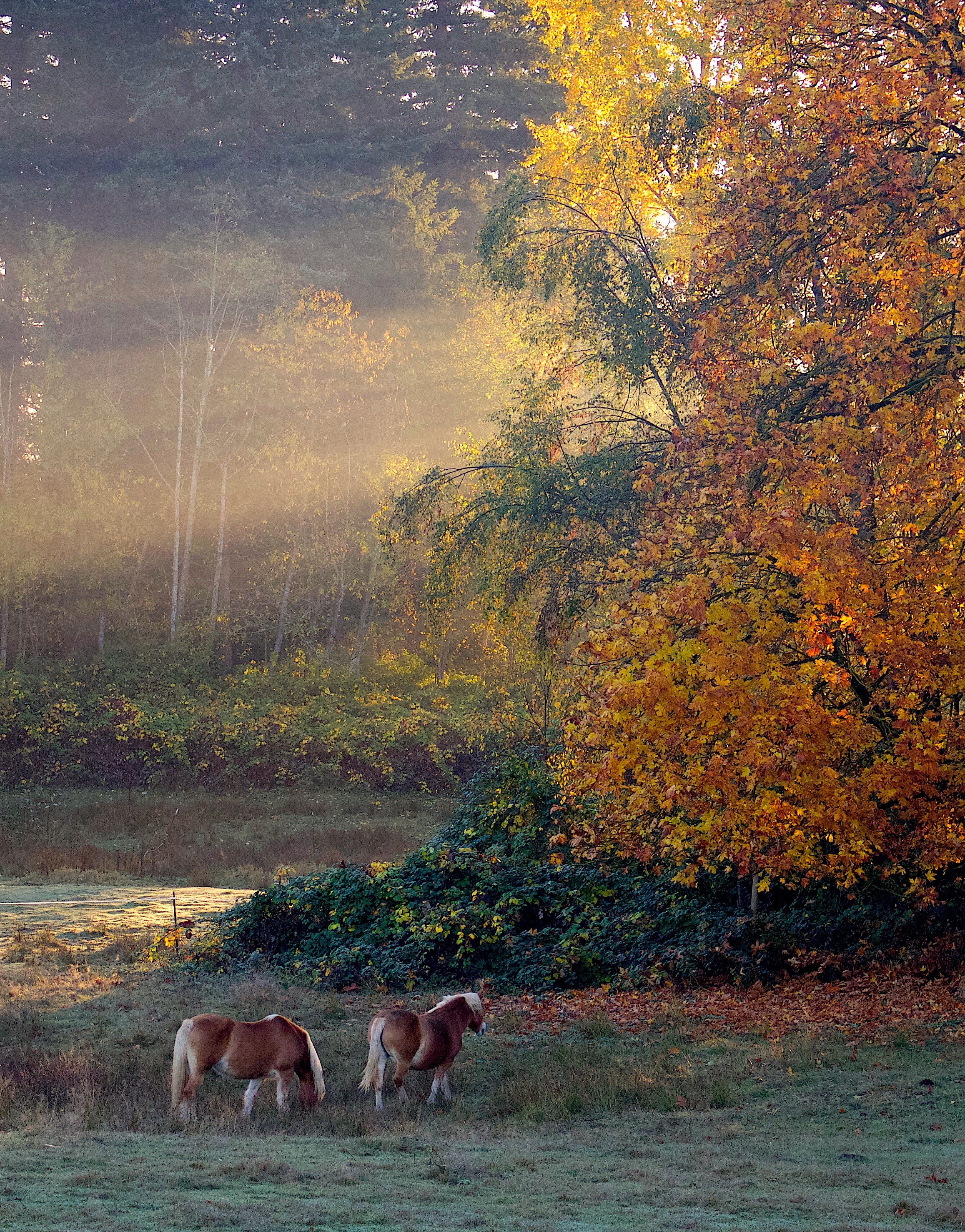
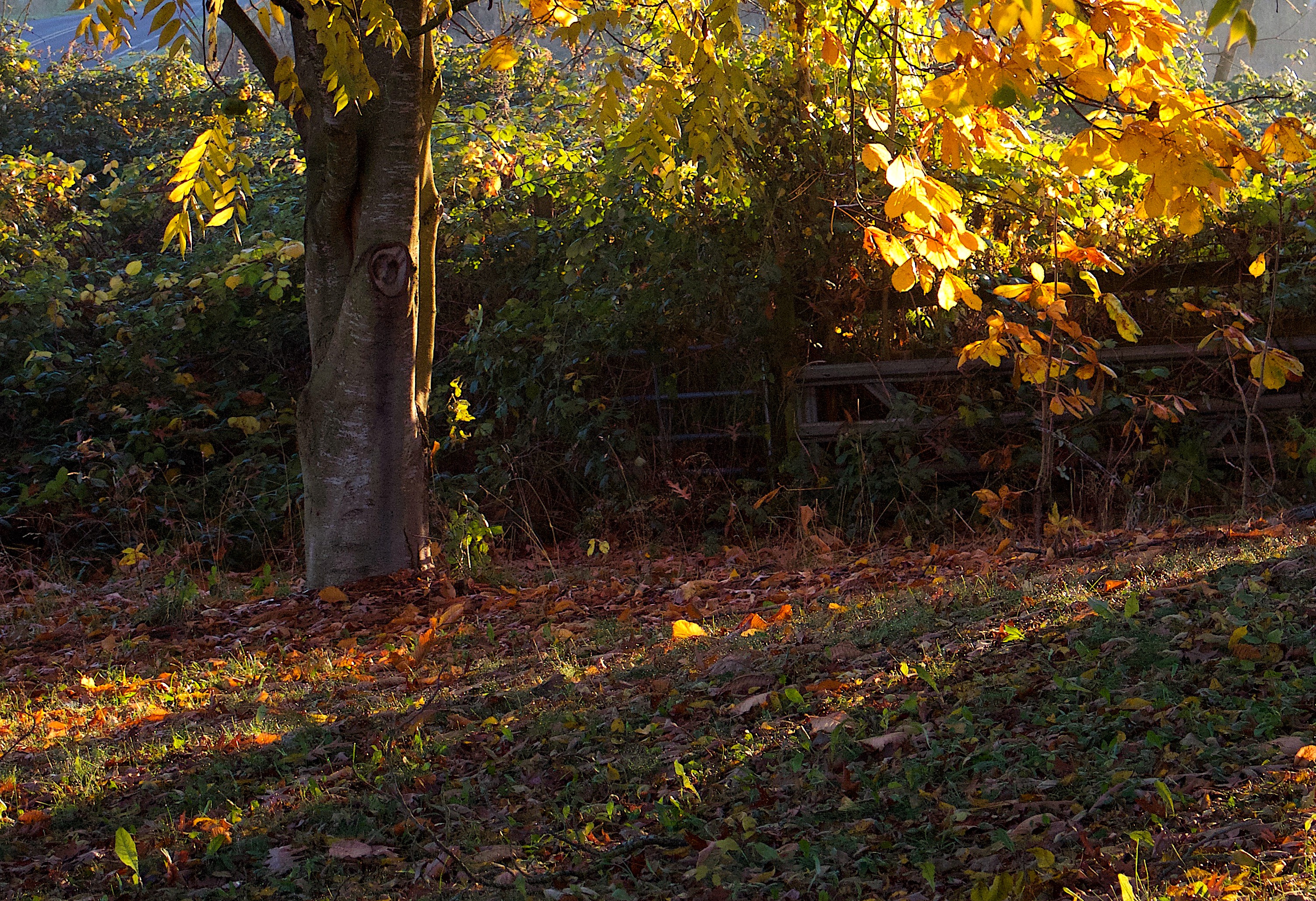
When the earth and all that is in it glows golden
with the fire of sunrise and sunset;
just opening my eyes to see it
takes my breath away.
I can’t imagine letting it go
even when what is left is ashes
of the darkest night.
On the other side of loss is salvation.
My life depends on it.







 Barnstorming