You can change the world with a hot bath, if you sink into it from a place of knowing you are worth profound care, even when you are dirty and rattled. Who knew? ~Anne Lamott from Small Victories: Spotting Improbable Moments of Grace
As a farmer, I spend at least a part of every day muddy and up to my knees and elbows in muck, especially now that the fall rains have arrived, turning beast and barnyard to mush.
I call my barn life “the real stuff” as the rest of the hours of the day are spent dealing with “virtual stuff ” which nonetheless leaves me dirty and rattled. Frankly, I prefer the real over virtual muck even though it smells worse, leaves my fingernails hopelessly grimy and is obvious to everyone where I’ve been.
The stains of the rest of my day are largely invisible to all but me and far harder to scrub away. But even virtual grime can become overwhelming.
It is so much easier for me to deal with what is produced in the barnyard over the mess of political lack of integrity and moral standing. What soils me can be washed off and I’m restored for another day of wallowing in my muck boots. There is true grace in drawing up clean warm water, soaping with the suds that truly cleanse by sinking down into a deep tub of renewal.
God knows how badly we all could use a good scrubbing right now.
AI image created for this post
One-Time
Monthly
Yearly
Make a one-time or recurring donation to support daily Barnstorming posts
Every happening, great and small, is a parable whereby God speaks to us, and the art of life is to get the message. ~Malcolm Muggeridge
I’ve banked nothing, or everything. Every day the chores need doing again. Early in the morning, I clean the horse barn with a manure fork. Every morning, it feels as though it could be the day beforeor a year ago or a year before that. With every pass, I give the fork one final upward flick to keep the manure from falling out, and every day I remember where I learned to do that and from whom. Time all but stops.
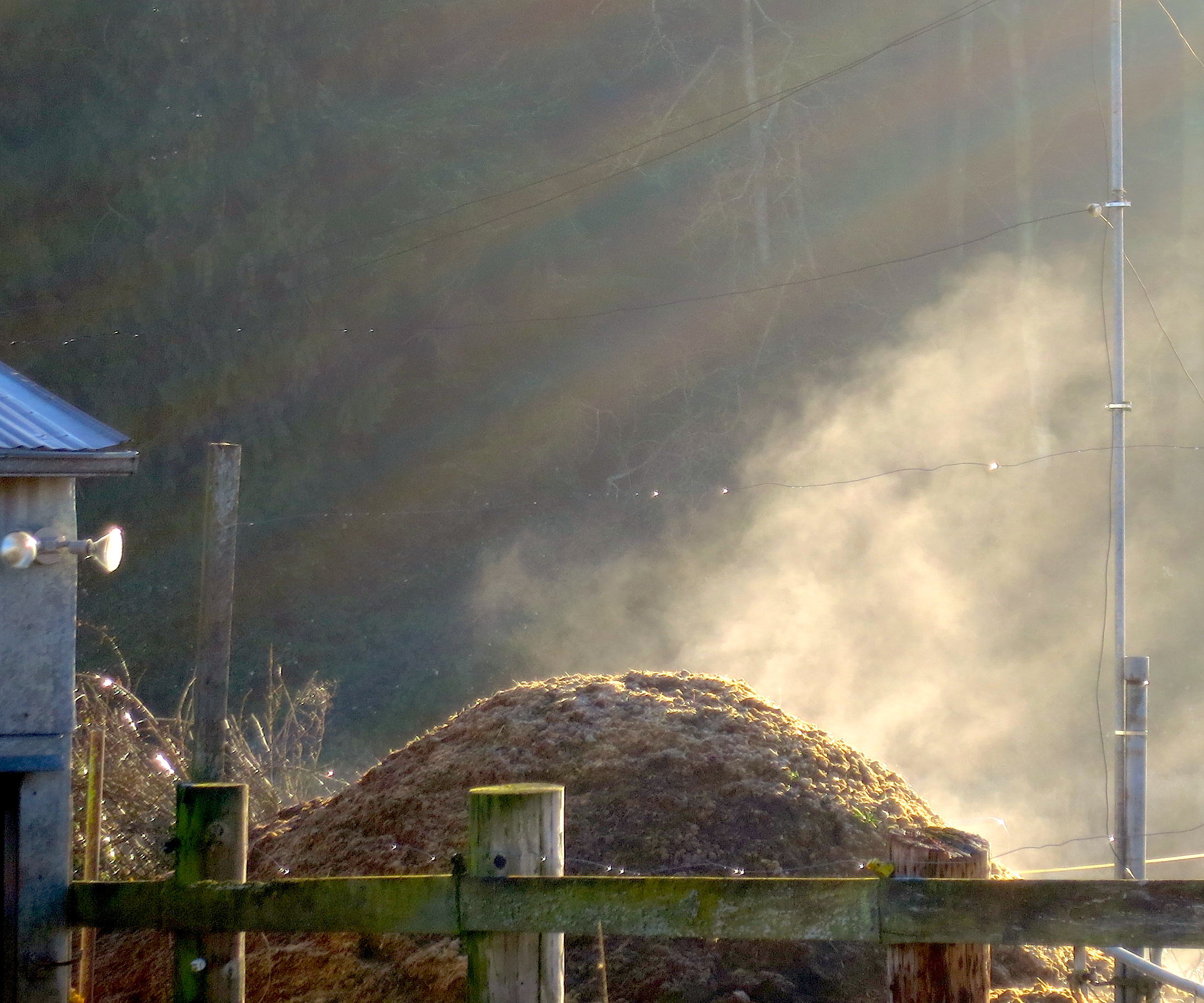
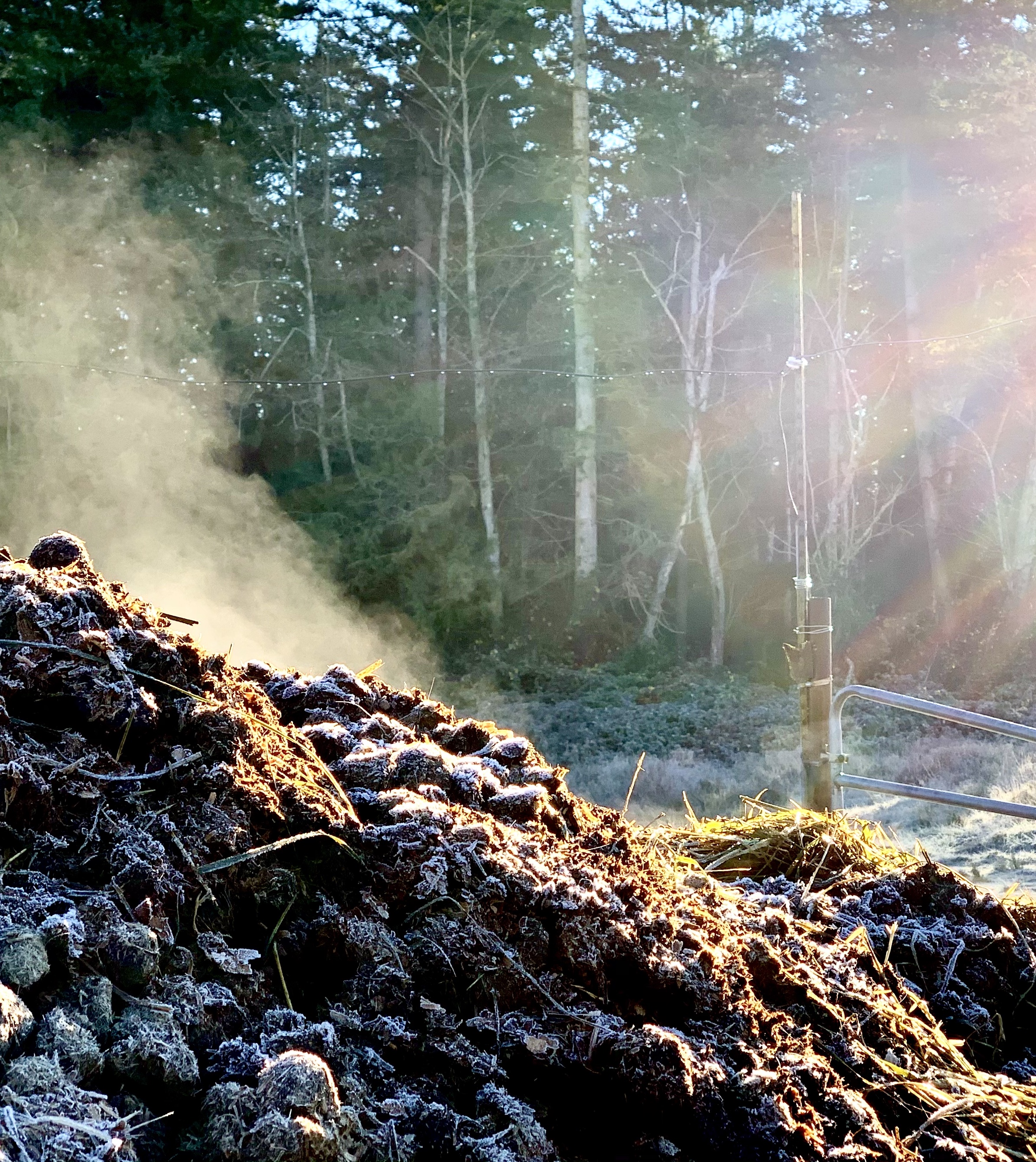
But then I dump the cart on the compost pile. I bring out the tractor and turn the pile, once every three or four days. The bucket bites and lifts, and steam comes billowing out of the heap. It’s my assurance that time is really moving forward, decomposing us all in the process. ~Verlyn Klinkenborg from More Scenes from the Rural Life
He <the professor> asked what I made of the other Oxford students so I told him: They were okay, but they were all very similar… they’d never failed at anything or been nobodies, and they thought they would always win. But this isn’t most people’s experience of life.
He asked me what could be done about it. I told him the answer was to send them all out for a year to do some dead-end job like working in a chicken processing plant or spreading muck with a tractor. It would do more good than a gap year in Peru.
He laughed and thought this was tremendously witty. It wasn’t meant to be funny. ~James Rebanks from The Shepherd’s Life (how a sheep farmer succeeds at Oxford and then goes back to the farm)
It is done by us all, as God disposes, from the least cast of worm to what must have been in the case of the brontosaur, say, spoor of considerable heft, something awesome.
We eat, we evacuate, survivors that we are. I think these things each morning with shovel and rake, drawing the risen brown buns toward me, fresh from the horse oven, as it were, or culling the alfalfa-green ones, expelled in a state of ooze, through the sawdust bed to take a serviceable form, as putty does, so as to lift out entire from the stall.
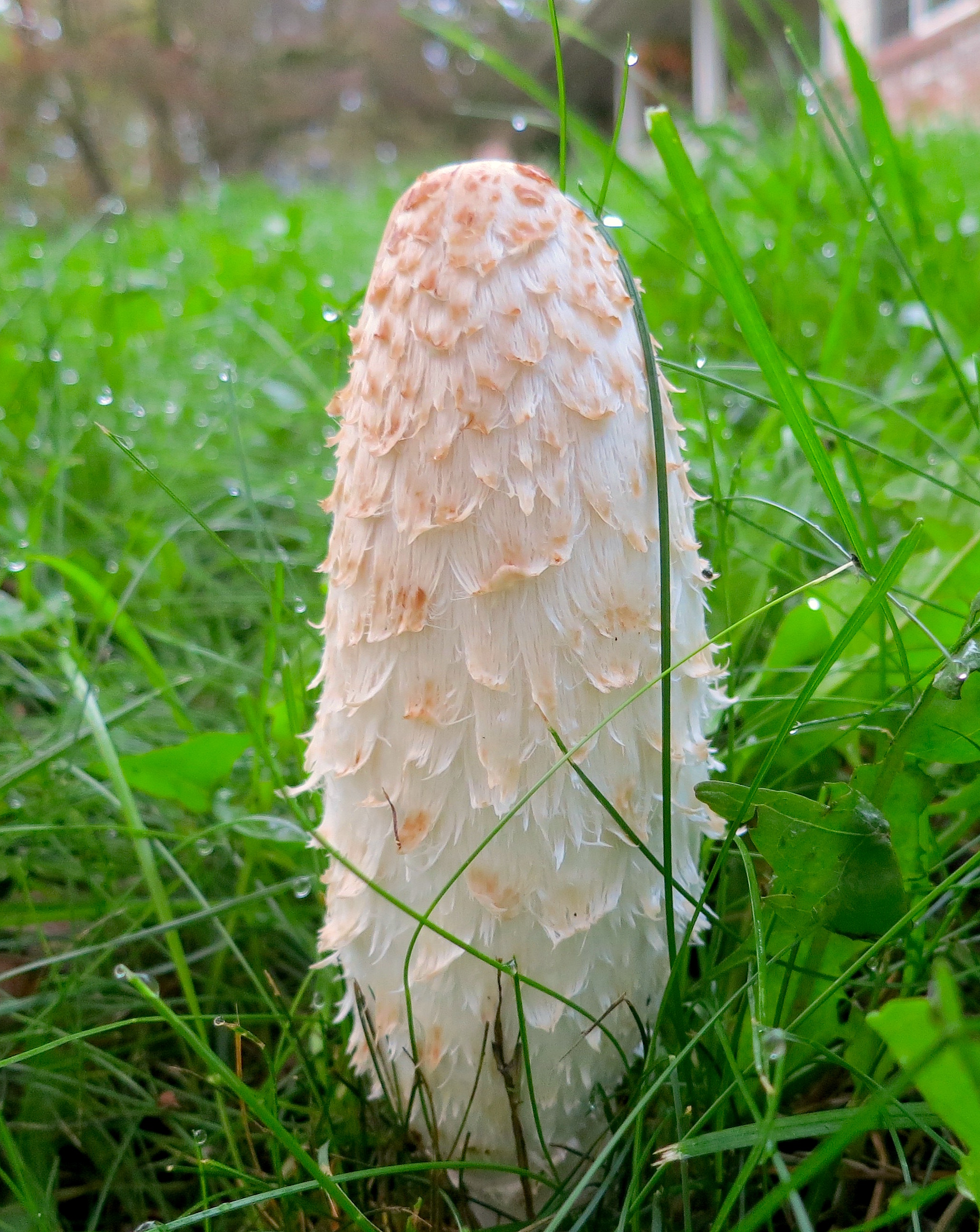
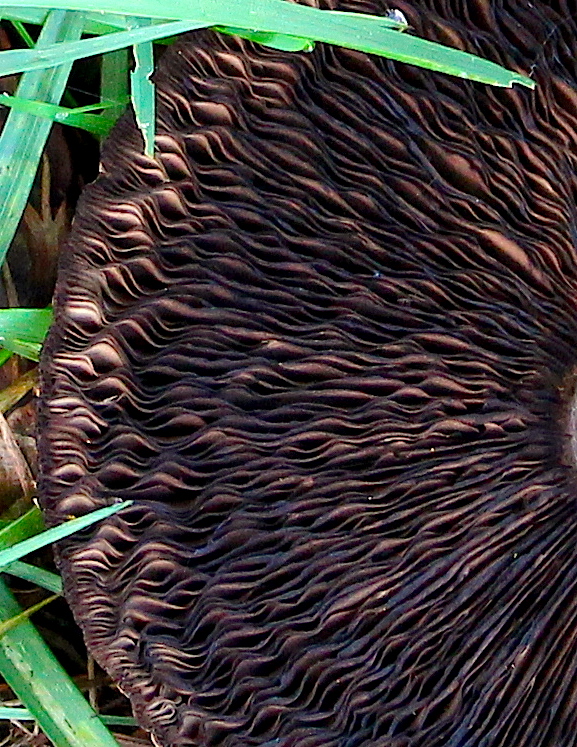
And wheeling to it, storming up the slope, I think of the angle of repose the manure pile assumes, how sparrows come to pick the redelivered grain, how inky-cap coprinus mushrooms spring up in a downpour.
I think of what drops from us and must then be moved to make way for the next and next. However much we stain the world, spatter it with our leavings, make stenches, defile the great formal oceans with what leaks down, trundling off today’s last barrow-full, I honor shit for saying: We go on. ~Maxine Kumin “The Excrement Poem”
For well over thirty years, my husband and I have spent over an hour a day shoveling manure out of numerous horse stalls and I’m a better person for it. Wintertime chores are always a character-building experience. It feels like everything, myself included, is in a process of decomposition.
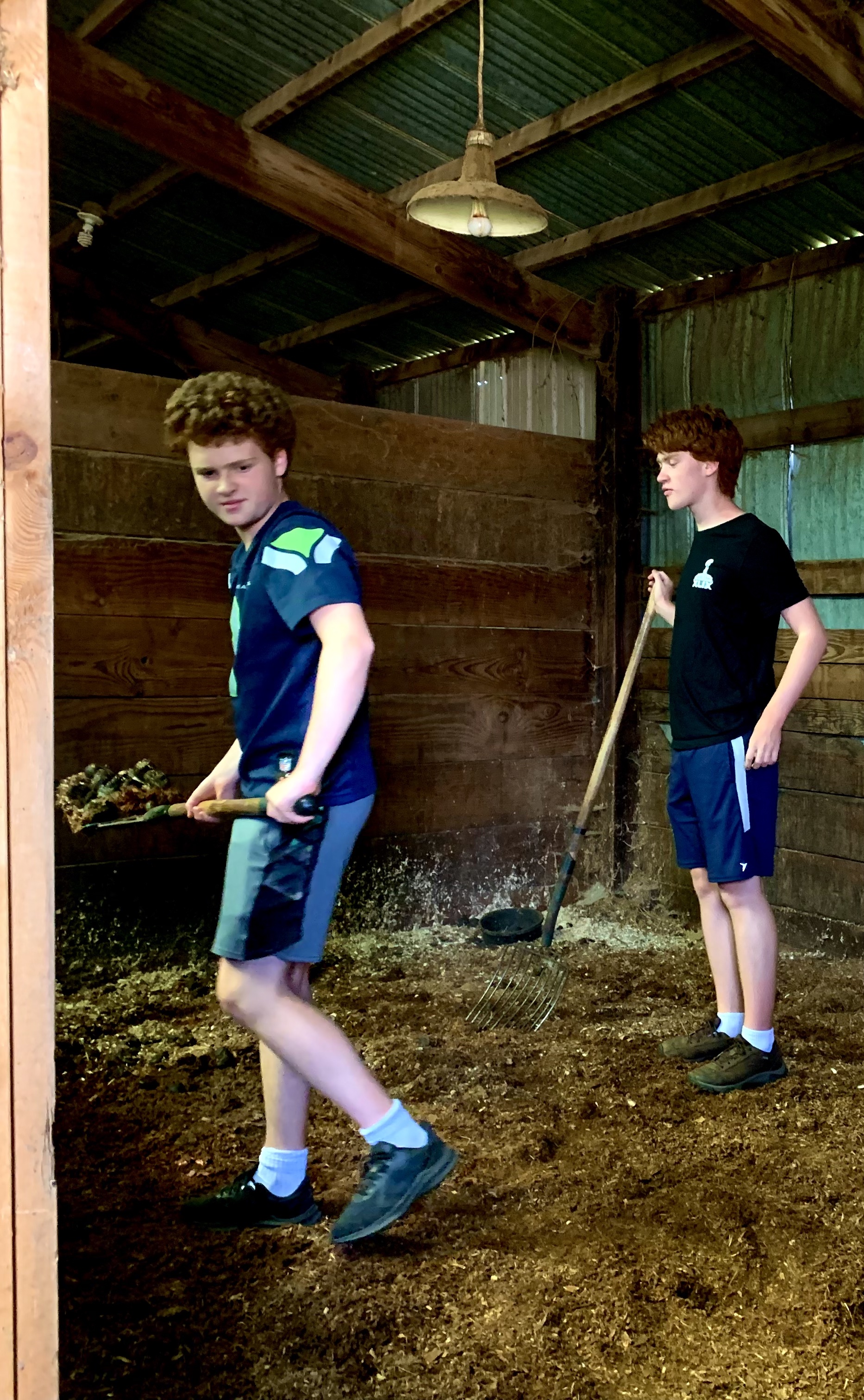
Everyone should spend time simply mucking out every day; I think the world would generally be a better place. I enlist any young person who happens to visit our farm as an object lesson in better living through composting the stinky stuff in our lives.
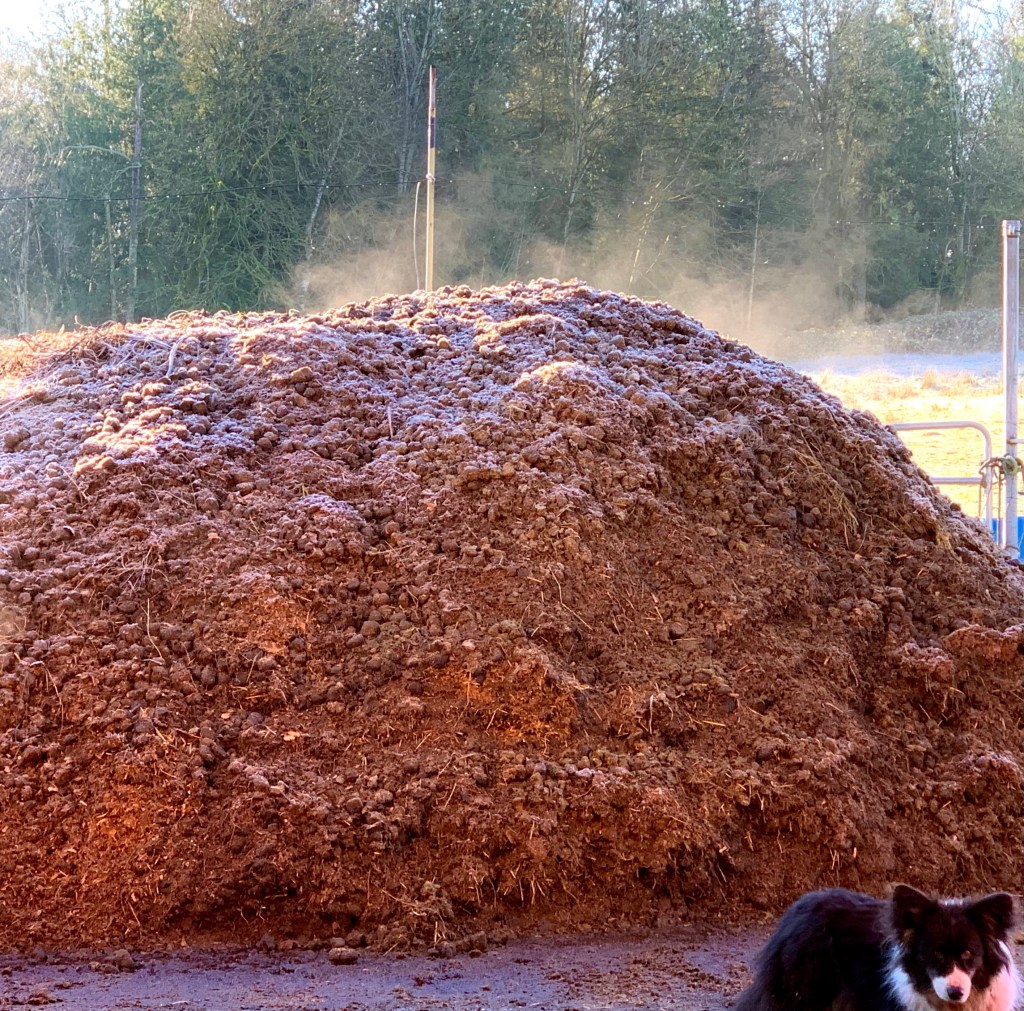
Wheeled to a mountainous pile in our barnyard, our daily collection of manure happily composts year round, becoming rich fertilizer in a matter of months through a crucible-like heating process of organic chemistry, bacteria and earthworms. Nothing mankind has achieved quite matches the drama of useless and basically disgusting stuff transforming into the essential elements needed for productive growth and survival. This is a metaphor I can <ahem> happily muck about in.
I’m in awe, every day, at being part of this process — in many ways a far more tangible improvement to the state of the world than anything else I manage to accomplish every day. The horses, major contributors that they are, act underwhelmed by my enthusiasm. I guess some miracles are relative, depending on one’s perspective, but if the horses understood that the grass they contentedly eat in the pasture, or the hay they munch on during the winter months, was grown thanks to their carefully recycled waste products, they might be more impressed.
Their nonchalance about the daily mucking routine is understandable. If they are outside, they probably don’t notice their beds are clean when they return to the stalls at night. If they are inside during the heavy rain and frozen winter days, they feel duty-bound to be in our faces as we move about their stall, toting a pitchfork and pushing a wheelbarrow. I’m a source of constant amusement as they nose my jacket pockets for treats that I never carry, as they beg for scratches on their unreachable itchy spots, and as they attempt to overturn an almost full load, just to see balls of manure roll to all corners of the stall like breaking a rack of billiard balls in a game of pool.
Wally, our former stallion, now gelded, discovered a way to make my life easier rather than complicating it. He hauled a rubber tub into his stall from his paddock, by tossing it into the air with his teeth and throwing it, and it finally settled against one wall. Then he began to consistently pile his manure, with precise aim, right in the tub. I didn’t ask him to do this. It had never occurred to me. I hadn’t even thought it was possible for a horse to house train himself. But there it is, proof that some horses prefer neat and tidy rather than the whirlwind eggbeater approach to manure distribution. After a day of his manure pile plopping, it is actually too heavy for me to pick up and dump into the wheelbarrow all in one tub load, but it takes 1/4 of the time to clean his stall than the others, and he spares all this bedding.
What a guy. He provides me unending inspiration in how to keep my own personal muck concentrated rather than spattering it about, contaminating the rest of the world.
Now, once I teach him to put the seat back down when he’s done, he’s welcome to move into the house.
One-Time
Monthly
Yearly
Make a one-time or recurring donation to support daily Barnstorming posts
Our toes, our noses Take hold on the loam Acquire the air
Nobody sees us Stops us, betrays us The small grains make room
Soft fists insist on Heaving the needles The leafy bedding
Even the paving. Our hammers, our rams, Earless and eyeless,
Perfectly voiceless, Widen the crannies, Shoulder through holes. We
Diet on water, On crumbs of shadow, Bland-mannered, asking
Little or nothing. So many of us! So many of us!
We are shelves, we are Tables, we are meek, We are edible,
Nudgers and shovers In spite of ourselves Our kind multiplies
We shall by morning Inherit the earth. Our foot’s in the door. ~Sylvia Plath from “Mushroom”
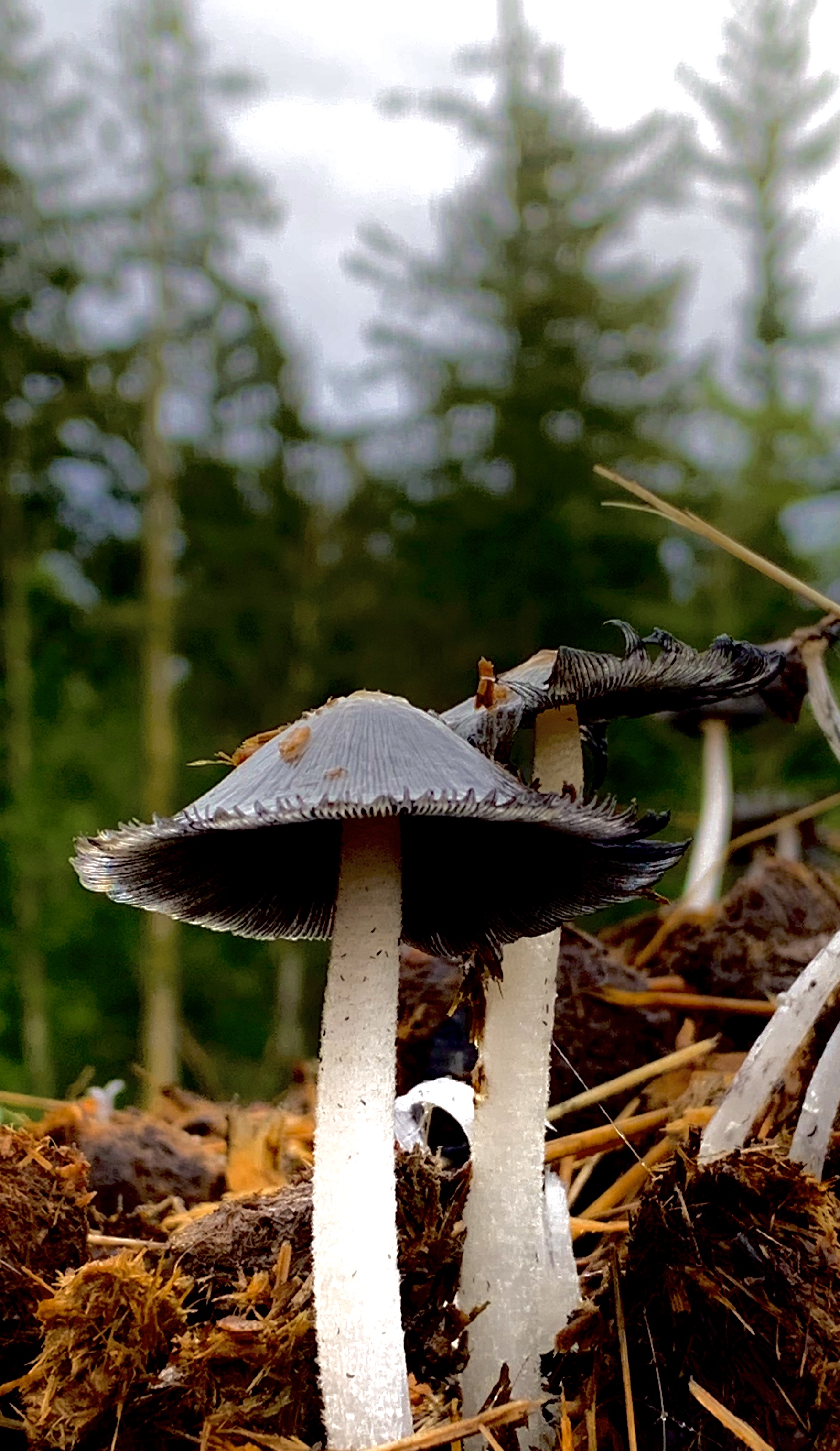
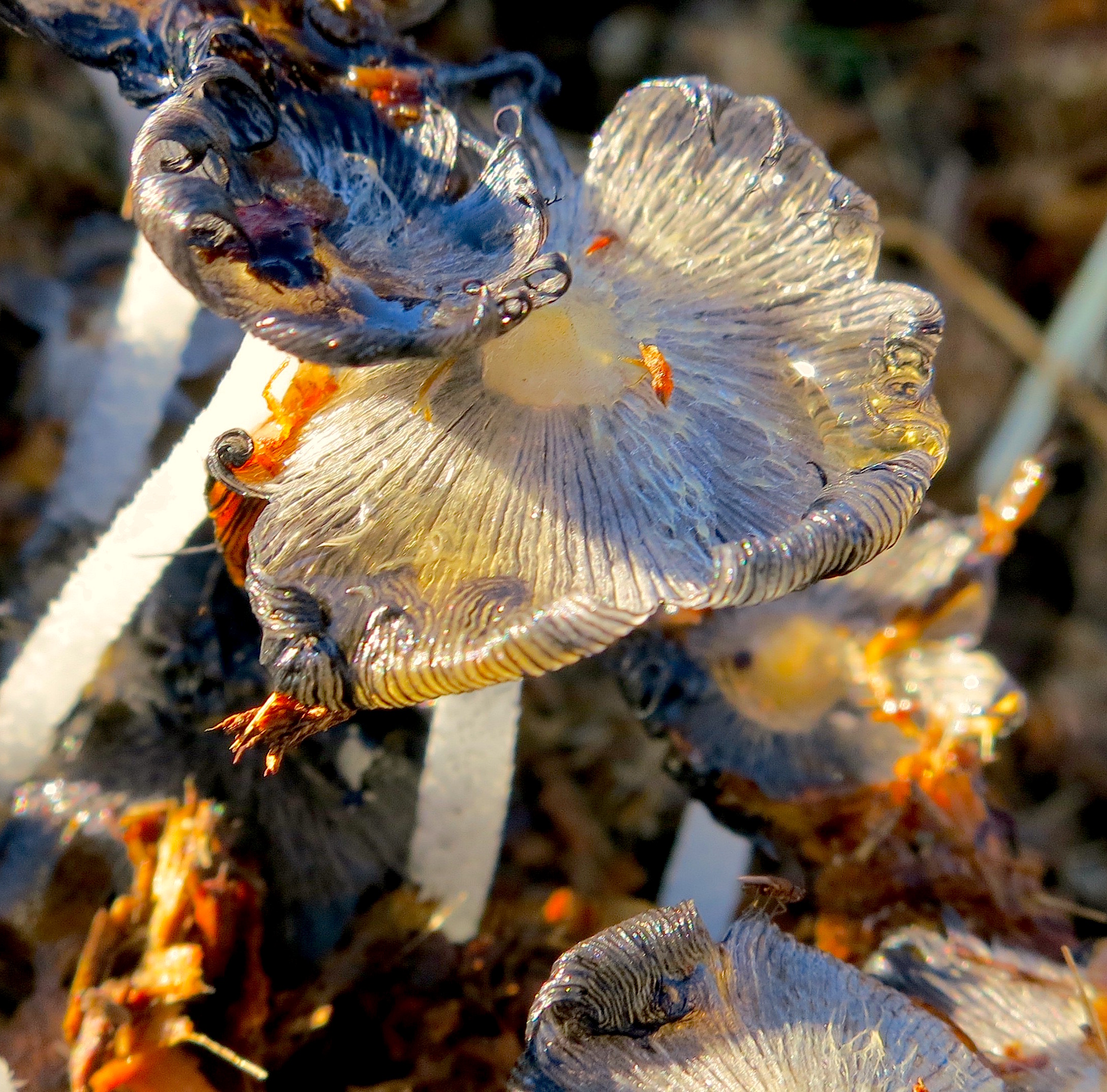
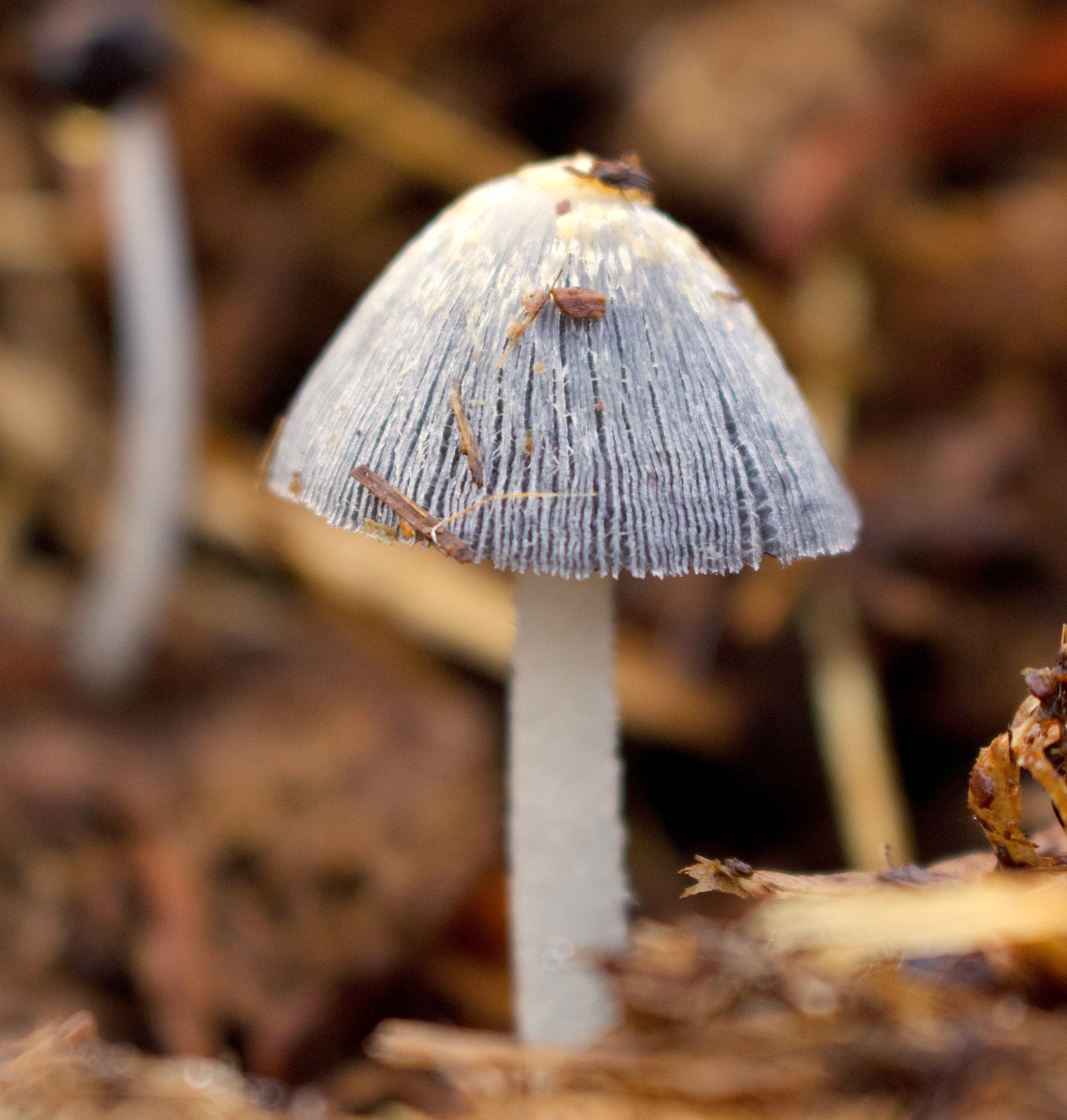
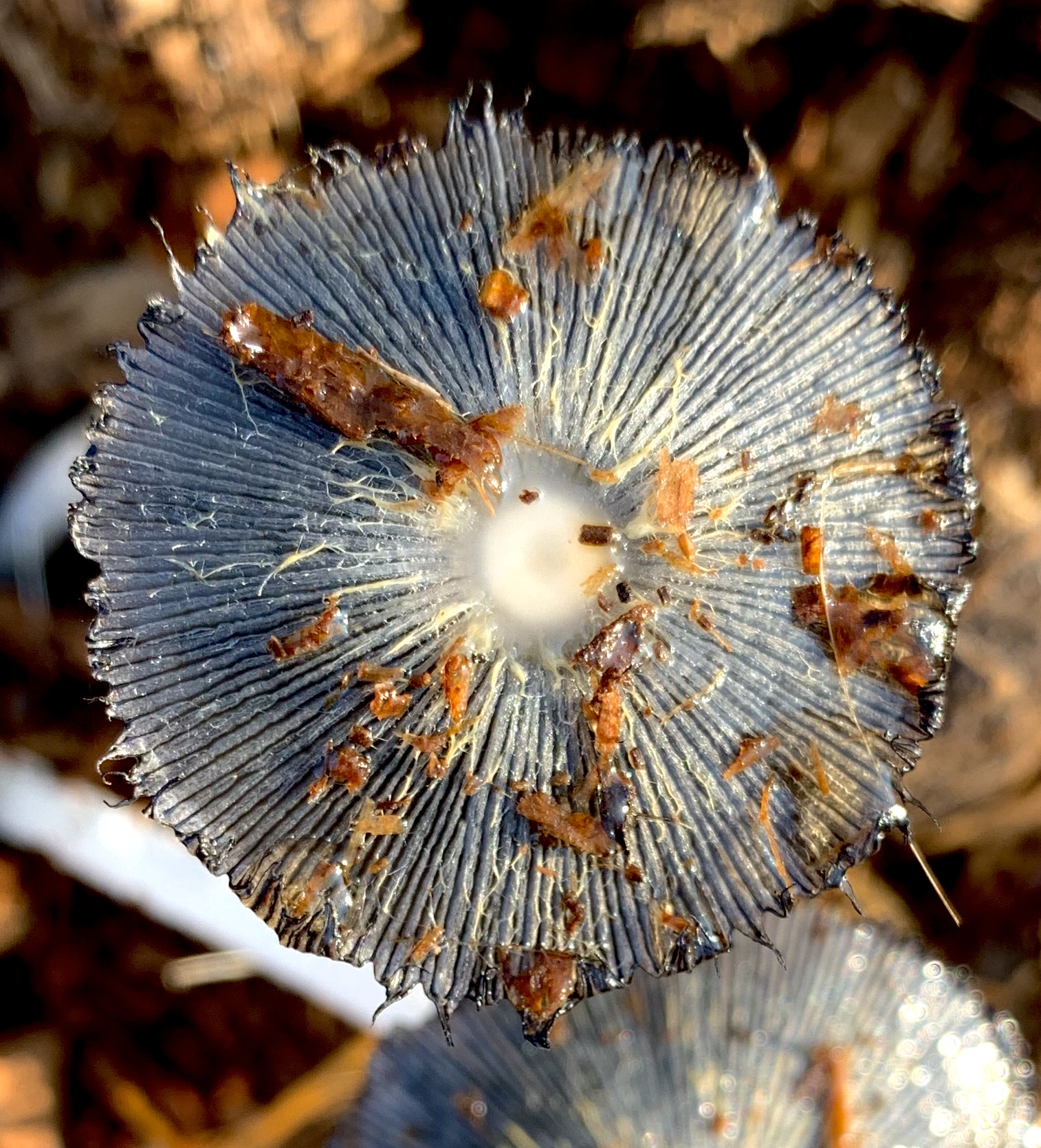
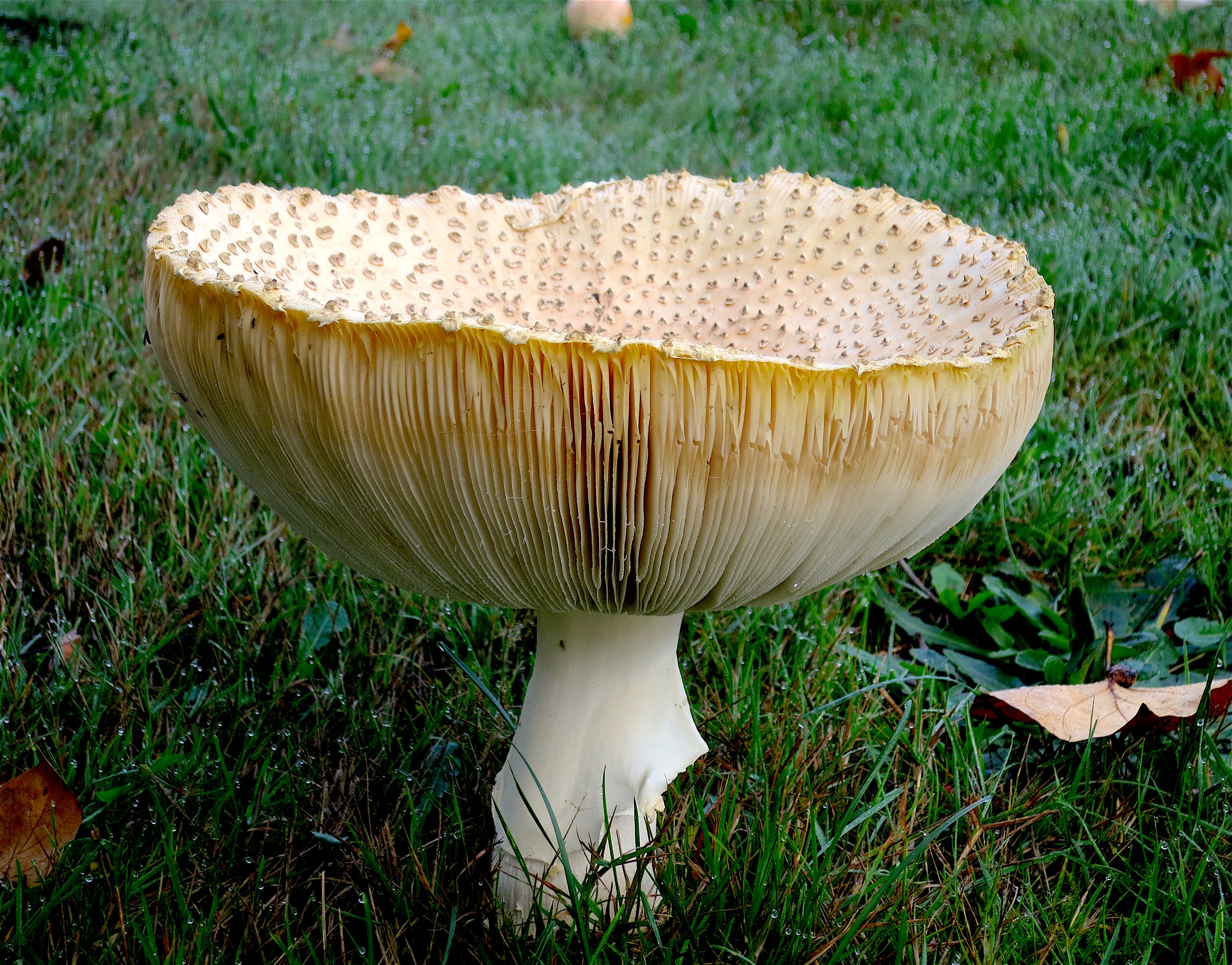
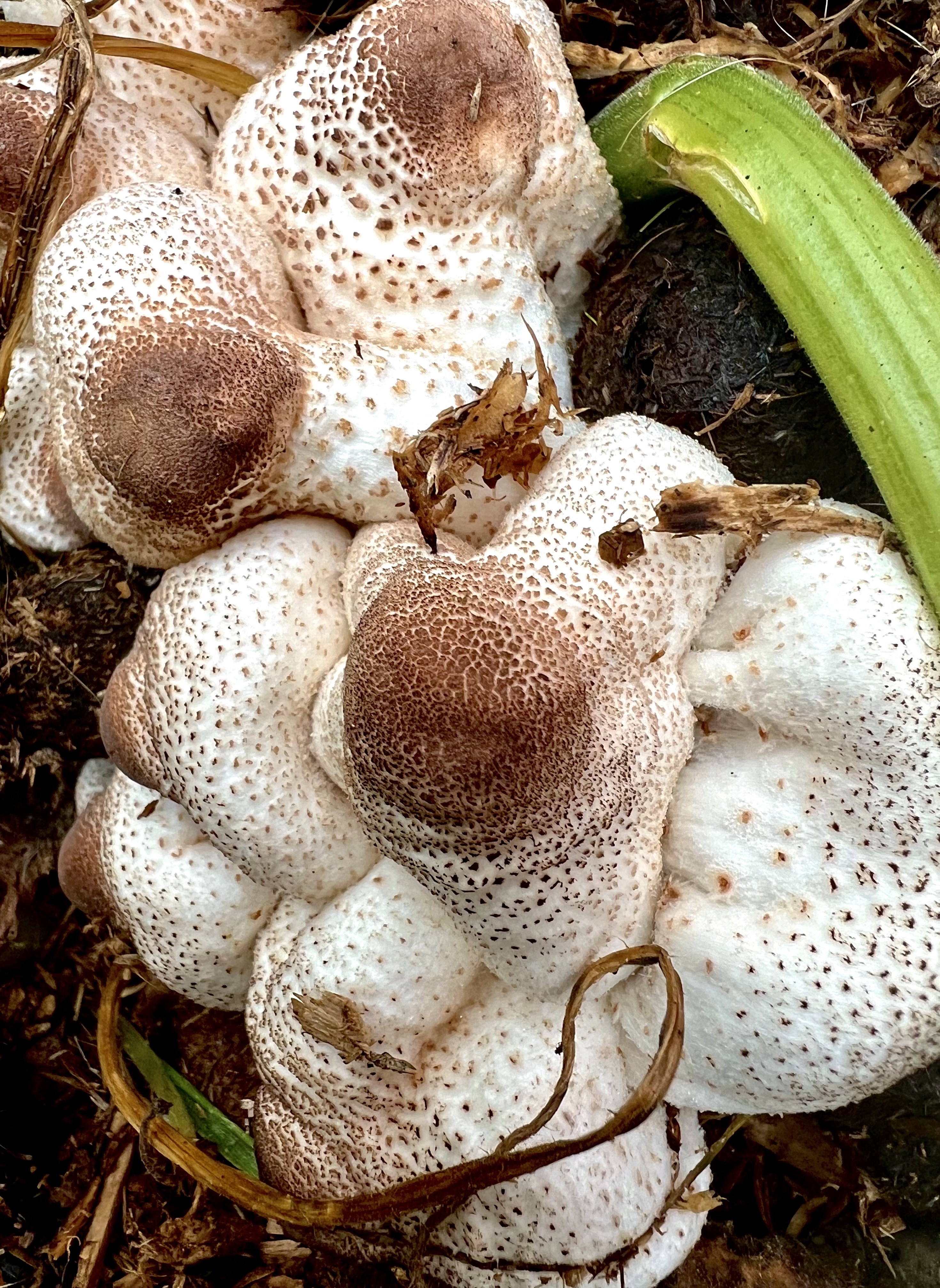
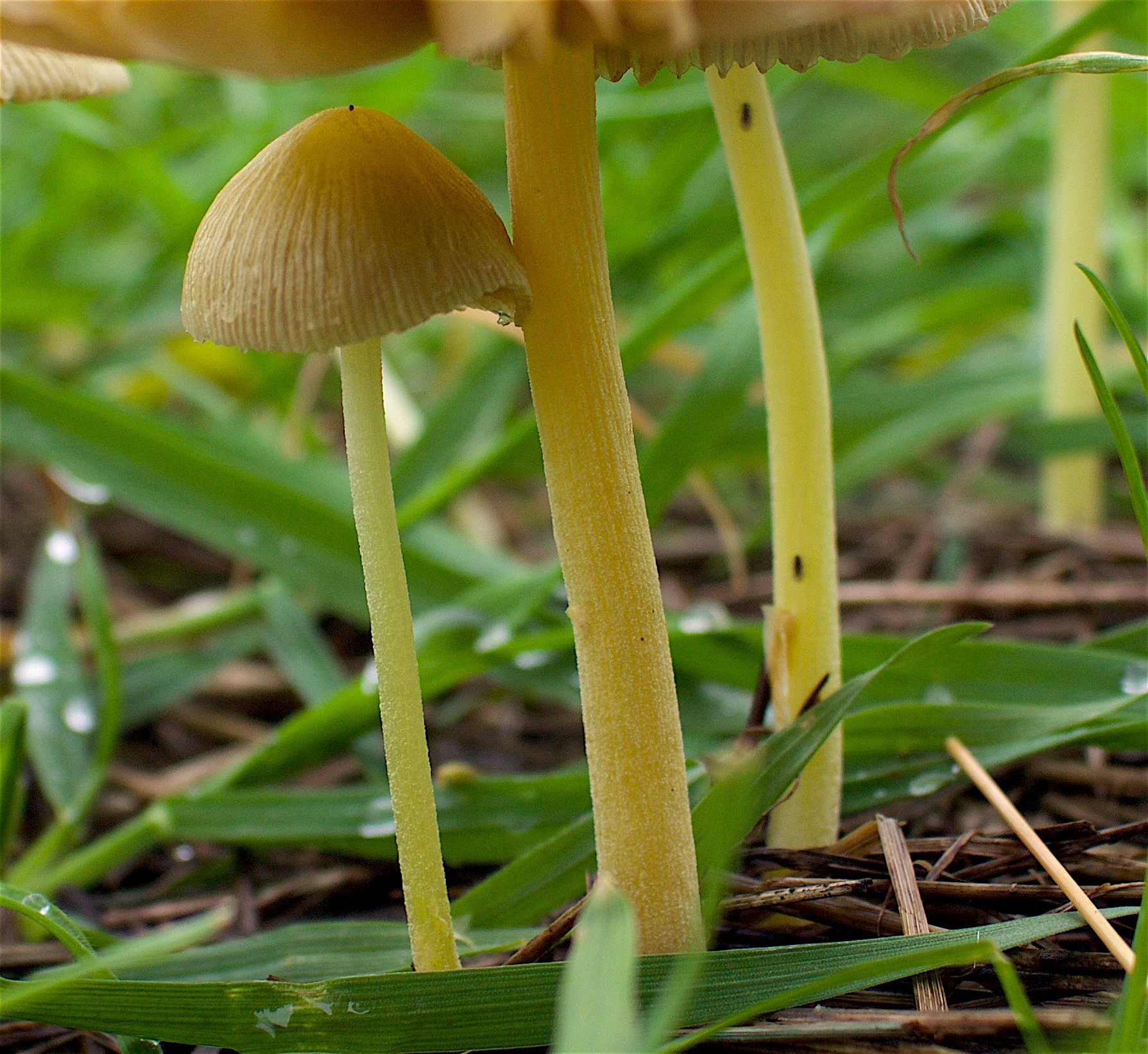
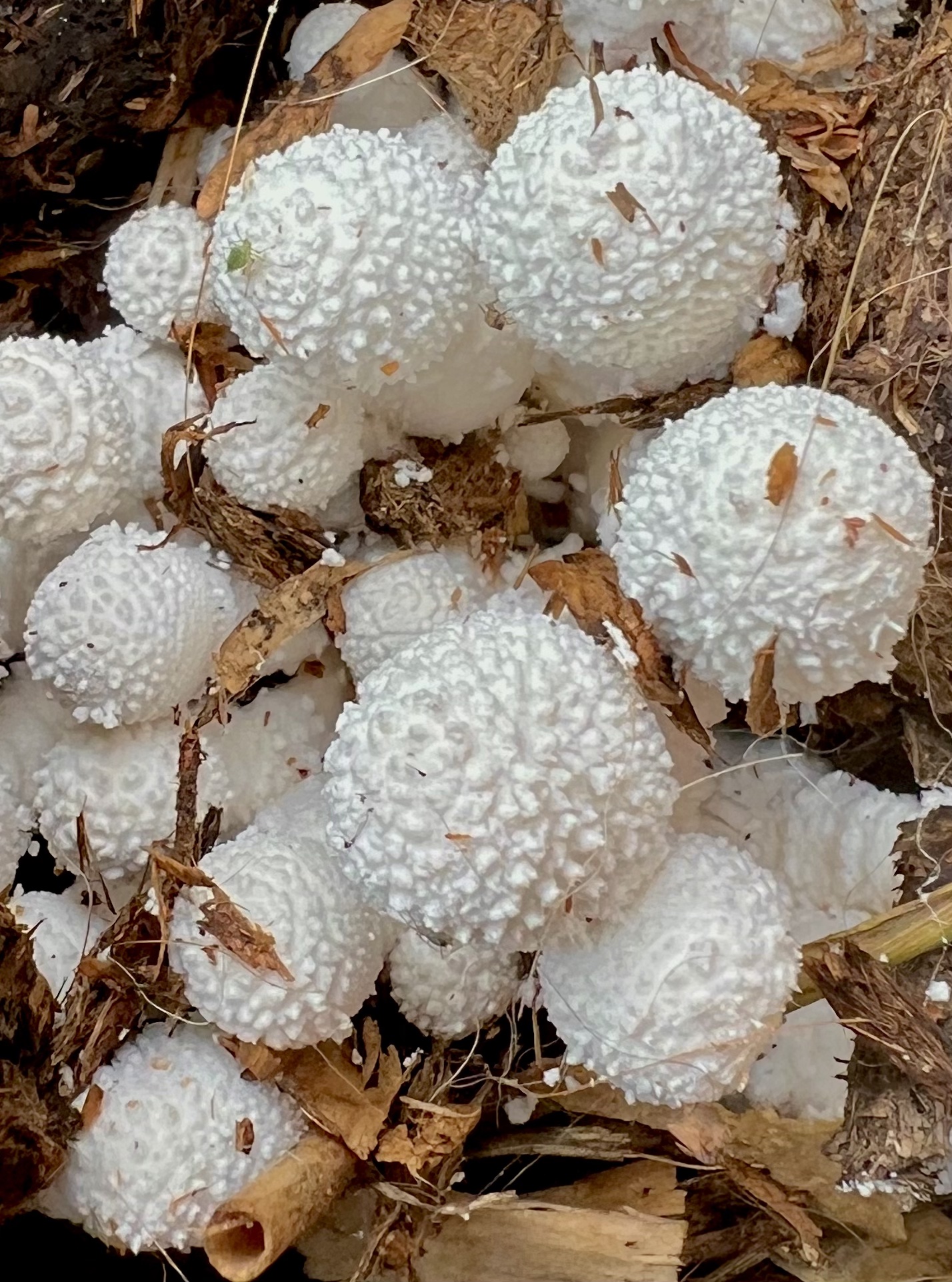
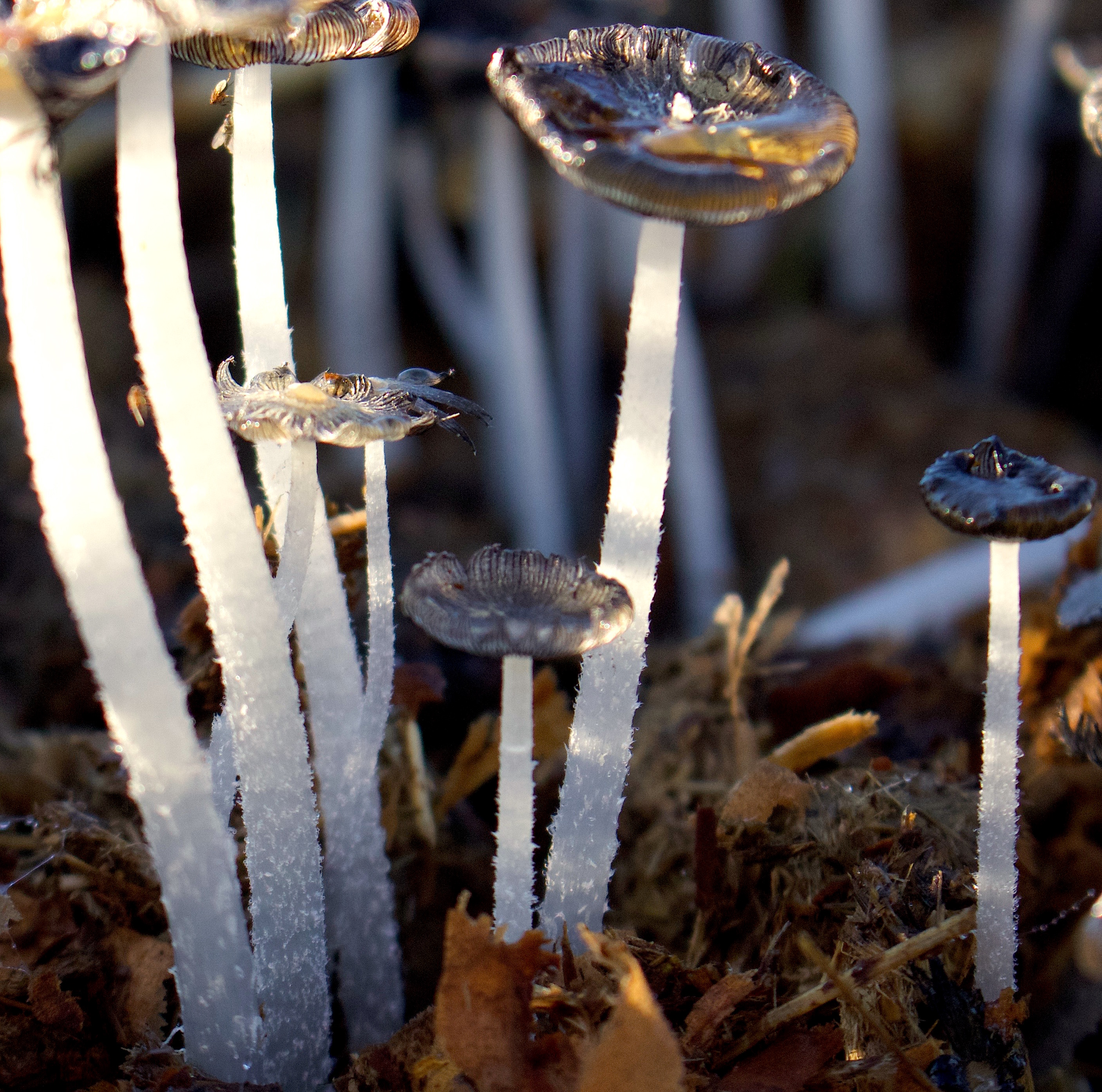
This overnight overture into the light, the birthing of toadstools after a shower. As if seed had been sprinkled on the compost pile, they sprout three inch stalks as they stretch up at dawn, topped by dew-catching caps and umbrellas.
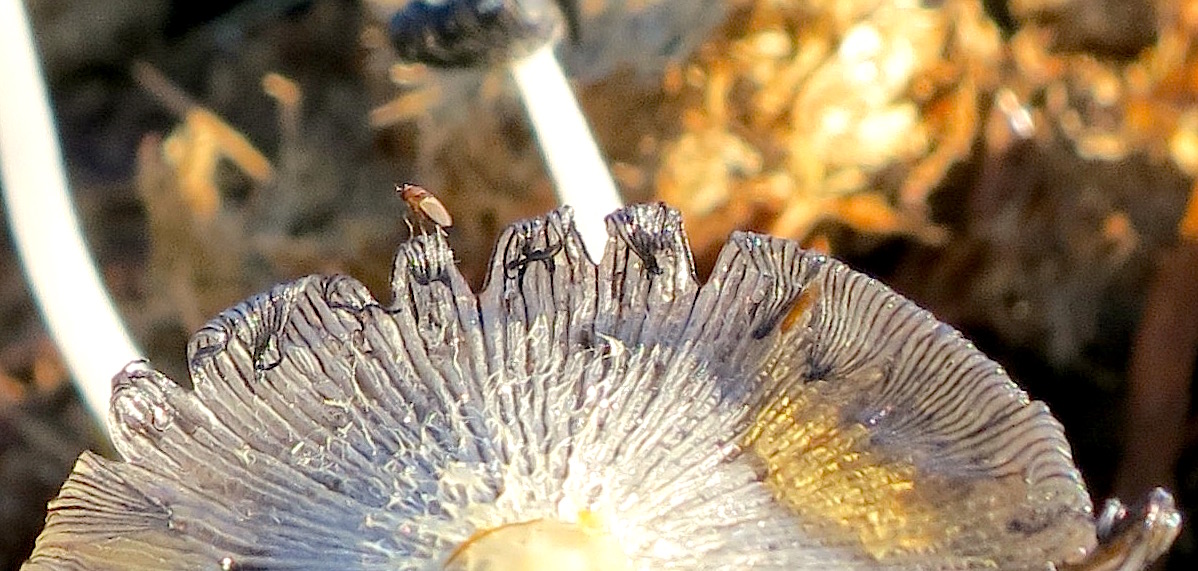
Some translucent as glass, already curling at the edges in the morning light, by noon melting into ooze by evening, a complete deliquescence, withered and curling back into the humus which birthed them hours before.
It shall be repeated again and again, this birth from unworthy soil, this brief and shining life in the sun, this folding, curling and collapse to die back to dust and dung.
Most inedible and dangerous, yet they rise beautiful and worthy, as is the way of things that never give up once a foot’s in the door.
One-Time
Monthly
Yearly
Make a one-time or recurring donation to support daily Barnstorming posts
It is not only prayer that gives God glory but work. Smiting on an anvil, sawing a beam, whitewashing a wall, driving horses, sweeping, scouring, everything gives God some glory if being in his grace you do it as your duty.
To go to communion worthily gives God great glory, but to take food in thankfulness and temperance gives him glory too. To lift up the hands in prayer gives God glory, but a man with a dung fork in his hand, a woman with a slop pail, give him glory too.
He is so great that all things give him glory if you mean they should. So then, my brethren, live. ~Gerard Manley Hopkins fromSeeking Peace
On Earth Day, I am reminded that thanks in large part to how messily we humans live, this world is grimy.
So it is an act of worship as well as respect for our nest to work at cleaning up after ourselves. Hands that clean toilets, scrub floors, carry bedpans, pick up garbage might as well be clasped in prayer – within such everyday necessary tasks, God is glorified.
I spend time every day carrying buckets and wielding a pitchfork because it is my way of restoring order to the disorder inherent in my little corner of the planet. It is with gratitude that I’m able to put things to rights, making stall beds tidier for our farm animals by mucking up their messes and in so doing, I’m cleaning up a piece of me at the same time.
I never want to forget the mess I’m in and the mess I am. I never want to forget to clean up after myself. I never want to feel it is a mere and mundane chore to worship with dungfork and slop pail.
It is my privilege in winter, spring, summer or fall, not just on Earth Day. This is His gift to me. It is His Grace that comes alongside me, to help pitch the muck and carry the slop when I think I am too weary to do it myself.
In so doing, I live and breathe in a place made a little cleaner.
photo from Emily Vander Haak
One-Time
Monthly
Yearly
Make a one-time or recurring donation to support daily Barnstorming posts
He (the professor) asked what I made of the other students (at Oxford) so I told him. They were okay, but they were all very similar… they’d never failed at anything or been nobodies, and they thought they would always win. But this isn’t most people’s experience of life.
He asked me what could be done about it. I told him the answer was to send them all out for a year to do some dead-end job like working in a chicken processing plant or spreading muck with a tractor. It would do more good than a gap year in Peru.
He laughed and thought this was tremendously witty. It wasn’t meant to be funny. ~James Rebanks from The Shepherd’s Life (how a sheep farmer succeeds at Oxford and then goes back to the farm)
In our barn we have a very beat up old AM/FM radio that sits on a shelf next to the horse stalls and serves as company to the horses during the rainy stormy days they stay inside, and serves as distraction to me as I clean stalls of manure and wet spots morning and evening. We live about 10 miles south of the Canadian border, so most stations that come in well on this radio’s broken antenna are from the lower mainland of British Columbia. This includes a panoply of stations spoken in every imaginable language– a Babel of sorts that I can tune into: Spanish, Japanese, Chinese, Hindi, Russian, French and of course, proper British accent English. But standard issue American melting pot genetic mix that I am, I prefer to tune into the “Oldies” Station and reminisce.
There is a strange comfort in listening to songs that I enjoyed 50+ years ago, and I’m somewhat miffed and perplexed that they should be called “oldies”. Oldies used to refer to music from the 20’s, 30’s and 40’s, not the 50’s, 60’s, and 70’s and (heavens to Betsy) the 80’s and 90’s! I listen and sing along with a mixture of feeling ancient and yet transported back to my teens. I can remember faces and names I haven’t thought of in decades, recall special summer days picking berries and hear long lost voices from school days. I can smell and taste and feel things all because of the trigger of a familiar song. There is something primordial –deep in my synapses– that is stirred by this music. In fact, I shoveled manure to these same songs 55 years ago, and somehow, it seems not much as changed.
Or has it? One (very quick) glance in the mirror tells me it has, and I have.
Yesterday – I Got You, Babe and you were a Bridge Over Troubled Waters for this Natural Womanwho just wants to be Close to Youso You’ve Got a Friend. There’sSomething in the way ICherish The Way We Were and of courseLove Will Keep Us Together.If You Leave Me Now, You’re So Vain. I’ve always wanted it My Way but How Sweet It Is when I Want To Hold Your Hand. Come Saturday Morning, Here Comes the Sun as we’re Born to Be Wild
Help!Do You Know Where You’re Going To?Me and You and A Dog Named Boo will travel Country Roadsand Rock Around the Clock even though God Didn’t Make the Little Green Apples to grow in a Moonshadow. Fire and Rain will make things All Right Nowonce Morning is Broken, I’ll Say a Little Prayer For You so just Let It Be.
I Can’t Get No Satisfactionfrom the Sounds of Silence —If— Those Raindrops Keep Fallin’ on My Head. Stand By Me as It’s Just My Imaginationthat I am a Rock, when really I only want Time in a Bottle and to just Sing, Sing a Song.
They just don’t write songs like they used to. I seem to remember my parents saying that about the songs I loved so well in the 60’s and 70’s. Somehow in the midst of decades of change, there are some constants. Music still touches our souls, no matter how young or old we are.
And every day there will always be manure that needs shoveling.
One-Time
Monthly
Yearly
Make a one-time or recurring donation to support daily Barnstorming posts
It was a time like this, War & tumult of war, a horror in the air. Hungry yawned the abyss- and yet there came the star and the child most wonderfully there.
It was time like this of fear & lust for power, license & greed and blight- and yet the Prince of bliss came into the darkest hour in quiet & silent light.
And in a time like this how celebrate his birth when all things fall apart? Ah! Wonderful it is with no room on the earth the stable is our heart. ~Madeleine L’Engle “Into the Darkest Hour” in Wintersong
Into this world, this demented inn, in which there is absolutely no room for him at all, Christ has come uninvited. But because he cannot be at home in it – because he is out of place in it, and yet must be in it – his place is with those others who do not belong, who are rejected because they are regarded as weak… With those for whom there is no room, Christ is present in this world. He is mysteriously present in those for whom there seems to be nothing but the world at its worst. ~Thomas Merton from Watch for the Light
The Nativity, stained glass in the Epiphany Chapel of Winchester Cathedral, UK
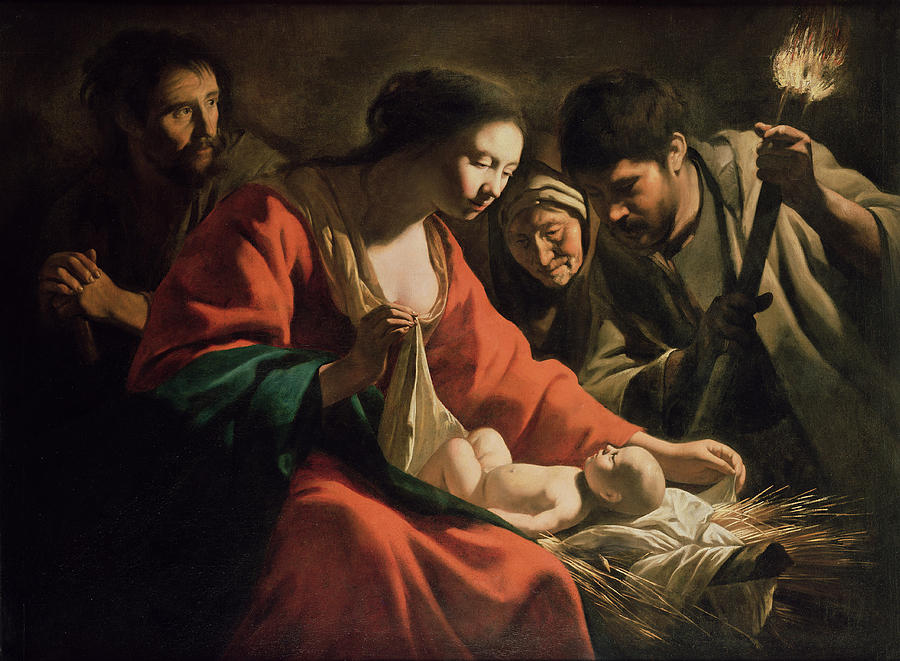
The Nativity by Le Nain, Antoine and Louis (d.1648) & Mathieu (1607-77)
A stable and its stone manger is sanctuary for the weary and burdened – especially when everything seems to be falling apart.
There are so many ways we continue to refuse access and shut the doors in the faces of those two (plus One) weary travelers, forcing them to look elsewhere for refuge. We say “no room” dozens of times every day, not realizing who we are shutting out.
With all the material distractions of our age, it is small wonder we pay no attention to who is waiting patiently outside the back door of our lives, where it is inhospitable and cold and dank. Few of us would invite our special company into the barn first and foremost. Yet these travelers have no access to our front door, with fancy meals and feather beds and fresh flowers on the cupboard. They are relegated to the dark and manure strewn parts of our lives. That is where He was born to dwell amid our messiness, and that is where He remains, in the humblest parts of our being, the parts we do not want to show off, and indeed, most often want to hide.
And that is, of course, a place where there is always plenty of room.
This year’s Advent theme “Dawn on our Darkness” is taken from this 19th century Christmas hymn:
Brightest and best of the sons of the morning, dawn on our darkness and lend us your aid. Star of the east, the horizon adorning, guide where our infant Redeemer is laid. ~Reginald Heber -from “Brightest and Best”
A stable lamp is lighted Whose glow shall wake the sky The stars shall bend their voices And every stone shall cry And every stone shall cry And straw like gold will shine A barn shall harbour heaven A stall become a shrine
This child through David’s city Will ride in triumph by The palm shall strew its branches And every stone shall cry And every stone shall cry Though heavy, dull and dumb And lie within the roadway To pave the Kingdom come
Yet He shall be forsaken And yielded up to die The sky shall groan and darken And every stone shall cry And every stone shall cry For thorny hearts of men God’s blood upon the spearhead God’s love refused again
But now as at the ending The low is lifted high The stars will bend their voices And every stone shall cry And every stone shall cry In praises of the child By whose descent among us The worlds are reconciled ~Richard Wilbur“A Christmas Hymn”
No presents, no candy, no treat No stockings hung by the fire No parties, no family to greet No angel’s heavenly choirs
Bells are ringing all over the world Bells are ringing calling the light Bells are ringing all over the world All over the world tonight
No doorways, no windows, no walls No shelter here on the ground No standing and no safe place to fall Just the promise of this distant sound
Wherever you’re walking tonight Whoever you’re waiting for Somehow by the stable’s faint light Peace in your heart is restored
Bells are ringing all over the world Bells are ringing calling the light Bells are ringing all over the world All over the world tonight ~Mary Chapin Carpenter
Wet things smell stronger, and I suppose his main regret is that he can sniff just one at a time. In a frenzy of delight he runs way up the sandy road— scored by freshets after five days of rain. Every pebble gleams, every leaf.
When I whistle he halts abruptly and steps in a circle, swings his extravagant tail. Then he rolls and rubs his muzzle in a particular place, while the drizzle falls without cease, and Queen Anne’s lace and Goldenrod bend low.
The top of the logging road stands open and light. Another day, before hunting starts, we’ll see how far it goes, leaving word first at home. The footing is ambiguous.
Soaked and muddy, the dog drops, panting, and looks up with what amounts to a grin. It’s so good to be uphill with him, nicely winded, and looking down on the pond.
A sound commences in my left ear like the sound of the sea in a shell; a downward, vertiginous drag comes with it. Time to head home. I wait until we’re nearly out to the main road to put him back on the leash, and he —the designated optimist— imagines to the end that he is free. ~Jane Kenyon “After an Illness, Walking the Dog”
A dog can never tell you what she knows from the smells of the world, but you know, watching her, that you know almost nothing. ~Mary Oliver, Dog Songs
As I’ve written elsewhere, I spend over an hour a day dealing with the excrement of my farm critters. This is therapeutic time for me as I have deep respect for the necessity to clean up and compost what is smelly/stinky/yucky and biblically objectionable. (Deuteronomy 23:12-14) None of us, including God, want to take a walk having to pick our way around poop.
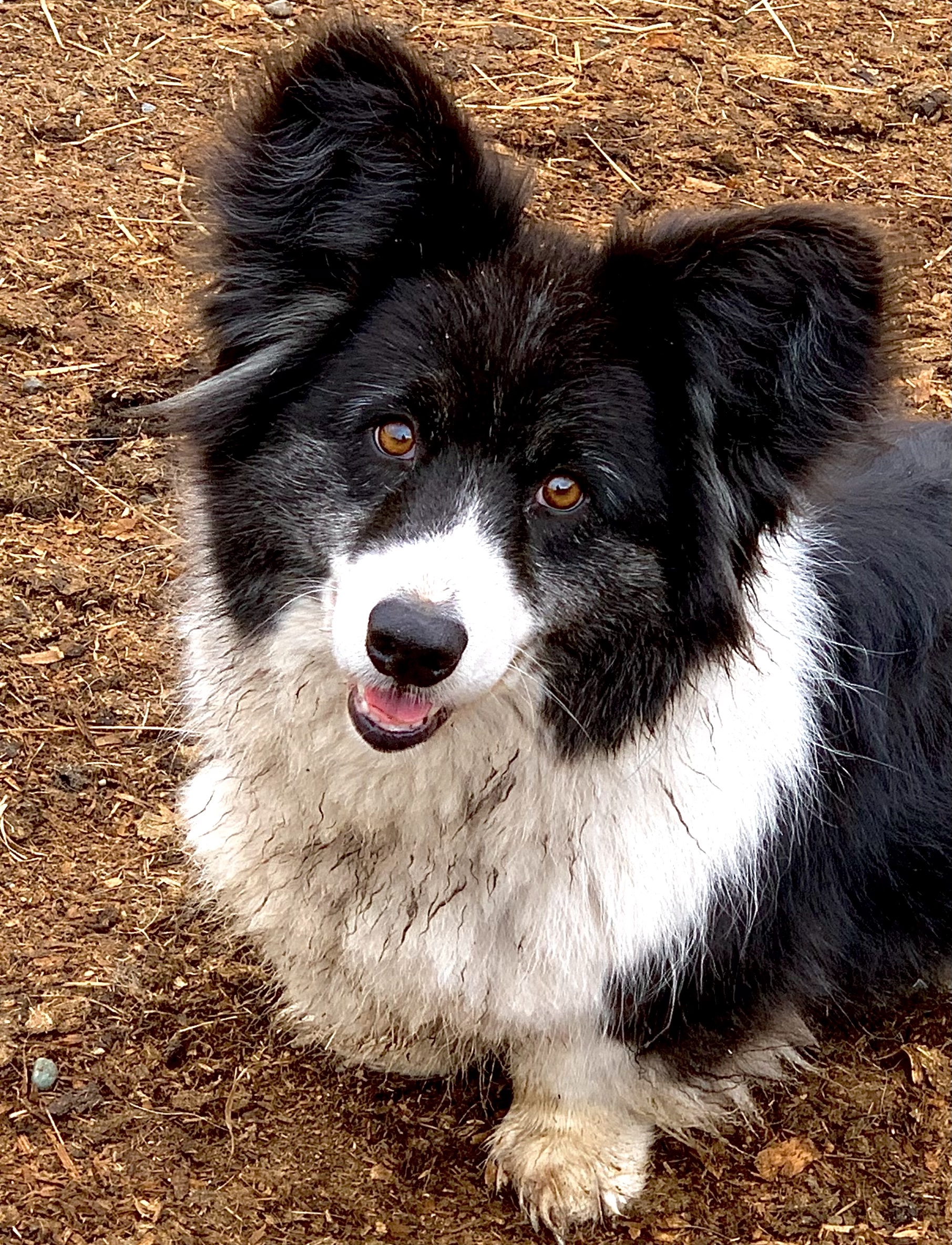
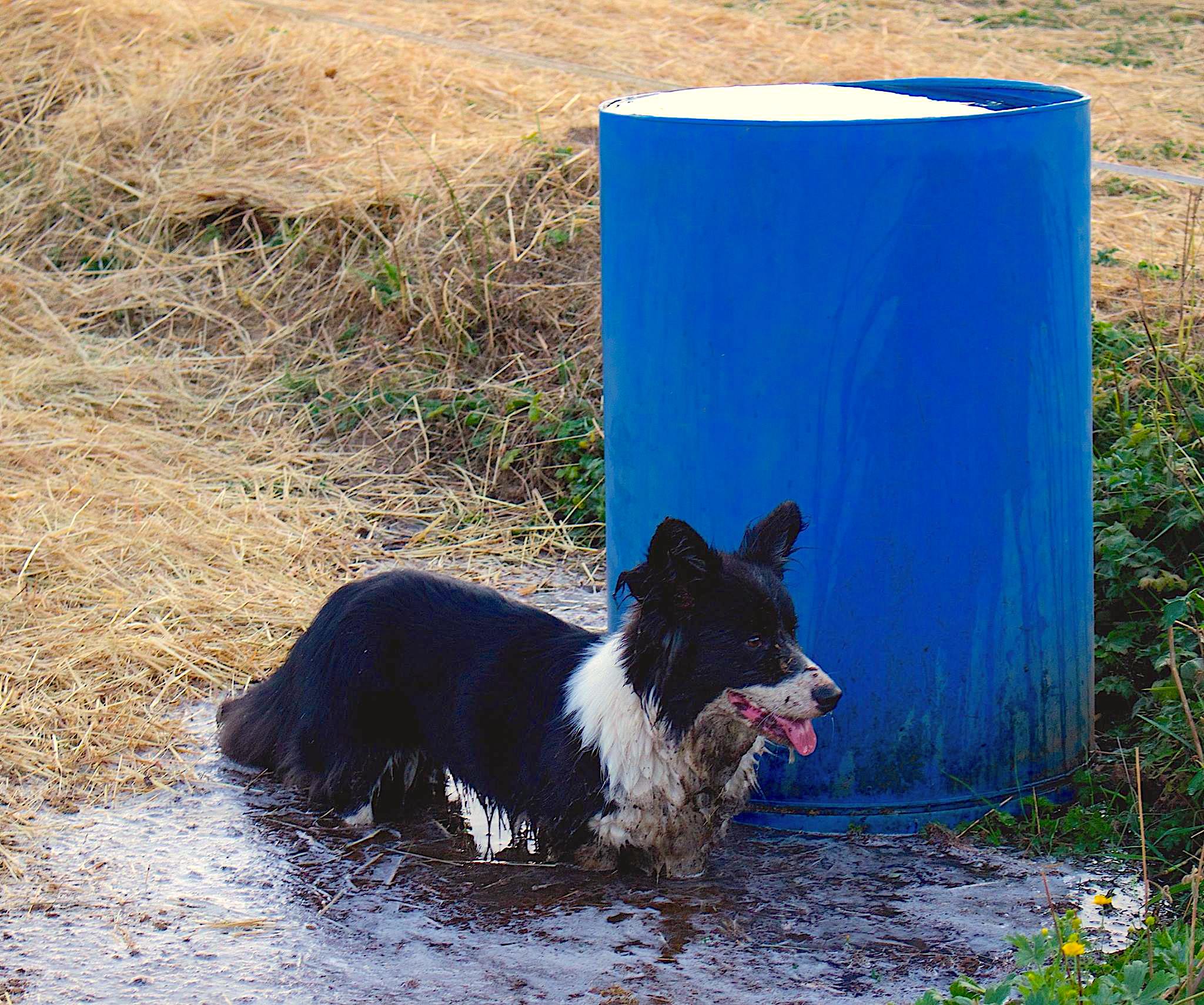
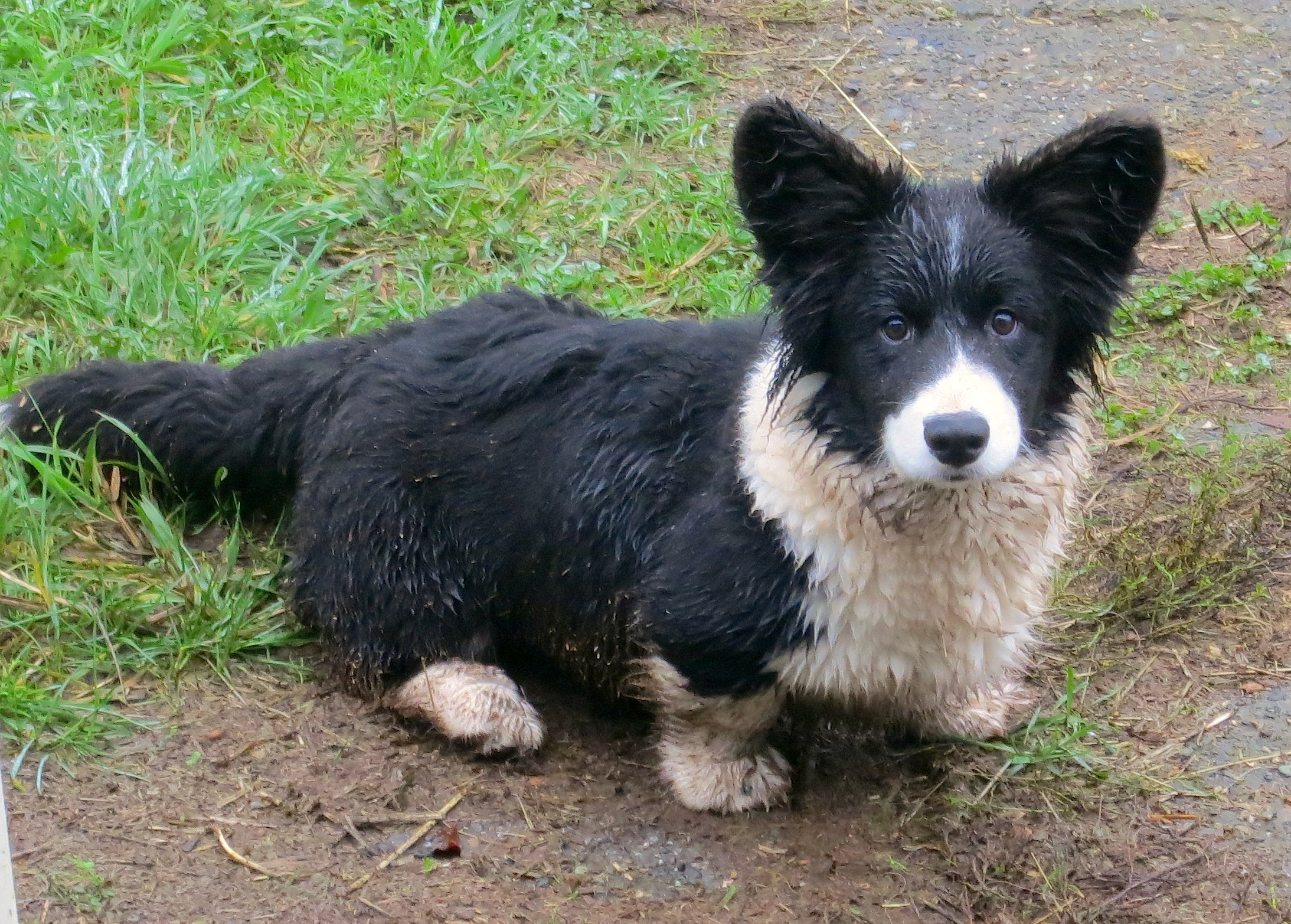
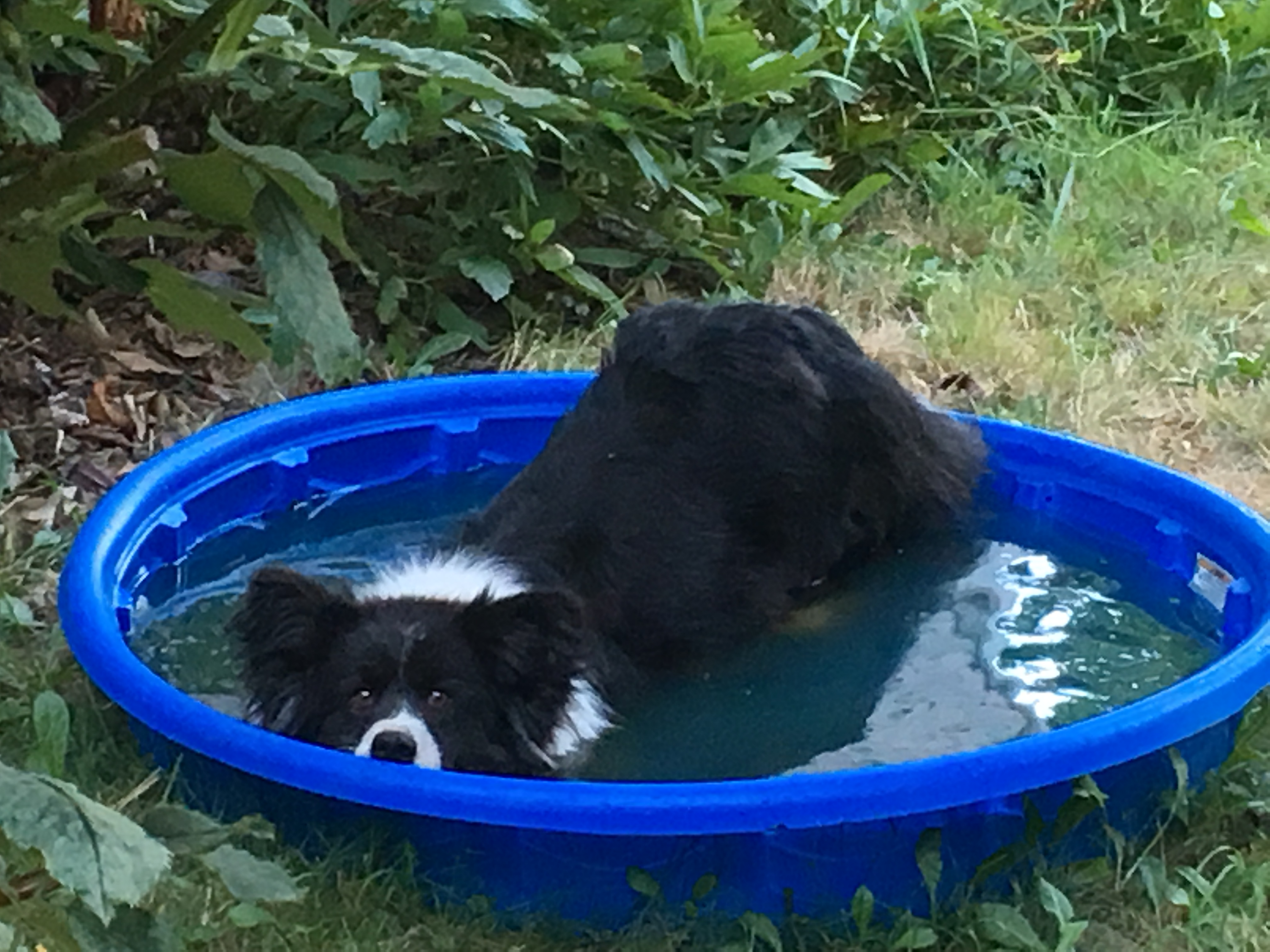
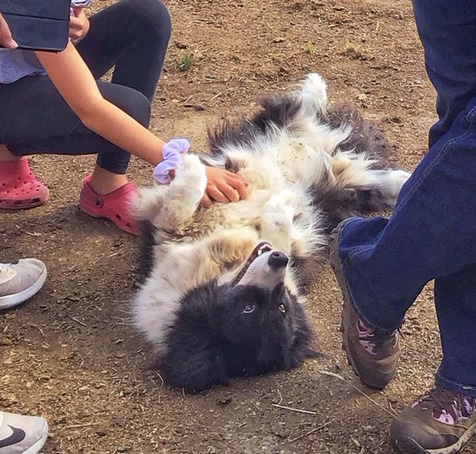
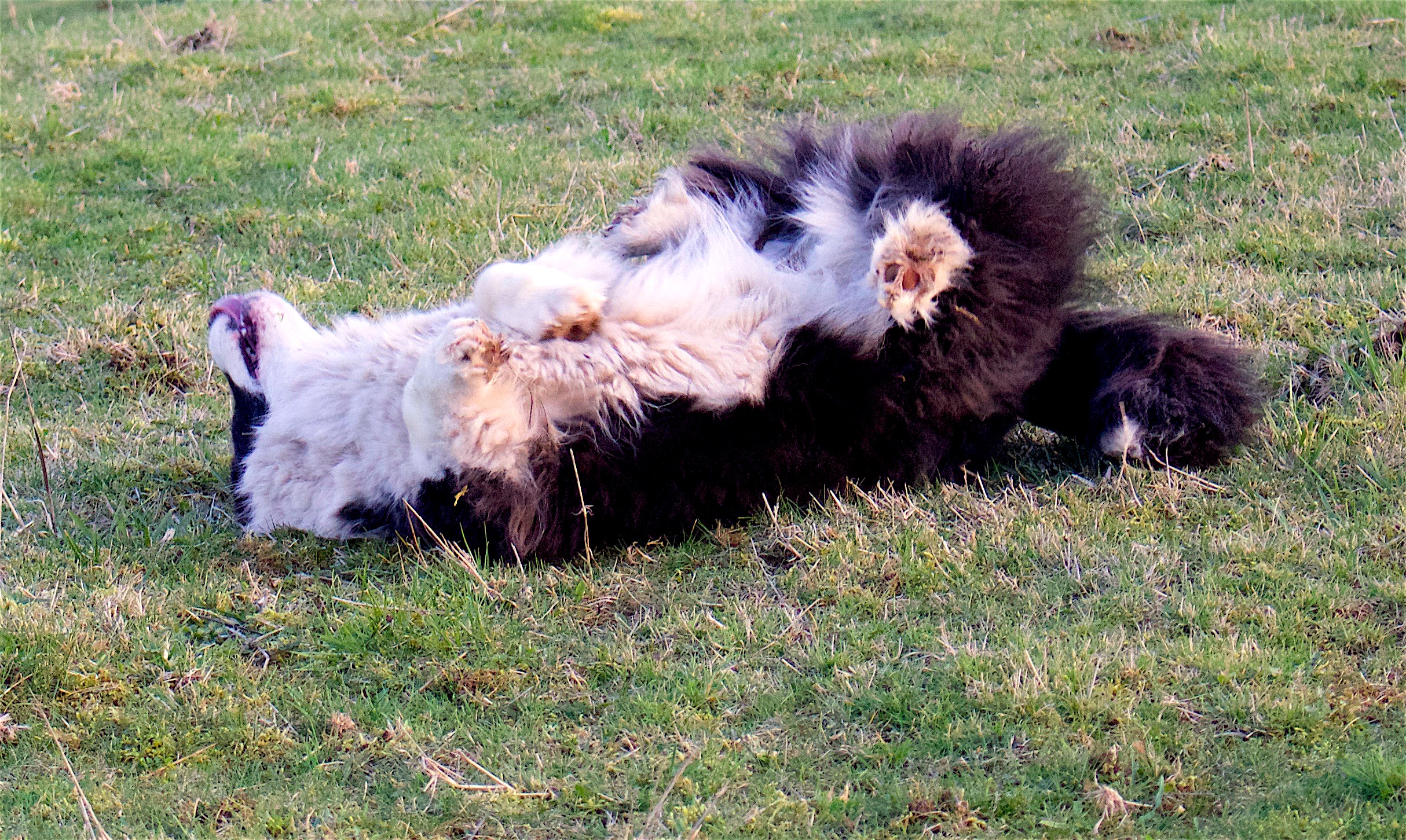
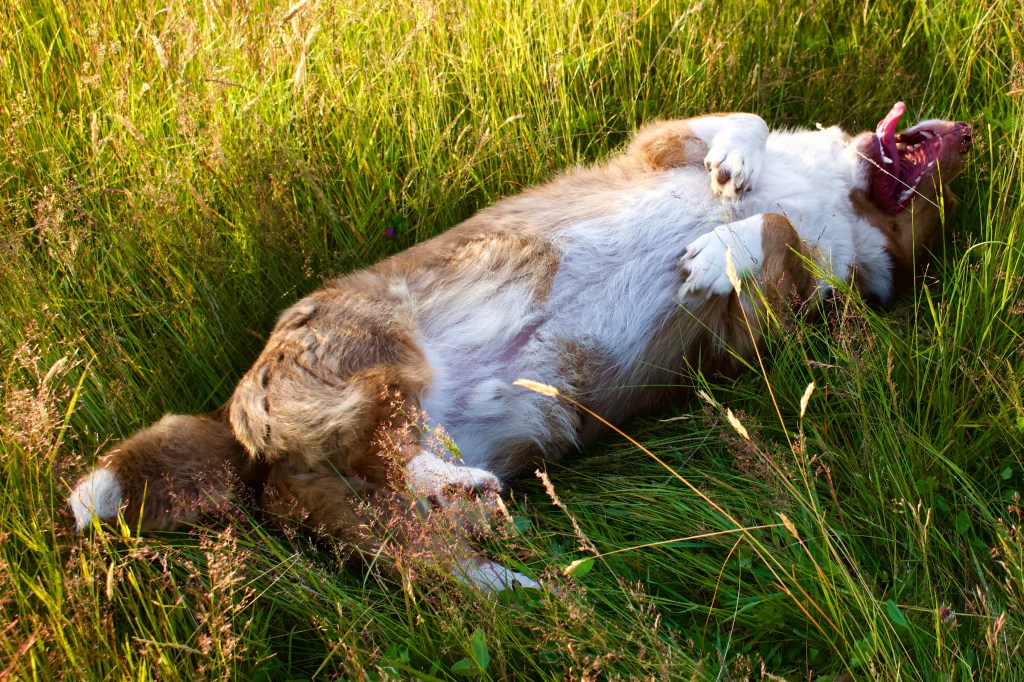
As I’m busy picking up manure, I watch our dogs seek out the smelliest, most vile things they can find in the barn or field (preferably dead) and roll themselves around in it one after another until they are just as stinky as the stuff they found. They are clearly joyous about it, especially when they do it together. It is curious throw-back behavior that I’ve assumed, wearing my animal behaviorist hat, was about a wild predator covering up their scent in order to stalk and capture prey more effectively without being detected – except they are really truly so smelly that any prey could sense them coming from a mile away and would learn quickly that a moving creature that smells like poop or a dead carcass is bad news and to be avoided.
This is the main reason our farm dogs live full time outdoors. We prefer to avoid stinky dirty creatures too. So I’ve tried to understand this behavior for what adaptive purpose it may have.
What makes the most sense to me is the “pack mentality” that suggests that once one dog/wolf rolls in something objectionable, that the rest of the pack does too. This is a unifying theme for anxious individuals – they aren’t really on their own if they smell and blend in with the rest of the pack. So they spread the “wealth”, so to speak. Stink up one, stink up all. Like team spirit, it seems to improve morale – until it doesn’t anymore.
I’ve been feeling covered with stink myself. There are so many divisive opinions right now about a variety of current issues; vile nonsense has been flying right and left on social media as well as face to face. The theory is if all of us stink the same from rolling in piles of misinformation, we are then no longer alone.
Yet our destiny does not have to include believing, sharing and “flinging” the stuff that stinks to see who it will stick to.
Time for a bath. Time for soap and cleansing and some serious self-examination. Time to stop joyously rolling around in it. Time to bury the excrement so we’re not picking our way around the piles and can actually hold our heads up to see where we’re heading.
That’s true freedom.
One-Time
Monthly
Yearly
Make a one-time or recurring donation to support daily Barnstorming posts
I’ve banked nothing, or everything. Every daythe chores need doing again. Early in the morning, I clean the horse barn with a manure fork. Every morning, it feels as though it could be the day beforeor a year agoor a year before that. With every pass, I give the fork one final upward flick to keep the manure from falling out,and every day I remember where I learned to do that and from whom. Time all but stops. But then I dump the cart on the compost pile. I bring out the tractor and turn the pile, once every three or four days. The bucket bites and lifts, and steam comes billowing out of the heap. It’s my assurance that time is really moving forward, decomposing us all in the process. ~Verlyn Klinkenborg from More Scenes from the Rural Life
He <the professor> asked what I made of the other Oxford students so I told him: They were okay, but they were all very similar… they’d never failed at anything or been nobodies, and they thought they would always win. But this isn’t most people’s experience of life.
He asked me what could be done about it. I told him the answer was to send them all out for a year to do some dead-end job like working in a chicken processing plant or spreading muck with a tractor. It would do more good than a gap year in Peru.
He laughed and thought this was tremendously witty. It wasn’t meant to be funny. ~James Rebanks from The Shepherd’s Life (how a sheep farmer succeeds at Oxford and then goes back to the farm)
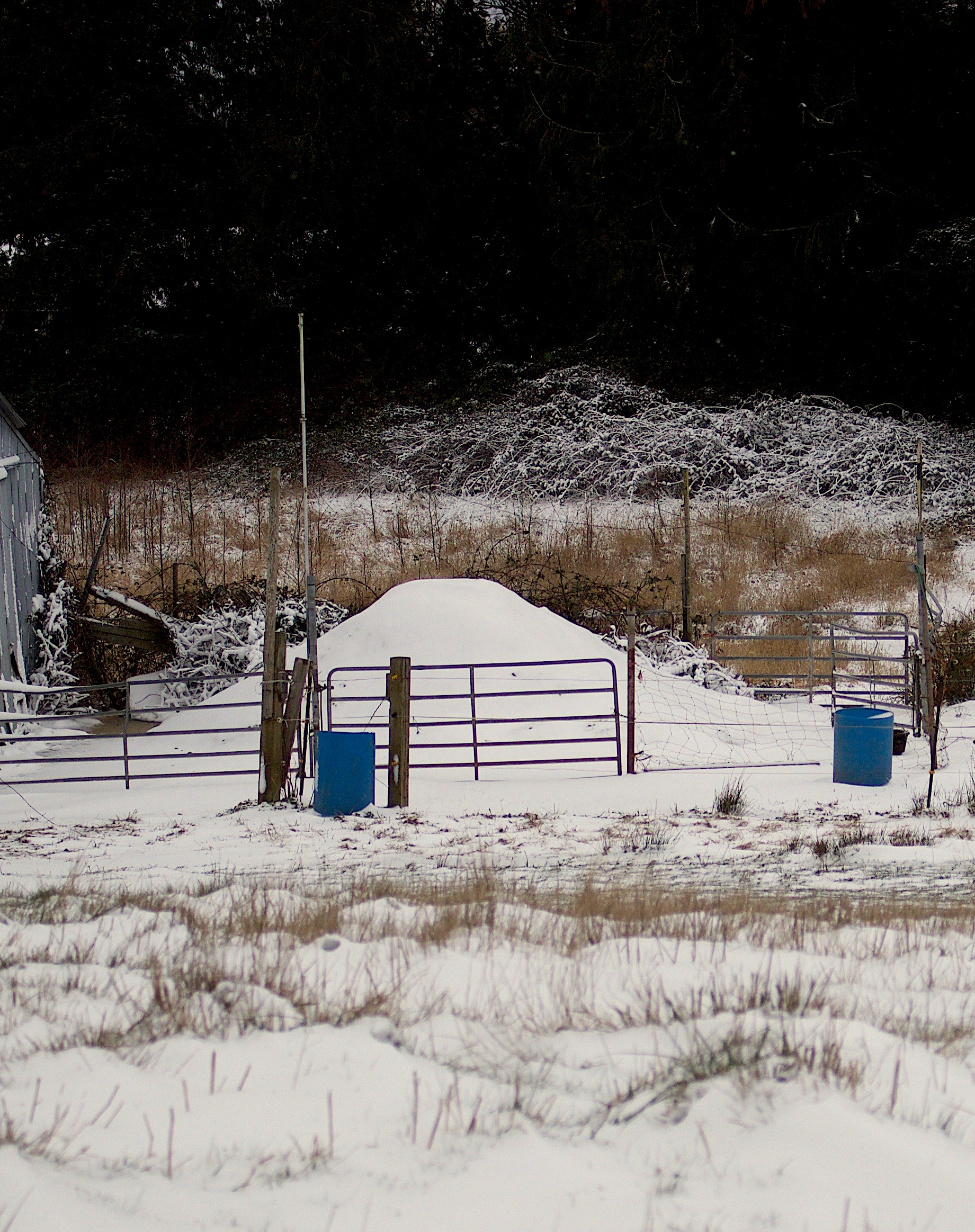
For well over thirty years, my husband and I have spent about an hour a day shoveling manure out of numerous horse stalls and I’m a better person for it. The last few weeks of sub-freezing snow/icy weather while running low on trucked-in supplies of shavings and straw bedding has been a particular character-building experience. It feels like everything, myself included, is in a process of decomposition.
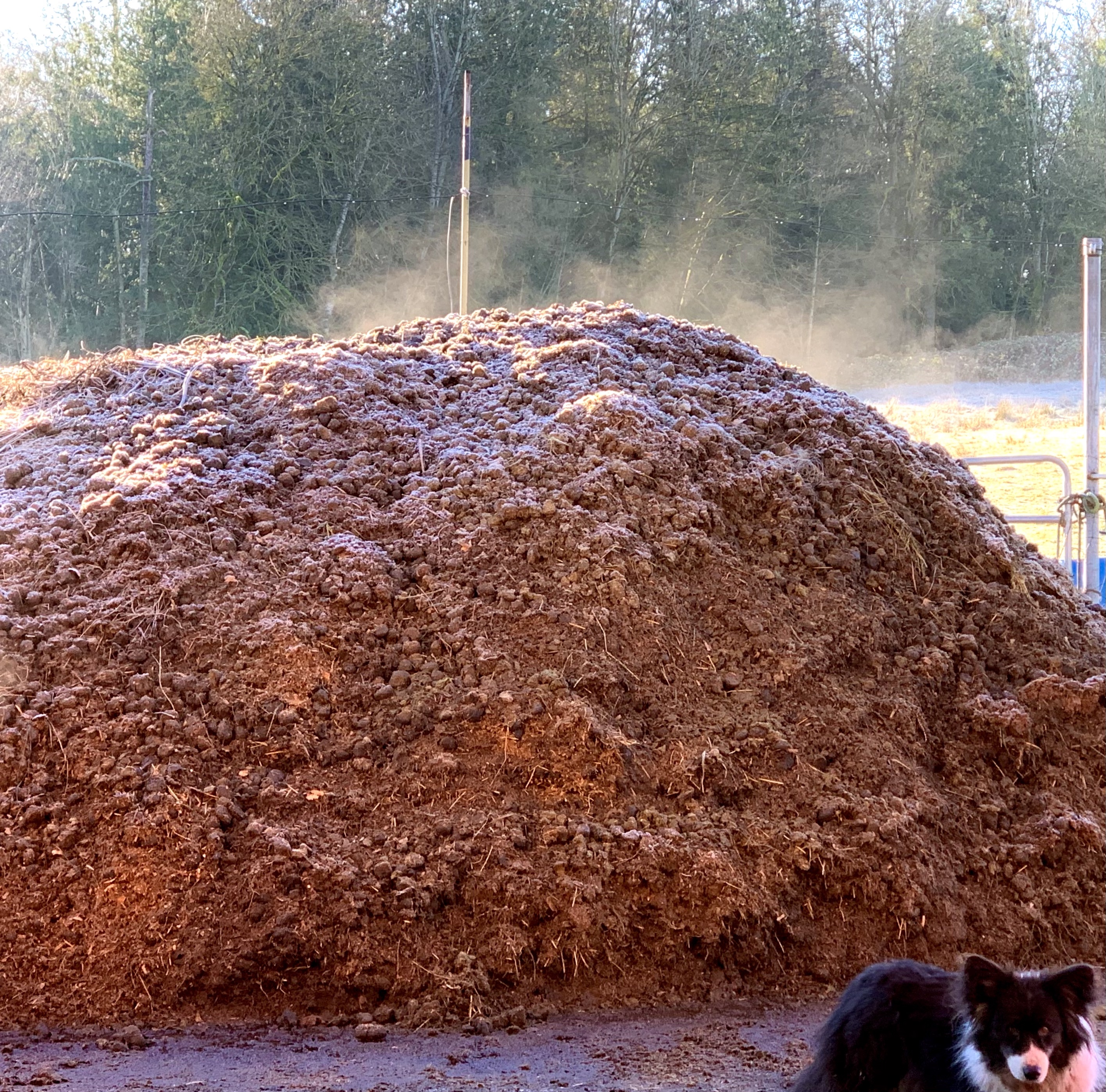
Wheeled to a mountainous pile in our barnyard, our daily collection of manure happily composts year round, becoming rich fertilizer in a matter of months through a crucible-like heating process of organic chemistry, bacteria and earthworms. Nothing mankind has achieved quite matches the drama of useless and basically disgusting stuff transforming into the essential elements needed for productive growth and survival. This is a metaphor I can <ahem> happily muck about in.
I’m in awe, every day, at being part of this process — in many ways a far more tangible improvement to the state of the world than anything else I manage to accomplish every day. The horses, major contributors that they are, act underwhelmed by my enthusiasm. I guess some miracles are relative, depending on one’s perspective, but if the horses understood that the grass they contentedly eat in the pasture, or the hay they munch on during the winter months, was grown thanks to their carefully recycled waste products, they might be more impressed.
Their nonchalance about the daily mucking routine is understandable. If they are outside, they probably don’t notice their beds are clean when they return to the stalls at night. If they are inside during the heavy rain days, they feel duty-bound to be in our faces as we move about their stall, toting a pitchfork and pushing a wheelbarrow. I’m a source of constant amusement as they nose my jacket pockets for treats that I never carry, as they beg for scratches on their unreachable itchy spots, and as they attempt to overturn an almost full load, just to see balls of manure roll to all corners of the stall like breaking a rack of billiard balls in a game of pool.
Good thing I’m a patient person always seeking an object lesson in whatever I see or do ~ mucking out stalls every day helps me tolerate the proverbial muck I encounter every day off the farm. And spending an hour a day getting dirty in the real stuff somehow makes the virtual manure less noxious.
Everyone should be spending time daily mucking out; I think the world would generally be a better place.
Wally, our former stallion, now gelded, discovered a way to make my life easier rather than complicating it. He hauled a rubber tub into his stall from his paddock, by tossing it into the air with his teeth and throwing it, and it finally settled against one wall. Then he began to consistently pile his manure, with precise aim, right in the tub. I didn’t ask him to do this. It had never occurred to me. I hadn’t even thought it was possible for a horse to house train himself. But there it is, proof that some horses prefer neat and tidy rather than the whirlwind eggbeater approach to manure distribution. After a day of his manure pile plopping, it is actually too heavy for me to pick up and dump into the wheelbarrow all in one tub load, but it takes 1/4 of the time to clean his stall than the others, and he spares all this bedding.
What a guy. He provides me unending inspiration in how to keep my own personal muck concentrated rather than spreading it about, contaminating the rest of the world.
Now, once I teach him to put the seat back down when he’s done, he’s welcome to move into the house…
teaching my city nephews how to muck out a stallWally’s purposeful pile
One-Time
Monthly
Yearly
Make a one-time or recurring donation to support Barnstorming
For outlandish creatures like us, on our way to a heart, a brain, and courage, Bethlehem is not the end of our journey but only the beginning – not home but the place through which we must pass if ever we are to reach home at last. ~Frederick Buechner from The Magnificent Defeat
Into this world, this demented inn, in which there is absolutely no room for him at all, Christ has come uninvited. But because he cannot be at home in it – because he is out of place in it, and yet must be in it – his place is with those others who do not belong, who are rejected because they are regarded as weak… With those for whom there is no room, Christ is present in this world. He is mysteriously present in those for whom there seems to be nothing but the world at its worst. ~Thomas Merton from Watch for the Light
As a physician, I’ve provided care to many homeless people, but I’ve never known homelessness myself. However, I have been room-less and those experiences were enough to acquaint me with the dilemma for Joseph and Mary searching for a place to sleep in Bethlehem.
It was my ninth birthday, July 26, 1963, and my family was driving to Washington D.C. for a few days of sightseeing. We had planned to spend the night in a motel somewhere in eastern Ohio or western Pennsylvania but my father, ever the determined traveler, felt we should push on closer to our destination. By the time 11 PM rolled around, we were all tired and not just a little cranky so we started looking for vacancy signs at road-side motels. Most were posted no vacancy by that time of night, and many simply had shut off their lights. We stopped at a few with vacancy still lit, but all they had available would never accommodate a family of five.
We kept driving east, and though I was hungry for sleep, I became ever more anxious that we really would never find a place to lay our heads. My eyes grew wider and I was more awake than ever, having never stayed up beyond 1 AM before and certainly, I’d never had the experience of being awake all night long. It still goes down in my annals as my longest birthday on record.
By 2 AM we arrived in Harrisburg, Pennsylvania and my dad had reached his driving limit and my mom had declared we were not traveling another mile. We headed downtown where the brick Harrisburg Hotel stood some 10 stories high, an old structure in a questionable area of town, but the lights were on and there were signs of life inside.
They did have a room that gave us two saggy double beds to share for eight dollars, with sheets and blankets with dubious laundering history, a bare light bulb that turned on with a chain and a bathroom down the hall. I’m surprised my mother even considered laying down on that bed, but she did. I don’t remember getting much sleep that night, but it was a place to rest, and the sirens and shouts out on the street did make for interesting background noise.
Some 12 years later, I had another experience of finding no room to lay my head after arriving late at night in Dar es Salaam in Tanzania, with supposed reservations at the local YMCA for myself and my three student friends traveling together on our way to Gombe to study wild chimpanzees. We landed at the airport after midnight after a day long flight from Brussels, managed to make it through customs intact and find a taxi, only to arrive at the Y to find it dark and locked. It took some loud knocking to rouse anyone and with our poor Swahili, we were able to explain our dilemma–we were supposed to have two rooms reserved for the four of us. He said clearly “no room, all rooms taken”.
The host was plainly perplexed at what to do with four Americans in the middle of the night. He decided to parse us out one each to occupied rooms and hope that the occupants were willing to share. He looked at me, a skinny white girl with short hair and decided I was some kind of strange looking guy, and tried to stick me in a room with a rather intoxicated French man and I said absolutely not. Instead my female traveling partner and I ended up sharing a cot (sort of) in a room with a German couple who allowed us into their room, which I thought was an amazing act of generosity at 2 AM in the morning. I didn’t sleep a wink, amazed at the magical sounds and smells of my first dawn in Africa, hearing the morning prayers coming from the mosque across the street, only a few hours later.
So I can relate in a small way to what it must have felt like over 2000 years ago to have traveled over hard roads to arrive in a dirty little town temporarily crammed with too many people, and find there were no rooms anywhere to be had. And to have doors shut abruptly on a young woman in obvious full term pregnancy is another matter altogether. They must have felt a growing sense of panic that there would be no safe and clean place to rest and possibly deliver this Child.
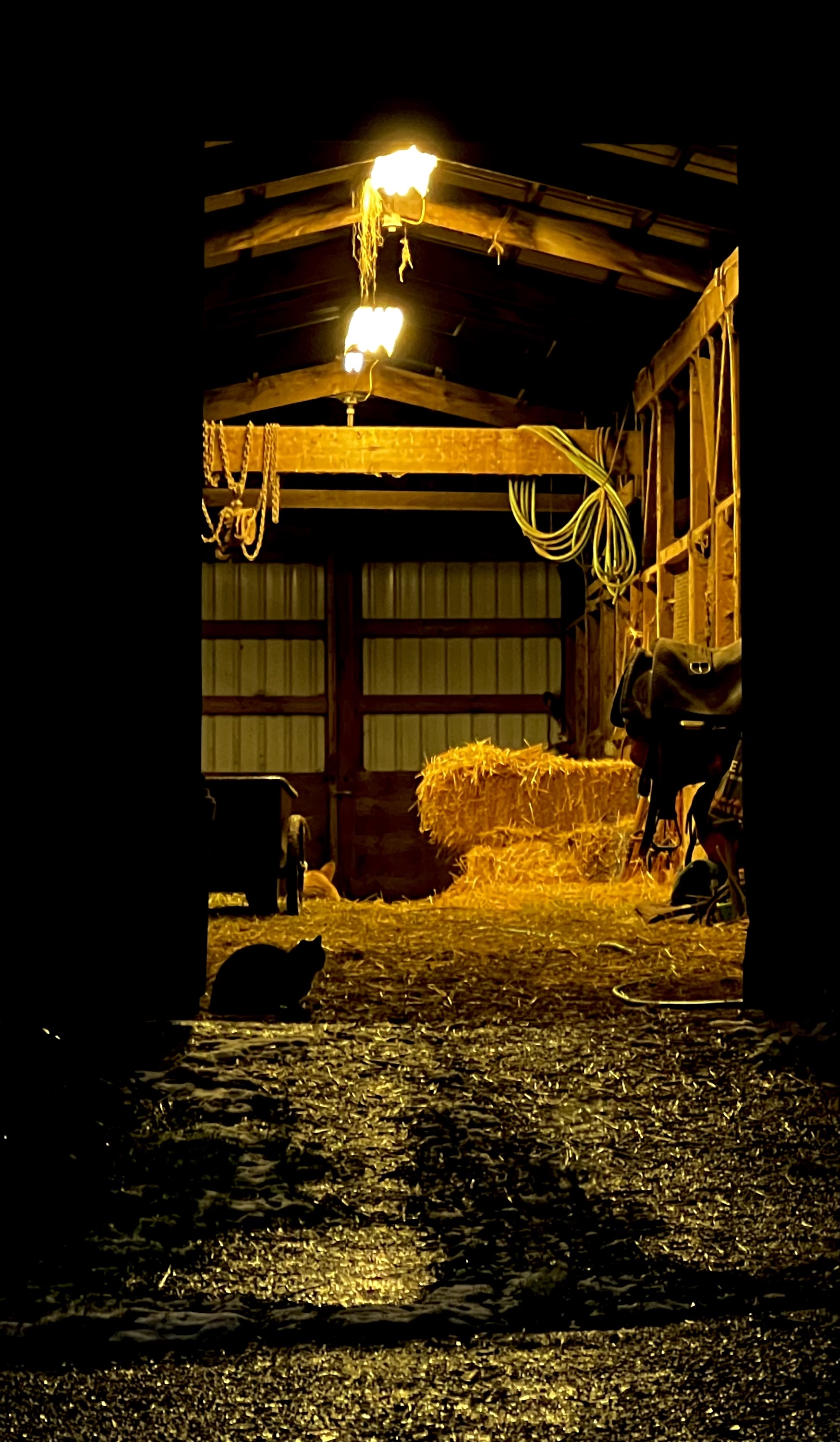
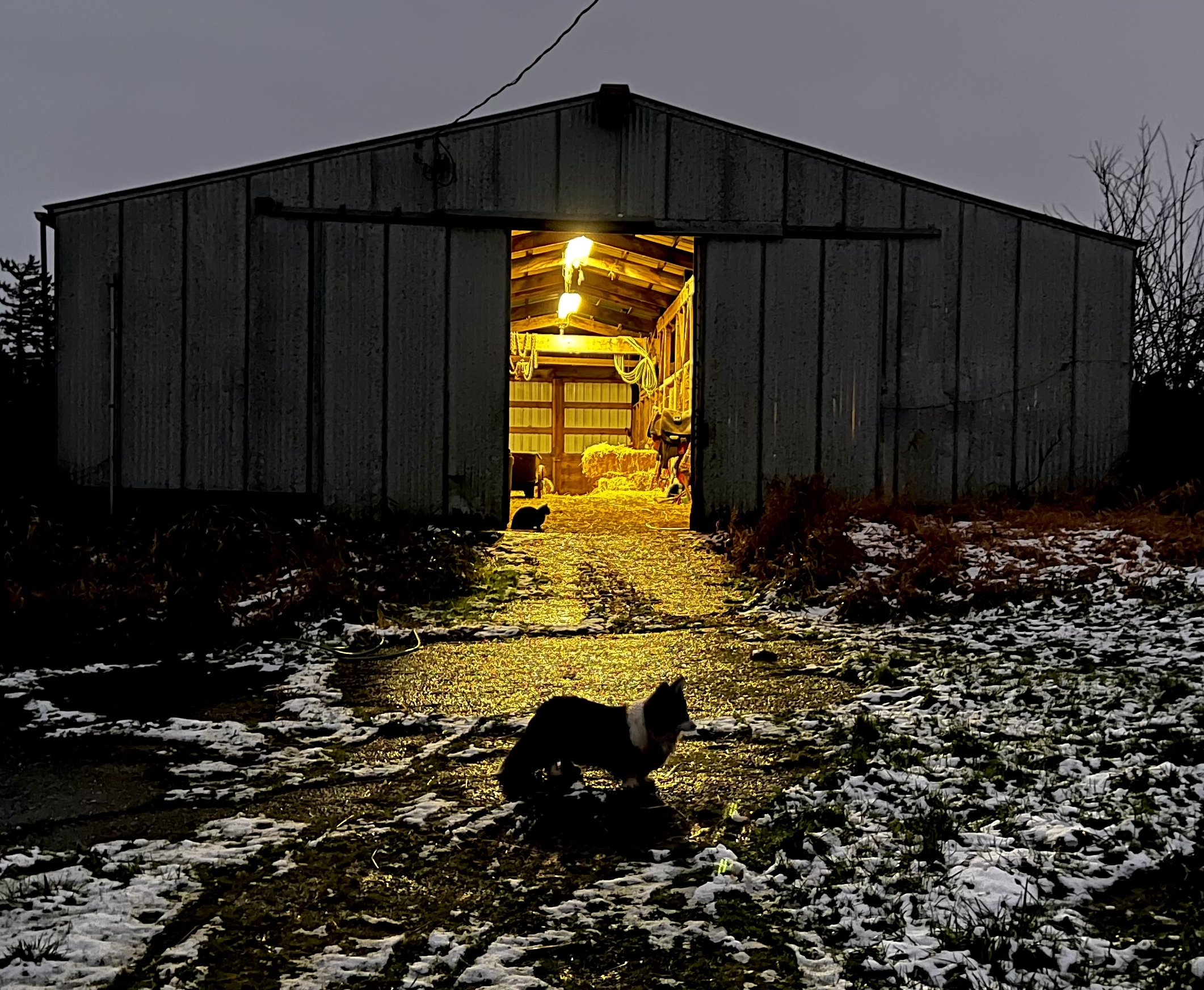
Then there came the offer of an animals’ dwelling, with fodder for bedding and some minimal shelter. A stable and its stone manger became sanctuary for the weary and burdened. We are all invited in to rest there, and I never enter a barn without somehow acknowledging that fact and feeling welcomed.
There are so many ways we continue to refuse access and shut the doors in the faces of those two (plus One) weary travelers, forcing them to look elsewhere to stay. We say “no room” dozens of times every day, not realizing who and what we are shutting out.
With all the material distractions of our age, it is small wonder we pay no attention to who is waiting patiently outside the back door of our lives, where it is inhospitable and cold and dank. Few of us would invite our special company into the barn first and foremost. Yet these travelers don’t seek an invitation to come in the front door, with fancy meals and feather beds and fresh flowers on the cupboard. It is the dark and manure strewn parts of our lives where they are needed most. That is where He was born to dwell amid our messiness, and that is where He remains, in the humblest parts of our being, the parts we do not want to show off, and indeed, most often want to hide.
And that is, of course, a place where there is always plenty of room.
This year’s Barnstorming Advent theme “… the Beginning shall remind us of the End” is taken from the final lines in T.S. Eliot’s poem “The Cultivation of Christmas Trees”
Jesus, Jesus, rest your head. You has got a manger bed. All the evil folk on earth Sleep in feathers at their birth. Jesus, Jesus, rest your head. You has got a manger bed.
1. Have you heard about our Jesus? Have you heard about his fate? How his mammy went to the stable On that Christmas Eve so late? Winds were blowing, cows were lowing, Stars were glowing, glowing, glowing. Refrain
2. To the manger came the Wise Men. Bringing from hin and yon, For the mother and the father, And the blessed little Son. Milkmaids left their fields and flocks And sat beside the ass and ox. Refrain
One-Time
Monthly
Yearly
Make a one-time or recurring donation to support Barnstorming
Like a piece of rotten meat which not only stinks right on its own surface but also surrounds itself with a stinking molecular cloud of stink, so, too, each island of the archipelago created and supported a zone of stink around itself. ~ Aleksandr Solzhenitsyn, The Gulag Archipelago, 1918-1956: An Experiment in Literary Investigation, Books III-IV
As I’ve written elsewhere, I spend over an hour a day dealing with the excrement of my farm critters. This is therapeutic time for me as I have deep respect for the necessity to clean up and compost what is smelly/stinky/yucky and biblically objectionable. (Deuteronomy 23:12-14) None of us, including God, want to take a walk having to pick our way around poop.
As I’m busy picking up manure, I watch our dogs seek out the smelliest, most vile things they can find in the barn or field (preferably dead) and roll themselves around in it one after another until they are just as stinky as the stuff they found. They are clearly joyous about it, especially when they do it together. It is curious throw-back behavior that I’ve assumed, wearing my animal behaviorist hat, was about a wild predator covering up their scent in order to stalk and capture prey more effectively without being detected – except they are really truly so smelly that any prey could sense them coming from a mile away and would learn quickly that a moving creature that smells like poop or a dead carcass is bad news and to be avoided.
This is the main reason our farm dogs live full time outdoors. We prefer to avoid stinky dirty creatures too. So I’ve tried to understand this behavior for what adaptive purpose it may have.
What makes the most sense to me is the “pack mentality” that suggests that once one dog/wolf rolls in something objectionable, that the rest of the pack does too. This is a unifying theme for anxious individuals – they aren’t really on their own if they smell and blend in with the rest of the pack. So they spread the “wealth”, so to speak. Stink up one, stink up all. Like team spirit, it seems to improve morale – until it doesn’t anymore.
I’ve been feeling covered with stink myself lately as I’ve searched for those sympathetic around me and found myself stuck between shit and syphilis. There are so many divisive opinions right now about a variety of current issues; vile nonsense has been flying right and left on social media as well as face to face. The theory is if all stink the same from rolling in piles of misinformation, we are then no longer alone.
Yet our destiny does not have to include believing, sharing and “flinging” the stuff that stinks to see who it will stick to. I no longer want to be a target.
Time for a bath. Time for soap and cleansing and some serious self-examination. Time to stop joyously rolling around in it. Time to bury the excrement so we’re not staring at the ground, picking our way around the piles and can actually hold our heads up to see where we’re heading.
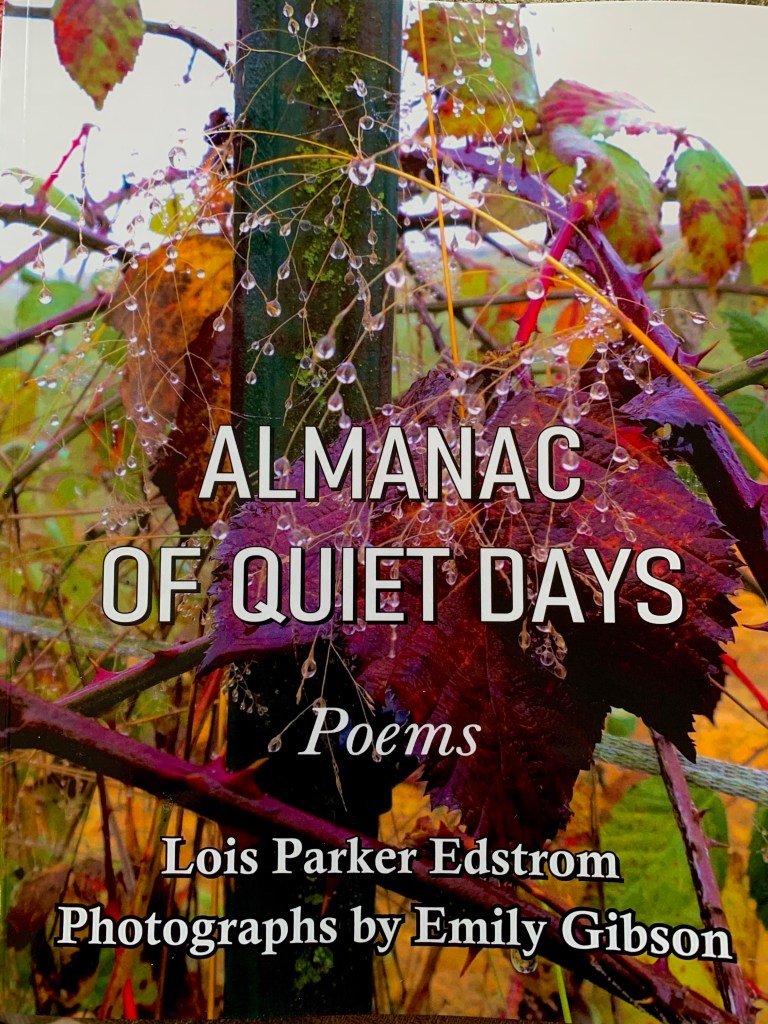
A new book from Barnstorming is available to order here:


















 Barnstorming