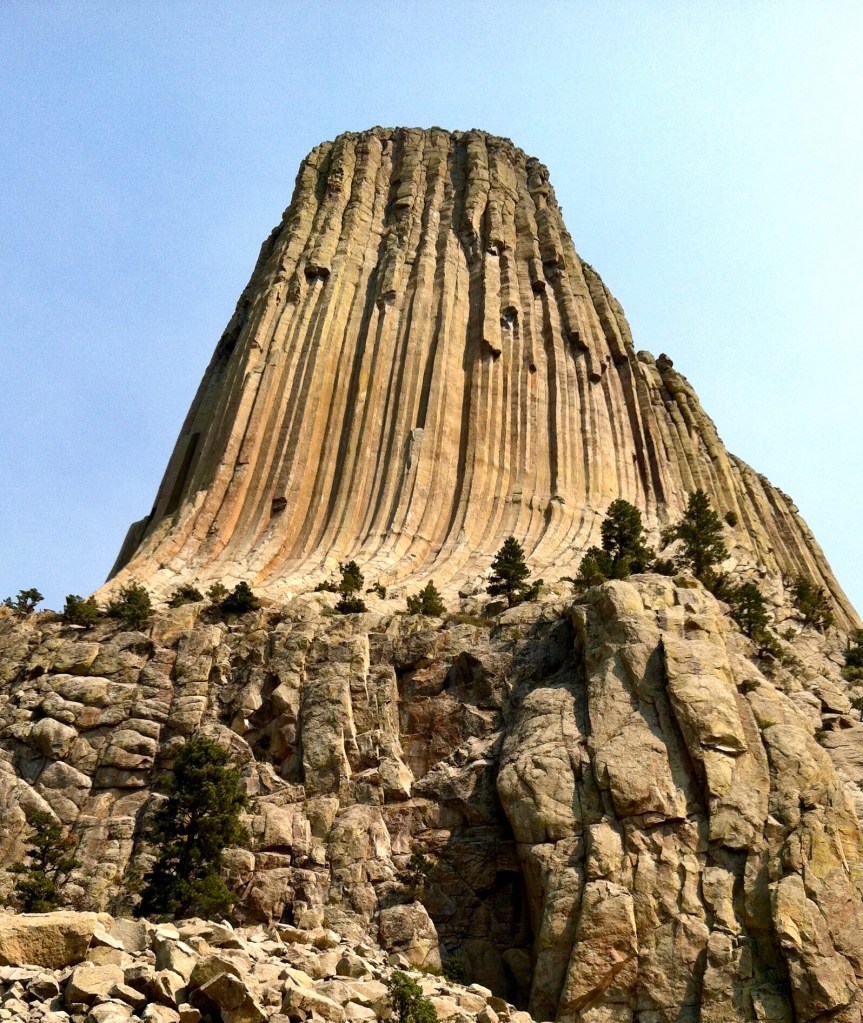
Seeking a Close Encounter of Awful Quiet

A dark mist lay over the Black Hills, and the land was like iron.
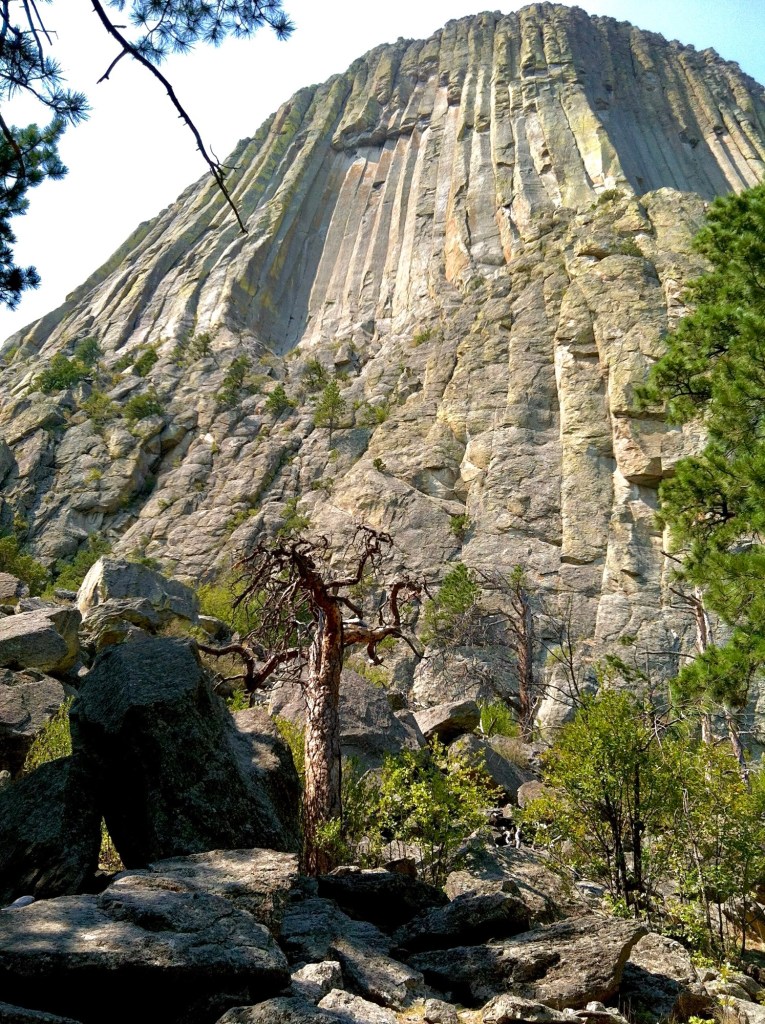
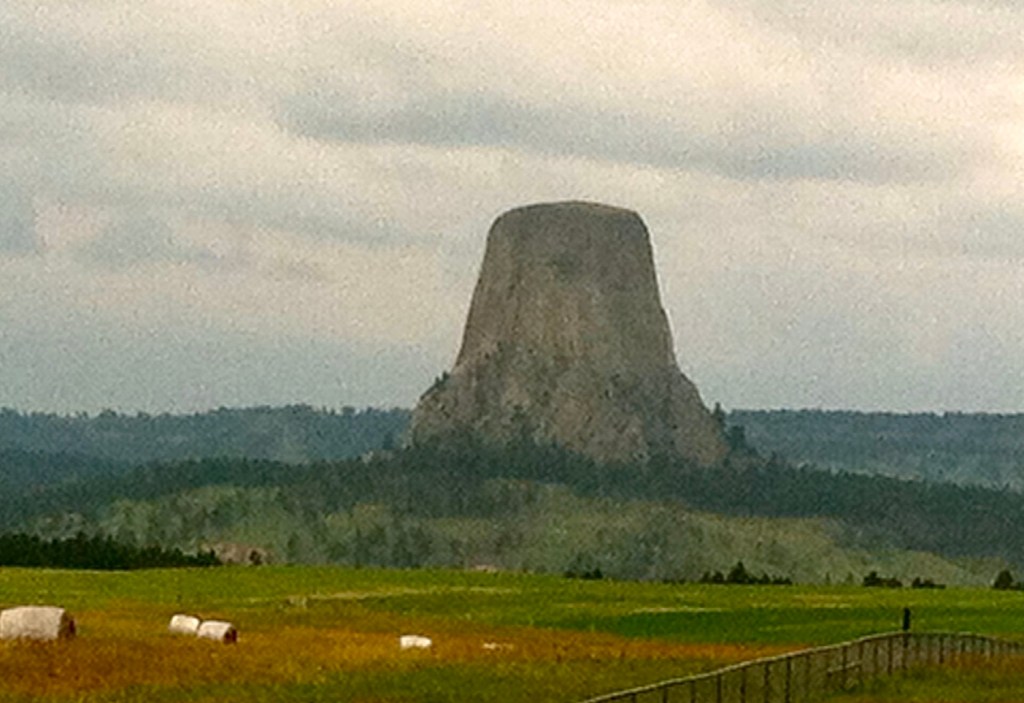
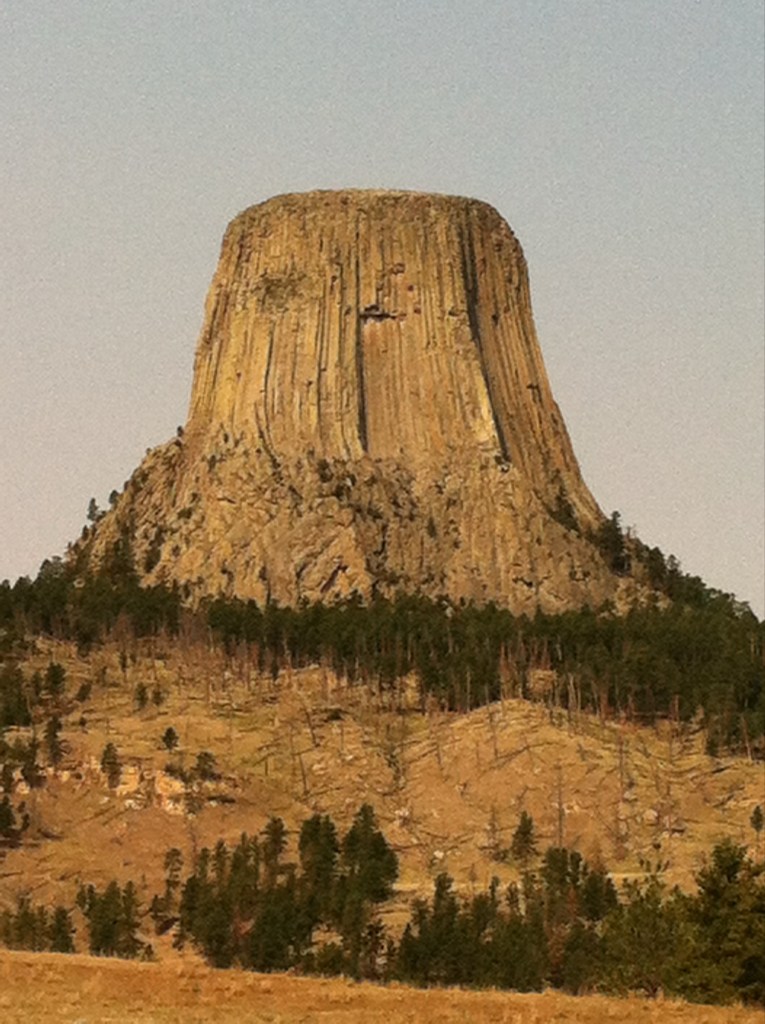
At the top of ridge I caught sight of Devil’s Tower upthrust against the gray sky as if in the birth of time the core of the earth had broken through its crust and the motion of the world was begun.

There are things in nature
that engender an awful quiet in the heart of man;
Devil’s Tower is one of them.
~N.Scott Momaday in The Way to Rainy Mountain
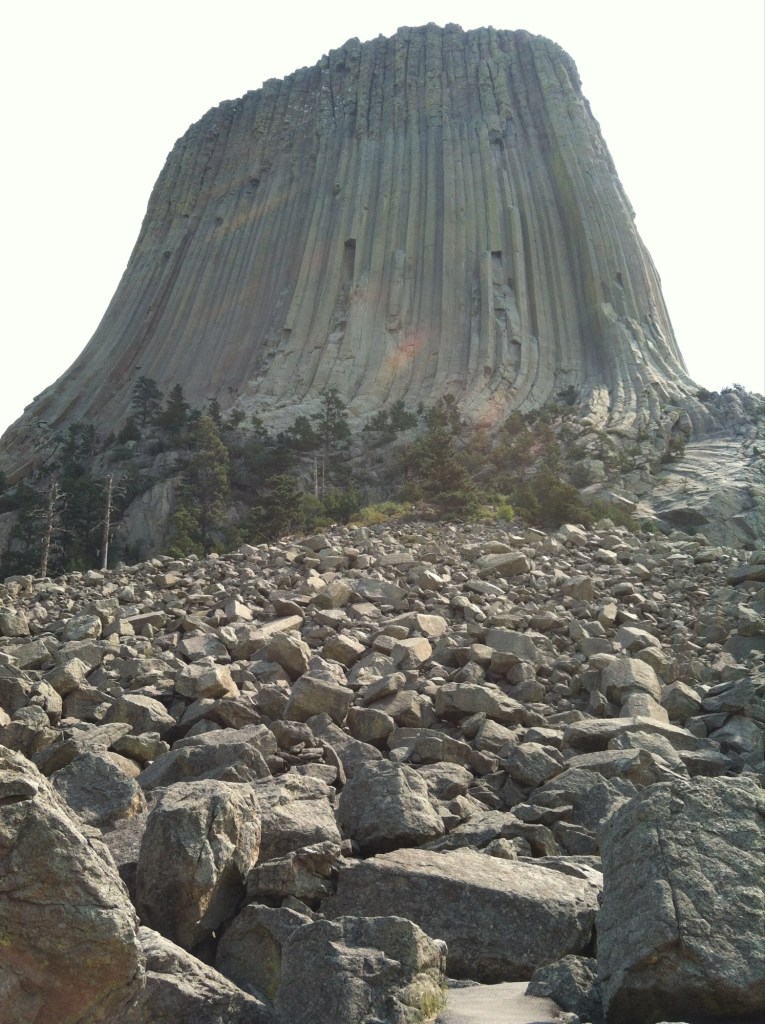
We didn’t have a close encounter with Devil’s Tower on this particular trip yesterday through Wyoming. Over the years we have made many cross-country road trips like this one, passing by the turn-off to Devil’s Tower because there was urgency to get where we needed to go. Occasionally we would see it hazy in the far distance, so I could say I had “seen it” but I really had not seen it … according to my Stanford professor N. Scott Momaday.

Scott was from the Kiowa tribe. In his language, this rock formation is named Tso-i-e or “standing on a rock.” For him and his people, it is sacred ground. The Cheyenne, Crow, Lakota, Shoshone, and Arapahoe all revere this rock monolith, although most tribal members did not live near enough to see it themselves, but the legends traveled many miles through the generations through oral tradition.

I took Scott’s unforgettable class “Native American Mythology and Lore” in 1973, as a 19 year old sophomore. He had a commanding presence, a booming resonant voice for story telling, a predilection for the poetry of Emily Dickinson and a hankering since childhood to be a character in the stories of Billy the Kid. The first day of class, he introduced us to Tso-i-e first and foremost. He told us his grandmother’s story passed to her from her grandparents:

“Eight children were there at play, seven sisters and their brother. Suddenly the boy was struck dumb; he trembled and began to run upon his hands and feet. His fingers became claws, and his body was covered with fur. Directly there was a bear where the boy had been. The sisters were terrified.; they ran and the bear after them. They came to the stump of a great tree, and the tree spoke to them. It bade them climb upon it, and as they did so it began to rise into the air. The bear came to kill them, but they were just beyond its reach. It reared against the tree and scored the bark all around with its claws. The seven sisters were borne into the sky, and they became the stars of the Big Dipper.”

My family finally made time to see the Tower up close. For me, this “close encounter” was meant to connect the dots from my class and to understand more fully the spiritual background of the Plains people as our son, Ben, had lived and taught on the Pine Ridge Lakota Sioux Reservation in South Dakota for two years.

The Tower surely is awe-filled holy ground for us all – we are diminished in its presence. It disquiets the heart with its awful grandeur and sheer other-worldliness. In its own way, it is as resonant as Scott’s captivating stories about its origins, yet remains a reminder of the ever-changing impermanence of geologic formations.

We need more holy places in our lives even as they (and wechange with the sands and winds of time. We need to seek more “awful quiet” in our hearts, to continue to tell our sacred stories, generation to generation, never forgetting Who it is who set the world in motion.
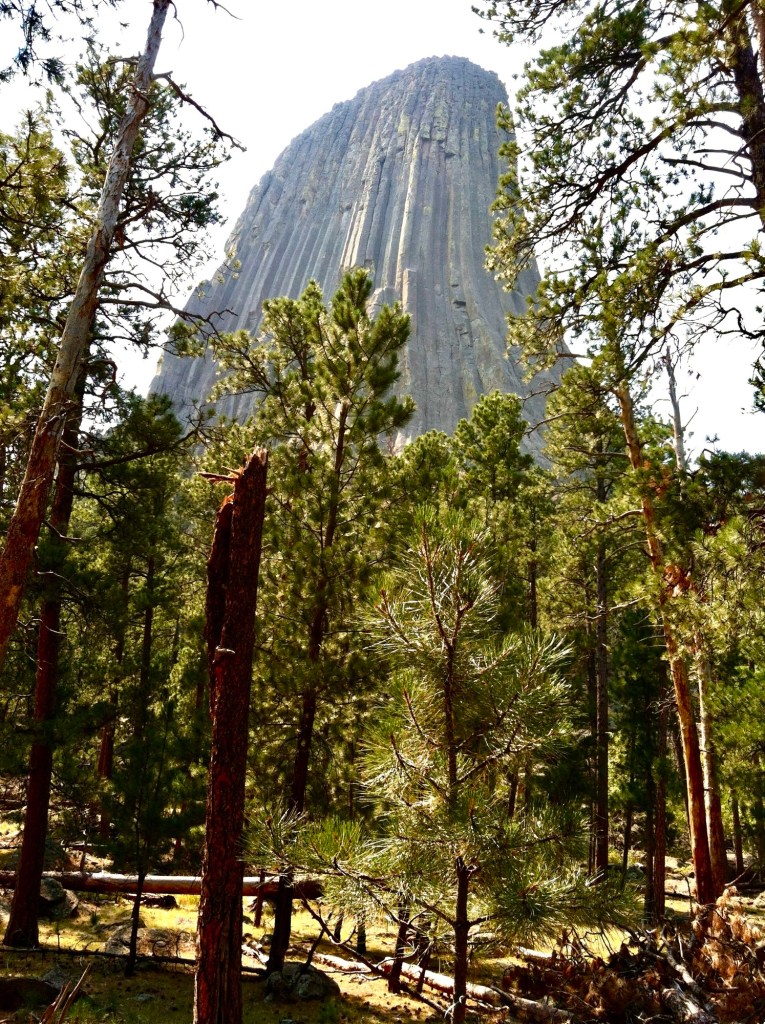
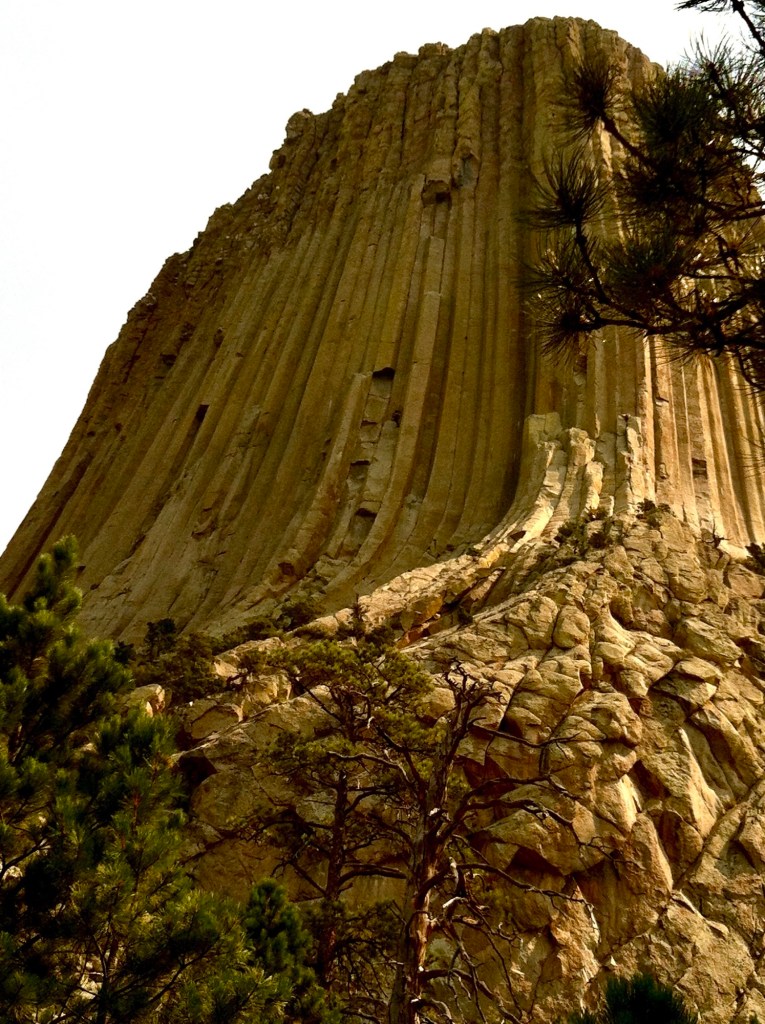
AI image created for this post
One-Time
Monthly
Yearly

Make a one-time or recurring donation to support daily Barnstorming posts

Make a monthly donation

Make a yearly donation

Choose an amount

$10.00
$25.00
$50.00
$5.00
$15.00
$100.00
$5.00
$15.00
$100.00

Or enter a custom amount

$

Your contribution is deeply appreciated.

Your contribution is appreciated.

Your contribution is appreciated.

DonateDonate monthlyDonate yearly
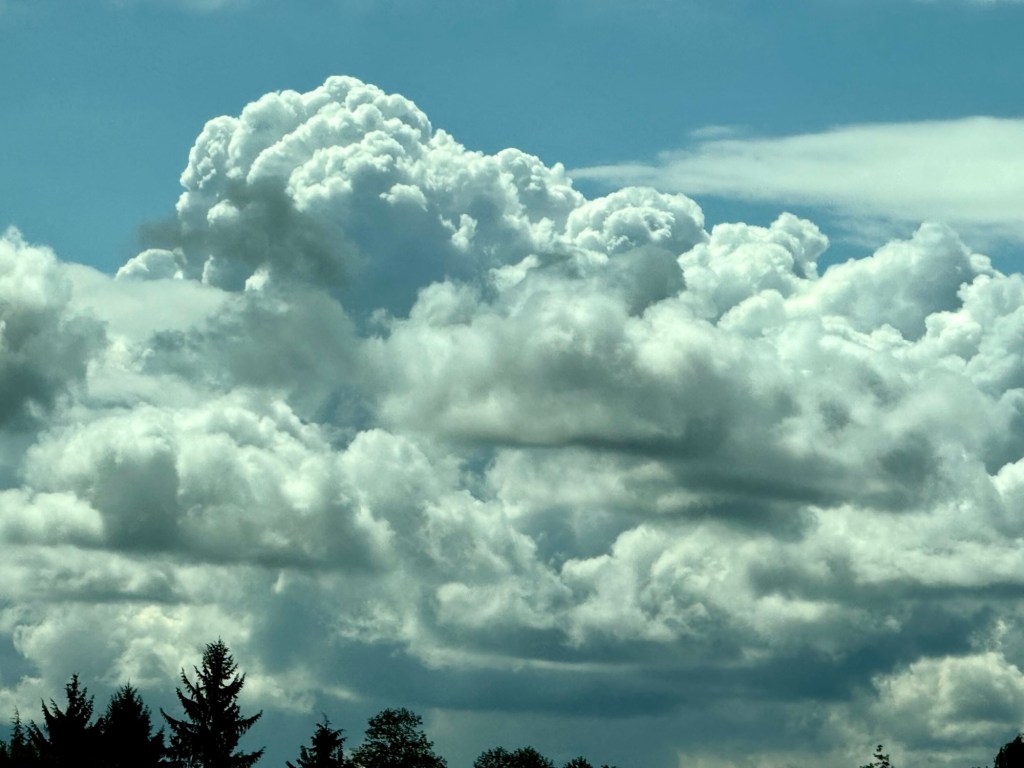
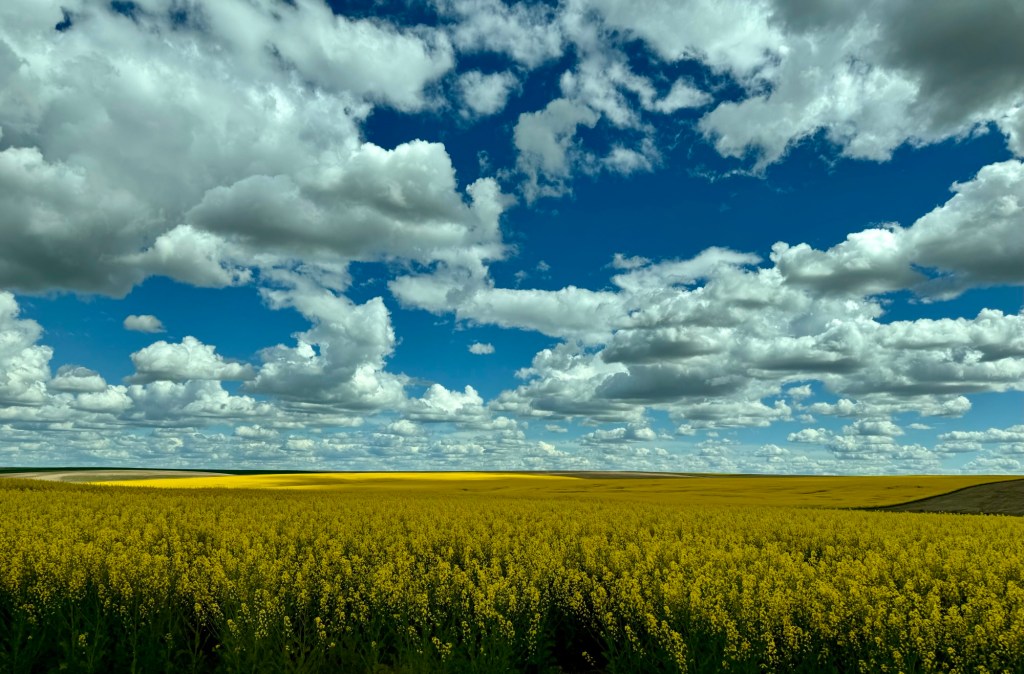
Like Light and Cloud Shadows

…you mustn’t be frightened …
if a sadness rises in front of you,
larger than any you have ever seen;
if an anxiety, like light and cloud-shadows,
moves over your hands and over everything you do.
You must realize that something is happening to you,
that life has not forgotten you,
that it holds you in its hand and will not let you fall.
Why do you want to shut out of your life any uneasiness,
any misery, any depression, since after all
you don’t know what work these conditions are doing inside you?

~Rainer Maria Rilke from Letters to a Young Poet

…difficulties are magnified out of all proportion
simply by fear and anxiety.
From the moment we wake until we fall asleep
we must commend other people wholly and unreservedly to God and leave them in his hands,
and transform our anxiety for them into prayers on their behalf: 

With sorrow and with grief…
God will not be distracted.
~Dietrich Bonhoeffer in Letters from Prison

During my decades as a primary care physician for a university health center, my clinic days were often filled with young adults who were so consumed by anxiety they were immobilized in their ability to move forward through life’s inevitable obstacles and difficulties. They were so stuck in overwhelming feelings, they couldn’t sleep or eat or think clearly. They tended to self-medicate, self-injure and self-hate. Unable to nurture themselves or others, they withered like a flower without roots deep enough to reach the vast reservoir untapped beneath them.  In epidemic numbers, some decide to die, even before life really has fully begun for them.

My role was to help find healing solutions, whether it was counseling therapy, a break from school, or a medicine that may give some form of relief. 

My heart knows the ultimate answer is not as simple as choosing the right prescription – light and cloud shadows differ for each person – it can feel like the sun is blocked forever, all that is left is rain and snow and gray.

I too have known anxiety and how it can distort every thought.

We who are anxious can depend upon a Creator who is not distracted from His care for us even if we have turned away in our worry and sorrow, unable to look past our own eyelashes. 

Like a thirsty withering plant, we need to reach higher and deeper: asking for help and support, working through solutions with those helpers, acknowledging there exists a healing power greater than ourselves.

So we are called to pray for ourselves and for others. Self compassion and caring for others can disable anxiety and fear by transforming it to growth, gratitude and grace.  

No longer withering, we just might bloom.

AI image created for this post
One-Time
Monthly
Yearly

Make a one-time or recurring donation to support daily Barnstorming posts

Make a monthly donation

Make a yearly donation

Choose an amount

$10.00
$25.00
$50.00
$5.00
$15.00
$100.00
$5.00
$15.00
$100.00

Or enter a custom amount

$

Your contribution is deeply appreciated.

Your contribution is appreciated.

Your contribution is appreciated.

DonateDonate monthlyDonate yearly
A Blink of God’s Eye…

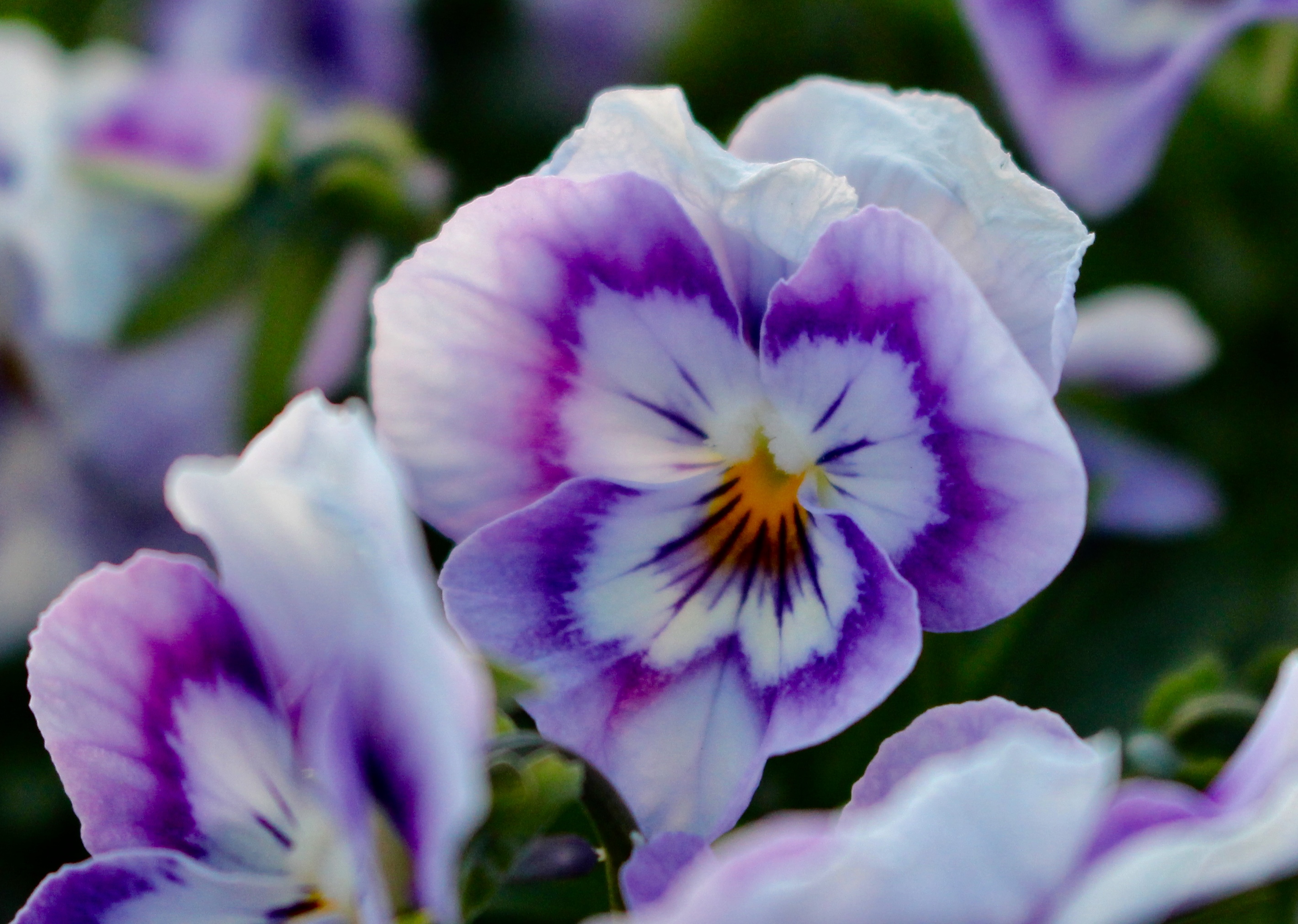
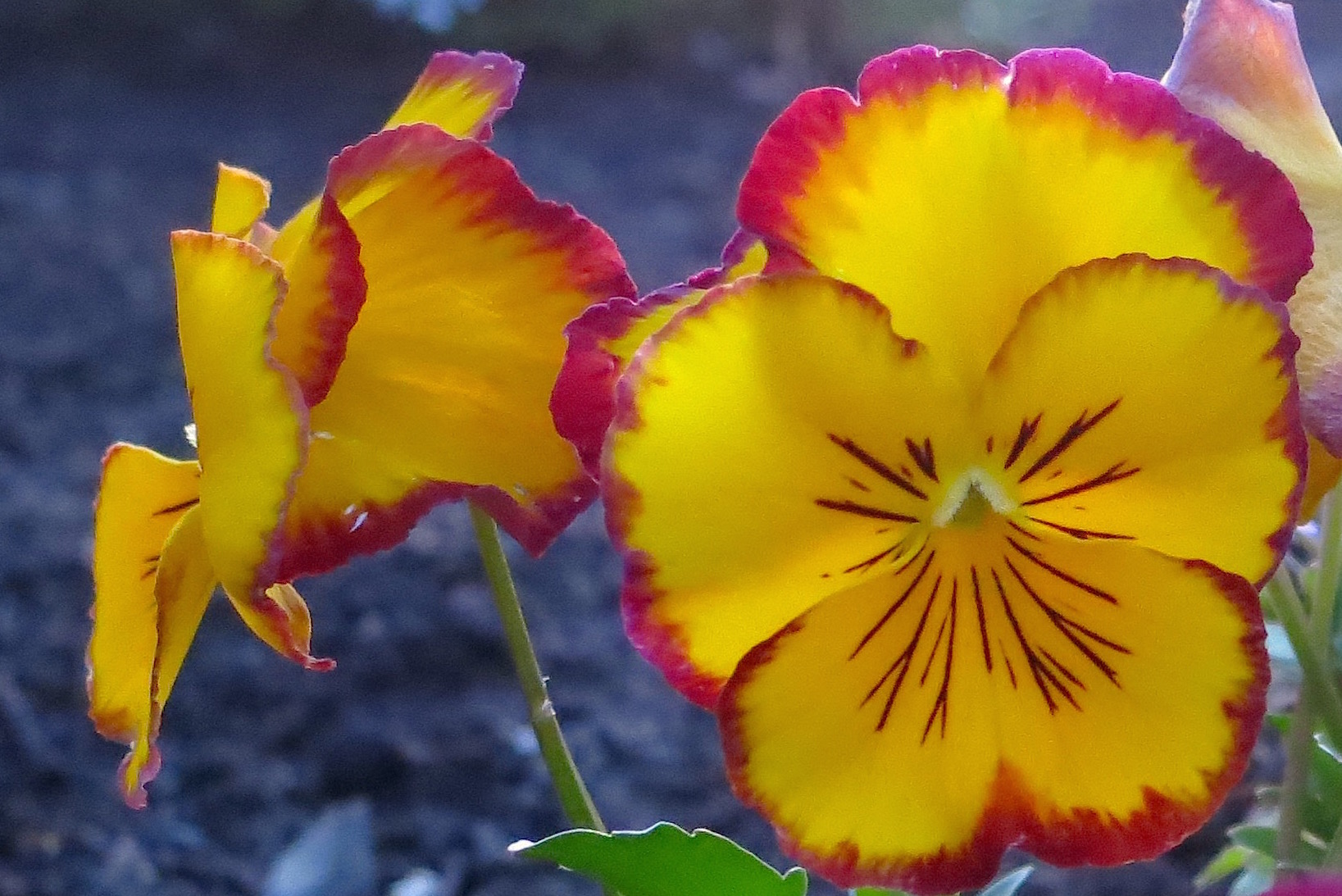
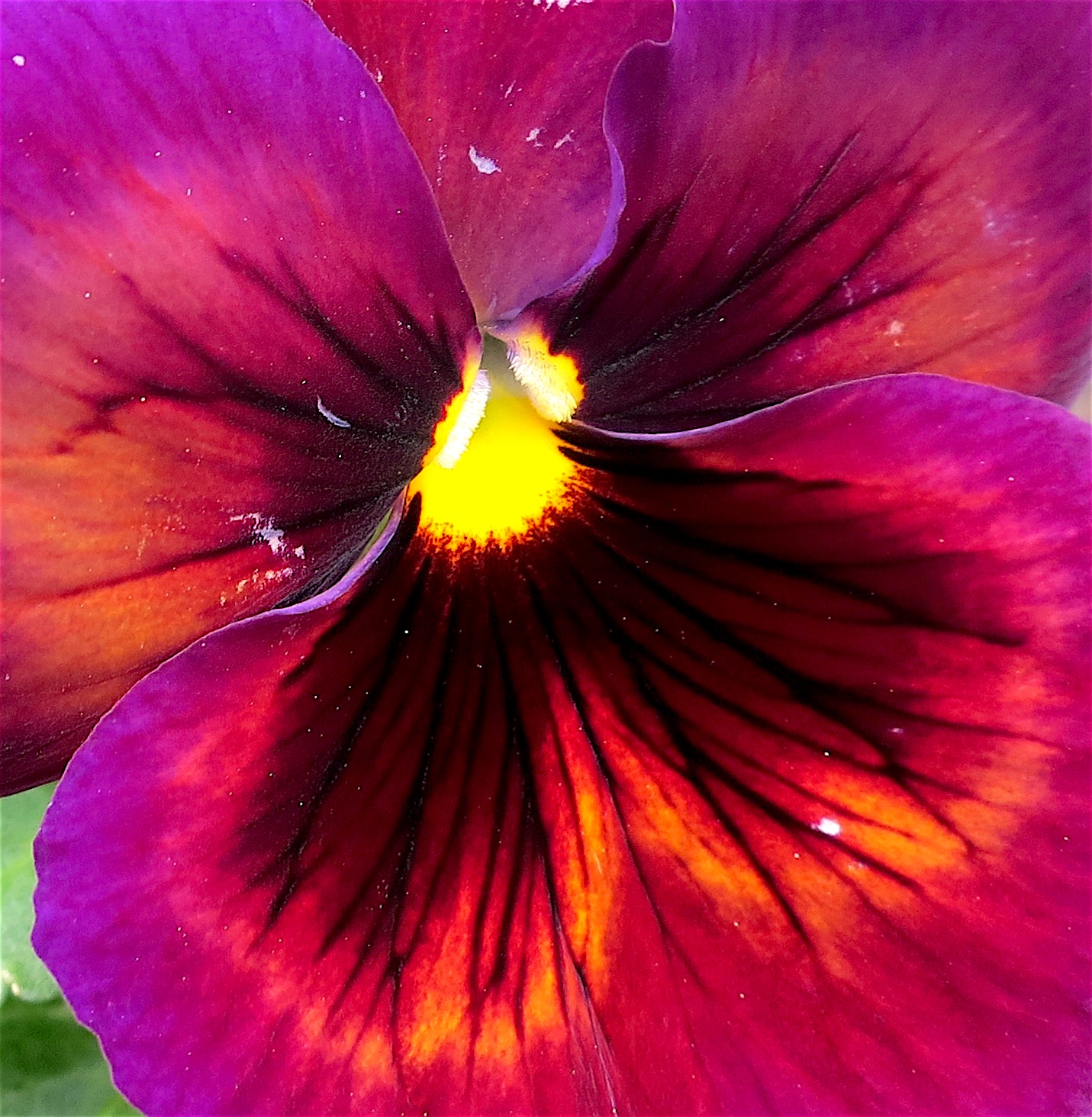
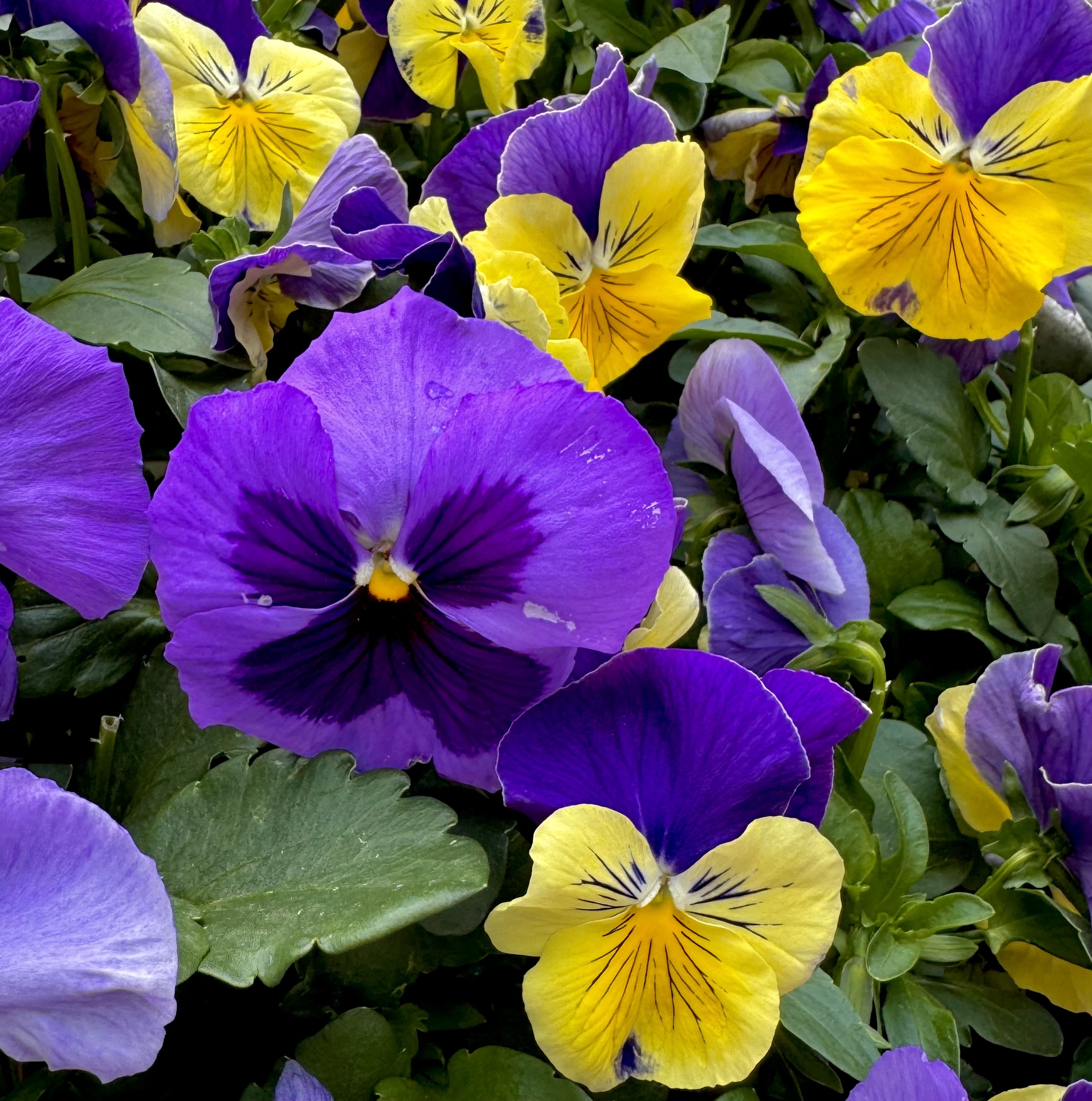
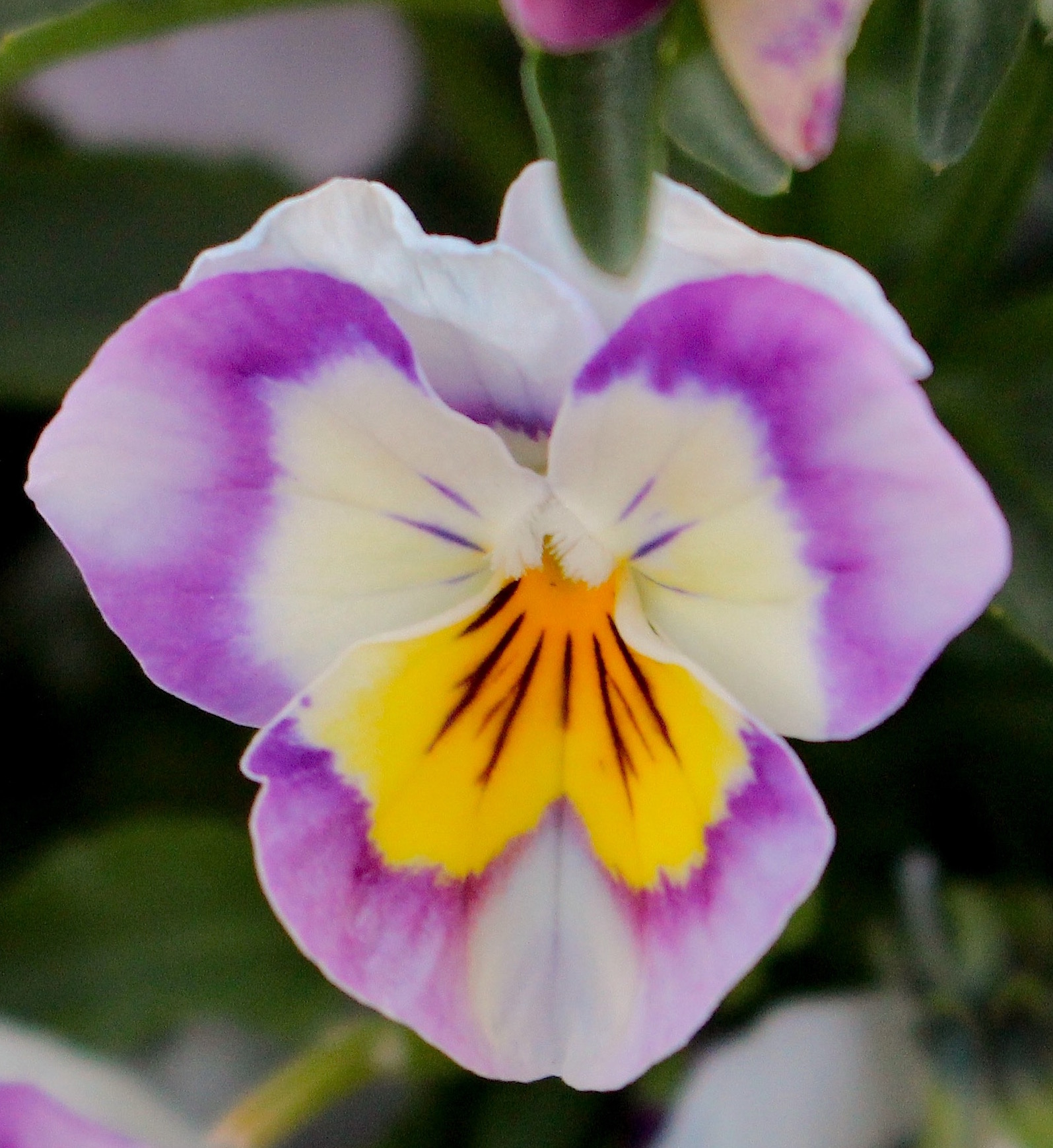
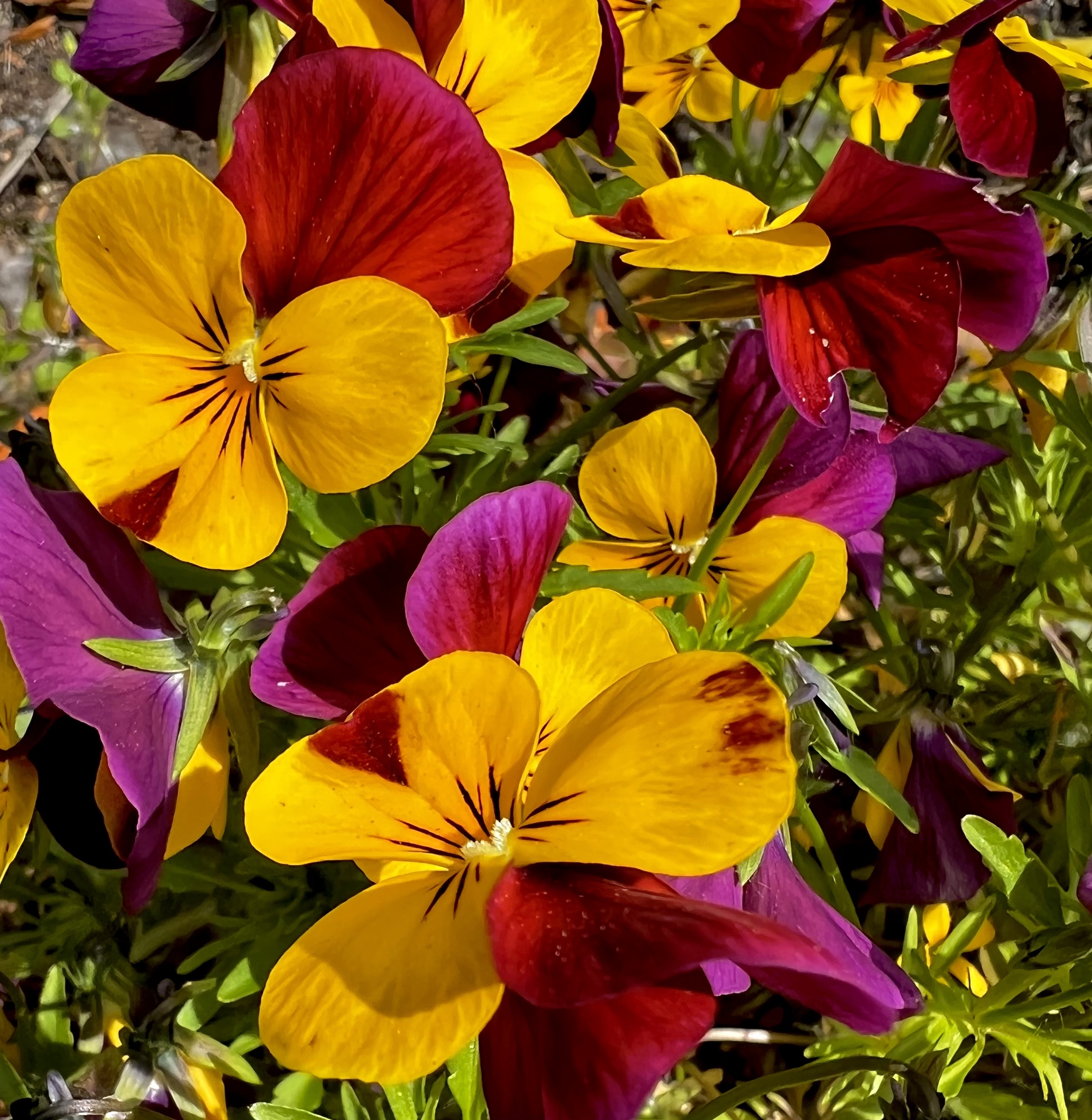
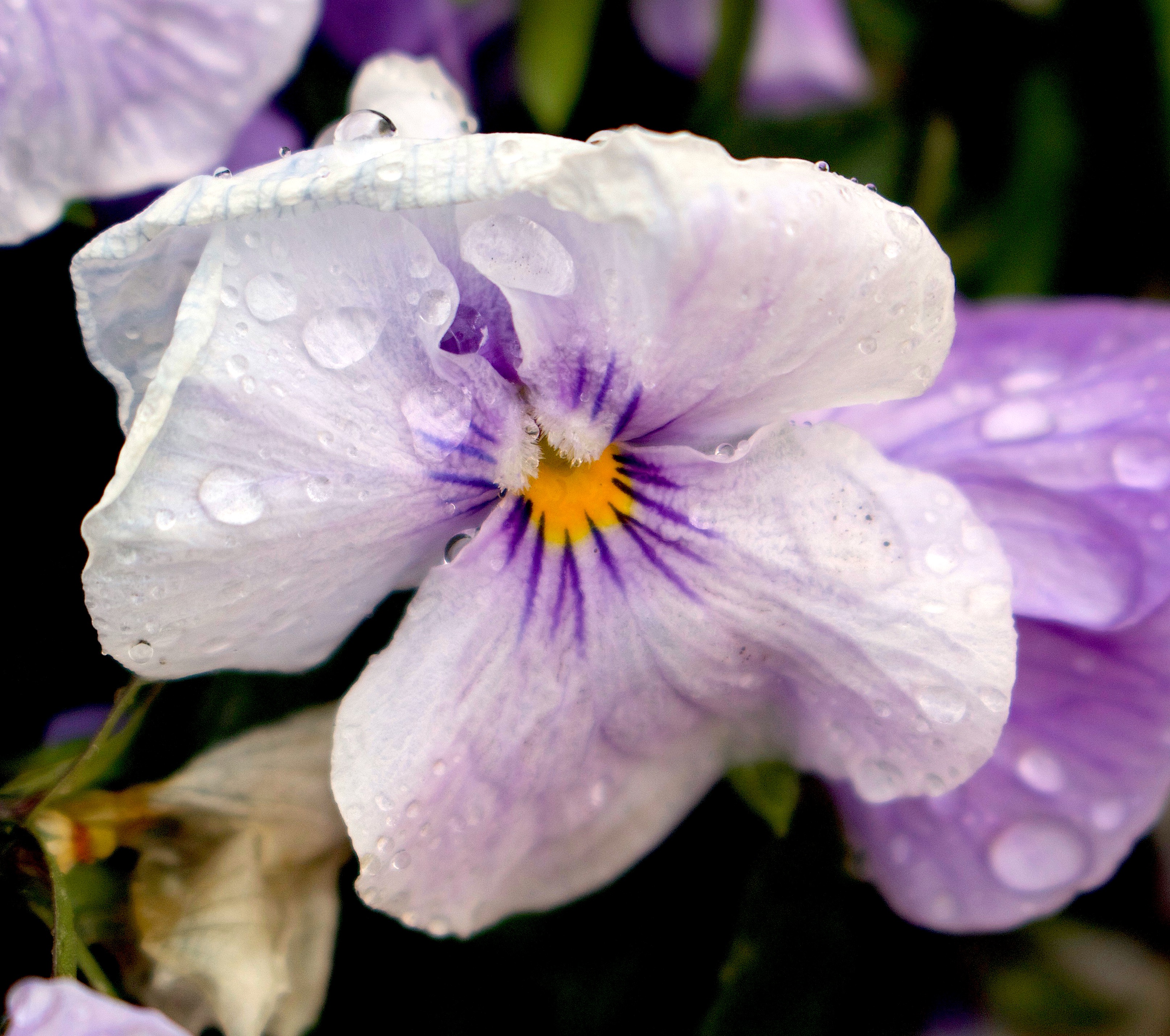
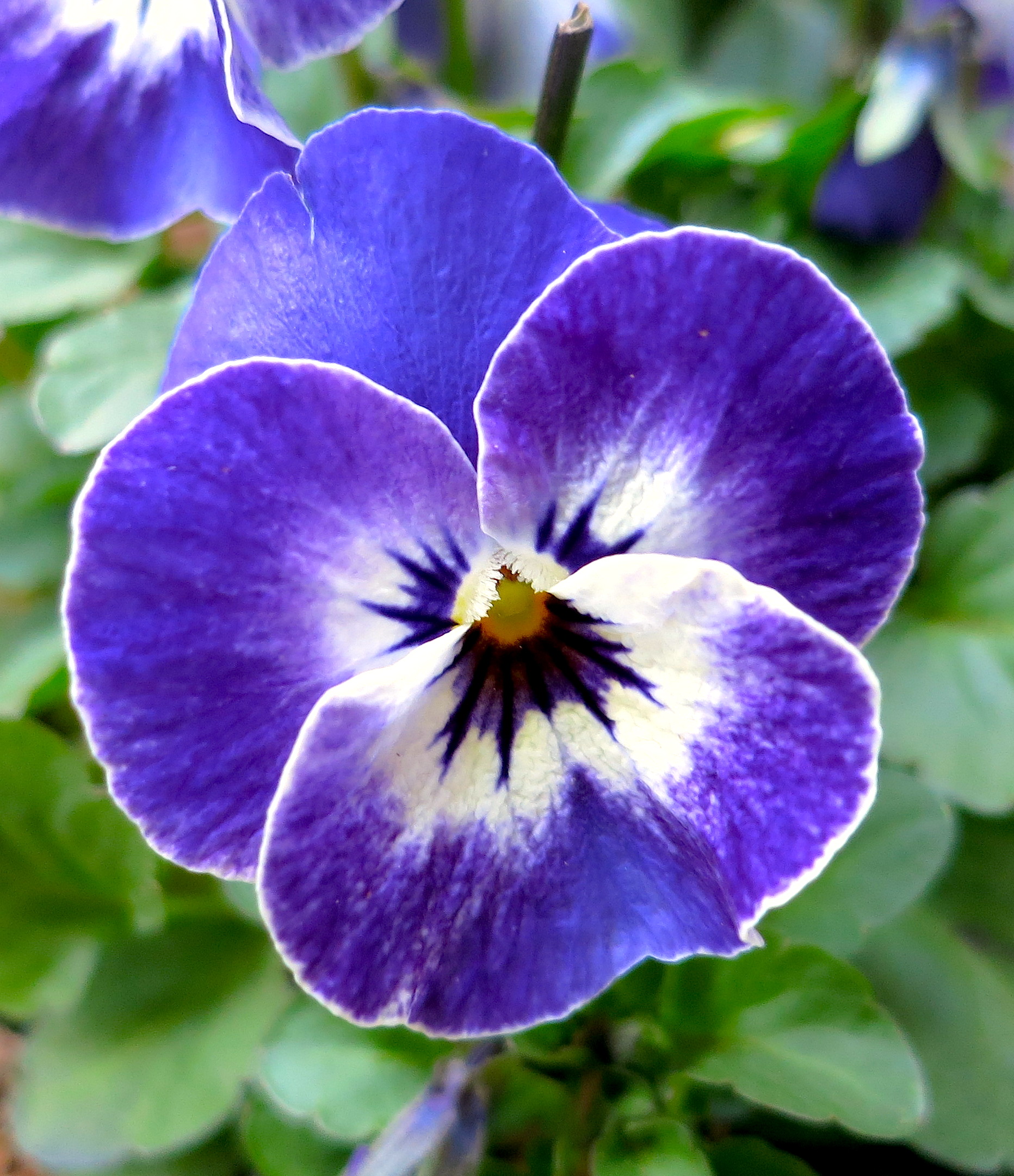
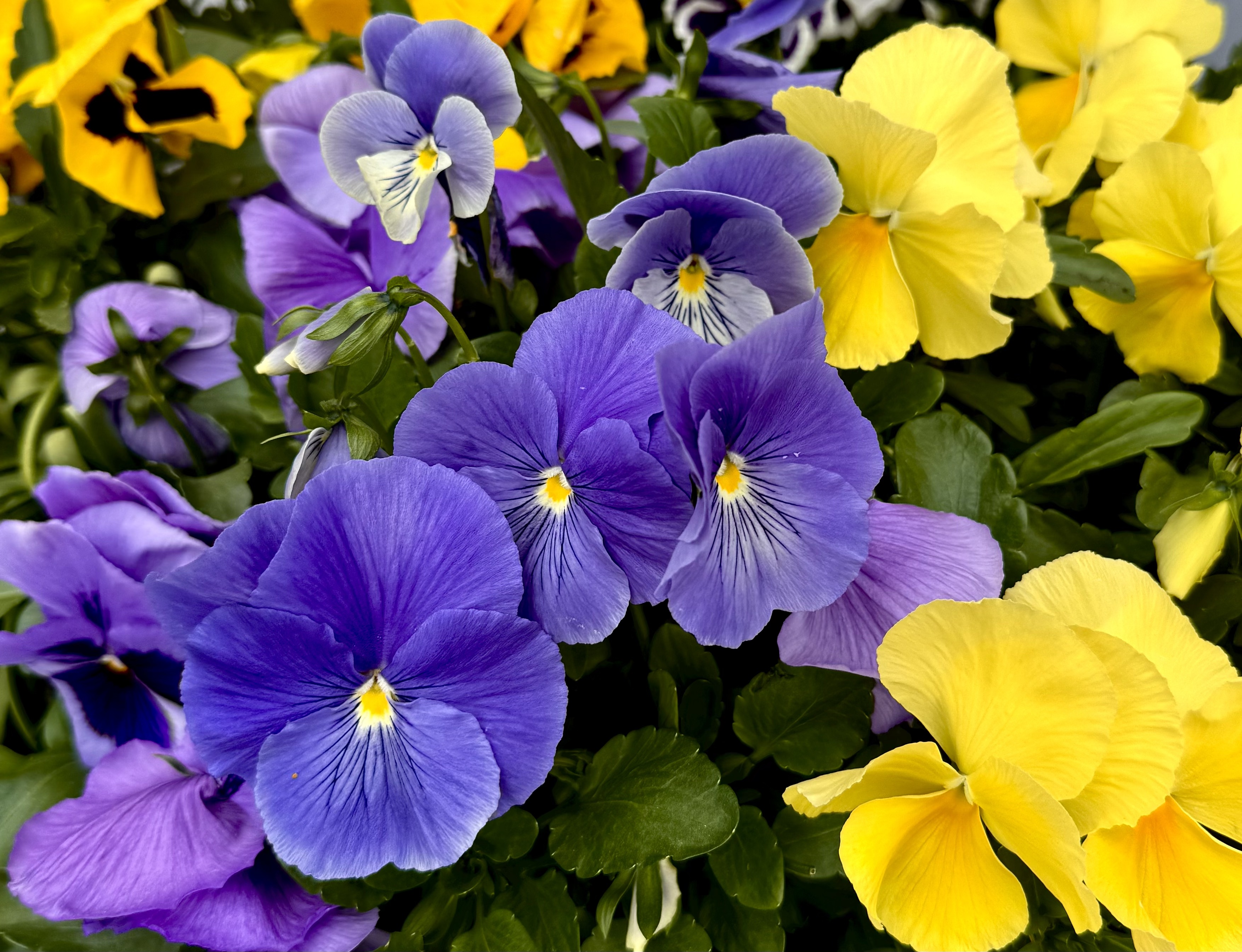
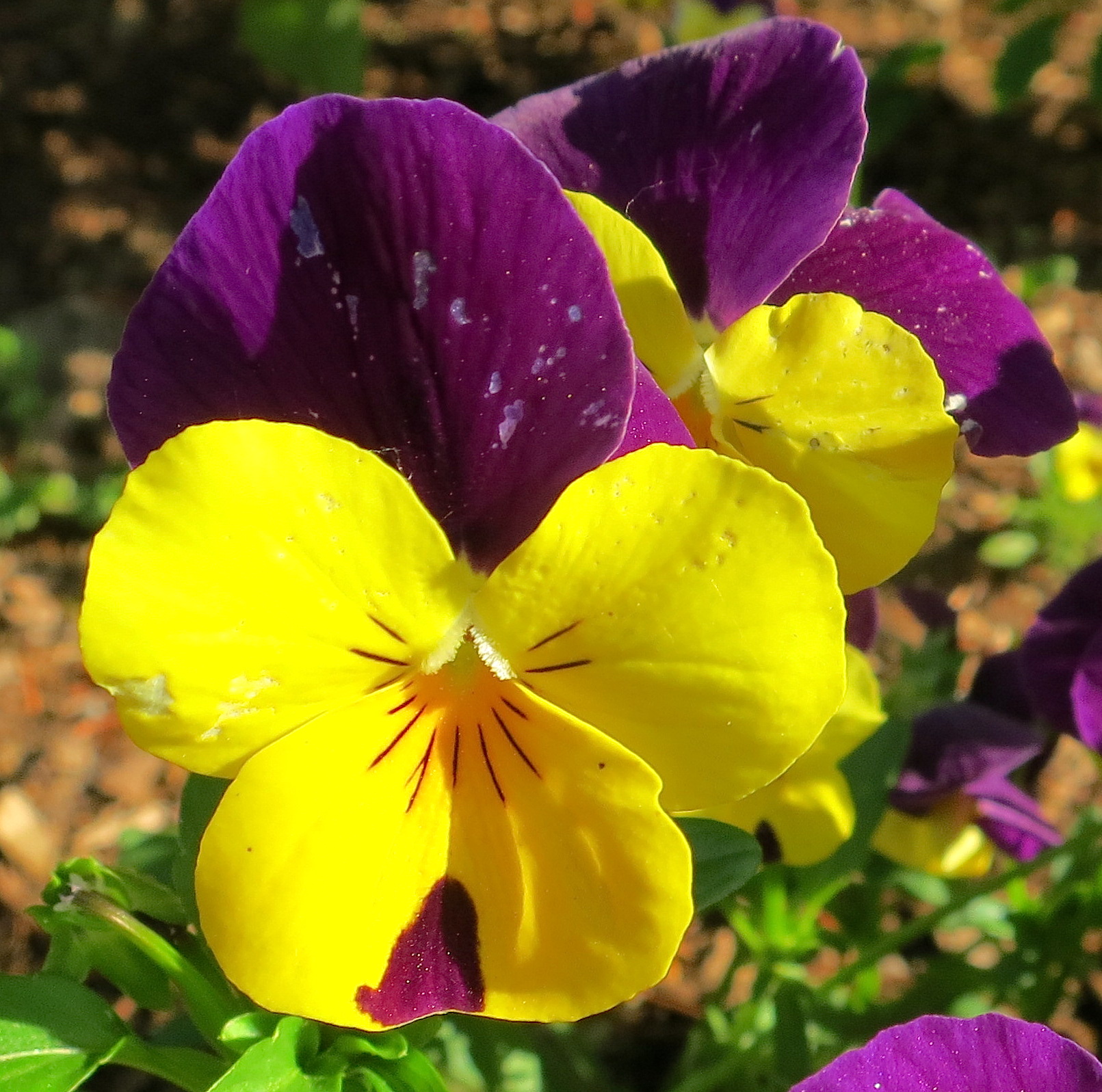
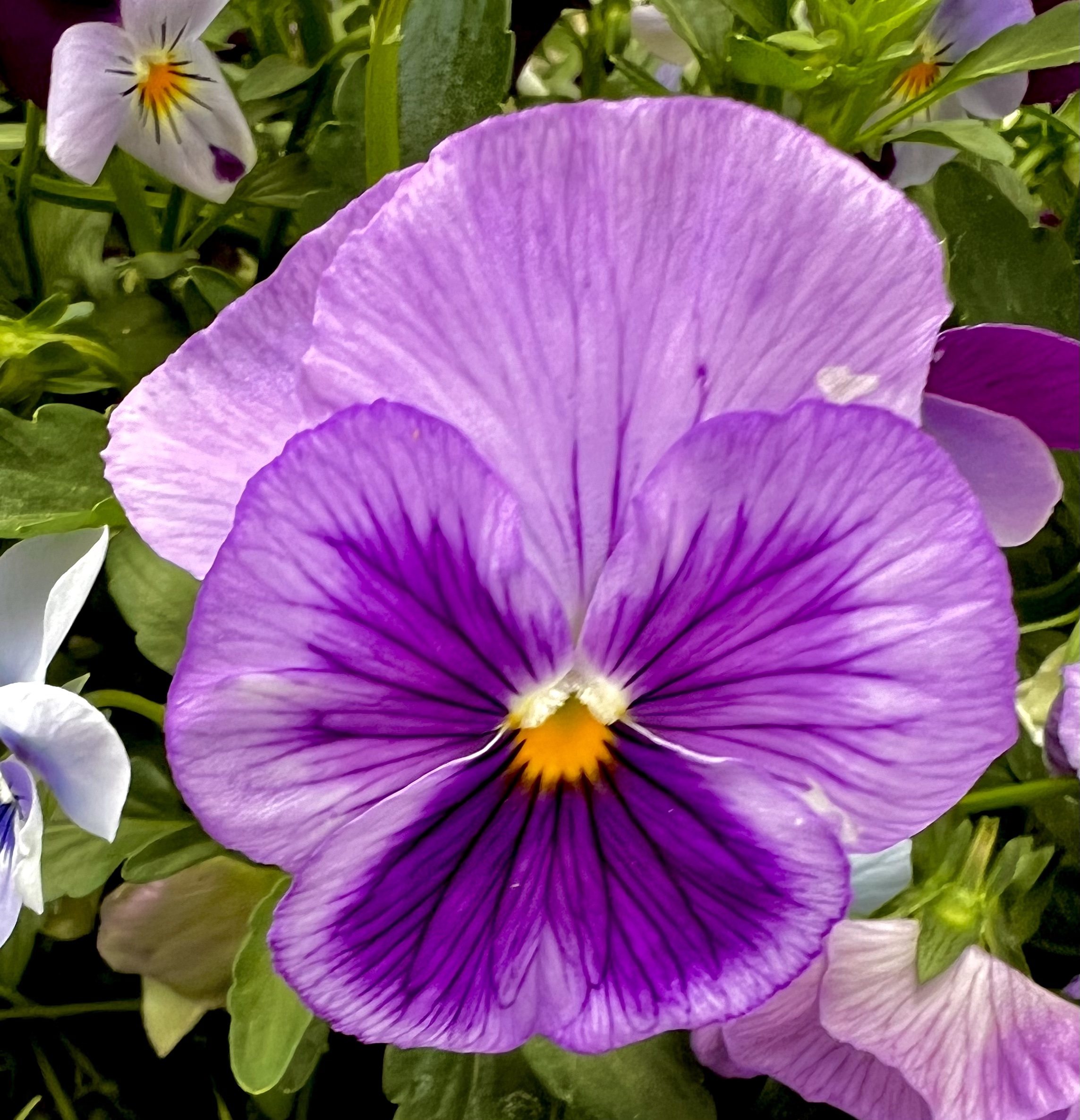
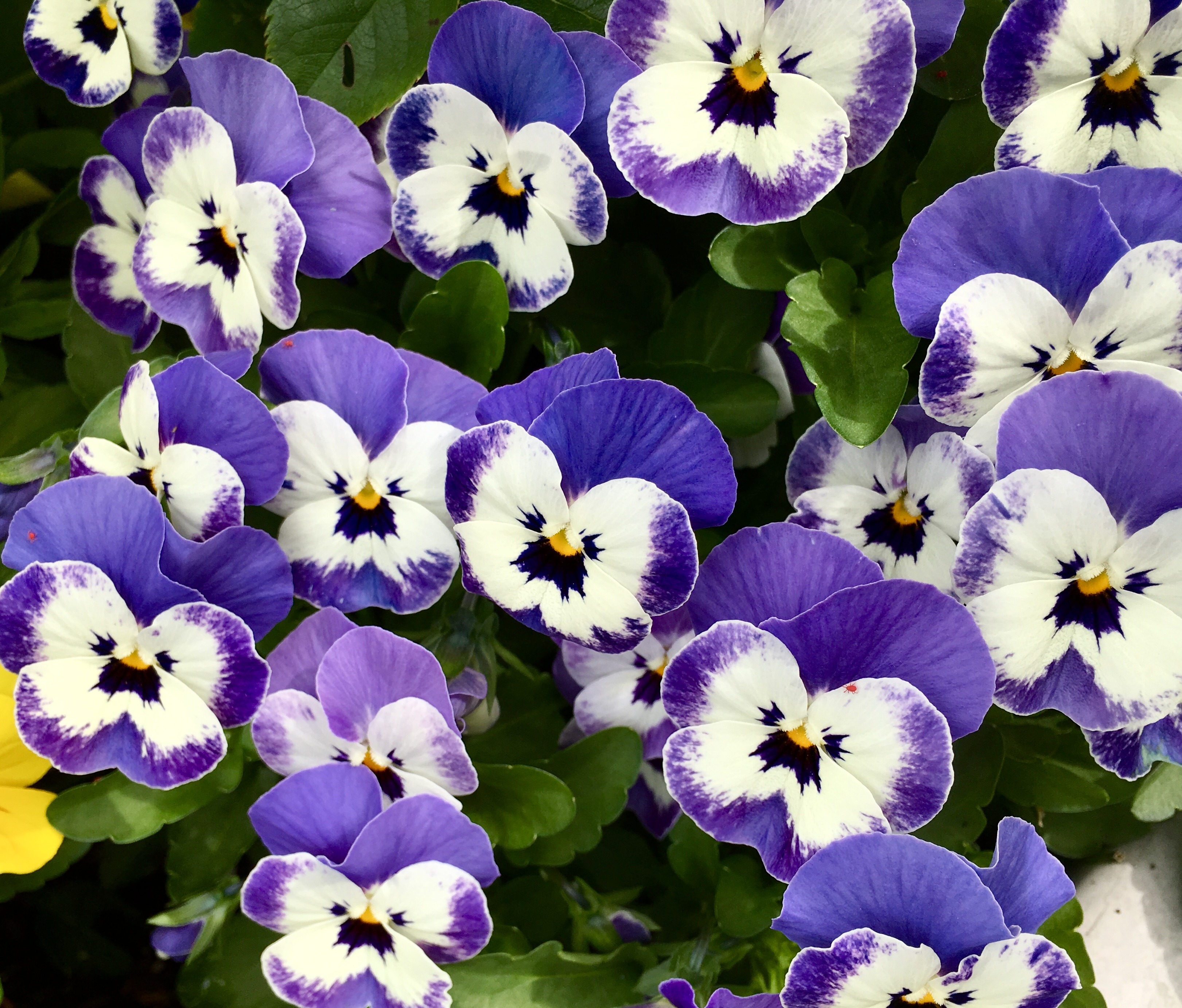
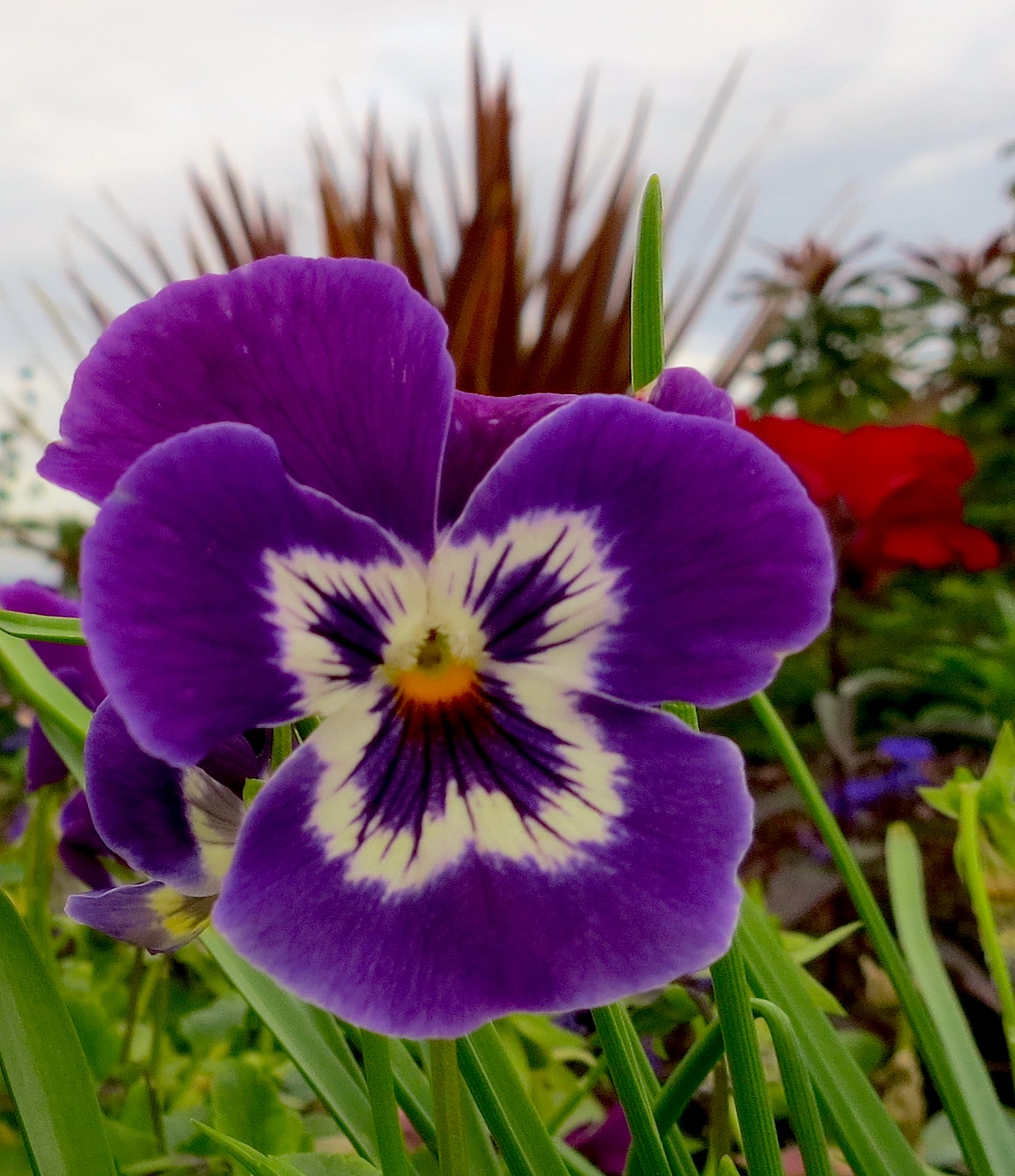
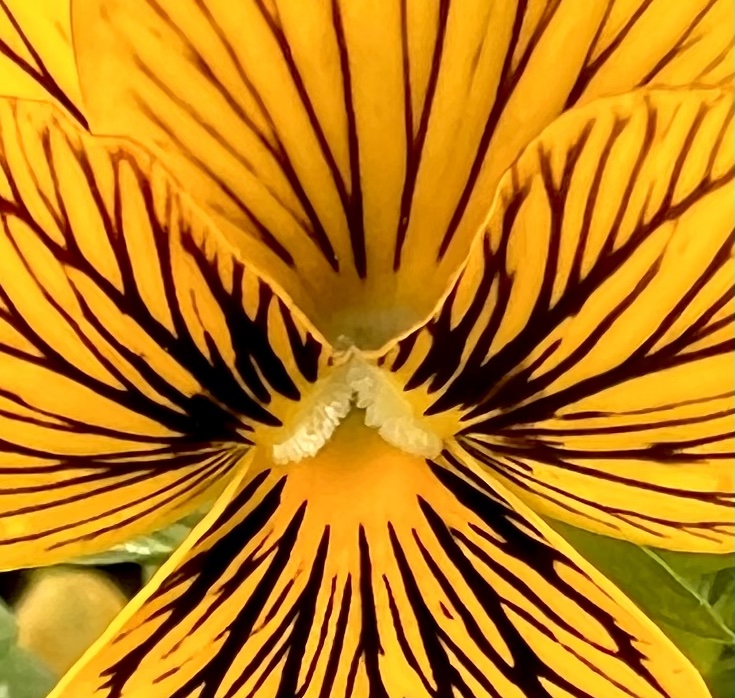
Nobody can keep on being angry if she looks into the heart of a pansy for a little while.
~L.M. Montgomery

One has to wonder where they got
their reputation for pansiness.
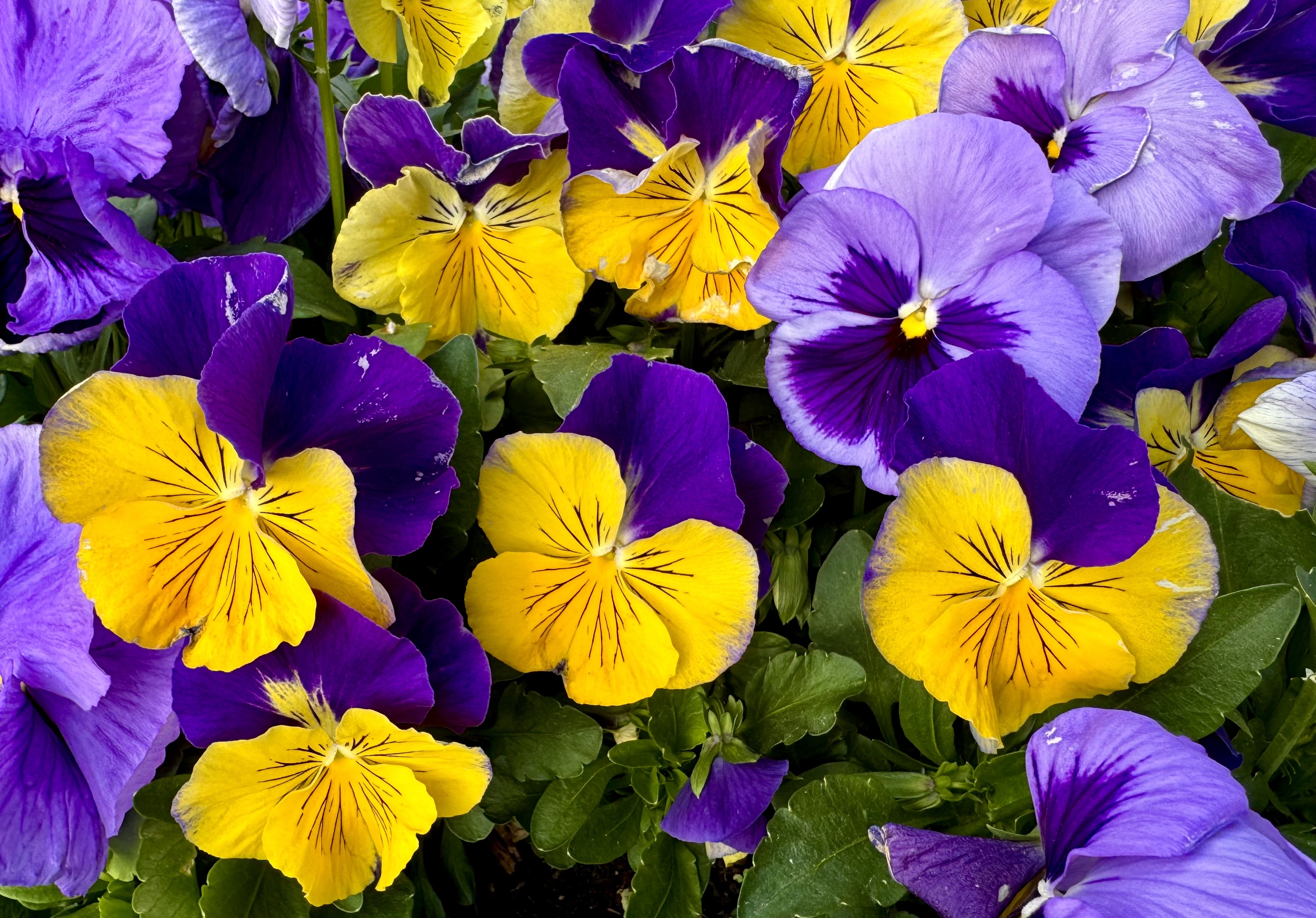
Purple and proud, or any color
you might imagine, they grow
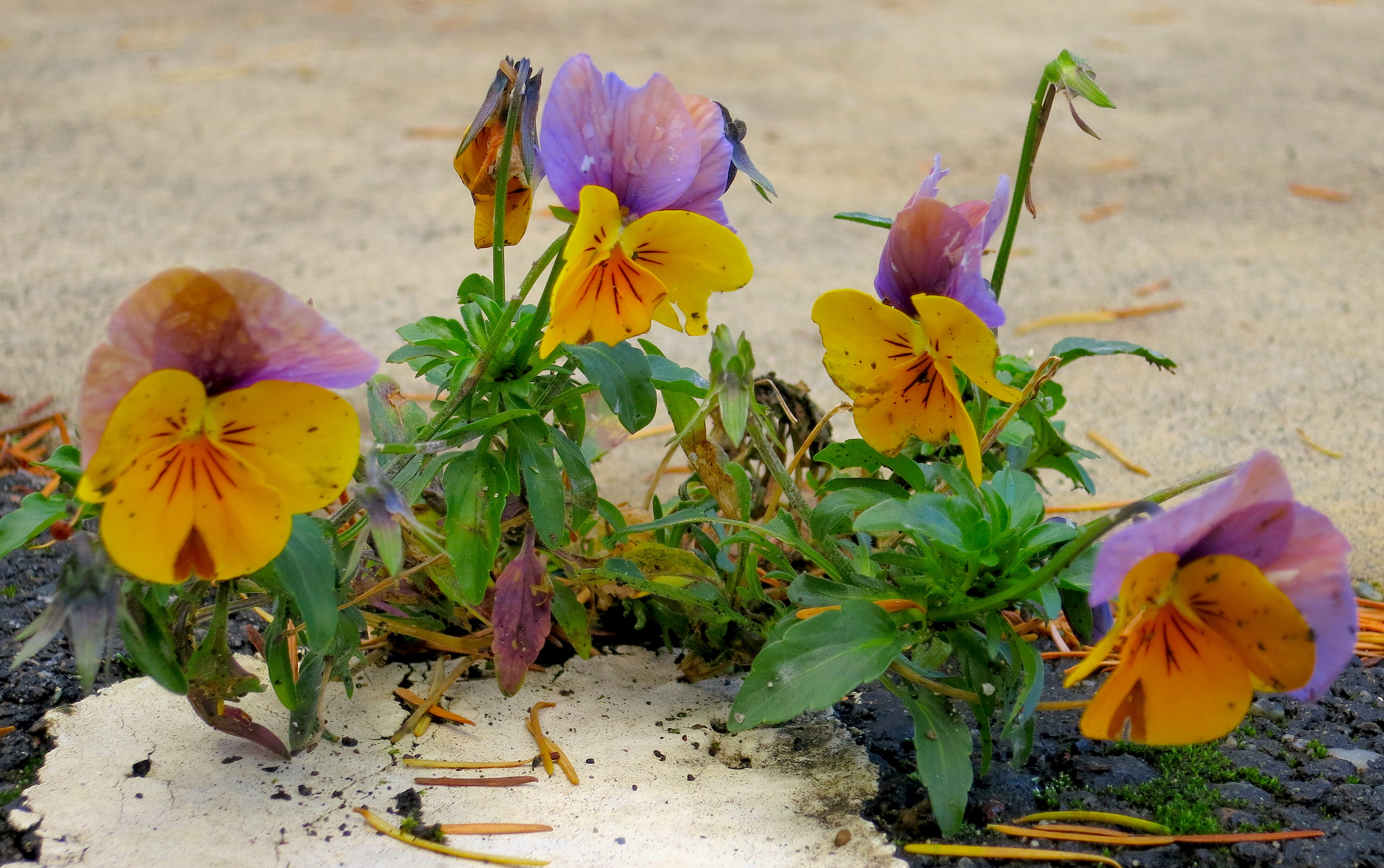
where they want to grow, despite the cold,
so much unlike their flashy cousins,
impatiens, petunias, scarlet sage,
petals falling off at first frost,
hardly hearty at all.
Keep your prima donna blossoms,
loud and boastful annuals, brief
and seedless. I’ll take the pansies
of the world, unassuming, resilient,
quietly doing what they know to do

~Scott Owen “Pansies”

As a seed, I was shot out the back end of a blue jay
when, heedless, she flew over the meadow.
She had swallowed me in my homeland when she spied me
lying easy under the sun—briefly, I called her Mother
before I passed through her gullet like a ghost.
In a blink of God’s eye I was an orphan. I trembled
where I fell, alone in the dirt. That first night
was a long night, early May and chilly, and I remember
rain filled my furrow. I called out for mercy—
only a wolverine wandered by. I cursed my luck,
I cursed the happenstance of this world, I smelled
his hot stink, but he nosed me deep into the mud—
this was the gift of obscurity. I germinated, hidden
from the giants of earth, the jostling stalks,
the various, boisterous bloomers, and this was my salvation.
After seven days and nights I pushed through—
yes. Here I am, kissable: your tiny, purple profusion.
~Lisa Bellamy “Wild Pansy”

The world is in sore need of a cure for the grumbles.

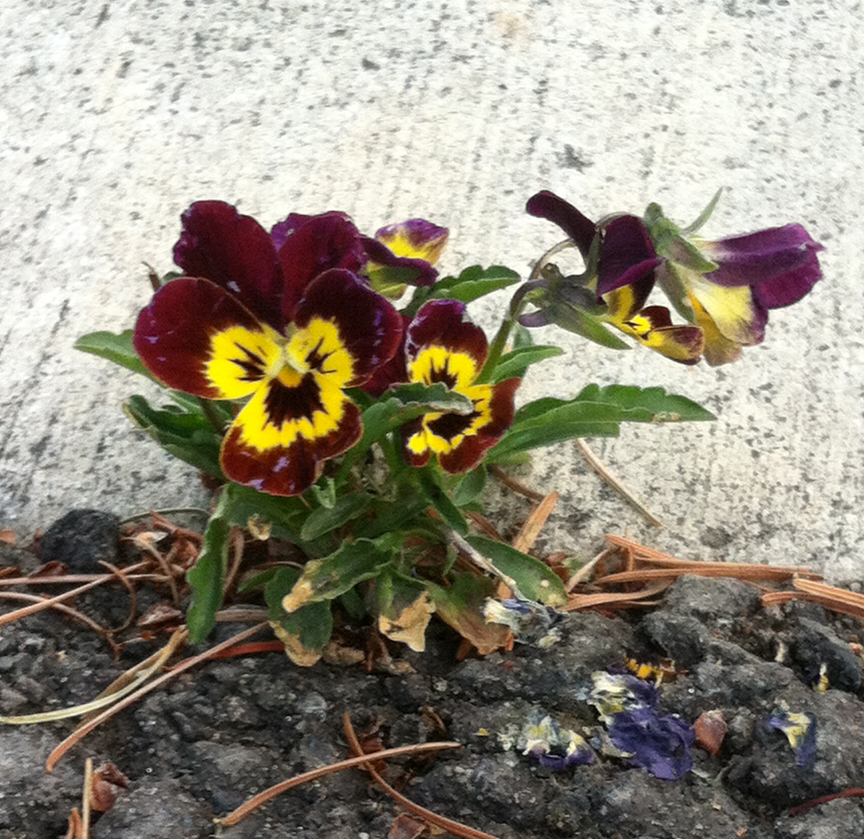
Fortunately, it exists right outside in our back yards, along sidewalks and in gravelly vacant lots.

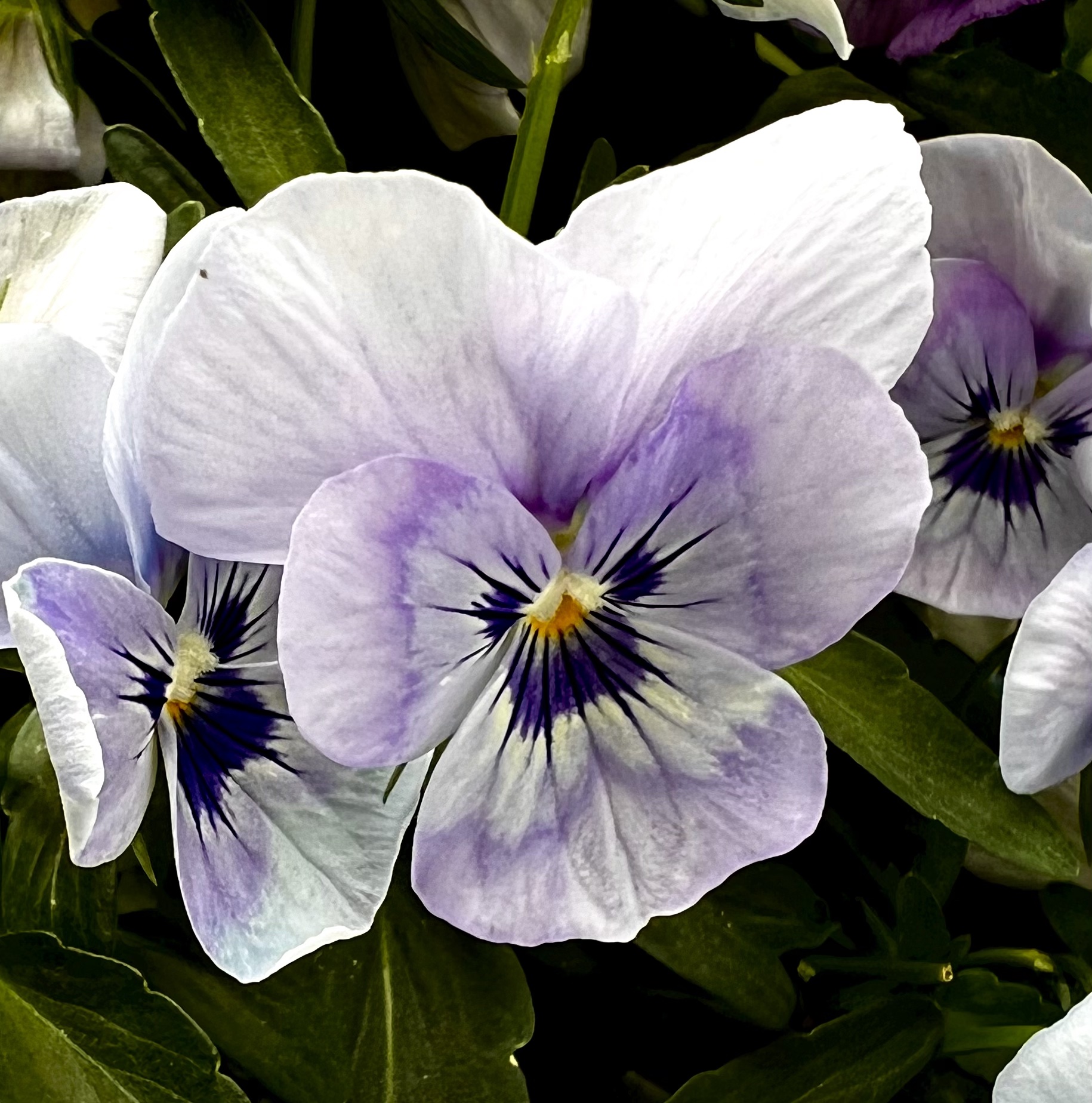
A cheerful face is irresistible to all but the crabbiest among us, guaranteed to bring a smile every time.

Beyond the obvious charm exists a depth of heart — roots able to thrive in the thinnest of soil, at home among rocks and weeds,  resilient even when tromped on.

We carry its seeds on the tread of our boots despite our grumbling and help spread the good news: anger left unfed will dry up and blow away.

Yet the constant loyal heart of the pansy will last. 
It keeps smiling back – simply a twinkle in God’s eye.

For pansies are, I think, the little gleams
Of children’s visions from a world of dreams,
Jewels of innocence and joy and mirth,
Alight with laughter as they fall to earth.


So tread not rashly, children, lest you crush
A part of childhood in a thoughtless rush.
Would you not treat them gently if you knew
Pansies are little bits of children too?

~R.X. Lehmann from “Pansies”

One-Time
Monthly
Yearly

Make a one-time or recurring donation to support daily Barnstorming posts

Make a monthly donation

Make a yearly donation

Choose an amount

$10.00
$25.00
$50.00
$5.00
$15.00
$100.00
$5.00
$15.00
$100.00

Or enter a custom amount

$

Your contribution is deeply appreciated.

Your contribution is appreciated.

Your contribution is appreciated.

DonateDonate monthlyDonate yearly
Stars on the Pavement

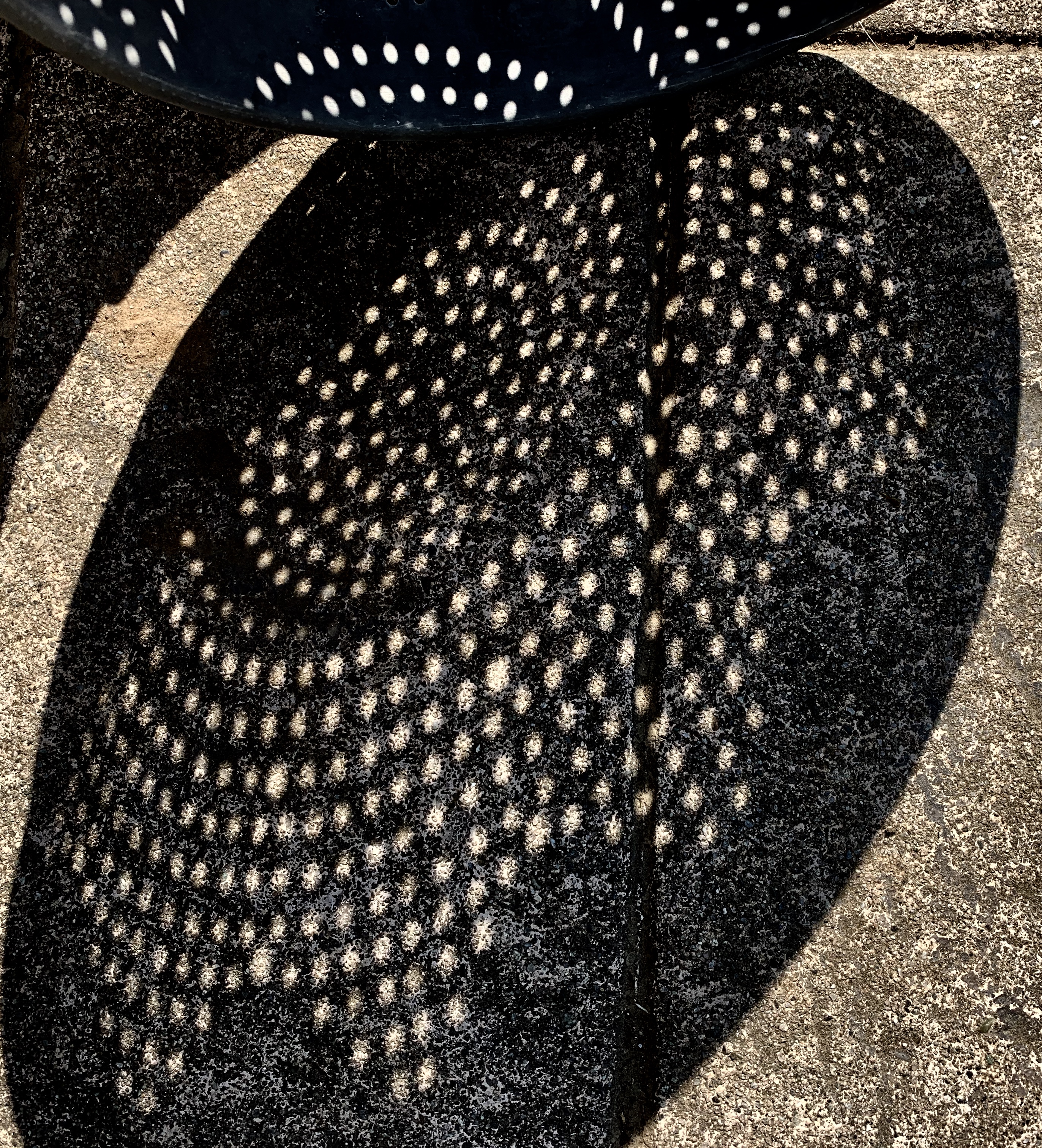
Holes in the shape of stars
punched in gray tin, dented,
cheap, beaten by each
of her children with a wooden spoon.

Noodle catcher, spaghetti stopper,
pouring cloudy rain into the sink,
swirling counter clockwise
down the drain, starch slime
on the backside, caught
in the piercings.

Scrubbed for sixty years, packed
and unpacked, the baby’s
helmet during the cold war,
a sinking ship in the bathtub,
little boat of holes.

Dirt scooped in with a plastic
shovel, sifted to make cakes
and castles. Wrestled
from each other’s hands,
its tin feet bent and re-bent.

Bowl daylight fell through
onto freckled faces, noon stars
on the pavement, the universe
we circled aiming jagged stones,
rung bells it caught and held.

~Dorianne Laux “My Mother’s Colander”

Many of my mother’s kitchen things, some over eighty years old, are still packed away in boxes that I haven’t had the emotional wherewithal to open. They sit waiting for me to sort and purge and save and weep.

It is as if I haven’t wanted to say goodbye after her death at age 88, now seventeen years ago.

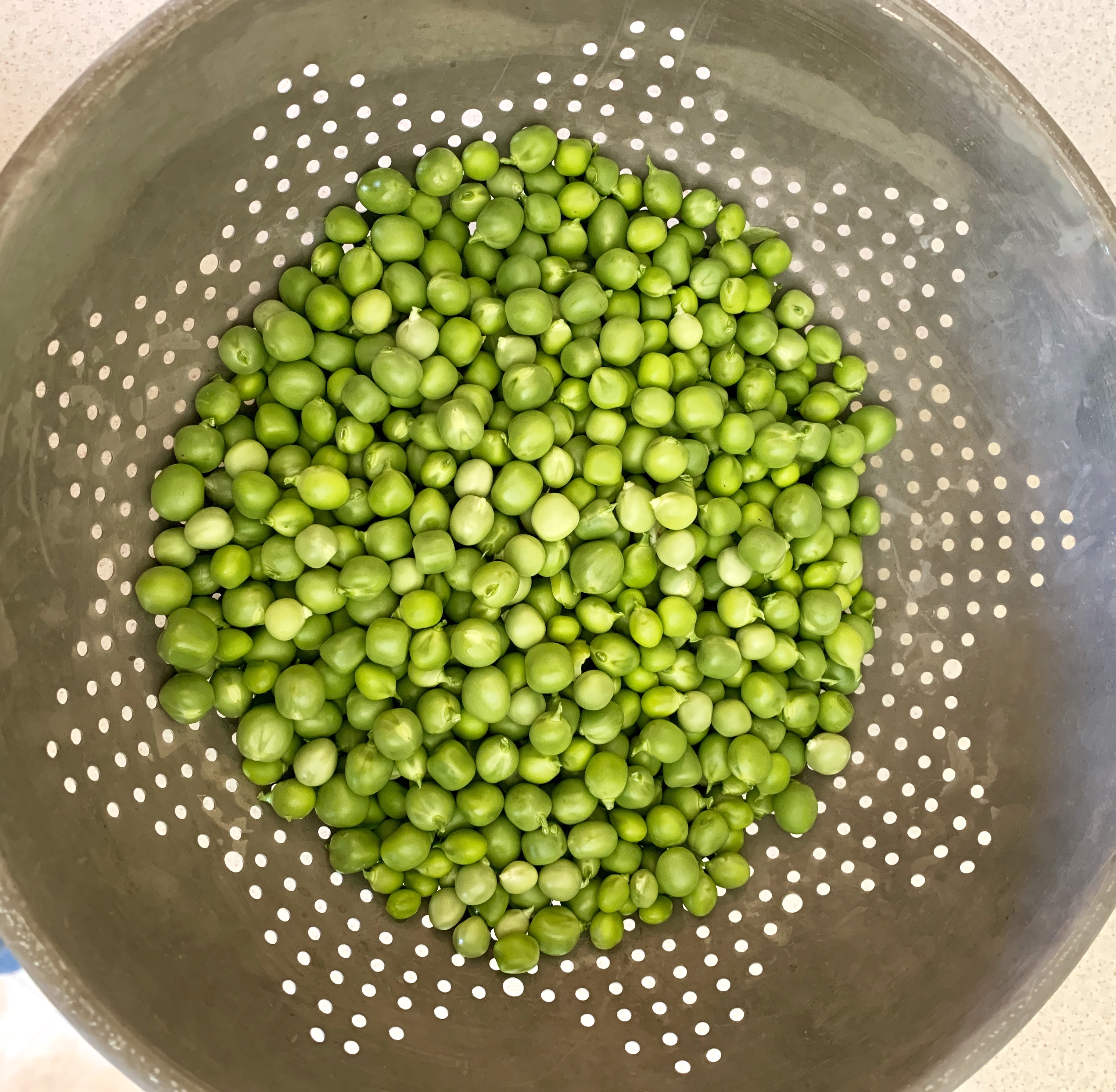
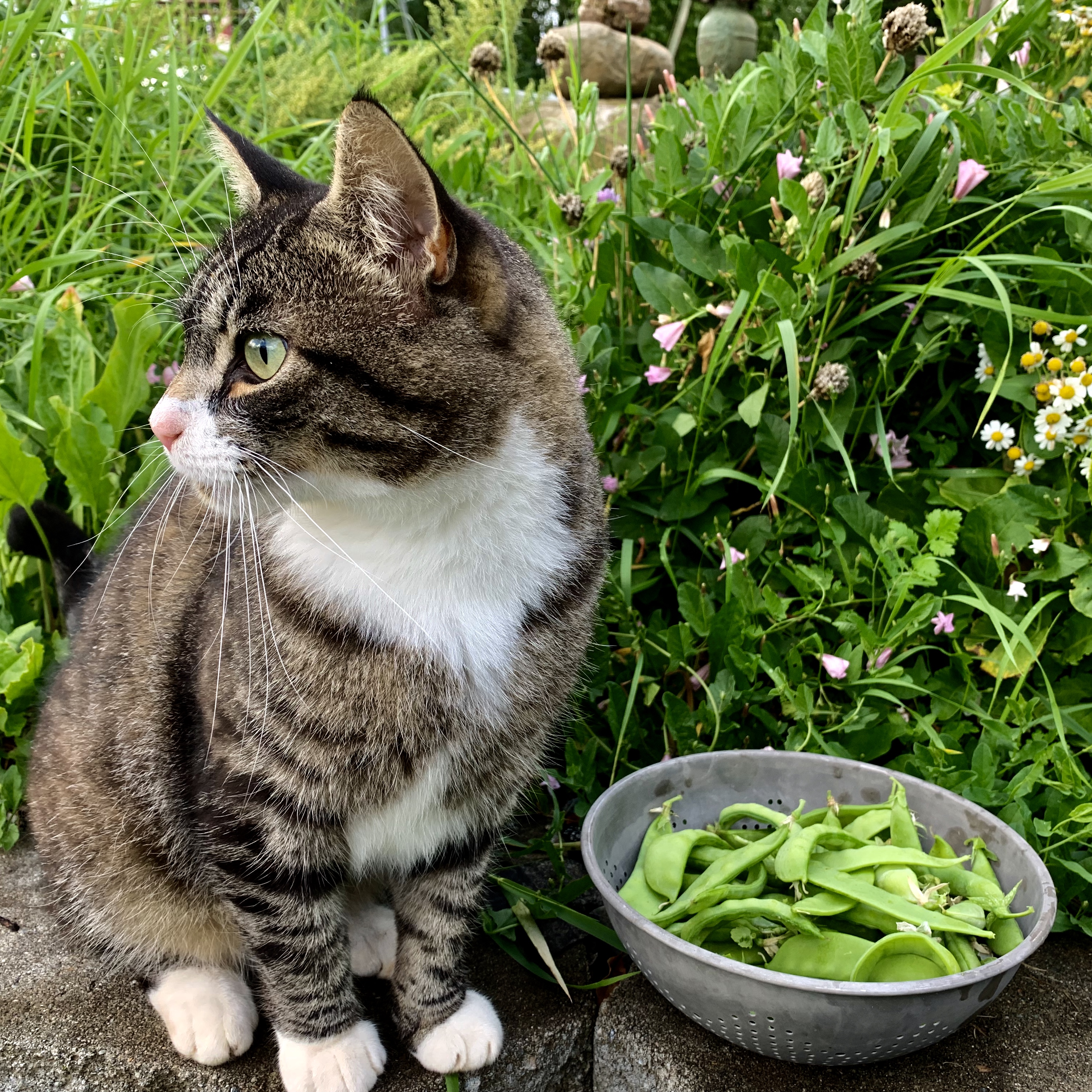
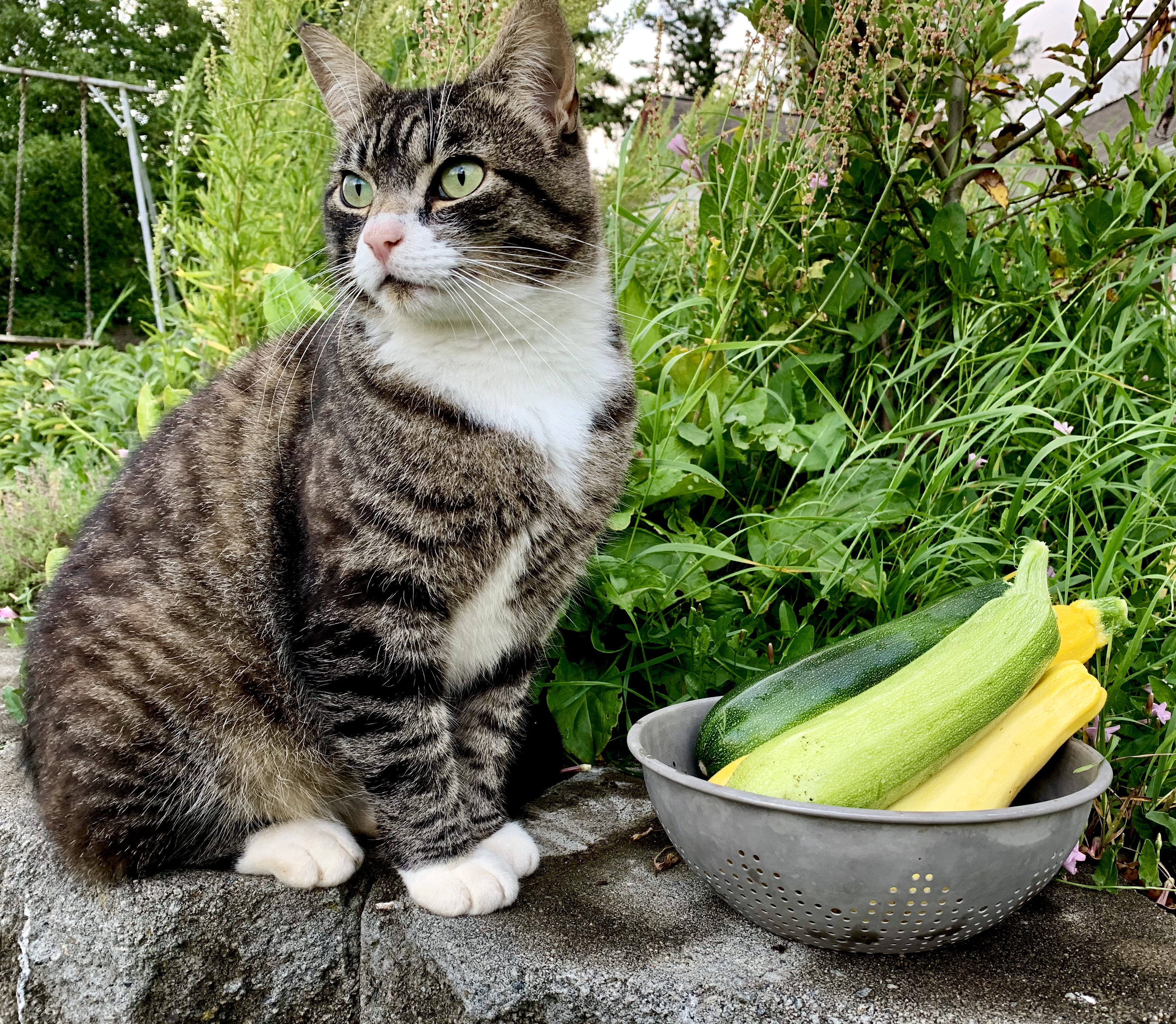
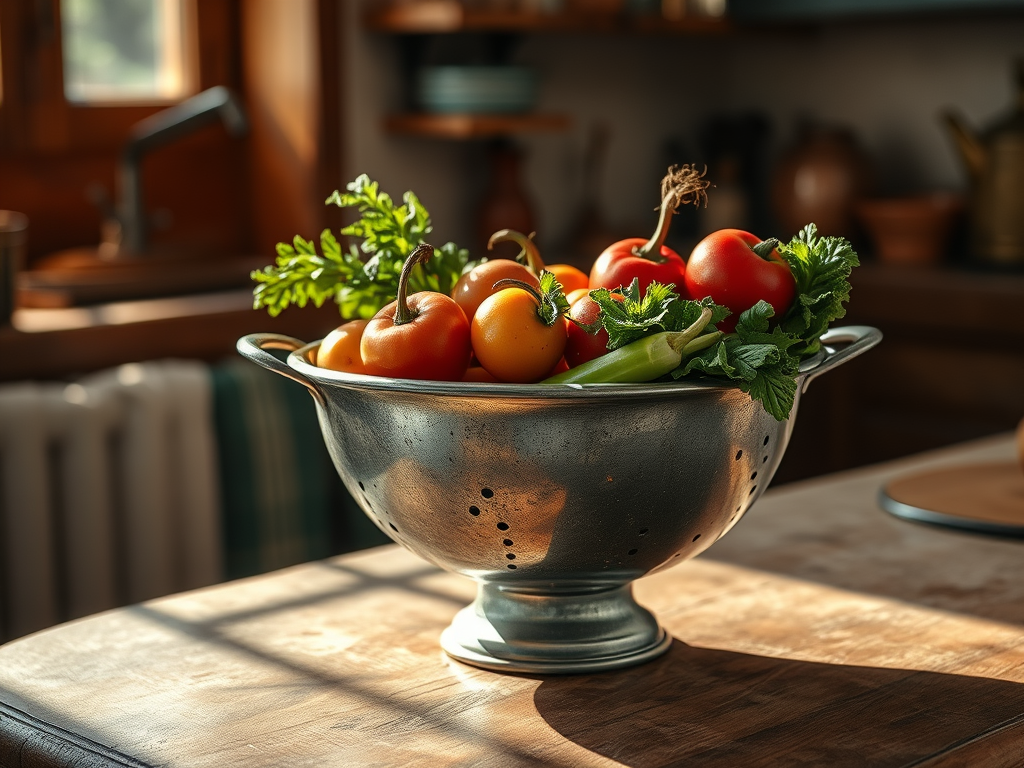
This particular kitchen item- her old dented metal colander – found its way to me when I moved into my first apartment some 49 years ago. She had purchased a bright green plastic colander at a Tupperware party so she felt the old metal one was somehow outdated, overworked and plain, and ready for retirement.

It had held hundreds of pounds of rinsed garden vegetables during my childhood, had drained umpteen pasta noodles, had served as a sifter in our sandbox, and a helmet for many a pretend rocket launch to infinity and beyond.

Dented and battered, it still works fine, thank you very much, for all intended and some unintended purposes. It does make me wonder what other treasures may surprise me as I begin to open and sort my mother’s boxes. Her things have remained in suspended animation, waiting to be rediscovered.

I know there will be tons of tupperware, carefully saved yogurt containers with lids, and quite likely a hoard of pickle jars. As a child of the depression, she saved anything that could be potentially used again.

Perhaps these items have waited patiently to be touched lovingly and with distinct purpose as they once were, and be remembered for the part they played in one woman’s long sacrificial and faith-filled life.

Maybe, just maybe, it will feel like I’ve unpacked Mom once again and maybe this time it can be both a hello and a goodbye.

To infinity and beyond…

AI image created for this post
One-Time
Monthly
Yearly

Make a one-time or recurring donation to support daily Barnstorming posts

Make a monthly donation

Make a yearly donation

Choose an amount

$10.00
$25.00
$50.00
$5.00
$15.00
$100.00
$5.00
$15.00
$100.00

Or enter a custom amount

$

Your contribution is deeply appreciated.

Your contribution is appreciated.

Your contribution is appreciated.

DonateDonate monthlyDonate yearly
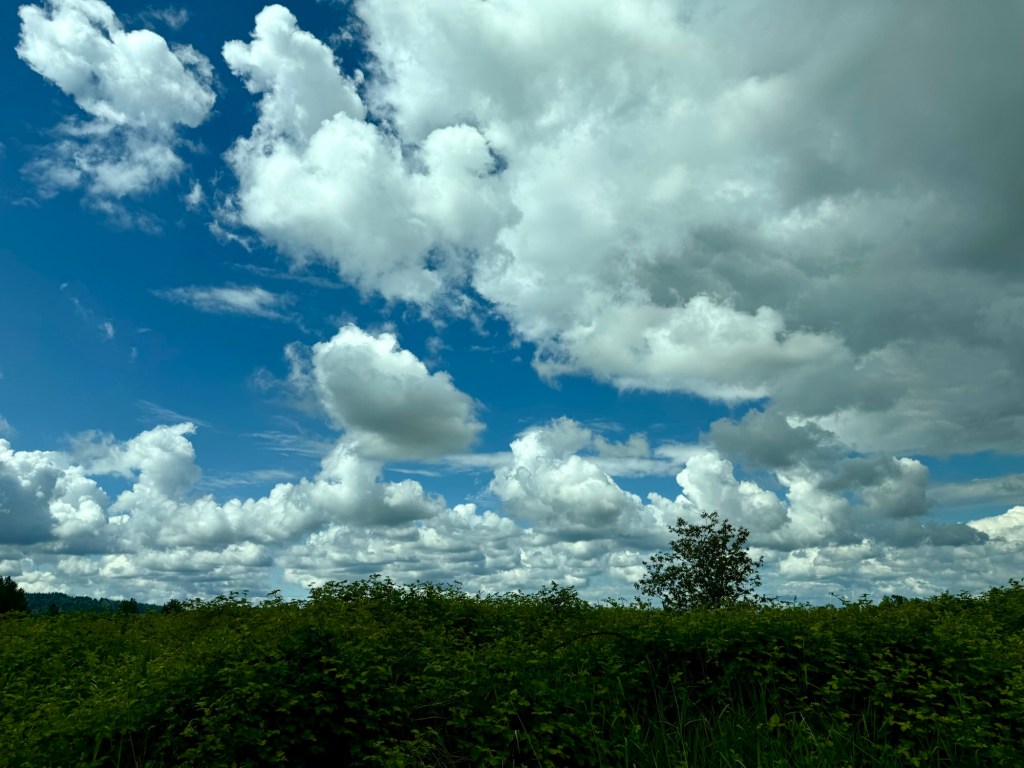
An Immense, Tender, Terrible, Heart-Breaking Beauty

And the secret garden bloomed and bloomed and every morning revealed new miracles.

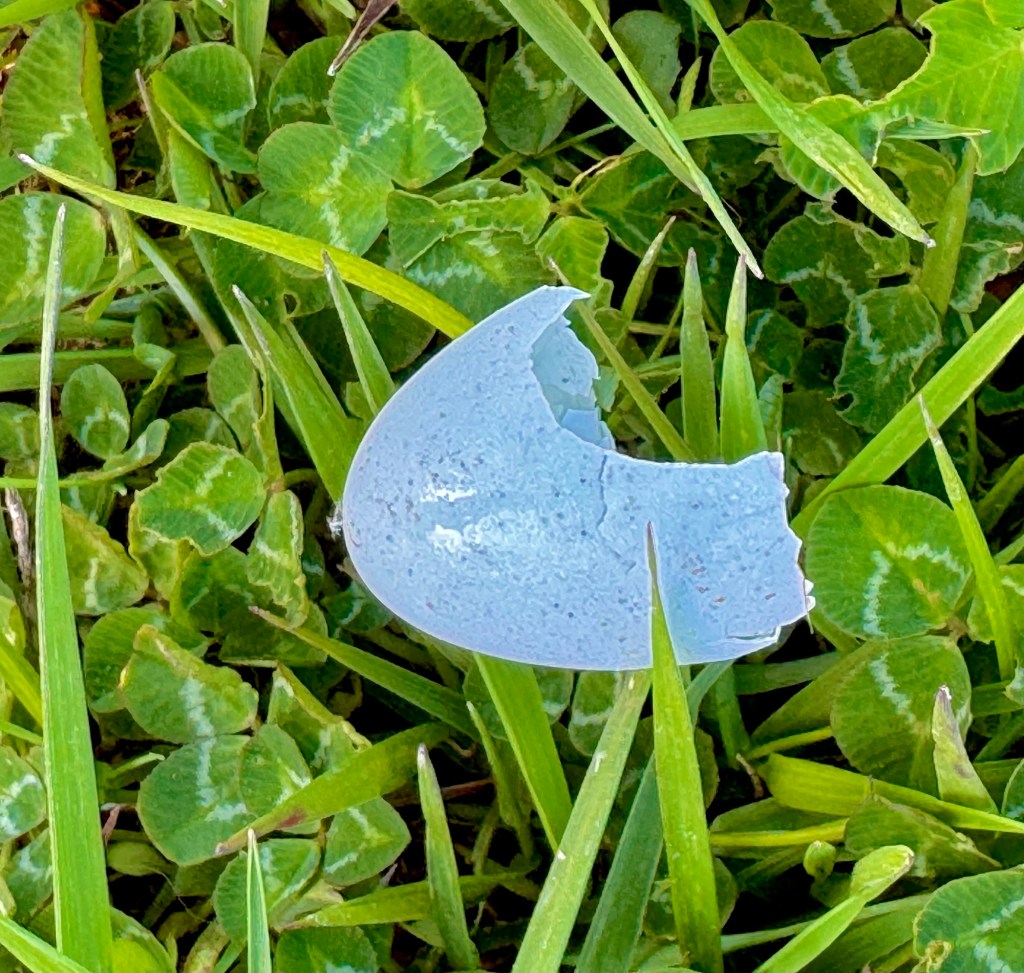
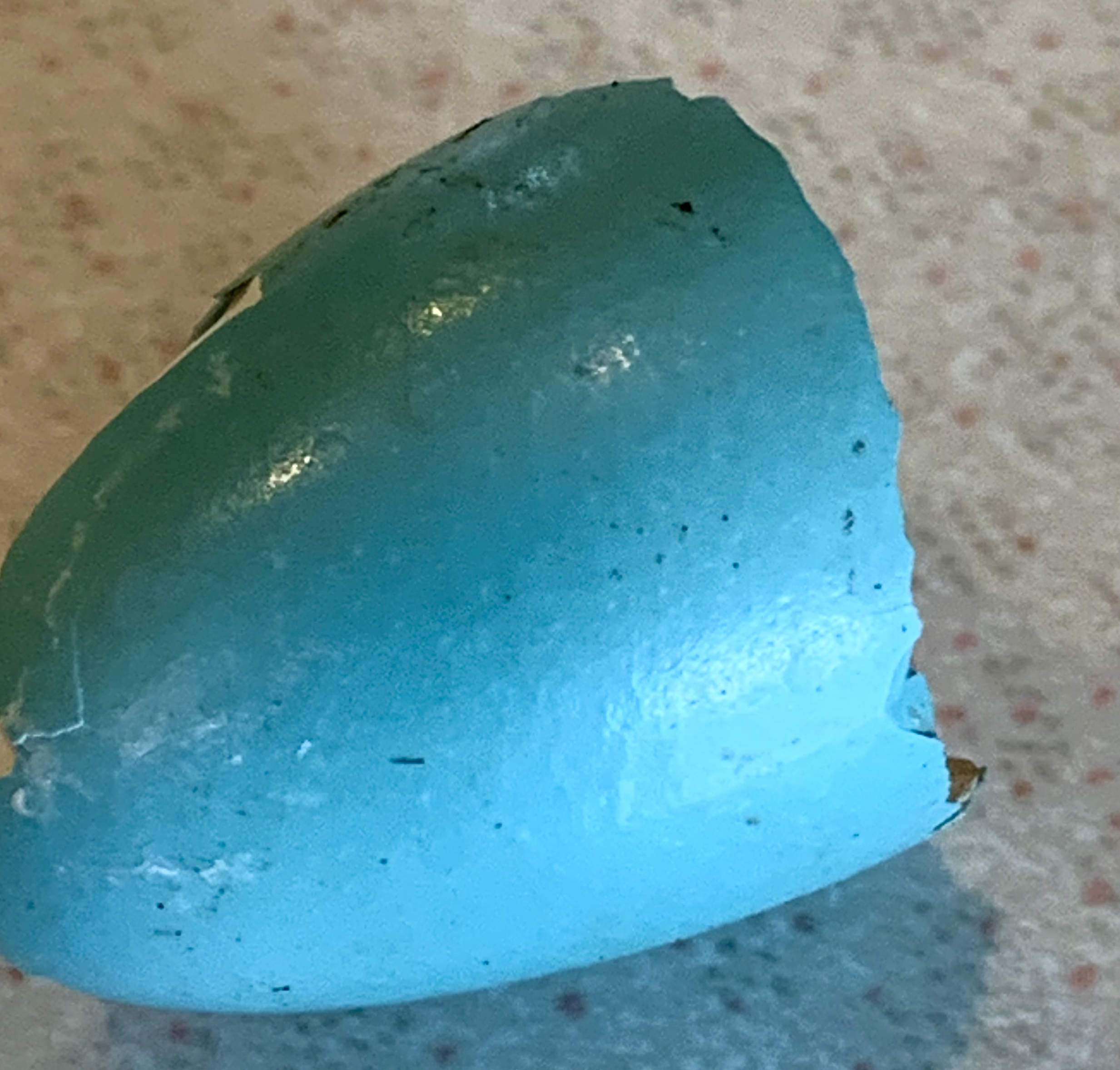
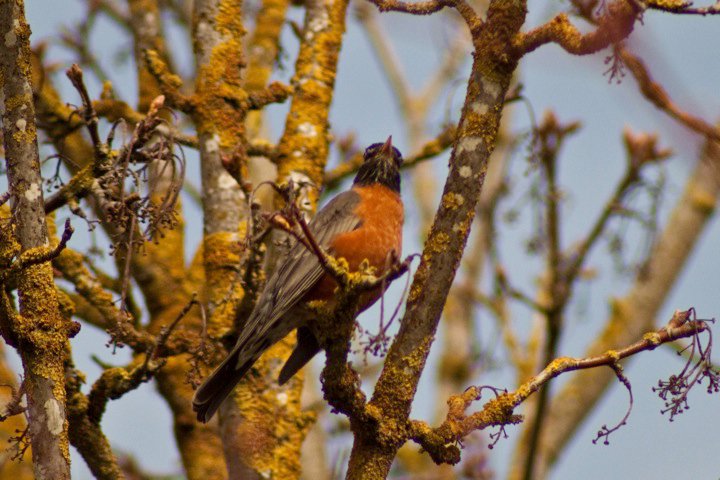
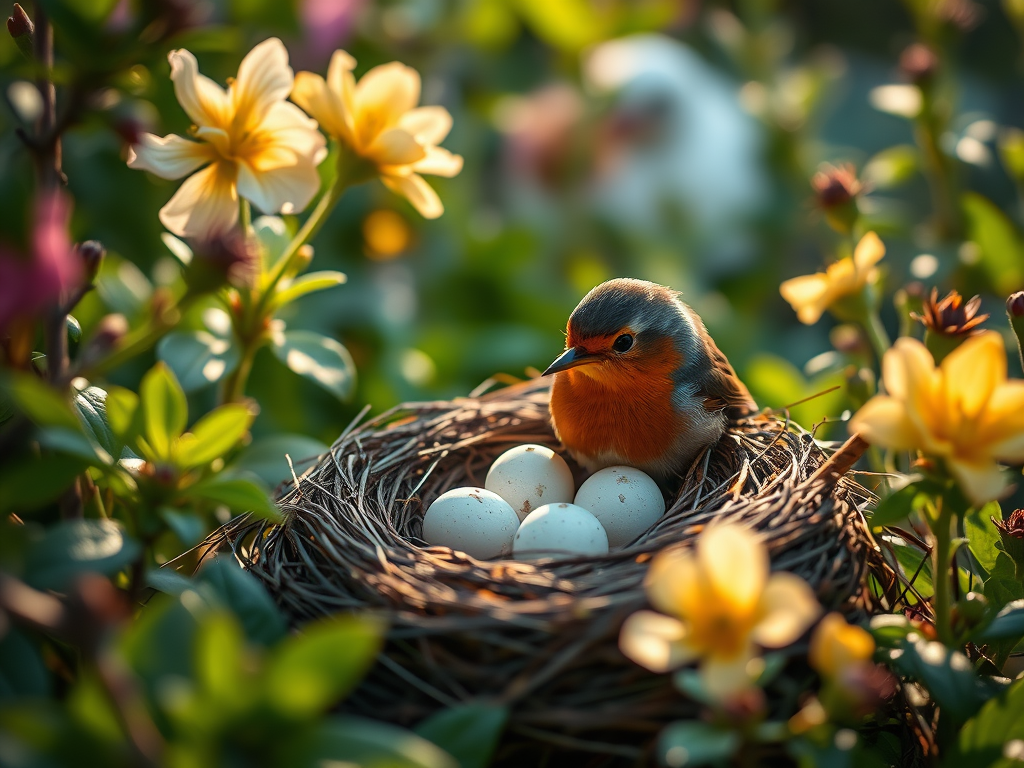
In the robin’s nest there were Eggs and the robin’s mate sat upon them keeping them warm with her feathery little breast and careful wings.

….in the garden
there was nothing which was not quite like themselves,
nothing which did not understand
the wonderfulness of what was happening to them,
the immense, tender, terrible, heart-breaking beauty
and solemnity of Eggs.

If there had been one person in that garden who had not known through all his or her innermost being
that if an Egg were taken away or hurt

the whole world would whirl round and crash
through space and come to an end—

if there had been even one
who did not feel it and act accordingly
there could have been no happiness
even in that golden springtime air.

But they all knew it and felt it
and the robin and his mate knew they knew it.
~Frances Hodgson Burnett from The Secret Garden

Some say you’re lucky
If nothing shatters it.

But then you wouldn’t
Understand poems or songs.
You’d never know
Beauty comes from loss.

It’s deep inside every person:
A tear tinier
Than a pearl or thorn.

It’s one of the places
Where the beloved is born.

~Gregory Orr “Some Say You’re Lucky” from Concerning the Book That Is the Body of the Beloved

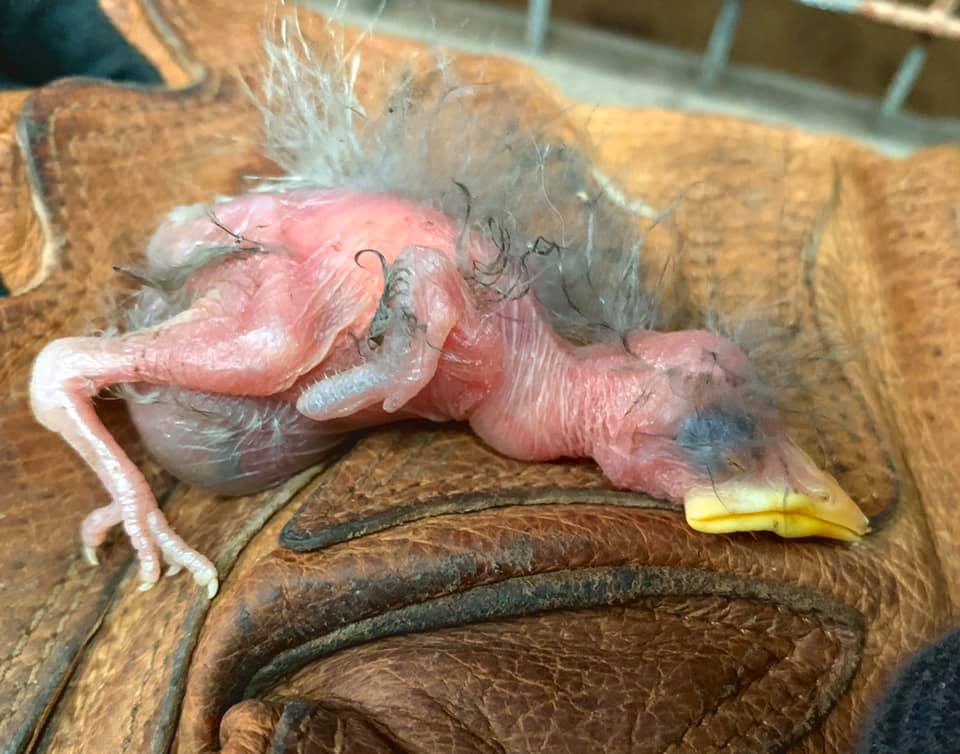
We all start out in the secret garden of a fallopian tube
as an egg pierced to become so much more…
–  each tiny part of the least of us  –
– whether brain, heart, lungs or liver –
wonderfully made,
even if discarded
or fallen from the nest.

The act of creation of something so sacred
is immense, tender, terrible, beautiful, heart-breaking,
and so very solemn and joyful.

The act of harming one tiny part of creation
hurts the whole world;
we risk whirling round and crashing through space
and coming to an end.

If there is even one who does not feel it and act accordingly,
there can be no happiness.

But they all knew it and felt it and they knew they knew it.

And what is born broken is beloved nevertheless.

photo by Josh Scholten
AI image created for this post
One-Time
Monthly
Yearly

Make a one-time or recurring donation to support daily Barnstorming posts

Make a monthly donation

Make a yearly donation

Choose an amount

$10.00
$25.00
$50.00
$5.00
$15.00
$100.00
$5.00
$15.00
$100.00

Or enter a custom amount

$

Your contribution is deeply appreciated.

Your contribution is appreciated.

Your contribution is appreciated.

DonateDonate monthlyDonate yearly
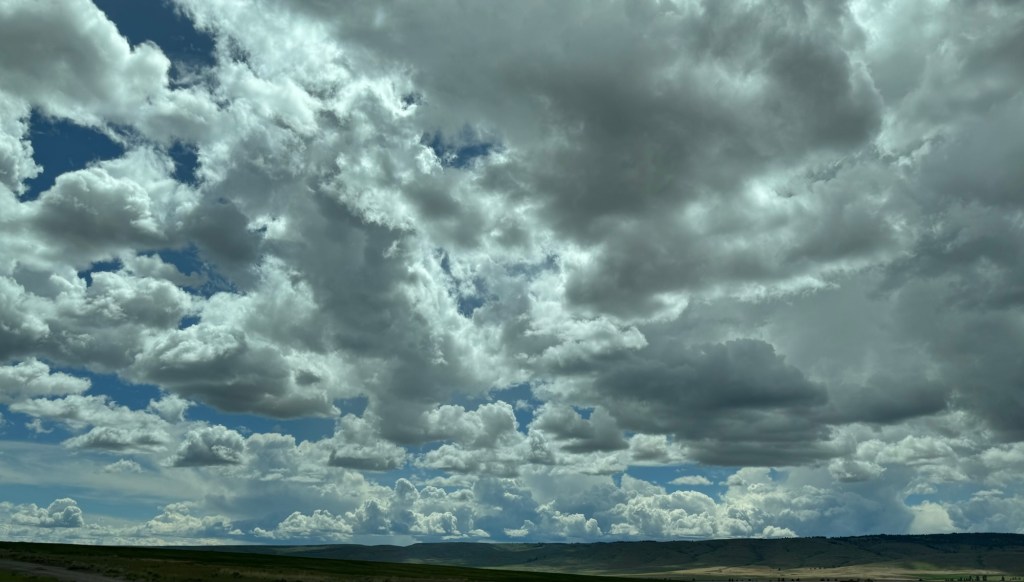
Through the Unknown, Unremembered Gate

What seemed to be the end proved to be the beginning…
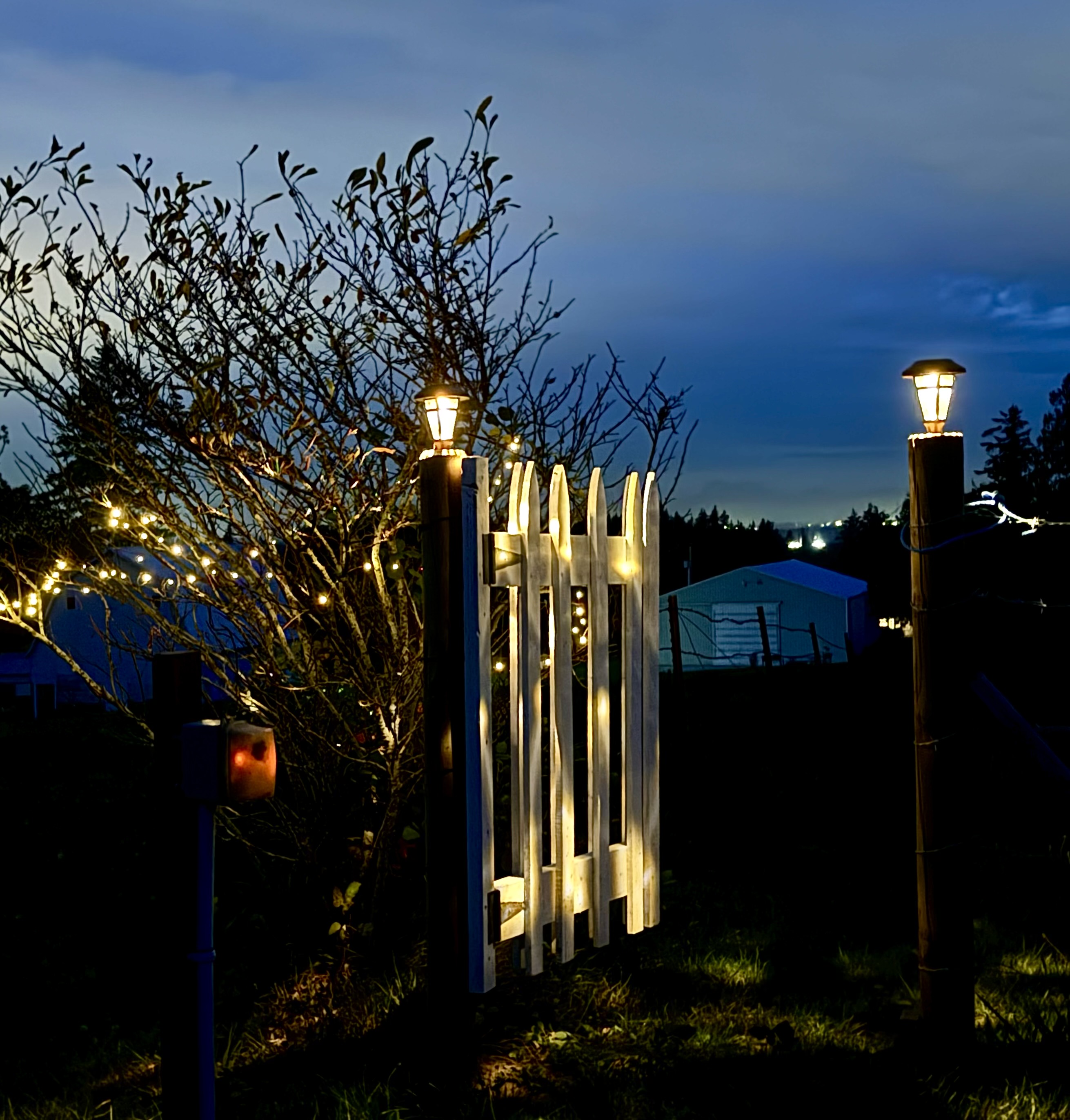
Suddenly a wall becomes a gate.
~Henri Nouwen from Gracias! A Letter of Consolation

As Christians we do not believe in walls,
but that life lies open before us;
that the gate can always be unbarred;
that there is no final abandonment or desertion.
We do not believe that it can ever be “too late.”

We believe that the world is full of doors that can be opened. Between us and others.
Between the people around us.
Between today and tomorrow.
Our own inner person can be unlocked too:
even within our own selves,
there are doors that need to be opened.

If we open them and enter,
we can unlock ourselves, too,
and so await whatever is coming to free us and make us whole.
~ Jörg Zink from “Doors to the Feast”

What we call the beginning is often the end
And to make an end is to make a beginning.
The end is where we start from.

We shall not cease from exploration
And the end of all our exploring
Will be to arrive where we started
And know the place for the first time.
Through the unknown, unremembered gate
When the last of earth left to discover
Is that which was the beginning;
~T.S. Eliot from “Little Gidding” The Four Quartets

There we shall rest and we shall see;
we shall see and we shall love;
we shall love and we shall praise.
Behold what shall be in the end and shall not end.
~Augustine of Hippo ‘The City of God,’ Bk. XXII, Chap. 30

We stand outside the gate,
incapable of opening it ourselves,
watching as God Himself
throws it open wide. 

We choose to enter this unknown, unremembered gate
into the endless length of days,
where we shall see and we shall love,
we shall love and we shall praise –

or we choose to remain outside,
lingering in the familiar confines
of what we know,
though it destroys us.

AI image created for this post

With thanks to conductor, composer, singer Ben Kornelis for putting these beautiful Augustinian words to music

One-Time
Monthly
Yearly

Make a one-time or recurring donation to support daily Barnstorming posts

Make a monthly donation

Make a yearly donation

Choose an amount

$10.00
$25.00
$50.00
$5.00
$15.00
$100.00
$5.00
$15.00
$100.00

Or enter a custom amount

$

Your contribution is deeply appreciated.

Your contribution is appreciated.

Your contribution is appreciated.

DonateDonate monthlyDonate yearly
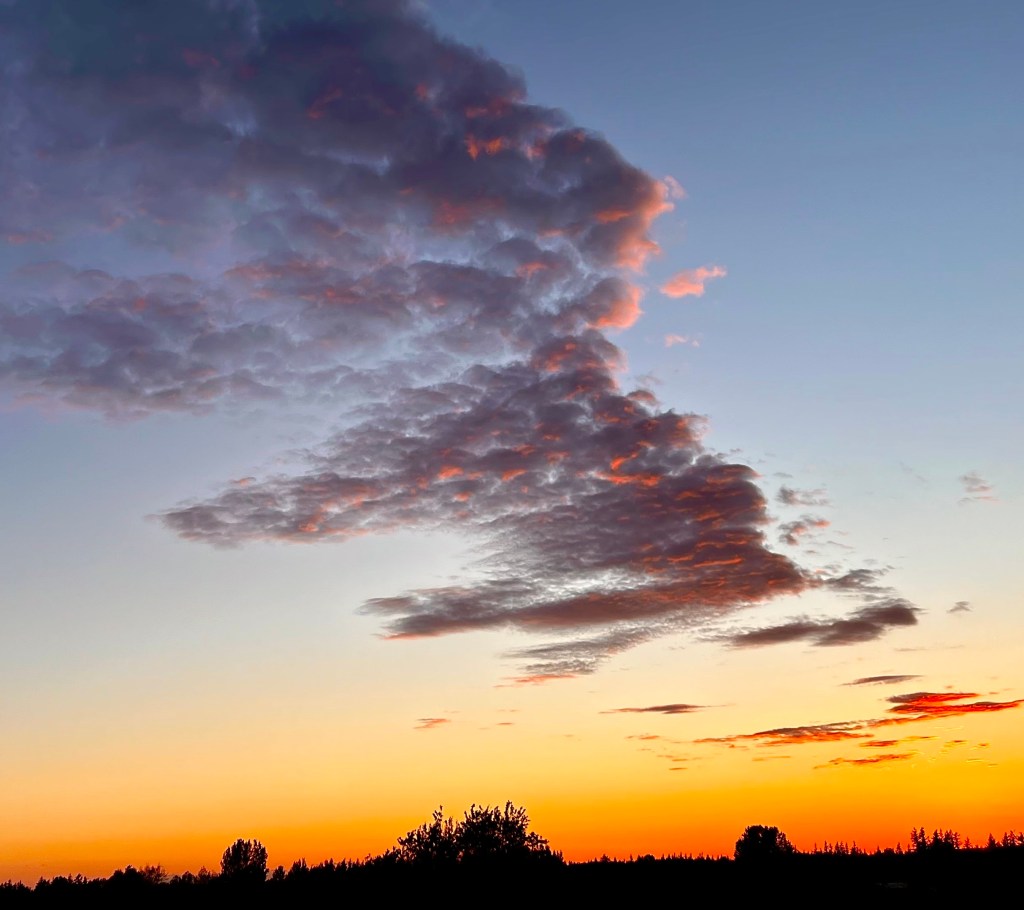
Burned Up With Beauty

i was talking to a moth
the other evening
he was trying to break into
an electric light bulb
and fry himself on the wires

why do you fellows
pull this stunt i asked him
because it is the conventional
thing for moths or why
if that had been an uncovered
candle instead of an electric
light bulb you would
now be a small unsightly cinder
have you no sense

plenty of it he answered
but at times we get tired
of using it
we get bored with the routine
and crave beauty
and excitement
fire is beautiful
and we know that if we get
too close it will kill us
but what does that matter
it is better to be happy
for a moment
and be burned up with beauty
than to live a long time
and be bored all the while
so we wad all our life up

into one little roll
and then we shoot the roll
that is what life is for
it is better to be a part of beauty
for one instant and then cease to
exist than to exist forever
and never be a part of beauty
our attitude toward life
is come easy go easy
we are like human beings
used to be before they became
too civilized to enjoy themselves

and before i could argue him
out of his philosophy
he went and immolated himself
on a patent cigar lighter
i do not agree with him
myself i would rather have
half the happiness and twice
the longevity
but at the same time i wish
there was something i wanted
as badly as he wanted to fry himself

archy (the cockroach)

~Don Marquis “The Lesson of the Moth”

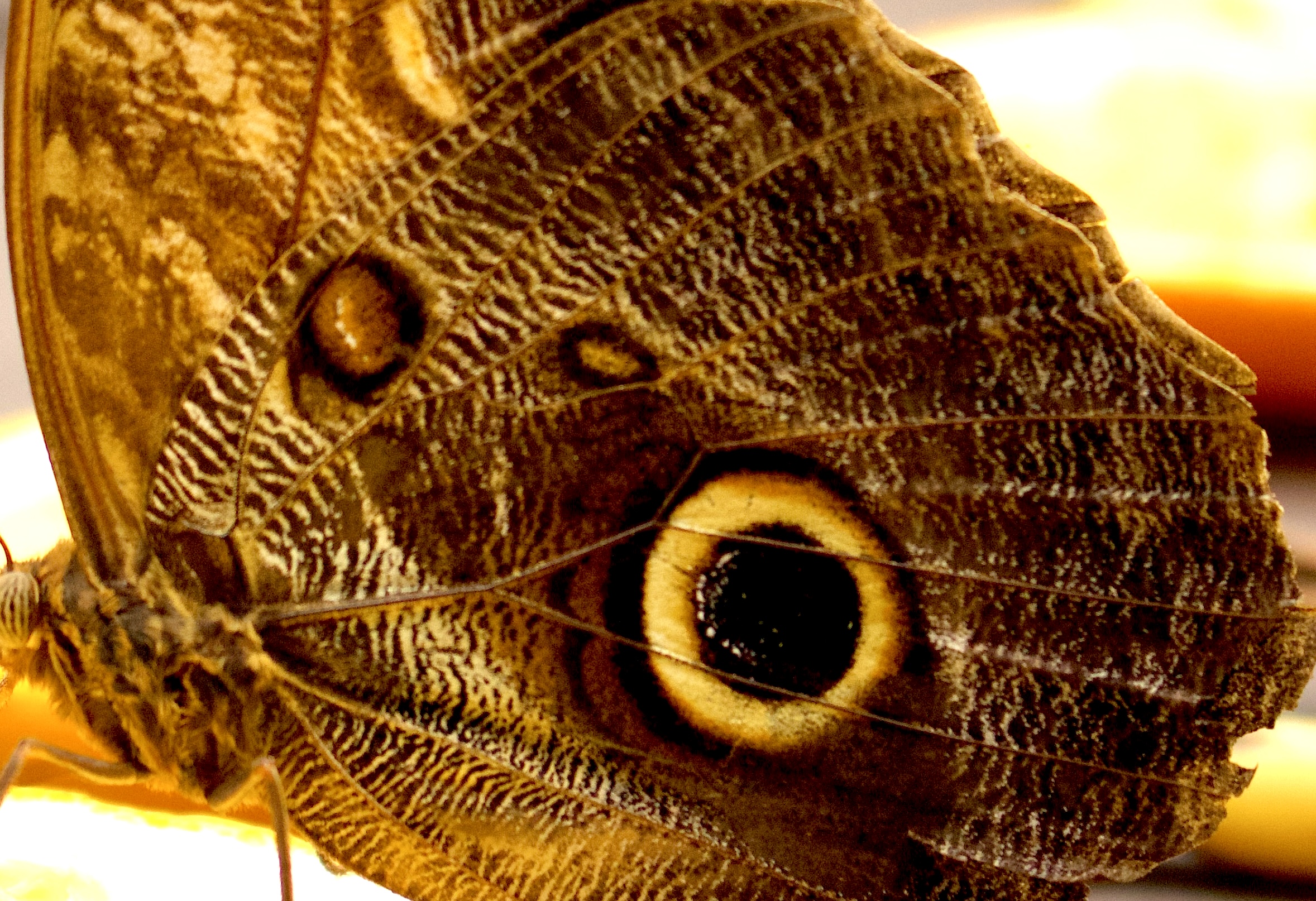
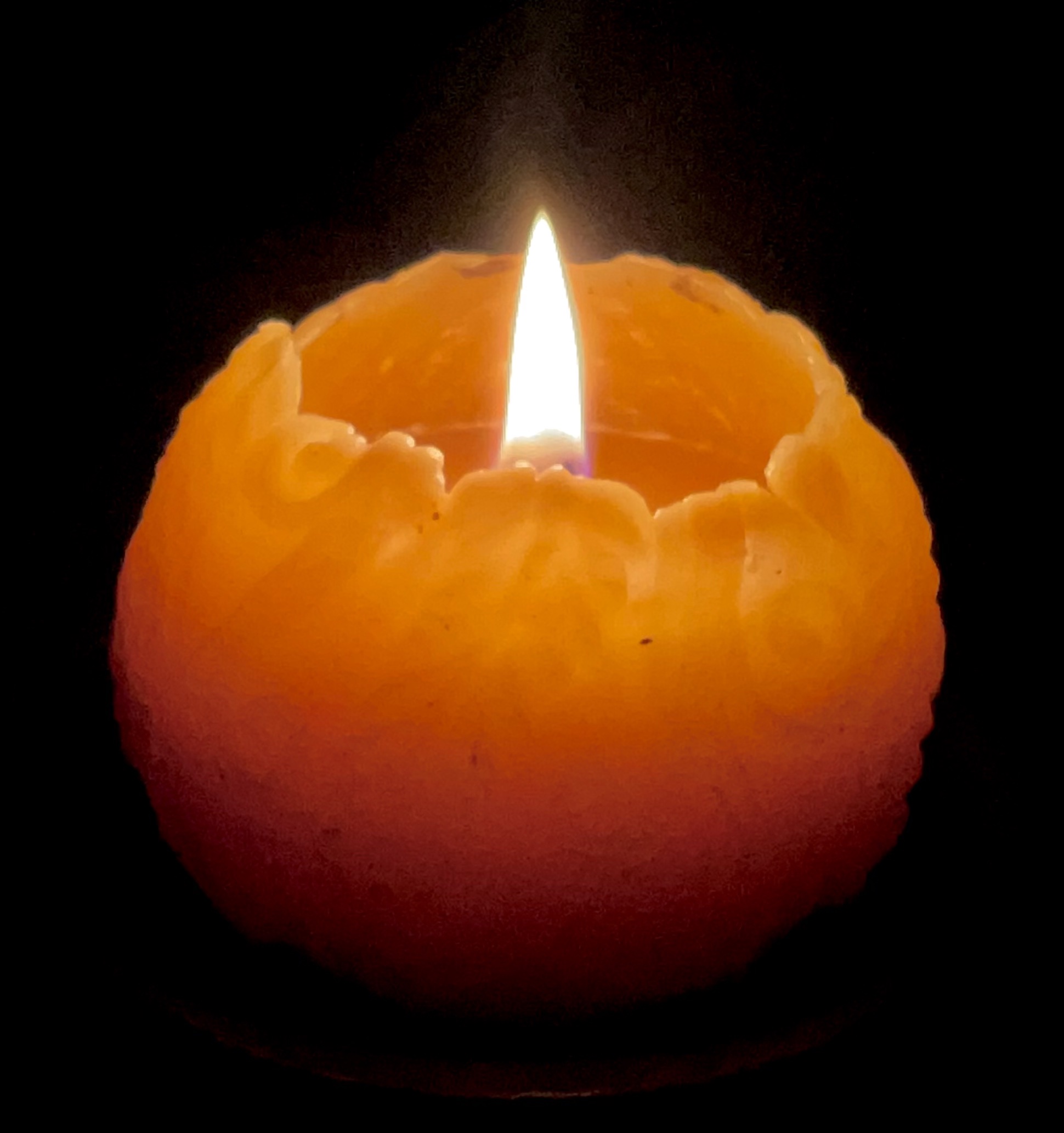
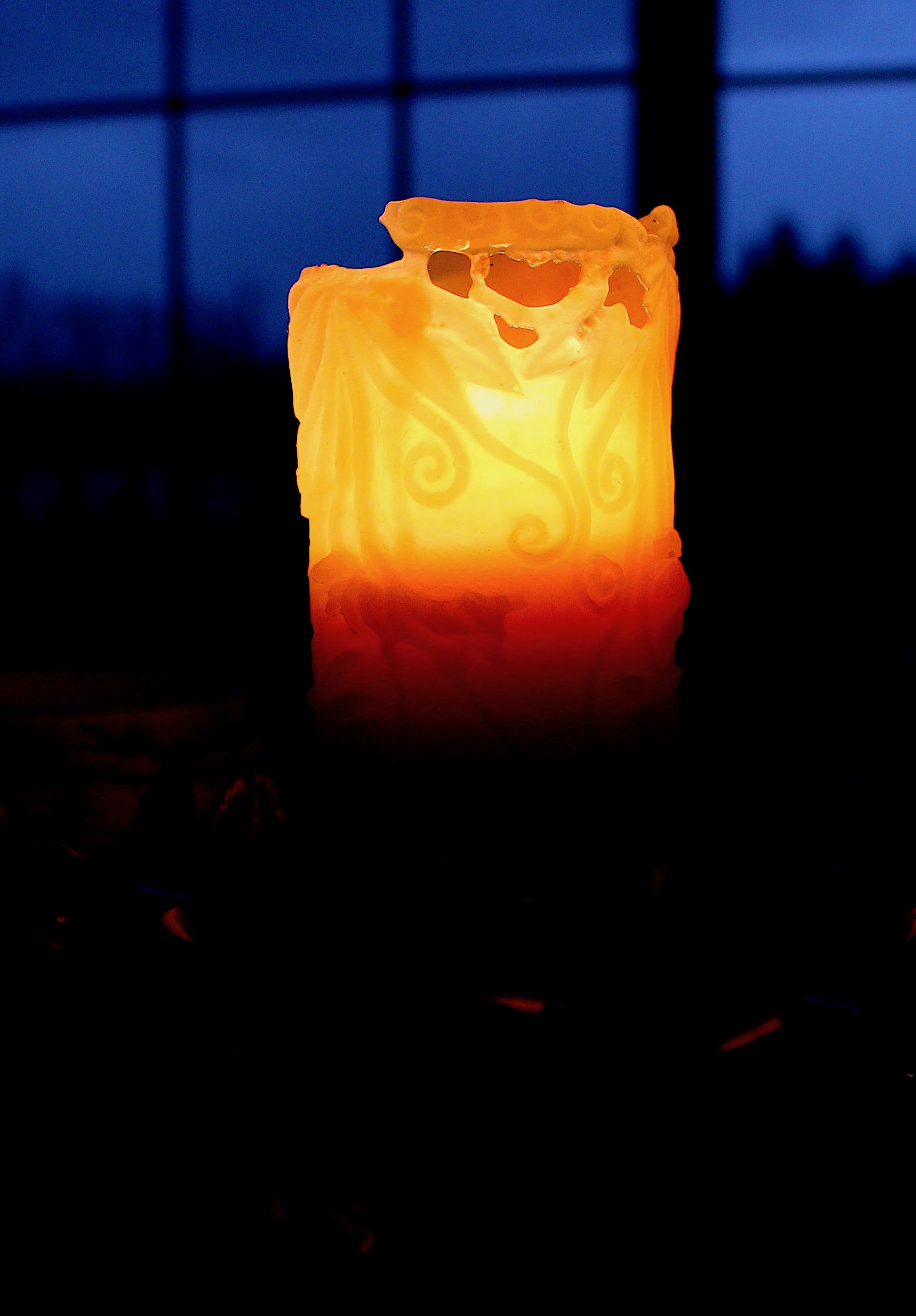
One night a moth flew into the candle, was caught, burned dry, and held. I must have been staring at the candle, or maybe I looked up when a shadow crossed my page; at any rate, I saw it all…

Her moving wings ignited like tissue paper…

And then this moth essence, this spectacular skeleton, began to act as a wick. She kept burning. The wax rose in the moth’s body from her soaking abdomen to her thorax to the jagged hole where her head should be, and widened into flame, a saffron-yellow flame that robed her to the ground like any immolating monk. That candle had two wicks, two flames of identical height, side by side. The moth’s head was fire. She burned for two hours, until I blew her out.
~Annie Dillard from “The Death of the Moth” from Holy the Firm

The struggle was over.

The insignificant little creature now knew death. As I looked at the dead moth, this minute wayside triumph of so great a force over so mean an antagonist filled me with wonder. Just as life had been strange a few minutes before, so death was now as strange.

The moth having righted himself now lay most decently and uncomplainingly composed. O yes, he seemed to say, death is stronger than I am.
~Virginia Woolf from “The Death of a Moth”

I too would take half the happiness and twice the longevity over one moment of ecstasy.

But I admire the blind passion of a tiny creature who will beat itself senseless on a light bulb, or fly into a flame to become cinders, or struggle so hard to live upright rather than upside down, that it dies in the struggle.

Why are famous poets and essayists fascinated by the tiny deaths they witness on their front porches, in their kitchens or at their writing desk?

Death is never tiny at all.
Nevertheless, death is ceasing to be,
after a unique and intentional creation,
whether a moth, a mother, or ourselves.

We live today. Look for a moment of beauty to enjoy.
Let’s be sensible about what we want so badly.
As one tiny part of matter, we matter.
And when we die, it is never a tiny death.

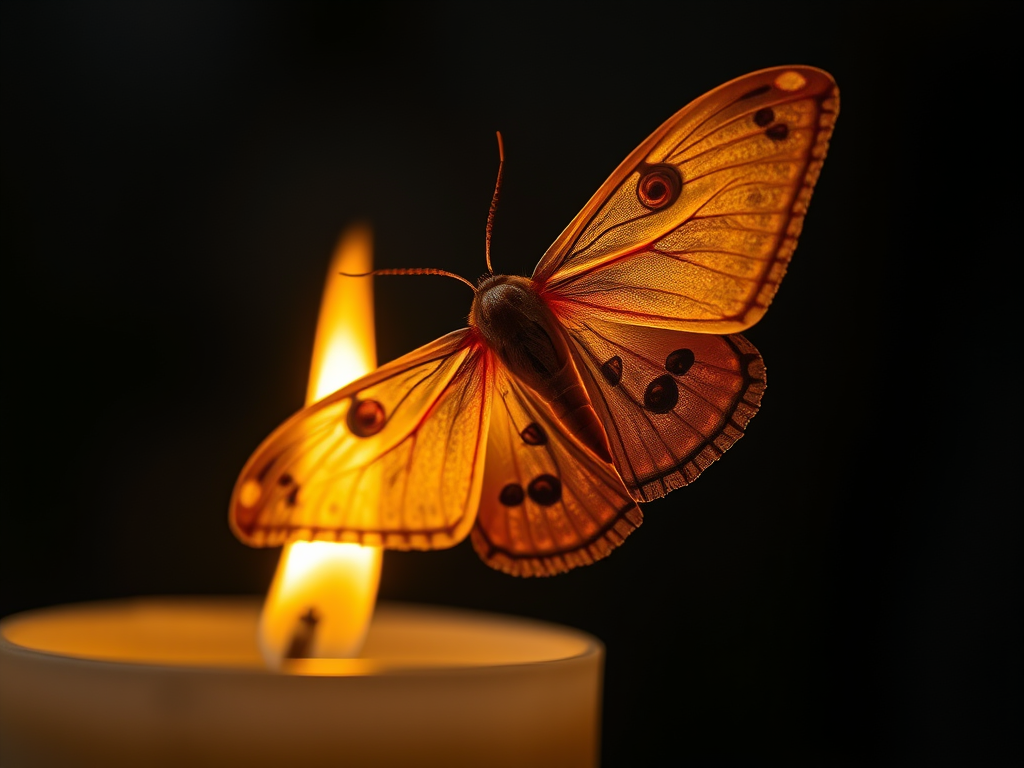
AI image created for this post

Lyrics:
A day may come that asks of us all we have to give:
a day we never would have sought and yet we have to live.
If it should be our destiny to live in such a day,
let our faith and love be worthy of the ones who showed the way.
The ones we now call heroes
The ones we say their memory will not die –
they were no different in their day than you or I.
They were no different in their day. than you or I.
~Grahame Davies

One-Time
Monthly
Yearly

Make a one-time or recurring donation to support daily Barnstorming posts

Make a monthly donation

Make a yearly donation

Choose an amount

$5.00
$15.00
$100.00
$5.00
$15.00
$100.00
$5.00
$15.00
$100.00

Or enter a custom amount

$

Your contribution is deeply appreciated.

Your contribution is appreciated.

Your contribution is appreciated.

DonateDonate monthlyDonate yearly
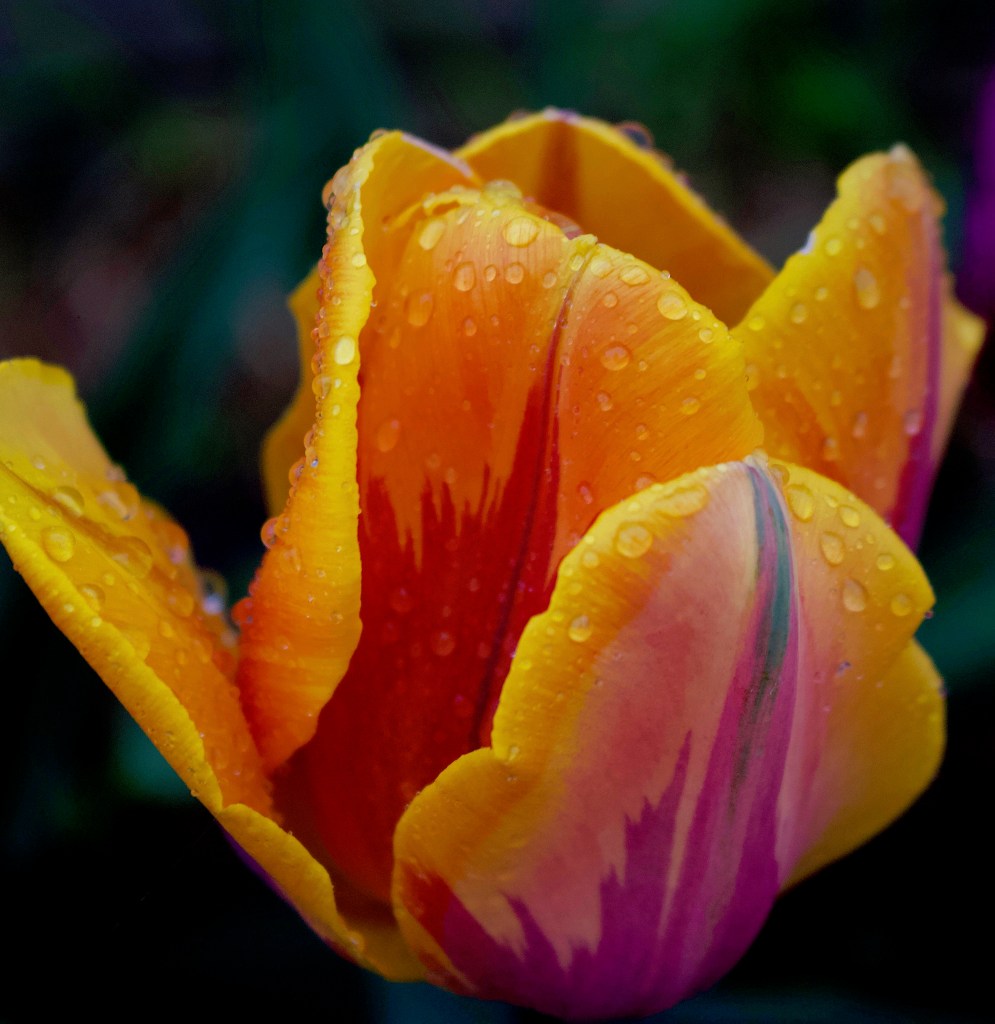
The Grass Forgiving the Scythe

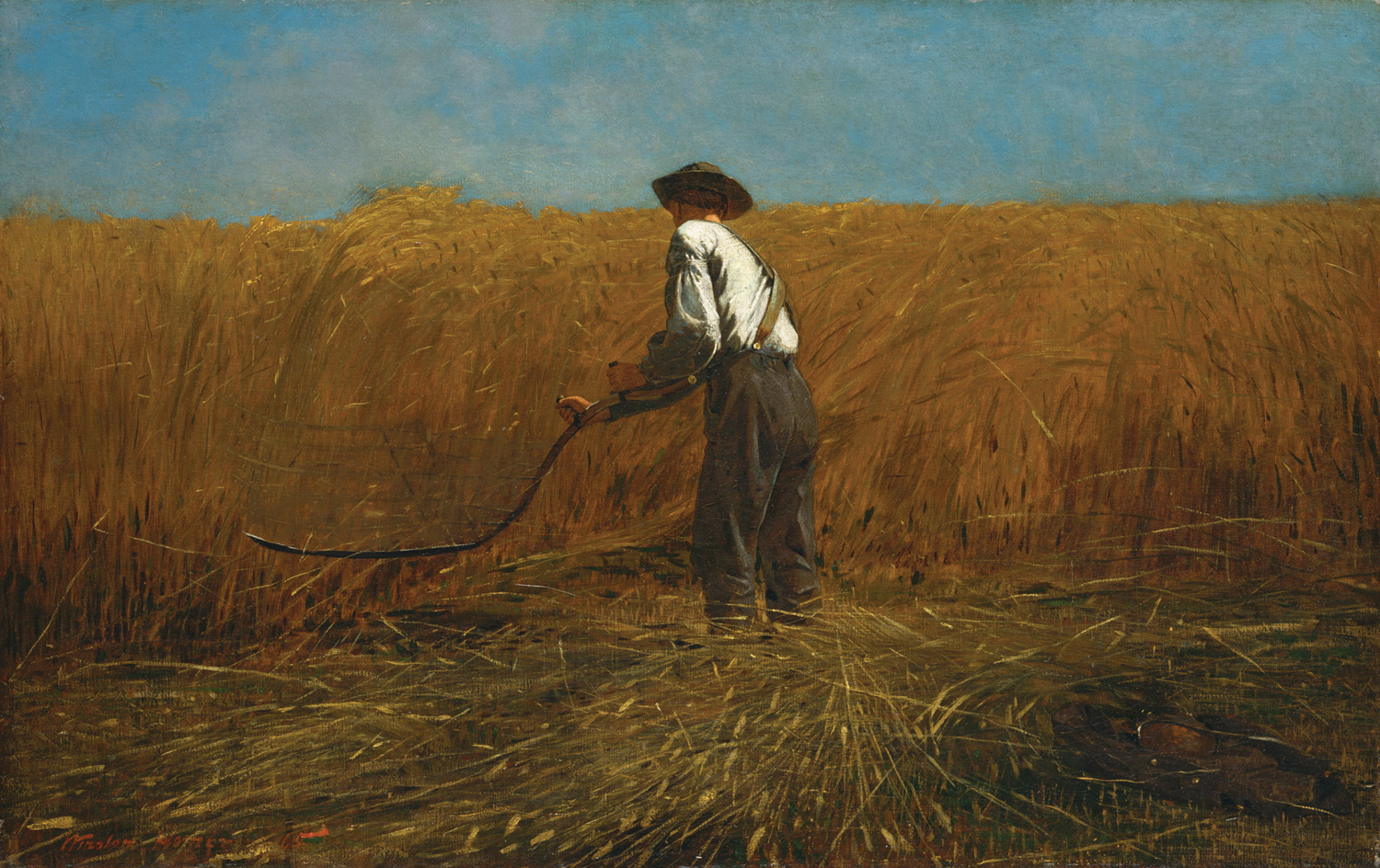
Winslow Homer’s The Veteran in a New Field
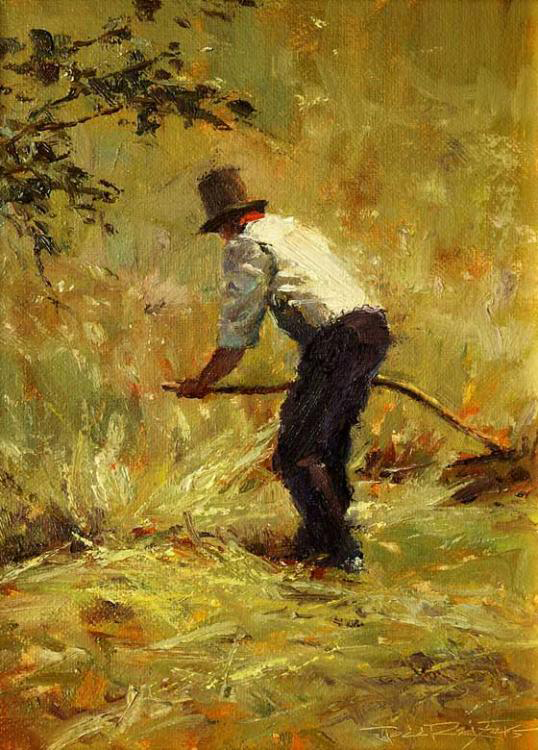
Man Scything Hay by Todd Reifers

There was never a sound beside the wood but one,
And that was my long scythe whispering to the ground.
What was it it whispered? I knew not well myself;
Perhaps it was something about the heat of the sun,
Something, perhaps, about the lack of sound—
And that was why it whispered and did not speak.

To the earnest love that laid the swale in rows,
The fact is the sweetest dream that labor knows.
My long scythe whispered and left the hay to make.
~Robert Frost in “Mowing”

Mowers, weary and brown, and blithe,
What is the word methinks ye know,
Endless over-word that the Scythe
Sings to the blades of the grass below?
Scythes that swing in the grass and clover,
Something still, they say as they pass;
What is the word that, over and over,
Sings the Scythe to the flowers and grass?

Hush, ah hush, the Scythes are saying,
Hush, and heed not, and fall asleep;
Hush, they say to the grasses swaying,
Hush, they sing to the clover deep!
Hush – ’tis the lullaby Time is singing –
Hush, and heed not, for all things pass,
Hush, ah hush! and the Scythes are swinging
Over the clover and over the grass!

~Andrew Lang (1844-1912) “The Scythe Song”

It is blue May. There is work
to be done. The spring’s eye blind
with algae, the stopped water
silent. The garden fills
with nettle and briar.
Dylan drags branches away.
I wade forward with my scythe.

There is stickiness on the blade.
Yolk on my hands. Albumen and blood.
Fragments of shell are baby-bones,
the scythe a scalpel, bloodied and guilty
with crushed feathers, mosses, the cut cords
of the grass. We shout at each other
each hurting with a separate pain.

From the crown of the hawthorn tree
to the ground the willow warbler
drops. All day in silence she repeats
her question. I too return
to the place holding the pieces,
at first still hot from the knife,
recall how warm birth fluids are.

~Gillian Clarke “Scything” from Letter from a Far Country (1982)

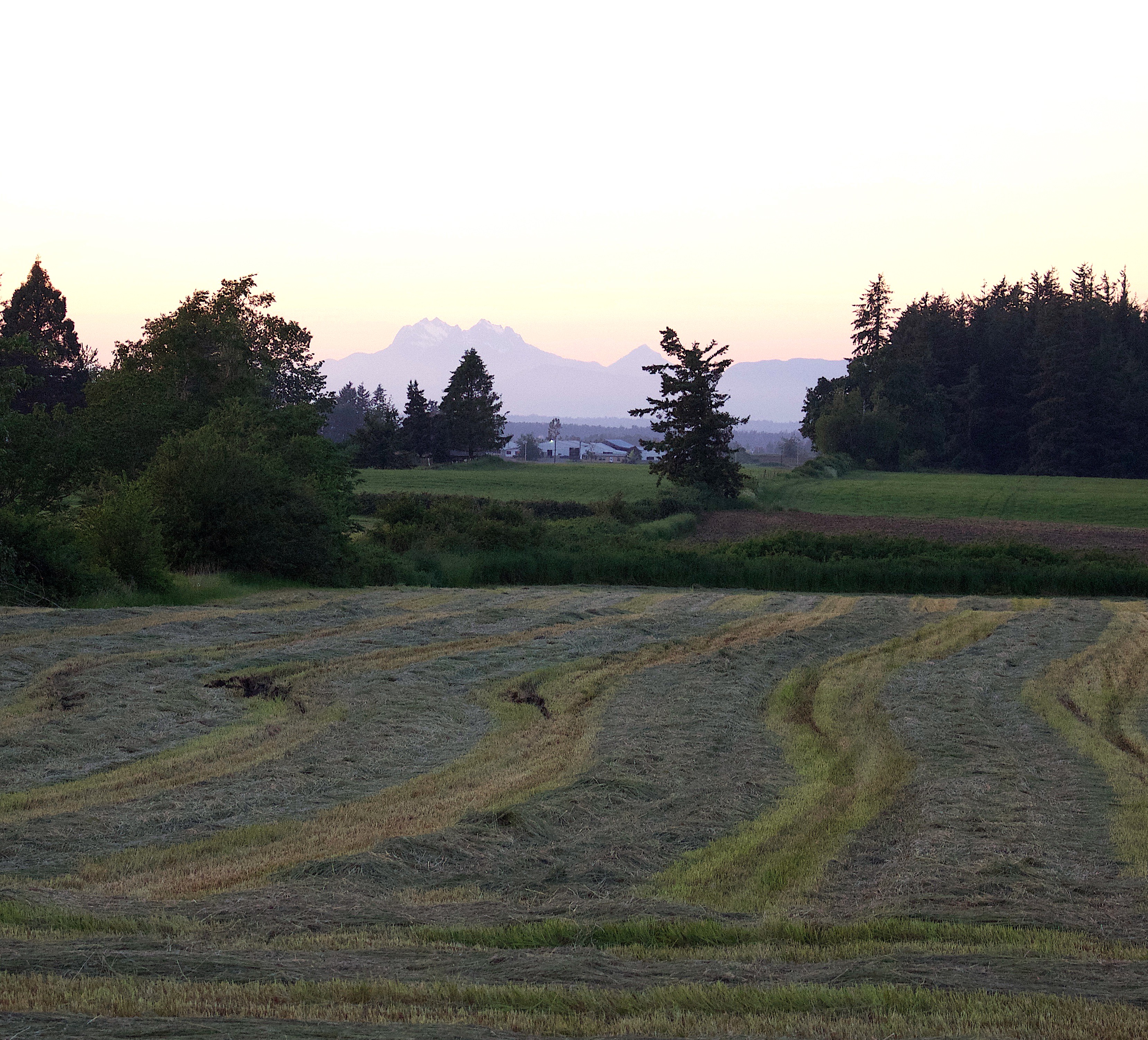
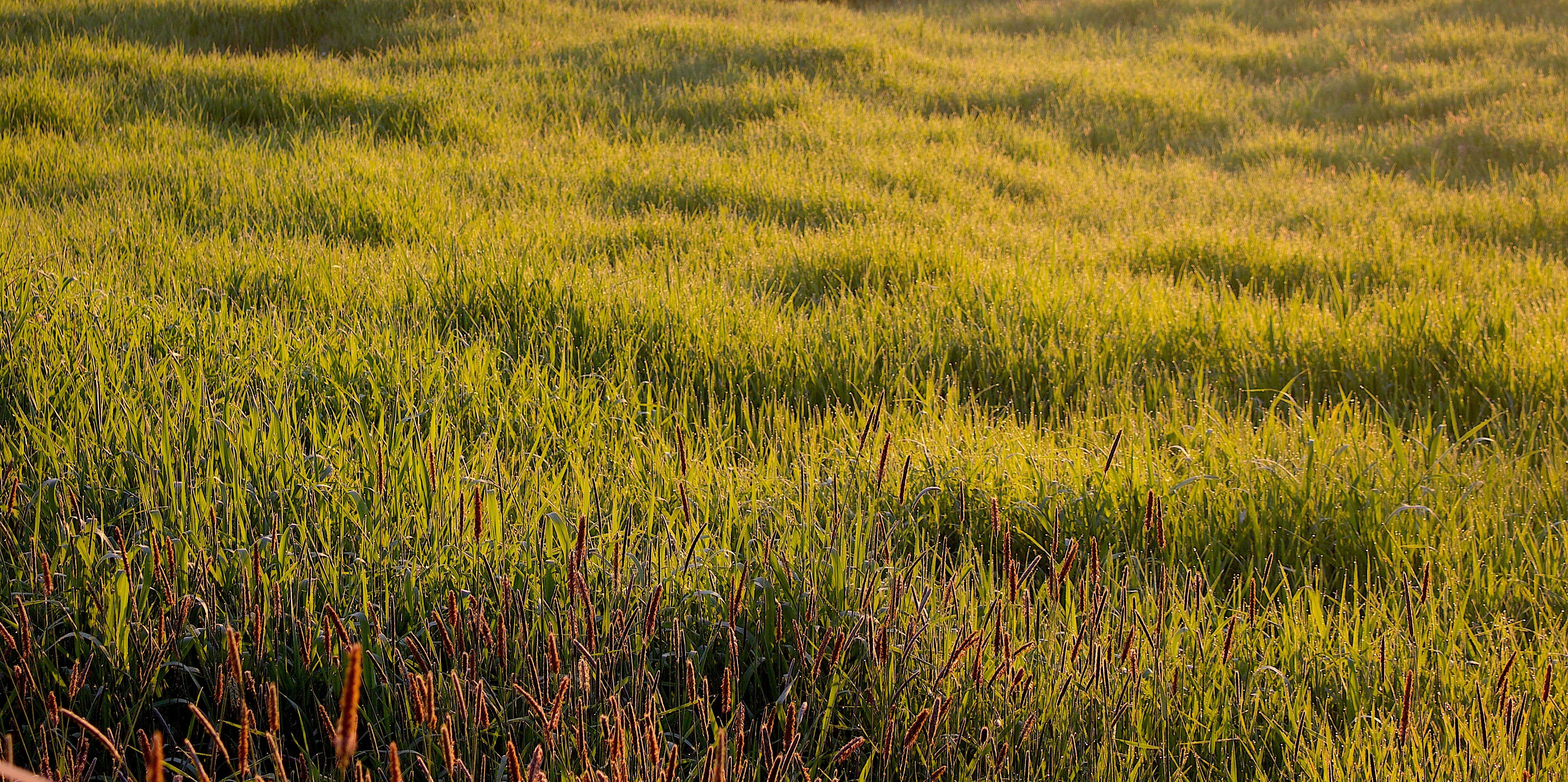
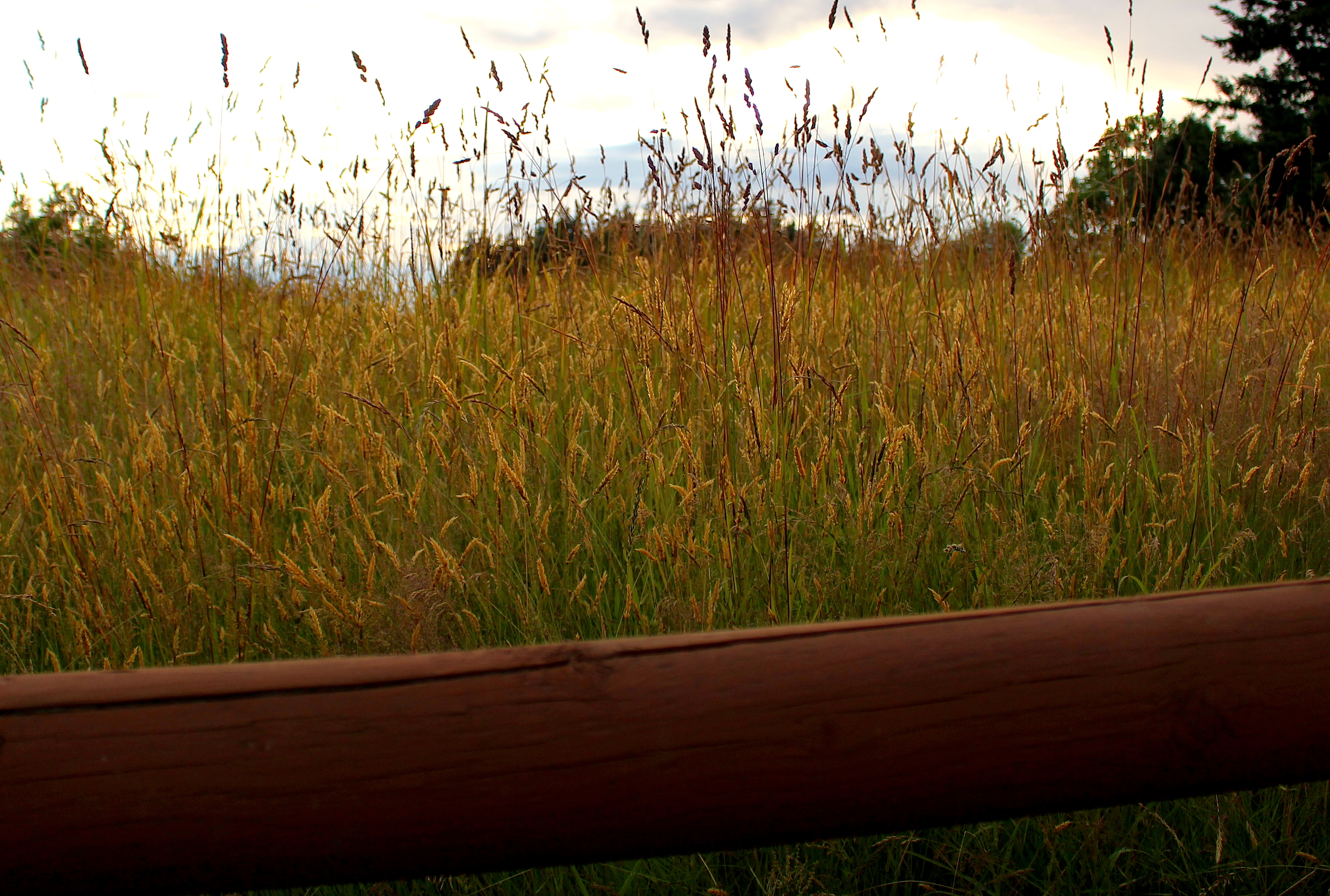
The grass around our orchard and yet-to-be-planted garden is now thigh-high. It practically squeaks while it grows. Anything that used to be in plain sight on the ground is rapidly being swallowed up in a sea of green: a ball, a pet dish, a garden gnome, a hose, a tractor implement, a bucket. In an effort to stem this tidal flood of grass, I grab the scythe out of the garden shed and plan my attack.

When the pastures are too wet yet for heavy hooves, I have hungry horses to provide for and there is more than plenty fodder to cut down for them.

I’m not a weed whacker kind of gal. First there is the necessary fuel, the noise necessitating ear plugs, the risk of flying particles requiring goggles–it all seems too much like an act of war to be remotely enjoyable. Instead, I have tried to take scything lessons from my husband.

Emphasis on “tried.”

I grew up watching my father scythe our hay in our field because he couldn’t afford a mower for his tractor. He enjoyed physical labor in the fields and woods–his other favorite hand tool was a brush cutter that he’d take to blackberry bushes. He would head out to the field with the scythe over this shoulder, grim reaper style. Once he was standing on the edge of the grass needing to be mowed, he would then lower the scythe, curved blade to the ground, turn slightly, positioning his hands on the two handles just so, raise the scythe up past his shoulders, and then in a full body twist almost like a golf swing, he’d bring the blade down. It would follow a smooth arc through the base of the standing grass, laying clumps flat in a tidy pile alongside the 2 inch stubble left behind. It was a swift, silky muscle movement — a thing of beauty.

Once, when I was three years old, I quietly approached my dad in the field while he was busily scything grass for our cows, but I didn’t announce my presence. The handle of his scythe connected with me as he swung it, laying me flat with a bleeding eyebrow. I still bear the scar, somewhat proudly, as he abruptly stopped his fieldwork to lift me up as I bawled and bled on his sweaty shirt. He must have felt so badly to have injured his little girl and drove my mom and I to the local doctor who patched my brow with sticky tape rather than stitches.

So I identify a bit with the grass laid low by the scythe. I forgave my father, of course, and learned never again to surprise him when he was working in the field.

Instead of copying my father’s graceful mowing technique, I tended to chop and mangle rather than effect an efficient slicing blow to the stems. I unintentionally trampled the grass I meant to cut. I got blisters from holding the handles too tightly. It felt hopeless that I’d ever perfect that whispery rise and fall of the scythe, with the rhythmic shush sound of the slice that is almost hypnotic.

Not only did I become an ineffective scything human, I also learned what it is like to be the grass laid flat, on the receiving end of a glancing blow. Over a long career, I bore plenty of footprints from the trampling. It can take awhile to stand back up after being cut down.

Sometimes it makes more sense to simply start over as the oozing stubble bleeds green, with deep roots that no one can reach. As I have grown back over the years, singing rather than squeaking or bawling, I realize, I forgave the scythe every time it came down on my head.

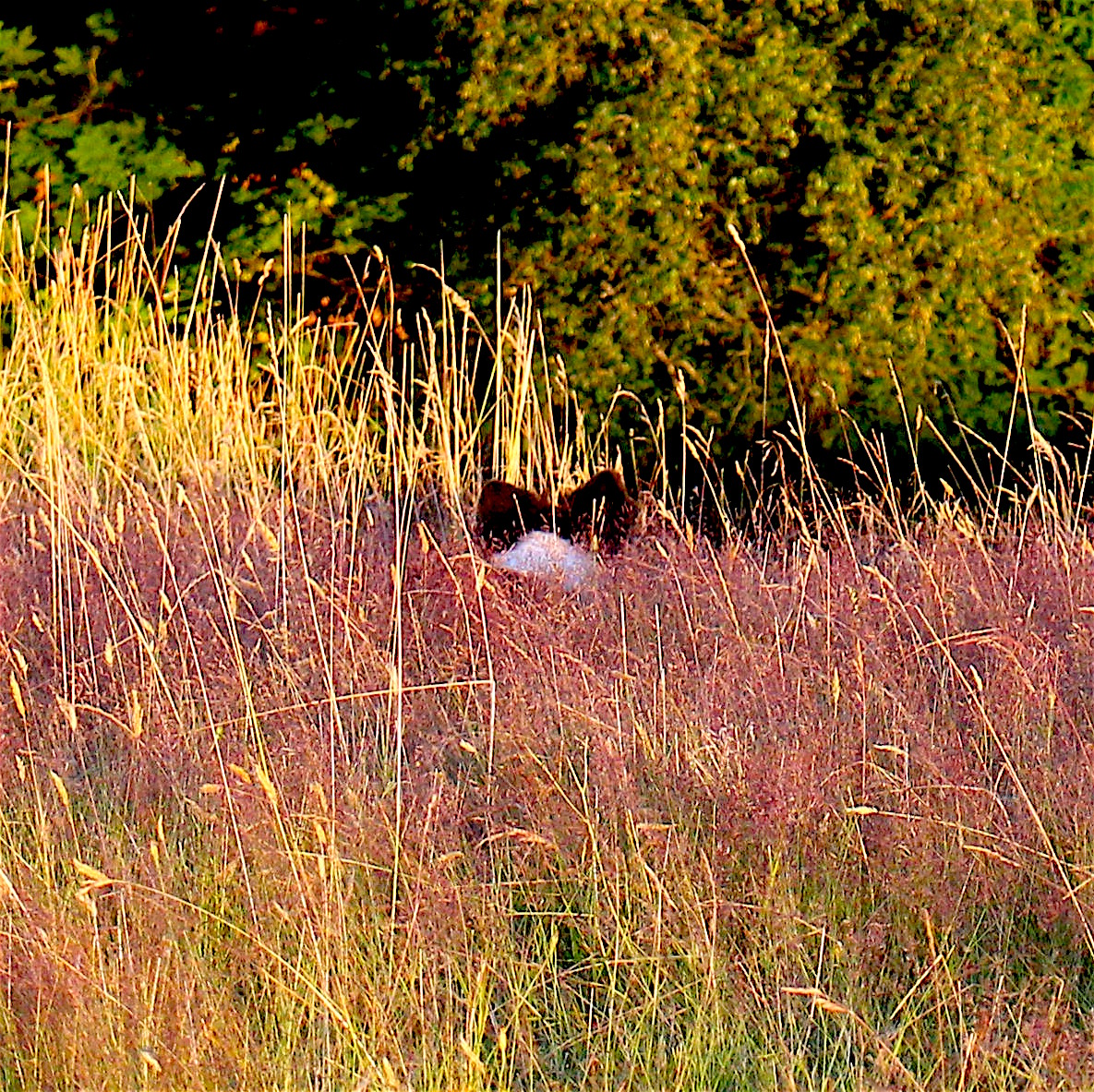
photo by Nate Gibson
One-Time
Monthly
Yearly

Make a one-time or recurring donation to support daily Barnstorming posts

Make a monthly donation

Make a yearly donation

Choose an amount

$5.00
$15.00
$100.00
$5.00
$15.00
$100.00
$5.00
$15.00
$100.00

Or enter a custom amount

$

Your contribution is deeply appreciated.

Your contribution is appreciated.

Your contribution is appreciated.

DonateDonate monthlyDonate yearly

The Moment Before You Forgot

It was like the moment when a bird decides not to eat
from your hand,
and flies, just before it flies, the moment the rivers seem
to still
and stop because a storm is coming, but there is no
storm, as when
a hundred starlings lift and bank together before they
wheel and drop,
very much like the moment, driving on bad ice, when it
occurs to you
your car could spin, just before it slowly begins to spin,
like
the moment just before you forgot what it was you were
about to say,
it was like that, and after that, it was still like that, only
all the time.

~Marie Howe “Part of Eve’s Discussion”
(2025 Pulitizer Prize-winning poet)

Sometimes my mind’s eye will perceive what is about to happen before it does. I can see it play out – yet sometimes it doesn’t happen.

Sometimes I teeter on the cusp of a new revelation that would change things completely — yet it stalls unformed and unspoken.

Sometimes I believe I can do whatever is right in my own eyes because it feels right, despite potential consequences.

I reach for the fruit because I want it and I’m hungry and it is hanging there waiting for someone, anyone – yet if I hesitate and consider the message of the worm hole before I take a bite, it just might spare me much sorrow and heartache.

We know how vulnerable we are to temptation and manipulation;
we know our failings and weaknesses yet how quickly we go from knowing, to forgetting.

There is a stillness, a suspension of time, in that moment of knowing – there is constant internal debate about the choices we face and what to do with that knowledge.

How many of us, knowing well the consequences, still do what we ought not to do? How many of us, having been warned, having learned from past history, still make the wrong decision?

All of us, all the time, that’s how many,
despite knowing what is right and best.

We forget, over and over. If we can’t get it right now, then when?

Thank God for His grace in the face of our poor memories and judgment.

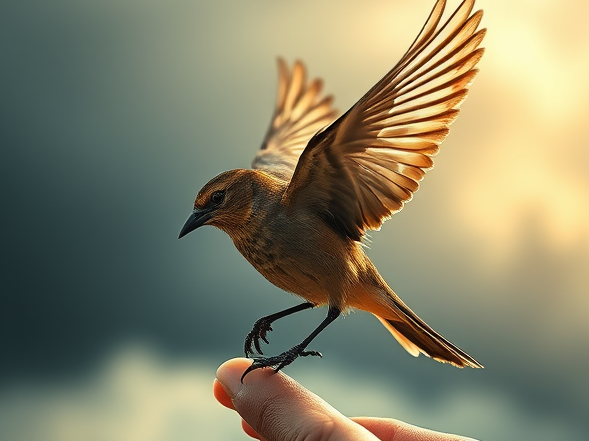
Thank God He still feeds us wholly from His loving hands as long as we don’t fly away.

AI image created for this post
One-Time
Monthly
Yearly

Make a one-time or recurring donation to support daily Barnstorming posts

Make a monthly donation

Make a yearly donation

Choose an amount

$10.00
$25.00
$50.00
$5.00
$15.00
$100.00
$5.00
$15.00
$100.00

Or enter a custom amount

$

Your contribution is deeply appreciated.

Your contribution is appreciated.

Your contribution is appreciated.

DonateDonate monthlyDonate yearly
So Starved for Hope

I know what you planned, what you meant to do, teaching me
to love the world, making it impossible
to turn away completely, to shut it out completely ever again –
it is everywhere; when I close my eyes,
birdsong, scent of lilac in early spring, scent of summer roses:
you mean to take it away, each flower, each connection with earth –
why would you wound me, why would you want me
desolate in the end, unless you wanted me so starved for hope
I would refuse to see that finally
nothing was left to me, and would believe instead
in the end you were left to me.
~Louise Glück “Vespers”
 (one of ten Vespers poems)

I wait for the Lord, my soul waits,
    and in his word I hope;
~Psalm 130:5

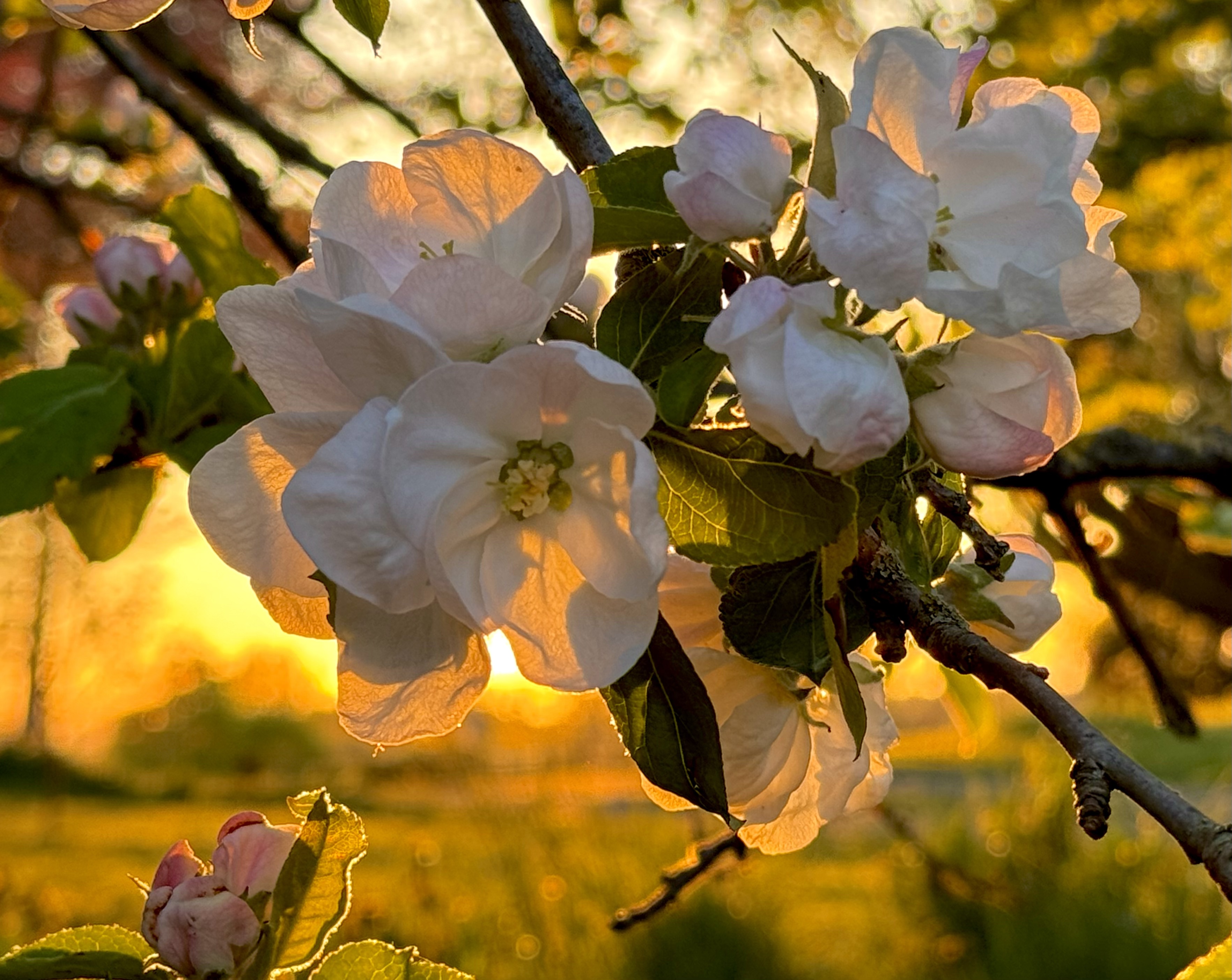
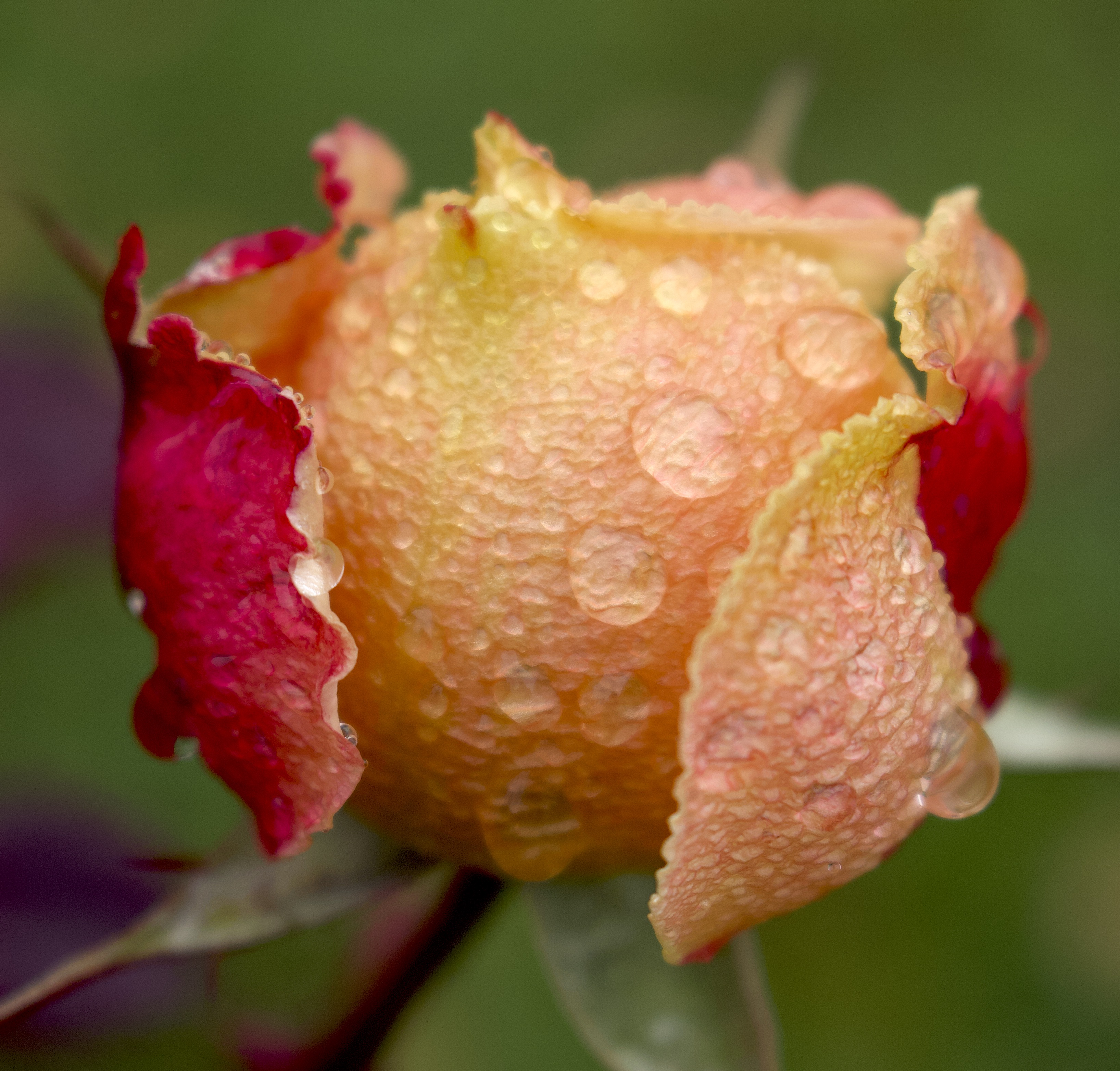
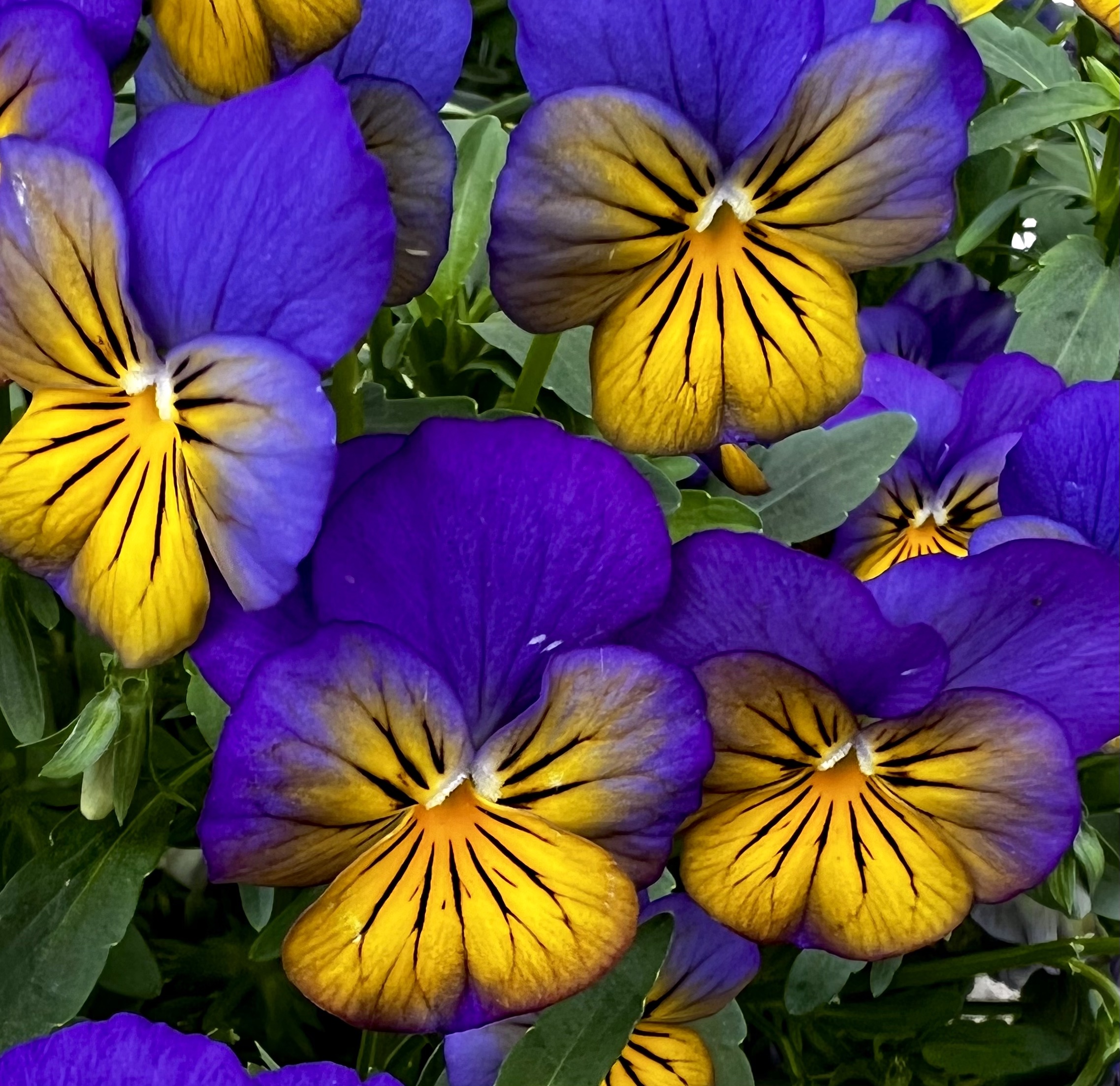
Mid-spring days like this:
bright, so promising with potential,
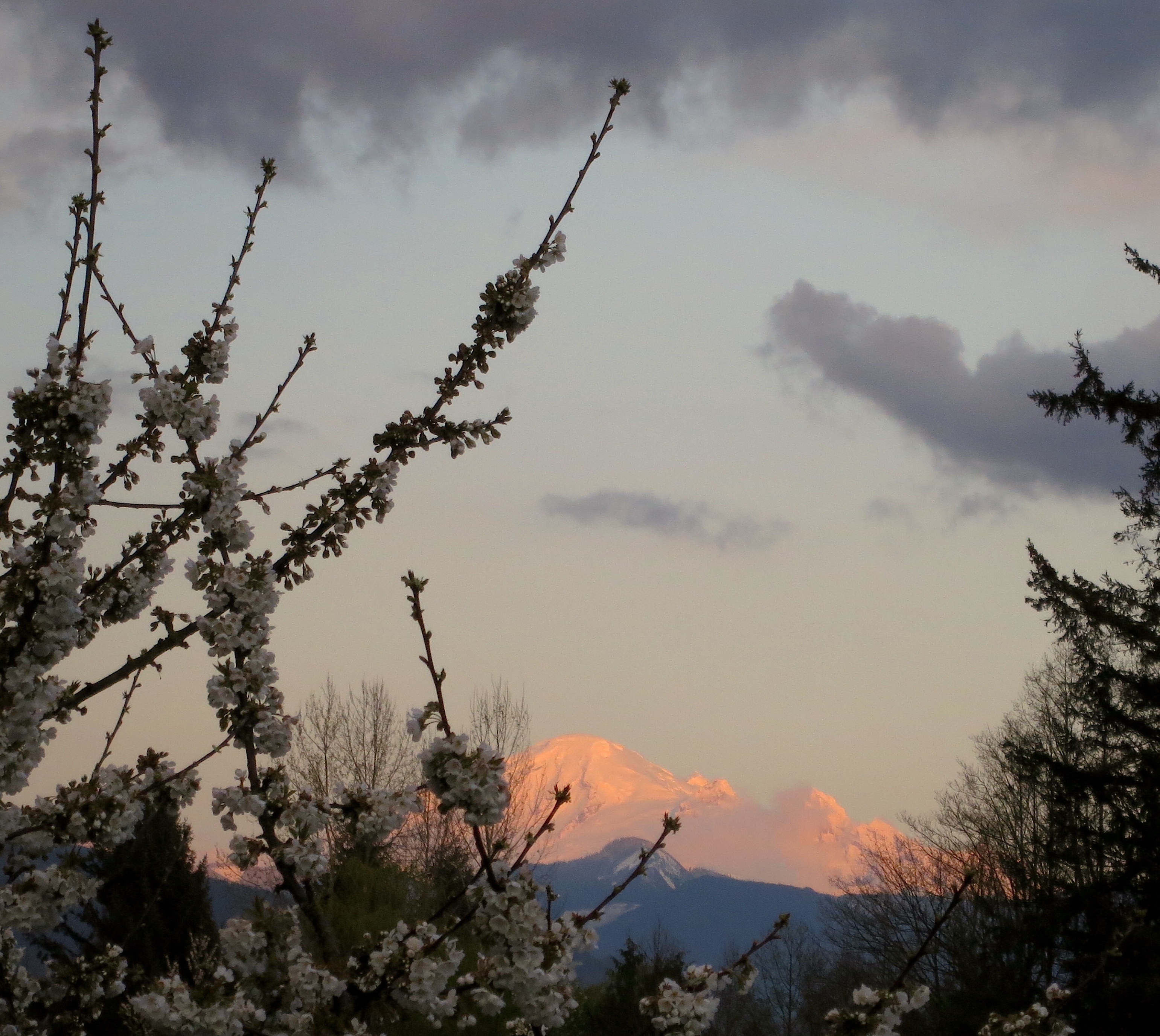
birdsong constantly in the air,
scent of orchard blossoms, lilacs,
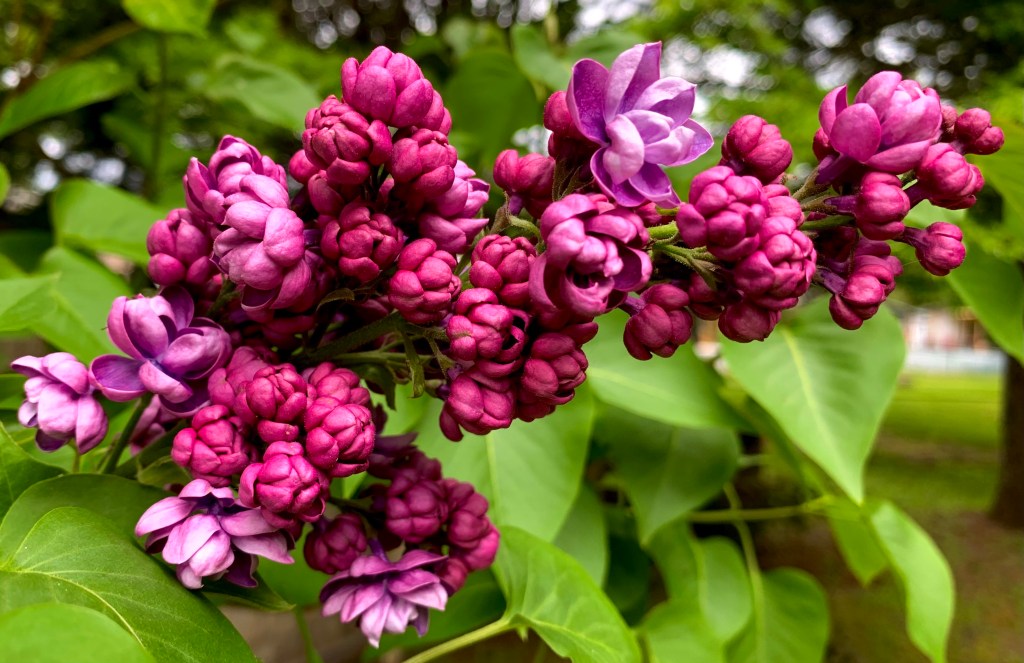
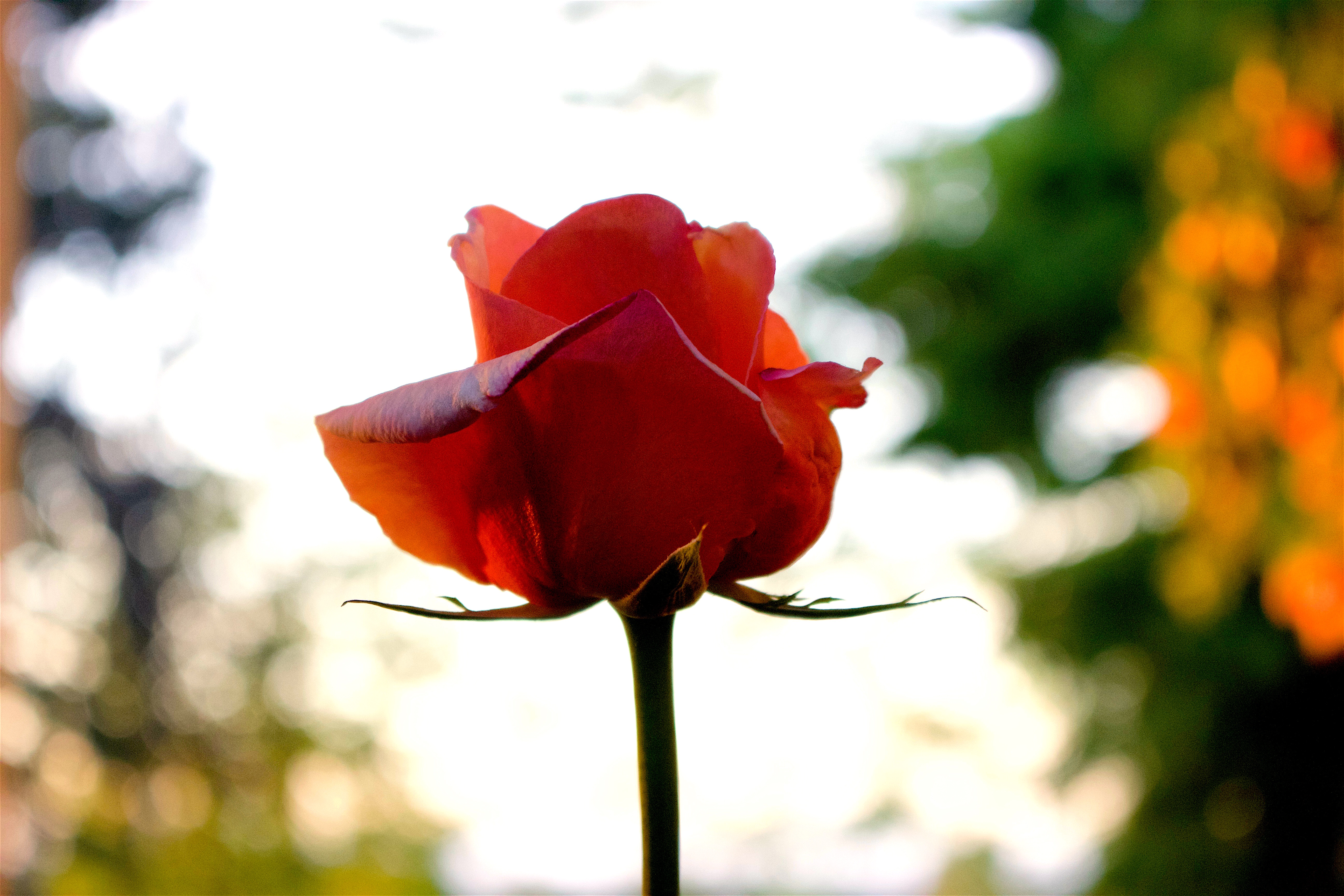
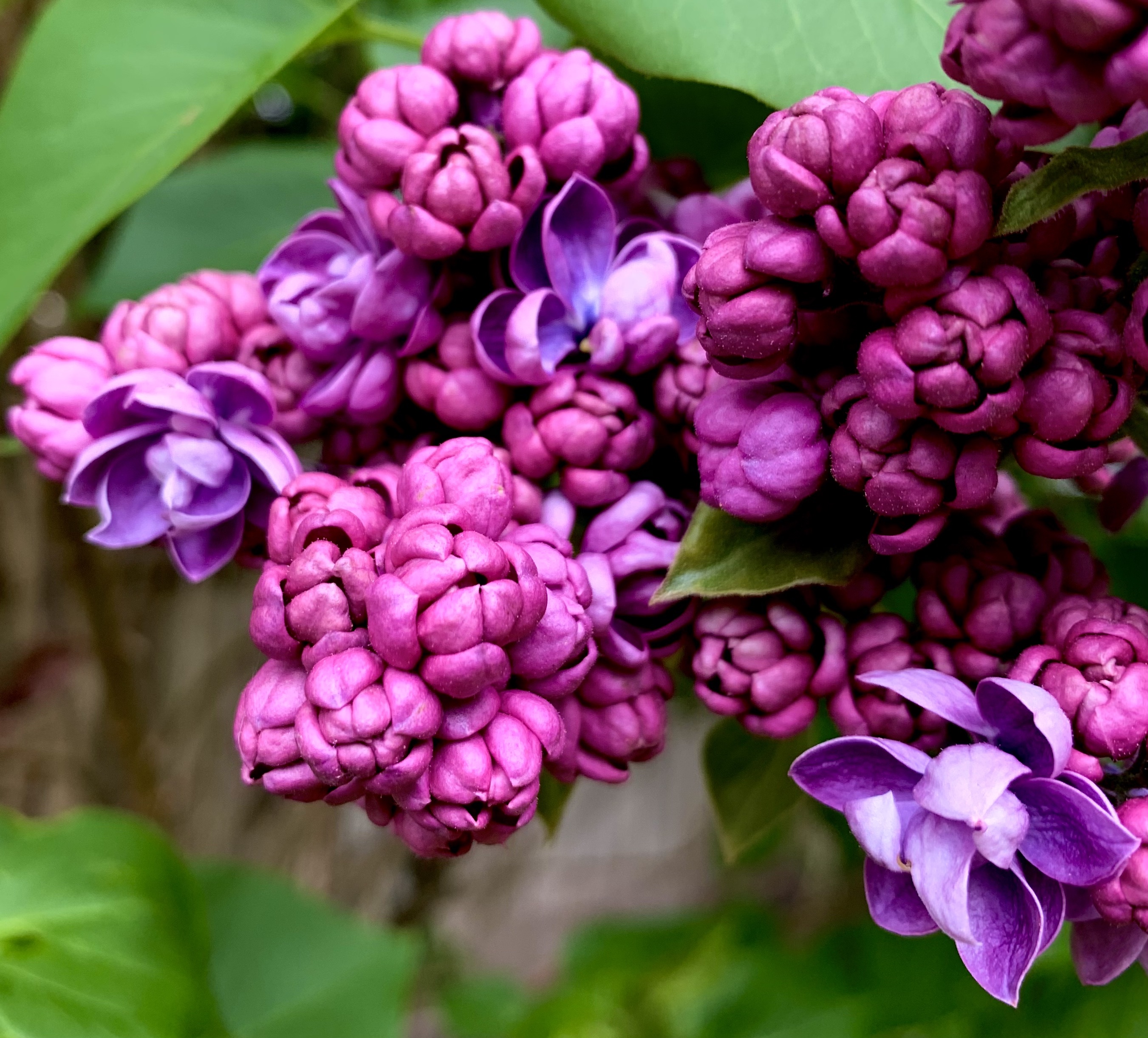
early roses and a flush of color everywhere…

how can we not love the world so much we never want to leave it?

Yet we must hold this loosely.

It is but a tiny show of the glories to come,
of what You have waiting for us next.

I am wounded knowing I must eventually let this go.

I am hungry for hope that isn’t found
in all this beauty and lushness,
the fulfilling hope that is only
You as my Father and Creator.

You provide only a taste here.
I know what I starve for,
so starved with hope for what You have in store.

I will wait for you
I will wait for you
in the end You were left for me.

Amen and Amen.

AI image created for this post
One-Time
Monthly
Yearly

Make a one-time or recurring donation to support daily Barnstorming posts

Make a monthly donation

Make a yearly donation
Choose an amount

$10.00
$25.00
$50.00
$5.00
$15.00
$100.00
$5.00
$15.00
$100.00

Or enter a custom amount

$

Your contribution is deeply appreciated.
Your contribution is appreciated.

Your contribution is appreciated.

DonateDonate monthlyDonate yearly