All that was me is gone. ~Robert Louis Stevenson from “Sing Me a Song of a Lad That is Gone”
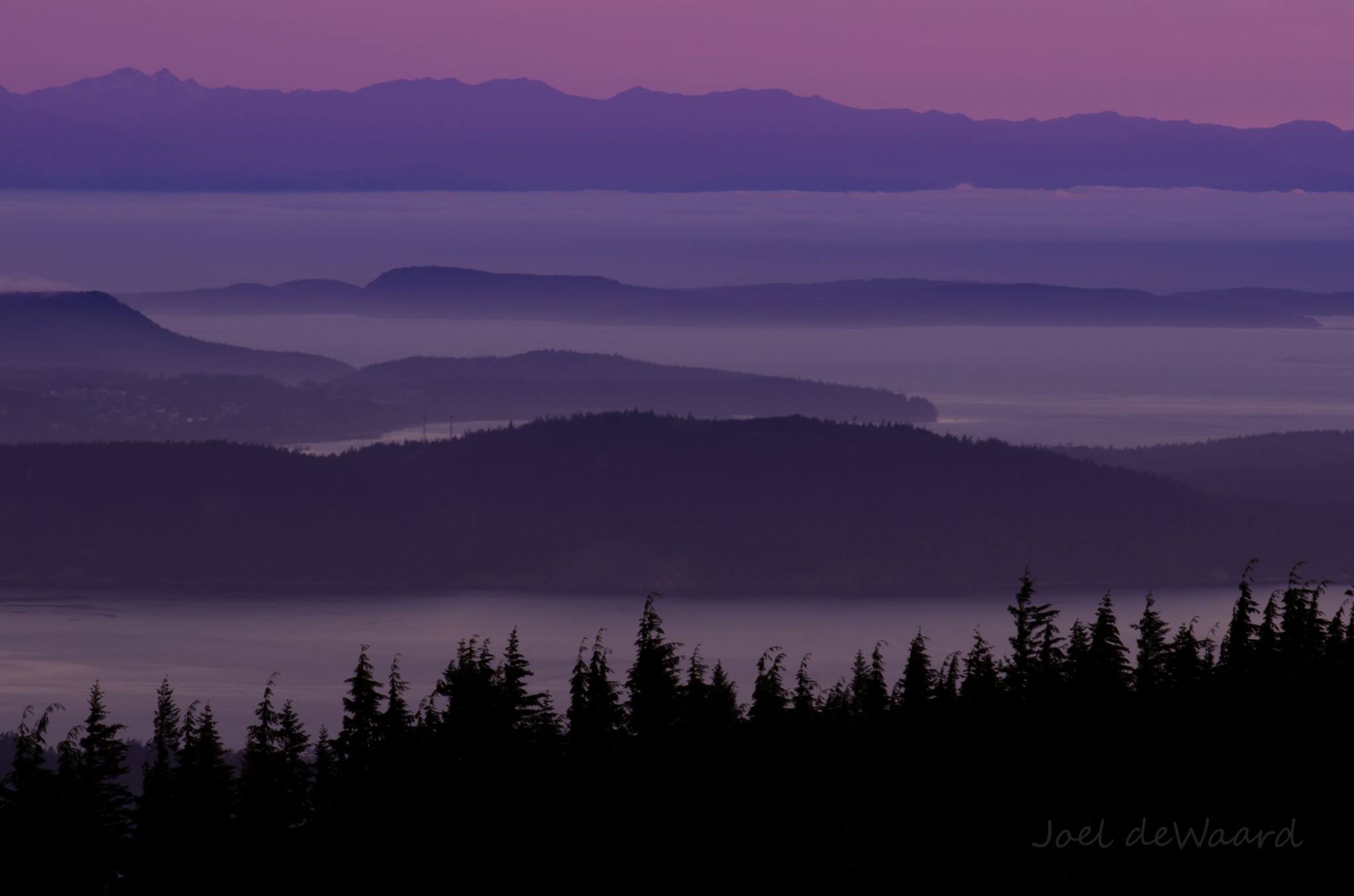
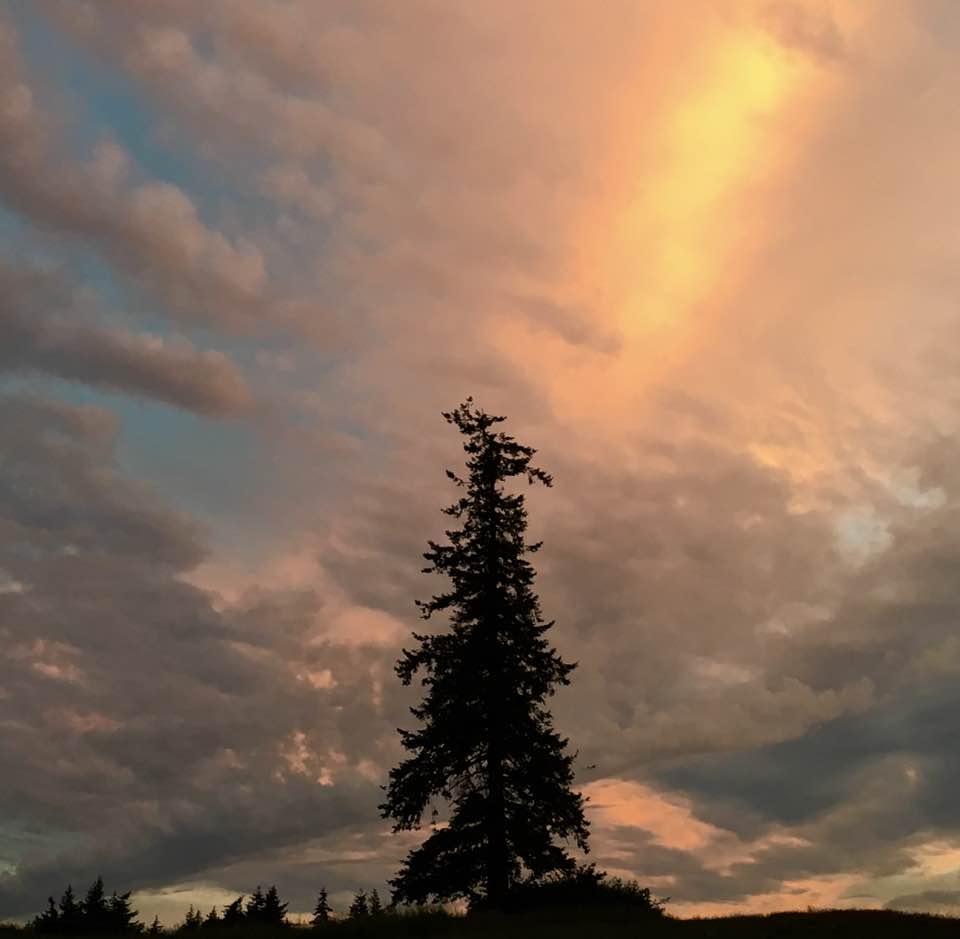
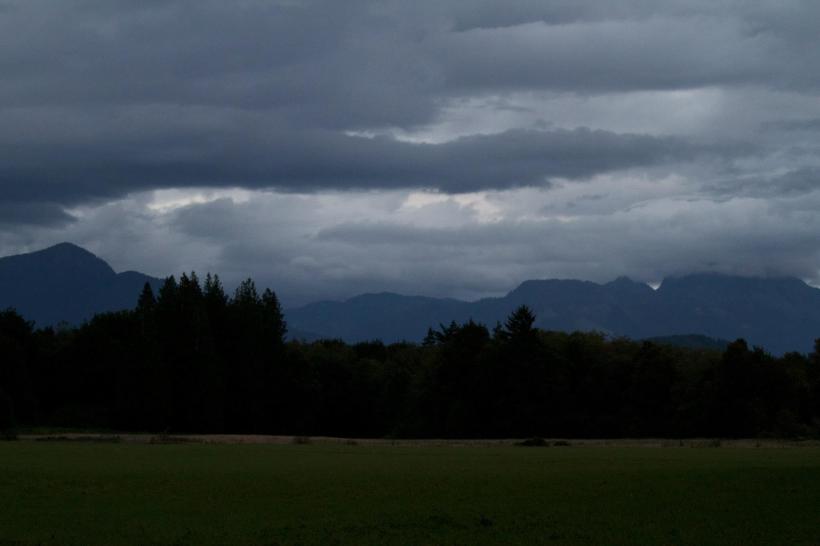
photo of San Juan Islands by Joel deWaard
Do we recognize ourselves as we journey through life, at first lighthearted and merry, but with each stumble, disappointment and wound, become more embittered and wary?
All that was me is gone?
To where to we flee in this sorry world?
I want to cover my eyes and ears, to be shielded from the headlines, from the threats and the worries.
This is not our home. Give me the soul; give me the Son that shone!
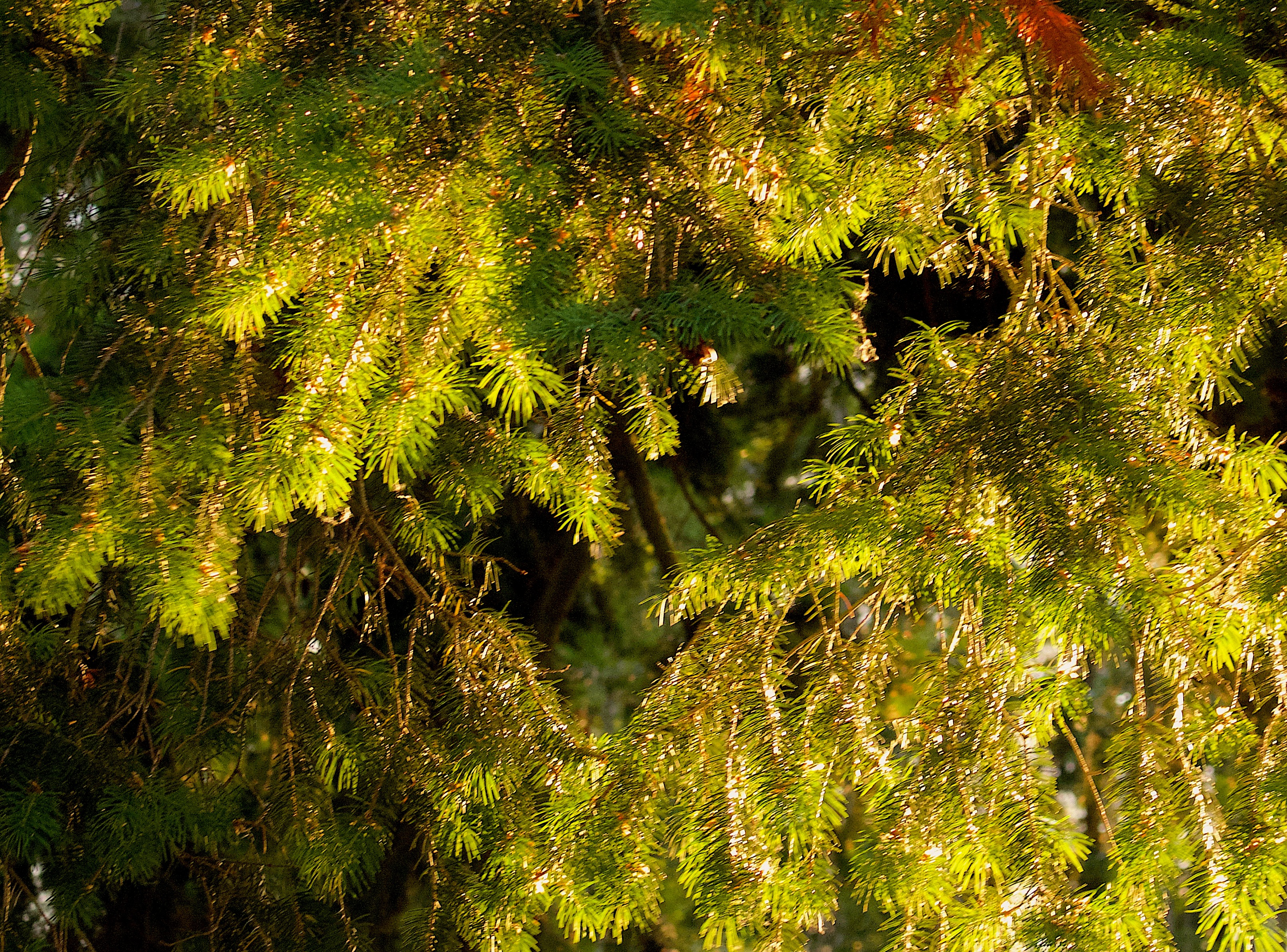
Any patch of sunlight in a wood will show you something about the sun which you could never get from reading books on astronomy.
These pure and spontaneous pleasures are ‘patches of Godlight’ in the woods of our experience. ~C.S. Lewis
A solstice moment
when light replaces
where darkness thrives:
there is a wounding
that tears us open,
cleaving us,
so joy can enter the cracks
that hurt the most.
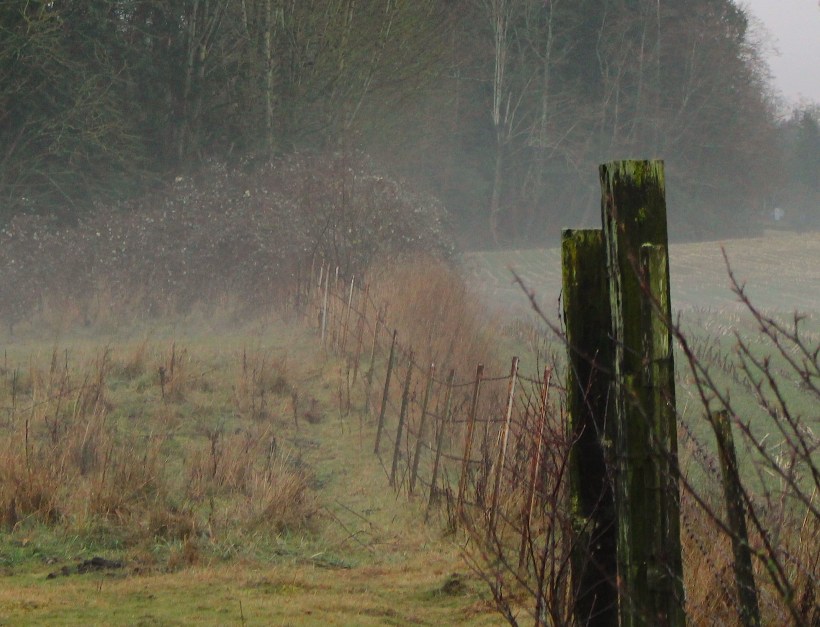
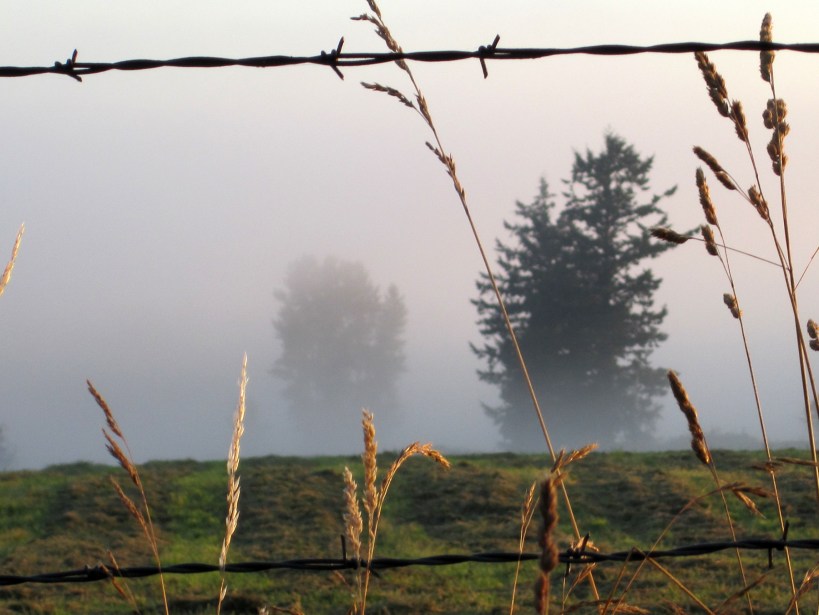
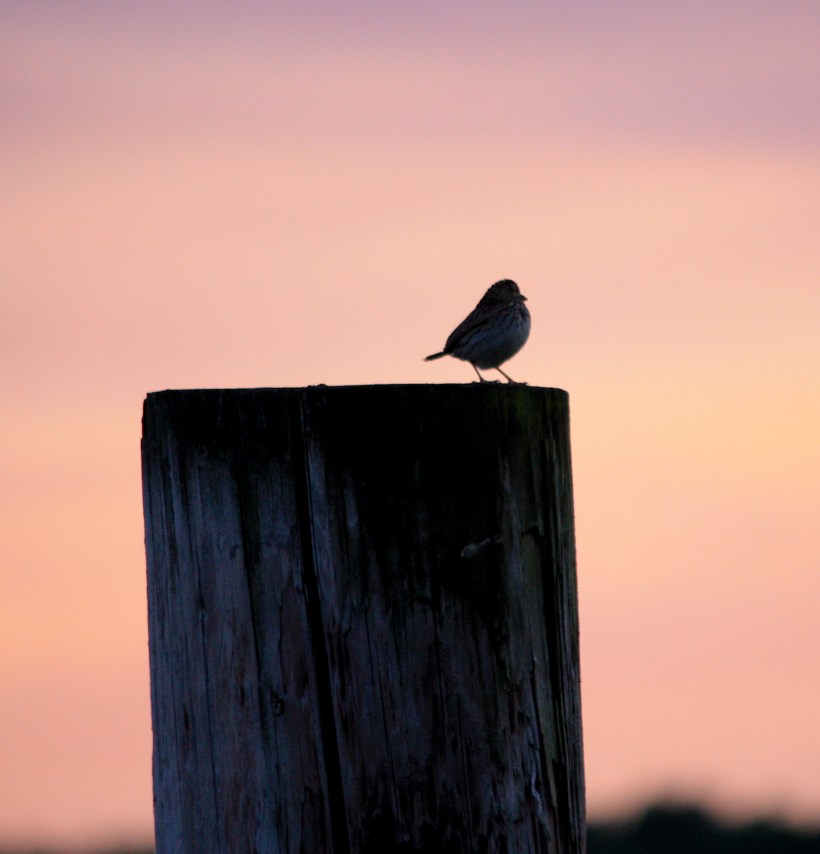
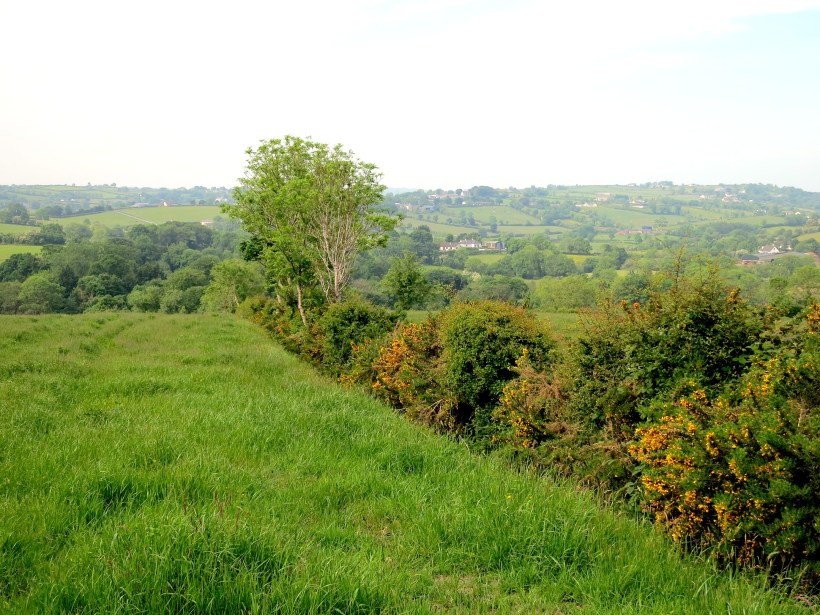
Brushy fencerows are in a sense a gift from man to nature — at least if, after the posts are dug in and the fence stapled to the posts, nature is given some free reign. Birds sitting on the fence and posts will pass undigested seeds in their droppings. Some of these seeds of blackberry, wild cherry, elderberry, bittersweet, sassafras, mulberry, and unfortunately, in some areas, multiflora rose, will take root in the loose soil around the posts and later in soil dug up by woodchucks. Chipmunks scurrying along the fence will bring and bury acorns and hickory nuts, while the wind will deliver dandelion, milkweed, and thistle seeds — all ingredients for a healthy fencerow. ~David Kline from Great Possessions
Before I built a wall I’d ask to know What I was walling in or walling out, And to whom I was like to give offence.
He will not go behind his father’s saying, And he likes having thought of it so well He says again, “Good fences make good neighbors.”
~Robert Frost from “Mending Fences”
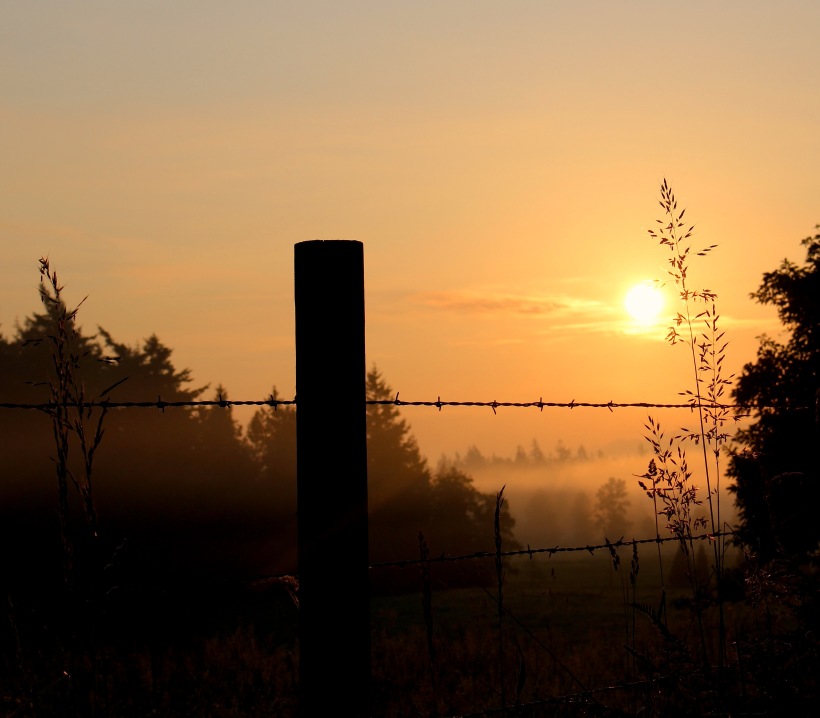
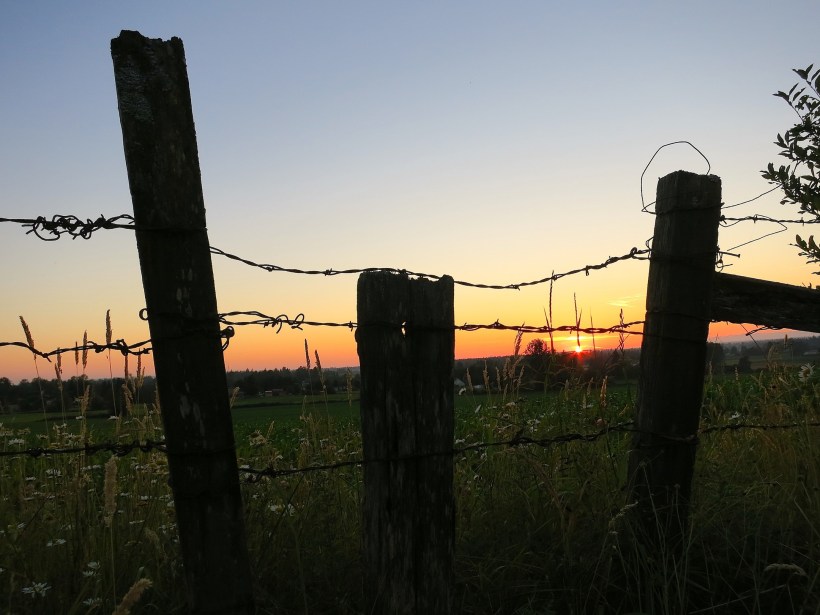
photo by Harry Rodenberger
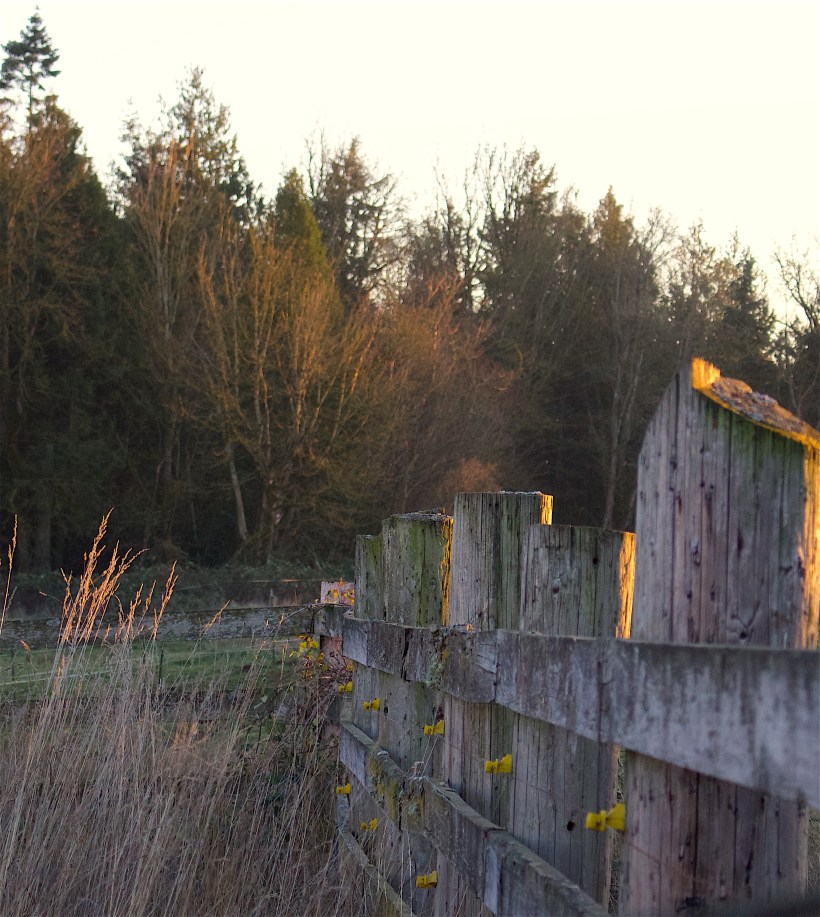
I maintain, in my haphazard and often ineffectual way, our farm’s wood rail and hot wire fences to keep the horses confined, preventing them from wandering into the adjacent orchard, corn field, or most risky of all, the road. As utilitarian as a fence is for that purpose, the fence row itself is the hospitality center for all sorts of diversity of flora and fauna. It doesn’t repel; it invites.
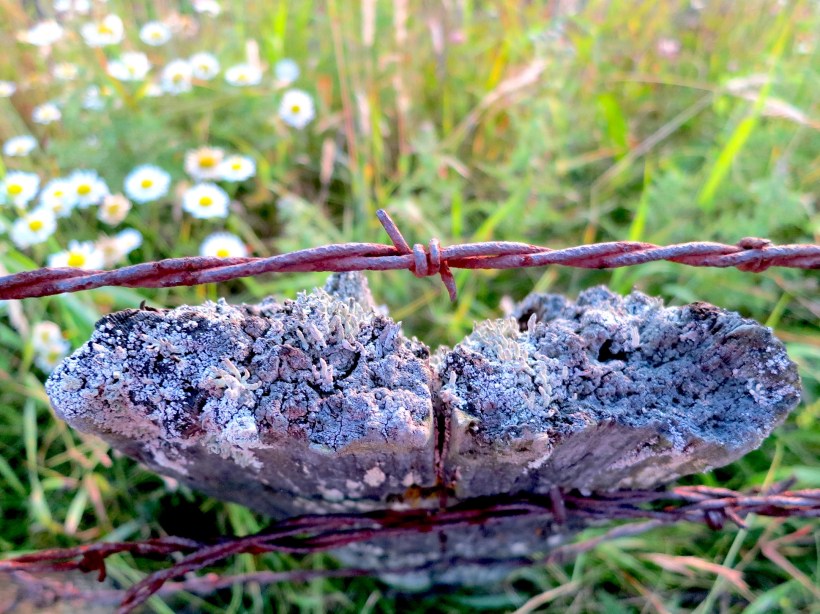
As one travels in the United Kingdom and across the plains and mountains of North America, old fences are everywhere. Some fences were built painstakingly of stone centuries ago, some of old barbed wire, now falling and decrepit, no longer effective, but still testimony to a determined farmer’s desire to section off his barren land from another’s barren land, or perhaps the requirement borne of the homesteading laws of the time. Robert Frost wrote in his poem “Mending Fences” that a fence spans the balance between man’s sometimes irrational desire for barriers, acknowledging the order that they bring to an uncertain and sometimes unpredictable world that lays beyond our walls.
Political fences continue to exist in many parts of the world today, created primarily out of fear. Indeed, new walls have been proposed, absurdly ridiculous in their scope and expense. Much celebration accompanied the fall of the Berlin Wall after its years of imposing testimony to the lack of trust and understanding between people who were once relatives, neighbors and friends. The Great Wall of China still stands, now primarily tourist attraction, no longer serving any other useful purpose other than to illustrate the lengths to which man goes to barricade himself off from others.
So why maintain life’s fences, even if the building and maintaining of these fences seems a futile and foolish task when they are pushed down, blown over in the winds, with trees fallen over them, and overgrown with brush and wild blackberries?
Fences, like rules and laws, define order and structure. They can bite back if they are breached. If crashed and broken, they are hazardous in and of themselves, not withstanding the potential dangers that lay beyond them. Remove them altogether and we risk losing the diversity represented in the fence row itself.
So, in the best of times, we are mending walls out of continuing need for contact with our neighbors. We meet across the barriers to shake hands and visit while we repair the fences together, leaving the barriers standing and strong, and the space in the fence row becomes even more diverse and welcoming. In the worst of times, we fortify and hide behind the walls, making them taller, wider, deeper, creating greater and greater gulfs between us and eventually losing touch forever as the walls themselves deteriorate without the necessary mutual “mending”.
So we must not love walls themselves, but must maintain them with our neighbor. We don’t worship the walls themselves but instead respect the foundation they rest on and the life they protect within the row itself.
We accept such boundaries with humility, recognizing their necessity is due to our own imperfections, as we too are full of prickles and barbs that too easily draw blood when breached.
As he approached Jerusalem and saw the city, he wept over it and said, “If you, even you, had only known on this day what would bring you peace—but now it is hidden from your eyes.” Luke 19:41
Love’s as warm as tears, Love is tears: Pressure within the brain, Tension at the throat, Deluge, weeks of rain, Haystacks afloat, Featureless seas between Hedges, where once was green.
Love’s as fierce as fire, Love is fire: All sorts–infernal heat Clinkered with greed and pride, Lyric desire, sharp-sweet, Laughing, even when denied, And that empyreal flame Whence all loves came.
Love’s as fresh as spring, Love is spring: Bird-song hung in the air, Cool smells in a wood, Whispering ‘Dare! Dare!’ To sap, to blood, Telling ‘Ease, safety, rest, Are good; not best.’
Love’s as hard as nails, Love is nails: Blunt, thick, hammered through The medial nerves of One Who, having made us, knew The thing He had done, seeing (with all that is) Our cross, and His. ~C.S. Lewis
Jesus is reported to have wept twice in the gospels. When informed His friend Lazarus was dead, He weeps in response to the grief and lack of faith demonstrated by friends and family even though they knew Jesus’ power to heal and restore. The second time was on Palm Sunday, as triumphantly He approached Jerusalem and stopping, looked down upon the city, knowing what lay ahead. This time the stakes were not the loss of one life, but the loss of an entire city due to the unbelief and lack of faith of its people.
Indeed, Jerusalem, still torn between factions, faiths and fanatics, has not really known peace ever since.
And our own country, more fractured and torn than ever before in living memory, is raising up its own version of factions and fanatics. How can this end well?
I am struck by the compassion shown in the Lord’s tears. These are not tears of self-pity, nor anticipation of His own imminent personal suffering, but tears shed over the continued blindness of mankind. They expected the militant entrance of a victorious king, unaware their salvation rode into their midst on a donkey’s colt.
Can we not, the impatient and ignorant electorate, learn from this? — humility and sacrifice is far more powerful in the kingdom of God than weapons, verbal barbs and hatred.
Those sacred tears shed so long ago, and still shed, were never for Himself, but for us.
Human tears rolling down the face of God;
Divine tears washing the face of man.
Peace no longer is hidden from us; we know from where our help comes.
Now that we know, there are no excuses for our blindness.
During this Lenten season, I will be drawing inspiration from the new devotional collection edited by Sarah Arthur —Between Midnight and Dawn
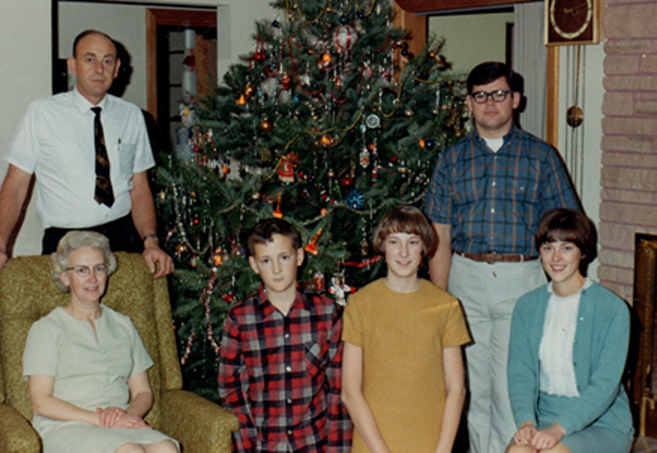
In 1959, our family moved from an older 2 story farm house in a rural community north of Seattle, to a rambler style home on seven acres just outside the city limits of Olympia, Washington. It was a big adjustment to move to a much smaller house without a basement or upper story, no garage, and no large haybarn nor chicken coop on fewer acres. It meant most things we owned didn’t make the move with us.
The rambler had side by side mirror image rooms as the central living space between the kitchen on one side and the hallway to the bedrooms on the other. The living room could only be entered through the front door and the family room was accessed through the back door with a shared sandstone hearth in the center, containing a fireplace in each room. The only opening between the rooms had a folding door which was shut most of the year. In December, the door was opened to accommodate the Christmas tree, so it was partially in the living room and depending on its generous width, spilling over into the family room. That way it was visible from both rooms, and didn’t take up too much floor space.
The living room, containing the only carpeting in the house and our “best” furniture, was sacrosanct by parental decree. To keep our two matching sectional sofas, an upholstered chair and gold crushed velvet covered love seat in pristine condition, the room was off-limits unless we had company or for some very specific reason, like practicing the piano that sat in one corner. The carpet was never to develop a traffic pattern, there would be no food, beverage, or pets ever allowed in that room, and the front door was not to be used unless a visitor arrived. The hearth never saw a fire lit on that side because of the potential of messy ashes or smoke smell. This was not a room where our family gathered, talked loudly, laughed much or roughhoused on the floor. This was not a room for arguments or games and certainly not for toys. For most of the year, the “living” room was not lived in at all. The chiming clock next to the hearth, wound with weighted cones on the end of chains, called out the hours without an audience.
One week before Christmas, a tree was chosen to fit in the space where it could overflow into the family room. I enjoyed decorating the “family room” side of the tree, using all my favorite ornaments that were less likely to break if they fell on the linoleum floor on that side of the door. Only on Christmas morning, it was our privilege to “mess” up the living room with wrapping paper, ribbons and us.
It was as if the Christmas tree itself symbolized a house divided, with a “formal” side in the living room and a “real life” face on the other side where daily “living” was actually taking place. Our tree straddled more than just the two rooms. Every year the tree’s branches tried to reach out to shelter a family that was slowly and imperceptibly falling apart, much like the drying fir needles falling to the floor, only to be swept away.
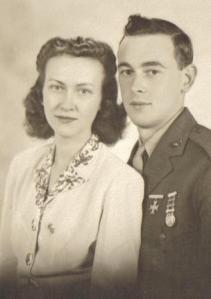
Seventy two years ago this week, my parents were married. Christmas Eve certainly wasn’t a typical wedding anniversary, but it did make it easy to remember during their years together. It was a date of necessity, only because a justice of the peace was available to marry a score of war-time couples in Quantico, Virginia, shortly before the newly trained Marine officers were shipped out to the South Pacific to fight in WWII.
Now that they are both gone, when I look at their young faces in their only wedding portrait, I see a hint of the impulsive decision that led to that wedding just a week before my father left for 30 months. They had known each other for over a year, had talked about a future together, but with my mother starting a teaching job, and the war potentially impacting all young men’s lives very directly, they had not set a date.
My father had to put his college education on hold to enlist, knowing that would give him some options he wouldn’t have if drafted, so they went their separate ways as he headed east to Virginia for his Marine officer training, and Mom started her high school teaching career as a speech and drama teacher in rural Colville in Eastern Washington. One day in early December, he called her and said, “If we’re going to get married, it’ll need to be before the end of the year. I’m shipping out the first week in January.” Mom went to her high school principal, asked for a two week leave of absence which was granted, told her astonished parents, bought a dress, and headed east on the train with a friend who had received a similar call from her boyfriend. This was a completely uncharacteristic thing for my overly cautious mother to do so it must have been love.
They were married in a brief civil ceremony with another couple as the witnesses. They stayed in Virginia only a couple days and took the train back to San Diego, and my father left. Just like that. Mom returned to her teaching position and the first three years of their married life was letter correspondence only, with gaps of up to a month during certain island battles when no mail could be delivered or posted.
As I sorted through my mother’s things following her death six years ago, their letters to each other, stacked neatly and tied together, reside now in a box in my bedroom. I have not yet opened them but will when I’m ready. What I will find there will be words written by two young people who could not have foretold the struggles that lay ahead for them during and after the war but who both depended on faith and trust to persevere despite the unknowns. The War itself seemed struggle enough for the millions of couples who endured the separation, the losses and grieving, as well as the eventual injuries–both physical and psychological. It did not seem possible that beyond those realities, things could go sour after reuniting.
The hope and expectation of happiness and bliss must have been overwhelming, and real life doesn’t often deliver. After raising three children, their 35 year marriage fell apart with traumatic finality. When my father returned (again) over a decade later, asking for forgiveness, they remarried and had five more years together before my father died.
And so too there must have been expectations of happiness in the barn on that first Christmas Eve. It must have been frightening for the parents of this special Baby, knowing in their minds but not completely understanding in their hearts what responsibility lay in their arms. They had to find faith and trust, not just in God who had determined what their future held, but in each other, to support one another when things became very difficult. Those challenges mounted up quickly: there was to be no room for them, there was a baby to deliver without assistance from anyone, and the threat of Herod’s murder of innocents eventually drove them from their home country.
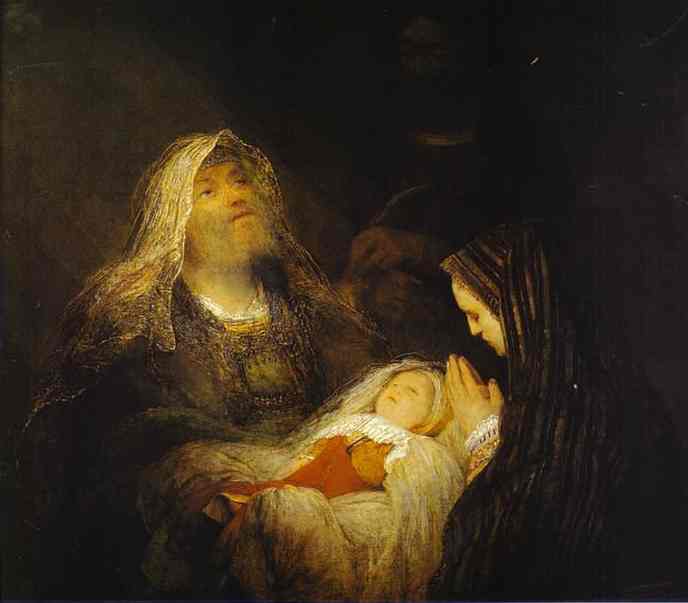
When Mary and Joseph go to the temple for the circumcision and consecration of their son the following week, they allow a “righteous and devout man”, Simeon, to hold their baby as, moved by the Holy Spirit, he tells them the role this child is to play in the world. He prays to the Lord, “As you have promised, you now dismiss your servant in peace. For my eyes have seen your salvation, which you have prepared in the sight of all people, a light for revelation to the Gentiles and for glory to your people Israel.”
It must have been like looking into a crystal ball to hear Simeon speak, as we’re told “the child’s father and mother marveled at what was said about him.” But Simeon didn’t whitewash the reality to come. It would have been easy to do so– simply mention salvation, the light and the glory that will come to the people due to this little baby, but leave out the part about how His existence would cause division in Israel as well as the rejection, anguish and suffering that He would experience. Not only that, but the pain is not His alone but will be His parents’ to bear as well. I’m sure that statement must have ended the sense of “marvel” they were feeling, and replaced it instead with great sorrow and trepidation.
Christmas is a time of joy, a celebration of new beginnings and new life when God became man, humble, vulnerable and tender. But it also gives us a foretaste for the profound sacrifice made in giving up this earthly life, not always so gently. A baby in a manger is a lovely story to “treasure up” in our hearts but once He became a bleeding Redeemer on a cross, it pierces our living beating hearts, just as Simeon foretold.
My parents, such young idealistic adults 72 years ago, now servants dismissed from this life in peace. As I peer at their faces in their wedding photo, I know those same eyes, then unaware of what was to come, now behold the light, the salvation and the glory~~the ultimate Christmas~~in His presence.
Song of Simeon by Aert De Gelder, a student of Rembrandt
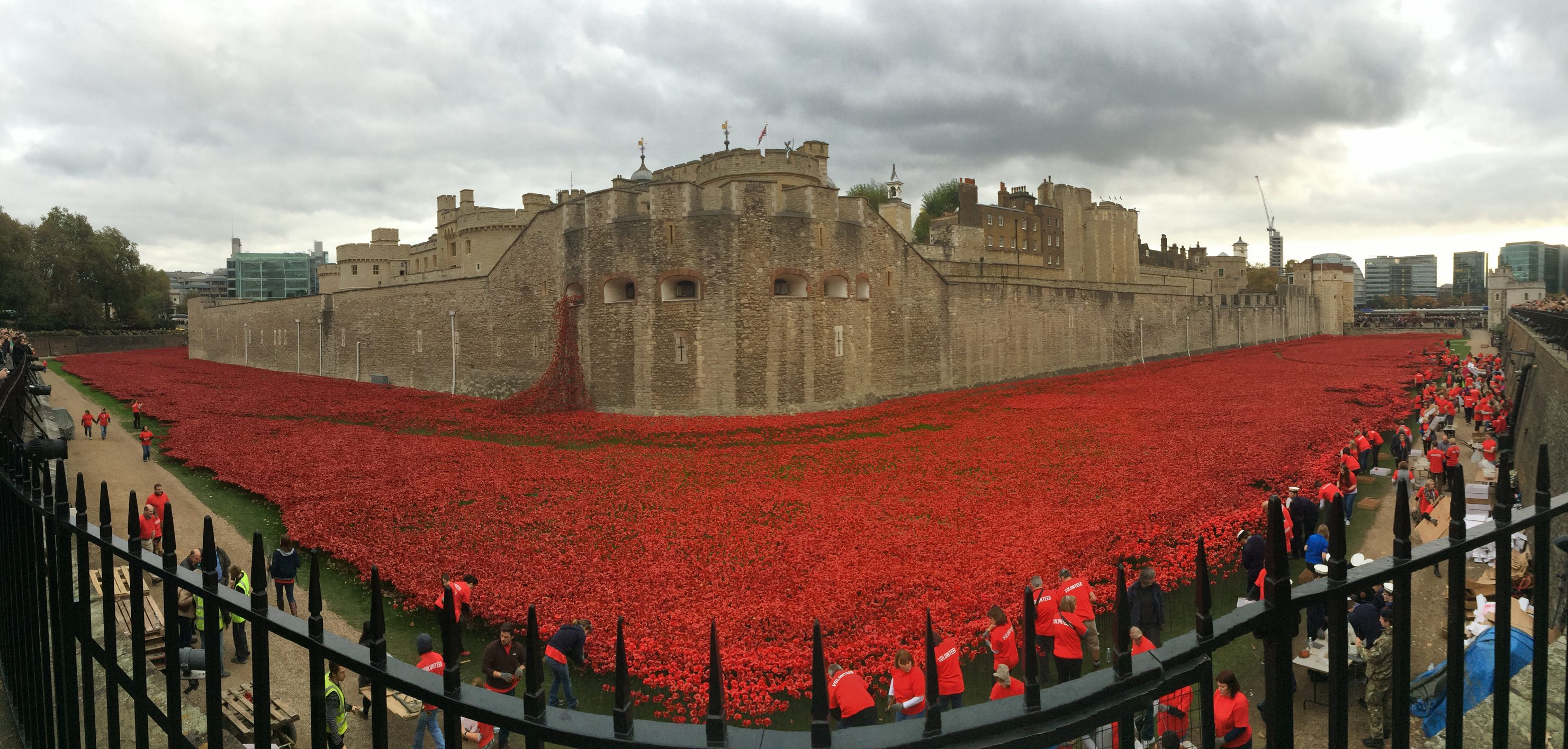
They shall grow not old, as we that are left grow old: Age shall not weary them, nor the years condemn. At the going down of the sun and in the morning We will remember them. ~Lawrence Binyonfrom “For the Fallen” (1914)
When you go home tell them of us and say – “For your tomorrow we gave our today” from “The Kohima Epitaph
We are the dead; short days ago We lived, felt dawn, saw sunset glow, Loved and were loved, and now we lie In Flanders fields. ~John McCrae from “In Flanders Fields”
Tower of London Poppies representing the fallen soldiers from the UK and colonies in WWI from BBC London
Courage is almost a contradiction in terms. It means a strong desire to live taking the form of a readiness to die. ~ G.K. Chesterton
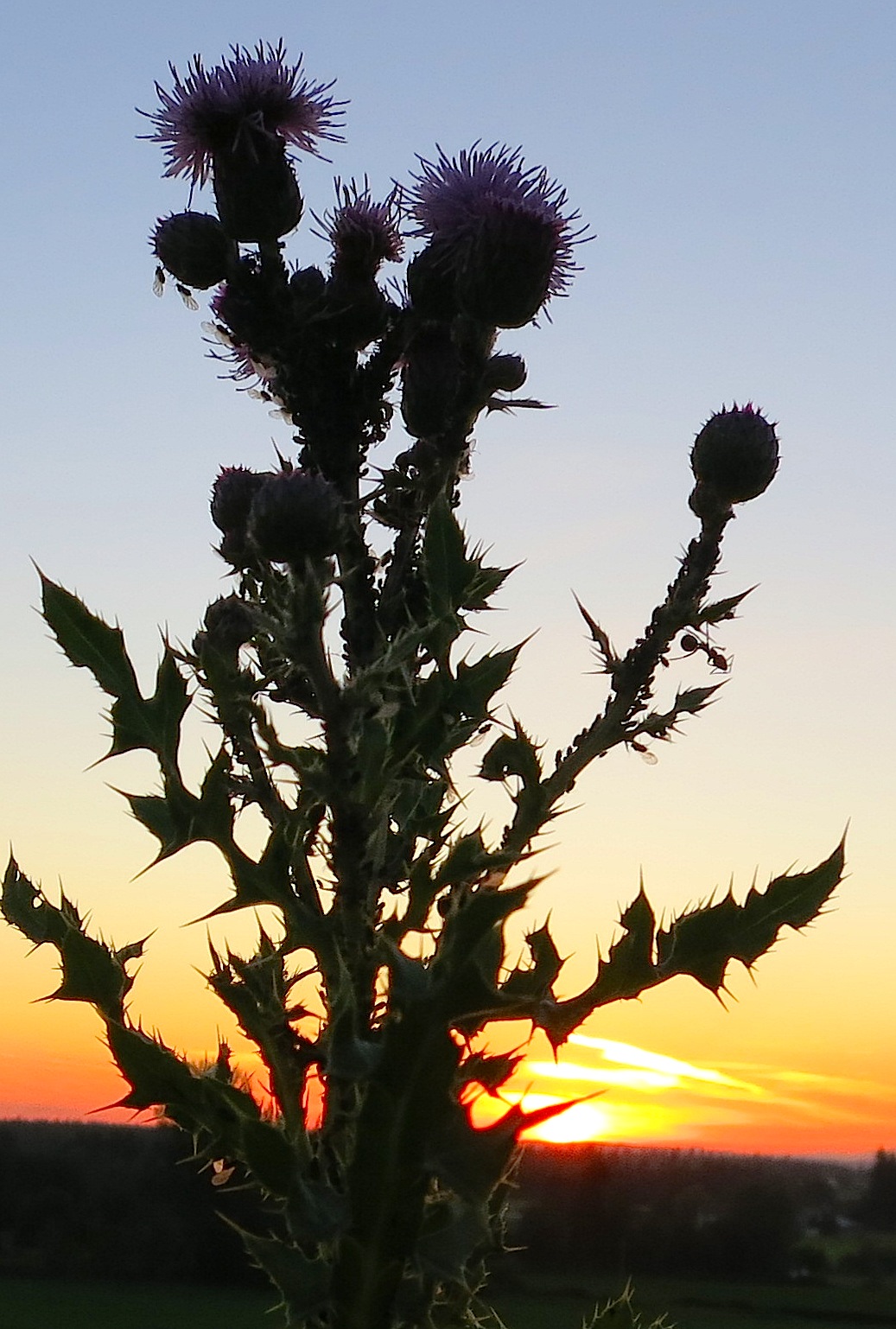
Against the rubber tongues of cows and the hoeing hands of men Thistles spike the summer air Or crackle open under a blue-black pressure.
Every one a revengeful burst Of resurrection, a grasped fistful Of splintered weapons and Icelandic frost thrust up
From the underground stain of a decayed Viking. They are like pale hair and the gutturals of dialects. Every one manages a plume of blood.
Then they grow grey, like men Mown down, it is a feud. Their sons appear, Stiff with weapons, fighting back over the same ground. ~Ted Hughes “Thistles”
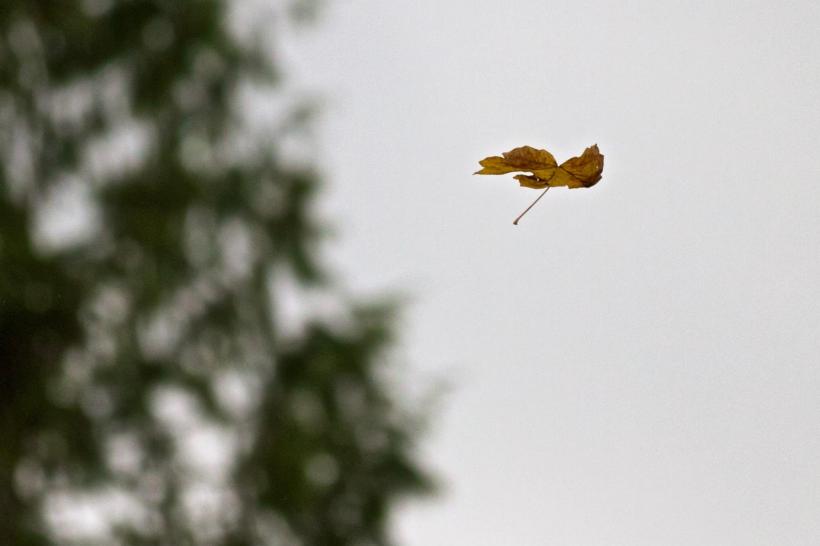
When shrieked The bleak November winds, and smote the woods, And the brown fields were herbless, and the shades That met above the merry rivulets Were spoiled, I sought, I loved them still; they seemed Like old companions in adversity. ~William Cullen Bryant in A Winter Piece
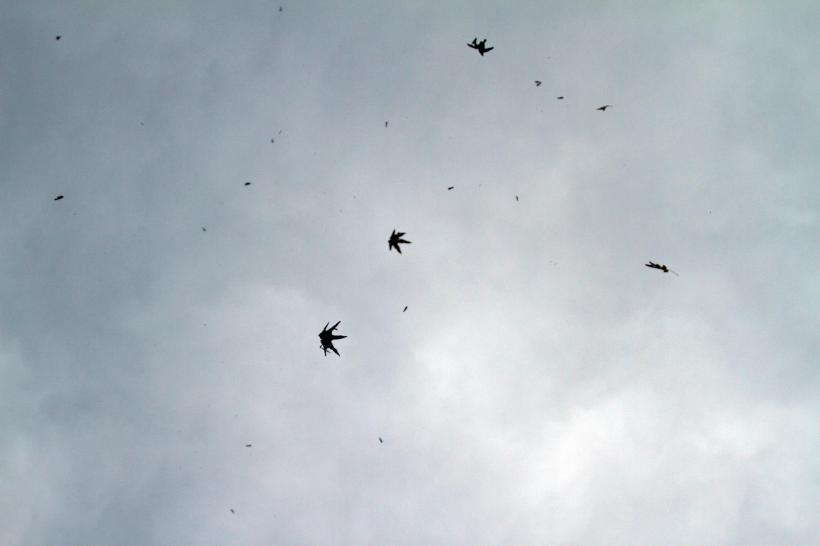
When the winds start to howl
and leaves are flying through the air
like birds on the wing heading south,
when branches snap
and trunks bend to the point of breaking
when the ground is hopelessly barren
and the hills are nothing
but continuing shades of gray
descending from the sky
when the sun disappears for days
and the rains are continuous
I love it all still;
knowing we are in this together
when the times are tough and
the mud is thick
and obstacles fall in our way
even to the end of time
as we travel this road
like old companions
broken, withered, splintered
but sharing the journey
wherever it blows us.
photo by Emily Gibson, just outside our front door
Sometimes, hard-trying, it seems I cannot pray– For doubt, and pain, and anger, and all strife. Yet some poor half-fledged prayer-bird from the nest May fall, flit, fly, perch–crouch in the bowery breast Of the large, nation-healing tree of life;– Moveless there sit through all the burning day, And on my heart at night a fresh leaf cooling lay. ~George MacDonald from Diary of an Old Soul
There can be no response but to bow in earnest prayer, waiting for the hatch of a healing peace among the diverse peoples and opinions of our nation. Our lives are half-fledged, not yet fully delivered nor understood, doubt burning into our flesh like thorns on fire. We have become an angry and hurting nation– those who won and those who lost. The gloating bloats who we are, beyond recognition.
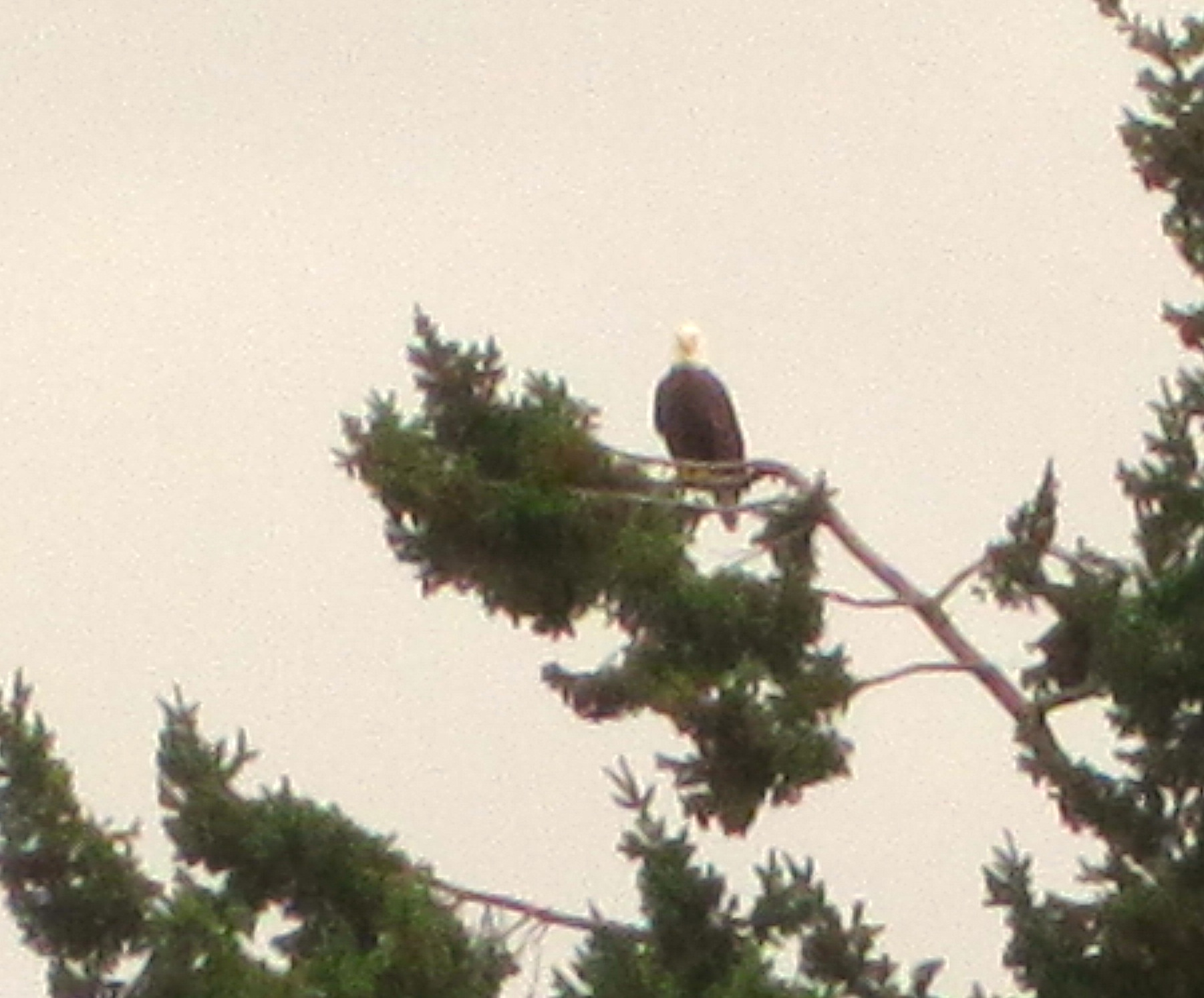
May our prayers rise like a dove from hearts in turmoil, once again to soar on the wings of eagles.
Peace, come quickly.
Be no longer moveless.
Move us to higher ground.
Plow deep our hearts.
photo of “firethorn” bush (pyracanthus) by Emily Gibson











 Barnstorming