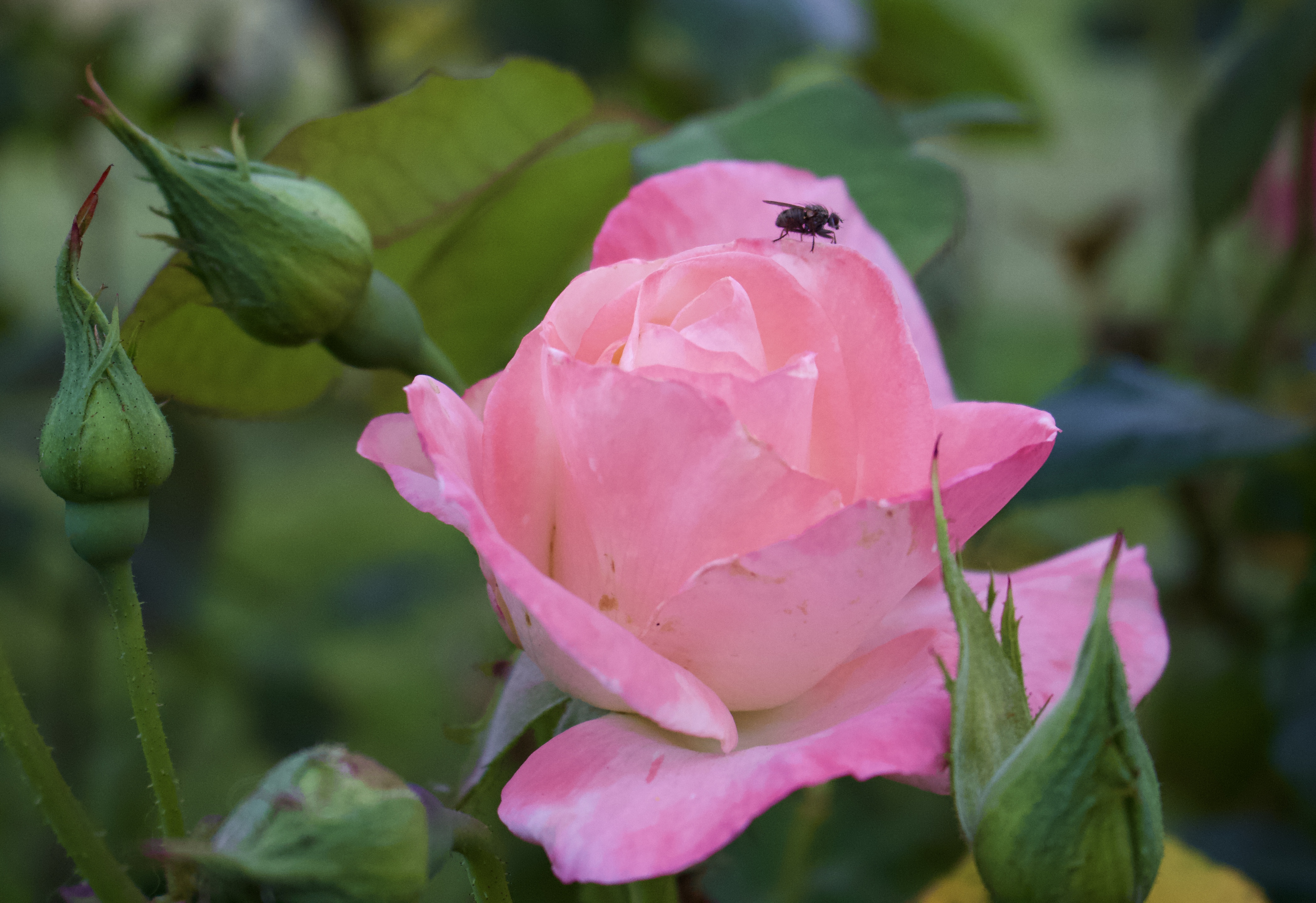
Attention on the Fly

In Sleeping Beauty’s castle
the clock strikes one hundred years
and the girl in the tower returns to the world.
So do the servants in the kitchen,
who don’t even rub their eyes.
The cook’s right hand, lifted
an exact century ago,
completes its downward arc
to the kitchen boy’s left ear;
the boy’s tensed vocal cords
finally let go
the trapped, enduring whimper,
and the fly, arrested mid-plunge
above the strawberry pie,
fulfills its abiding mission
and dives into the sweet, red glaze.

As a child I had a book
with a picture of that scene.
I was too young to notice
how fear persists, and how
the anger that causes fear persists,
that its trajectory can’t be changed
or broken, only interrupted.
My attention was on the fly;
that this slight body
with its transparent wings
and lifespan of one human day
still craved its particular share
of sweetness, a century later.
~Lisel Mueller “Immortality” from Alive Together
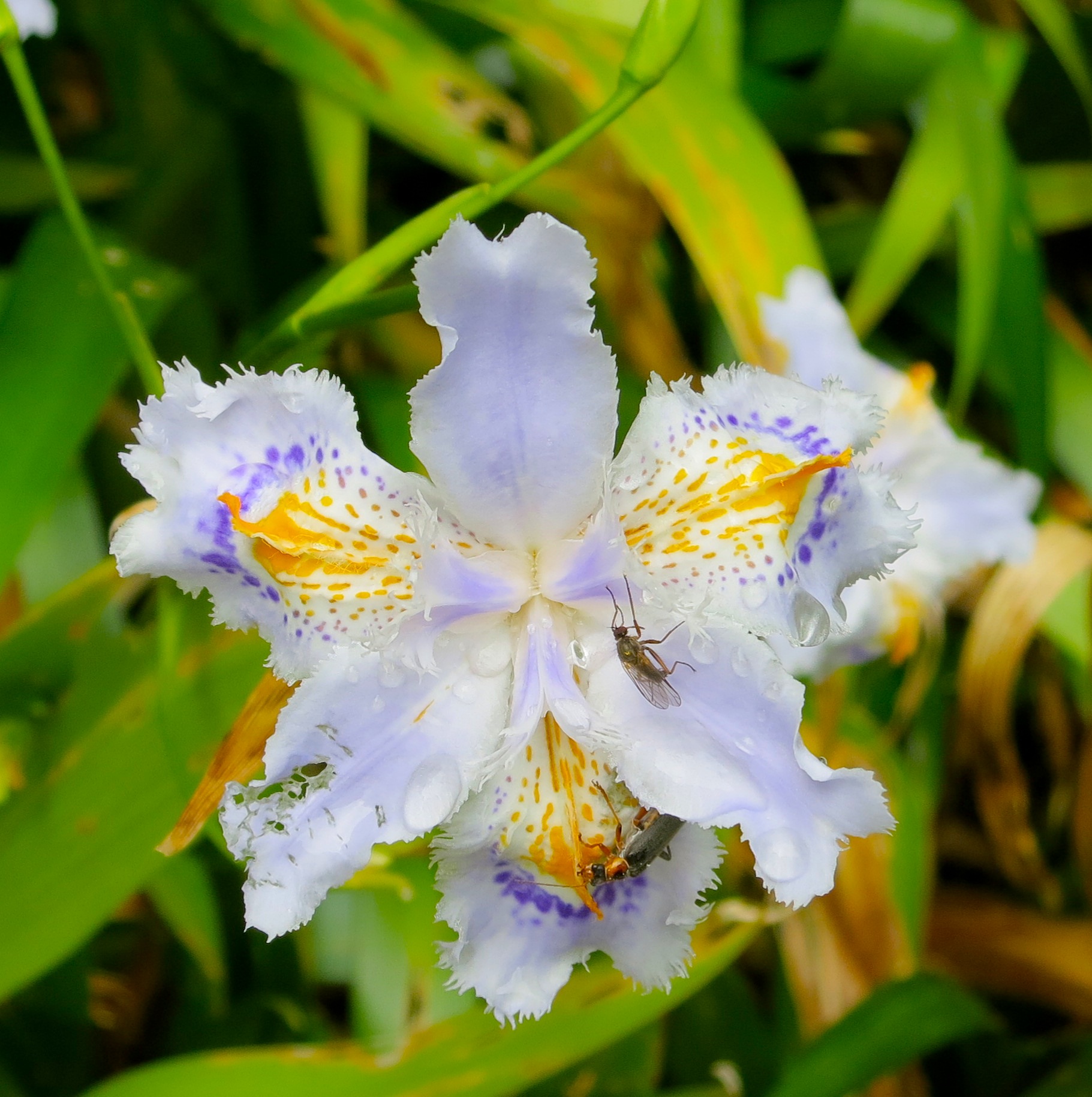
Little fly,
Thy summer’s play
My thoughtless hand
Has brushed away.

Am not I
A fly like thee?
Or art not thou
A man like me?

For I dance
And drink and sing,
Till some blind hand
Shall brush my wing.

If thought is life
And strength and breath,
And the want
Of thought is death,

Then am I
A happy fly,
If I live,
Or if I die.

~William Blake “The Fly”
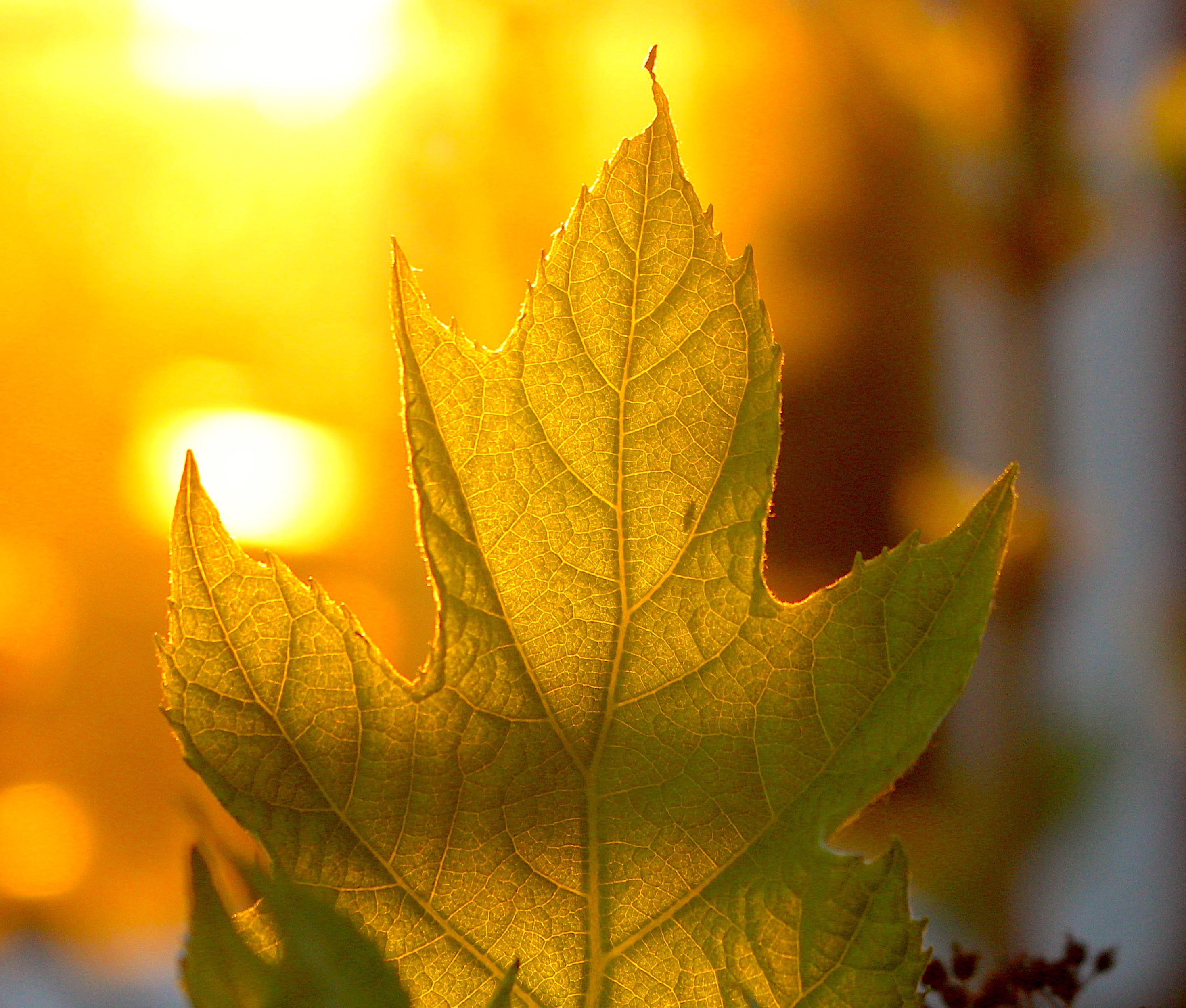
I heard a Fly buzz – when I died –
The Stillness in the Room
Was like the Stillness in the Air –
Between the Heaves of Storm –….
~Emily Dickinson
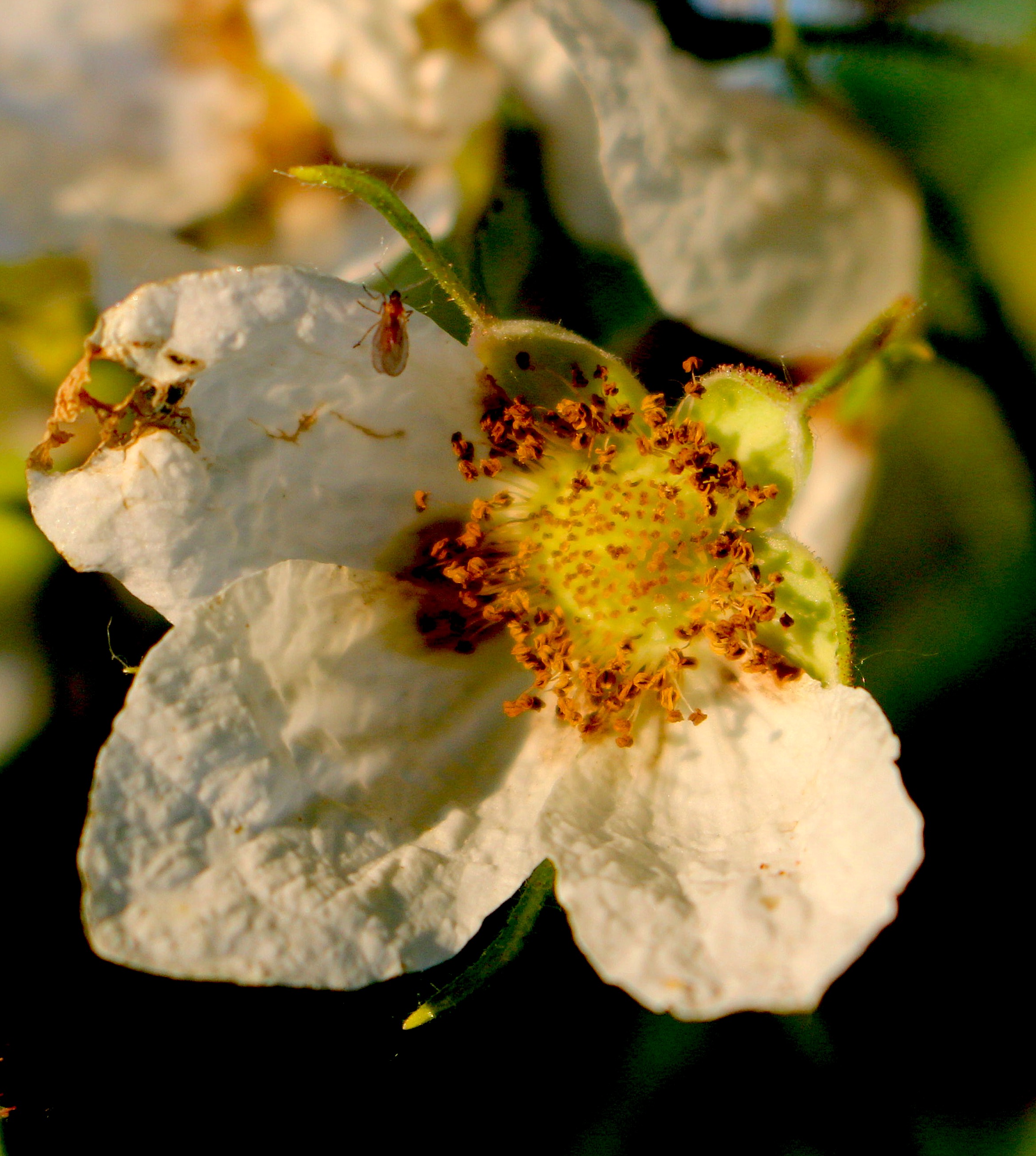
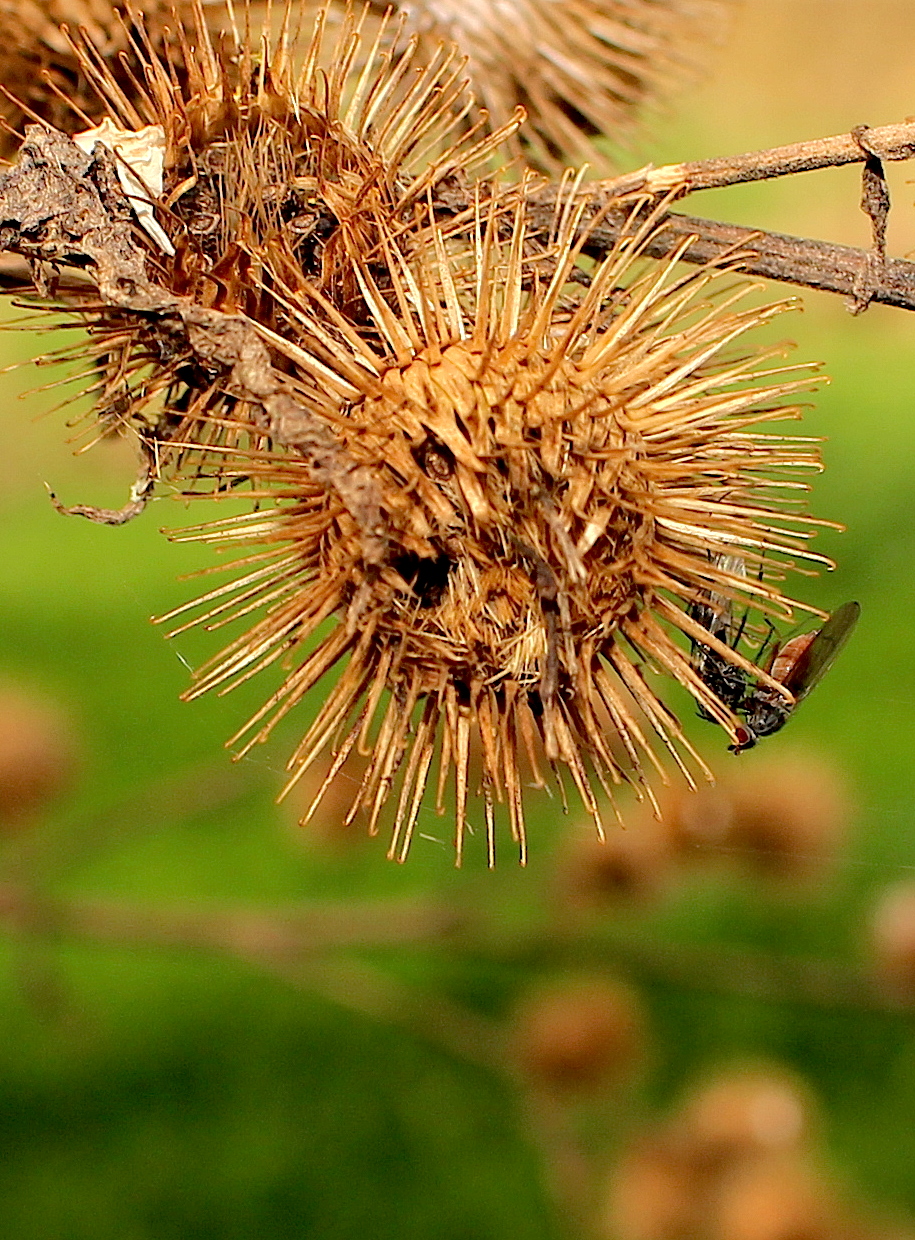
A fly made the news this past week. It became more important than the issues being discussed in the room in which it buzzed and landed. Maybe it has come to symbolize our helplessness in the face of our anger toward one another, which has become just another way for our fear to express itself.

There is nothing more humbling than a wayward fly buzzing in the room or landing uninvited on my head.  No matter whether I live in a slum or a castle, a fly will find its way to me, just because it can.  I must learn to coexist with what I can’t control; this is no time for frustration nor fear nor anger to raise my hand, ready to kill the offender.

When I’m feeling bugged, which happens all too often these days, the buzzing may overwhelm my stillness but I won’t let it overwhelm me.  I will put down the swatter. I will breathe deeply and admire the ingenuity of such a brief life powered miraculously by two transparent wings.

A Cloistered Bower

It was solid hedge, loops of bramble and thorny   
as it had to be with its berries thick as bumblebees.   
It drew blood just to get there, but I was queen   
of that place, at ten, though the berries shook like fists   
in the wind, daring anyone to come in.  I was trying   
so hard to love this world—real rooms too big and full   
of worry to comfortably inhabit—but believing I was born
to live in that cloistered green bower: the raspberry patch   
in the back acre of my grandparents’ orchard.  I was cross-   
stitched and beaded by its fat, dollmaker’s needles.  The effort   
of sliding under the heavy, spiked tangles that tore   
my clothes and smeared me with juice was rewarded   
with space, wholly mine, a kind of room out of   
the crush of the bushes with a canopy of raspberry   
dagger-leaves and a syrup of sun and birdsong.   
Hours would pass in the loud buzz of it, blood   
made it mine—the adventure of that red sting singing   
down my calves, the place the scratches brought me to:   
just space enough for a girl to lie down.
~Karin Gottshall “The Raspberry Room” from “Crocus”

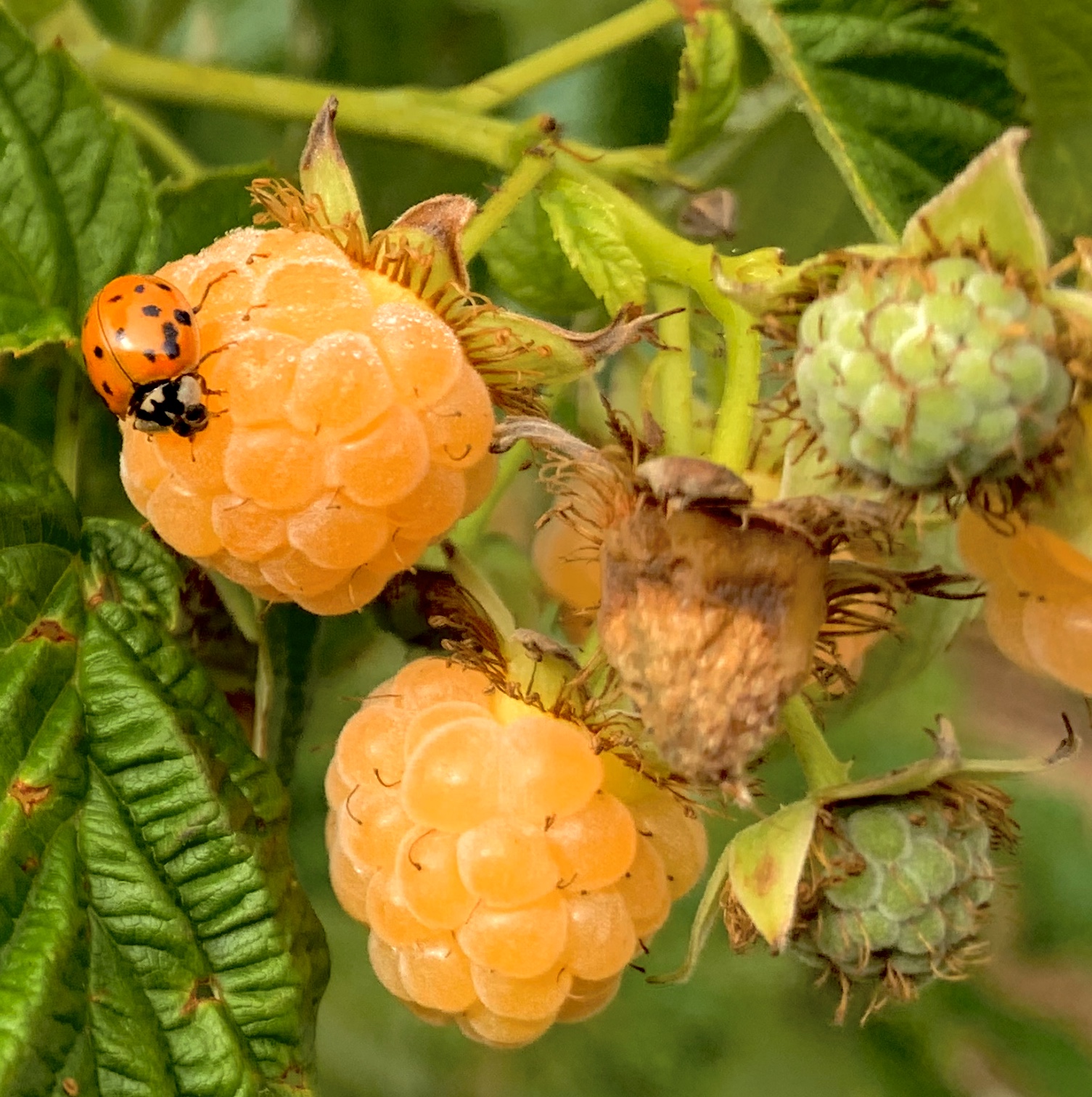
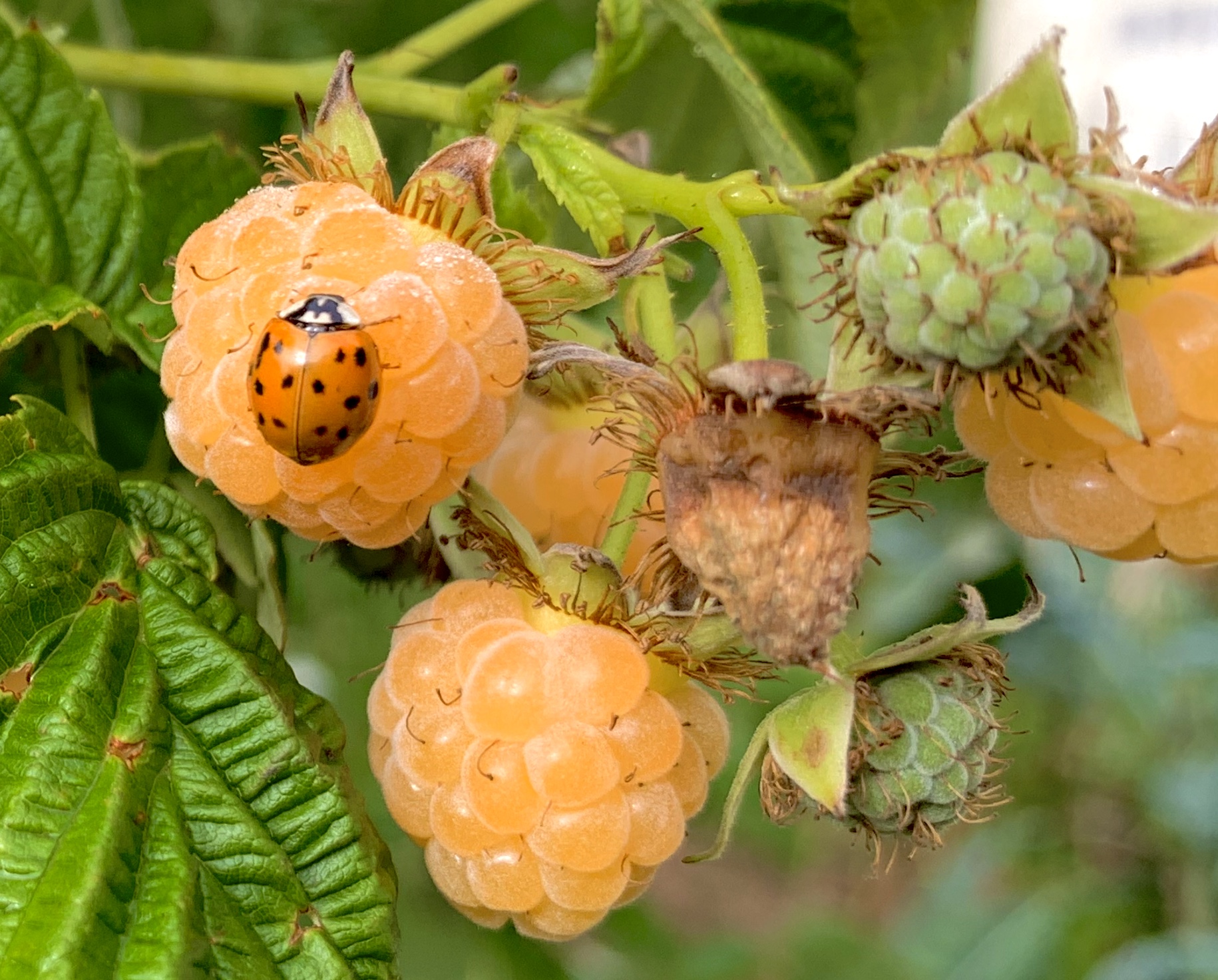
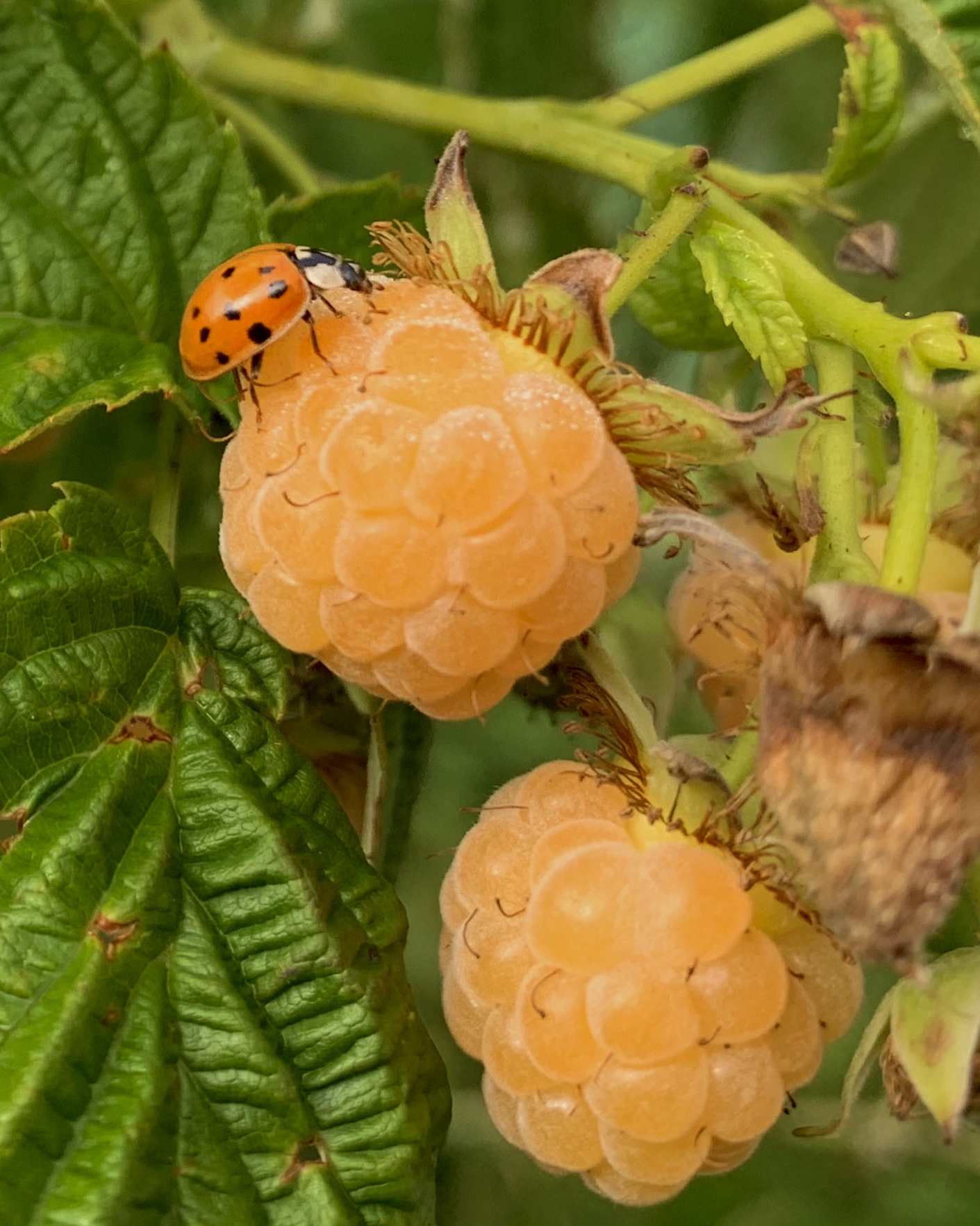
The raspberry bushes are worth exploring,
despite the scratches required to be there.
The reward for drawing blood
is finding a sweetness hidden away
which no one else can see:
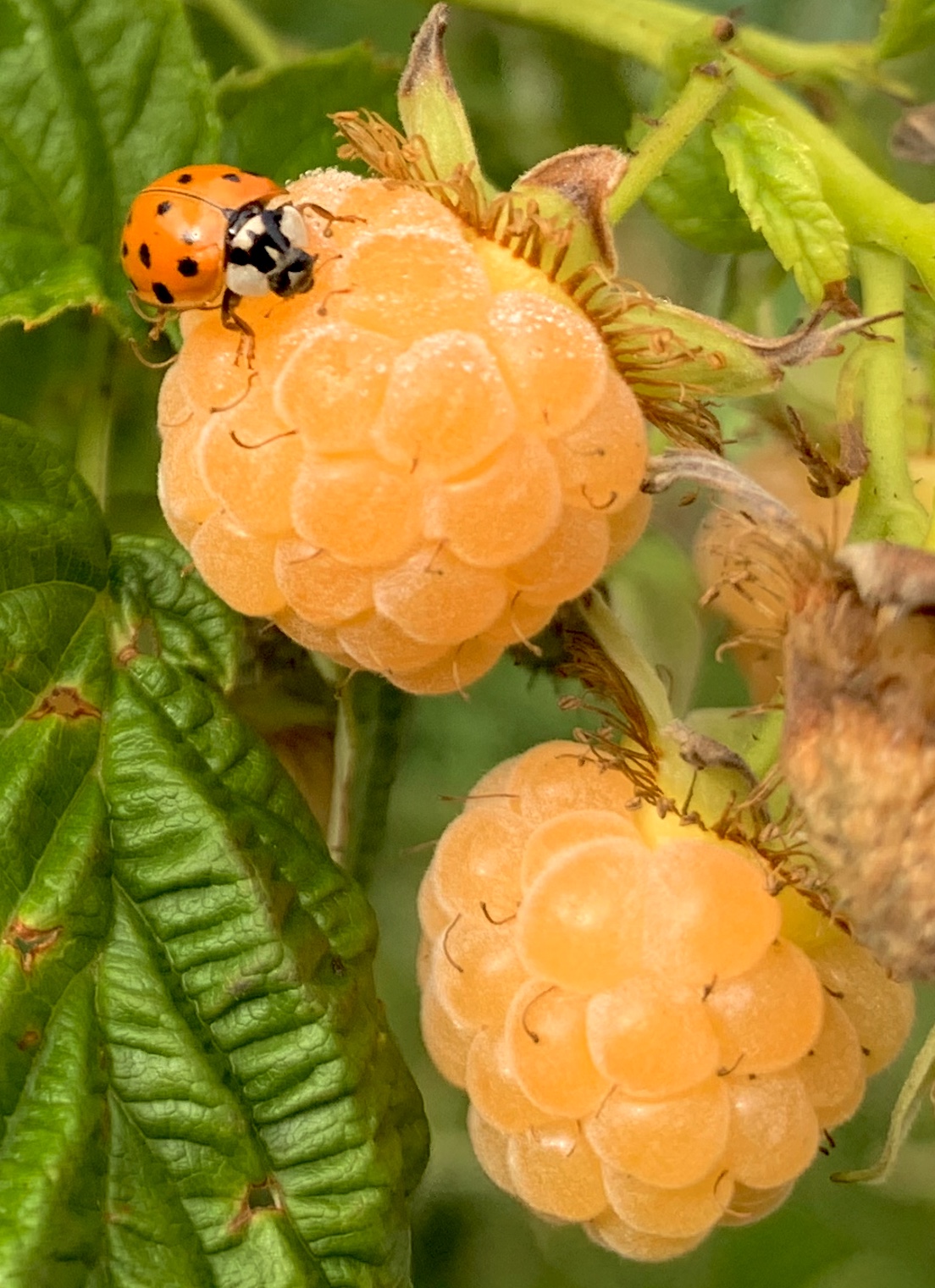
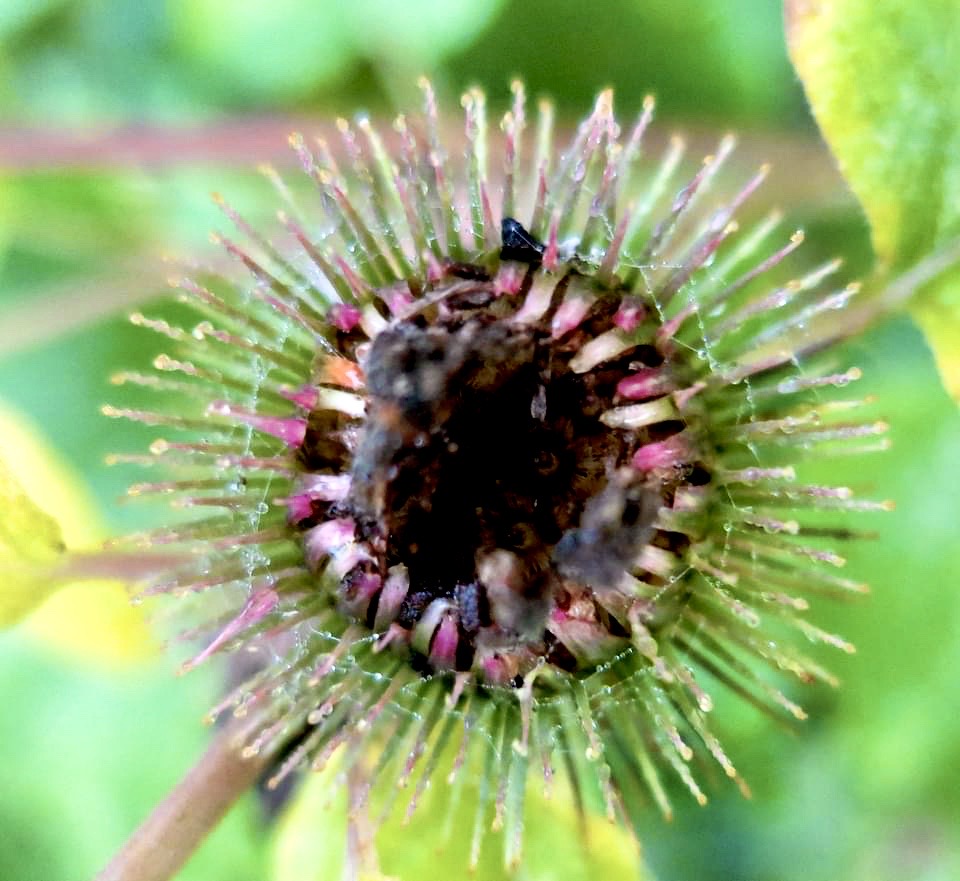
a lady beetle circumnavigating
a tiny golden globe.

Life is The Mystery

All men die. Not all men really live.
~William Wallace

Life — the temptation is always to reduce it to size. A bowl of cherries. A rat race. Amino acids. Even to call it a mystery smacks of reductionism. It is THE mystery.

After lecturing learnedly on miracles, a great theologian was asked to give a specific example of one. ‘There is only one miracle,’ he answered. “It is life.”

Have you wept at anything during the past year?
Has your heart beat faster at the sight of young beauty?
Have you thought seriously about the fact
that someday you are going to die?

More often than not,
do you really listen when people are speaking to you,
instead of just waiting for your turn to speak?


Is there anybody you know in whose place,
if one of you had to suffer great pain,
you would volunteer yourself?


If your answer to all or most of these questions is no,
the chances are that you’re dead.

~Frederick Buechner from  Listen to Your Life

I like mysteries if they are neatly solved between two book covers or contained within 90 minutes on a TV show.

Mysteries that don’t neatly resolve? Not so much. The uncertainty and unknowns can be paralyzing.

I am gifted the opportunity to witness miracles every day and the mystery is that I don’t often recognize them. I’m too “in my own head” to see.

If I weep, which I do more often than is comfortable to admit, am I weeping for something other than myself? If I listen, which I like to think I do well in my profession, but not as well in my personal life, do I really hear the perspective from another life and world view? If I become aware of someone’s suffering, am I willing to become uncomfortable myself to ease another’s pain?

I am being tested in these days of disrupted routines and potential threats to my health and well-being. Do I hunker down defensively or reach out unselfishly to make the best of the days that are left to me?

The mystery of when I will die can’t be solved until that moment comes, and I can’t be paralyzed by that unknown. But the everyday miracles of life are large and small and grand and plentiful and hidden in plain sight. I want to live every moment as their witness.

Spun with Wonder

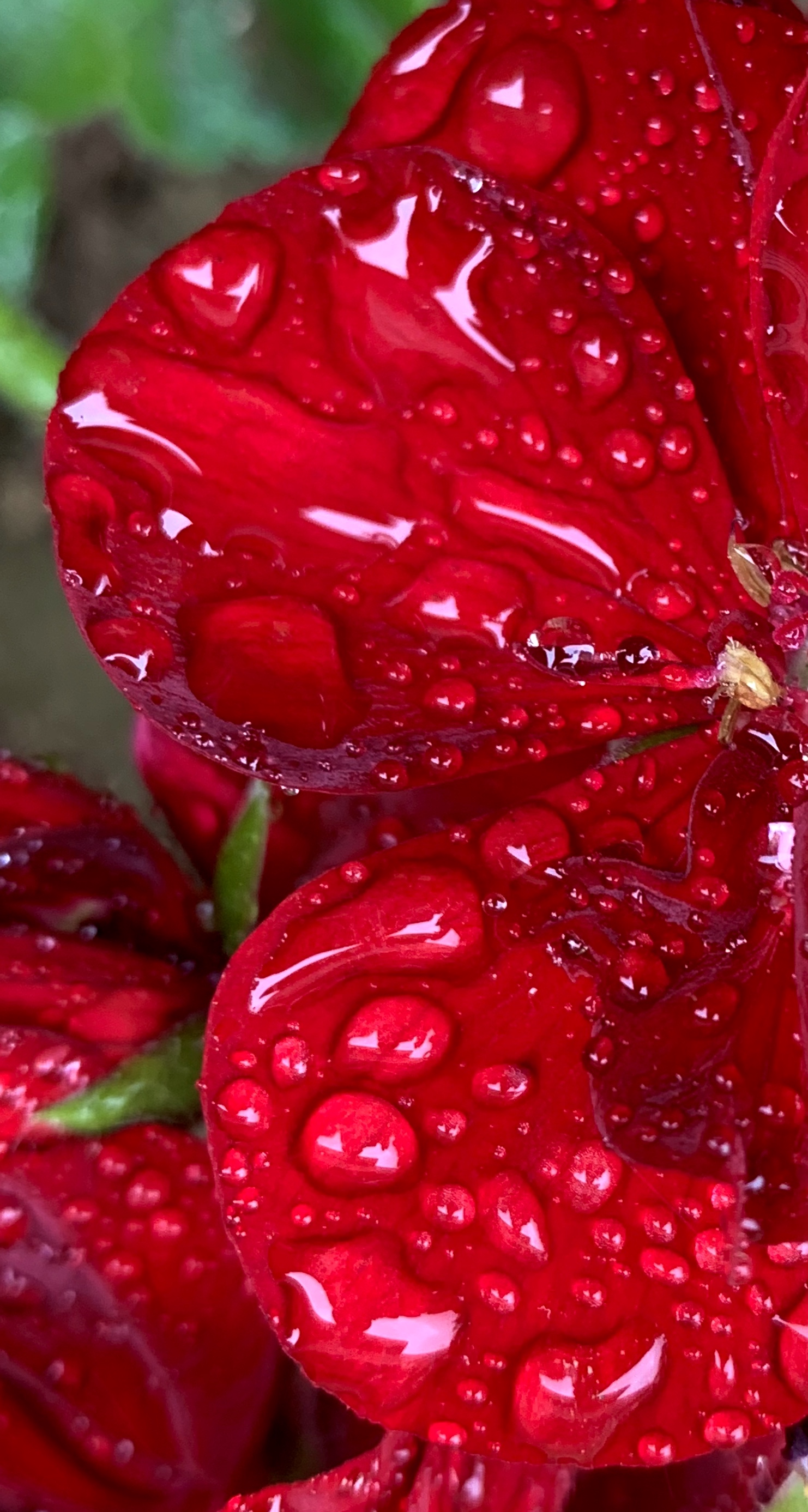
A poem is a spider web
Spun with words of wonder,
Woven lace held in place
By whispers made of thunder.
~Charles Ghigna

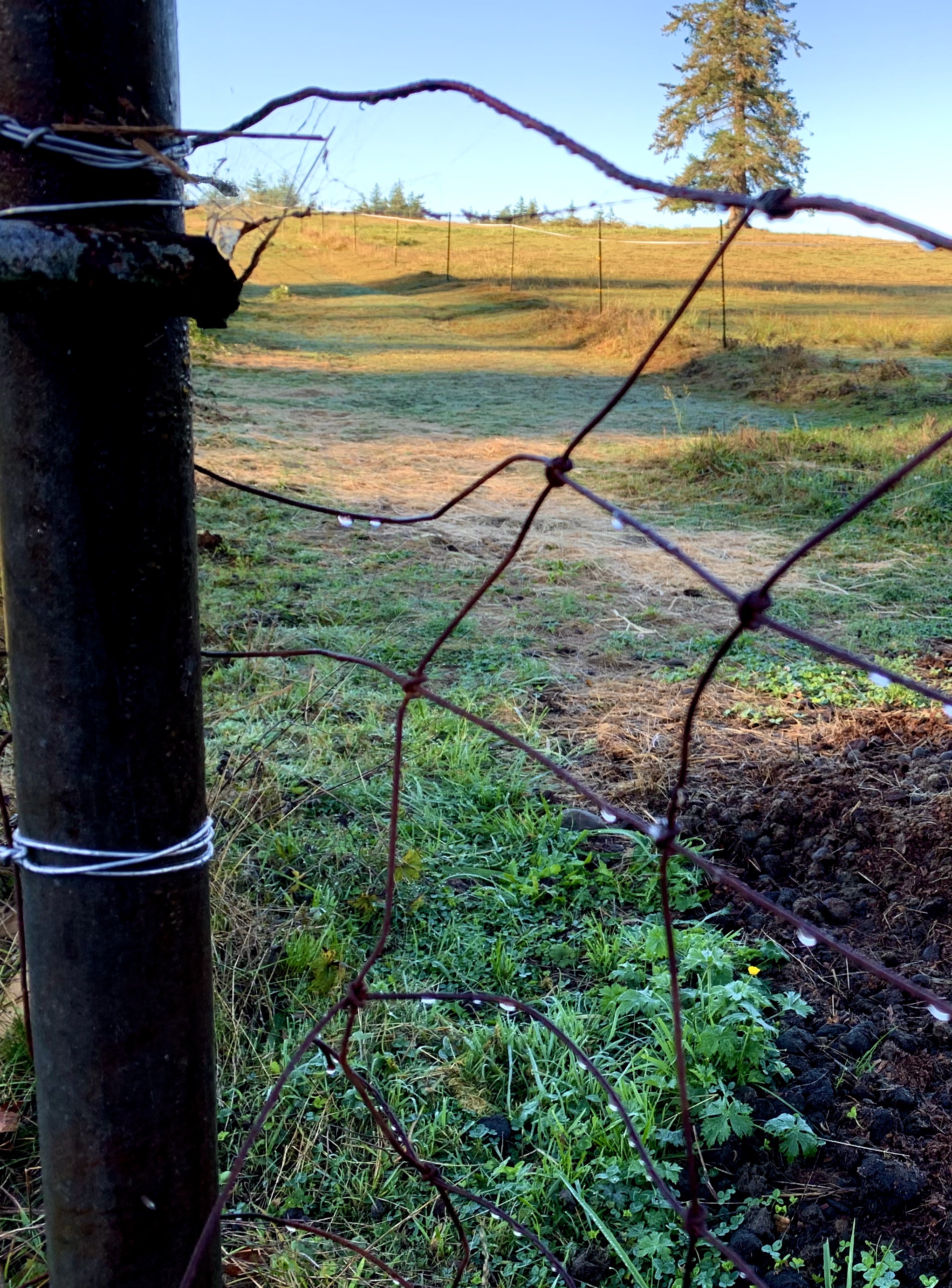
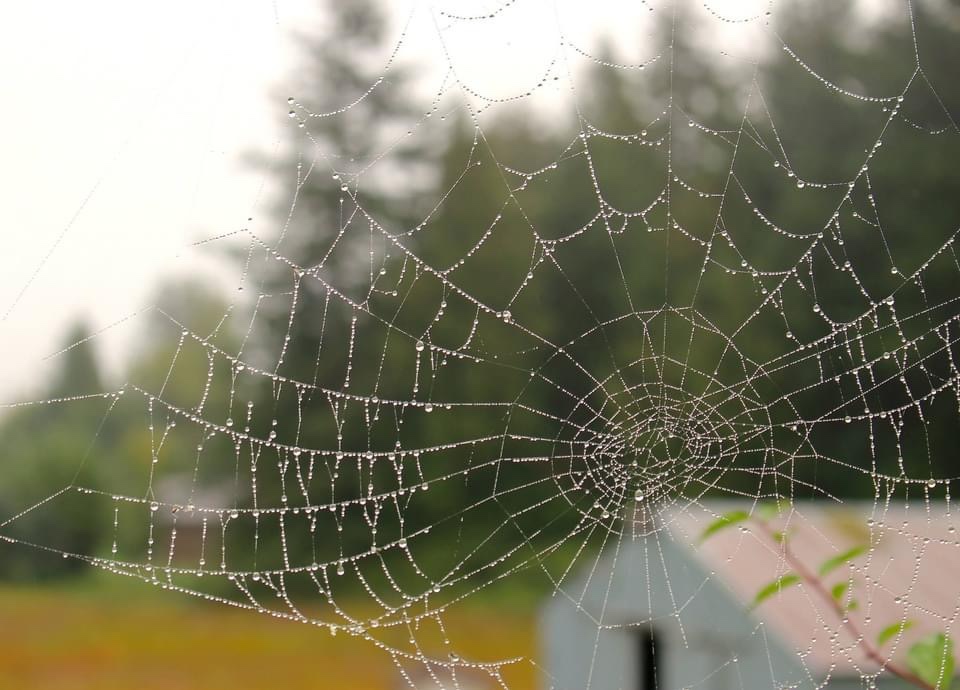
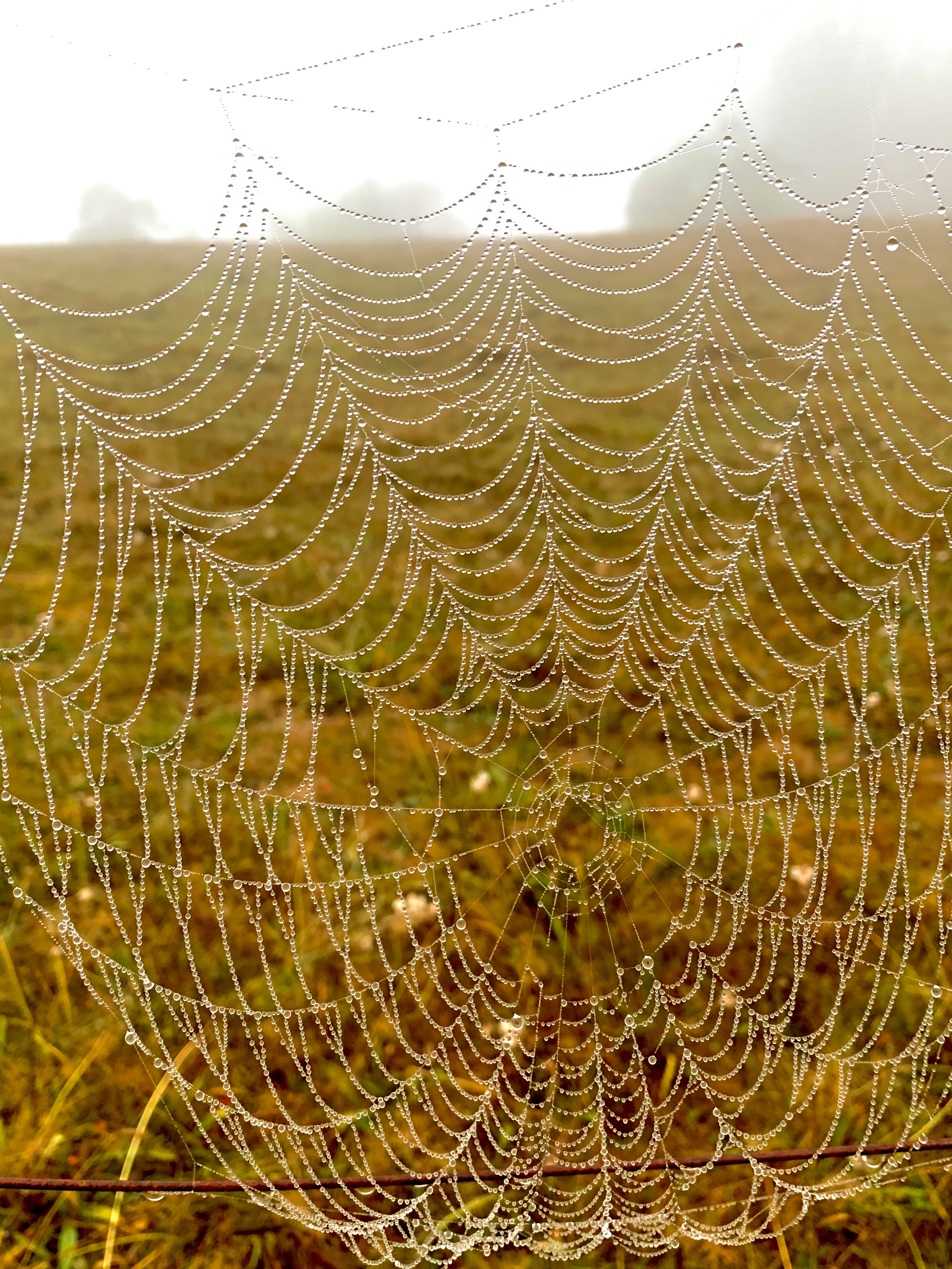
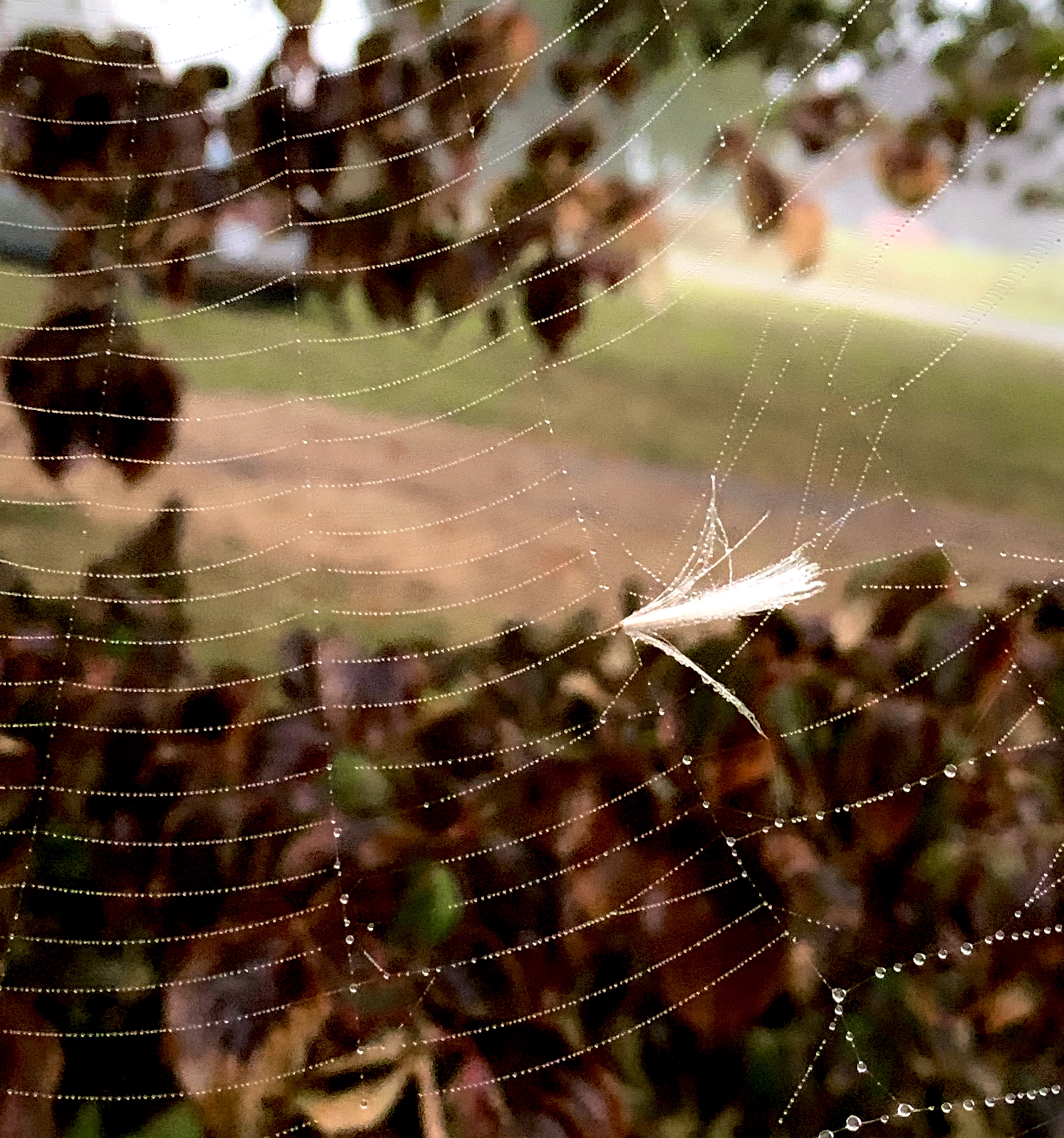
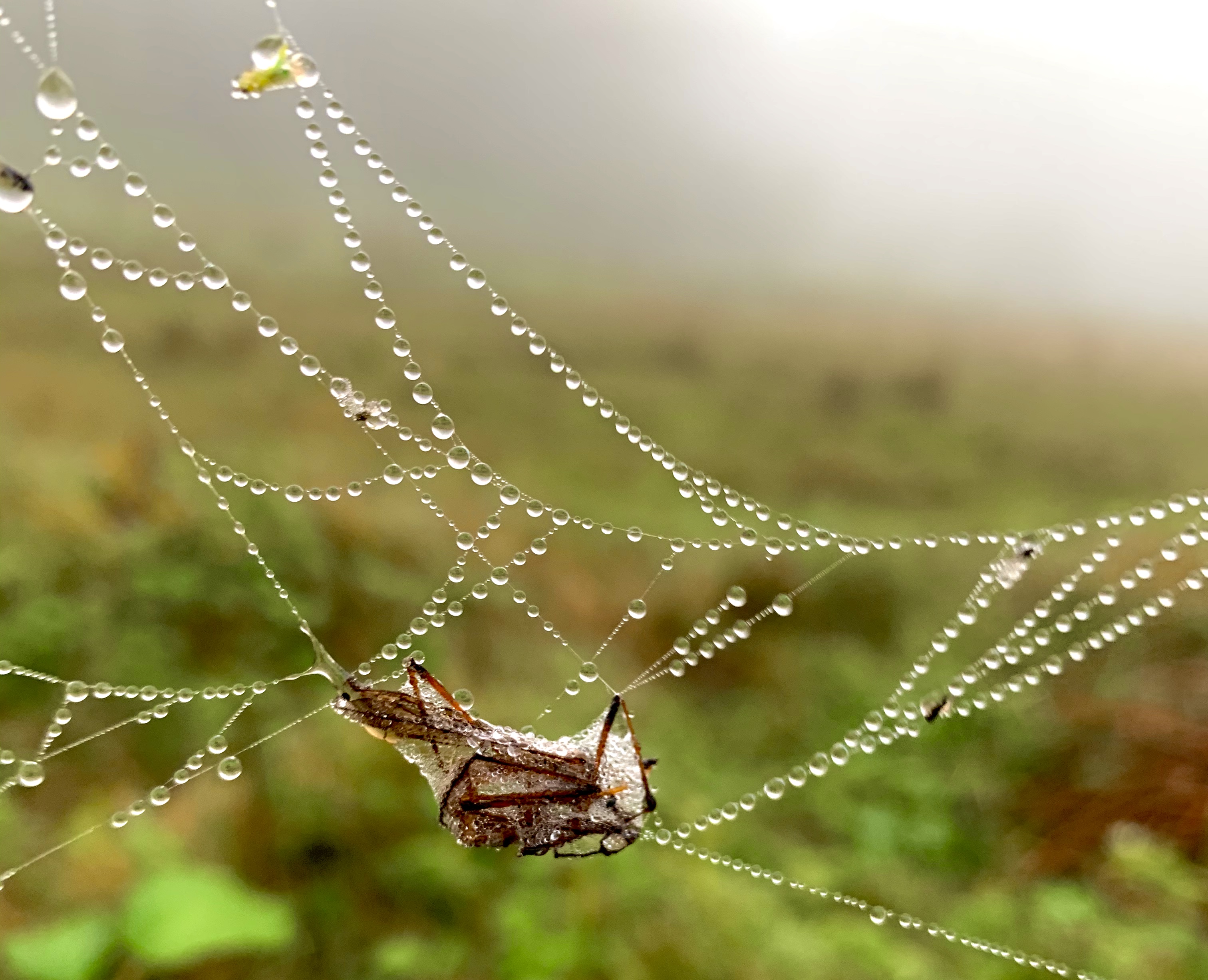
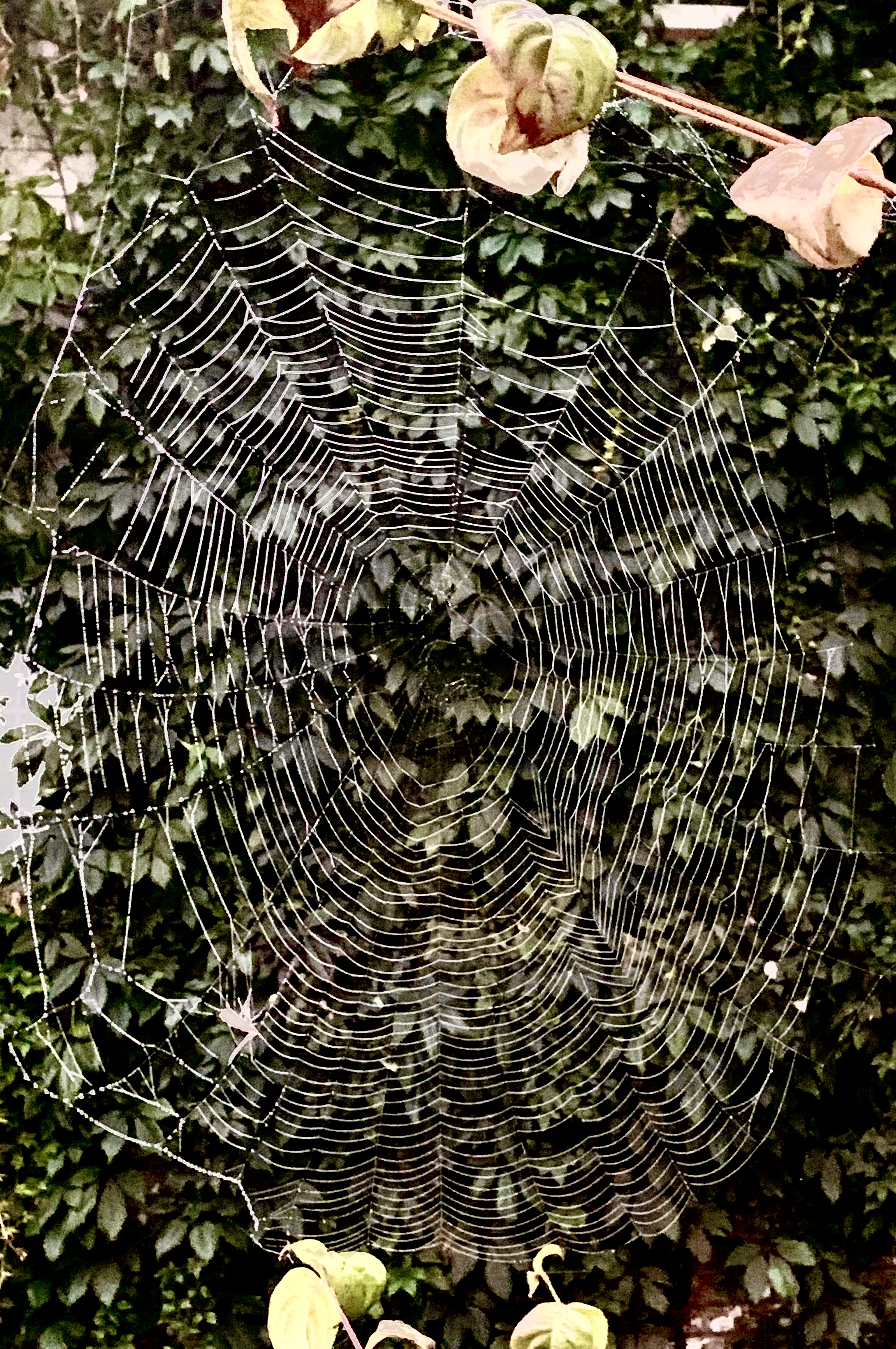
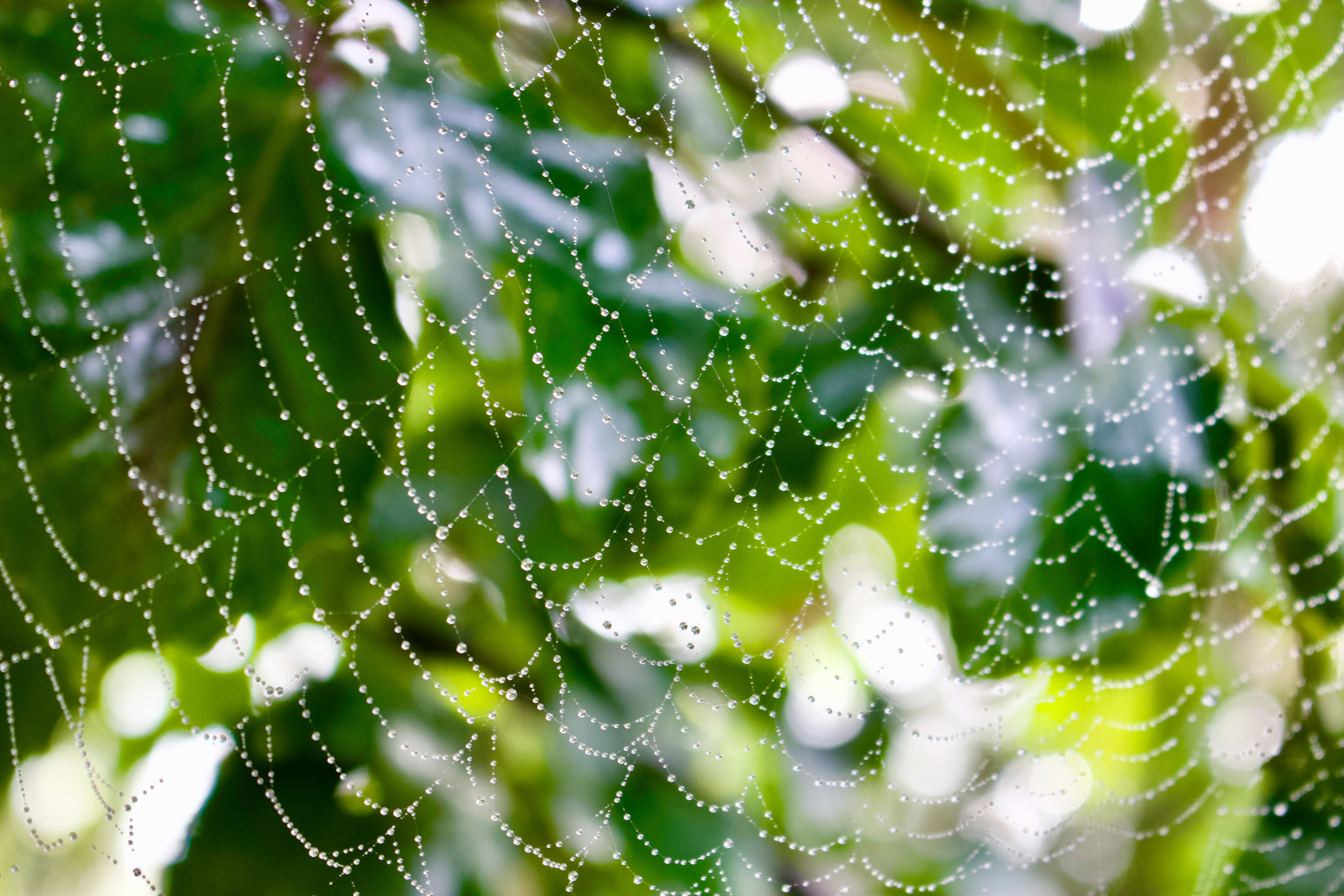
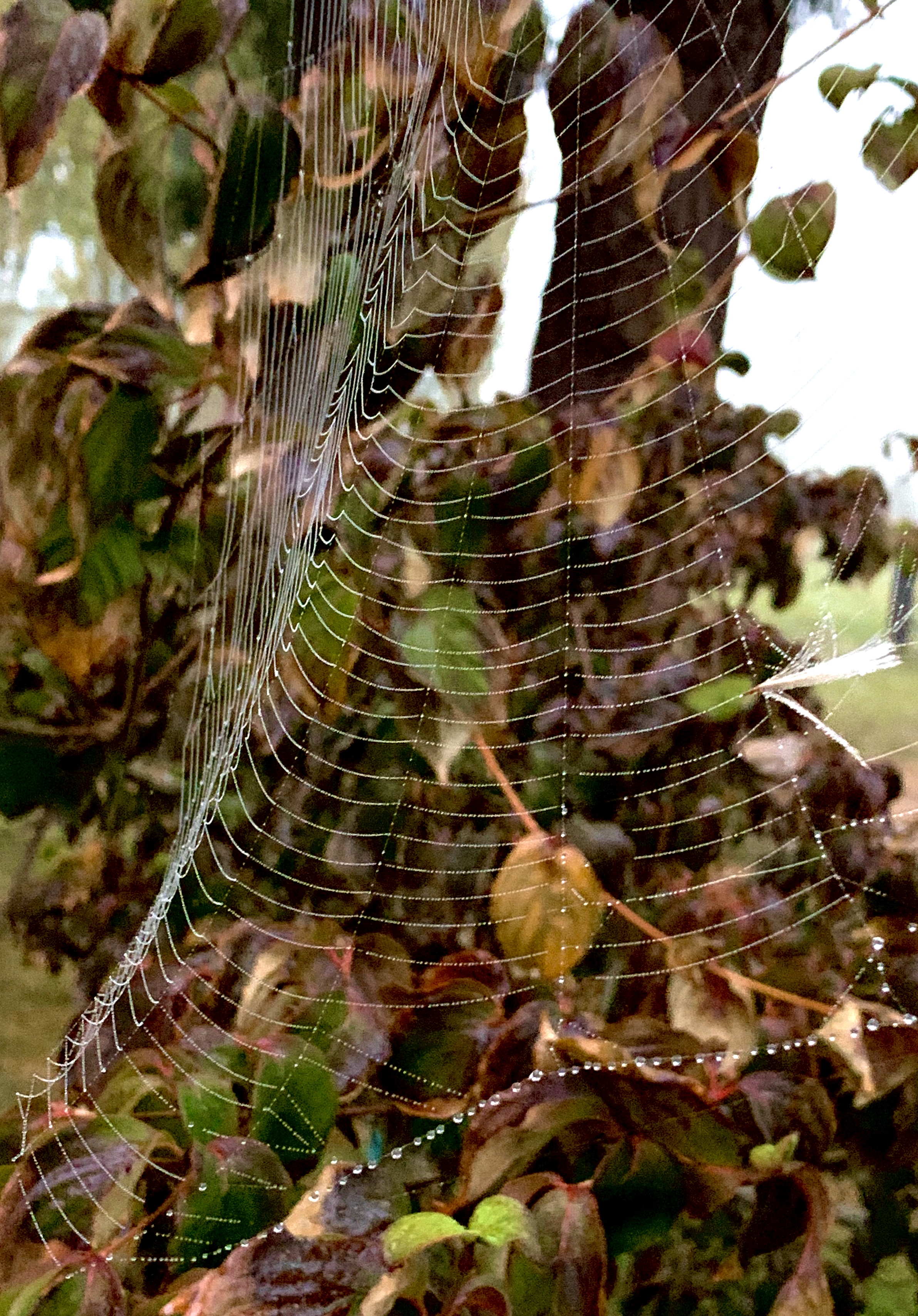
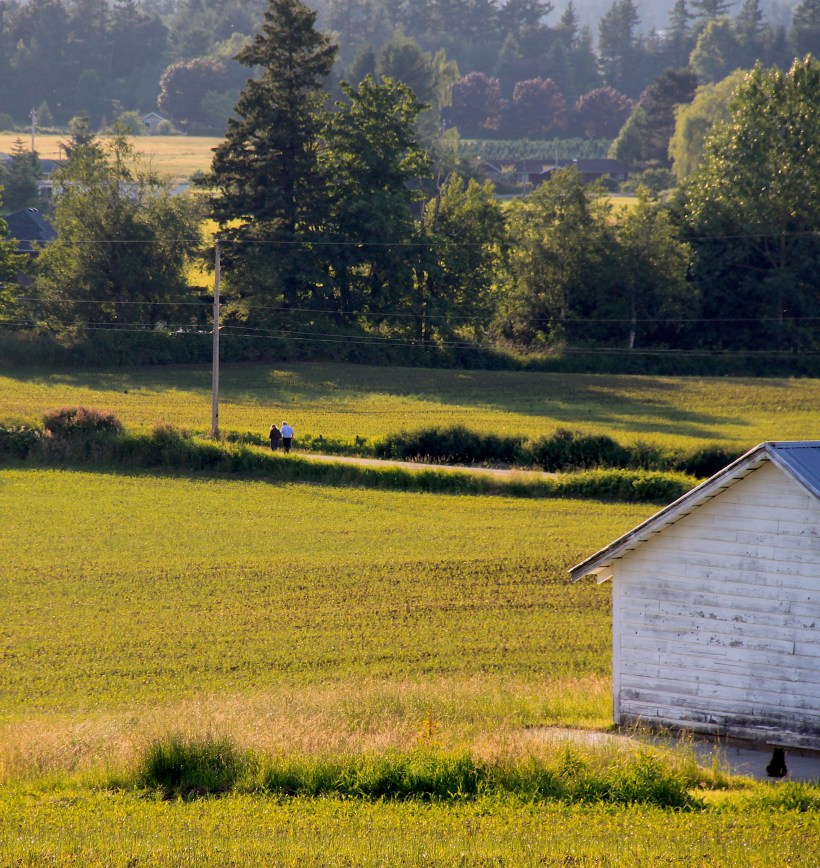
I wandered the barnyard this morning
studying the complexities of overnight web design,
marveling at one tiny creature’s creative masterpiece
of connection using the slenderest thread.

Through my words and pictures I whisper
from my own corner of the web
and wait patiently for the shimmer of some slim connection,
wondering if my rumbling thunder has been heard.

The Snail’s Trail

May the poems be
the little snail’s trail.

Everywhere I go,
every inch: quiet record

of the foot’s silver prayer.
              I lived once.
              Thank you.
              It was here.

~Aracelis Girmay “Ars Poetica”  

What do I leave behind as I pass through to what comes next?

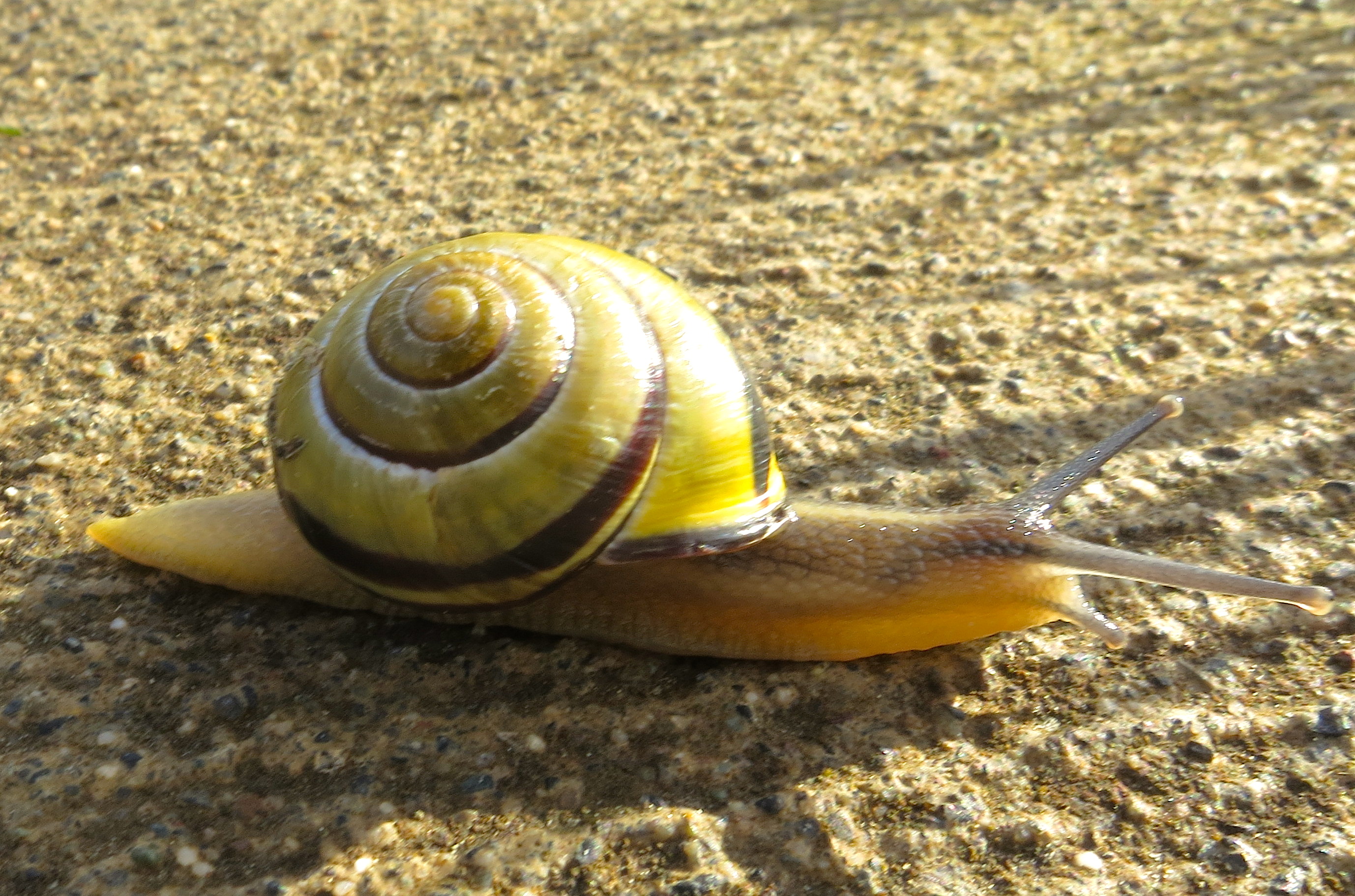
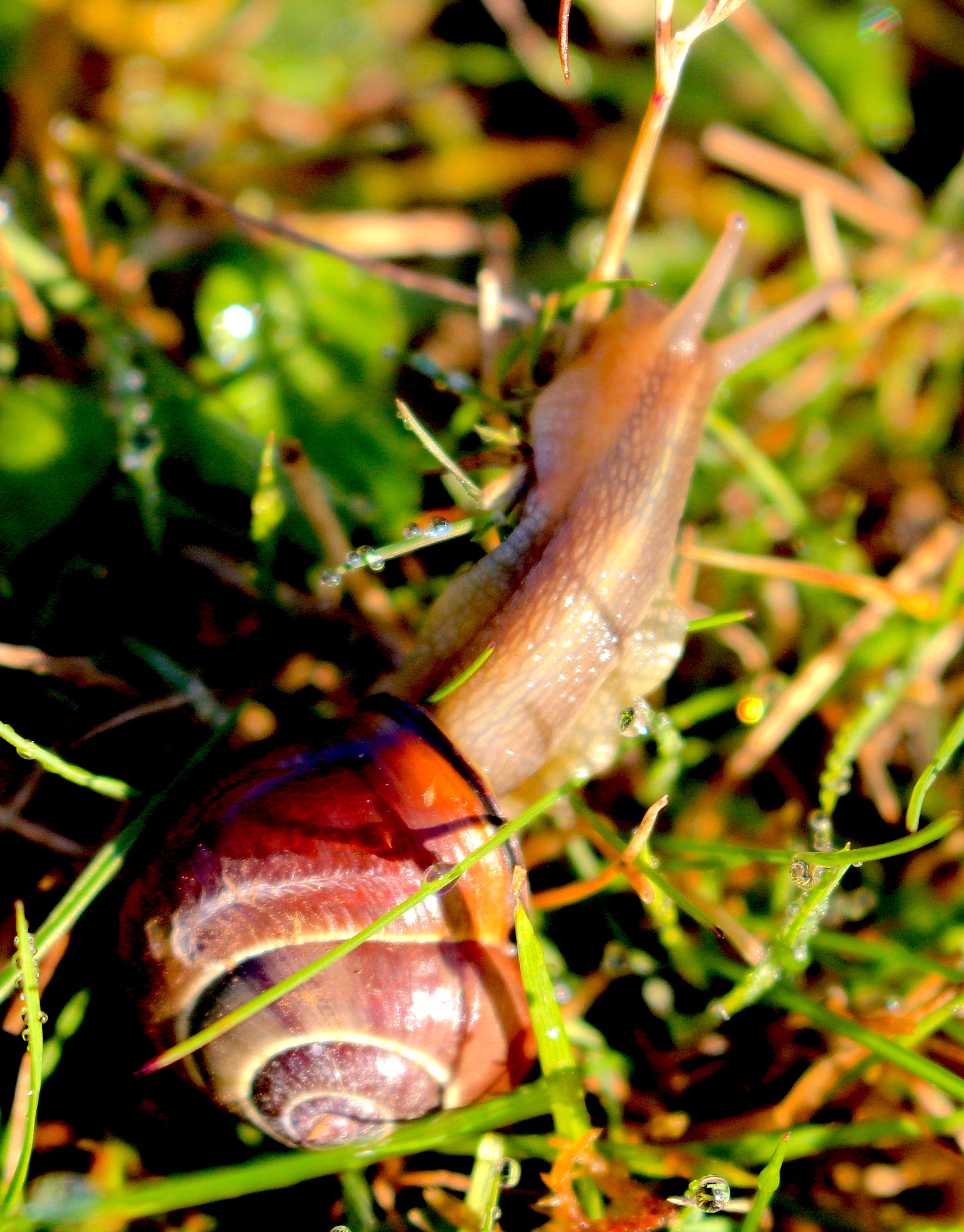
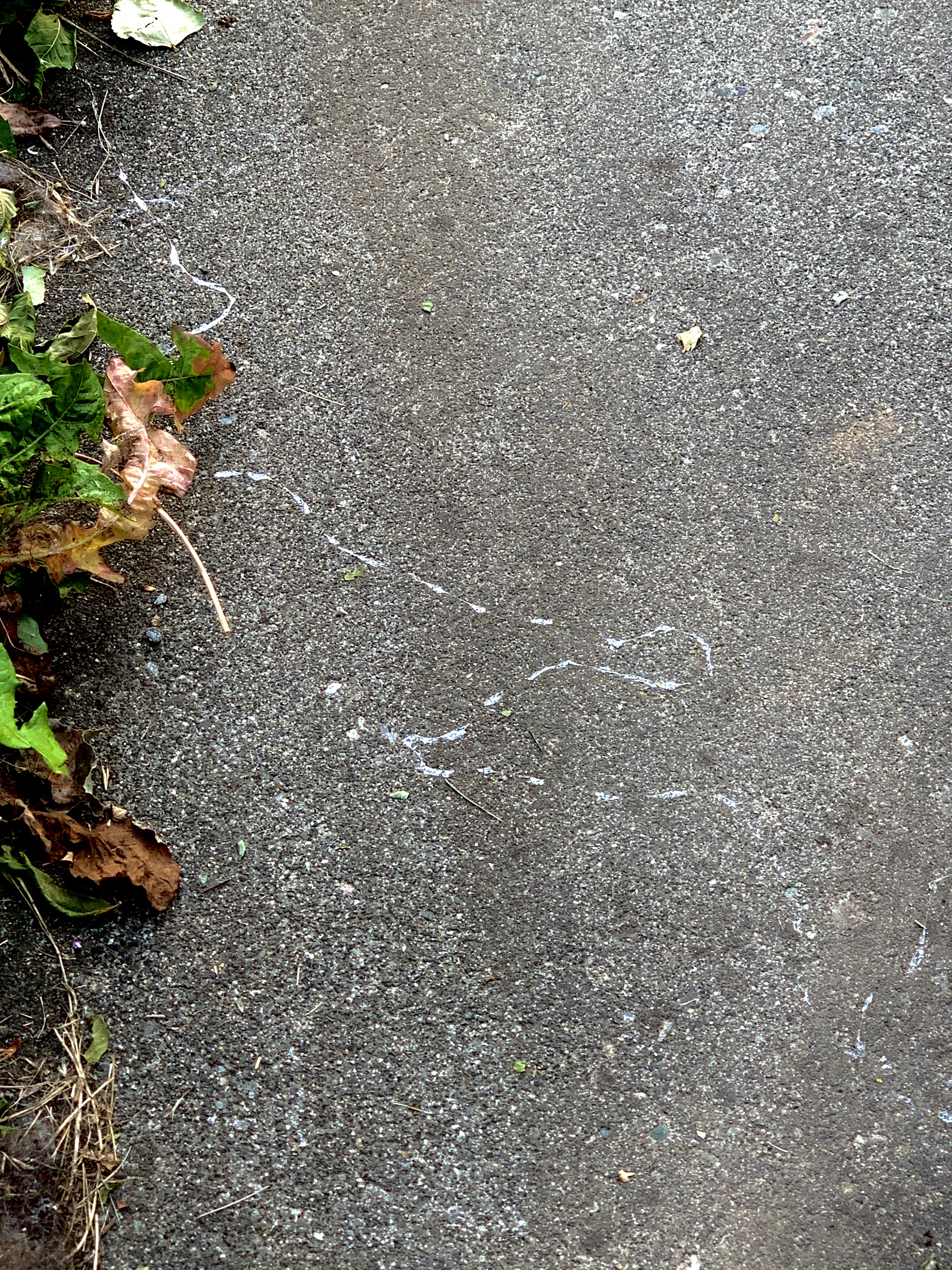
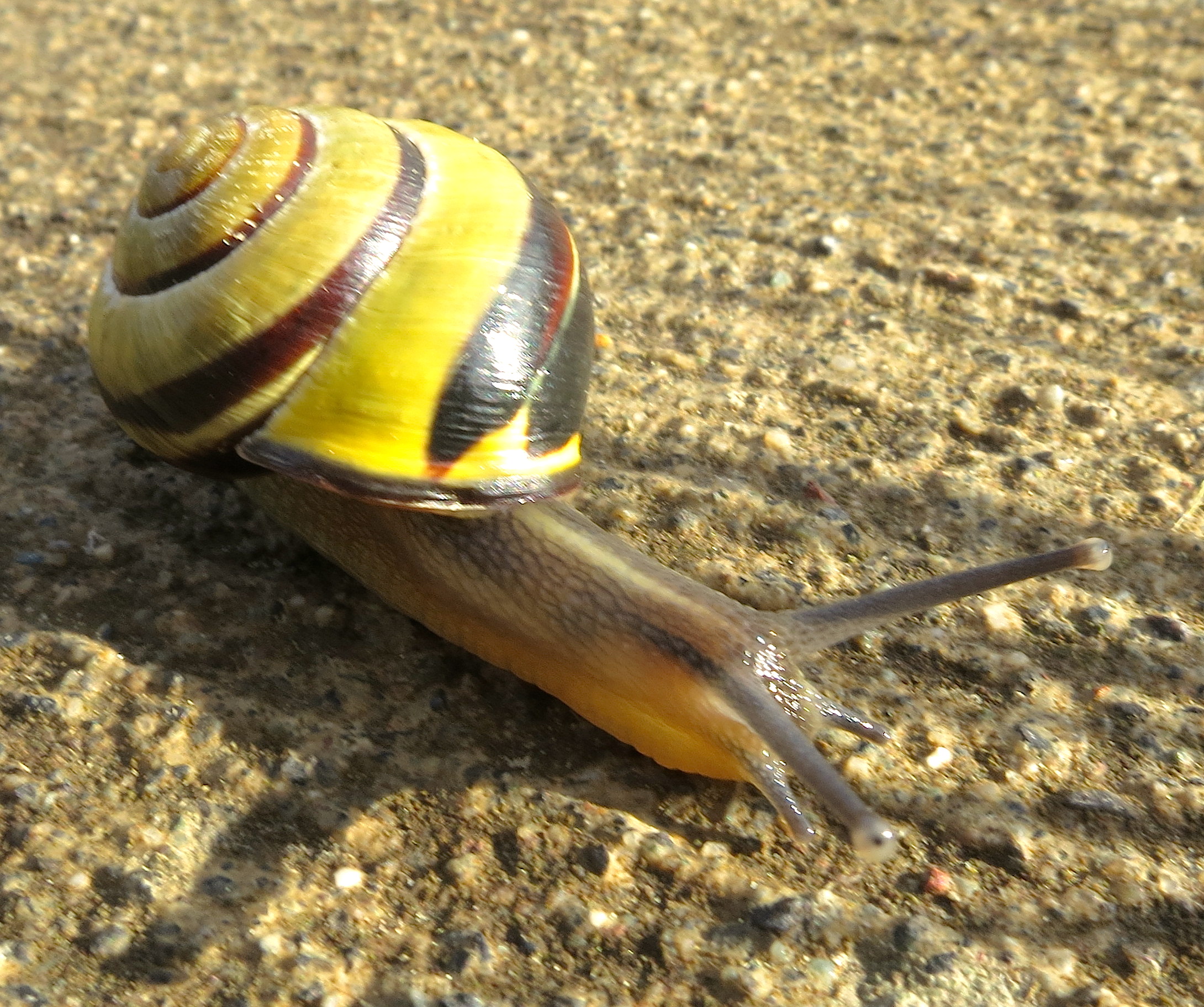
It might be as slick and silvery and random as a snail trail — hardly and barely there, easily erased.

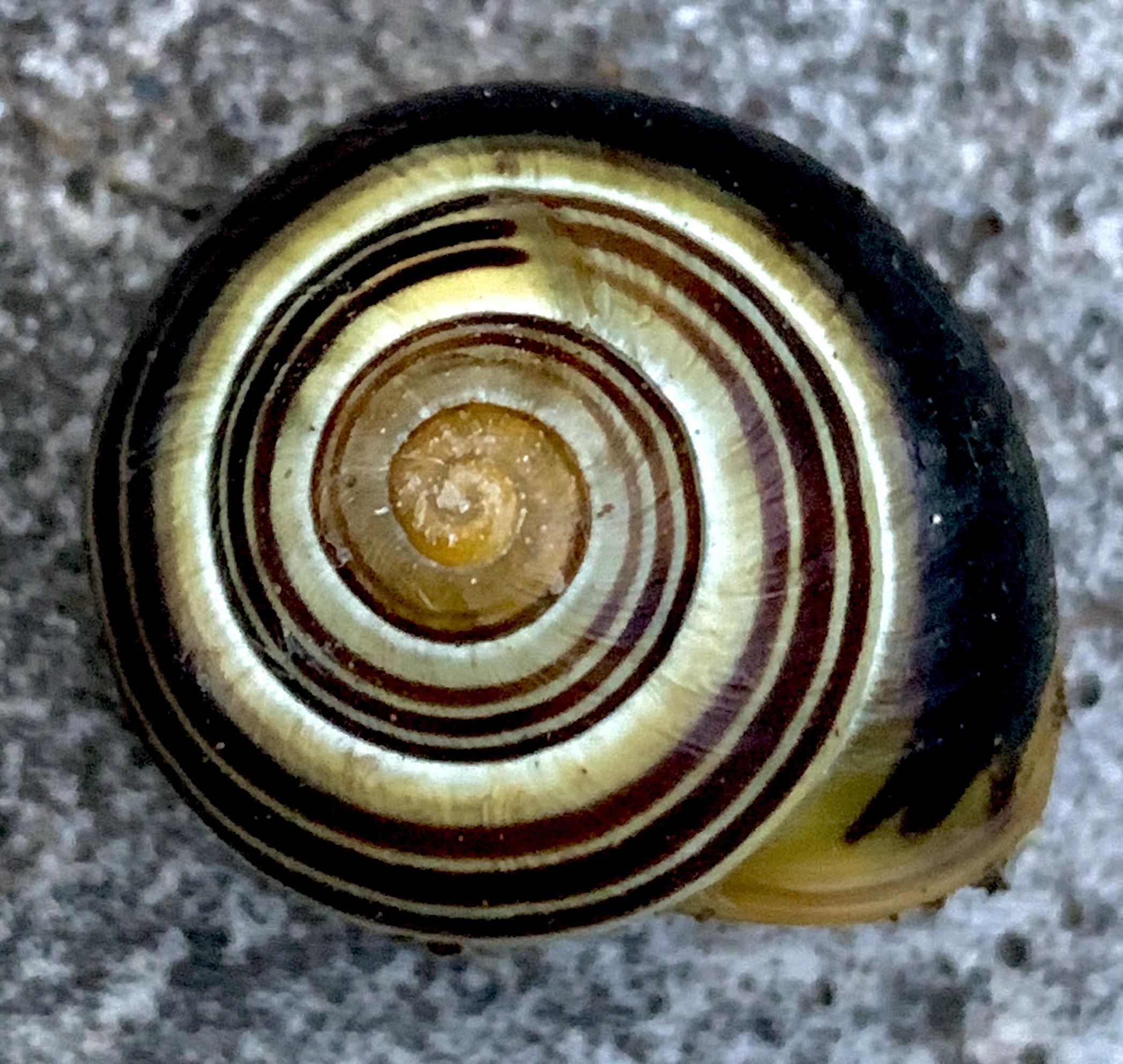
I might leave behind the solid hollow of an empty shell, leading to infinity, spiraling to nothing and everything.

Instead,
I pray, grateful, for a legacy of words and images;
I notice the wonder I journey through.

I was here.

Intended for Joy

There is not one blade of grass, there is no color in this world that is not intended to make us rejoice.
~John Calvin
as quoted in  John Calvin: A Sixteenth Century Portrait (Oxford, 1988) by William J. Bouwsma

It is too easy to become blinded to the glory surrounding us if we perceive it to be routine and commonplace.

I can’t remember the last time I celebrated a blade of grass,  given how focused I am at mowing it into conformity.

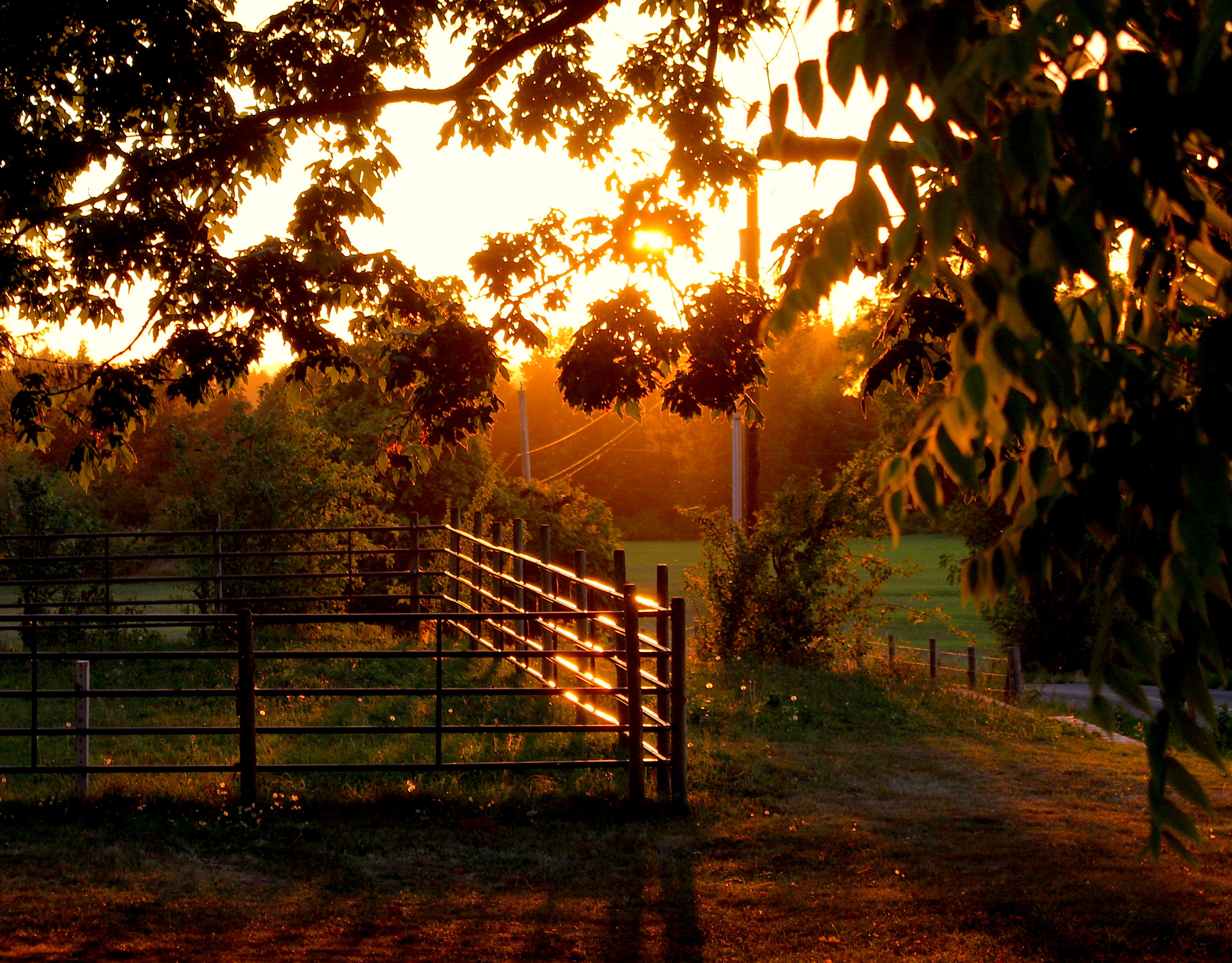
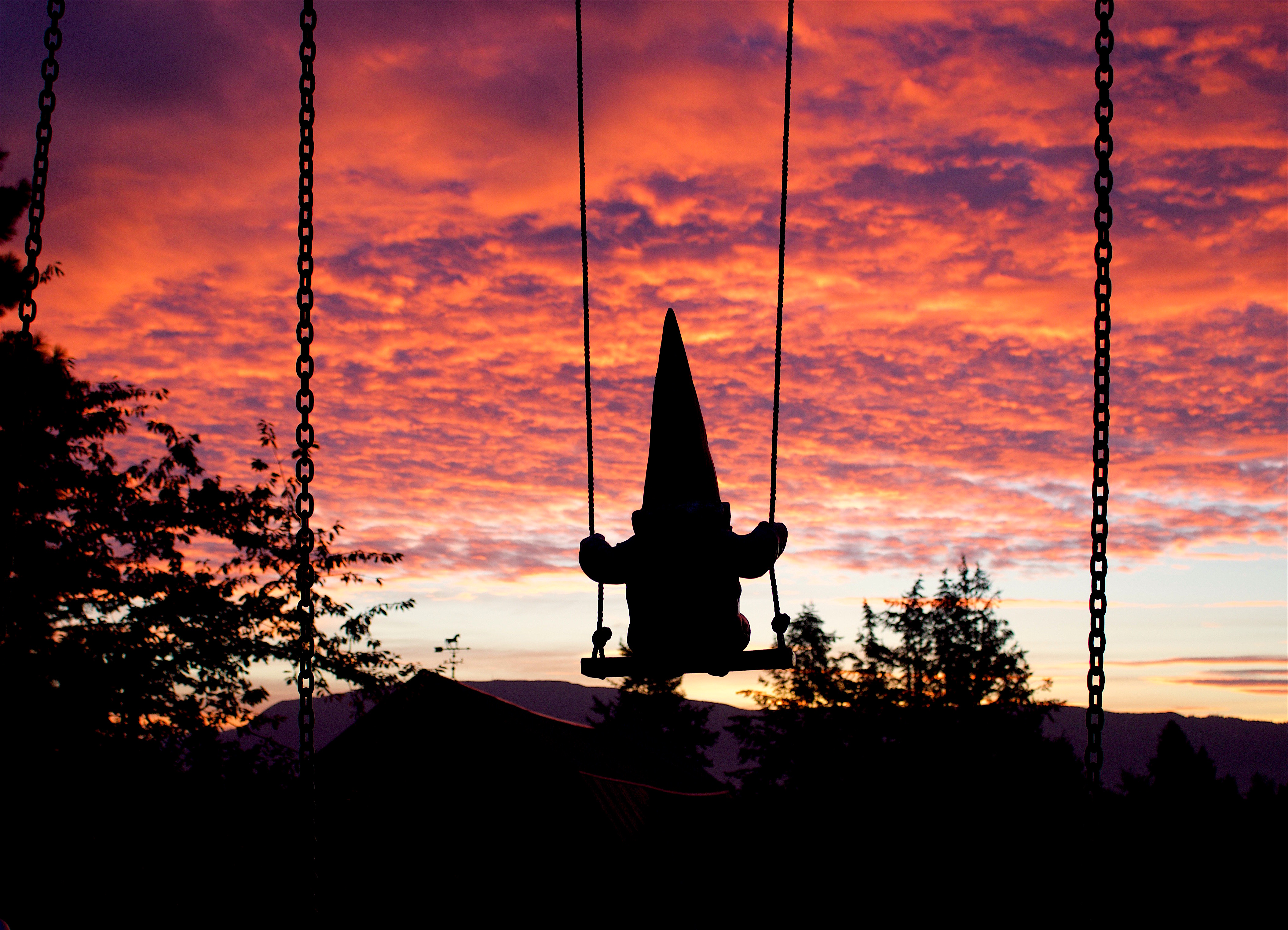
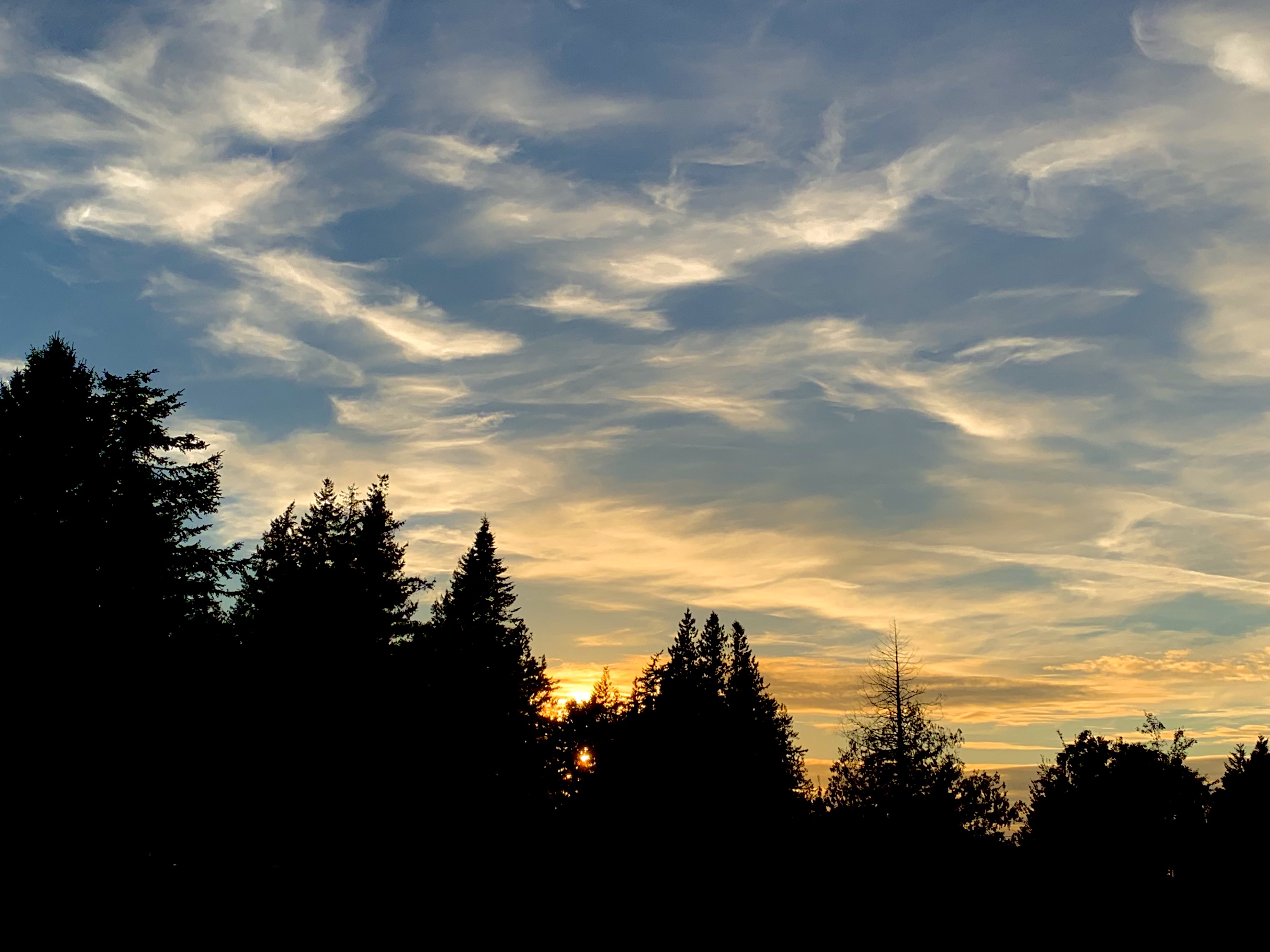
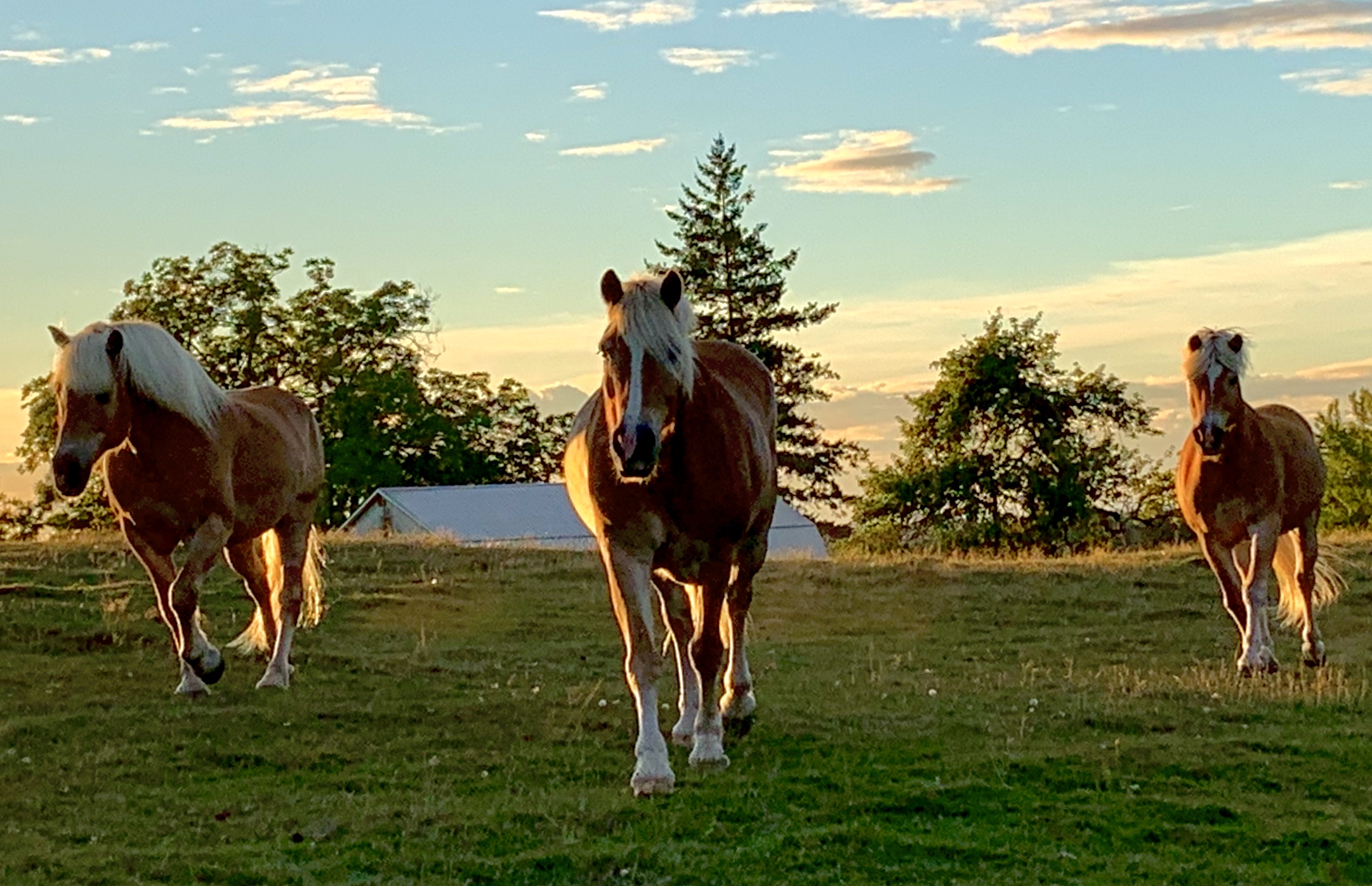
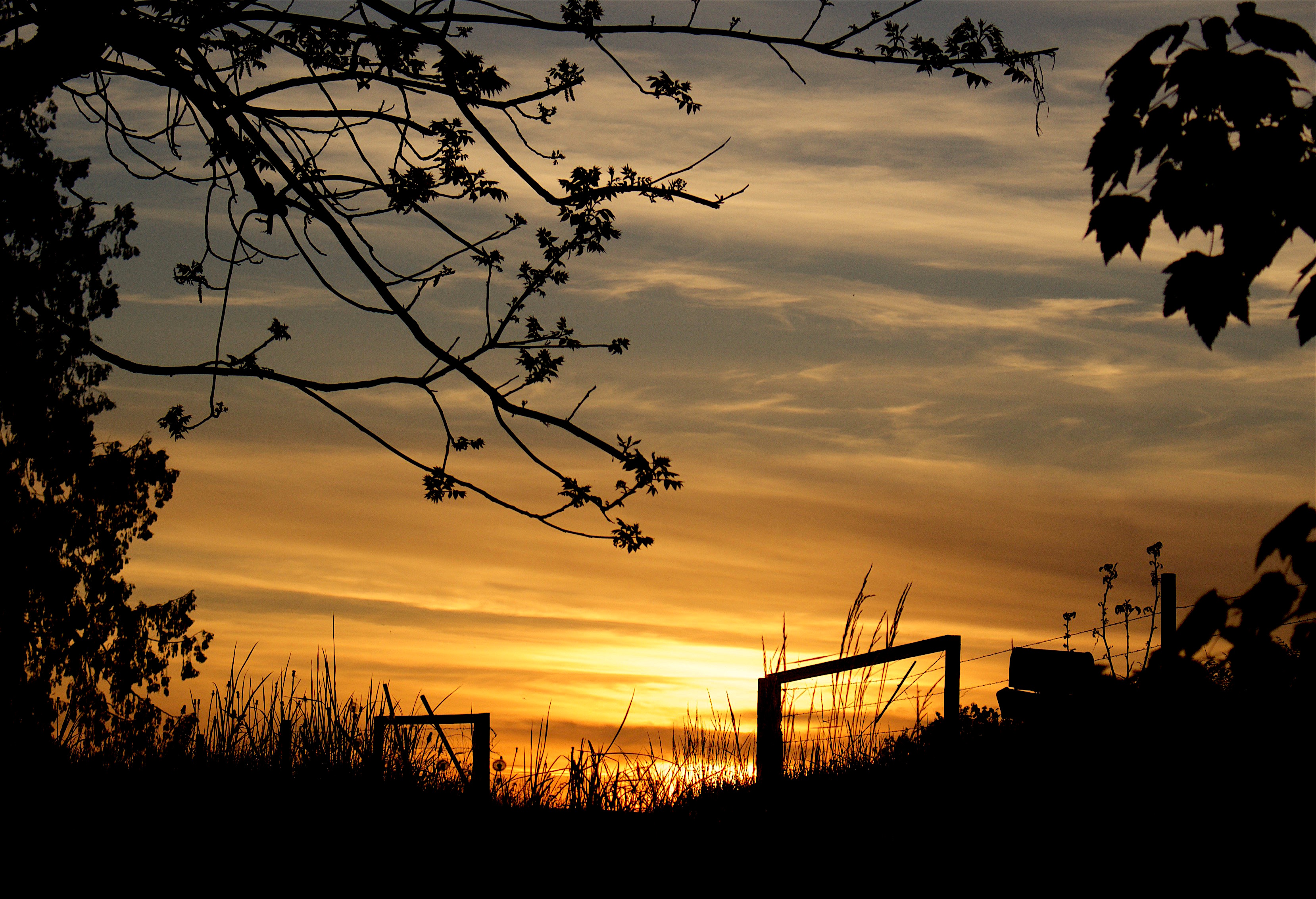
Too often I’m not up early enough to witness the pink sunrise or I’m too busy to take time to watch the sun paint the sky red as it sets or to witness our horses turning to gold in the evening glow.

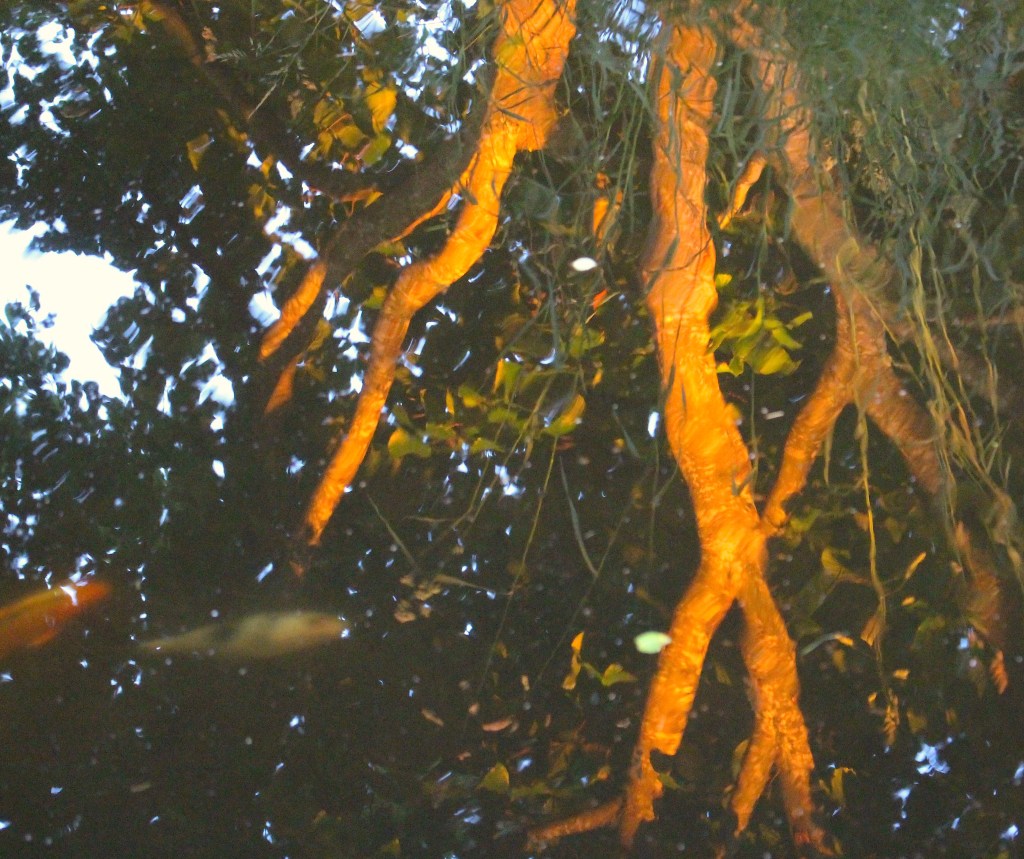
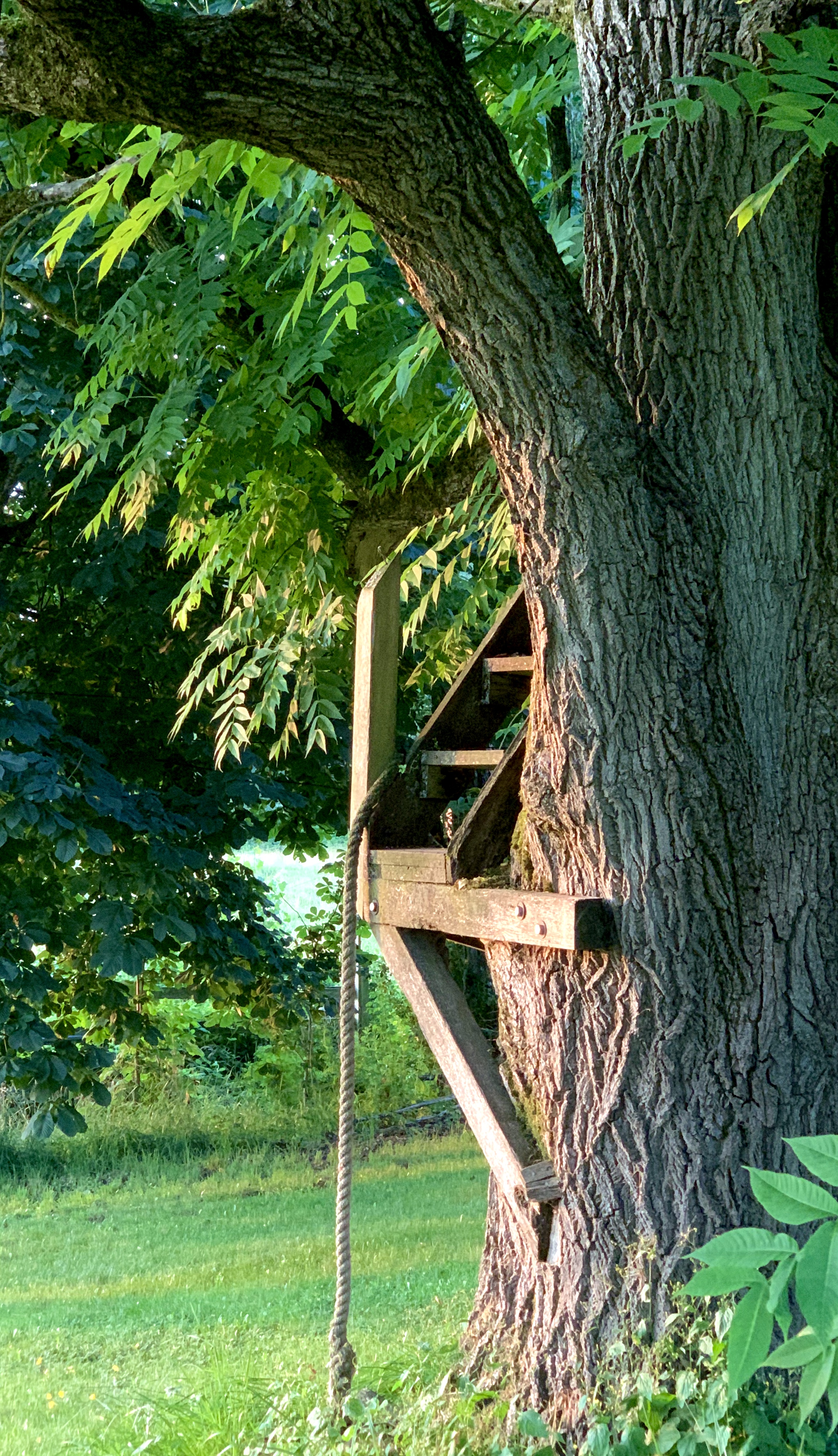
I didn’t notice how the light was illuminating our walnut tree until I saw the perfect reflection of it in our koi pond — I had marveled at a reflection instead of the real thing itself.

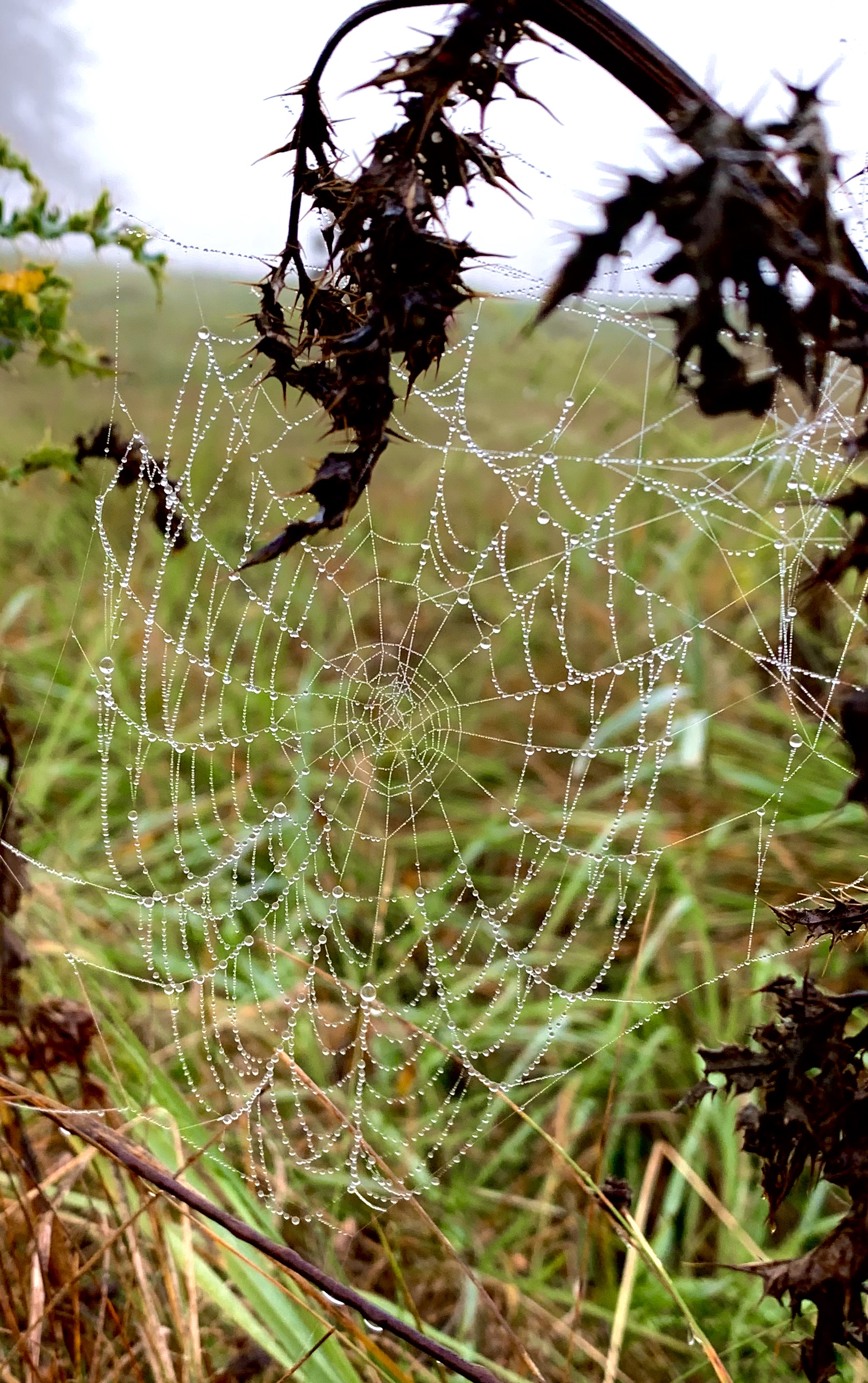
I almost missed the miracle of a spider’s overnight work in the grass; from a distance, it looked like a dew-soaked tissue draped like a tent over the green blades. When I went to go pick it up to throw it away in the trash, I realized I was staring at a small creature’s masterpiece.

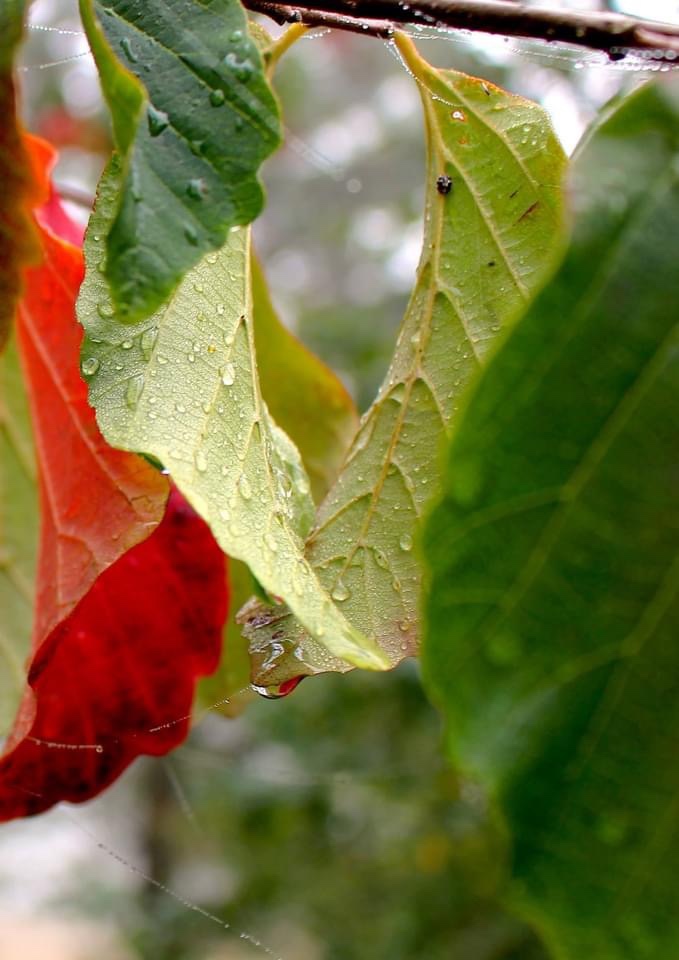
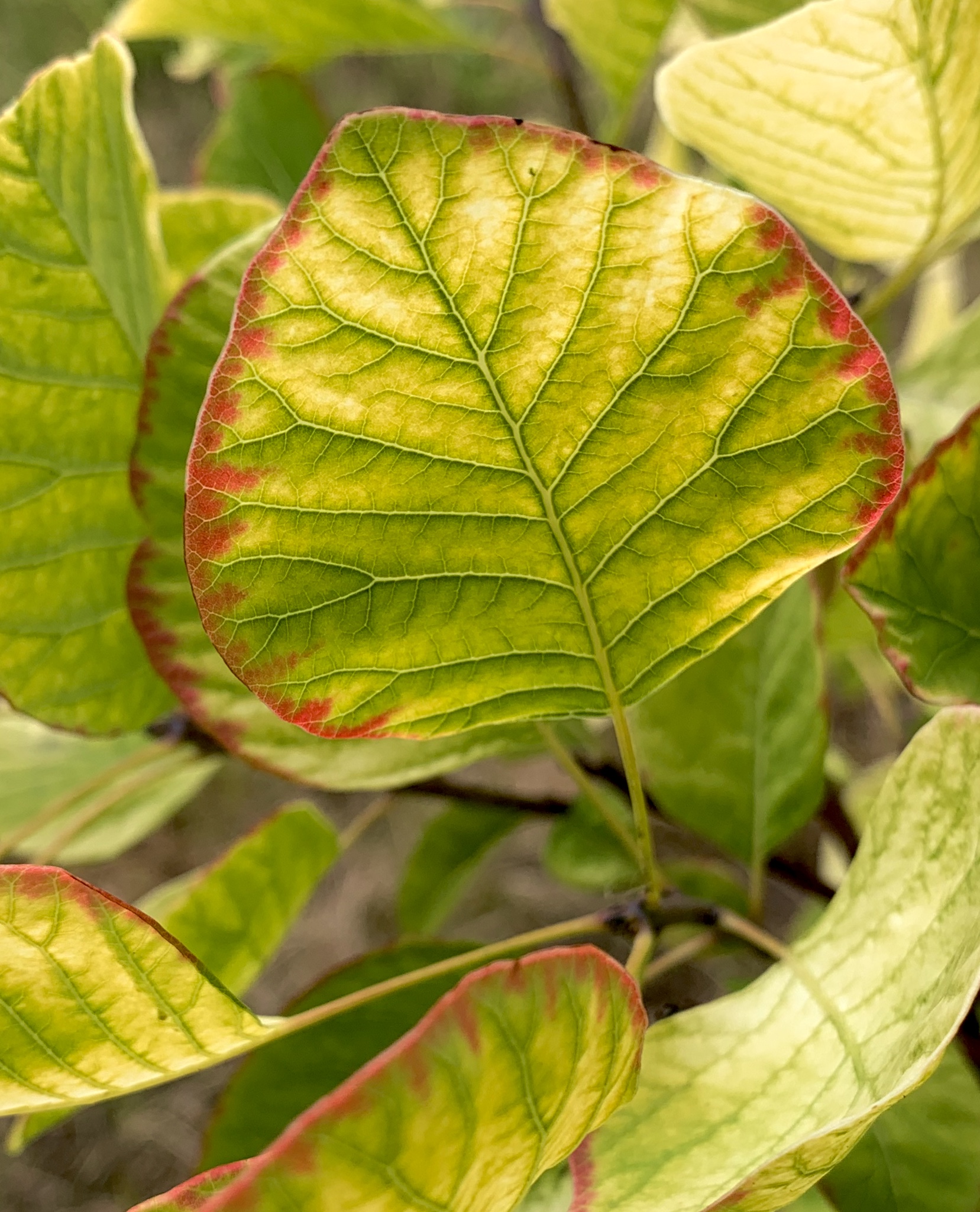
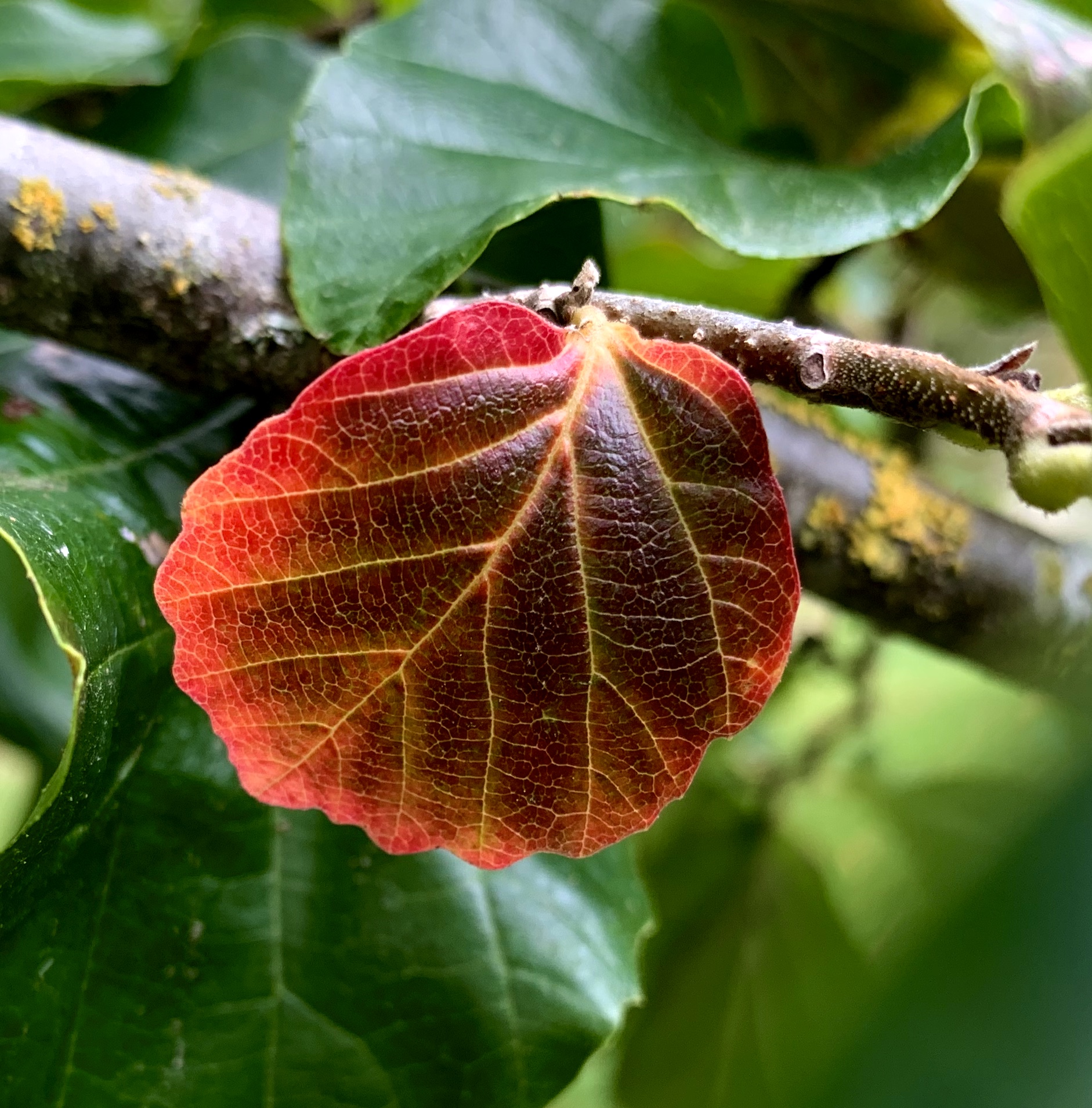
I miss opportunities to rejoice innumerable times a day.  It takes only a moment of recognition and appreciation to feel the joy, and in that moment time stands still.  Life stretches a little longer when I stop to acknowledge the intention of creation as an endless reservoir of rejoicing.   If a blade of grass, if a leaf turning color, if a chance reflection, if a delicately knit tent in the grass — if all this is made for joy, then maybe so am I.

Even colorless, plain and commonplace me, created an image-bearer and intended reflector of Light.

Maybe so am I.

In Our Hollowness

There is a day that comes when you realize
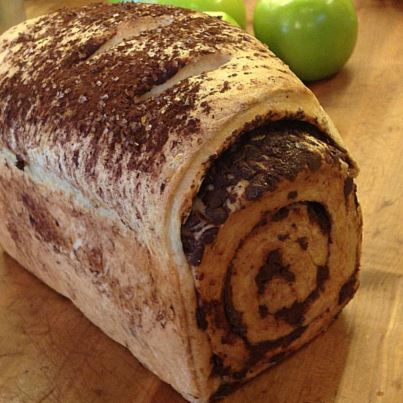
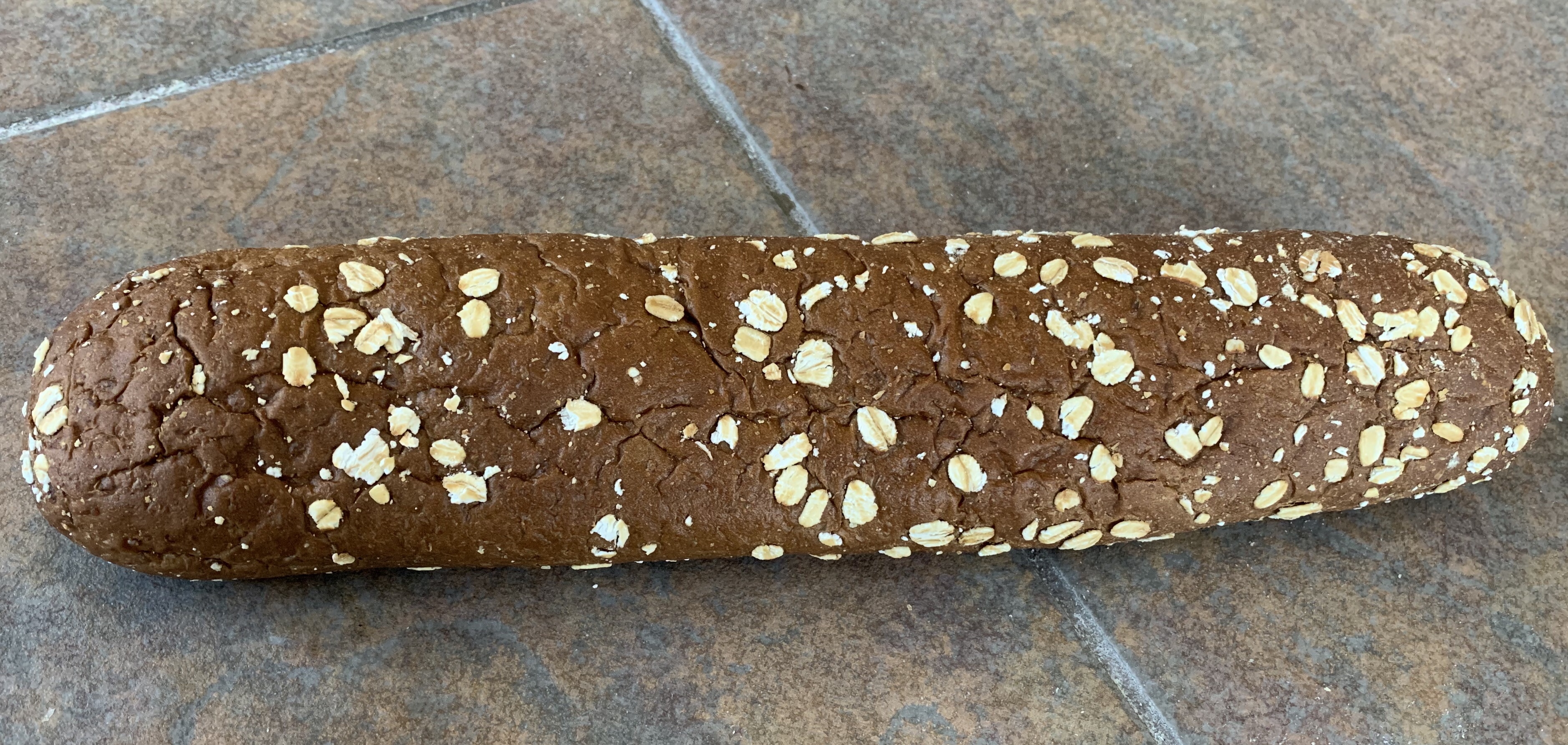
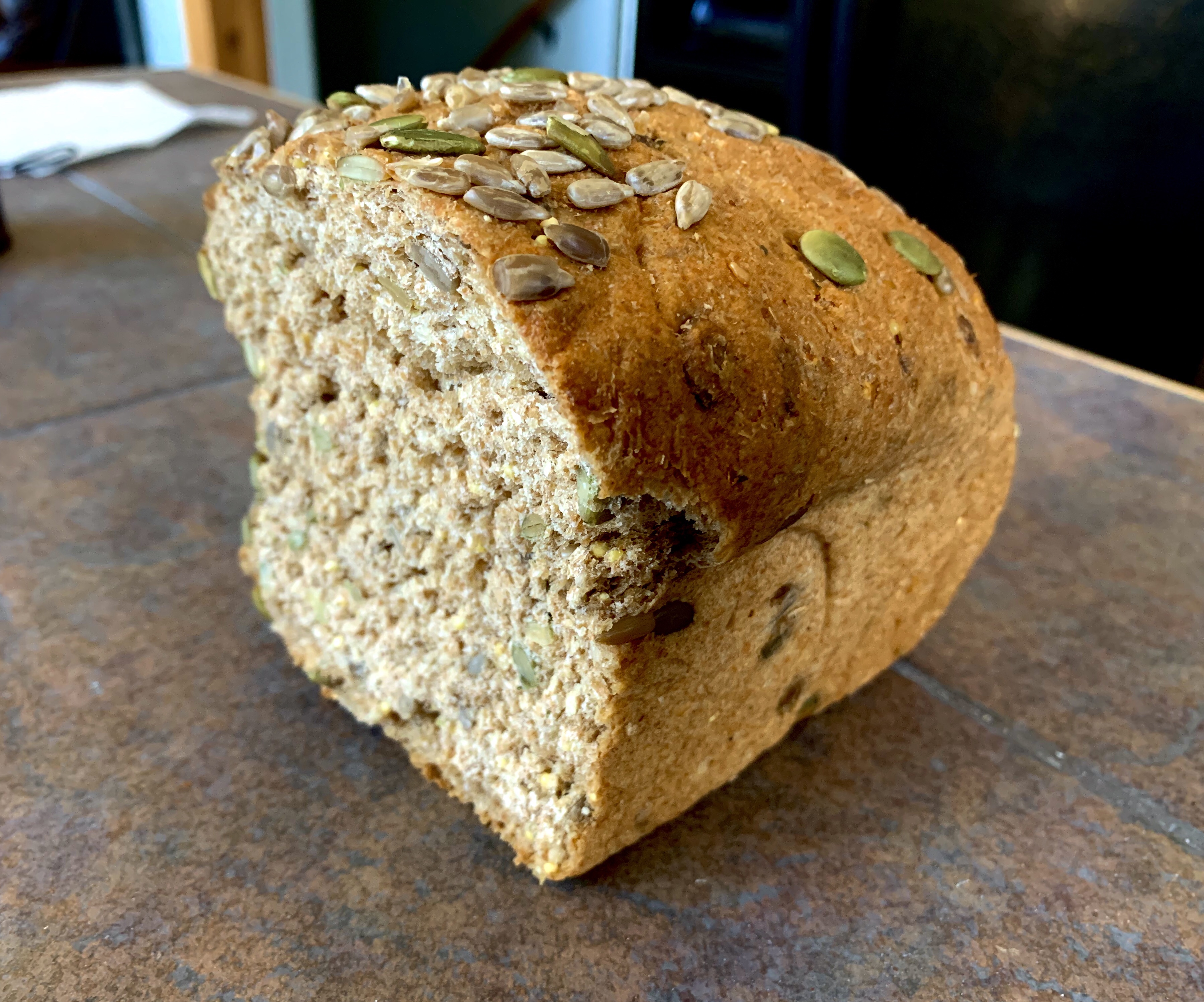
you can’t bake enough bread
to make things turn out right, no matter
how many times you read Little House on the Prairie
to your children. There aren’t enough
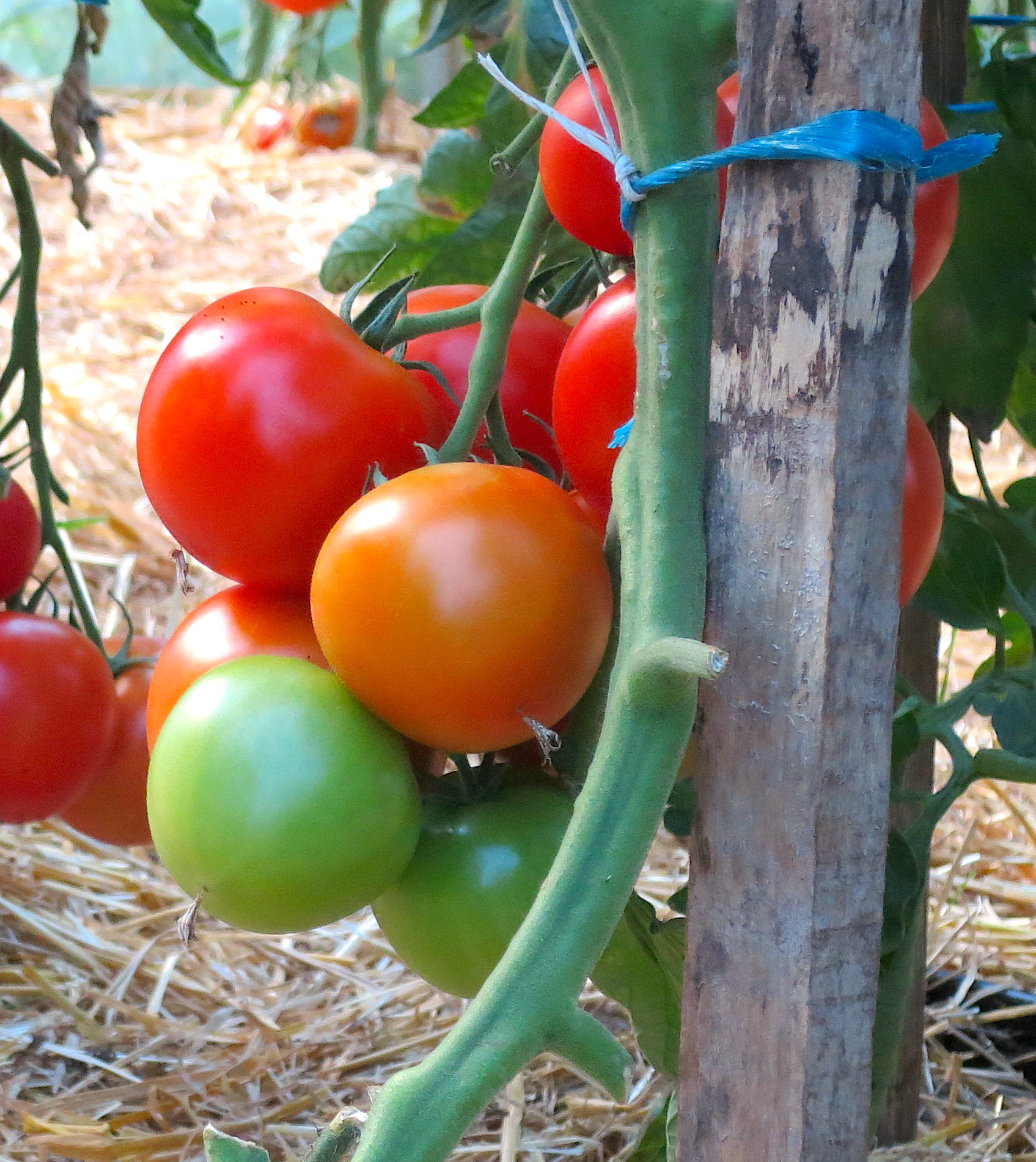
quart jars to fill with tomatoes
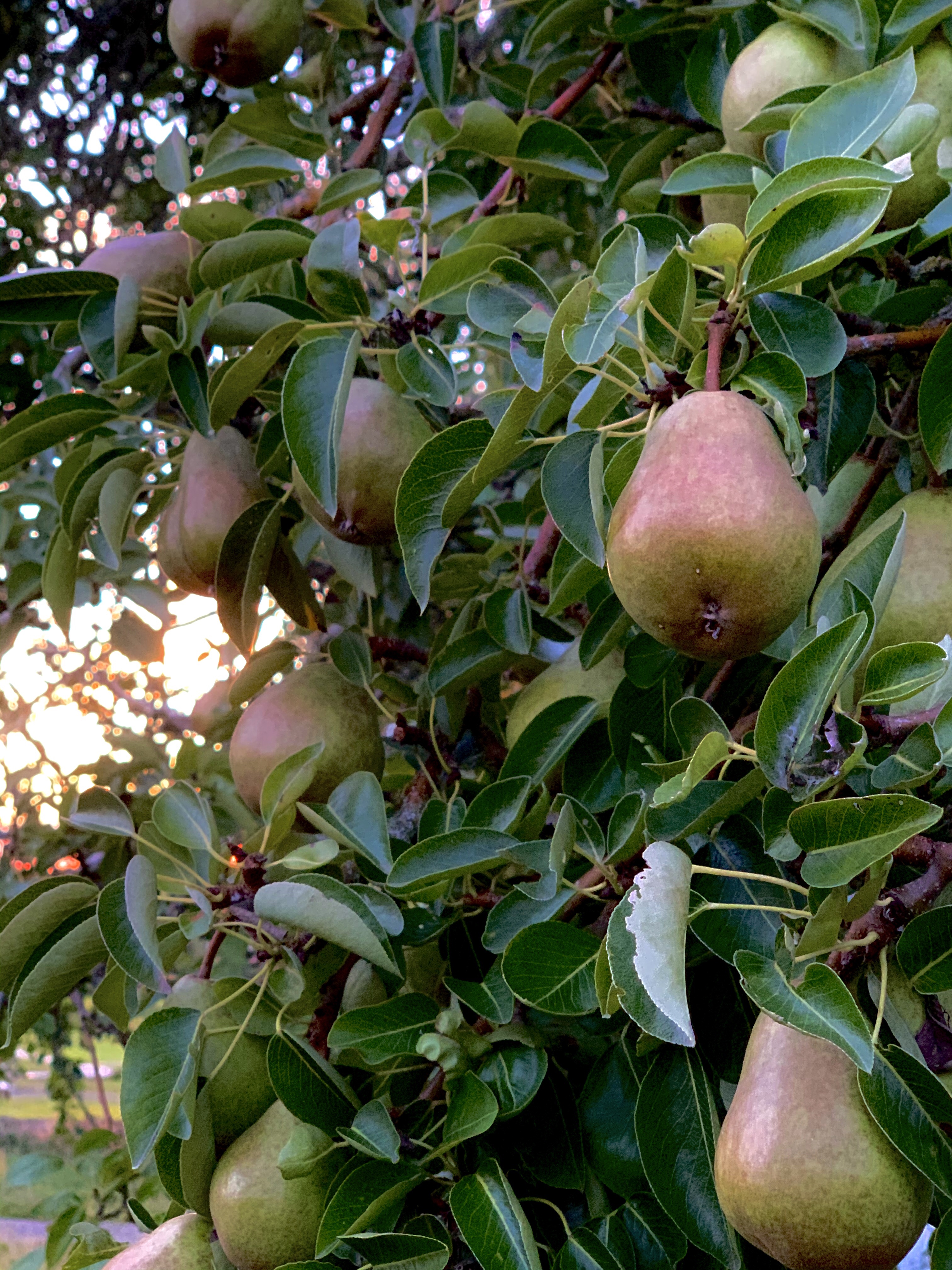
or translucent slices of pear to keep you
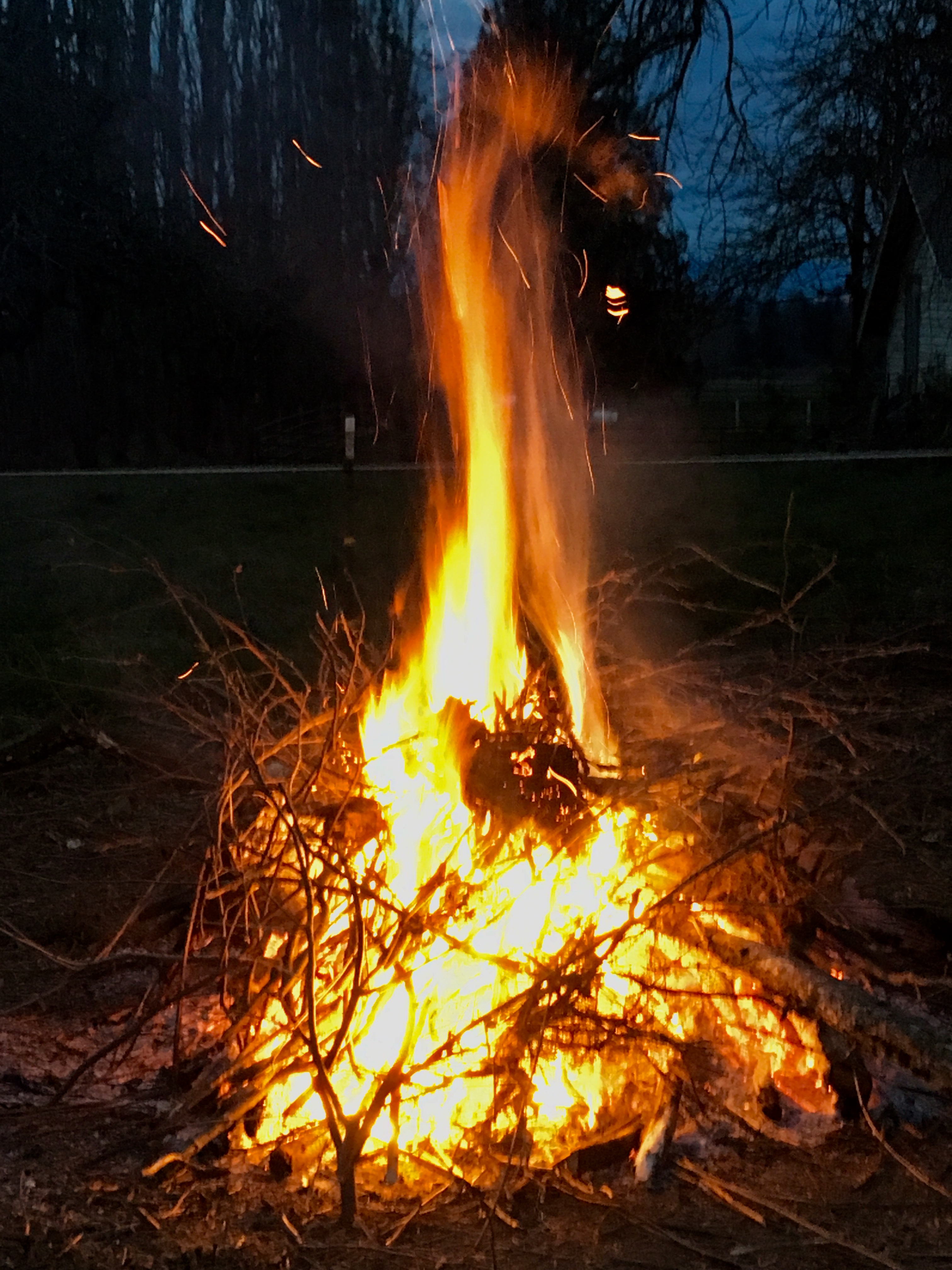
from feeling unproductive. There is no bonfire
that burns orange enough in the chill October night
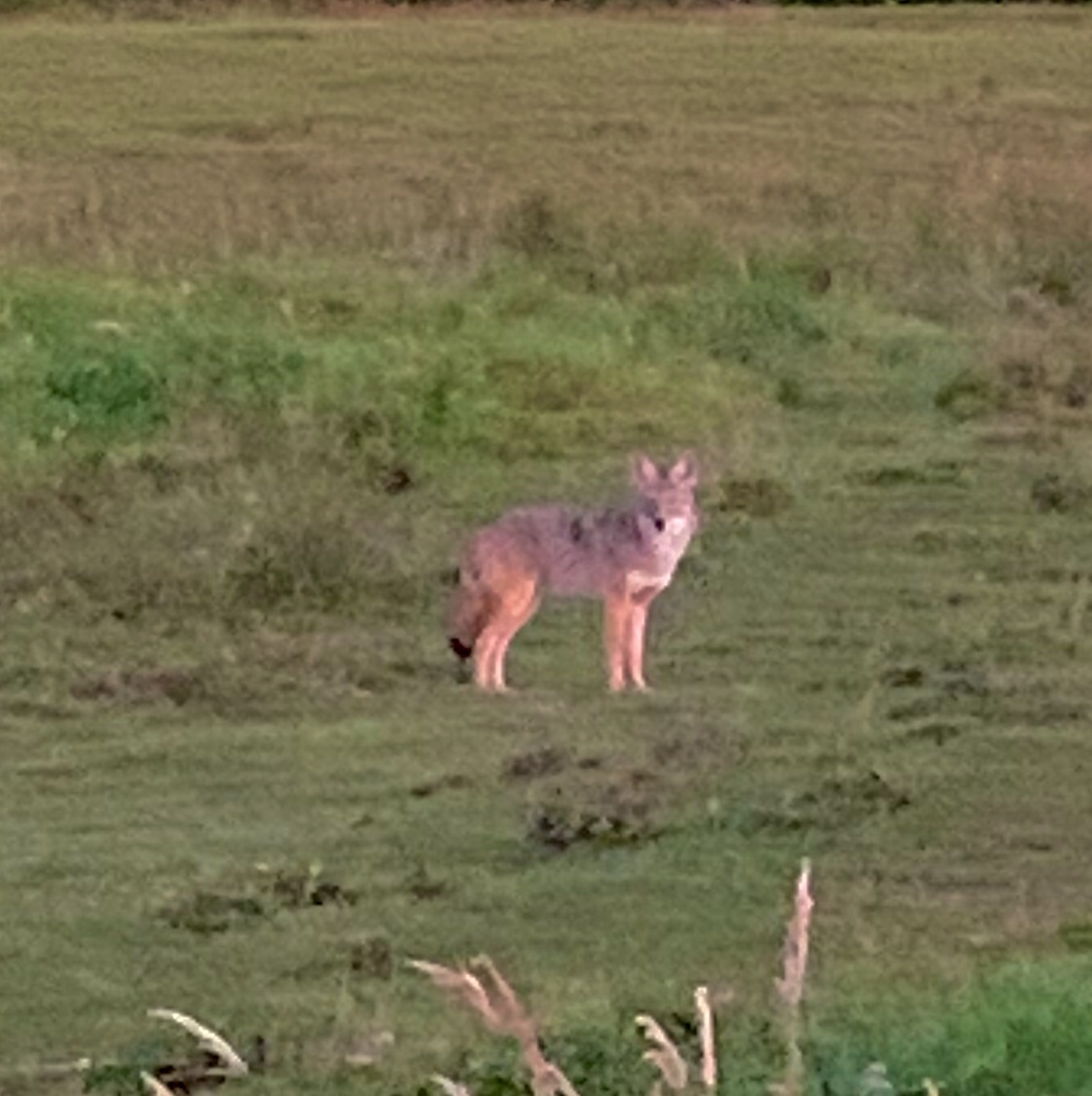
to keep your mind from following the lonesome
howls and yips of the coyotes concealed
by darkness in the harvested cornfield
just beyond the circle of your fire.

And when you step away from your family and fire,
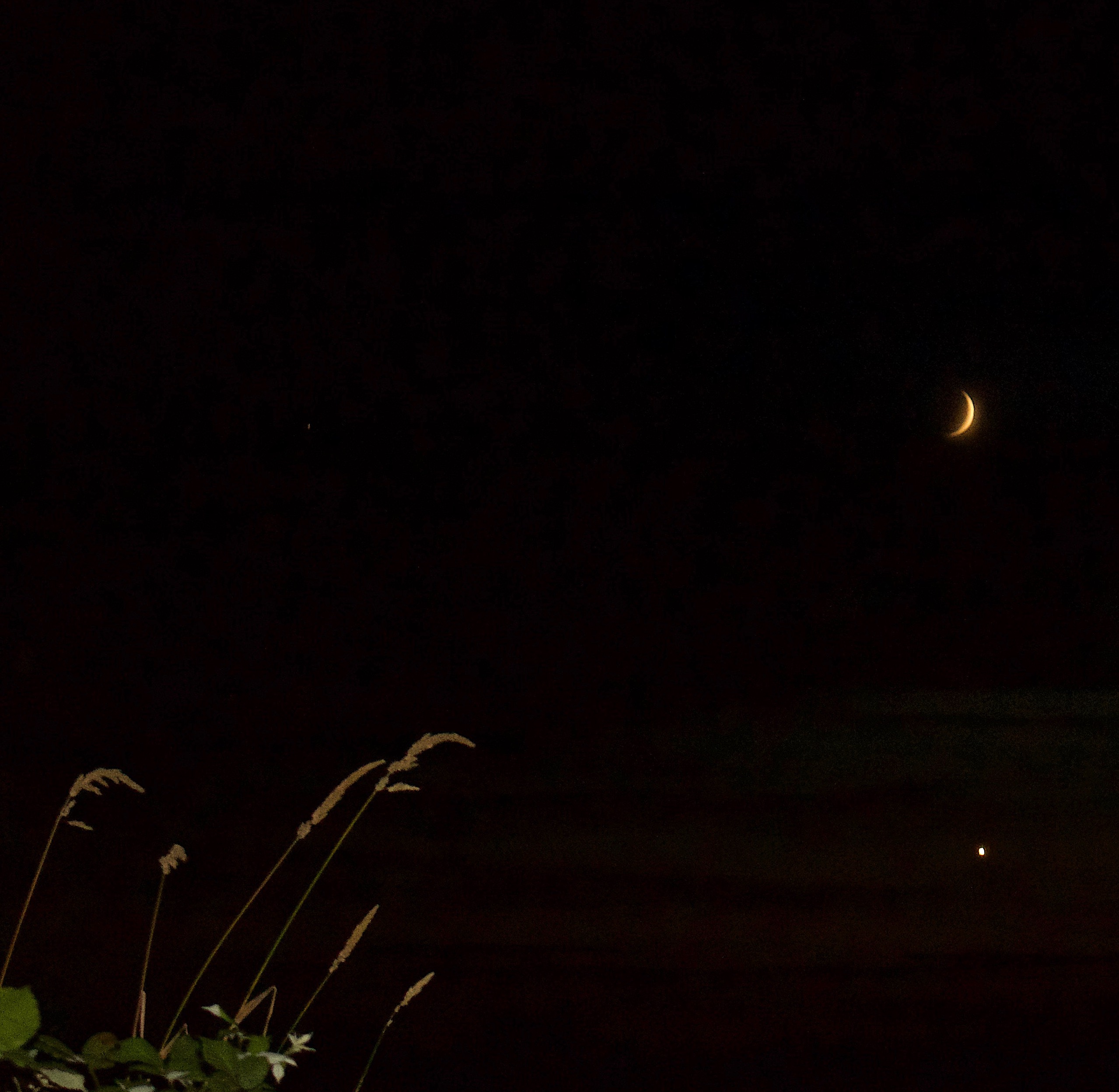
into the dark pasture and tip your head back,
feel the whole black bowl of sky
with its icy prickles of stars, its swath of Milky Way,
settle over you, you know that no one
and everyone is just this alone on the Earth
though most keep themselves distracted enough
not to notice. In your hollowness
you open your arms to God because no one else
is enough to fill them. Eternity
passes between and no one knows this but you.

The hum of their conversation, the whole world, talking.
When it is time, you turn, grasp the woodcart’s handle,
pull it, bumping behind you across the frosty grass,
up the hill to the house, where you
step inside cubes of light, and begin to do ordinary things,
hang up coats, open and close drawers,
rinse hot chocolate from mugs. And you are still
separate, but no longer grieving bread.
~Daye Phillippo “Bread” from The Exponent. Vol. 124 – No 75 (May 3, 2010)

Try as I might, there aren’t enough chores to do, nor meals to make, nor pictures to take or words to write to distract me from the emptiness that can hit in the middle of the night. We each try to find our own way to make the world feel right and good, to give us a sense of purpose for getting up each morning.

Yet life can be harsh. I hear regularly from my patients who fight a futile struggle with pointlessness. Hours, days and years are hollow without loving and meaningful relationships with each other, but especially with our Creator.

My work here is simple: to find meaning in routine and the rhythm of the seasons with a desire to leave behind something that will last longer than I will. In those moments of feeling hollowed-out, I am reminded that God-shaped hole is just as He created it. God knows exactly what I need— I rise like leavened bread becoming more than I could ever be without Him.

The ordinary in me is filled by the extraordinary.

The Hinge of Faithfulness

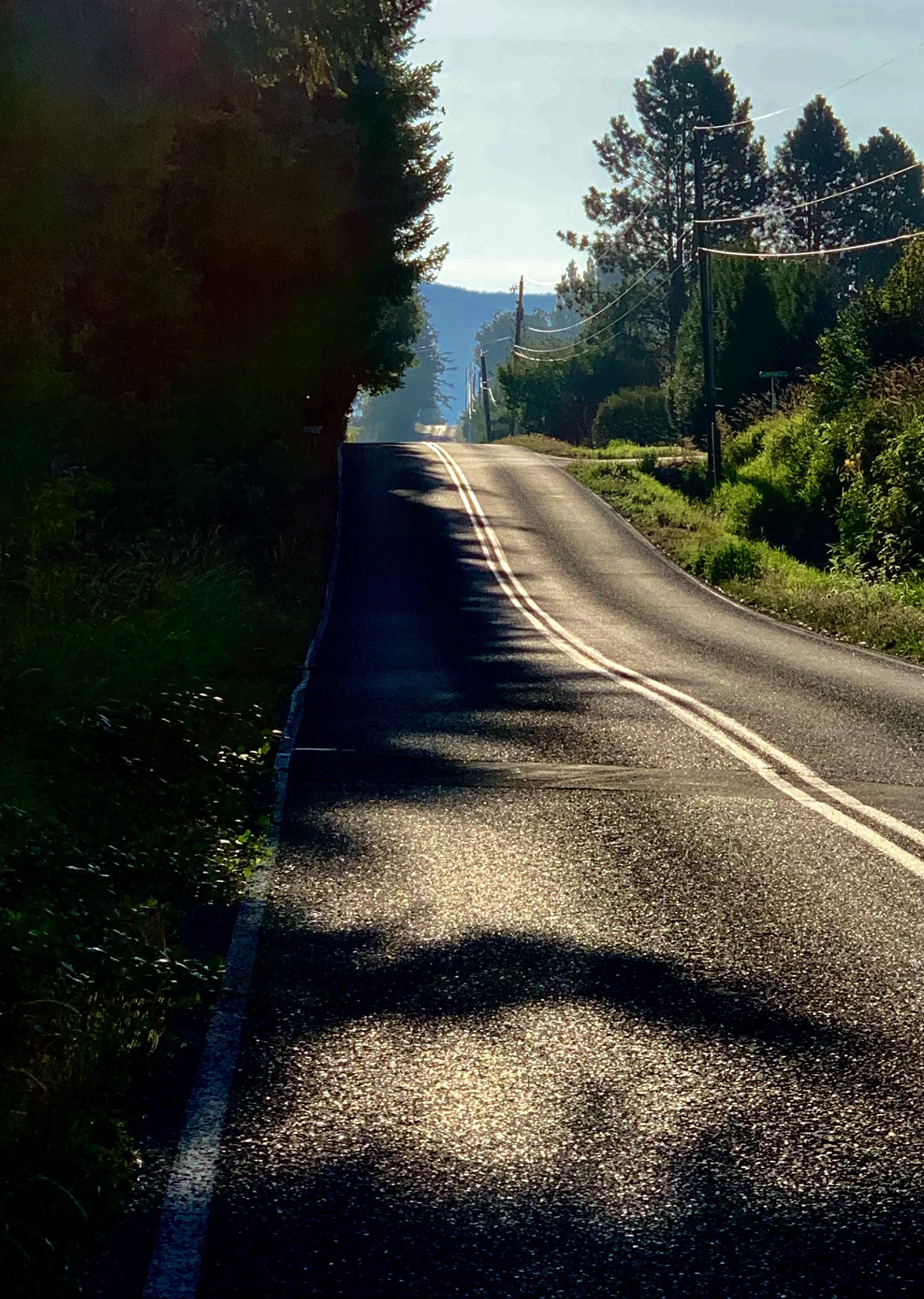
No one compels you, traveler;
this road or that road, make your choice!
Dust or mud, heat or cold,
fellowship or solitude,
foul weather or a fairer sky,
the choice is yours as you go by.

But here if you would take this path
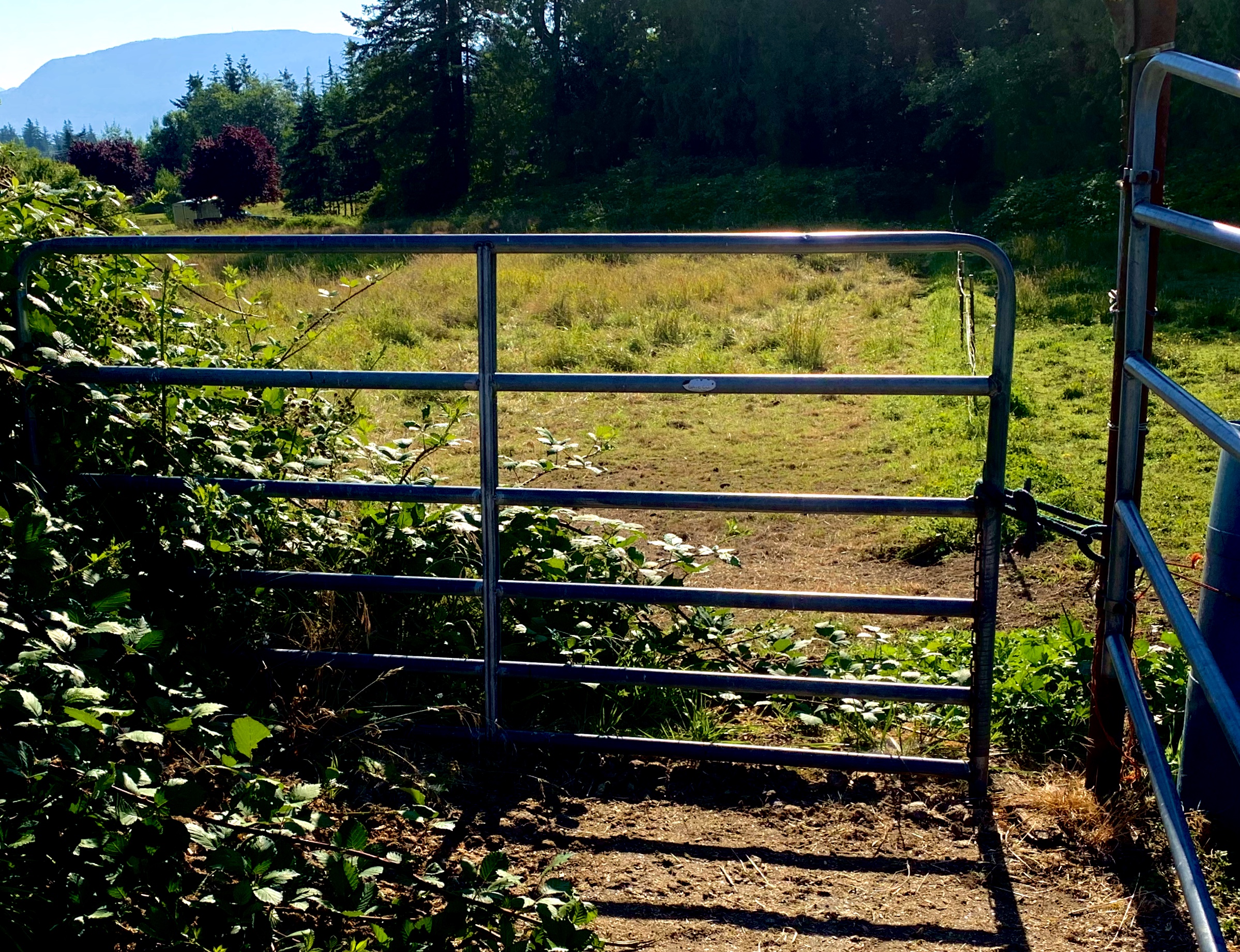
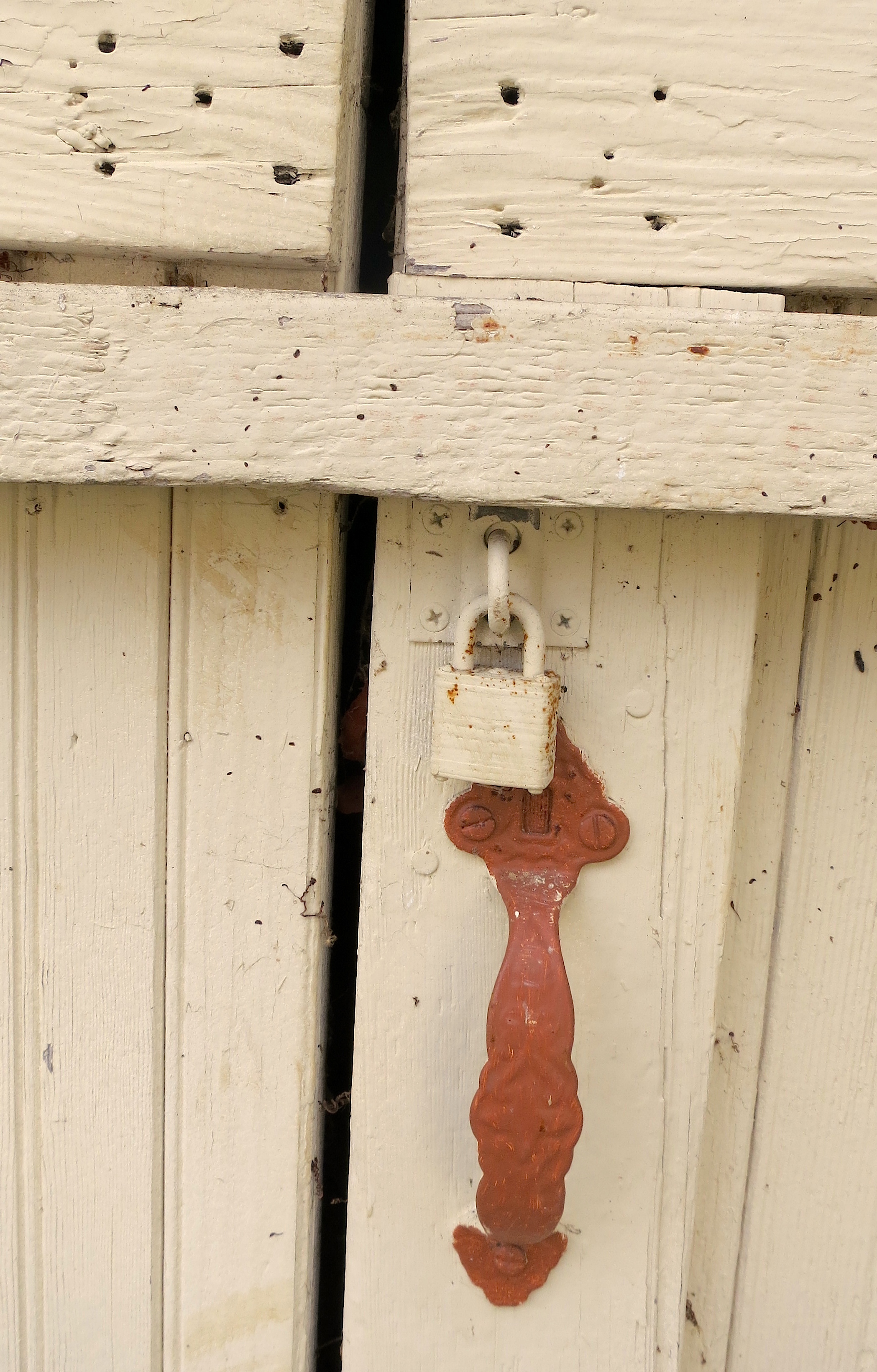
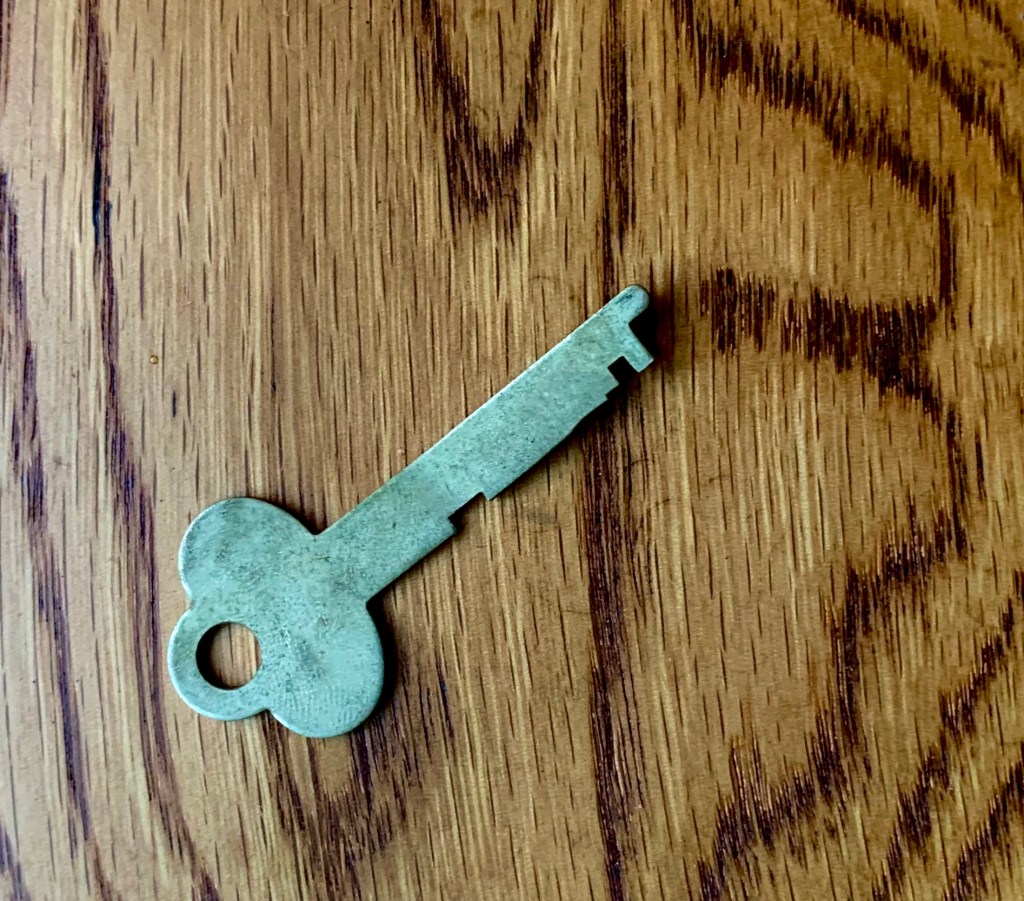
there is a gate whose latch is love,
whose key is single and which swings
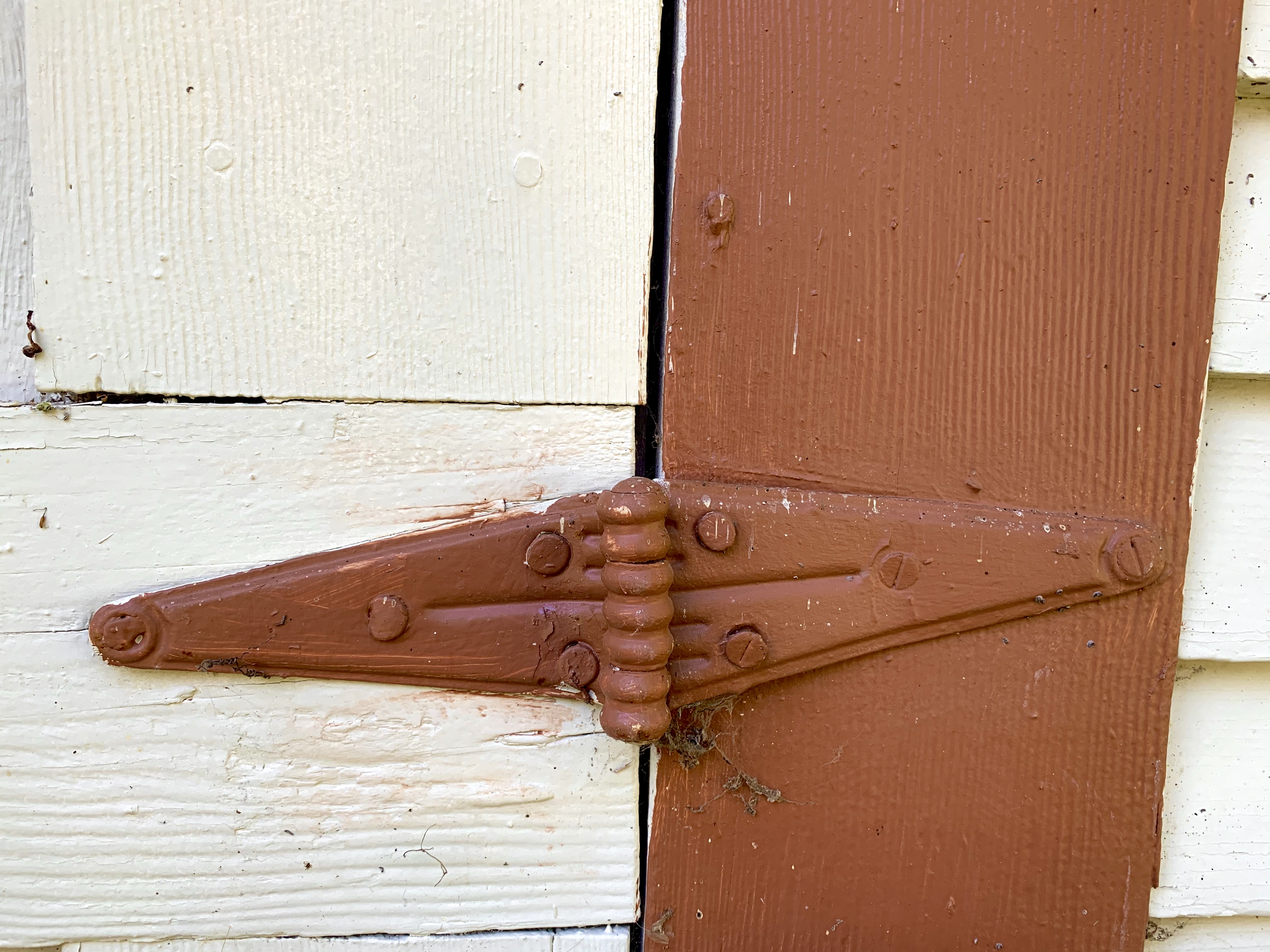
upon the hinge of faithfulness,

and none can mock, who seeks this way,
the king we worship shamelessly.
If you would enter, traveler,
into this city fair and wide,
it is forever and you leave
all trappings of the self outside.

~Jane Tyson Clements from  No One Can Stem the Tide

What we call the beginning is often the end
And to make an end is to make a beginning.
The end is where we start from.

We shall not cease from exploration
And the end of all our exploring
Will be to arrive where we started
And know the place for the first time.
Through the unknown, unremembered gate
When the last of earth left to discover
Is that which was the beginning;
~T.S. Eliot from “Little Gidding” The Four Quartets

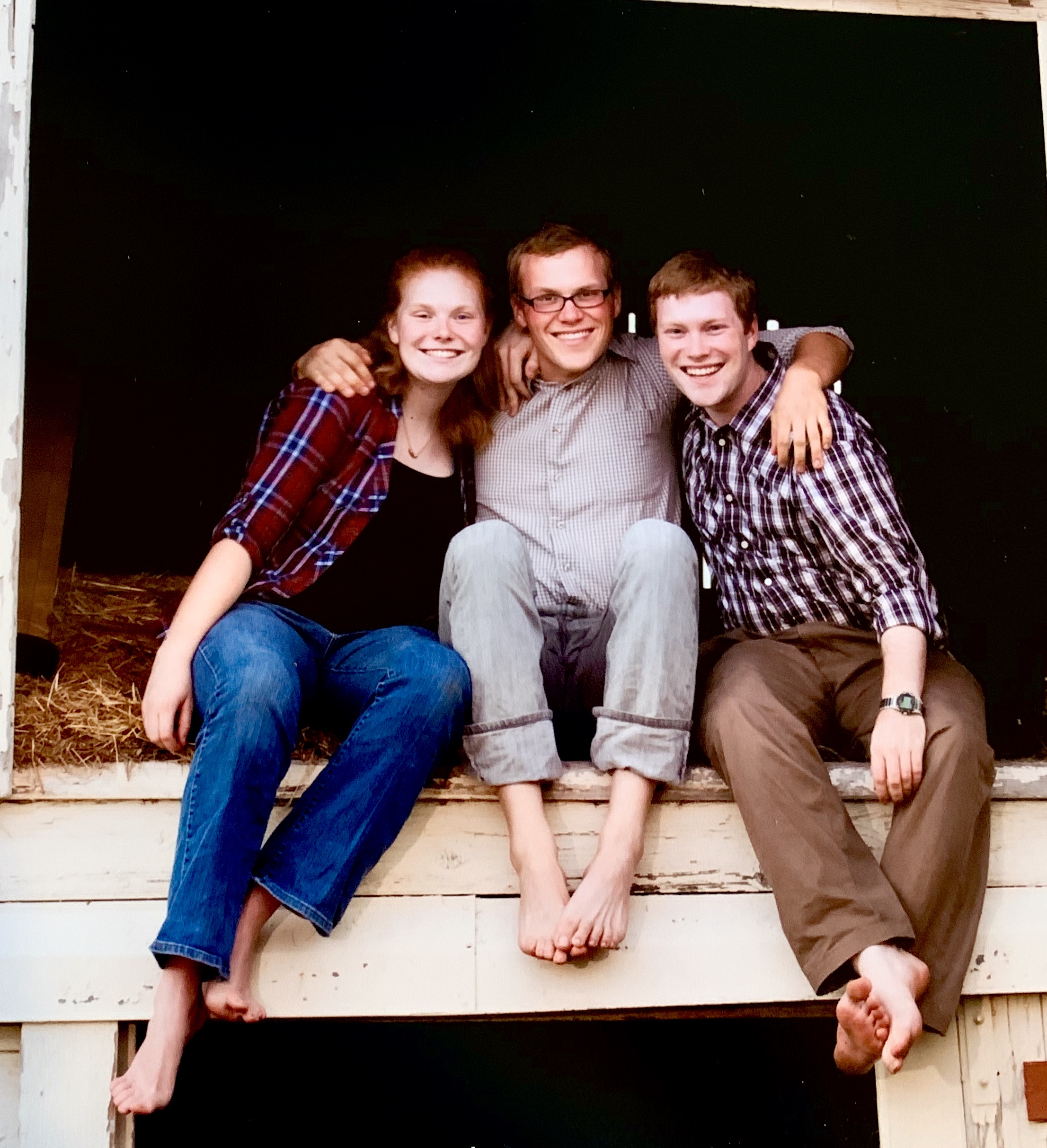
I can, with very little effort, remember the restlessness of my late teens once I learned homesickness was not a terminal condition.  There was a world out there to be explored just beyond the gate of my childhood barnyard, and I just knew I was meant to be a designated explorer and traveler, seeking out the extraordinary.

Ordinary simply wouldn’t do.  Ordinary was plentiful at my childhood home on a small farm with a predictable routine, a garden to be weeded and daily chores to be done, with middle-aged parents tight with tension in their struggling marriage.

On a whim at age nineteen, I applied for wild chimpanzee research study in Africa, and much to my shock, was accepted.  A year of academic and physical preparation as well as Swahili language study was required, so this was no impulsive adventure.   I had plenty of time to back out, reconsider, choose another path and retreat to ordinary again.

It was an adventure, far beyond what I had anticipated and trained for.  When I had to decide between more exploration, without clear purpose or funds, or returning home, I opted to return to the place I started. I saw home differently, as if for the first time,  after  experiencing the world in all its glory and ugliness. The next path I took, I needed to leave the trappings of myself behind, unlatch the gate with the key I had been given from the very beginning. The hinge of faithfulness opens the gate wide.

I must remember I have chosen the path that leads to forever, though neither smooth nor easy. Entering that unknown, unremembered gate means I will arrive where I started, back at the beginning and knowing the place for the first time.

What seemed to be the end proved to be the beginning…
Suddenly a wall becomes a gate.
~Henri Nouwen from A Letter of Consolation

An Ordinary Life

No doubt she’s disappointed.

Such a disgrace I turned out to be.

Not a policy-maker
Or tech-savvy entrepreneur.
Nothing of note.

I gave birth three times
and sent three
tall, kind people 
into the world

I offered words of consolation
I planted sunflowers
I listened

Elected official?
Pulitzer Prize-winning journalist?
Cutting-edge thought-leader?
MD, PhD, CEO?
Oscar, Emmy, Tony? 
Nobel? 
Anything?

I closed my mother’s eyes
when she died
and again, my father’s

I made no fortune
no headlines
nothing went viral

I sang and danced
for no one

I remembered
I noticed
I breathed

Just an ordinary life
filled with extraordinary love.

How disappointing.
~Mary Poindexter McLaughlin “Alma Mater”

Do not ask your children
to strive for extraordinary lives.

Such striving may seem admirable,
but it is a way of foolishness.
Help them instead to find the wonder
and the marvel of an ordinary life.
Show them the joy of tasting
tomatoes, apples, and pears.
Show them how to cry
when pets and people die.
Show them the infinite pleasure
in the touch of a hand.
And make the ordinary come alive for them.
The extraordinary will take care of itself.
~William Martin from The Parent’s Tao Te Ching: Ancient Advice for Modern Parents

Parents can hold expectations of success for their children
that reflect their own deficiencies or failures.
After all, we want the world to be a better place for them than for us.

Yet no academic degree, no bank account, no notoriety or award
can match living an ordinary life filled with extraordinary love.

I did disappoint my parents despite checking off all the boxes they hoped I would achieve in my younger years, because in retrospect, I disappointed myself.

I tended to cling to old grievances and resentments, withholding myself emotionally from them. I could have been more compassionate in their failing years, more available even though physically present. That is something I cannot undo except to pray now for forgiveness for my own deficiencies and failures.

Giving birth to three tall kind people who we have sent into the world, I hope for them what I wish I had understood when I was sent into the world by my parents: living an ordinary life of extraordinary love is more important than anything else they set out to do.

I rejoice as I see them foster such love with their spouses and their children and their communities: remembering, noticing and breathing life into each new day.

Seeing that, I can let go of my own disgrace and disappointment in myself.


Moss Balm For Misunderstanding

There is an ancient conversation going on between mosses and rocks, poetry to be sure. About light and shadow and the drift of continents. This is what has been called the “dialect of moss on stone – an interface of immensity and minuteness, of past and present, softness and hardness, stillness and vibrancy…

Learning to see mosses is more like listening than looking.
A cursory glance will not do it.
Mosses are not elevator music;
they are the intertwined threads of a Beethoven quartet.
~Robin Kimmerer from Gathering Moss: A Natural and Cultural History of Mosses

Most lie low, flourishing with damp,
harvesting sunlight, no commotion, moss
mouse-silent, even through wind and hail,
stoic through motors roaring fumes,
through fat-clawed bears grubbing.

They can soothe the knife-edges of stones
with frothy leaf by leaf of gray-green life,
and burned-ground mosses cover destruction,
charred stumps, trees felled and blackened.
Cosmopolitan mosses likewise salve
sidewalk cracks, crumbling walls.

They root in thin alpine air, on sedentary
sand dunes, cling to cliff seeps beneath
spilling springs. For rest, they make mats
on streamside banks, for pleasure produce silky
tufts, wavy brooms of themselves in woodlands
for beauty, red roof moss for whim, elf
cap, hair cap, sphagnum for nurturing.

I believe they could comfort the world
with their ministries. That is my hope,
even though this world be a jagged rock,
even though this rock be an icy berg of blue
or a mirage of summer misunderstood
(moss balm for misunderstanding),
even though this world be blind and awry
and adrift, scattering souls like spores
through the deep of a starlit sea.
~Pattiann Rogers from “The Moss Method”

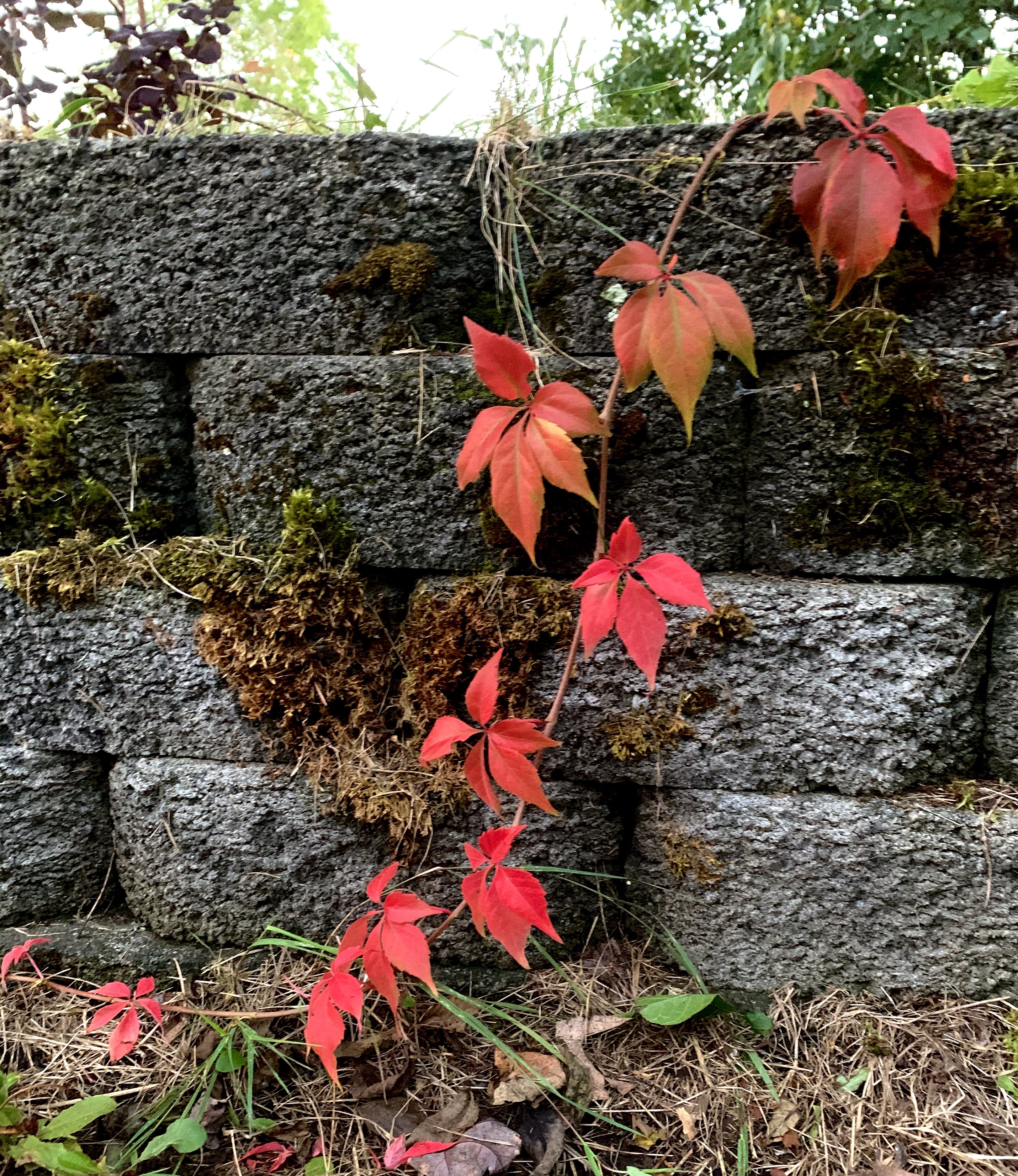
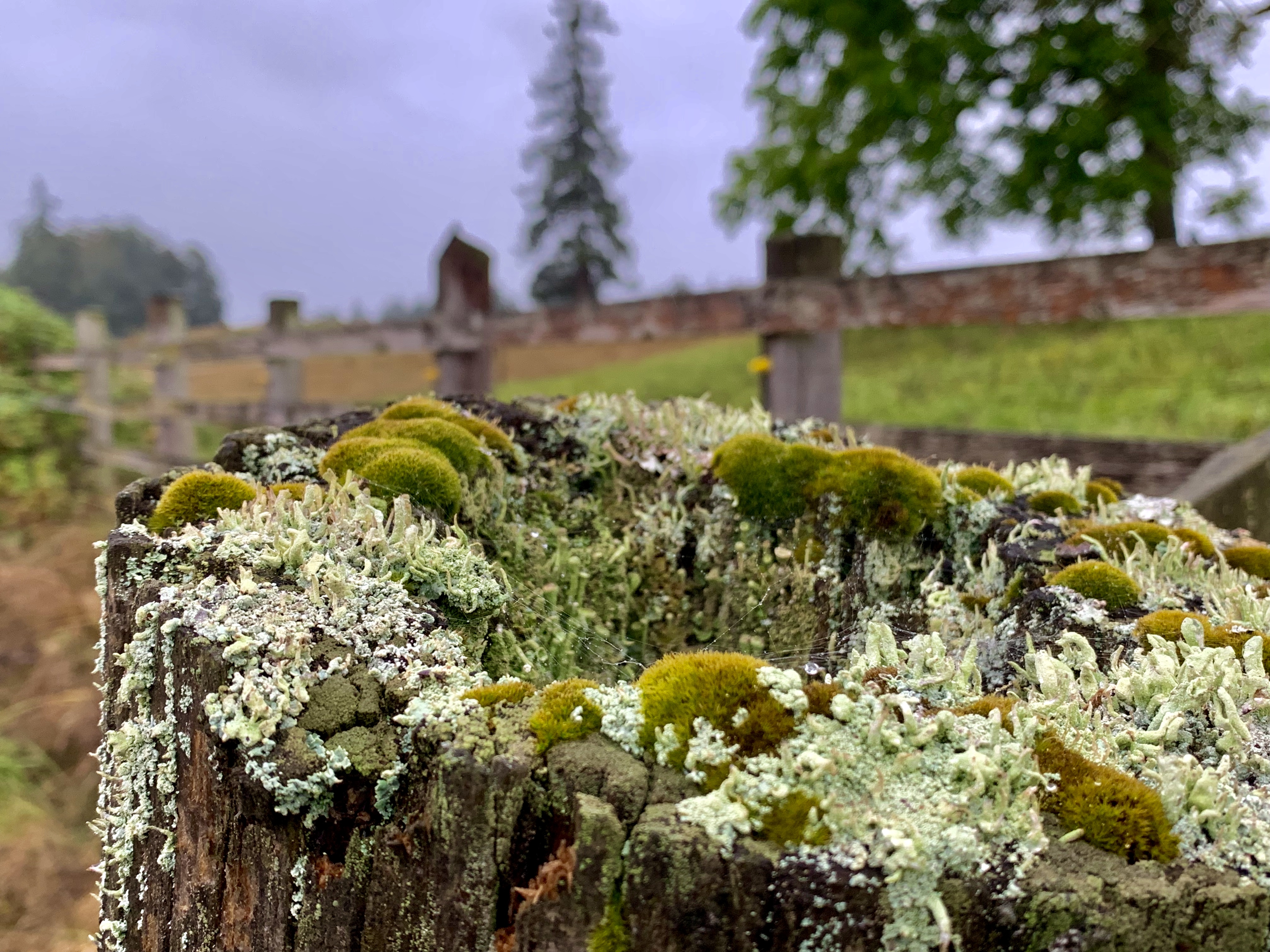
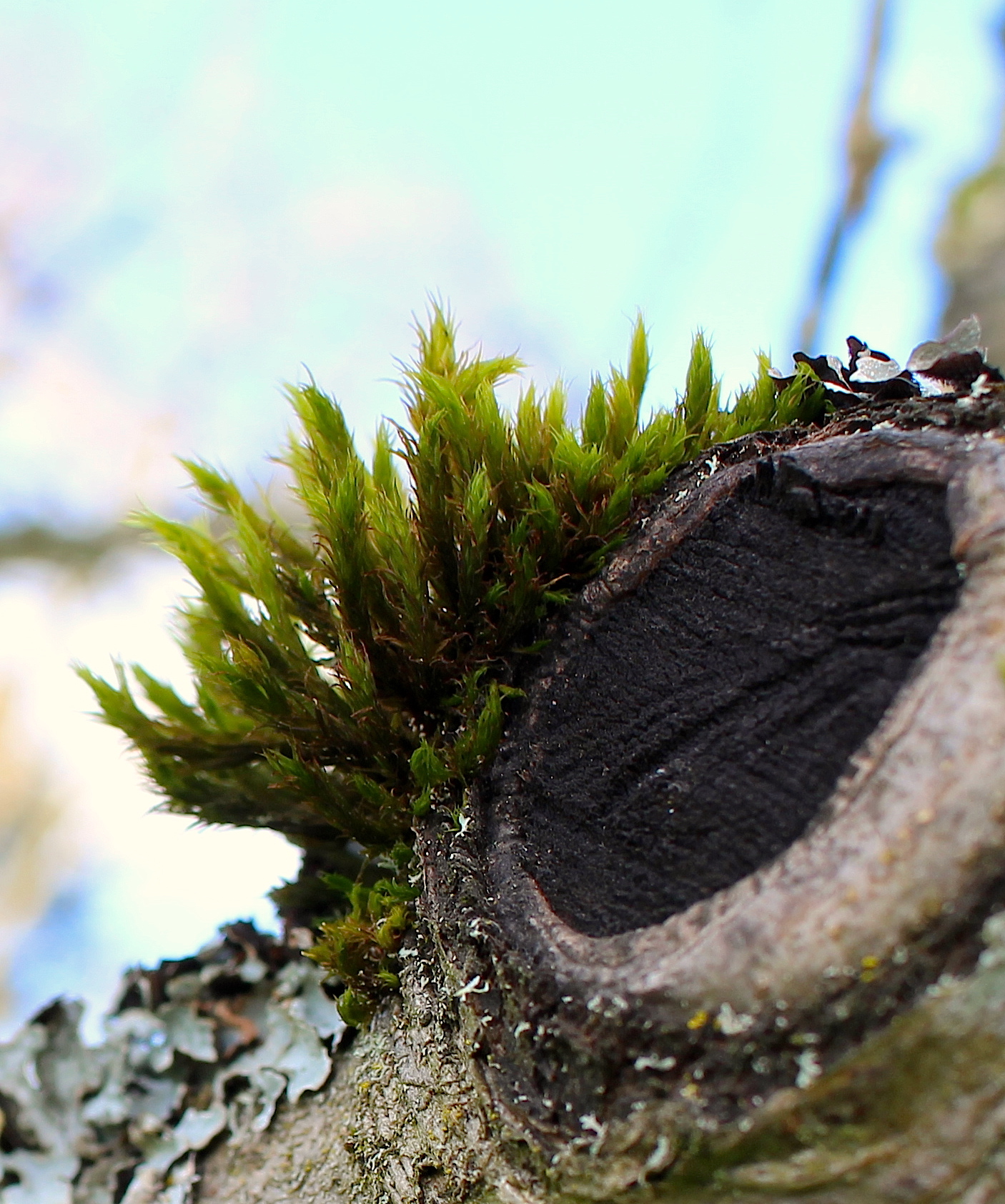
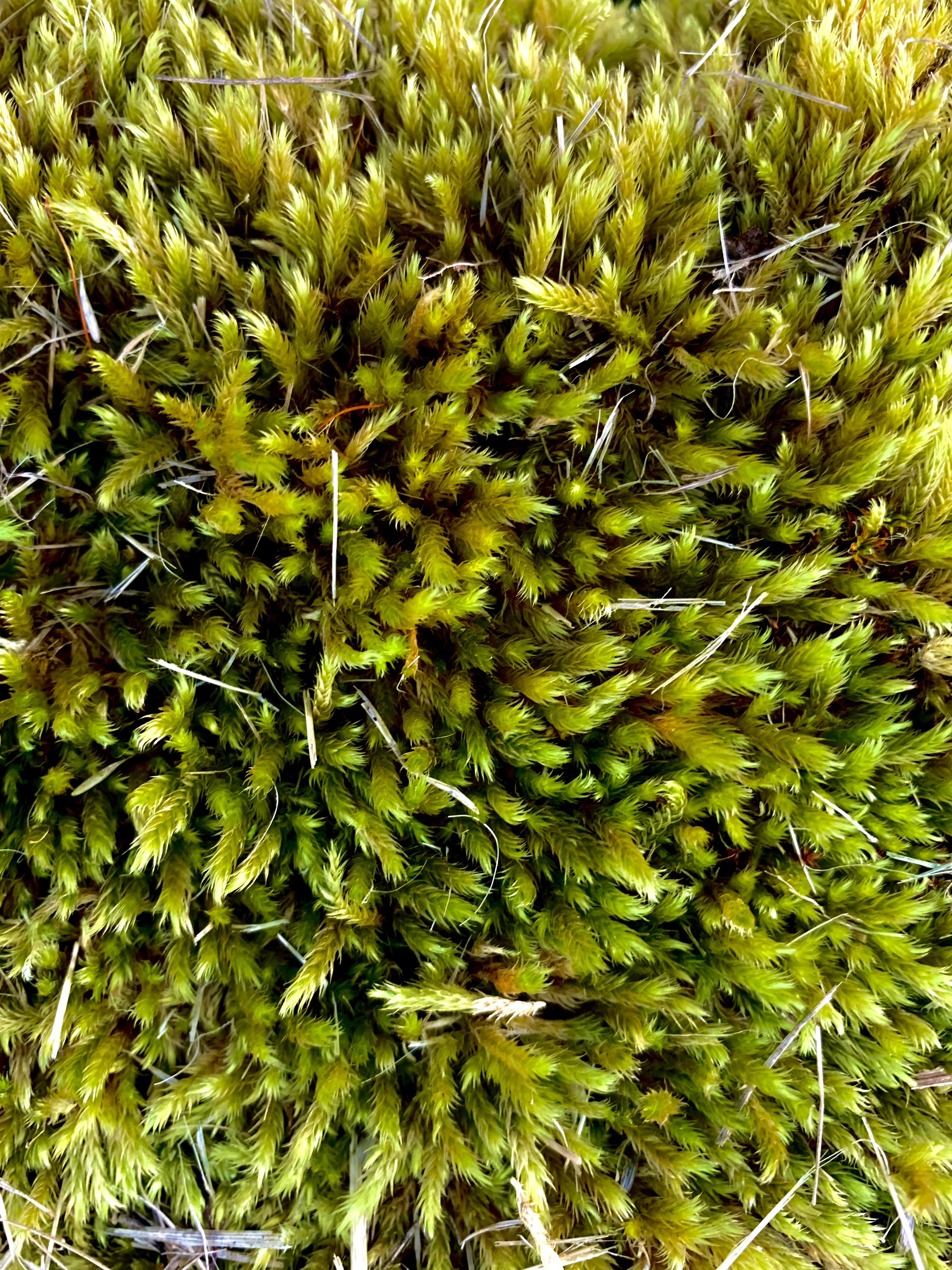
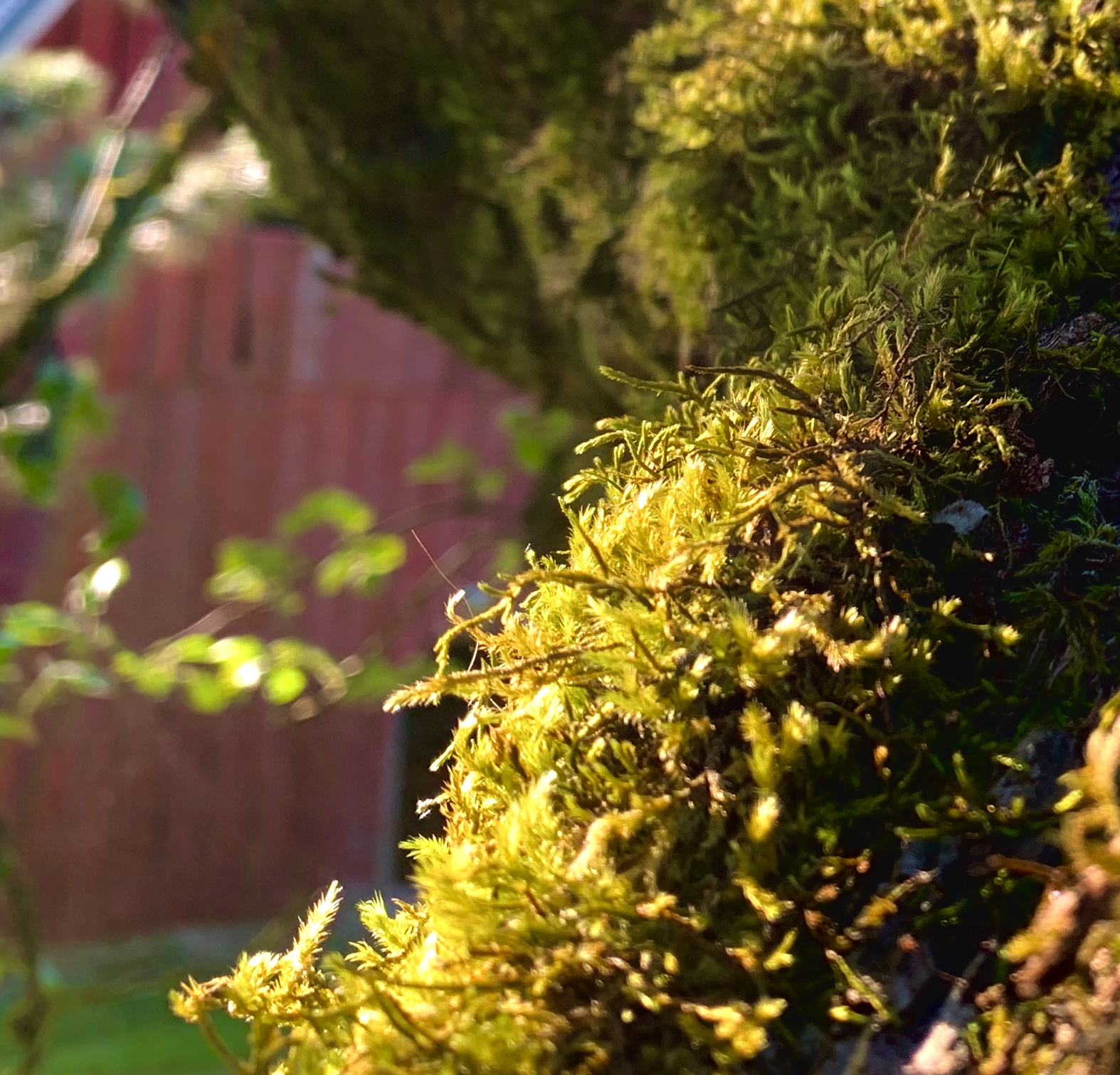
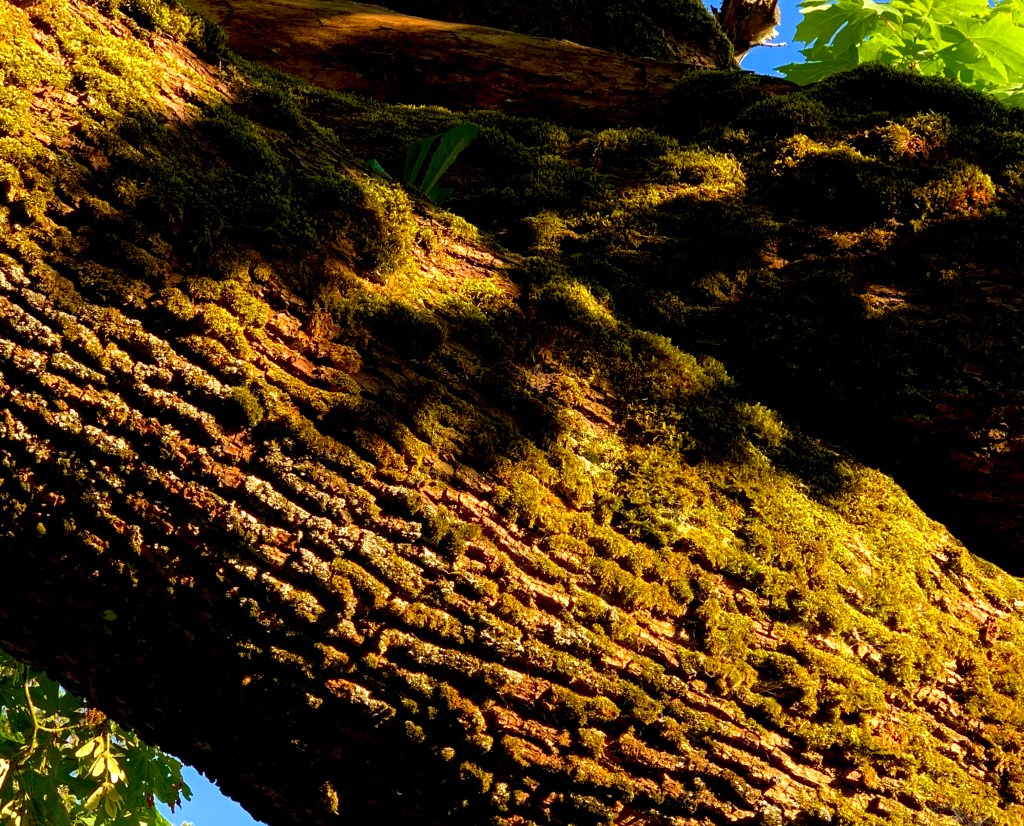
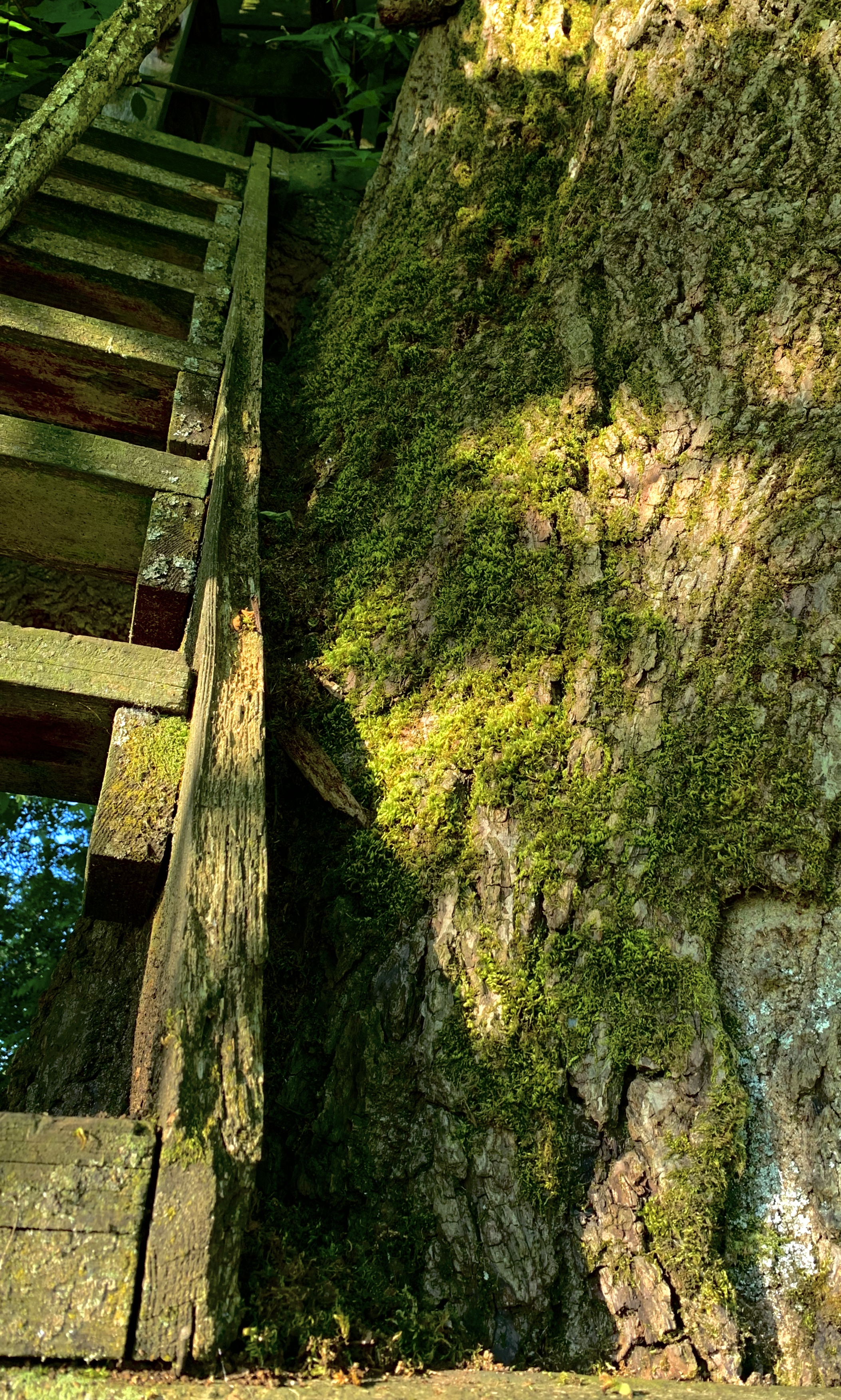
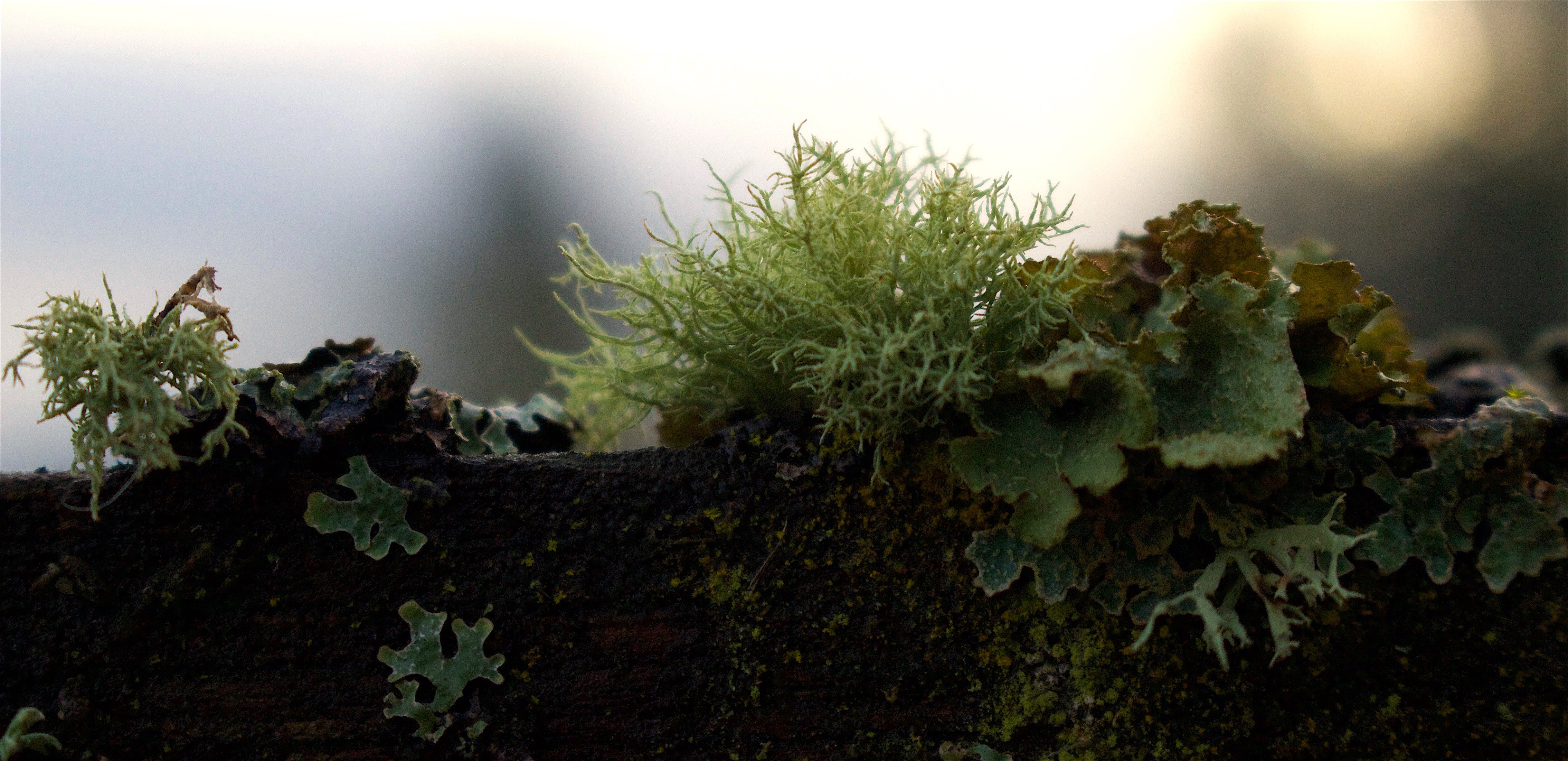
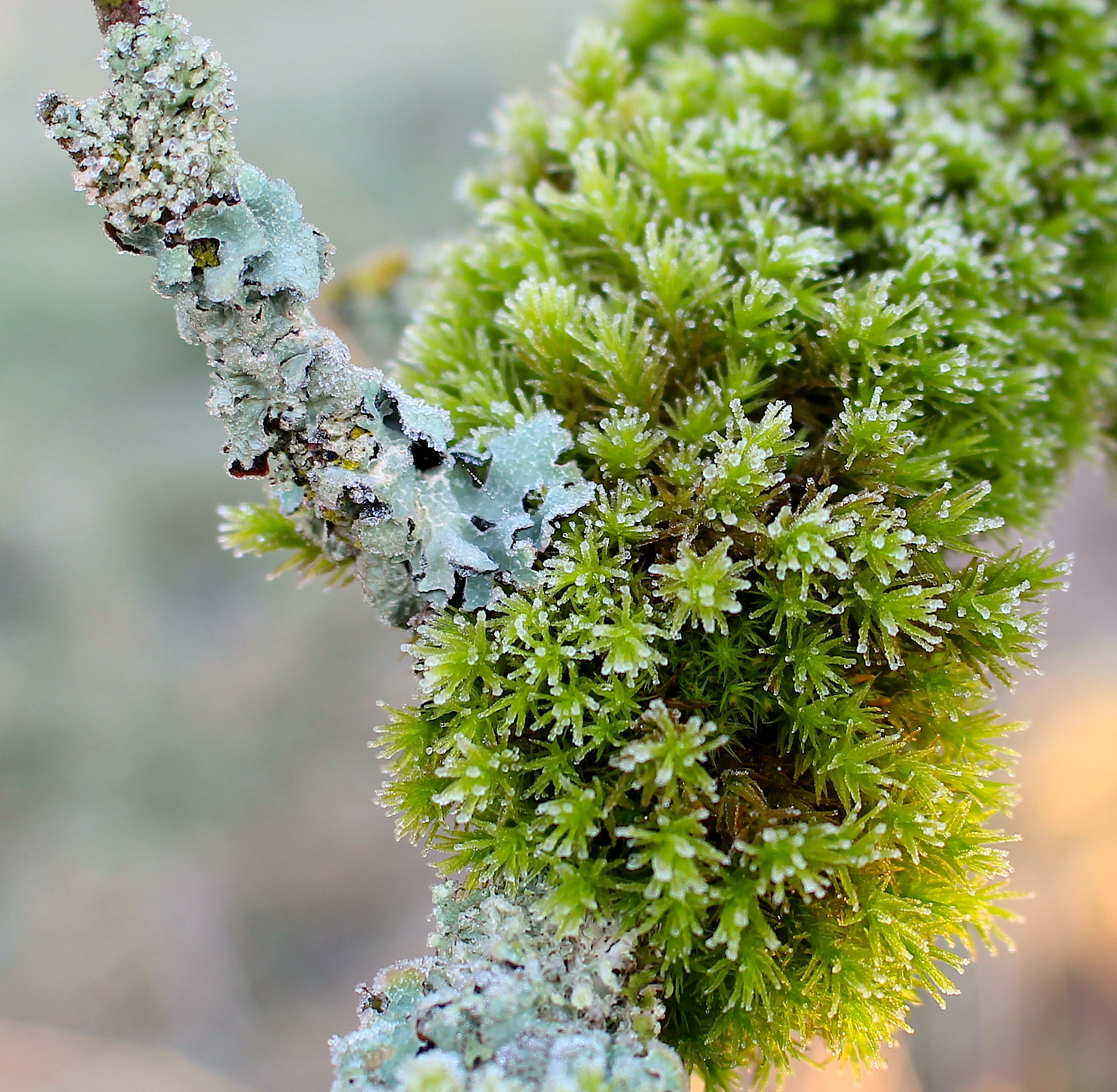
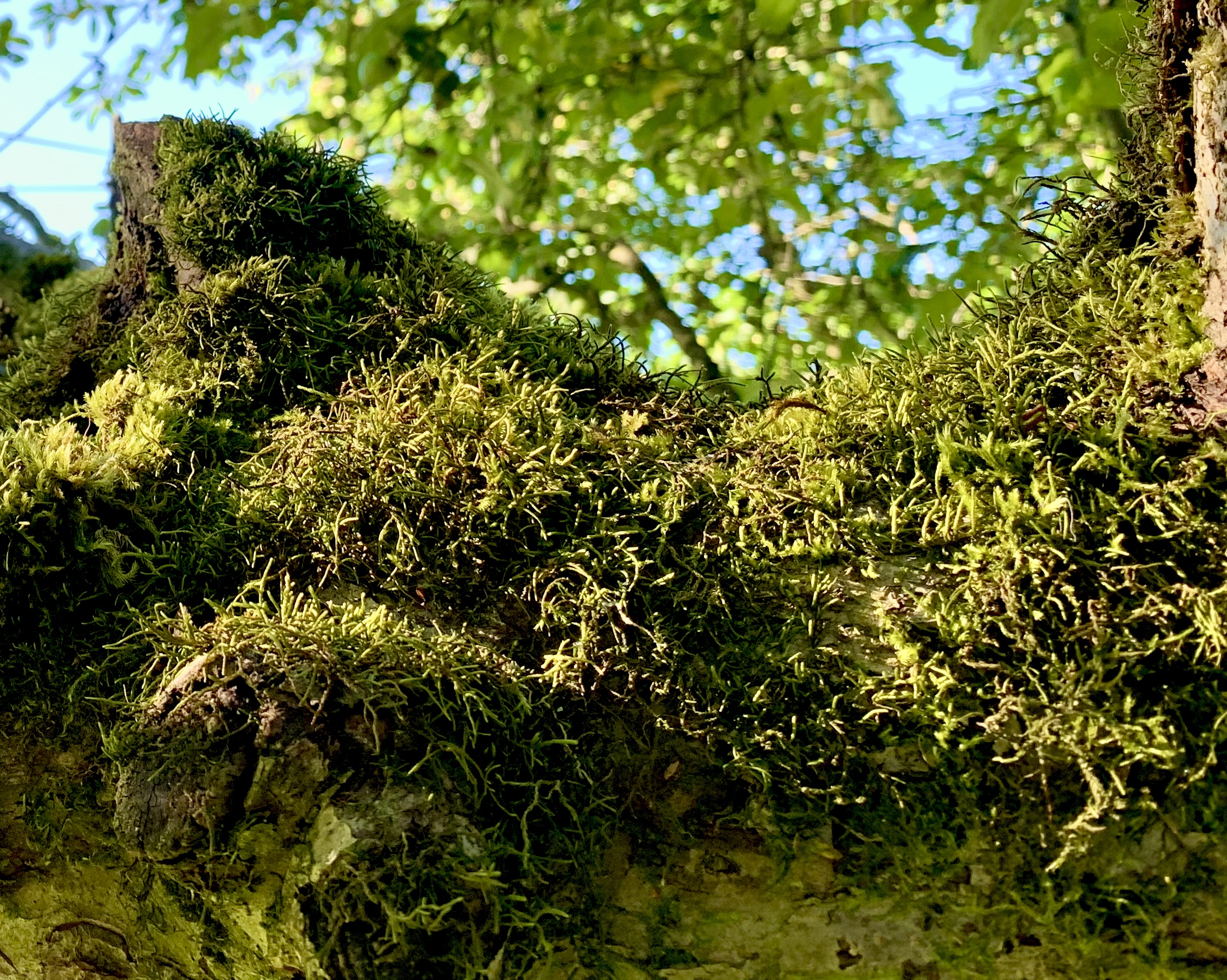
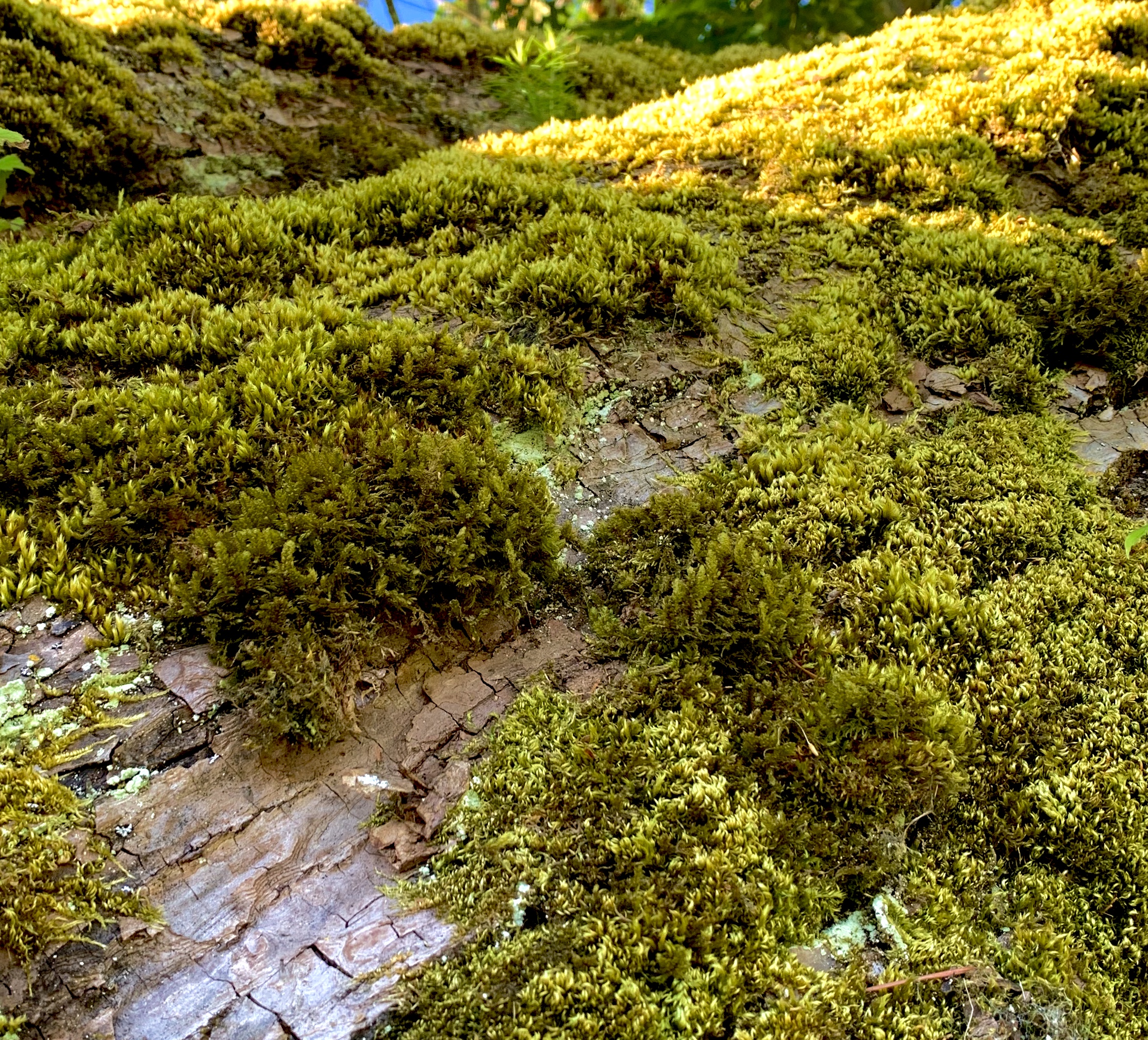
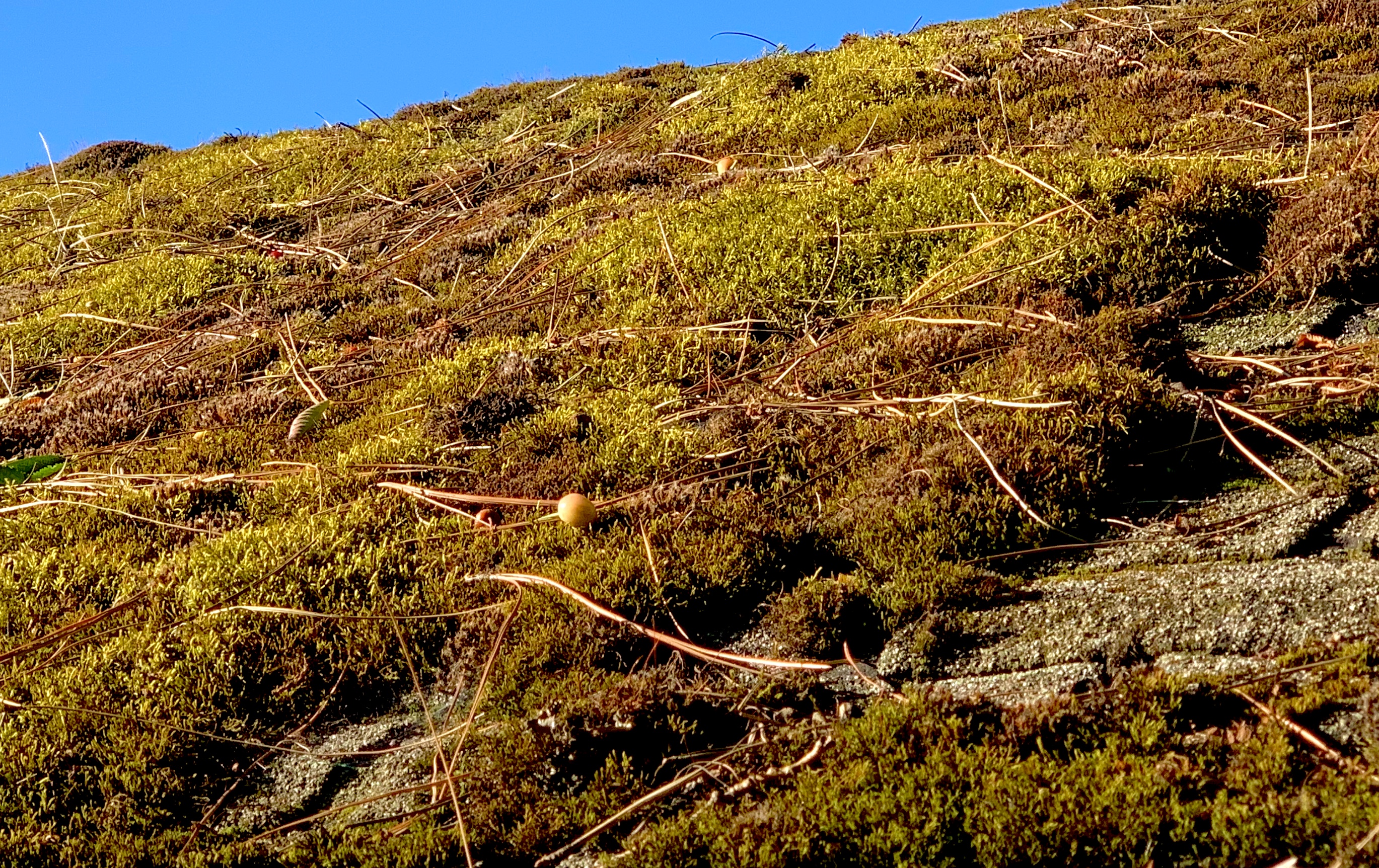
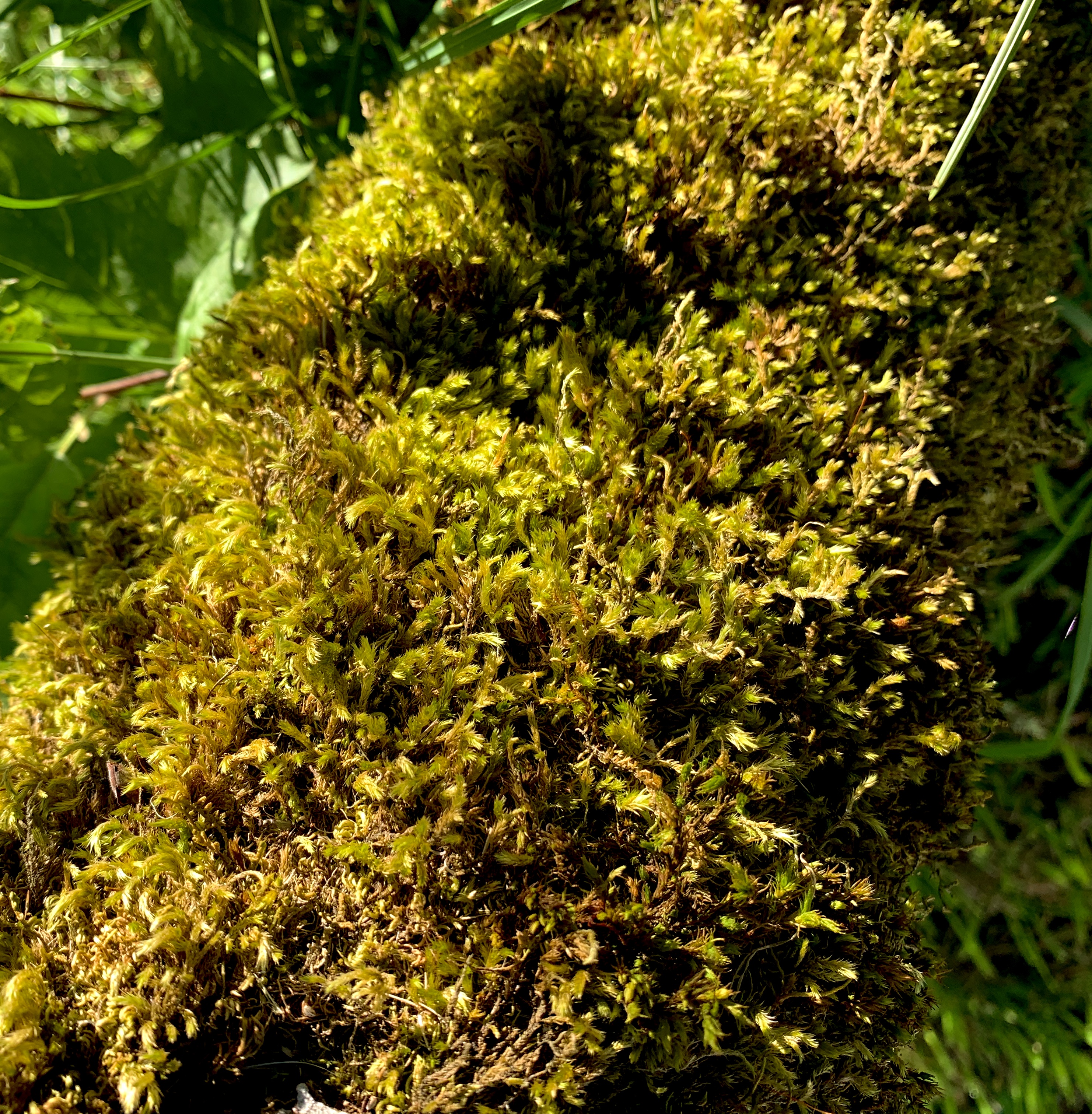
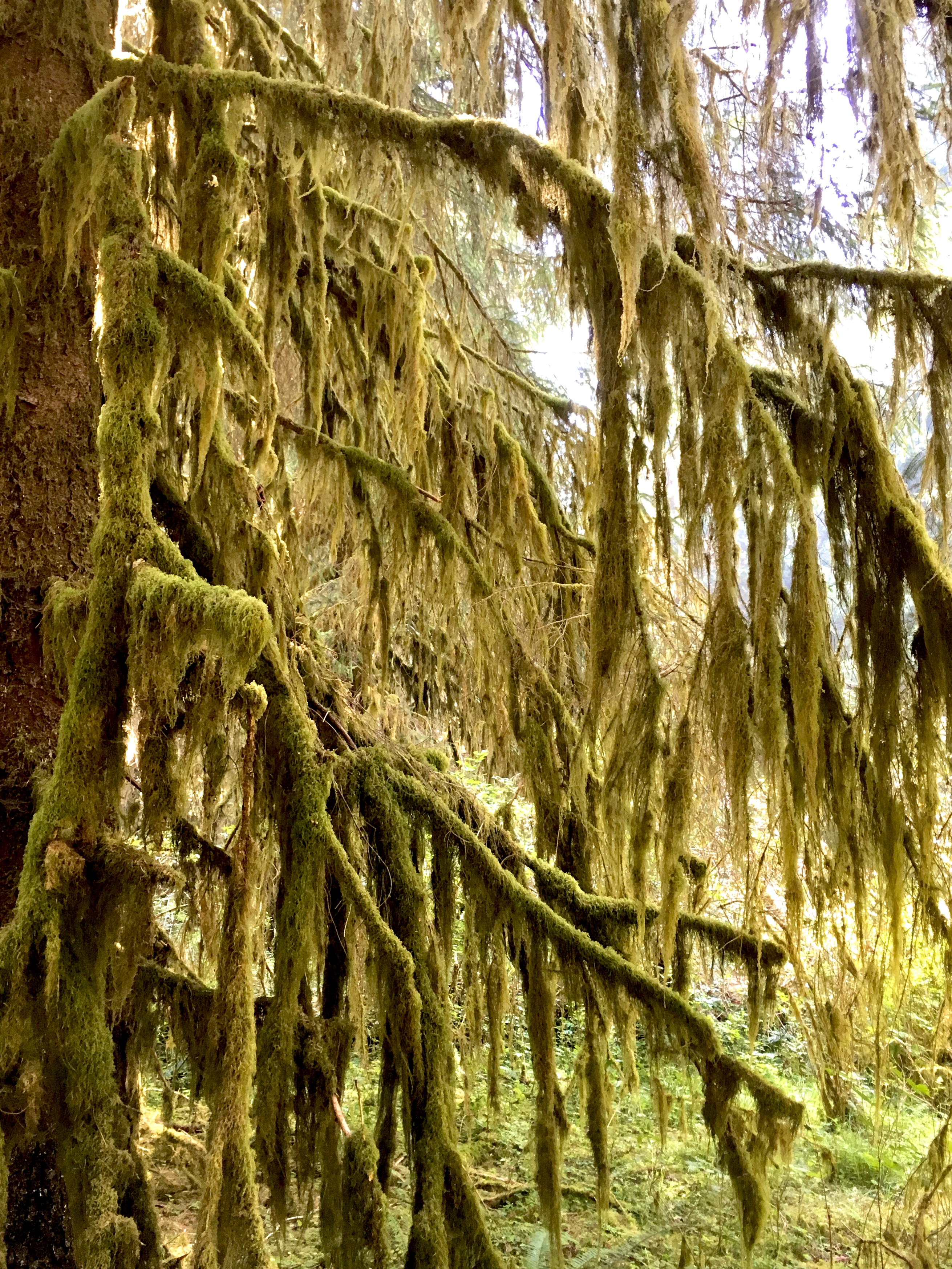
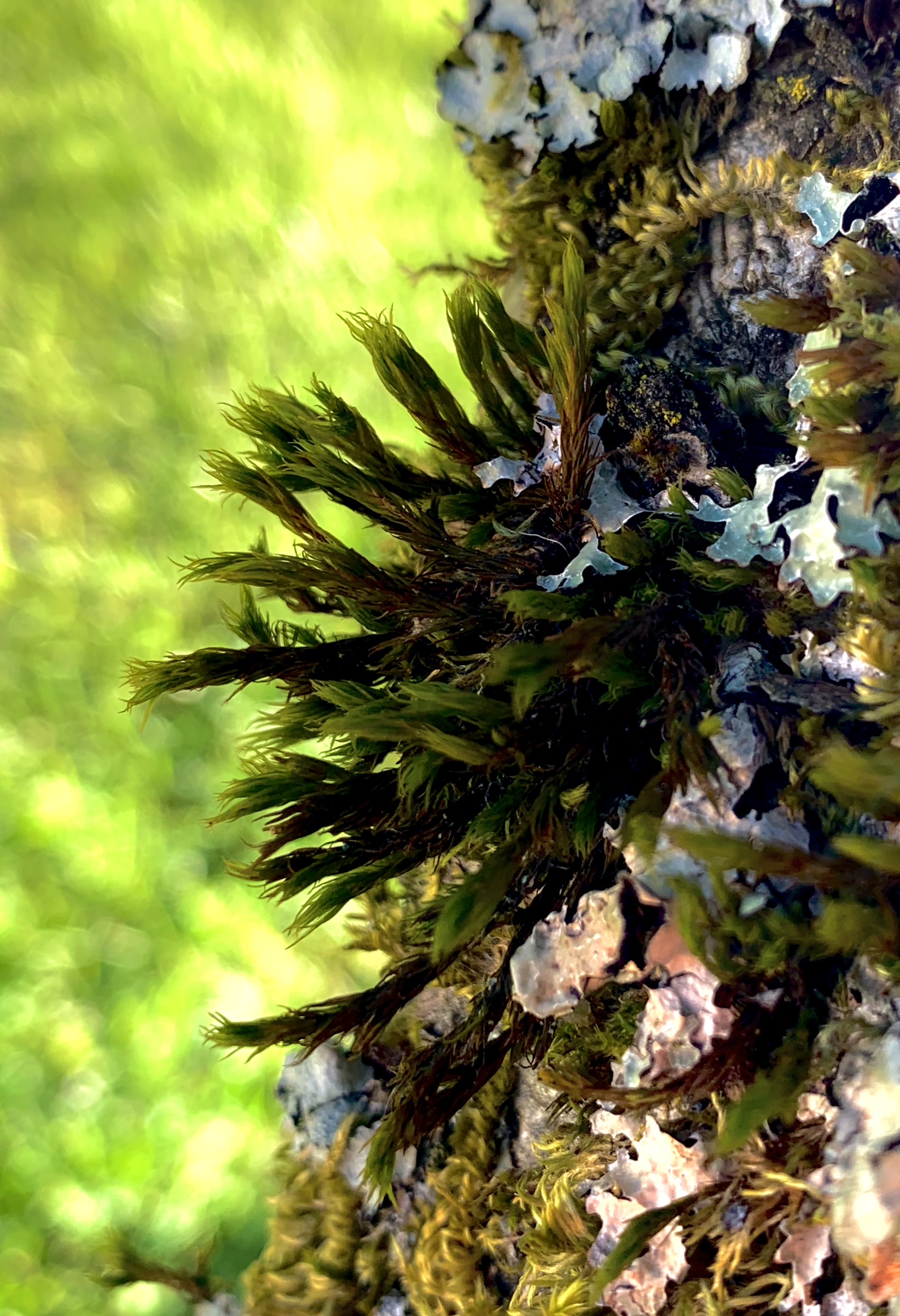
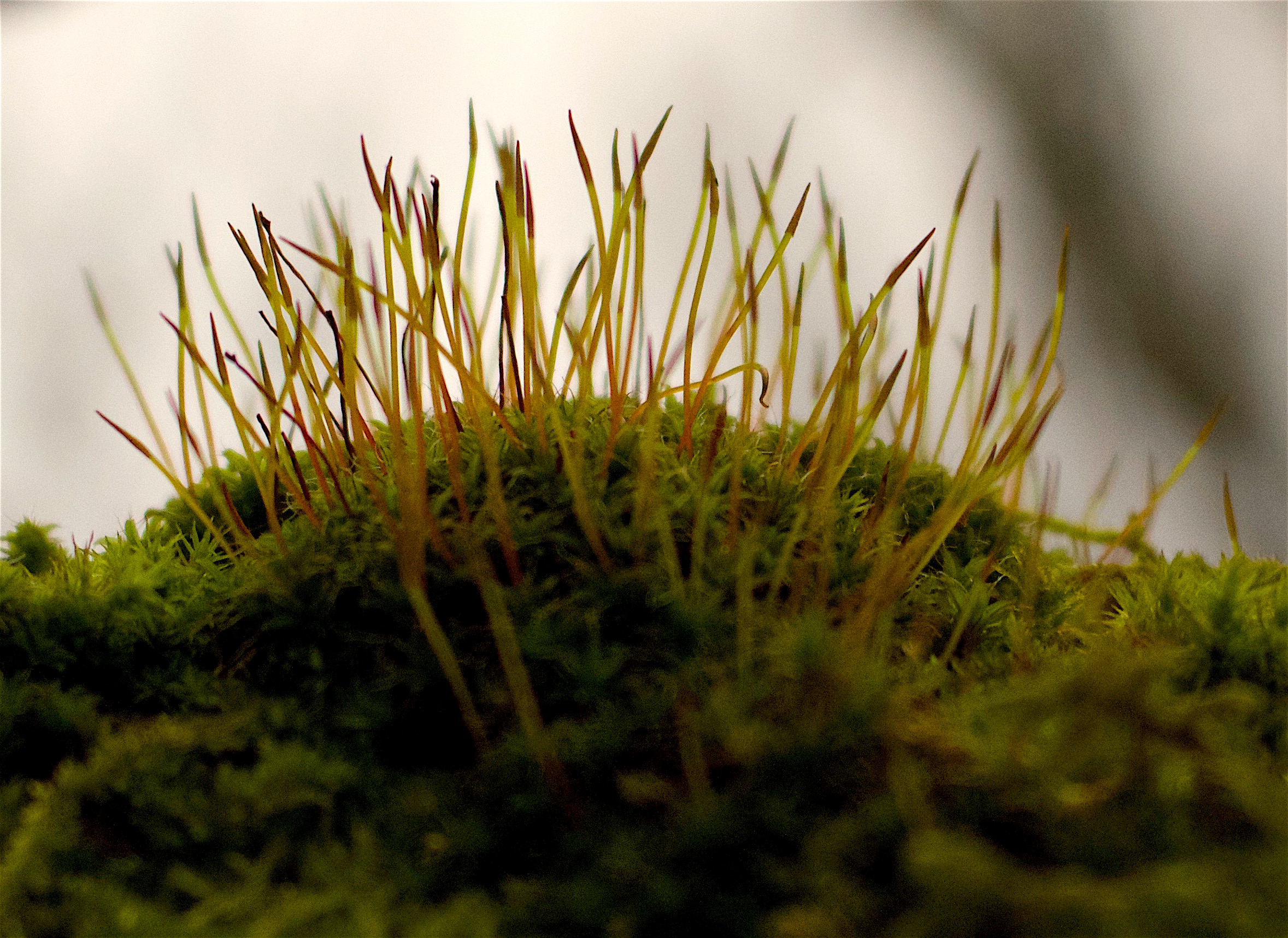
In this part of the world, mosses are everywhere. They are so much a part of the green backdrop, they become invisible as part of the scenery. Our lawn is mostly moss carpet in some spots, and many shingles on roofs sprout verdant fuzz.

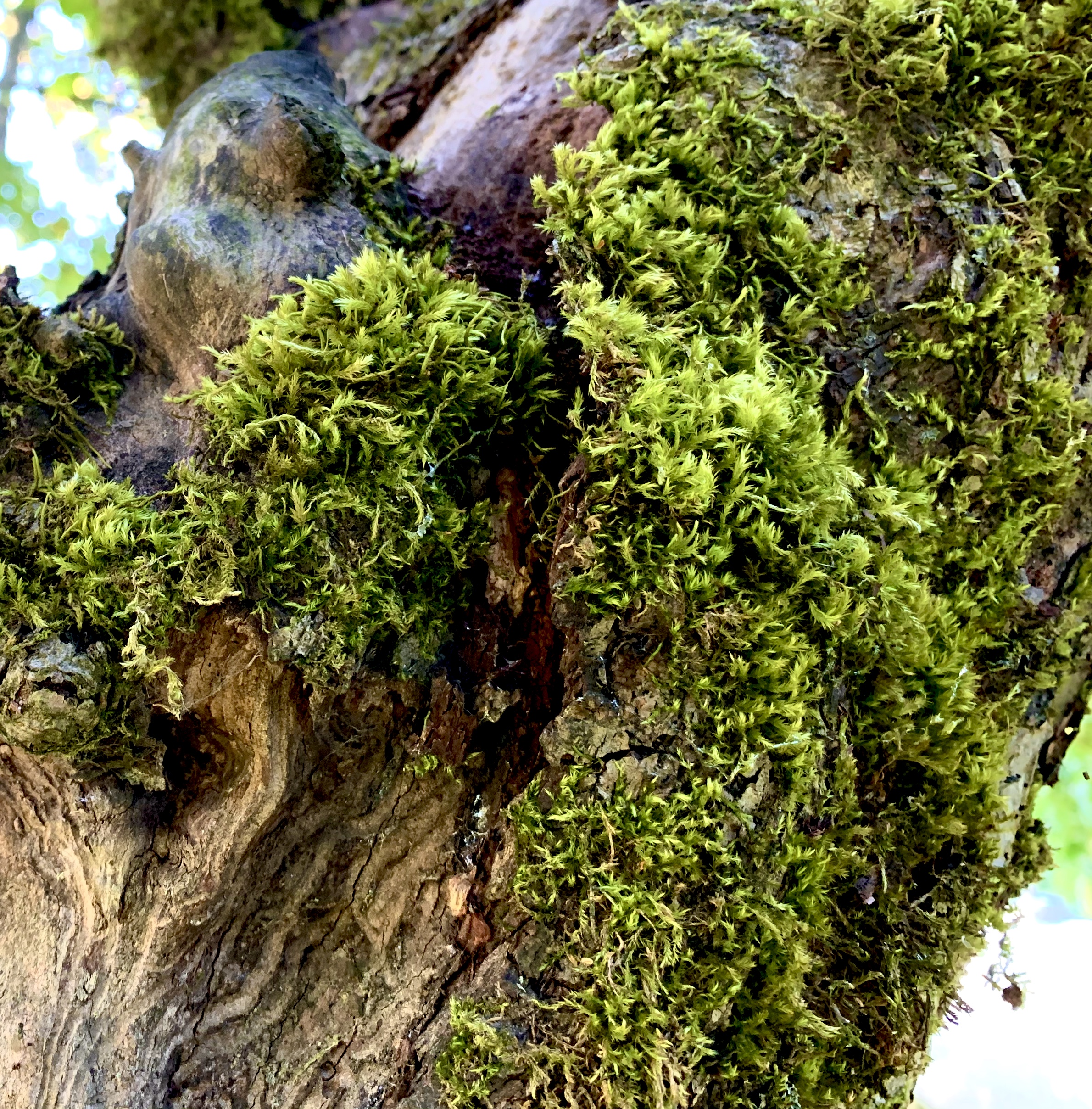
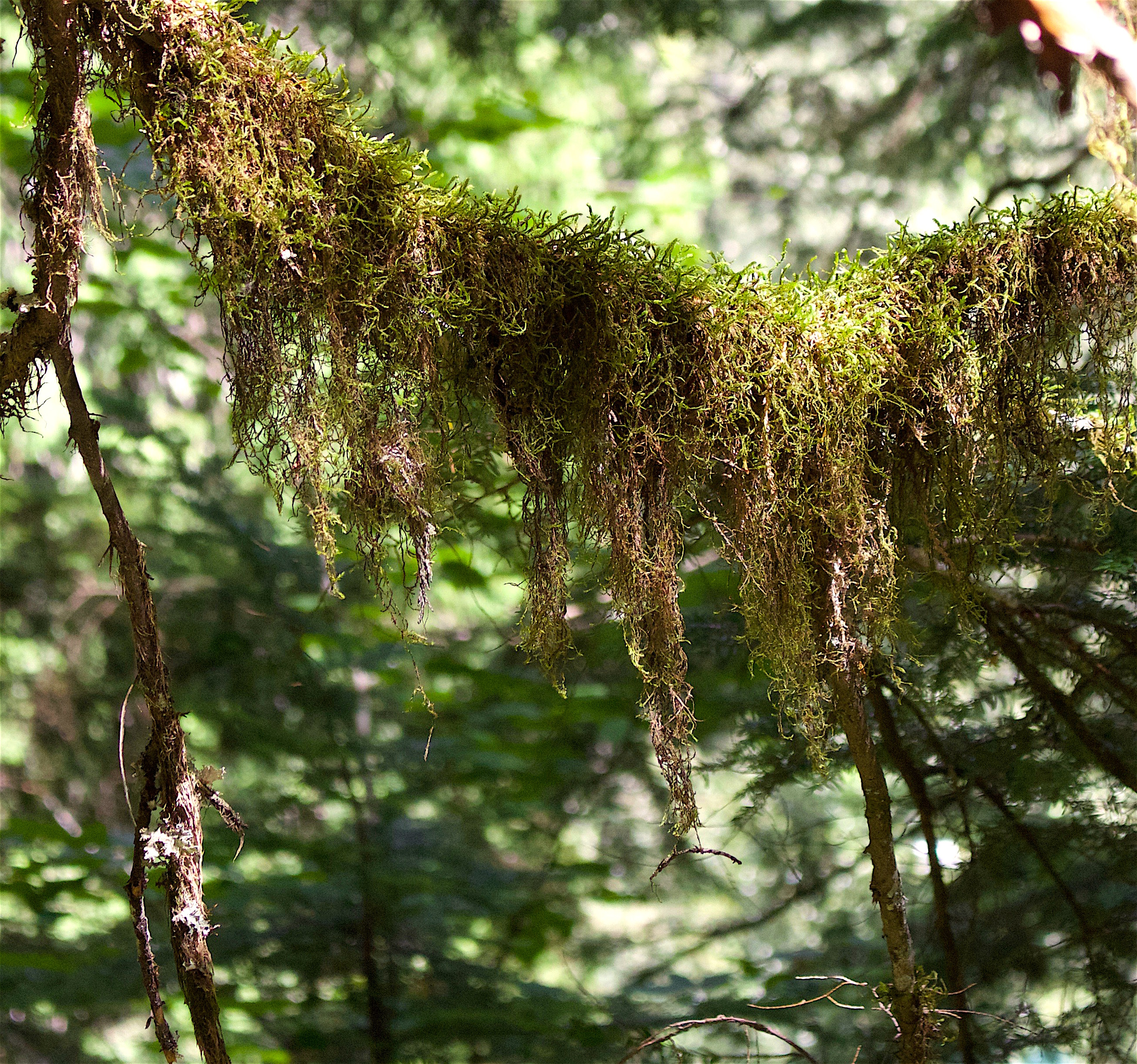
Trees and rocks are festooned with moss: draped, painted and garlanded. Moss rugs make bare-foot tree climbing a more comfy adventure with branches forming hairy armpits and cushiony crotches.
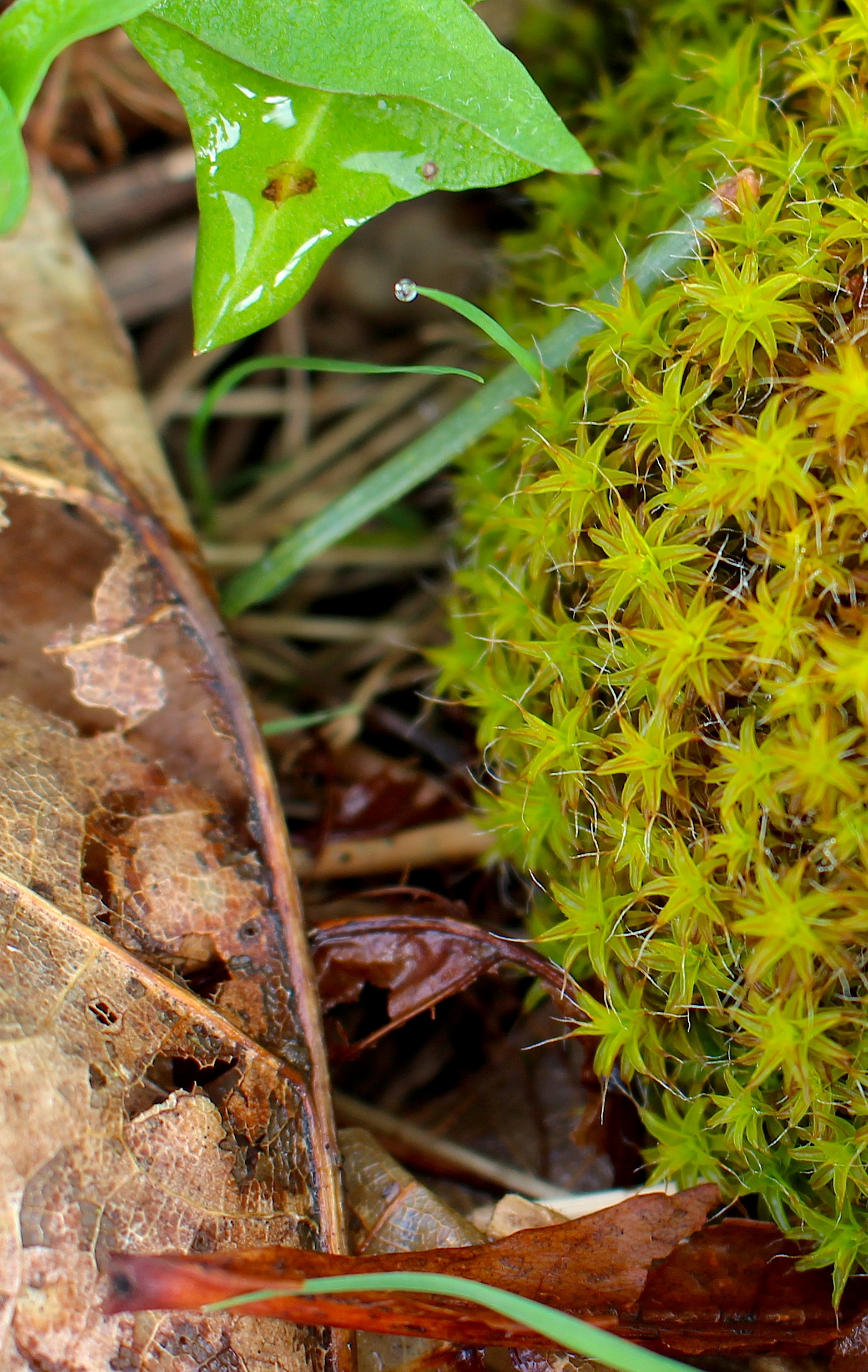
Moss is softens our sharp edges, it forgives our abrasive surfaces, it heals the wounds and gaps and cracks. It becomes balm-like therapy for a struggling world baring its teeth in anger and misunderstanding.

I say let it grow: green, gentle, generous and grace-filled.
We all can use more of that.