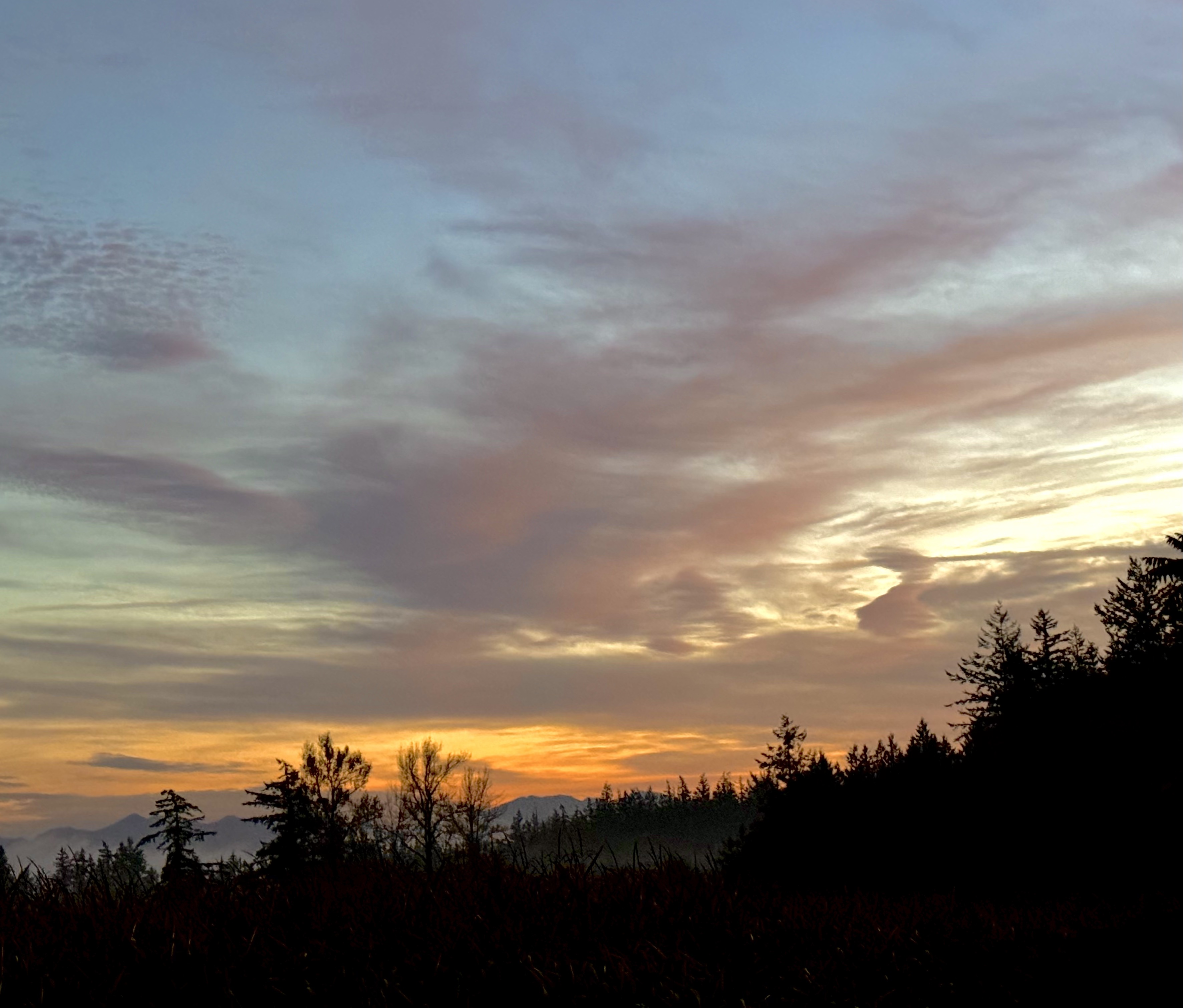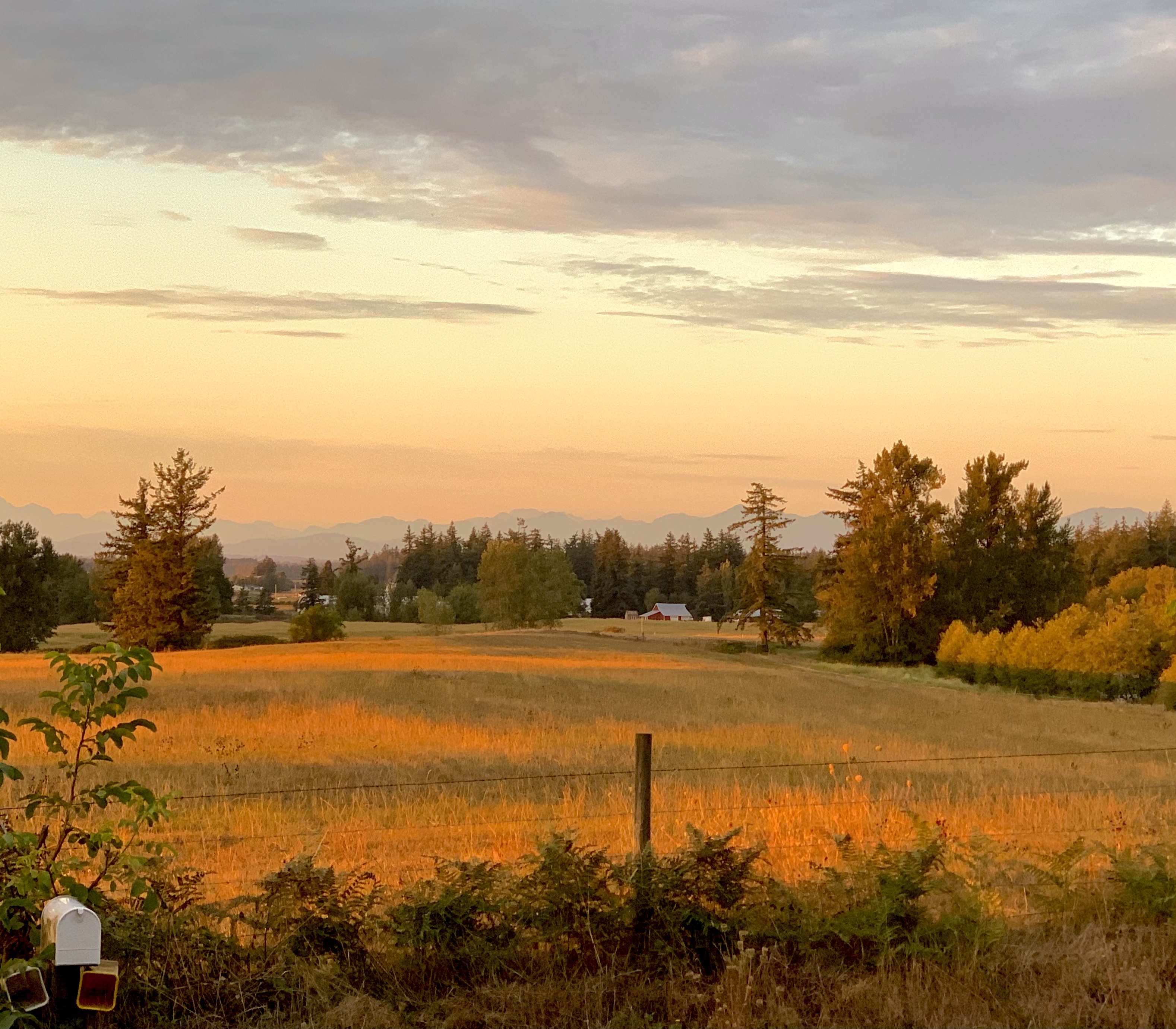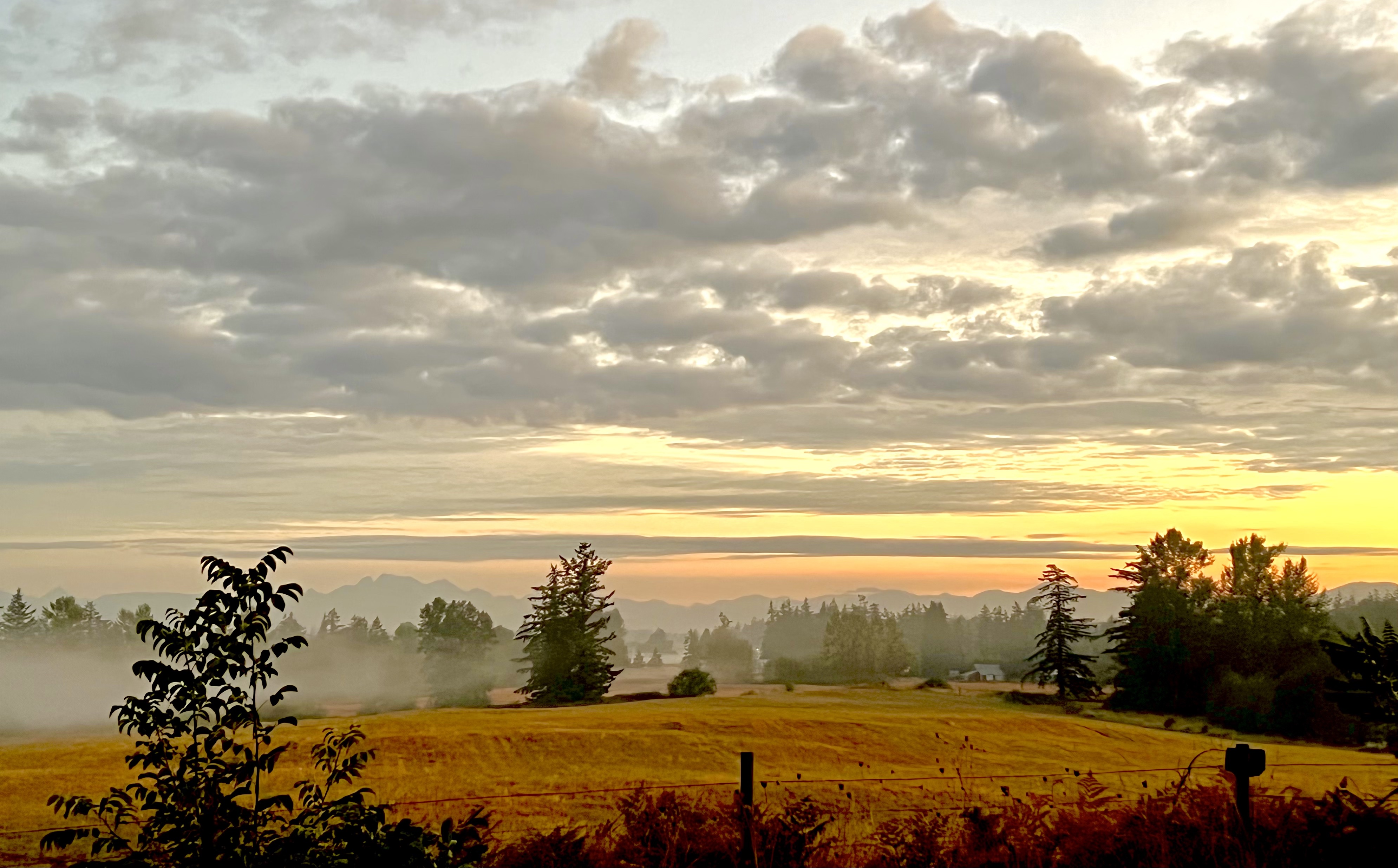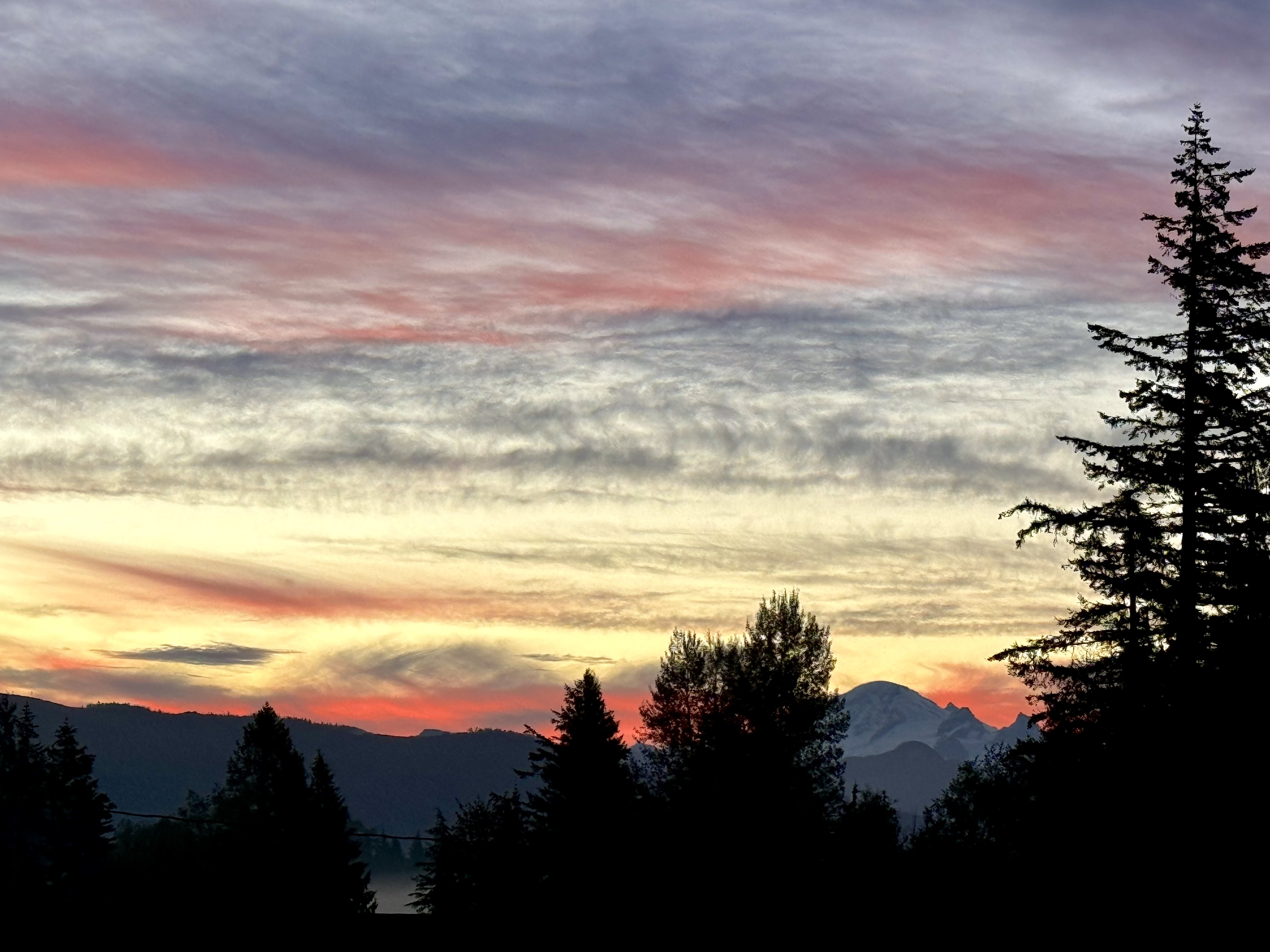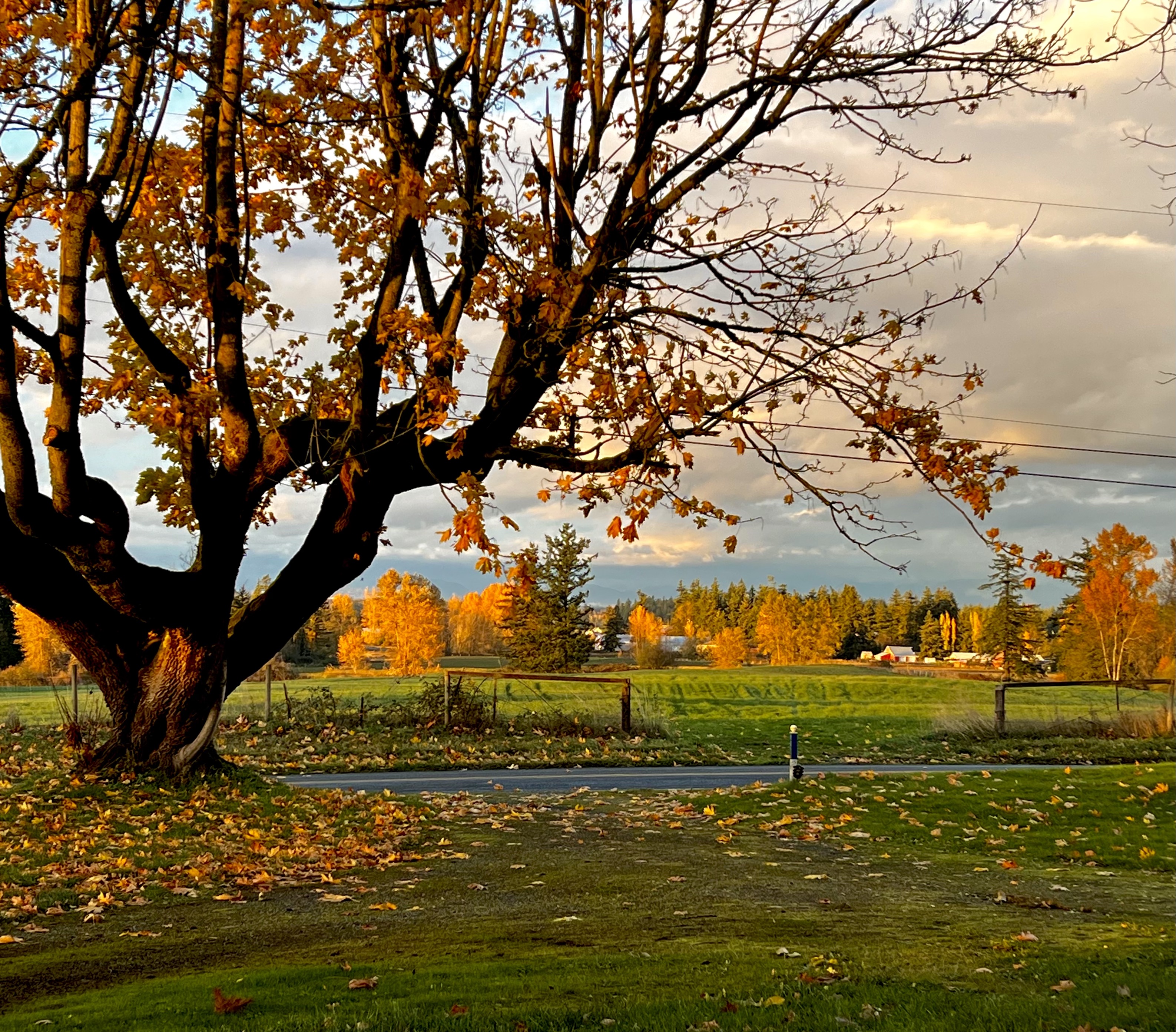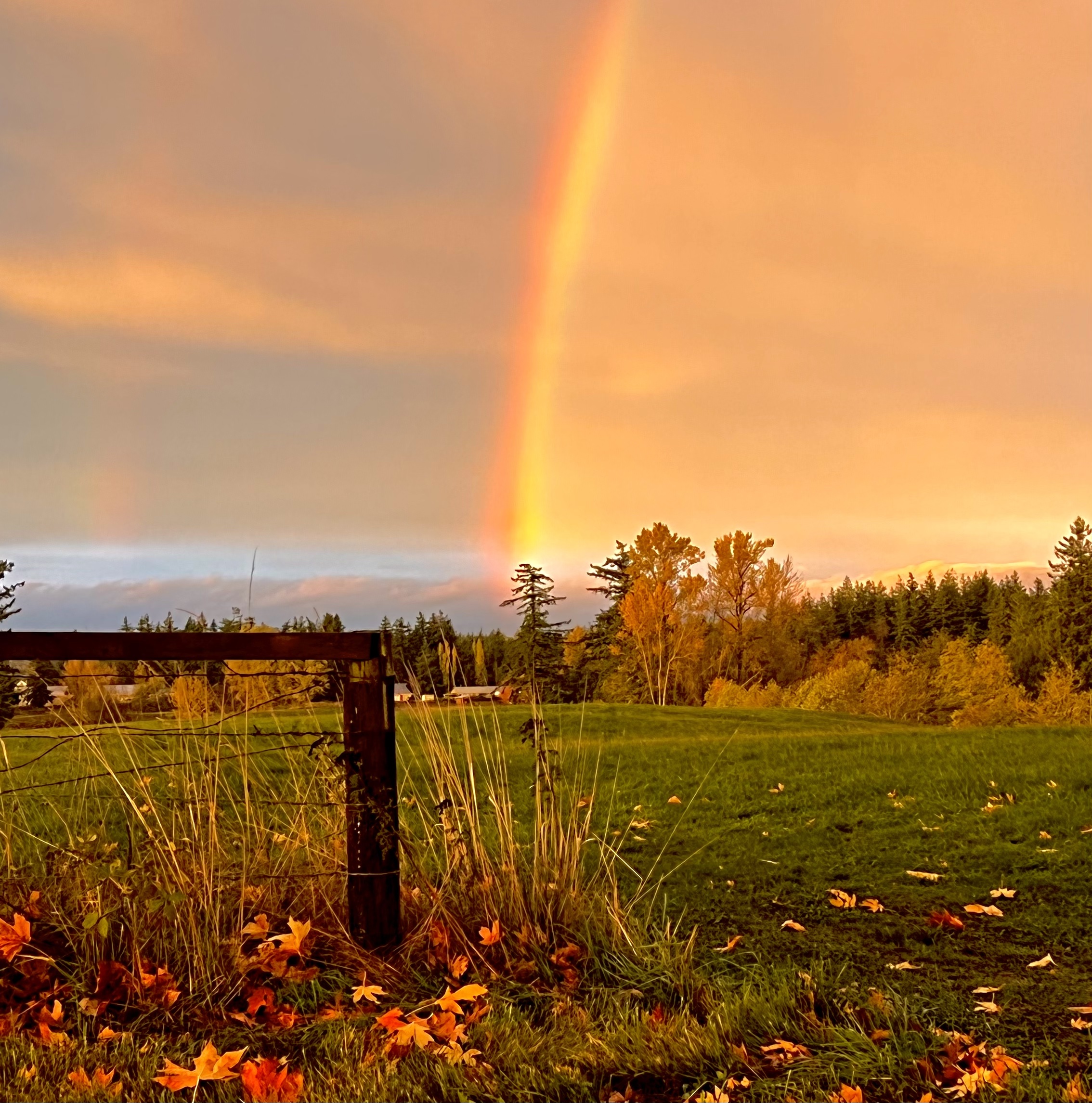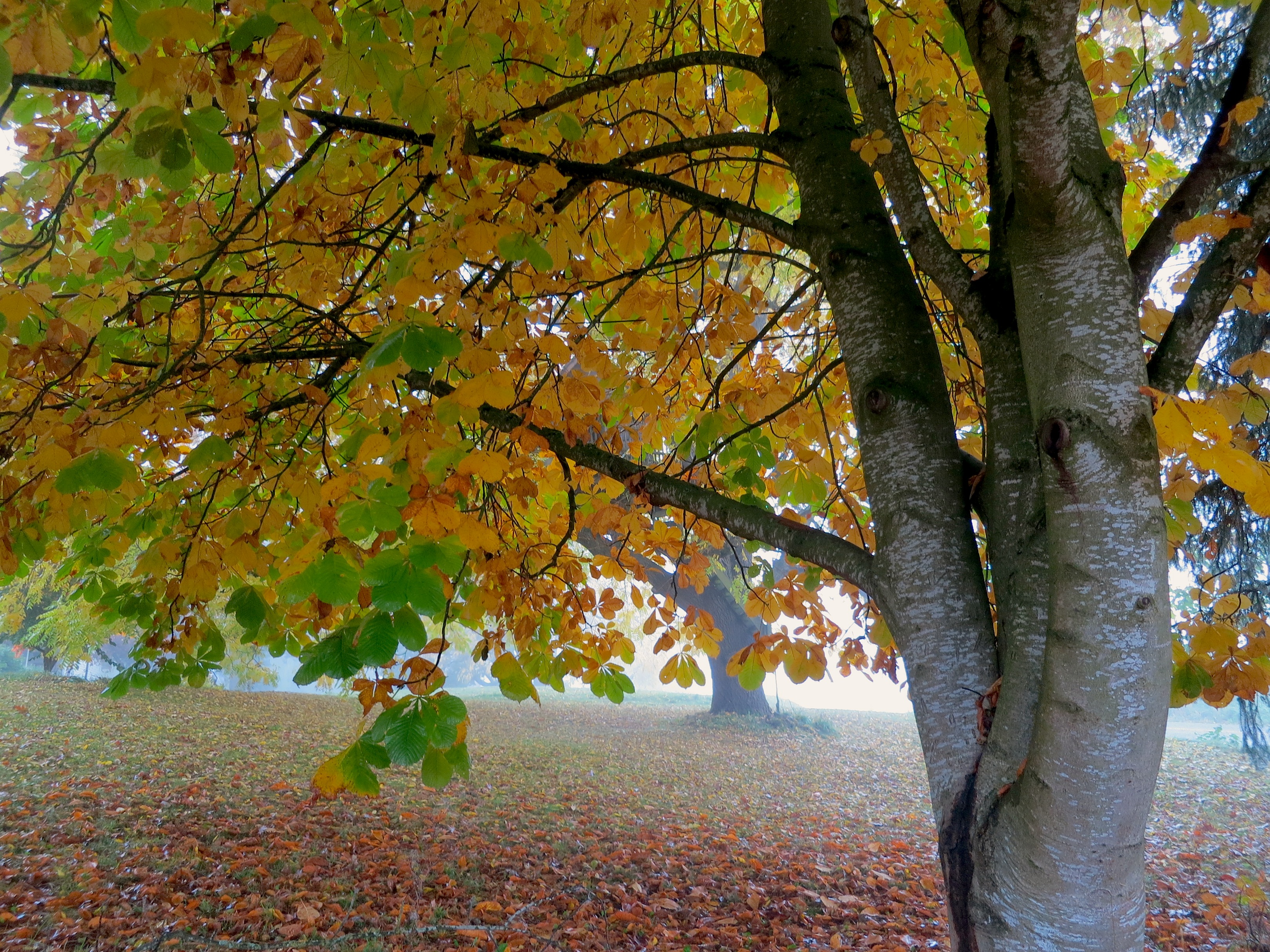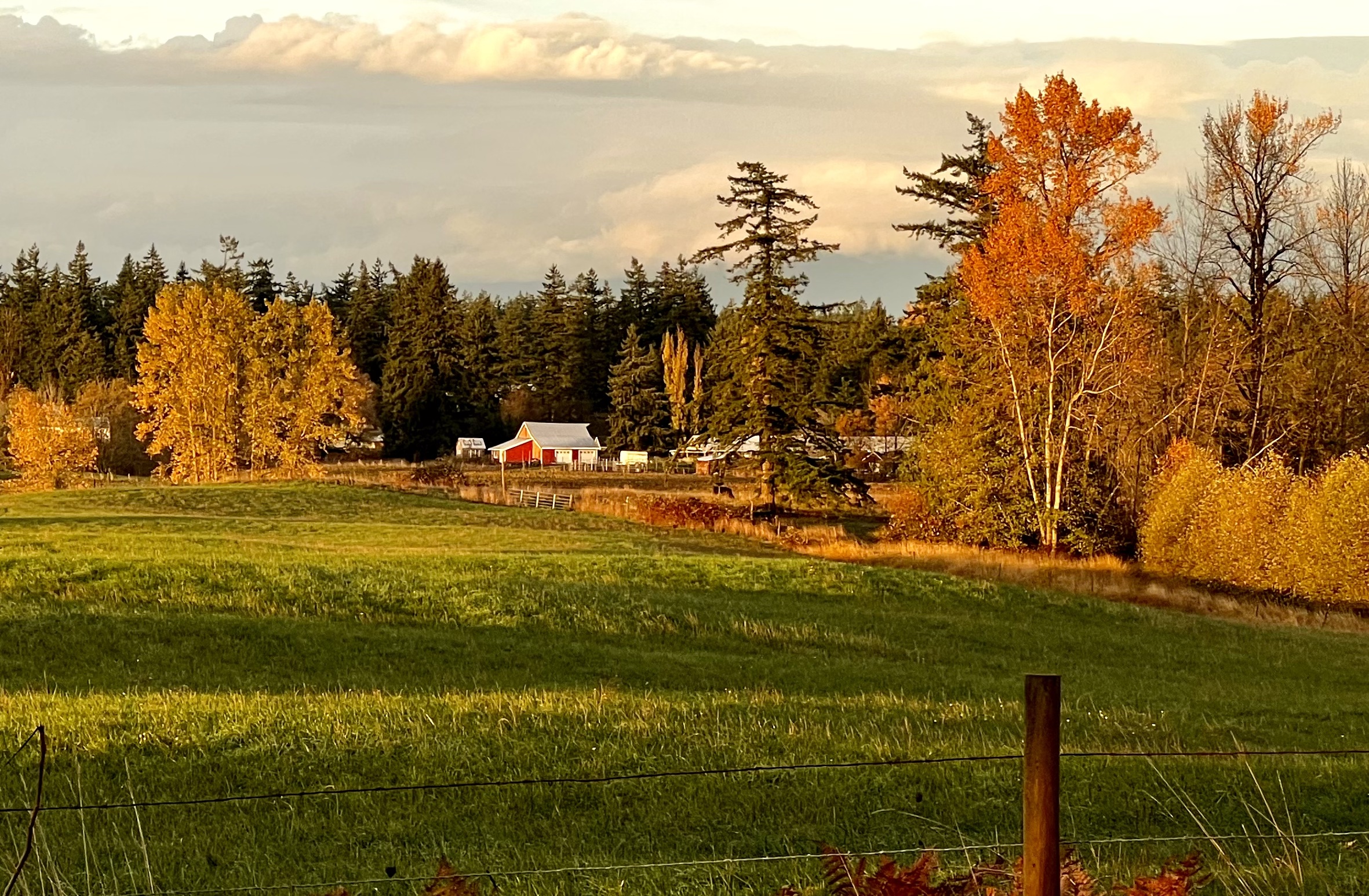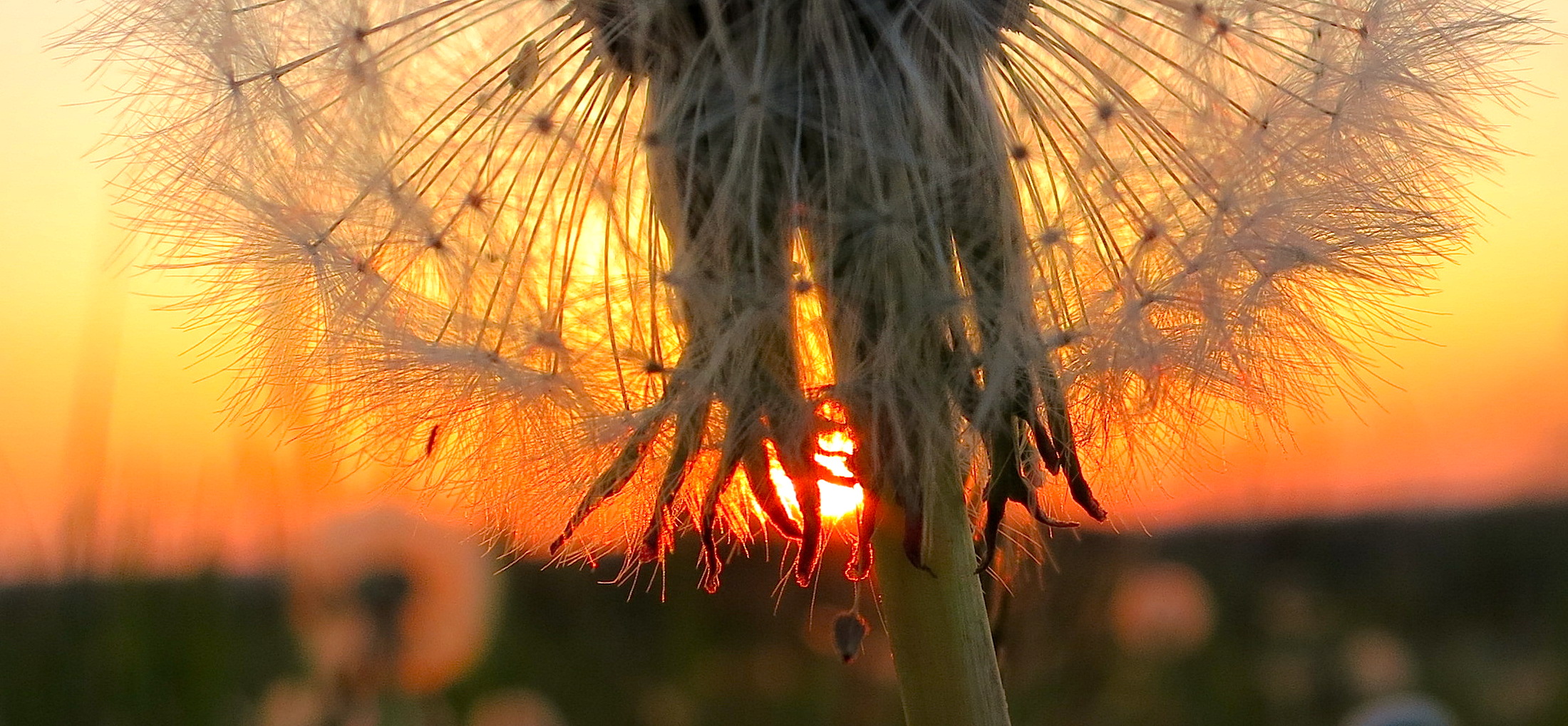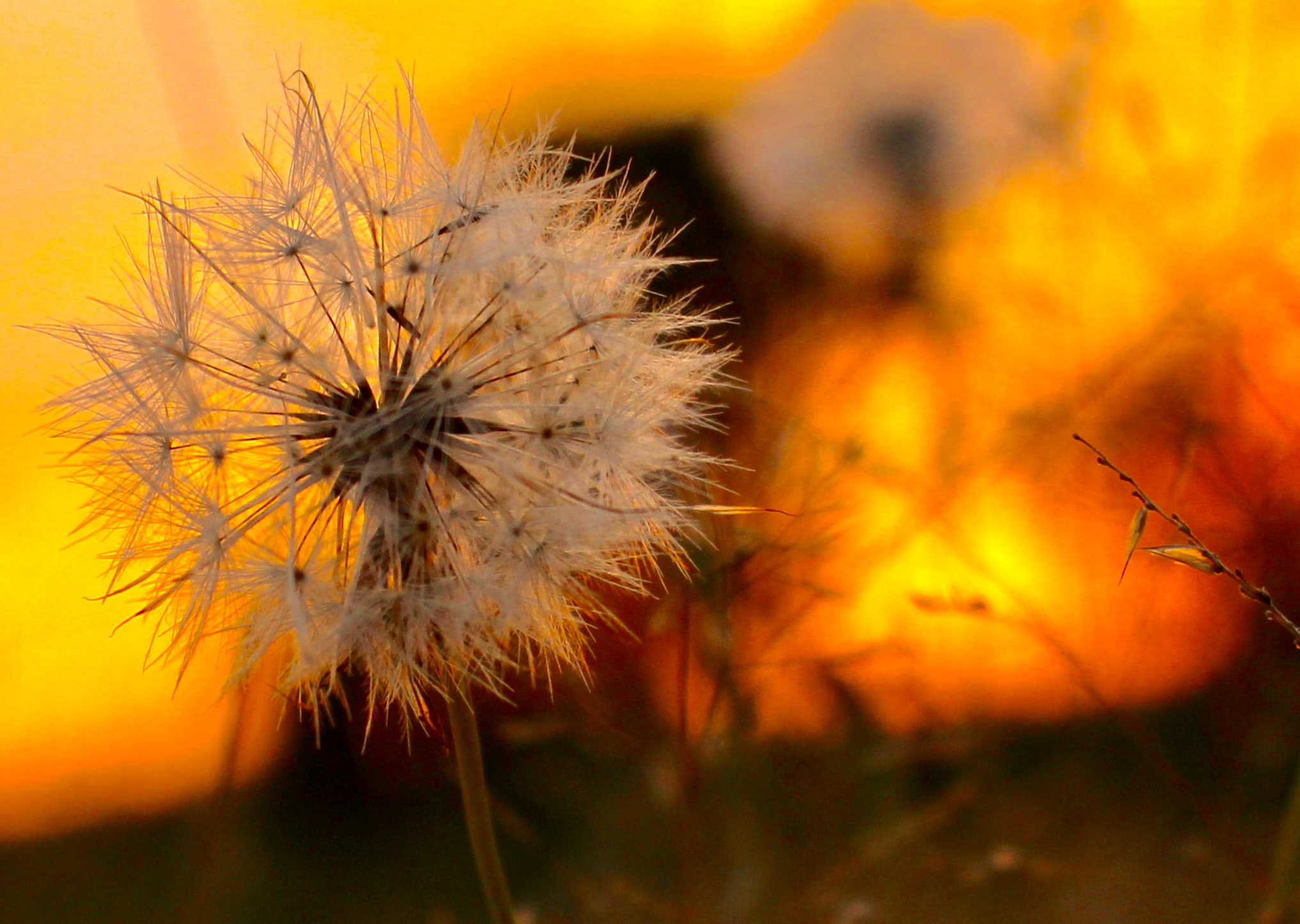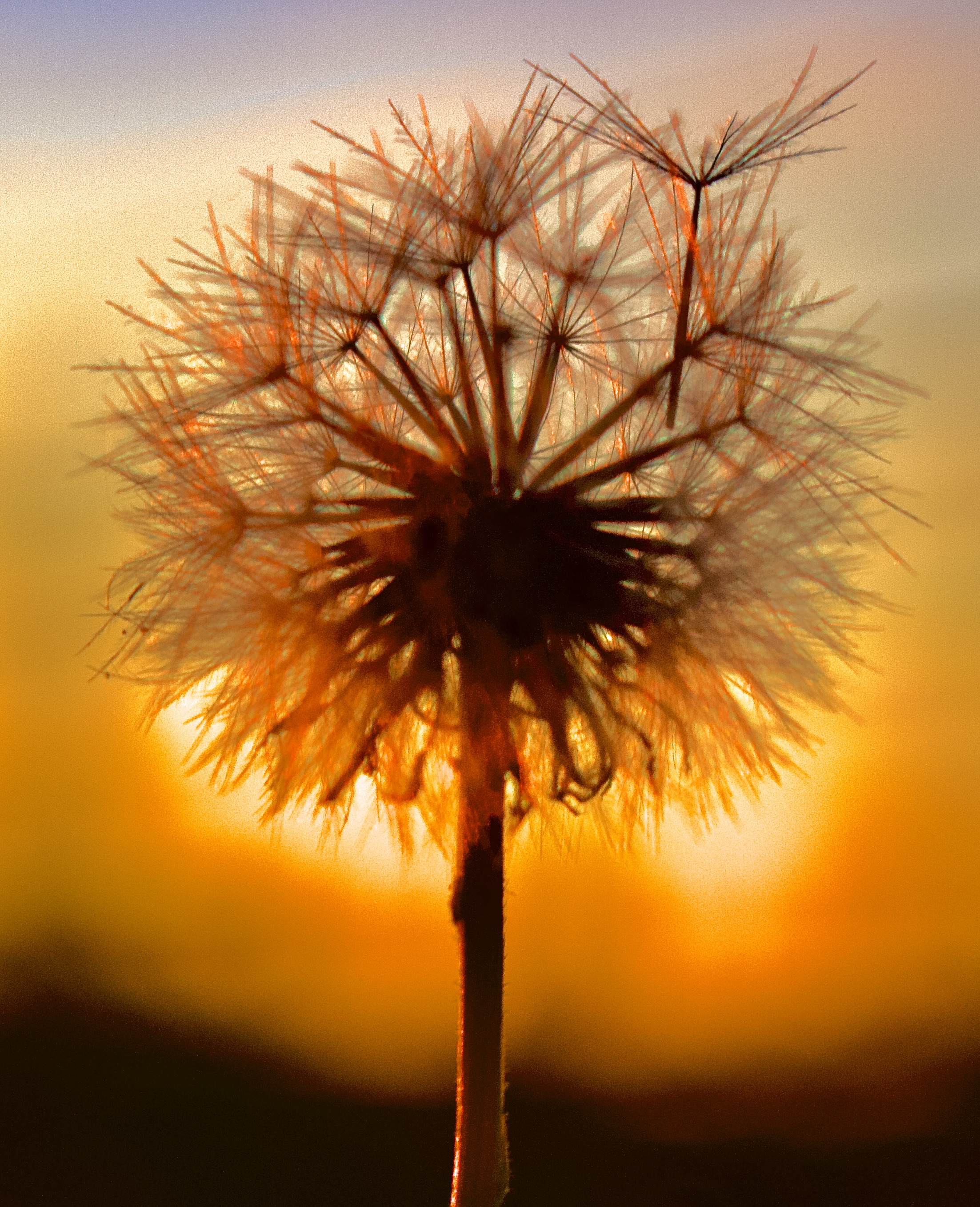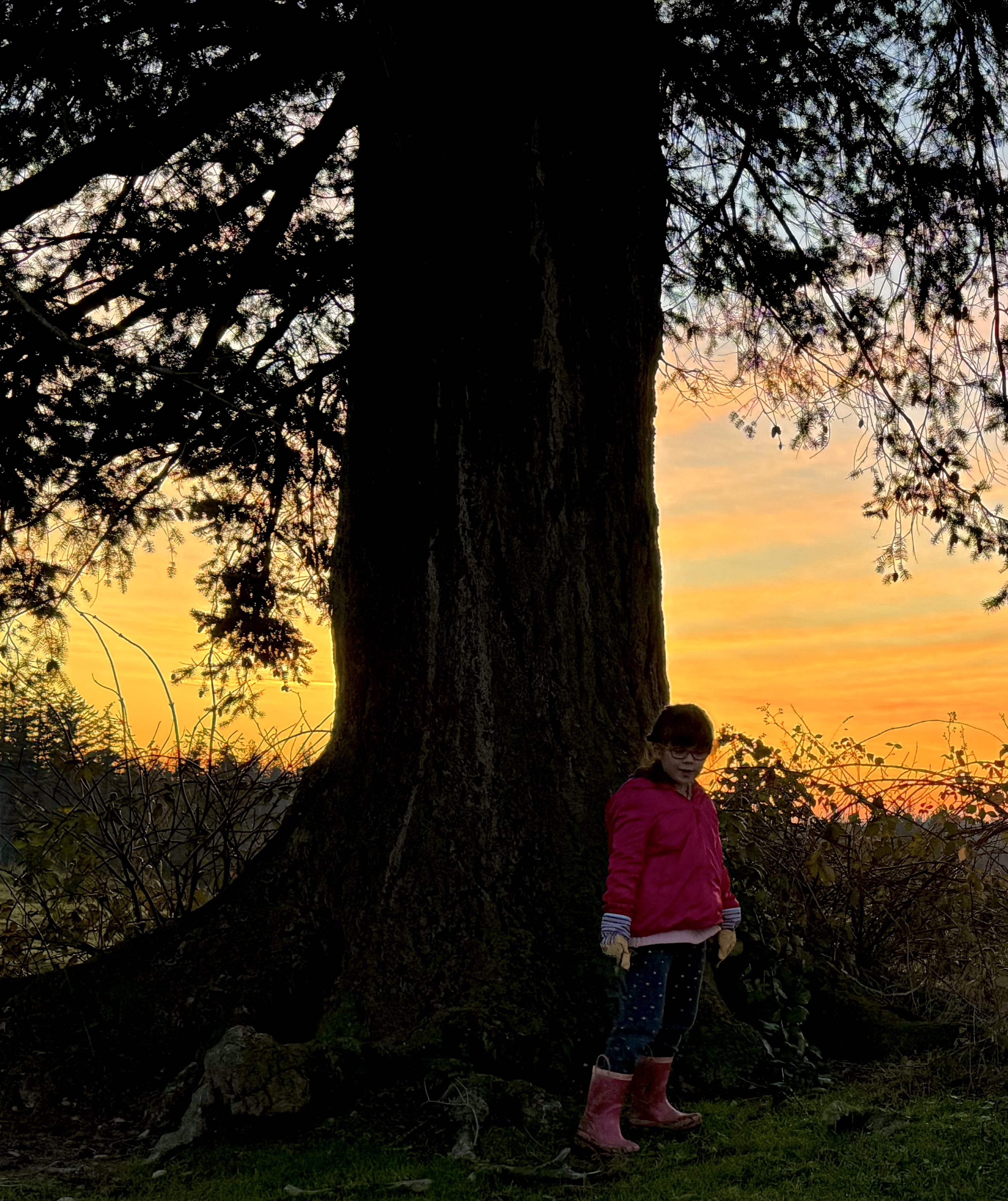
We all know that something is eternal. And it ain’t houses and it ain’t names, and it ain’t earth, and it ain’t even the stars . . . everybody knows in their bones that something is eternal, and that something has to do with human beings. All the greatest people ever lived have been telling us that for five thousand years and yet you’d be surprised how people are always losing hold of it. There’s something way down deep that’s eternal about every human being. We can only be said to be alive in those moments when our hearts are conscious of our treasures. Do any human beings ever realize life while they live it – every, every minute? ~Thornton Wilder, quotes from “Our Town”
The words from the stage play “Our Town”, written nearly 90 years ago still ring true: at that time our country was crushed under the Great Depression. Though now most people are more economically secure than the 1930’s, many of us are emotionally bankrupt.
Our country staggers under a Great Depression of the spirit~ despite greater connection electronically (often too much…), many of us are more isolated from community, family, and faith.
We need reminding to be conscious of our many treasures and abundance, never forgetting to care of others in greater need.
God, in His everlasting recognition of our eternal need of Him, cares for us, even as we turn our faces away from Him.
We all feel His Love, deep in our bones.
So I search the soil of this life, this farm, this faith to find what yearns to grow, to bloom, to fruit, to be harvested to share with others.
My deep gratitude goes to you who visit here and to those who let me know the small and the good I share with you makes a difference in your day. I am beyond thankful you are here, listening.
Many blessings in your own thanksgiving this week, Emily
One-Time
Monthly
Yearly
Make a one-time or recurring donation to support daily Barnstorming posts
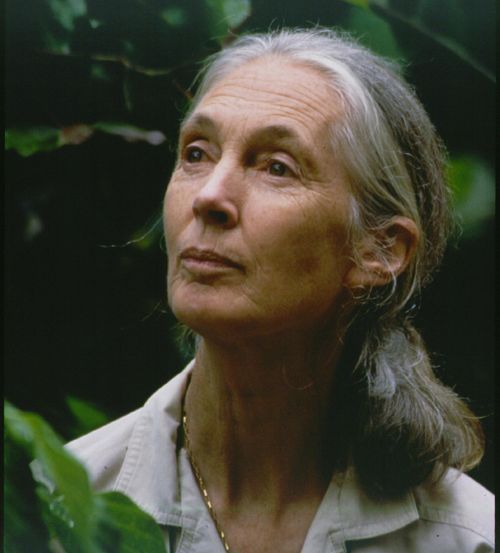
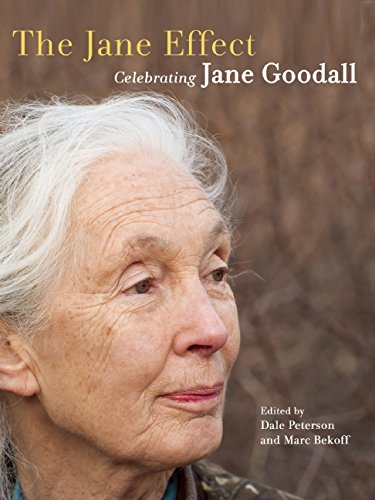
This morning was the live streaming of the Washington National Cathedral memorial service and life celebration for Dr. Jane Goodall. I had received an invitation to attend along with others who had worked with Jane, but I decided this was not the best time to travel.
I encourage you to watch (linked below) when you have 90 minutes. It was a beautifully planned service that fit Jane well.
It was very moving for me to hear her three grandchildren speak, as well as several others who were touched directly by her.
I like the lady horses best, how they make it all look easy, like running 40 miles per hour is as fun as taking a nap, or grass. I like their lady horse swagger, after winning. Ears up, girls, ears up! But mainly, let’s be honest, I like that they’re ladies. As if this big dangerous animal is also a part of me, that somewhere inside the delicate skin of my body, there pumps an 8-pound female horse heart, giant with power, heavy with blood. Don’t you want to believe it? Don’t you want to lift my shirt and see the huge beating genius machine that thinks, no, it knows, it’s going to come in first. ~Ada Limón “How to Triumph Like a Girl”
Primarily from my college training in animal behavior, I have an appreciation for social cues, both human and non-human: those often nonverbal signals that are communicated through subtle means–in people, perhaps it is a raised eyebrow, a rapid blink, a tensing of the lips, a fidgeting foot.
When I studied captive and wild chimpanzees, they showed very familiar facial expressions and nonverbal communication that could be understood readily by a human primate.
In horses, it can be harder to interpret but their nonverbal language is there for all to see. The herdmates and the human handler, with careful observation and interpretation, should not be surprised about “what is going to happen next.”
It is no mystery.
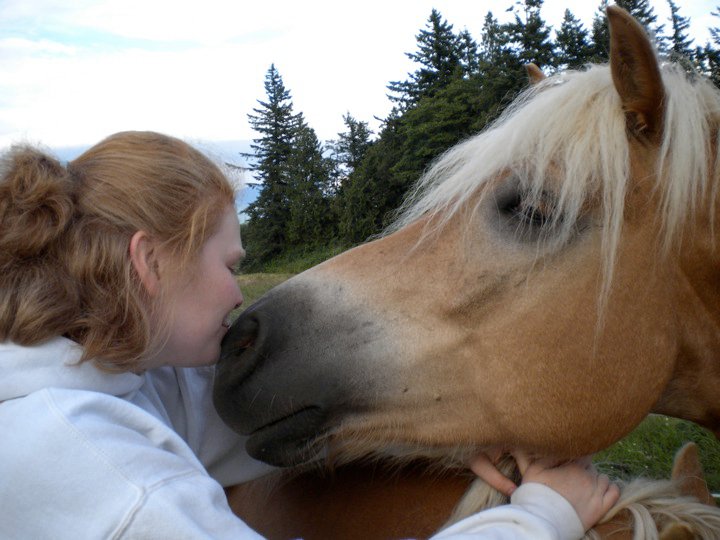
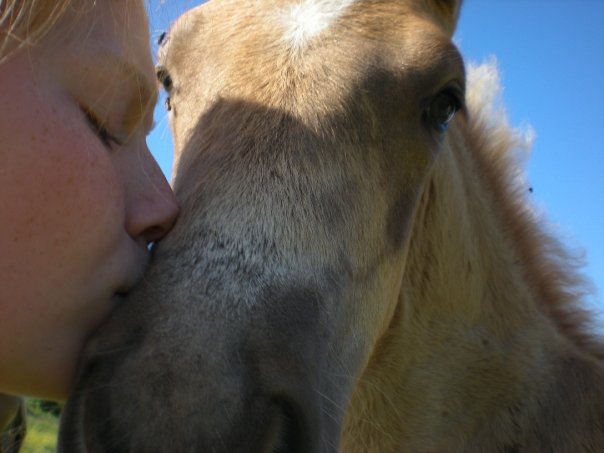
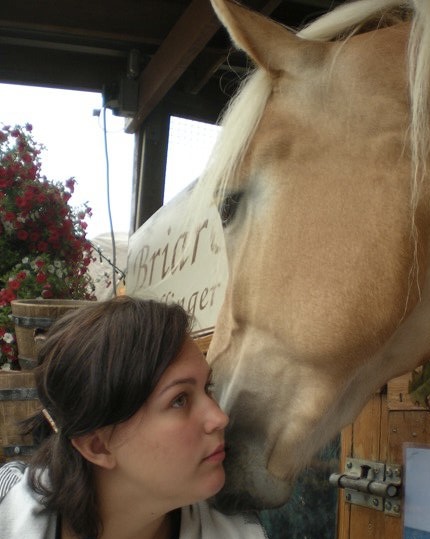
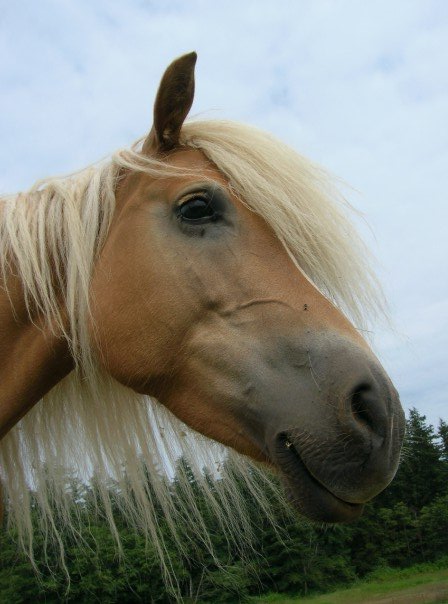
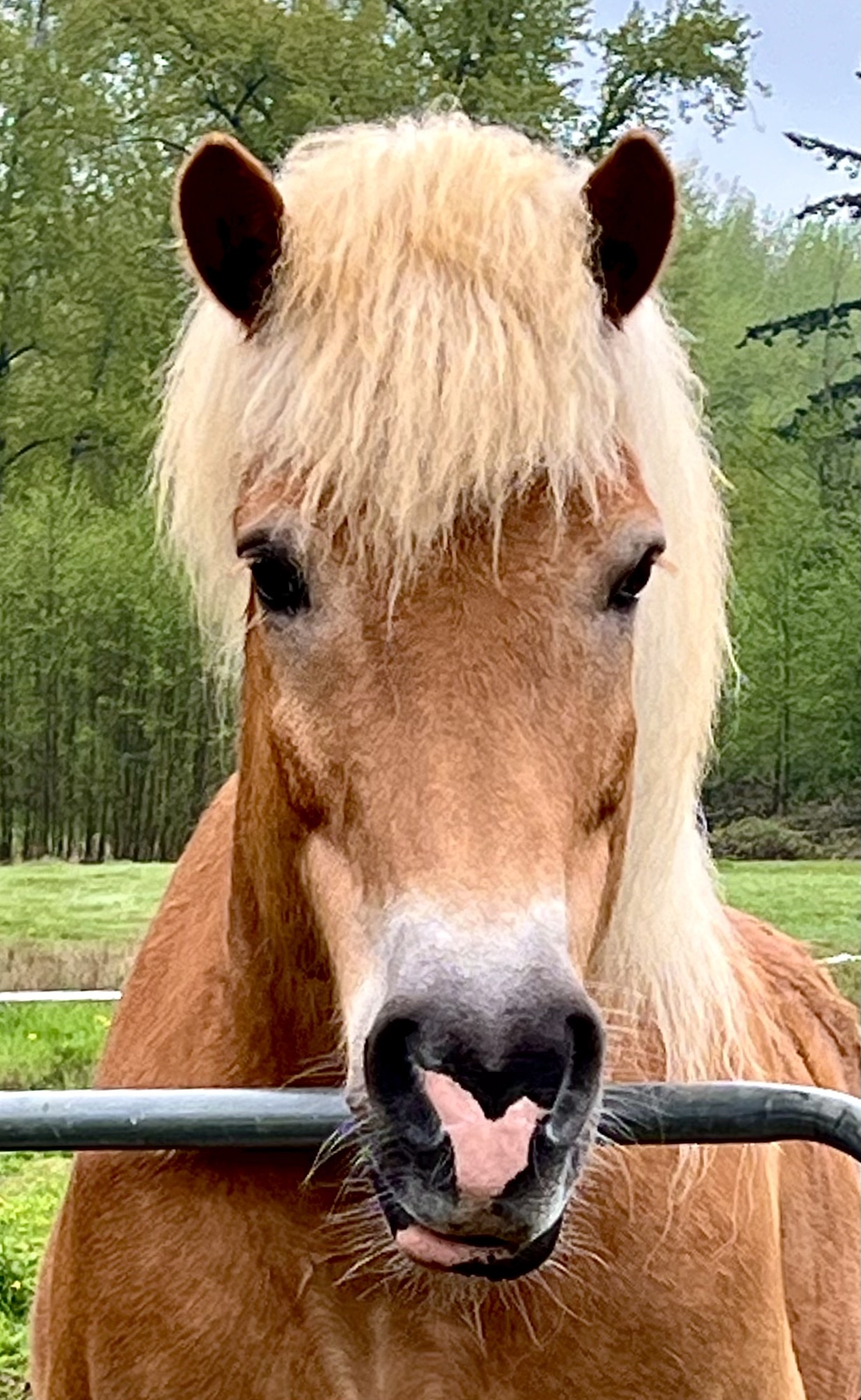
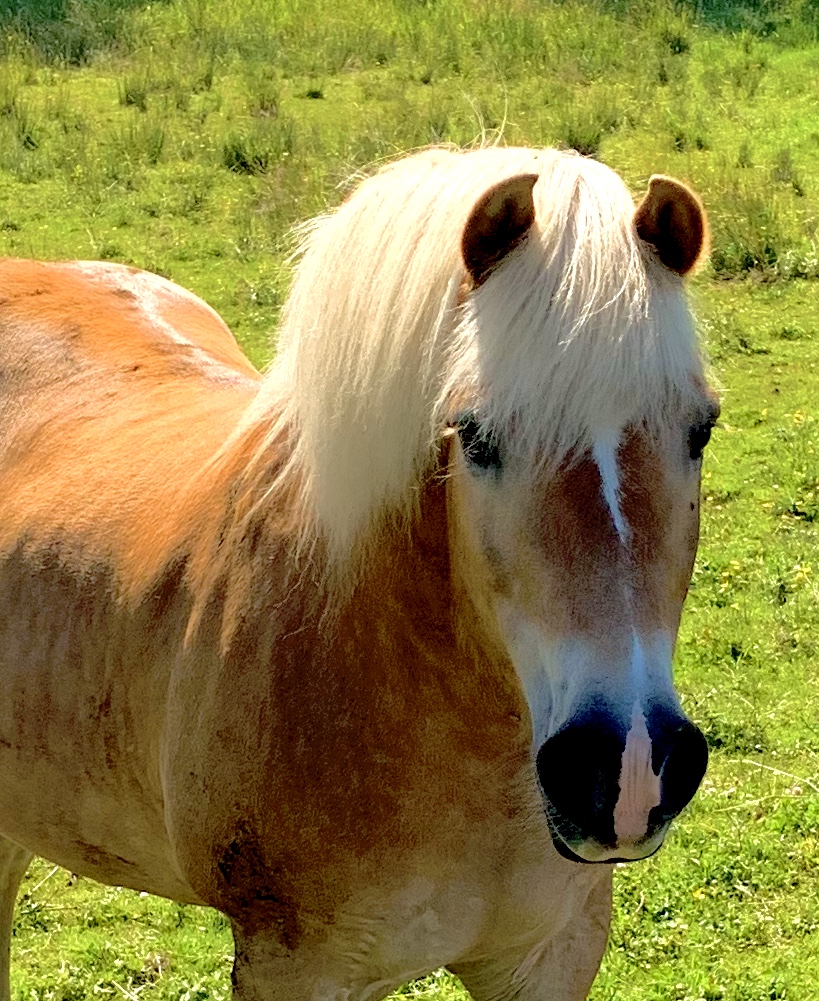
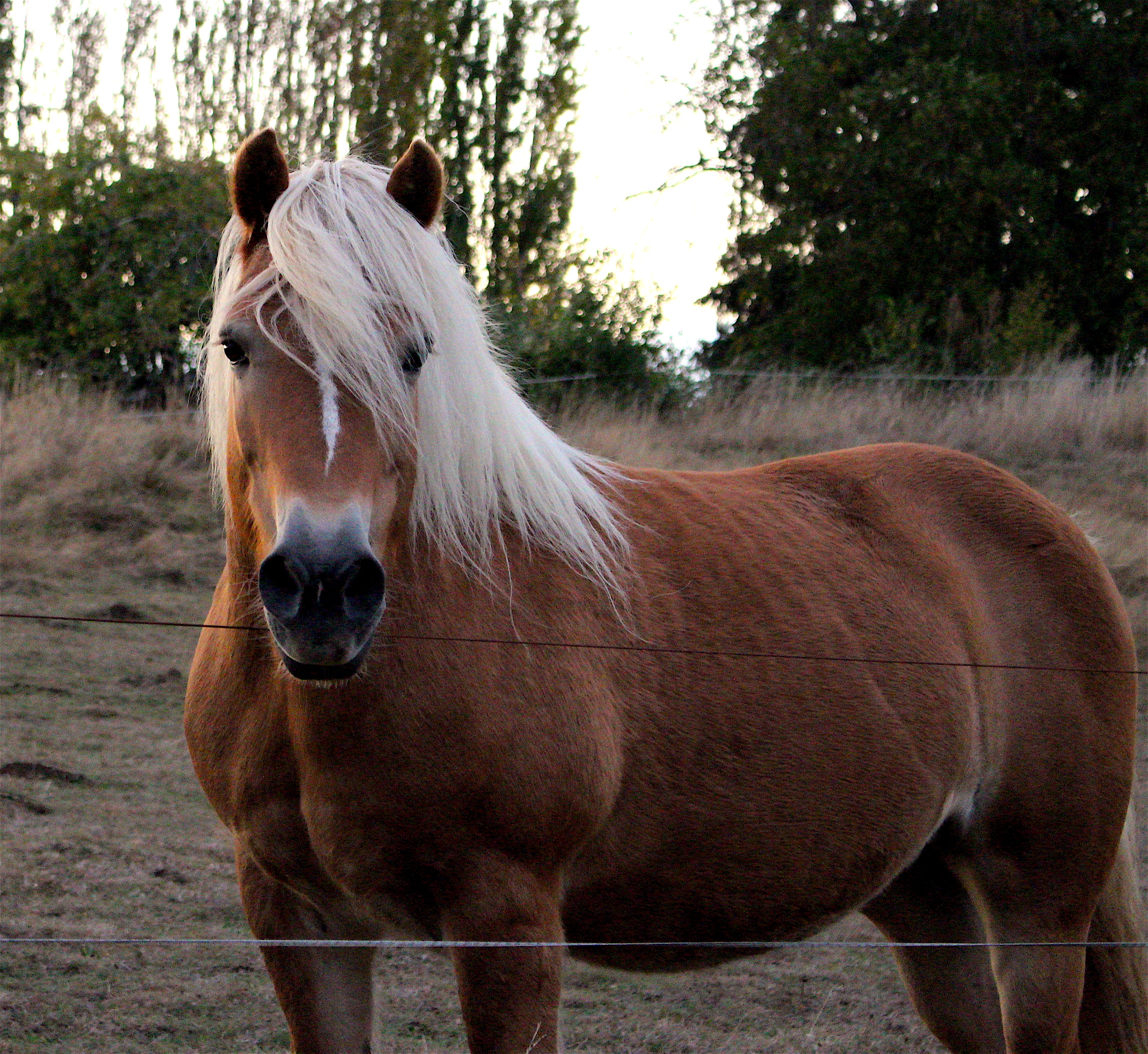
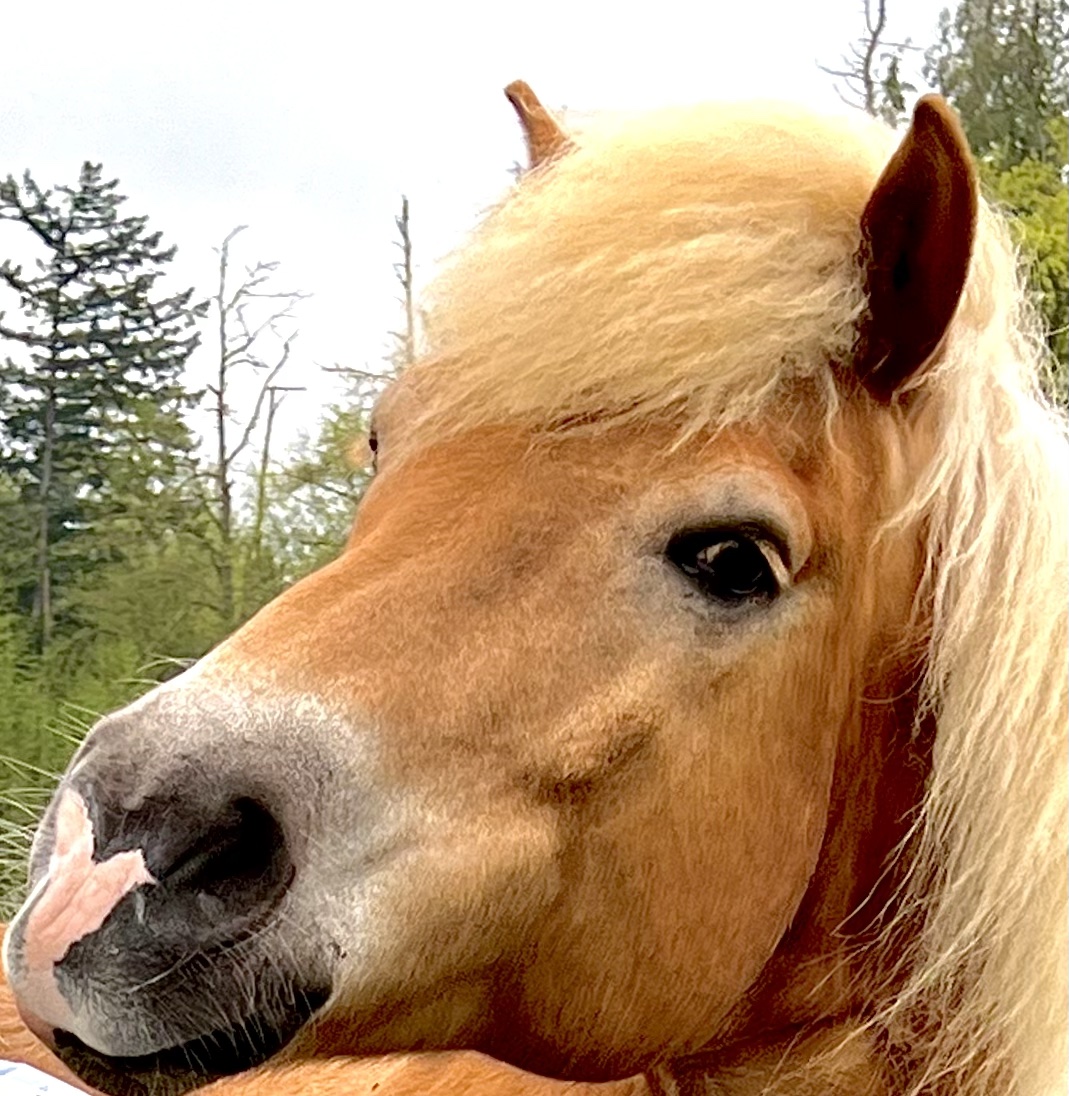
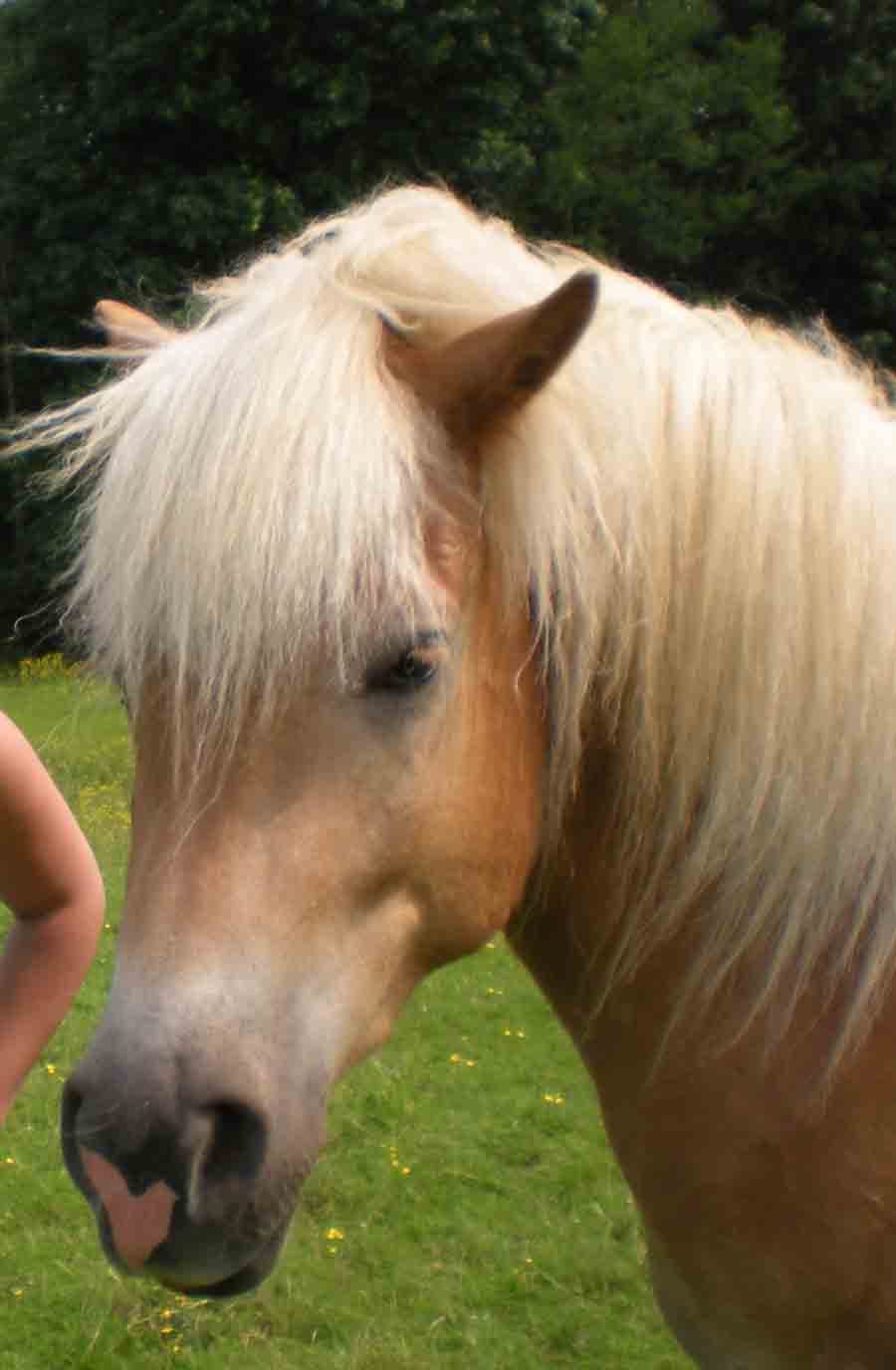
I don’t consider Haflinger horses particularly subtle in their communication with each other or with humans. They can tend to have a “bull in a china shop” approach to life; this is not a breed that evolved particularly plagued with the existence of many predators in the Austrian Alps, so the need to blend into the background was minimal. Haflingers tend to be “out there”: unafraid, bold, meeting one’s gaze, and curious what the human is thinking.
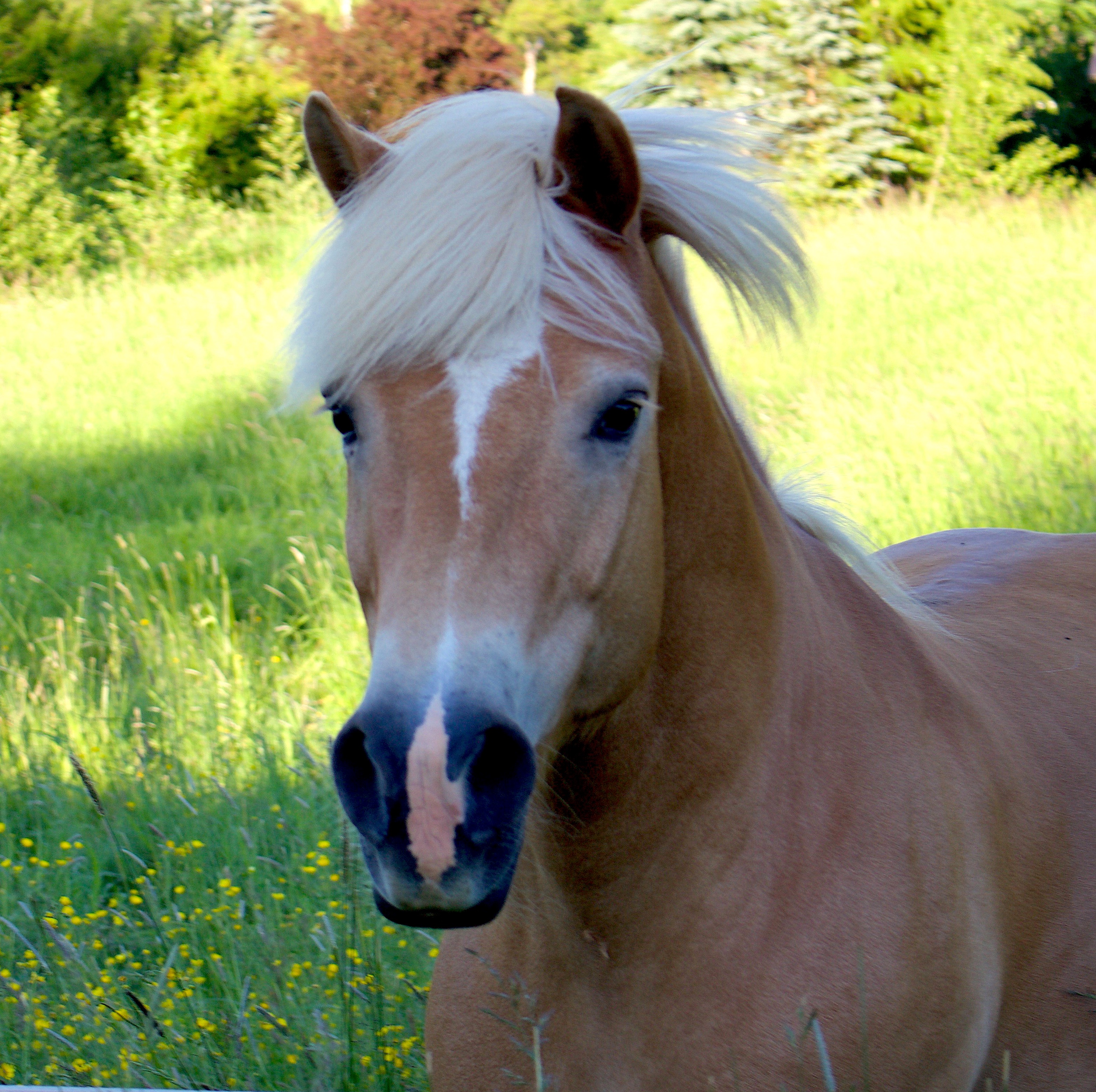
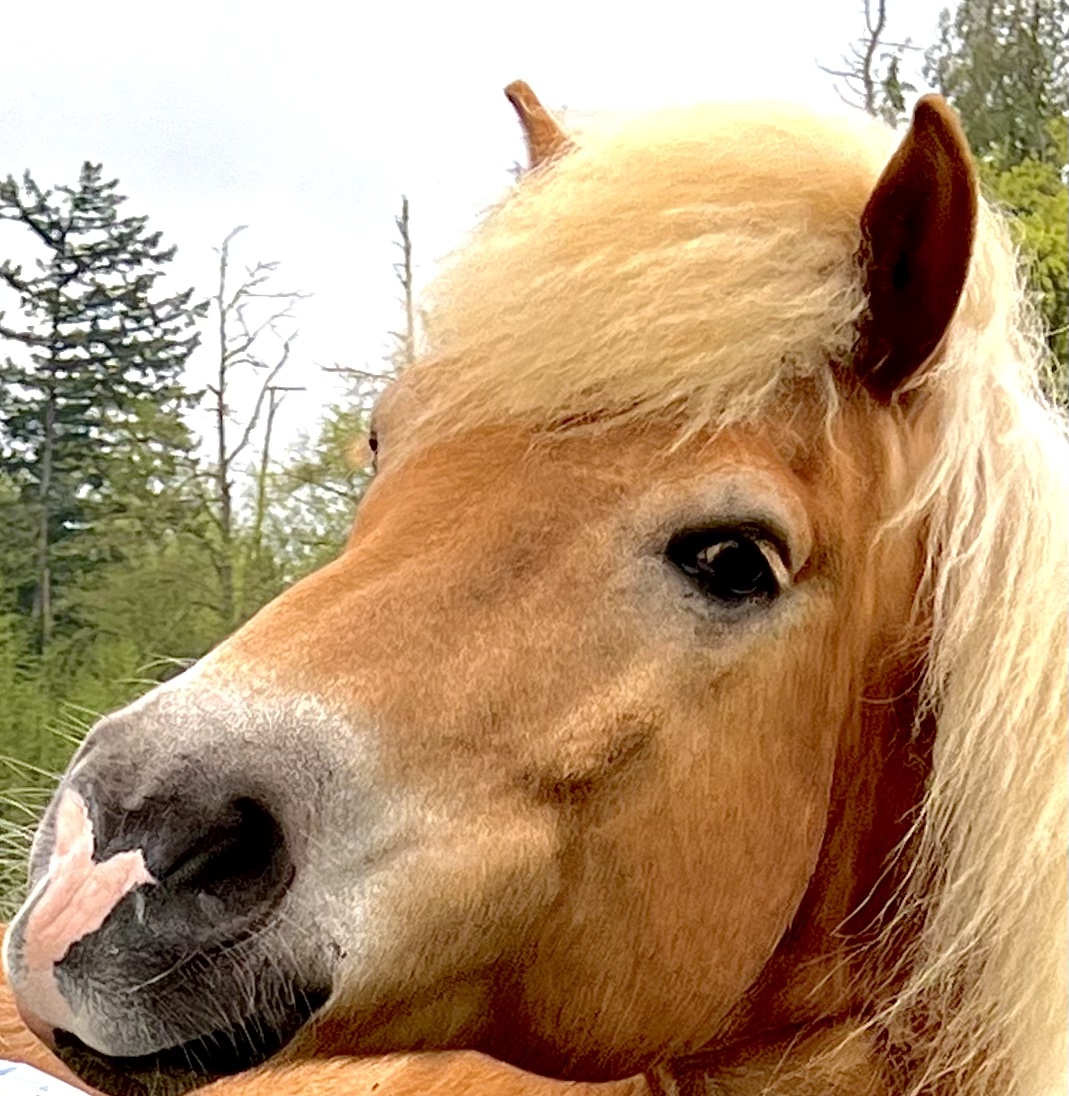
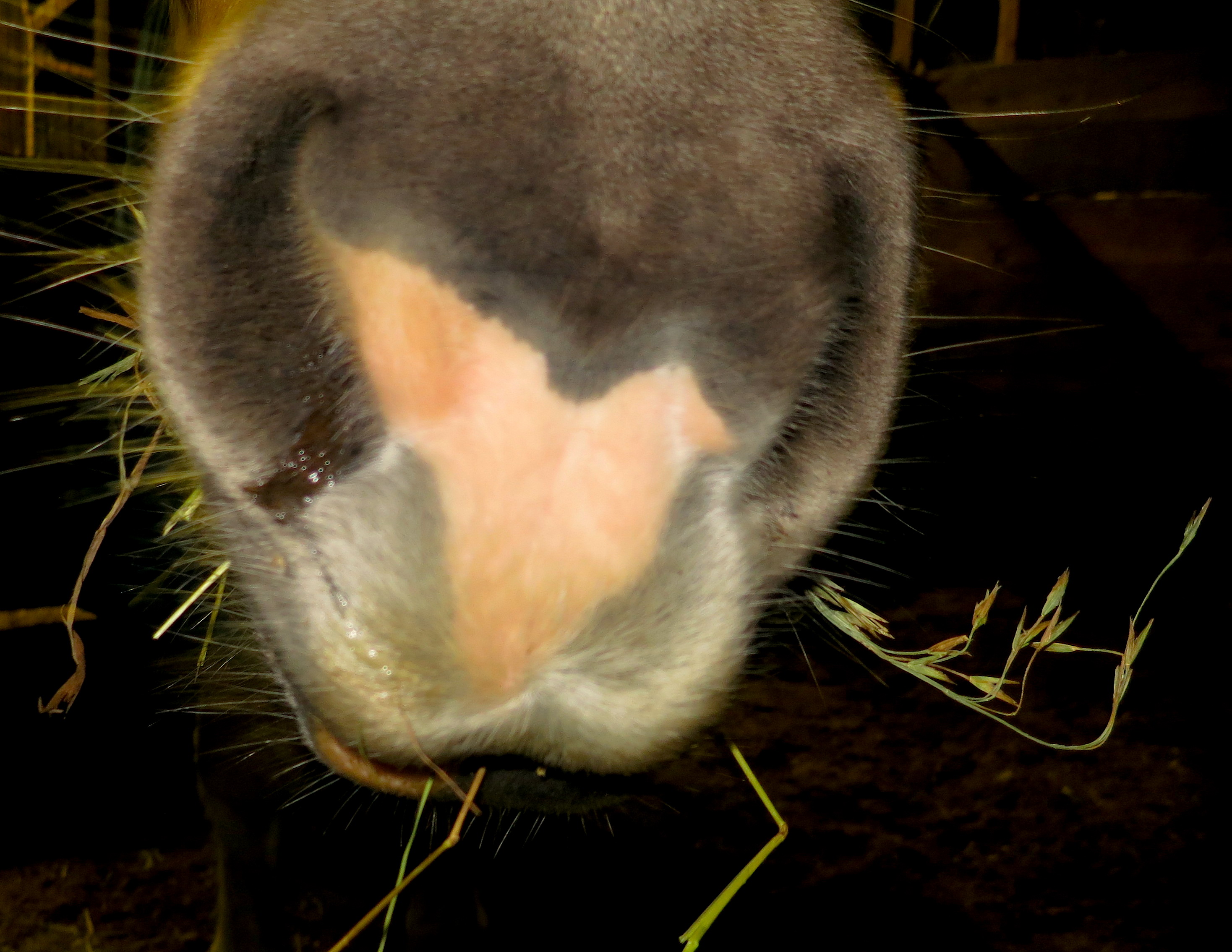
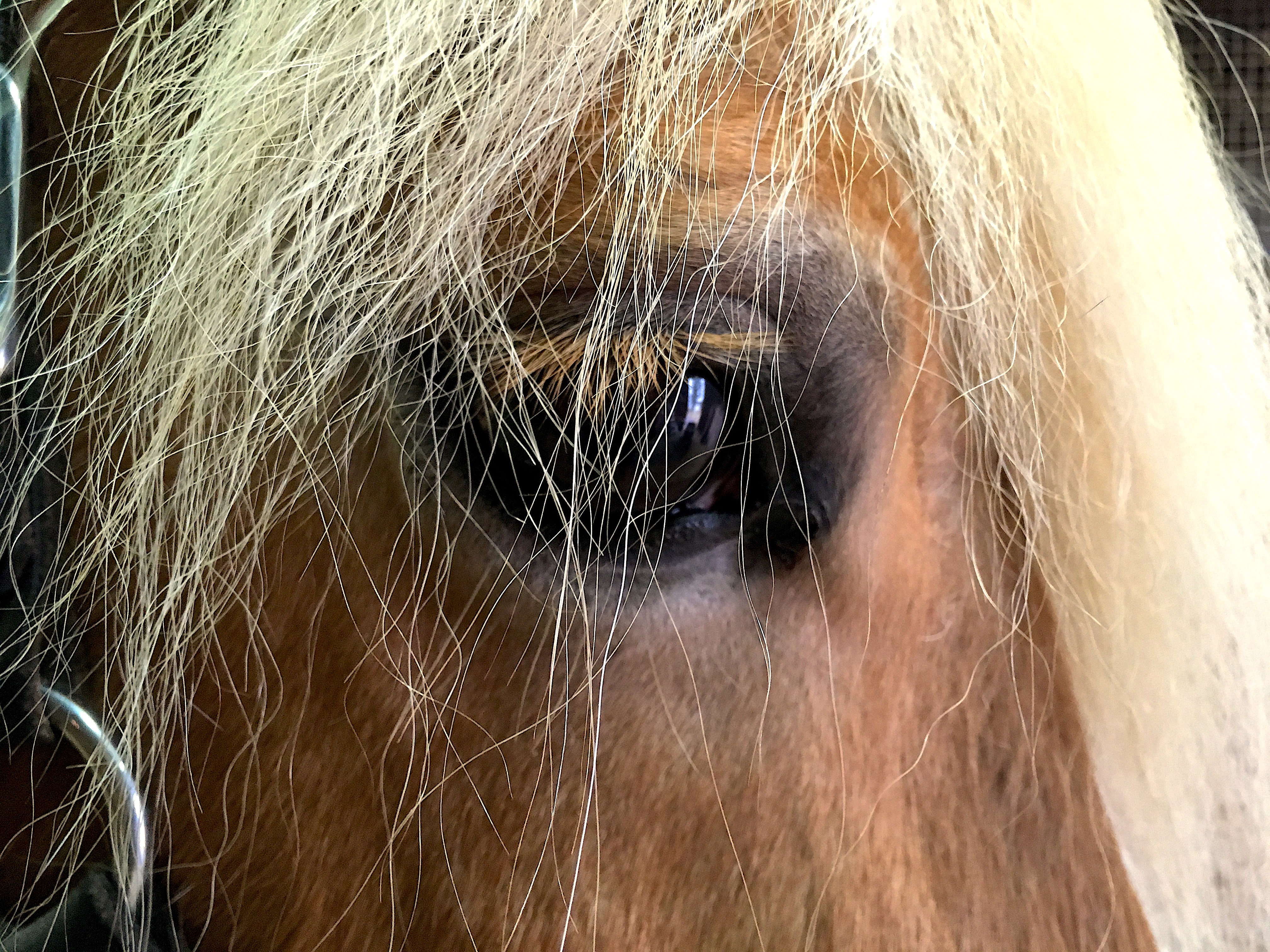
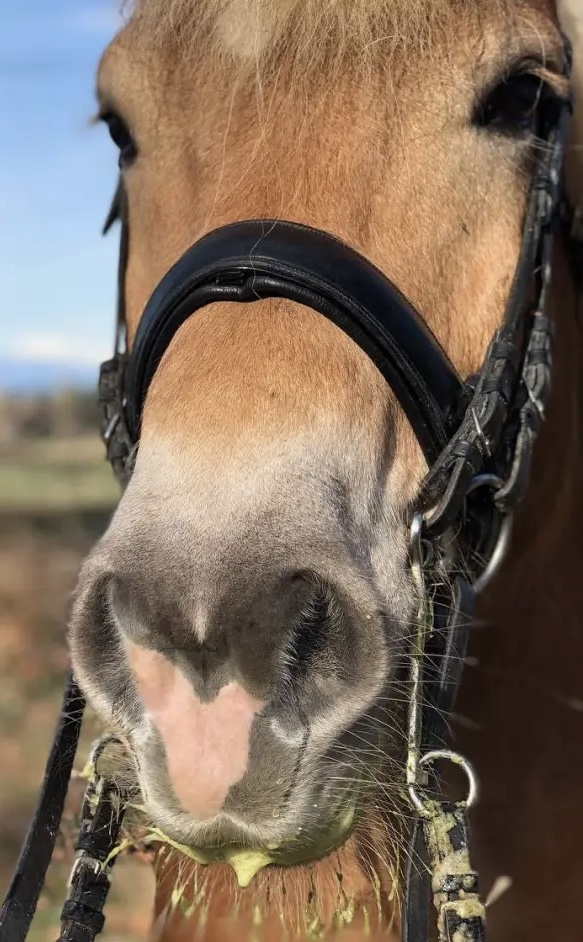
I’ve found over the years that the best way to interpret a Haflinger’s emotions is by watching their ears, and to a lesser extent, their lips and tails. They usually have “poker face” eyes, deceptive at times in their depth, calmness and serenity. I tend to get lost in the beauty of their eyes and not pay attention to what the rest of the horse is saying.
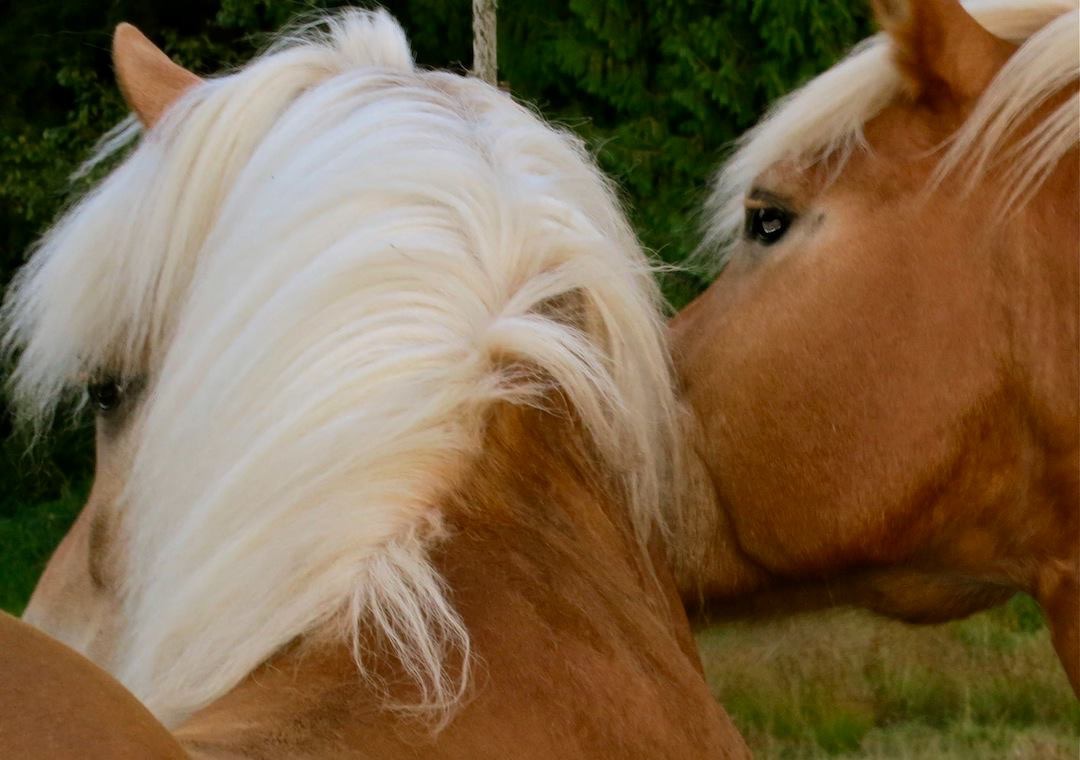
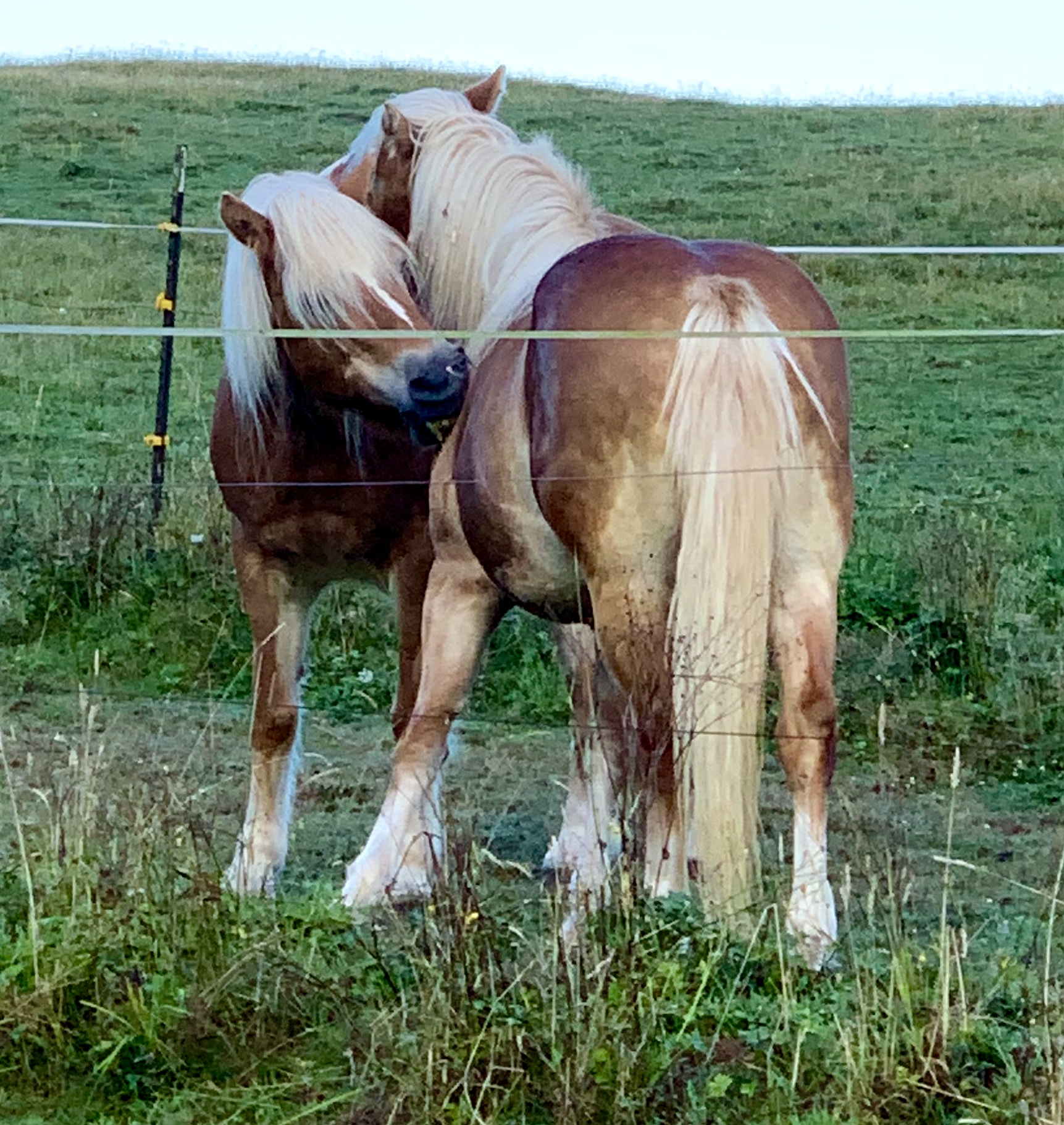
Watching them interact with each other, almost everything is said with their ears. A horse with a friendly approach has ears forward, receptive, eager. If the horse being approached is welcoming, the ears are relaxed. Two good friends grooming or grazing together have swiveling, loose ears, often pointing toward each other, almost like a unique conversation between the four ears themselves. So when a Haflinger is happy to approach, or be approached by humans, the ears always say so.
Ears that are swiveling back, tensing and tight, or pinning are another story altogether. It is the clear signal of “get outta my way!”, or “you are not sharing this pile of hay with me” or “you may think you are a cute colt, but if you climb on me one more time…”
Ears can signal impatience “you are not getting my grain fast enough”, or “I’ve been standing here tied for too long!” A simple change in ear position can cause a group of horses to part like the Red Sea.
I owned a mare who was orphaned at 3 days of age, and spent her early weeks with intensive handling by people, and then allowed to socialize with a patient older gelding until she was old enough to be among other weanlings. When she came to our farm at 6 months of age, she had not learned all the usual equine social cues of a mare herd, and though very astute at reading human gestures and behavior, took awhile to learn appropriate responses. When turned out with the herd, she was completely clueless–she’d approach the dominant alpha mare incorrectly, without proper submission, get herself bitten and kicked and was the bottom of the social heap for years, a lonesome little filly with few friends and very few social skills.
She had never learned submission with people either, and had to have many remedial lessons on her training path. Once she was a mature working mare, her relationship with people markedly improved as there was structure to her work and predictability for her, and after having her own foals, she picked up cues and signals that helped her keep her foal safe, though she has always been one of our most relaxed “do whatever you need to do” mothers when we handle her foals as she simply never learned that she needed to be concerned.
Over the years, as the herd changed, this mare became the alpha mare, largely by default and seniority, so I don’t believe she really trusted her position as “real”. She tended to bully, and react too quickly out of her own insecurity about her inherited position. She was very skilled with her ears but she is also a master at the tail “whip” and the tensed upper lip–no teeth, just a slight wrinkling of the lip. The herd scattered when they see her face change.
The irony of being on top of the herd hierarchy: she was more lonely than when she was at the bottom. She was a whole lot less happy as she had few grooming partners any more. She craved power more than friends.
I certainly see people like this at times in the world. Some are not at all attuned to social cues, blundering their way into situations without understanding the consequences and “blurting without thinking”. It takes lots of kicks and bites for them to learn how to read other people and behave appropriately. Sometimes they turn to bullying because it is communication that everyone understands and responds to, primarily by “getting out of their way”. Perhaps they are very lonely, insecure, and need friends but their need for power overcomes their need for support.
We see this too frequently in people in our news headlines.
I continue to “watch the ears”–both Haflinger and human. And I continue to refine my own way of communicating so that I’m not a mystery to those around me. Hopefully no one scatters when they see me coming…
One-Time
Monthly
Yearly
Make a one-time or recurring donation to support daily Barnstorming posts
Love means to learn to look at yourself The way one looks at distant things For you are only one thing among many. And whoever sees that way heals his heart, Without knowing it, from various ills— A bird and a tree say to him: Friend.
Then he wants to use himself and things So that they stand in the glow of ripeness. It doesn’t matter whether he knows what he serves: Who serves best doesn’t always understand. ~Czeslaw Milosz “Love” from New and Collected Poems: 1931-2001
Let him kneel down, lower his face to the grass, And look at light reflected by the ground. There he will find everything we have lost… ~Czeslaw Milosz from “The Sun”
It’s not easy to subdue the needy ego and let the life-giving soul take control, even though doing so saves us grief and serves the world well. So if you see me on the street one day, quietly muttering, “Only one thing among many, only one thing among many…,” you’ll know I’m still working on it, or it’s still working on me. ~Parker Palmer “The Big Question: Does My Life Have Meaning?”
It is always tempting to be self-absorbed; since my heart stent placement nearly 8 months ago, I tend to analyze every sensation in my chest, fuss over how many steps I take daily, and get discouraged when the scale doesn’t register the sacrifices I think I’m making in my diet.
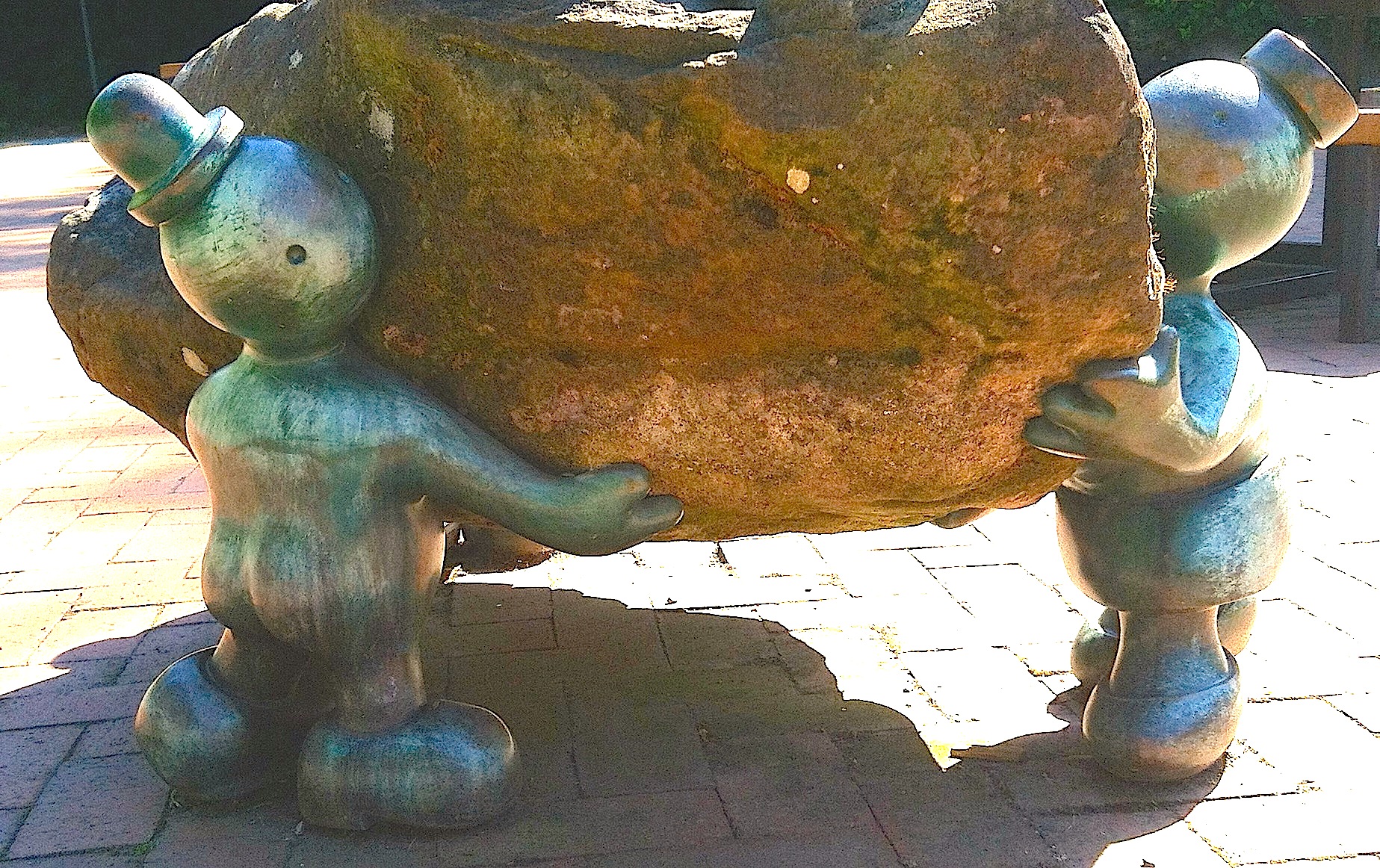
In other words, in my efforts to heal my physically-broken heart, I become the center of my attention, rather than just one among many things in the days/months/years I have left. I need to look at myself from a distance rather than under a microscope.
It is a skewed and futile perspective, seeking meaning and purpose in life by navel gazing.
Instead, I should be concentrating on the ripeness of each day. I’ve been given a second chance to recalibrate my journey through the time I have left, focusing outward, gazing at the wonders around me, sometimes getting down on my knees.
I don’t fully understand how I might serve others by what I share here online, or what I do in my local community with my hands and feet. I now know not to miss the moments basking in the glow of loving those around me, including you friends I may never meet on this side of the veil.
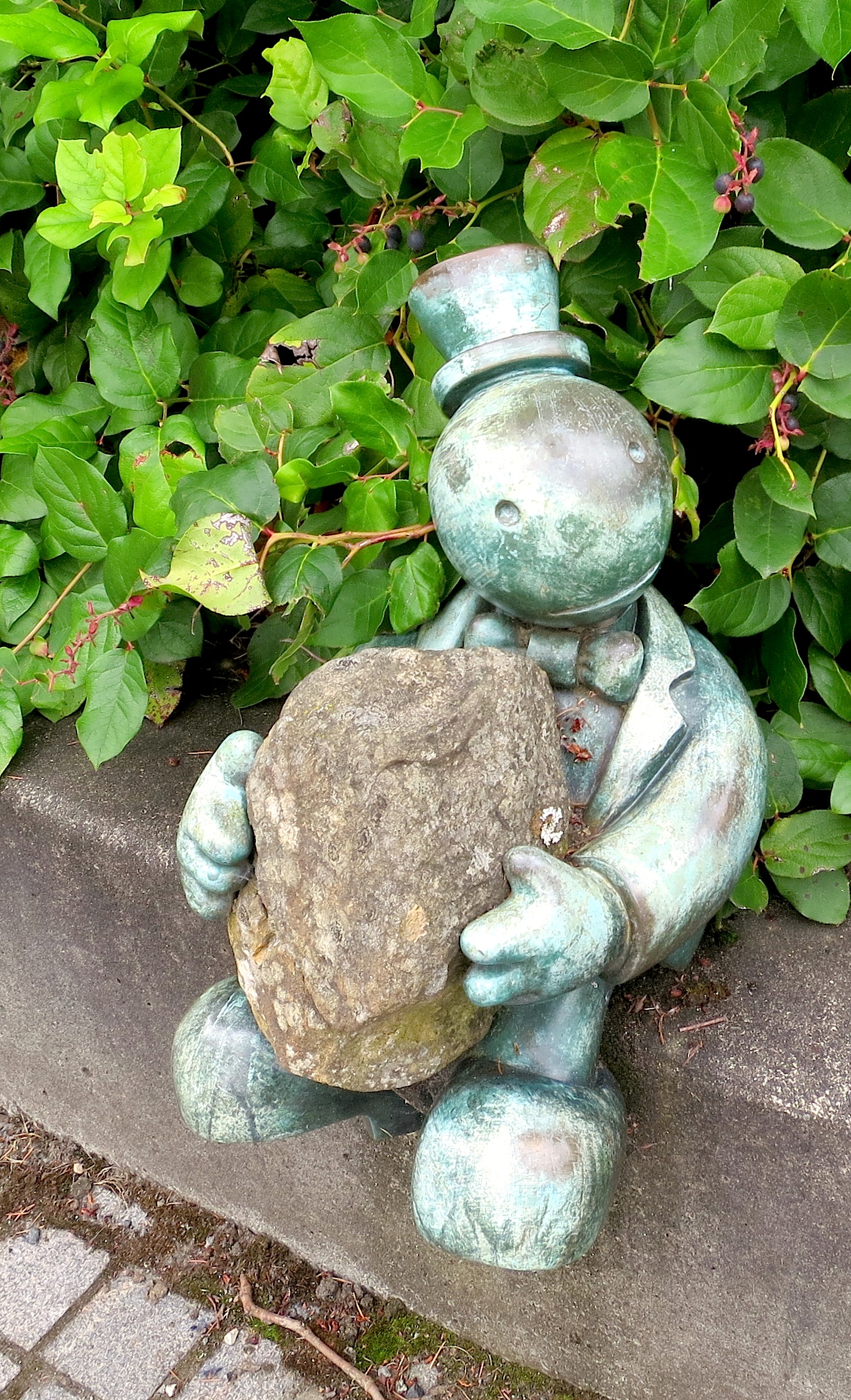
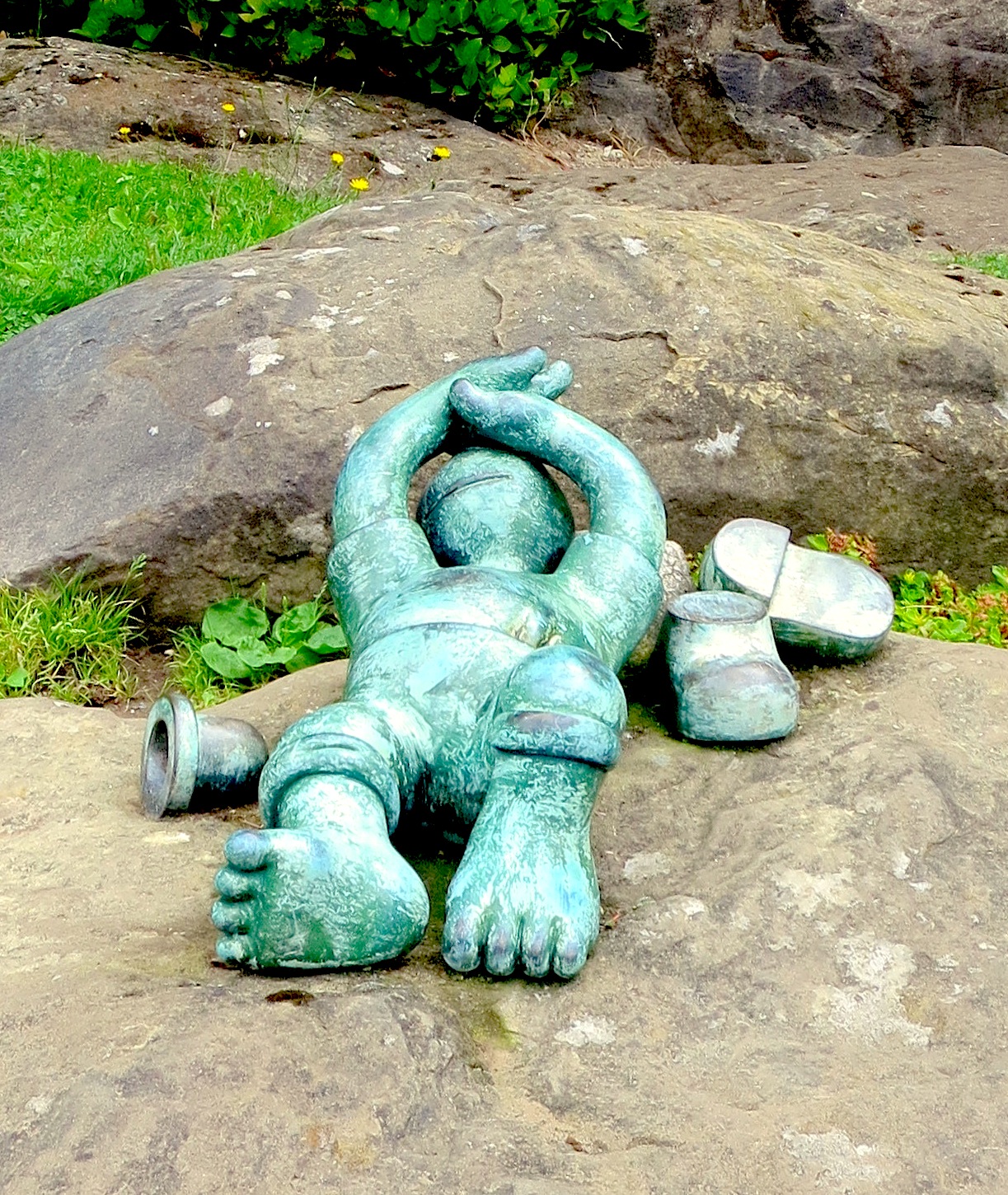
May you glow in ripeness as well.
One-Time
Monthly
Yearly
Make a one-time or recurring donation to support daily Barnstorming posts
Think of this – that the writer wrote alone, and the reader read alone, and they were alone with each other. ~A.S. Byatt from Possession
If librarians were honest, they would say, No one spends time here without being changed. Maybe you should go home. While you still can. ~Joseph Mills from “If Librarians Were Honest”
Why are we reading, if not in hope of beauty laid bare, life heightened and its deepest mystery probed?
Can the writer isolate and vivify all in experience that most deeply engages our intellects and our hearts?
Why are we reading, if not in hope that the writer will magnify and dramatize our days, will illuminate and inspire us with wisdom, courage and the hope of meaningfulness, and press upon our minds the deepest mysteries, so we may feel again their majesty and power? ~Annie Dillard from “Write Till You Drop”
…for people who love books and need To touch them, open them, browse for a while, And find some common good––that’s why we read. Readers and writers are two sides of the same gold coin. You write and I read and in that moment I find A union more perfect than any club I could join: The simple intimacy of being one mind. Here in a book-filled sun-lit room below the street, Strangers––some living, some dead––are hoping to meet. ~Garrison Keillor
The mere brute pleasure of reading–the sort of pleasure a cow has in grazing. ~G.K. Chesterton
Each day as I decide what to share here, I think of each of you who might open my email, or click on a link to see what I have to say.
We are alone together, you and I, for only a few minutes. I consider that precious time you are entrusting to me and want to make it worthwhile.
When you read this, you may be eating breakfast, or in the middle of your workday at the computer, or on your phone during a commute, or sitting in a waiting room wondering when your name will be called.
Or maybe you are sitting in the bathroom, or past ready to fall asleep in bed.
I am honored and humbled to hear from you after our alone time together each day.
I too spend reading time alone every day, grateful for what writers write while alone. I don’t tell them often enough how they change my day for the better.
Some are long gone from this world, so I’ll never have the chance.
Like infinite blades of grass in a pasture, I find far too many words to read — so much to consume, so little time. I nibble away, blade by blade, page by page, word by word, but the greatest pleasure of all is to settle down into a good long cud-chewing session, redigesting and mulling over what all I’ve taken in.
It is brute pleasure to take in words that grow roots so deep they never go away, words that sustain and make me grow and keep me alive. Words to illuminate from without and within.
In those days, we finally chose to walk like giants and hold the world in arms grown strong with love. And there may be many things we forget in the days to come, but this will not be one of them. ~Brian Andreas from Traveling Light: Stories & Drawings for a Quiet Mind
No discipline seems pleasant at the time, but painful. Later on, however, it produces a harvest of righteousness and peace for those who have been trained by it.
Therefore, strengthen your feeble arms and weak knees. Hebrews 12:11-12
She sets about her work vigorously; her arms are strong for her tasks. ~Proverbs 31:17
I know what it is to be in need, and I know what it is to have plenty. I have learned the secret of being content in any and every situation, whether well fed or hungry, whether living in plenty or in want. I can do all this through him who gives me strength. ~Philippians 4: 12-13
Some of us think holding on makes us strong; but sometimes it is letting go. ~Hermann Hesse
The world asks of us only the strength we have and we give it. Then it asks more, and we give it. ~Jane Hirshfield from “The Weighing” from The Beauty
A few years ago, I dislocated and broke my elbow in a clumsy fall while doing barn chores.
After a trip to the ER to have it set and put in a restrictive brace for three months, I learned letting go takes far more strength than holding on and pushing through.
I had to figure out how to “be flexible” when in reality, I felt immobilized.
I discovered how to ask for help when I’m in need which is tough for someone who has always been the helper – there was unity in our mutual need for one another.
Others watched me carefully to see if I’d quietly go stir-crazy with my new temporary limitations. Instead, I began seeing the world in a different light: what could I do on my own and what was impossible without assistance.
I needed to rely on others. For a stubborn person who thrives on self-sufficiency, this is a humbling reminder of my brokenness and frailty.
May the Lord have mercy on all those with broken wings who still endeavor to lift up the weight of the world and fly as high as ever.
Instead, may we find our strength is in Him, not in our feeble (and very breakable) arms.
photos of “Feats of Strength” by Tom Otterness at Western Washington University
One-Time
Monthly
Yearly
Make a one-time or recurring donation to support daily Barnstorming posts
Every morning I walk through folds of fields searching.
Slants of sun sink through triangled bones of leaves: bold cold refuted.
Sparrows flutter warm in given nests, ungriefed, caught, sustained by common grace.
Faith is the tenderness of banked coals in a grate, Braeburn apples on a windowsill, winding crisp with possibility. The steadiness of conversations embered over decades; a fire that has never left off crackling – on this my soul has warmed her hands. Divine ardor: too strong and sweet for the many years I’ve walked on earth.
Love without hesitation has swept my floorboards for seasons. Deep and longing in and out of time the soul reaches out – and He, grasps entire. Hold – and tender. Incandescent. ~Claire Hellar “A Search in Autumn”
The sound of quiet. The sky indigo, steeping deeper from the top, like tea. In the absence of anything else, my own breathing became obscene. I heard the beating of bats’ wings before the air troubled above my head, turned to look and saw them gone. On the surface of the black lake, a swan and the moon stayed perfectly still. I knew this was a perfect moment. Which would only hurt me to remember and never live again. My God. How lucky to have lived a life I would die for. ~Leila Chatti “I Went Out to Hear” from Wildness Before Something Sublime
Look, the trees are turning their own bodies into pillars
of light, are giving off the rich fragrance of cinnamon and fulfillment,
the long tapers of cattails are bursting and floating away over the blue shoulders
of the ponds, and every pond, no matter what its name is, is
nameless now. Every year everything I have ever learned
in my lifetime leads back to this: the fires and the black river of loss whose other side
is salvation, whose meaning none of us will ever know. To live in this world
you must be able to do three things: to love what is mortal; to hold it
against your bones knowing your own life depends on it; and, when the time comes to let it go, to let it go. ~Mary Oliver “In Blackwater Woods” from Devotions
(thinking today of God’s gift to the world of Jane Goodall, whose life was about keeping promises)
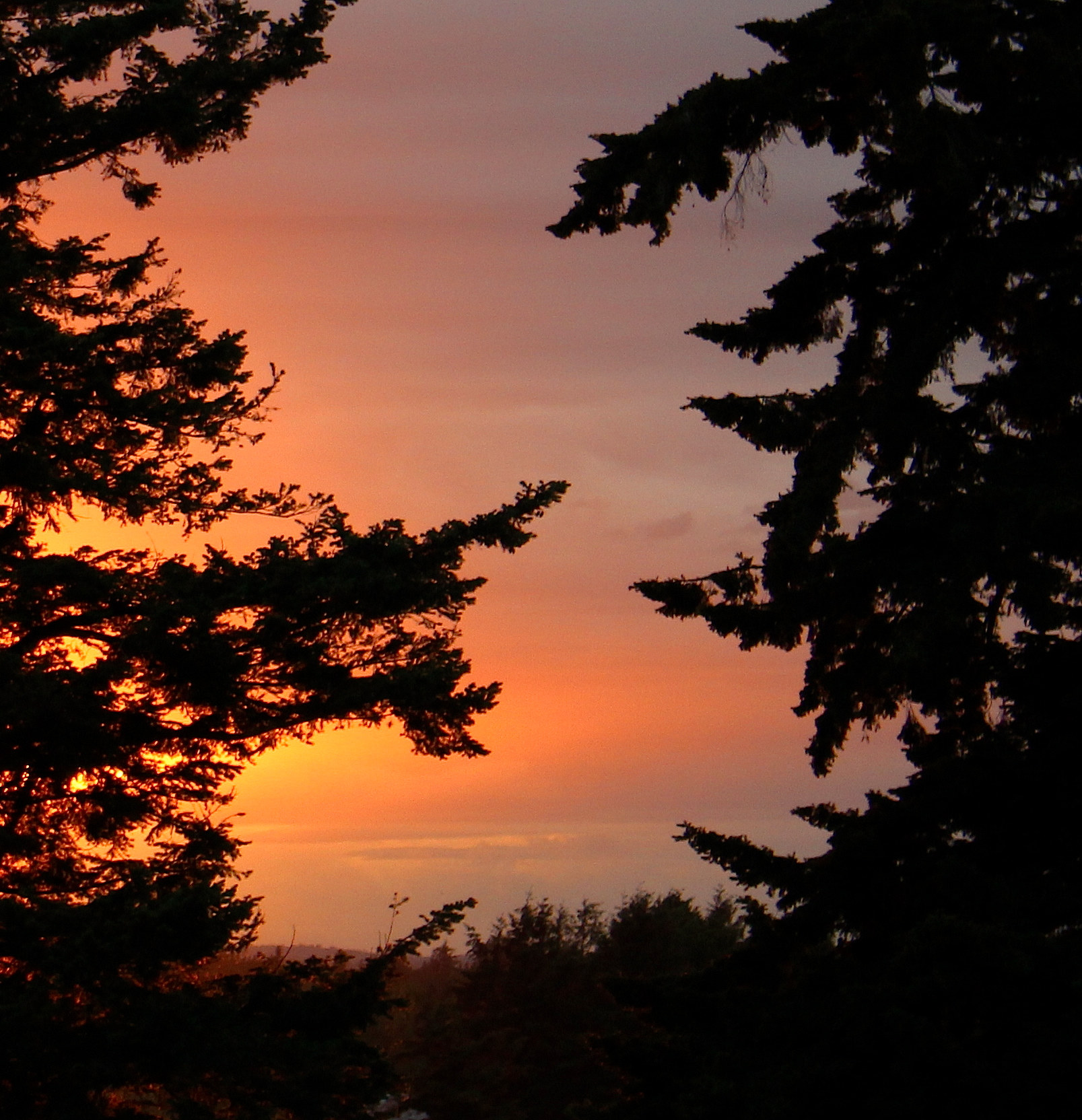
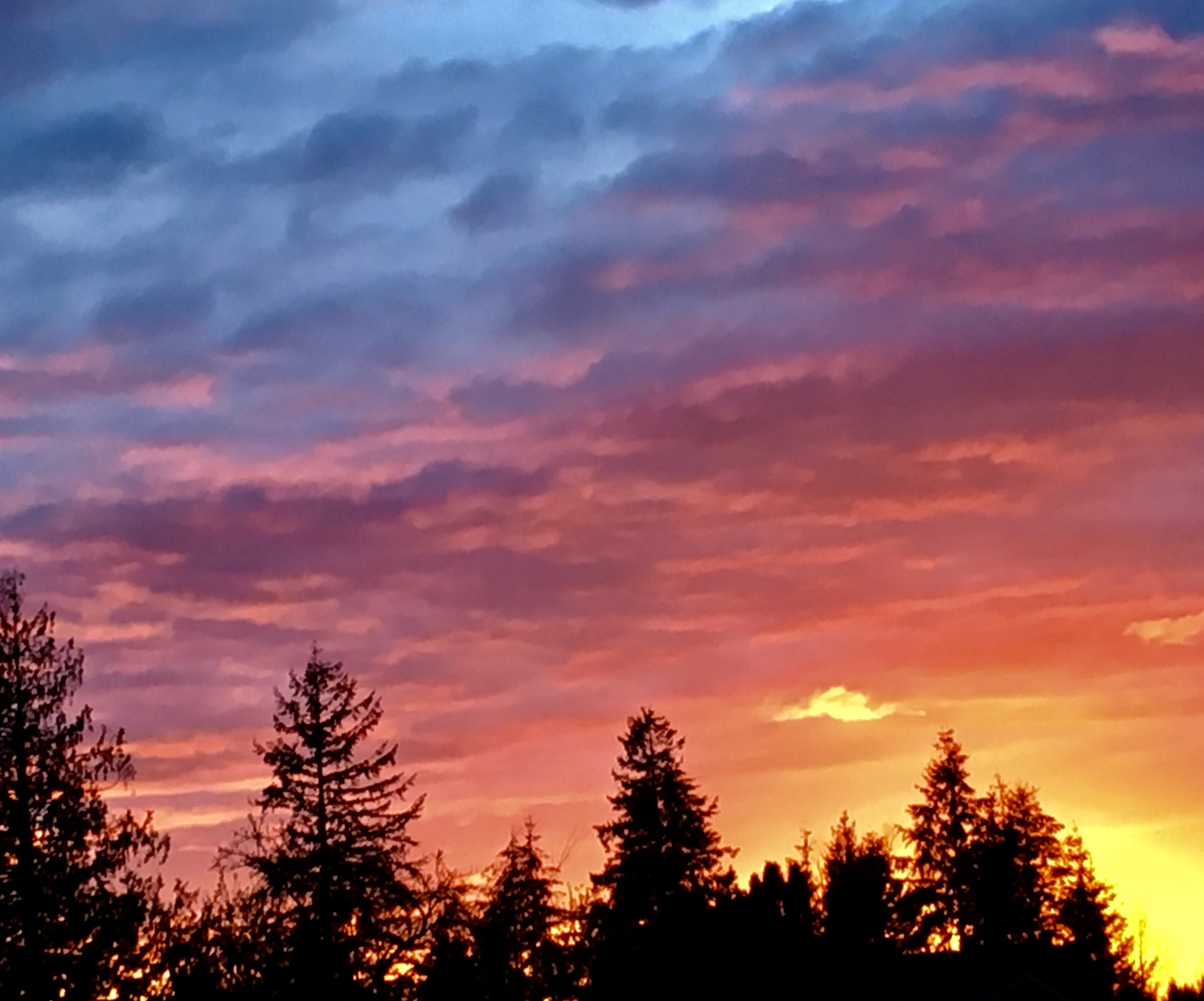
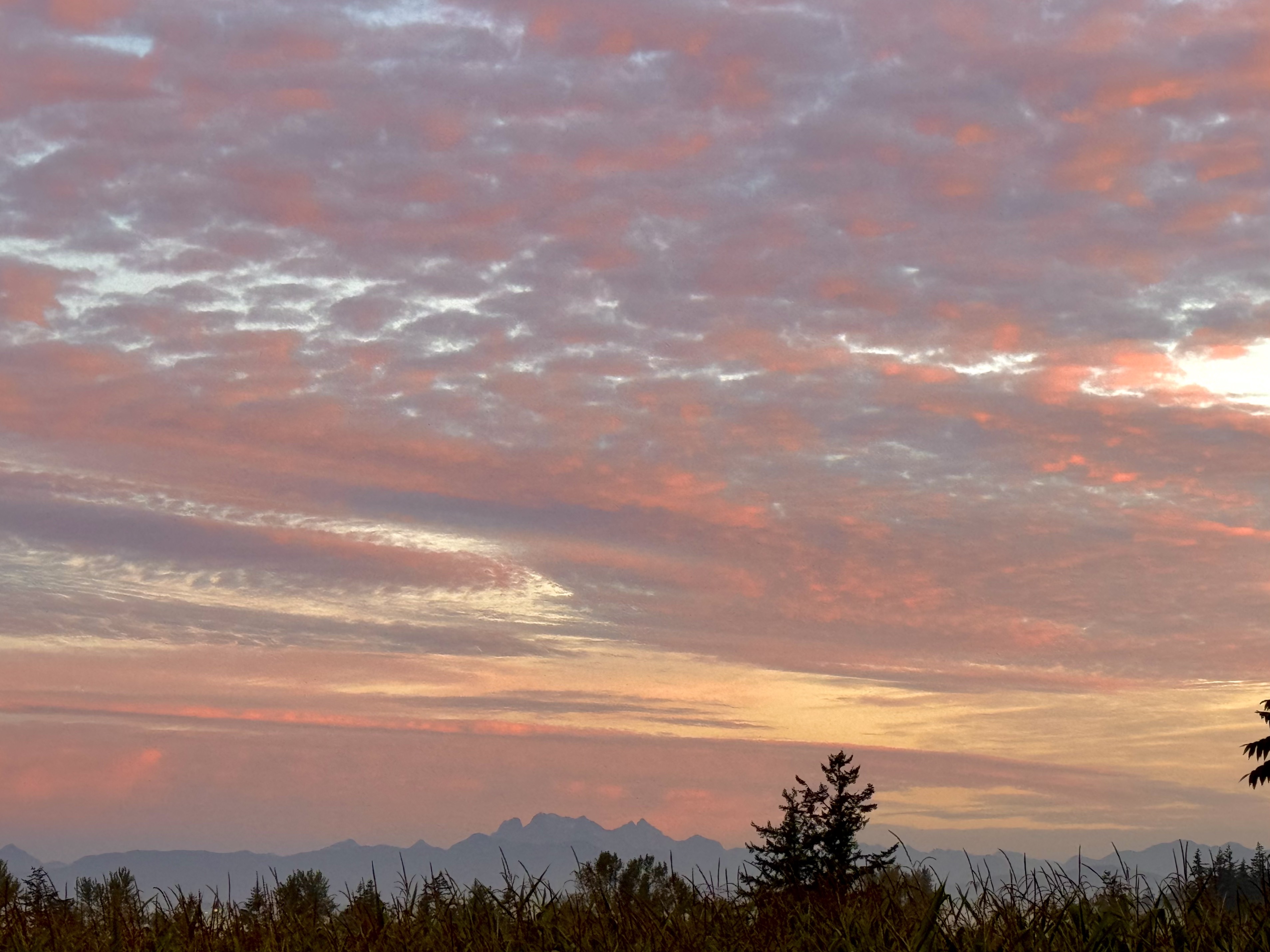
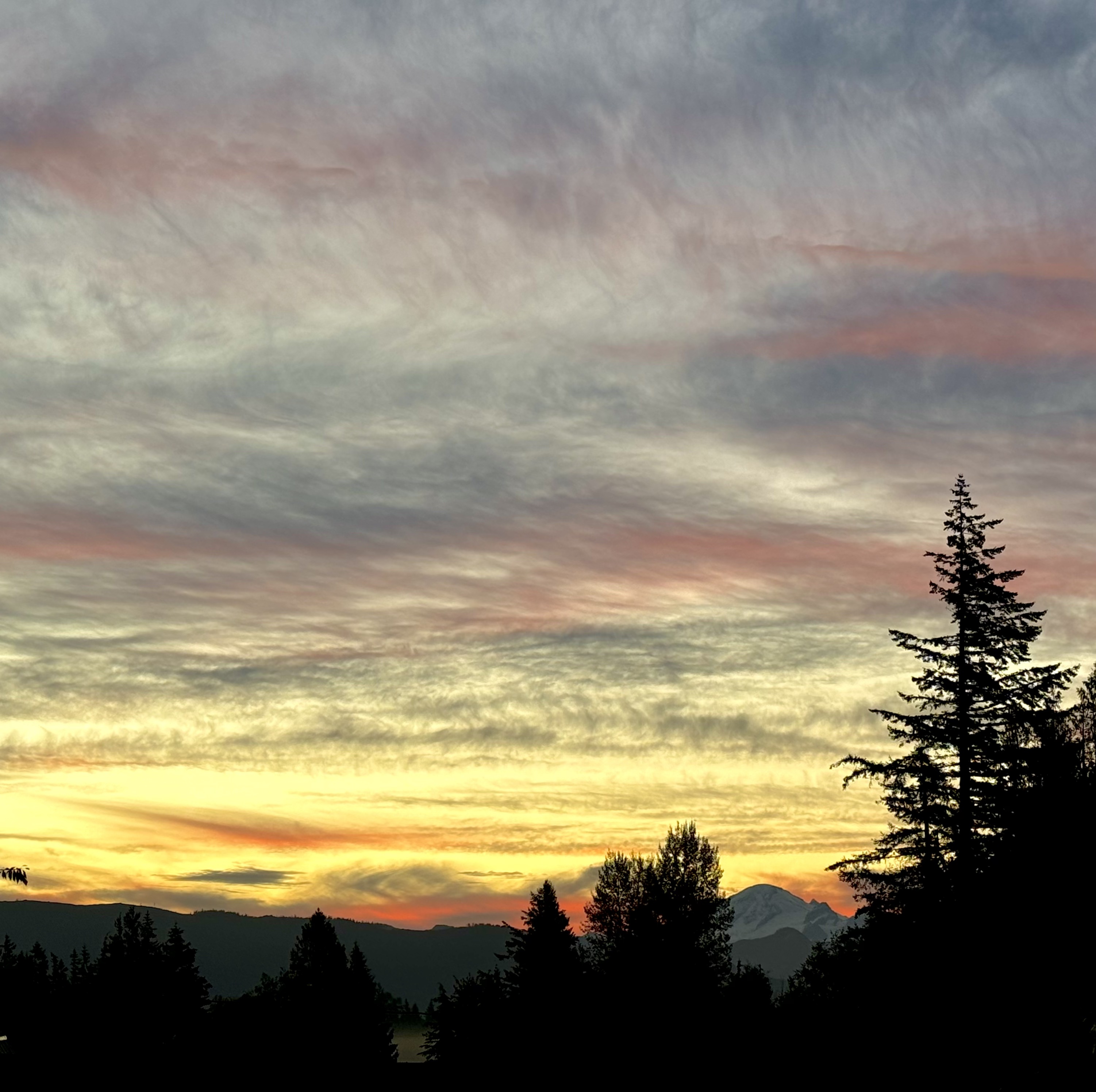
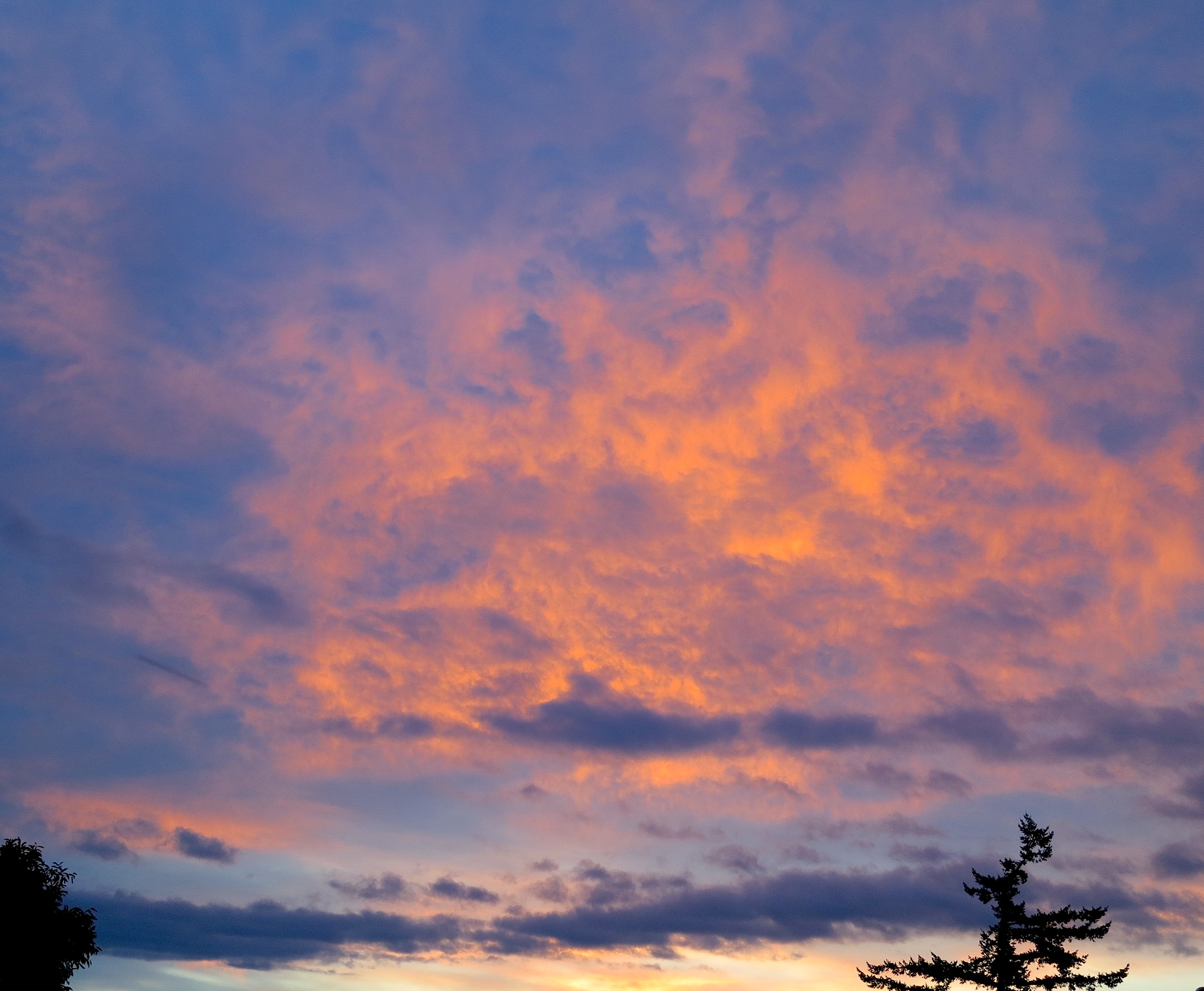
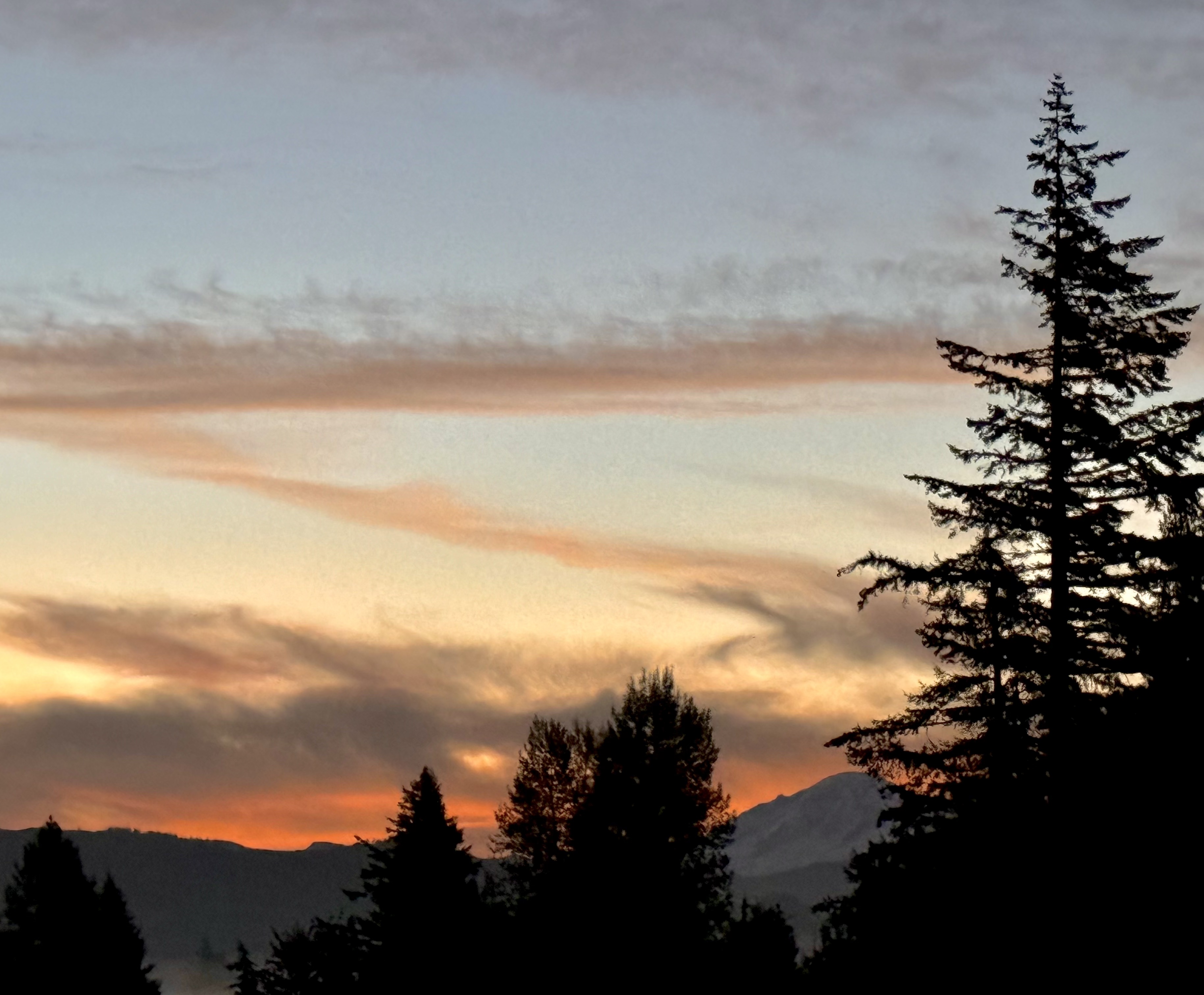
When the earth and all that is in it glows indigo in the angled light of October; opening my eyes as witness to beauty takes my breath away.
I can’t imagine letting go this life, yet the other side of ashes and loss is salvation.
My God. I am so finite. I hold this close to my bones with miles to go before I sleep.
My life depends on realizing I’m living a life I would die for.
When I saw the figure on the crown of the hill, high above the city, standing perfectly still
against a sky so saturated with the late- afternoon, late-summer Pacific light
that granules of it seemed to have come out of solution, like a fine precipitate
of crystals hanging in the brightened air, I thought whoever it was standing up there
must be experiencing some heightened state of being, or thinking—or its opposite,
thoughtlessly enraptured by the view. Or maybe, looking again, it was a statue
of Jesus or a saint, placed there to bestow a ceaseless blessing on the city below.
Only after a good five minutes did I see that the figure was actually a tree—
some kind of cypress, probably, or cedar. I was both amused and let down by my error. Not only had I made the tree a person, but I’d also given it a vision,
which seemed to linger in the light-charged air around the tree’s green flame, then disappear. ~Jeffrey Harrison “The Figure on the Hill” from Into Daylight
Who was it who suggested that the opposite of war Is not so much peace as civilisation? He knew Our assassinated Catholic greengrocer who died At Christmas in the arms of our Methodist minister, And our ice-cream man whose continuing requiem Is the twenty-one flavours children have by heart. Our cobbler mends shoes for everybody; our butcher Blends into his best sausages leeks, garlic, honey; Our cornershop sells everything from bread to kindling. Who can bring peace to people who are not civilised? All of these people, alive or dead, are civilised. ~Michael Longley “All of These People” from Collected Poems
Who among us appear in the light-charged air, visible on the crown of the hill of life – who might be mistaken for a martyr or a saint or a visionary, when each one of us is merely a person responsible to a family, committed to help friends, dedicated to serve a community, placed in this world to steady a broken civilization.
There is the simple truth that we need a person with roots deep in the ground, branches that reach up and out, bearing fruit to share with those around us.
But surely not this misery, not this blight, not this trouble, certainly not these murders, which only bears and shares a heart-rending, horrible grief.
One-Time
Monthly
Yearly
Make a one-time or recurring donation to support daily Barnstorming posts
The thing is to love life, to love it even when you have no stomach for it and everything you’ve held dear crumbles like burnt paper in your hands, your throat filled with the silt of it. When grief sits with you, its tropical heat thickening the air, heavy as water more fit for gills than lungs; when grief weights you like your own flesh only more of it, an obesity of grief, you think, How can a body withstand this? Then you hold life like a face between your palms, a plain face, no charming smile, no violet eyes, and you say, yes, I will take you I will love you, again. ~Ellen Bass, “The Thing Is” from Mules of Love
...everything here seems to need us —Rainer Maria Rilke
It’s a hard time to be human. We know too much and too little. Does the breeze need us? If you’ve managed to do one good thing, the ocean doesn’t care. But when Newton’s apple fell toward the earth, the earth, ever so slightly, fell toward the apple. ~Ellen Bass from “The World Has Need of You” from Like a Beggar
Fallen leaves will climb back into trees. Shards of the shattered vase will rise and reassemble on the table. Plastic raincoats will refold into their flat envelopes. The egg, bald yolk and its transparent halo, slide back in the thin, calcium shell. Curses will pour back into mouths, letters un-write themselves, words siphoned up into the pen. My gray hair will darken and become the feathers of a black swan. Bullets will snap back into their chambers, the powder tamped tight in brass casings. Borders will disappear from maps. Rust revert to oxygen and time. The fire return to the log, the log to the tree, the white root curled up in the un-split seed. Birdsong will fly into the lark’s lungs, answers become questions again. When you return, sweaters will unravel and wool grow on the sheep. Rock will go home to mountain, gold to vein. Wine crushed into the grape, oil pressed into the olive. Silk reeled in to the spider’s belly. Night moths tucked close into cocoons, ink drained from the indigo tattoo. Diamonds will be returned to coal, coal to rotting ferns, rain to clouds, light to stars sucked back and back into one timeless point, the way it was before the world was born, that fresh, that whole, nothing broken, nothing torn apart. ~Ellen Bass “When You Return” from Like a Beggar
There is so much grief these days so much anger, so much loss of life, so much weeping.
How can we withstand this? How can we know, now, when we are barely able to breathe that we might know – at some point – we might have the stomach to love life again?
This time of year, no matter which way I turn, autumn’s kaleidoscope displays new patterns, new colors, new empty spaces as I watch the world die into itself once again.
Some dying is flashy, brilliant, blazing – a calling out for attention. Then there is the hidden dying that happens without anyone taking notice: just a plain, tired, rusting away letting go.
I spent this morning adjusting to the change in season by occupying myself with the familiar task of moving manure. Cleaning barn is a comforting chore, allowing me to transform tangible benefit from something objectionable and just plain stinky to the nurturing fertilizer of the future.
It feels like I’ve actually accomplished something.
As I scoop and push the wheelbarrow, I recalled another barn cleaning 24 years ago, just days before the world changed on 9/11/01.
I was one of three or four friends left cleaning over ninety stalls after a Haflinger horse event that I had organized at our local fairgrounds. Some people had brought their horses from over 1000 miles away to participate for several days, including a Haflinger parade through our town on a quiet Sunday morning.
There had been personality clashes and harsh words among some participants along with criticism directed at me as the organizer that I had taken very personally. As I struggled with the umpteenth wheelbarrow load of manure, tears stung my eyes and my heart.
I was miserable with regret, feeling my work had been futile and unappreciated.
One friend had stayed behind with her young family to help clean up the large facility and she could see I was struggling to keep my composure. Jenny put herself right in front of my wheelbarrow and looked me in the eye, insisting I stop for a moment and listen:
“You know, none of these troubles and conflicts will amount to a hill of beans years from now. People will remember a fun event in a beautiful part of the country, a wonderful time with their Haflingers, their friends and family, and they’ll be all nostalgic about it, not giving a thought to the infighting or the sour attitudes or who said what to whom. So don’t make this about you and whether you did or didn’t make everyone happy. You loved us all enough to make it possible to meet here and the rest was up to us. So quit being upset about what you can’t change. There’s too much you can still do for us.”
Jenny had no idea how wise her words were, even two days later, on 9/11.
During tough times since (and there have been plenty), Jenny’s advice replays, reminding me to cease seeking appreciation from others or feeling hurt when harsh words come my way.
She was right about the balm found in the tincture of time. She was right about giving up the upset in order to die to self and self absorption, and instead to focus outward.
I have remembered.
Jenny herself did not know that day she would subsequently spend six years dying while still loving life every day, fighting a relentless cancer that was only slowed in the face of her faith and intense drive to live.
She became a rusting leaf gone holy, fading imperceptibly over time, crumbling at the edges until she finally had to let go. Her dying did not flash brilliance, nor draw attention at the end. Her intense focus during the years of her illness had always been outward to others, to her family and friends, to the healers she spent so much time with in medical offices, to her firm belief in the plan God had written for her and those who loved her.
So Jenny let go her hold on life here. And we reluctantly let her go. Brilliance cloaks her as her focus is now on things eternal.
You were so right, Jenny. The hard feelings from a quarter century ago don’t amount to a hill of beans now. The words you spoke to me that day taught me to love life even when I have no stomach for it.
All of us did have a great time together a few days before the world changed. And manure transforms over time to rich, nurturing compost.
I promise I am no longer upset that I can’t change what is past nor the fact that you and so many others have now left us.
But we’ll catch up later.
One-Time
Monthly
Yearly
Make a one-time or recurring donation to support daily Barnstorming posts