To Leave Something Behind

Everyone must leave something behind when he dies,
my grandfather said.
A child or a book or a painting
or a house or a wall built or a pair of shoes made.
Or a garden planted.
Something your hand touched some way
so your soul has somewhere to go when you die,
and when people look at that tree or that flower you planted,
you’re there.

It doesn’t matter what you do, he said,
so long as you change something
from the way it was before you touched it
into something that’s like you after you take your hands away.
The difference between the man who just cuts lawns
and a real gardener is in the touching, he said.
The lawn-cutter might just as well not have been there at all;
the gardener will be there a lifetime.
~Ray Bradbury from Fahrenheit 451
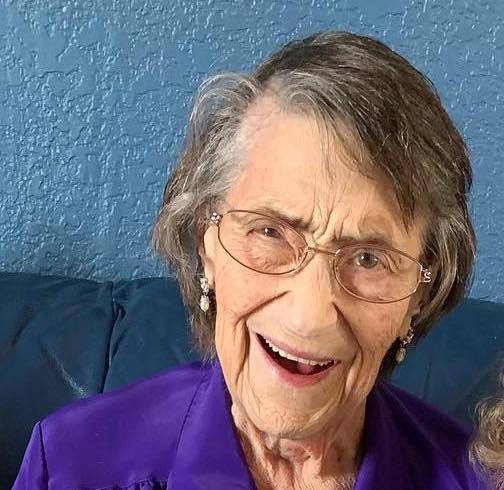
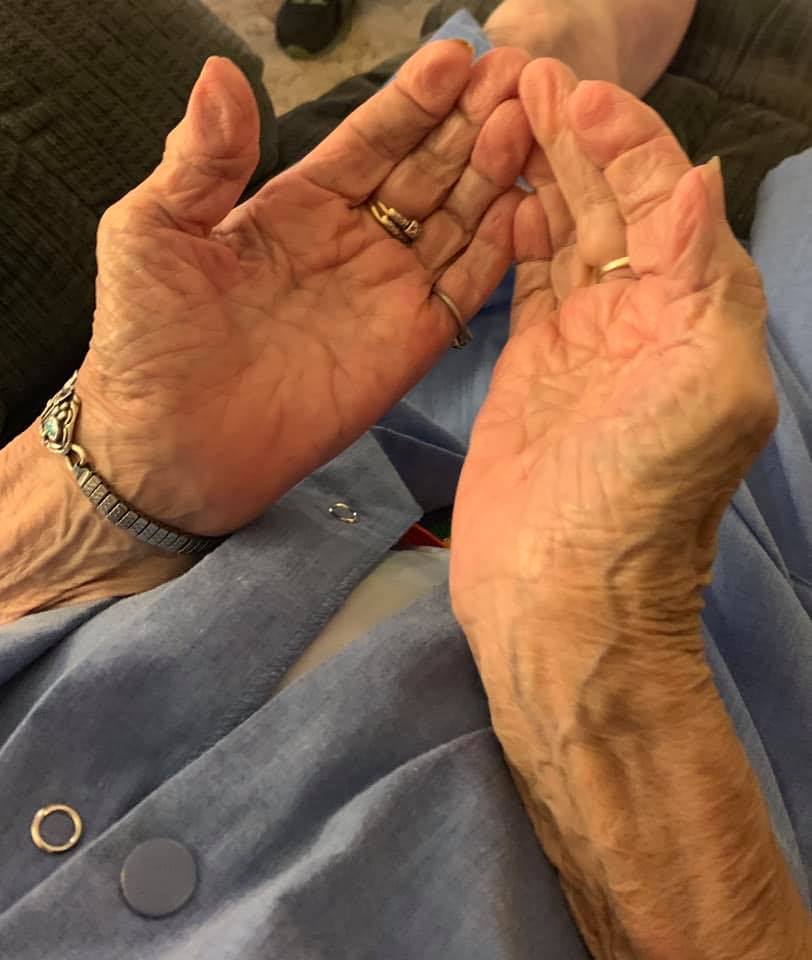
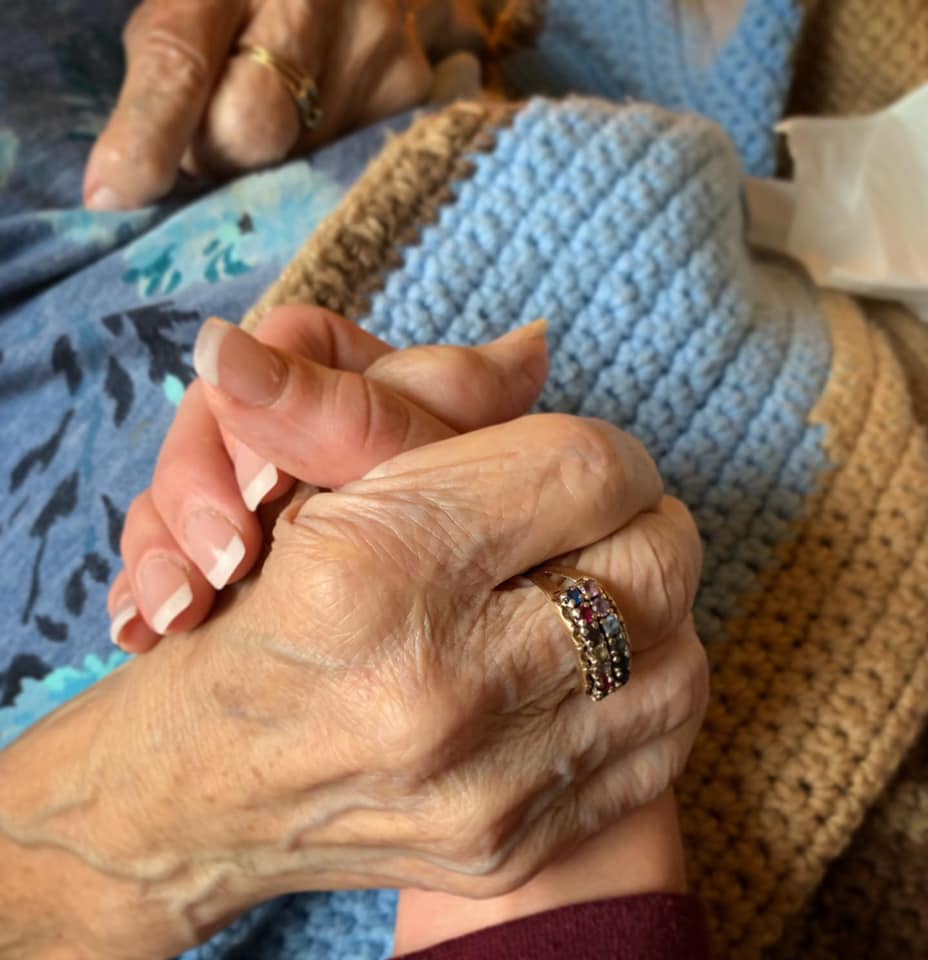
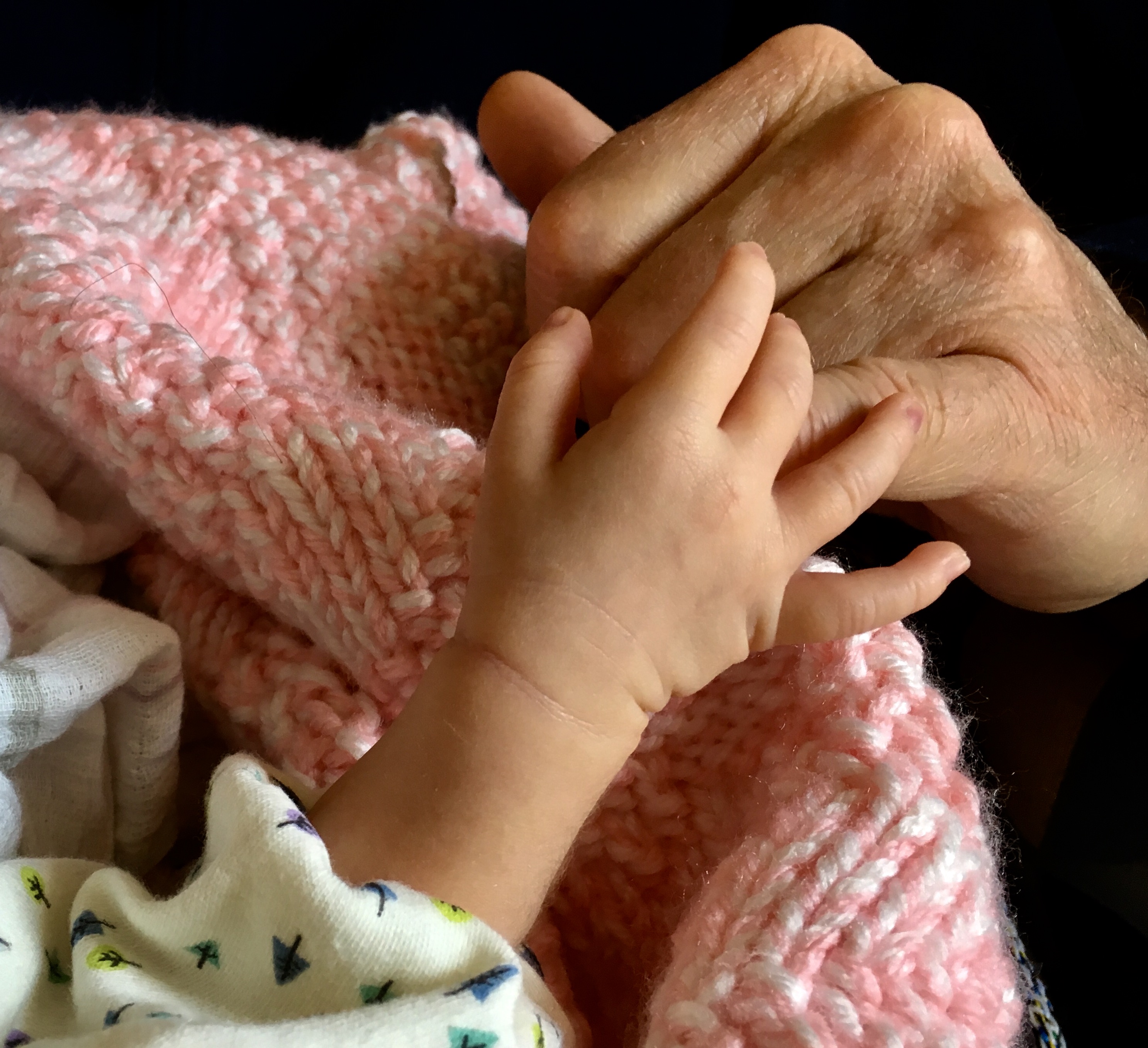
Esther Meyer, nearly 92, photo taken by a granddaughter
Esther’s hands – photo by Donna Meyer
photo by Danielle Meyer Miljevic

At last the entire family stood, like people seeing someone off at the rail station, waiting in the room.

“Well,” said Great-grandma, “there I am, I’m not humble, so it’s nice seeing you standing around my bed. Now next week there’s late gardening and closet-cleaning and clothes-buying for the children to do. And since that part of me is called, for convenience, Great-grandma, won’t be here to step it along, those other parts of me called Uncle Bert and Leo and Tom and Douglas, and all the other names, will have to take over, each to his own.”

“Yes, Grandma.”

Somewhere a door closed quietly.

… she saw it shaping in her mind quietly, and with serenity like a sea moving along and endless and self-refreshing shore.

Downstairs, she thought, they are polishing the silver, and rummaging the cellar, and dusting in the halls. She could hear them living all through the house.

“It’s all right,” whispered Great-grandma, as the dream floated her. “Like everything else in this life, it’s fitting.”

And the sea moved her back down the shore.
~Ray Bradbury “Great-Grandmother” from Dandelion Wine

Esther learned young how to work and she never forgot, still working up until the last few days of her long life.

Today she is sweeping up, wiping down counters and washing the dishes in a corner of heaven, after baking cookies and putting a soup on to simmer, to be sure everyone up there is well-fed and feels welcome.

She grew up on a remote farm in South Dakota where survival meant the whole family pitched in to help. When she married Pete and headed west to Washington, the work never let up: six sons, a small farm, a construction business to help manage, working as a caretaker privately and in a nursing home, taking on the mission of coordinating a large Sunday School ministry in our small church back over fifty years ago and never leaving.

Esther touched everything and everyone in this life, leaving a bit of herself behind in all of us. She’ll stay plenty busy in the next life.

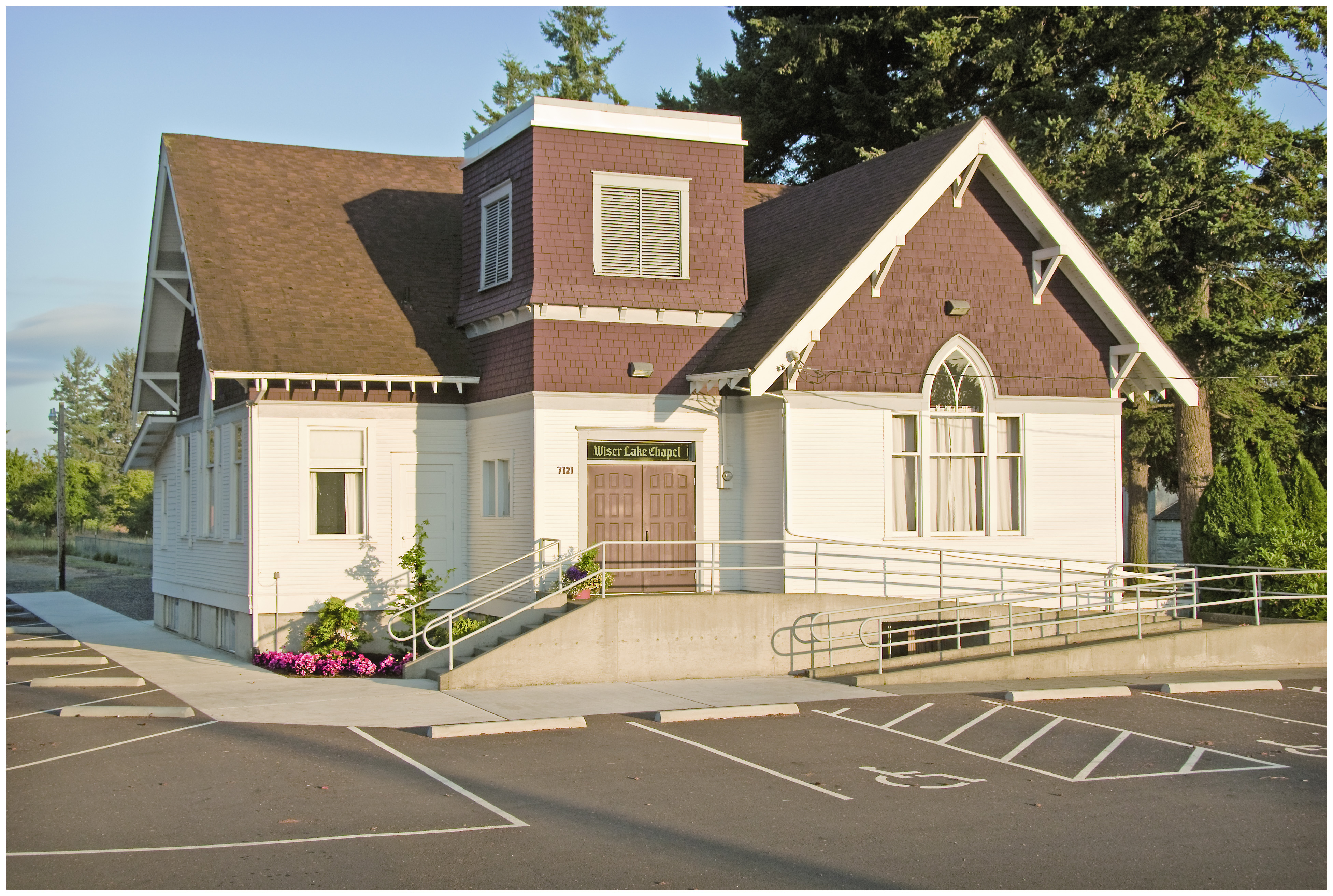
She was Wiser Lake Chapel for over half her life, along with her husband Pete who passed from chronic leukemia over a decade ago. Their son Wes took on many of Pete’s carpentry and building maintenance duties at church, but then he too lost a fight with acute leukemia.

Esther persevered despite these heartbreaking losses, a tenacious testament to the power of the Spirit in one woman’s life. She had more artificial joints in her body than her own joints, some replaced twice. Her heart tried to fail any number of times, most recently after a trip to Europe she made earlier this year, by herself, to visit her missionary son. She never stopped driving. She never stopped walking even though every step took immense effort paid in pain. She came to every church service, morning and night and mid-week, usually with something fresh-baked in her hand. If soup was needed for a meal on short notice, she could make it happen in an hour from what she stored away in her freezer. She was a self-appointed clean-up crew, wheeling her walker from table to sink to counter to trash can and back again.

Every new great-grandbaby and every new Chapel baby had a hand-made Esther quilt, complete with her hand-painted pictures and the details of the birthday and birthweight printed on it. She made hundreds over her lifetime.

Esther’s family is a large exuberant and glory-filled group of sons and daughter-in-laws and grands and great-grands who reflect who she and Pete were to them, to our church and the greater community. They are a legacy left on earth, to keep up the good work and gratitude-filled worship, to never ever give up, no matter how tough life can be.

Thank you, Esther, for changing us all so profoundly we won’t ever be the same as we were before you touched us; you left us all so much better than before. Now I believe we all are just a little bit like you.

And most of all, thanks for 90-plus years of your loving labor on the Lord’s behalf. The soup is on the stove in memory of you.
We Are Forever Changed

there are no words there is no song
is there a balm that can heal these wounds that will last a lifetime long
and when the stars have burned to dust
hand in hand we still will stand because we must

in one single hour in one single day
we were changed forever something taken away
and there is no fire that can melt this heavy stone
that can bring back the voices and the spirits of our own

all the brothers, sisters and lovers all the friends that are gone
all the chairs that will be empty in the lives that will go on
can we ever forgive though we never will forget
can we believe in the milk of human goodness yet

we were forged in freedom we were born in liberty
we came here to stop the twisted arrows cast by tyranny
and we won’t bow down we are strong of heart
we are a chain together that won’t be pulled apart
~Kitty Donohoe “There are no words”
written on 9/1/11

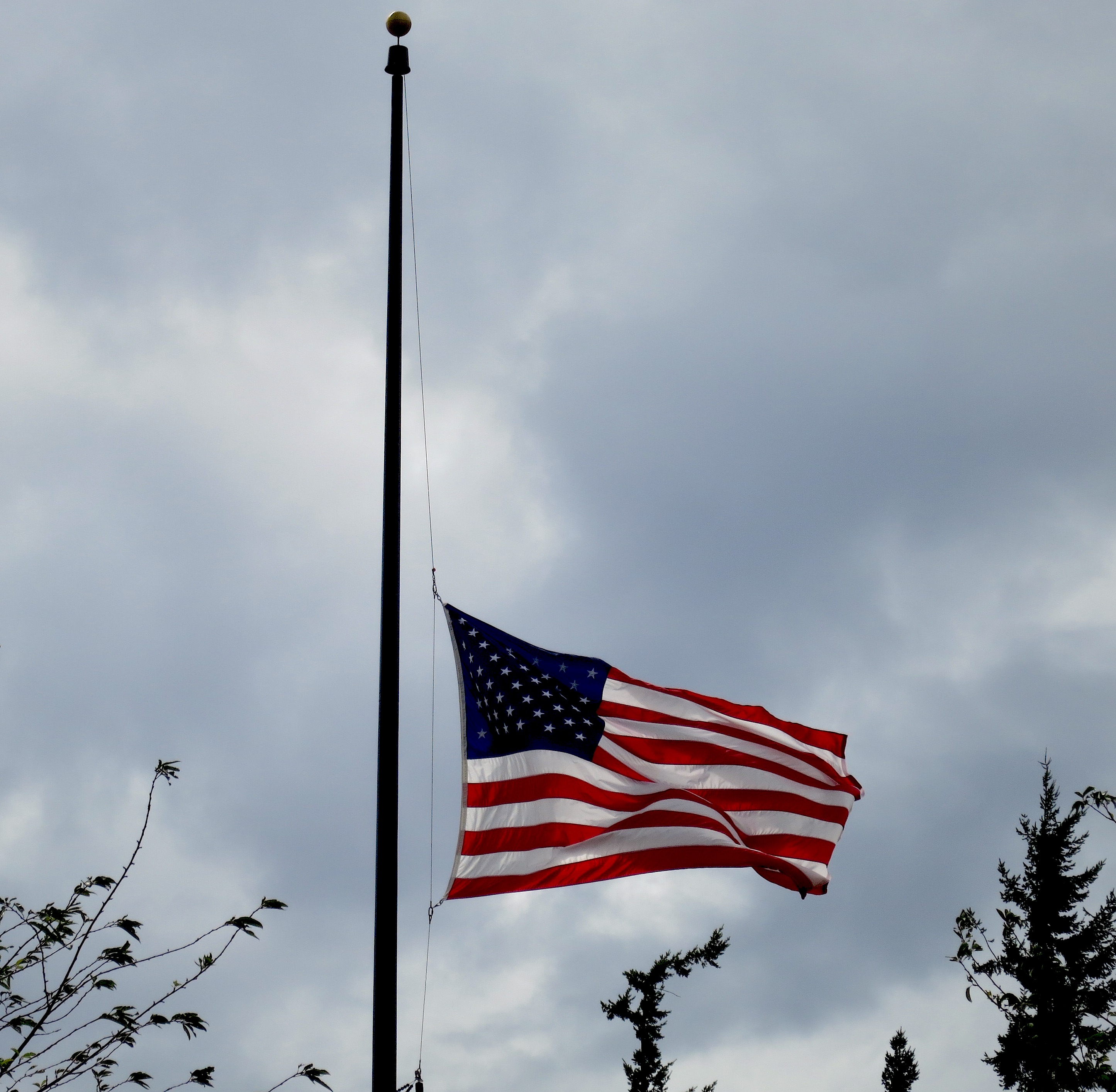
As a grade school child in November 1963, I learned the import of the U.S. flag being lowered to half mast in response to the shocking and violent death of our President. The lowering of the flag was so rare when I was growing up, it had dramatic effect on all who passed by — something very sad had happened to our country, warranting our unified silence and our stillness.

Since 9/11/01, our flag has spent significant time at half mast, so much so that I’m befuddled instead of contemplative, puzzling over what the latest loss might be as there are so many, sometimes all happening in the same time frame.  We no longer are silenced by this gesture of honor and respect and we certainly are not stilled, personally and corporately instigating and suffering the same mistakes against humanity over and over again.

There remains so much more sadness to be borne after that tragic day 18 years ago – such abundance of grief that our world has become overwhelmed and stricken and it seems we’ve lost all imagination for the “milk of human goodness.” Instead it seems we have become more divisive, pulling ourselves apart.

We must return, as people of faith, to that stillness to which we are called on a day such as today.  We must be still; we must be silent. We must let the bells toll and the names be read out. We must grieve the losses of this turning world and pray for release from the suffering we cause and we endure.  Only in the asking, only in the kneeling down and pleading, are we surrounded by grace.   A flag half lowered may have lost its power to punch our gut, but we are illuminated by the Light,  forged in freedom, born in liberty.

We must stop allowing our chain links from being pulled apart.

We Come and Go

The land belongs to the future; that’s the way it seems to me. How many of the names on the county clerk’s plat will be there in fifty years? I might as well try to will the sunset over there to my brother’s children. We come and go, but the land is always here. And the people who love it and understand it are the people who own it–for a little while.

~Willa Cather from O Pioneers!

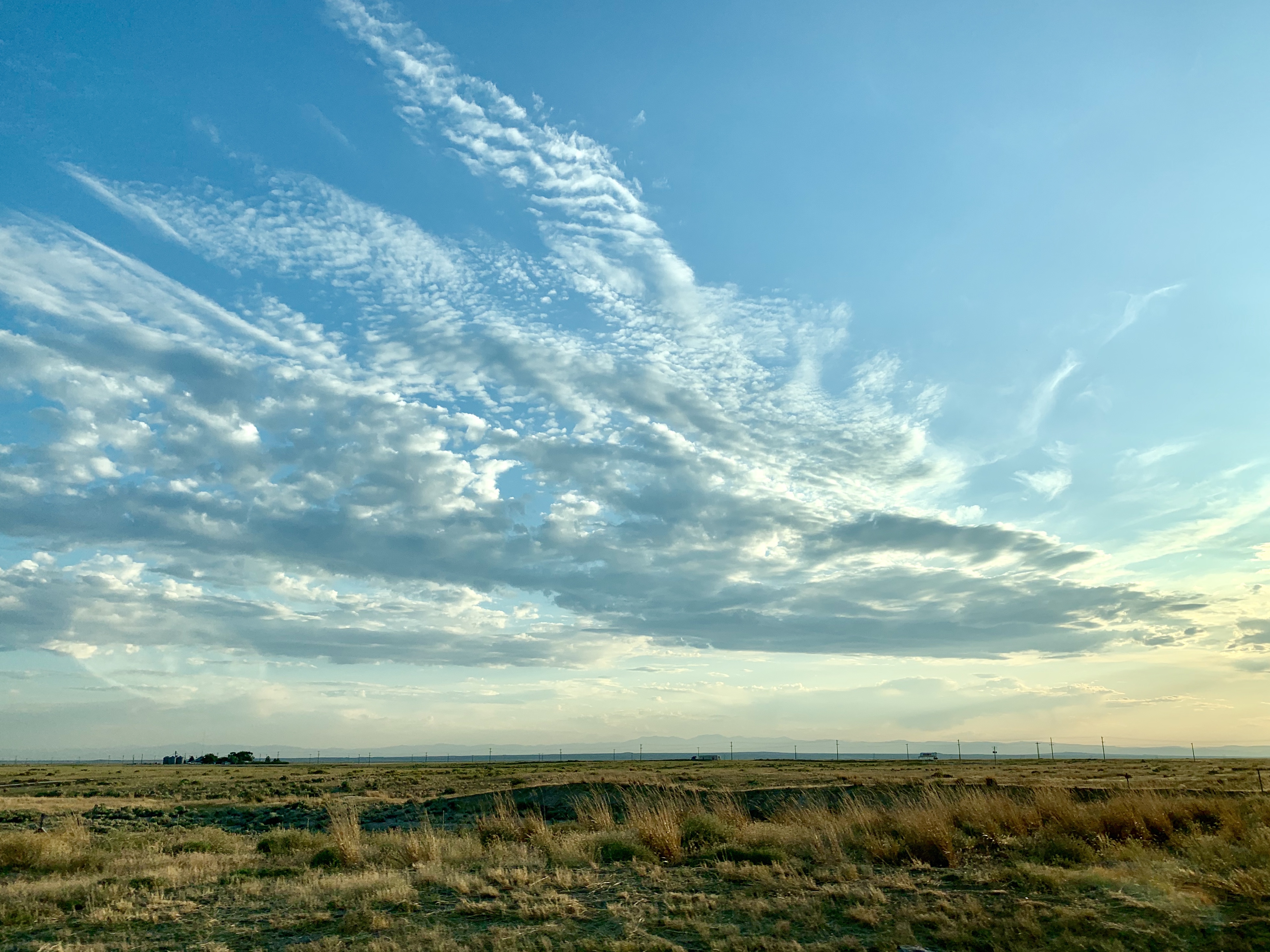
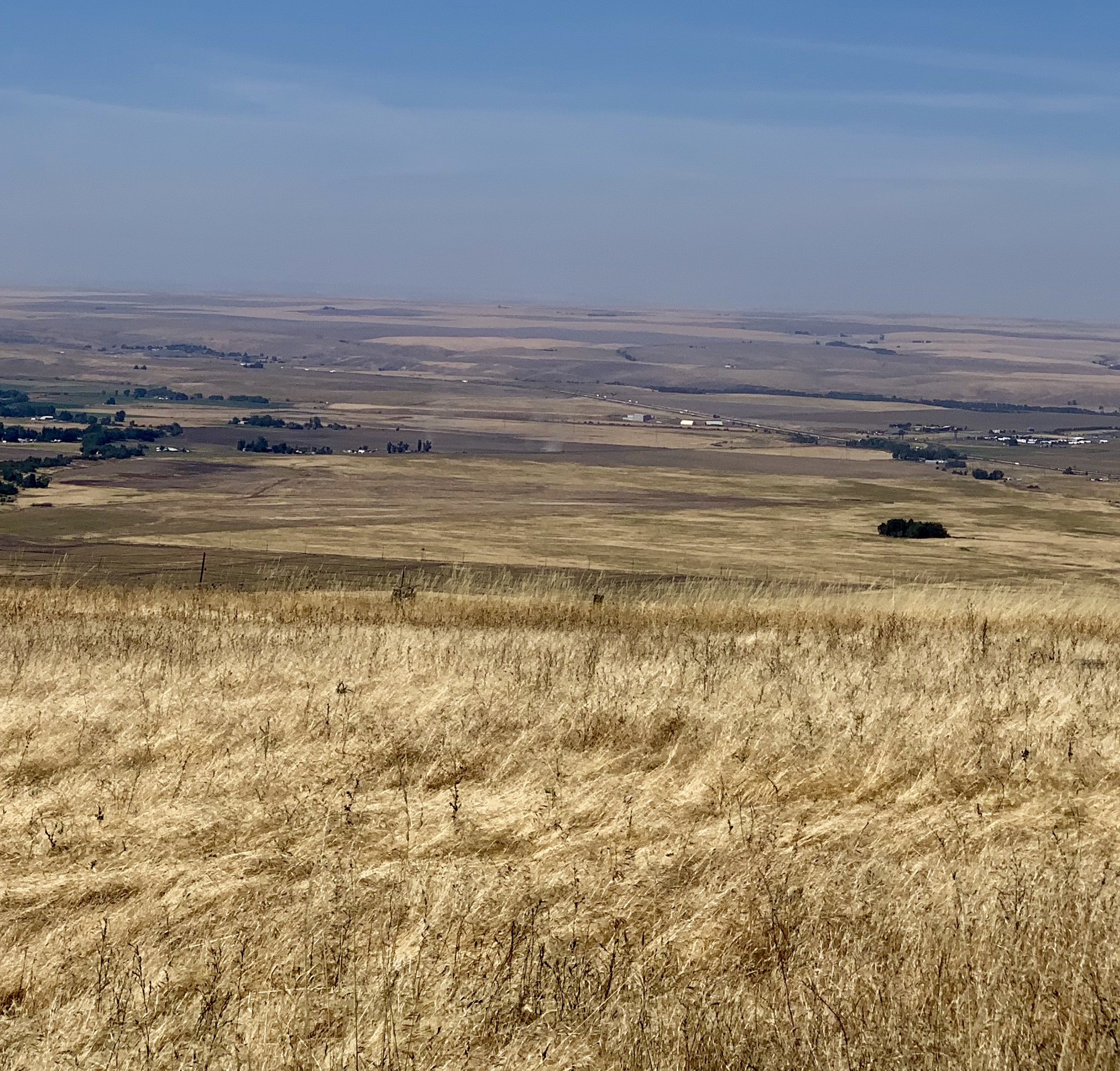
As we travel through the prairie to meet our new grandson, the expanse of land flies by just as it did when I was a child traveling with my family. The skies are just as dramatic, the horizons lay beyond what can be easily discerned, the grasses plentiful and brown. Sixty years have made little discernible difference to these plains but have made incredible difference to me. I am barely recognizable in comparison.

We are born as images of God to stay awhile to love this land as best we can; we come and go. Today we celebrate the coming of a new grandson born of the mountains and farmland and the prairies.

He belongs to the future.

In the Quiet Misty Morning

In the quiet misty morning
When the moon has gone to bed,
When the sparrows stop their singing
And the sky is clear and red,
When the summer’s ceased its gleaming
When the corn is past its prime,
When adventure’s lost its meaning –
I’ll be homeward bound in time

Bind me not to the pasture
Chain me not to the plow
Set me free to find my calling
And I’ll return to you somehow

If you find it’s me you’re missing
If you’re hoping I’ll return,
To your thoughts I’ll soon be listening,
And in the road I’ll stop and turn
Then the wind will set me racing
As my journey nears its end
And the path I’ll be retracing
When I’m homeward bound again

Bind me not to the pasture
Chain me not to the plow
Set me free to find my calling
And I’ll return to you somehow

In the quiet misty morning
When the moon has gone to bed,
When the sparrows stop their singing
I’ll be homeward bound again.

~Marta Keen “Homeward Bound”

In my father’s near daily letters home to my mother during WWII, month after month after month, he would say, over and over while apologizing for the repetition:
“I will come home to you, I will return, I will not let this change me, we will be joined again…”

This was his way of convincing himself even as he carried the dead and dying after island battles: men he knew well and the enemy he did not know. He knew they were never returning to the home they died protecting and to those who loved them.

He shared little of battle in his letters as each letter was reviewed and signed off by a censor before being sealed and sent. This story made it through:

“You mentioned a story of Navy landing craft taking the Marines into Tarawa.  It reminded me of something which impressed me a great deal and something I’m sure I’ll never forget. 

So you’ll understand what I mean I’ll try to start with an explanation.  In training – close order drill- etc.  there is a command that is given always when the men form in the morning – various times during the day– after firing– and always before a formation is dismissed.  The command is INSPECTION – ARMS.  On the command of EXECUTION- ARMS each man opens the bolt of his rifle.  It is supposed to be done in unison so you hear just one sound as the bolts are opened.  Usually it is pretty good and sounds O.K.

Just to show you how the morale of the men going to the beach was – and how much it impressed me — we were on our way in – I was forward, watching the beach thru a little slit in the ramp – the men were crouched in the bottom of the boat, just waiting.  You see- we enter the landing boats with unloaded rifles and wait till it’s advisable before loading.  When we got about to the right distance in my estimation I turned around and said – LOAD and LOCK – I didn’t realize it, but every man had been crouching with his hand on the operating handle and when I said that — SLAM! — every bolt was open at once – I’ve never heard it done better – and those men meant business when they loaded those rifles. 

A man couldn’t be afraid with men like that behind him.”

My father did return home to my mother after almost three years of separation. He was “bound to the pasture and chained to the plow” as he resumed his love of farming the land and teaching others how it is done.

He never forgot those who died, making it possible for him to return home. I won’t forget either.

A Grand Center

The city orbits around eight million
centers of the universe
and turns around the golden clock
at the still point of this place.
Lift up your eyes from the moving hive
and you will see time circling
under a vault of stars and know
just when and where you are.
~Billy Collins “Grand Central”

Things fall apart; the centre cannot hold;
Mere anarchy is loosed upon the world,
The blood-dimmed tide is loosed, and everywhere   
The ceremony of innocence is drowned;
~William Butler Yeats from “The Second Coming”

At the still point of the turning world.
Neither flesh nor fleshless;
Neither from nor towards;

at the still point, there the dance is,
But neither arrest nor movement. And do not call it fixity,
Where past and future are gathered.

Neither movement from nor towards,
Neither ascent nor decline.

Here is a place of disaffection
Time before and time after
In a dim light: neither daylight
Investing form with lucid stillness
Turning shadow into transient beauty
With slow rotation suggesting permanence
Nor darkness to purify the soul
Emptying the sensual with deprivation
Cleansing affection from the temporal.
Neither plentitude nor vacancy. 

~T.S. Eliot from “Burnt Norton” The Four Quartets

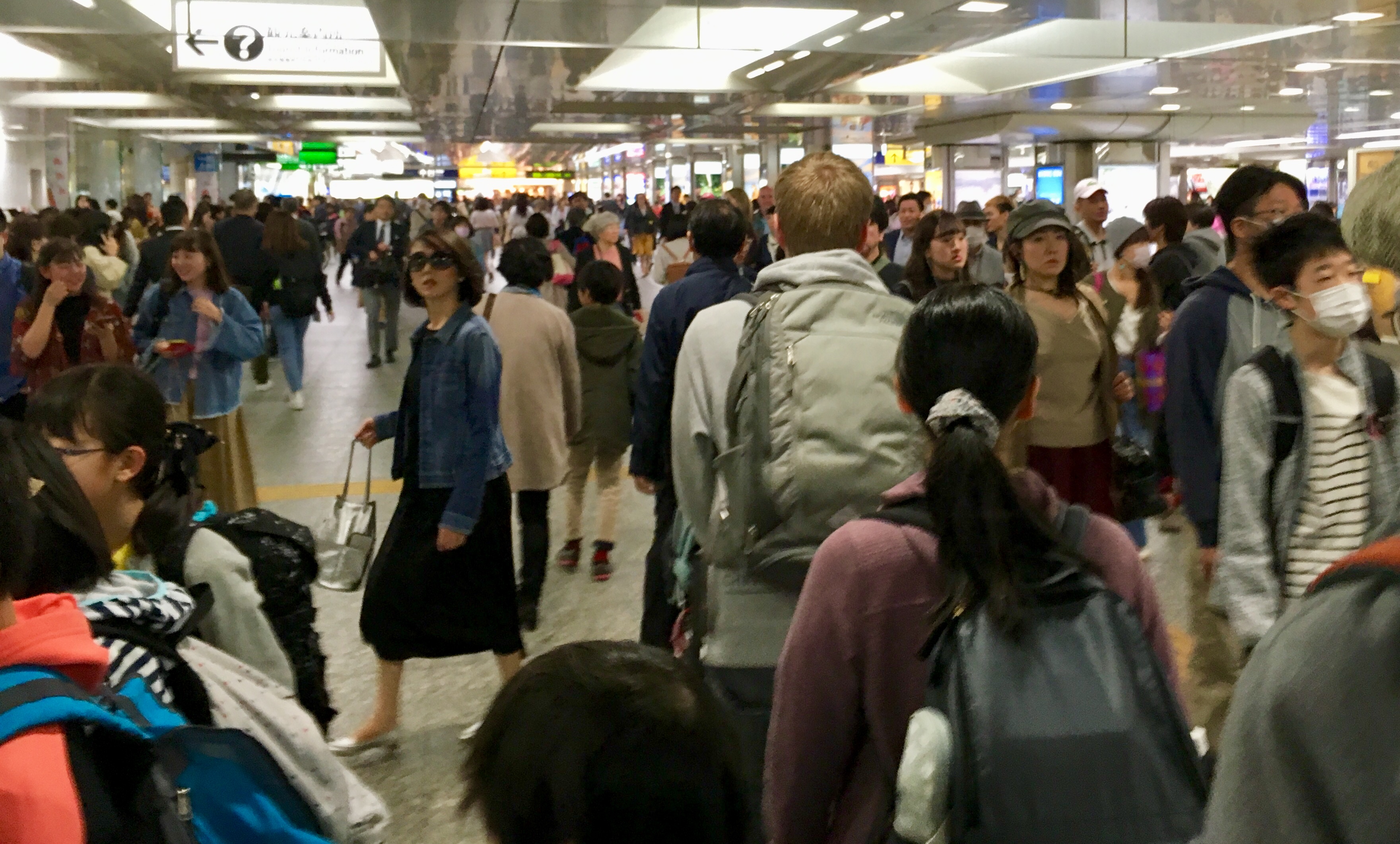
Millions orbiting the center or the center orbiting its millions:
we’ve been to Grand Central Station, a relaxed rest stop compared to the moving hive we navigated at Shinjuku Station and Ikebukuro Station in Tokyo, a city four times the size of New York.

Try as I might to picture train stations constituting a “center” holding the city together, I feel these works of man have only a tenuous hold on those who come and go. There is no glue; things fall apart.

The center only holds when it constitute the Source itself-
the origin, the beginning and the end and everything in between. Starting from there, no matter how far from the Center,
you have no doubt about where and when you are.

The Road Ahead

He sometimes felt that he had missed his life
By being far too busy looking for it.
Searching the distance, he often turned to find
That he had passed some milestone unaware…

The path grew easier with each passing day,
Since it was worn and mostly sloped downhill.
The road ahead seemed hazy in the gloom.
Where was it he had meant to go, and with whom?
~Dana Gioia from “The Road” from 99 Poems: New and Selected

The Road goes ever on and on
Out from the door where it began.
Now far ahead the Road has gone.
Let others follow, if they can!
Let them a journey new begin.
But I at last with weary feet
Will turn towards the lighted inn,
My evening-rest and sleep to meet.

Still ’round the corner there may wait
A new road or secret gate;
And though I oft have passed them by,
A day will come at last when I
Shall take the hidden paths that run
West of the Moon, East of the Sun.
~J.R.R Tolkien from “Roads Go Ever On”

Like many others, I have experienced the disconcerting feeling of traveling a familiar route with my mind completely disengaged. Suddenly I find myself at my destination without a conscious realization of how I even got there or what I saw along the way. Or maybe I was doing a routine daily task and later couldn’t remember having done it (did I shut off the barn faucet or are the water barrels flooding over all day?) because my head was somewhere else.

We describe this as “auto-pilot” or “body memory” or more distressingly “dissociation” — most therapists prescribe “mindfulness” to reengage us in our daily lives and thoughts. I’m not sure it is mindfulness that I practice, but I do force regular “brain check-ins” to anchor me to a time and place and task. (“yes, I have just passed that intersection where that truck and trailer almost hit me years ago and I am grateful to still be alive” or “I am now shutting off the barn faucet and won’t have to think about it again until tomorrow, thank you very much!”)

I regret “missing out” on experiencing my journey because I was so busy scanning the horizon for what is to come or looking back at where I’ve been, or watching where my feet will land or thinking about anywhere but where I was in the moment.

I need to acknowledge the milestones and not pass them by unawares — stopping at the view points, reading the historical markers, taking a breather at the rest stops. I seek to find the hidden paths and explore them rather than be solely destination-driven.

I must pay attention to who is alongside me and be ready to steady them if they trip or stumble, and pray they’ll catch me if I start to fall.

And most importantly, may I stay pointed toward the lighted inn that is awaiting all of us.

Sabbath Morning

The Old Church leans nearby a well worn road 
upon a hill that has no grass or tree 
The winds from off the prairie now unload 
the dust they bring around it fitfully 
The path that leads up to the open door 
is worn and grayed by many toiling feet 
of us who listen to the Bible lore 
and once again the old time hymns repeat.
And every Sabbath Morning we are still 
returning to the altar standing there; 
a hush, a prayer, a pause, and voices 
fill the Master’s House with a triumphant air.
The old church leans awry and looks quite odd,
But it is beautiful to us, and God.

~Stephen Paulus “The Old Church”

…when I experienced the warm, unpretentious reception of those who have nothing to boast about, and experienced a loving embrace from people who didn’t ask any questions, I began to discover that a true spiritual homecoming means a return to the poor in spirit to whom the kingdom of heaven belongs.
~Henri Nouwen from The Return of the Prodigal Son

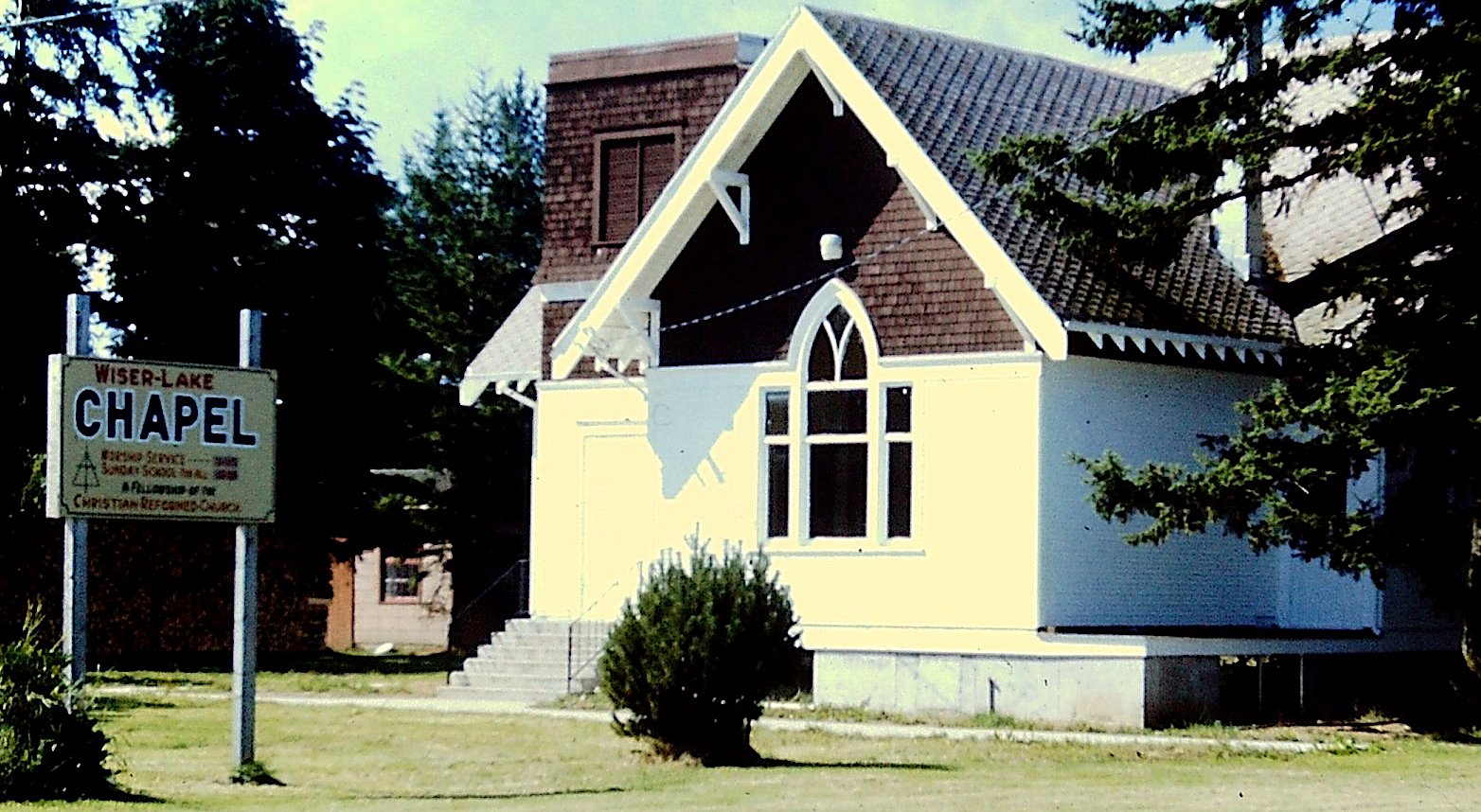
Our family had driven past the boxy building countless times hurrying on our way to other places, barely giving it a second glance. It had a classic design, but showed its age with peeling paint,  a few missing shingles, an old fashioned square flat roofed belfry, and arched windows. The hand lettered sign spelling out “Wiser Lake Chapel” by the road constituted a humble invitation of sorts, simply by listing the times of the services.

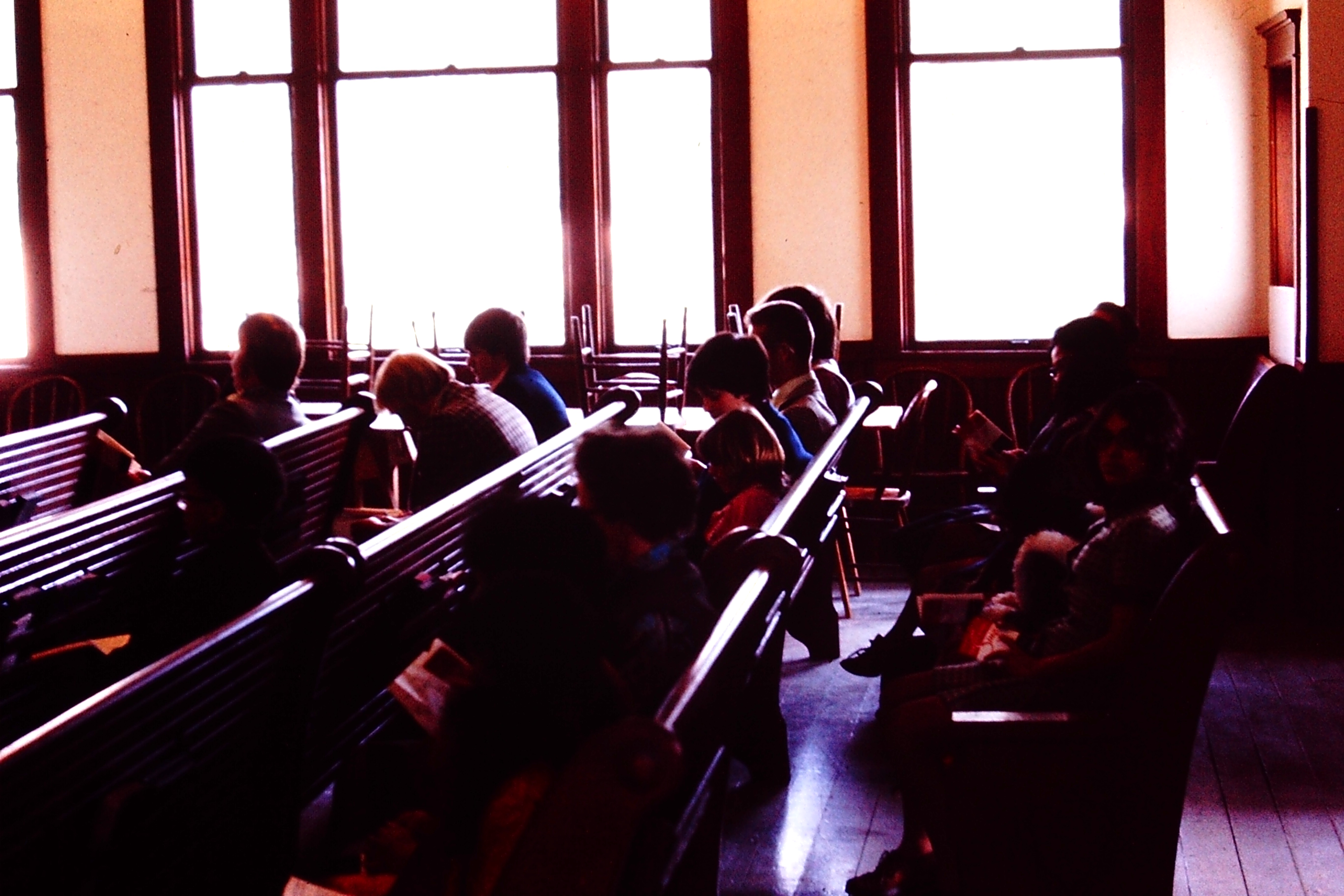
On a blustery December Sunday evening in 1990, we had no place else to be for a change.  Instead of driving past, we stopped, welcomed by the yellow glow pouring from the windows and an almost full parking lot. Our young family climbed the steps to the big double doors, and inside were immediately greeted by a large balding man with a huge grin and encompassing handshake. He pointed us to one of the few open spots still available in the old wooden pews.

The sanctuary was a warm and open space with a high lofted ceiling, dark wood trim accents matching the ancient pews, and a plain wooden cross above the pulpit in front. There was a pungent smell from fir bough garlands strung along high wainscoting, and a circle of candles standing lit on a small altar table. Apple pie was baking in the kitchen oven, blending with the aroma of good coffee and hot cocoa.

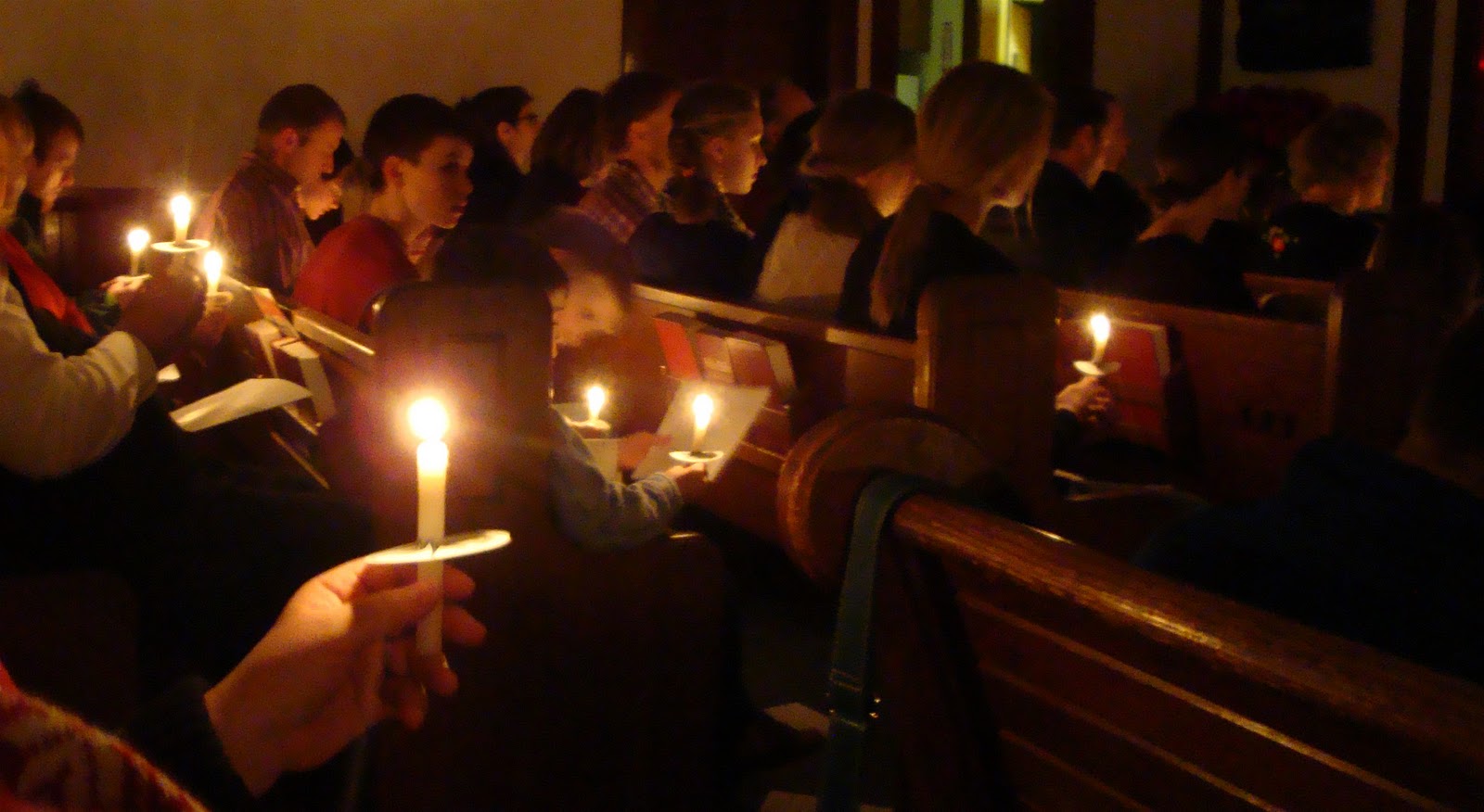
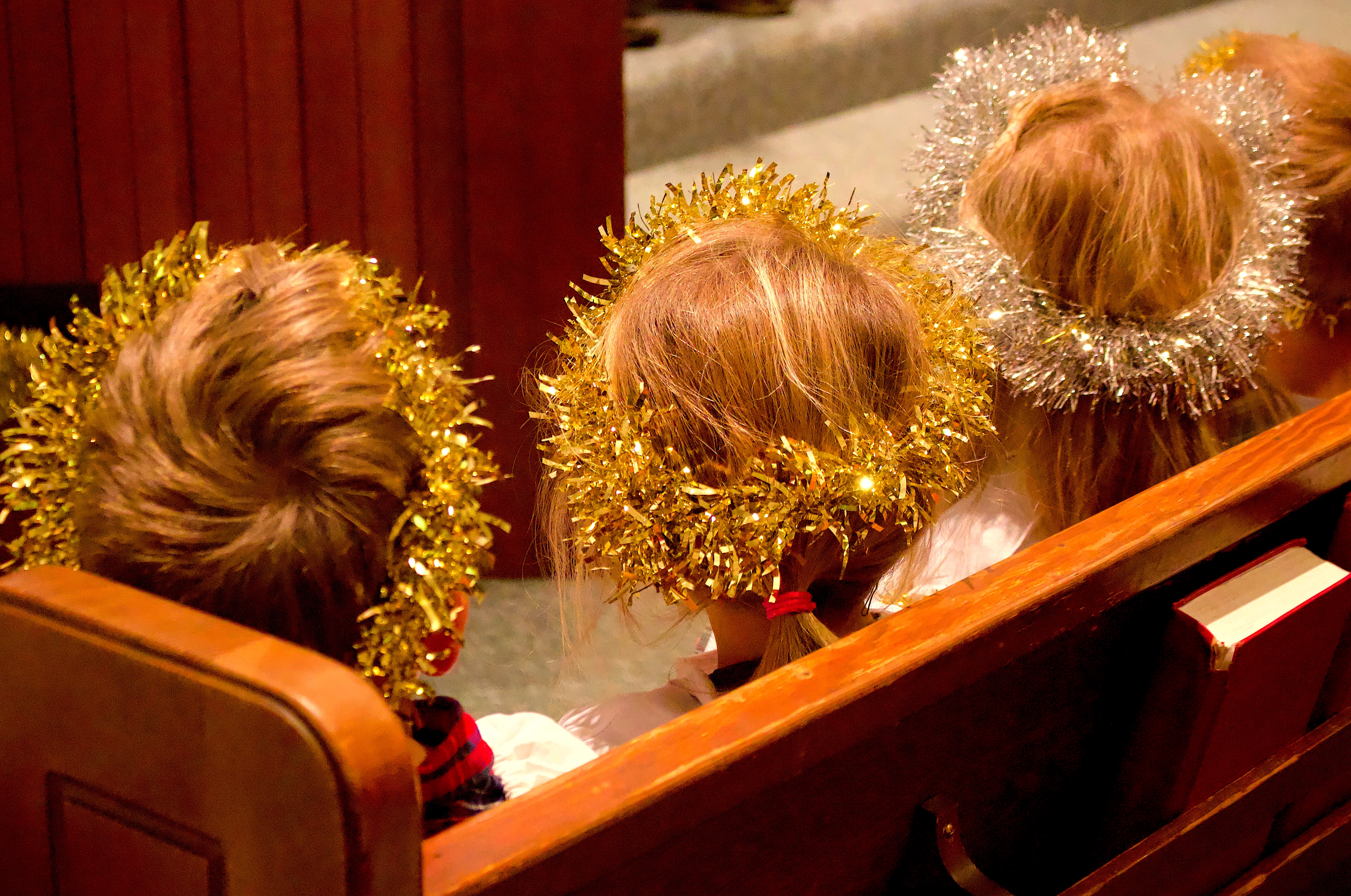
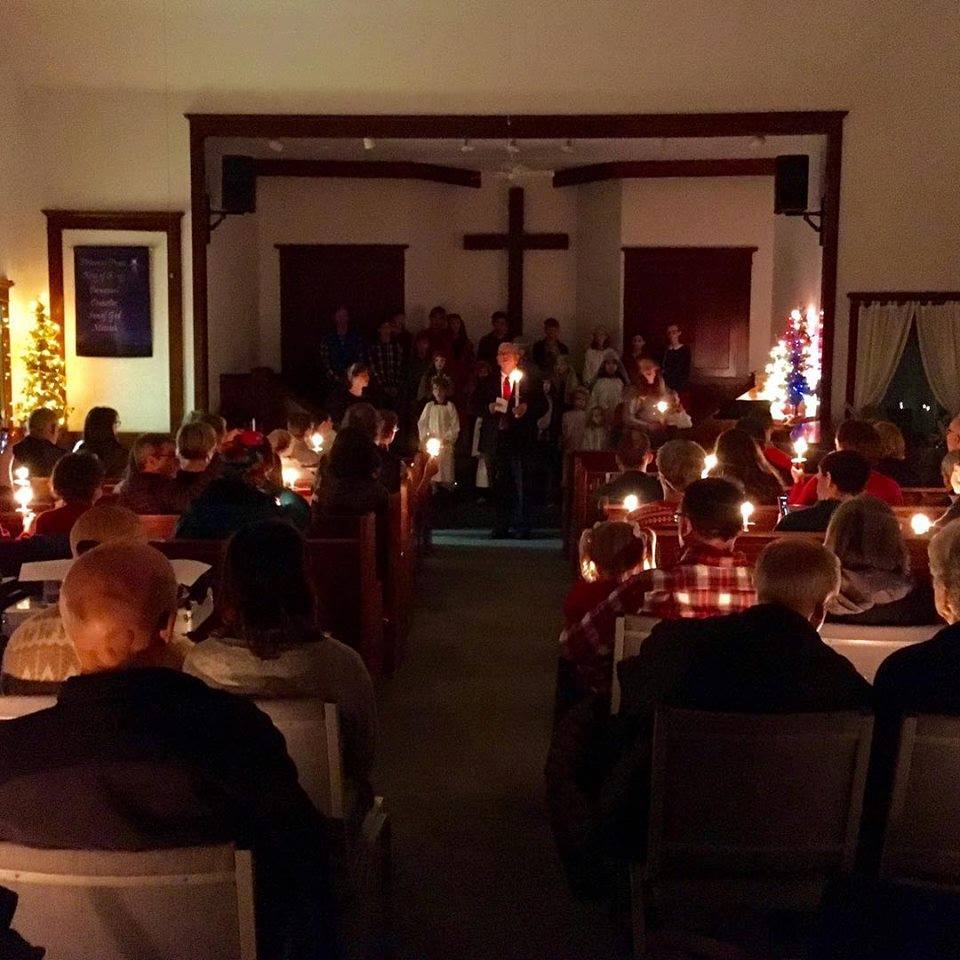
The service was a Sunday School Christmas program, with thirty some children of all ages and skin colors standing up front in bathrobes and white sheet angel gowns, wearing gold foil halos, tinfoil crowns and dish towels wrapped with string around their heads. They were prompted by their teachers through carols and readings of the Christmas story. The final song was Silent Night, sung by candle light, with each child and member of the congregation holding a lit candle. There was a moment of excitement when one girl’s long hair briefly caught fire, but after that was quickly extinguished, the evening ended in darkness, with the soft glow of candlelight illuminating faces of the young and old, some in tears streaming over their smiles.

It felt like home. We had found our church.

We’ve never left and every Sabbath day finds us back there.

Over the past 103 years, this old building has seen a few thousand people come and go, has had peeling paint and missing shingles, a basement that flooded when the rain comes down hard, toilets that didn’t always flush, and though it smells heavenly on potluck days, there are times when it can be just a bit out of sorts and musty. It really isn’t anything to boast about.

It is humble and unpretentious yet envelops its people in its loving and imperfect embrace, with warmth, character and a uniqueness that is unforgettable.

It really is not so different from the folks who have gathered there over the years.

We know we belong,
such as we are,
just as we are,
blessed by God with a place to join together.

We Who are Blended

You’ve got to be taught
To hate and fear
You’ve got to be taught
From year to year
It’s got to
Be drummed in your dear little ear
You’ve got to be taught
To be afraid of people
Who’s eyes are oddly made
And people who’s skin is a different shade
You’ve got to be carefully taught
~ Matthew Morrison from Oscar and Hammerstein’s “South Pacific”

It demands great spiritual resilience not to hate the hater
whose foot is on your neck, 
and an even greater miracle of perception and charity
not to teach your child to hate.
~James Arthur Baldwin

If you’re white and you’re wrong, then you’re wrong; 
if you’re black and you’re wrong, you’re wrong. 
People are people. 
Black, blue, pink, green – 
God make no rules about color; 
only society make rules where my people suffer, 
and that why we must have redemption and redemption now.
~Bob Marley

We’ve got to be taught to hate. I was and so were you.
And not a one of us grows up without that sickening uneasiness about not belonging and not feeling like we fit in with those around us. We crave belonging and most of us seek to blend in.

Yet we are created in the image of God, in most ways more similar than we are different. We have created the differences in our own minds and cultures, not God’s Mind. Our fear of one another is purely man-made.

Yet hating and fearing the “other” is meaningless when we are already the “other.”

As more and more people have their DNA profiles done and discover an unexpected mix of various ethnic and racial backgrounds, we are gaining new brothers and sisters on the molecular level. Many are already blended; most of us are mutts.

I have a white friend who recently discovered a branch of family four generations back where a white man and black woman had married and had several children who could pass as white and married so other light-skinned people. Several children were darker skinned and married black spouses. Sadly, due to the prejudices of the time, the family separated along skin color lines and didn’t maintain contact. Now the descendants have discovered each other. Their family reunion portraits display a colorful spectrum of black to brown to pale white. None of them are “other” any longer when they all are “other.”

So let us celebrate the infinite gradations of Imago Dei, and the redeeming reunion of long-lost brothers and sisters.

And remember — we are responsible for what we teach our children.

Threshed to Death

If you go back to the etymology of the word “threshold,” it comes from “threshing,” which is to separate the grain from the husk. So the threshold, in a way, is a place where you move into more critical and challenging and worthy fullness.

There are huge thresholds in every life.

You know that, for instance, if you are in the middle of your life in a busy evening, fifty things to do and you get a phone call that somebody you love has suddenly died, it takes ten seconds to communicate that information.

But when you put the phone down, you are already standing in a different world. Suddenly everything that seems so important before is all gone and now you are thinking of this.

So the given world that we think is there and the solid ground we are on is so tentative. And a threshold is a line which separates two territories of spirit, and very often how we cross is the key thing.

When we cross a new threshold worthily, what we do is we heal the patterns of repetition that were in us that had us caught somewhere.
~John O’Donohue from an “On Being” interview with Krista Tippett on “Becoming Wise”

I emerge from the mind’s
cave into the worse darkness
outside, where things pass and
the Lord is in none of them.
I have heard the still, small voice
and it was that of the bacteria
demolishing my cosmos. I
have lingered too long on
this threshold, but where can I go?
To look back is to lose the soul
I was leading upwards towards
the light.
To look forward?
Ah, what balance is needed at
the edges of such an abyss.

I am alone on the surface
of a turning planet. What
to do but, like Michelangelo’s
Adam, put my hand
out into unknown space,
hoping for the reciprocating touch?
~R.S. Thomas “Threshold”

Yet three more “mass shootings of the week” making it 32 so far this year:
-garlic festival attendees, WalMart shoppers, entertainment venues –

so which of us will be next?

We are unwillingly forced to a threshold we must cross over. Yet we stand stubborn defending our second amendment rights, immobilized, frozen to tradition while dying on the spot, peering out in fear but never peering inward in self-examination.

What prevents us from stopping this insanity of violence from continuing?

The answer is not that more of us should bear arms so a shoot-out is possible no matter where we go. Mass shooters choose to die in their most public and heinous act of hatred and nihilism – being shot to death is no disincentive for them.

We sweep people into office from both parties who only voice platitudes in the face of this repetitive tragedy and offer no viable solutions. Yes, victims (including children!) and their families need our prayers, but they should never have become victims in the first place. We have failed them, again and again and again.

So how many more innocents need to perish? When is it our own turn to be gunned down while simply living out our daily routine? Instead of submitting to the necessary threshing- a crushing winnowing to blow away the chaff of our lives- we defend the status quo and somehow convince ourselves the next shooter will not come to our store, our church, our school or our neighborhood.

History will continue to repeat itself as we die every day, by our own hand or by others’. We must cross the threshold to sane policies together, arm in arm, united in the need to move forward beyond this mess we have made for ourselves.

We all need a good threshing, badly. We need to be worthy of our privileges. We need, in our desperation, to reach out our hands into an unknown space, searching for that reciprocating touch, hoping and praying Someone is there to grab hold and lead us across to a better day and a better way.


A Horse with Wings

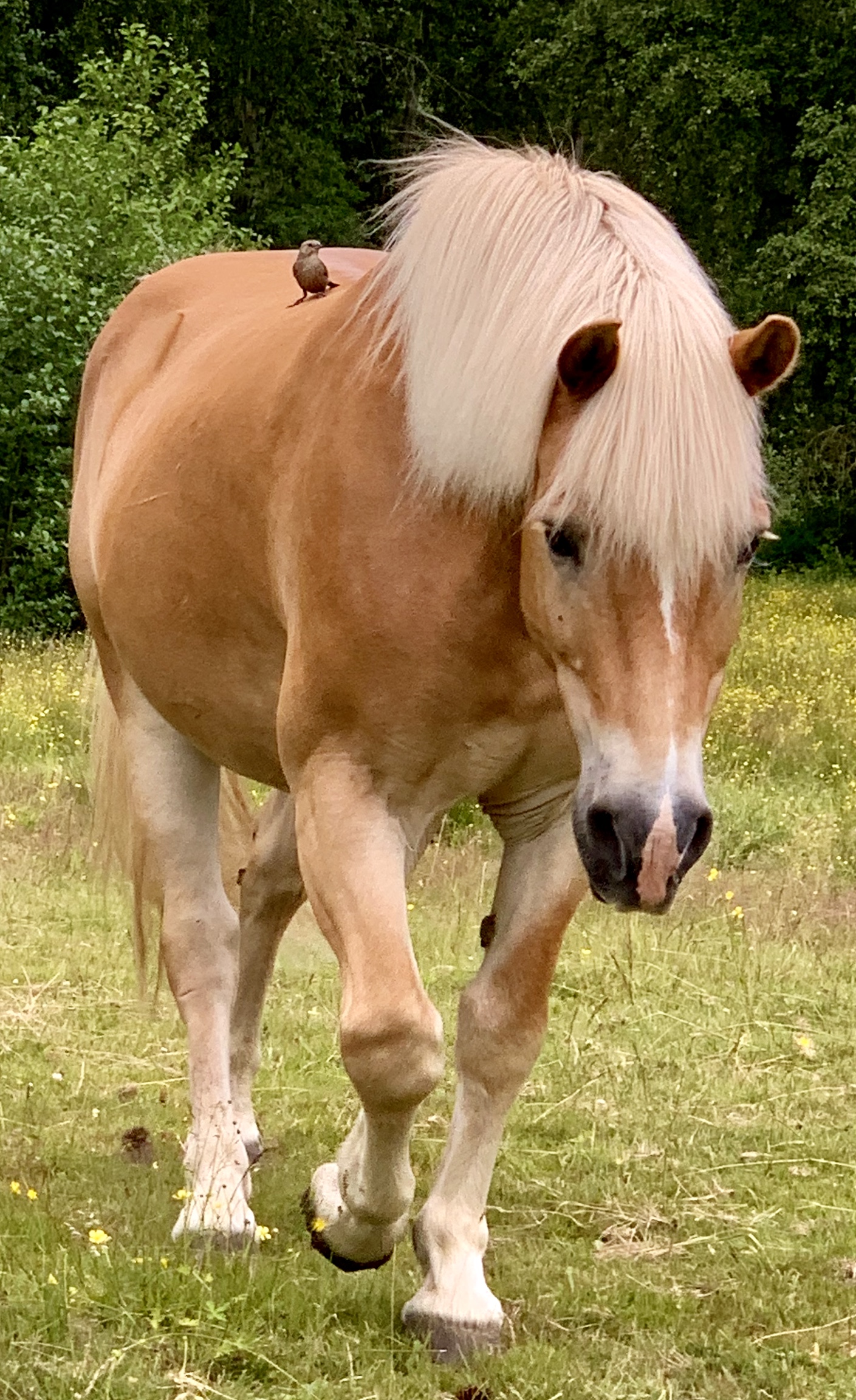
O! for a horse with wings! 
~William Shakespeare from Cymbeline

photo by Bette Vander Haak

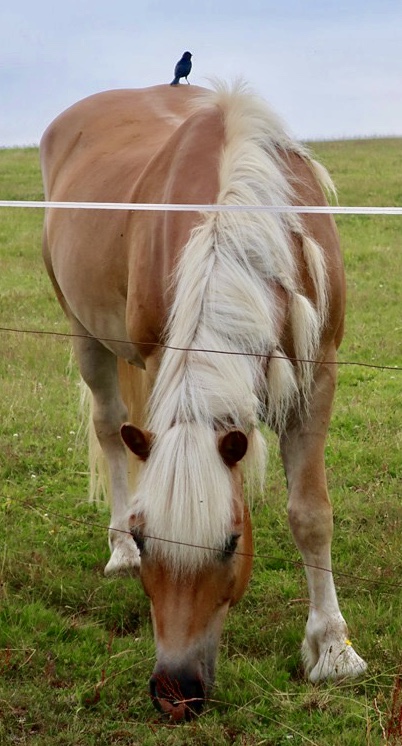
One reason why birds and horses are happy is because they are not trying to impress other birds and horses. 
~Dale Carnegie

photo by Bette Vander Haak

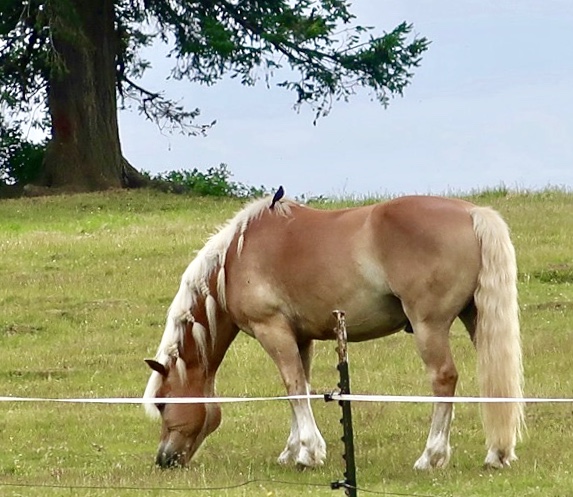
When I bestride him, I soar, I am a hawk:
he trots the air; the earth sings when he touches it;
~William Shakespeare from Henry V

photo by Bette Vander Haak

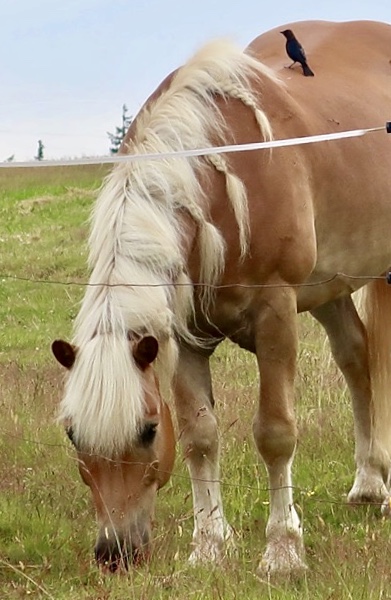
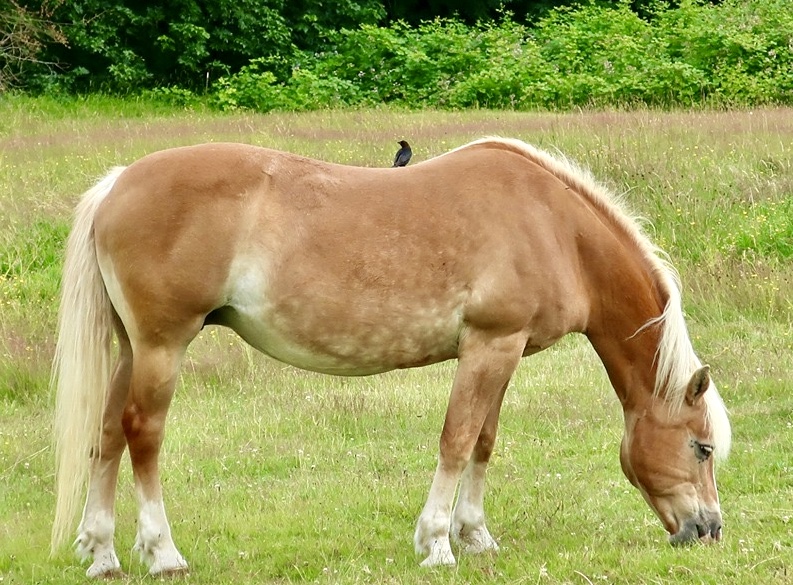
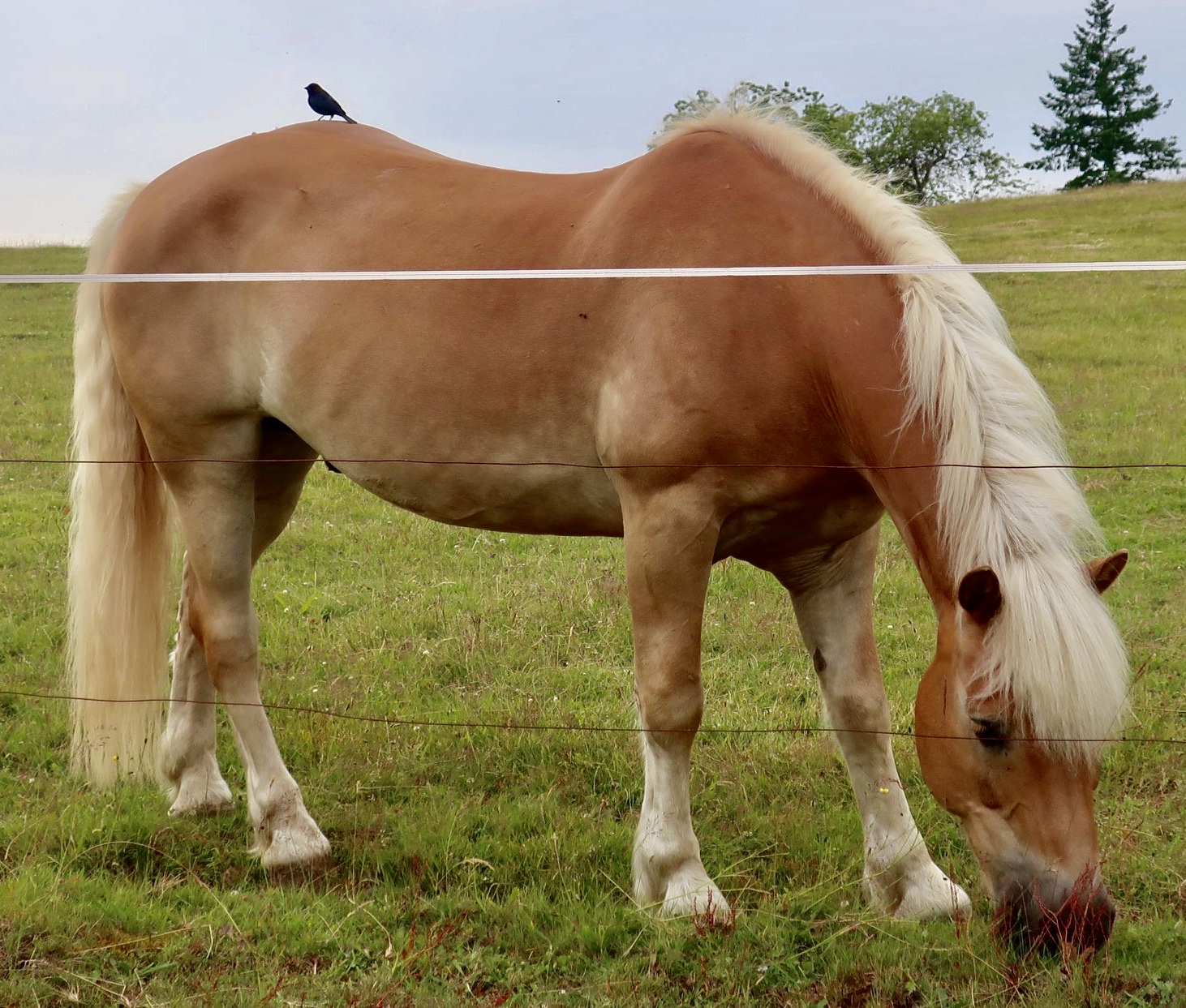
We all should have a buddy who will simply hang out with us, helping to keep the biting flies away by gobbling them up before they draw blood.

It is symbiosis at its best: a relationship built on mutual trust and helpfulness. In exchange for relief from annoying insects that a tail can’t flick off, a Haflinger serves up bugs on a smorgasbord landing platform located safely above farm cats and marauding coyotes.

Thanks to their perpetual full meal deals, these birds do leave “deposits” behind that need to be brushed off at the end of the day. Like any good friendship, having to clean up the little messes left behind is a small price to pay for the bliss of companionable comradeship.

We’re buds after all – best forever friends.

And this is exactly what friends are for: one provides the feast and the other provides the wings. We’re fully fed and we’re free.

May we ever be so blessed.

photo by Bette Vander Haak