Laid Aside His Crown: So Take Heart


We were promised sufferings. They were part of the program. We were even told, ‘Blessed are they that mourn.’


The real problem is not why some pious, humble, believing people suffer, but why some do not.
C.S. Lewis ~~writing on suffering
in The Problem of Pain

The Christian has never been promised a pain-free existence. No one escapes suffering, no matter how strongly they believe in God. It is what we signed up for.

How could an all-powerful all-knowing God allow suffering, especially in innocent children? This is a standard argument used against the existence of a beneficent God. The reasoning is — if abundant suffering and evil is allowed in the world, no merciful God is in control.

Yet that reasoning sets aside gospel reality:
God identifies so strongly with His Creation, He allows His own suffering and death.

He mourns. He weeps. He hurts. He bleeds. He dies. Just like us.

What all-powerful all-knowing God would do that?
Our God would, because He is first and foremost a loving God who makes imperfection perfect again. Then He defeats death to ensure our eternal union with Him.

No, there isn’t a “no pain” guarantee –neither God nor even the natural world ever promised that. But only our God promises “no stain” –that we are washed clean for eternity by His shed blood.

In the midst of our sadness and mourning, that is our greatest comfort of all.

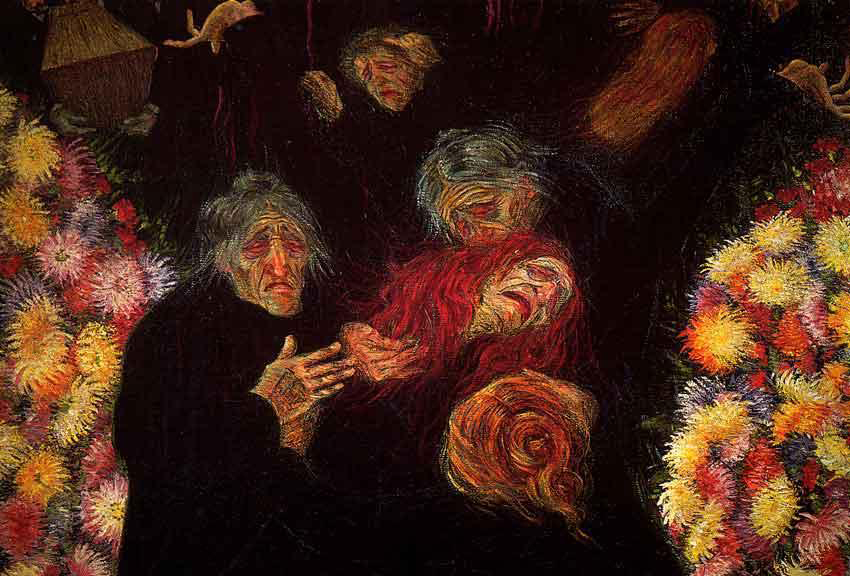
Mourning by Umberto Boccioni

For just as we share abundantly in the sufferings of Christ, so also our comfort abounds through Christ.
2 Corinthians 1:5

I have told you these things, so that in me you may have peace. In this world you will have trouble. But take heart! I have overcome the world.
John 16:33

This Lenten season I reflect on the words of the 19th century southern spiritual hymn “What Wondrous Love is This”

One-Time
Monthly
Yearly

Make a one-time or recurring donation to support daily Barnstorming posts

Make a monthly donation

Make a yearly donation

Choose an amount

$10.00
$25.00
$50.00
$5.00
$15.00
$100.00
$5.00
$15.00
$100.00

Or enter a custom amount

$

Your contribution is deeply appreciated.

Your contribution is appreciated.

Your contribution is appreciated.

DonateDonate monthlyDonate yearly

The Sunrise Shall Visit Us: Now Realigned

Christmas sets the centre on the edge;
The edge of town, the outhouse of the inn,
The fringe of empire, far from privilege
And power, on the edge and outer spin
Of  turning worlds, a margin of small stars
That edge a galaxy itself light years
From some unguessed at cosmic origin.
Christmas sets the centre at the edge.

And from this day our  world is re-aligned
A tiny seed unfolding in the womb
Becomes the source from which we all unfold
And flower into being. We are healed,
The end begins, the tomb becomes a womb,
For now in him all things are re-aligned.
~Malcolm Guite “Christmas on the Edge”

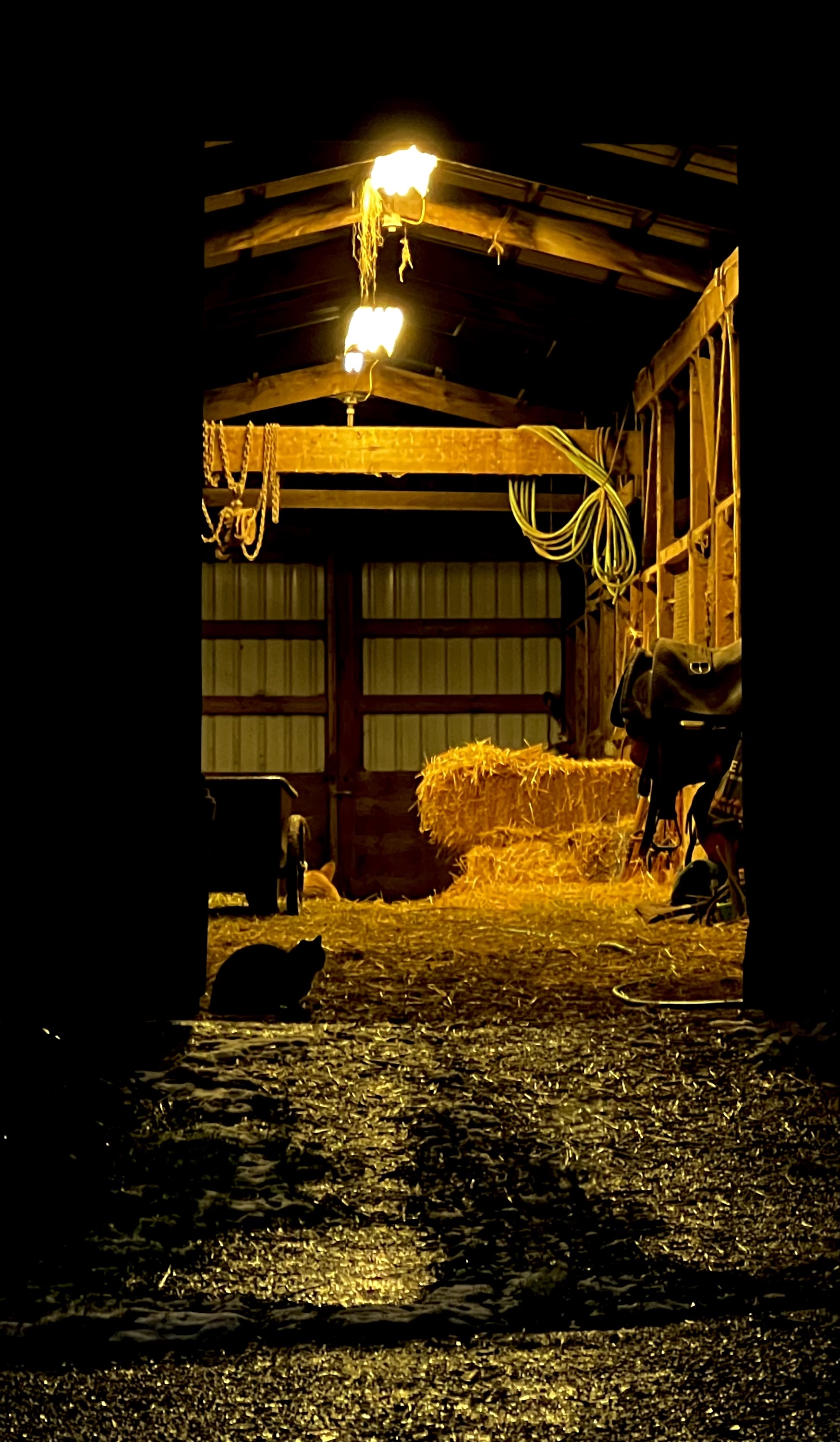
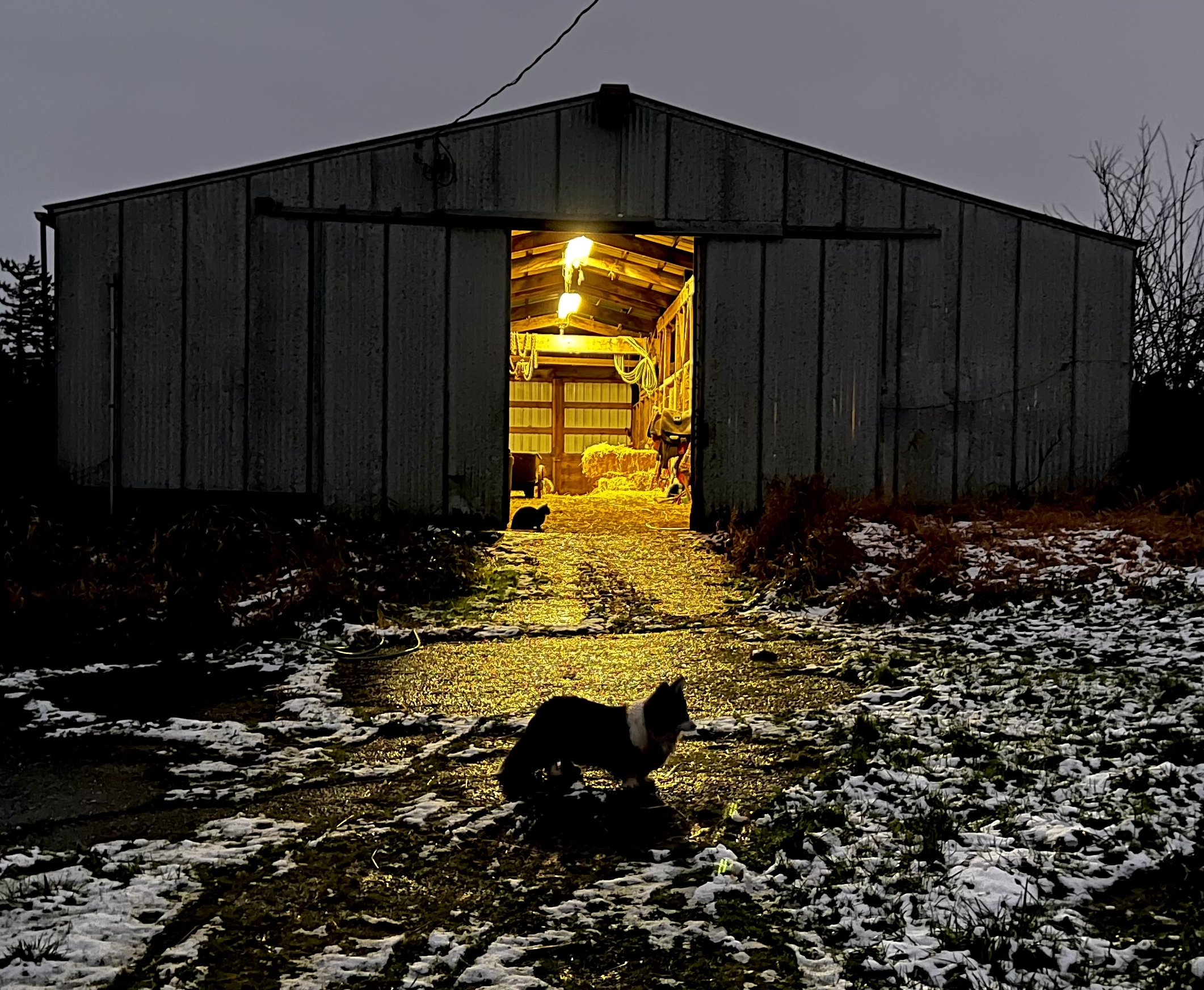
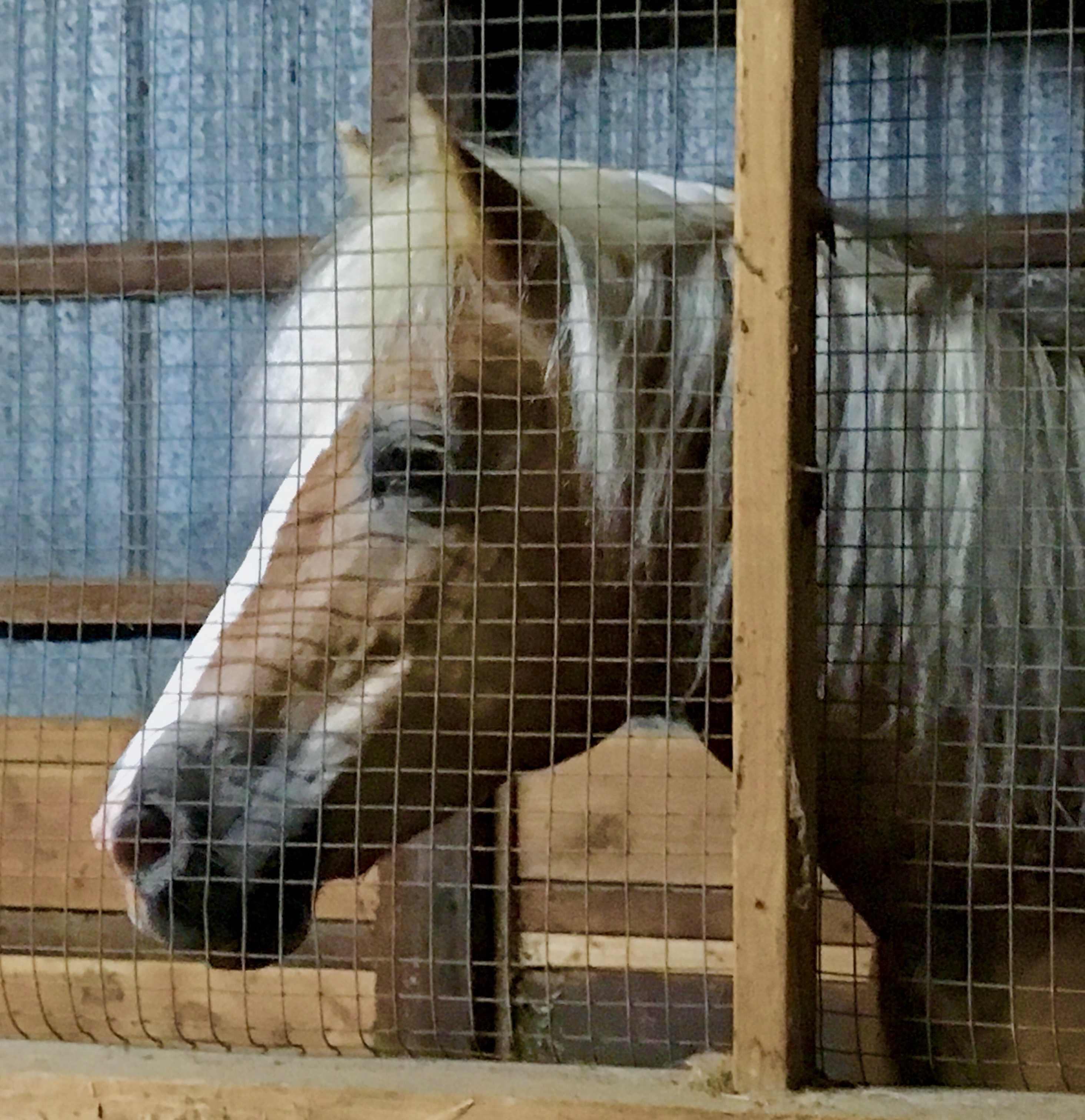
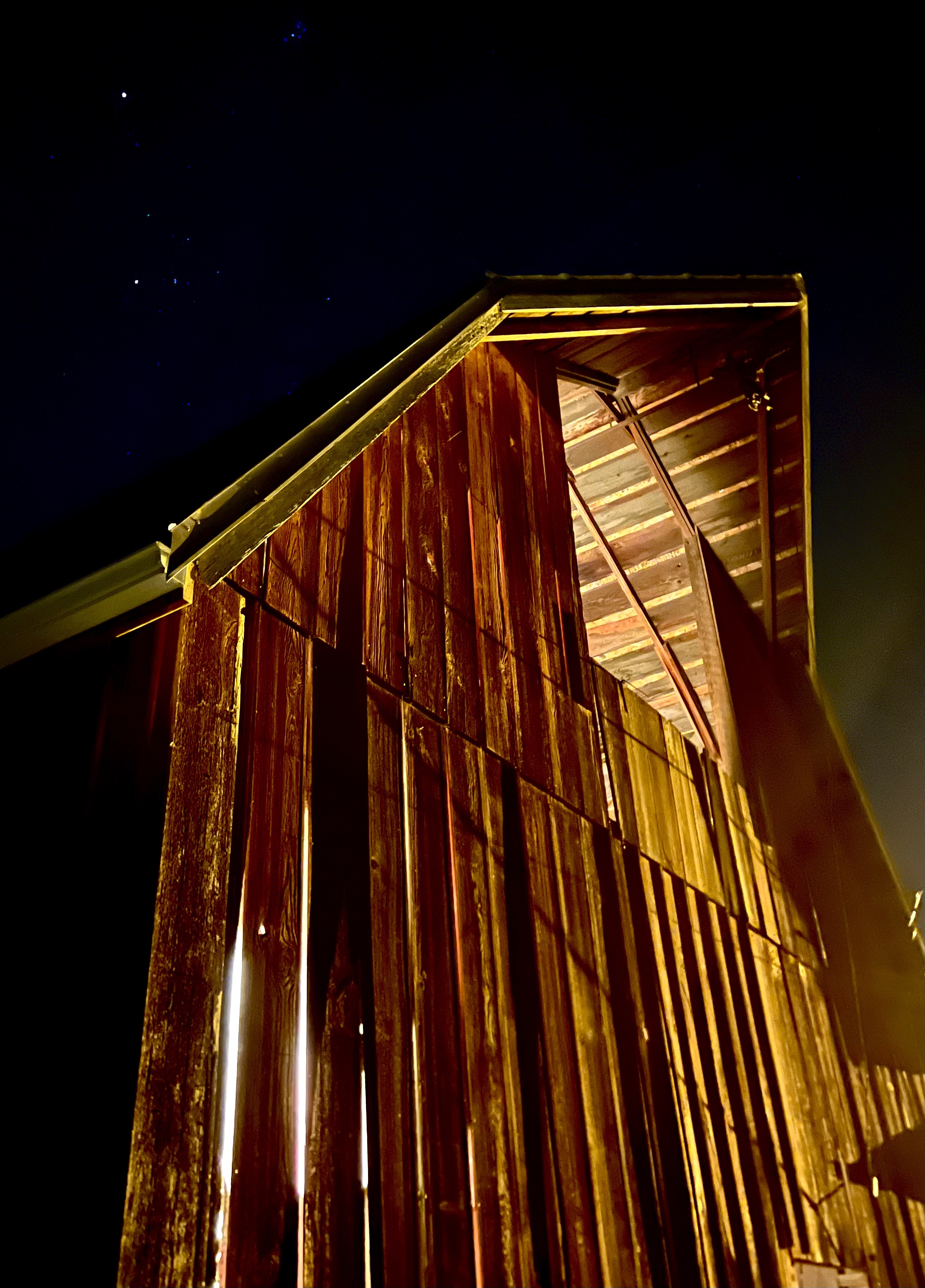
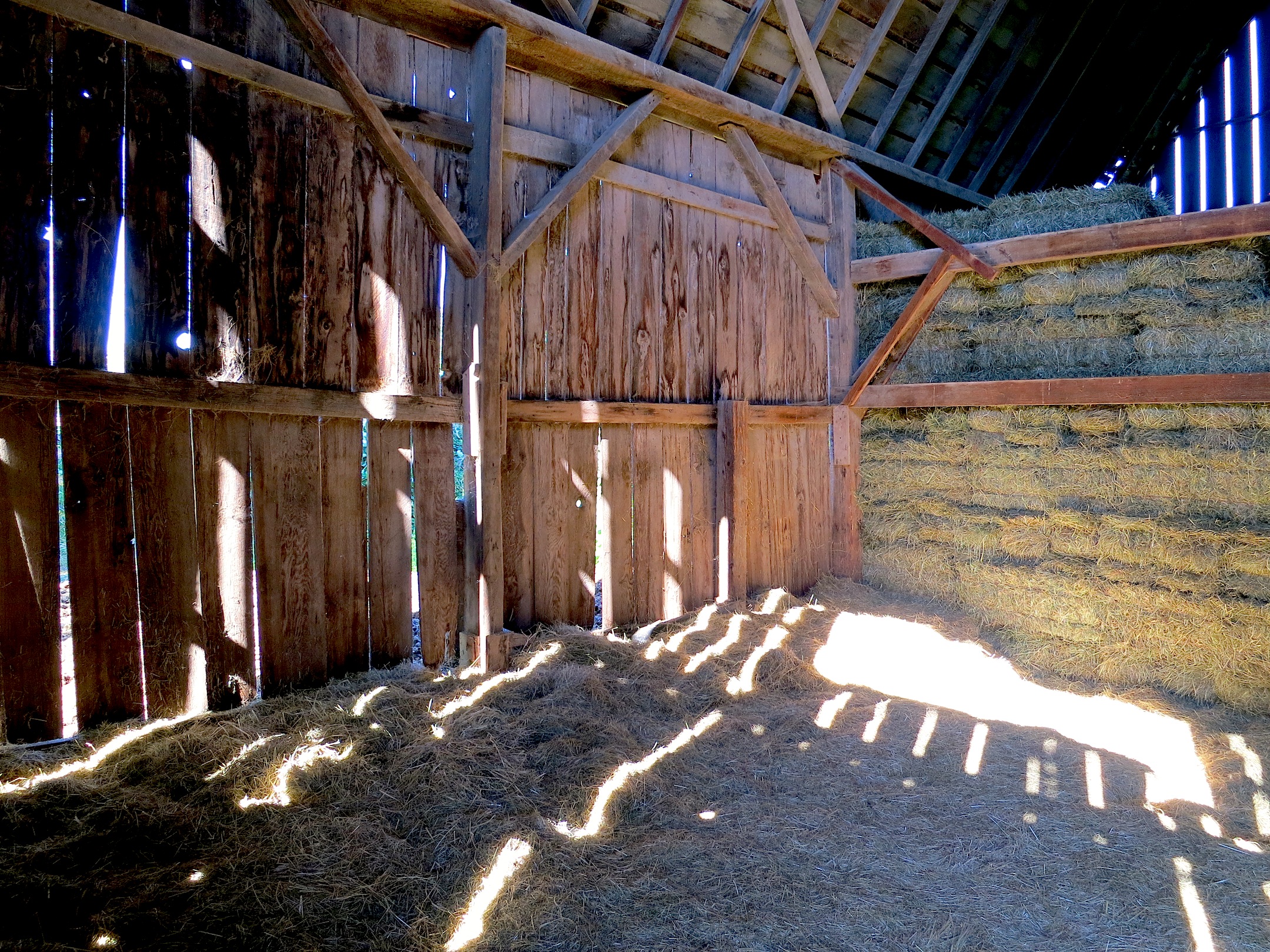
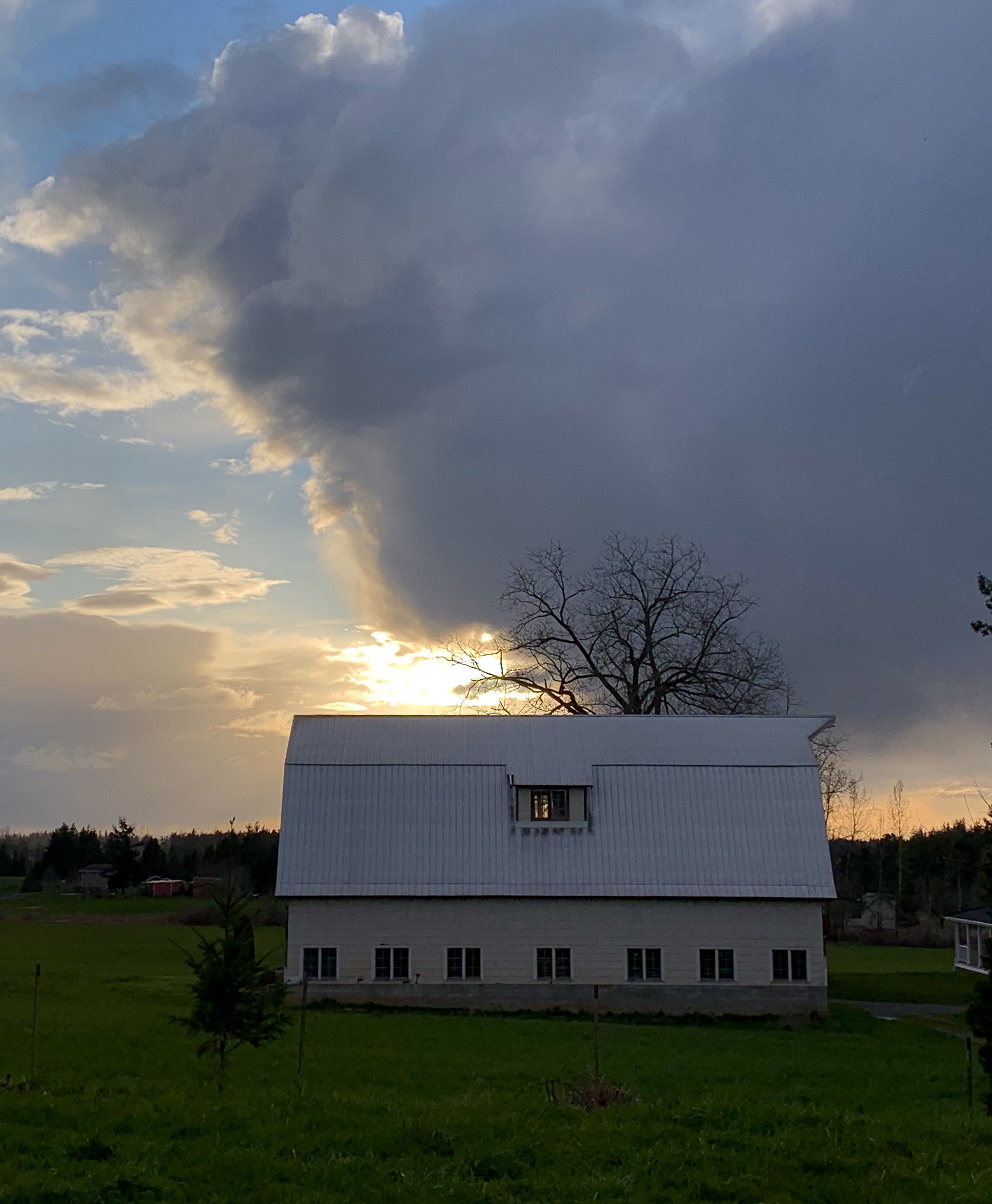
When the barn doors opened
on a bright frosted Advent morning,
the inner darkness was illuminated by a beam of sunlight,
exposing an equine escapee.

His stall door stood ajar, the door mysteriously unlatched.
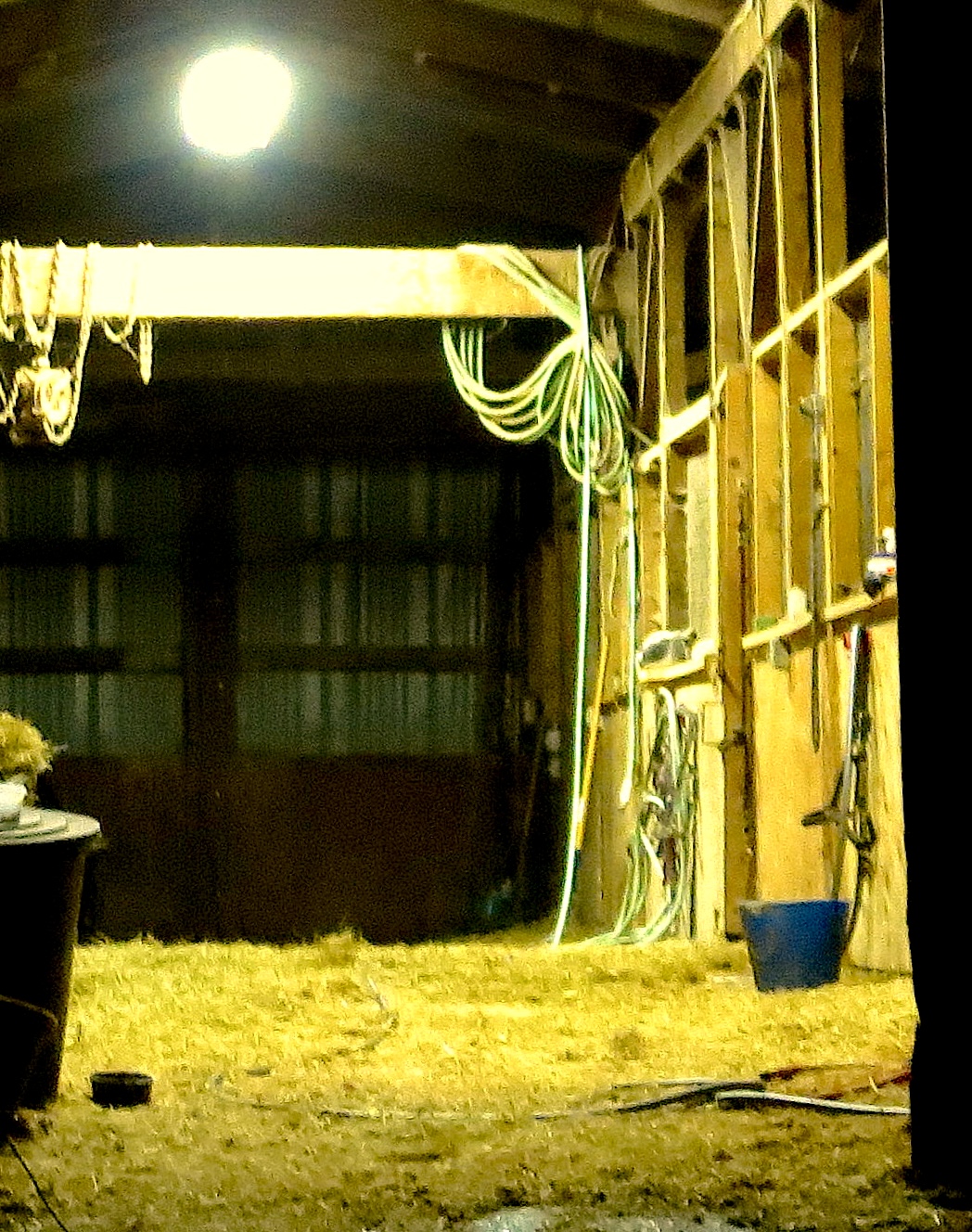
He meandered the unlit barn aisle lined with hay bales
munching his breakfast, lunch, and dinner
all of which lay strewn and ruined at his feet.

Not only did he somehow open his locked door
but also chose to leave poop piles
on every other horses’ breakfast, lunch, and dinner
as they watched helpless from behind their stall doors.

He had the run of the place all night~
obvious from countless hoof prints amid
overturned buckets, trampled halters, tangled baling twine,
twisted hoses, toppled bales and general chaos.

At least he didn’t reach up and start the tractor
or eat the cat food or pry open the grain barrel
or chew a saddle or two, or rip horse blankets apart,
but from the looks of things – I think he tried.

He nickered as the opened door highlighted his nocturnal escapade,
caught red-hoofed and boldly nonchalant, proclaiming his innocence.
Like a child asking for milk to go with a stolen cookie,
he approached me, begging for a carrot after feasting all night.

I grabbed a fist full of mane, pulled him back to double lock him in.
Surveying the mess, I was tempted to turn around, shut the barn doors
and banish it back to the cover of darkness,
to hide his sins now apparent in the light of day.

Instead, newly realigned in my wait for Christmas,
I remember all the messes I’ve made in my life.
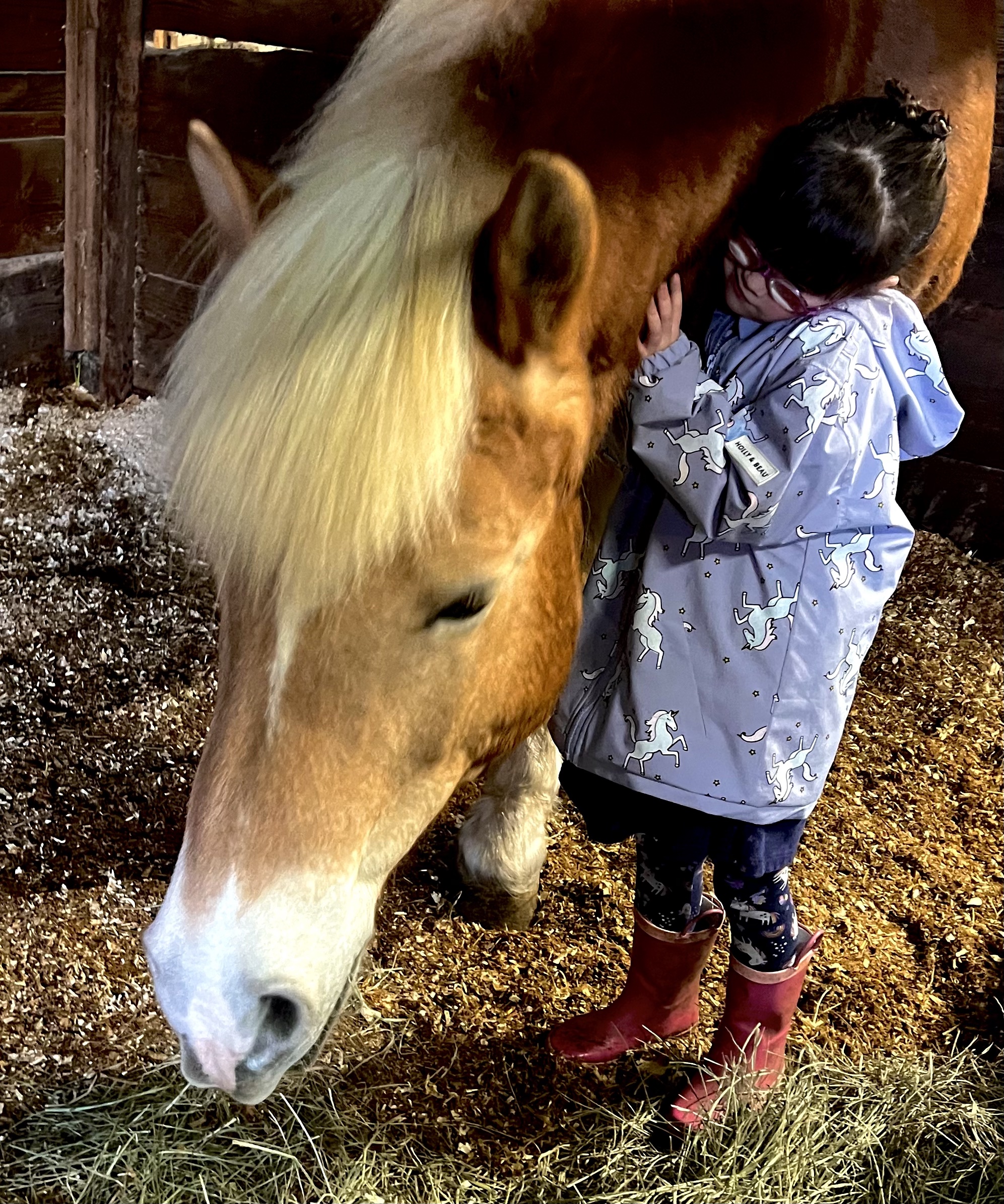
So I clean his up, give him a hug,
and forgive as I’m forgiven.

Advent 2023 theme
because of the tender mercy of our God,
whereby the sunrise shall visit us from on high 
to give light to those who sit in darkness
and in the shadow of death,
to guide our feet into the way of peace.
Luke 1: 78-79 from Zechariah’s Song

One-Time
Monthly
Yearly

Make a one-time or recurring donation to support daily ad-free Barnstorming posts

Make a monthly donation

Make a yearly donation

Choose an amount

$10.00
$25.00
$50.00
$5.00
$15.00
$100.00
$5.00
$15.00
$100.00

Or enter a custom amount

$

Your contribution is deeply appreciated.

Your contribution is appreciated.

Your contribution is appreciated.

DonateDonate monthlyDonate yearly

Filling Our Dry Wells

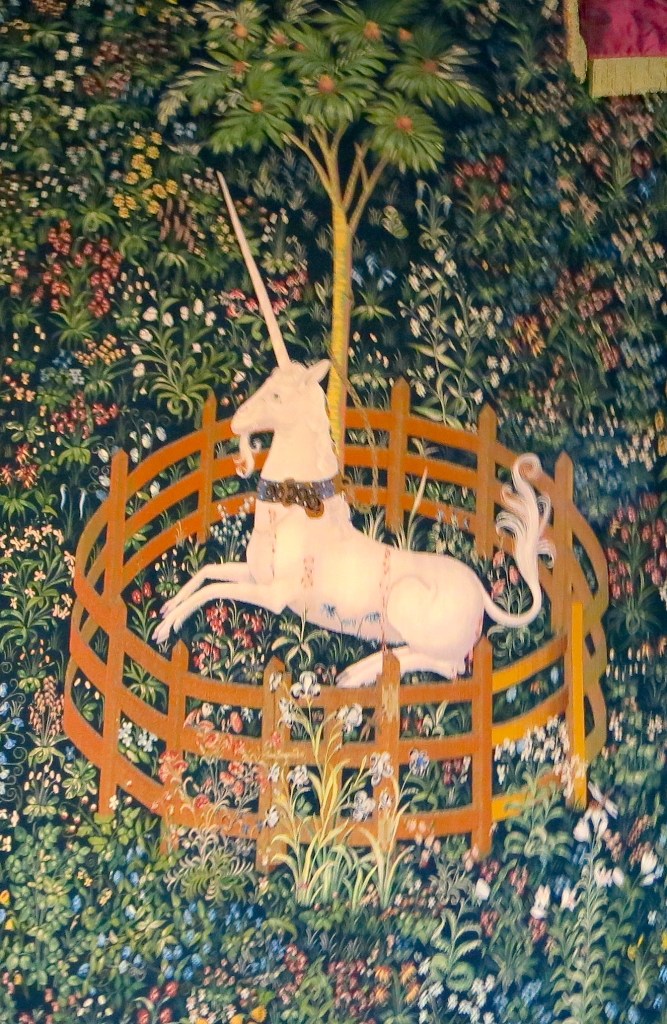
My uncle in East Germany
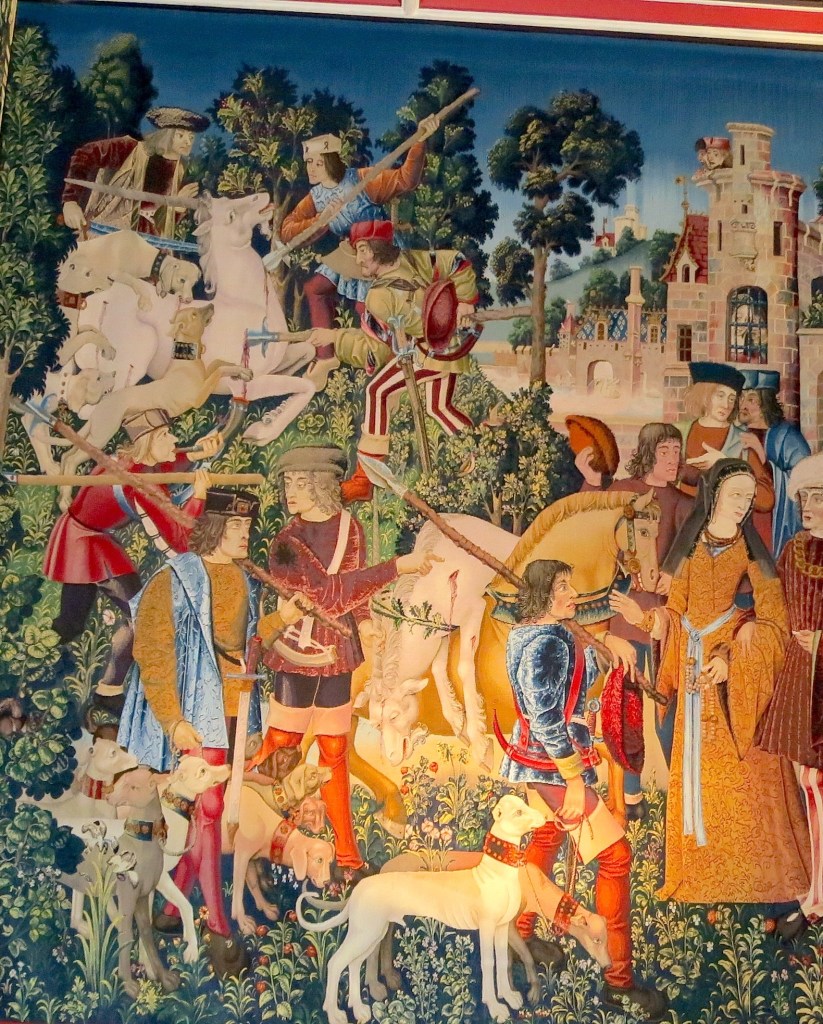
points to the unicorn in the painting
and explains it is now extinct.
We correct him, say such a creature
never existed. He does not argue,
but we know he does not believe us.
He is certain power and gentleness
must have gone hand in hand
once. A prisoner of war
even after the war was over,
my uncle needs to believe in something
that could not be captured except by love,
whose single luminous horn
redeemed the murderous forest
and, dipped into foul water,
would turn it pure. This world,
this terrible world we live in,
is not the only possible one,
his eighty-year-old eyes insist,
dry wells that fill so easily now.
~Lisel Mueller “The Exhibit”

This is the animal that never was.
Not knowing that, they loved it anyway;
its bearing, its stride, its high, clear whinny,
right down to the still light of its gaze.

It never was. And yet such was their love
the beast arose, where they had cleared the space;
and in the stable of its nothingness
it shook its white mane out and stamped its hoof.

And so they fed it, not with hay or corn
but with the chance that it might come to pass.
All this gave the creature such a power

its brow put out a horn; one single horn.
It grew inside a young girl’s looking glass,
then one day walked out and passed into her.
~Rainer Maria Rilke “Unicorn”

I sometimes feel the need for magical thinking to help restore goodness in the sad ways of this world. We have fouled our own nest, destroying each other and the extravagant garden we were given.

Hope for restoration feels almost mythical and the stuff of legends.

Power and gentleness do come together in the story of our redemption. We are delivered into a new world by the sacrifice of the most pure and generous Spirit.

Our dry well is filled by a love that quenches all our thirst, promising that our belief in goodness is not myth or legend, but real and true.

Having the Strength to Ask

Flung is too harsh a word for the rush of the world. Blown is more like it, but blown by a generous, unending breath.
~Annie Dillard
from Pilgrim at Tinker Creek

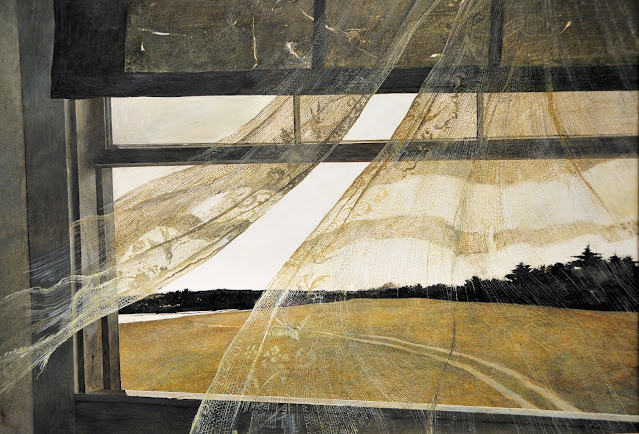
Andrew Wyeth – Wind from the Sea, 1947

Perhaps as a child you had the chicken pox
and your mother, to soothe you in your fever
or to help you fall asleep, came into your room
and read to you from some favorite book,
Charlotte’s Web or Little House on the Prairie,
a long story that she quietly took you through
until your eyes became magnets for your shuttering
lids and she saw your breathing go slow. And then
she read on, this time silently and to herself,
not because she didn’t know the story,
it seemed to her that there had never been a time
when she didn’t know this story—the young girl
and her benevolence, the young girl in her sod house—
but because she did not yet want to leave your side
though she knew there was nothing more
she could do for you. And you, not asleep but simply weak,
listened to her turn the pages, still feeling
the lamp warm against one cheek, knowing the shape
of the rocking chair’s shadow as it slid across
your chest. So that now, these many years later,
when you are clenched in the damp fist of a hospital bed,
or signing the papers that say you won’t love him anymore,
when you are bent at your son’s gravesite or haunted
by a war that makes you wake with the gun
cocked in your hand, you would like to believe
that such generosity comes from God, too,
who now, when you have the strength to ask, might begin
the story again, just as your mother would,
from the place where you have both left off.
~Keetje Kuipers “Prayer”

How is it possible 64 years have flown by and I still need the same story to be told to me again? 

Long ago the 5-year old me had a sudden terrifying revelation that I would someday cease to walk this earth. Now a nearly 70-year old me is more intimidated at the head-long rush of the days-months-years than at the inevitable end to come. The world hurtles through space and time at a pace that leaves me breathless. Indeed, I have been flung at times, bruised and weary from all the hurry and hubbub.

I want to find the strength to ask God to begin telling the reassuring story again, starting right where we left off. I know I will be blown away again – blown by God’s breath that loves, fills and nurtures with a generous promise both hopeful and fulfilled.

Utterly blown away by what comes next.

If only the five year old me could have known.

One-Time
Monthly
Yearly

Make a one-time or recurring donation to support daily Barnstorming posts

Make a monthly donation

Make a yearly donation

Choose an amount

$10.00
$25.00
$50.00
$5.00
$15.00
$100.00
$5.00
$15.00
$100.00

Or enter a custom amount

$

Your contribution is deeply appreciated.

Your contribution is appreciated.

Your contribution is appreciated.

DonateDonate monthlyDonate yearly

No Looking Back

She sees rain coming
like a pillar of smoke, gliding across the west field,
a cloud bursting full, the air already moist,
pots of mint stirring in the window,
finches tucked away under the porch eaves.
Wind rushes through the open parlor door,
knocks over the jar of tiger lilies without breaking glass.
Water drips to pine floor planks.
She pulls off her apron, stops at the prone lilies,
hand raised recalls the reverend’s picture of the wife of Lot,
the woman who looked back,
then turned in to the salt that begins to seep from her own eyes.
How could she not look back?
~Lonnie Hull DuPont “She Sees Rain Coming” from She Calls the Moon by Its Name 

All morning with dry instruments
The field repeats the sound
Of rain
From memory
And in the wall
The dead increase their invisible honey
It is August
The flocks are beginning to form
I will take with me the emptiness of my hands
What you do not have you find everywhere

~W.S. Merwin “Provision”

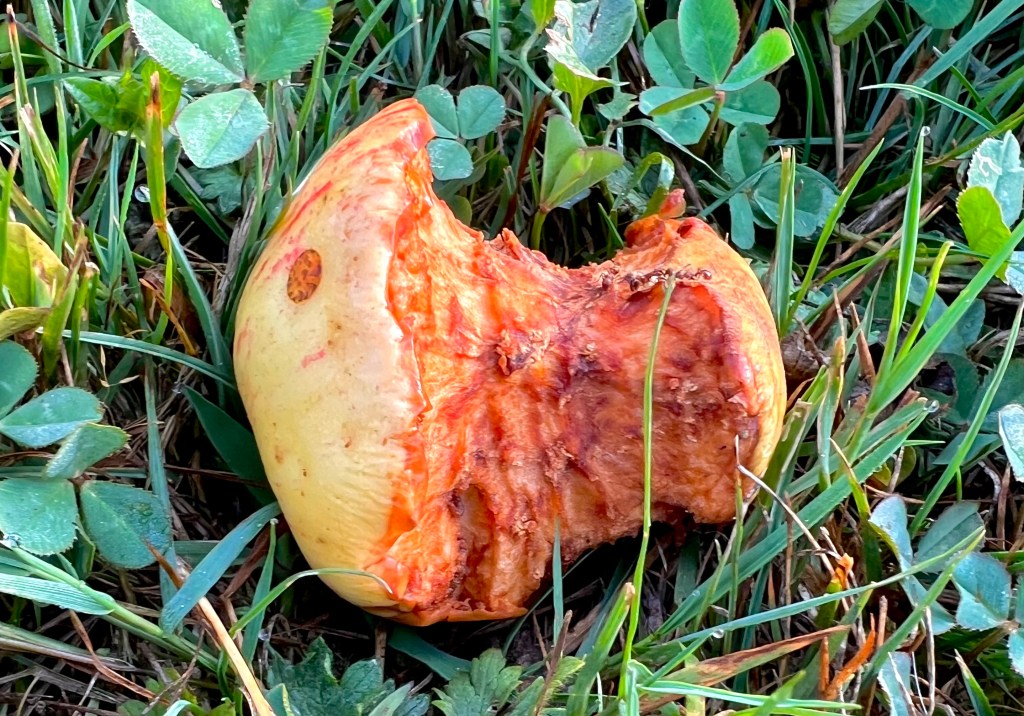
Eve bites the apple

It begins to oxidize
~Xueyan, Time Peels All to Original White

My mistakes can’t be hidden once I take the bite and realize what I have done. There is no going back, retrieving harsh words spoken, asking for a re-do, or wishing things had worked out differently.

When I’m wrong, I must admit it and not look back. I come with empty hands, realizing what I have to give is meager indeed. All I have is my regret and sorrow, and that is all God needs to take my hand so it is no longer empty.

What I do not have, what I do not know, what I cannot be on my own — I will find in Him, and He is suddenly everywhere I look.

One-Time
Monthly
Yearly

Make a one-time or recurring donation to support daily Barnstorming posts

Make a monthly donation

Make a yearly donation

Choose an amount

$10.00
$25.00
$50.00
$5.00
$15.00
$100.00
$5.00
$15.00
$100.00

Or enter a custom amount

$

Your contribution is deeply appreciated.

Your contribution is appreciated.

Your contribution is appreciated.

DonateDonate monthlyDonate yearly

Golden Pentimenti of Hopes

The goldfinches have left.
They have gathered up the air
                    beneath their black-robed wings
and shaken off the dust of our dusty world.

Abandoned thistle, crown of thorns;
broken bone stalk;
               and morning air, cloak
of our salvation, rent in absence.

What’s left?
Pentimenti of hopes
               in a dissolving frame.
Only, try to remember the endless knot of their song.

~Franchot Ballinger, “Passion Painting with no Goldfinches” from Crossings

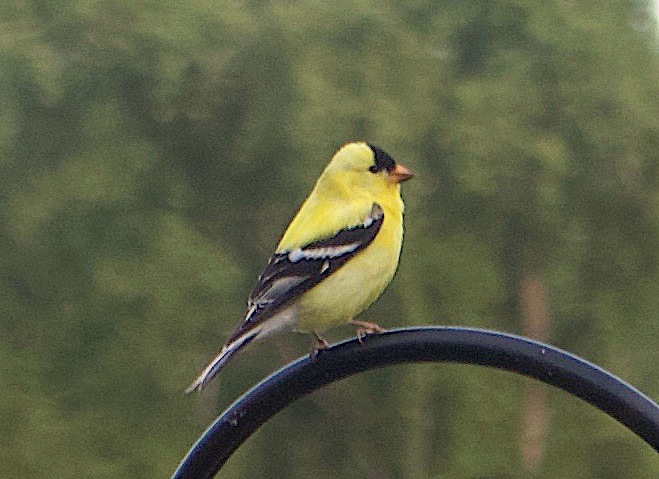
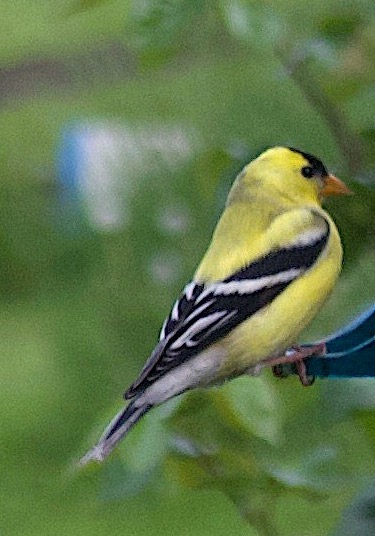
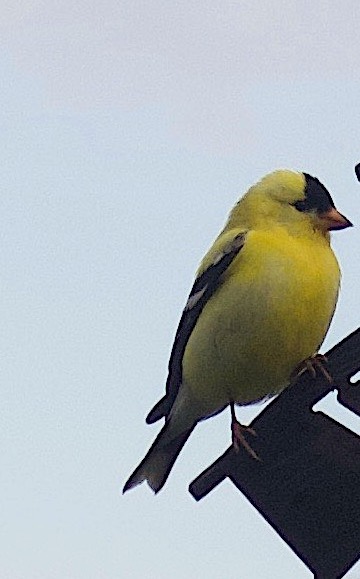
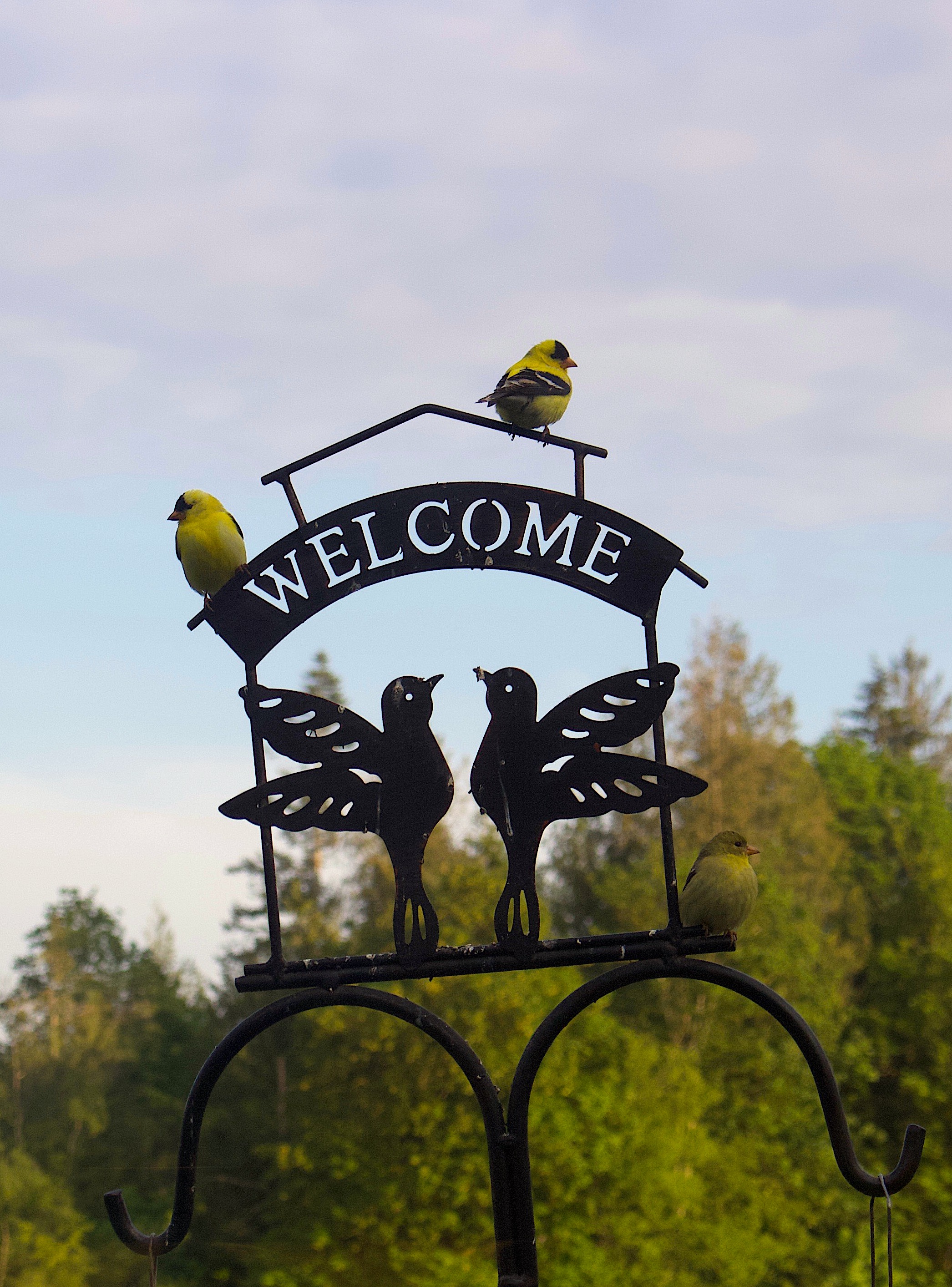
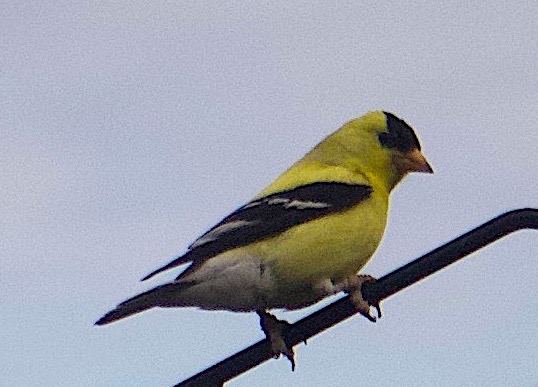
Goldfinches, the Washington state bird, visit our feeders regularly until the air starts to chill in another month or so. Before I began offering up thistle seeds for the taking, they were only a golden streak across the barnyard during spring and summer, barely seen but clearly on a mission I could not discern. Now they linger companionably where I can witness their sparkling conversations while they share a meal with one another, as if our feeders were a local cafe.

Soon they will be gone, leaving pentimento shadows of where they once had been, their bright yellow feathers colored over with the dusty brown paint of a dry tired summer.

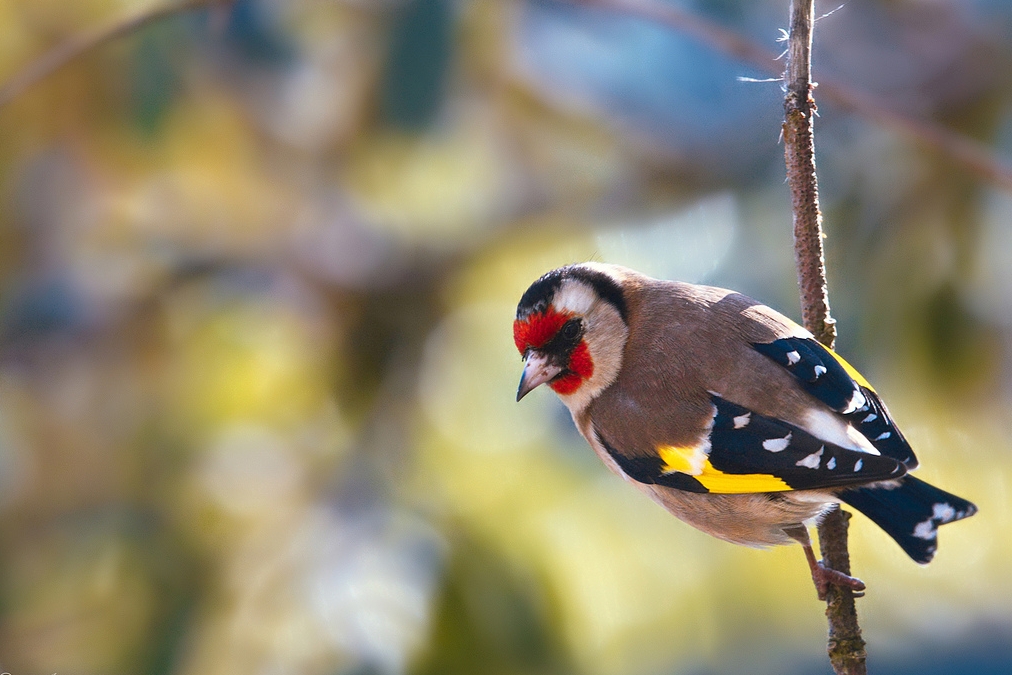
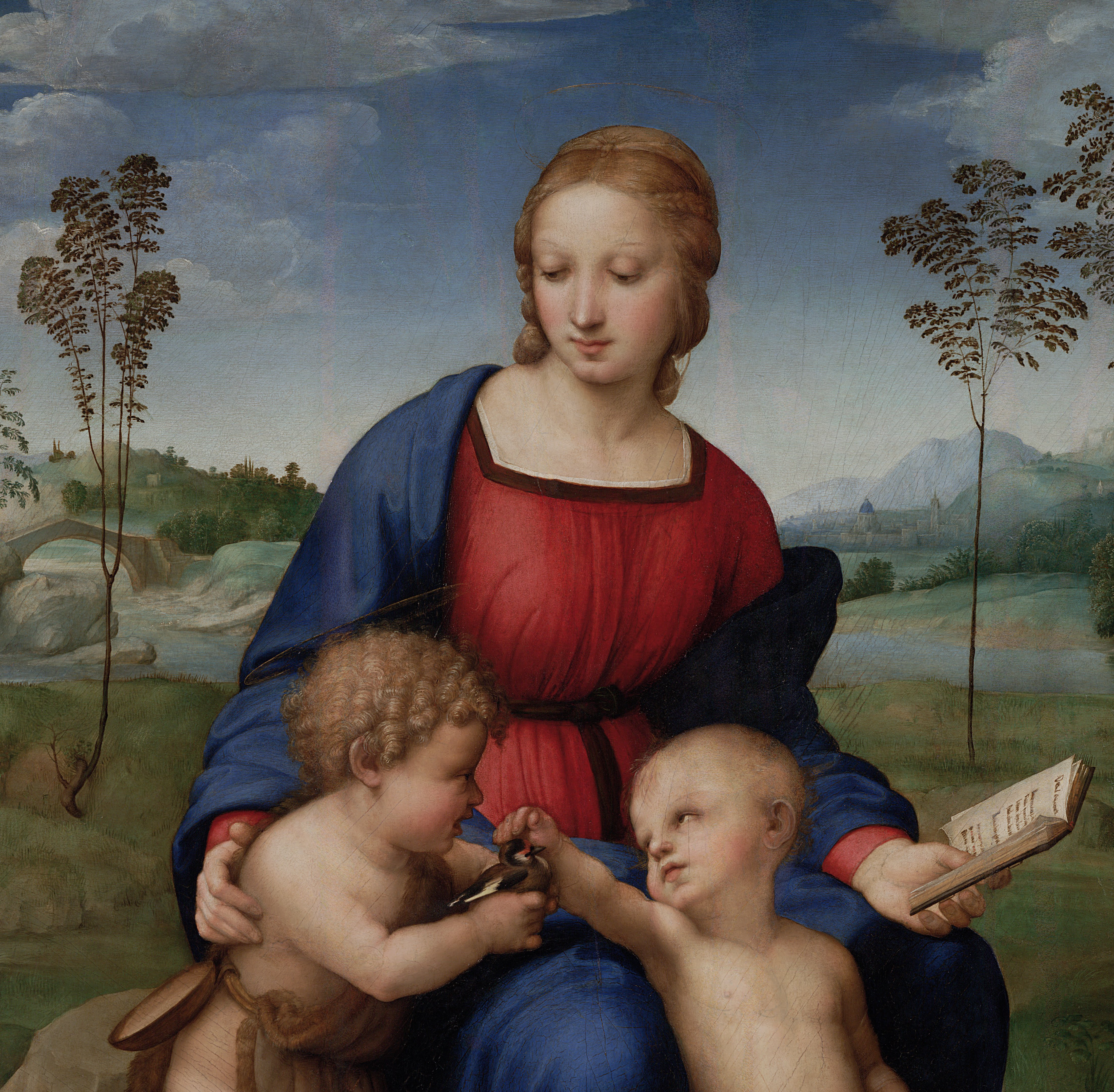
In over 500 Renaissance masterpieces of Jesus and Mary, the European goldfinch is included, representing the redeeming passion of Christ. In contrast to the plain black baseball cap of our American goldfinch, the legend is that its European cousin’s splash of red on its face represents Christ’s blood from the finch plucking a thorn of thistle from Jesus’ brow as He carried the cross to Calgary.

I always miss their flash of gold once they move to warmer wintering places. Yet like the restoration of Old Masters paintings, I know there will come a discovery of a painted-over portrait or scene that once again shines with renewed brilliance — the goldfinches will return with their riches of feather and song, bringing with them the promise of hope and redemption.

European Goldfinch from the Salt Project website
The Goldfinch by Carel Fabritius 1654
Madonna of the Goldfinch (1505–1506) by Raphael
One-Time
Monthly
Yearly

Make a one-time or recurring donation to support daily Barnstorming posts

Make a monthly donation

Make a yearly donation

Choose an amount

$10.00
$25.00
$50.00
$5.00
$15.00
$100.00
$5.00
$15.00
$100.00

Or enter a custom amount

$

Your contribution is deeply appreciated.

Your contribution is appreciated.

Your contribution is appreciated.

DonateDonate monthlyDonate yearly

Reconsidering the Meaning of Flag Day

I am what you make me; nothing more. I swing before your eyes as a bright gleam of color, a symbol of yourself.
~Franklin K. Lane, Secretary of the Interior, 1914 Flag Day address

Sometimes, as a child,  when I was bored, I’d grab a step ladder, pull it into our hallway, climb half way up and carefully lift the plywood hatch that was the portal to our unlit attic.  It took some effort to climb up into the attic from the ladder, juggling a flashlight at the same time, but once seated safely on the beams above our ceiling, being careful not to put my foot through the carpet of insulation, I could explore what was stowed and normally inaccessible to me.

All the usual attic-type things were put up there:  Christmas ornaments and lights,  baby cribs and high chairs,  lamps and toys no longer used.  Secrets to my parents’ past were stored away there too.  It was difficult imagining them as young children growing up on opposite sides of the state of Washington, in very different circumstances, or as attractive college students who met at a dance, or as young marrieds unencumbered by the daily responsibilities of a family.  The attic held those images and memories like a three dimensional photo album.

My father’s dark green Marine Corps cargo trunk was up there, the one that followed him from Officer Training in Quantico, Virginia, to beach and mountain battles on Tarawa, Tinian and Saipan in the South Pacific, and three years later back home again.  It had his name and rank stenciled on the side in dark black lettering.  The buckles were stiff but could be opened with effort, and in the dark attic, there was always the thrill of unlatching the lid, and shining the flashlight across the contents.  His Marine Corps dress uniform lay inside underneath his stiff brimmed cap.  There were books about protocol, and a photo album which contained pictures of “his men” that he led in his battalion, and the collection of photos my mother sent of herself as she worked as a teacher of high school students back home.

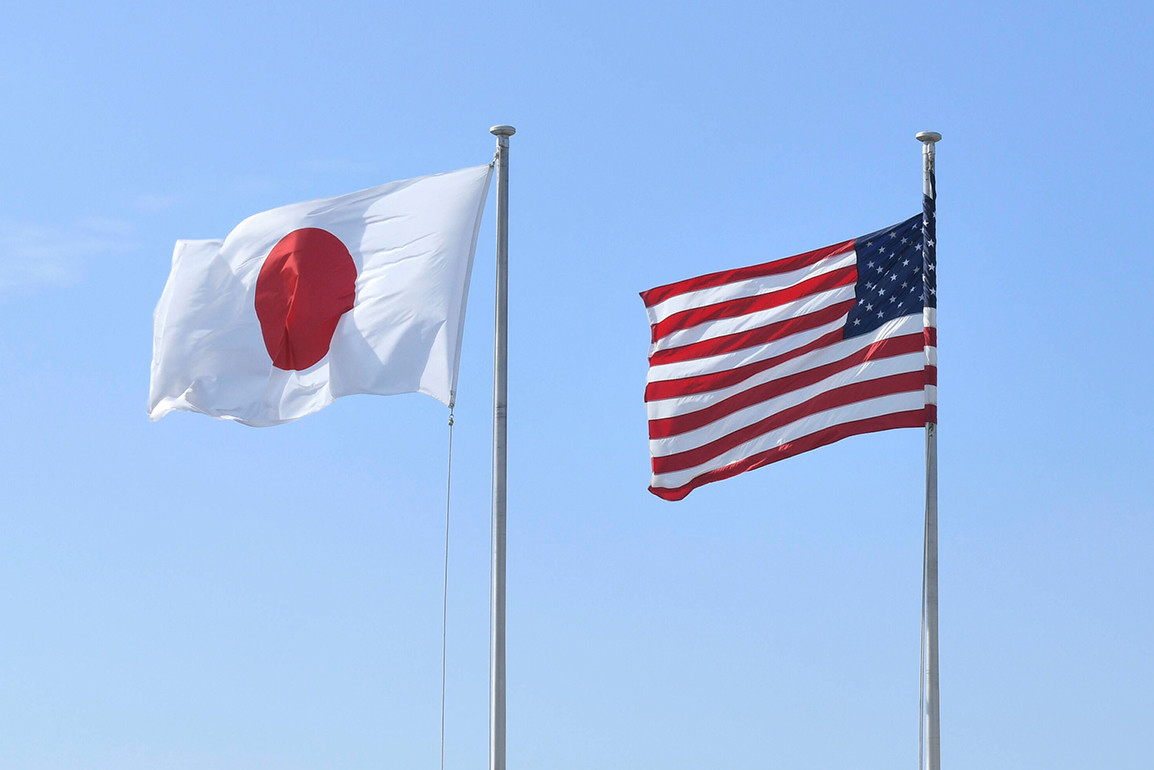
Most fascinating was a folded Japanese flag inside a small drawstring bag, made of thin white see-through cloth with the bold red sun in the middle.  Surrounding the red sun were the delicate inked characters of many Japanese hands as if painted by artists, each wishing a soldier well in his fight for the empire.  Yet there it was, a symbol of that soldier’s demise, itself buried in an American attic, being gently and curiously held by an American daughter of a Marine Corps captain.  It would occur to me in the 1960s that some of the people who wrote on this flag might still be living, and certainly members of the soldier’s family would still be living.  I asked my father once about how he obtained the flag, and he, protecting both me and himself, waved me away, saying he couldn’t remember.  I know better now.  He knew but could not possibly tell me the truth.

These flags, charms of good luck for the departing Japanese soldier as he left his neighborhood or village for war, are called Hinomaru Yosegaki (日の丸寄せ書き).  Tens of thousands of these flags came home with American soldiers; it is clear they were not the talisman hoped for.  A few of these flags are now finding their way back to their home country, to the original villages, to descendants of the lost soldiers.  So now has this flag.

Eighty years ago doesn’t seem that long, a mere drop in the river of time.  There is more than mere mementos that have flowed from the broken dam of WWII, flooding subsequent generations of Americans, Japanese, Europeans with memories that are now lost as the oldest surviving soldiers in their 90’s pass, scores of them daily, taking their stories of pain and loss and heroism with them.   My father could never talk with a person of Asian descent, Japanese or not, without being visibly uneasy. As a child, I saw and felt this from him, but heard little from his mouth.

When he was twenty two years old,  pressed flat against the rocks of Tarawa, trying to melt into the ground to become invisible to the bullets whizzing overhead, he could not have conceived that sixty five years later his twenty two year old grandson would disembark from a jumbo jet at Narita in Tokyo, making his way to an international school to teach Japanese children.  My father would have been shocked that his grandson would settle happily into a culture so foreign, so seemingly threatening, so apparently abhorrent. Yet this irony is the direct result of the horrors of that too-long horrible bloody war of devastation: Americans and Japanese, despite so many differences, have become the strongest of allies, happily exchanging the grandchildren of those bitterly warring soldiers back and forth across the Pacific.  It too was my privilege to care for Japanese exchange students daily in my University health clinic, peering intently into their open faces and never once seeing the enemy that my father feared.

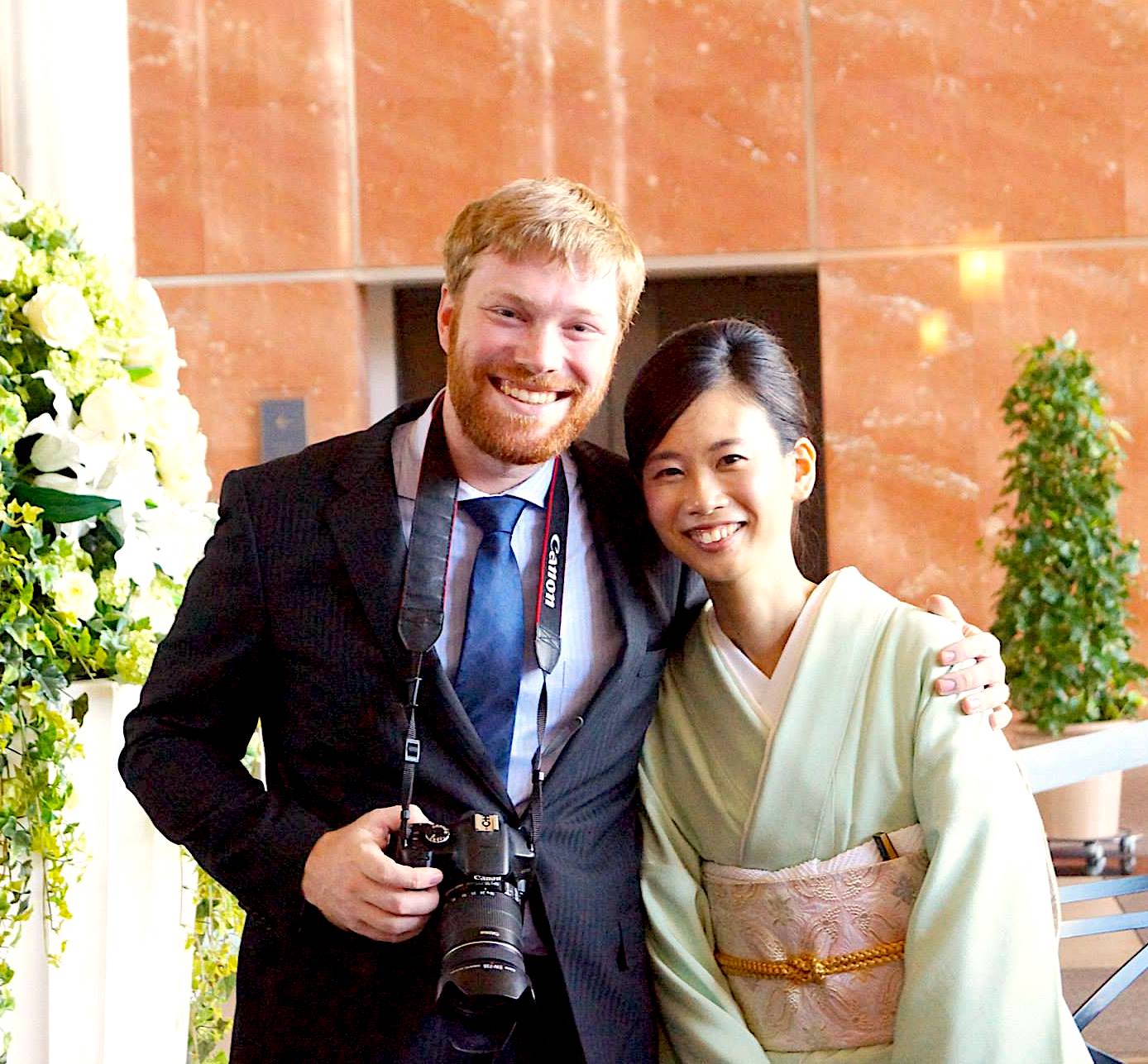
Now all these decades later, our son taught for 13 years in Tokyo, with deep admiration and appreciation for each of his students, some of whom were great-grandchildren of WWII Japanese soldiers. He married a granddaughter of those my father fought. Their two children are the perfect amalgam of once warring, yet now peaceful, cultures; a symbol of blended and blending peoples overcoming the hatred of past generations, creating a new world.

Our son and daughter-in-law, having settled their family in the States, are adapting to a different language, culture and flag. I pray our son having devoted part of his life as teacher and missionary to the land of the rising sun has redeemed his grandfather, the soldier-warrior of the past century.

(U.S. Air Force photo by Staff Sgt. Peter Reft)
One-Time
Monthly
Yearly

Make a one-time or recurring donation to support daily Barnstorming posts

Make a monthly donation

Make a yearly donation

Choose an amount

¤10.00
¤25.00
¤50.00
¤5.00
¤15.00
¤100.00
¤5.00
¤15.00
¤100.00

Or enter a custom amount

¤

Your contribution is appreciated.

Your contribution is appreciated.

Your contribution is appreciated.

DonateDonate monthlyDonate yearly
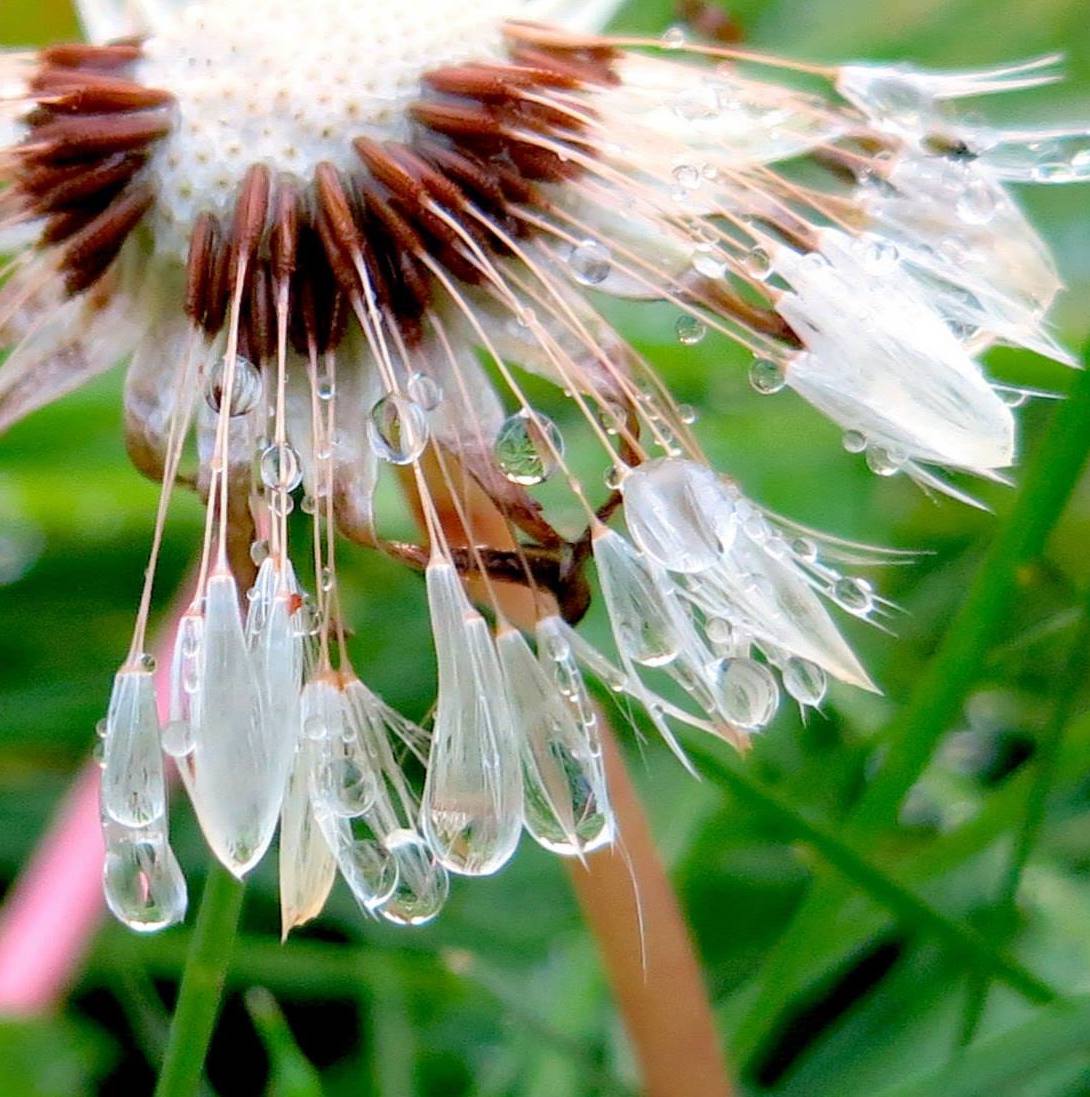
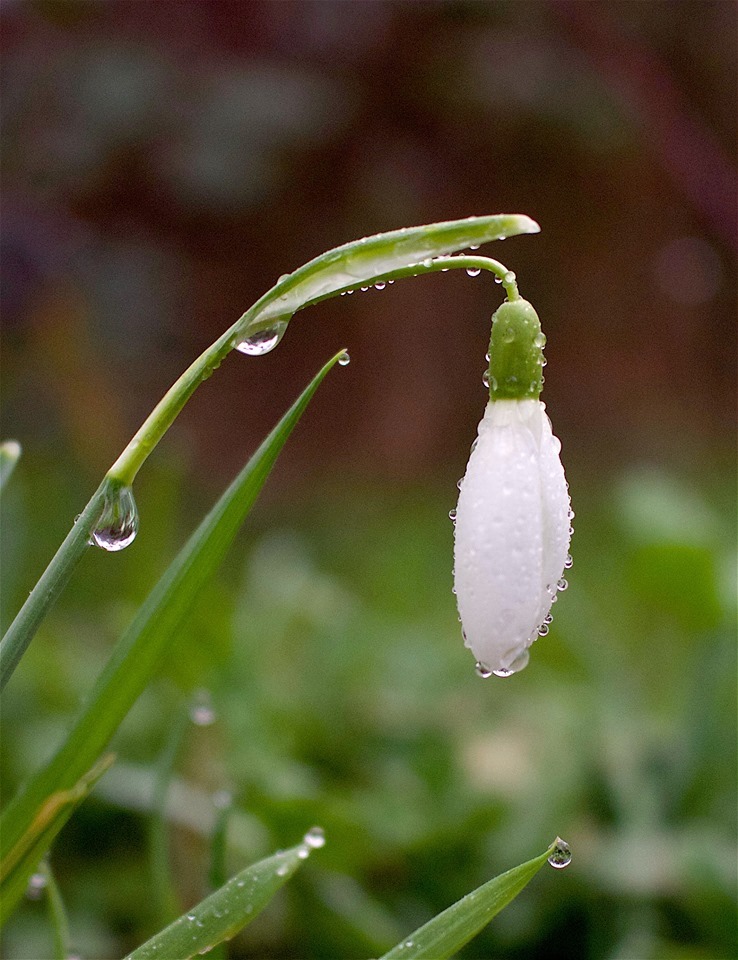
An Object of Ultimate Concern

We live in an unbelieving age
but one which is markedly and lopsidedly spiritual…
an age that has domesticated despair
and learned to live with it happily.
There is something in us
that demands the redemptive act,
that demands that what falls
at least be offered the chance to be restored.
…what <modern man> has forgotten is the cost of it.
His sense of evil is diluted or lacking altogether,
and so he has forgotten the price of restoration.

This is an unlimited God
and one who has revealed himself specifically.
It is one who became man and rose from the dead.
It is one who confounds the senses and the sensibilities,
one known early on as a stumbling block.
There is no way to gloss over this specification
or to make it more acceptable to modern thought.
This God is the object of ultimate concern
and he has a name.

~Flannery O’Connor from a 1963 lecture published in Mystery and Manners

He has an unpronounceable name,
this God of specificity,
yet still He asks us to breathe it out
with each breath we take —
even if we don’t believe.

This God of specificity knows our name,
as He formed each one of us for a reason
and it is His voice calling out to us —
even when we aren’t listening.

He is worthy of our attention as
we are the object of His ultimate concern.

One-Time
Monthly
Yearly

Make a one-time or recurring donation to support daily Barnstorming posts

Make a monthly donation

Make a yearly donation

Choose an amount

¤5.00
¤10.00
¤20.00
¤5.00
¤15.00
¤100.00
¤5.00
¤15.00
¤100.00

Or enter a custom amount

¤

Your contribution is deeply appreciated.

Your contribution is appreciated.

Your contribution is appreciated.

DonateDonate monthlyDonate yearly
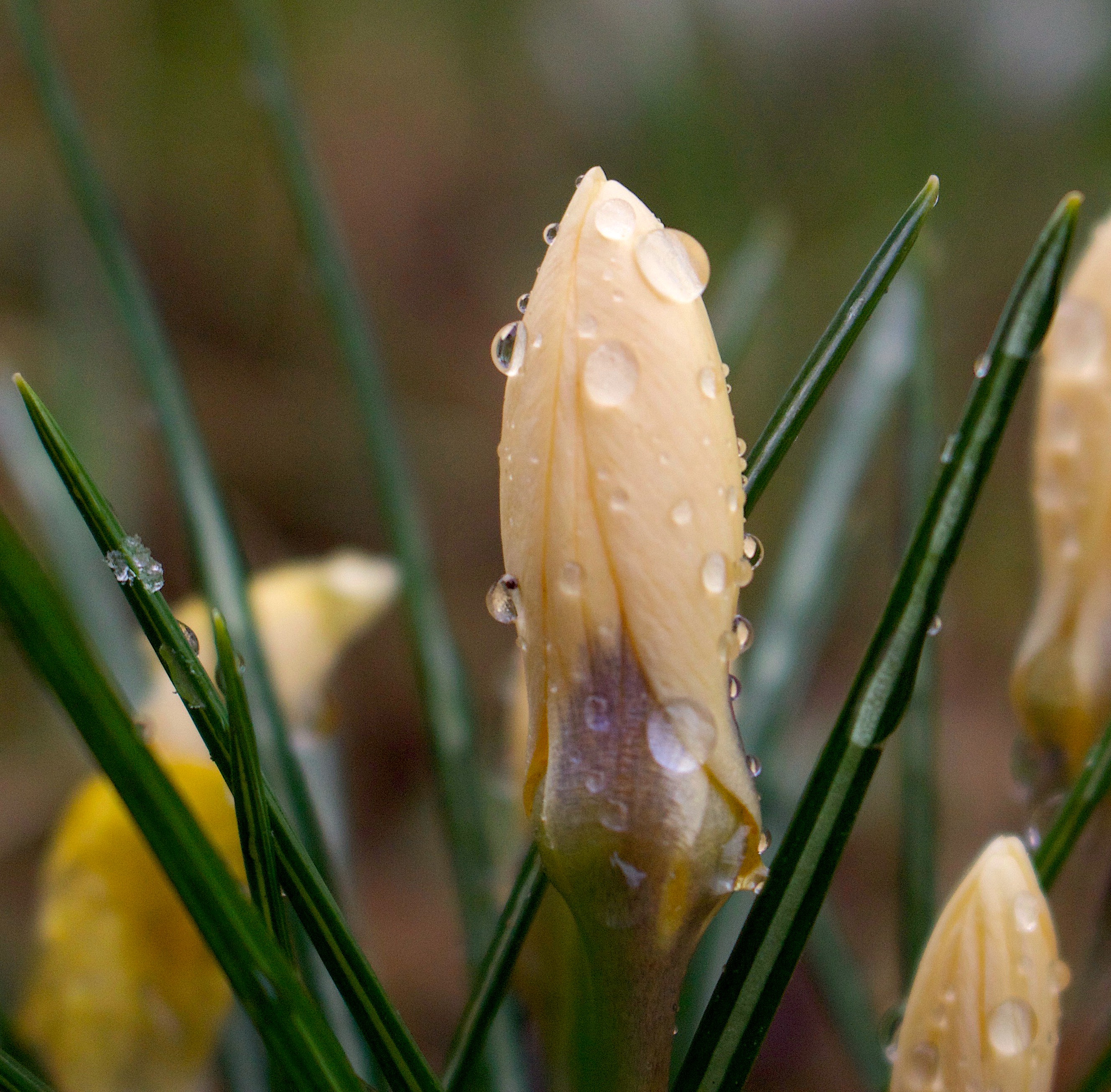
A Morning Luminous with Mystery and Pain

Heart,
I implore you,
it’s time to come back
from the dark,
it’s morning,
the hills are pink
and the roses
whatever they felt

in the valley of night
are opening now
their soft dresses,
their leaves

are shining.
Why are you laggard?
Sure you have seen this
a thousand times,

which isn’t half enough.
Let the world
have its way with you,
luminous as it is

with mystery
and pain–
graced as it is
with the ordinary.

~Mary Oliver “Summer Morning”

I love to stay in bed
All morning,
Covers thrown off, naked,
Eyes closed, listening.

There’s a smell of damp hay,
Of horses, laziness,
Summer sky and eternal life.

I know all the dark places
Where the sun hasn’t reached yet,
Where the last cricket
Has just hushed; anthills

Where it sounds like it’s raining,
Slumbering spiders spinning wedding dresses.

The good tree with its voice
Of a mountain stream
Knows my steps.
It, too, hushes.

I stop and listen:
Somewhere close by
A stone cracks a knuckle,
Another turns over in its sleep.

I hear a butterfly stirring
Inside a caterpillar.
I hear the dust talking
Of last night’s storm.

Farther ahead, someone
Even more silent
Passes over the grass
Without bending it.

And all of a sudden
In the midst of that quiet,
It seems possible
To live simply on this earth.

~Charles Simic from “Summer Morning”

Reading headlines about yet more unimaginable losses and grieving people is extraordinarily painful on a summer morning when all should be luminous and lighthearted. My heart isn’t feeling the light at all; I struggle to leave behind those dark places where the sun hasn’t reached yet.

Yet if I’m still and quiet, I can hear life going on all around me. My sadness doesn’t change the mystery of a world God created in beauty and peace, now overshadowed by our fall into darkness, yet redeemed by a sacrificial Love we cannot possibly comprehend.

What a summer morning revelation. It’s as extraordinarily ordinary and simple as that.

One-Time
Monthly
Yearly

Make a one-time or recurring donation to support daily Barnstorming posts

Make a monthly donation

Make a yearly donation

Choose an amount

¤5.00
¤10.00
¤20.00
¤5.00
¤15.00
¤100.00
¤5.00
¤15.00
¤100.00

Or enter a custom amount

¤

Your contribution is deeply appreciated.

Your contribution is appreciated.

Your contribution is appreciated.

DonateDonate monthlyDonate yearly
Go Help Your Dad

It was hard work, dying, harder
than anything he’d ever done.

Whatever brutal, bruising, back-
Breaking chore he’d forced himself

to endure—it was nothing
compared to this. And it took

so long. When would the job
be over? Who would call him

home for supper? And it was
hard for us (his children)—

all of our lives we’d heard
my mother telling us to go out,

help your father, but this
was work we could not do.

He was way out beyond us,
in a field we could not reach.

~Joyce Sutphen, “My Father, Dying” from Carrying Water to the Field: New and Selected Poems.

We will grieve not, rather find                     
Strength in what remains behind;                     
In the primal sympathy                     
Which having been must ever be;  
                   

Thanks to the human heart by which we live,
Thanks to its tenderness, its joys, and fears,
To me the meanest flower that blows can give
Thoughts that do often lie too deep for tears.
~William Wordsworth from “Ode: Intimations of Immortality from Recollections of Early Childhood”

Pouring the sidewalk by hand
Grouting the tile perimeter
In the very bottom, installing a drain
The best dive ever…

Nearly twenty-seven years ago
we watched at your bedside as you labored,
readying yourself to die and we could not help
except to be there while we watched you
move farther away from us.

This dying, the hardest work you had ever done:

harder than handling the plow behind a team of draft horses,
harder than confronting a broken, alcoholic and abusive father,
harder than slashing brambles and branches to clear the woods,
harder than digging out stumps, cementing foundations, building roofs,
harder than shipping out, leaving behind a new wife after only a week of marriage,
harder than leading a battalion of men to battle on Saipan, Tinian and Tarawa,
harder than returning home so changed there were no words,
harder than returning to school, working long hours to support family,
harder than running a farm with only muscle and will power,
harder than coping with an ill wife, infertility, job conflict, discontent,
harder than building your own pool, your own garage, your own house,
harder than your marriage ending, a second wife dying of cancer,
and returning home asking for forgiveness.

Dying was the hardest of all
as no amount of muscle or smarts or determination
could stop it crushing you,
taking away the strength you relied on for 73 years.

So as you lay helpless, moaning, struggling to breathe,
we knew your hard work was complete
and what you left undone was up to us
to finish for you.

Ben packaged in a paper bag by Grandpa Hank
One-Time
Monthly
Yearly

Make a one-time or recurring donation to support daily Barnstorming posts

Make a monthly donation

Make a yearly donation
Choose an amount

¤5.00
¤10.00
¤20.00
¤5.00
¤15.00
¤100.00
¤5.00
¤15.00
¤100.00

Or enter a custom amount

¤

Your contribution is deeply appreciated.
Your contribution is appreciated.

Your contribution is appreciated.

DonateDonate monthlyDonate yearly