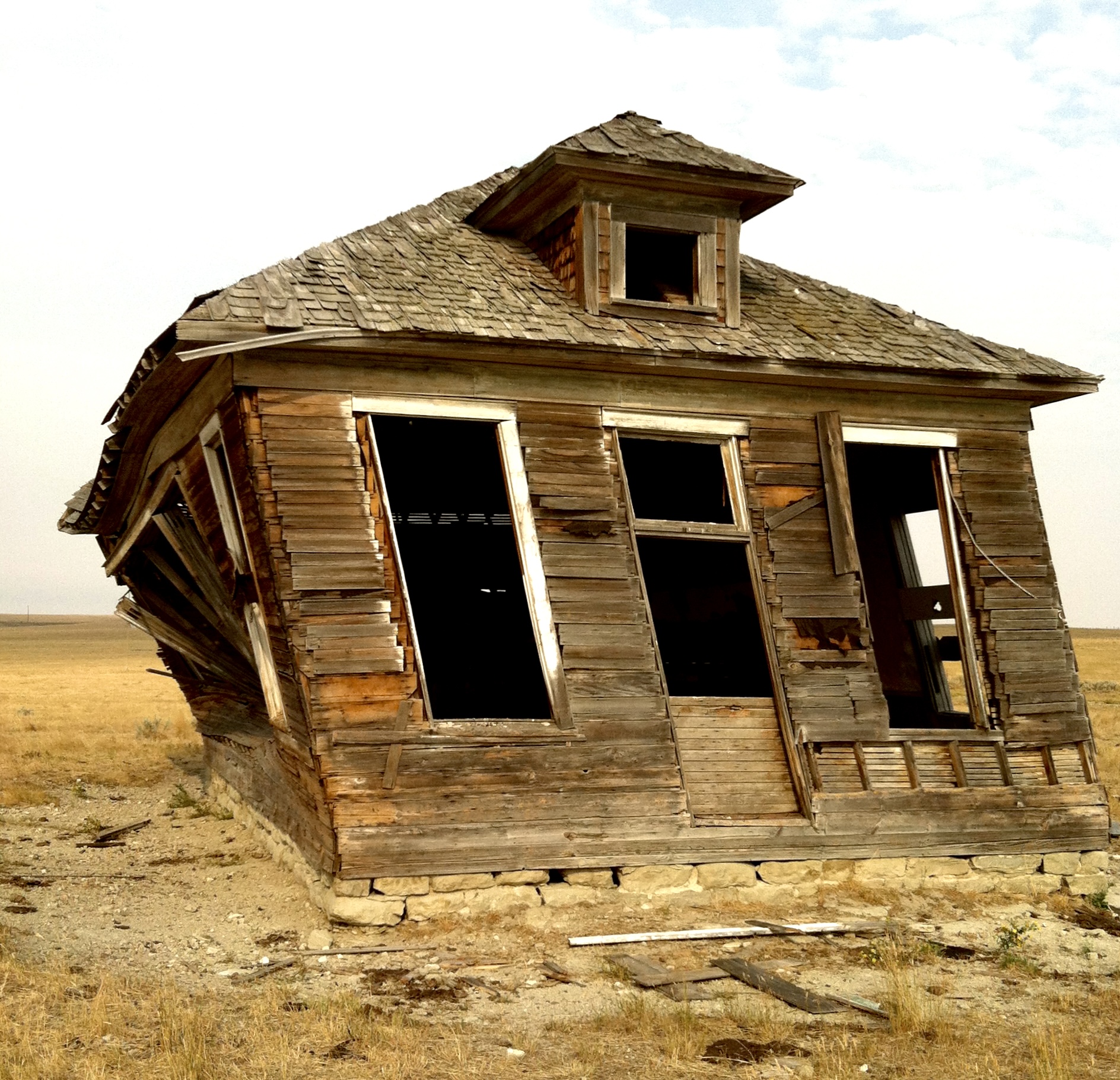
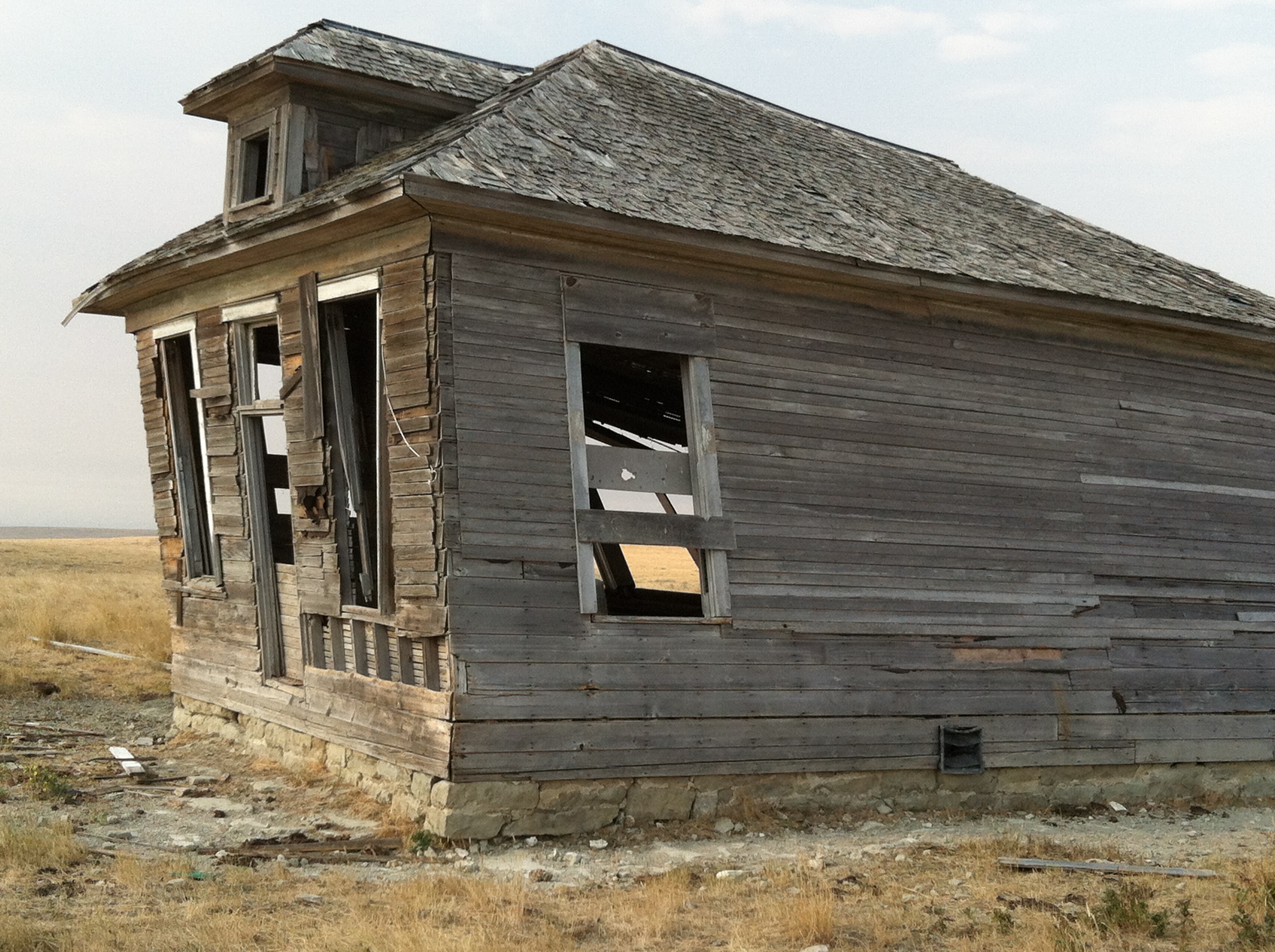
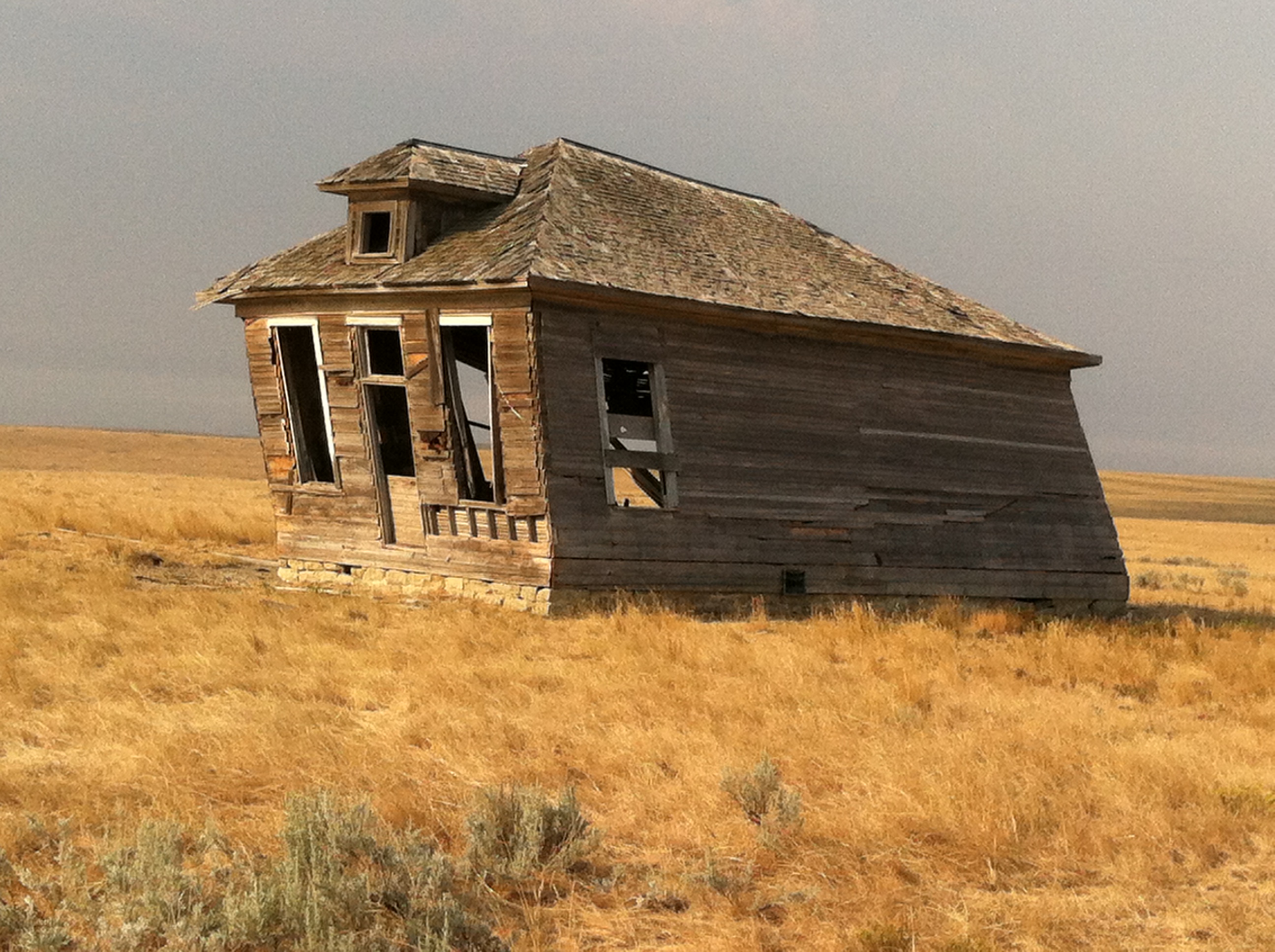
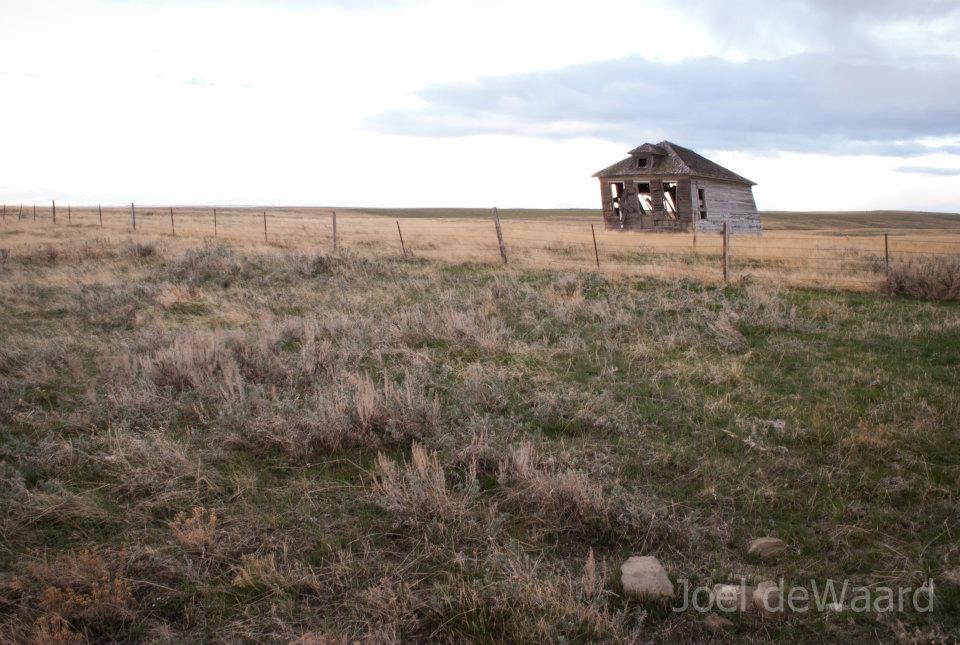
As through a long-abandoned half-standing house only someone lost could find,
which, with its paneless windows and sagging crossbeams, its hundred crevices in which a hundred creatures hoard and nest,
seems both ghost of the life that happened there and living spirit of this wasted place,
wind seeks and sings every wound in the wood that is open enough to receive it,
shatter me God into my thousand sounds.
~Christian Wiman “Small Prayer in a Hard Wind”from Every Riven Thing
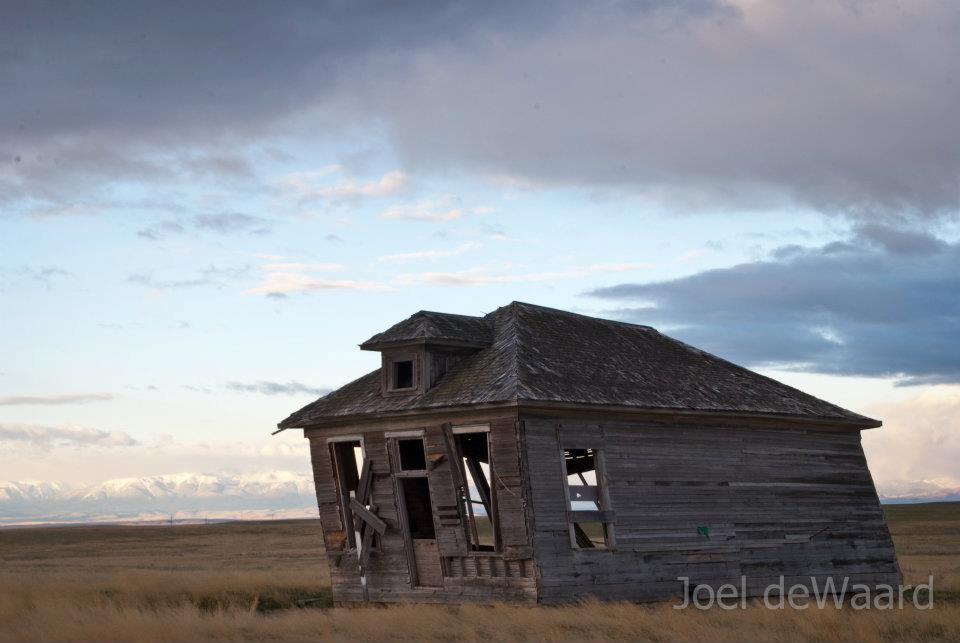
the same abandoned school house near Rapalje, Montana a few years later, this photo by Joel DeWaard
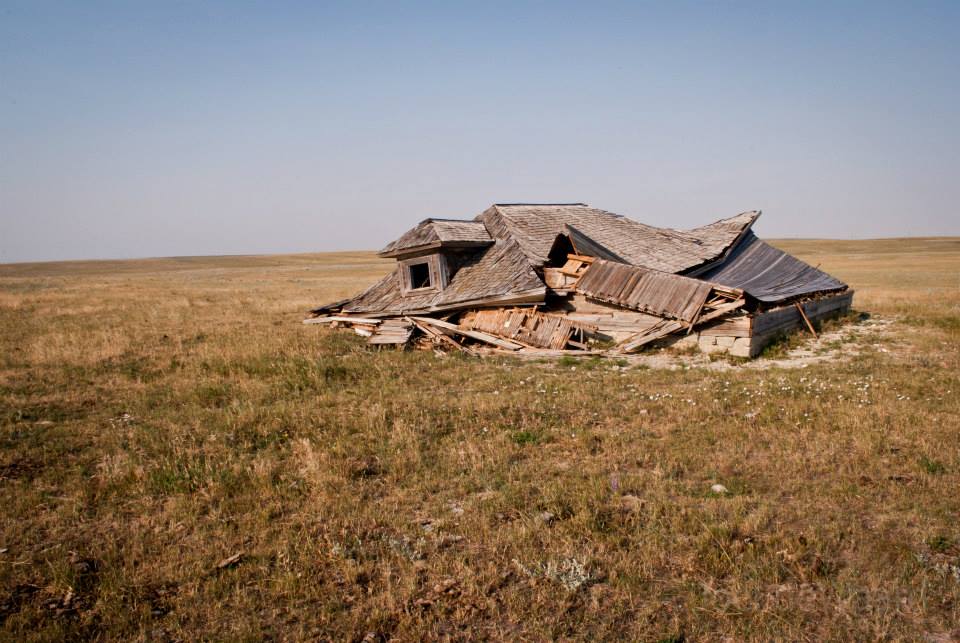
May I, though sagging and gray, perilously leaning, be porous enough to allow life’s gusts to blow through me without pushing me over in a heap.
The wind may fill my every crack, crevice, and defect, causing me to sing out.
Someday, when I do shatter, toppling over into pieces into the ground, it will be amidst a mosaic of praises.
photo by Joel DeWaard
‘I am not a prophet. I am a farmer; the land has been my livelihood since my youth.’ If someone asks, ‘What are these wounds on your body?’ they will answer, ‘The wounds I was given at the house of my friends.’ Zechariah 13: 5-6
But he was pierced for our transgressions, he was crushed for our iniquities; the punishment that brought us peace was on him, and by his wounds we are healed. Isaiah 53:5
photo by Joel DeWaard
This Lenten season I reflect on the words of the 19th century southern spiritual hymn “What Wondrous Love is This”
One-Time
Monthly
Yearly
Make a one-time or recurring donation to support daily Barnstorming posts
In the real world of pain, how could one worship a God who was immune to it? ~John Stott from “The Cross of Christ”
With all that happens daily in this disordered world, in order to even walk out the door in the morning, I fall back on what we are told in God’s Word, in 365 different scripture verses for each and every day of the year:
Fear not.
Do not be overwhelmed with evil but overcome evil with good.
And so – we must overcome — despite our fears in this world of pain.
As demonstrated by the anointing of Jesus’ feet by Mary of Bethany, we must do what we can to sacrifice for others, to live in such a way that death cannot erase the meaning and significance of a life. We are called to give up our own selfish agendas in order to consider the needs of others.
It is crystal clear from Christ’s example as we observe His journey to the cross next week: we are to cherish life -all lives- even unto death. As Christ Himself forgave those who hated and murdered Him, He forgives us as well.
Our only defense against the evil we witness is God’s offense through His Love. Only God can lead us to Tolkien’s “where everything sad will come untrue”, where we shall live in peace, walk hand in hand, no longer alone, no longer afraid, no longer shedding tears of grief and sorrow, but tears of relief and joy.
No longer overcome by evil but overcome with goodness, all to God’s glory.
This Lenten season I reflect on the words of the 19th century southern spiritual hymn “What Wondrous Love is This”
The Lord our God is good The Lord our God is good Full of kindness and compassion Merciful and just The Lord our God is good Who else knows our deepest pain Bears it as his own Finds us in our naked shame, Clothes and brings us home Who takes his inheritance And gives it all away Welcomes guests to feast with him Who never can repay
One-Time
Monthly
Yearly
Make a one-time or recurring donation to support daily Barnstorming posts
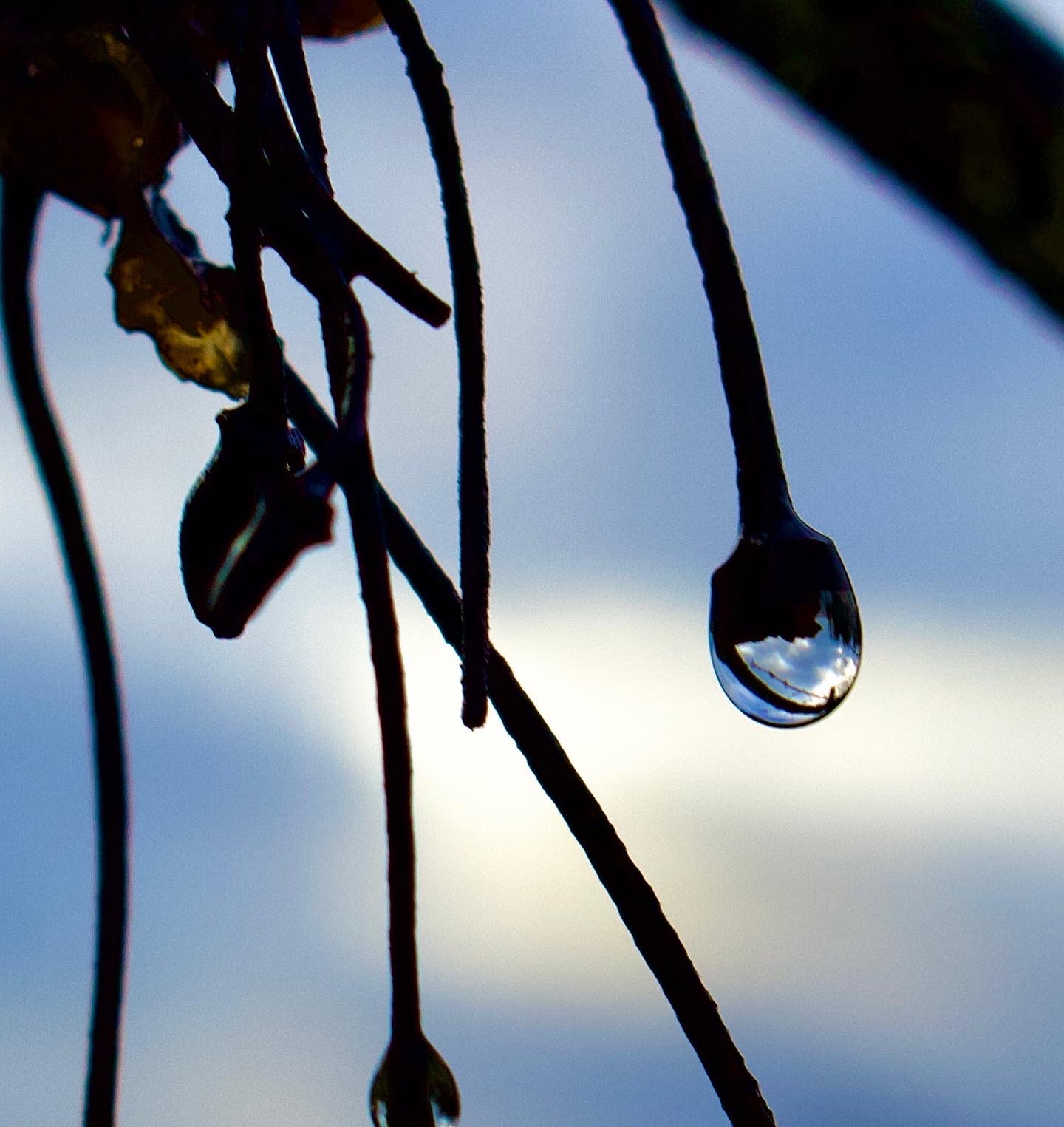
I see your world in light that shines behind me, Lit by a sun whose rays I cannot see, The smallest gleam of light still seems to find me Or find the child who’s hiding deep inside me. I see your light reflected in the water, Or kindled suddenly in someone’s eyes, It shimmers through the living leaves of summer, Or spills from silver veins in leaden skies, It gathers in the candles at our vespers It concentrates in tiny drops of dew At times it sings for joy, at times it whispers, But all the time it calls me back to you. I follow you upstream through this dark night My saviour, source, and spring, my life and light. ~Malcolm Guite “I am the Light of the World”
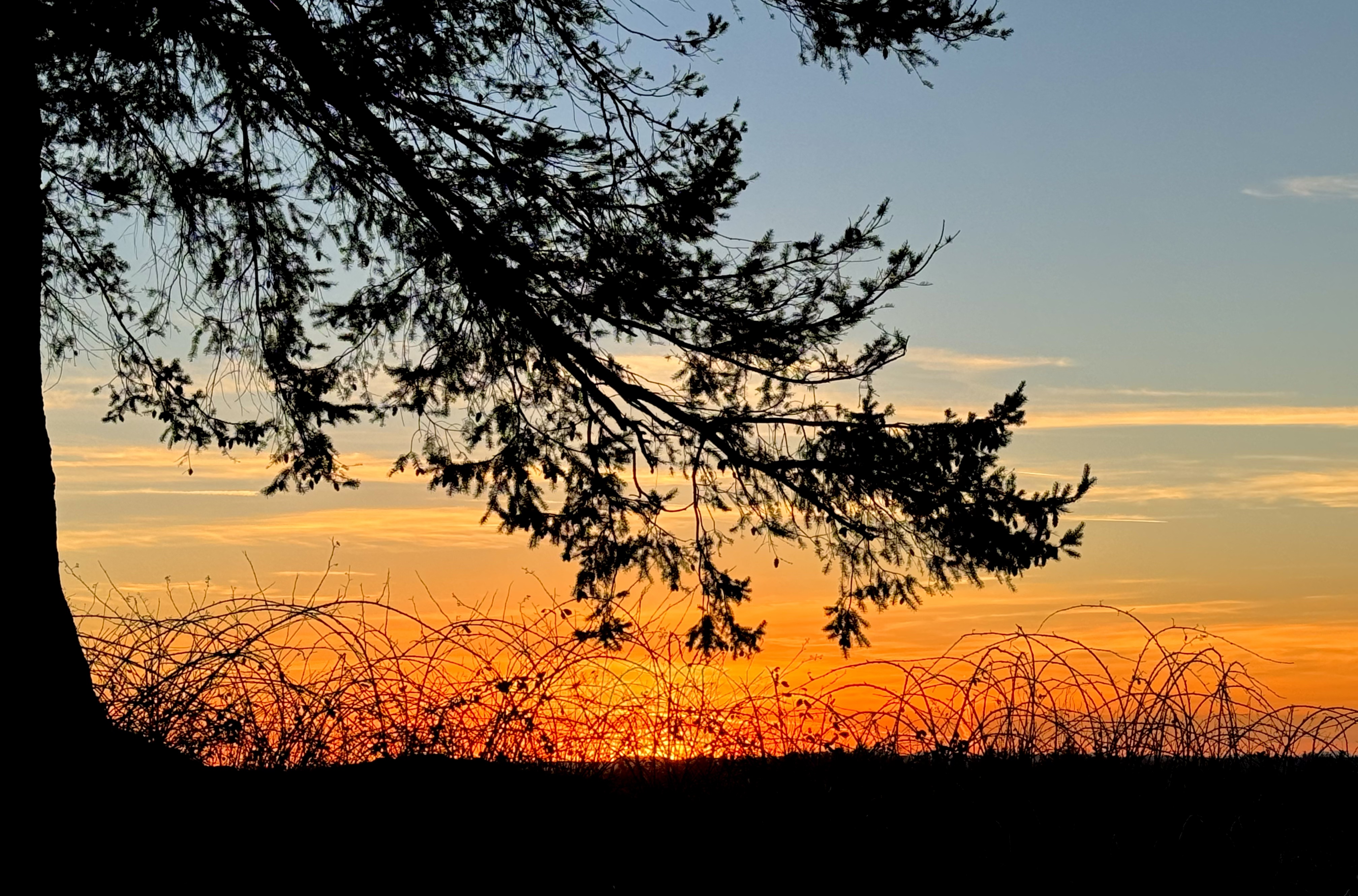
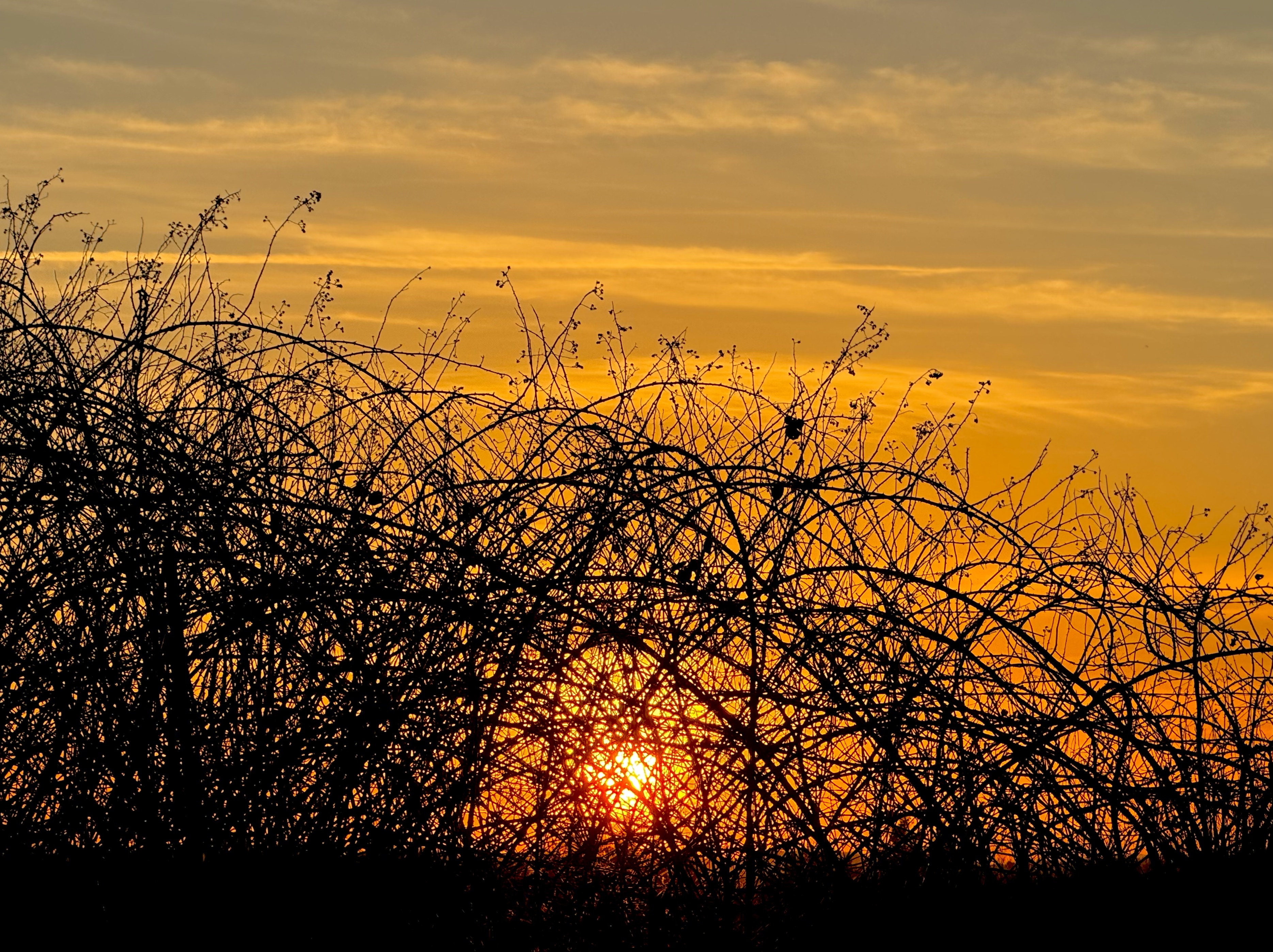
photo by Joel DeWaard
I believe in God as I believe that the Sun has risen, not only because I see it, but because by it I see everything else. ~C.S. Lewis from “They Asked For A Paper,” in Is Theology Poetry?
Without God’s Light that comes reliably every morning, I would be hopelessly casting about in the dark, stubbing my toes, stumbling and fumbling my way without the benefit of His illumination.
Dawn feels like a fresh gift each time, whether a brilliantly painted sunrise, or here in the Pacific Northwest, a somber gray cloud comforter.
I don’t mind the gray: the darkness in the sky, and in me, has been overwhelmed. And I do try my best to reflect the Light.
I am the light of the world. Whoever follows me will never walk in darkness, but will have the light of life. John 8:12
This Lenten season I reflect on the words of the 19th century southern spiritual hymn “What Wondrous Love is This”
September. Second-year medical student. An early patient interview at the Massachusetts General Hospital Routine hernia repair planned, not done. Abdomen opened and closed. Filled with disease, cancer.
The patient is fifty-six, a workingman, Irish I sit with him, notice the St. Christopher medal around his neck. Can’t hurt, can it? he laughs. I have become his friend.
I bring him a coloring book picture that shows this thing, this unfamiliar organ that melted beneath our hands at dissection: Pancreas.
Leaving his room, crying, avoiding classmates, I take the back stairs. I find myself locked, coatless in the courtyard outside. ~Kelley Jean White “Pandora”
At seventeen years old, I thought I had things figured out. I had graduated near the top of my senior class, was heading off to college, and felt confident about who I was becoming. I had attended church all my life but my commitment to my faith was actually waning rather than strengthening.
In anticipation of college tuition bills, I took a summer job at a local nursing home for $1.25 an hour as a nurses’ aide. My total training was two days following a more experienced aide on her rounds of feeding, pottying, dressing and undressing, and bathing her elderly patients. Then I was assigned patients of my own and during a typical shift I carried a load of 13 patients. It didn’t take long for me to learn the rhythm of caretaking, and I enjoyed the work and my patients.
One woman in particular remains vivid in my memory 52 years later. Irene was in her 80’s with no nearby family, bedridden with a painful bone disease that had crippled her for a decade or more. She was unable to do any of her own self care but her mind remained sharp and her eyes bright. Her hearty greeting cheered me when I’d come in her room several times a shift to turn her on her egg-crate mattress bed to prevent pressure sores on her hips and shoulders.
The simple act of turning her in her bed was an ordeal beyond imagining – it always hurt her. I felt as though I was impaling her on hundreds of sharp needles.
I would prepare her for the turn by cushioning her little body with pads and pillows, but no matter how careful I was, her brittle bones would crackle and crunch like Rice Crispies cereal with every movement. Tears would flow from her eyes and she’d always call out “Oh Oh Oh Oh” during the process but then once settled in her new position, she’d look up at me and say “thank you, dear, for making that so much easier for me.”
I would nearly weep in gratitude at her graciousness when I could do so little to alleviate her suffering.
Before I’d leave the room, Irene would grab my hand and ask when I would be returning. Then she’d say “I know the Lord prepared you to take care of me” and she would murmur a prayer to herself.
As difficult as each “turning” was for both of us, I started to look forward to it. I knew she prayed not only for herself, but I knew she prayed for me as well. I felt her blessing each time I walked into her room knowing she was waiting for me. She trusted me to do my best.
One evening I came to work and was told Irene was running a high fever, and struggling to breathe. She was being given oxygen and was having difficulty taking fluids. The nurse I worked under asked that I check Irene more frequently than my usual routine.
As I approached her bed, Irene reached out and held my hand. She was still alert but very weak. She looked me in the eye and said “You know the Lord is coming for me today?” All I could say was “I know you have waited for Him a long time.” She murmured “Come back soon” and closed her eyes.
I returned to her room as often as I could and found her becoming less responsive, yet still breathing, sometimes short shallow breaths and sometimes long and deep. Near the end of my shift, as morning was dawning, when I entered the room, I knew He had come for her.
She lay silent and relaxed for the first time since I had met her. Her little body, so tight with pain only hours before, seemed at ease. It was my job to prepare her for the mortuary workers who would soon come for her. Her body still warm to touch, I washed and dried her skin and brushed her hair and wrapped her in a fresh sheet, wondering at how I could now turn her easily with no pain and no tears. I could see a trace of a smile at the corners of her mouth. I knew then the Lord had lifted her soul from her imprisonment. He had rewarded her faithful perseverance.
I rejoice in the hope of the glory of the Lord, thanks to Irene. She showed me what it means to watch for the morning when He will come. Though immobile in bed, crippled and wracked with pain, her perseverance led to loving a young teenager uncertain in her faith, and helped point me to my future profession in medicine.
Irene brought the Lord home to me when she went home to Him.
And werejoice in the hope of the glory of God. Not only so, but we also rejoice in our sufferings, because we know that suffering produces perseverance Romans 5:2b-3
This Lenten season I reflect on the words of the 19th century southern spiritual hymn “What Wondrous Love is This”
One-Time
Monthly
Yearly
Make a one-time or recurring donation to support daily Barnstorming posts
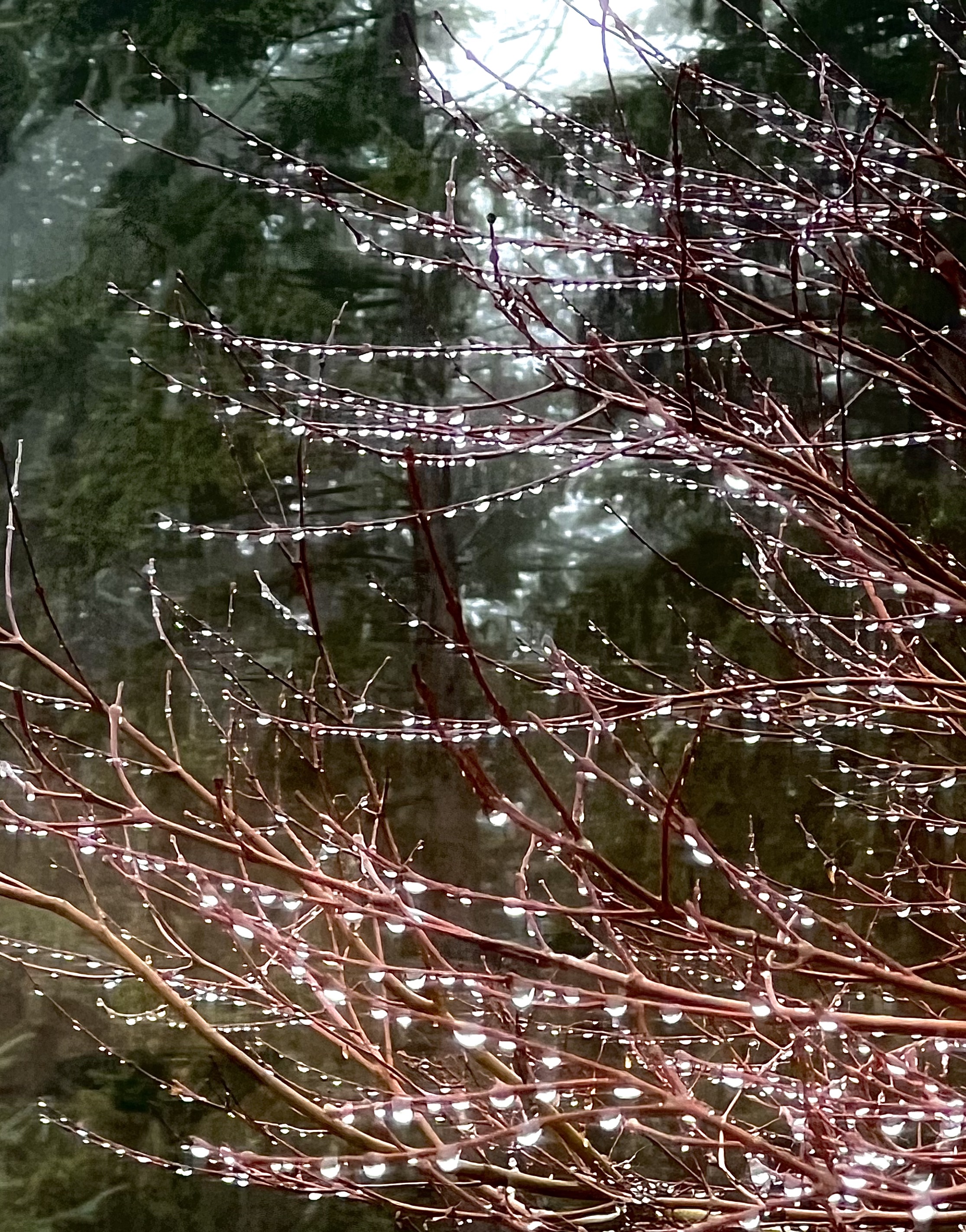
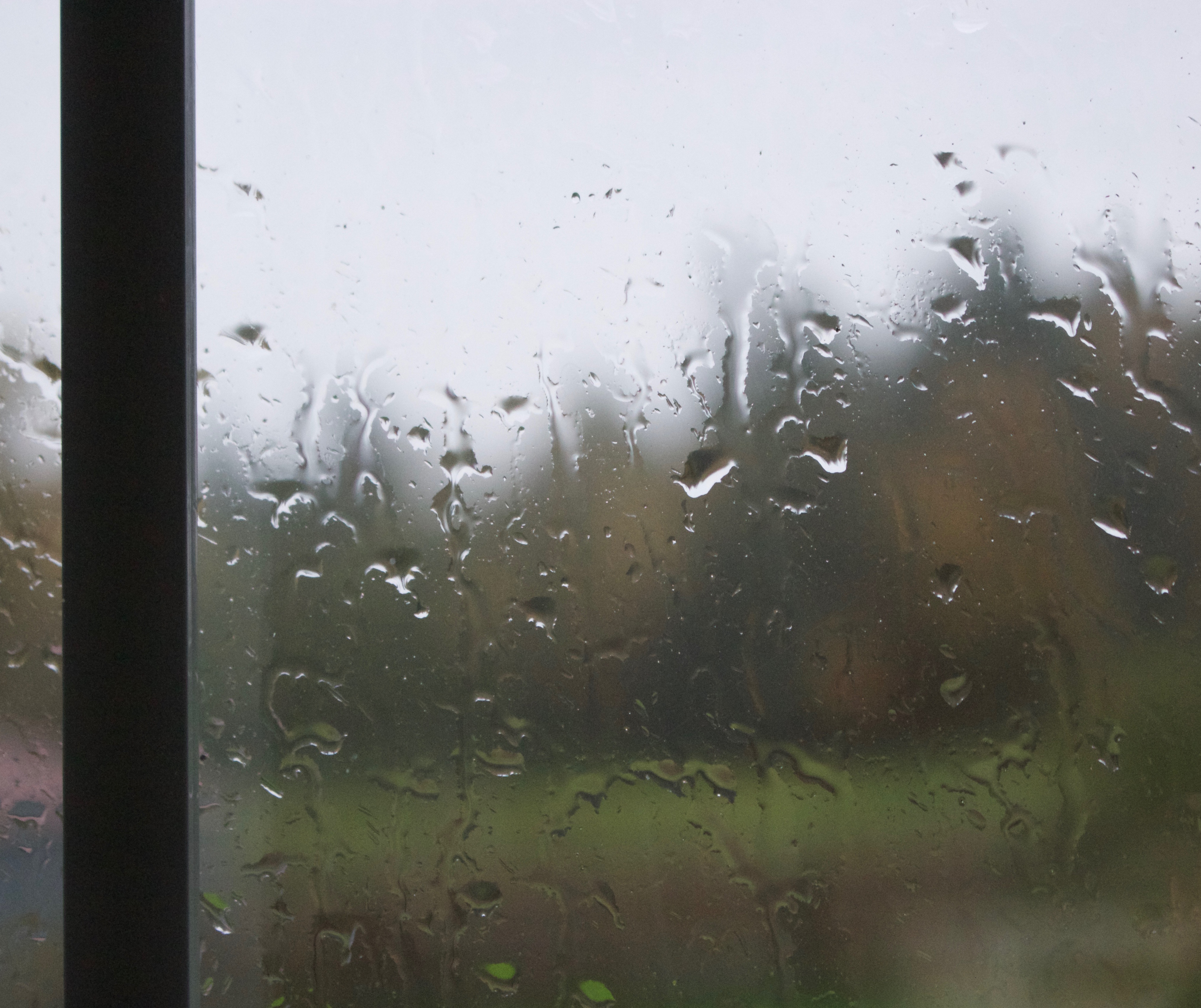
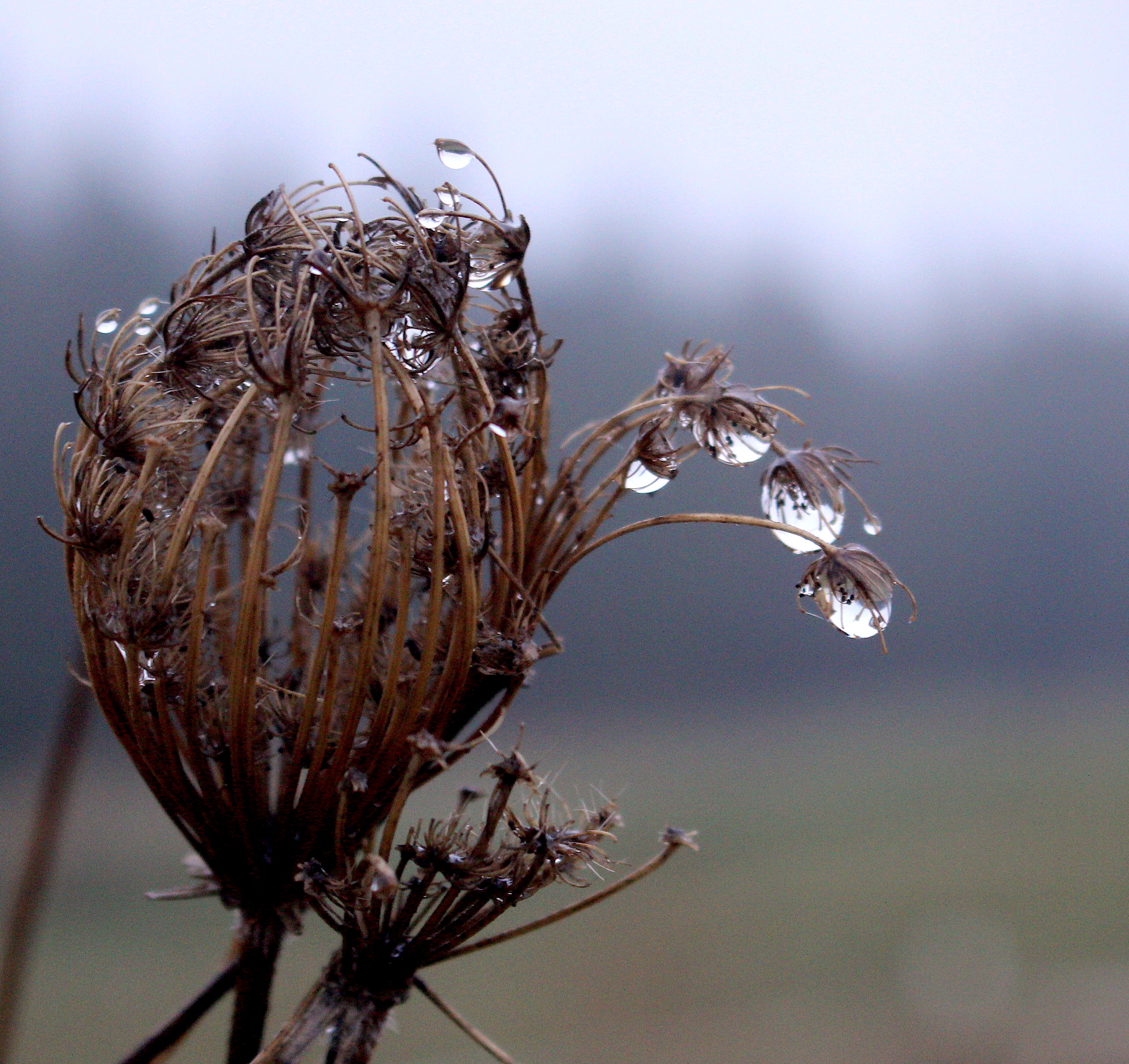
Rain. An excuse to stand at the window And listen, watch, wait. Listen: to the hush Of the house as still as a dark burrow Where an animal hides. Listen: the rush Of occasional gusts, then the stillness.
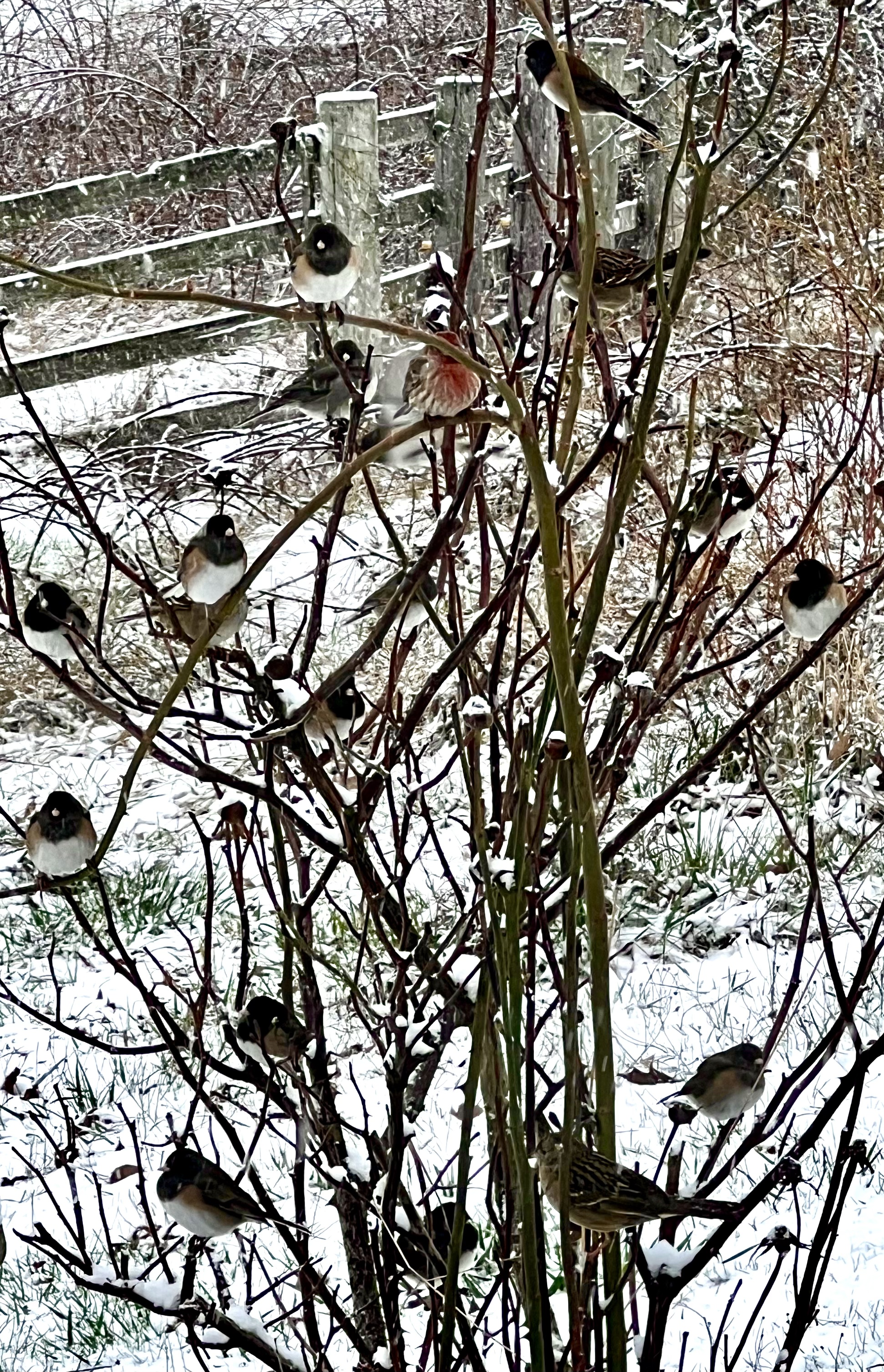
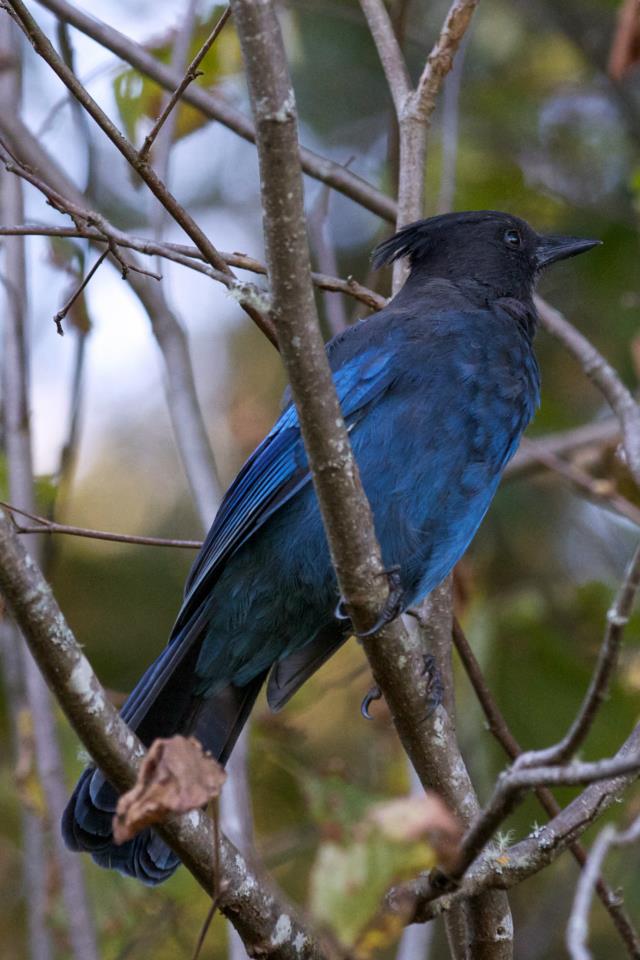
Watch: the wrens hopping from stem to wet stem Their happy bearing in contrast to titmice Who always seem afraid. Watch: the mayhem That strikes when the grumpy bluejay, twice As big as the rest, frumps onto a branch.
Wait: for what? For the steady rain to cease. Wait: for the fair sunlight to avalanche Down from space and remake the world again. Then let my steps be fearless, like the wren. ~Andrew Peterson “Lenten Sonnet”
I’m the child of rainy Sundays. I watched time crawl Like an injured fly Over the wet windowpane. Or waited for a branch On a tree to stop shaking, While Grandmother knitted Making a ball of yarn Roll over like a kitten at her feet. I knew every clock in the house Had stopped ticking And that this day will last forever. ~Charles Simic “To Boredom”
I’m never bored on a quiet rainy Sunday.
My list of to-do’s and want-to-do’s and hope-to-do’s and someday-maybe-if-I’m-lucky-to-do’s is longer than the days still left to me.
I cherish these Sabbaths when the clock stops, and “to-do’s” will wait. Time suspends itself above me, ~dangling~ and the day lasts forever.
Sunday evening scaries in anticipation of Monday are prayed away.
On a drizzly day of rest and gratitude, the world is remade, eternity moves a little closer, my steps become more fearless and the new week is yet another part of the journey.
Does the rain have a father? Who fathers the drops of dew? Job 38:28
This Lenten season I reflect on the words of the 19th century southern spiritual hymn “What Wondrous Love is This”
One-Time
Monthly
Yearly
Make a one-time or recurring donation to support daily Barnstorming posts
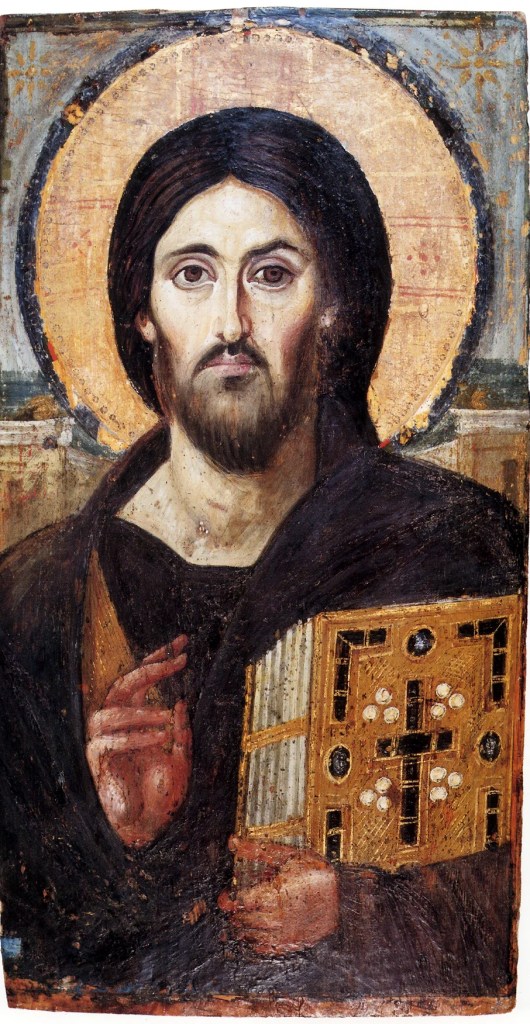
Directly in front of me he is here, him on this quiet morning in a room of the Byzantine Museum, Athens, in the hundred-degree heat and dust of a city not yet fully awake. Here, and I am suddenly confronted— the oldest icon in existence—with his image.
The rest of the room evaporates, and all I see is him: Pure mystery, great and wondrous, dizzying and terrible.
How can wood and pigment egg yolk and animal skin convey such ethereal truth, intensify the power, captivate Christian eye and heart?
Christ of Sinai looks at me with steady gaze. His eyes—the famed twins Justice and Mercy— see straight through me piercing the whitewashed tomb of my exterior till it hurts. One eye is dark, foreboding shadows between the brow and lid deepening and on the verge of righteous anger— the other eye embraces all even my unworthy soul. I stand and cannot pray. My eyes swell with tears. I cannot look anymore. ~Ed Higgins from “Icon: Christ of Sinai” from Near Truth Only
I was not raised with religious icons. I have little understanding about how they may comfort and encourage those who value and even worship them. Yet I do understand inspiring art and words may deepen our faith in God. This has been true for millennia.
This particular Byzantine icon, the oldest known of Christ, is preserved from the 6th century, an early representation with an intense gaze from eyes that are both from man and God.
I look for tears in those eyes. My own fill up knowing Christ is able to see the depths beyond my white-washed exterior.
I look away, ashamed.
Because He sees what we try to keep from Him, Jesus weeps, knowing the truth about us, yet loving us anyway.
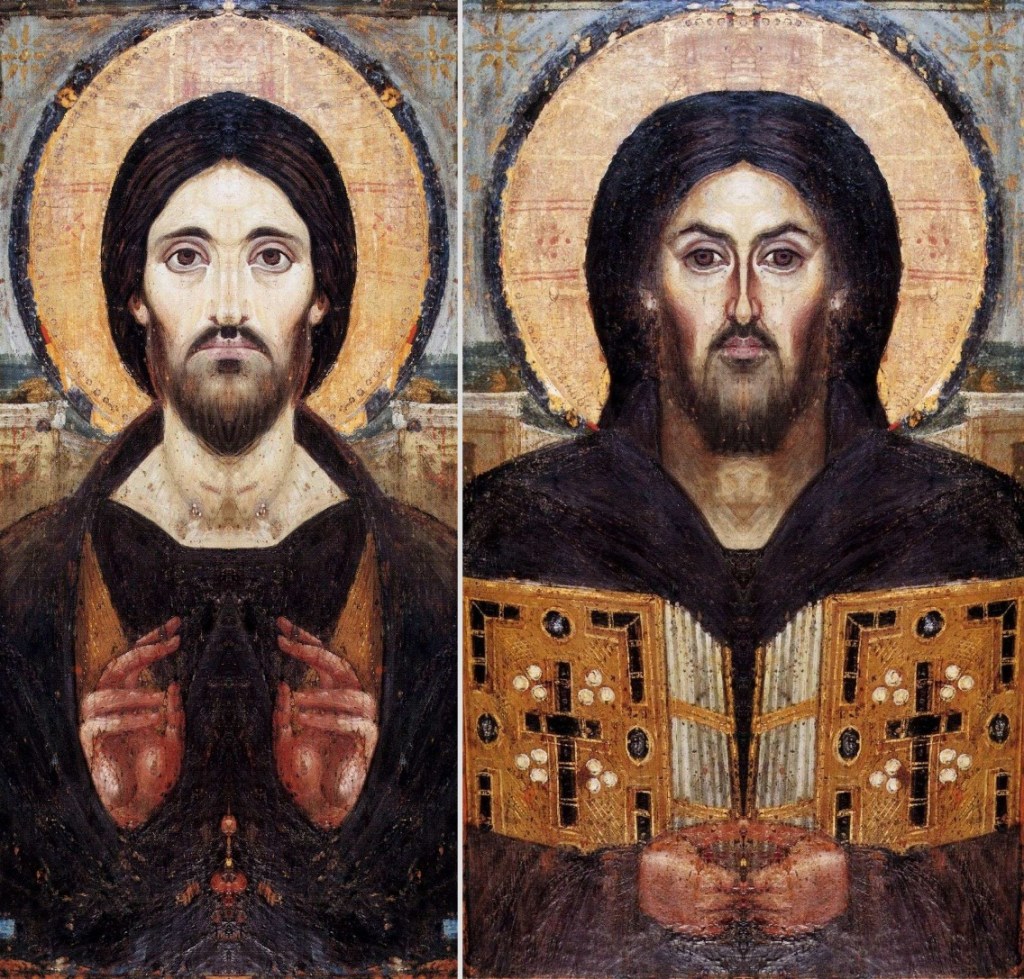
the right and left sides of the icon shown in mirror image, illustrating the dual nature of divine and human
You are like whitewashed tombs, which look beautiful on the outside but on the inside are full of the bones of the dead and everything unclean. Matthew 23:27
Detail from “Descent from the Cross” by Rogier van der Weyden
This Lenten season I reflect on the words of the 19th century southern spiritual hymn “What Wondrous Love is This”
One-Time
Monthly
Yearly
Make a one-time or recurring donation to support daily Barnstorming posts
It’s like so many other things in life to which you must say no or yes. So you take your car to the new mechanic. Sometimes the best thing to do is trust.
The package left with the disreputable-looking clerk, the check gulped by the night deposit, the envelope passed by dozens of strangers— all show up at their intended destinations.
The theft that could have happened doesn’t. Wind finally gets where it was going through the snowy trees, and the river, even when frozen, arrives at the right place.
And sometimes you sense how faithfully your life is delivered, even though you can’t read the address. ~Thomas R. Smith “Trust” from Waking Before Dawn
I know now, Lord, why you utter no answer. You are yourself the answer. Before your face questions die away. ~C.S. Lewis from Till We Have Faces
I always have lots of questions when I’m uncertain about a decision. I carefully consider whether I should do this or do that, go here or go there, say something or remain silent.
My questions become a prayer seeking clarity – how? why? and what if?
Before the face of God, these questions fall away.
We who worry are not trusting a Creator who is ever-present in His care for us, even when we may think He is not listening. He knows where we are headed, even if we’re unsure of the destination ourselves.
He makes sure we get there. We’ll be delivered to the right place at the right time.
I must trust Him. He’s on it.
One-Time
Monthly
Yearly
Make a one-time or recurring donation to support daily Barnstorming posts
At the gate, I sit in a row of blue seats with the possible company of my death, this sprawling miscellany of people— carry-on bags and paperbacks—
that could be gathered in a flash into a band of pilgrims on the last open road. Not that I think if our plane crumpled into a mountain
we would all ascend together, holding hands like a ring of skydivers, into a sudden gasp of brightness, or that there would be some common place
for us to reunite to jubilize the moment, some spaceless, pillarless Greece where we could, at the count of three, toss our ashes into the sunny air.
It’s just that the way that man has his briefcase so carefully arranged, the way that girl is cooling her tea, and the flow of the comb that woman
passes through her daughter’s hair . . . and when you consider the altitude, the secret parts of the engines, and all the hard water and the deep canyons below . . .
well, I just think it would be good if one of us maybe stood up and said a few words, or, so as not to involve the police, at least quietly wrote something down. ~Billy Collins “Passengers”
I don’t spend much time in airports these days, but I know many who must depend on airplanes to get them where they need to go to see the people they need to see.
Due to some recent horrifying airplane mishaps in the news, I know many say prayers as they sit in airports awaiting their flights and their fates.
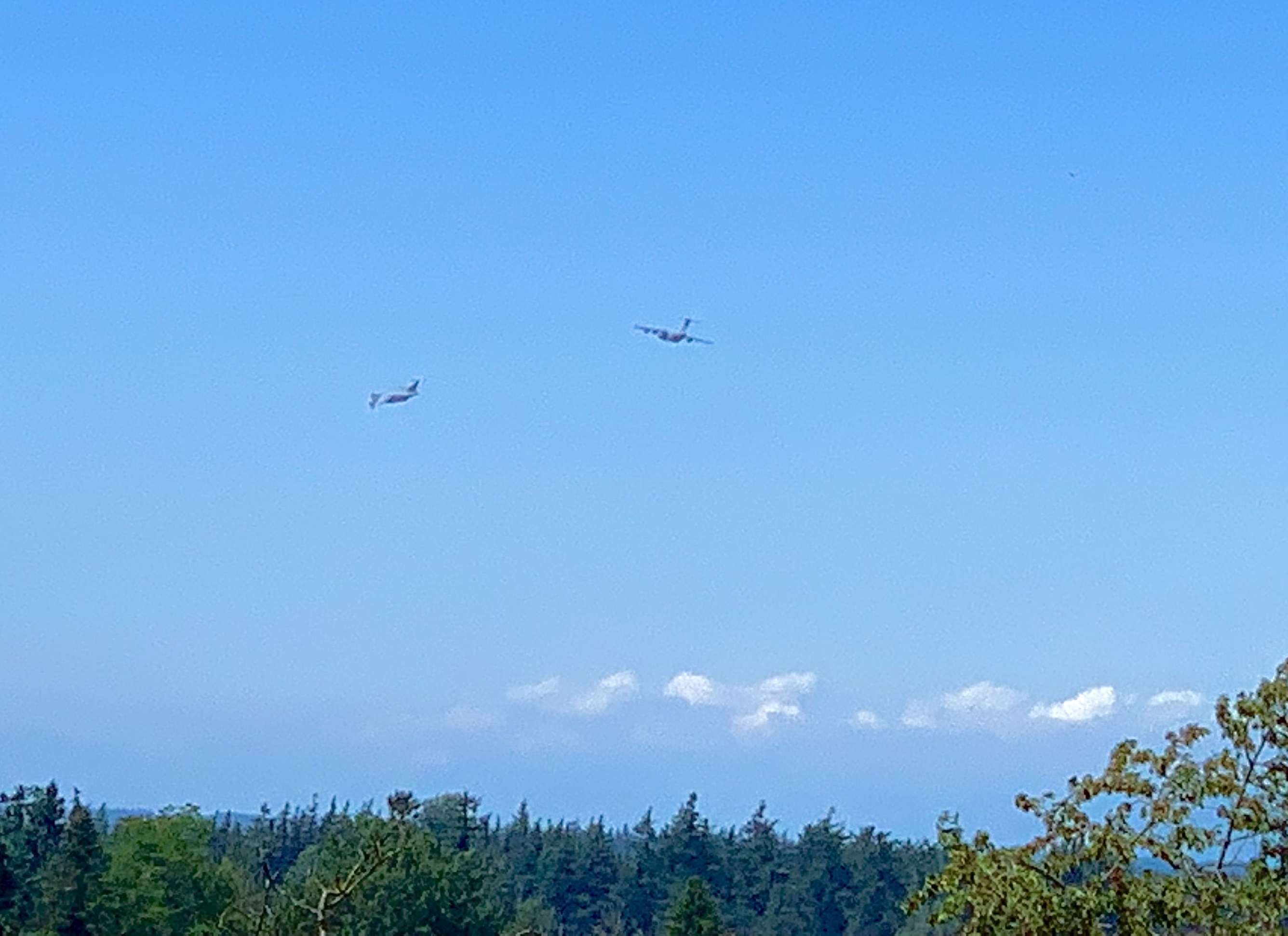
Instead of dealing with airports and the sad necessity of leaving on jet planes, I walk on my own two feet out to our farm’s hilly fields, noticing many more jets passing overhead than I remember from past years. Most aren’t as low as I would expect for take offs and landings from Vancouver (B.C.) International Airport an hour north of us or descending for an approach to SeaTac International 100 miles to the south. They are in mid-flight mode, at least 35,000-45,000 feet above us, carrying their loads and passengers in almost guaranteed safety.
I have found a website that shows real-time location of flights all over the world. I can literally stand on our hill looking at a flight overhead while checking my phone to see where it has come from and where it is going. In some high tech way, I feel linked with those people so far above me in that plane, strangers though they be.
Most of these flights are from, or bound for Japan or Korea, to or from the east coast or midwest United States. Apparently these flights are taking a longer circuit over the Pacific Ocean to avoid going too close to Russian air space. They have a long flight ahead as they pass the coastline here in northwest Washington and over Vancouver Island. My husband and I have made that trek over the Pacific to Japan a half dozen times. I can easily imagine myself seated in the economy section, trying to keep my legs from stiffening up over 10+ hours, distracting myself watching movies on the inflight channels.
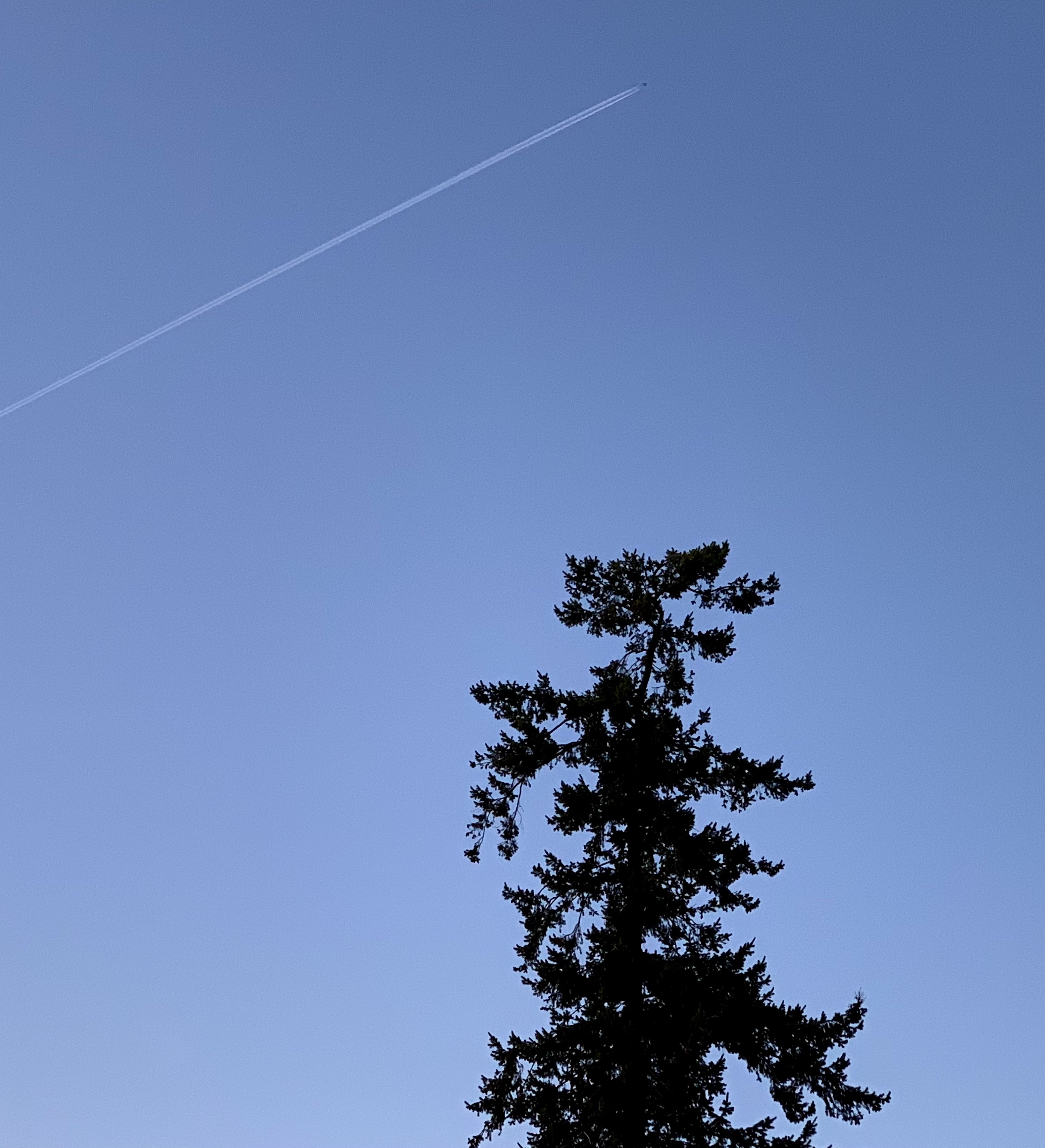
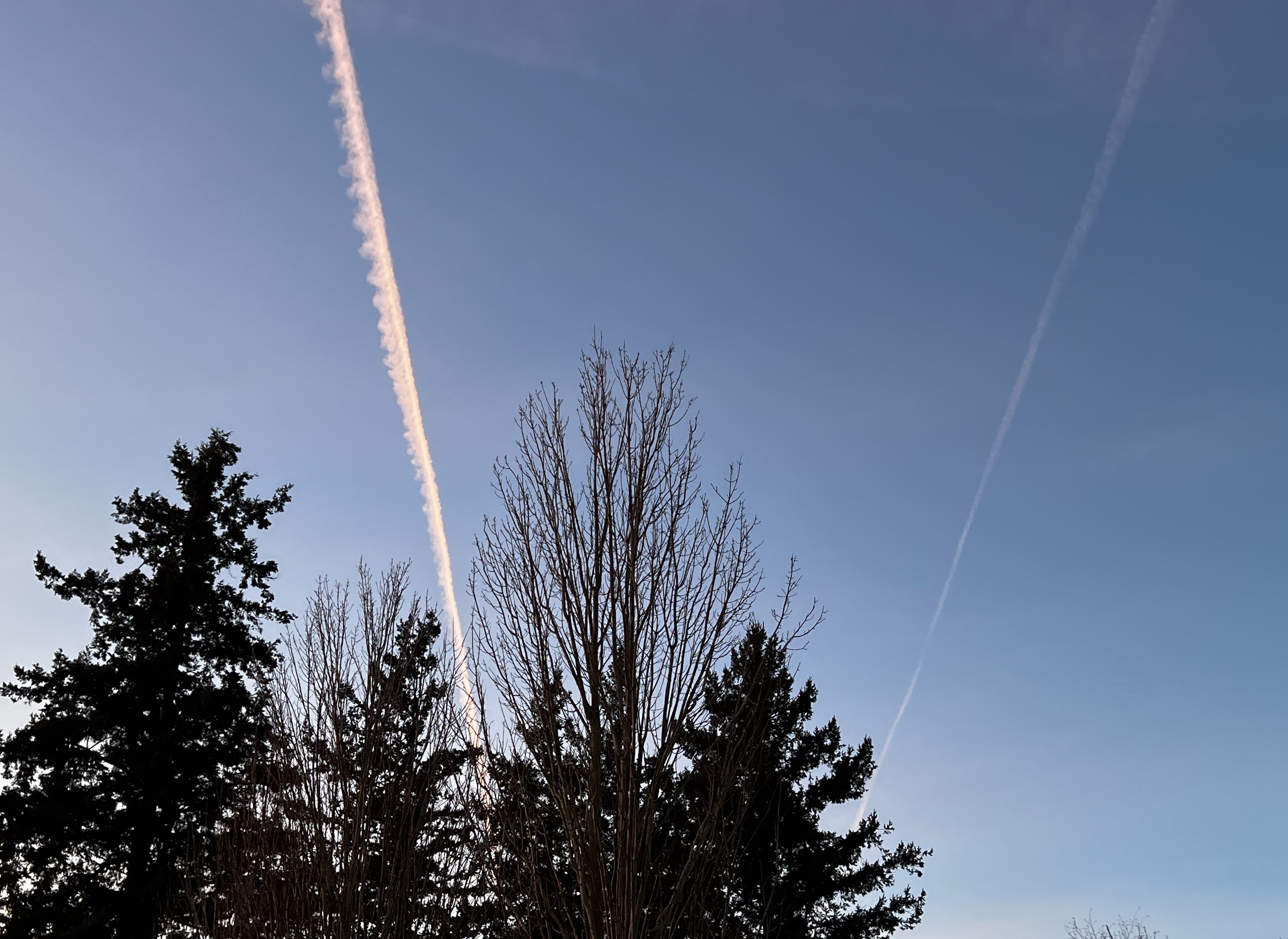
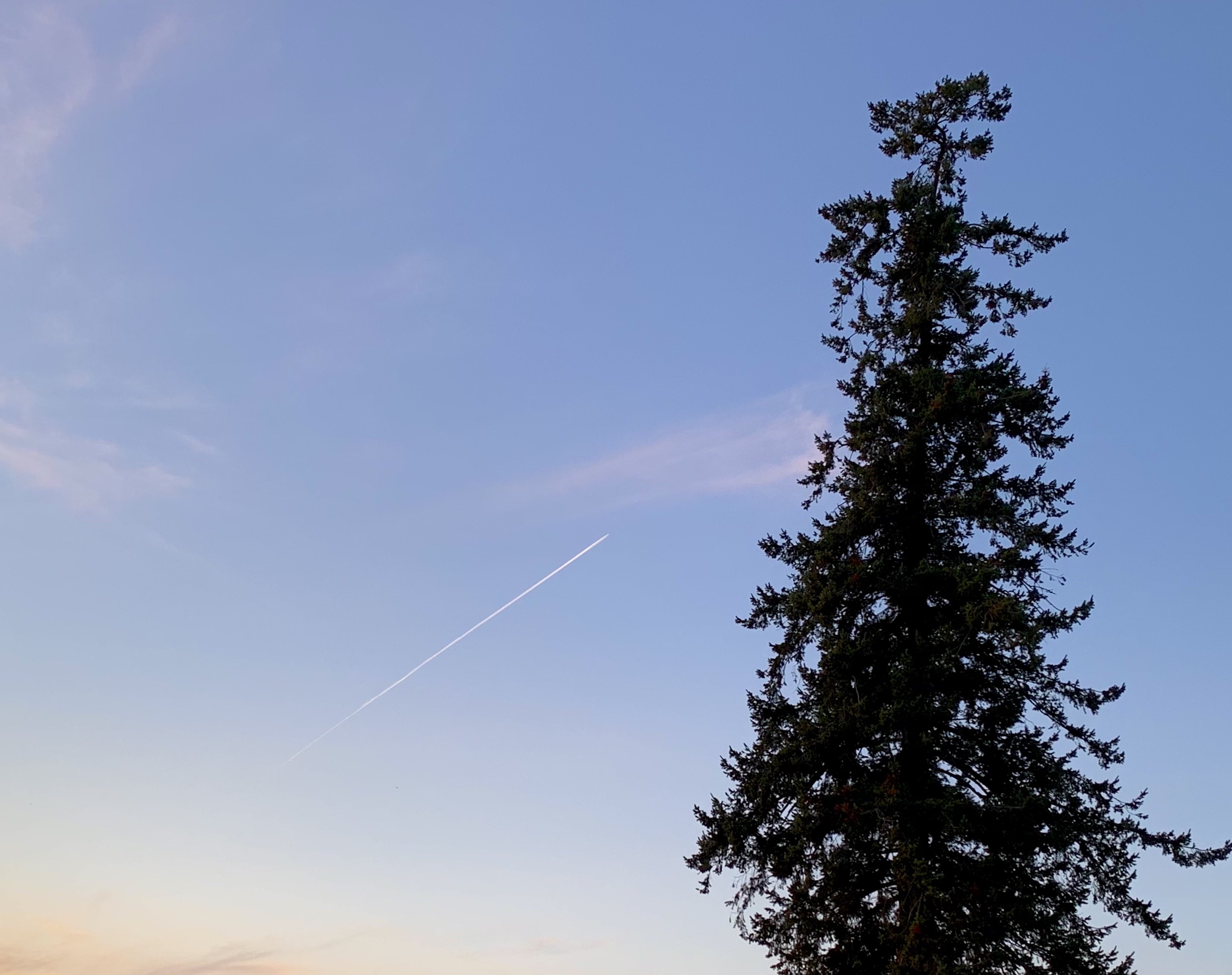
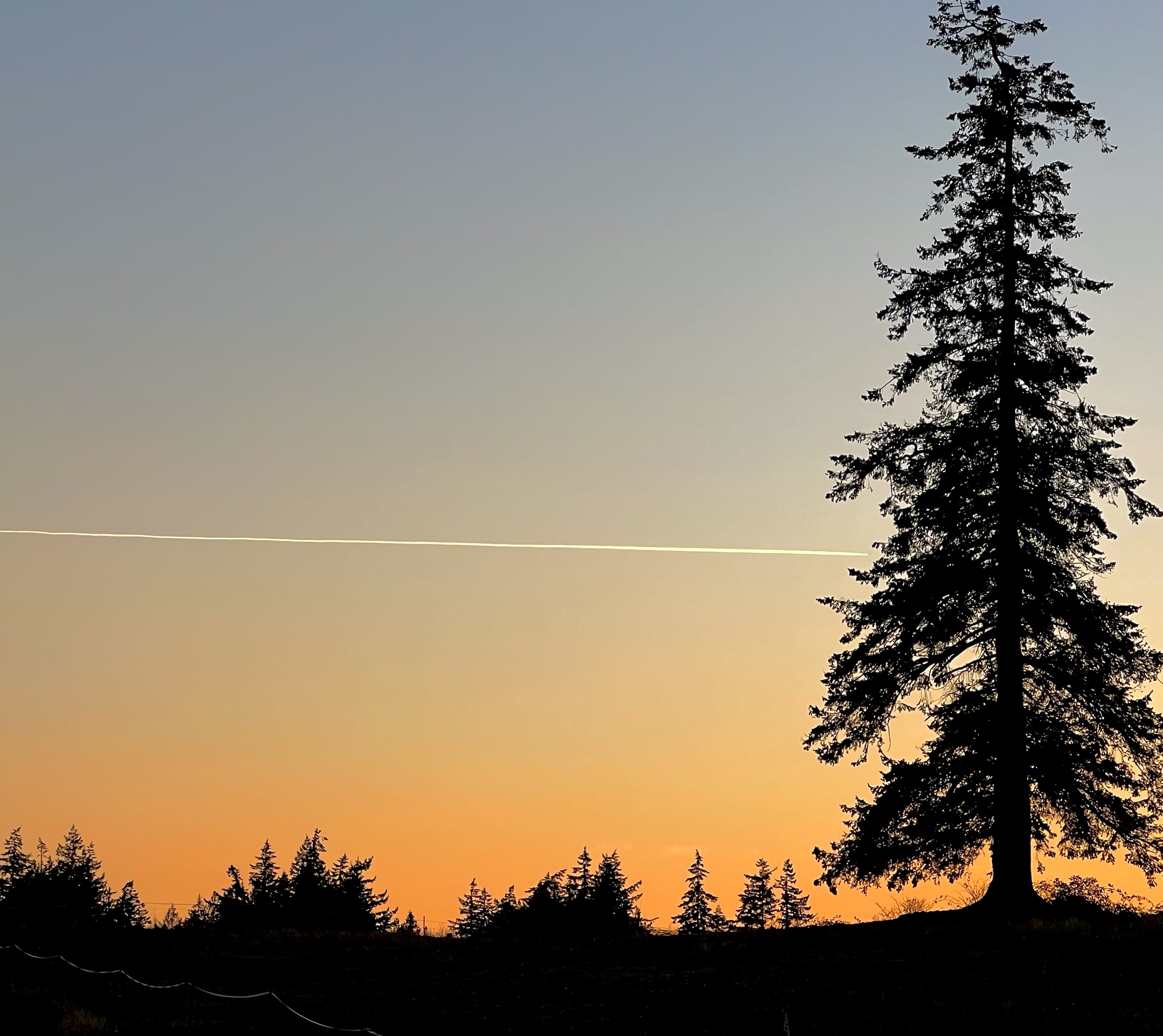
Instead of having leg cramps, I am here with my dogs and farm cat leaving a trail of footprints in a frosty winter field. Above me, a plane leaves a condensation trail which blurs, fades and disappears in the evening light.
I stand on a hillside at home, someone living out my days in this spot; those flying above are in transit, each with an individual story with joys and tribulations of their own. Though we are miles apart, the passengers in the plane above me connect with me for a brief few minutes.
It makes sense for me to pray these people fly safely to their destination. Someday, someone may look up at a plane I am belted into, and pray for my safety. Or maybe write something down to remember the moment.
We all find our way home eventually, leaving our transient and temporary trails behind us. Surely, that home will be breathtaking and beautiful – and just exactly where we belong.
One-Time
Monthly
Yearly
Make a one-time or recurring donation to support daily Barnstorming posts
I don’t know where prayers go, or what they do. Do cats pray, while they sleep half-asleep in the sun? Does the opossum pray as it crosses the street? The sunflowers? The old black oak growing older every year? I know I can walk through the world, along the shore or under the trees, with my mind filled with things of little importance, in full self-attendance. A condition I can’t really call being alive. Is a prayer a gift, or a petition, or does it matter? The sunflowers blaze, maybe that’s their way. Maybe the cats are sound asleep. Maybe not.
While I was thinking this I happened to be standing just outside my door, with my notebook open, which is the way I begin every morning. Then a wren in the privet began to sing. He was positively drenched in enthusiasm, I don’t know why. And yet, why not. I wouldn’t persuade you from whatever you believe or whatever you don’t. That’s your business. But I thought, of the wren’s singing, what could this be if it isn’t a prayer? So I just listened, my pen in the air. ~Mary Oliver “I Happened to be Standing” from A Thousand Mornings
Each morning, I say a prayer that I might find something of value to share here.
Maybe what I offer is a bit of glue to help heal a broken heart, or a balm to soothe a worried mind, or it touches a place of pain so it might hurt less.
Maybe a song becomes a poignant reminder, or an image might capture the eye.
What might the beauty in the world and in words be but a kind of prayer offered to our Creator? Why not listen, even for a moment, to the purring cat and the singing wren to hear a prayer of thanks and joy they offer in their own way?
Prayer is breath combined with need.
We are capable of just such a silent dialogue with God, breathed out in thanksgiving and breathed in deep during desperate times.
I too know about worry, and hurting, and the need for glue. Within prayer is a trace of peace. So I listen, waiting.
One-Time
Monthly
Yearly
Make a one-time or recurring donation to support daily Barnstorming posts
O God, early in the morning I cry to you. Help me to pray And to concentrate my thoughts on you; I cannot do this alone.
In me there is darkness, But with you there is light; I am lonely, but you do not leave me; I am feeble in heart, but with you there is help; I am restless, but with you there is peace. In me there is bitterness, but with you there is patience;
I do not understand your ways, But you know the way for me…. Restore me to liberty, And enable me to live now That I may answer before you and before men. Lord whatever this day may bring, Your name be praised. Amen ~Dietrich Bonhoeffer “Prayer”
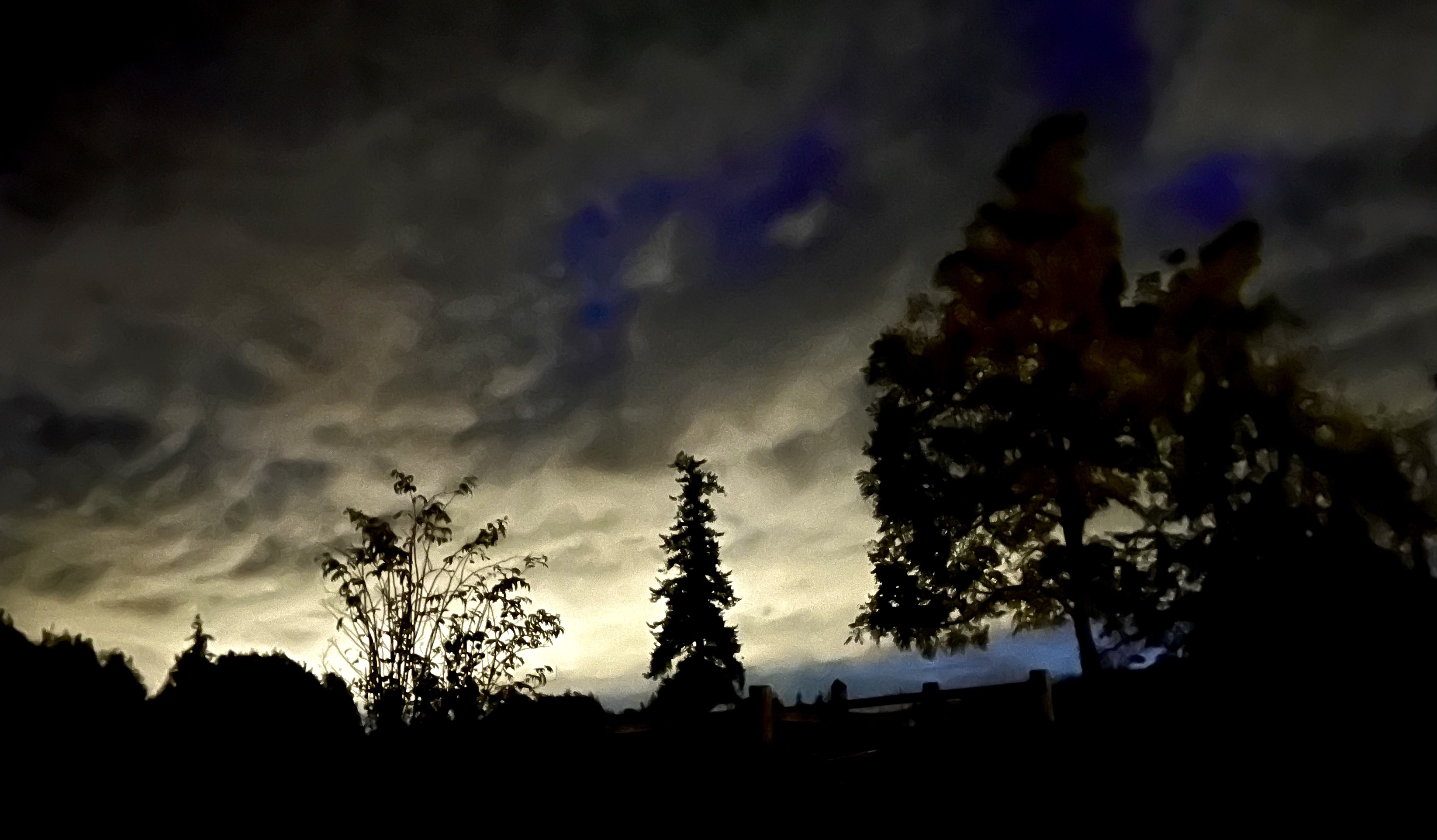
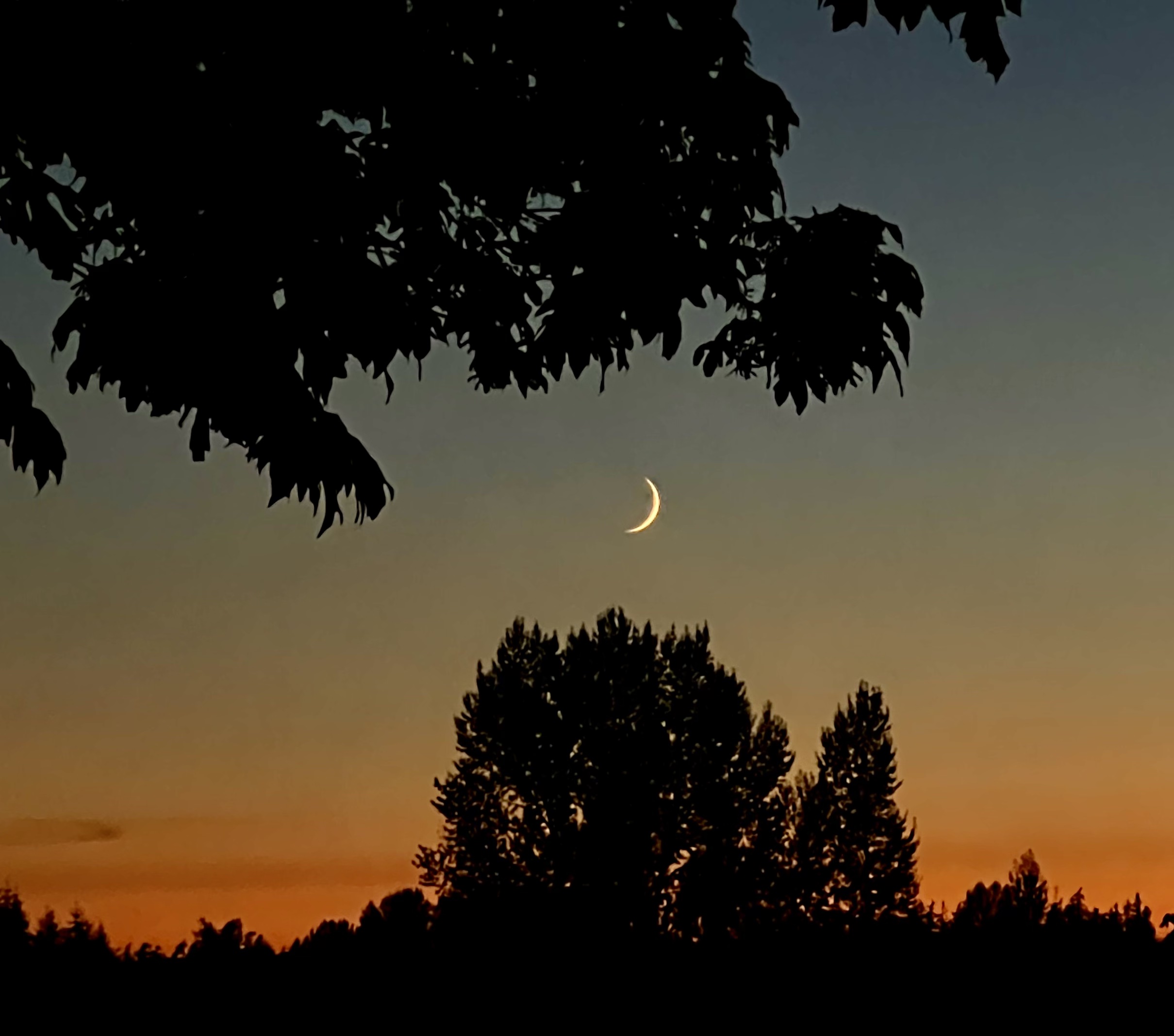
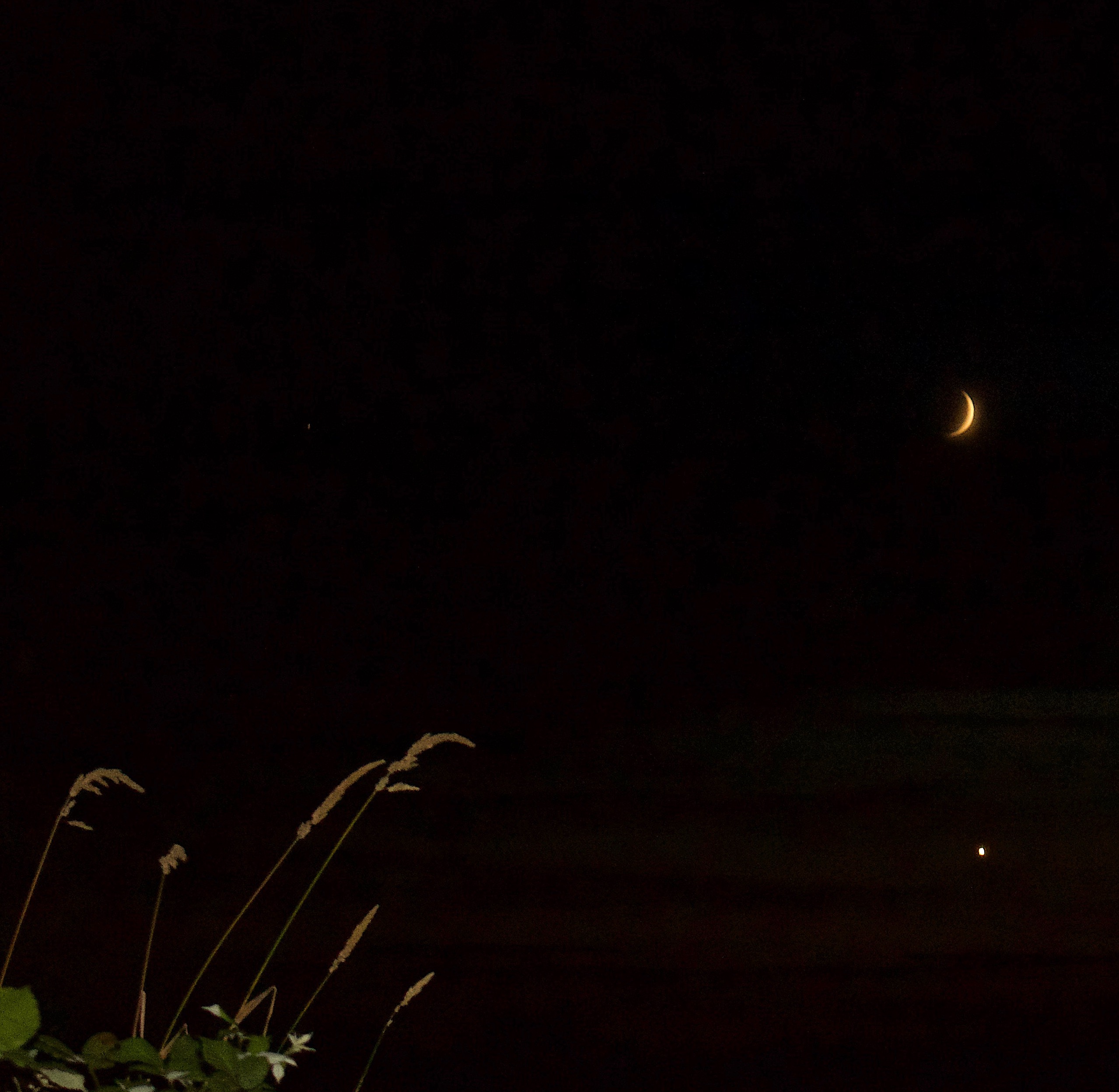
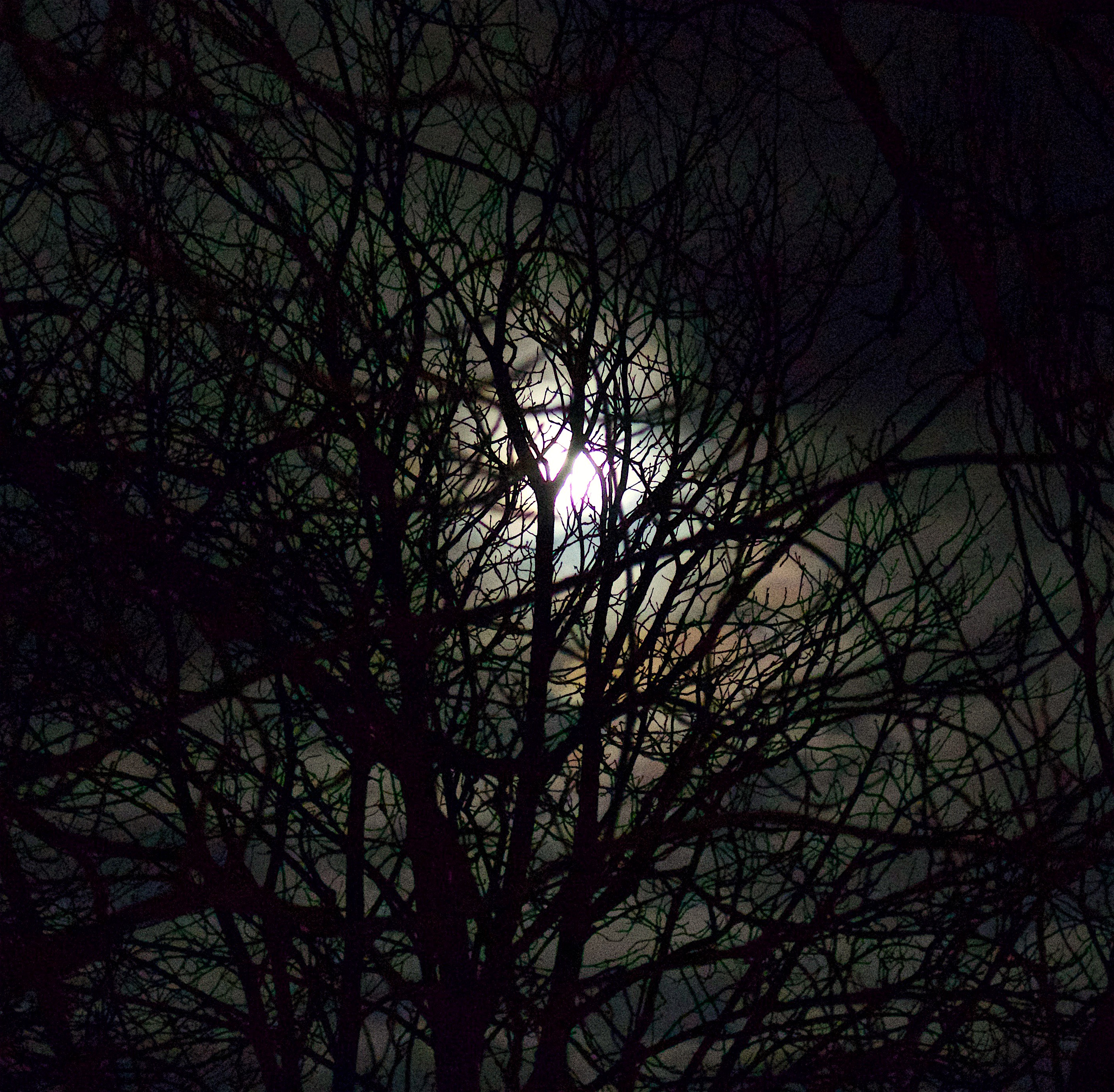
To go in the dark with a light is to know the light. To know the dark, go dark. Go without sight, and find that the dark, too, blooms and sings, and is traveled by dark feet and dark wings. ~Wendell Berry “To Know the Dark”from Soul Food – Nourishing Poems for Starved Minds
(In my sleep I dreamed this poem)
Someone I loved once gave me a box full of darkness.
It took me years to understand that this, too, was a gift. ~Mary Oliver “The Uses of Sorrow”
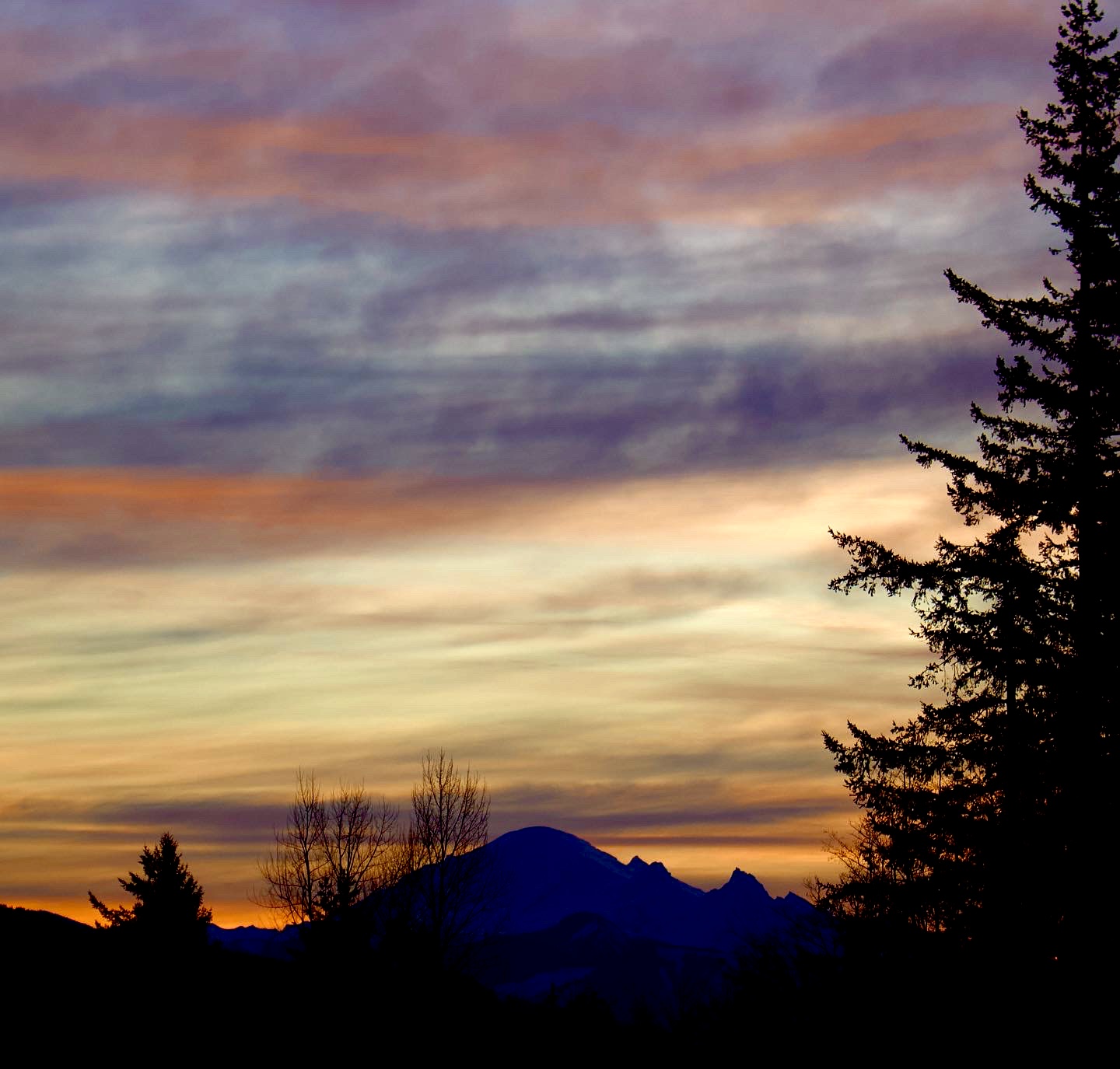
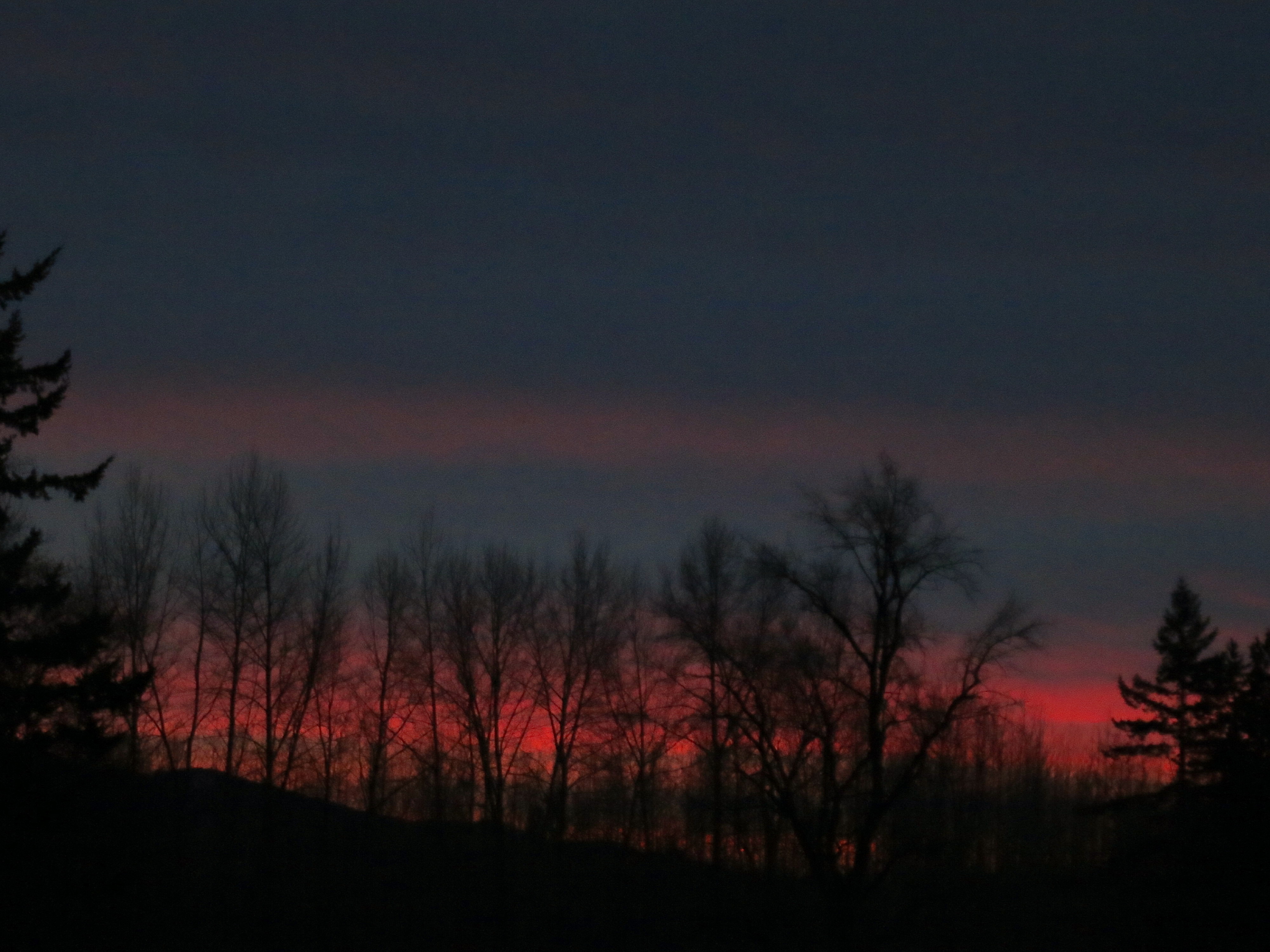
In the beginning, God did not banish the darkness. He balanced it with His illuminating Light. Fallen as we are, we search blindly for Him in the dark, where we need Him most. And He is there.
We are promised this: “and night will be no more. They will need no light of lamp or sun, for the Lord God will be their light… Revelation 22:5.
Darkness is not yet banished. But it is overcome. Whatever this day may bring, we have a lit pathway leading us home.
One-Time
Monthly
Yearly
Make a one-time or recurring donation to support daily Barnstorming posts


































 Barnstorming