Seeking What Could No Longer Be Found

photo by Kate Steensma

Though I know well enough
To hunt the Lady’s Slipper now
Is playing blindman’s-buff,
For it was June She put it on
And grey with mist the spider’s lace
Swings in the autumn wind,
Yet through this hill-wood, high and low,
I peer in every place;
Seeking for what I cannot find
I do as I have often done
And shall do while I stay beneath the sun.
~Andrew Young “Lady’s Slipper Orchid”
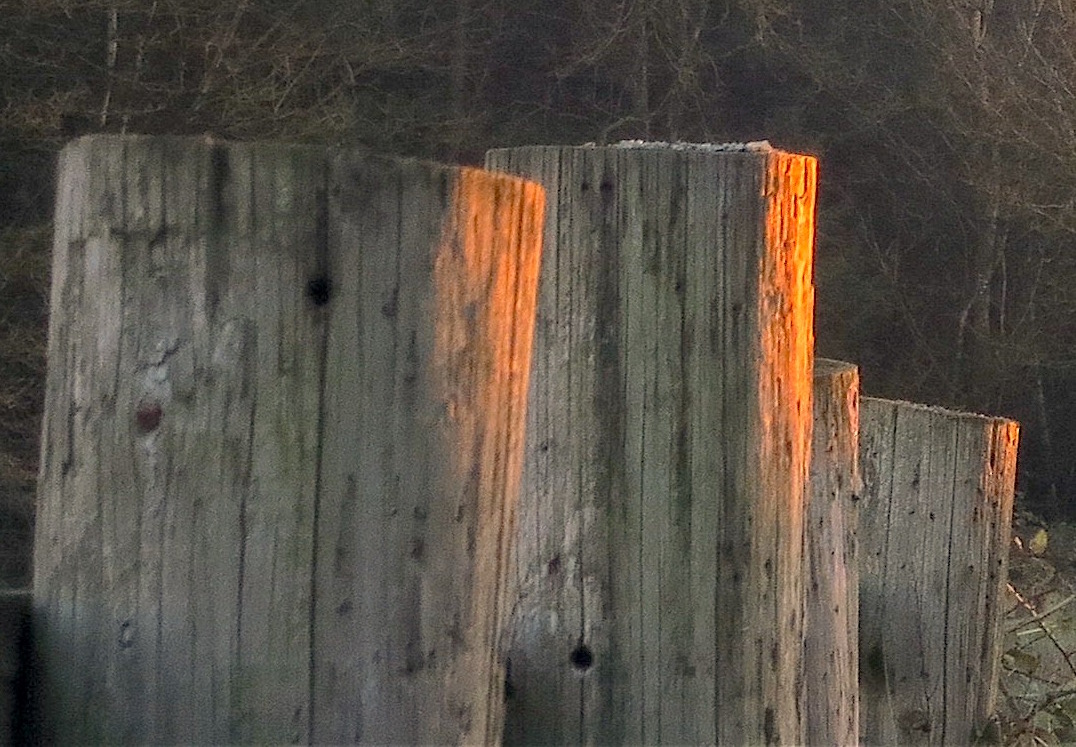
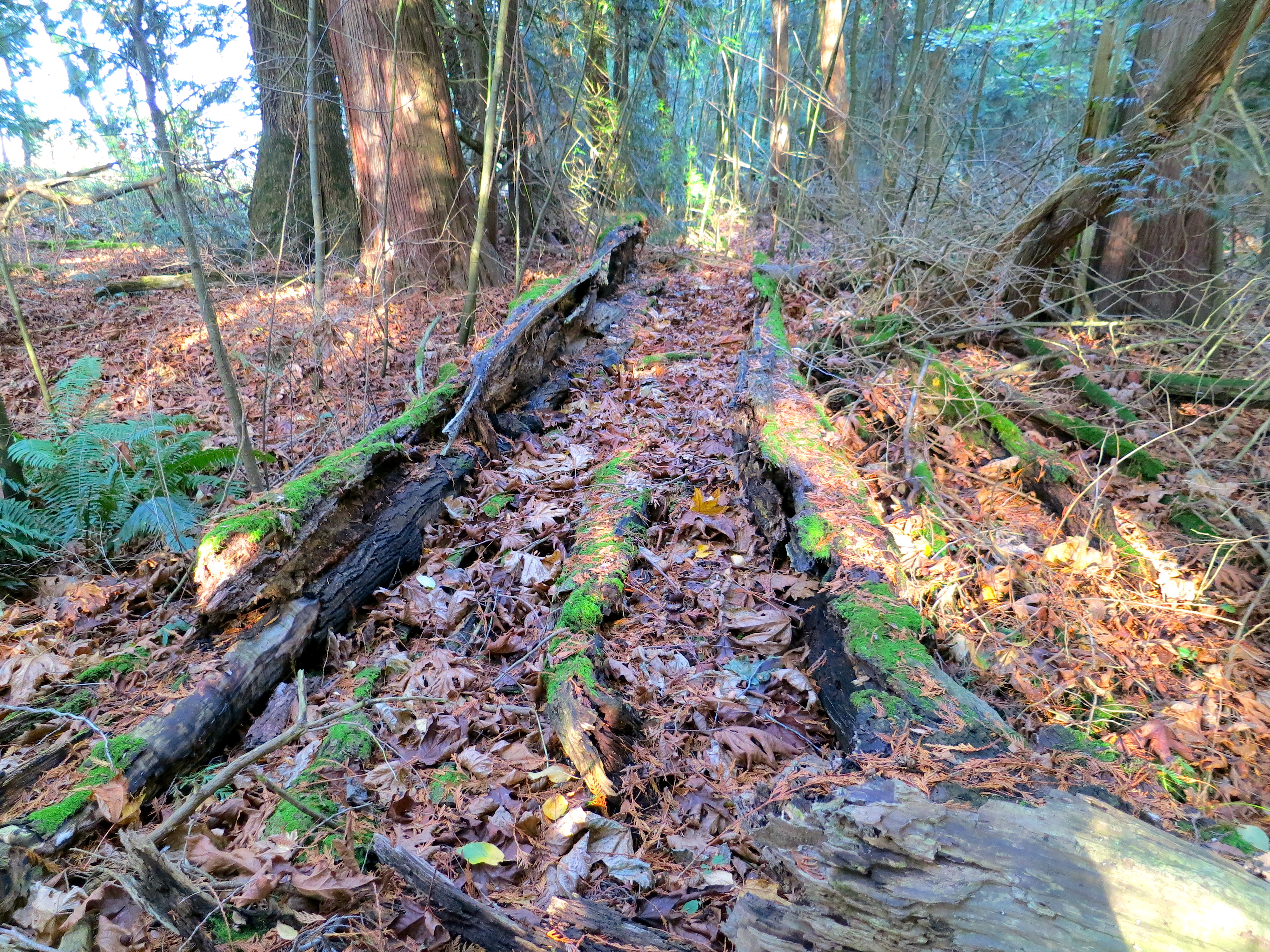
My grandmother’s house where my father was born had been torn down. She sold her property on Fidalgo Island near Anacortes, Washington to a lumber company – this was the house where all four of her babies were born, where she and my grandfather loved and fought and separated and finally loved again, and where we spent chaotic and memorable Thanksgiving and Christmas meals.  After Grandpa died, Grandma took on boarders, trying to afford to remain there on the homesteaded wooded acreage on Similk Bay, fronted by meadows where her Scottish Highland cattle grazed.   Her own health was suffering and she reached a point when it was no longer possible to make it work. A deal was struck with the lumber company and she moved to a small apartment for the few years left to her, remaining bruised by leaving her farm.

My father realized what her selling to a lumber company meant and it was a crushing thought. The old growth woods would soon be stumps on the rocky hill above the bay, opening a view to Mt. Baker to the east, to the San Juan Islands to the north, and presenting an opportunity for development into a subdivision. He woke my brother and me early one Saturday in May and told us we were driving the 120 miles to Anacortes.  He was on a mission.

As a boy growing up on that land, he had wandered the woods, explored the hill, and helped his dad farm the rocky soil.  There was only one thing he felt he needed from that farm and he had decided to take us with him, to trespass where he had been born and raised to bring home a most prized treasure–his beloved lady slippers from the woods.

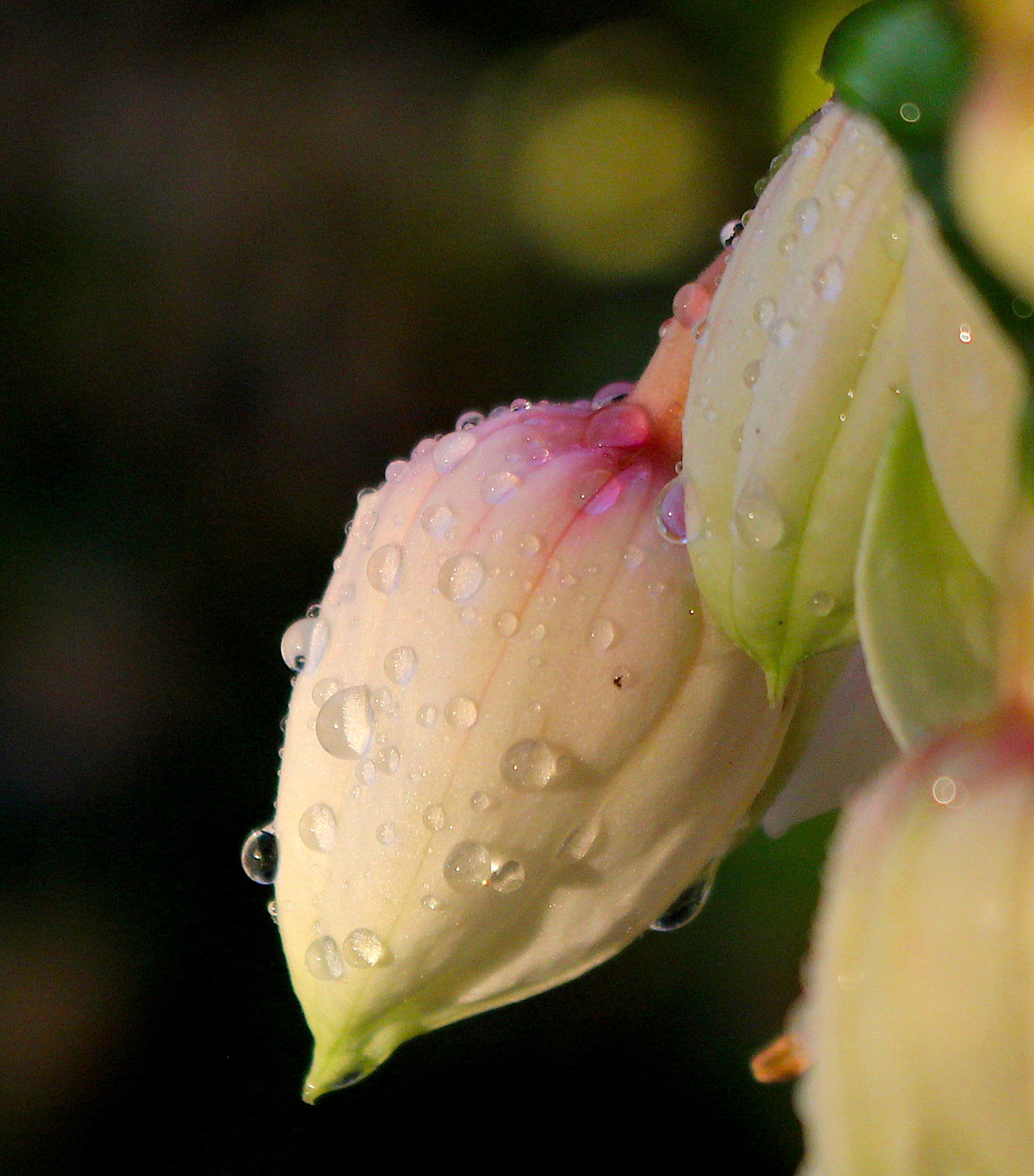
These dainty flowers enjoy a spring display known for its brevity–a week or two at the most–and they tend to bloom in small little clusters in the leafy duff mulch of the deep woods, preferring only a little indirect sunlight part of the day.  They are not easy to find unless you know where to look. 

My father remembered exactly where to look.

We hauled buckets up the hill along with spades, looking as if we were about to dig for clams at the ocean.  Dad led us up a trail into the thickening foliage, until we had to bushwhack our way into the taller trees where the ground was less brush and more hospitable ground cover.  He would stop occasionally to get his bearings as things were overgrown.   We reached a small clearing and he knew we were near.  He went straight to a copse of fir trees standing guard over a garden of lady slippers.

There were almost thirty of them blooming, scattered about in an area the size of my small bedroom.  Each orchid-like pink and lavender blossom had a straight backed stem that held it with sturdy confidence.  To me, they looked like they could be little shoes for fairies who may have hung them up while they danced about barefoot.    To my father, they represented the last redeeming vestiges of his often traumatic childhood, and were about to be trammeled by bulldozers.  We set to work gently digging them out of their soft bedding, carefully keeping their bulb-like corms from losing a protective covering of soil and leafy mulch.  Carrying them in the buckets back to the car, we felt some vindication that even if the trees were to be lost to the saws, these precious flowers would survive.

When we got home, Dad set to work creating a spot where he felt they could thrive in our own woods.  He found a place with the ideal amount of shade and light, with the protection of towering trees and the right depth of undisturbed leaf mulch.  We carefully placed the lady slippers in their new home, scattered in a pattern similar to how we found them.  Then Dad built a four foot split rail fence in an octagon around them, as a protection from our cattle and a horse who wandered the woods, and as a way to demarcate that something special was contained inside.

The next spring only six lady slippers bloomed from the original thirty.  Dad was disappointed but hoped another year might bring a resurgence as the flowers established themselves in their new home.  The following year there were only three.  A decade later, my father himself had left farm and family, not looking back.

Sometime after the divorce, when my mother had to sell the farm, I visited our lady slipper sanctuary in the woods for the last time in the middle of May, seeking what I hoped might still be there, but I knew was no longer.  The split rail fence still stood, guarding nothing but old memories.  No lady slippers bloomed. There was not a trace they had ever been there.  They had simply given up and disappeared.

The new owners of the farm surely puzzled over the significance of the small fenced-in area in the middle of our woods.  They probably thought it surrounded a graveyard of some sort.

And they would be right – it did.
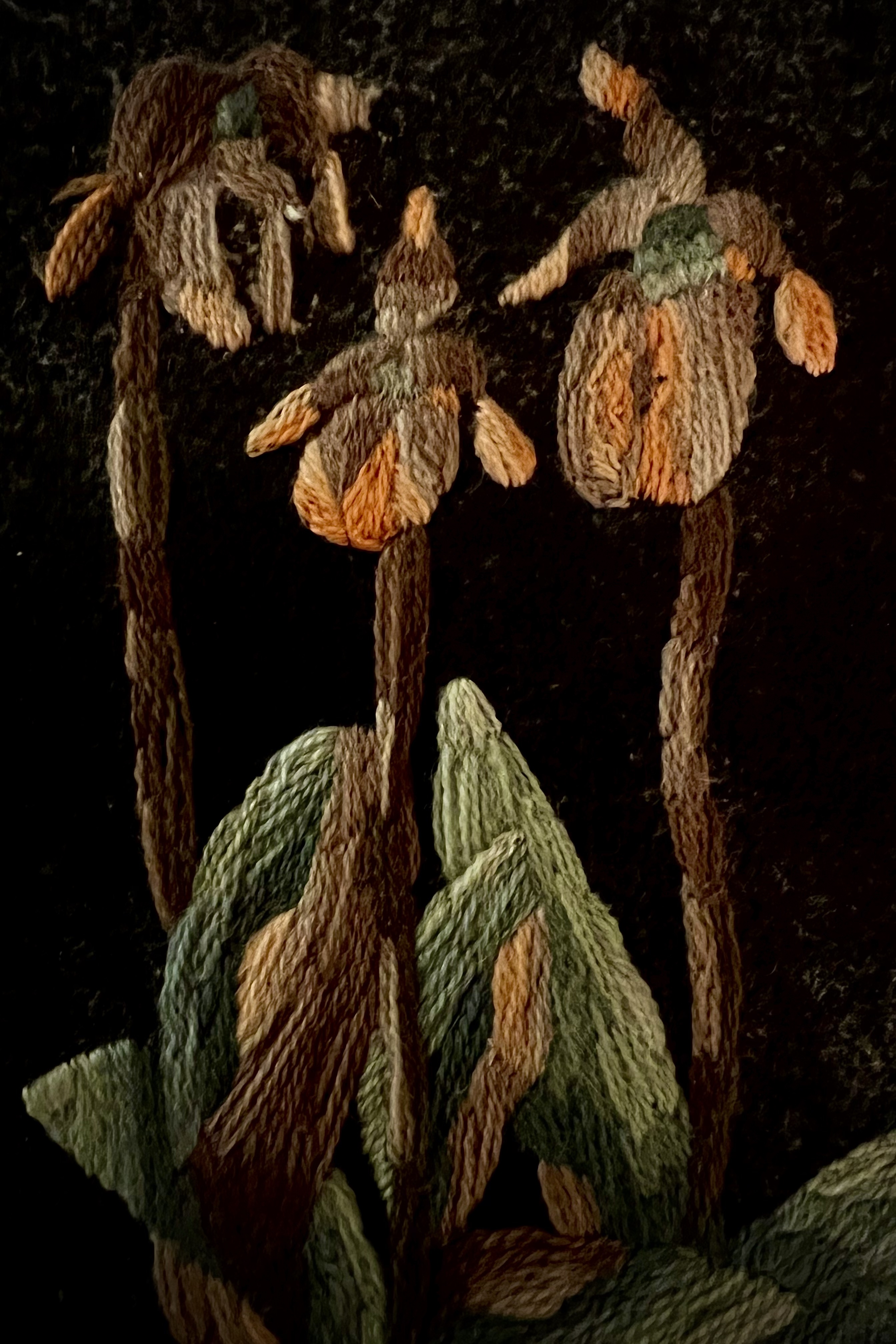
An embroidery I made for my father after he replanted the lady slippers — on the back I wrote “The miracle of creation recurs each spring in the delicate beauty of the lady slipper – may we ourselves be recreated as well…”

Once more, once more into the sunny fields
Oh, let me stray!
And drink the joy that young existence yields
On a bright, cloudless day.
Once more let me behold the summer sky,
With its blue eyes,
And join the wild wind’s voice of melody,
As far and free it flies.
Once more, once more, oh let me stand and hear
The gushing spring,
As its bright drops fall starlike, fast and clear,
And in the sunshine sing.
~Frances Kemble “A Farewell”

One-Time
Monthly
Yearly

Make a one-time or recurring donation to support Barnstorming

Make a monthly donation

Make a yearly donation

Choose an amount

¤5.00
¤10.00
¤20.00
¤5.00
¤15.00
¤100.00
¤5.00
¤15.00
¤100.00

Or enter a custom amount

¤

Your contribution is deeply appreciated.

Your contribution is appreciated.

Your contribution is appreciated.

DonateDonate monthlyDonate yearly
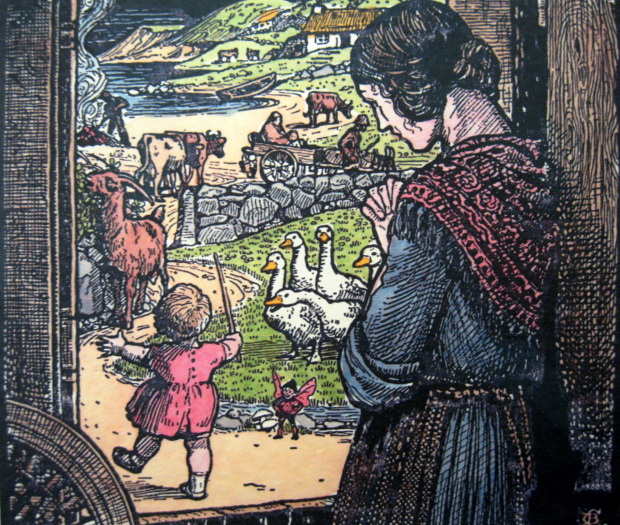
In His Keeping

God keep my jewel this day from danger;
From tinker and pooka and bad-hearted stranger.
From harm of the water, from hurt of the fire.
From the horns of the cows going home to the byre.
From the sight of the fairies that maybe might change her.
From teasing the ass when he’s tied to the manger.
From stones that would bruise her, from thorns of the briar.
From evil red berries that wake her desire.
From hunting the gander and vexing the goat.
From the depths o’ sea water by Danny’s old boat.
From cut and from tumble, from sickness and weeping;
May God have my jewel this day in his keeping.
~Winifred Lett (1882-1973) Prayer for a Child

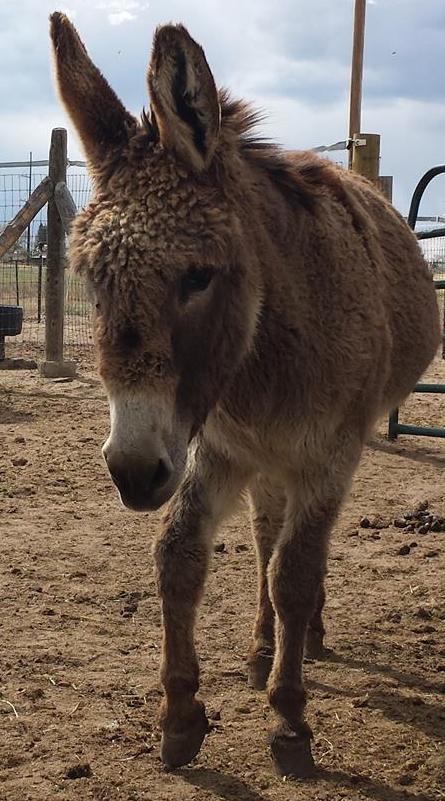
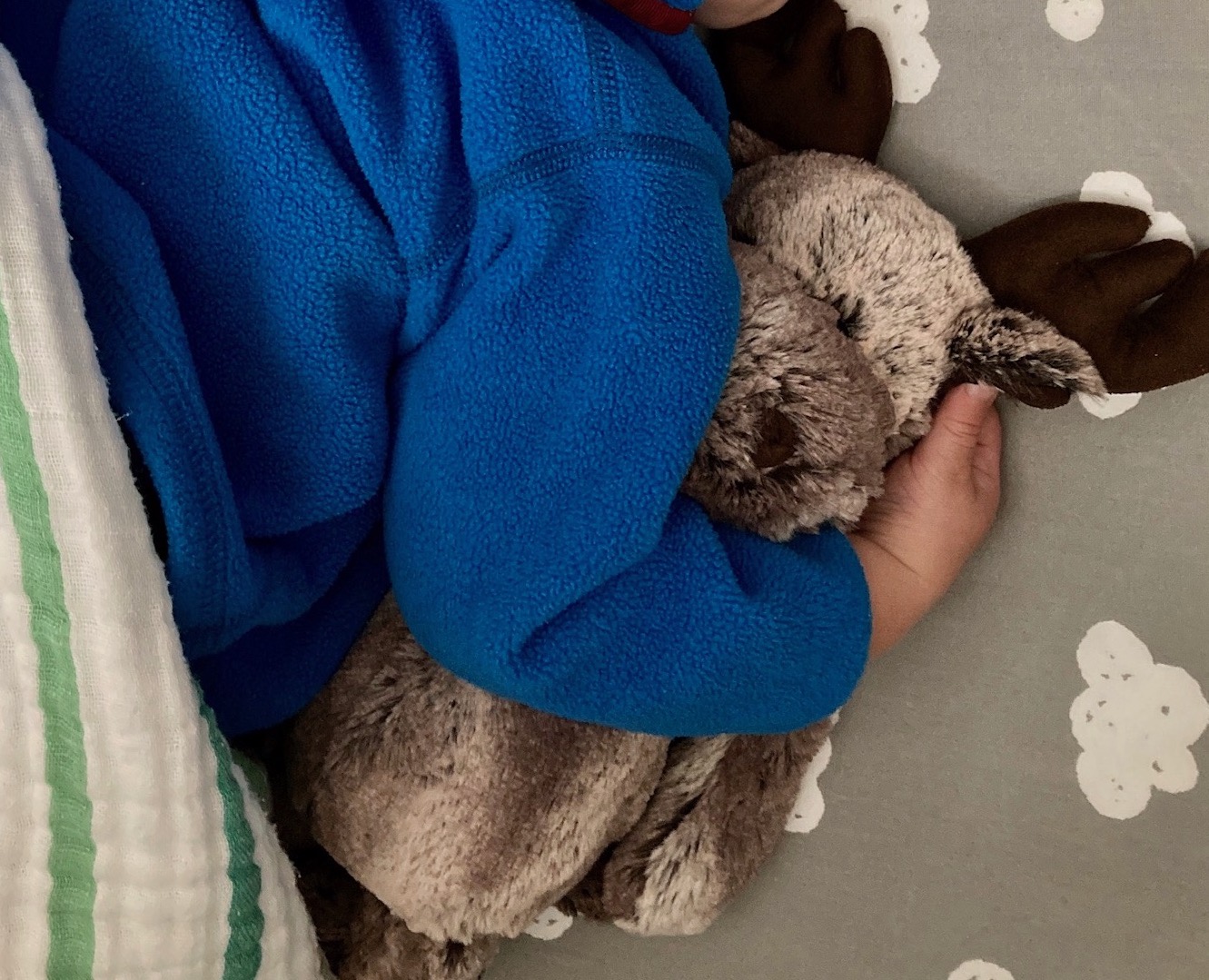
photo by Anna Blake

This prayer has hung in our home for almost three decades, purchased when I was pregnant with our first child.  When I first saw it with its drawing of the praying mother watching her toddler leave the safety of the home to explore the wide world, I knew it addressed most of my worries as a new mother, in language that helped me smile at my often irrational fears.  I would glance at it dozens of time a day, and it would remind me of God’s care for our children through every scary thing, real or imagined.

And I continue to pray for our grown children, their spouses, and now for four precious grandchildren who live too far away from us. I do this because I can’t not do it, and because I’m helpless without the care and compassion of our sovereign God.

May I be changed by my prayers.


I pray because I can’t help myself. I pray because I’m helpless. I pray because the need flows out of me all the time, waking and sleeping. It doesn’t change God. It changes me.
~C.S. Lewis

Sleep child upon my bosom,
It is cosy and warm;
Mother’s arms are tight around you,
A mother’s love is in my breast;
Nothing shall disturb your slumber,
Nobody will do you harm;
Sleep in peace, dear child,
Sleep quietly on your mother’s breast.

Sleep peacefully tonight, sleep;
Gently sleep, my lovely;
Why are you now smiling,
Smiling gently in your sleep?
Are angels above smiling on you,
As you smile cheerfully,
Smiling back and sleeping,
Sleeping quietly on my breast?

Do not fear, it is nothing but a leaf
Beating, beating on the door;
Do not fear, only a small wave
Murmurs, murmurs on the seashore;
Sleep child, there’s nothing here
Nothing to give you fright;
Smile quietly in my bosom,
On the blessed angels yonder.

Order here for this book of beautiful words and photography:

My Secret Place

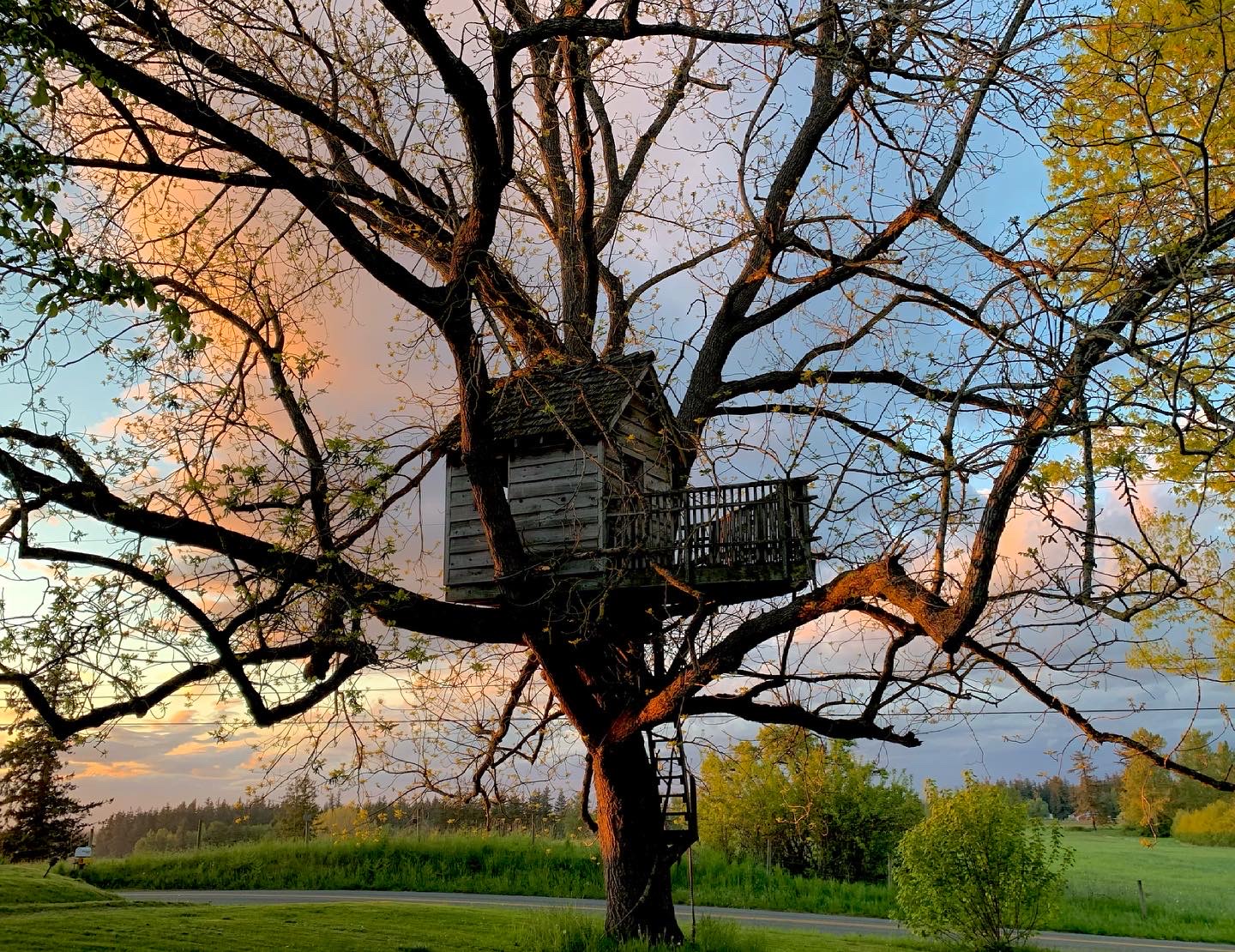
It’s in the perilous boughs of the tree
out of blue sky    the wind
sings loudest surrounding me.

And solitude,   a wild solitude
’s reveald,  fearfully,  high   I’d climb
into the shaking uncertainties,

part out of longing,  part   daring my self,
part to see that
widening of the world, part

to find my own, my secret
hiding sense and place, where from afar
all voices and scenes come back

—the barking of a dog, autumnal burnings,
far calls,  close calls—the boy I was
calls out to me
here the man where I am “Look!

I’ve been where you

most fear to be.”
~Robert Duncan “Childhood’s Retreat”

Behind the house in a field
there’s a metal box I buried

full of childhood treasure, a map
of my secret place, a few lead pennies
from 1943.
The rest I’ve forgotten,
forgotten even the exact spot
I covered with moss and loam.

 
Now I’m back and twenty years
have made so little difference
I suspect they never happened,
this face in the mirror
aged with pencil and putty.
I suspect even
the box has moved as a mole would move
to a new place long ago.
~Dan Gerber “The Cache” from Particles

I came upon an oak where once when I was twelve
I had climbed up and screamed for Skip to get me down.
It was a thousand miles to earth. I shut my eyes and yelled.
My brother, richly compelled to mirth, gave shouts of laughter
And scaled up to rescue me.
“What were you doing there?” he said.
I did not tell. Rather drop me dead.
But I was there to place a note within a squirrel nest
On which I’d written some old secret thing now long forgot.

{Now} I lay upon the limb a long while, thinking.
I drank in all the leaves and clouds and weathers
Going by as mindless
As the days.
What, what, what if? I thought. But no. Some forty years beyond!

I brought forth:
The note.

I opened it. For now I had to know.
I opened it, and wept. I clung then to the tree
And let the tears flow out and down my chin.
Dear boy, strange child, who must have known the years
And reckoned time and smelled sweet death from flowers
In the far churchyard.
It was a message to the future, to myself.
Knowing one day I must arrive, come, seek, return.
From the young one to the old. From the me that was small
And fresh to the me that was large and no longer new.
What did it say that made me weep?

I remember you.
I remember you.
~Ray Bradbury from “Remembrance”

As a child, I left secret notes to my future self,
in hidden crevices of old barns,
and attic lofts up rickety stairs,
and yes, even in trees,
but never went back to retrieve them
except in my rare dreams of growing up
on Friendly Grove Road.

Back then my ten year old heart
tried to imagine me sixty some years hence
(counting out how old I would be in 2020 something)
as I squirreled away in some secret place.

What fears and joys would pass through like pumping blood,
what wounds would I bear and cause to bleed,
what smiles and tears would trace my face?

I have not forgotten who I was then.

No, I have never forgotten that girl who kept secrets,
who dreamed of a someday gray-haired grandma
who now looks back to my secret places,
and remembers being remembered.

A book of Barnstorming photos and poems by Lois Edstrom is available for order here:

Like Time’s Insidious Wrinkle

Like Time’s insidious wrinkle
On a beloved Face
We clutch the Grace the tighter
Though we resent the crease
~Emily Dickinson

People are more than just the way they look.
~Madeleine L’Engle from A Wrinkle in Time

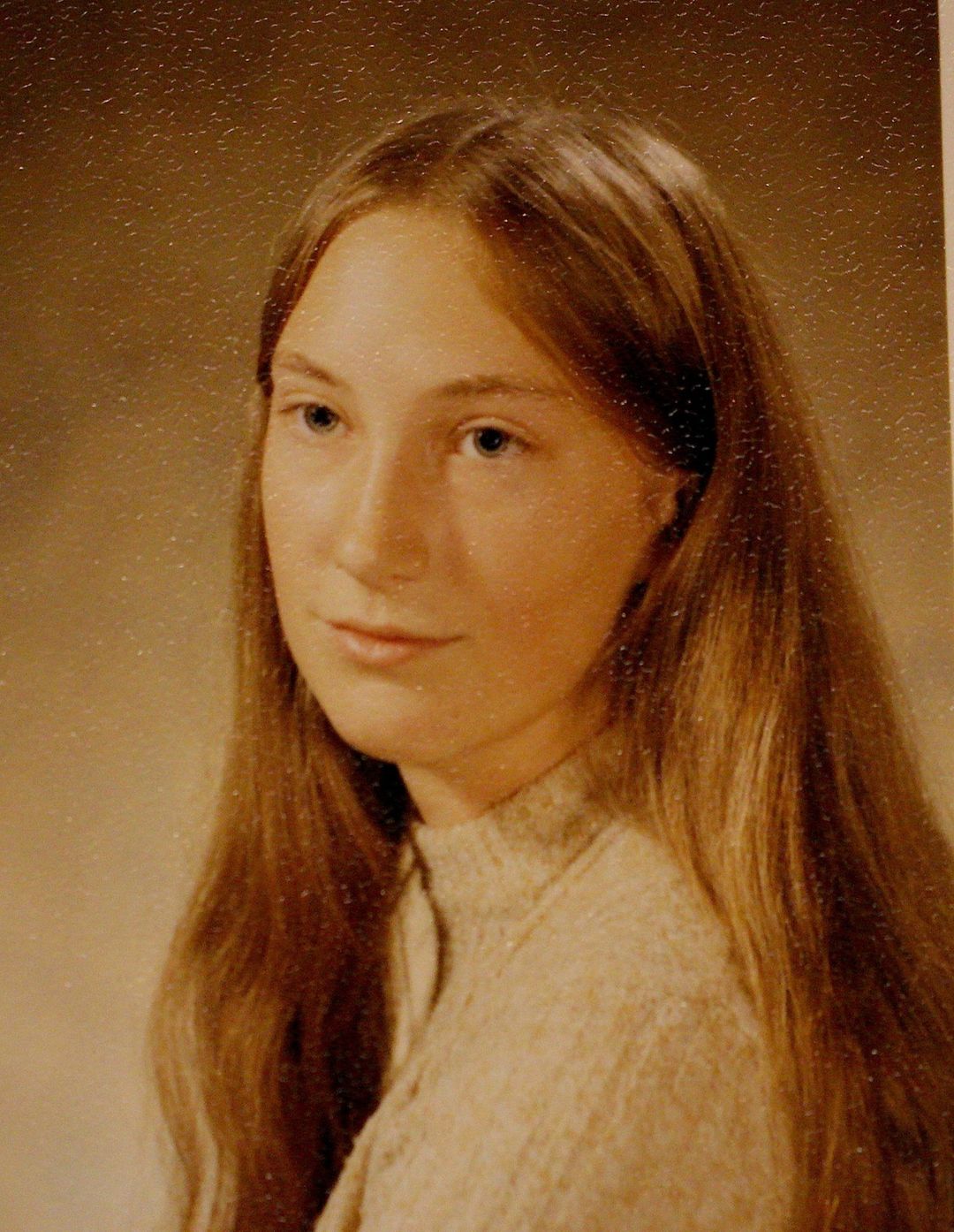
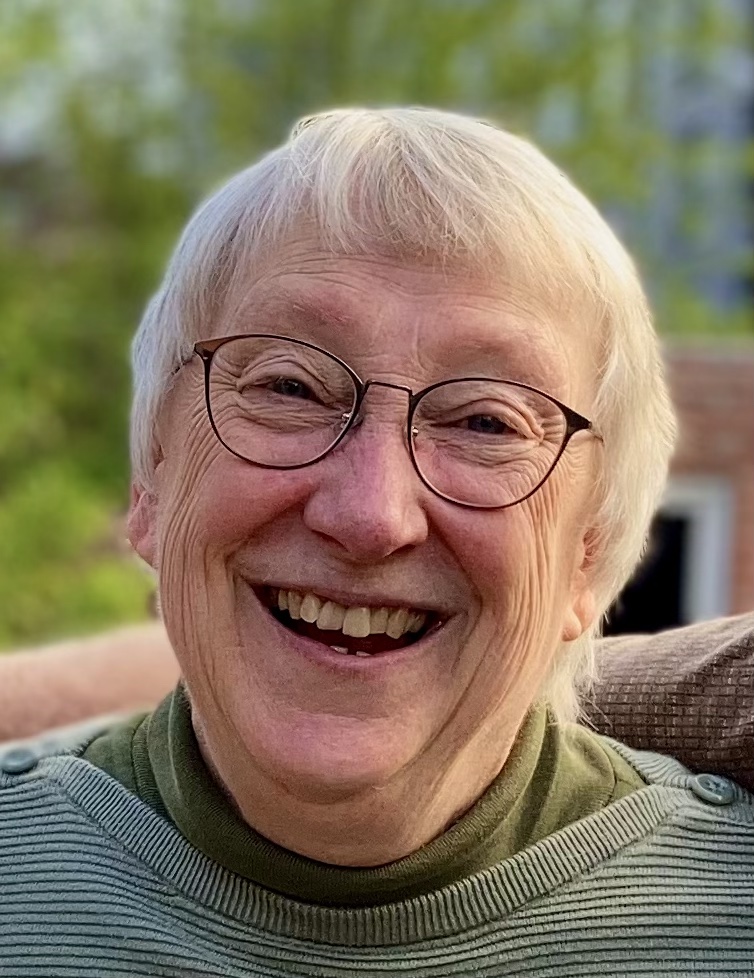
1971 – not a wrinkle in sight
2021

Just a glance in the mirror tells me all I need to know:

the creases I see remind me
each wrinkle shows my life in action,
so tangible, so telling, so mobile –
they multiply particularly when I smile and laugh
so I must do both more often.

I won’t hide them
nor tighten them away
or inject them smooth.

Instead I’ll grin at the wrinkle of time’s passing
knowing each line gained
is grace clutched tightly
in my otherwise loosening grasp.
A book from Barnstorming is available for order here:

The Forgiveness of Sleep

The children have gone to bed.
We are so tired we could fold ourselves neatly
behind our eyes and sleep mid-word, sleep standing
warm among the creatures in the barn, lean together
and sleep, forgetting each other completely in the velvet,
the forgiveness of that sleep.

Then the one small cry:
one strike of the match-head of sound:
one child’s voice:
and the hundred names of love are lit
as we rise and walk down the hall.

One hundred nights we wake like this,
wake out of our nowhere
to kneel by small beds in darkness.
One hundred flowers open in our hands,
a name for love written in each one.
~Annie Lighthart “The Hundred Names of Love”

In the lull of evening, your son nested in your arms
becomes heavier and with a sigh his body
sloughs off its weight like an anchor into deep sleep,
until his small breath is the only thing that exists.

And as you move the slow dance through the dim hall
to his bedroom and bow down to deliver his sleeping form,
arms parting, each muscle defining its arc and release—
you remember the feeling of childhood,

traveling beneath a full moon,
your mother’s unmistakable laugh, a field of wild grass,
windows open and the night rushing in
as headlights trace wands of light across your face—

there was a narrative you were braiding,
meanings you wanted to pluck from the air,
but the touch of a hand eased it from your brow
and with each stroke you waded further

into the certainty of knowing your sleeping form
would be ushered by good and true arms
into the calm ocean that is your bed.
 — Alexandra Lytton Regalado, “The T’ai Chi of Putting a Sleeping Child to Bed” author of Matria

Each of those countless nights of a child wakening,
each of the hundreds of hours of lulling them in the moonlit dark,
leading them back to the soft forgiveness of sleep.

I remember the moves of that hypnotic dance,
a head nestled snug into my neck,
their chest pressed into mine,
our hearts beating in synchrony
as if they were still inside.

Even when our sleep was spare and our rest was sparse,
those night times rocking in unison
were worth every waking moment, trusting
we’re in this together, no matter what,
no matter how long.

We’re in this together.

A new book from Barnstorming is available to order here:


Holding Hands


They disappear with friends
near age 11. We lose them
to baseball and tennis, garage
bands, slumber parties, stages
where they rehearse for the future,
ripen in a tangle of love knots.
With our artificial knees and hips
we move into the back seats
of their lives, obscure as dust
behind our wrinkles, and sigh
as we add the loss of them
to our growing list of the missing.

Sometimes they come back,
carting memories of sugar cookies
and sandy beaches, memories of how
we sided with them in their wars
with parents, sided with them
even as they slid out of our laps
into the arms of others.

Sometimes they come back
and hold onto our hands
as if they were the thin strings
of helium balloons
about to drift off.

~Olivia Stiffler “Grandchildren”, from Otherwise, We Are Safe

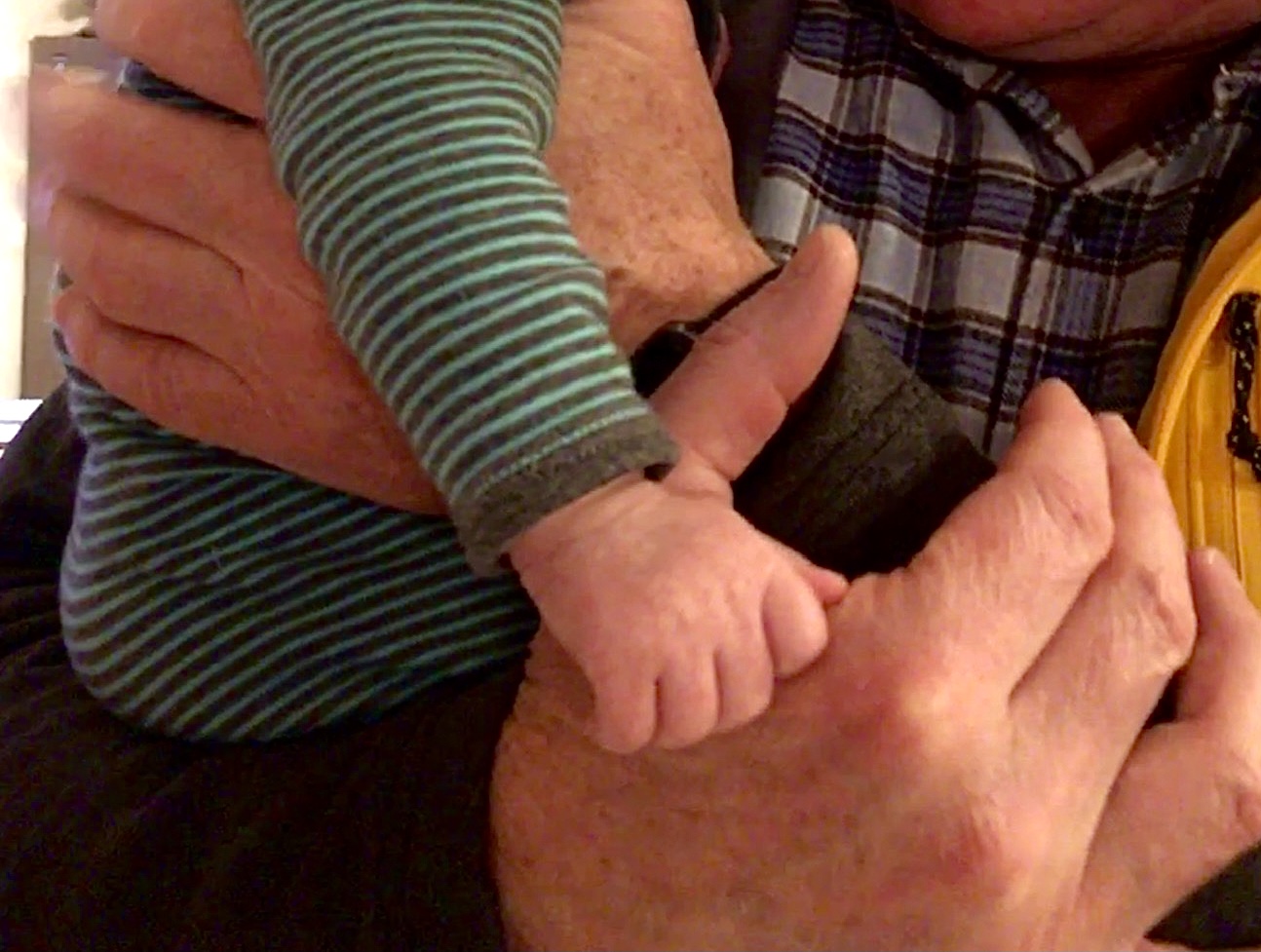
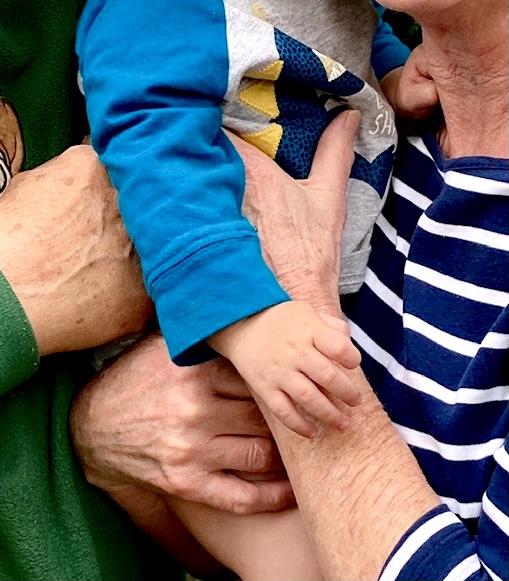
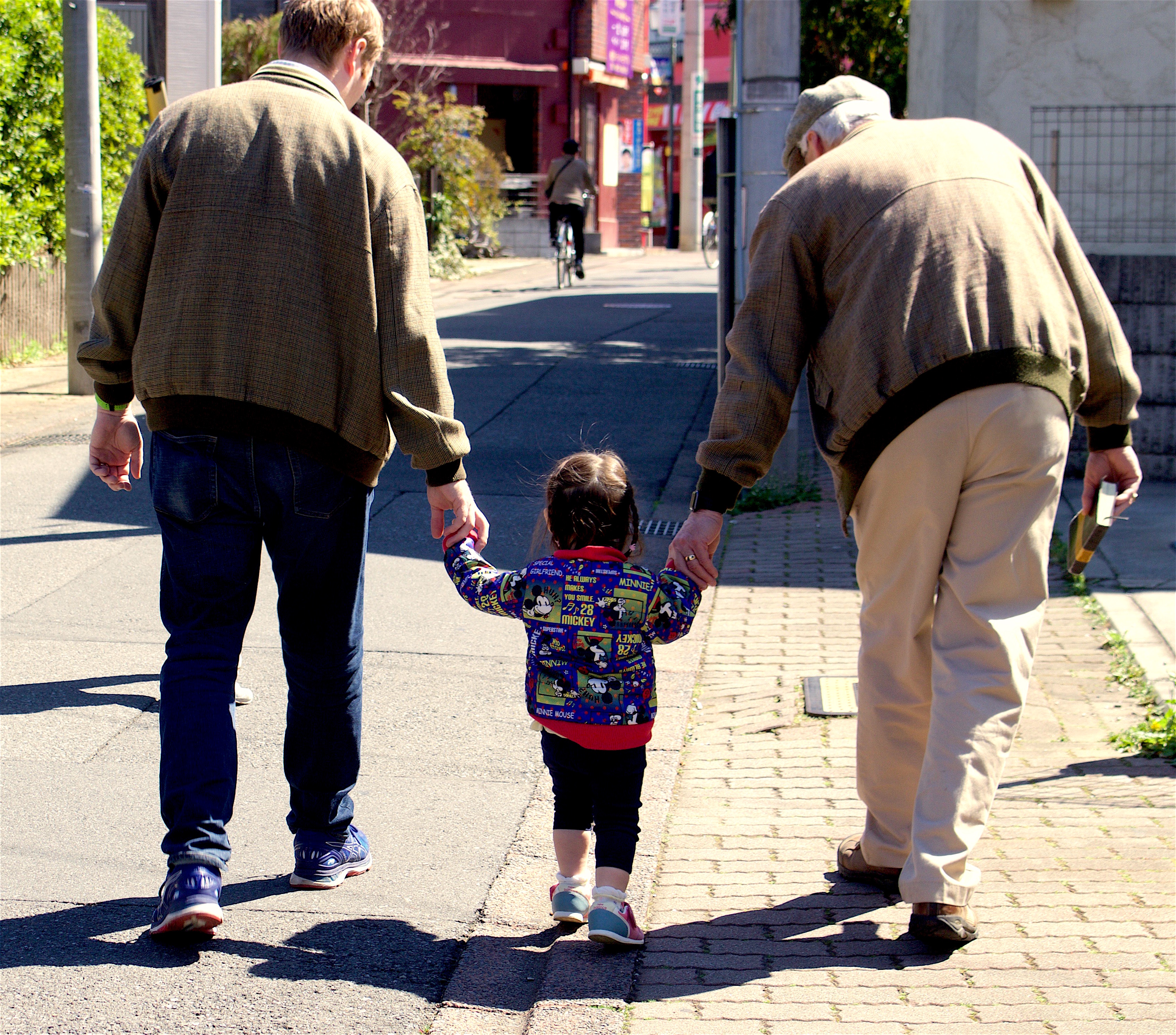
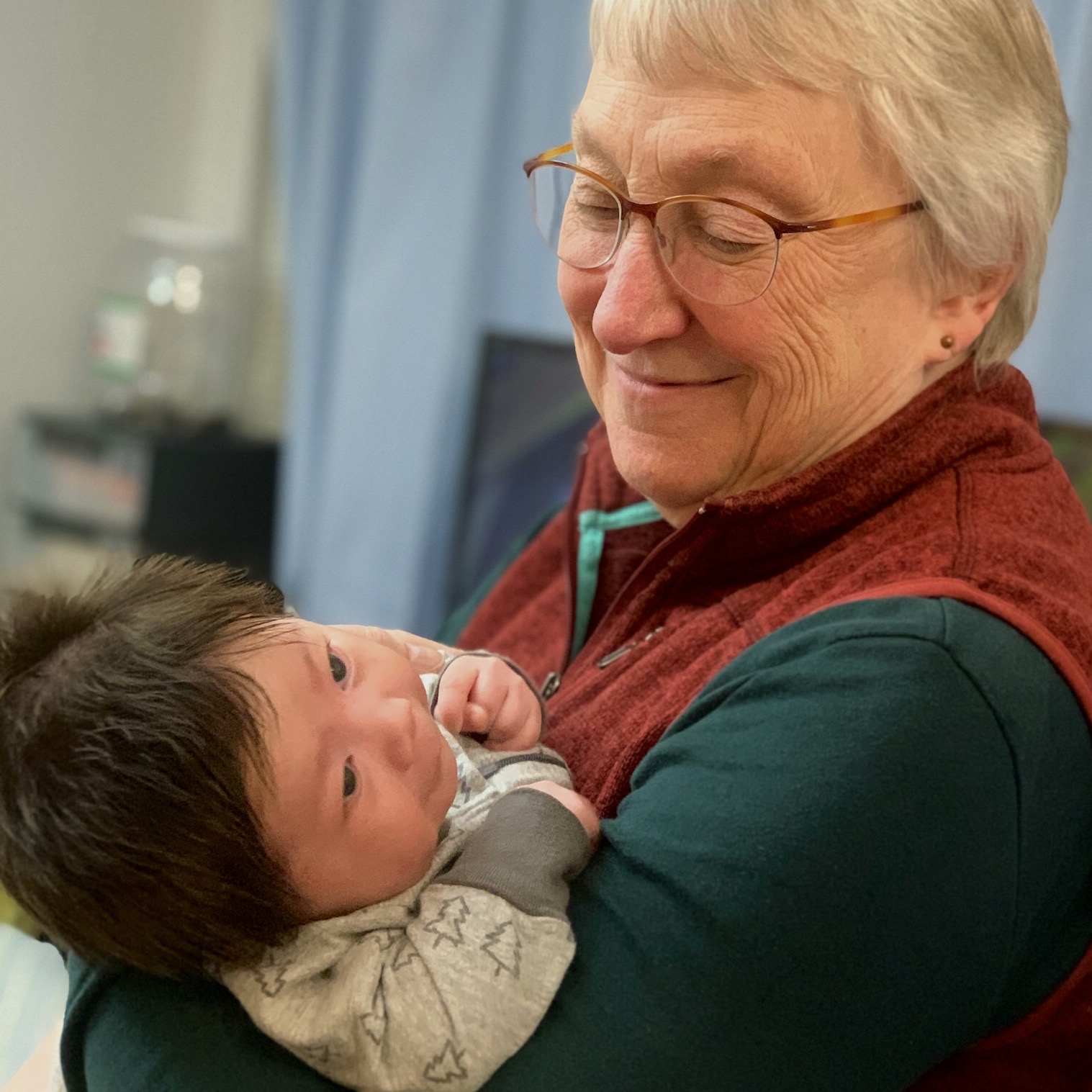
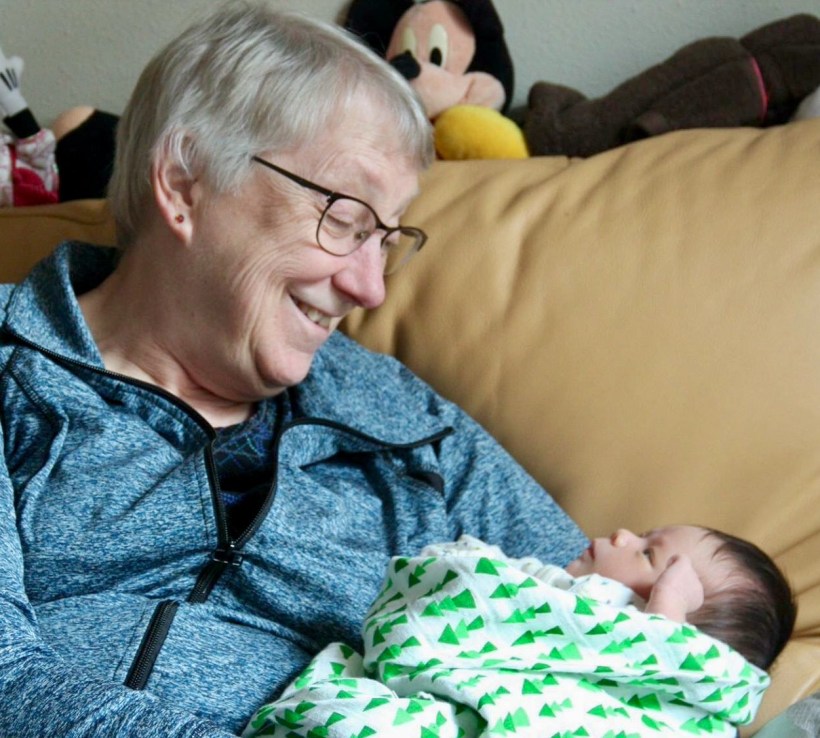
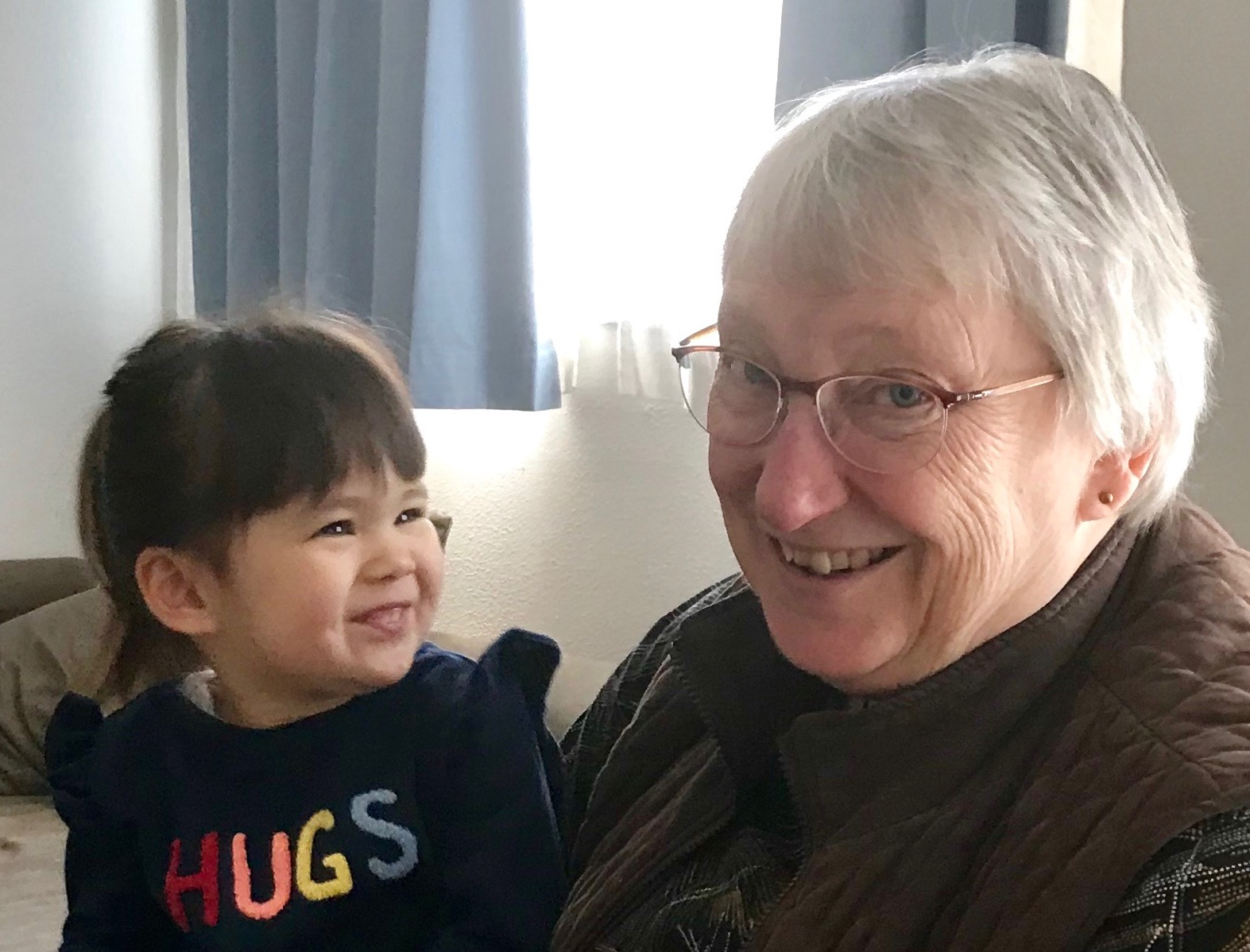
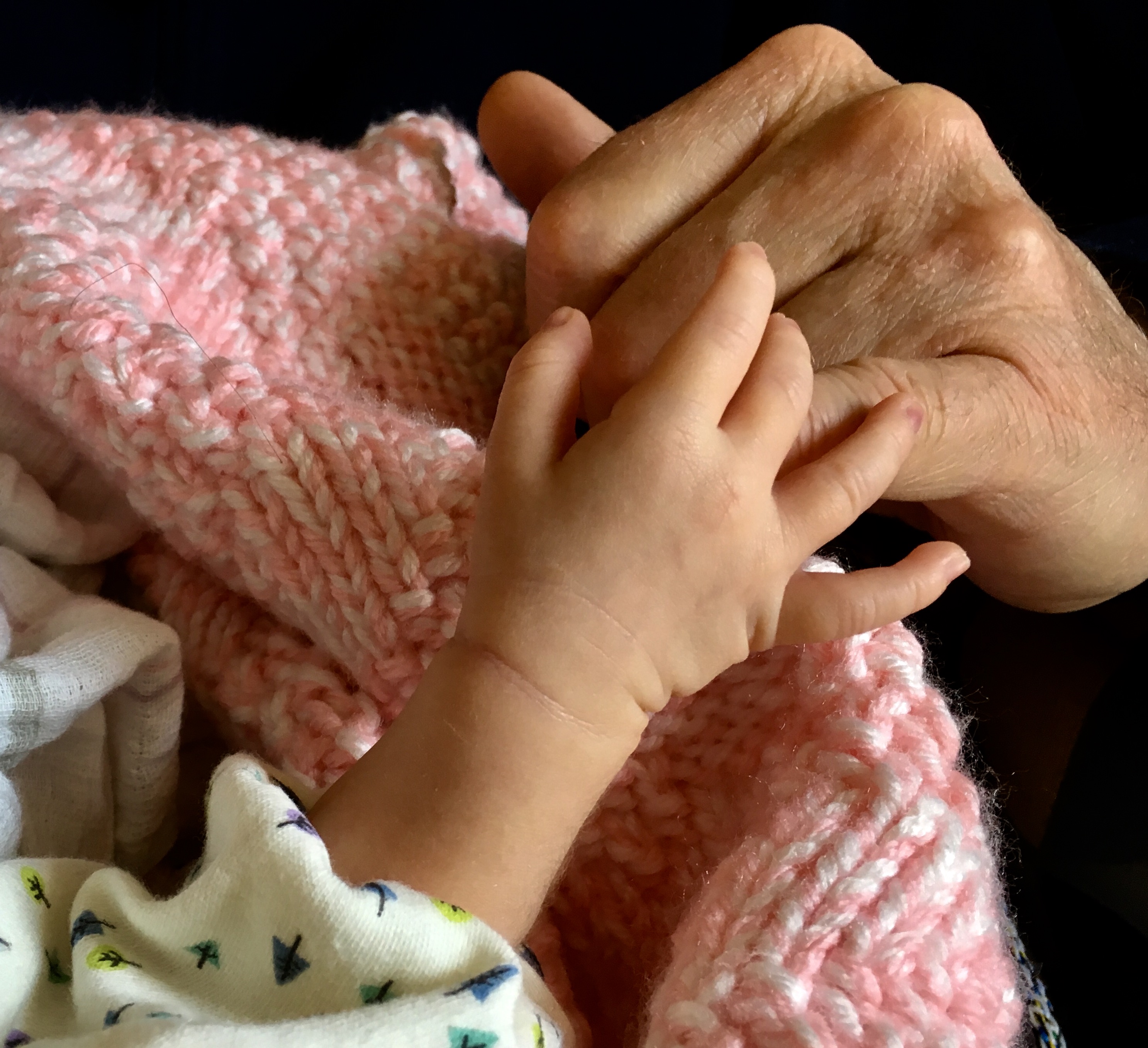
Spending a few precious days with a grandchild who lives far away just whets the appetite for wanting more time. These are such short years before they are off to their own lives, leaving their grandparents (and parents) behind.

So when they take my hand, my heart melts, knowing I hold on loosely, knowing I must, someday, somehow, let go.

And before I do, they will come back to hold my hand loosely, knowing they need to let me go.

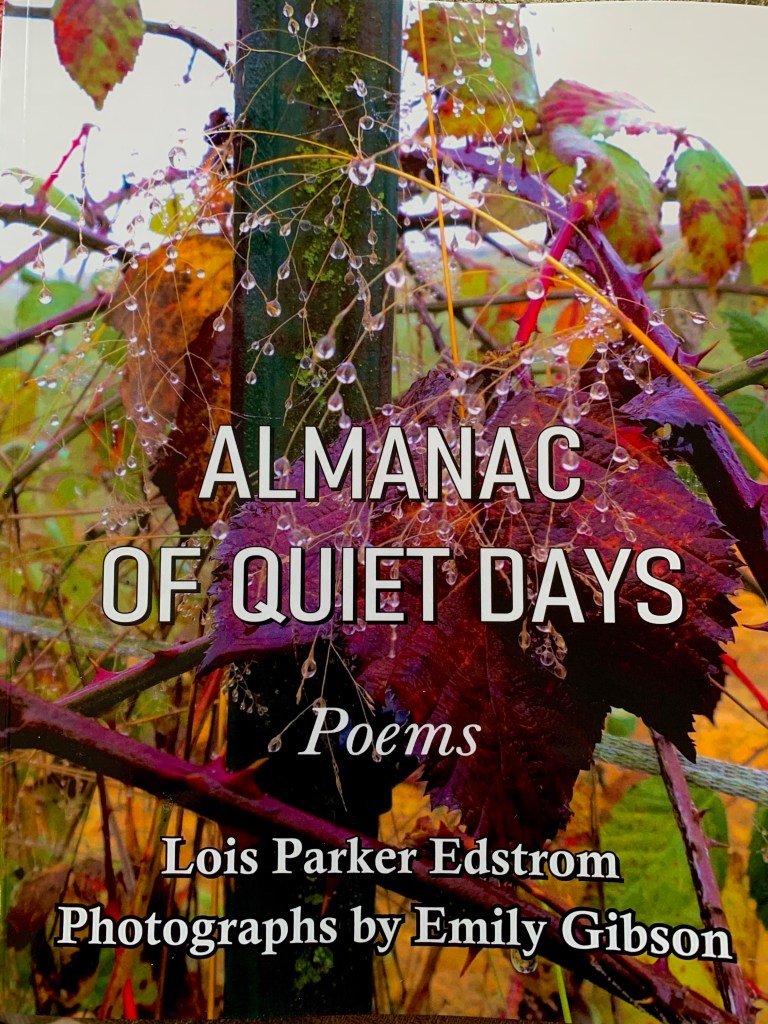
New book from Barnstorming – for more information go to https://barnstorming.blog/new-book-available-almanac-of-quiet-days/

Hollowed

The barn roof sags like an ancient mare’s back.
The field, overgrown, parts of it a marsh
where the pond spills over. No hay or sacks
of grain are stacked for the cold. In the harsh
winters of my youth, Mama, with an axe,
trudged tirelessly each day through deep snow,
balanced on the steep bank, swung down to crack
the ice so horses could drink. With each blow
I feared she would fall, but she never slipped.
Now Mama’s bent and withered, vacant gray
eyes fixed on something I can’t see. I dip
my head when she calls me Mom. What’s to say?
The time we have’s still too short to master
love, and then, the hollow that comes after.
~Kitty Carpenter “Farm Sonnet”

Vigil at my mother’s bedside

Lying still, your mouth gapes open as
I wonder if you breathe your last.
Your hair a white cloud
Your skin baby soft
No washing, digging, planting gardens
Or raising children
Anymore.
Hollowed.

Where do your dreams take you?
At times you wake in your childhood home of
Rolling wheat fields, boundless days of freedom.
Other naps take you to your student and teaching days
Grammar and drama, speech and essays.
Yesterday you were a young mother again
Juggling babies, farm and your wistful dreams.

Today you looked about your empty nest
Disguised as hospital bed,
Wondering aloud about
Children grown, flown.
You still control through worry
and tell me:
Travel safely
Get a good night’s sleep
Take time to eat
Call me when you get there

I dress you as you dressed me
I clean you as you cleaned me
I love you as you loved me
You try my patience as I tried yours.
I wonder if I have the strength to
Mother my mother
For as long as she needs.

When I tell you the truth
Your brow furrows as it used to do
When I disappointed you~
This cannot be
A bed in a room in a sterile place
Waiting for death
Waiting for heaven
Waiting

And I tell you:
Travel safely
Eat, please eat
Sleep well
Call me when you get there.

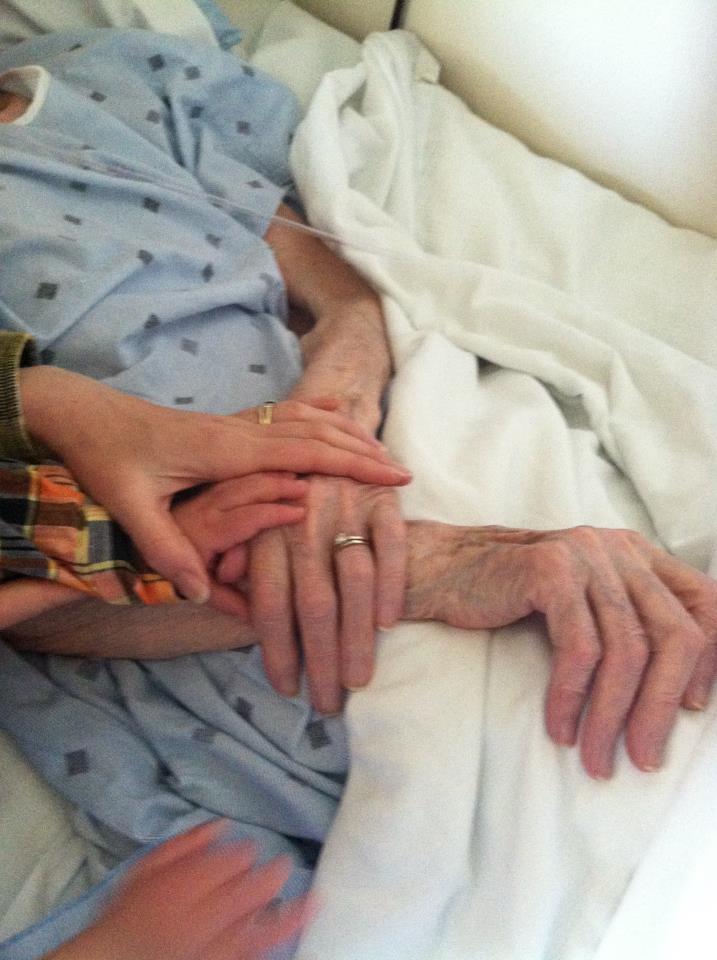
photo by Andrea Nipges

New book available to order from Barnstorming!

Take Her Hand

She wakes to gray.
No words to guide the way
toward son. His unfamiliar face seems kind
enough. She nods hello. Just yesterday
she knew his eyes, but now?

This morning’s mind
welcomes the past but not the day. She was
someone: woman who woke at 3:00 to sing
her restless son to sleep, his calm her cause
for celebration. Today the dawn brings

no clarity, yet still the stranger comes
and draws her curtains wide. She thinks outside
is where she left her life: daughters, a son
who meet sunrise without her. Look, the light

is brighter now. The kind man helps her stand.
To see the morning sun, she takes his hand.
~Marjorie Maddox “Alzheimer Aubade”

Lying still, your mouth gapes open as
I wonder if you breathe your last.
Your hair a white cloud
Your skin baby soft
No washing, digging, planting gardens
Or raising children
Anymore.

Where do your dreams take you?
At times you wake in your childhood home of
Rolling wheat fields, boundless days of freedom.
Other naps take you to your student and teaching days
Grammar and drama, speech and essays.
Yesterday you were a young mother again
Juggling babies, farm and your wistful dreams.

Today you looked about your empty nest
Disguised as hospital bed,
Wondering aloud about
Children grown, flown.
You still control through worry
and tell me:
Travel safely
Get a good night’s sleep
Take time to eat
Call me when you get there

I dress you as you dressed me
I clean you as you cleaned me
I love you as you loved me
You try my patience as I tried yours.
I wonder if I have the strength to
Mother my mother
For as long as she needs.

When I tell you the truth
Your brow furrows as it used to do
When I disappointed you~
This cannot be
A bed in a room in a sterile place
Waiting for death
Waiting for heaven
Waiting

And I tell you:
Travel safely
Eat, please eat
Sleep well
Call me when you get there.

Always Falling

I’ve fallen many times:
the usual stumbles
over secret schoolgirl crushes,
head-over-heels for teen heartthrobs.
I loved them all.

I’ve fallen so many times:
tripped down the aisle
over husband, daughter, sons.
Madly and deeply,
I love them all.

I’ve fallen again and again:
new friends, a mentor, a muse,
numerous books, a few authors,
four dear pups and a stranger, or two.
I loved them all.

I’ve fallen farther,
fallen faster,

now captivated, I tumble—
enthralled with my grandchildren.
I love them each, ever and all.
~Jane Attanucci, “Falling” from First Mud

photo by Nate Gibson

Oh, yes, I have fallen, falling over and over again in my sixty-five years.
I’ve lived life loving that which is large and small, long-lasting and short-lived, sometimes bearing the scars that can result.

When I fall, I fall hard: puppies, ponies, peonies – passions that infect my every day thoughts and my night-time dreams.

I have fallen literally: in too much of a rush to get to the church sanctuary on a rainy New Year’s Eve to play piano for worship, catching my toe and tumbling forward into cement steps, breaking open my forehead and requiring a few dozen stitches to pull me back together. Tripping over my feet in the barnyard while pulling a wheelbarrow load of hay, I landed hard, dislocating and fracturing my elbow.

I have fallen hard for both the frivolous and the serious. Once I’ve fallen, I can’t stop myself, whether it is collecting every poem written by a poet, scouting every painting by an artist, listening to every song by a composer, watching every episode in a TV series, reading (more than once) every book by an author (impatiently awaiting Diana Gabaldon’s ninth book now).

Most emphatically I fall hard in love with others – now over forty years with an incredible man who loves me back but thankfully manages to stay on his feet. I am devoted to loving, though from much too far away, our three children and their life partners.

But how would I know? How could I fathom? How is it possible?
I’ve fallen farther and faster, head over heels, scarred forehead to stiff elbow, in love with each grandchild as they have made their appearance in the world.

There is nothing like it, the feeling of knowing they will carry into their own lives the love I feel for them. Such love is neither frivolous or wasted passion: it expands exponentially long after I’ve fallen onto the ground to stay.

I love them all, each and every one. May they always know.

God’s Gardener

fuschiadrops


fuschia1


3rfarm8


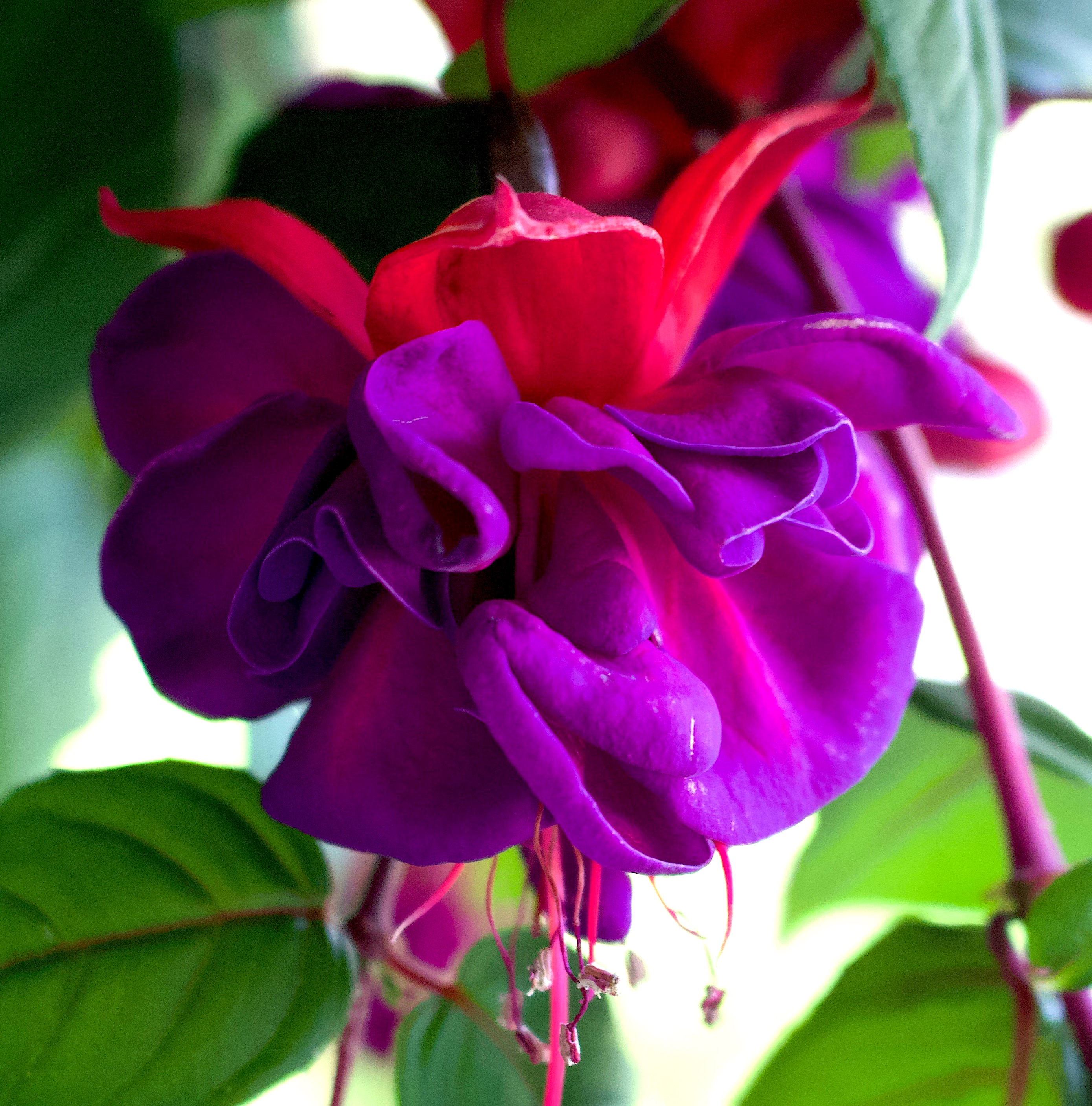
Grandma Kittie grew flowers–lots of them.  Her garden stretched along both sides of the sidewalk to her old two story farm house, in window boxes and beds around the perimeter, in little islands scattered about the yard anchored by a tree, or a piece of driftwood, a gold fish pond or a large rock.  Wisteria hung like a thick curtain of purple braids from the roof of her chicken coop, and her greenhouse, far bigger than her home, smelled moist and mossy with hanging fuschia baskets.  For her it was full time joy disguised as a job: she sold seedlings, and ready-to-display baskets, and fresh flower arrangements.  She often said she was sure heaven would be full of flowers needing tending, and she was just practicing for the day when she could make herself useful as a gardener for God.

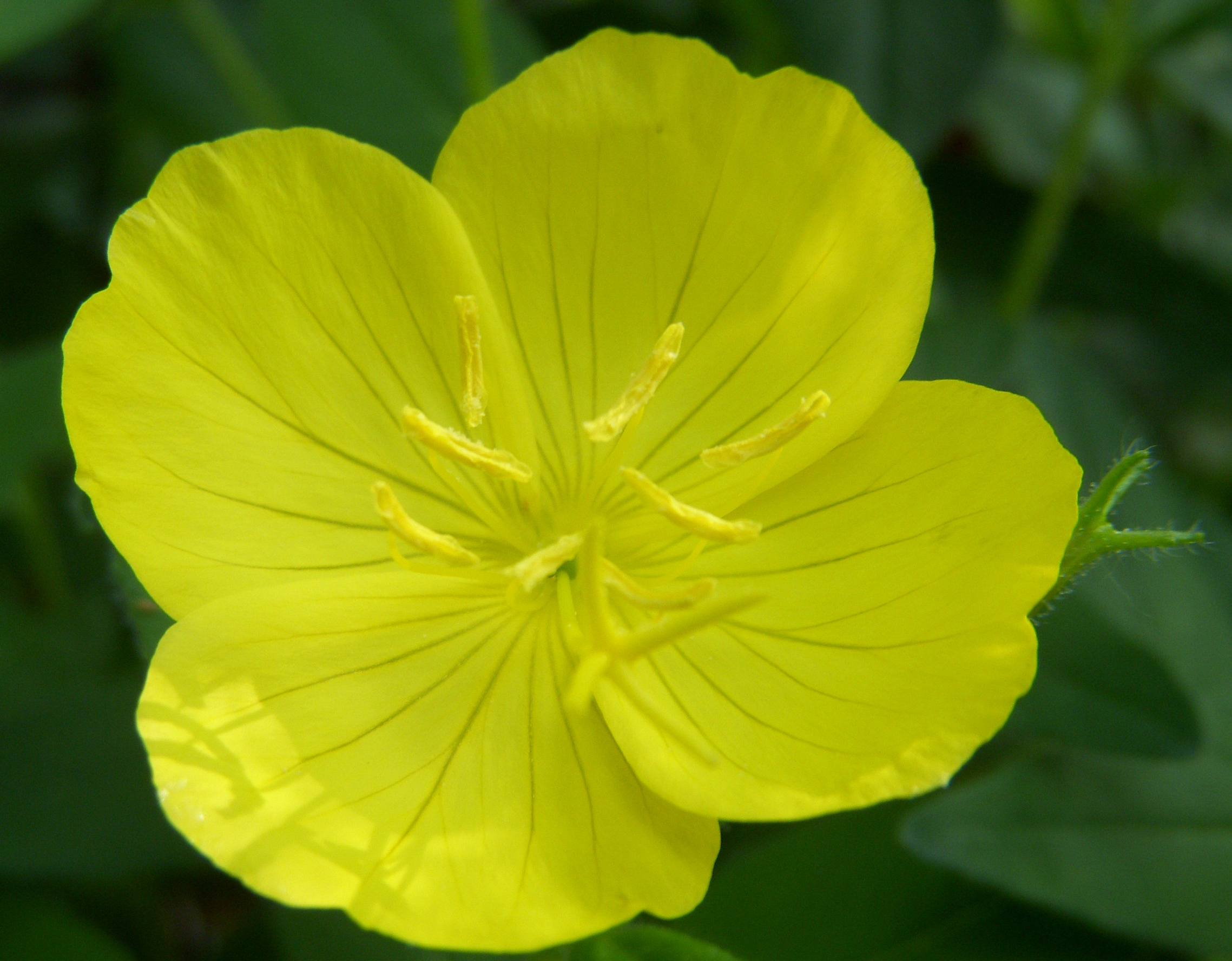
Visiting Grandma was often an overnight stay, and summer evenings in her yard were heavy with wafting flower perfume.  One of her favorite flowers–indeed it was so hardy and independent it really could be considered a weed–was the evening primrose.  It was one of a few night blooming plants meant to attract pollinating moths.   Its tall stems were adorned by lance shaped leaves, with multiple buds and blooms per stem.  Each evening, and it was possible to set one’s watch by its punctuality, only one green wrapped bud per stem would open, revealing a bright yellow blossom with four delicate veined petals, a rosette of stamens and a cross-shaped stigma in the center, rising far above the blossom.  The yellow was so vivid and lively, it seemed almost like a drop of sun had been left on earth to light the night.  By morning, the bloom would begin to wither and wilt under the real sunlight, somehow overcome with the brightness, and would blush a pinkish orange as it folded upon itself, ready to die and drop from the plant in only a day or two, leaving a bulging seed pod behind.

I would settle down on the damp lawn at twilight, usually right before dusk fell, to watch the choreography of opening of blossoms on stem after stem of evening primrose.  Whatever the trigger was for the process of unfolding, there would be a sudden loosening of the protective green calyces, in an almost audible release.  Then over the course of about a minute, the overlapping yellow petals would unfurl, slowly, gently, purposefully, revealing their pollen treasure trove inside.   It was like watching time lapse cinematography, only this was an accelerated, real time flourish of beauty, happening right before my eyes.  I always felt privileged to witness each unveiling as Grandma liked to remind me that few flowers ever allowed us to behold their birthing process.  The evening primrose was not at all shy about sharing itself and it would enhance the show with a sweet lingering fragrance.

Grandma knew how much I enjoyed the evening primrose display, so she saved seeds from the seed pods for me, and helped me plant them at our house during one of her spring time visits.   I remember scattering the seeds with her in a specially chosen spot, in anticipation of the “drops of sun” that would grace our yard come summertime.  However, Grandma was more tired than usual on this particular visit, taking naps and not as eager to go for walks or eat the special meals cooked in honor of her visit.  Her usually resonant laughing brown eyes appeared dull, almost muddy.

The day she was to return home she came into the kitchen at breakfast time, wearily setting down her packed bags.  She gave me a hug and I looked at her, suddenly understanding what I had feared to believe.  Something was dreadfully wrong.  Grandma’s eyes were turning yellow.

Instead of returning home that day, she went to the hospital.  Within a day, she had surgery and within two days, was told she had terminal pancreatic cancer.  She did not last long, her skin becoming more jaundiced by the day, her eyes more icteric and far away.  She soon left her earthly gardens to cultivate those in heaven.

I’ve kept evening primrose in my garden ever since.  Grandma is inside each bloom as it unfolds precipitously in the evening, she wafts across the yard in its perfume.  Her spirit is a drop of sun coming to rest,  luminous,  for a brief stay upon the earth, only to die before we’re ready to let it go.  But as the wilted bloom lets go,  the seeds have already begun to form.

Grandma will grow flowers again–lots of them.


eveningprimrose


kittie


novemberrose1