Only an Inch Beneath the Grass

He’s not so absorbed in the life around him
That he never looks up on clear nights
To admire the starry face of the sky.
But he’s awed even more by the earth he lives on,
By how much, for instance, its fertility
Depends on the unseen toil of earthworms.
Who would believe that over decades
Every inch of the field behind his house
Passes through their bodies again and again
As they feed on the dirt they tunnel through?
So much tireless turning over of loam,
So much natural harrowing, shredding, and leveling.
Yes, their work has undermined the stone wall
That marks the edge of his garden. But that’s a small price
For soil that nurtures the berries and grains
He enjoys at breakfast. Why turn from the table
To write a lament on the power of time
To undermine human effort when he can describe
How the work of worms helps sustain us?
Not to bother with them because they aren’t aware
Of his existence—how small-minded
That would seem to him in a species that prides itself
On understanding its place in the scheme of things,
As small-minded as thinking less of the stars
Because they aren’t twinkling for his benefit.
But the stars aren’t likely to go unnoticed
By a species quick to admire what’s distant,
Serene, and glittering, as opposed to what’s near,
Busy, and inconspicuous,
Working an inch beneath the grass.

~Carl Dennis “Near Darwin”
Aren’t you glad at least that the earthworms
Under the grass are ignorant, as they eat the earth,
Of the good they confer on us, that their silence
Isn’t a silent reproof for our bad manners,
Our never casting earthward a crumb of thanks
For their keeping the soil from packing so tight
That no root, however determined, could pierce it?

Imagine if they suspected how much we owe them,
How the weight of our debt would crush us
Even if they enjoyed keeping the grass alive,
The garden flowers and vegetables, the clover,
And wanted nothing that we could give them,
Not even the merest nod of acknowledgment.

A debt to angels would be easy in comparison,
Bright, weightless creatures of cloud, who serve
An even brighter and lighter master.


Lucky for us they don’t know what they’re doing,
These puny anonymous creatures of dark and damp
Who eat simply to live, with no more sense of mission
Than nature feels in providing for our survival.

…the tunneling earthworms, tireless, silent,
As they persist, oblivious, in their service.

~Carl Dennis from “Worms”
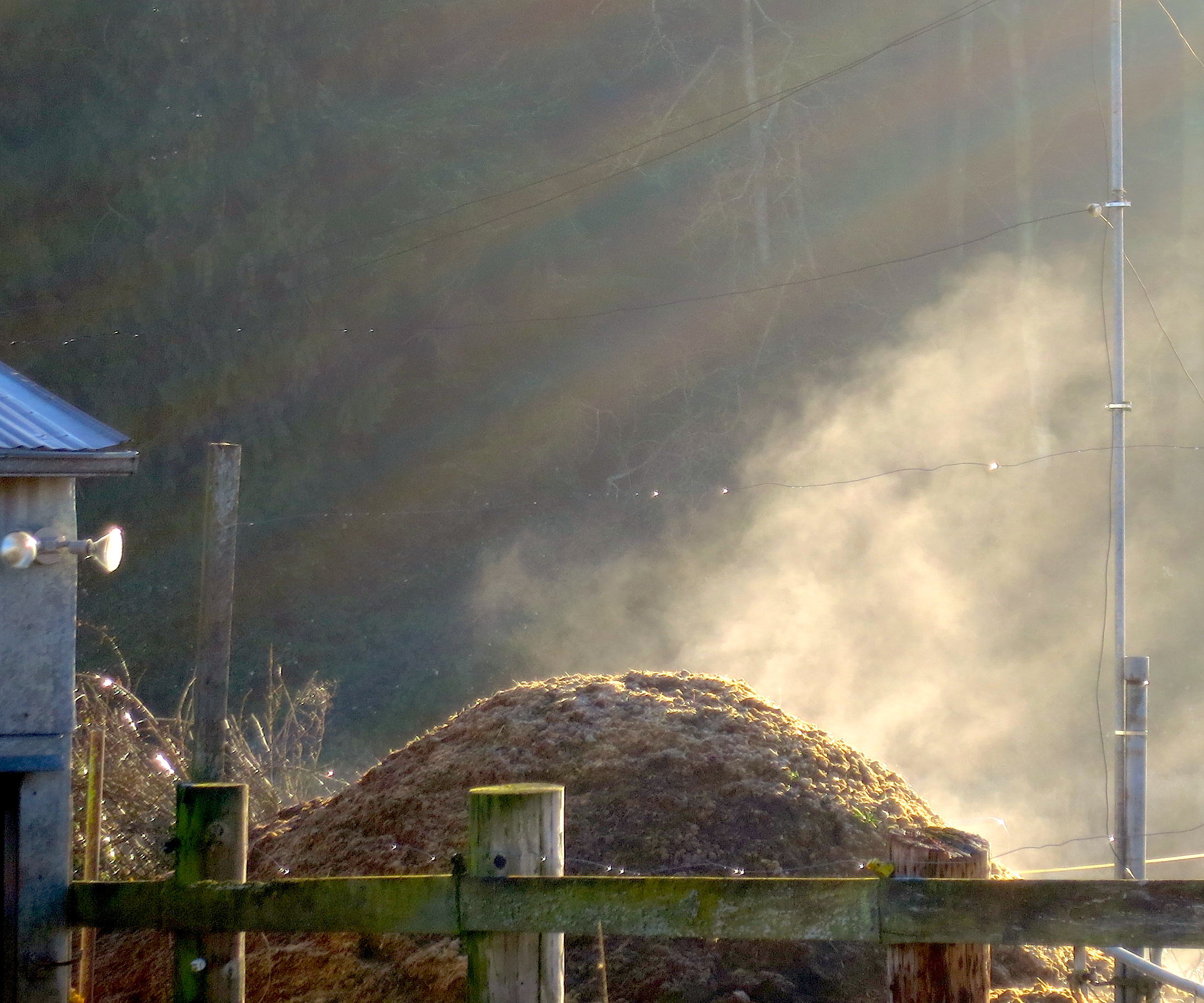
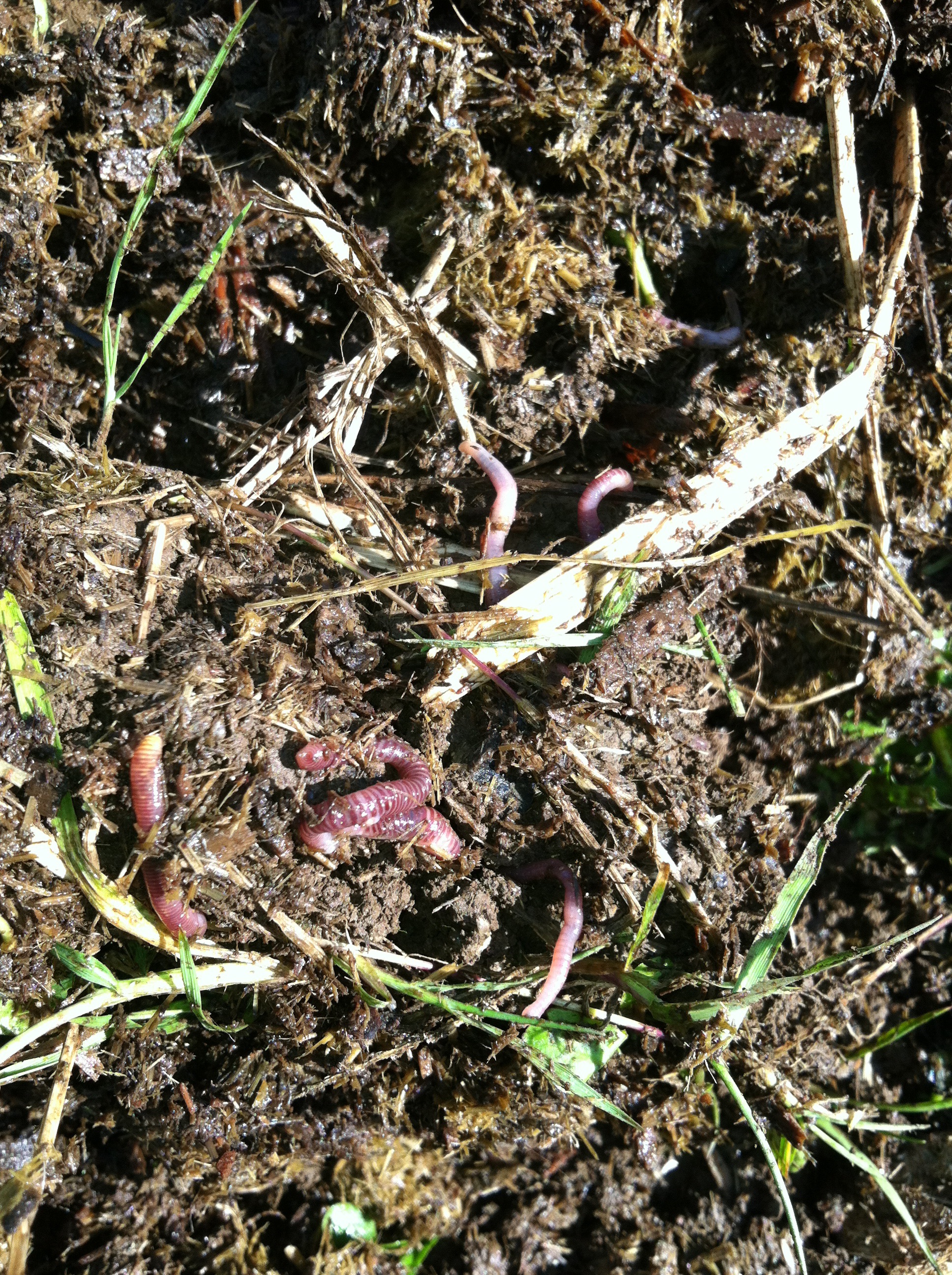
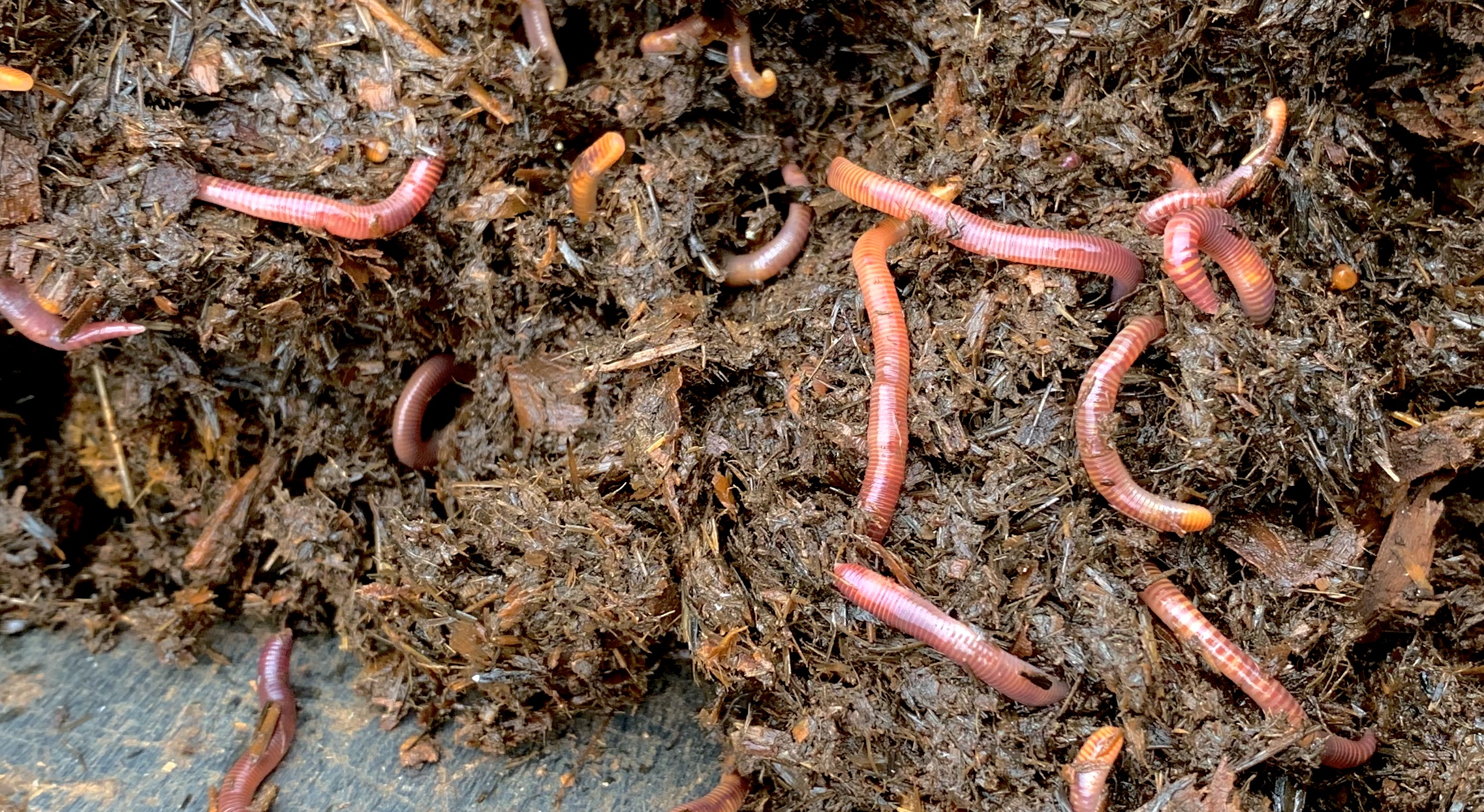
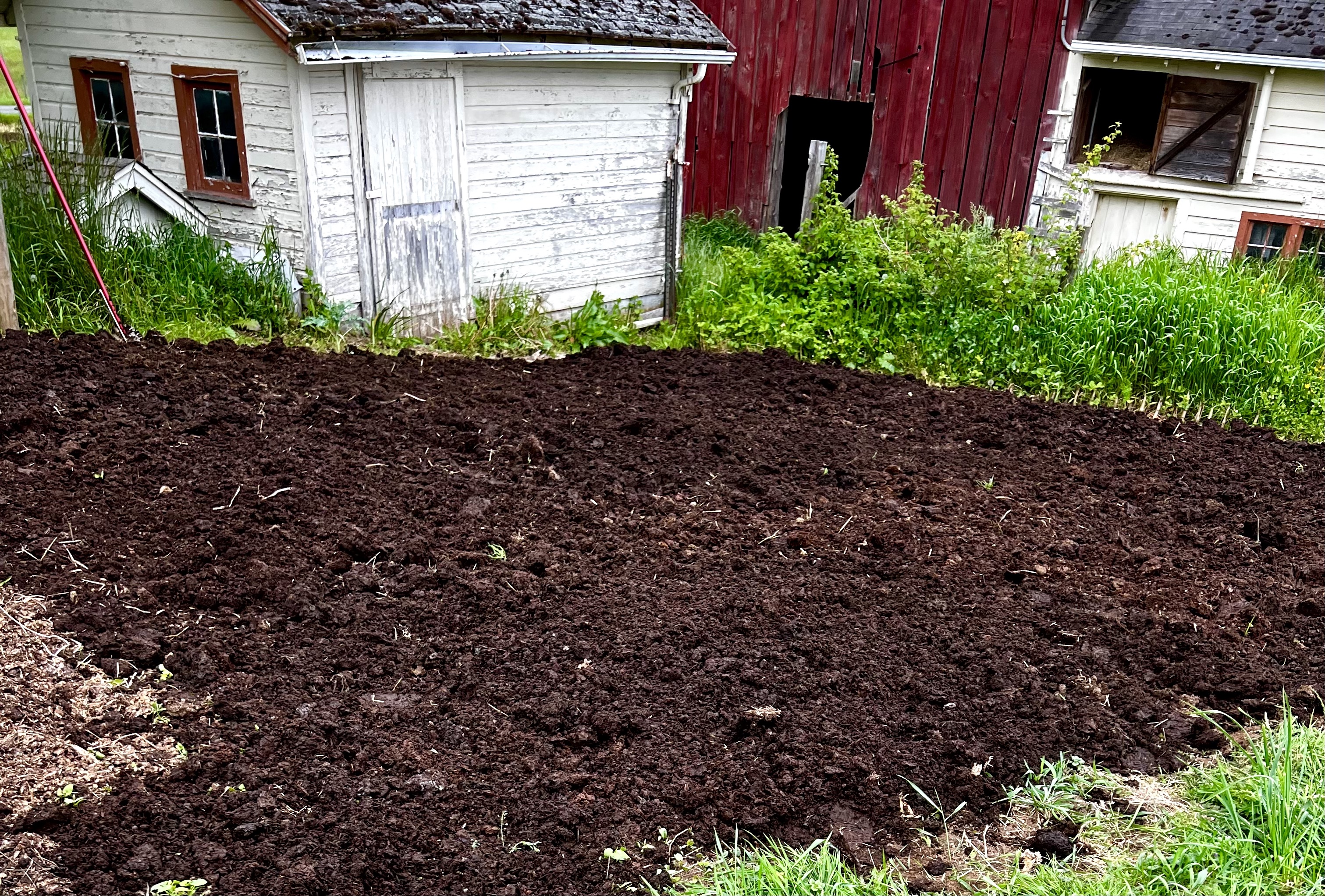
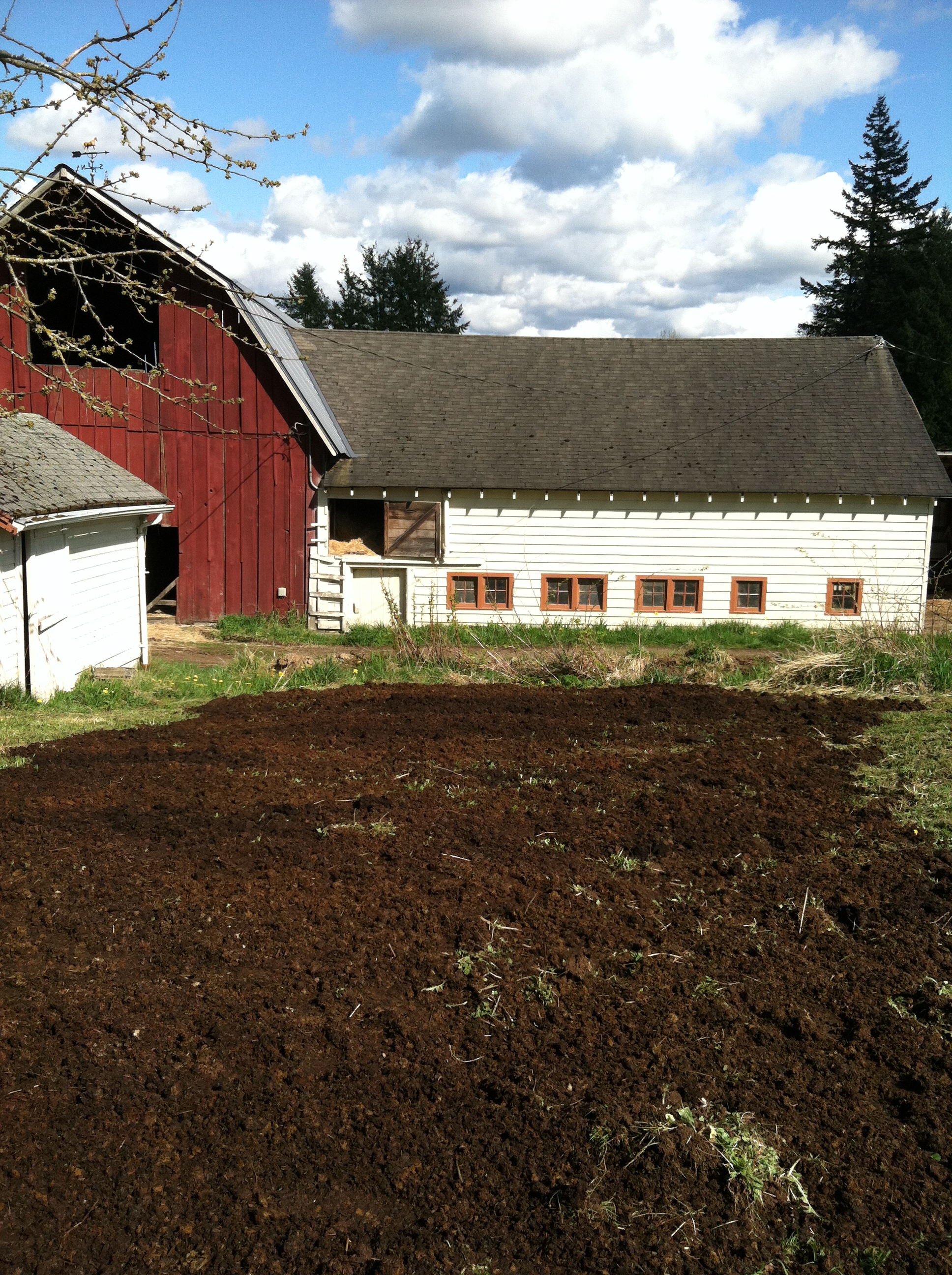
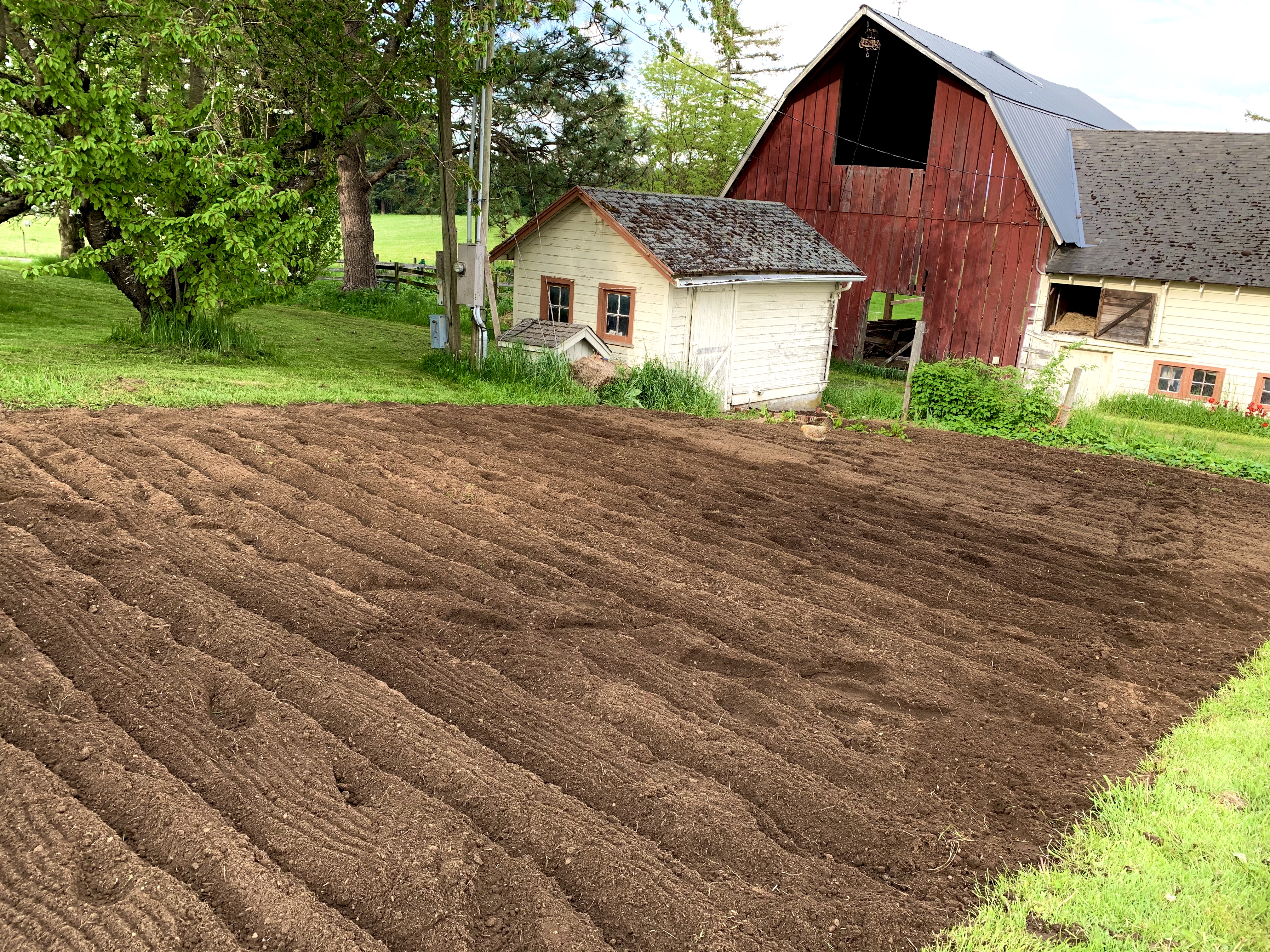
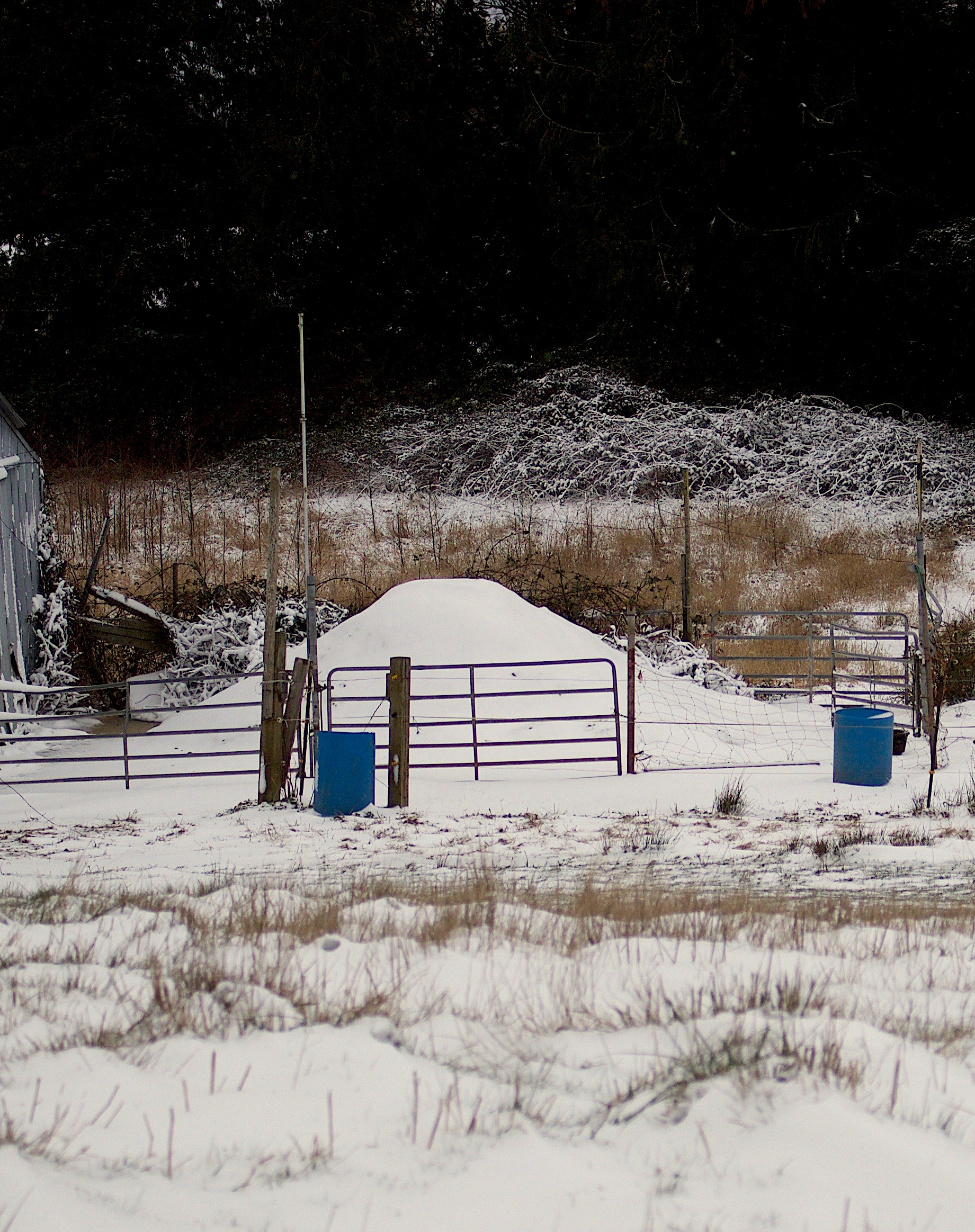
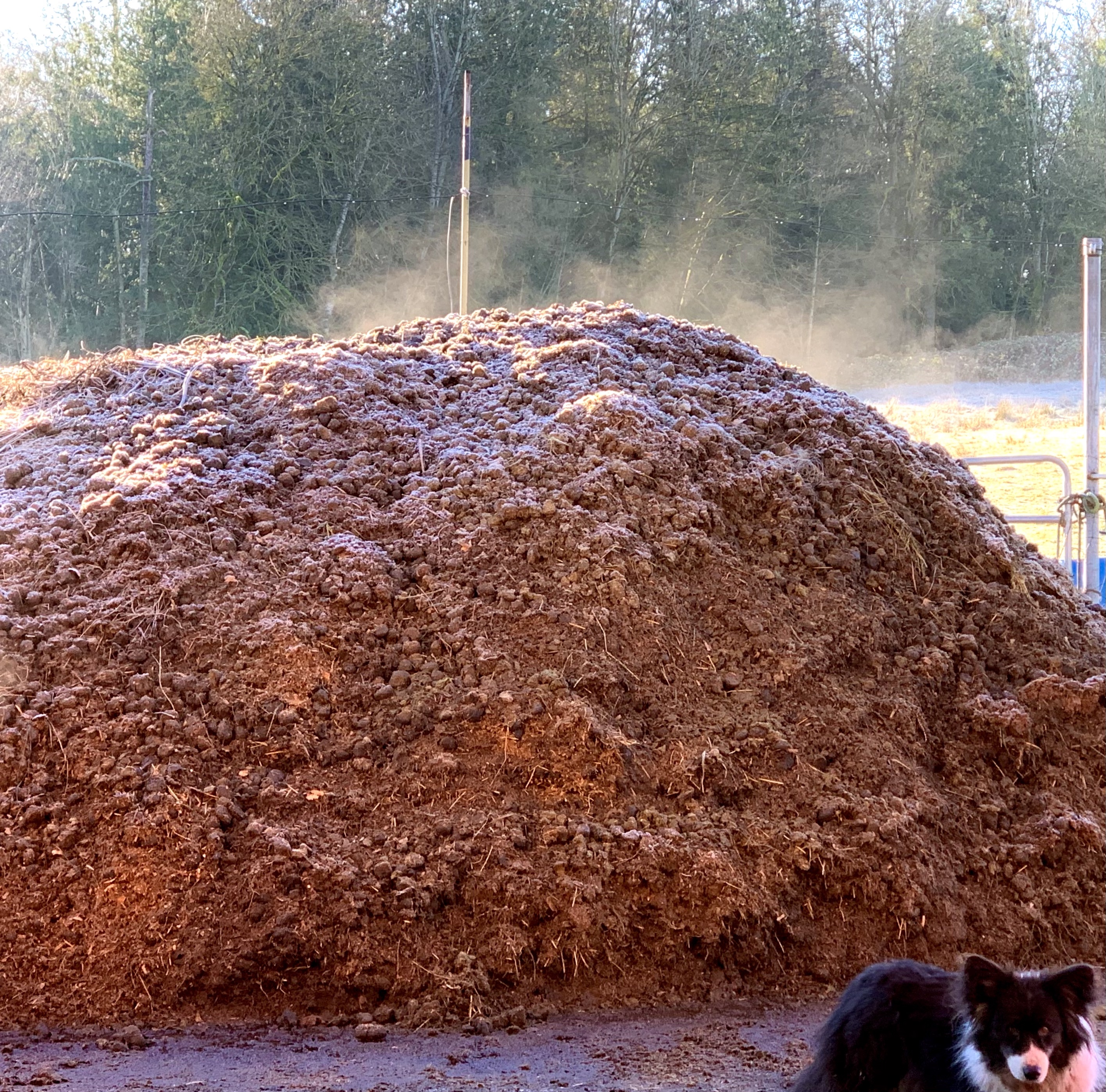
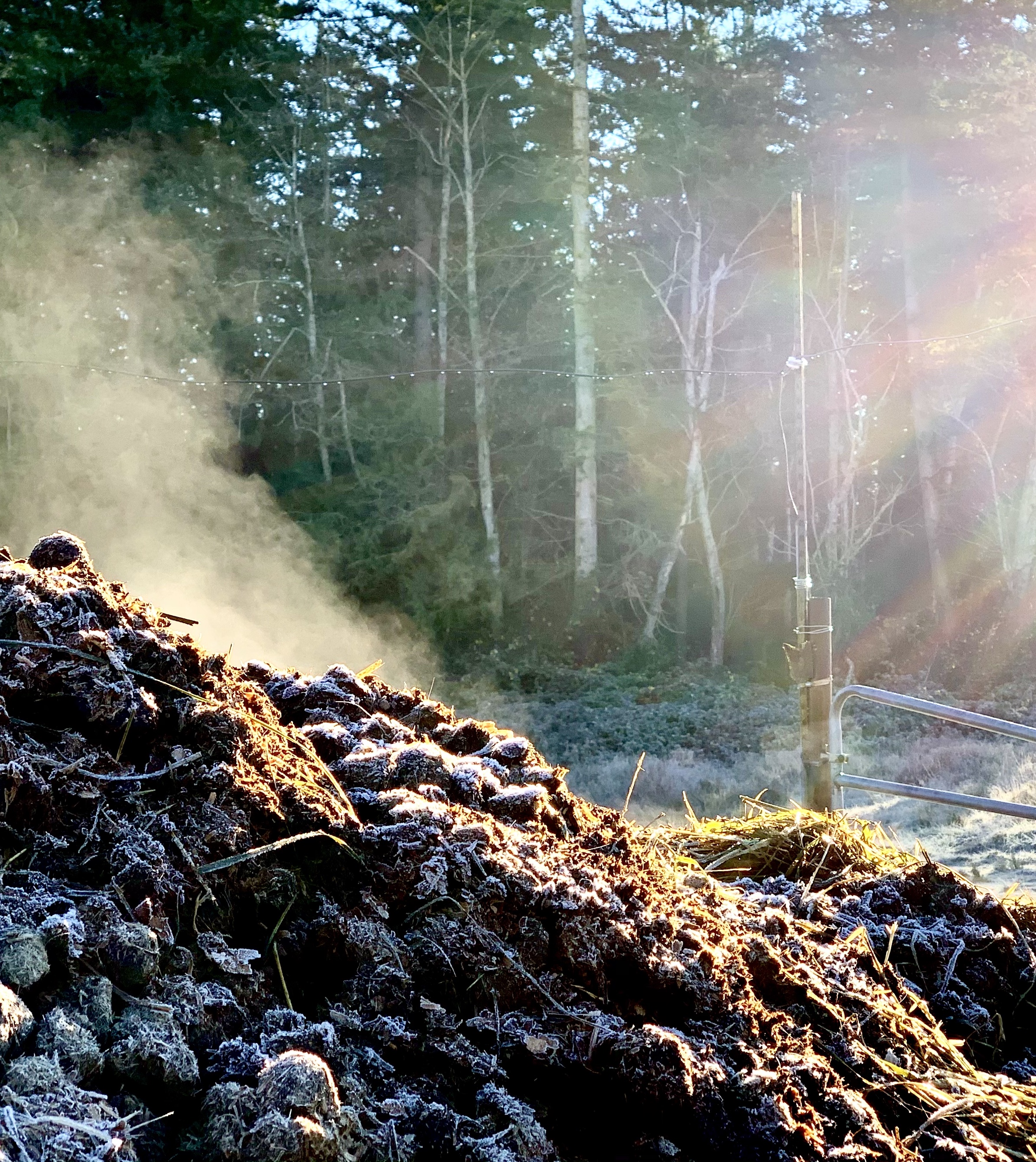
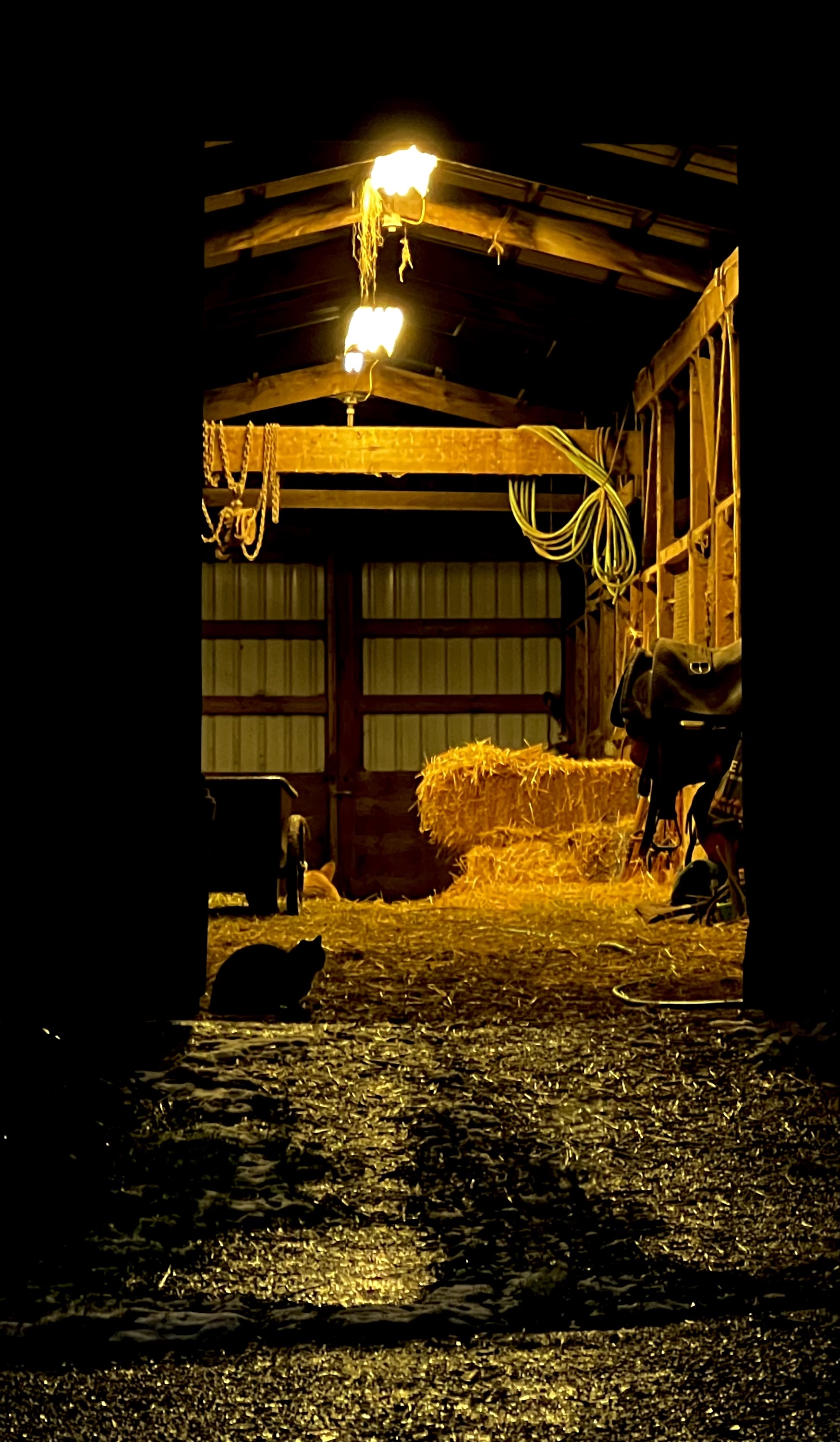
We’ve been composting horse manure for several decades behind the barn, and we dig in to the tall pile to spread on our garden plots. As Dan pushes the tractor’s front loader into the pile, steam rises from its compost innards. As the rich soil is scooped, thousands of newly exposed red wiggler worms immediately dive for cover. Within seconds, thousands of naked little creatures have, well, …wormed their way back into the security of warm dirt, being rudely interrupted from their routine. I can’t say I blame them.

Hundreds of thousands of wigglers end up being forced in the spring to adapt to new quarters, leaving the security of the manure mountain behind. As we smooth the topping of compost over the garden plot, the worms–gracious creatures that they are–tolerate being rolled and raked and lifted and turned over, waving their little bodies expectantly in the cool air before slipping back down into the dark. There they begin their work of digesting, aerating and renewing the soil of the garden, reproducing in their unique hermaphroditic way, leaving voluminous castings behind to further feed future seedlings to be planted.

Worms are unjustly denigrated by humans primarily because we don’t like to be surprised by them. We don’t like to see one in our food, especially only part of one, and are particularly distressed to see them after we’ve digested our food. Once we get past that bit of squeamishness, we can greatly appreciate their role as the ultimate recyclers, leaving the earth under our feet a lot better off once they are finished with their work.

We humans actually suffer by comparison: to be called “a worm” is really not as bad as it sounds at first. It is possible the worm may be offended by the association.

I hope to prove a worthy innkeeper for these new tenants.
May they live long and prosper only an inch beneath the grass,
so much more accessible than the infinite stars in the sky.
May each worm forgive the disruption
perpetrated by our rake and shovel.
May I smile appreciatively the next time
someone calls me a mere worm.
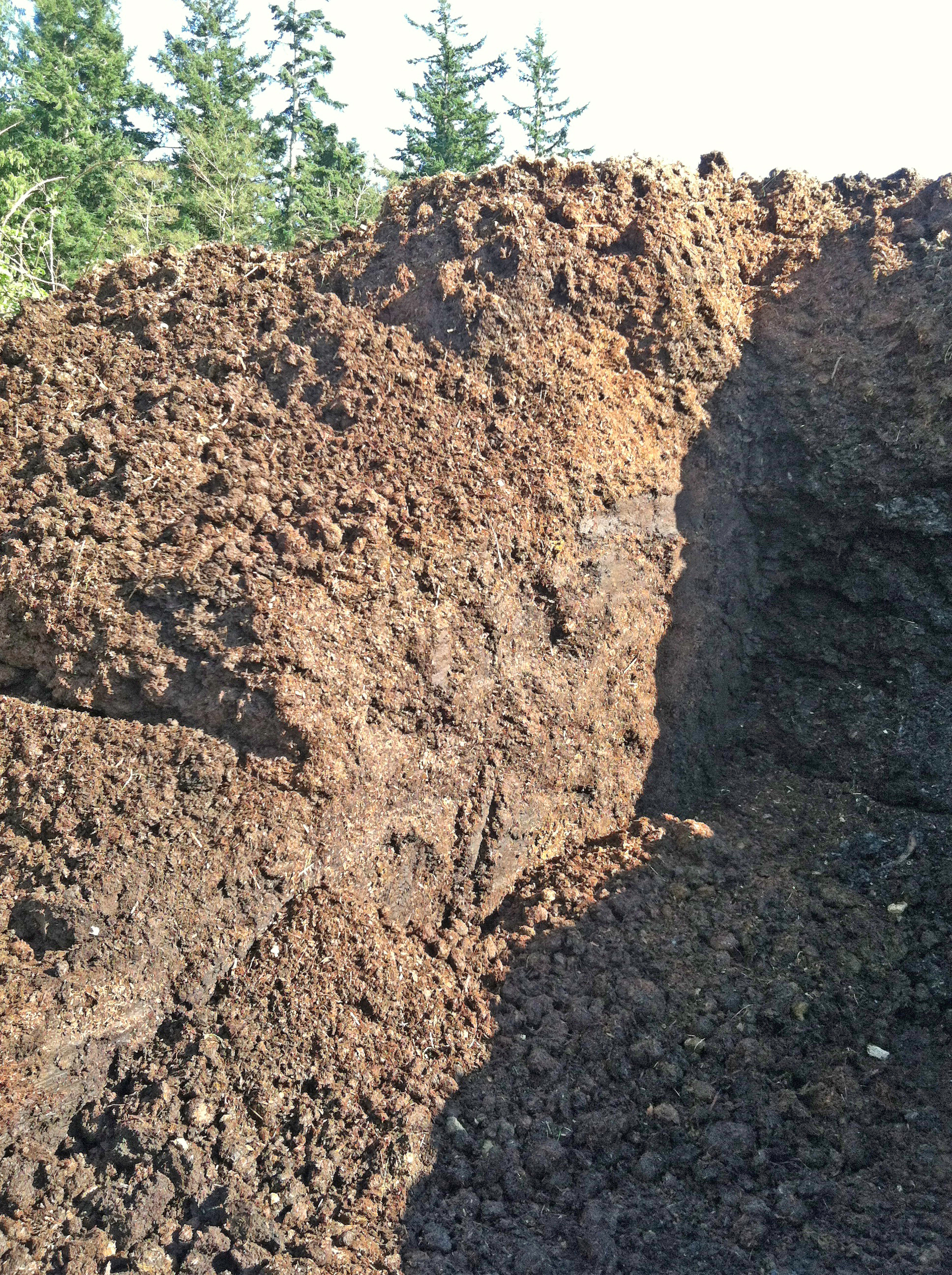

a cross section of 30 months of composted manure
AI image created for this post
One-Time
Monthly
Yearly

Make a one-time or recurring donation to support daily Barnstorming posts

Make a monthly donation

Make a yearly donation

Choose an amount

$10.00
$25.00
$50.00
$5.00
$15.00
$100.00
$5.00
$15.00
$100.00

Or enter a custom amount

$

Your contribution is deeply appreciated.

Your contribution is appreciated.

Your contribution is appreciated.

DonateDonate monthlyDonate yearly
Keep Reaching Out

Under a sky the color of pea soup
she is looking at her work growing away there
actively, thickly like grapevines or pole beans
as things grow in the real world, slowly enough.
If you tend them properly, if you mulch, if you water,
if you provide birds that eat insects a home and winter food,
if the sun shines and you pick off caterpillars,
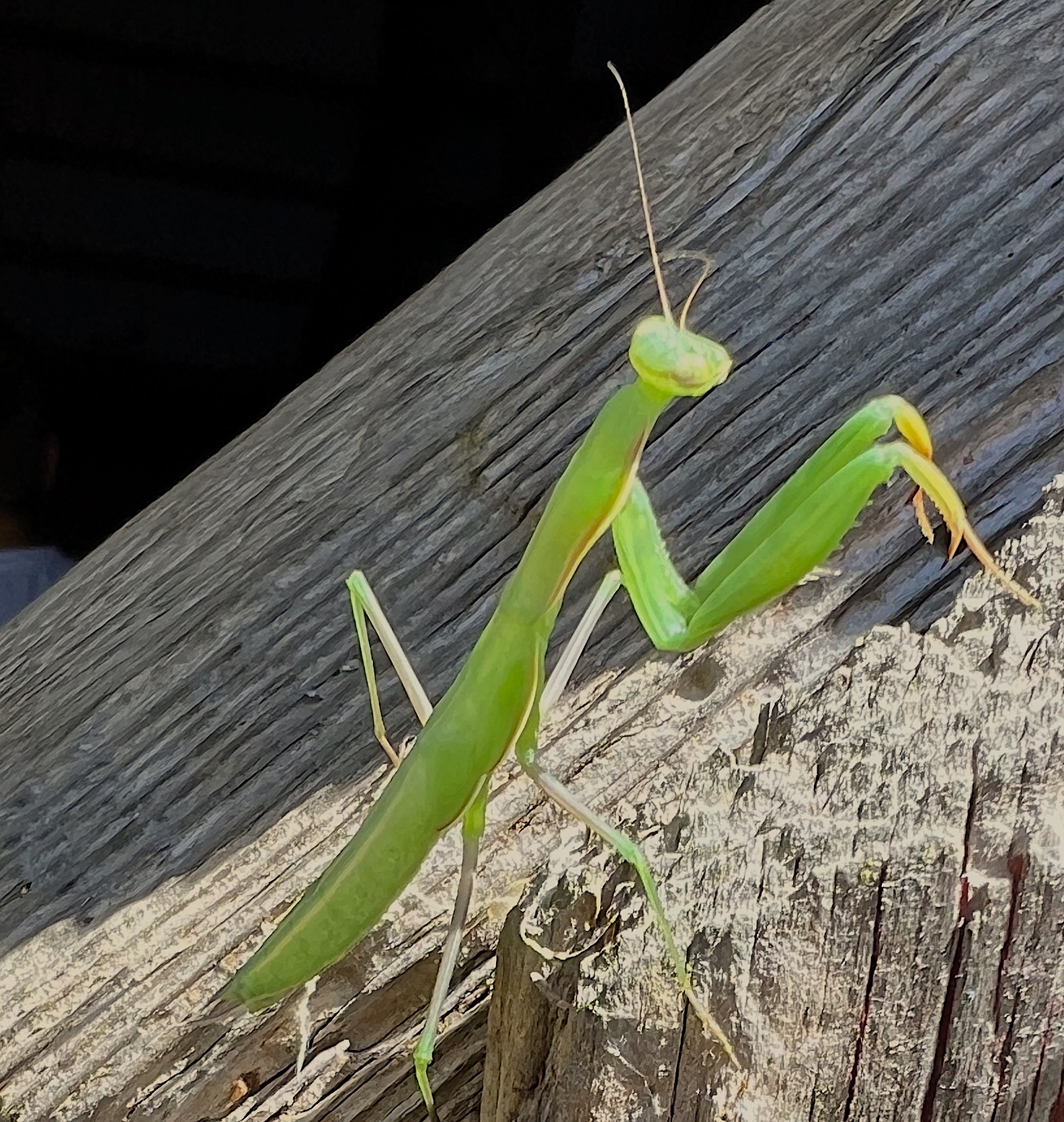
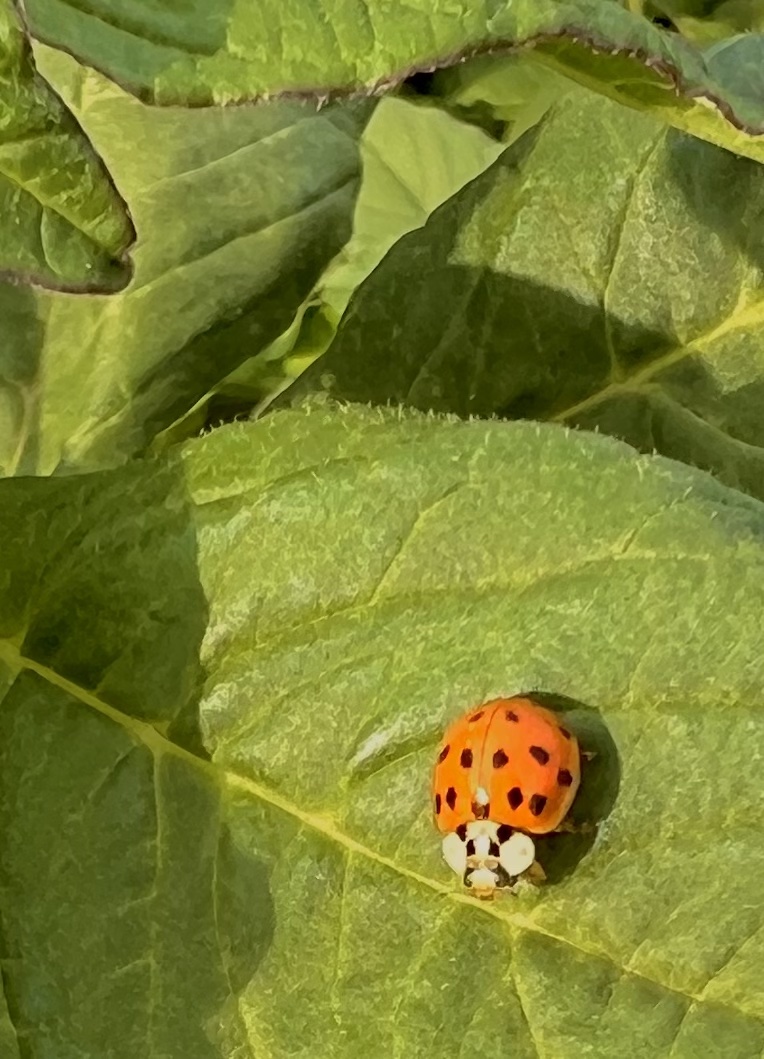
if the praying mantis comes and the ladybugs and the bees,
then the plants flourish, but at their own internal clock.

Connections are made slowly, sometimes they grow underground.
You cannot tell always by looking what is happening.
More than half the tree is spread out in the soil under your feet.
Penetrate quietly as the earthworm that blows no trumpet.
Fight persistently as the creeper that brings down the tree.
Spread like the squash plant that overruns the garden.
Gnaw in the dark and use the sun to make sugar.

Weave real connections, create real nodes, build real houses.
Live a life you can endure: Make love that is loving.
Keep tangling and interweaving and taking more in,
a thicket and bramble wilderness to the outside but to us
interconnected with rabbit runs and burrows and lairs.

Live as if you liked yourself, and it may happen:
reach out, keep reaching out, keep bringing in.
This is how we are going to live for a long time: not always,
for every gardener knows that after the digging, after the planting,
after the long season of tending and growth, the harvest comes.
~Marge Piercy “The Seven of Pentacles”

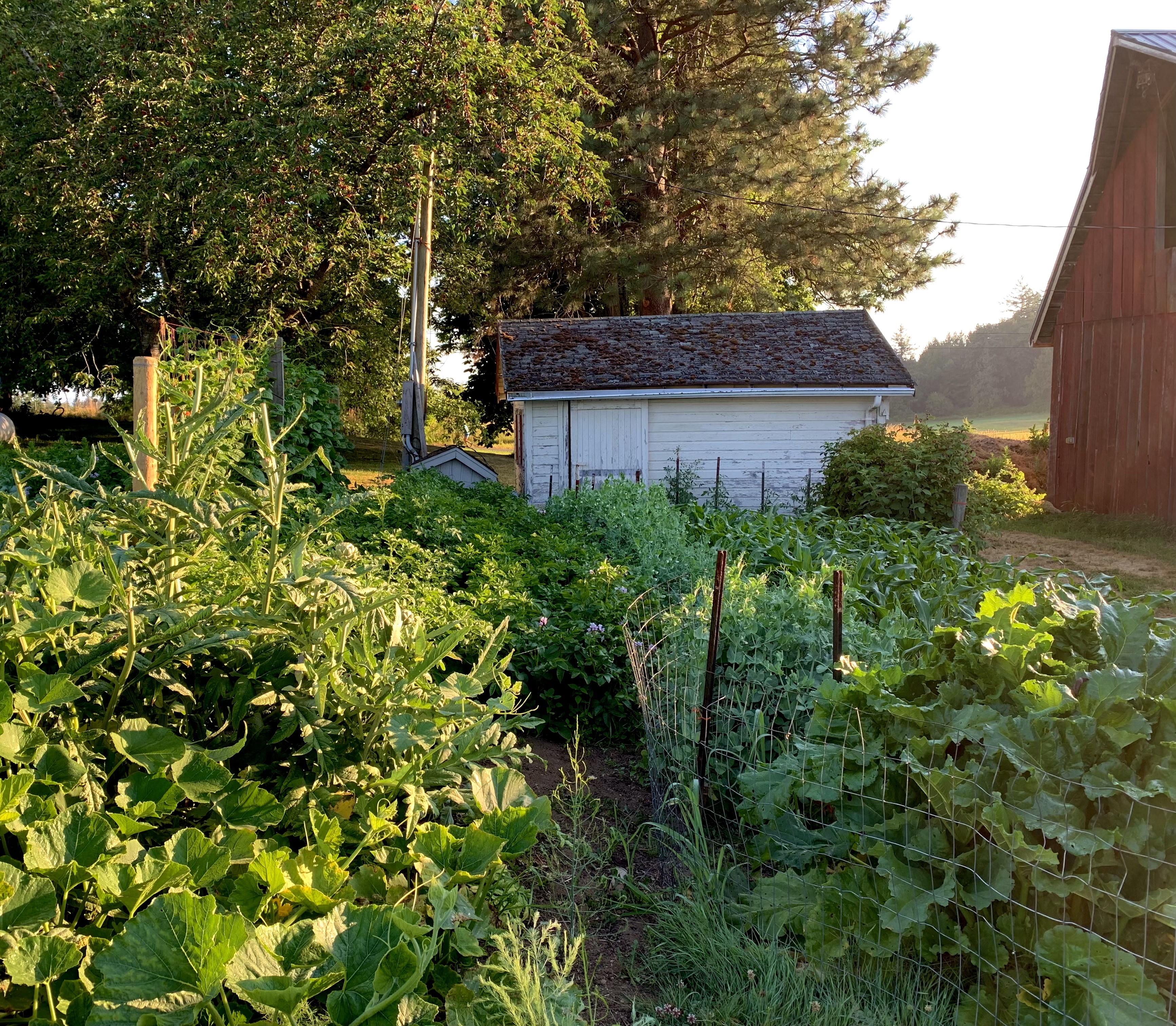
Our garden teaches us all kinds of life lessons, thanks to my husband’s hours of hard work preparing the soil, planting carefully and nurturing the emerging seedlings.

No garden tends itself – the growing plants reach out for connection to one another, for stability and companionship. The gardener nurtures, defends and harvests with an eye to preparing for the next growing season.

We who have been planted here need one another, interwoven and linked, both visibly and invisibly. I am woven around you and you around me; together we grow and thrive when tended, and as intended.

But more than anything else, we need our Gardener…

AI image created for this post
One-Time
Monthly
Yearly

Make a one-time or recurring donation to support daily Barnstorming posts

Make a monthly donation

Make a yearly donation

Choose an amount

$10.00
$25.00
$50.00
$5.00
$15.00
$100.00
$5.00
$15.00
$100.00

Or enter a custom amount

$

Your contribution is deeply appreciated.

Your contribution is appreciated.

Your contribution is appreciated.

DonateDonate monthlyDonate yearly
A Summer’s Sweetness

The clouds are low as a blanket.
Even the air is tangible,
and the steam from the kettle
thickens the air like wool.
Harvest is full on us; the pressure
to preserve builds like a thunderhead.

 
Shelling peas is fun at first,
slitting open the perfect pods,
working in rhythm to the pelter
of peas ringing in the pot.
But then our arms and shoulders ache,
the seeds rattle, hollow as bones,
and though we should rejoice,
another bushel groans before us.

 
But there in the blancher,
the new peas shine
fresh and wet, green
as emeralds; summer’s sweetness,
to be shelved with the long ripe days,
eaten with relish, as the butter
and juice run in our mouths
rare as dandelion wine.

~Barbara Crooker “Putting Up”

My earliest childhood memories include the taste and smell of fresh peas.  We lived in farming country north of Seattle where 50 years ago hundreds of acres of peas were grown for canning and freezing.  During the harvest, large pea harvesting machines would arrive for several days and travel down the road in caravans of 10 or 12, going from farm to farm to farm. They worked 24 hours a day to harvest as quickly as possible and traveled the roads late at night because they were so huge, they would take up both lanes of the country roads.  Inevitably a string of cars would form behind the pea harvesters, unable to pass, so it became a grand annual parade celebrating the humble pea.

The smell in the air when the fields were harvested was indescribable except to say it was most definitely a “green” and deliciously fresh smell.  The vines and pods would end up as silage for cattle and the peas would be separated to go to the cannery.  I figured those peas were destined for the city dwellers because in our back yard garden, we grew plenty of our own.

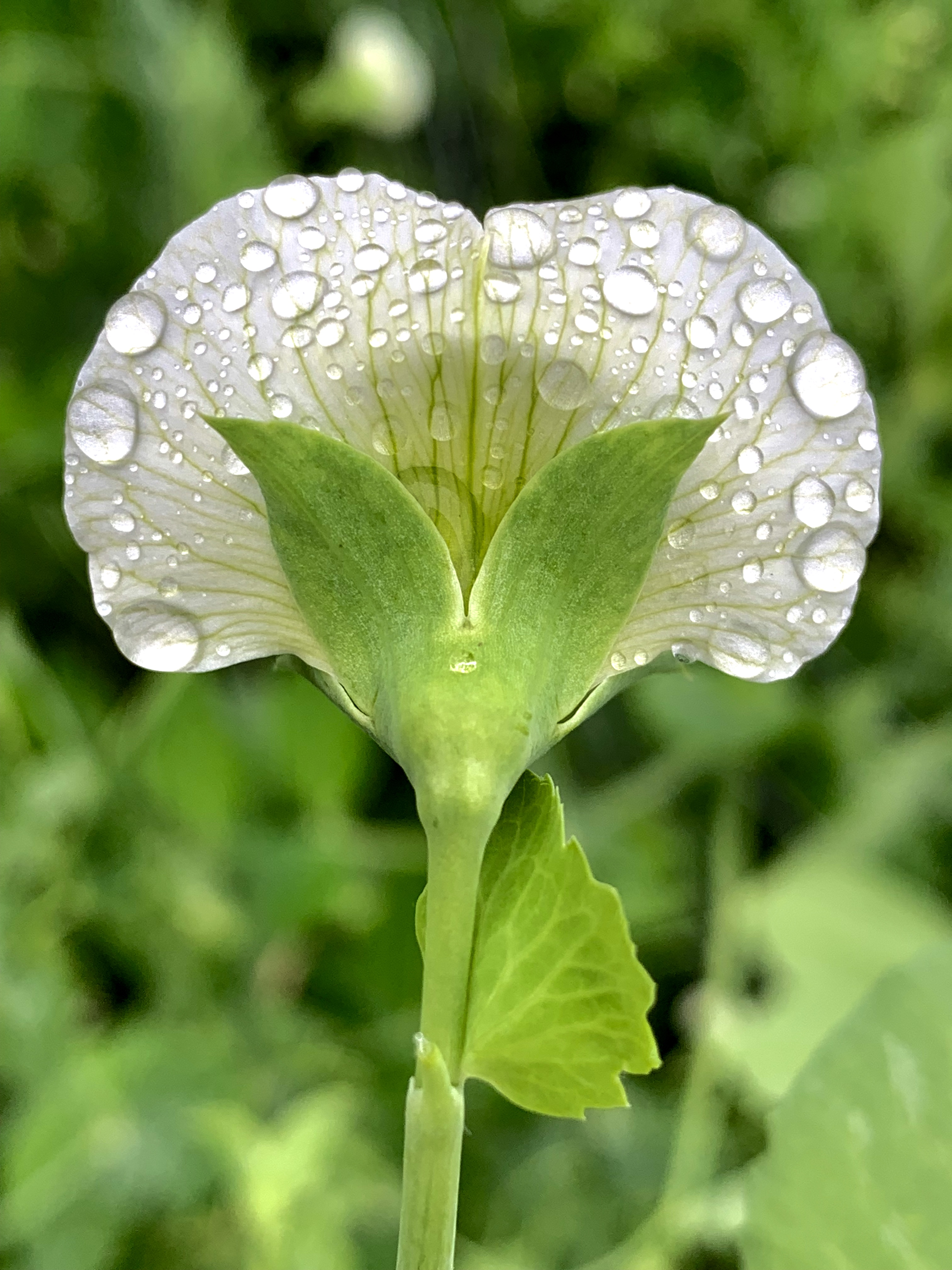
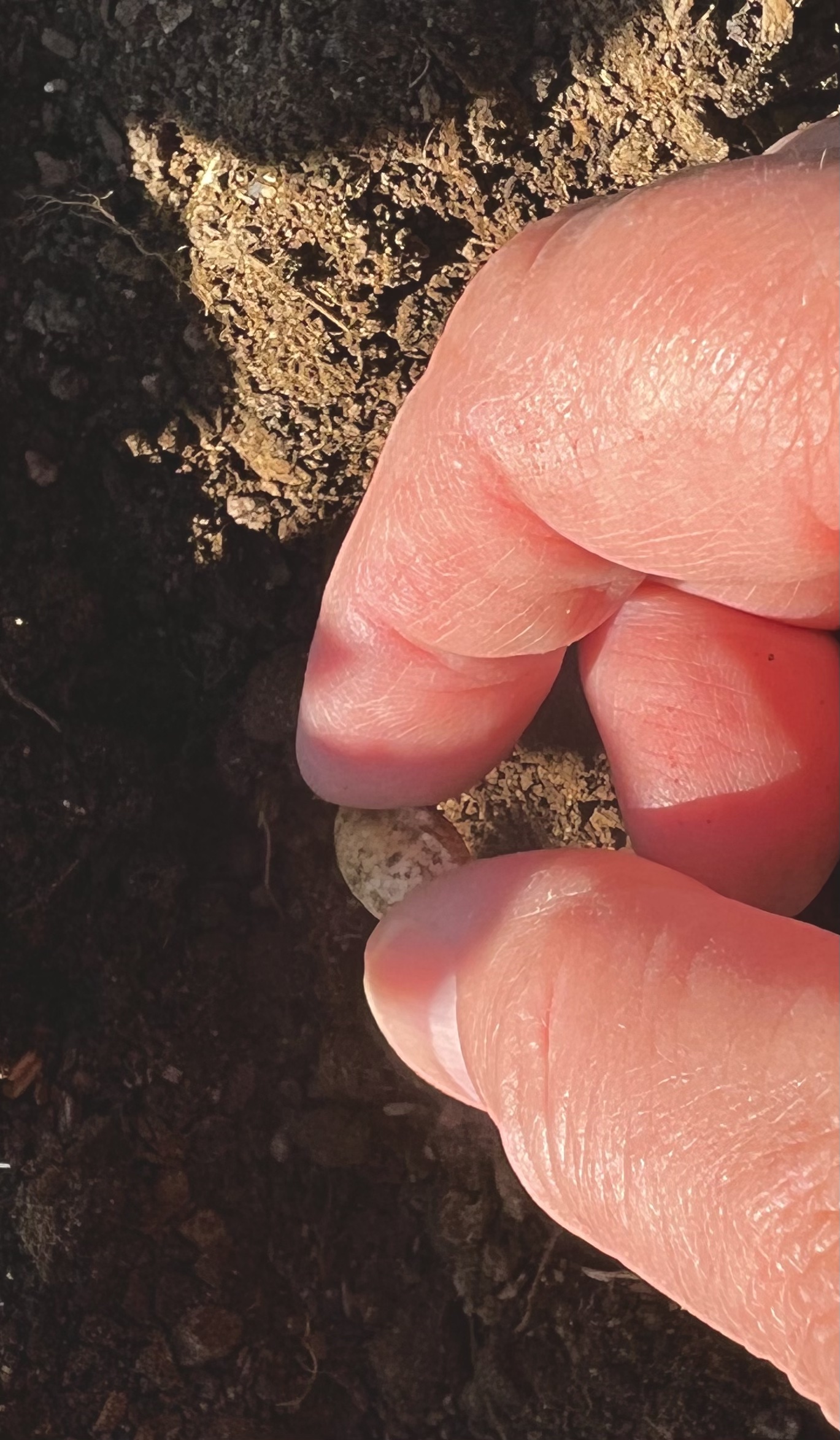
Pea seeds, wrinkled and frankly a little boring, could be planted even before the last frost was done with us in March, or even sometimes on Washington’s birthday in February.  The soil needed to not be frozen and not be sopping.  True, the seeds might sit still for a few weeks, unwilling to risk germination until the coast was clear and soil warmed a bit, but once they were up out of the ground, there was no stopping them.  We would generally have several rotations growing, in the hope of a 6 week pea eating season if we were fortunate, before the heat and worms claimed the vines and the pods.

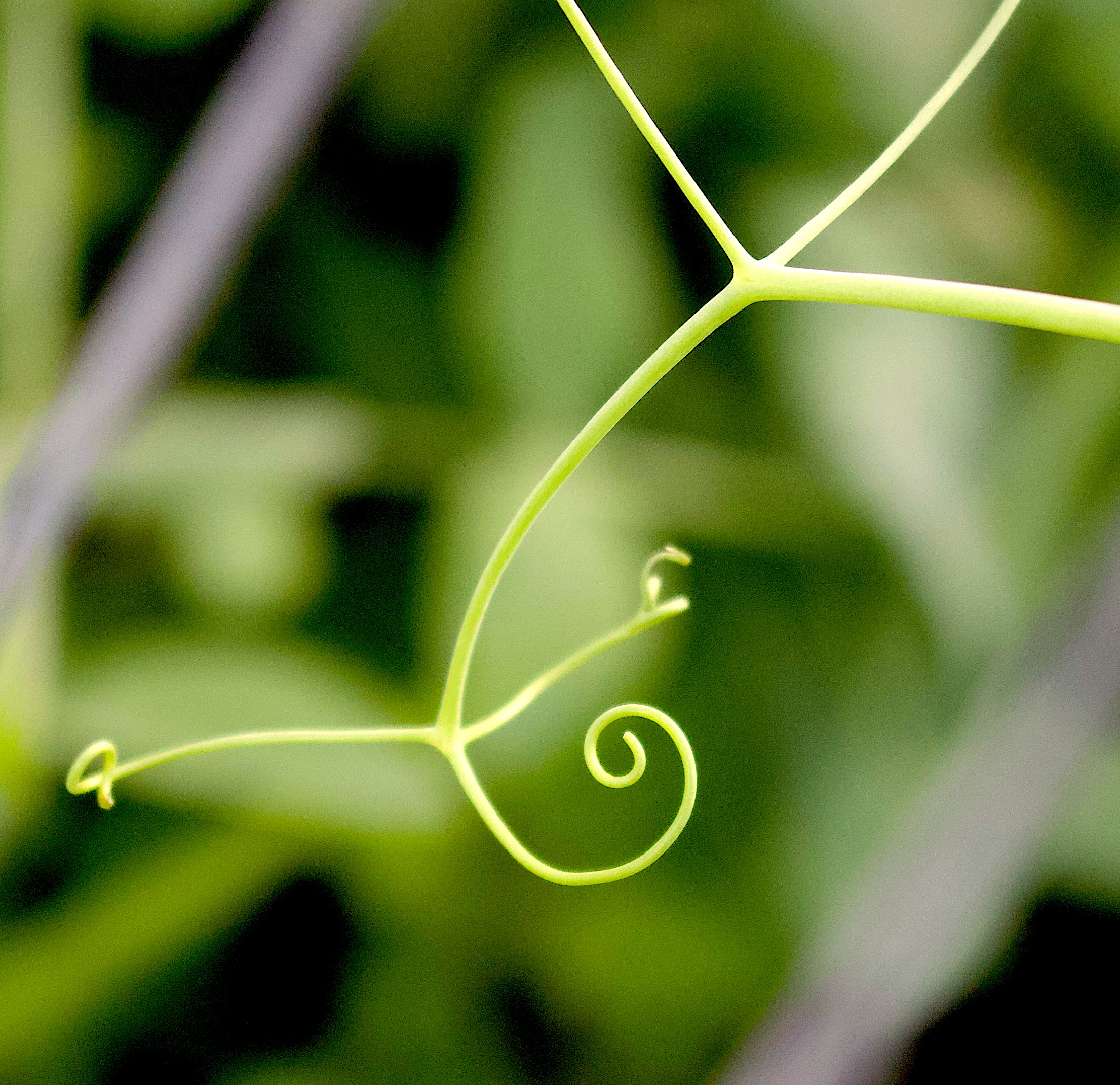
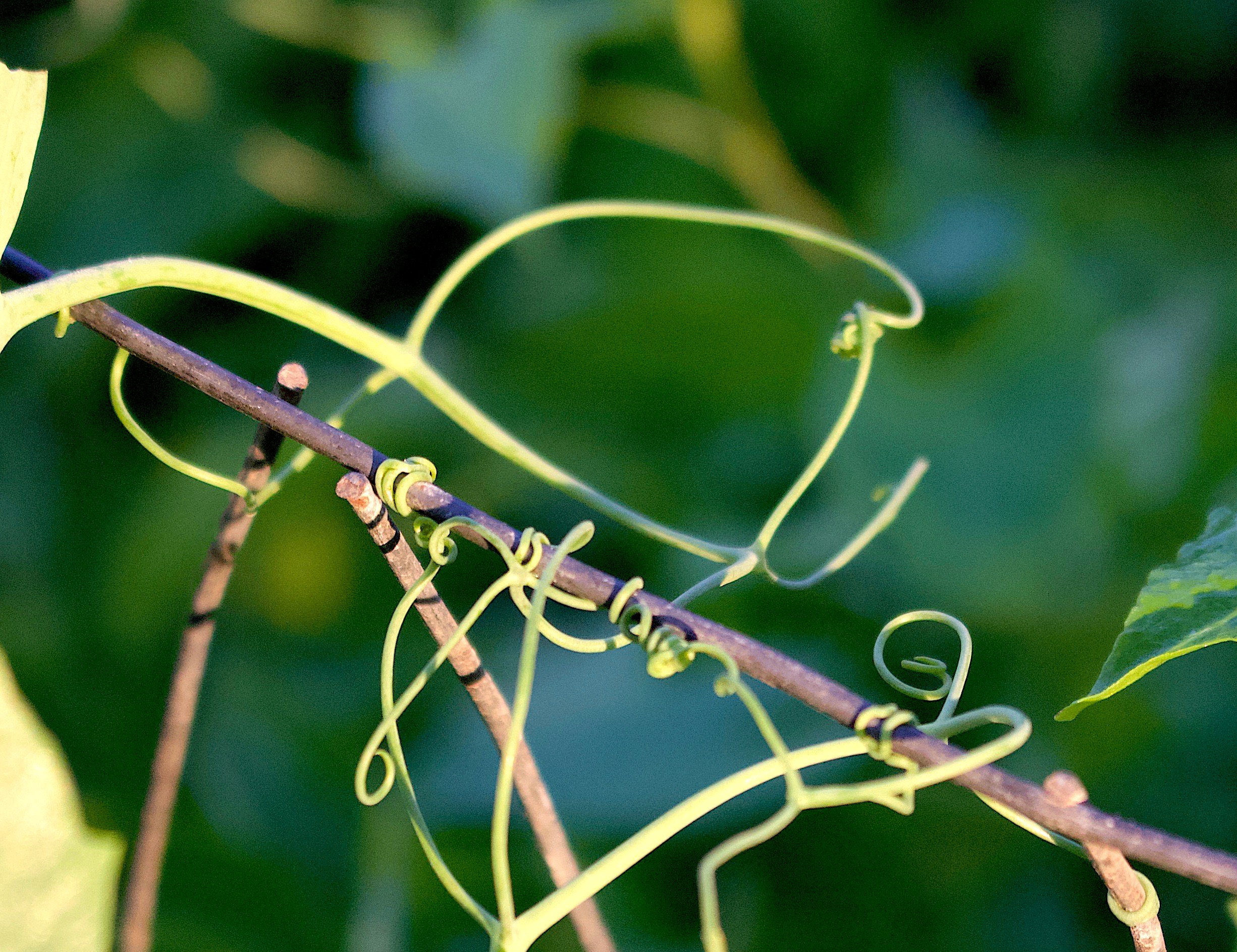
We always planted telephone peas, so the support of the vines was crucial–we used hay twine run up and down between two taut smooth wires attached high and low between two wooden posts.  The vines could climb 6 feet tall or better and it was fascinating to almost literally watch the pea tendrils wind their way around the strings (and each other), erotically clinging and wrapping themselves in their enthusiasm.

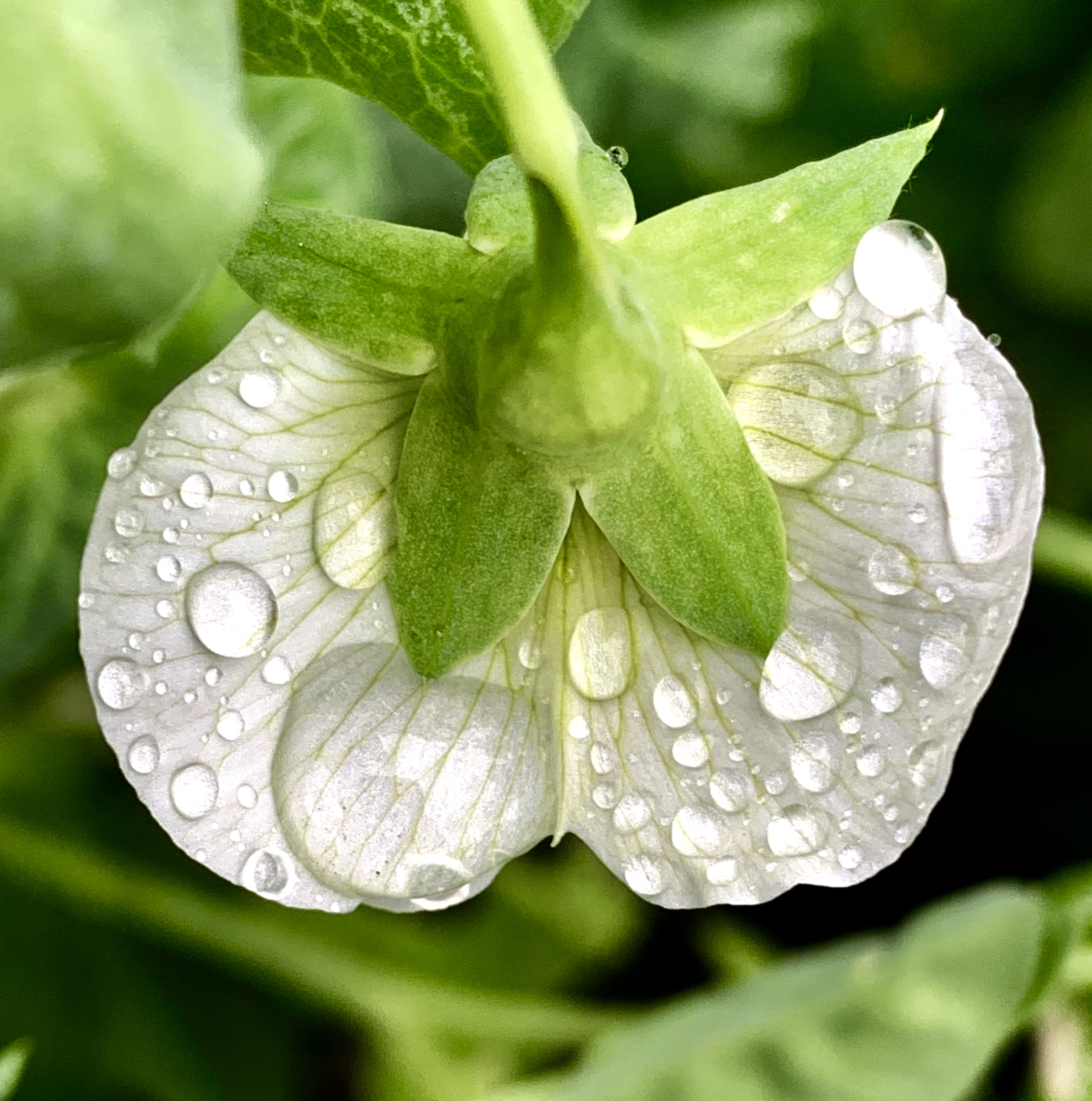
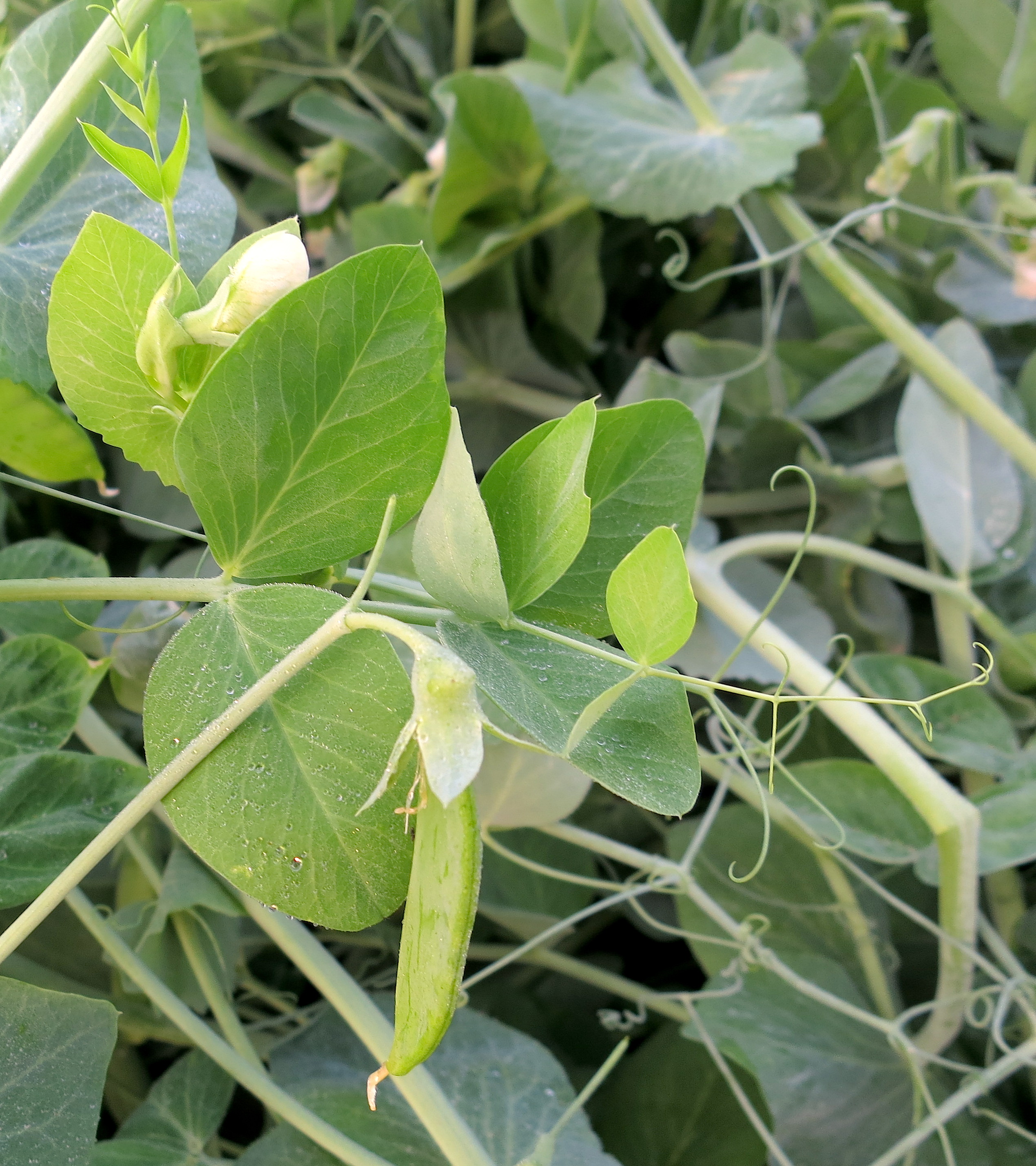
Once the pods start to form,  impatience begins.  I’d be out in the garden every day copping feels, looking for that first plump pod to pick and pop open.  It never failed that I would pick too soon, and open a pod to find only weenie little peas, barely with enough substance to taste.  Within a day or two, however, the harvest would be overwhelming, so we’d have to pick early in the morning while the peas were still cool from the night dew.

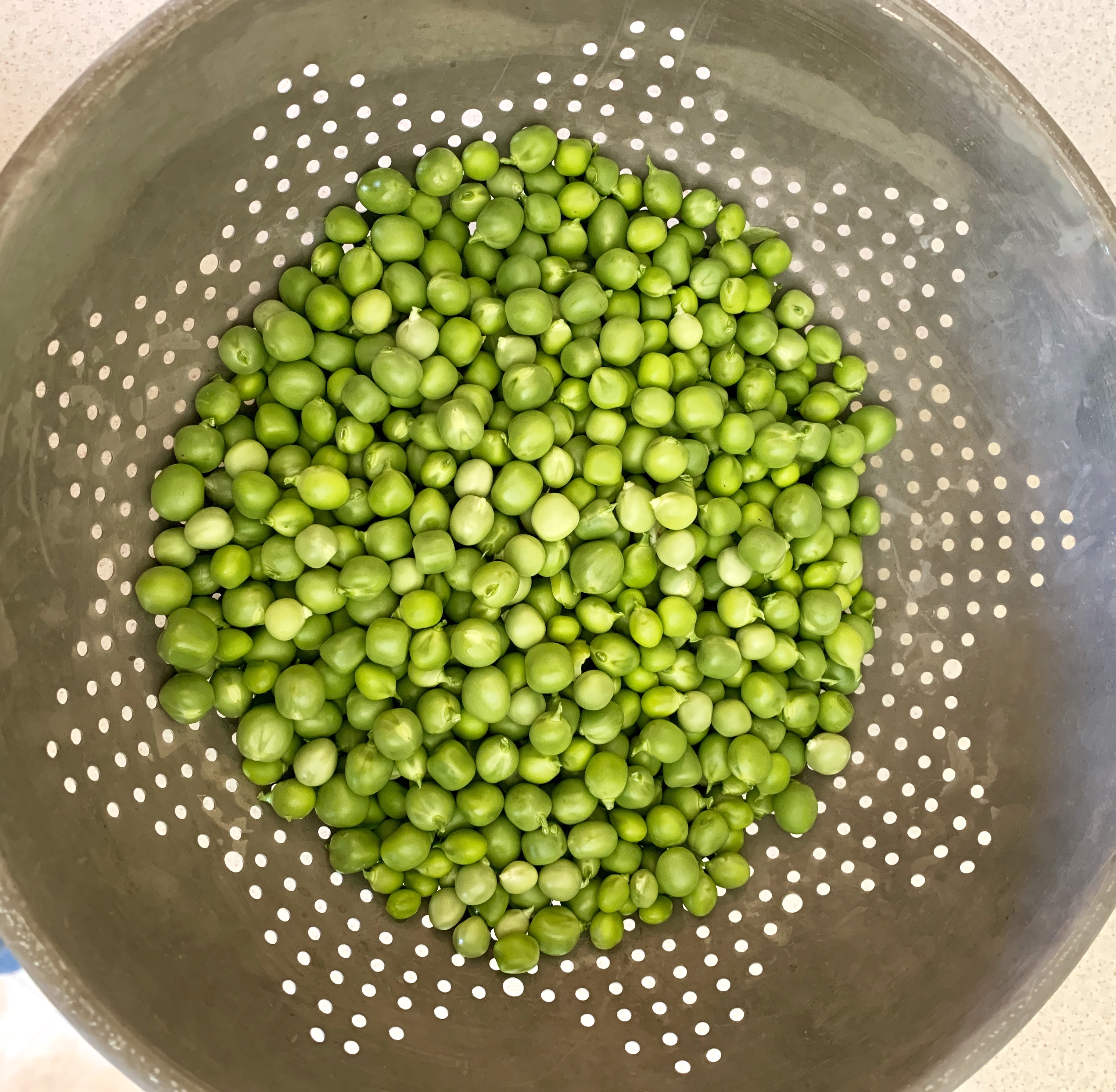
Then it was shelling time, which involved several siblings on a back porch, one mother supervising from a distance to make sure there weren’t too many peas being pelted in pique at an annoying little brother, and lots of bowls to catch the peas and the pods.  A big paper sack of intact pods would yield only a few cups of peas, so this was great labor for small yield.   Opening a pod of peas is extremely satisfying though;  there is a tiny audible “pop” when the pod is pressed at the bottom, and then as your thumb runs down the inner seam of the pod loosening all the peas, they make a dozen little “pings” in the bowl when they fall.  A symphony of pea shelling often was accompanied by the Beach Boys and the Beatles.

Once the weather got hot, the pea worms would be at work in the pods, so then one encountered wiggly white larvae with little black heads and their webs inside the pods.  We actually had a “Wormie” song we sung when we found one, even in the 60’s recognizing that our organic garden meant sharing the harvest with crawling protein critters. The peas would be bored through, like a hollowed out jack o’lantern, so those got dumped in the discard bowl.

The dull green coat of the raw pea turns bright green during the several minutes of blanching in boiling water, then they are plunged into ice water until cool and packed in ziplock bags.  Those peas are welcomed to the table during the other 11 months out of the year, sometimes mixed with carrots, sometimes with mushrooms, sometimes chased with a little fresh garlic.  They are simply the most lovely food there is other than chocolate.

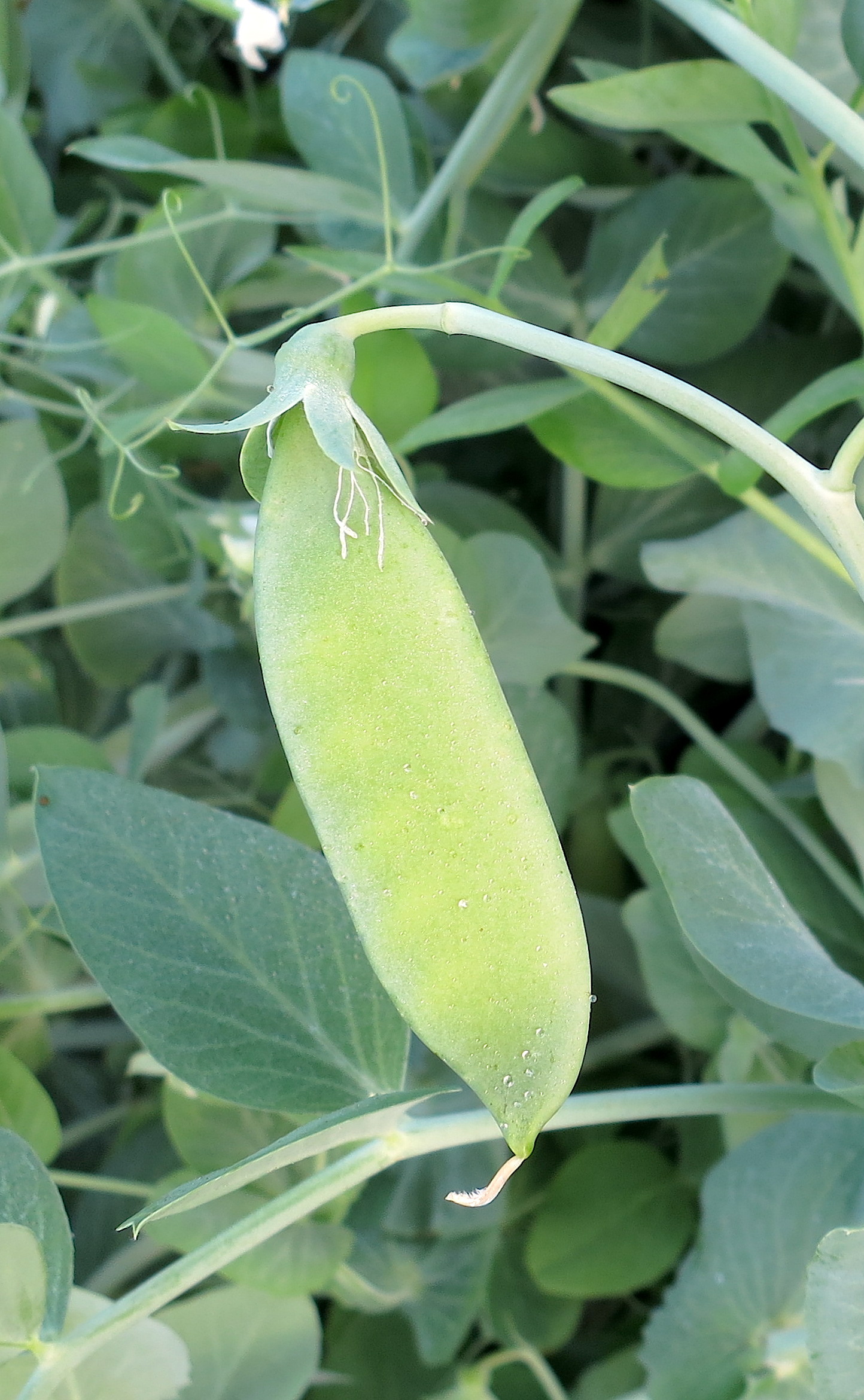
From an undistinguished pea seed to intricate vines and coiling tendrils–from pregnant pods bursting at the seams to a bounty at meals: the humble pea does indeed deserve a grand parade in the middle of the night.

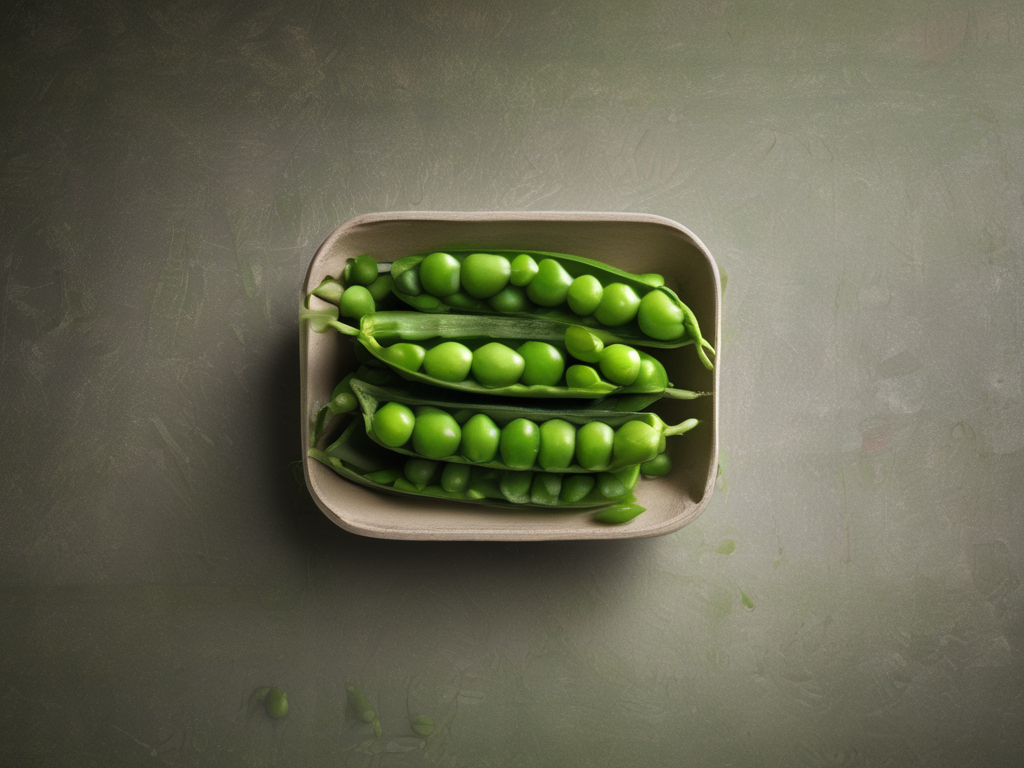
AI image generated for this post
One-Time
Monthly
Yearly

Make a one-time or recurring donation to support daily Barnstorming posts

Make a monthly donation

Make a yearly donation

Choose an amount

$10.00
$25.00
$50.00
$5.00
$15.00
$100.00
$5.00
$15.00
$100.00

Or enter a custom amount

$

Your contribution is deeply appreciated.

Your contribution is appreciated.

Your contribution is appreciated.

DonateDonate monthlyDonate yearly
The Purpose for Slugs

Girls are like slugs—they probably serve some purpose, but it’s hard to imagine what.
~Bill Watterson, in Calvin and Hobbes

Who could have dreamed them up? At least snails
have shells, but all these have is—nothing.
Small black antennae like fat pins wave
as if they could take in enough to get them through.
Turn them over, they’re the soles of new shoes,
pale and unmarked as babies. They flow,
the soil itself learning how to move and, moving,
almost staying still, their silver monorail
the only evidence of where they’d been.
And they die quiet, or at least (thankfully)
out of the human ear’s range, between two stones,
under heels, shriveling in salt or piss, at the tips
of sharp sticks. Fight back, I hear myself say,
do something. Don’t just take it. But they die
as they had lived, exuding slime…

~Brian Swann from “Slugs”

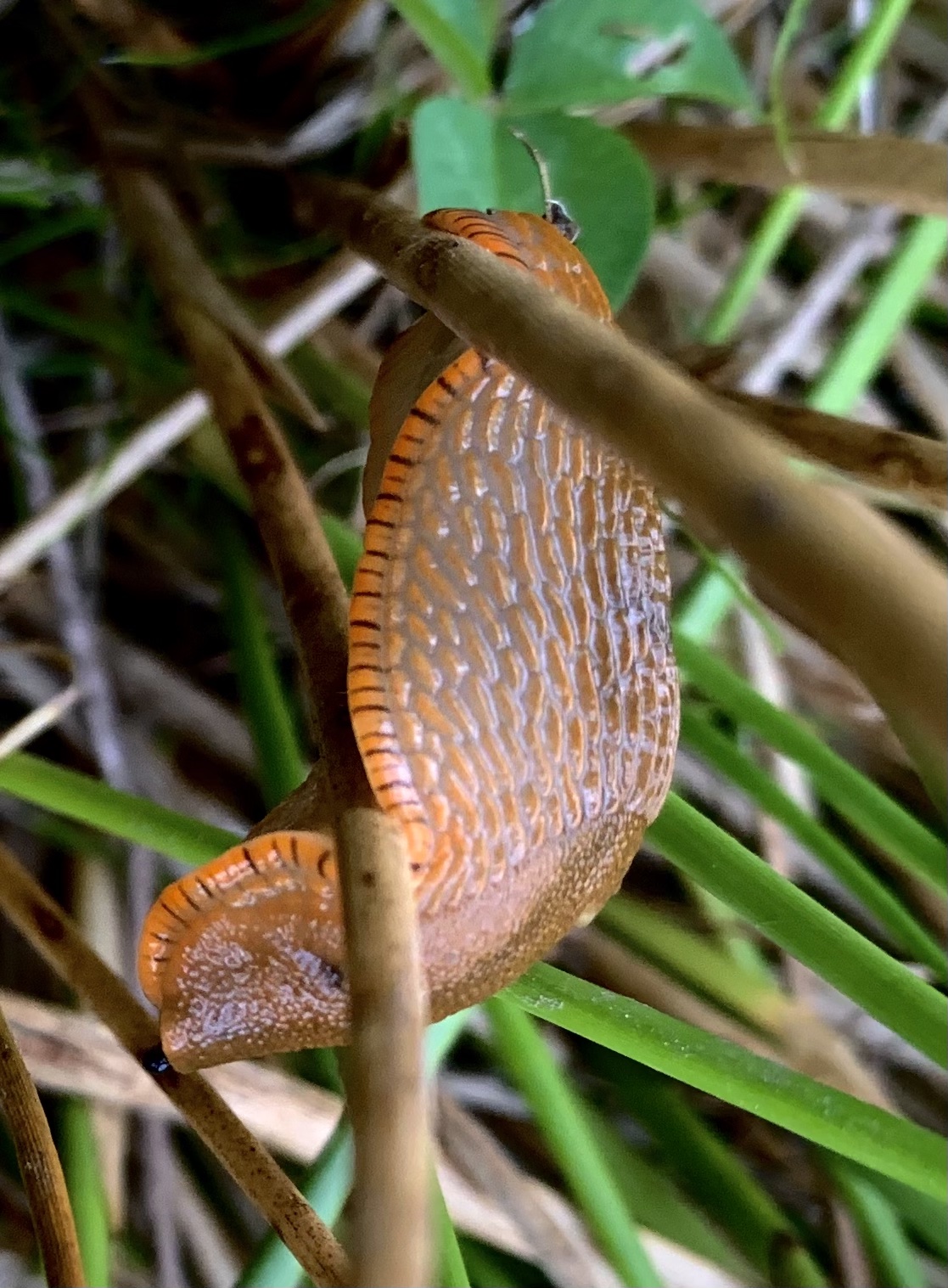
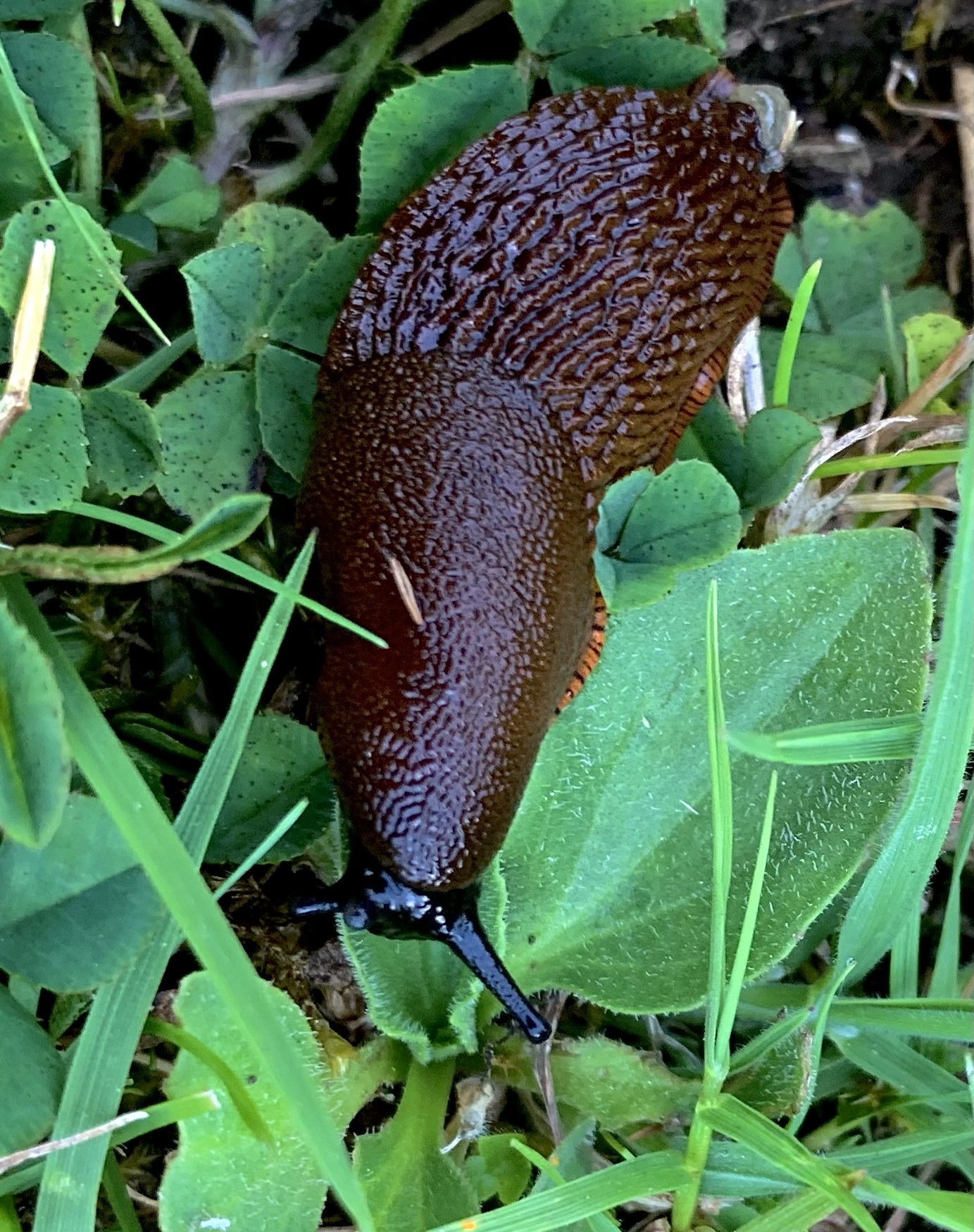
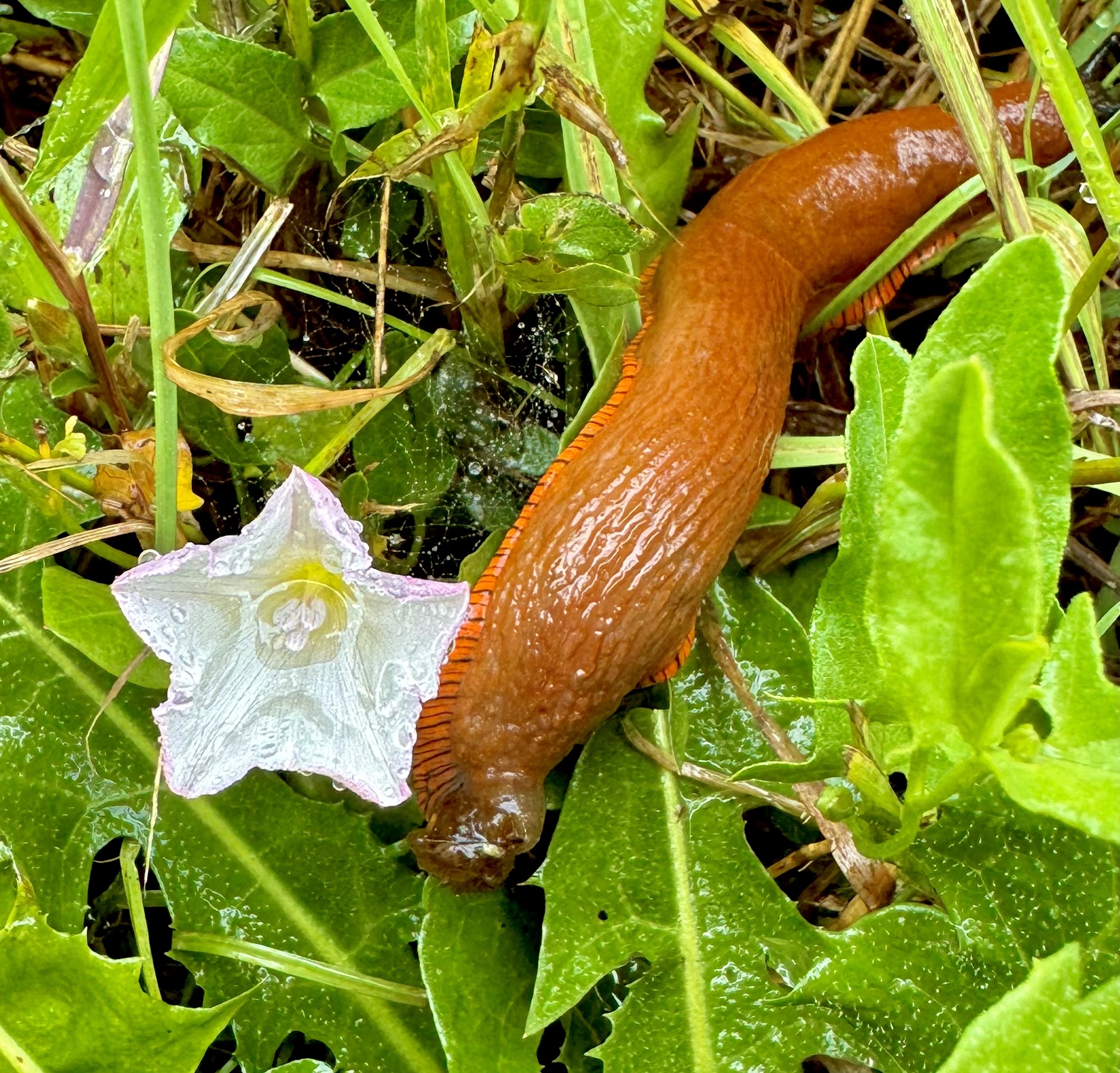
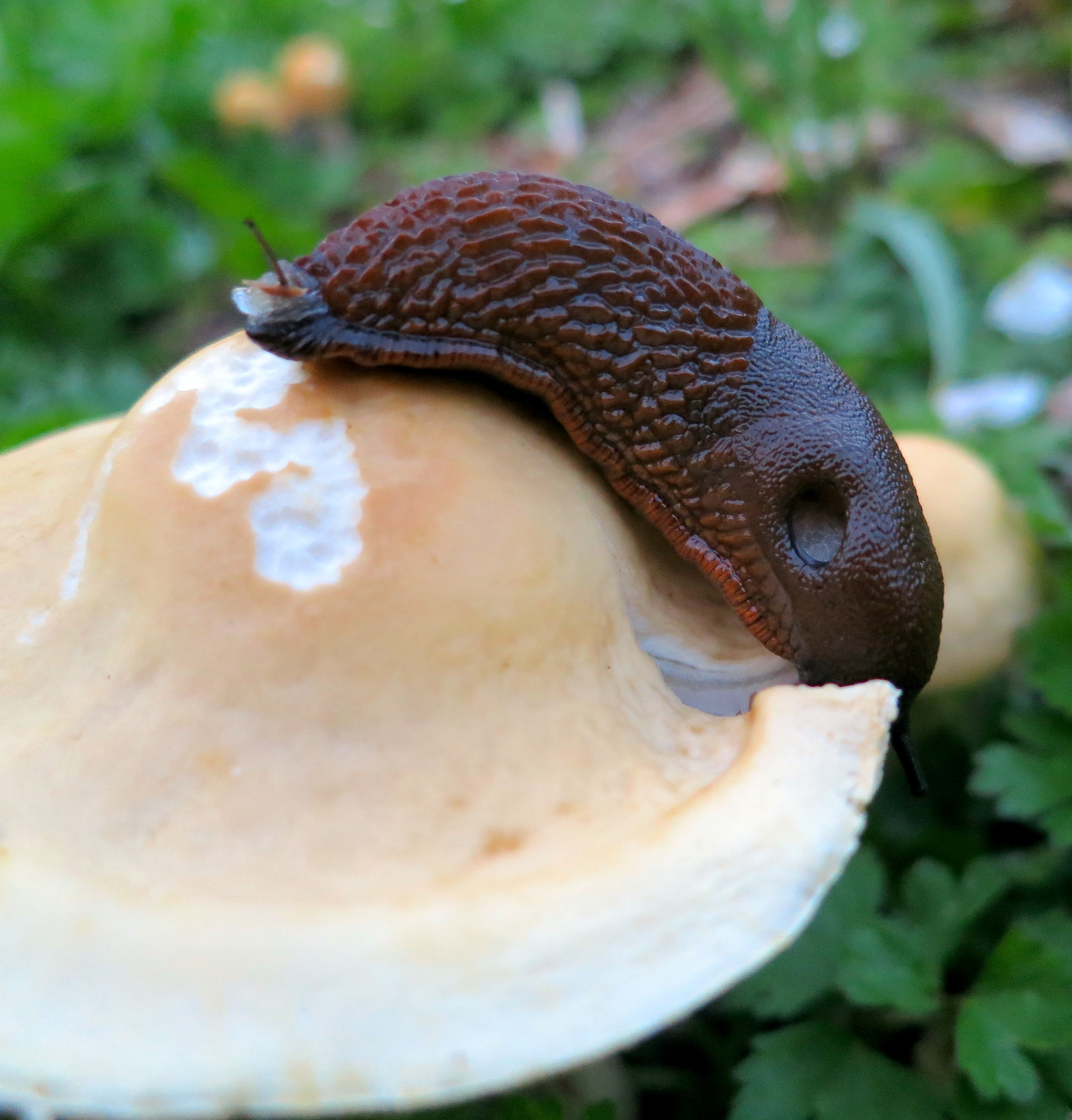
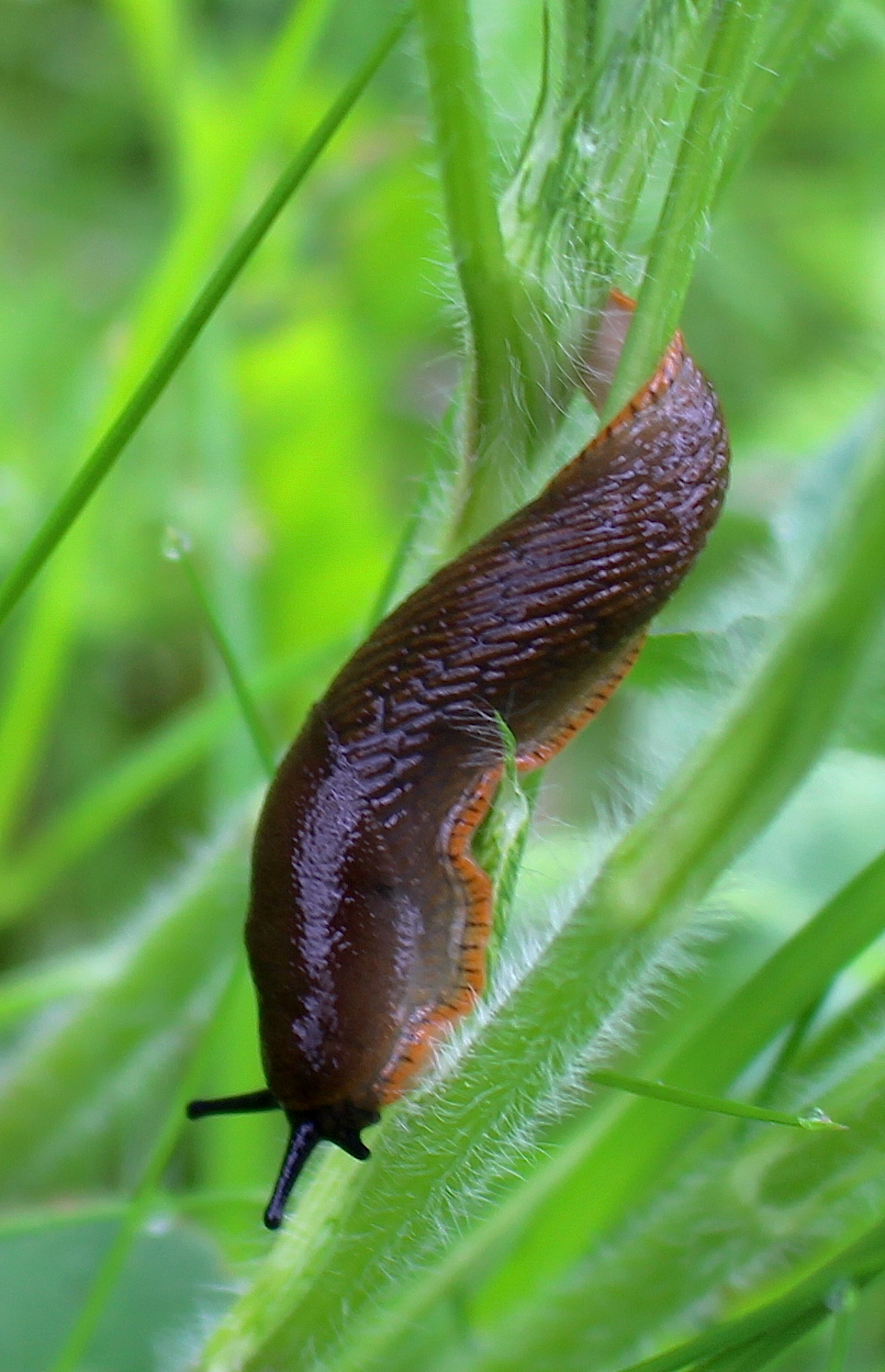
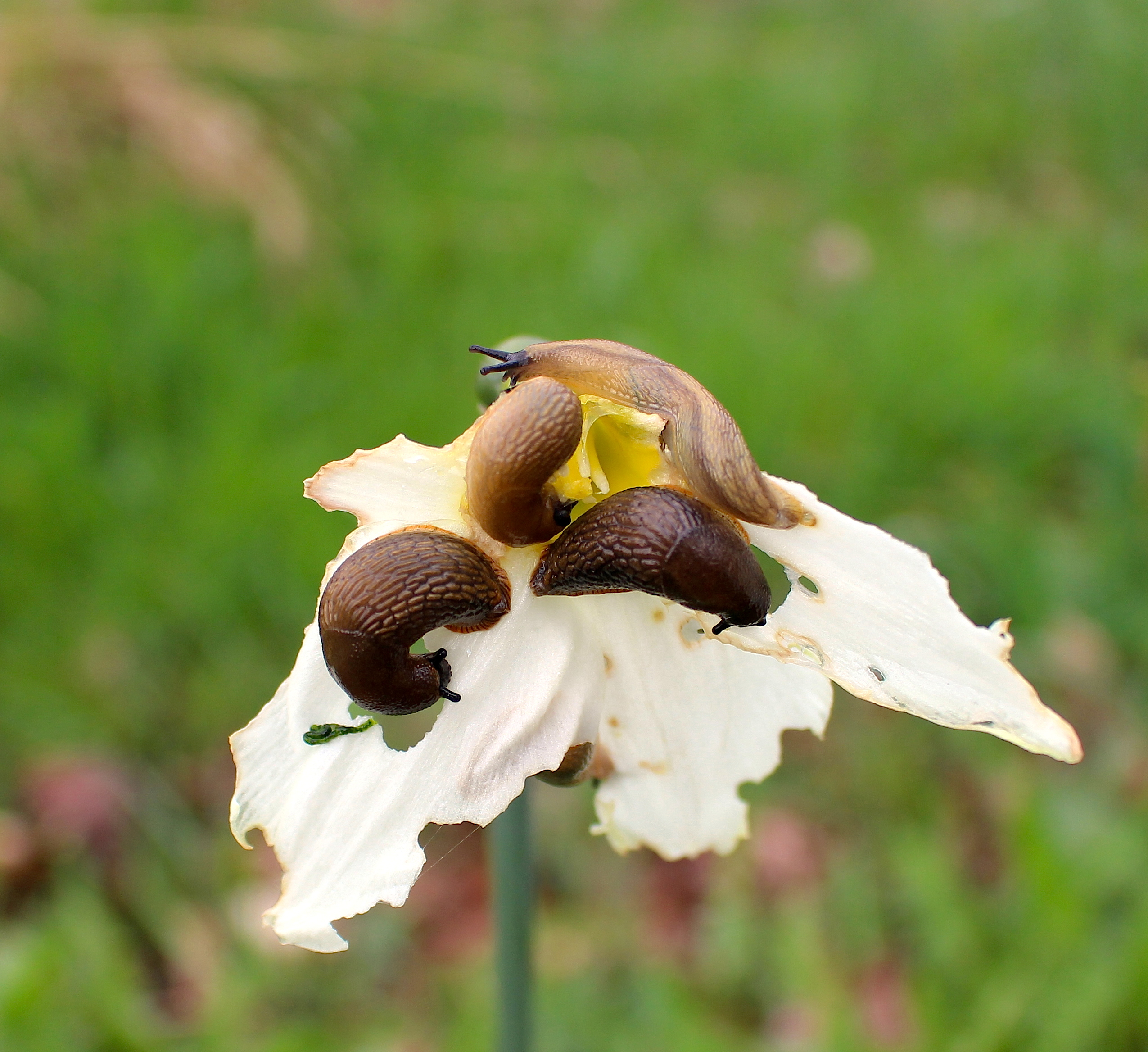
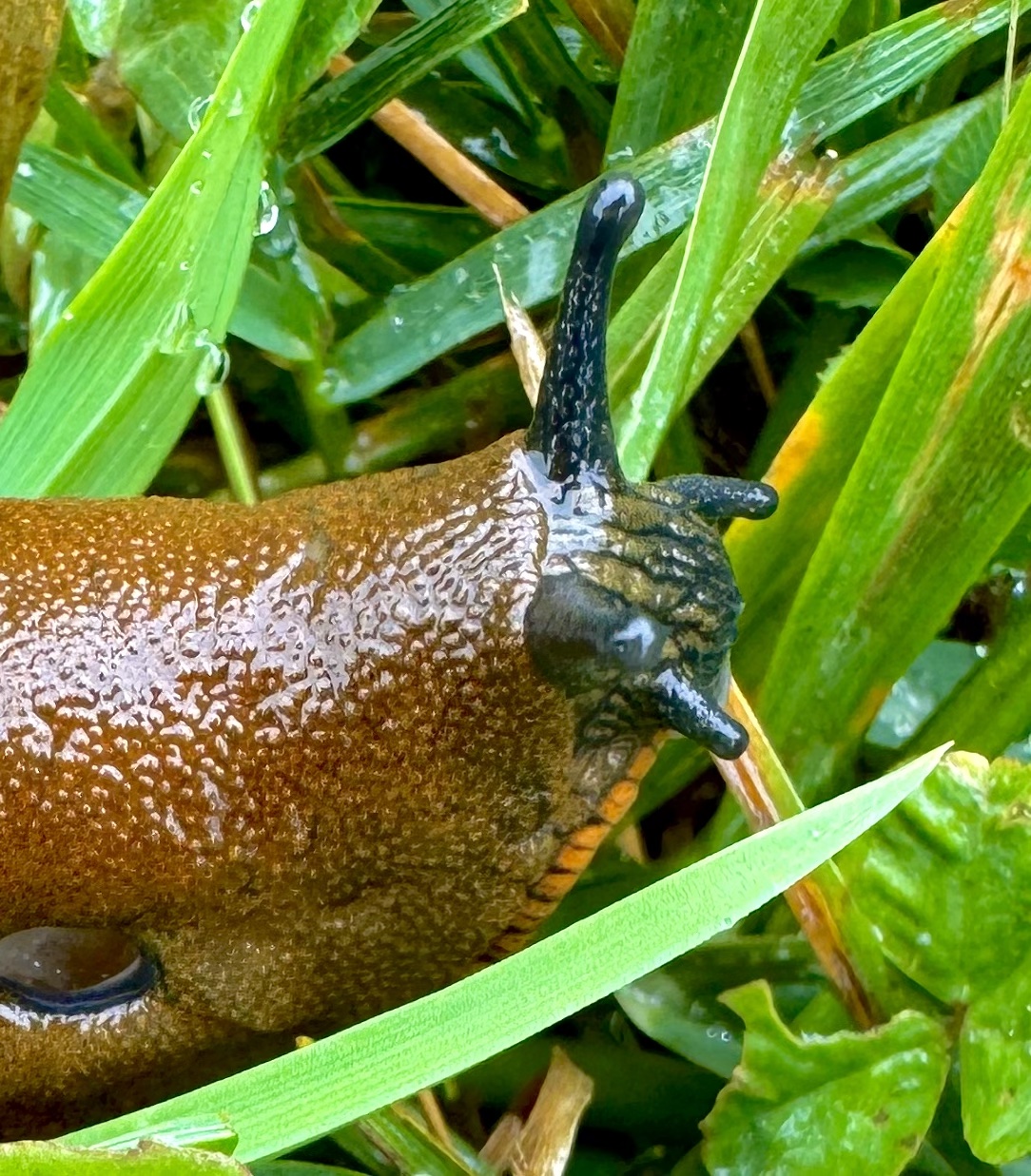
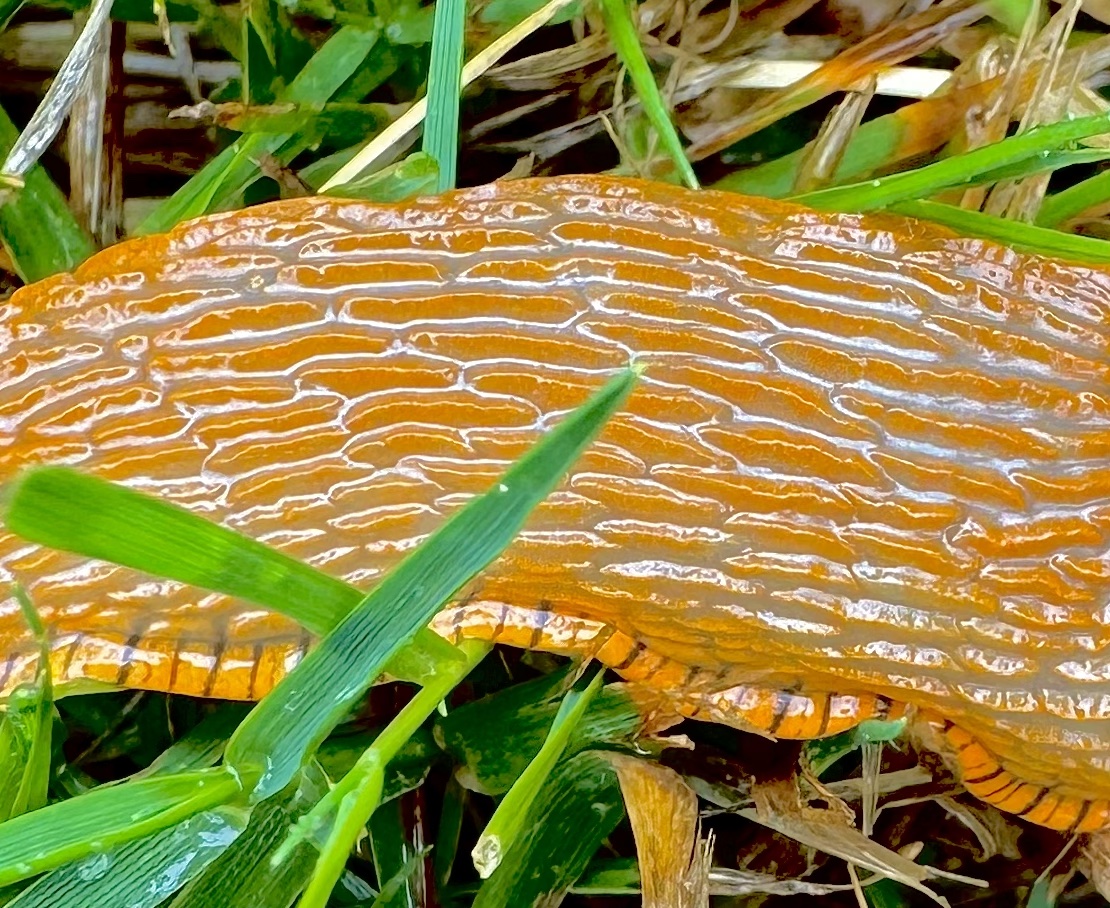
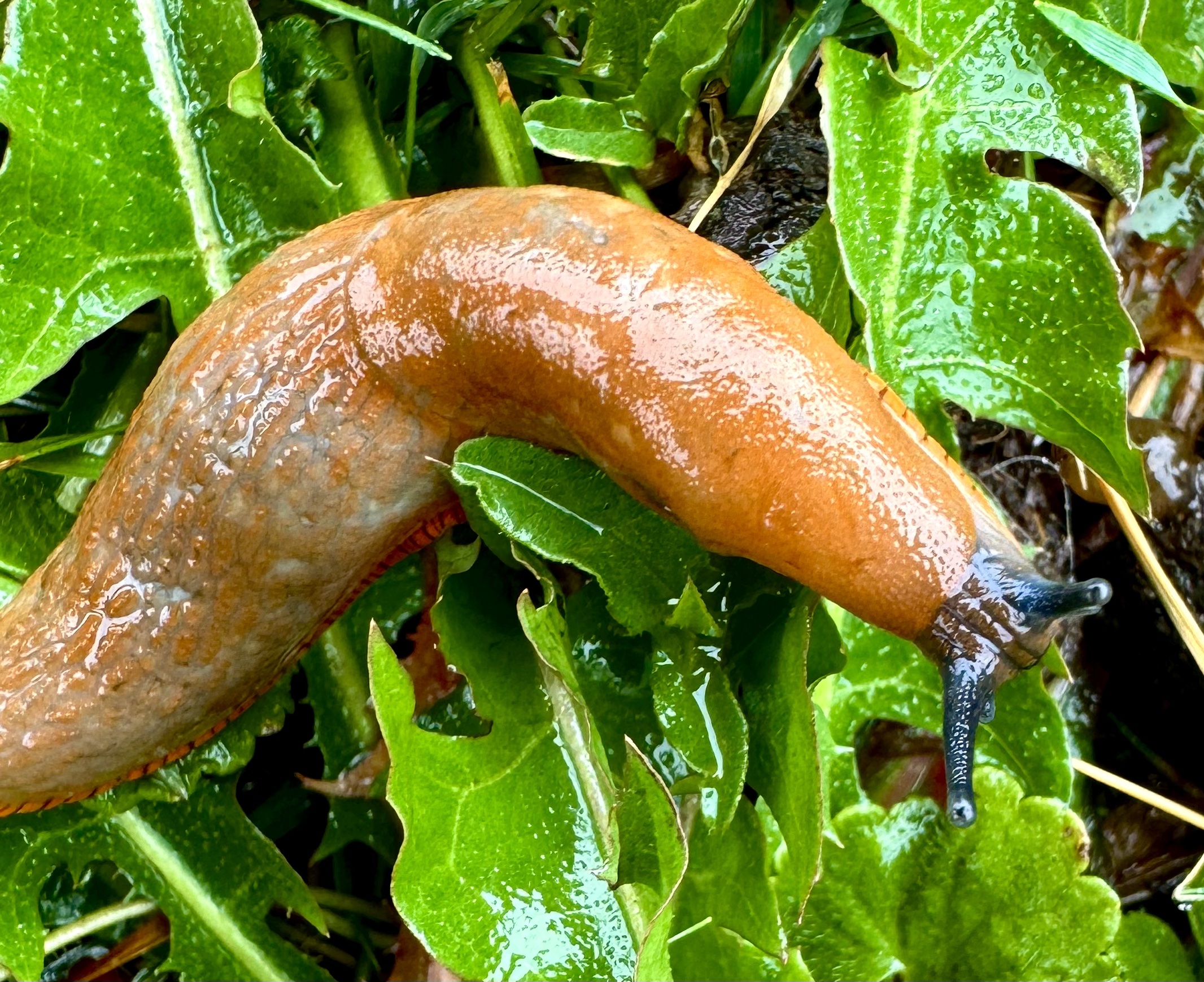
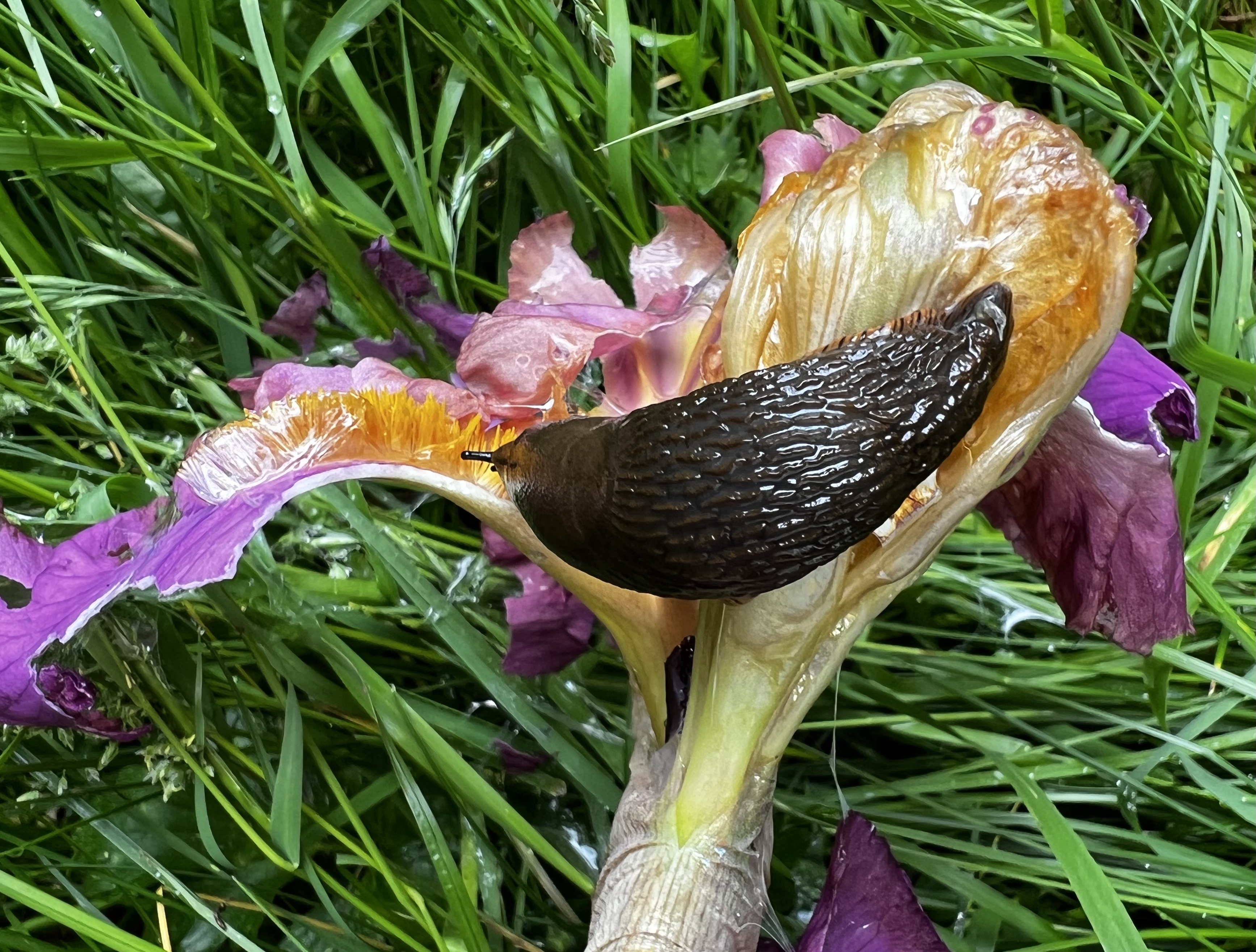
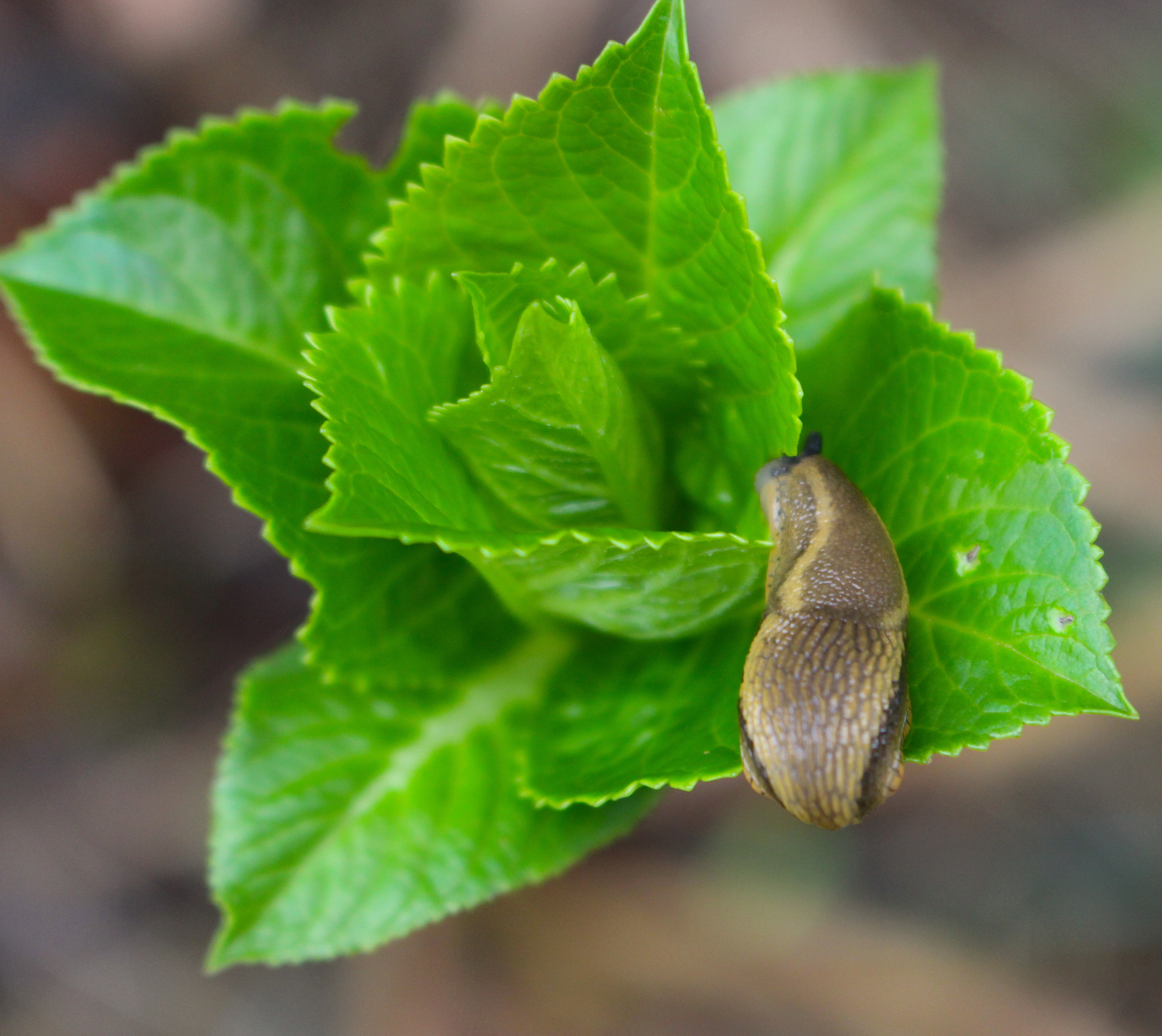
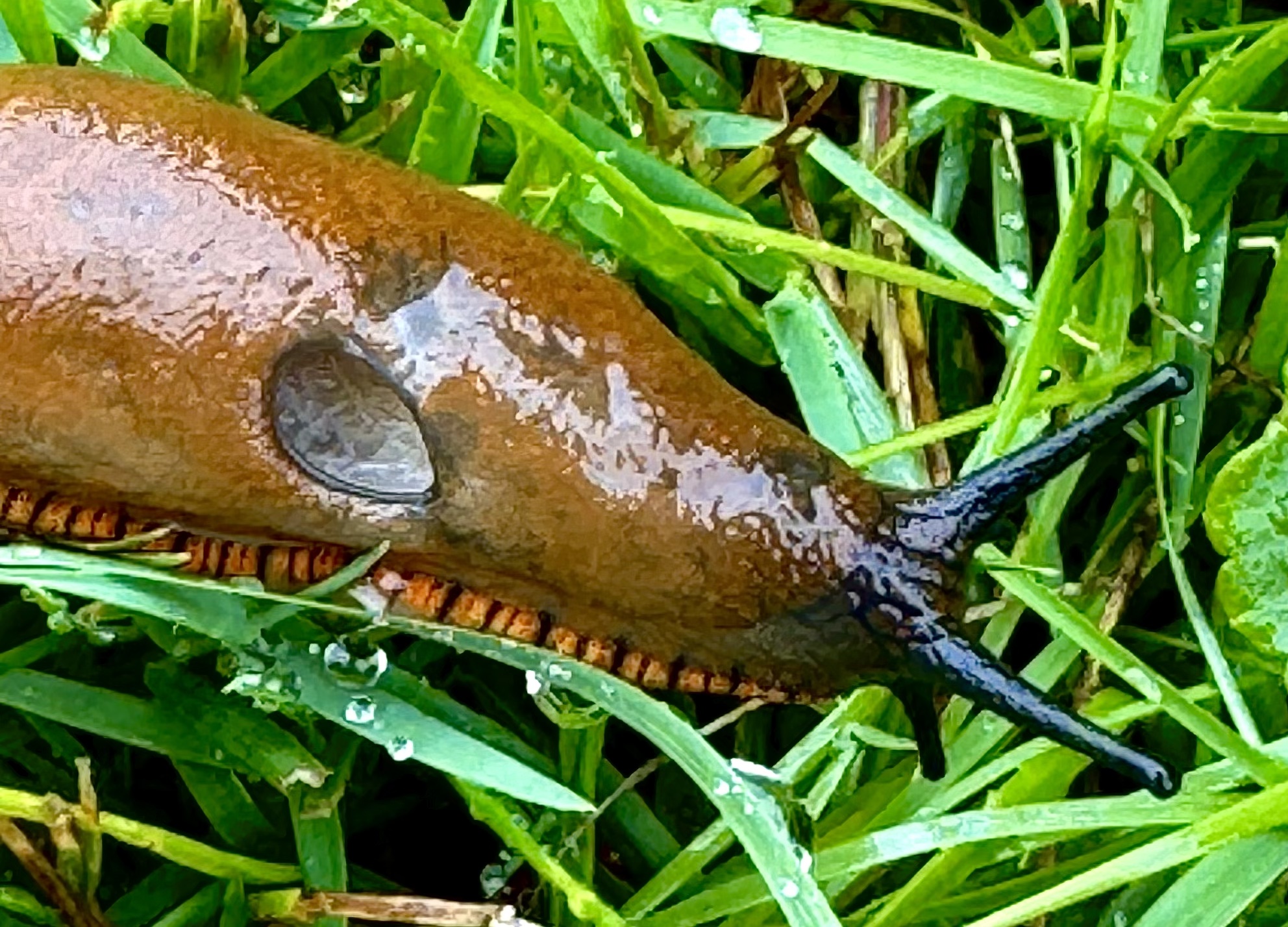
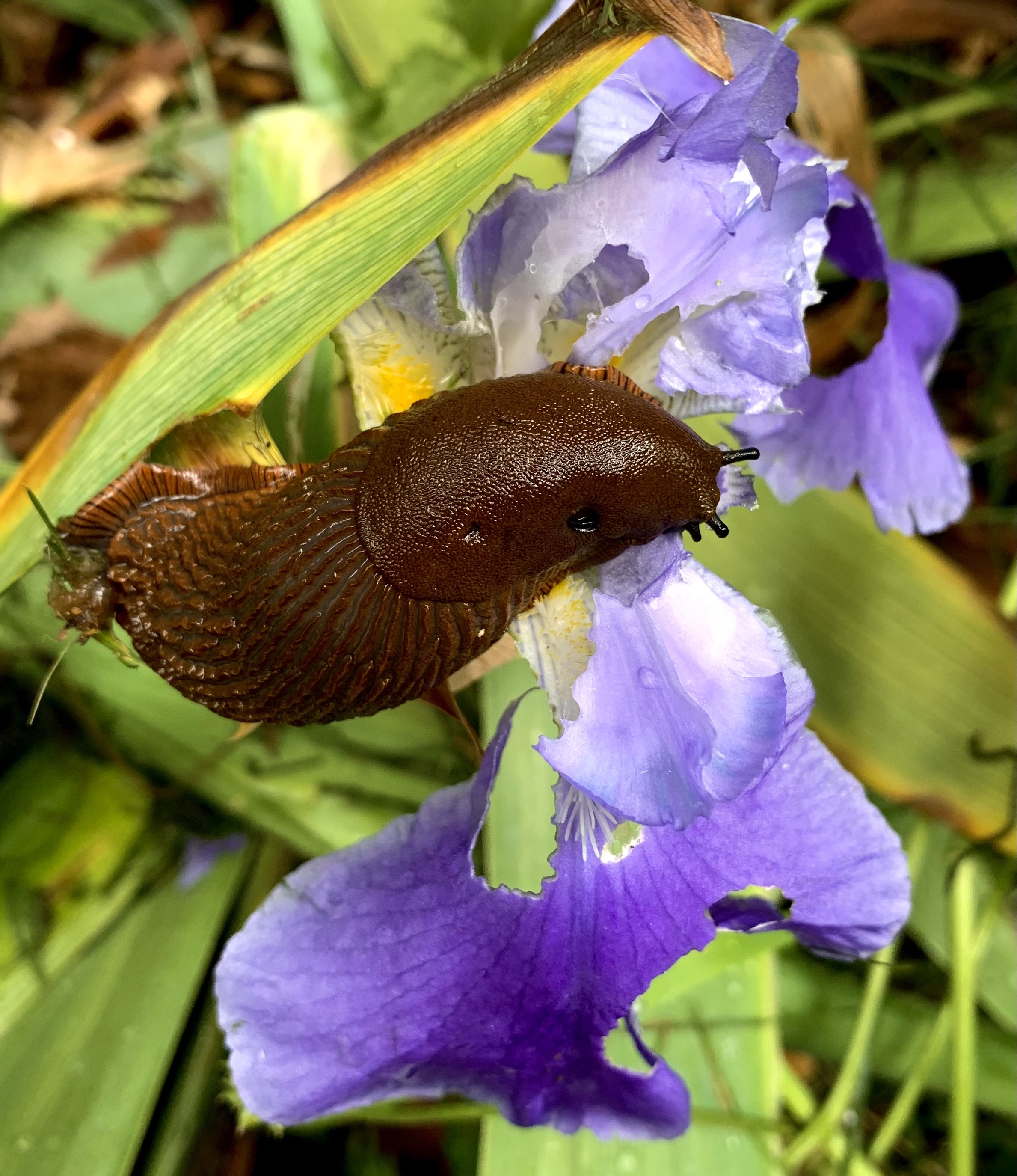
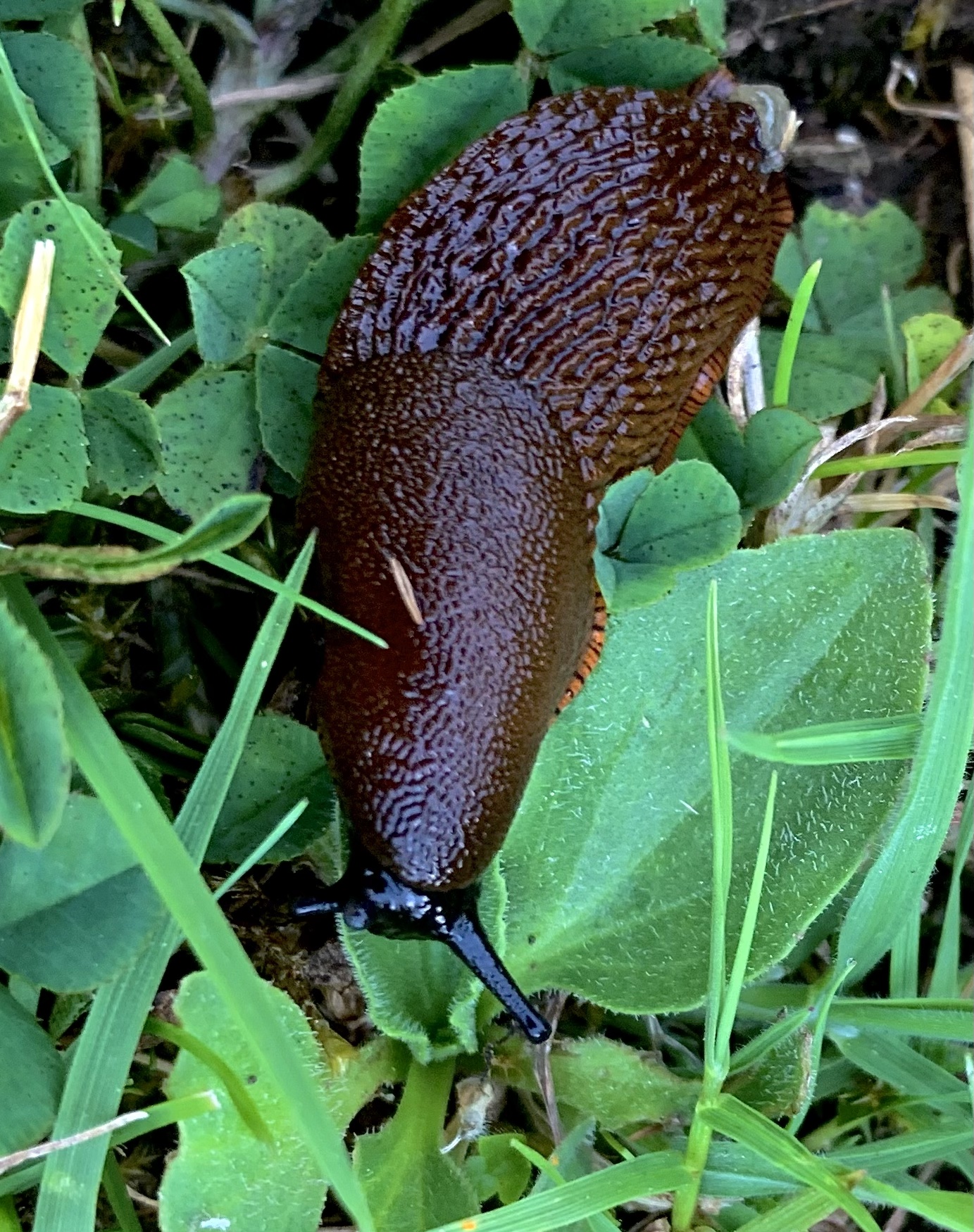
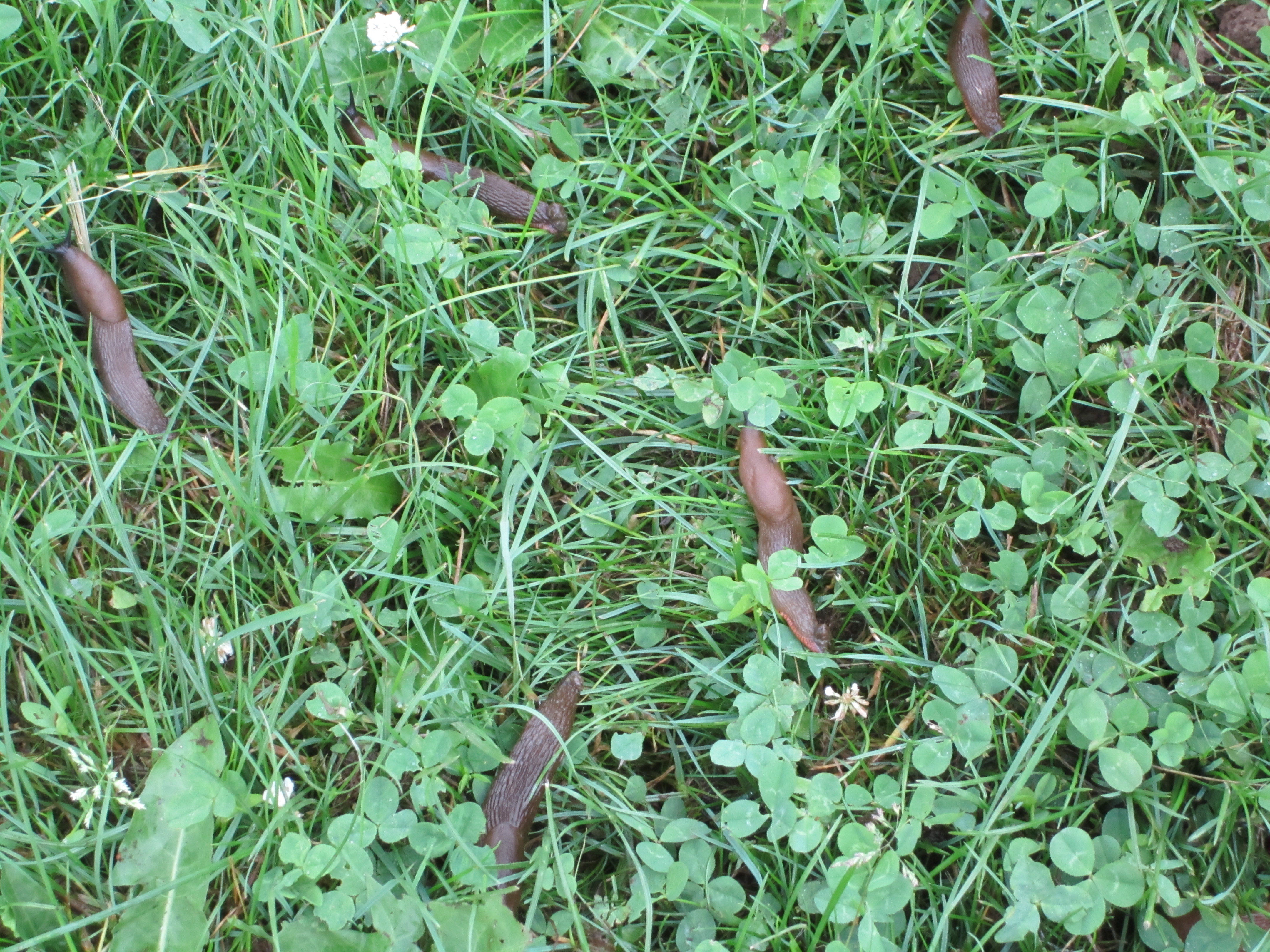
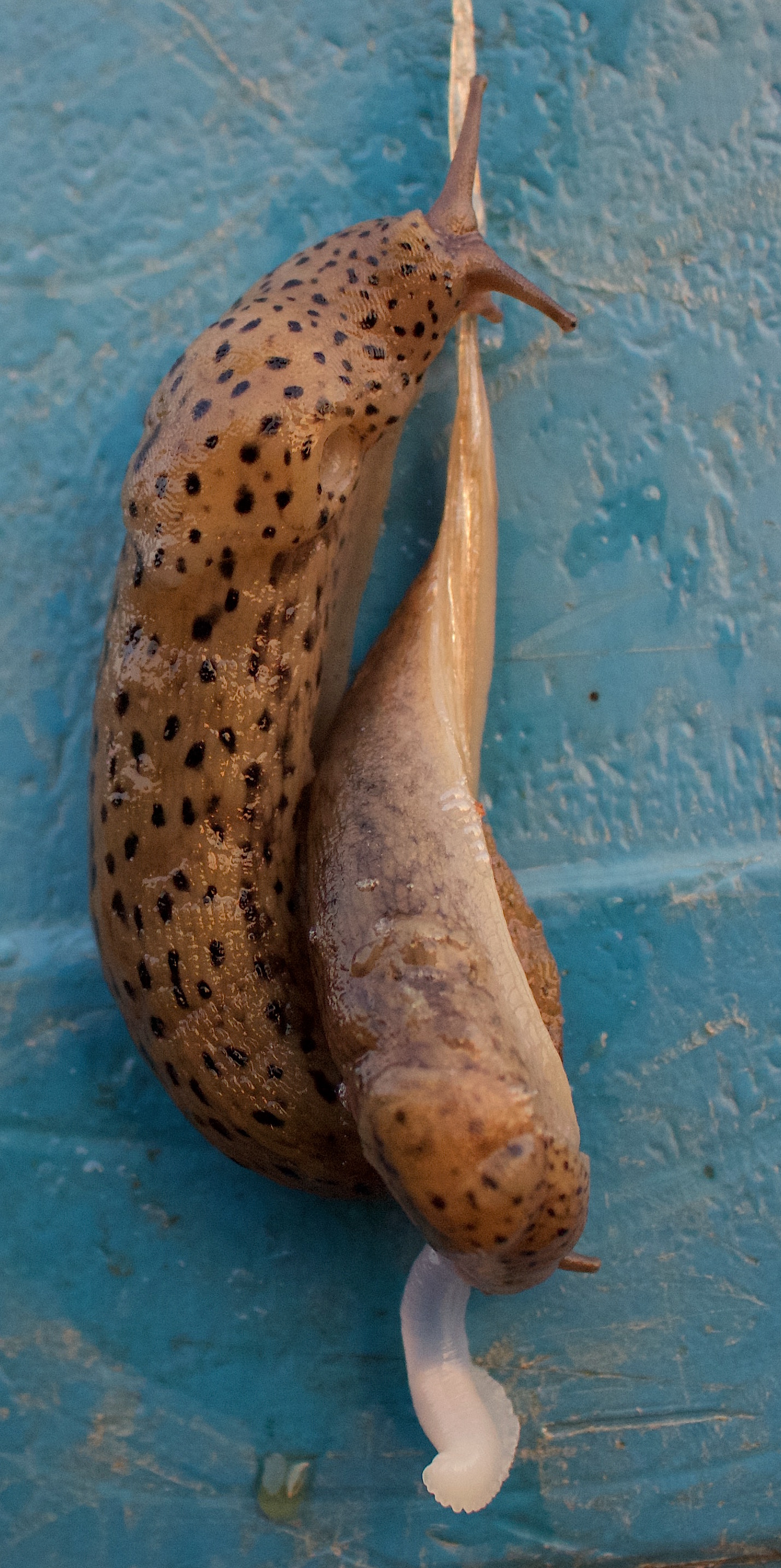
Summer rain is desperately needed in our corner of the U.S. It is typically a frequent visitor to the Pacific Northwest and is forecast for tomorrow which means we will soon be overflowing with slug slime and the lovely multicolored gastropod creatures that produce it.

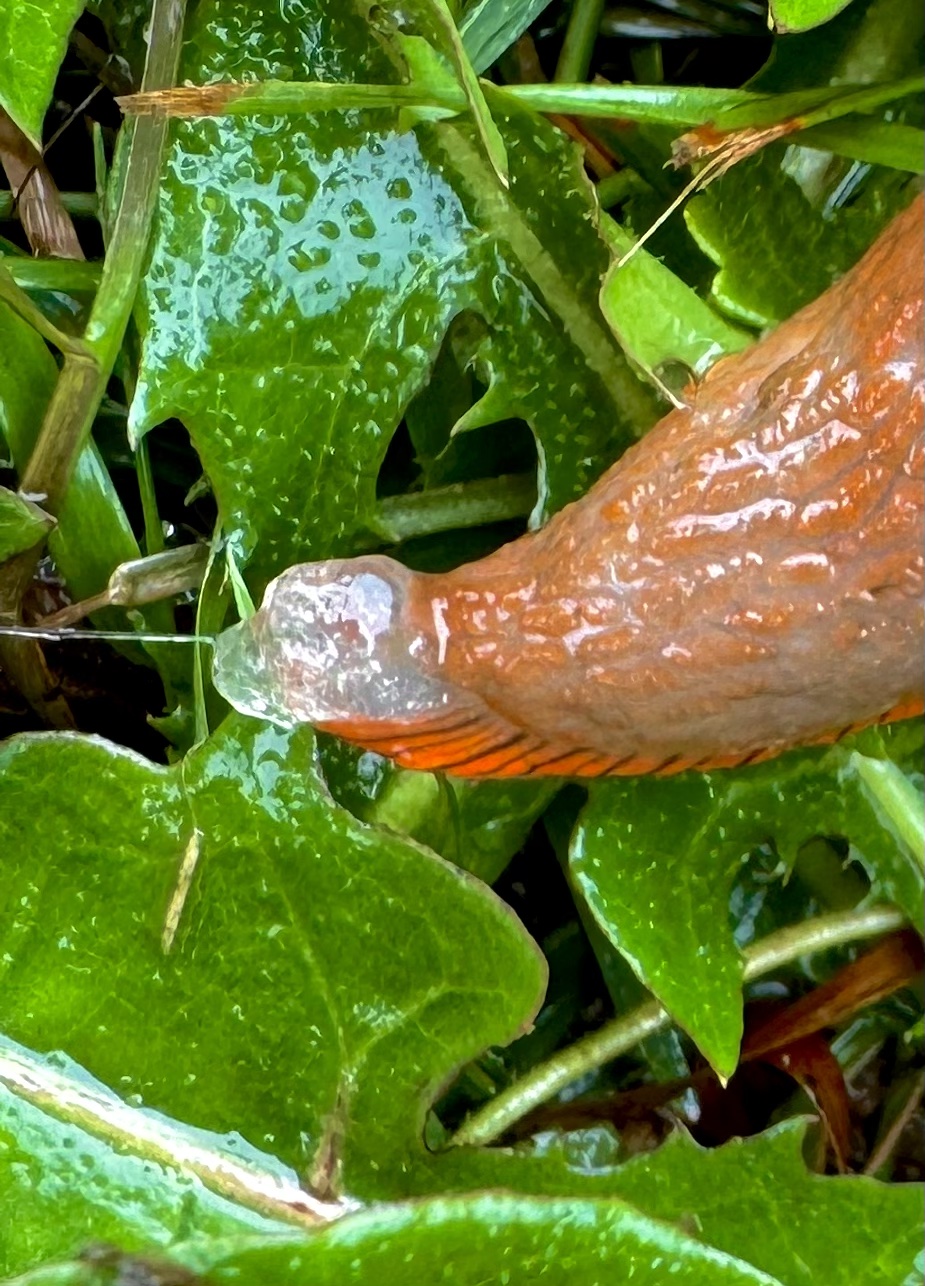
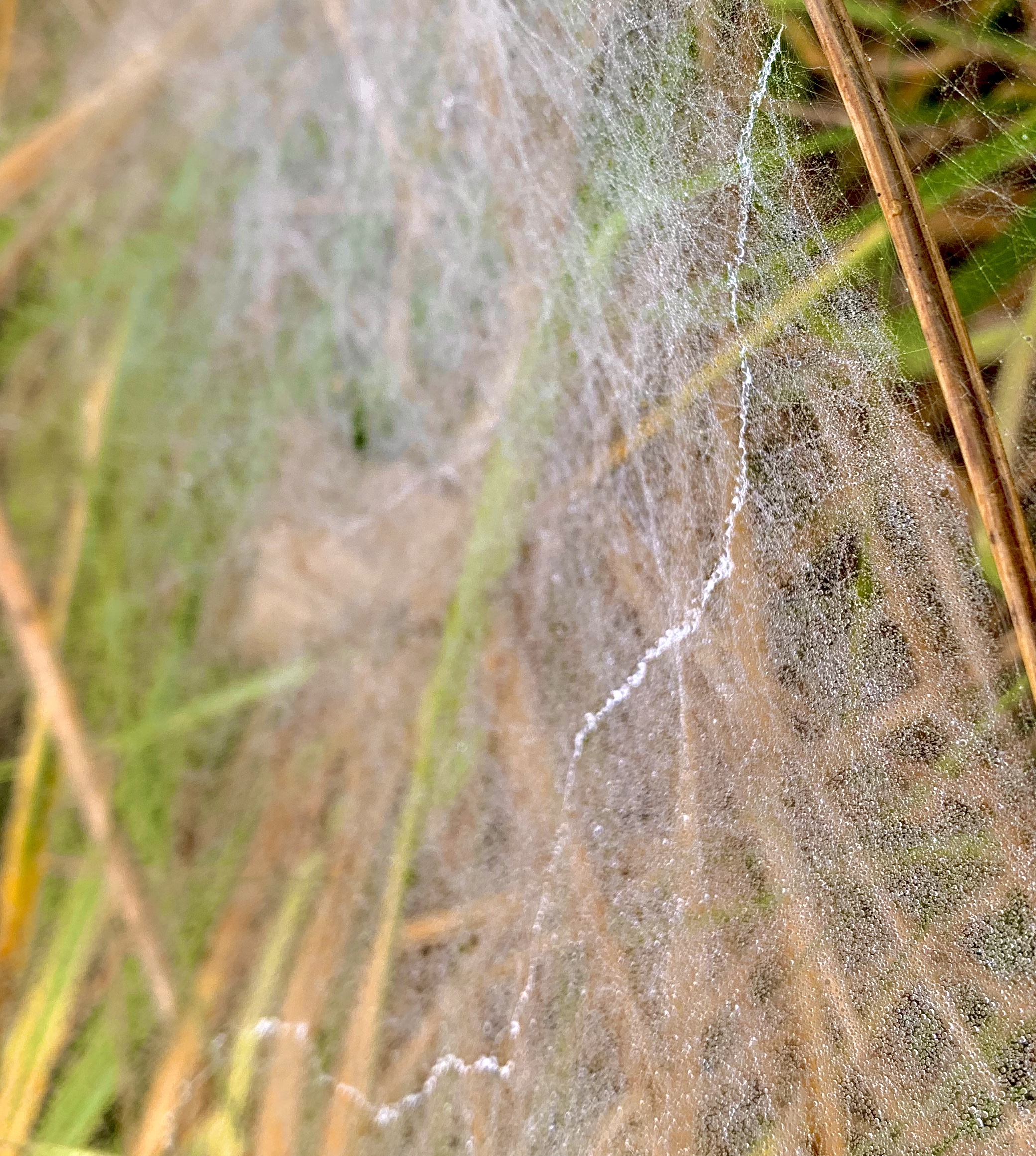
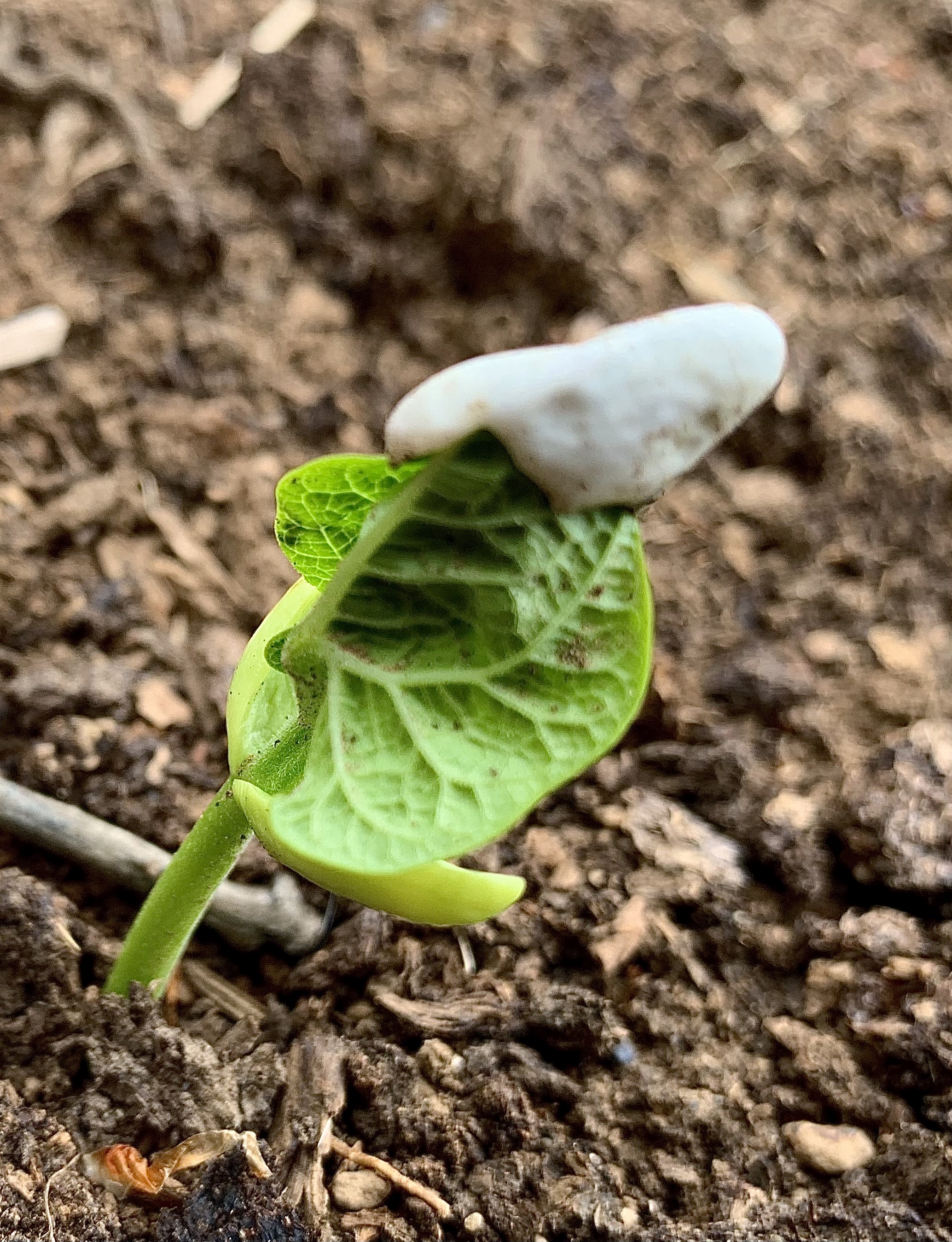
As the first few shower drops fall, they appear out of the ground like seeds that plump and germinate miraculously overnight. The slug crop burgeons, and with it, oozy trails of glistening slug slime.

We live on a hill, which means I walk downhill to the barn for chores. On rainy days, the barnyard path includes a few slugs under each foot. That produces a certain memorable squish factor.

I’ve learned to don my rubber boots and just squash and slide. There will undoubtedly be more slugs to replace those flattened and lost to eternity, not unlike watching freeze-dried shrinky dinks spontaneously rehydrate.

We need the rain badly, otherwise I would negotiate with drought-stricken areas to transfer the raindrops elsewhere. Part of the deal is: the slugs must go too along with gallons of slime, containing a complex mix of proteoglycans, glycosaminoglycans, glycoprotein enzymes, hyaluronic acid, antimicrobial peptides, and metal ions of zinc, iron, copper and manganese. Surely someone somewhere would appreciate slime’s precious metals and sticky proteins!

Of course, I’m sure I’d miss them and their sticky icky gooiness. But it is time for someone else to figure out just what the heck is the purpose of slimy gastropods.

I’ve given up trying to figure it out…

One-Time
Monthly
Yearly

Make a one-time or recurring donation to support daily Barnstorming posts

Make a monthly donation

Make a yearly donation

Choose an amount

$10.00
$25.00
$50.00
$5.00
$15.00
$100.00
$5.00
$15.00
$100.00

Or enter a custom amount

$

Your contribution is deeply appreciated.

Your contribution is appreciated.

Your contribution is appreciated.

DonateDonate monthlyDonate yearly
A Seed of Belief

When the time’s toxins
have seeped into every cell

and like a salted plot
from which all rain, all green, are gone

I and life are leached
of meaning

somehow a seed
of belief

sprouts the instant
I acknowledge it:

little weedy hardy would-be
greenness

tugged upward
by light

while deep within
roots like talons

are taking hold again
of this our only earth.

~Christian Wiman “When the Time’s Toxins”

True gardeners cannot bear a glove
Between the sure touch and the tender root,
Must let their hands grow knotted as they move
With a rough sensitivity about
Under the earth, between the rock and shoot,
Never to bruise or wound the hidden fruit.
And so I watched my mother’s hands grow scarred,
She who could heal the wounded plant or friend
With the same vulnerable yet rigorous love;
I minded once to see her beauty gnarled,
But now her truth is given me to live,
As I learn for myself we must be hard
To move among the tender with an open hand,
And to stay sensitive up to the end
Pay with some toughness for a gentle world.
~May Sarton “An Observation”

I’m reminded every spring, as my husband’s hands prepare the soil in the garden for that season’s planting, how challenging is the job of the gardener. His hands must fight the chaos of weeds and rocks to prepare a gentle bed for each seed.

A seed is a plain, unadorned and ordinary thing, a little boring even, practically forgotten once it is placed in the ground. Yet the ordinariness is only the outer dress; the extraordinary is contained inside, and within days a tender shoot braves all to come to the surface, bowed and humble. It establishes a tenacious root that ensures survival, grabbing hold in even the most inhospitable ground.

So it is with Jesus whose ordinary origins belied his holiness and majesty. Both hardy root and tender shoot, he reaches up to the heavens while his feet tread the soil,  both at once. His toughness paid for our chance at a more gentle world.

And thanks to Him, we are fed.

For he grew up before him like a young plant,
and like a root out of dry ground;
Isaiah 53:2a

AI image created for this post
One-Time
Monthly
Yearly

Make a one-time or recurring donation to support daily Barnstorming posts

Make a monthly donation

Make a yearly donation

Choose an amount

$10.00
$25.00
$50.00
$5.00
$15.00
$100.00
$5.00
$15.00
$100.00

Or enter a custom amount

$

Your contribution is deeply appreciated.

Your contribution is appreciated.

Your contribution is appreciated.

DonateDonate monthlyDonate yearly
To Come Alive Again

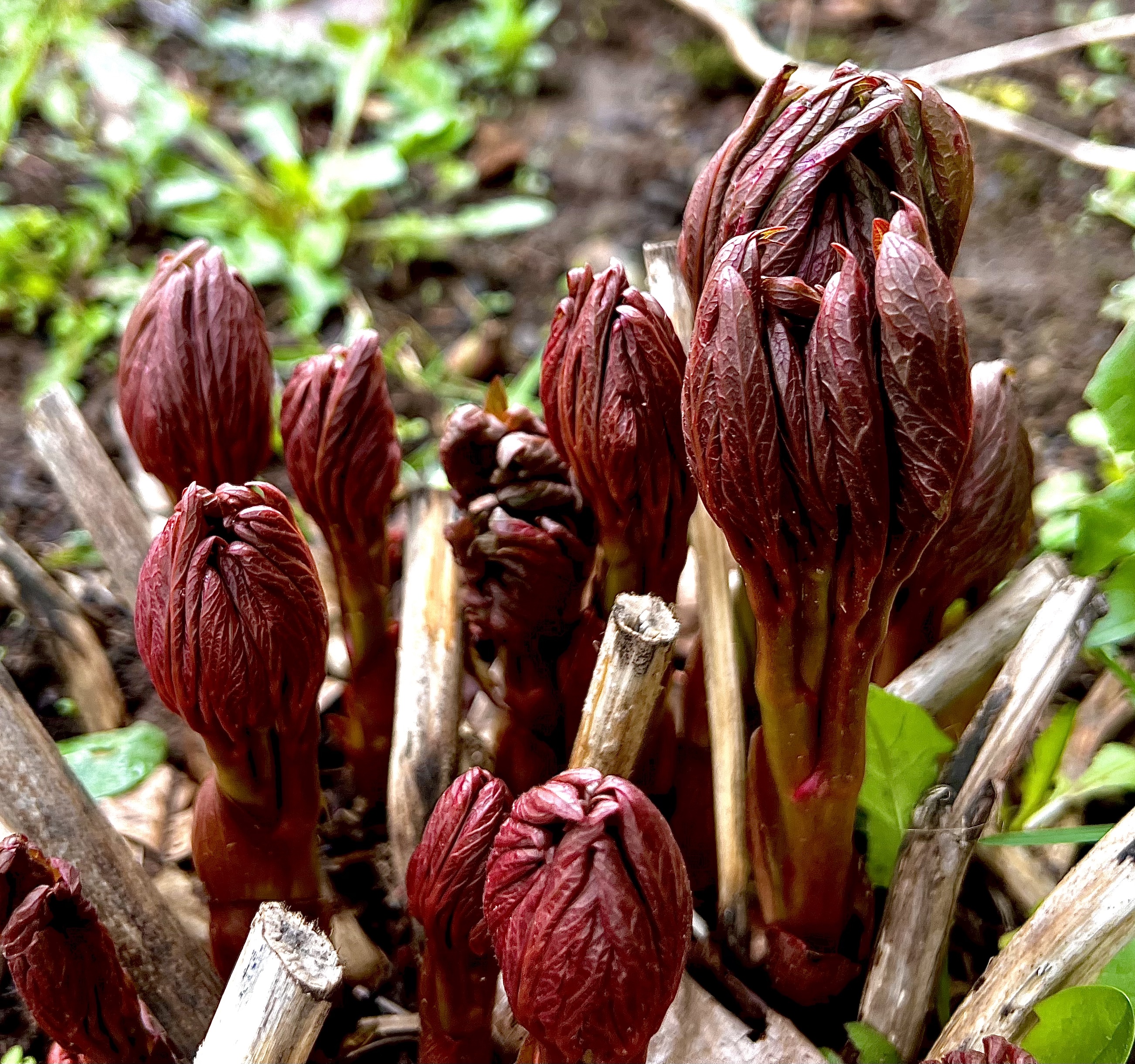
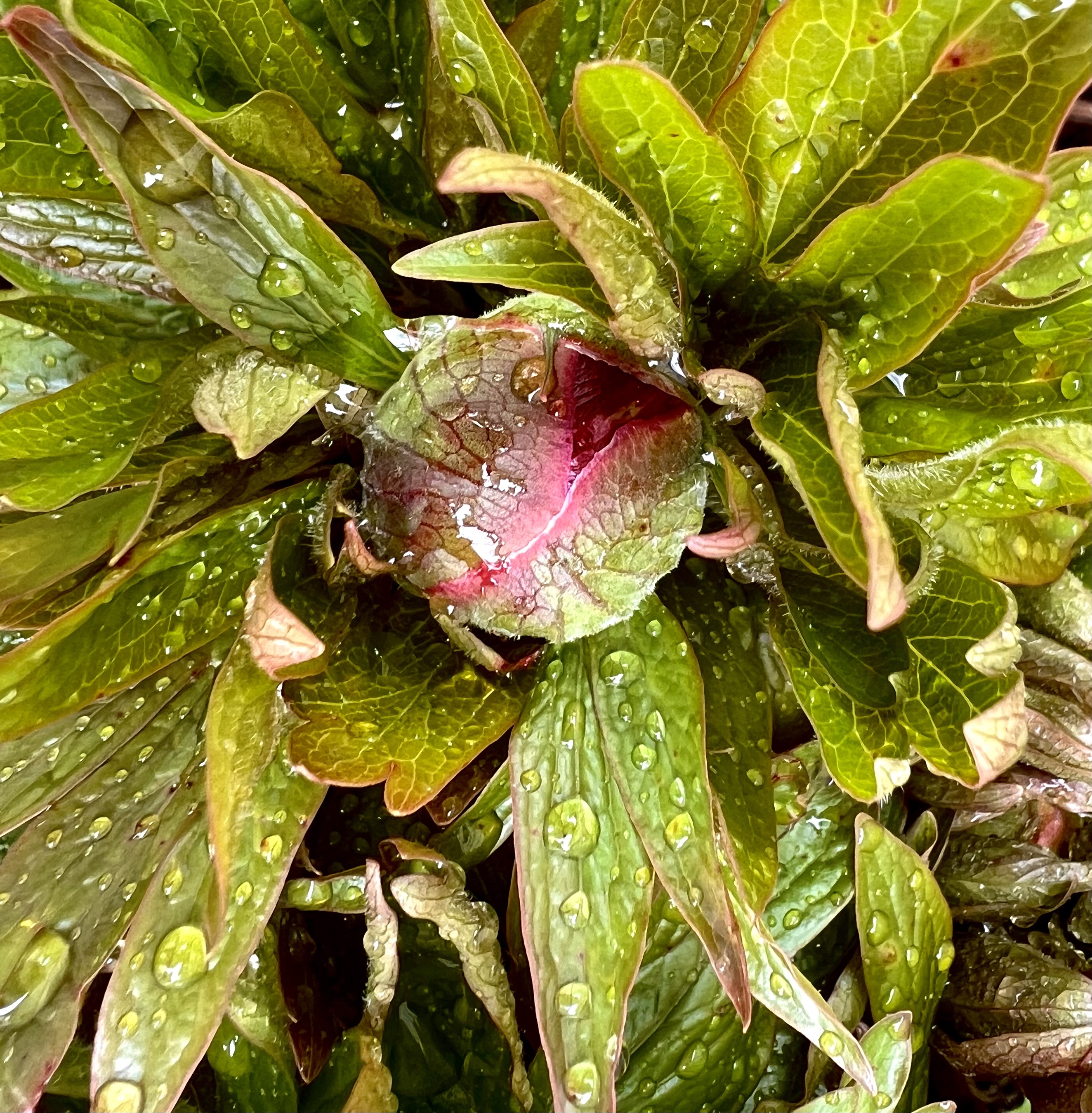
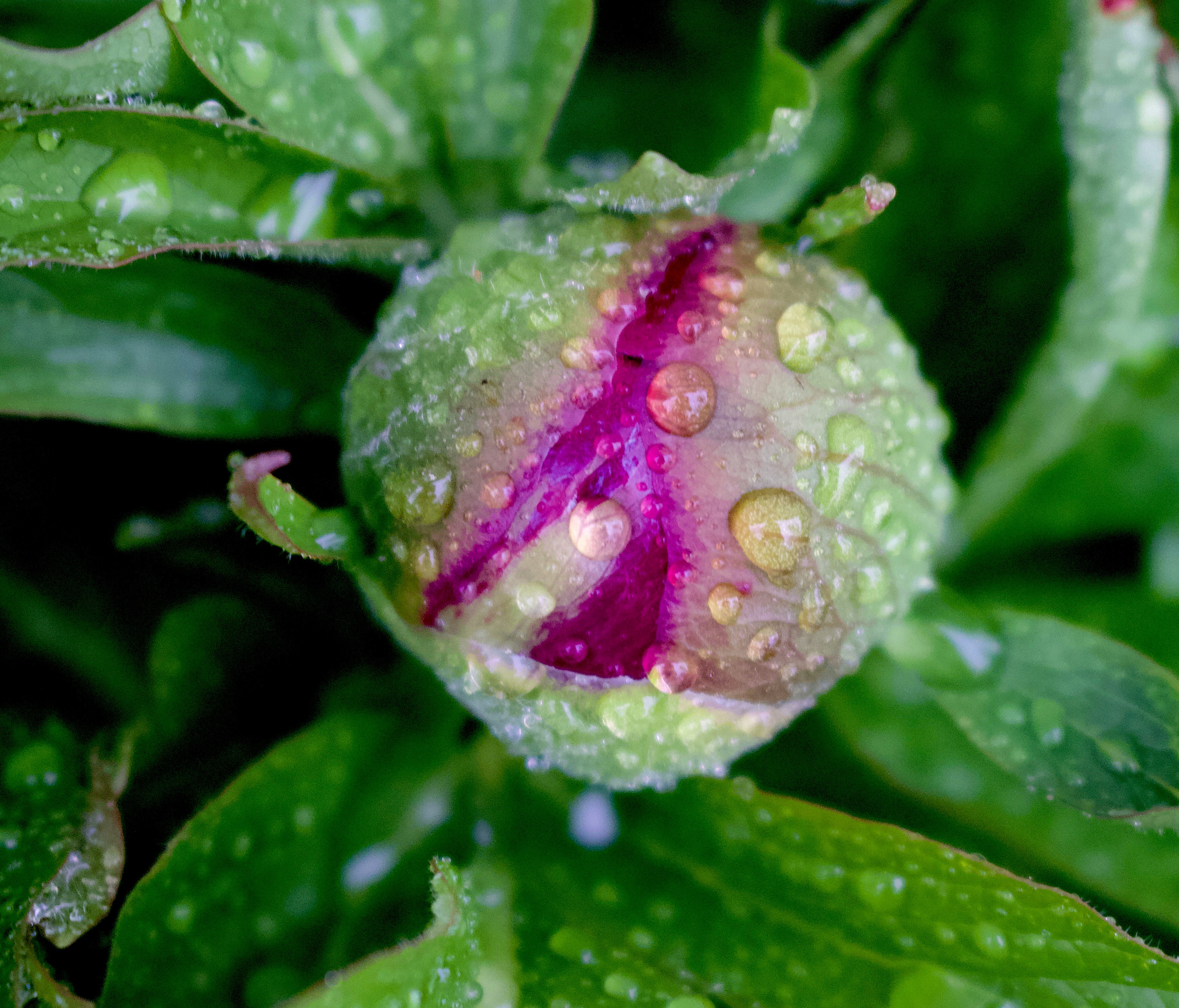
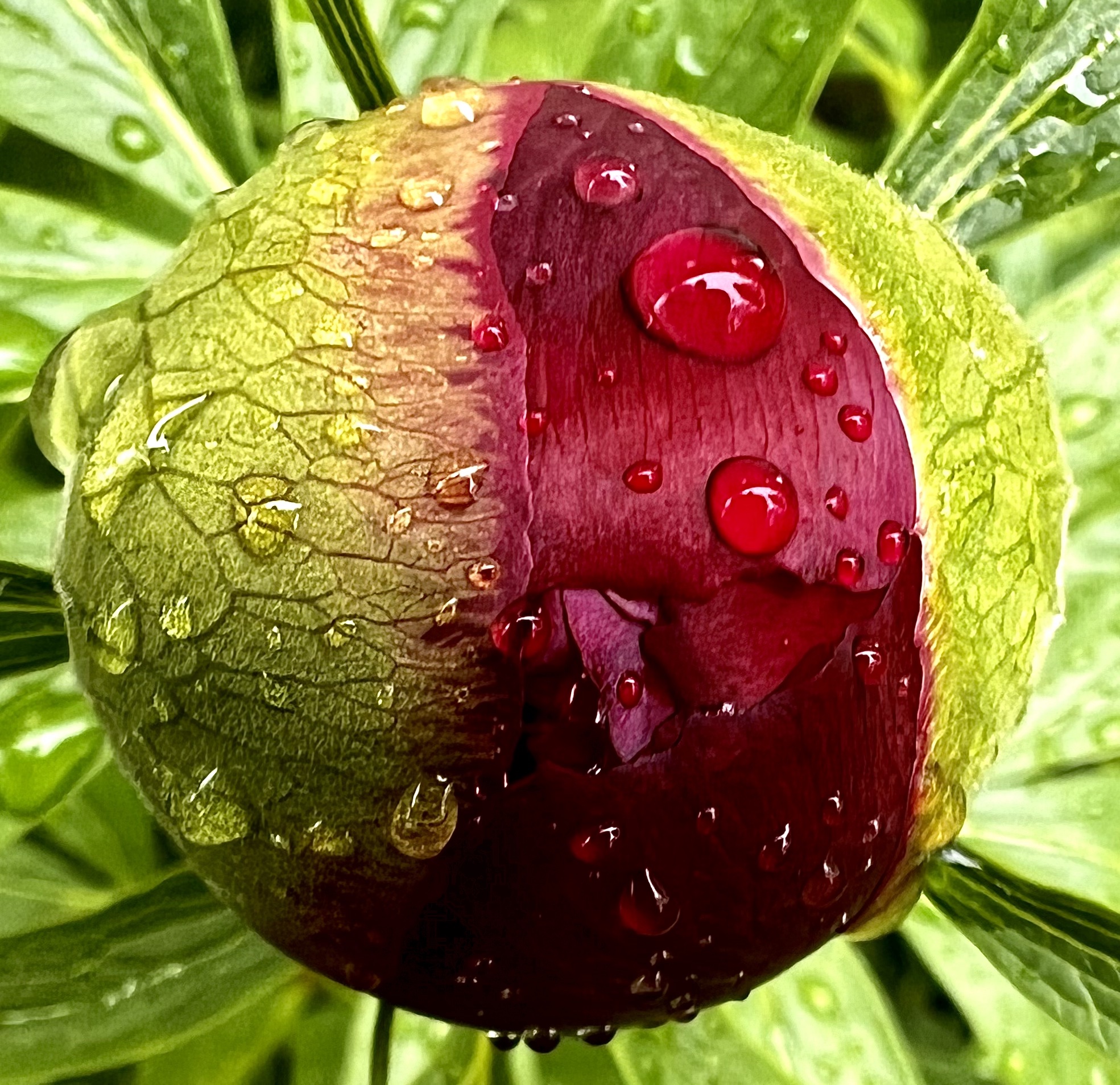
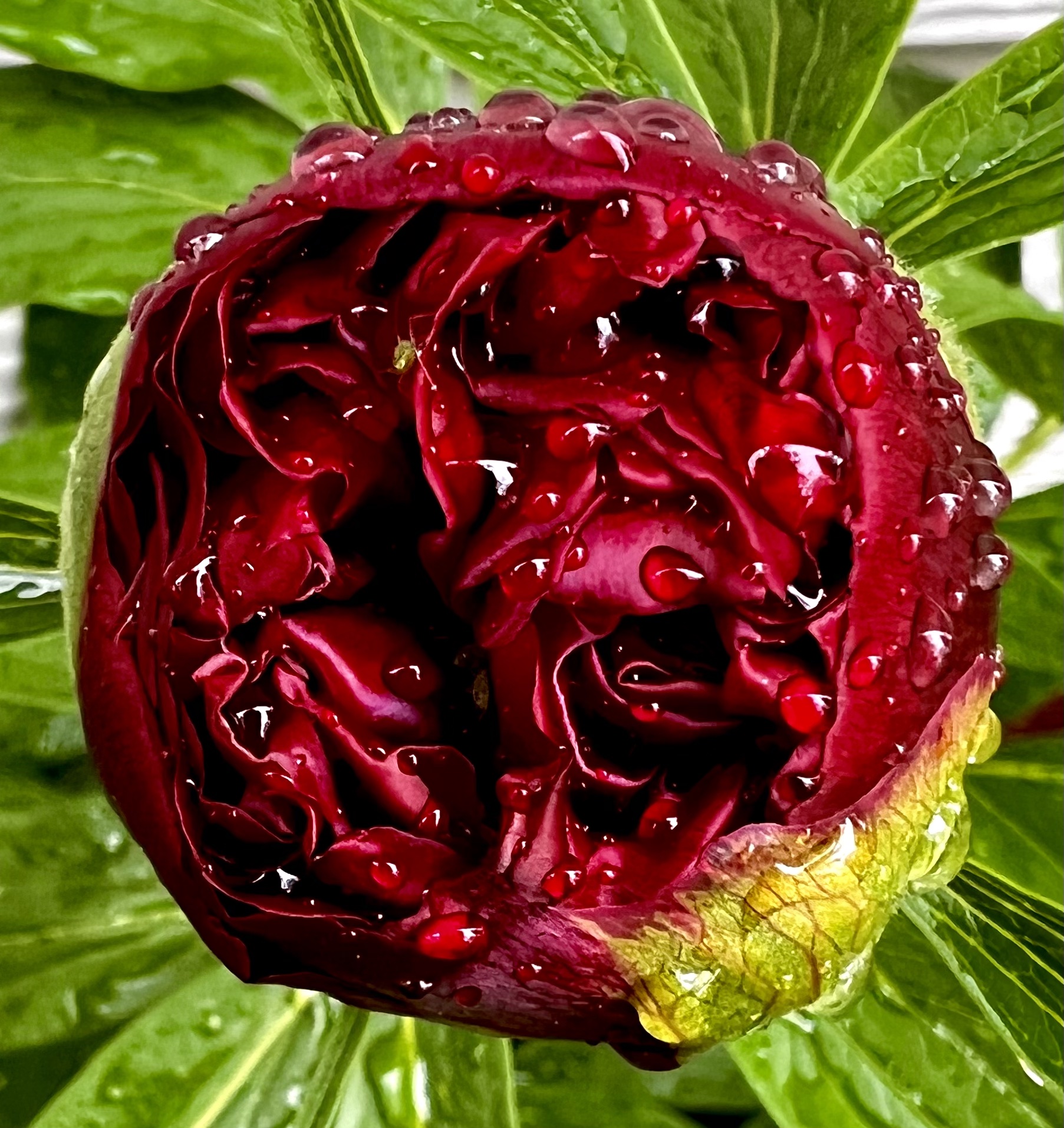
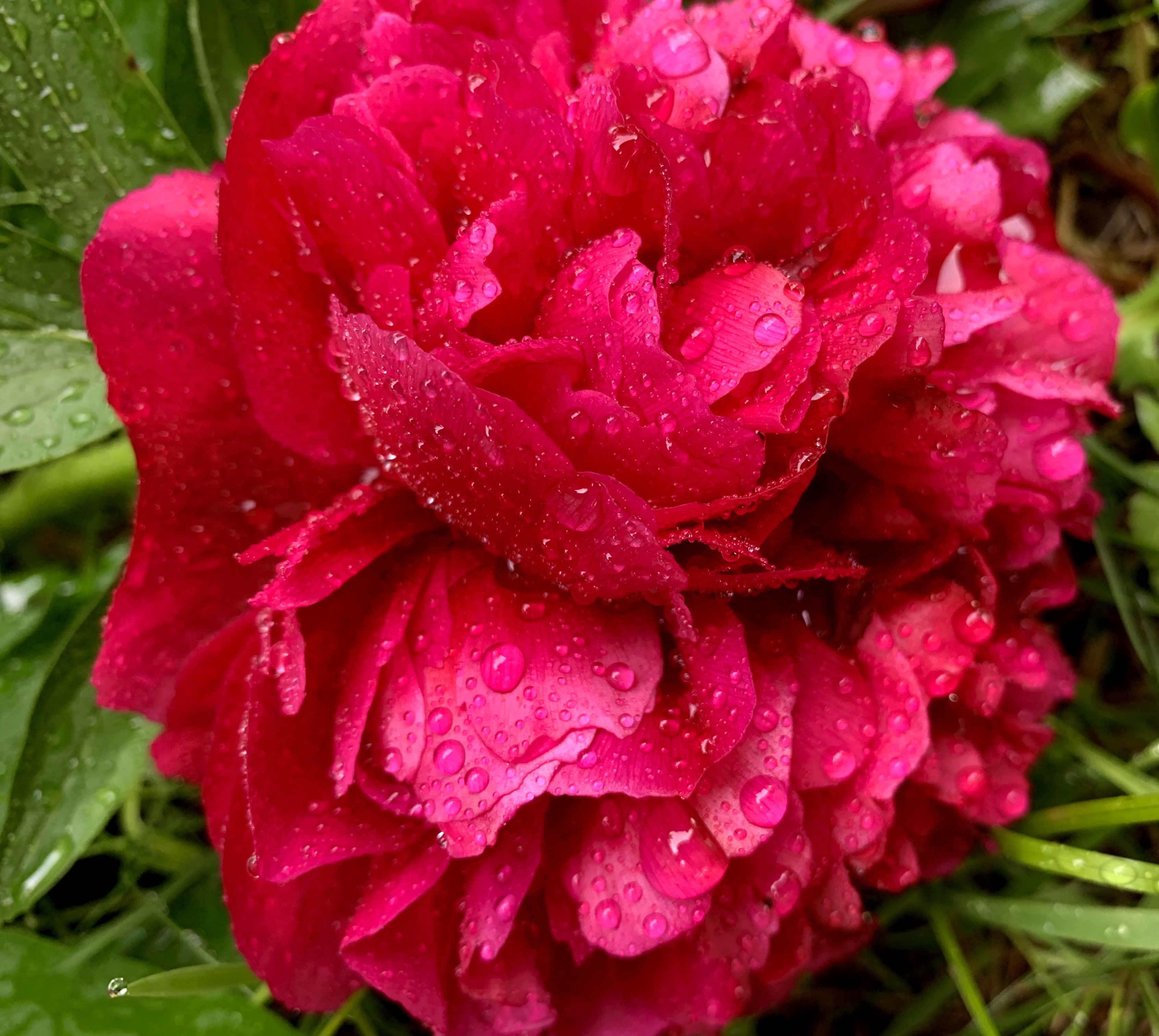
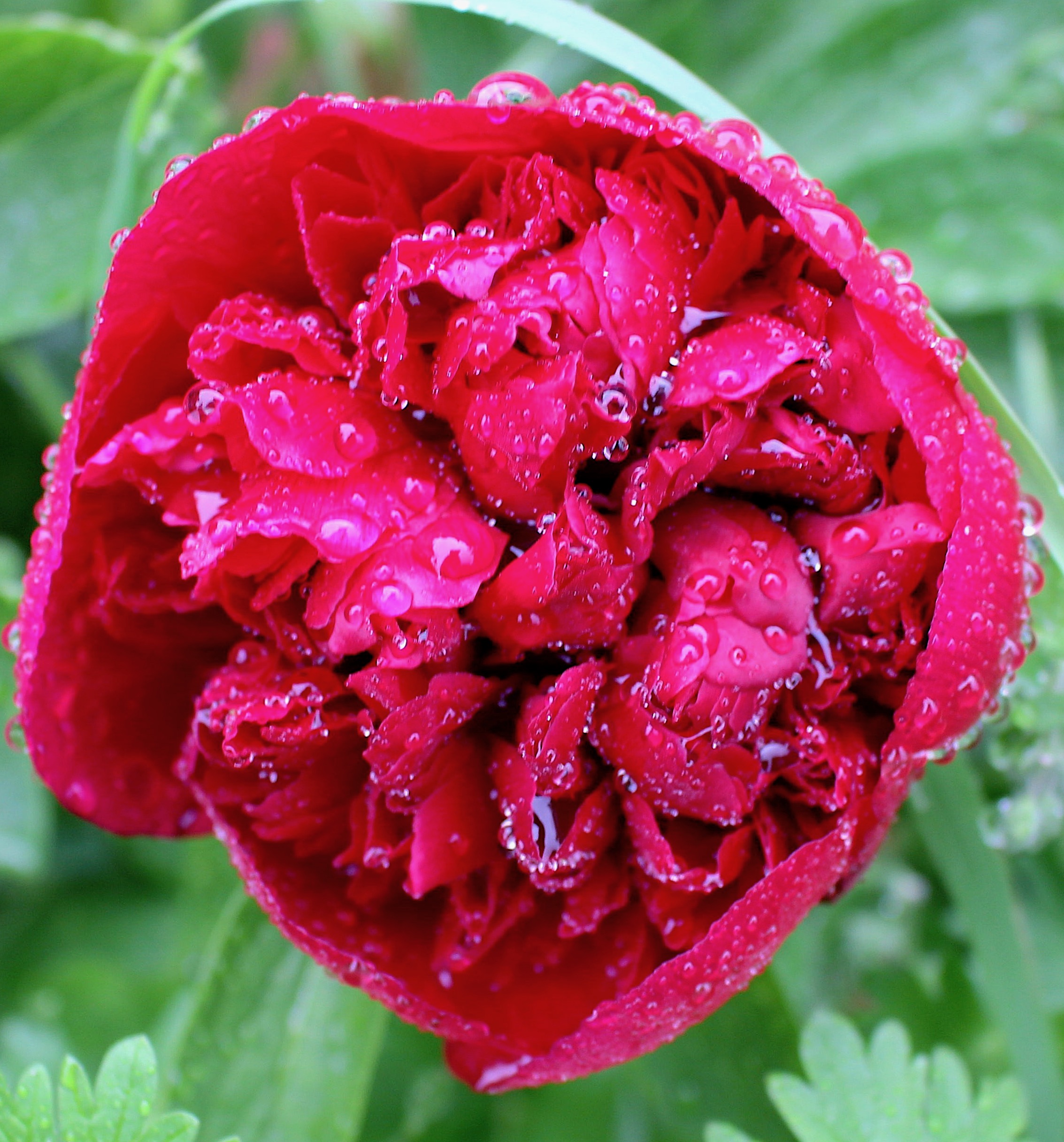
This morning the green fists of the peonies are getting ready
to break my heart
as the sun rises, 
as the sun strokes them with his old, buttery fingers

and they open —
pools of lace, 
white and pink —

and all day
under the shifty wind, 
as in a dance to the great wedding,

the flowers bend their bright bodies, 
and tip their fragrance to the air, 
and rise, 
their red stems holding

all that dampness and recklessness 
gladly and lightly, 
and there it is again — 
beauty the brave, the exemplary,

blazing open. 
Do you love this world? 
Do you cherish your humble and silky life? 
Do you adore the green grass, with its terror beneath?

Do you also hurry, half-dressed and barefoot, into the garden, 
and softly, 
and exclaiming of their dearness, 
fill your arms with the white and pink flowers,

with their honeyed heaviness, their lush trembling, 
their eagerness
to be wild and perfect for a moment, before they are
nothing, forever?
~Mary Oliver 
from New And Selected Poems 

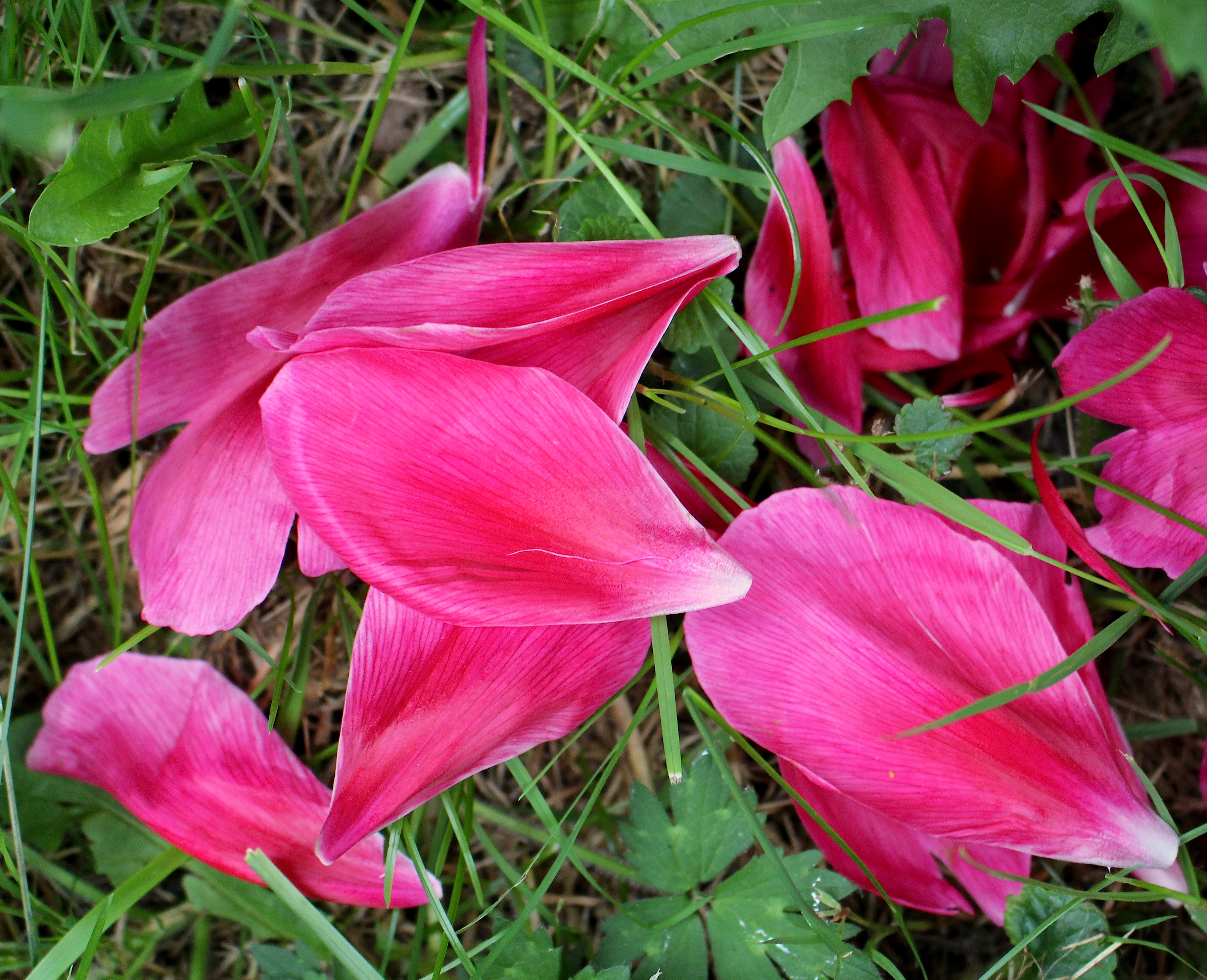
The peonies, too heavy with their beauty,
slump to the ground. I had hoped
they would live forever but ever so slowly
day by day they’re becoming the soil of their birth
with a faint tang of deliquescence around them.
Next June they’ll somehow remember to come alive again,
a little trick we have or have not learned.

~Jim Harrison “Peonies” from In Search of Small Gods

Later this month, I will bring our peonies
to the graves of those from whom I came,
to lay one after another exuberant floral head
upon each headstone,
a moment of connection between those in the ground
and me standing above, acknowledging its thin space
when one more humble and silky life shatters,
its petals slowly
scatter, lush and trembling,
to the wind.

One-Time
Monthly
Yearly

Make a one-time or recurring donation to support daily Barnstorming posts

Make a monthly donation

Make a yearly donation

Choose an amount

$10.00
$25.00
$50.00
$5.00
$15.00
$100.00
$5.00
$15.00
$100.00

Or enter a custom amount

$

Your contribution is deeply appreciated.

Your contribution is appreciated.

Your contribution is appreciated.

DonateDonate monthlyDonate yearly
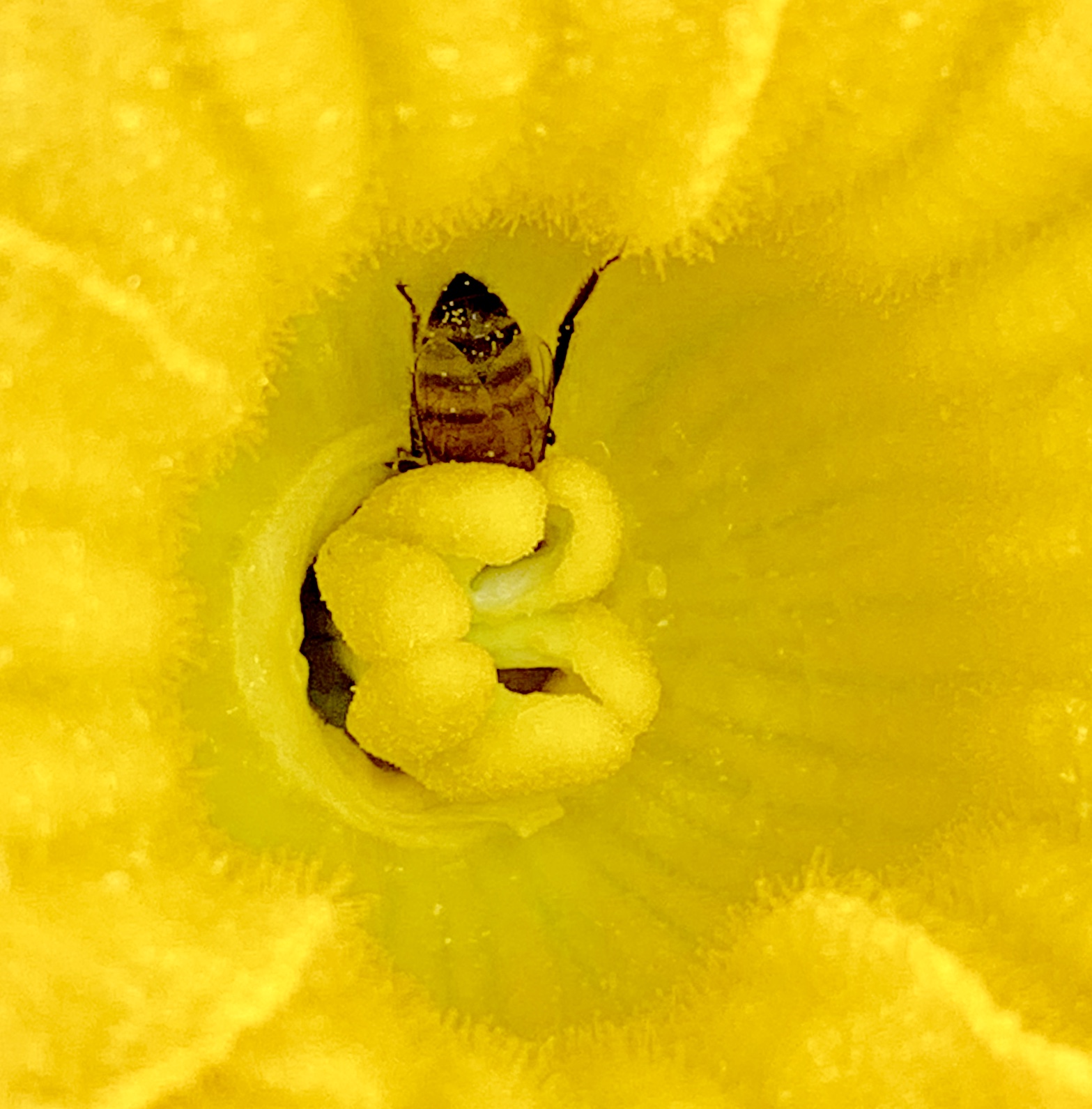
A World Made New

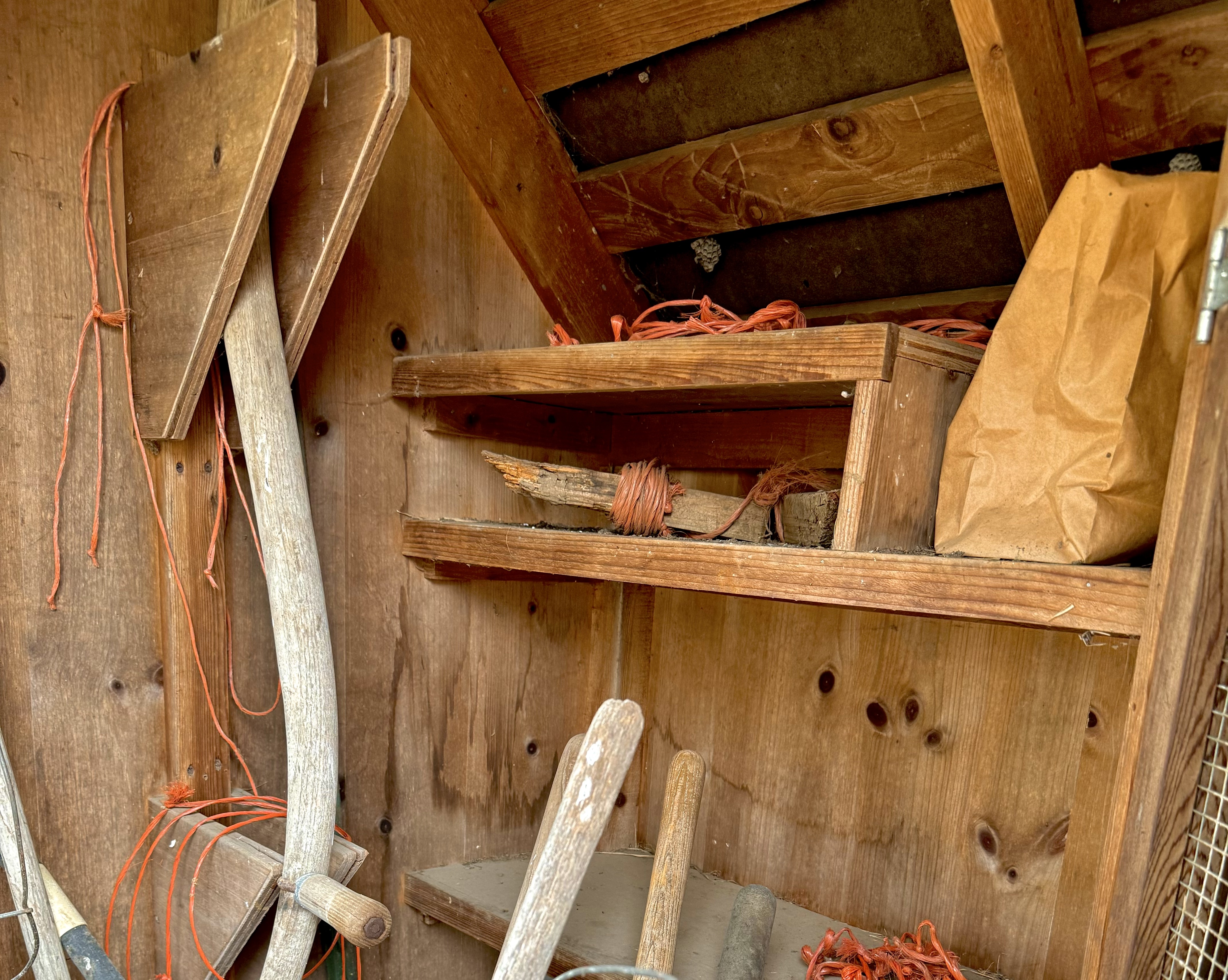
When I take the chilly tools
from the shed’s darkness, I come
out to a world made new
by heat and light.


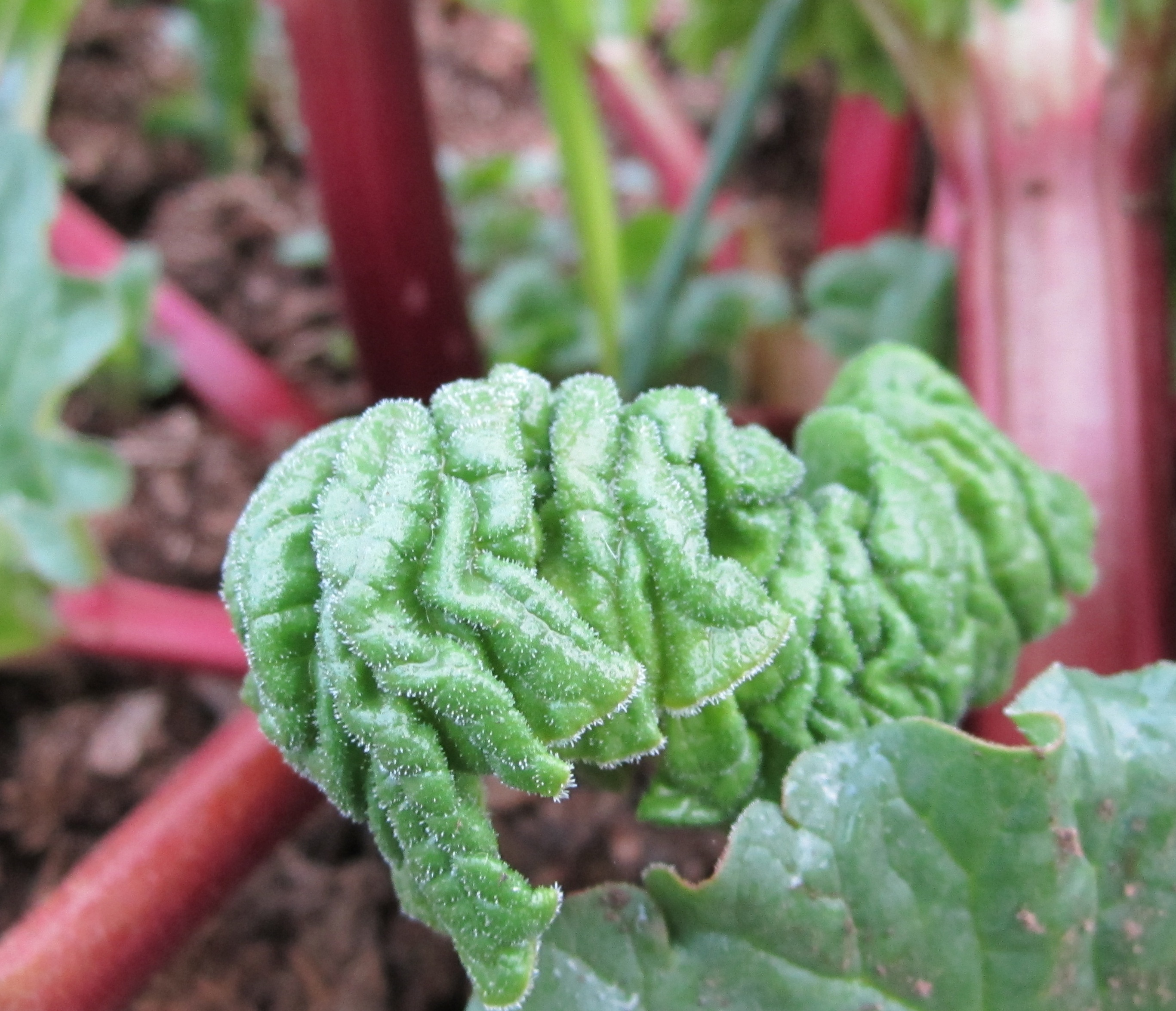
Like a mad red brain
the involute rhubarb leaf
thinks its way up
through loam.
~Jane Kenyon from “April Chores” from Collected Poems

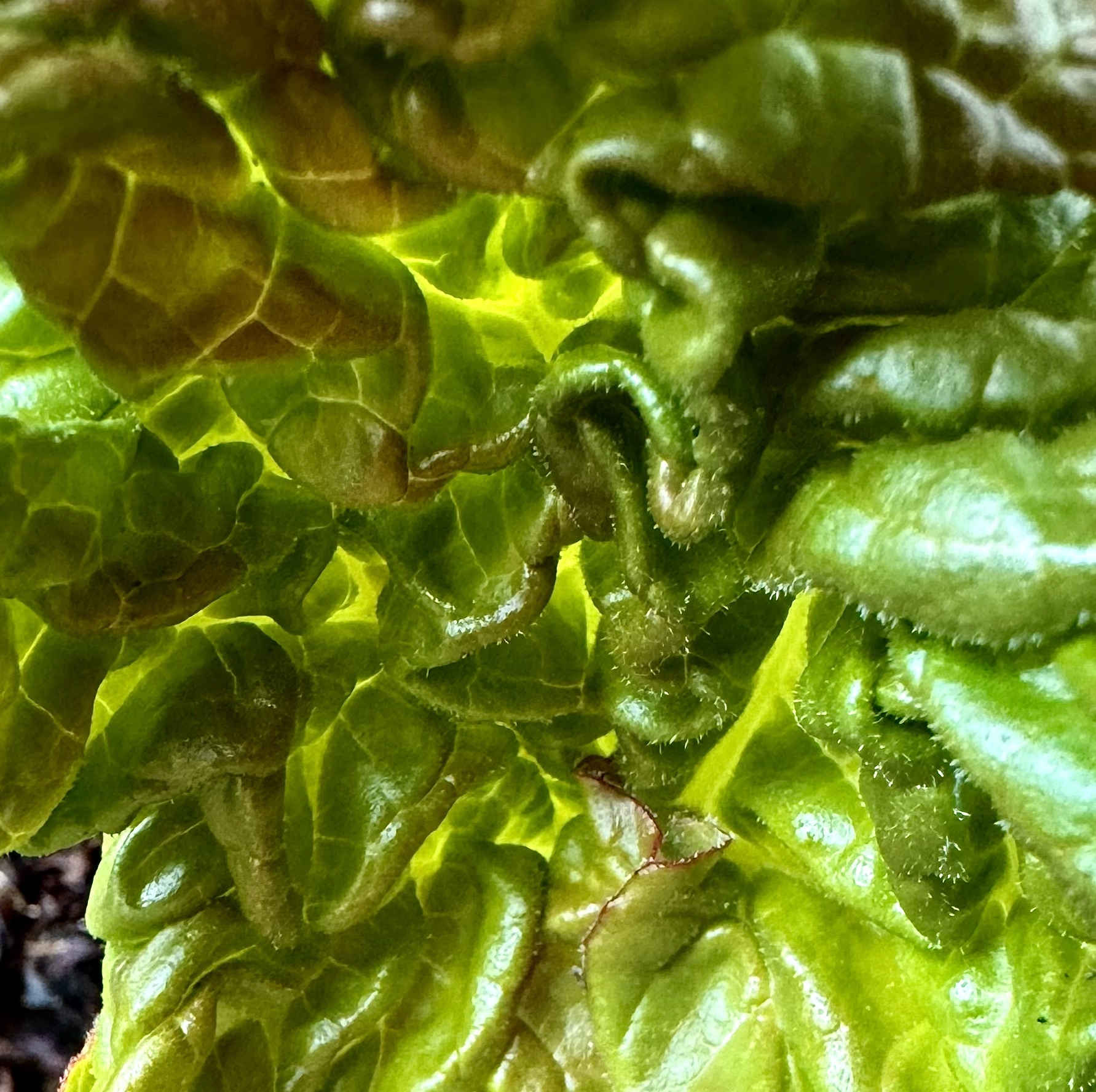
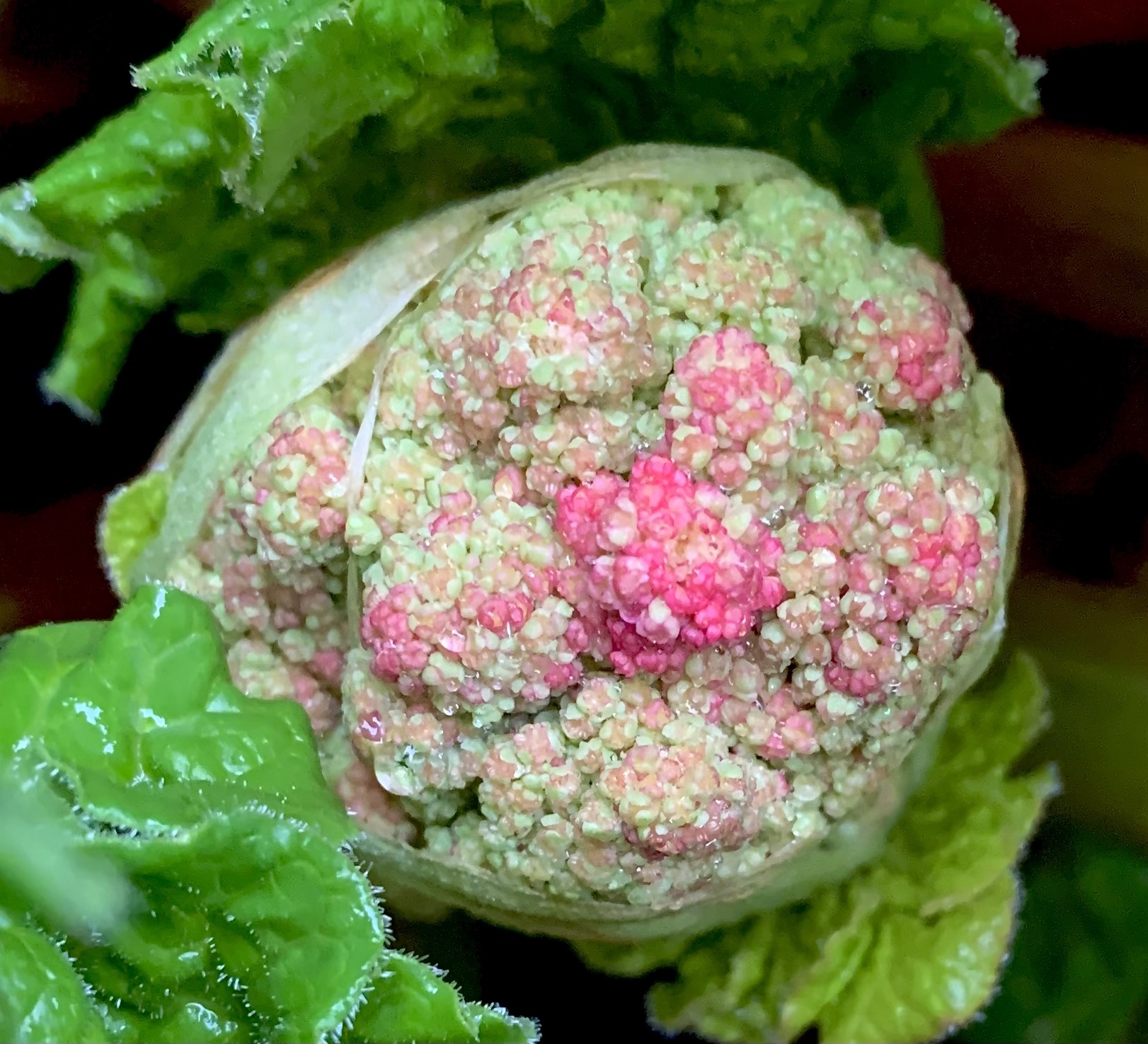
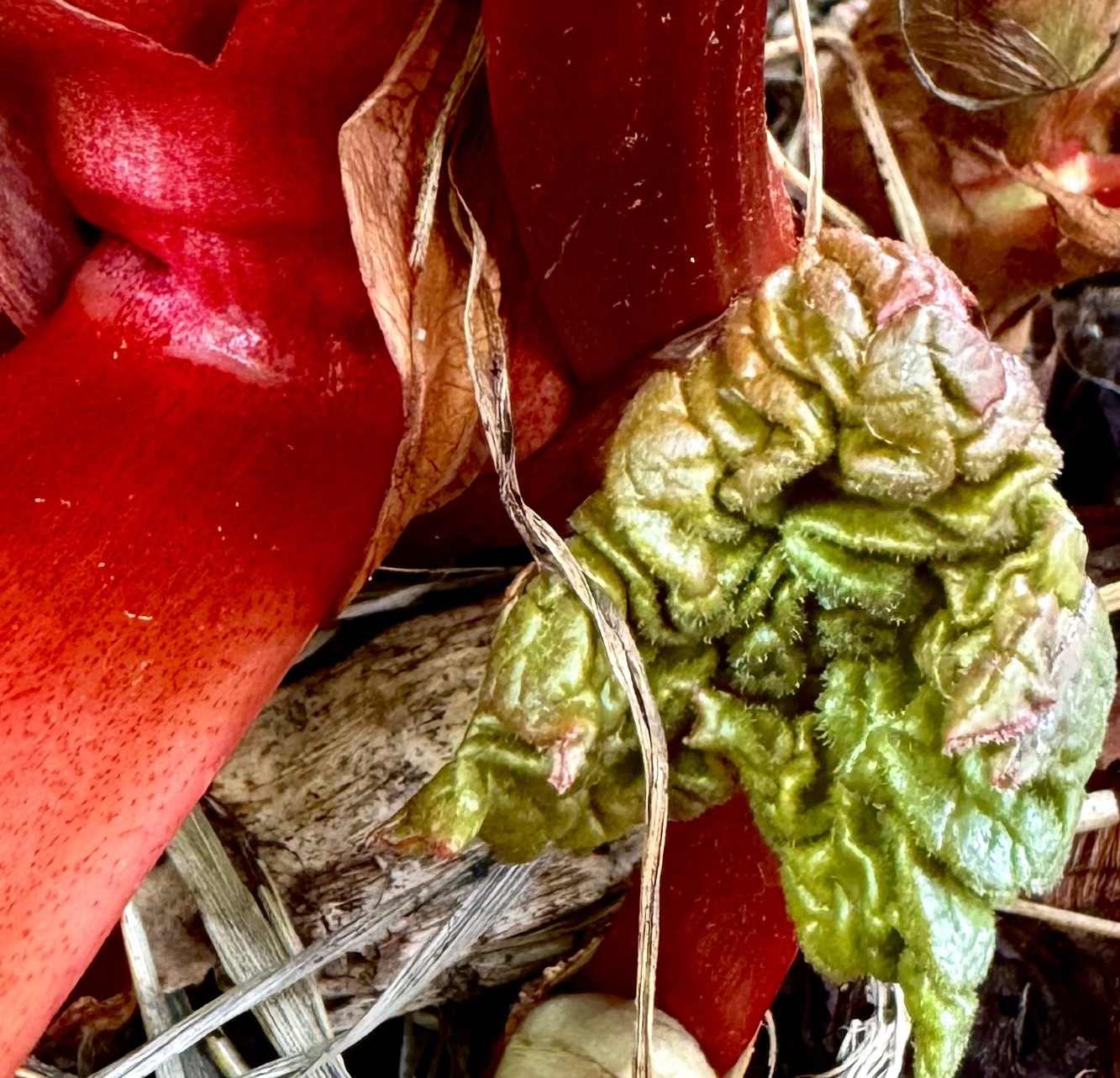
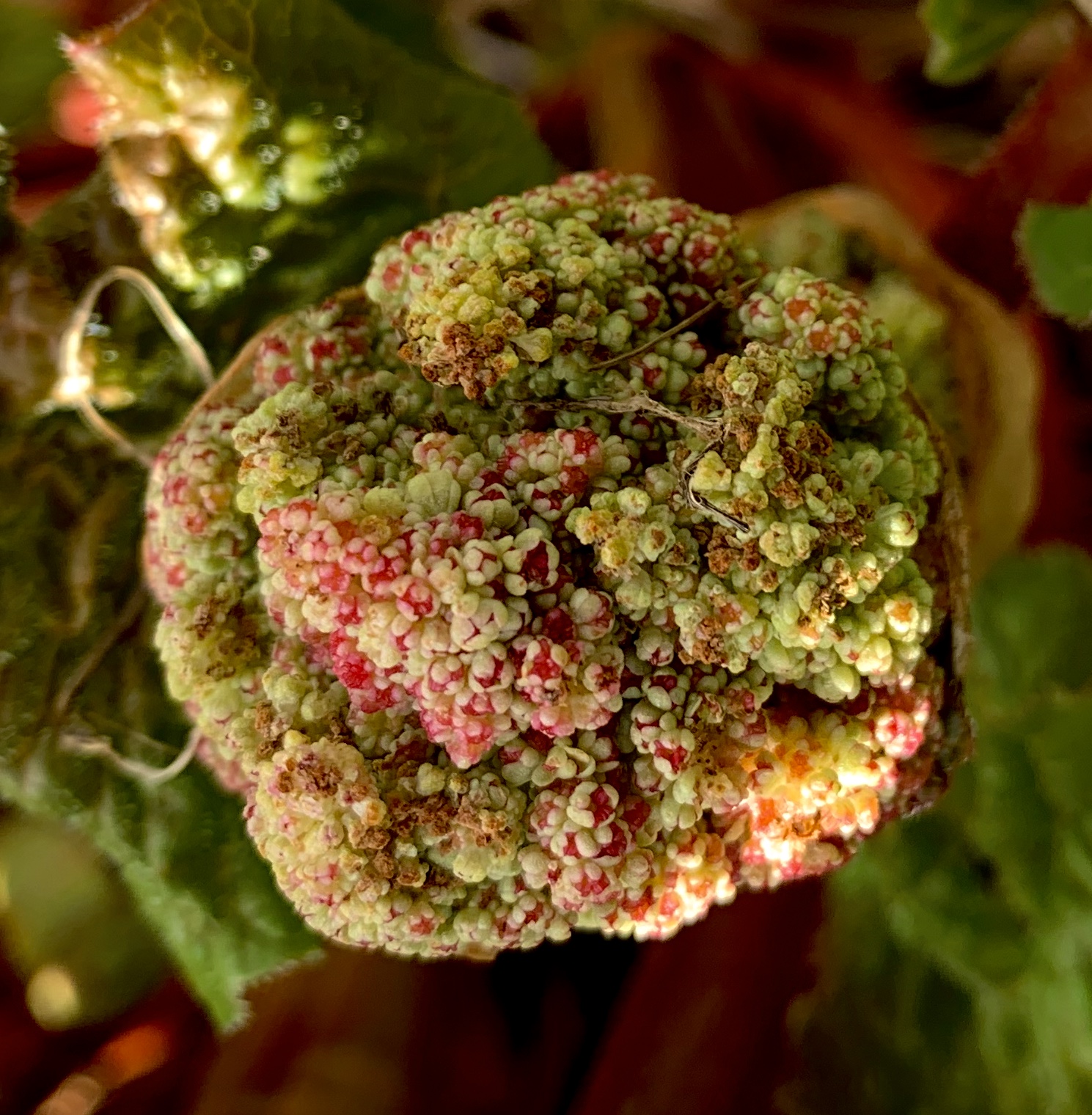
Over the last two weeks, the garden is slowly reviving, and rhubarb “brains” have been among the first to appear from the garden soil, wrinkled and folded, opening full of potential, “thinking” their way into the April sunlight.

Here I am, wishing my own brain could similarly rise brand new and tender every spring from the dust rather than leathery and weather-toughened, harboring the same old thoughts and patterns. Indeed, more wrinkles accumulate on the outside of my skull rather than the inside.

Still, I’m encouraged by my rhubarb cousin’s return every April. Like me, it may be a little sour in need of some sweetening, but its blood courses bright red and it is very very much alive.

and just because this is fun but has nothing to do with rhubarb…

One-Time
Monthly
Yearly

Make a one-time or recurring donation to support daily Barnstorming posts

Make a monthly donation

Make a yearly donation

Choose an amount

$10.00
$25.00
$50.00
$5.00
$15.00
$100.00
$5.00
$15.00
$100.00

Or enter a custom amount

$

Your contribution is deeply appreciated.

Your contribution is appreciated.

Your contribution is appreciated.

DonateDonate monthlyDonate yearly
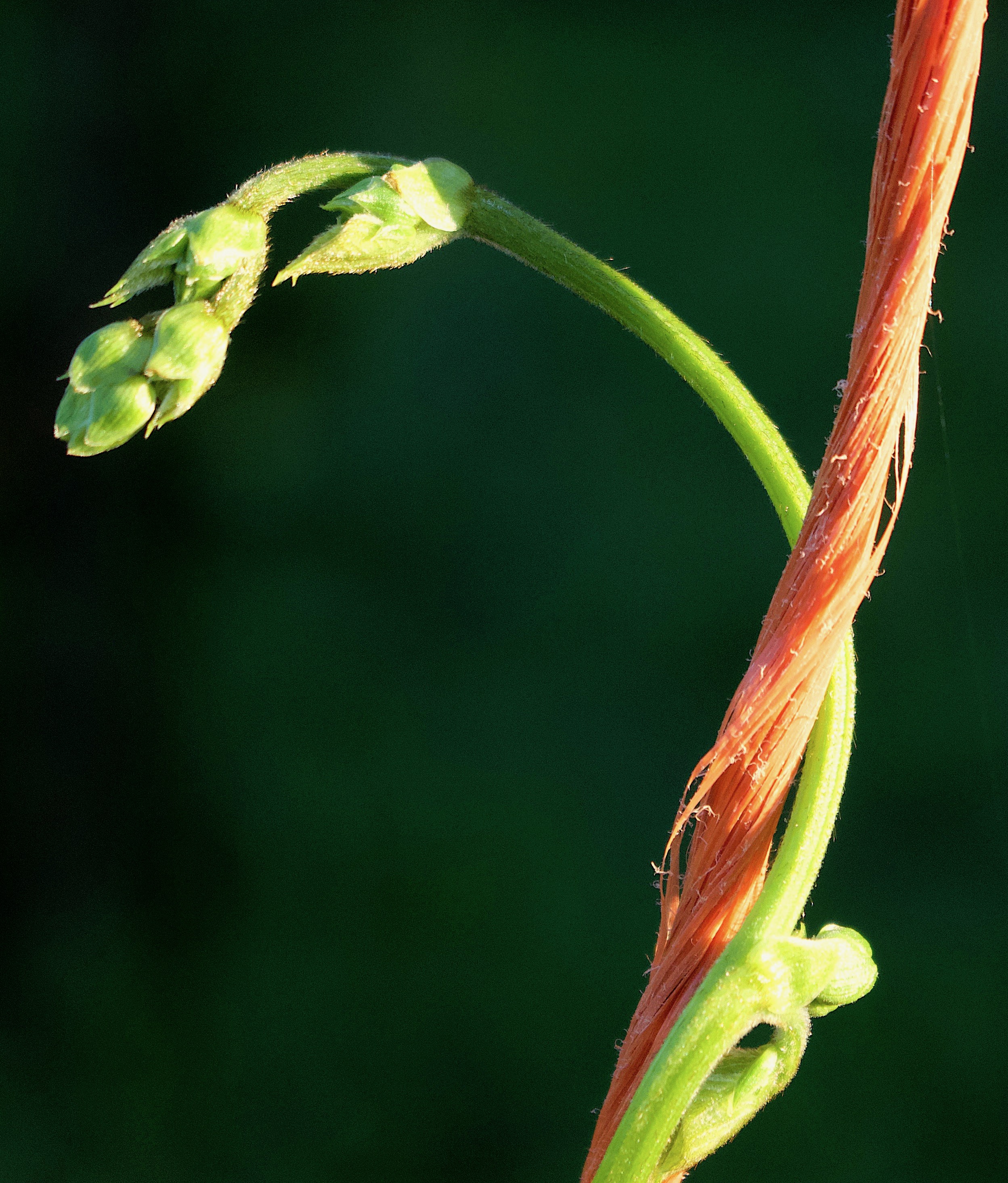
When From Death I’m Free: Made Happy By Simple Things

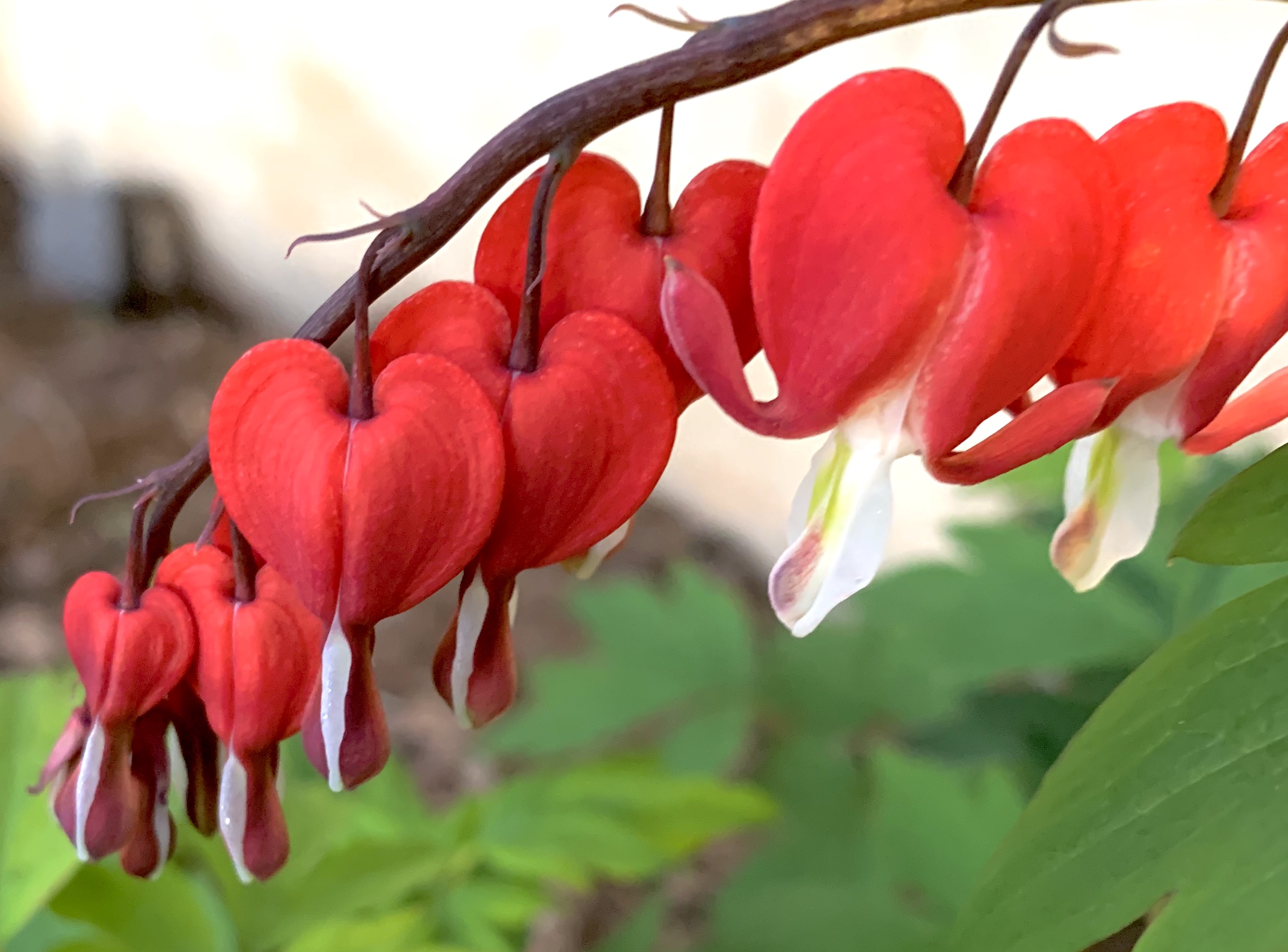
I know a bleeding-heart plant that has thrived
for sixty years if not more, and has never
missed a spring without rising and spreading
itself into a glossy bush, with many small red
hearts dangling. Don’t you think that deserves
a little thought? The woman who planted it
has been gone for a long time, and everyone
who saw it in that time has also died or moved
away and so, like so many stories, this one can’t
get finished properly. Most things that are
important, have you noticed, lack a certain
neatness. More delicious, anyway, is to
remember my grandmother’s pleasure when
the dissolve of winter was over and the green
knobs appeared and began to rise, and to cre-
ate their many hearts. One would say she was
a simple woman, made happy by simple
things. I think this was true. And more than
once, in my long life, I have wished to be her.

~Mary Oliver “The Bleeding-Heart” from New and Selected Poems
Volume Two

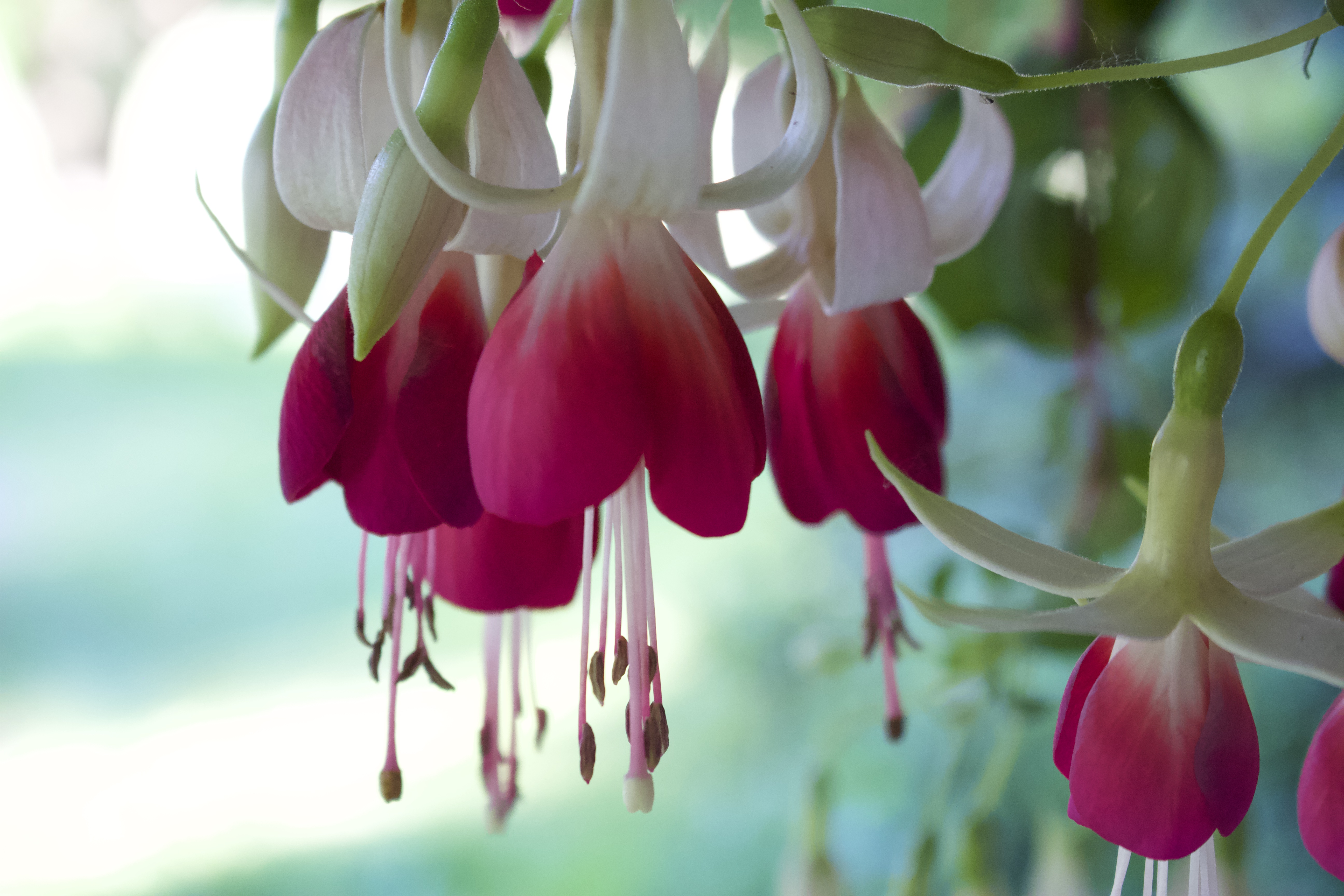
My Grandma Kittie grew flowers–lots of them. Her garden stretched along both sides of the sidewalk to her old two story farm house, in window boxes and beds around the perimeter, in little islands scattered about the yard anchored by a tree, or a piece of driftwood, a gold fish pond or a large rock. Wisteria hung like a thick curtain of purple braids from the roof of her chicken coop, and her greenhouse, far bigger than her home, smelled moist and mossy with hanging fuschia baskets. For her it was full time joy disguised as a job: she sold seedlings, and ready-to-display baskets, and fresh flower arrangements. 

She often said she was sure heaven would be full of flowers needing tending, and she was just practicing for the day when she could make herself useful as a gardener for God.

Visiting Grandma meant spending summer evenings in her yard heavy with wafting flower perfume. She especially loved her bleeding hearts bushes that returned every spring, dripping their red blossoms over her unruly lawn.

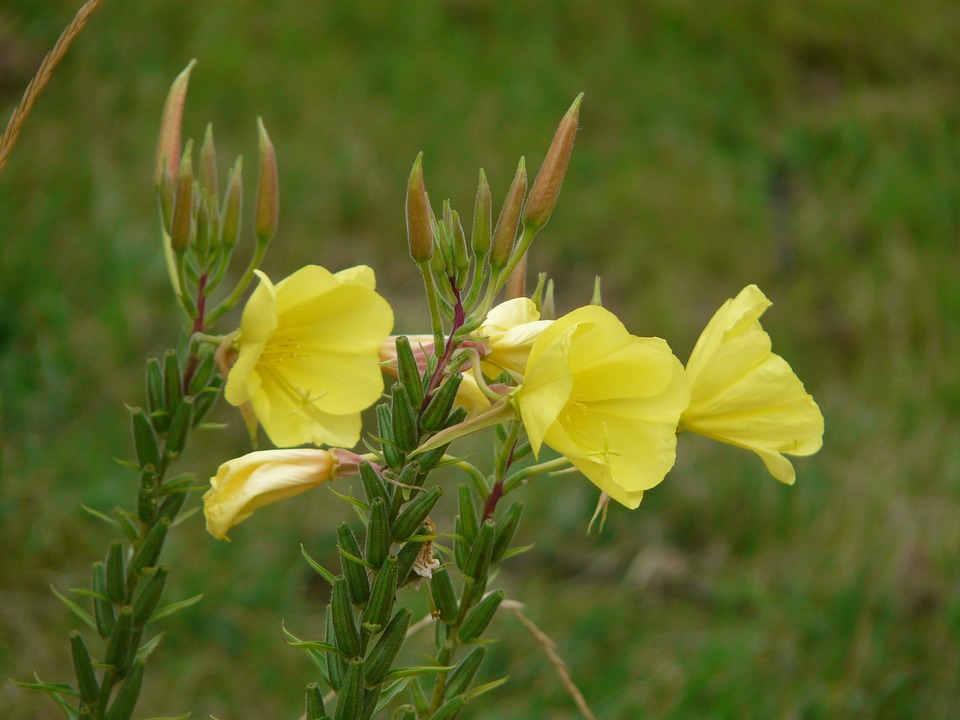
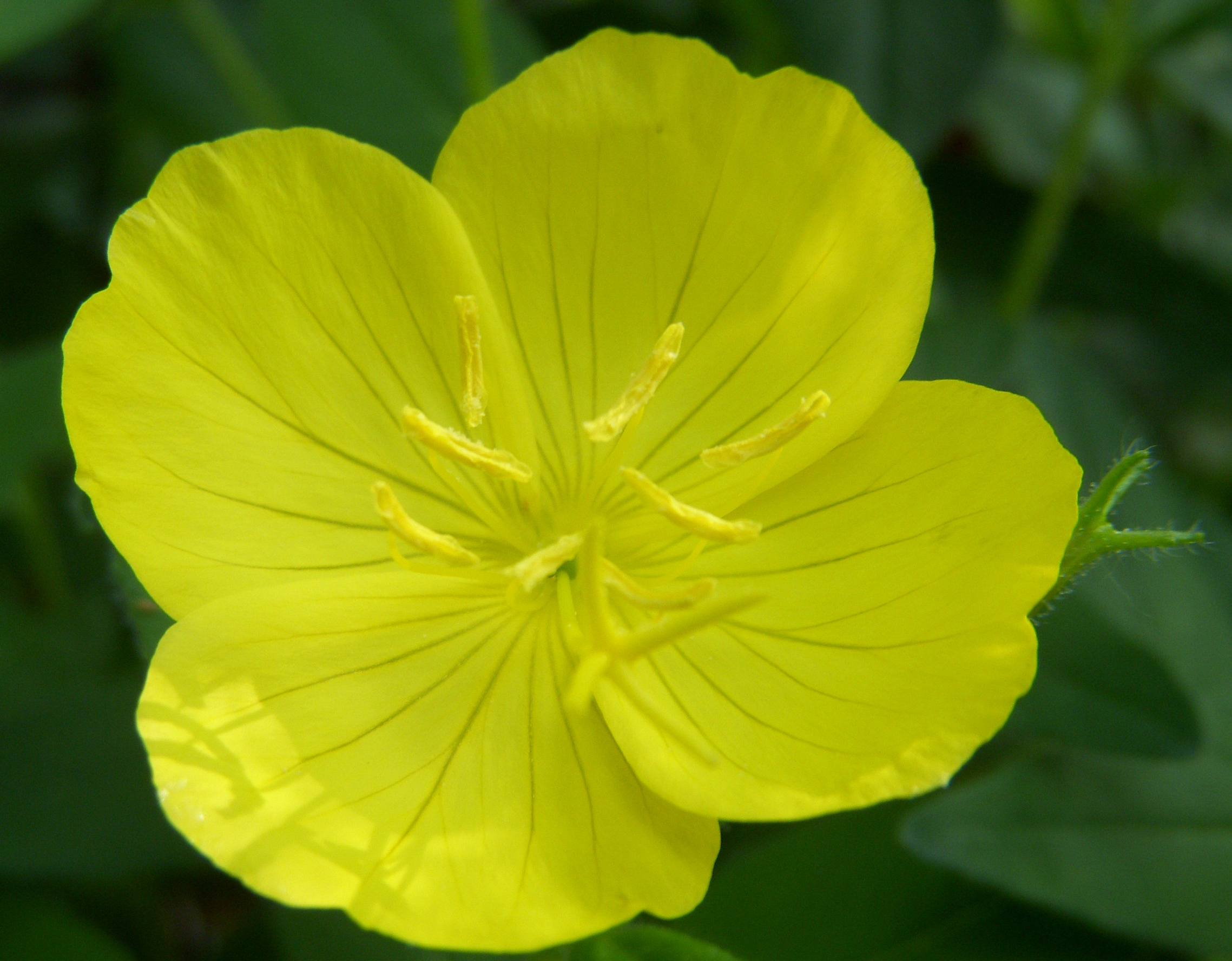
Another of her favorite flowers was the evening primrose.  It was one of a few night blooming plants meant to attract pollinating moths. Its tall stems were adorned by lance shaped leaves, with multiple buds and blooms per stem.  Each evening, and it was possible to set one’s watch by its punctuality, only one green wrapped bud per stem would open, revealing a bright yellow blossom with four delicate veined petals, a rosette of stamens and a cross-shaped stigma in the center, rising far above the blossom.  The yellow was so vivid and lively, it seemed almost like a drop of sun had been left on earth to light the night.  By morning, the bloom would begin to wither and wilt under the real sunlight, somehow overcome with the brightness, and would blush a pinkish orange as it folded upon itself, ready to die and drop from the plant in only a day or two, leaving a bulging seed pod behind.

I would settle down on the damp lawn at twilight, usually right before dusk fell, to watch the choreography of opening of blossoms on stem after stem of evening primrose. Whatever the trigger was for the process of unfolding, there would be a sudden loosening of the protective green calyces, in an almost audible release. Then over the course of about a minute, the overlapping yellow petals would unfurl, slowly, gently, purposefully, revealing their pollen treasure trove inside.  It was like watching time lapse cinematography, only this was an accelerated, real time flourish of beauty, happening right before my eyes. I always felt privileged to witness each unveiling as Grandma liked to remind me that few flowers ever allowed us to behold both their birth and death. The evening primrose was not at all shy about sharing itself and it would enhance the show with a sweet lingering fragrance.

Grandma knew how much I enjoyed the evening primrose display, so she saved seeds from the seed pods for me, and helped me plant them at our house during one of her spring time visits. I remember scattering the seeds with her in a specially chosen spot, in anticipation of the “drops of sun” that would grace our yard come summertime.  However, Grandma was more tired than usual on this particular visit, taking naps and not as eager to go for walks or eat the special meals cooked in honor of her visit. Her usually resonant laughing brown eyes appeared dull, almost muddy.

The day she was to return to her home, she came into the kitchen at breakfast time, wearily setting down her packed bags.  She gave me a hug and I looked at her.  Something was dreadfully wrong.  Grandma’s eyes were turning yellow.

Instead of returning home that day, she went to the hospital. Within a day, she had surgery and within two days, was told she had terminal pancreatic cancer.  She did not last long, her skin becoming more jaundiced by the day, her eyes more icteric and far away.  She soon left her earthly gardens to cultivate those in heaven.

I’ve kept bleeding hearts and evening primrose in my garden ever since. Grandma’s heart dangles from the bushes and she is released from each primrose bloom as it unfolds precipitously in the evening. She wafts across the yard in its perfume. Her spirit, a drop of sun coming to rest, luminous, for a brief stay upon the earth, only to fall before we’re ready to let it go. But as the wilted bloom lets go, its seeds have already begun to form.

I’m sure Grandma is still growing flowers. And my soil-covered hands look more like hers every day.

The grass withers and the flowers fall,
    because the breath of the Lord blows on them.
    Surely the people are grass.
 The grass withers and the flowers fall,
    but the word of our God endures forever.

Isaiah 40: 7-8

This Lenten season I reflect on the words of the 19th century southern spiritual hymn “What Wondrous Love is This”

One-Time
Monthly
Yearly

Make a one-time or recurring donation to support daily Barnstorming posts

Make a monthly donation

Make a yearly donation

Choose an amount

$10.00
$25.00
$50.00
$5.00
$15.00
$100.00
$5.00
$15.00
$100.00

Or enter a custom amount

$

Your contribution is deeply appreciated.

Your contribution is appreciated.

Your contribution is appreciated.

DonateDonate monthlyDonate yearly
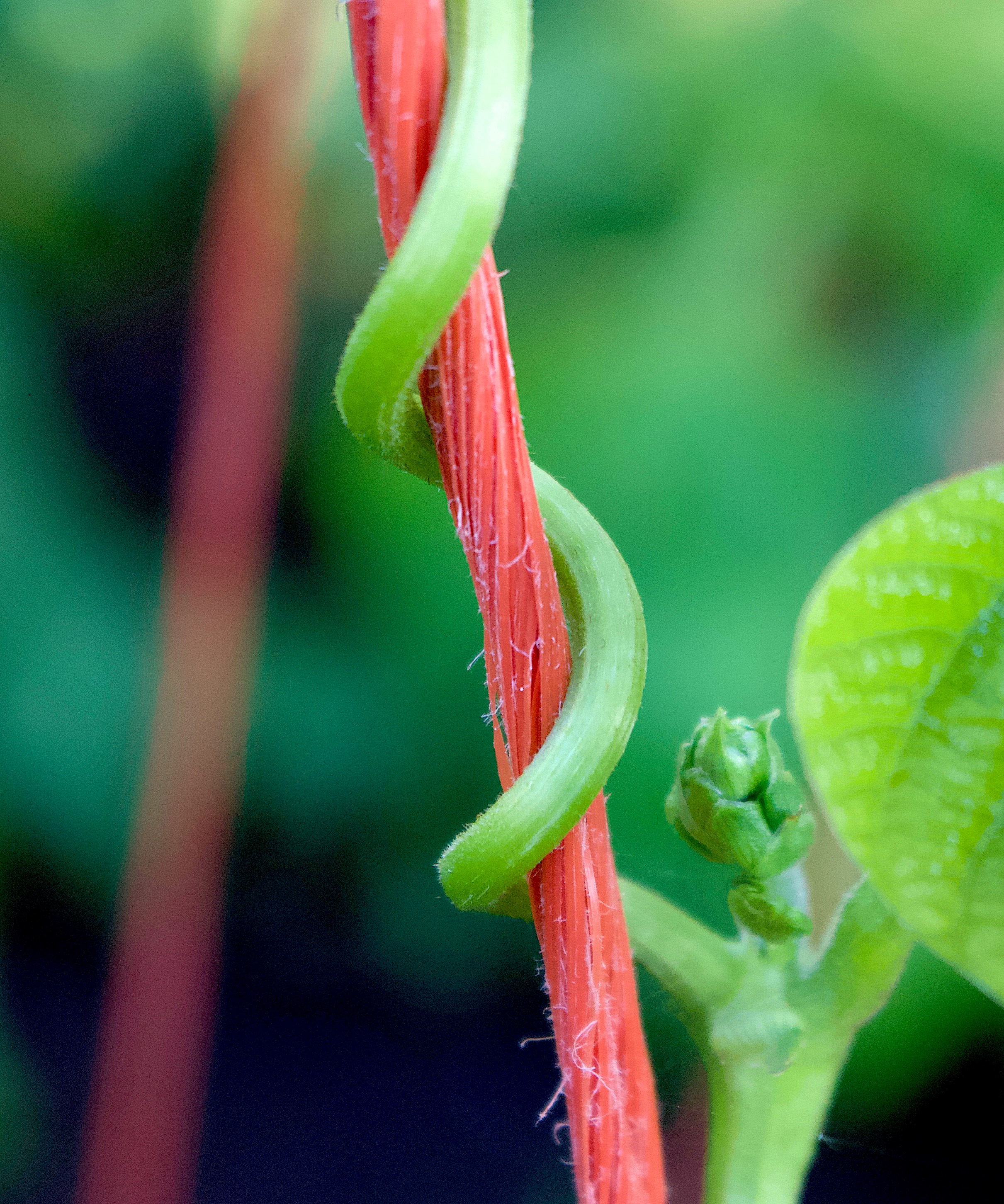
Everything is a Parable

Every happening, great and small,
is a parable whereby God speaks to us,
and the art of life is to get the message.
~Malcolm Muggeridge

I’ve banked nothing, or everything.
Every day

the chores need doing again.
Early in the morning,

I clean the horse barn with a manure fork.
Every morning,

it feels as though it could be
the day before or a year ago
or a year before that.

With every pass, I give the fork one final upward flick
to keep the manure from falling out,
and every day I remember

where I learned to do that and from whom.

Time all but stops.

But then I dump the cart on the compost pile.
I bring out the tractor and turn the pile,

once every three or four days.
The bucket bites and lifts, and steam comes billowing out of the heap.
It’s my assurance that time is really moving forward,
decomposing us all in the process.
~Verlyn Klinkenborg from More Scenes from the Rural Life

He <the professor> asked
what I made of the other Oxford students
so I told him:
They were okay, but they were all very similar…
they’d never failed at anything or been nobodies,
and they thought they would always win.
But this isn’t most people’s experience of life.

He asked me what could be done about it.
I told him the answer was to send them all out for a year
to do some dead-end job
like working in a chicken processing plant
or spreading muck with a tractor.
It would do more good than a gap year in Peru. 

He laughed and thought this was tremendously witty.
It wasn’t meant to be funny.

~James Rebanks from The Shepherd’s Life
(how a sheep farmer succeeds at Oxford and then goes back to the farm)

It is done by us all, as God disposes, from
the least cast of worm to what must have been
in the case of the brontosaur, say, spoor
of considerable heft, something awesome.

We eat, we evacuate, survivors that we are.
I think these things each morning with shovel
and rake, drawing the risen brown buns
toward me, fresh from the horse oven, as it were,
or culling the alfalfa-green ones, expelled
in a state of ooze, through the sawdust bed
to take a serviceable form, as putty does,
so as to lift out entire from the stall.

And wheeling to it, storming up the slope,
I think of the angle of repose the manure
pile assumes, how sparrows come to pick
the redelivered grain, how inky-cap
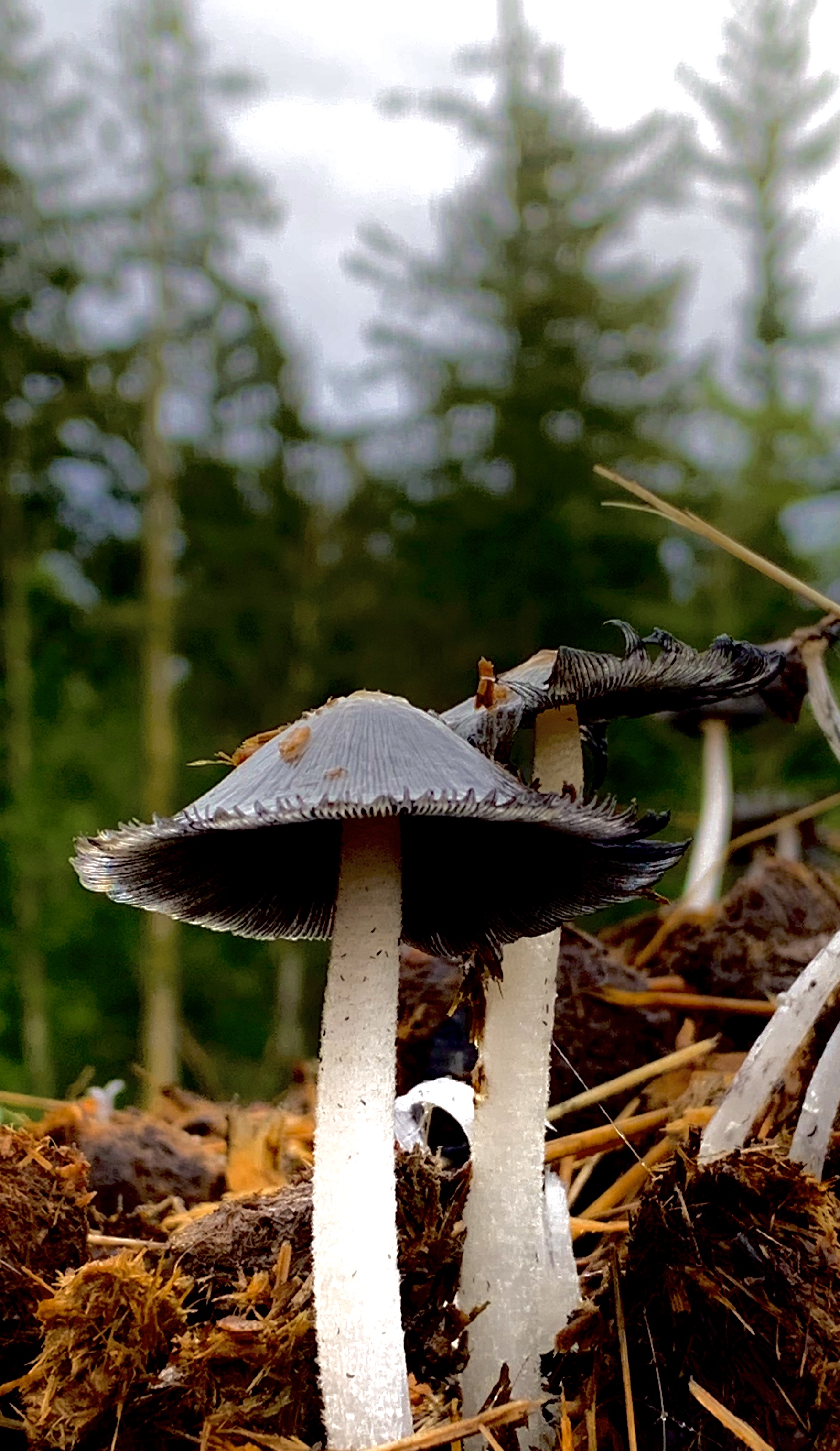
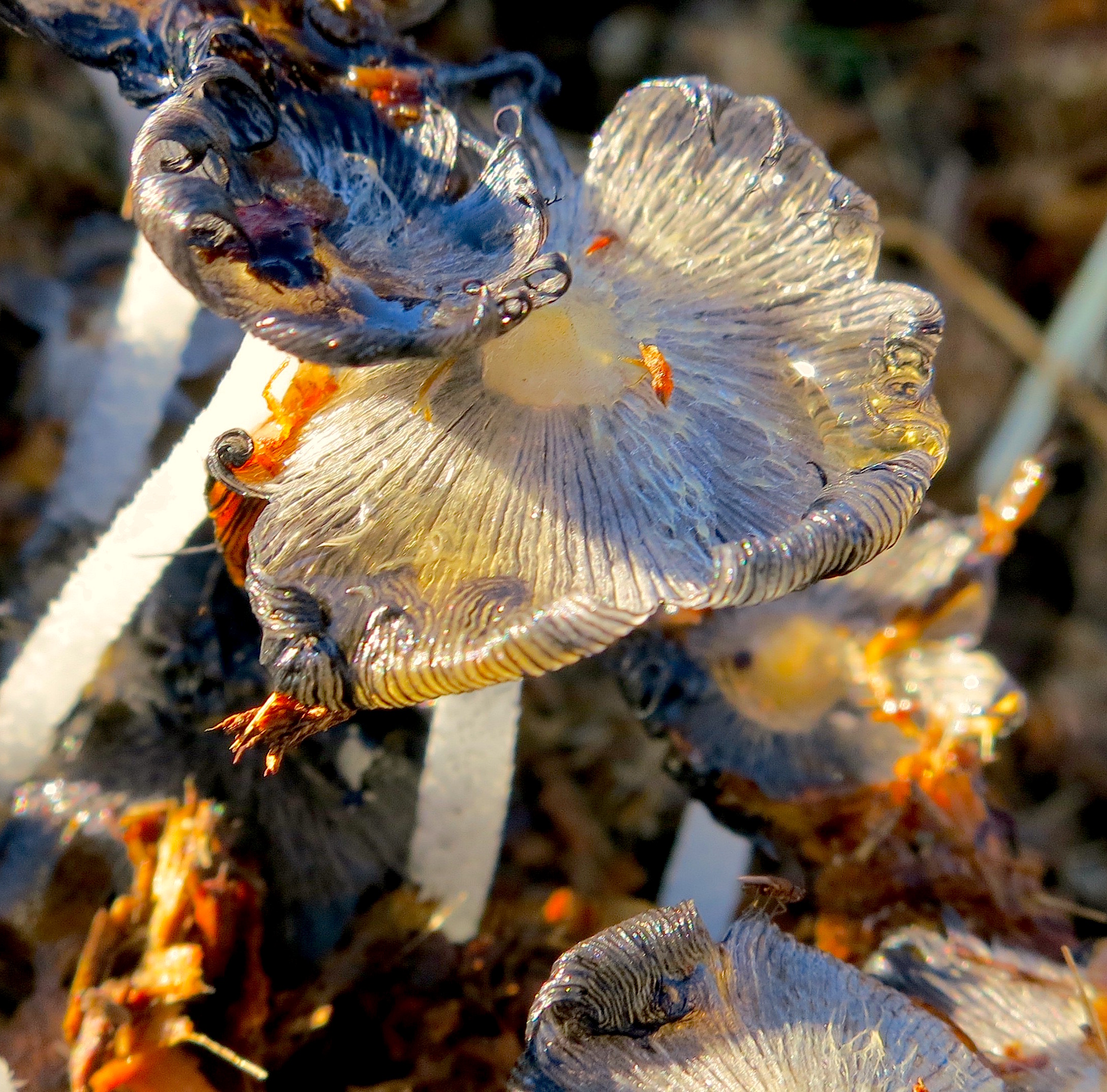
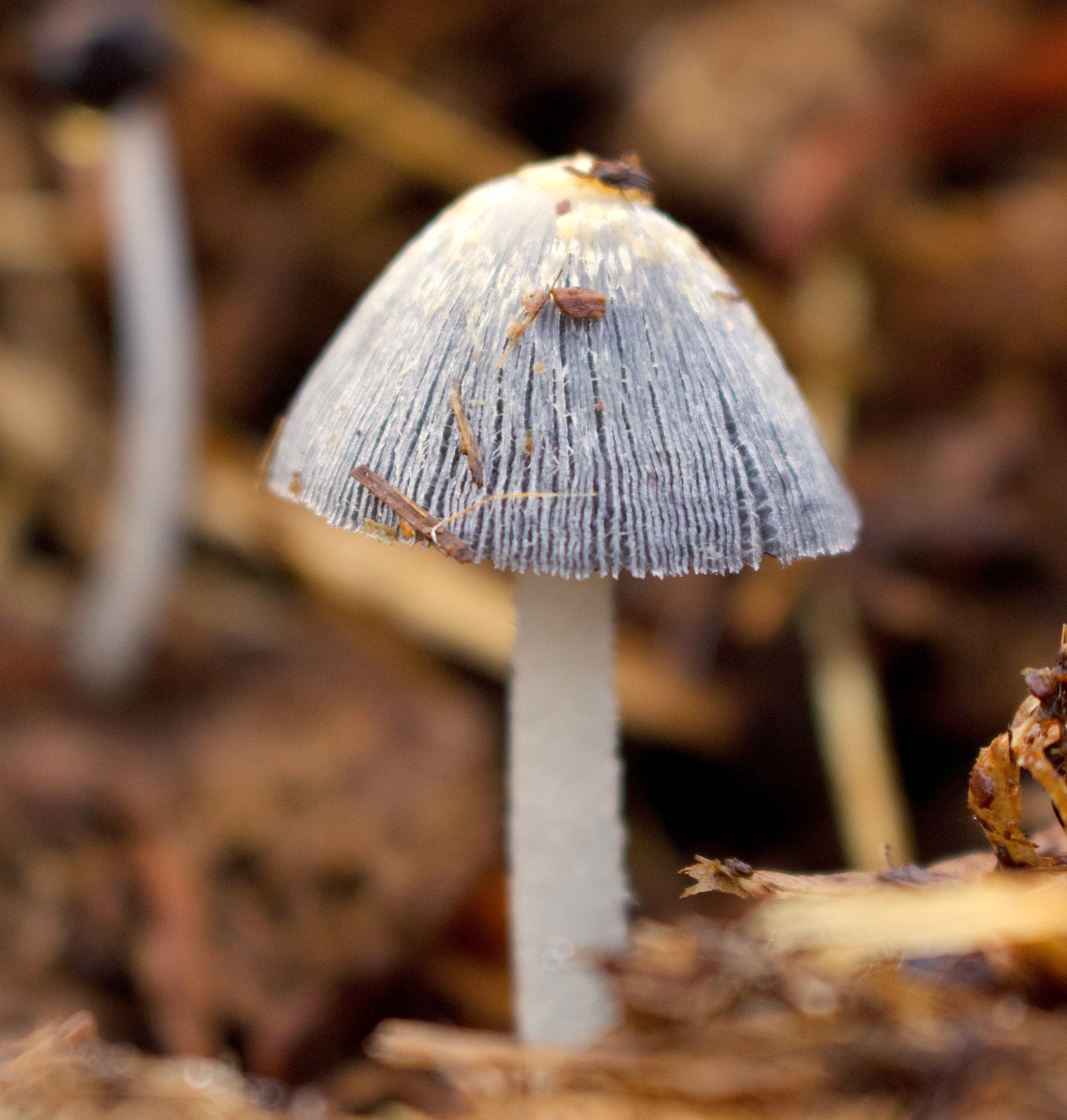
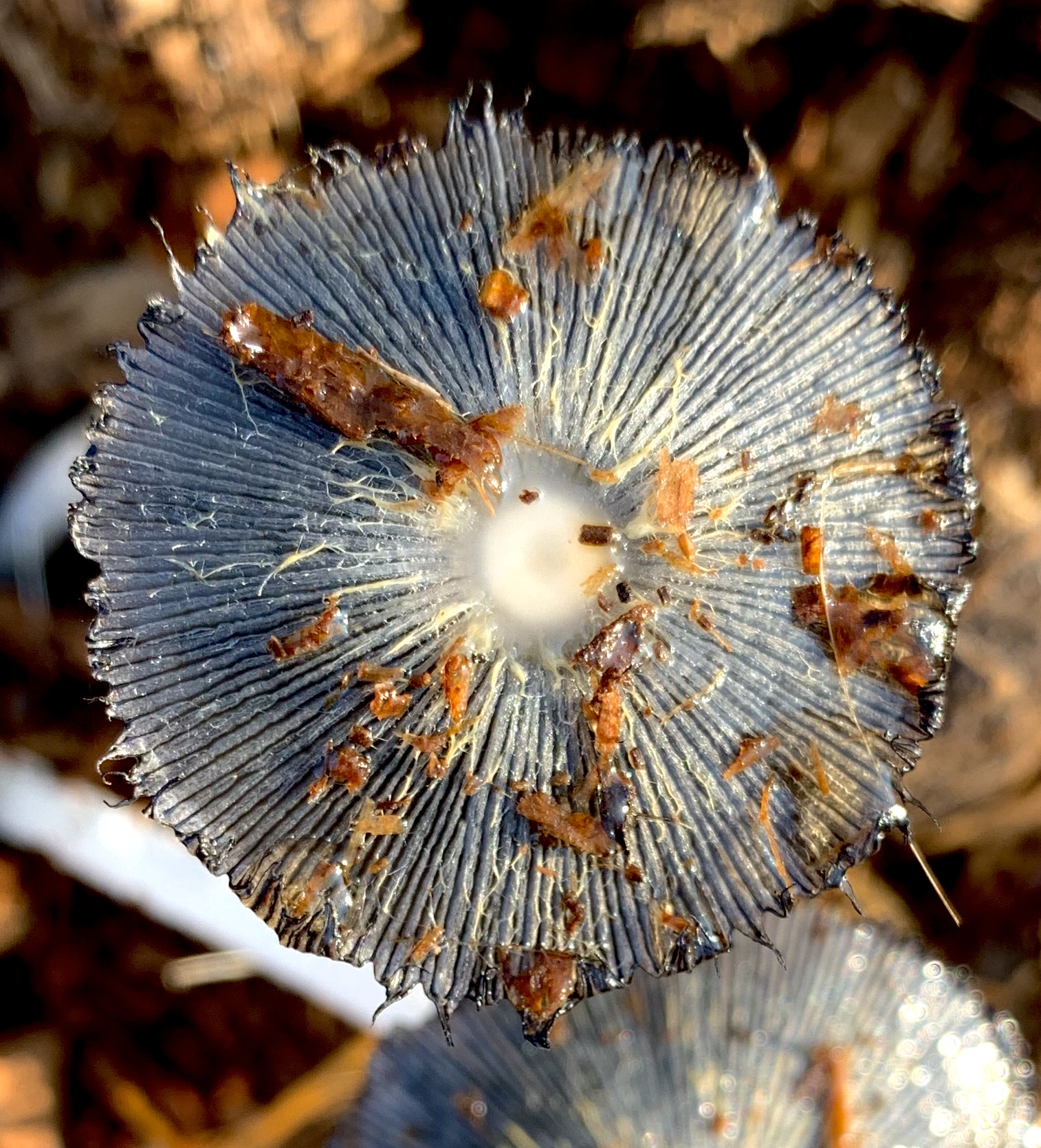
coprinus mushrooms spring up in a downpour.

I think of what drops from us and must then
be moved to make way for the next and next.
However much we stain the world, spatter
it with our leavings, make stenches, defile
the great formal oceans with what leaks down,
trundling off today’s last barrow-full,
I honor shit for saying: We go on.

~Maxine Kumin “The Excrement Poem”

For well over thirty years, my husband and I have spent over an hour a day shoveling manure out of numerous horse stalls and I’m a better person for it. Wintertime chores are always a character-building experience. It feels like everything, myself included, is in a process of decomposition.

Everyone should spend time simply mucking out every day; I think the world would generally be a better place. I enlist any young person who happens to visit our farm as an object lesson in better living through composting the stinky stuff in our lives.

Wheeled to a mountainous pile in our barnyard,  our daily collection of manure happily composts year round, becoming rich fertilizer in a matter of months through a crucible-like heating process of organic chemistry, bacteria and earthworms.  Nothing mankind has achieved quite matches the drama of useless and basically disgusting stuff transforming into the essential elements needed for productive growth and survival.   This is a metaphor I can <ahem> happily muck about in.

I’m in awe, every day, at being part of this process — in many ways a far more tangible improvement to the state of the world than anything else I manage to accomplish every day.  The horses, major contributors that they are, act underwhelmed by my enthusiasm.  I guess some miracles are relative, depending on one’s perspective, but if the horses understood that the grass they contentedly eat in the pasture, or the hay they munch on during the winter months, was grown thanks to their carefully recycled waste products, they might be more impressed.

Their nonchalance about the daily mucking routine is understandable.  If they are outside, they probably don’t notice their beds are clean when they return to the stalls at night.  If they are inside during the heavy rain and frozen winter days, they feel duty-bound to be in our faces as we move about their stall, toting a pitchfork and pushing a wheelbarrow.  I’m a source of constant amusement as they nose my jacket pockets for treats that I never carry, as they beg for scratches on their unreachable itchy spots, and as they attempt to overturn an almost full load, just to see balls of manure roll to all corners of the stall like breaking a rack of billiard balls in a game of pool.

Wally, our former stallion, now gelded, discovered a way to make my life easier rather than complicating it.  He hauled a rubber tub into his stall from his paddock, by tossing it into the air with his teeth and throwing it, and it finally settled against one wall.  Then he began to consistently pile his manure, with precise aim, right in the tub.  I didn’t ask him to do this.  It had never occurred to me.  I hadn’t even thought it was possible for a horse to house train himself.  But there it is, proof that some horses prefer neat and tidy rather than the whirlwind eggbeater approach to manure distribution.  After a day of his manure pile plopping, it is actually too heavy for me to pick up and dump into the wheelbarrow all in one tub load, but it takes 1/4 of the time to clean his stall than the others, and he spares all this bedding.

What a guy.  He provides me unending inspiration in how to keep my own personal muck concentrated rather than spattering it about, contaminating the rest of the world.

Now, once I teach him to put the seat back down when he’s done, he’s welcome to move into the house.

One-Time
Monthly
Yearly

Make a one-time or recurring donation to support daily Barnstorming posts

Make a monthly donation

Make a yearly donation

Choose an amount

$10.00
$25.00
$50.00
$5.00
$15.00
$100.00
$5.00
$15.00
$100.00

Or enter a custom amount

$

Your contribution is deeply appreciated.

Your contribution is appreciated.

Your contribution is appreciated.

DonateDonate monthlyDonate yearly
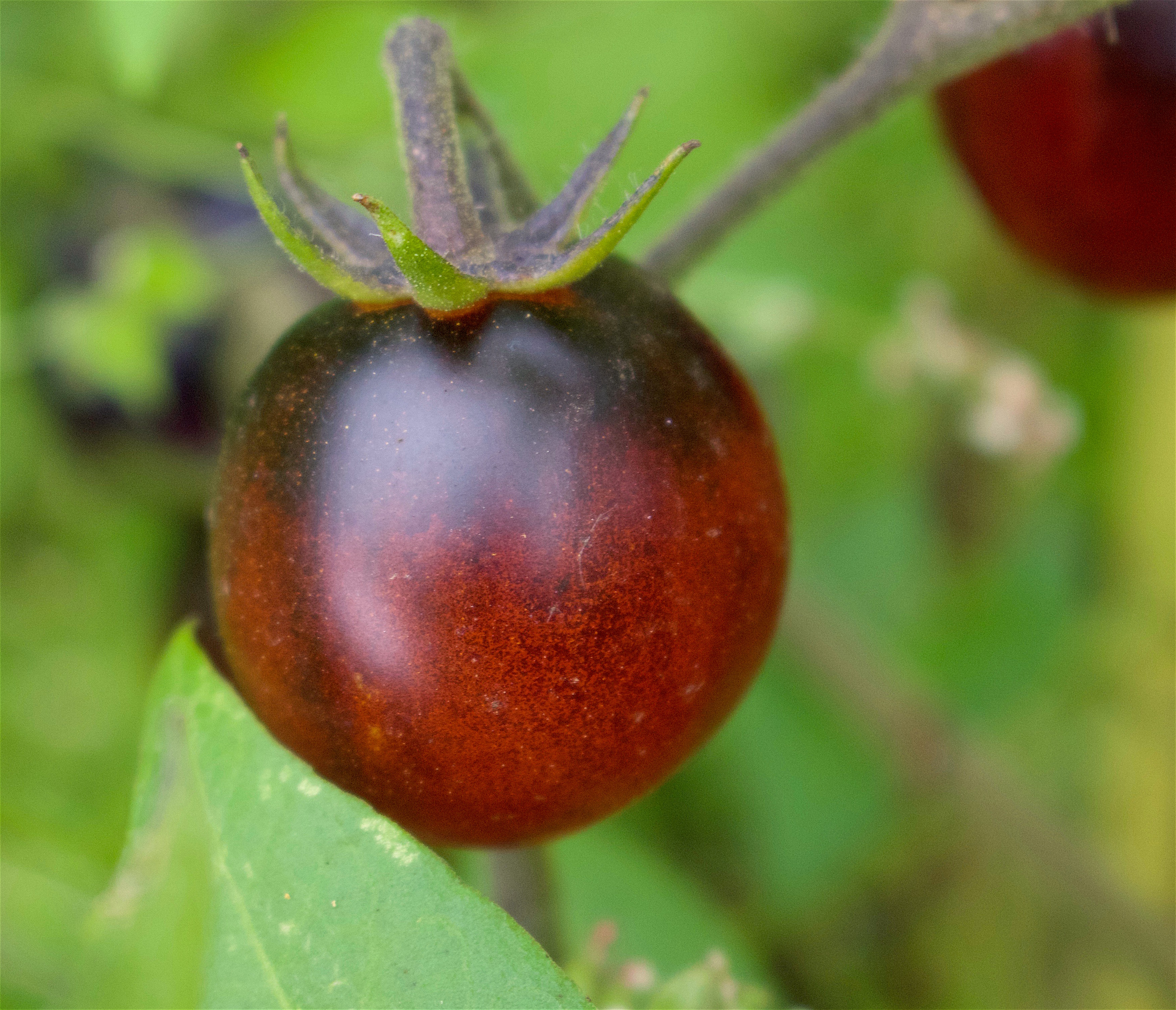
The Flower Unfurled

Mid-January and still
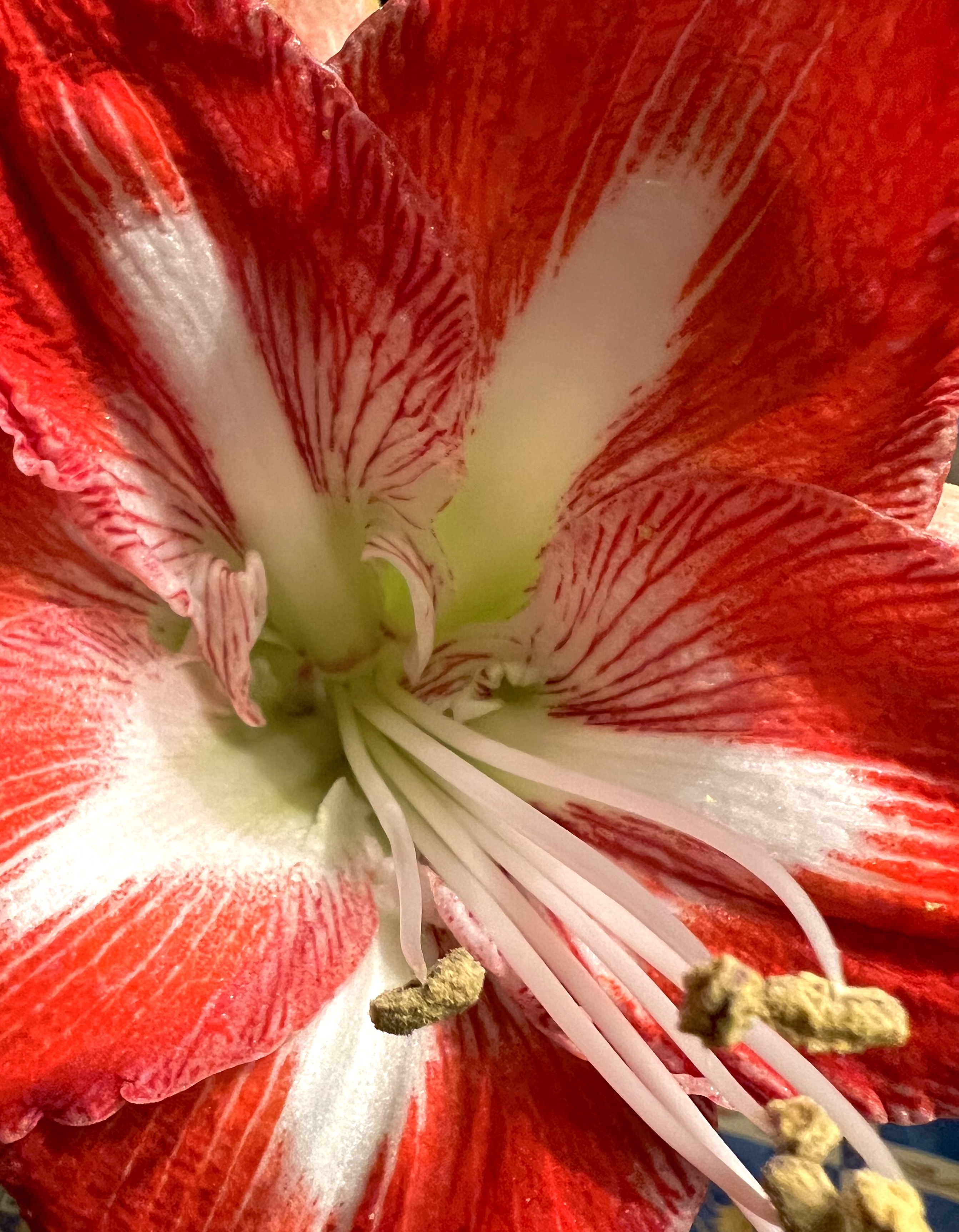
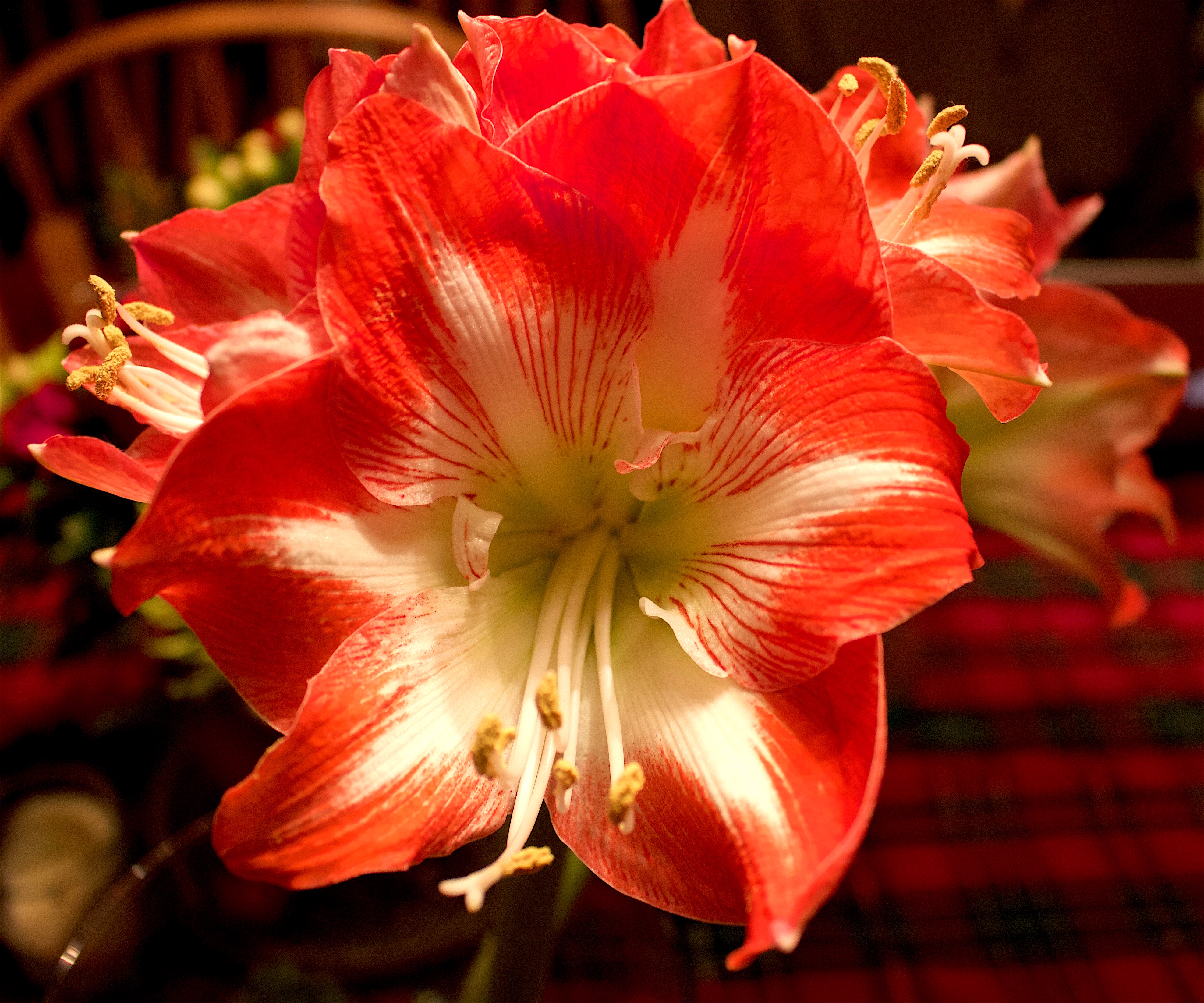
the last amaryllis refuses.
Planted in October,
it just now raises
a green bud tip
to the bright window. 
Inside the plain package
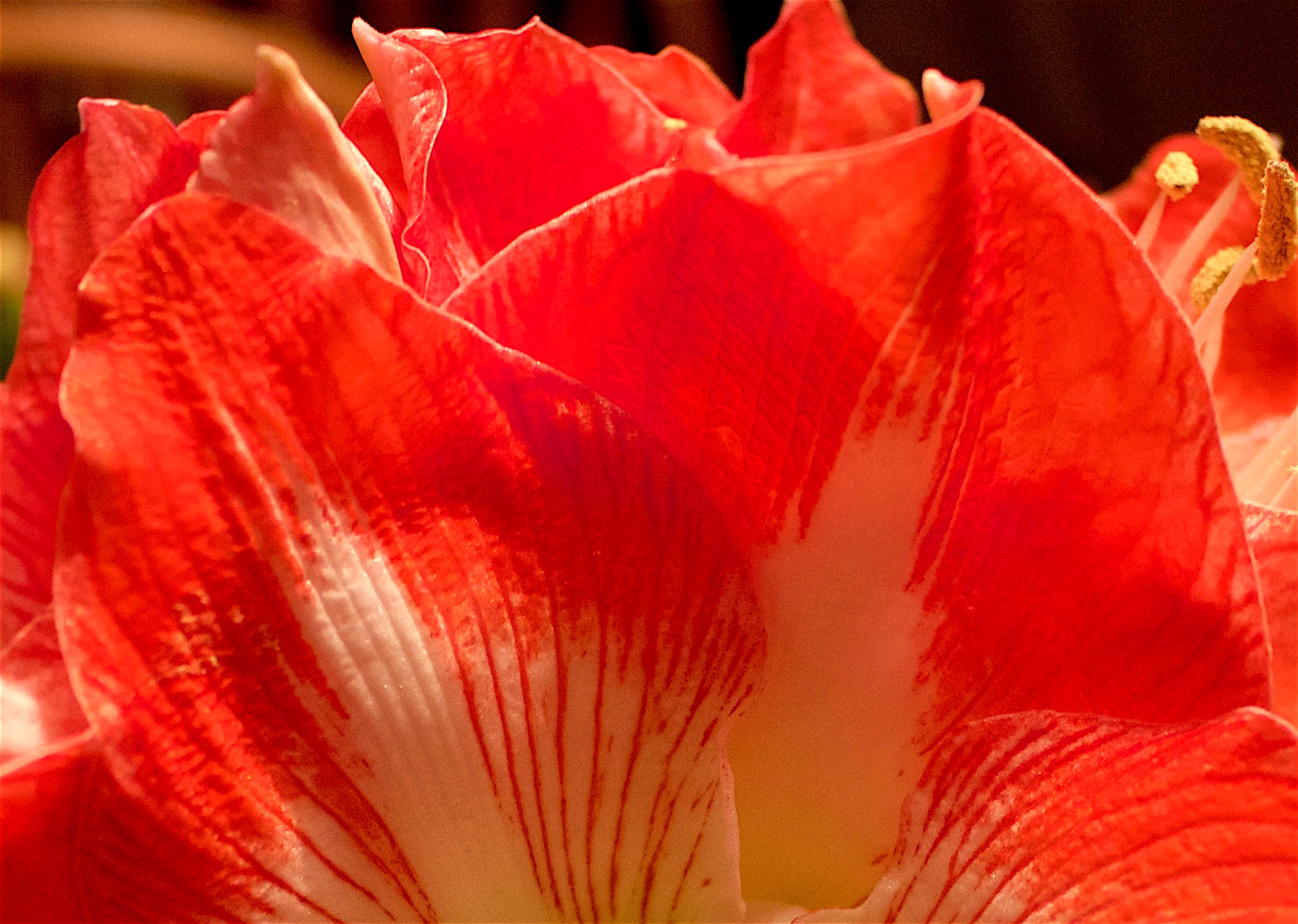
waits a blaring red,
the flower furled,
held like breath
in the trumpeter’s body.

~Francesca Bell “Late Blooming” from What Small Sound

Sometimes when you’re in a dark place
you think you’ve been buried,
but actually you’ve been planted.
~Christine Caine

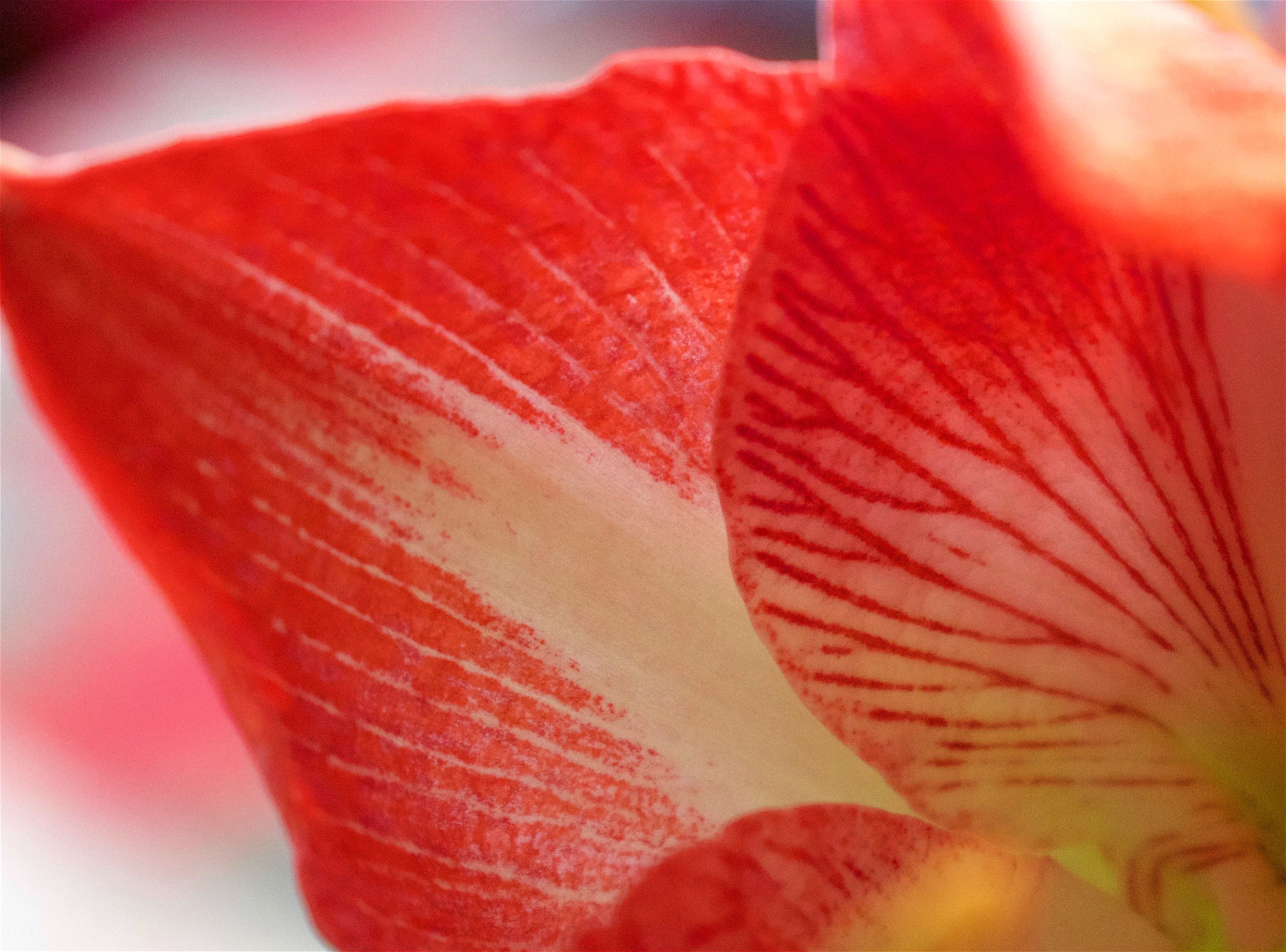
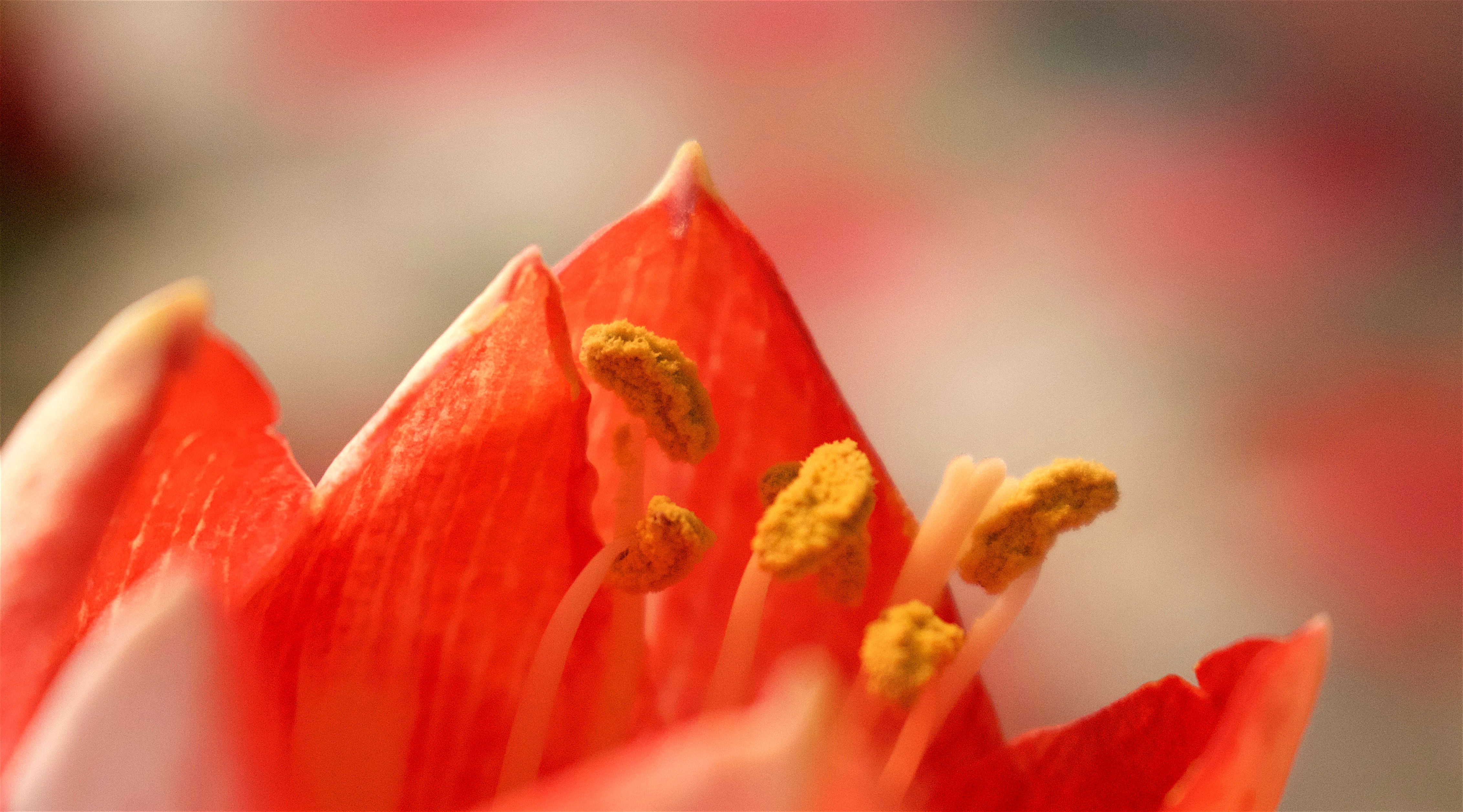
It came home with me over a month ago,
a non-descript bulb with a green sword-blade shoot
emerging shyly from the top.

Its care and feeding
was a lot of “watch and wait”
and just a little water.
It has been our winter morning entertainment
as we munched down cereal,
gauging how many centimeters
it rose over night.

It took over the kitchen table~
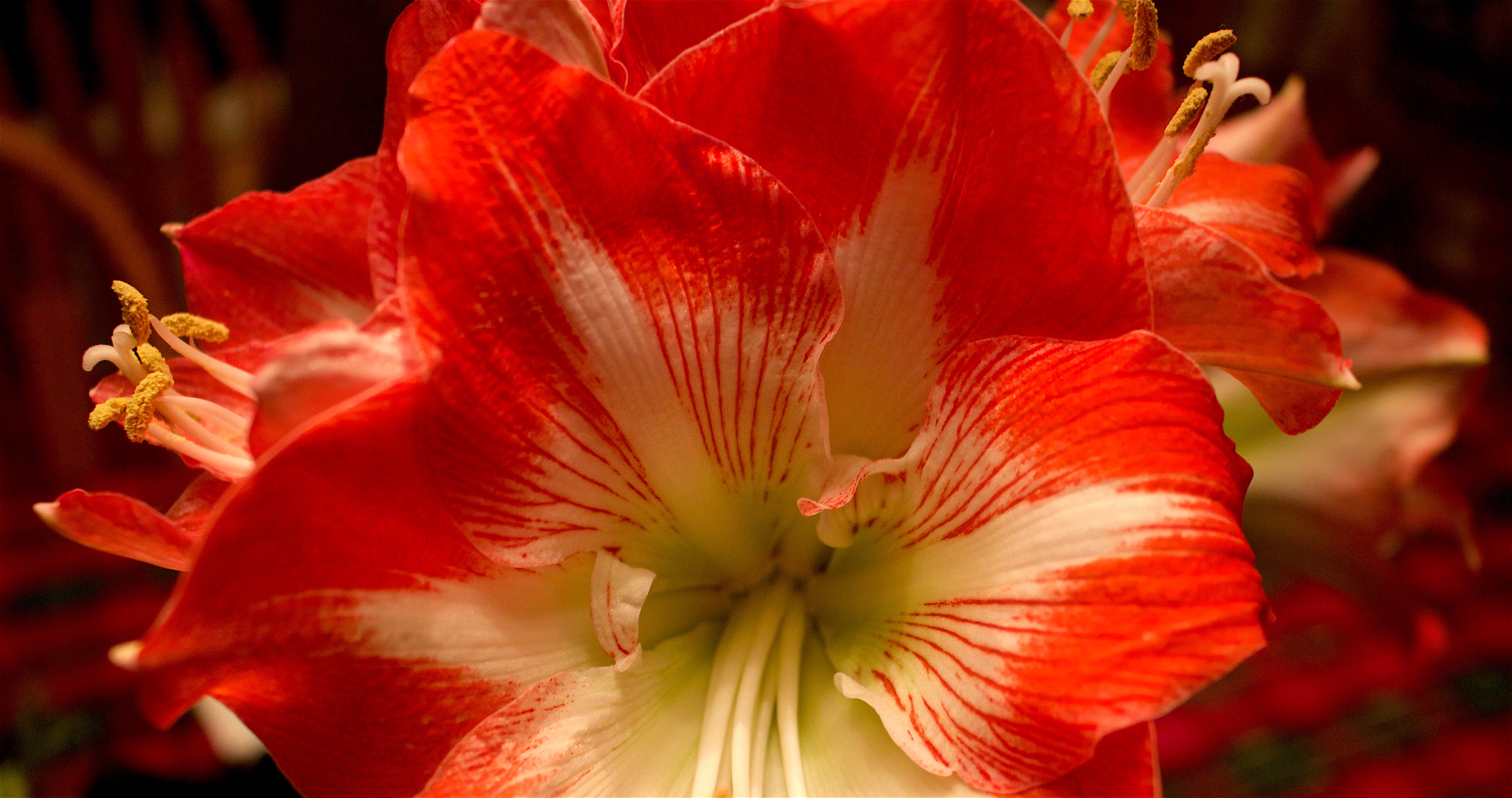
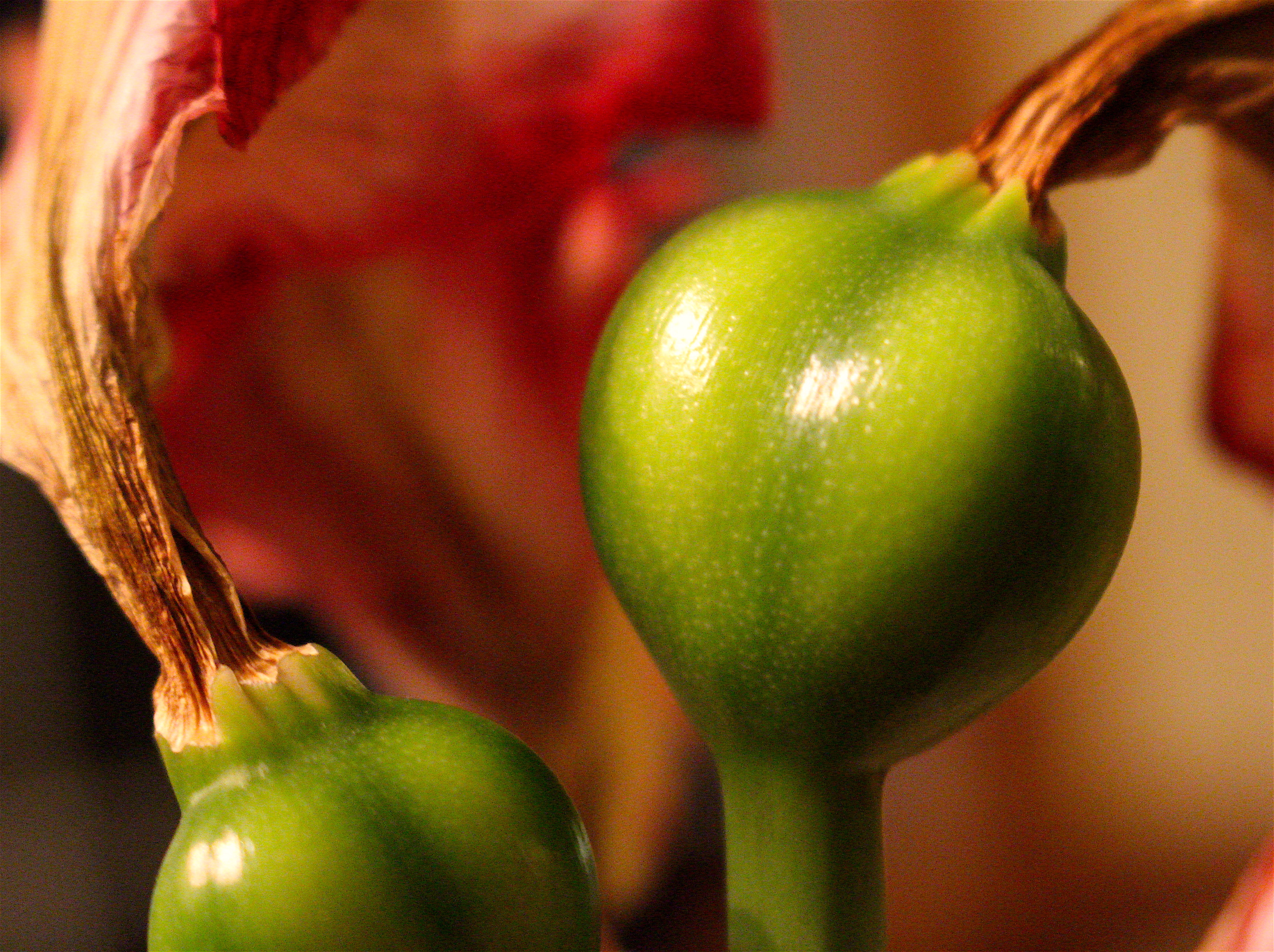
two tall stalks topped with tight-fisted buds
which opened oh-so-slowly over several days
like a drowsy student after Christmas break,
not yet ready to meet and greet the world
but once the commitment to wake is made,
there is no other blossoming quite like it anywhere.

How can we possibly understand,
while still buried in the dark,
that we too rest planted in holy ground,
waiting for the wakening
that calls us forth to bloom, and fruit, and amaze.

One-Time
Monthly
Yearly

Make a one-time or recurring donation to support daily Barnstorming posts

Make a monthly donation

Make a yearly donation
Choose an amount

$10.00
$25.00
$50.00
$5.00
$15.00
$100.00
$5.00
$15.00
$100.00

Or enter a custom amount

$

Your contribution is deeply appreciated.

Your contribution is appreciated.

Your contribution is appreciated.

DonateDonate monthlyDonate yearly