Yielding to Change

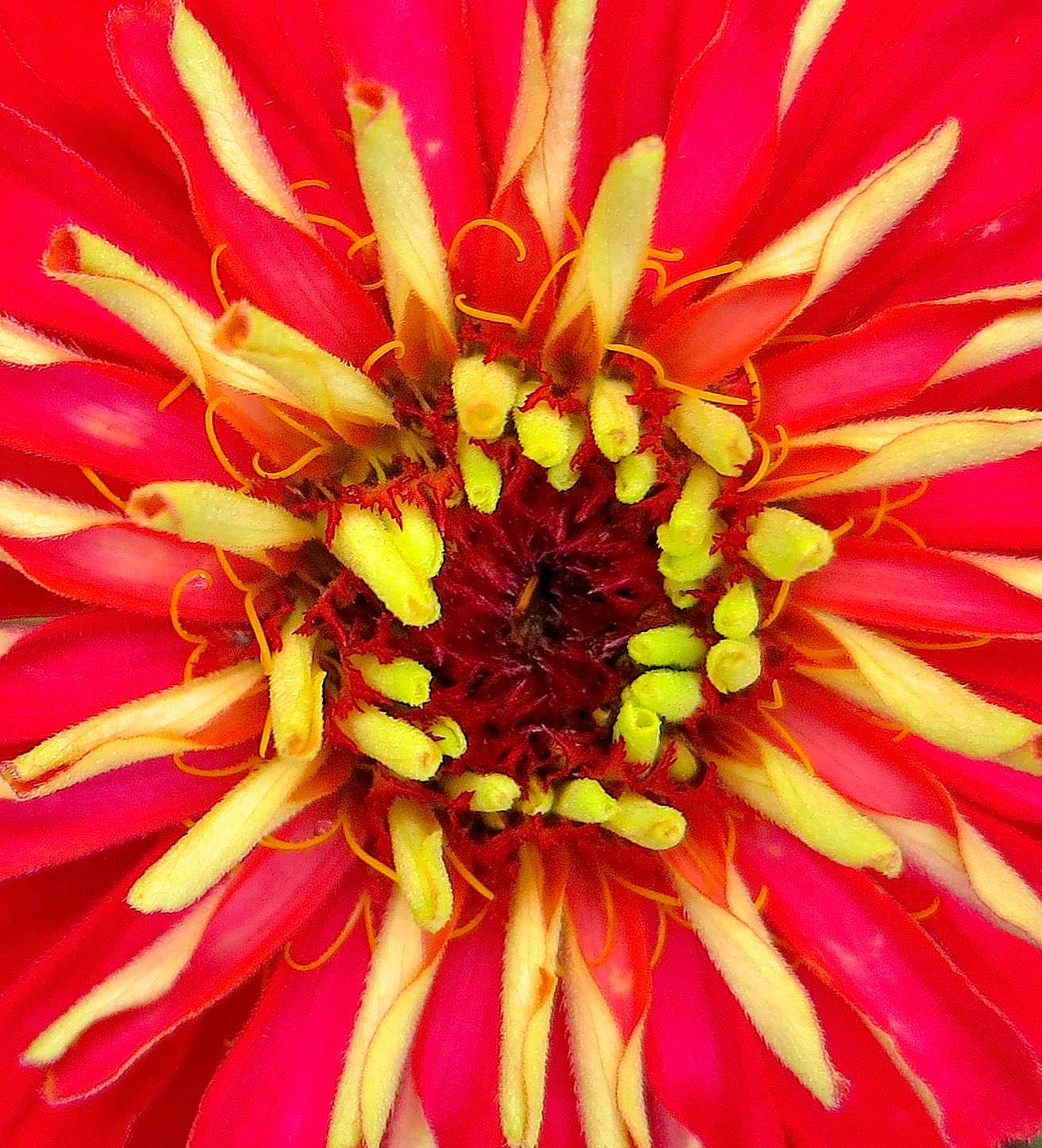
I went out to cut a last batch of zinnias this
morning from the back fencerow and got my shanks
chilled for sure: furrowy dark gray clouds with
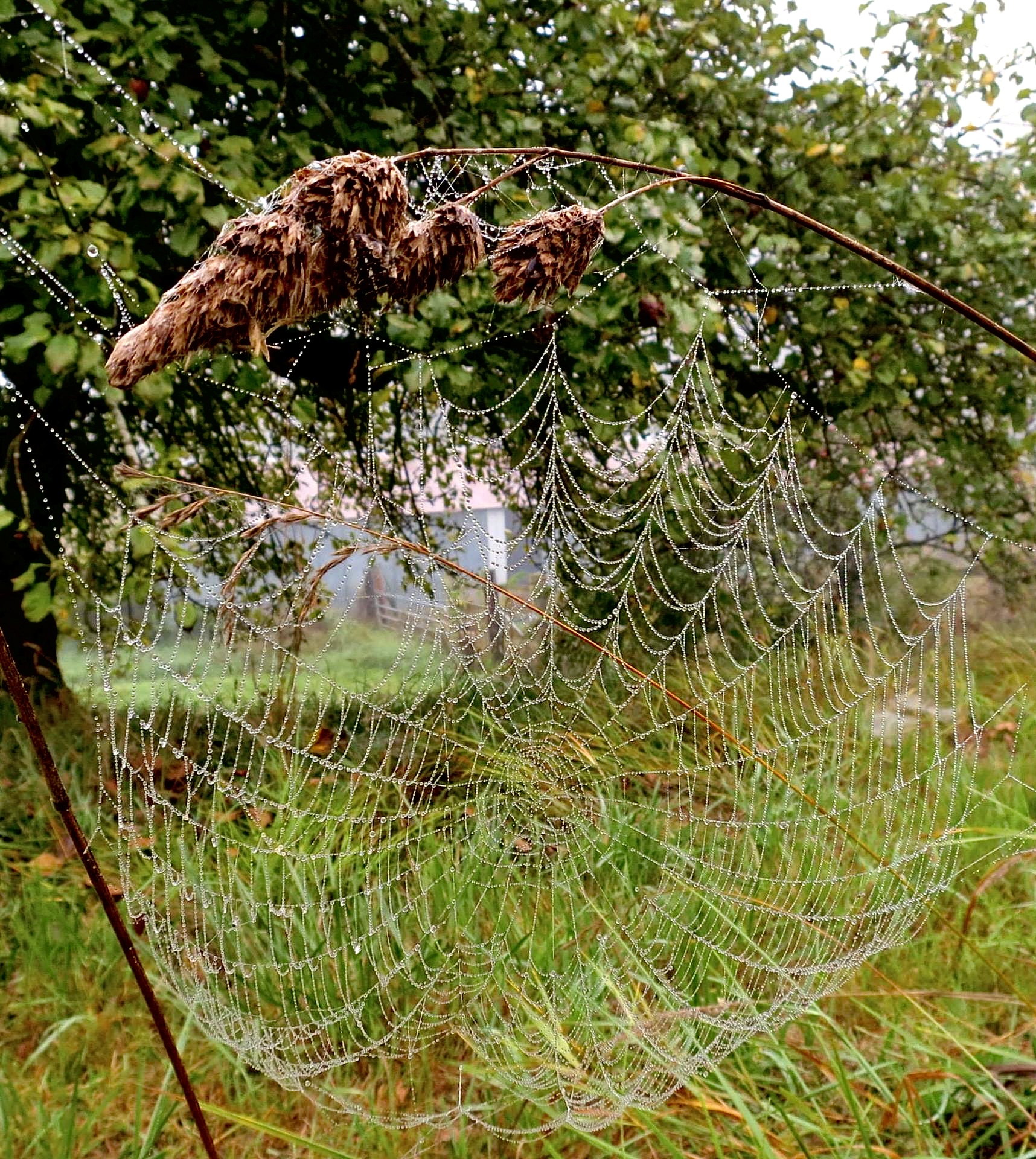
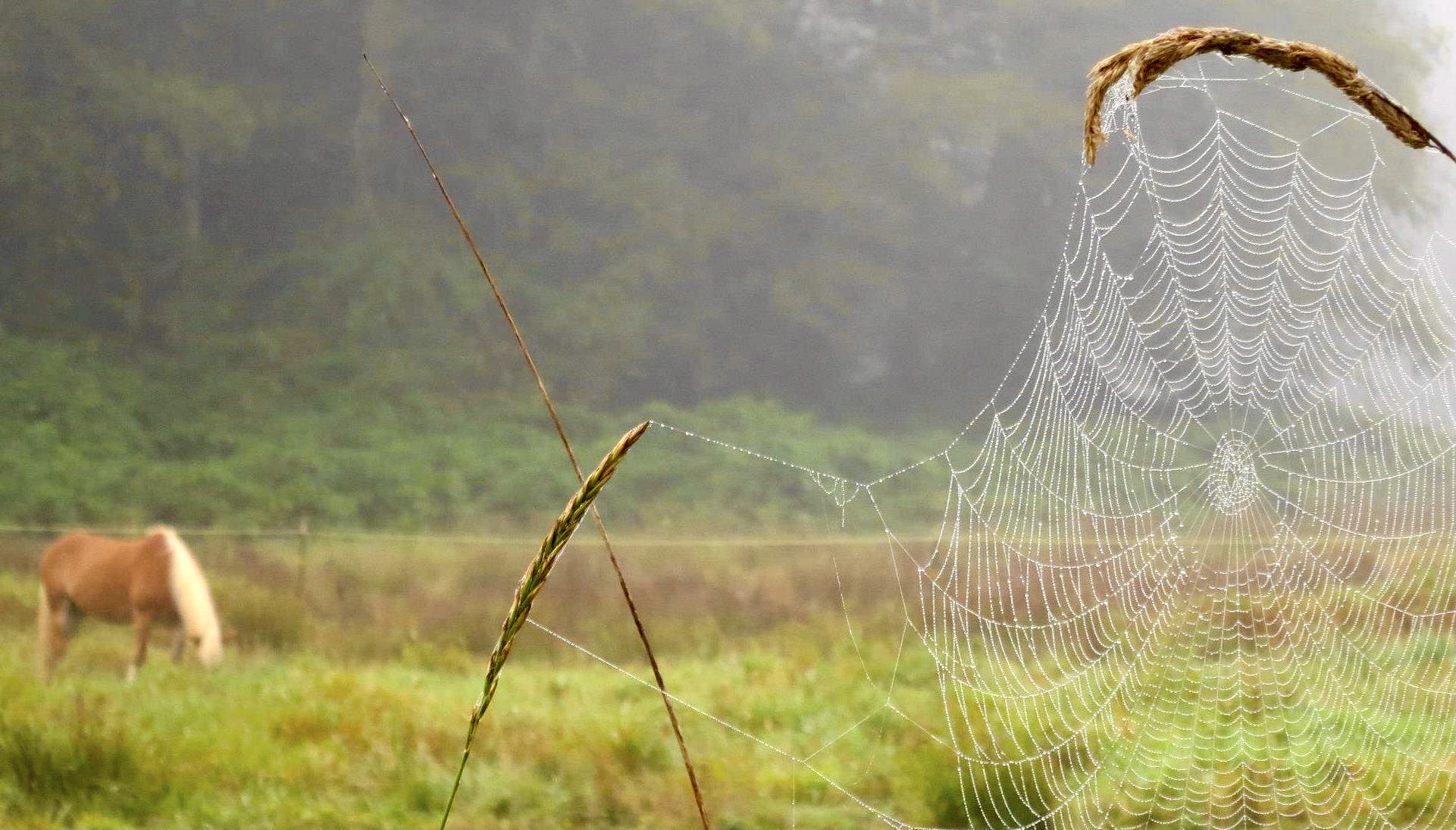
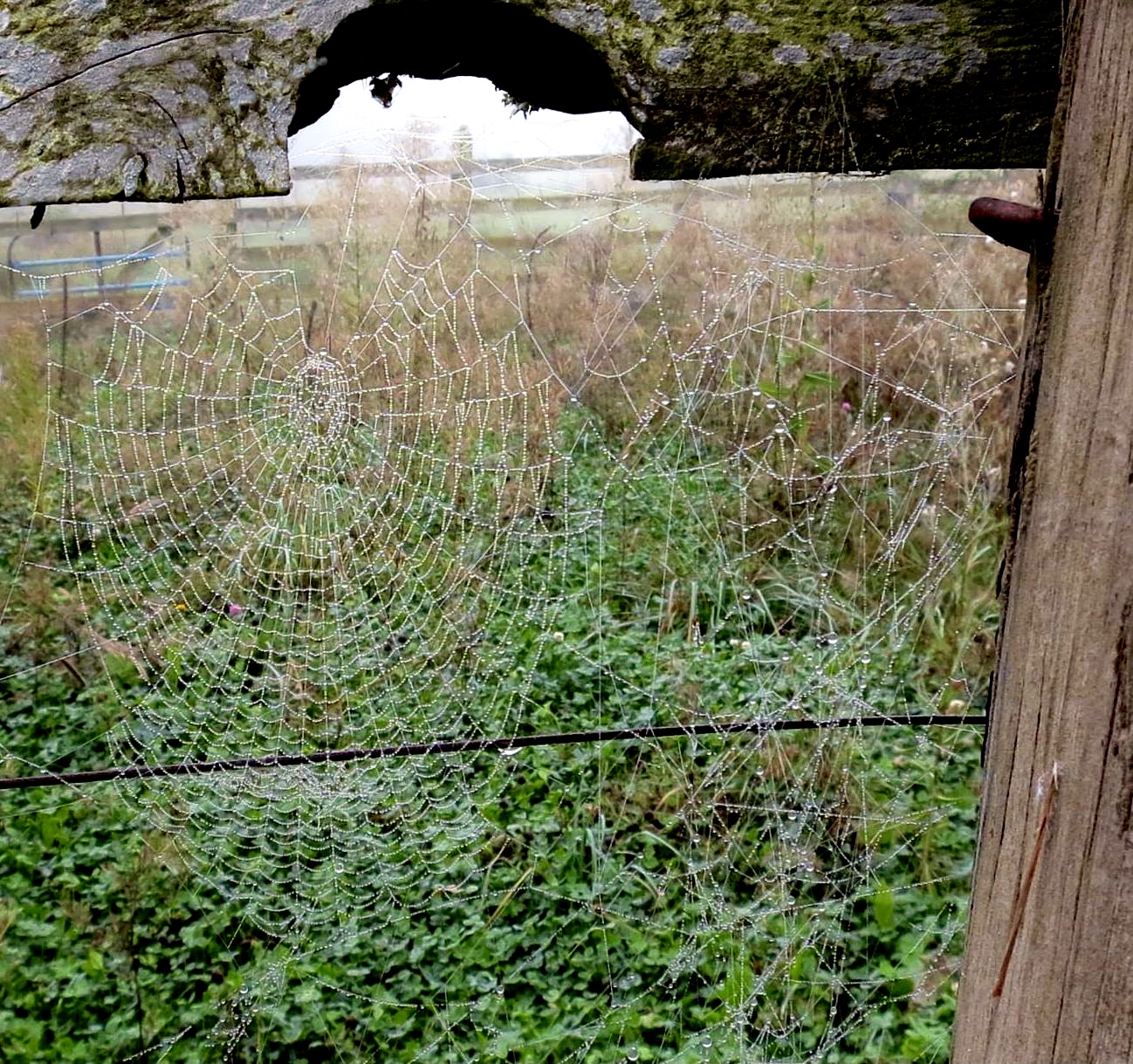
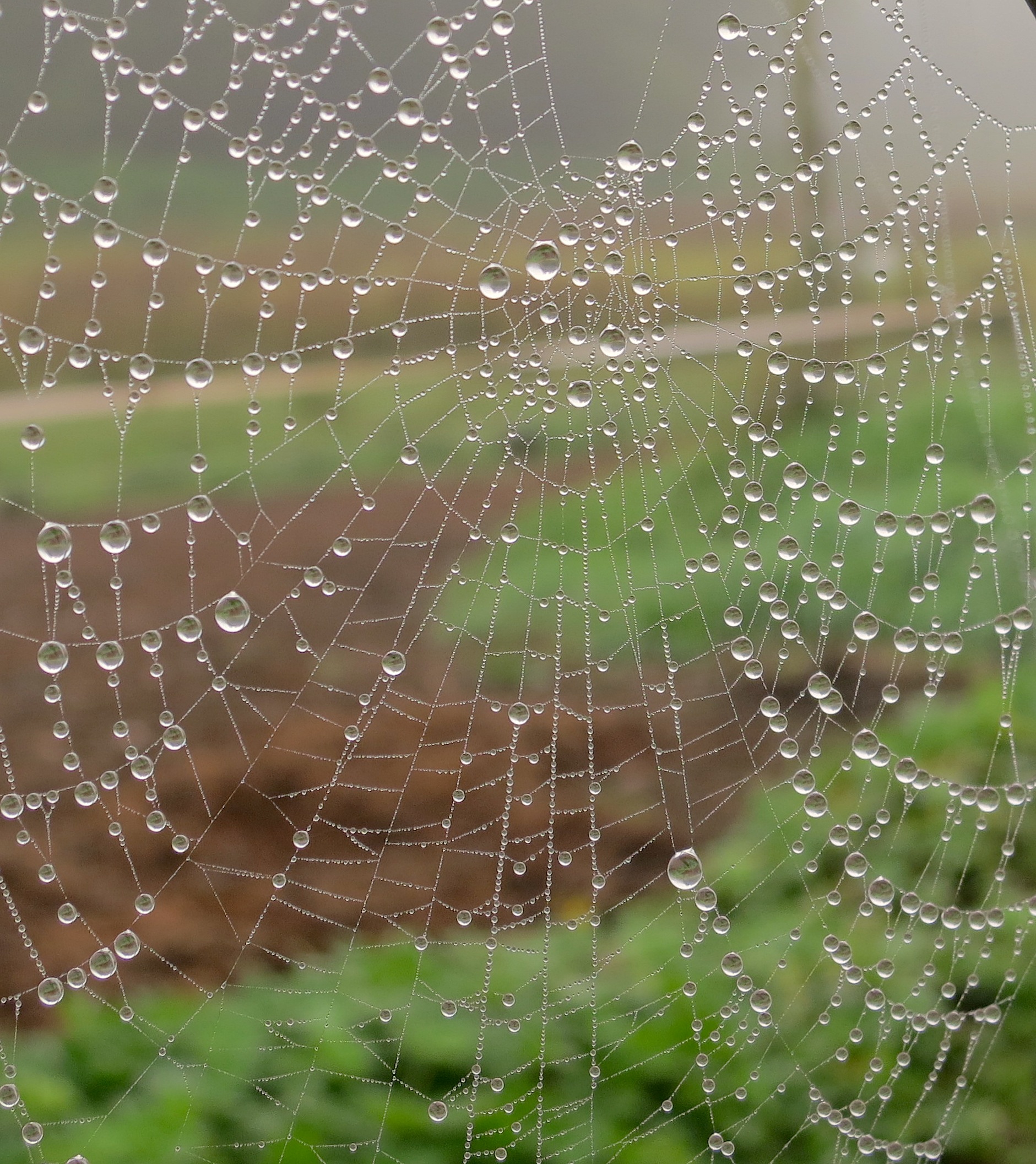
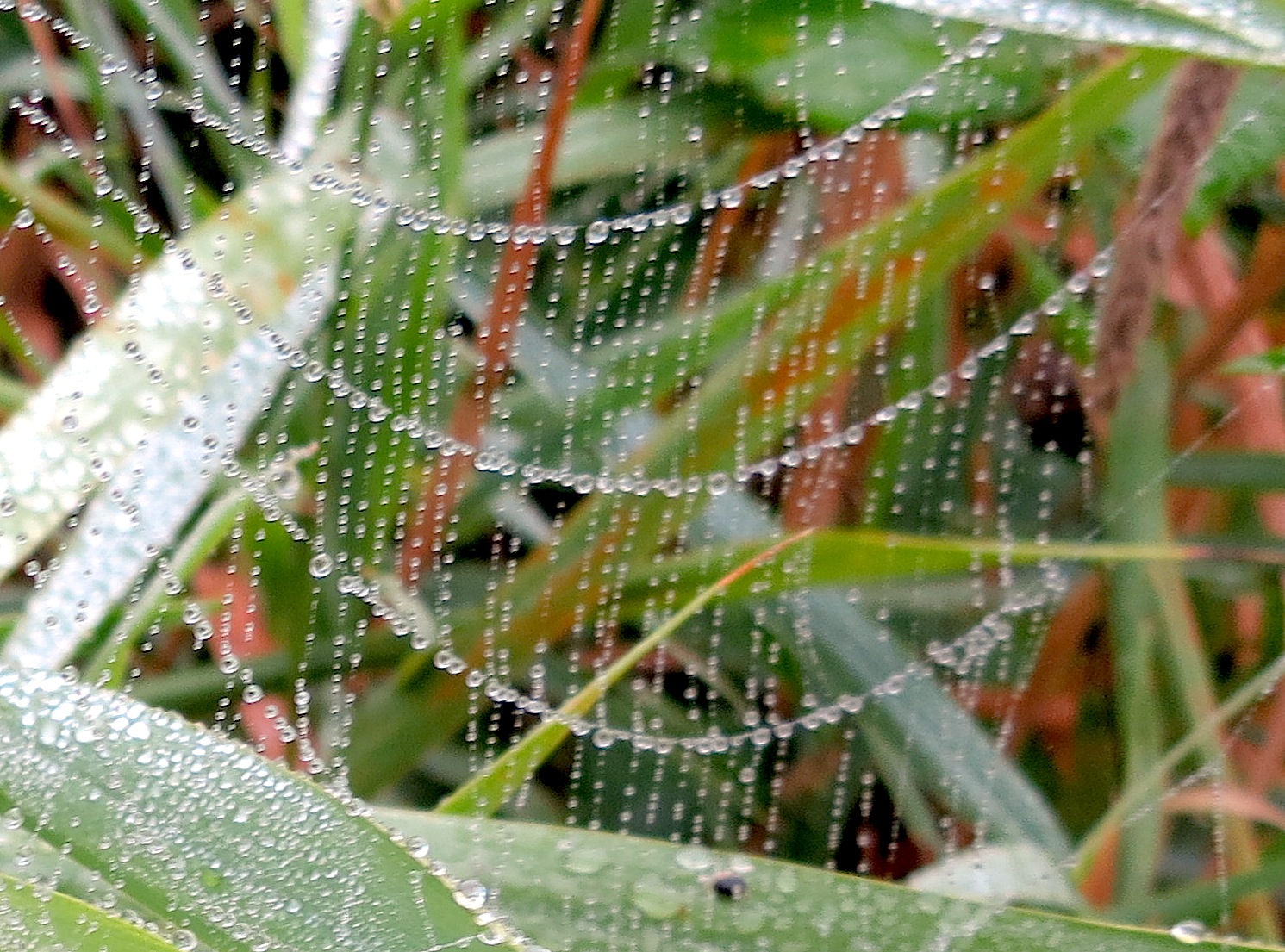
separating fringes of blue sky-grass: and the dew

beaded up heavier than the left-overs of the rain:
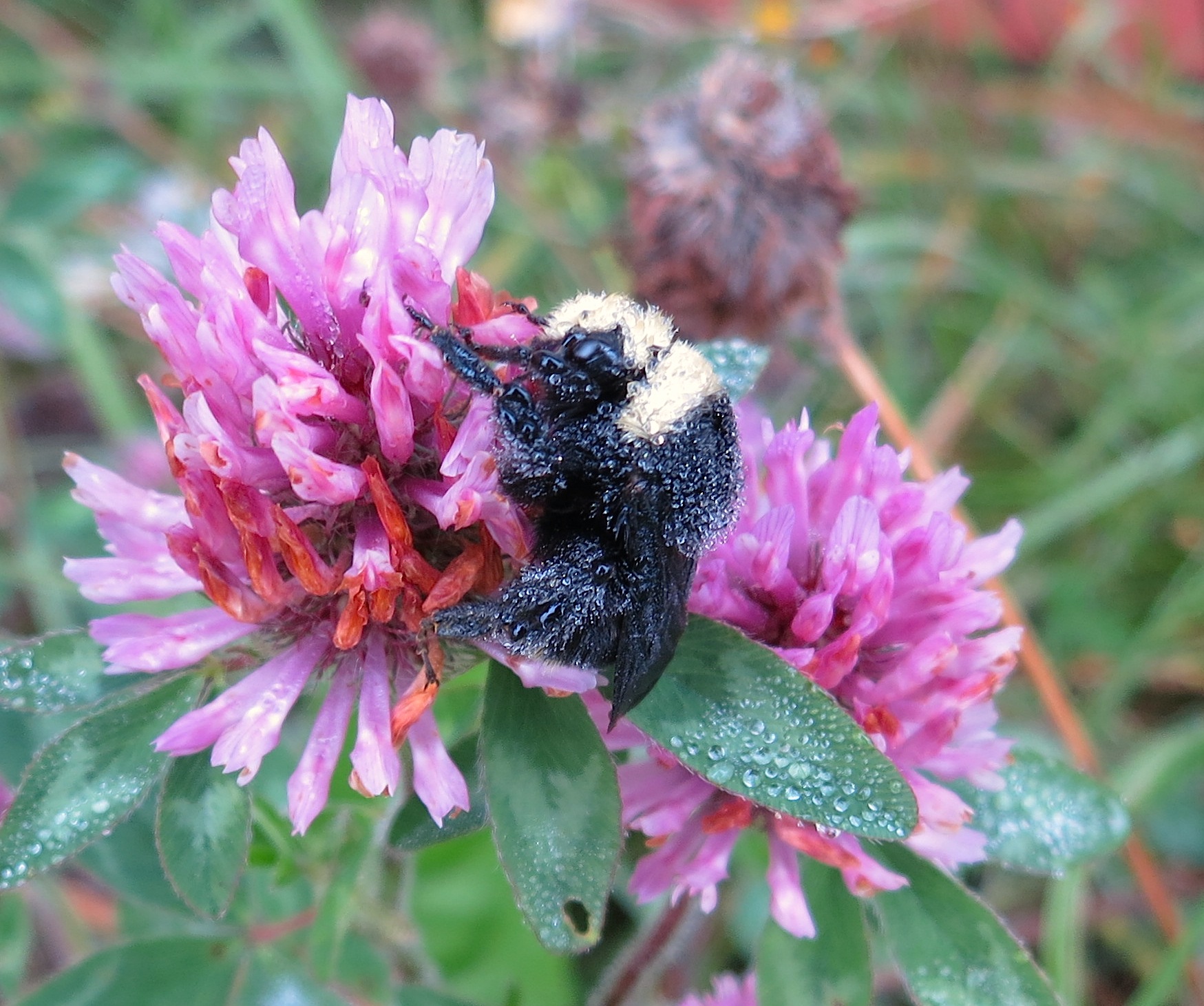
in the zinnias, in each of two, a bumblebee 
stirring in slow motion. Trying to unwind
the webbed drug of cold, buzzing occasionally but

with a dry rattle: bees die with the burnt honey 
at their mouths, at least: the fact’s established:
it is not summer now and the simmering buzz is out of 
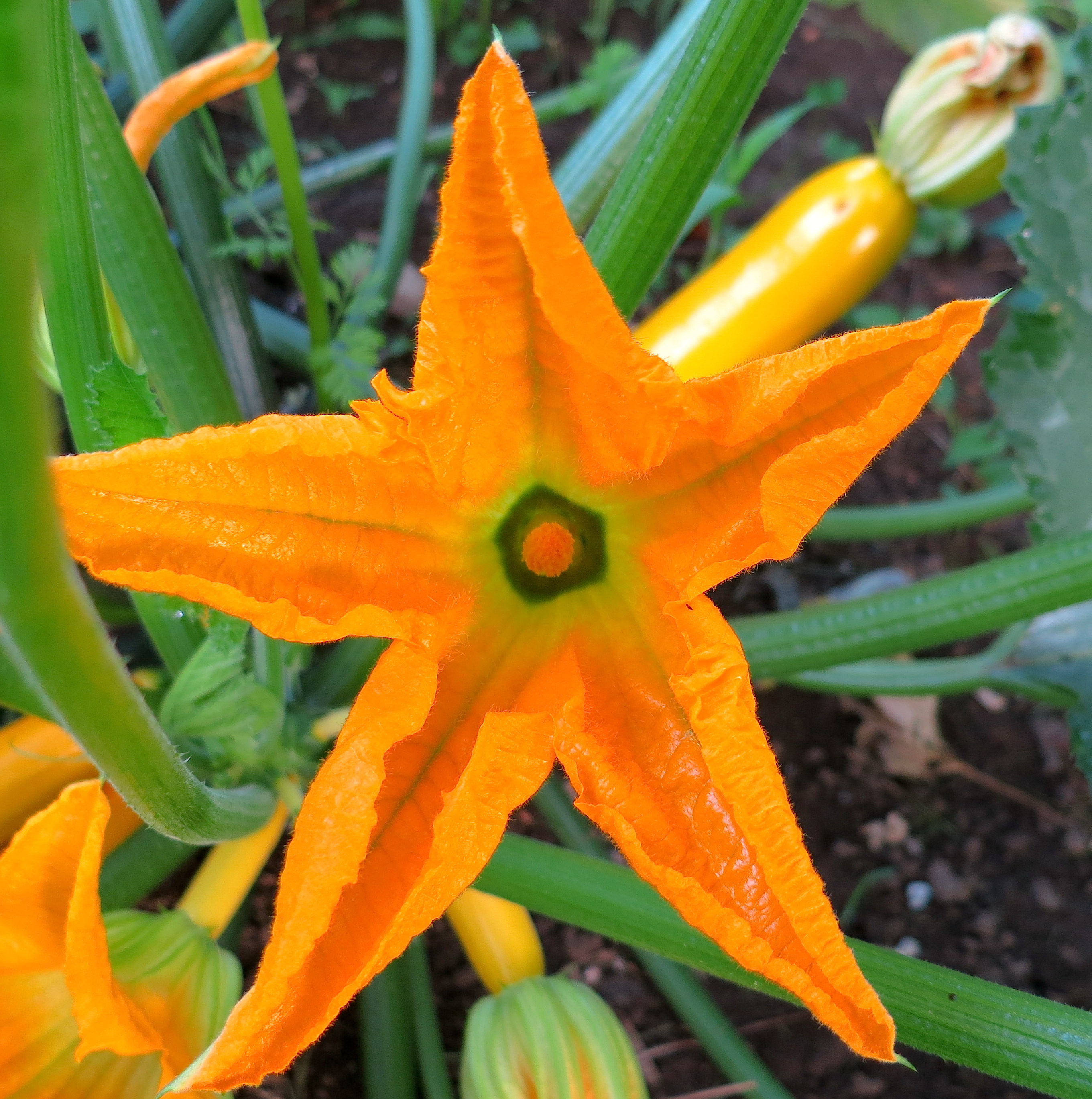
heat: the zucchini blossoms falling show squash

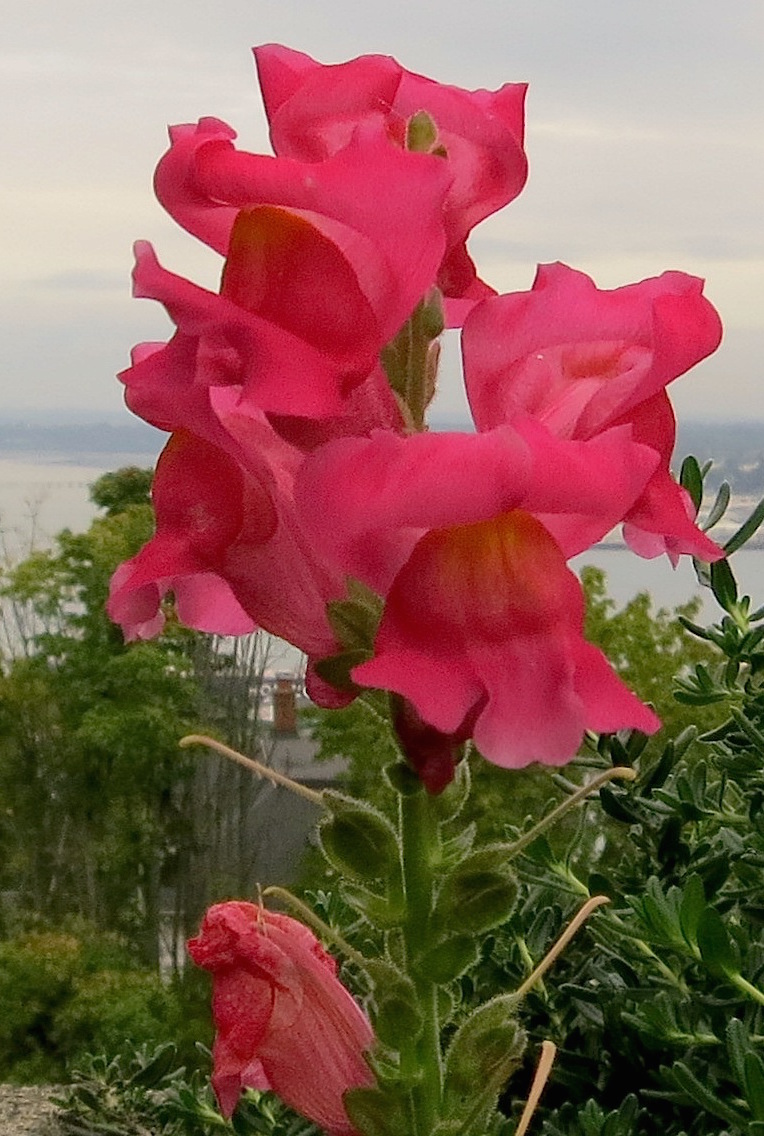
overgreen with stunted growth: the snapdragons have
suckered down into a blossom or so: we passed
into dark last week the even mark of day and night
and what we hoped would stay we yield to change.
~A.R. Ammons  “Equinox”

We yield now
to the heaviness of the change;
a slowing of our walk
and the darkening of our days.

It is time:
day and night compete,
and neither wins.

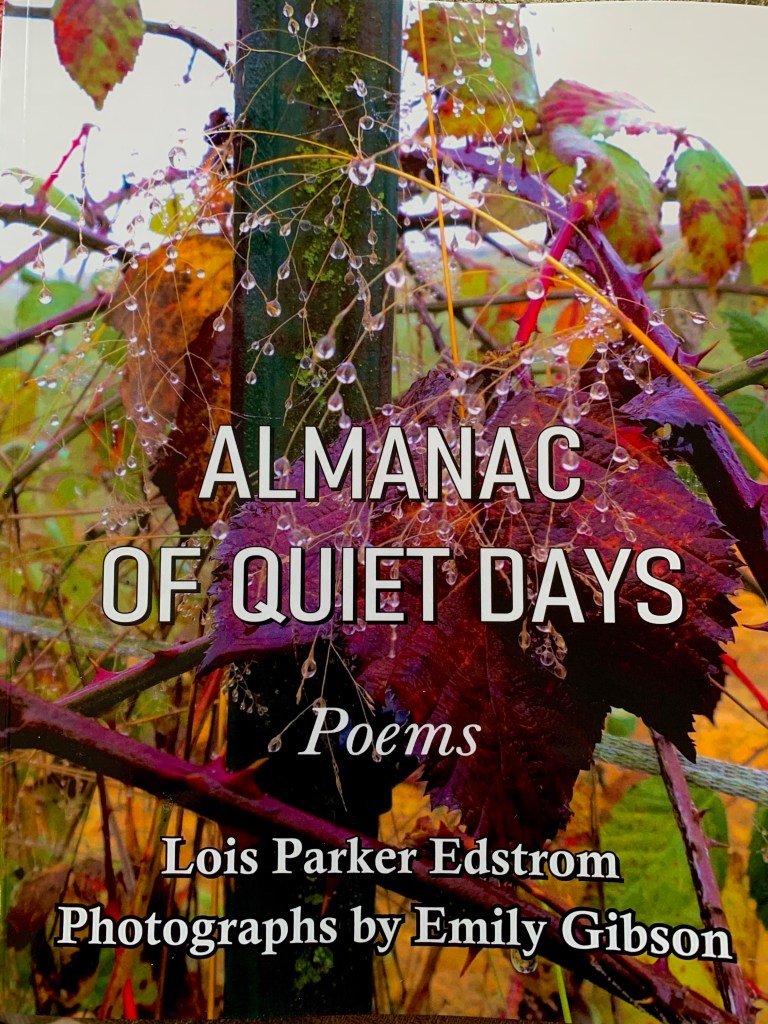
Order this book of beauty in words and photography

Nothing To Hold On To

They were smooth ovals,   
and some the shade of potatoes—   
some had been moth-eaten   
or spotted, the maples   
were starched, and crackled   
like campfire.   

We put them under tracing paper   
and rubbed our crayons   
over them, X-raying   
the spread of their bones   
and black, veined catacombs.   

We colored them green and brown   
and orange, and   
cut them out along the edges,   
labeling them deciduous   
or evergreen.   

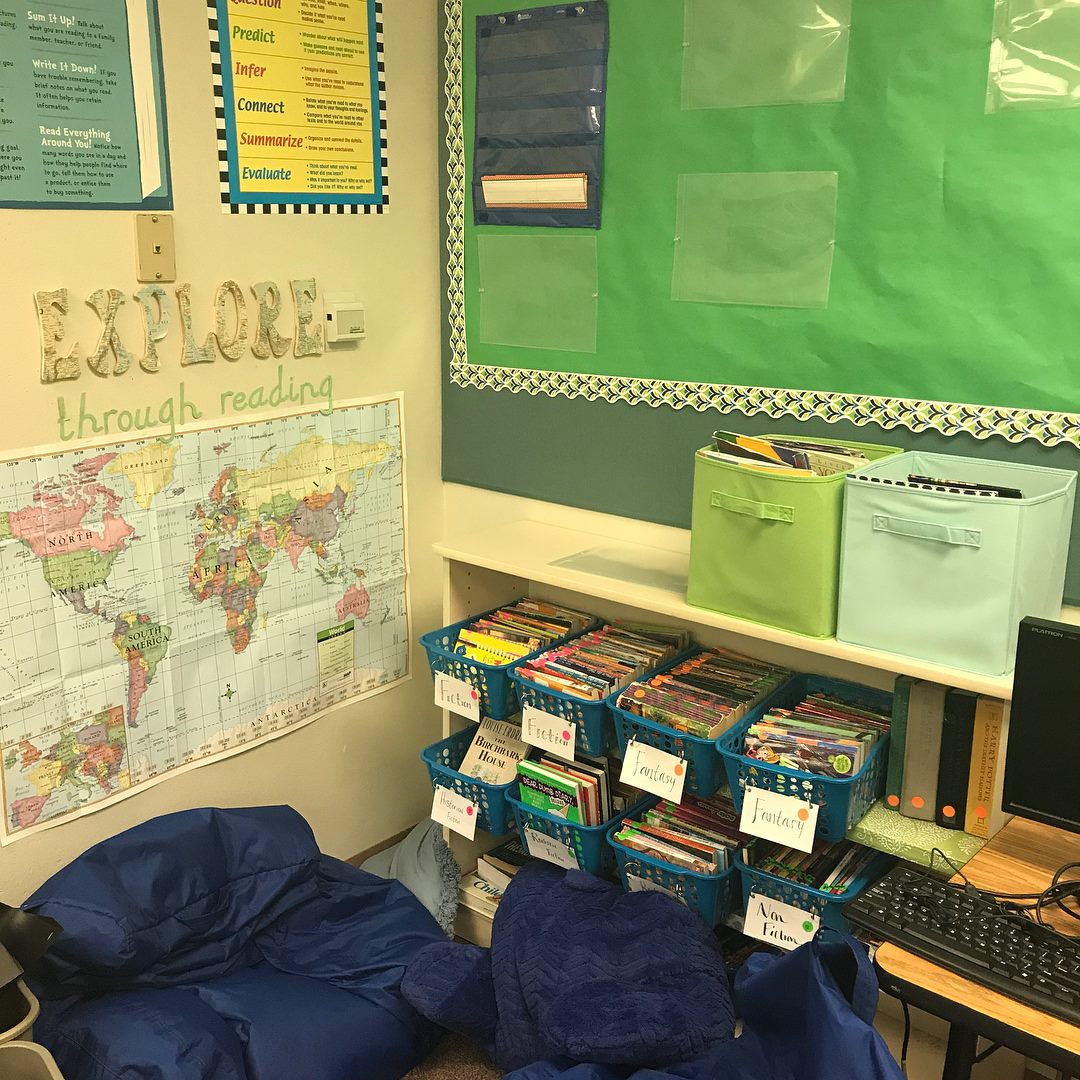
All day, in the stuffy air of the classroom,   
with its cockeyed globe,   
and nautical maps of ocean floors,   
I watched those leaves   

lost in their own worlds   
flap on the pins of the bulletin boards:   
without branches or roots,   
or even a sky to hold on to.

~Judith Harris “Gathering Leaves in Grade School”

They are more like us than we care to admit:
veined and ribbed,
some wide, some thin,
lots with sharp edges, others rounded,
a variety of colors and shapes,
twisting this way and that with the breeze,
over-eager to let go,
explore wide open spaces
yet finding themselves blown and broken
thrown far from home and roots
with nothing left to hold on to,
destined to dust,
longing to return to branch and connection.

Even so-
even so, when we are let go,
we are thinking:
oh, what a life!

A book of beauty in words and photography available to order here:

Unanswerable Questions

Under the harvest moon,
When the soft silver
Drips shimmering over the garden nights,
Death, the gray mocker,
Comes and whispers to you
As a beautiful friend
Who remembers.

Under the summer roses
When the flagrant crimson
Lurks in the dusk
Of the wild red leaves,
Love, with little hands,
Comes and touches you
With a thousand memories,
And asks you
Beautiful, unanswerable questions.
~Carl Sandburg, “Under the Harvest Moon”

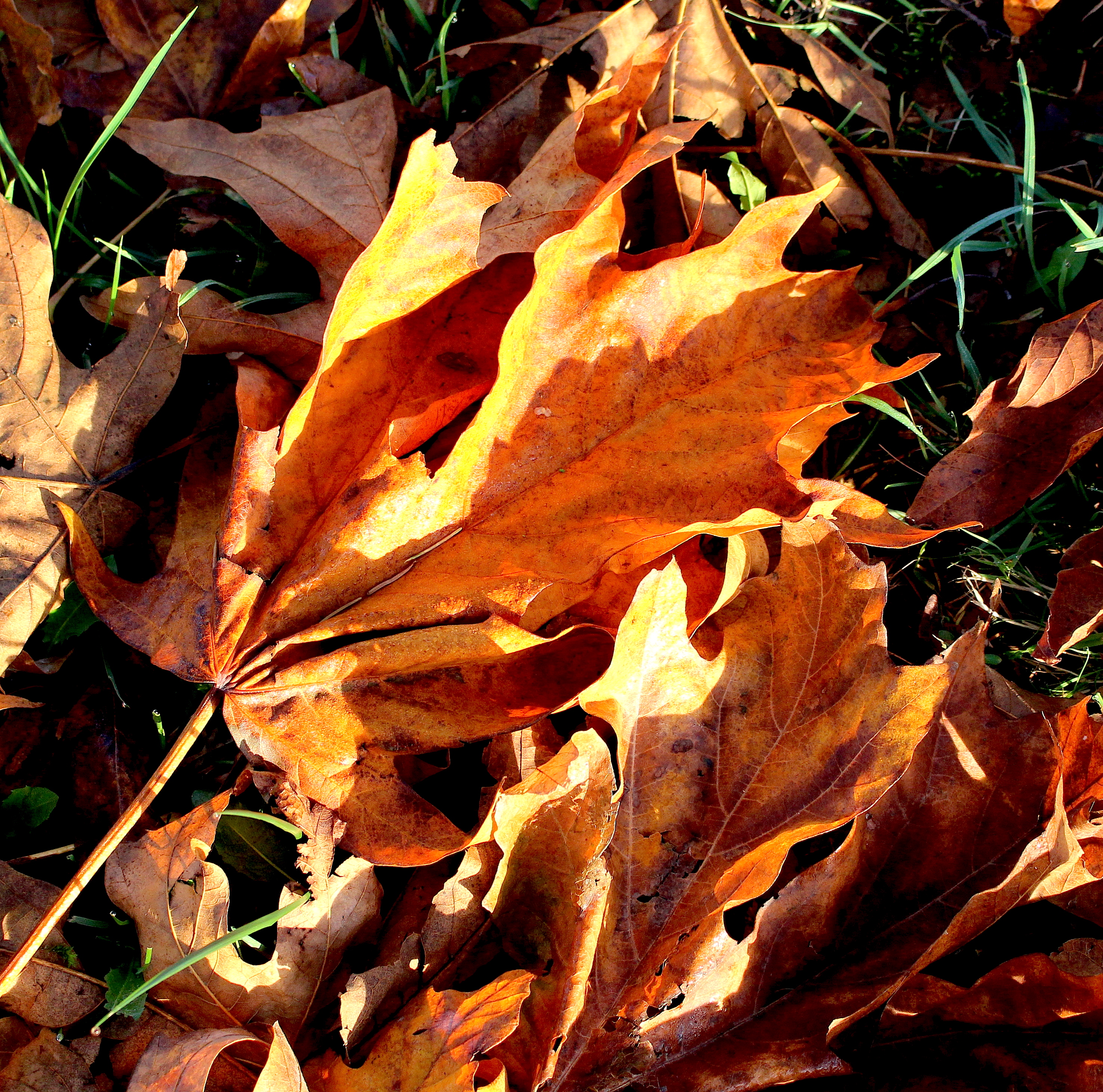
As we enter the season
of all that is lush and lovely
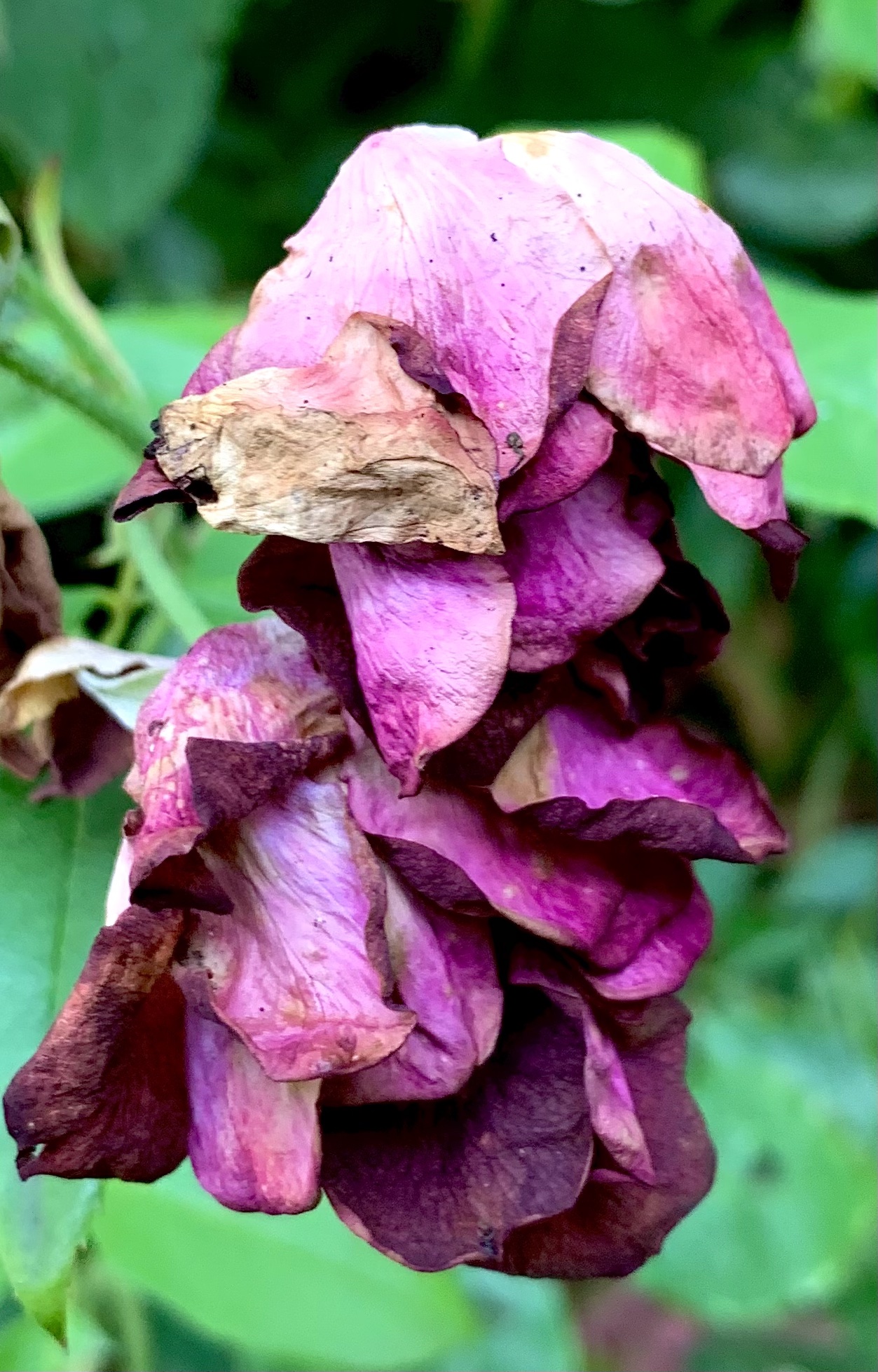
which starts to wither and decay before our eyes,
we know the flowers and trees aren’t alone.
Death, whispering within its gray night’s cloak,
has been stealing the young and old since time began,
but never as boldly as during a pandemic.
Millions of family members are left
with nothing but bittersweet memories
of their loved ones now buried deep.

The harvest moon – not nearly bright enough,
as a poor reflection of the sun –
mocks us who covet light
during a rampage of contagious illness and death.

As we endure the searing beauty of yet another dying season,
let us treasure those we protect through our care and concern.
Let us cherish the memories of those we’ve lost.
There can be only one answer to the unanswerable questions:
Love itself died to become Salvation,
an ever-sufficient Light that leads us home.

A book of beauty in words and photos is available to order here:


I Pray Watch Over Them

Echo of the clocktower, footstep
in the alleyway, sweep
of the wind sifting the leaves. 


Jeweller of the spiderweb, connoisseur
of autumn’s opulence, blade of lightning
harvesting the sky. 

Keeper of the small gate, choreographer
of entrances and exits, midnight
whisper travelling the wires. 

Seducer, healer, deity, or thief,
I will see you soon enough–


in the shadow of the rainfall, 
in the brief violet darkening a sunset —

but until then I pray watch over him
as a mountain guards its covert ore 

and the harsh falcon its flightless young.
~Dana Gioia “The Prayer” (written in memory of his infant son who died of SIDS)

When we think of those who wait for us on the other side,
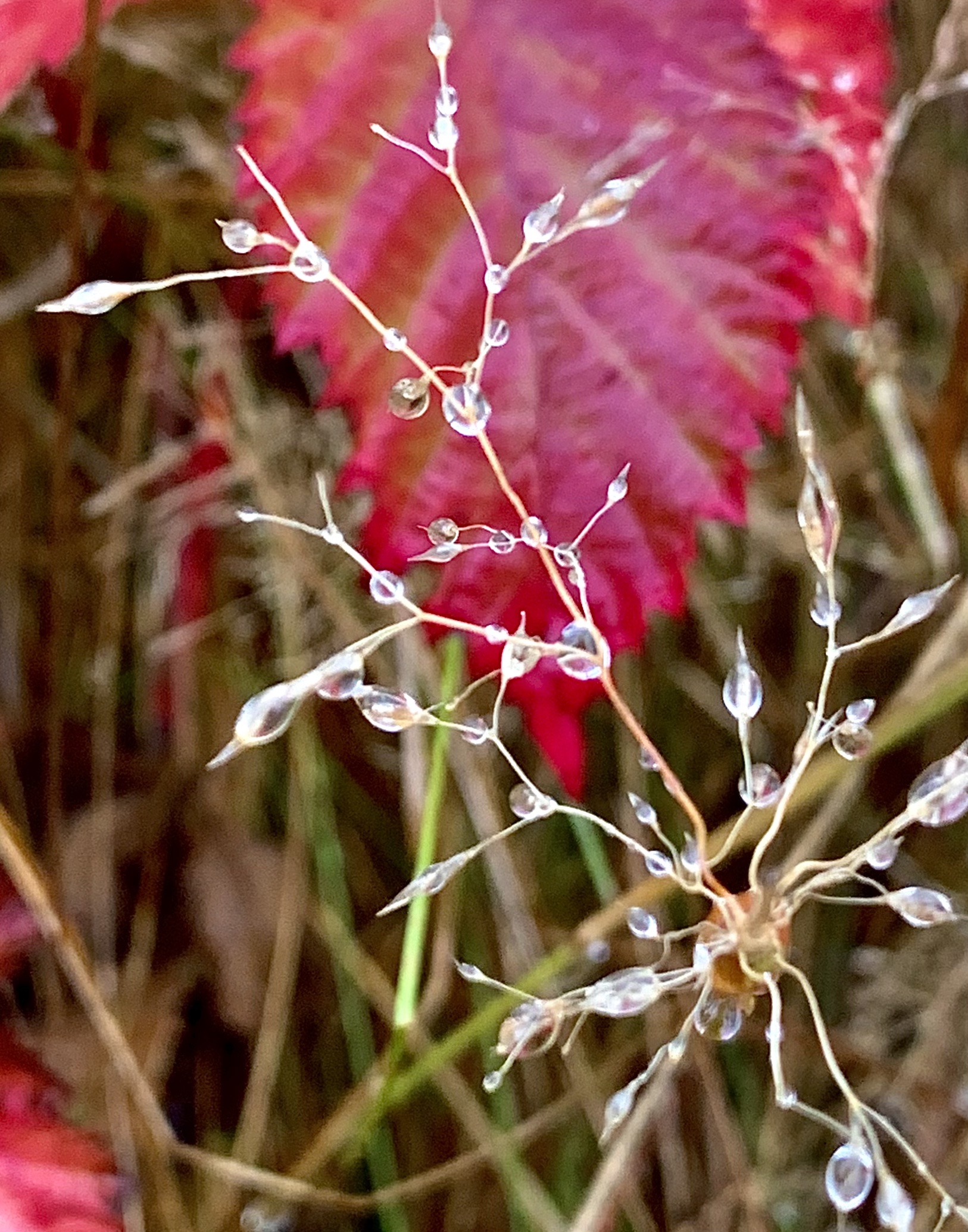
including our baby lost before birth 38 years ago…
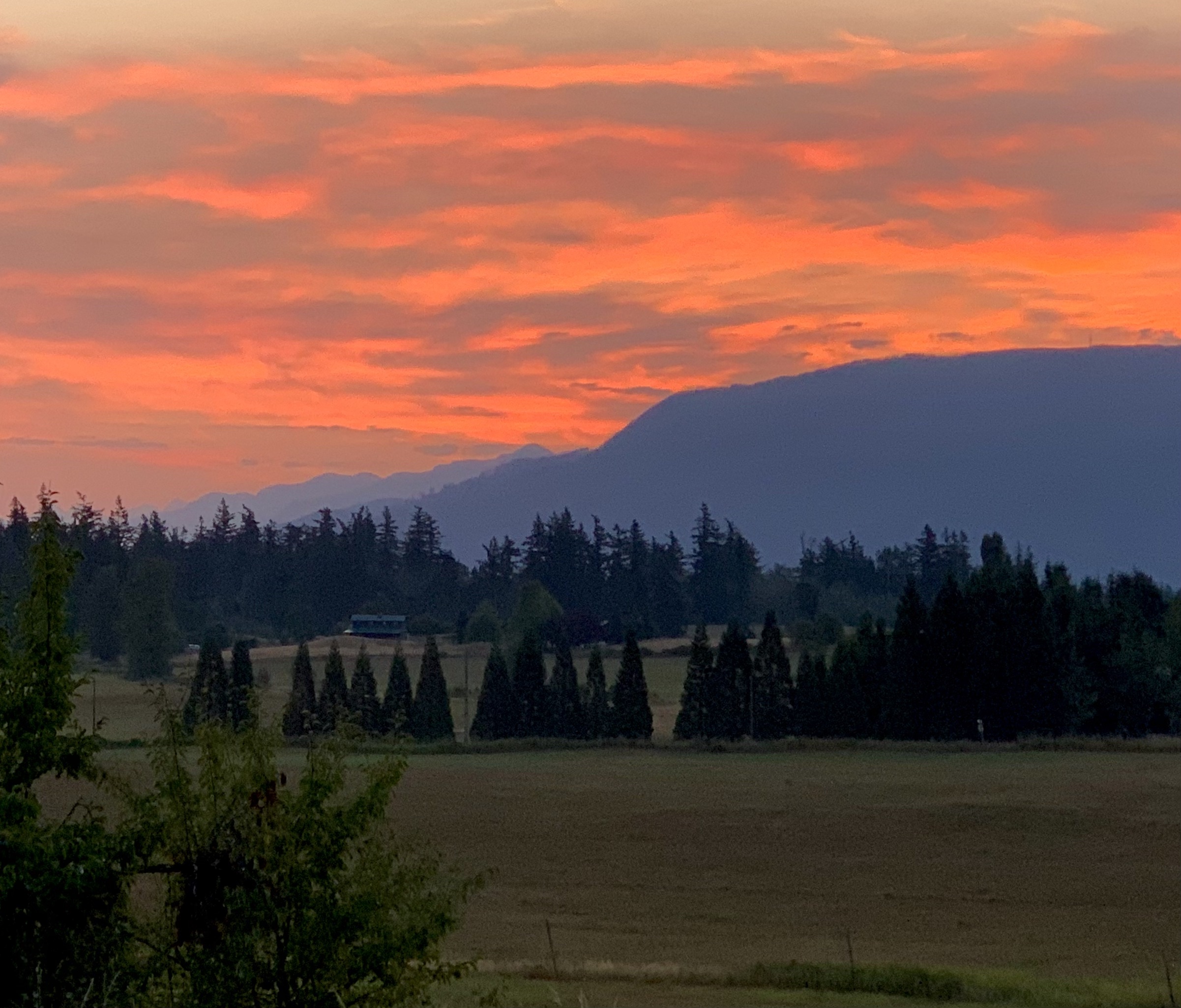
We pray those from whom we are parted are loved as we have loved.

I know God will watch over all these reunions;
He knows the moment when our fractured hearts
heal whole once again.

I will see you soon enough, sweet one. Soon enough.

photo by Kate Steensma

A peaceful book of beauty in words and pictures, available to order here:

The Soul’s Sap Quivers

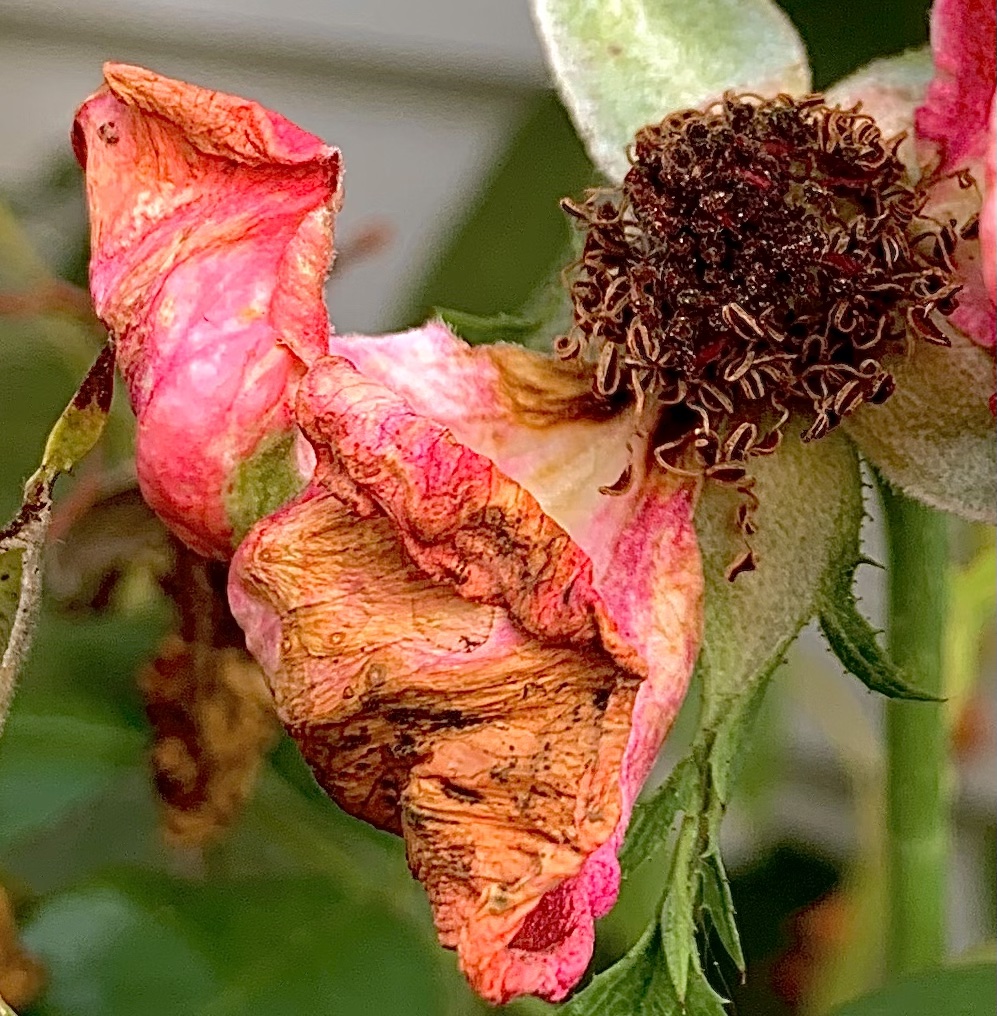
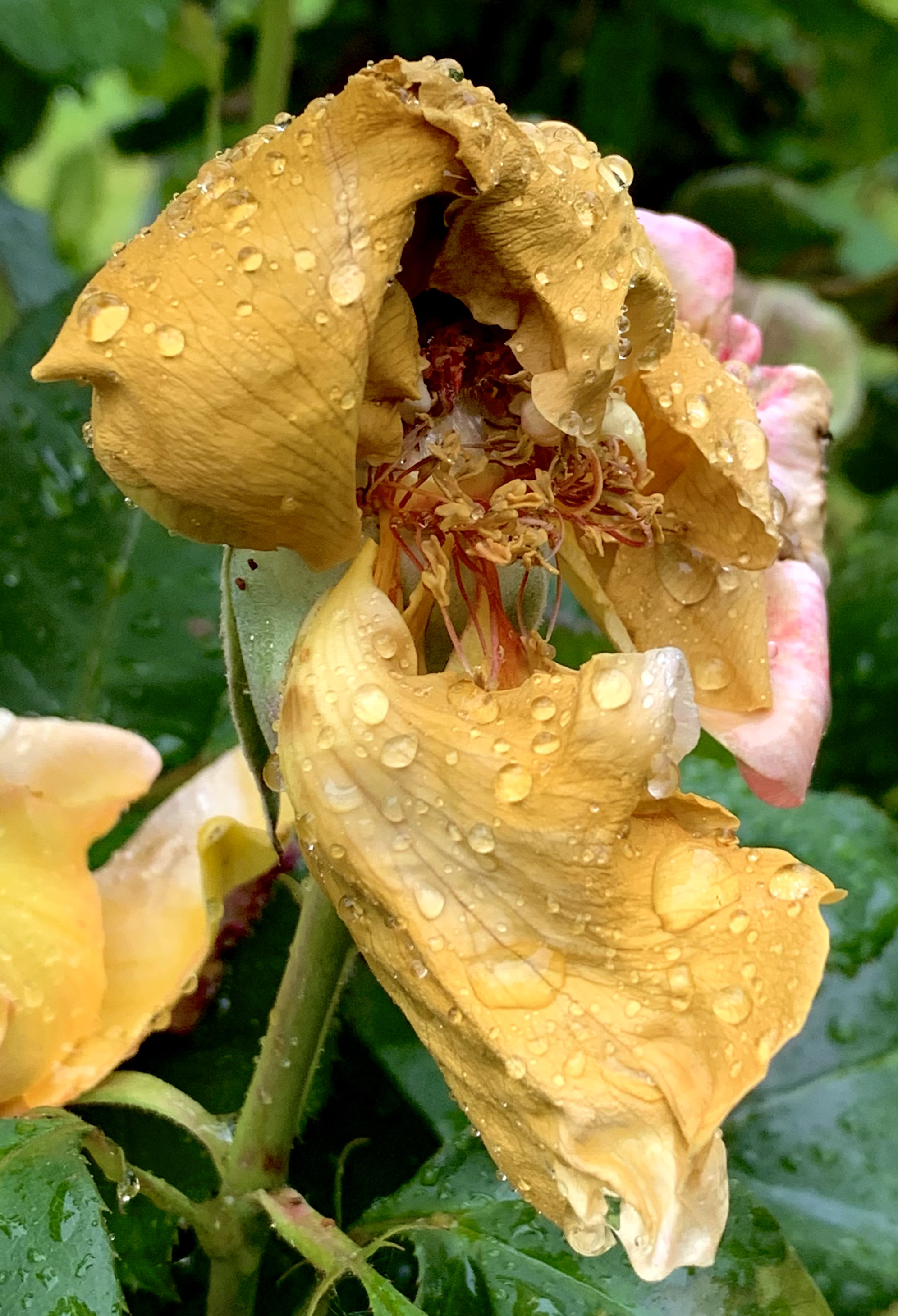
To think that this meaningless thing was ever a rose,
Scentless, colourless, this!
Will it ever be thus (who knows?)
Thus with our bliss,
If we wait till the close?


Though we care not to wait for the end, there comes the end
Sooner, later, at last,
Which nothing can mar, nothing mend:

An end locked fast,
Bent we cannot re-bend.

~Christina Rossetti “Summer is Ended”

The soul’s sap quivers. There is no earth smell
Or smell of living thing. This is the spring time
But not in time’s covenant. Now the hedgerow
Is blanched for an hour with transitory blossom
Of snow, a bloom more sudden
Than that of summer, neither budding nor fading,
Not in the scheme of generation.
Where is the summer, the unimaginable Zero summer?

We shall not cease from exploration
And the end of all our exploring
Will be to arrive where we started
And know the place for the first time.
Through the unknown, unremembered gate
When the last of earth left to discover
Is that which was the beginning;


And all shall be well and
All manner of thing shall be well
When the tongues of flames are in-folded
Into the crowned knot of fire
And the fire and the rose are one.

~T.S. Eliot – lines taken from “Little Gidding”

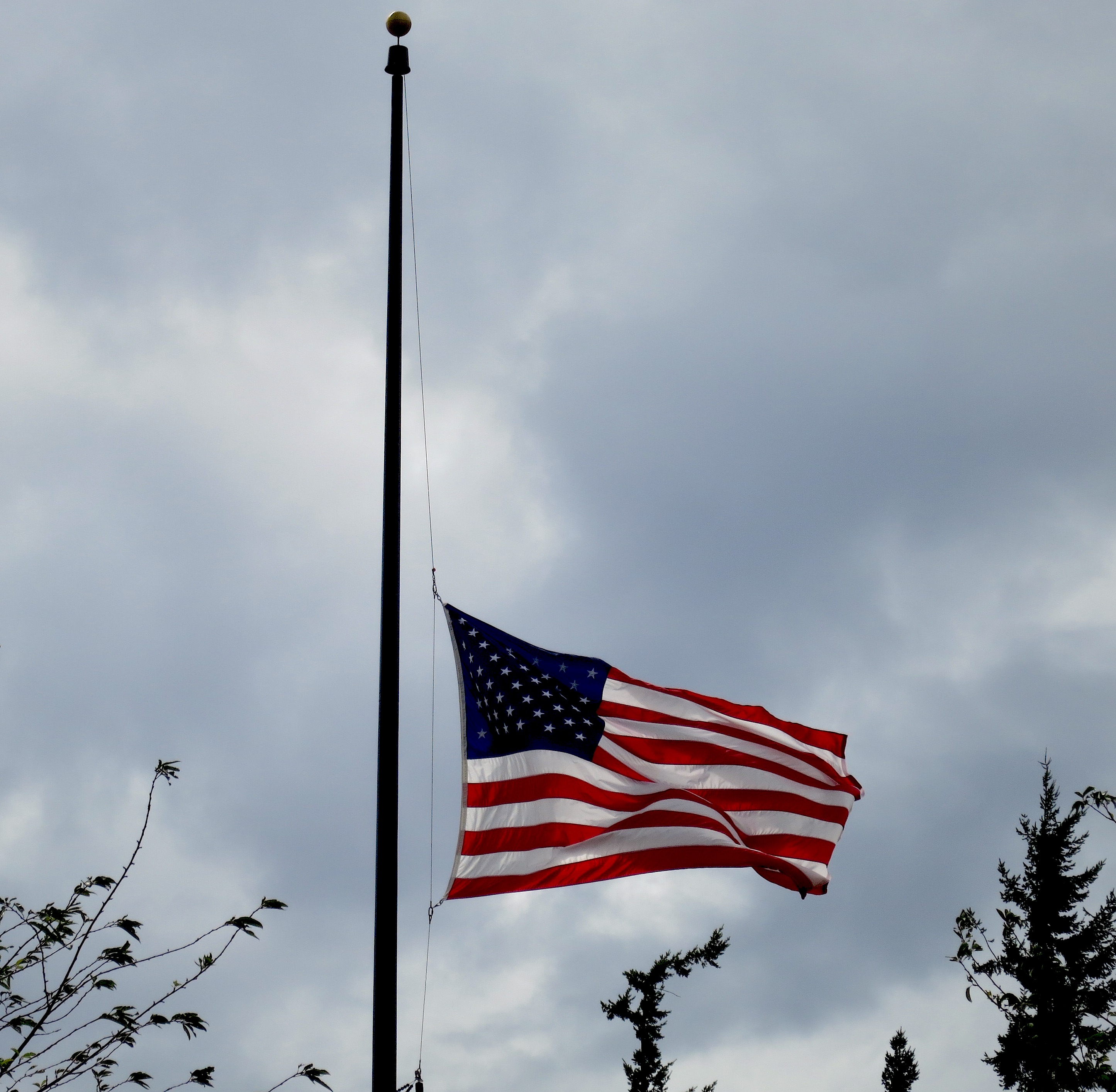
As a grade school child in November 1963, I learned the import of the U.S. flag being lowered to half mast in response to the shocking and violent death of our President. The lowering of the flag was so rare when I was growing up, it had dramatic effect on all who passed by — our soul’s sap quivers — something very sad had happened to our country, something or someone had tragically ended, warranting our silence and our stillness.

For twenty years since 9/11/01, our flag has spent significant time at half mast, so much so that I’m befuddled instead of contemplative, puzzling over what the latest loss might be as there are so many, sometimes all happening in the same time frame.  We no longer are silenced by this gesture of honor and respect and we certainly are not stilled, personally and corporately instigating and suffering the same mistakes against humanity over and over again.

We are so bent. Will we ever be mended again?

Eliot wrote the prescient words of the Four Quartets in the midst of the WWII German bombing raids that destroyed people and neighborhoods. Perhaps he sensed the destruction he witnessed would not be the last time in history that evil visits the innocent, leaving them in ashes. There would be so many more losses to come, not least being the horror of 9/11/01.

There remains so much more sadness to be borne, such abundance of grief that our world has become overwhelmed and stricken. Yet Eliot was right: we have yet to live in a Zero summer of endless hope and fruitfulness, of spiritual awakening and understanding.  Where is it indeed? When will rise again the summer Rose of beauty and fragrance?

We must return, as people of faith to Eliot’s still point to which we are called on a day such as today.  We must be stilled; we must be silenced. We must grieve the losses of this turning world and pray for release from the suffering we cause and we endure.  Only in the asking, only in the kneeling down and pleading, are we surrounded by God’s unbounded grace and His Rose may bloom recognizable again.  

“There Are No Words” written on 9/11/2001
by Kitty Donohoe

there are no words there is no song
is there a balm that can heal these wounds that will last a lifetime long
and when the stars have burned to dust
hand in hand we still will stand because we must

in one single hour in one single day
we were changed forever something taken away
and there is no fire that can melt this heavy stone
that can bring back the voices and the spirits of our own

all the brothers, sisters and lovers all the friends that are gone
all the chairs that will be empty in the lives that will go on
can we ever forgive though we never will forget
can we believe in the milk of human goodness yet

we were forged in freedom we were born in liberty
we came here to stop the twisted arrows cast by tyranny
and we won’t bow down we are strong of heart
we are a chain together that won’t be pulled apart

Please consider owning this book from Barnstorming – more information about the book and how to order here:

Straining to Win the Sky

The tree is more than first a seed,
then a stem,
then a living trunk,
and then dead timber.
The tree is a slow,
enduring force
straining to win the sky.
~Antoine de Saint-Exupéry, The Wisdom of the Sands

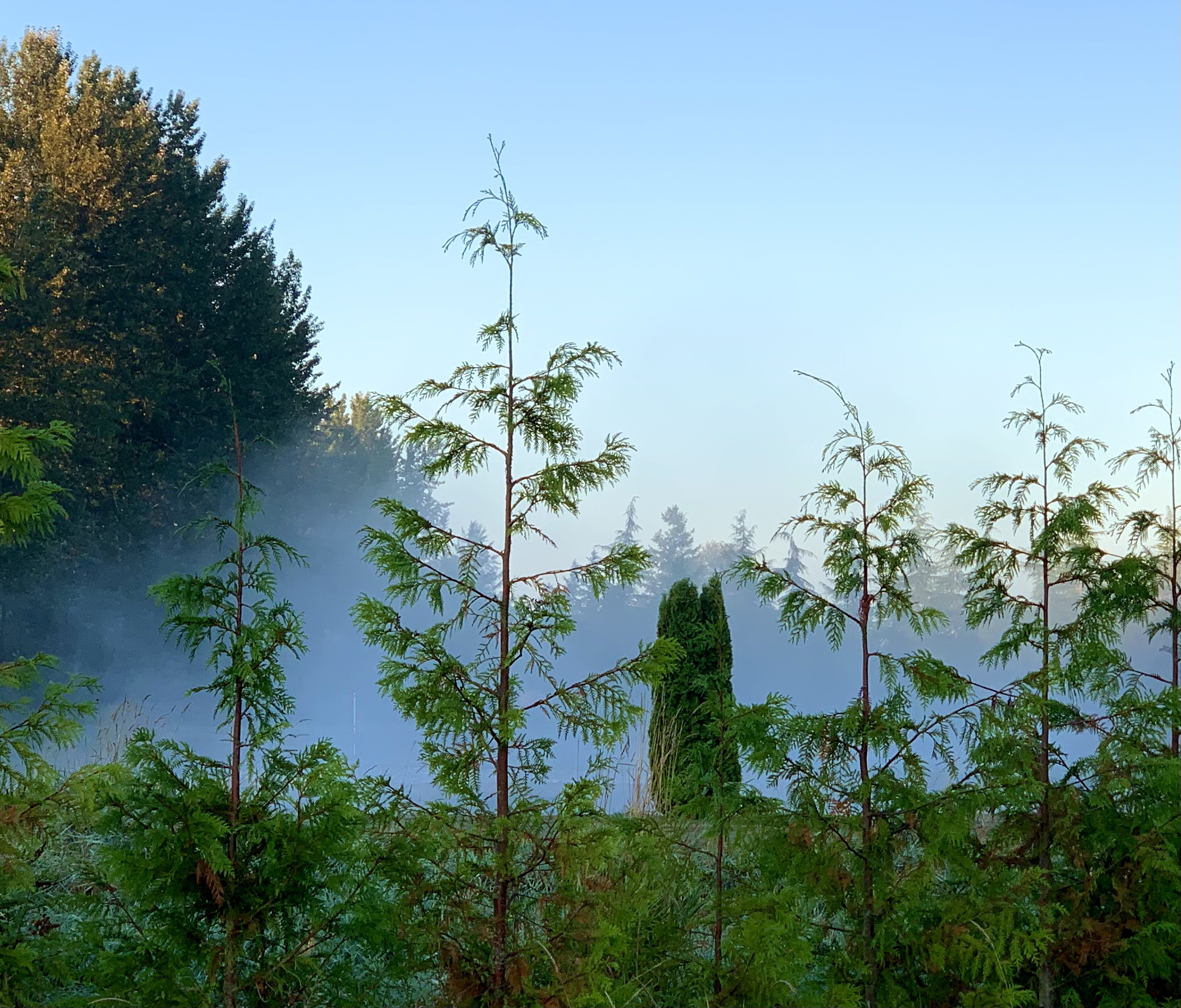
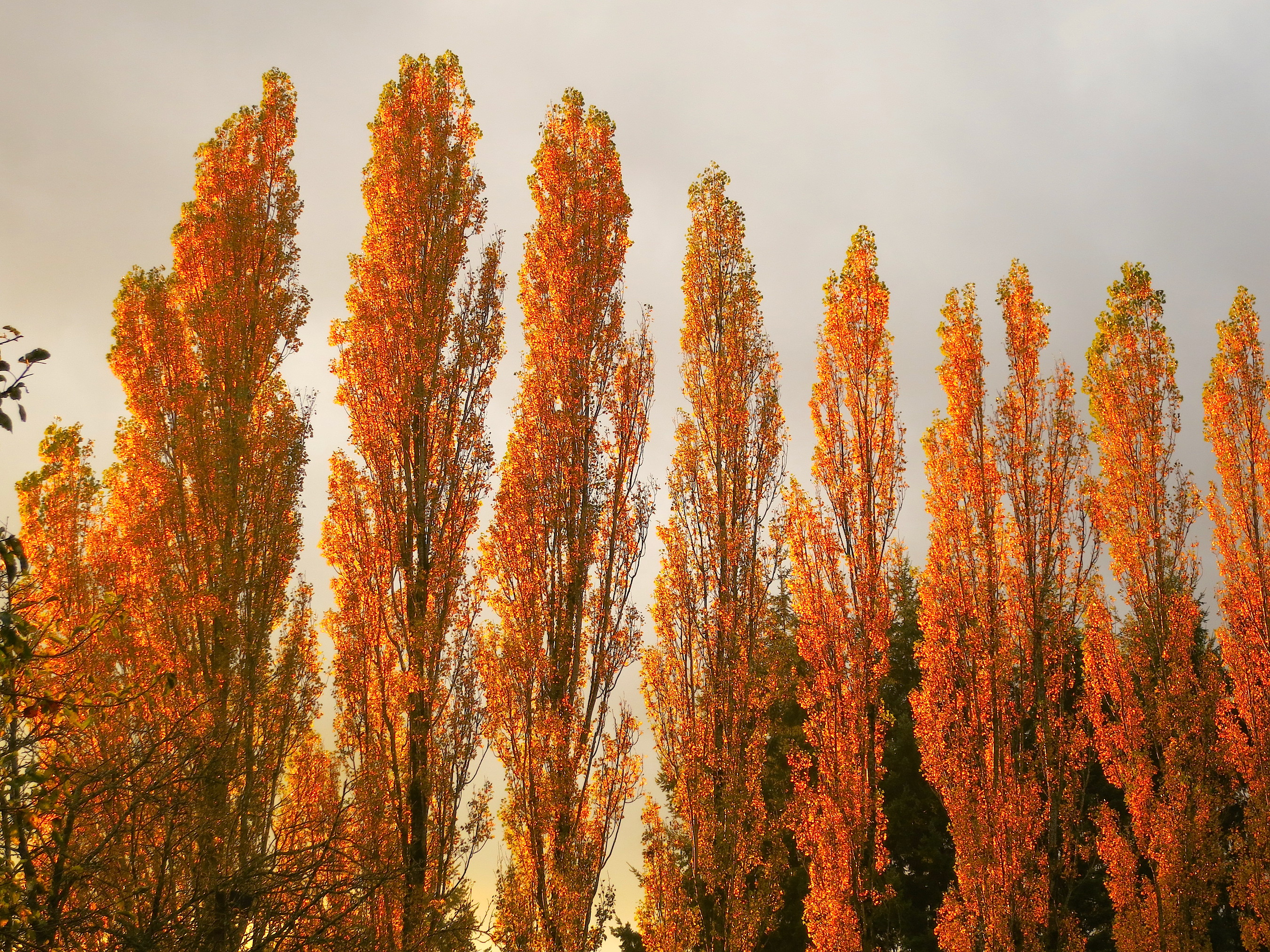
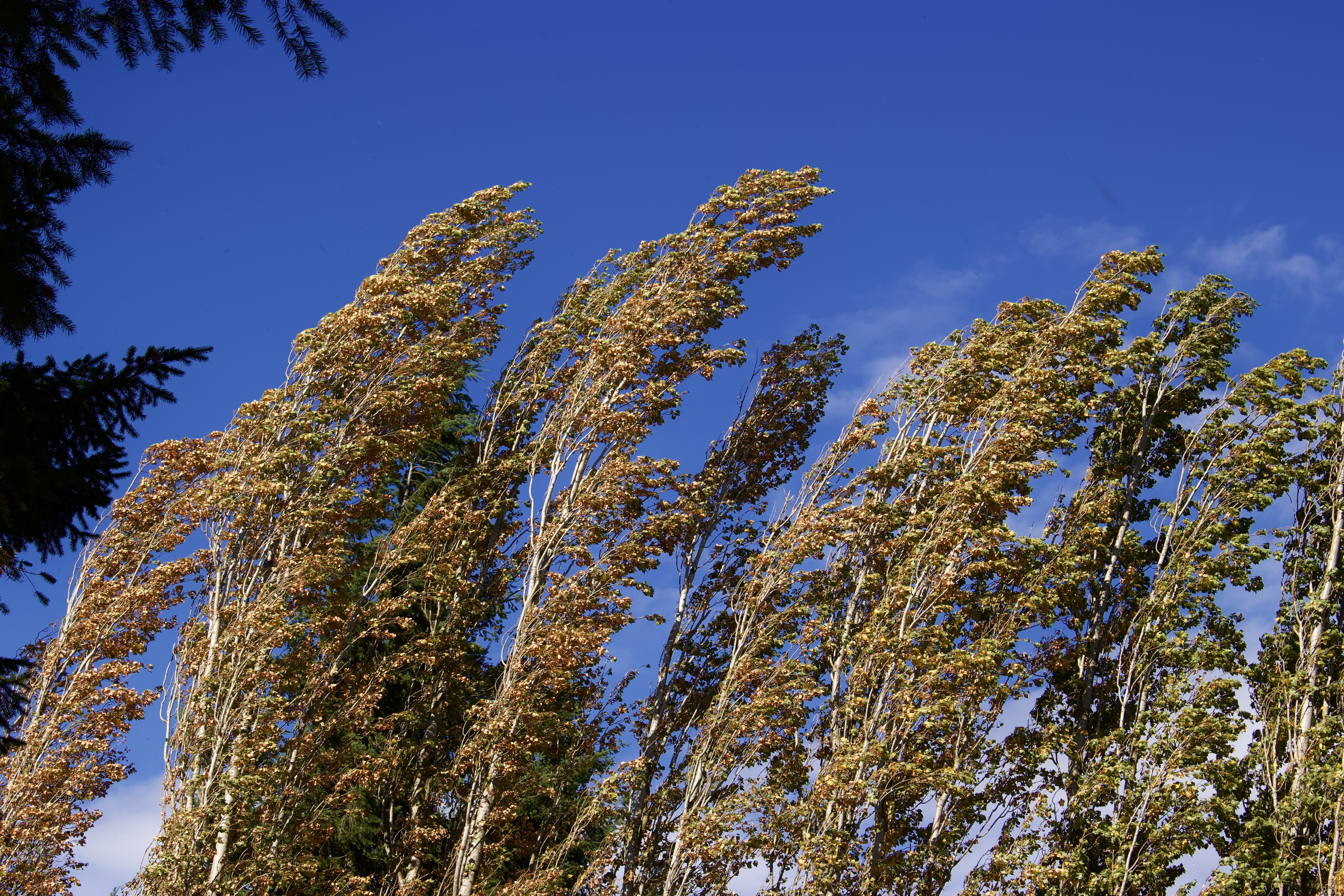
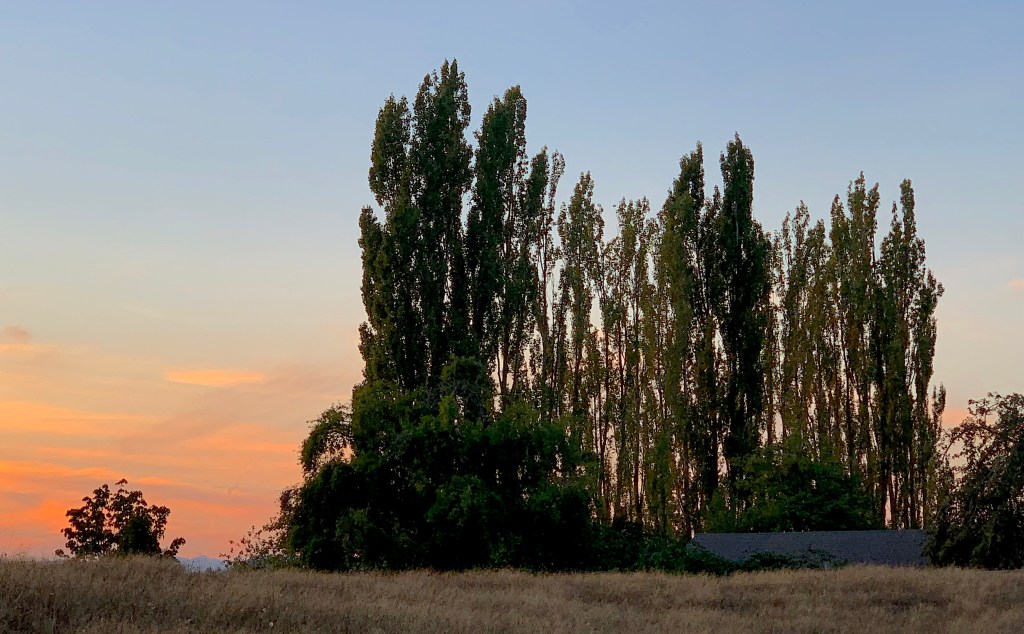
It is always a difficult decision to take down decades-old trees that have become a risk of falling in a windstorm or losing branches that can cause damage. The time had come for the row of Lombardy poplars lining our western property line, originally planted in the 70s to create a buffer for a newly constructed farm building at our neighbors’ place. In their old age, the poplars were breaking and failing.

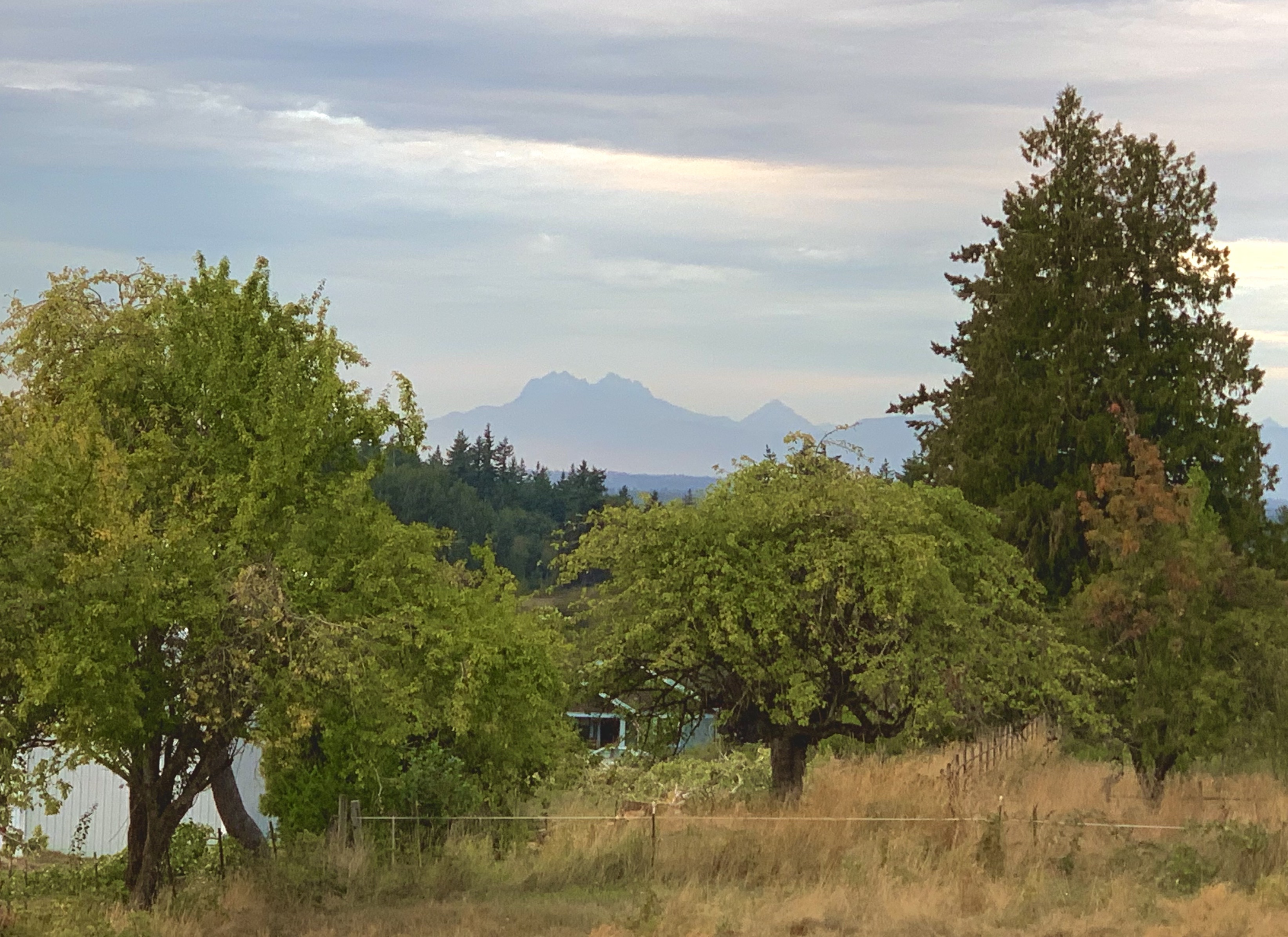
Yesterday they were felled by a tree expert who knew exactly how to bring them down in a tight area, leaving an open expanse we are adjusting to seeing. We are considering what might eventually take their place.

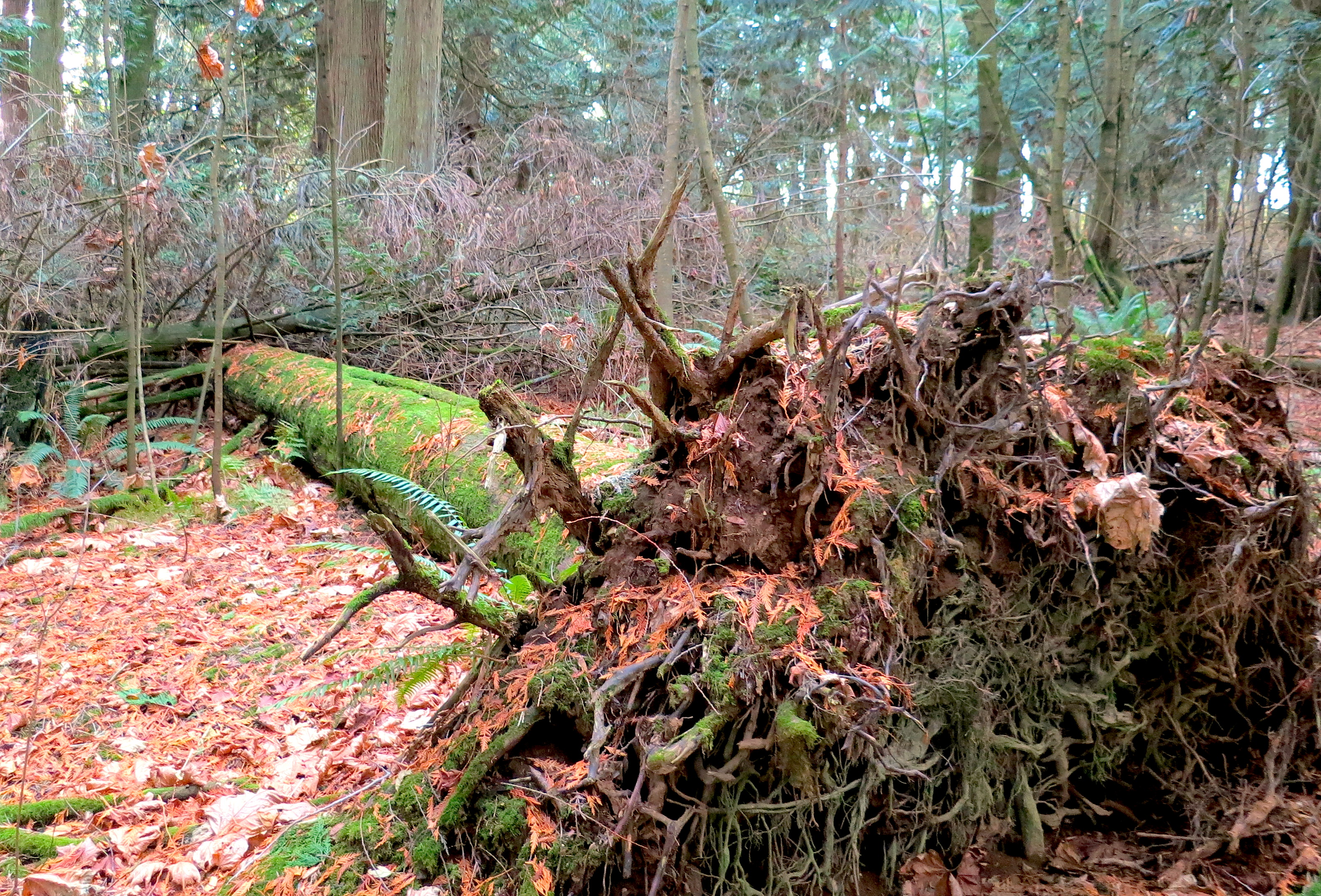
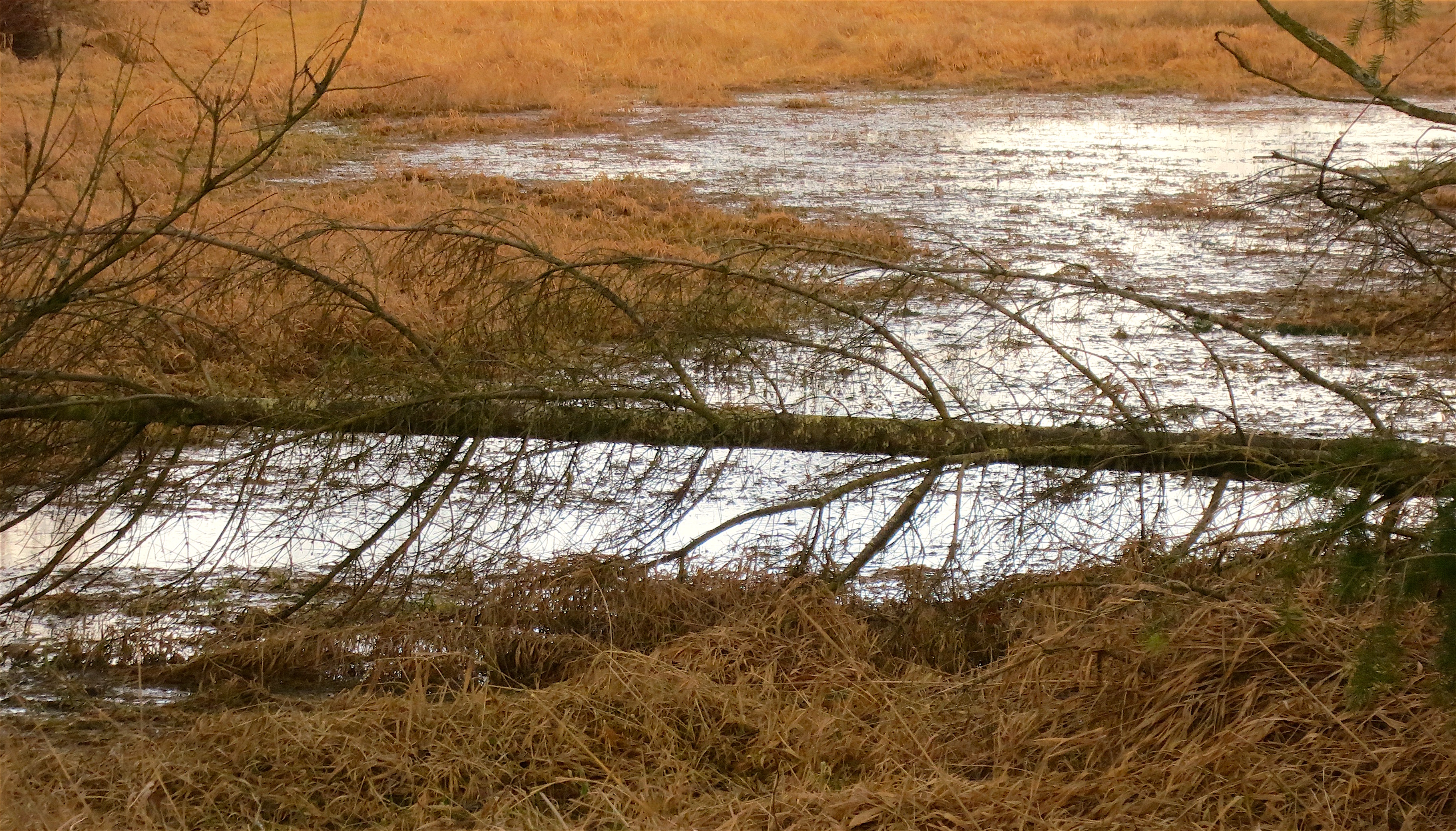
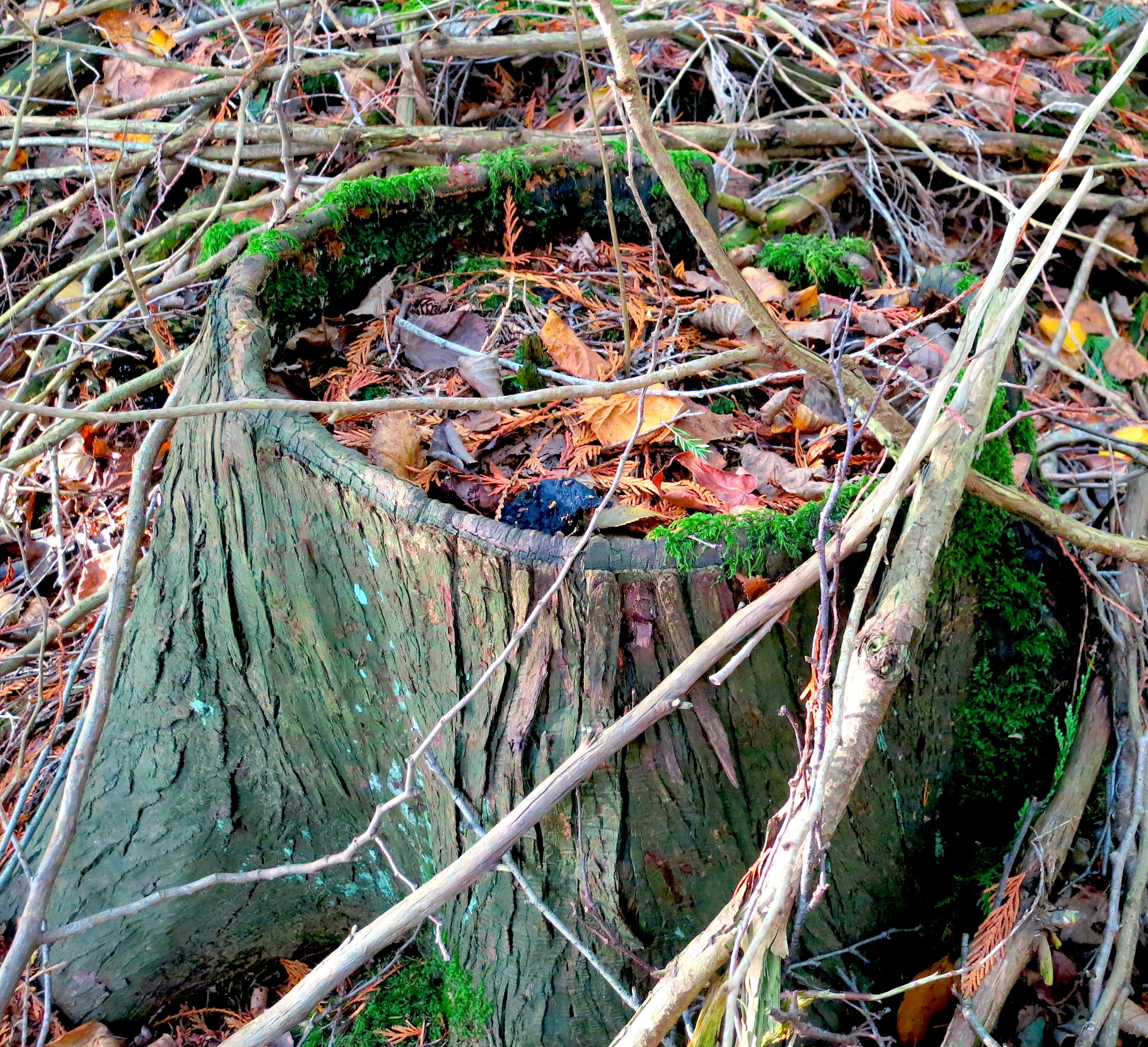
We have a few other dying trees on the farm we must part with soon, victims of recent drought years. It feels like parting with old friends. Each one reached to win the sky, but like us, must end up as dust.

And so we too are so much more than mere life cycle:
like trees, we are infinite variety and fascinating diversity,
clothed in finery yet at times naked and vulnerable;
we lift burdens in our arms and harbor the frail,
dig our roots deep and hold fast,
shade those overcome by the sun, and sing in the breeze.

Most of all, we aim high to touch and win a sky which remains beyond our grasp.

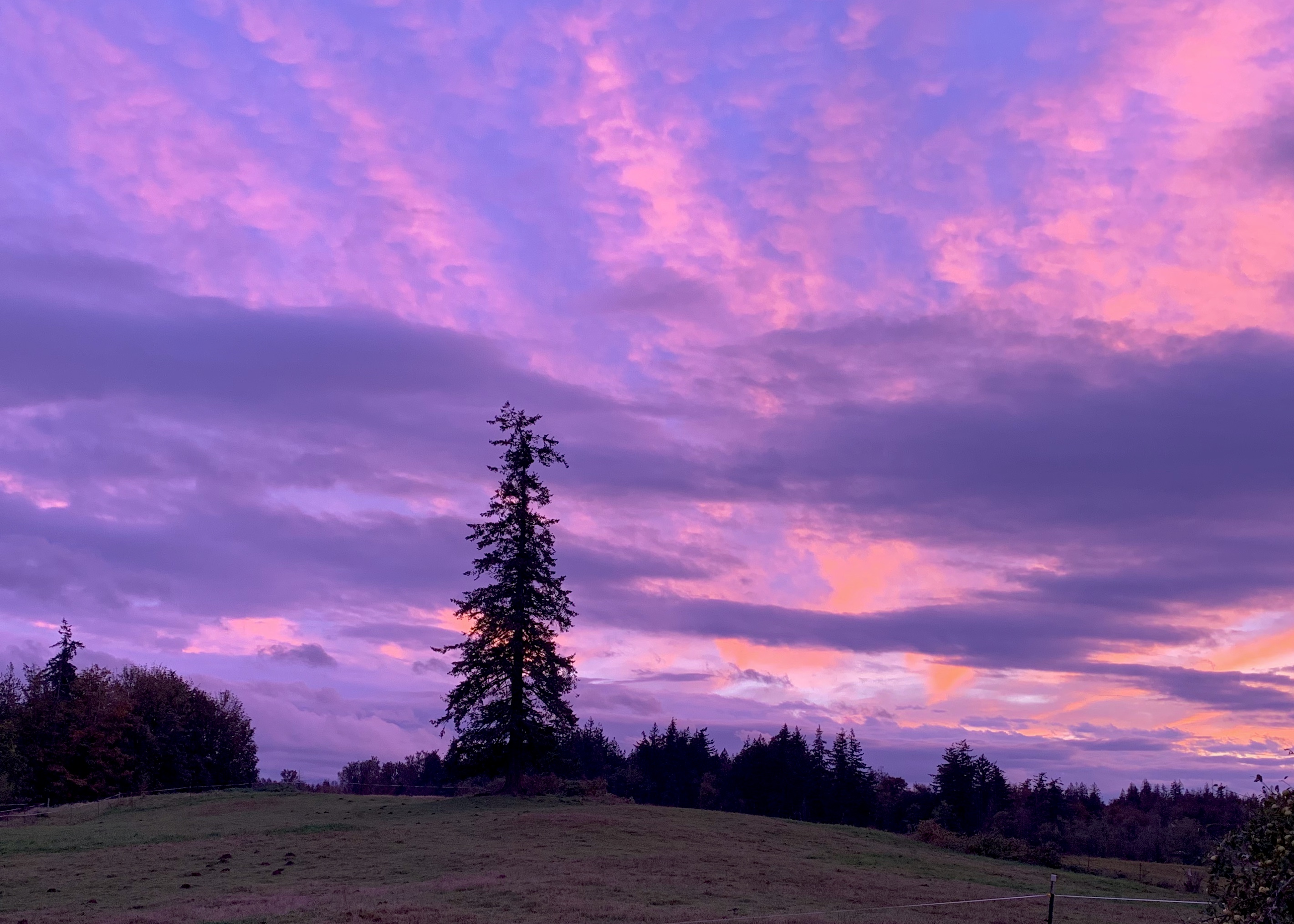
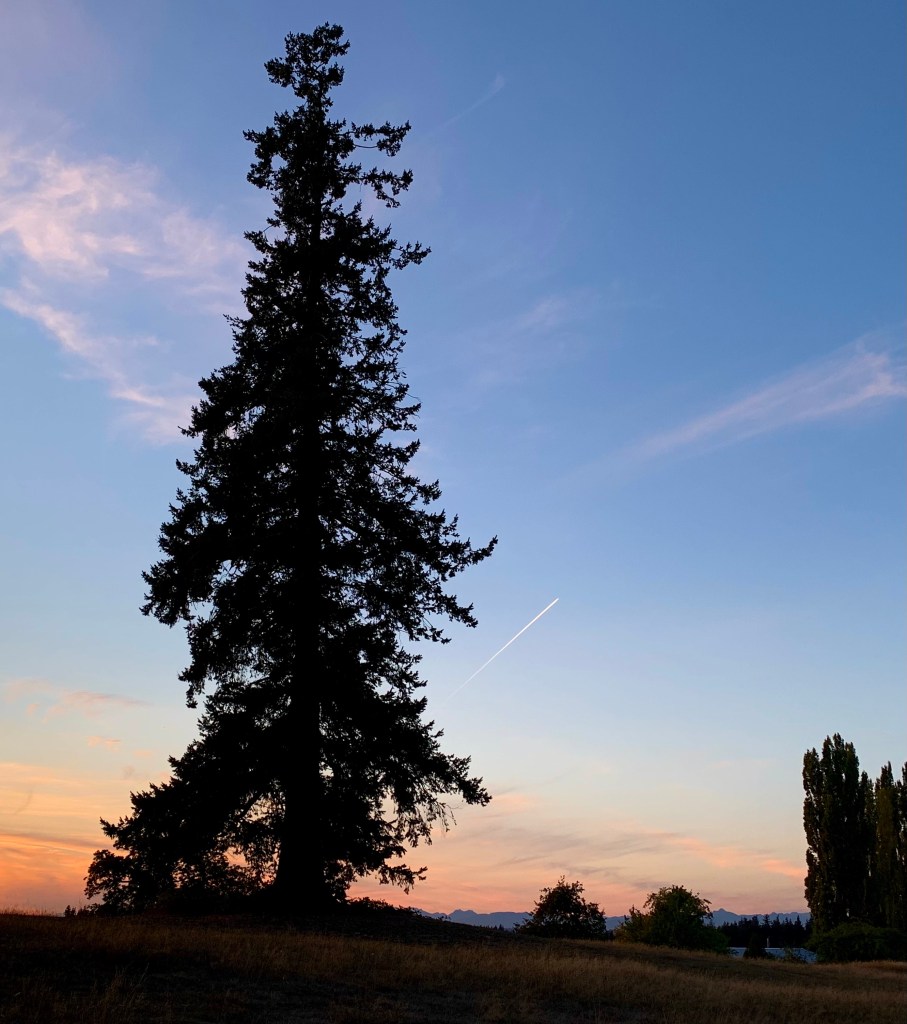
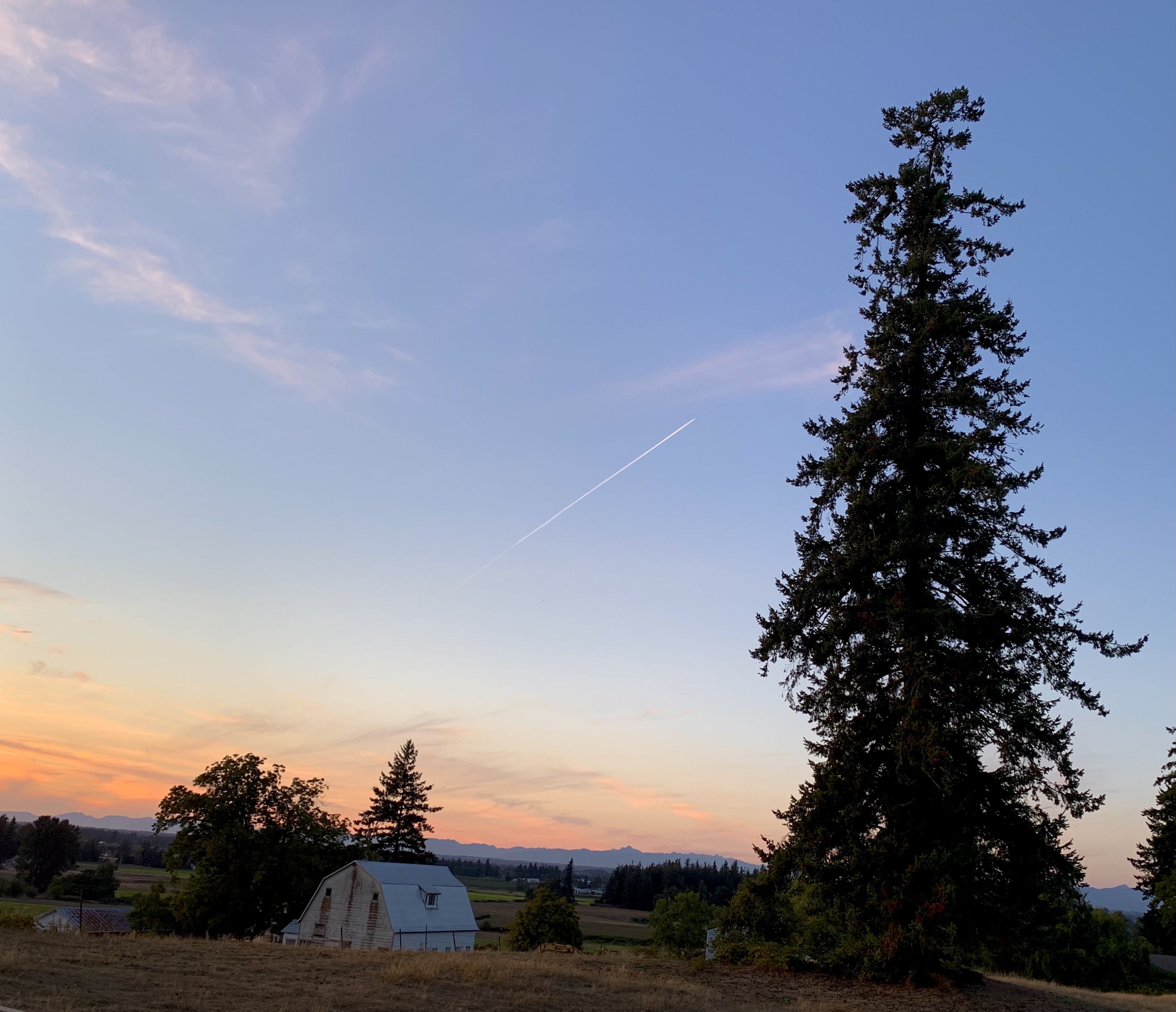
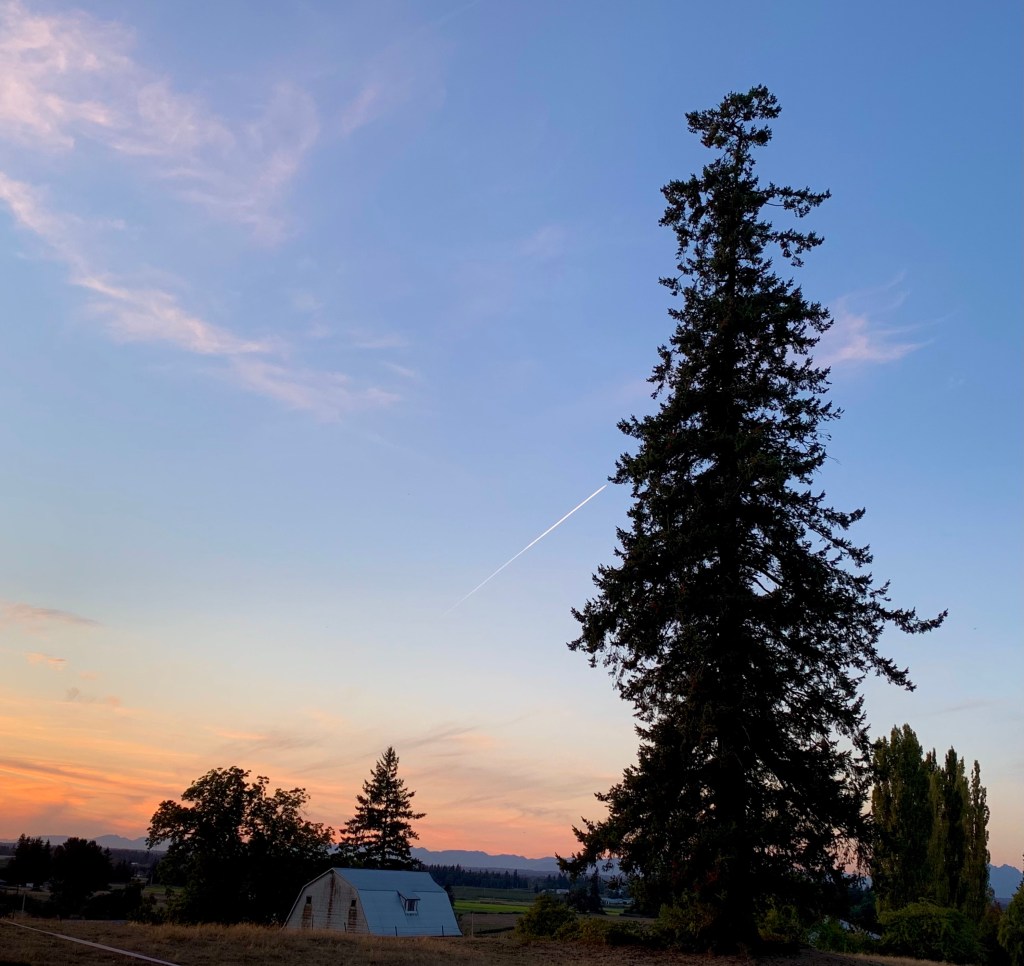
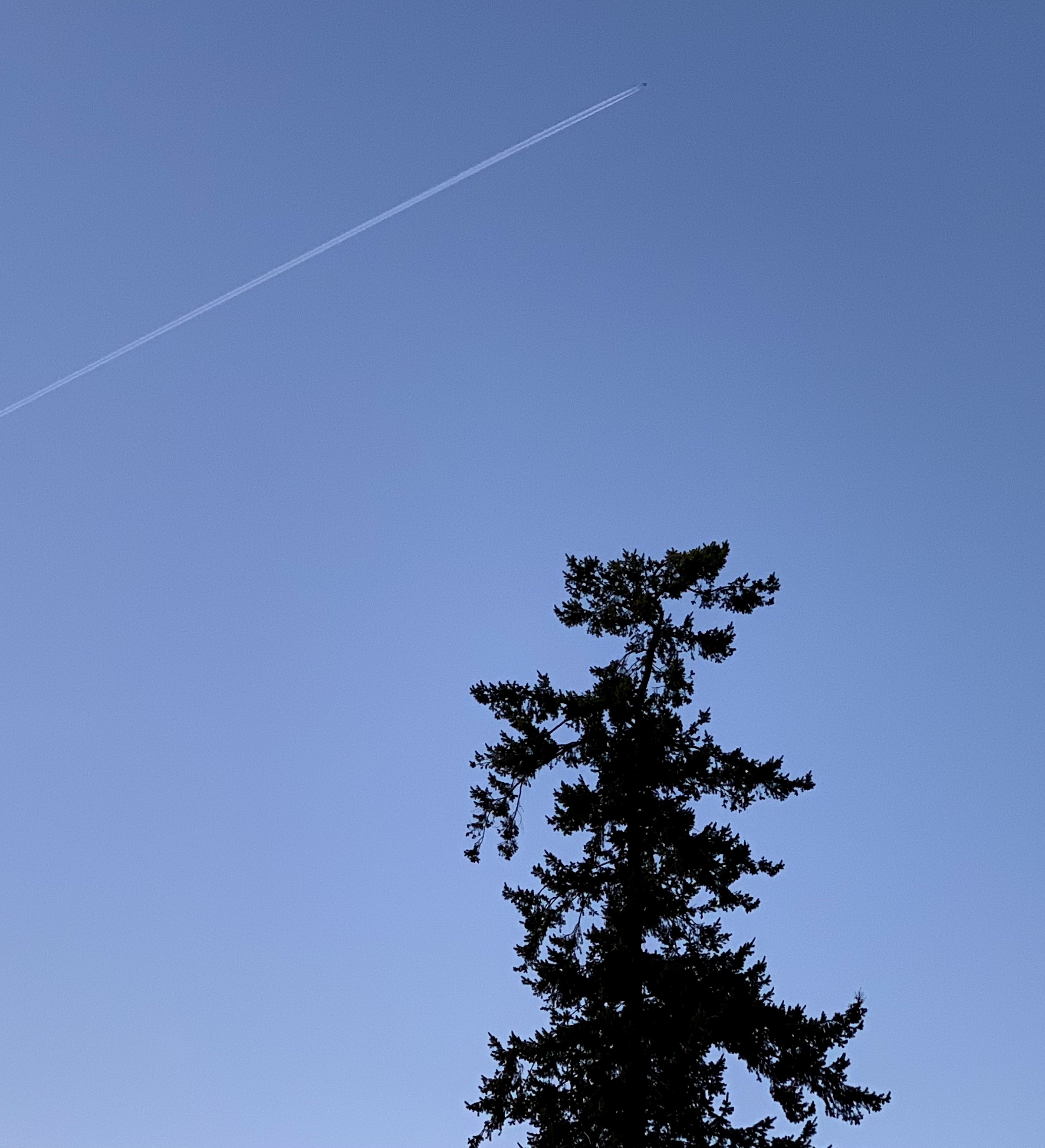
(Our lone fir on top of the hill is doing just fine and she remains our sentinel tree and farm focal point, trying to touch the jet planes that ascend from the nearby Vancouver, B.C. airport in the top pictures)

The night before they were felled
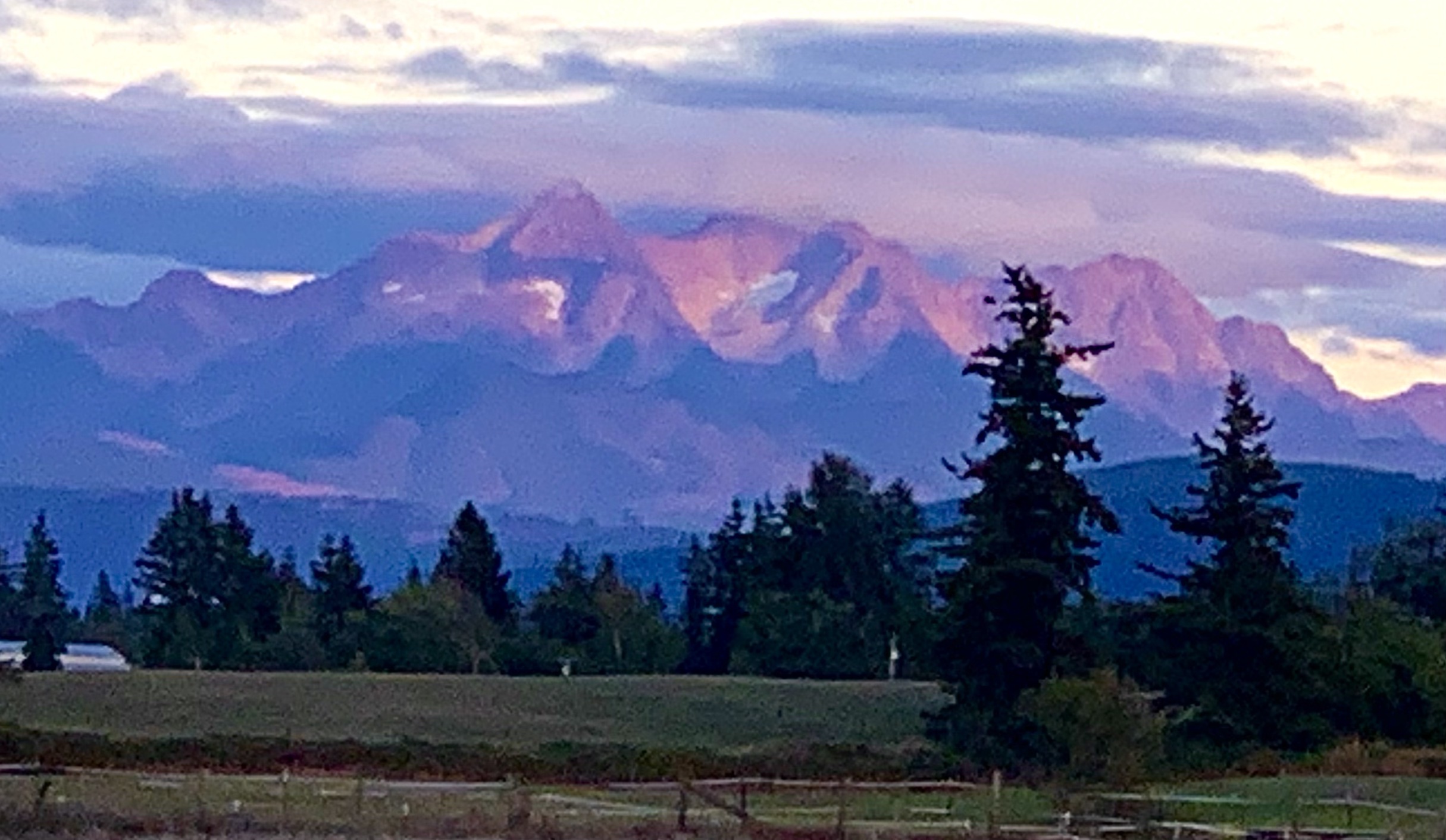
Last night, the missing poplar row revealed a new mountain view to the north

If you enjoy these Barnstorming posts, you’ll enjoy this book which is available to order here:

Realizing Who I Have Offended

He is a hard one to write a poem about. Like Napoleon.
Hannibal. Genghis Khan. Already so large in history. To do it
right, I have to sit down with him. At a place of his own
choosing. Probably a steakhouse. We take a table in a corner.
But people still recognize him, come up and slap him on the
back, say how much they enjoyed studying about him in school
and ask for his autograph. After he eats, he leans back and
lights up a cigar and asks me what I want to know. Notebook in
hand, I suggest that we start with the Little Big Horn and work
our way back. But I realize I have offended him. That he
would rather take it the other way around. So he rants on
about the Civil War, the way west, the loyalty of good soldiers
and now and then twists his long yellow hair with his fingers.
But when he gets to the part about Sitting Bull, about Crazy
Horse, he develops a twitch above his right eye, raises his
finger for the waiter, excuses himself and goes to the restroom
while I sit there along the bluffs with the entire Sioux nation,
awaiting his return.
~David Shumate “Custer” from High Water Mark

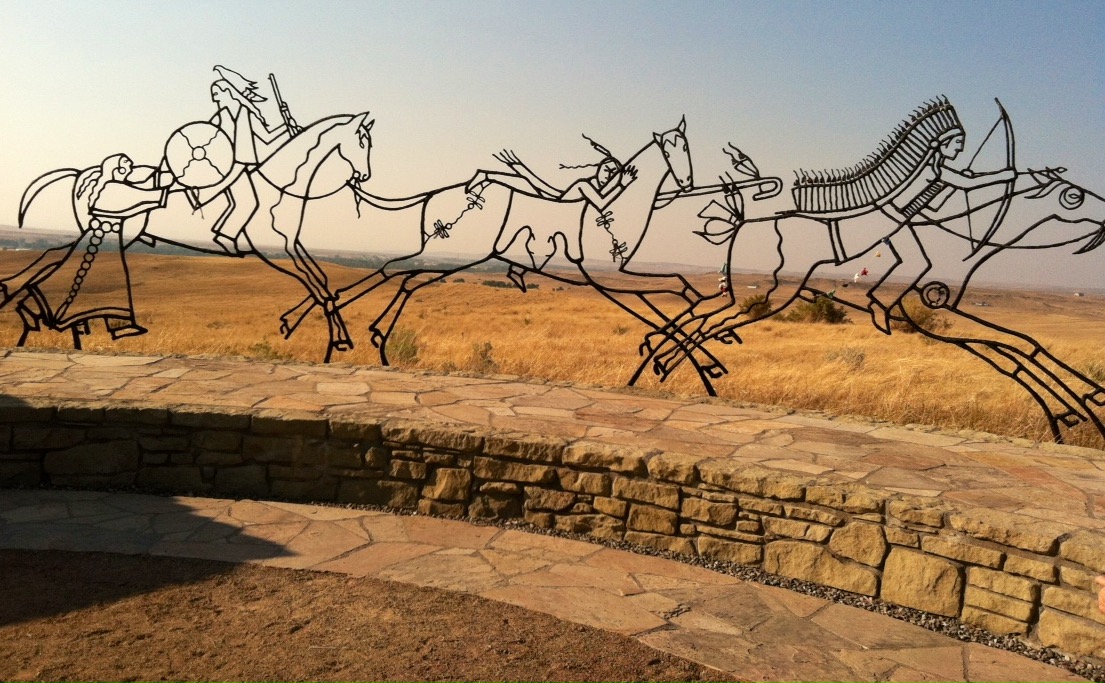
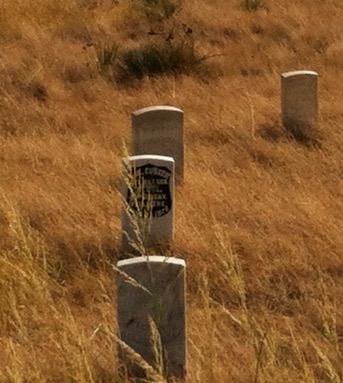
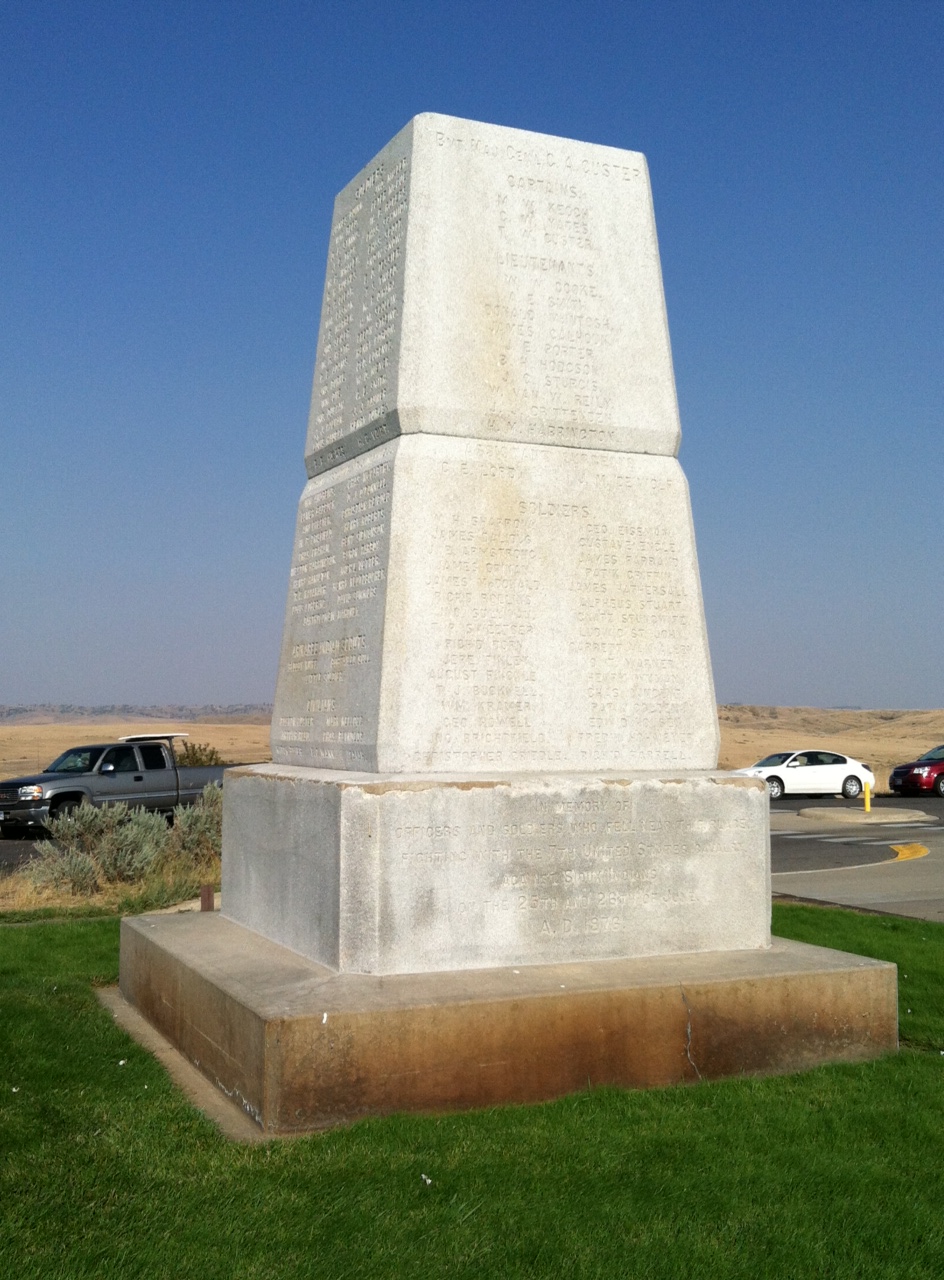
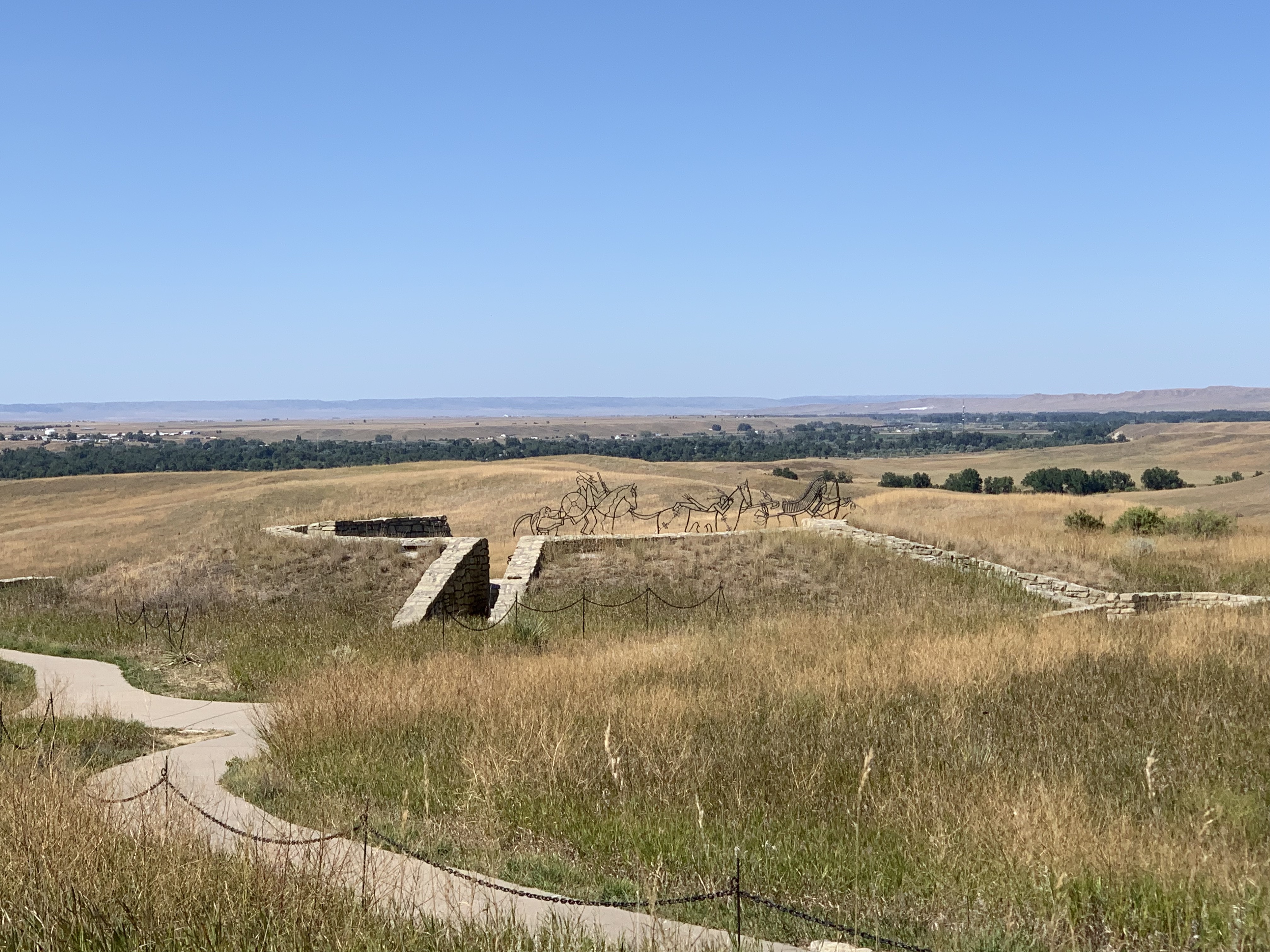
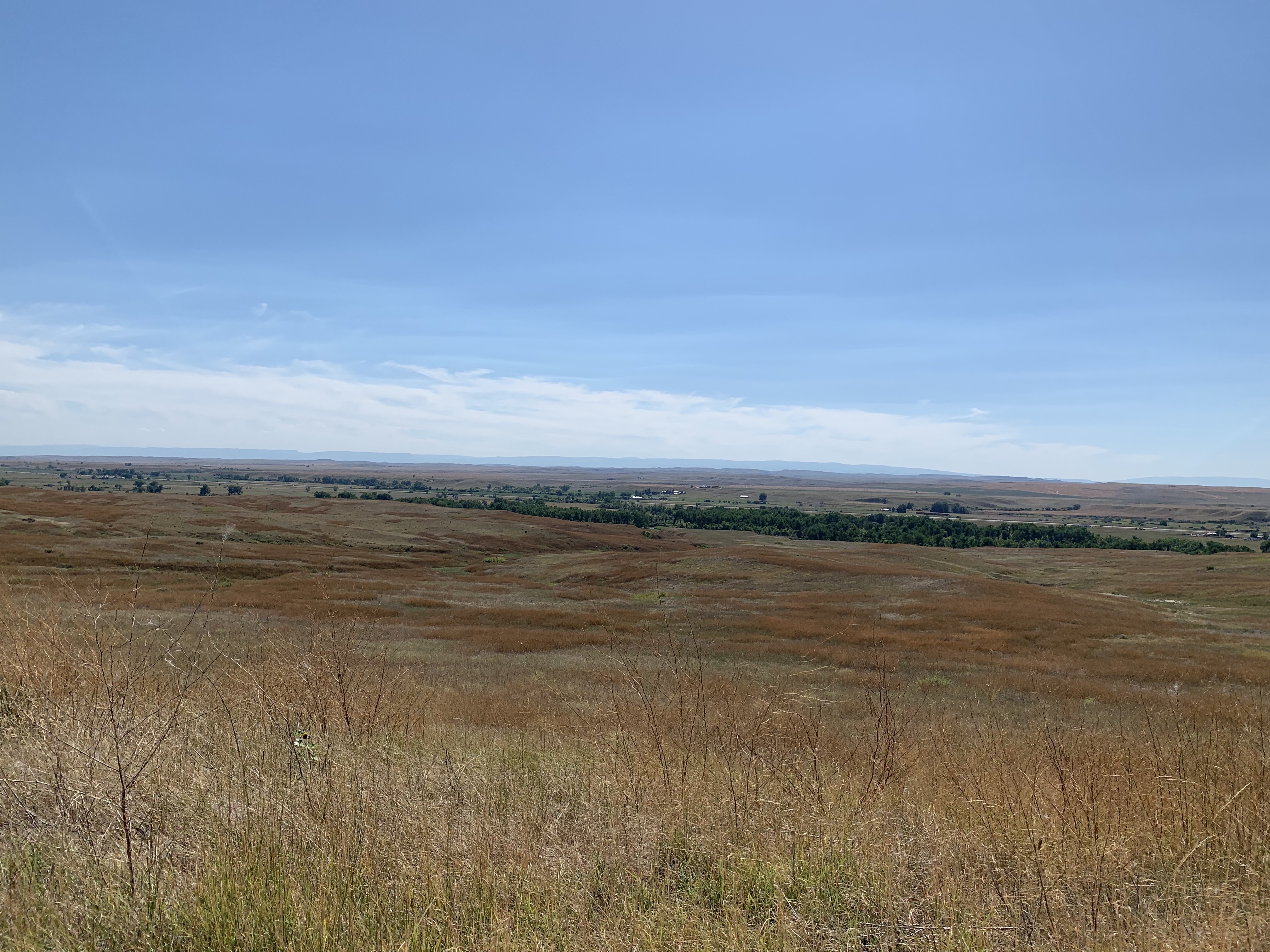
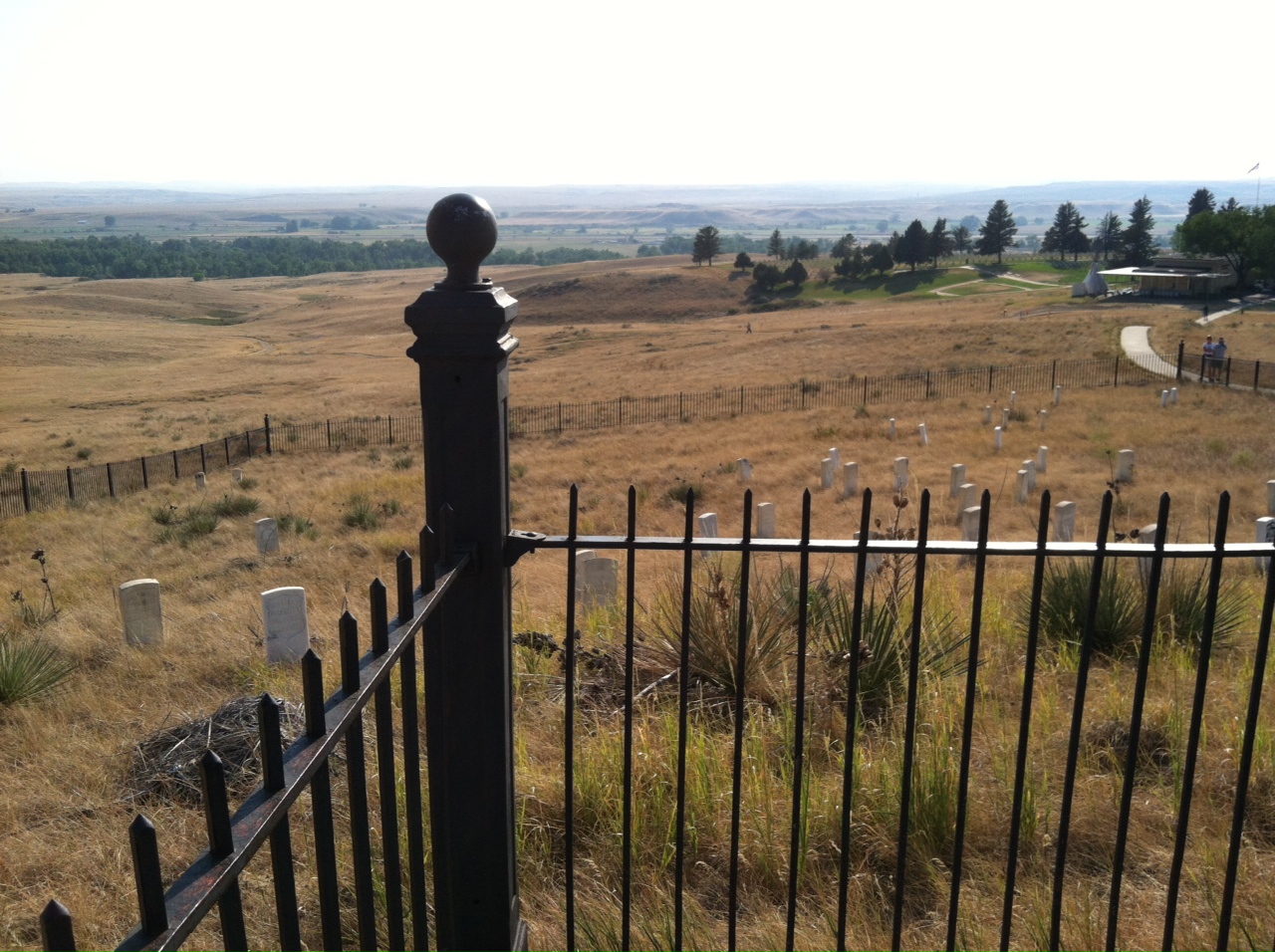
Bighorn Battlefield – National Park Service photo

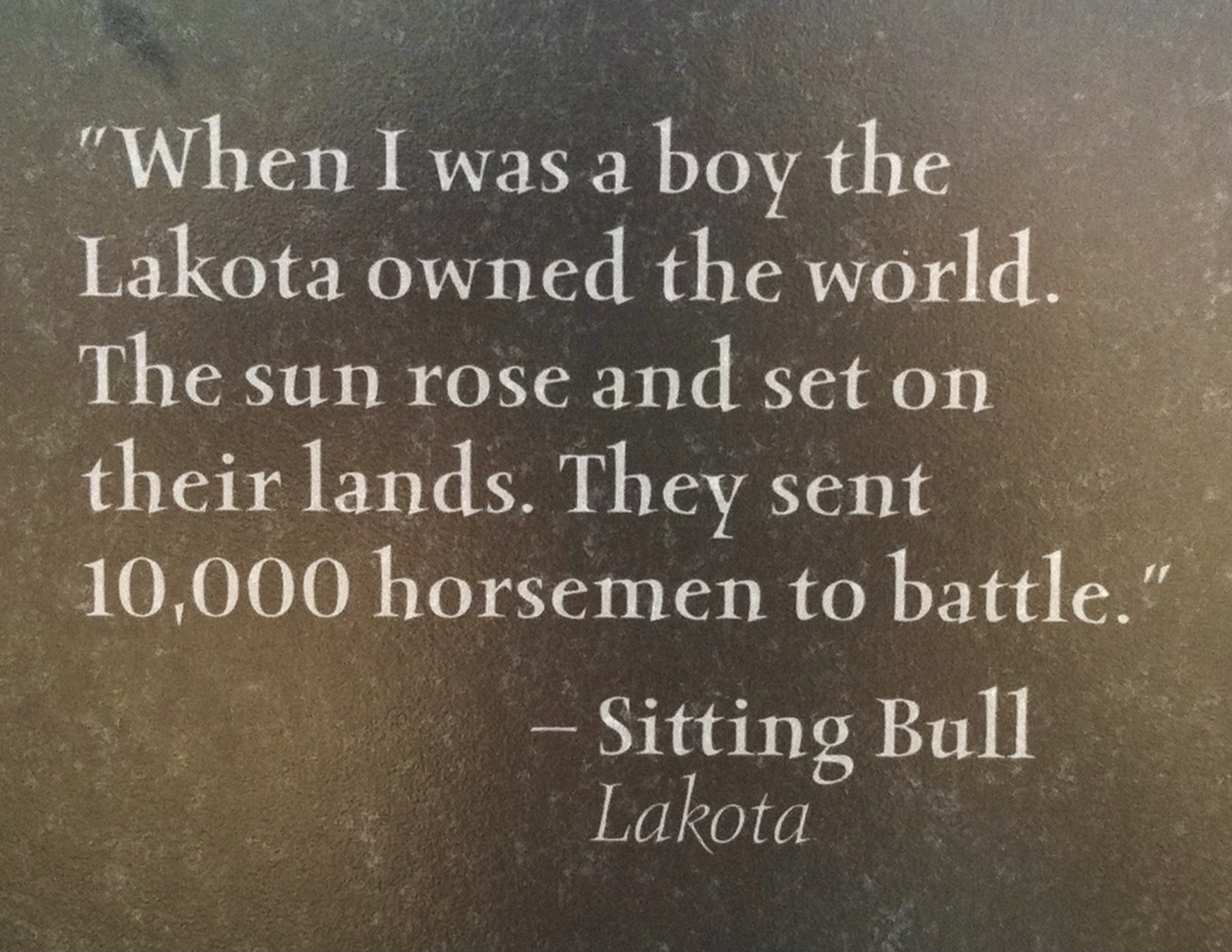
When my family took two cross-country trips by car, once in 1963 and another in 1965, my father, a former officer and battalion leader in the Marines during WWII, was the primary driver and keeper of maps and deadlines. He could be convinced to stop at any number of state and national parks, points of interest and historical markers, but all four times we passed the sign indicating the Battle of the Little Bighorn, he would not stop despite our pleading.

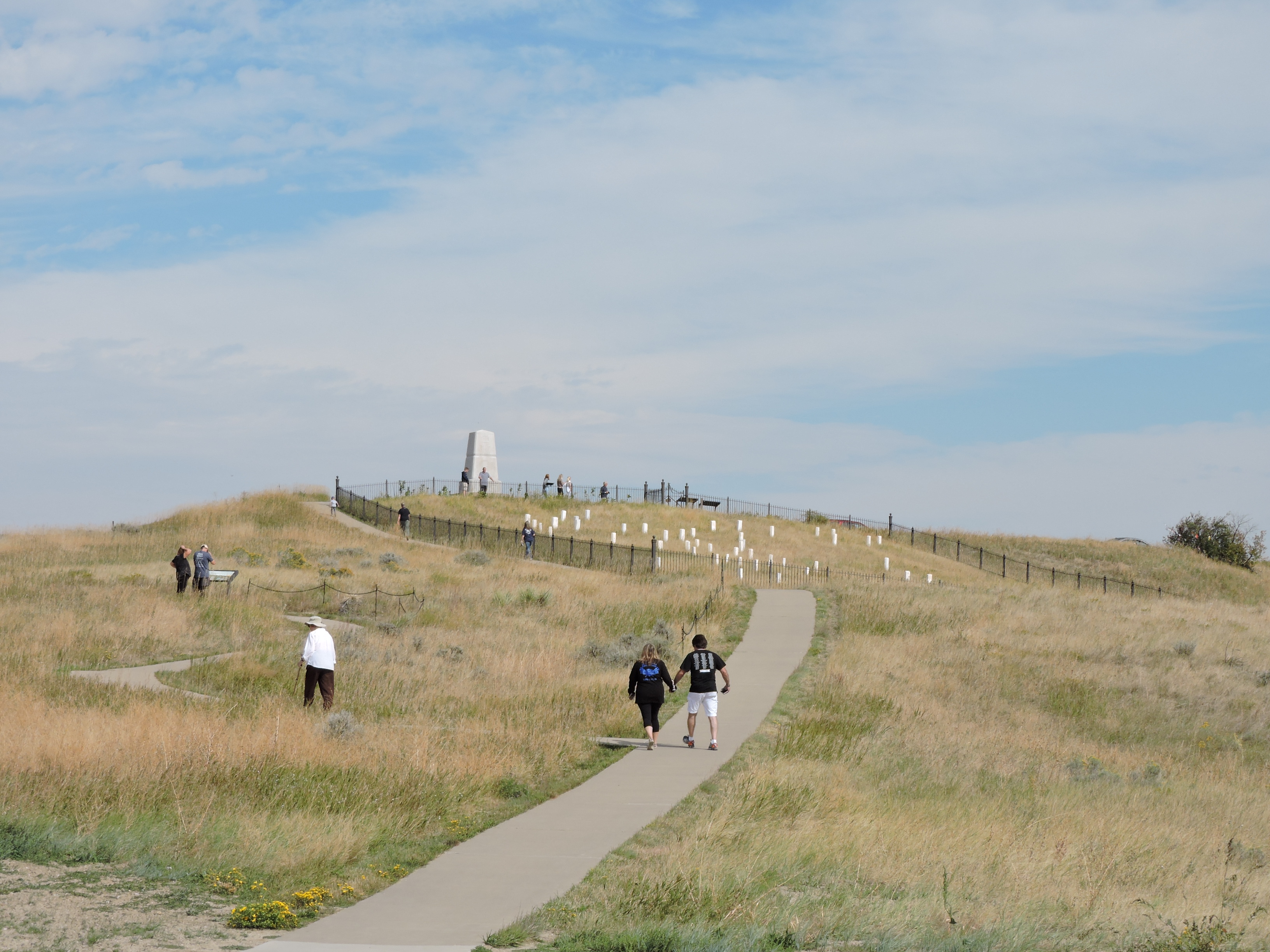
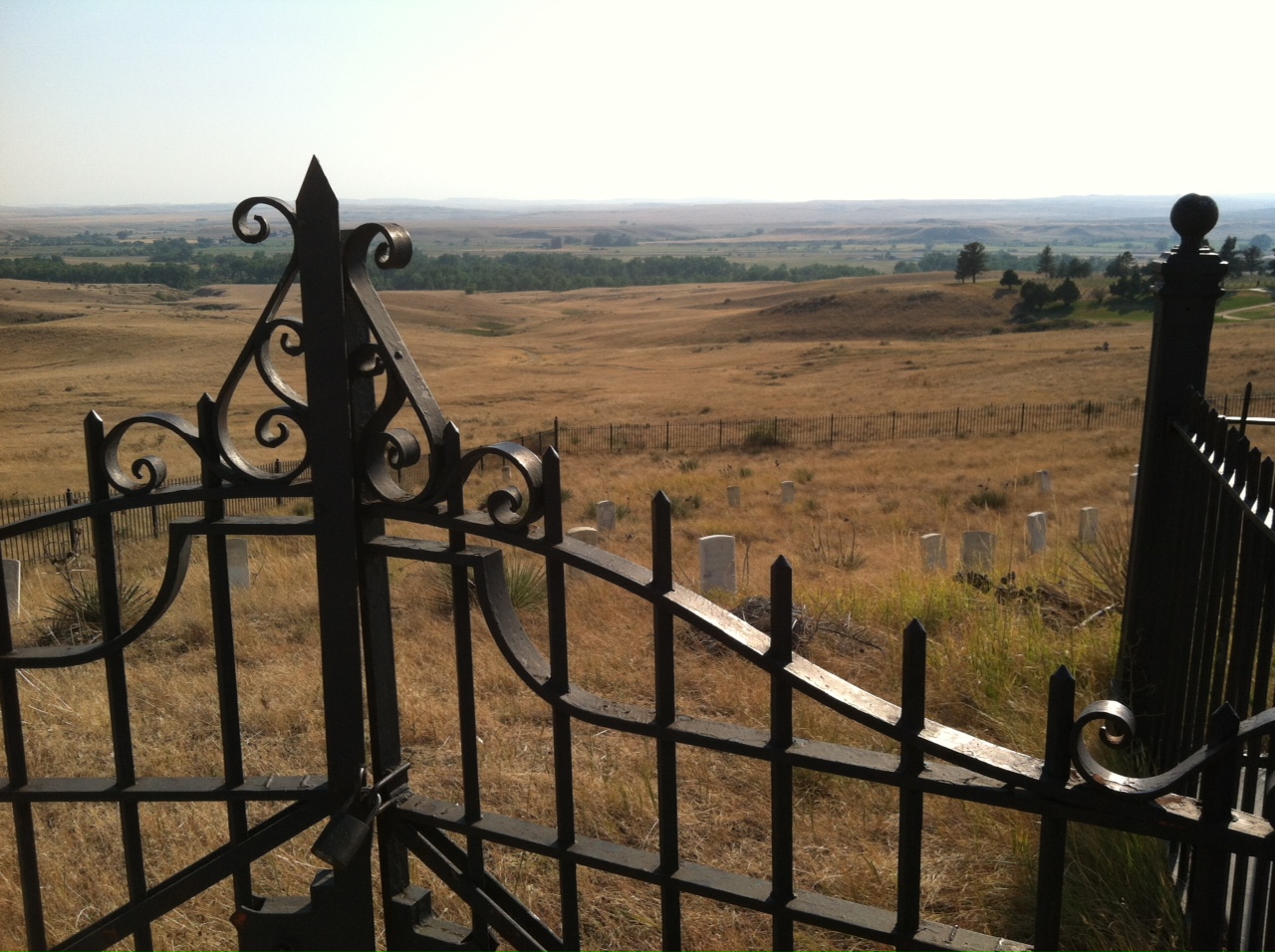
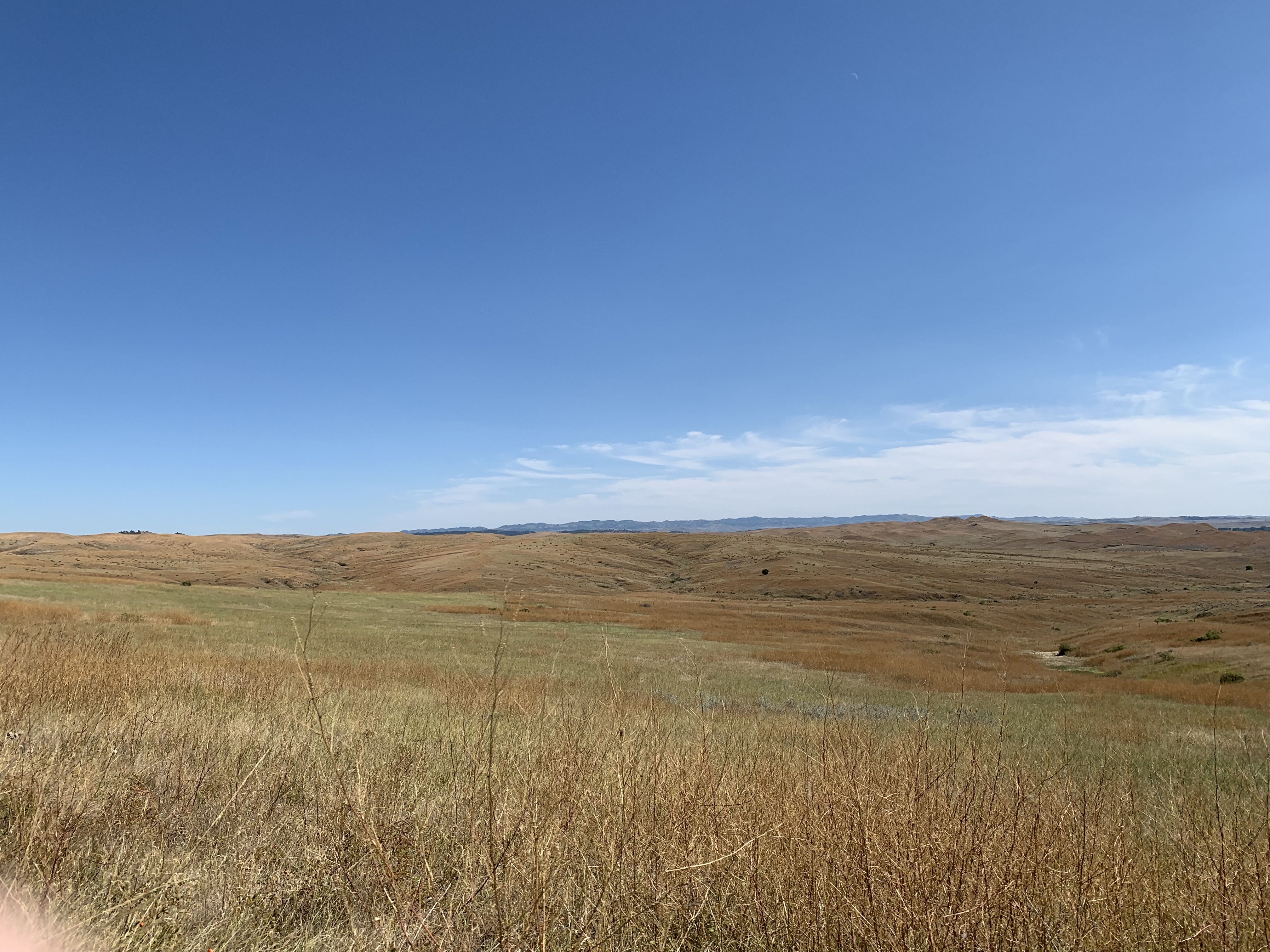
“You’ve seen as much as there is up there,” he would say as we sped past, pointing at the marble monolith at the top of the hill where the battle took place. I would look around at the desolate countryside of brown grass with no trees, in the middle of nowhere, and wonder how this place could ever have warranted a battle to the death.

Then I would get mad at my dad’s refusal to stop to learn more.

I had certainly learned about General George Custer’s Last Stand in my elementary school history lessons. But my interest was primarily driven by a 1958 Disney movie “Tonka Wakan” that I had seen in the theater and then later on Sunday nights on “Walt Disney’s Wonderful World of Color.” I thought I understood the tragedy of that day from the standpoint of the U.S. Calvary and the only surviving horse Comanche, who in the Disney-imagined version of the battle, was raised and trained by a young Indian boy who turned the horse over to the calvary and then later was part of the Little Bighorn Battle in defense of Indian territory.

So I had a very skewed and Disney-fied version of history and my father was not helping me understand more deeply. It wasn’t until much later that I realized the likely reason he was so reluctant to stop and examine the history of the Battle of the Little Bighorn.

My father was ashamed of it. He was a humble man who knew there could be no pride or sense of honor in that place.

He had very likely been trained in his Marine Officer’s Training in 1942 to understand that the poor decision-making of a cocky, overly self-assured General Custer led to the slaughter of five companies of the 7th Calvary Regiment as well as their Indian scouts in addition to dozens of Lakota and Dakota Sioux, Cheyenne and Arapahoe warriors.

My father had lived through three South Pacific island battles where poor decision-making was a death sentence. He didn’t feel the need to rehash the history in this desolate part of Montana.

As an adult, I’ve visited the Battlefield with my husband and children several times, have learned more about what led to the battle, what took place that day and how the indigenous people of the region have memorialized the spot from their own perspective. When we approach this spot on our cross-country drives, I’m filled with regret and remorse at the loss of life and the eventual loss of a Native American culture that could never again be as it was, despite the defeat they handed to the cavalry that day. I learned more when our son lived and taught high school math on the Pine Ridge Reservation of the Lakota Sioux people and we visited the site of Wounded Knee, another tear-drenched place in U.S. Cavalry and Native American history.

We, all descendants of immigrant Americans, comprise the U.S. government and military which doesn’t always make the best or wisest decisions. This is haunting us again this week in the miserably managed ending of the twenty-year war in Afghanistan that has cost so many American and Afghan lives – certainly beyond the scale of the horrific one day defeat at the Little Bighorn River. This long drawn-out complicated response to the attacks we suffered on 9/11/01, ended with yet more tragic bloodshed as we left so many vulnerable behind.

War, suffering, loss and death cannot and should not be Disney-fied. History is more complex than a paragraph in a textbook.

We have so much to learn about our shame and our need for greater humility. We need to understand who we have offended, not just how offended we feel. We can’t hide in the bathroom or drive on past the sites of these bloody conflicts, hoping it will all be forgotten.

A book of Barnstorming photography and Lois Edstrom’s poetry is available to order here:

Tomorrows Less Long

Let me enjoy
this late-summer day of my heart
while the leaves are still green
and I won’t look so close

as to see that first tint
of pale yellow slowly creep in.
I will cease endless running

and then look to the sky
ask the sun to embrace me
and then hope she won’t tell

of tomorrows less long than today.
Let me spend just this time

in the slow-cooling glow
of warm afternoon light
and I’d think

I will still have the strength
for just one more

last fling of my heart.
– Jonathan Bohrn, Late August

August rushes by like desert rainfall,
A flood of frenzied upheaval,
Expected,
But still catching me unprepared.
Like a match flame
Bursting on the scene,
Heat and haze of crimson sunsets.
Like a dream
Of moon and dark barely recalled,
A moment,
Shadows caught in a blink.
Like a quick kiss;
One wishes for more
But it suddenly turns to leave,
Dragging summer away.
–  Elizabeth Maua Taylor, August 
 

I’m in the time of life when what is to come is ever so much shorter than what has been. I muse now at my sudden revelation as a five year old that a time would come when I would cease to be on this earth. I had no idea how soon that would come or whether I would have many years to think about how I might come to an end. That knowledge has colored all my days, knowing they are numbered and finite.

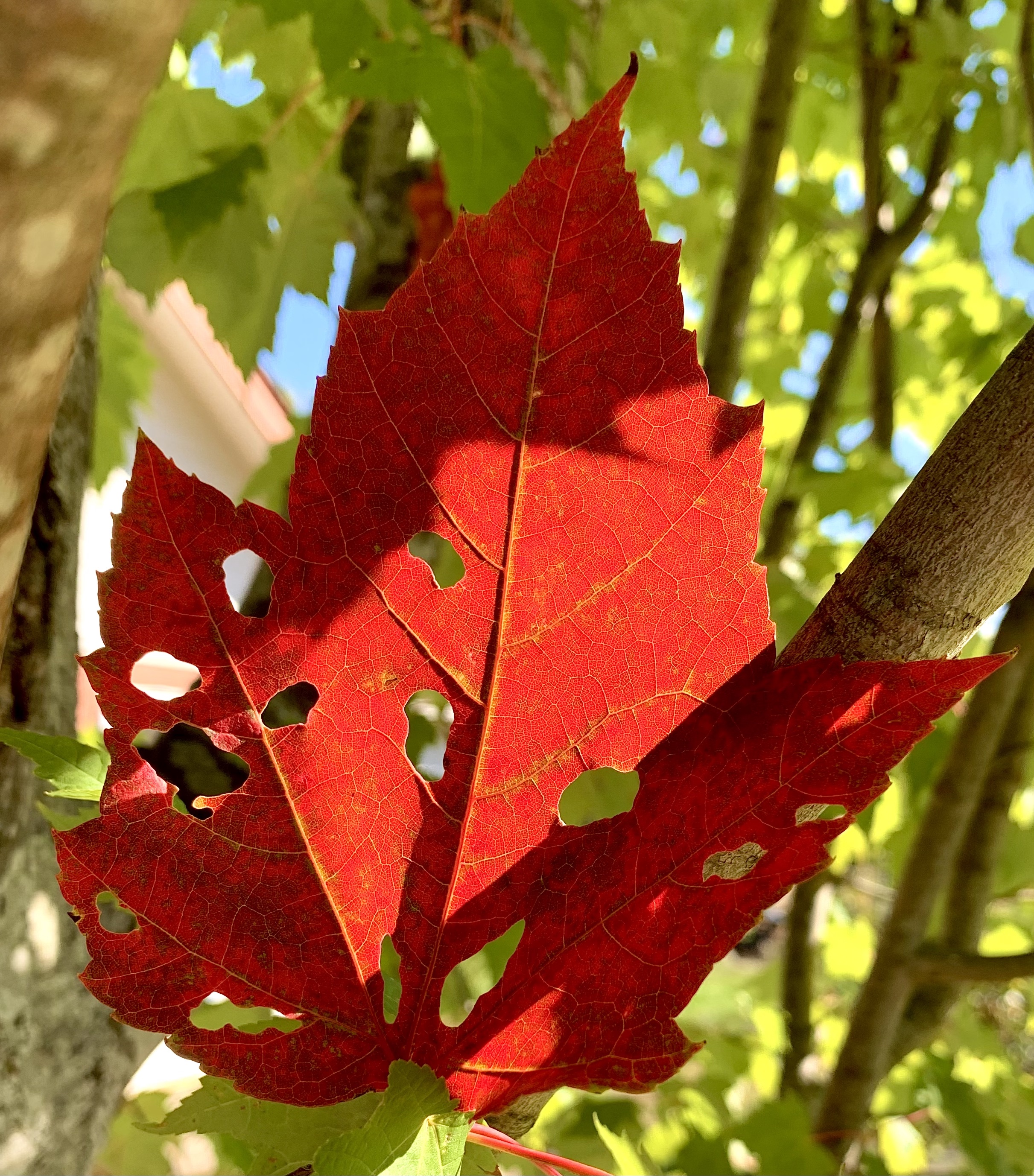
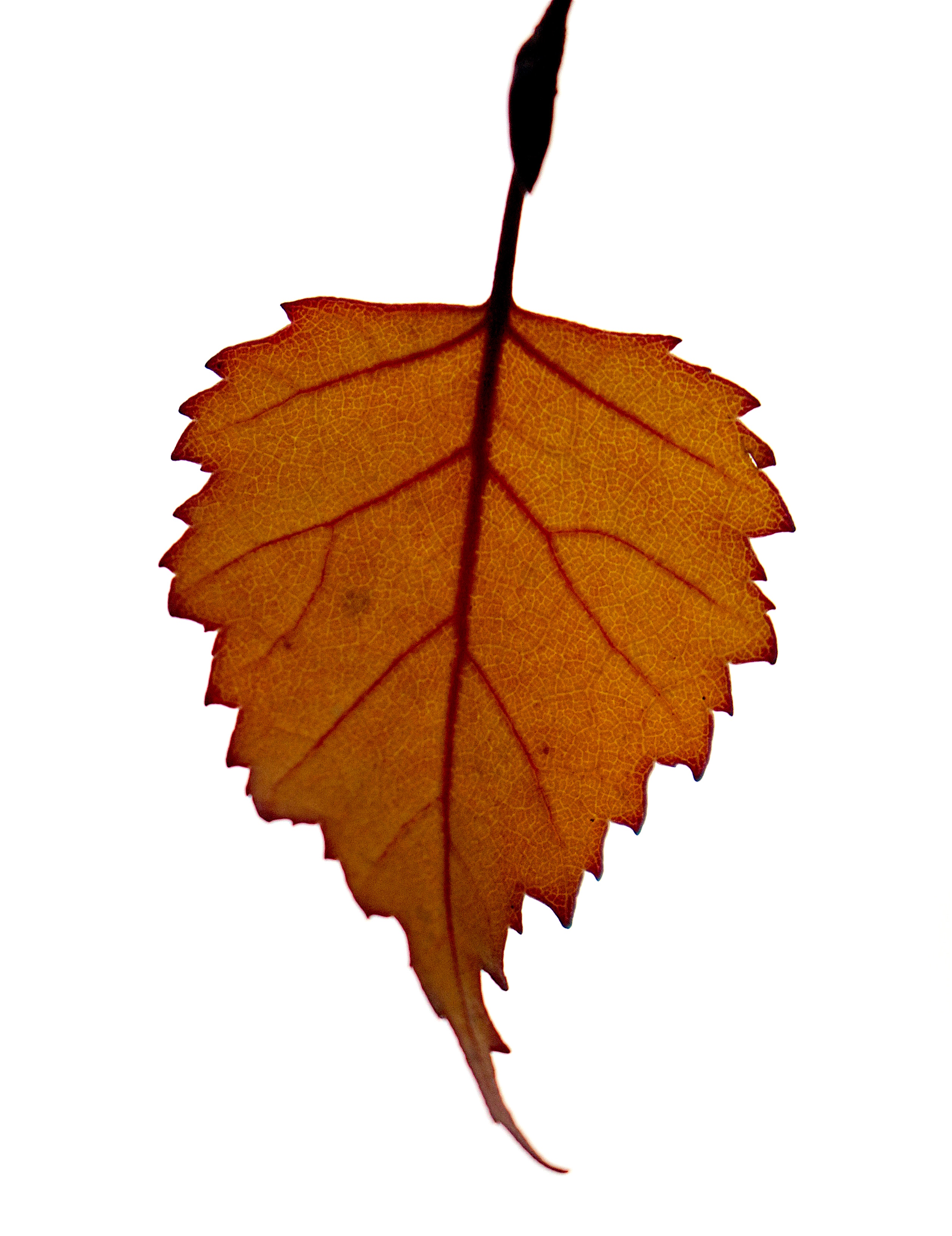
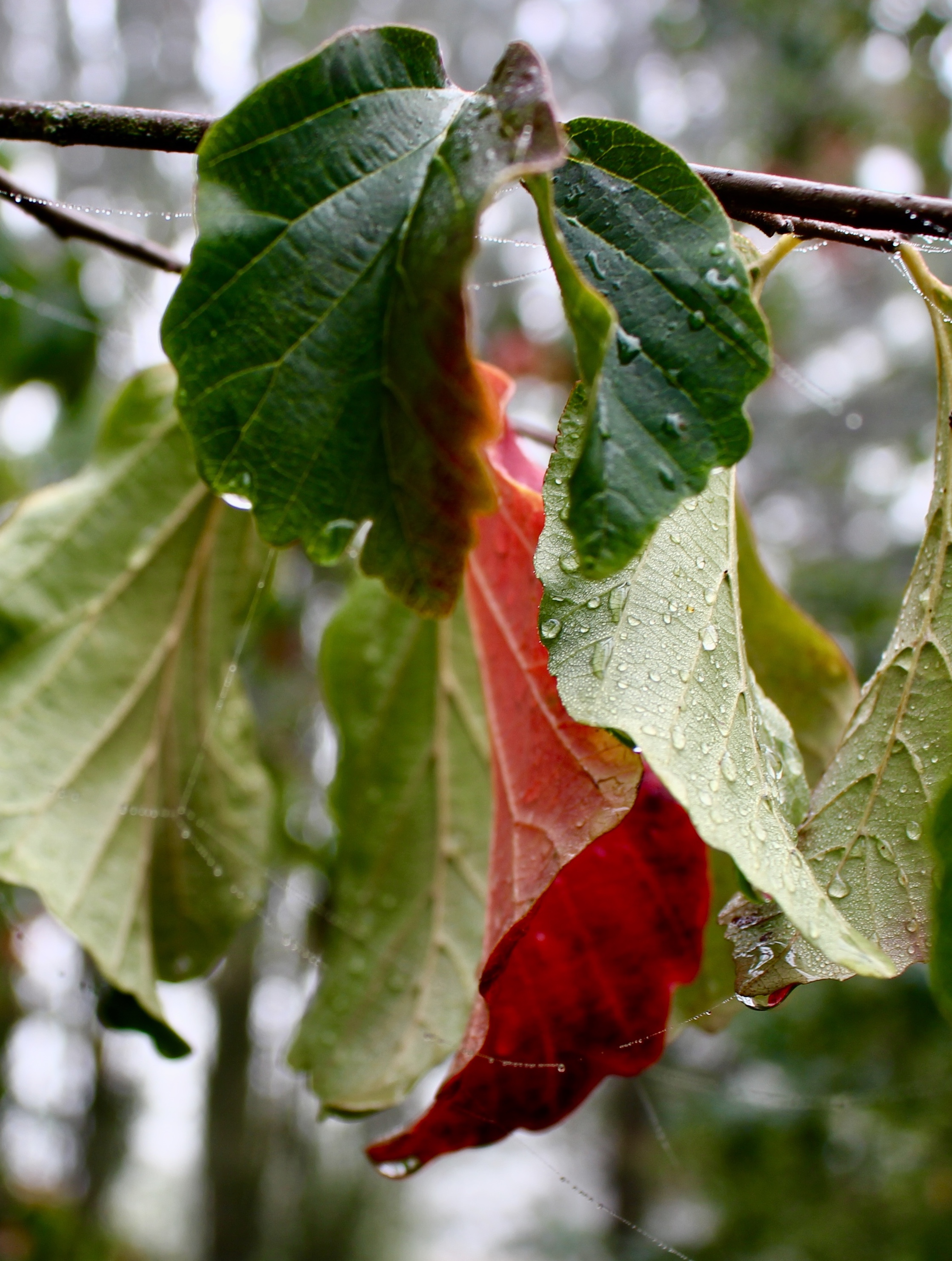
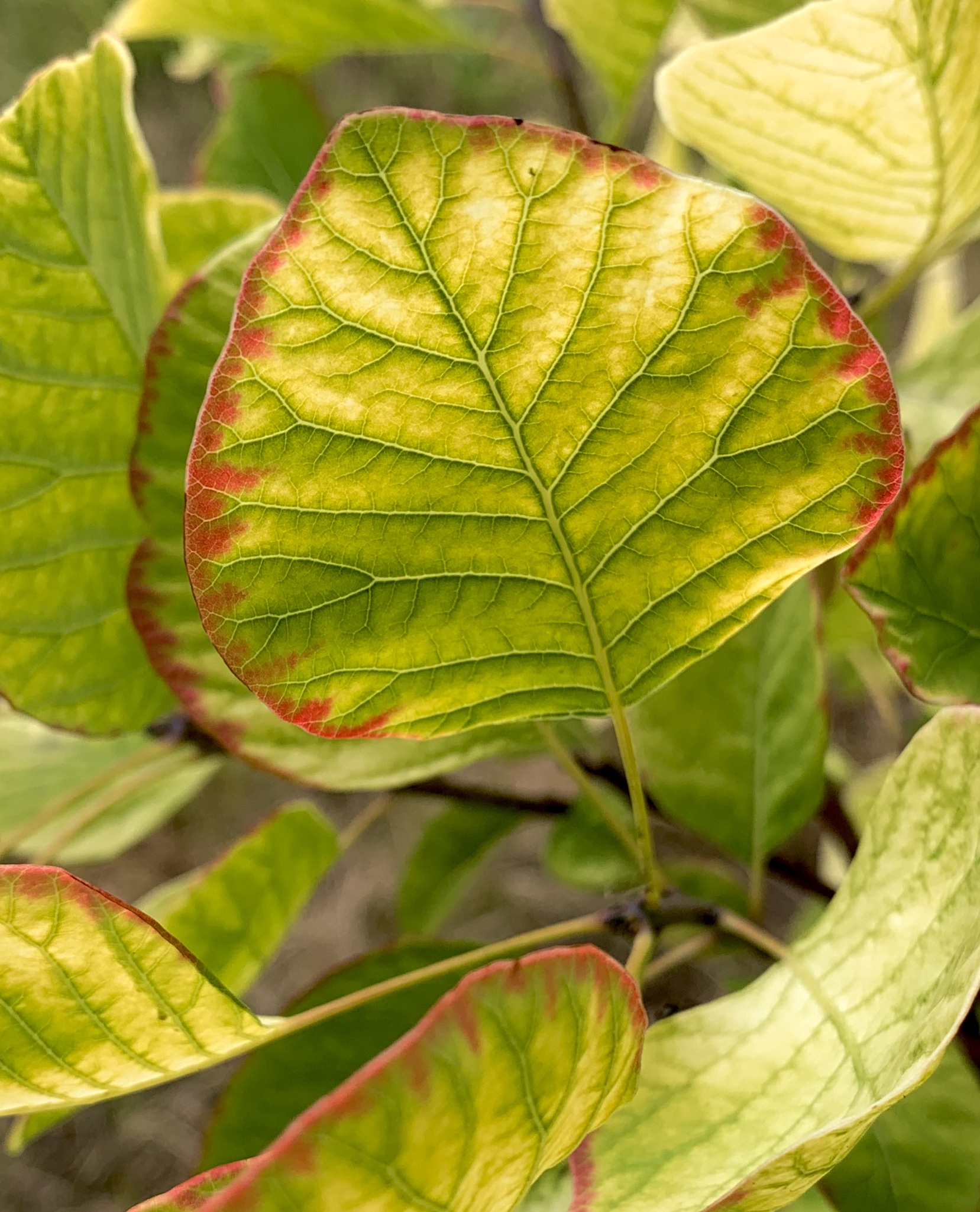
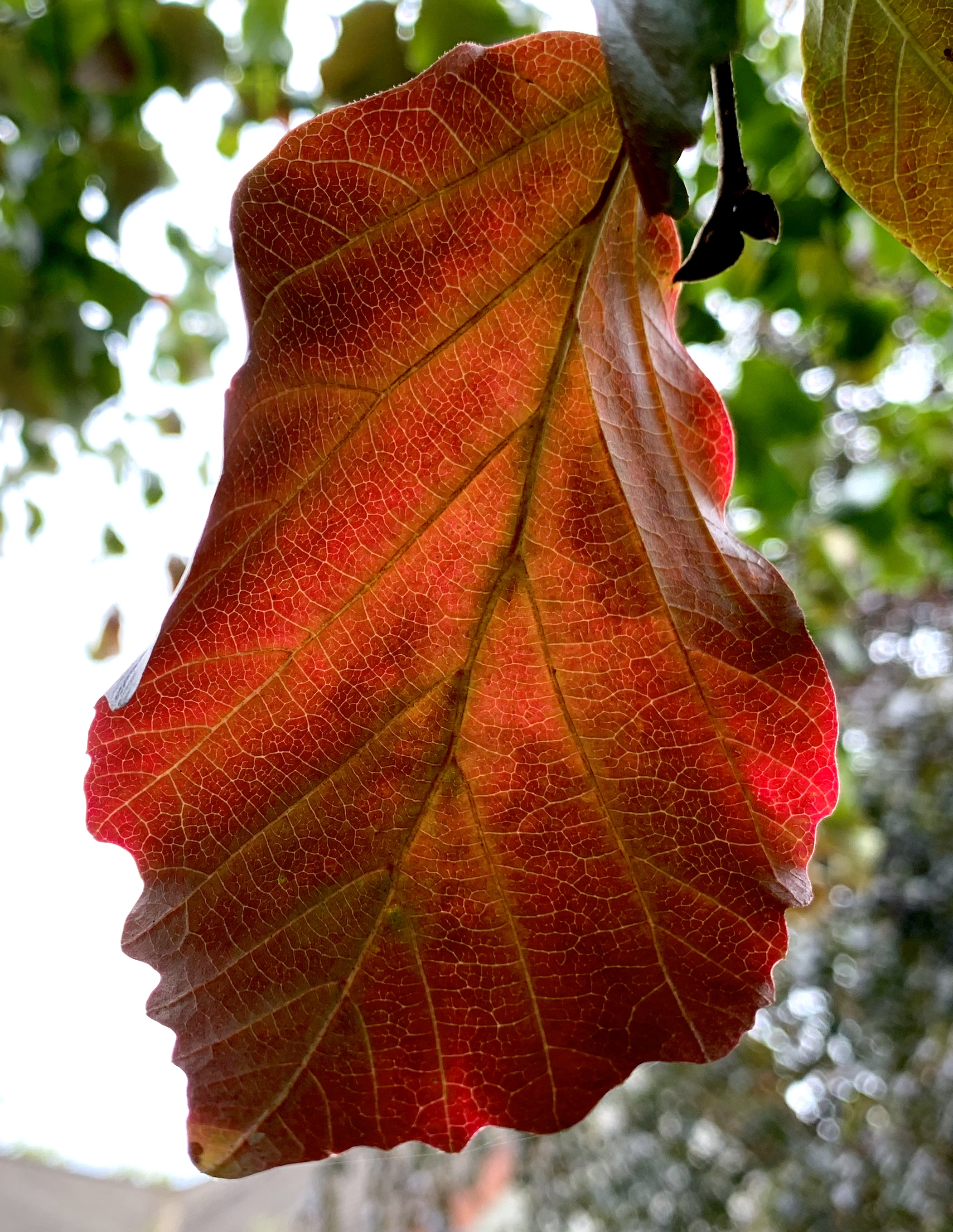
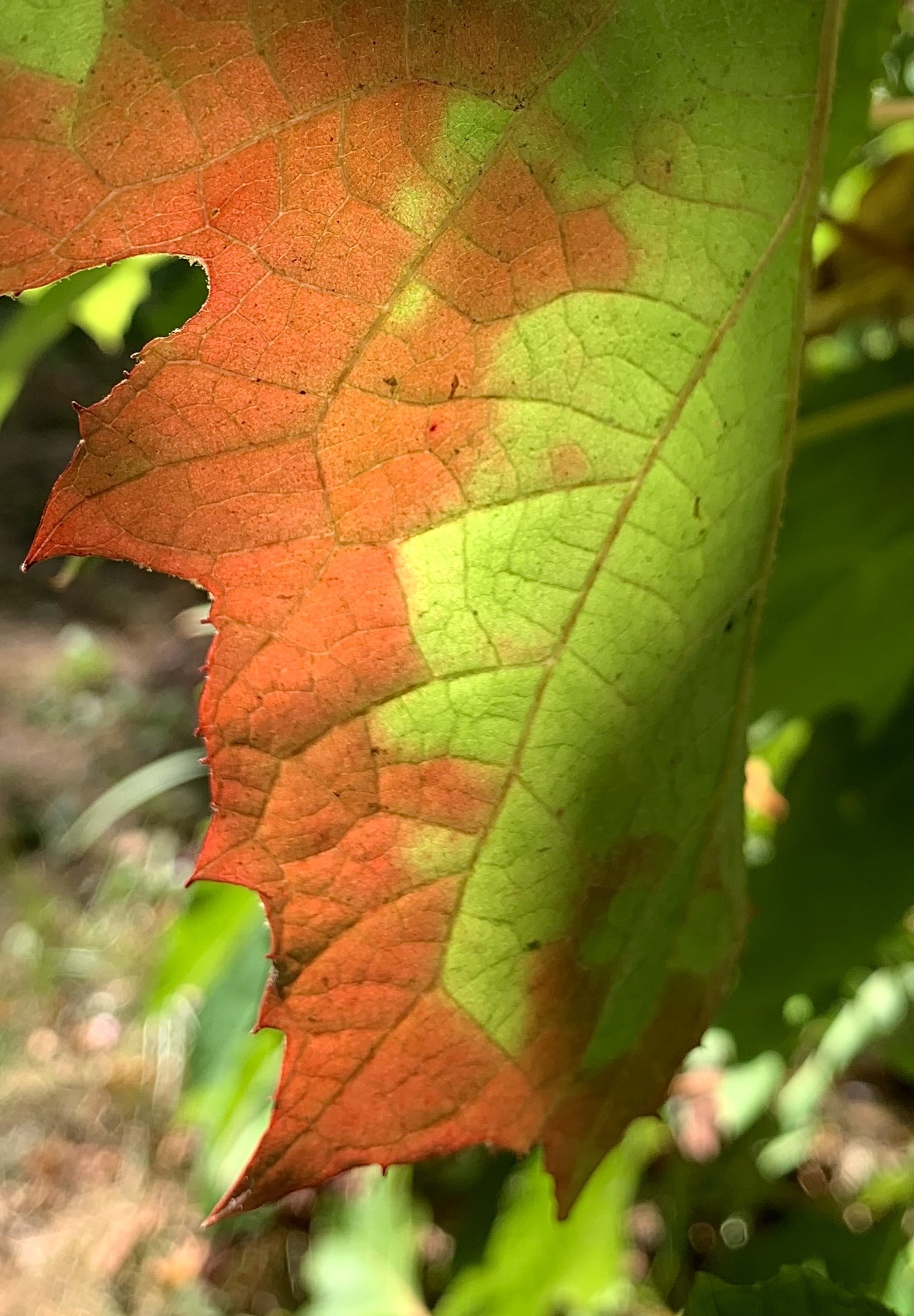
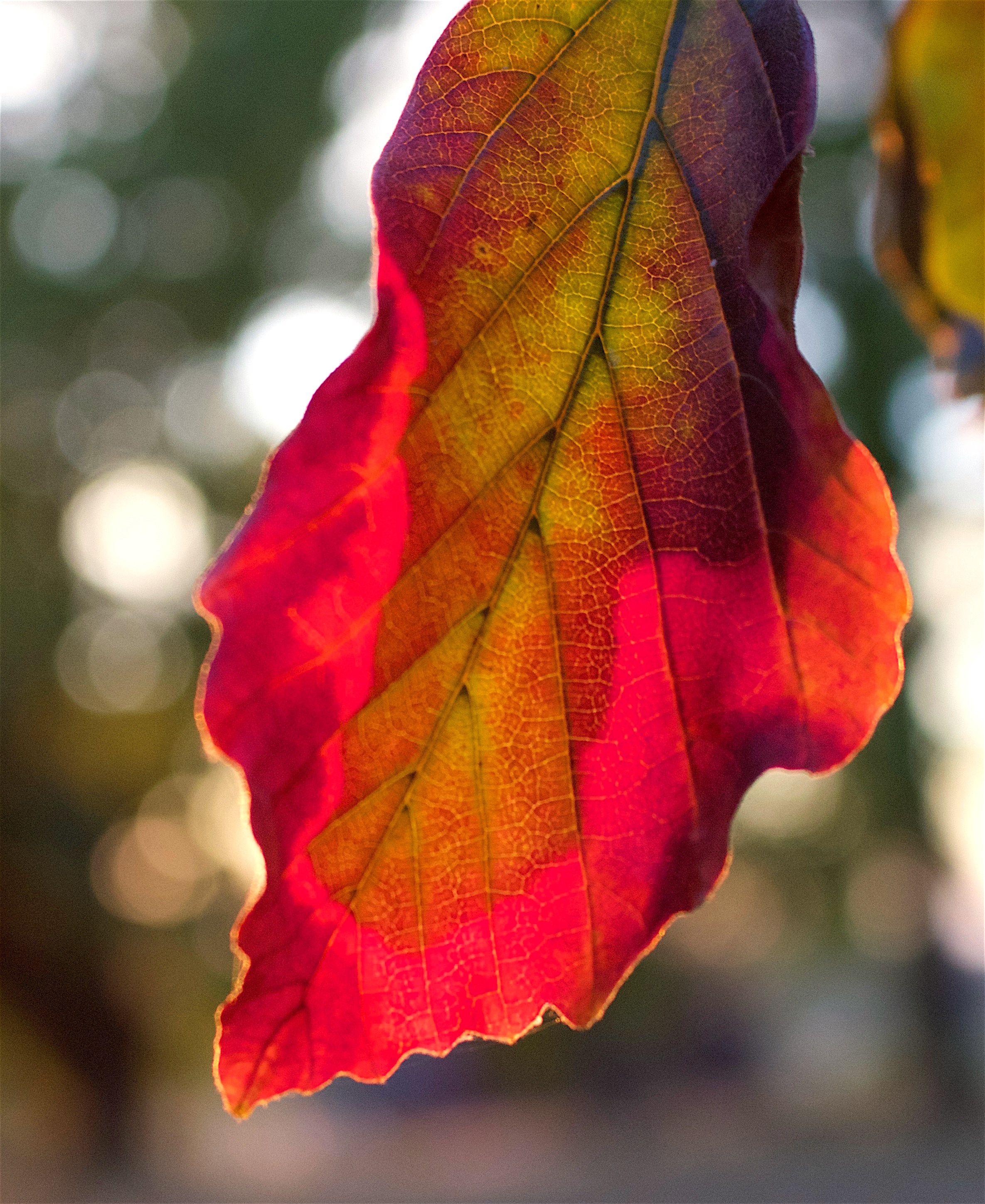
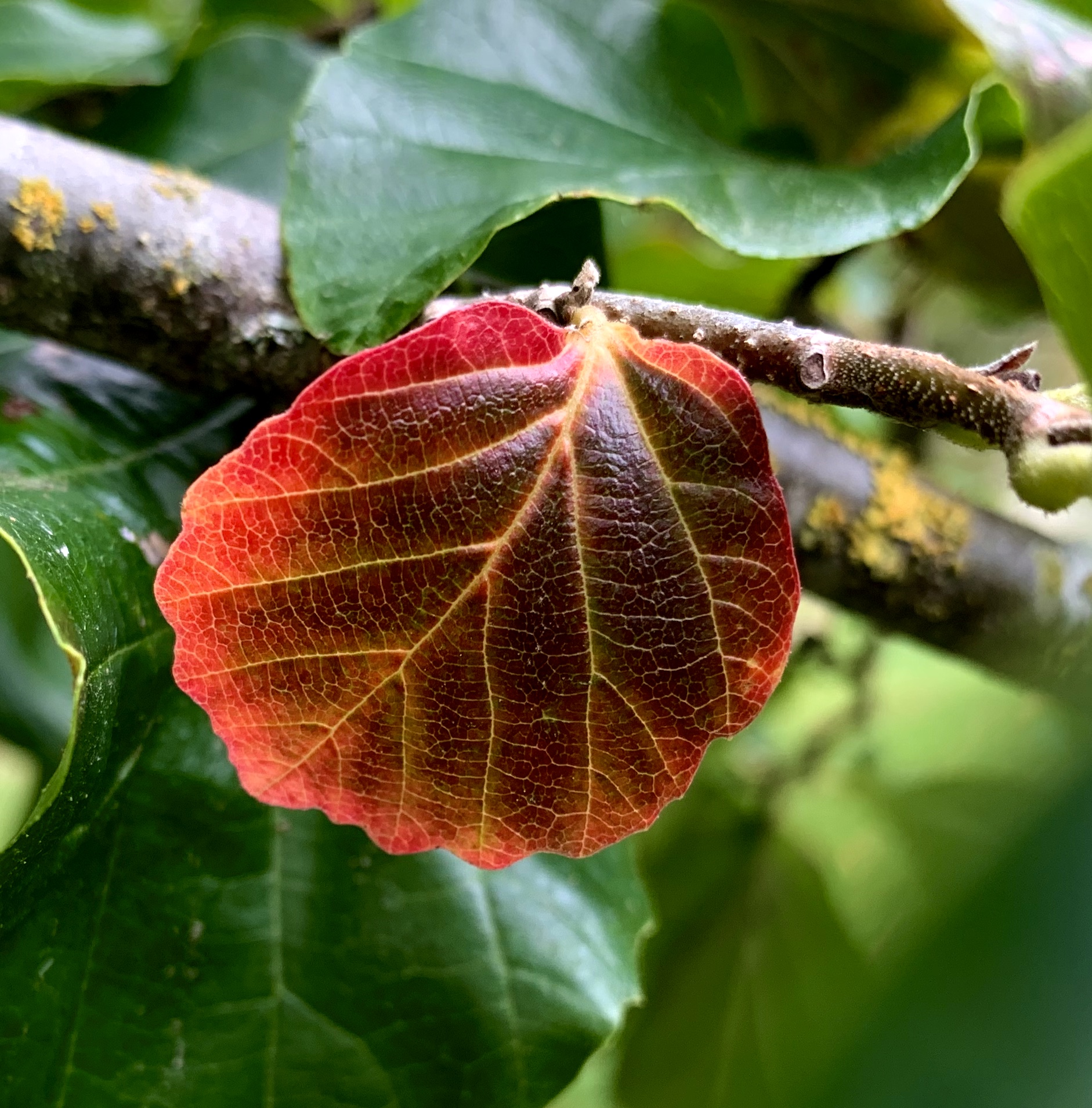
Now, like the drying leaves, I watch my edges curling and changing color in preparation – a kind of beauty preceding an eventual letting go.

I remember thinking, in my kindergarten-size brain, that I could not waste a minute of this life and needed to pay attention to everything. That has been much harder than I imagined: there is pain in attending to wars and famine, illness and injury, tragedy and tribulation. I was given my ears to hear, my eyes to see, my mouth to speak – for good reason. Though my heart hurts to read headlines, I must fling it into the messiness around me.

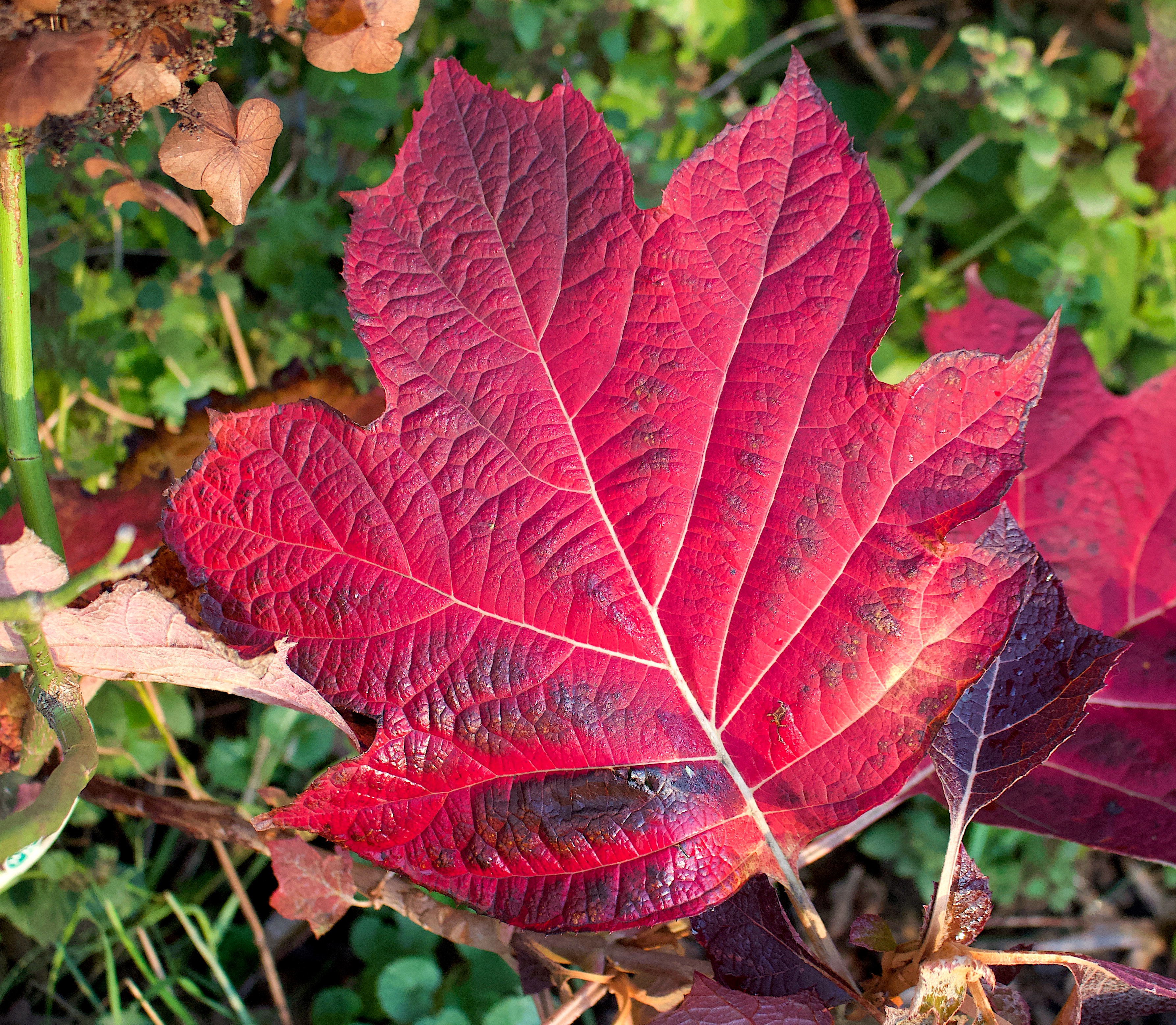
Even the leaves bleed red as tomorrow is less long.

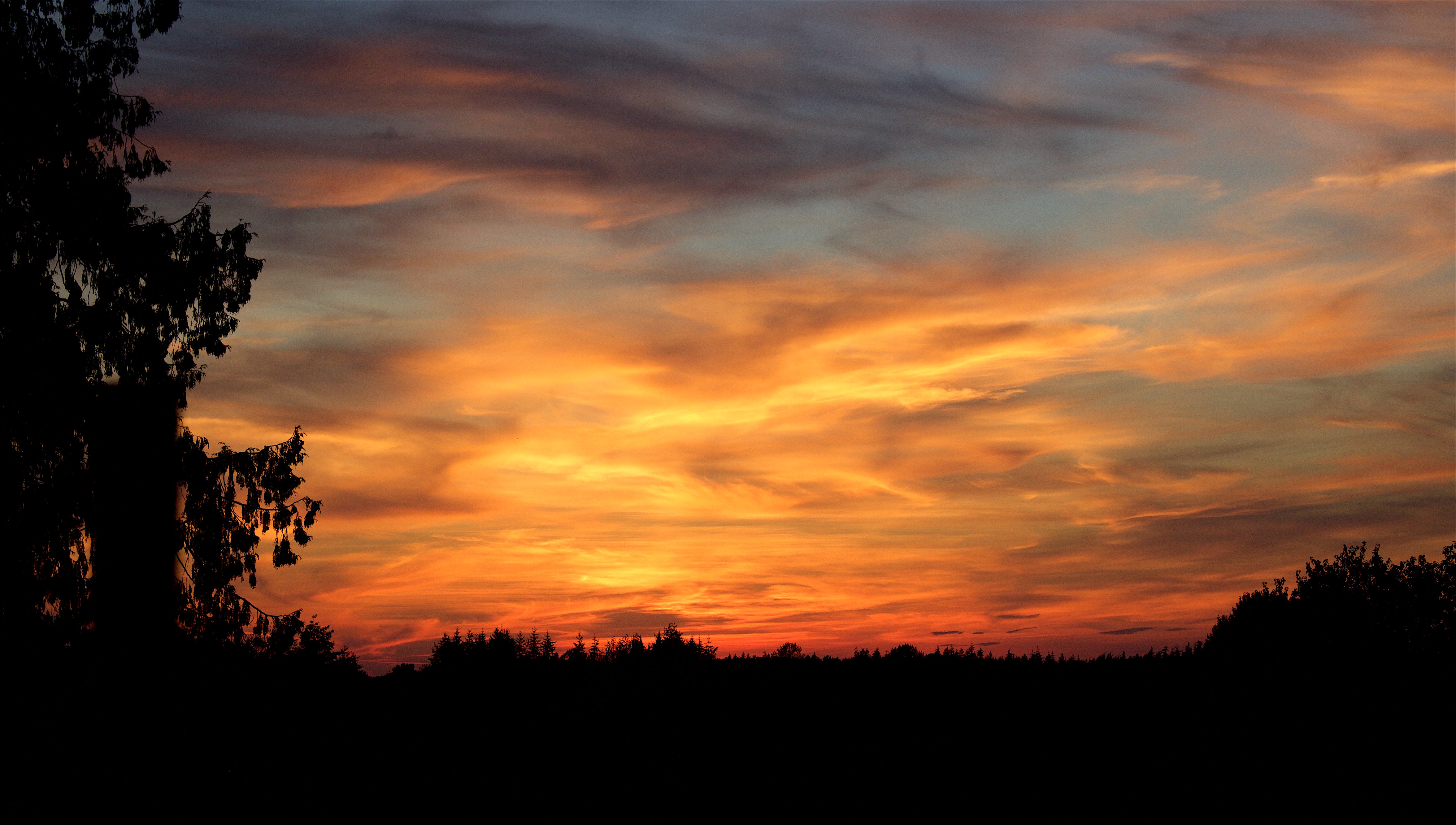
It is the waning light and shortening days that colors my view like smoky haze in the sky painting a sunset deep orange.  The coming darkness is temporary and, like me, is inevitably finite; it will never conquer the light that is everlasting.

More Barnstorming photography and poetry from Lois Edstrom can be ordered in this book available here:

Summer, Go Not Yet Away

Fair Summer droops, droop men and beasts therefore:
So fair a summer look for never more.
All good things vanish less than in a day,
Peace, plenty, pleasure, suddenly decay.
Go not yet away, bright soul of the sad year;
The earth is hell when thou leavest to appear…. 

What, shall those flowers that decked thy garland erst,
Upon thy grave be wastefully dispersed?
O trees, consume your sap in sorrow’s course,
Streams, turn to tears your tributary course.
Go not yet hence, bright soul of the sad year;
The earth is hell when thou leav’st to appear.

Ah, who shall hide us from the winter’s face?
Cold doth increase, the sickness will not cease,
And here we lie, God knows, with little ease.
From winter, plague, & pestilence, good Lord, deliver us.

~Thomas Nashe from “Summer’s Last Will and Testament” (from a stage play performed in 1592)

Summer 2021 so far has been hell for much of the world and we still have nearly a month left of more Summer to endure: the fall of Afghanistan, another earthquake in Haiti, floods in Europe and central U.S., storms in the east with drought and fires in the west, and last but certainly not least, the explosion of the Delta COVID variant everywhere.

COVID has demonstrated that plague and pestilence clearly isn’t limited to cold weather and winter. This virus enjoys easy transmission among those who continue to live without any defenses – the unmasked and those who remain unvaccinated either by choice or lack of access to vaccine. We, through our behavior, have invited an opportunistic virus to spread among us through this “bright soul” of the year which ordinarily should be “plague-free.”

Will we continue to roll out the red carpet for COVID, welcoming it into ours and other’s homes, noses and lungs, even as summer itself dies away along with thousands of more pandemic victims?

Deliver us, O Lord, from our own reluctance to accept that viruses care not whom they infect, particularly those with little defense.

Deliver us, O Lord, from our preference for our own self-determination over a concern for the needs and vulnerability of others.

Deliver us, O Lord, from our continued blindness – doing what is right in our own eyes without seeing what is best for all.

Go not yet away, fair Summer, as here we lie, God knows, with little ease.

If you appreciate Barnstorming posts, you’ll enjoy this book, available for order here:

Change Altitudes

           ‘Regret has to be useless or it’s not really regret.’
                                                     ~Simone de Beauvoir

Rescuers did not find my uncle’s body.
But they found his axe at an icy altitude
impossible to navigate without one.


A little higher up, they found my uncle
’s sleeping bag at an altitude
unsurvivable without one.


You likely have a pen in purse or pocket.
Take it out and write a list of all
you need at your present altitude.


Next, change altitudes. Now, make another list:
the two biggest regrets of your life.
Take your time. Get it right. Because

here is all you need to know about need:
That list of regrets—cross one off.
You are going to need that space later.
~Jessica Goodfellow, “Unreachable” from Whiteout

I’ve known people who lost their lives while hiking/climbing in the mountains or due to some other tragedy – the cascade of decisions leading to their death are sources of regret for all who mourn them, even decades later. Somehow regret is a difficult feeling to let go; we cling to it as if it is somehow an essential part of us.

It is easy for me to come up with a long list of regrets in my life. They seem to grow like weeds – useless, unplanned, unwanted and prolific, threatening to take over any good fruit being produced.

Few of us volunteer to share openly about our current guilt or shame unless we are sitting in a therapy group or AA. Instead it gives us permission to beat ourselves up, going over and over in our minds how we could have done things differently. As a physician, I’ve heard about such heart-ache in my clinical encounters – a patient will regret an impulsive sexual encounter that turned out badly, or drinking and drugging too much, or regret an ongoing conflict with a family member, or wish they had decided to get that vaccine before becoming ill with a potentially preventable infection.

Our list of regrets can be endless and life-destroying.

I understand the pain of regret as I too am a flawed and fractured person with a seven decade history of things done and left undone, words said and unsaid. Even if I think I can somehow manage to cross a regret off my own list – perhaps I apologized and was granted forgiveness, or I tried to make right what I’d messed up — I still know a new regret will occupy its place before long.

I can’t simply fix my own regret list.

No matter what altitude we’re at — down in the pits in the lowest of the low, or up in the highest imaginable, I have come to realize that forgiveness is only possible through a knowledge of God Himself. He came to walk beside us in our low spots and our high spots, no matter where we find ourselves. His work on earth has crossed off our regrets and mistakes and wiped us clean of them.

He did this because He understood our desperate need; thanks to His sacrifice and love, our heart-aches are left at the Cross.

More beauty in words and photos are found in this new book from Barnstorming, available to order here:

If you have already read our book, your review of the book would be deeply appreciated here: