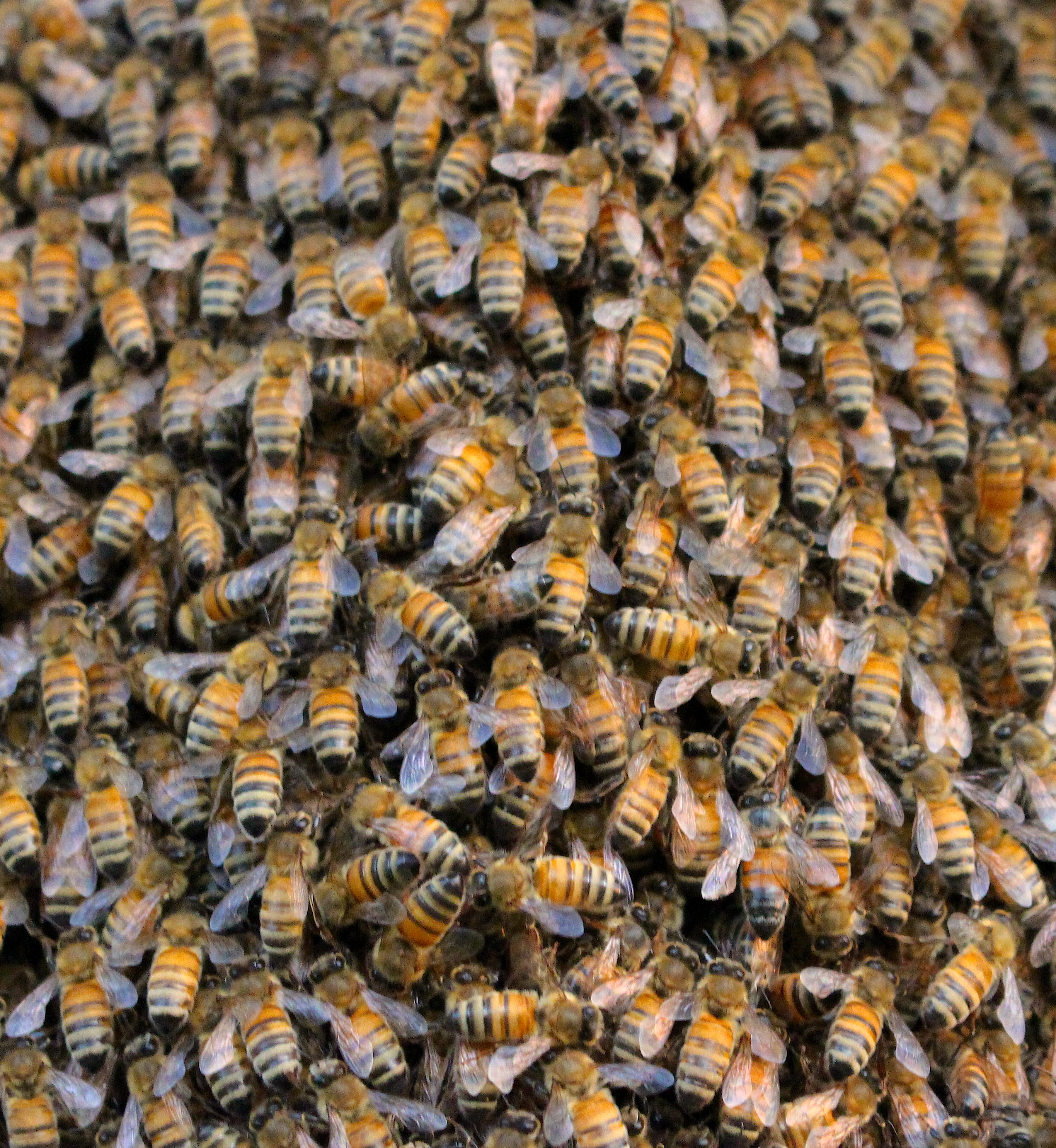
To Yield to Change

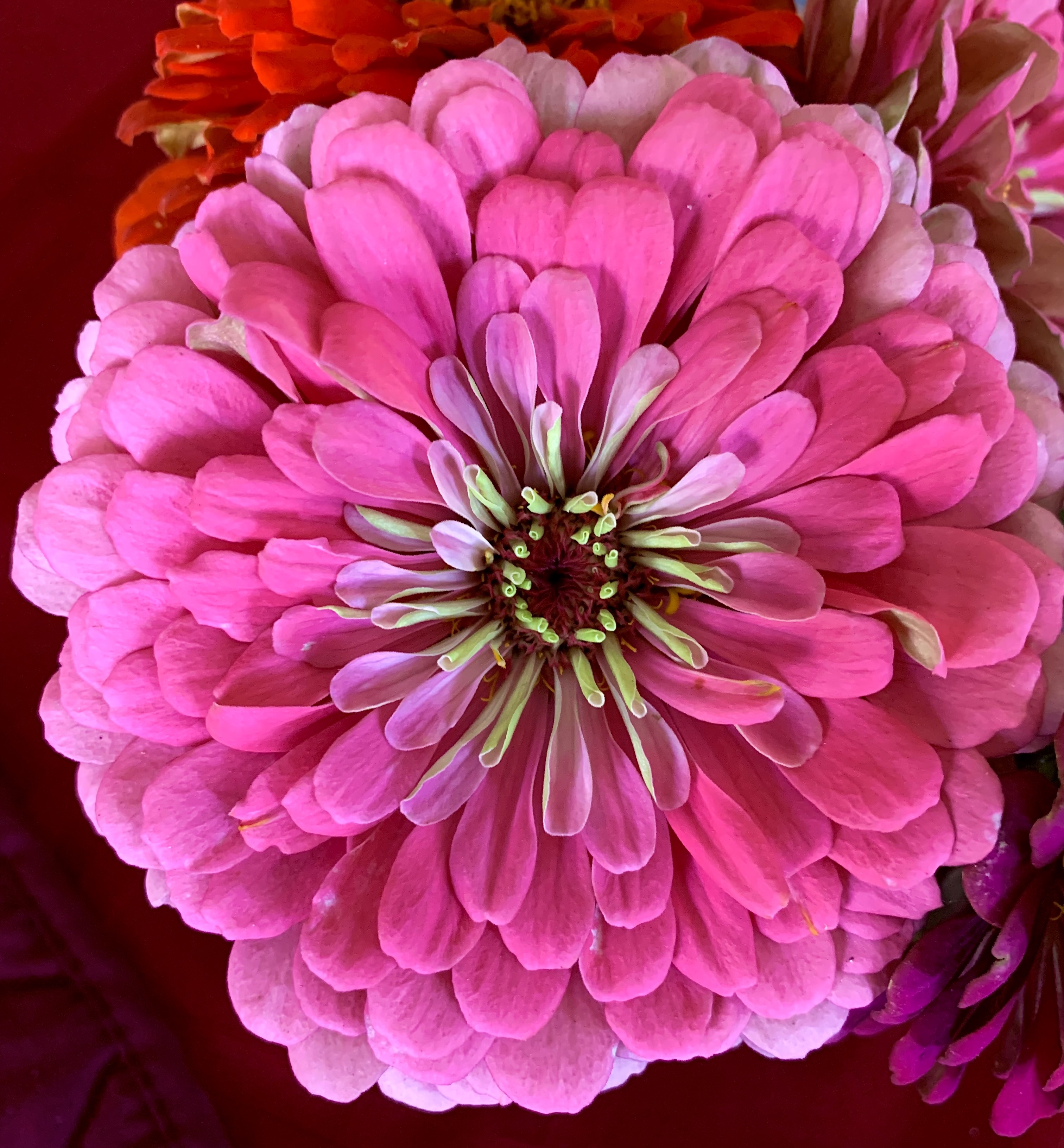
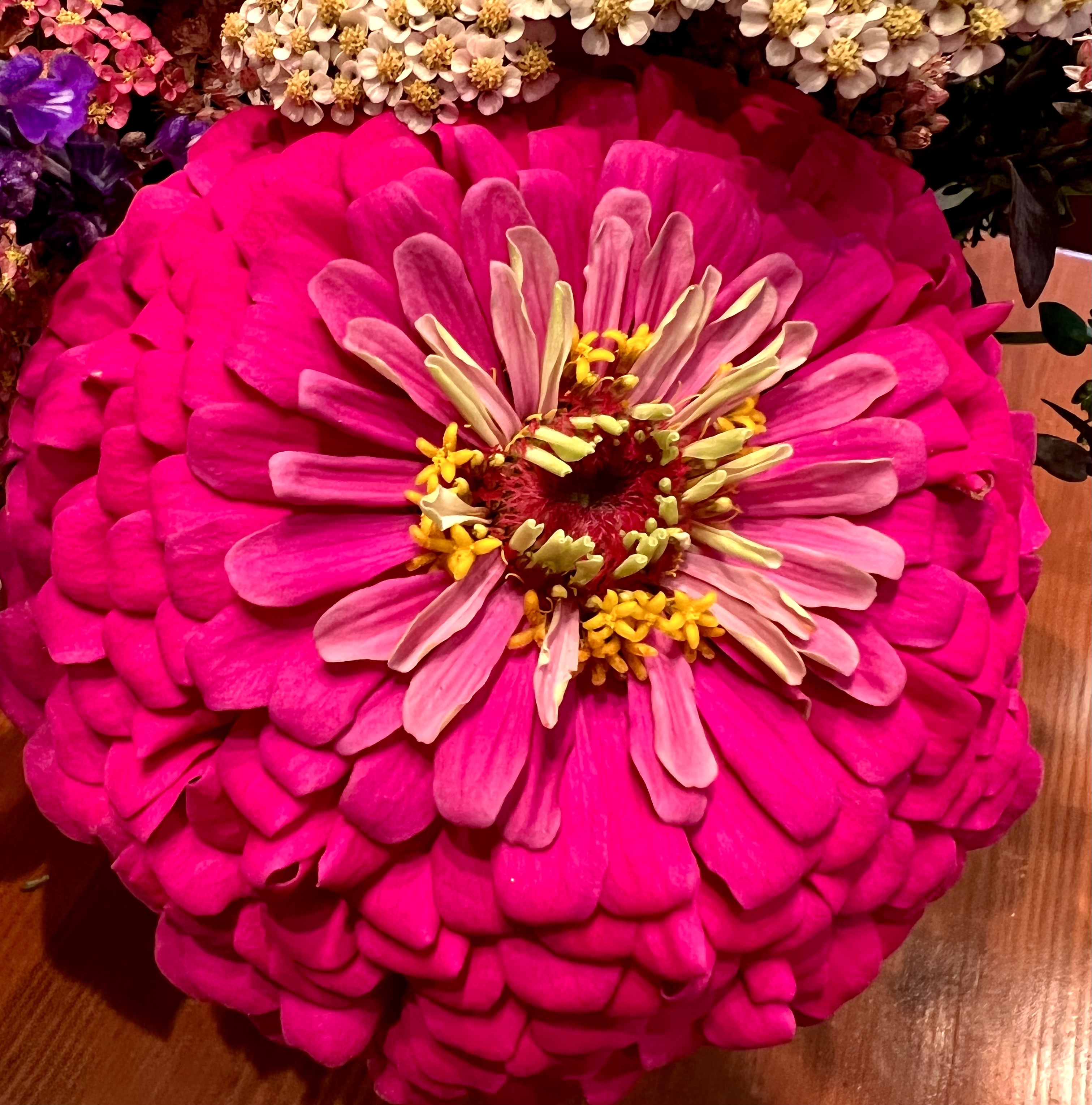
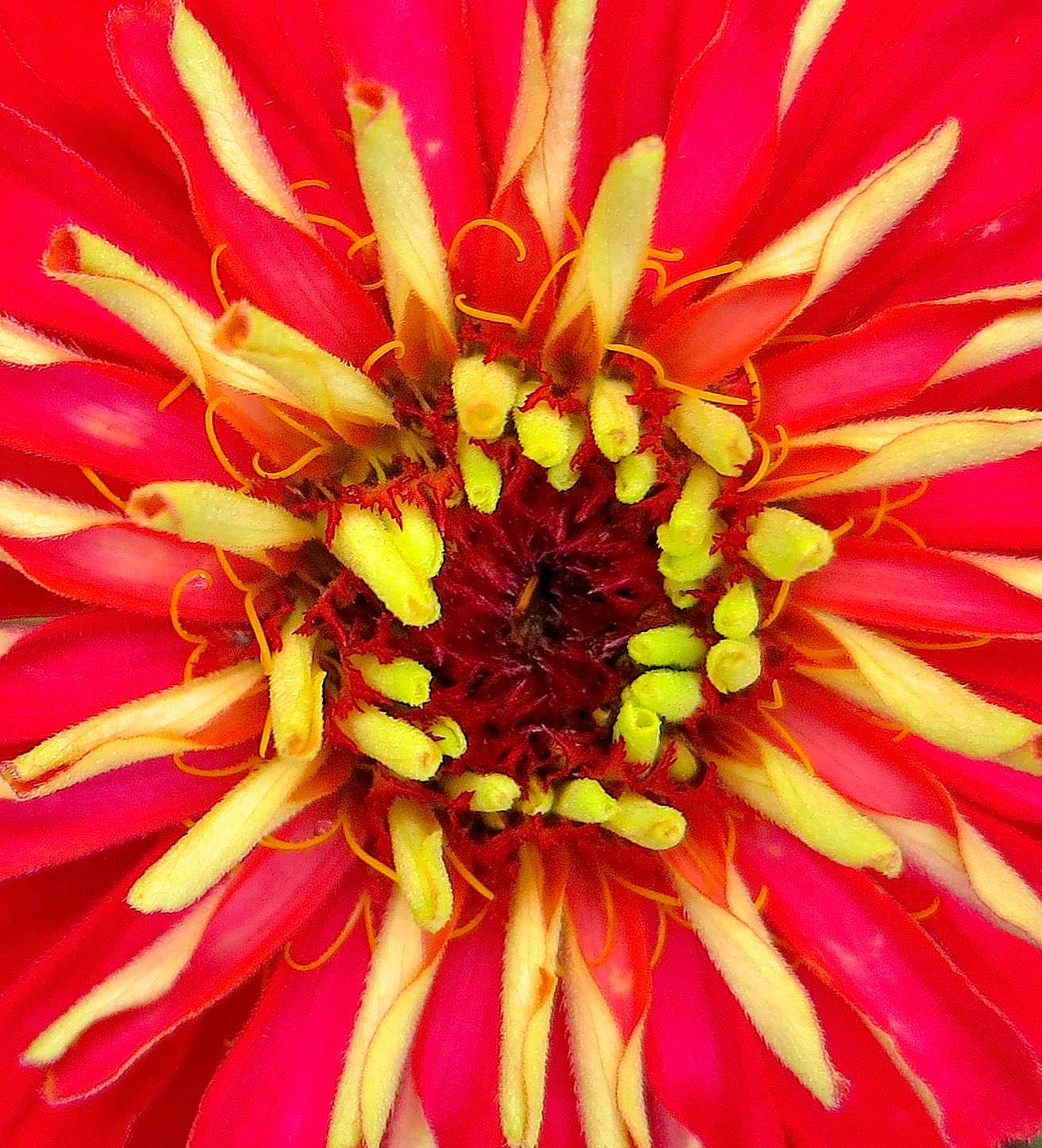
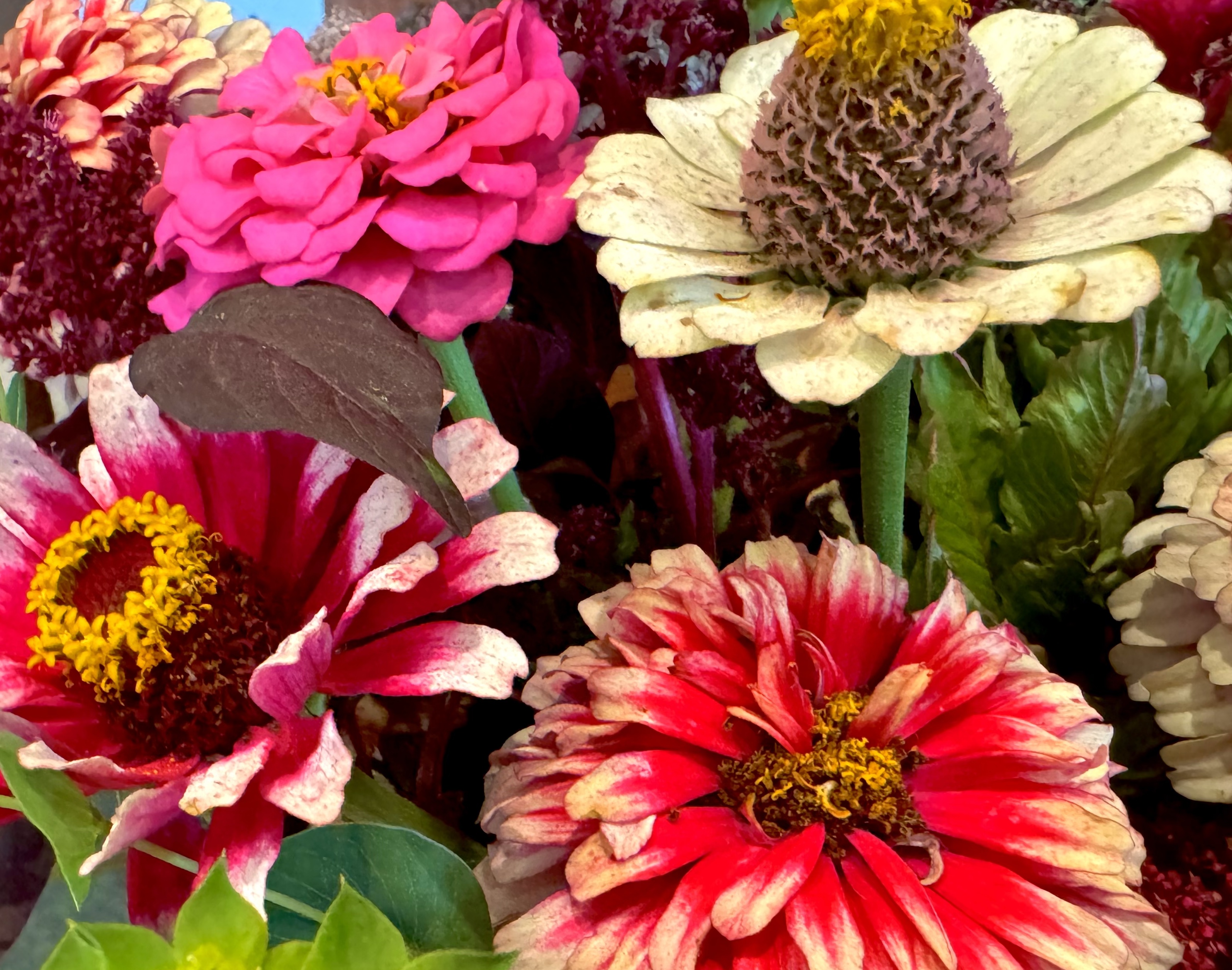
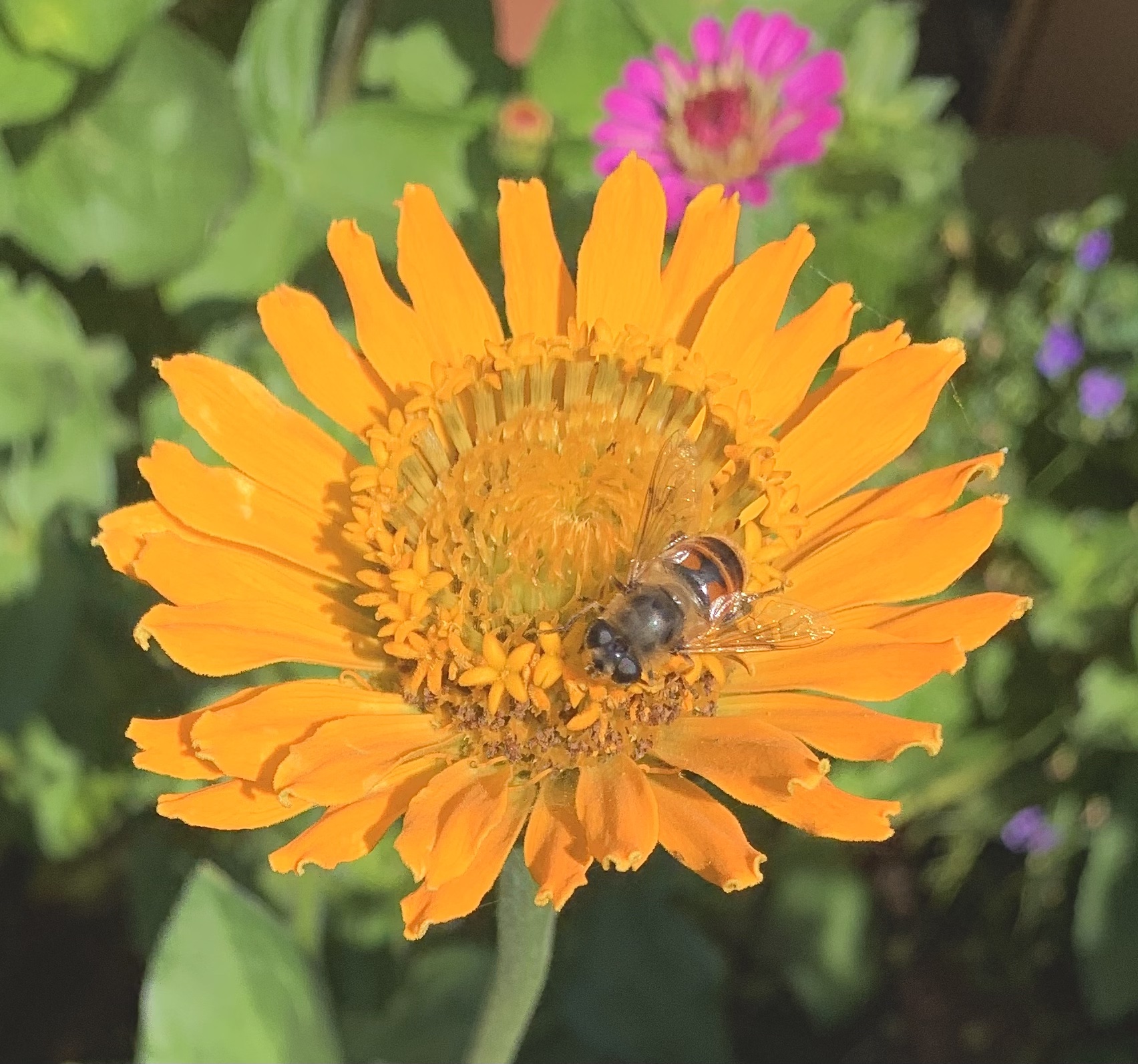
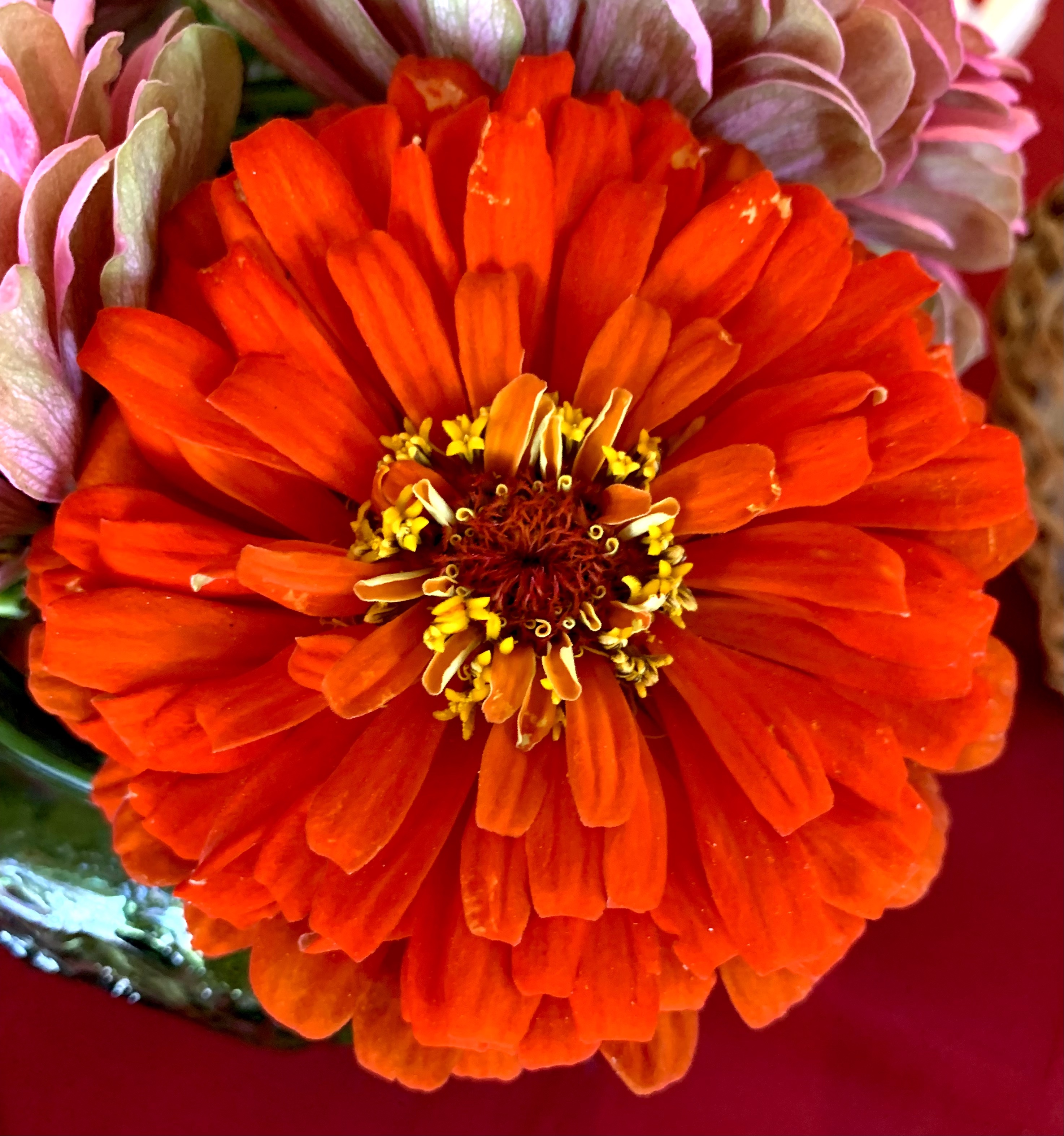
I went out to cut a last batch of zinnias this
morning from the back fencerow and got my shanks
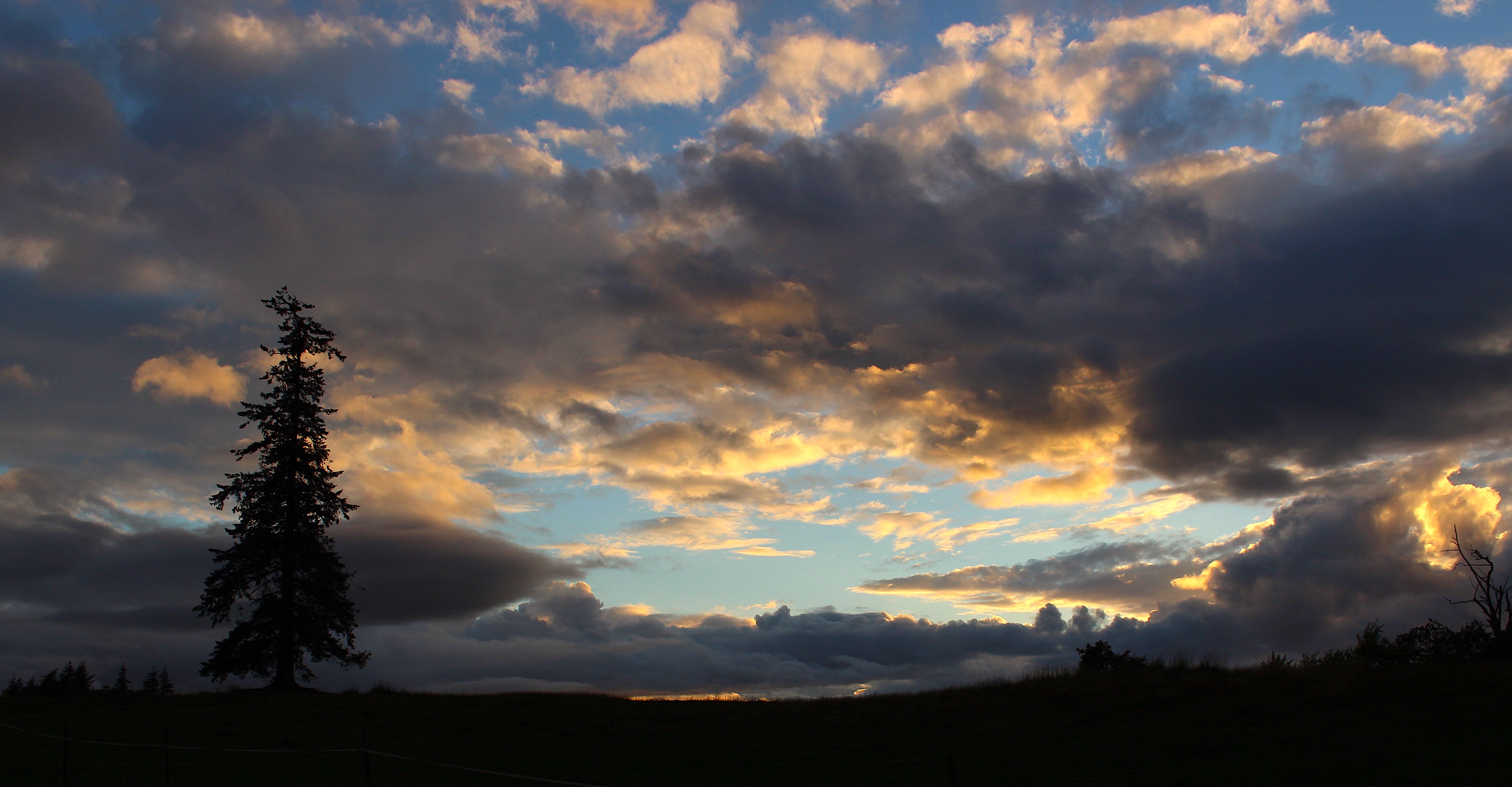
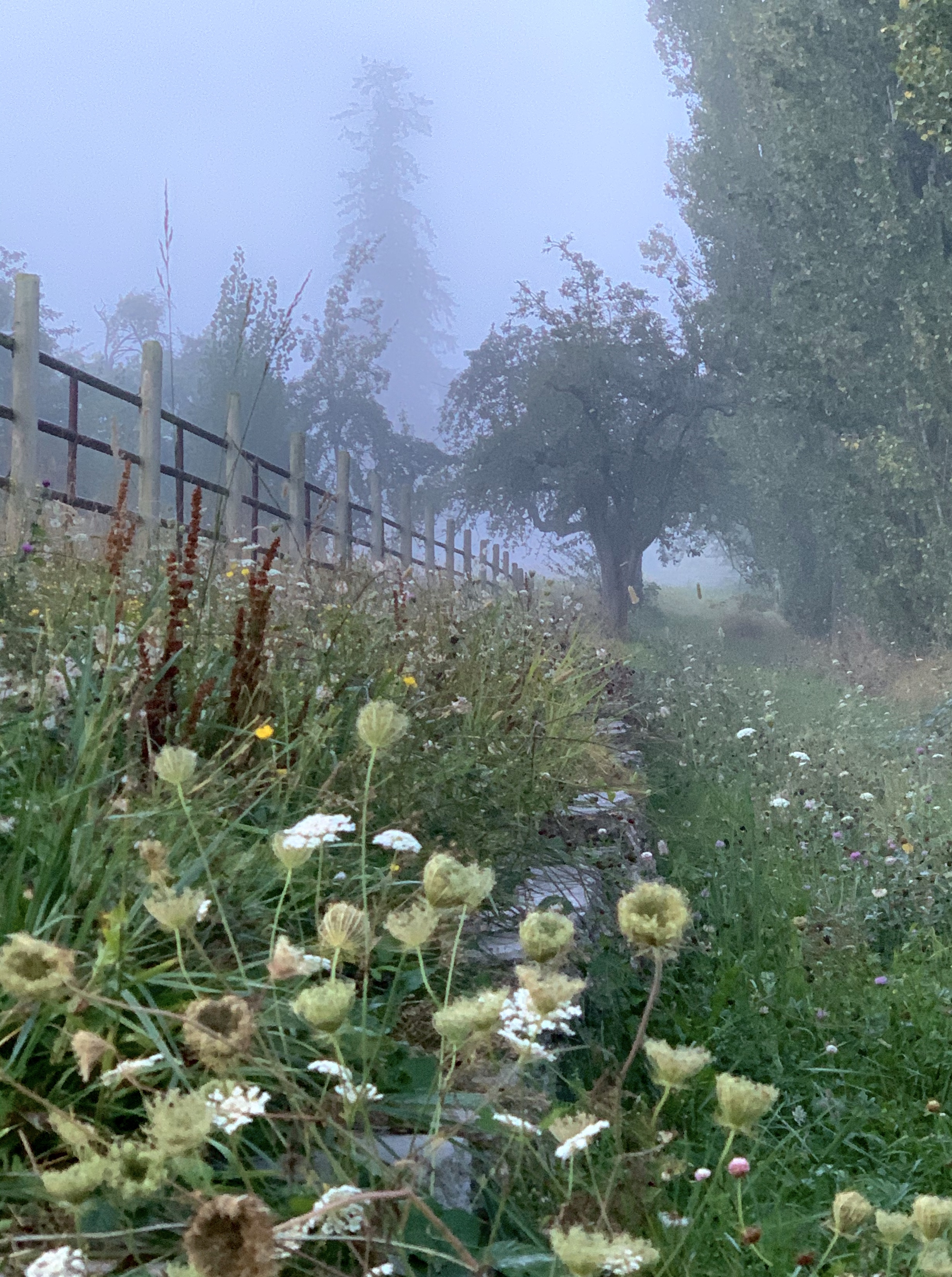
chilled for sure: furrowy dark gray clouds with
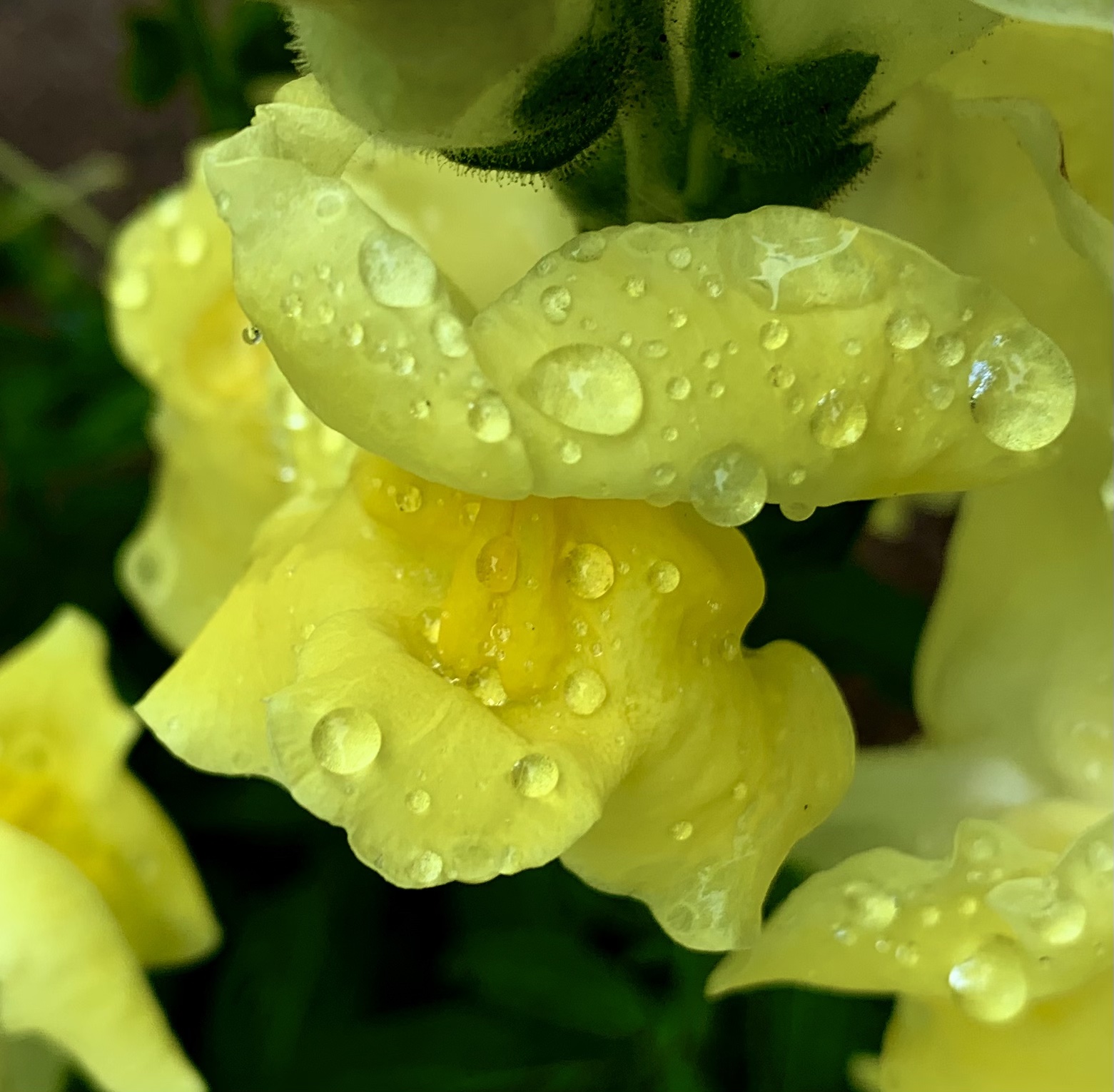
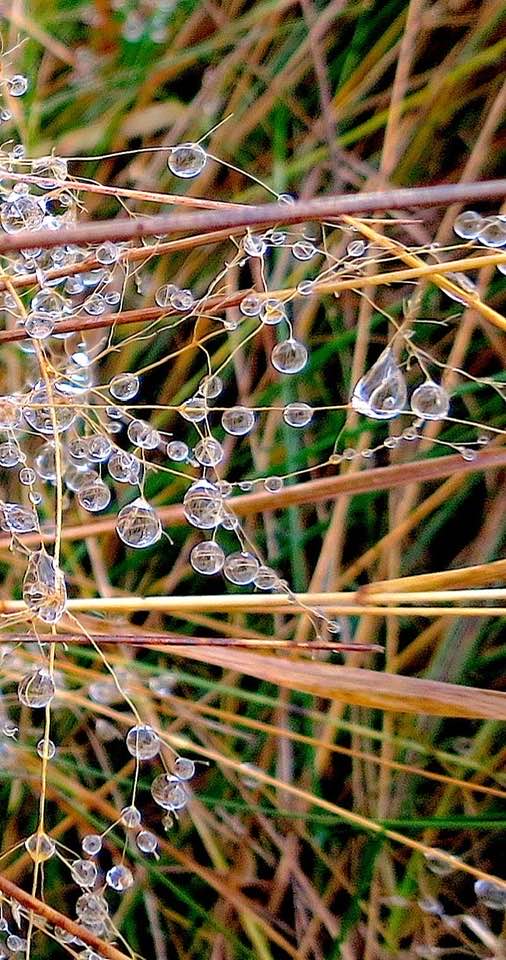
separating fringes of blue sky-grass: and the dew

beaded up heavier than the left-overs of the rain:
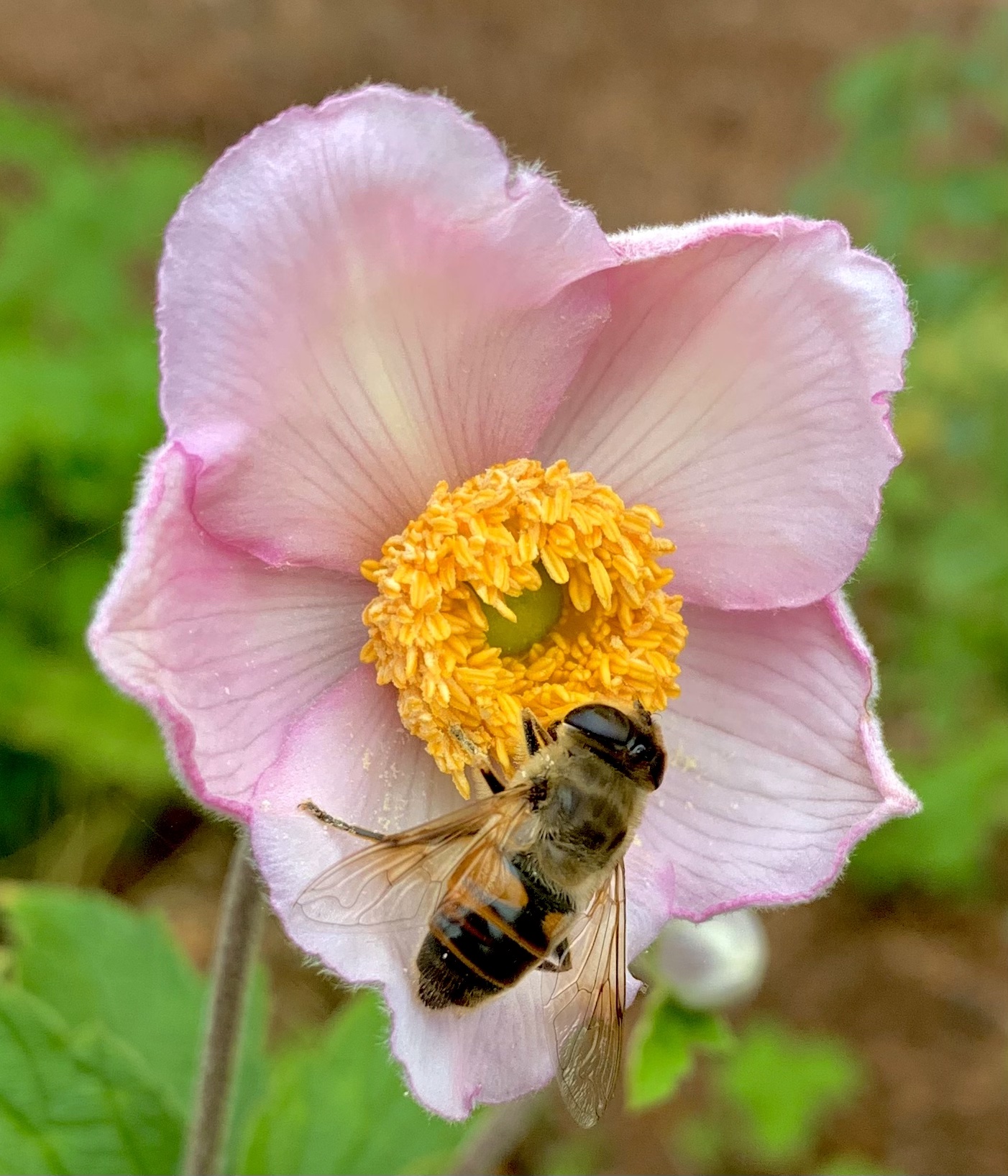
in the zinnias, in each of two, a bumblebee
stirring in slow motion. Trying to unwind
the webbed drug of cold, buzzing occasionally but

with a dry rattle: bees die with the burnt honey
at their mouths, at least: the fact’s established:
it is not summer now and the simmering buzz is out of
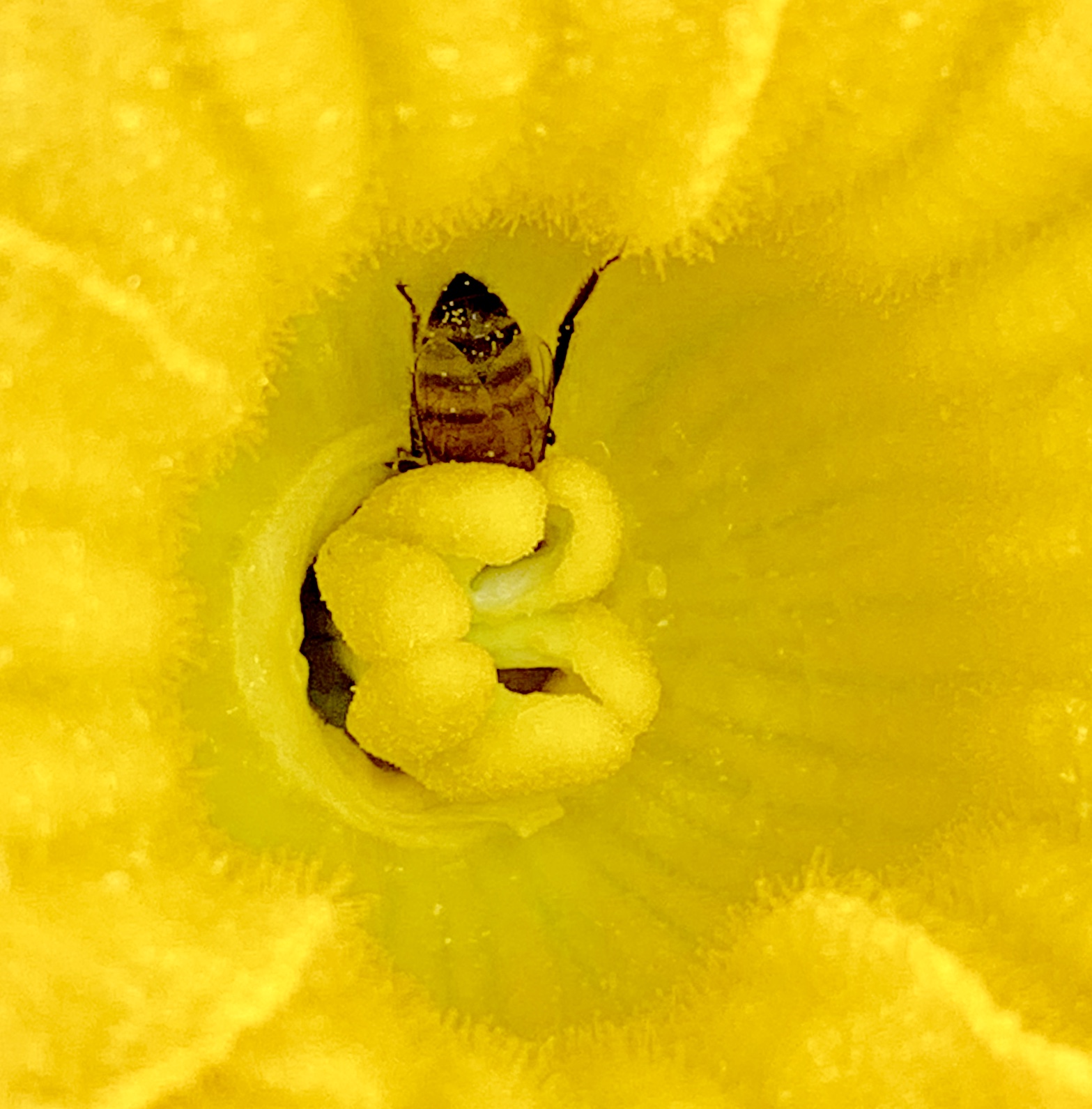
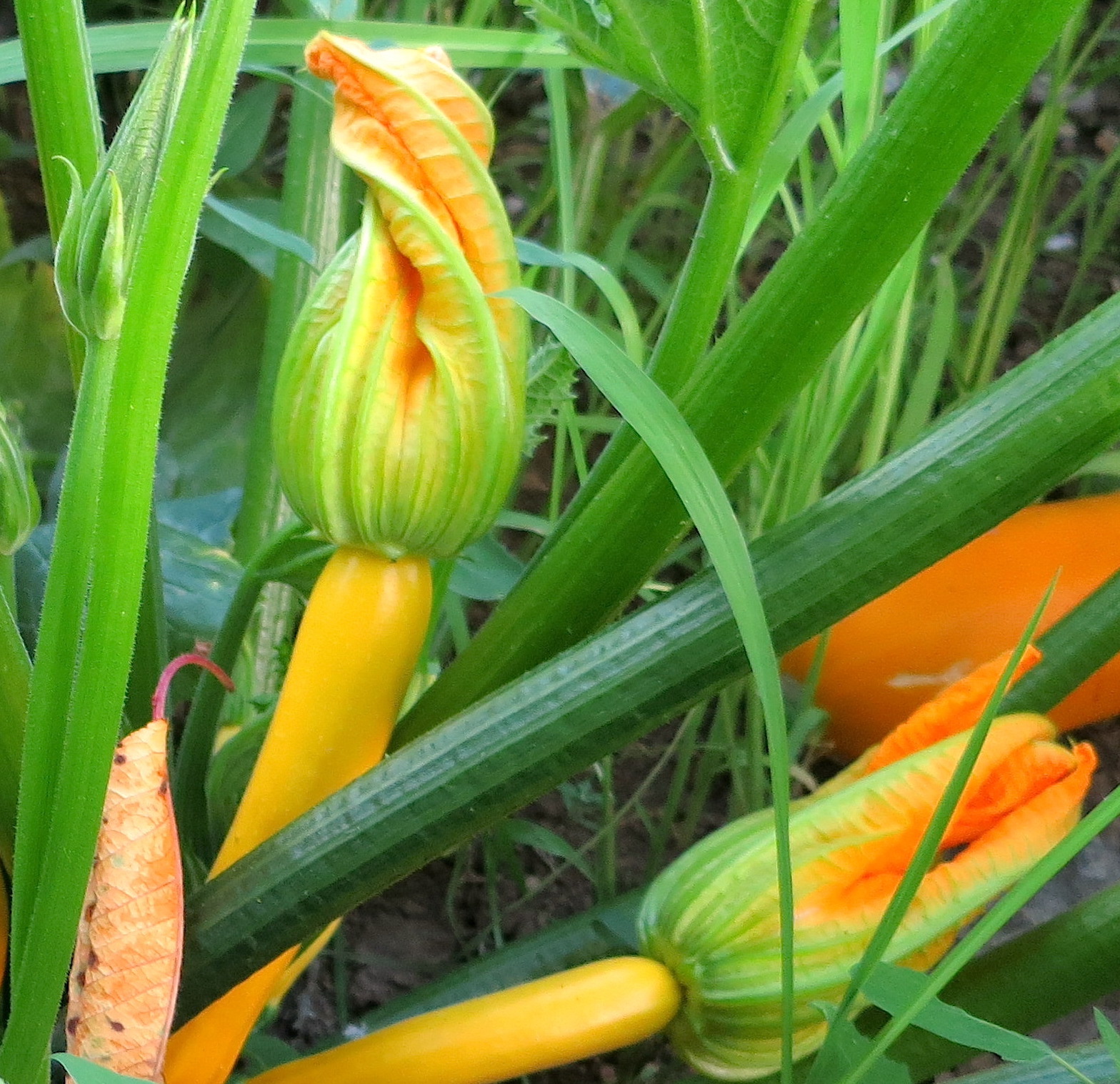
heat: the zucchini blossoms falling show squash

overgreen with stunted growth: the snapdragons have
suckered down into a blossom or so: we passed
into dark last week the even mark of day and night
and what we hoped would stay we yield to change.
~A.R. Ammons  “Equinox” from Complete Poems

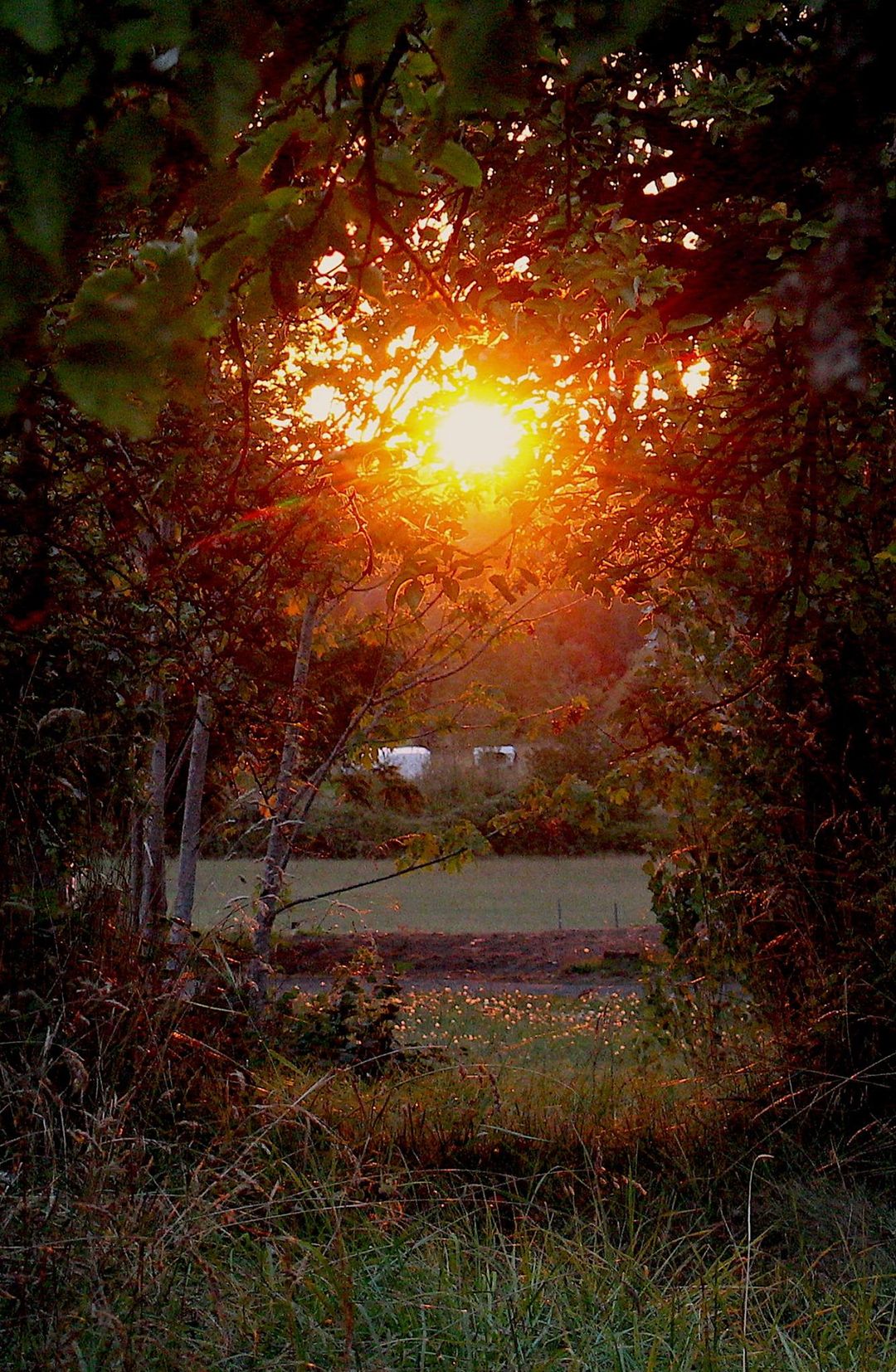
I yield now
to the heaviness of transition
from summer to autumn –
the soaking morning fog, with
dew clinging like teardrops,
a chill in the air
means I sweater-wrap my days.

It is time for change, reluctant as I may be;
both day and night now compete equally for my time
and each will win.

One-Time
Monthly
Yearly

Make a one-time or recurring donation to support daily Barnstorming posts

Make a monthly donation

Make a yearly donation

Choose an amount

$10.00
$25.00
$50.00
$5.00
$15.00
$100.00
$5.00
$15.00
$100.00

Or enter a custom amount

$

Your contribution is deeply appreciated.

Your contribution is appreciated.

Your contribution is appreciated.

DonateDonate monthlyDonate yearly

The Bees of the Invisible

Let us go forward quietly,
forever making for the light,
and lifting up our hearts in the knowledge
that we are as others are
(and that others are as we are),
and that it is right to love one another
in the best possible way –
believing all things,
hoping for all things,
and enduring all things. 
~Vincent Van Gogh from a Letter to Theo Van Gogh – 3 April 1878

I have lived so long
On the cold hills alone . . .
I loved the rock
And the lean pine trees,
Hated the life in the turfy meadow,
Hated the heavy, sensuous bees.
I have lived so long
Under the high monotony of starry skies,
I am so cased about
With the clean wind and the cold nights,
People will not let me in
To their warm gardens
Full of bees.

~Janet Loxley Lewis “Austerity”


Everywhere transience is plunging into the depths of Being.
It is our task to imprint this temporary, perishable earth
into ourselves, so deeply, so painfully and passionately,
that its essence can rise again, invisible, inside of us.
We are the bees of the invisible.
We wildly collect the honey of the visible,
to store it in the great golden hive of the invisible.
~Rainier Maria Rilke in a letter to his friend Witold Hulewicz, 1925

I am convinced,
reading the news,
too many people are forced to survive
in a world cold and cruel,
without warmth or safety,
too many empty stomachs,
no healing hands for injury or disease.

Our country was trying to help
up until the last few months
when so much has been pulled away.

No longer are we, the helper bees, sent to the invisible,
bringing tangible hope and light, food and meds,
to those who have so little.

No longer do we bring collected honey
to the suffering, the ill, the poor and
invisible who share this planet.

Oh Lord, turn us away from such austerity.
Let us not forget how to share
the humming riches of Your warm garden.

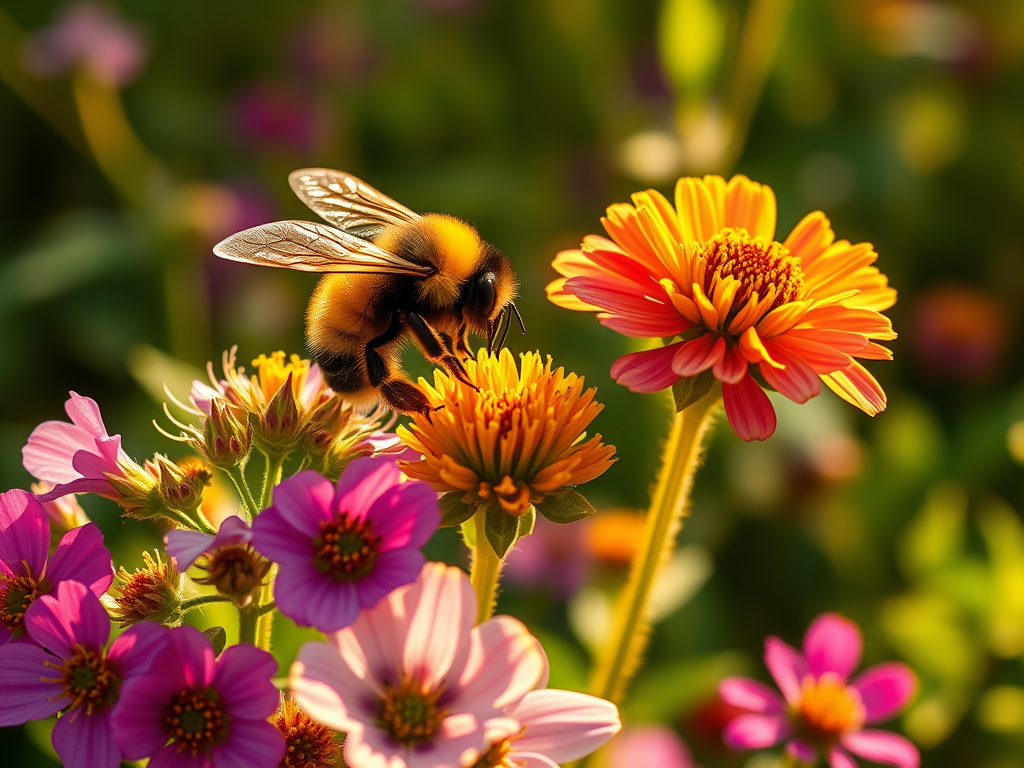
AI image created for this post

One-Time
Monthly
Yearly

Make a one-time or recurring donation to support daily Barnstorming posts

Make a monthly donation

Make a yearly donation

Choose an amount

$10.00
$25.00
$50.00
$5.00
$15.00
$100.00
$5.00
$15.00
$100.00

Or enter a custom amount

$

Your contribution is deeply appreciated.

Your contribution is appreciated.

Your contribution is appreciated.

DonateDonate monthlyDonate yearly

Revery Alone Will Do…

To make a prairie it takes a clover and one bee, a
One clover, and a bee,
And revery.
The revery alone will do,
If bees are few.
~Emily Dickinson

Bees do have a smell, you know, and if they don’t they should, for their feet are dusted with spices from a million flowers.
~Ray Bradbury
from Dandelion Wine

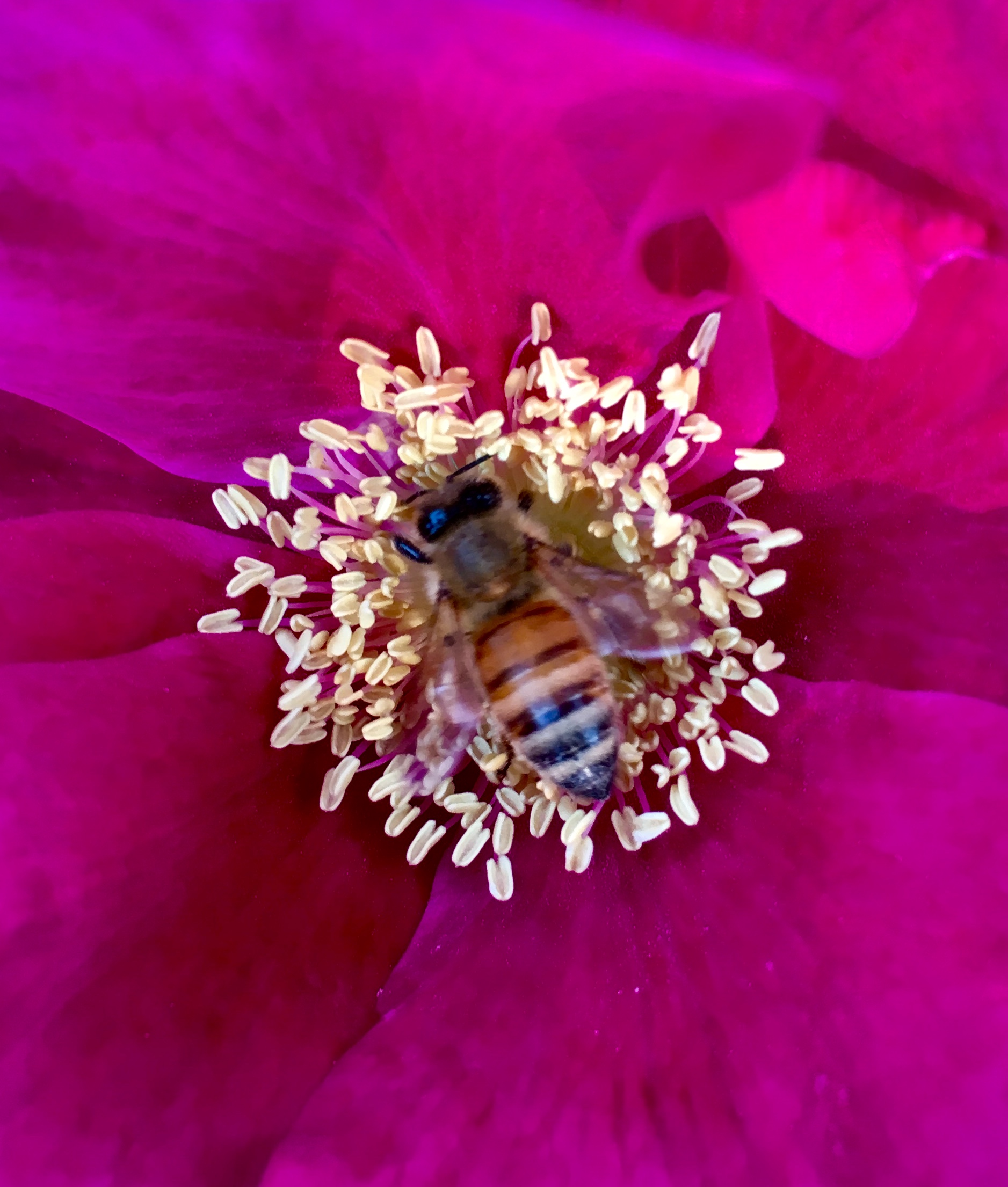
Pollinators are having a rough time of it these days, combating man-made insecticides or failing to find flowering weeds to visit given the wide-spread use of herbicides. Plus, there is the American penchant for mowing grassy landscapes to look perfectly uniform and weed-free.

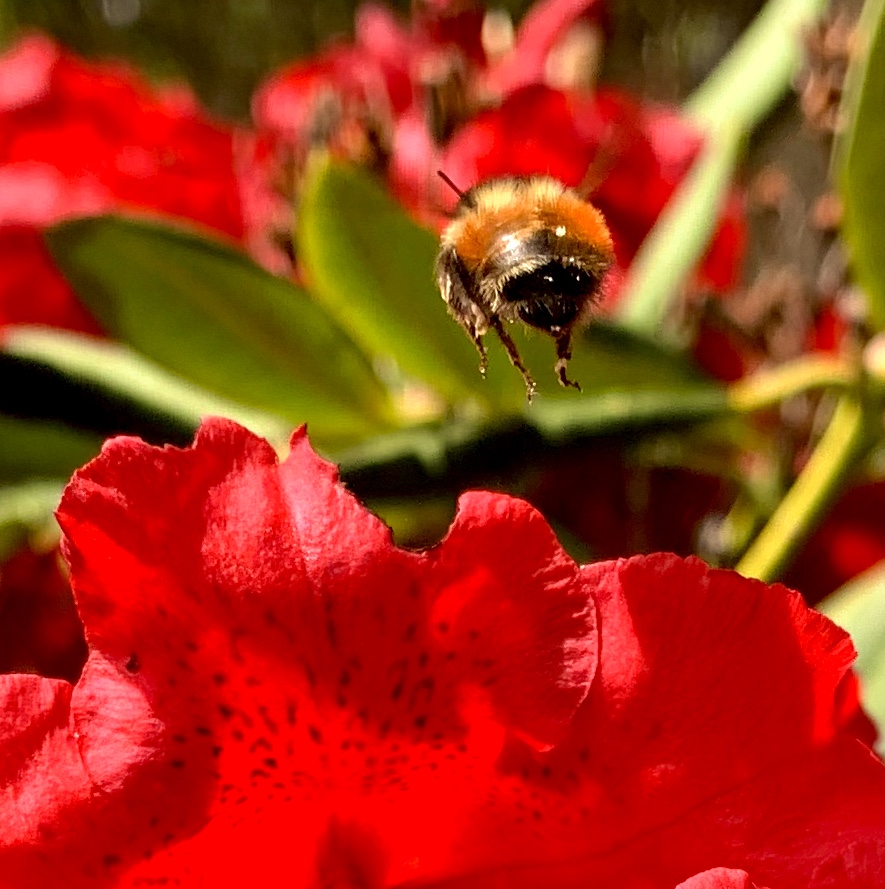
When I see a honey or bumble bee happily doing its job, it is a cause for celebration.

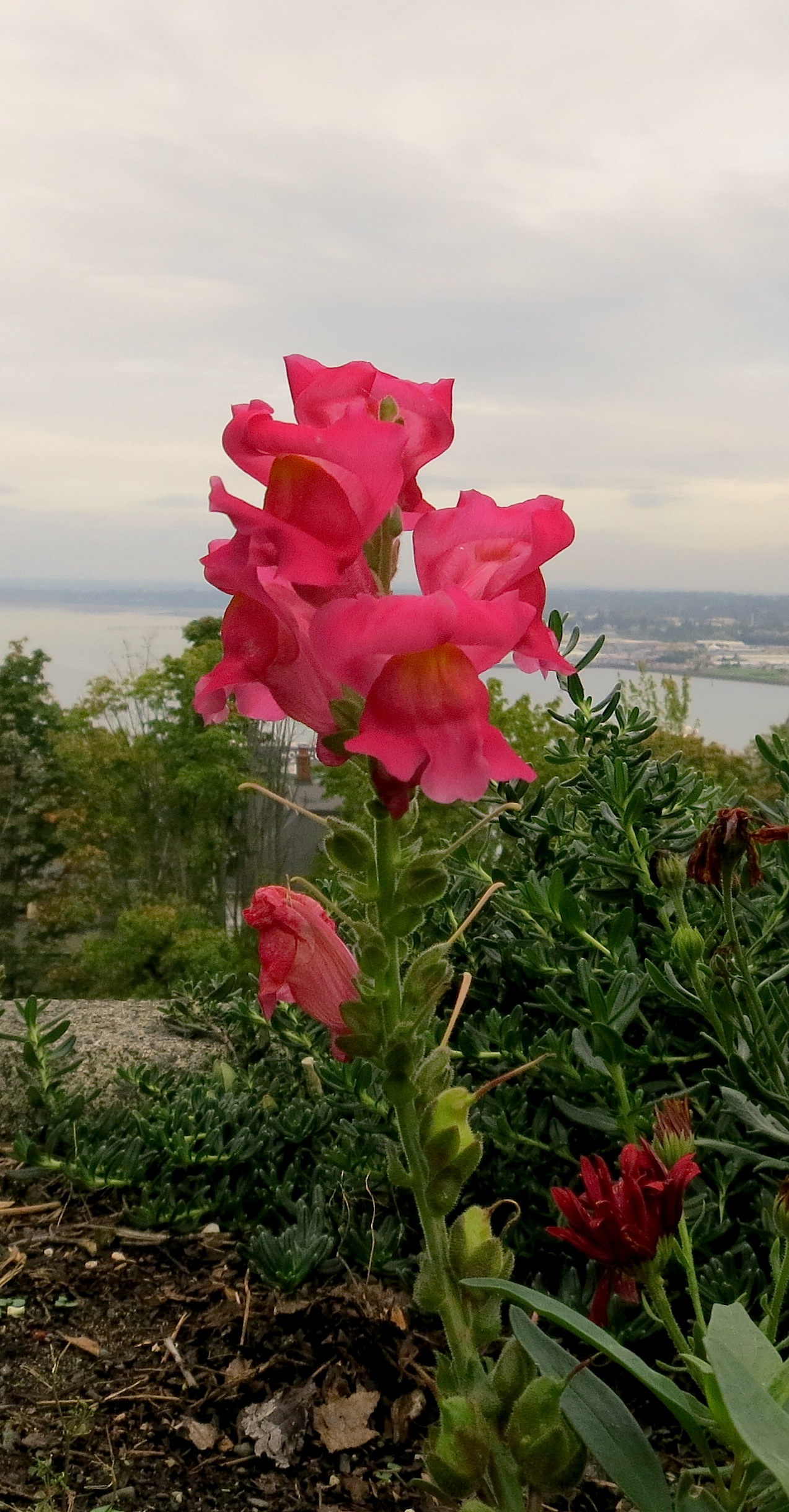
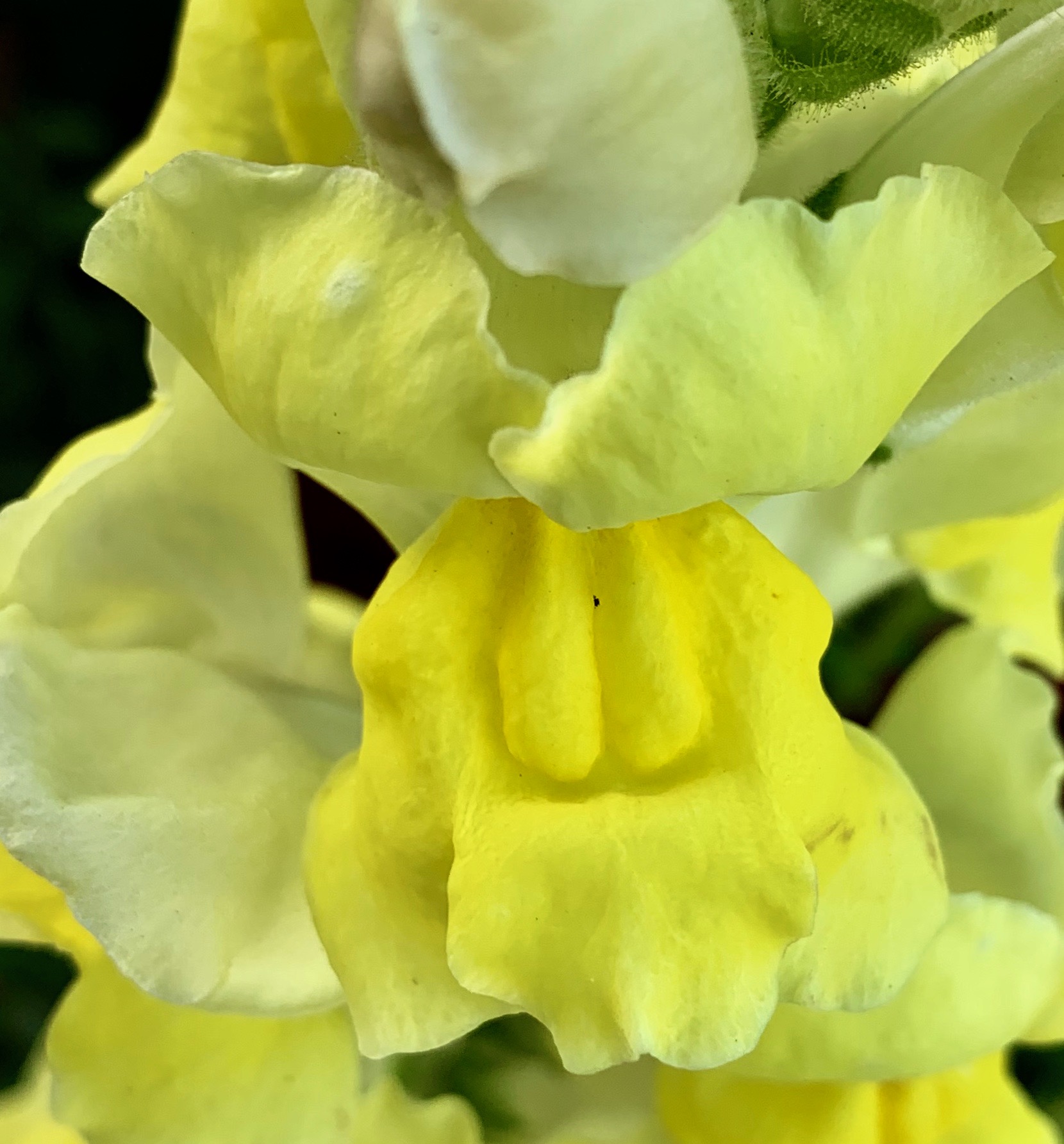
I was thrilled to see the latest research reported today demonstrating the ability of a flowering plant, like a snapdragon in the study, to “hear” (through vibro-acoustic signals) the buzz of an approaching pollinator, responding instantly by increasing its nectar volume and sweetness.
The postulated feedback mechanism is that pollinators will be more attracted to a plant that “rewards” their visit, thereby increasing the likelihood of ongoing pollination visits and survival of further generations of both creatures.

This world depends on a revery of communication we can only begin to understand – between plant to plant, plant to insect — a daydream of connections bringing the spicy smell of pollen from a million flowers to the lowly feet of the bee, which generates more of both as well as honey for you and me.
May it be, may it be, may it bee…

May we know such reverie.

AI image created for this post
One-Time
Monthly
Yearly

Make a one-time or recurring donation to support daily Barnstorming posts

Make a monthly donation

Make a yearly donation

Choose an amount

$10.00
$25.00
$50.00
$5.00
$15.00
$100.00
$5.00
$15.00
$100.00

Or enter a custom amount

$

Your contribution is deeply appreciated.

Your contribution is appreciated.

Your contribution is appreciated.

DonateDonate monthlyDonate yearly

Where You Go, I Will Go: A Place of Retreat

… Maybe they have
no place to return or are lost,
having gone too far from the nest.


Female bees will also burrow
deep inside the shade of a squash
flower: the closer to the source
of nectar, the warmer and more
quilt-like the air. In the cool
hours of morning, look closely
for the slight but tell-tale
trembling in each flower cup:
there, a body dropped mid-flight,
mid-thought. How we all retreat
behind some folded screen as work
or the world presses in too
soon, too close, too much.
~Luisa Igloria from “Ode to Tired Bumblebees Who Fall Asleep Inside Flowers With Pollen on Their Butts”

How can I love this spring
when it’s pulling me
through my life faster
than any time before it?
When five separate dooms
are promised this decade
and here I am, just trying
to watch a bumblebee cling
to its first purple flower.
I cannot save this world.
But look how it’s trying,
once again, to save me.

~James Pearson “This Spring”

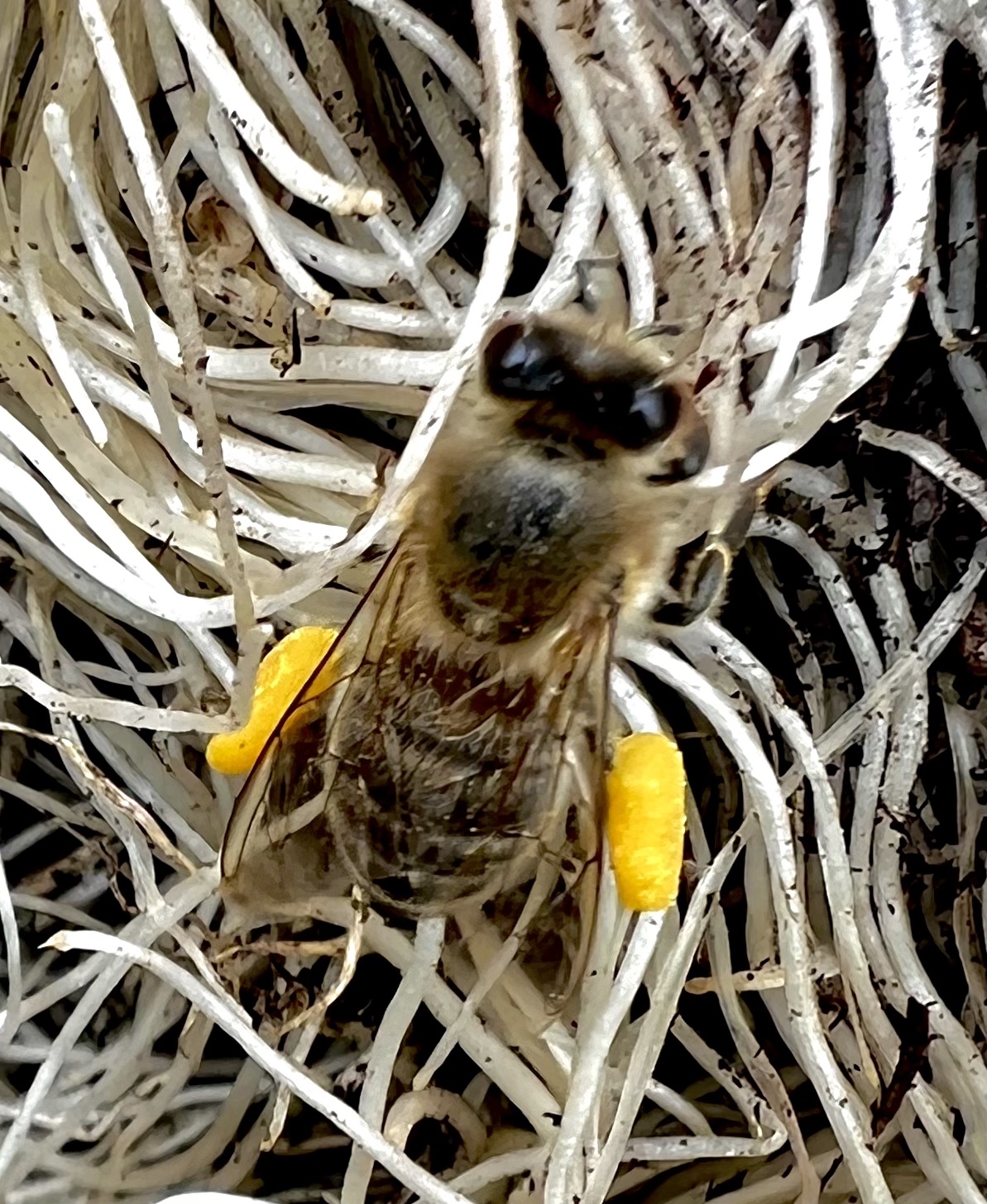
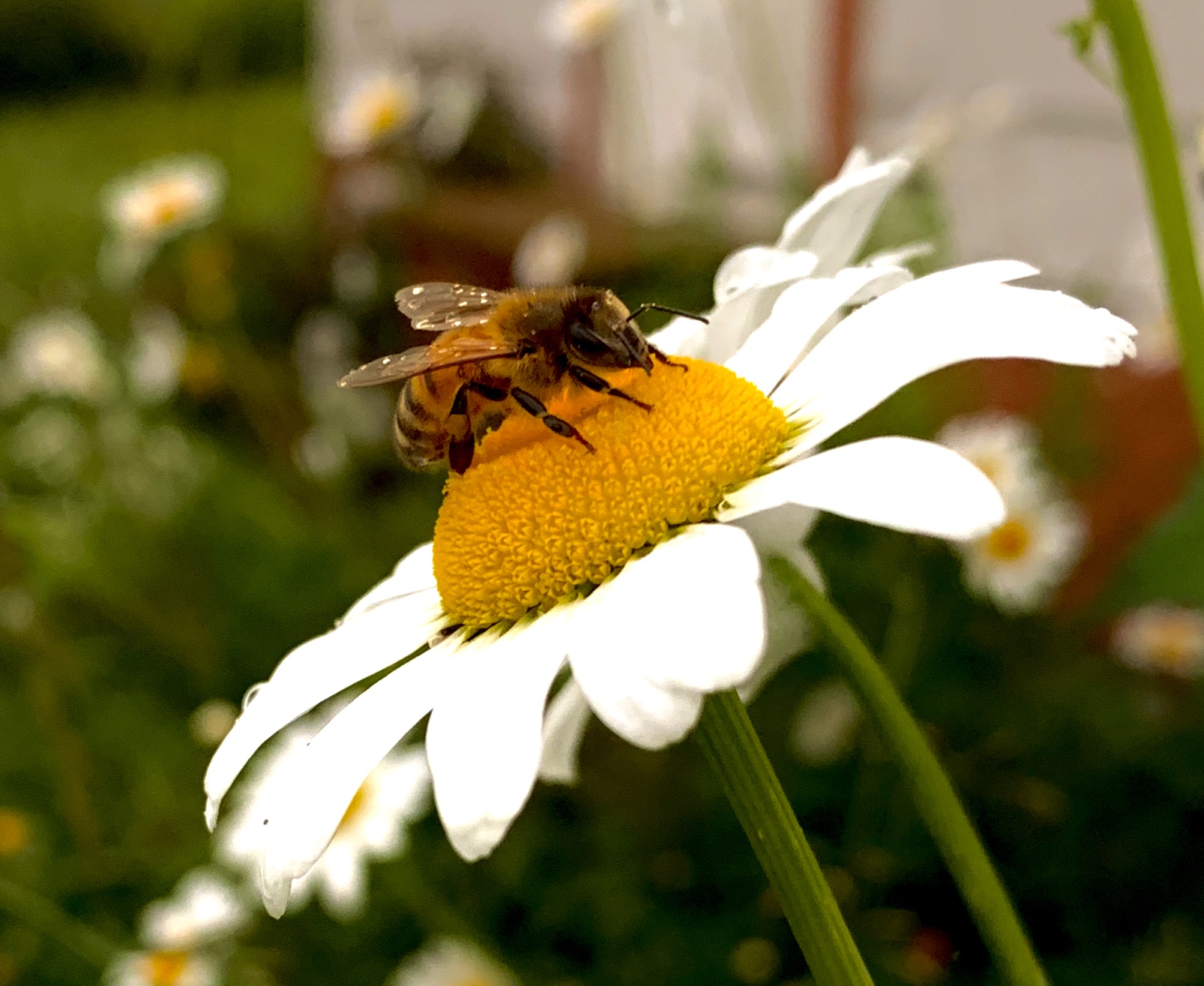
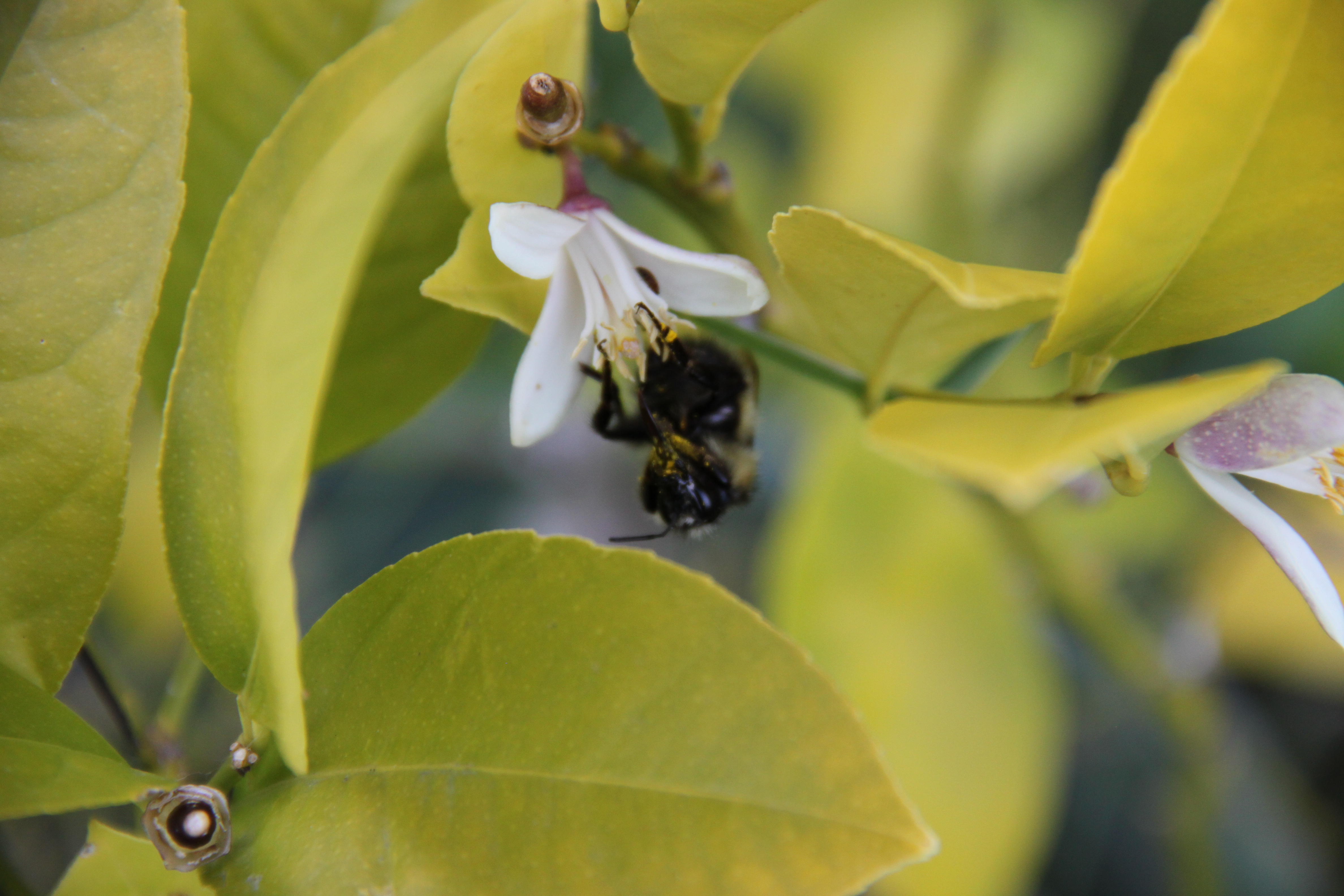
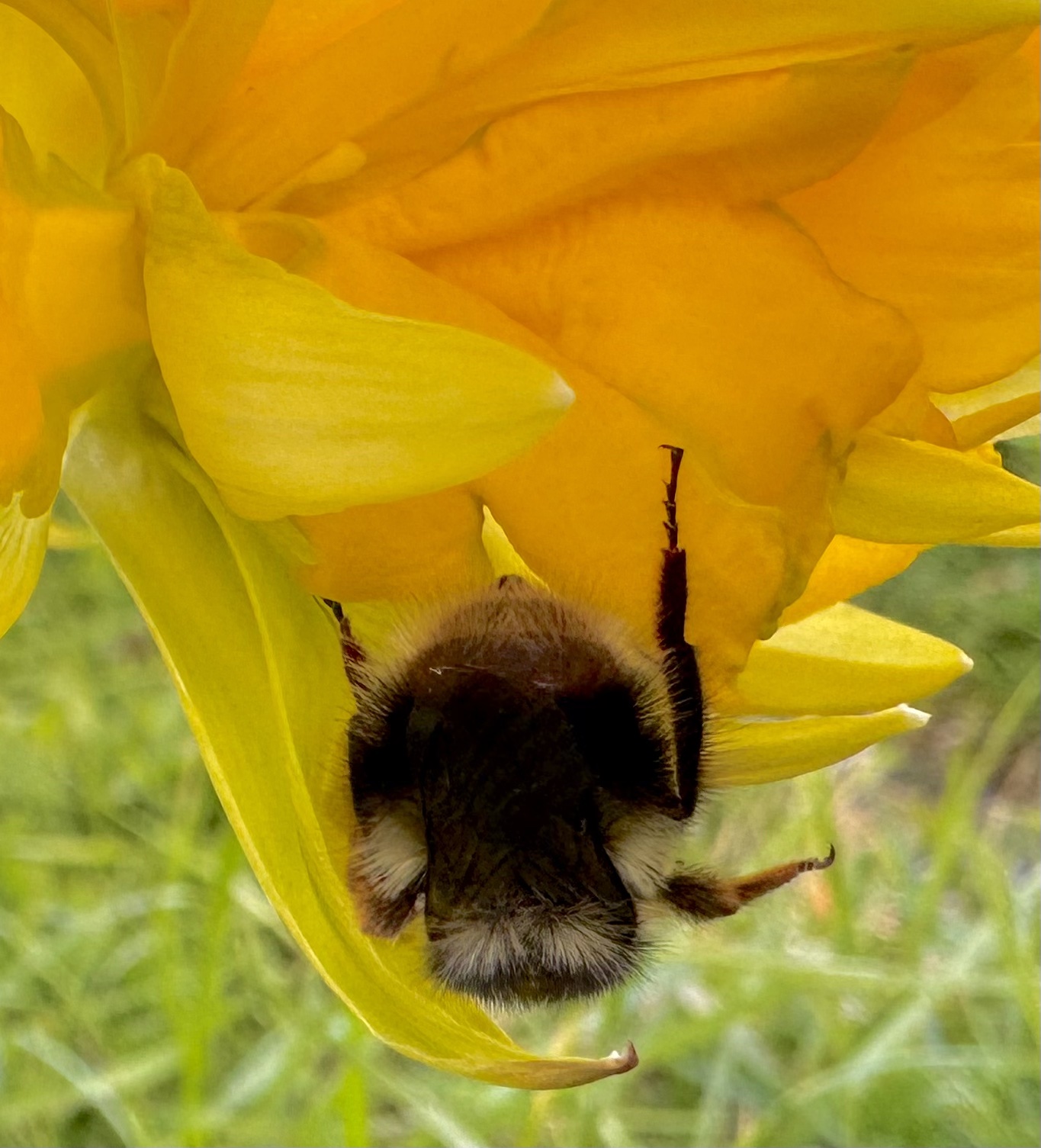
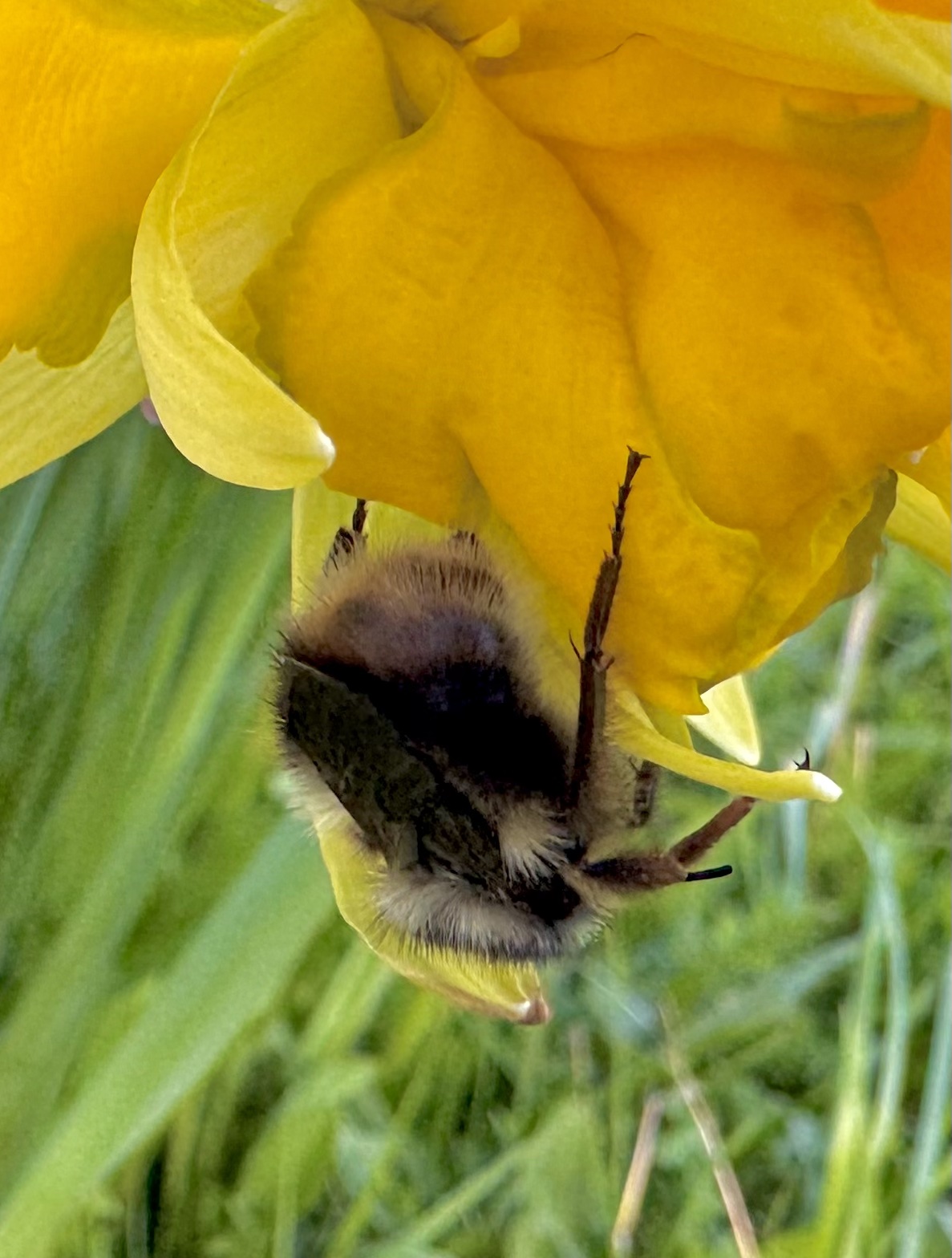
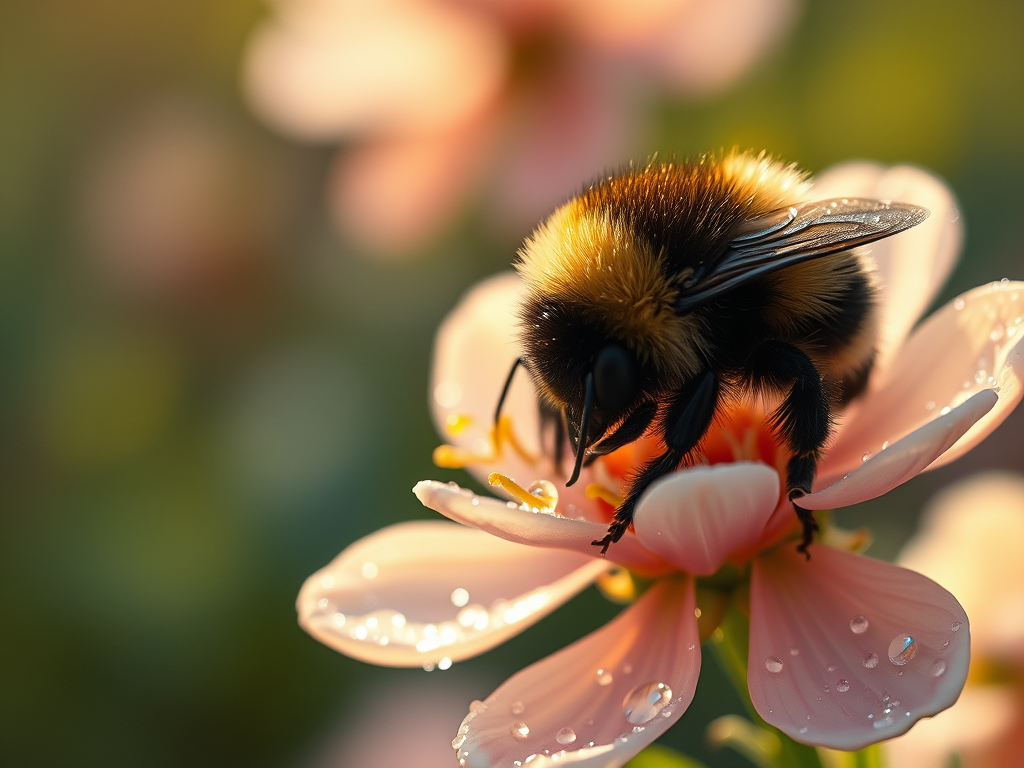
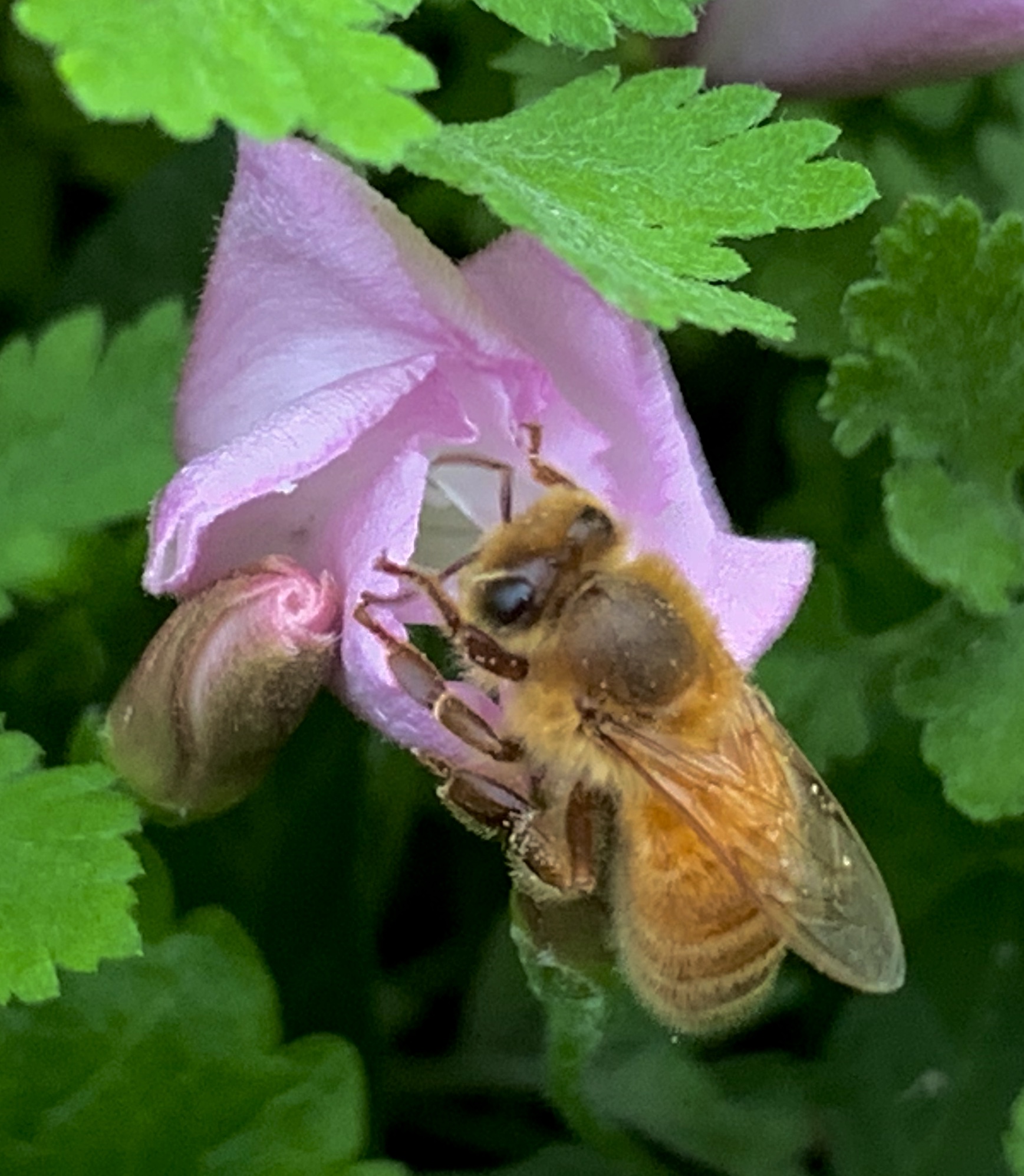
It isn’t unusual to find a bumblebee clinging to a spring blossom, all covered in morning dew, having overstayed its welcome as the evening chill hit the night before.

The bumble is too cold to fly, or think, or navigate. Instead it just clings through the night until the sun rises and the air once again warms its wings.

Maybe it got lost.
Maybe it is simply weary from flying with such tiny wings.
Maybe it has no home to retreat to in the darkness.
Maybe it only wants to cling tight to beauty in a dangerous world.

I’ve known what this feels like, dear plump fluffy bumble.
I think I know how you feel,
patiently waiting for the descent of Love to revive my spirit
and warm my wings…

This year’s Lenten theme:

…where you go I will go…
Ruth 1:16

AI image created for this post

One-Time
Monthly
Yearly

Make a one-time or recurring donation to support daily Barnstorming posts

Make a monthly donation

Make a yearly donation

Choose an amount

$10.00
$25.00
$50.00
$5.00
$15.00
$100.00
$5.00
$15.00
$100.00

Or enter a custom amount

$

Your contribution is deeply appreciated.

Your contribution is appreciated.

Your contribution is appreciated.

DonateDonate monthlyDonate yearly

Emptied Out in the Wind

What we were taught was nothing—
our history like a husk,
the desiccated wasp nest
my daughter found at the park
but disguised. Where is the life?
Where was the life in that?

History as it was taught
is nothing like that wasp nest
which has its particular grooves,
its exits and passageways
written in wasp spit and wood.

Looking at this nest I see
how everything was used.
Our history of a wasp
is its stings, but in this nest,
even dead, I see the ornate
stingless habitat, envision
nests with stingers subdued,
their larvae fattening
sleek bodies of use and grace.

History as it was taught
has been emptied and emptied out,
its intricate well-laid cells
disguised. They always teemed
with sickness, utility,
and violence. And each person
who happened only once.

Who happened only once.
~Lisa Williams “No Wasp Nest”

…And I think
They know my strength,
Can gauge
The danger of their work:
One blow could crush them
And their nest; and I am not their
friend.

And yet they seem
Too deeply and too fiercely occupied
To bother to attend.
Perhaps they sense
I’ll never deal the blow,
For, though I am not in nor of them,
Still I think I know
What it is like to live
In an alien and gigantic universe, a stranger,
Building the fragile citadels of love
On the edge of danger.
~James Rosenberg from “The Wasps’ Nest”

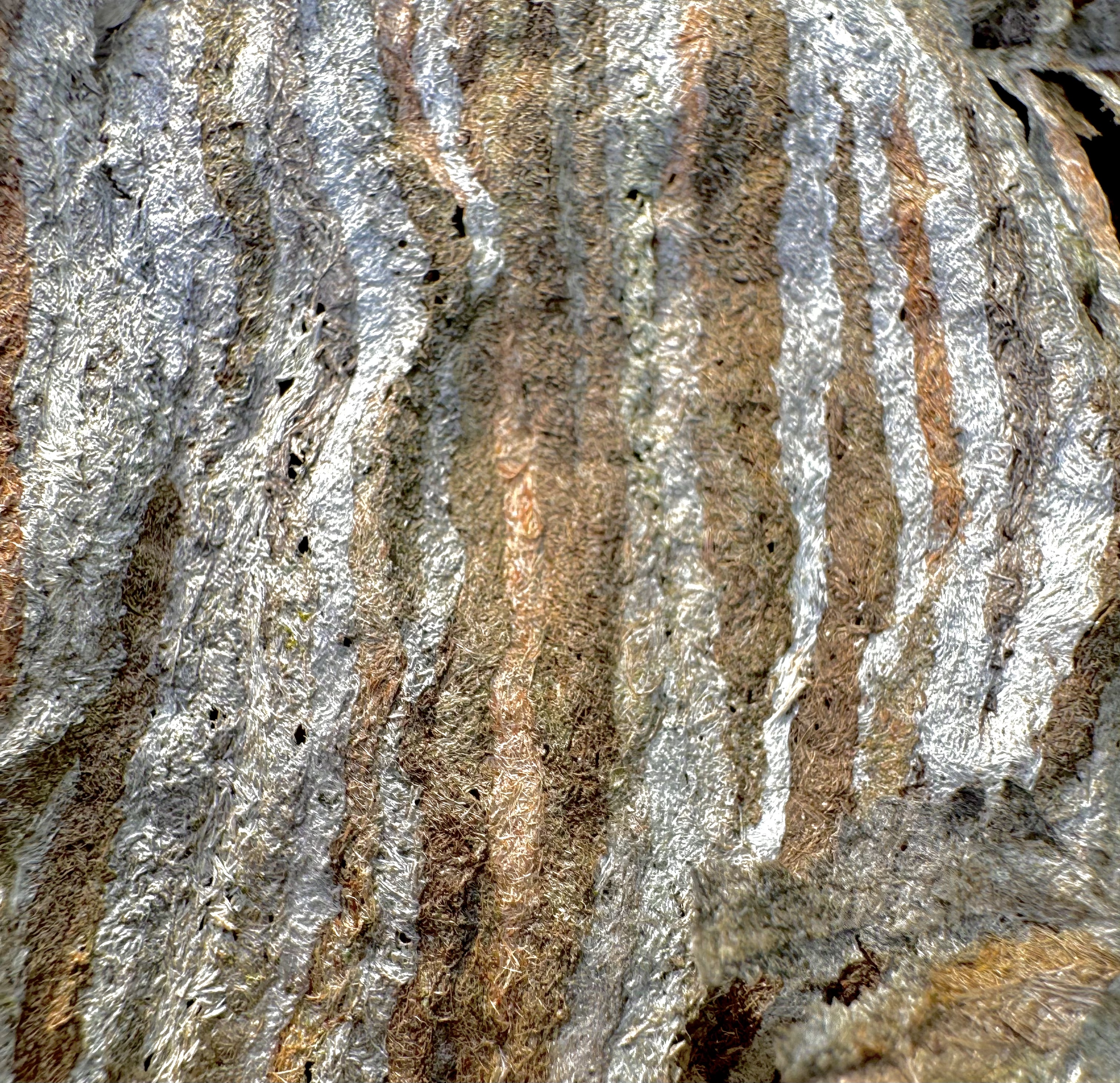
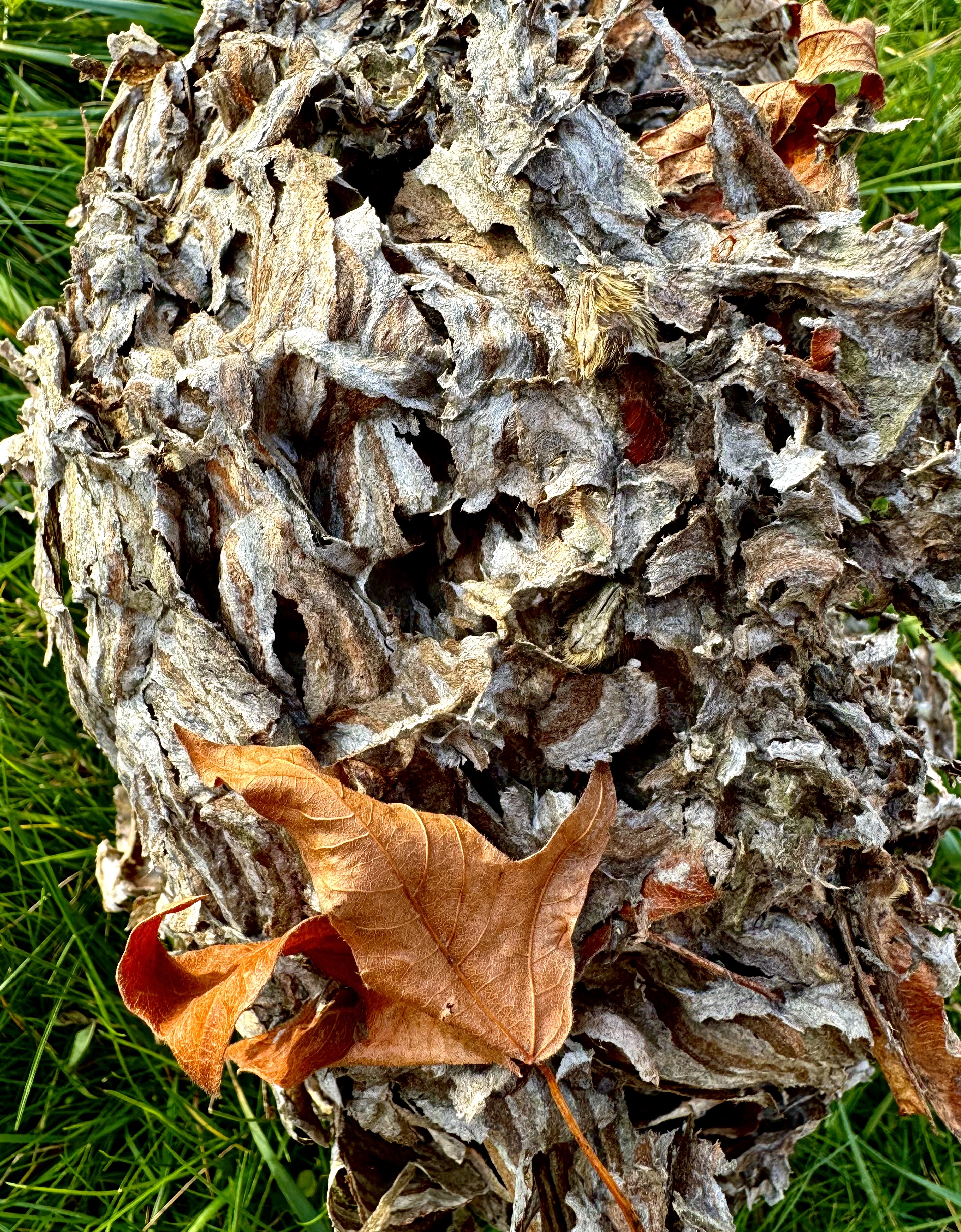
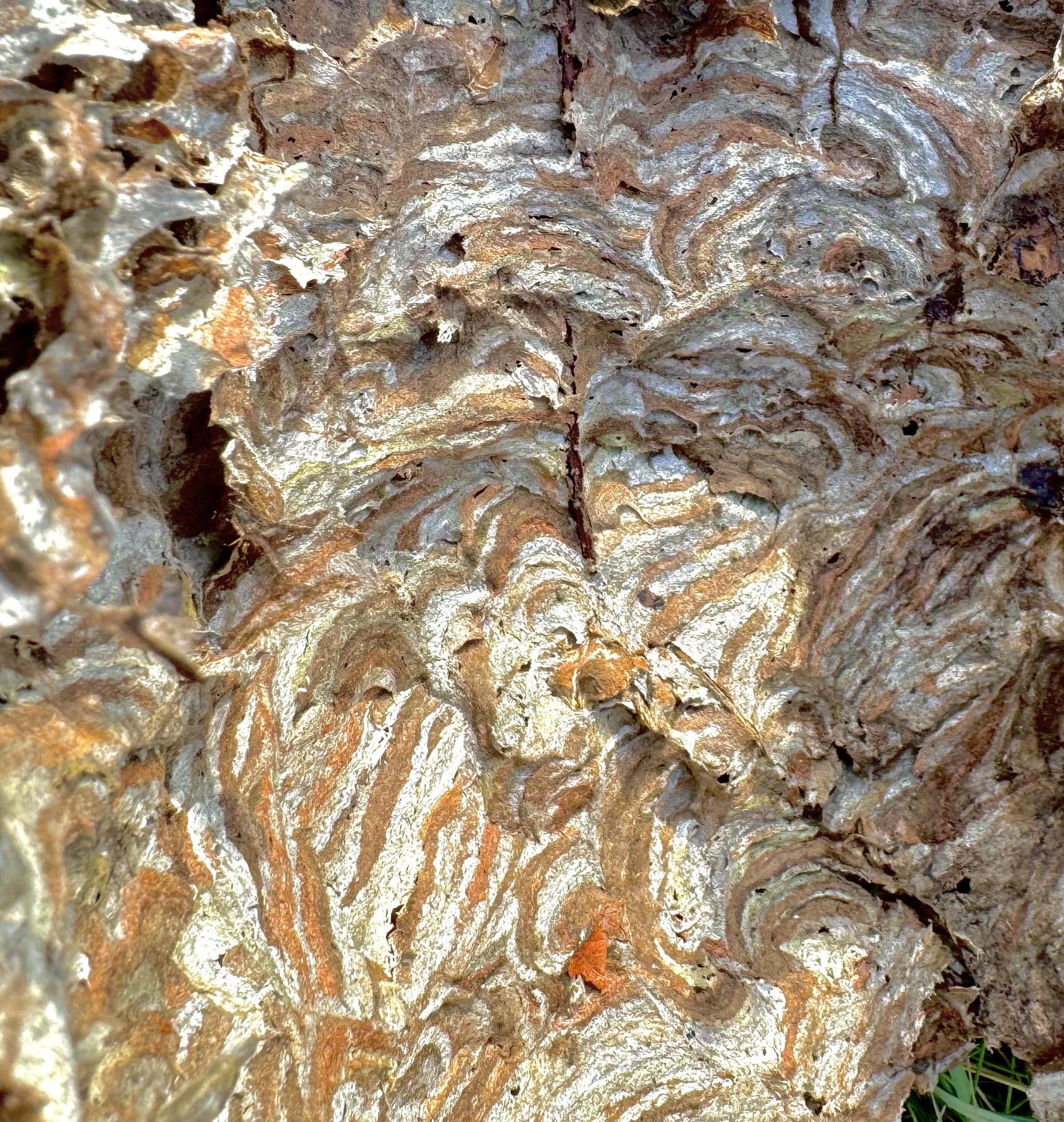
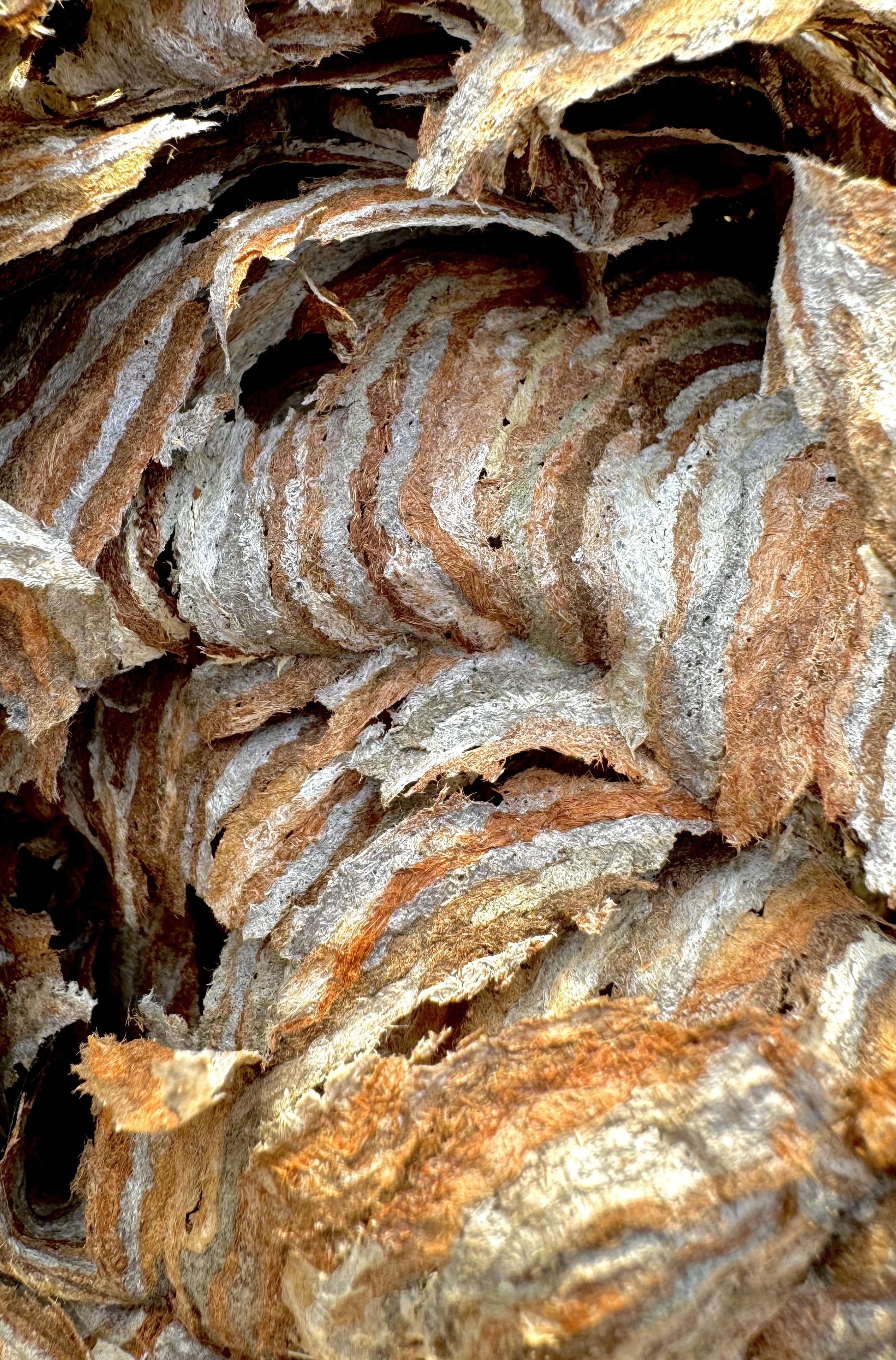
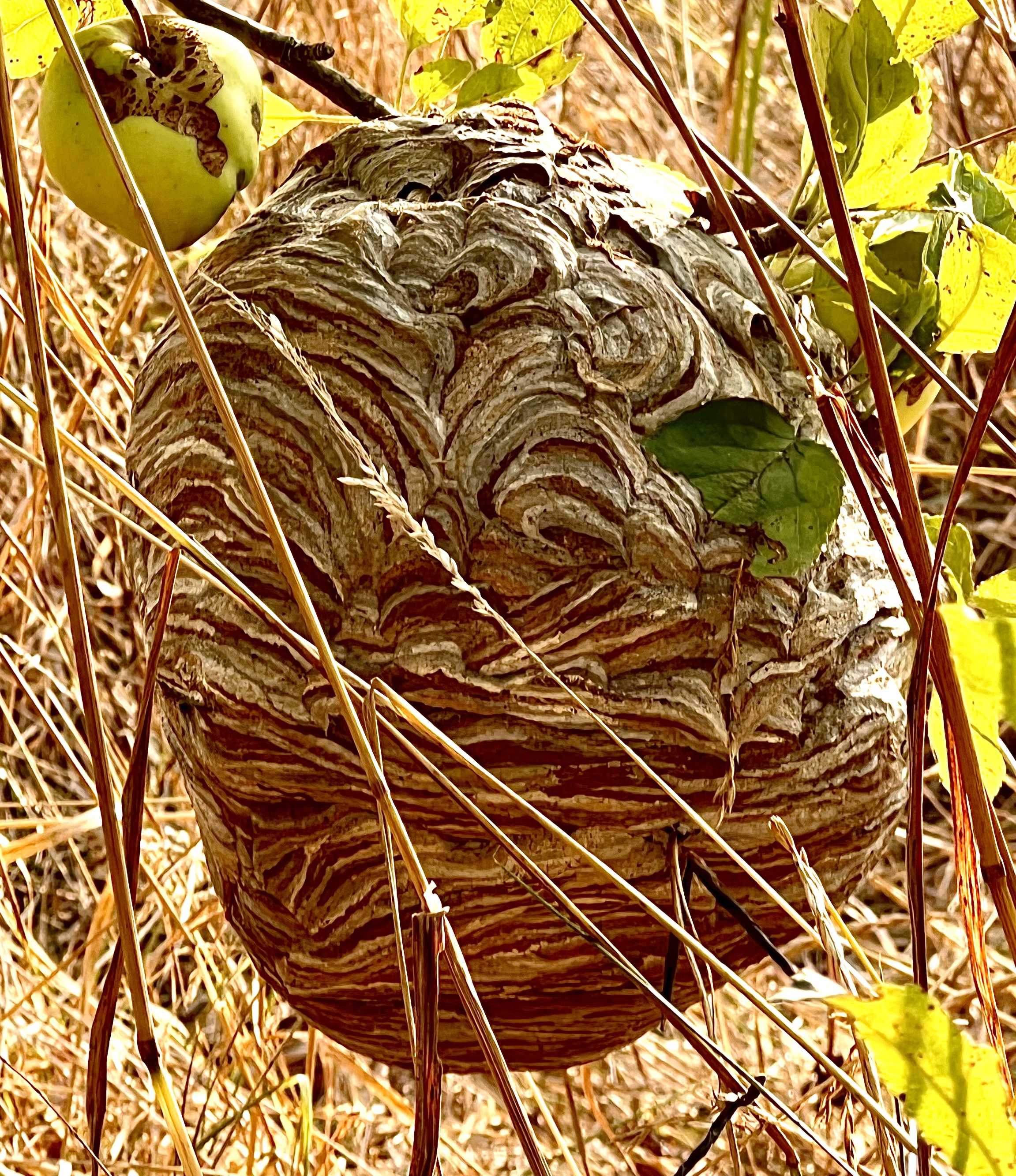
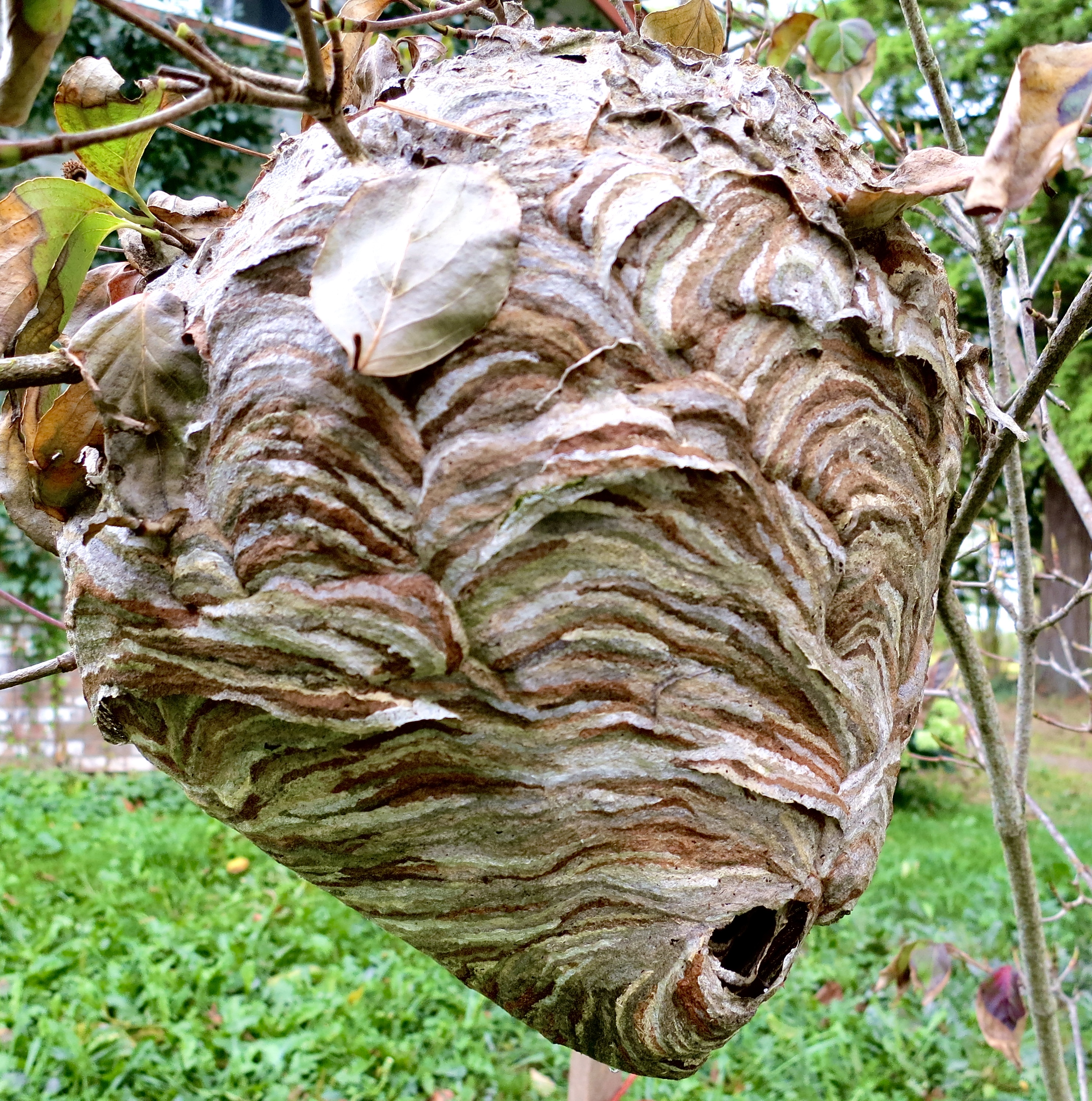
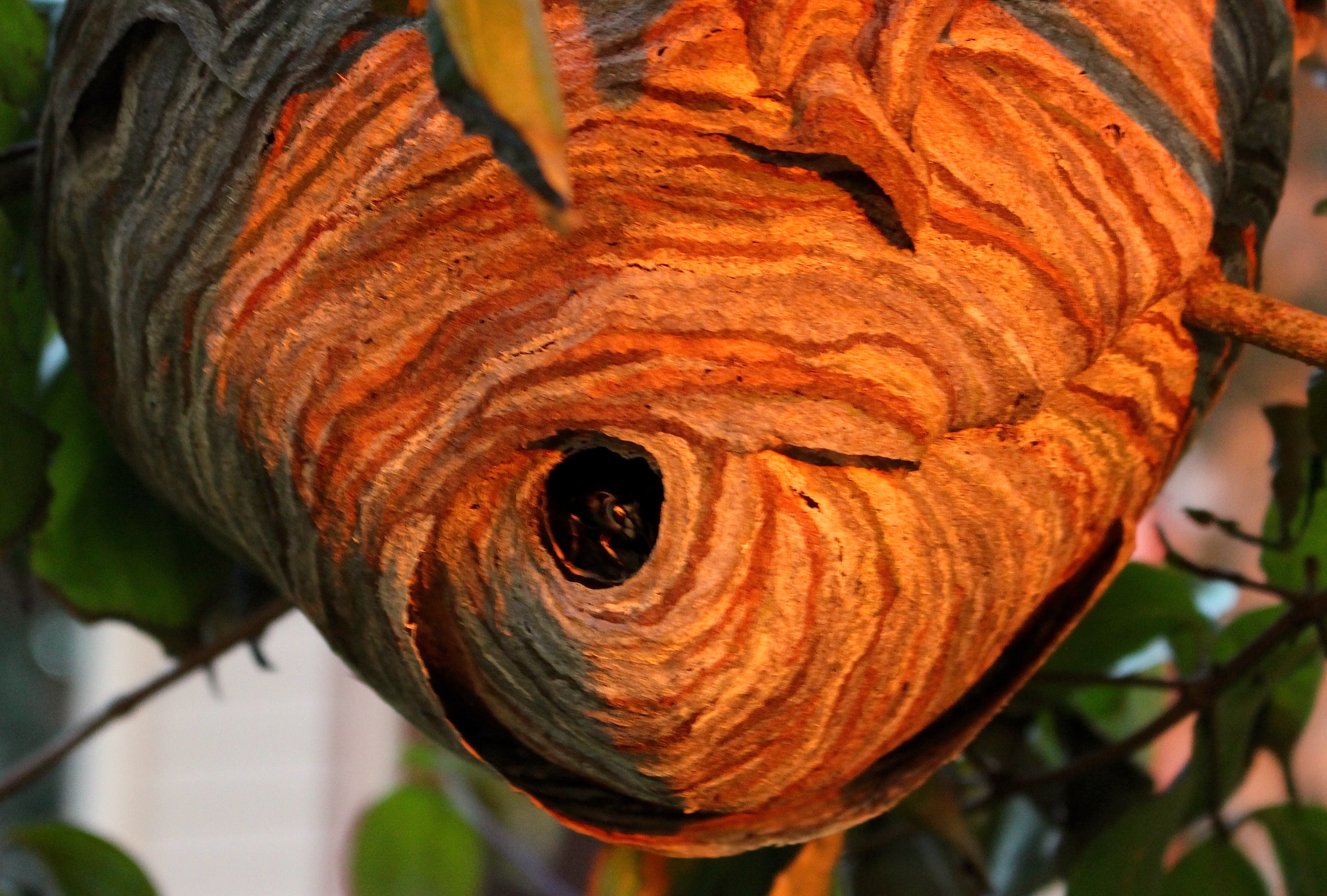
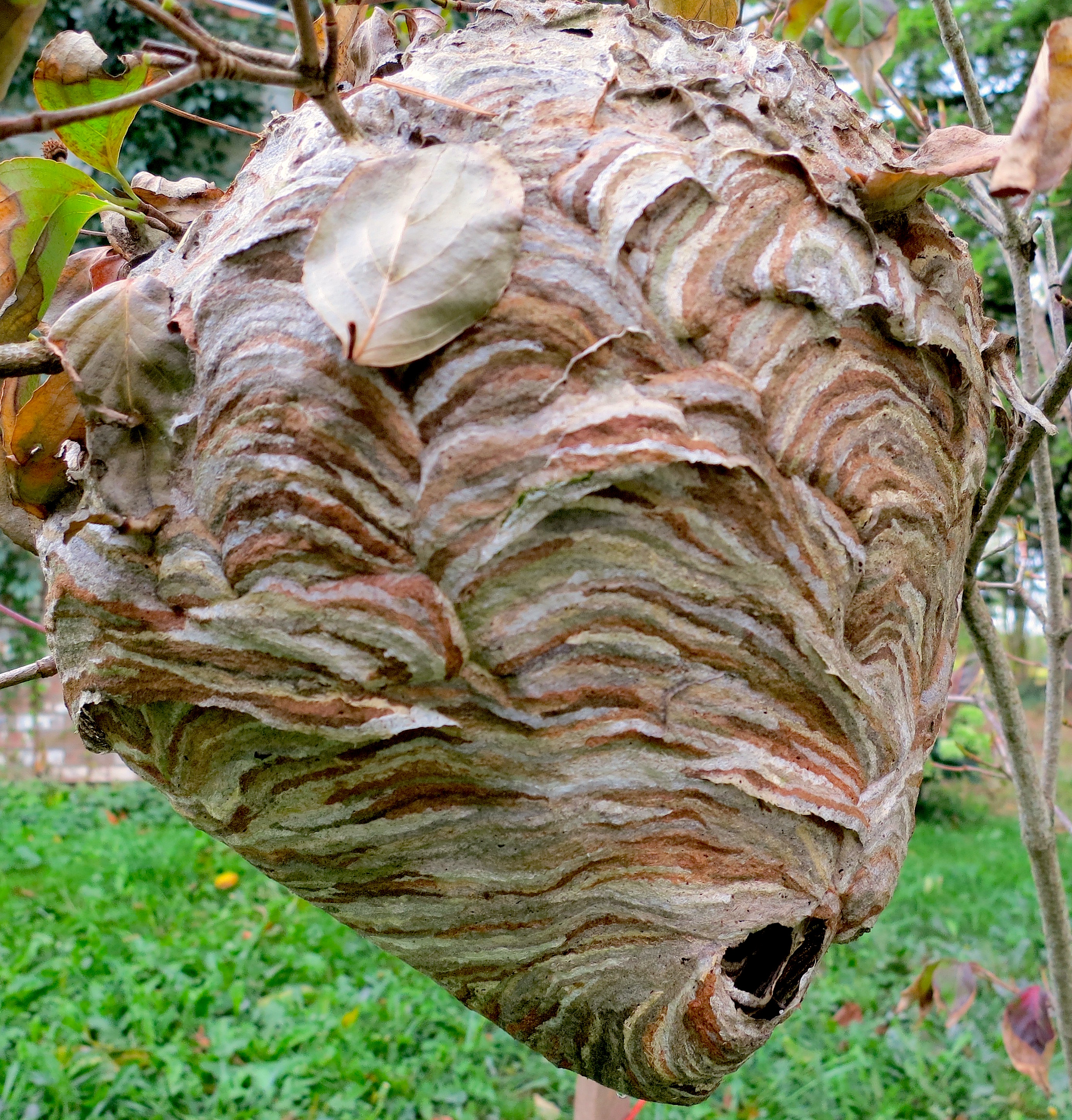
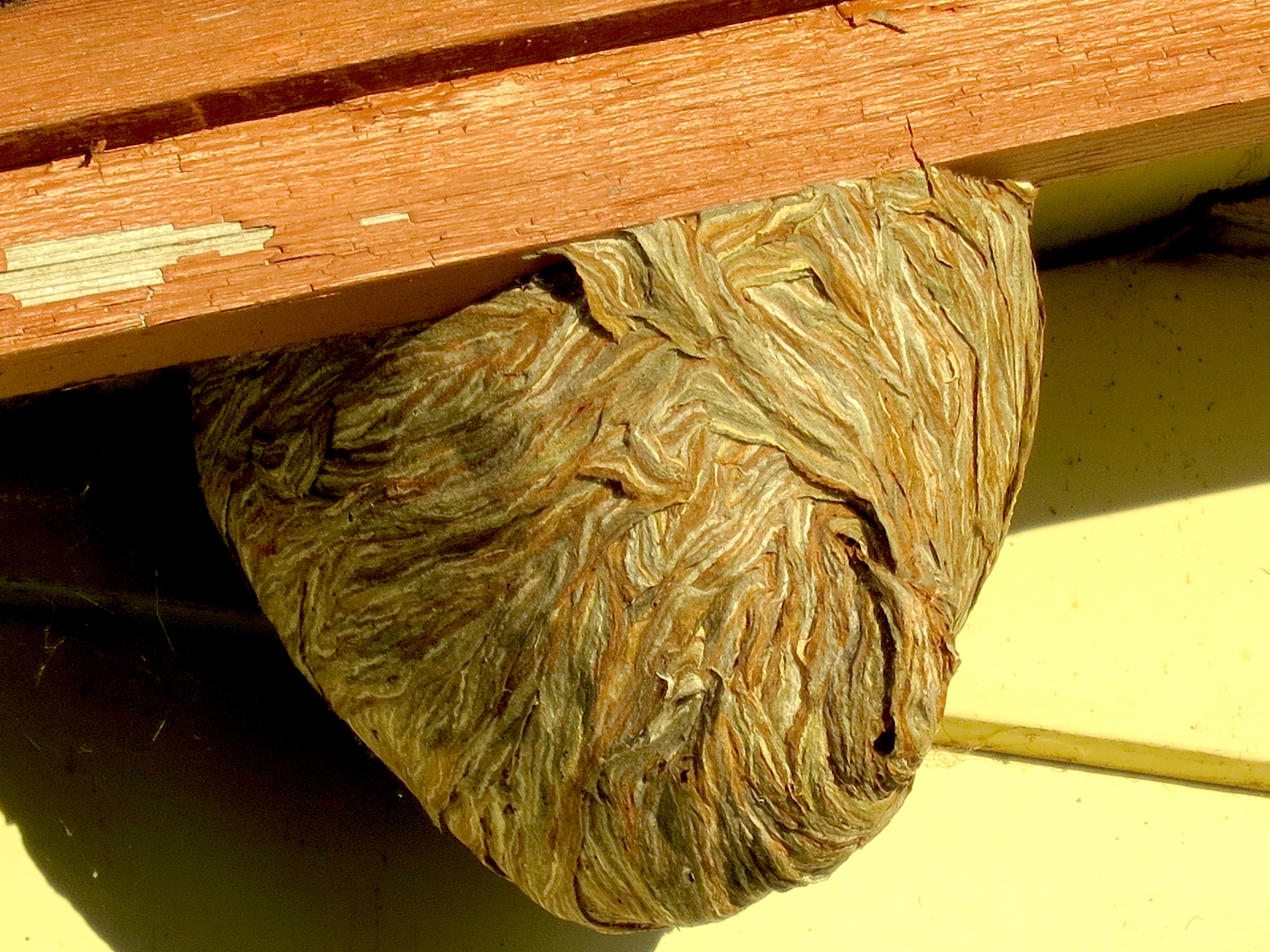
Over the years, we have had basketball-sized paper bald-faced hornet nests appear in various places on the farm. They hang from eaves or branches undisturbed as their busy citizens visit our picnics, greedily buzz our compost pile, shoot bullet-like out of the garbage can when I lift the lid. In short, their threat of using their weaponry control our moves during the summer.

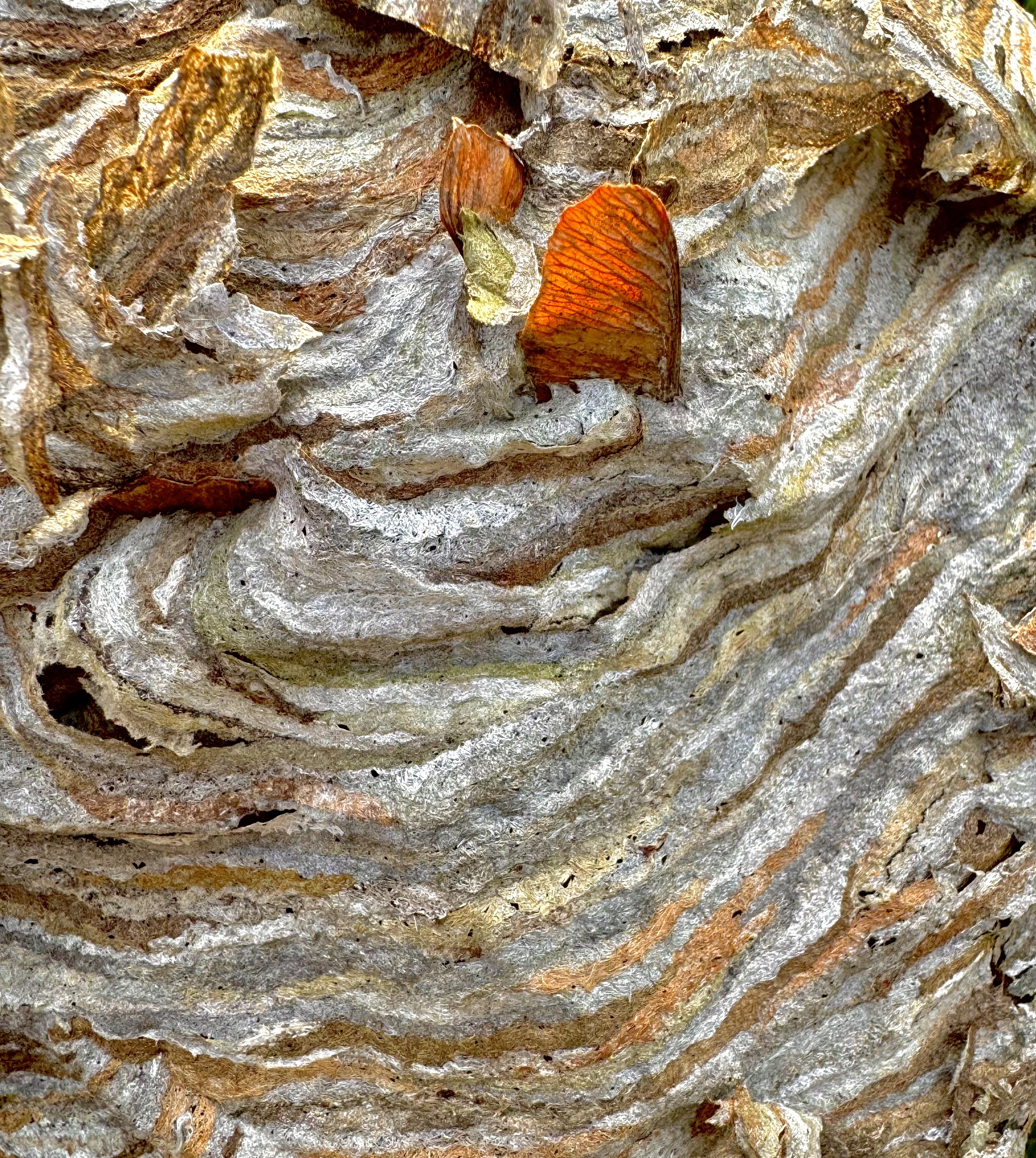
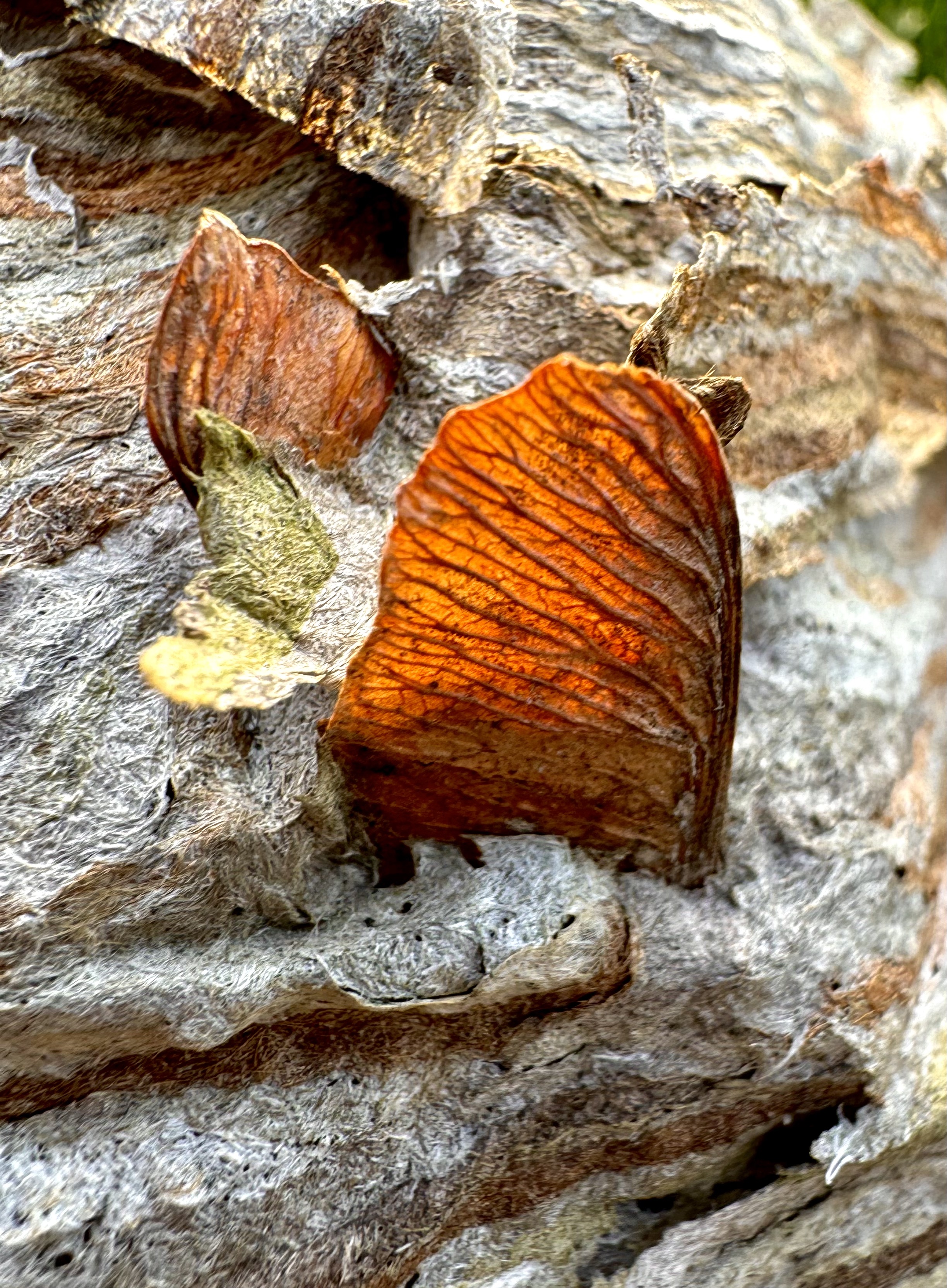
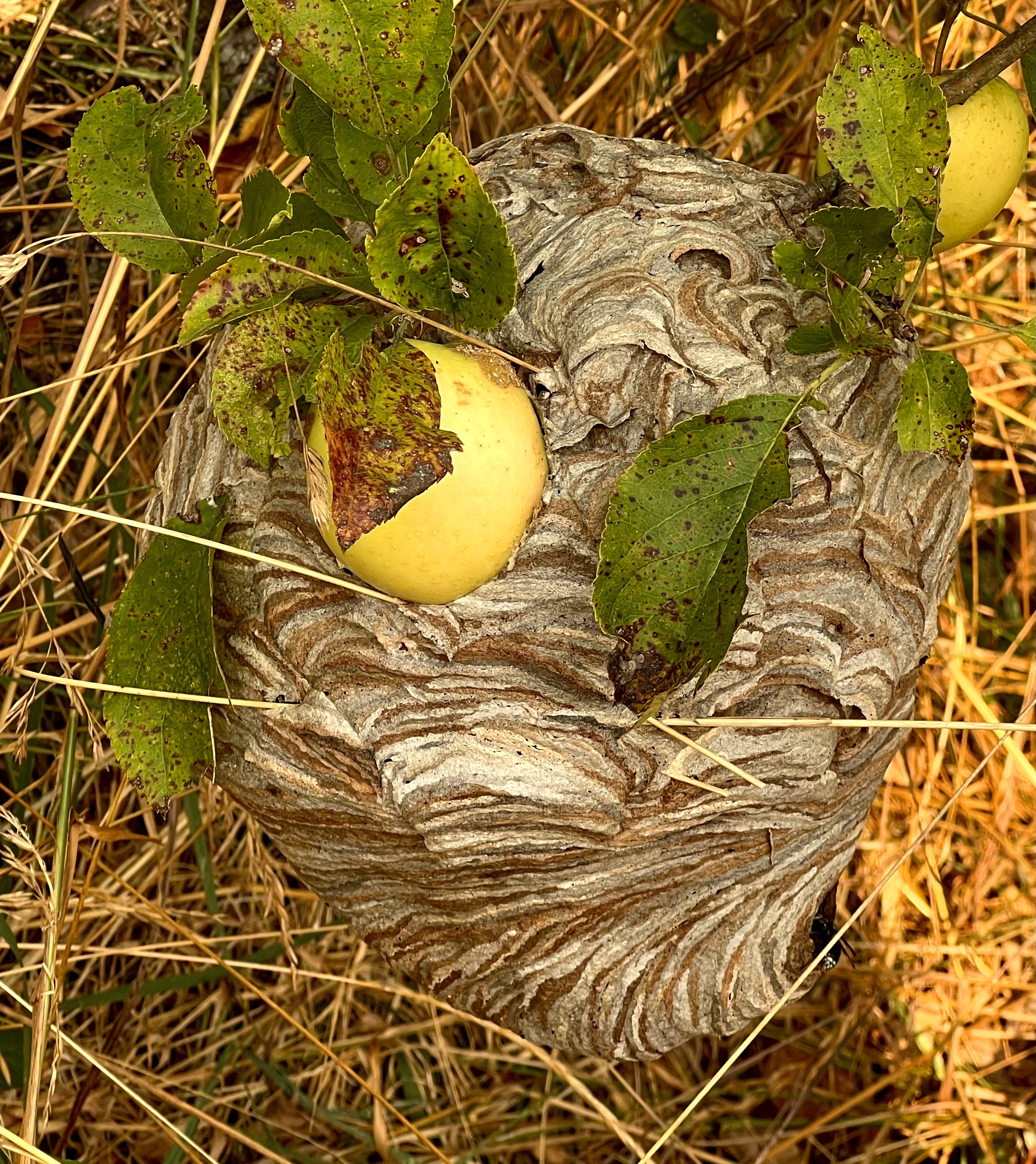
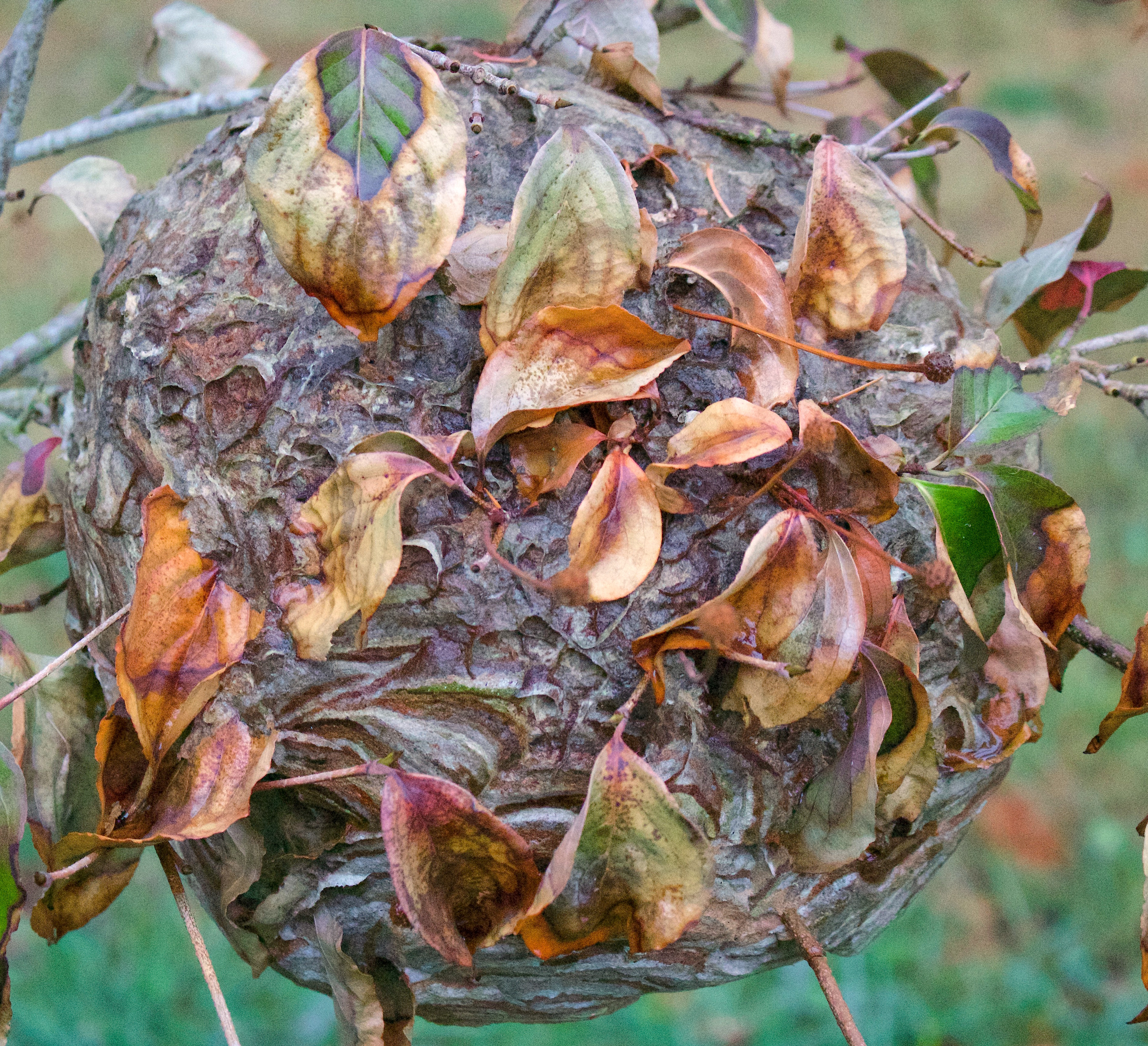
Two years ago, a nest was built to include some Golden Delicious apples in an apple tree. This year, a nest hung suspended from the top branch of our tall big leaf maple tree in our front yard. It dangled there through the summer, growing week by week, with maple keys and leaves incorporated into it. Over the last month, it has been hanging alone on the bare tree.

During a northeast wind blast yesterday, I was returning home from a shopping trip when out of the corner of my eye, I saw this huge thing flying across our yard. I thought it was a large raptor, but then realized that our paper basketball had finally been jarred loose and was airborne.

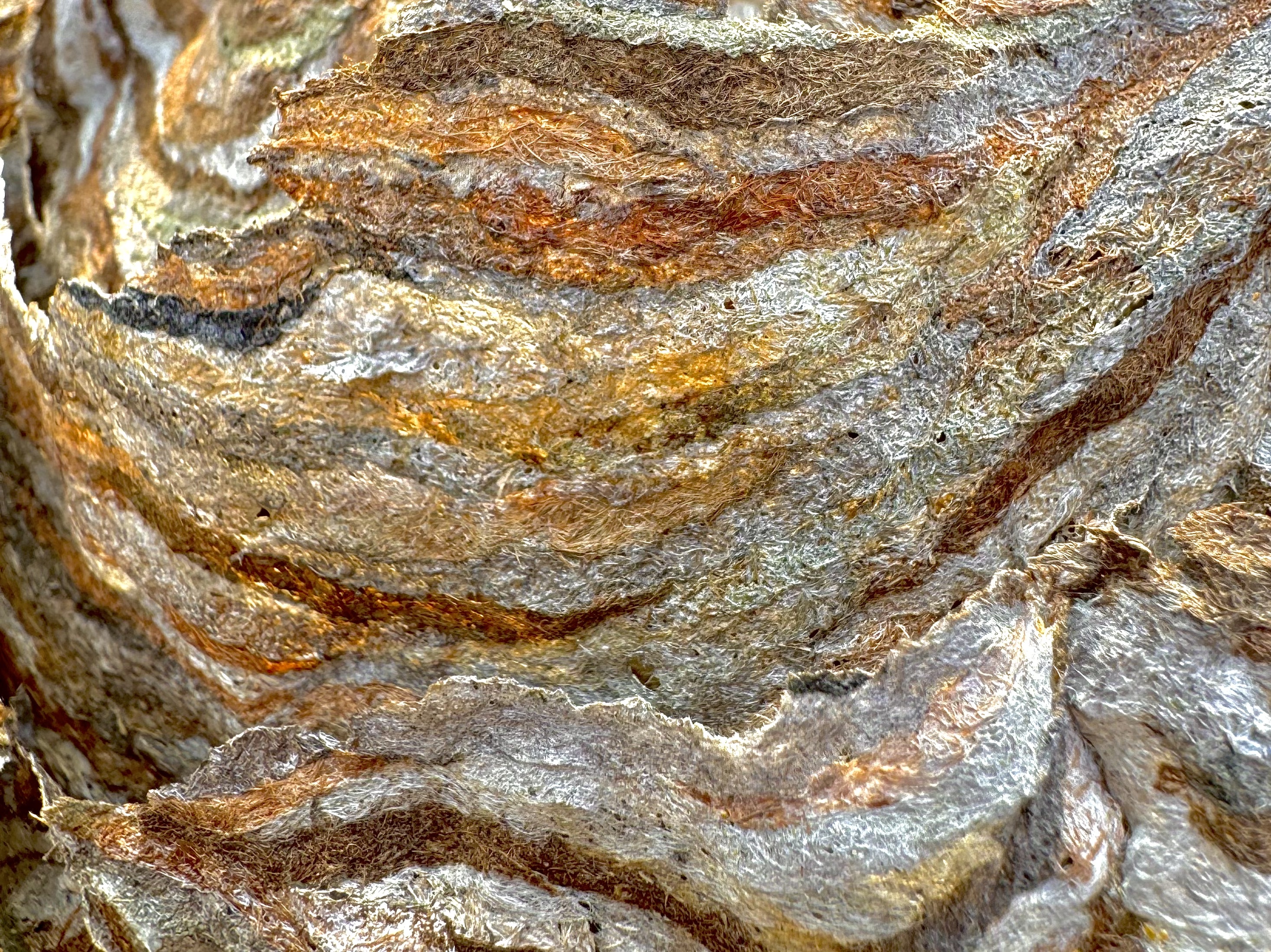
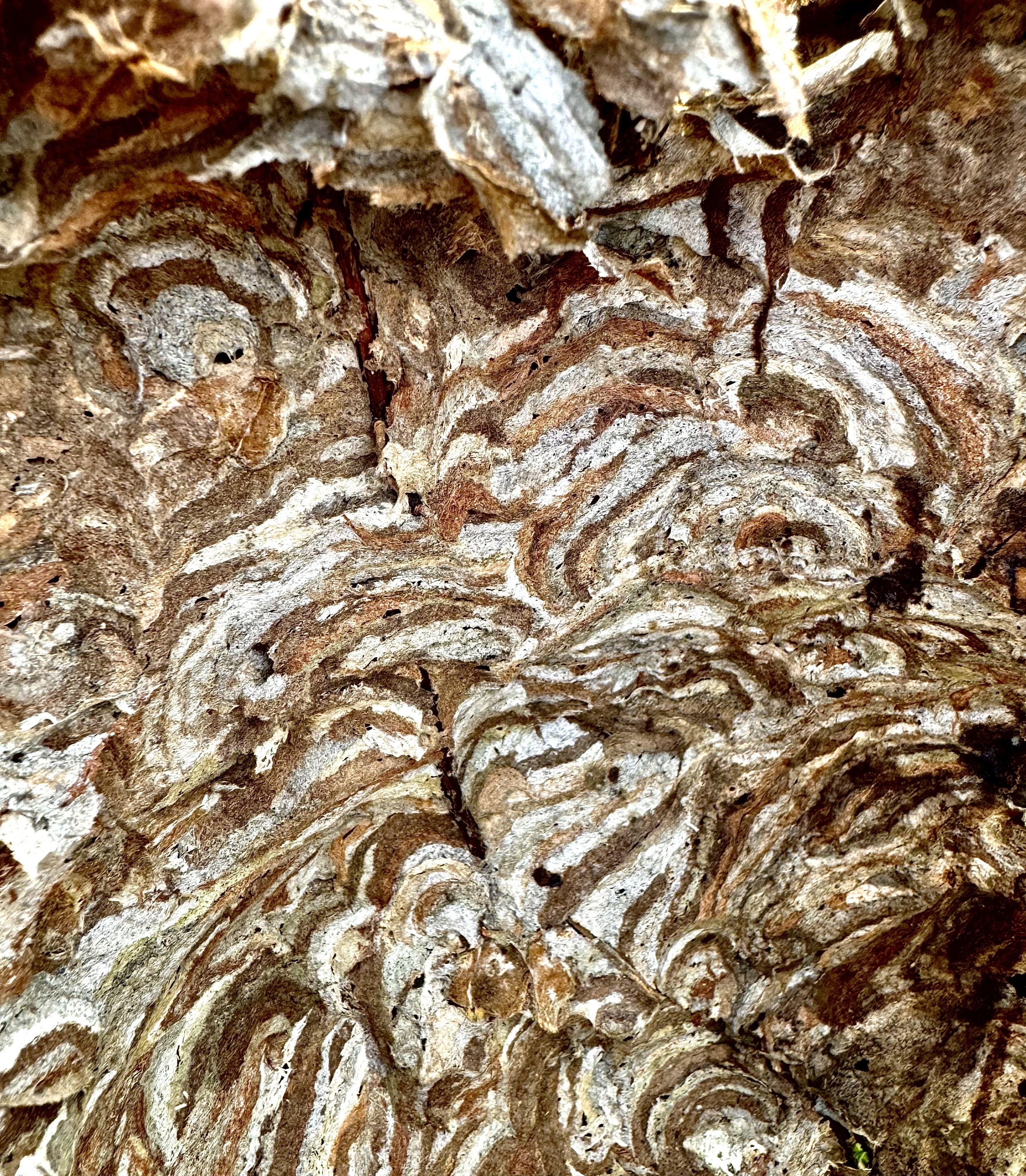
I followed it until it landed in our field and gathered up the broken pieces into a grocery bag. My wise husband wouldn’t allow me to bring it in the house (“who knows what’s ready to wake up inside??”}, so I inspected it outside.

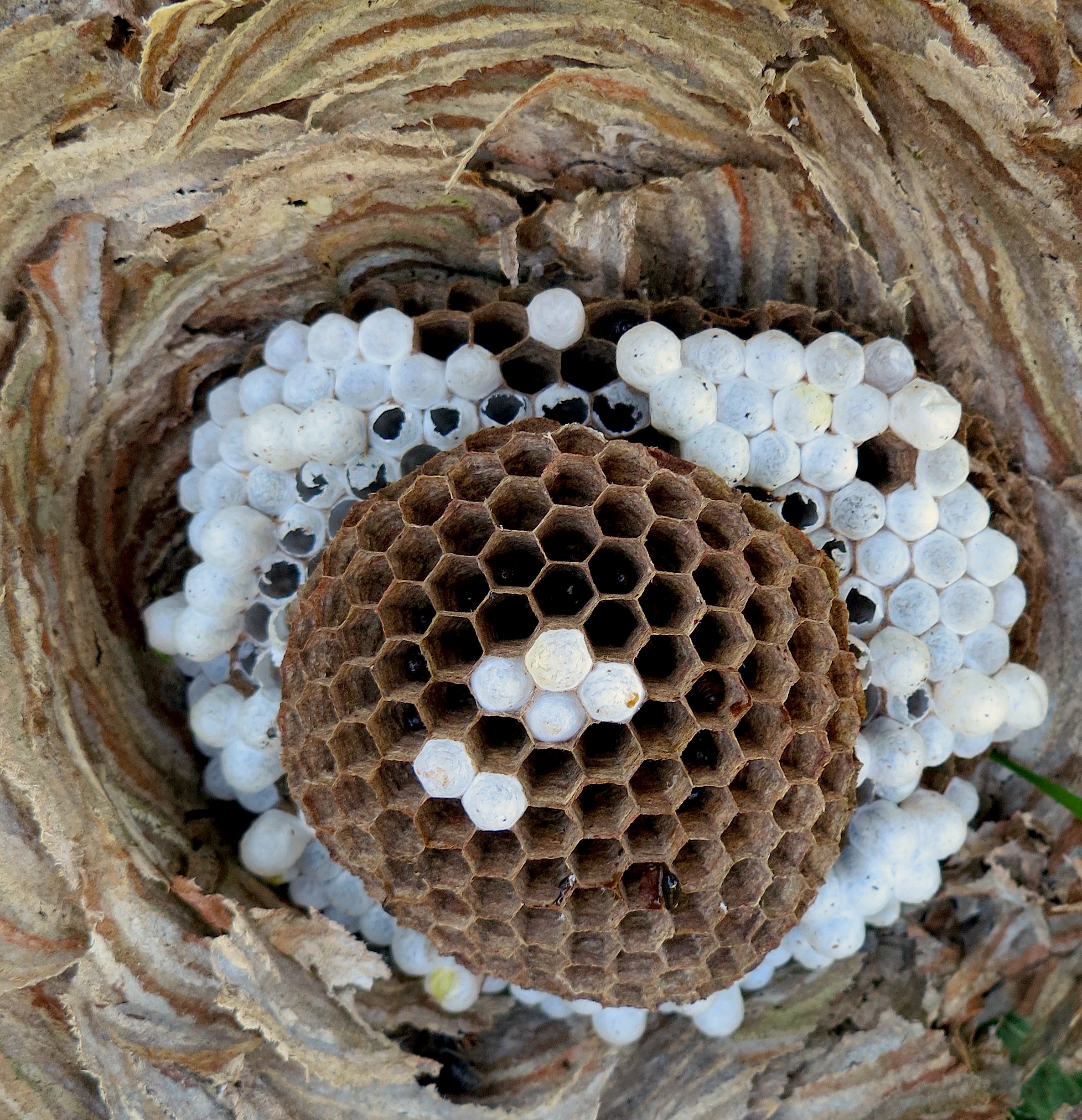
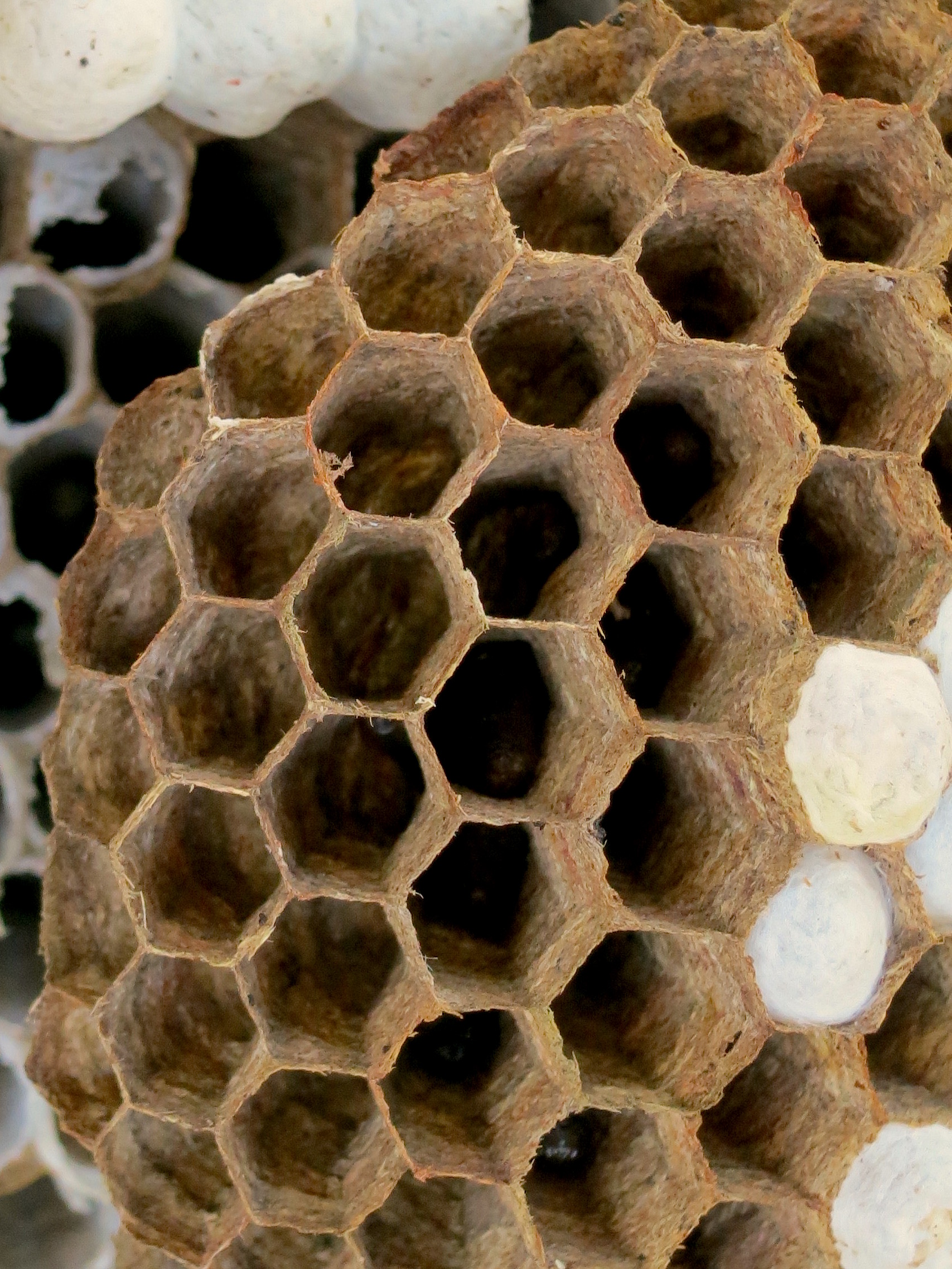
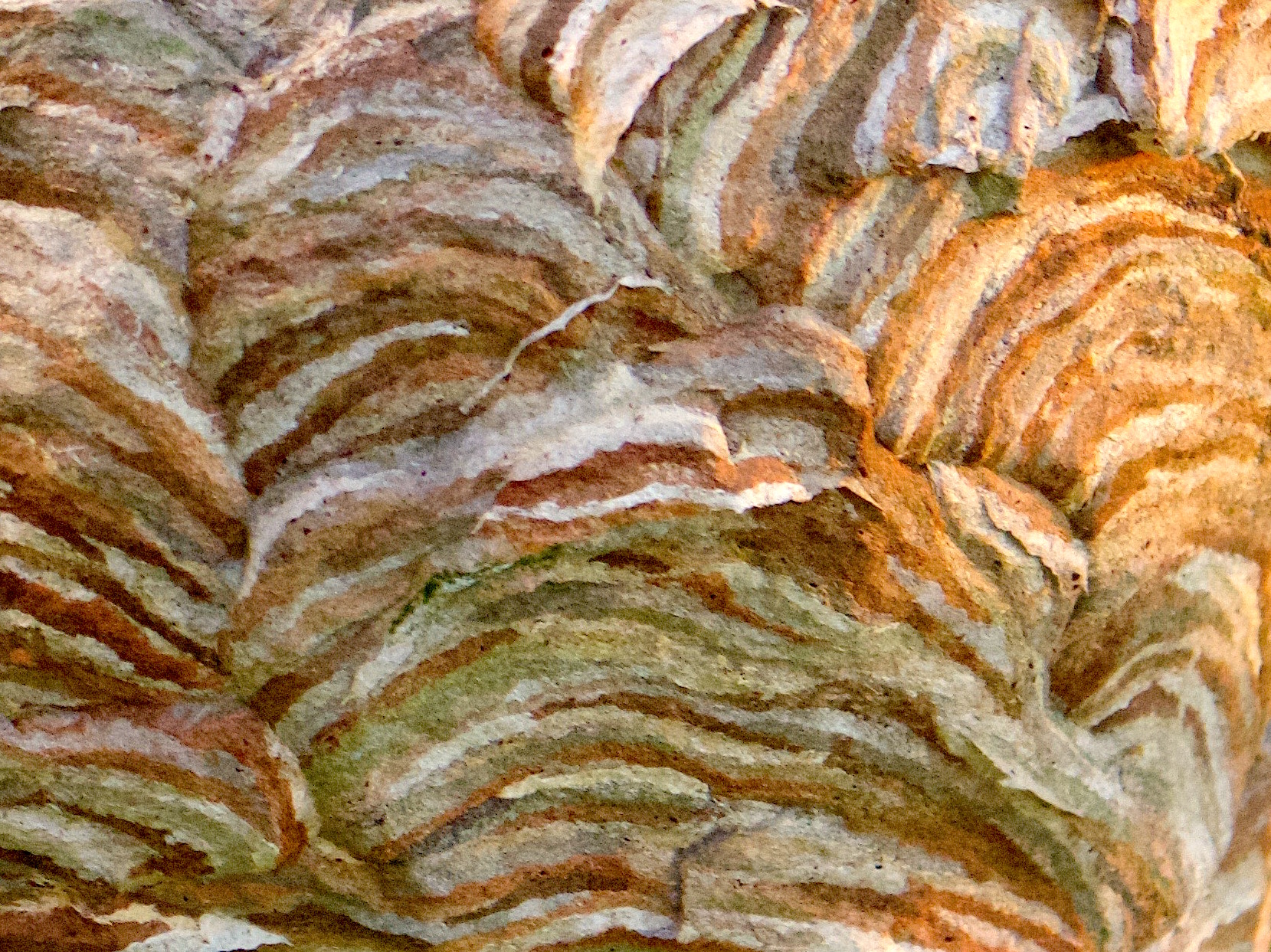
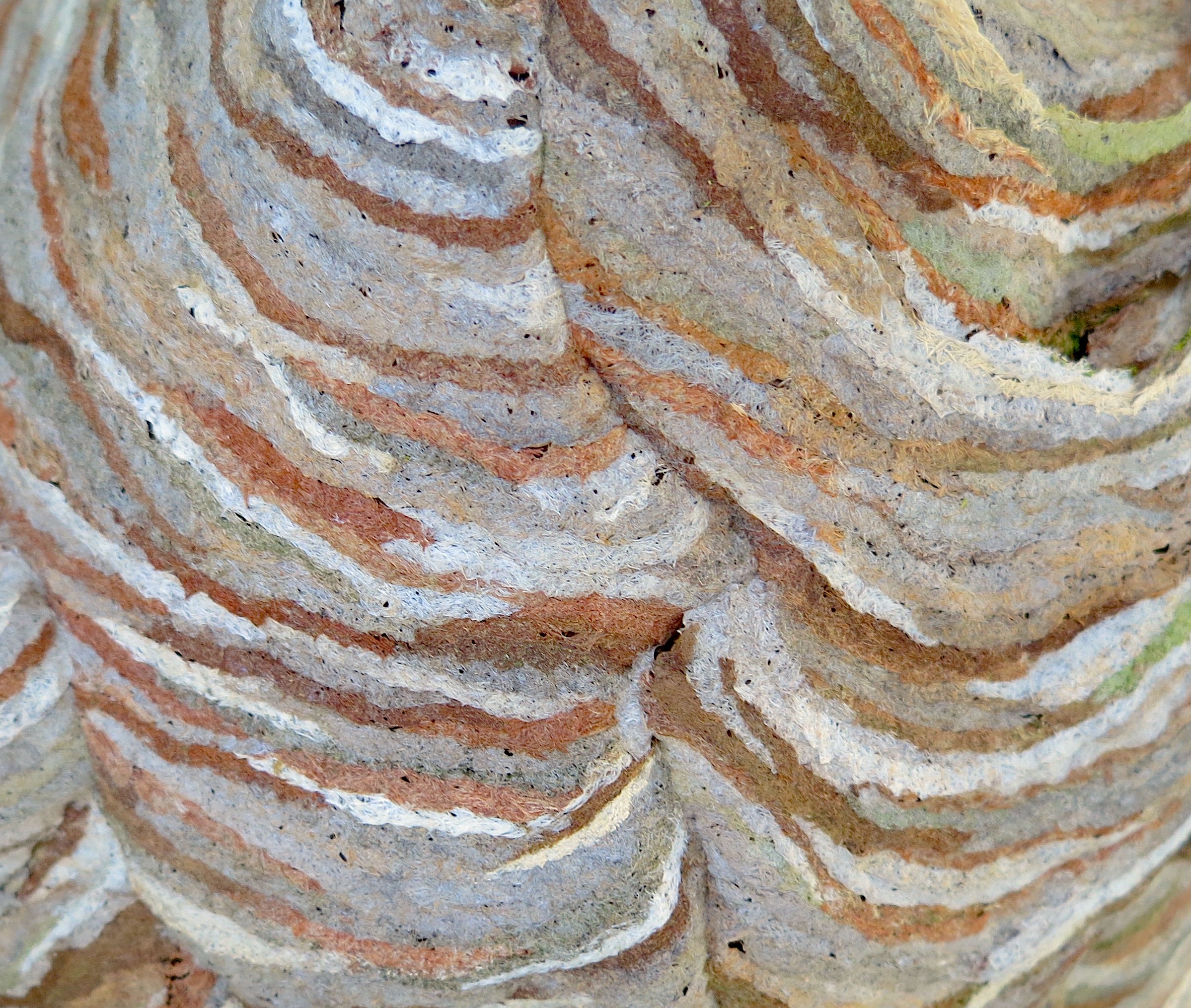
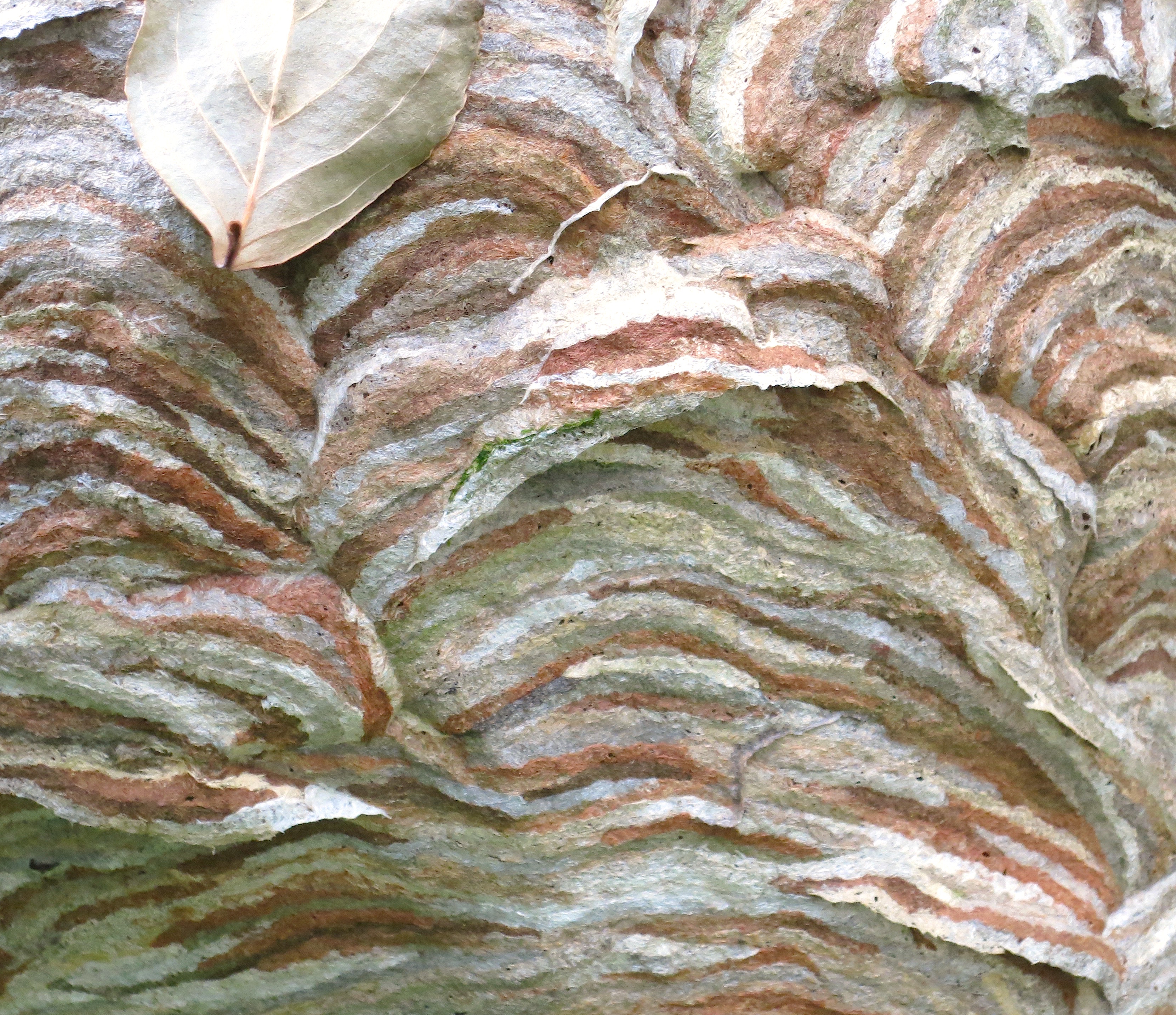
It was a magnificent feat of community cooperation and construction.

The nest had been abandoned, its workers dead and gone and its queen safely tucked into a winter hiding spot inside a tree trunk. Each nest happens only once, a fragile fortress for only a season.

The approach of winter had dealt a devastating blow and the nest disabled, now gone with the wind. It was torn free from its tight hold on a branch, flying aloft in its lightness of being, then fallen, crushed and torn open. Its secret heart is revealed and all the danger emptied out.

As I am not in or of them, I did not cast the stone that brought it down. Instead, it let go of its own accord and followed the wind.

One-Time
Monthly
Yearly

Make a one-time or recurring donation to support daily Barnstorming posts

Make a monthly donation

Make a yearly donation

Choose an amount

$10.00
$25.00
$50.00
$5.00
$15.00
$100.00
$5.00
$15.00
$100.00

Or enter a custom amount

$

Your contribution is deeply appreciated.

Your contribution is appreciated.

Your contribution is appreciated.

DonateDonate monthlyDonate yearly

Saved, Once Again

How can I love this spring
when it’s pulling me
through my life faster
than any time before it?
When five separate dooms
are promised this decade
and here I am, just trying
to watch a bumblebee cling
to its first purple flower.
I cannot save this world.
But look how it’s trying,
once again, to save me.

~James Pearson “This Spring”

My first close encounter with a bumblebee was when I was five.
I was wearing my swimsuit, playing in the sprinkler in our backyard.
After running and leaping in the spray, I sat down on our porch step for a moment, unaware that is precisely where a wet bumblebee chose to dry off in the sun.

Both the bumblebee and my bum had a bit of a rumble.
I jumped up, tumbled off the step crying hard, while the bumblebee buzzed off, miffed.

I mumbled and grumbled sore for several days, my feelings about bees jumbled and my confidence crumbled.

Even now, decades later, whenever I see a bumblebee, I wonder if it is a distant descendant of my bumbling stumble. I am reminded of the consequences of not paying enough attention to what I say, where I stand, and particularly where I sit in this world that is easily offended and stings hard when squished and mad.
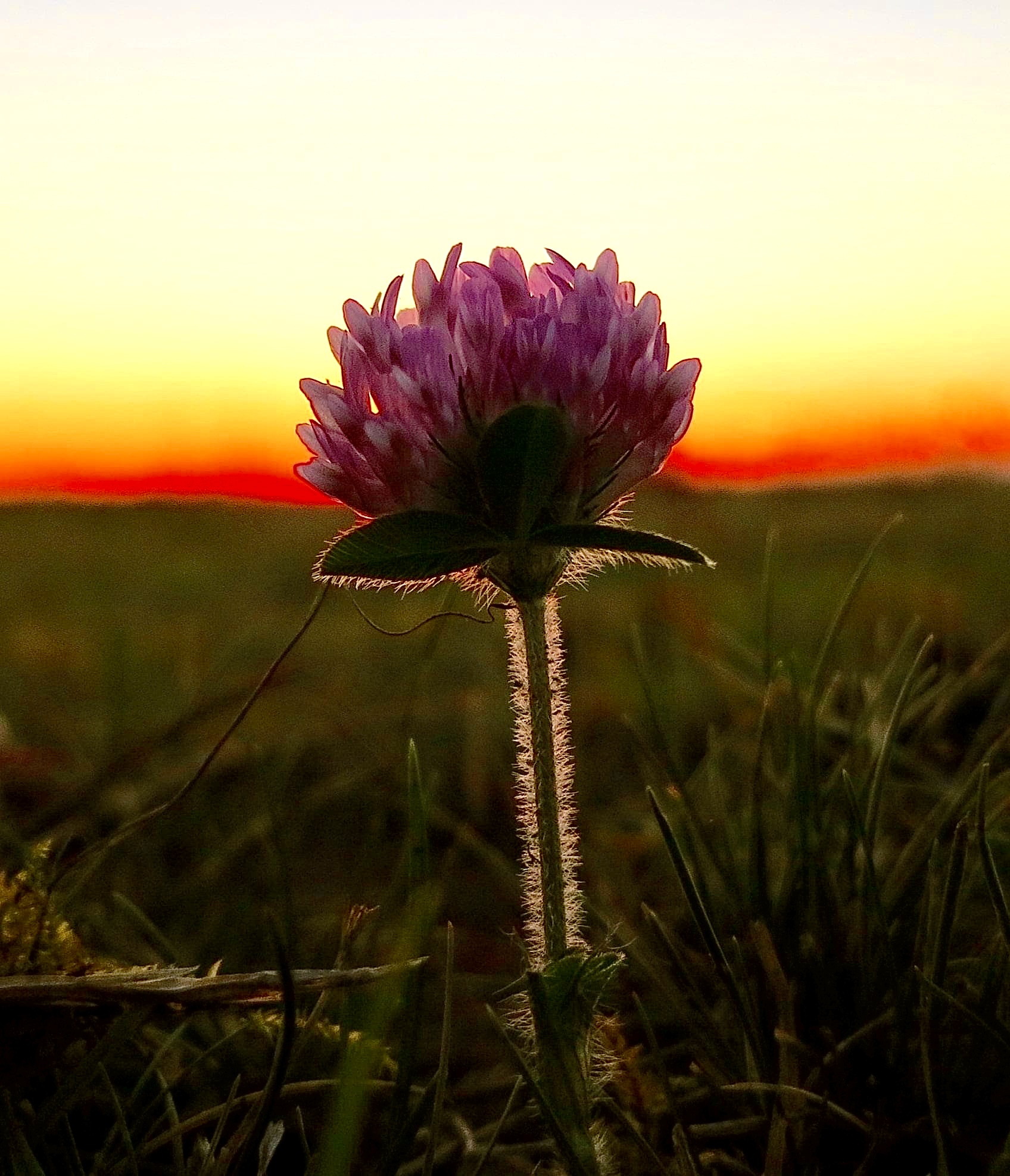
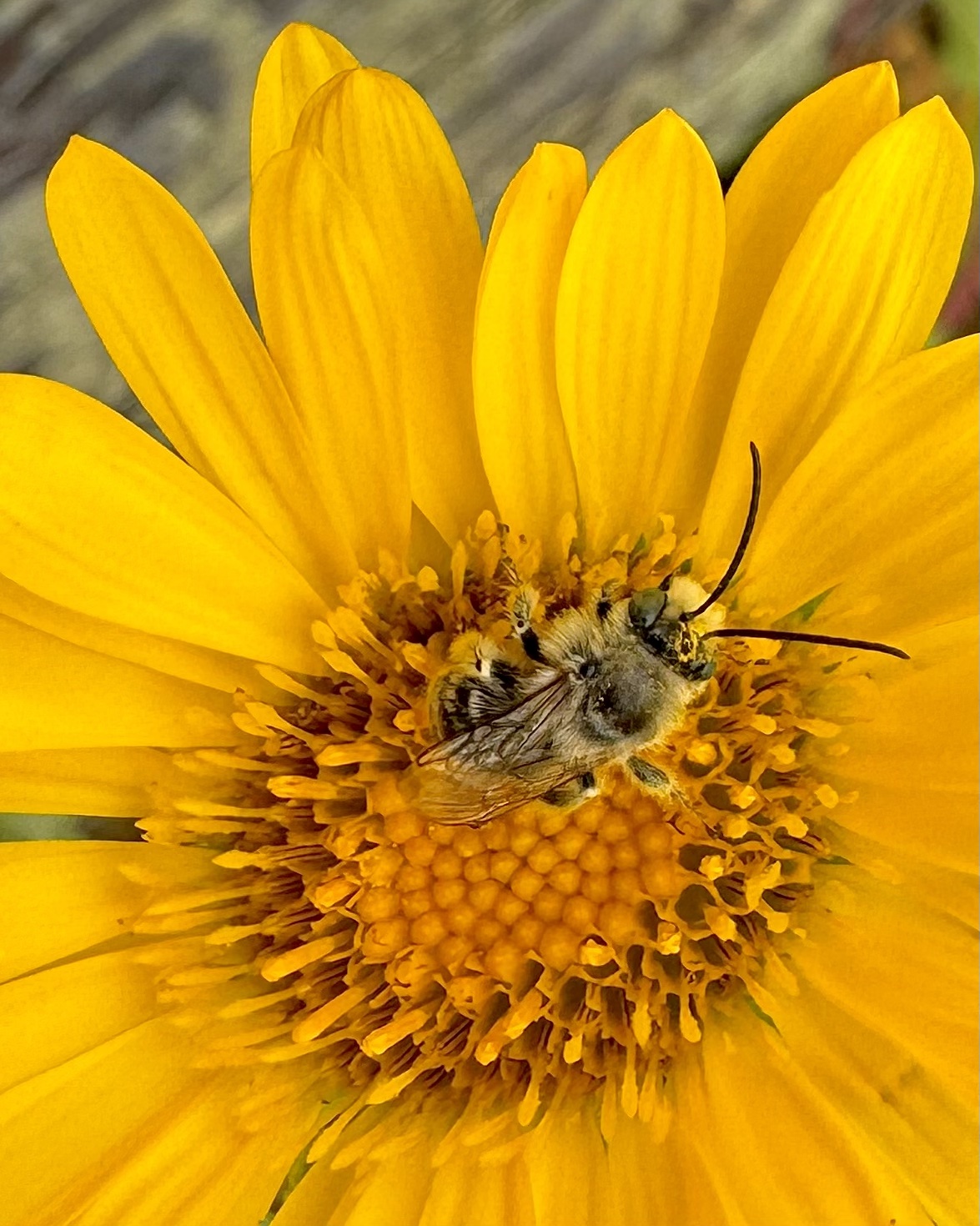
Some painful things are best never forgotten. I’m humbled by the memory of an indignant bumblebee, who, in a teachable moment over and over, saves my fumbling bum once again.

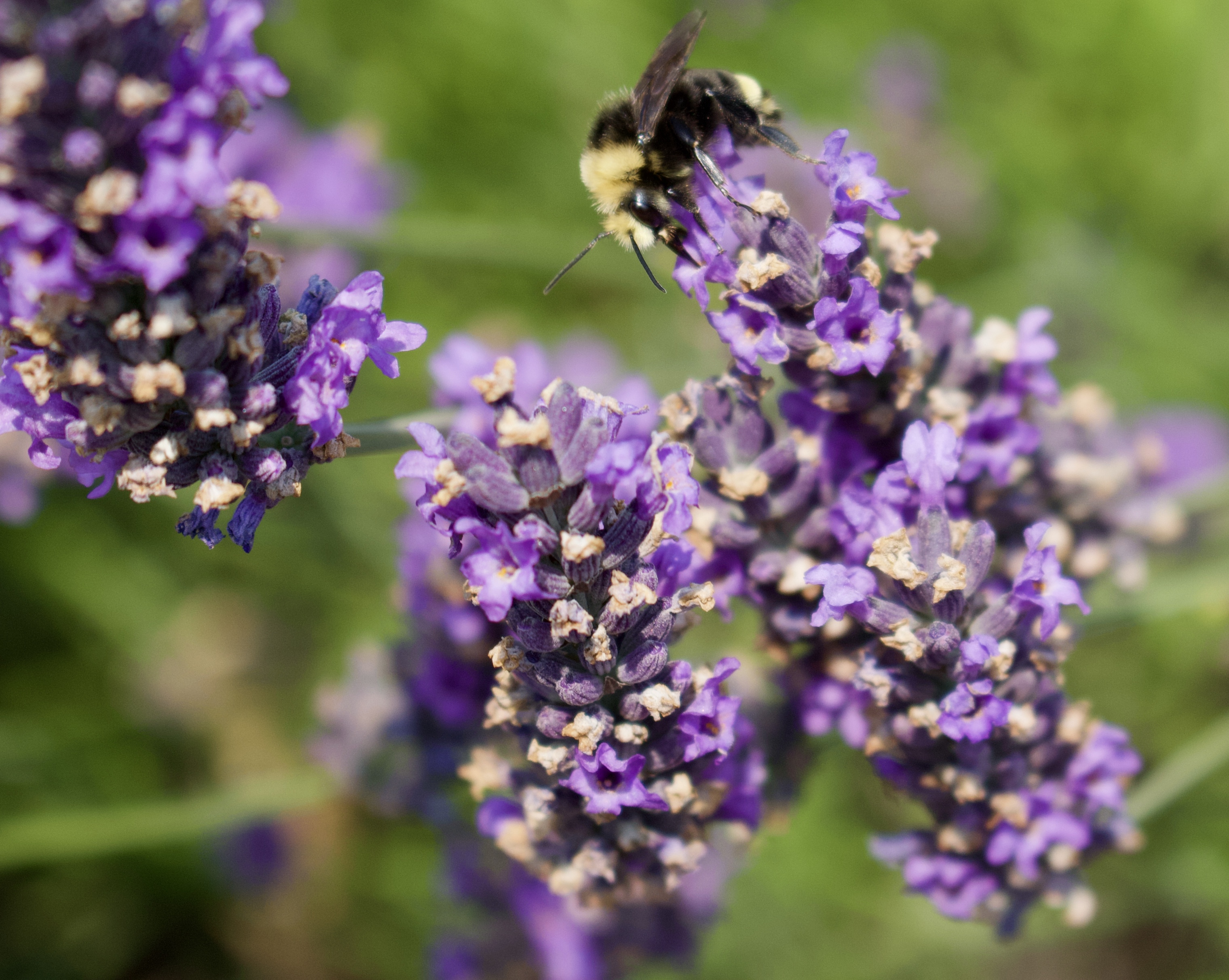
AI image created for this post
One-Time
Monthly
Yearly

Make a one-time or recurring donation to support daily Barnstorming posts

Make a monthly donation

Make a yearly donation

Choose an amount

$10.00
$25.00
$50.00
$5.00
$15.00
$100.00
$5.00
$15.00
$100.00

Or enter a custom amount

$

Your contribution is deeply appreciated.

Your contribution is appreciated.

Your contribution is appreciated.

DonateDonate monthlyDonate yearly

Harboring a Hornet’s Nest

With bees, it isn’t the sting itself
but the unprovoked attack
that lingers.

How unfair to walk unwary, barefoot
on hot concrete, simply
pleasuring your feet,
or stepping down on a beach towel
only to be assaulted by the small plot
of something you meant no harm to.

That first pain is learned the hard way:
at five, you call
all-y, all-y, all come free
singing blind into a hive
hidden in the swing-set’s pole, then fall
what seemed the longest
fall; a cloud of bees flowered from your lips.

And later, put to bed with ice
and ointments melting over
the welts that covered you,
there was no explaining the bees’
behavior, no way to comprehend the reason
in their rage. You may never understand
this: the will behind the stinger,
a certain, fatal anger to survive.
~Erin Belieu “Bee Sting”

George got stung by a bee and said,
“I wouldn’t have got stung if I’d stayed in bed.”

Fred got stung and we heard him roar,
“What am I being punished for?”

Lew got stung and we heard him say,
“I learned somethin’ about bees today.”

~Shel Silverstein “Three Stings”

Ever have one of those days when it doesn’t really matter what you do, what you don’t do, what you say, what you don’t say—you find yourself sitting on top of a hornet’s nest, and at the slightest provocation, you’ll get nailed, but good.

The hardest reality of all is that you may have actually invited and fostered the hornets that are now ready to attack you. You offered them shelter, a safe haven, a place to come home to and what happens in return? You’re stung because you just happened to be there, perched in a precarious position.

What difficult lessons life tosses at us sometimes. And this little drama happened in my own backyard.

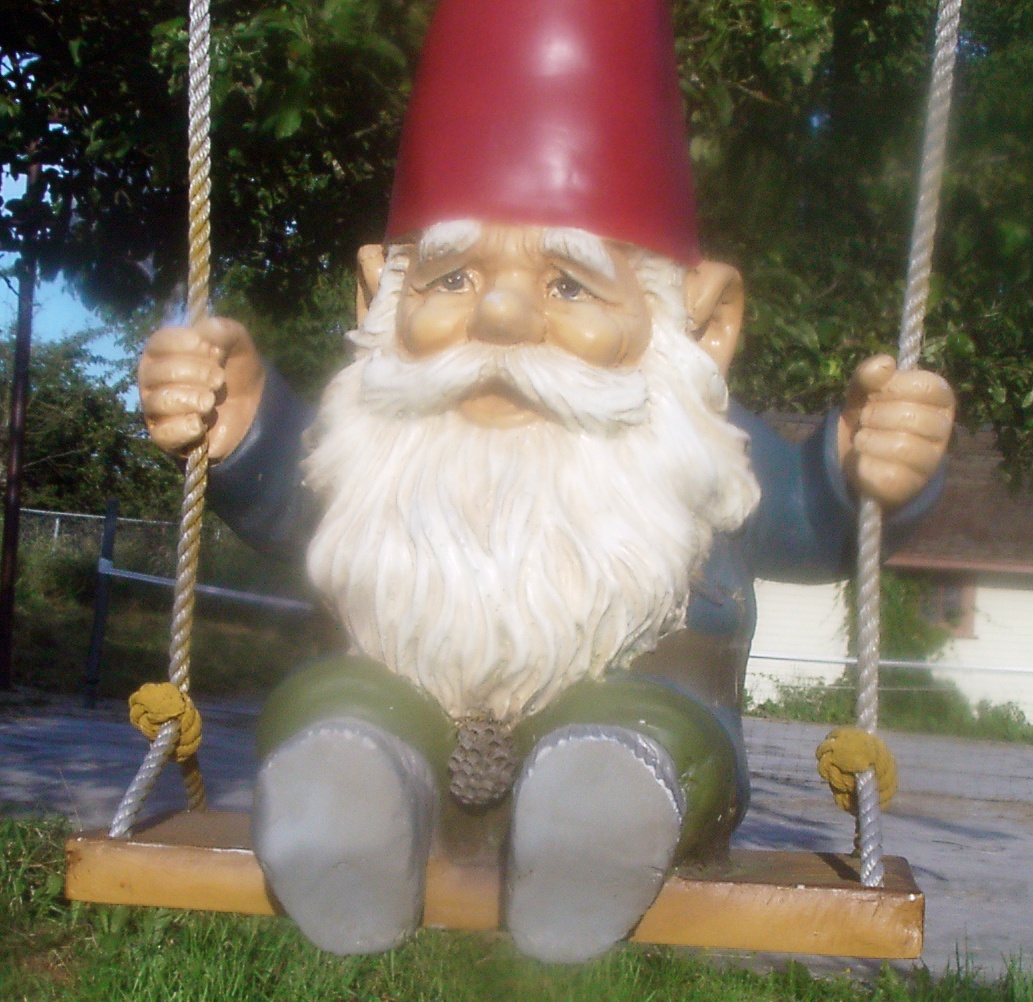
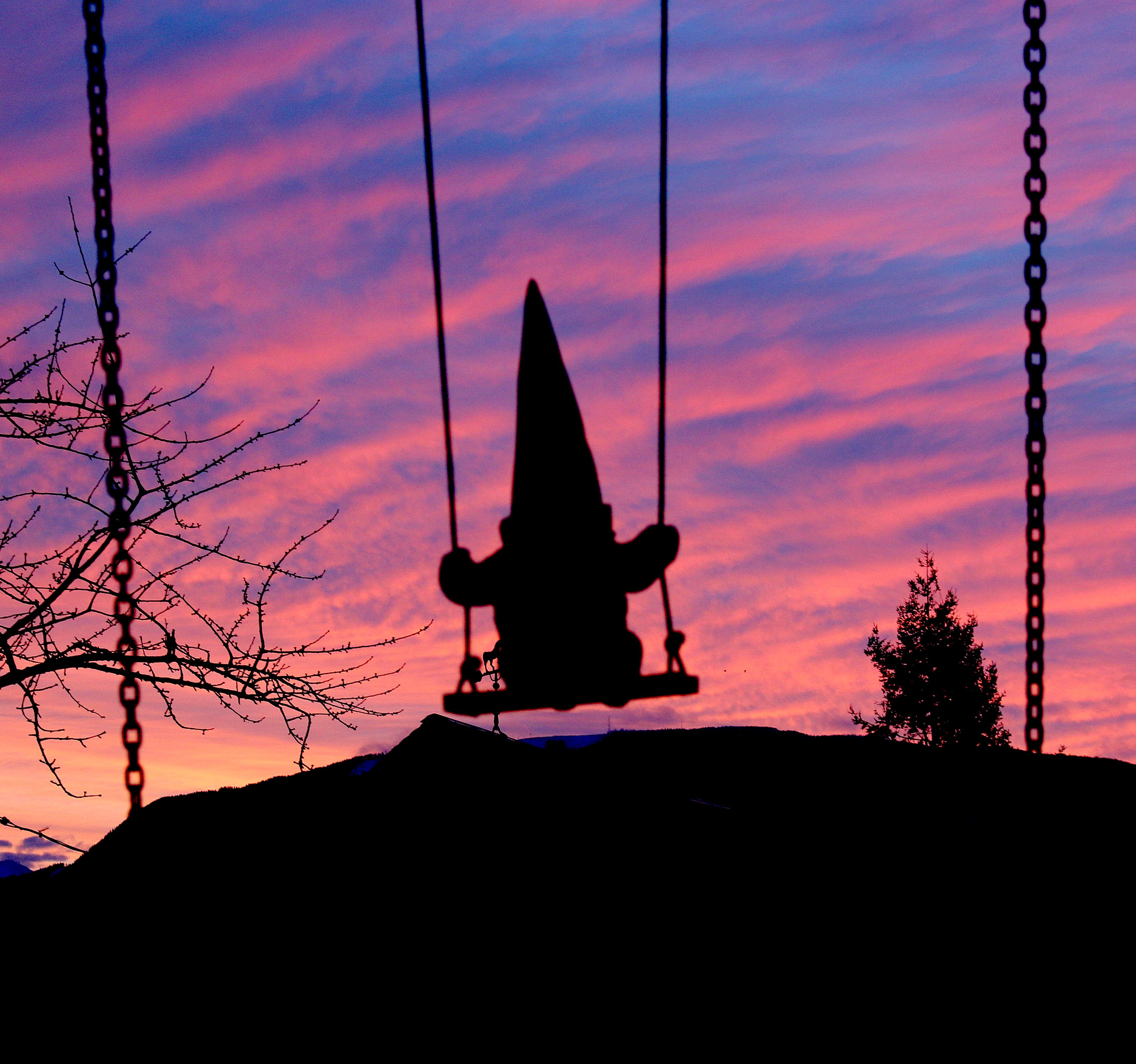
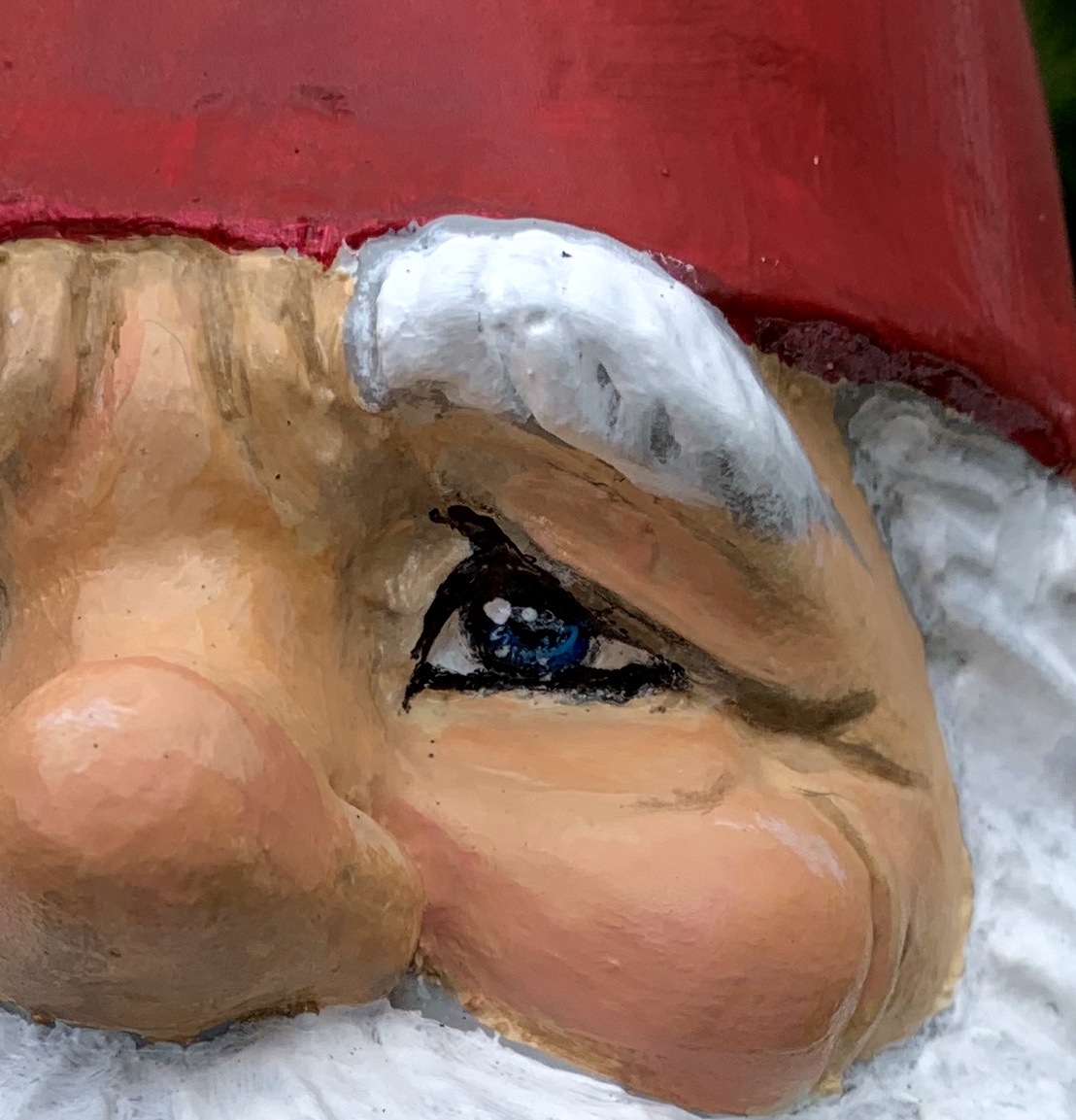
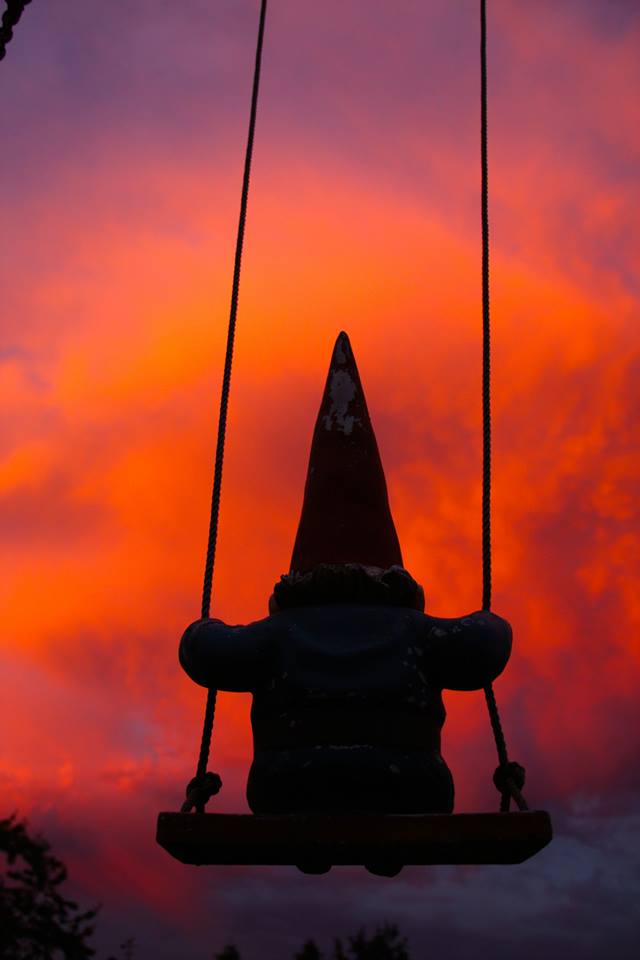
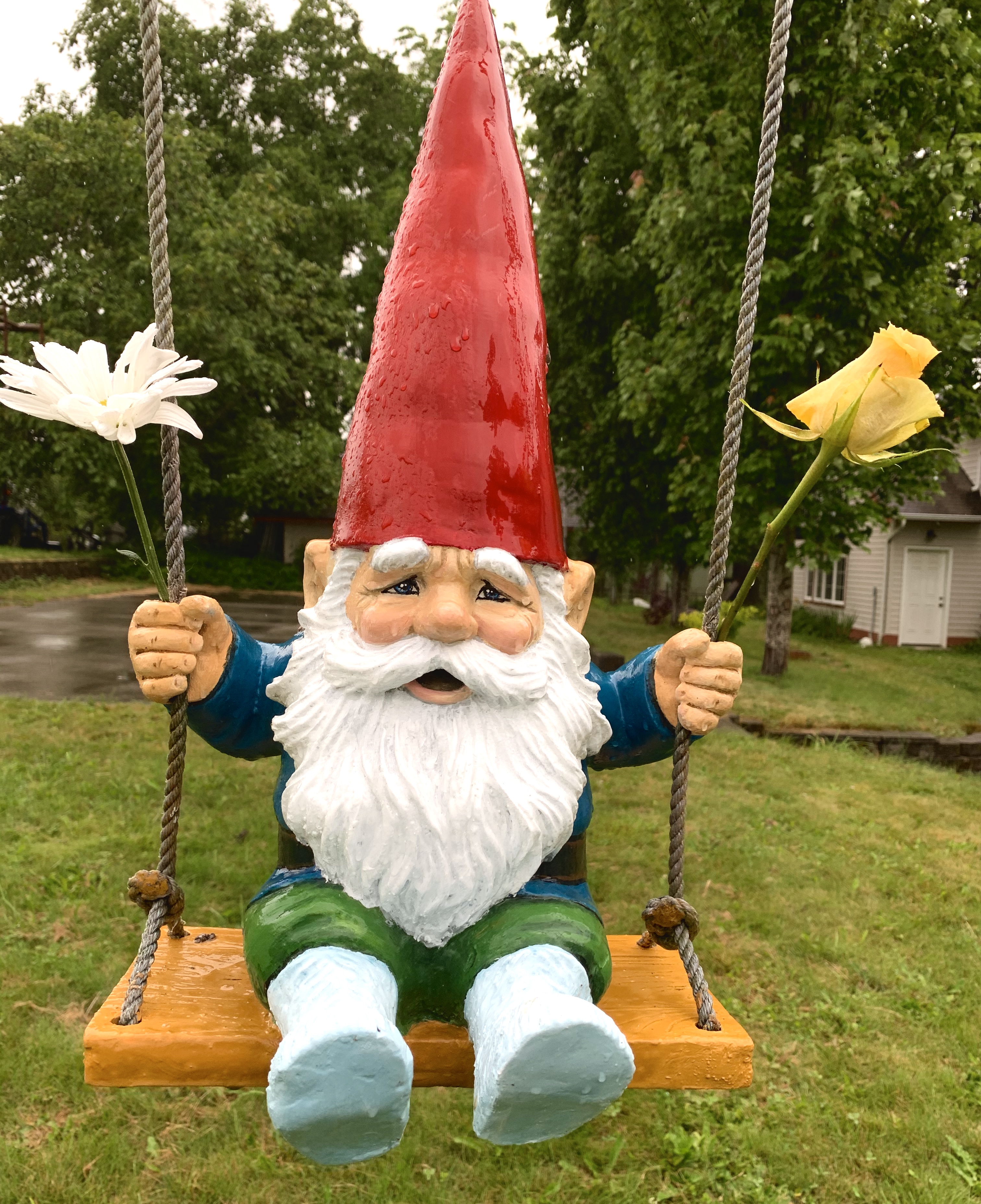
As I headed to the barn for chores and walked past our happy little gnome, I gave him my usual smile, wave and morning greeting, but something was different about him and I looked a little closer. 

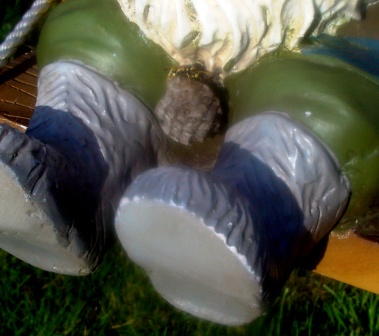
He suddenly was appearing anatomically correct. What the heck?

And the look on his face had taken on a distinctly worried cast. How had he gotten himself into this predicament of harboring a hornet’s nest in his lap?

My little backyard friend was in a dilemma, pleading with his eyes to be saved from his agony. So I planned out a stealth rescue mission. Without warning, in the dark of night, I decided I could turn a hose on that nest, sweep it to the ground and crush it, hornets and all – a “take no prisoners” approach to my gnome held hornet-hostage. Then, every time I glanced at his gracious cheerful face I could smile too, knowing I had helped rescue him by eliminating the enemy. I could be the hero of the story…

Postscript:

I didn’t execute the “save our gnome”  rescue mission soon enough.  While I was foolish enough to mow the grass near the swing set, the offending hornet nailed me in the neck.  I walked right into it, forgetting there was a hornet hazard over my head.  One ice bag and benedryl later, I dispatched hornet and nest to the great beyond. 

It was my own fault for violating a hornet’s space, but it was the hornet’s fault for violating my friend’s lap. We’re even now. And my gnome is smiling in grateful relief.

photo by Tomomi Gibson
One-Time
Monthly
Yearly

Make a one-time or recurring donation to support daily Barnstorming posts

Make a monthly donation

Make a yearly donation

Choose an amount

¤10.00
¤25.00
¤50.00
¤5.00
¤15.00
¤100.00
¤5.00
¤15.00
¤100.00

Or enter a custom amount

¤

Your contribution is deeply appreciated.

Your contribution is appreciated.

Your contribution is appreciated.

DonateDonate monthlyDonate yearly

Everything Will Be Okay

Whisper to the workers
and they’ll bring the news to the queen.
When a beekeeper dies
someone is assigned to tell her
bees that she’s gone,
they shouldn’t expect
the scent of her skin,
the sound of her voice.
They need to know who
will look in on them.
Sometimes I do tell my ladies
about what will affect them:
it will be getting hotter
in the next few years.
I’ll give them water and sugar
to replace their losses,
but there will be new
parasites coming north.
I don’t know what I’ll do.
They don’t care, none of it
matters in a 3-week lifespan
in a world of nectar and pollen,
dearth and flow.
So mostly I keep it simple,
tell them everything
will be ok, you’re strong
and good; the cell walls are solid,
the queen will keep laying,
the magnet of the poles
will bring you home.
~Sara Eddy, from Tell the Bees

After the last ee
had uzzed its last uzz,

the irds and the utterflies
did what they could.

ut soon the fields lay are,
few flowers were left,

nature was roken,
and the planet ereft.
~Brian Bilston “The Last Bee”

This would be a bereft world indeed without bees…

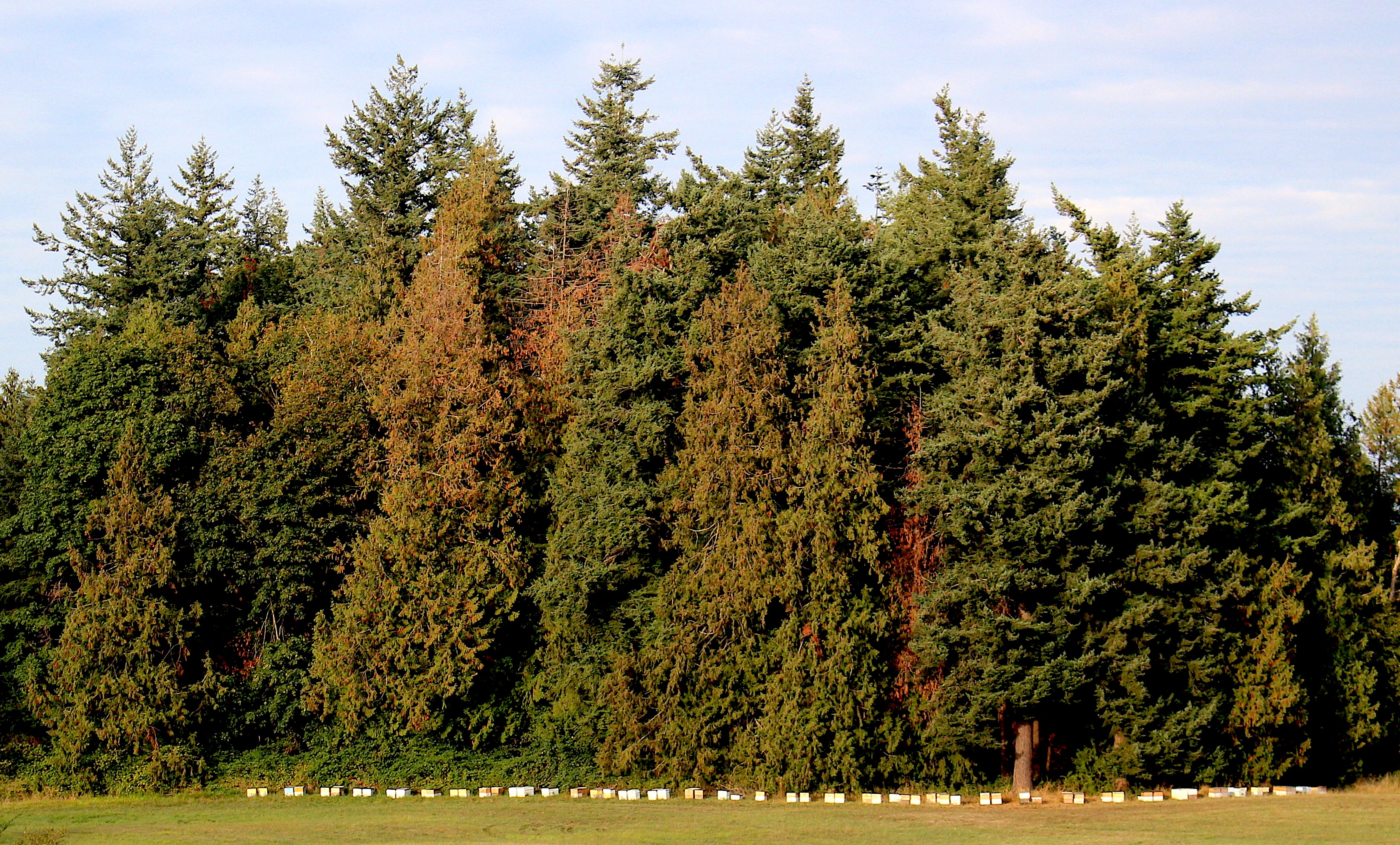
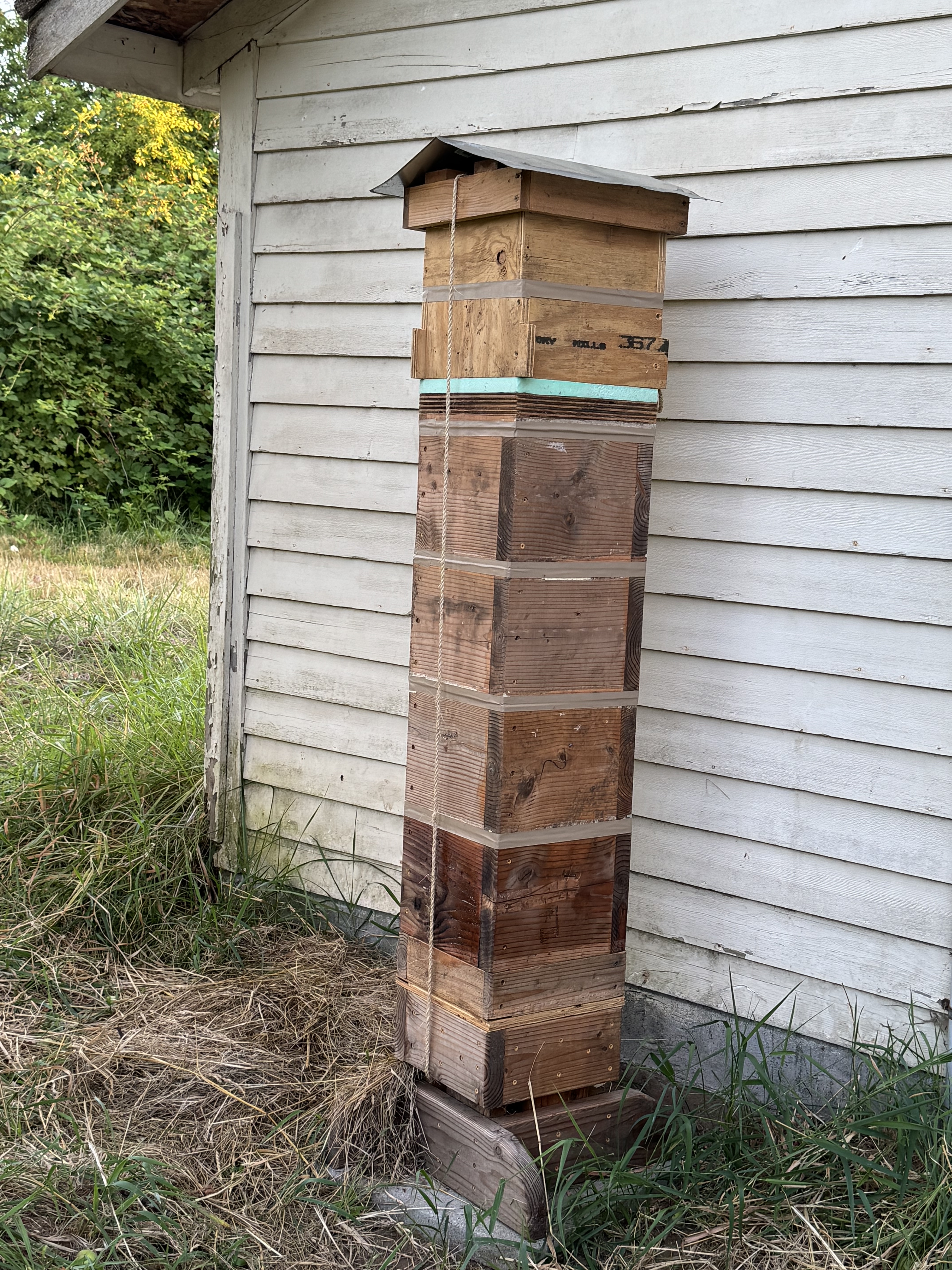
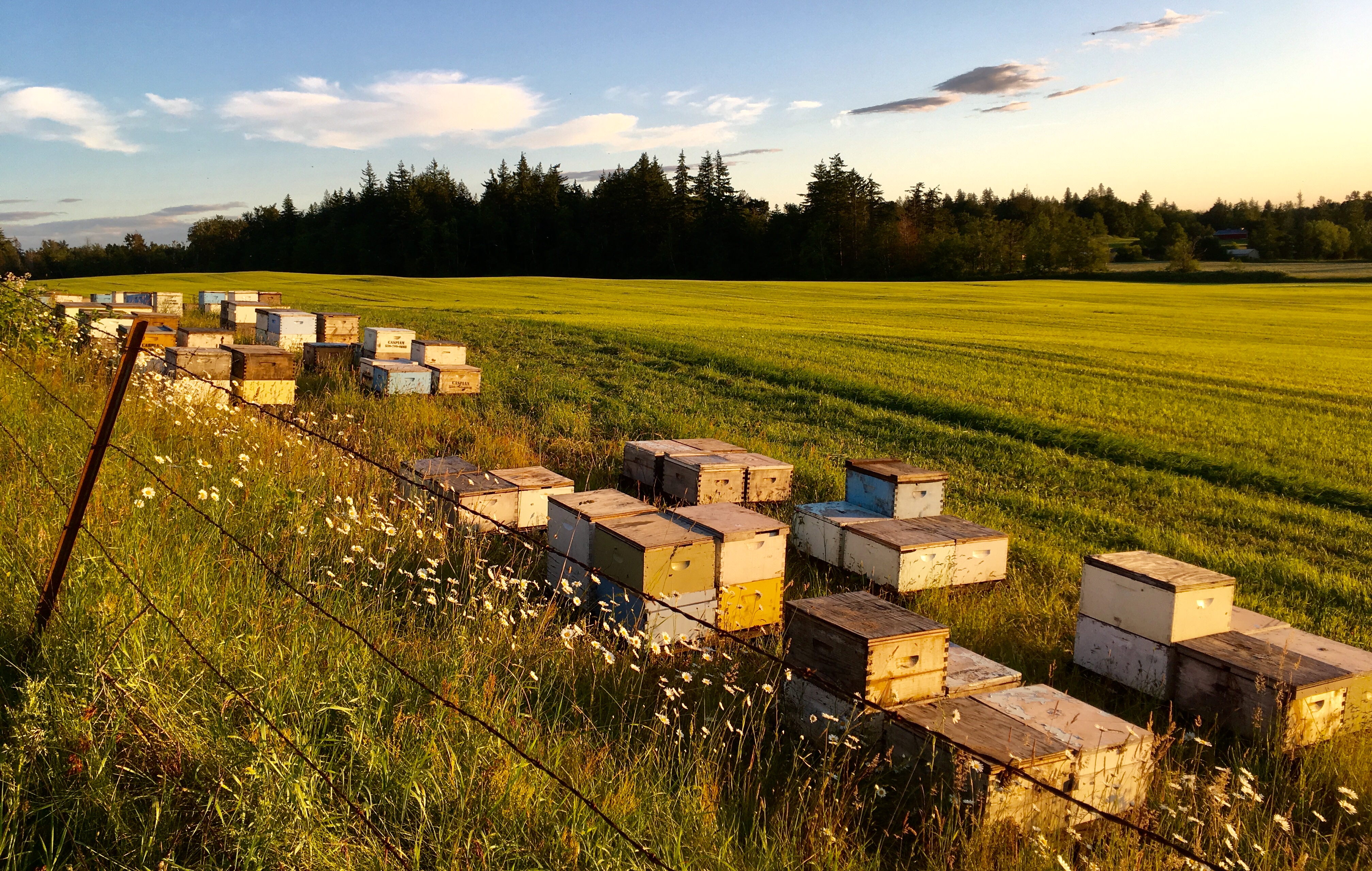
I am awed and inspired by apiarists. Our niece Andrea has been bee-keeping for over a decade, keeping hives at home in nearby Skagit Valley as well as moving them during growing season to pollinate the blooms at Floret Flower Farm and other beautiful places.

A beekeeper must be a loving and patient person; the bees know who loves them, and who will always be there to care for them.

An old Celtic tradition necessitates sharing any news from the household with the farm’s bee hives, whether cheery like a new birth or a wedding celebration or sad like a family death.  This ensures the hives’ well-being and continued connection to home and community – the bees are kept in the loop, so to speak, so they stay at home, not swarm and move on to a more hospitable place.

So, sweet bees – I hope your short little life remains safe and predictable so you and your descendants can continue to pollinate the world.

Everything will be okay.

Otherwise, no more bees would ultimately mean – no more anything.

One-Time
Monthly
Yearly

Make a one-time or recurring donation to support daily Barnstorming posts

Make a monthly donation

Make a yearly donation

Choose an amount

¤10.00
¤25.00
¤50.00
¤5.00
¤15.00
¤100.00
¤5.00
¤15.00
¤100.00

Or enter a custom amount

¤

Your contribution is deeply appreciated.

Your contribution is appreciated.

Your contribution is appreciated.

DonateDonate monthlyDonate yearly

A Fragile Citadel

…And I think
They know my strength,
Can gauge
The danger of their work:
One blow could crush them
And their nest; and I am not their friend.

And yet they seem
Too deeply and too fiercely occupied
To bother to attend.
Perhaps they sense
I’ll never deal the blow,
For, though I am not in nor of them,
Still I think I know
What it is like to live
In an alien and gigantic universe, a stranger,
Building the fragile citadels of love
On the edge of danger.
~James Rosenberg from “The Wasps’ Nest”

The nest was hanging like the richest fruit
against the sun. I took the nest

and with it came the heart, and in my hand

the kingdom and the queen, frail surfaces,
rested for a moment. Then the drones
awoke and did their painful business.

I let the city drop upon the stones.
It split to its deep palaces and combs.
The secret heart was broken suddenly.
~Michael Schmidt — “Wasps’ Nest”

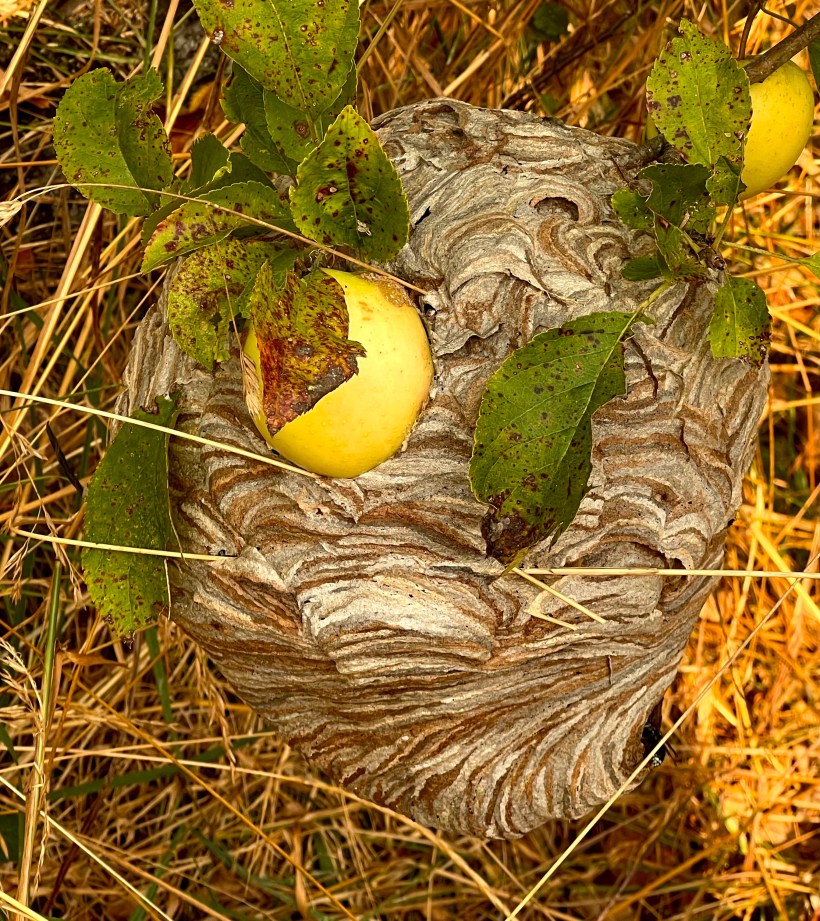
Over the years, we have had basketball-sized paper bald-faced hornet nests appear in various places on the farm. They hang from eaves or branches undisturbed as their busy citizens visit our picnics, greedily buzz our compost bin, shoot bullet-like out of the garbage can when I lift the lid.  In short, their threat of using their weaponry control our moves during the summer. This year’s nest has been built to include some Golden Delicious apples in our apple tree.

This nest is the hornets’ nighttime respite for a few more weeks before a freeze renders them weak and paralyzed in slow motion.  This thing of unparalleled beauty on the outside harbors plenty of danger inside. I will not touch this fragile tissue-paper fortress with its beating buzzing hornet heart.

Let winter deal the devastating blow to disable them. 
As I am not in or of them, I cannot cast the first stone.

In a few short weeks, as the hornets sleep, the north winds will tear it free from its tight hold, bear it aloft in its lightness of being, and it will fall, crushed and broken.

Only then, its secret heart will be revealed and all that stings will be let go.

One-Time
Monthly
Yearly

Make a one-time or recurring donation to support daily Barnstorming posts

Make a monthly donation

Make a yearly donation

Choose an amount

¤10.00
¤20.00
¤50.00
¤5.00
¤15.00
¤100.00
¤5.00
¤15.00
¤100.00

Or enter a custom amount

¤

Your contribution is deeply appreciated.

Your contribution is appreciated.

Your contribution is appreciated.

DonateDonate monthlyDonate yearly

A Keeper of Bees

If you talk to him,
he will not pretend to be
an ordinary man.
He won’t let on
he is one who isn’t afraid to hold
in his outstretched hands
the buzzing gold.

He won’t tell you he is the man who keeps farmers
warm in their livelihood,
or the man who keeps the grocery shelves
full, then adds, simply for good measure,
jars of his shining honey.
He won’t explain that he is the one
who sets his suffering neighbors
free from their pain
with gifts of jars that sting.

He won’t let on to be the lifegiver or a god.
He will pretend he is just an old man with sand-colored hair,
a blue truck heavy with breezy hives,
and a comb-spinner in his cellar.

~Sidney Hall Jr., from This Understated Land

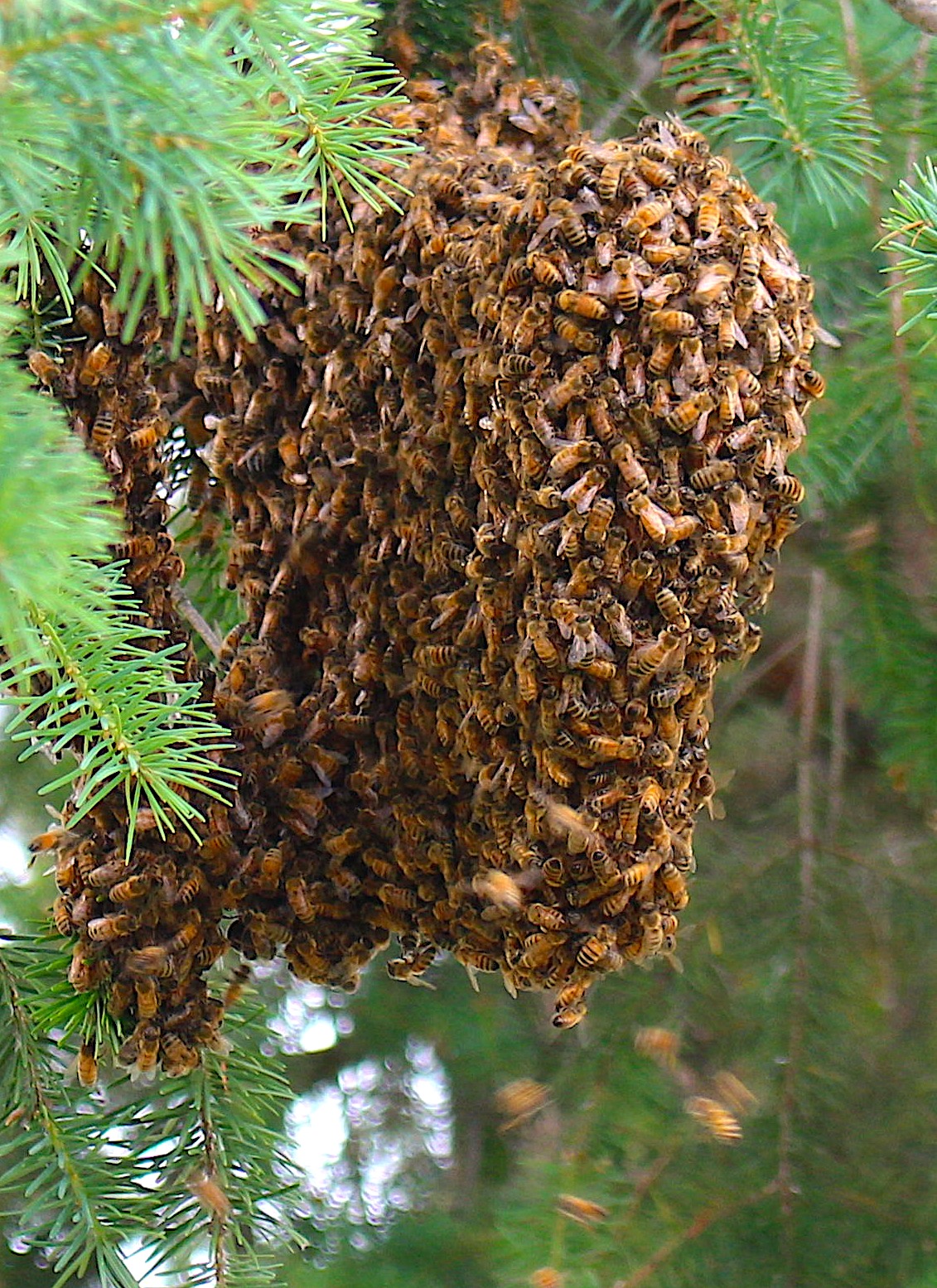
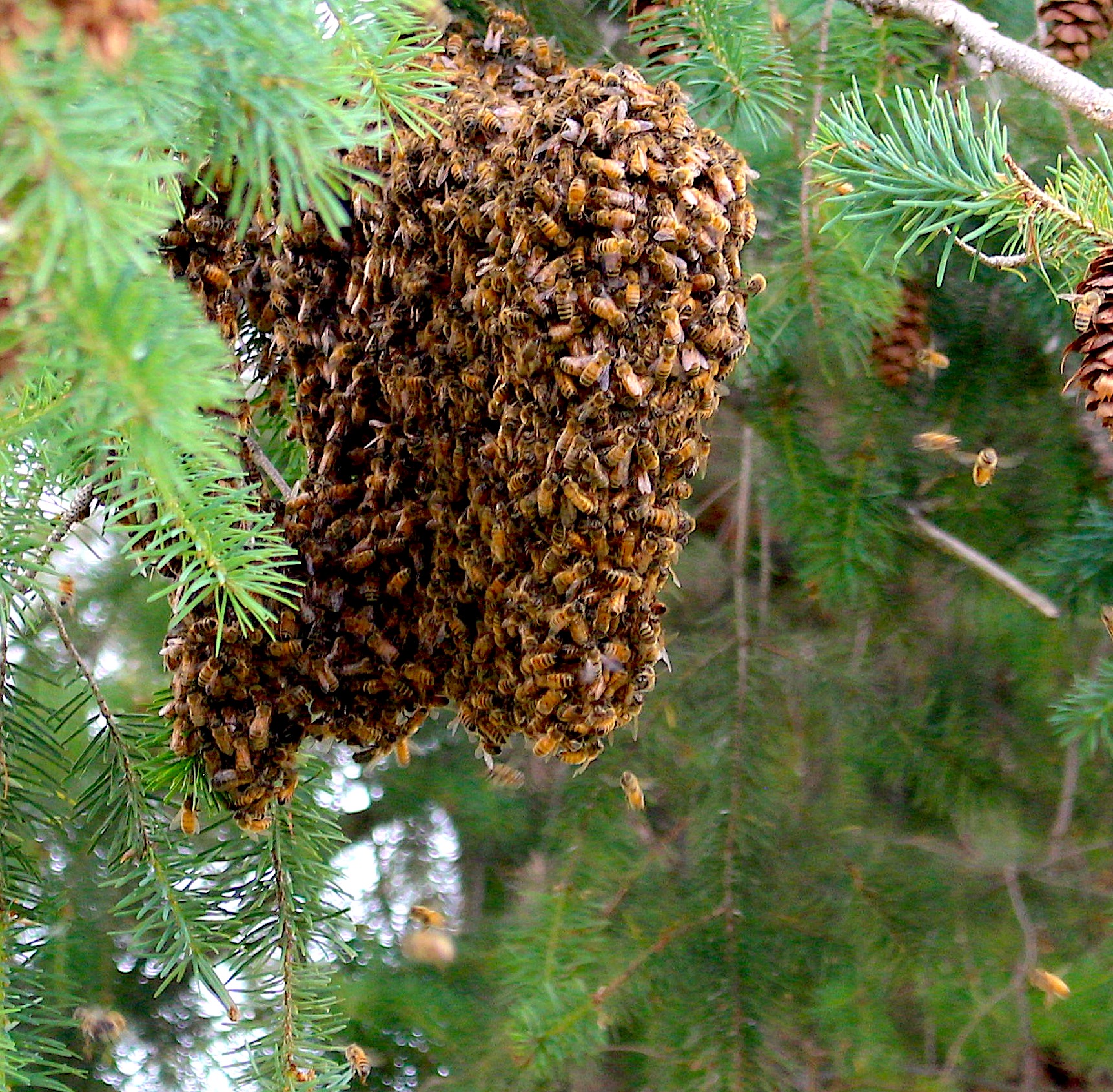
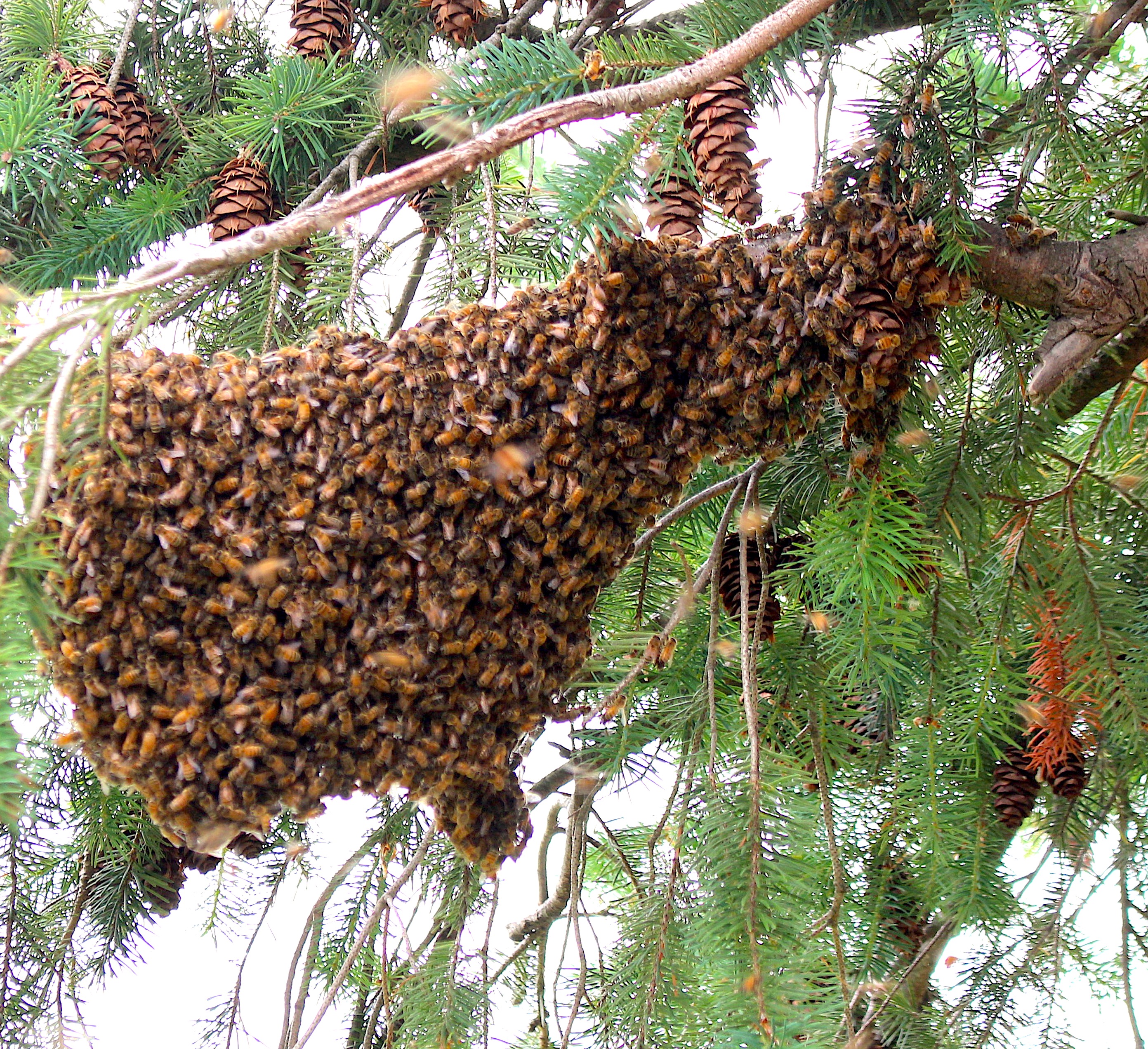
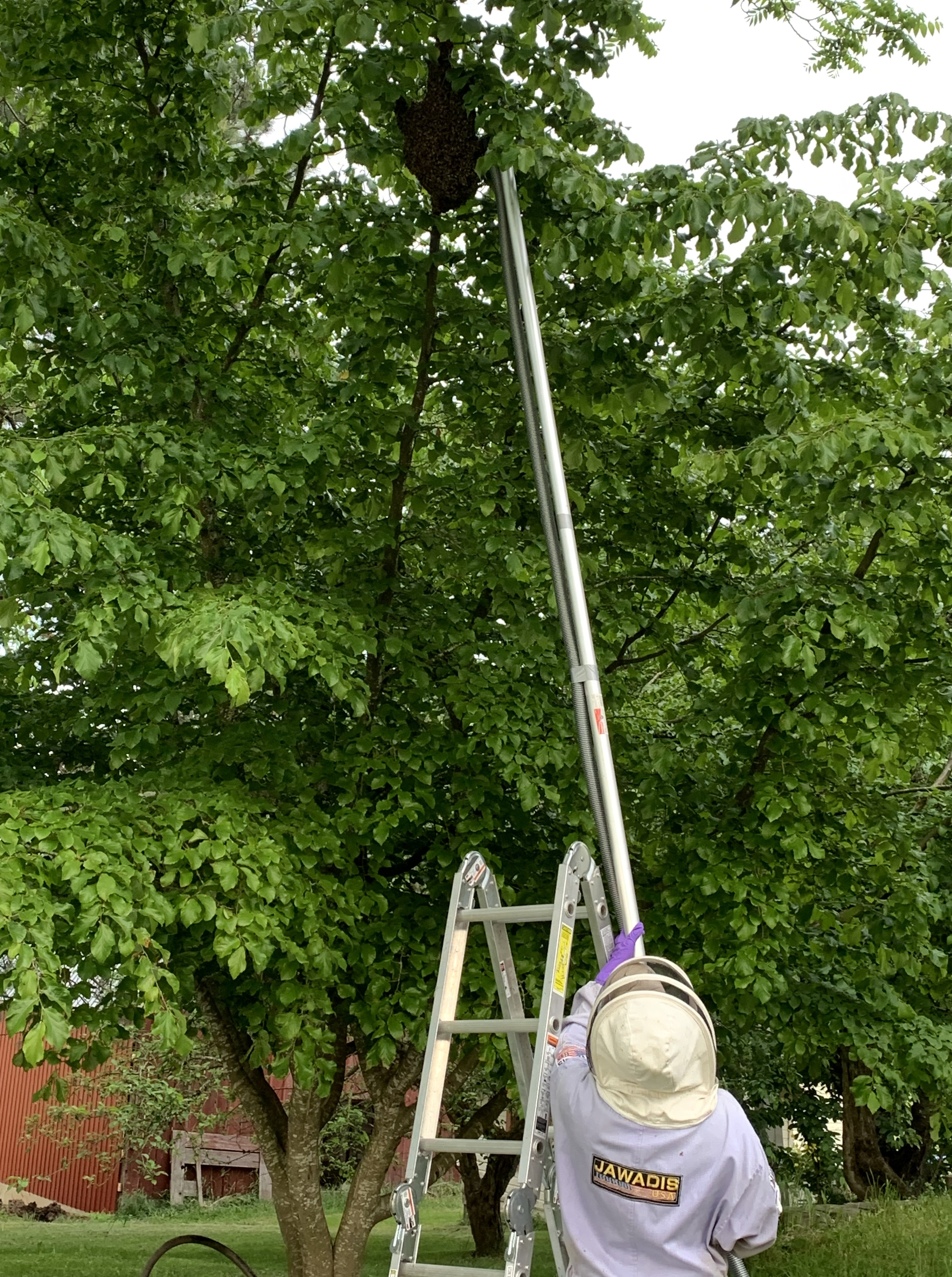
Our niece Andrea of Z’s Happy Bees, gently vacuuming a swarm from one of our farm trees

…The world was really one bee yard,
and the same rules work fine in both places.
Don’t be afraid, as no life-loving bee wants to sting you.
Still, don’t be an idiot; wear long sleeves and pants.
Don’t swat. Don’t even think about swatting.
If you feel angry, whistle.

Anger agitates while whistling melts a bee’s temper.
Act like you know what you’re doing, even if you don’t.
Above all, send the bees love. Every little thing wants to be loved.

~Sue Monk Kidd from The Secret Life of Bees

He calls the honeybees his girls although
he tells me they’re ungendered workers
who never produce offspring. Some hour drops,
the bees shut off. In the long, cool slant of sun,
spent flowers fold into cups. He asks me if I’ve ever
seen a Solitary Bee where it sleeps. I say I’ve not.
The nearest bud’s a long-throated peach hollyhock.
He cradles it in his palm, holds it up so I spy
the intimacy of the sleeping bee. Little life safe in a petal,
little girl, your few furious buzzings as you stir
stay with me all winter, remind me of my work undone.
~Heid E. Erdrich, from “Intimate Detail” from The Mother’s Tongue

I am awed and inspired by apiarists. Our niece Andrea has been bee-keeping for over a decade, keeping hives at home in nearby Skagit Valley as well as moving them during growing season to pollinate the blooms at Floret Flower Farm and other beautiful places.

A beekeeper must be a loving and patient person; the bees know who loves them, and who will always be there to care for them.

An old Celtic tradition necessitates sharing any news from the household with the farm’s bee hives, whether cheery like a new birth or a wedding celebration or sad like a family death.  This ensures the hives’ well-being and continued connection to home and community – the bees are kept in the loop, so to speak, so they stay at home, not swarm and move on to a more hospitable place.

Each little life safe at home, each little life with work undone.

Good news seems always easy to share; we tend to keep bad news to ourselves so this tradition helps remind us that what affects one of us, affects us all.

These days, with instant news at our fingertips at any moment, bad news is constantly bombarding us. Like the bees in the hives of the field, we want to flee from it and find a more hospitable home.

Our Creator (the ultimate Beekeeper) comes personally to each of us to say:
“Here is what has happened. All will be well, dear one. We will navigate your little life together.”

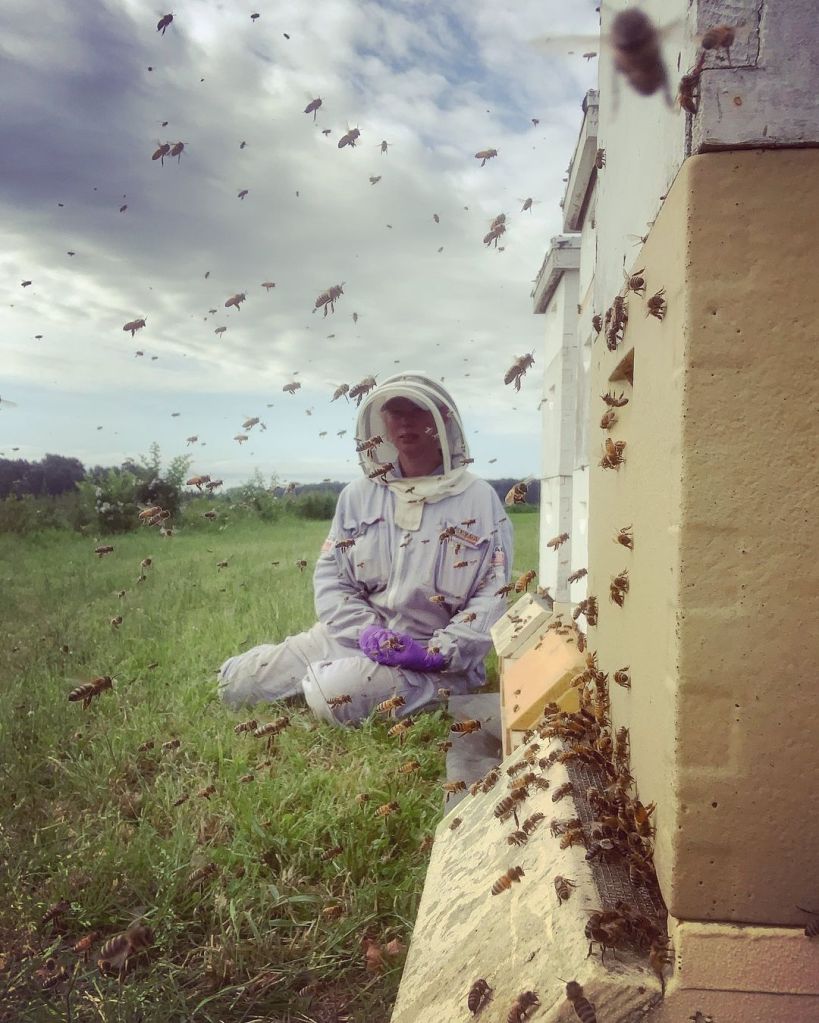
photo from Andrea from Z’s Happy Bees
What does the bee do?
Bring home honey.
And what does Father do?
Bring home money.
And what does Mother do?
Lay out the money.
And what does baby do?
Eat up the honey.
~Christina Rossetti

One-Time
Monthly
Yearly

Make a one-time or recurring donation to support daily Barnstorming posts

Make a monthly donation

Make a yearly donation

Choose an amount

¤5.00
¤10.00
¤20.00
¤5.00
¤15.00
¤100.00
¤5.00
¤15.00
¤100.00

Or enter a custom amount

¤

Your contribution is deeply appreciated.

Your contribution is appreciated.

Your contribution is appreciated.

DonateDonate monthlyDonate yearly