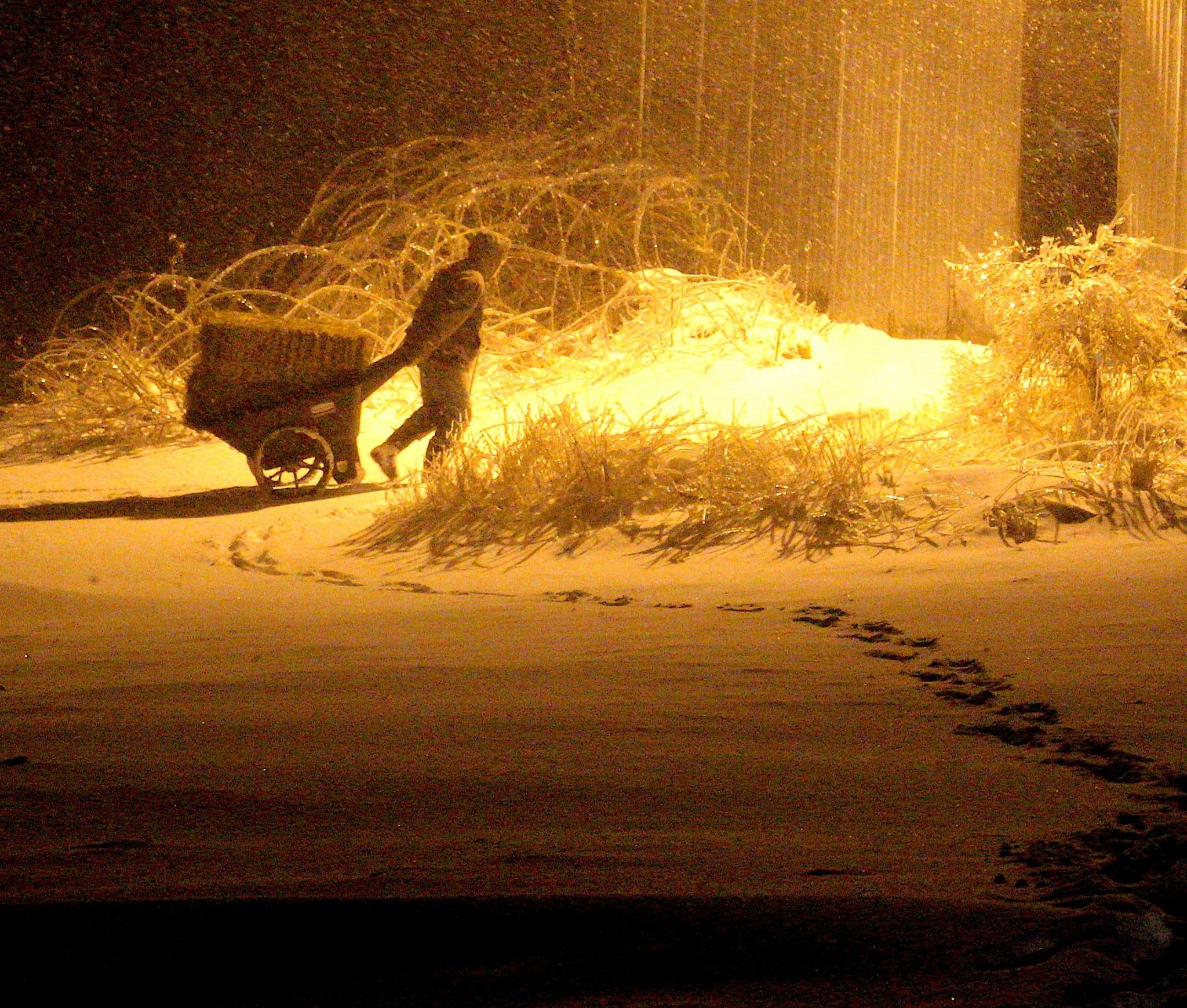
Announced by all the trumpets of the sky, Arrives the snow, and, driving o’er the fields, Seems nowhere to alight: the whited air Hides hills and woods, the river, and the heaven, And veils the farm-house at the garden’s end. The sled and traveller stopped, the courier’s feet Delayed, all friends shut out, the housemates sit Around the radiant fireplace, enclosed In a tumultuous privacy of storm.
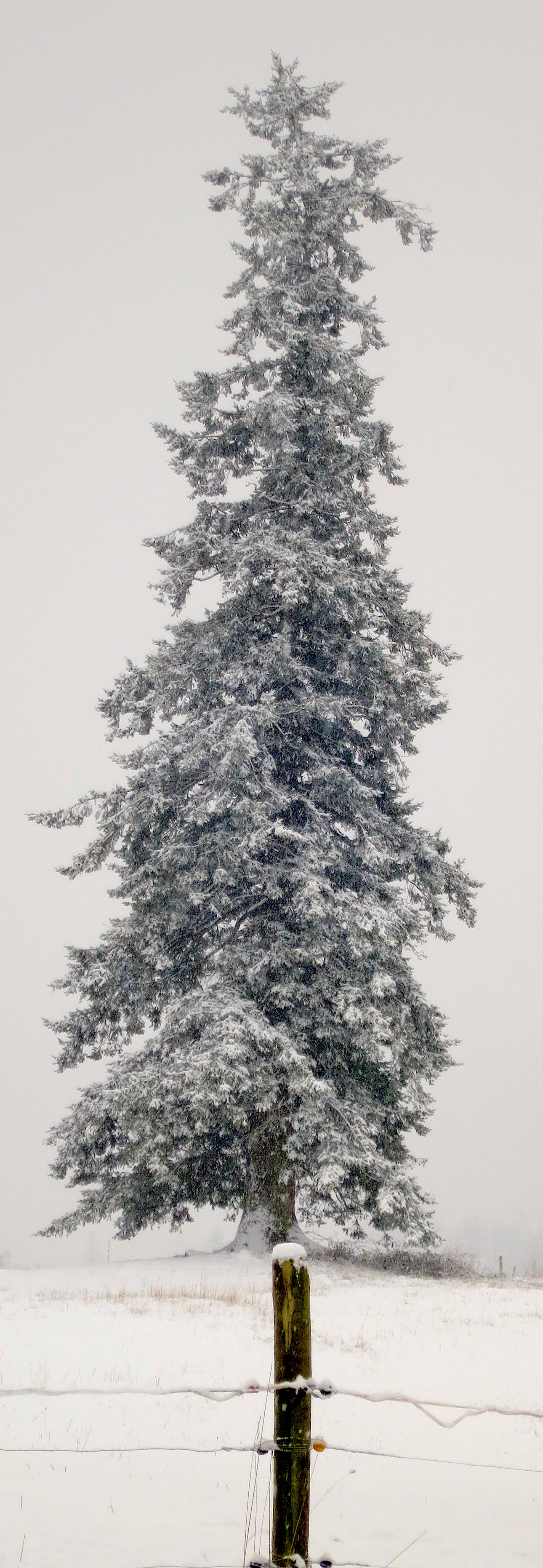
Come see the north wind’s masonry. Out of an unseen quarry evermore Furnished with tile, the fierce artificer Curves his white bastions with projected roof Round every windward stake, or tree, or door.
Built in an age, the mad wind’s night-work, The frolic architecture of the snow. ~Ralph Waldo Emerson from “The Snow-Storm”
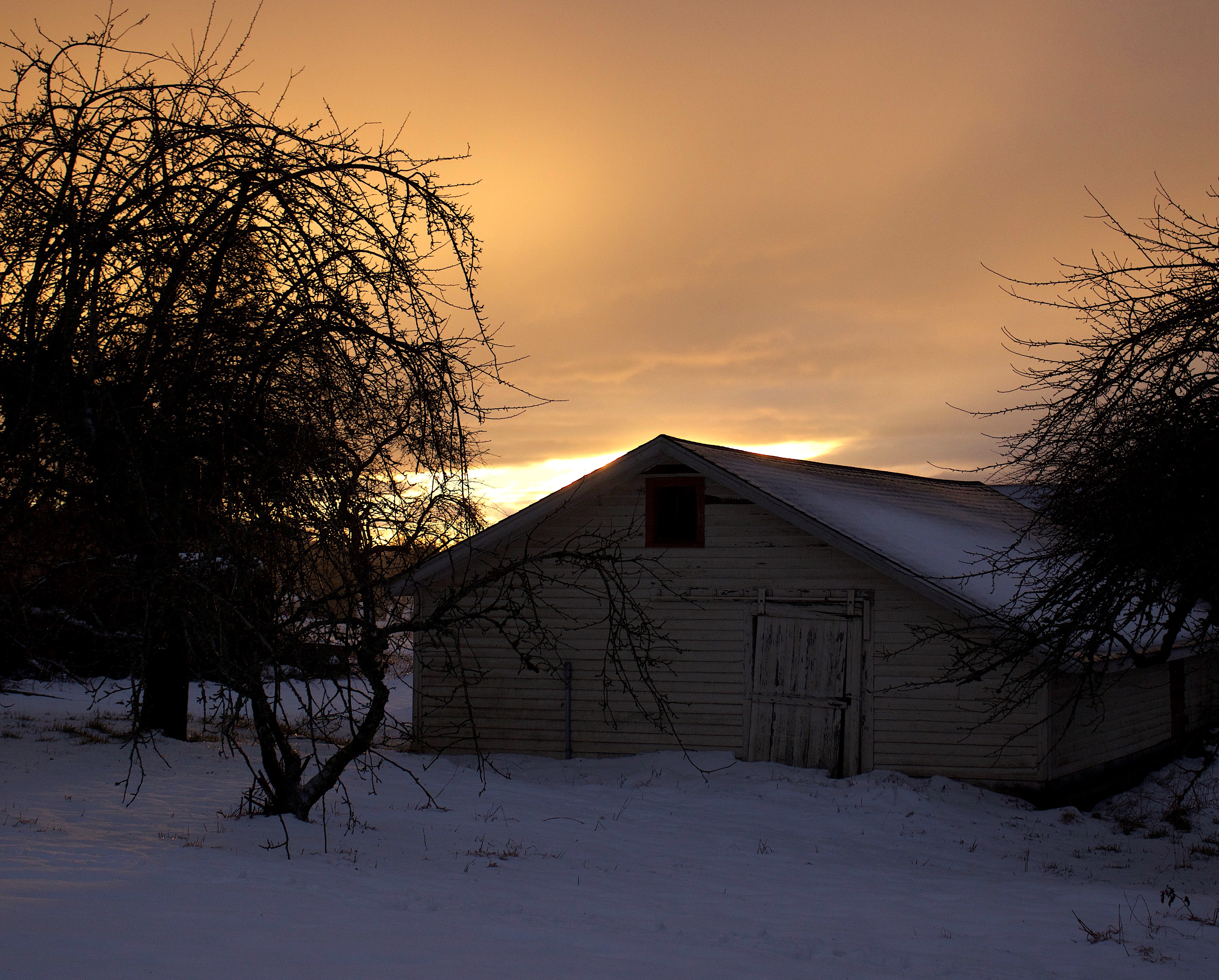
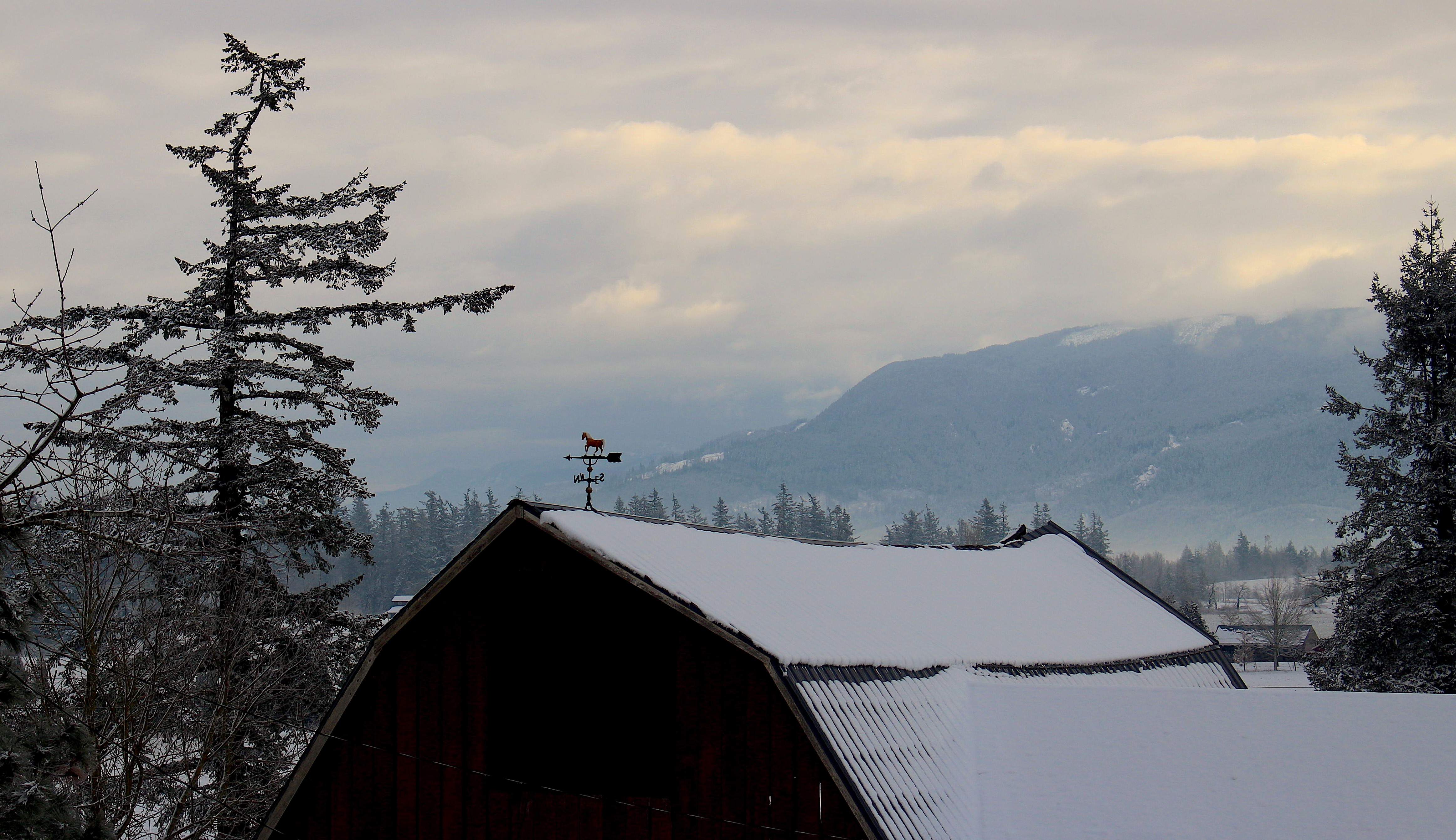
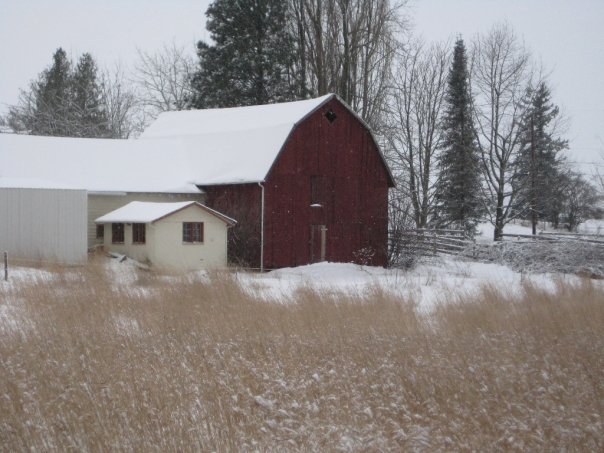
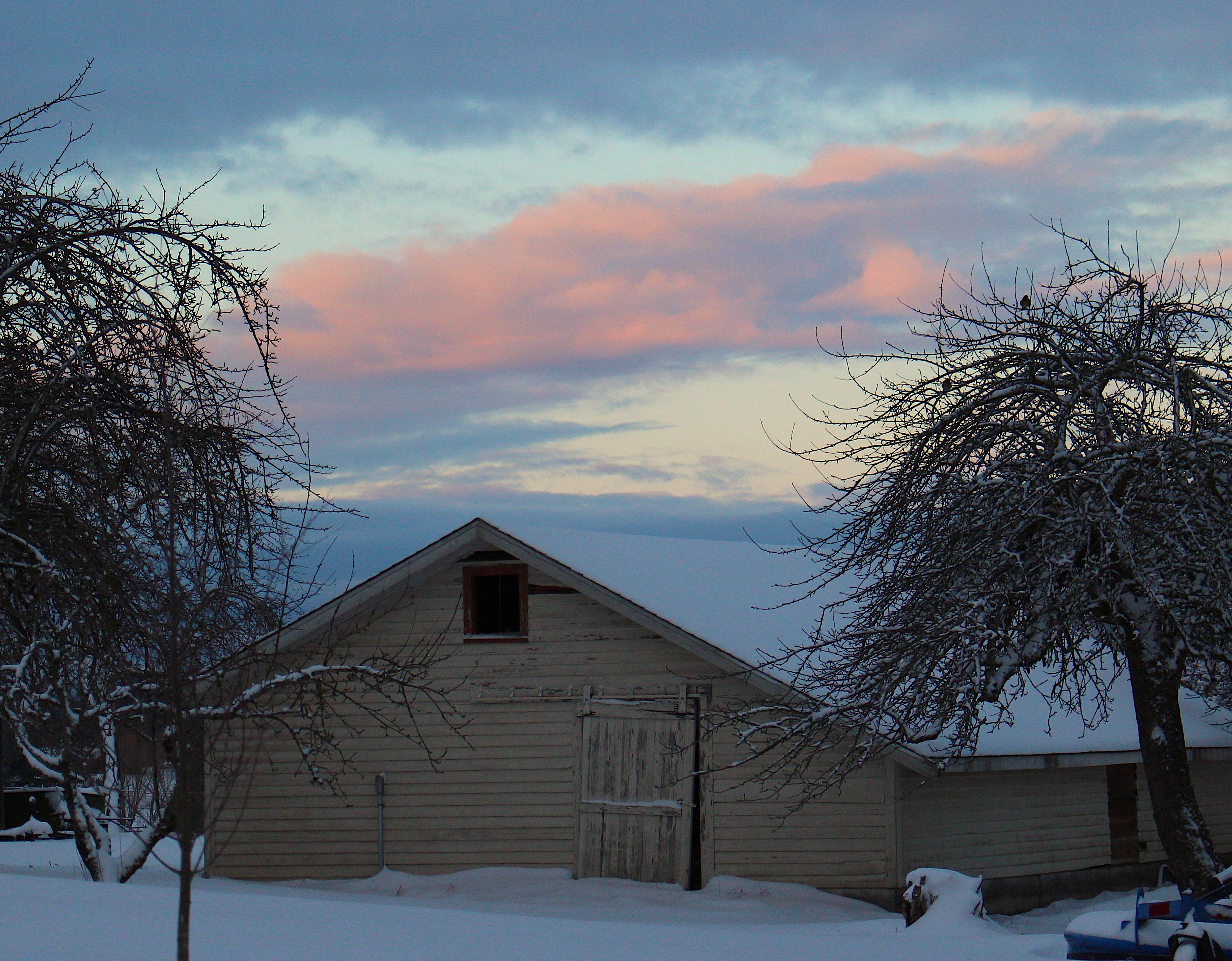
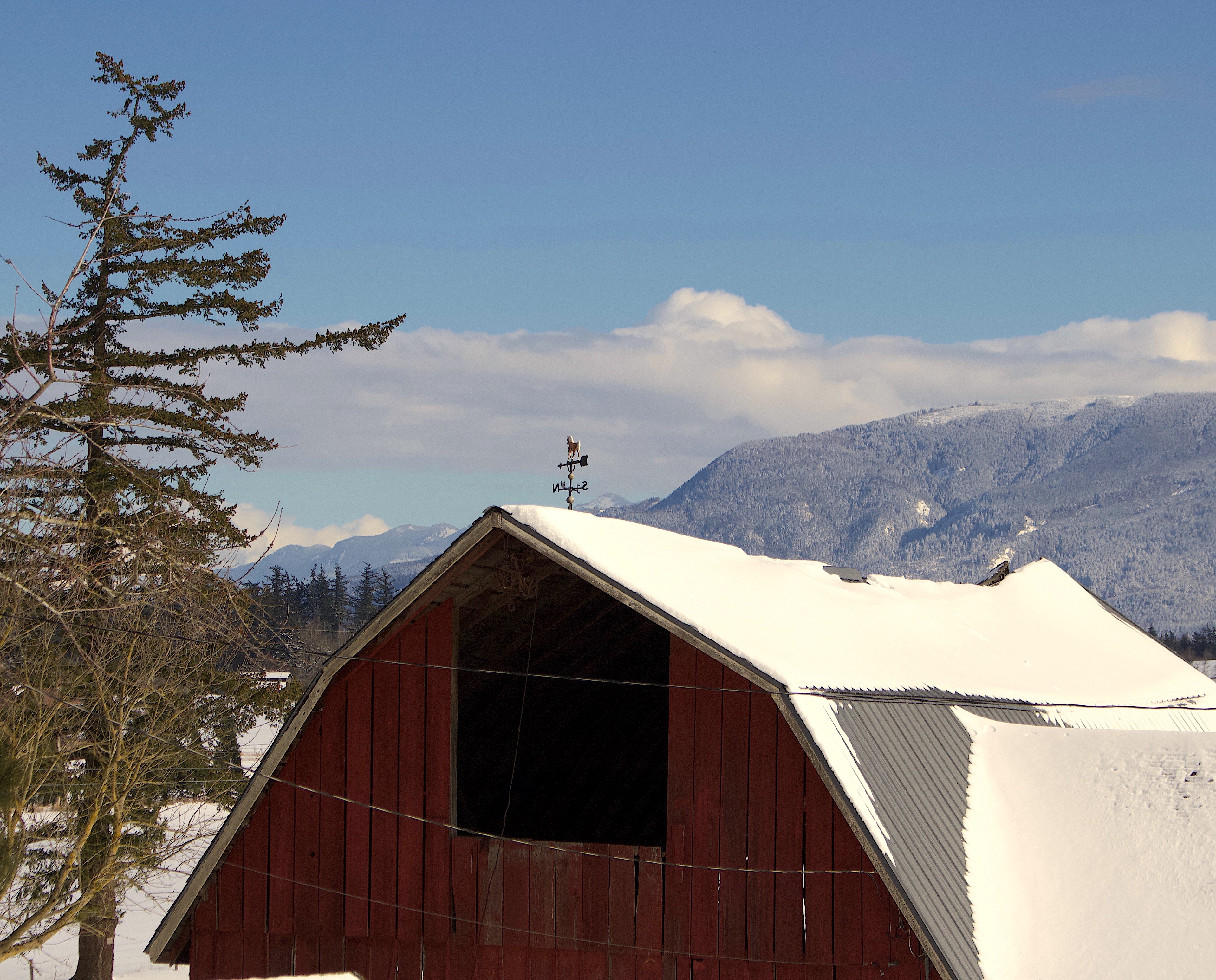
The barn bears the weight of the first heavy snow without complaint.
White breath of cows rises in the tie-up, a man wearing a frayed winter jacket reaches for his milking stool in the dark.
The cows have gone into the ground, and the man, his wife beside him now.
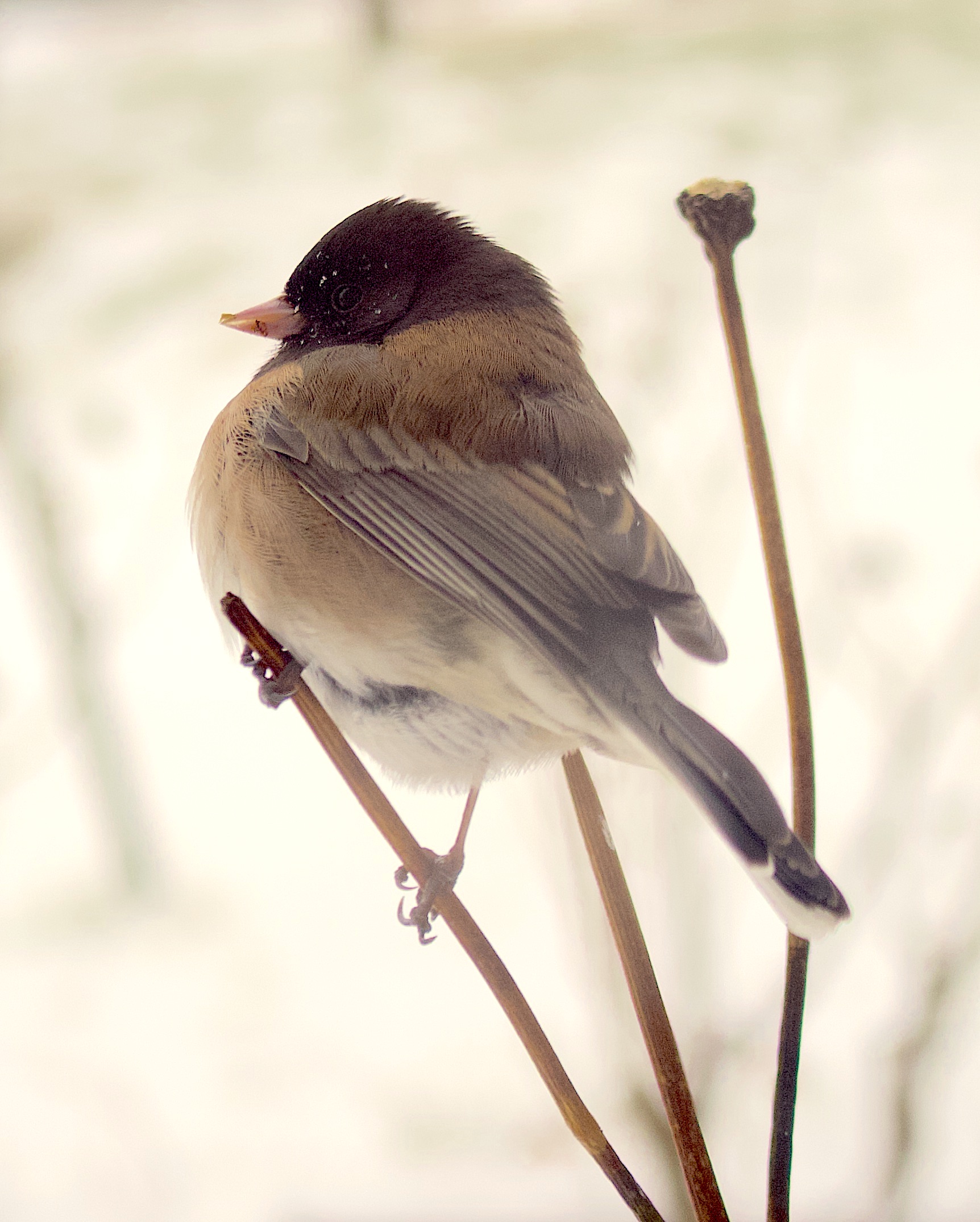
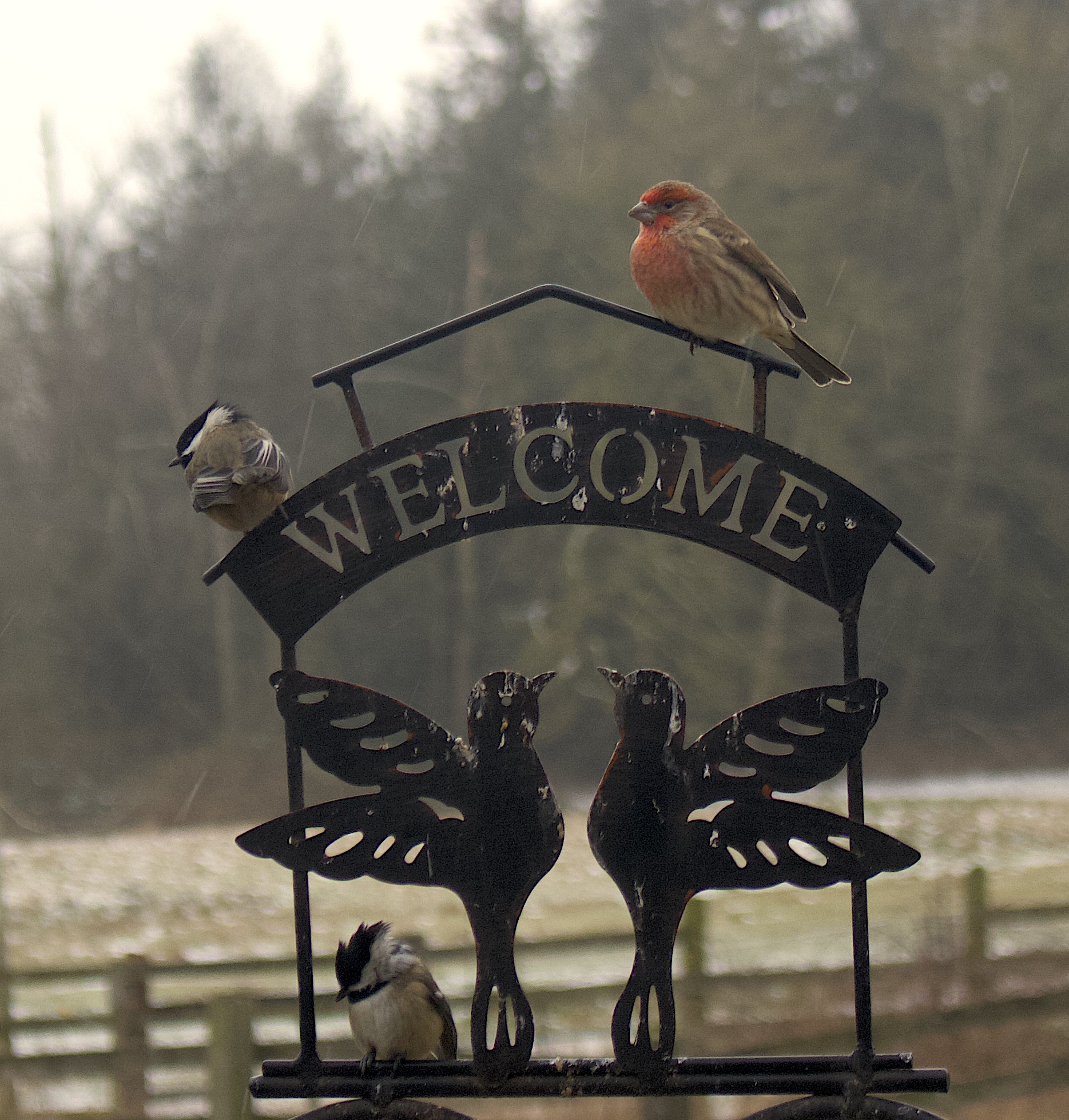
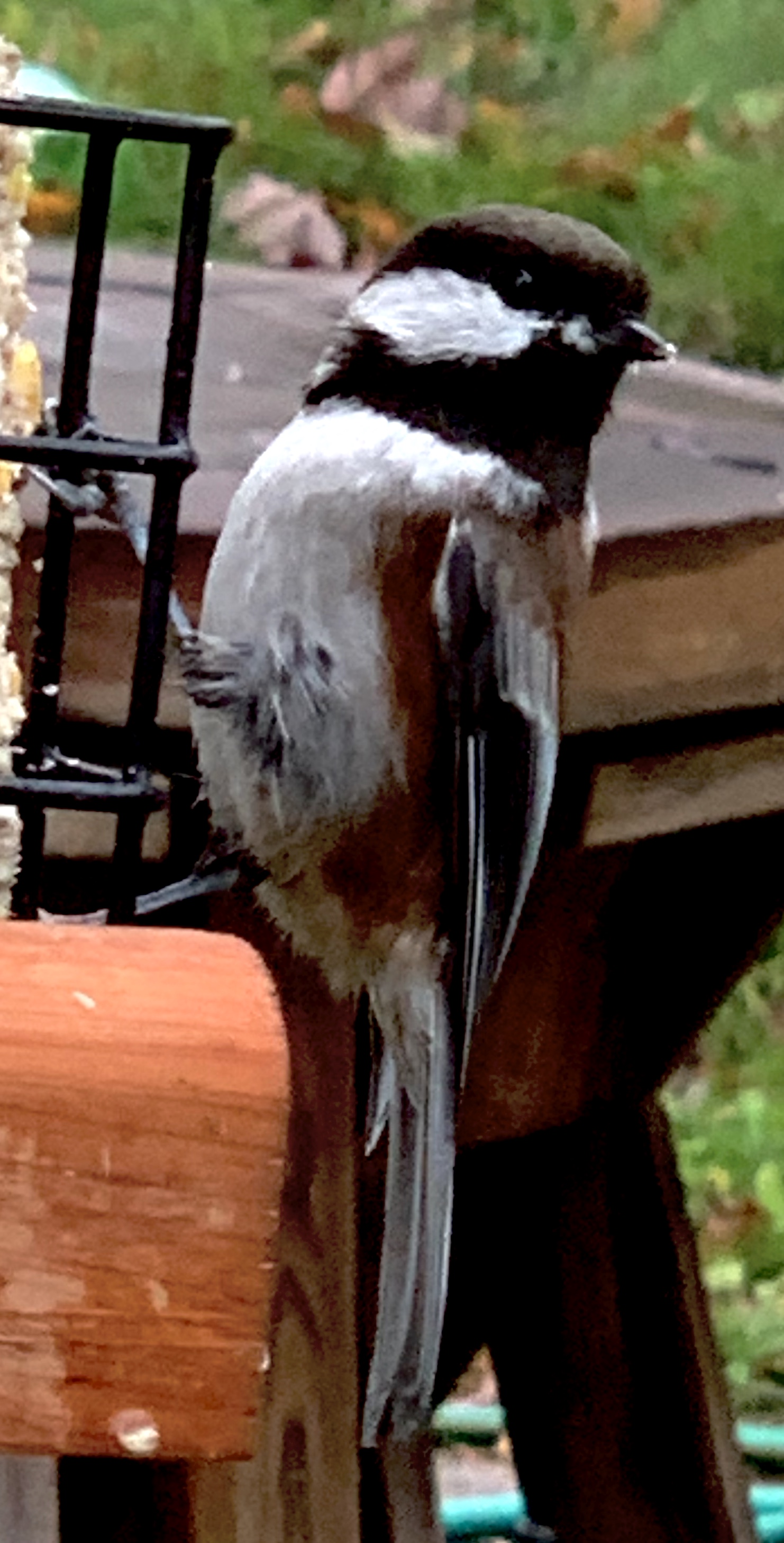
A nuthatch drops to the ground, feeding on sunflower seed and bits of bread I scattered on the snow.
The cats doze near the stove. They lift their heads as the plow goes down the road, making the house tremble as it passes. ~Jane Kenyon “This Morning”
We’ve seen harsher northeast winds, we’ve seen heavier snow. Yet there is something refreshingly disruptive about the once or twice a year overnight snow storm: it transforms, transcends and transfigures.
So we stay home when the weather and farms demand we do, to feed and water ourselves and our animals and the wild ones around us. It is a quiet and private and tumultuous time, a time to be attuned to one another.
I wanted a horse. This was long after we sold the work horses, and I was feeling
restless on the farm. I got up early to help my father milk the cows, talking
a blue streak about TV cowboys he never had time to see and trying to
convince him that a horse wouldn’t cost so much and that I’d do all the work.
He listened while he leaned his head against the flank of a Holstein, pulling
the last line of warm milk into the stainless bucket. He kept listening
while the milk-machine pumped like an engine, and the black and silver cups fell off and
dangled down, clanging like bells when he stepped away, balancing the heavy milker
against the vacuum hose and the leather belt. I knew he didn’t want the trouble
of a horse, but I also knew there was nothing else I wanted the way I wanted a horse—
another way of saying I wanted to ride into the sunset and (maybe)
never come back—I think he knew that too. We’ll see, he said, we’ll see what we can do. ~Joyce Sutphen “What Every Girl Wants”
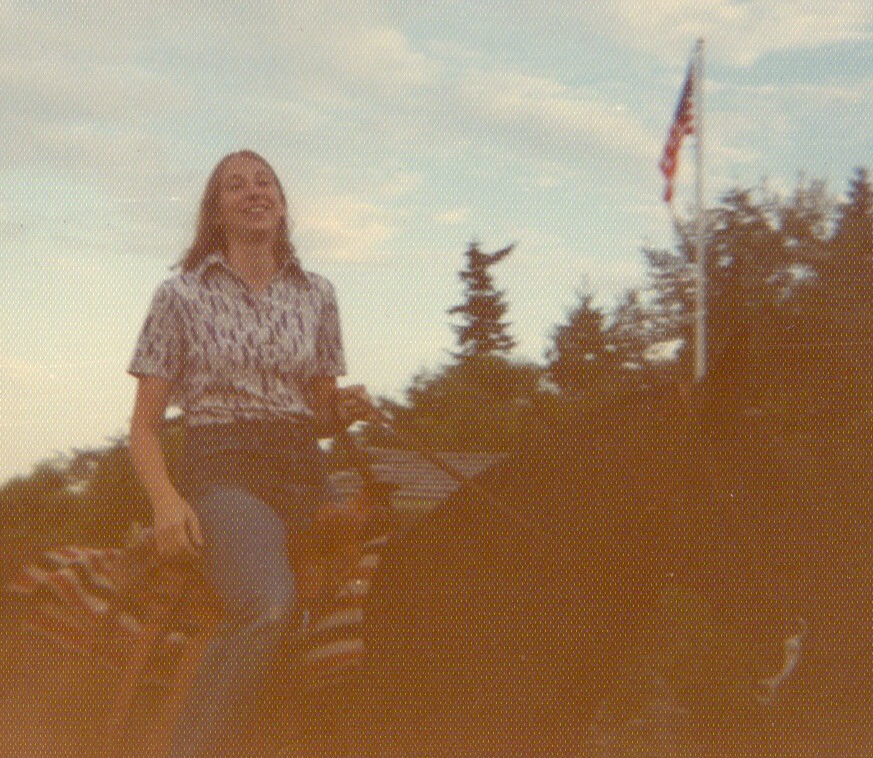
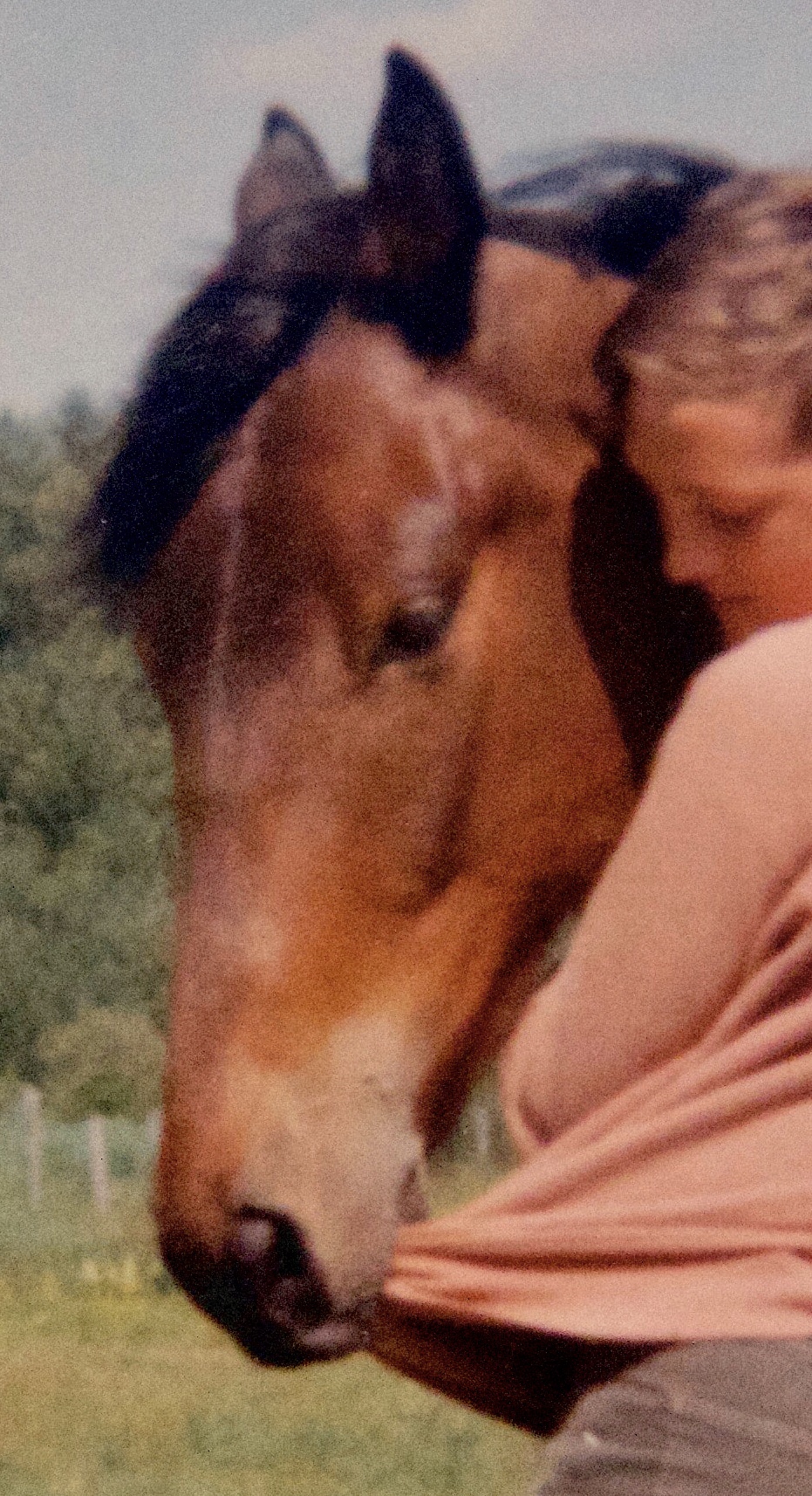
I once was a skinny freckled eleven year old girl who wanted nothing more than to have her own horse. Every inch of my bedroom wall had posters of horses, all my shelves were filled with horse books and horse figurines and my bed was piled with stuffed horses. I suffered an extremely serious case of horse fever.
I had learned to ride my big sister’s horse while my sister was off to college, but the little mare had pushed down a hot wire to get into a field of spring oats which resulted in a terrible case of colic and had to be put down. I was inconsolable until I set my mind to buy another horse. We had only a small shed, not a real barn, and no actual fences other than the electric hot wire. Though I was earning money as best I could picking berries and babysitting, I was a long way away from the $150 it would take to buy a trained horse back in 1965. I pestered my father about my dreams of another horse, and since he was the one to dig the hole for my sister’s horse to be buried, he was not enthusiastic. “We’ll see,” he said. “We will see what we can do.”
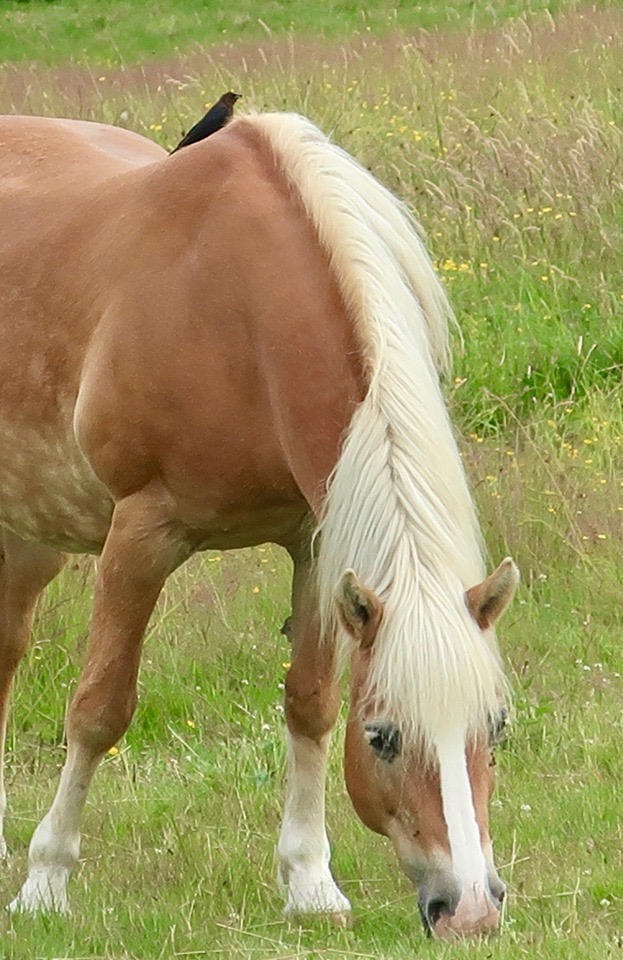
So I dreamed my horsey dreams, mostly about golden horses with long white manes, hoping one day those dreams might come true.
In fall 1965, the local radio station KGY’s Saturday morning horse news program announced their “Win a Horse” contest. I knew I had to try. The prize was a weanling bay colt, part Appaloosa, part Thoroughbred, and the contest was only open to youth ages 9 to 16 years old. All I had to do was write a 250 word or less essay on “Why I Should Have a Horse”. I worked and worked on my essay, crafting the right words and putting all my heart into it, hoping the judges would see me as a worthy potential owner. My parents took me to visit the five month old colt named “Prankster”, a fuzzy engaging little fellow who was getting plenty of attention from all the children coming to visit him, and that visit made me even more determined.
When I read these words now, I realize there is nothing quite like the passion of an eleven year old girl:
“Why I Should Have a Horse”
When God created the horse, He made one of the best creatures in the world. Horses are a part of me. I love them and want to win Prankster for the reasons which follow:
To begin with, I’m young enough to have the time to spend with the colt. My older sister had a horse when she was in high school and her school activities kept her too busy to really enjoy the horse. I’ll have time to give Prankster the love and training needed.
Another reason is that I’m shy. When I was younger I found it hard to talk to anybody except my family. When my sister got the horse I soon became a more friendly person. When her horse recently died (about when Prankster was born), I became very sad. If I could win that colt, I couldn’t begin to describe my happiness.
Also I believe I should have a horse because it would be a good experience to learn how to be patient and responsible while teaching Prankster the same thing.
When we went to see Prankster, I was invited into the stall to brush him. I was never so thrilled in my life! The way he stood there so majestically, it told me he would be a wonderful horse.
If I should win him, I would be the happiest girl alive. I would work hard to train him with love and understanding. If I could only get the wonderful smell and joy of horses back in our barn!
I mailed in my essay and waited.
Fifty four years ago on this day, November 27, 1965, my mother and I listened to the local horse program that was always featured on the radio at 8 AM on Saturday mornings. They said they had over 300 essays to choose from, and it was very difficult for them to decide who the colt should go to. I knew then I didn’t have a chance. They had several consolation prizes for 2nd through 4th place, so they read several clever poems and heartfelt essays, all written by teenagers. My heart was sinking by the minute.
The winning essay was next. The first sentence sounded very familiar to me, but it wasn’t until several sentences later that we realized they were reading my essay, not someone else’s. My mom was speechless, trying to absorb the hazards of her little girl owning a young untrained horse. I woke up my dad, who was sick in bed with an early season flu. He opened one eye, looked at me, and said, “I guess I better get a fence up today, right?” Somehow, fueled by the excitement of a daughter whose one wish had just come true, he pulled himself together and put up a wood corral that afternoon, despite feeling so miserable.
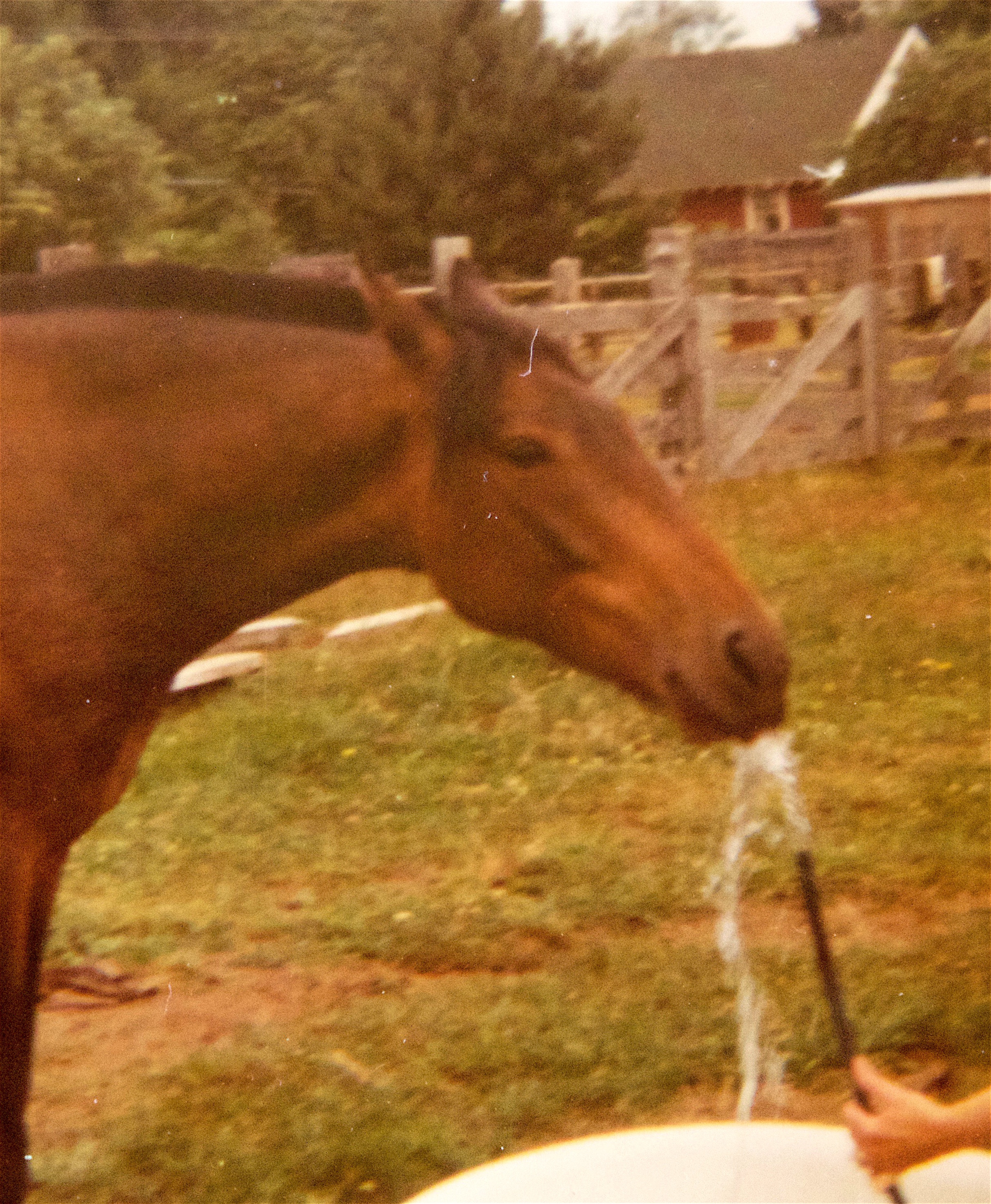
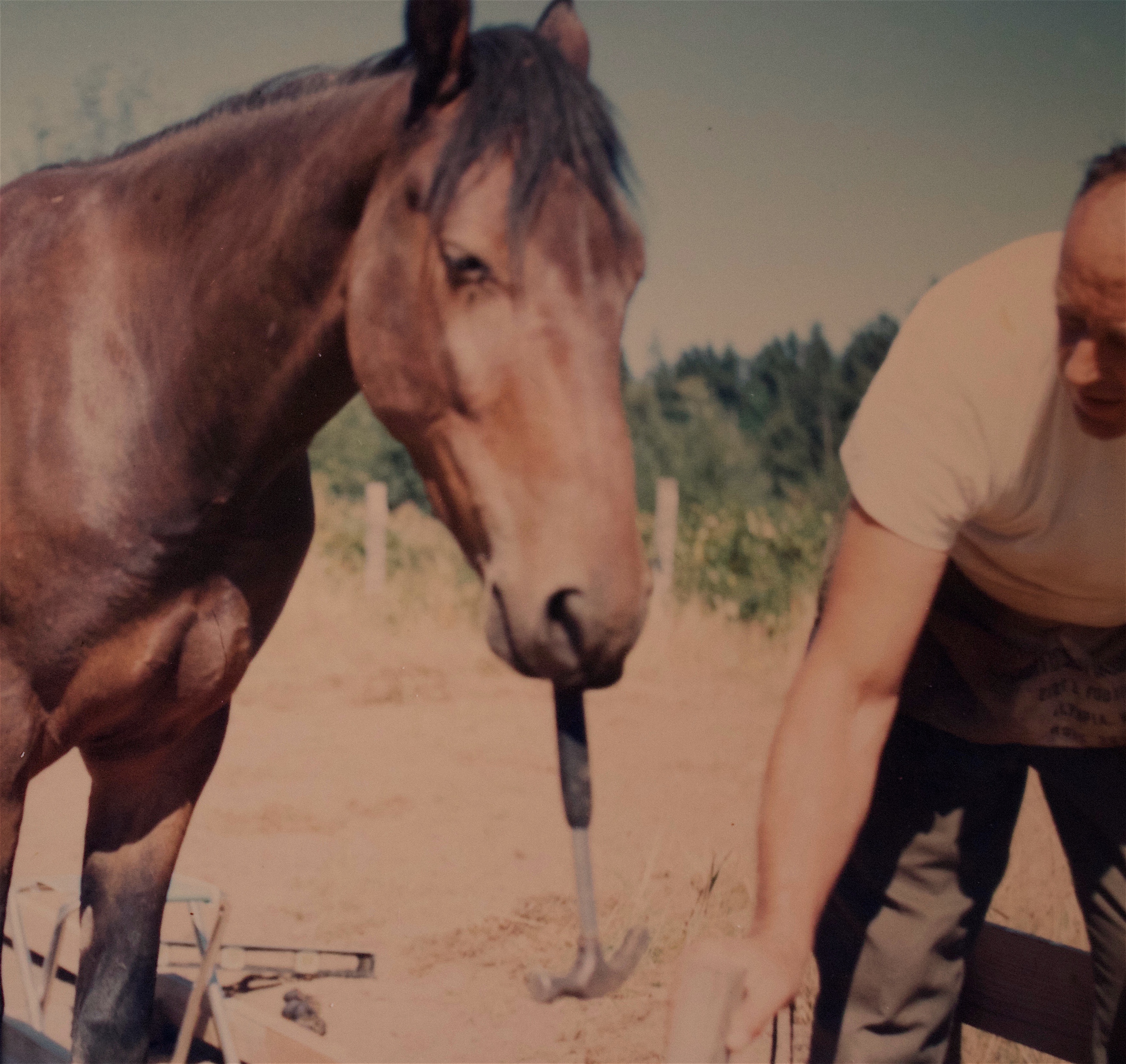
That little bay colt came home to live with me the next day. Over the next few months he and I did learn together, as I checked out horse training books from the library, and joined a 4H group with helpful leaders to guide me. I made plenty of mistakes along the way, learning from each one, including those that left behind scars I still bear. Prankster was a typical adolescent gelding who lived up to his name — full of mischief with a sense of humor and a penchant for finding trouble, but he was mine and that was all that mattered.
That and a dad who saw what he needed to do for his passionate kid. I’ll never forget.
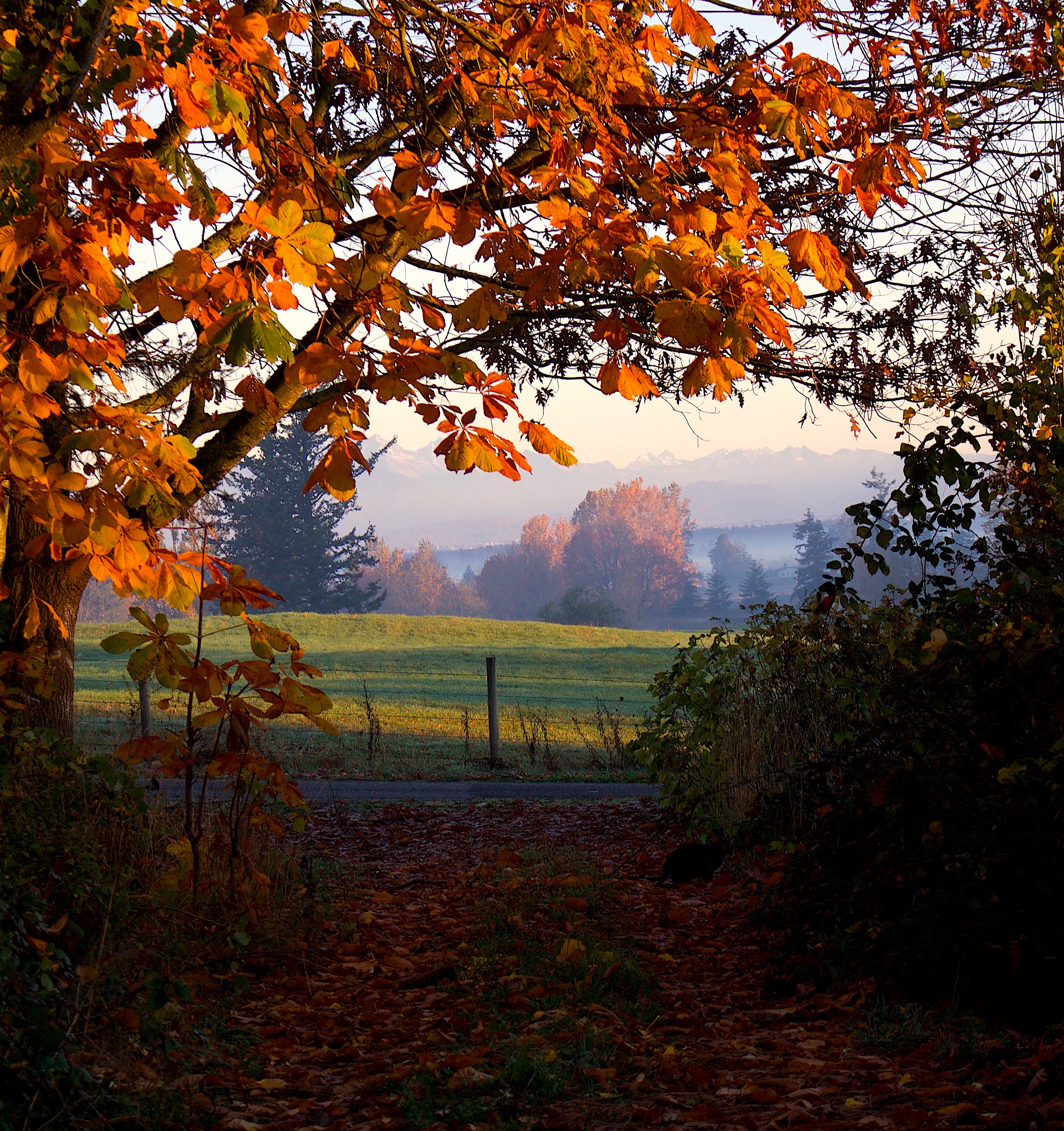
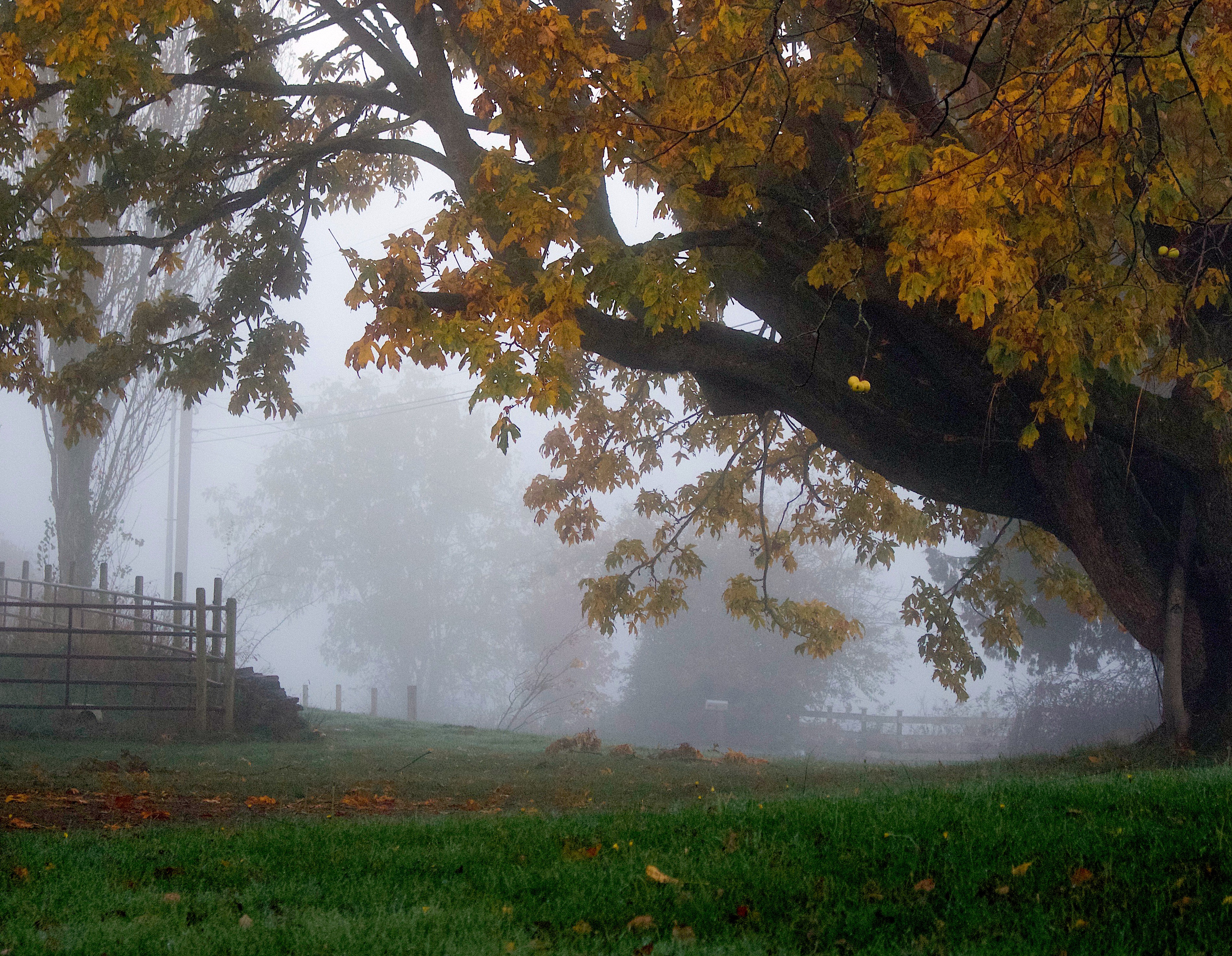
It will not always be like this, The air windless, a few last Leaves adding their decoration To the trees’ shoulders, braiding the cuffs Of the boughs with gold; a bird preening
In the lawn’s mirror. Having looked up From the day’s chores, pause a minute, Let the mind take its photograph Of the bright scene, something to wear Against the heart in the long cold. ~Ronald Stuart Thomas A Day in Autumn
Autumn farm chores are good for the weary heart.
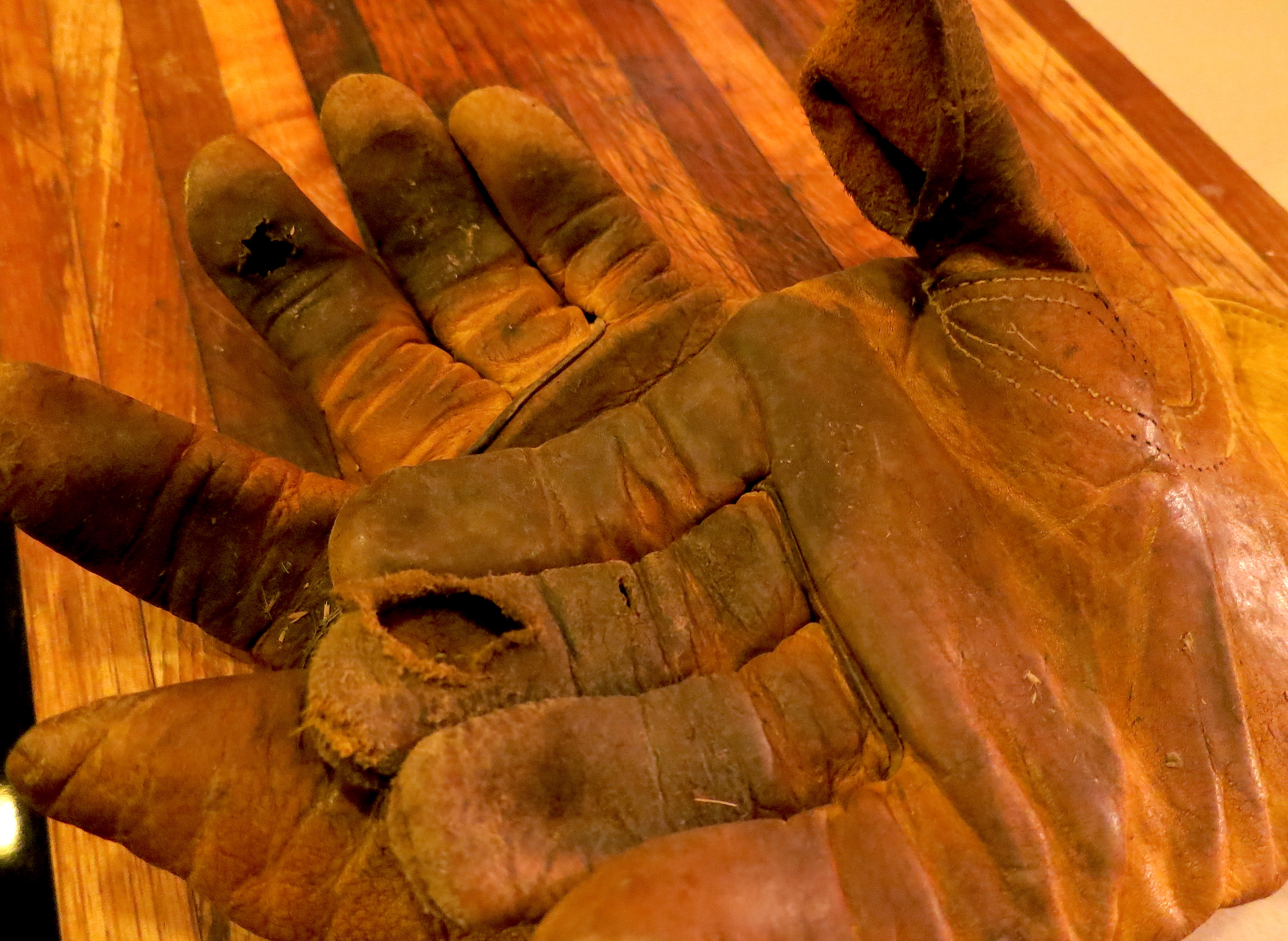
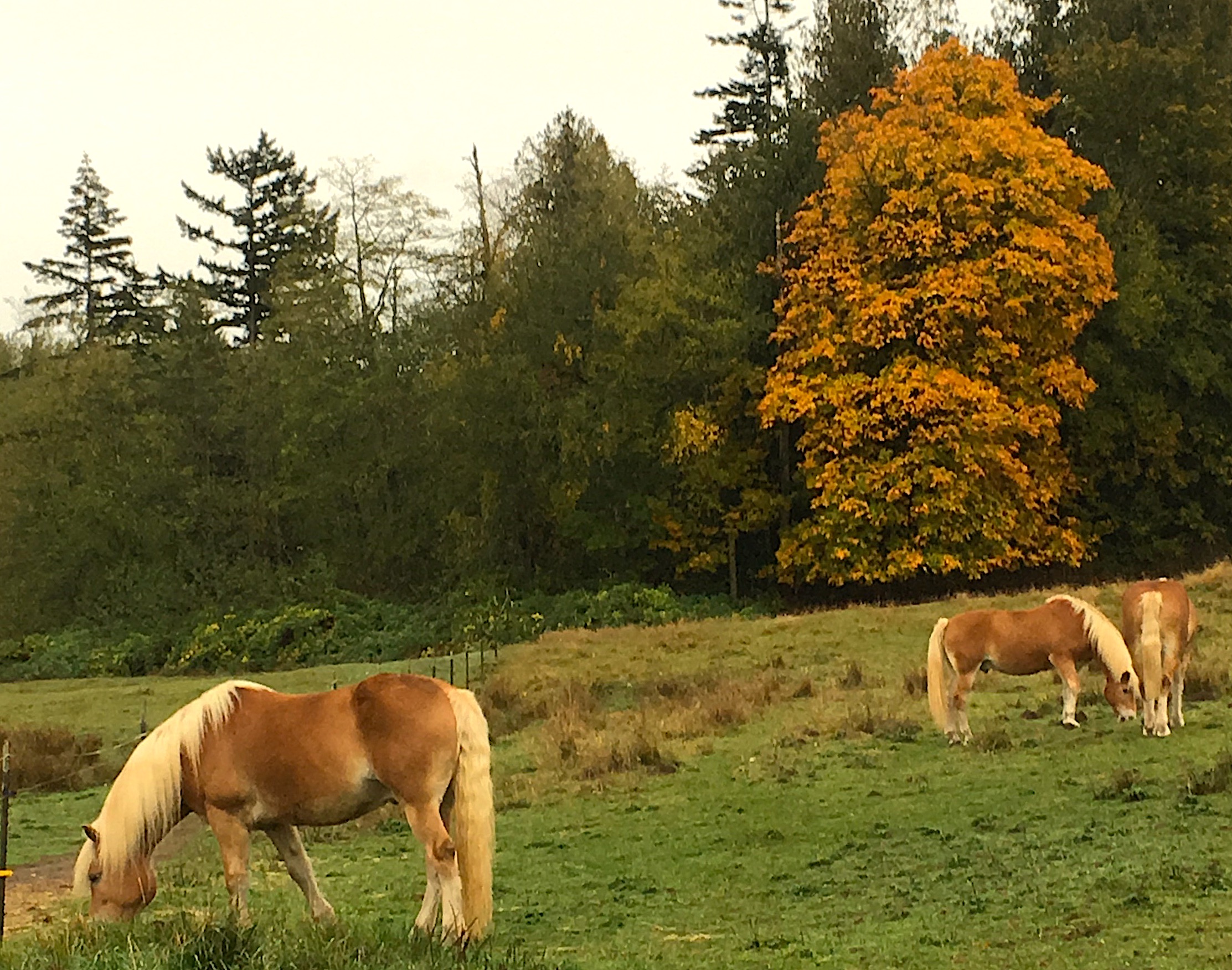
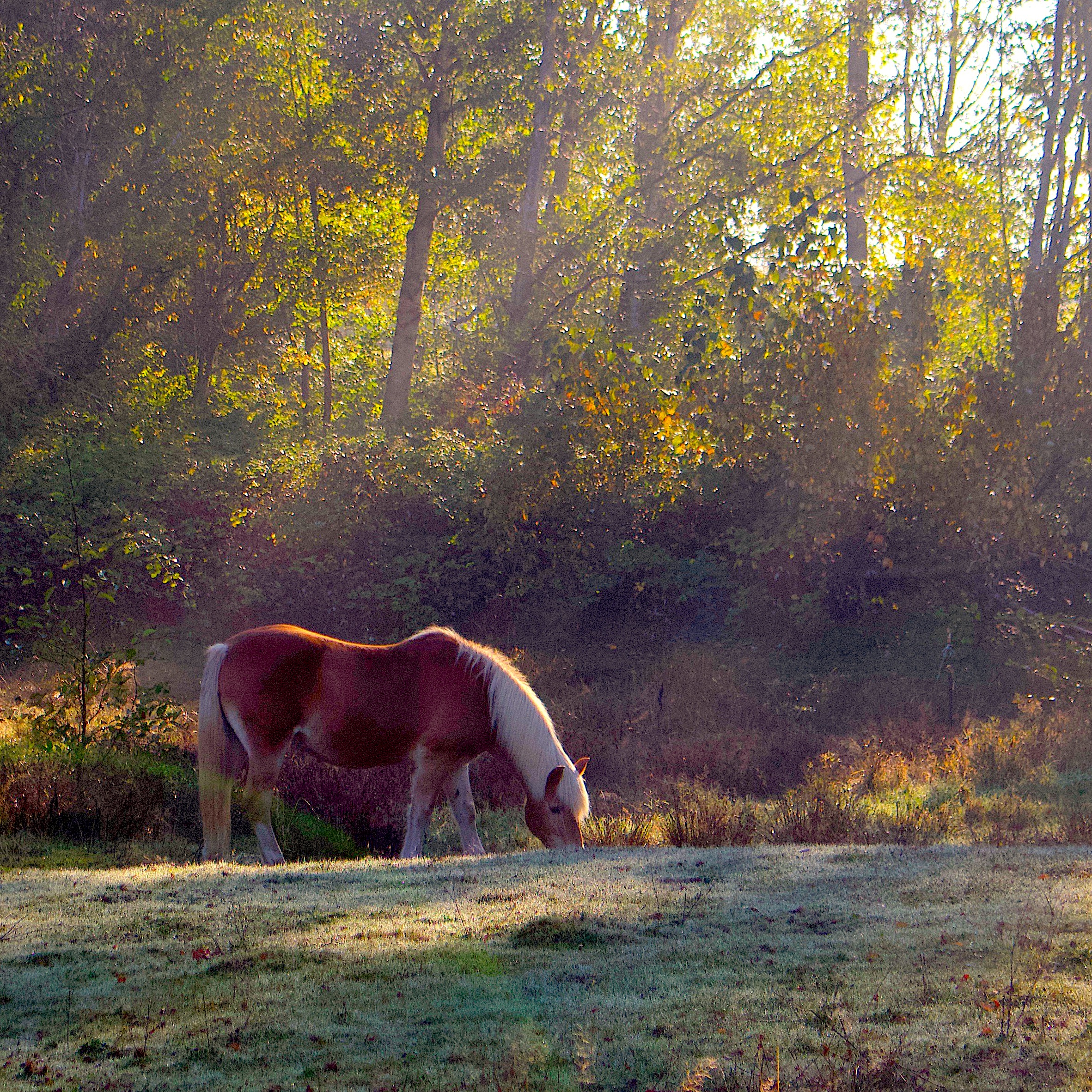
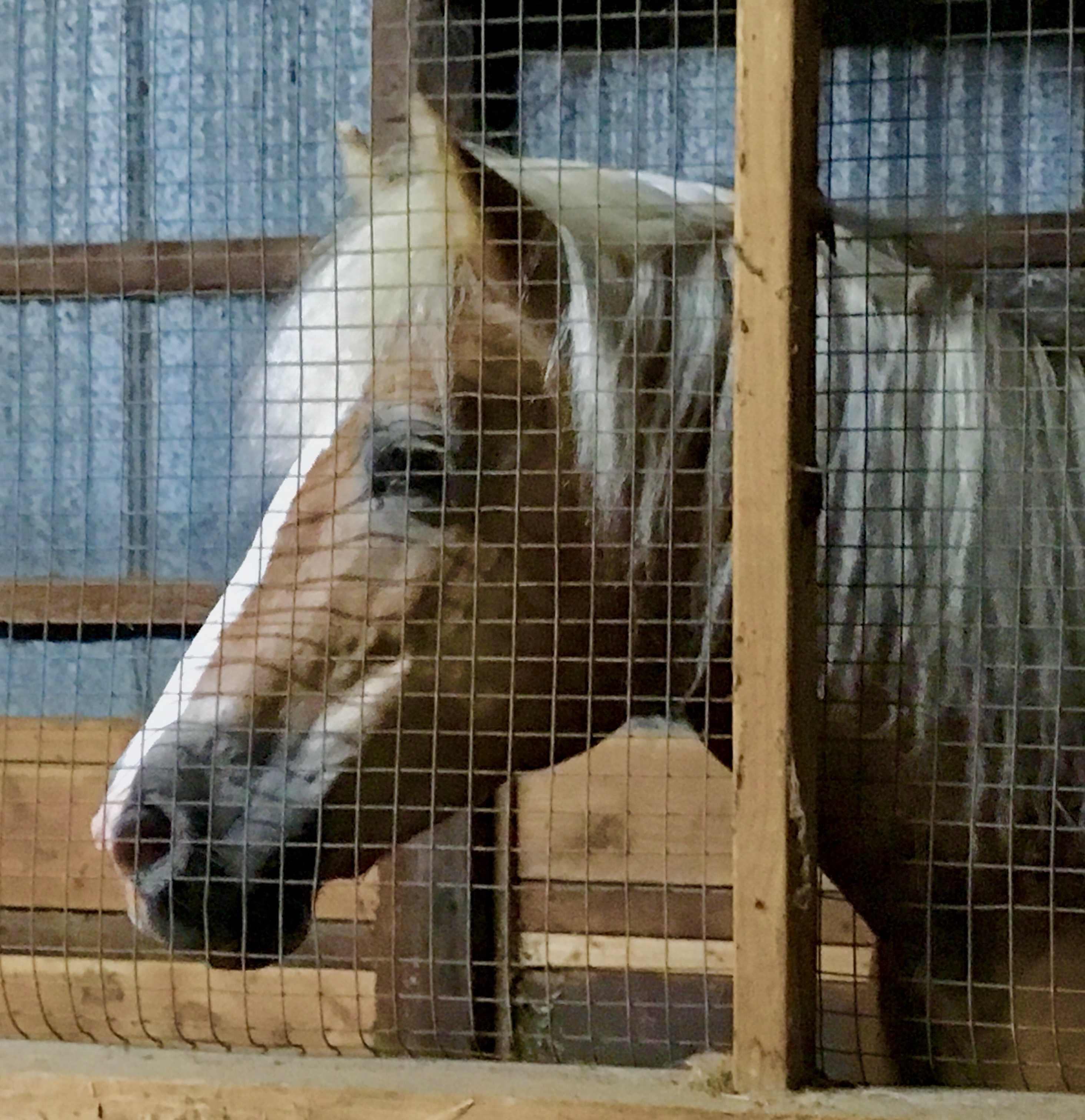
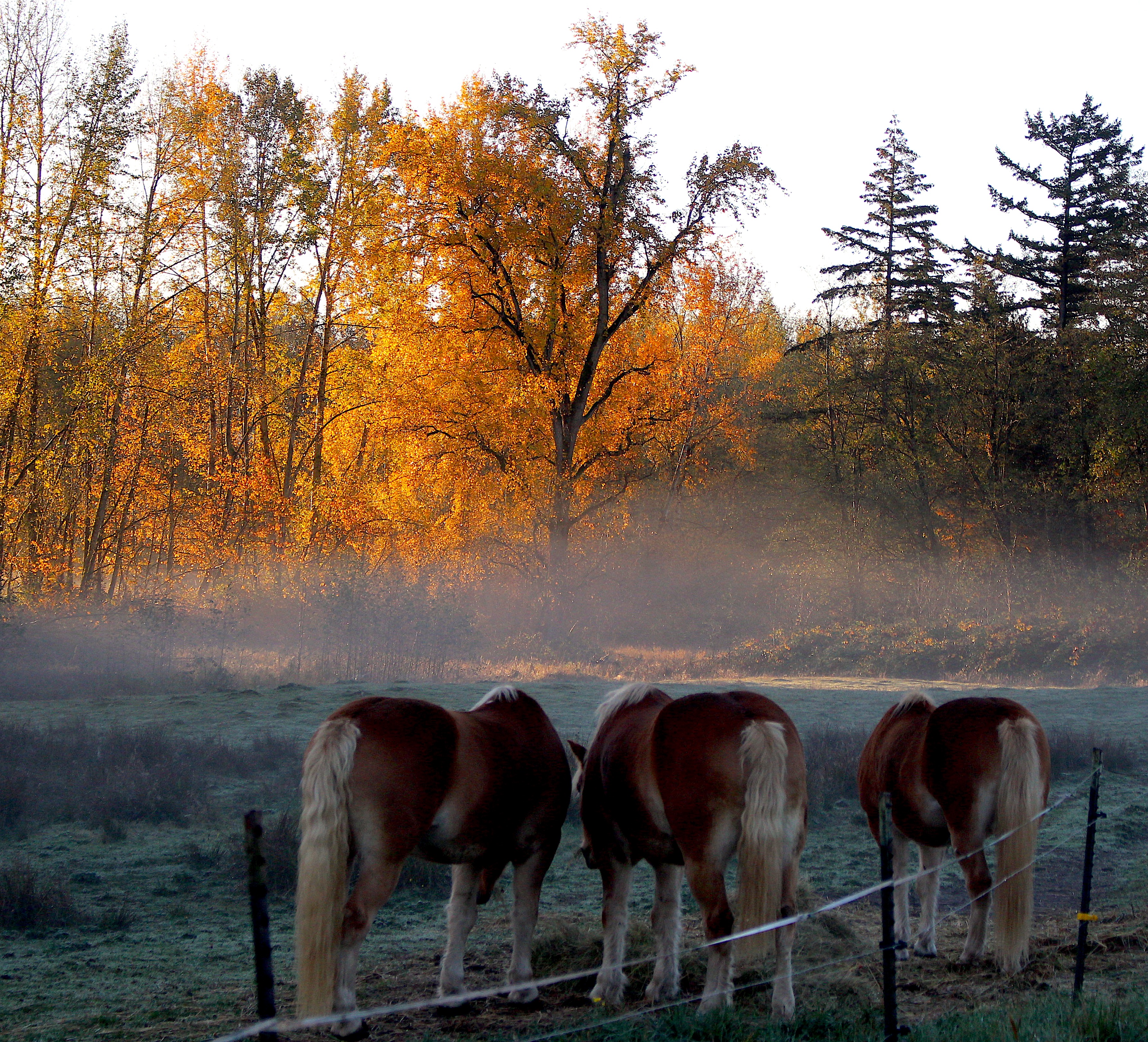
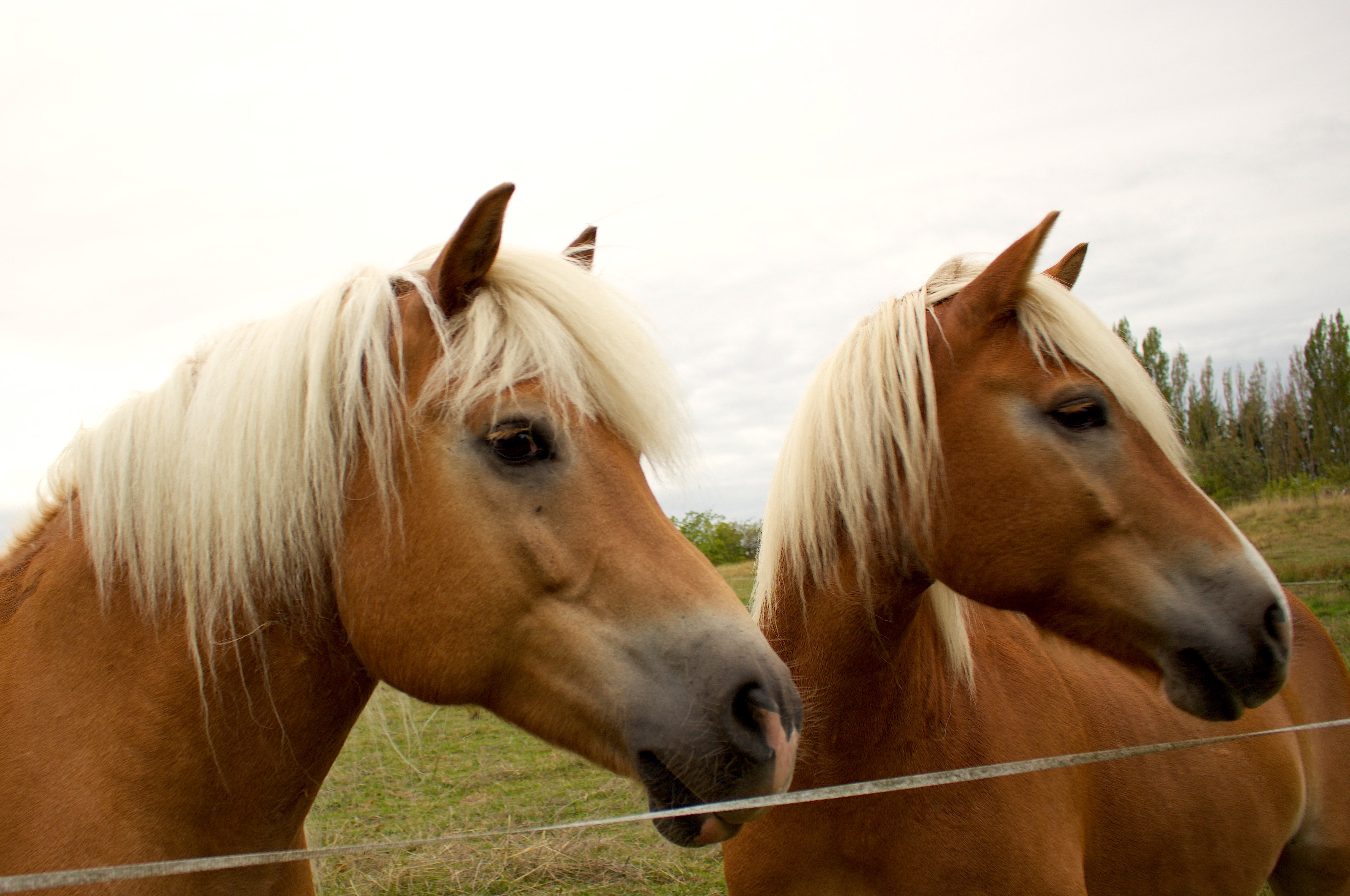
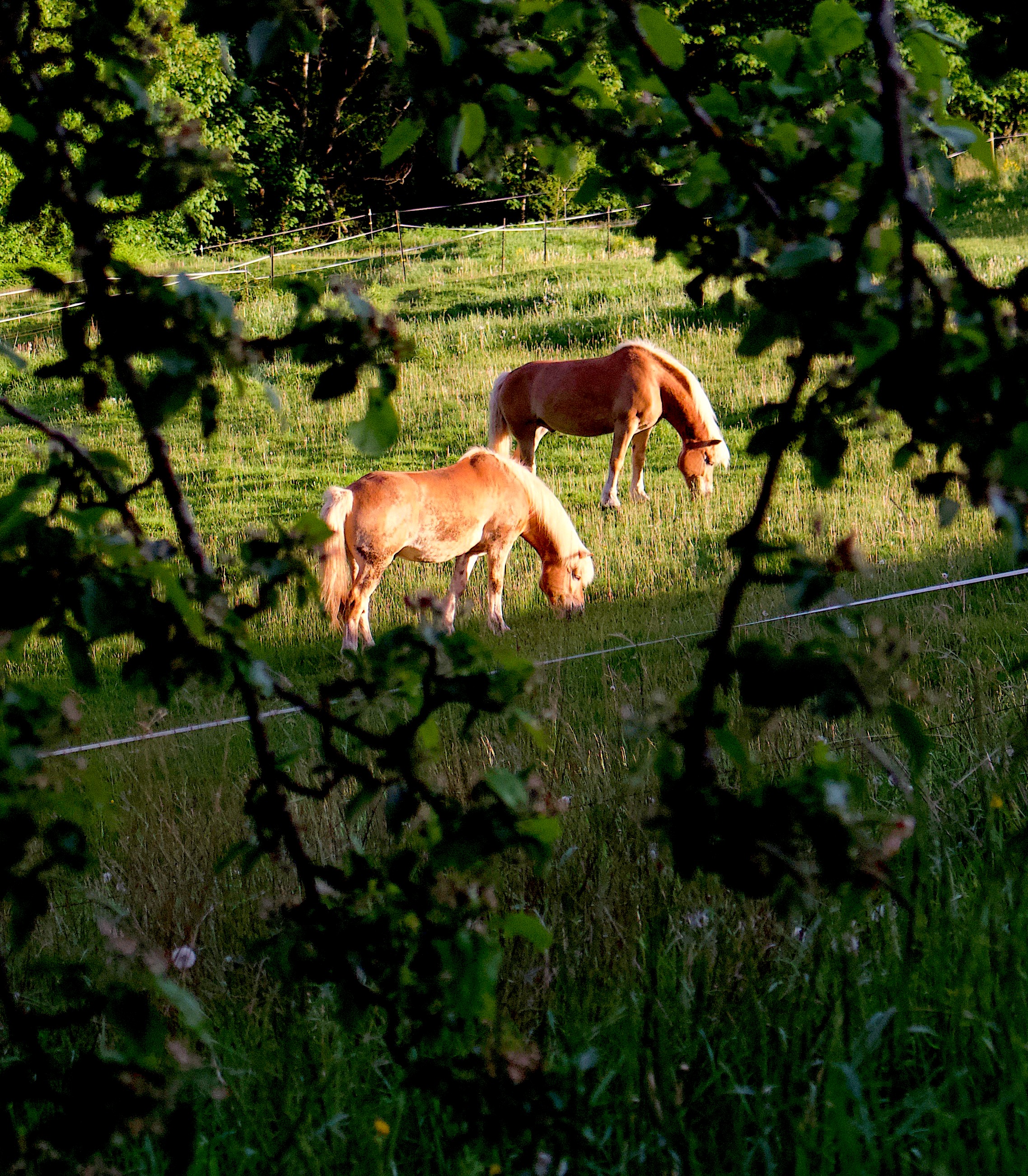
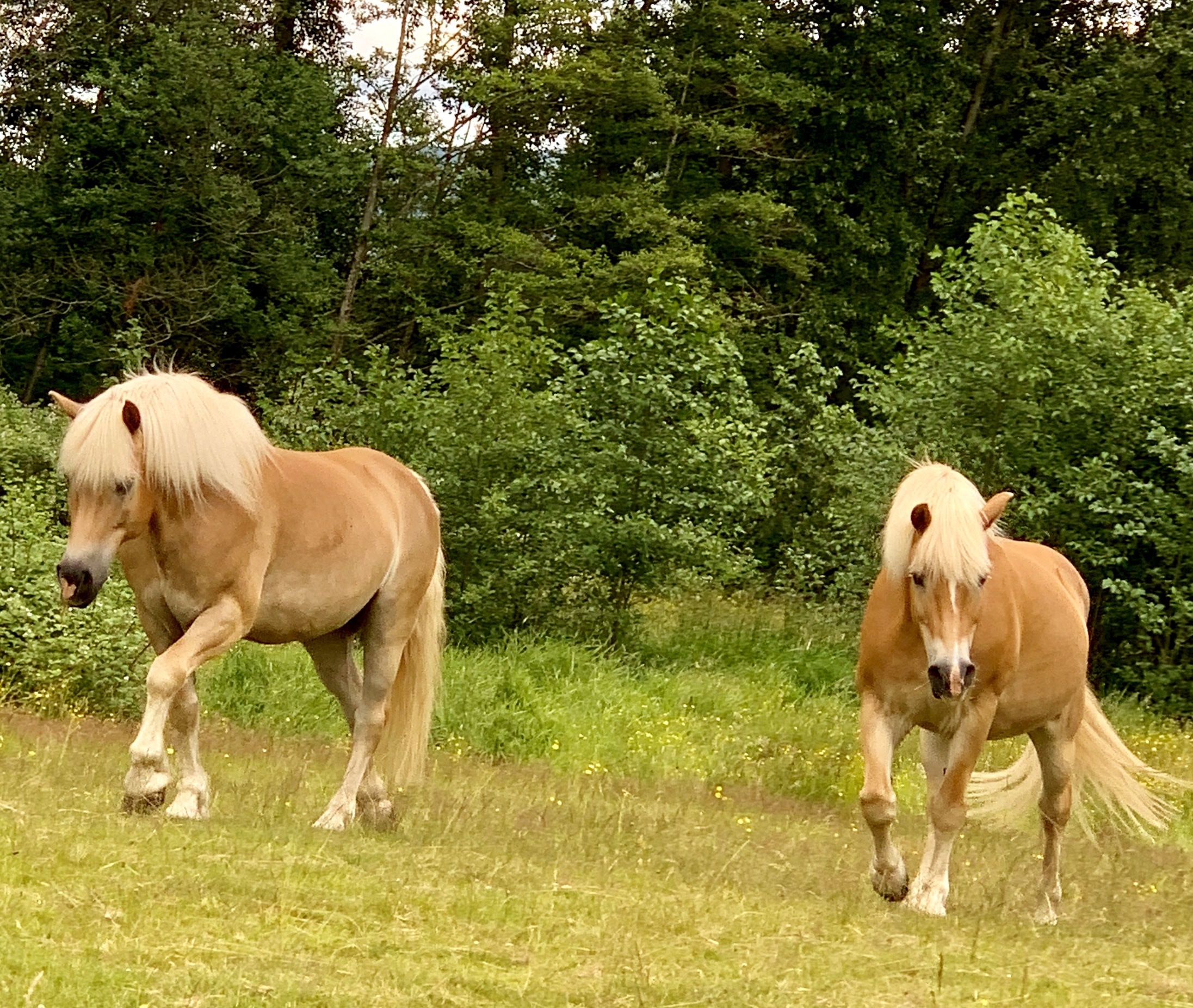
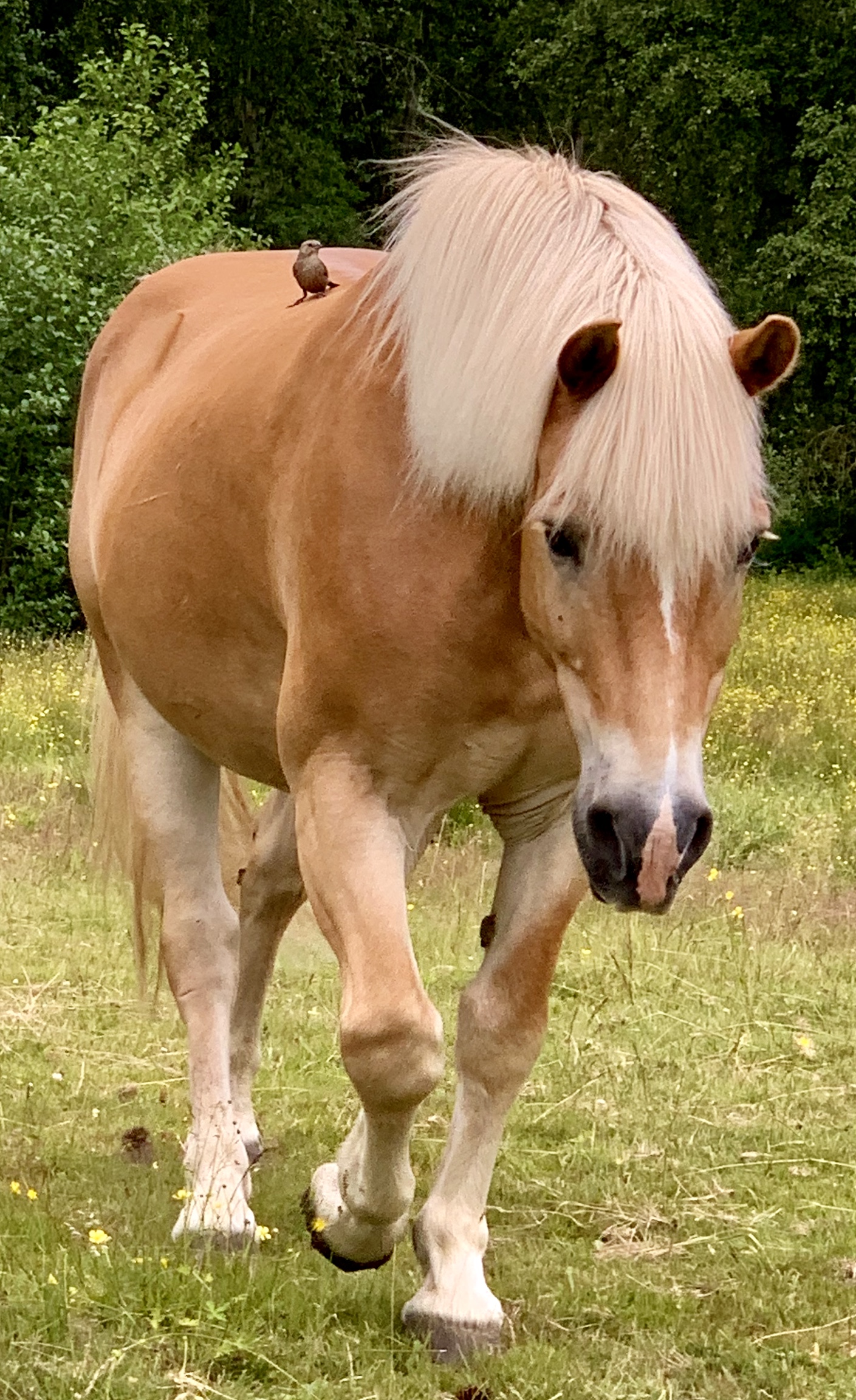
When the stresses of the work world amass together and threaten to overwhelm, there is reassurance in the routine of putting on muck boots, gloves, jacket, then hearing the back door bang behind me as I head outside. Following the path to the barns with my trusty corgi boys in the lead, I open wide the doors to hear the welcoming nickers of five different Haflinger voices.
The routine: loosening up the twine on the hay bales and opening each stall door to put a meal in front of each hungry horse, maneuvering the wheelbarrow to fork up accumulated manure, fill up the water bucket, pat a neck and go on to the next one. By the time I’m done, I am calmer, listening to the rhythmic chewing from five sets of molars. It is a welcome symphony of satisfaction for both the musicians and audience. My mind snaps a picture and records the song to pull out later when needed.
The horses are not in the least perturbed that I may face a challenging day. Like the dogs and cats, they show appreciation that I have come to do what I promised to do–I care for them, I protect them and moreover, I will always return.
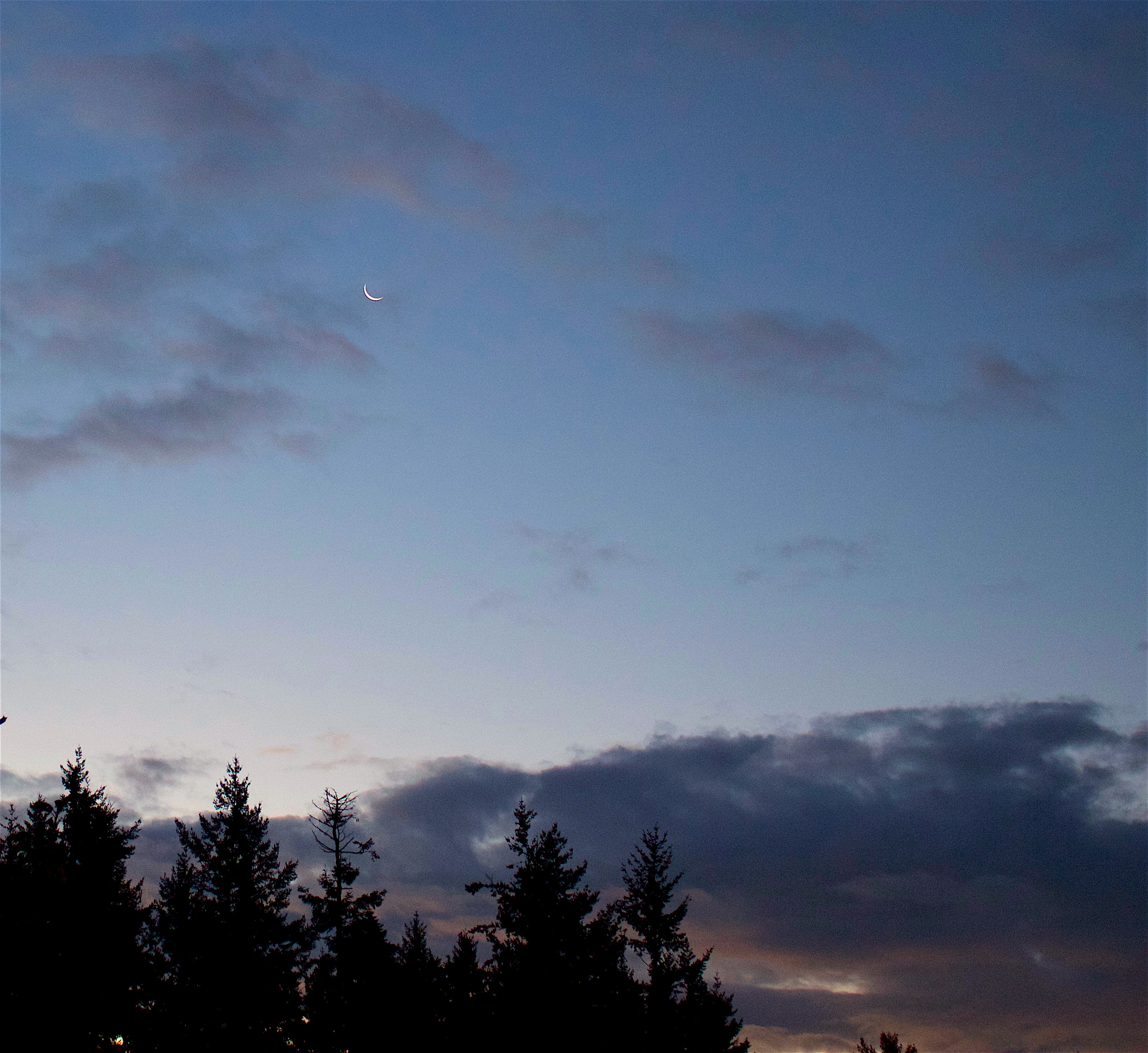
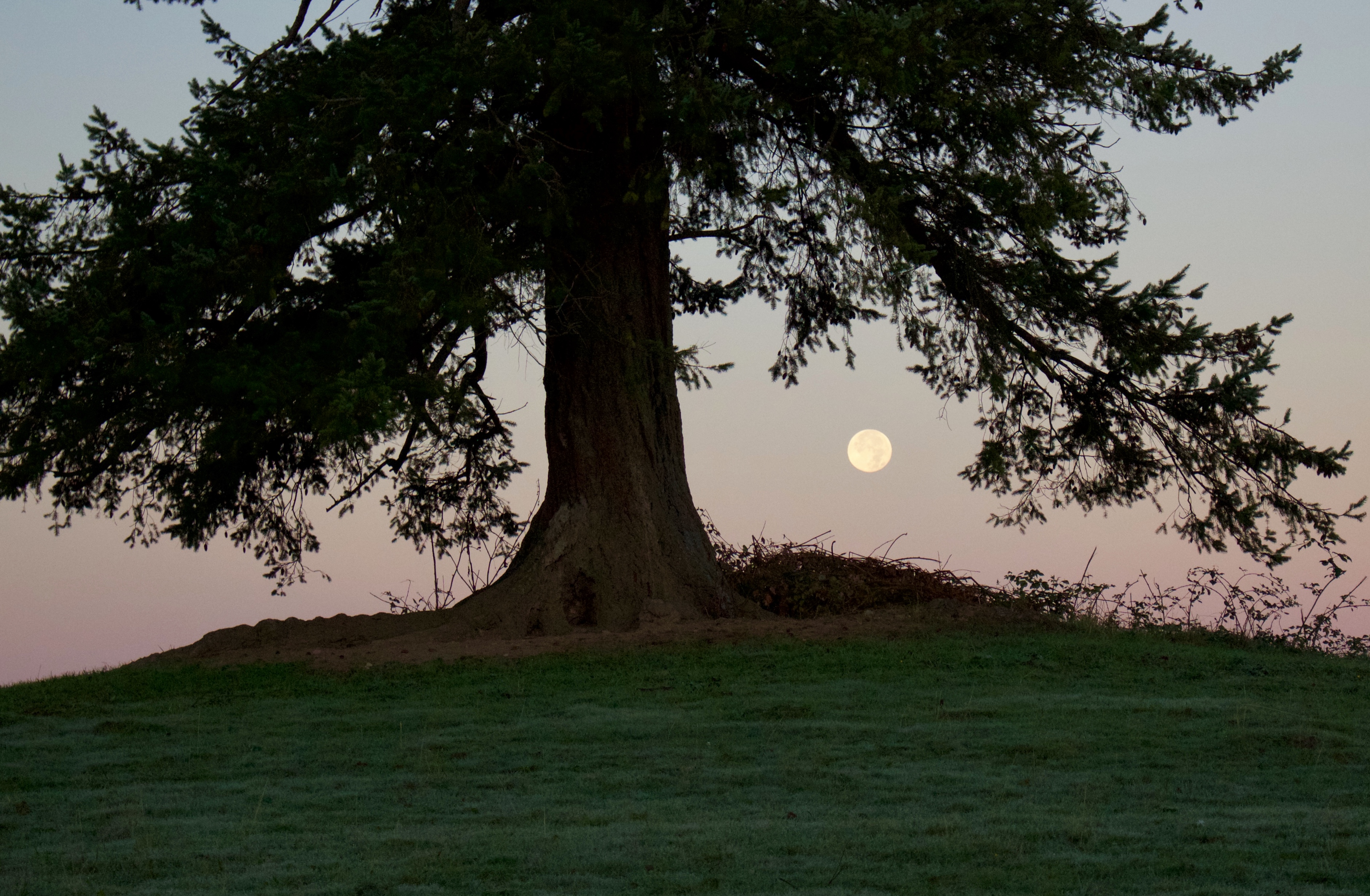
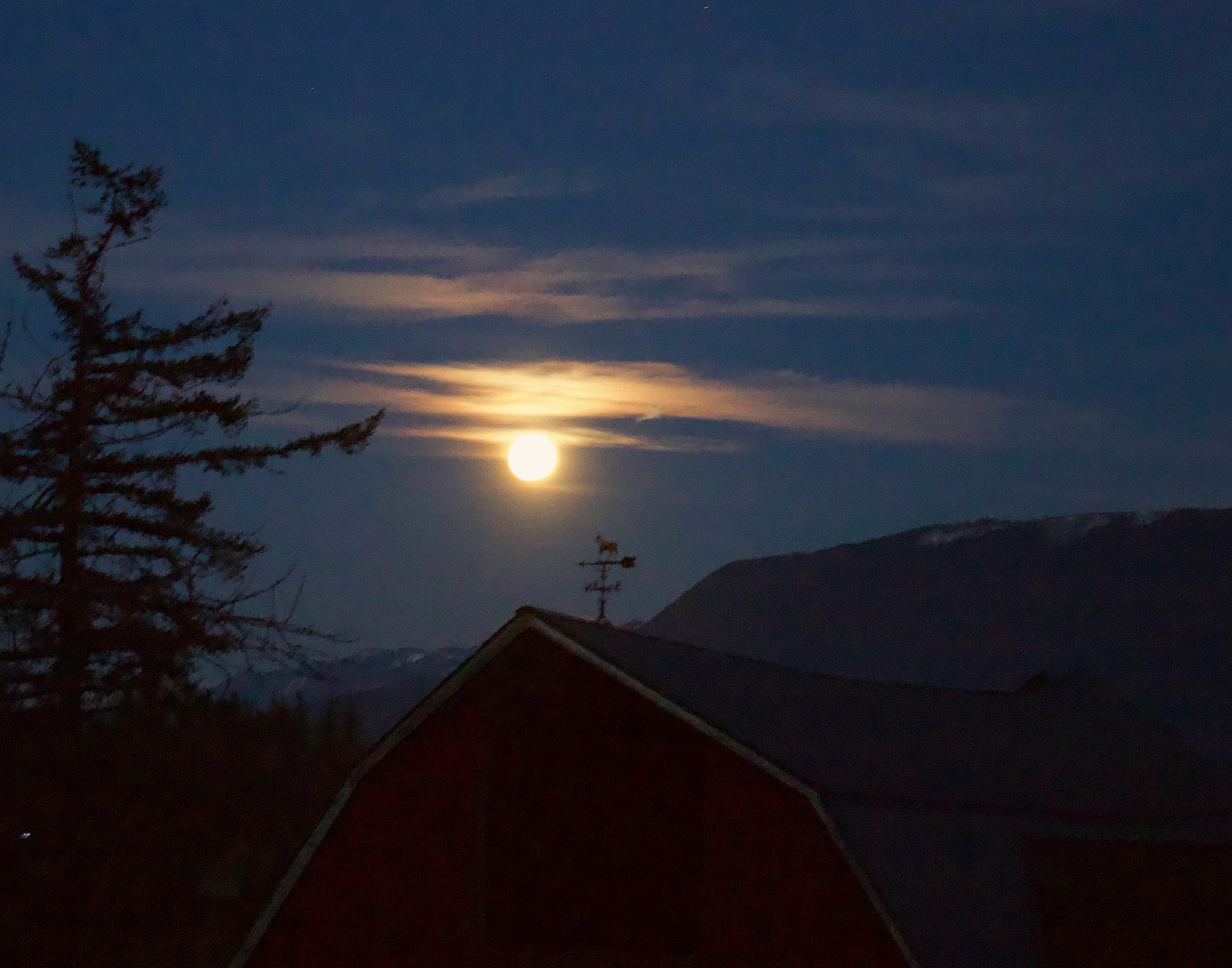
Outside the barn, the chill wind blows gently through the bare tree branches with a wintry bite, reminding me who is not in control. I should drop the pretense. The stars, covered most nights by cloud cover, show themselves, glowing alongside the moon in a galactic sweep across the sky. They exude the tranquility of an Ever-Presence over my bowed and humbled head. I am cared for and protected; He is always there and He will return.
Saving mental photographs of the extraordinary ordinariness of barn chores, I ready myself as autumn fades to winter.
Equilibrium is delivered to my heart, once and ever after, from a stable.
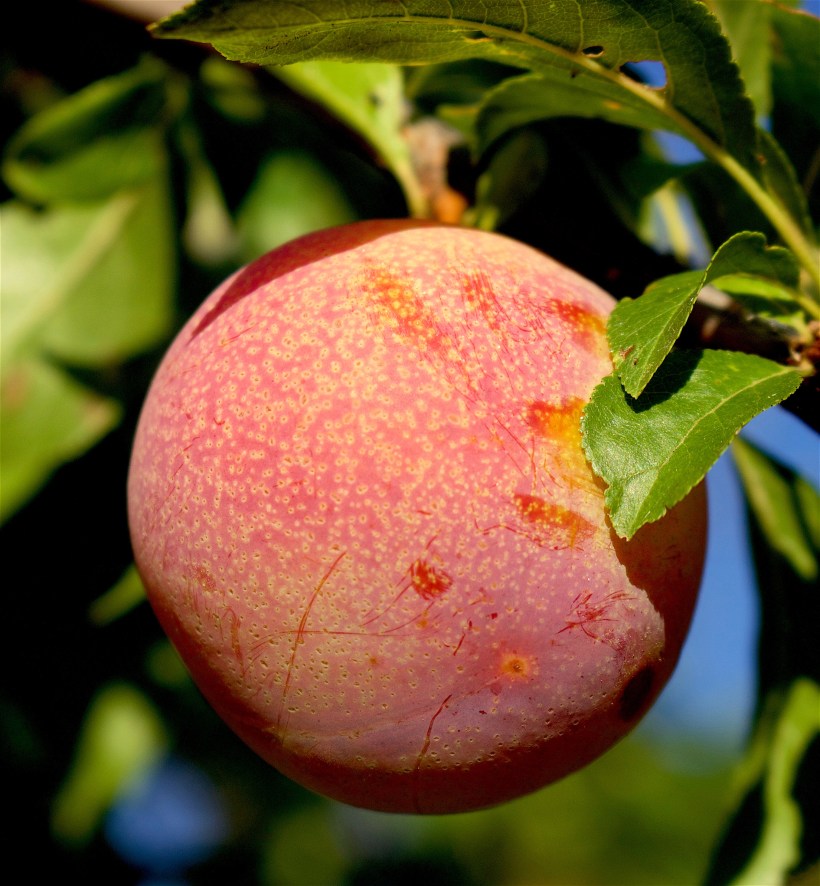
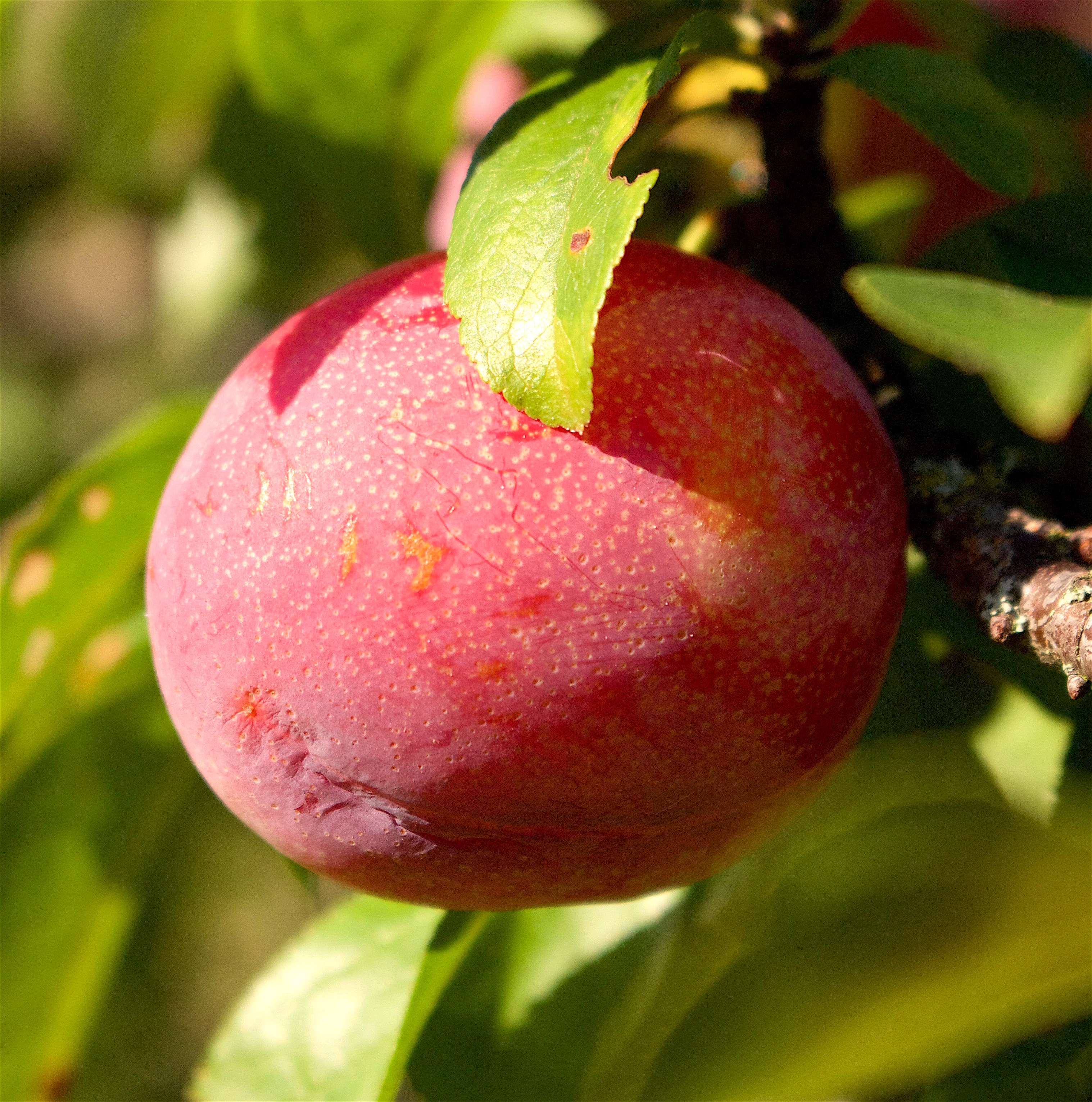
It hangs on its stem like a plum at the edge of a darkening thicket.
It’s swelling and blushing and ripe and I reach out a hand to pick it
but flesh moves slow through time and evening comes on fast
and just when I think my fingers might seize that sweetness at last
the gentlest of breezes rises and the plum lets go of the stem.
And now it’s my fingers ripening and evening that’s reaching for them. ~Geoffrey Brock, “The Day” author of Voices Bright Flags
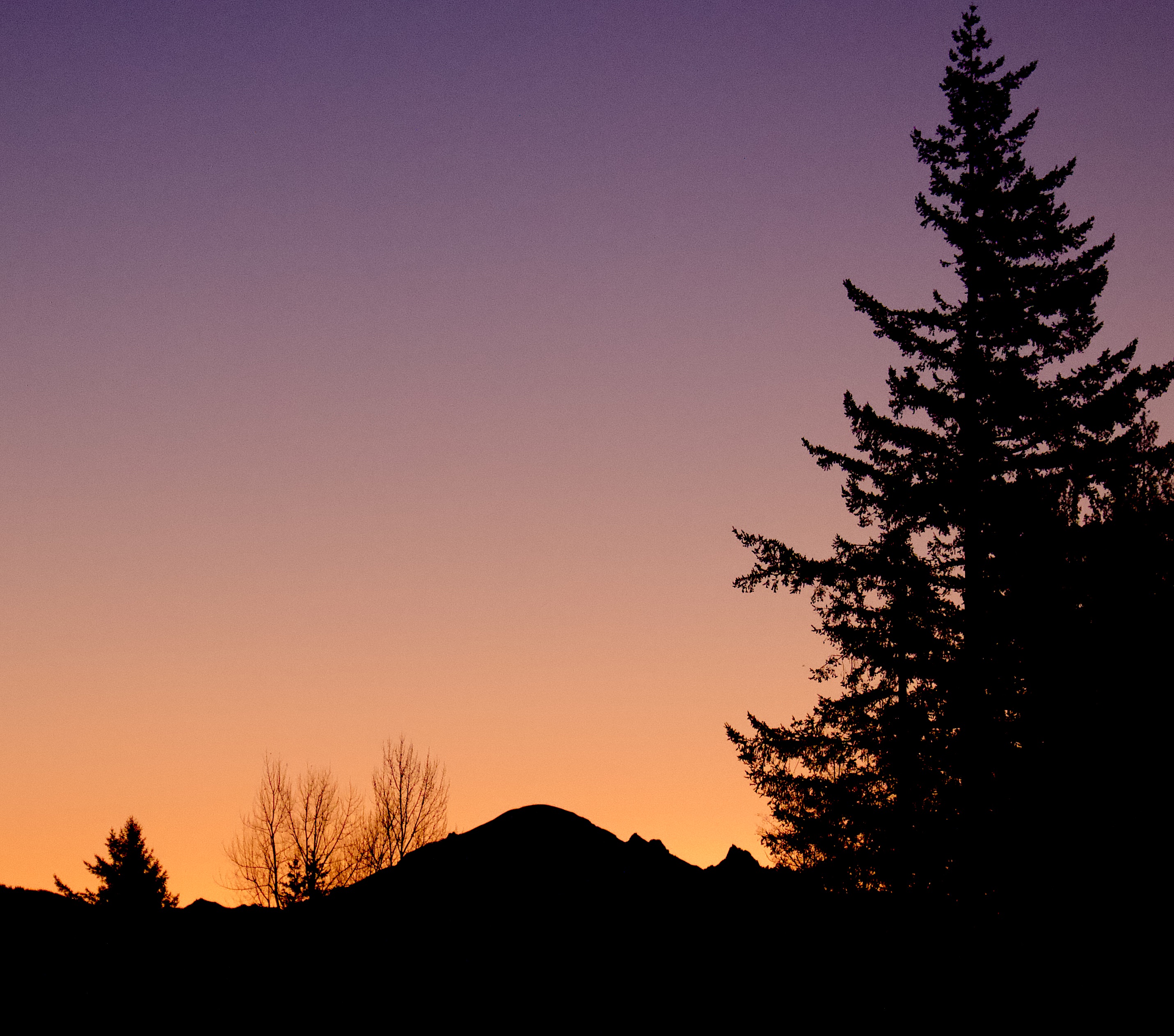
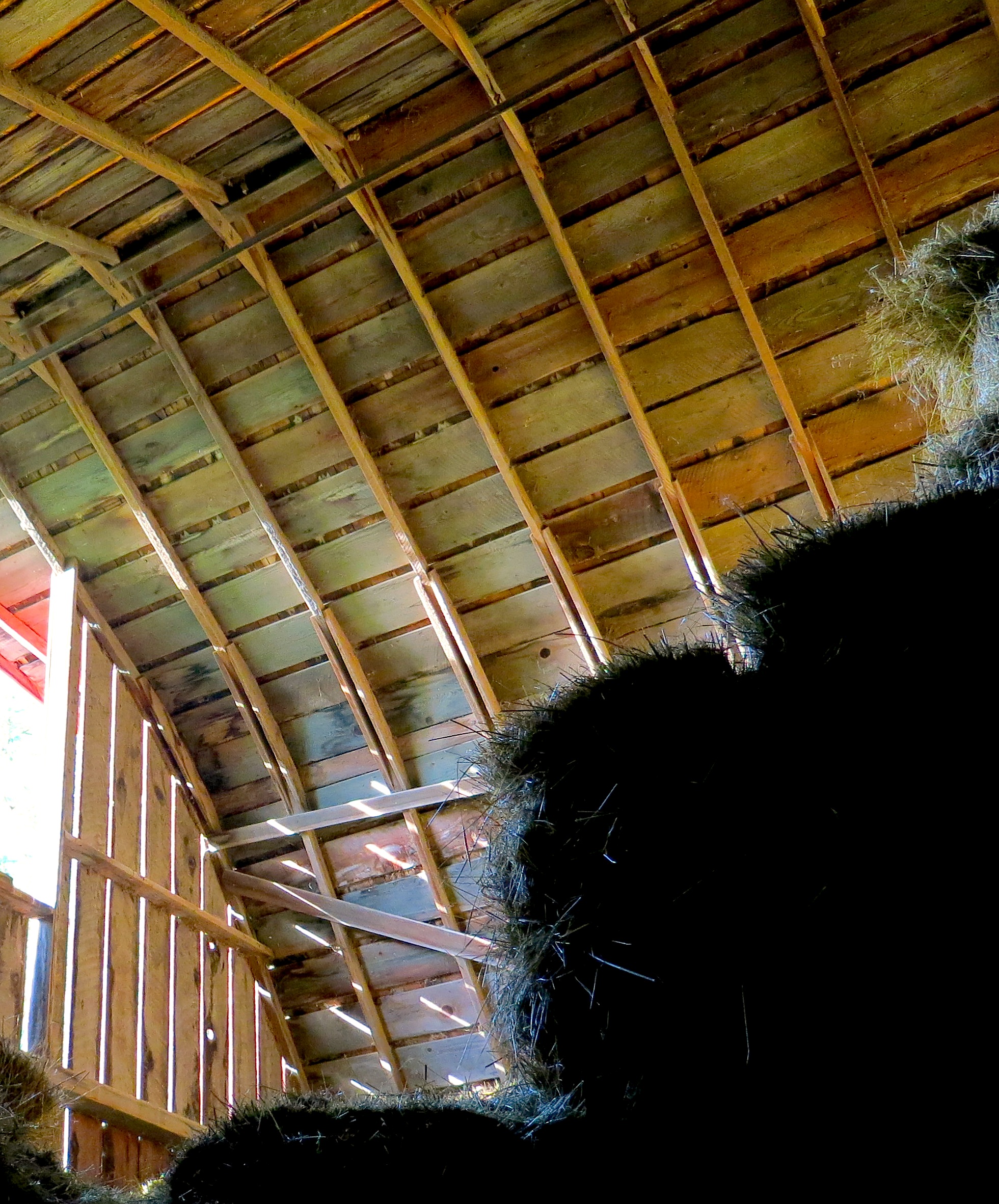
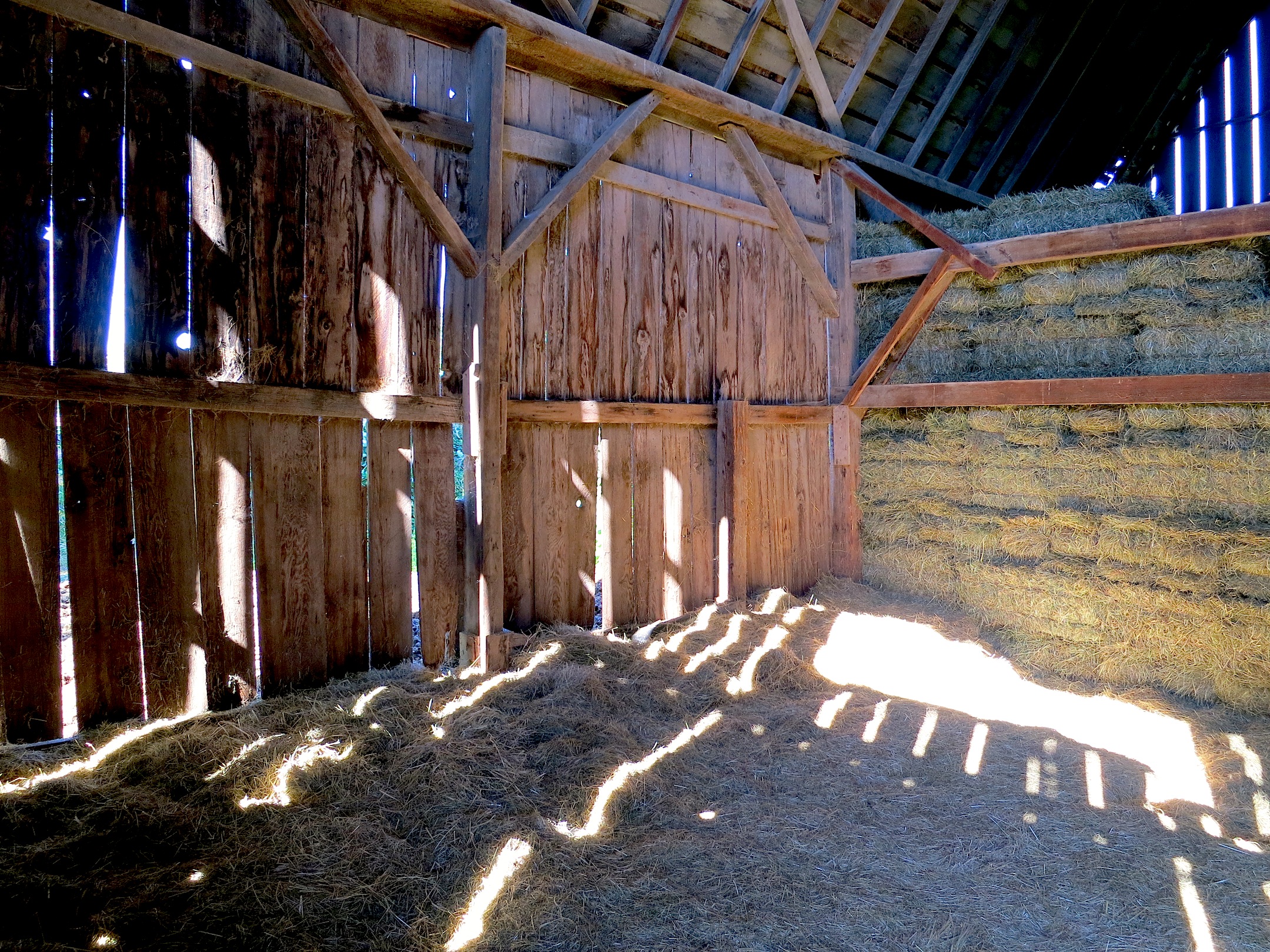
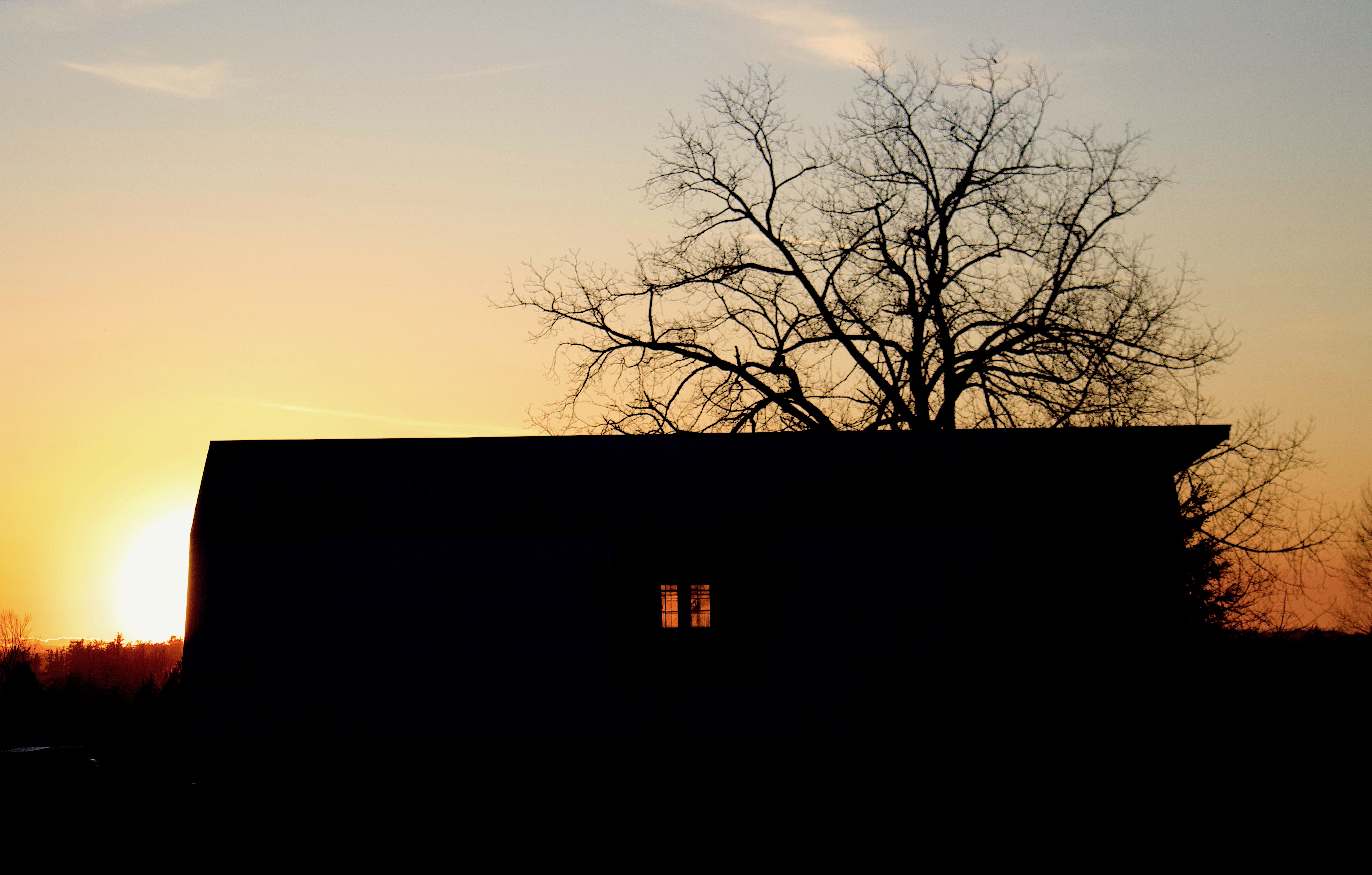
Let the light of late afternoon shine through chinks in the barn, moving up the bales as the sun moves down.
Let the cricket take up chafing as a woman takes up her needles and her yarn. Let evening come.
Let dew collect on the hoe abandoned in long grass. Let the stars appear and the moon disclose her silver horn.
To the bottle in the ditch, to the scoop in the oats, to air in the lung let evening come.
Let it come, as it will, and don’t be afraid. God does not leave us comfortless, so let evening come. ~Jane Kenyon, from “Let Evening Come” from Collected Poems.
So much of our living is preparing for rest and here we are, fighting it every step of the way.
We resist it mightily: the toddler fussing about taking a nap, the youngster devoted to their screen time and unwilling to surrender to darkness, or the parent trying to eke out the last bit of daylight to get the chores done.
We are comforted by activity. We are created in the image of One who remembered to rest.
So must we be “evened” by Him. The evening comes – there is no stopping it – we are to settle into it, our fingertips ripening, to close our eyes and drift on the comfort it brings.
The neighbor’s horses idle under the roof of their three-sided shelter, looking out at the rain.
Sometimes one or another will fade into the shadows in the corner, maybe to eat, or drink.
Still, the others stand, blowing out their warm breaths. Rain rattles on the metal roof.
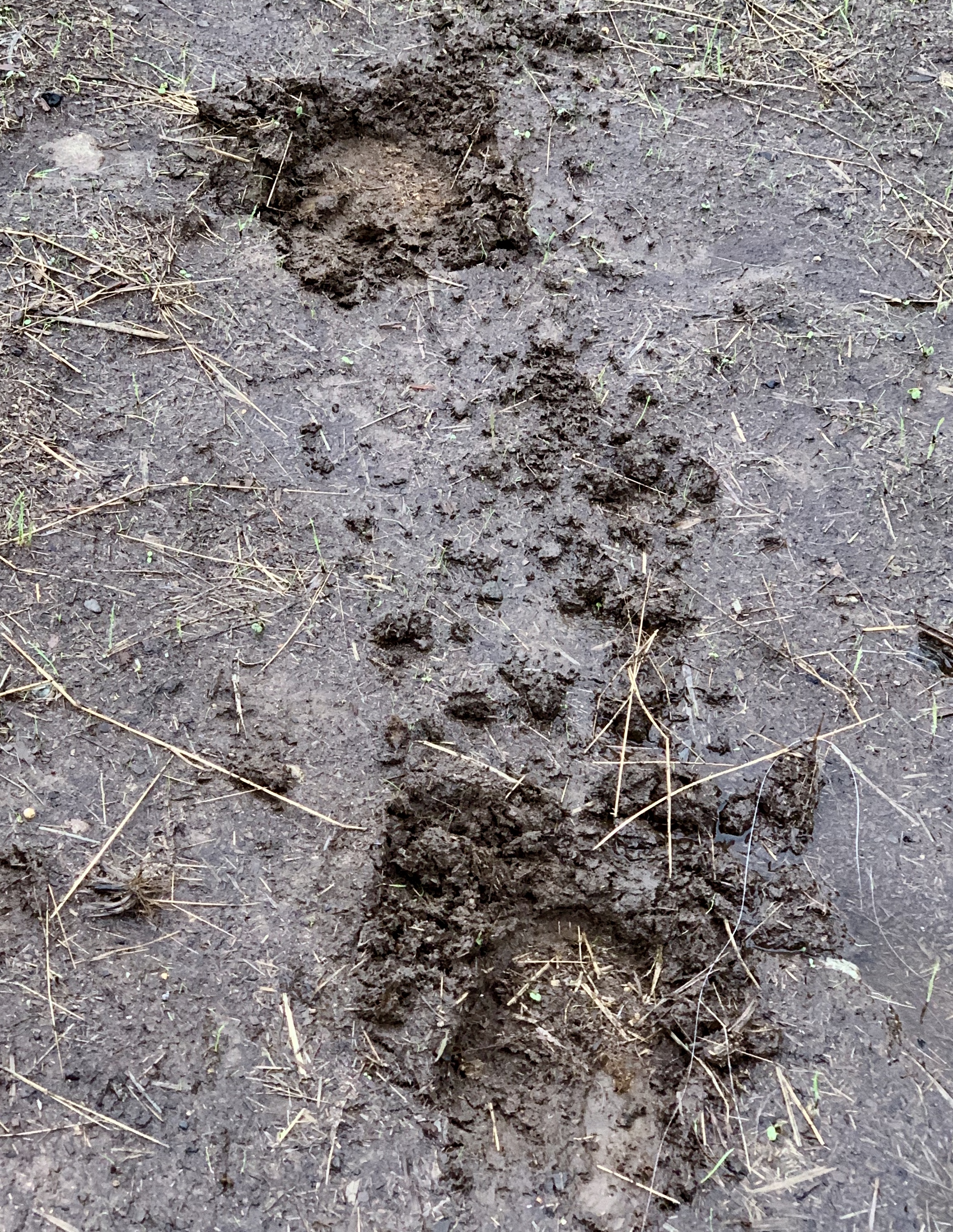
Their hoof prints in the corral open gray eyes to the sky, and wink each time another drop falls in. ~Jennifer Gray
The September rains have returned and will stay awhile. We, especially the horses, sigh with relief, as flies no longer crawl over their faces all day seeking a watery eye to drink from. With no flies around, there are also no longer birds tickling pony backs looking for a meal.
Our Haflingers prefer to graze under open gray skies not bothering to seek cover during the day; their mountain coats provide adequate insulation in a rain squall. Darkness descends earlier and earlier so I go out in the evening to find them standing waiting at the gate, ready for an invitation to come into the barn.
Their eyes are heavy, blinking with sleep; outside their muddy hoofprints fill with rain overnight.
It is a peaceful time for us no-longer-young ponies and farmers. We wink and nod together, ready for rain, ready for the night.
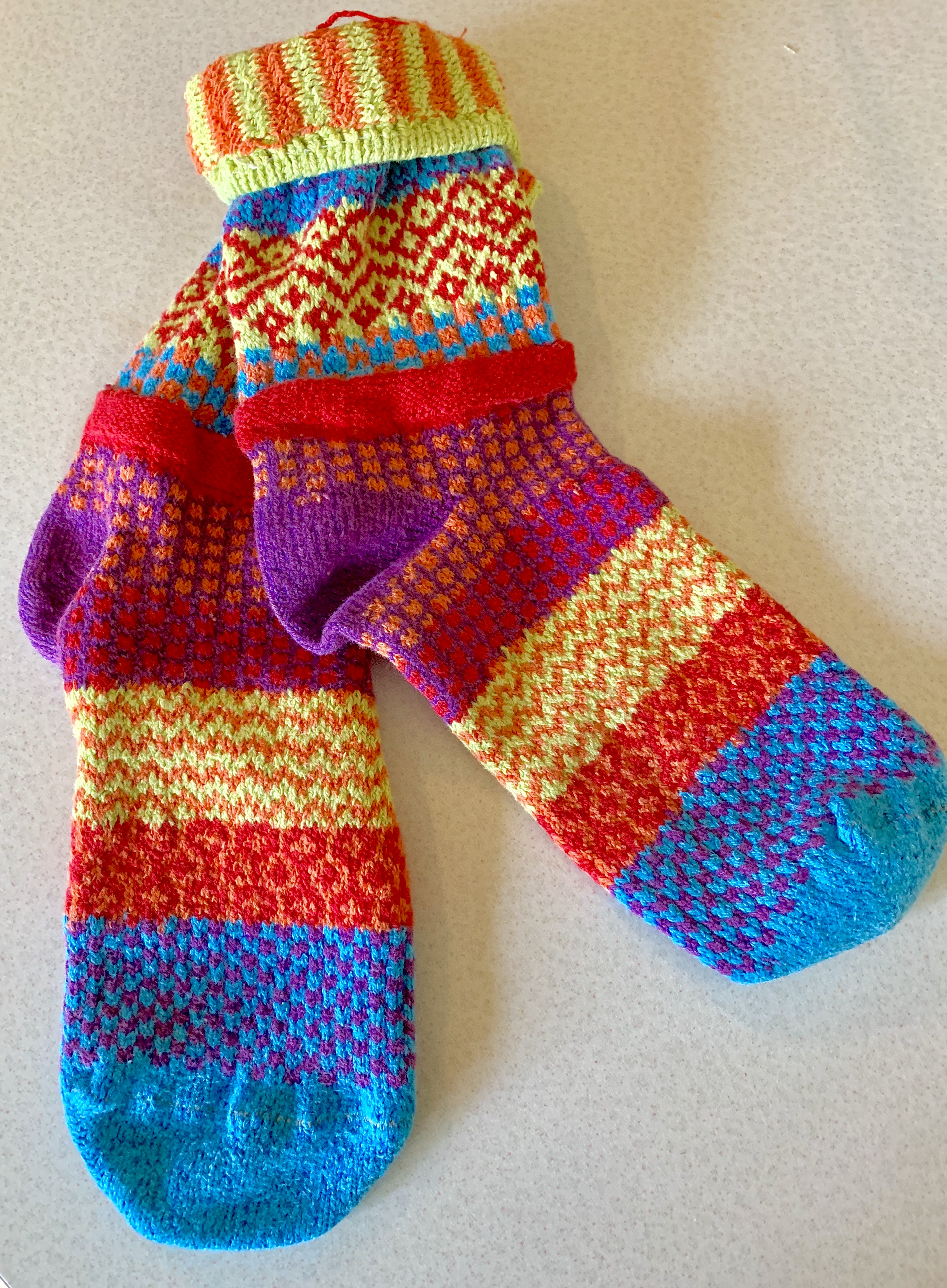
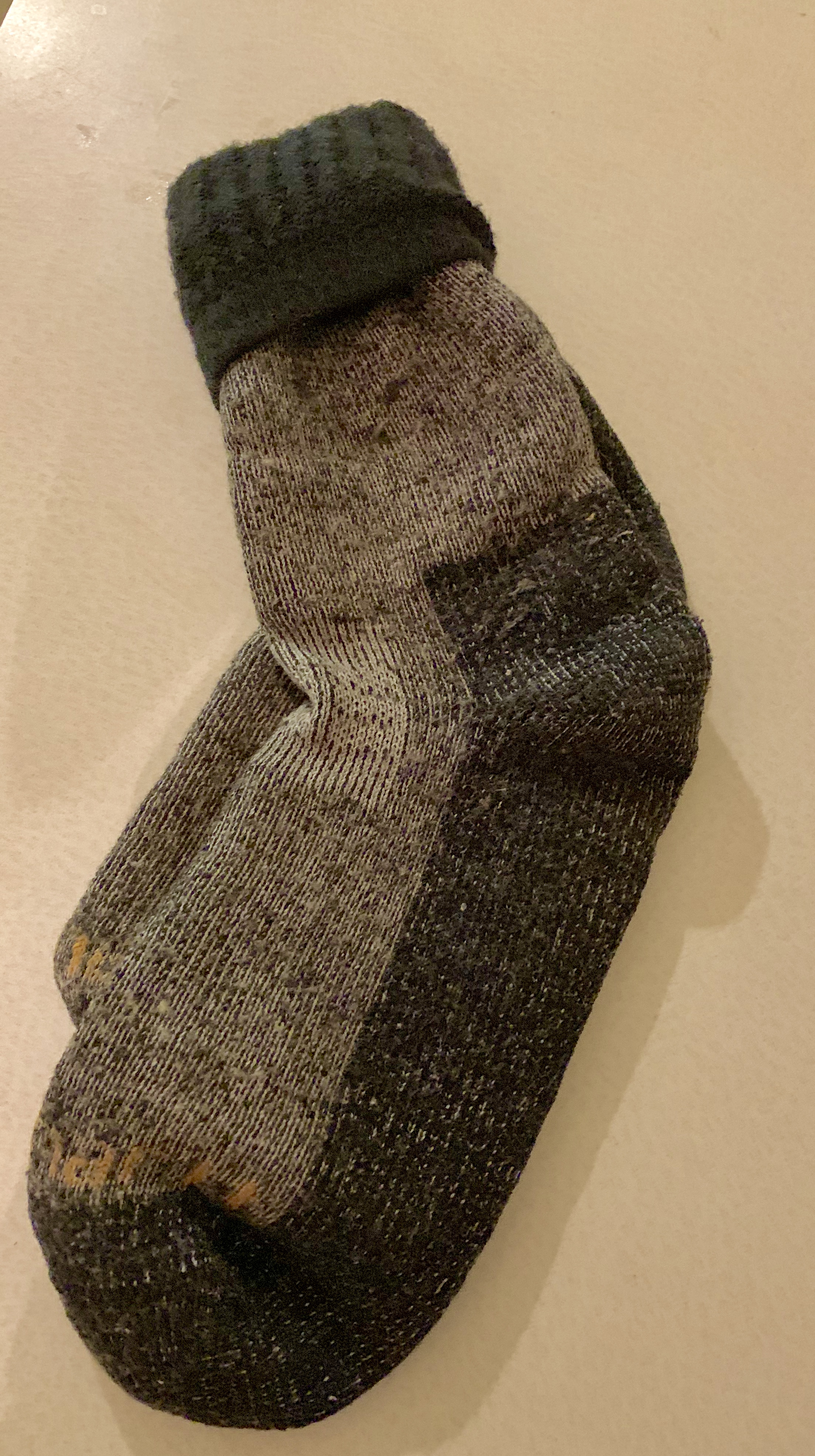
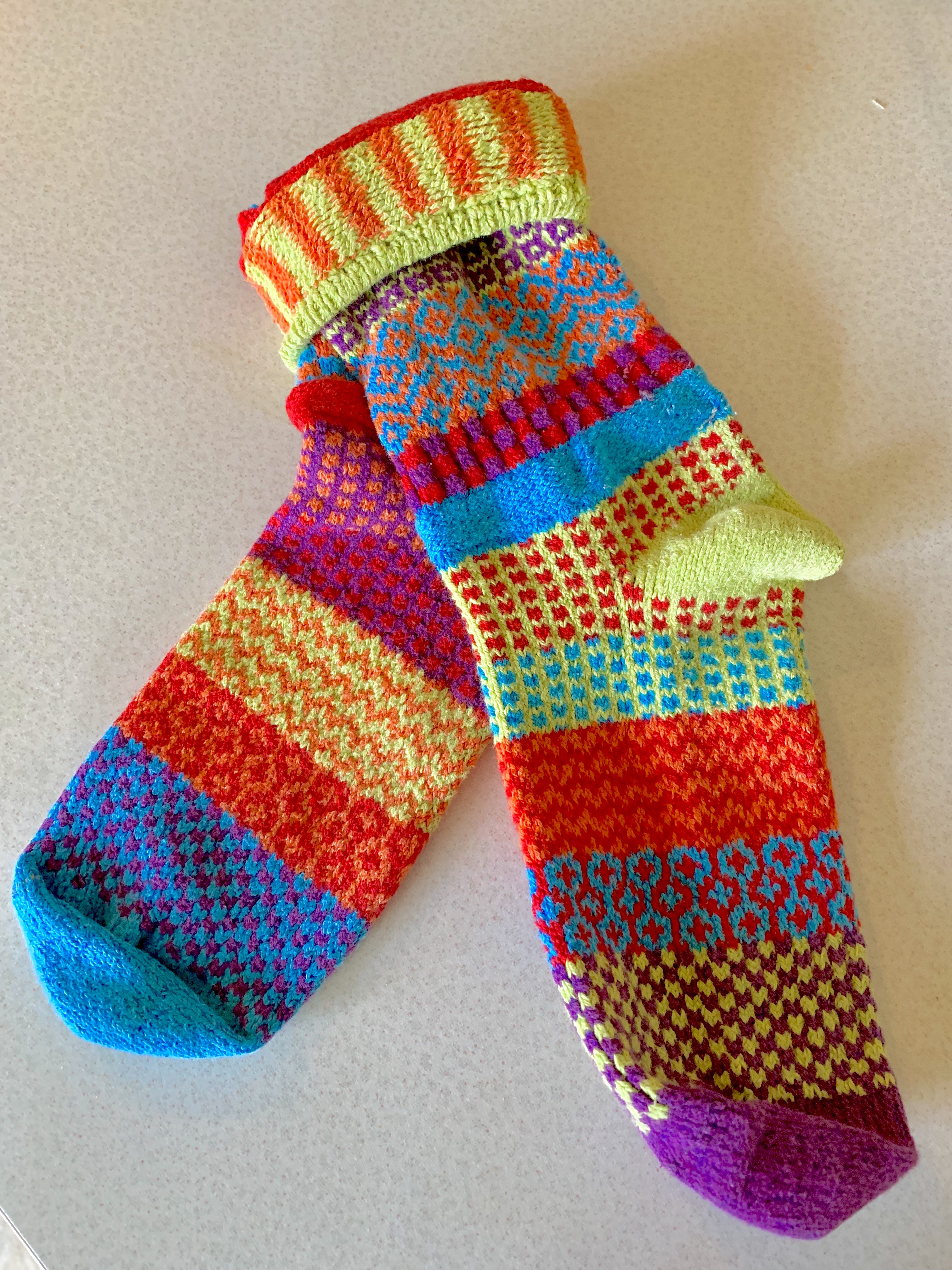
Settling into the straw, I am grateful for a quiet moment after a 12 hour workday followed by all the requisite personal conversations that help mop up the spills and splatters of every day life. My family verbally unloads their day like so much stored up laundry needing to be washed and rinsed with the spin cycle completed before tomorrow dawns. I move from child to child to child to husband to grandmother, hoping to help each one clean, dry, fold and sort everything in their pile, including finding and marrying each stray sock with its partner.
Not to be outdone, I pile up a little dirty laundry of my own as I complain about my day as well. My own socks are covered in burrs and stickers and resist matching.
I’m on “spent” cycle so I retreat to the barn where communication is less demanding and requires more than just my ears and vocal cords. Complaints are meaningless here and so are unmarried socks.
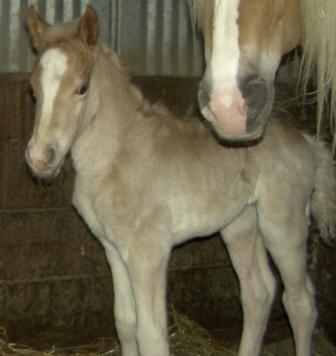
In this place a new foal and his vigilant mama watch my every move.
This colt is intrigued by my intrusion into his 12′ x 24′ world. His mother is annoyed. He comes over to sniff my foot and his mother swiftly moves him away with a quick swing of her hips, daunting me with the closeness of her heels. Her first instinct insists she separate me from him and bar my access. My mandate is to woo her over. I could bribe her with food, but, no, that is too easy.
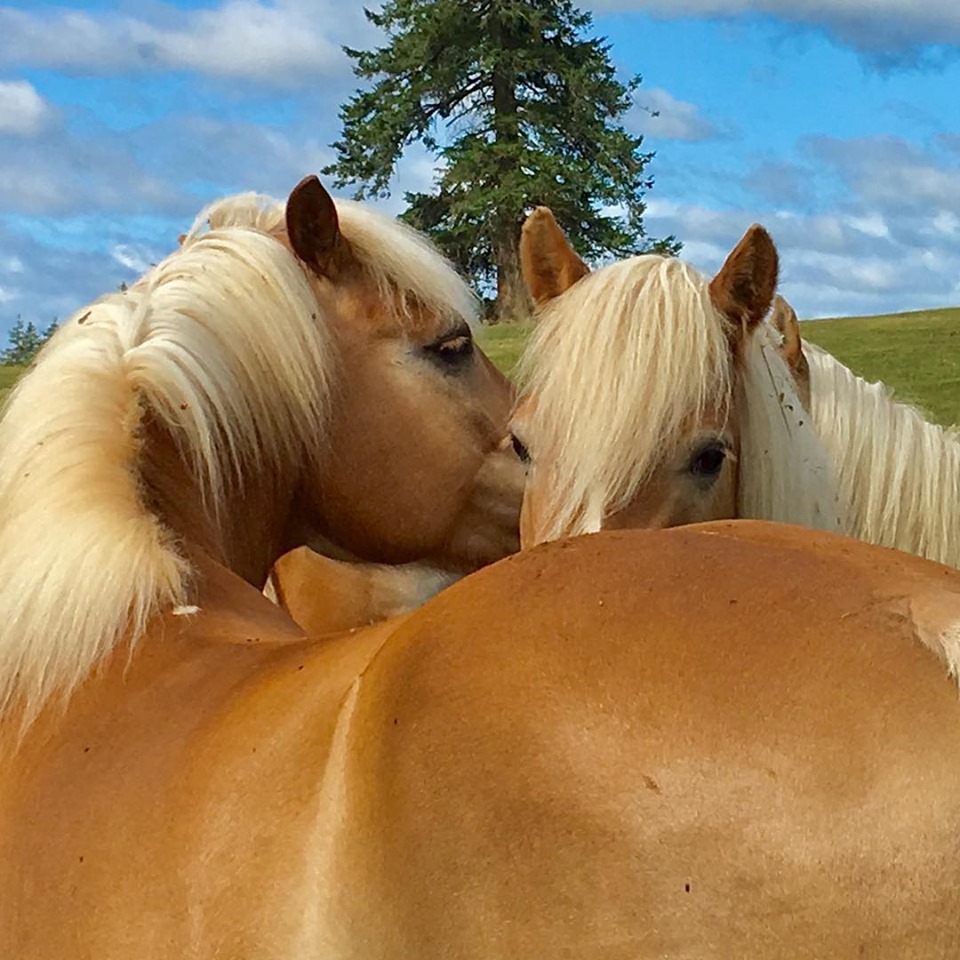
A curry comb is best. If nothing else will work, a good scratching always does. Standing up, I start peeling sheets of no longer needed winter hair off her neck, her sides, her flank and hindquarter. She relaxes in response to my efforts, giving her baby a body rub with her muzzle, wiggling her lips all up and down from his back to his tummy. He is delighted with this spontaneous mommy massage and leans into her, moving around so his hind end is under her mouth and his front end is facing me. Then he starts giving his own version of a massage too, wiggling his muzzle over my coat sleeve and wondrously closing this little therapeutic triangle.
Here we are, a tight little knot of givers/receivers with horse hair flying in a cloud about us. One weary human, one protective mama mare and one day-old foal, who is learning so young how to contribute to the well being of others.
Given over to love, to do it always and well.
It is an incredible gift of trust bestowed on me like a blessing. I realize this horse family is helping me sort my own laundry in the same way I help with my human family’s load.
Too often in life we find ourselves in painful triangles, passing our kicks and bites down the line to each other rather than providing needed relief and respite. We find ourselves unable to wrench free from continuing to deliver the hurts we’ve just received. What strength it takes to respond with kindness when the kick has just landed on our backside. How chastened we feel when a kindness is directed at us, as undeserving as we are after having bitten someone hard.
Instead of biting, try massaging. Instead of kicking, try tickling. Instead of fear, try acceptance. Instead of annoyance, try patience. Instead of piling up so much dirty laundry of your own, try washing, folding and sorting what is given to you by others, handing it back all clean, smelling better and ready for the next day.
And even if the socks don’t match exactly, marry them anyway. Just give them over to love.
Each day I go into the fields to see what is growing and what remains to be done. It is always the same thing: nothing is growing, everything needs to be done.
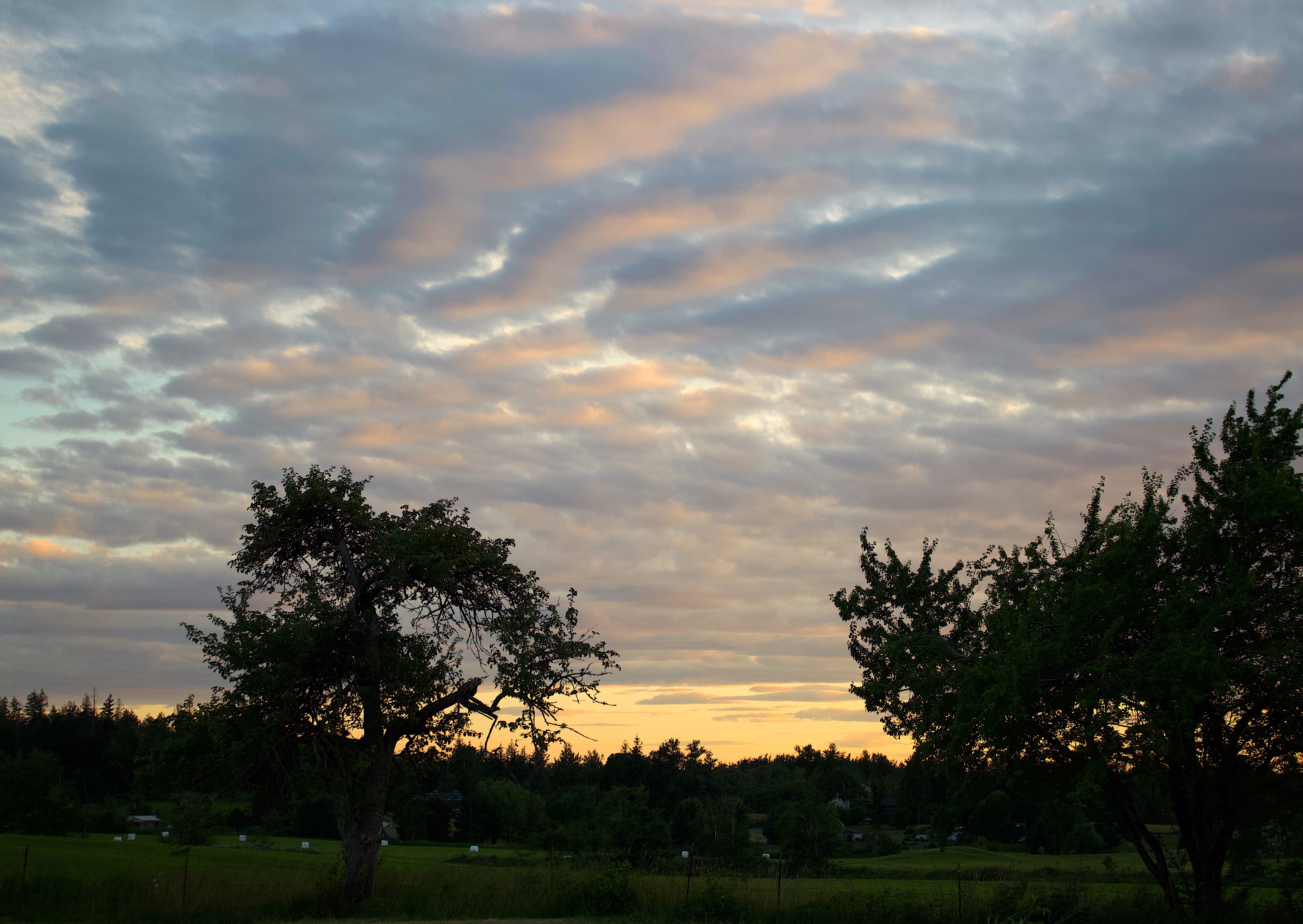
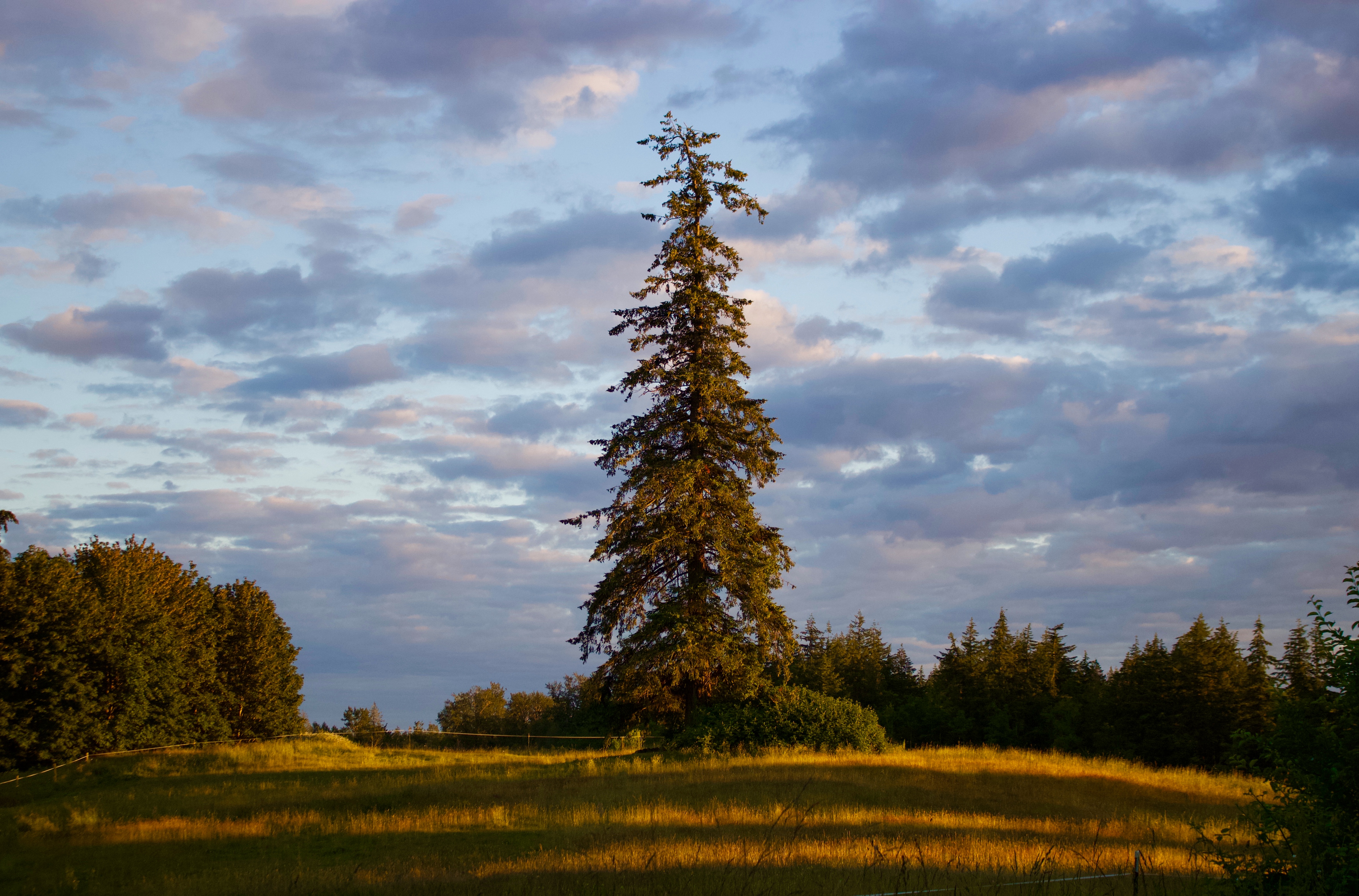
This time of year our farm is brilliant, verdant and delicious to behold. The cherry orchard blossoms have yielded fruit and the pastures are knee high with grass. By mid-June, the daylight starts creeping over the eastern foothills at 4 AM and the last glimpse of sun disappears at nearly 10 PM. So many hours of light to work with!
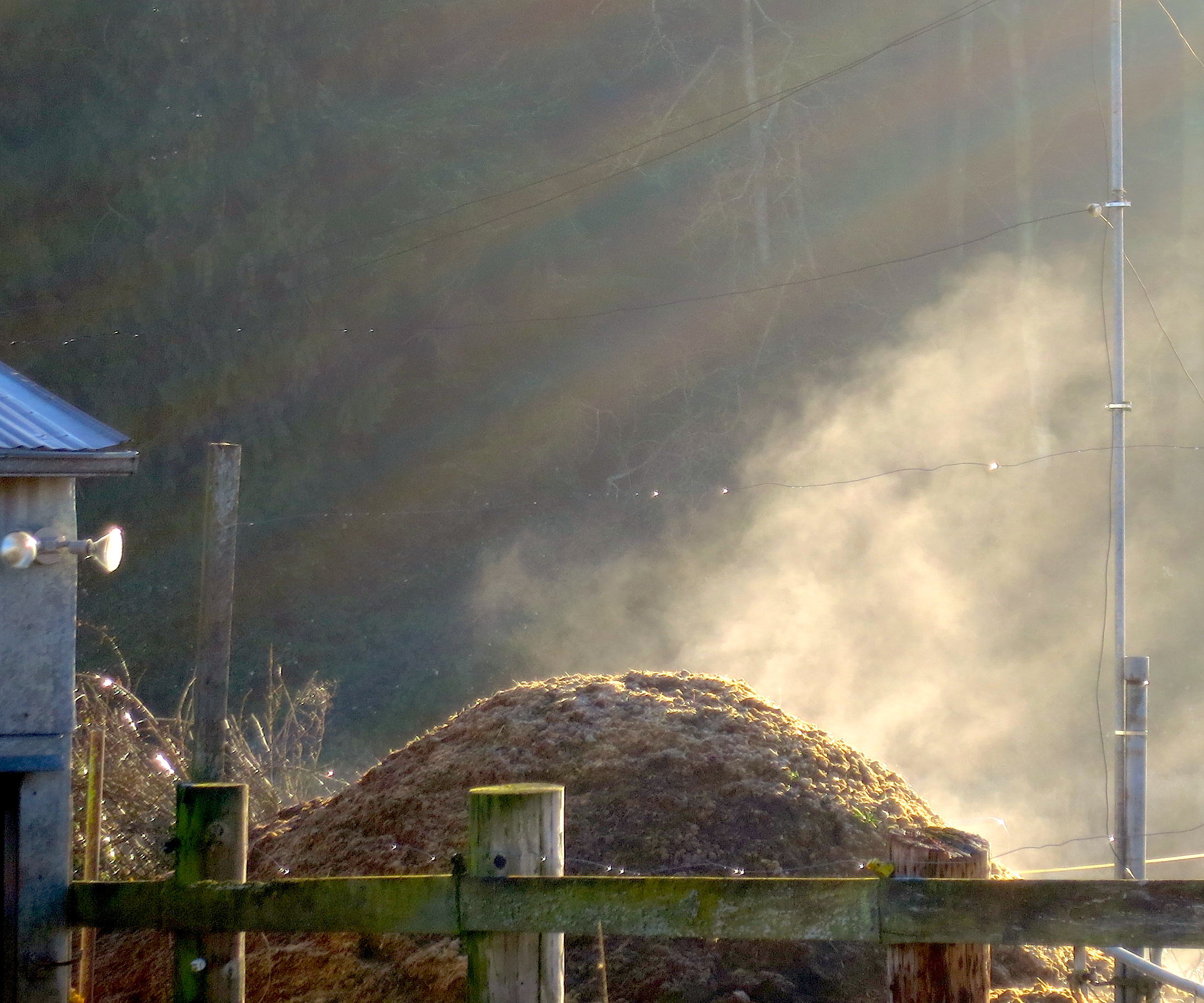
Yet today I yearn for a dark rainy day to hide inside with a book even when the lawnmower and weed whacker call my name, and the fish pond needs cleaning and the garden must be weeded. It’s not that things don’t happen on the farm during months like this. It’s just that nothing we do is enough. Blackberry brambles take over everything, grass grows faster than we can keep it mowed down, the manure piles grow exponentially.
The fences always need fixing. The old hay barn is falling down and needing to be resurrected. The weather is becoming iffy with rain in the forecast so we may not have anything but junk hay in the barn this winter in a year when hay will cost a premium. For a decade now we have stopped breeding our Haflinger horses as even the demand for well bred horses is not robust enough to justify bringing more into the world.
Suddenly our farm dream seems not nearly so compelling.
We spent many years dreaming about our farm as we hoped it would be. We imagined the pastures managed perfectly with fencing that was both functional and beautiful. Our barns and buildings would be tidy and leak-proof, and the stalls secure and safe. We’d have a really nice pick up truck with low miles on it, not a 30 year old hand me down truck with almost 250,000 miles. We would have trees pruned expertly and we’d have flower beds blooming and a vegetable garden yielding 9 months of the year. Our hay would never be rained on. We would have dogs that wouldn’t run off and cats that would take care of all the rodents. We wouldn’t have any moles, thistles, dandelions or buttercup. The pheasant, deer, coyotes, raccoons, and wild rabbits (even the occasional cougar, lynx and bear!) would only stroll through the yard for our amusement and not disturb anything. We’d have livestock with the best bloodlines we could afford and a steady demand from customers to purchase their offspring at reasonable prices so that not a dime of our off-farm income would be necessary to pay farm expenses. Our animals (and we) would never get sick or injured.
And our house would always stay clean.
Dream on. Farms are often back-breaking, morale-eroding, expensive sinkholes. I know ours is. Yet here we be and here we stay.
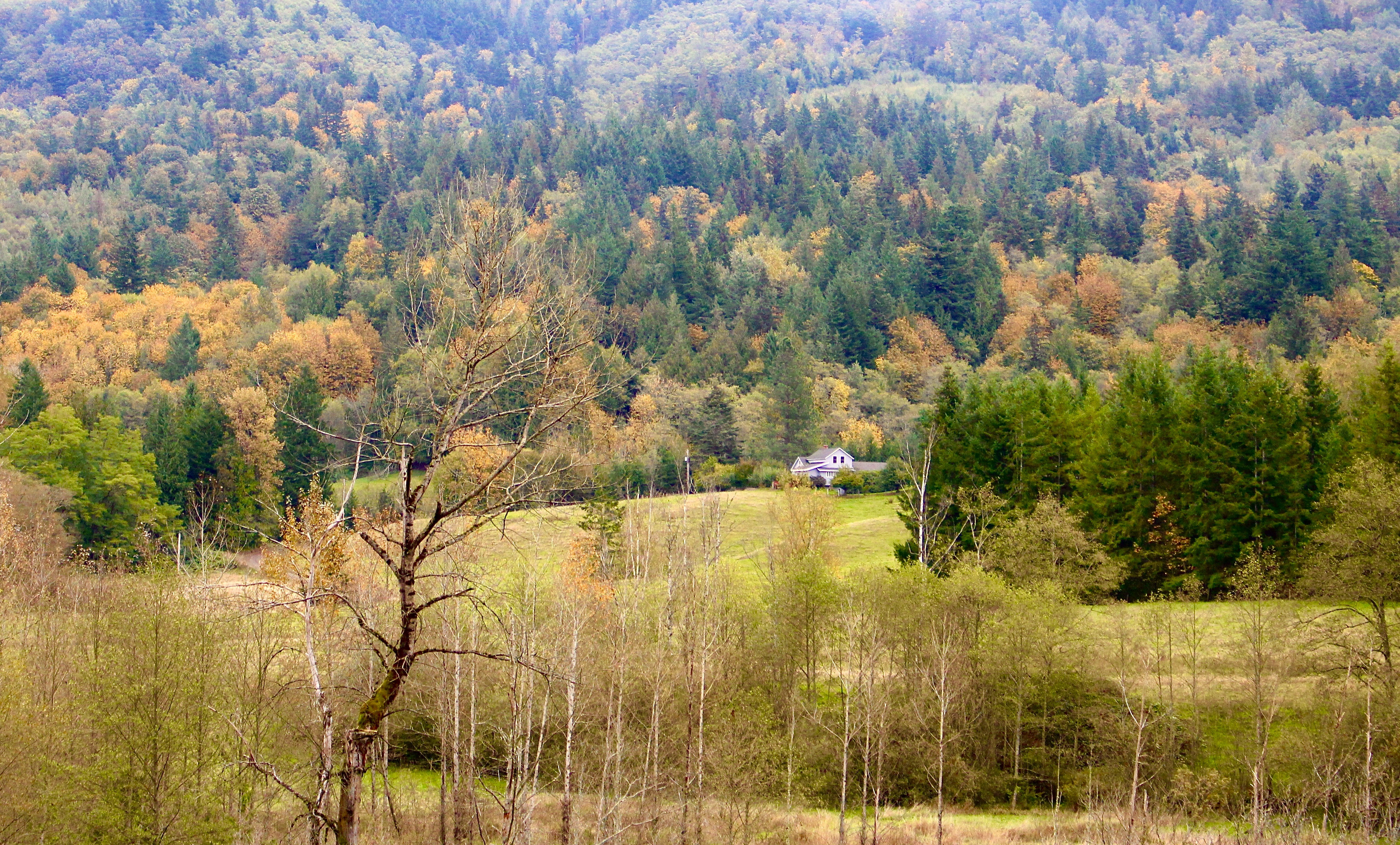
It’s home. We raised three wonderful children here. We’ve bred and grown good beef and horses and great garden and orchard crops and tons of hay from our own fields. We breathe clean air and enjoy hearing dozens of different bird songs and look out at some of the best scenery this side of heaven. Eagles land in the trees in our front yard.
It’s all enough for us even if we are not enough for the farm. I know there will come a time when the farm will need to be a fond memory and not a daily reality. Until then we will keep pursuing our dream as we and the farm grow older. Dreams age and mature and I know now what I dreamed of when I was younger was not the important stuff.
We are blessed with one another, with the continuing sunrises and the sunsets and everything in between. This is the stuff of which the best dreams are made.
“He (the professor) asked what I made of the other students (at Oxford) so I told him. They were okay, but they were all very similar… they’d never failed at anything or been nobodies, and they thought they would always win. But this isn’t most people’s experience of life.
He asked me what could be done about it. I told him the answer was to send them all out for a year to do some dead-end job like working in a chicken processing plant or spreading muck with a tractor. It would do more good than a gap year in Peru.
He laughed and thought this was tremendously witty. It wasn’t meant to be funny. ~James Rebanks from The Shepherd’s Life (how a sheep farmer succeeds at Oxford and then goes back to the farm)
In our barn we have a very beat up old AM/FM radio that sits on a shelf next to the horse stalls and serves as company to the horses during the rainy stormy days they stay inside, and serves as distraction to me as we clean stalls of manure and wet spots in the evening. We live about 10 miles south of the Canadian border, so most stations that come in well on this radio’s broken antenna are from the lower mainland of British Columbia. This includes a panoply of stations spoken in every imaginable language– a Babel of sorts that I can tune into: Spanish, Japanese, Chinese, Hindi, Russian, French and of course, proper British accent English. But standard issue American melting pot genetic mix that I am, I prefer to tune into the “Oldies” Station and reminisce.
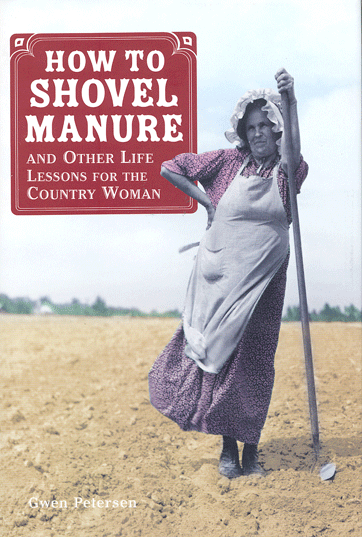
There is a strange comfort in listening to songs that I enjoyed 40-50+ years ago, and I’m somewhat miffed and perplexed that they should be called “oldies”. Oldies always referred to music from the 20’s, 30’s and 40’s, not the 50’s, 60’s, and 70’s! I listen and sing along with a mixture of feeling ancient and yet transported back to my teens. I can think of faces and names I haven’t thought of in decades, remember special summer days picking berries and hear long lost voices from school days. I can smell and taste and feel things all because of the trigger of a familiar song. There is something primordial –deep in my synapses– that is stirred by this music. In fact, I shoveled manure to these same songs 50 years ago, and somehow, it seems not much as changed.
Or has it? One (very quick) glance in the mirror tells me it has and I have.
Yesterday, I Got You, Babe and you were a Bridge Over Troubled Waters for this Natural Womanwho just wants to be Close to Youso You’ve Got a Friend. There’sSomething in the way ICherish The Way We Were and of courseLove Will Keep Us Together.If You Leave Me Now, You’re So Vain. I’ve always wanted it My Way but How Sweet It Is when I Want To Hold Your Hand. Come Saturday Morningwe’re Born to Be Wild.
Help!Do You Know Where You’re Going To?Me and You and A Dog Named Boo will travel Country Roadsand Rock Around the Clock even though God Didn’t Make the Little Green Apples. Fire and Rain will make things All Right Nowonce Morning is Broken, I’ll Say a Little Prayer For You.
I Can’t Get No Satisfactionfrom the Sounds of Silence —If— Those Raindrops Keep Fallin’ on My Head. Stand By Me as It’s Just My Imaginationthat I am a Rock,when really I only want Time in a Bottle and to just Sing, Sing a Song.
They just don’t write songs like they used to. I seem to remember my parents saying that about the songs I loved so well. Somehow in the midst of decades of change, there are some constants. Music still touches our souls, no matter how young or old we are.
And there will always be manure that needs shoveling.
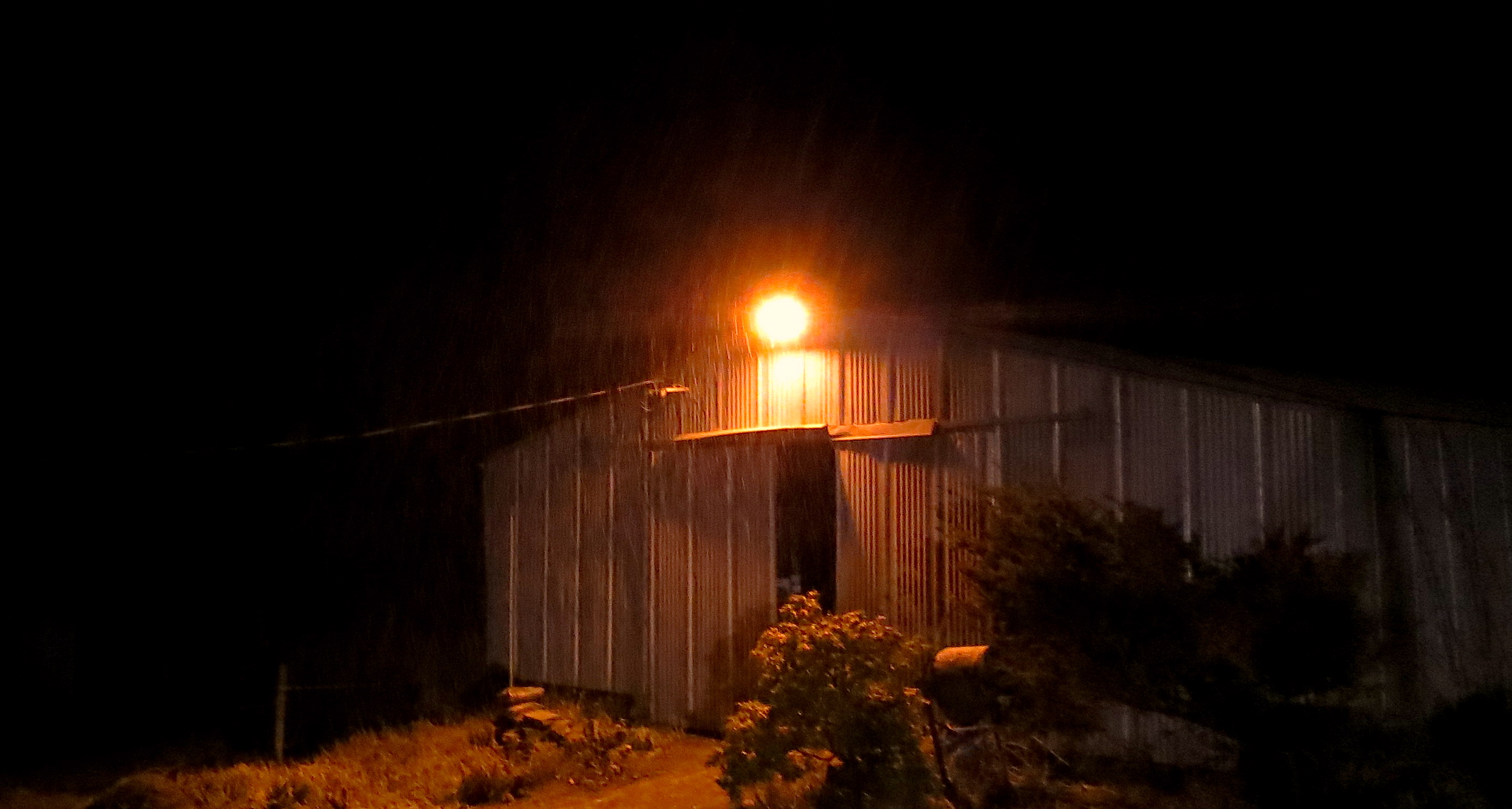
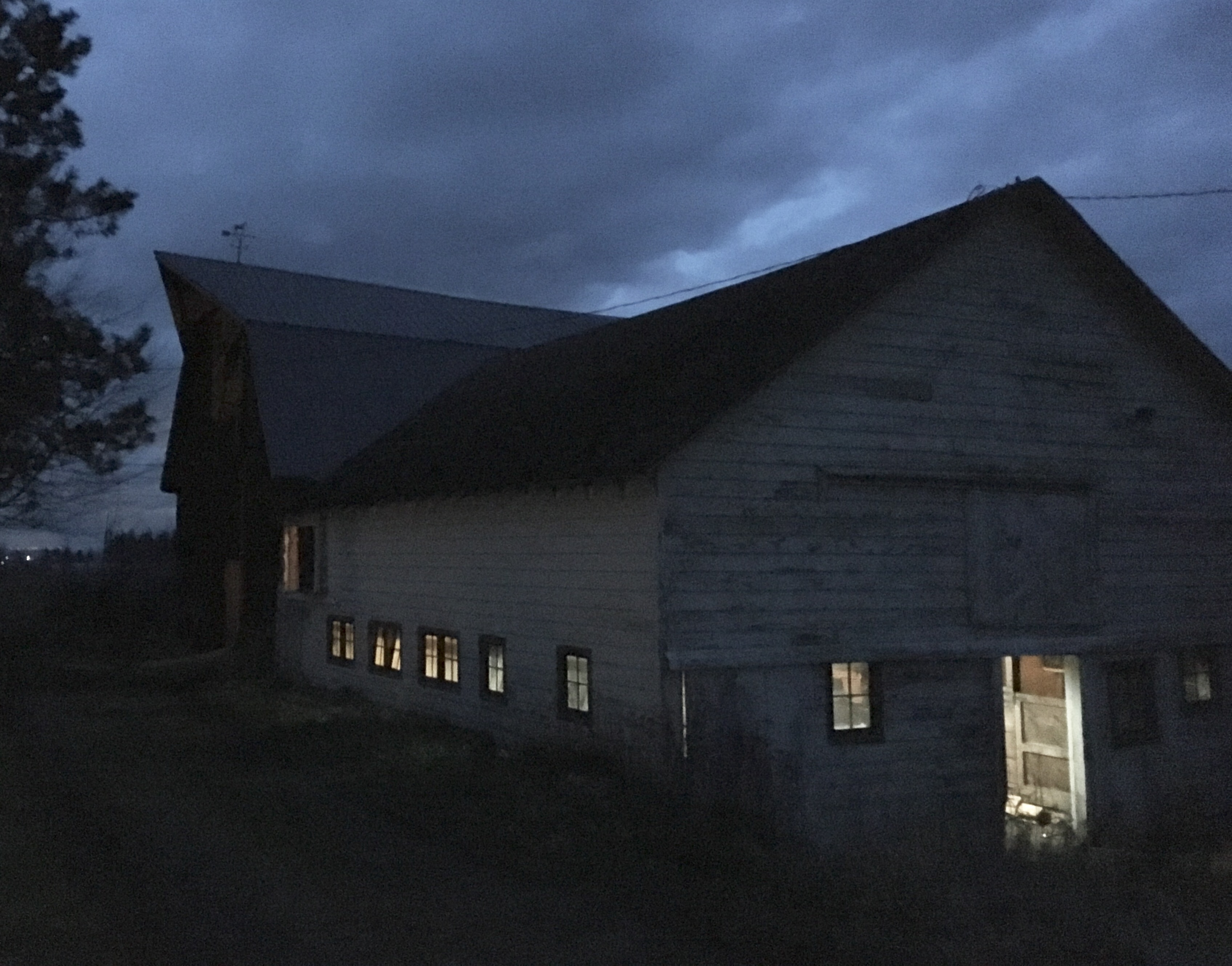
Usually, after turning out that forgotten barn light, I sit on the edge of the tractor bucket for a few minutes and let my eyes adjust to the night outside. City people always notice the darkness here, but it’s never very dark if you wait till your eyes owl out a little….
I’m always glad to have to walk down to the barn in the night, and I always forget that it makes me glad. I heave on my coat, stomp into my barn boots and trudge down toward the barn light, muttering at myself. But then I sit in the dark, and I remember this gladness, and I walk back up to the gleaming house, listening for the horses. ~Verlyn Klinkenborg from A Light in the Barn
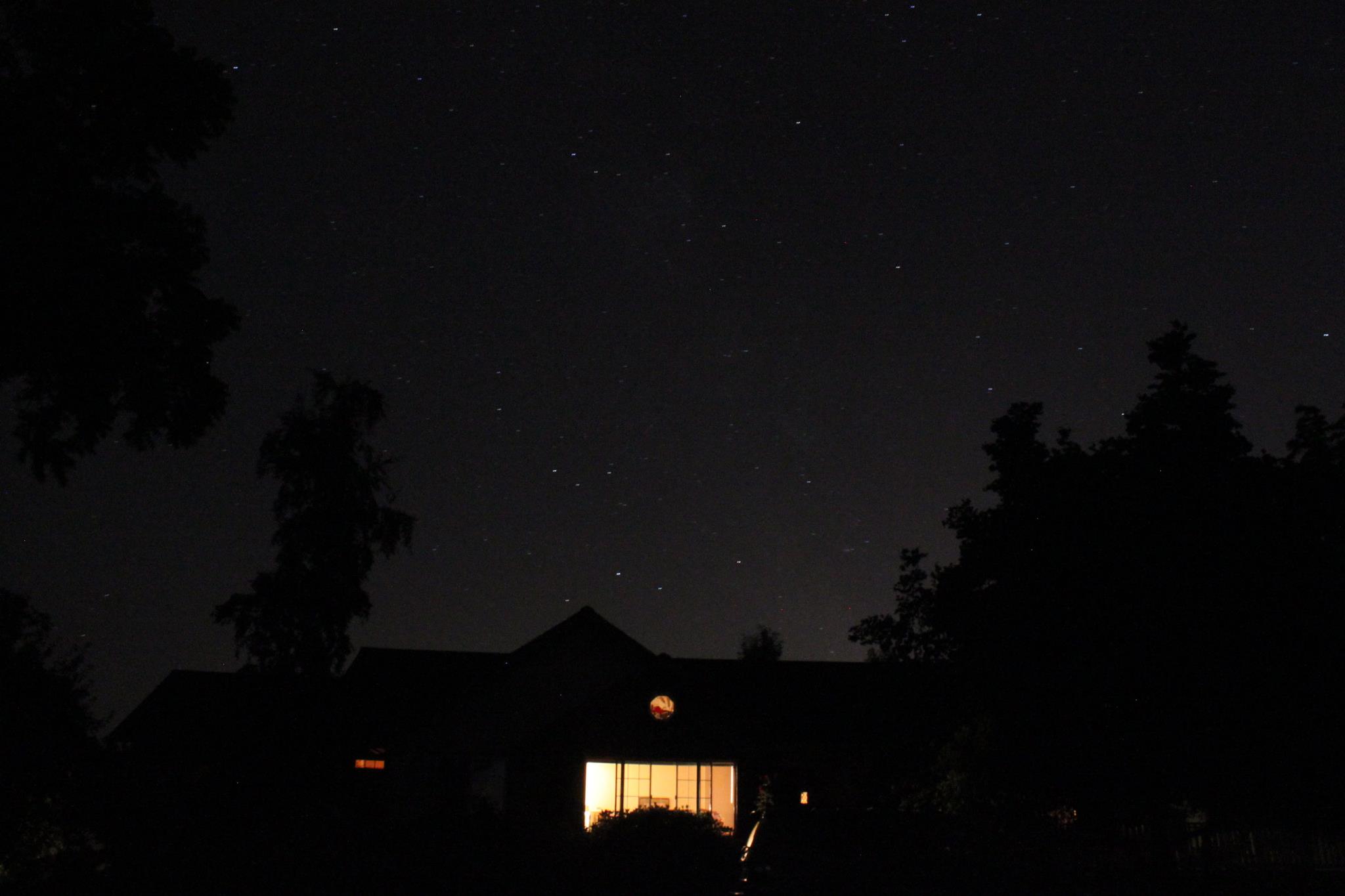
My favorite thing about walking up from the barn at night is looking at the lights glowing in our house, knowing the lives that have thrived there, even though each child has flown away to distant cities.
There is love there as we have rediscovered our “alone” life together.
There are still future years there, as many as God grants us to stay on the farm. It is home and it is light and if all it takes is a walk from a dark barn to remind me, I’ll leave the lights on in the barn at night more often.
…Then how his muffled armies move in all night And we wake and every road is blockaded Every hill taken and every farm occupied And the white glare of his tents is on the ceiling. And all that dull blue day and on into the gloaming We have to watch more coming.
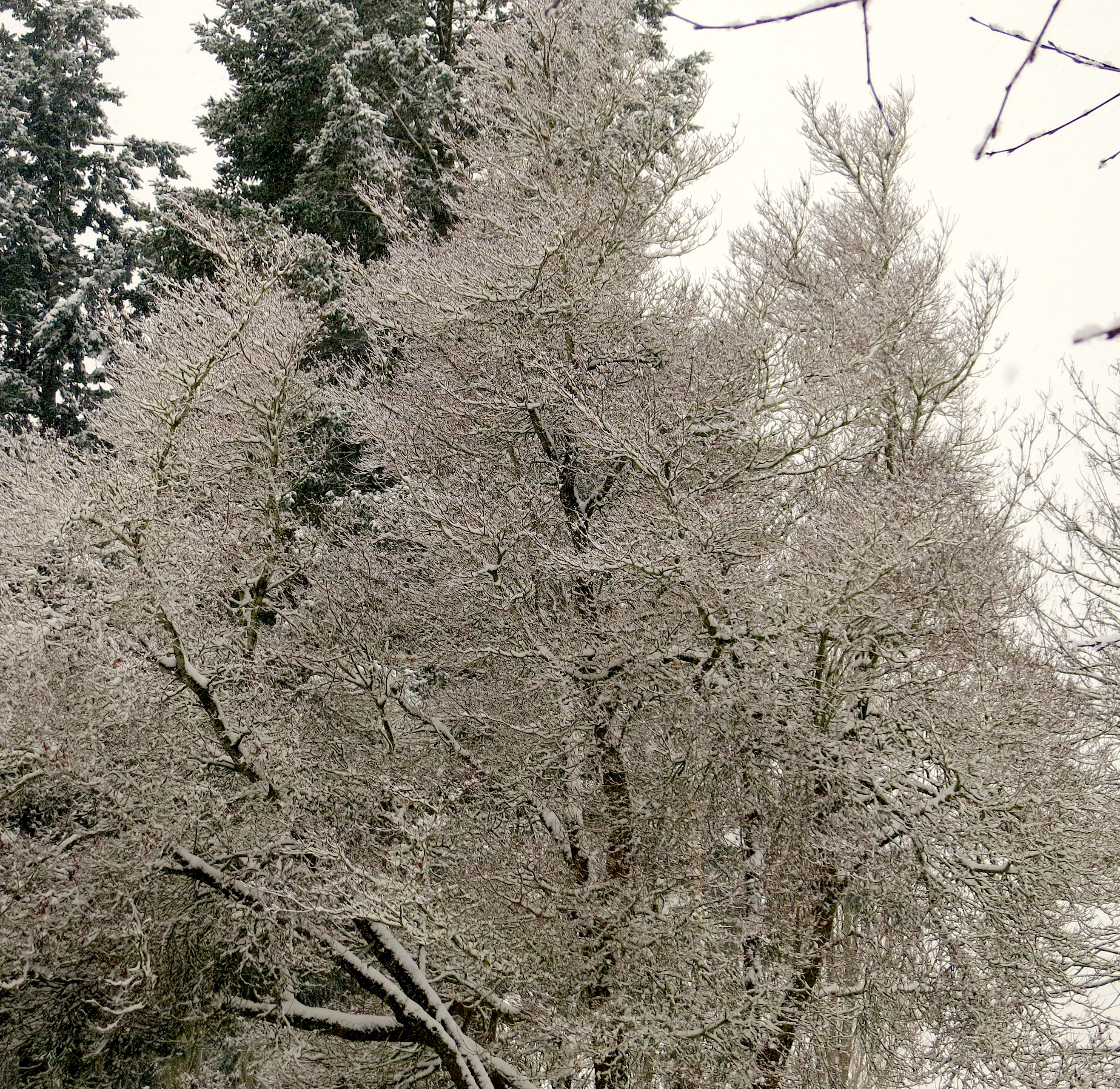
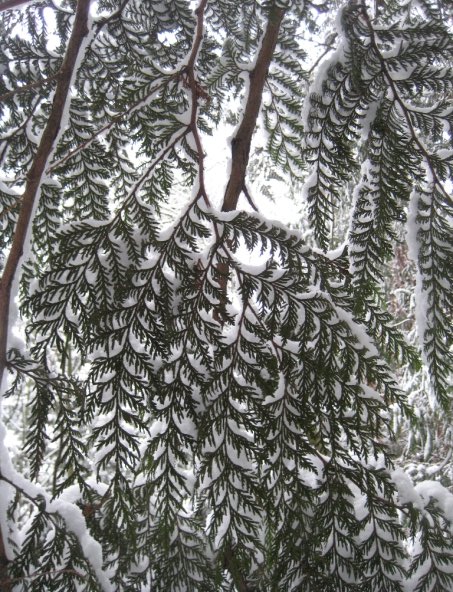
Then everything in the rubbish-heaped world Is a bridesmaid at her miracle. Dunghills and crumbly dark old barns are bowed in the chapel of her sparkle. The gruesome boggy cellars of the wood Are a wedding of lace Now taking place. ~Ted Hughes from “Snow and Snow”
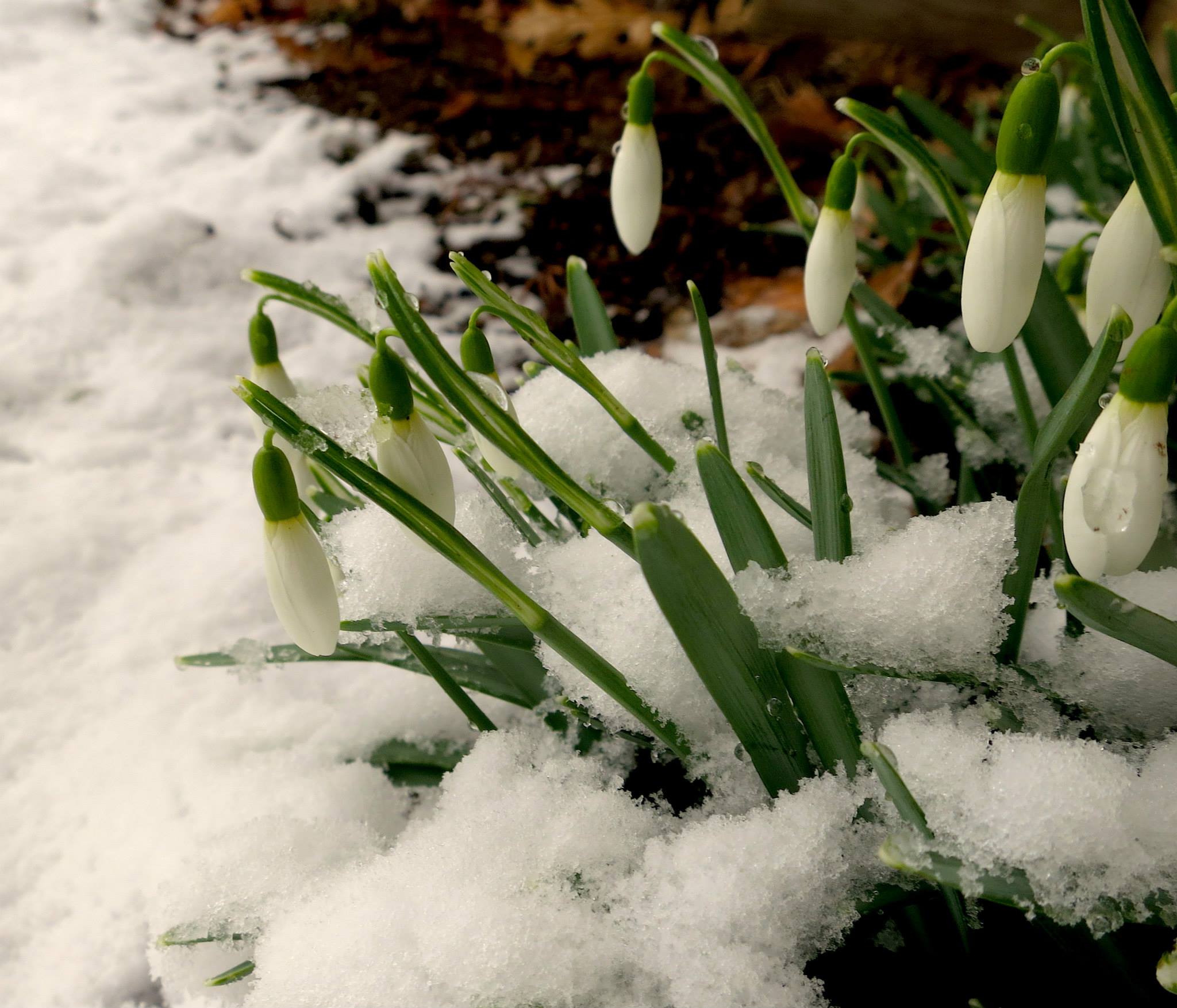
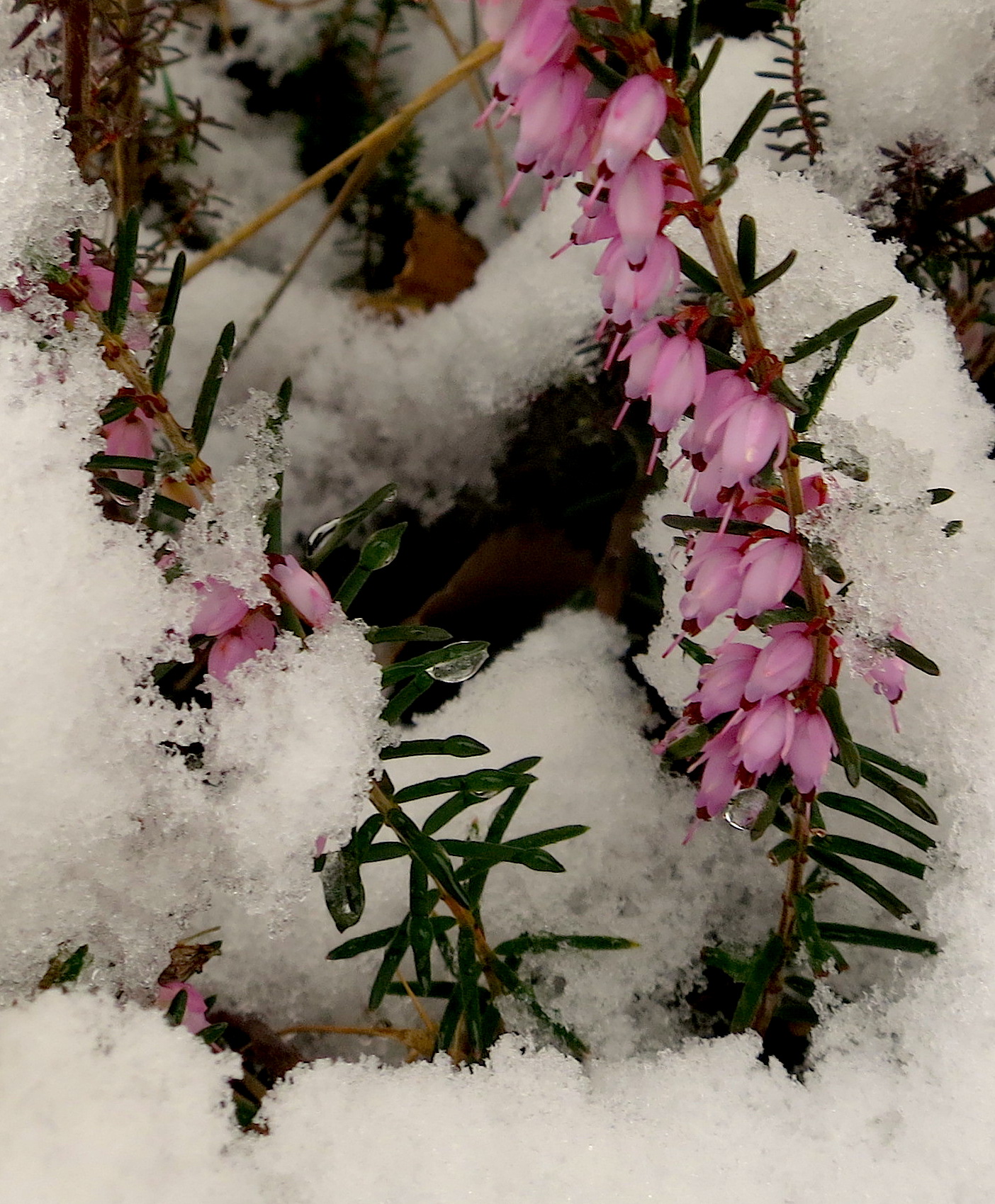
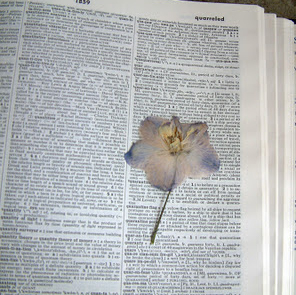
I wish one could press snowflakes in a book like flowers. ~James Schuyler from “February 13, 1975”
It’s true that three snow days in a row is unprecedented in our part of the world. Being snowbound by driveway-blocking drifts has its advantages until it isn’t fun any longer and means even more work to be done both on and off the farm, especially for a physician stranded from her closed clinic.
I’ve been doing my best taking care of our clinic’s patients via messaging, text and other media, but there is a limit to my virtual reach: I can’t palpate a tender belly, or feel swollen lymph nodes or listen to someone’s palpitations, though it is a little easier to discern despair, anticipate anxiety and work out someone’s worries from afar.
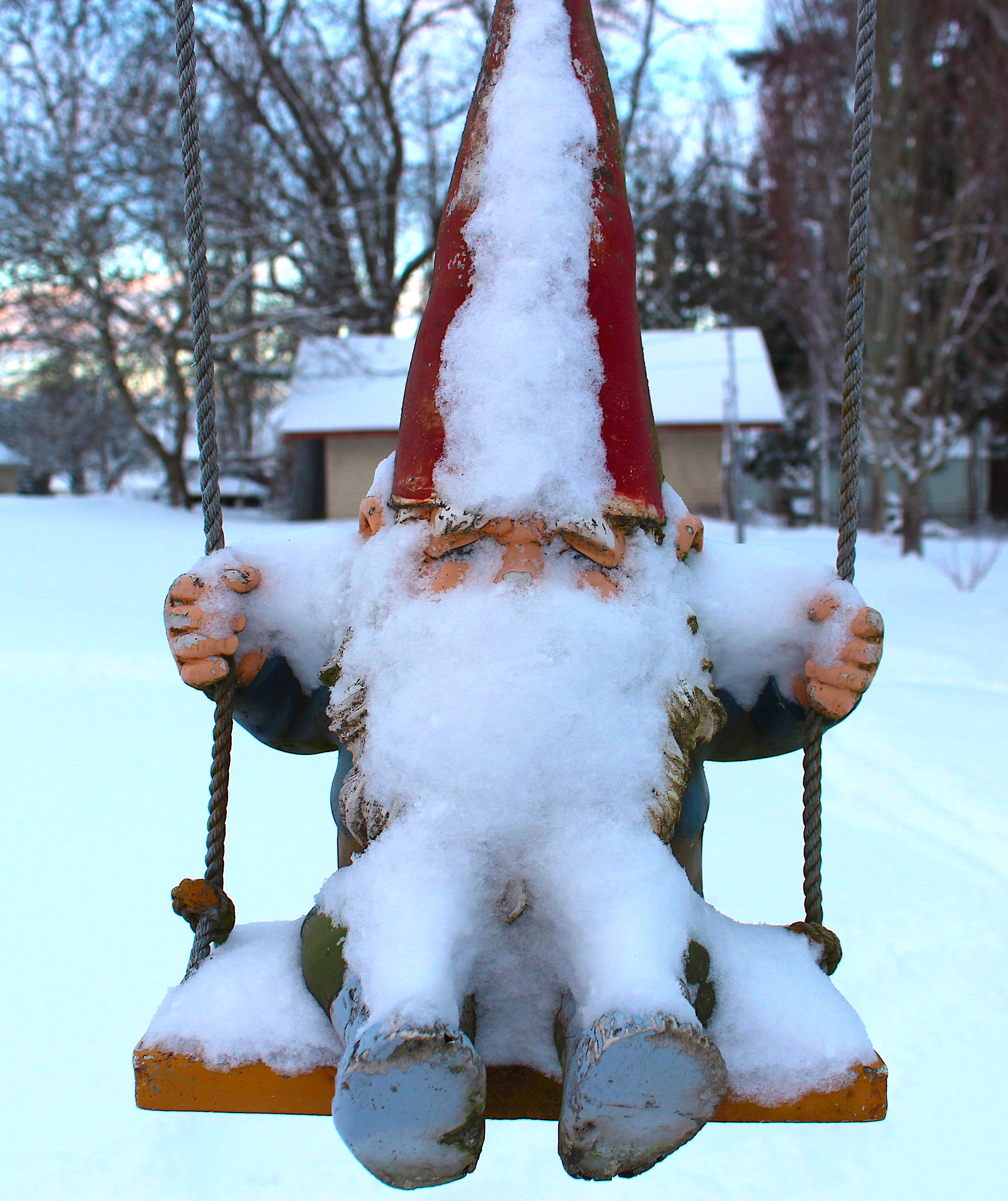
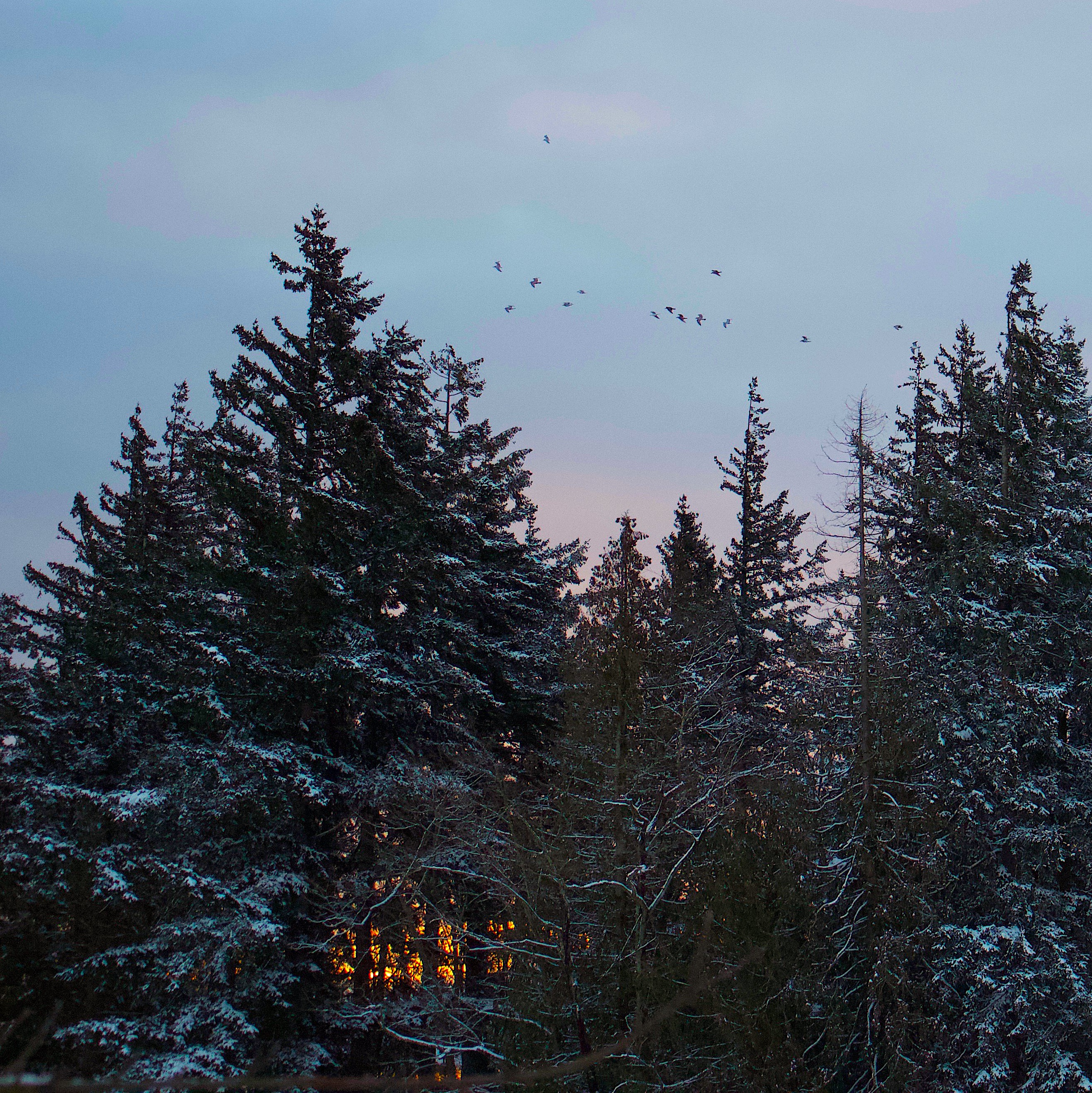
But I do have a view of the wedding lace of our woods and the sparkling chapels made of our tired old barns and buildings on the farm. I’m reminded that even I can be dressed up with a covering as white as snow. So lovely to look at, if only to be preserved for the long summer days that lie ahead — a wilting snowflake pressed into a book like a flower remembered, its fragrance still attached.













 Barnstorming