Fixing Eyes on the Unseen – In Sorrow, Scraped and Torn

“I wish it need not have happened in my time,” said Frodo.
“So do I,” said Gandalf,

“and so do all who live to see such times.
But that is not for them to decide.
All we have to decide
is what to do with the time that is given us.”

The world is indeed full of peril,
and in it there are many dark places;
but still there is much that is fair,
and though in all lands
love is now mingled with grief,
it grows perhaps the greater.
― J.R.R. Tolkien, from The Fellowship of the Ring
God is not only the God of the sufferers but the God who suffers. … It is said of God that no one can behold his face and live. I always thought this meant that no one could see his splendor and live. A friend said perhaps it meant that no one could see his sorrow and live. Or perhaps his sorrow is splendor. …

Instead of explaining our suffering God shares it.

How is faith to endure, O God, when you allow all this scraping and tearing on us? You have allowed rivers of blood to flow, mountains of suffering to pile up, sobs to become humanity’s song–all without lifting a finger that we could see. You have allowed bonds of love beyond number to be painfully snapped. If you have not abandoned us, explain yourself.

We strain to hear. But instead of hearing an answer we catch sight of God himself scraped and torn. Through our tears we see the tears of God.
~Nicholas Wolterstorff  in Lament for a Son
“My God, My God,” goes the Psalm 22, “hear me, why have you forsaken me?”  This is the anguish all we of Godforsaken heart know well. But hear the revelation to which Christ directs us, further in the same psalm:

For He has not despised nor scorned the beggar’s supplication,
Nor has He turned away His face from me;
And when I cried out to Him, He heard me.

He hears us, and he knows, because he has suffered as one Godforsaken. Which means that you and I, even in our darkest hours, are not forsaken. Though we may hear nothing, feel nothing, believe nothing, we are not forsaken, and so we need not despair. And that is everything. That is Good Friday and it is hope, it is life in this darkened age, and it is the life of the world to come.
~Tony Woodlief from “We are Not Forsaken”

Scratch the surface of a human being and the demons of hate and revenge … and sheer destructiveness break forth.

    Again and again we read the stories of violence in our daily papers, of the mass murders and ethnic wars still occurring in numerous parts of our world. But how often do we say to ourselves: “What seizes people like that, even young people, to make them forget family and friends, and suddenly kill other human beings?” We don’t always ask the question in that manner. Sometimes we are likely to think, almost smugly: “How different those horrible creatures are from the rest of us. How fortunate I am that I could never kill or hurt other people like they did.”

    I do not like to stop and, in the silence, look within, but when I do I hear a pounding on the floor of my soul. When I open the trap door into the deep darkness I see the monsters emerge for me to deal with. How painful it is to bear all this, but it is there to bear in all of us. Freud called it the death wish, Jung the demonic darkness. If I do not deal with it, it deals with me. The cross reminds me of all this.

    This inhumanity of human to human is tamed most of the time by law and order in most of our communities, but there are not laws strong enough to make men and women simply cease their cruelty and bitterness. This destructiveness within us can seldom be transformed until we squarely face it in ourselves. This confrontation often leads us into the pit. The empty cross is planted there to remind us that suffering is real but not the end, that victory still is possible…
~Morton Kelsey from “The Cross and the Cellar”
I’m depending on others’ words right now. The maelstrom of emotions following this week’s latest school shooting silences everything but my tears.

Have mercy, Holy God, on your people.

This year’s Lenten theme:
So we fix our eyes not on what is seen, but on what is unseen, since what is seen is temporary, but what is unseen is eternal.
2 Corinthians 4: 18


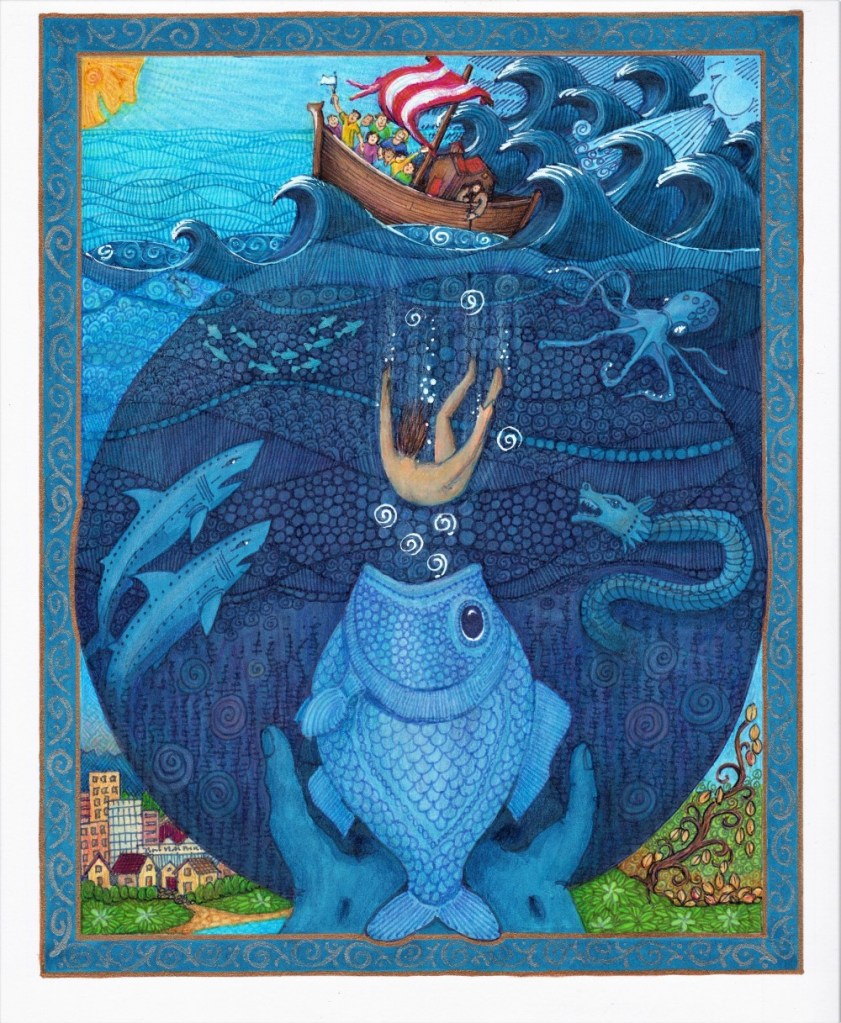
The Cold Dark Undertow

Down into the icy depths you plunge,
The cold dark undertow of your depression,
Even your memories of light made strange,
As you fall further from all comprehension.
You feel as though they’ve thrown you overboard,
Your fellow Christians on the sunlit deck,
A stone cold Jonah on whom scorn is poured,
A sacrifice to save them from the wreck.

But someone has their hands on your long line,
You sound for them the depths they sail above,
One who takes Jonah as his only sign
Sinks lower still to hold you in his love,
And though you cannot see, or speak, or breathe,
The everlasting arms are underneath.
~Malcolm Guite “The Christian Plummet”

Christians, like biblical Jonah, often struggle with living in obedience to God’s Word and plan. We become discouraged and depressed, filled with misgivings and a lack of understanding. This is complicated by our need to “put a good face on it,” especially among other Christians who seem to not feel the brokenness of the dark undertow.

Christ Himself becomes the sacrifice thrown overboard, as Jonah was, to plumb the depths and allow us to rise beyond peril and danger. He struggled too, He became discouraged and overwhelmed with the responsibility placed upon Him, but He remained obedient to His Father’s will.

We cannot fall lower than where He descended; He is there to lift us up. He knows how deep we might sink and He knows exactly what it takes to push us back up to the light.

One-Time
Monthly
Yearly

Make a one-time or recurring donation to support daily Barnstorming posts

Make a monthly donation

Make a yearly donation

Choose an amount

¤10.00
¤20.00
¤50.00
¤5.00
¤15.00
¤100.00
¤5.00
¤15.00
¤100.00

Or enter a custom amount

¤

Your contribution is deeply appreciated.

Your contribution is appreciated.

Your contribution is appreciated.

DonateDonate monthlyDonate yearly

A Green Sprouting Thing

Now wind torments the field,
turning the white surface back
on itself, back and back on itself,
like an animal licking a wound.

Nothing but white–the air, the light;
only one brown milkweed pod
bobbing in the gully, smallest
brown boat on the immense tide.

A single green sprouting thing
would restore me . . .

Then think of the tall delphinium,
swaying, or the bee when it comes
to the tongue of the burgundy lily.
~Jane Kenyon “February: Thinking of Flowers”

Turning the page on the calendar last week or watching for groundhog predictions didn’t magically bring spring.  We’ve had more arctic wind and southerly blows as well. The sun has kept its face hidden behind its gray veil.

By this time of winter, I’m like a dog tormented by my own open and raw flesh, trying my best to lick it healed, unable to think of anything or anyone else, going over it again and again – how weary I feel, how bruised I am by the wind, how uprooted I feel, how impossibly long it will be until I feel warm again.

Then I see the photos from Turkey and Syria after the recent devastating series of building-shattering earthquakes leaving many dead, injured and homeless in mid-winter. I realize I truly have no idea how deep wounds can be…

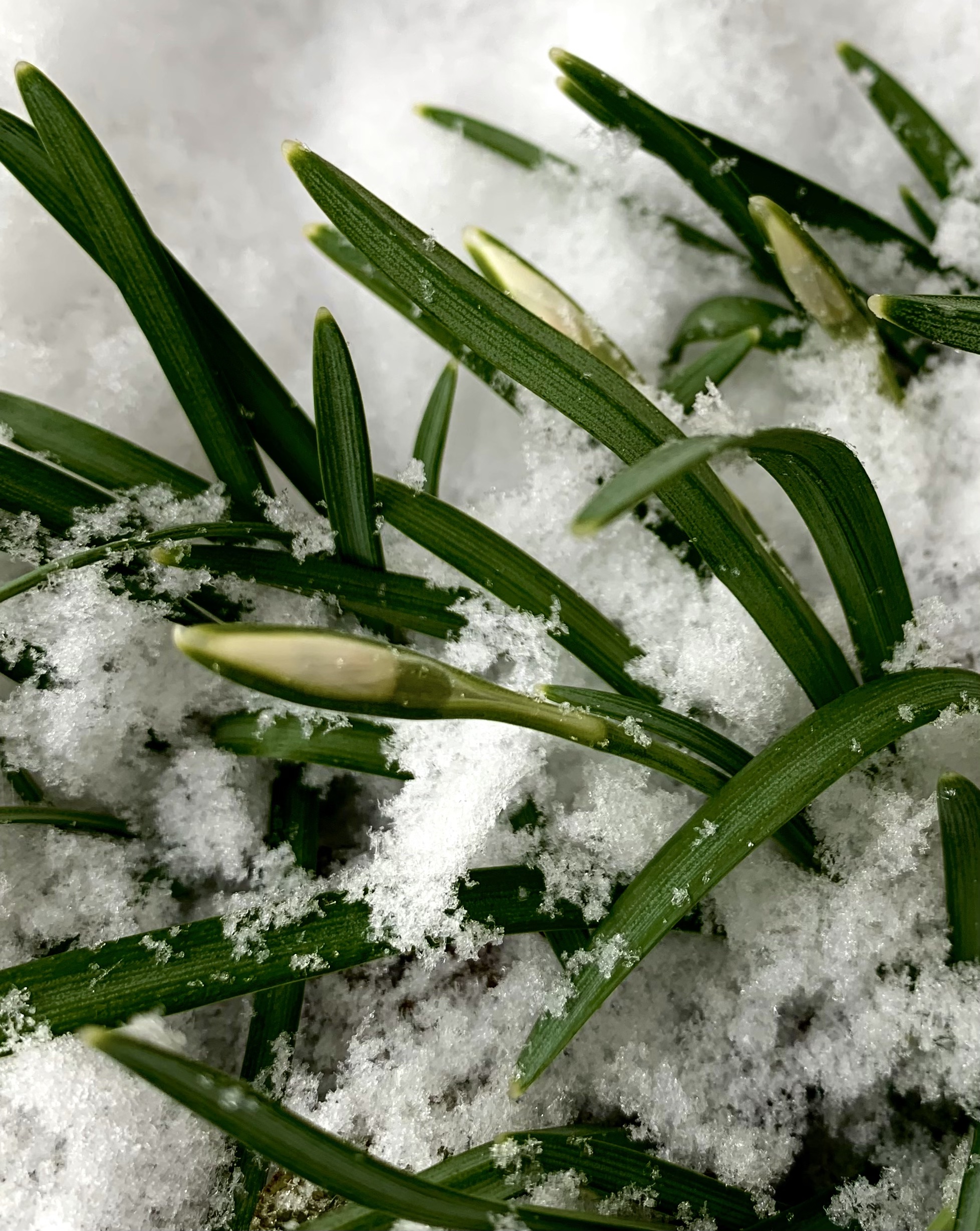
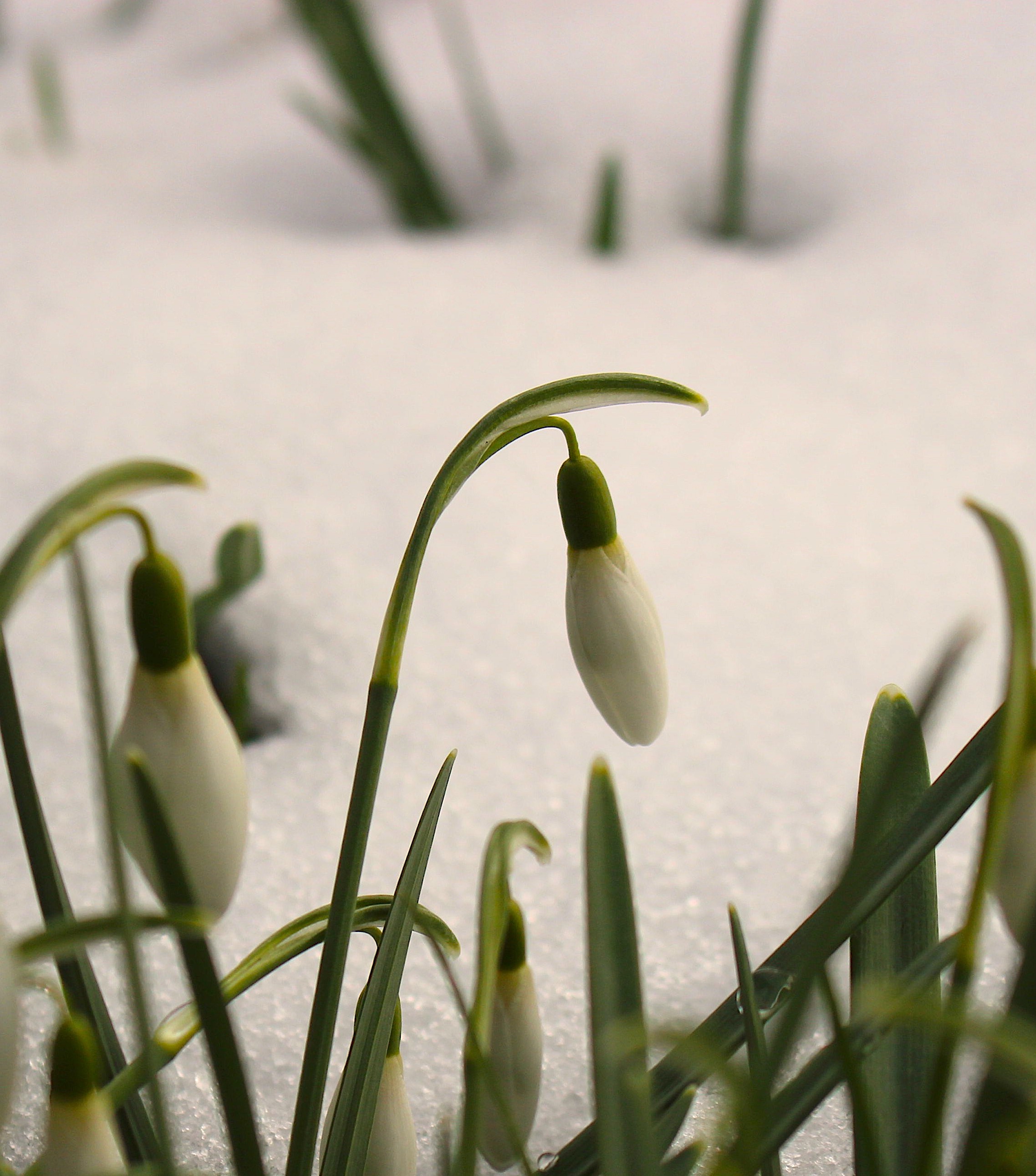
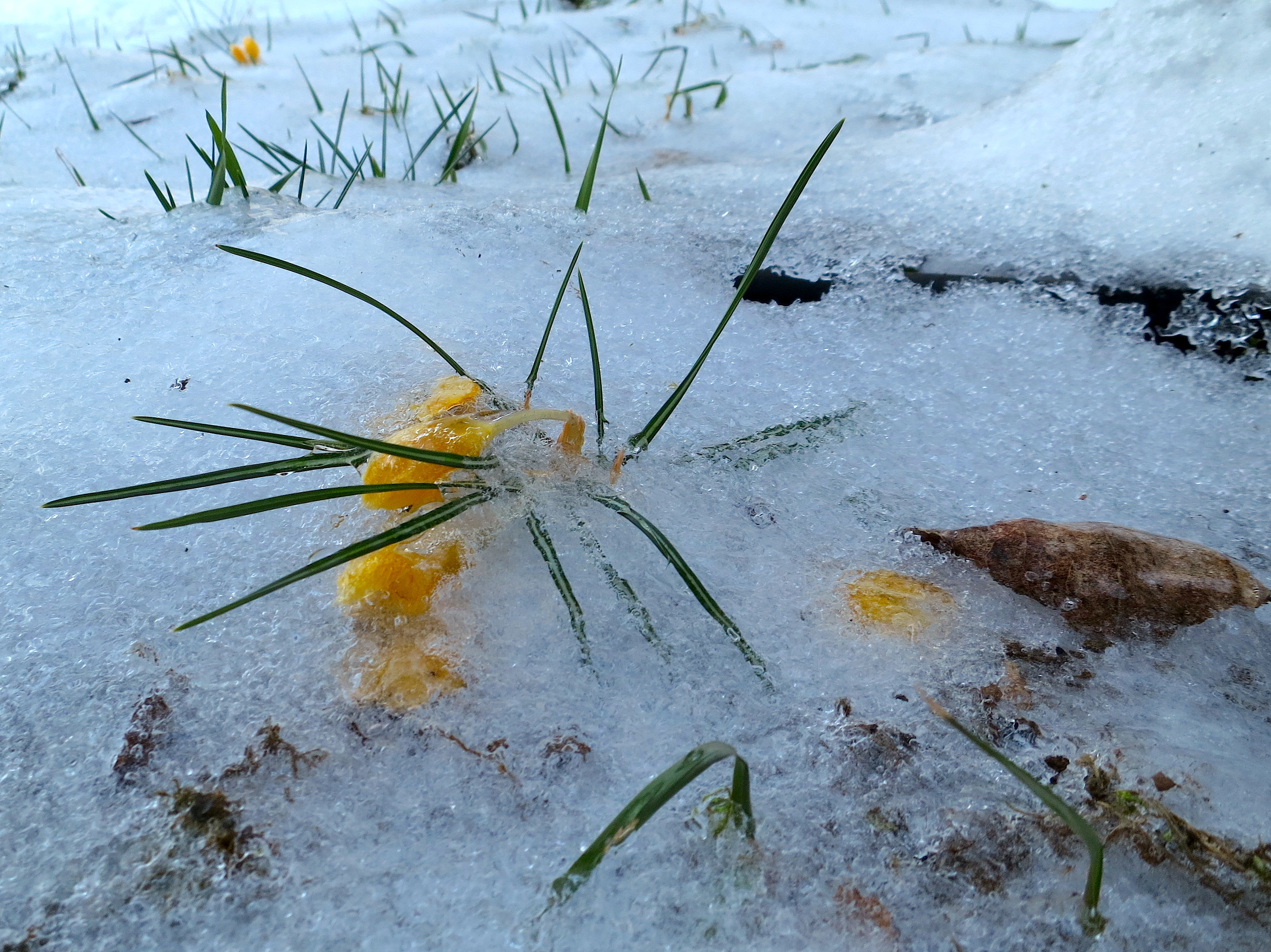
Despite it all, green sprouts are trying to push up even while frozen by snow and ice. Soon fresh blooms will once again grace the barnyard and with that renewal of life and hope, I just might be distracted from my own wound-licking.

photo by Nate Gibson
One-Time
Monthly
Yearly

Make a one-time or recurring donation to support daily Barnstorming posts

Make a monthly donation

Make a yearly donation

Choose an amount

¤10.00
¤20.00
¤50.00
¤5.00
¤15.00
¤100.00
¤5.00
¤15.00
¤100.00

Or enter a custom amount

¤

Your contribution is deeply appreciated.

Your contribution is appreciated.

Your contribution is appreciated.

DonateDonate monthlyDonate yearly

We Couldn’t Do Anything


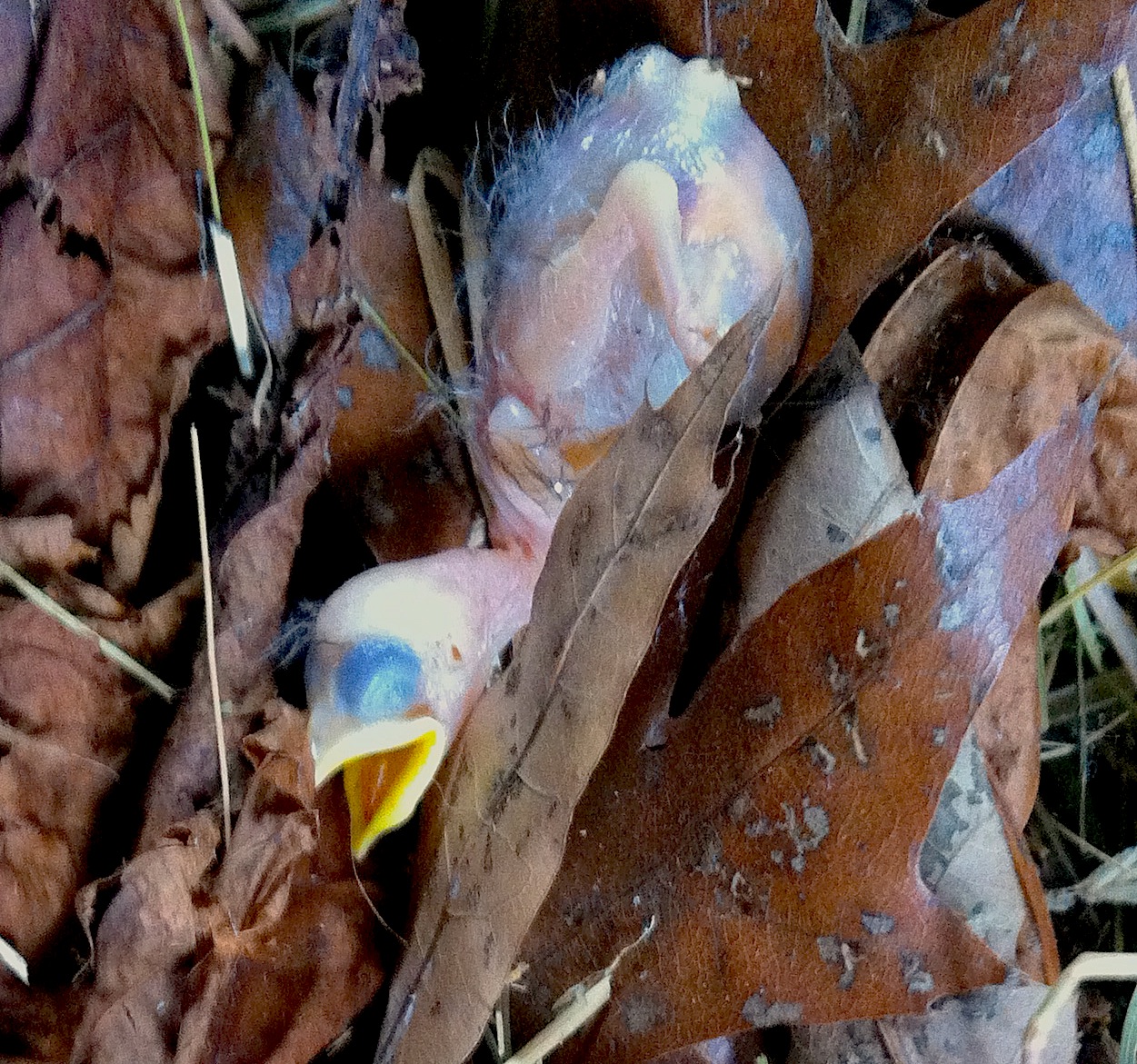
Yesterday our children, playing
in a tree, watched as the tiniest bird
fell from above them,
where it belonged,
to land below them,
where it did not.
The dog, animal and eager,
stepped on the bird, then
lowered his head. Our daughter
screamed, hauled him back,
then cupped her trembling hands
around the trembling bird,
Its one wing stretched and bent.
Our son ran inside, obedient
to our daughter’s instructions.
I was in the shower, useless.
You found a shoebox, sheltered the bird,
helped our children find leaves and twigs,
perched the box in the tree. At supper,
we prayed for the bird while its mother
visited the shoebox,
her beak full. She fretted
and fluttered. She couldn’t do anything,
and we couldn’t do anything,
and after supper, we found the trowel.
Dust to dust,
I said.
O how I longed to gather you,
you said, as a mother hen gathers
her young beneath her wings.
Our son pushed a stick into the soft earth.
Our daughter told him not to push too far.

~Shea Tuttle “After reading our daughter’s poem” from Image Journal

Hope is the thing with feathers
That perches in the soul,
And sings the tune without the words,
And never stops at all,

And sweetest in the gale is heard;
And sore must be the storm
That could abash the little bird
That kept so many warm.

I’ve heard it in the chillest land,
And on the strangest sea;
Yet, never, in extremity,
It asked a crumb of me.

~Emily Dickinson

I have known the helplessness of watching life ebb away from a living creature and not be able to do a thing to change what is happening.

As a teenage nurse aide in a rest home for the elderly, I saw much of dying over those years before going to medical school – some deaths were anticipated and some unexpected. What was most apparent to me in that setting is that my primary role was to be a caring witness and comforter. I could not change what was happening but I could be there, not leaving my patients to die alone. I hoped that I was useful in some way.

Later, when I worked as a physician in a hospital, there were certainly things we would do to respond to a sudden cardiac event, and it was very dramatic to see someone’s pulse restored and stabilized due to our intervention. But more often than not, what we could do wouldn’t change the reality – dying still happened and we were gathered to witness the end. We often left the bedside feeling useless.

Now I have grandchildren who are learning about death through observing the natural cycles of animals living and dying on our farm. They discover a dead bird or vole on the ground; they were aware one of our elderly horses recently died. They are aware our beloved farm dogs are aging and so are grandma and grandpa.

Children naturally ask “why?” and we do our best to explain there is always hope and comfort, even when physical bodies are dust in the ground, marked by a stick or stone or only a memory.

It is “Hope” that sings alive within us, even when we’re naked and featherless, even if we fall far from the nest we were born to. We are caught and safe under our Savior’s wings for the rest of eternity, never to be “just dust” again.

One-Time
Monthly
Yearly

Make a one-time or recurring donation to support daily Barnstorming posts

Make a monthly donation

Make a yearly donation

Choose an amount

¤10.00
¤20.00
¤50.00
¤5.00
¤15.00
¤100.00
¤5.00
¤15.00
¤100.00

Or enter a custom amount

¤

Your contribution is deeply appreciated.

Your contribution is appreciated.

Your contribution is appreciated.

DonateDonate monthlyDonate yearly

Ragged Hopes

How granular they feel—grief and regret, arriving, as they do,
in the sharp particularities of distress. Inserting themselves—
cunning, intricate, subversive—into our discourse.

In the long night, grievances seem to multiply. Old dreams
mingling with new. Disappointment and regret bludgeon
the soul, your best imaginings bruised, your hopes ragged.

Yet wait, watch. From the skylight the room is filling with
soft early sun, slowly sifting its light on the bed, on your head,
a shower of fine particles. How welcome. And how reliable.

~Luci Shaw “Sorrow”

(In my sleep I dreamed this poem)

Someone I loved once gave me
a box full of darkness.

It took me years to understand
that this, too, was a gift.

~ Mary Oliver “The Uses of Sorrow” from Thirst

We are given a box full of darkness
by someone who loves us,
and we can’t help but open it
and weep.

It takes a lifetime to understand,
if we ever do,
we will inevitably hand off
this gift to others whom we love.

Opening the box
allows the Light in
where none existed before.
Light pours into our brokenness.

Sorrow ends up shining through our tears:
we reach out from a deep well of need.
Because we are loved so thoroughly,
we too love deeply beyond ourselves.

One-Time
Monthly
Yearly

Make a one-time or recurring donation to support daily Barnstorming posts

Make a monthly donation

Make a yearly donation

Choose an amount

¤10.00
¤20.00
¤50.00
¤5.00
¤15.00
¤100.00
¤5.00
¤15.00
¤100.00

Or enter a custom amount

¤

Your contribution is deeply appreciated.

Your contribution is appreciated.

Your contribution is appreciated.

DonateDonate monthlyDonate yearly

A New Definition of Greatness

…if I respond to hate with a reciprocal hate I do nothing but intensify the cleavage in broken community. I can only close the gap in broken community by meeting hate with love. If I meet hate with hate, I become depersonalized, because creation is so designed that my personality can only be fulfilled in the context of community.
Booker T. Washington was right: “Let no man pull you so low as to make you hate him.”

~Martin Luther King, Jr.

As nightfall does not come at once, neither does oppression.
In both instances, there is a twilight when everything remains seemingly unchanged.
And it is in such twilight that we all must be most aware of change in the air
– however slight – lest we become unwitting victims of the darkness.
~William O. Douglas
from The Douglas Letters

Be careful whom you choose to hate.
The small and the vulnerable own a protection great enough,
if you could but see it,
to melt you into jelly.

~Leif Enger from Peace Like a River

We have a new definition of greatness:
it means that everybody can be great, because everybody can serve. 
You don’t have to have a college degree to serve. 
You don’t have to make your subject and your verb agree to serve. 
You don’t have to know about Plato and Aristotle to serve. 
You don’t have to know Einstein’s theory of relativity to serve. 
You don’t have to know the second theory of thermodynamics in physics to serve. 
You only need a heart full of grace, a soul generated by love. 
And you can be that servant.
~Martin Luther King, Jr.  in a February 1968 sermon:  “The Drum Major Instinct” from A Knock At Midnight: Inspiration from the Great Sermons of Reverend Martin Luther King, Jr.
Dr. King’s words and wisdom in his sermons spoken over sixty years ago continue to inform us of our shortcomings as we flounder in flaws and brokenness. To often we resist considering others before ourselves, to serve one another out of humility, grace and love.

Today we unite in shared tears:
shed for continued strife and disagreements,
shed for the injustice that results in senseless emotional and physical violence,
shed for our inability to hold up one another as a holy in God’s eyes.

We weep together as the light dawns today, knowing, as Dr. King knew, a new day will come when the Lord God wipes the tears away from the remarkable and beautiful faces of all people — as all are created in His image.

Naming Your Hopelessness

Instead of depression,
try calling it hibernation.
Imagine the darkness is a cave
in which you will be nurtured
by doing absolutely nothing.
Hibernating animals don’t even dream.
It’s okay if you can’t imagine
Spring. Sleep through the alarm
of the world. Name your hopelessness
a quiet hollow, a place you go
to heal, a den you dug,
Sweetheart, instead
of a grave.
~Andrea Gibson “Instead of Depression” from You Better Be Lightning

We didn’t say fireflies
but lightning bugs.
We didn’t say carousel
but merry-go-round.
Not seesaw,
teeter-totter
not lollipop,
sucker.
We didn’t say pasta, but
spaghetti, macaroni, noodles:
the three kinds.
We didn’t get angry:
we got mad.
And we never felt depressed
dismayed, disappointed
disheartened, discouraged
disillusioned or anything,
even unhappy:
just sad.
~Sally Fisher “Where I Come From”  from Good Question.

…if you could distinguish finer meanings within “Awesome” (happy, content, thrilled, relaxed, joyful, hopeful, inspired, prideful, adoring, grateful, blissful.. .), and fifty shades of “Crappy” (angry, aggravated, alarmed, spiteful, grumpy, remorseful, gloomy, mortified, uneasy, dread-ridden, resentful, afraid, envious, woeful, melancholy.. .), your brain would have many more options for predicting, categorizing, and perceiving emotion, providing you with the tools for more flexible and functional responses.
~Lisa Feldman Barrett from How Emotions Are Made: The Secret Life of the Brain

Our own experience with loneliness, depression, and fear can become a gift for others, especially when we have received good care. As long as our wounds are open and bleeding, we scare others away. But after someone has carefully tended to our wounds, they no longer frighten us or others….
We have to trust that our own bandaged wounds will allow us to listen to others with our whole being. That is healing.
— Henri Nouwen from Bread for the Journey

If there is anything I came to understand over the decades I served as a primary care physician, it is that every person experiences painful emotions that make them miserable, making it even more difficult to share with others. Sometimes those feelings build up such pressure that they leak out of our cells as physical symptoms: headaches, muscle tightness, stomach upset, hypertension. Other times they are so overwhelming we can no longer function in a day to day way – described clinically as rage, panic, mood disorder, depression, self-destructive, suicidal.

Somehow we’ve lost permission to be sad.
Just sad. Sometimes unbearably, hopelessly sad.
 
Sadness happens to us all, some longer than others, some worse than others, some deeper than others. What makes sadness more real and more manageable is if we can say it out loud — whatever ‘sad’ means to us on a given day and if we describe our feelings in detail, explaining to others who can understand because they’ve been there too, then they can listen and help.

Painful emotions don’t always need a “fix” in the short term, particularly chemical, but that is why I was usually consulted. Alcohol, marijuana and other self-administered drugs tend to be the temporary anesthesia that people seek to stop feeling anything at all but it can erupt even stronger later.

Sometimes an overwhelming feeling just needs an outlet so it no longer is locked up, unspoken and silent, threatening to leak out in ways that tear us up and pull us apart.

Sometimes we need a healing respite/hibernation, with permission to sleep through the world’s alarms for a time. At times, medical management with antidepressants can be incredibly helpful along with talk therapy.

It helps to find words to express how things felt before this sadness, where you are now in the midst of it and where you wish you could be rather than being swallowed by sorrow. Healing takes time and like anything else that is broken, it hurts as it repairs. Armed with that self-knowledge and some gentle compassion, tomorrow and the next day and the next might feel a little less hopeless and overwhelming.

One-Time
Monthly
Yearly

Make a one-time or recurring donation to support daily Barnstorming posts

Make a monthly donation

Make a yearly donation

Choose an amount

¤10.00
¤20.00
¤50.00
¤5.00
¤15.00
¤100.00
¤5.00
¤15.00
¤100.00

Or enter a custom amount

¤

Your contribution is deeply appreciated.

Your contribution is appreciated.

Your contribution is appreciated.

DonateDonate monthlyDonate yearly

Immortal Flowers

“Did you ever know that a flower, once withered and freshened again, becomes an immortal flower, – that is, that it rises again?”
~Emily Dickinson in a letter to a friend

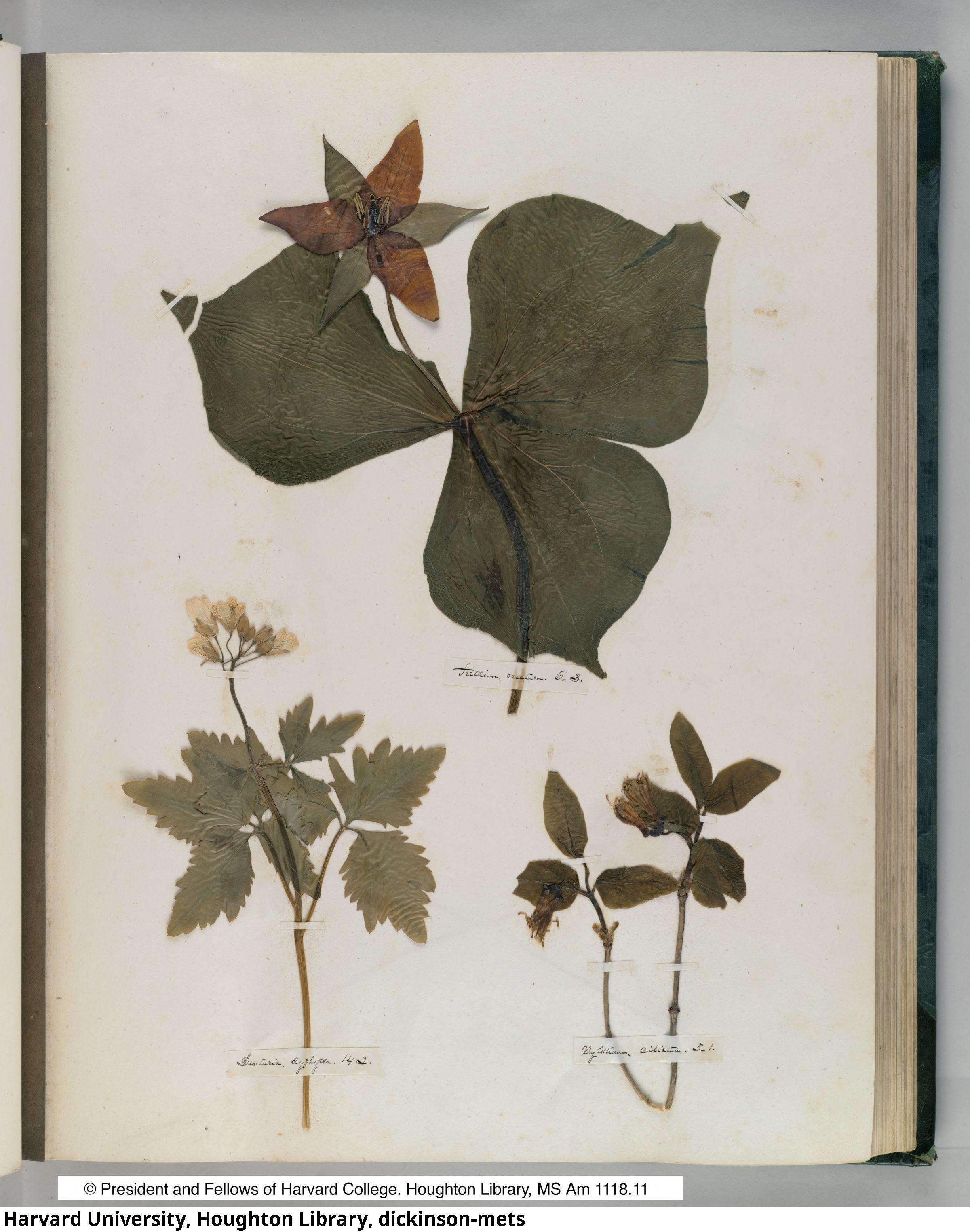
Emily Dickinson Herbarium – preservation of trillium

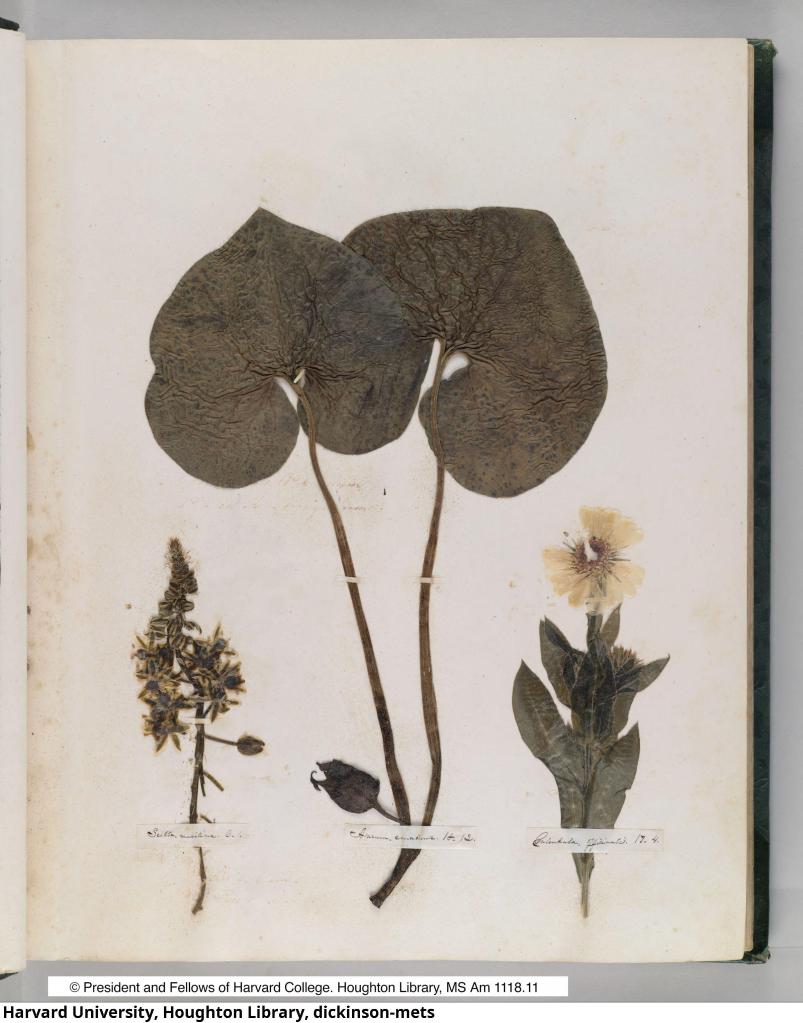
Emily Dickinson herbarium- preservation of wild ginger (asarum)

While I was fearing it, it came—
But came with less of fear
Because that fearing it so long
Had almost made it fair—

There is a Fitting—a Dismay—
A Fitting—a Despair
’Tis harder knowing it is Due
Than knowing it is Here.

The Trying on the Utmost
The Morning it is new
Is Terribler than wearing it
A whole existence through.

~Emily Dickinson

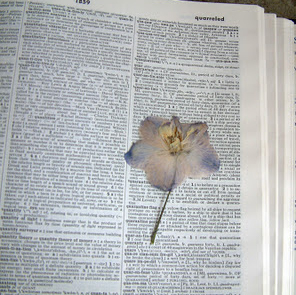
Over a decade ago, as I was going through my mother’s boxed-up possessions after her death, I found the 1956 Webster’s New Dictionary of the Twentieth Century that I grew up with. This book was massive, easily weighing 10 pounds, and served as a booster seat for haircuts, a step stool for trying to reach the cookie jar on the kitchen cupboard, and of course, for looking up any obscure word that ever existed in all of history. Or so it seemed.

It was an amazing tome. And as I flipped through the pages, I found some old familiar friends that were neither black nor white nor read all over. They had survived over half a century.

Wildflowers had been carefully pressed between the pages–over two dozen specimens paper thin themselves, their existence squeezed into two dimensions–still showing faint pink or blue, or purple color, almost exuding a long ago fragrance from a summer over fifty years ago. As a child I regularly wandered out to our fields and woods to gather crimson clover blossoms, buttercup, dandelions, daisies, wild violets, wild ginger, calypso lady slippers for bouquets for my mother, and she would select the most perfect to slide between the pages of the dictionary. Occasionally she would pull one out to gently paste on a hand written card she sent to a friend.

Here were my perfect flowers, preserved and pressed for time, just waiting for the senior-citizen me to rediscover them lying between wonderful words that I love to roll in my mouth and type on a page. They are too fragile to paste to a greeting card, or even to handle due to their brittleness. They need to stay right where they are, for another generation or two or three to discover.

As a child, I was always very worried about losing my parents, fearing their death would be the end of me as well. But as Emily Dickinson writes “fearing it so long/Had almost made it fair” – as an adult, I was more prepared for the day each parted from this life. As the poet suggests, fearing it for years was much harder than the acceptance when that time had come.

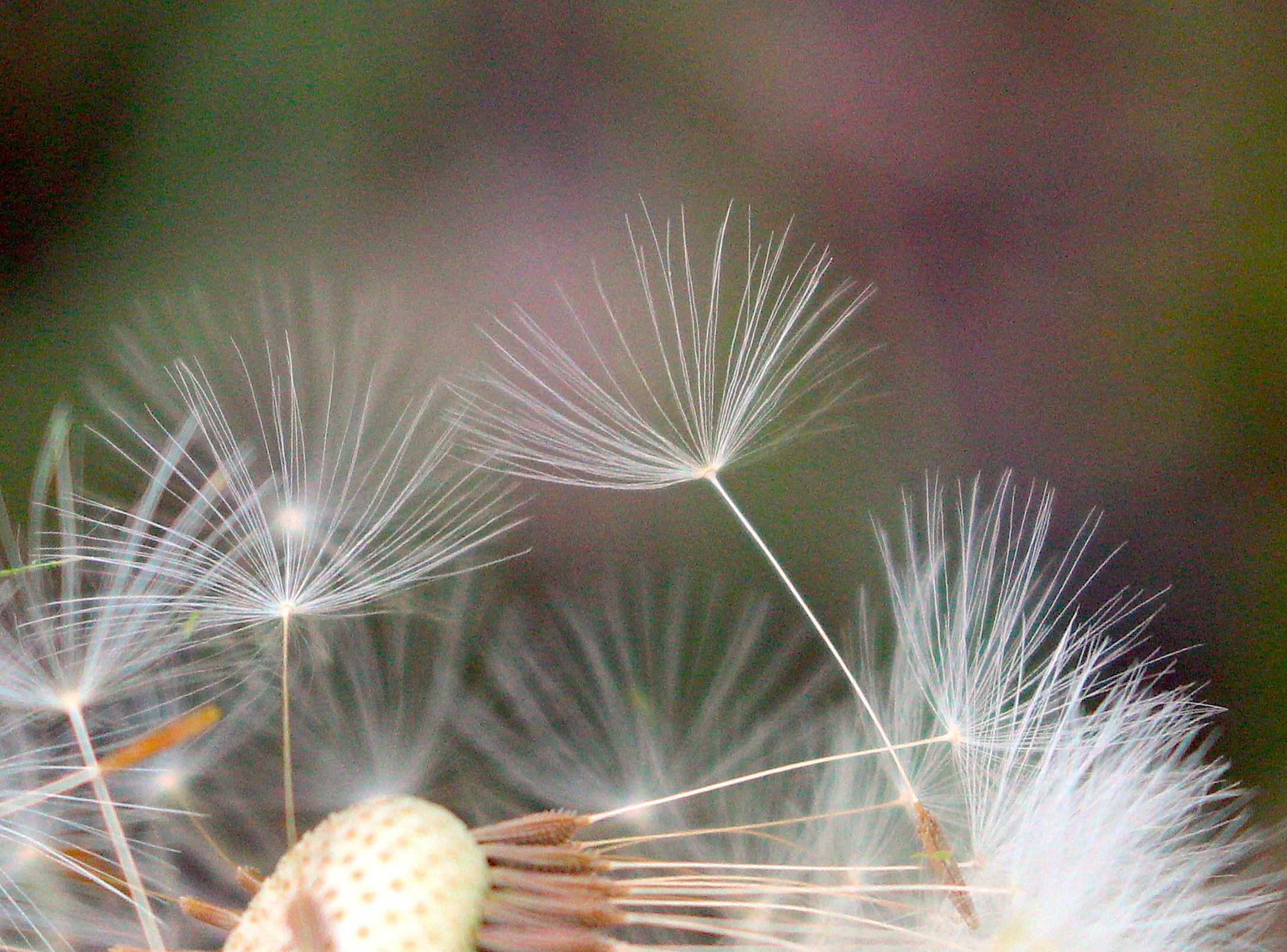
Now I too am pressed for time, fading and more fragile, perhaps more brittle than I care to admit. My mother and father have blown away like the puff ball seeds of the dandelion, on to other horizons, but the sturdy old dictionary is going nowhere. It will be passed down, its delicate passengers preserved inside from a long-ago-far-away summer afternoon of flower gathering. They will be shared as a great grandchild opens the book to look up a favorite word sometime in the not-so-far-off future.

One-Time
Monthly
Yearly

Make a one-time or recurring donation to support daily Barnstorming posts

Make a monthly donation

Make a yearly donation

Choose an amount

¤10.00
¤20.00
¤50.00
¤5.00
¤15.00
¤100.00
¤5.00
¤15.00
¤100.00

Or enter a custom amount

¤

Your contribution is deeply appreciated.

Your contribution is appreciated.

Your contribution is appreciated.

DonateDonate monthlyDonate yearly

Simply to Be is a Blessing

Before the adults we call our children arrive with their children in tow
  for Thanksgiving,

we take our morning walk down the lane of oaks and hemlocks, mist
  a smell of rain by nightfall—underfoot,

the crunch of leathery leaves released by yesterday’s big wind.

You’re ahead of me, striding into the arch of oaks that opens onto the fields
  and stone walls of the road—

as a V of geese honk a path overhead, and you stop—

in an instant, without thought, raising your arms toward sky, your hands
  flapping from the wrists,

and I can read in the echo your body makes of these wild geese going
  where they must,

such joy, such wordless unity and delight, you are once again the child
  who knows by instinct, by birthright,

just to be is a blessing. In a fictional present, I write the moment down.
  You embodied it. 
~Margaret Gibson “Moment” 

On this day,
this giving-thanks day,
I know families who surround loved ones fighting for life in ICU beds,
others struggling to find gratitude in their pierced hearts
when their child/brother/sister/spouse is gunned down in mass shootings,
or too many tragically lost every day to overwhelming depression,
as well as those lost in a devastating three year pandemic.

It is the measure of us – we created ones –
to kneel in gratitude while facing the terrible
and still feel touched, held, loved and blessed,
to sincerely believe how wide and long and high and deep is His love for us —
even when we weep, even when we mourn,
even when our pain makes no sense.

God chose to come alongside us and suffer,
rather than fly away.
He knew being alive
~just to be like us at all~
was His blessing to last an eternity.

One-Time
Monthly
Yearly

Make a one-time or recurring donation to support daily Barnstorming posts

Make a monthly donation

Make a yearly donation

Choose an amount

¤10.00
¤20.00
¤50.00
¤5.00
¤15.00
¤100.00
¤5.00
¤15.00
¤100.00

Or enter a custom amount

¤

Your contribution is deeply appreciated.

Your contribution is appreciated.

Your contribution is appreciated.

DonateDonate monthlyDonate yearly


The Silence of a Dying God

November pierces with its bleak remembrance
Of all the bitterness and waste of war.
Our silence tries but fails to make a semblance
Of that lost peace they thought worth fighting for.
Our silence seethes instead with wraiths and whispers,
And all the restless rumour of new wars,
The shells are falling all around our vespers,
No moment is unscarred, there is no pause,
In every instant bloodied innocence
Falls to the weary earth ,and whilst we stand
Quiescence ends again in acquiescence,
And Abel’s blood still cries in every land
One silence only might redeem that blood
Only the silence of a dying God.
~Malcolm Guite “Silence: a Sonnet for Remembrance Day”

So, when old hopes that earth was bettering slowly
Were dead and damned, there sounded ‘War is done!’
One morrow. Said the bereft, and meek, and lowly,
‘Will men some day be given to grace? yea, wholly,
And in good sooth, as our dreams used to run?

Aye; all was hushed. The about-to-fire fired not,
The aimed-at moved away in trance-lipped song.

Calm fell. From Heaven distilled a clemency;
There was peace on earth, and silence in the sky;

Some could, some could not, shake off misery

~Thomas Hardy from “And There Was a Great Calm” 

(On the Signing of the Armistice, 11 Nov. 1918)

When you go home tell them of us and say –
“For your tomorrow we gave our today”
~John Maxwell Edmonds from “The Kohima Epitaph” 

I’m unsure why the United States does not call November 11 Remembrance Day as the Commonwealth nations did 99 years ago at the Armistice. This is a day that demands so much more than the more passive name Veterans’ Day represents.

This day calls all citizens who appreciate their freedoms to stop what they are doing and disrupt the routine rhythm of their lives. We are to remember in humble thankfulness the generations of military veterans who sacrificed time, resources, sometimes health and well being, and too often their lives in answering the call to defend their countries.

Remembrance means
~never forgetting what it costs to defend freedom.
~acknowledging the millions who have given of themselves and continue to do so on our behalf.
~never ceasing to care.
~a commitment to provide resources needed for the military to remain strong and supported.
~unending prayers for safe return home to family.
~we hold these men and women close in our hearts, always teaching the next generation about the sacrifices they made.

Most of all,
it means being willing ourselves to become the sacrifice when called.