A Common Hand

Because what’s the alternative?
Because of courage.
Because of loved ones lost.
Because no more.
Because it’s a small thing; shaking hands; it happens every day.
Because I heard of one man whose hands

haven’t stopped shaking since a market day in Omagh.
Because it takes a second to say hate, but it takes longer,

much longer, to be a great leader.
Much, much longer.

Because shared space without human touching
doesn’t amount to much.
Because it’s easier to speak to your own

than to hold the hand of someone whose side
has been previously described, proscribed, denied.
Because it is tough.
Because it is meant to be tough, and this is the stuff of memory,

the stuff of hope, the stuff of gesture, and meaning and leading.
Because it has taken so, so long.
Because it has taken land and money and languages

and barrels and barrels of blood.

Because lives have been lost.
Because lives have been taken.

Because to be bereaved is to be troubled by grief.
Because more than two troubled peoples live here.
Because I know a woman whose hand hasn’t been shaken

since she was a man.
Because shaking a hand is only a part of the start.
Because I know a woman whose touch calmed a man

whose heart was breaking.
Because privilege is not to be taken lightly.

Because this just might be good.
Because who said that this would be easy?
Because some people love what you stand for,

and for some, if you can, they can.
Because solidarity means a common hand.
Because a hand is only a hand; so hang onto it.

So join your much discussed hands.
We need this; for one small second.
So touch.
So lead.

~Pádraig Ó Tuama “Shaking Hands”
Nothing is new about conflicts over borders and religion and politics. What is new is the ability of an individual to share the terror and hatred to the rest of the world in mere seconds. We all become unwitting witnesses to human pain and suffering, eager to take sides if we can bear to watch.

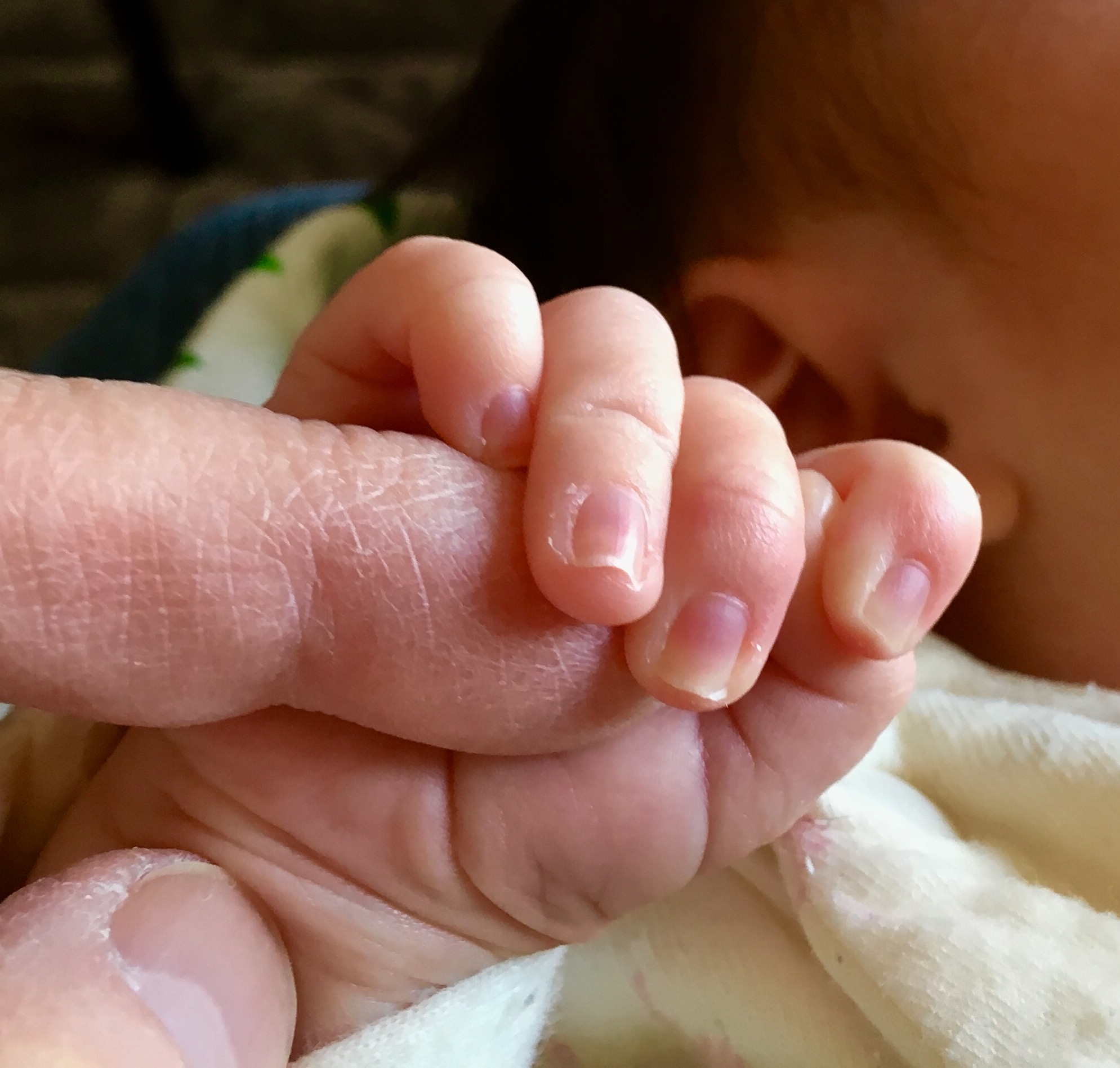
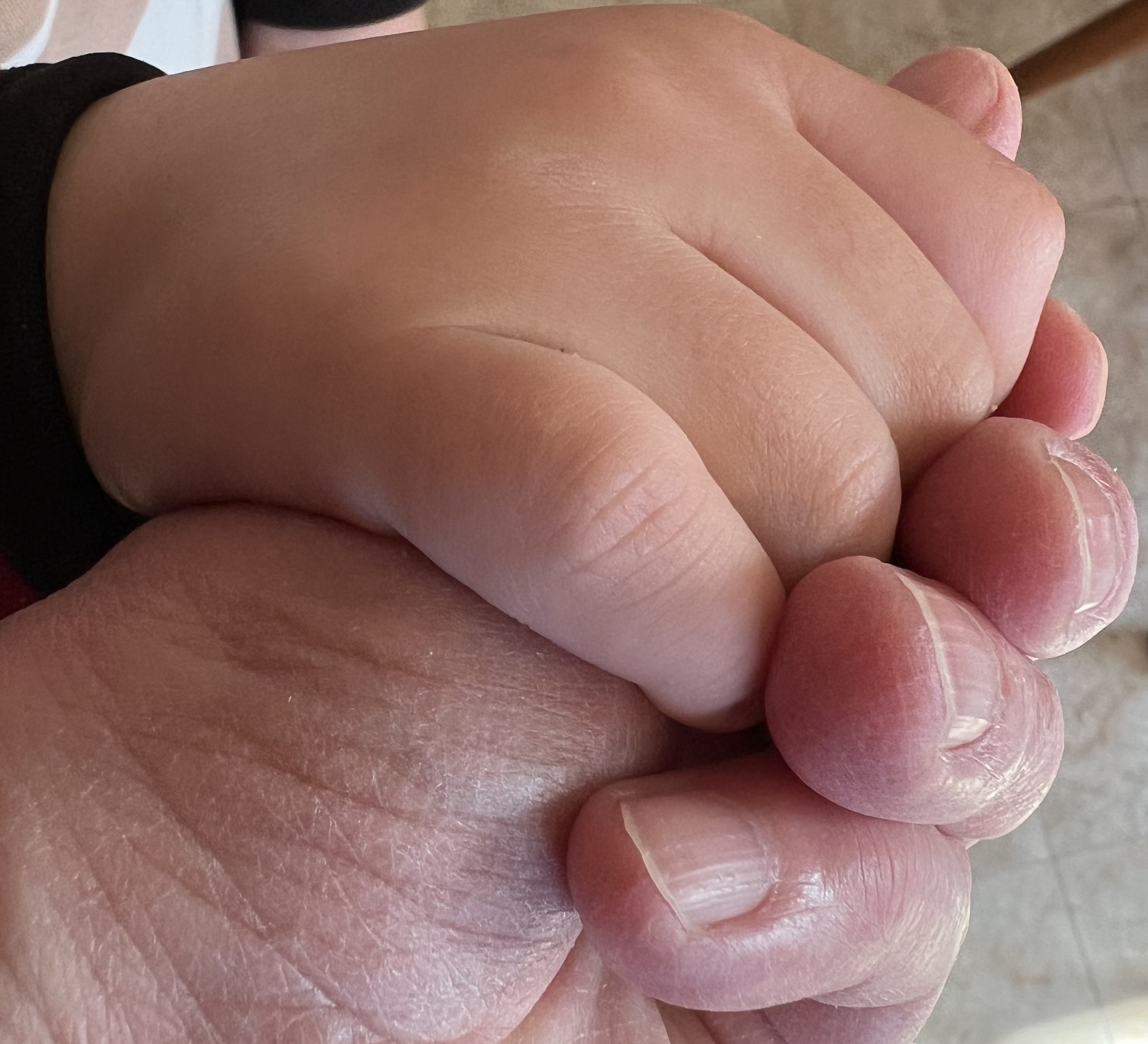
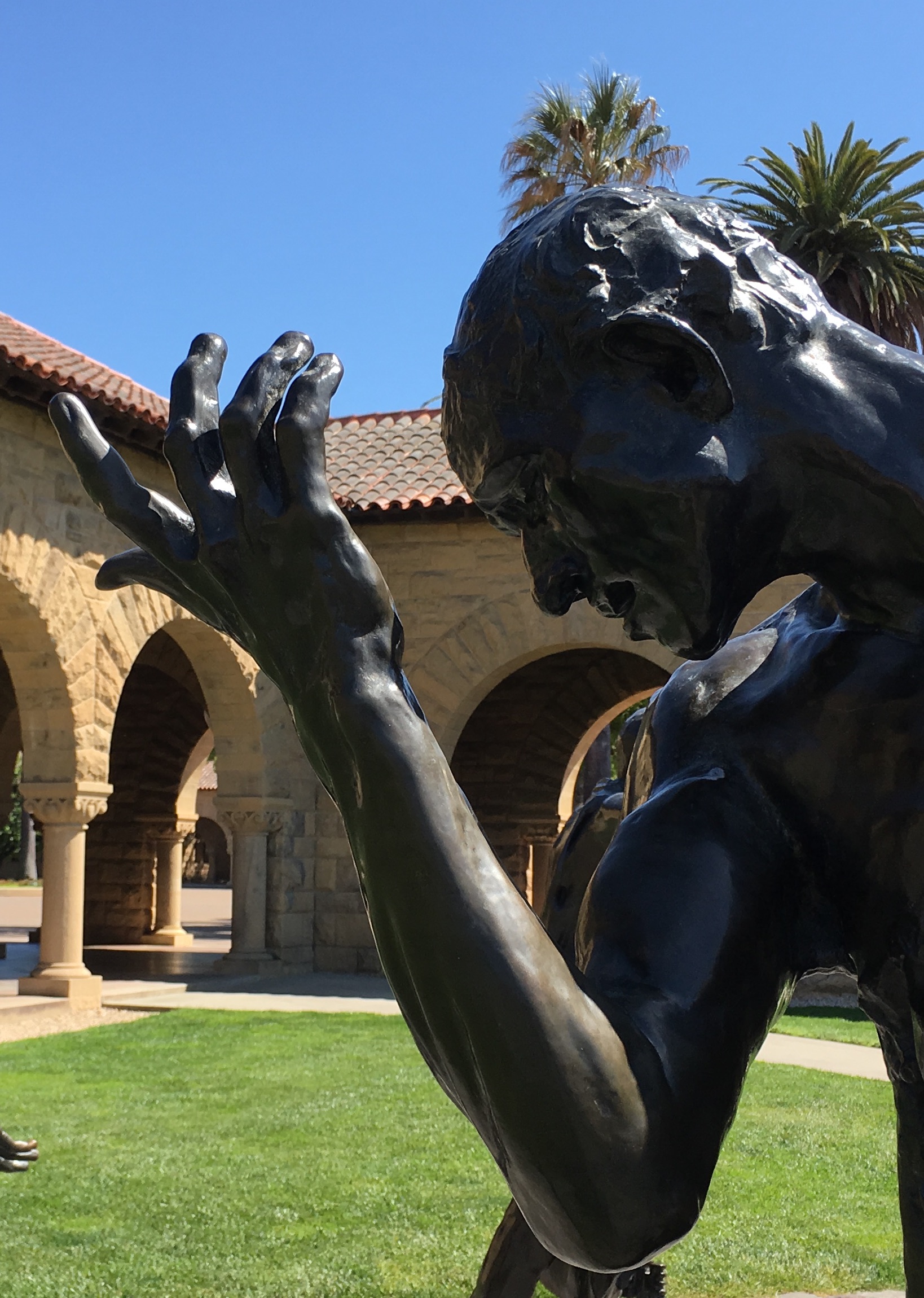
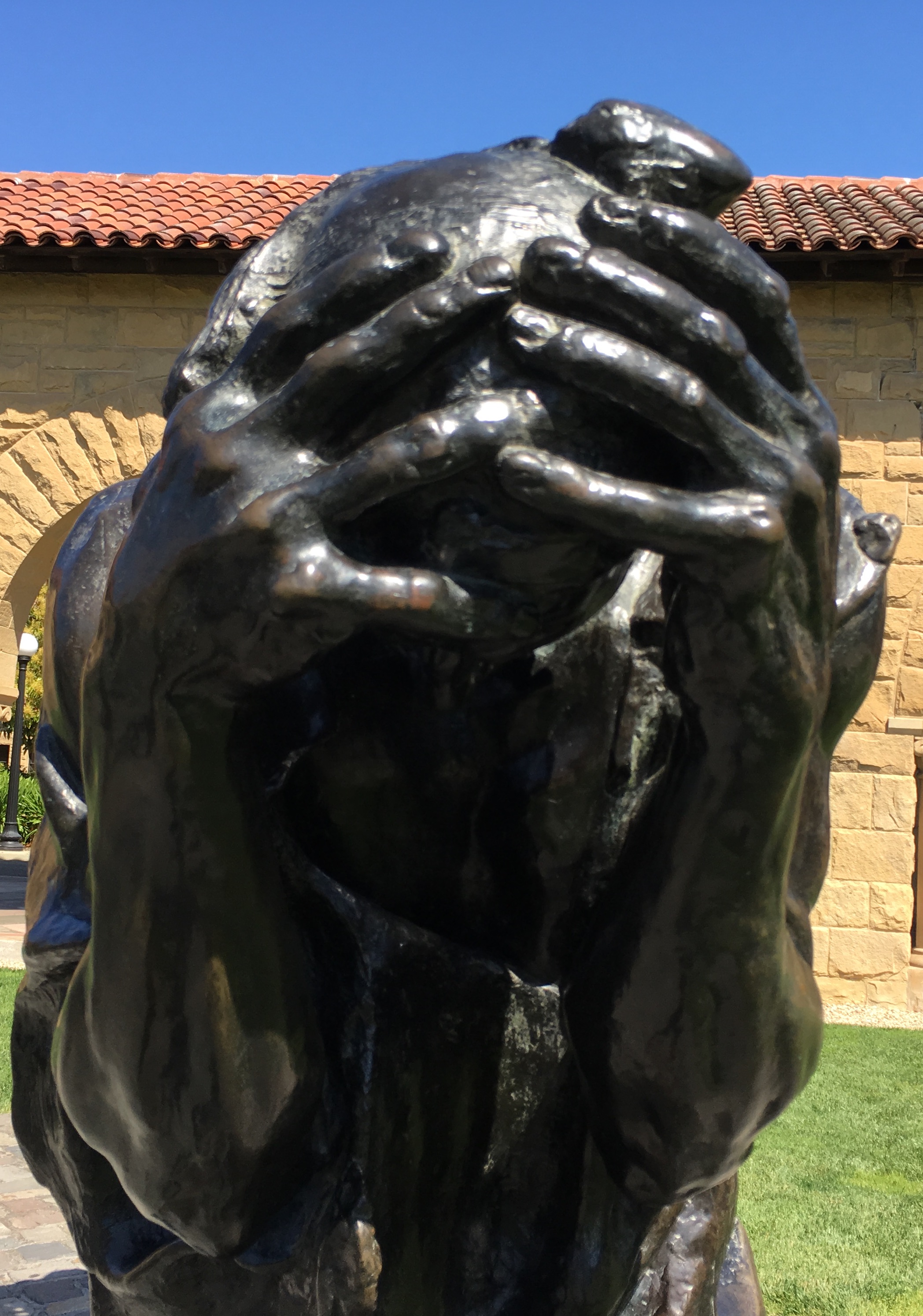
We each share a common hand. We need leaders who reach out to touch one another with more than words. They represent the human beings who lost limbs and lives in the battle for supremacy.

Historic handshakes are never meaningless, but even more vital is a connection between humans steeped in historical hatreds. We need to reach out and help lift each other’s burdens.

Take my hand. Look in my eyes. Even for one small second.

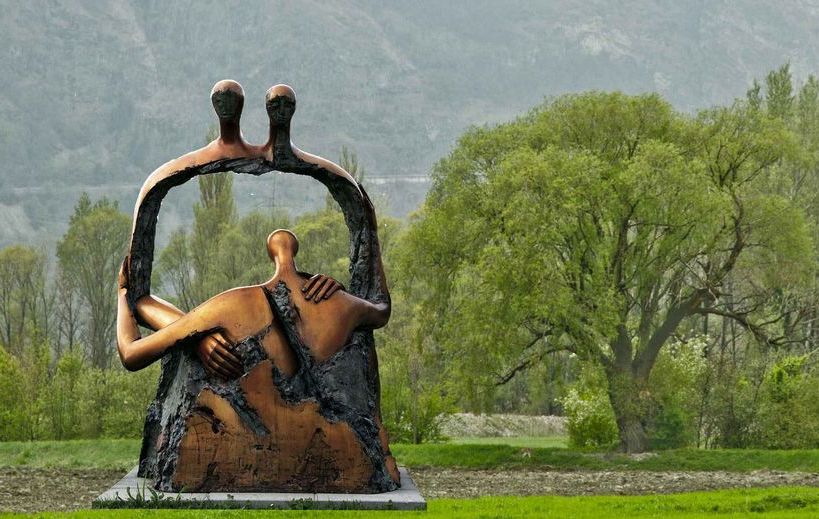
Sculpture by Artist Albert Gyorgy

One-Time
Monthly
Yearly

Make a one-time or recurring donation to support daily Barnstorming posts

Make a monthly donation

Make a yearly donation

Choose an amount

$10.00
$25.00
$50.00
$5.00
$15.00
$100.00
$5.00
$15.00
$100.00

Or enter a custom amount

$

Your contribution is deeply appreciated.

Your contribution is appreciated.

Your contribution is appreciated.

DonateDonate monthlyDonate yearly
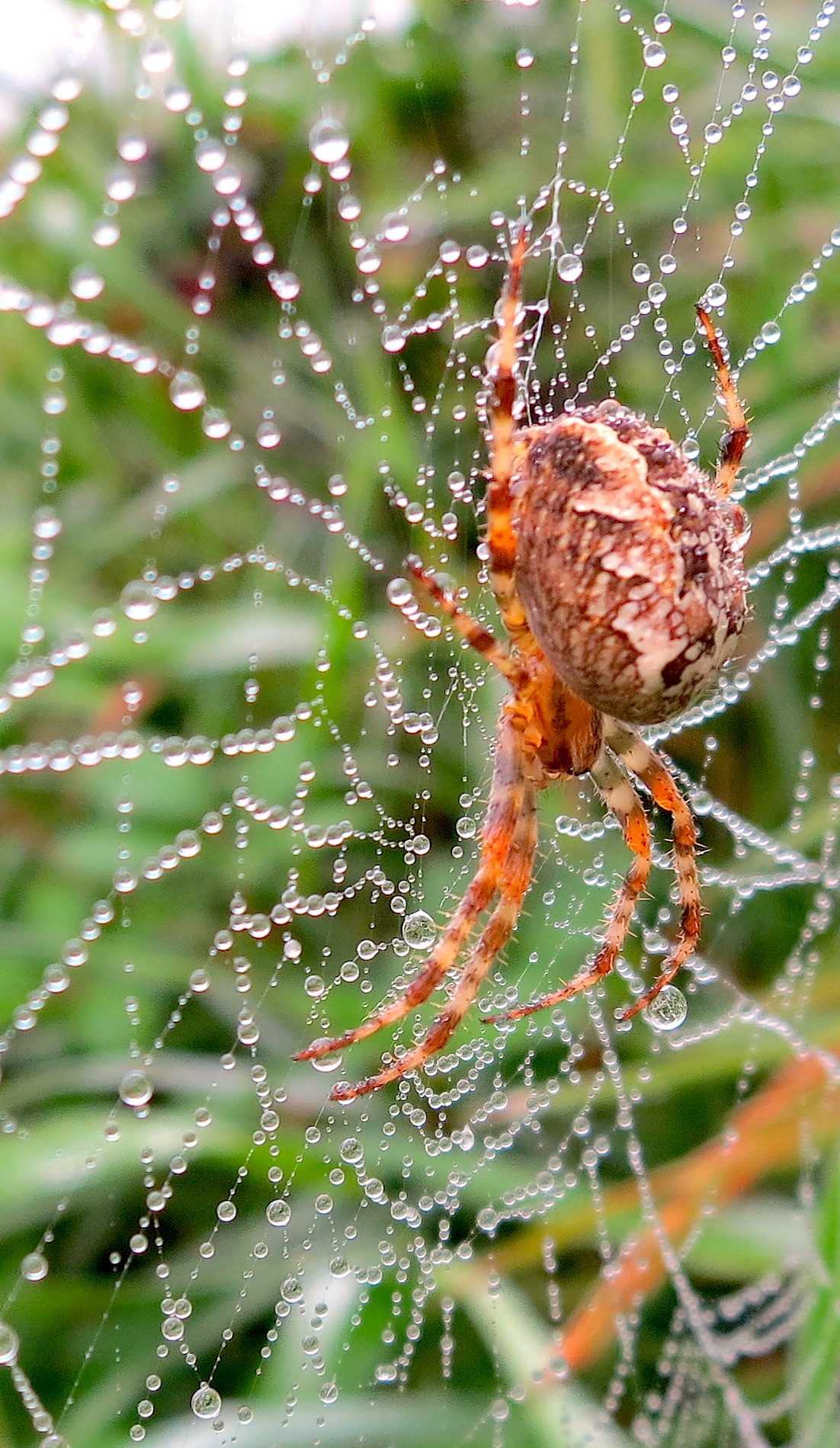
No Place to Call Home

My daughter
wouldn’t hurt a spider
That had nested
Between her bicycle handles
For two weeks
She waited
Until it left of its own accord

If you tear down the web I said
It will simply know
This isn’t a place to call home
And you’d get to go biking
She said that’s how others
Become refugees isn’t it?
~Fady Joudah “Mimesis” from 
Alight

Like these lands we travel through,
I have grown weary, so rough, so dry.
I wet a finger to give suck
but it never lasts longs. When the baby
cries, the sound comes sharper. It cuts me.

Some didn’t believe the stories
of soldiers pouring south, what they did
to the women, to children.
Made the men watch then let them live.
Some didn’t believe, but my husband
did not hesitate: we cannot wait, he said.


We travel between slaughter and exile.
A foreign land, people who already hate us.
How will they ever take us in? What will we do
when they turn us back? Afraid ourselves,
we instruct the little ones to be quiet,
but an infant only understands hunger.

I lay him against me, try the finger trick;
he snuggles in and falls asleep, his lips
still moving. The moon was full
but is now empty, like me. I was a child
but now am woman, a mother. Is this all

I can give this child—a world of rage and shame,
of bloodshed and vengeance?

~Edward Dougherty from “Between Slaughter and Exile”

Over the eons of human history, very few people groups have been able to remain exactly where they first settled.

The forces that drive tribes, cultures and communities to move on or be chased out are multiple and often overlapping: natural disasters, poverty, disease, prejudice, persecution, oppression, drought, starvation, war, politics.

Some simply seek refuge in hope of a better life.

We who sit safe and snug in our homes forget there was no such comfort for many of the generations preceding us. Those displaced faced terrible risks as they sought out safety. Millions have suffered and died in the hope of securing a future for themselves and their descendants. Countries – even ours, the richest on earth – struggle to house and feed their own residents, much less able to cope with those who arrive even more destitute and desperate. Doors and borders around the world slam shut and remain closed.

No child should be caught in this ongoing cycle of grief and weeping, rage and shame, bloodshed and vengeance, slaughter and exile. We watch history repeat itself, again and again; we become history in the making.

May God work out a solution when mere people cannot.

One-Time
Monthly
Yearly

Make a one-time or recurring donation to support daily Barnstorming posts

Make a monthly donation

Make a yearly donation

Choose an amount

$10.00
$25.00
$50.00
$5.00
$15.00
$100.00
$5.00
$15.00
$100.00

Or enter a custom amount

$

Your contribution is deeply appreciated.

Your contribution is appreciated.

Your contribution is appreciated.

DonateDonate monthlyDonate yearly
Lapsed Ordinary

Had I not been awake I would have missed it,
A wind that rose and whirled until the roof
Pattered with quick leaves off the sycamore

And got me up, the whole of me a-patter,
Alive and ticking like an electric fence:
Had I not been awake I would have missed it

It came and went too unexpectedly
And almost it seemed dangerously,
Hurtling like an animal at the house,

A courier blast that there and then
Lapsed ordinary. But not ever
Afterwards. And not now.
~Seamus Heaney  “Had I Not Been Awake”

October is the month of the sudden warm wind-blow, usually arriving from the south, intent on scattering leaves and slamming doors on its way past to head north to Canada. Our wind chimes outside clang a cacophony rather than the usual gentle harmonic tones. The window shades become percussion instruments over our still-open windows. Anything not fastened down goes airborne.

The air blows in a rush from somewhere else, bringing new smells and sensations, surging with an electric energy even as it tries to pull power lines down to render us powerless.

Nothing feels ordinary in a windstorm; there is no easy sleep.

And just as suddenly, the autumn storm passes and is gone. The trees have been stripped, embarrassed at their sudden nakedness. Branches litter the yard and driveway like so many toothpicks. My illusion of comfort and control has been undone by such a show of force and power.

I face my own frailty in the wake of life’s storms.
Had I not been awake, I might have missed that altogether.

One-Time
Monthly
Yearly

Make a one-time or recurring donation to support daily Barnstorming posts

Make a monthly donation

Make a yearly donation

Choose an amount

$10.00
$25.00
$50.00
$5.00
$15.00
$100.00
$5.00
$15.00
$100.00

Or enter a custom amount

$

Your contribution is deeply appreciated.

Your contribution is appreciated.

Your contribution is appreciated.

DonateDonate monthlyDonate yearly
Making a Comment

And that is just the point…
how the world, moist and beautiful,
calls to each of us to make a new and serious response.

That’s the big question,
the one the world throws at you every morning.
“Here you are, alive.
Would you like to make a comment?”
~Mary Oliver

The last few days, it has been impossible to stay
a silent observer of the world when one awakes,
still alive on a morning moist and beautiful,
while on the other side of the earth,
innocents have been brutally butchered in their beds,
whole families murdered,
bodies desecrated and dragged into the street.

It demands a response.

I cannot remain speechless in the face of evil.
Such violence, fed by generations of hatred,
begets more hatred and violence, on and on.
It festers, blusters, rips apart, tortures, buries.
And so it goes, an ongoing human history
of wars and more wars.

And here I am,
alive on a brilliant autumn morning,
while others immeasurably suffer.

Called to make a new and serious response.
Called to comment, as I do every day.
Knowing my voice is only one
in a vast wilderness of voices,
crying out in lament over the dead and dying.

Lord, have mercy, have mercy, have mercy on us.

Consider donations to assist humanitarian aid
to Save the Children or Doctors without Borders

A Night of Dark Intent

The world is its usual rich self. Disturbed news
Came before sleep, then hours before light, finally
A return to coffee and the joy of unfinished poems.
It is early October, bright leaves falling everywhere.

What could it mean that such sharp leaves fall?
Does it imply that the best are called first?

I don’t want to imply that such abundance of meaning
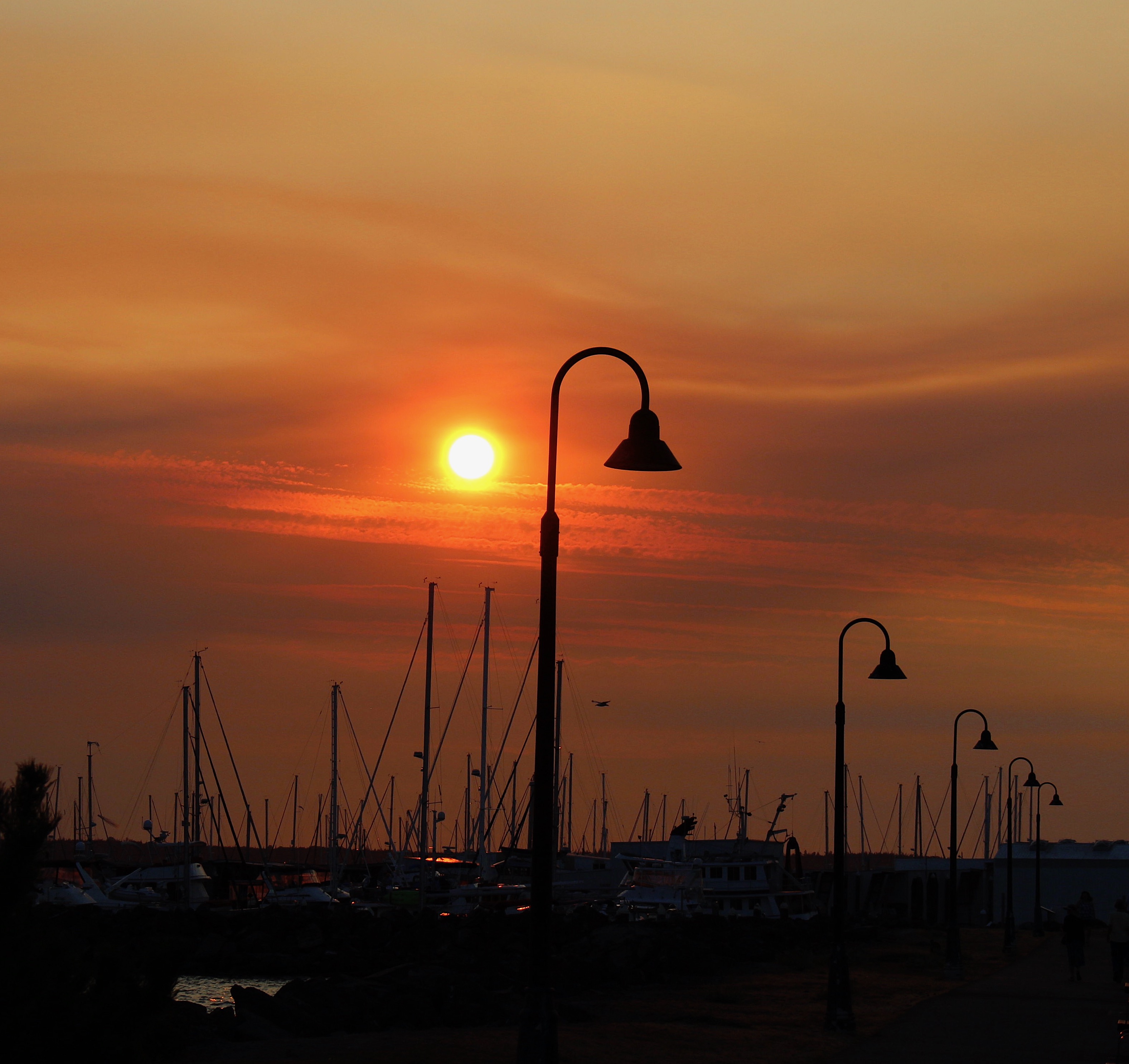
Exists in me. A lamppost shines over
The ocean. The waves take what they want of the
light.
The rest they give back, to the hospitals and the poor.
~Robert Bly from Morning Poems

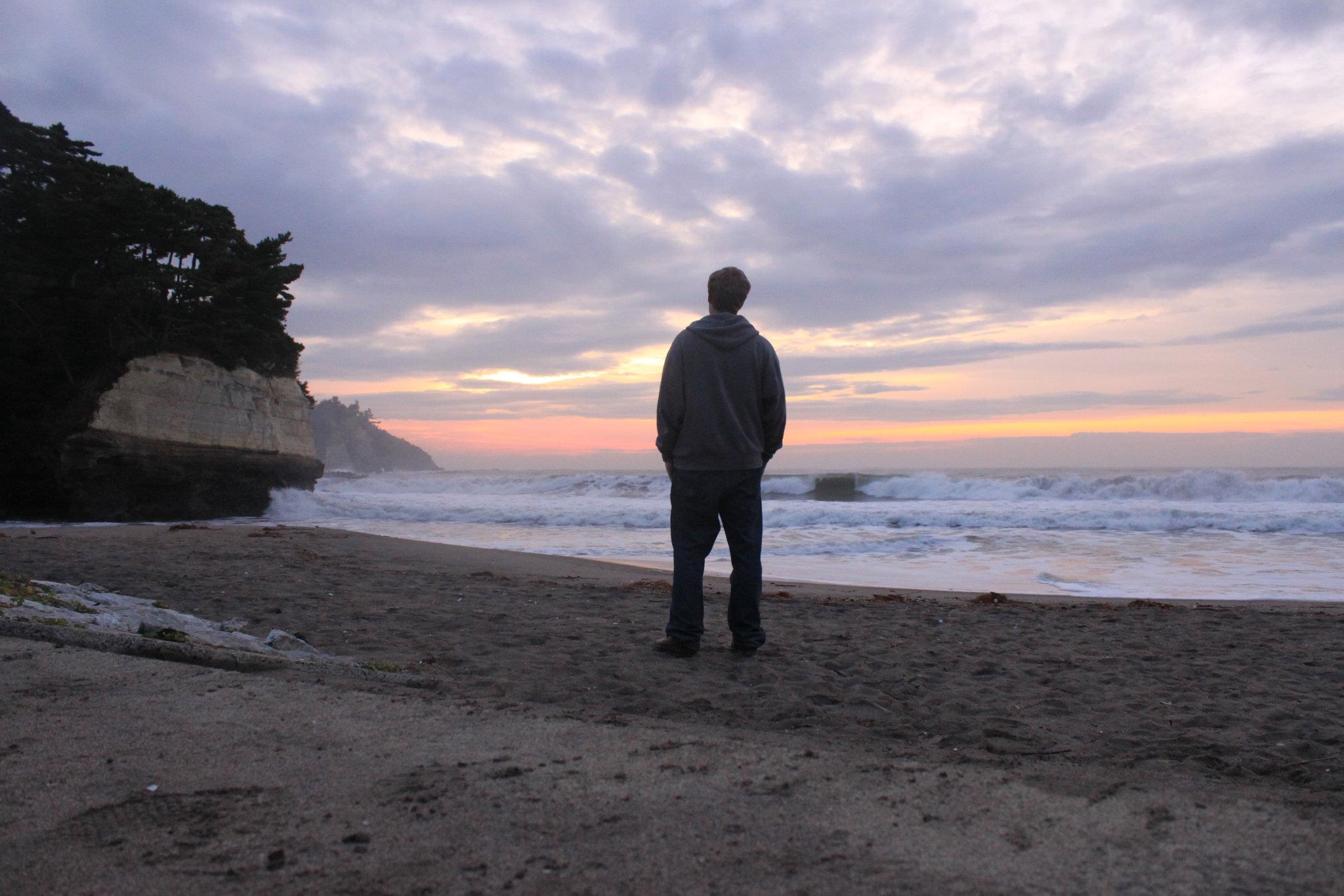
Bellingham Bay-photo by Nate Gibson

The shattered water made a misty din.
Great waves looked over others coming in,
And thought of doing something to the shore
That water never did to land before.
The clouds were low and hairy in the skies,
Like locks blown forward in the gleam of eyes.
You could not tell, and yet it looked as if
The shore was lucky in being backed by cliff,
The cliff in being backed by continent;
It looked as if a night of dark intent
Was coming, and not only a night, an age.
Someone had better be prepared for rage.
There would be more than ocean-water broken
Before God’s last Put out the light was spoken.

~Robert Frost “Once By the Pacific”

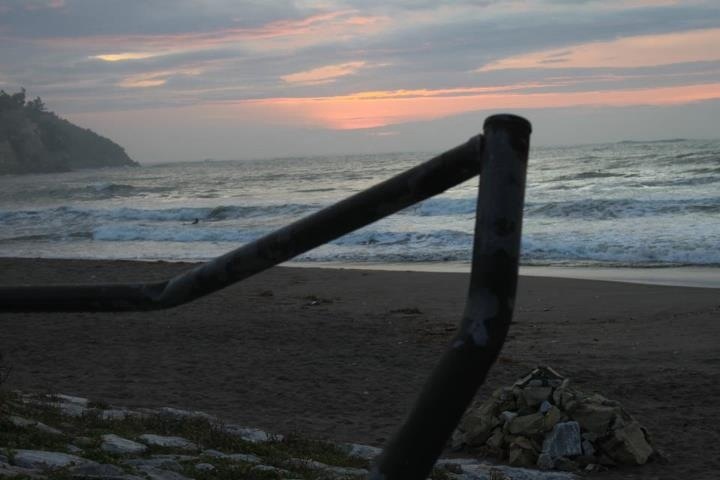
photo by Nate Gibson at Sendai, Japan

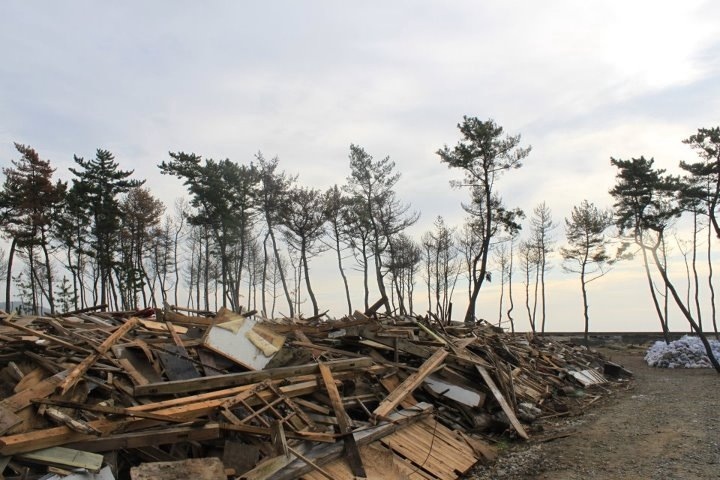
We were staying with our friends Brian and Bette at their cabin on a bluff just above the beach at Sendai, Japan, just a few dozen feet above the devastation that wiped out an entire fishing village below during the 3/11/11 earthquake and tsunami. We walked that stretch, learning of the stories of the people who had lived there, some of whom did not survive the waves that swept their houses and cars away before they could escape. We walked past the footprints of foundations of hundreds of demolished homes, humbled by the rubble mountains yet to be hauled away to be burned or buried and scanned acres of wrecked vehicles now piled one on another, waiting to become scrap metal. It was visual evidence of life suddenly and dramatically disrupted.

This was a place of recreation and respite for some who visited regularly, commerce and livelihood for others who stayed year round. Yet it looked like a foreign ghostly landscape. Even many trees perished, lost, broken off, fish nets still stuck high on their scarred trunks. There were small memorials to lost family members within some home foundations, with stuffed animals and flowers wilting from the recent anniversary observance.

It was a powerful place of memories for those who live there and know what it once was, how it once looked and felt, and painfully, what it became in a matter of minutes on 3/11/11. The waves swept in inexplicable suffering, then carried their former lives away. Happiness gave ground to such terrible pain that could never have hurt as much without the joy that preceded it.

We want to ask God why He doesn’t do something about the suffering that happens anywhere a disaster occurs – but if we do, He will ask us the same question right back. We need to be ready with our answer and our action. He knows suffering. Far more than we do. He took it all on Himself as His Light on earth was snuffed out, despite His love and joy in His creation.

As Sendai’s citizens slowly recover, the inner and outer landscape is forever altered. What remains the same is the tempo of the waves, the tides, and the rhythm of the light and the night, happening just as originally created.

The Light returned.

In that realization, pain gives way. It cannot stand up to His love and His joy in dispelling the dark.

the rubble still piled on the beach at Tohoku, Japan, a year after the 3/11/11 tsunami
photo by Nate Gibson
Sendai
One-Time
Monthly
Yearly

Make a one-time or recurring donation to support daily Barnstorming posts

You’ll receive a thank you gift in the mail

Make a monthly donation

Make a yearly donation

Choose an amount

$10.00
$25.00
$50.00
$5.00
$15.00
$100.00
$5.00
$15.00
$100.00

Or enter a custom amount

$

Your contribution is deeply appreciated.

Your contribution is appreciated.

Your contribution is appreciated.

DonateDonate monthlyDonate yearly
Do Not Look Back

He loved to ask his mother questions. It was the pleasantest thing for him to ask a question and then to hear what answer his mother would give. Bambi was never surprised that question after question should come into his mind continually and without effort. 

Sometimes he felt very sure that his mother was not giving him a complete answer, was intentionally not telling him all she knew.  For then there would remain in him such a lively curiosity, such suspicion, mysteriously and joyously flashing through him, such anticipation, that he would become anxious and happy at the same time, and grow silent.
~Felix Salten from Bambi

A Wounded Deer—leaps highest—
I’ve heard the Hunter tell—
‘Tis but the Ecstasy of death—
And then the Brake is still!
~Emily Dickinson “165″

As the house of a person
in age sometimes grows cluttered
with what is
too loved or too heavy to part with,
the heart may grow cluttered.
And still the house will be emptied,
and still the heart.

Empty and filled,
like the curling half-light of morning,
in which everything is still possible and so why not.

Filled and empty,
like the curling half-light of evening,
in which everything now is finished and so why not.

Beloved, what can be, what was,
will be taken from us.
I have disappointed.
I am sorry. I knew no better.

A root seeks water.
Tenderness only breaks open the earth.
This morning, out the window,
the deer stood like a blessing, then vanished.

~Jane Hirschfield from “The Standing Deer”


My first time ever
seated next to my mother
in a movie theater, just
a skinny four year old girl
practically folded in half
by a large padded chair
whose seat won’t stay down,
bursting with anticipation
to see Disney’s Bambi.

Enthralled with so much color,
motion,  music, songs and fun
characters, I am wholly lost
in this new world of animated
reality when suddenly
Bambi’s mother looks up,
alarmed, from eating
a new clump of spring grass
growing in the snow.

My heart leaps
with worry.
She tells him
to run quickly
for the thicket –
find the safest place where
she has always
kept him warm
next to her.

She follows behind,
urges him to run faster,
not to look back,
don’t ever look back.

Then the gun shot
hits my belly too.

My stomach twists
as he cries out
for his mother,
pleading for her.
I know in my heart
she is lost forever,
sacrificed to save him.

I sob as my mother
reaches out to me,
telling me not to look.
I bury my face
inside her hug,
knowing Bambi
is cold and alone
with no mother
any more.

My mama took me home
before the end.
I could not bear to watch
the rest of the movie 
for years.

Those cries
still echo
in my ears
any time someone hunts and shoots
to kill the innocent.

Now, my own three children are grown,
they have babies of their own,
my mom is gone from this earth.
I can even keep the seat from folding
me in half in a movie theater.

I am nearing my eighth decade, and
there are still places in this world where
mothers and fathers
sons and daughters
grandmothers and grandfathers
sisters and brothers
and babies are hunted down
despite the supposed safety of the thicket~
the sanctuary, the school, the grocery store, the home,
places where we believe we are shielded from violence.

There can be no innocence when any of us may be hunted.

One-Time
Monthly
Yearly

Make a one-time or recurring donation to support daily Barnstorming posts

Make a monthly donation

Make a yearly donation

Choose an amount

$10.00
$25.00
$50.00
$5.00
$15.00
$100.00
$5.00
$15.00
$100.00

Or enter a custom amount

$

Your contribution is deeply appreciated.

Your contribution is appreciated.

Your contribution is appreciated.

DonateDonate monthlyDonate yearly
Serving Some Good Purpose

We are the hollow men
    We are the stuffed men
    Leaning together
    Headpiece filled with straw.

~T.S. Eliot from “The Hollow Men”

Here is the scarecrow, see him stand
Upon the newly planted land;
A figure rugged and forlorn,
A silent watcher of the corn.

His dangling legs, his arms spread wide,
A lone man of the countryside;
Uncouth, the butt of pen and tongue,
Unheralded, unsought, unsung.

To you, old scarecrow, then this lay
To cheer you on your lonely way;
Would that all men, their whole lives through,
Served some good purpose same as you.

~Annie Stone “The Scarecrow” (written on her 103rd birthday)

Once I said to a scarecrow, “You must be tired of standing in this
lonely field.”


And he said, “The joy of scaring is a deep and lasting one, and I
never tire of it.”


Said I, after a minute of thought, “It is true; for I too have
known that joy.”


Said he, “Only those who are stuffed with straw can know it.”

Then I left him, not knowing whether he had complimented or belittled me.

A year passed, during which the scarecrow turned philosopher.

And when I passed by him again I saw two crows building a nest
under his hat.

~Kahlil Gibran “The Scarecrow”

“I’ve seen myself, Mother Rigby! I’ve seen myself for the wretched, ragged, empty thing I am. I’ll exist no longer.”

Snatching the pipe from his mouth, he flung it with all his might against the chimney, and at the same instant sank upon the floor, a medley of straw and tattered garments, with some sticks protruding from the heap and a shriveled pumpkin in the midst. The eyeholes were now lustreless but the rudely carved gap that just before had been a mouth still seemed to twist itself into a despairing grin, and was so far human.

“Poor fellow!” quoth Mother Rigby, with a rueful glance at the relics of her ill-fated contrivance. “My poor, dear, pretty Feathertop! There are thousands upon thousands of coxcombs and charlatans in the world made up of just such a jumble of worn-out, forgotten and good-for-nothing trash as he was, yet they live in fair repute, and never see themselves for what they are. And why should my poor puppet be the only one to know himself and perish for it?”

“I could easily give him another chance, and send him forth again tomorrow. But no! His feelings are too tender–his sensibilities too deep. He seems to have too much heart to bustle for his own advantage in such an empty and heartless world. Well, well! I’ll make a scarecrow of him, after all. ‘Tis an innocent and useful vocation, and will suit my darling well; and if each of his human brethren had as fit a one, ‘twould be the better for mankind.”
~Nathaniel Hawthorne from “Feathertop”
(the story of a scarecrow brought to life)

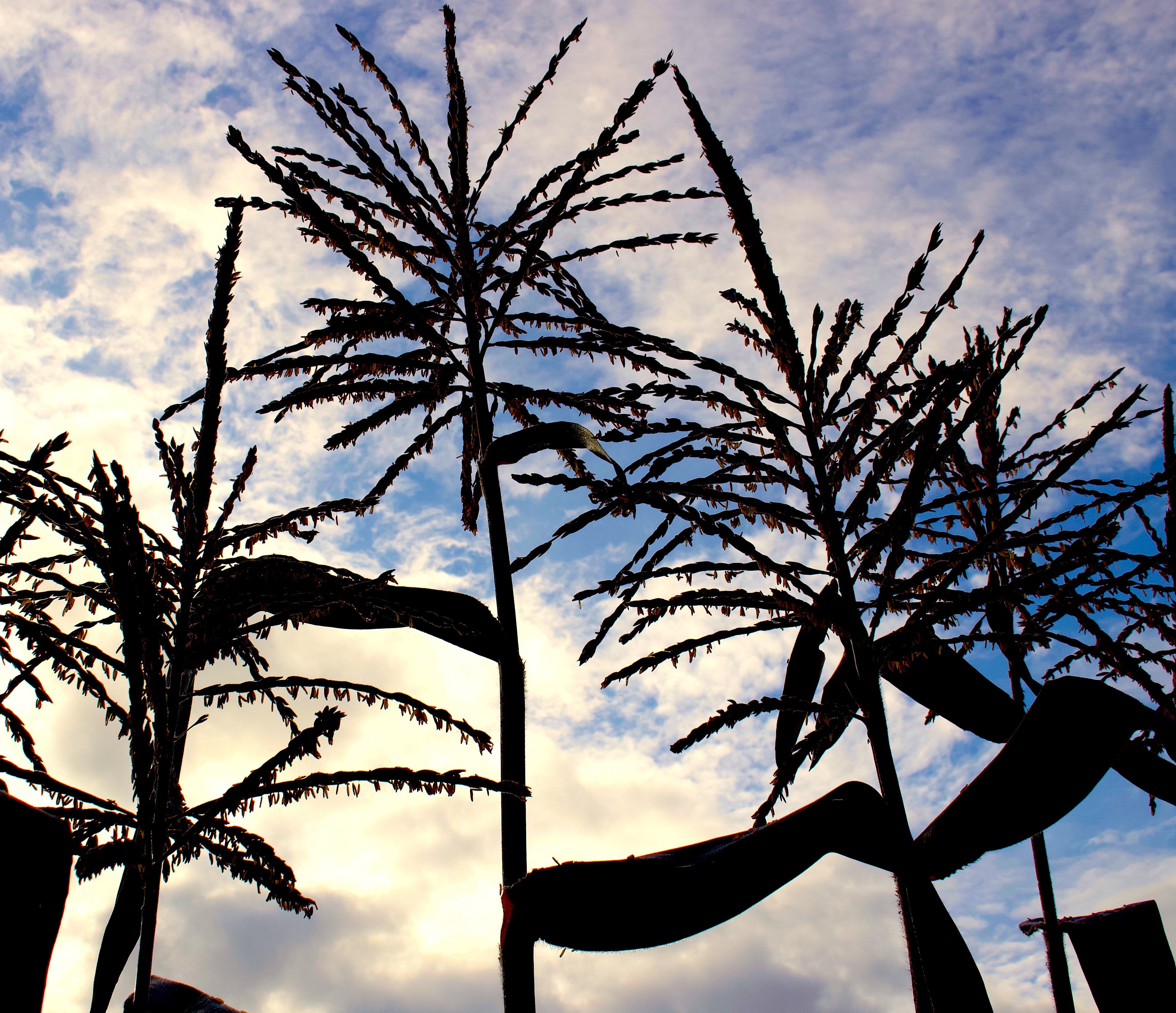
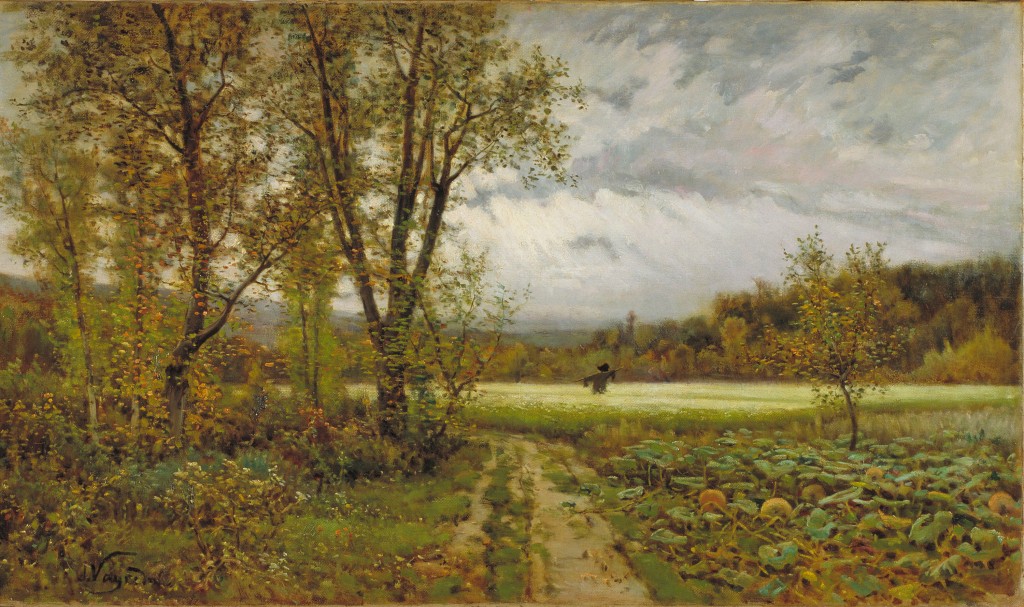
We don’t see many real working scarecrows around anymore. Corn and grain fields are so vast and abundant, the loss of a few kernels to raccoons or crows is not devastating to the farmer, so why frighten them away?

Instead, scarecrows have become the stuff of cheerful autumn decorations, standing alongside cornstalks and hay bales on porches, scaring no one. Or they are portrayed as horribly sinister and menacing in Halloween movies and haunted houses – a poor scarecrow’s original purpose twisted to frighten away far more than hungry critters.

Perhaps scarier, as our election season progresses, we’re seeing “hollow” politicians portraying themselves as something far more than they really are. We watch them “lean together, headpiece filled with straw.” It doesn’t take long to be exposed as “wretched, ragged, and empty.”

The worthy politician with good goals and purpose “seems to have too much heart to bustle for his own advantage in such an empty and heartless world.” Sometimes they decide to simply retire into obscurity and the garden.

…or they should…

The honest and genuine scarecrow returns to his post in the cornfield – such an innocent and useful vocation. If only we each had as fit a job, it would be all the better for mankind.

(A personal note: back in 1972, I combined Eliot’s “Hollow Men” and Hawthorne’s “Feathertop” in a scarecrow-themed interpretive reading that garnered Washington State’s top high school prize, sending me to nationals at Wake Forest in North Carolina. There I, a true country bumpkin, was soundly and deservedly trounced by far more talented high schoolers from all over the country.

At least I was able to say “I went to nationals…,” a very “hollow men” thing to claim.)

One-Time
Monthly
Yearly

Make a one-time or recurring donation to support daily Barnstorming posts

Make a monthly donation

Make a yearly donation

Choose an amount

$10.00
$25.00
$50.00
$5.00
$15.00
$100.00
$5.00
$15.00
$100.00

Or enter a custom amount

$

Your contribution is deeply appreciated.

Your contribution is appreciated.

Your contribution is appreciated.

DonateDonate monthlyDonate yearly
The Fire and Rose Are One

The soul’s sap quivers. There is no earth smell
Or smell of living thing. This is the spring time
But not in time’s covenant. Now the hedgerow
Is blanched for an hour with transitory blossom
Of snow, a bloom more sudden
Than that of summer, neither budding nor fading,
Not in the scheme of generation.
Where is the summer, the unimaginable Zero summer?

We shall not cease from exploration
And the end of all our exploring
Will be to arrive where we started
And know the place for the first time.
Through the unknown, unremembered gate
When the last of earth left to discover
Is that which was the beginning;


And all shall be well and
All manner of thing shall be well
When the tongues of flames are in-folded
Into the crowned knot of fire
And the fire and the rose are one.

~T.S. Eliot – from “Little Gidding” from the Four Quartets

To think that this meaningless thing was ever a rose,
Scentless, colourless, this!
Will it ever be thus (who knows?)
Thus with our bliss,
If we wait till the close?


Though we care not to wait for the end, there comes the end
Sooner, later, at last,
Which nothing can mar, nothing mend:

An end locked fast,
Bent we cannot re-bend.

~Christina Rossetti “Summer is Ended”

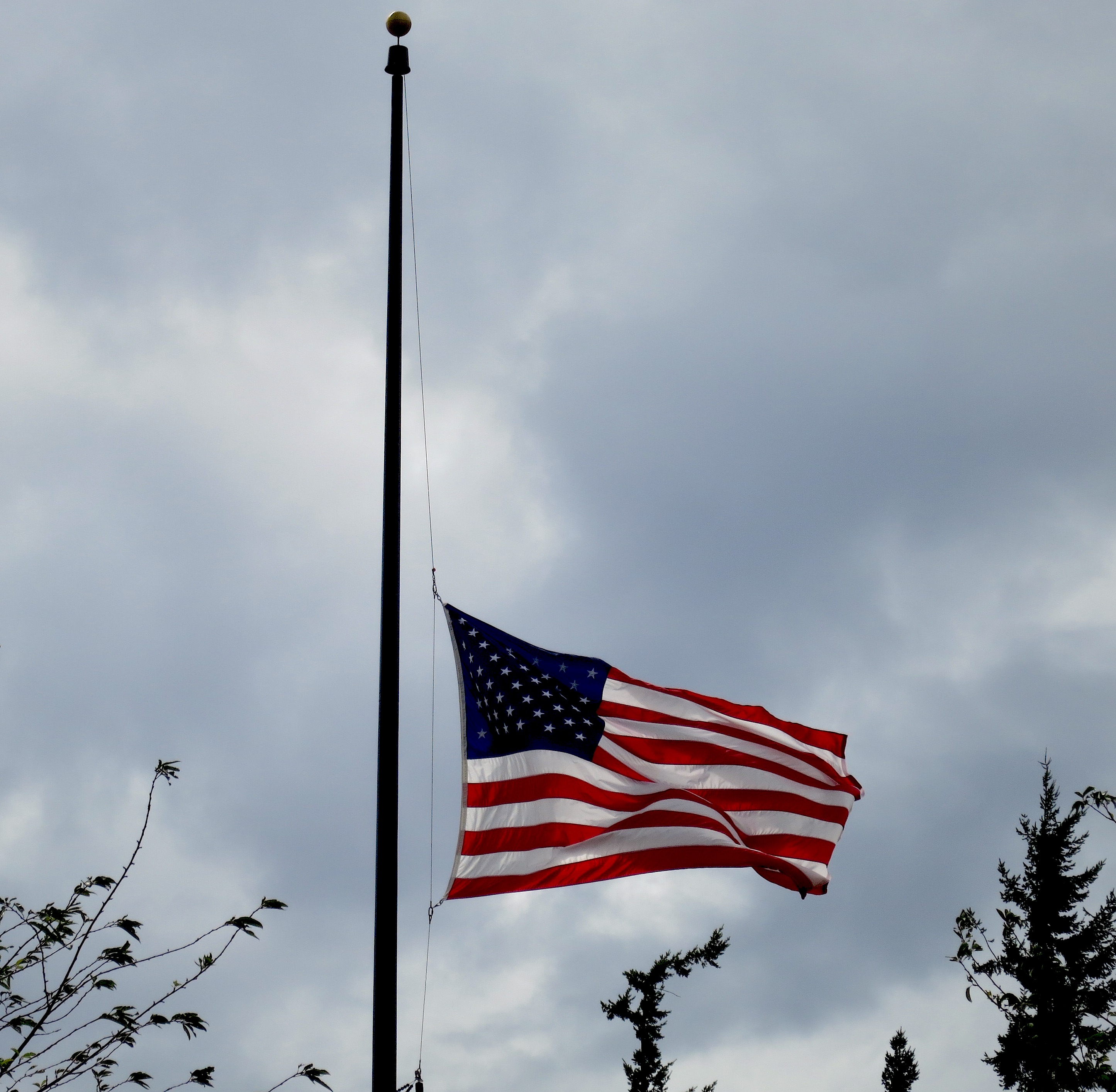
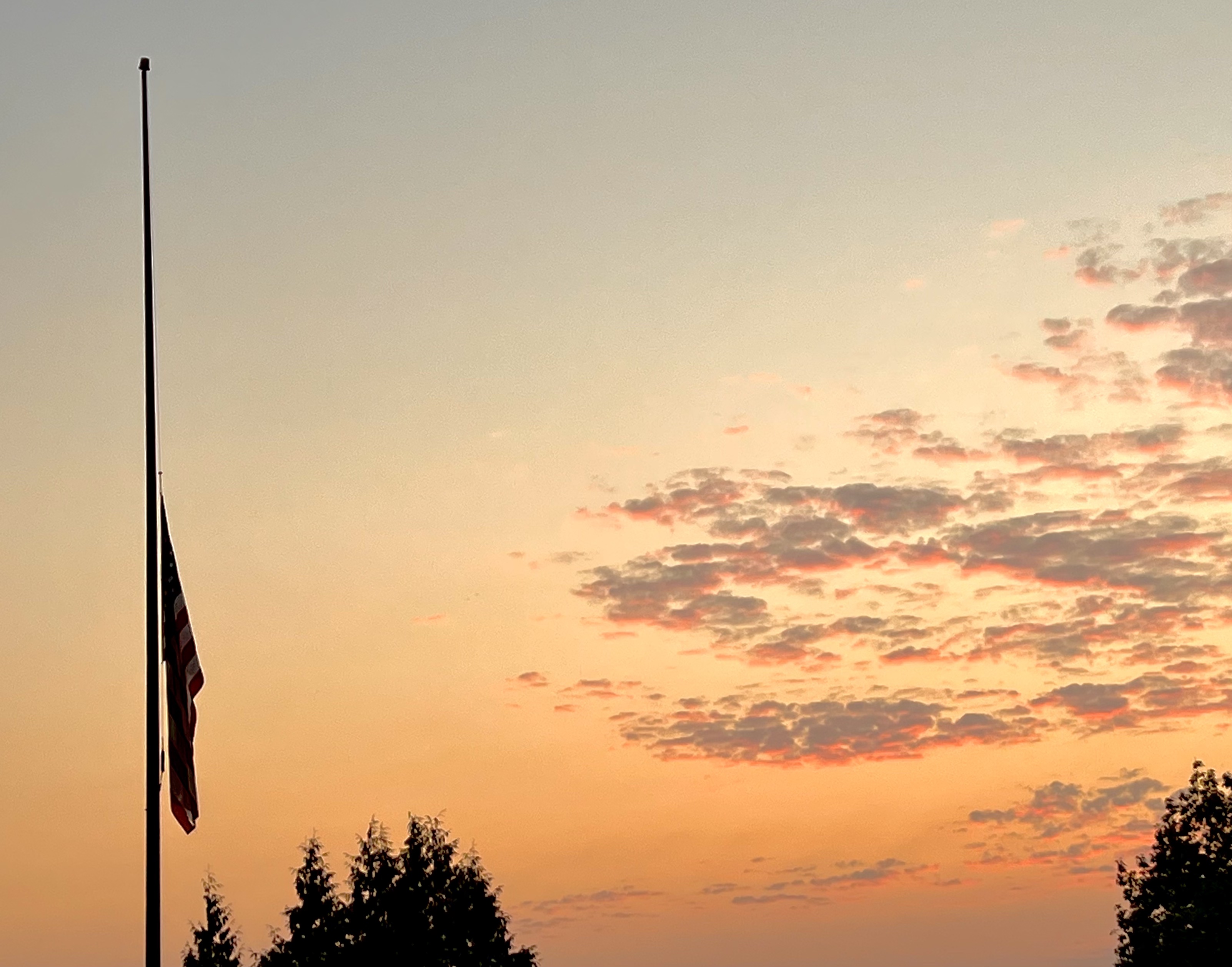
As a 3rd grader in November 1963, I learned the import of the U.S. flag being lowered to half mast in response to the shocking and violent death of our President. The lowering of the flag was so rare when I was growing up, it had dramatic effect on all who passed by — 

our soul’s sap quivers

— something very sad had happened to our country, something or someone had tragically ended, warranting our silence, our stillness, and our grief.

For the twenty-two years since 9/11/01, our flag has spent significant time at half mast, most often due to our own home-grown mass shooting terrorism. When I see it flying low, I’m befuddled instead of contemplative, puzzling over what the latest loss might be as there are so many, sometimes all happening in the same time frame. We no longer are silenced by this gesture of honor and respect; we certainly are not stilled when personally and corporately instigating and suffering the same mistakes against humanity over and over again.

We are so bent. Will we ever be mended again?

Eliot wrote these prescient words of the Four Quartets in the midst of the WWII German bombing raids that destroyed so many people and neighborhoods. Perhaps he sensed the destruction he witnessed would not be the last time in history that evil visits the innocent, leaving them in ashes. There would be so many more losses to come, not least being the horror of 9/11/01.

There remains so much more sadness to be borne, such abundance of grief. Our world has become overwhelmed and stricken. Yet Eliot was right: we have yet to live in a Zero summer of endless hope and fruitfulness, of spiritual awakening and understanding. Where is it indeed? When will the summer Rose of beauty and fragrance rise again?

We must return, as people of faith to Eliot’s still point to which we are called on a remembrance day such as today. We must be stilled; we must be silenced. We must grieve the losses of this turning world and pray for release from the suffering we cause and we endure. Only in the asking, only in the kneeling down and pleading, are we surrounded by God’s unbounded grace.

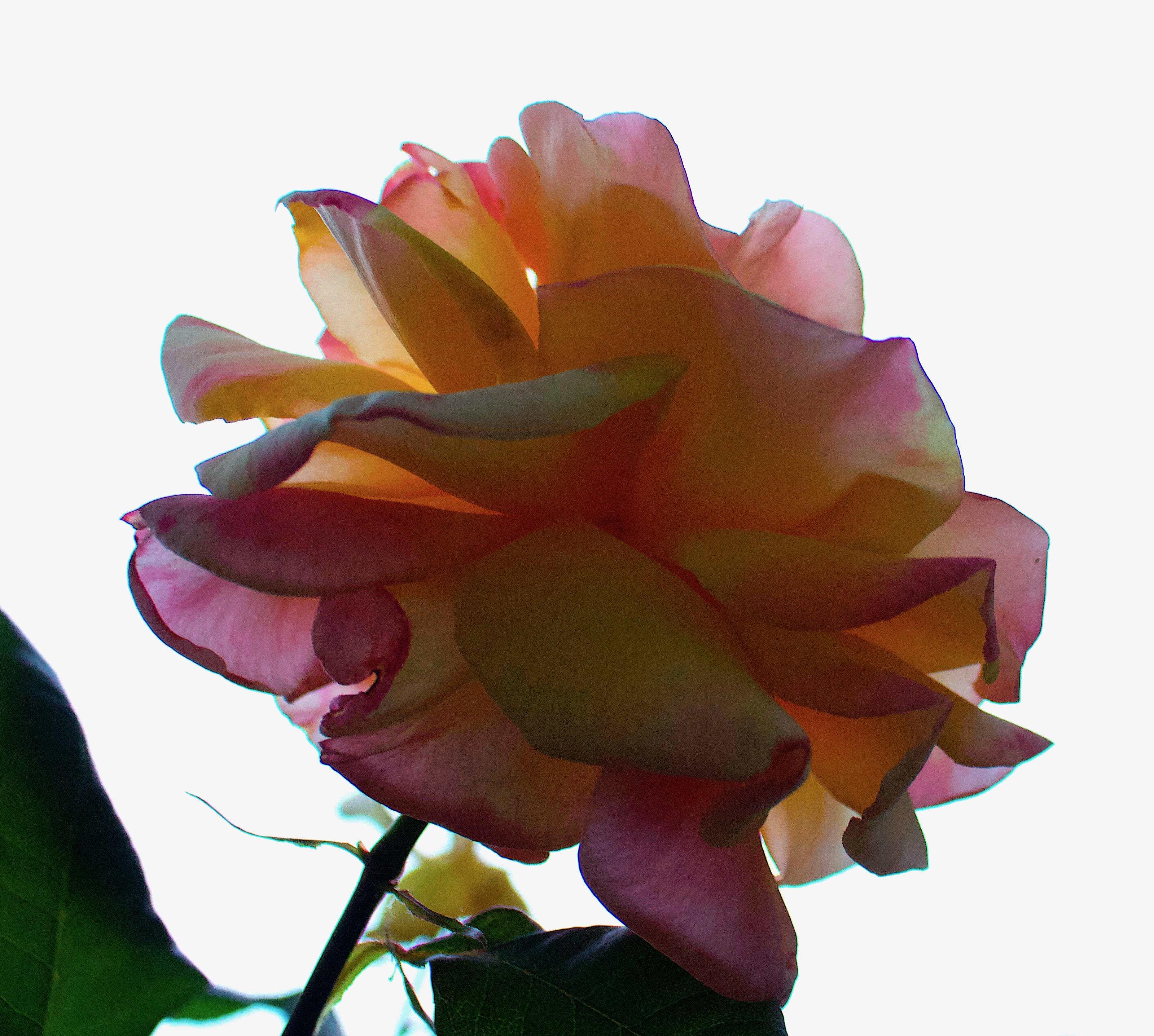
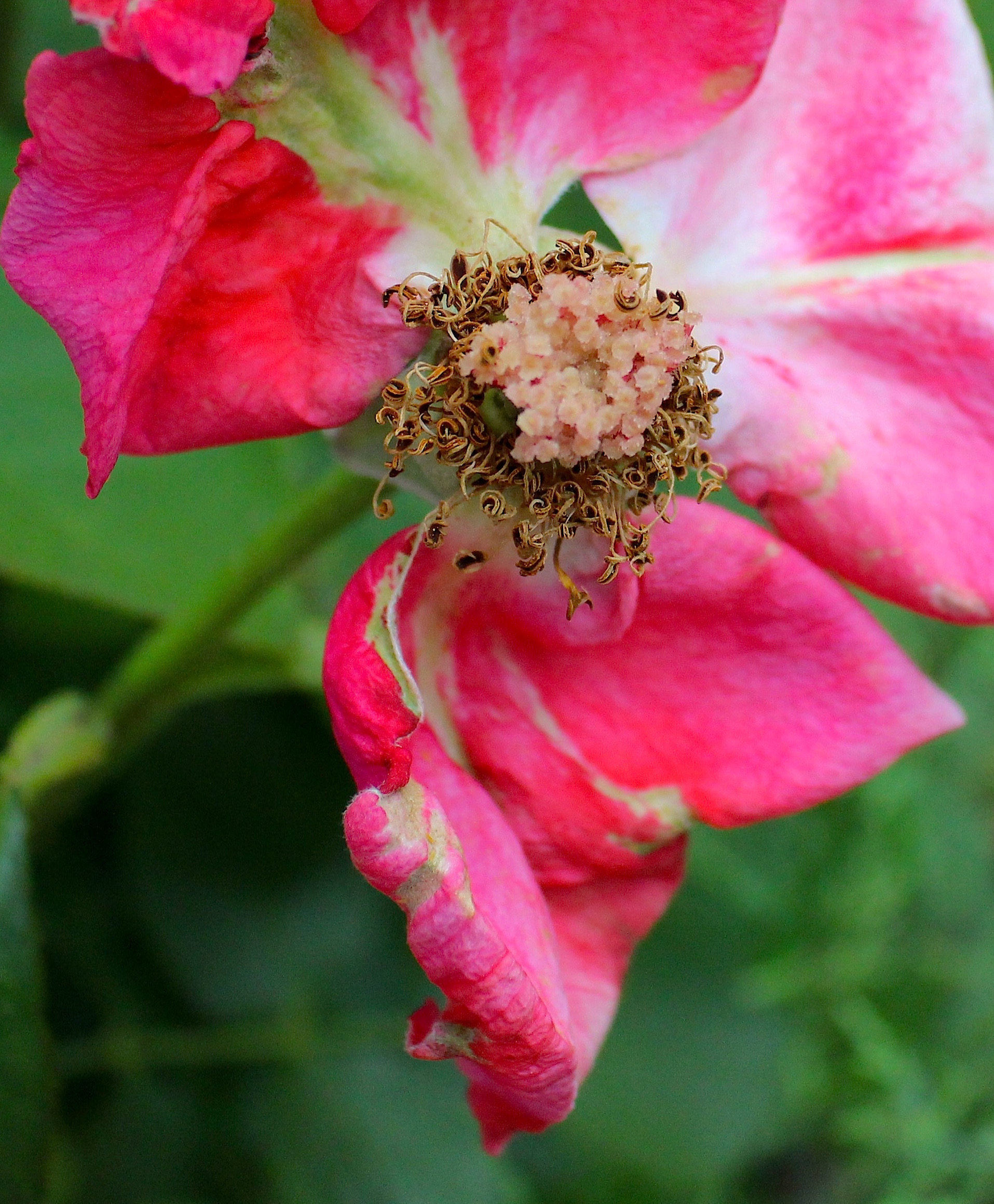
Only then will His Rose bloom, once again recognizable.  

“Zero Summer” imagines the unimaginable horror of Hiroshima and Nagasaki, and yet points to epiphanic awakening that transcend human imagination at the same time. T.S. Eliot, who coined this term in his “Four Quartets,” longed for that eternal summer, birthed out of the “still point,” where imagination is met with grace and truth.
~Makoto Fujimura

“There Are No Words” written on 9/11/2001
by Kitty Donohoe

there are no words there is no song
is there a balm that can heal these wounds

that will last a lifetime long
and when the stars have burned to dust
hand in hand we still will stand because we must

in one single hour in one single day
we were changed forever something taken away
and there is no fire that can melt this heavy stone
that can bring back the voices and the spirits of our own

all the brothers, sisters and lovers all the friends that are gone
all the chairs that will be empty in the lives that will go on
can we ever forgive though we never will forget
can we believe in the milk of human goodness yet

we were forged in freedom we were born in liberty
we came here to stop the twisted arrows cast by tyranny
and we won’t bow down we are strong of heart
we are a chain together that won’t be pulled apart

One-Time
Monthly
Yearly

Make a one-time or recurring donation to support daily Barnstorming posts

Make a monthly donation

Make a yearly donation

Choose an amount

$10.00
$25.00
$50.00
$5.00
$15.00
$100.00
$5.00
$15.00
$100.00

Or enter a custom amount

$

Your contribution is deeply appreciated.

Your contribution is appreciated.

Your contribution is appreciated.

DonateDonate monthlyDonate yearly
An Awe-filled Quiet

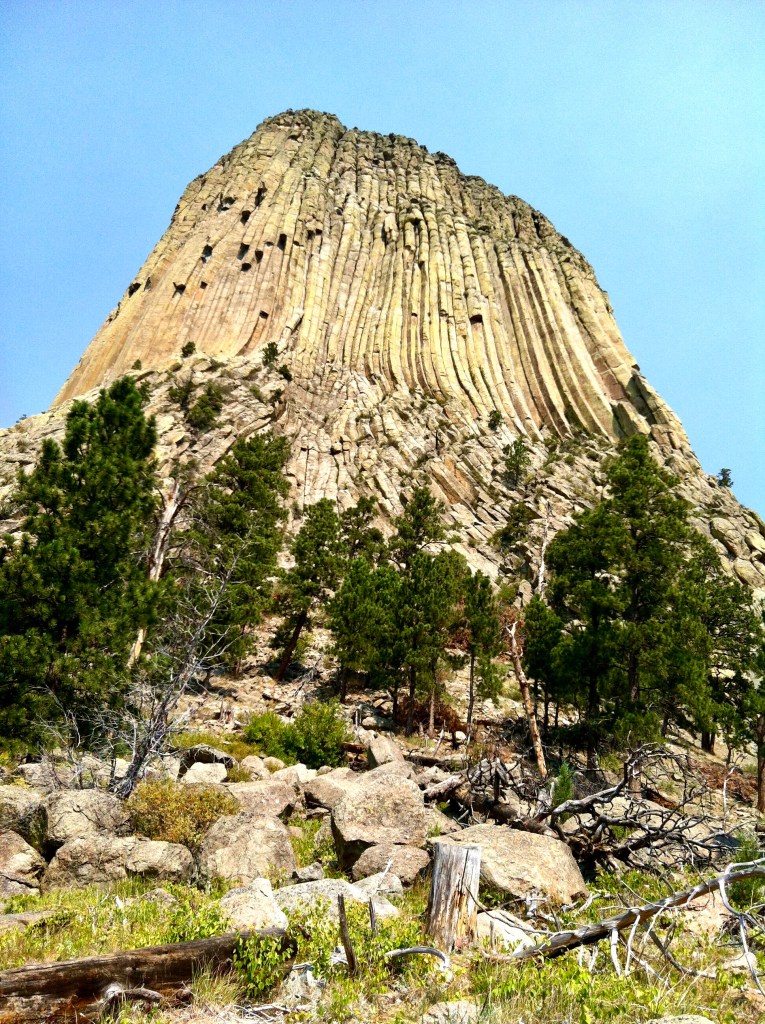
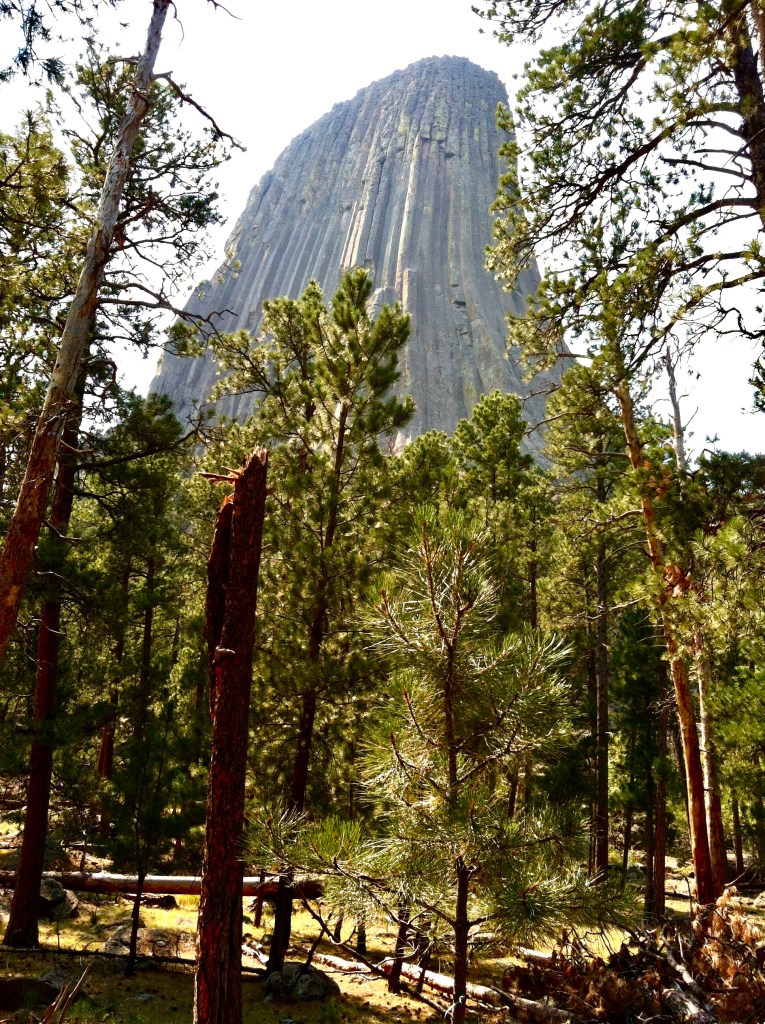
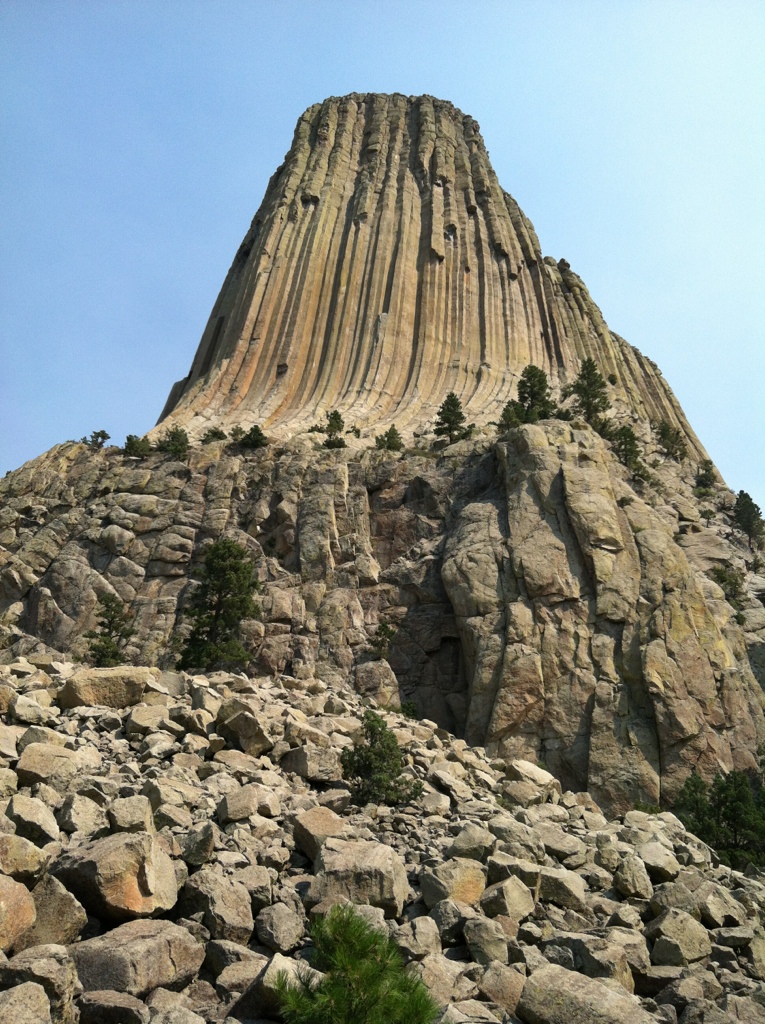
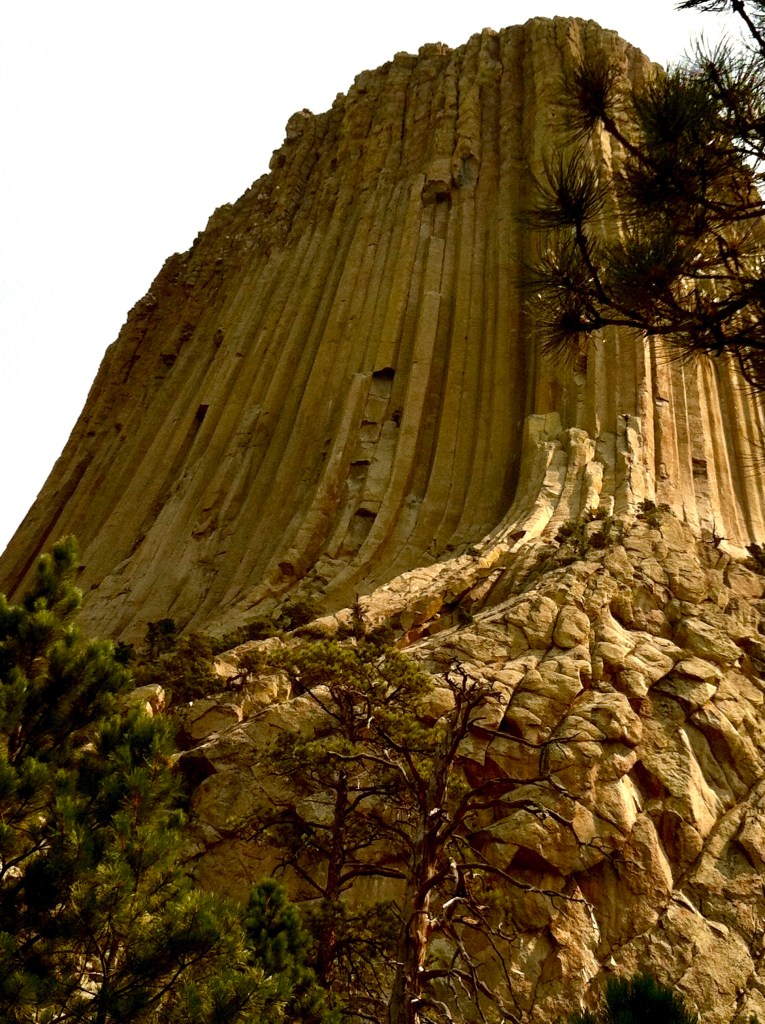
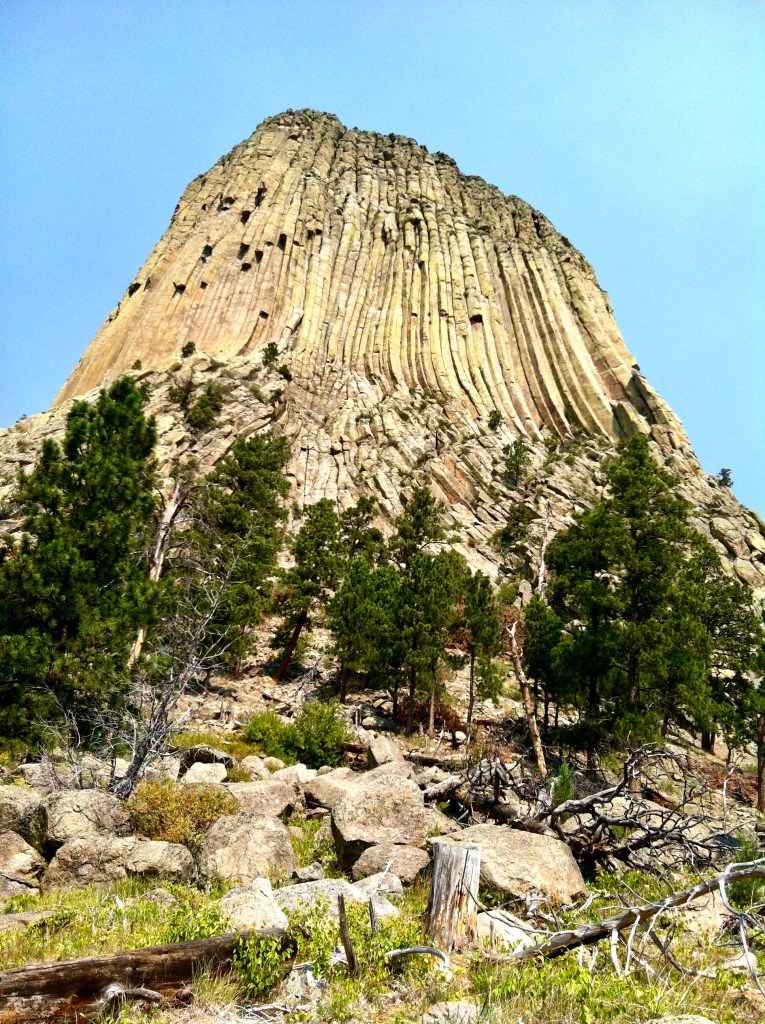
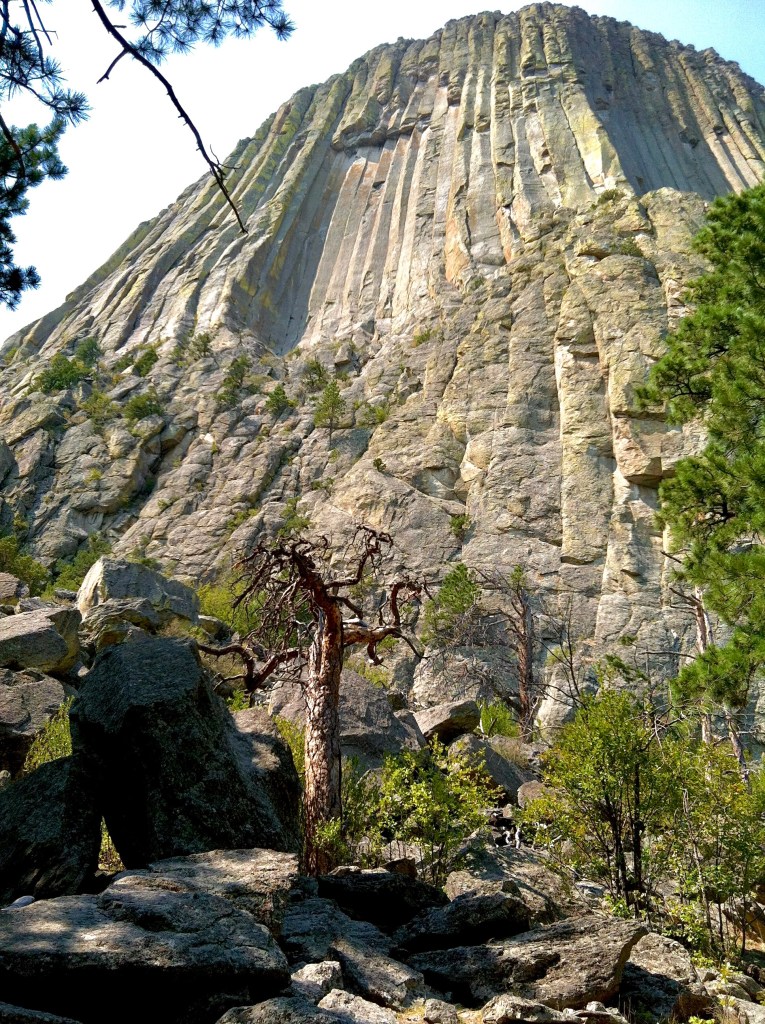
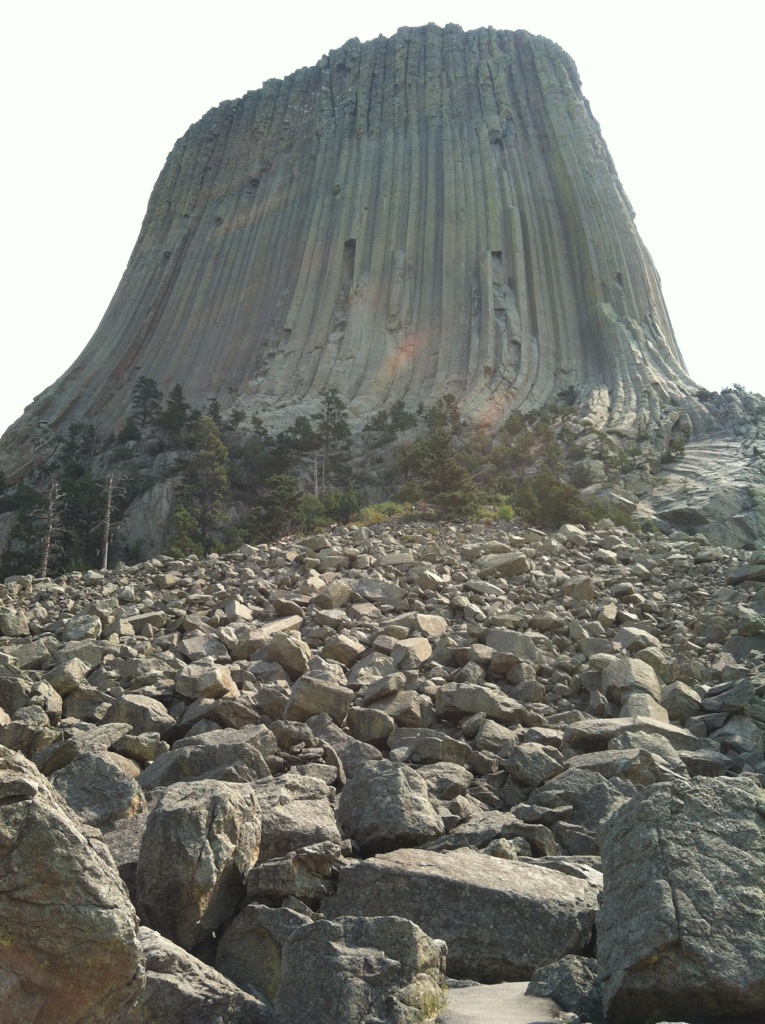
A dark mist lay over the Black Hills, and the land was like iron. At the top of ridge I caught sight of Devil’s Tower upthrust against the gray sky as if in the birth of time the core of the earth had broken through its crust and the motion of the world was begun. There are things in nature that engender an awful quiet in the heart of man; Devil’s Tower is one of them.
~N.Scott Momaday in The Way to Rainy Mountain

Over the years we have made many cross-country road trips, passing by the turn-off to Devil’s Tower in eastern Wyoming because there was urgency to get where we needed to go. Occasionally we would see it hazy in the far distance, so I could say I had “seen it” but I really had not seen it, according to my Stanford professor N. Scott Momaday.
Scott is from the Kiowa tribe. In his language, this rock formation is named Tso-i-e or “standing on a rock.” For him and his people, it is sacred ground. The Cheyenne, Crow, Lakota, Shoshone, and Arapahoe all revere this rock monolith although most tribal members did not live near enough to see it themselves, but the legends traveled many miles through the generations through oral tradition.

Scott taught an unforgettable class on Native American Mythology and Lore I took 50 years ago as a 19 year old sophomore. He has a commanding presence, a booming resonant voice for story telling, a predilection for the poetry of Emily Dickinson and a hankering since childhood to be a character in the stories of Billy the Kid. The first day of class, he introduced us to Tso-i-e first and foremost. He told us his grandmother’s story passed to her from her grandparents:

“Eight children were there at play, seven sisters and their brother. Suddenly the boy was struck dumb; he trembled and began to run upon his hands and feet. His fingers became claws, and his body was covered with fur. Directly there was a bear where the boy had been. The sisters were terrified.; they ran and the bear after them. They came to the stump of a great tree, and the tree spoke to them. It bade them climb upon it, and as they did so it began to rise into the air. The bear came to kill them, but they were just beyond its reach. It reared against the tree and scored the bark all around with its claws. The seven sisters were borne into the sky, and they became the stars of the Big Dipper.”

A few years ago, we finally made time to see the Tower up close. For me, this “close encounter” was meant to connect the dots from my class and to understand more fully the spiritual background of the Plains people as our son had lived and taught on the Pine Ridge Reservation in South Dakota for two years.

The Tower surely is holy ground for us all – we are diminished in its presence. It disquiets the heart with its awful grandeur and sheer other-worldliness. In its own way, it is as resonant as Scott’s captivating stories about its origins, yet remains a reminder of the ever-changing impermanence of geologic formations.

We need more holy places in our lives even as they (and we) change with the sands and winds of time. We need more awe-filled awful quiet in our hearts.

So we continue to tell the sacred stories, generation to generation, never forgetting Who set the world in motion.

Filling Our Dry Wells

My uncle in East Germany
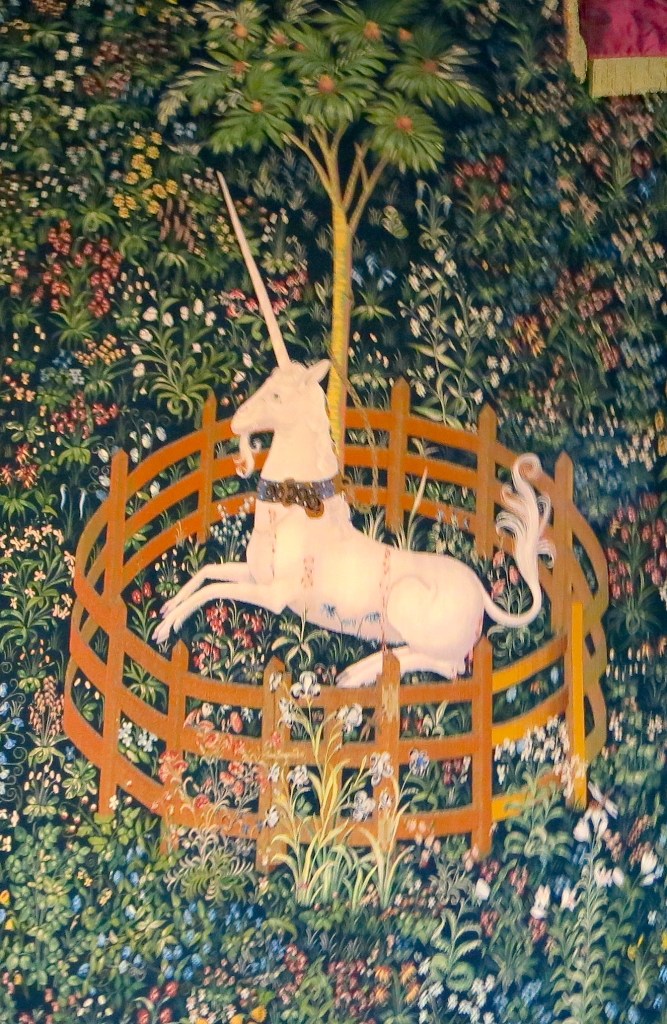
points to the unicorn in the painting
and explains it is now extinct.
We correct him, say such a creature
never existed. He does not argue,
but we know he does not believe us.
He is certain power and gentleness
must have gone hand in hand
once. A prisoner of war
even after the war was over,
my uncle needs to believe in something
that could not be captured except by love,
whose single luminous horn
redeemed the murderous forest
and, dipped into foul water,
would turn it pure. This world,
this terrible world we live in,
is not the only possible one,
his eighty-year-old eyes insist,
dry wells that fill so easily now.
~Lisel Mueller “The Exhibit”

This is the animal that never was.
Not knowing that, they loved it anyway;
its bearing, its stride, its high, clear whinny,
right down to the still light of its gaze.

It never was. And yet such was their love
the beast arose, where they had cleared the space;
and in the stable of its nothingness
it shook its white mane out and stamped its hoof.

And so they fed it, not with hay or corn
but with the chance that it might come to pass.
All this gave the creature such a power

its brow put out a horn; one single horn.
It grew inside a young girl’s looking glass,
then one day walked out and passed into her.
~Rainer Maria Rilke “Unicorn”

I sometimes feel the need for magical thinking to help restore goodness in the sad ways of this world. We have fouled our own nest, destroying each other and the extravagant garden we were given.

Hope for restoration feels almost mythical and the stuff of legends.

Power and gentleness do come together in the story of our redemption. We are delivered into a new world by the sacrifice of the most pure and generous Spirit.

Our dry well is filled by a love that quenches all our thirst, promising that our belief in goodness is not myth or legend, but real and true.