My Own Usefulness

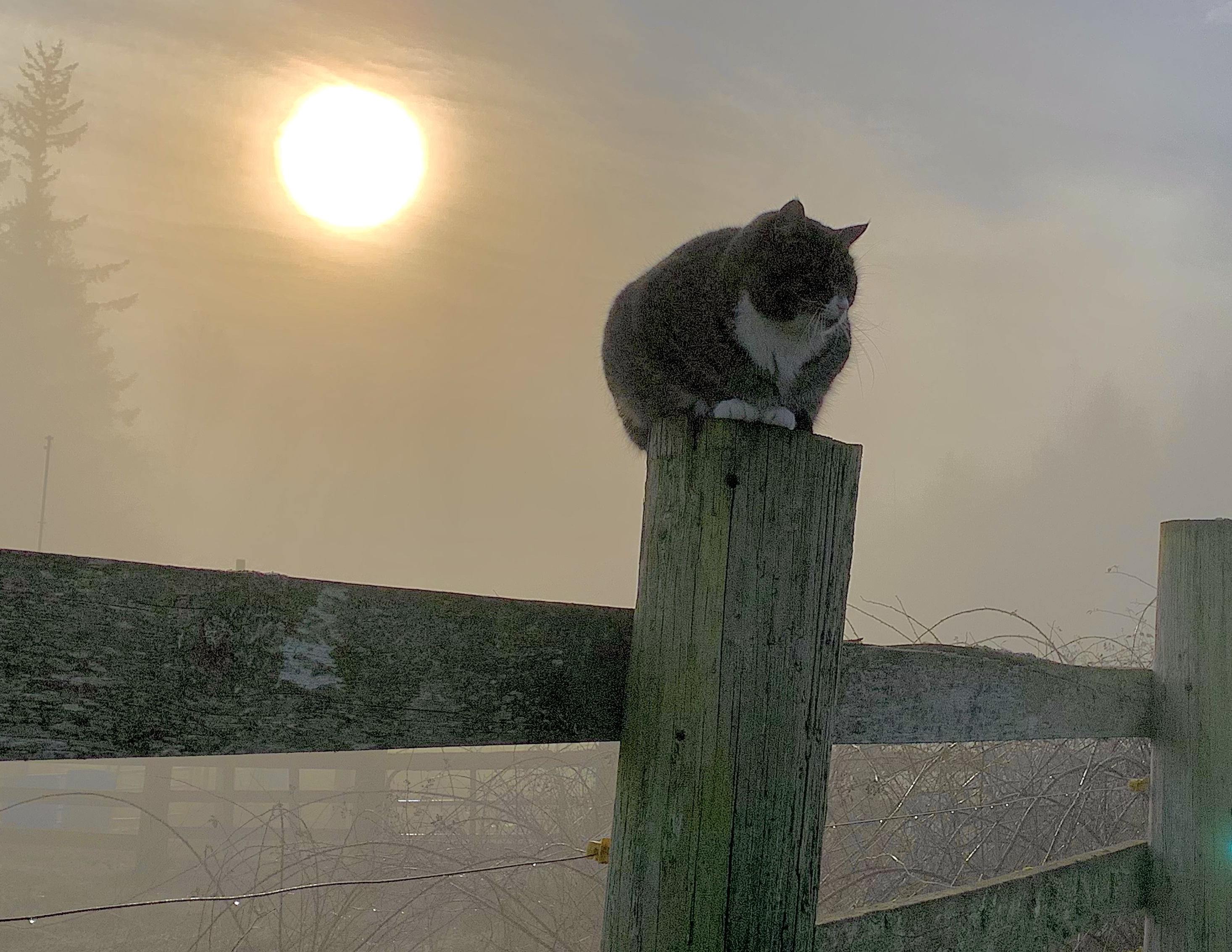
I’ve learned that even when I have pains,
I don’t have to be one …
I’ve learned that:
people will forget what you said,
people will forget what you did,
but people will never forget
how you made them feel.
~
Maya Angelou on her 70th birthday, citing a quote from Carl Buehner
I learned from my mother how to love
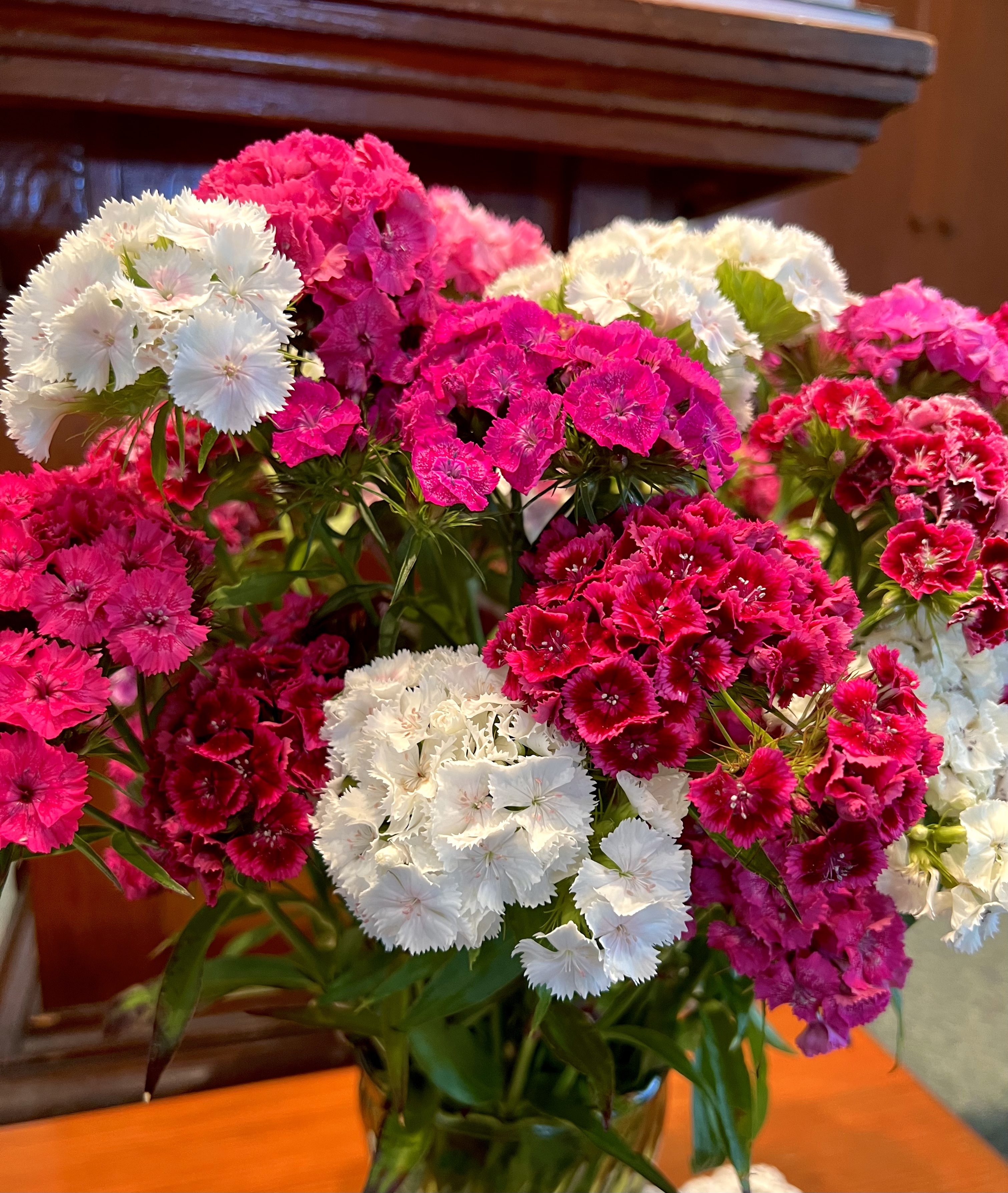
the living, to have plenty of vases on hand
in case you have to rush to the hospital
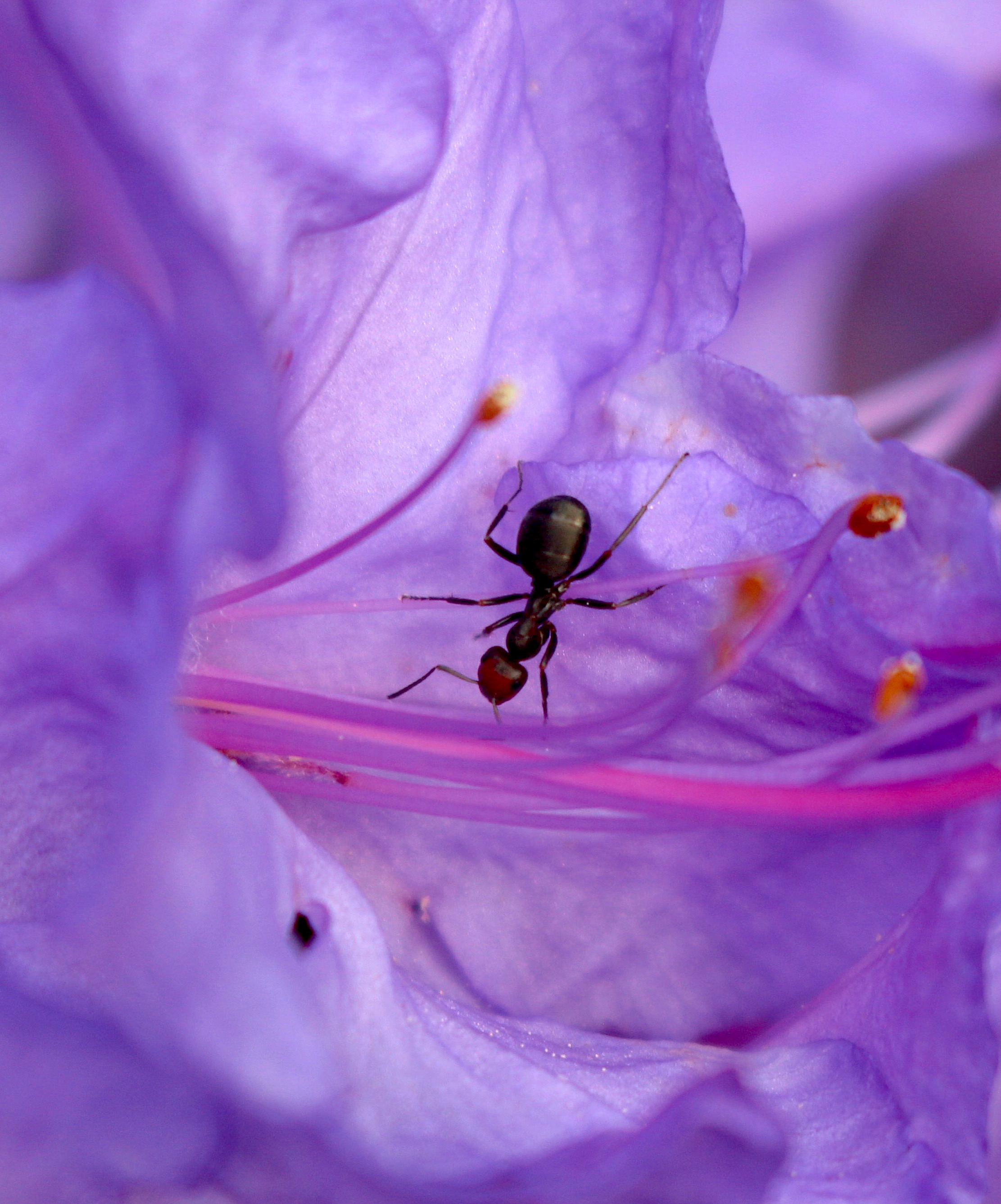
with peonies cut from the lawn, black ants
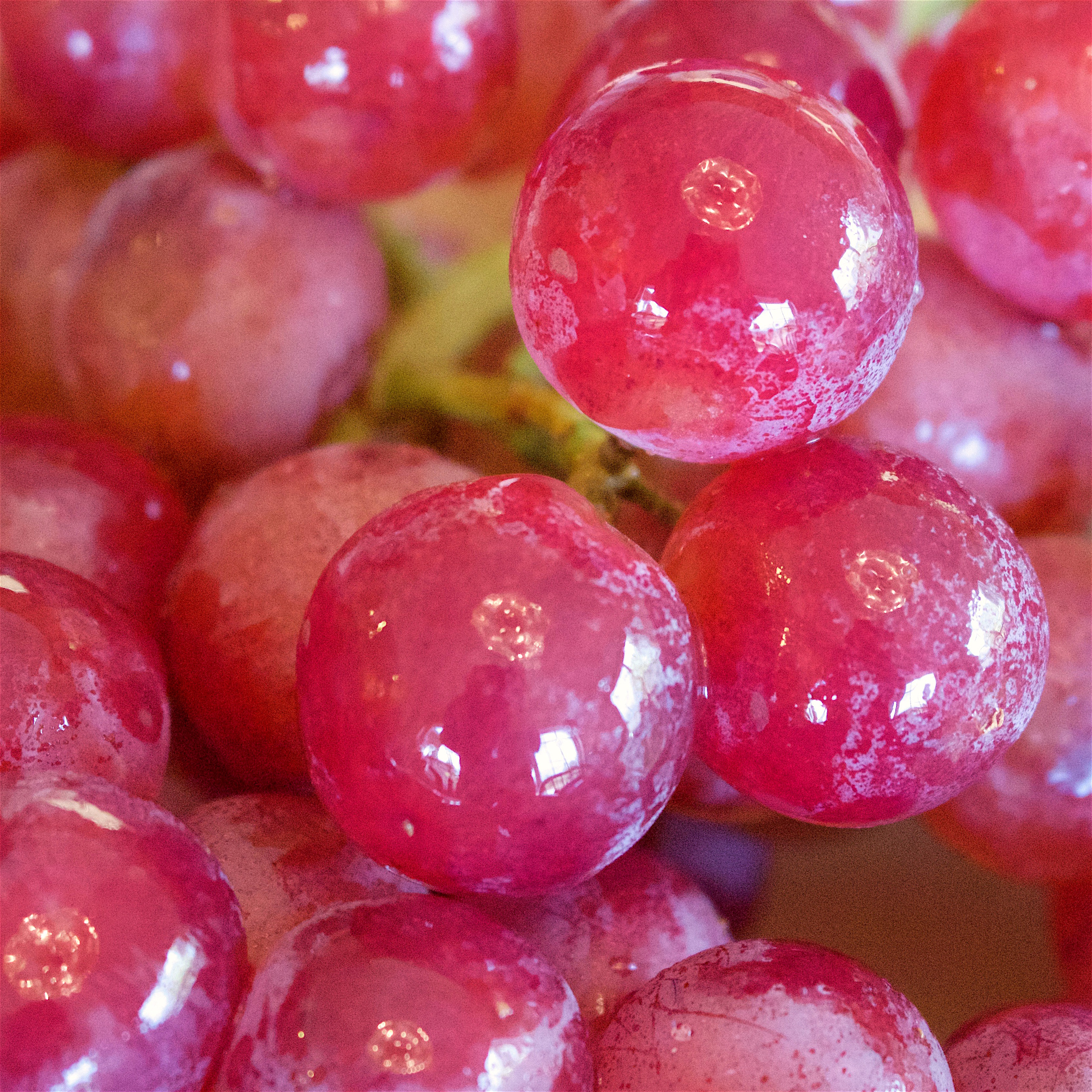
still stuck to the buds. I learned to save jars
large enough to hold fruit salad for a whole
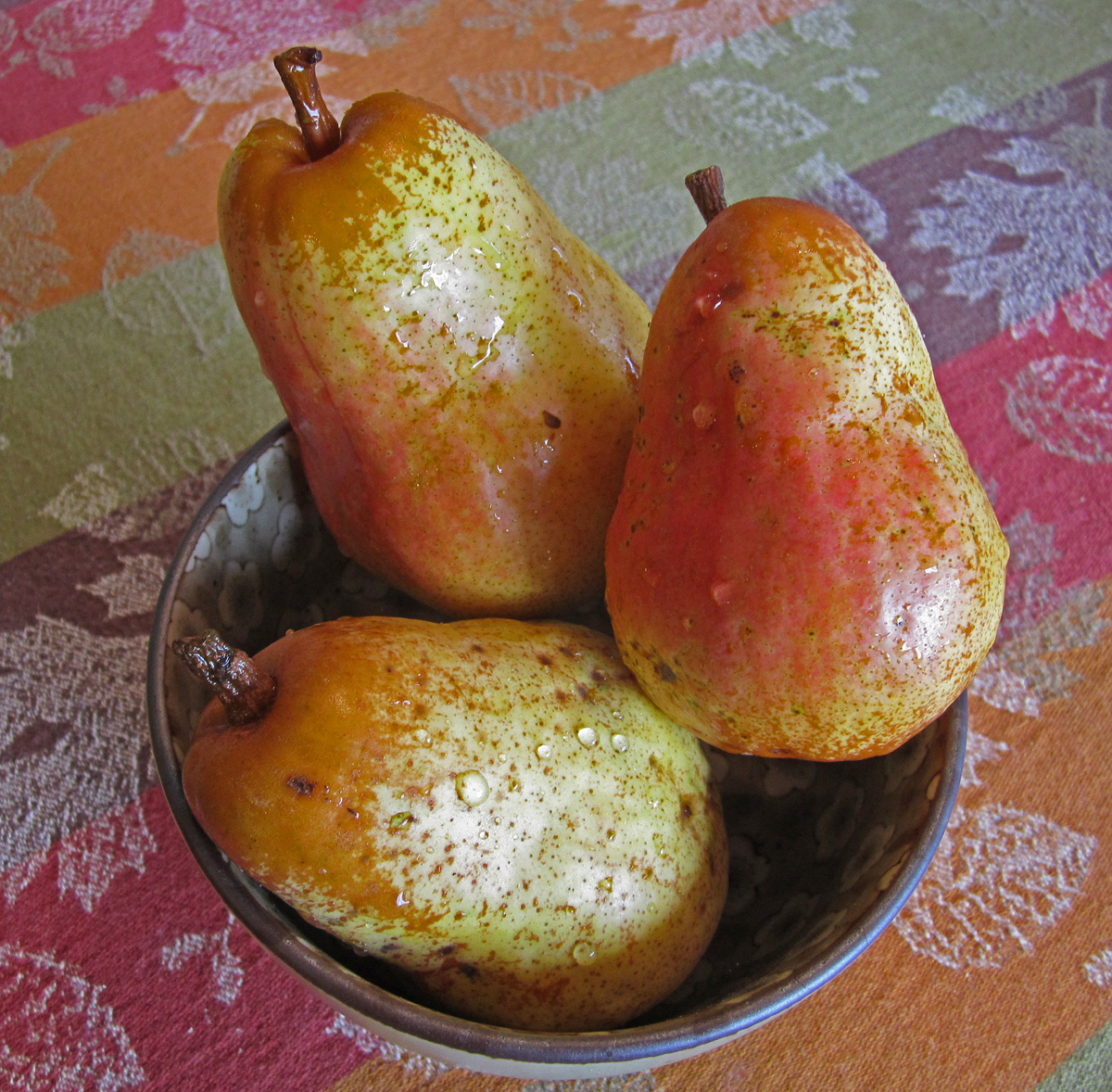
grieving household, to cube home-canned pears
and peaches, to slice through maroon grape skins
and flick out the sexual seeds with a knife point.
I learned to attend viewings even if I didn’t know

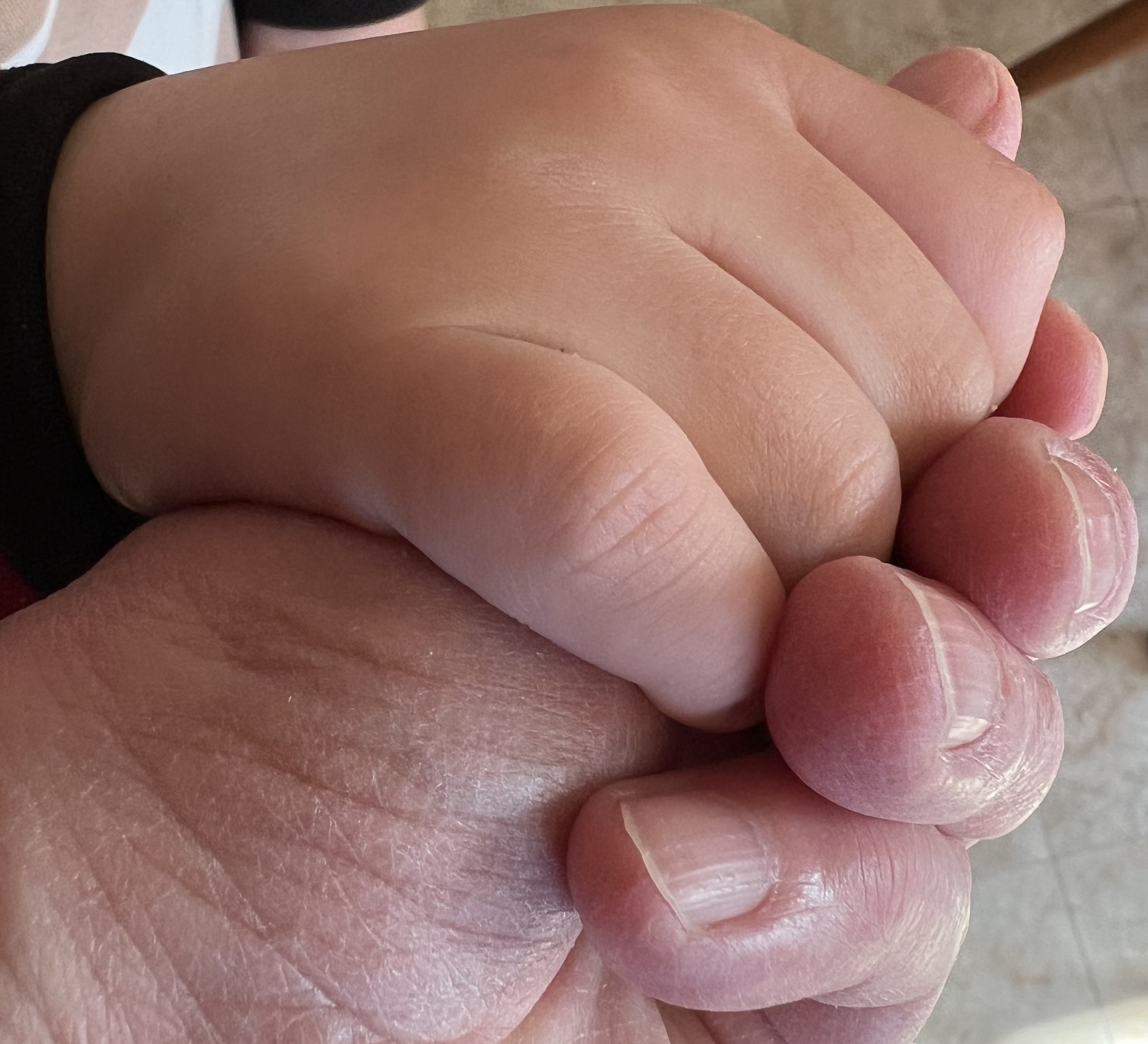
the deceased, to press the moist hands

of the living, to look in their eyes and offer
sympathy, as though I understood loss even then.
I learned that whatever we say means nothing,

what anyone will remember is that we came.
I learned to believe I had the power to ease
awful pains materially like an angel.
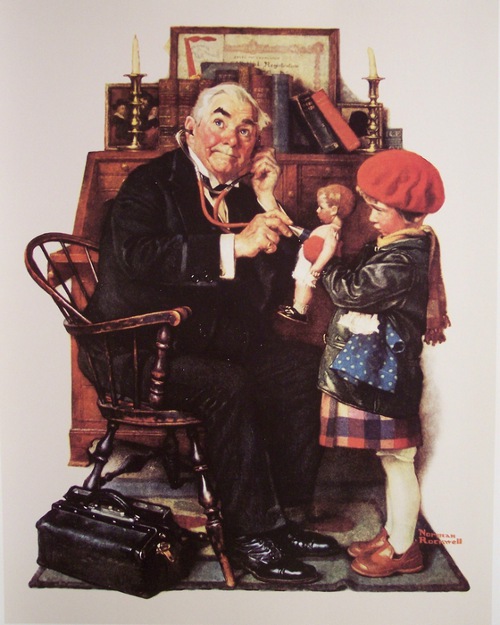
Like a doctor, I learned to create

from another’s suffering my own usefulness, and once
you know how to do this, you can never refuse.
To every house you enter, you must offer

healing: a chocolate cake you baked yourself,
the blessing of your voice, your chaste touch.
~Julie Kasdorf– “What I Learned from my Mother”
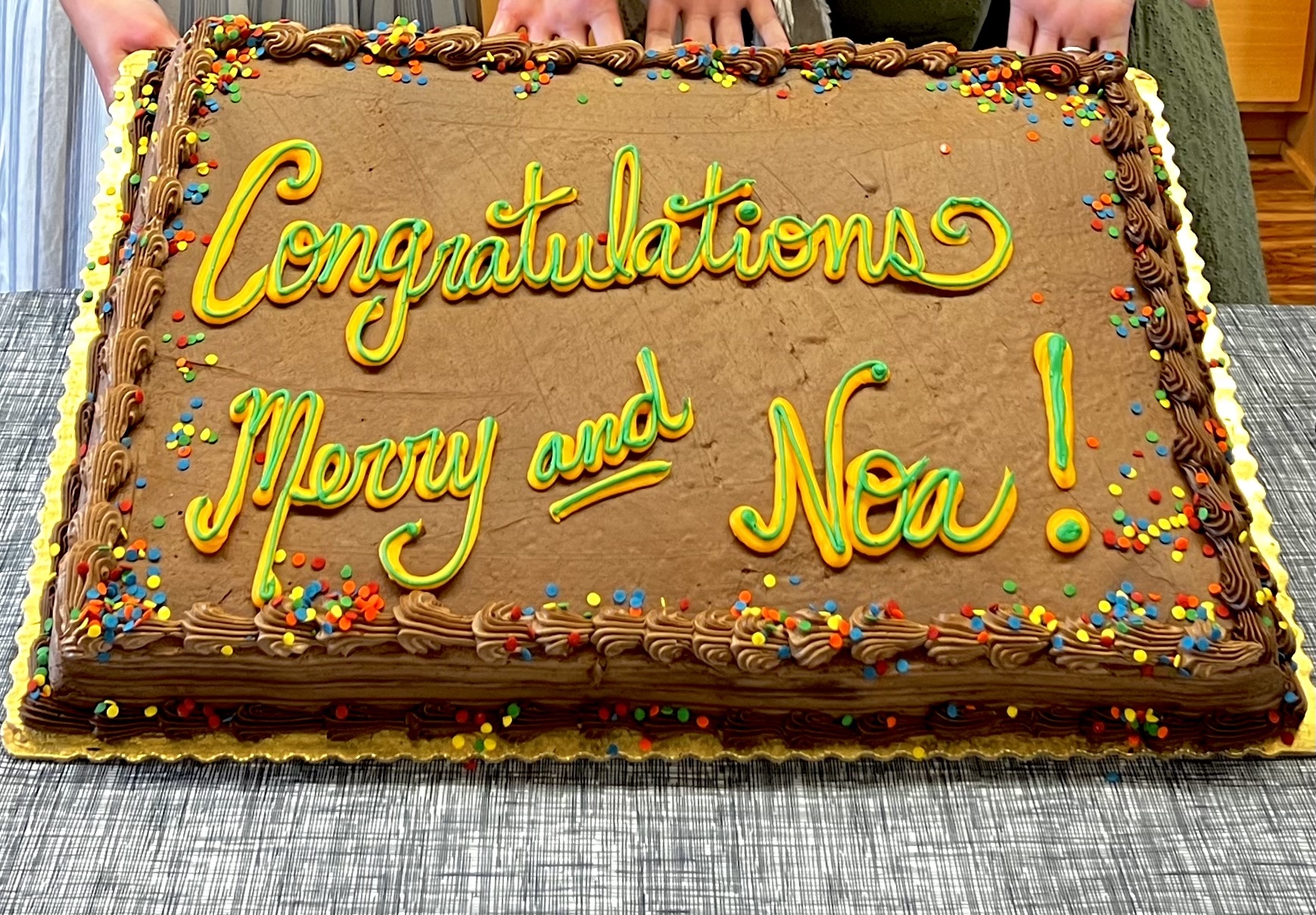
Moms often know best about these things — how to love others when and how they need it — the ways to ease pain, rather than become one. Despite years of practice, I don’t always get it right; others often do it better.

Showing up with food is always a good thing but it is the showing up part that is the real food; bringing a cake is simply the icing.

Working as a physician over four decades, my usefulness tended to depend on the severity of another’s worries and misery. If no illness, no symptoms, no fear, why bother seeing a doctor? Since retiring, the help I offer no longer means writing a prescription for a medication, or performing a minor surgery. I have to simply offer up me for what it’s worth, without the M.D.

To be useful without a stethoscope, I aim to be like any good mom or grandma. I press my hand into another’s, hug when needed, smile and listen and nod and sometimes weep when someone has something they need to say. No advanced degree needed.

Oh, and bring flowers. Cut up fruit. Bake a cake.
Leave the ants at home.
One-Time
Monthly
Yearly

Make a one-time and recurring donation to support daily Barnstorming posts

Make a monthly donation

Make a yearly donation

Choose an amount

¤10.00
¤25.00
¤50.00
¤5.00
¤15.00
¤100.00
¤5.00
¤15.00
¤100.00

Or enter a custom amount

¤

Your contribution is deeply appreciated.

Your contribution is appreciated.

Your contribution is appreciated.

DonateDonate monthlyDonate yearly
Howling at the Moon

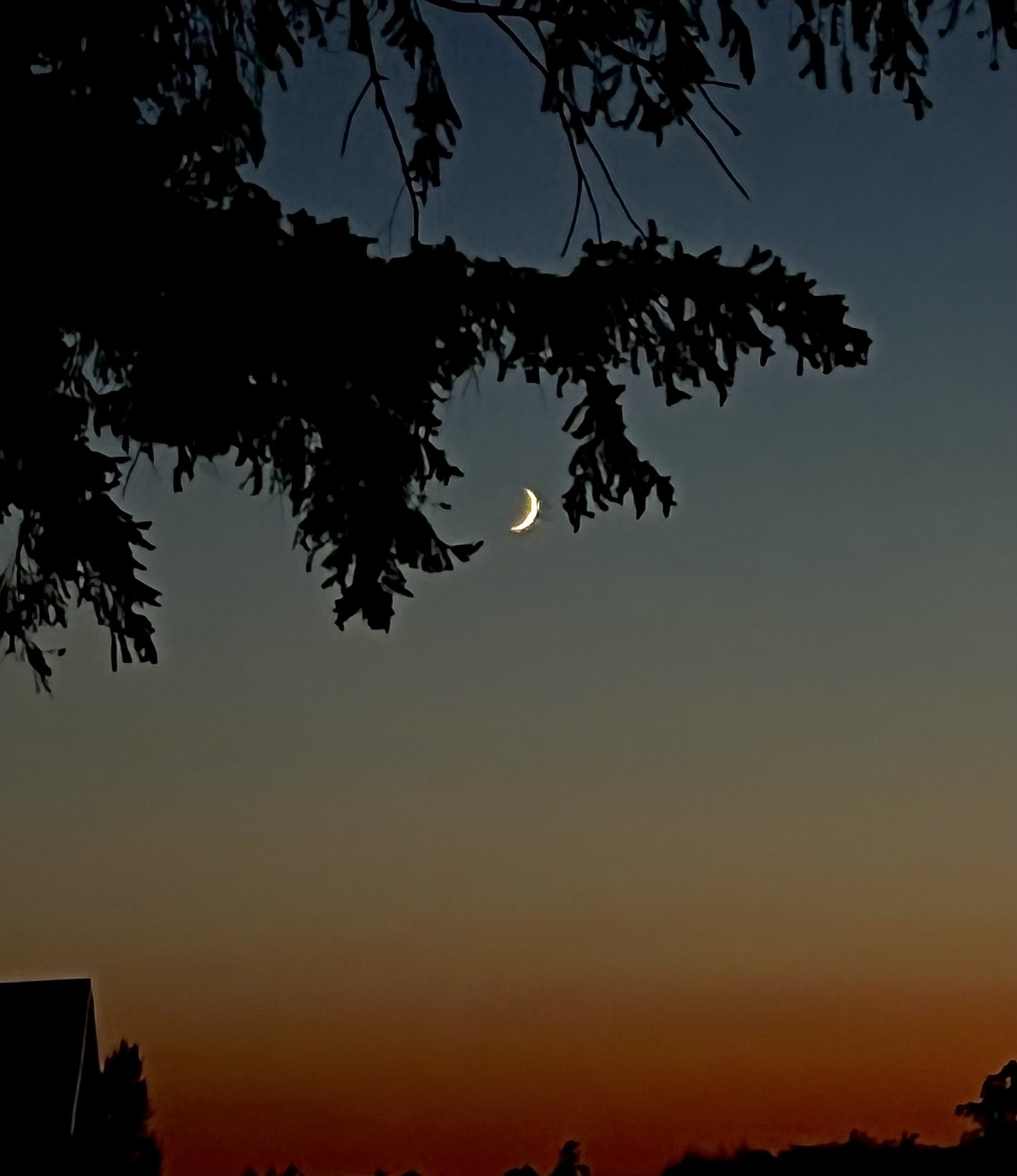
We stand creekside. It’s tomorrow
somewhere else and we’re discussing
if we’ll have a tomorrow together.
Coyotes howl in the woods behind us.
We keep waiting for one
of us to save the other, but we’re quiet.
We can leave here still
a family or we can walk separate
directions. We listen to the chorus,
coyotes and baby coyotes, a tornado
of cries as if they’re circling.

~Kelli Russell Agodon “The Moon is a Comma, a Pause in the Sky” from Letters from the Emily Dickinson Room

Coyotes have the gift of seldom being seen; they keep to the edge of vision and beyond, loping in and out of cover on the plains and highlands. And at night, when the whole world belongs to them, they parley at the river with the dogs, their higher, sharper voices full of authority and rebuke. They are an old council of clowns, and they are listened to.
N. Scott Momaday in House Made of Dawn

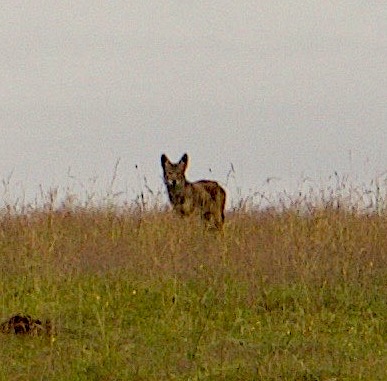
On summer nights, with light just fading from the sky at 10 PM, it will be only a few minutes before the local coyote choristers begin their nightly serenade. This can be a surround-sound experience with coyote packs echoing back and forth from distant corners of farmland and woodlands below the hill where we live.Their shrill yipping and yapping song, with hollering, chortling and hooting, is impossible to ignore just as it is time to go to sleep. Like priming a pump, the rise and fall of the coyote ensemble inevitably inspires the farm dogs to tune up, exercising their vocal cords with a howl or two. It becomes canine bedlam outside our windows, right at bedtime.

Coyotes send a mixed message: they insist on being heard and listened to, yet are seldom visible. In a rare sighting, it is a low slung slinking form scooting across a field with a rabbit in its mouth, or patiently waiting at a fence line as a new calf is born, hoping to duck in and grab the placenta before the cow notices. They are not particularly brave nor bold yet they insist on commanding attention and ear drums.

Irritating not only for their ill-timed concerts, they also have a propensity for thieving sleeping chickens from coop roosts in the night. I know a few prominent politicians who are just as noisy and sneaky at the same time. They too know how to take care of themselves in a dog-eat-dog world, primarily by eating whatever they can get their jaws around and carry away, no matter who it may belong to.

Perhaps I should be more understanding about wild canines gathering to giggle and snigger in the dark at their own silly stories of the hunt. Maybe I only wish to be let in on the joke.

Just once I want to howl back, plaintive, pleading, pejorative as just another bozo the clown adding my voice to the perpetual nocturnal yodeling – hoping somebody, anybody, might listen to what I have to say.

One-Time
Monthly
Yearly

Make a one-time or recurring donation to support daily Barnstorming posts

Make a monthly donation

Make a yearly donation

Choose an amount

¤10.00
¤25.00
¤50.00
¤5.00
¤15.00
¤100.00
¤5.00
¤15.00
¤100.00

Or enter a custom amount

¤

Your contribution is deeply appreciated.

Your contribution is appreciated.

Your contribution is appreciated.

DonateDonate monthlyDonate yearly
Seeking What Won’t Be Found

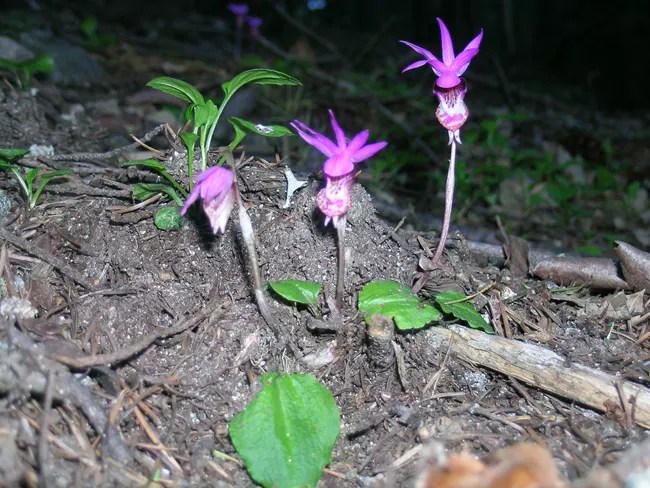
photo of Calypso Bulbosa by Kate Steensma

Though I know well enough
To hunt the Lady’s Slipper now
Is playing blindman’s-buff,
For it was June She put it on
And grey with mist the spider’s lace
Swings in the autumn wind,
Yet through this hill-wood, high and low,
I peer in every place;
Seeking for what I cannot find
I do as I have often done
And shall do while I stay beneath the sun.
~Andrew Young “Lady’s Slipper Orchid”

photo from USNPS

How strange to find you where I did
along a path beside a road,
your legs in graceful green dancing
to music made by wind and woods.

Like ladies from a bygone age,
you left your slippers there to air
in dappled shade, while you, barefoot,
relaxed your stays, let loose your hair.

The treasures of this world might be
as simple as an orchid’s bloom;
how sad that so much time is spent
in filling coffers for the tomb.

If only life could be so fresh
and free as you in serenade,
we might learn we value most those
things found lost in woodland shade.

~Mike Orlock “Lady Slipper Serenade (in 4/4 time)”


My grandmother’s house where my father was born had been torn down. She sold her property on Fidalgo Island near Anacortes, Washington to a lumber company – this was the house where all four of her babies were born, where she and my grandfather loved and fought and separated and finally loved again, and where we spent chaotic and memorable Thanksgiving and Christmas meals. After Grandpa died, Grandma took on boarders, trying to afford to remain there on the homesteaded wooded acreage on Similk Bay, fronted by meadows where her Scottish Highland cattle grazed. Her own health was suffering and she reached a point when it was no longer possible to make it work. A deal was struck with the lumber company and she moved to a small apartment for the few years left to her, remaining bruised by leaving her farm.

My father realized what her selling to a lumber company meant and it was a crushing thought. The old growth woods would soon be stumps on the rocky hill above the bay, opening a view to Mt. Baker to the east, to the San Juan Islands to the north, and presenting an opportunity for development into a subdivision. He woke my brother and me early one Saturday in May and told us we were driving the 120 miles to Anacortes. He was on a mission.

As a boy growing up on that land, he had wandered the woods, explored the hill, and helped his dad farm the rocky soil. There was only one thing he felt he needed from that farm and he had decided to take us with him, to trespass where he had been born and raised to bring home a most prized treasure–his beloved lady slippers (Calypso bulbosa) from the woods.

These dainty flowers enjoy a spring display known for its brevity–a week or two at the most–and they tend to bloom in small little clusters in the leafy duff mulch of the deep woods, preferring only a little indirect sunlight part of the day.  They are not easy to find unless you know where to look. 

My father remembered exactly where to look.

We hauled buckets up the hill along with spades, looking as if we were about to dig for clams at the ocean. Dad led us up a trail into the thickening foliage, until we had to bushwhack our way into the taller trees where the ground was less brush and more hospitable ground cover. He would stop occasionally to get his bearings as things were overgrown.  We reached a small clearing and he knew we were near.  He went straight to a copse of fir trees standing guard over a garden of lady slippers.

There were almost thirty of them blooming, scattered about in an area the size of my small bedroom.  Each orchid-like pink and lavender blossom had a straight backed stem that held it with sturdy confidence. To me, they looked like they could be little shoes for fairies who may have hung them up while they danced about barefoot.  To my father, they represented the last redeeming vestiges of his often traumatic childhood, and were about to be trammeled by bulldozers.  We set to work gently digging them out of their soft bedding, carefully keeping their bulb-like corms from losing a protective covering of soil and leafy mulch. Carrying them in the buckets back to the car, we felt some vindication that even if the trees were to be lost to the saws, these precious flowers would survive.

When we got home, Dad set to work creating a spot where he felt they could thrive in our own woods. He found a place with the ideal amount of shade and light, with the protection of towering trees and the right depth of undisturbed leaf mulch. We carefully placed the lady slippers in their new home, scattered in a pattern similar to how we found them. Then Dad built a four foot split rail fence in an octagon around them, as a protection from our cattle and a horse who wandered the woods, and as a way to demarcate that something special was contained inside.

The next spring, only six lady slippers bloomed from the original thirty.  Dad was disappointed but hoped another year might bring a resurgence as the flowers established themselves in their new home.  The following year there were only three. A decade later, my father left our farm and family, not looking back.

Sometime after the divorce, when my mother had to sell the farm, I visited our lady slipper sanctuary in the woods for the last time in the middle of May, seeking what I hoped might still be there, but I knew was no longer. The split rail fence still stood, guarding nothing but old memories. No lady slippers bloomed. There was not a trace they had ever been there. They had given up and disappeared.

The new owners of the farm surely puzzled over the significance of the small fenced-in area in the middle of our woods. They probably thought it surrounded a graveyard of some sort.

And they would be right – it did.

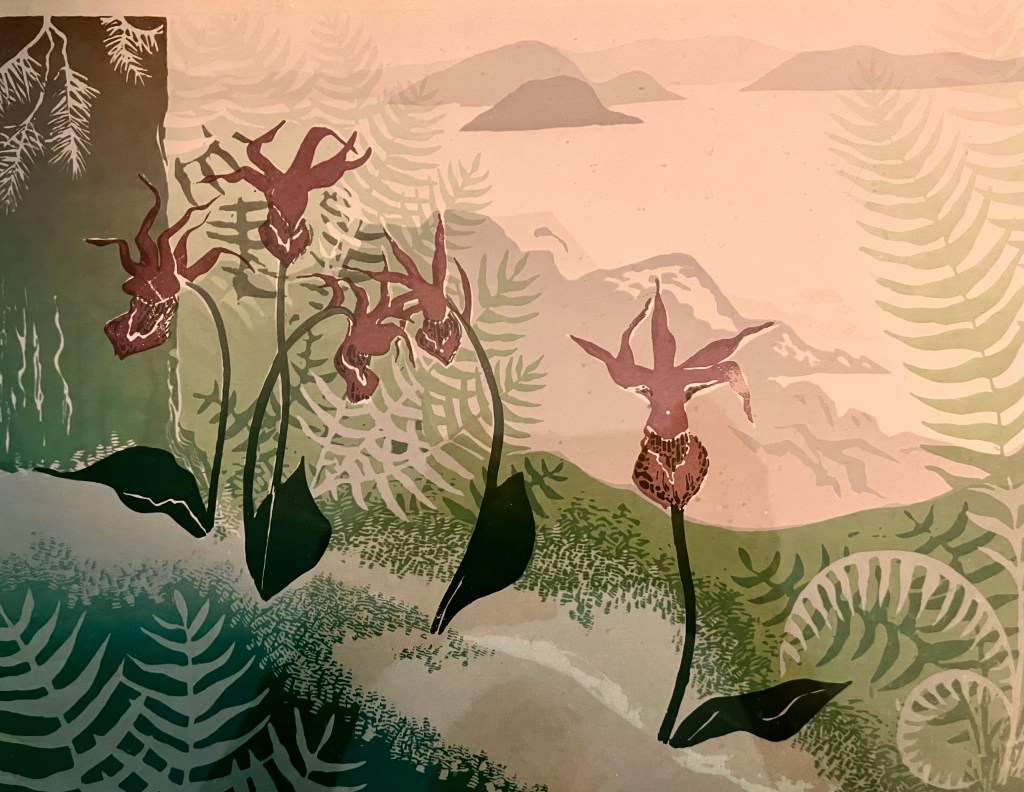
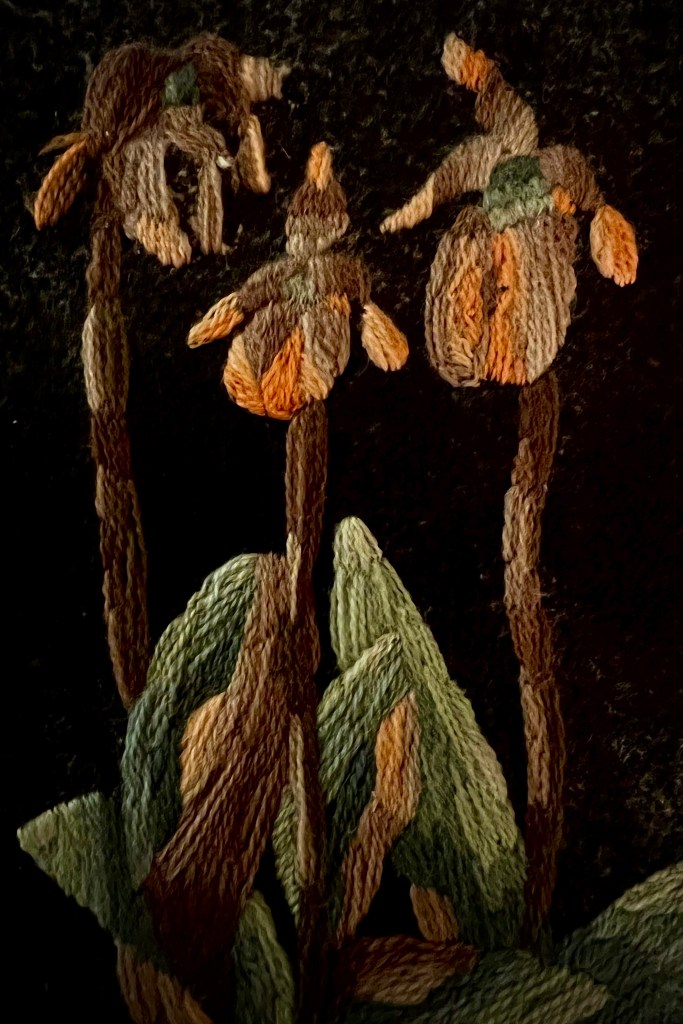
An embroidery I made for my father after he replanted the lady slippers — on the back I wrote “The miracle of creation recurs each spring in the delicate beauty of the lady slipper – may we ourselves be recreated as well…”

One-Time
Monthly
Yearly

Make a one-time or recurring donation to support daily Barnstorming posts

Make a monthly donation

Make a yearly donation

Choose an amount

¤10.00
¤25.00
¤50.00
¤5.00
¤15.00
¤100.00
¤5.00
¤15.00
¤100.00

Or enter a custom amount

¤

Your contribution is deeply appreciated.

Your contribution is appreciated.

Your contribution is appreciated.

DonateDonate monthlyDonate yearly

An Unthinkable Price

No, I will never know
what you saw or what you felt,
thrust into the maw of Eternity,

watching the mortars nightly
greedily making their rounds,
hearing the soft damp hiss

of men’s souls like helium escaping
their collapsing torn bodies,
or lying alone, feeling the great roar

of your own heart.
But I know:
there is a bitter knowledge

of death I have not achieved.
Thus in thankful ignorance,
and especially for my son

and for all who benefit so easily
at so unthinkable a price,
I thank you.

~Michael Burch “Privilege”


(for my father on Memorial Day)

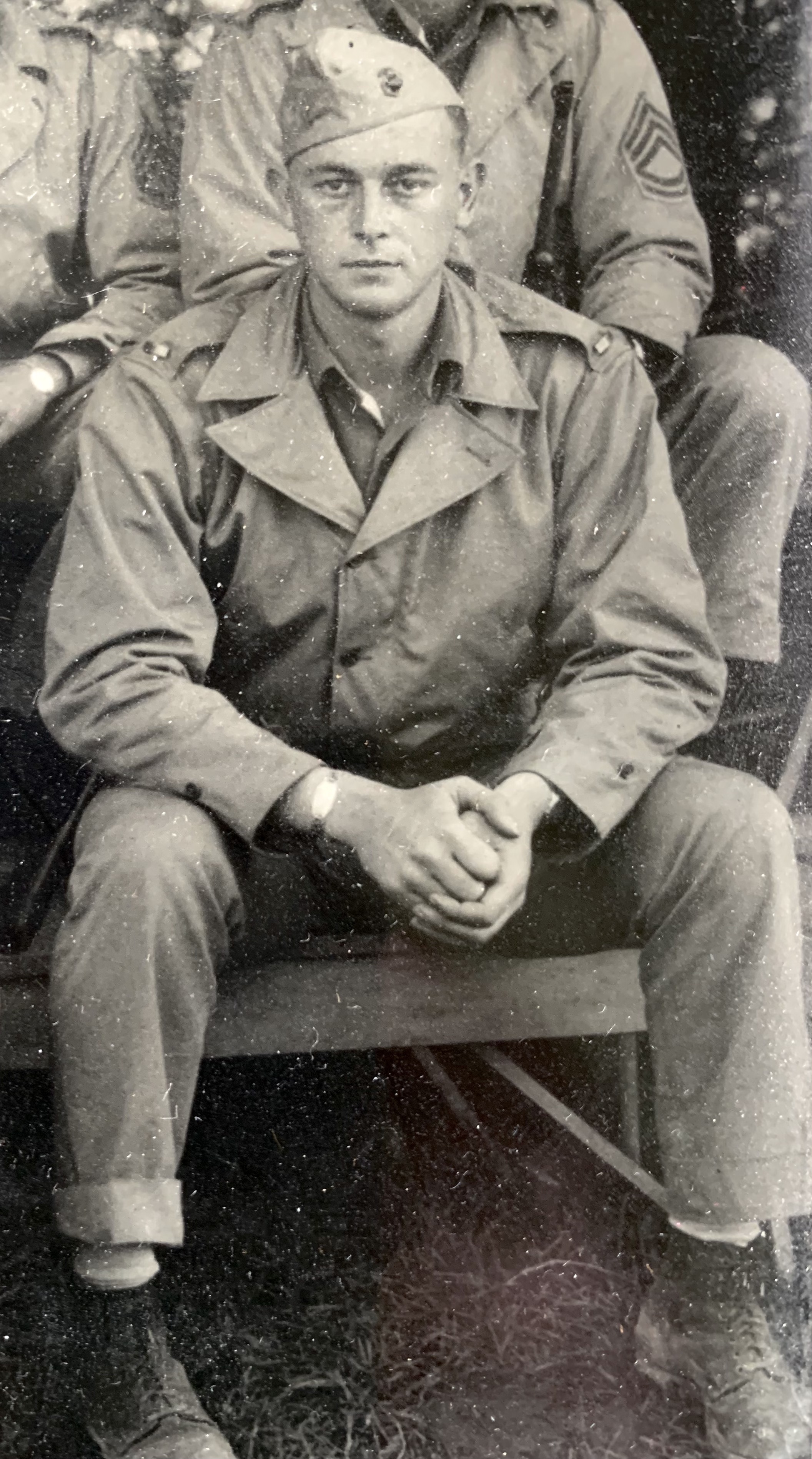
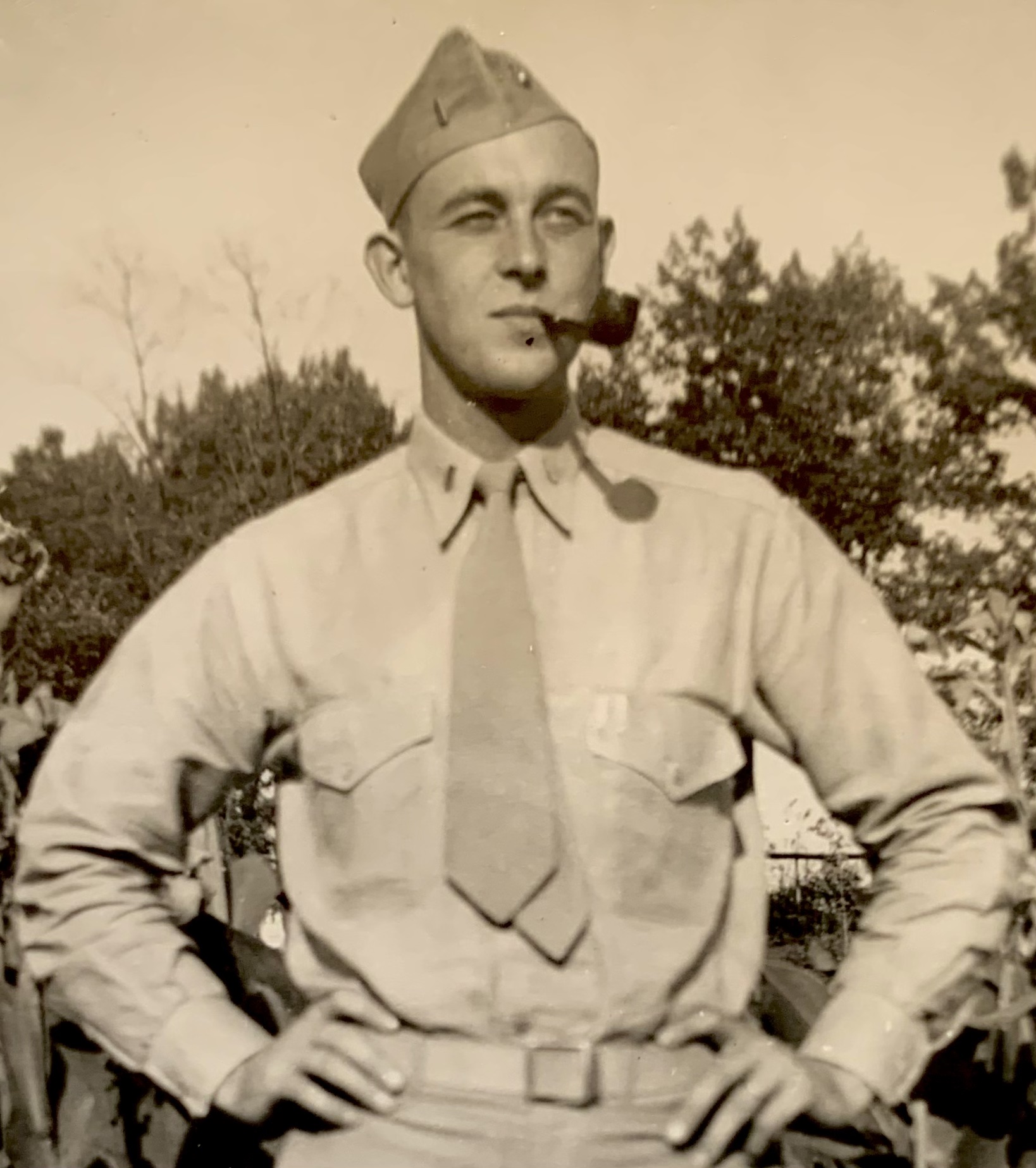
It was only a part of what we knew about you-
serving three long years in the South Pacific,
spoken of obliquely
only if asked about,
but never really answered.

We knew you were a Marine battalion leader,
knew you spent too many nights without sleep,
unsure if you’d see the dawn
only to dread
what the next day would bring.

We knew you lost friends
and your innocence;
found unaccustomed strength
inside a mama’s boy
who once cried too easily and later almost never.

Somehow life had prepared you for this:
pulling your daddy out of bars when you were ten
watching him beat your mama
until finally getting big enough
to stand in the way.

Then Tarawa, Saipan, Tinian beaches
bitterly bloodsoaked
battles won,
to be restored and renewed
as vacation resorts.

We let you go without knowing
your full story–
even Mom didn’t ask.
You could not share the depth
of horror and fear you felt.

It was not shame that kept you silent;
simply no need to revisit
the pain of remembrance.
It was done, finished, you had done your duty.

So as we again set flowers and flag
on your grave,
reunited with Mom after years apart,
I regret so many questions unasked
of a sacrifice beyond imagining,
you having paid an unthinkable price.

Sleep well, Dad,
with Mom now by your side.
I rejoice you finally wakened
to a renewed dawn.

One-Time
Monthly
Yearly

Make a one-time or recurring donation to support daily Barnstorming posts

Make a monthly donation

Make a yearly donation

Choose an amount

¤10.00
¤25.00
¤50.00
¤5.00
¤15.00
¤100.00
¤5.00
¤15.00
¤100.00

Or enter a custom amount

¤

Your contribution is deeply appreciated.

Your contribution is appreciated.

Your contribution is appreciated.

DonateDonate monthlyDonate yearly

Broken, But Not Shattered

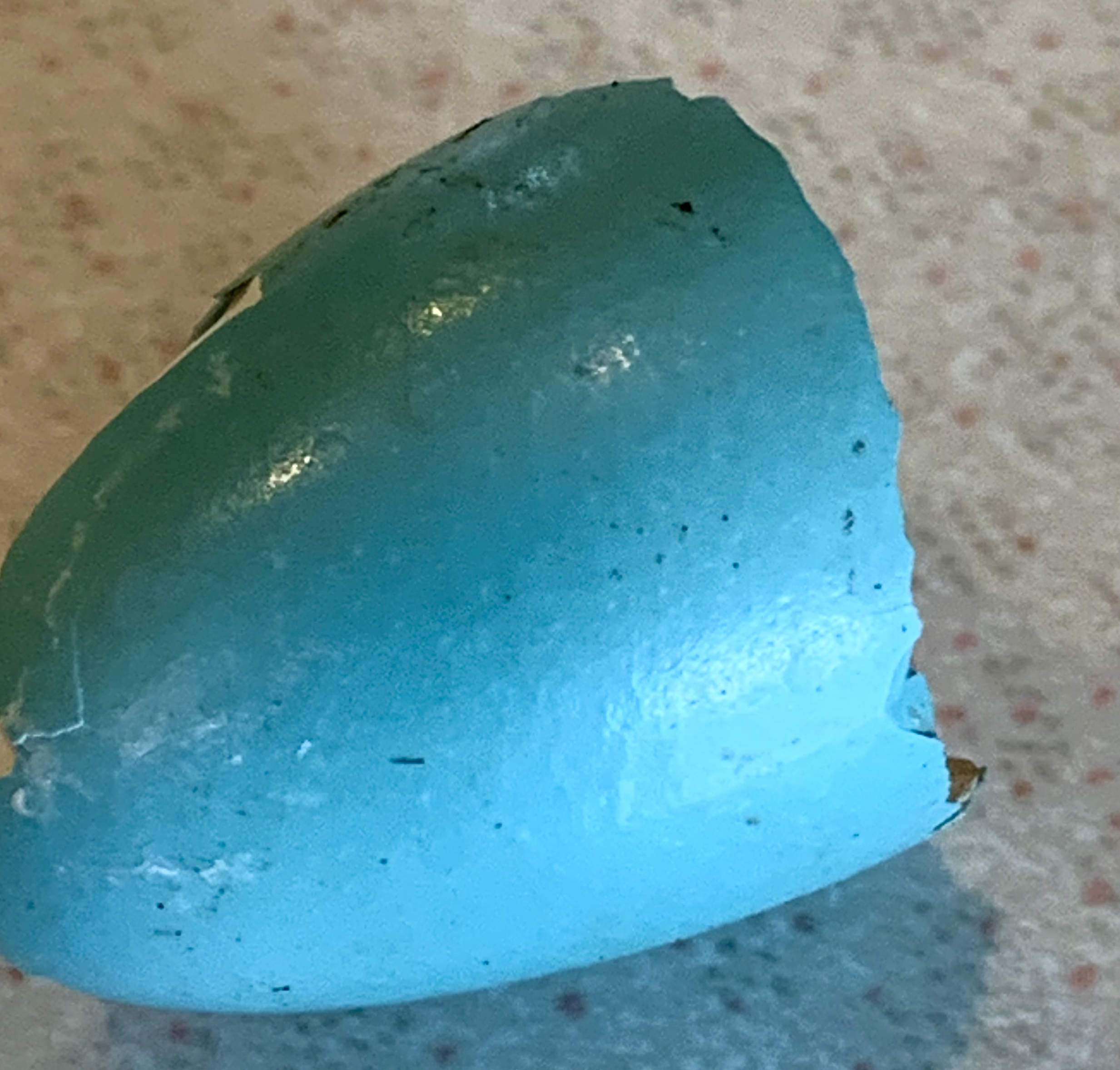
Under a cherry tree
I found a robin’s egg,
broken, but not shattered.

I had been thinking of you,
and was kneeling in the grass
among fallen blossoms

when I saw it: a blue scrap,
a delicate toy, as light
as confetti

It didn’t seem real,
but nature will do such things
from time to time.

I looked inside:
it was glistening, hollow,
a perfect shell

except for the missing crown,
which made it possible
to look inside.

What had been there
is gone now
and lives in my heart

where, periodically,
it opens up its wings,
tearing me apart.
~Phyllis Levin “End of April”

photo by Josh Scholten

The great mystery of God’s love is that we are not asked to live as if we are not hurting, as if we are not broken. In fact, we are invited to recognize our brokenness as a brokenness in which we can come in touch with the unique way that God loves us. The great call of Jesus is to put your brokenness under the blessing.
~Henri Nouwen from a Lecture at Scarritt-Bennett Center

Some say you’re lucky
If nothing shatters it.

But then you wouldn’t
Understand poems or songs.
You’d never know
Beauty comes from loss.

It’s deep inside every person:
A tear tinier
Than a pearl or thorn.

It’s one of the places
Where the beloved is born.
~Gregory Orr from Concerning the Book That Is the Body of the Beloved

Every day, as the sun goes down,
I pause, feeling a bit or a lot broken, remembering how often
I messed up that day, in big and small ways.

I’ve been cracked open, my mistakes leaking and illuminated,
weighing down my heart, impossible to forget,
ready to take wings as I pray for mercy.

With forgiveness, there follows peacefulness.
Broken, but not shattered.
Cracked, but glistening clean.

One-Time
Monthly
Yearly

Make a one-time or recurring donation to support daily Barnstorming posts

Make a monthly donation

Make a yearly donation

Choose an amount

¤10.00
¤25.00
¤50.00
¤5.00
¤15.00
¤100.00
¤5.00
¤15.00
¤100.00

Or enter a custom amount

¤

Your contribution is deeply appreciated.

Your contribution is appreciated.

Your contribution is appreciated.

DonateDonate monthlyDonate yearly
A World Where Much is Missing

Leave a door open long enough,
a cat will enter.
Leave food, it will stay.
Soon, on cold nights,
you’ll be saying “Excuse me”
if you want to get out of your chair.
But one thing you’ll never hear from a cat
is “Excuse me.”
Nor Einstein’s famous theorem.
Nor “The quality of mercy is not strained.”
In the dictionary of Cat, mercy is missing.
In this world where much is missing,
a cat fills only a cat-sized hole.
Yet your whole body turns toward it
again and again because it is there.

~Jane Hirshfield “A Small-Sized Mystery” from Come, Thief.

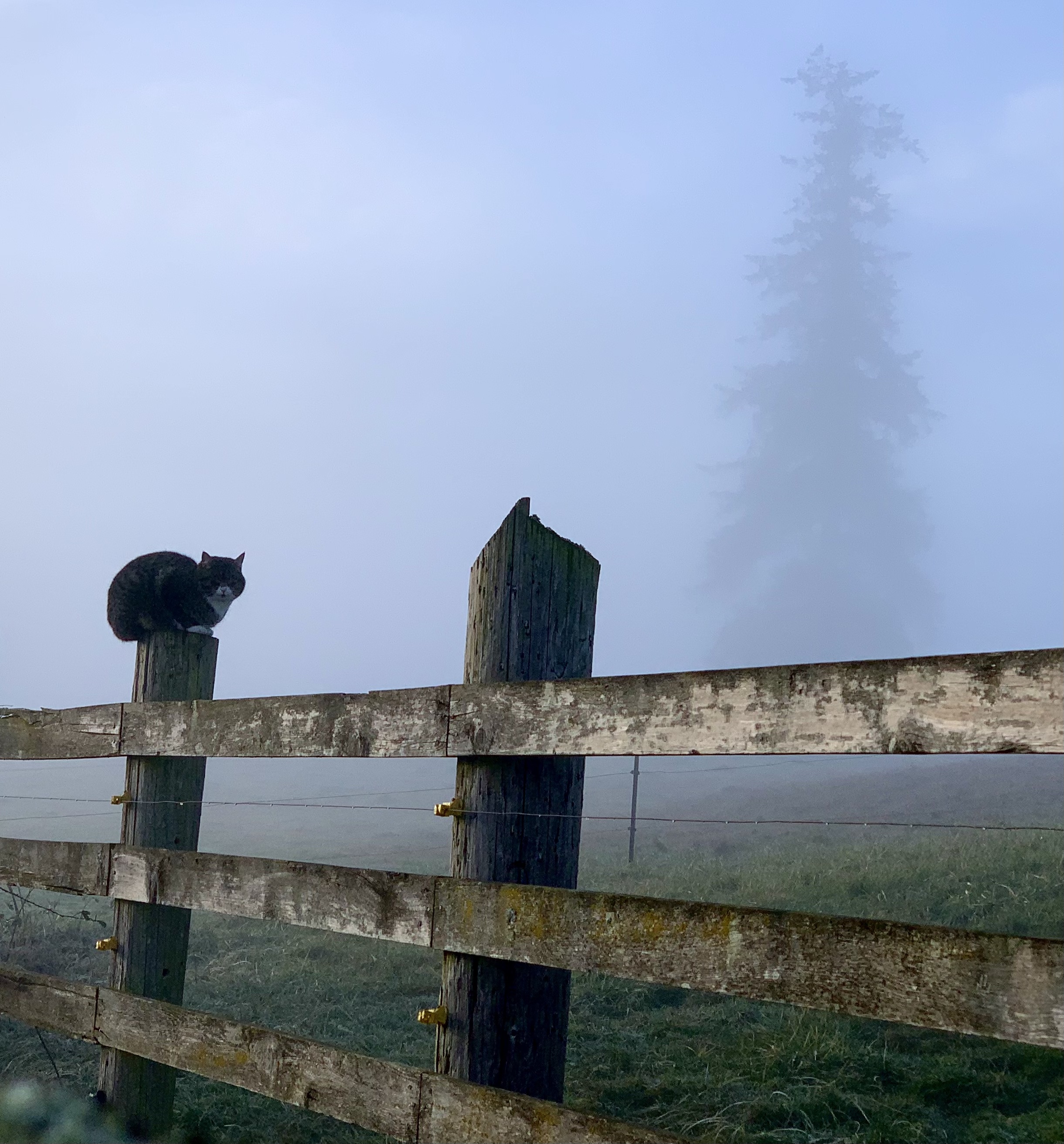
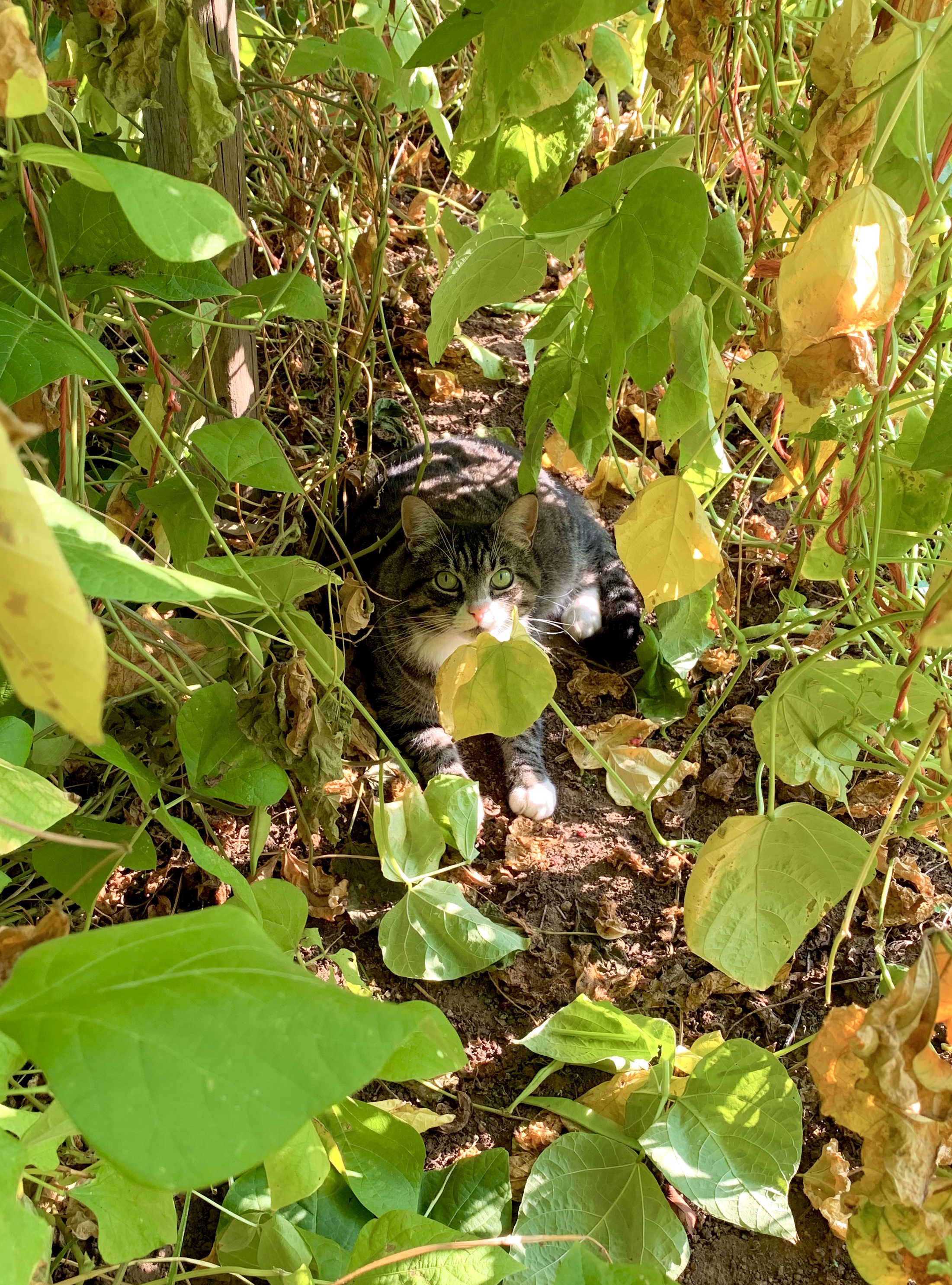
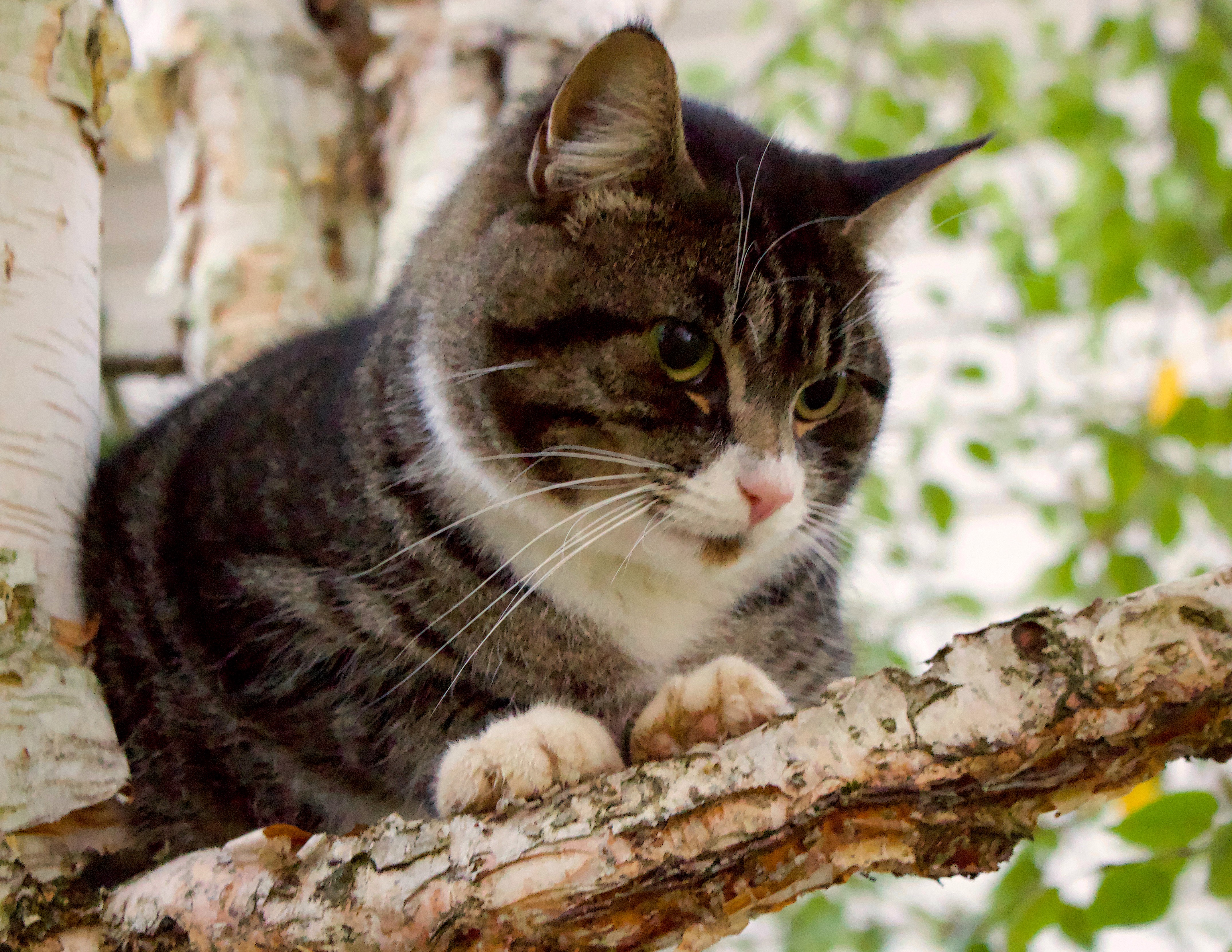
The first time I saw him, it was just a flash of gray ringed tail
disappearing into autumn night mist as I opened the back door
to pour kibble into the empty cat dish on the porch:
just another stray cat among many who visit the farm.

A few linger and stay.

So he did, keeping a distance in the shadows under the trees,
a gray tabby with white nose and bib, serious yet skittish,
watching me as I moved about feeding dogs, cats, birds, horses,
creeping to the cat dish only when the others drifted away.

There was something in the way he held his head,
an oddly forward ear; a stilted swivel of the neck.
I startled him one day as he ate his fill at the dish.

He ran, the back of his head flashing red, scalp completely gone.

Not oozing, nor something new, but recent. A nearly mortal scar
from an encounter with coyote, or eagle or bobcat.
This cat thrived despite trauma and pain, tissue still raw, trying to heal.

He had chosen to live; life had chosen him.

My first thought was to trap him, to put him humanely to sleep
to end his suffering mercifully, in truth to end my distress at seeing him every day,
envisioning florid flesh even as he hunkered invisible
in the shadowlands of the barnyard.

Yet the scar did not keep him from eating well or licking clean his pristine fur.

As much as I wanted to look away, to avoid confronting his mutilation,
I always greeted him from a distance, a nod to his maimed courage,
through wintry icy blasts and four foot snow,
through spring rains and summer heat with flies.

His wounds remained always visible,
a reminder of his inevitable fate.

I never did stroke that silky fur,
or feel his burly purr, assuming he still knew how,
but still fed his daily fill,
as he fed my need to know:
the value of a life so broken,
each breath taken is filled with sacred air.

The depth of his wounds show how much he bleeds.

my wounded friend, as close as he would allow

One-Time
Monthly
Yearly

Thank you your support for daily Barnstorming posts through a one-time or recurring donation

Make a monthly donation

Make a yearly donation

Choose an amount

¤10.00
¤25.00
¤50.00
¤5.00
¤15.00
¤100.00
¤5.00
¤15.00
¤100.00

Or enter a custom amount

¤

Your contribution is deeply appreciated.

Your contribution is appreciated.

Your contribution is appreciated.

DonateDonate monthlyDonate yearly
Fixing Eyes on the Unseen – Expecting the Impossible

…to break through earth and stone of the faithless world
back to the cold sepulchre, tearstained
stifling shroud; to break from them
back into breath and heartbeat, and walk
the world again, closed into days and weeks again,
wounds of His anguish open, and Spirit
streaming through every cell of flesh
so that if mortal sight could bear
to perceive it, it would be seen
His mortal flesh was lit from within, now,
and aching for home. He must return,
first, In Divine patience, and know
hunger again, and give
to humble friends the joy
of giving Him food – fish and a honeycomb.
~Denise Levertov “Ikon: The Harrowing of Hell” from A Door in the Hive

The Holy Saturday of our life must be the preparation for Easter,
the persistent hope for the final glory of God. 

The virtue of our daily life is the hope which does what is possible
and expects God to do the impossible. 

To express it somewhat paradoxically, but nevertheless seriously: 
the worst has actually already happened; 
we exist,
and even death cannot deprive us of this. 

Now is the Holy Saturday of our ordinary life, 
but there will also be Easter, our true and eternal life. 
~Karl Rahner “Holy Saturday” in The Great Church Year

This is the day in between when nothing makes sense
 we are lost, hopeless, grieving, aching.

We are brought to our senses by this one Death, this premeditated killing, this senseless act that darkened the skies, shook the earth and tore down the curtained barriers to the Living Eternal God.

The worst has already happened, despite how horrific are the constant tragic events filling our headlines.

Today, this Holy Saturday we are in between, stumbling in the darkness but aware of hints of light, of buds, of life, of promised fruit to come.

The best has already happened; it happened even as we remained oblivious to its impossibility.

We move through this Saturday, doing what is possible even when it feels senseless, even as we feel split apart, torn and sundered.

Tomorrow it will all make sense: our hope brings us face to face with our God who is and was and does the impossible.

This year’s Lenten theme:
So we fix our eyes not on what is seen, but on what is unseen, since what is seen is temporary, but what is unseen is eternal.
2 Corinthians 4: 18

Fixing Eyes on the Unseen – A Glut of Melancholy

But when the melancholy fit shall fall
Sudden from heaven like a weeping cloud,
That fosters the droop-headed flowers all,
And hides the green hill in an April shroud;
Then glut thy sorrow on a morning rose,
Or on the rainbow of the salt sand-wave,
Or on the wealth of globed peonies;
~John Keats from “Ode on Melancholy”

I eat oatmeal for breakfast.
I make it on the hot plate and put skimmed milk on it.
I eat it alone.
I am aware it is not good to eat oatmeal alone.
Its consistency is such that is better for your mental health
if somebody eats it with you.
That is why I often think up an imaginary companion to have
breakfast with.
Possibly it is even worse to eat oatmeal with an imaginary
companion.
Nevertheless, yesterday morning, I ate my oatmeal porridge,
as he called it, with John Keats.
Keats said I was absolutely right to invite him:
due to its glutinous texture, gluey lumpishness, hint of slime,
and unusual willingness to disintegrate, oatmeal should
not be eaten alone…
~Galway Kinnell from “Oatmeal”

Oatmeal porridge eaten in melancholy,
among poets and emerging peonies,
hail-crushed blooms and storm-crossed hills,
while nations and individuals remain at war:

this is the week of walking through the suffering
of our Redeemer.

Glutted with sadness among companions:
I am not alone in feeling the sorrow is
already too much to be borne on
a holy Tuesday morning
with more yet to come~~
nothing more need be said.

I do what I can
to open my eyes and my heart
to understand how and why
Christ has done what He must
to save us from ourselves.

This year’s Lenten theme:
So we fix our eyes not on what is seen, but on what is unseen, since what is seen is temporary, but what is unseen is eternal.
2 Corinthians 4: 18

Fixing Eyes on the Unseen – One Fierce Sweet Hour

photo by Anna Blake

On the outskirts of Jerusalem
the donkey waited.
Not especially brave, or filled with understanding,
he stood and waited.

How horses, turned out into the meadow,
   leap with delight!
How doves, released from their cages,
   clatter away, splashed with sunlight.

But the donkey, tied to a tree as usual, waited.
Then he let himself be led away.
Then he let the stranger mount.

Never had he seen such crowds!
And I wonder if he at all imagined what was to happen.
Still, he was what he had always been: small, dark, obedient.

I hope, finally, he felt brave.
I hope, finally, he loved the man who rode so lightly upon him,
as he lifted one dusty hoof and stepped, as he had to, forward.
~Mary Oliver “The Poet thinks about the donkey” from her book Thirst.

photo by Anna Blake, Infinity Farm

With monstrous head and sickening cry
And ears like errant wings…

The tattered outlaw of the earth,
Of ancient crooked will;
Starve, scourge, deride me: I am dumb,
I keep my secret still.

Fools! For I also had my hour;
One far fierce hour and sweet:
There was a shout about my ears,
And palms before my feet.
G. K. Chesterton from “The Donkey”

Palm Sunday is a day of dissonance and dichotomy in the church year, very much like the donkey who figured as a central character that day. 

Sadly, a donkey gets no respect, then or now – for his plain and awkward hairy looks, for his loud and inharmonious voice, for his apparent lack of strength — yet he was the chosen mode of transportation for a King riding to His death.

There was a motley parade to Jerusalem: cloaks and palms laid at the feet of the donkey bearing the Son of God, disorderly shouts of adoration and blessings, the rebuke of the Pharisees to quiet the people, His response that “even the stones will cry out” knowing what is to come.
But the welcoming crowd waving palm branches, shouting sweet hosannas and laying down their cloaks did not understand the fierce transformation to come, did not know within days they would be a mob shouting words of derision and rejection and condemnation.

The donkey knew because he had been derided, rejected and condemned himself, yet still kept serving. Just as he was given voice and understanding centuries before to protect Balaam from going the wrong way, he could have opened his mouth to tell them, suffering beatings for his effort. Instead, just as he bore the unborn Jesus to Bethlehem and stood over Him sleeping in the manger, just as he bore a mother and child all the way to Egypt to hide from Herod, the donkey would keep his secret well.  

Who, after all, would ever listen to a mere donkey?

We would do well to pay attention to this braying wisdom. 

The donkey knows – he’s a believer.

He bears the burden we have shirked. He treads with heavy heart over the palms and cloaks we lay down as meaningless symbols of honor. He is the ultimate servant to the Servant.

A day of dichotomy —
of honor and glory laid underfoot only to be stepped on, 
of blessings and praise turning to curses,
of the beginning of the end becoming a new beginning for us all.

And so He wept, knowing all this. I suspect the donkey bearing Him wept as well, in his own simple, plain and honest way, and I’m quite sure he kept it as his special secret.
This year’s Lenten theme:
So we fix our eyes not on what is seen, but on what is unseen, since what is seen is temporary, but what is unseen is eternal.
2 Corinthians 4: 18

and just for fun on April 1st, I can’t resist sharing this one ….

Fixing Eyes on the Unseen – Everything Sad is Going to Come Untrue

He will wipe away every tear from their eyes, and death shall be no more, neither shall there be mourning, nor crying, nor pain anymore, for the former things have passed away. And he who was seated on the throne said, “Behold, I am making all things new.” Also he said, “Write this down, for these words are trustworthy and true.  Revelation 21: 4-5

“Gandalf! I thought you were dead! But then I thought I was dead! Is everything sad going to come untrue?”
~J.R.R. Tolkien as Samwise Gamgee wakes to find his friends all around him in The Lord of the Rings

“The answer is yes. And the answer of the Bible is yes. If the resurrection is true, then the answer is yes. Everything sad is going to come untrue.”
~Pastor Tim Keller’s response in a sermon given in an ecumenical prayer service memorial in Lower Manhattan on the fifth anniversary of Sept. 11.

photo by Joel De Waard

In our minds, we want to rewind and replay the sad events of this week in a way that would prevent them from happening in the first place.

We want those in a broken relationship to come back together, hug and forgive. The devastating diagnosis would be proven an error and, in reality, only a transient illness. When a terrible tragedy happens, we want the dead and injured to rise up again. The destructive earthquake becomes a mere tremor, the flooding tsunami is only one foot, not over thirty feet tall, the hijackers are prevented from ever boarding a plane, the shooter changes her mind at the last minute and lays down her arms, the terrorist disables his suicide bombs and walks away from his training and misguided mission.

We want so badly for it all to be untrue. The bitter reality of horrendous suffering and sadness daily all over the earth is too much for us to absorb. We plead for relief and beg for a better day.

Our minds may play mental tricks like this, but God does not play tricks. He knows and feels what we do. He too wants to see it rewound and replayed differently. He has known grief and sadness, He has wept, He has suffered, He too has died in terrible humiliating and painful circumstances. 

And because of this, because of a God who came to dwell with us, was broken, died and then rose again whole and holy, we are assured, in His time, everything sad is going to come untrue.

Our tears will be dried, our grief turned to joy, our pain nonexistent, not even a memory.  It will be a new day, a better day–as it is written, trustworthy and true.

May it come.

Quickly.

photo by Nate Gibson

This year’s Lenten theme:
So we fix our eyes not on what is seen, but on what is unseen, since what is seen is temporary, but what is unseen is eternal.
2 Corinthians 4: 18