Zucchini Chronicles

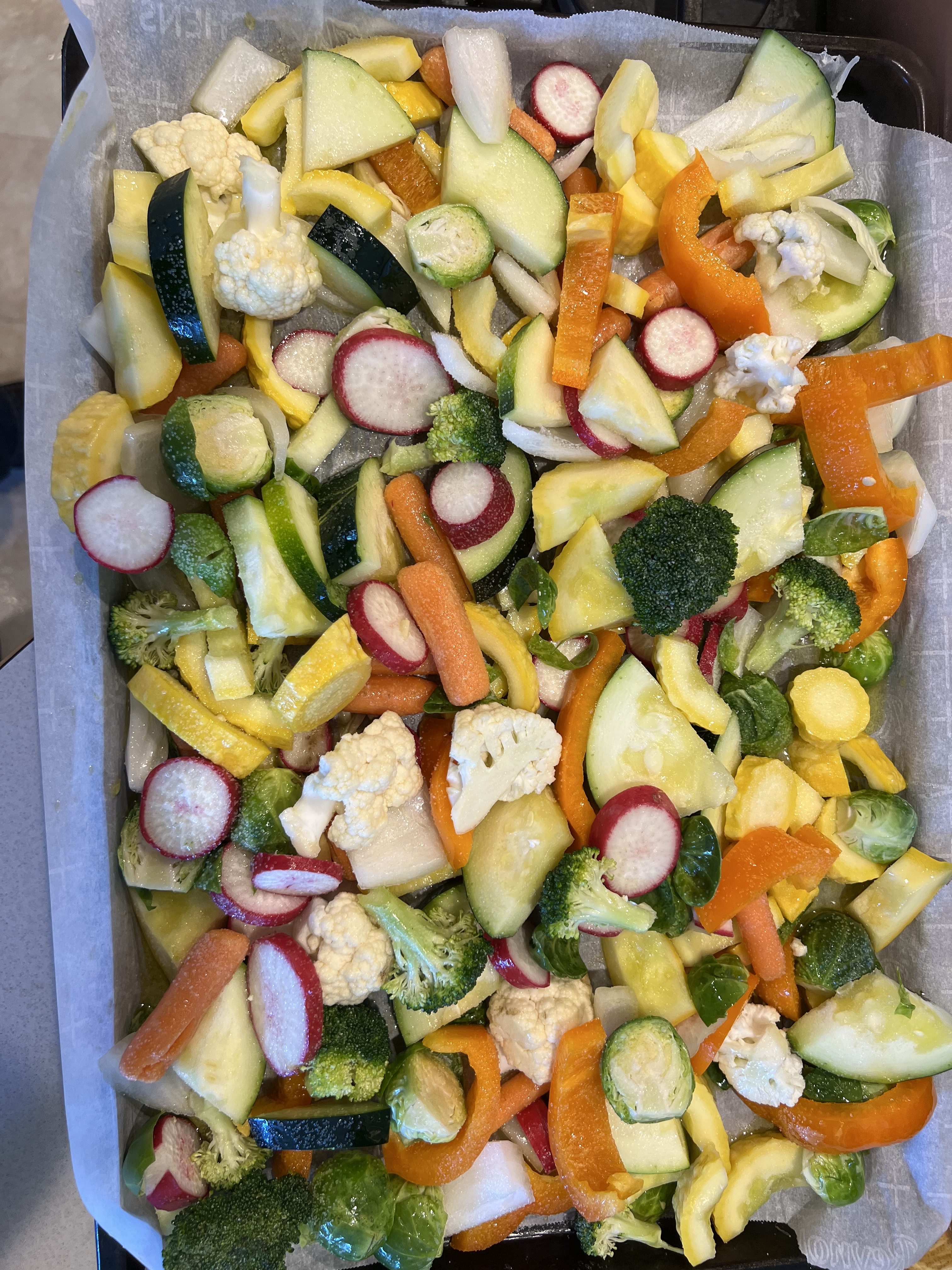
Recite fifty zucchini recipes!                                                                                     Zucchini tempura; creamed soup;                                                                                 sauté with olive oil and cumin,                                                                                casserole of lamb; baked                                                                                             topped with cheese; marinated;                                                                                stuffed; stewed….

Sneak out before dawn to drop                                                                                              them in other people’s gardens,                                                                                            in baby buggies at churchdoors.

 Shot, smuggling zucchini into                                                                                               mailboxes, a federal offense.
~Marge Piercy from “Attack of the Squash People”
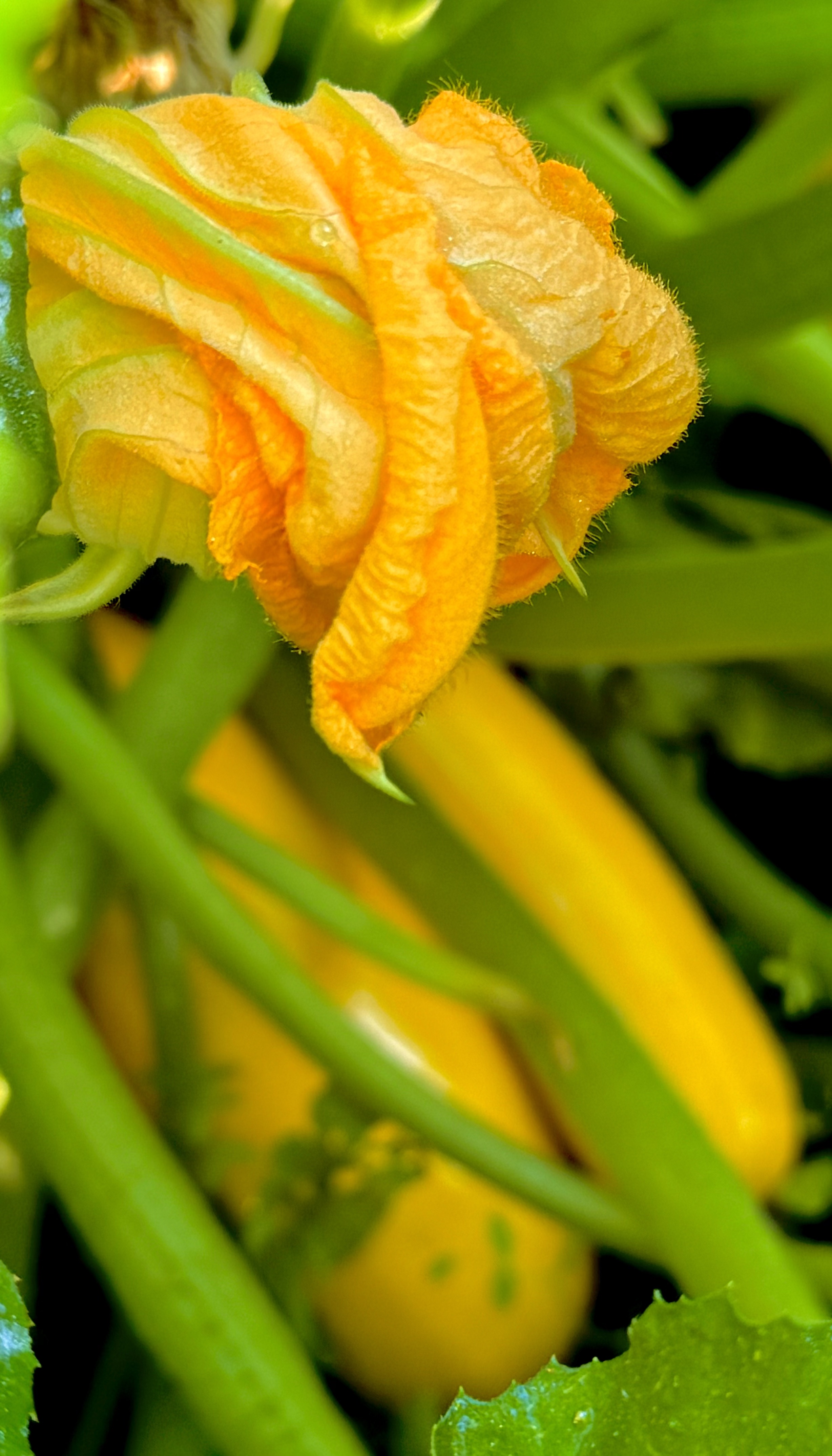
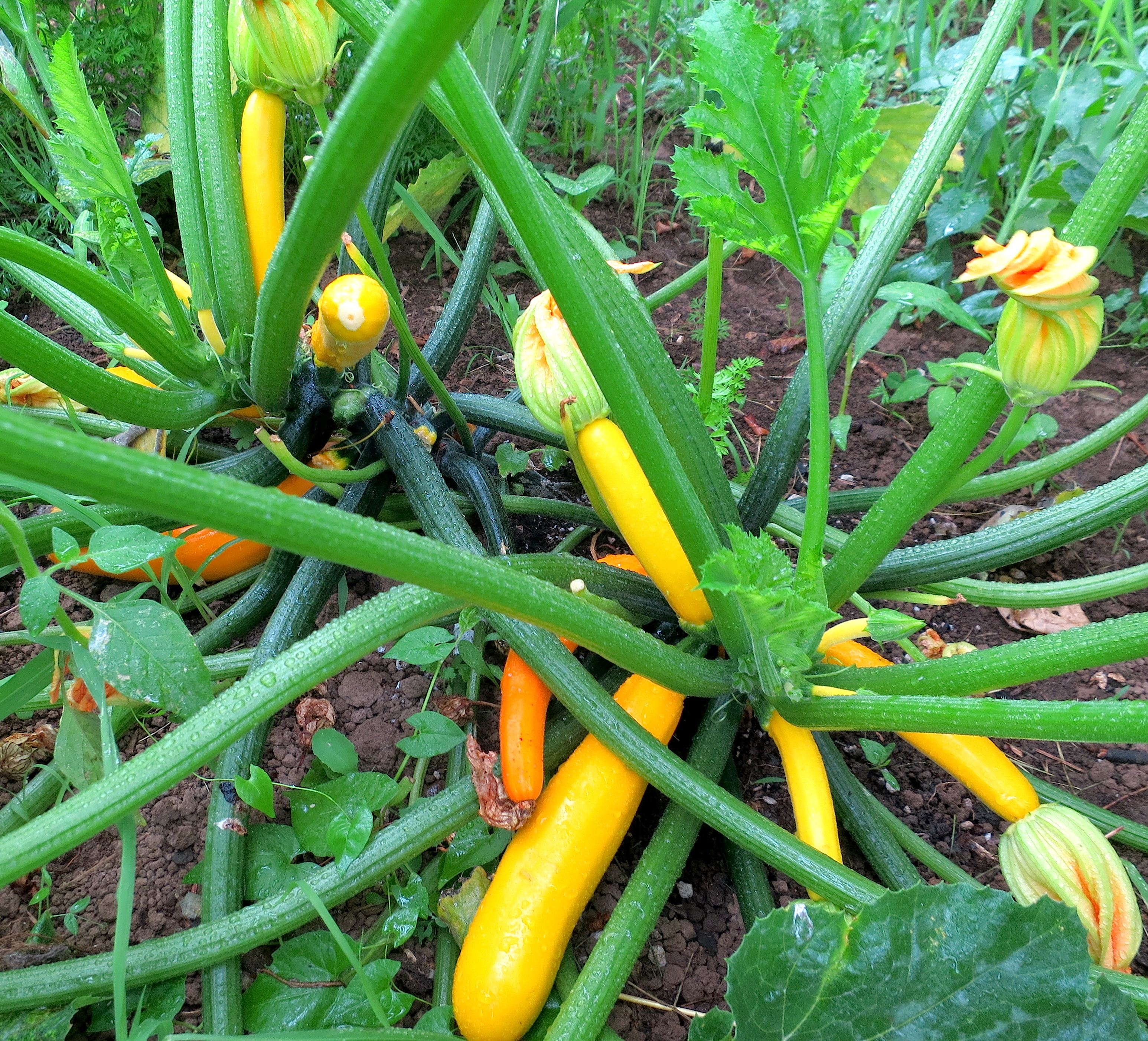
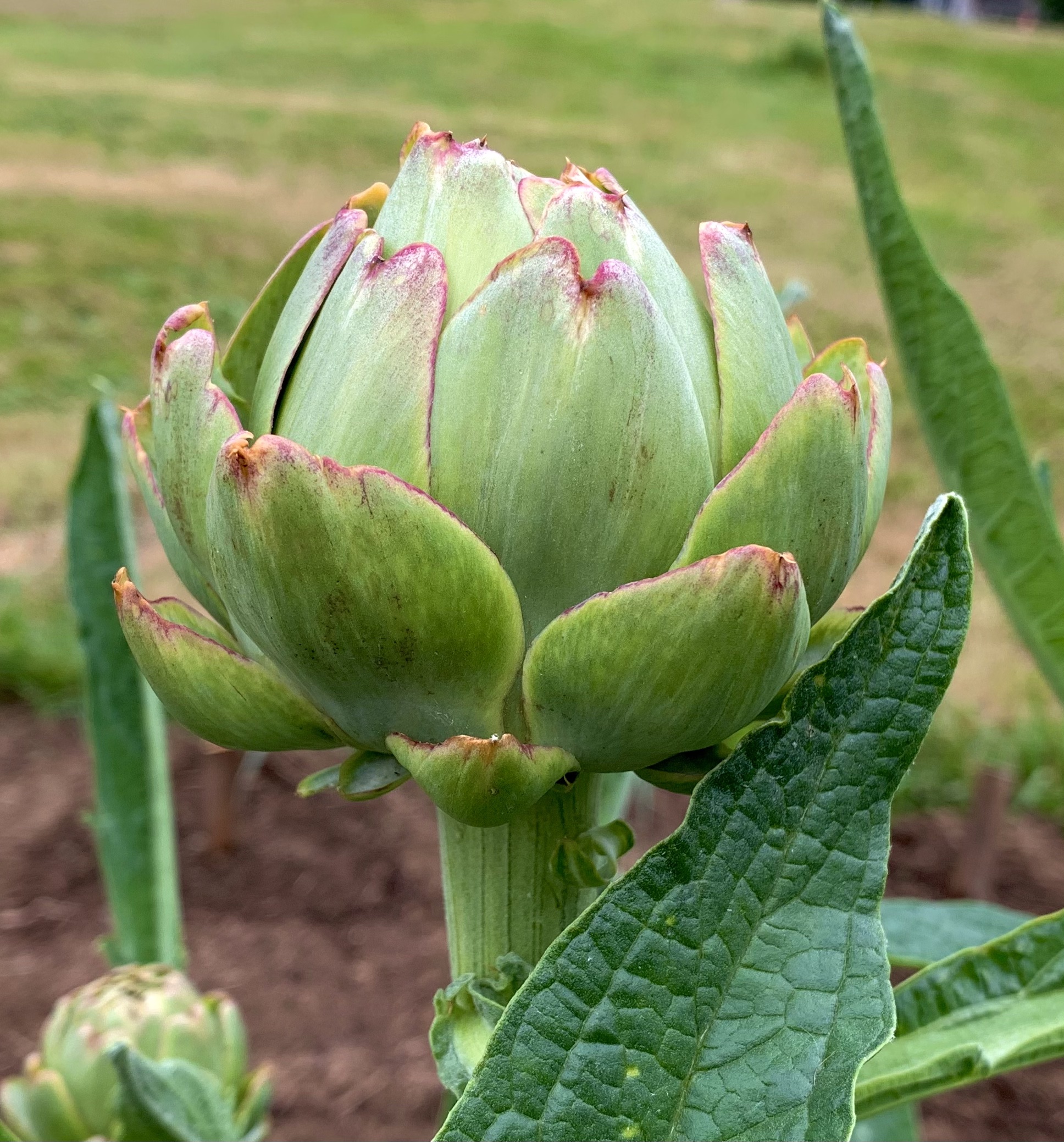
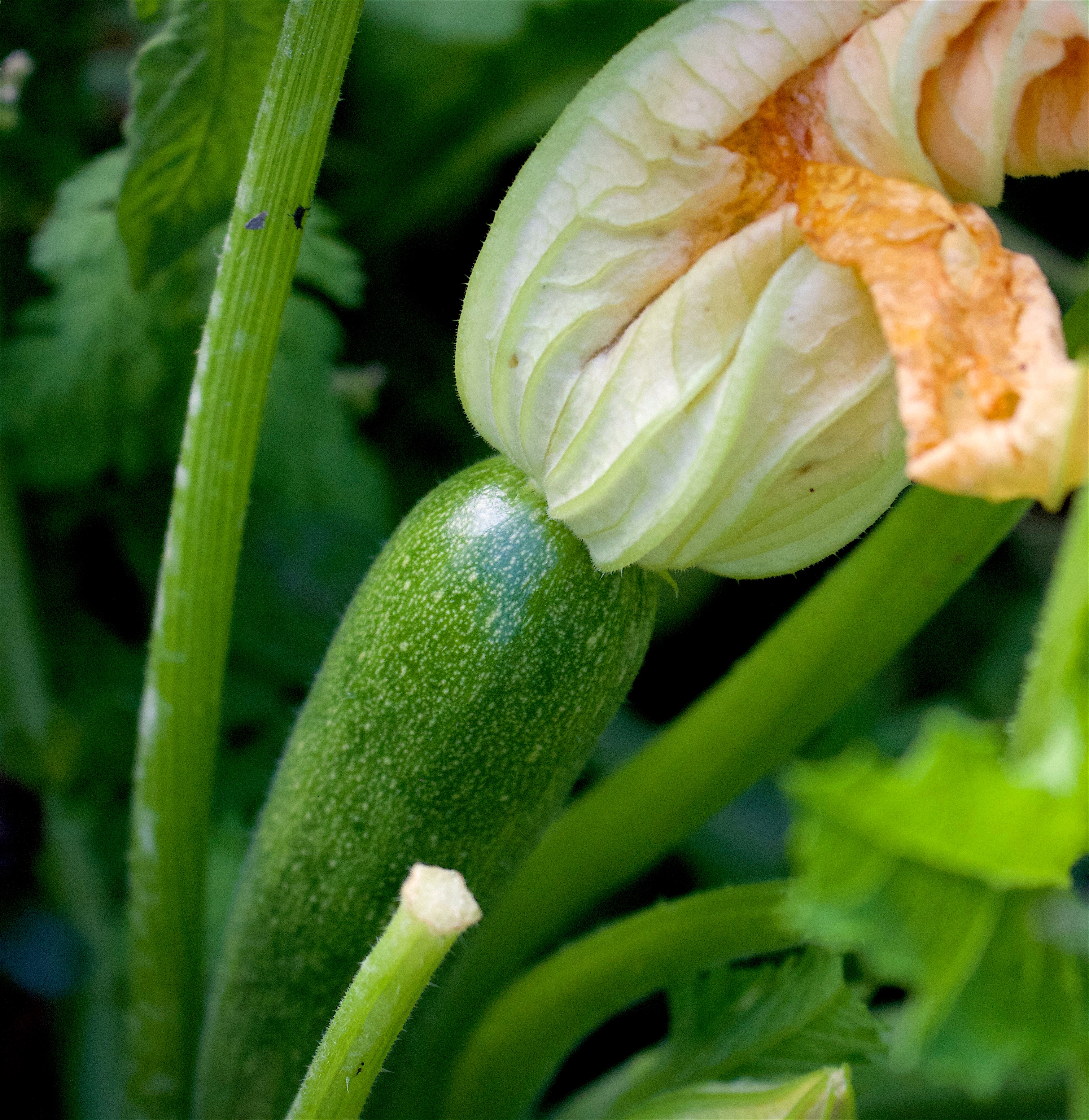
The trouble is, you cannot grow just one zucchini. Minutes after you plant a single seed, hundreds of zucchini will barge out of the ground and sprawl around the garden, menacing the other vegetables. At night, you will be able to hear the ground quake as more and more zucchinis erupt.
~Dave Barry
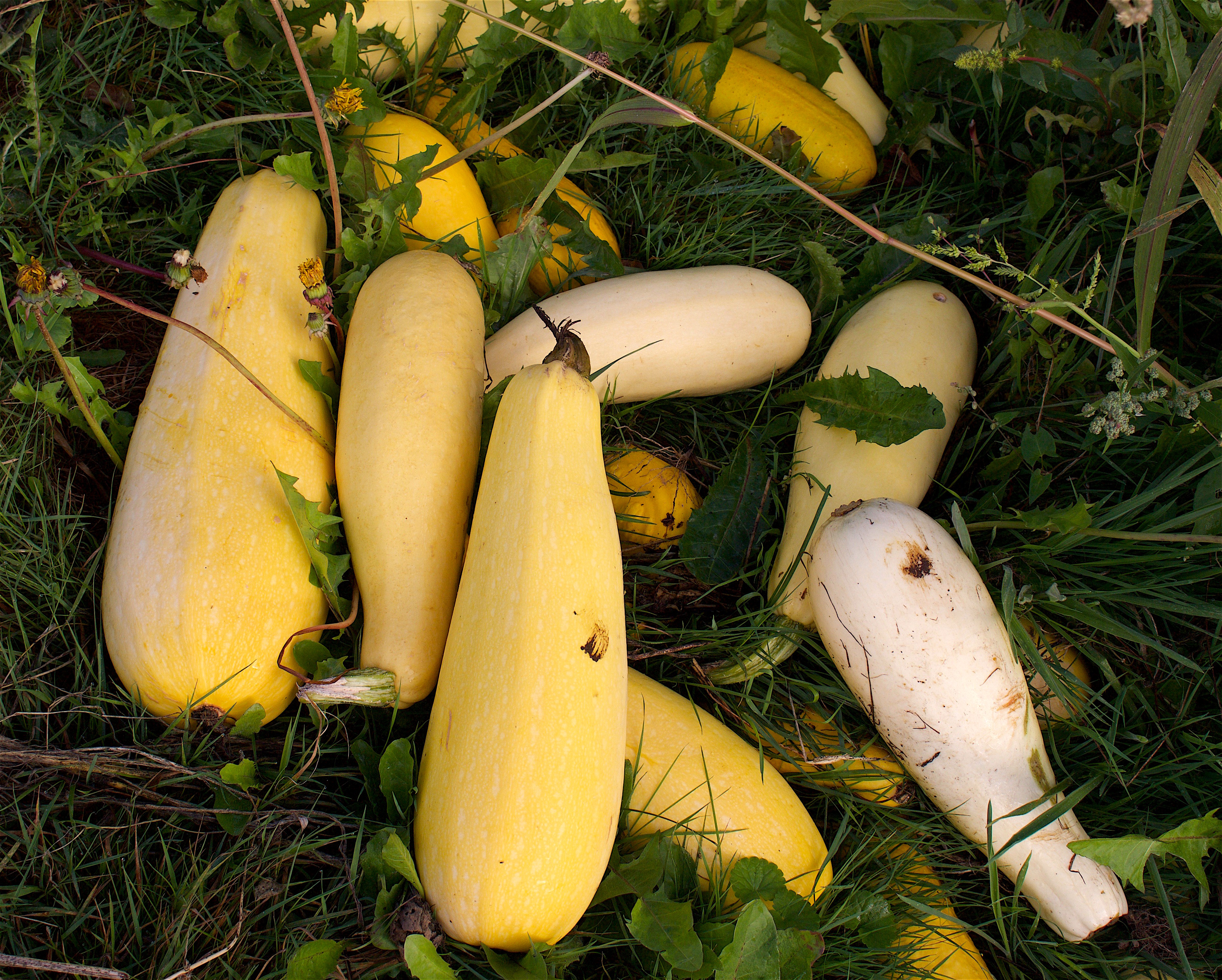
One day we came home from some errands to find a grocery sack of [zucchini] hanging on our mailbox. The perpetrator, of course, was nowhere in sight … Garrison Keillor says July is the only time of year when country people lock our cars in the church parking lot, so people won’t put squash on the front seat. I used to think that was a joke.
~Barbara Kingsolver
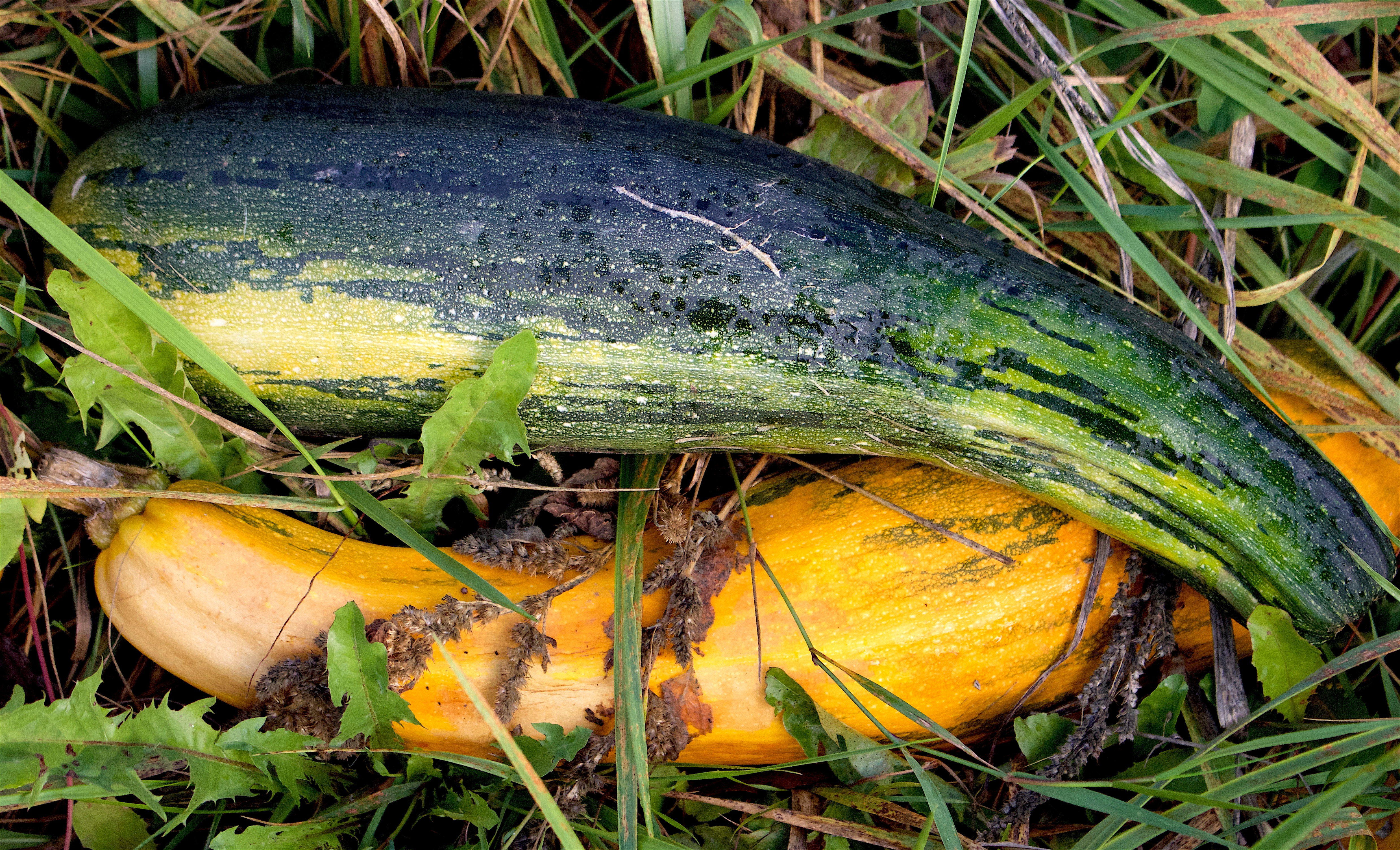
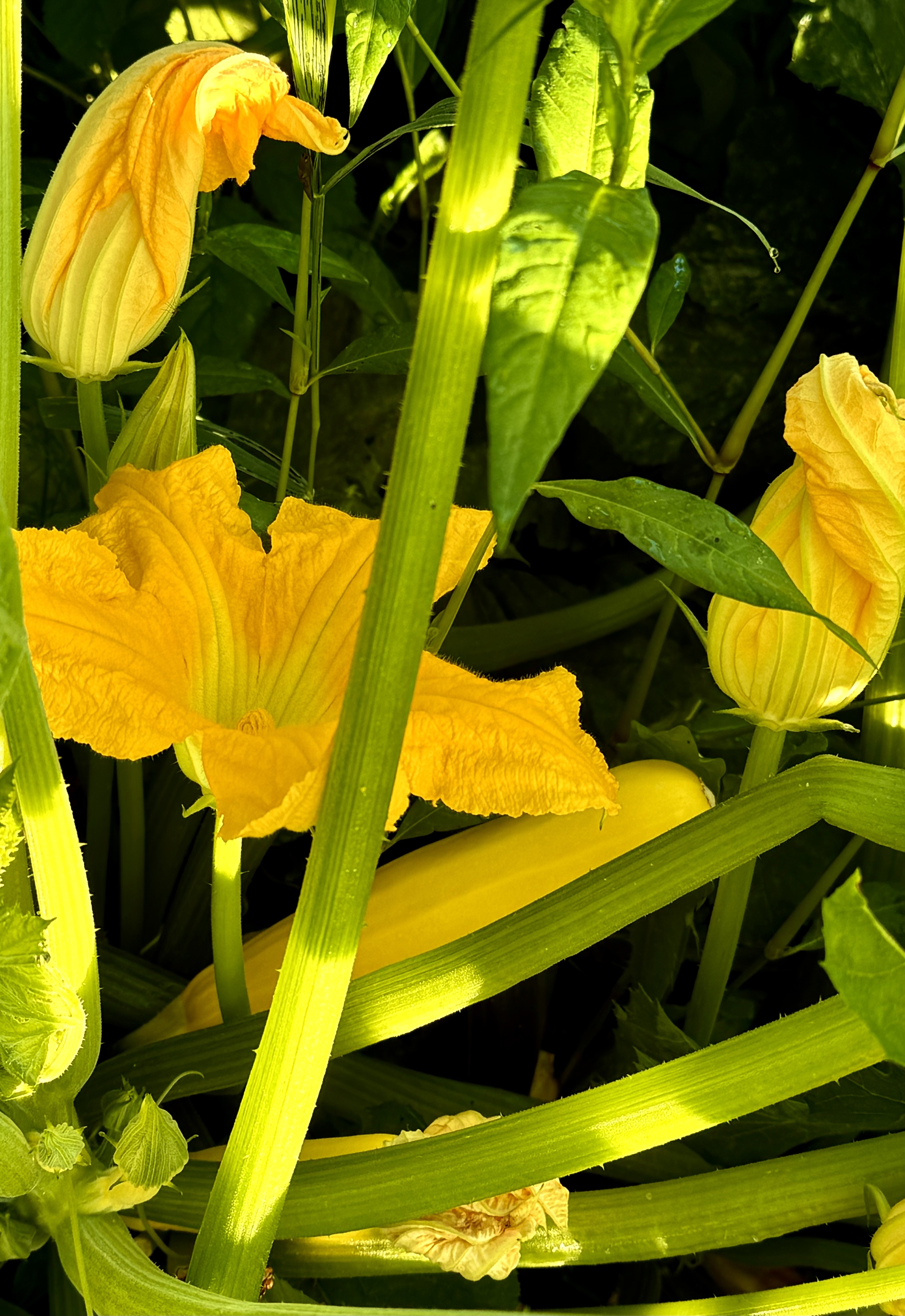
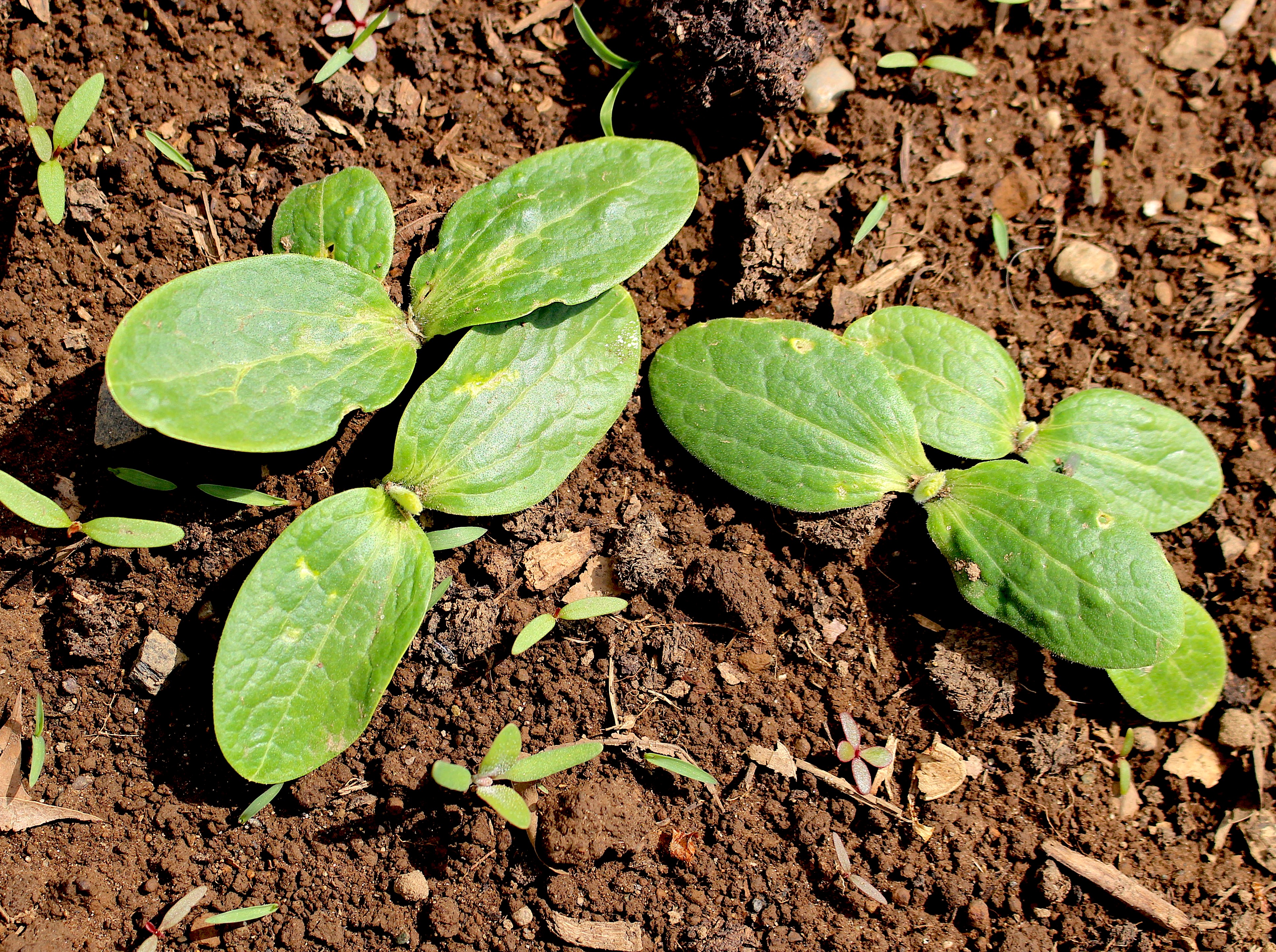
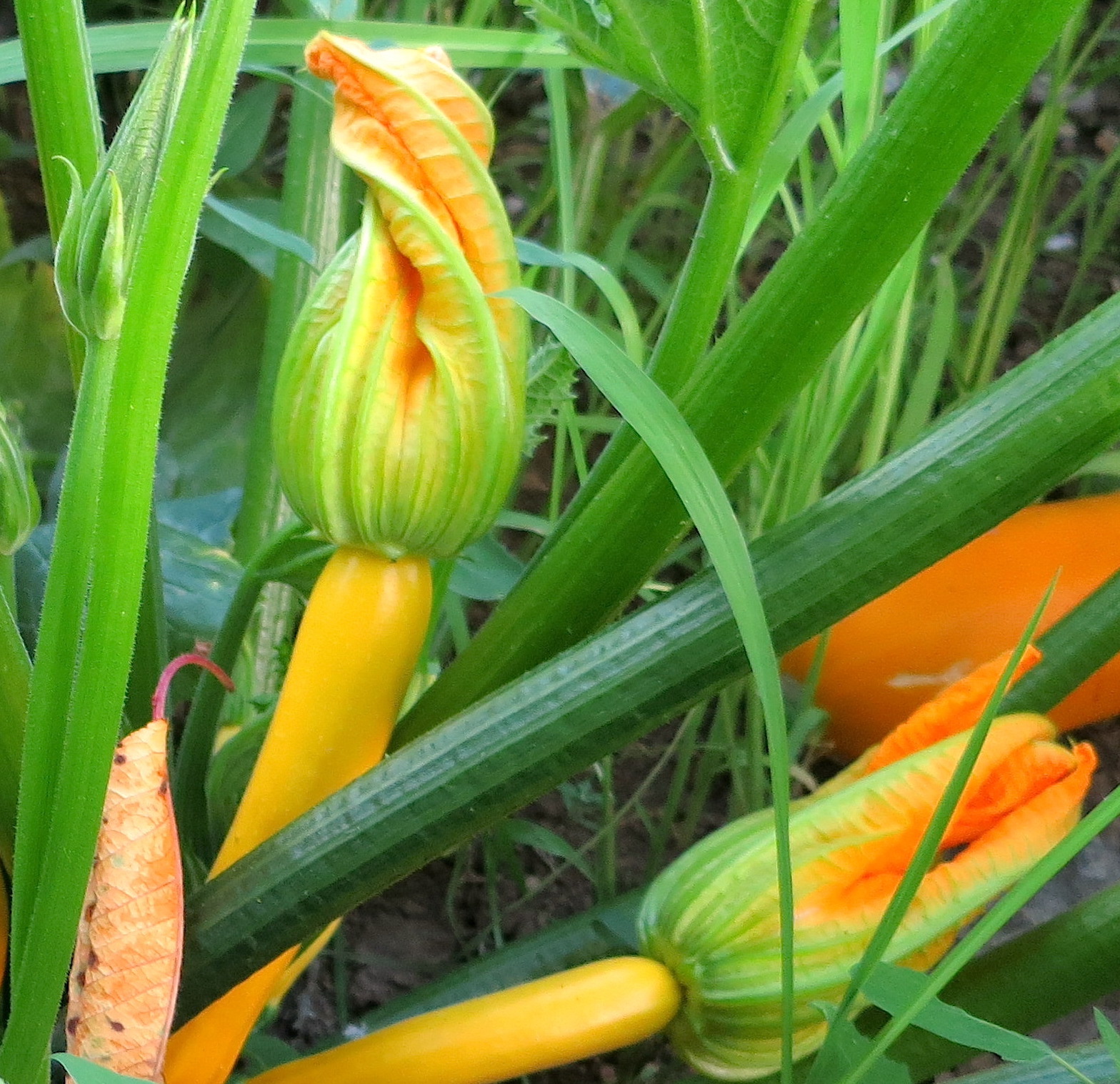
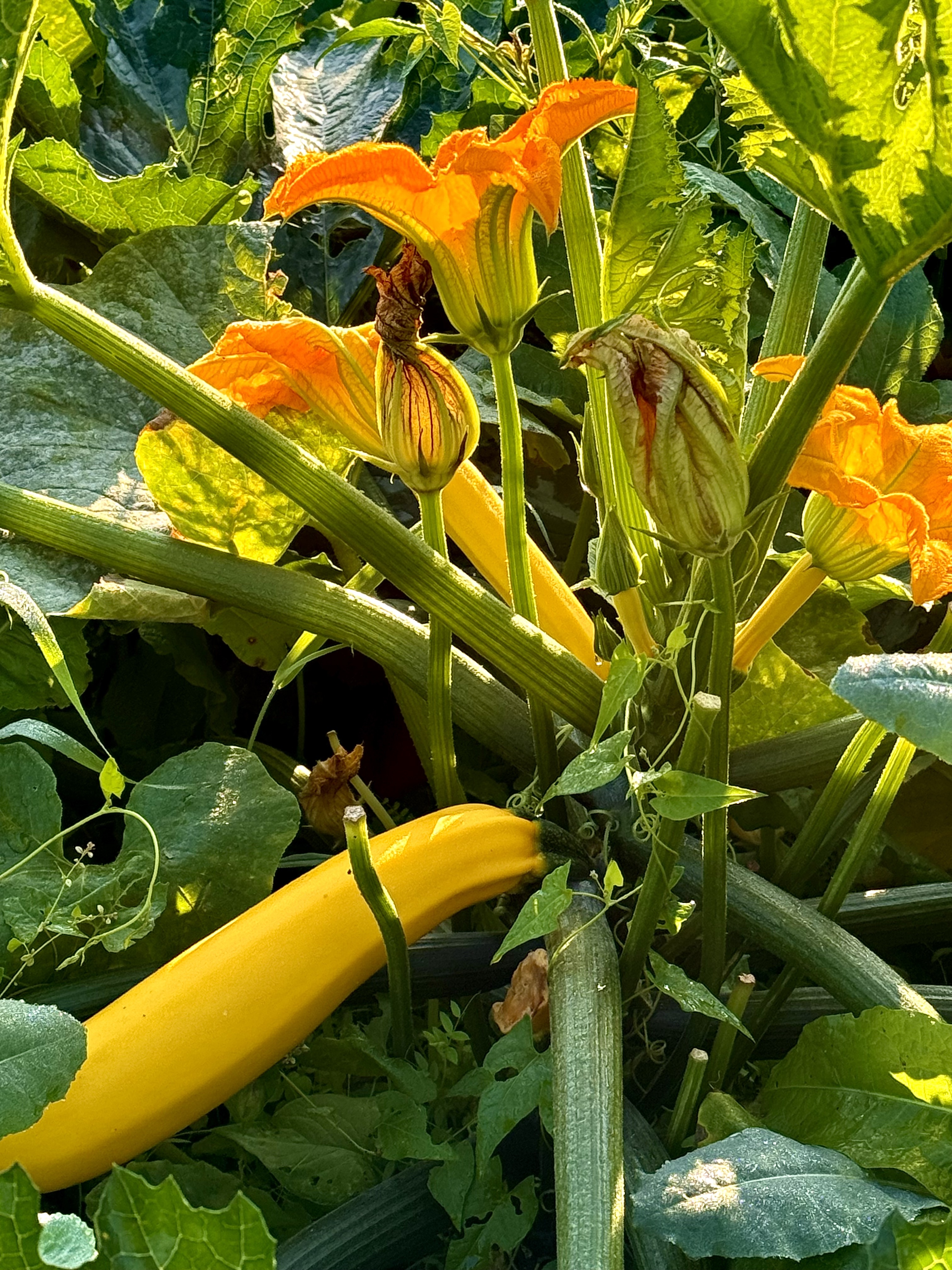
It started innocently enough in April
with two-leaf seedlings labeled green and golden;
non-descript squash plants harboring
vast potential.

By June the plants crept across the ground with vines
reaching past the beans to threaten the cucumbers:
going where no vine has gone before,
to divide and conquer, leaving no dust untouched.

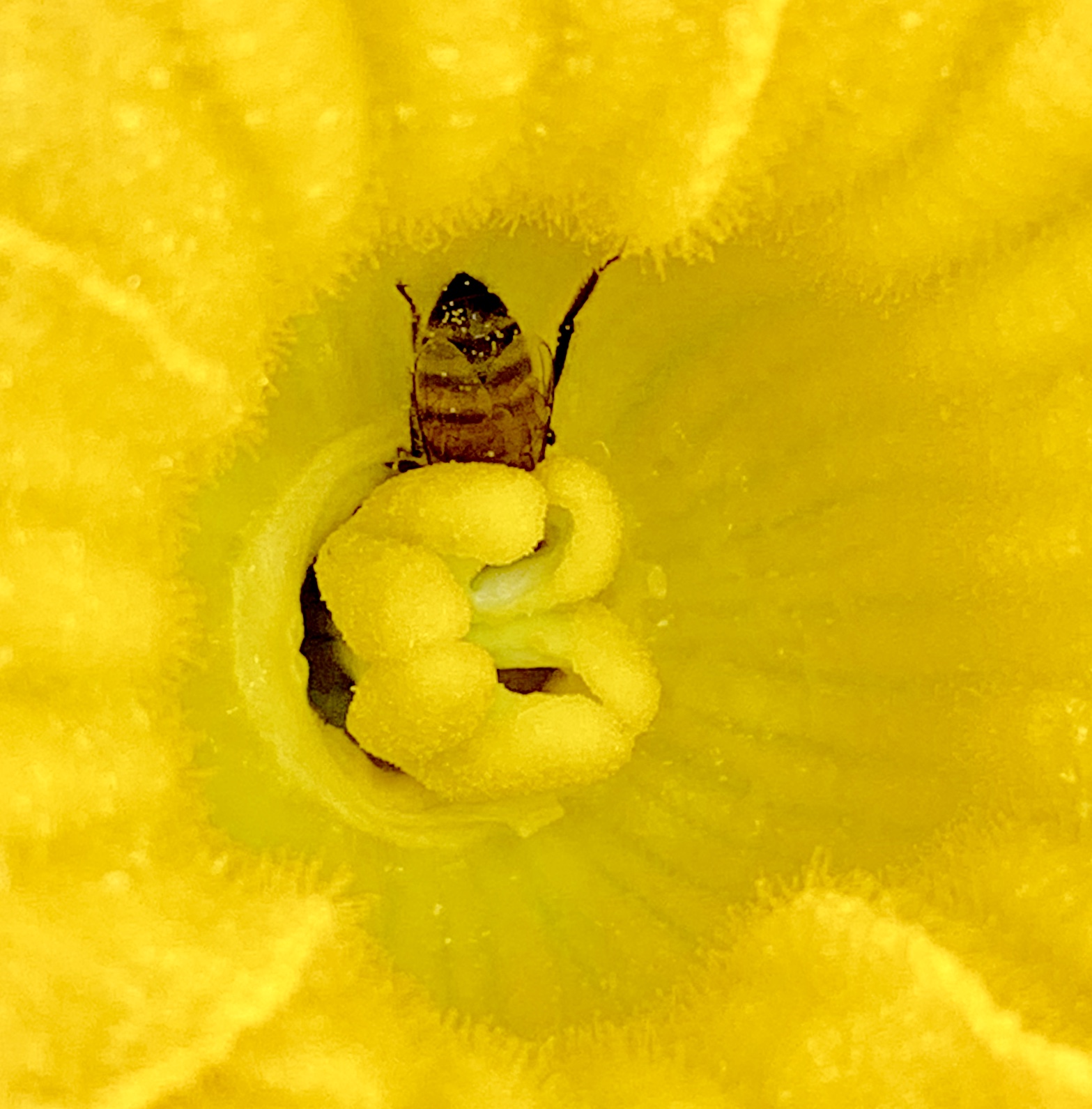
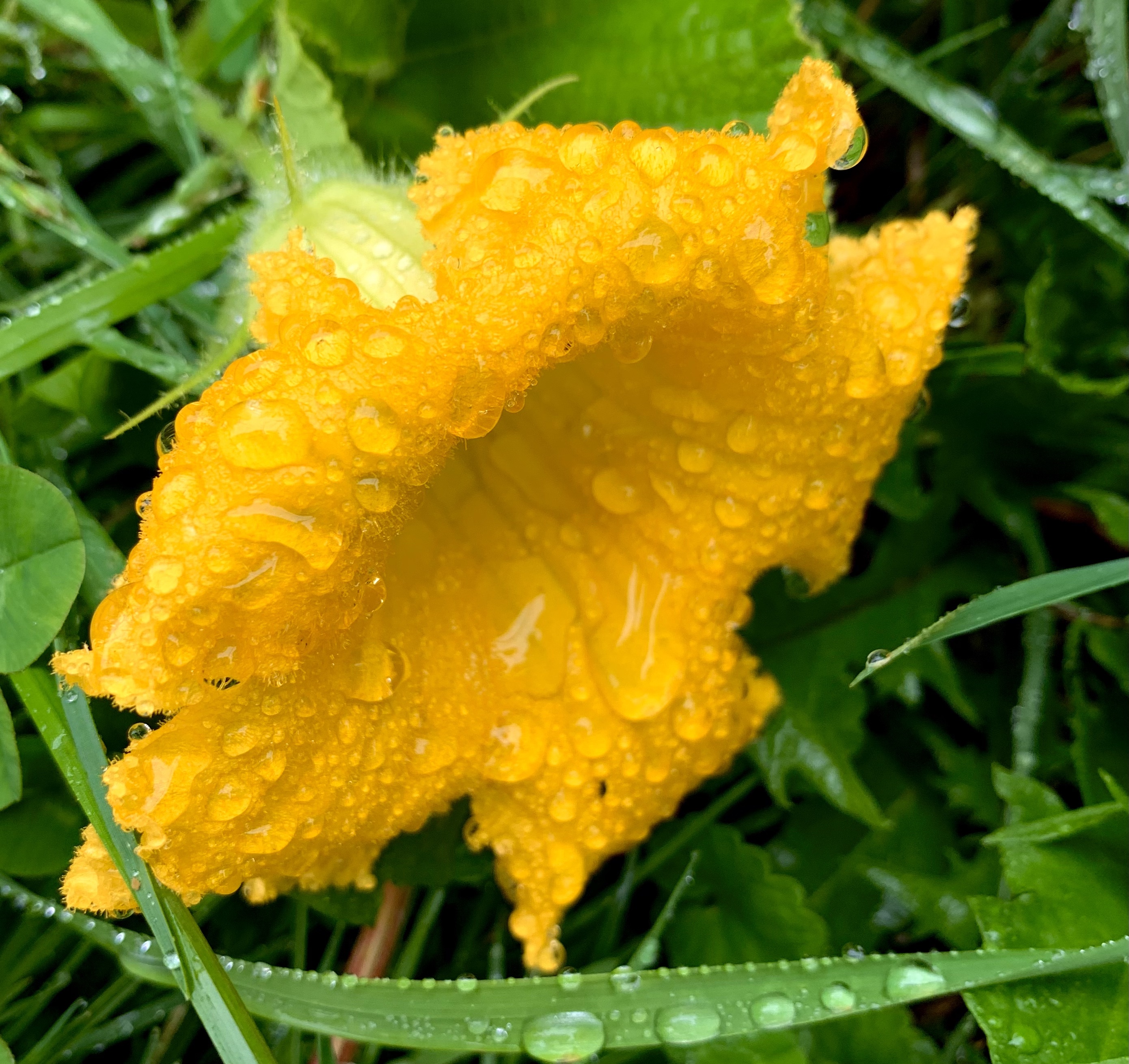
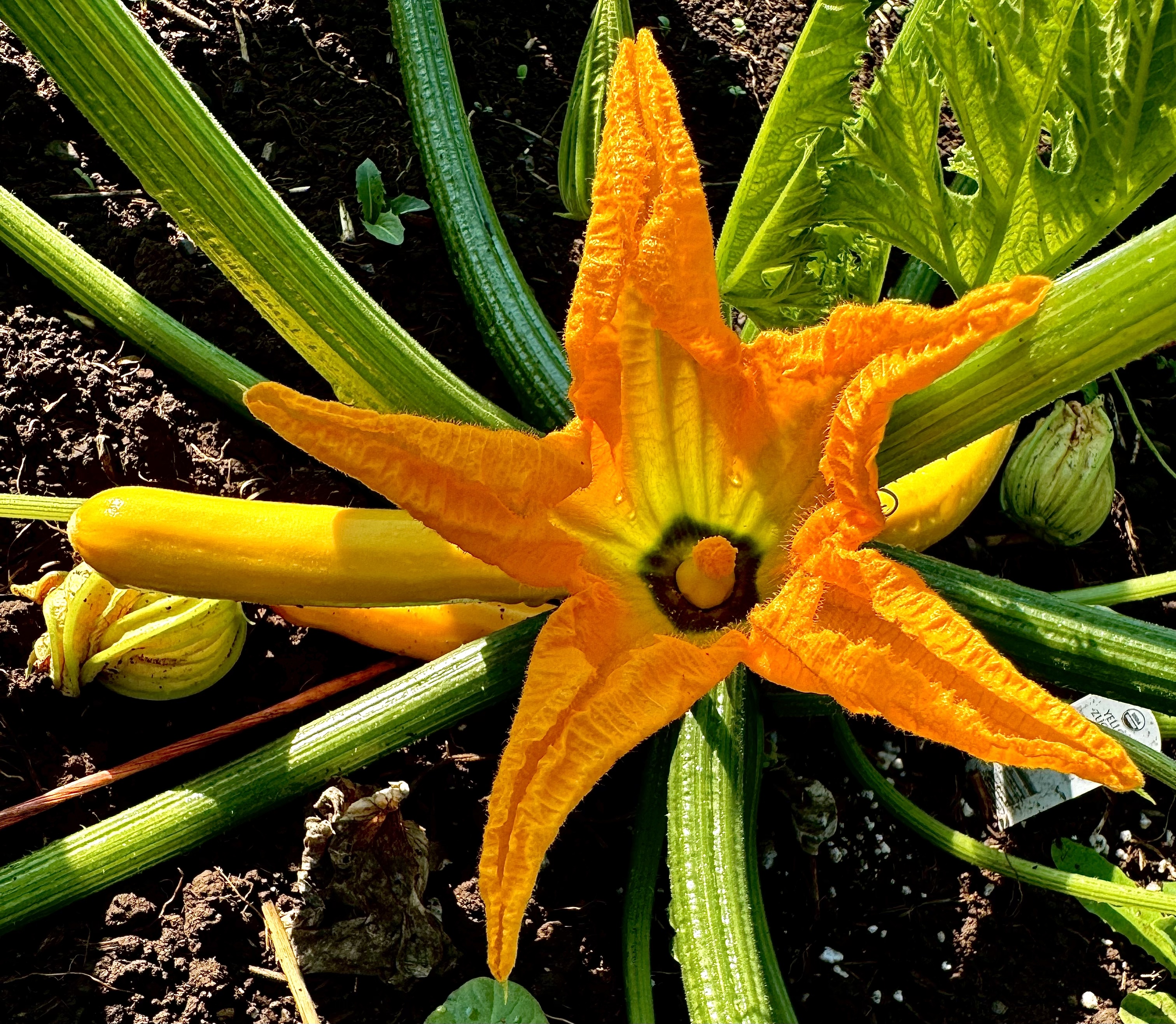
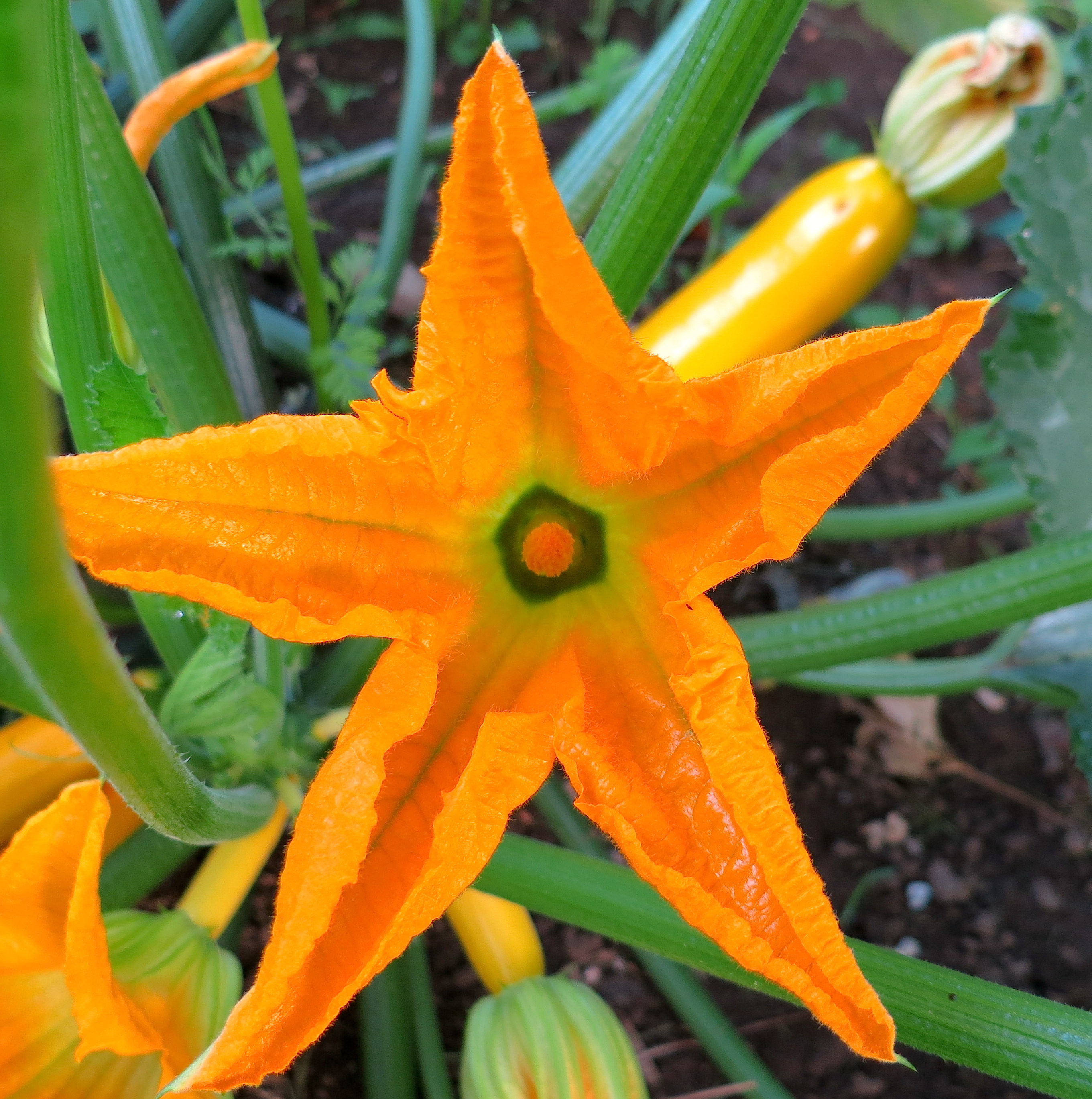
July buds formed blossoms inviting bees deep
into yellow-throated pollen pools
thickening within days to elongated flesh:
fecundity in action before our eyes.

The finger-like projections at first harvested
too small, but temptation overwhelms patience;
sauted, grilled with garlic, superb in
supreme simplicity.

But come back a day later: hose-like vines
pumping into each squash, progressive inflation like
balloon-man creations to be twisted and transformed,
but too plump, too distended, too insatiable.

It’s a race to keep up with the pace of production
eat some, give them away, leave on doorsteps like abandoned kittens,
in boxes in church lobbies, lunch rooms at work,
food banks posting signs: “No more zucchini please!”

They march in formation in the garden path
as they are yanked swelling from their umbilical cords
and lined up, stacked, multiplying
like the broom fragments of the “Sorcerer’s Apprentice”.

Once tossed on to the compost pile,
they rest in intimate embrace through heated decomposition
in dead of winter, amid steam rising,
a seedling, innocent enough, pokes through exploding with potential~

Run for your lives!
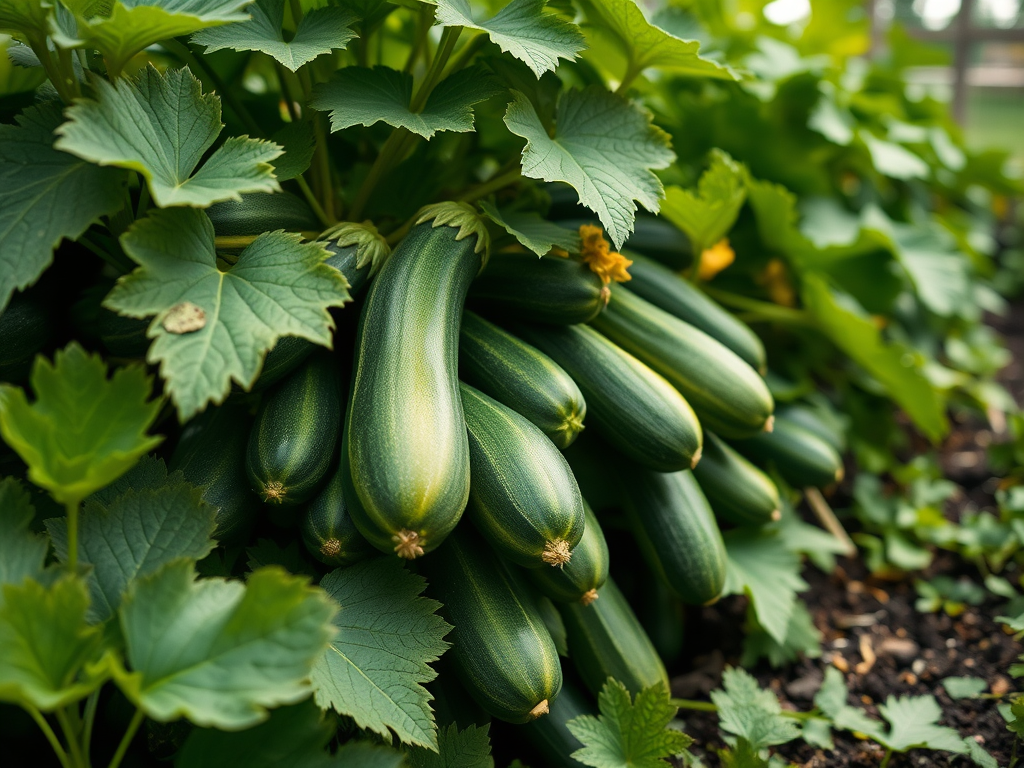
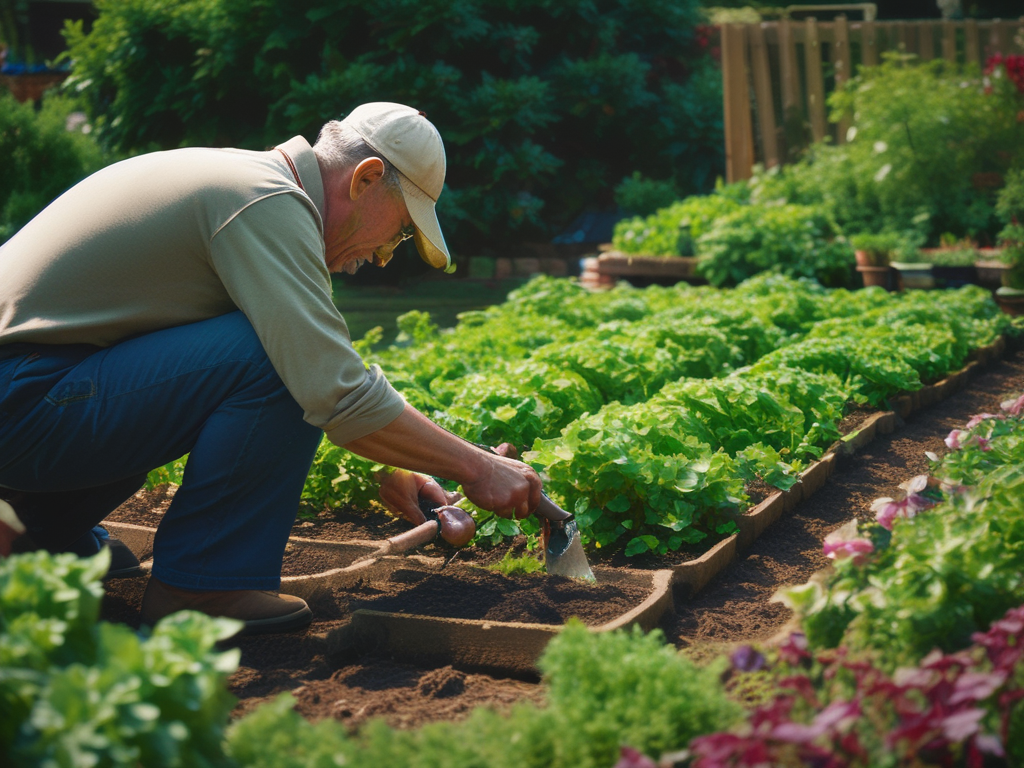
AI image created for this post
One-Time
Monthly
Yearly

Make a one-time or recurring donation to support daily Barnstorming posts

Make a monthly donation

Make a yearly donation

Choose an amount

$10.00
$25.00
$50.00
$5.00
$15.00
$100.00
$5.00
$15.00
$100.00

Or enter a custom amount

$

Your contribution is deeply appreciated.

Your contribution is appreciated.

Your contribution is appreciated.

DonateDonate monthlyDonate yearly
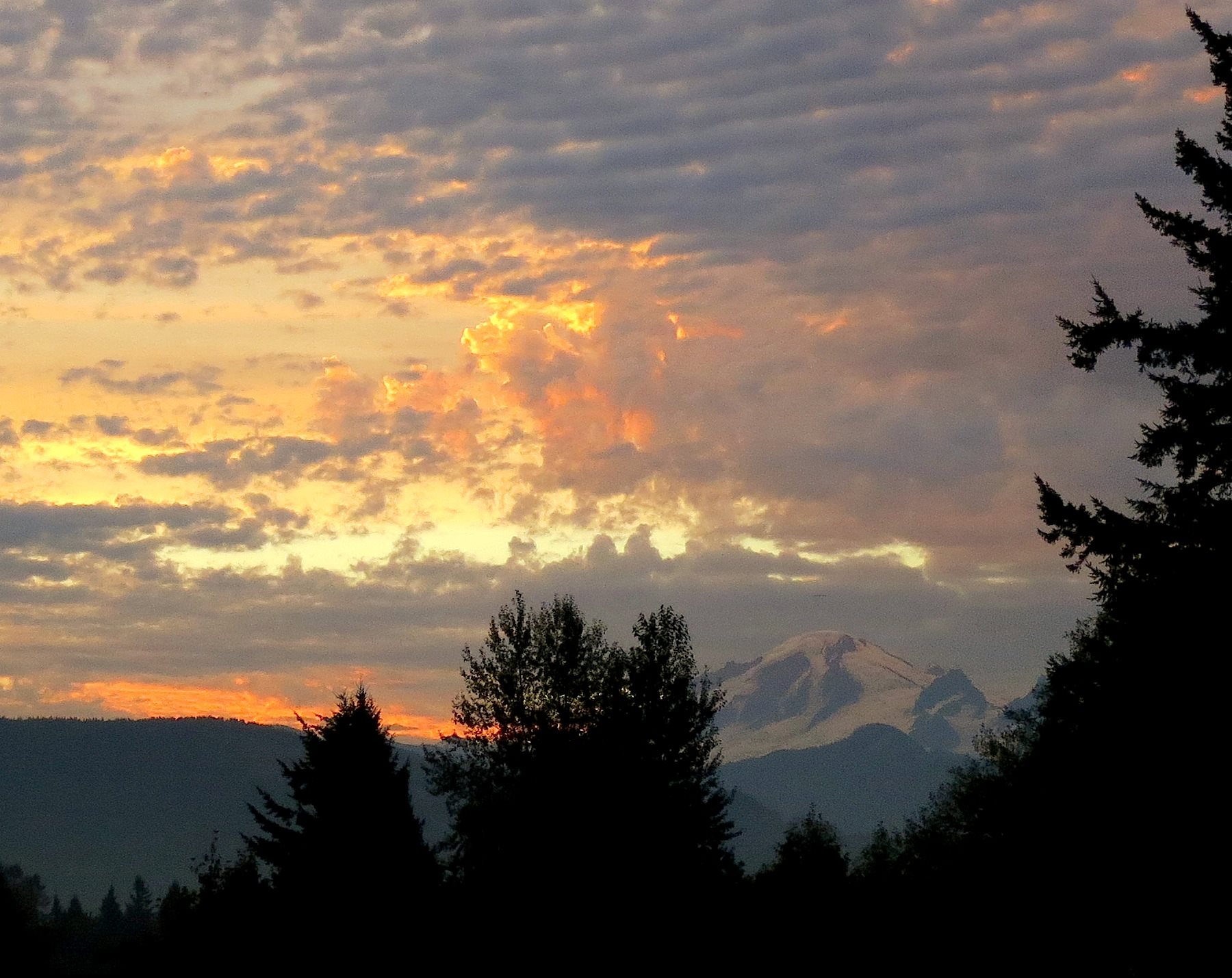
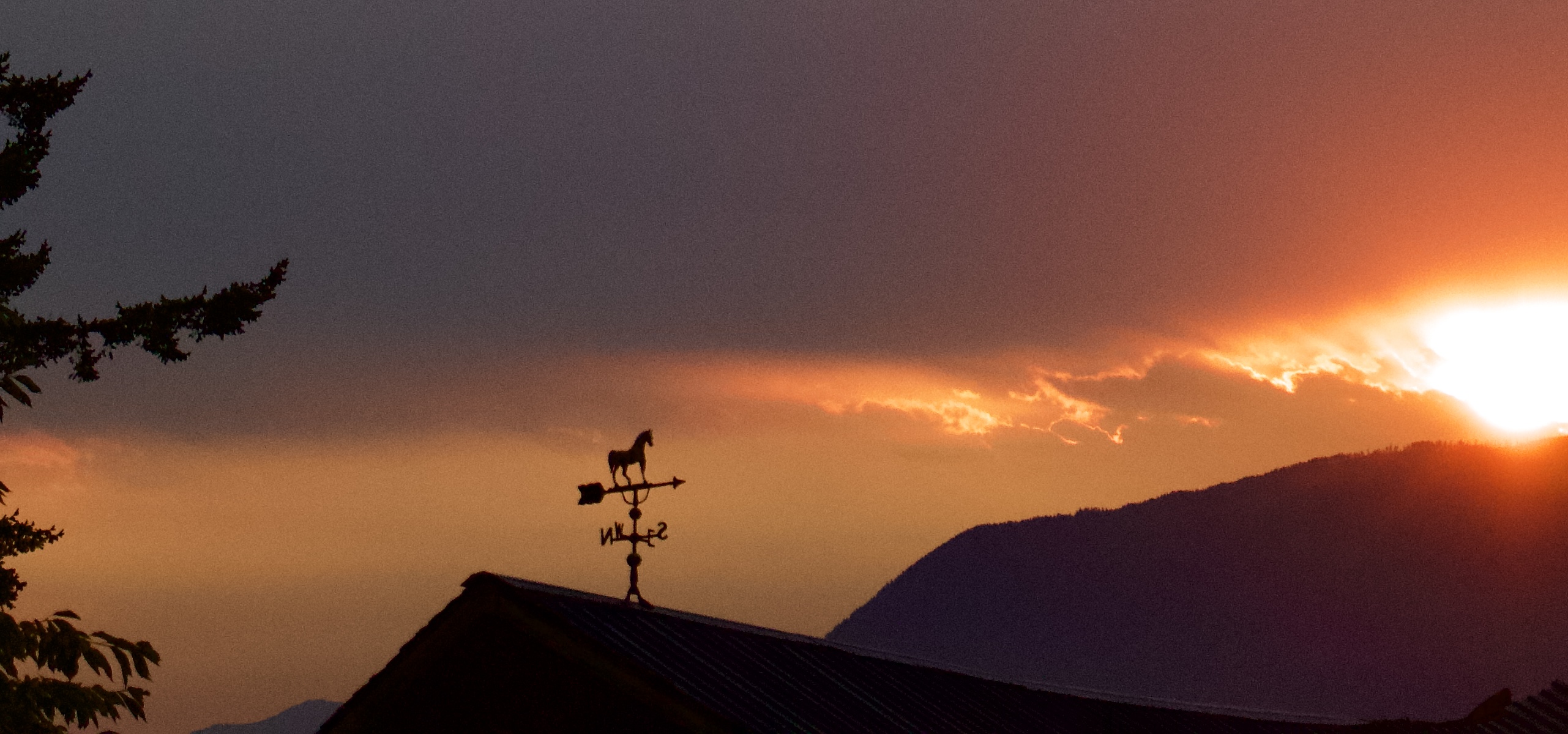
Transfiguring the Trivial

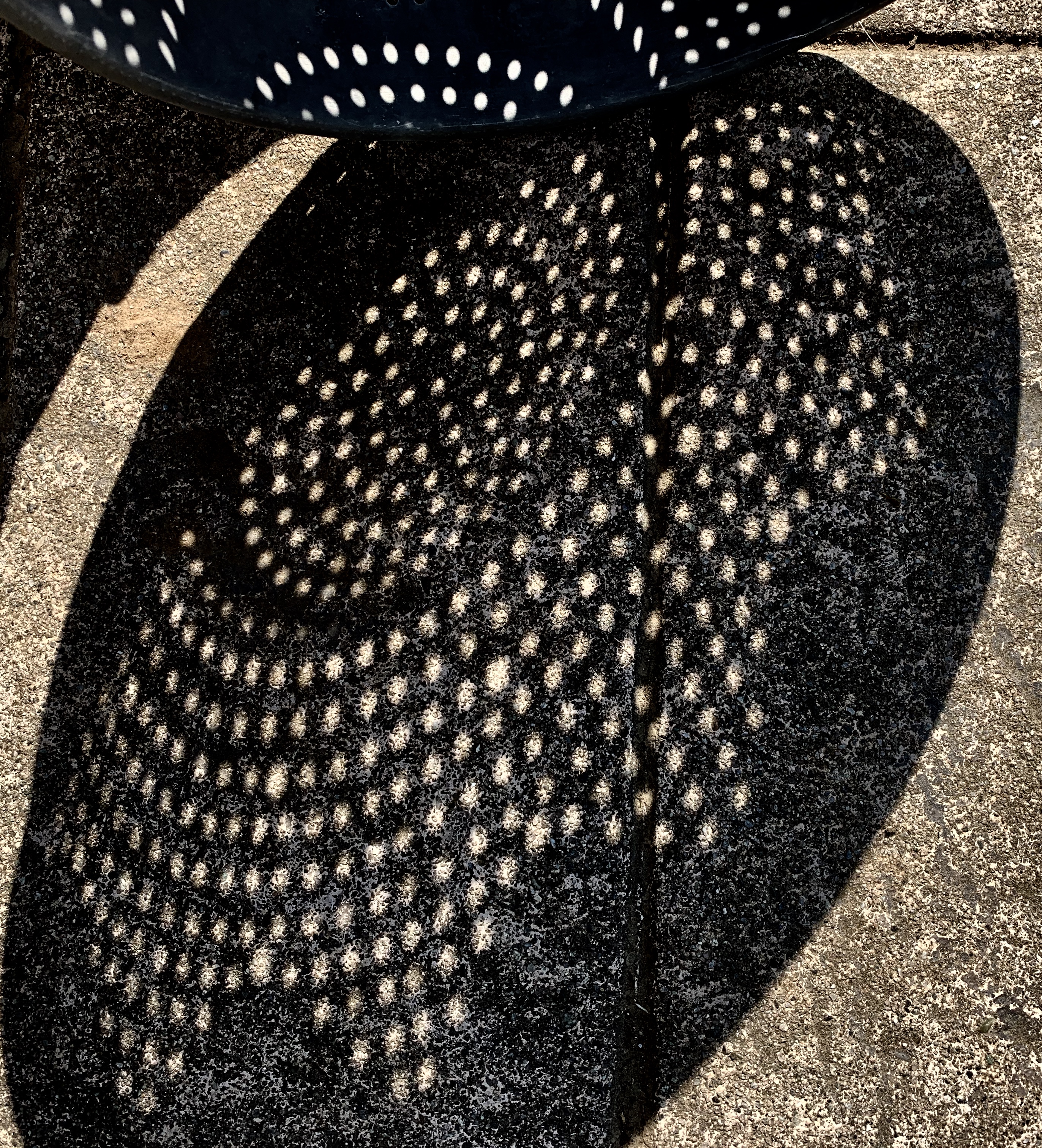
A sudden light transfigures a trivial thing,
a weather-vane, a wind-mill, a winnowing flail,
the dust in the barn door; a moment,- –
and the thing has vanished, because it was pure effect;
but it leaves a relish behind it,
a longing that the accident may happen again.
~Walter Pater from “The Renaissance”

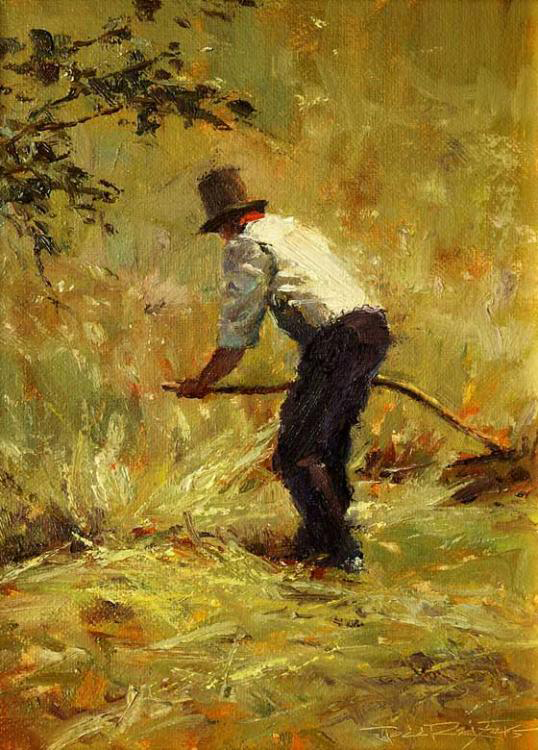
Man Scything Hay by Todd Reifers
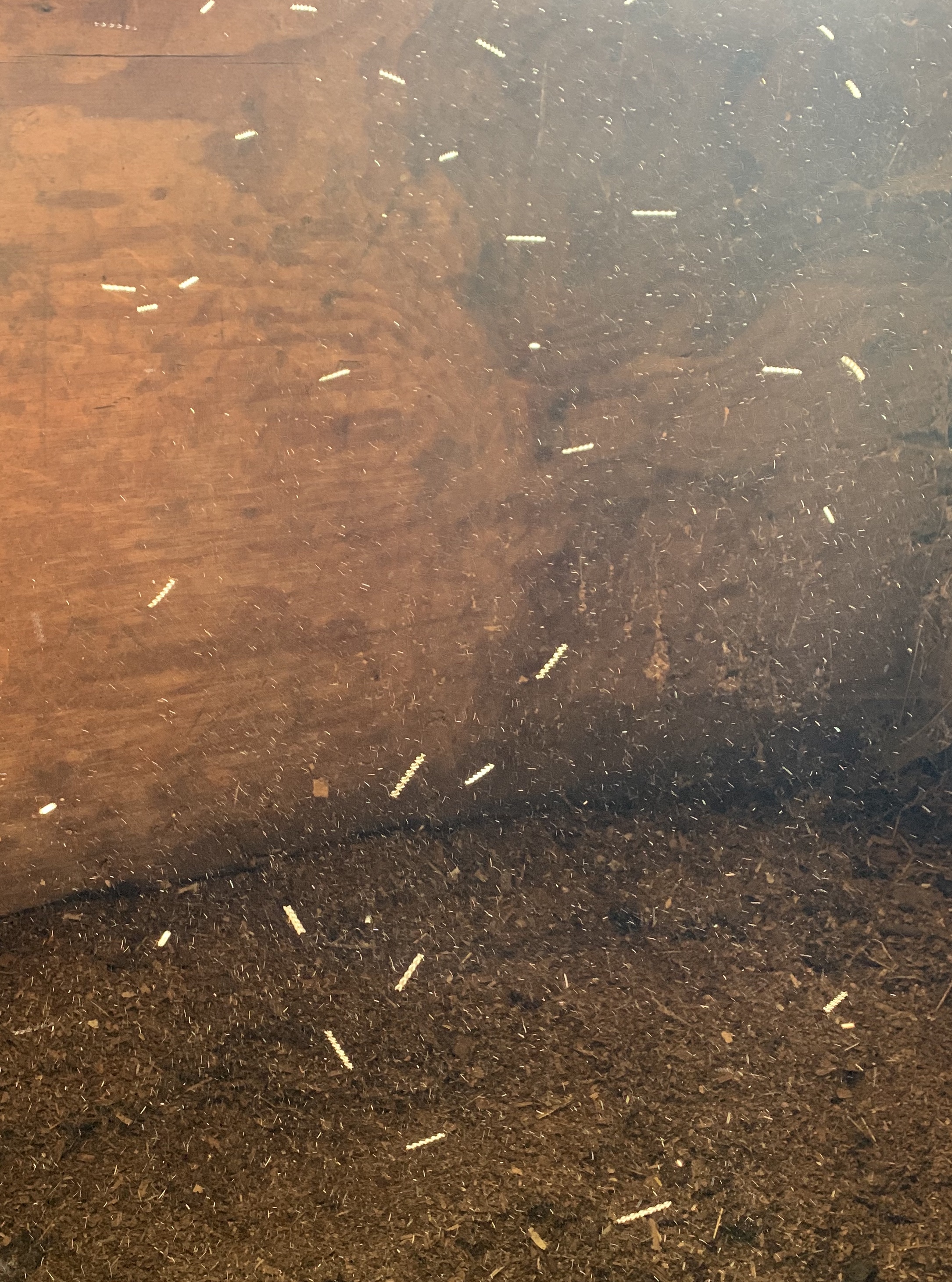
dust motes and insects in the barn

Summer ends now; now, barbarous in beauty, the stooks rise
Around; up above, what wind-walks! what lovely behaviour
Of silk-sack clouds! has wilder, wilful-wavier
Meal-drift moulded ever and melted across skies?

I walk, I lift up, I lift up heart, eyes,
Down all that glory in the heavens to glean our Saviour;
And eyes, heart, what looks, what lips yet give you a
Rapturous love’s greeting of realer, of rounder replies?

And the azurous hung hills are his world-wielding shoulder
Majestic – as a stallion stalwart, very-violet-sweet! –
These things, these things were here and but the beholder
Wanting; which two when they once meet,
The heart rears wings bold and bolder
And hurls for him, O half hurls earth for him off under his feet.

~Gerard Manley Hopkins “Hurrahing in Harvest”

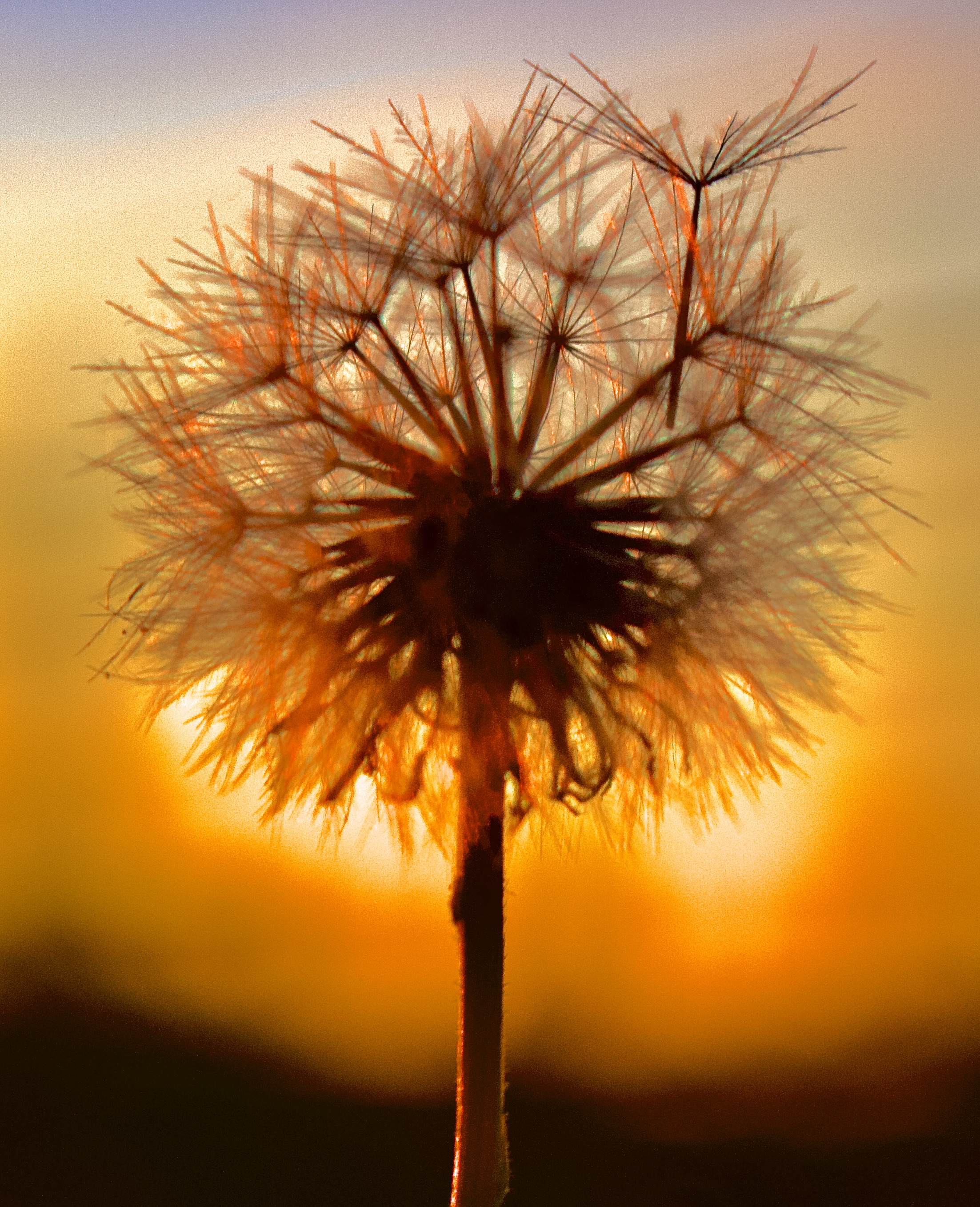
The accident of light does happen,
again and again,
but when I least expect it. 

I need to be ready for it; in a blink, it can be gone. 

Yet in that moment,
everything is changed and transformed forever. 

The thing itself,
trivial and transient becomes something other, 
merely because of how it is illuminated. 

And so am I, trivial and transient,
lit from outside myself, winnowed and
transfigured by a love and sacrifice
that I can never deserve.

It was and is no accident.

My heart is readies for earth to be hurled to heaven’s Light.

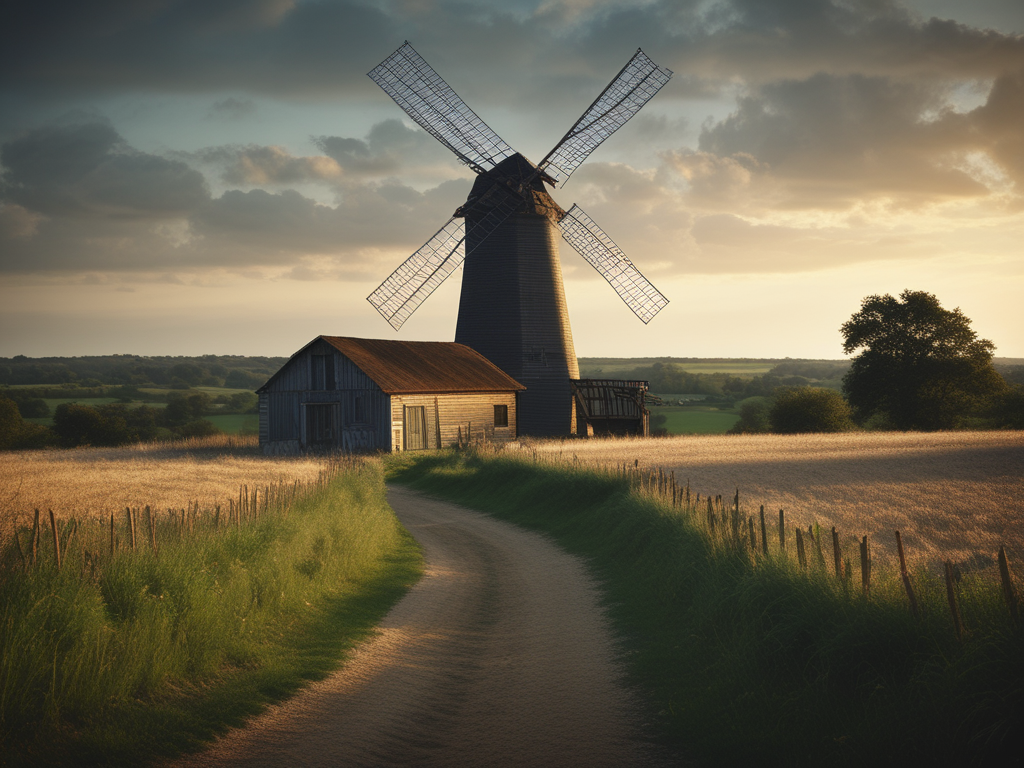
AI image created for this post
One-Time
Monthly
Yearly

Make a one-time or recurring donation to support daily Barnstorming posts

Make a monthly donation

Make a yearly donation

Choose an amount

$10.00
$25.00
$50.00
$5.00
$15.00
$100.00
$5.00
$15.00
$100.00

Or enter a custom amount

$

Your contribution is deeply appreciated.

Your contribution is appreciated.

Your contribution is appreciated.

DonateDonate monthlyDonate yearly
It’ll Be Someone Else

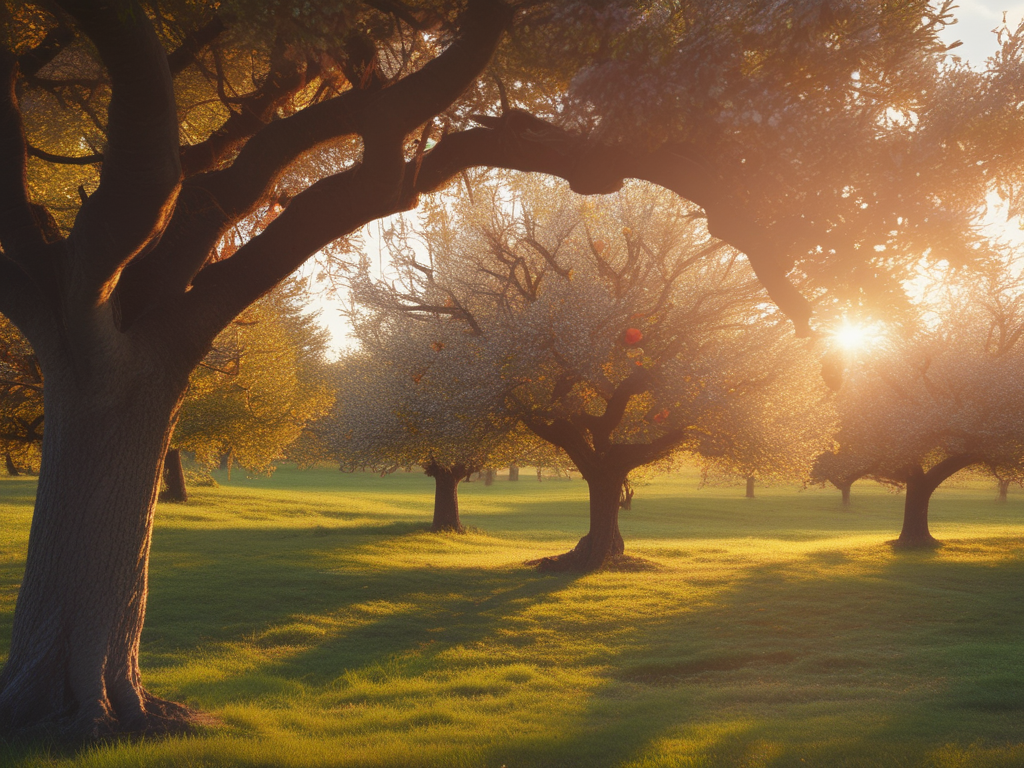
Here’s the orchard someone else will tend to.
And the crawl space beneath the porch

of the house where someone else’s barn cat
will slumber through the summer nights
dreaming of long-tailed mice in the high grass.
Over that field, the light dips and refracts
through the broken glass of the muck pond
where a catfish will take someone else’s bait
and hook—that it might meet the refined
heat of a skillet. The ghosts of a thousand
head of cattle walk through the woods at night
in someone else’s dream while the windows,
cracked slightly, let a mild breeze pass
through the empty rooms like an appraiser.
There is no death that cannot be undone
by simply turning the compost with a pitchfork
or by scattering scratch in the dirt for chickens
who sing each time they lay, but every repair
is only a gesture against the torment of slow
winds and steady rain and heavy sun. It will be
someone else who grows too old to climb
the ladder into the barn’s cool loft or the flight
of stairs that lead to and from their own bed.
It will be their hand weighing the mortgage.
It will be their face forgetting its smile. Listen,
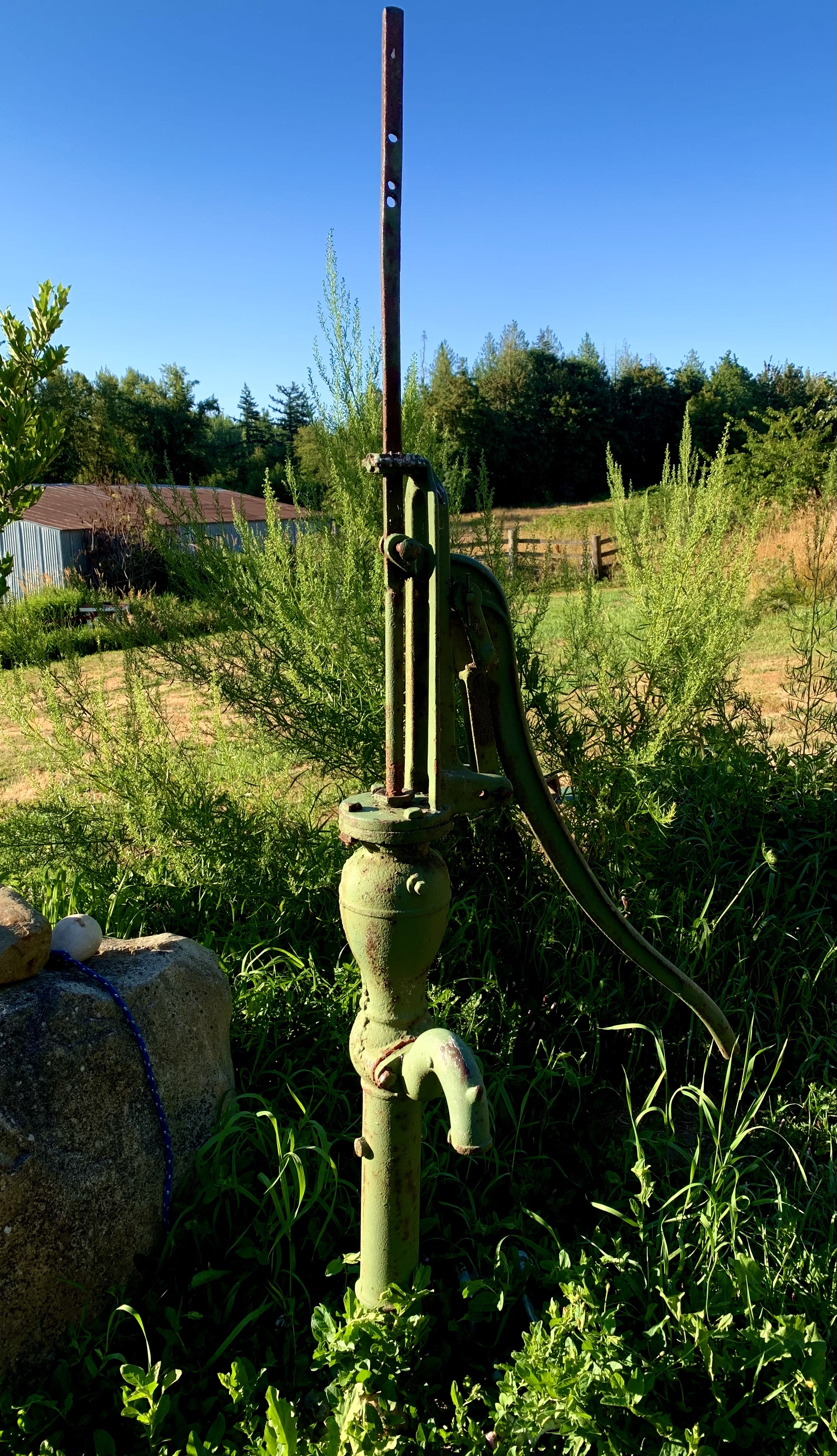
if the well pump kicks to life at dawn, it will be
someone else drawing a bath for the last time—
joints relaxing as their form submerges, body
recovering and failing in the same held breath.
~Travis Mossotti “Missing the Farm”
from Apocryphal Genesis

Well-away and be it so,
To the stranger let them go.
Even cheerfully I yield
Pasture, orchard, mowing-field,
Yea and wish him all the gain
I required of them in vain.
Yea and I can yield him house,
Barn, and shed, with rat and mouse
To dispute possession of.
These I can unlearn to love.
Since I cannot help it? Good!
Only be it understood,

It shall be no trespassing
If I come again some spring
In the grey disguise of years,
Seeking ache of memory here.
~Robert Frost from “On the Sale of My Farm”

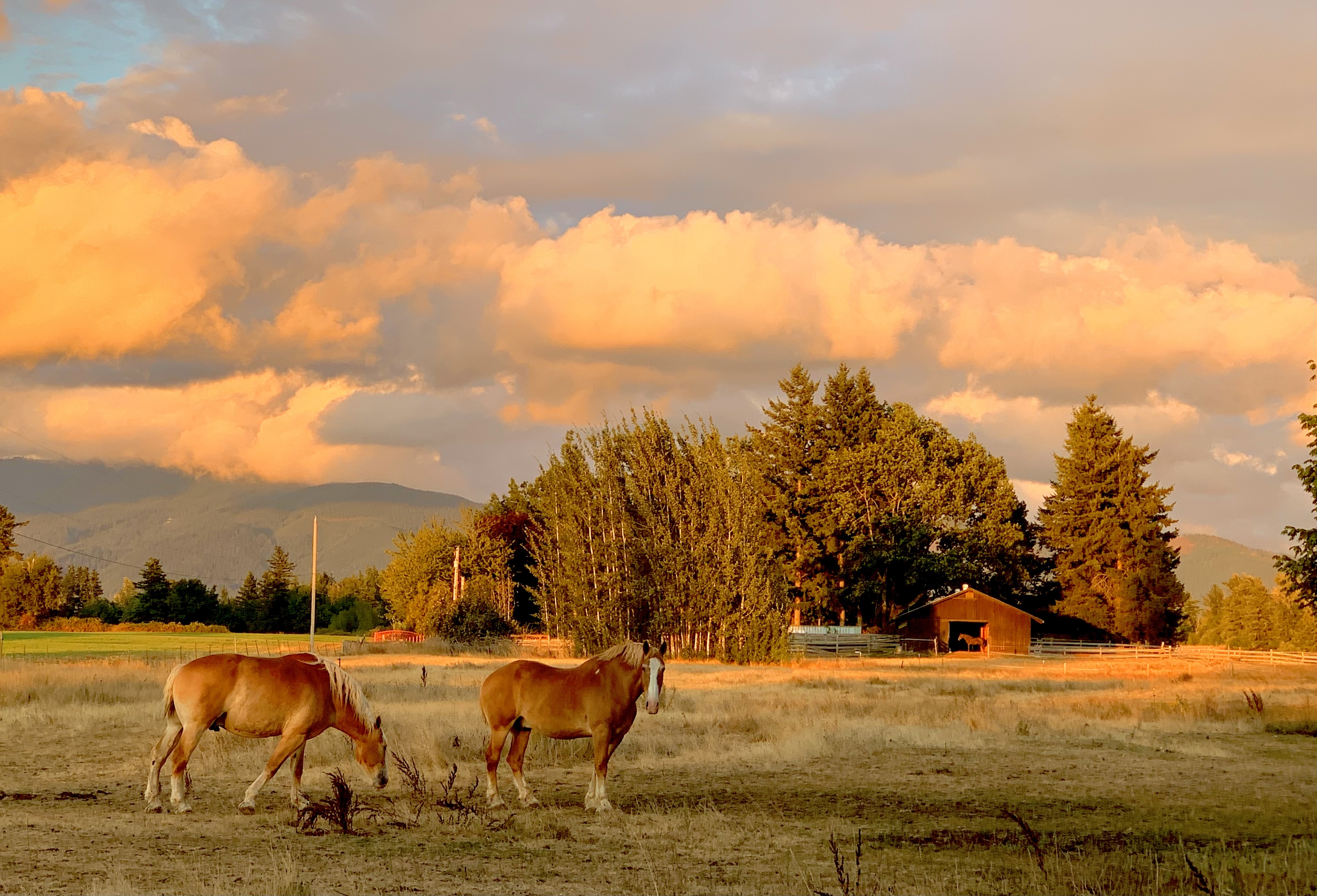
Someday – we fervently hope not anytime soon – someone else will be living here and managing this farm, not us.

This land, originally all forested, provided game and native berries for the inland coastal tribes who lived here. When white settlers arrived and homesteading began, it was clearcut and the land became grazing pastures for livestock. Orchard trees were planted and crops produced and sold in nearby towns. Hundreds of similar small dairy farms in this county managed to feed their families and neighbors for nearly a century.

We purchased this land from the Lawrence family after they had farmed here over 80 years and they were so sad to leave. We are now in our 34th year here. We want to stay for another decade but we’re aging and our physical limitations are becoming increasingly apparent.

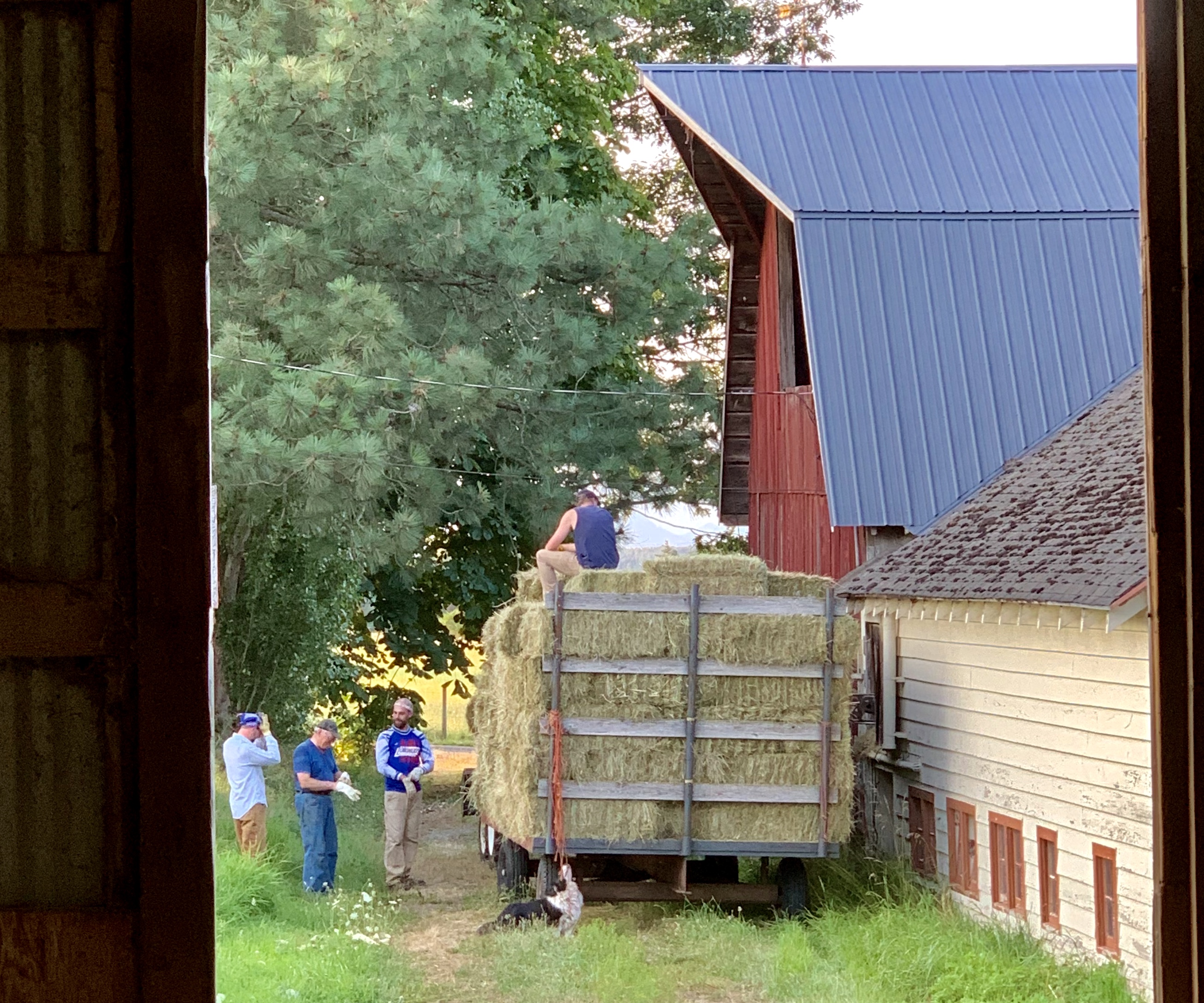
On a recent hot summer evening, my husband piled a wagon high with hay bales for the winter, with the help of the sons of the teenagers who helped us buck bales a generation ago. It won’t be too many years before someone else, not us, will be putting hay in the barn.

This land is where we feel we belong, just as those others who lived here were attached to this ground – but for how long? Will our non-farming offspring feel the pull to return home back to the farm?

We don’t know what the future may hold. What we do know: there is no such beauty as this land where we have worked and loved.

Yes, we feel we belong here.

For now. Until then.

AI image created for this post

Tell me, where is the road
I can call my own
That I left, that I lost
So long ago?
All these years I have wandered
Oh, when will I know
There’s a way, there’s a road
That will lead me home

After wind, after rain
When the dark is done
As I wake from a dream
In the gold of day
Through the air there’s a calling
From far away
There’s a voice I can hear
That will lead me home

Rise up, follow me
Come away, is the call
With the love in your heart
As the only song
There is no such beauty
As where you belong
Rise up, follow me
I will lead you home
~Michael Dennis Browne

One-Time
Monthly
Yearly

Make a one-time or recurring donation to support daily Barnstorming posts

Make a monthly donation

Make a yearly donation

Choose an amount

$10.00
$25.00
$40.00
$5.00
$15.00
$100.00
$5.00
$15.00
$100.00

Or enter a custom amount

$

Your contribution is deeply appreciated.

Your contribution is appreciated.

Your contribution is appreciated.

DonateDonate monthlyDonate yearly
Faired Well

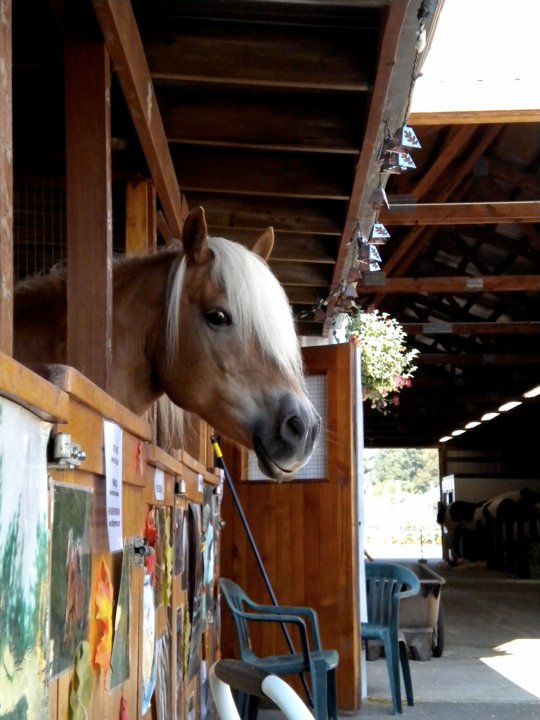
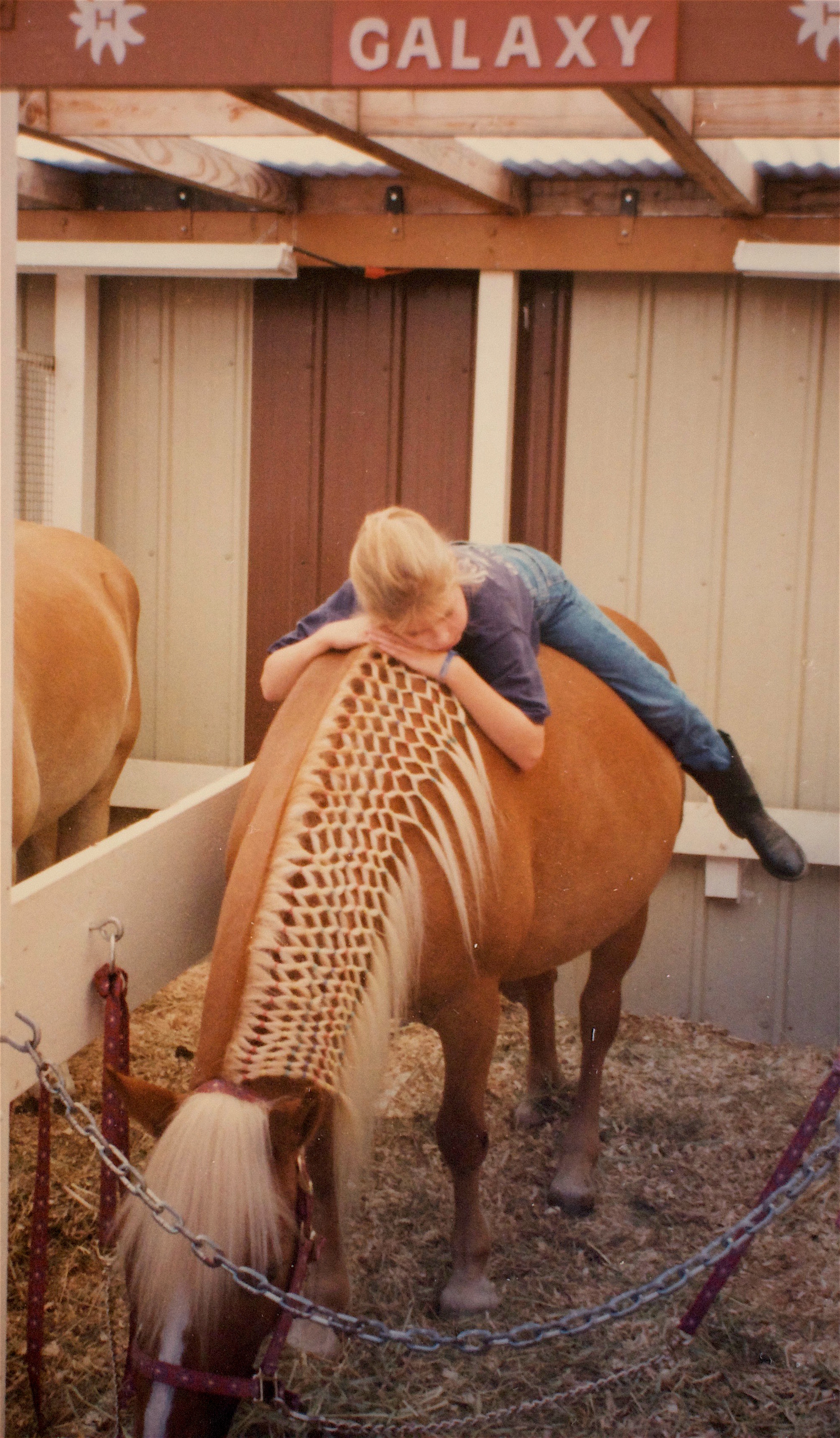
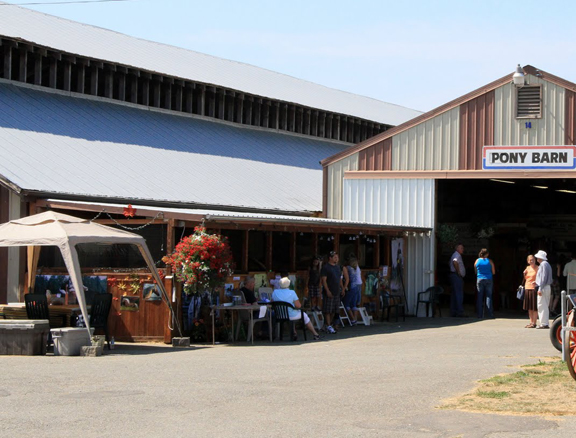
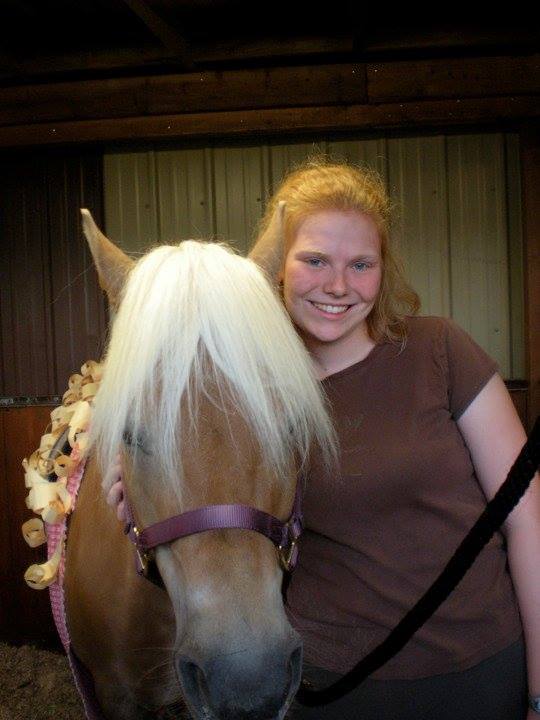
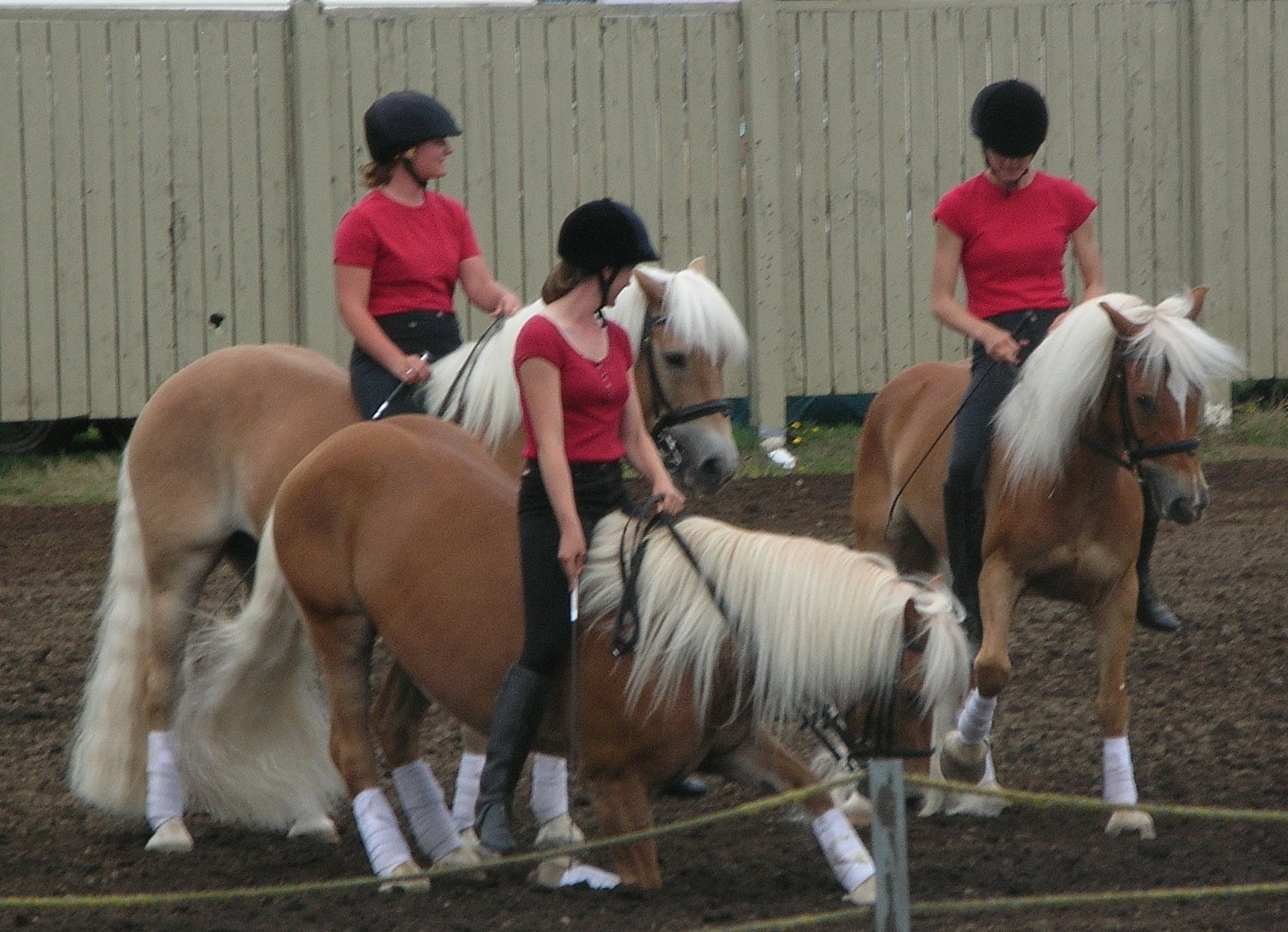
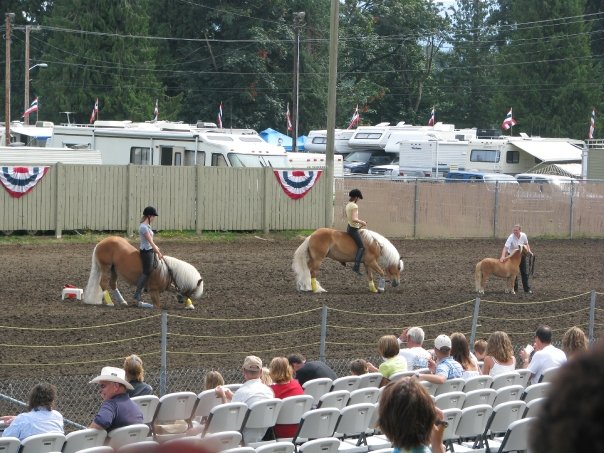
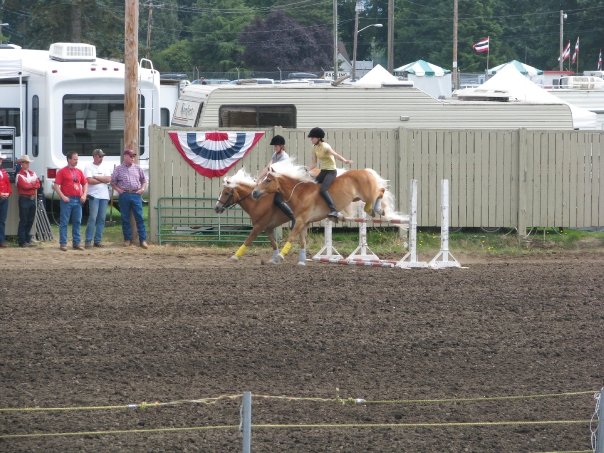
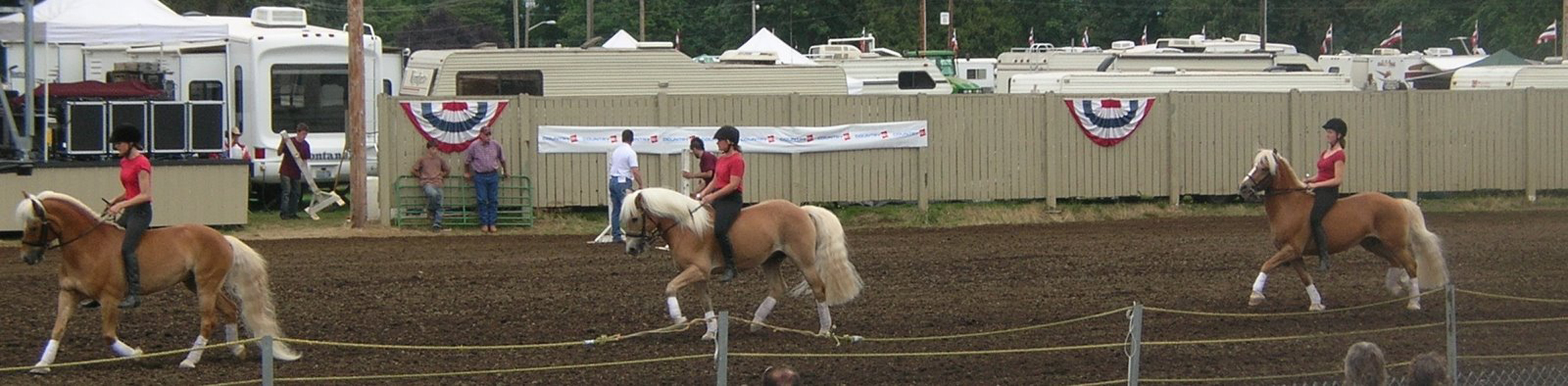
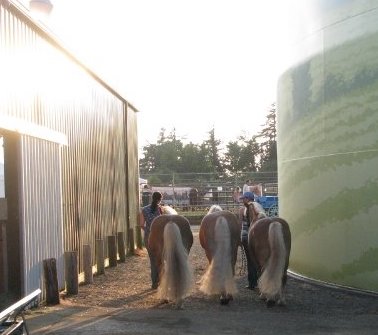
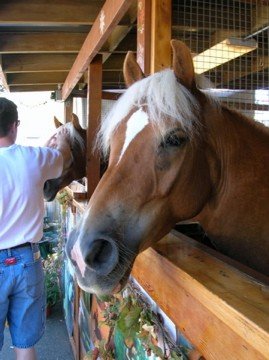
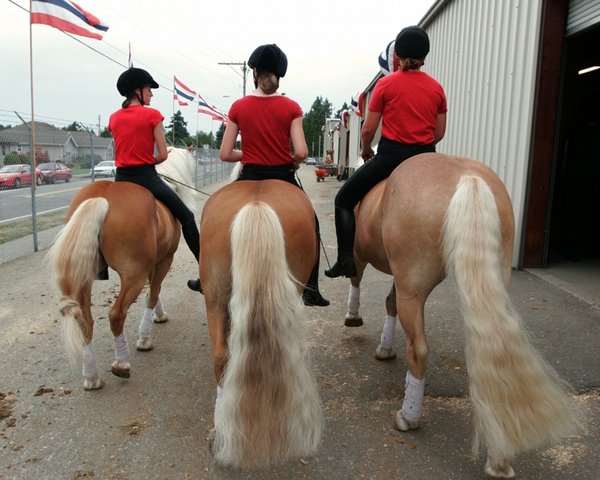
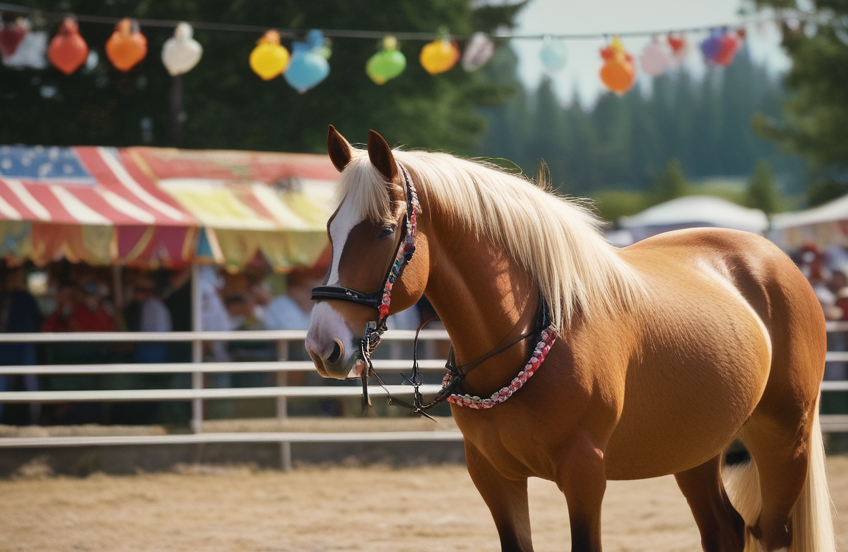
The Northwest Washington Fair in Lynden is under way again this week and instead of being part of the fun and hub-bub, our Haflinger horses are staying home, out on pasture. It’s been over a decade since they were cleaned up, curried, braided and trailered into town for a week to
help make dreams come true for thousands of fairgoers.

I feel a bit wistful as I wake up early on this foggy mid-August morning, remembering the twenty years of 5:30 AM dawns where I would gather up our sleepy children and their friends and head into the fairgrounds to clean the Haflingers’ stalls, walk the horses for exercise and prepare for a busy day of people strolling by and admiring them. 

We stopped “doing” the fair as a Haflinger farm. Now that I’m 70 years old, rather than 40, 50, or 60, I’m okay about that. It was great while it lasted but this aging human and my equines relish our retirement, especially since the fair expanded to a 10 day rather than just a 6 day commitment. I so admire the draft horse families that have kept their six horse hitches active with their Belgians, Percherons and Clydesdales – some families are now in their fourth generation at the fair with teamsters, still driving the hitches, well into their eighties.

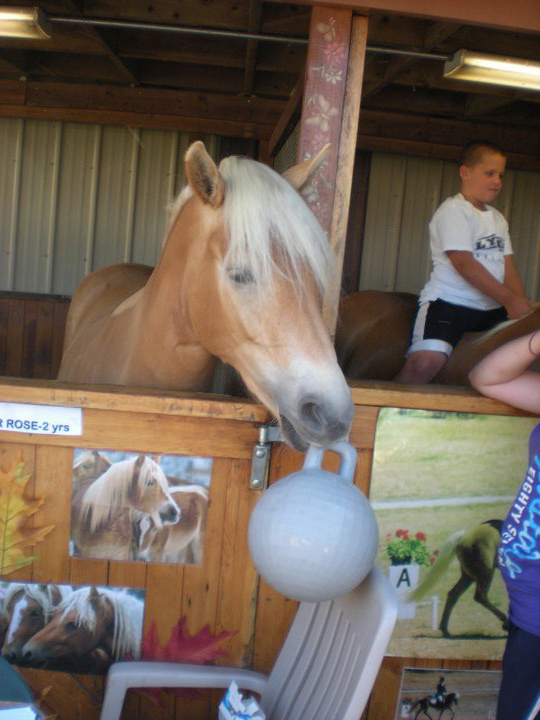
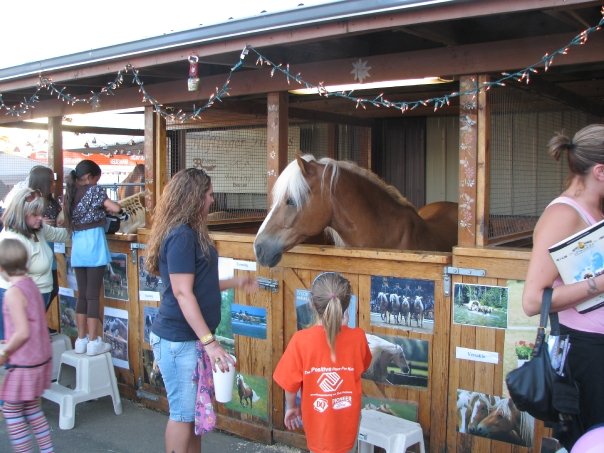
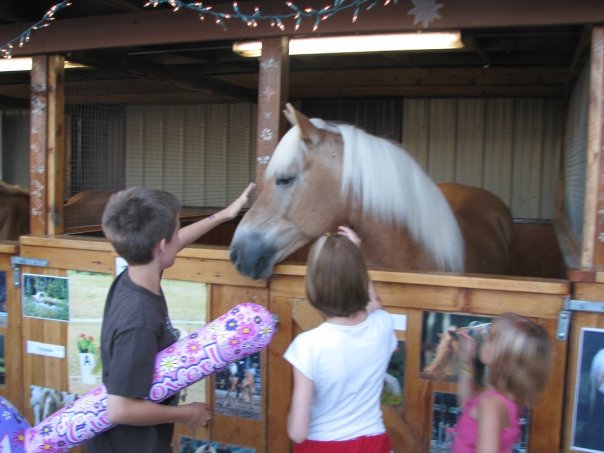
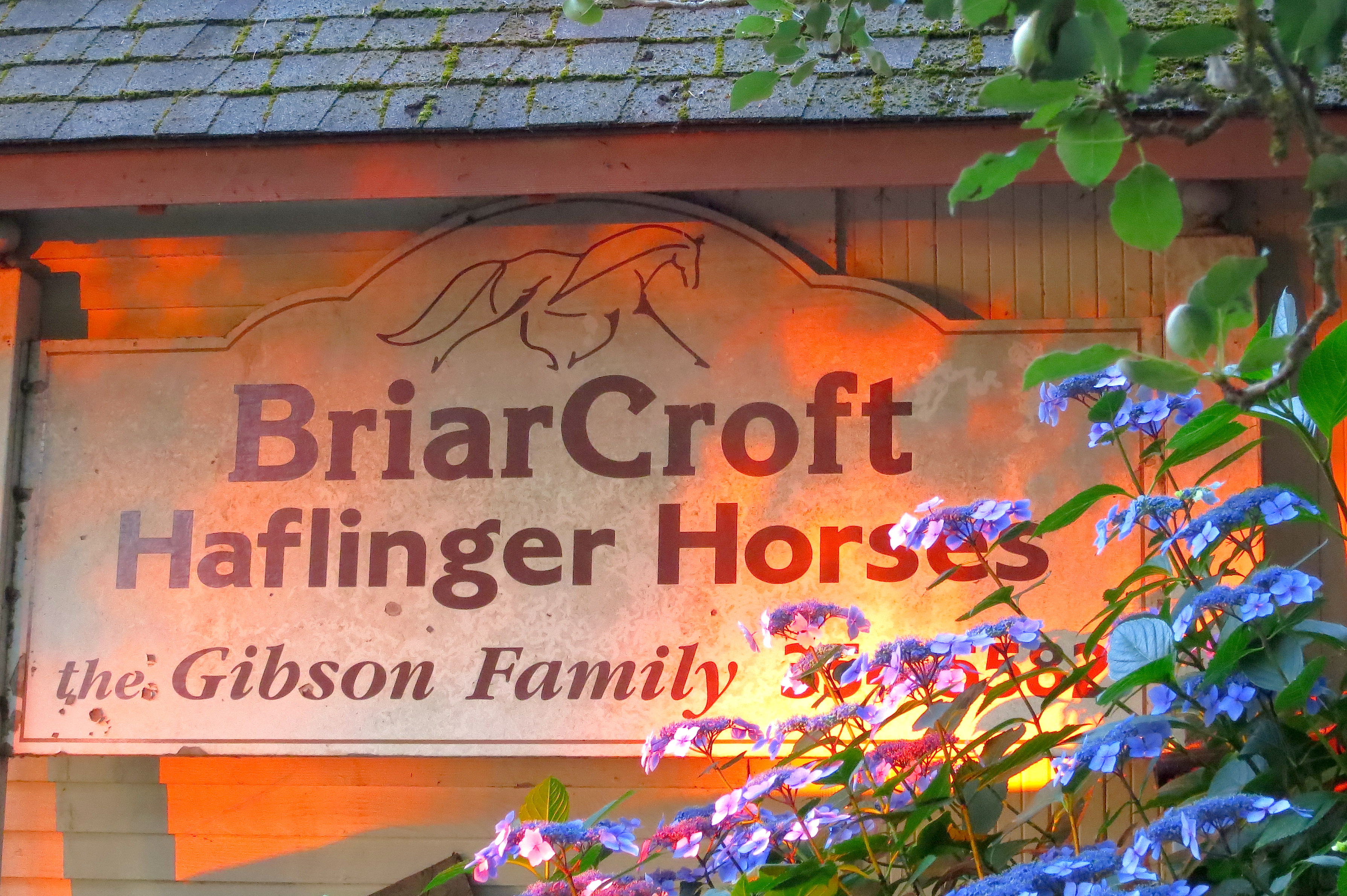
Our BriarCroft Haflingers display was a consistent presence at this regional fair for two decades, promoting the Haflinger breed in well-decorated stalls. Part of our commitment was to provide a 24-hr-a-day human presence with the horses. We had petitioned the Fair Board for 5 years in the late 1980s to allow us a spot at the fair, and they finally said “okay, here’s the space, build it yourself”, so we did.

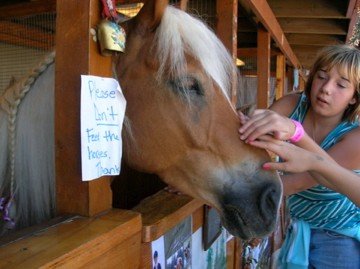
We didn’t ask for classes, competition, or ribbons. We were there because fairgoers enjoyed seeing and touching our Haflingers and we enjoyed talking to all the people.

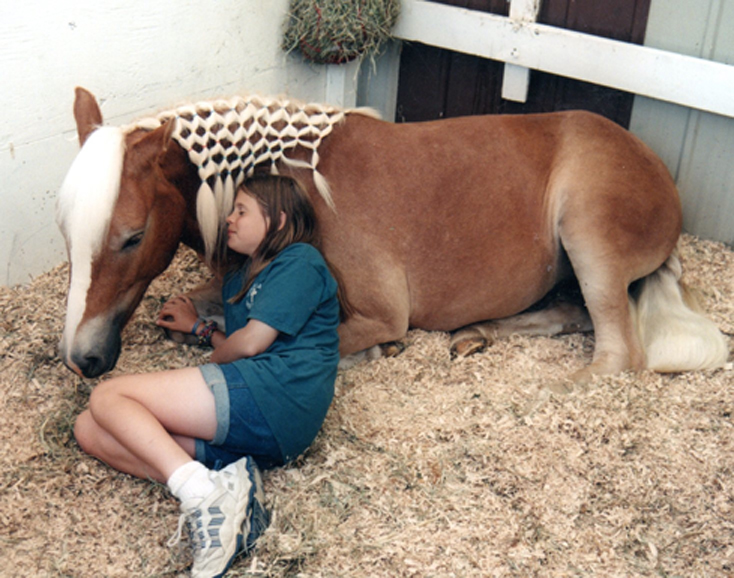
Once our children and their friends had careers and children of their own, they were no longer available to help “man” the horse stalls. I still miss spending such concentrated time with all the young nieces, nephews, neighbors, church and school friends who hung out with us over the years. I hope they still have fond memories of their time helping us at the fair.

Every year from 1992 onward, we evaluated whether we had the energy and resources to do it  again. Initially, Dan and I juggled our small children as well as horses at the fair and at home, taking a week of vacation from our jobs. Then, with the help of two other Haflinger breeding farms, and several young women who did a crowd-pleasing Haflinger “trick” riding demo in front of the grandstand, we rotated duties. The older kids watched the younger kids, the in-between kids did most of the horse stall cleaning duty, and the adults could sit and shoot the breeze.

This created good will for the fair visitors who depended on us every year to be there with horses that they and their children could actually pet (and sit on) without worry, who enjoyed our braiding demonstrations, and our Haflinger trivia contests and prizes.

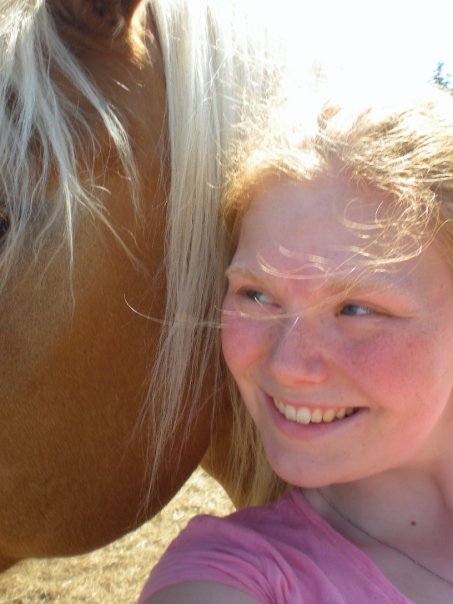
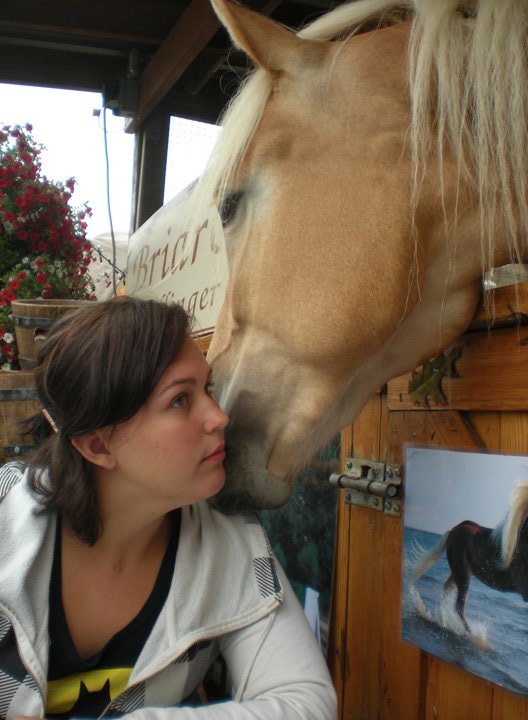
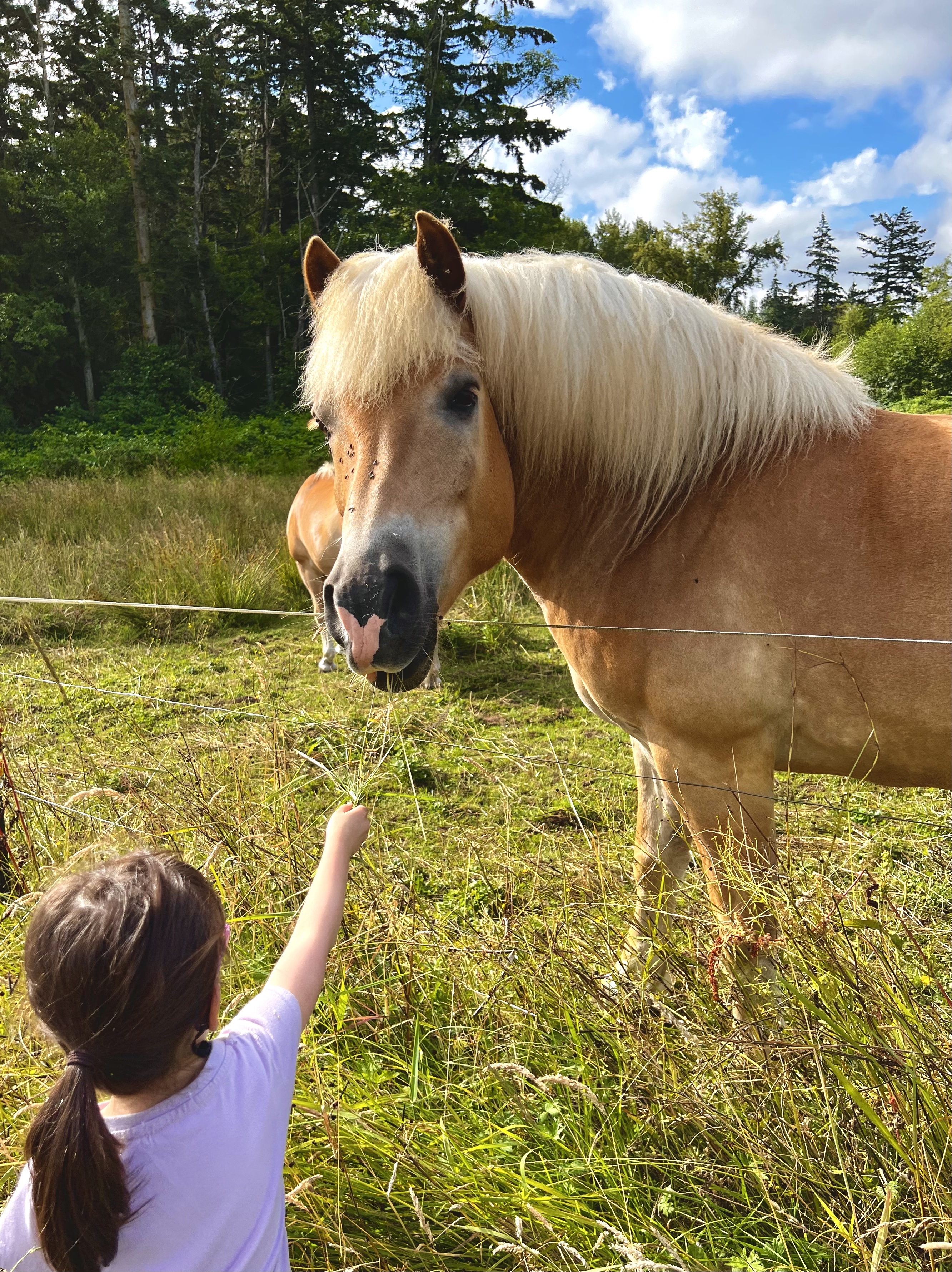
We continued to do this for so long because our horses were friendly and happy to give fair-goers a chance to safely get up close. These Haflingers became what dreams are made of.

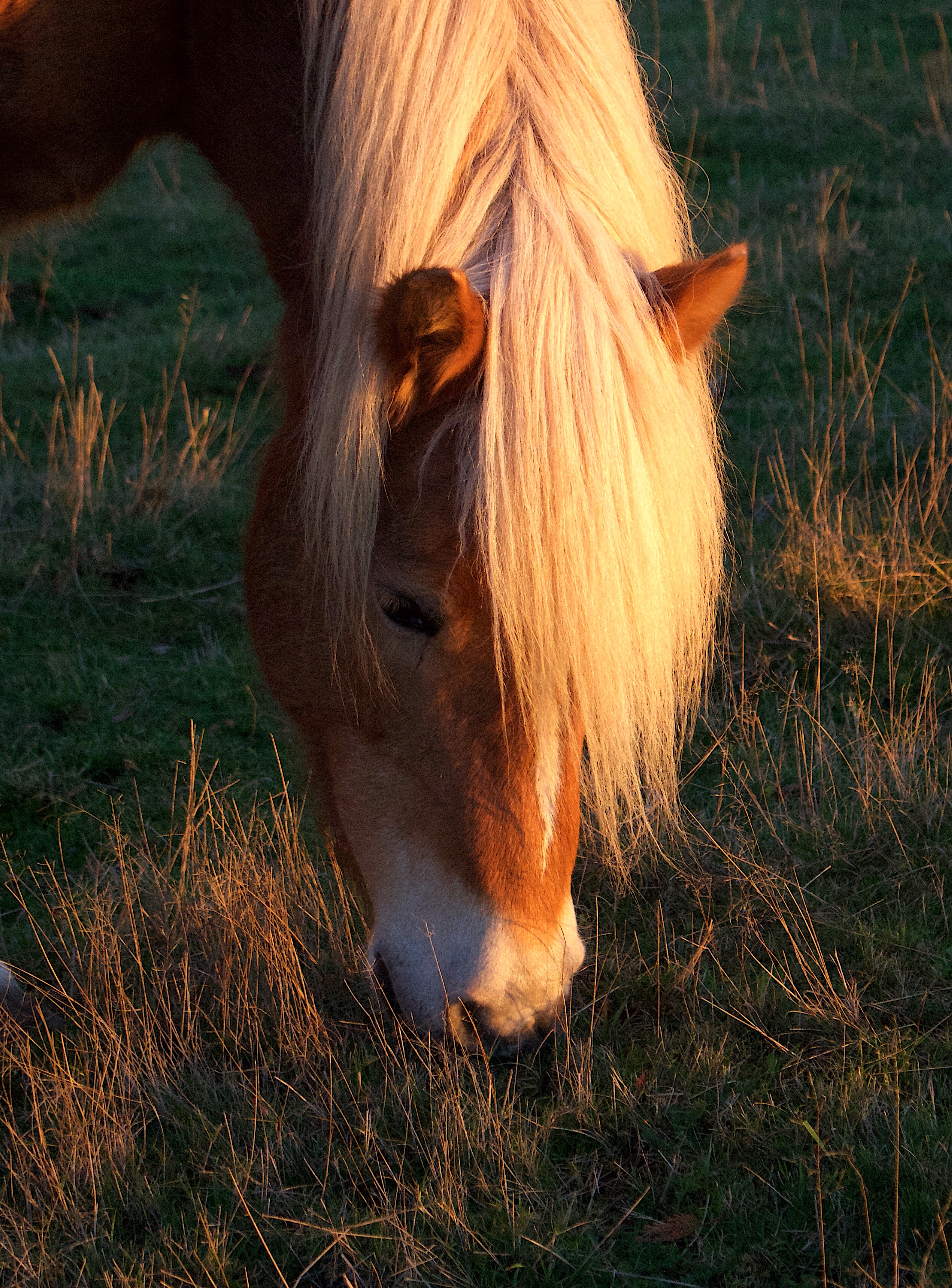
Countless times a day a bright eyed child approached our stalls, climbed up on the step stools and reached up to pet a Haflinger nose or neck and look deep into those big brown eyes. They will not forget the moment when a horse they had never met before loved them back. Haflingers are magic with children and we saw that over and over again.

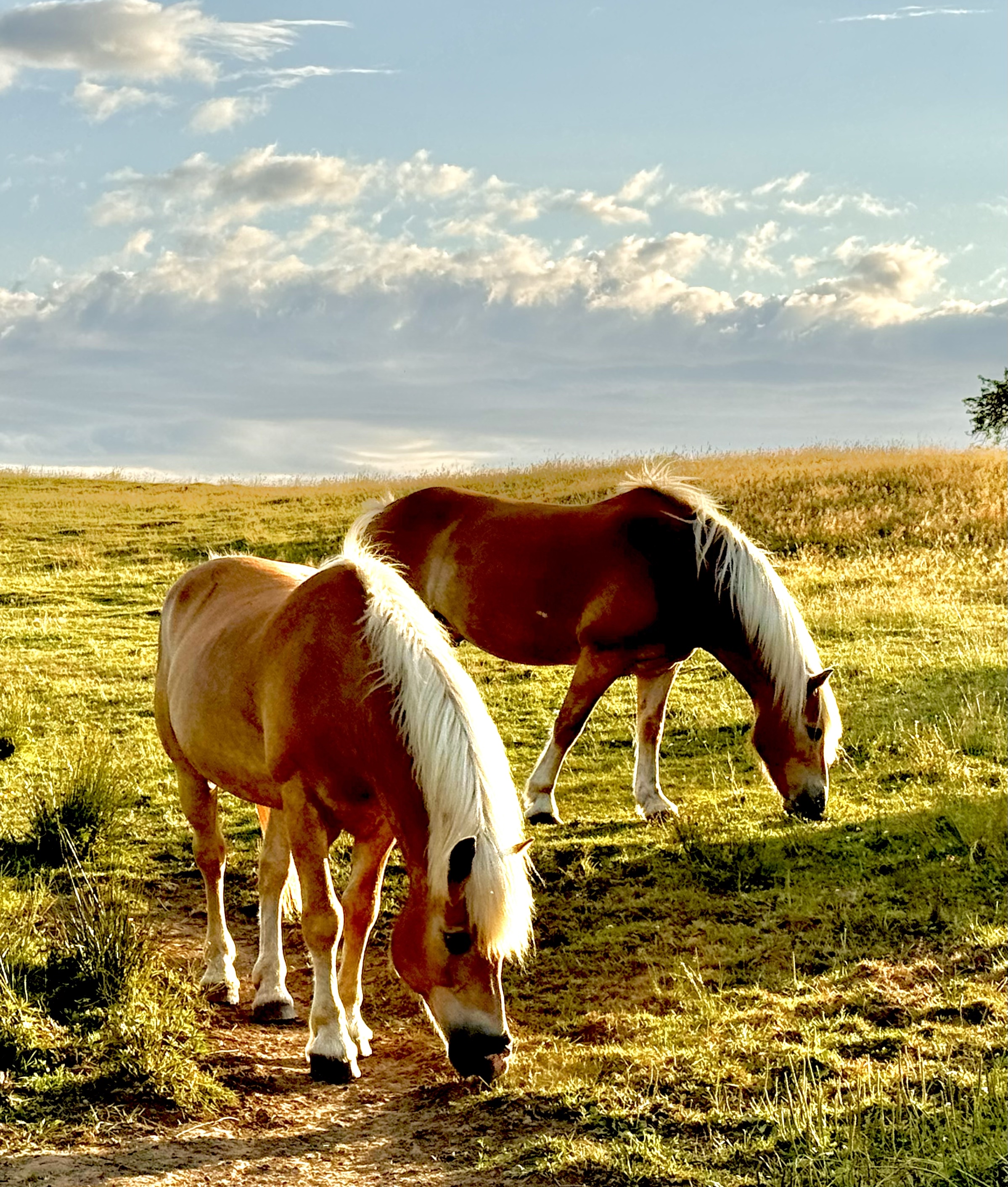
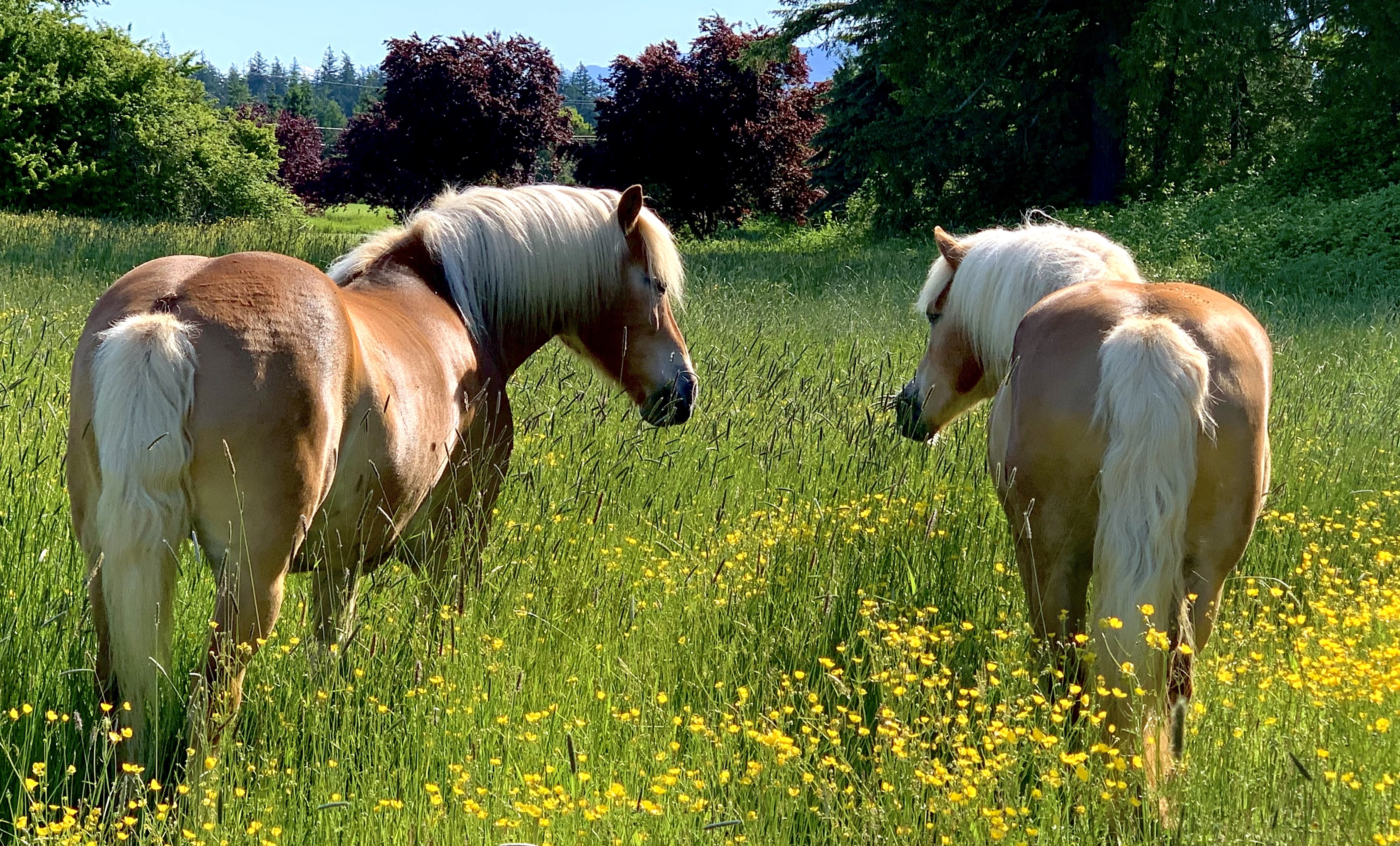
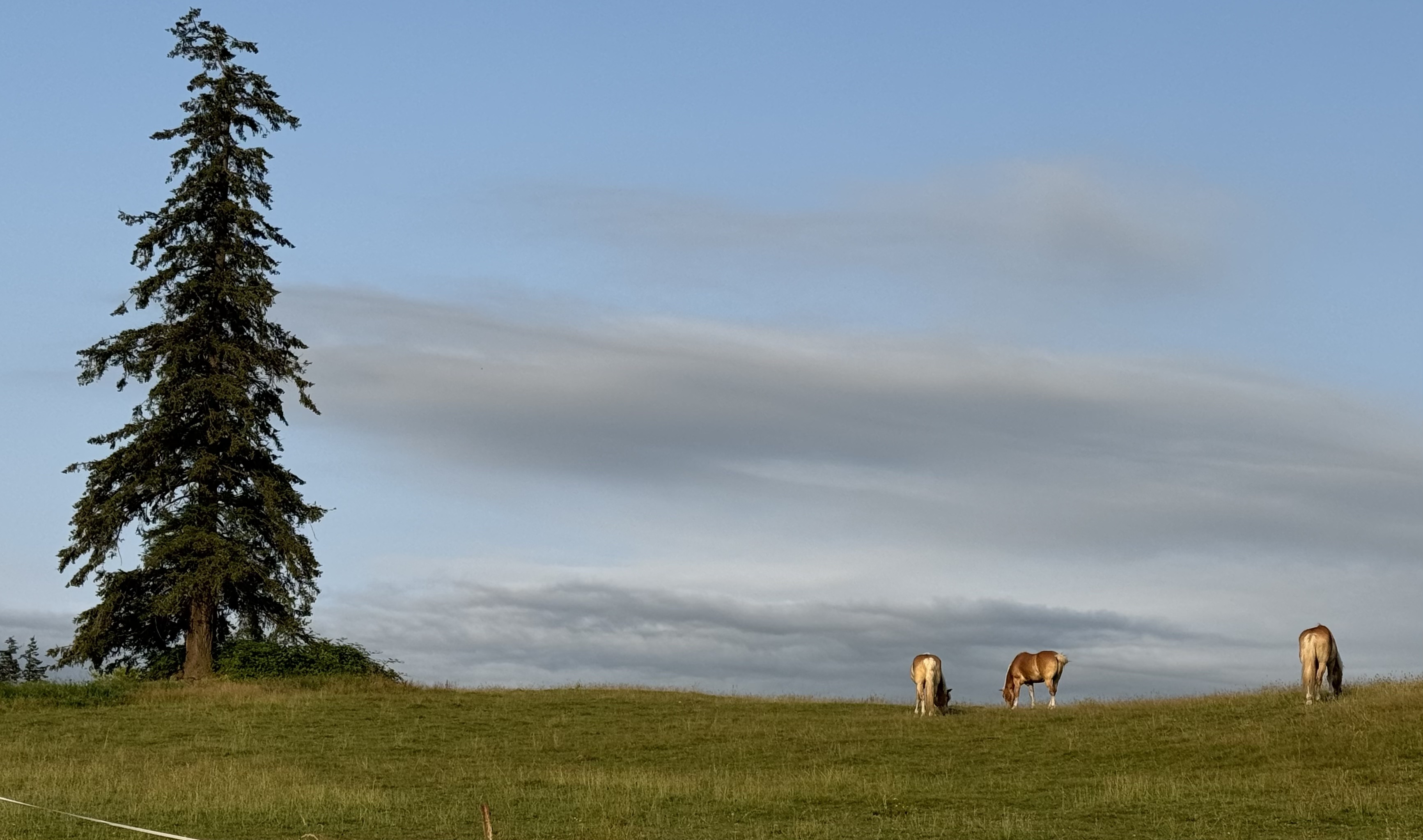
So on this foggy August morning years later, instead of heading to the fairgrounds to clean stalls and braid manes, I’m turning out our retired, dusty, unbathed Haflingers into the field as usual. They barely recall all the excitement they are missing.

Even if our horses don’t remember much about those fair weeks so long ago, I know some fair-goers still miss the friendly golden horses with the big brown eyes who tried, even if for a day, to make their dreams come true.

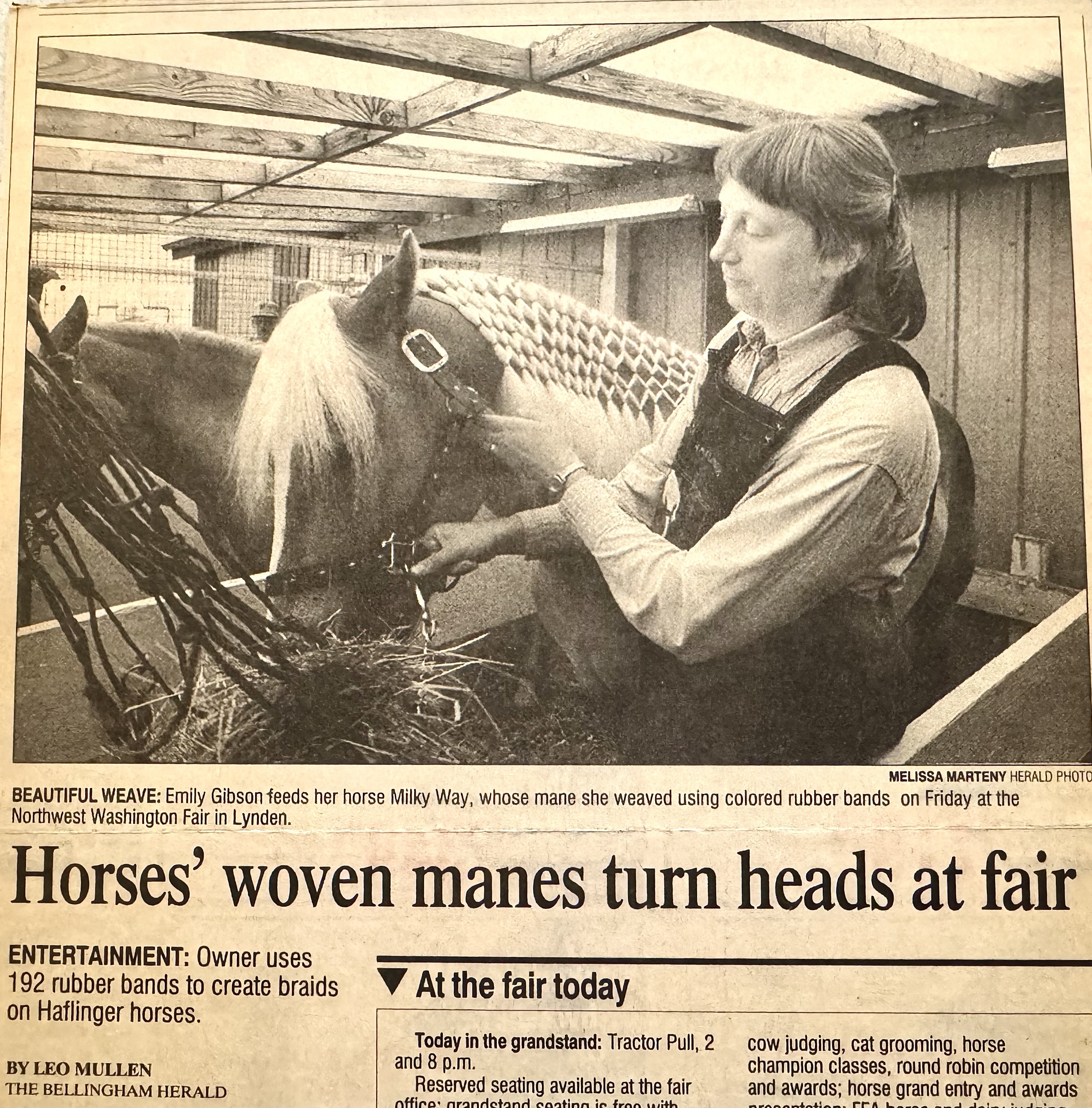
29 years ago, Milky Way and I were featured in our fair display on the front page of the local Bellingham Herald
AI image created for this post
One-Time
Monthly
Yearly

Make a one-time or recurring donation to support daily Barnstorming posts

Make a monthly donation

Make a yearly donation

Choose an amount

$10.00
$25.00
$50.00
$5.00
$15.00
$100.00
$5.00
$15.00
$100.00

Or enter a custom amount

$

Your contribution is deeply appreciated.

Your contribution is appreciated.

Your contribution is appreciated.

DonateDonate monthlyDonate yearly
Standing in Stillness

Broad August burns in milky skies,
The world is blanched with hazy heat;
The vast green pasture, even, lies
Too hot and bright for eyes and feet.

Amid the grassy levels rears
The sycamore against the sun
The dark boughs of a hundred years,
The emerald foliage of one.

Lulled in a dream of shade and sheen,
Within the clement twilight thrown
By that great cloud of floating green,
A horse is standing, still as stone.

He stirs nor head nor hoof, although
The grass is fresh beneath the branch;
His tail alone swings to and fro
In graceful curves from haunch to haunch.

He stands quite lost, indifferent
To rack or pasture, trace or rein;
He feels the vaguely sweet content
Of perfect sloth in limb and brain.
~William Canton “Standing Still”

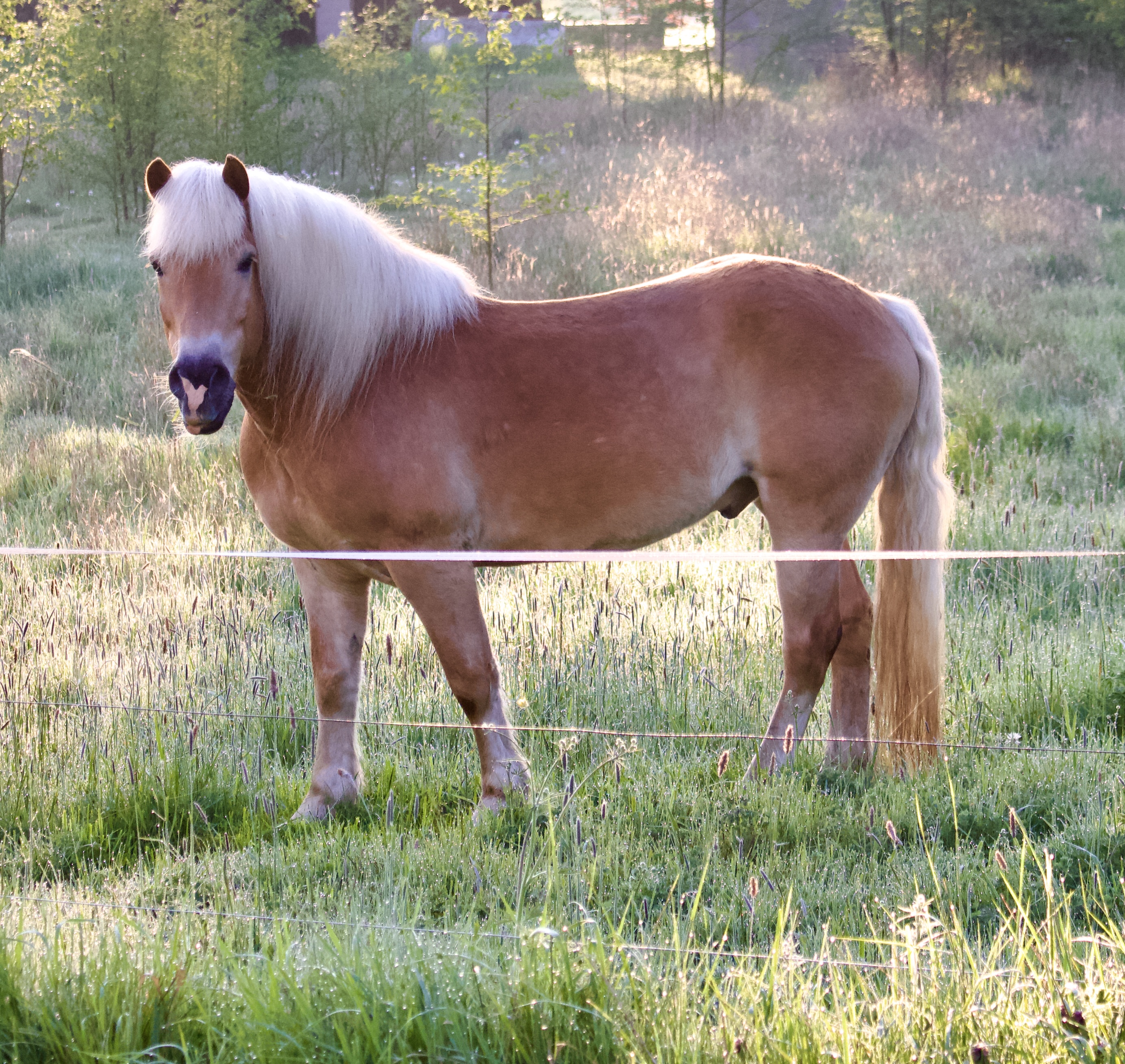
Sweet contentment is a horse dozing in the summer field, completely sated by grass and clover, tail switching and skin rippling automatically to discourage flies.

I too wish at times for that stillness of mind and body, allowing myself to simply “be” without concern about yesterday’s travails, or what duties await me tomorrow.

I flunked sloth long ago.  Perhaps I was born driven.  My older sister, never a morning person, was thoroughly annoyed to share a bedroom with a toddler who awoke chirpy and cheerful, singing “Twinkle Twinkle” for all to hear and ready to conquer the day.

Since retiring, I admit I am becoming accustomed now to sloth-dom, though I am still too chipper in the early morning. It is a distinct character flaw.

Even so, I’m not immune to the attractions of a hot hazy day of doing absolutely nothing but standing still switching at flies. I envy our retired ponies in the pasture who spend the day grazing, moseying, and lazing. I worked hard many years to make that life possible for them.

I want to use my days well.
I want to be worthy.
I want to know there is a reason to be here beyond just warning the flies away.

It is absolutely enough to enjoy the glory of it all.

One-Time
Monthly
Yearly

Make a one-time or recurring donation to support daily Barnstorming posts

Make a monthly donation

Make a yearly donation

Choose an amount

$10.00
$25.00
$50.00
$5.00
$15.00
$100.00
$5.00
$15.00
$100.00

Or enter a custom amount

$

Your contribution is deeply appreciated.

Your contribution is appreciated.

Your contribution is appreciated.

DonateDonate monthlyDonate yearly
Only an Inch Beneath the Grass

He’s not so absorbed in the life around him
That he never looks up on clear nights
To admire the starry face of the sky.
But he’s awed even more by the earth he lives on,
By how much, for instance, its fertility
Depends on the unseen toil of earthworms.
Who would believe that over decades
Every inch of the field behind his house
Passes through their bodies again and again
As they feed on the dirt they tunnel through?
So much tireless turning over of loam,
So much natural harrowing, shredding, and leveling.
Yes, their work has undermined the stone wall
That marks the edge of his garden. But that’s a small price
For soil that nurtures the berries and grains
He enjoys at breakfast. Why turn from the table
To write a lament on the power of time
To undermine human effort when he can describe
How the work of worms helps sustain us?
Not to bother with them because they aren’t aware
Of his existence—how small-minded
That would seem to him in a species that prides itself
On understanding its place in the scheme of things,
As small-minded as thinking less of the stars
Because they aren’t twinkling for his benefit.
But the stars aren’t likely to go unnoticed
By a species quick to admire what’s distant,
Serene, and glittering, as opposed to what’s near,
Busy, and inconspicuous,
Working an inch beneath the grass.

~Carl Dennis “Near Darwin”

Aren’t you glad at least that the earthworms
Under the grass are ignorant, as they eat the earth,
Of the good they confer on us, that their silence
Isn’t a silent reproof for our bad manners,
Our never casting earthward a crumb of thanks
For their keeping the soil from packing so tight
That no root, however determined, could pierce it?

Imagine if they suspected how much we owe them,
How the weight of our debt would crush us
Even if they enjoyed keeping the grass alive,
The garden flowers and vegetables, the clover,
And wanted nothing that we could give them,
Not even the merest nod of acknowledgment.

A debt to angels would be easy in comparison,
Bright, weightless creatures of cloud, who serve
An even brighter and lighter master.


Lucky for us they don’t know what they’re doing,
These puny anonymous creatures of dark and damp
Who eat simply to live, with no more sense of mission
Than nature feels in providing for our survival.

…the tunneling earthworms, tireless, silent,
As they persist, oblivious, in their service.

~Carl Dennis from “Worms”

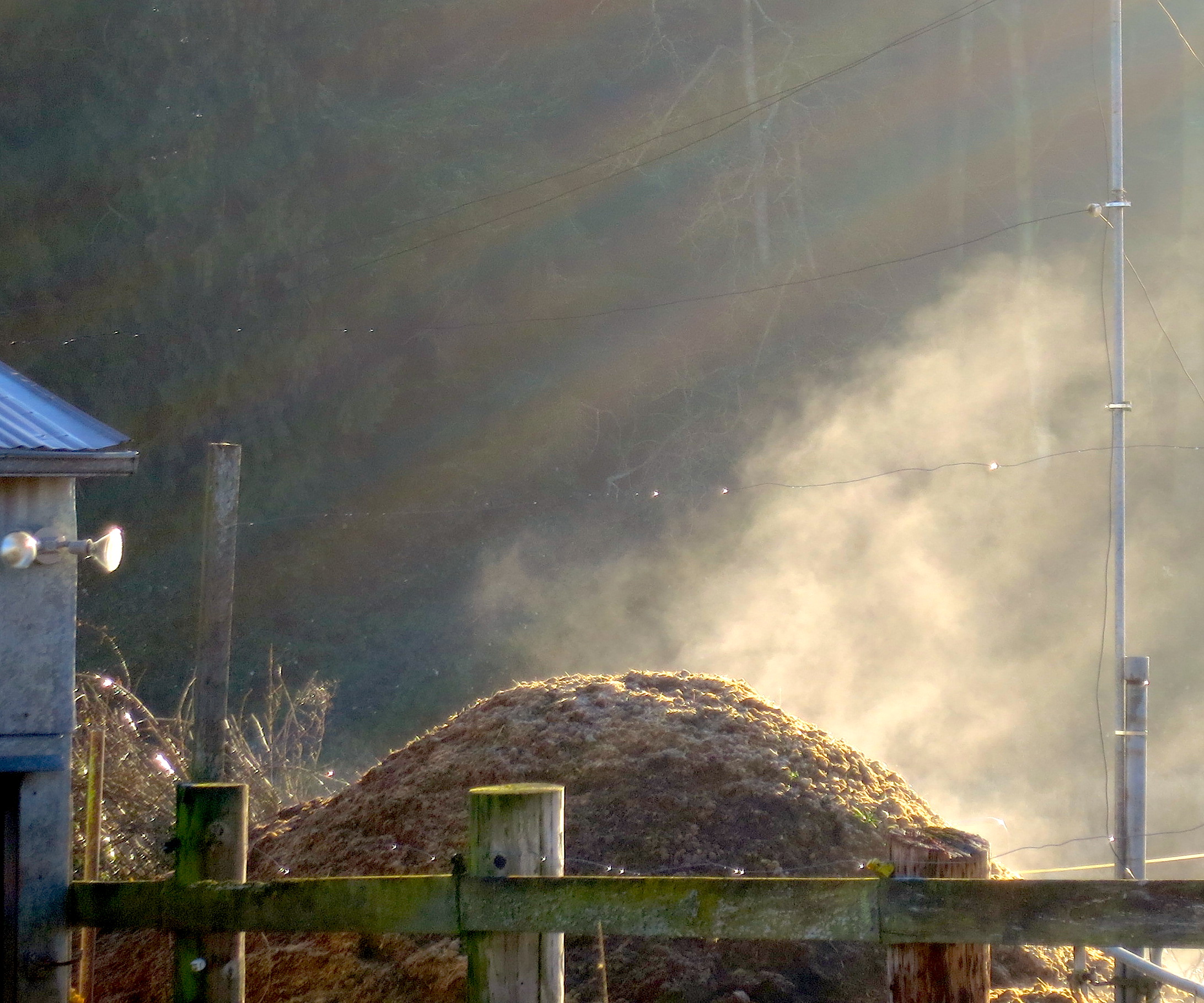
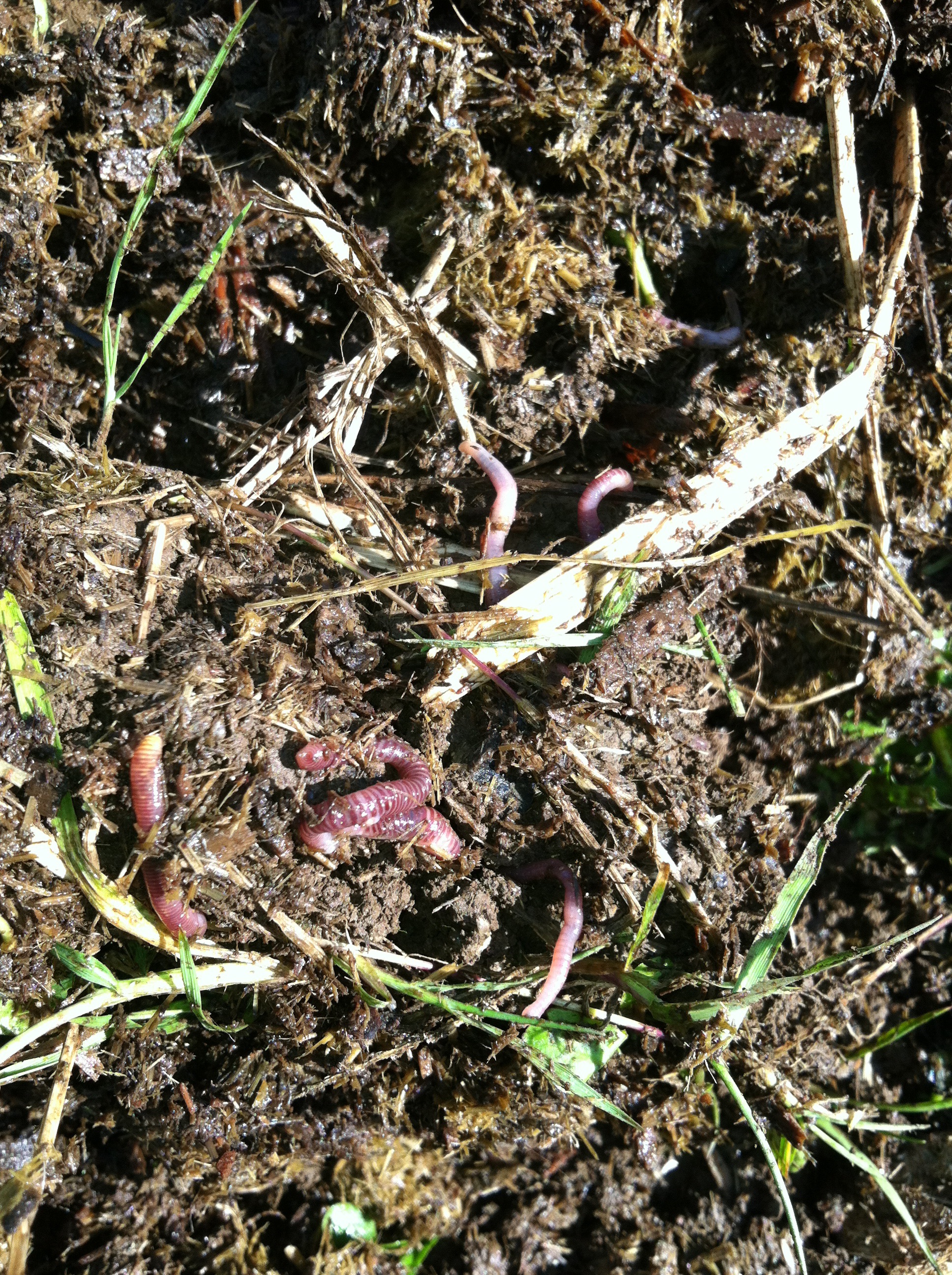
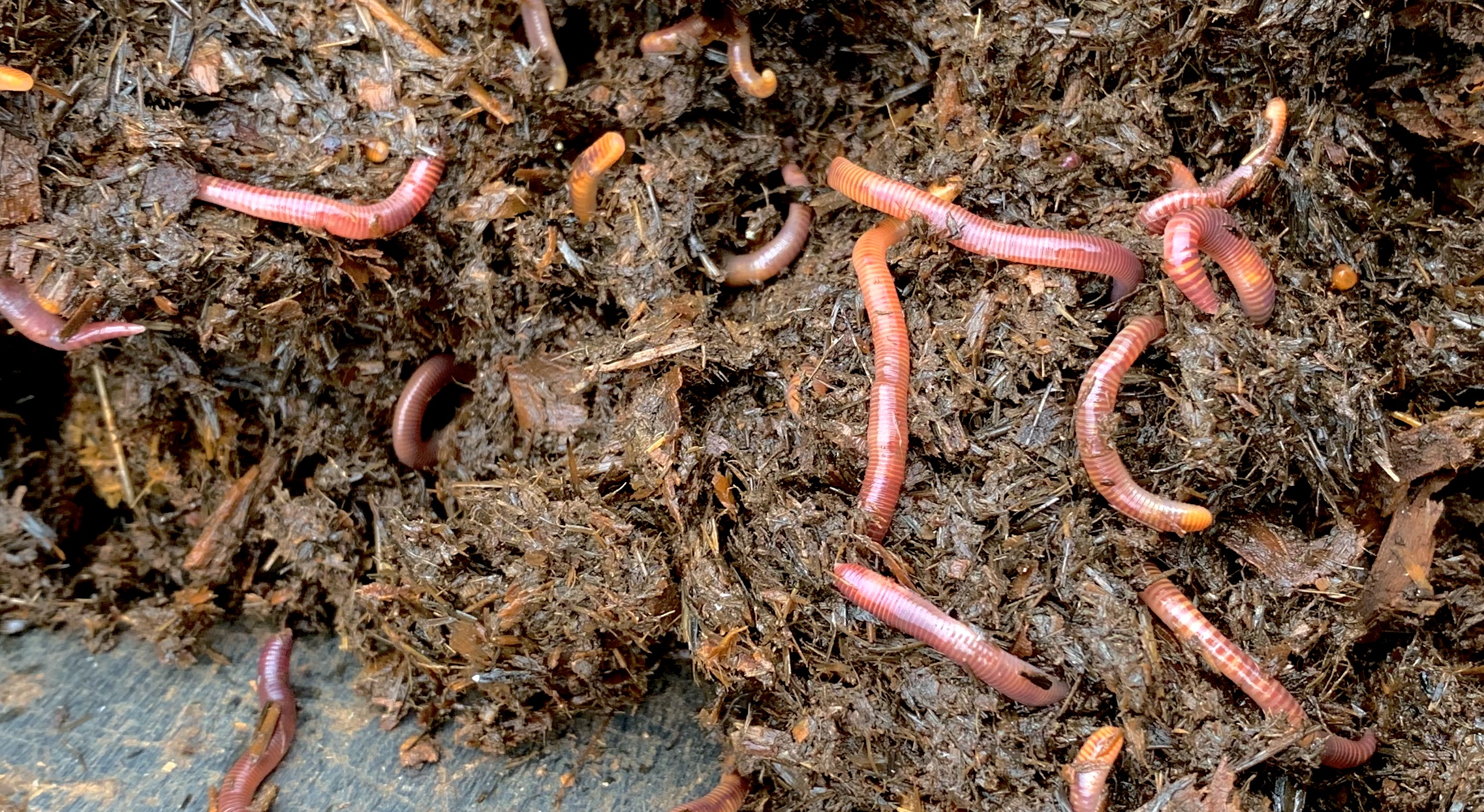
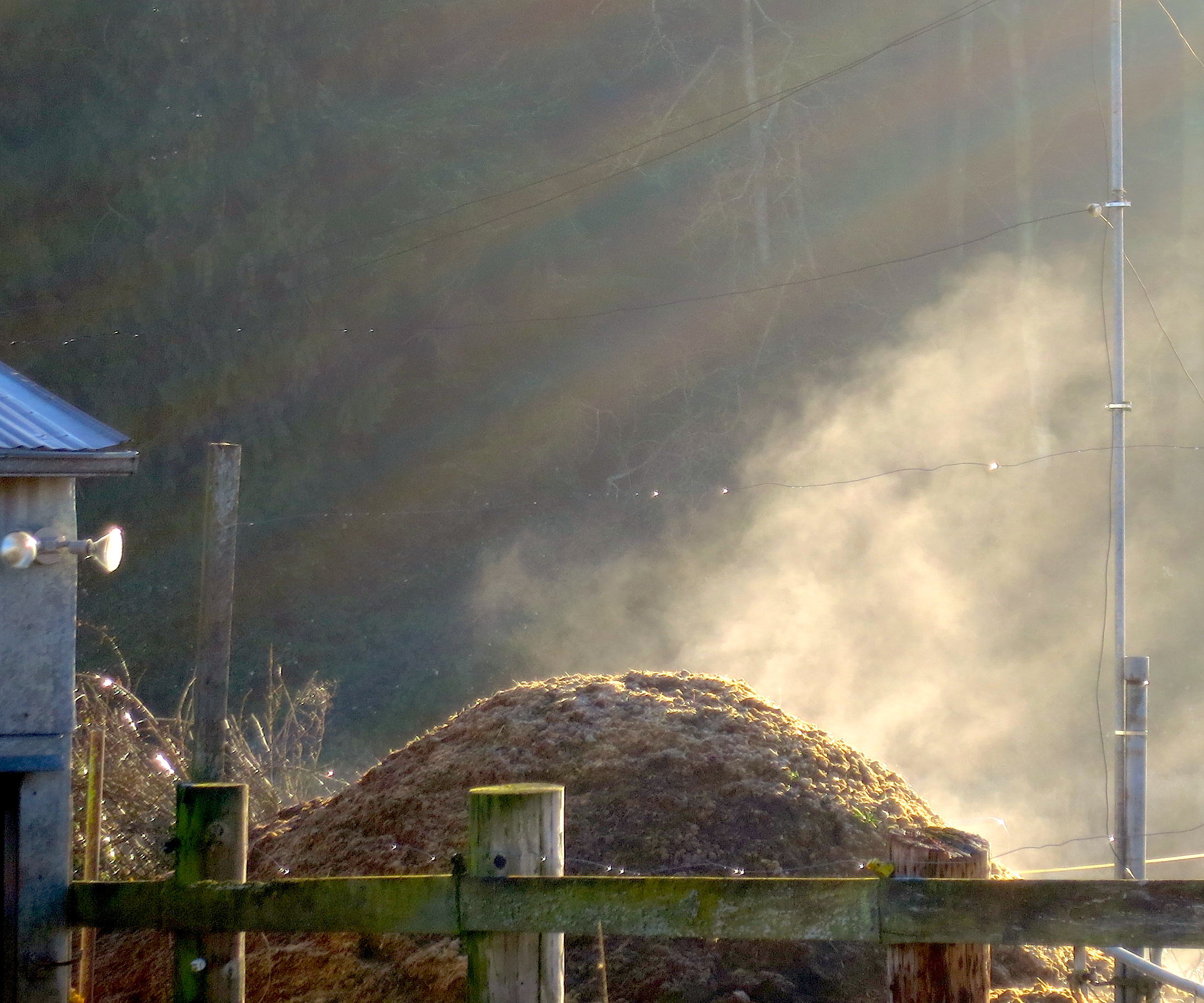
We’ve been composting horse manure for several decades behind the barn, and we dig in to the tall pile to spread on our garden plots. As Dan pushes the tractor’s front loader into the pile, steam rises from its compost innards. As the rich soil is scooped, thousands of newly exposed red wiggler worms immediately dive for cover. Within seconds, thousands of naked little creatures have, well, …wormed their way back into the security of warm dirt, being rudely interrupted from their routine. I can’t say I blame them.

Hundreds of thousands of wigglers end up being forced in the spring to adapt to new quarters, leaving the security of the manure mountain behind. As we smooth the topping of compost over the garden plot, the worms–gracious creatures that they are–tolerate being rolled and raked and lifted and turned over, waving their little bodies expectantly in the cool air before slipping back down into the dark. There they begin their work of digesting, aerating and renewing the soil of the garden, reproducing in their unique hermaphroditic way, leaving voluminous castings behind to further feed future seedlings to be planted.

Worms are unjustly denigrated by humans primarily because we don’t like to be surprised by them. We don’t like to see one in our food, especially only part of one, and are particularly distressed to see them after we’ve digested our food. Once we get past that bit of squeamishness, we can greatly appreciate their role as the ultimate recyclers, leaving the earth under our feet a lot better off once they are finished with their work.

We humans actually suffer by comparison: to be called “a worm” is really not as bad as it sounds at first. It is possible the worm may be offended by the association.

I hope to prove a worthy innkeeper for these new tenants.
May they live long and prosper only an inch beneath the grass,
so much more accessible than the infinite stars in the sky.
May each worm forgive the disruption
perpetrated by our rake and shovel.
May I smile appreciatively the next time
someone calls me a mere worm.

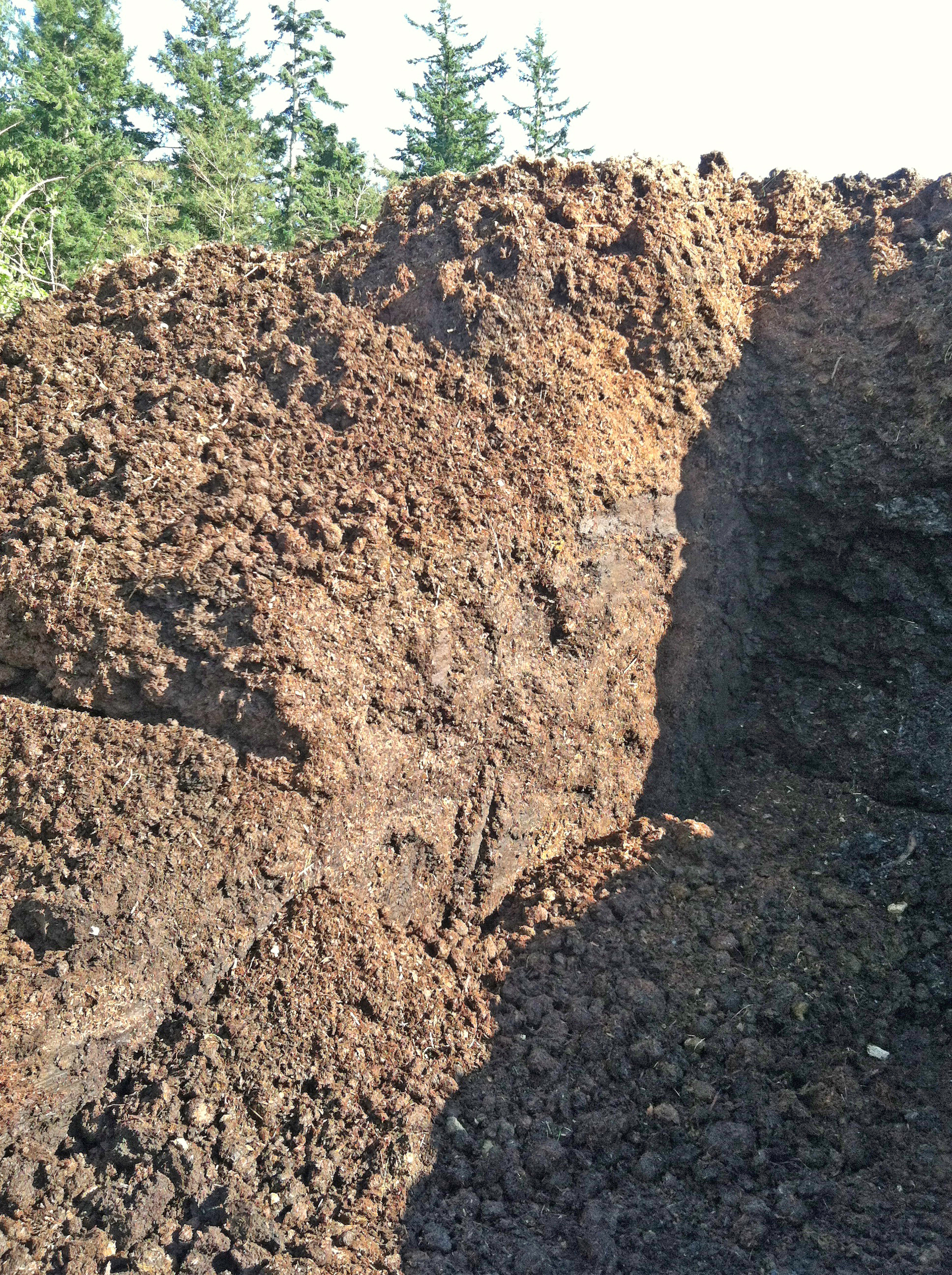
a cross section of 30 months of composted manure
AI image created for this post
One-Time
Monthly
Yearly

Make a one-time or recurring donation to support daily Barnstorming posts

Make a monthly donation

Make a yearly donation

Choose an amount

$10.00
$25.00
$50.00
$5.00
$15.00
$100.00
$5.00
$15.00
$100.00

Or enter a custom amount

$

Your contribution is deeply appreciated.

Your contribution is appreciated.

Your contribution is appreciated.

DonateDonate monthlyDonate yearly
Keep Reaching Out

Under a sky the color of pea soup
she is looking at her work growing away there
actively, thickly like grapevines or pole beans
as things grow in the real world, slowly enough.
If you tend them properly, if you mulch, if you water,
if you provide birds that eat insects a home and winter food,
if the sun shines and you pick off caterpillars,
if the praying mantis comes and the ladybugs and the bees,
then the plants flourish, but at their own internal clock.

Connections are made slowly, sometimes they grow underground.
You cannot tell always by looking what is happening.
More than half the tree is spread out in the soil under your feet.
Penetrate quietly as the earthworm that blows no trumpet.
Fight persistently as the creeper that brings down the tree.
Spread like the squash plant that overruns the garden.
Gnaw in the dark and use the sun to make sugar.

Weave real connections, create real nodes, build real houses.
Live a life you can endure: Make love that is loving.
Keep tangling and interweaving and taking more in,
a thicket and bramble wilderness to the outside but to us
interconnected with rabbit runs and burrows and lairs.

Live as if you liked yourself, and it may happen:
reach out, keep reaching out, keep bringing in.
This is how we are going to live for a long time: not always,
for every gardener knows that after the digging, after the planting,
after the long season of tending and growth, the harvest comes.
~Marge Piercy “The Seven of Pentacles”

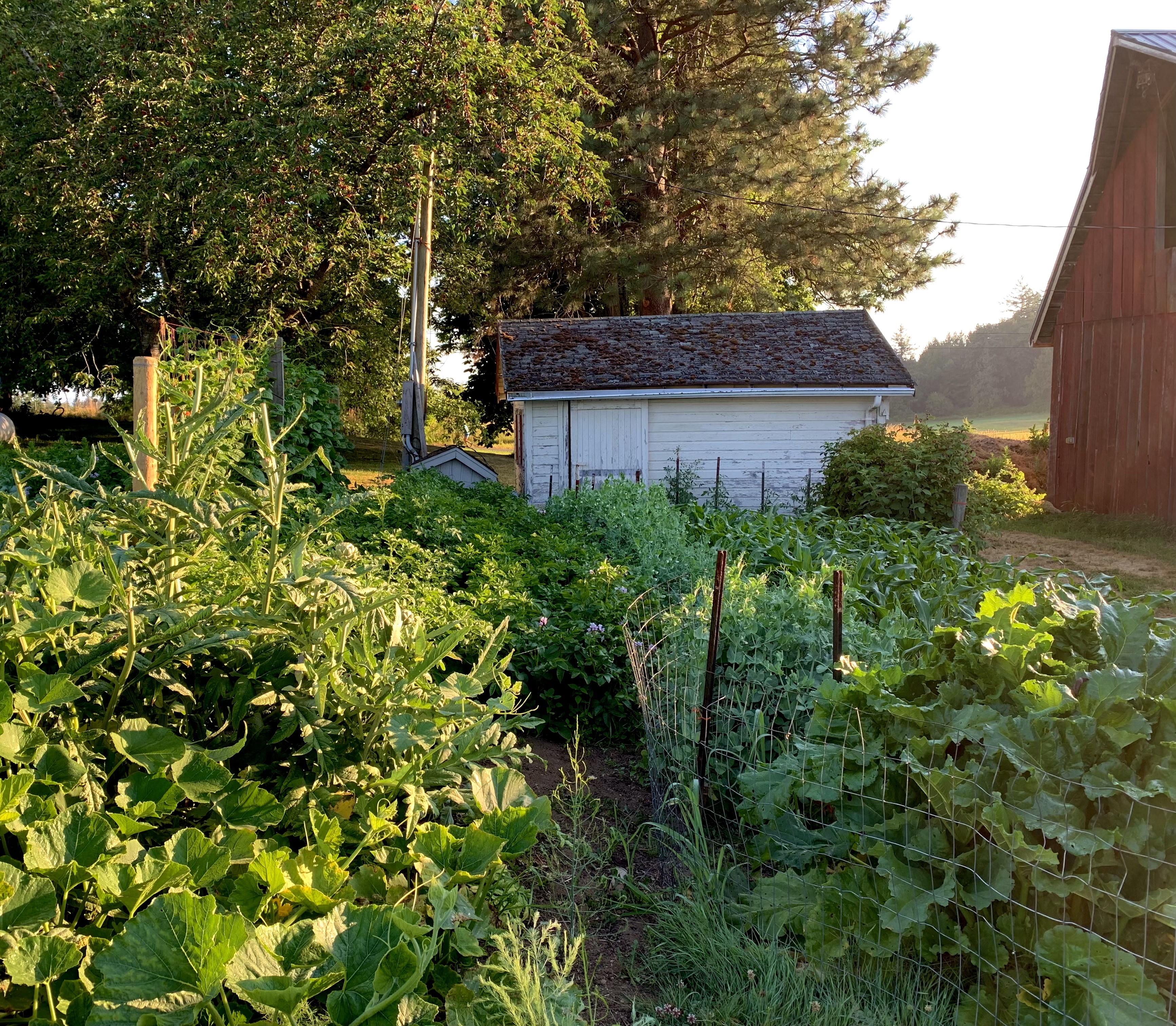
Our garden teaches us all kinds of life lessons, thanks to my husband’s hours of hard work preparing the soil, planting carefully and nurturing the emerging seedlings.

No garden tends itself – the growing plants reach out for connection to one another, for stability and companionship. The gardener nurtures, defends and harvests with an eye to preparing for the next growing season.

We who have been planted here need one another, interwoven and linked, both visibly and invisibly. I am woven around you and you around me; together we grow and thrive when tended, and as intended.

But more than anything else, we need our Gardener…

AI image created for this post
One-Time
Monthly
Yearly

Make a one-time or recurring donation to support daily Barnstorming posts

Make a monthly donation

Make a yearly donation

Choose an amount

$10.00
$25.00
$50.00
$5.00
$15.00
$100.00
$5.00
$15.00
$100.00

Or enter a custom amount

$

Your contribution is deeply appreciated.

Your contribution is appreciated.

Your contribution is appreciated.

DonateDonate monthlyDonate yearly
Just a Couple of Aging Fools

All day he’s shoveled green pine sawdust
out of the trailer truck into the chute.
From time to time he’s clambered down to even
the pile. Now his hair is frosted with sawdust.
Little rivers of sawdust pour out of his boots.

I hope in the afterlife there’s none of this stuff
he says, while I broom off his jeans, his sweater flocked
with granules, his immersed-in-sawdust socks.
I hope there’s no bedding, no stalls, no barn

no more repairs to the paddock gate the horses
burst through when snow avalanches off the roof.
Although the old broodmare, our first foal, is his,
horses, he’s fond of saying, make divorces.

…he says
let’s walk up to the field and catch the sunset

and off we go, a couple of aging fools.

I hope, he says, on the other side there’s a lot
less work, but just in case I’m bringing tools.
~Maxine Kumin from “Chores”

photo by Emily Vander Haak

They sit together on the porch, the dark
Almost fallen, the house behind them dark.
Their supper done with, they have washed and dried
The dishes–only two plates now, two glasses,
Two knives, two forks, two spoons–small work for two.
She sits with her hands folded in her lap,
At rest. He smokes his pipe. They do not speak,
And when they speak at last it is to say
What each one knows the other knows. They have
One mind between them, now, that finally
For all its knowing will not exactly know
Which one goes first through the dark doorway, bidding
Goodnight, and which sits on a while alone.
~Wendell Berry “They Sit Together on the Porch”

If just for a moment,
when this world is tilting so far
we just might fall off,
we pause to look at where we’ve been
and get our feet back under us.

The porch is a good place to start:
a bridge to what is beyond
without leaving the familiar.

Outside, looking square at the unknown,
yet still hearing and smelling and tasting
the love that dwells just inside these walls.

What could we want more
than to be missed when we step away?

Our voice, our words, our heart, our touch
never to be replaced,
its absence a hole impossible to fill?

When we are called back inside
where Love made us who we are,
may the “in between” of
time spent on the porch,
be even more treasured,
because two aging fools sat together there a spell.

AI image created for this post
One-Time
Monthly
Yearly

Make a one-time or recurring donation to support daily Barnstorming posts

Make a monthly donation

Make a yearly donation

Choose an amount

$10.00
$25.00
$50.00
$5.00
$15.00
$100.00
$5.00
$15.00
$100.00

Or enter a custom amount

$

Your contribution is deeply appreciated.

Your contribution is appreciated.

Your contribution is appreciated.

DonateDonate monthlyDonate yearly
A Summer’s Sweetness

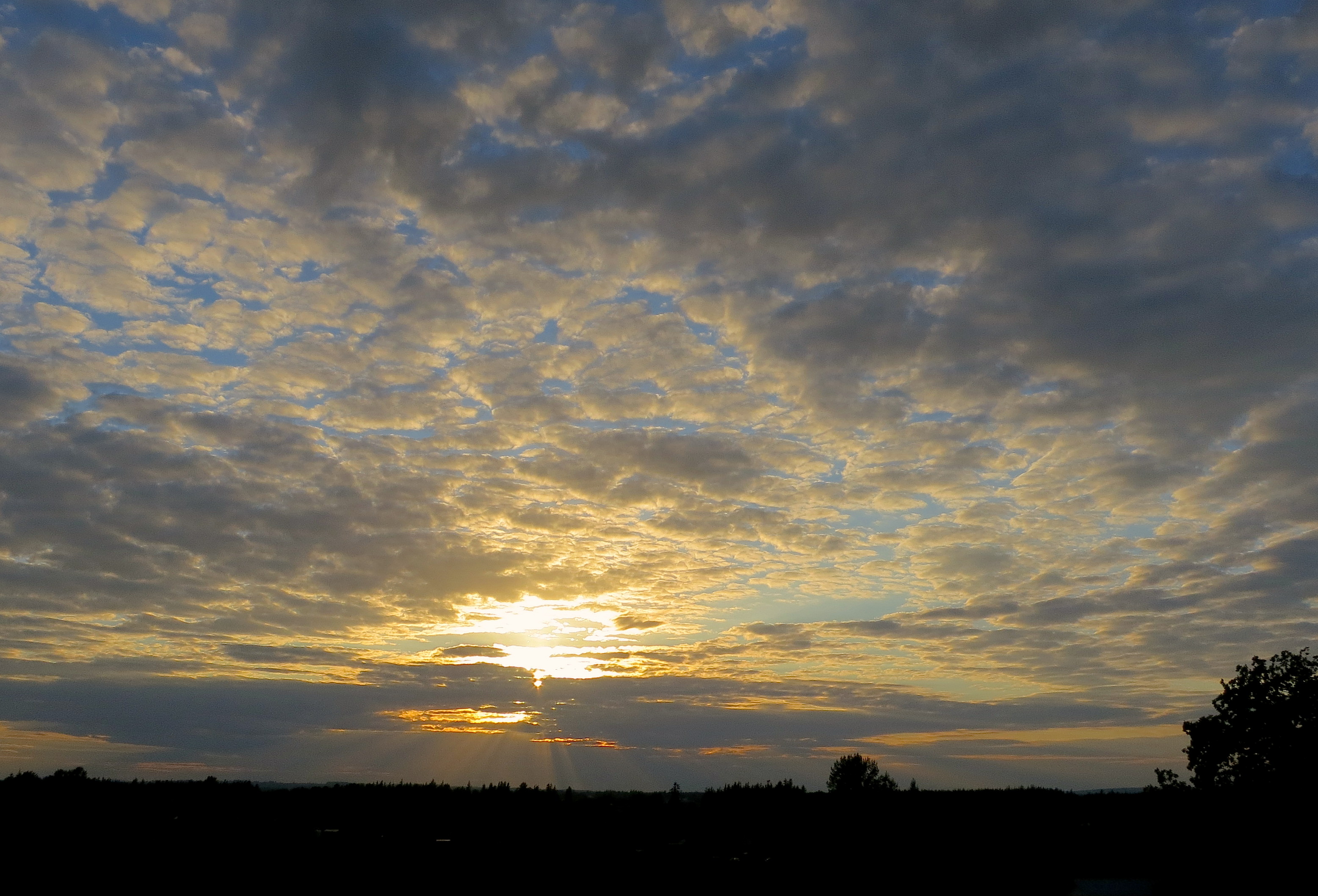
The clouds are low as a blanket.
Even the air is tangible,
and the steam from the kettle
thickens the air like wool.
Harvest is full on us; the pressure
to preserve builds like a thunderhead.

 
Shelling peas is fun at first,
slitting open the perfect pods,
working in rhythm to the pelter
of peas ringing in the pot.
But then our arms and shoulders ache,
the seeds rattle, hollow as bones,
and though we should rejoice,
another bushel groans before us.

 
But there in the blancher,
the new peas shine
fresh and wet, green
as emeralds; summer’s sweetness,
to be shelved with the long ripe days,
eaten with relish, as the butter
and juice run in our mouths
rare as dandelion wine.

~Barbara Crooker “Putting Up”

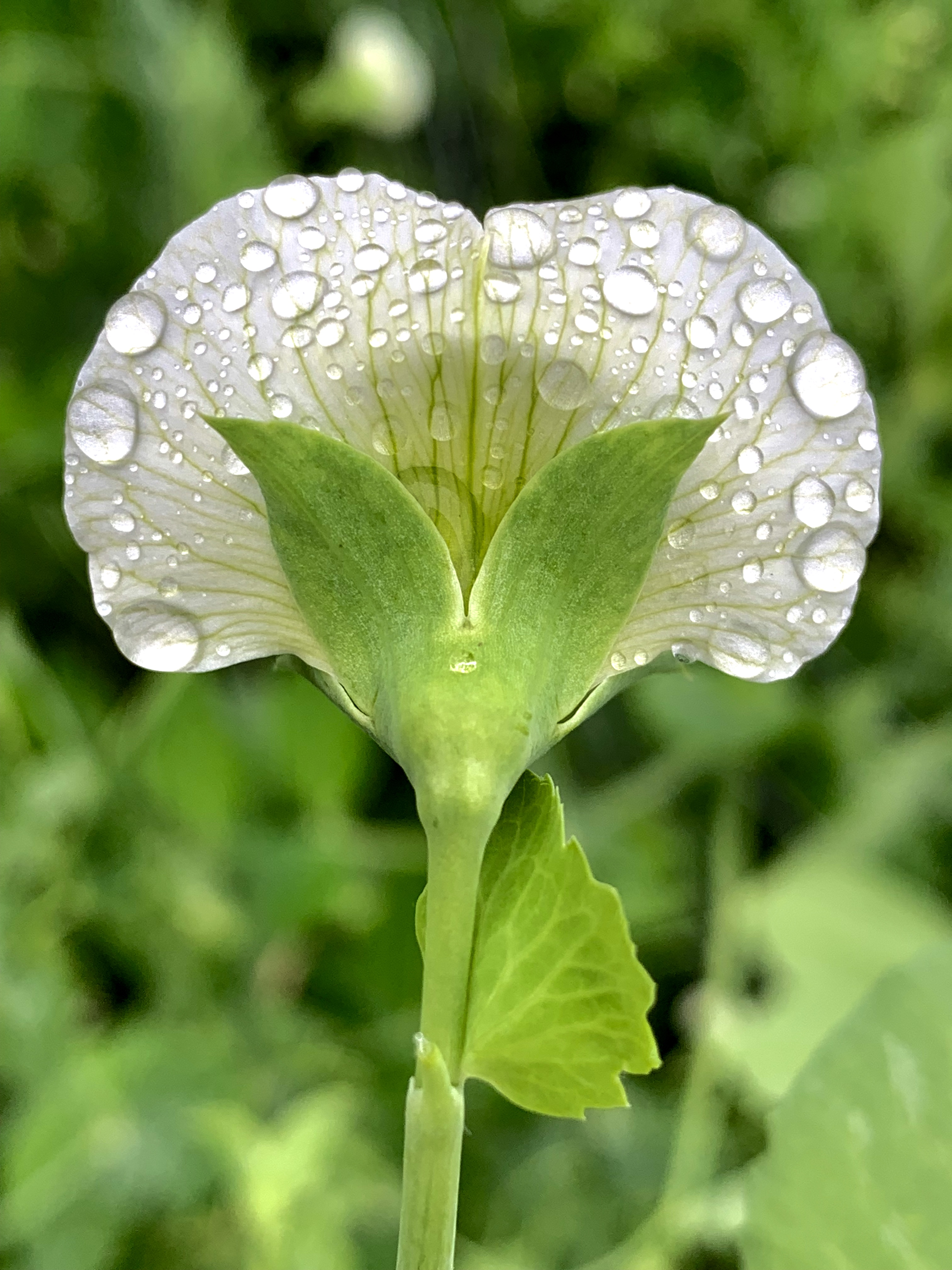
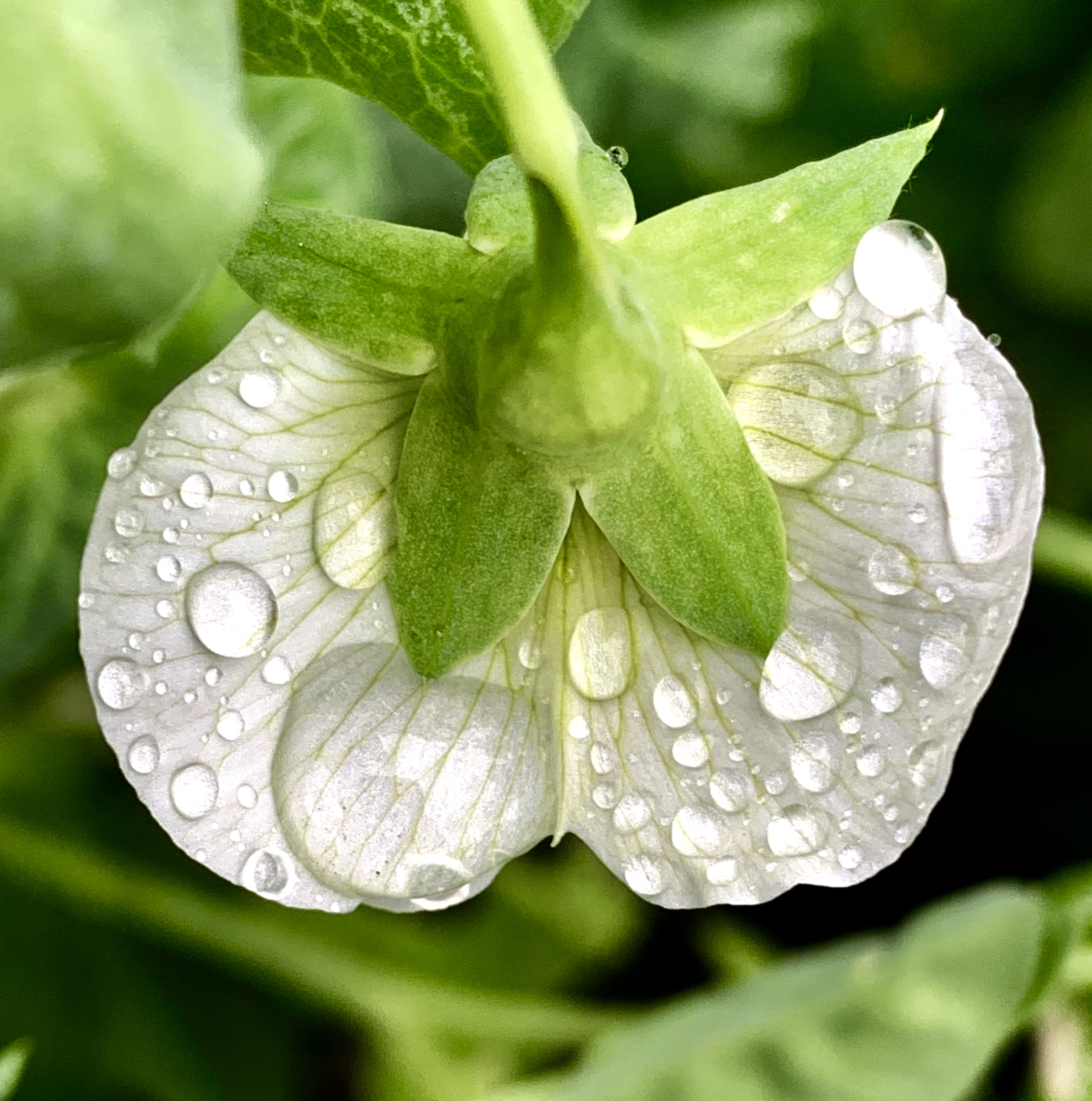
My earliest childhood memories include the taste and smell of fresh peas.  We lived in farming country north of Seattle where 50 years ago hundreds of acres of peas were grown for canning and freezing.  During the harvest, large pea harvesting machines would arrive for several days and travel down the road in caravans of 10 or 12, going from farm to farm to farm. They worked 24 hours a day to harvest as quickly as possible and traveled the roads late at night because they were so huge, they would take up both lanes of the country roads.  Inevitably a string of cars would form behind the pea harvesters, unable to pass, so it became a grand annual parade celebrating the humble pea.

The smell in the air when the fields were harvested was indescribable except to say it was most definitely a “green” and deliciously fresh smell.  The vines and pods would end up as silage for cattle and the peas would be separated to go to the cannery.  I figured those peas were destined for the city dwellers because in our back yard garden, we grew plenty of our own.

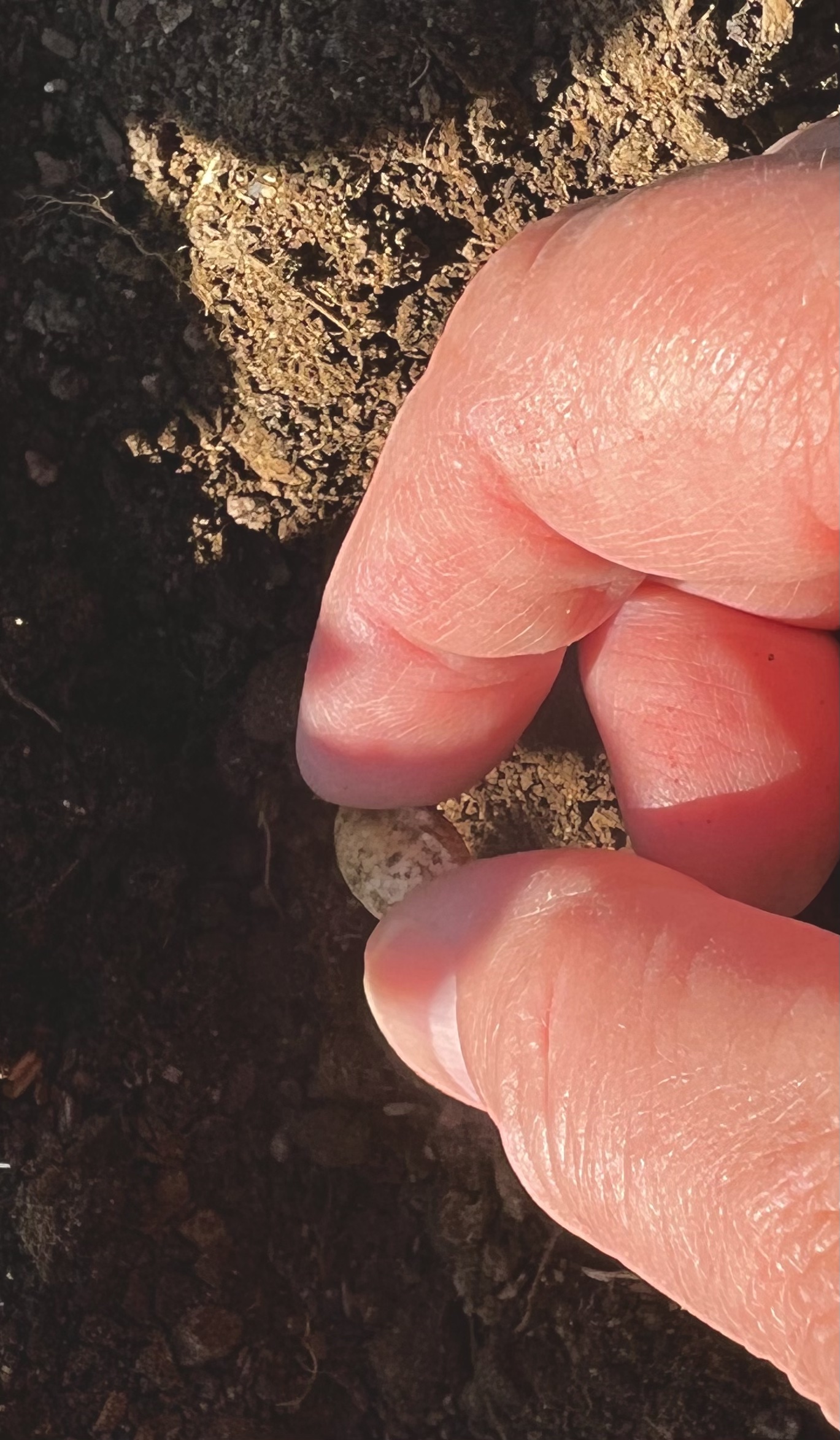
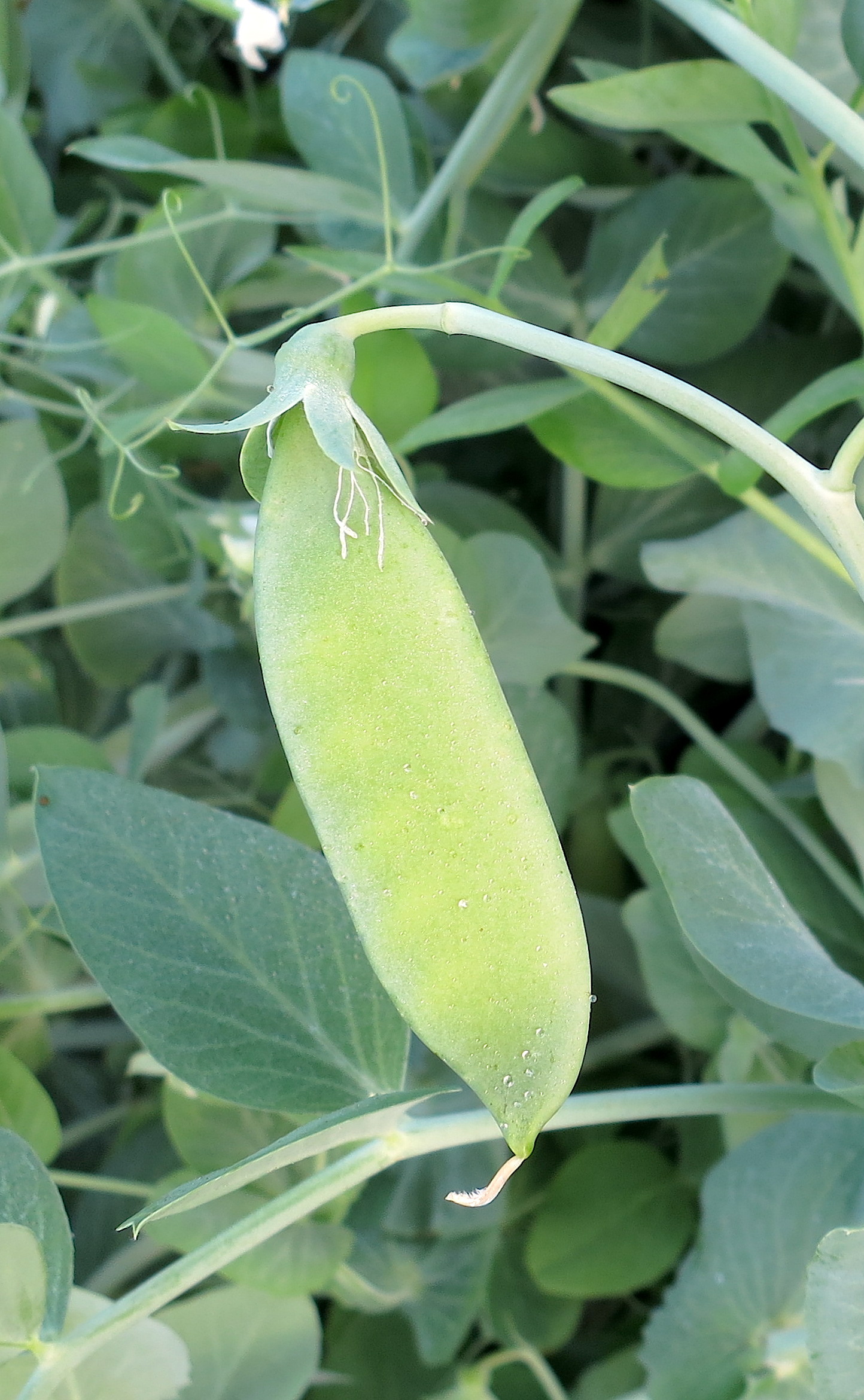
Pea seeds, wrinkled and frankly a little boring, could be planted even before the last frost was done with us in March, or even sometimes on Washington’s birthday in February.  The soil needed to not be frozen and not be sopping.  True, the seeds might sit still for a few weeks, unwilling to risk germination until the coast was clear and soil warmed a bit, but once they were up out of the ground, there was no stopping them.  We would generally have several rotations growing, in the hope of a 6 week pea eating season if we were fortunate, before the heat and worms claimed the vines and the pods.

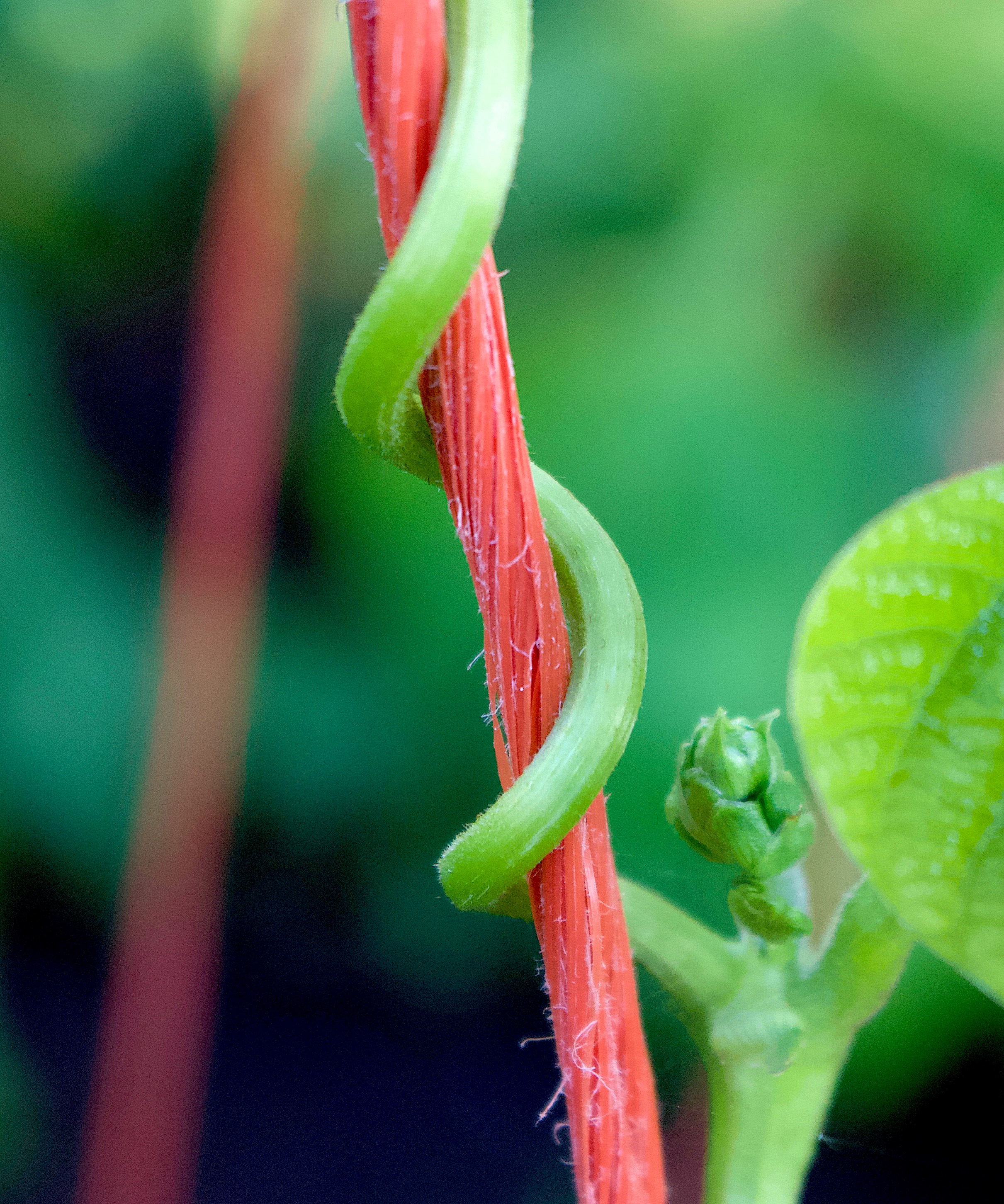
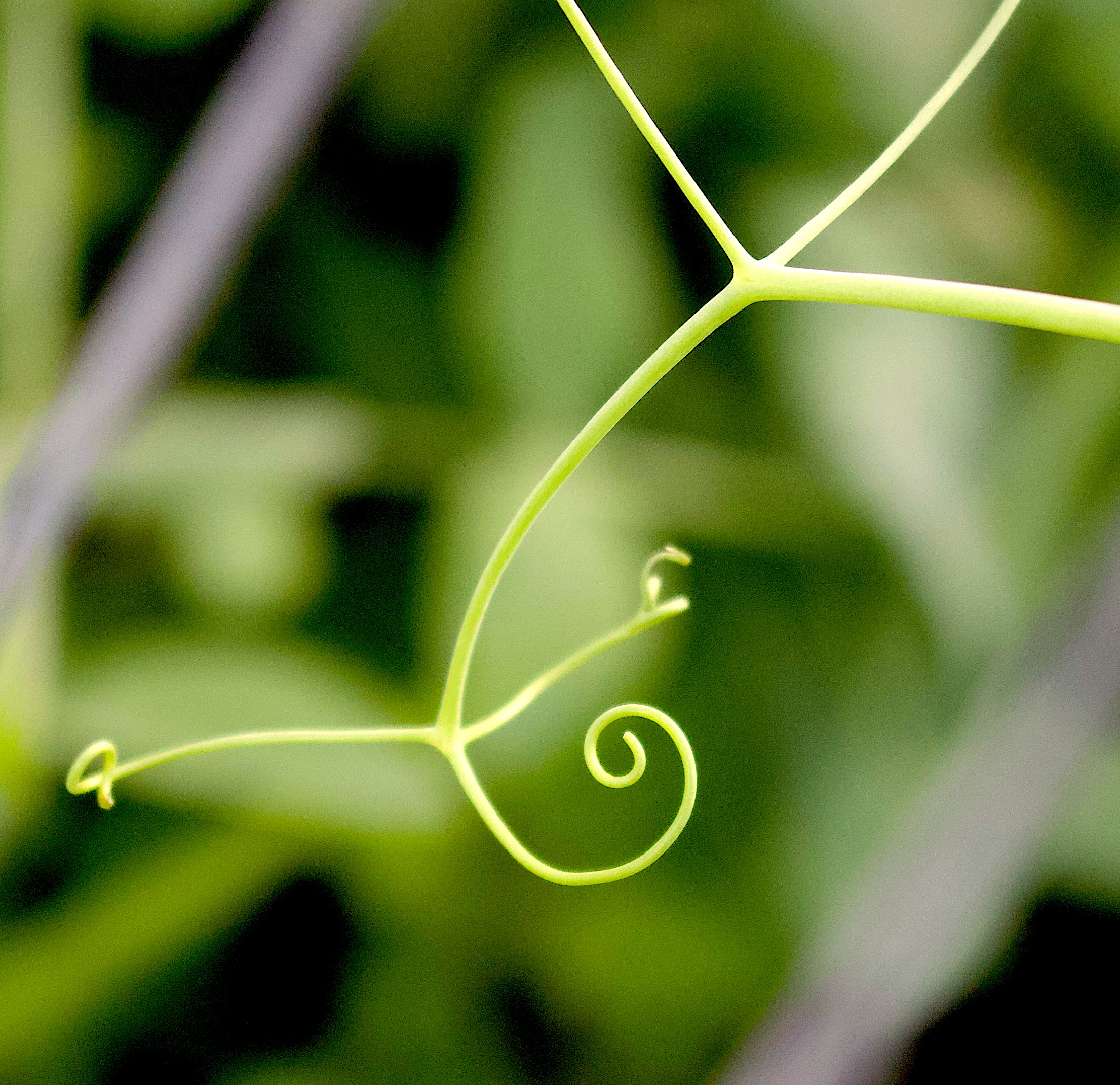
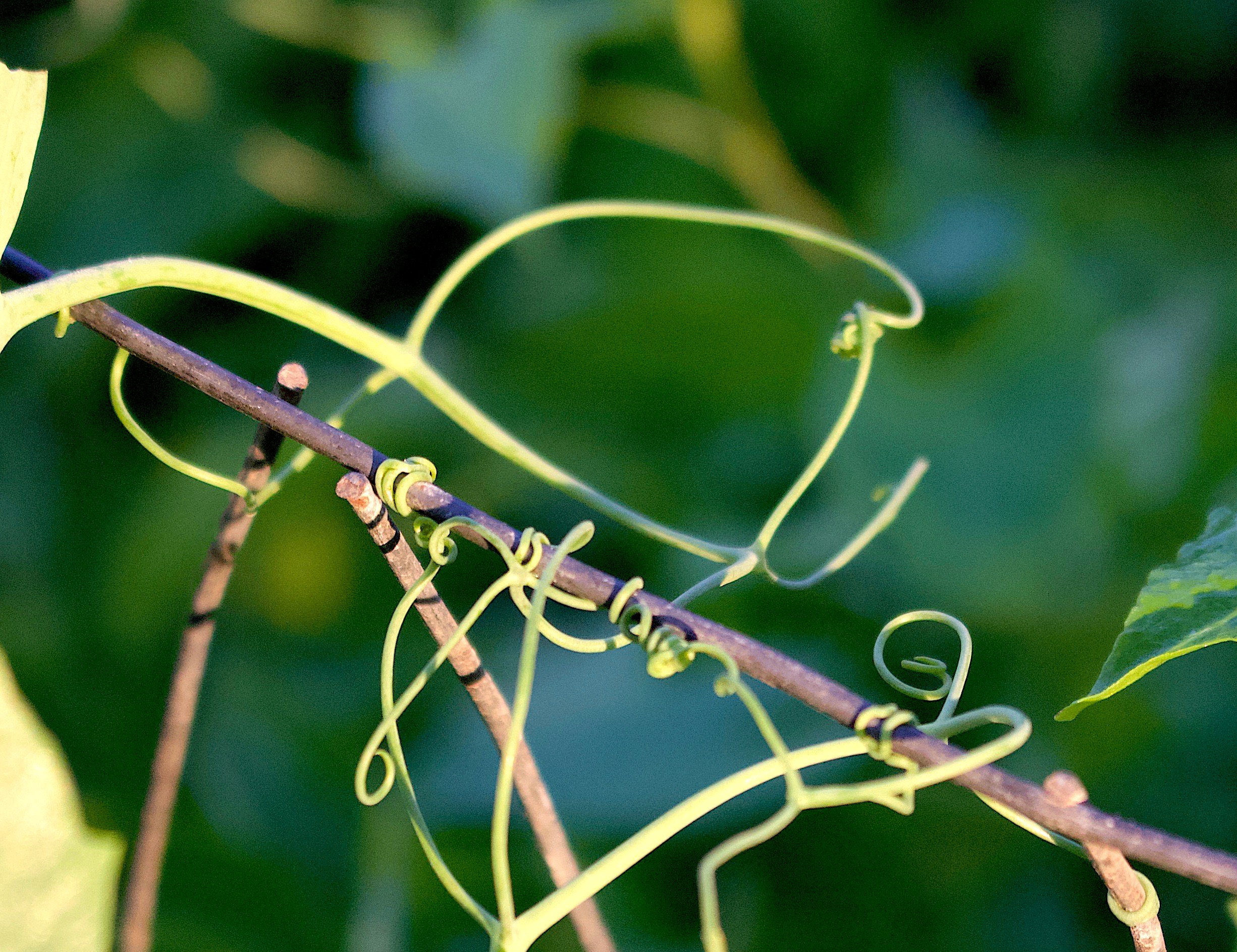
We always planted telephone peas, so the support of the vines was crucial–we used hay twine run up and down between two taut smooth wires attached high and low between two wooden posts.  The vines could climb 6 feet tall or better and it was fascinating to almost literally watch the pea tendrils wind their way around the strings (and each other), erotically clinging and wrapping themselves in their enthusiasm.

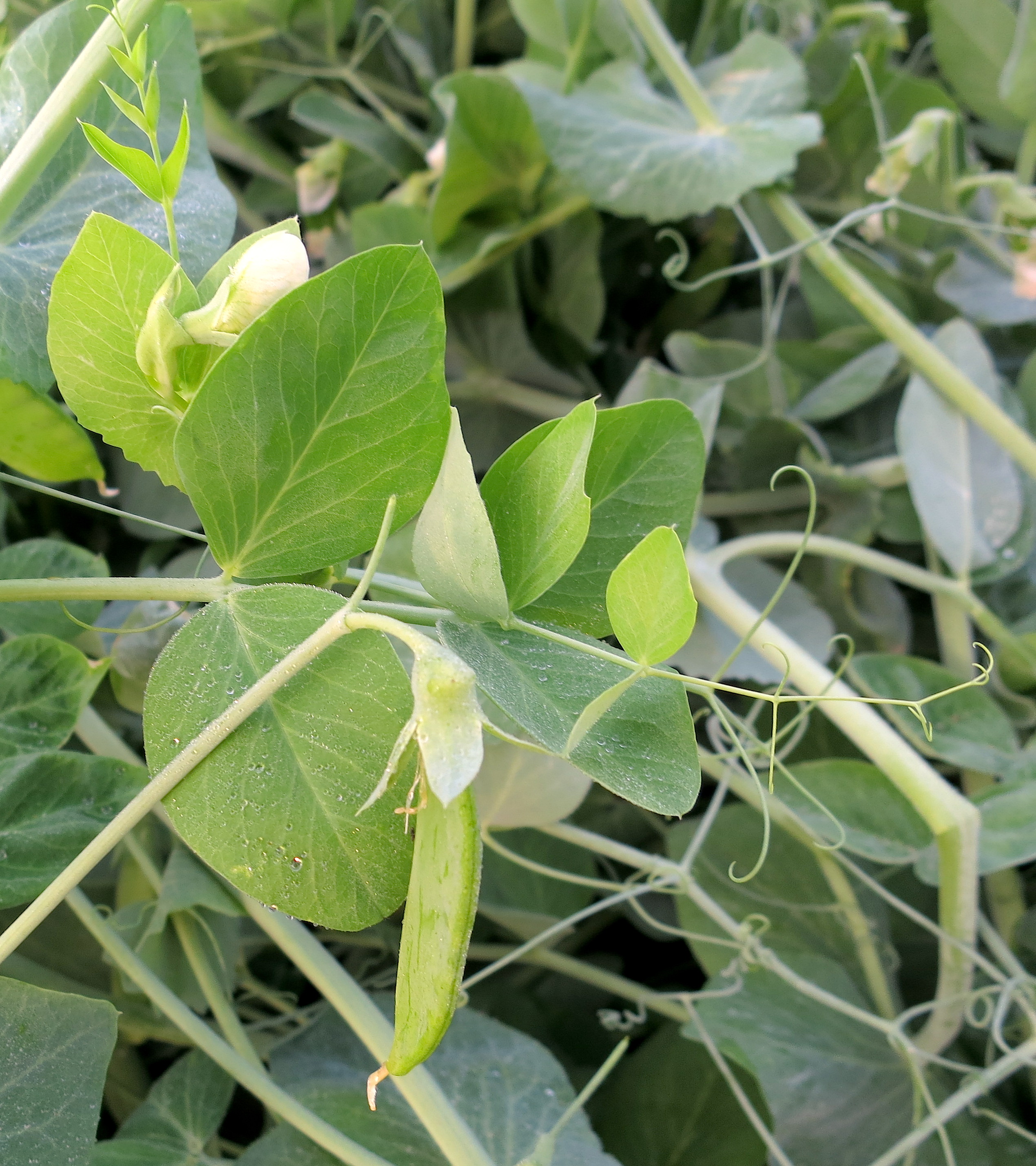
Once the pods start to form,  impatience begins.  I’d be out in the garden every day copping feels, looking for that first plump pod to pick and pop open.  It never failed that I would pick too soon, and open a pod to find only weenie little peas, barely with enough substance to taste.  Within a day or two, however, the harvest would be overwhelming, so we’d have to pick early in the morning while the peas were still cool from the night dew.

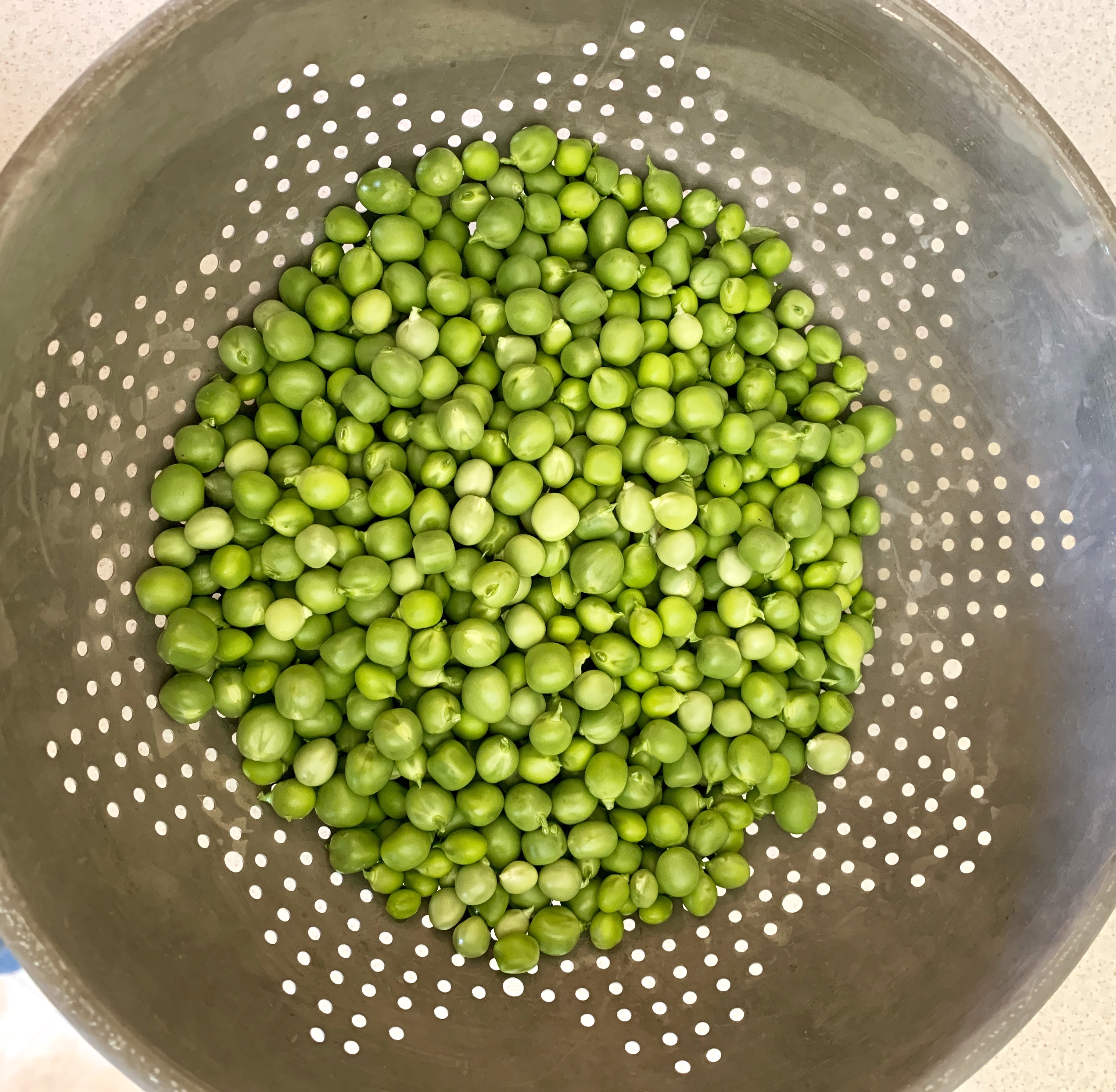
Then it was shelling time, which involved several siblings on a back porch, one mother supervising from a distance to make sure there weren’t too many peas being pelted in pique at an annoying little brother, and lots of bowls to catch the peas and the pods.  A big paper sack of intact pods would yield only a few cups of peas, so this was great labor for small yield.   Opening a pod of peas is extremely satisfying though;  there is a tiny audible “pop” when the pod is pressed at the bottom, and then as your thumb runs down the inner seam of the pod loosening all the peas, they make a dozen little “pings” in the bowl when they fall.  A symphony of pea shelling often was accompanied by the Beach Boys and the Beatles.

Once the weather got hot, the pea worms would be at work in the pods, so then one encountered wiggly white larvae with little black heads and their webs inside the pods.  We actually had a “Wormie” song we sung when we found one, even in the 60’s recognizing that our organic garden meant sharing the harvest with crawling protein critters. The peas would be bored through, like a hollowed out jack o’lantern, so those got dumped in the discard bowl.

The dull green coat of the raw pea turns bright green during the several minutes of blanching in boiling water, then they are plunged into ice water until cool and packed in ziplock bags.  Those peas are welcomed to the table during the other 11 months out of the year, sometimes mixed with carrots, sometimes with mushrooms, sometimes chased with a little fresh garlic.  They are simply the most lovely food there is other than chocolate.

From an undistinguished pea seed to intricate vines and coiling tendrils–from pregnant pods bursting at the seams to a bounty at meals: the humble pea does indeed deserve a grand parade in the middle of the night.

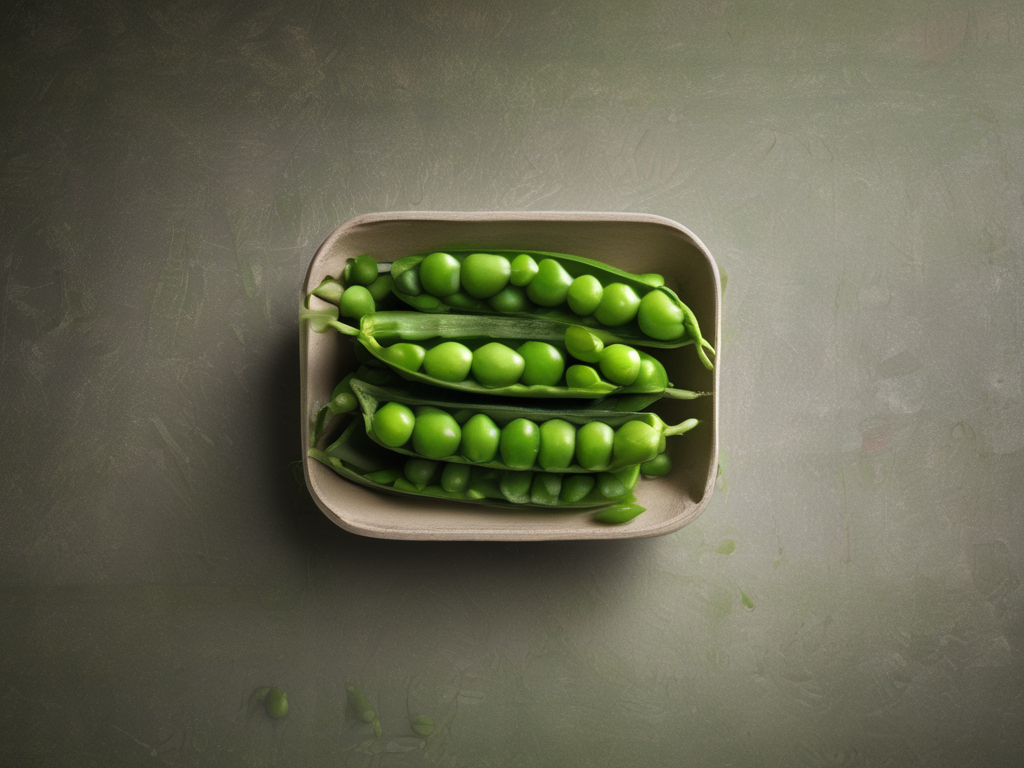
AI image generated for this post
One-Time
Monthly
Yearly

Make a one-time or recurring donation to support daily Barnstorming posts

Make a monthly donation

Make a yearly donation

Choose an amount

$10.00
$25.00
$50.00
$5.00
$15.00
$100.00
$5.00
$15.00
$100.00

Or enter a custom amount

$

Your contribution is deeply appreciated.

Your contribution is appreciated.

Your contribution is appreciated.

DonateDonate monthlyDonate yearly

Holding Up the Darkness

See how the trees
Reach up and outward
As if their entire existence
Were an elegant gesture of prayer.
See how they welcome the breath of spirit,
In all its visible and invisible forms.
See how the roots reach downward and out,
Embracing the physical,
The body and bones
Of its soul of earth and stone,
Allowing half its life to be sheltered
in the most quiet and secret places.


Oh, if I could be more like a tree on this Sunday morning,
To feel the breath of invisible spirit
Touch me as tenderly as a kiss on the forehead.
If I could courageously and confidently
Dig down into the dark
Where the ground water runs deep,
Where shelter and sanctuary
Can be had and held.


Ah, to be like a tree
With all its bent and unbent places,
A whole and holy thing
From its topmost twigs
To the deepest taproot
To all the good and graceful
Spaces between.

~Carrie Newcomer “To Be Like a Tree” from The Beautiful Not Yet: Poems, Essays & Lyrics


I love the accomplishments of trees,
How they try to restrain great storms
And pacify the very worms that eat them.
Even their deaths seem to be considered.
I fear for trees, loving them so much.
I am nervous about each scar on bark,
Each leaf that browns. I want to
Lie in their crotches and sigh,
Whisper of sun and rains to come.


Sometimes on summer evenings I step
Out of my house to look at trees
Propping darkness up to the silence.


When I die I want to slant up
Through those trunks so slowly
I will see each rib of bark, each whorl;
Up through the canopy, the subtle veins
And lobes touching me with final affection;
Then to hover above and look down
One last time on the rich upliftings,
The circle that loves the sun and moon,
To see at last what held the darkness up.

~Paul Zimmer “A Final Affection” from Crossing to Sunlight.

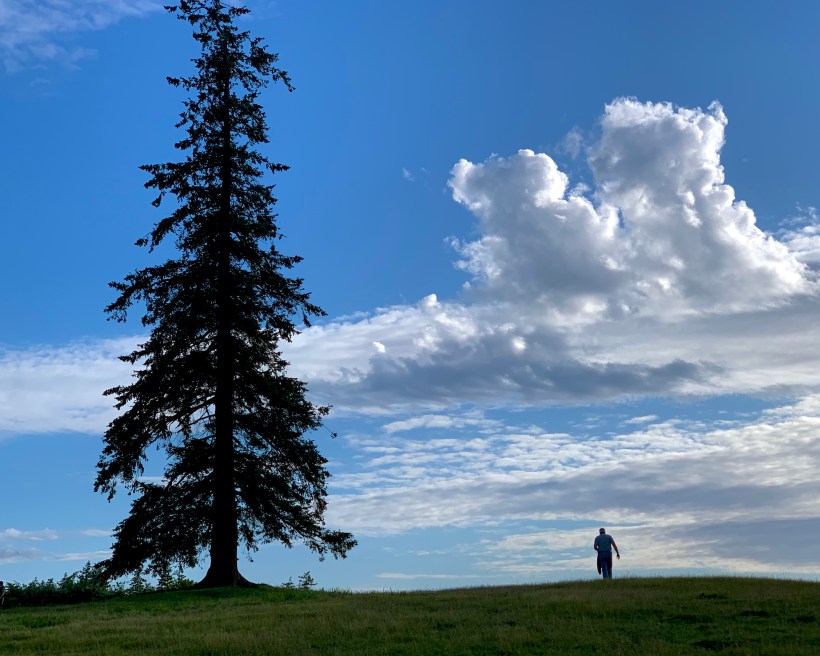
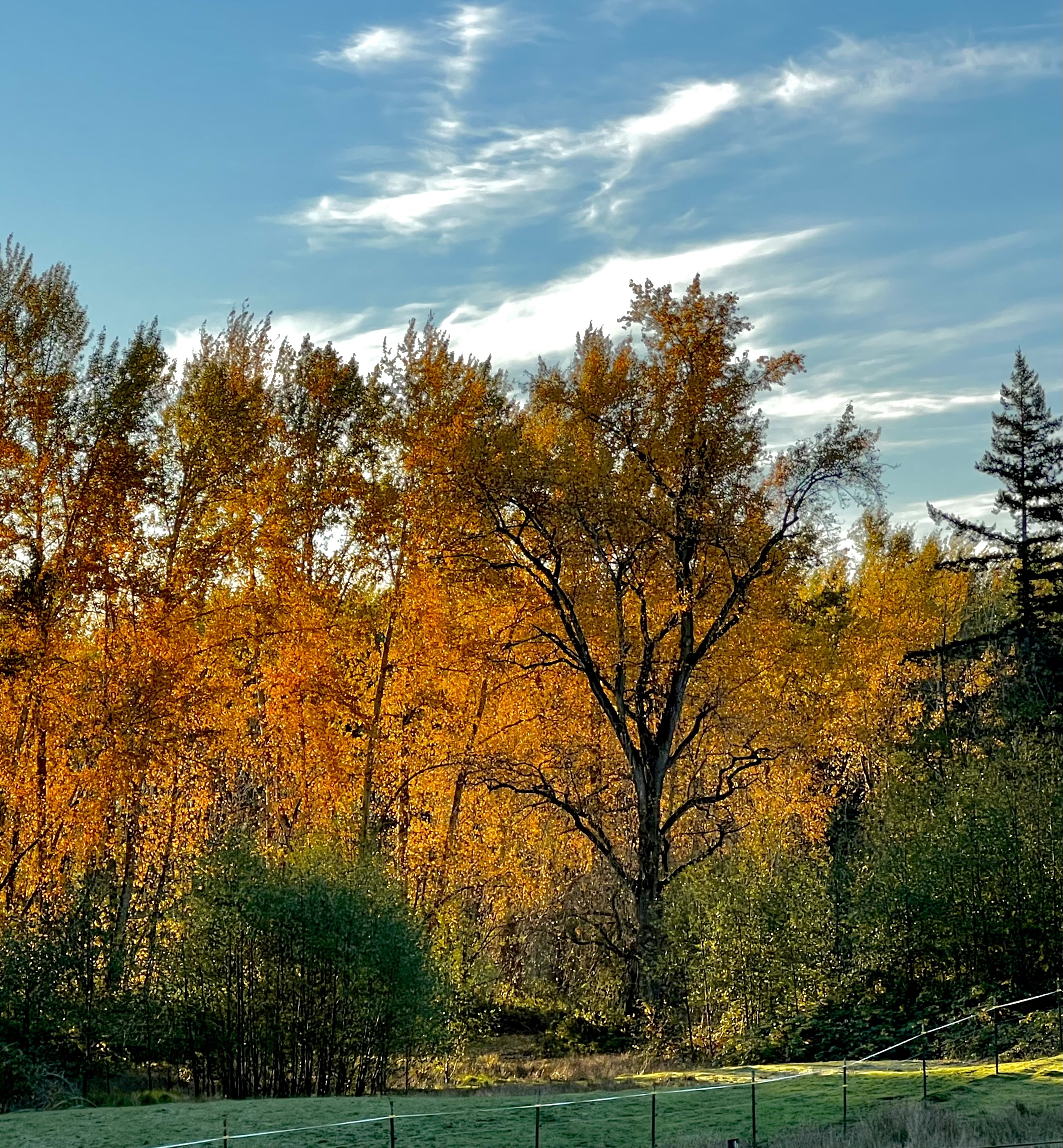
The old farmer who sold us this farm 35 years ago made sure we were equipped for a most important role: becoming the caretakers of trees he had planted and watered and loved for decades.

He exacted a promise we would not remove any tree before its time. For the most part, we have been able to do what he asked.

Most trees we’ve lost have succumbed to wind or disease or crippling old age. The old row of poplars became quite hazardous with their breaking branches and invading roots, and a couple old orchard trees gave way for our addition of a garage. For the record, we did feel appropriately guilty about taking their lives.

We have added numerous trees to replace those we have lost. Now we know exactly how that old farmer felt: they become like our children – growing, thriving and fruiting long past our presence here.

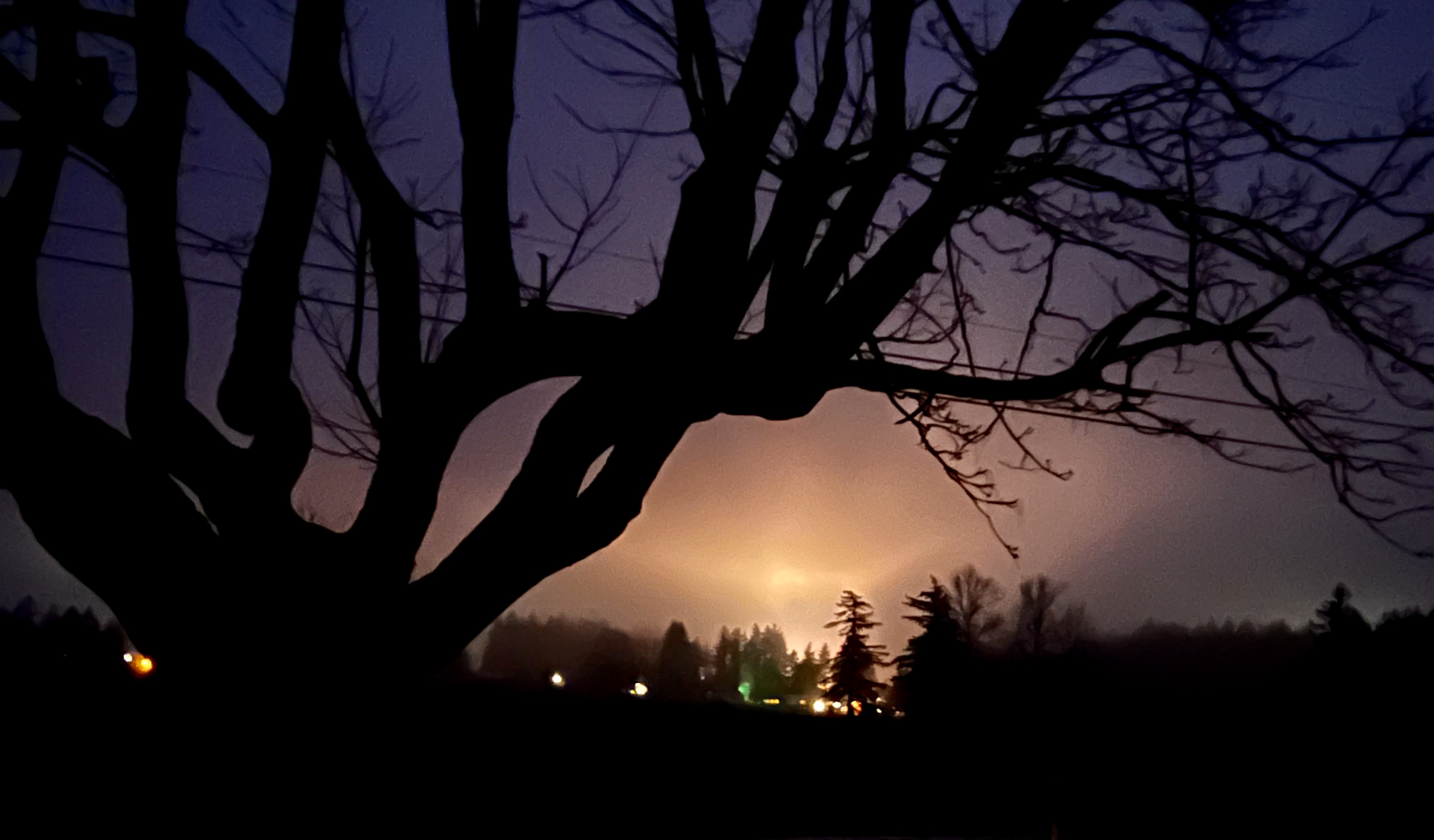
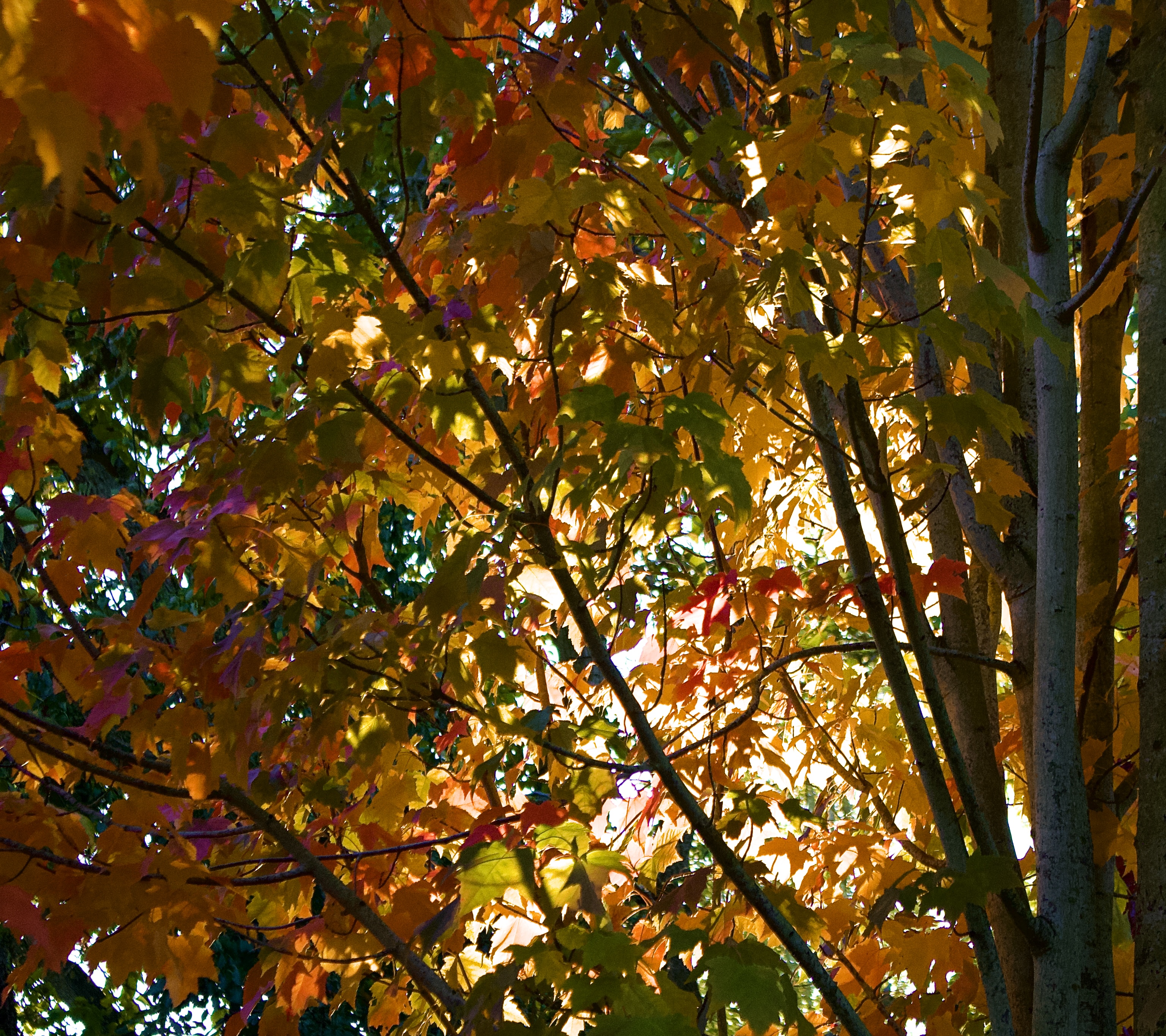
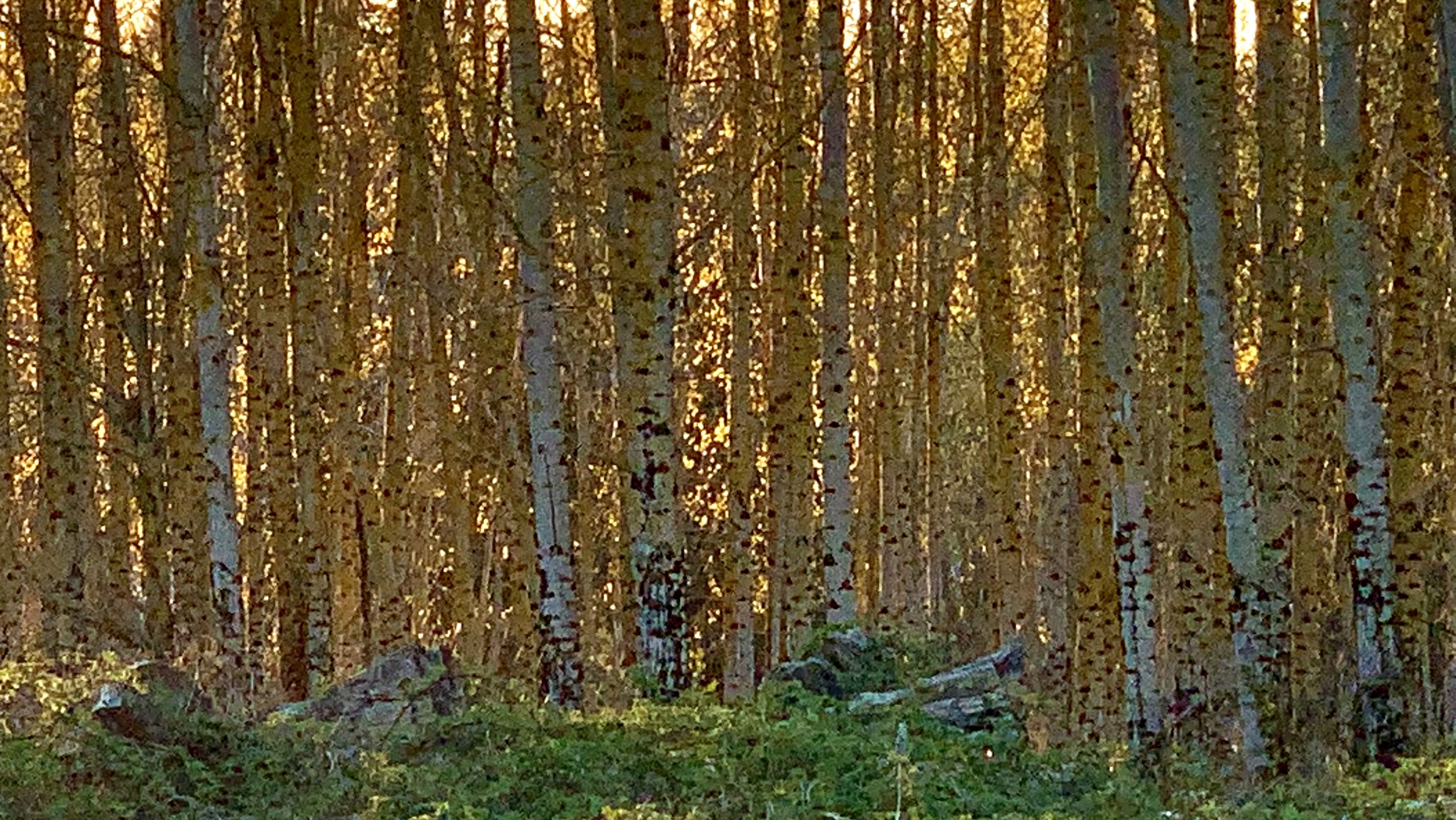
These sturdy trunks stand solid, holding the darkness up with their branches, as if in constant prayer to care for us creatures living below.

AI image created for this post

One-Time
Monthly
Yearly

Make a one-time or recurring donation to support daily Barnstorming posts

Make a monthly donation

Make a yearly donation

Choose an amount

$10.00
$25.00
$50.00
$5.00
$15.00
$100.00
$5.00
$15.00
$100.00

Or enter a custom amount

$

Your contribution is deeply appreciated.
Your contribution is appreciated.

Your contribution is appreciated.

DonateDonate monthlyDonate yearly