The Stones Themselves Will Start to Sing: It Is My Treason

Who was the guilty?
Who brought this upon you?

It is my treason,
Lord, that has undone you.

’Twas I, Lord Jesus,
I it was denied you;
I crucified you.

~Oh Holy Jesus, How Have You Offended?
Ah, when to the heart of man
Was it ever less than a treason
To go with the drift of things,
To yield with a grace to reason,
And bow and accept the end
Of a love or a season?
~Robert Frost from “Reluctance”
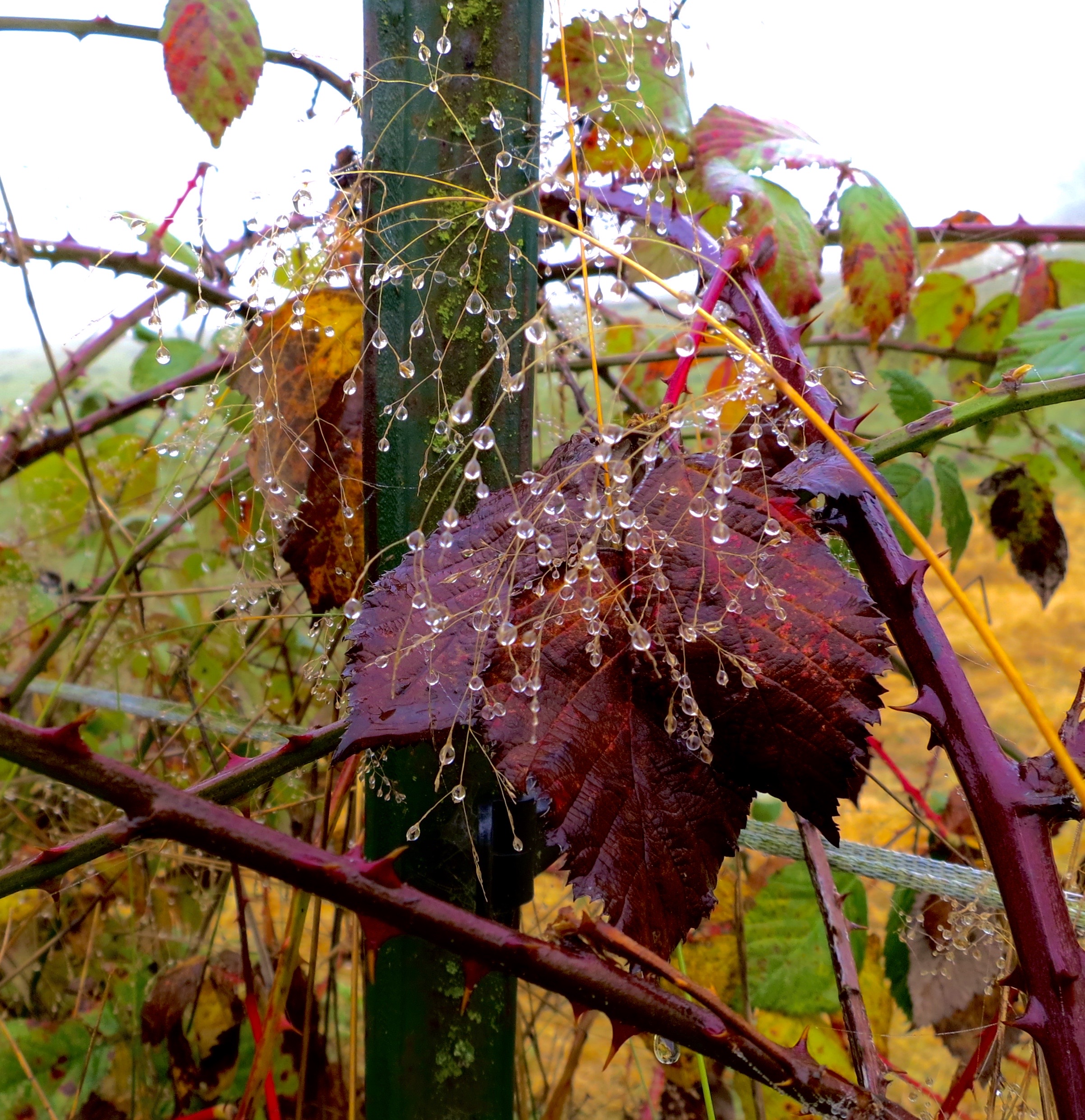
We share in the guilt, you and I, turning away from Love freely given.

We are the treasonous souls who betrayed a suffering dying Savior, allowing Him to take on Himself the punishment we deserved ourselves.

It is we who abandoned Him as He loved us to death.

Still now, even knowing His sacrifice, we accept the drift of things in our daily lives, setting aside our responsibility to care for one another.

We yield when there is pressure threatening to knock us over.
We bow and falter when our or others’ burdens become too much.

It just feels easier to not get involved.

Over this past week we are witnessing the profound cost of love:
the citizens of Ukraine will not accept, yield or bow to evil. They are willingly becoming sacrifices by resisting enormous forces bent on their destruction. Ukraine is teaching the world what it means to stand up to a bully — to take the shots for what is right and good and pure, not assuming someone else will do it for them.

Anything less would be acting treasonous to Love:
loving the heart of man and revering the face of God.
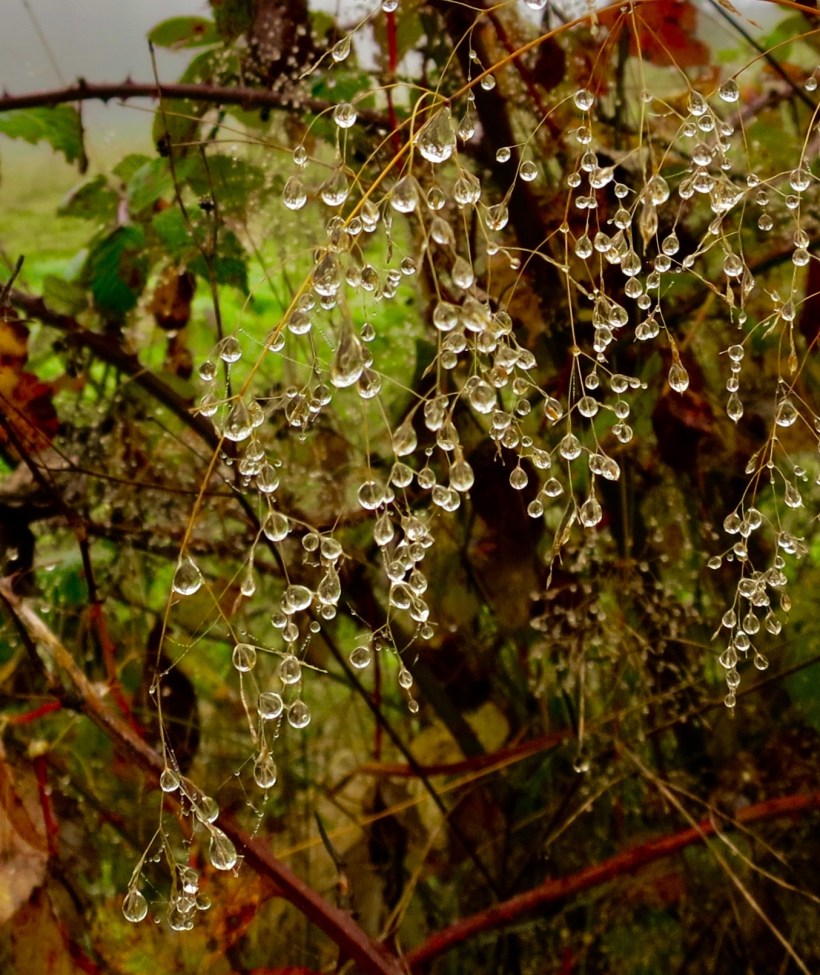
This year’s Lenten theme for Barnstorming is a daily selection from songs and hymns about Christ’s profound sacrifice on our behalf.

If we remain silent about Him, the stones themselves will shout out and start to sing (Luke 19:40).

In His name, may we sing…

Ah, holy Jesus, how hast thou offended,
That we to judge thee have in hate pretended?
By foes derided, by thine own rejected,
O most afflicted!

Who was the guilty?
Who brought this upon thee?
Alas, my treason, Jesus, hath undone thee!
Twas I, Lord Jesus, I it was denied thee;
I crucified thee.

Lo, the Good Shepherd for the sheep is offered;
The slave hath sinned, and the Son hath suffered.
For our atonement, while we nothing heeded,
God interceded.

For me, kind Jesus, was thy incarnation,
Thy mortal sorrow, and thy life’s oblation;
Thy death of anguish and thy bitter passion,
For my salvation.

Therefore, kind Jesus, since I cannot pay thee,
I do adore thee, and will ever pray thee,
Think on thy pity and thy love unswerving,
Not my deserving.

One-Time
Monthly
Yearly

Make a one-time or recurring donation to support daily Barnstorming posts

Make a monthly donation

Make a yearly donation

Choose an amount

¤5.00
¤10.00
¤20.00
¤5.00
¤15.00
¤100.00
¤5.00
¤15.00
¤100.00

Or enter a custom amount

¤

Your contribution is deeply appreciated.

Your contribution is appreciated.

Your contribution is appreciated.

DonateDonate monthlyDonate yearly
How Else Can We Live?

“Not again,” echoes forth 
as she wails silently 
searching, eyes wide 
in disbelief.

How does a heart 
withstand such pain?
“It cannot,” she sings out
from the deepest place.  

He cries from the corners 
of his eyes, a river of loss 
falling into the cavern of his mouth, 
a brook run backwards 
toward its beginning.

“Where do I put it?” she demands, 
“Where can I put the ache?
I need a shelf where
no one can touch it,”
hitting the highest note.

“I put it in a box covered over 
by life’s wanderings,” he recalls, 
in a remorseful way
in between breaths.

To put it out in the open, 
“audacious at best,”

in unison.

And yet – how else can we live?  

She reaches up to the shelf, 
taking it down, hope and doubt, 
unlocking the door 
to the abandoned house, 

bellowing out, bellowing out.

If Christ is not risen, count 
us the greatest of fools.
~Katie Setterberg “Choir Practice”

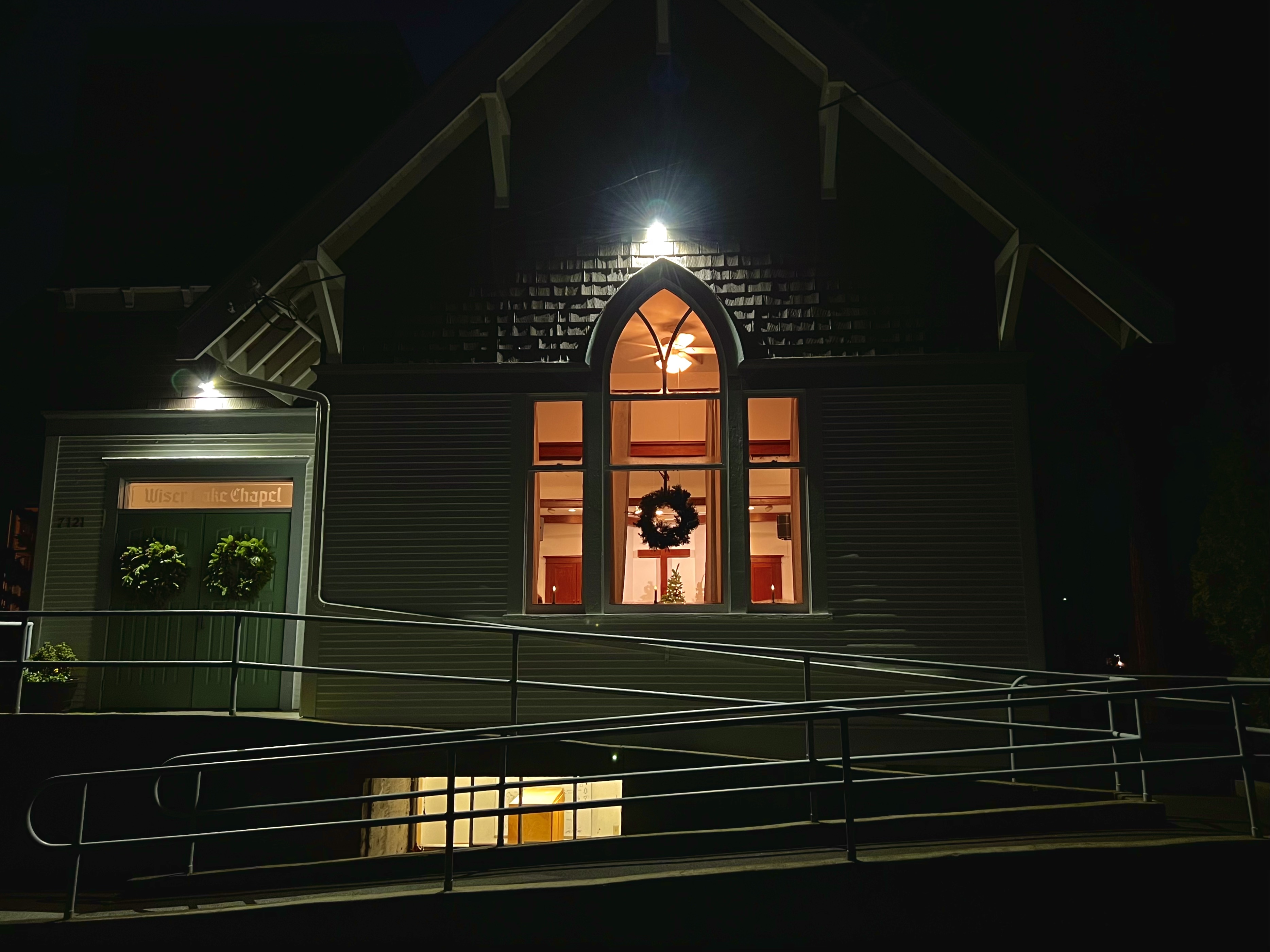
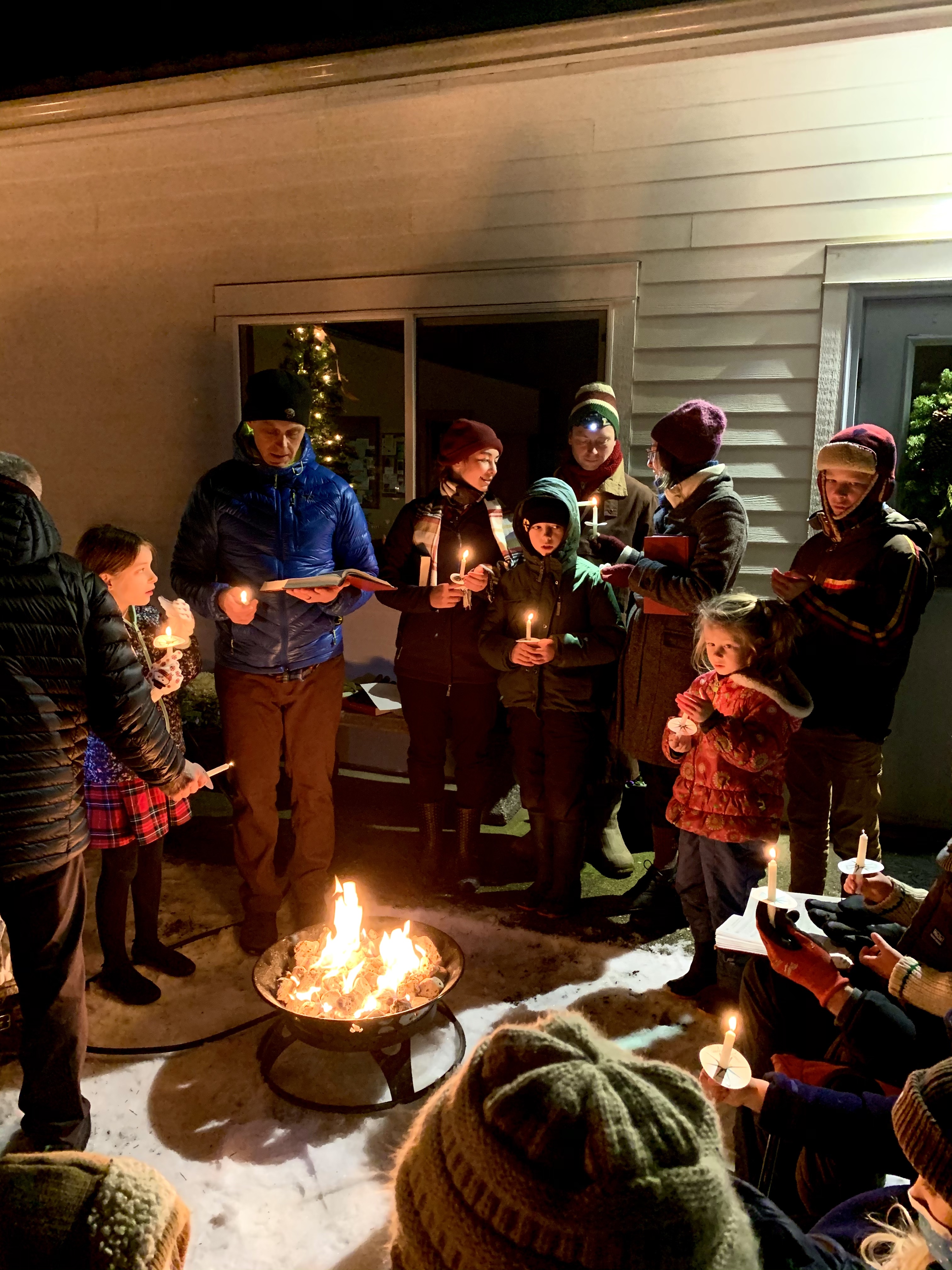
There are times when lifting our voices in song is the only way to express what our hearts are feeling, especially now as we witness the distress of the Ukrainian people who are relying on their cultural bonds, their spiritual faith and their trust that good people of the world will support their defense of their culture and their government.

May our voices be raised along with them, today and whenever freedom is threatened in the future. How else can we live?

photo by Jim Randall

One small town
Containing more churches than banks,

A one hundred year old choral society
With a Christmas tradition of singing Handel’s Messiah,

Sixty-some enthusiastic singers recruited without auditions
Through church bulletin announcements

Farmers, store clerks, machinists, students
Middle schoolers to senior citizens

Gather in an unheated church for six weeks of rehearsal
To perform one man’s great gift to sacred music.

Handel, given a libretto, commissioned to compose,
Isolated himself for 24 days, barely ate or slept

Believed himself confronted by all heaven itself
To see the face of God,

And so created overture, symphony, arias, oratorios
Soaring, interwoven themes repeating, resounding

With despair, mourning, anticipation
Renewal, redemption, restoration, triumph.

Delicate appoggiaturas and melismata
Of astounding complexity and intricacy.

A tapestry of sound and sensation unparalleled
To be shouted from the soul, wrung from the heart.

This group of rural people gathers to join voices
Honoring faith foretold, realized, proclaimed.

Ably led by a forgiving director with a sense of humor
And a nimble organist with flying feet and fingers.

The lilting sopranos with angel song,
The altos provide steadfast support,

The tenors echo plaintive prophecy
The base voices full and resonant.

A violinist paints heaven-sent refrain
In parallel duet of counterpoint melody.

The audience sits, eyes closed
As if in oft repeated familiar prayer.

The sanctuary overflows
With thankfulness:

Glory to God! For unto us a Child is born
And all the people, whether singers or listeners, are comforted.

One way to support the people of Ukraine in this crisis is through the
International Red Cross

Forgive Me For Forgetting

Please forgive me for forgetting.
I wanted to go outside and look for you.
I was told this was impossible.

 
I was instructed to stay indoors.
But my words for you need sun.
My heart needs air.

 
I love you Spring.
I miss your warmth.
Come unlock my door.

~Ethelbert Miller “Beloved”

I love you, Spring.
But where are you? Nearly a week of chill winds and freezing temperatures put me back inside the house wanting to hide under the covers. Water buckets in the barn were frozen again, walkways were slick with ice, once friendly breezes threatened to knock me over with their force. This is not the Spring promised.

Come unlock my door, Spring.
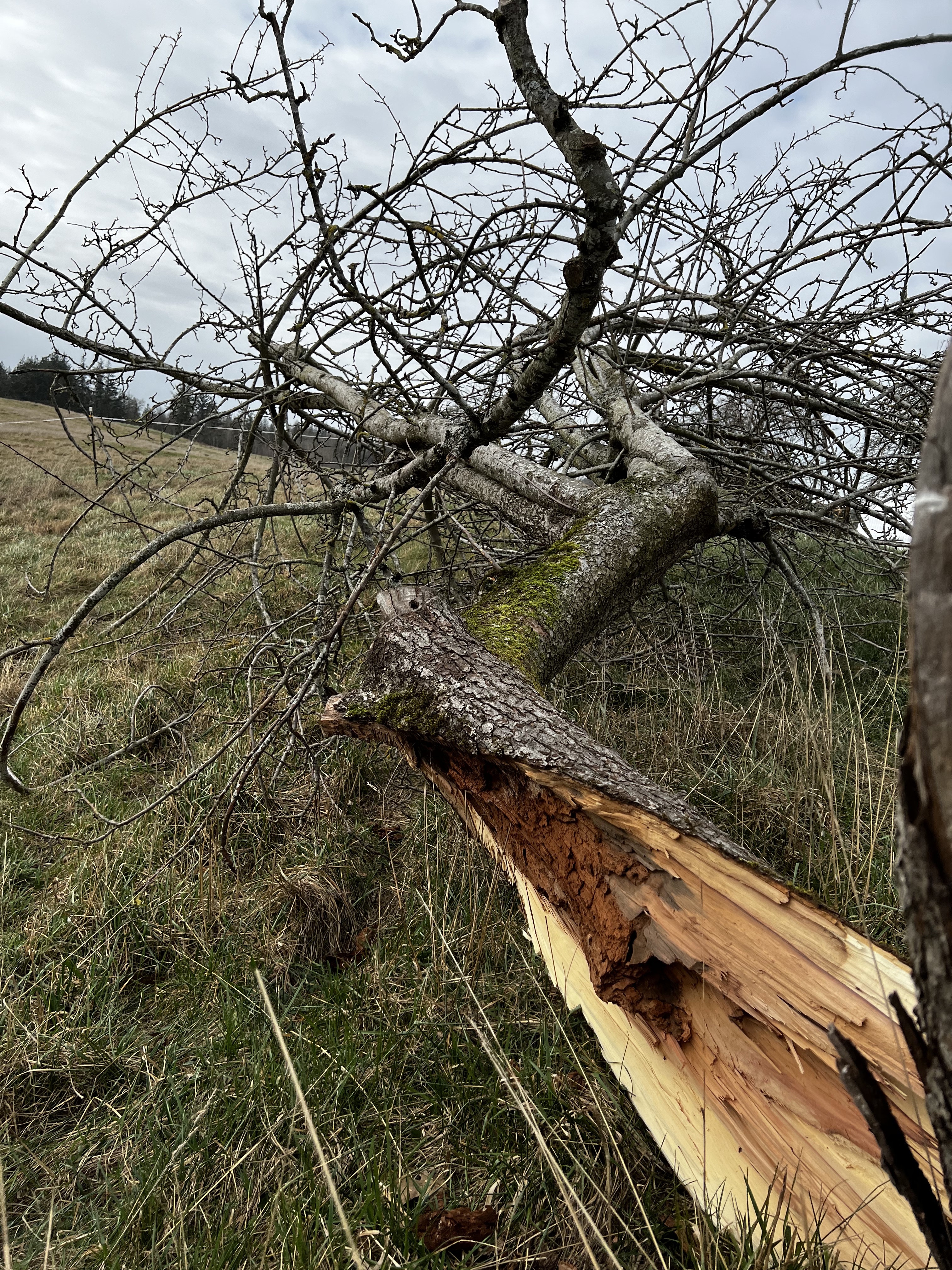
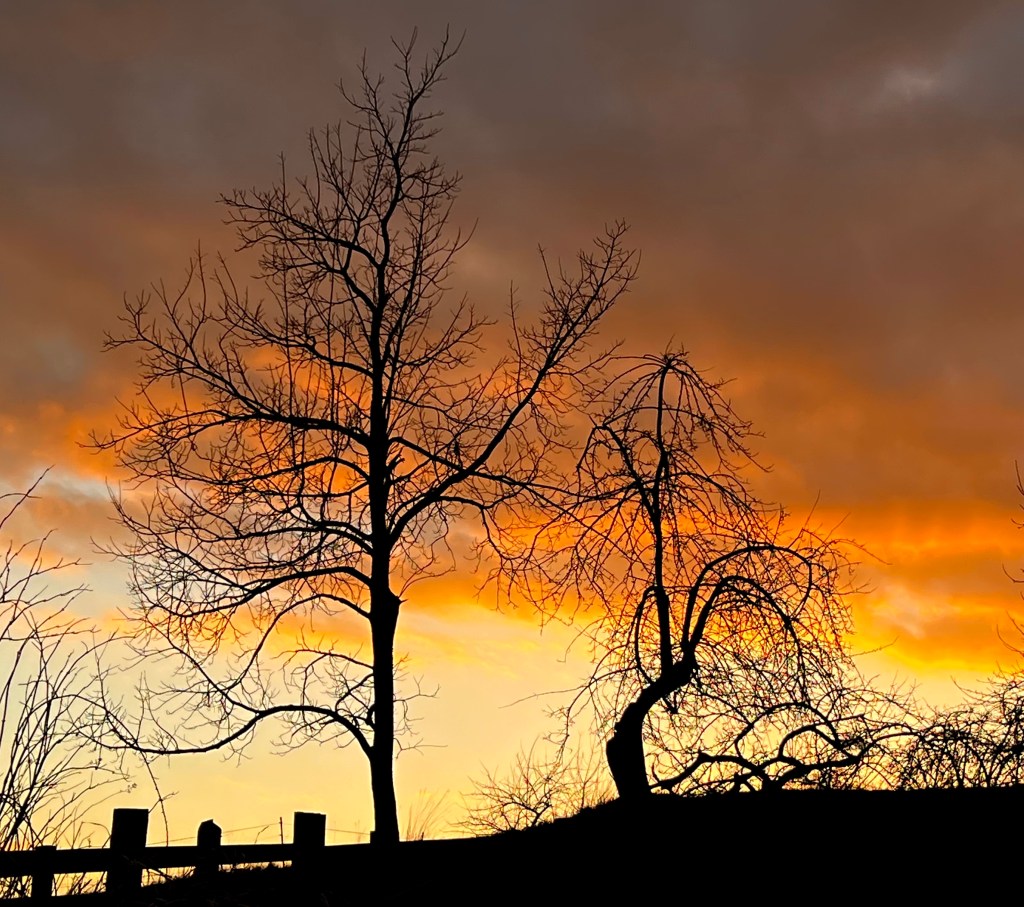
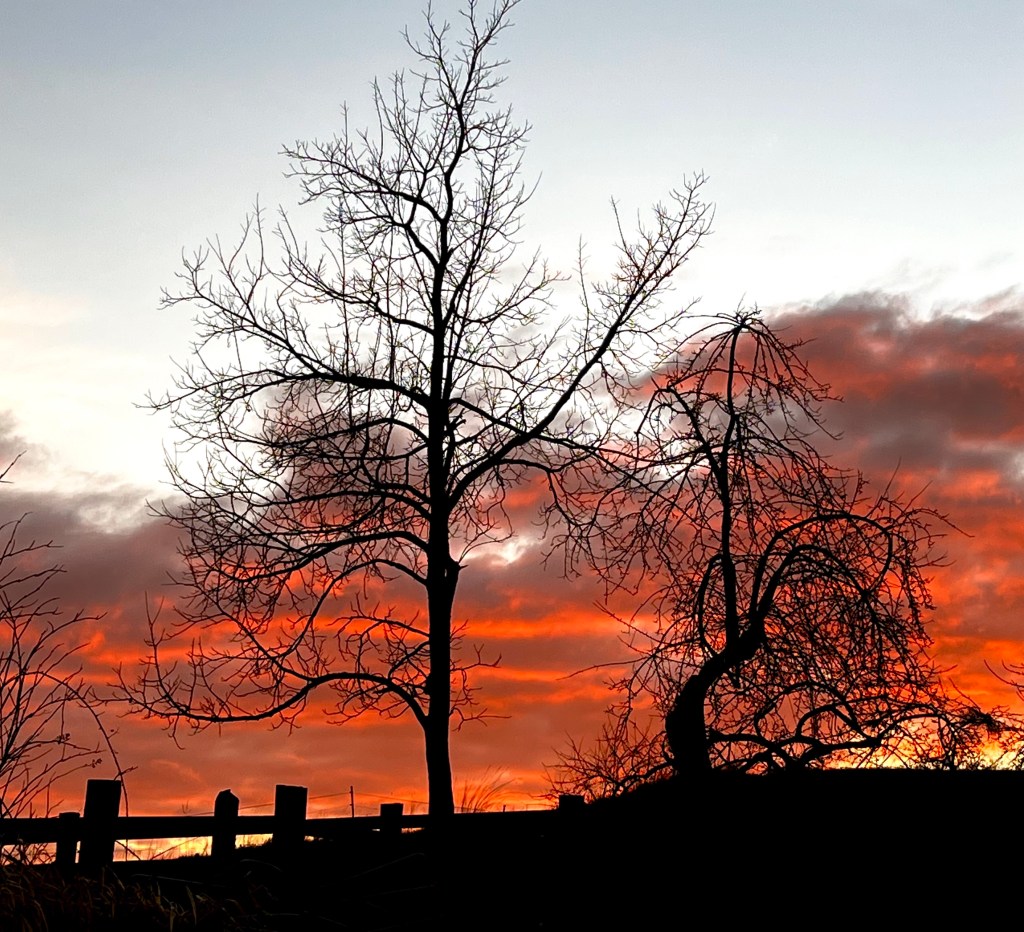
When our old apple tree toppled over in the northeast blow earlier this week, I identified a bit too much. The wind took advantage of a hollowed out rotten core the tree had been hiding for years. What might I be hiding inside that makes me just as vulnerable to forces knocking on me, even though I bear fruit as usual?

Please forgive me for forgetting:
this world is at war with evil – families hiding in basements, subways filling with refugees, apartment buildings bombed. Now is when we are most fragile, exposed and wounded. Our lumpy exteriors are on full display waiting for spring to renew and cover us up.

I wanted to go look for you:
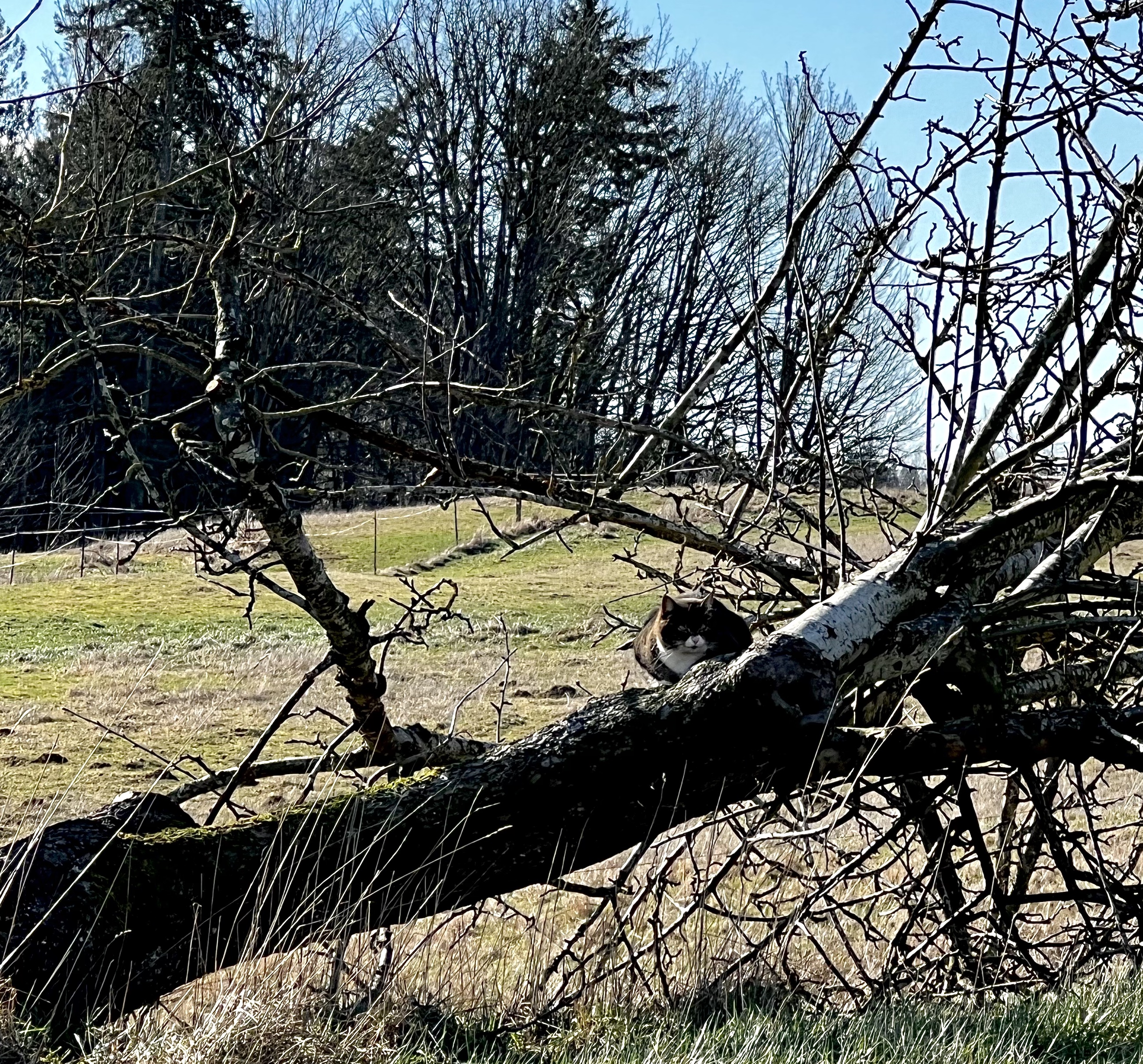
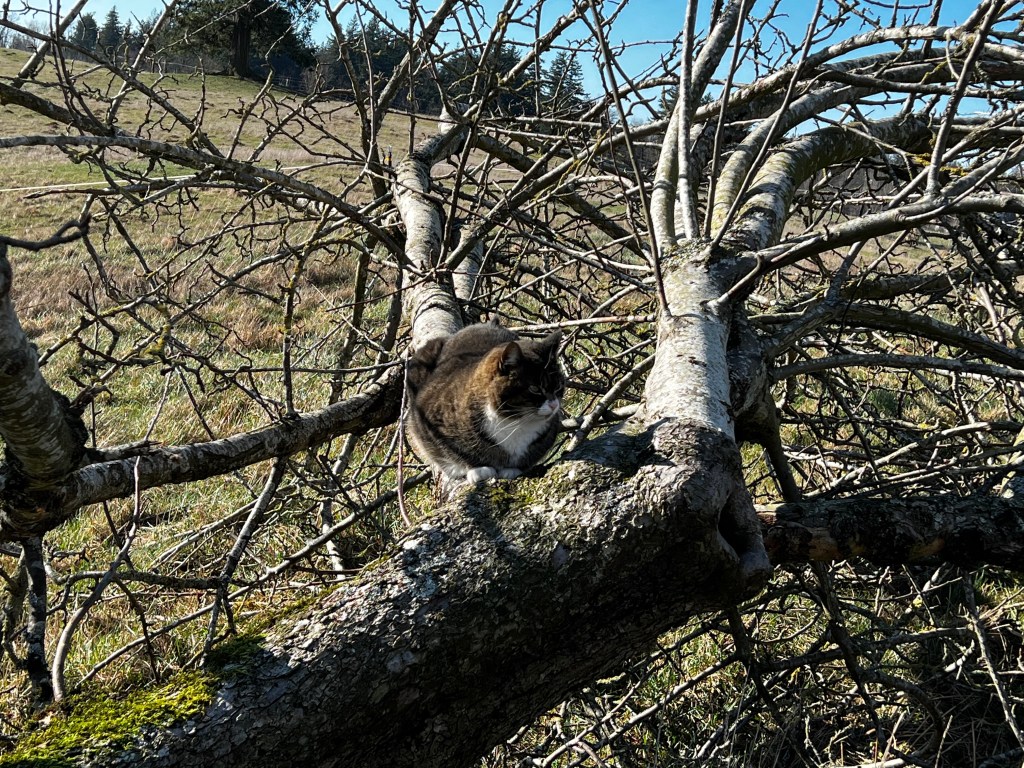
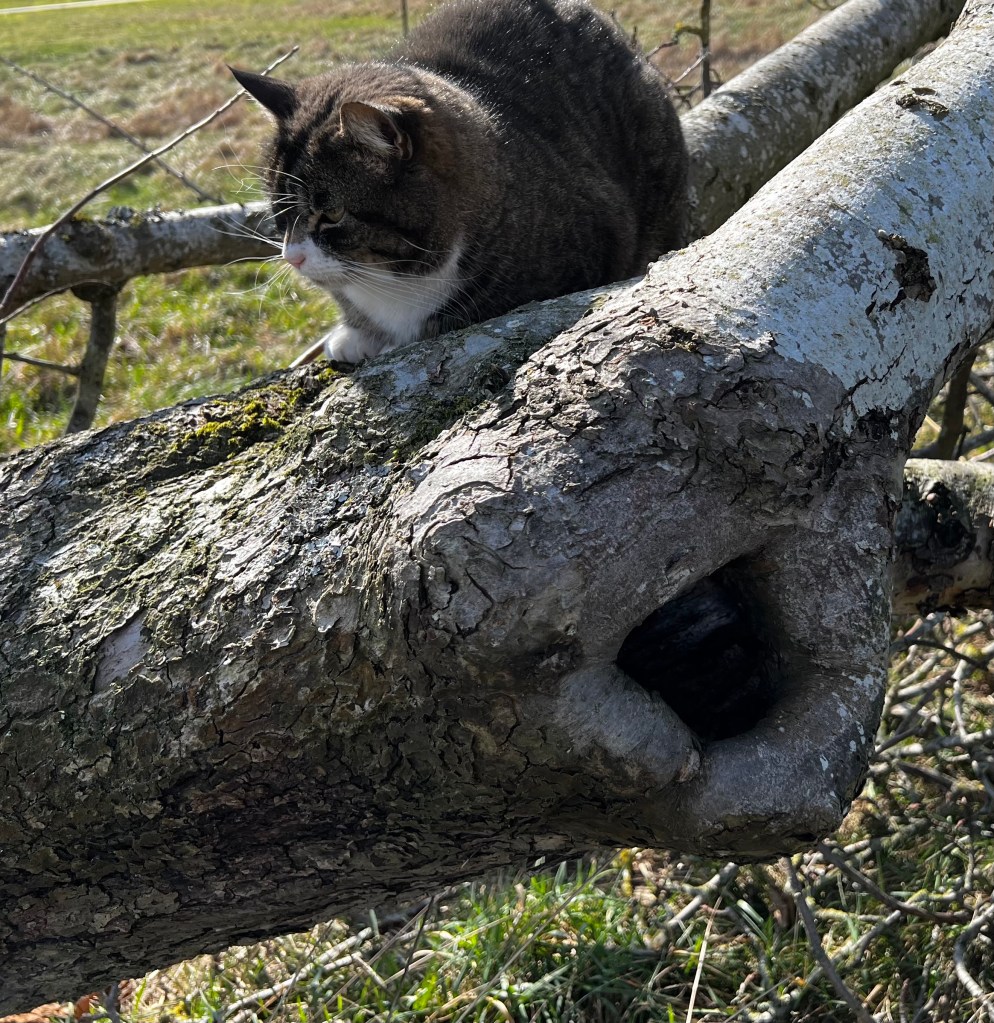
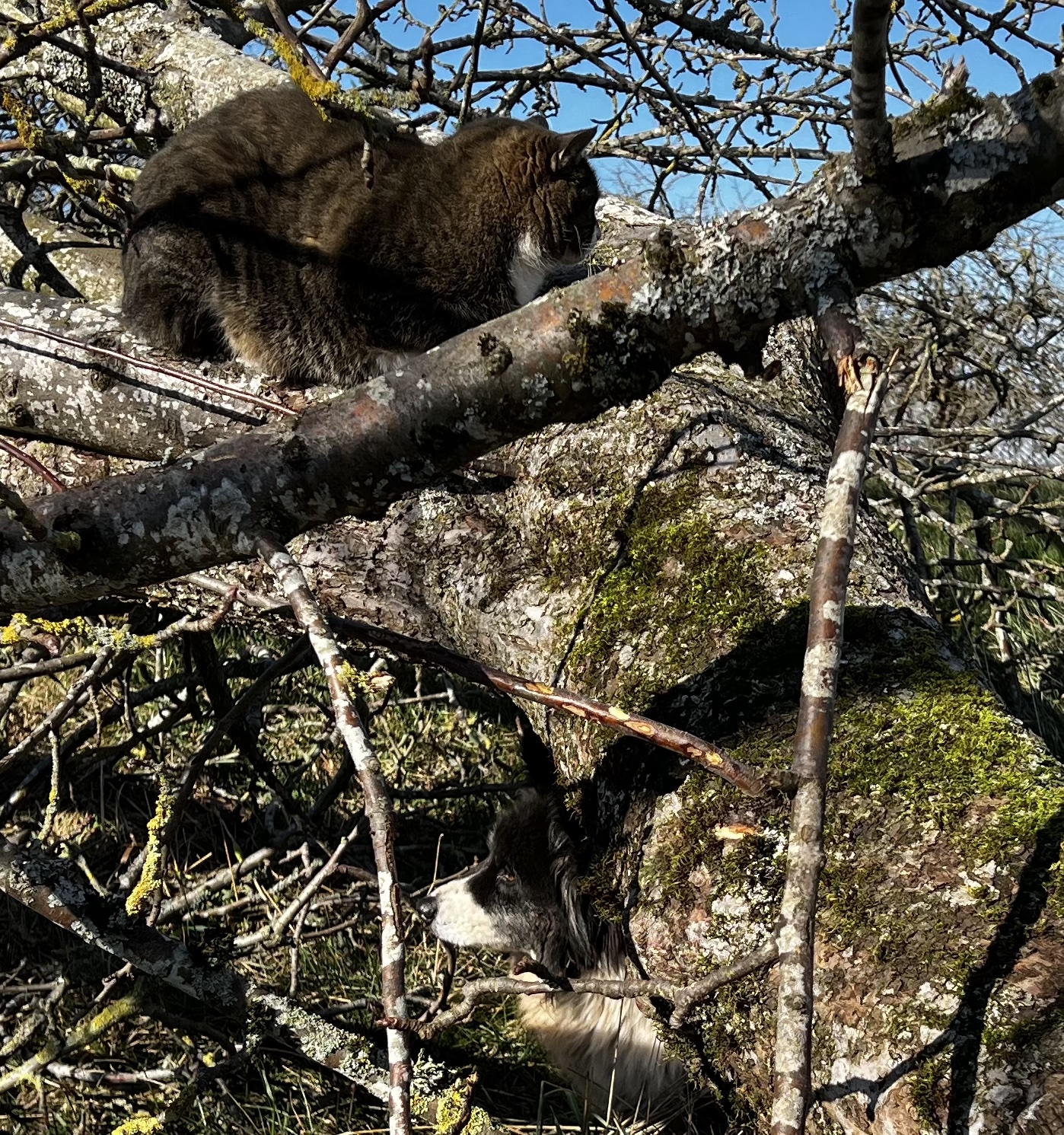
Our farm cat decided the old apple tree lying on its side was a new perfect perch to keep surveillance for curious (and irritating) farm dogs without having to climb up high. There he sat on the fallen trunk, far enough above a corgi dog’s head to be essentially invisible although Homer could absolutely smell there was a cat with threatening claws nearby … somewhere. Just where that cat could be remained a mystery to a dog who is distinctly height-challenged.

Like my cat, I wait now in late winter — seeking the sun for my words and fresh air for my heart. And like my dog, I sense something potentially threatening is near, but because of my own limitations of perception, I have no idea just how close.

I was told this was impossible:
may we weather the storms together
may there be peace and warmth for all people
may we find harmony as winter melts into spring.

cat hiding in plain sight, Homer too short to figure it out

This is my song, O God of all the nations,
A song of peace for lands afar and mine.
This is my home, the country where my heart is,
Here are my hopes, my dreams, my holy shrine.
But other hearts in other lands are beating,
With hopes and dreams as true and high as mine.
My country’s skies are bluer than the ocean,
And sunlight beams on cloverleaf and pine.
But other lands have sunlight too, and clover,
And skies are everywhere as blue as mine.
This is my song, O God of all the nations,
A song of peace for their land and for mine.
So let us raise this melody together,
Beneath the stars that guide us through the night;
If we choose love, each storm we’ll learn to weather,
Until true peace and harmony we find,
This is our song, a hymn we raise together;
A dream of peace, uniting humankind.
~Lloyd Stone and Blake Morgan

One-Time
Monthly
Yearly

Make a one-time or recurring donation to support Barnstorming

Make a monthly donation

Make a yearly donation

Choose an amount

¤5.00
¤10.00
¤20.00
¤5.00
¤15.00
¤100.00
¤5.00
¤15.00
¤100.00

Or enter a custom amount

¤

Your contribution is deeply appreciated.

Your contribution is appreciated.

Your contribution is appreciated.

DonateDonate monthlyDonate yearly
With a Whimper

We are the hollow men
We are the stuffed men
Leaning together
Headpiece filled with straw. Alas!
Our dried voices, when
We whisper together
Are quiet and meaningless
As wind in dry grass
Or rats’ feet over broken glass
In our dry cellar

Shape without form, shade without colour,
Paralysed force, gesture without motion;

Those who have crossed
With direct eyes, to death’s other Kingdom
Remember us—if at all—not as lost
Violent souls, but only
As the hollow men
The stuffed men.

Here we go round the prickly pear
Prickly pear prickly pear
Here we go round the prickly pear
At five o’clock in the morning.

Between the idea
And the reality
Between the motion
And the act
Falls the Shadow
For Thine is the Kingdom

Between the conception
And the creation
Between the emotion
And the response
Falls the Shadow
Life is very long

Between the desire
And the spasm
Between the potency
And the existence
Between the essence
And the descent
Falls the Shadow
For Thine is the Kingdom

For Thine is
Life is
For Thine is the

This is the way the world ends
Not with a bang but a whimper.

~T.S. Eliot from “The Hollow Men”

Of course, the world has never existed without war. One would hope that those who are in leadership positions would pay attention to the mistakes made over the course of history and endeavor never to repeat them.

But the world is too often controlled by hollow men, headpieces stuffed with straw. They want what they want when they want it, no matter the consequences to living breathing human beings or the land where they dwell.

The shadow has fallen in Ukraine at 5 AM this morning with flashes and smoke and destruction.

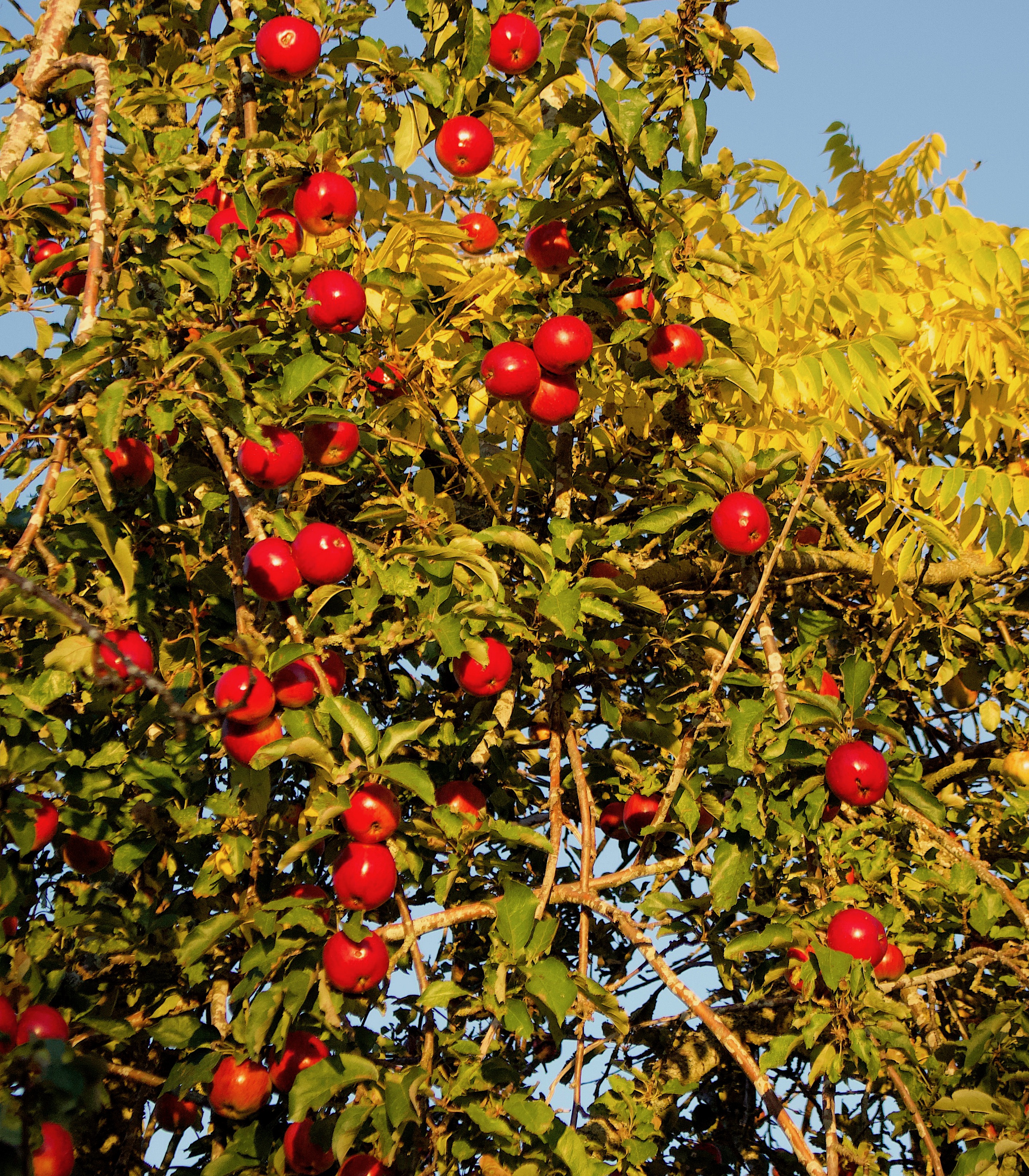
Life is very long – a crippled 100+ year old apple tree in our farm orchard toppled over in a strong northeaster this week. It had been so fruitful only a few months ago; it was remarkable to find its fallen trunk rotted and hollowed. It could no longer survive the forces of the world around it having hidden its weakness so effectively for so many decades.

Yet it came down, as all hollow things must.

For Thine is the Kingdom, not ours. Anyone who crosses borders in aggression will learn this undeniable history lesson once again. For God’s Kingdom is not hollow, never hollow and is not toppled, no matter what forces beat against it.

God’s Kingdom is forever hallowed. As a result, so are we.

One-Time
Monthly
Yearly

Make a one-time or recurring donation to support daily Barnstorming posts

Make a monthly donation

Make a yearly donation

Choose an amount

¤5.00
¤10.00
¤20.00
¤5.00
¤15.00
¤100.00
¤5.00
¤15.00
¤100.00

Or enter a custom amount

¤

Your contribution is deeply appreciated.

Your contribution is appreciated.

Your contribution is appreciated.

DonateDonate monthlyDonate yearly
Our Weary World Transformed

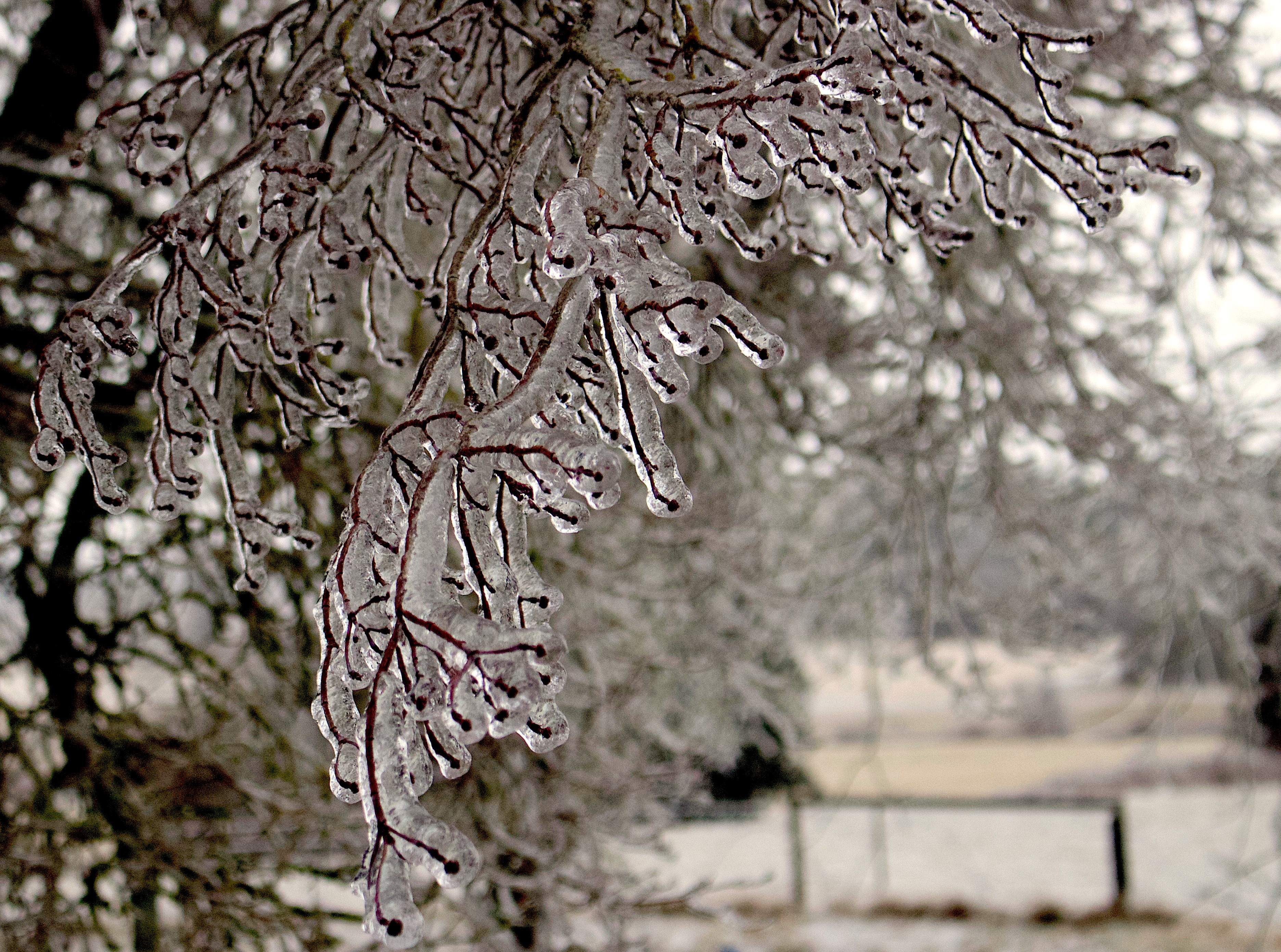
I watch the great clear twilight
Veiling the ice-bowed trees;
Their branches tinkle faintly
With crystal melodies.

The larches bend their silver
Over the hush of snow;
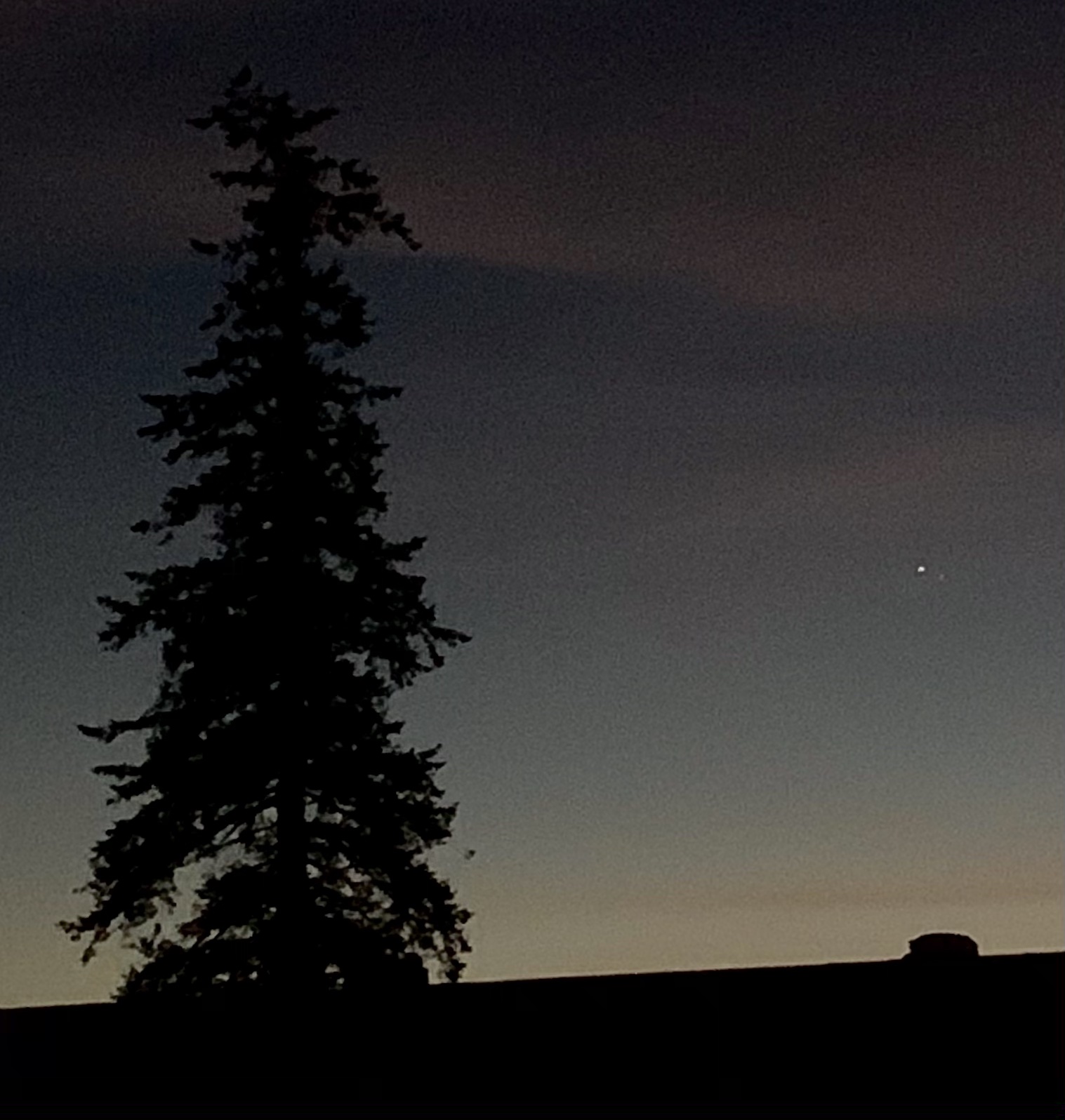
One star is lighted in the west,
Two in the zenith glow.

For a moment I have forgotten
Wars and women who mourn,
I think of the mother who bore me
And thank her that I was born.
~Sara Teasdale “Winter Dusk” from The Collected Poems of Sara Teasdale

The towering tree spreads his greening canopy —
A veil between the soil and sky—
Not in selfish vanity,
But the gentle thrush to shade and shelter.


So it is with love.

For when we love,
Simply love,
Even as we are loved,
Our weary world can be transformed.

The busy thrush builds her nest below —
A fortnight’s work to weave and set—
Not for herself alone,
But her tender brood to shield and cherish.

And so it is with love.

For when we love,
Simply love,
Even as we are loved,
Our weary world can be transformed Into the Kingdom of God!
~Charles Silvestri “When We Love”

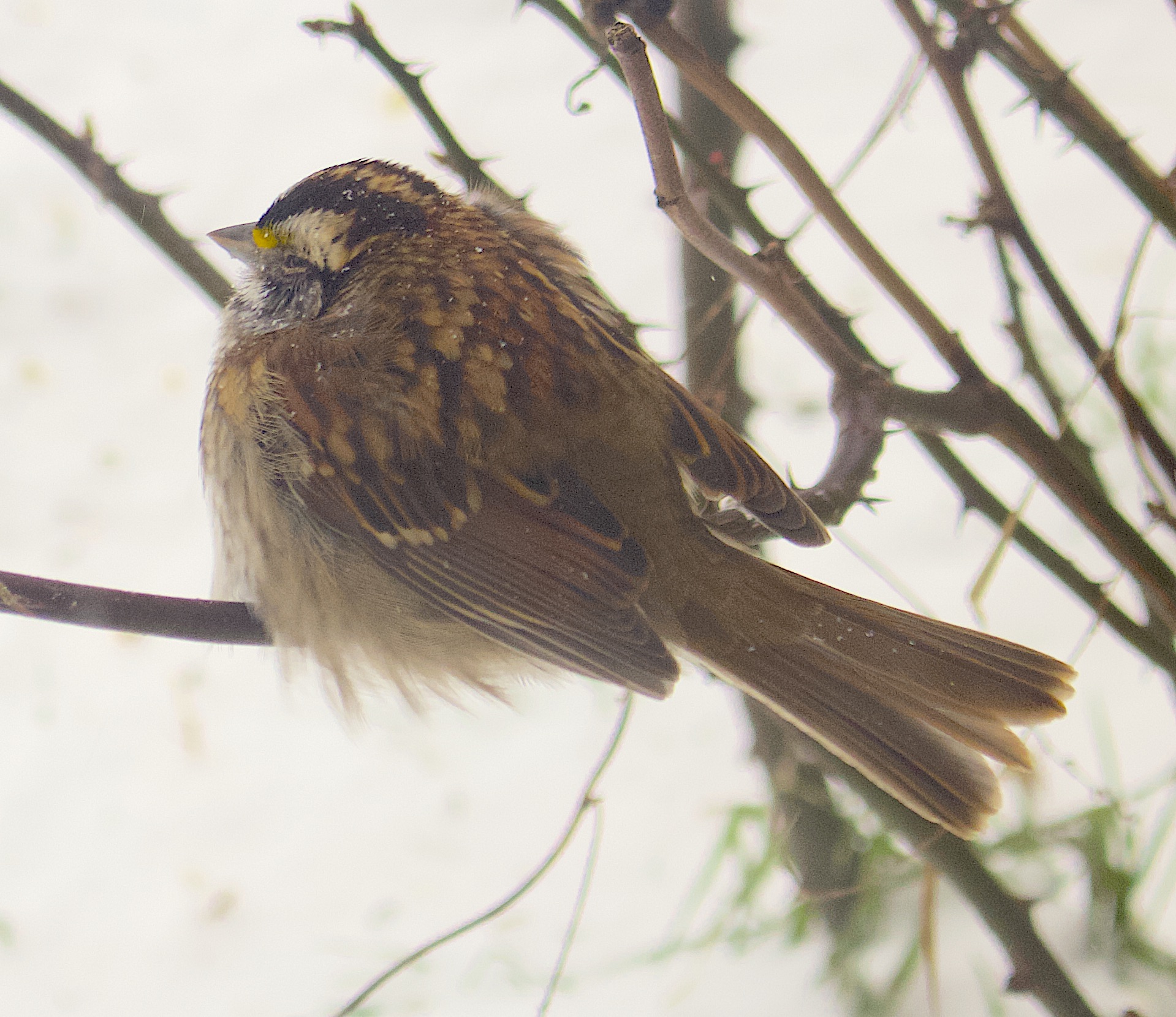
We are in the midst of a week-long late winter arctic blast of cold wind bending and breaking trees, even taking down an old apple tree in our orchard last night. Our seed feeders are swinging back and forth so violently that hungry wild birds struggle to hang on for their breakfast – they have to fight the northeast winds for their food.

The news headlines also freeze my heart, bringing back memories of old “cold war” threats and posturing of 60 years ago. In this more modern time of global communication, Ukrainian citizens directly in the line of fire become very real on our screens – people with work lives and families and views from their windows shared with the world as they anxiously wait for Russia’s shoe to drop upon them.

I freeze at the knowledge that my commitment to feed the birds in my backyard can’t begin to compare with the weary and war-torn world’s inability to keep starving children alive around the globe – in Afghanistan, South Sudan, Yemen and other unstable places.

I cannot forget our helplessness to love, cherish and protect the young when they are casualties of the destructive web of politics and power.

May God’s love transform our world,
turn our political platitudes to prayer,
bring about a thaw to build bridges, rather than gulfs,
between old enemies.

May love thrive in the nests and homes of parents
who commit to love, cherish and sustain their offspring
no matter where they live on the globe.

May I start right here, in my own frozen back yard,
caring for the young and vulnerable within my reach,
and hope my reach may stretch far beyond my grasp.

Mending the Fraying Tapestry of Time

Now winter downs the dying of the year,   
And night is all a settlement of snow;
From the soft street the rooms of houses show   
A gathered light, a shapen atmosphere,   
Like frozen-over lakes whose ice is thin   
And still allows some stirring down within.

These sudden ends of time must give us pause.
We fray into the future, rarely wrought
Save in the tapestries of afterthought.
More time, more time.

The New-year bells are wrangling with the snow.
~Richard Wilbur from “Year’s End”

Ring out, wild bells, to the wild sky,
The flying cloud, the frosty light:
The year is dying in the night;
Ring out, wild bells, and let him die.

Ring out the old, ring in the new,
Ring, happy bells, across the snow:
The year is going, let him go;
Ring out the false, ring in the true.

Ring out the grief that saps the mind
For those that here we see no more;
Ring out the feud of rich and poor,
Ring in redress to all mankind.

Ring out a slowly dying cause,
And ancient forms of party strife;
Ring in the nobler modes of life,
With sweeter manners, purer laws.

Ring out the want, the care, the sin,
The faithless coldness of the times;
Ring out, ring out my mournful rhymes,
But ring the fuller minstrel in.

Ring out false pride in place and blood,
The civic slander and the spite;
Ring in the love of truth and right,
Ring in the common love of good.

Ring out old shapes of foul disease;
Ring out the narrowing lust of gold;
Ring out the thousand wars of old,
Ring in the thousand years of peace.

Ring in the valiant man and free,
The larger heart, the kindlier hand;
Ring out the darkness of the land,
Ring in the Christ that is to be.
~Lord Alfred Tennyson “Ring Out, Wild Bells”

I know there are still communities where the New Year begins at midnight with church bells ringing, just as in days of old.

Here in the frontier of the rural Pacific Northwest, all we can hear from our farm are gun shots, bottle rockets and (what sounds like) explosions of cannon fire and mortar shells.

So much for larger hearts and kindlier hands.

Even without being able to hear wild bells ringing out the old and ringing in the new, I want to begin the new year with singing in harmony, mending the frays in the tapestry of time, behaving with good manners and care for those around me, and abandoning a thousand years of war to find a thousand years of peace.

Let the darkness make room for the Light
that was and is and will ever be.

Amen and hallelujah!

I will sing with the spirit
Hallelujah, hallelujah

And I will sing with the understanding also
Hallelujah, hallelujah

I will sing (I will sing)
With the spirit (sing hallelujah)
I will sing with the spirit
Hallelujah, hallelujah

One-Time
Monthly
Yearly

Make a one-time or recurring donation to Barnstorming

Make a monthly donation

Make a yearly donation

Choose an amount

¤5.00
¤10.00
¤20.00
¤5.00
¤15.00
¤100.00
¤5.00
¤15.00
¤100.00

Or enter a custom amount

¤

Your contribution is deeply appreciated.

Your contribution is appreciated.

Your contribution is appreciated.

DonateDonate monthlyDonate yearly
Because They Are No More

The snow is melting
and the village is flooded
     with children.
~Kobayashi Issa (translated by Robert Haas)

A voice is heard in Ramah,
    mourning and great weeping,
Rachel weeping for her children
    and refusing to be comforted,
    because they are no more.
Matthew 2:18 and Jeremiah 31:15

…as you sit beneath your beautifully decorated tree, eat the rich food of celebration, and laugh with your loved ones, you must not let yourself forget the horror and violence at the beginning and end of the Christmas story. The story begins with the horrible slaughter of children and ends with the violent murder of the Son of God. The slaughter depicts how much the earth needs grace. The murder is the moment when that grace is given.

Look into that manger representing a new life and see the One who came to die. Hear the angels’ celebratory song and remember that sad death would be the only way that peace would be given. Look at your tree and remember another tree – one not decorated with shining ornaments, but stained with the blood of God.

As you celebrate, remember that the pathway to your celebration was the death of the One you celebrate, and be thankful.
~Paul Tripp

God could, had He pleased, have been incarnate in a man of iron nerves, the Stoic sort who lets no sigh escape him. Of His great humility He chose to be incarnate in a man of delicate sensibilities who wept at the grave of Lazarus and sweated blood in Gethsemane. Otherwise we should have missed the great lesson that it is by his will alone that a man is good or bad, and that feelings are not, in themselves, of any im­portance. We should also have missed the all-important help of knowing that He has faced all that the weakest of us face, has shared not only the strength of our nature but every weakness of it except sin. If He had been incarnate in a man of immense natural courage, that would have been for many of us almost the same as His not being incar­nate at all.
― C.S. Lewis, The Collected Letters of C.S. Lewis

There is no consolation for families
of those lost to death come too soon:
a rogue king’s slaughter of innocents,
and now so much needless death:
weather, war, accidents, random shootings, COVID.

Arms ache with the emptiness of grief,
beds and pillows lie cold and unused,
hugs never to come again.

There is no consolation;
only mourning and great weeping,
sobbing that wrings dry
every human cell,
leaving dust behind,
which is our beginning
and our end.

God came to us
for times such as this,
born of the dust of woman and
the breath of the Holy Spirit,
God bent down to
lie in manger dust,
walk on roads of dust,
die and be laid to rest as dust
to conquer such evil as this
that displaces masses and massacres innocents.

He became dust to be
like us
He began a mere speck in a womb
like us

His heart beat
like ours
breathing each breath
like ours
until a fearful fallen world
took His
and our breath
away.

He shines through
the shadows of death
to guide our stumbling uncertain feet.

He hears our cries
as He cried too.
He knows our tears
as He wept too.
He knows our mourning
as He mourned too.
He knows our dying
as He died too.

God weeps
as this happens.

Only God can glue together
what evil has shattered.
He asks us to hand Him
the pieces of our broken hearts.

We will know His peace
when He comes
to bring us home,
our tears finally dried,
our cells no longer
just dust,
as we are glued together
by the holy breath of our God
forevermore.

Lully, lullay, thou little tiny child,
Bye bye, lully, lullay.
Thou little tiny child,
Bye bye, lully, lullay.

O sisters too, how may we do
For to preserve this day
This poor youngling for whom we sing,
“Bye bye, lully, lullay?”

Herod the king, in his raging,
Chargèd he hath this day
His men of might in his own sight
All young children to slay.

That woe is me, poor child, for thee
And ever mourn and may
For thy parting neither say nor sing,
“Bye bye, lully, lullay.”

One-Time
Monthly
Yearly

Make a one-time or recurring donation to support Barnstorming

Make a monthly donation

Make a yearly donation

Choose an amount

¤5.00
¤10.00
¤20.00
¤5.00
¤15.00
¤100.00
¤5.00
¤15.00
¤100.00

Or enter a custom amount

¤

Your contribution is deeply appreciated.

Your contribution is appreciated.

Your contribution is appreciated.

DonateDonate monthlyDonate yearly
Madly in Love

How is it they live for eons in such harmony
– the billions of stars –
when most men can barely go a minute
without declaring war in their mind

against someone they know.

There are wars where no one marches with a flag,

though that does not keep casualties from mounting.

Our hearts irrigate this earth. 
We are fields before each other.
How can we live in harmony?


First we need to know 

we are all madly in love
with the same God.

O Lord my God, make me
submissive without protest,

poor without discouragement,
chaste without regret,
patient without complaint,
humble without posturing,
cheerful without frivolity,
mature without gloom,
and quick-witted without flippancy.


Grant that I may know
what You require me to do.
Bestow upon me
the power to accomplish Your will,
as is necessary and fitting
for the salvation of my soul.

~St. Thomas Aquinas

I look at headline news through my fingers, cringing.  

Amid the centuries of posturing between governments and every imaginable tribe and faction, the names and faces change but the nature of hatred of the “other” doesn’t.

We’ve seen this all before, over and over through history.  Over 150 years ago it was in the Gettysburg fields that blood of rival armies intermingled and irrigated U.S. soil.  Though now we stand side by side with Germany and Japan, our bitter adversaries a mere eighty years ago, our world continually brews new enemies and ignites new conflicts.

We can barely go a minute without declaring war in our minds even against our neighbor, even those we consider friends and family. There is yelling from the streets in angry protest and screaming at school board meetings. Casualties mount in our bitterness toward one another.

And who am I to point fingers or squint through them at the news of the day?
I am as prone to this as anyone.

Am I myself capable of submission without protest, remaining patient and uncomplaining even when I disagree? Can I embody humility without having a hidden agenda? Can I remain selfless when my true nature is wholly selfish?

How can there ever be harmony? 
How can I overcome my own rancorous heart?

As critical as it seems, It is not love for one another that comes first.
I must first know, love and trust the only God who has loved the unloveable so much He became one with us, overpowering our tendency to hate one another by taking it all upon Himself.

Jesus found us dying in a world desperately drying up; His bleeding heart poured itself out onto our thirsting soil. We have been handed salvation.

It is, in fact, God who is madly in love with us and though we’ve done nothing to deserve it, it is our turn to show love to one another.

A book from Barnstorming is available for order here:

Realizing Who I Have Offended

He is a hard one to write a poem about. Like Napoleon.
Hannibal. Genghis Khan. Already so large in history. To do it
right, I have to sit down with him. At a place of his own
choosing. Probably a steakhouse. We take a table in a corner.
But people still recognize him, come up and slap him on the
back, say how much they enjoyed studying about him in school
and ask for his autograph. After he eats, he leans back and
lights up a cigar and asks me what I want to know. Notebook in
hand, I suggest that we start with the Little Big Horn and work
our way back. But I realize I have offended him. That he
would rather take it the other way around. So he rants on
about the Civil War, the way west, the loyalty of good soldiers
and now and then twists his long yellow hair with his fingers.
But when he gets to the part about Sitting Bull, about Crazy
Horse, he develops a twitch above his right eye, raises his
finger for the waiter, excuses himself and goes to the restroom
while I sit there along the bluffs with the entire Sioux nation,
awaiting his return.
~David Shumate “Custer” from High Water Mark

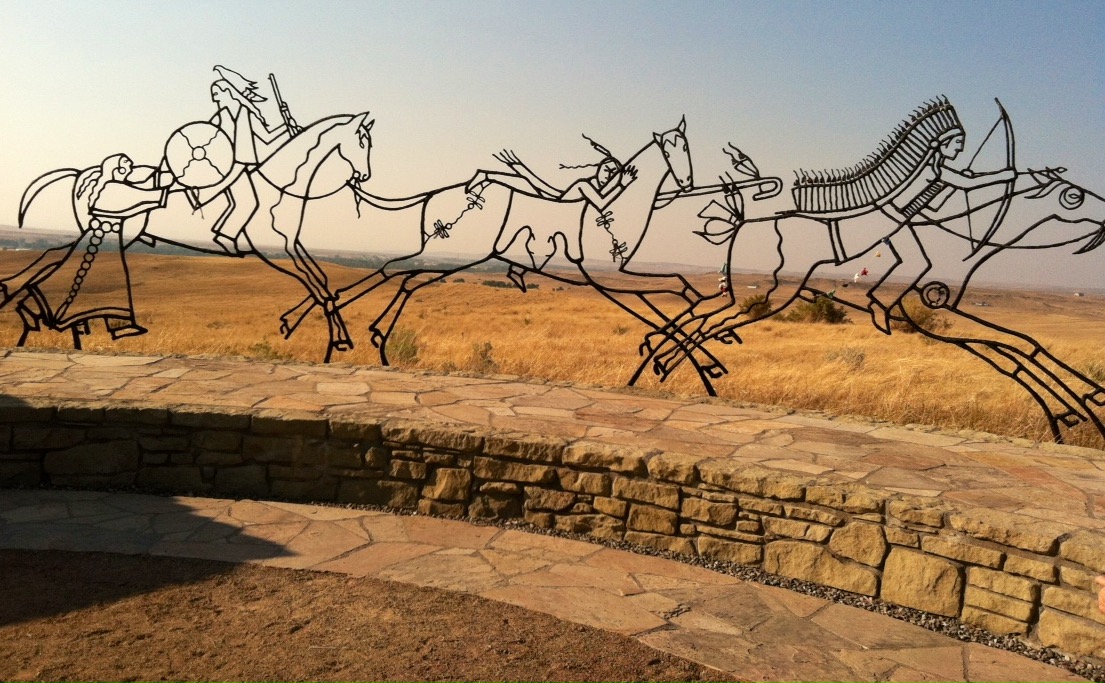
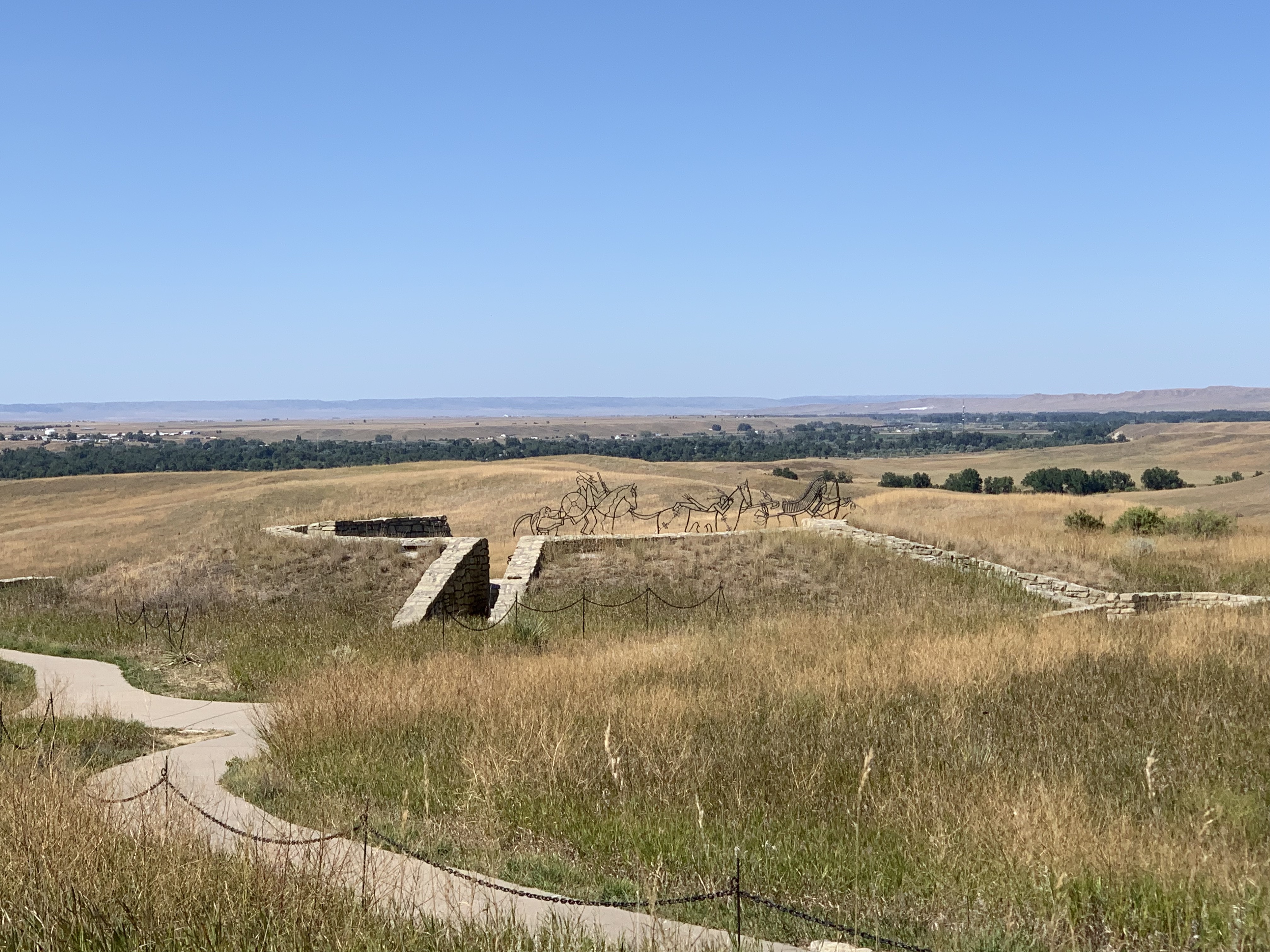
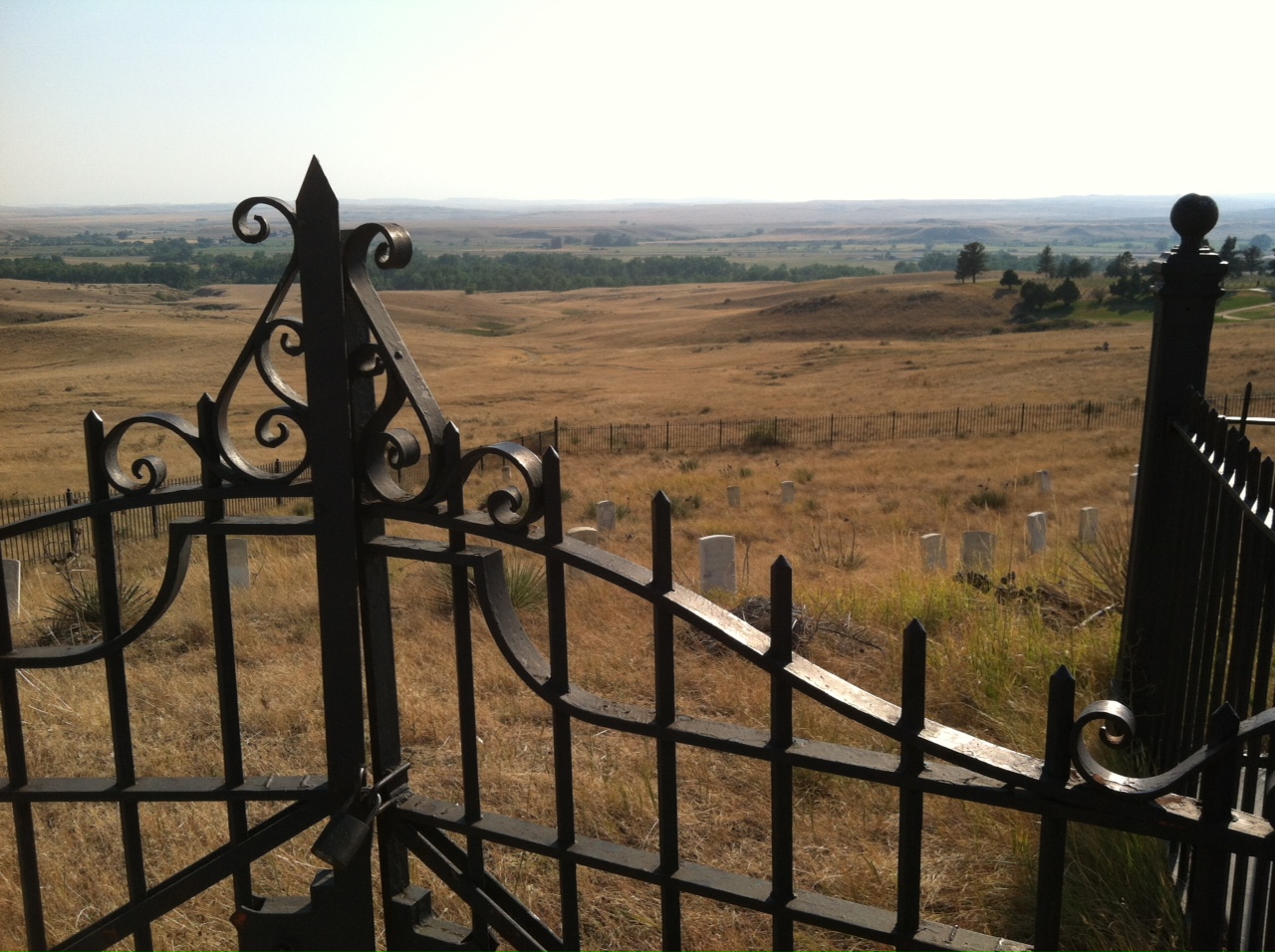
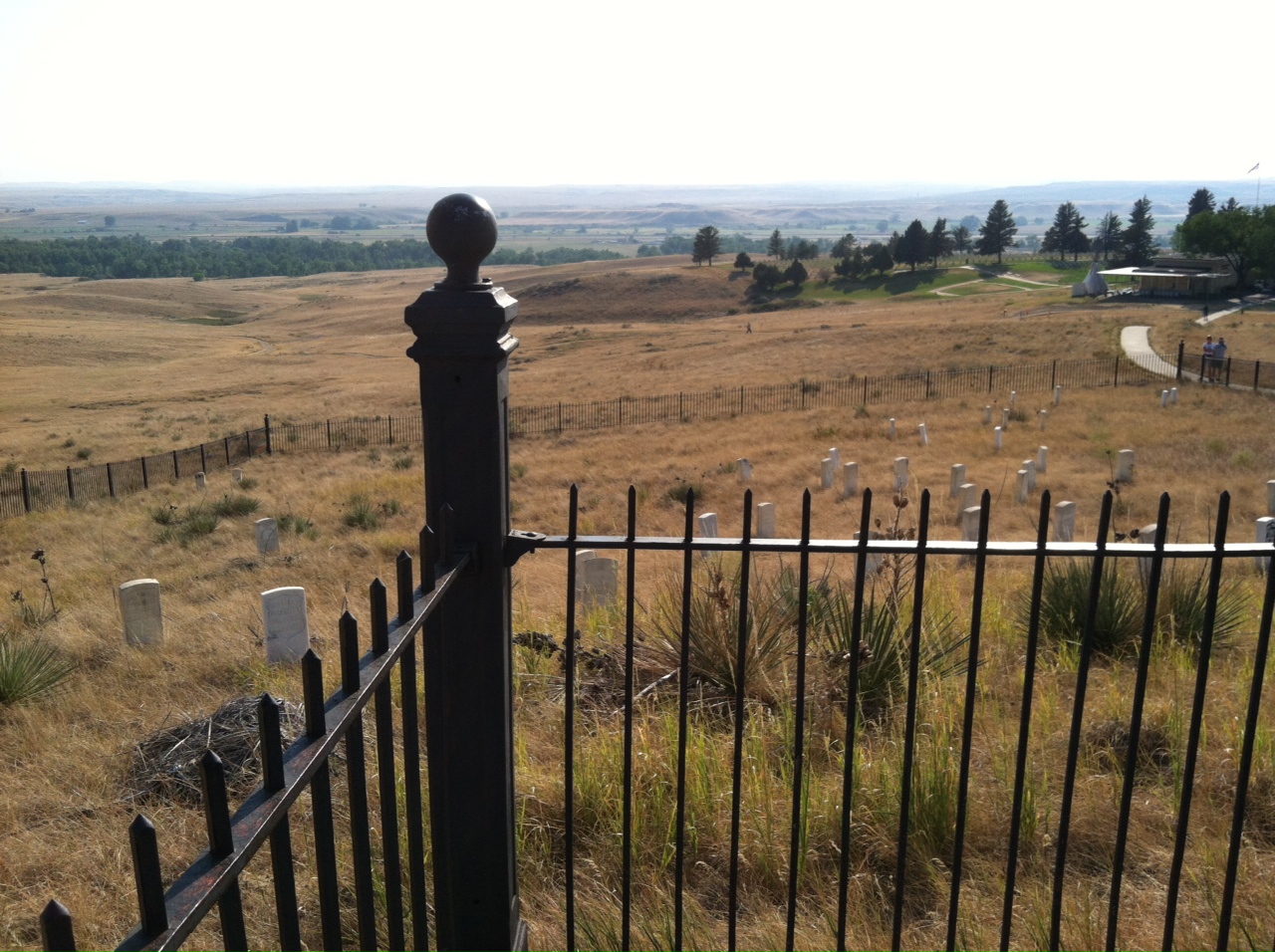
Bighorn Battlefield – National Park Service photo

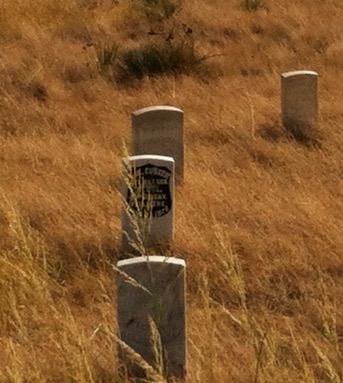
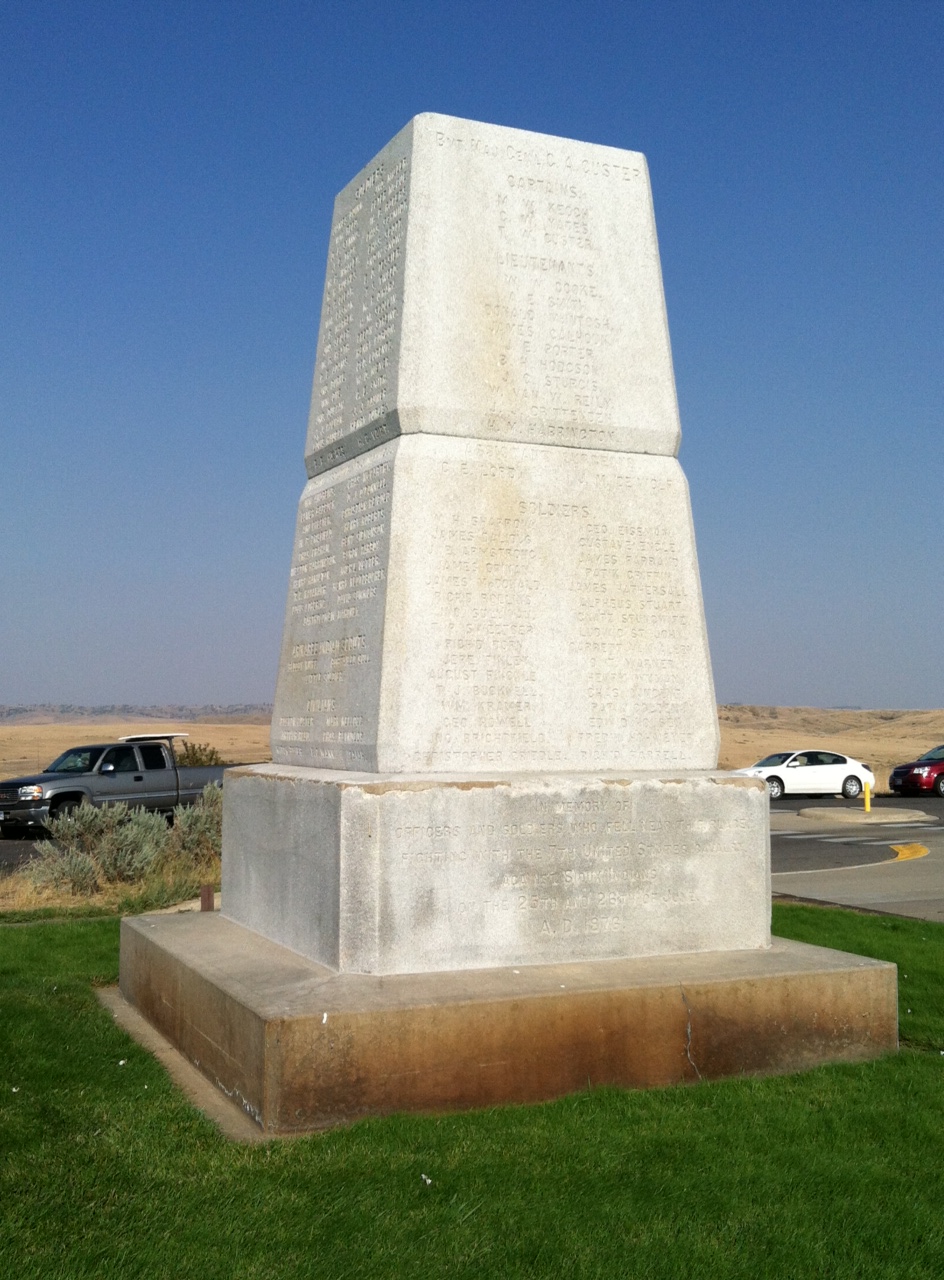
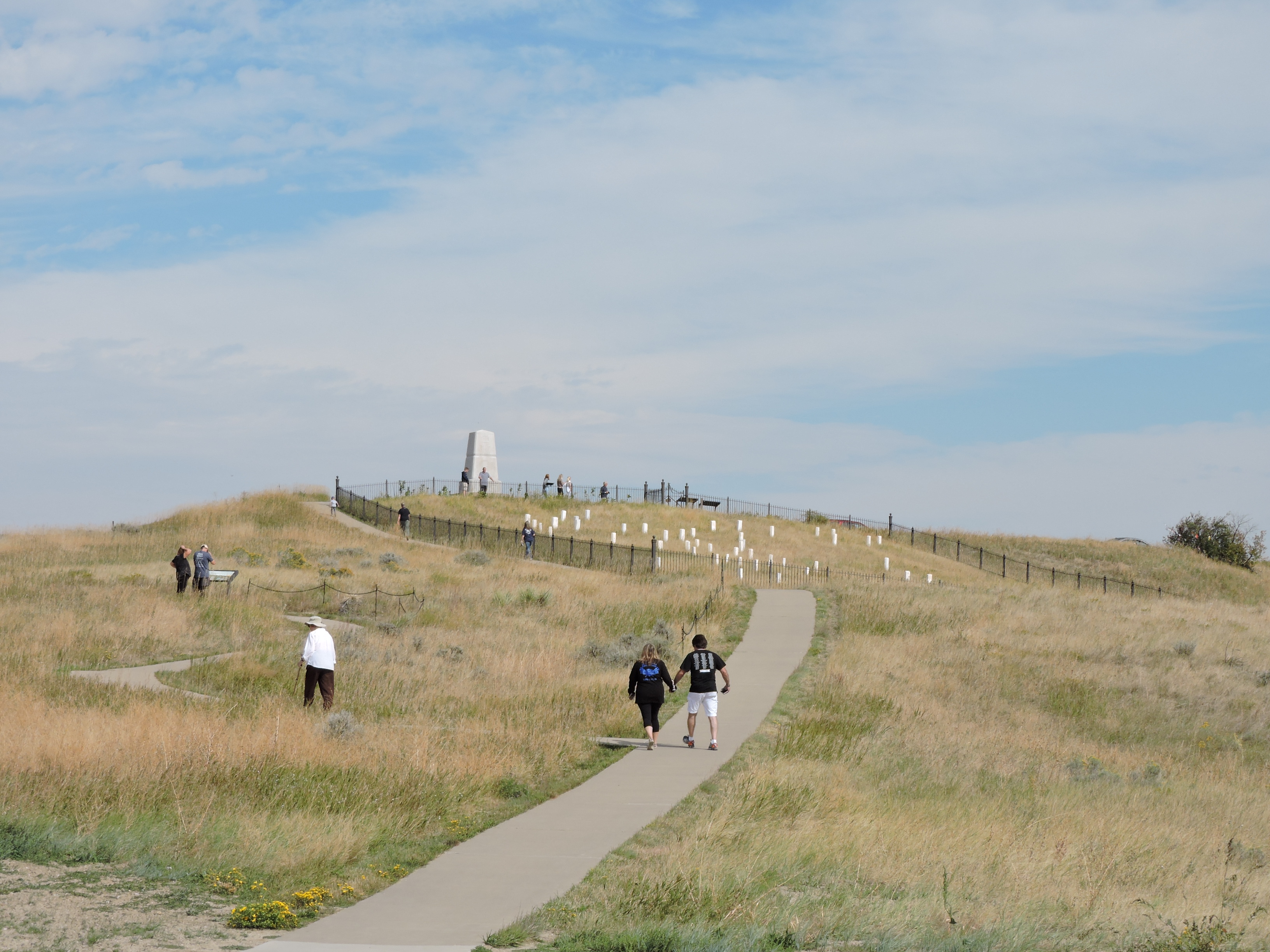
When my family took two cross-country trips by car, once in 1963 and another in 1965, my father, a former officer and battalion leader in the Marines during WWII, was the primary driver and keeper of maps and deadlines. He could be convinced to stop at any number of state and national parks, points of interest and historical markers, but all four times we passed the sign indicating the Battle of the Little Bighorn, he would not stop despite our pleading.

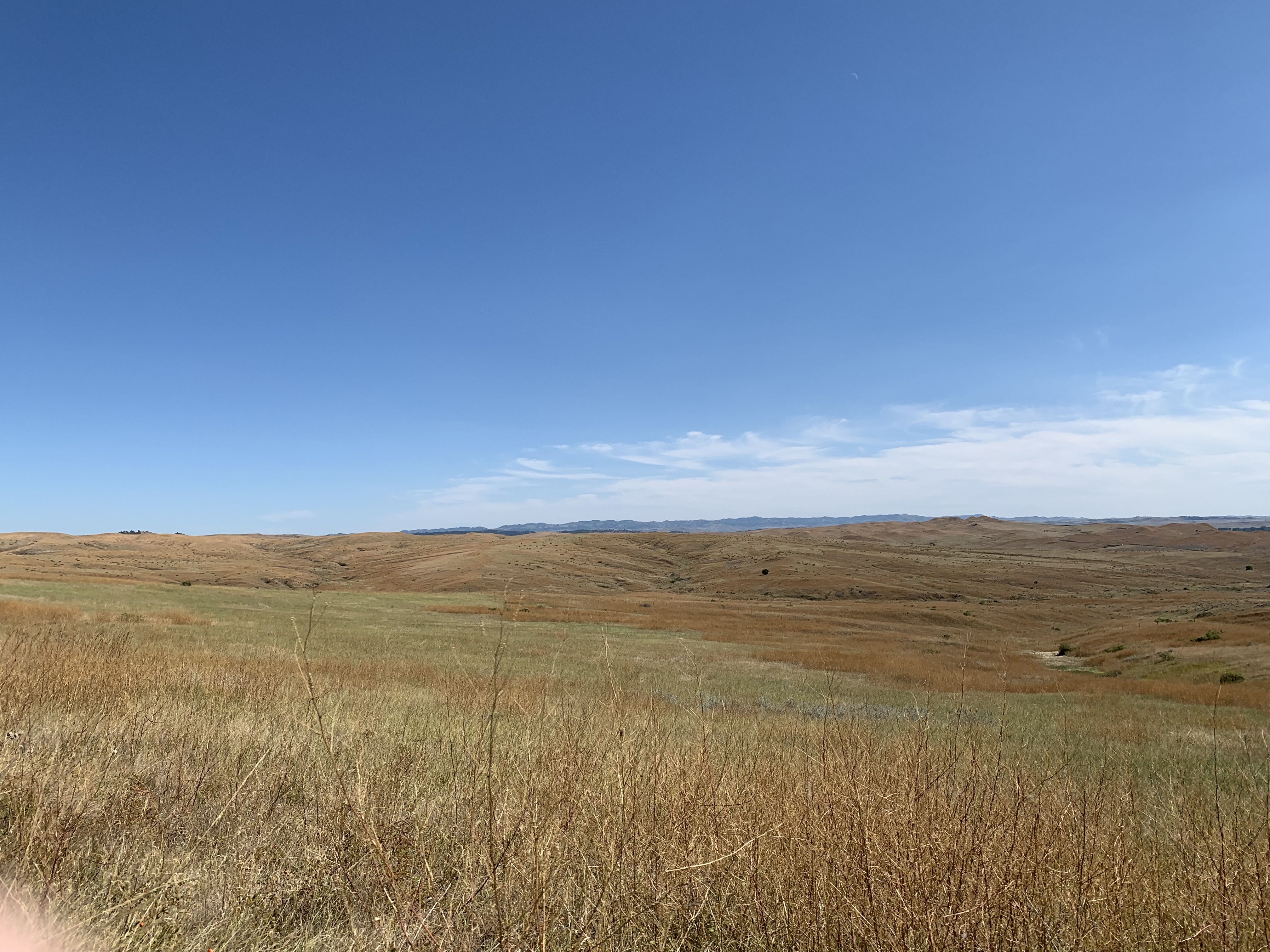
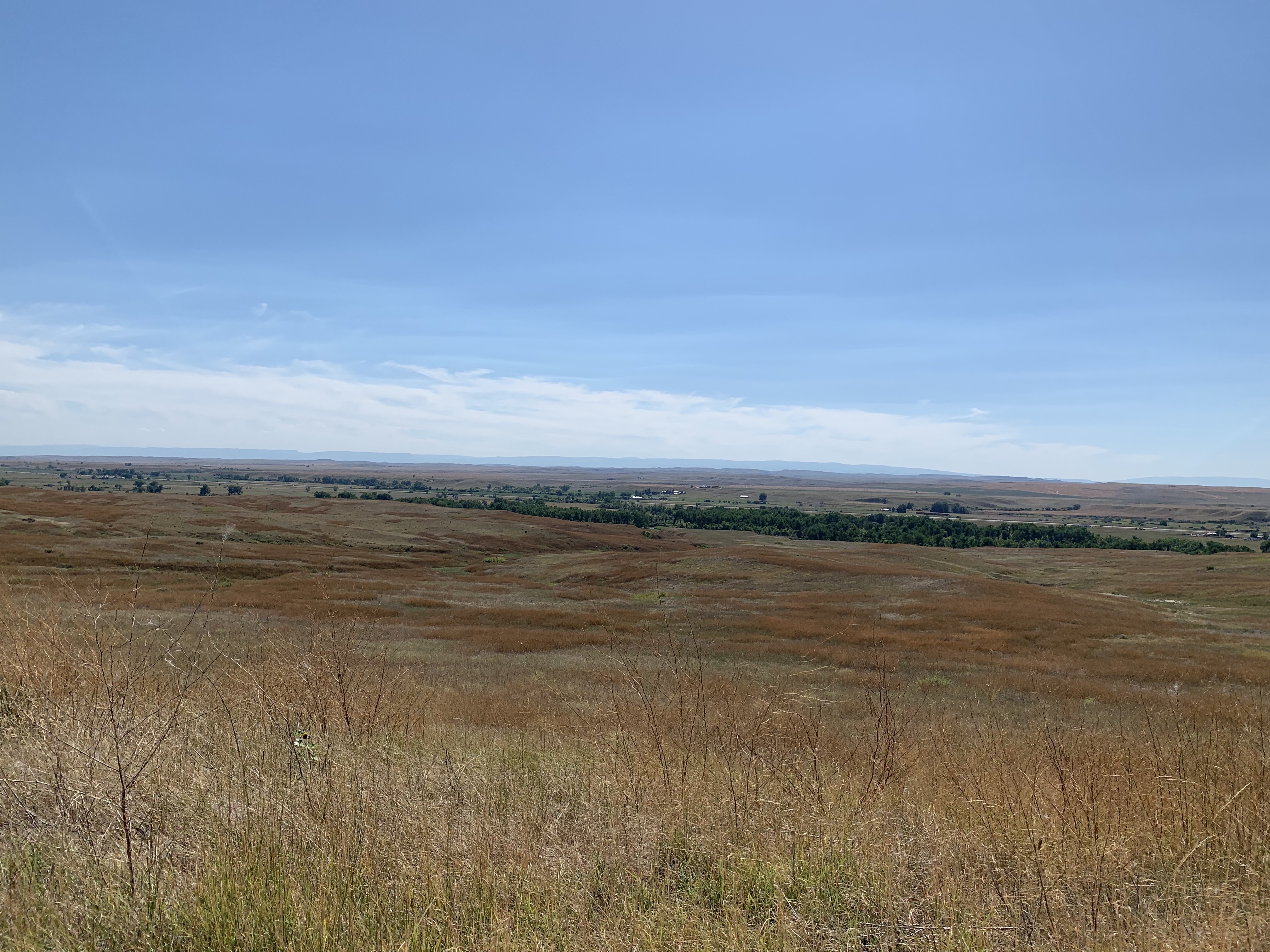
“You’ve seen as much as there is up there,” he would say as we sped past, pointing at the marble monolith at the top of the hill where the battle took place. I would look around at the desolate countryside of brown grass with no trees, in the middle of nowhere, and wonder how this place could ever have warranted a battle to the death.

Then I would get mad at my dad’s refusal to stop to learn more.

I had certainly learned about General George Custer’s Last Stand in my elementary school history lessons. But my interest was primarily driven by a 1958 Disney movie “Tonka Wakan” that I had seen in the theater and then later on Sunday nights on “Walt Disney’s Wonderful World of Color.” I thought I understood the tragedy of that day from the standpoint of the U.S. Calvary and the only surviving horse Comanche, who in the Disney-imagined version of the battle, was raised and trained by a young Indian boy who turned the horse over to the calvary and then later was part of the Little Bighorn Battle in defense of Indian territory.

So I had a very skewed and Disney-fied version of history and my father was not helping me understand more deeply. It wasn’t until much later that I realized the likely reason he was so reluctant to stop and examine the history of the Battle of the Little Bighorn.

My father was ashamed of it. He was a humble man who knew there could be no pride or sense of honor in that place.

He had very likely been trained in his Marine Officer’s Training in 1942 to understand that the poor decision-making of a cocky, overly self-assured General Custer led to the slaughter of five companies of the 7th Calvary Regiment as well as their Indian scouts in addition to dozens of Lakota and Dakota Sioux, Cheyenne and Arapahoe warriors.

My father had lived through three South Pacific island battles where poor decision-making was a death sentence. He didn’t feel the need to rehash the history in this desolate part of Montana.

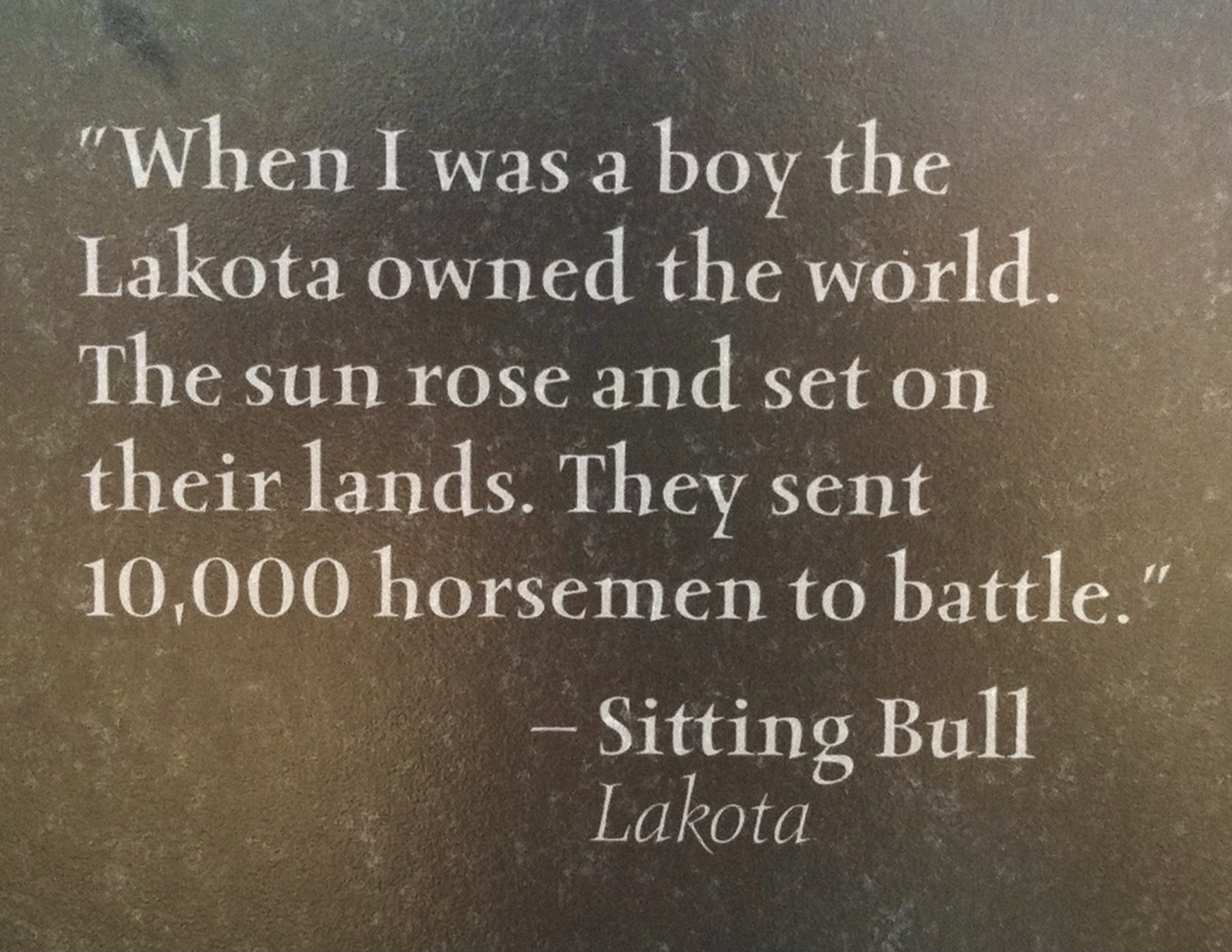
As an adult, I’ve visited the Battlefield with my husband and children several times, have learned more about what led to the battle, what took place that day and how the indigenous people of the region have memorialized the spot from their own perspective. When we approach this spot on our cross-country drives, I’m filled with regret and remorse at the loss of life and the eventual loss of a Native American culture that could never again be as it was, despite the defeat they handed to the cavalry that day. I learned more when our son lived and taught high school math on the Pine Ridge Reservation of the Lakota Sioux people and we visited the site of Wounded Knee, another tear-drenched place in U.S. Cavalry and Native American history.

We, all descendants of immigrant Americans, comprise the U.S. government and military which doesn’t always make the best or wisest decisions. This is haunting us again this week in the miserably managed ending of the twenty-year war in Afghanistan that has cost so many American and Afghan lives – certainly beyond the scale of the horrific one day defeat at the Little Bighorn River. This long drawn-out complicated response to the attacks we suffered on 9/11/01, ended with yet more tragic bloodshed as we left so many vulnerable behind.
War, suffering, loss and death cannot and should not be Disney-fied. History is more complex than a paragraph in a textbook.

We have so much to learn about our shame and our need for greater humility. We need to understand who we have offended, not just how offended we feel. We can’t hide in the bathroom or drive on past the sites of these bloody conflicts, hoping it will all be forgotten.

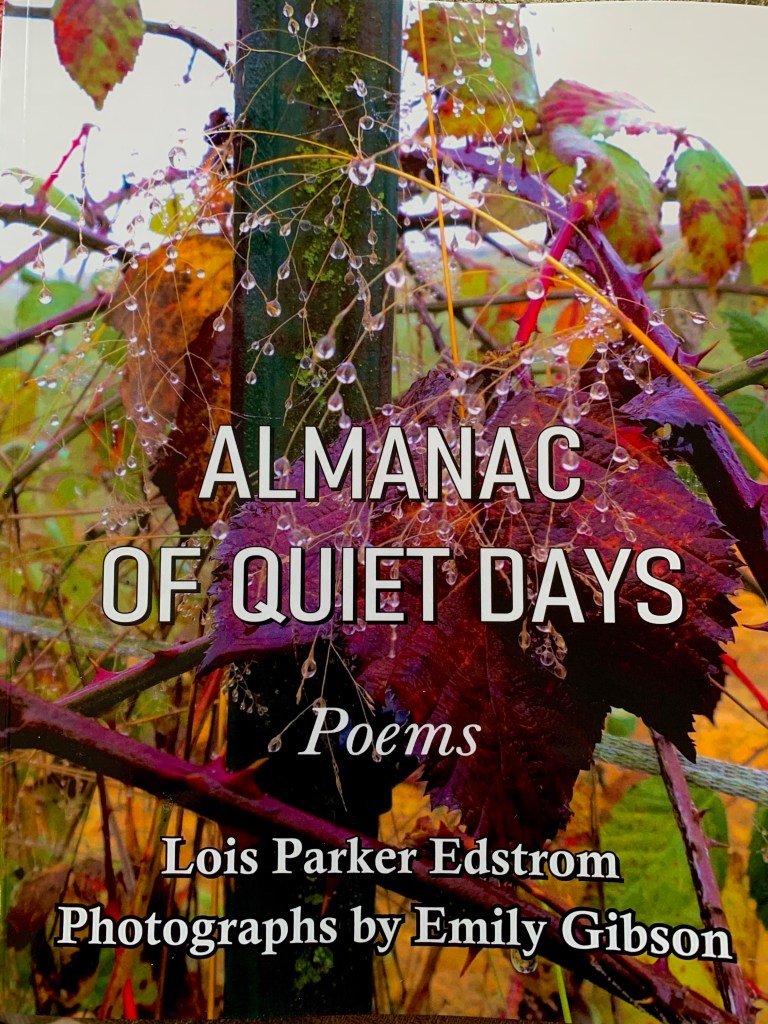
A book of Barnstorming photography and Lois Edstrom’s poetry is available to order here:

May Light Eternal Shine Upon Them

May light eternal shine upon them, O Lord,
with Thy saints forever, for Thou art kind.
Eternal rest give to them, O Lord,
and let perpetual light shine upon them.

Lux aeterna luceat eis, Domine,
cum sanctis tuis in aeternum, quia pius es.
Requiem aeternam dona eis, Domine,
et lux perpetua luceat eis.

In my father’s near daily letters home to my mother during WWII, month after month after month, he would say, over and over while apologizing for the repetition:

“I will come home to you, I will return, I will not let this change me, we will be joined again…”

This was his way of convincing himself even as he carried the dead and dying after island battles: men he knew well and the enemy he did not know. He knew they were never returning to the home they died protecting and to those who loved them.

He shared little of battle in his letters as each letter was reviewed and signed off by a censor before being sealed and sent. This story made it through:

“You mentioned a story of Navy landing craft taking the Marines into Tarawa.  It reminded me of something which impressed me a great deal and something I’m sure I’ll never forget. 

So you’ll understand what I mean I’ll try to start with an explanation.  In training – close order drill- etc.  there is a command that is given always when the men form in the morning – various times during the day– after firing– and always before a formation is dismissed.  The command is INSPECTION – ARMS.  On the command of EXECUTION- ARMS each man opens the bolt of his rifle.  It is supposed to be done in unison so you hear just one sound as the bolts are opened.  Usually it is pretty good and sounds O.K.

Just to show you how the morale of the men going to the <Tarawa> beach was – and how much it impressed me — we were on our way in – I was forward, watching the beach thru a little slit in the ramp – the men were crouched in the bottom of the boat, just waiting.  You see- we enter the landing boats with unloaded rifles and wait till it’s advisable before loading.  When we got about to the right distance in my estimation I turned around and said – LOAD and LOCK – I didn’t realize it, but every man had been crouching with his hand on the operating handle and when I said that — SLAM! — every bolt was open at once – I’ve never heard it done better – and those men meant business when they loaded those rifles. 

A man couldn’t be afraid with men like that behind him.”

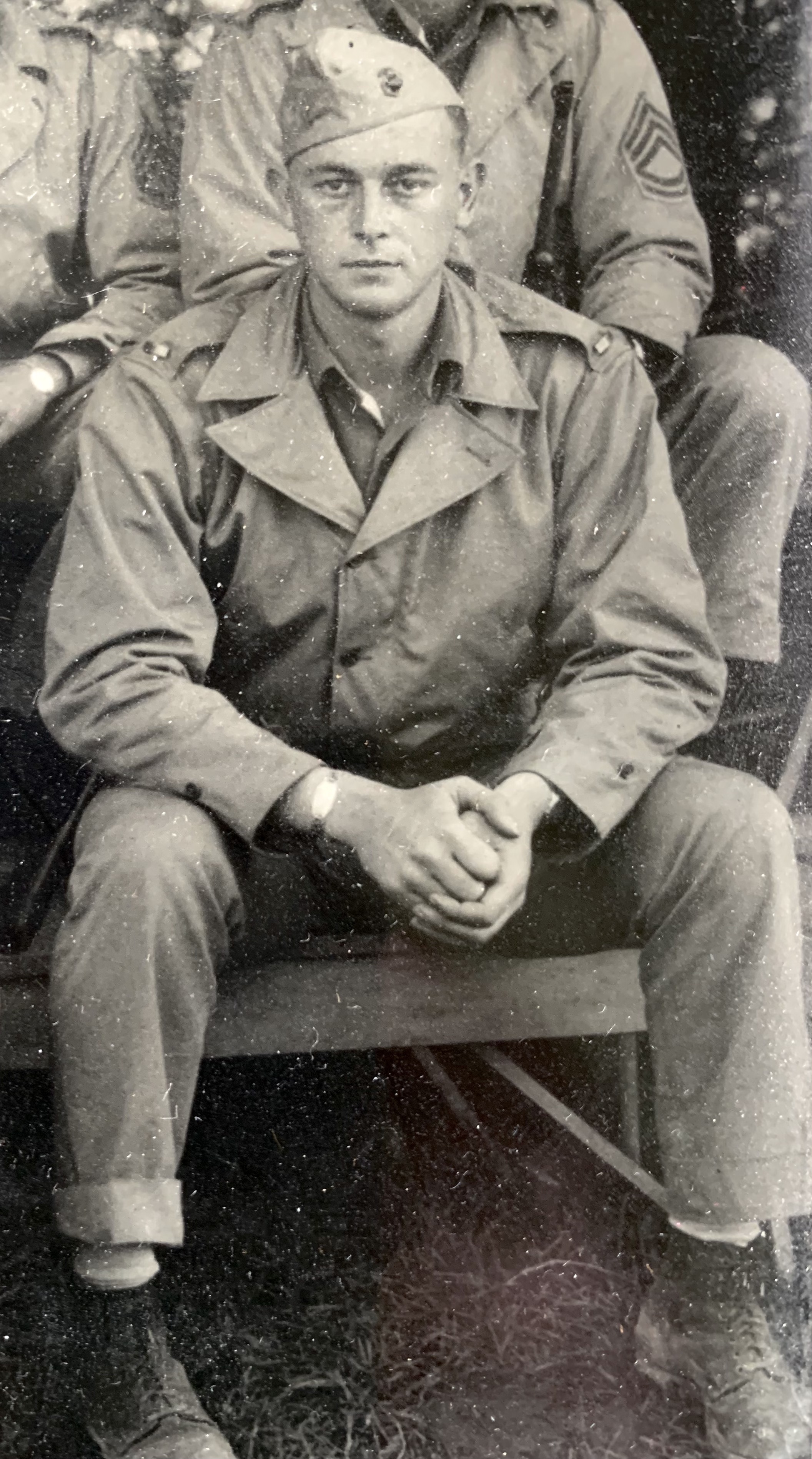
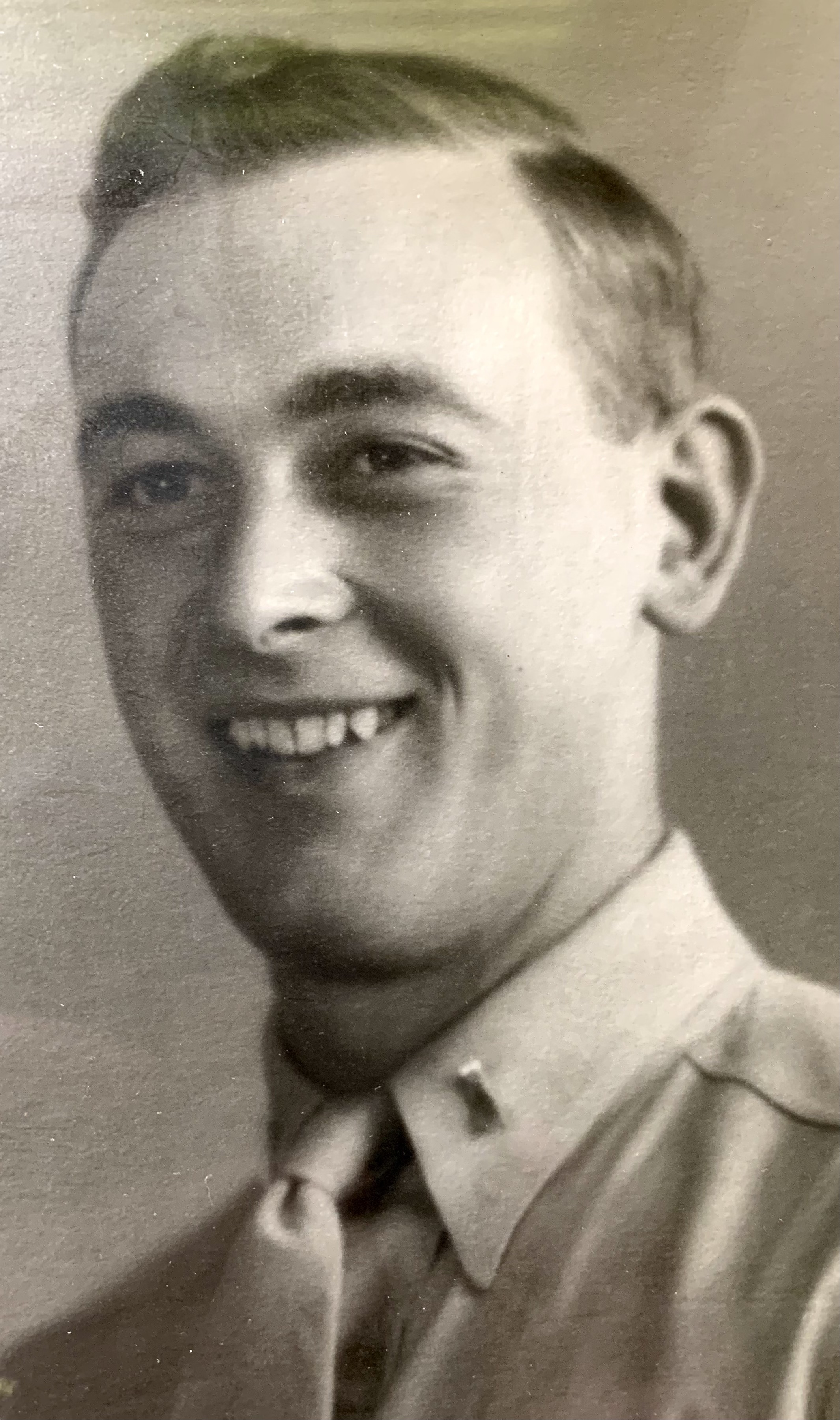
(for my father Henry Polis on Memorial Day)

It was only a part of what we knew about you-
serving three long years in the South Pacific,
spoken of obliquely
only if asked about,
but never really answered.

We knew you were a Marine battalion leader at age 21,
knew you spent too many nights without sleep,
unsure if you or your men would see the dawn
only to dread
what the next day would bring.

We knew you lost buddies
and your innocence;
found unaccustomed strength
in a mama’s boy
who once cried too easily and later almost never.

Somehow life had prepared you for this:
pulling your daddy out of taverns when you were ten
watching him beat your mama
until finally getting big enough
to stand in the way so he stopped.

Then Tarawa, Saipan, Tinian beaches
bitterly bloodsoaked
battles won,
to be restored and renewed
as vacation resorts.

We let you go without knowing
your full story–
even Mom didn’t ask.
You could not share the depth
of horror and fear you felt.

It was not shame that kept you silent;
simply no need to revisit
the pain of remembrance.
It was done, finished,
you had done your duty.

So as we again set flowers and flag
on your grave,
reunited with Mom after years apart,
I regret so many questions unasked
of your sacrifice beyond imagining.

Sleep well, Dad,
with Mom now by your side.
I rejoice you have wakened
to a renewed dawn,
an eternal light
Lux Aeterna.