but the whole shadowed earth reaching up, taking hold ~David Baker “Quicker”
Ah, but a man’s reach should exceed his grasp, Or what’s a heaven for? ~Robert Browning from Andrea del Sarto
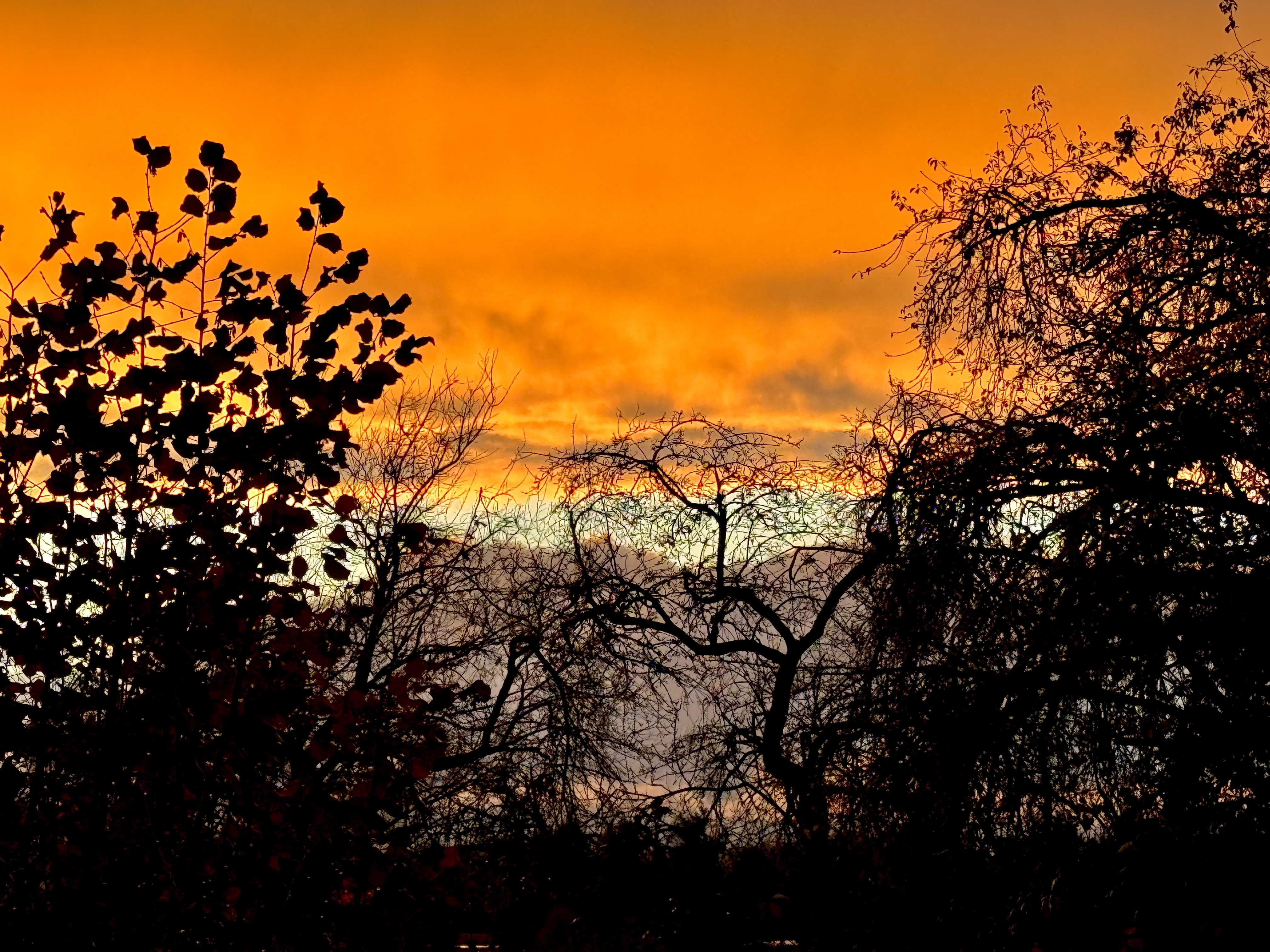
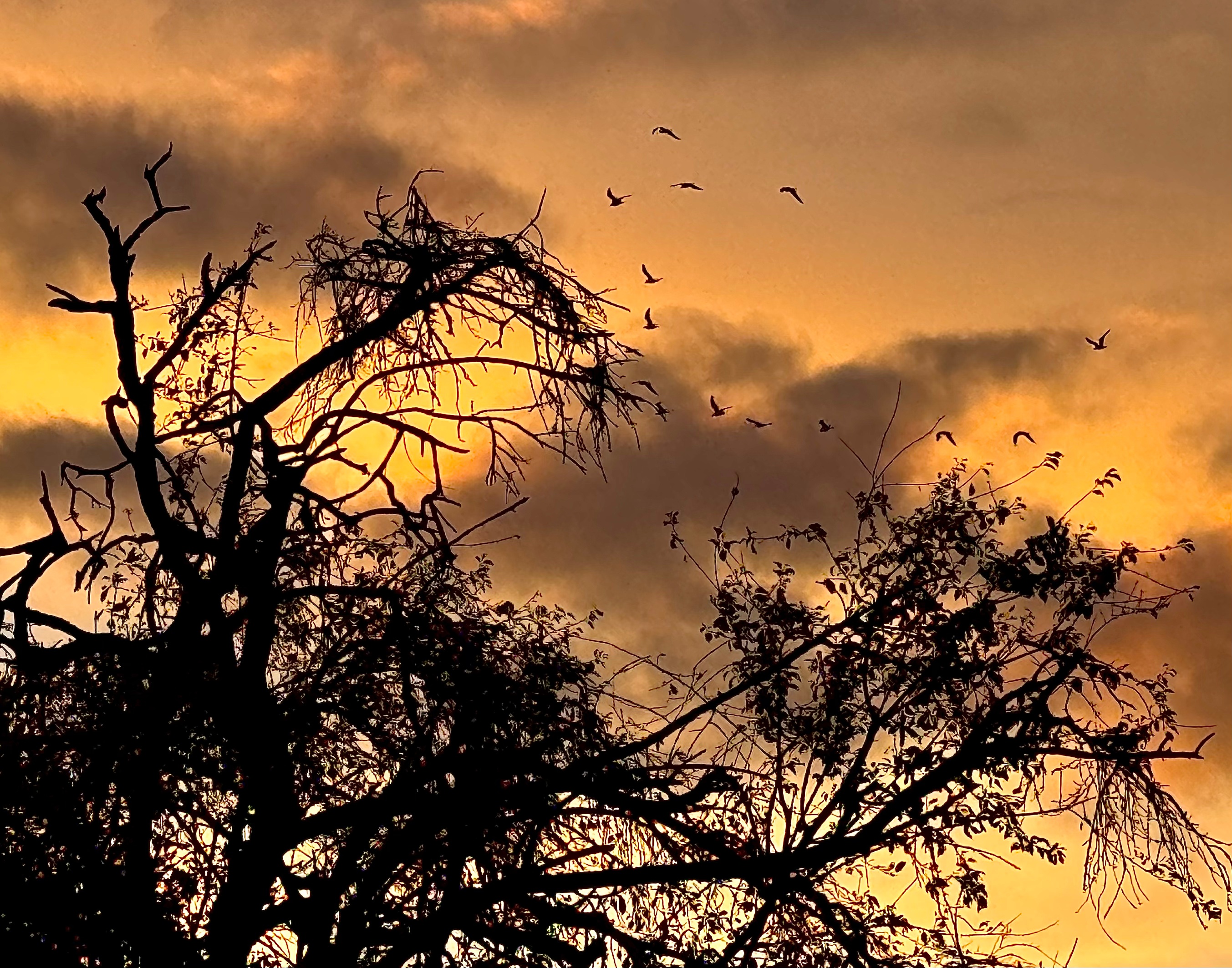
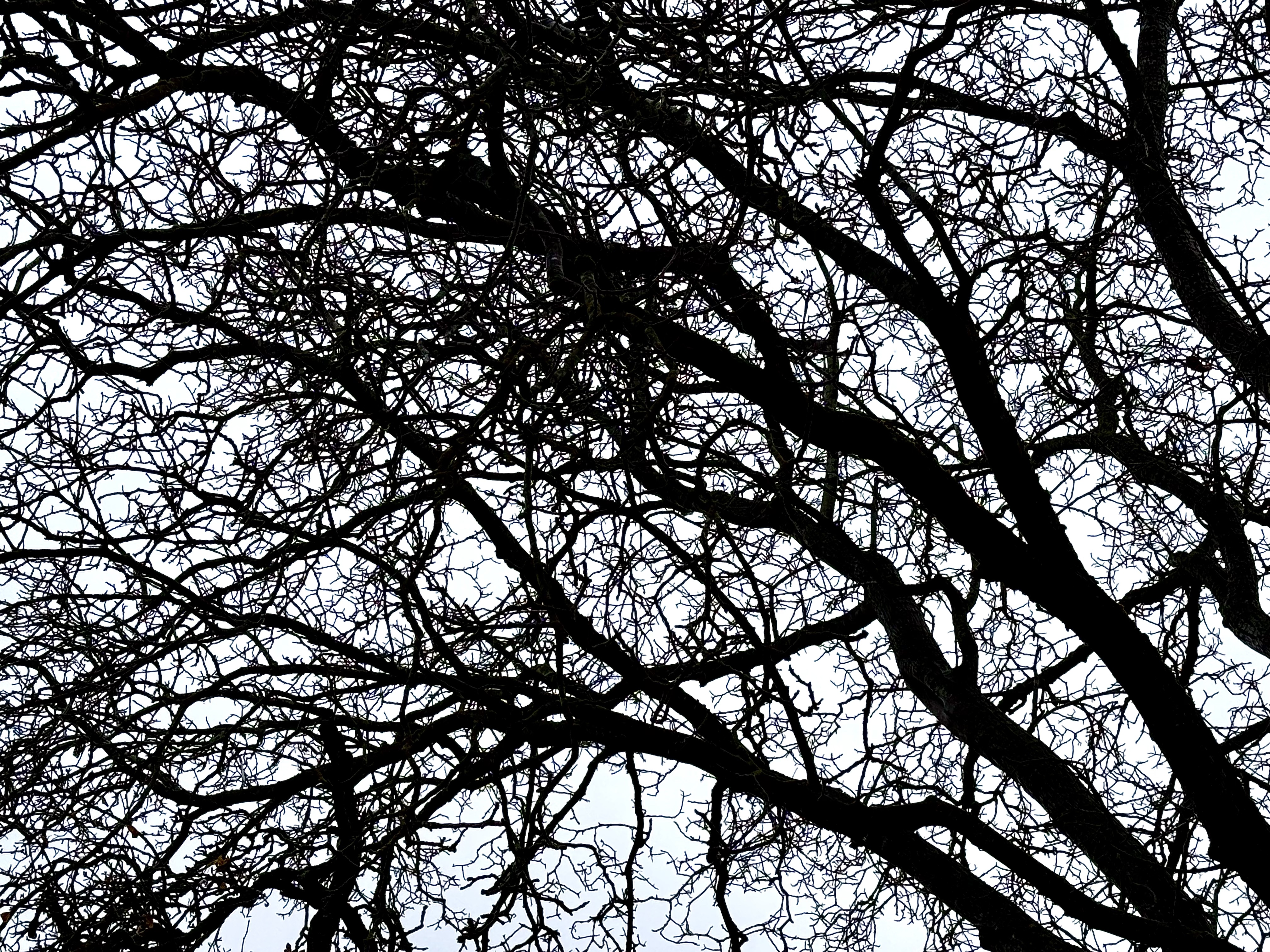
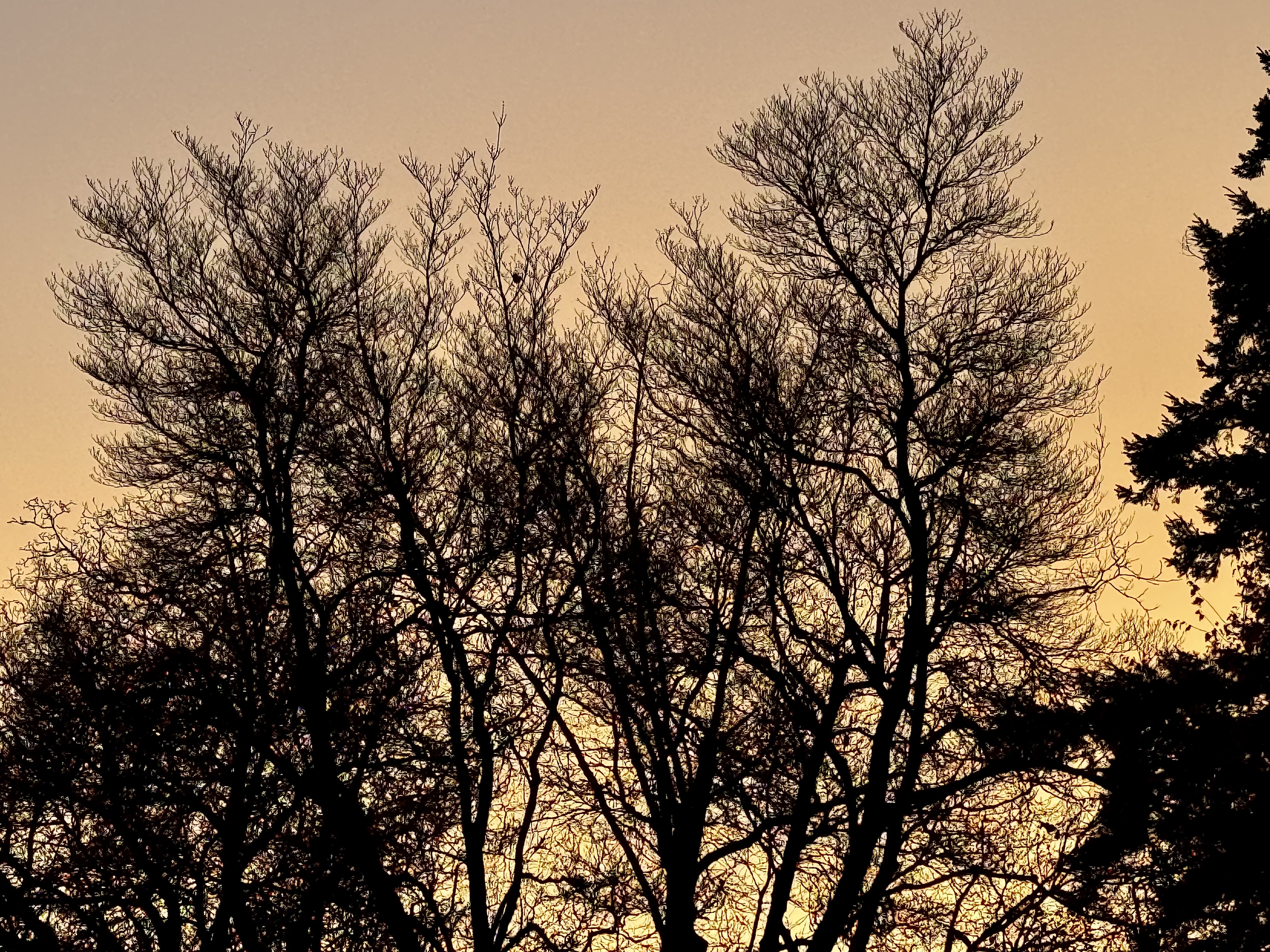
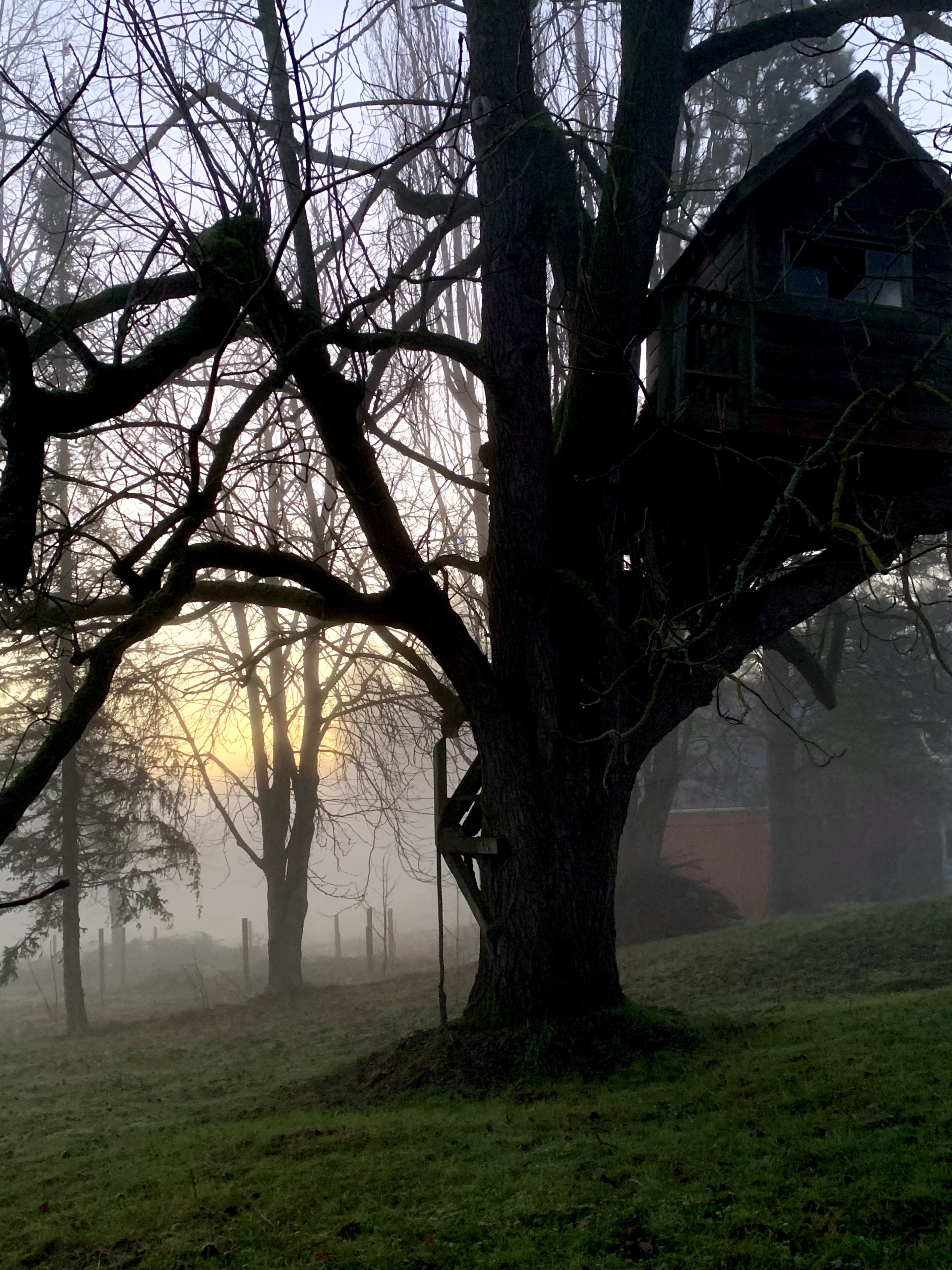
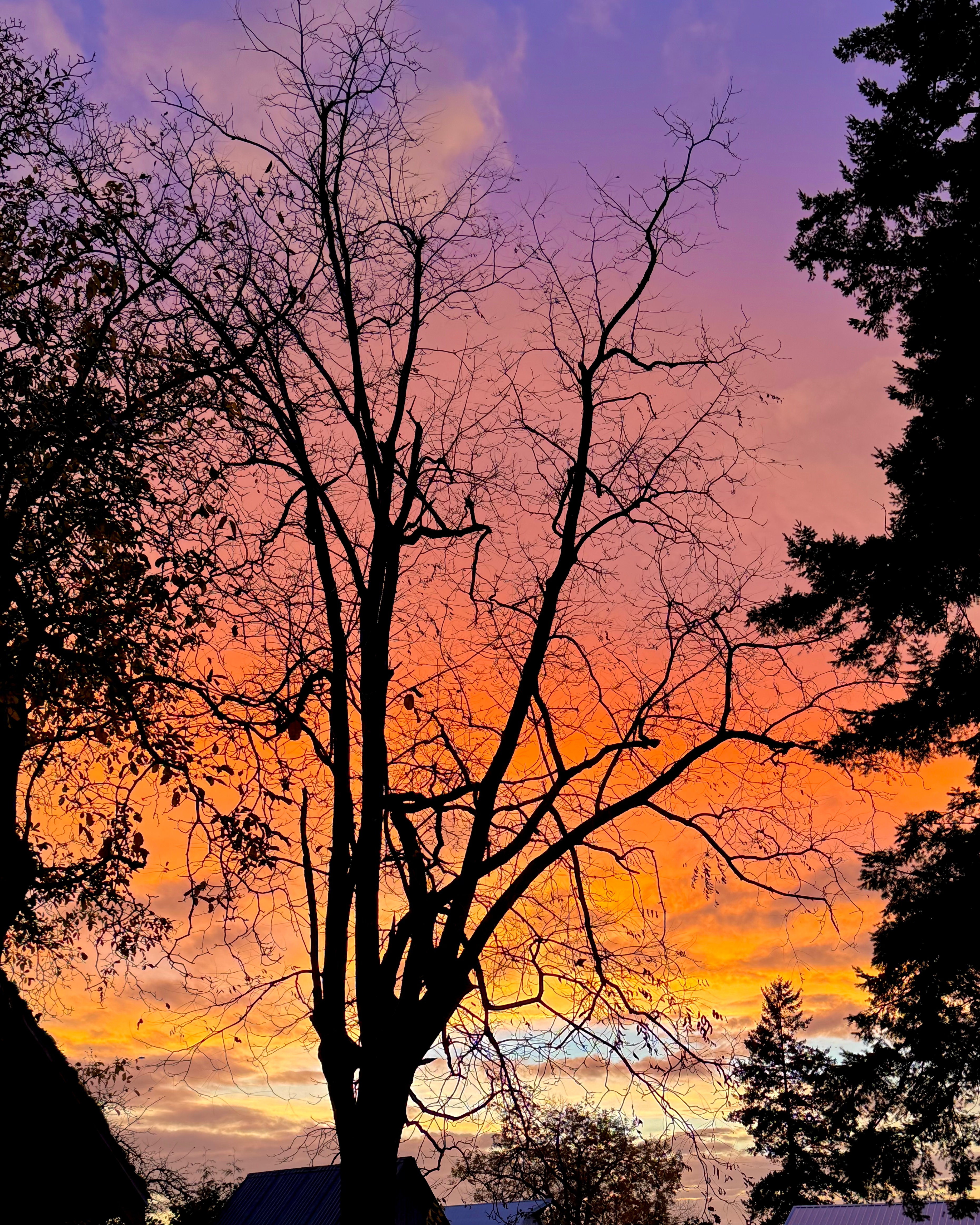
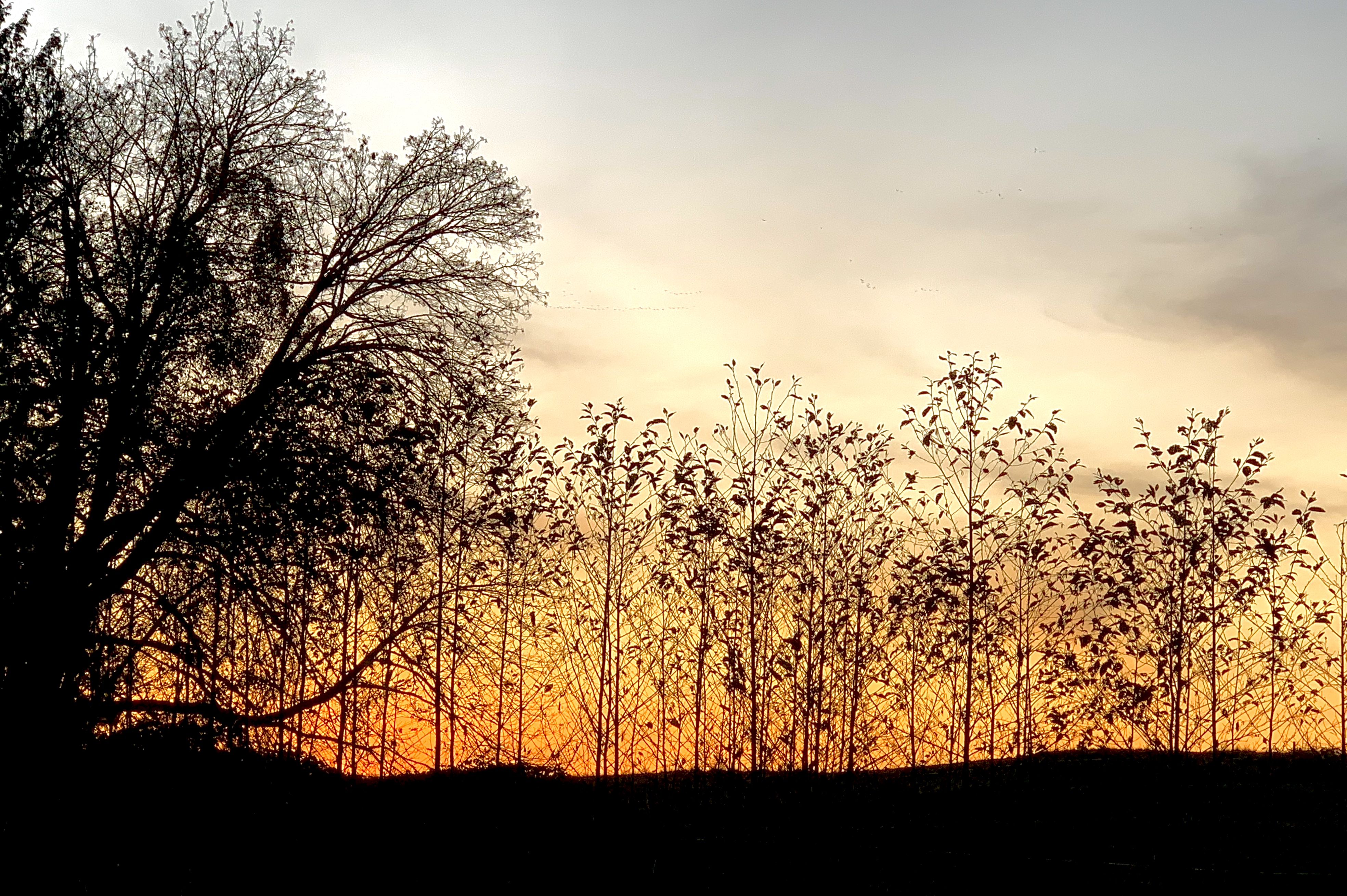
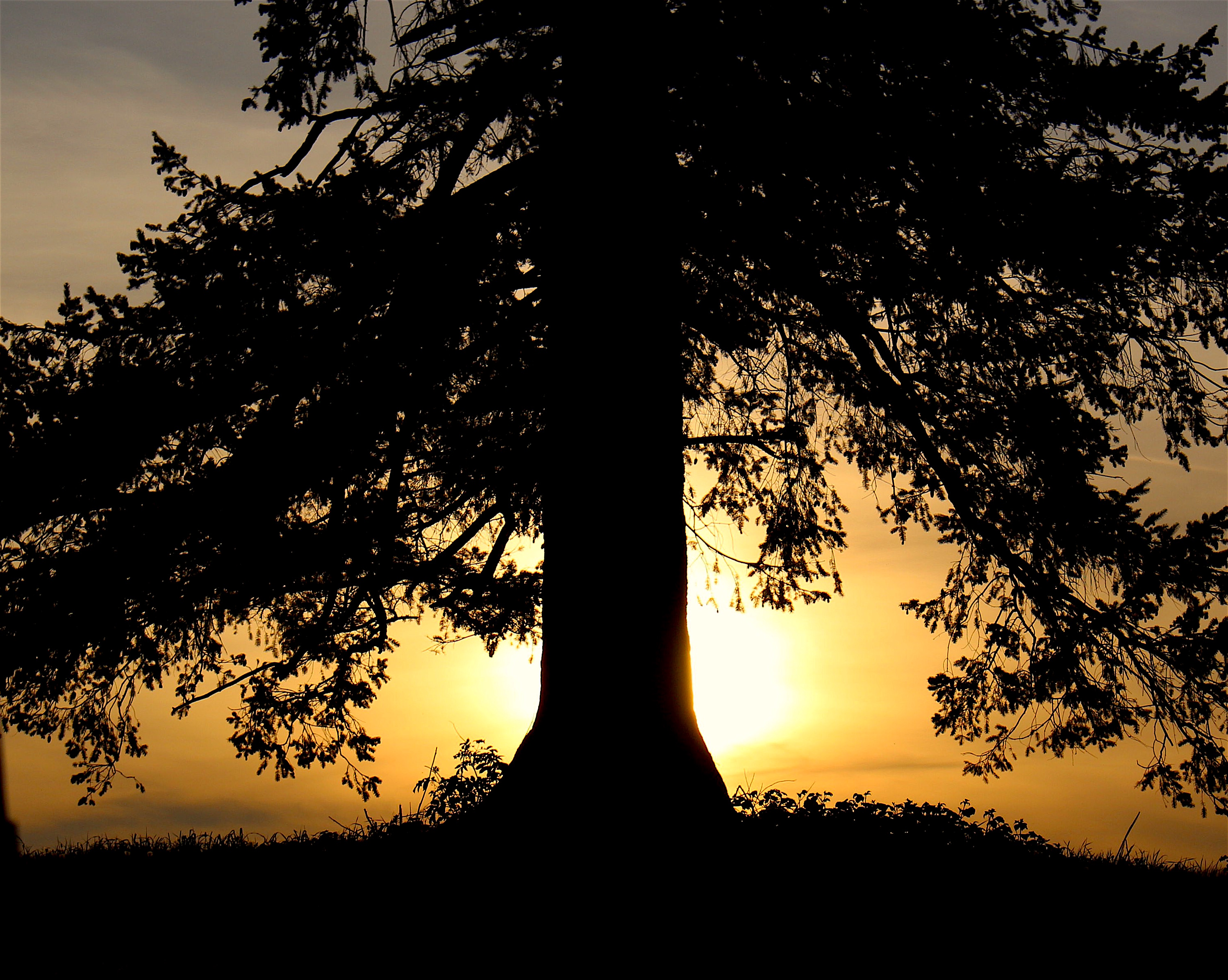
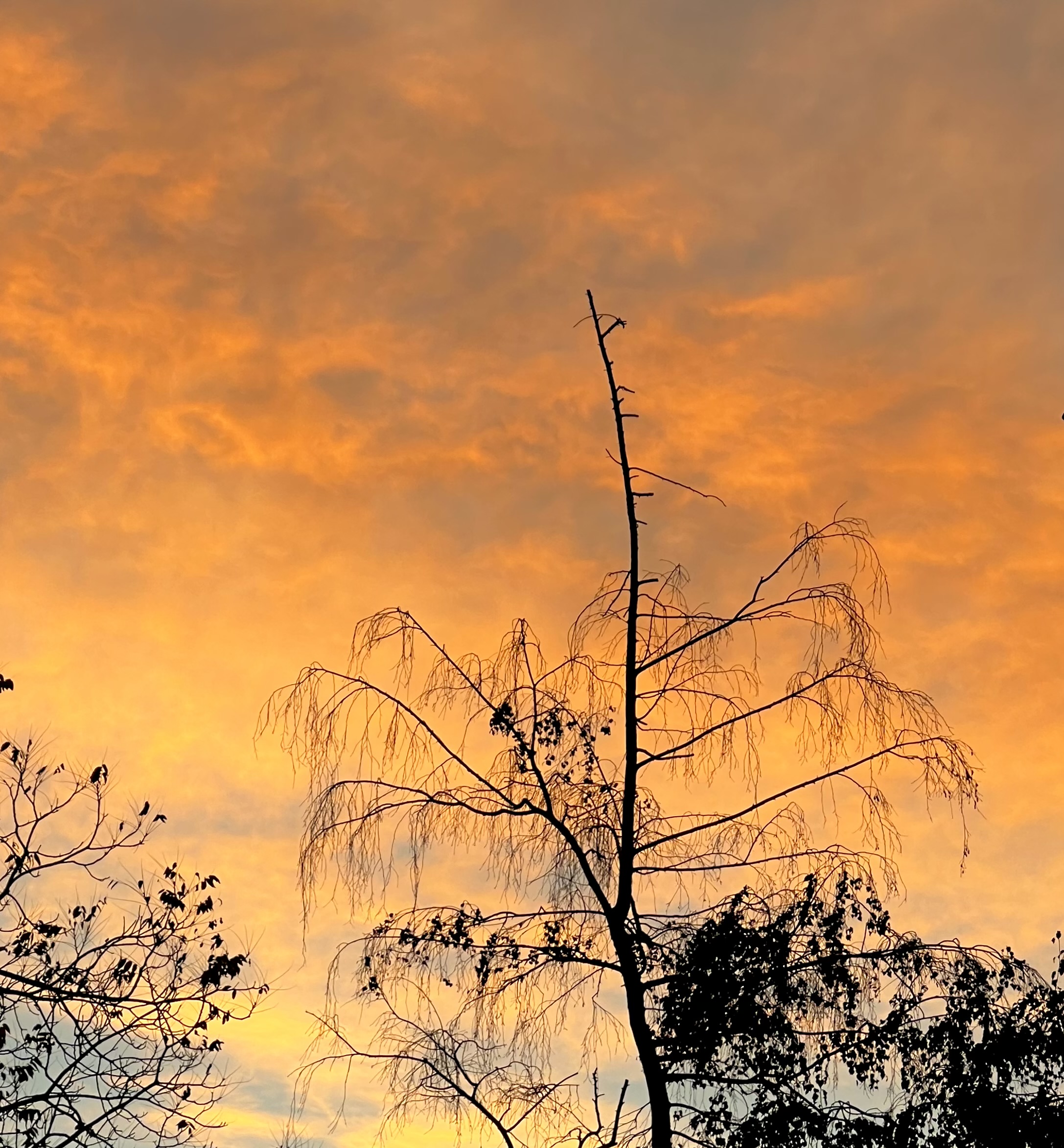
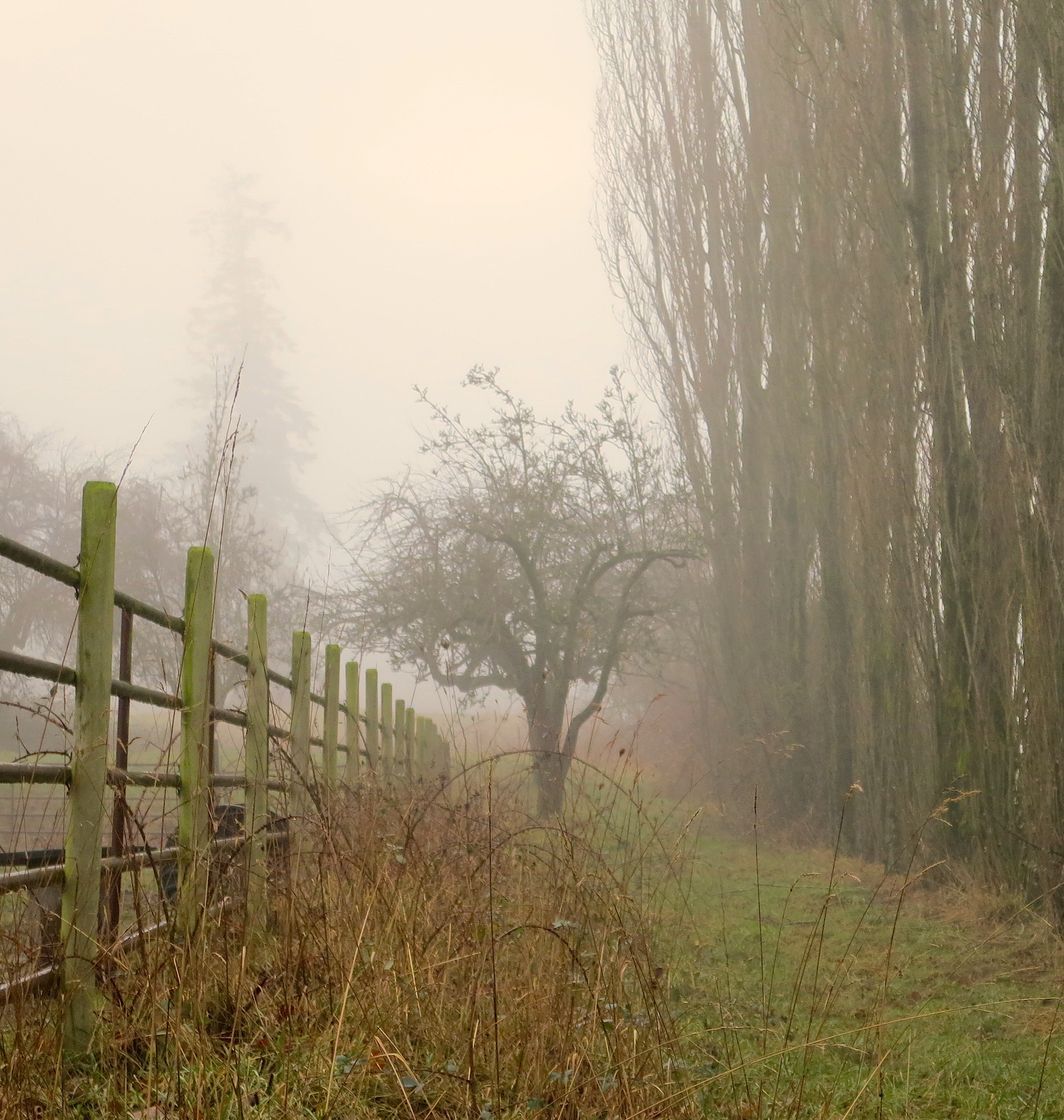
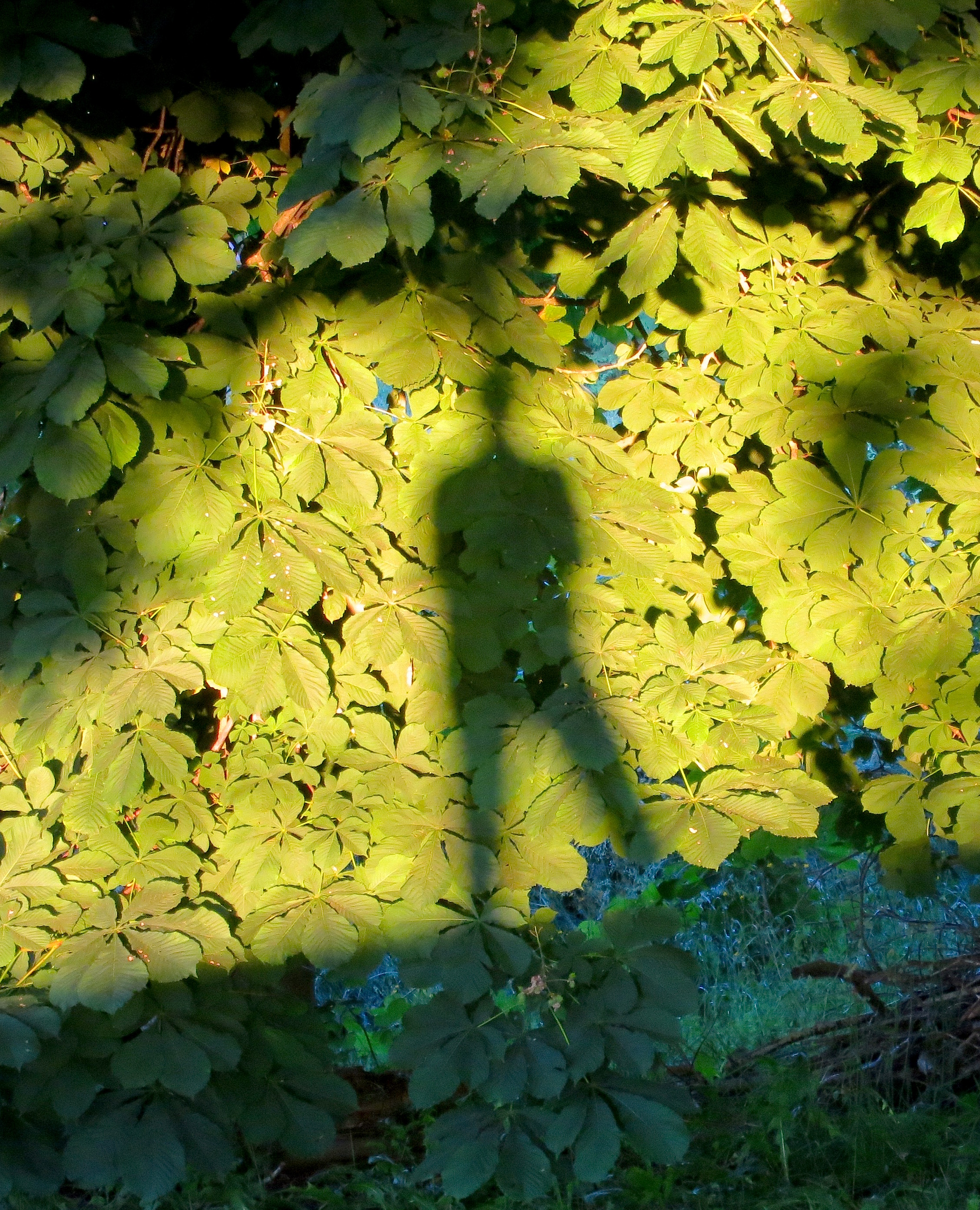
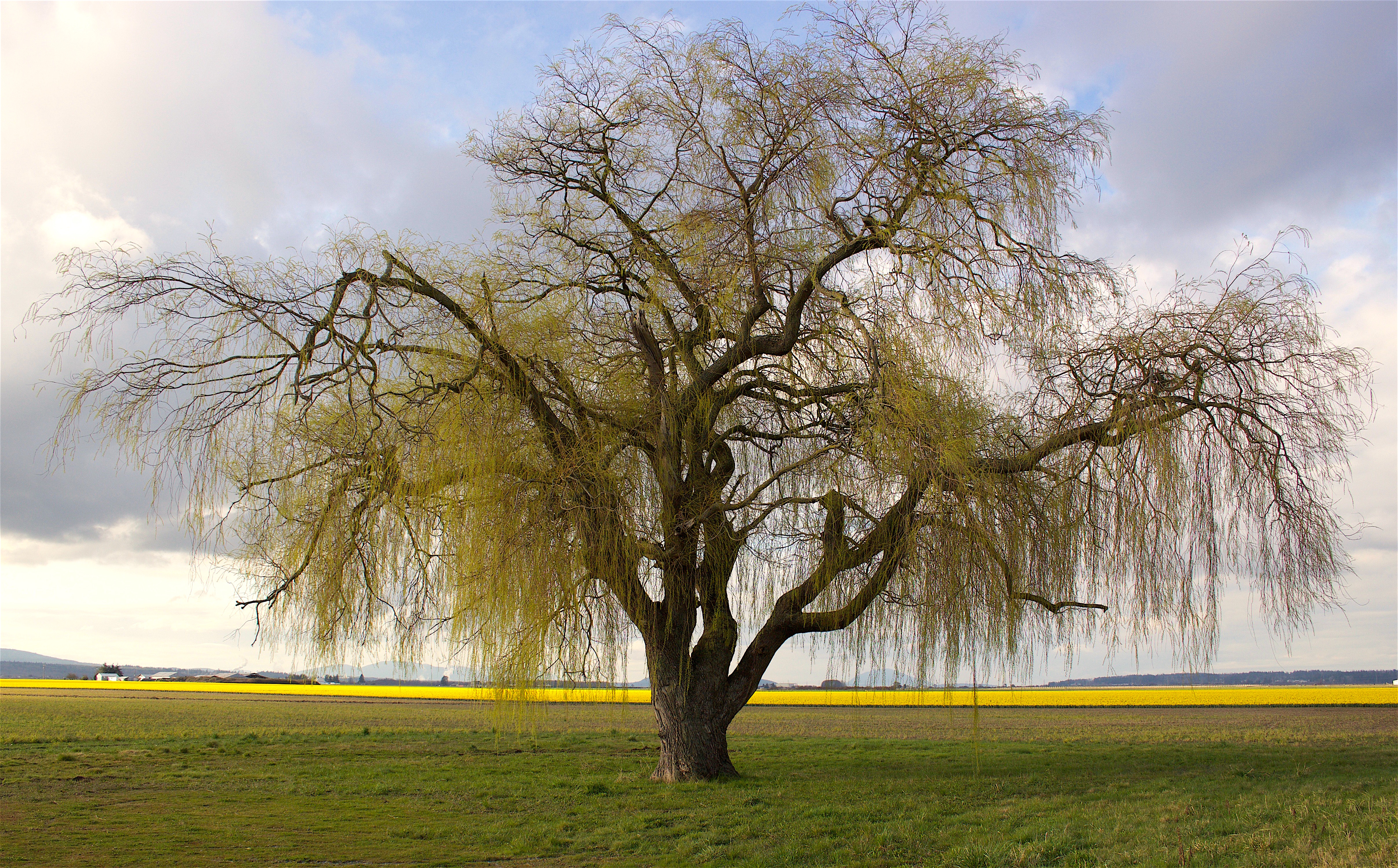
My branches are bared during this season of letting go.
As starkly revealed as I am, perhaps darkening days are a blessing: less spotlight on my complexity in silhouette – all knobby joints, awkward angles and curves.
One thing I know: in this season when I prefer the shadowland, I still reach up, trying to hold on to the promise beyond me. In fact, so many of us keep grasping at what we know is there but cannot see.
God has come down to grab on to each one of us — and is still hanging on.
We are not too plain or complex or awkward to be lifted, welcomed, cherished as we are, into heaven’s arms.
One-Time
Monthly
Yearly
Make a one-time or recurring donation to support daily Barnstorming posts
Today as the news from Selma and Saigon poisons the air like fallout, I come again to see the serene great picture that I love.
Here space and time exist in light the eye like the eye of faith believes. The seen, the known dissolve in iridescence, become illusive flesh of light that was not, was, forever is.
O light beheld as through refracting tears. Here is the aura of that world each of us has lost. Here is the shadow of its joy. ~Robert Hayden “Monet’s Waterlilies”
…The world is flux, and light becomes what it touches, becomes water, lilies on water, above and below water, becomes lilac and mauve and yellow and white and cerulean lamps, small fists passing sunlight so quickly to one another that it would take long, streaming hair inside my brush to catch it. To paint the speed of light! Our weighted shapes, these verticals, burn to mix with air and change our bones, skin, clothes to gases. Doctor, if only you could see how heaven pulls earth into its arms and how infinitely the heart expands to claim this world, blue vapor without end. ~Lisel Mueller, “Monet Refuses the Operation” from Second Language
We see things differently, don’t we? What seems ordinary to one person is extraordinary to another.
How might I learn to adjust my focus to see things as you do? How might I help others to see the world as I do?
The world is flux; my delight and dismay flows from moment to moment, from object to absence, from light to darkness, from color to gray. Perhaps the blur from the figurative (or real) cataract impeding my vision creates a deeper understanding, as I use my imagination to fill in what I can’t discern.
My heart and mind expands to claim this world and all that beauty has to offer, while heaven – all this while – is pulling me into its arms.
In heaven, my focus will be clear. It will all be extraordinarily holy.
One-Time
Monthly
Yearly
Make a one-time or recurring donation to support daily Barnstorming posts
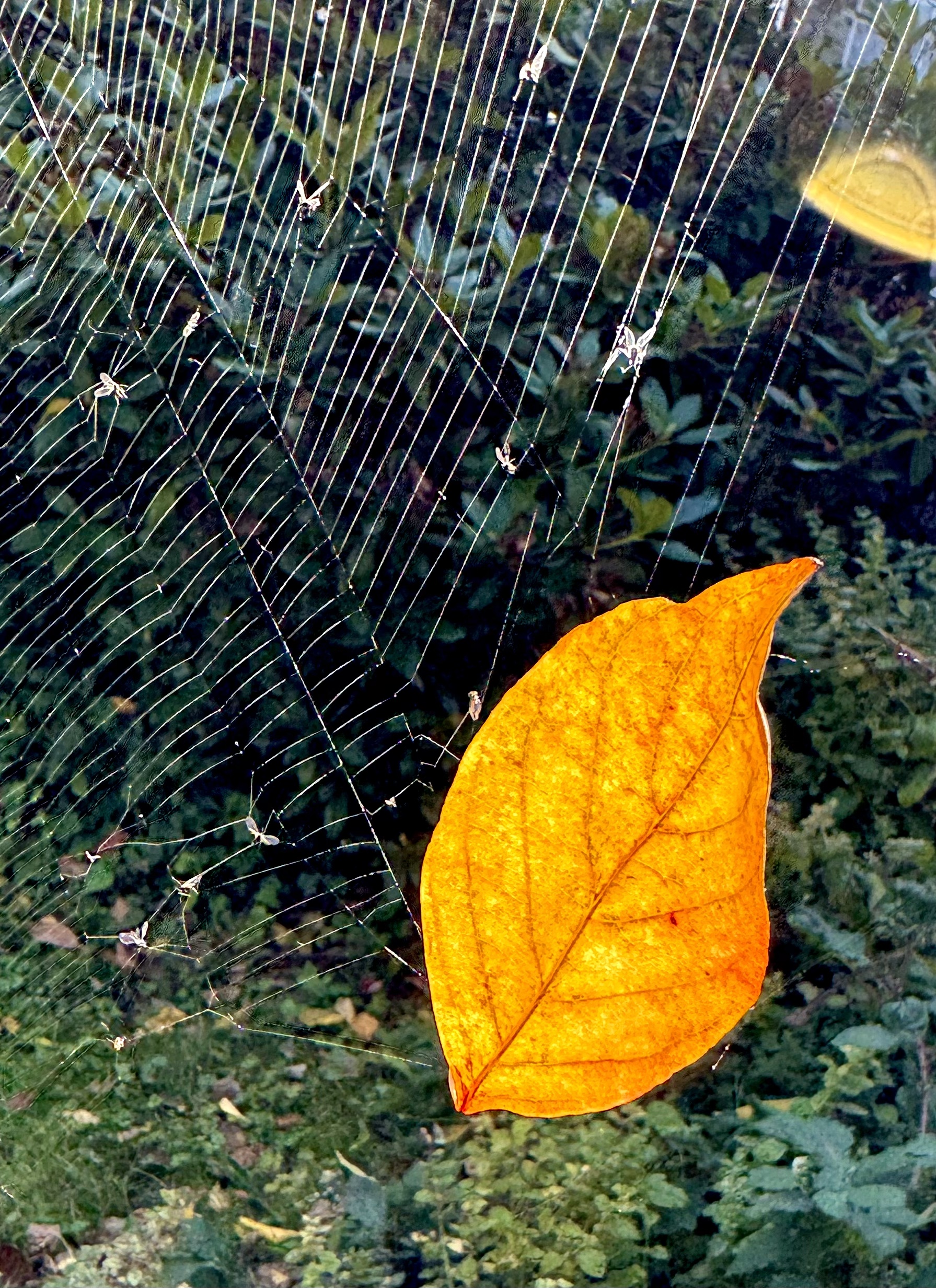
Within the ongoing havoc the woods this morning is almost unnaturally still. Through stalled air, unshadowed light, a few leaves fall of their own weight.
The sky is gray. It begins in mist almost at the ground and rises forever. The trees rise in silence almost natural, but not quite, almost eternal, but not quite.
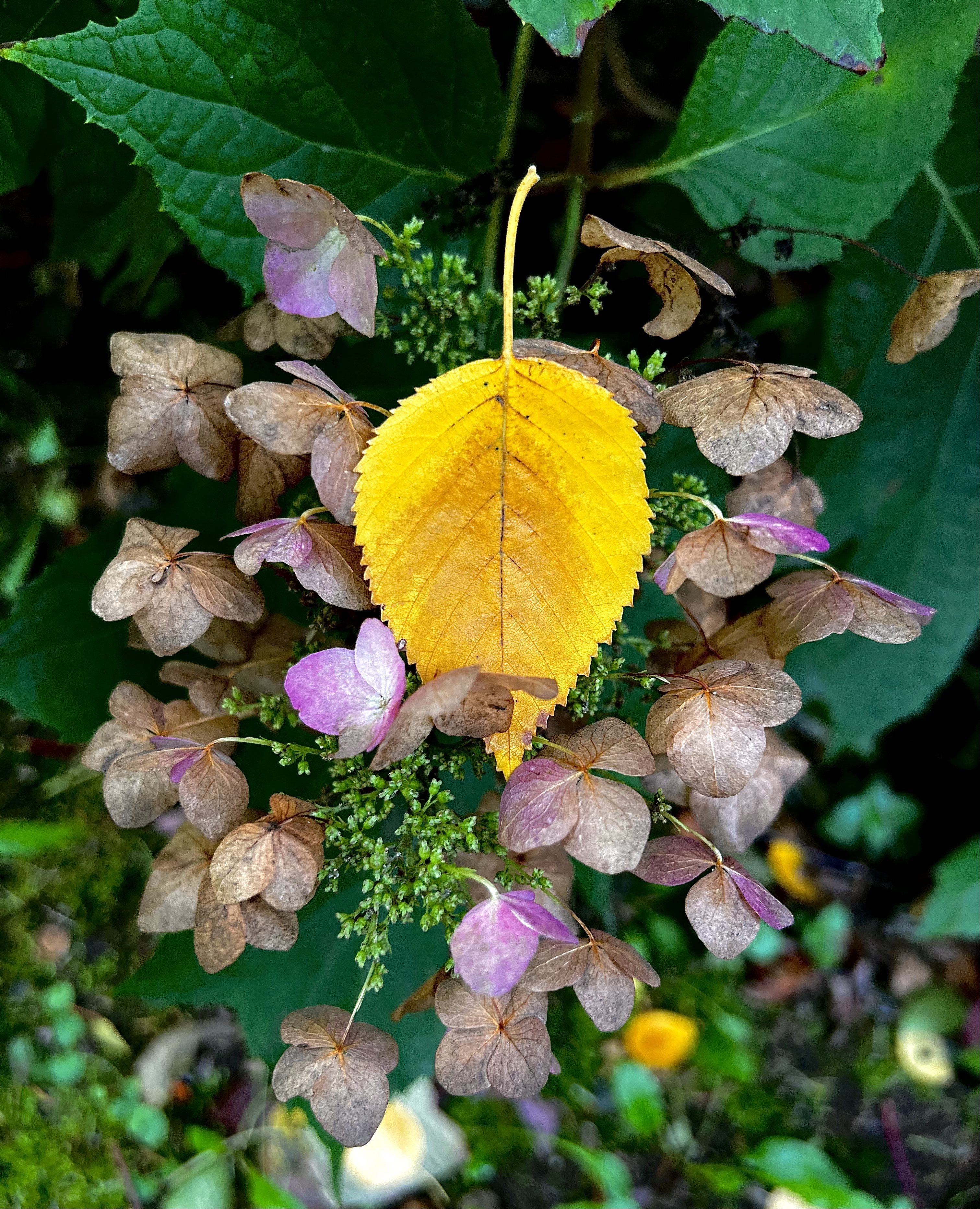
What more did I think I wanted? Here is what has always been. Here is what will always be. Even in me, the Maker of all this returns in rest, even to the slightest of His works, a yellow leaf slowly falling, and is pleased. ~Wendell Berry “VII” from This Day
What more did I think I wanted?
What always has been and always will be:
Until I’m not able to hold on in the wind and rain, may I be a spot of unshadowed light in this dark and bleak world.
I’ll let go like a yellow leaf in autumn, when the time comes, if it pleases my Maker.
One-Time
Monthly
Yearly
Make a one-time or recurring donation to support daily Barnstorming posts
…today, the unseen was everything. The unknown, the only real fact of life. All this he saw, for one moment breathless and intense, vivid on the morning sky; and still, as he looked, he lived; and still, as he lived, he wondered. ~Kenneth Grahame, The Wind in the Willows
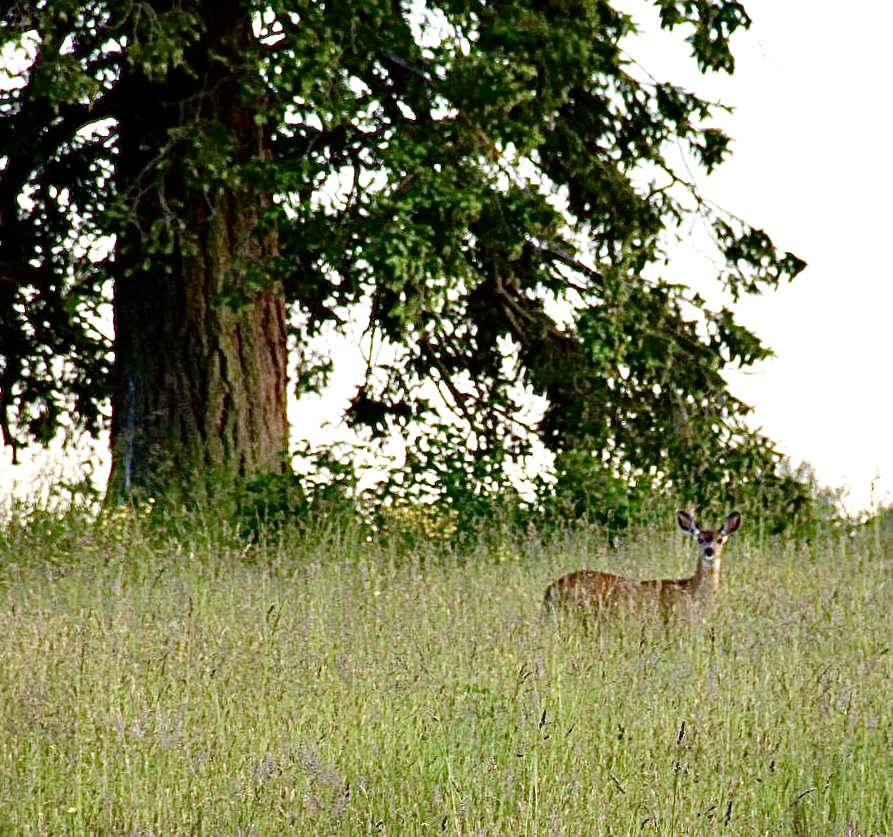
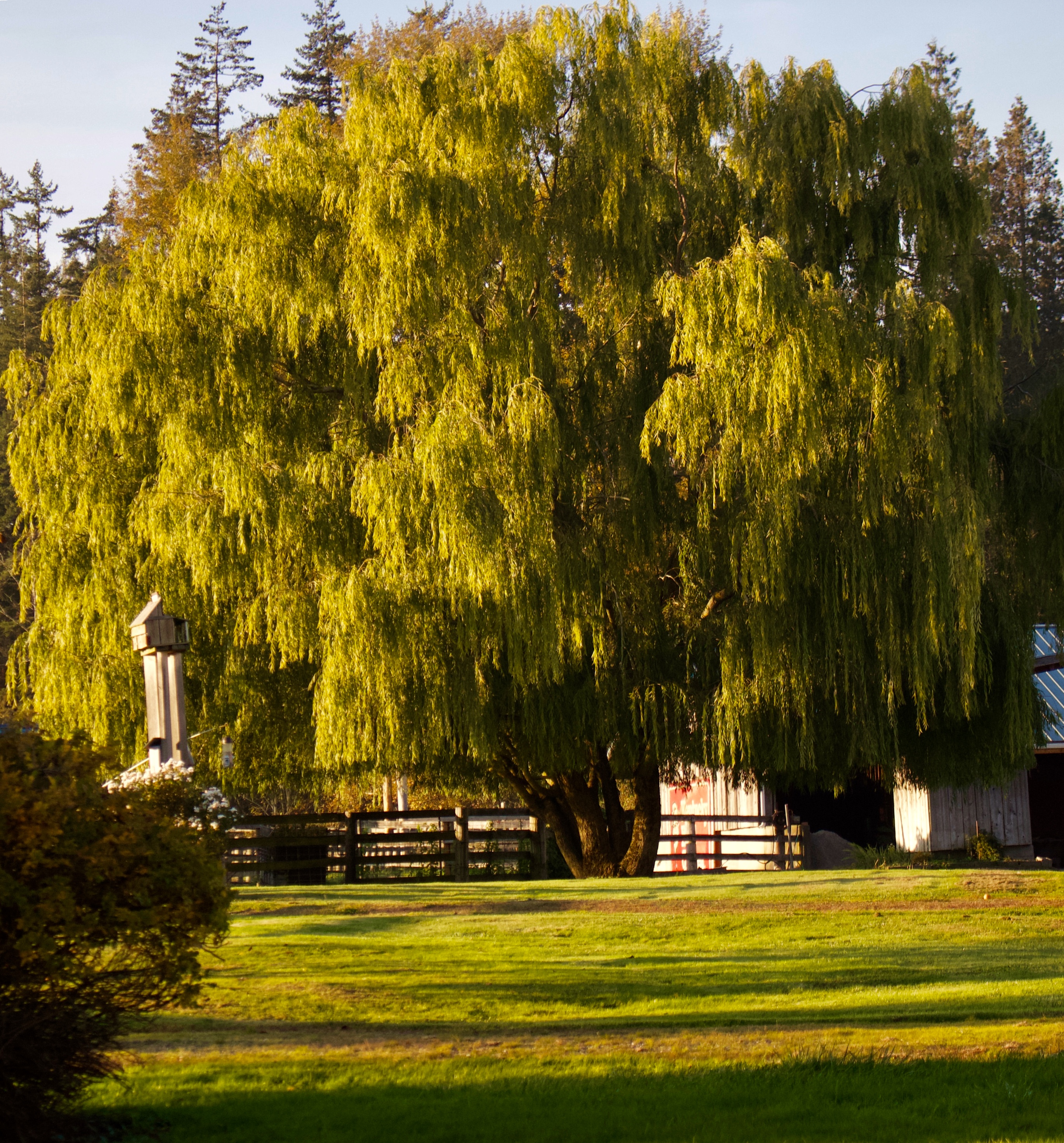
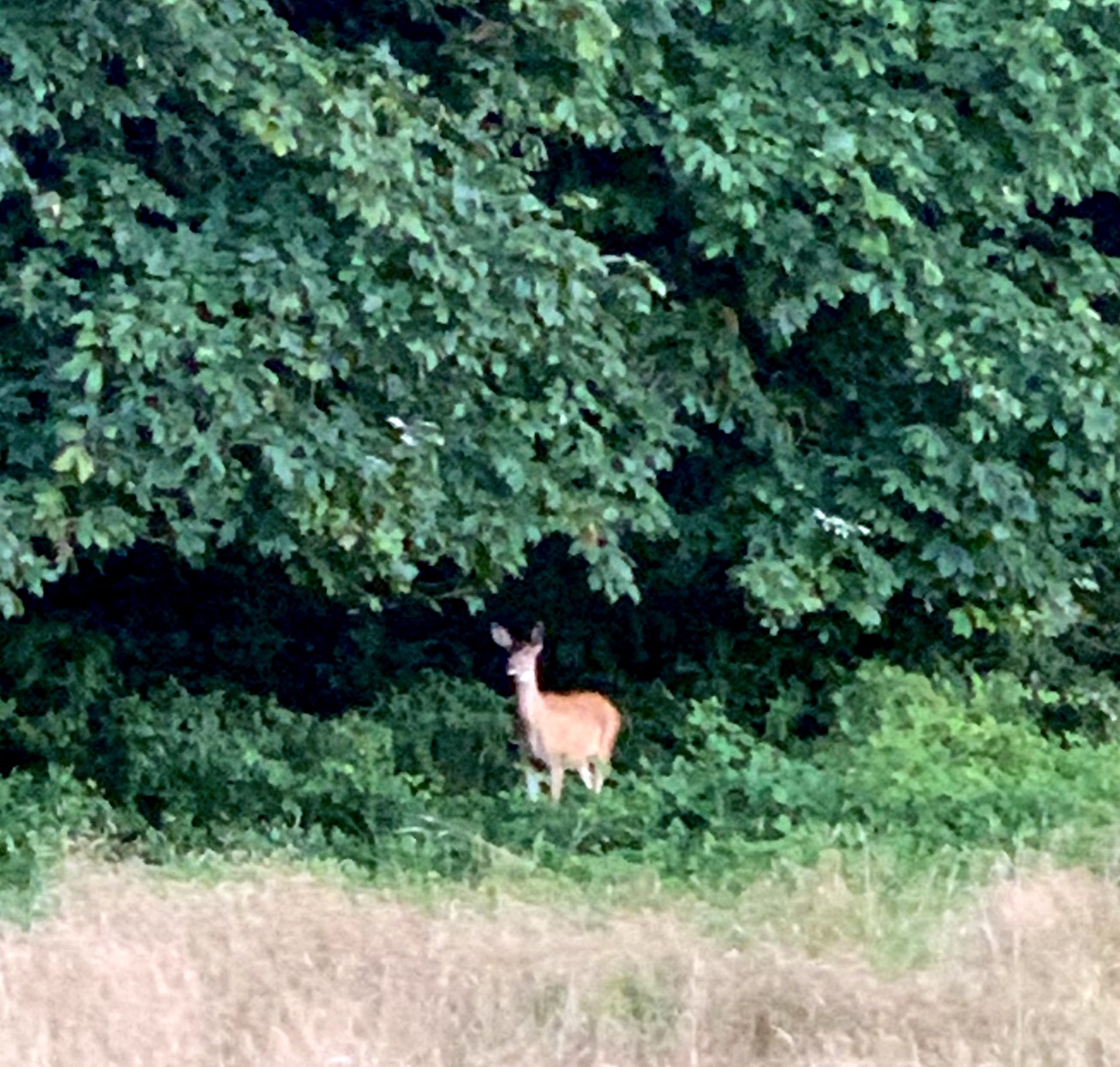
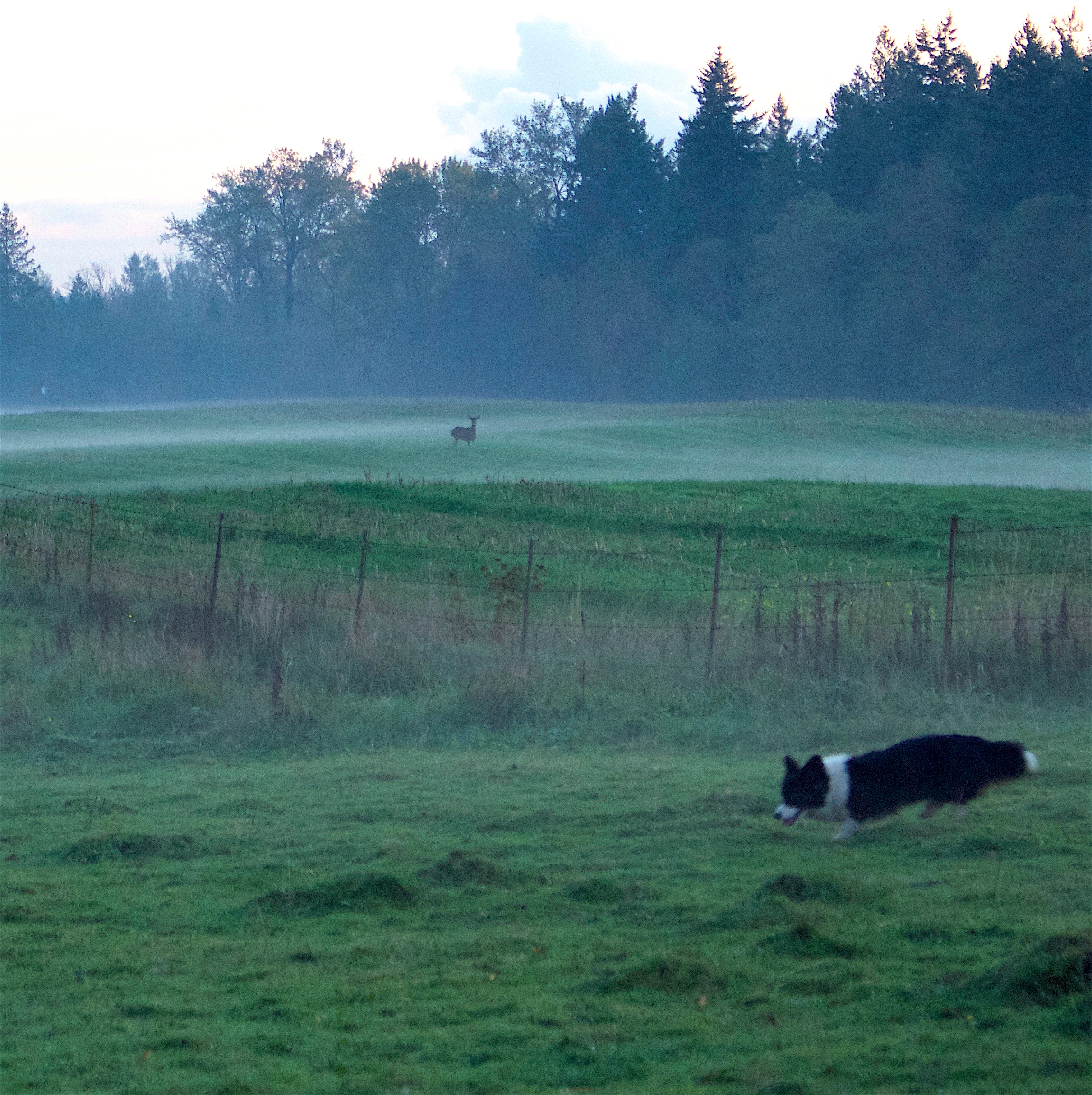
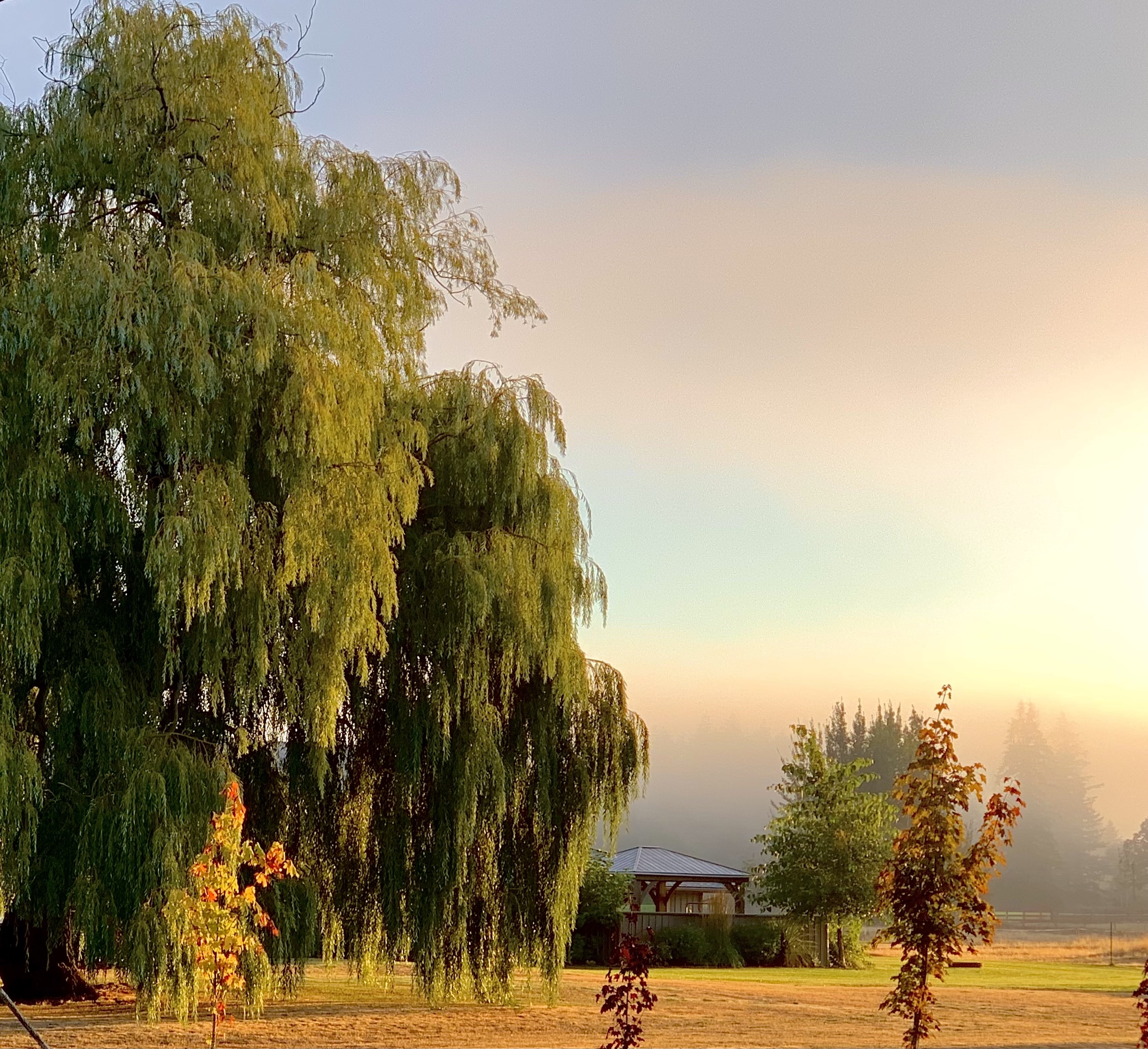
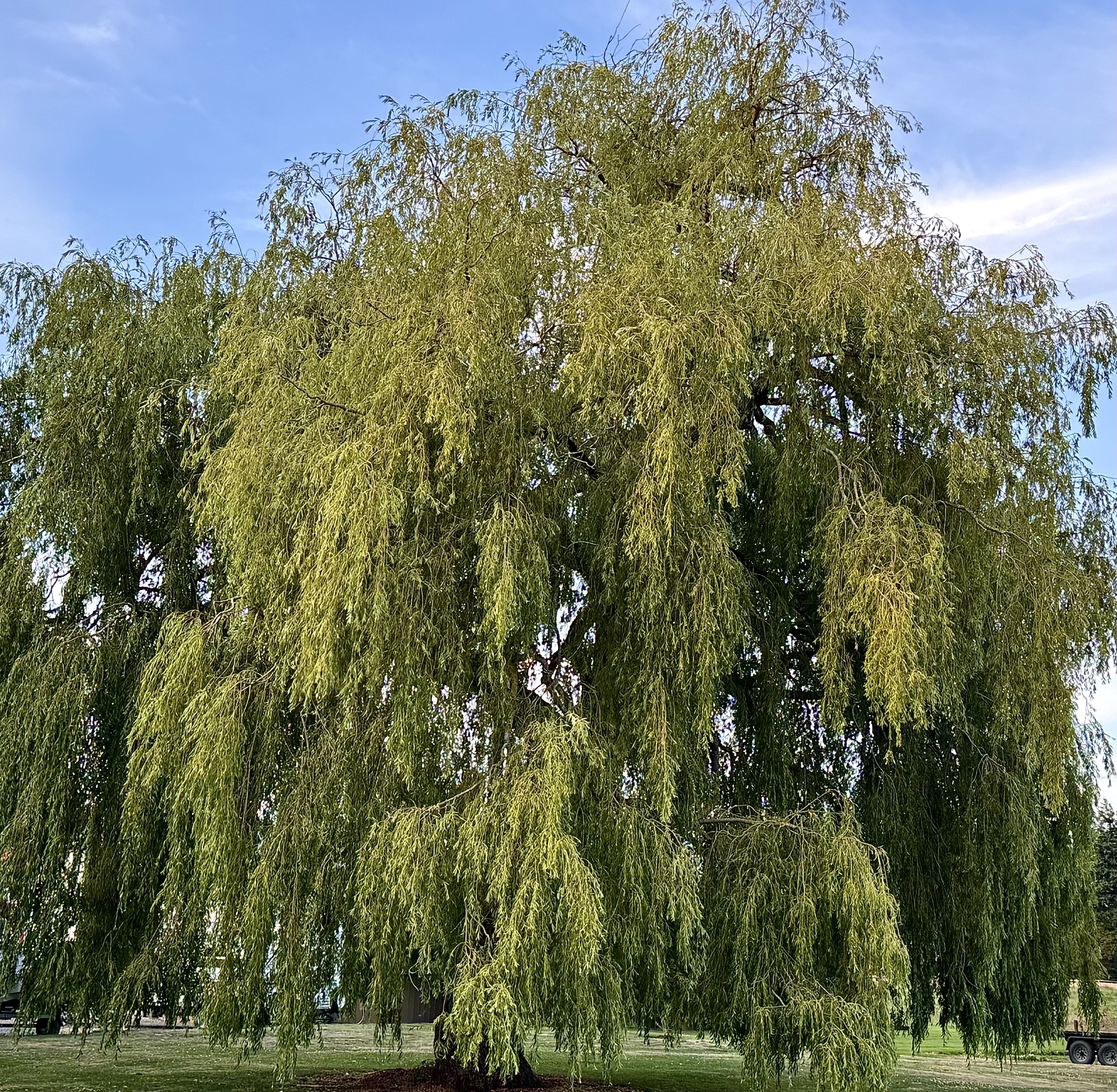
Purposefully lost in the willow stillness of a late summer meadow in the deer-filled dusk—a silver evening following a blue and amber day. ~Tim Hawkins “Purposefully Lost” from West of the Backstory
I search for the unseen, purposely lost, hoping to find meaning in the unknown.
I am bewildered by this life much of the time. Anyone looking at what I share here sees my struggle each day to discern how to make this sad and suffering world a little bit better place.
I have little to offer you other than my own wrestling match with the mysteries we all face.
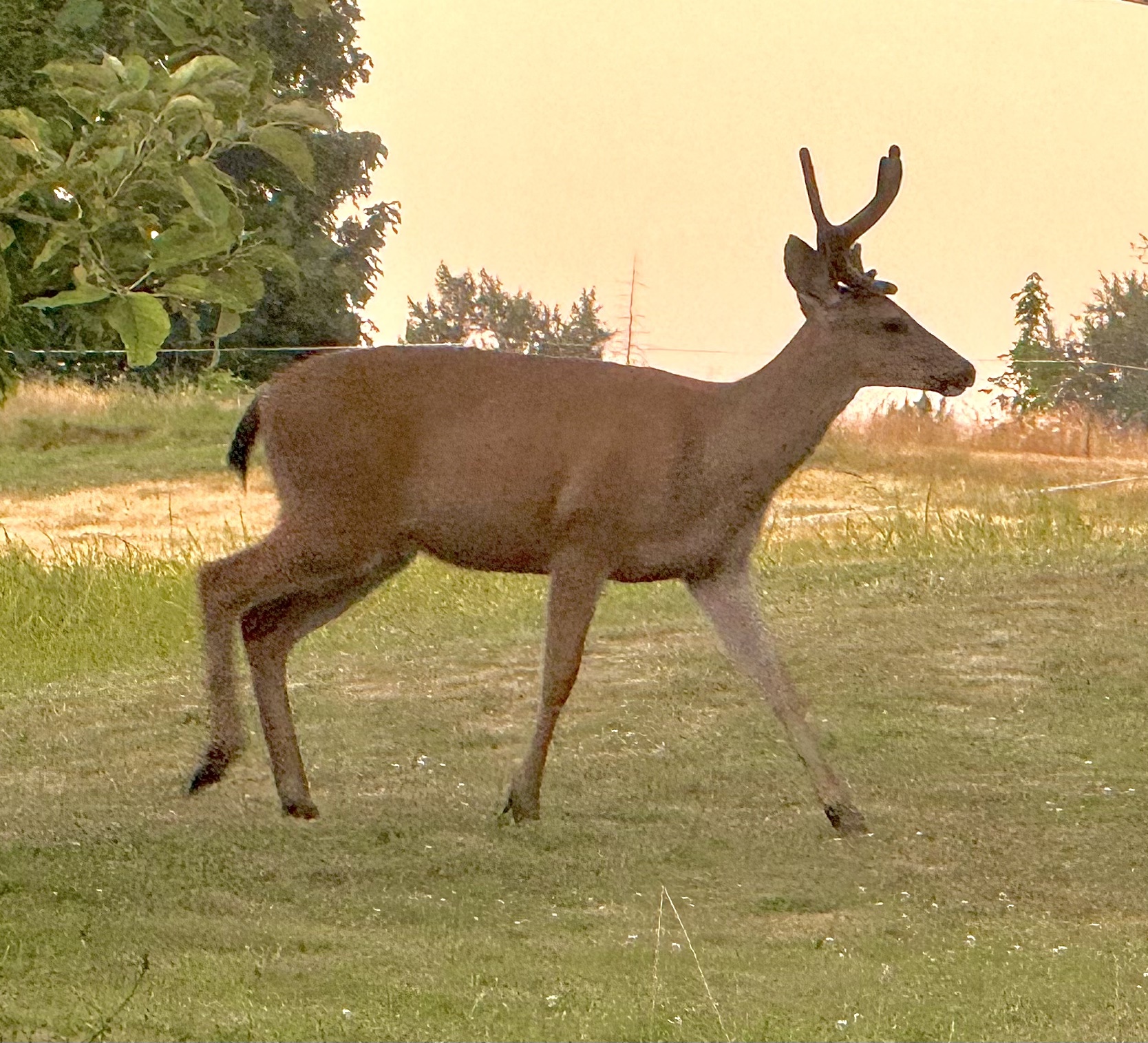
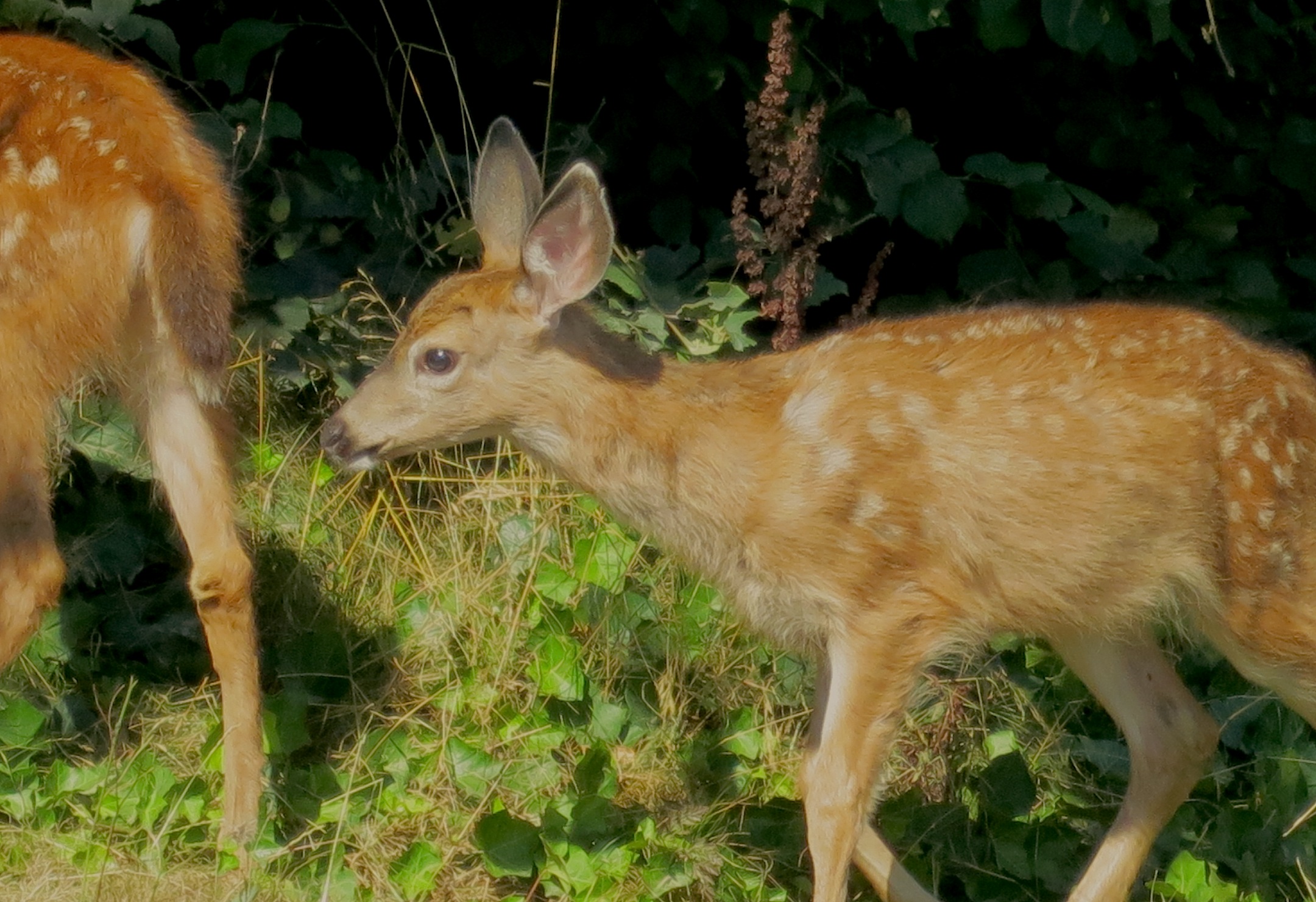
Then, when a light does shine out through darkness, when a deer steps out of the woods into the meadow, I am not surprised.
I simply need to pay attention. Illumination was there all the time, but I needed the eyes to see its beauty laid bare, brave enough to show itself even brighter in the light of day.
One-Time
Monthly
Yearly
Make a one-time or recurring donation to support daily Barnstorming posts
I awoke in the Midsummer not to call night, in the white and the walk of the morning: The moon, dwindled and thinned to the fringe of a finger-nail held to the candle, Or paring of paradisaïcal fruit, lovely in waning but lustreless, Stepped from the stool, drew back from the barrow, of dark Maenefa the mountain; A cusp still clasped him, a fluke yet fanged him, entangled him, not quit utterly. This was the prized, the desirable sight, unsought, presented so easily, Parted me leaf and leaf, divided me, eyelid and eyelid of slumber. ~Gerard Manley Hopkins “Moonrise”June 19, 1876
how you can never reach it, no matter how hard you try, walking as fast as you can, but getting nowhere, arms and legs pumping, sweat drizzling in rivulets; each year, a little slower, more creaks and aches, less breath. Ah, but these soft nights, air like a warm bath, the dusky wings of bats careening crazily overhead, and you’d think the road goes on forever. Apollinaire wrote, “What isn’t given to love is so much wasted,” and I wonder what I haven’t given yet. A thin comma moon rises orange, a skinny slice of melon, so delicious I could drown in its sweetness. Or eat the whole thing, down to the rind. Always, this hunger for more. ~Barbara Crooker “How the Trees on Summer Nights Turn into a Dark River,” from More
The secret of seeing is, then the pearl of great price. If I thought he could teach me to find it and keep it forever I would stagger barefoot across a hundred deserts after any lunatic at all. But although the pearl may be found, it may not be sought.
The literature of illumination reveals this above all: although it comes to those who wait for it, it is always, even to the most practiced and adept, a gift and a total surprise.
I return from one walk knowing where the killdeer nests in the field by the creek and the hour the laurel blooms. I return from the same walk a day later scarcely knowing my own name.
Litanies hum in my ears; my tongue flaps in my mouth. Ailinon, alleluia! ~Annie Dillard from Pilgrim at Tinker Creek
The greatest gift is the one I stumble upon rather than having desired, sought out, fought for. Sometimes I don’t even know what I’m missing, so oblivious to being surrounded by hidden treasures.
Surprise me, dear Lord.
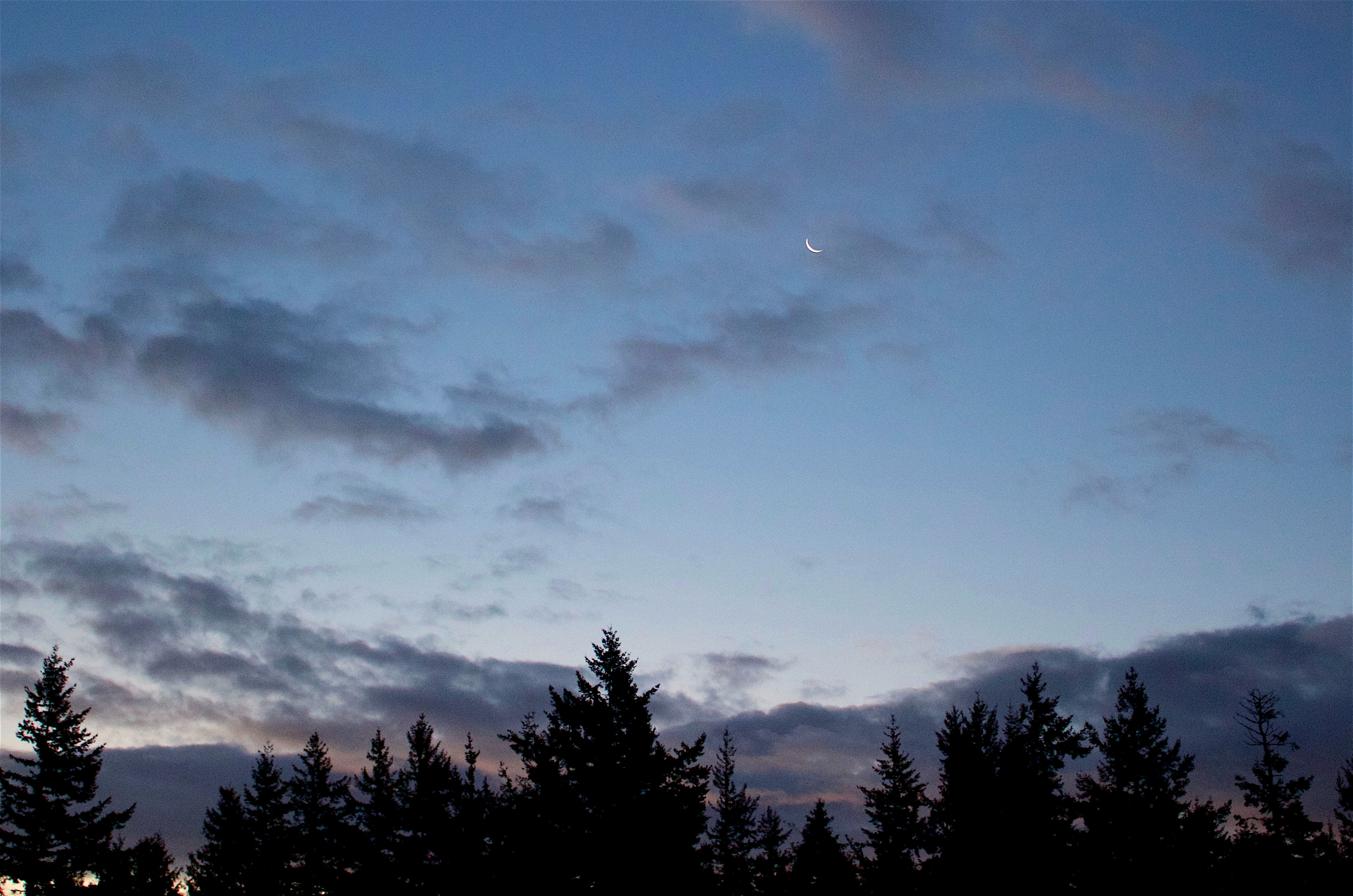
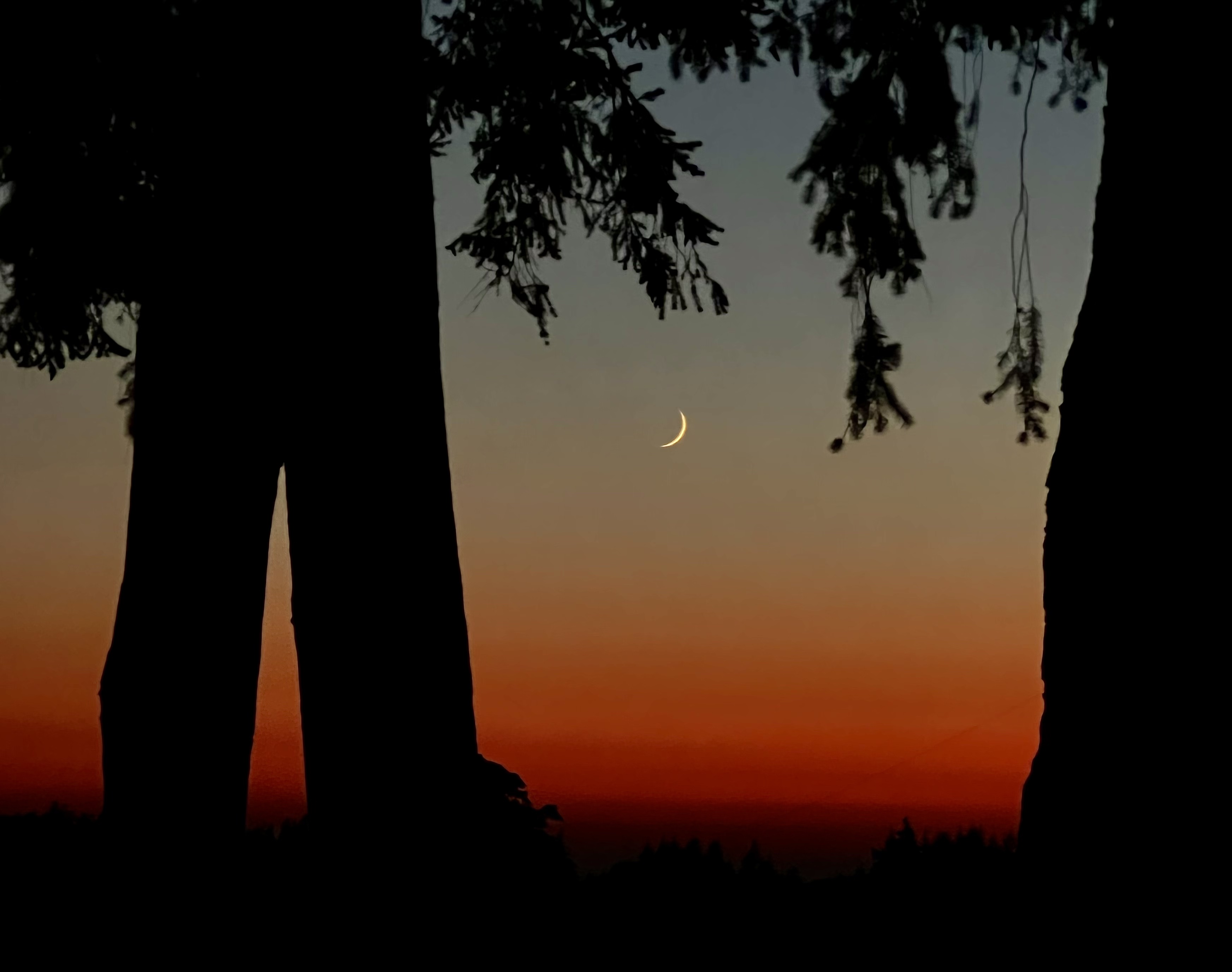
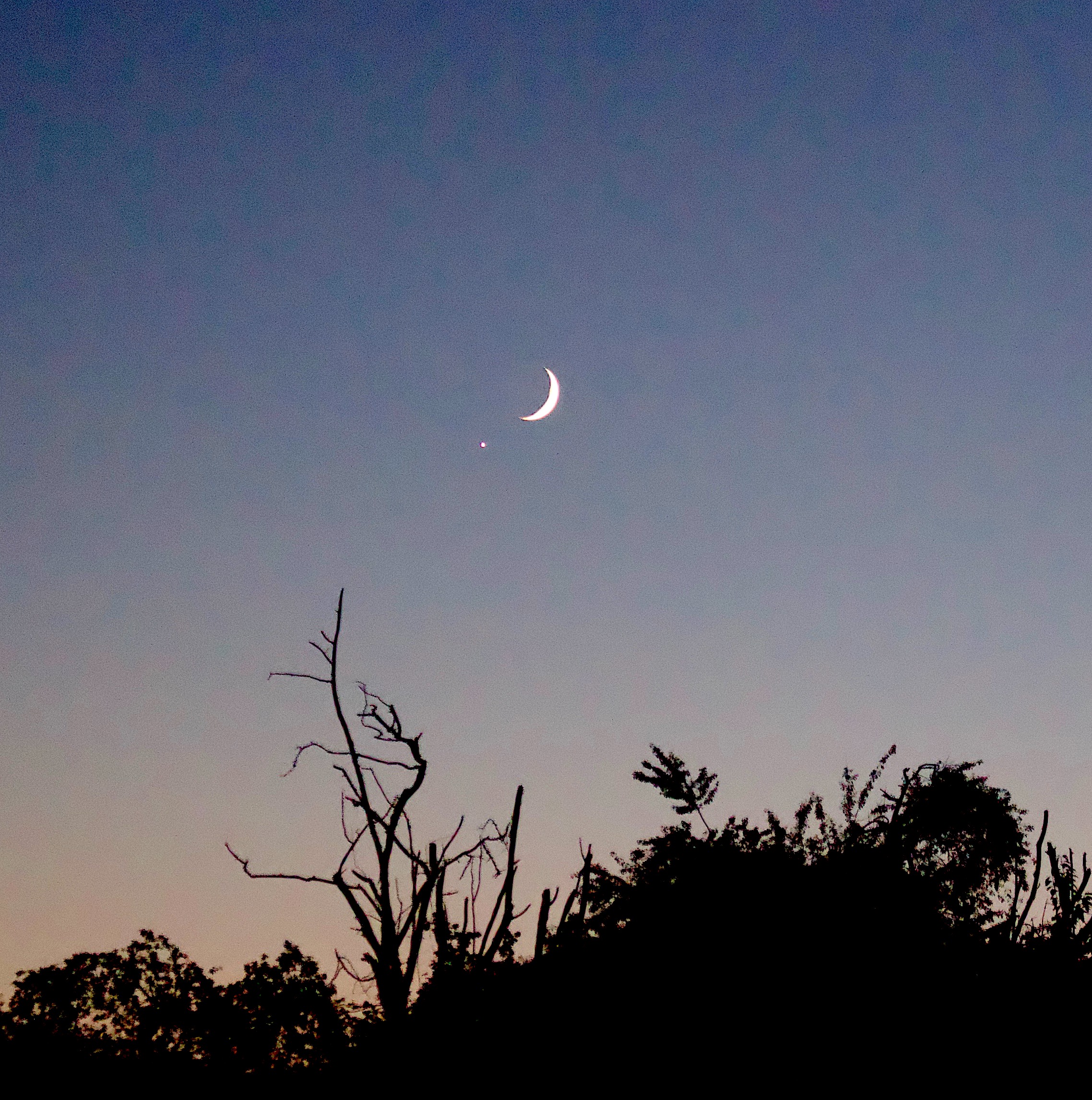
Though I regularly lament in the shadows, though I try to hide under the blankets each morning, slumbering through the tragic, the painful, the sorrow, you send your gentle crescent light to awaken me.
So I lift my voice in praise and gratitude for your unexpected gift that I didn’t know I needed, would never had thought to seek, the pearl of great priceheld out for me to take each day.
AI image created for this post
One-Time
Monthly
Yearly
Make a one-time or recurring donation to support daily Barnstorming posts
The second before the sun went out we saw a wall of dark shadow come speeding at us. We no sooner saw it than it was upon us, like thunder. It roared up the valley. It slammed our hill and knocked us out. It was the monstrous swift shadow cone of the moon. I have since read that this wave of shadow moves 1,800 miles an hour. Language can give no sense of this sort of speed—1,800 miles an hour. It was 195 miles wide. No end was in sight—you saw only the edge. It rolled at you across the land at 1,800 miles an hour, hauling darkness like plague behind it. Seeing it, and knowing it was coming straight for you, was like feeling a slug of anesthetic shoot up your arm. If you think very fast, you may have time to think, “Soon it will hit my brain.” You can feel the deadness race up your arm; you can feel the appalling, inhuman speed of your own blood. We saw the wall of shadow coming, and screamed before it hit.
This was the universe about which we have read so much and never before felt: the universe as a clockwork of loose spheres flung at stupefying, unauthorized speeds. How could anything moving so fast not crash, not veer from its orbit amok like a car out of control on a turn?
Less than two minutes later, when the sun emerged, the trailing edge of the shadow cone sped away. It coursed down our hill and raced eastward over the plain, faster than the eye could believe; it swept over the plain and dropped over the planet’s rim in a twinkling. It had clobbered us, and now it roared away. We blinked in the light. It was as though an enormous, loping god in the sky had reached down and slapped the Earth’s face.
When the sun appeared as a blinding bead on the ring’s side, the eclipse was over. The black lens cover appeared again, back-lighted, and slid away. At once the yellow light made the sky blue again; the black lid dissolved and vanished. The real world began there. I remember now: We all hurried away.
We never looked back. It was a general vamoose … but enough is enough. One turns at last even from glory itself with a sigh of relief. From the depths of mystery, and even from the heights of splendor, we bounce back and hurry for the latitudes of home. ~Annie Dillard from her essay “Total Eclipse” in The Atlantic about the February 1979 eclipse in Washington State
From my six week psychiatric inpatient rotation at a Veteran’s Hospital—late winter 1979
Sixty eight year old male catatonic with depression
He lies still, so very still under the sheet, eyes closed; the only clue that he is living is the slight rise and fall of his chest. His face is skull- like framing his sunken eyes, his facial bones standing out like shelves above the hollows of his cheeks, his hands lie skeletal next to an emaciated body. He looks as if he is dying of cancer but without the smell of decay. He rouses a little when touched, not at all when spoken to. His eyes open only when it is demanded of him, and he focuses with difficulty. His tongue is thick and dry, his whispered words mostly indecipherable, heard best by bending down low to the bed, holding an ear almost to his cracked lips.
He has stopped feeding himself, not caring about hunger pangs, not salivating at enticing aromas or enjoying the taste of beloved coffee. His meals are fed through a beige rubber tube running through a hole in his abdominal wall emptying into his stomach, dripping a yeasty smelling concoction of thick white fluid full of calories. He ‘eats’ without tasting and without caring. His sedating antidepressant pills are crushed, pushed through the tube, oozing into him, deepening his sleep, but are designed to eventually wake him from his deep debilitating melancholy.
After two weeks of treatment and nutrition, his cheeks start to fill in, and his eyes are closed less often. He watches people as they move around the room and he responds a little faster to questions and starts to look us in the eye. He asks for coffee, then pudding and eventually he asks for steak. By the third week he is sitting up in a chair, reading the paper.
After a month, he walks out of the hospital, 15 pounds heavier than when he was wheeled in. His lips, no longer dried and cracking, have begun to smile again.
Thirty two year old male rescued by the Coast Guard at 3 AM in the middle of the bay
As he shouts, his eyes dart, his voice breaks, his head tosses back and forth, his back arches and then collapses as he lies tethered to the gurney with leather restraints. He writhes constantly, his arm and leg muscles flexing against the wrist and ankle bracelets.
“The angels are waiting!! They’re calling me to come!! Can’t you hear them? What’s wrong with you? I’m Jesus Christ, King of Kings!! Lord of Lords!! If you don’t let me return to them, I can’t stop the destruction!”
He finally falls asleep by mid-morning after being given enough antipsychotic medication to kill a horse. He sleeps uninterrupted for nine hours. Then suddenly his eyes fly open, and he looks startled.
He glares at me. “Where am I? How did I get here?”
“You are hospitalized in the VA psych ward after being picked up by the Coast Guard after swimming out into the bay in the middle of the night. You said you were trying to reach the angels.”
He turns his head away, his fists relaxing in the restraints, and begins to weep uncontrollably, the tears streaming down his face.
“Forgive them, Father, for they know not what they do.”
Twenty two year old male with auditory and visual hallucinations
He seems serene, much more comfortable in his own skin when compared to the others on the ward. Walking up and down the long hallways alone, he is always in deep conversation. He takes turns talking, but more often is listening, nodding, almost conspiratorial.
During a one-on-one session, he looks at me briefly, but his attention continues to be diverted, first watching an invisible something or someone enter the room, move from the door to the middle of the room, until finally, his eyes lock on an empty chair to my left. I ask him what he sees next to me.
“Jesus wants you to know He loves you.”
It takes all my will power not to turn and look at the empty chair.
Fifty four year old male with chronic paranoid schizophrenia
He has been disabled with psychiatric illness for thirty years, having his first psychotic break while serving in World War II. His only time living outside of institutions has been spent sharing a home with his mother who is now in her eighties. This hospitalization was precipitated by his increasing delusion that his mother is the devil and the voices in his head commanded that he kill her. He had become increasingly agitated and angry, had threatened her with a knife, so she called the police, pleading with them not to arrest him, but to bring him to the hospital for medication adjustment.
His eyes have taken on the glassy staring look of the overmedicated psychotic, and he sits in the day room much of the day sleeping in a chair, drool dripping off his lower lip. When awake he answers questions calmly and appropriately with no indication of the delusions or agitation that led to his hospitalization. His mother visits him almost daily, bringing him his favorite foods from home which he gratefully accepts and eats with enthusiasm. By the second week, he is able to take short passes to go home with her, spending a lunch time together and then returning to the ward for dinner and overnight. By the third week, he is ready for discharge, his mother gratefully thanking the doctors for the improvement she sees in her son. I watch them walk down the long hallway together to be let through the locked doors to freedom.
Two days later, a headline in the local paper:
“Veteran Beheads Elderly Mother”
Forty five year old male — bipolar disorder with psychotic features
He has been on the ward for almost a year, his unique high pitched laughter heard easily from behind closed doors, his eyes intense in his effort to conceal his struggles. Trying to follow his line of thinking is challenging, as he talks quickly, with frequent brilliant off topic tangents, and at times he lapses into a “word salad” of almost nonsensical sentences. Every day as I meet with him I become more confused about what is going on with him, and am unclear what is expected of me in my interactions with him. He senses my discomfort and tries to ease my concern.
“Listen, this is not your problem to fix but I’m bipolar and regularly hear command voices and have intrusive thoughts. My medication keeps me under good control. But just tell me if you think I’m not making sense because I don’t always recognize it in myself.”
During my rotation, his tenuous tether to sanity is close to breaking. He starts to listen more intently to the voices in his head, becoming frightened and anxious, often mumbling and murmuring under his breath as he goes about his day.
On a particular morning, all the patients are more anxious than usual, pacing and wringing their hands as the light outdoors slowly fades, with noon being transformed to an oddly shadowy dusk. The street lights turn on automatically and cars are driving with headlights shining. We stand at the windows in the hospital, watching the city become dark as night in the middle of the day. The unstable patients are sure the world is ending and extra doses of medication are dispensed as needed while the light slowly returns to the streets outside. Within an hour the sunlight is back, and all the patients are napping soundly.
The psychiatrist locks himself in his office and doesn’t respond to knocks on the door or calls on his desk phone.
Stressed by the recent homicide by one of his discharged patients, and identifying with his patients due to his own mental illness, he is overwhelmed by the eclipse. The nurses call the hospital administrator who comes to the ward with two security guards. They unlock the door and lead the psychiatrist off the ward. We watch him leave, knowing he won’t be back.
It is as if the light had left and only his shadow remains.
AI image created for this post
Lyrics: Measure me, sky! Tell me I reach by a song Nearer the stars; I have been little so long.
Weigh me, high wind! What will your wild scales record? Profit of pain, Joy by the weight of a word.
Horizon, reach out! Catch at my hands, stretch me taut, Rim of the world: Widen my eyes by a thought.
Sky, be my depth, Wind, be my width and my height, World, my heart’s span; Loveliness, wings for my flight. ~Leonora Speyer
One-Time
Monthly
Yearly
Make a one-time or recurring donation to support daily Barnstorming posts
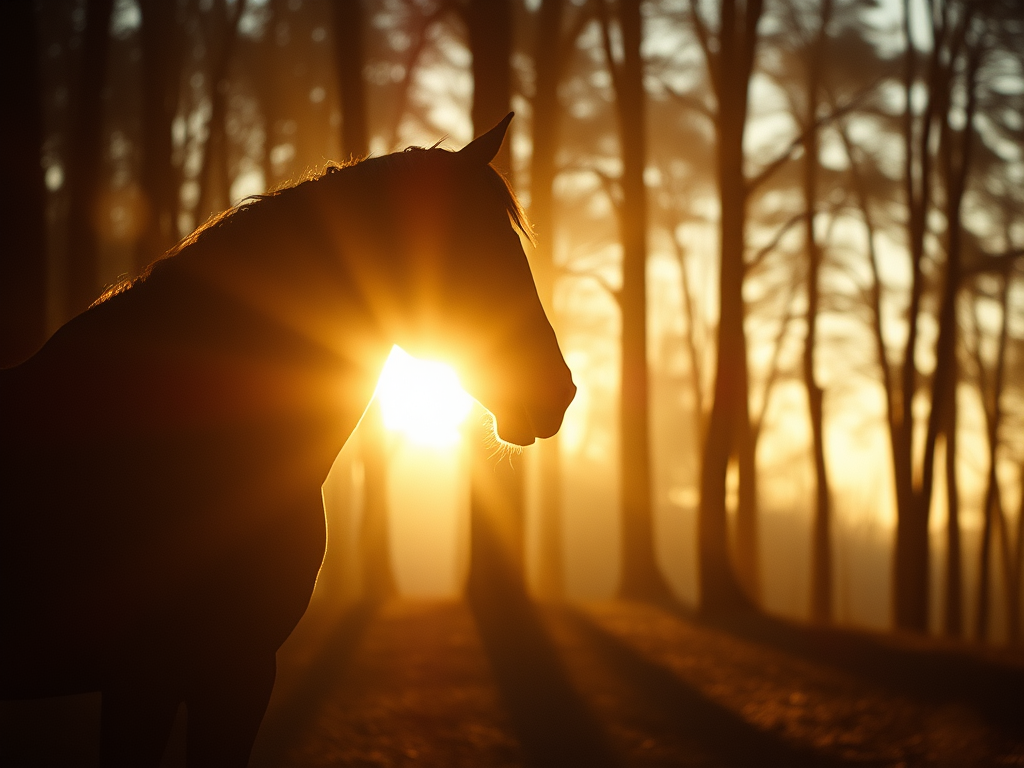
Ten more miles, it is South Dakota. Somehow, the roads there turn blue, When no one walks down them. One more night of walking, and I could have become A horse, a blue horse, dancing Down a road, alone.
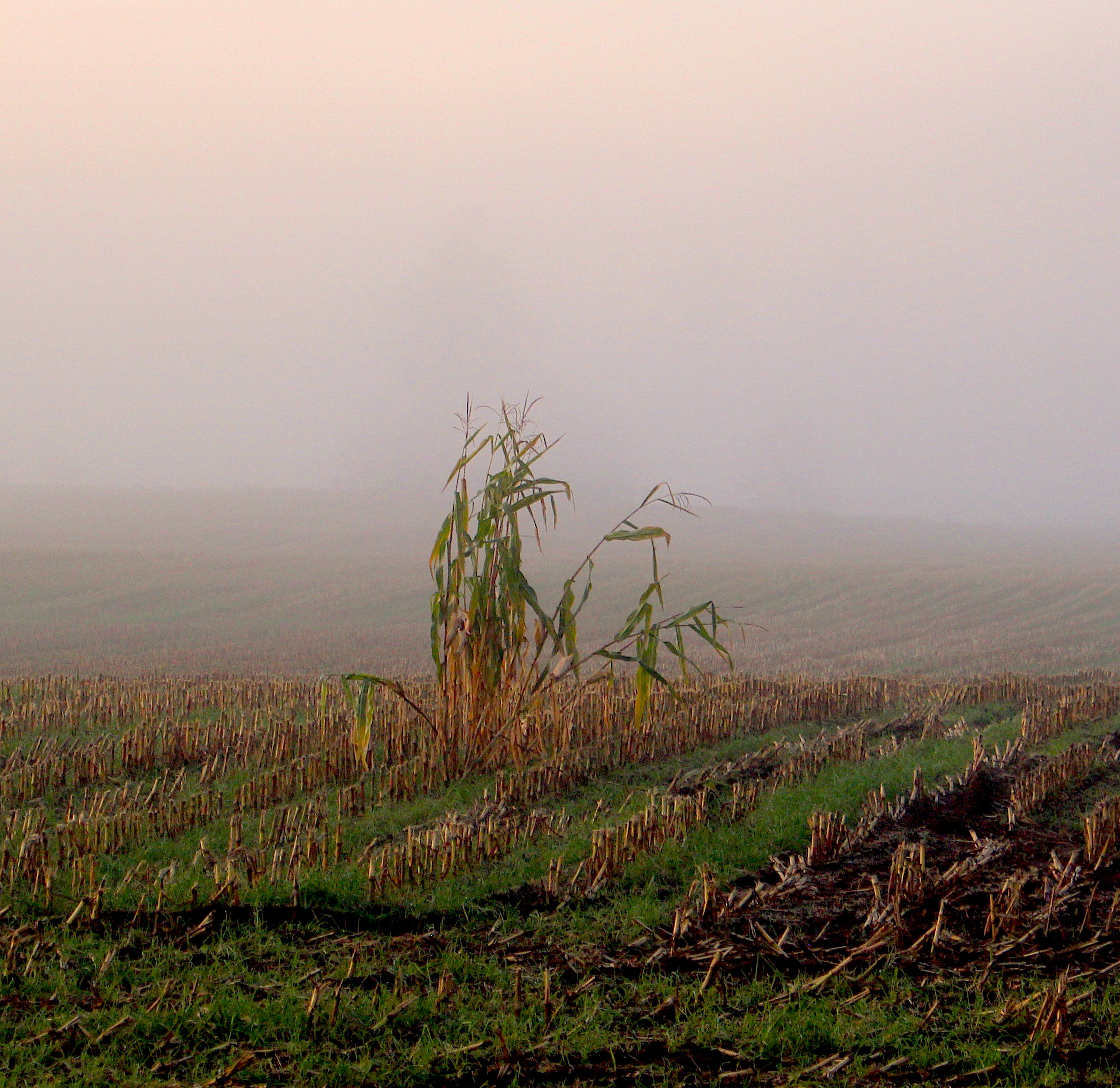
I have got this far. It is almost noon. But never mind time: That is all over. It is still Minnesota. Among a few dead cornstalks, the starving shadow Of a crow leaps to his death. At least, it is green here, Although between my body and the elder trees A savage hornet strains at the wire screen. He can’t get in yet.
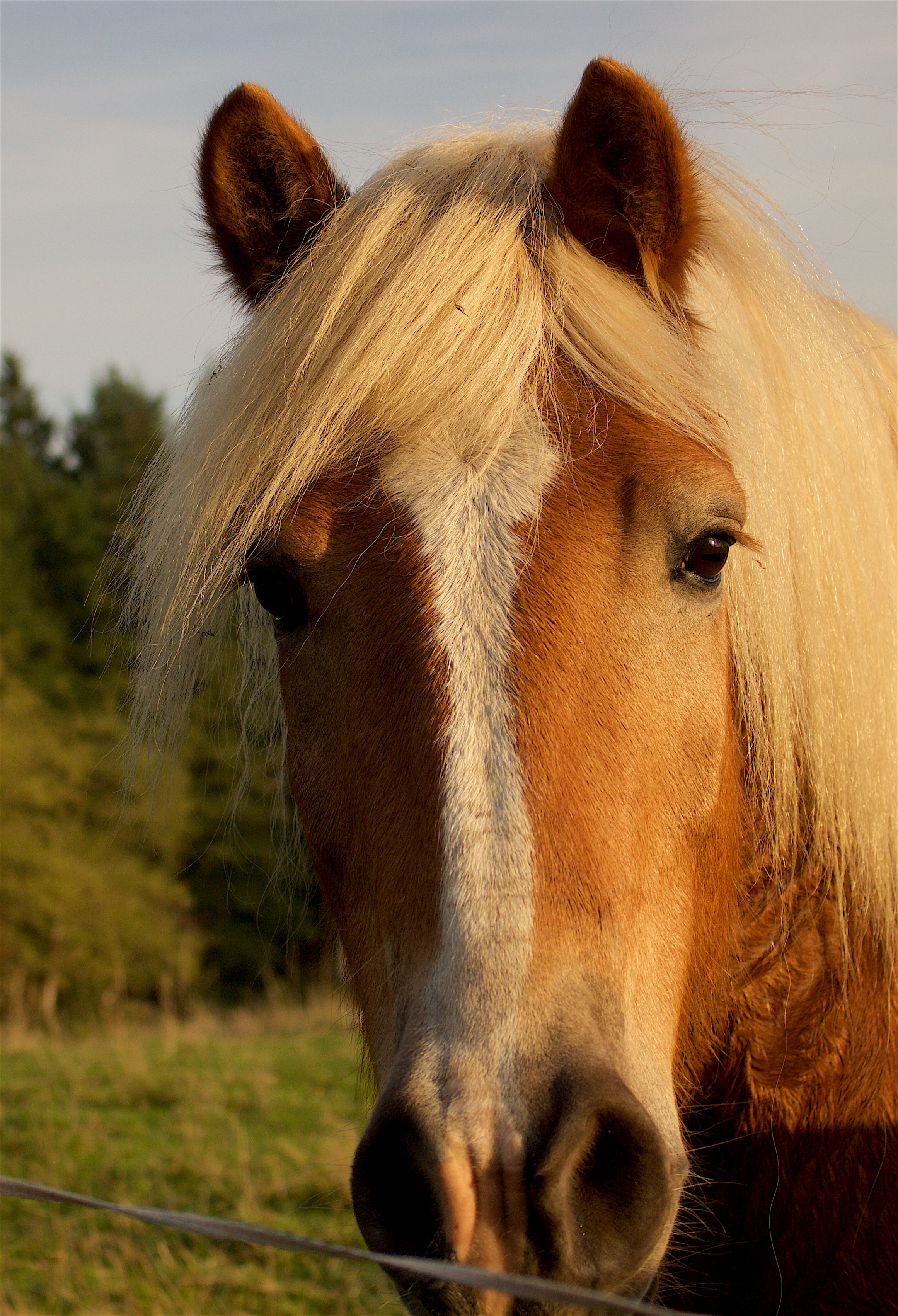
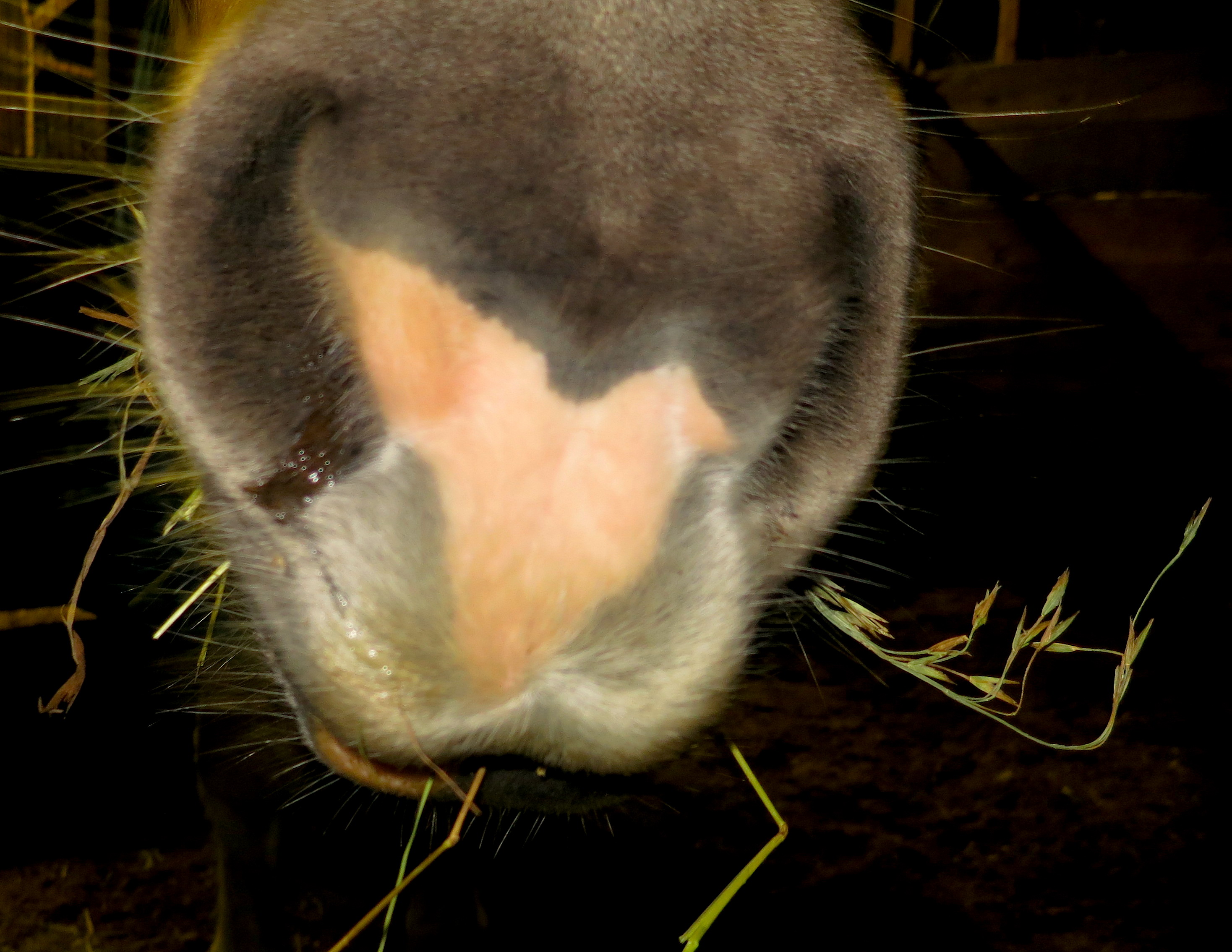
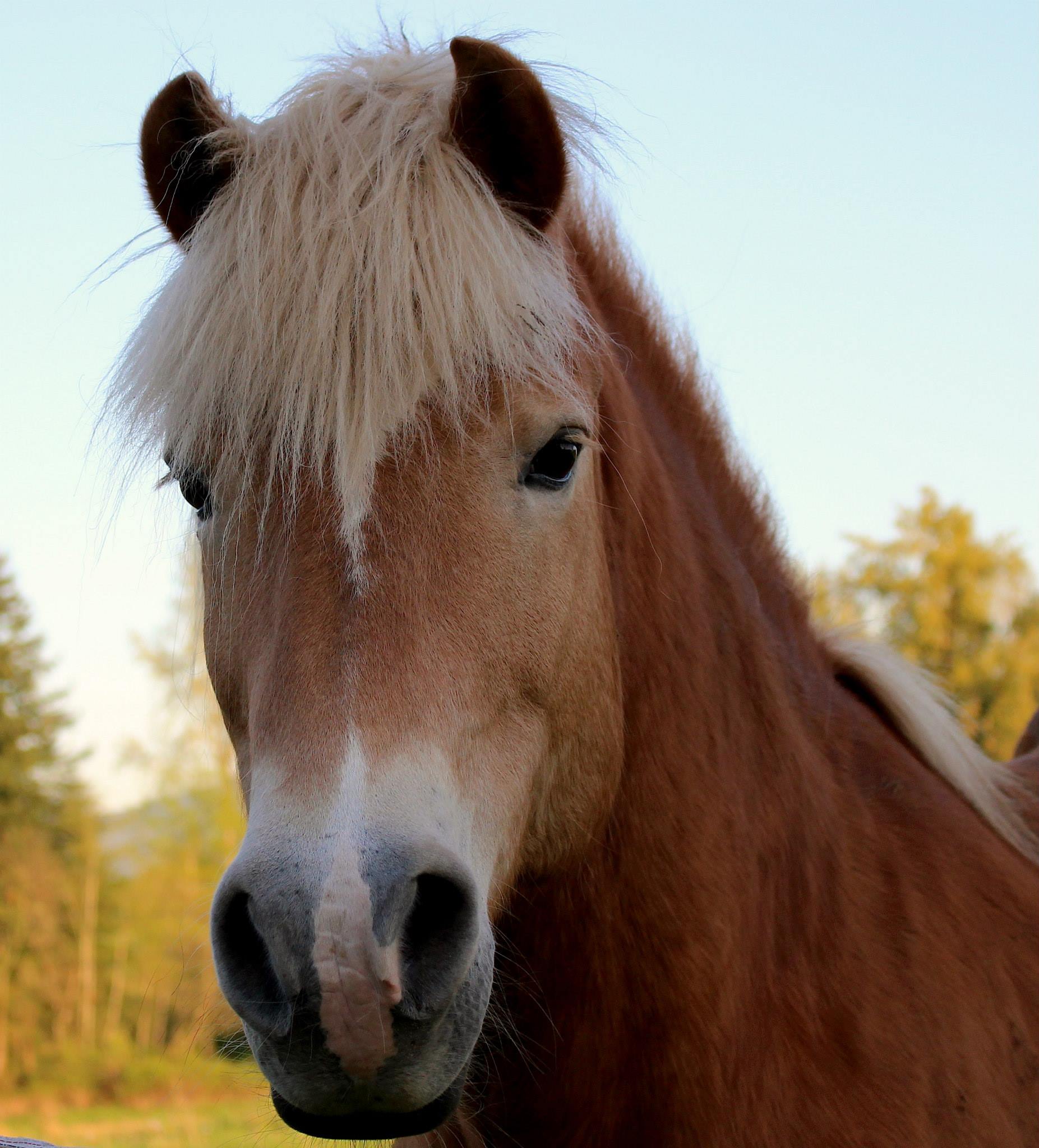
It is so still now, I hear the horse Clear his nostrils. He has crept out of the green places behind me. Patient and affectionate, he reads over my shoulder These words I have written. He has lived a long time, and he loves to pretend No one can see him. Last night I paused at the edge of darkness, And slept with green dew, alone. I have come a long way, to surrender my shadow To the shadow of a horse. ~James Wright “Sitting in a small screenhouse on a summer morning”
I have a sense of someone reading over my shoulder as I write.
It keeps me honest to feel that warm breath on my hair, its green smell reminding me where I am and who I am. It is encouraging to know what I do matters to someone.
I do not try to be anyone else.
When my words don’t say exactly what I hope, I feel forgiveness from the shadow beside me.
It’s all softness and warm breath. It’s all okay even when it’s not.
AI image created for this post
One-Time
Monthly
Yearly
Make a one-time or recurring donation to support daily Barnstorming posts
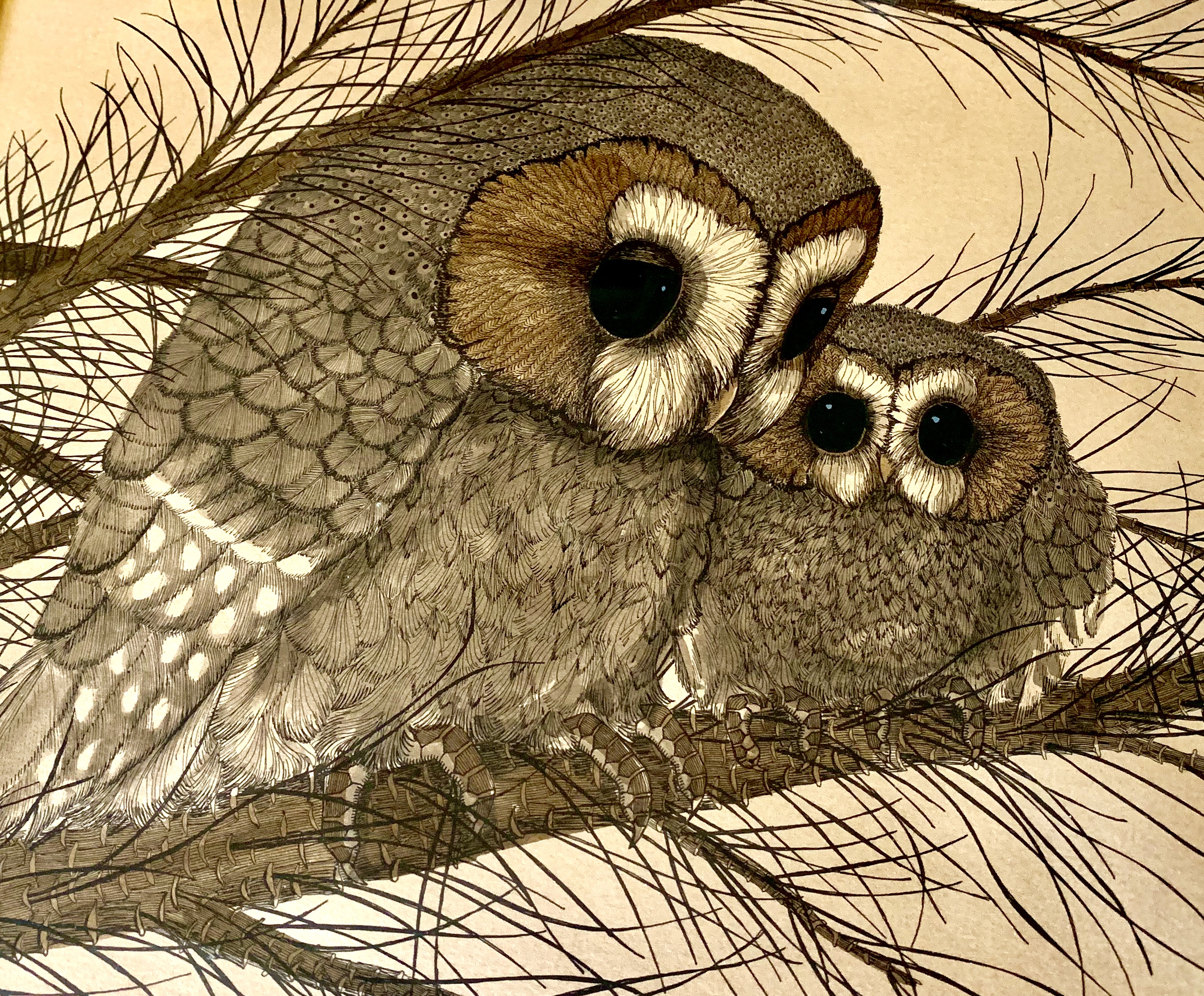
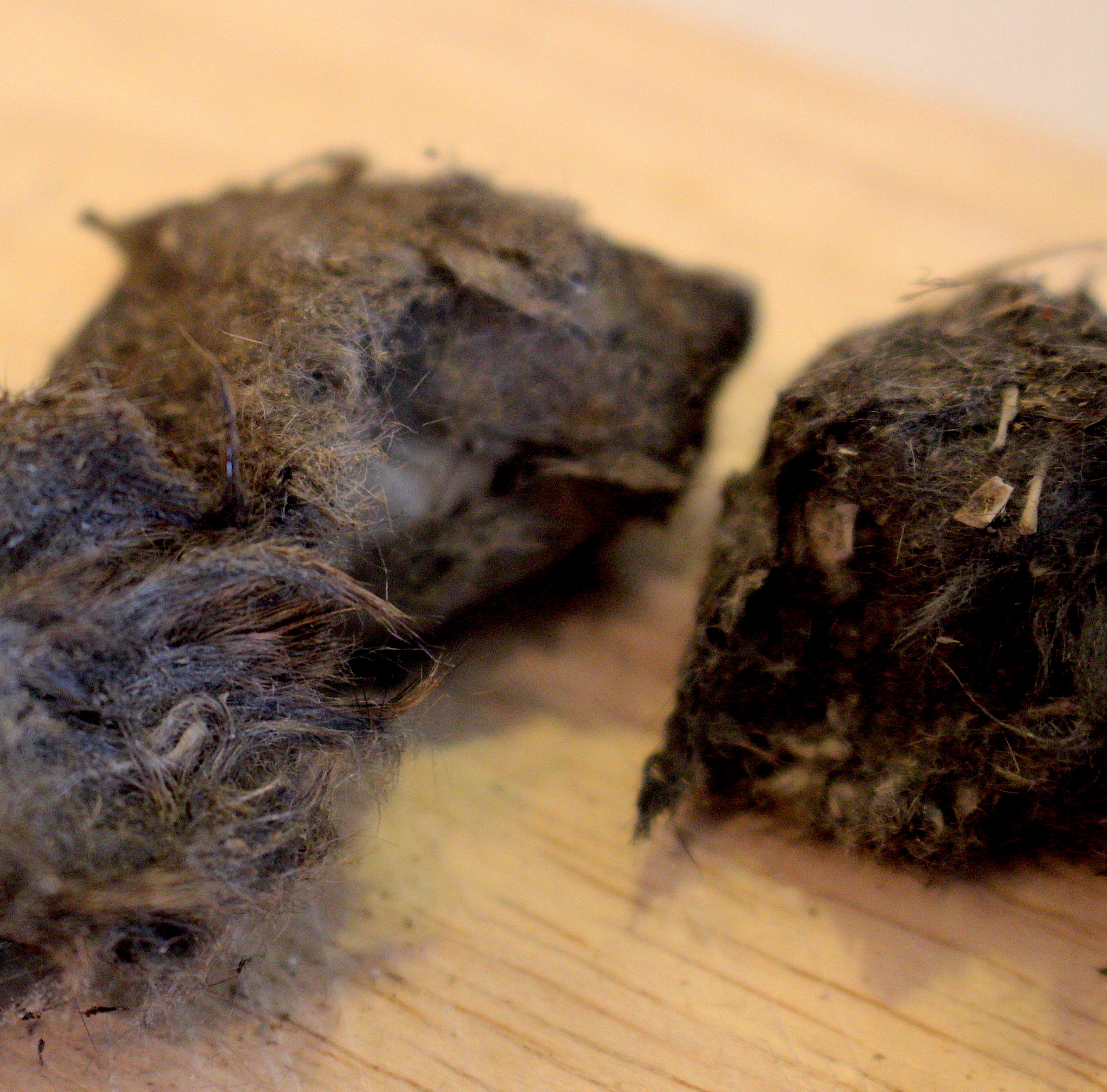
Each night, an owl cries out from the redwoods. He calls, and I call back. I call, and he answers. We share the same bright moon, the same shadows, and the same fate. The possibility of discussion is limitless; we have no secrets. This morning I discovered an owl pellet by the front door—a wad of fur, and a jumble of femurs and little ribs—oracle bones, easy to decipher. ~Gary Young [Each night, an owl cries out from the redwoods.]
Once again a child asks me suddenly What is a poem?, And once again I find myself riffing freely and happily Without the slightest scholarly expertise or knowledge; But I am entranced by how poems can hint and suggest And point toward things deeper than words. A poem is An owl feather, I say. It’s not the owl—but it intimates Owlness, see what I mean? You imagine the owl, owls, Silent flight, razors for fingers, a wriggle of mouse tail Slurped up right quick like the last strand of angel hair, A startle of moonlight, a fox watching from the thicket, All that from a feather. It’s like an owl is in the feather. A poem is a small thing with all manner of bigger in it. Poor poems only have a writer in them, but better ones Have way more in them than the writer knew or knows About. This poem, for example, amazingly has owls in It—who knew we’d see a flurry of owls this afternoon? ~Brian Doyle, “A Flurry of Owls”
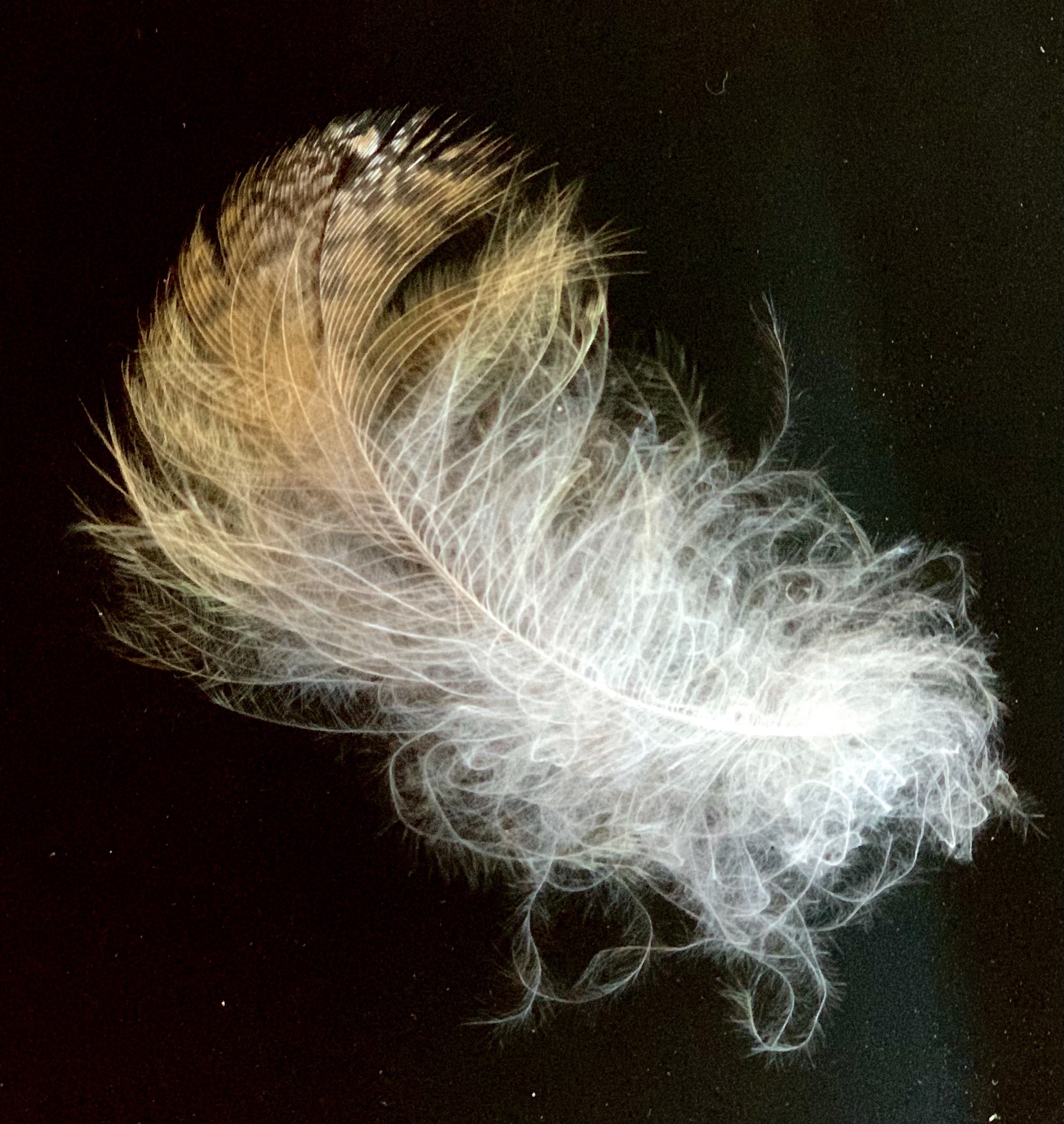
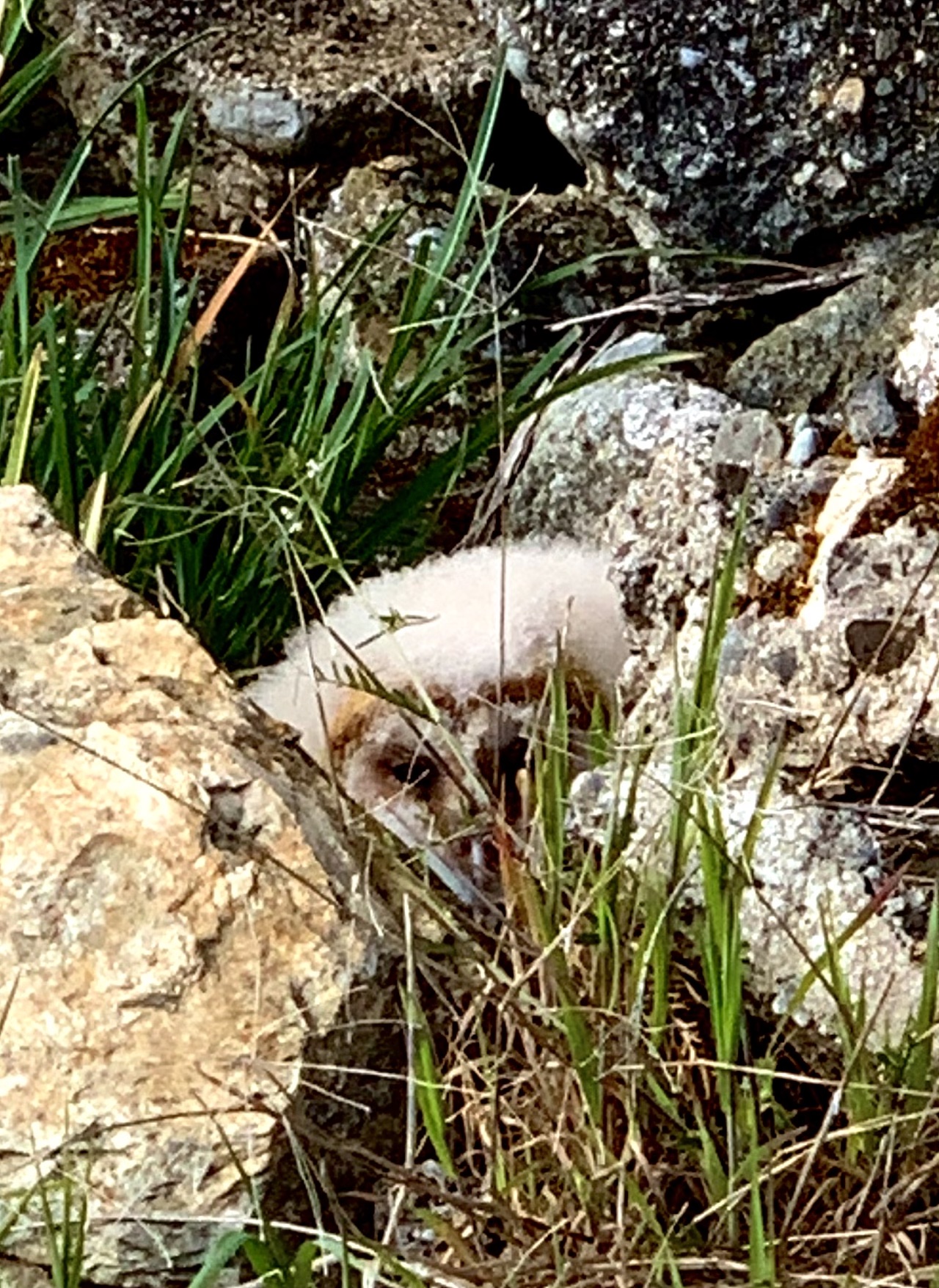
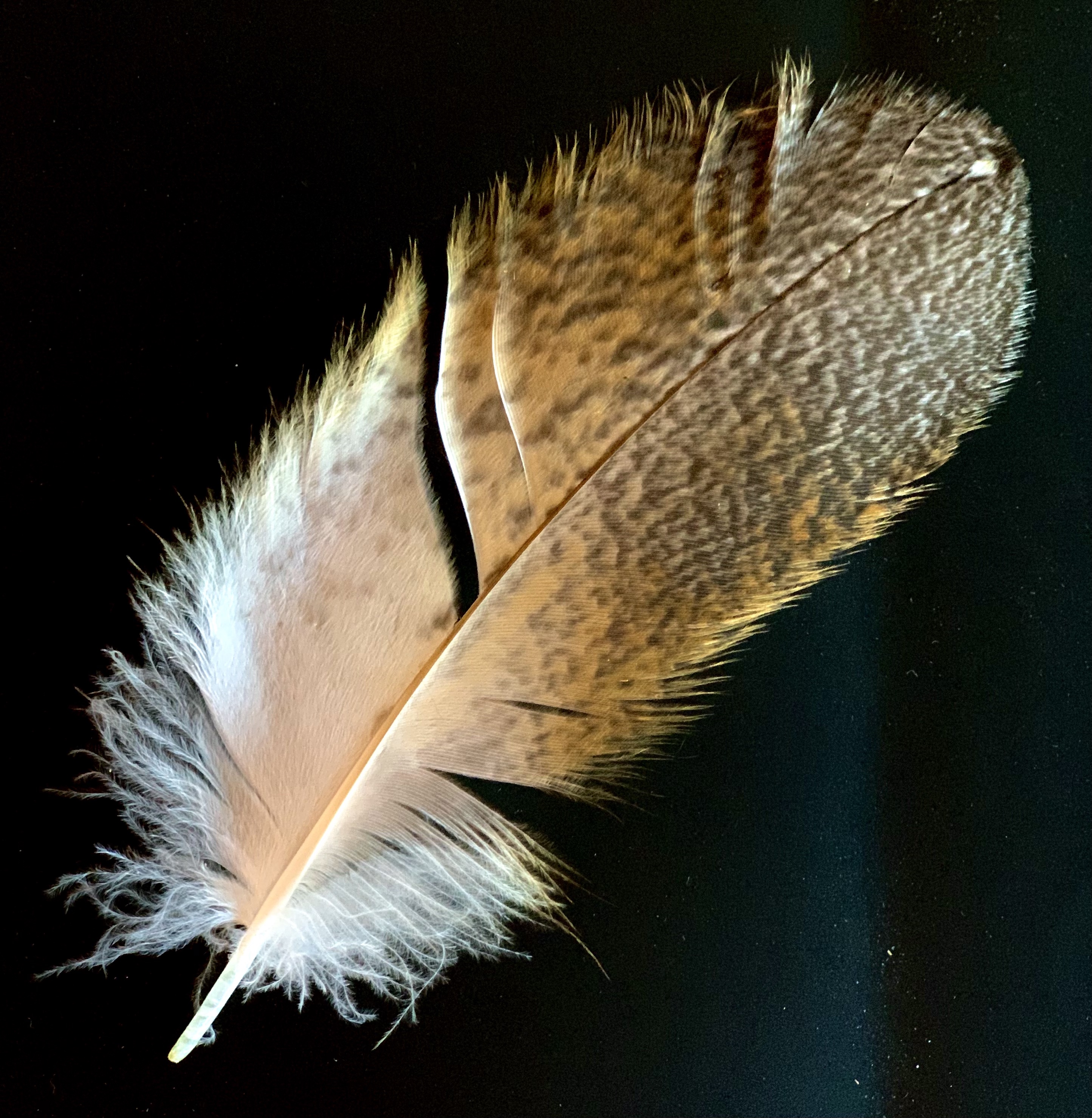
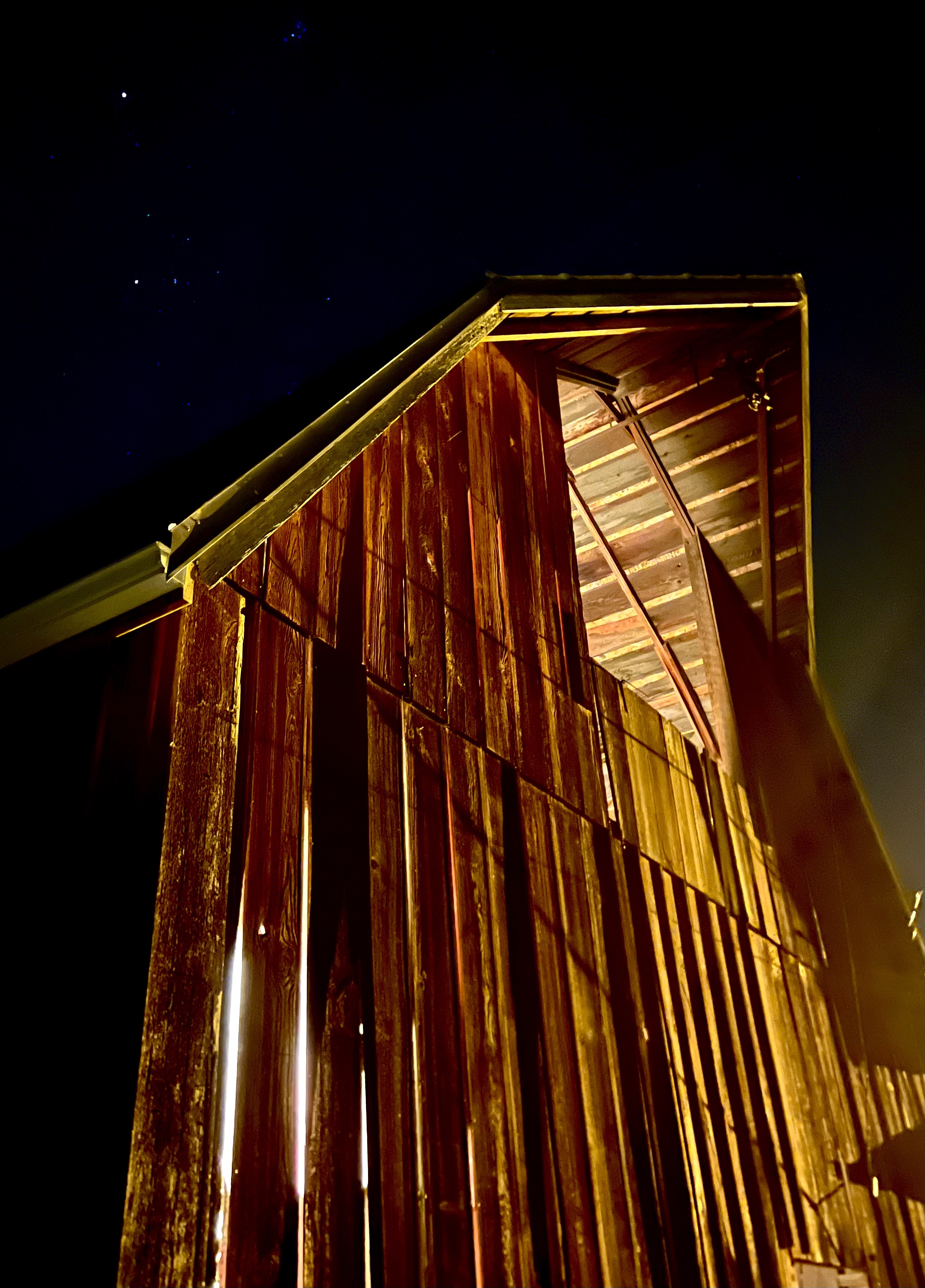
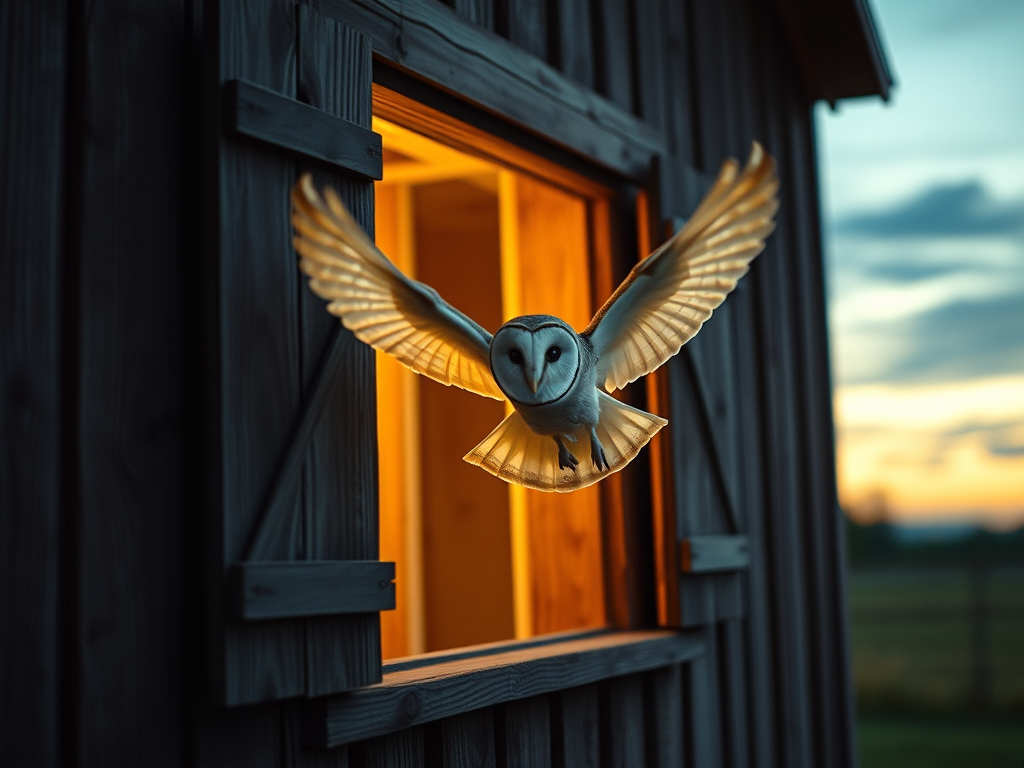
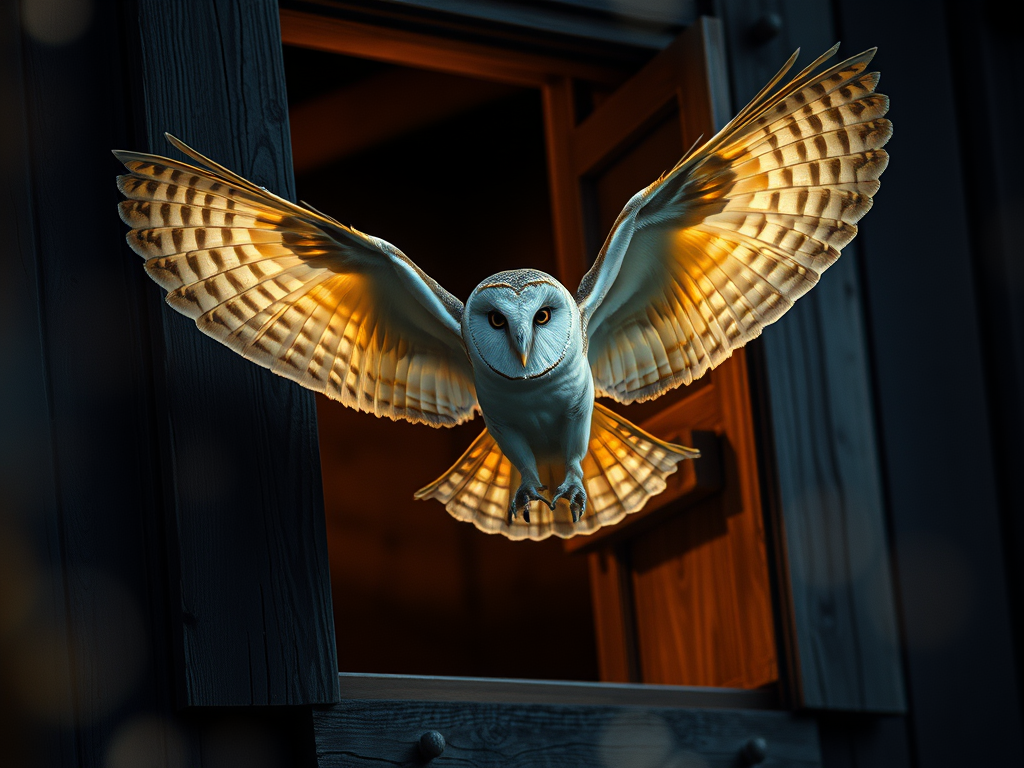
Once in awhile I walk into our big hay barn to retrieve a few barn owl feathers and owl pellets.
They were left behind, waiting for a poem to hide within.
The barn owls stay tucked invisibly in the rafters until dusk and hunger lures them to the hunt, swooping outside to capture both moonlight and mice to be coughed up in pellets of fur and bones.
These feathers, dropped like so many random snowflakes, carry within them the glint and glow of the moon.
A reminder: what we leave behind matters, whether it be feather or fur or a wee dry skeleton, a shell of who we once were yet are no longer.
We leave more than shadow.
AI image created for this postAI image created for this post
One-Time
Monthly
Yearly
Make a one-time or recurring donation to support daily Barnstorming posts
I have seen the sun break through to illuminate a small field for a while, and gone my way and forgotten it. But that was the pearl of great price, the one field that had treasure in it. I realize now that I must give all that I have to possess it. Life is not hurrying on to a receding future, nor hankering after an imagined past. It is the turning aside like Moses to the miracle of the lit bush, to a brightness that seemed as transitory as your youth once, but is the eternity that awaits you. ~R.S. Thomas “A Bright Field”
The secret of seeing is, then the pearl of great price. If I thought he could teach me to find it and keep it forever I would stagger barefoot across a hundred deserts after any lunatic at all. But although the pearl may be found, it may not be sought.
The literature of illumination reveals this above all: although it comes to those who wait for it, it is always, even to the most practiced and adept, a gift and a total surprise.
I return from one walk knowing where the killdeer nests in the field by the creek and the hour the laurel blooms. I return from the same walk a day later scarcely knowing my own name.
Litanies hum in my ears; my tongue flaps in my mouth. Ailinon, alleluia! ~Annie Dillard from Pilgrim at Tinker Creek
Dear God, I cannot love Thee the way I want to. You are the slim crescent of a moon that I see and my self is the earth’s shadow that keeps me from seeing all the moon. The crescent is very beautiful and perhaps that is all one like I am should or could see; but what I am afraid of, dear God, is that my self shadow will grow so large that it blocks the whole moon, and that I will judge myself by the shadow that is nothing.
I do not know You God because I am in the way. Please help me to push myself aside. ~Flannery O’Connor from A Prayer Journal
Earth’s crammed with heaven, And every common bush afire with God… ~Elizabeth Barrett Browning
I am learning to step aside so my own shadow stops obscuring God’s gift of illumination. I can be so blinded by discouragement, busyness and distraction that I lose sight of God Himself.
I stand in the way and need a push to let the Light shine forth.
Surprise me, dear Lord. Cram this common bush with heaven.
Though I regularly lament in the shadows, help me lift my voice in praise and gratitude for your gift: the pearl of great price you generously hold for me to find each day.
The kingdom of heaven is like treasure hidden in a field. When a man found it, he hid it again, and then in his joy went and sold all he had and bought that field. Matthew 13: 44
This Lenten season I reflect on the words of the 19th century southern spiritual hymn “What Wondrous Love is This”
One-Time
Monthly
Yearly
Make a one-time or recurring donation to support daily Barnstorming posts
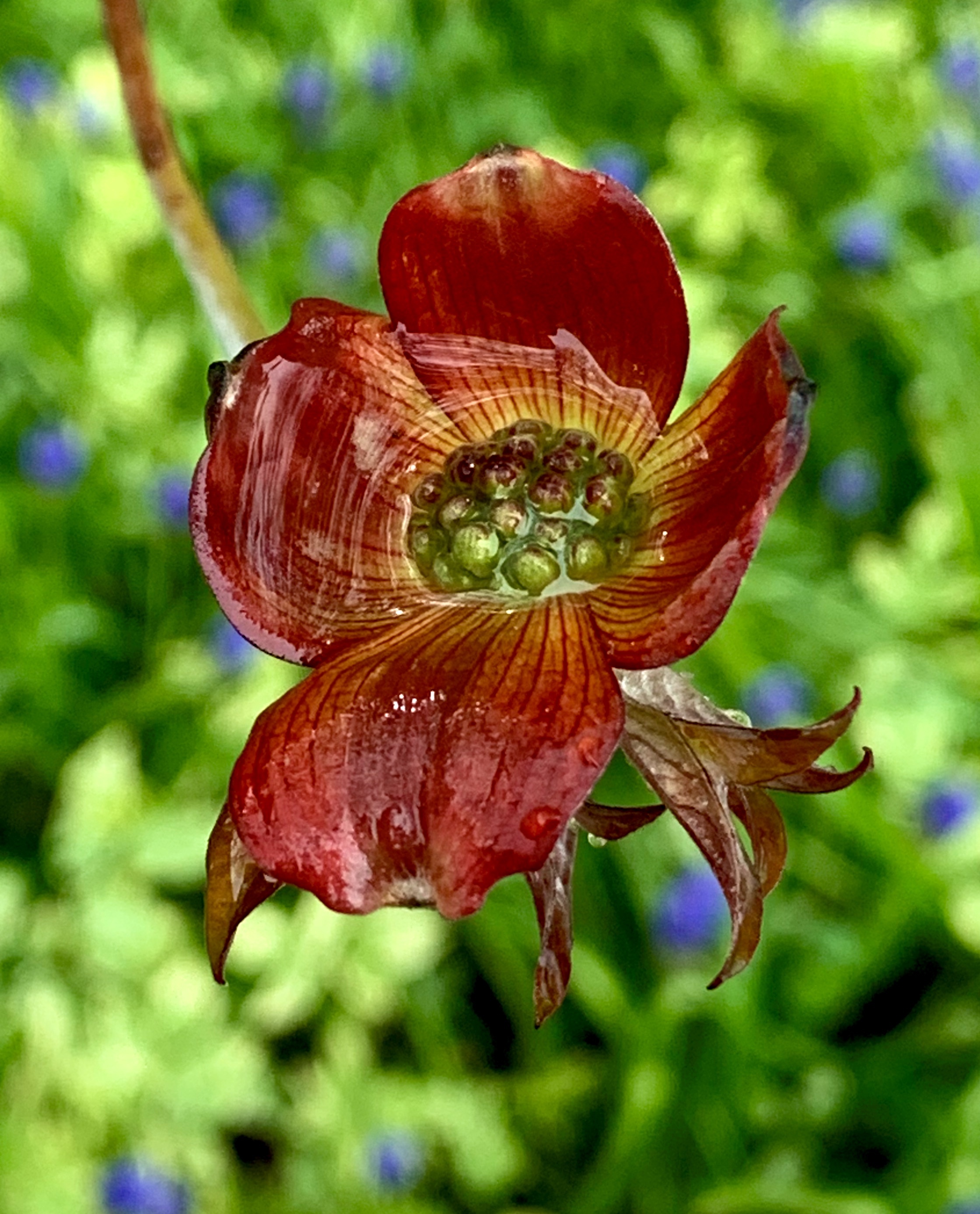
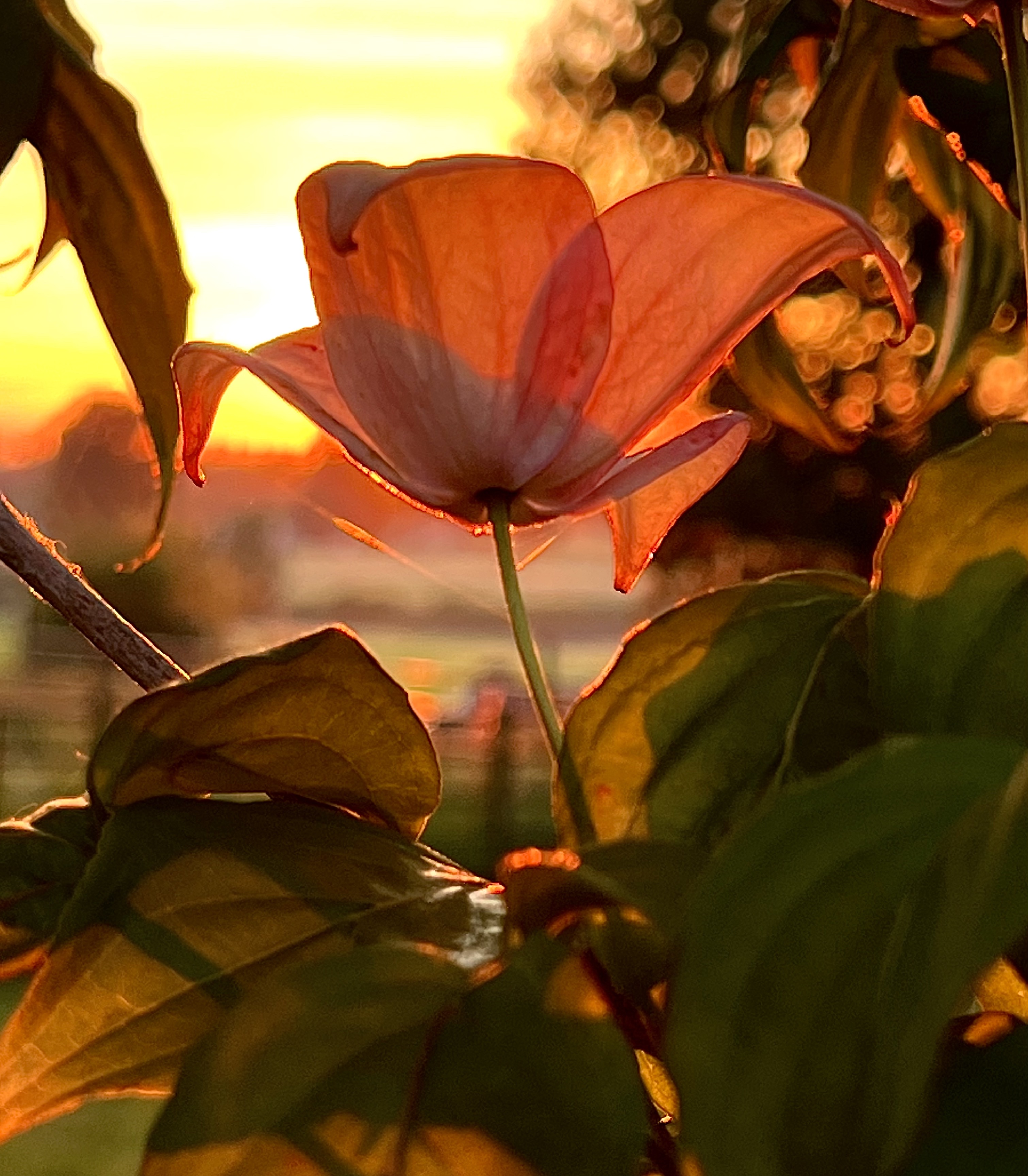
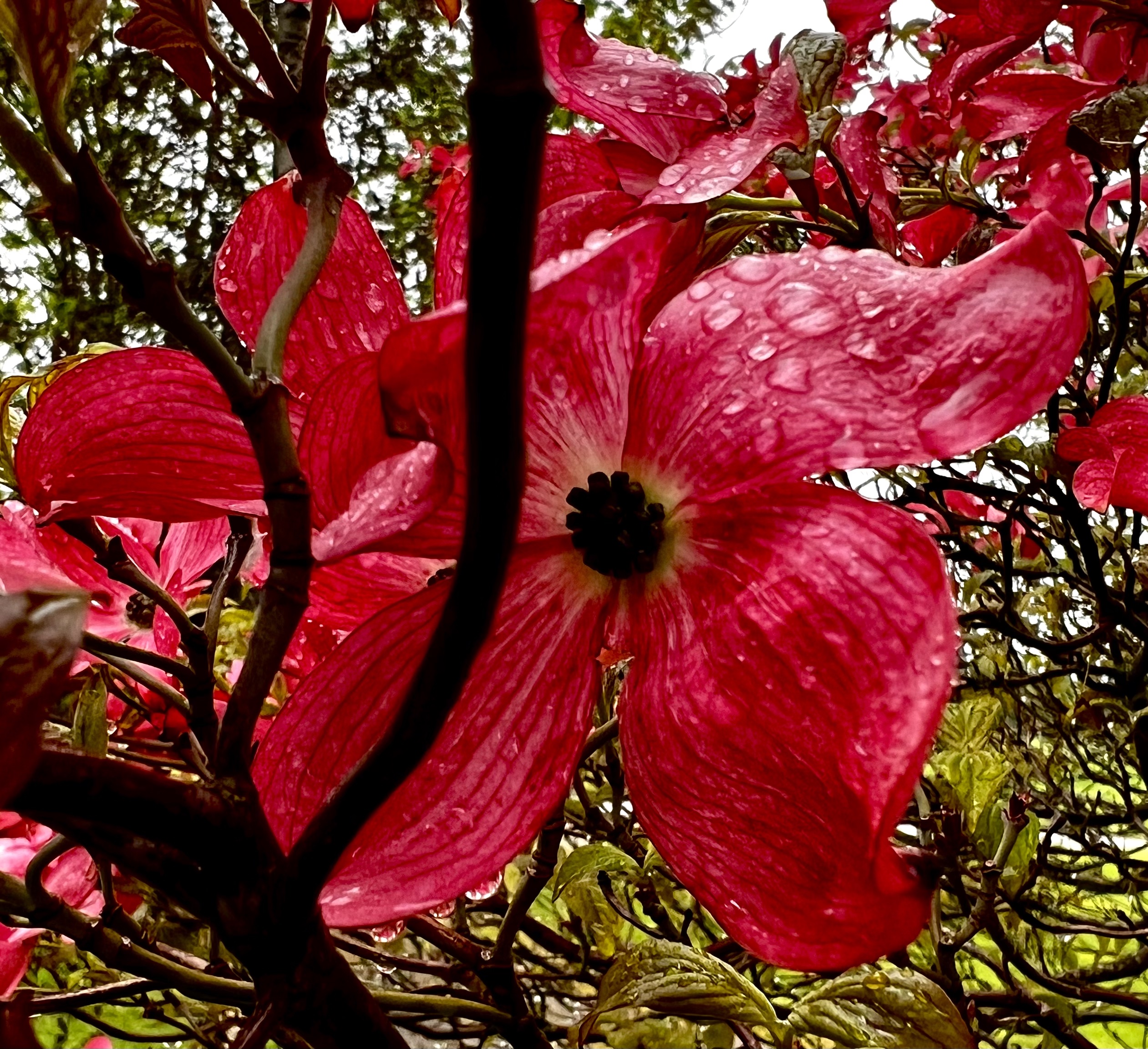
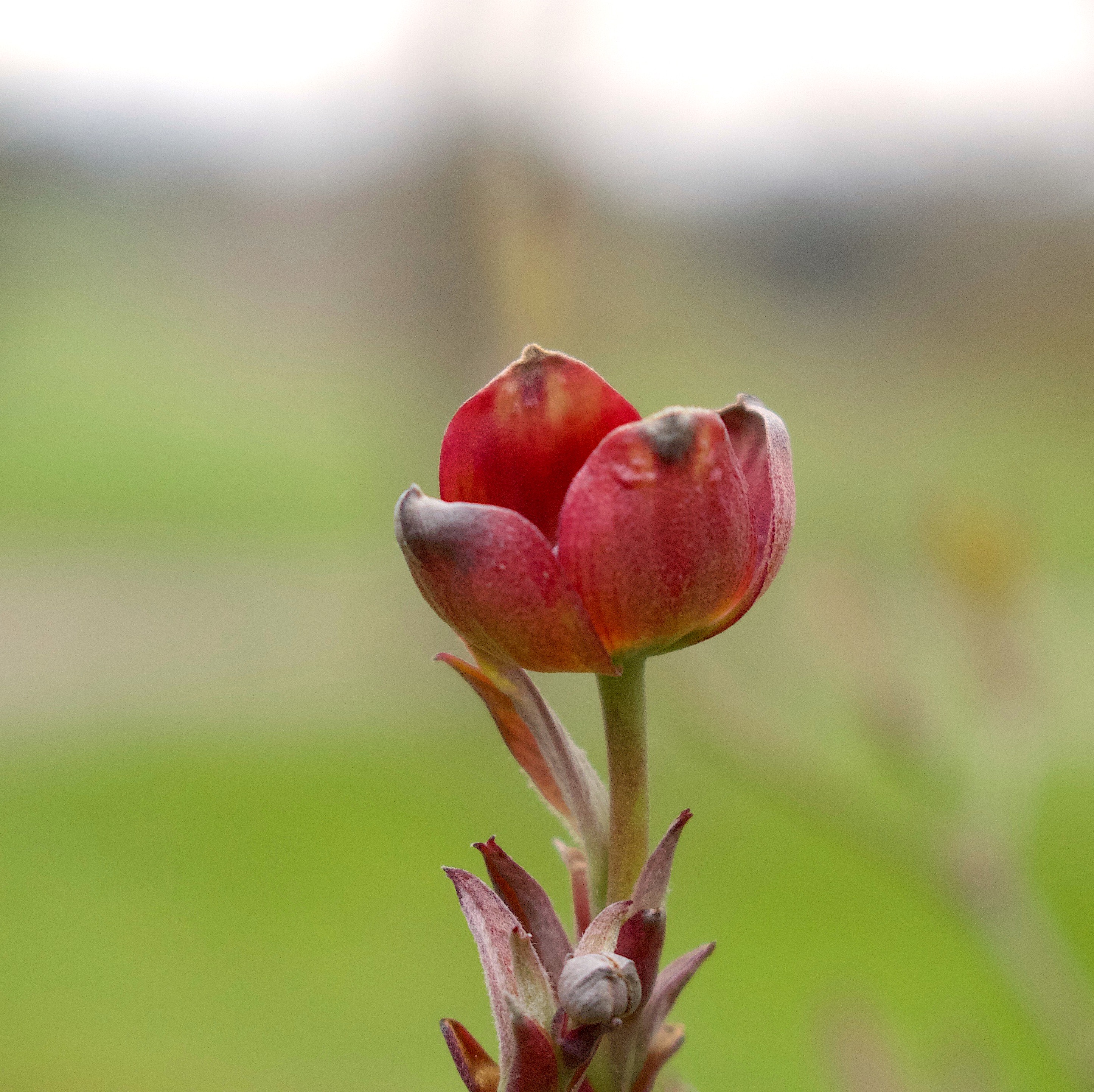
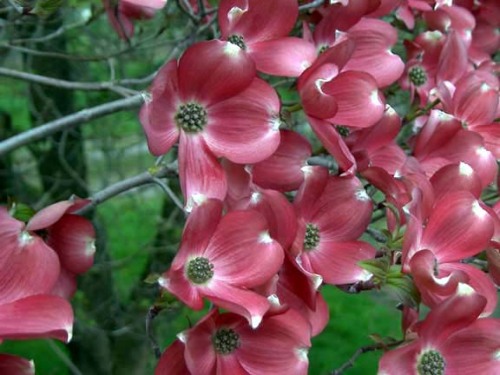
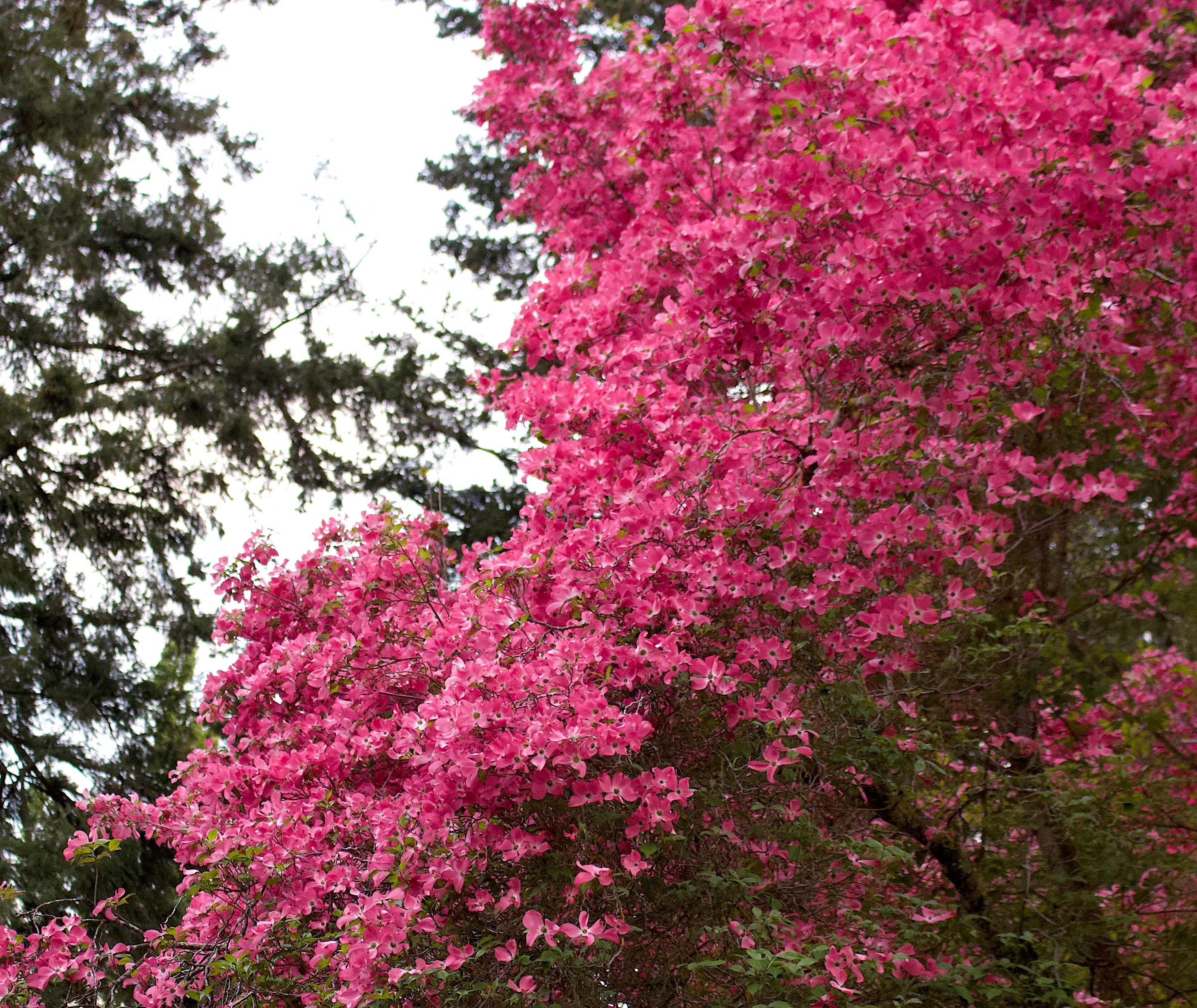
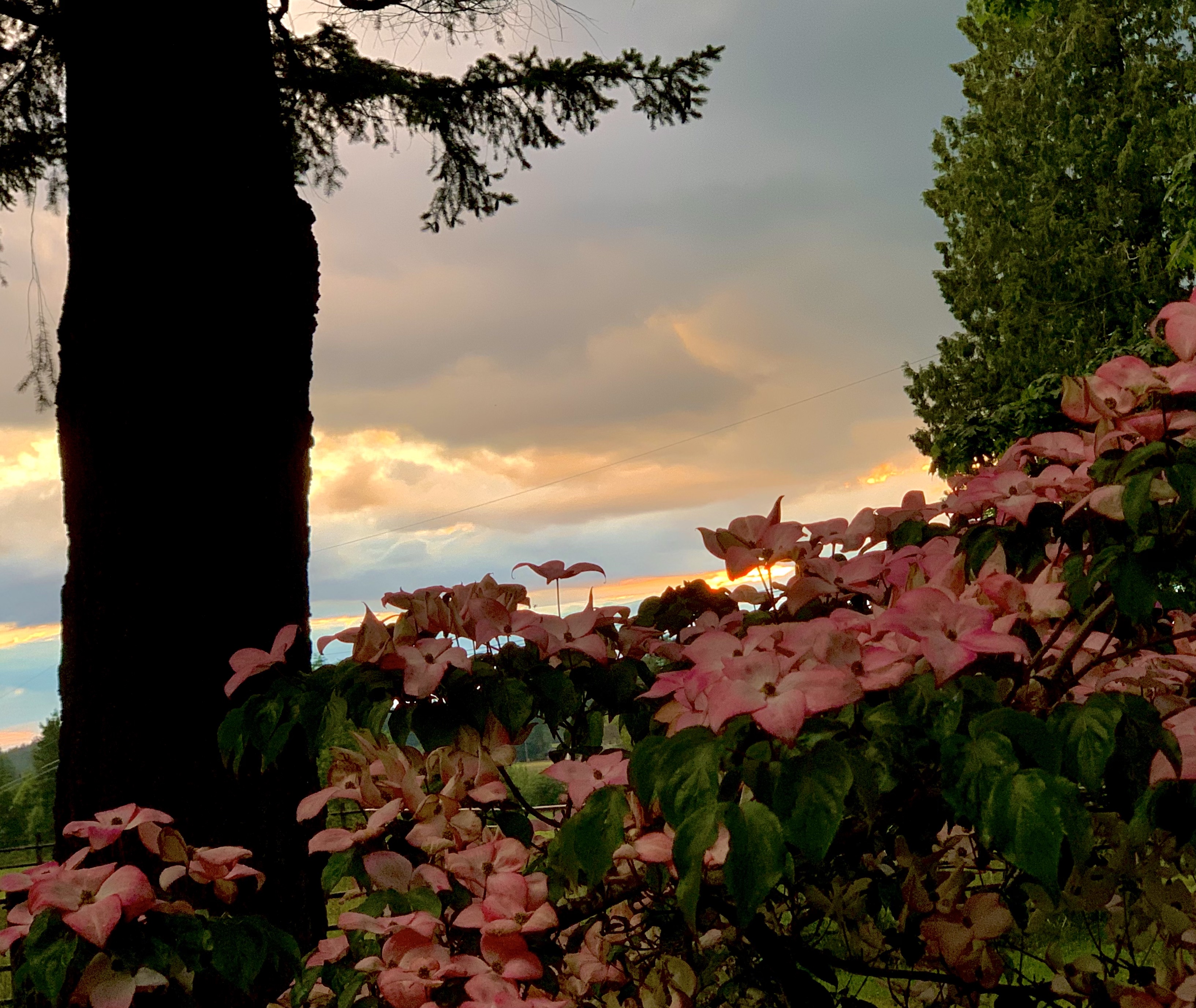
As once a Child was planted in a womb (and later, erected on a hill, a wooden cross) one year we dug a hole to plant a tree. Our choice, a Cornus Kousa with its fine, pink, four-petaled bracts, each curving lip touched with a red as deep as human blood. It rooted well, and every year it grows more glorious, bursting free in Spring—bud into full flower, flame-colored, flushed as wine. Even the slim sapling’s roughened bark speaks of that tree, nail-pierced and dark. Now, each new year, fresh blossoms shine radiant, and each cross-blessed, as if all love and loveliness has been compressed into a flower’s face, fresh as the Son’s new-born presence, a life only just begun.
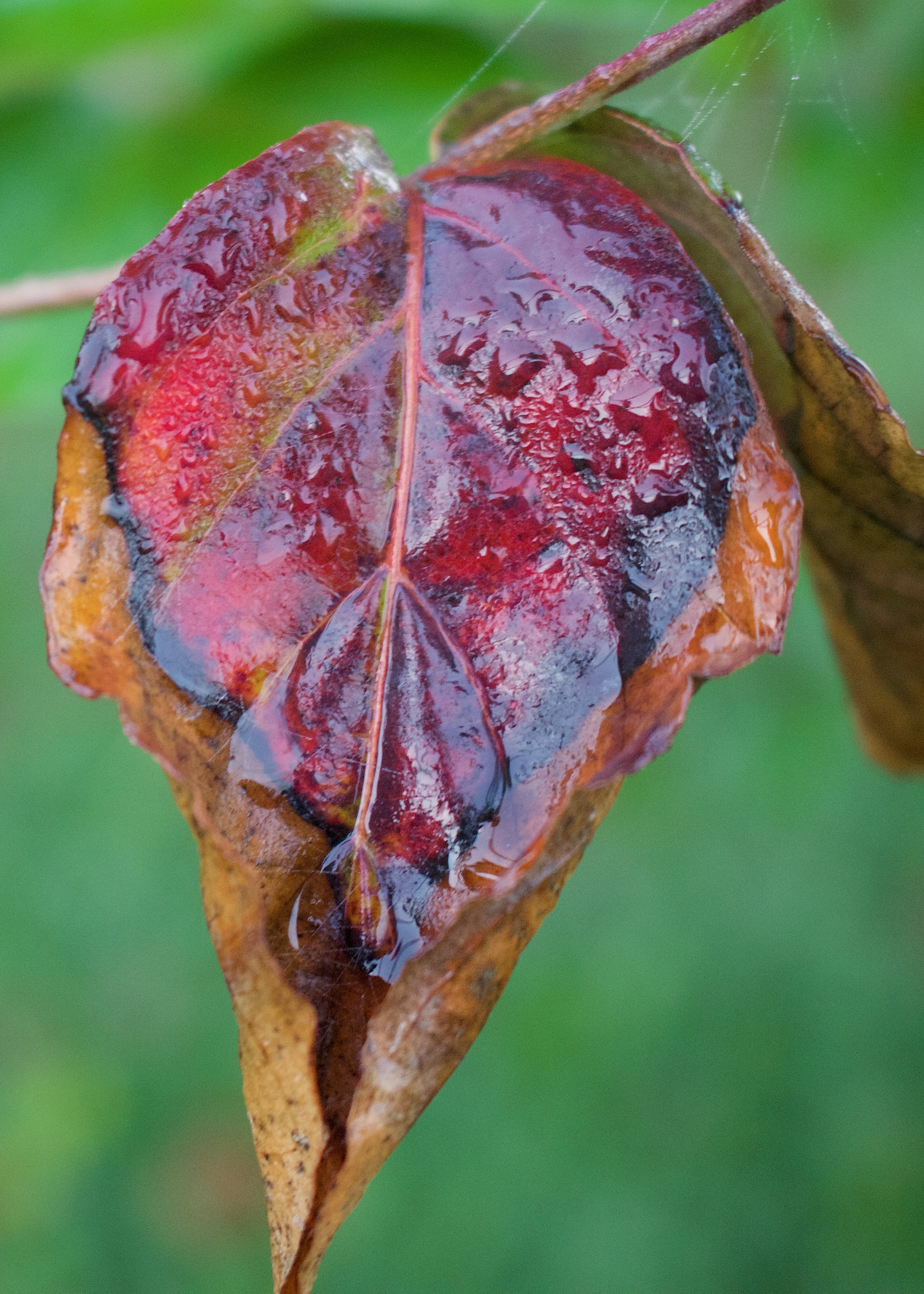
The dogwood leaves turn iron red in Fall, their centers fully ripening—into small seeded balls, each one a fruit vivid as Mary’s love, and edible. The sciontree, once sprung from Jesse’s root, speaks pain and life and love compressed and taken in, eye, mouth, heart. Incredible that now all Eucharists in our year suggest the living Jesus is our Christmas guest. ~Luci Shaw “Dogwood Tree” from Eye of the Beholder
Tree, we take leave of you; you’re on your own. Put down your taproot with its probing hairs that sluice the darkness and create unseen the tree that mirrors you below the ground. For when we plant a tree, two trees take root: the one that lifts its leaves into the air, and the inverted one that cleaves the soil to find the runnel’s sweet, dull silver trace and spreads not up but down, each drop a leaf in the eternal blackness of that sky. The leaves you show uncurl like tiny fists and bear small button blossoms, greenish white, that quicken you. Now put your roots down deep; draw light from shadow, break in on earth’s sleep. ~Roy Scheele “Planting a Dogwood”
For every leaf and blossom unfolding to the Light above, there is a root with tendrils surging deep to conquer the underground darkness.
Christ is born as our deep root of salvation.
He nourishes so we might flourish; we bloom because of Light drawn from shadow.
Advent 2023 theme …because of the tender mercy of our God, whereby the sunrise shall visit us from on high to give light to those who sit in darkness and in the shadow of death, to guide our feet into the way of peace. Luke 1: 78-79 from Zechariah’s Song
Light beyond shadow, Joy beyond tears, Love that is greater when darkest our fears; deeper the Peace when the storm is around, nearer the Hope to the lost who is found.
Light of the world, ever shining, shining! Hope in our pain and our dying. in our darkness, there is Light, in our crying, there is Love, in the noise of life imparting Peace that passes understanding.
Light beyond shadow, Joy beyond tears, Love that is greater when darkest our fears; deeper the Peace when the storm is around, nearer the Hope to the lost who is found. -Paul Wigmore
My love and tender one are you My sweet and lovely son are you You are my love and darling you Unworthy, I of you
Haleluia, haleluia, haleluia, haleluia.
Your mild and gentle eyes proclaim The loving heart with which you came A tiny tender hapless bairn With boundless grace of face
Haleluia, haleluia, haleluia, haleluia.
King of Kings, most holy one Gone the sun eternal one You are my god and helpless son High ruler of mankind
Haleluia, haleluia, haleluia, haleluia.
My love and tender one are you My sweet and lovely son are you You are my love and darling you Unworthy, I of you
Haleluia, haleluia, haleluia, haleluia. ~Traditional Gaelic carol Taladh Chriosda (Christ Child Lullaby) from the Hebrides
One-Time
Monthly
Yearly
Make a one-time or recurring donation to support daily ad-free Barnstorming posts
































 Barnstorming