Instructions for living a life:
Pay attention.
Be astonished.
Tell about it.
~Mary Oliver
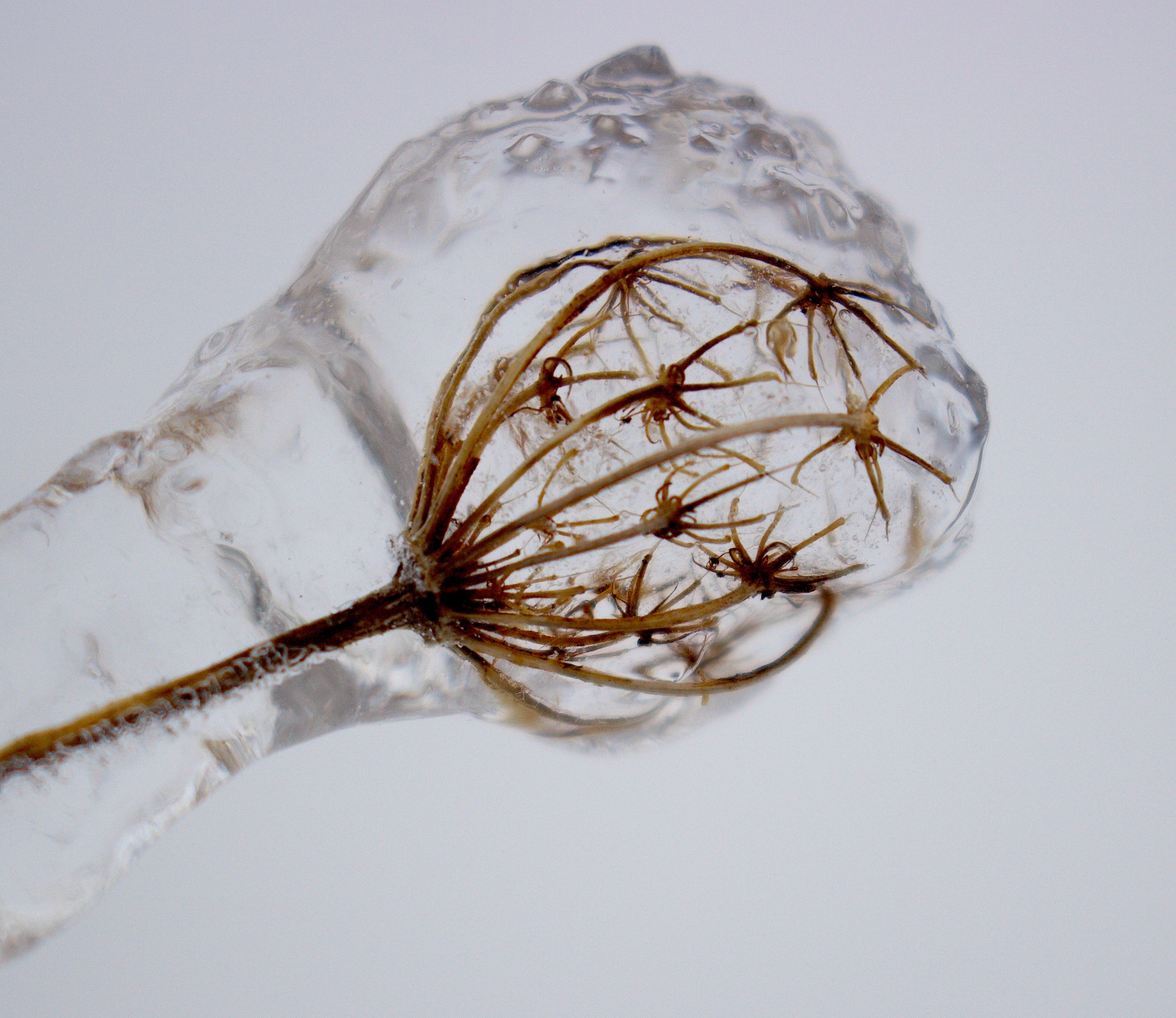
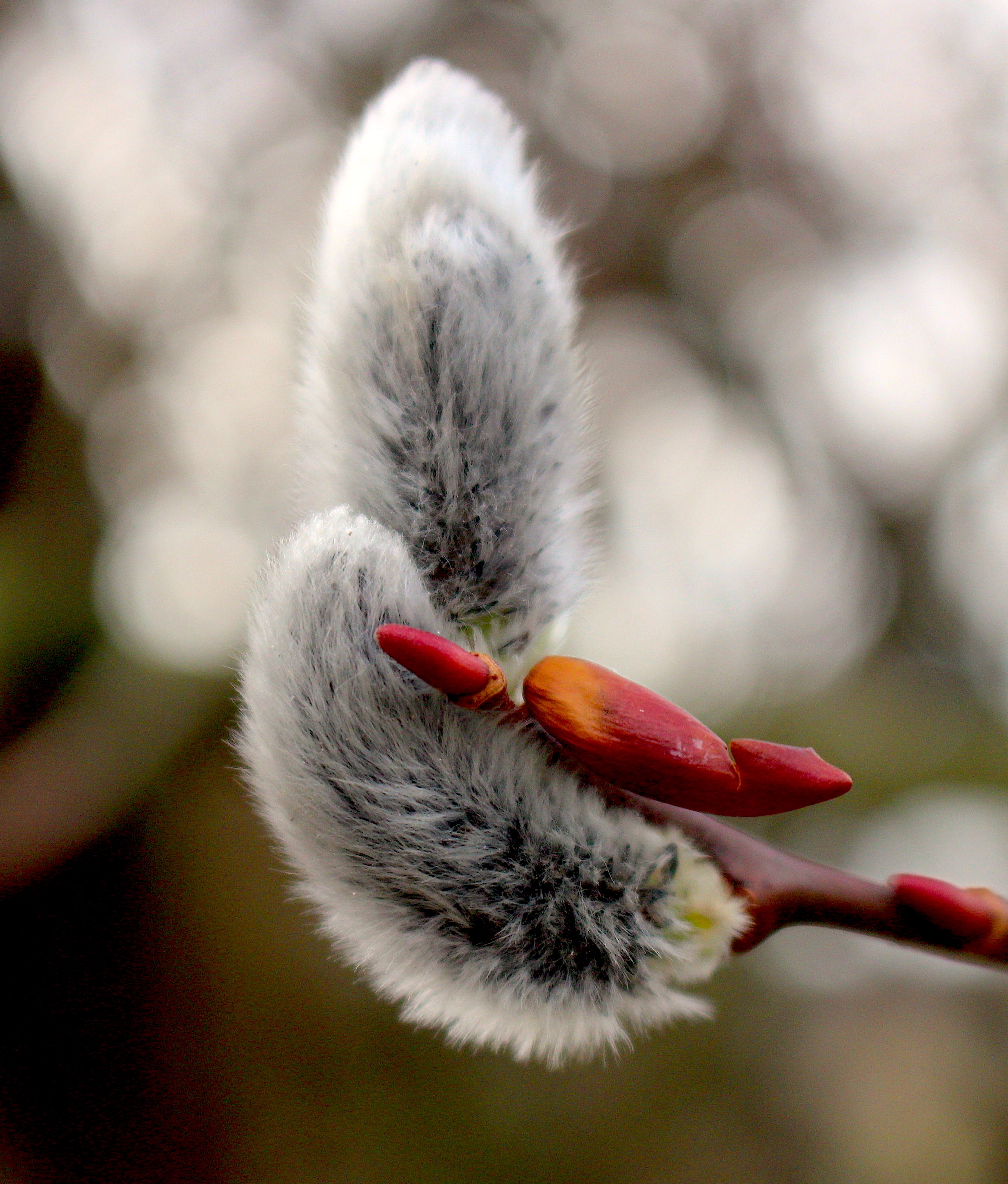
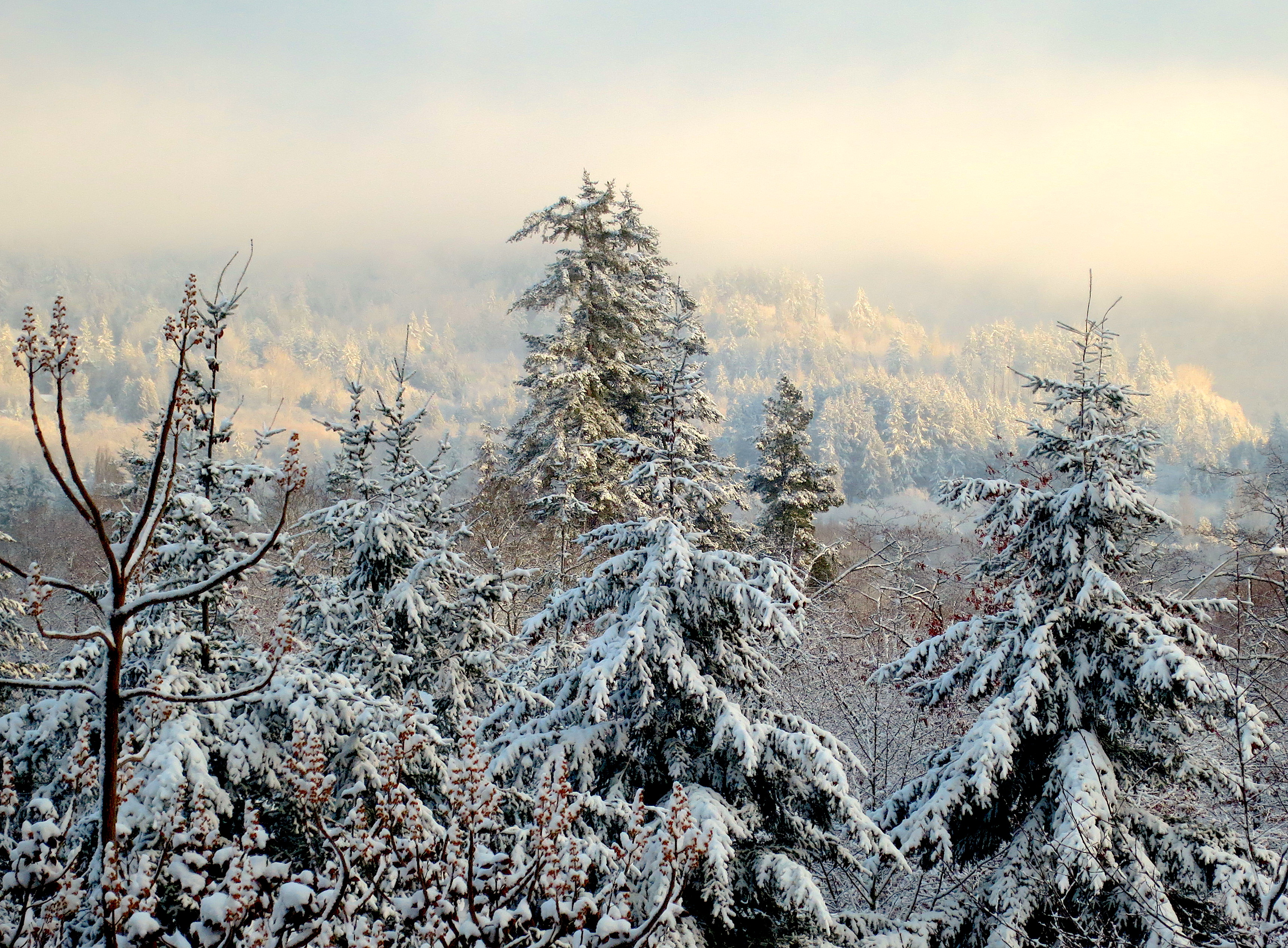
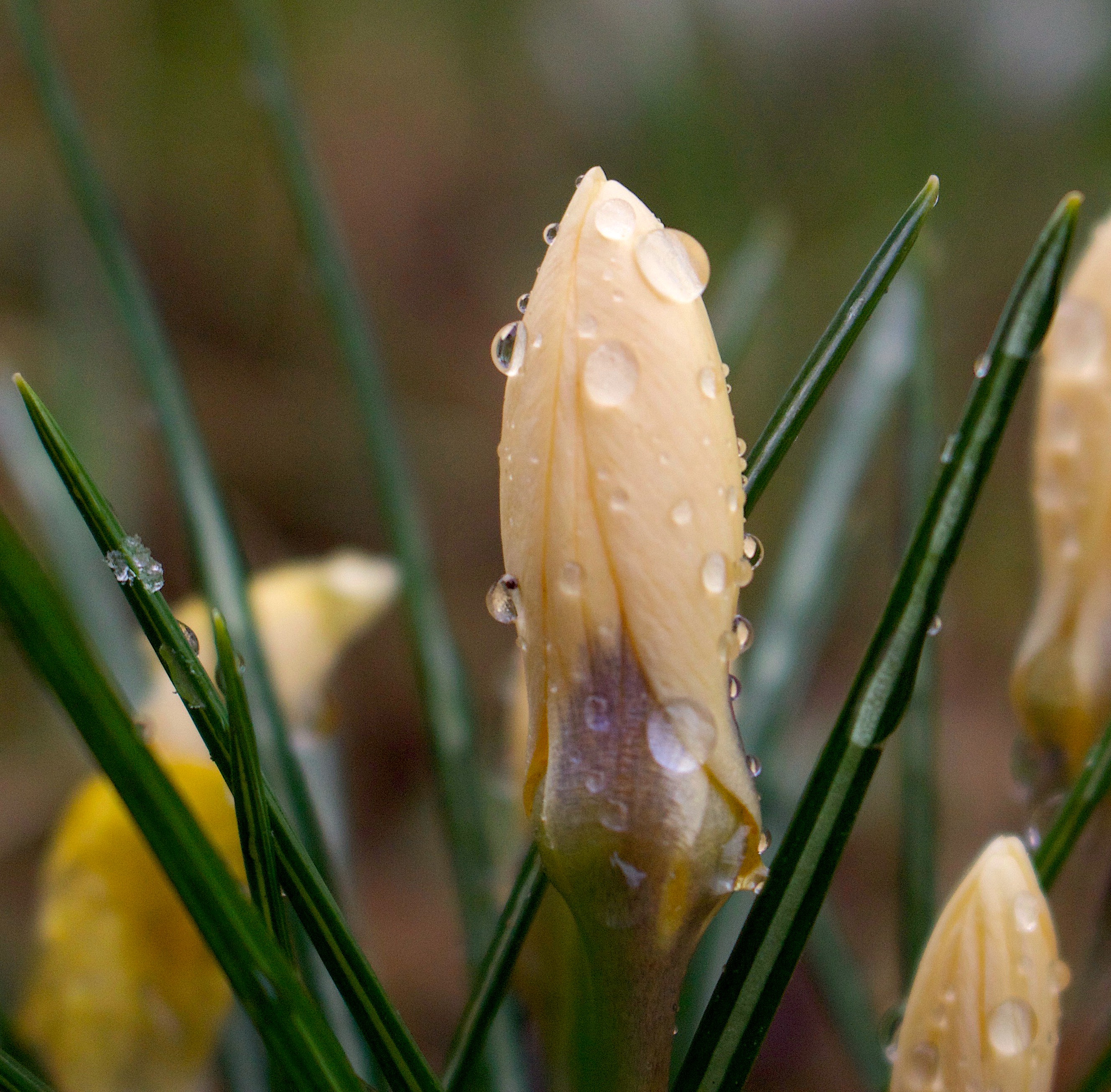



For more “Best of Barnstorming” photos:
Seasons on the Farm:
BriarCroft in Summer, in Autumn, in Winter,
at Year’s End
Instructions for living a life:
Pay attention.
Be astonished.
Tell about it.
~Mary Oliver
For more “Best of Barnstorming” photos:
Seasons on the Farm:
BriarCroft in Summer, in Autumn, in Winter,
at Year’s End
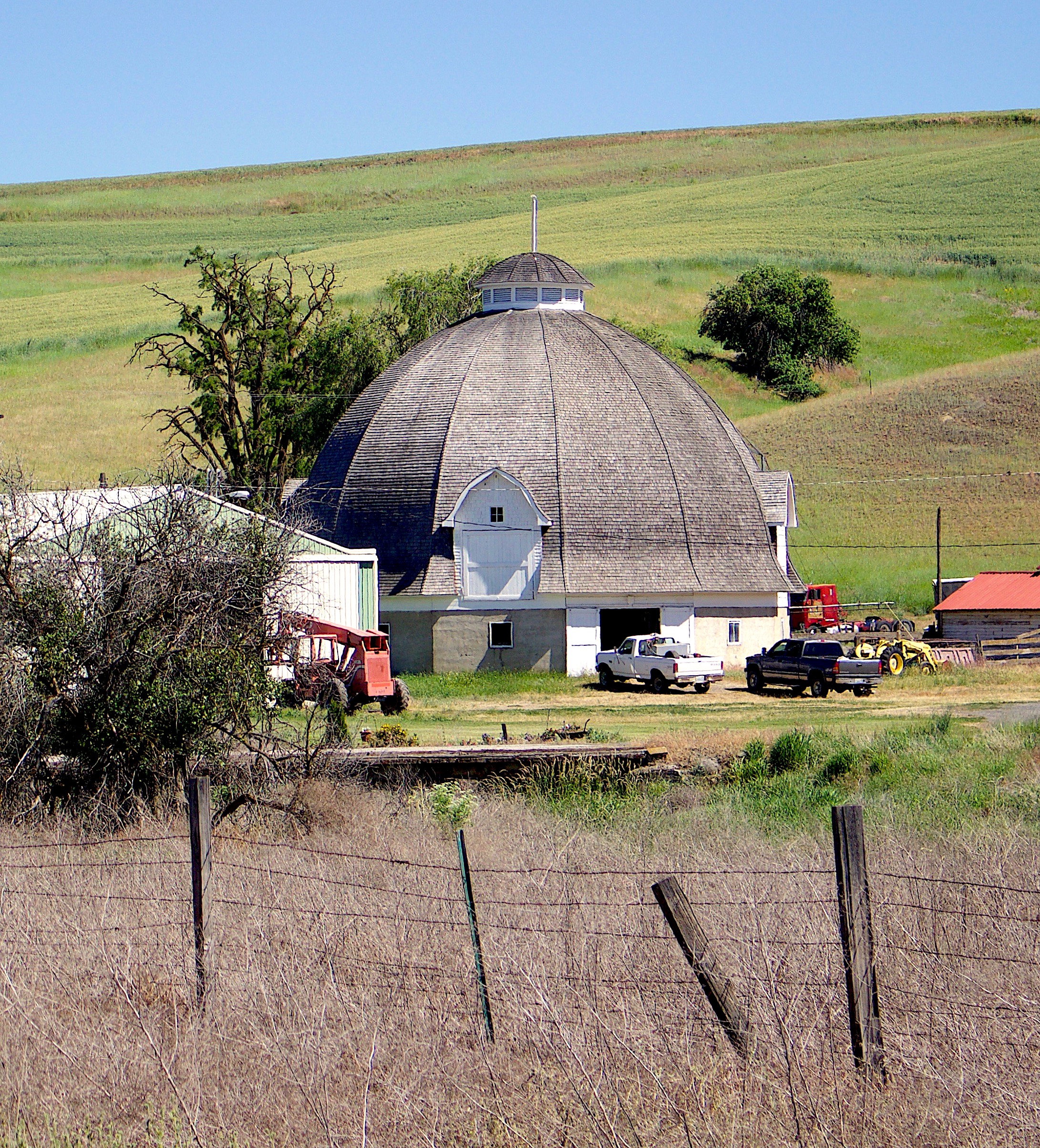
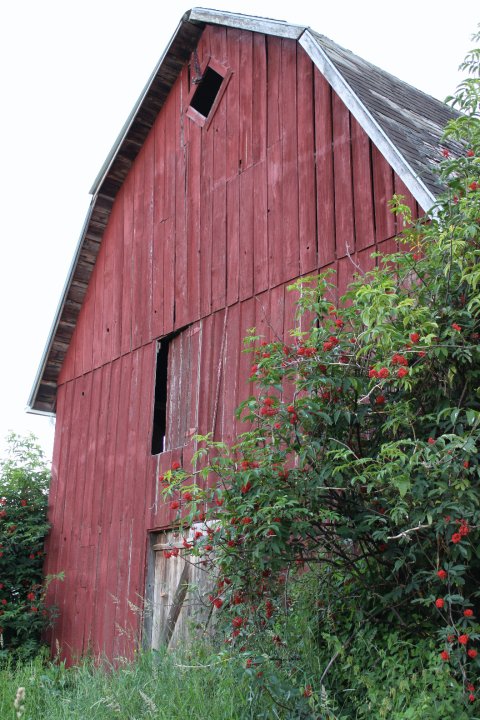
The grass so little has to do,—
A sphere of simple green,
With only butterflies to brood,
And bees to entertain,
And stir all day to pretty tunes
The breezes fetch along,
And hold the sunshine in its lap
And bow to everything;
And thread the dews all night, like pearls,
And make itself so fine,—
A duchess were too common
For such a noticing.
And even when it dies, to pass
In odors so divine,
As lowly spices gone to sleep,
Or amulets of pine.
And then to dwell in sovereign barns,
And dream the days away,—
The grass so little has to do,
I wish I were a hay!
~Emily Dickinson
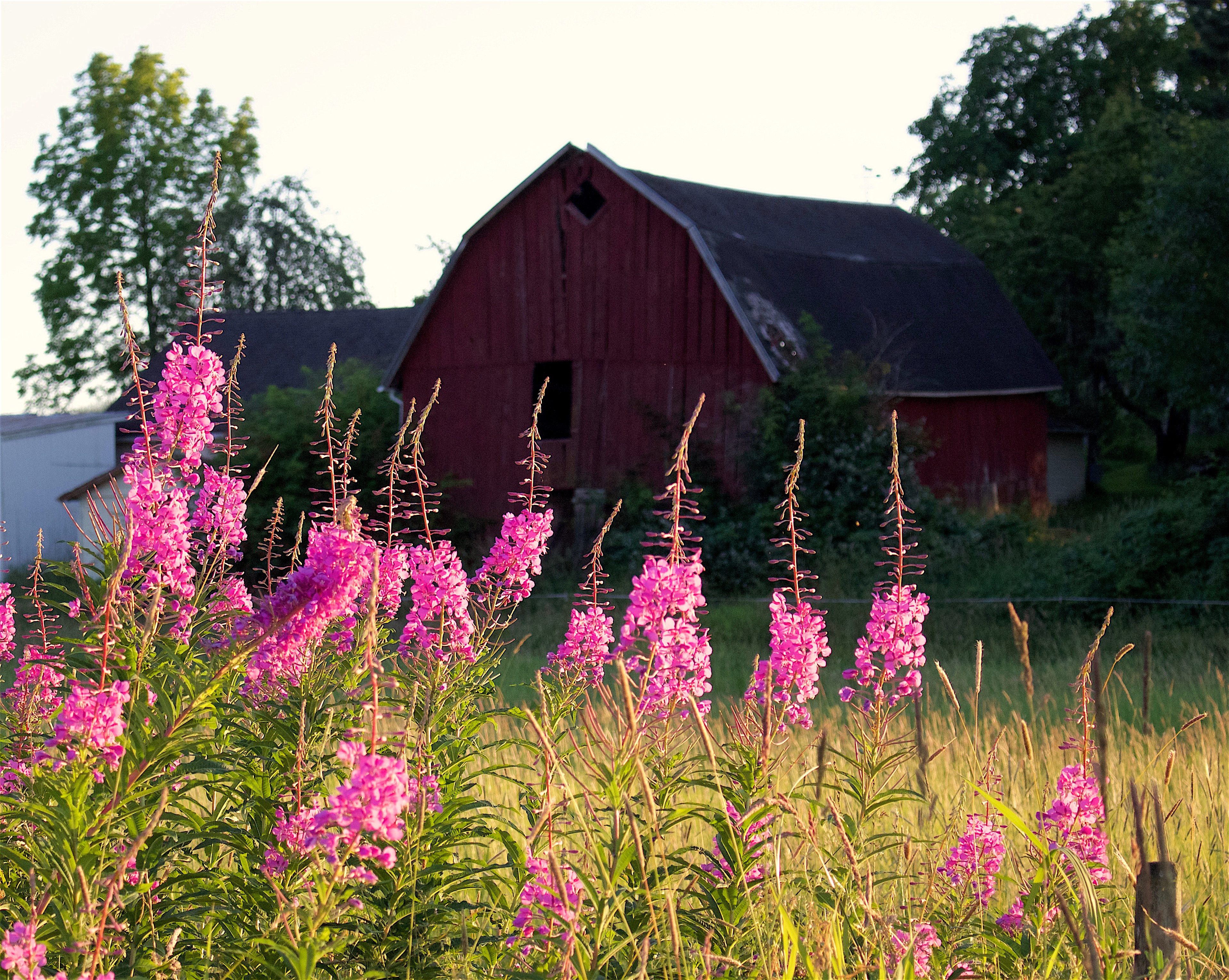
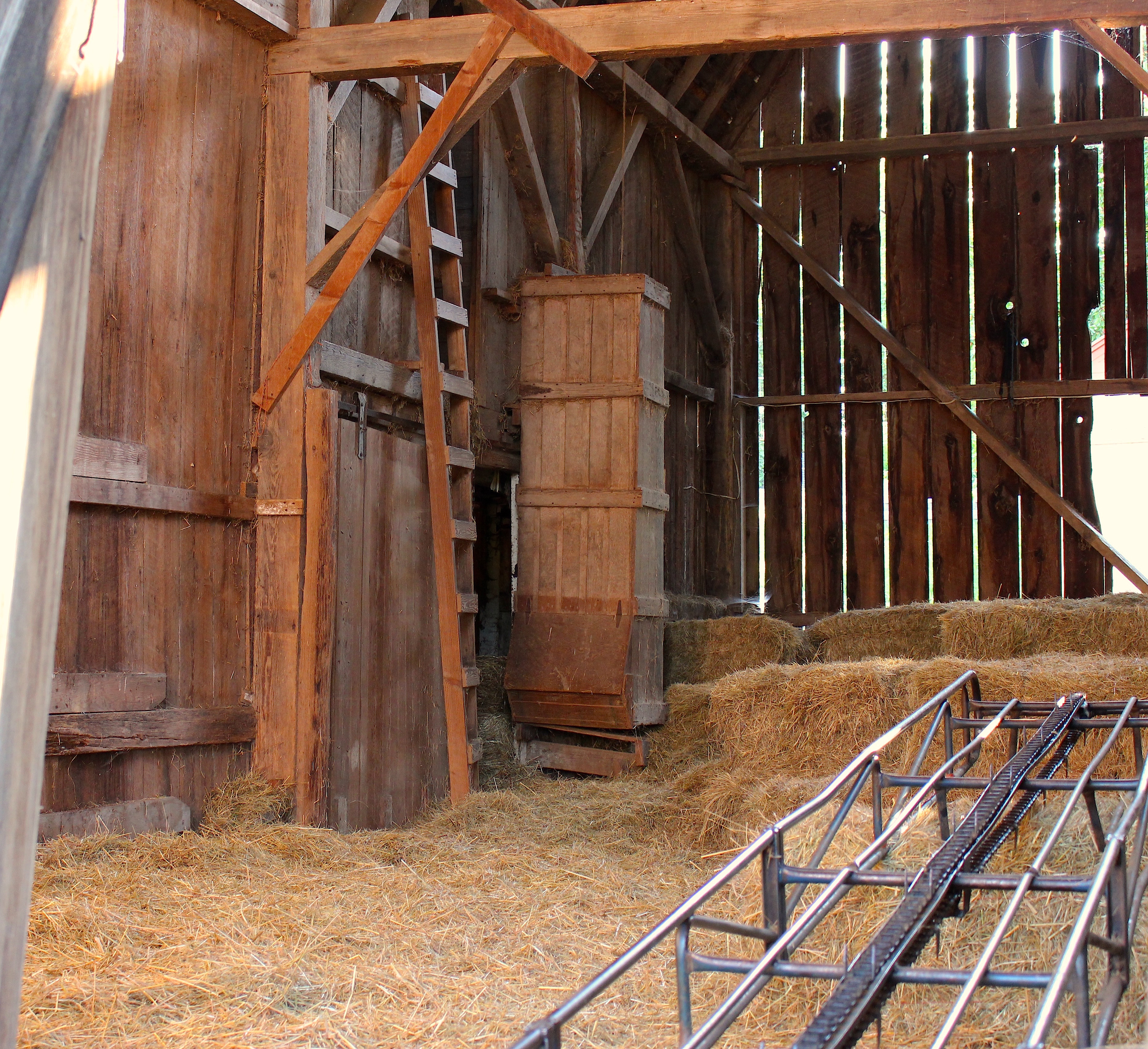
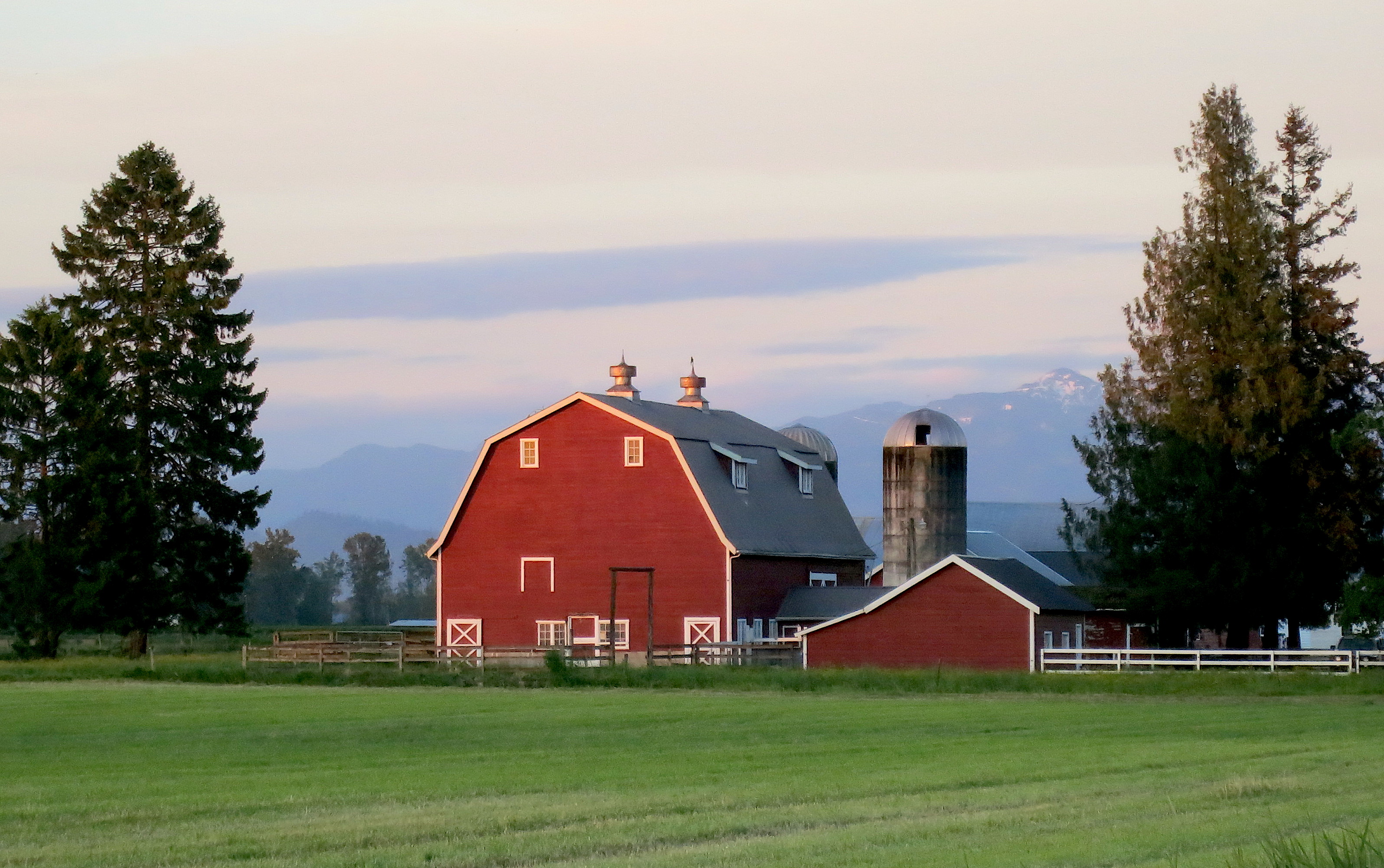
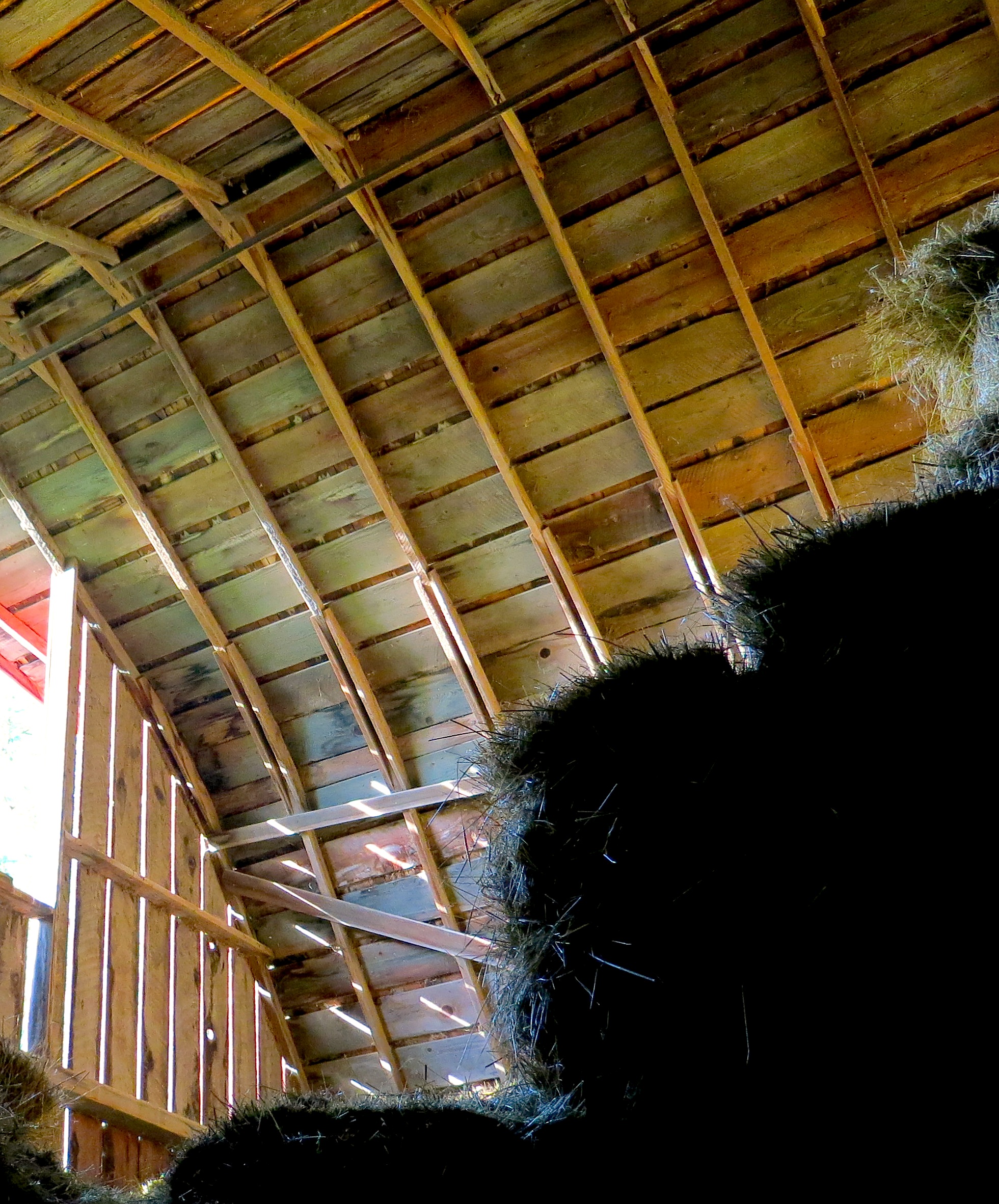
This is the week of the year our barn is at its emptiest, right before it fills up again. There is something very lonely about a barn completely empty of its hay stores.
Its hollow interior echoes with a century of farmers’ voices:
soothing an upset cow during a difficult milking,
uncovering a litter of kittens high in a hay loft,
shouting orders to a steady workhorse,
singing a soft hymn while cleaning stalls,
startling out loud as a barn owl or bat flies low overhead.
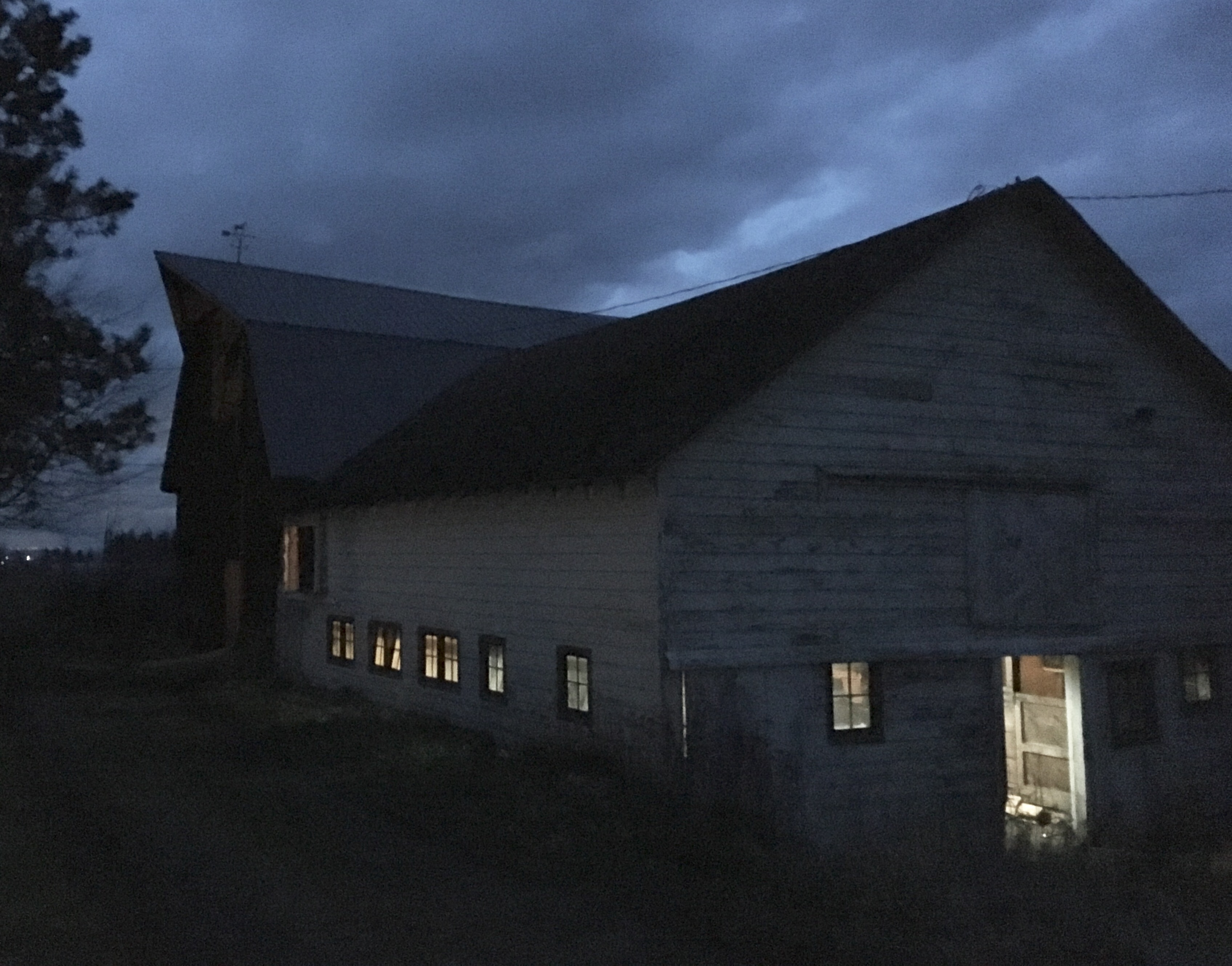
The dust motes lazily drift by in the twilight, seemingly forever suspended above the straw covered wood floor, floating protected from the cooling evening breezes.
There is no heart beat left in an empty barn. It is in full arrest, all life blood drained out, vital signs flat lined. I can hardly bear to go inside.
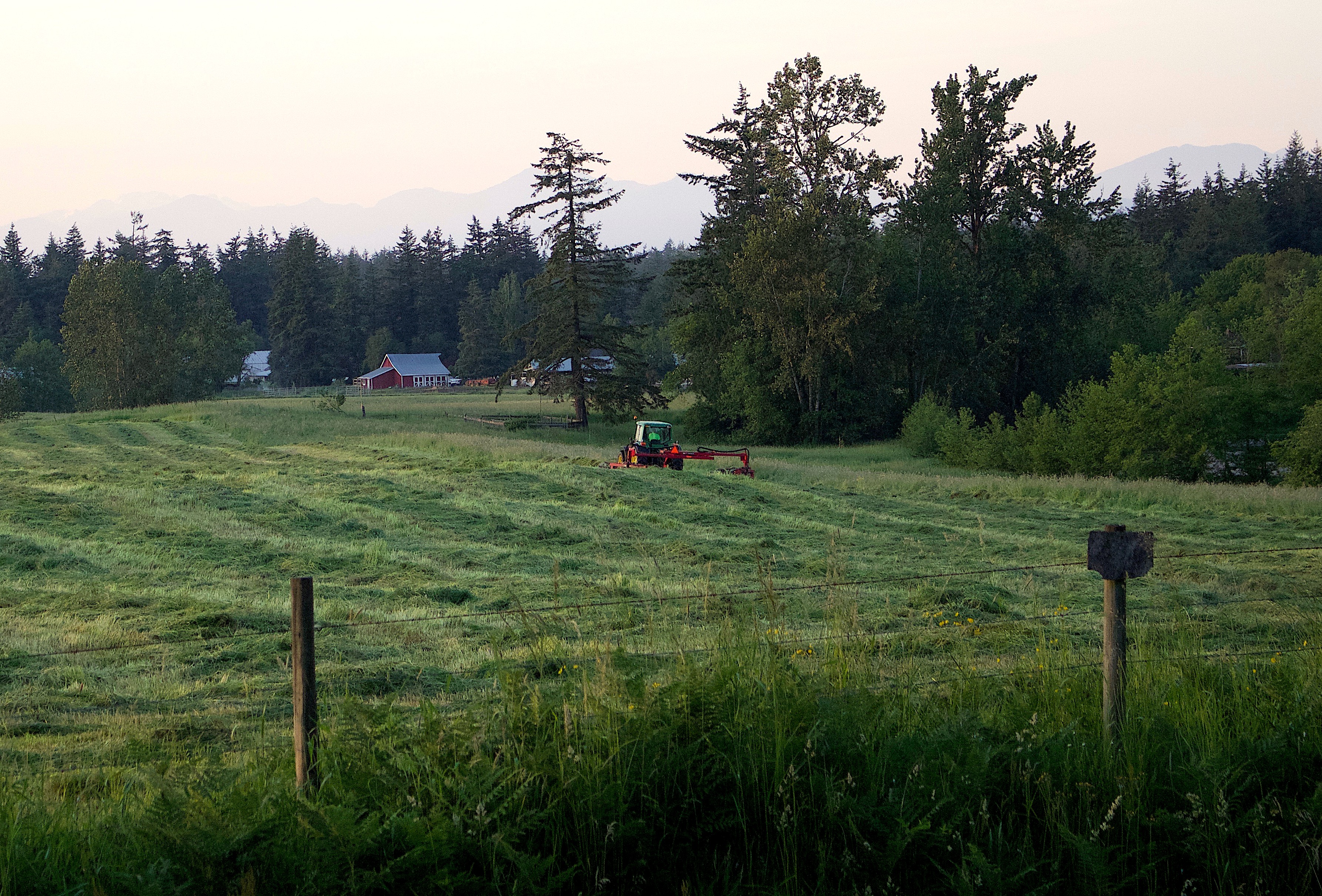
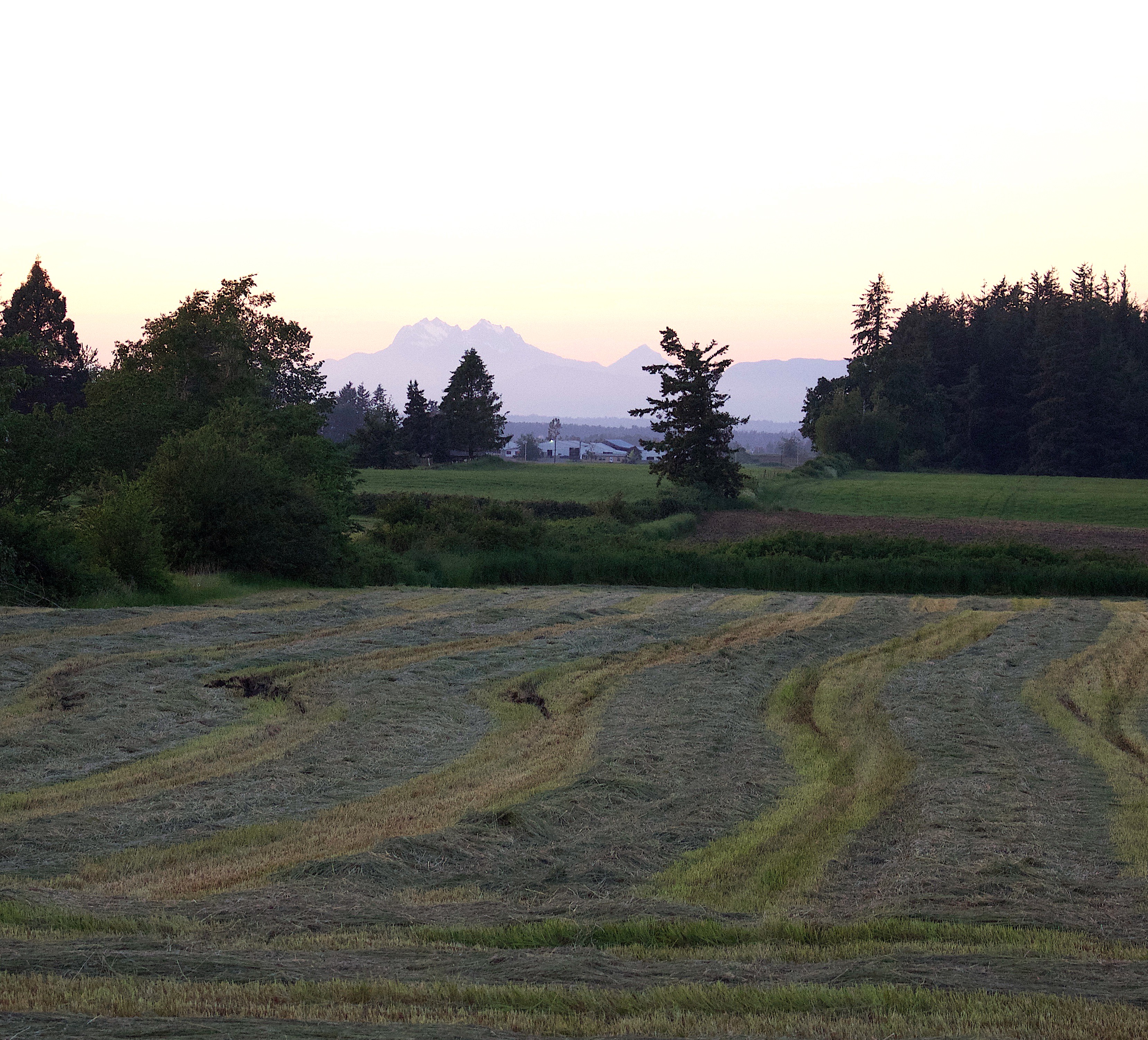
The weather is cooperating so the grass was cut two days ago. Today it will be tossed about on the field to dry in a process called “tedding”, then tomorrow raked into windrows and baled for pick up by our “family and friends” hay crew.
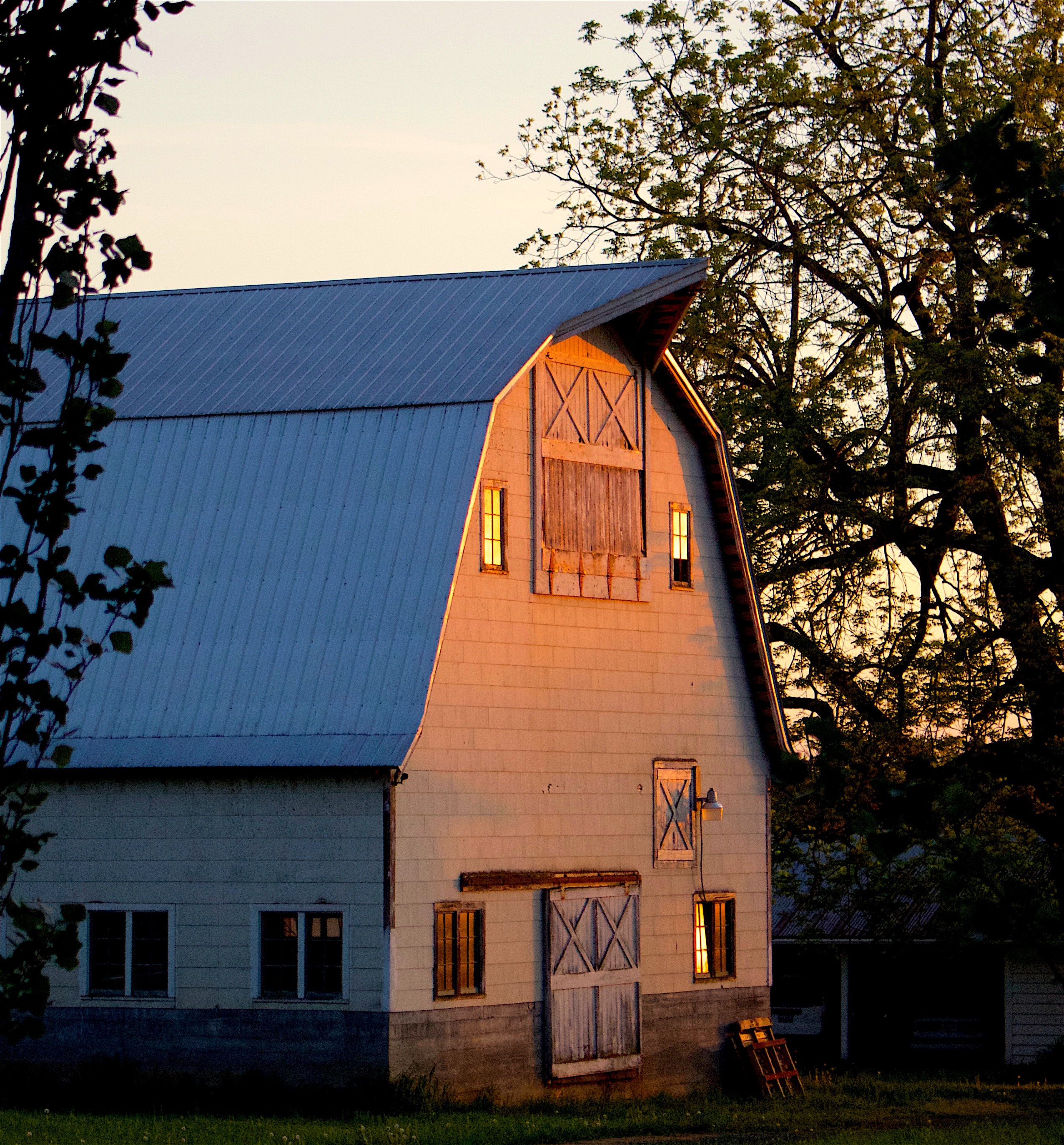
Suddenly, the barn is shocked back to a pulse, with the throb of voices, music blaring, dust and pollen flying chaotically, the rattle of the electric “elevator” hauling bales from wagon to loft, the grunts and groans of the crew as they heft and heave the bales into place in the stack. This often goes on late into the night, the barn ablaze with lights, the barnyard buzzing with excitement and activity. It almost looks as if it is on fire.
Vital signs measurable, rhythm restored, volume depletion reversed, prognosis good for another year.
A healthy rhythm is elusive in this modern age of full time jobs off the farm, necessitating careful coordination with the schedule of the farmer who cuts and bales for many neighbors all within the same window of good weather. The farmer races his equipment from field to field, swooping around with a goliath tractor taking 12 foot swaths, raising dust clouds, and then on to the next job. It is so unlike the rhythm of a century ago when a horse drawn mower cut the tall grass in a gentle four foot swath, with a pulsing shh shh shh shh shh shh tempo that could be heard stretching across the fields. It is an unfamiliar sound today, the almost-silence of no motor at all, just the jingle of the harness and the mower blades slicing back and forth as the team pulls the equipment down the field. We’ve lost the peacefulness of a team of horses at work, necessitating a slower pace and the need to stop at the end of a row for a breather.
The old barn will be resuscitated once again. Its floor will creak with the weight of the hay bales, the walls will groan with the pressure of stacks. The missing shingles on the roof will be replaced and the doors locked tight against the winter winds. But it will be breathing on its own, having needed only a short rest these last few weeks.
Inside, once again, filled to the brim, life is held tight by twine, just waiting to be released.

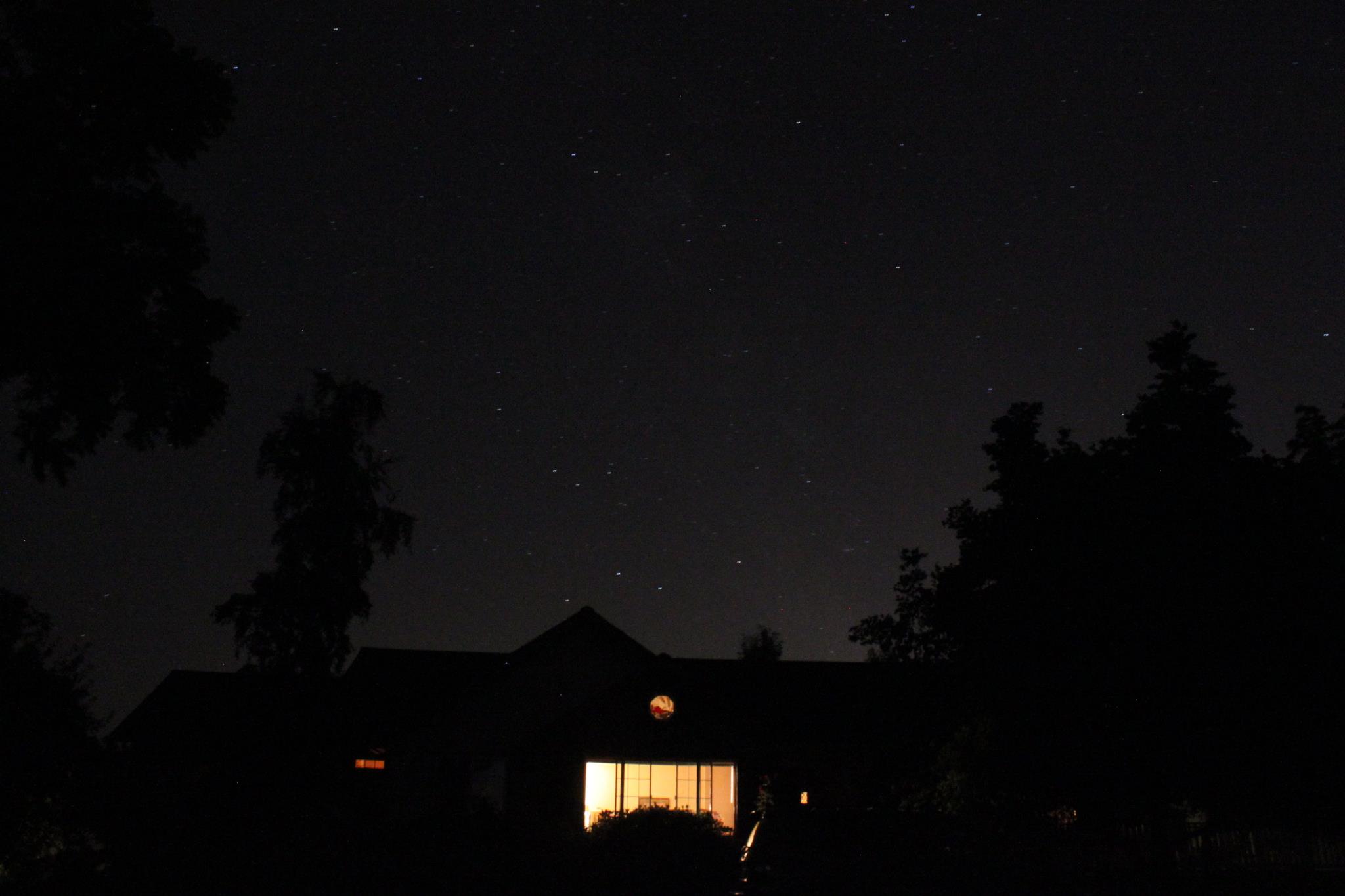
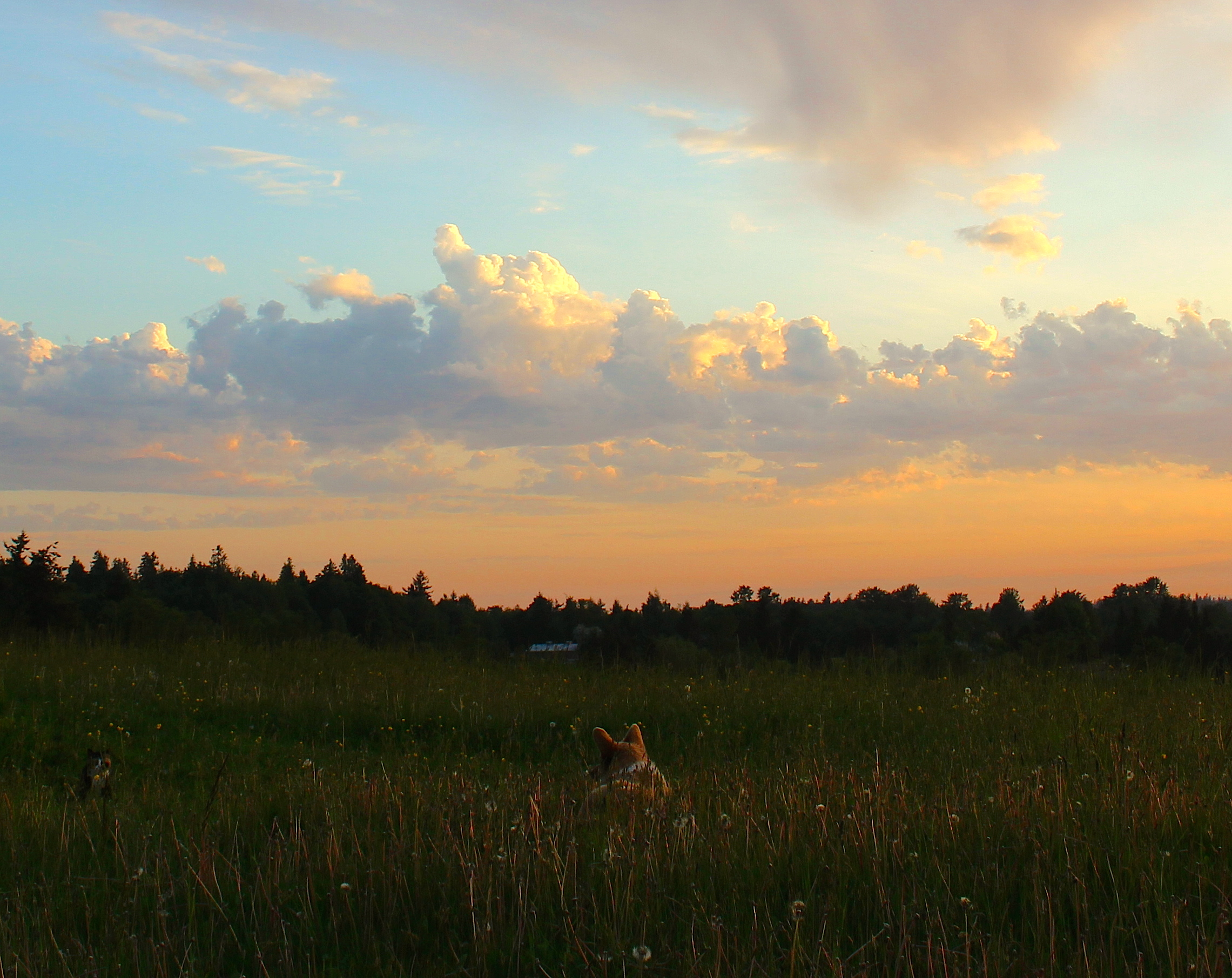
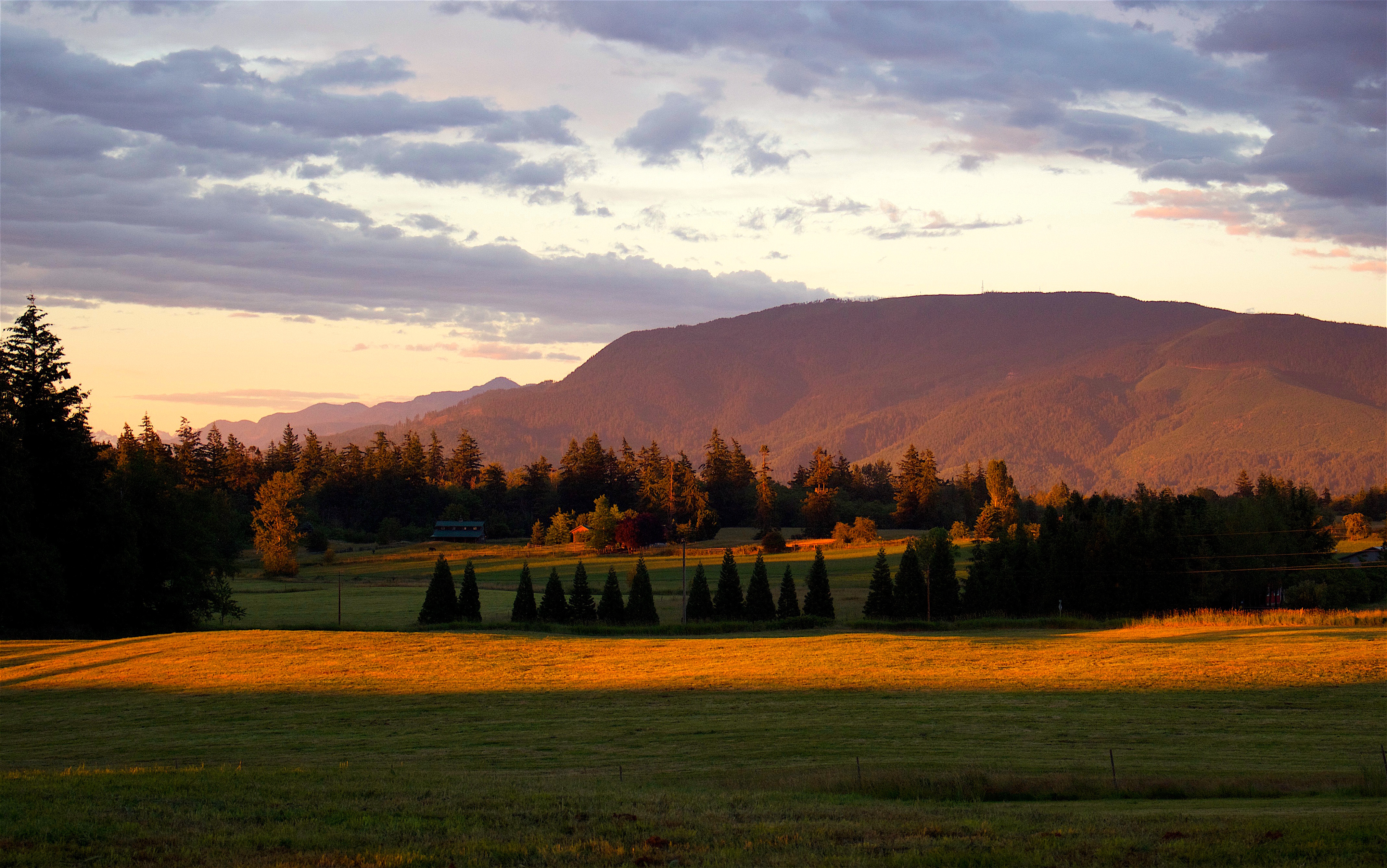
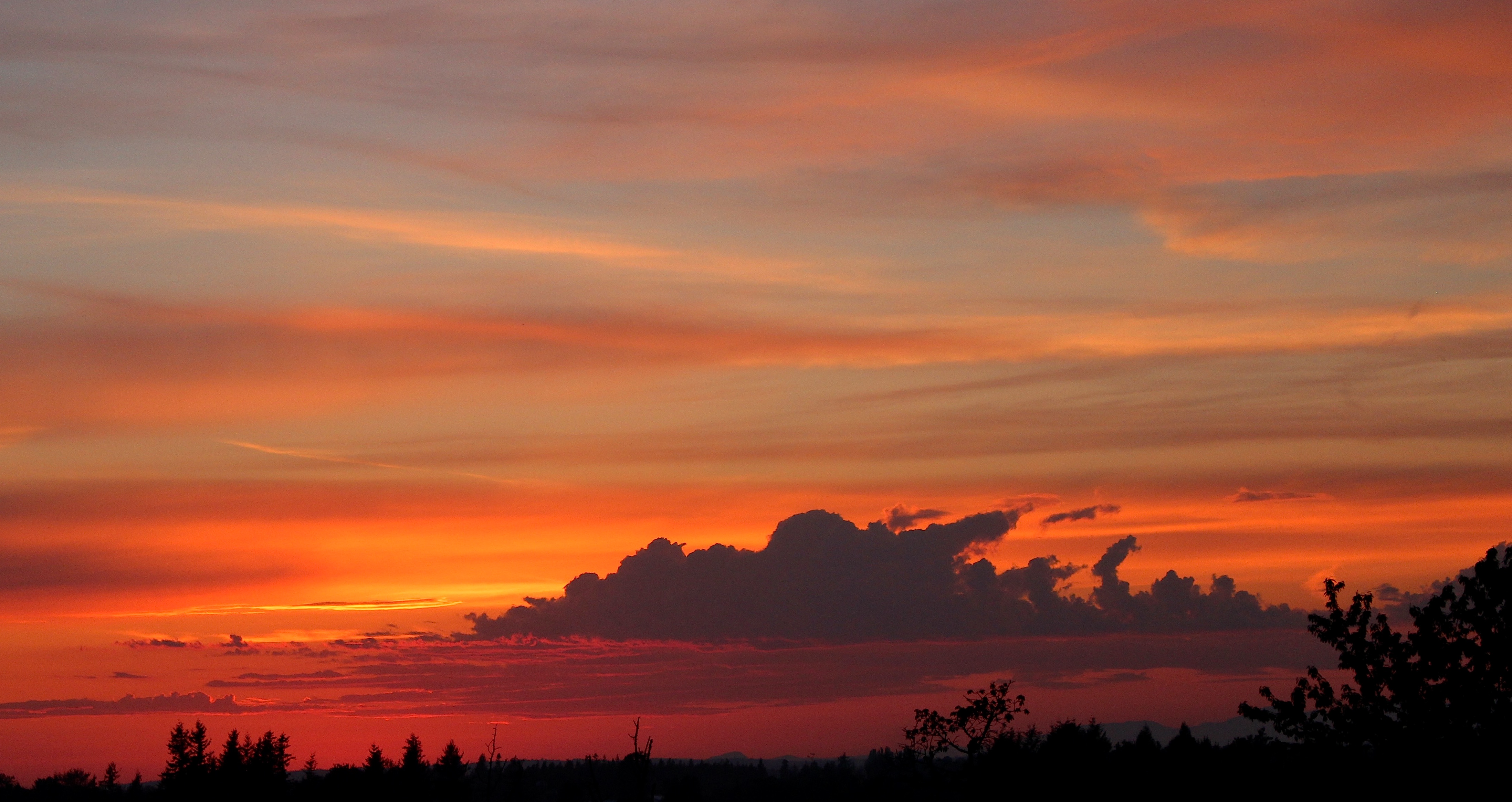
Wandering the evening farm,
I feel the darkness rising within me,
more than see or hear
the settling of birdsong,
the clicks and whoosh of owls overhead
the rise of coyote calls.
It is in the horizon’s firelight,
the slowing of my pulse,
and the depth of my breaths.
I let it come over me,
the deep descent,
this most dazzling dusk.
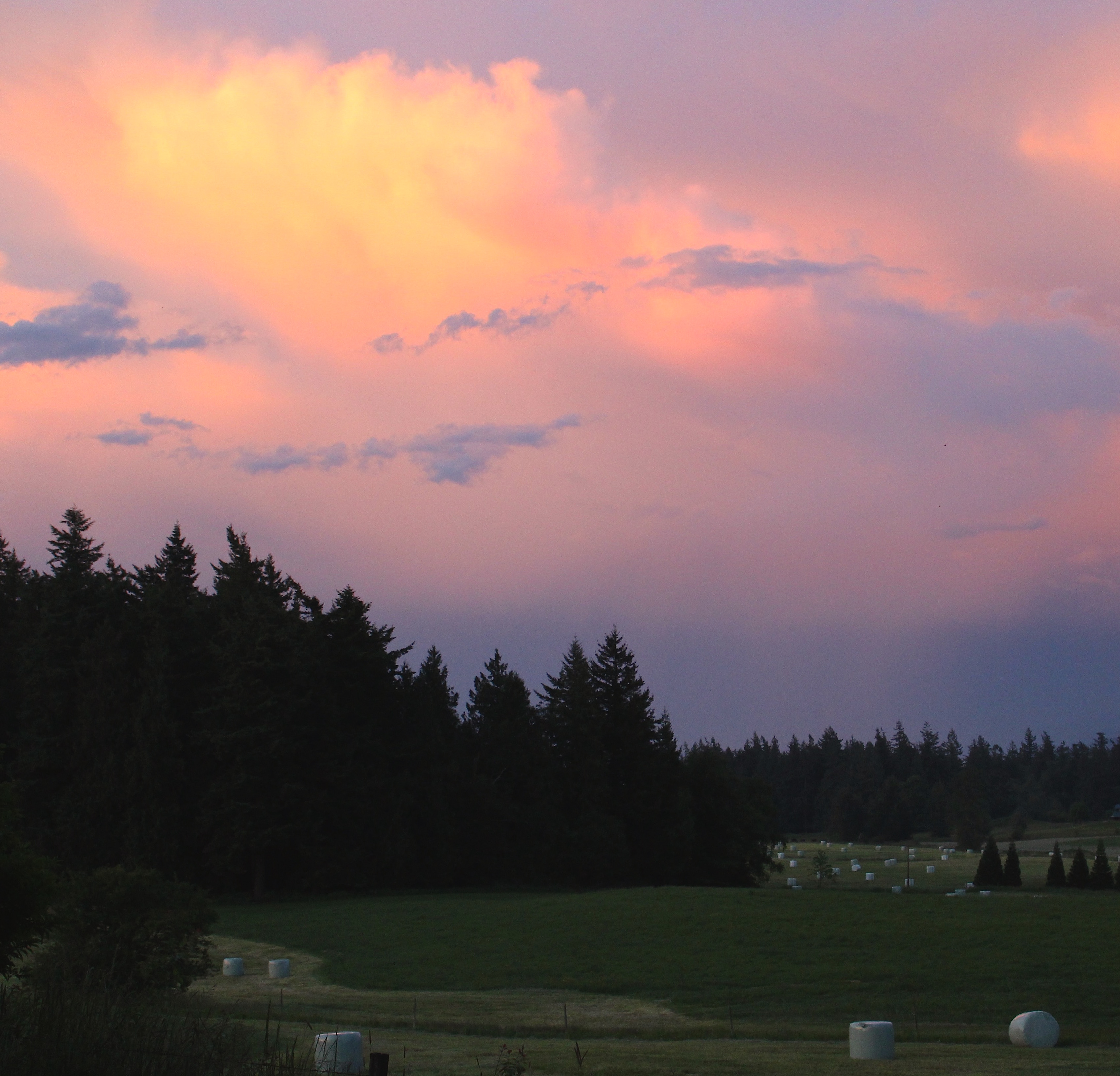
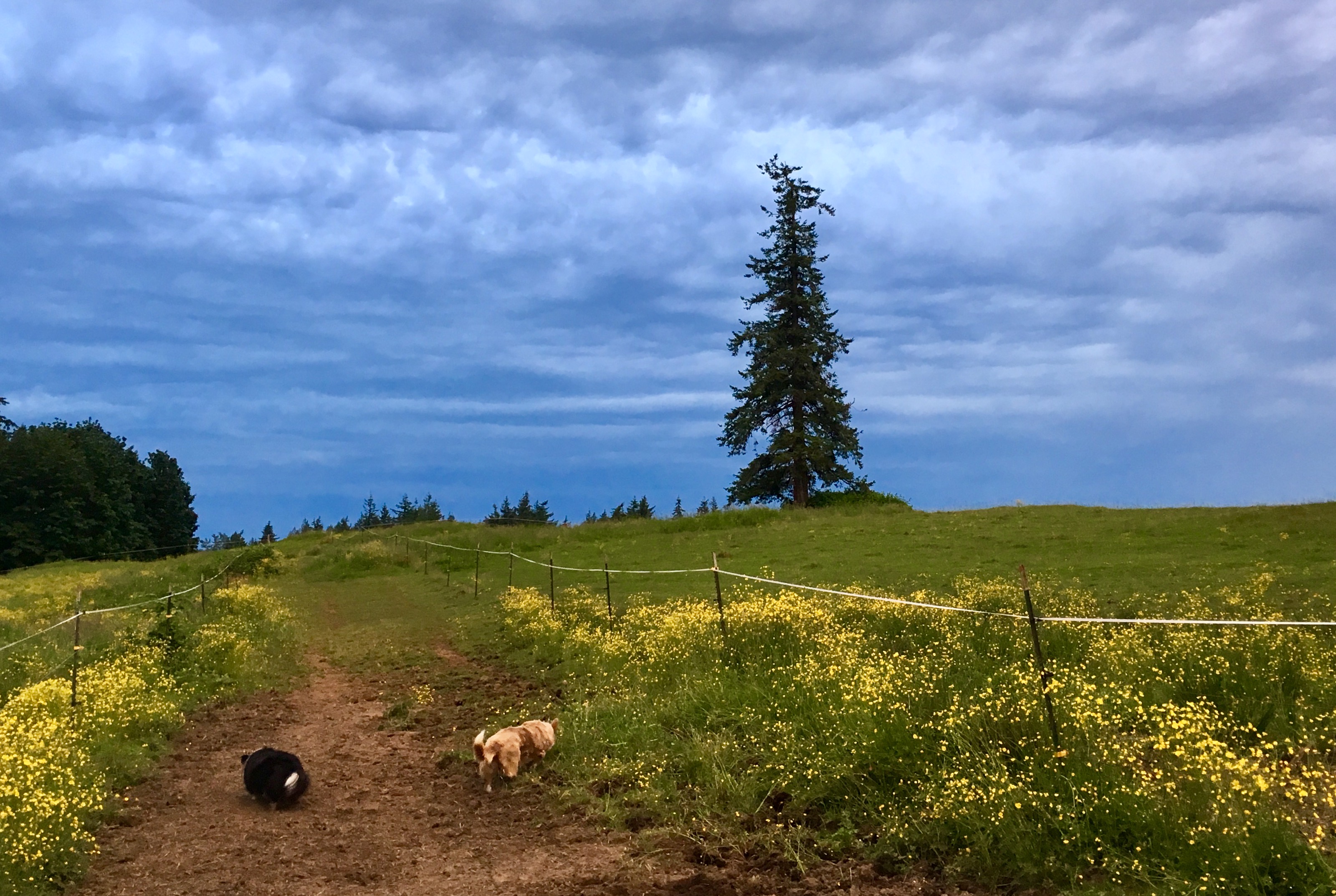
Light and wind are running
over the headed grass
as though the hill had
melted and now flowed.
~Wendell Berry “June Wind”
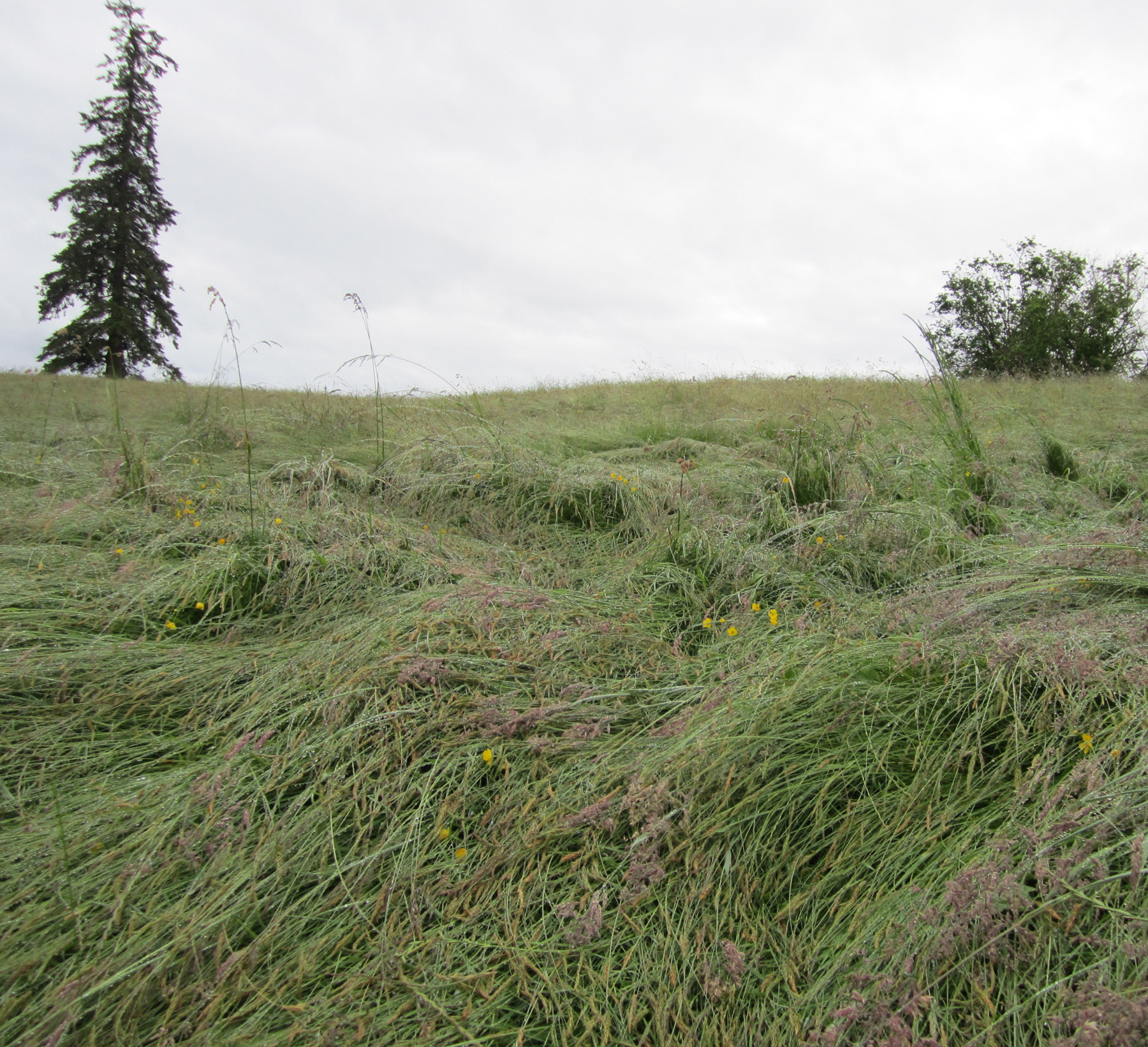
It will soon be haying time, as soon as a stretch of clear days appear on the horizon. Today was to be cloudless but ended up drizzly and windy — not good hay cutting weather.
The headed grass is growing heavier, falling over, lodged before it can be cut, with the undulations of moist breezes flowing over the hill. It has matured too fast, rising up too lush, too overcome with itself so that it can no longer stand. It is melting, pulled back to the soil. We must work fast to save it.
The light and wind works its magic on our hill. The blades of the mower will come soon to lay it to the ground in green streams that flow up and down the slopes. It will lie comfortless in its stoneless cemetery rows, until tossed about by the tedder into random piles to dry, then raked back into a semblance of order in mounded lines flowing over the landscape.
It will be crushed and bound together for transport to the barn, no longer bending but bent, no longer flowing but flown, no longer growing but grown and salvaged.
It becomes fodder for the beasts of the farm during the cold nights when the wind beats at the doors. It melts in their mouths, as it was meant to.
Truly.

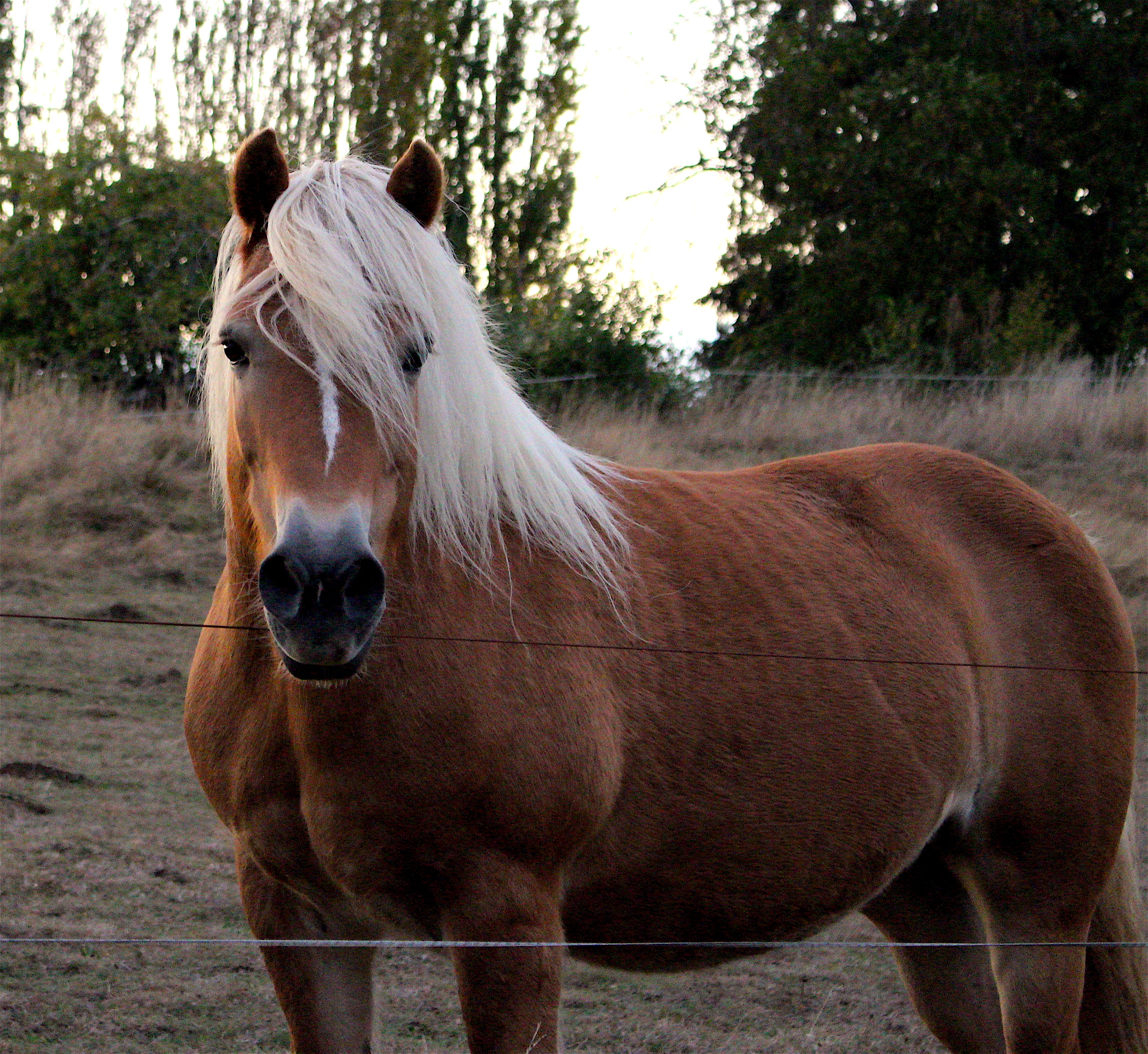
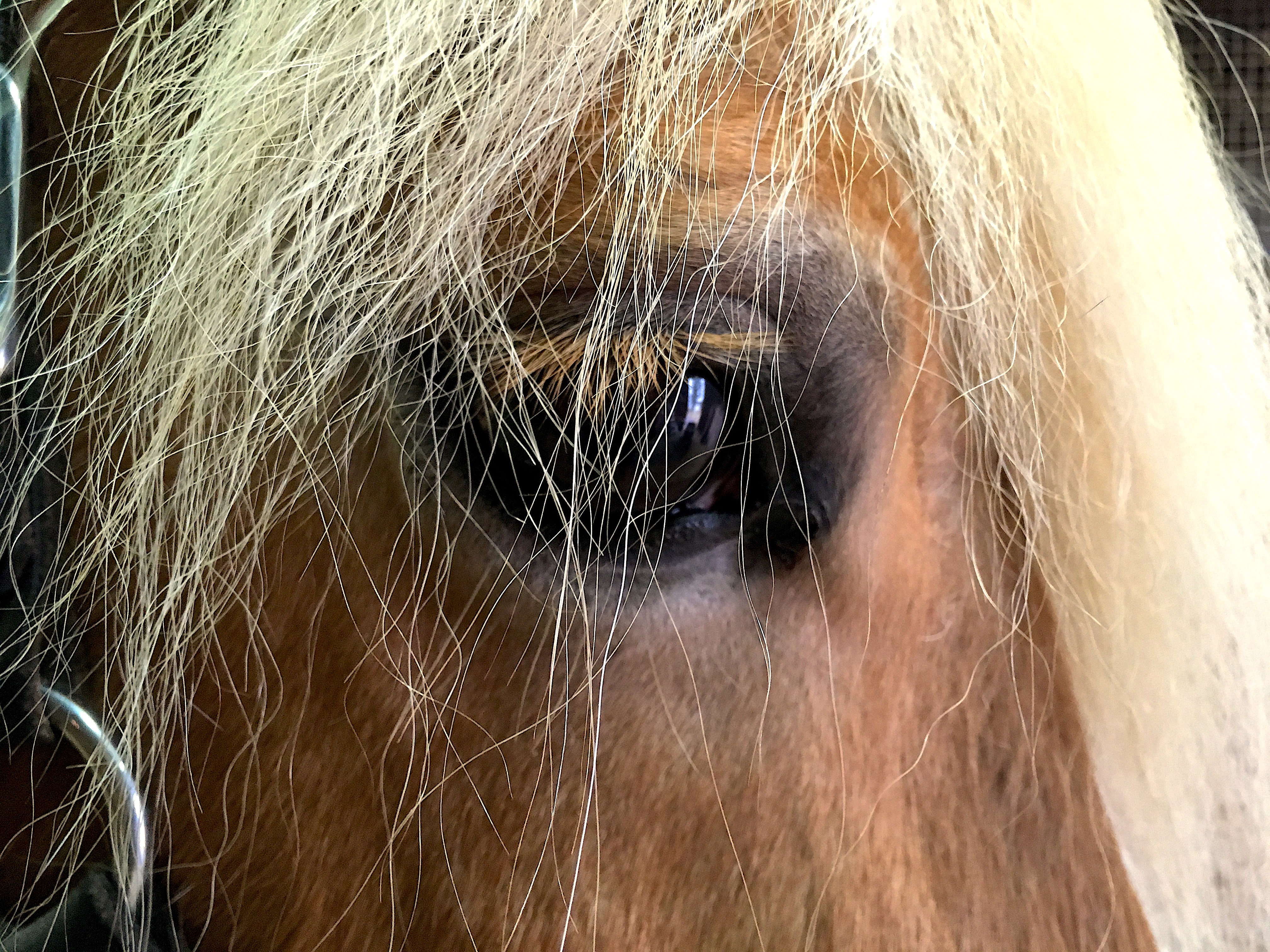
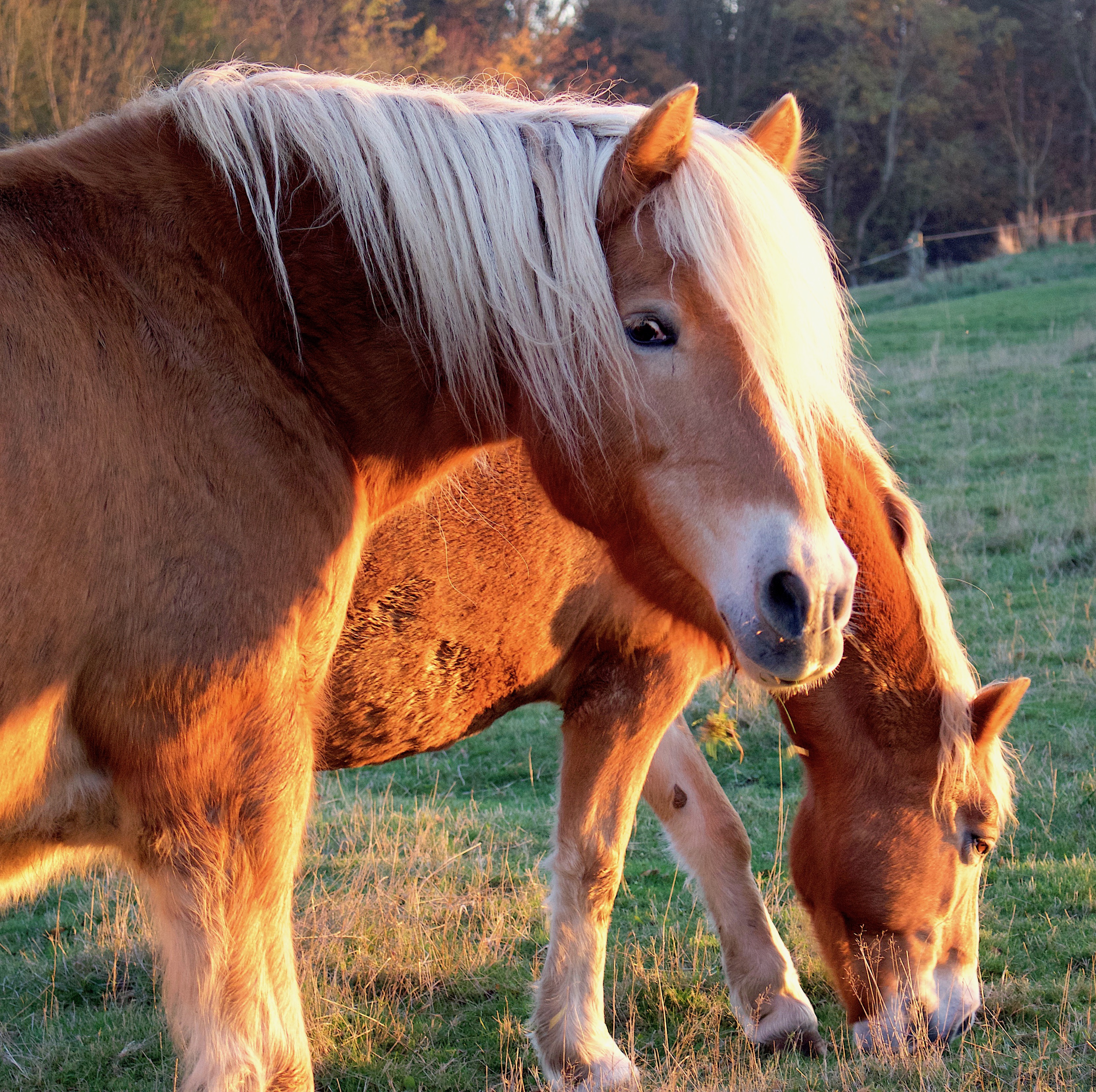
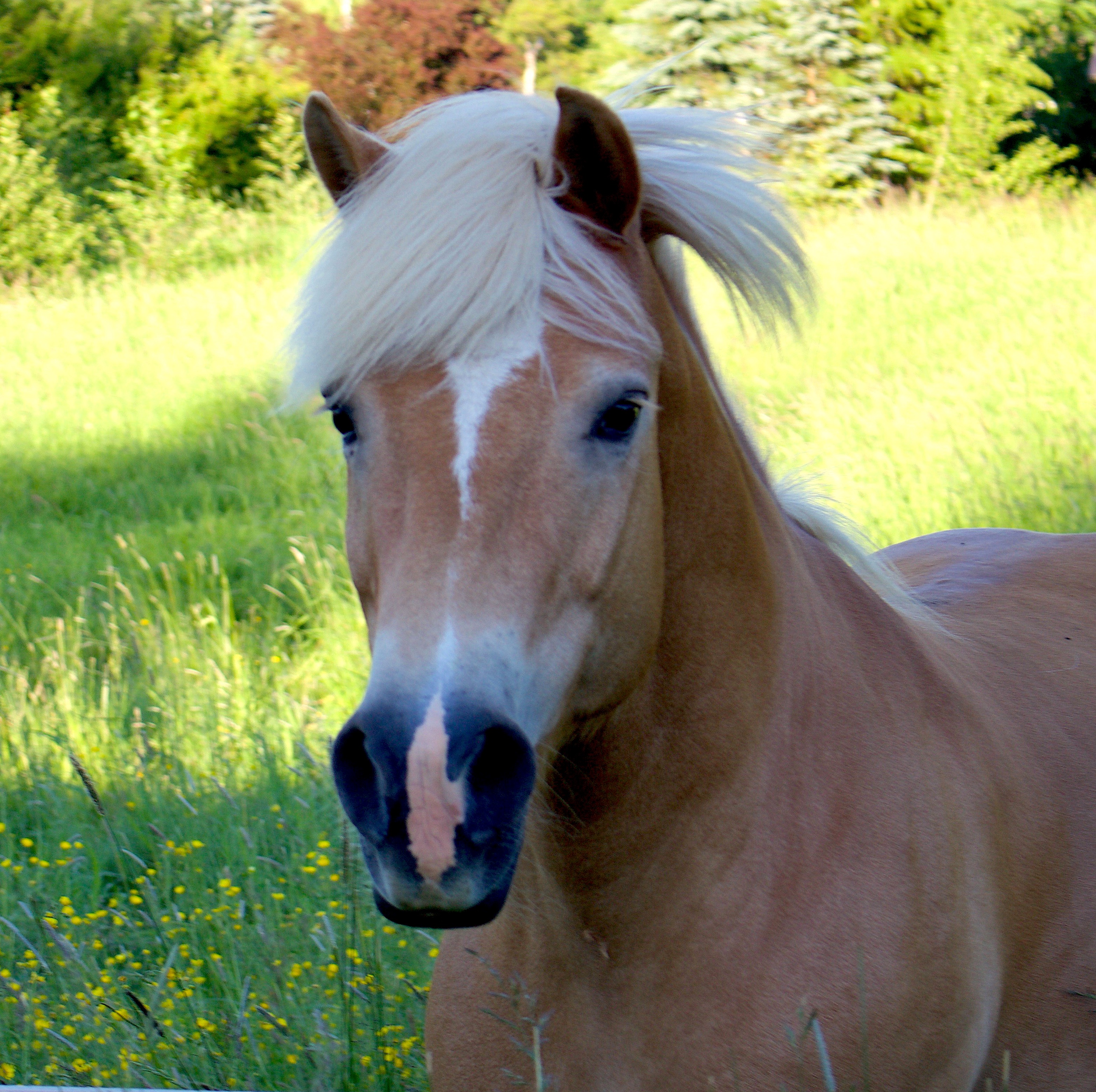
I’m almost sixty three, deep into my middle age and some days I’m reminded how deep more than others. Though I’m well past the hot flashes of the last decade, I still compare notes with the aging mares on our farm and watch how well they cope with their advancing years.
For instance:
These mares still have a lot of life left. They run like the wind when turned loose, their hair flies in the wind and they can buck, kick and fart with the best of them.
These mares know who they are. There is no identity crisis here. They are mothers who have finished their mothering years, and are well into the grandmothering years. Even so, they still like to flirt and haven’t given up on the idea that they can attract attention from a certain fella in the neighboring field.
These mares know their jobs very well, sometimes too well and anticipate what is being asked before it is requested. They can go for long periods without work but once saddled or harnessed up and pointed in the right direction, it is like they’ve been doing their job every day for years. No need for a steep learning curve, or reminder lessons. No funny business or messing around. There is pride in their work. They can be a bit out of shape though, with a tendency toward the fluffy side of fitness, so they need a moment to catch their breath once in awhile. Their muscles sometimes hurt the next day. They break out in sweat easily. They appreciate a break for a mid-day nap.
These mares are opinionated. There is no question they know their own minds, what they want and how they are going to get it and keep no one around them guessing.
These mares are stubborn. Once they’ve decided something, it takes more than soft sweet persuasion, like a whack on the behind, to change course. Once they’ve decided they don’t like another horse, the only way to change that opinion is for the other horse to adopt an attitude of complete servitude and submission, giving way whenever approached and grooming the boss mare whenever asked.
These mares are hungry. Always. See “fluffy” above.
These mares don’t sleep all that much, but wish they could sleep more. Even though they might look like they are napping (see “mid-day nap” above), they are actually meditating, with their eyes closed, on the next plan of action.
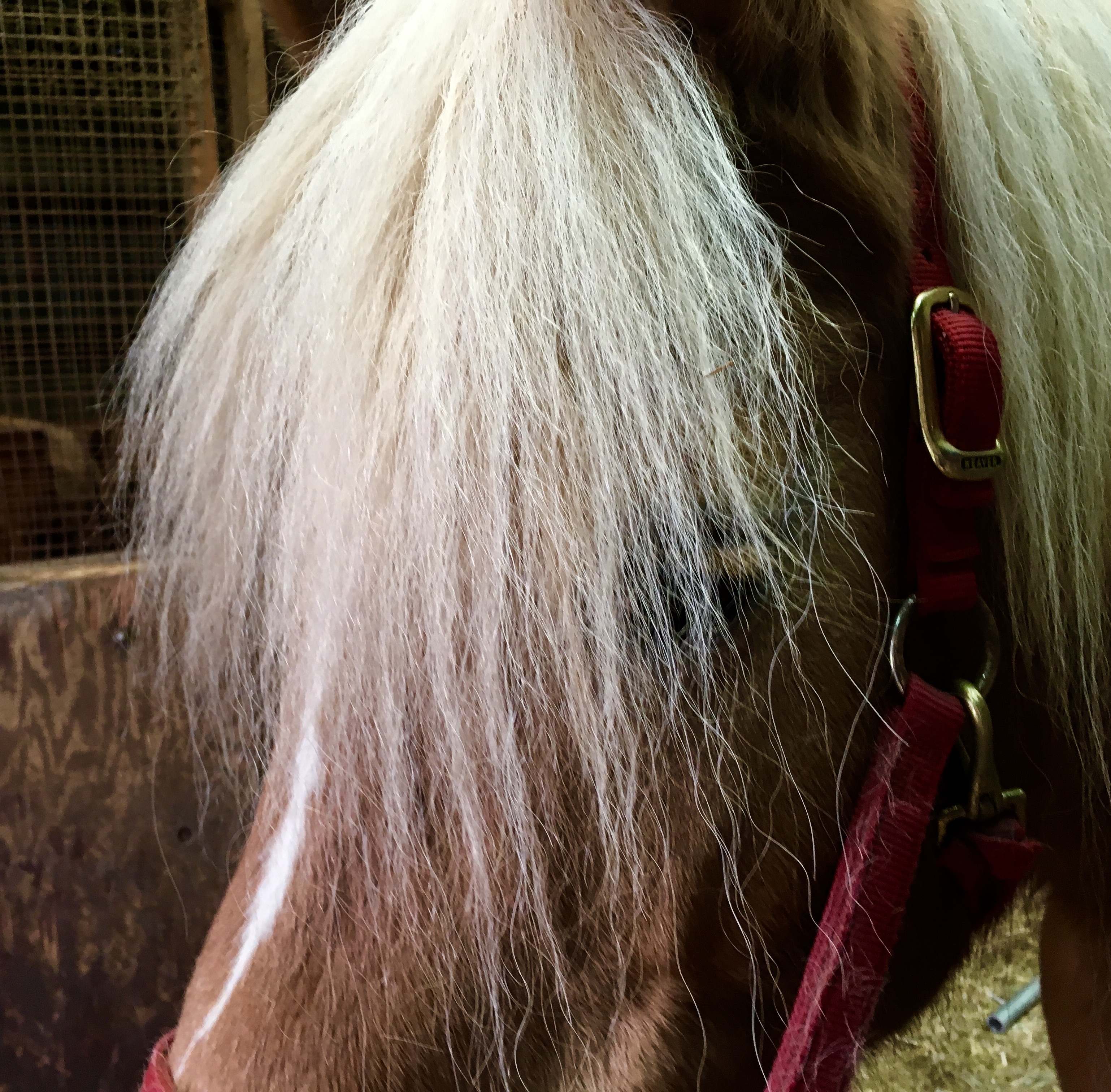
These mares are not as fussy about their appearance as they used to be. The four foot manes have been rubbed down to two foot manes and may have a few more tangles in them. Their tails may have stains (don’t ask why). They stride through mud puddles without a second thought to where the dirt flies, whereas when they were younger, there was no way one hoof was going to set foot in such mucky stuff.
These mares don’t keep as tidy a bedroom as they used to. Why bother? Life is too short for tidiness.
These mares know how to make best friends and keep them. If their best forever friend is not turned out with them in the field, they will stand at the gate, and call nonstop for an hour asking where she is.
These mares know how to give great kisses and hugs. Especially if you are hiding a carrot on your person, you’ll be mugged.
Yes, we deep-in-middle age gals, human and equine, do seem to have a lot in common. Nice to know we can always stick together, through thick and …well, thick.


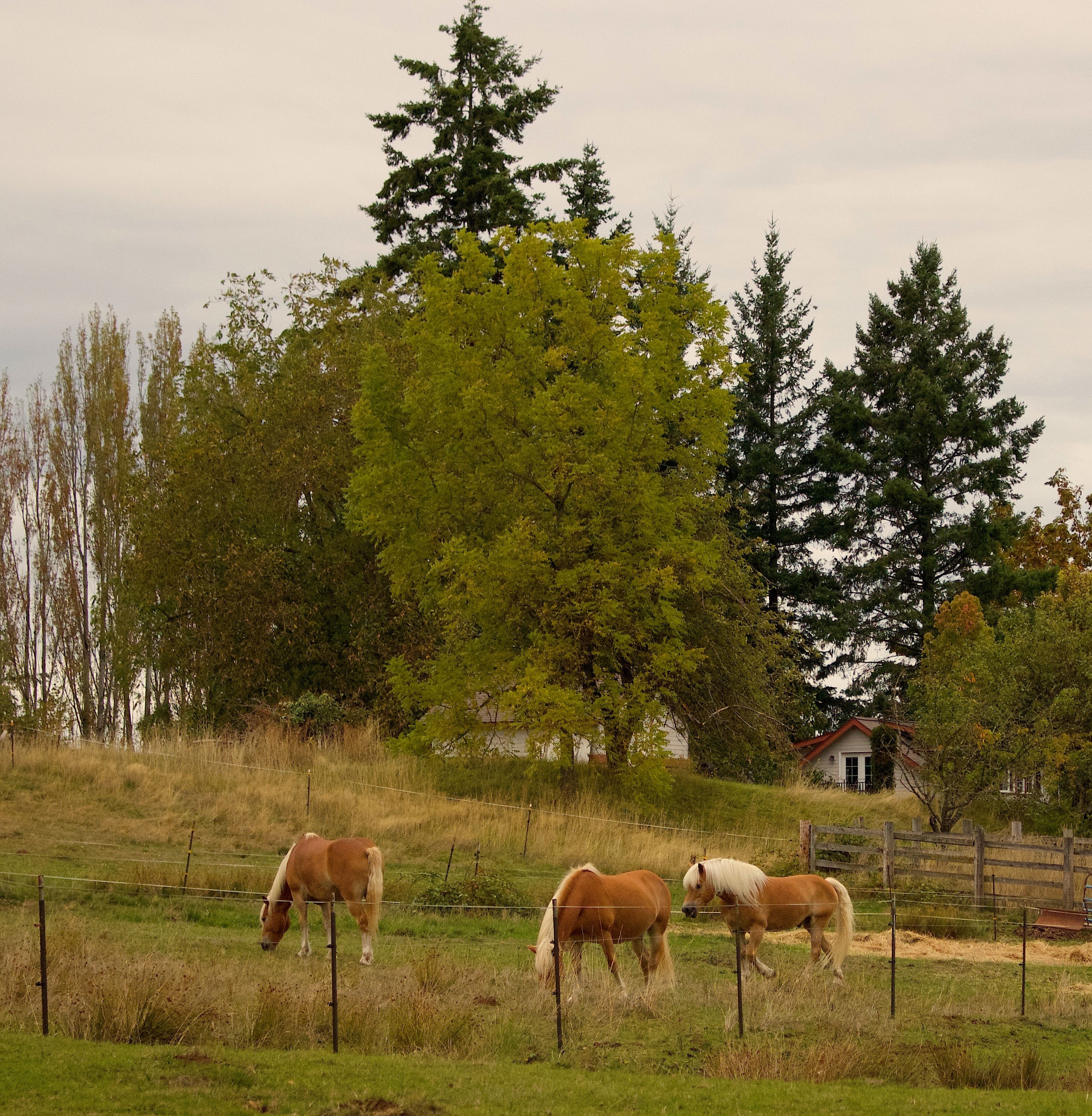
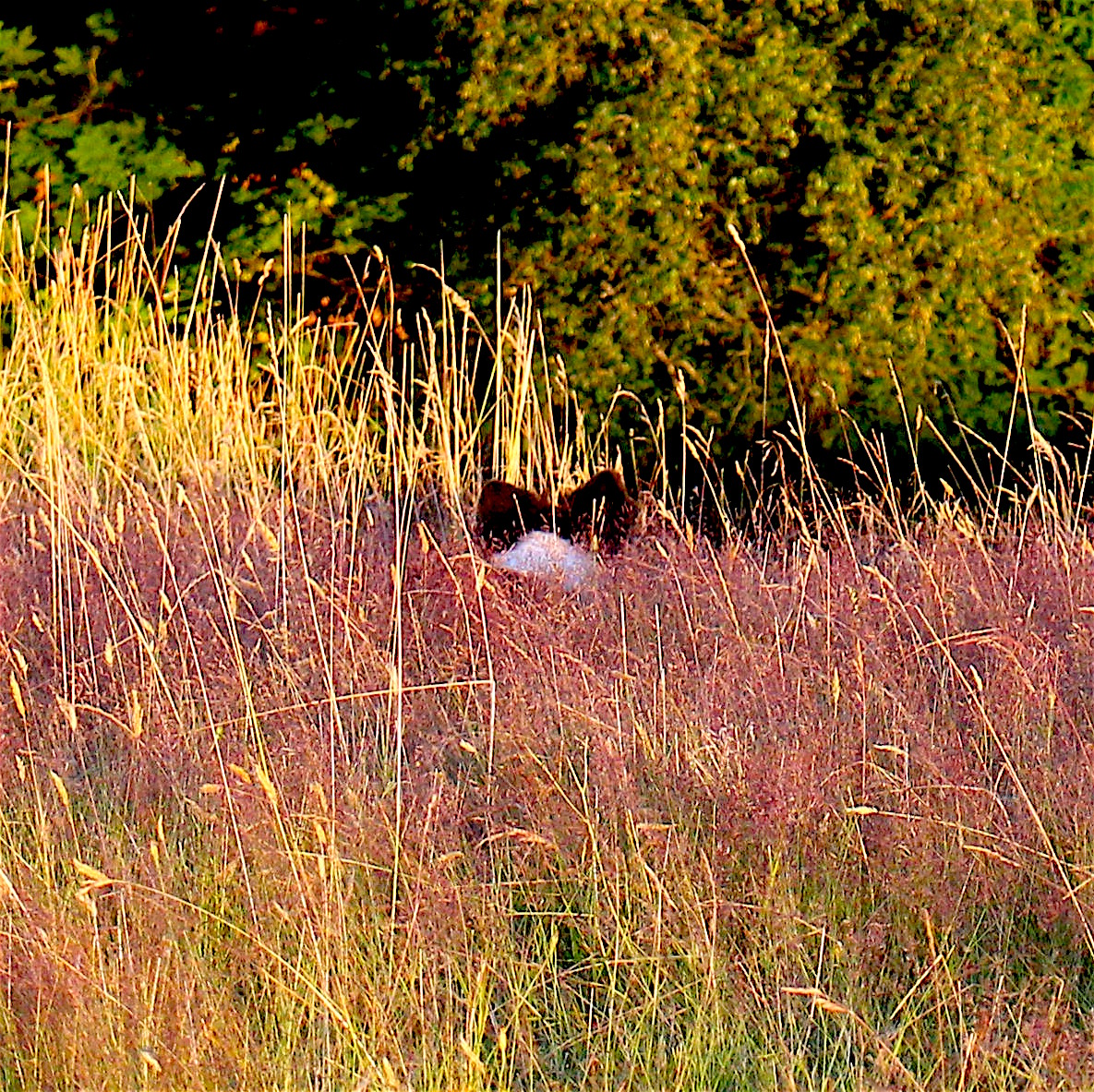
To the earnest love that laid the swale in rows…
The fact is the sweetest dream that labor knows.
My long scythe whispered and left the hay to make.
~Robert Frost in “Mowing”
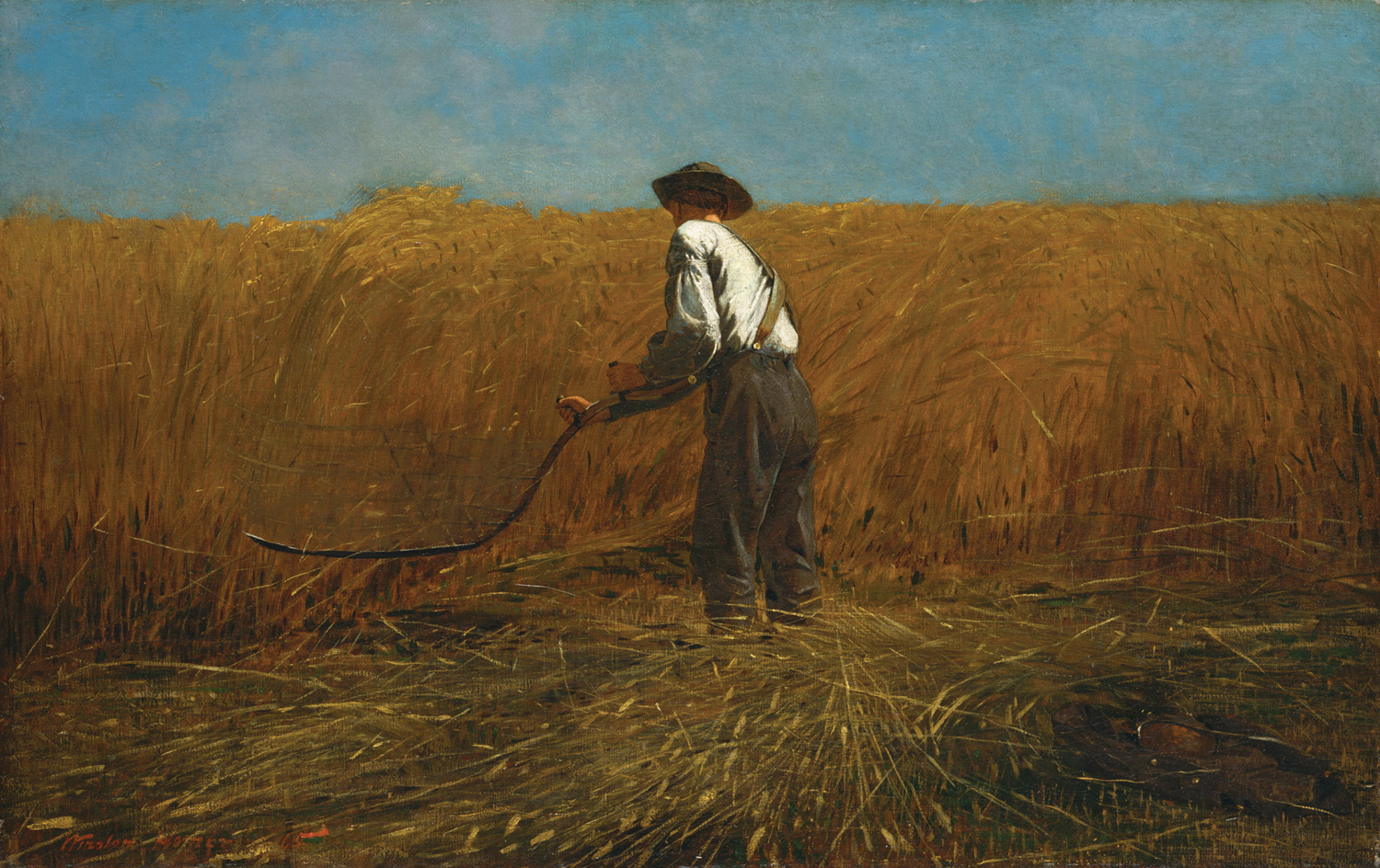
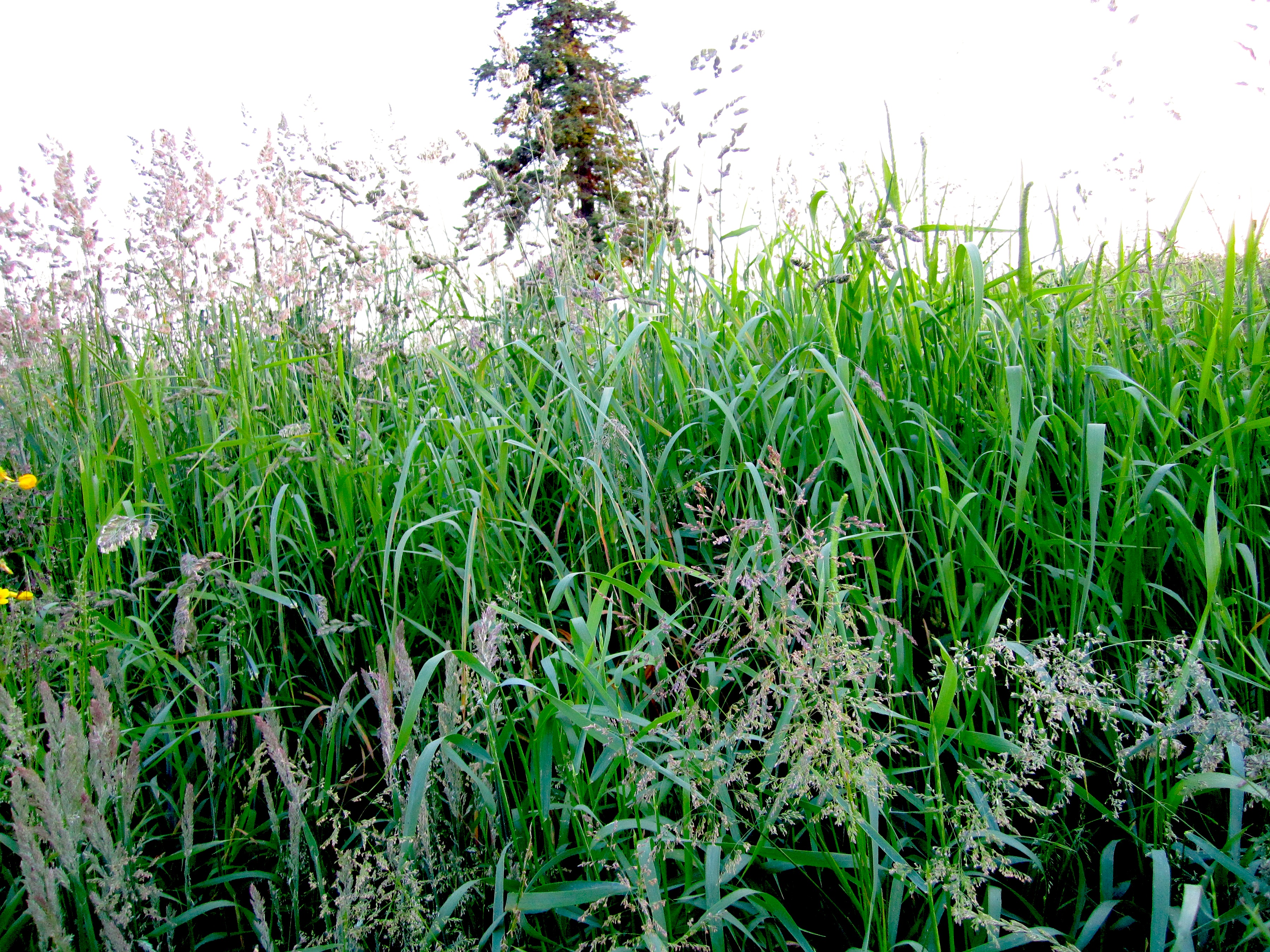
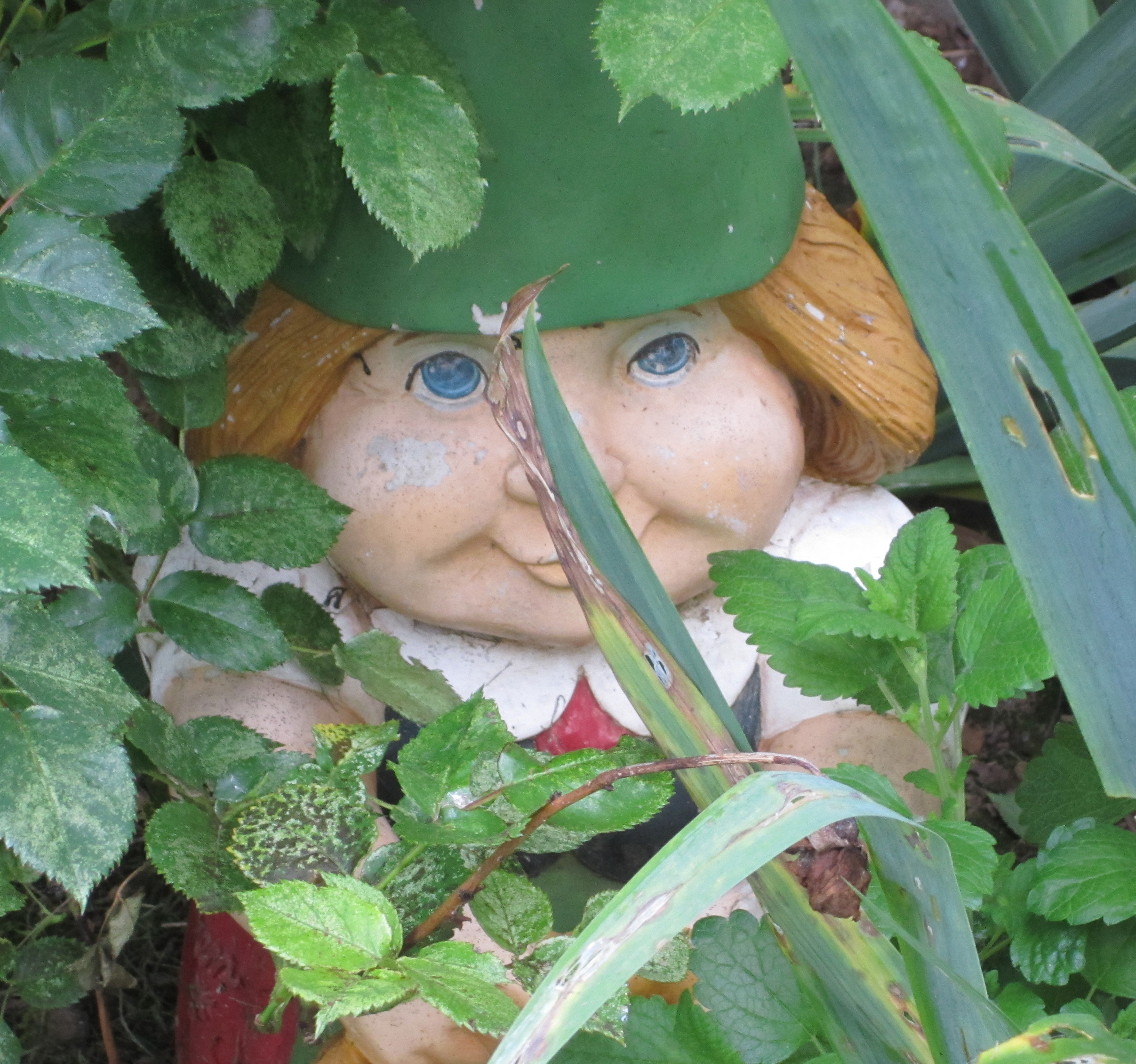
The grass around our orchard and yet-to-be-planted garden is now thigh-high. It practically squeaks while it grows. Anything that used to be in plain sight on the ground is rapidly being swallowed up in a sea of green: a ball, a pet dish, a garden gnome, a hose, a tractor implement, a bucket. In an effort to stem this tidal flood of grass, I grab the scythe out of the garden shed and plan my attack. The pastures are too wet yet for heavy hooves so I have hungry horses to provide for and there is more than plenty fodder to cut down for them.
I’m not a weed whacker kind of gal. First there is the necessary fuel, the noise necessitating ear plugs, the risk of flying particles requiring goggles–it all seems too much like and act of war to be remotely enjoyable. Instead, I’m trying to take scything lessons from my husband. Emphasis on “trying”.
I grew up watching my father scythe our hay in our field because he couldn’t afford a mower for his tractor. He enjoyed physical labor in the fields and woods–his other favorite hand tool was a brush cutter that he’d take to blackberry bushes. He would head out to the field with the scythe over this shoulder, grim reaper style. Once he was standing on the edge of the grass needing to be mowed, he would then lower the scythe, curved blade to the ground, turn slightly, positioning his hands on the two handles just so, raise the scythe up past his shoulders, and then in a full body twist almost like a golf swing, he’d bring the blade down. It would follow a smooth arc through the base of the standing grass, laying clumps flat in a tidy pile alongside the 2 inch stubble left behind. It was a swift, silky muscle movement — a thing of beauty.
I’ve yet to manage anything nearly as graceful. I tend to chop and mangle rather than effect an efficient slicing blow. I unintentionally trample the grass I mean to cut. I get blisters from holding the handles too tightly. It feels hopeless that I’ll ever perfect that whispery rise and fall of the scythe, with the rhythmic shush sound of the slice that is almost hypnotic.
Not only am I an ineffective scything human, but I have also learned what it is like to be the grass I am unintentionally mutilating, on the receiving end of a glancing blow that misses the mark. I bear plenty of footprints from the trampling. It can take awhile to stand back up after being knocked repeatedly to the ground.
Sometimes it makes more sense to simply start over as stubble, oozing and bleeding green, with deep roots that no one can reach. As I grow back, I will sing rather than squeak, and I’ll forgive the scythe every time it comes down on my head.
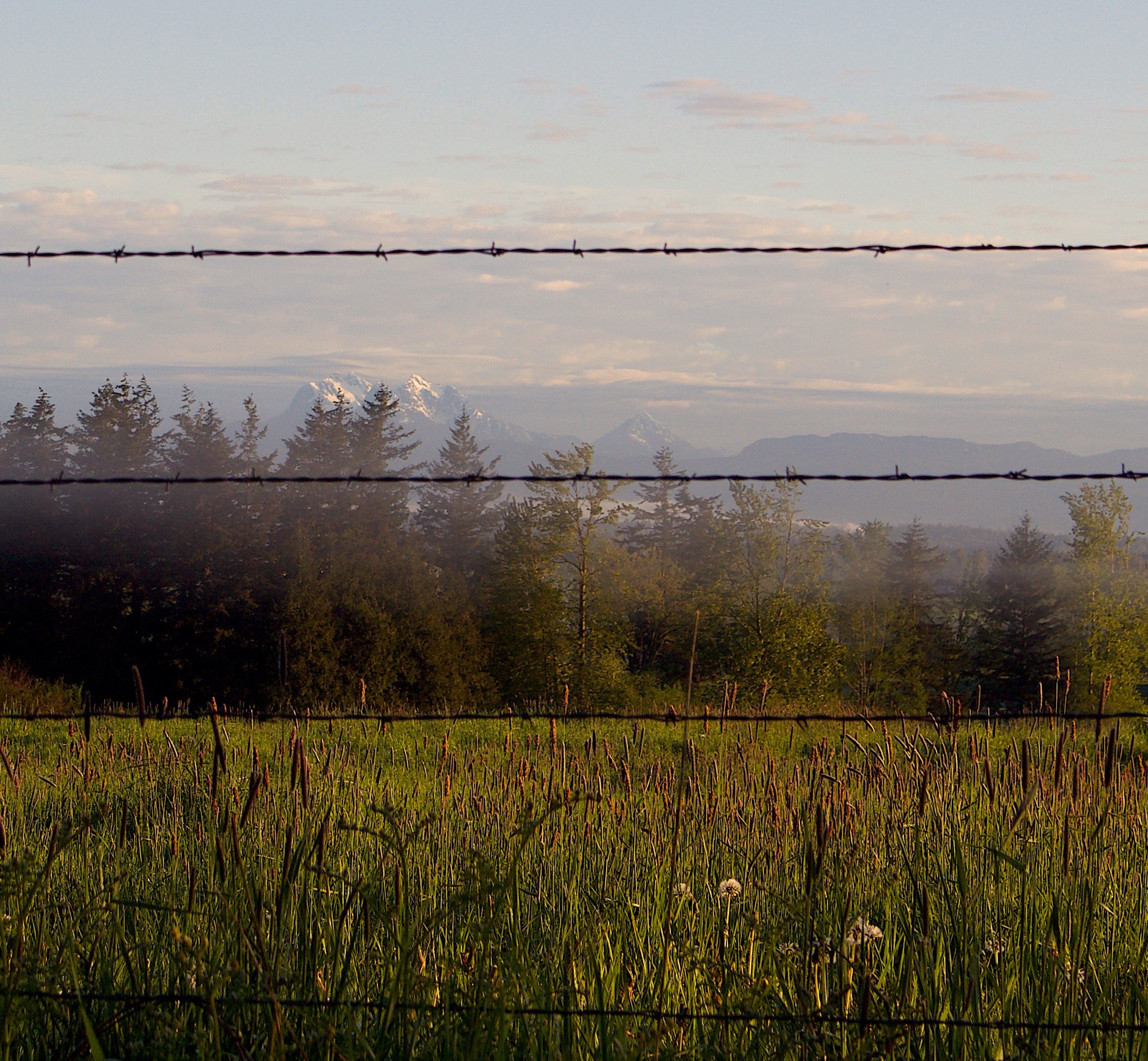
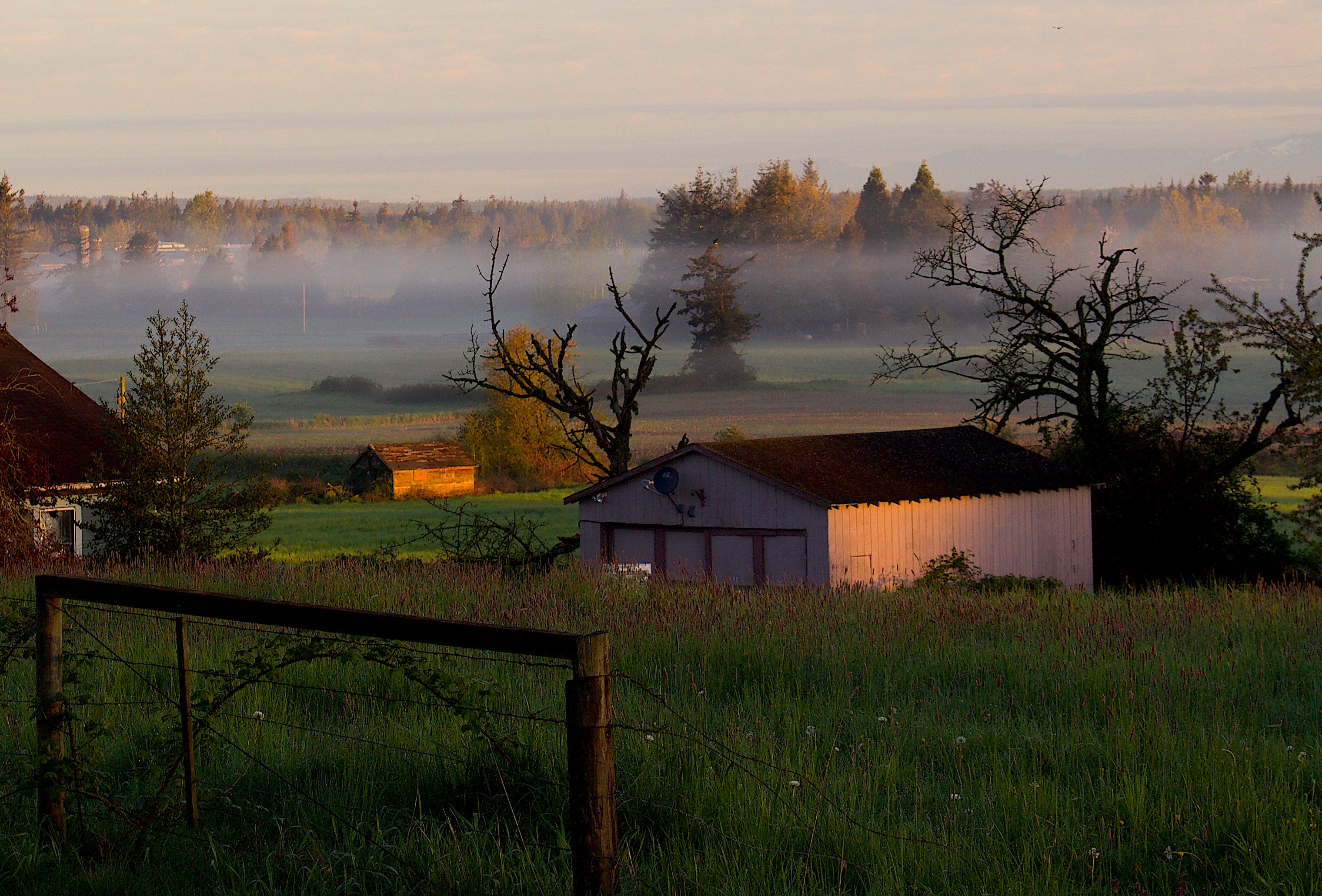
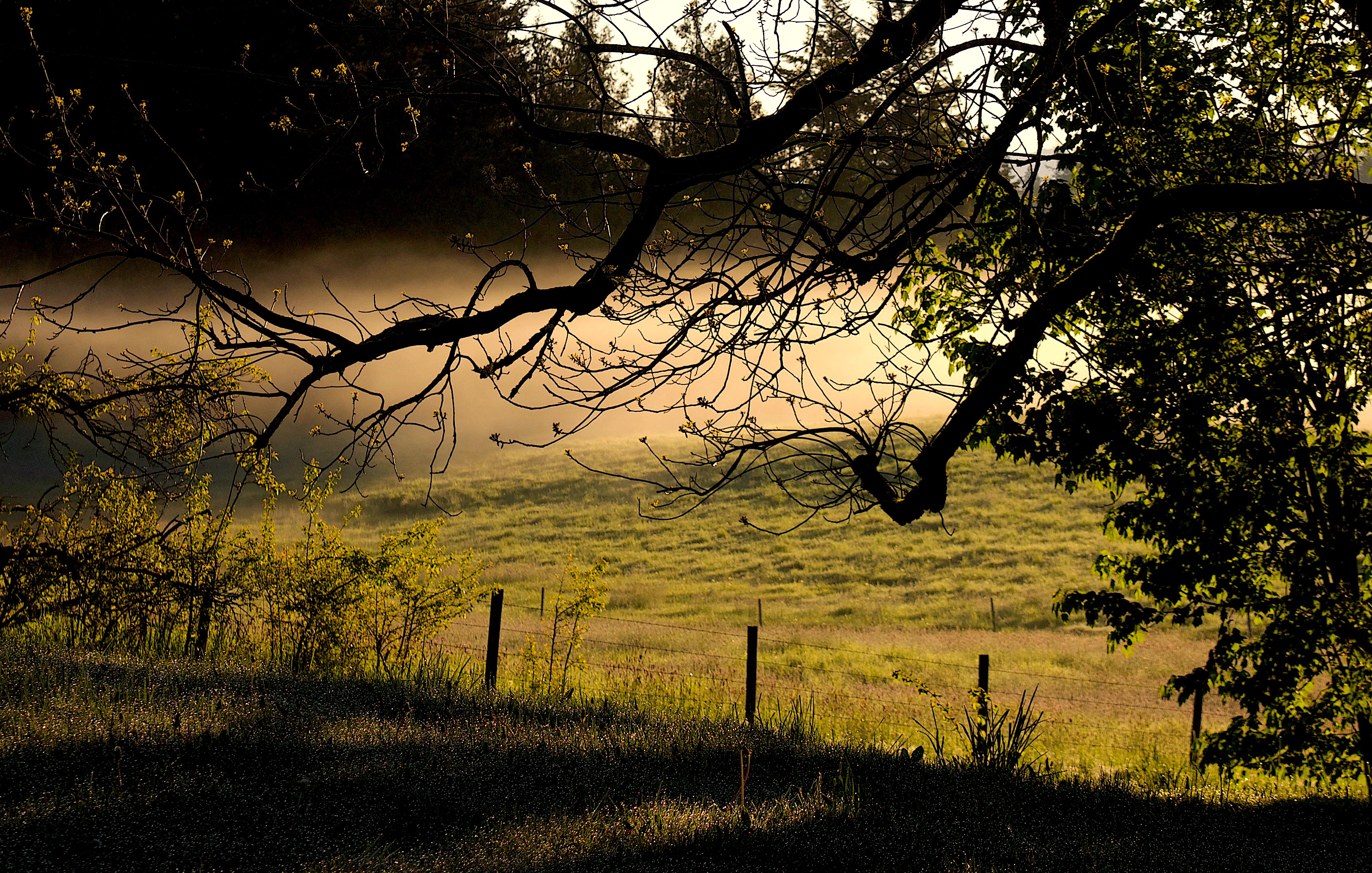
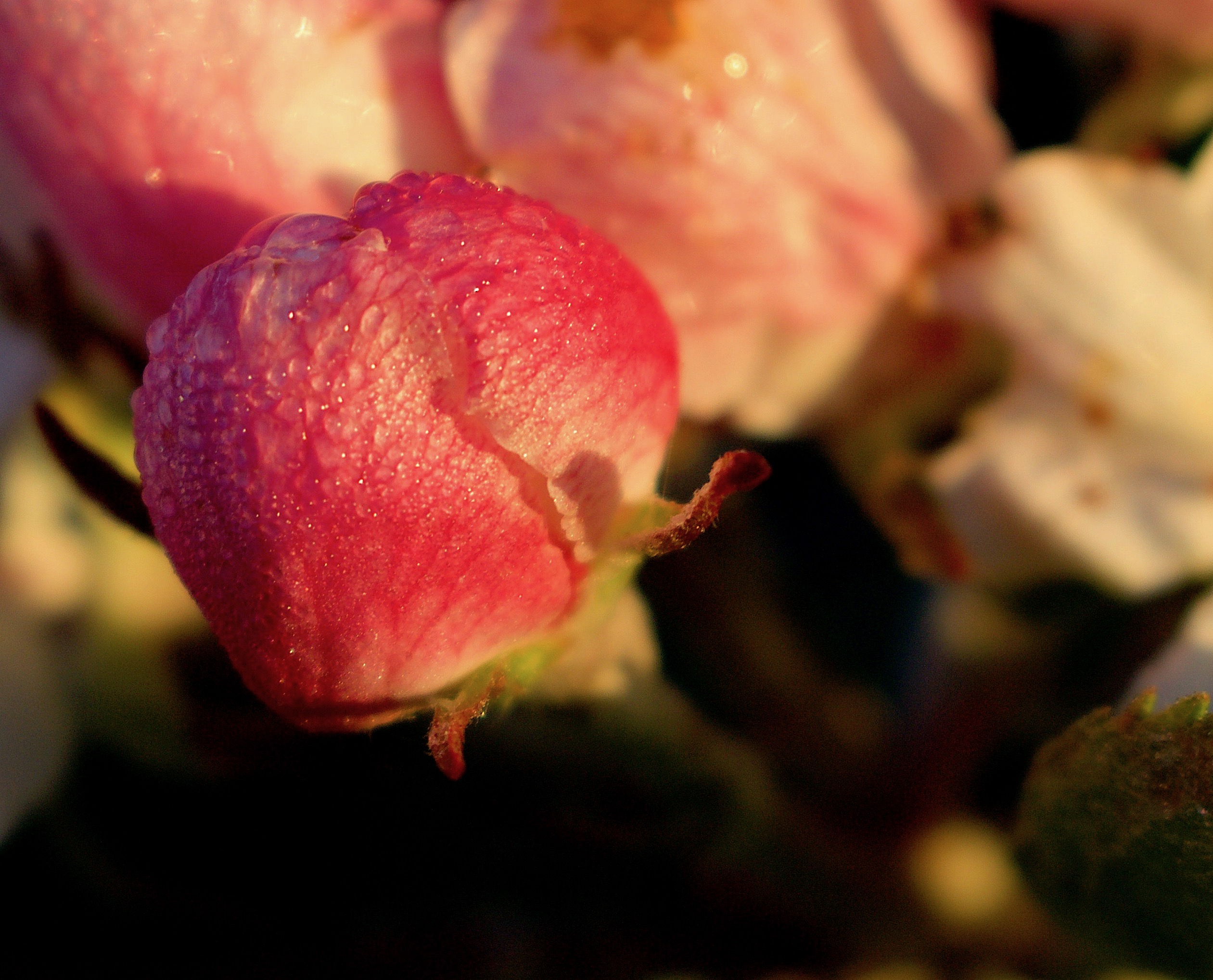
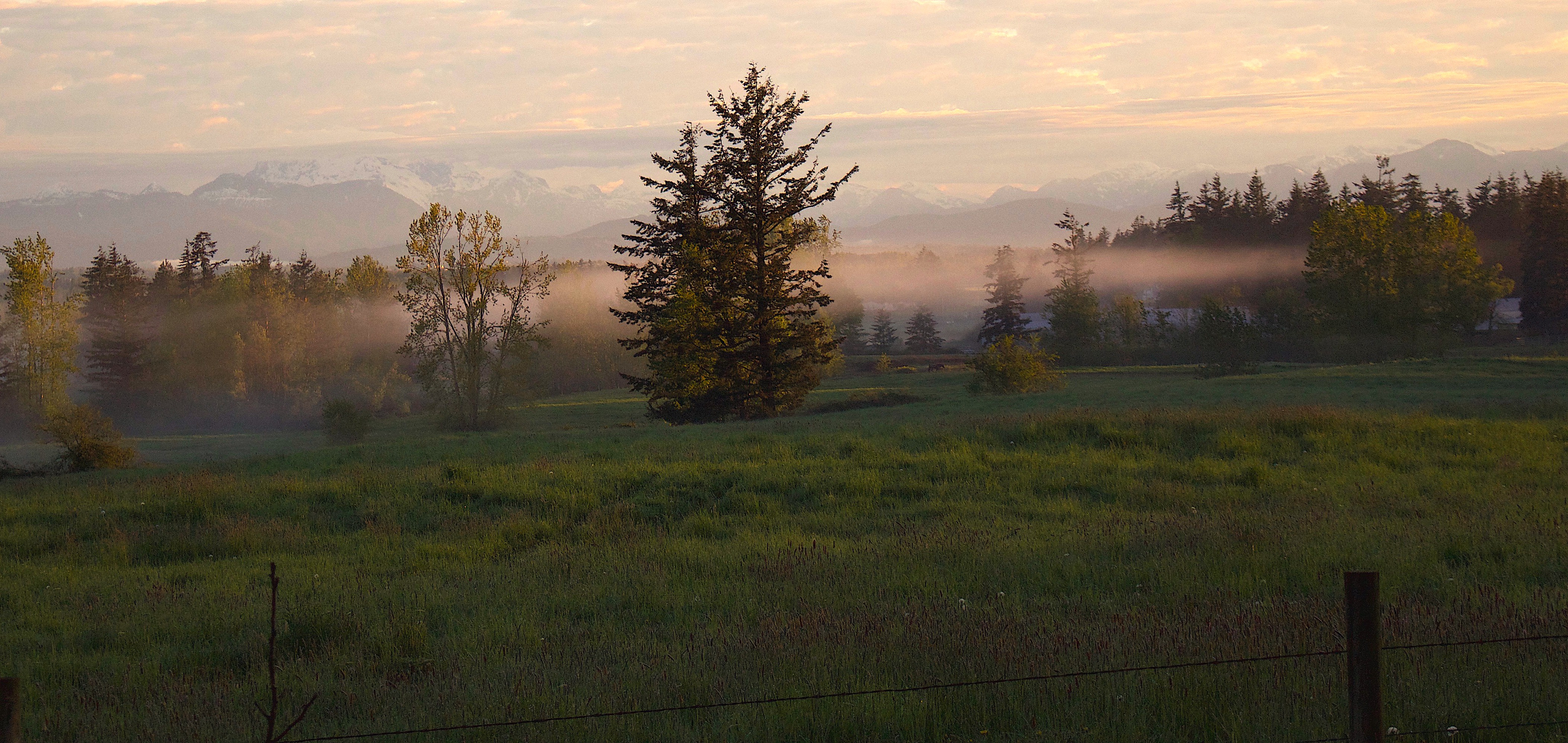
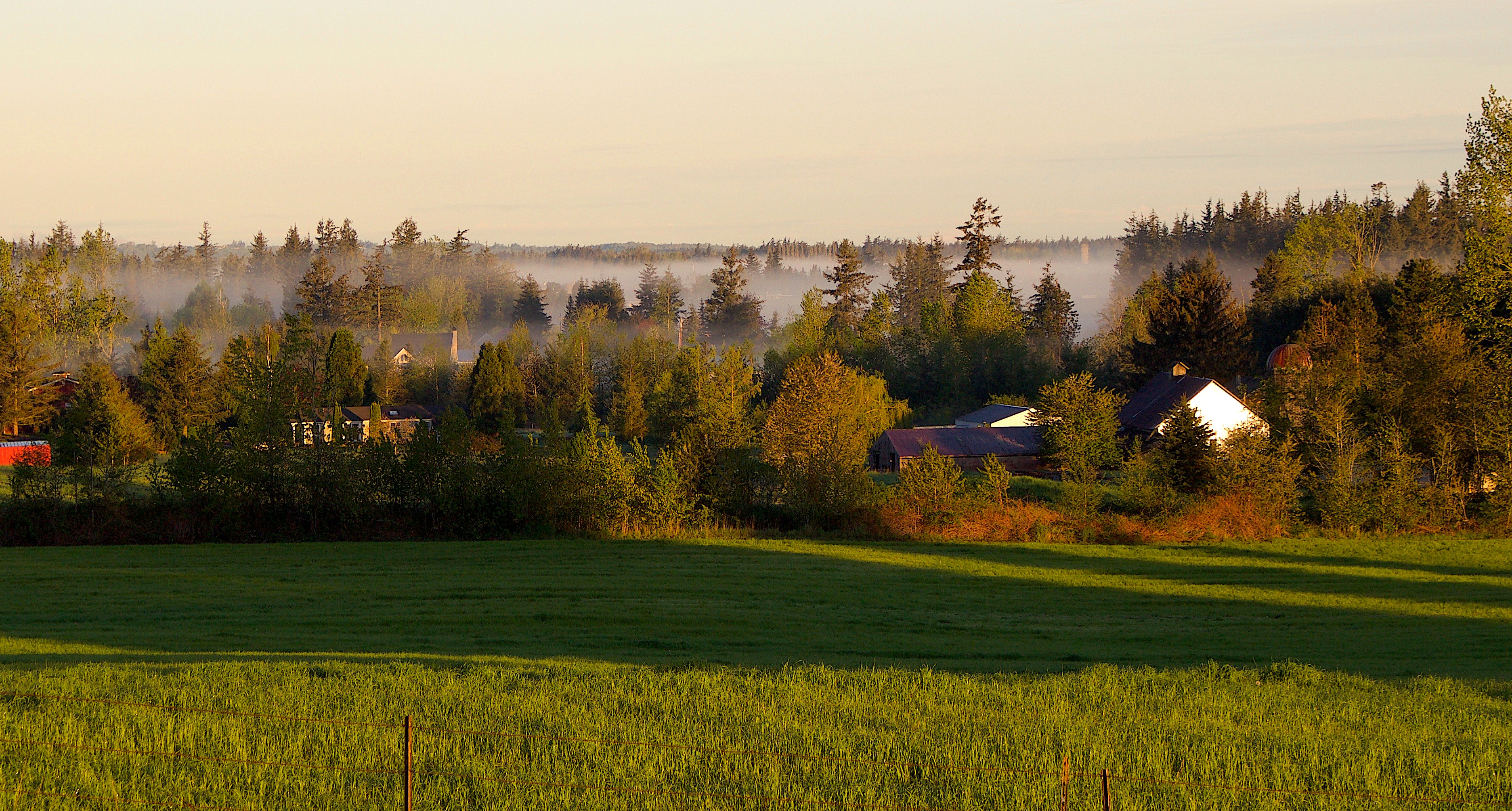
This is the best~~
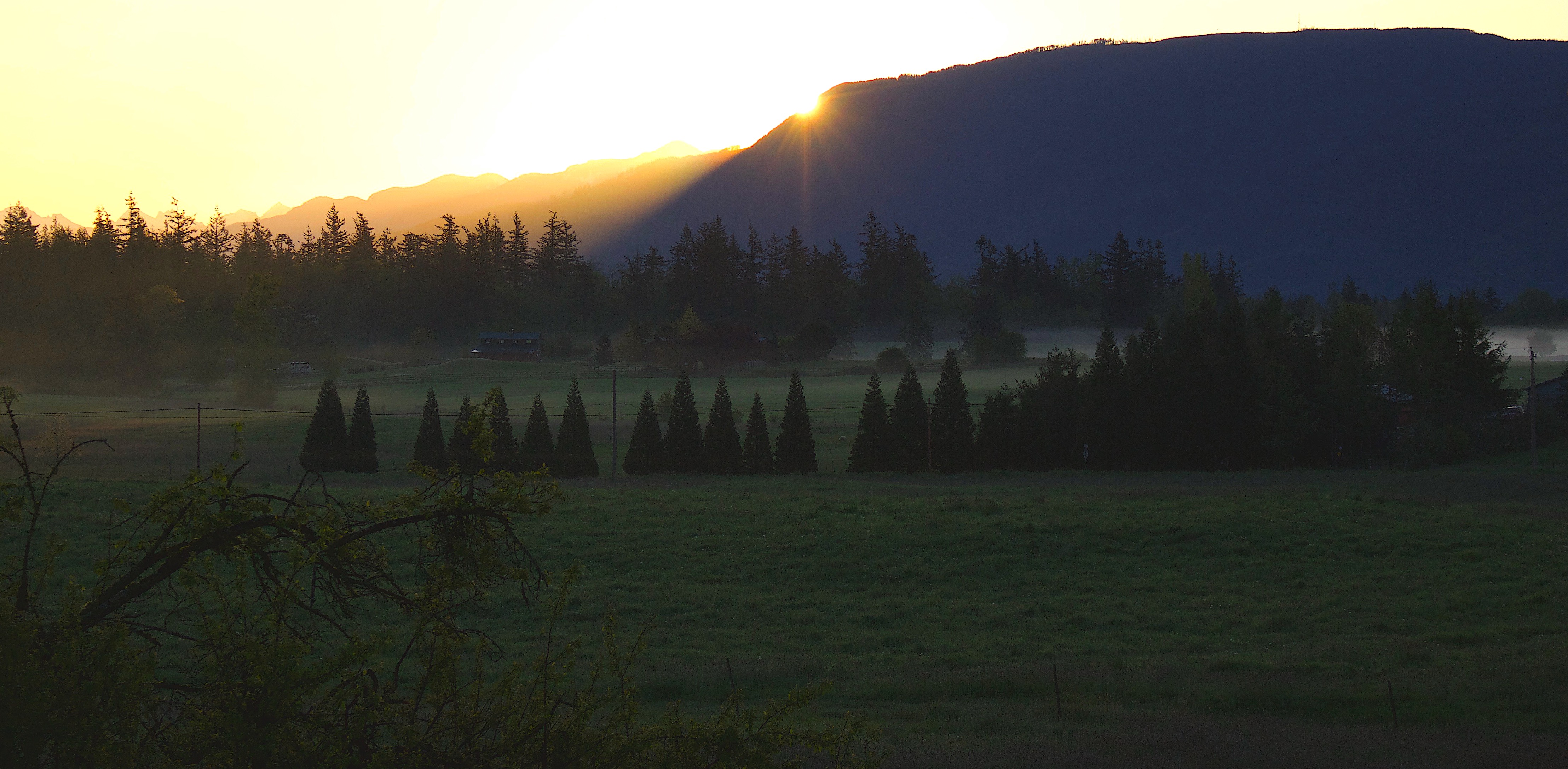
heading with dogs and camera up the hill
on an early spring morning,
with nothing more than the hope
I can bring this magic back to the house
and preserve it long after the foglight evaporates,
the day moves on and distracted by life,
I’ve forgotten all about how
this is the best~~
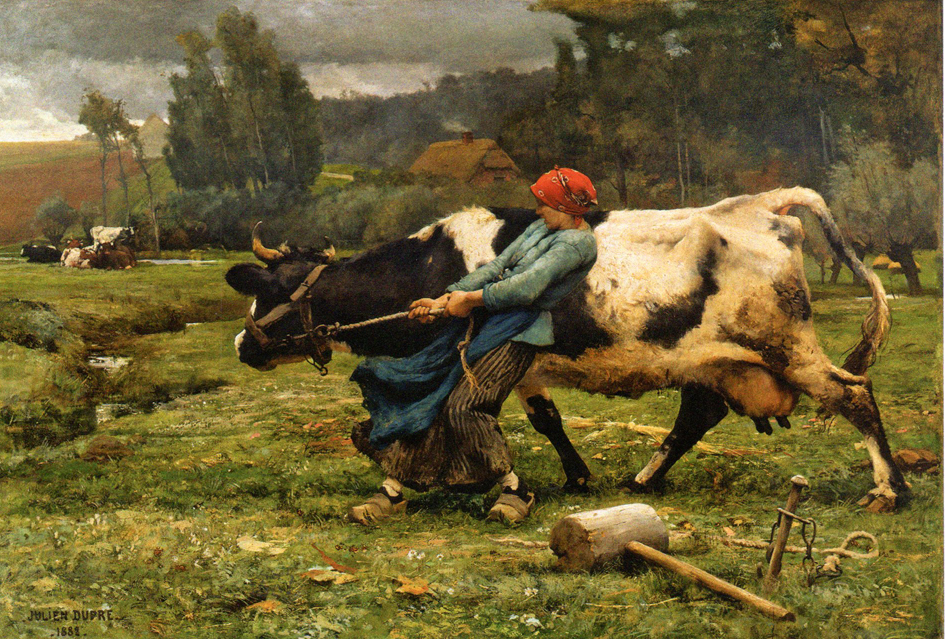
This painting by French realist Julien Dupre` resonated with me this past week. I know well the feeling of pulling against a momentum determined to break free of the strength I can muster to keep it under control. This is what my life often feels like, both on the farm and at work. It seems I am barely hanging on, at times losing my grip, my feet braced but slipping beneath me.
The full-uddered cow in the painting is compelled to join her herd in a pastoral scene just across the creek, but the milk maid must resist the cow’s escape. For the cow’s benefit and comfort, she must be milked. The cow has another agenda. She has snapped her rope tie, almost pulled up the stake, and in a show of strength and determination, the maid braces to pull a much larger animal around to retie her and restore things to how they were.
The action suggests the maid may succeed, but the cow’s attention is directed far afield. She doesn’t even feel the tug on her halter. We’re not fully convinced the cow won’t suddenly pull loose and break away from the maid’s grip, leaping the stream, tail raised straight in the air like a flag of freedom.
Right now, as spring advances rapidly with grass growing thick in the pastures, our horses can smell that richness in the air. Sometimes this tug of war takes place when my plan is different than the horse’s. The fields are too wet for them to be out full time yet, so they must wait for the appropriate time to be released to freedom. The grass calls to them like a siren song as I feed them their portion of last summer’s uninviting hay. They can pull my shoulders almost out of joint when they are determined enough, they break through fences in their pursuit of green, they push through stall doors and lift gates off hinges. Right now I’m barely an adequate counterbalance to the pursuit of their desires and I struggle to remind them I’m on the other end of their lead rope.
Each day I try too hard to restore order in my life, on the farm, in the house, in my clinic, with my patients and coworkers, with my family. I want to pull that cow back around, get her tied up and relieved of her burden of milk so that it can nurture and replenish others. Sometimes I hang on, only to be pulled along on the ground, roughed up in the process. Sometimes I just let go and have to try to catch that cow all over again.
Once in awhile I successfully get the cow turned around and actually milked without a spill.
I’ve held on. I’ve got a grip.
And maybe, just maybe, I will make cheese….


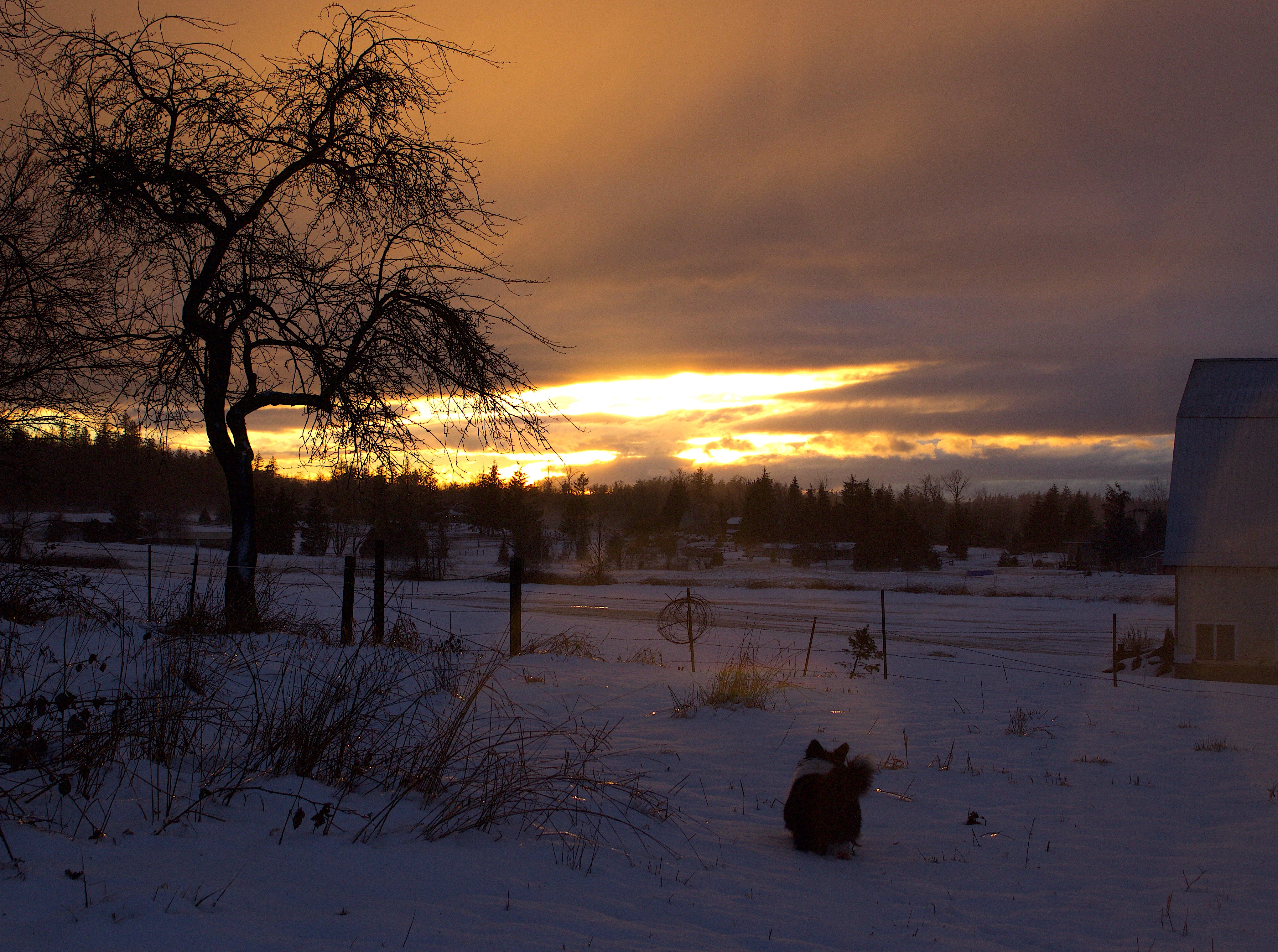
A silence slipping around like death,
Yet chased by a whisper, a sigh,
a breath;
One group of trees, lean,
naked and cold,
Inking their cress ‘gainst a
sky green-gold;
One path that knows where the
corn flowers were;
Lonely, apart, unyielding, one fir;
And over it softly leaning down,
One star that I loved ere the
fields went brown
~Angelina Weld Grimke “A Winter Twilight”
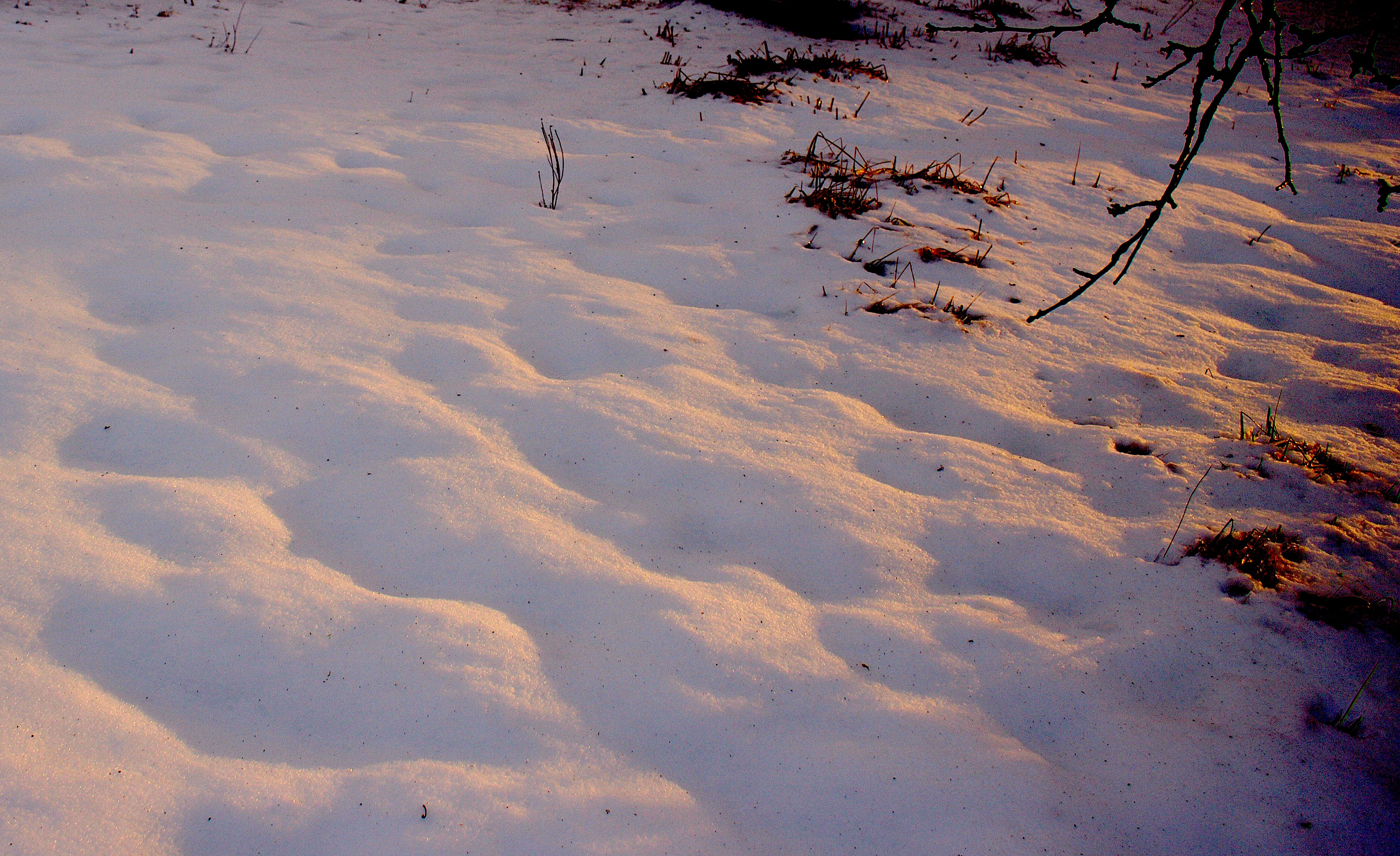
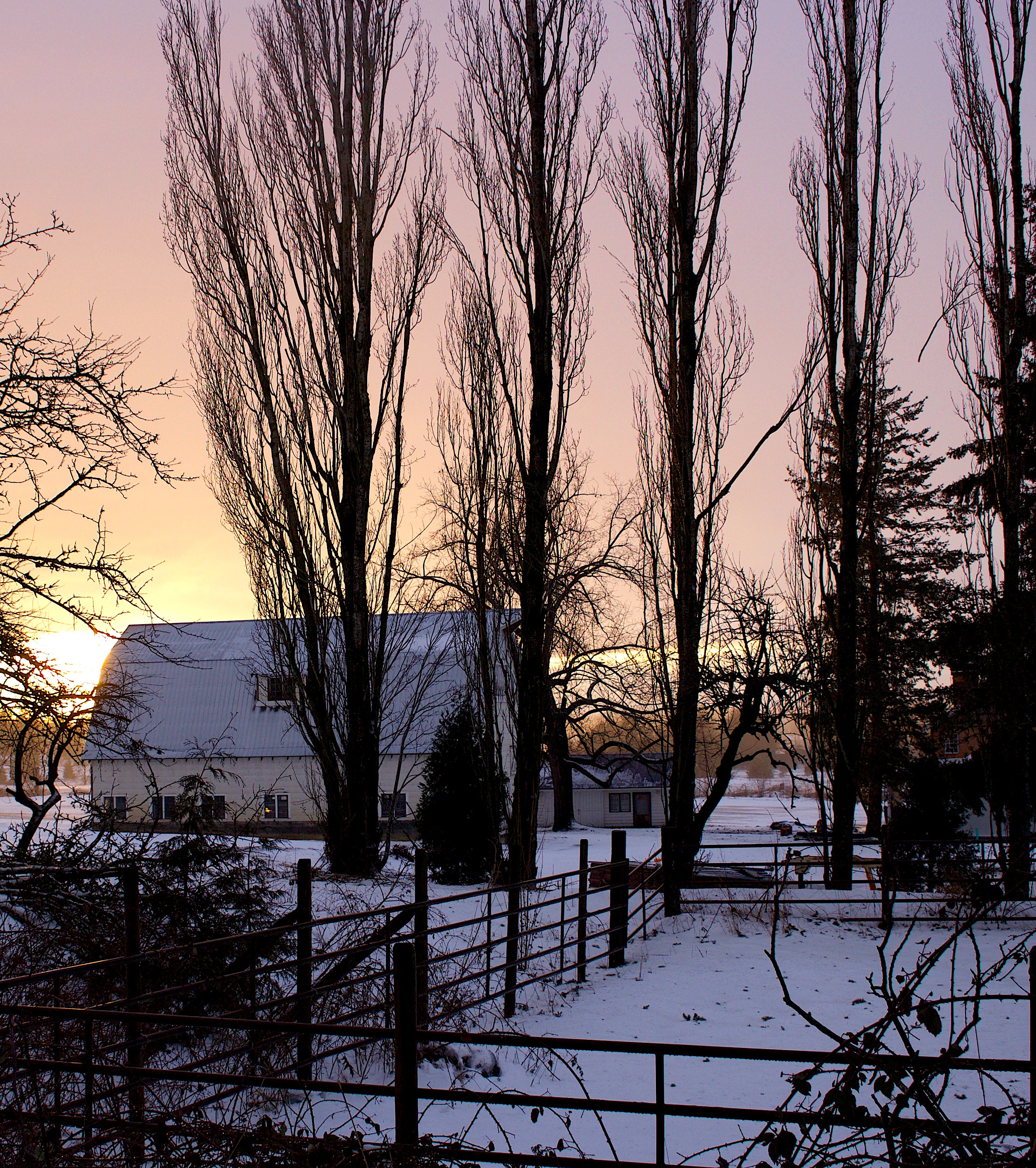
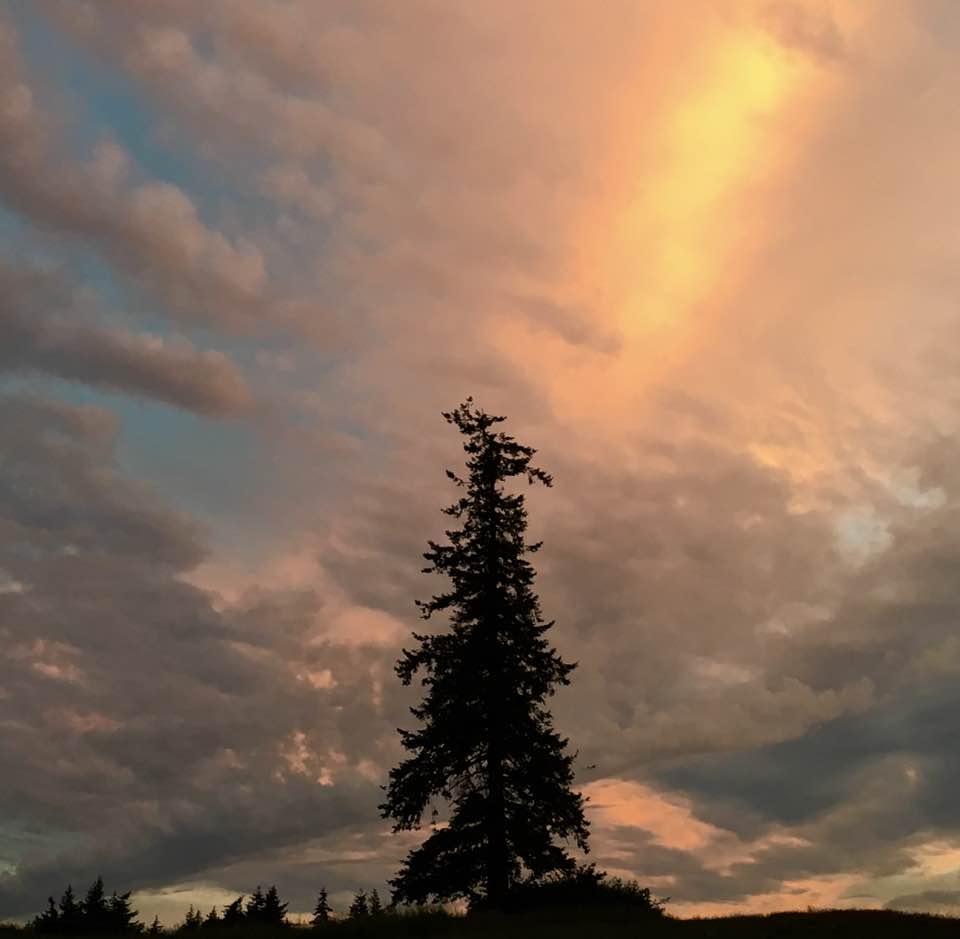
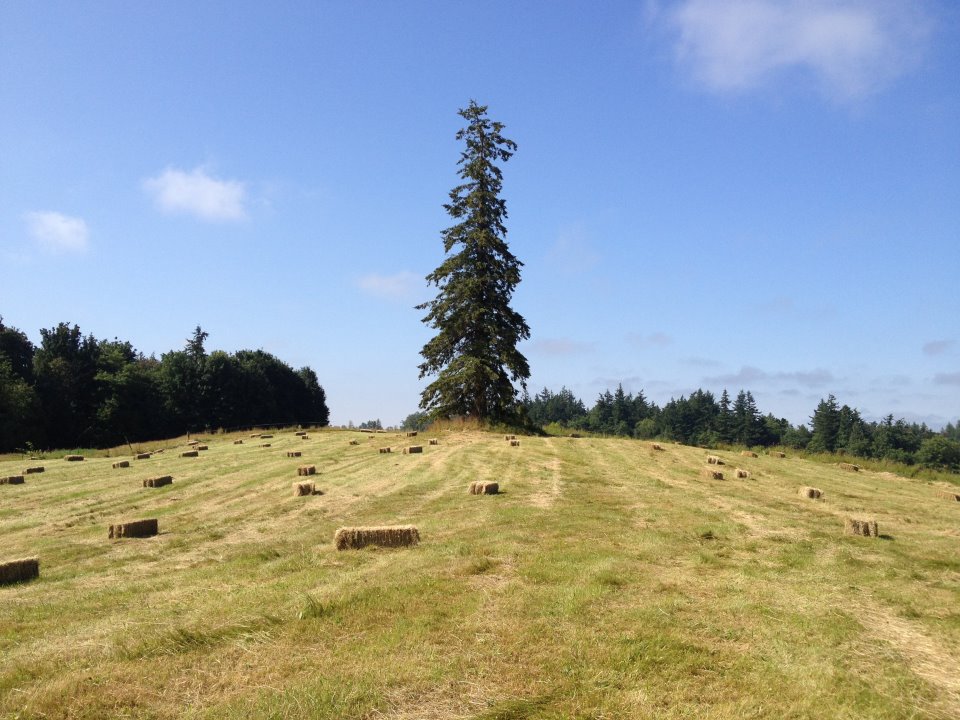
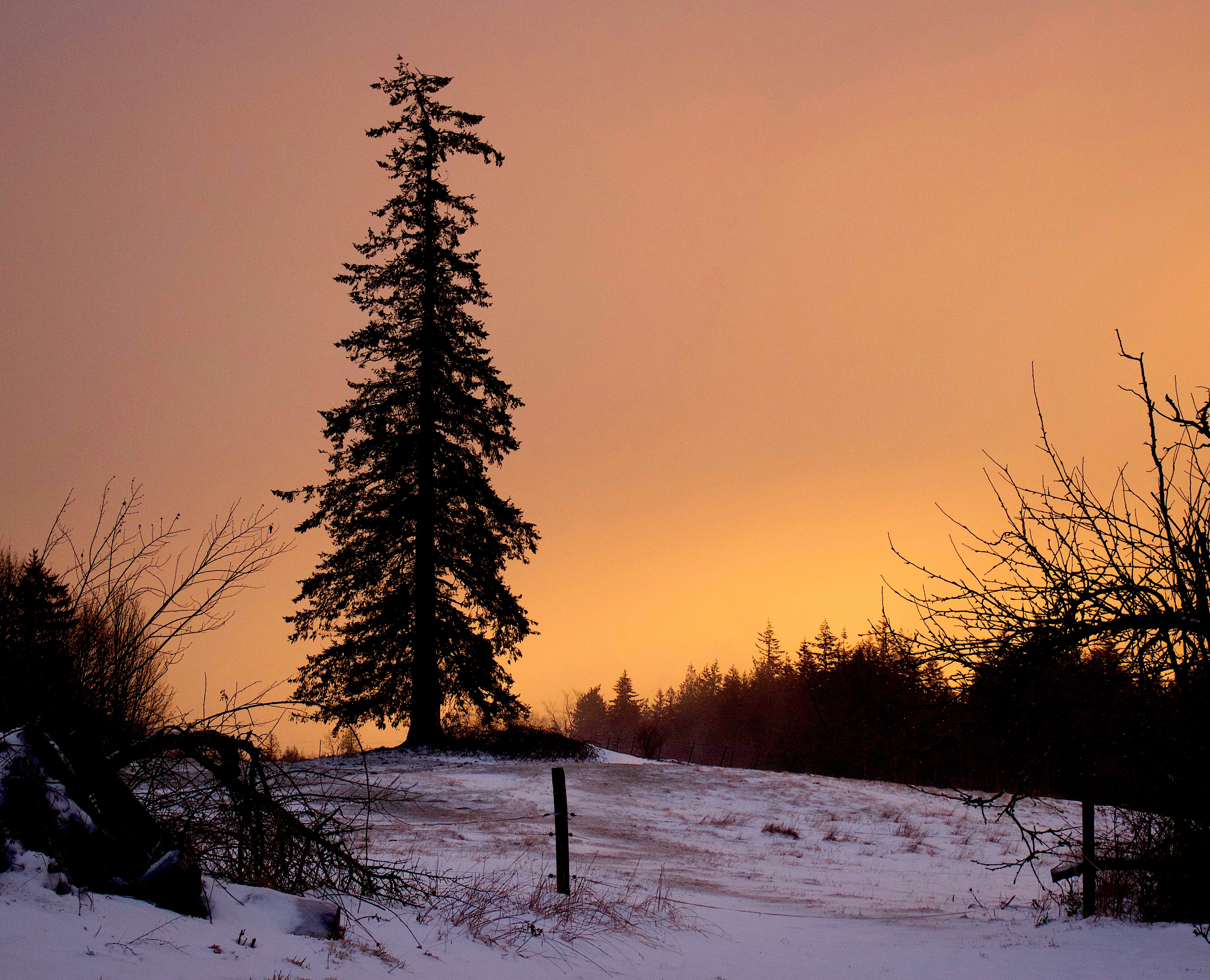
Our farm’s lone fir is a focal point of the neighborhood,
standing grand on the highest hill for several miles around.
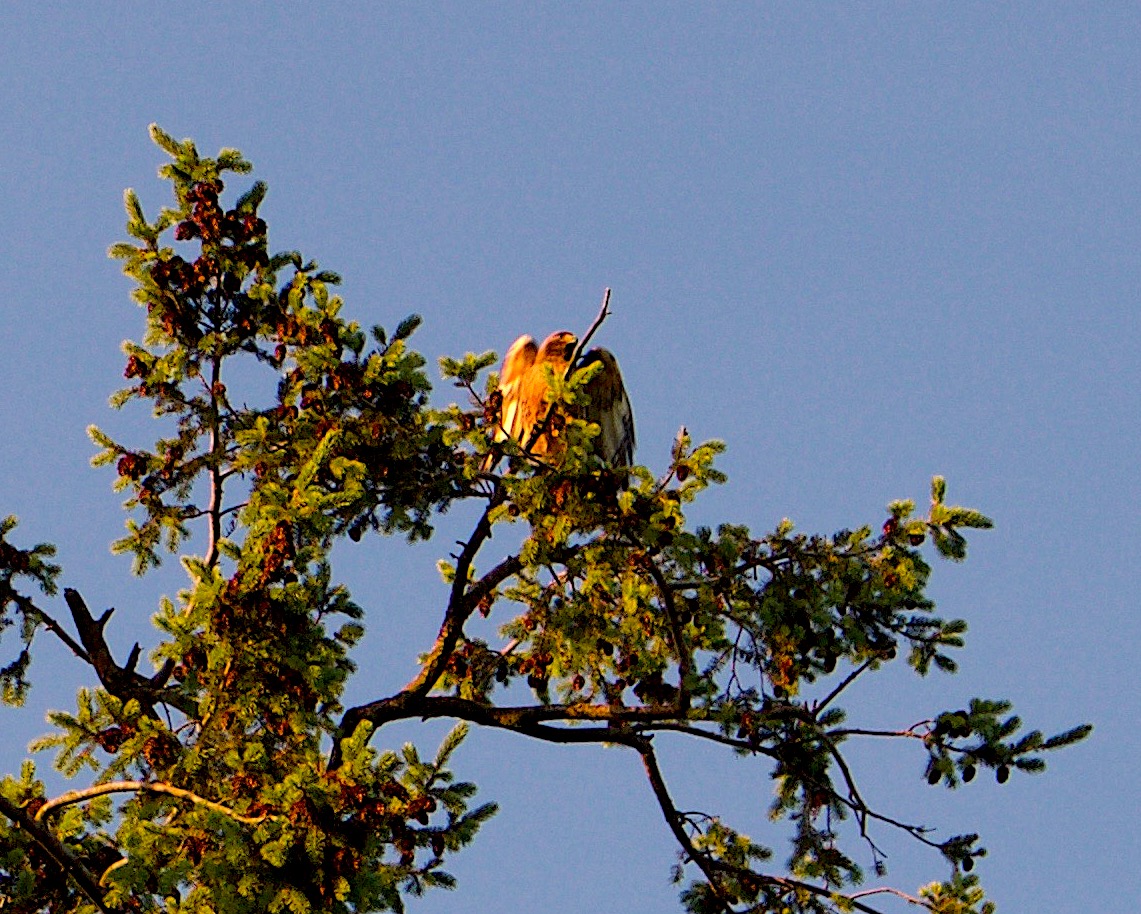
Raptors use this tree for views of the surrounding fields.
The horses love the shade on hot summer days.
It is backdrop for glorious sunsets and waning moons.
Yet in winter I find myself admiring it most —
Its steadfast presence, so stoic and unyielding
though buffeted by cold wind and icy storms.
Decades of seasons flow past the lone fir,
“silence slipping around like death,
yet chased by a whisper, a sigh,
a breath.”
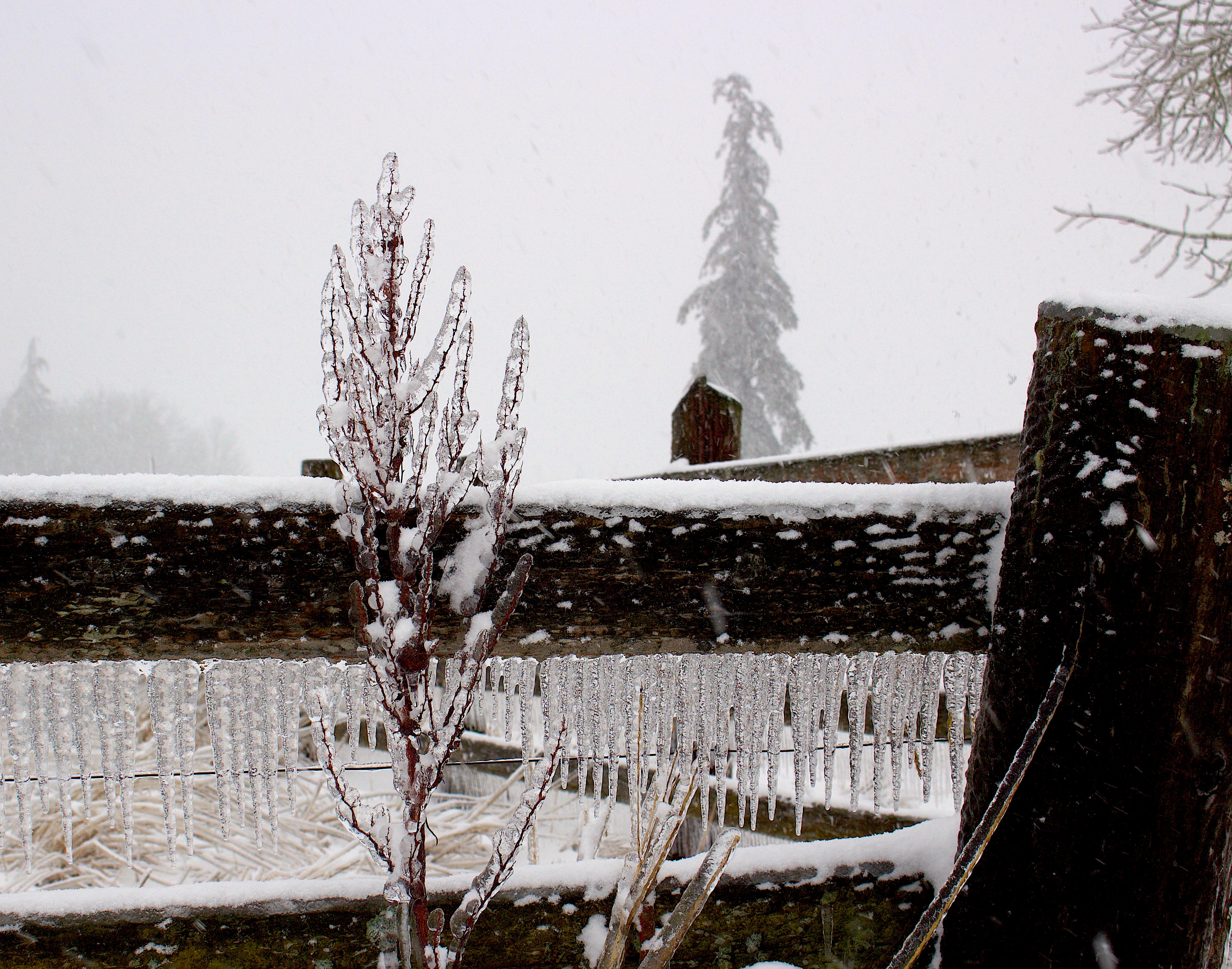

And on the 8th day, God looked down on his planned paradise and said, “I need a caretaker.” So God made a farmer.
God said, “I need somebody willing to get up before dawn, milk cows, work all day in the fields, milk cows again, eat supper and then go to town and stay past midnight at a meeting of the school board.” So God made a farmer.
“I need somebody with arms strong enough to rustle a calf and yet gentle enough to deliver his own grandchild. Somebody to call hogs, tame cantankerous machinery, come home hungry, have to wait lunch until his wife’s done feeding visiting ladies and tell the ladies to be sure and come back real soon — and mean it.” So God made a farmer.
God said, “I need somebody willing to sit up all night with a newborn colt. And watch it die. Then dry his eyes and say, ‘Maybe next year.’ I need somebody who can shape an ax handle from a persimmon sprout, shoe a horse with a hunk of car tire, who can make harness out of haywire, feed sacks and shoe scraps. And who, planting time and harvest season, will finish his forty-hour week by Tuesday noon, then, pain’n from ‘tractor back,’ put in another seventy-two hours.” So God made a farmer.
God had to have somebody willing to ride the ruts at double speed to get the hay in ahead of the rain clouds and yet stop in mid-field and race to help when he sees the first smoke from a neighbor’s place. So God made a farmer.
God said, “I need somebody strong enough to clear trees and heave bails, yet gentle enough to tame lambs and wean pigs and tend the pink-combed pullets, who will stop his mower for an hour to splint the broken leg of a meadow lark. It had to be somebody who’d plow deep and straight and not cut corners. Somebody to seed, weed, feed, breed and rake and disc and plow and plant and tie the fleece and strain the milk and replenish the self-feeder and finish a hard week’s work with a five-mile drive to church.
“Somebody who’d bale a family together with the soft strong bonds of sharing, who would laugh and then sigh, and then reply, with smiling eyes, when his son says he wants to spend his life ‘doing what dad does.'” So God made a farmer.
~Paul Harvey (1978)
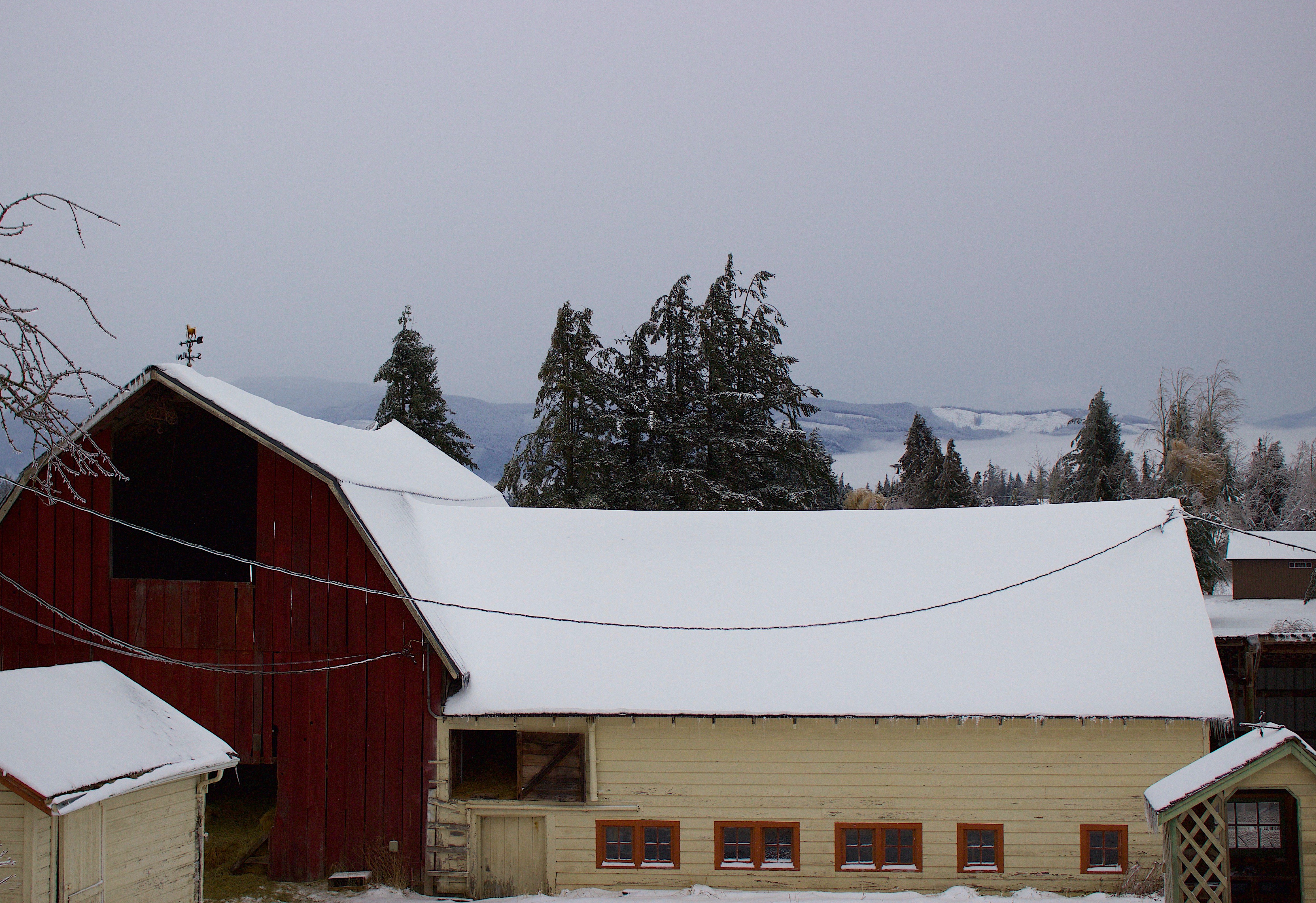
Good farmers, who take seriously their duties as stewards of Creation and of their land’s inheritors, contribute to the welfare of society in more ways than society usually acknowledges, or even knows. These farmers produce valuable goods, of course; but they also conserve soil, they conserve water, they conserve wildlife, they conserve open space, they conserve scenery.
~Wendell Berry
Farmers farm for the love of farming. They love to watch and nurture the growth of plants. They love to live in the presence of animals. They love to work outdoors. They love the weather, maybe even when it is making them miserable. They love to live where they work and to work where they live. If the scale of their farming is small enough, they like to work in the company of their children and with the help of their children.
~Wendell Berry from Bringing it to the Table: Writings on Farming and Food
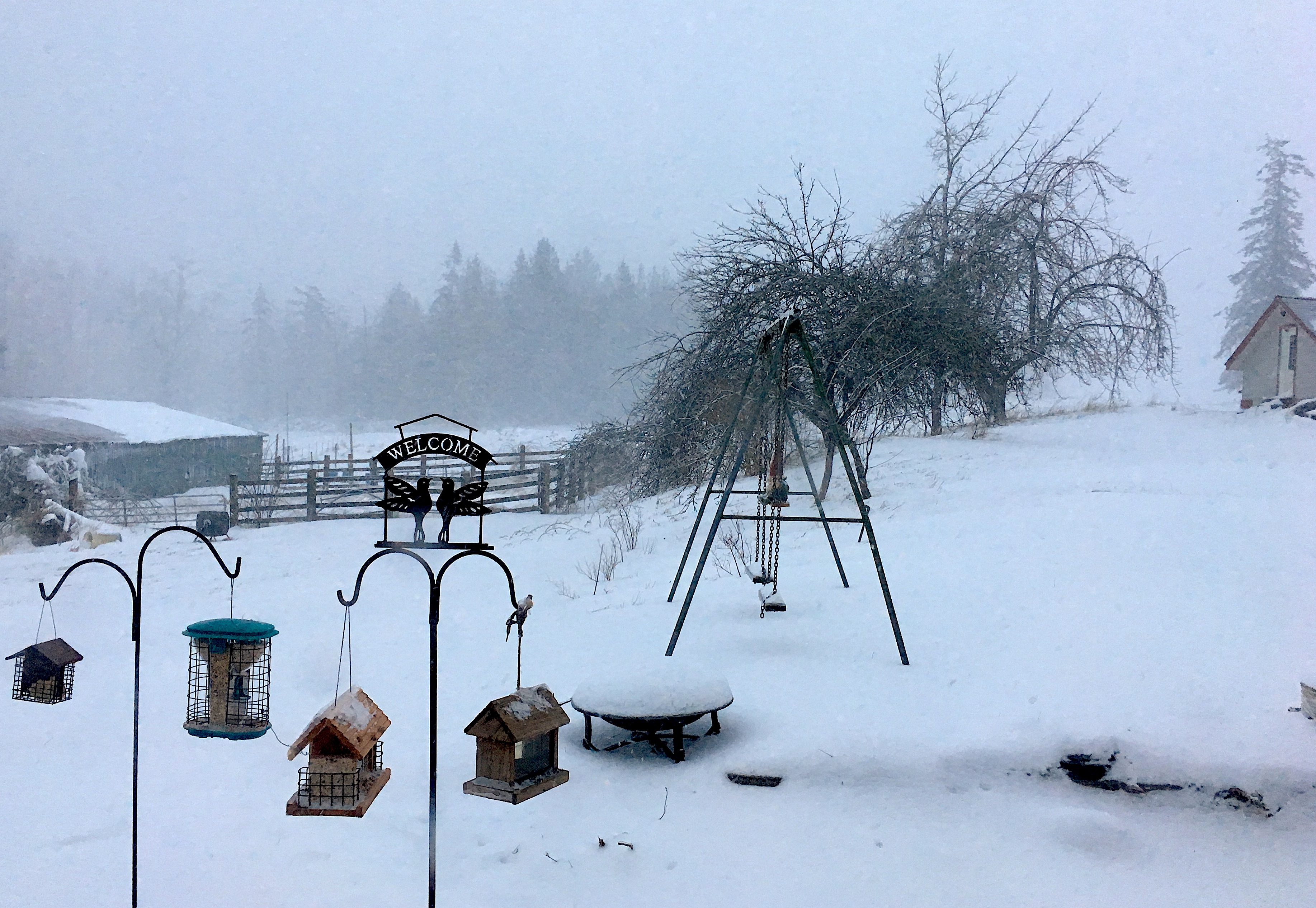
The ultimate goal of farming is not the growing of crops, but the cultivation and perfection of human beings.”
~Masanobu Fukuoka
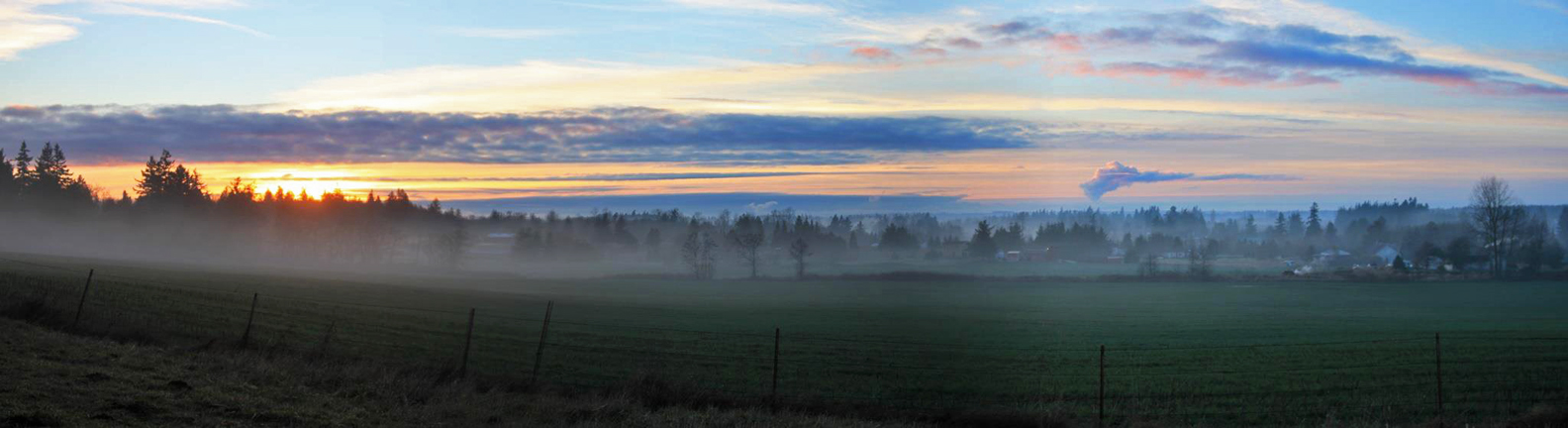
It is hard for my husband and I to ignore our genetic destiny to struggle as stewards of the land through the challenges of economics and weather. Our blood runs with DNA of dairy farmers, wheat and lentil growers, loggers, cattle ranchers, work horse teamsters, and flower and vegetable gardeners. A farm eventually called us from the city and our professional lives to come back home and care for a piece of ground and its animals. So we heeded and here we remain, some 32 years later, children raised and gone.
Perhaps the call of the farmer genes will bring one of them back to the land. Because farmers are hand-picked for the job by God Himself.
 Barnstorming