Ihad grasped God’s garments in the void but my hand slipped on the rich silk of it.
The ‘everlasting arms’ my sister loved to remember must have upheld my leaden weight from falling, even so,
for though I claw at empty air and feel nothing, no embrace, I have not plummeted. ~Denise Levertov “Suspended” from Evening Train
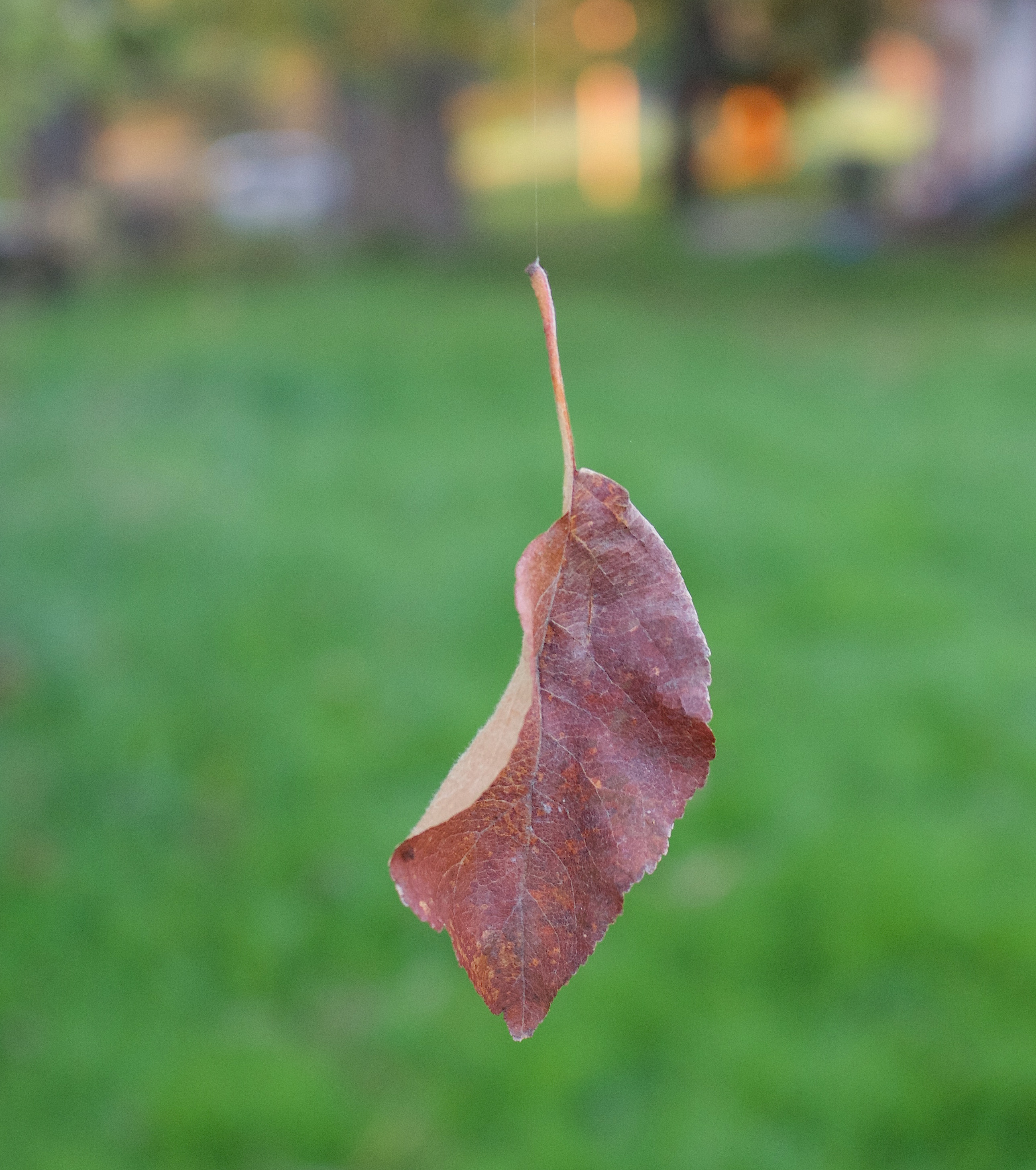
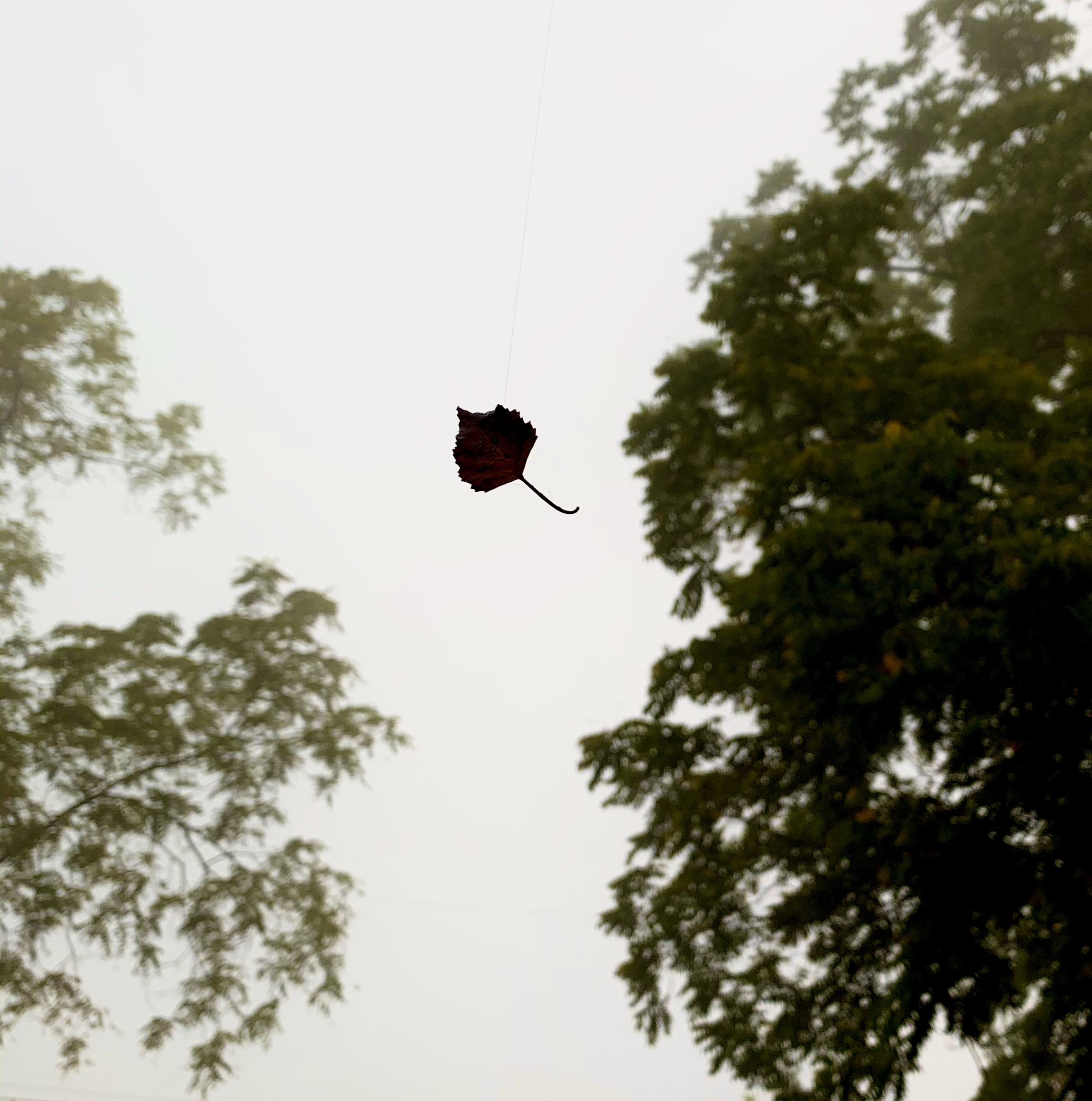
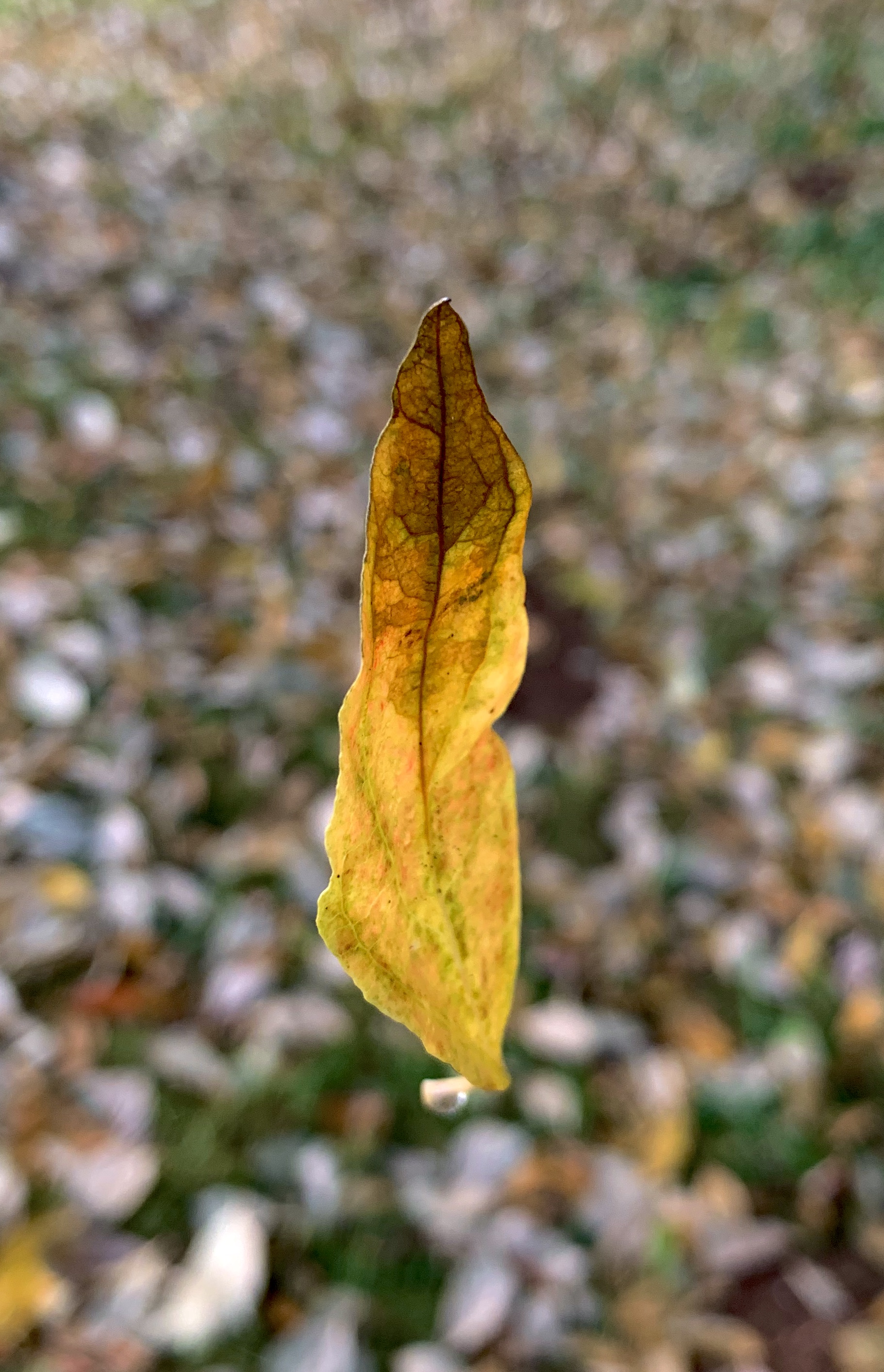
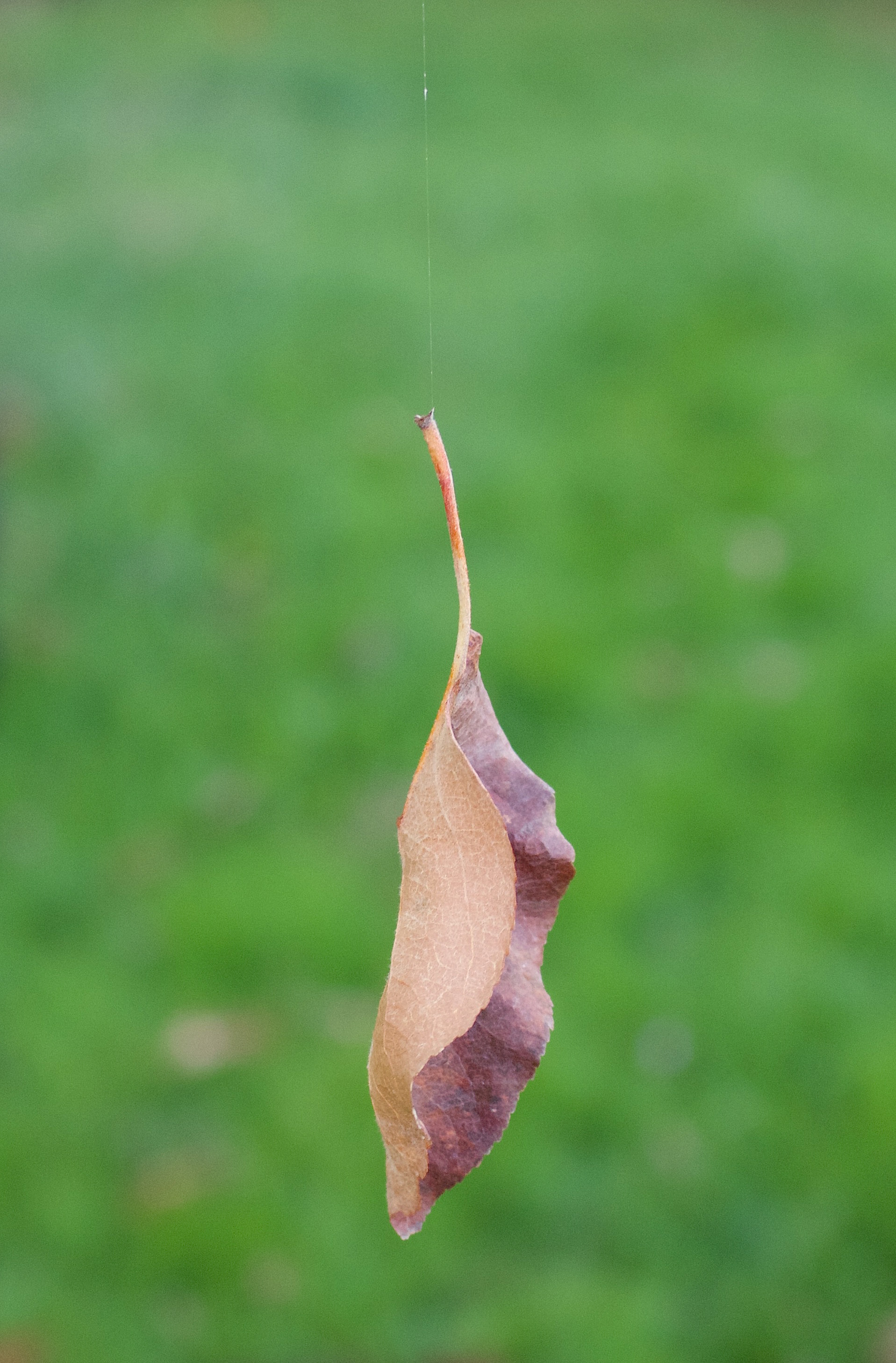
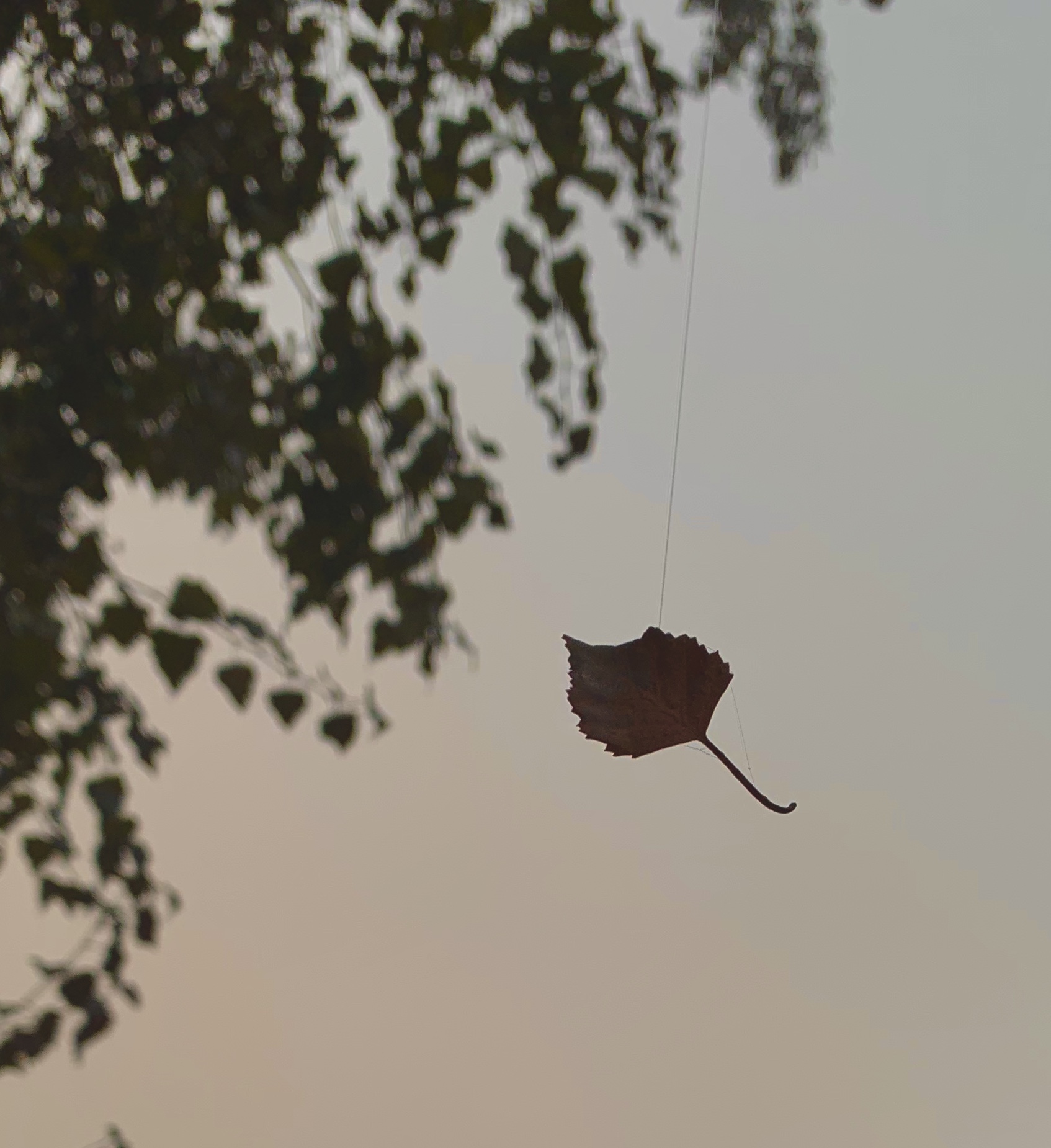
Reaching out in hopeless grasp to save myself, sinking down, prepared to fall, yet twisting and turning in a chill wind, in helpless wait for what is to come.
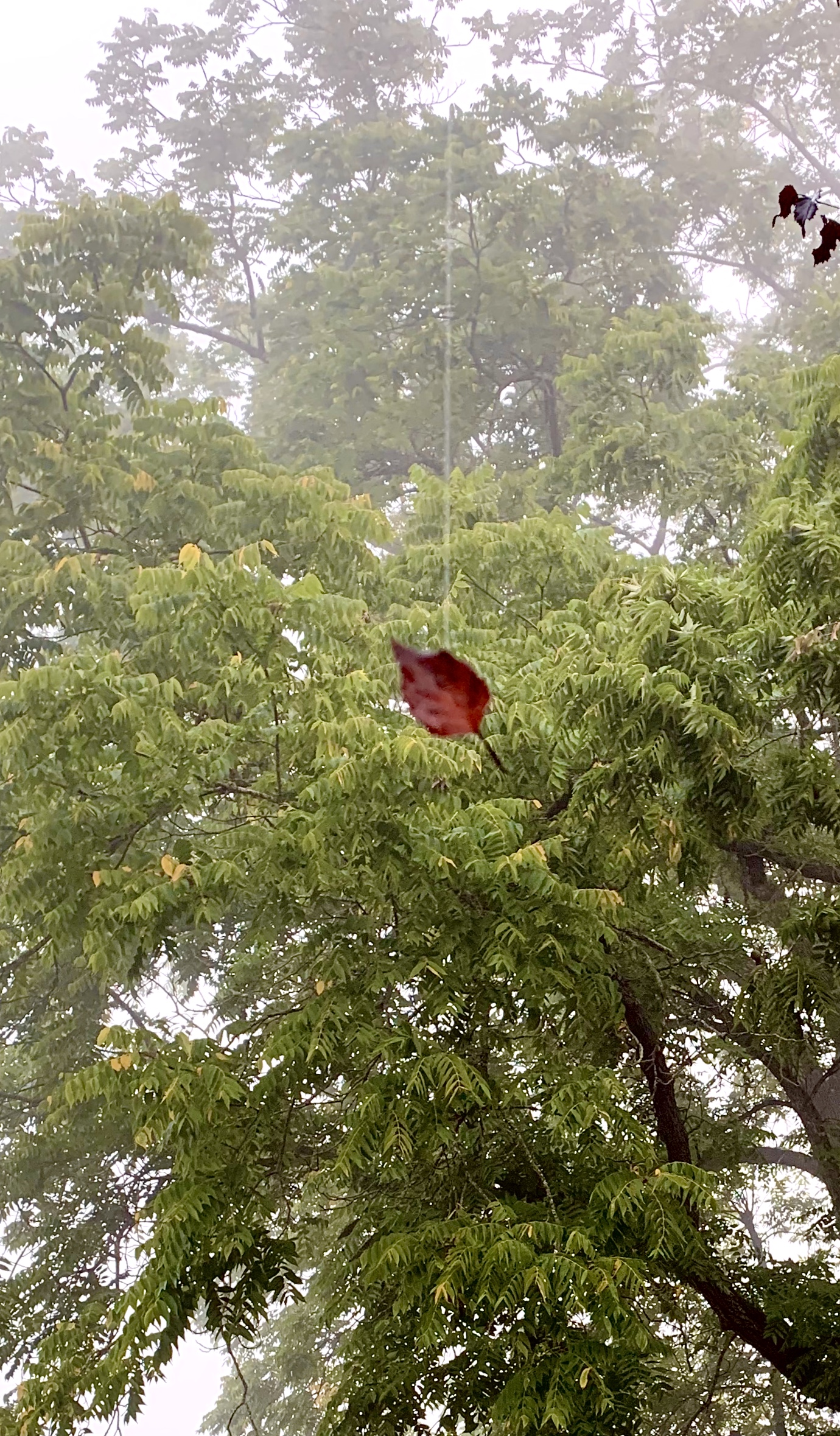
Now I dangle suspended rather than plummet, held fast through sheer grace by a slender thread of faith.
This is my Rescuer revealed, here is my Salvation holding me fast from above when I was sure I was lost forever.
Rescue me from the mire, do not let me sink Psalm 69:14
…even there your hand will guide me, your right hand will hold me fast. Psalm 139:10
This Lenten season will reflect on the words of the 19th century southern spiritual hymn “What Wondrous Love is This”
One-Time
Monthly
Yearly
Make a one-time or recurring donation to support daily Barnstorming posts
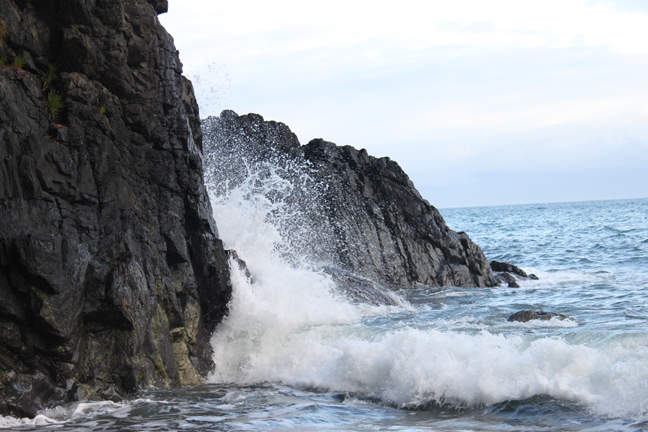
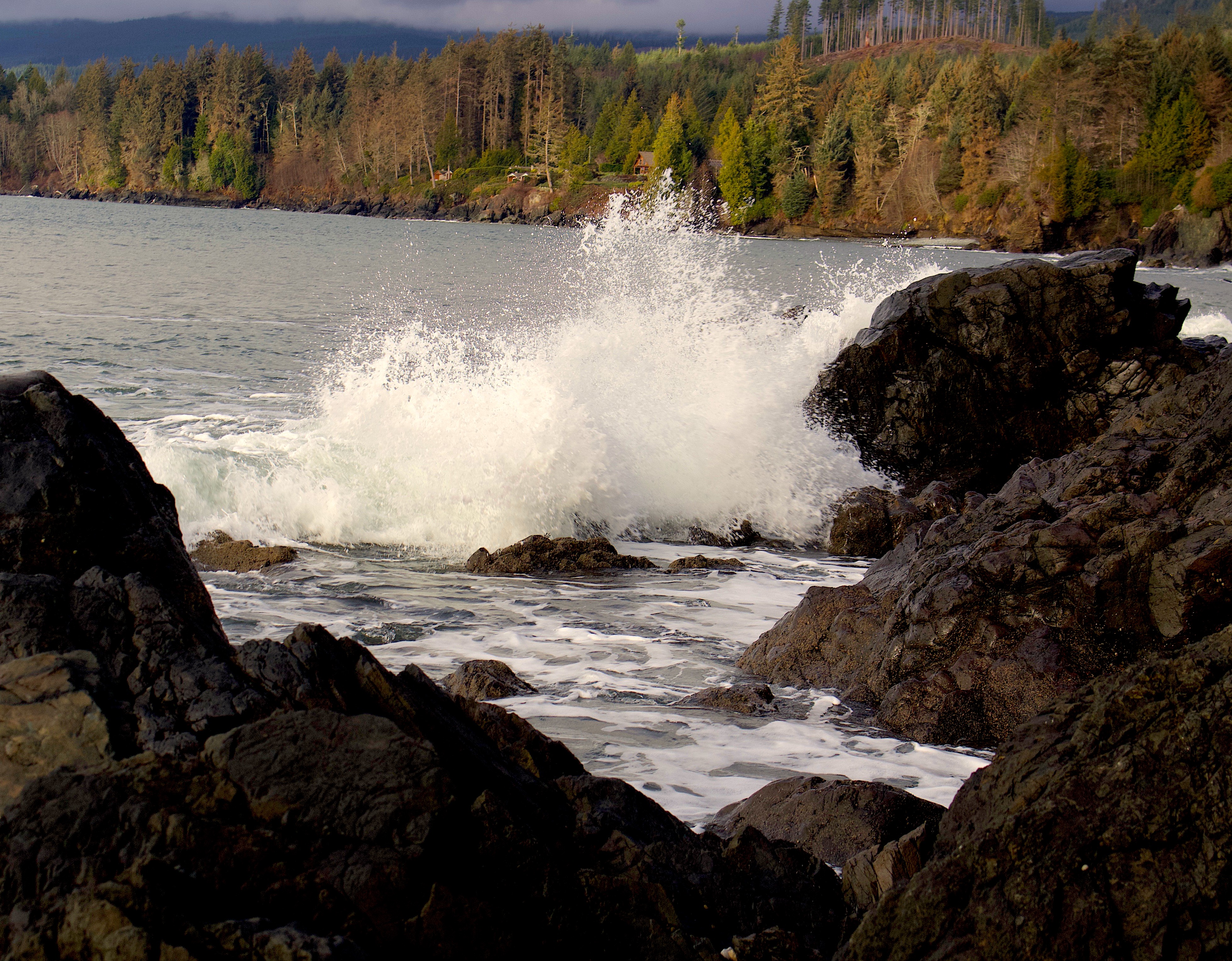
photo of Vancouver Island west coast by Nate Gibson
All night long do you know it? Do you care? Up and down the ocean beaches they are marching; All the lanesome peril of the winter nights they dare, Where the surf shoots, seething, landward in the bitter, biting air; And the fitful lights and shadows of the lanterns that they bear Make more wild the gloomy sky above them arching
Where the coast is bleak and cold; Where the rocks are high and bold, While the wind and snow and sleet are beating; Where the breakers rush and roar, There they watch for ships ashore, The cry for help with instant succor meeting.
All night long where the surges flood the dunes, Stern watch and ward they keep, strong eyes sweeping The offing, while the breakers are roaring savage runes, While the stormy winds are howling or wailing dismal tunes, While the rocks and sands are becoming broad lagoons, The life-saving watch these braves are keeping.
All night long while the timid landsmen sleep, Dreaming, snug and warm, on their downy pillows, The coast-guard, the surf-men down by the deep, Steadfastly, bravely, their watch heroic keep, Or into the sea—icy cold—they boldly leap, To rescue fellow-men from the billows.
Talk not of heroes whose trade it is to kill! Life savers! these are the god-like heroes still, Risking their lives for every life they save From the plunging wreck, or snatch from swirling wave.
O when your beds are warm, In nights of winter storm, When you are safe from wind and sea— Think of the surf-men brave: Their life watch by the wave, And cheer them by your grateful sympathy. ~Hannah Augusta Moore “The Life Savers”
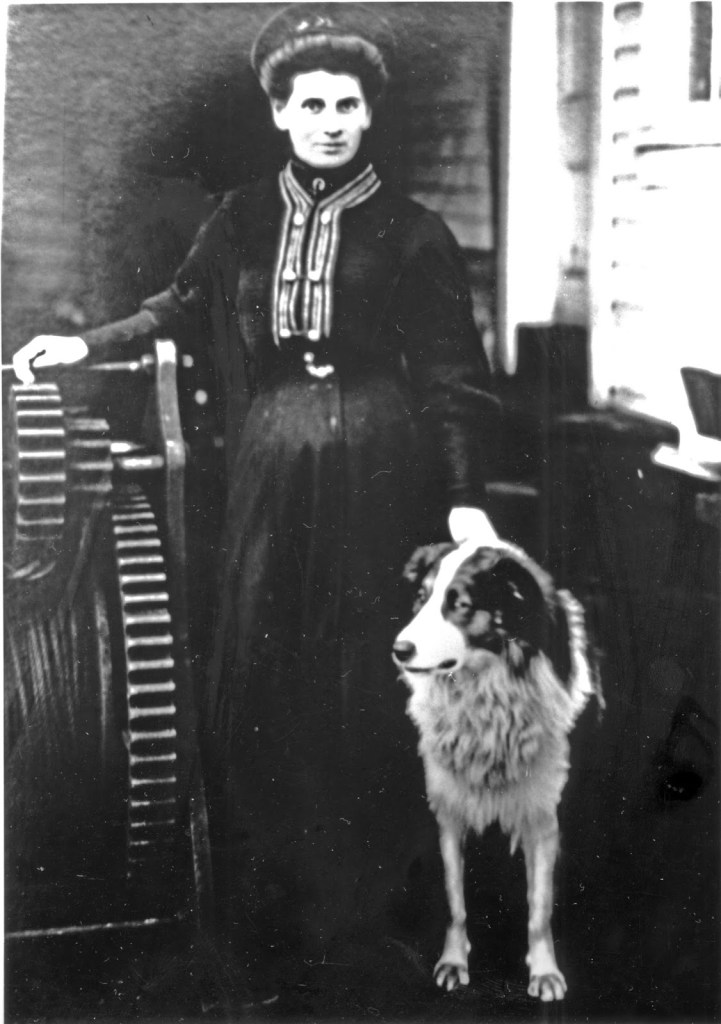
Minnie Paterson and dog Yarrow (archive photo from Alberni Valley Museum)
Minnie Paterson rocked slowly in her rocking chair, nursing her infant son. She sat near the south window of the lighthouse living quarters, and studied the rain streaming down in rivulets. Wind gusts rattled the window. A lighthouse keeper’s home was constantly buffeted by wind bearing salty spray, nearly rendering the windows opaque with salt residue. This early December storm had picked up urgency throughout the night. Now with first light, Minnie looked out at driving rain blowing sideways, barely able to make out the rugged rocks below. The Pacific Ocean was anything but; the mist hung gray, melding horizon into sea, with flashes of white foam in crashing waves against the rocky cliffs of Cape Beale.
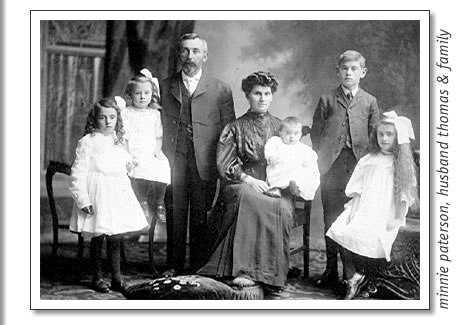
Whenever storms came, it seemed the Paterson family lived at the edge of civilization. Yet these storms were the reason she and Tom and their five children lived on the rugged west coast of Vancouver Island, in isolation at the southern edge of Barkley Sound. Tom’s job was to keep the foghorn blaring and the light glowing above the treacherous rocks, to guide sea vessels away from certain peril. The storms sometimes were too powerful even with the lighthouse as a beacon of warning. Nearly a year earlier, in January 1906, the ship Valencia had wrecked off the coast and only a few survivors had managed to make their way to shore, staggering up the rocky trail to the lighthouse where Minnie warmed them by the stove and fed them until rescuers could come.
Eleven months later, her husband came in the door in a rush from the upper room where he tended the light. Another ship, battered by the waves, its sails in tatters, was in distress just off the coast, threatening to run aground on the rocks and break apart.
Minnie went to the window again but could see nothing in the dark mist. Surely this could not be another Valencia disaster! Tom went to the telegraph in the corner of the room and tapped out the urgent message to the fishing village of Bamfield, five miles away inside Barkley Sound. He sat impatiently waiting for a reply, drumming his fingers on the desk. After ten minutes, he sent the message again with no response.
Clearly the telegraph lines were torn down in the storm. Fallen trees frequently pulled them down, leaving no option to summon rescuers. This ship would be doomed, just like the Valencia. There was no way the crew could come ashore in lifeboats without perishing on the rocks.
Seeing the helplessness Tom felt, Minnie knew immediately what she must do. He could not leave his post—it was a condition of his job. She would have to run the six miles for help, through the forest. She kissed Tom and five children goodbye, donned a cap and sweater, and as her swollen feet from recent pregnancy did not fit in her boots, she put on her husband’s slippers. She ran down the long stairway down the hill, taking their dog Yarrow as a precaution to help warn her of bears on the trails.
Minnie first had to cross through a tideland inlet with water waist deep. She quickly stripped from the waist down, held her skirt and slippers over her head and crossed through the icy water, her dog swimming alongside. Shivering on the other side, she quickly dressed, and started down the narrow winding forest trail, scrambling over large fallen trees blocking the way. She waded through deep mud, and crossed rocky beaches where wild waves drenched her. At times the tide was so high she crawled on her hands and knees through underbrush so as not to be swept away by the storm.
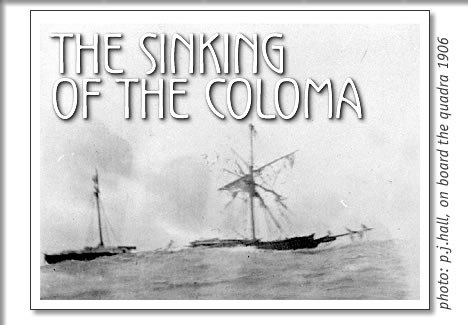
After four hours, she reached a home along the trail and with a friend, launched a rowboat to go on to Bamfield. The two women notified the anchored ship Quadra, which set out immediately for Cape Beale to rescue the stranded sailors. Within an hour, the Quadra had reached the Coloma which was taking on water fast, and drifting close to the rocks on shore.
Minnie walked the long way back home that night, clothing tattered, muscles cramping, exhausted and chilled. Her breasts overflowing, she gratefully fed her baby, unaware for days whether her efforts rescued the crew of the Coloma. When the locals learned of her heroism, they notified media sources in Vancouver, Victoria and Seattle. Minnie was hailed as a life saver, given gifts and honors, including the following citation from Seattle’s Union of Sailors of the Pacific: “…RESOLVED that we, the seamen of America, fully recognize her sterling worth as the highest type of womanhood, deeply appreciating her unselfish sacrifices in behalf of those ‘who go down to the sea in ships’ and assure her and hers of our undying gratitude.”
Tragically, her health compromised by her extreme exertion that night, she died five years later in 1911 of tuberculosis, forever a life saving heroine to remember.
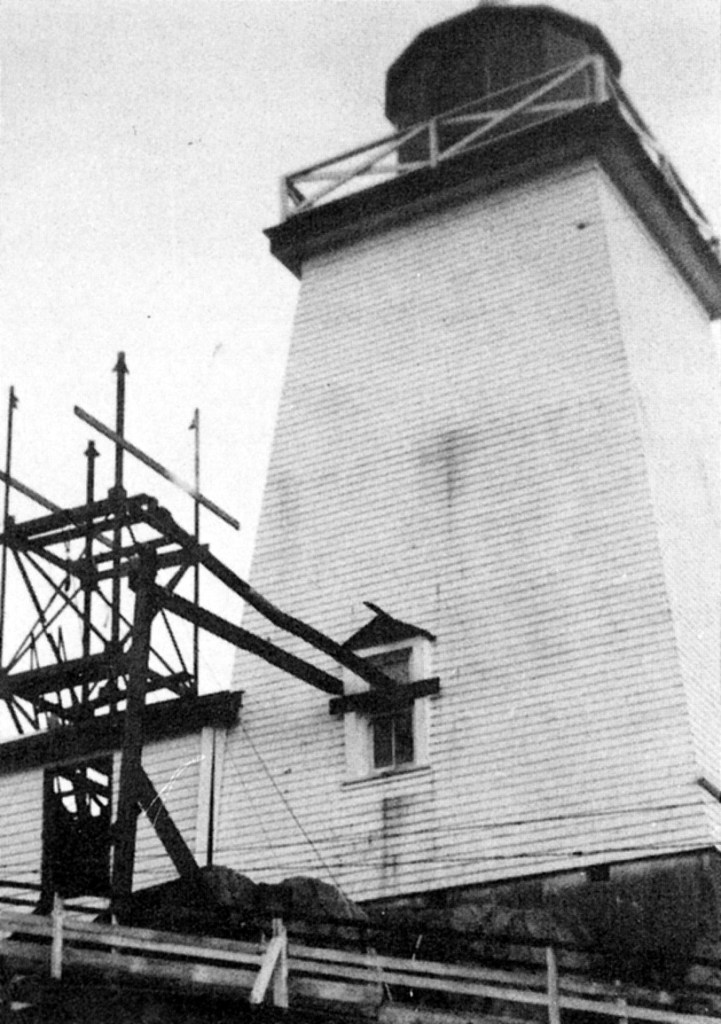
original Cape Beale Lighthouse (archive from Alberni Valley Museum photo collection)Early 20th century photo of Cape Beale lighthouse and residence buildings (archive of Alberni Valley Museum)
This is a story Dan and I were told by locals during our stay in Bamfield on our honeymoon over forty years ago. On a bright September day, we walked the trail to visit the Cape Beale lighthouse, a most challenging and beautiful part of the world. The trail was so difficult, I was sure I was not fit enough to make it to the lighthouse and back, so how Minnie managed in a December storm, much of it in the dark with only a lantern for light, is beyond imagining. Her bravery captured me and I honor her sacrifice with this rendering of her remarkable storyof personal sacrifice.
modern Cape Beale lighthouse
You are not hidden There’s never been a moment You were forgotten You are not hopeless Though you have been broken Your innocence stolen I hear you whisper underneath your breath I hear your SOS, your SOS I will send out an army To find you in the middle of darkest night It’s true I will rescue you There is no distance That cannot be covered Over and over You’re not defenseless I’ll be your shelter I’ll be your armor I hear you whisper underneath your breath I will never stop marching To reach you in the middle of the hardest fight It’s true I will rescue you I hear the whisper underneath your breath I hear you whisper you have nothing left ~Lauren Daigle
One-Time
Monthly
Yearly
Make a one-time or recurring donation to support daily Barnstorming posts
With bees, it isn’t the sting itself but the unprovoked attack that lingers.
How unfair to walk unwary, barefoot on hot concrete, simply pleasuring your feet, or stepping down on a beach towel only to be assaulted by the small plot of something you meant no harm to.
That first pain is learned the hard way: at five, you call all-y, all-y, all come free singing blind into a hive hidden in the swing-set’s pole, then fall what seemed the longest fall; a cloud of bees flowered from your lips.
And later, put to bed with ice and ointments melting over the welts that covered you, there was no explaining the bees’ behavior, no way to comprehend the reason in their rage. You may never understand this: the will behind the stinger, a certain, fatal anger to survive. ~Erin Belieu “Bee Sting”
George got stung by a bee and said, “I wouldn’t have got stung if I’d stayed in bed.”
Fred got stung and we heard him roar, “What am I being punished for?”
Lew got stung and we heard him say, “I learned somethin’ about bees today.” ~Shel Silverstein “Three Stings”
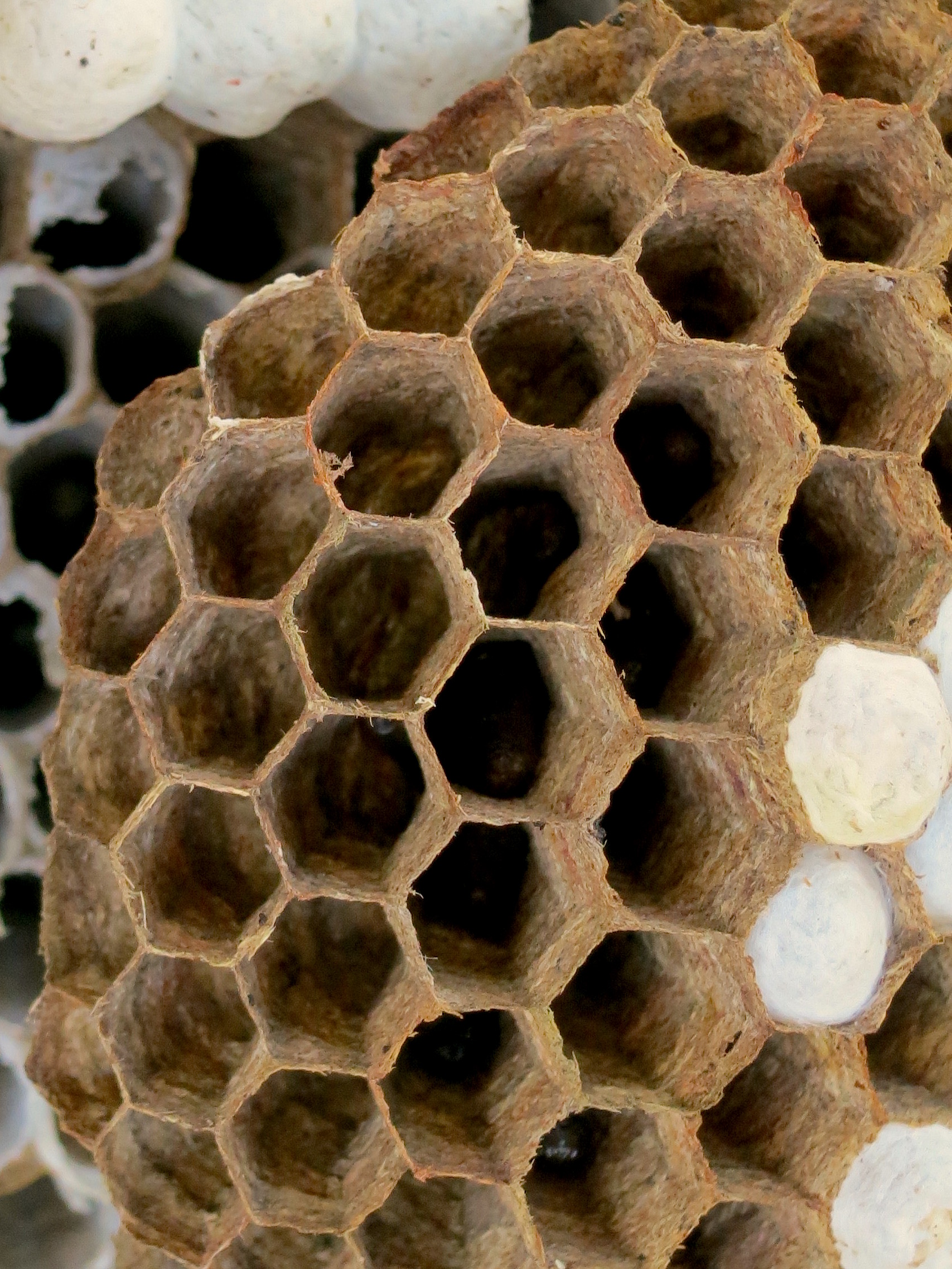
Ever have one of those days when it doesn’t really matter what you do, what you don’t do, what you say, what you don’t say—you find yourself sitting on top of a hornet’s nest, and at the slightest provocation, you’ll get nailed, but good.
The hardest reality of all is that you may have actually invited and fostered the hornets that are now ready to attack you. You offered them shelter, a safe haven, a place to come home to and what happens in return? You’re stung because you just happened to be there, perched in a precarious position.
What difficult lessons life tosses at us sometimes. And this little drama happened in my own backyard.
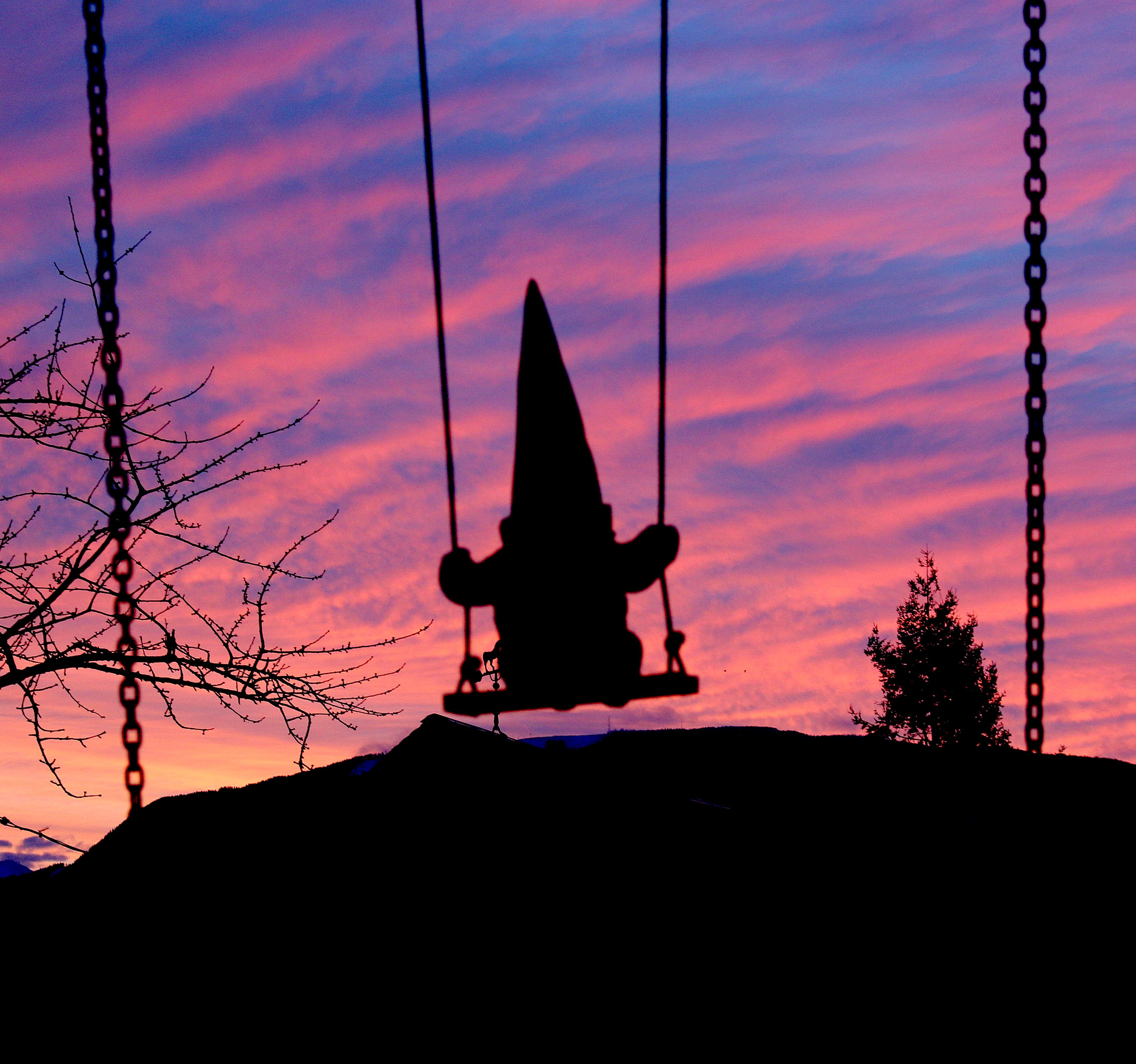
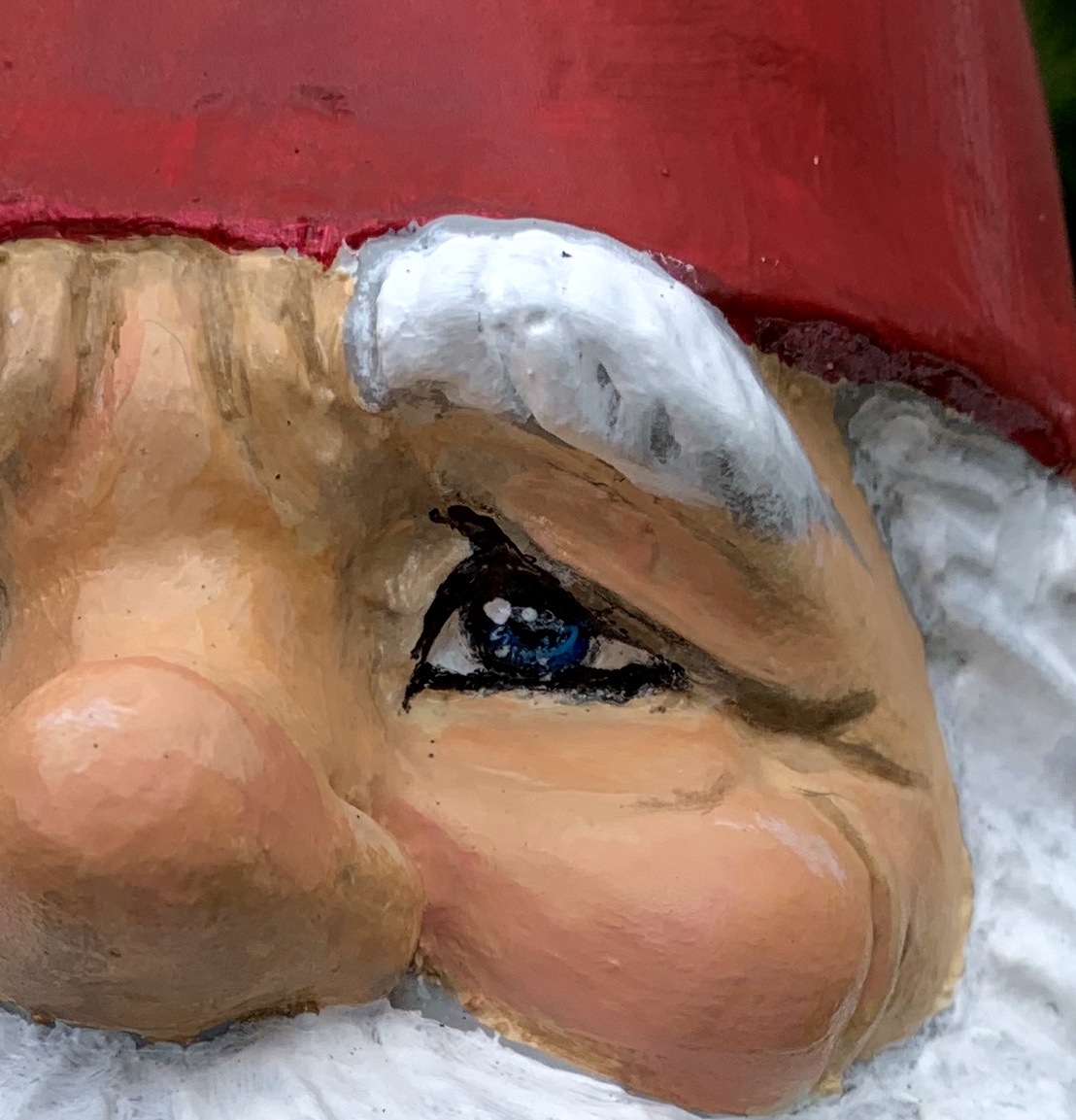
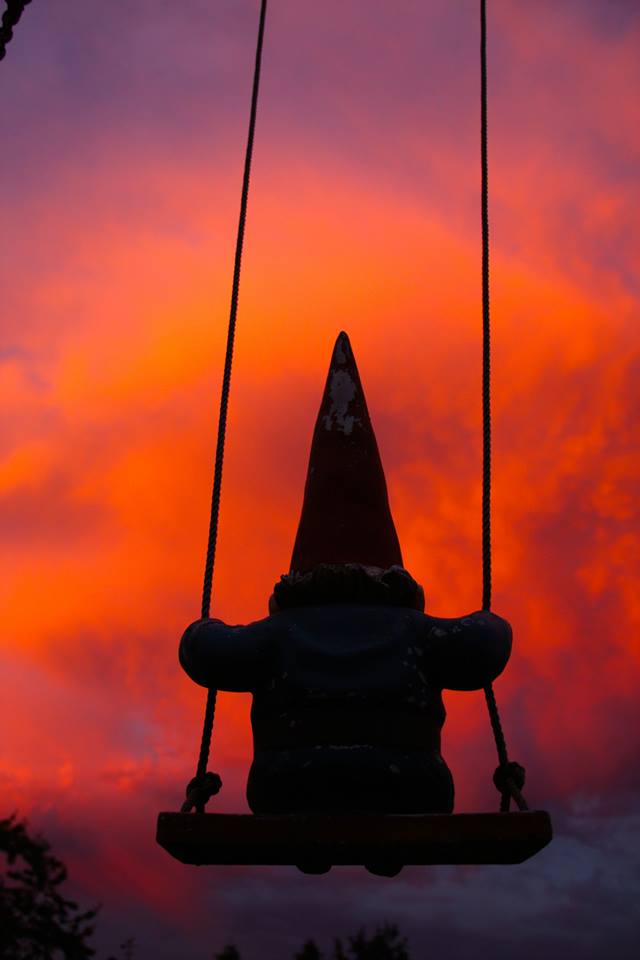
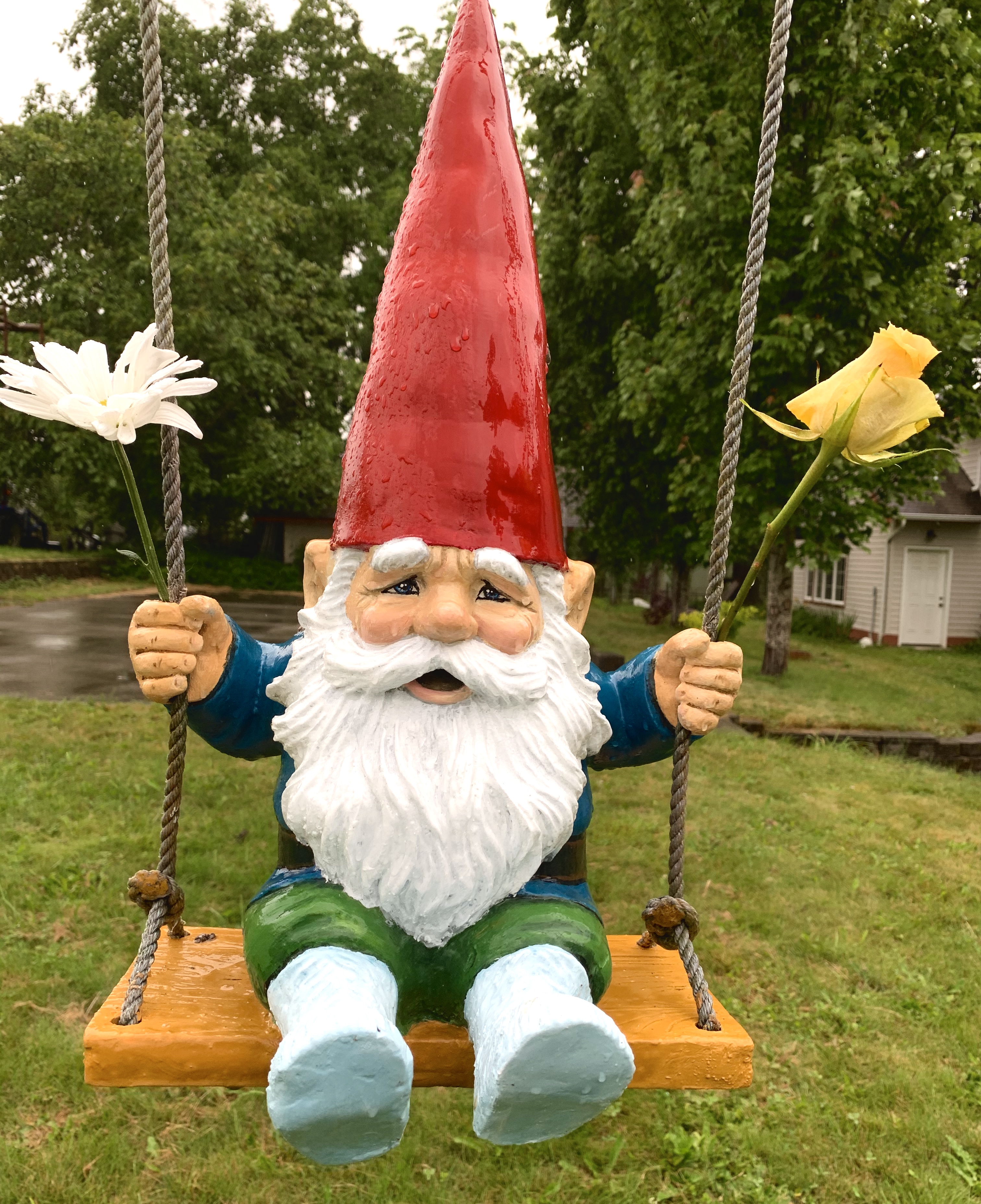
As I headed to the barn for chores and walked past our happy little gnome, I gave him my usual smile, wave and morning greeting, but something was different about him and I looked a little closer.
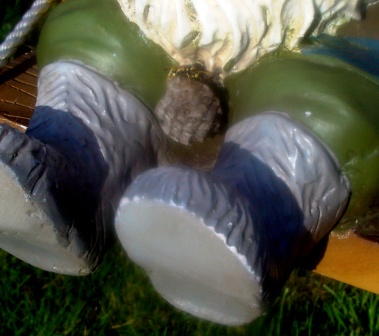
He suddenly was appearing anatomically correct. What the heck?
And the look on his face had taken on a distinctly worried cast. How had he gotten himself into this predicament of harboring a hornet’s nest in his lap?
My little backyard friend was in a dilemma, pleading with his eyes to be saved from his agony. So I planned out a stealth rescue mission. Without warning, in the dark of night, I decided I could turn a hose on that nest, sweep it to the ground and crush it, hornets and all – a “take no prisoners” approach to my gnome held hornet-hostage. Then, every time I glanced at his gracious cheerful face I could smile too, knowing I had helped rescue him by eliminating the enemy. I could be the hero of the story…
Postscript:
I didn’t execute the “save our gnome” rescue mission soon enough. While I was foolish enough to mow the grass near the swing set, the offending hornet nailed me in the neck. I walked right into it, forgetting there was a hornet hazard over my head. One ice bag and benedryl later, I dispatched hornet and nest to the great beyond.
It was my own fault for violating a hornet’s space, but it was the hornet’s fault for violating my friend’s lap. We’re even now. And my gnome is smiling in grateful relief.
photo by Tomomi Gibson
One-Time
Monthly
Yearly
Make a one-time or recurring donation to support daily Barnstorming posts
Little snail, Dreaming you go. Weather and rose Is all you know. Weather and rose Is all you see, Drinking The dewdrop’s Mystery. ~Langston Hughes “Snail”
A walk, a rout, an escargatroire of snails—do you envy their elasticity? To each, an aria, the tender antennae perceiving, smelling and feeling, heeding an orchestration, inborn: Seek. Glean. O this thirst! Dare we risk spiraling outward, onward, a frangible ode-in-motion? Dear Earth, why show us these rippling, quicksilver guides, their boneless glide, the fearless right-angle ascent, with a cellular hope’s acrobatic sheen—even upside-down? Surely, an ancient desert mother advised, Your shell will teach you everything. ~Laurie Klein “A Walk, a Rout, An Escargatroire”
James was a very small snail… and gave the huffle of a snail in danger. And nobody heard him at all. ~A.A.Milne from The Four Friends from “When We Were Very Young”
I mean, the analogy writes itself like the onion in a grand conceit though we really are like two slugs in a derelict mausoleum. Google “snails are…” Dangerous. Slow. Destroying my garden. Our jobs and our women.
You, who cannot speak snail, wouldn’t understand how the shell was the gift and curse of diaspora, how our songs and laments resound in our half-remembered houses that we carry to forget, to carry on. ~Samatar Elmi “The Snails”
…who has a controlled sense of wonder before the universal mystery, whether it hides in a snail’s eye or within the light that impinges on that delicate organ? ~Loren Eiseley from The Star Thrower
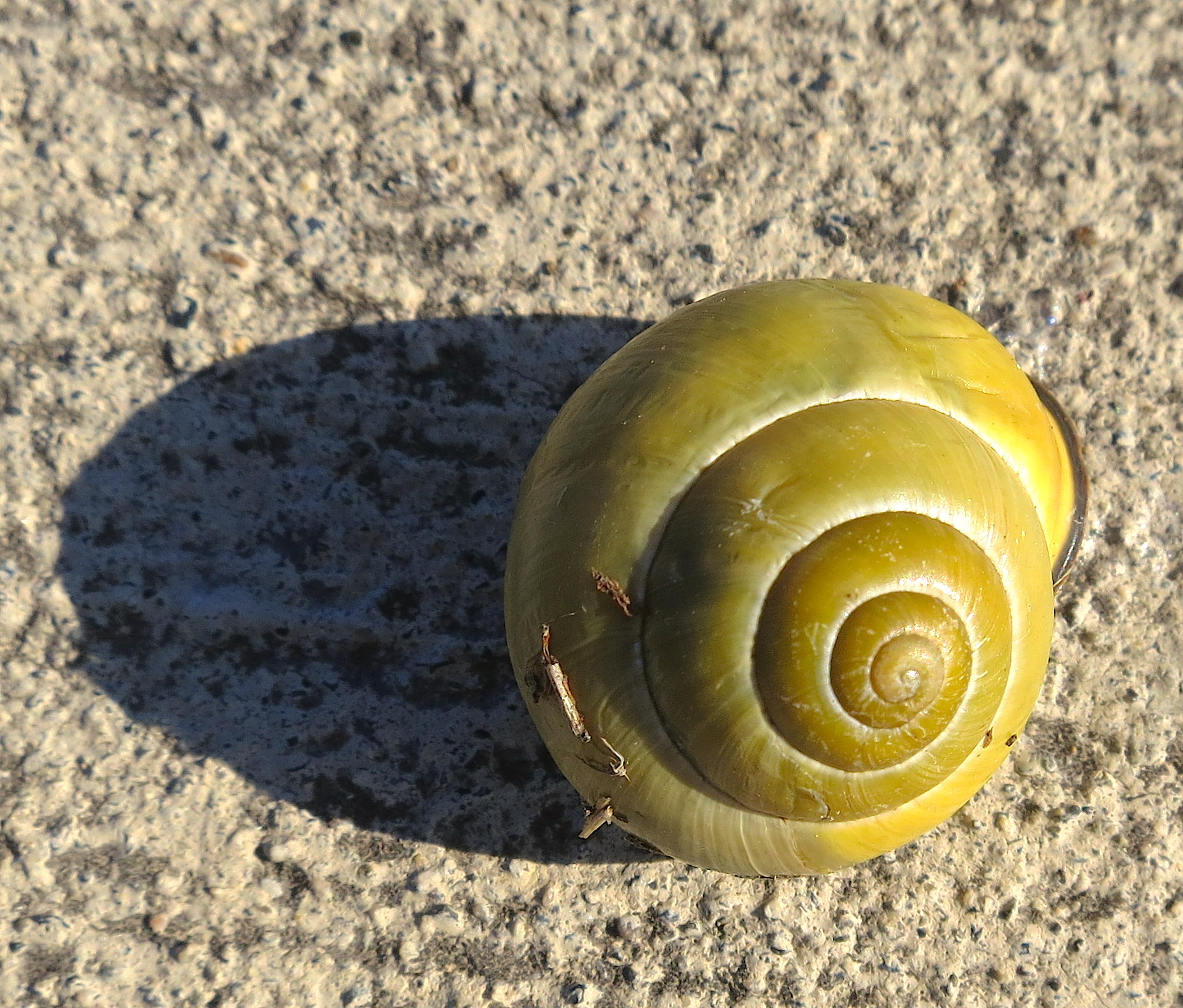
If a snail’s shell gets injured, a repair can be made quickly. New shell material is secreted by the mantle, and where there was once a crack, a scar appears, looking much like a skin scar. Even a missing shell section can be replaced.
Oliver Goldsmith described this in 1774: Sometimes these animals are crushed seemingly to pieces, and, to all appearance, utterly destroyed; yet still they set themselves to work, and, in a few days, mend all their numerous breaches . . . to the re-establishment of the ruined habitation. But all the junctures are very easily seen, for they have a fresher colour than the rest; and the whole shell, in some measure, resembles an old coat patched with new pieces. ― Elisabeth Tova Bailey, The Sound of a Wild Snail Eating
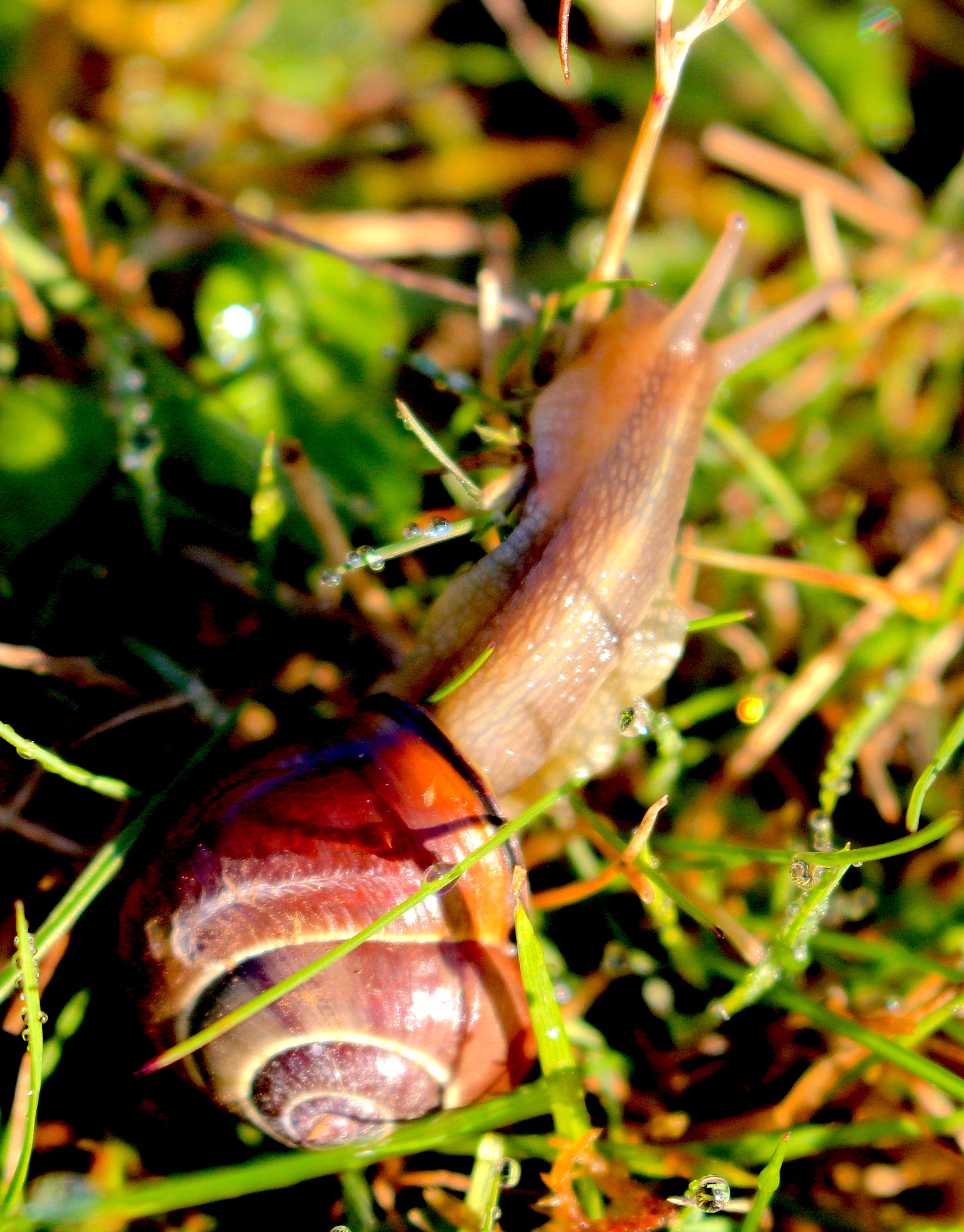
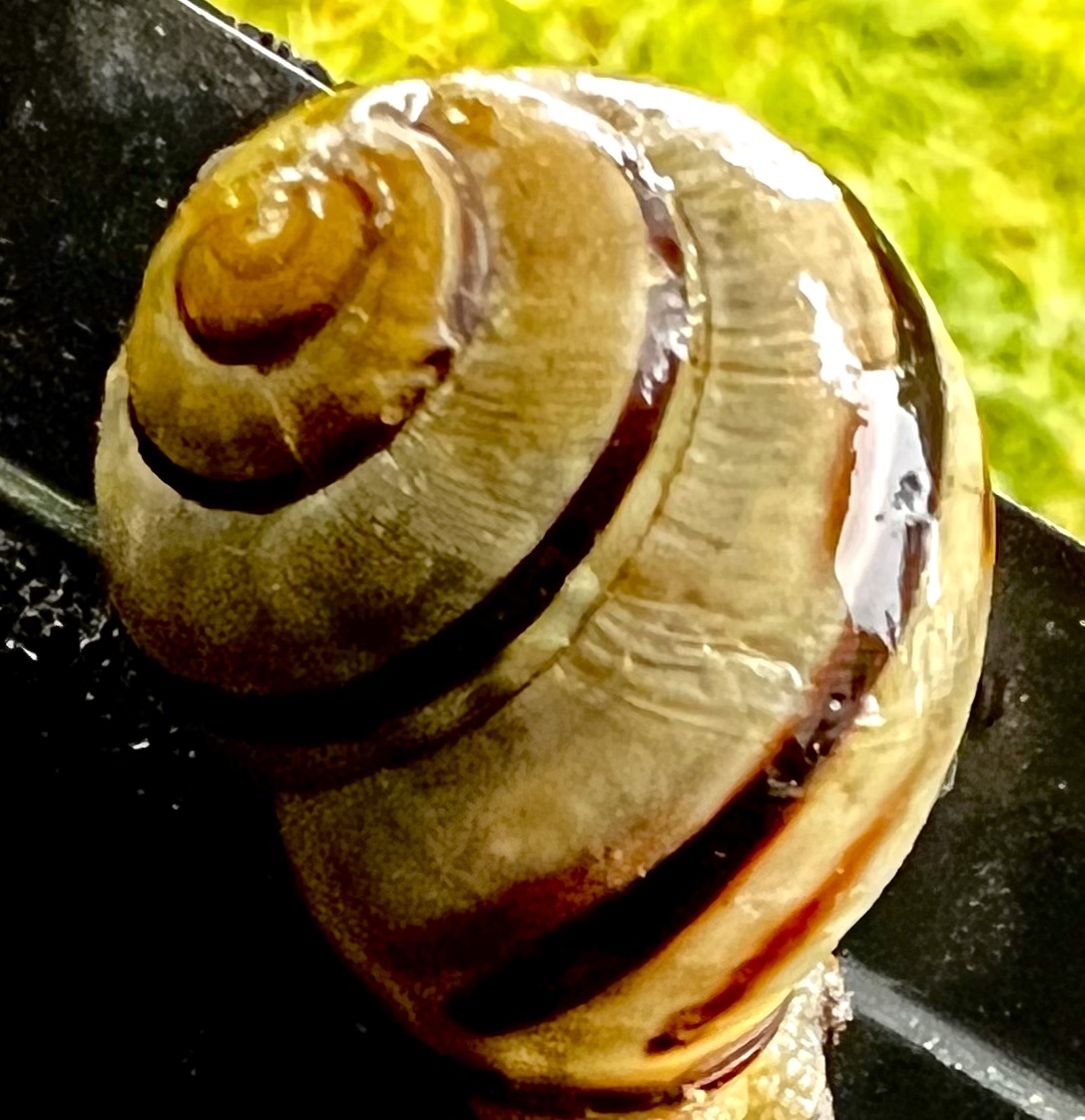
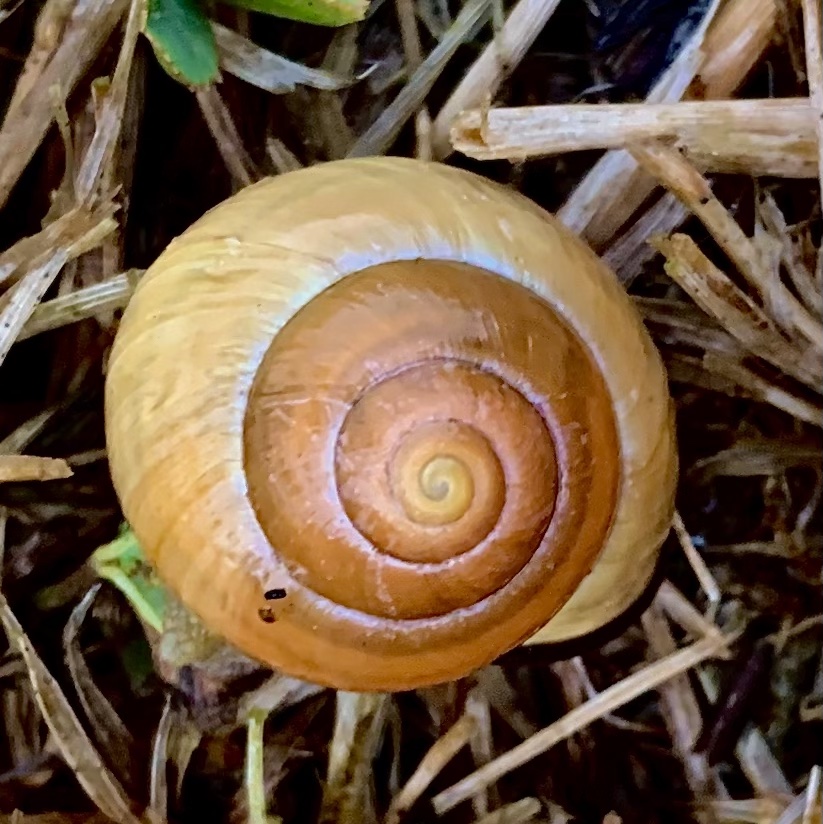
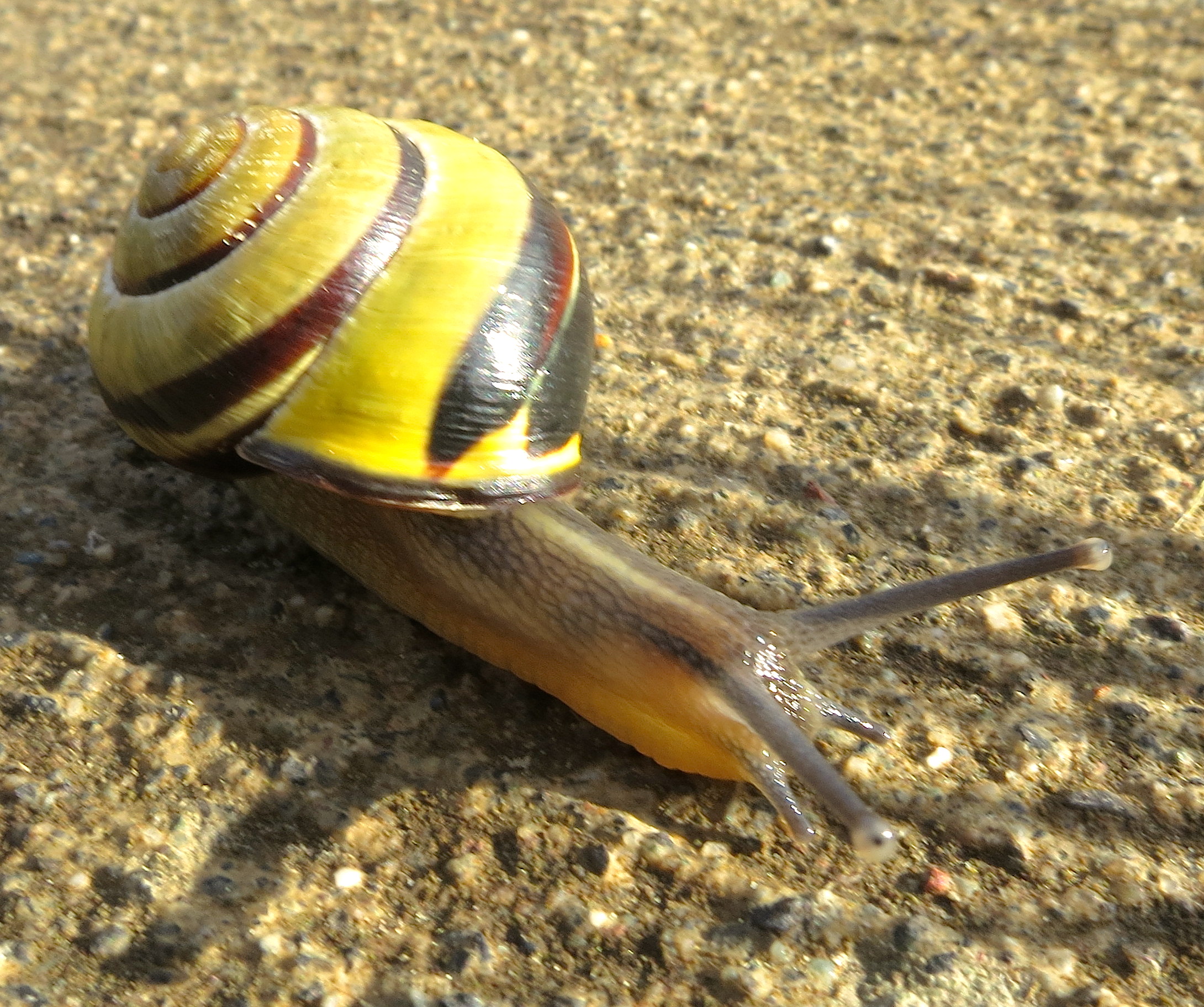
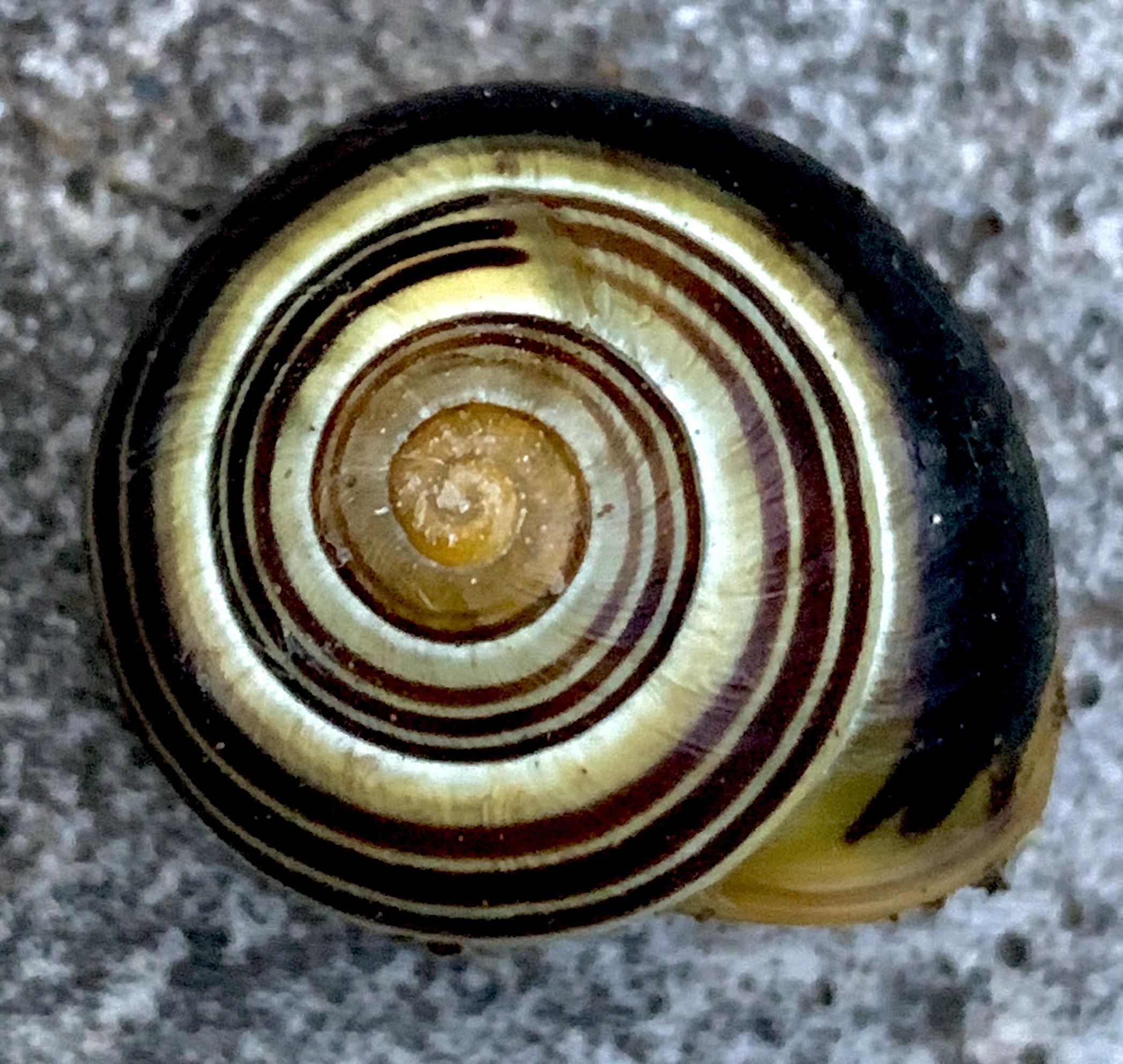
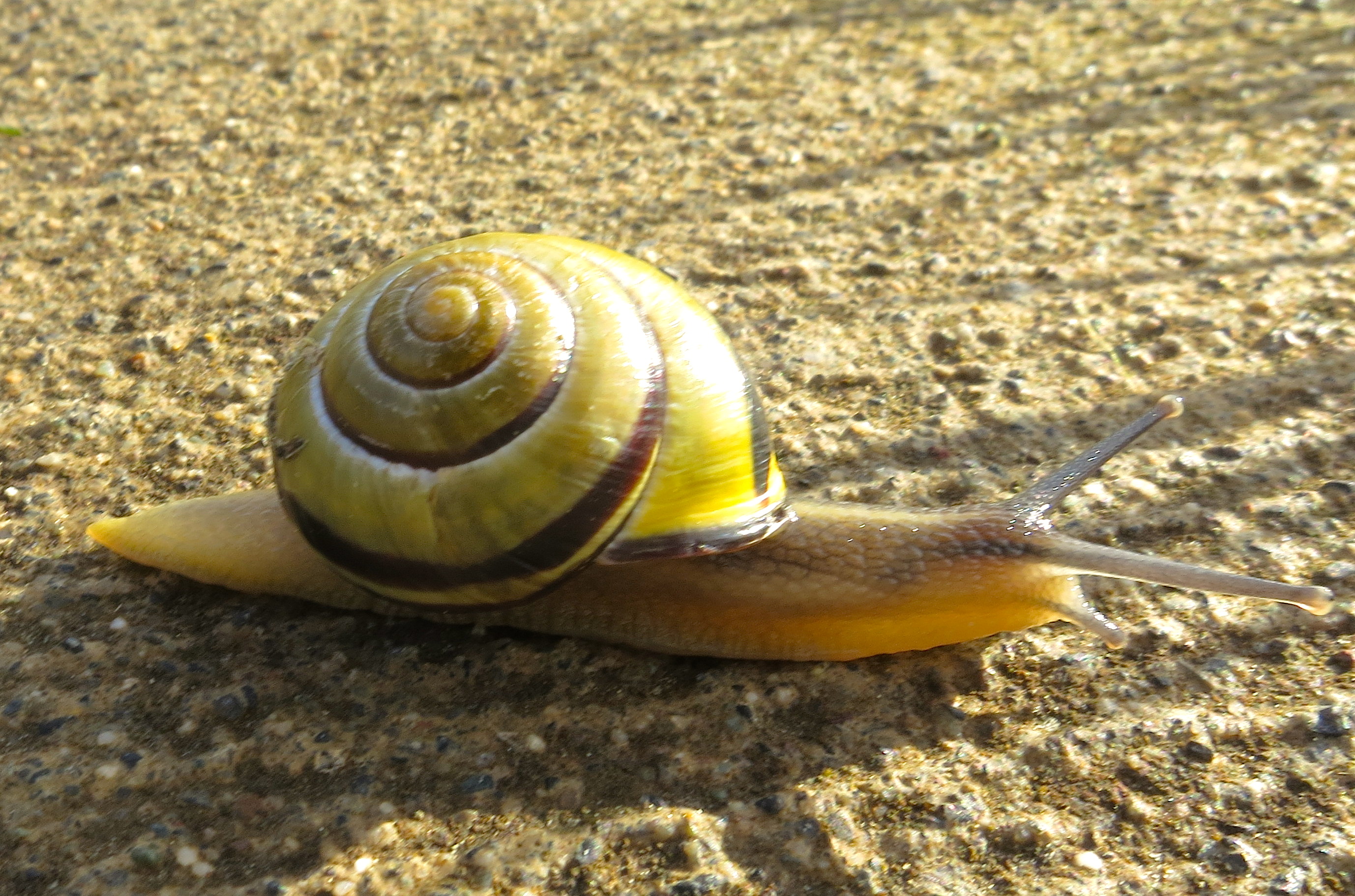
A gastropod brave enough to cross a busy sidewalk appears in no particular rush~
no hurry toward the grassy expanse on the other side. The lawn will still be there whether an hour from now or tomorrow.
Its waving little snail eyes trying see and smell the future.
To assure it would not be crushed underfoot I decide to intervene in history and give it a lift as Someone has done for me when I was in danger.
So today, I saw a snail at risk of being crushed and didn’t need to hear its cry to do the right thing.
One-Time
Monthly
Yearly
Make a one-time or recurring donation to support daily Barstorming posts
As swimmers dare to lie face to the sky and water bears them, as hawks rest upon air and air sustains them, so would I learn to attain free fall, and float into Creator Spirit’s deep embrace, knowing no effort earns that all-surrounding grace. ~Denise Levertov “The Avowal”
photo by Josh Scholten
I don’t like flying – at all. Human beings weren’t made with wings and I simply don’t think I belong up there. Then too is the feeling of the sudden drop which can happen with severe turbulence, the kind that leaves your stomach in your throat.
It is very much like the free-falling feeling that wakes you from a dream with an abrupt thud landing upon your pillow, your heart beating fast and your breath coming short, wondering what just happened.
It is good to know there is Someone there to hold me safely since I was born with no wings and own no parachute. There is nothing to be done but accept all-encompassing, all-embracing, all-surrounding grace that is pure gift. Such a rescue is not a reward, certainly not earned, nor does it arise out of my own skill or ingenuity.
God is simply there, ready to catch me as I fall.
This year’s Lenten theme: So we fix our eyes not on what is seen, but on what is unseen, since what is seen is temporary, but what is unseen is eternal. 2 Corinthians 4: 18
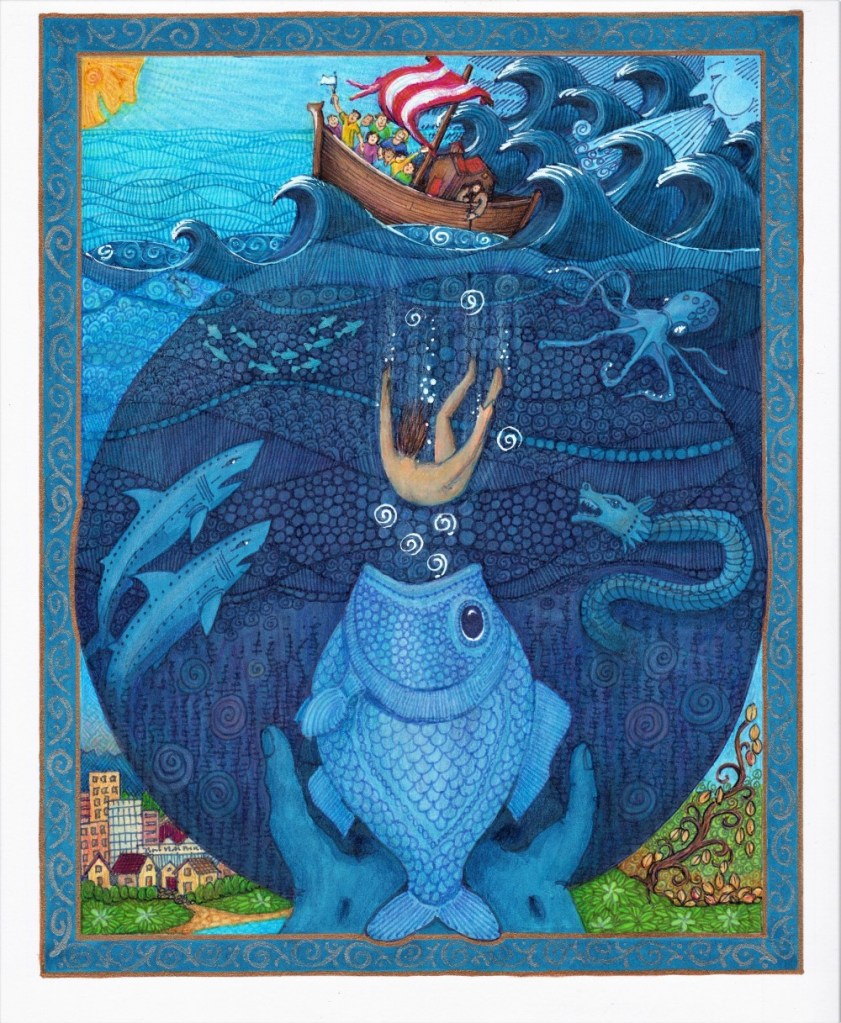
Down into the icy depths you plunge, The cold dark undertow of your depression, Even your memories of light made strange, As you fall further from all comprehension. You feel as though they’ve thrown you overboard, Your fellow Christians on the sunlit deck, A stone cold Jonah on whom scorn is poured, A sacrifice to save them from the wreck.
But someone has their hands on your long line, You sound for them the depths they sail above, One who takes Jonah as his only sign Sinks lower still to hold you in his love, And though you cannot see, or speak, or breathe, The everlasting arms are underneath. ~Malcolm Guite “The Christian Plummet”
Christians, like biblical Jonah, often struggle with living in obedience to God’s Word and plan. We become discouraged and depressed, filled with misgivings and a lack of understanding. This is complicated by our need to “put a good face on it,” especially among other Christians who seem to not feel the brokenness of the dark undertow.
Christ Himself becomes the sacrifice thrown overboard, as Jonah was, to plumb the depths and allow us to rise beyond peril and danger. He struggled too, He became discouraged and overwhelmed with the responsibility placed upon Him, but He remained obedient to His Father’s will.
We cannot fall lower than where He descended; He is there to lift us up. He knows how deep we might sink and He knows exactly what it takes to push us back up to the light.
One-Time
Monthly
Yearly
Make a one-time or recurring donation to support daily Barnstorming posts
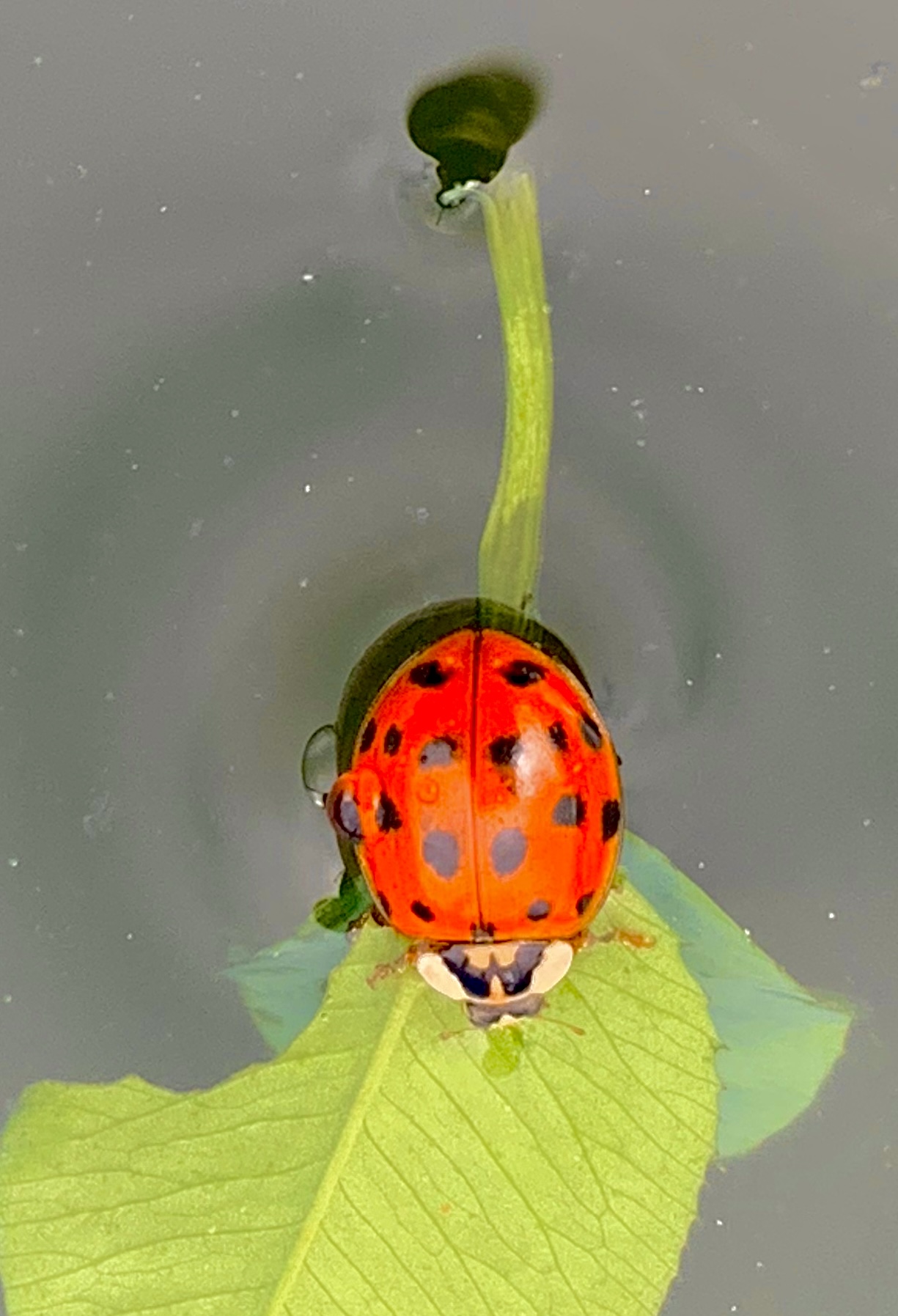
I couldn’t let it drown. I ripped off a piece of my sandwich bag, lifted it to safety. Its little legs reached behind its back to stroke its wings dry. I, too, have stretched my legs in strange positions. Is this a leap? What did you expect? For me to let the bug just be a bug. To leave it alone when it already planned on dying. To reach out and not imagine myself the God I wish would lift me from the water. ~Daniella Toosie-Watson “The Bug”
You are not your own; you were bought at a price. 1 Corinthians 6: 19b-20a
There is a well known story with a number of variations, all involving a scorpion that stings a good-souled frog/turtle/crocodile/person who tries to rescue it from drowning. Since the sting dooms the rescuer and as a result the scorpion as well, the scorpion explains “to sting is in my nature”. In one version, the rescuer tries again and again to help the scorpion, repeatedly getting stung, only to explain before he dies “it may be in your nature to sting but it is in my nature to save.”
This is actually a story originating from Eastern religion and thought, the purpose of which is to illustrate the “dharma”, or orderly nature of things. The story ends perfectly for the Eastern religions believer even though both scorpion and the rescuer die in the end, as the dharma of the scorpion and of the rescuer is realized, no matter what the outcome. Things are what they are, without judgment, and actualization of that nature is the whole point.
However, this story only resonates for the Christian if the nature of the scorpion is forever transformed by the sacrifice of the rescuer on its behalf. The scorpion is no longer its own so no longer slave to its “nature” – no longer just a scorpion with a need and desire to sting whatever it sees. It has been “bought” through the sacrifice of the Rescuer. It no longer is “just” a bug, planning on drowning.
So we too are no longer our own, no longer the helpless victim of our nature no longer the stinger no longer the stung no longer who we used to be before we were rescued.
We are bought at a price beyond imagining.
And our nature to hurt, to punish, to sting, even to die – shall be no more.
Where, O death, is your victory? Where, O death, is your sting? 1 Corinthians 15: 55
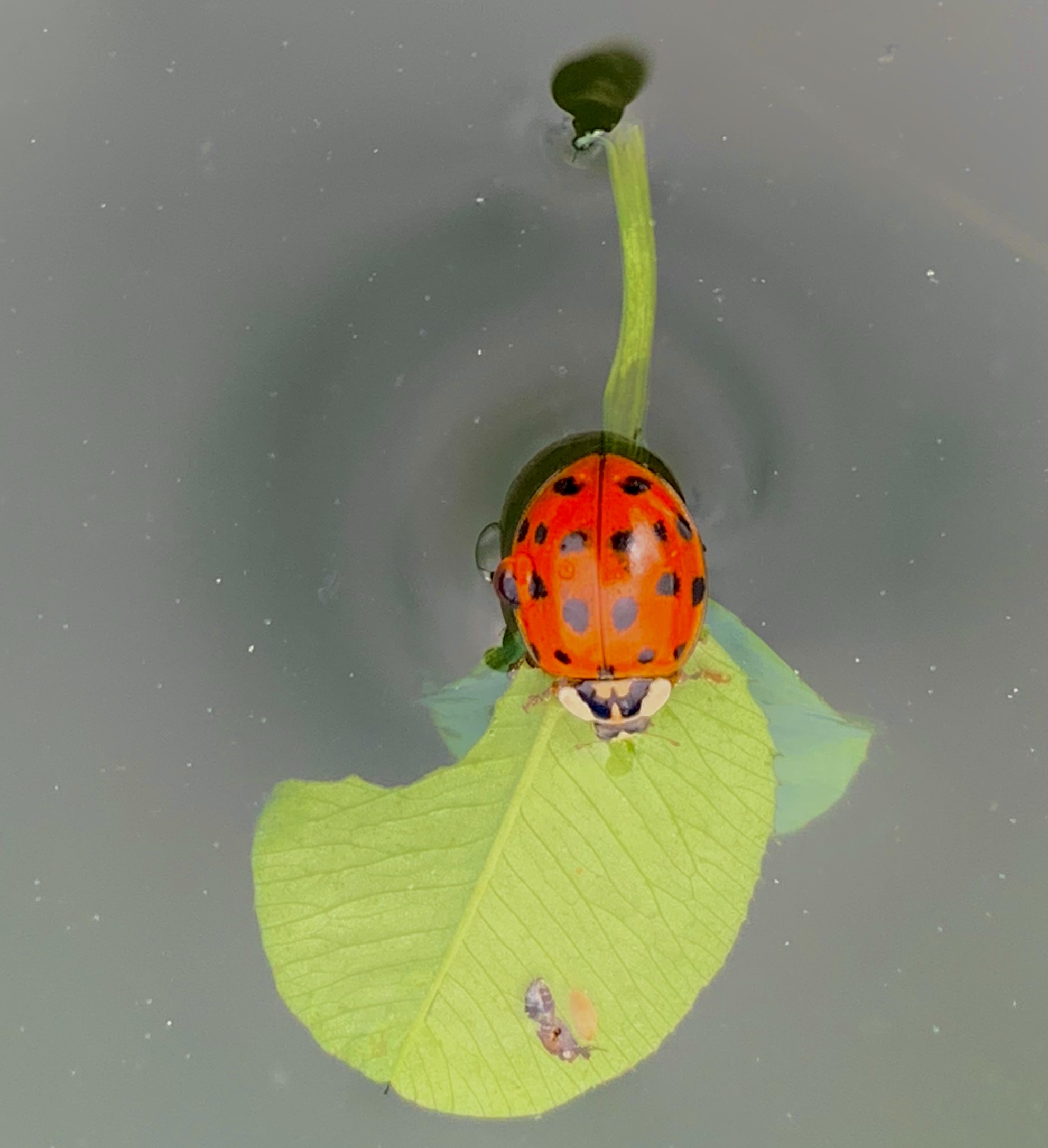
I didn’t stay for the closing hymns and prayers. I felt out of sorts, so I left.
Someone was before me at the door: a child, gazing at a spot on her wrist.
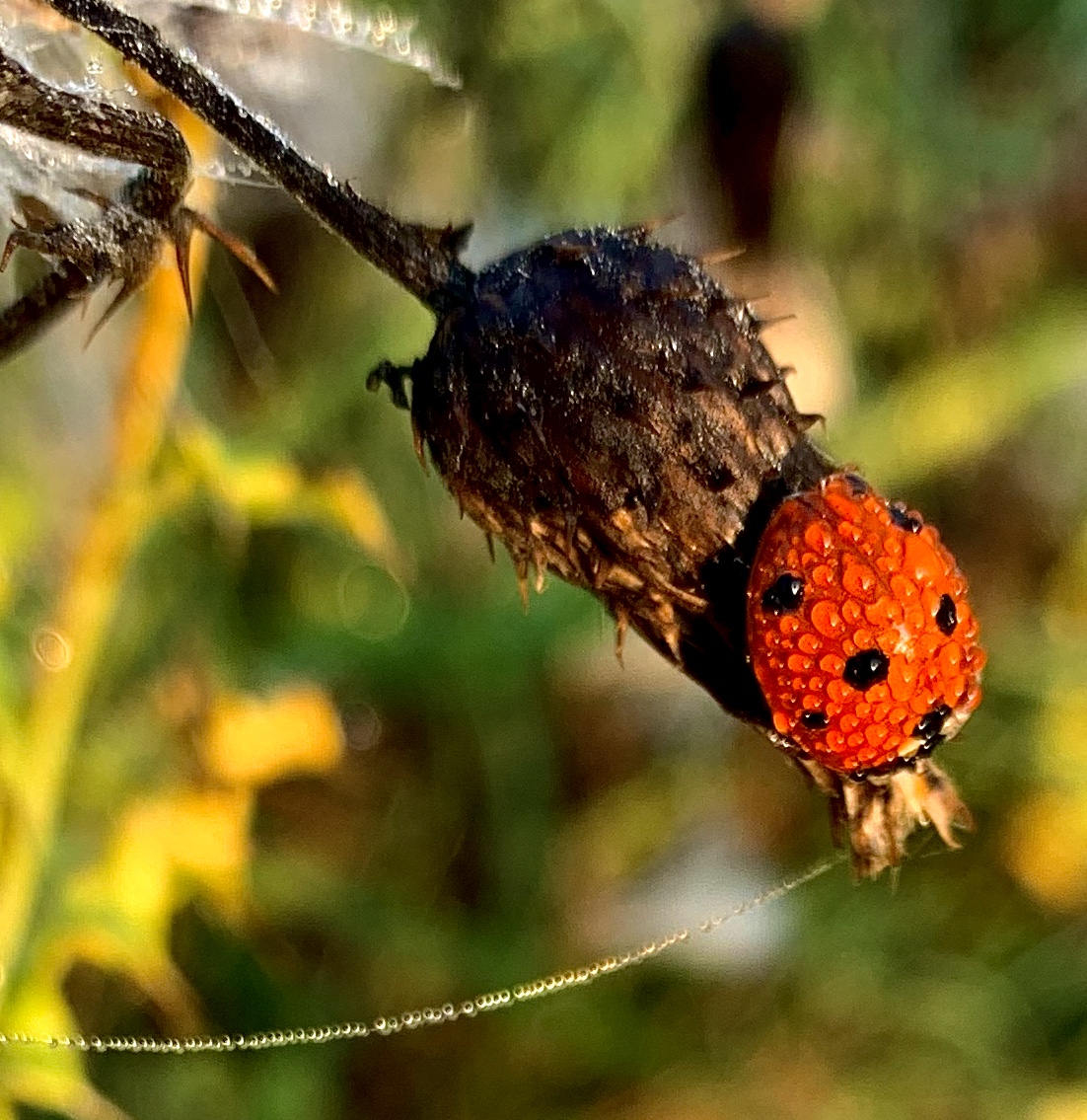
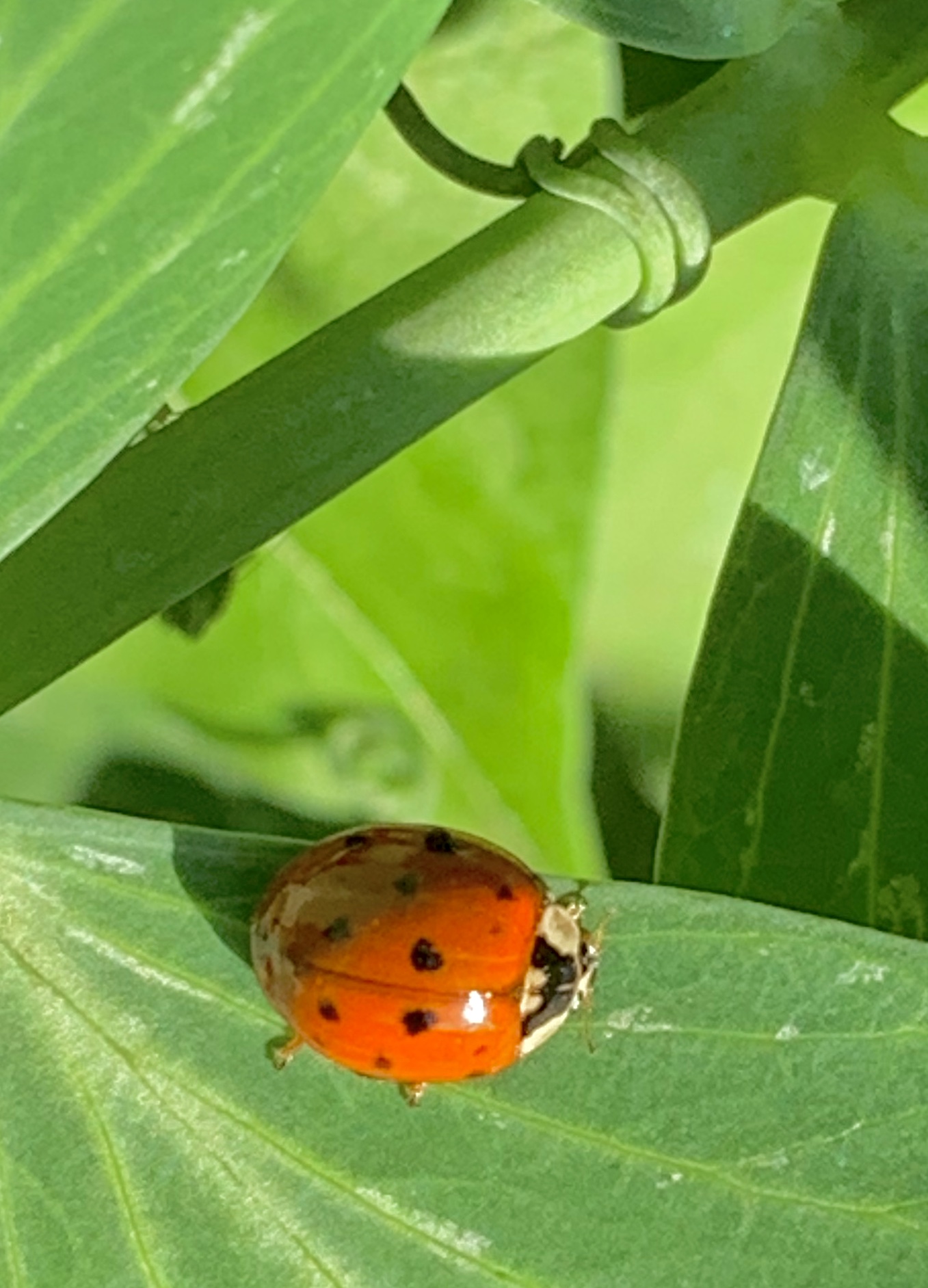
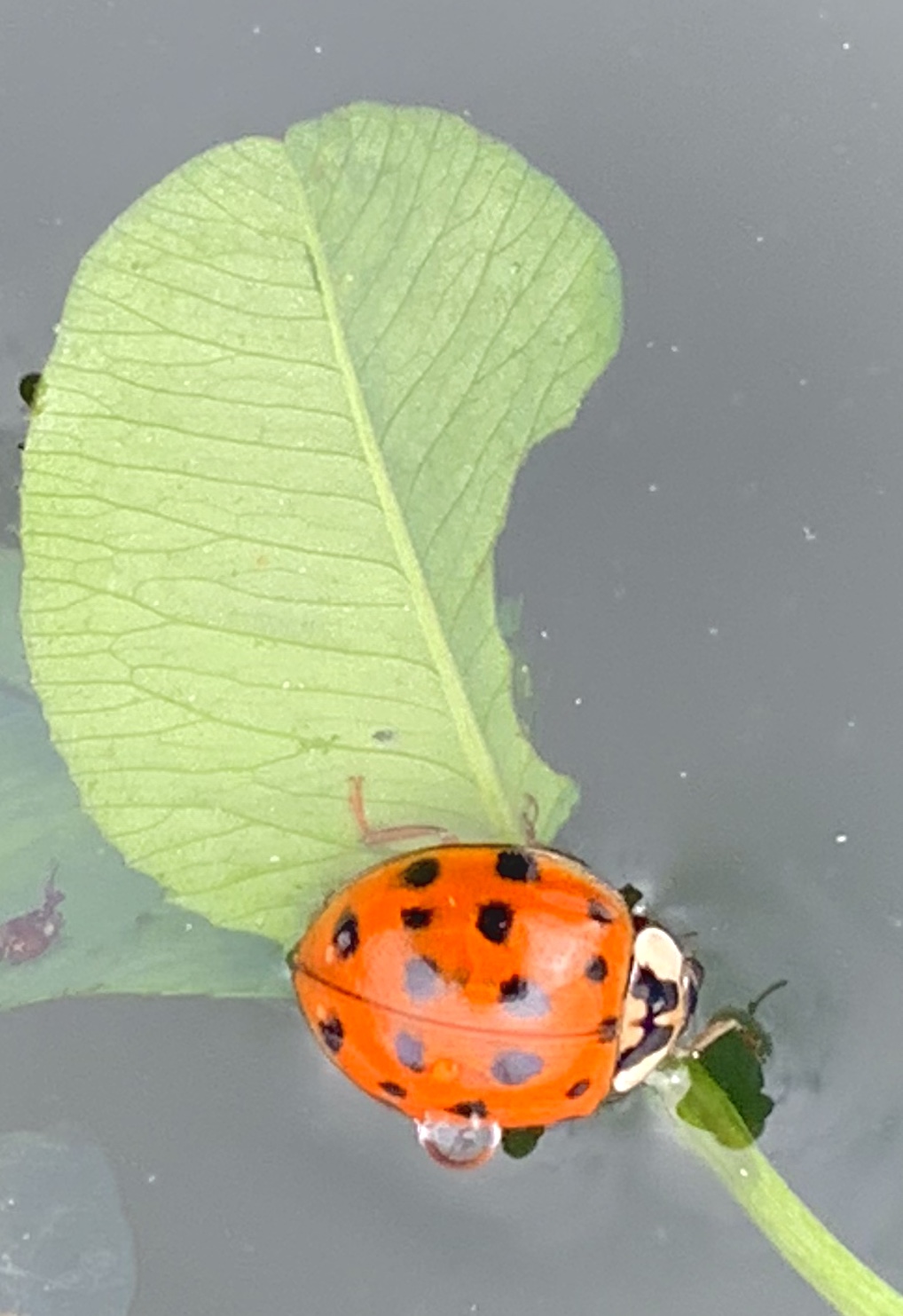
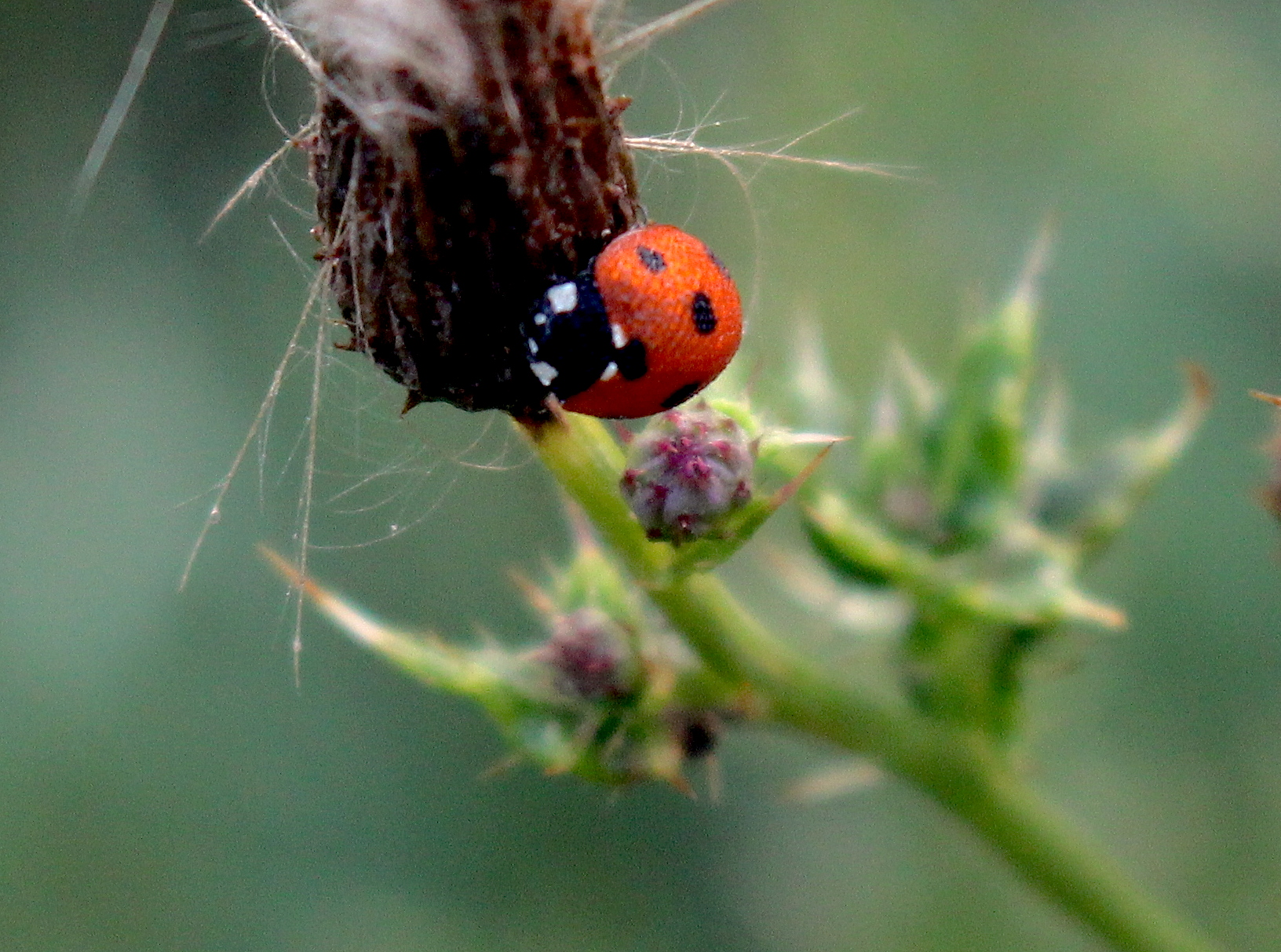
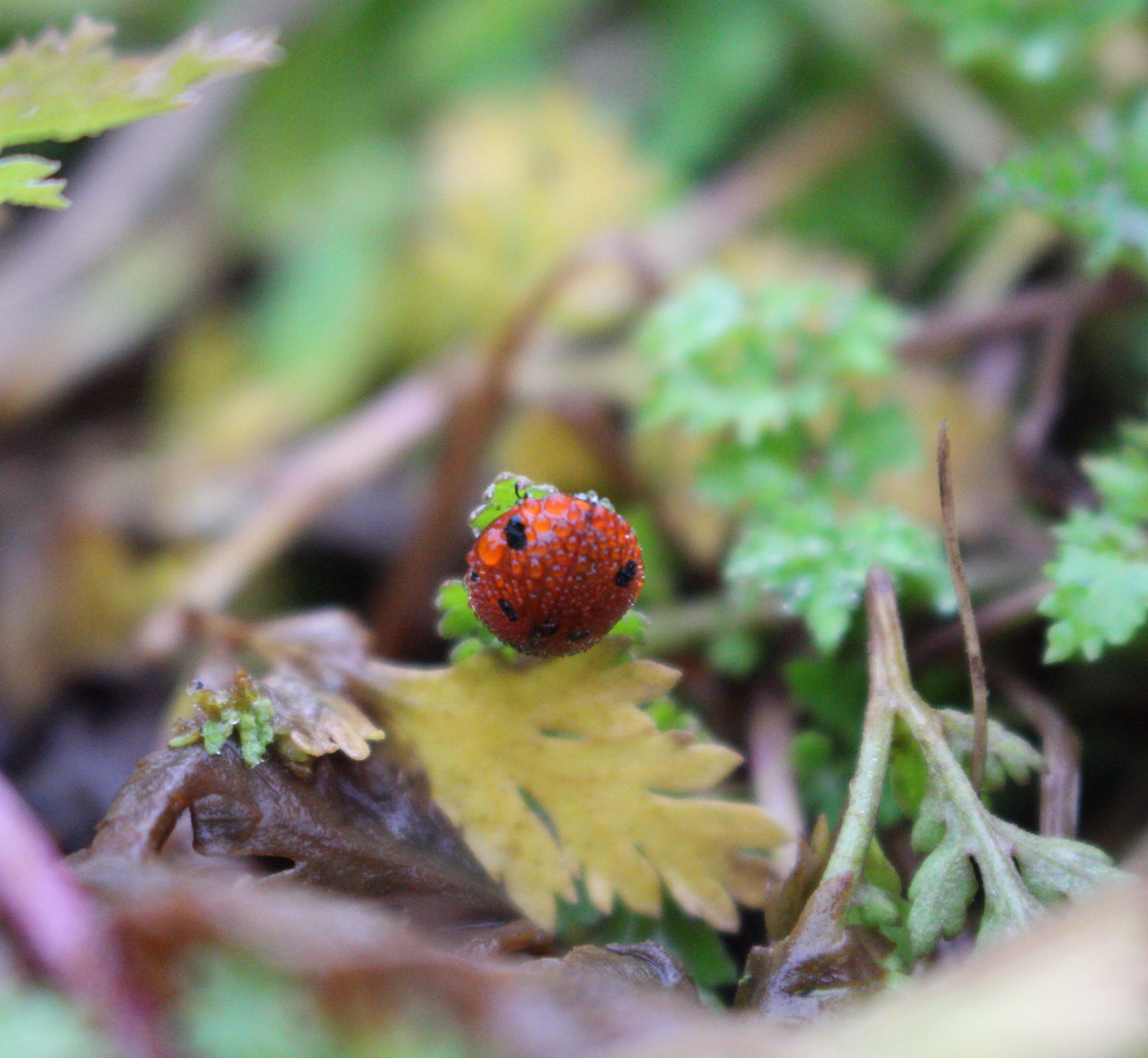
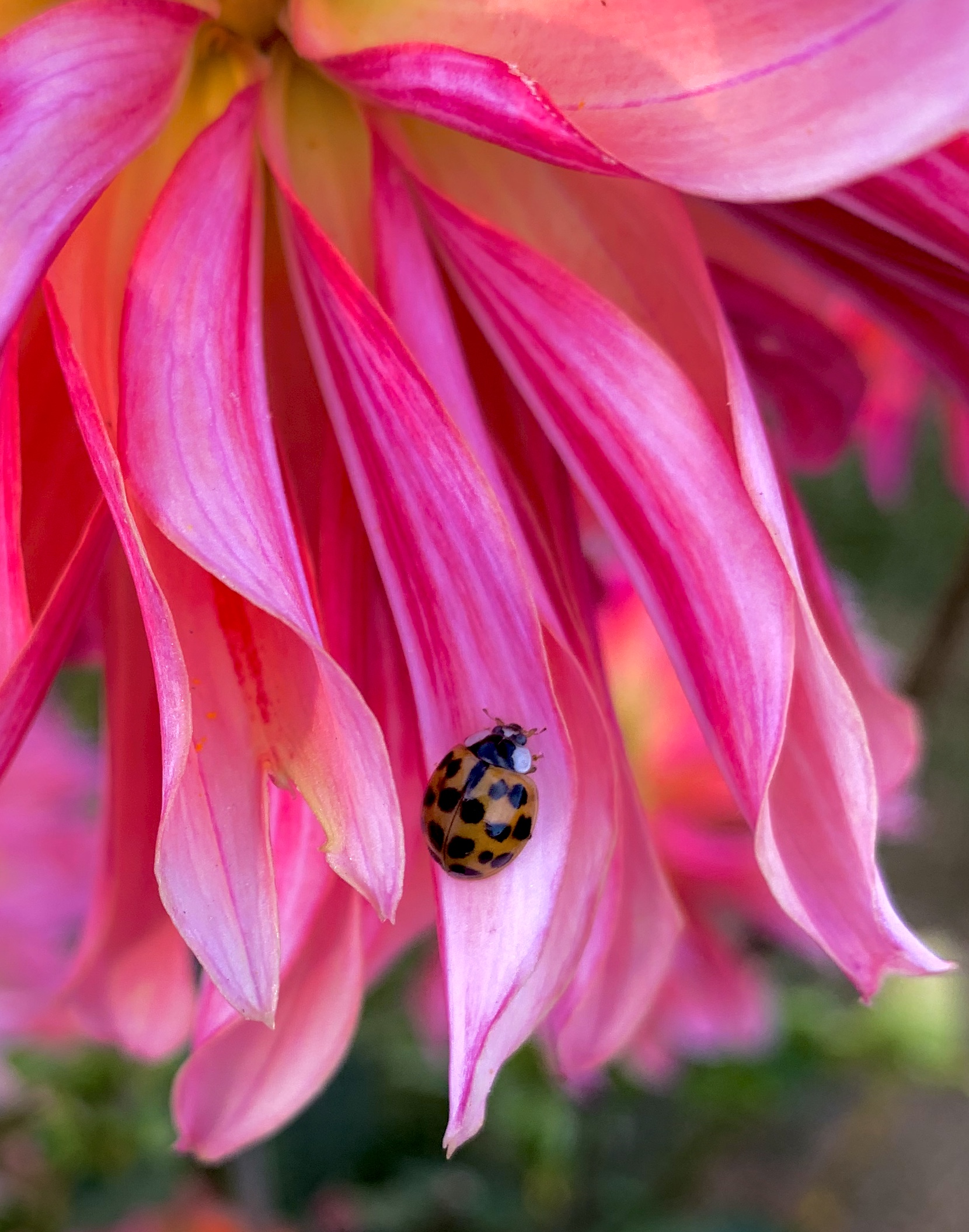
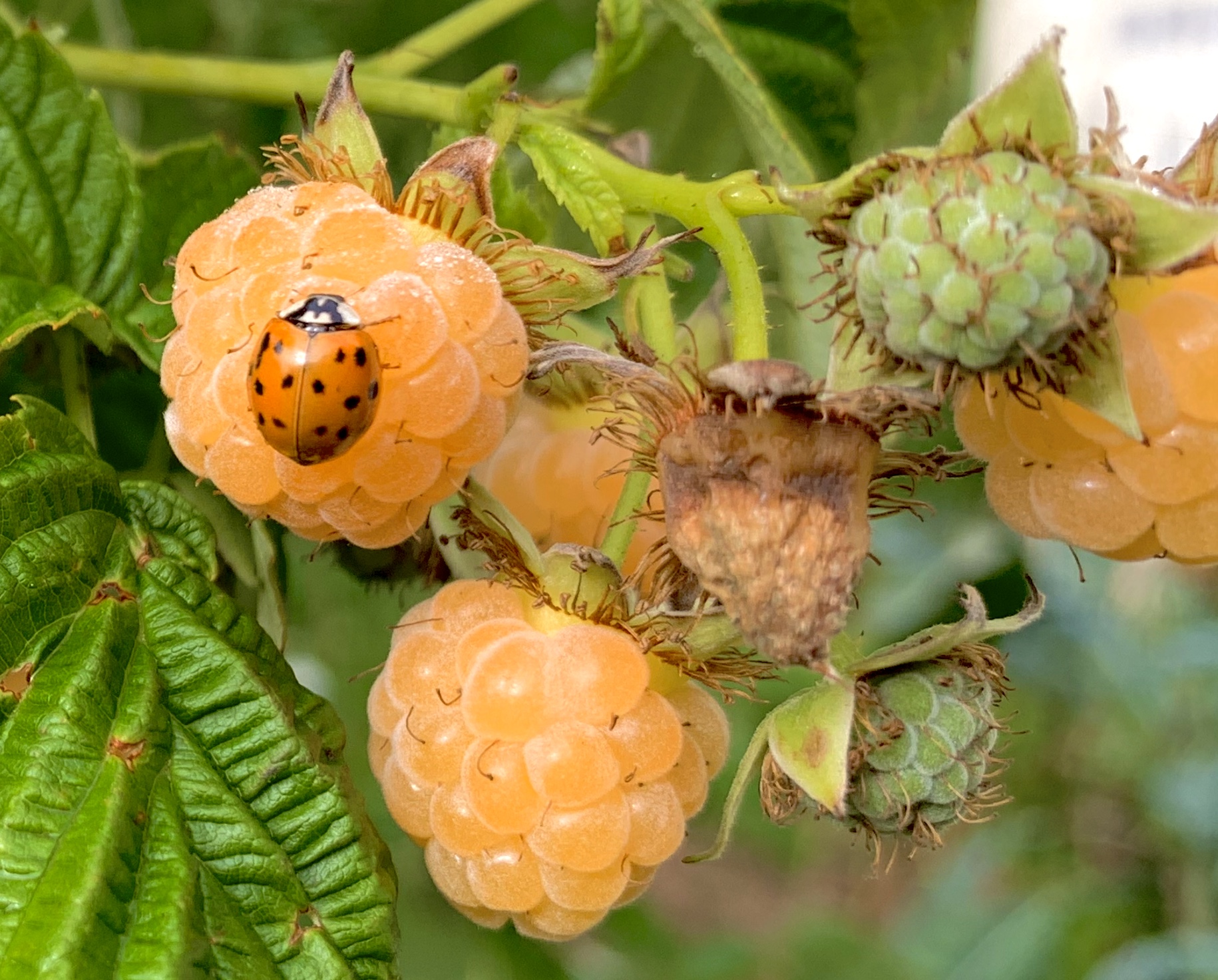
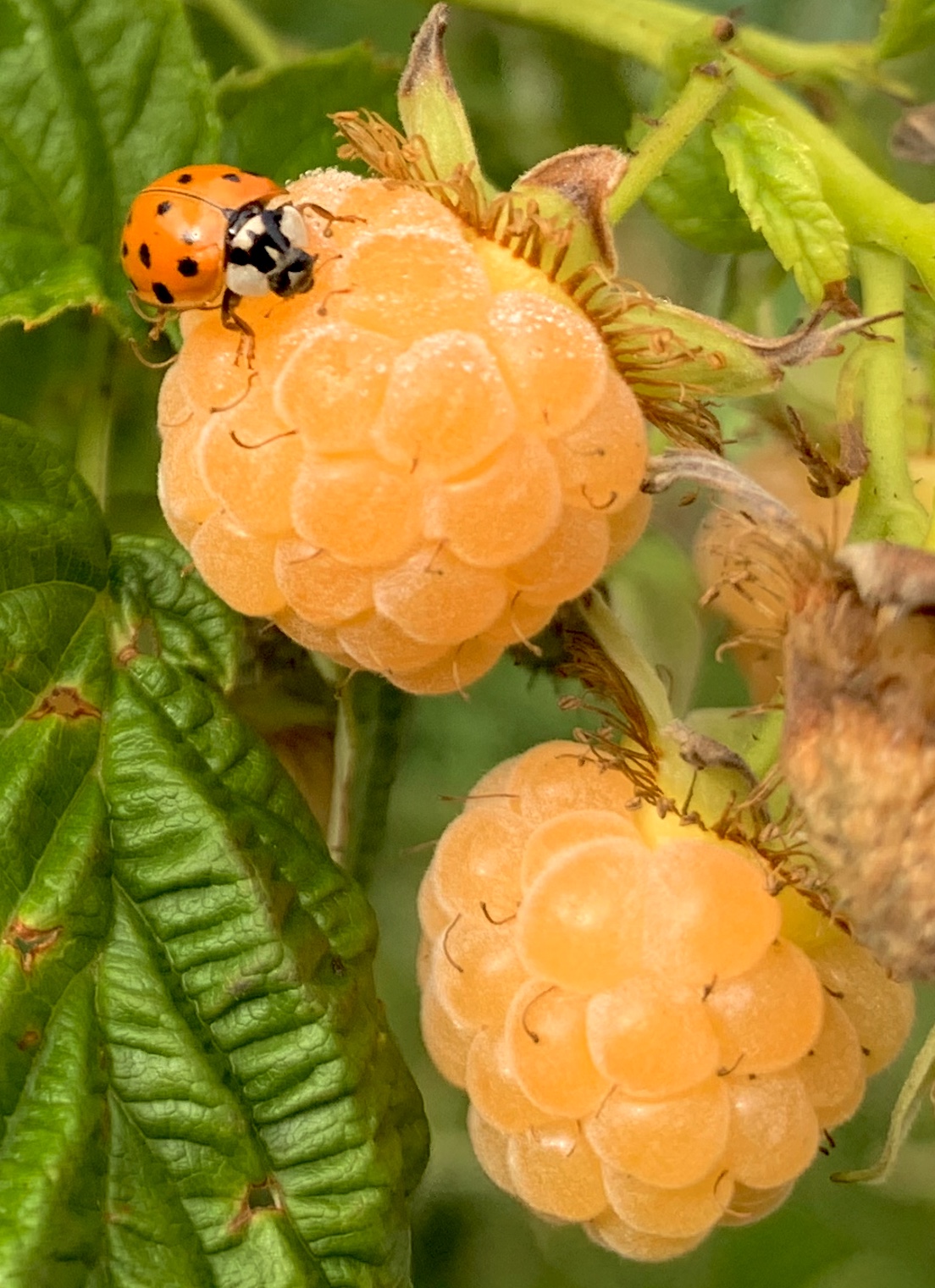
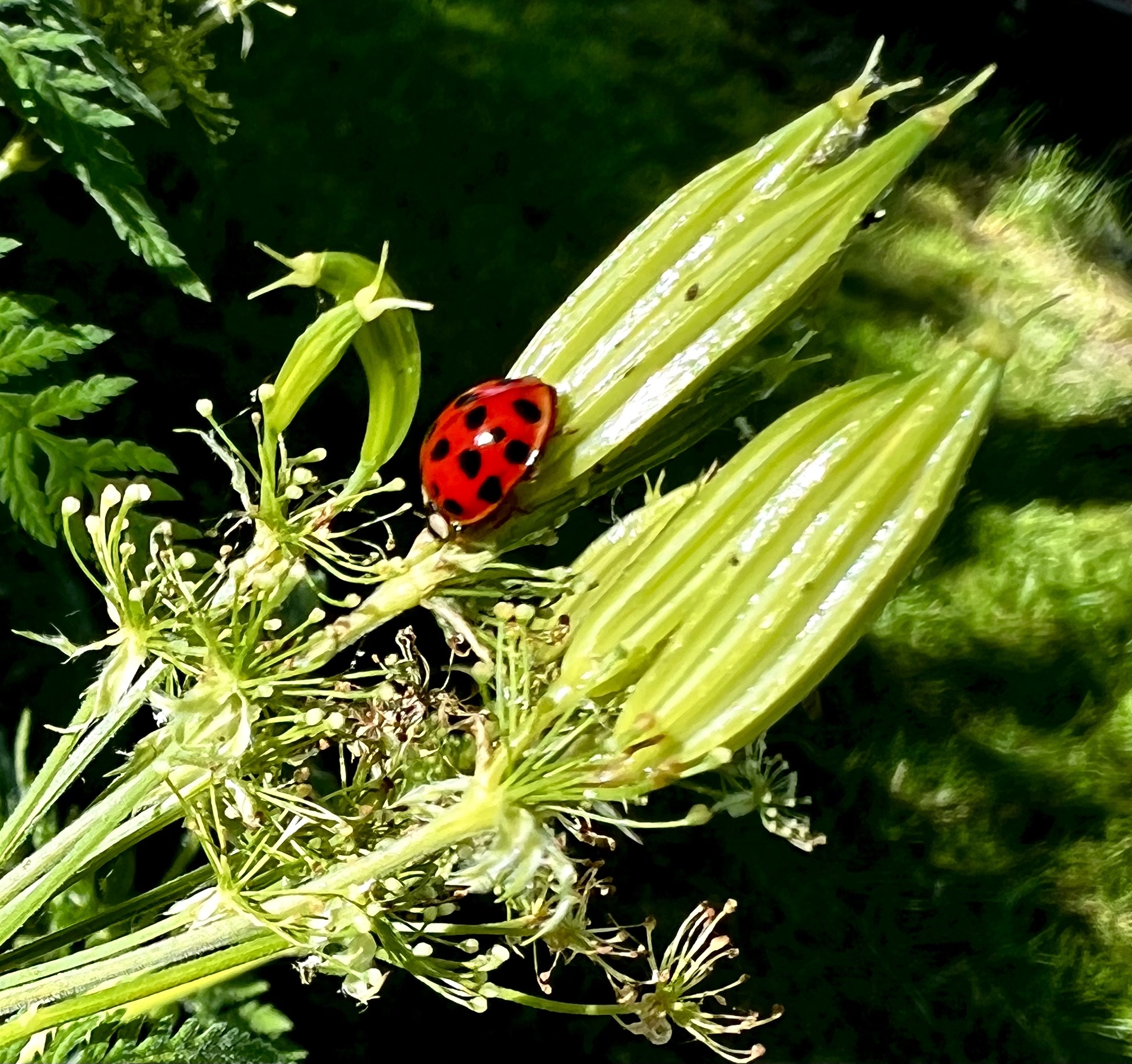
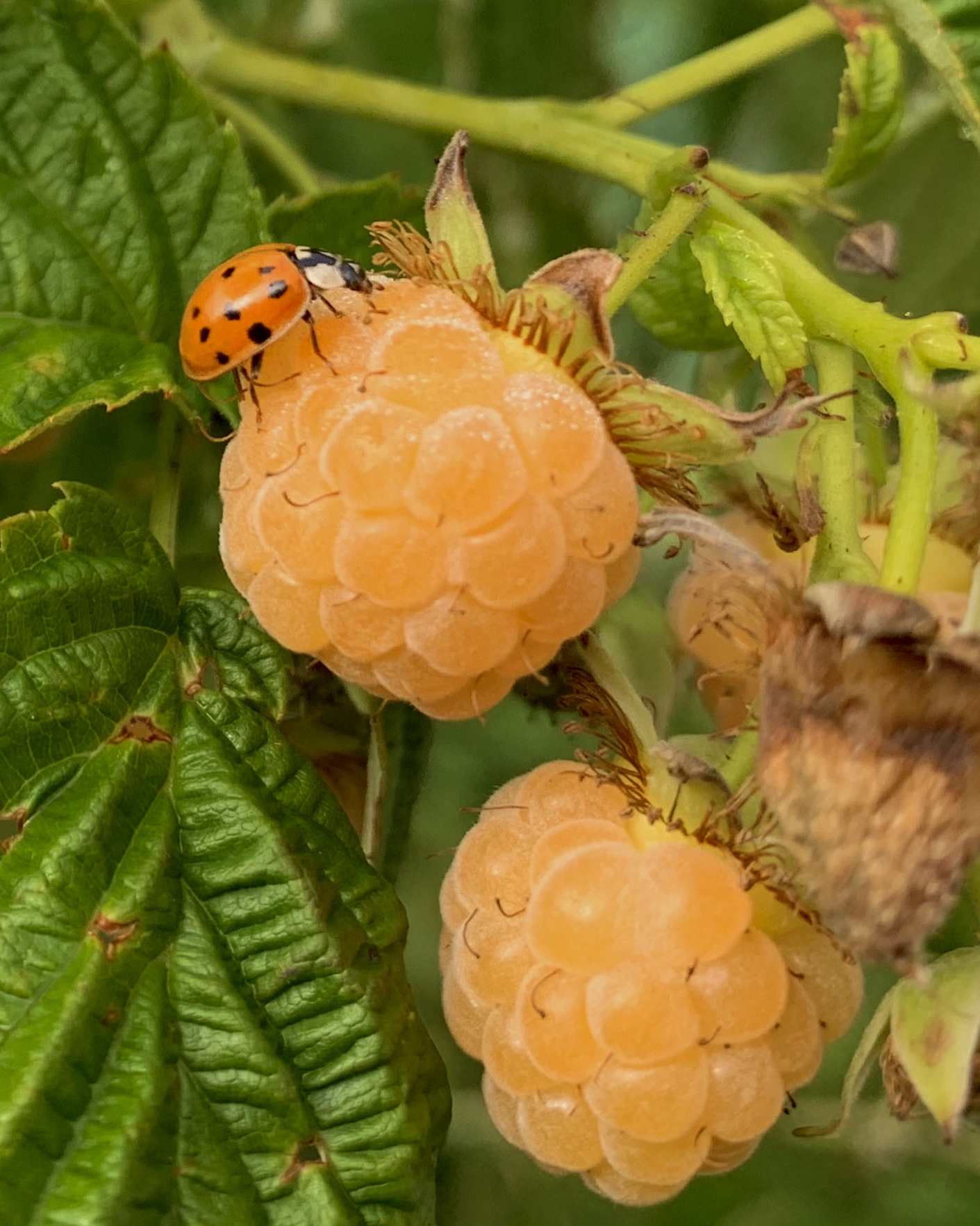
She said, “Can you help me?” “What is it?” “A ladybug,” she said.
So I opened the door, and she said, “It jumped off.” We stood looking around.
“It’ll be all right,” I said. She went in, and I left, taking care where I stepped. ~Louis Simpson “At the Church Door” from The Owner of the House.
Maker of All Things, including appetite, including stealth, including the fear that makes all of us, sometime or other, flee for the sake of our small and precious lives, let me abide in your shadow— let me hold on to the edge of your robe as you determine what you must let be lost and what will be saved.
I will try. I will step from the house to see what I see and hear and I will praise it…
But this too, I believe, is a place where God is keeping watch until we rise, and step forth again… ~Mary Oliver from “Red Bird”
Even when I am out of sorts, even though my mind is already out the door and the rest of me not far behind, even though I am supposed to have a smile on my face and encouraging words on my lips, even though I should be focusing on who needs my help rather than my own helplessness.
Then, somehow, there is solace.
I am plucked out of my doldrums and given a chance to reset and start over – God intervenes in the least likely way so that I see things differently, by watching where I am stepping to protect the defenseless rather than plunge, lurch, stumble, crush my way back to the world.
I am a rescuer rescued, encouraged by encouragement, ready to step forth in compassion.
God is keeping watch over the mere lady bug and merest me.
One-Time
Monthly
Yearly
Make a one-time or recurring donation to support daily Barnstorming posts
What’s incomplete in me seeks refuge in blackberry bramble and beech trees, where creatures live without dogma and water moves in patterns more ancient than philosophy. I stand still, child eavesdropping on her elders. I don’t speak the language but my body translates best it can, wakening skin and gut, summoning the long kinship we share with everything. ~Laura Grace Weldon, “Common Ground” from Blackbird
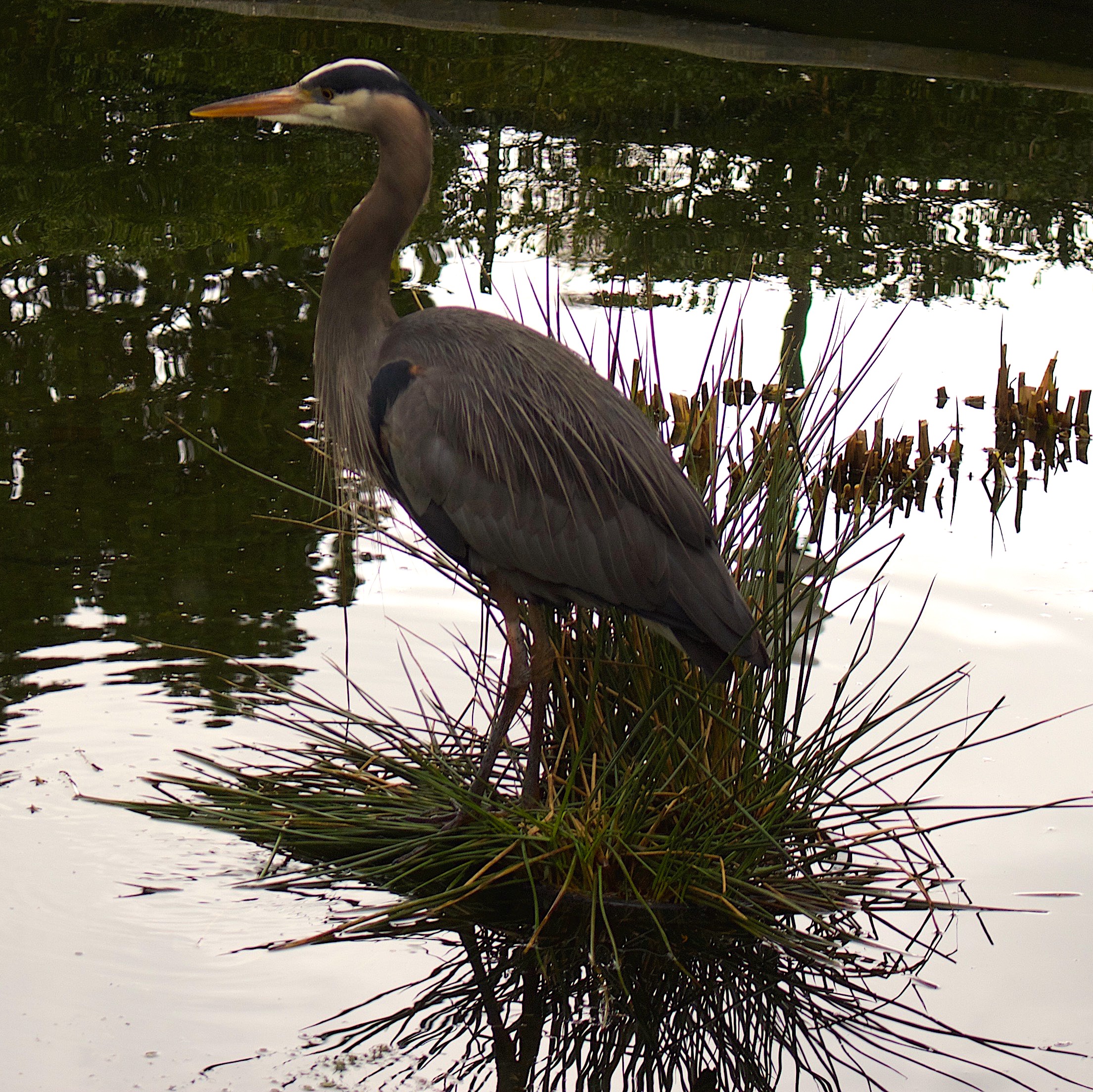
When despair for the world grows in me and I wake in the night at the least sound in fear of what my life and my children’s lives may be, I go and lie down where the wood drake rests in his beauty on the water, and the great heron feeds. I come into the peace of wild things who do not tax their lives with forethought of grief. I come into the presence of still water. And I feel above me the day-blind stars waiting with their light. For a time I rest in the grace of the world, and am free. ~Wendell Berry “The Peace of Wild Things”
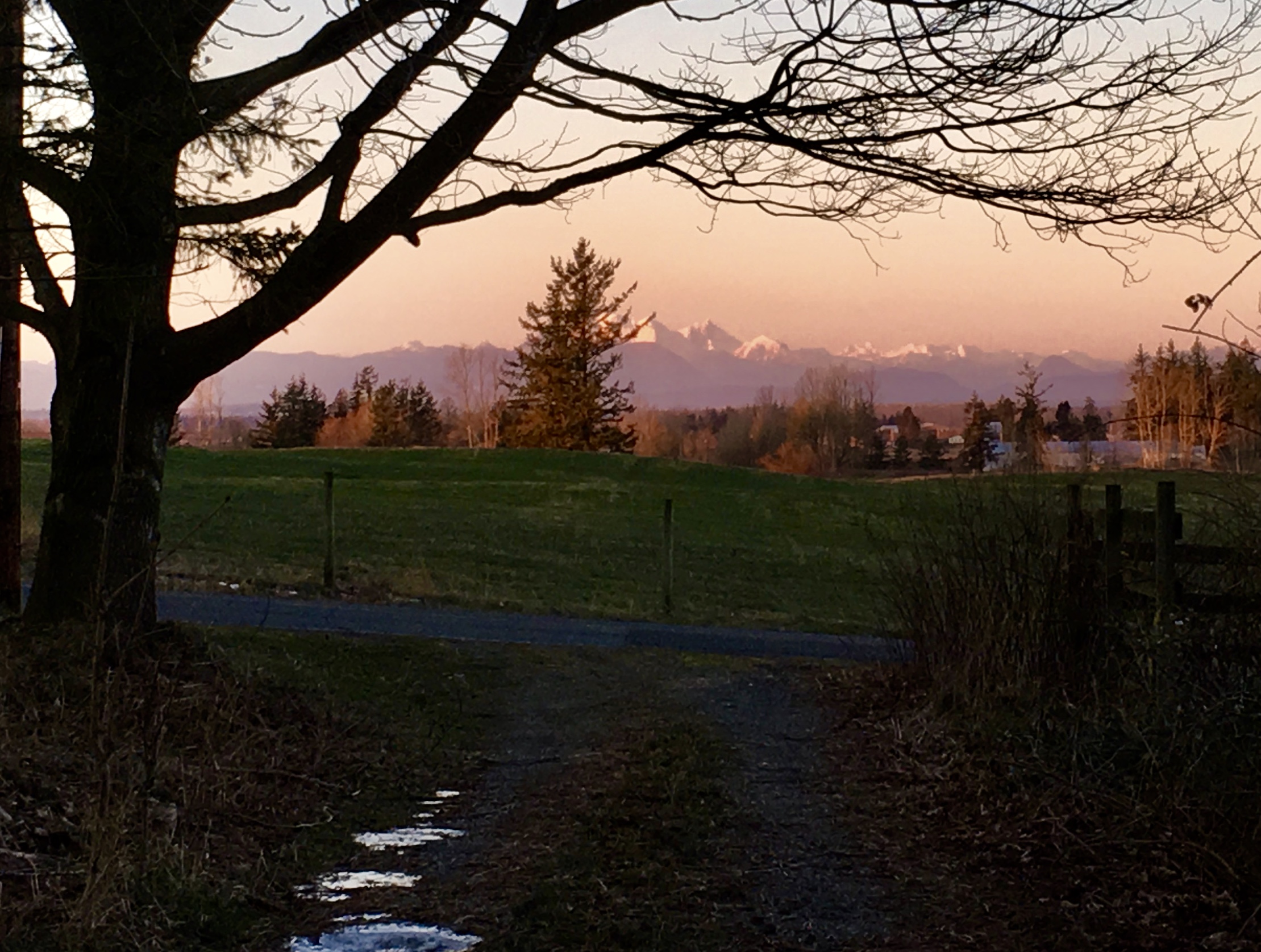
Nearly thirty months of pandemic separation and I long to share our farm with our far-flung grandchildren who live across the ocean, to watch them discover the joys and sorrows of this place we inhabit. I will tell them there is light beyond this darkness, there is refuge amid the brambles, there is kinship with what surrounds us, there is peace amid the chaos, there is a smile behind the tears, there is stillness within the noisiness, there is rescue when all seems hopeless, there is grace as the old gives way to new.
One-Time
Monthly
Yearly
Make a one-time or recurring donation to support daily Barnstorming posts
“I have noticed,” she said slowly, “that time does not really exist for mothers, with regard to their children. It does not matter greatly how old the child is – in the blink of an eye, the mother can see the child again as she was when she was born, when she learned to walk, as she was at any age — at any time, even when the child is fully grown….” ~Diana Gabaldon from Voyager
May the wind always be in her hair May the sky always be wide with hope above her And may all the hills be an exhilaration the trials but a trail, all the stones but stairs to God.
May she be bread and feed many with her life and her laughter May she be thread and mend brokenness and knit hearts… ~Ann Voskamp from “A Prayer for a Daughter”
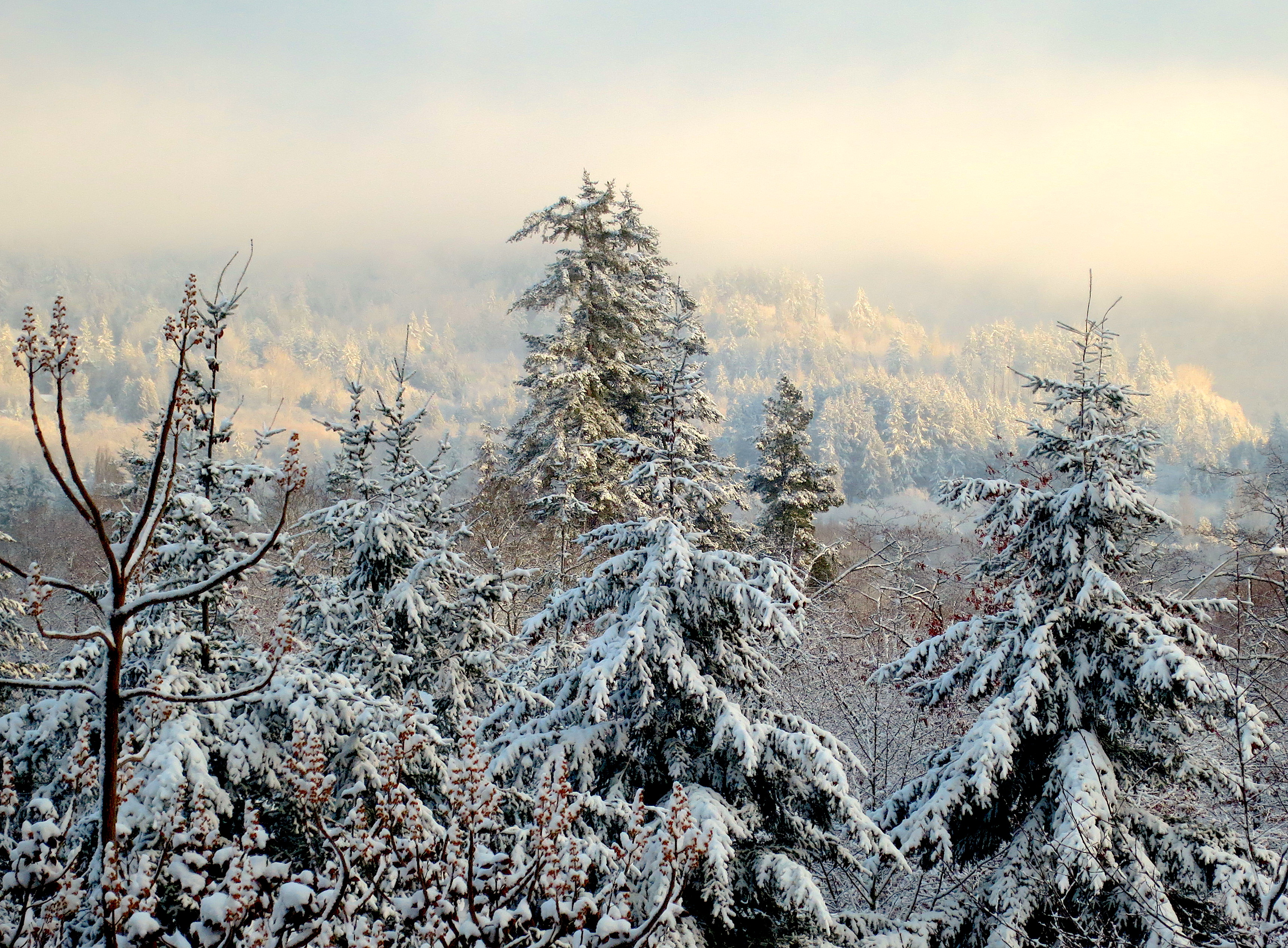
Your rolling and stretching had grown quieter that stormy winter night twenty nine years ago, but still no labor came as it should. Already a week overdue post-Christmas, you clung to amnion and womb, not yet ready. Then as the wind blew more wicked and snow flew sideways, landing in piling drifts, the roads became more impassable, nearly impossible to traverse.
So your dad and I tried, concerned about your stillness and my advanced age, worried about being stranded on the farm far from town. So a neighbor came to stay with your brothers overnight, we headed down the road and our car got stuck in a snowpile in the deep darkness, our tires spinning, whining against the snow. Another neighbor’s earth mover dug us out to freedom.
You floated silent and still, knowing your time was not yet.
Creeping slowly through the dark night blizzard, we arrived to the warm glow of the hospital, your heartbeat checked out steady, all seemed fine.
I slept not at all.
The morning’s sun glistened off sculptured snow as your heart ominously slowed. You and I were jostled, turned, oxygenated, but nothing changed. You beat even more slowly, threatening to let loose your tenuous grip on life.
The nurses’ eyes told me we had trouble. The doctor, grim faced, announced delivery must happen quickly, taking you now, hoping we were not too late. I was rolled, numbed, stunned, clasping your father’s hand, closing my eyes, not wanting to see the bustle around me, trying not to hear the shouted orders, the tension in the voices, the quiet at the moment of opening when it was unknown what would be found.
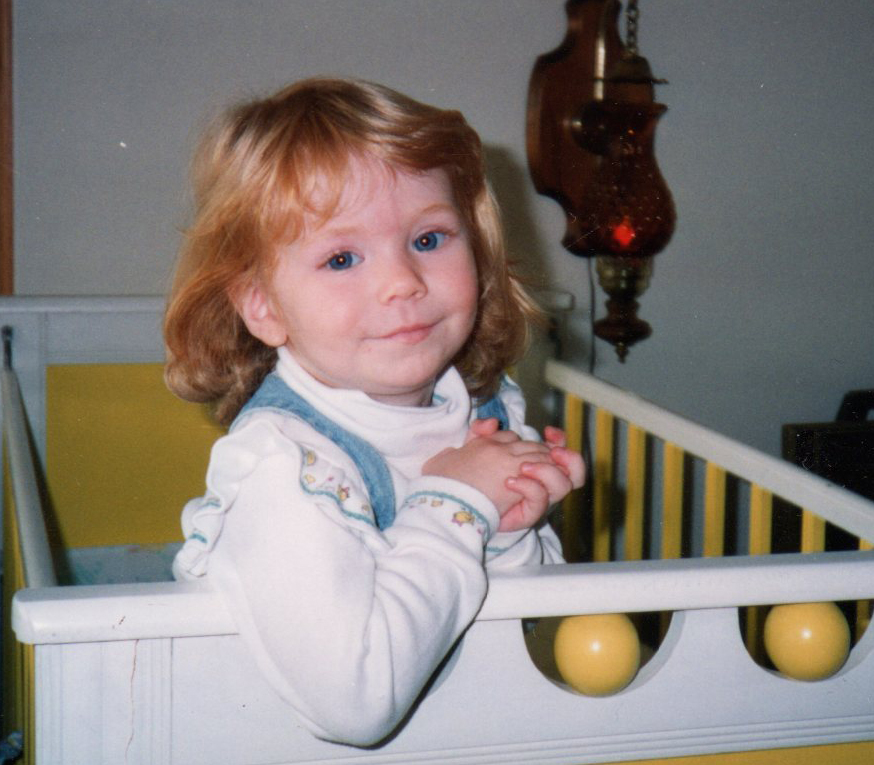
And then you cried. A hearty healthy husky cry, a welcomed song of life uninterrupted. Perturbed and disturbed from the warmth of womb, to the cold shock of a bright lit operating room, your first vocal solo brought applause from the surrounding audience who admired your purplish pink skin, your shock of damp red hair, your blue eyes squeezed tight, then blinking open, wondering and wondrous, emerging and saved from a storm within and without.
You were brought wrapped for me to see and touch before you were whisked away to be checked over thoroughly, your father trailing behind the parade to the nursery. I closed my eyes, swirling in a brain blizzard of what-ifs.
If no snow storm had come, you would have fallen asleep forever within my womb, no longer nurtured by my aging and failing placenta, cut off from what you needed to stay alive. There would have been only our soft weeping, knowing what could have been if we had only known, if God had provided a sign to go for help.
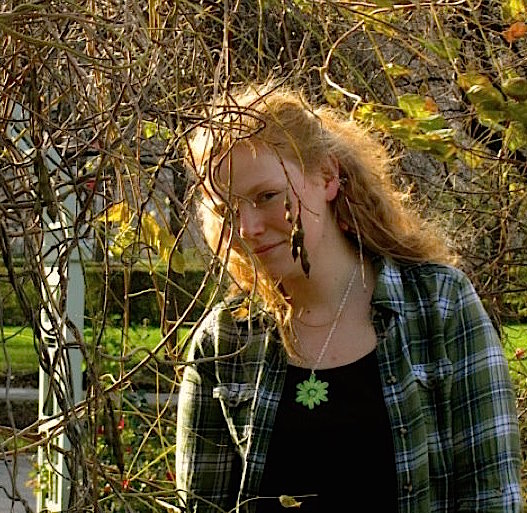
So you were saved by a providential storm and dug out from a drift: I celebrate when I hear your voice singing, and when your students love you as their teacher, knowing you are a thread born to knit and mend hearts, all because of blowing snow.
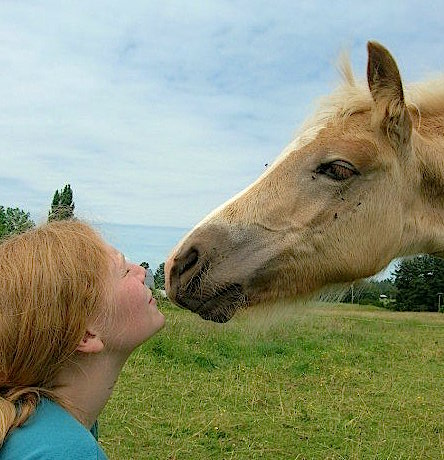
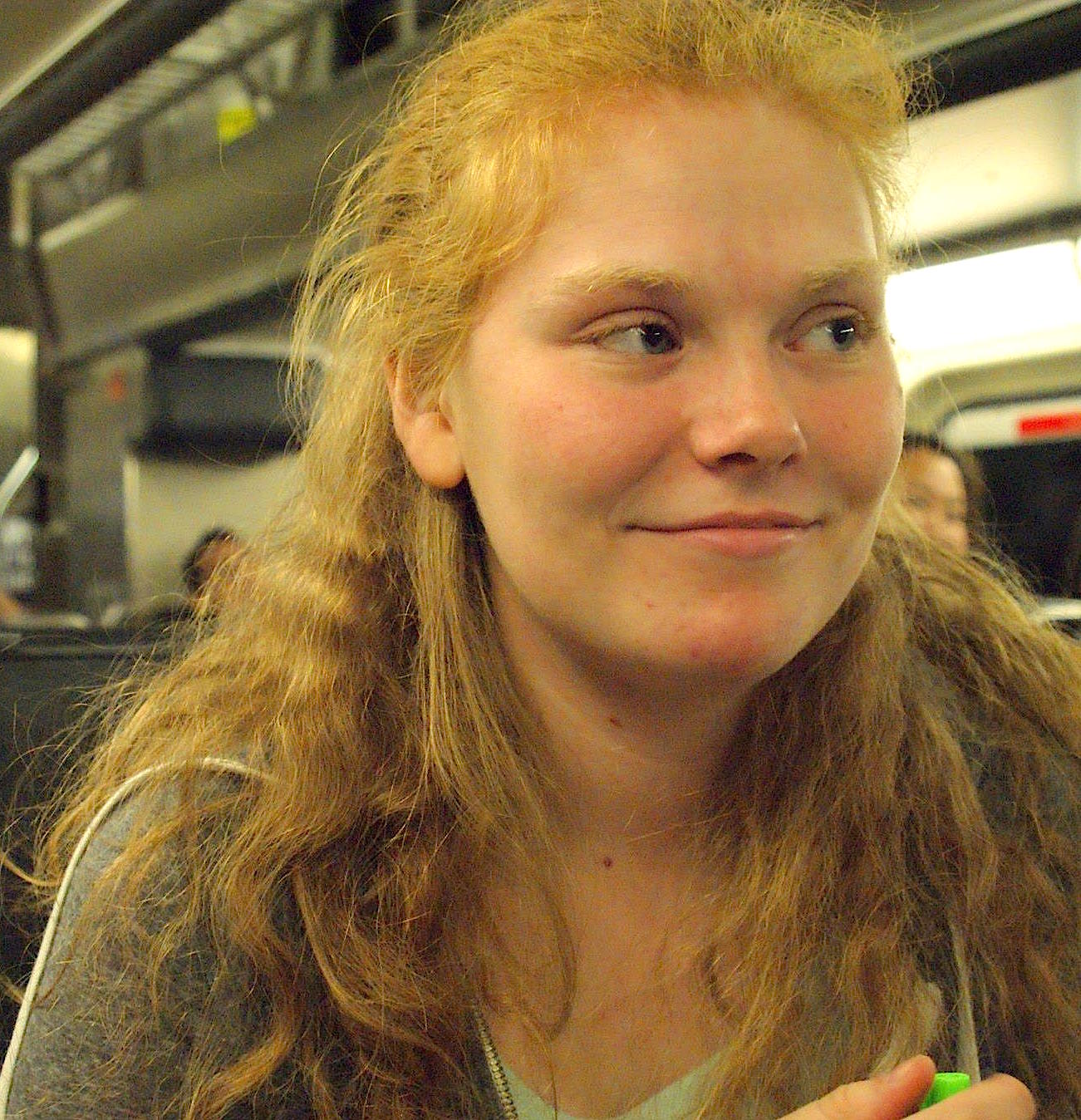
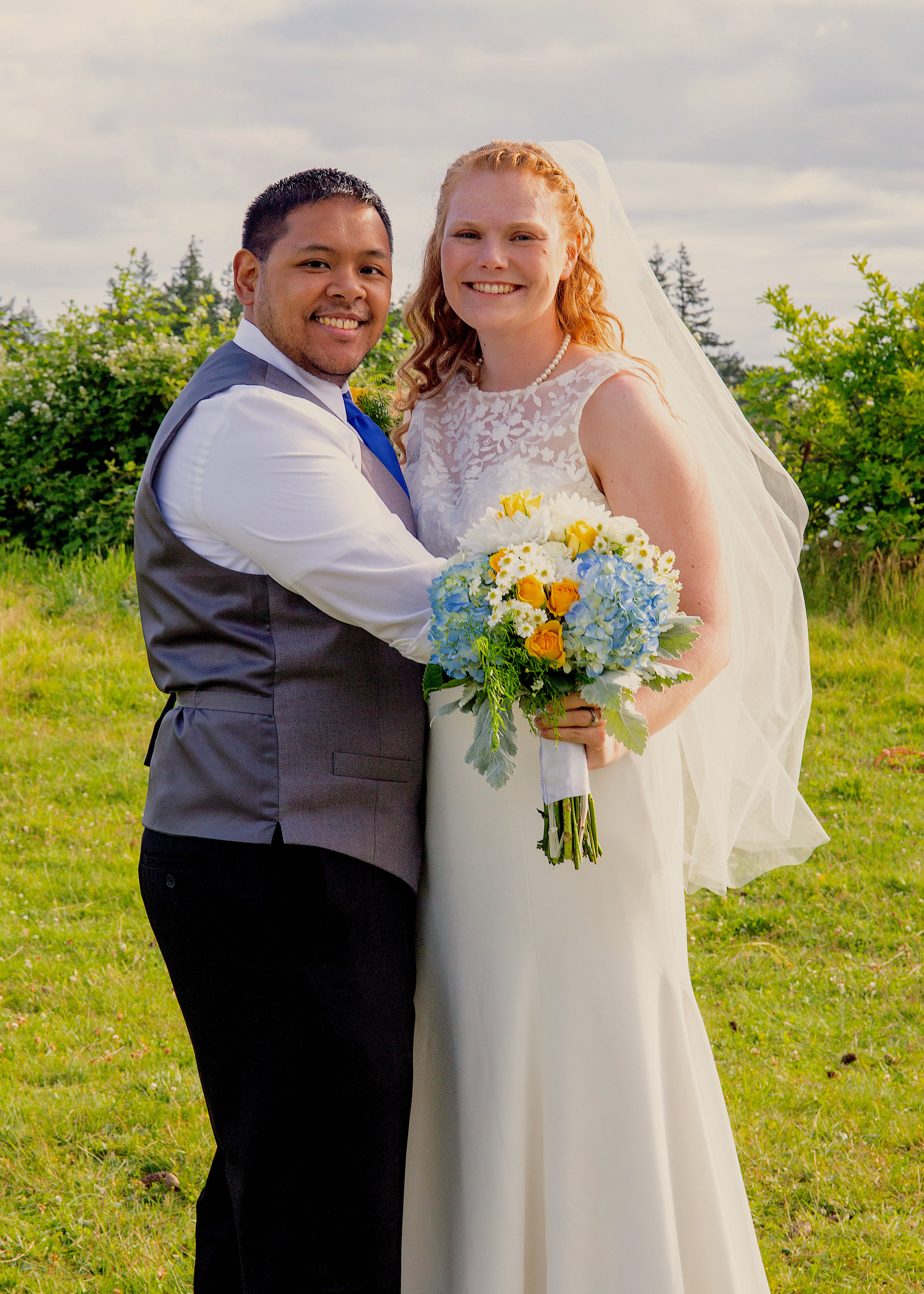
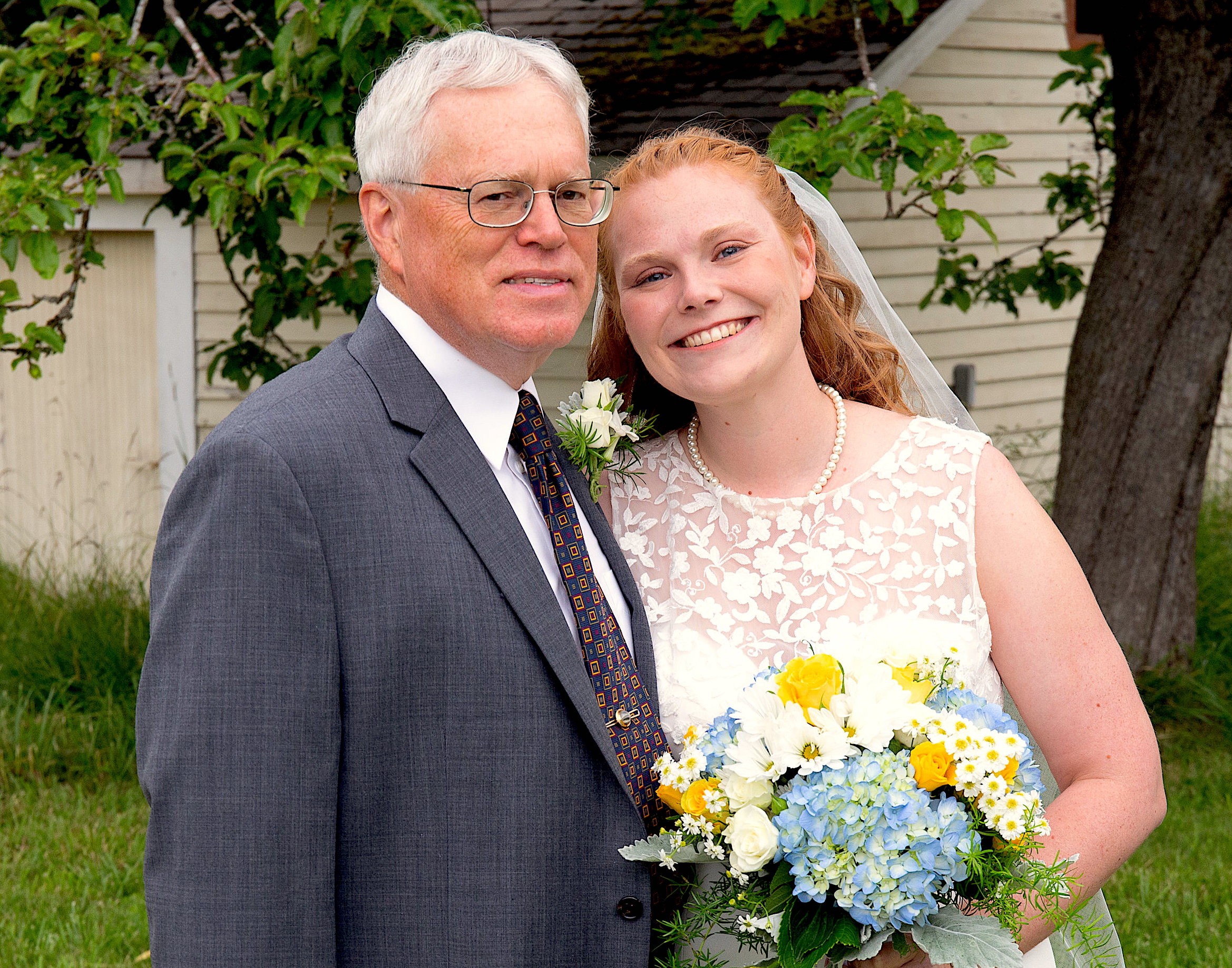
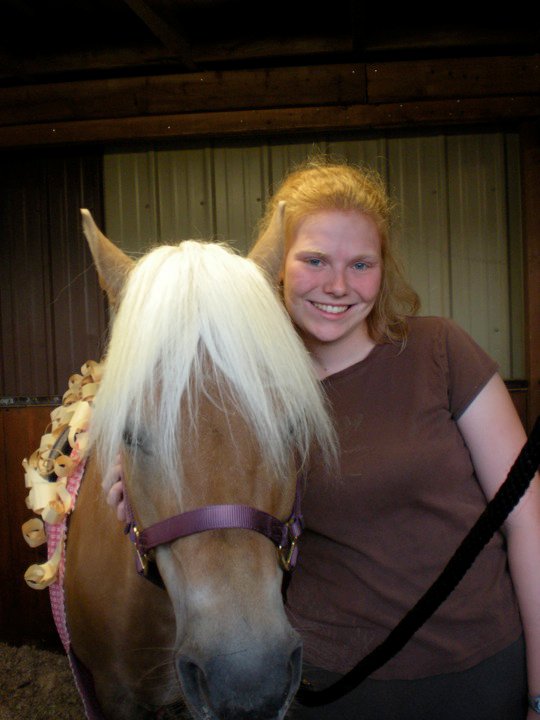
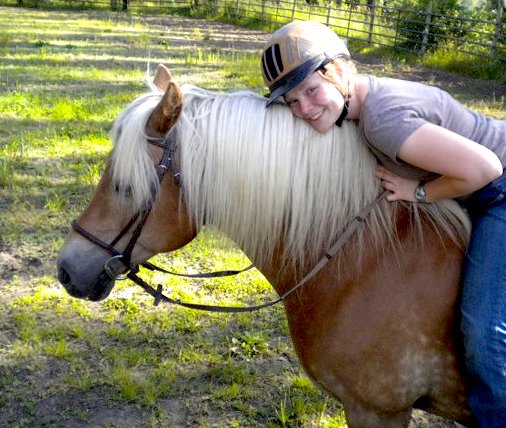
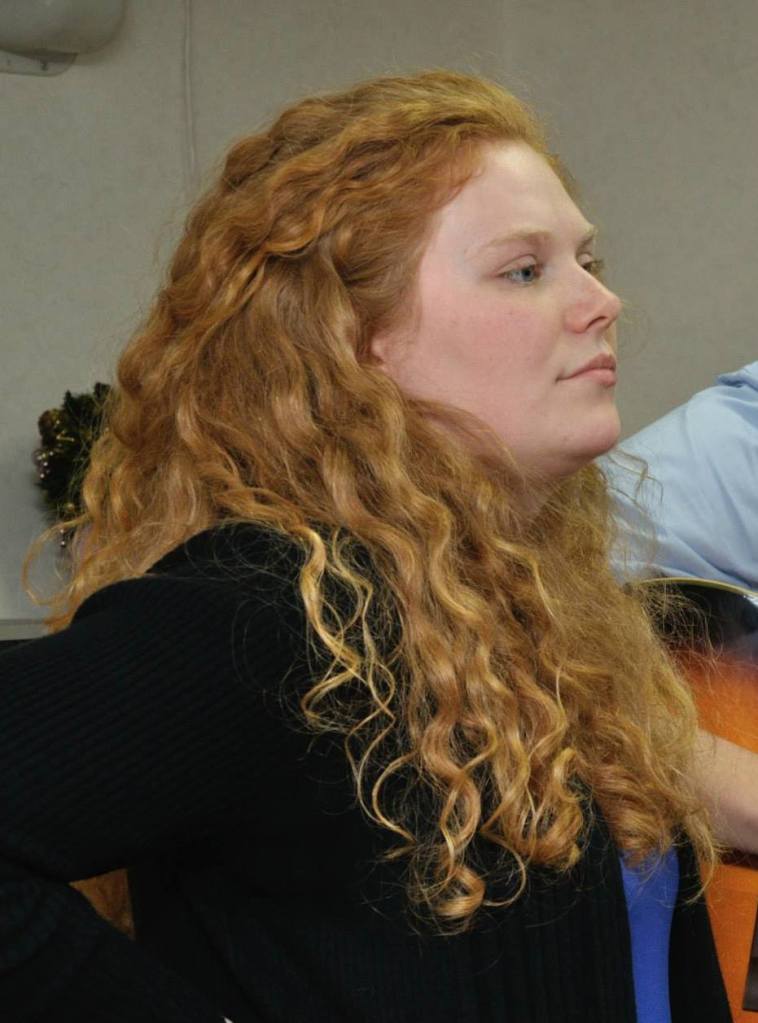
My annual retelling of the most remarkable day of my life when our daughter Eleanor (“Lea”) Sarah Gibson was born, hale and hearty because the good Lord sent a snow and wind storm to blow us into the hospital in time to save her. She is now married to her true love Brian who is another gift sent from the Lord; someday their hope for parenthood will come true for them as well.



























 Barnstorming