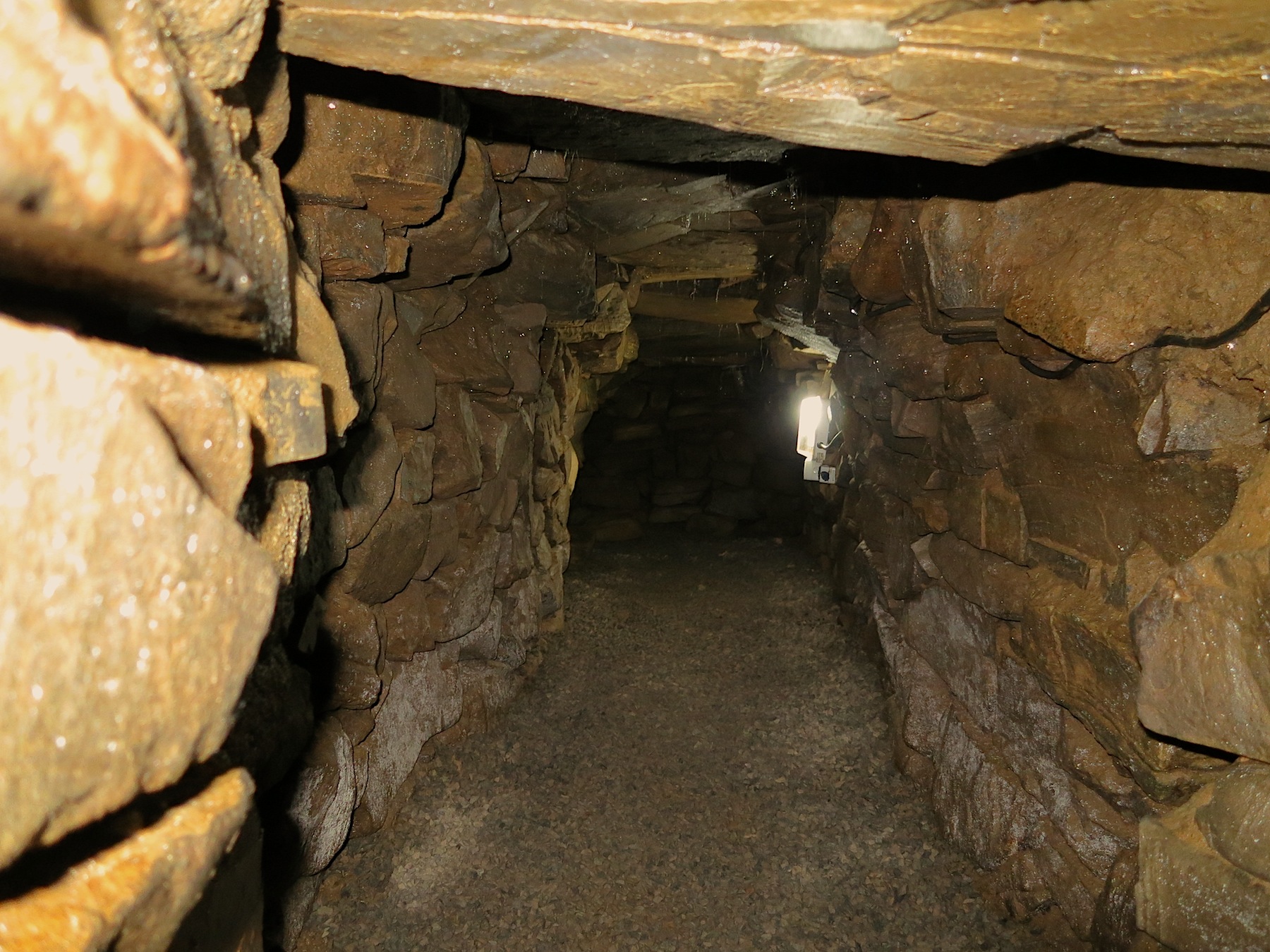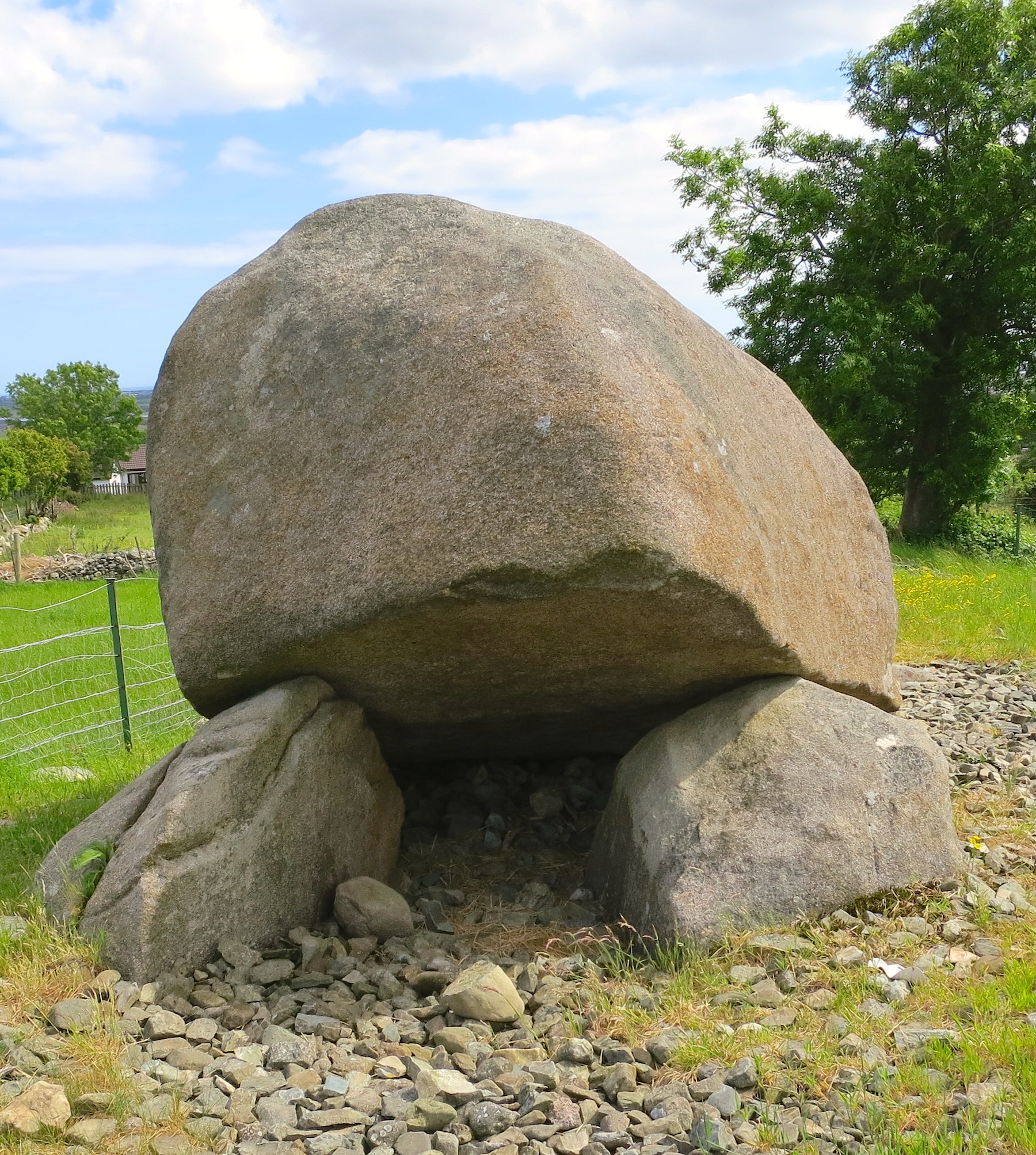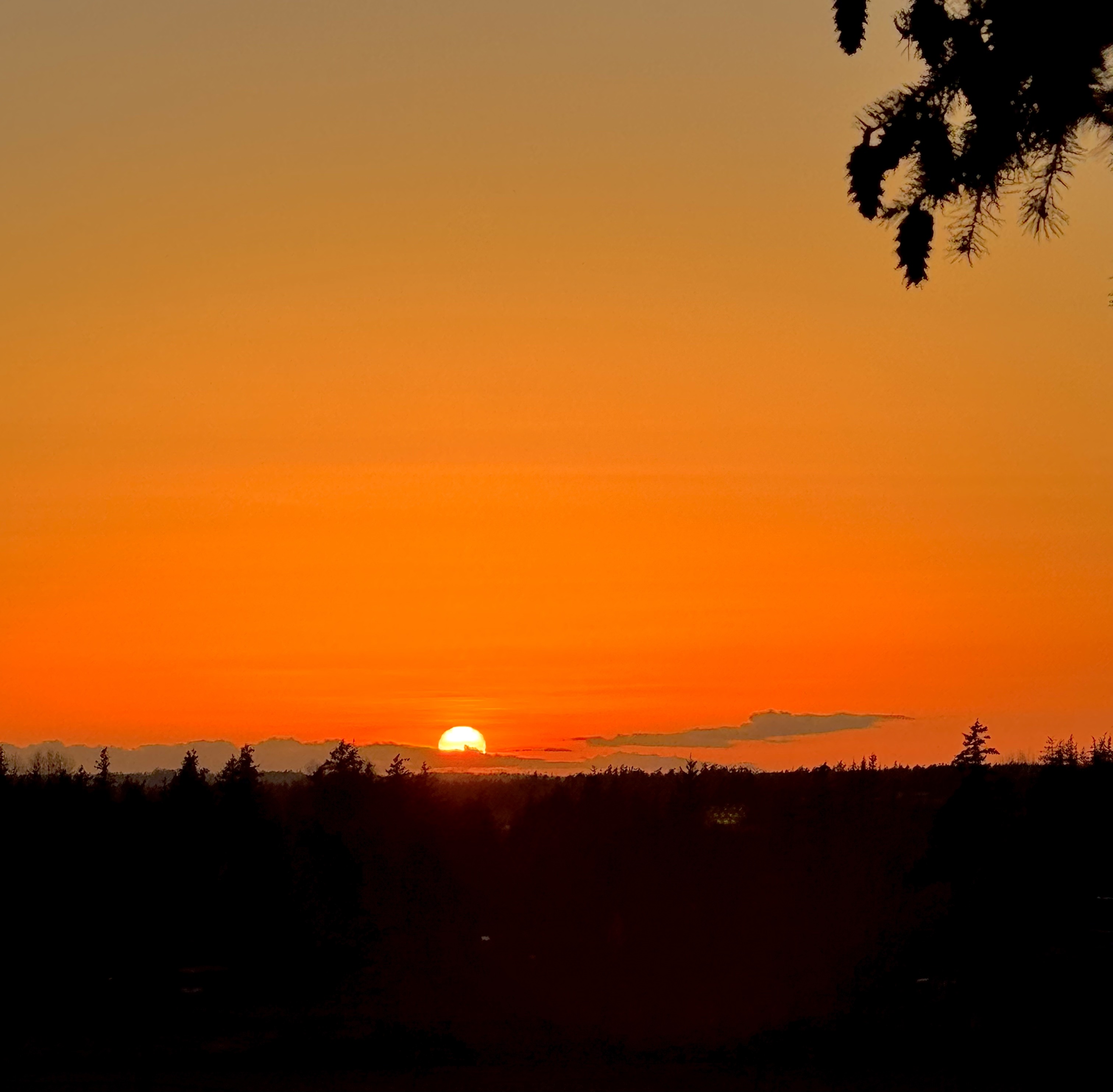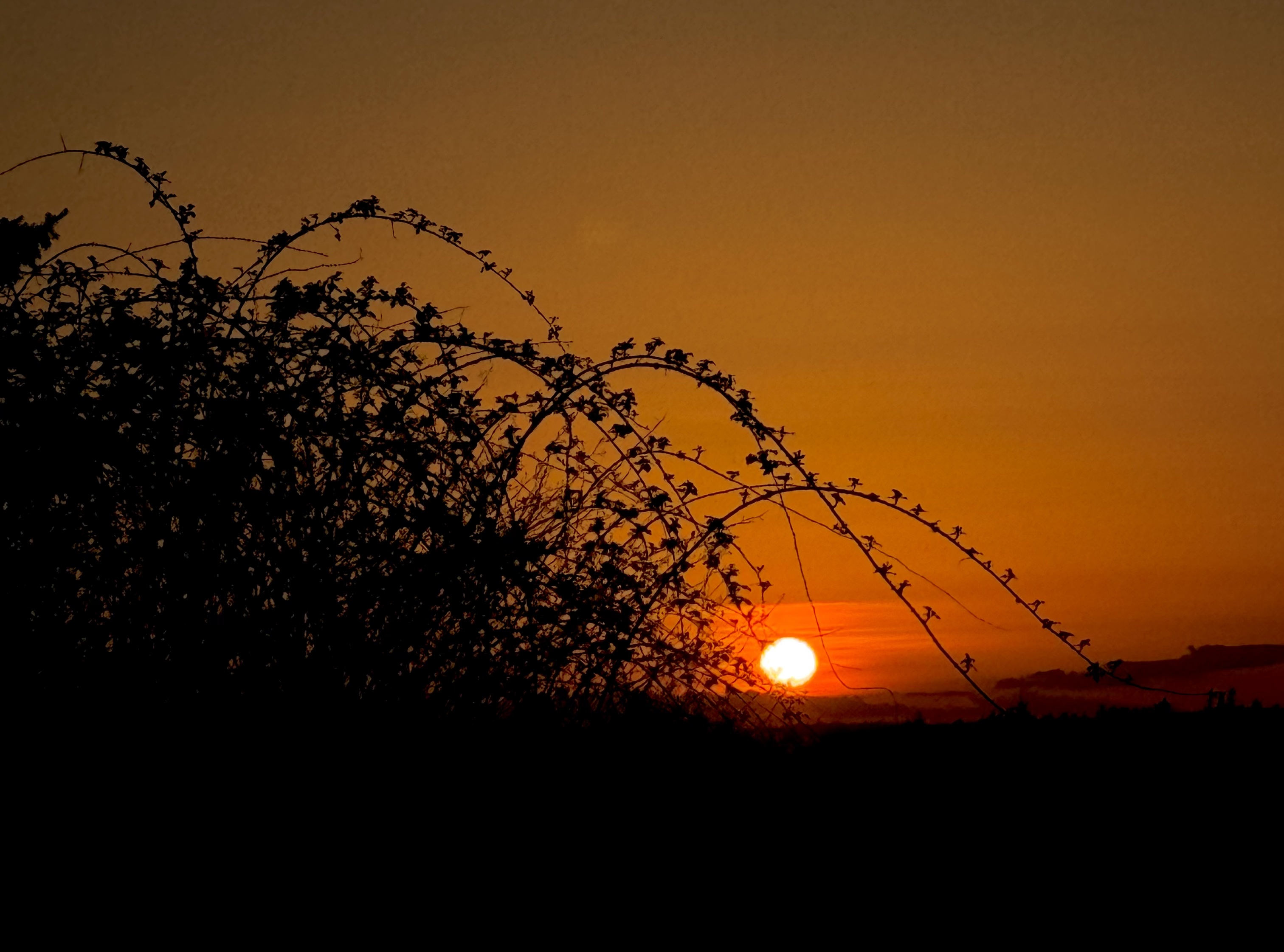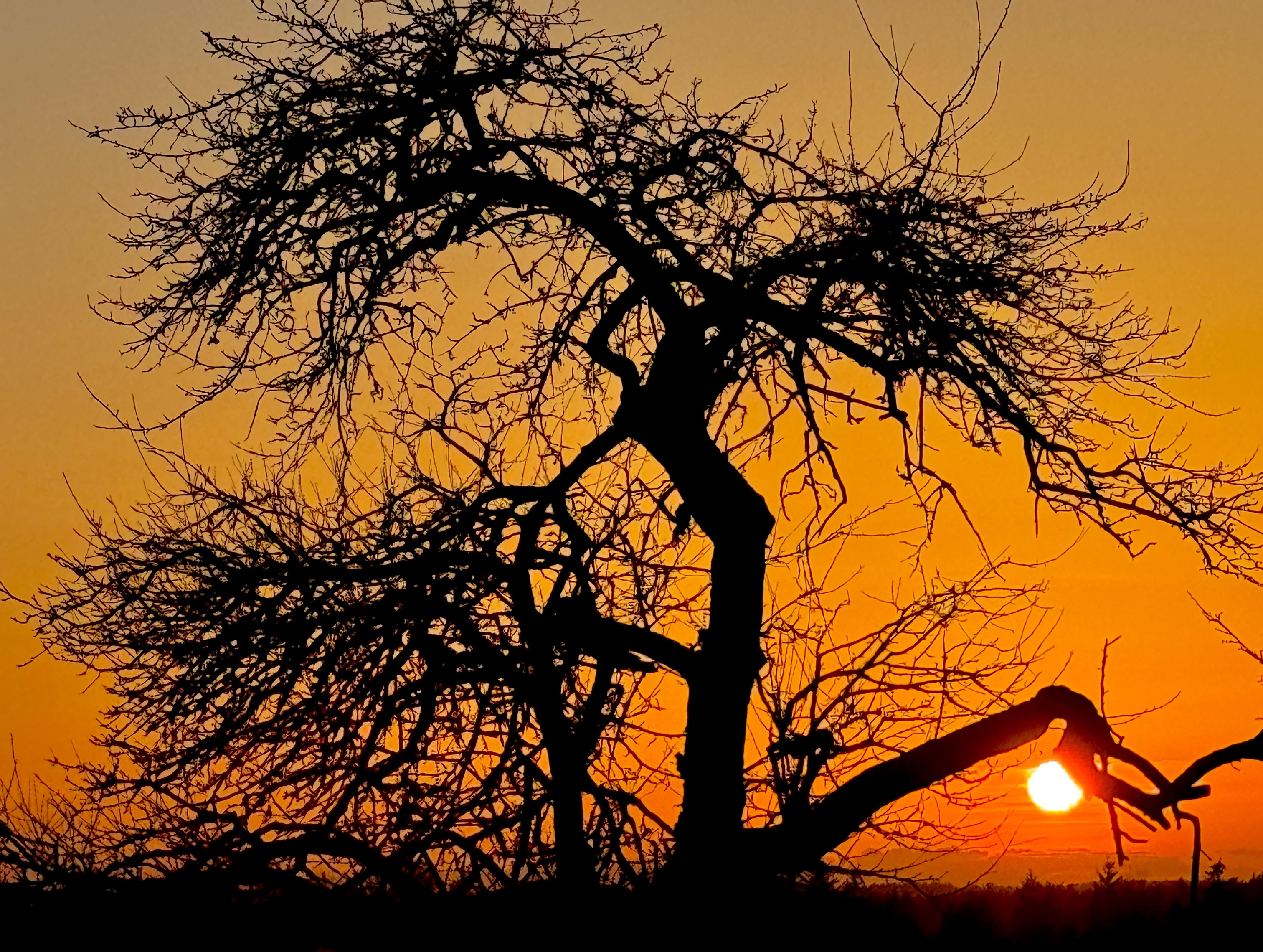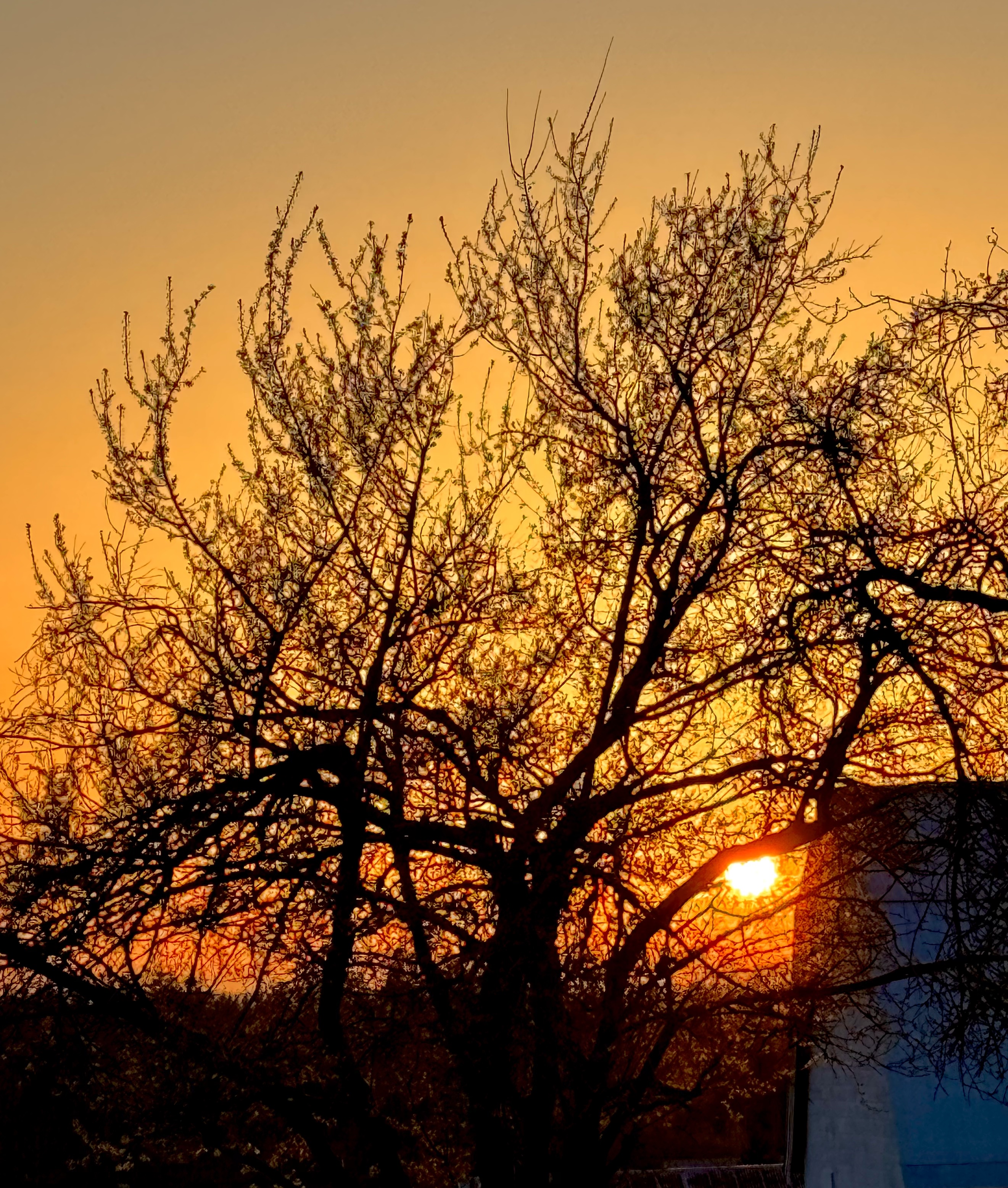
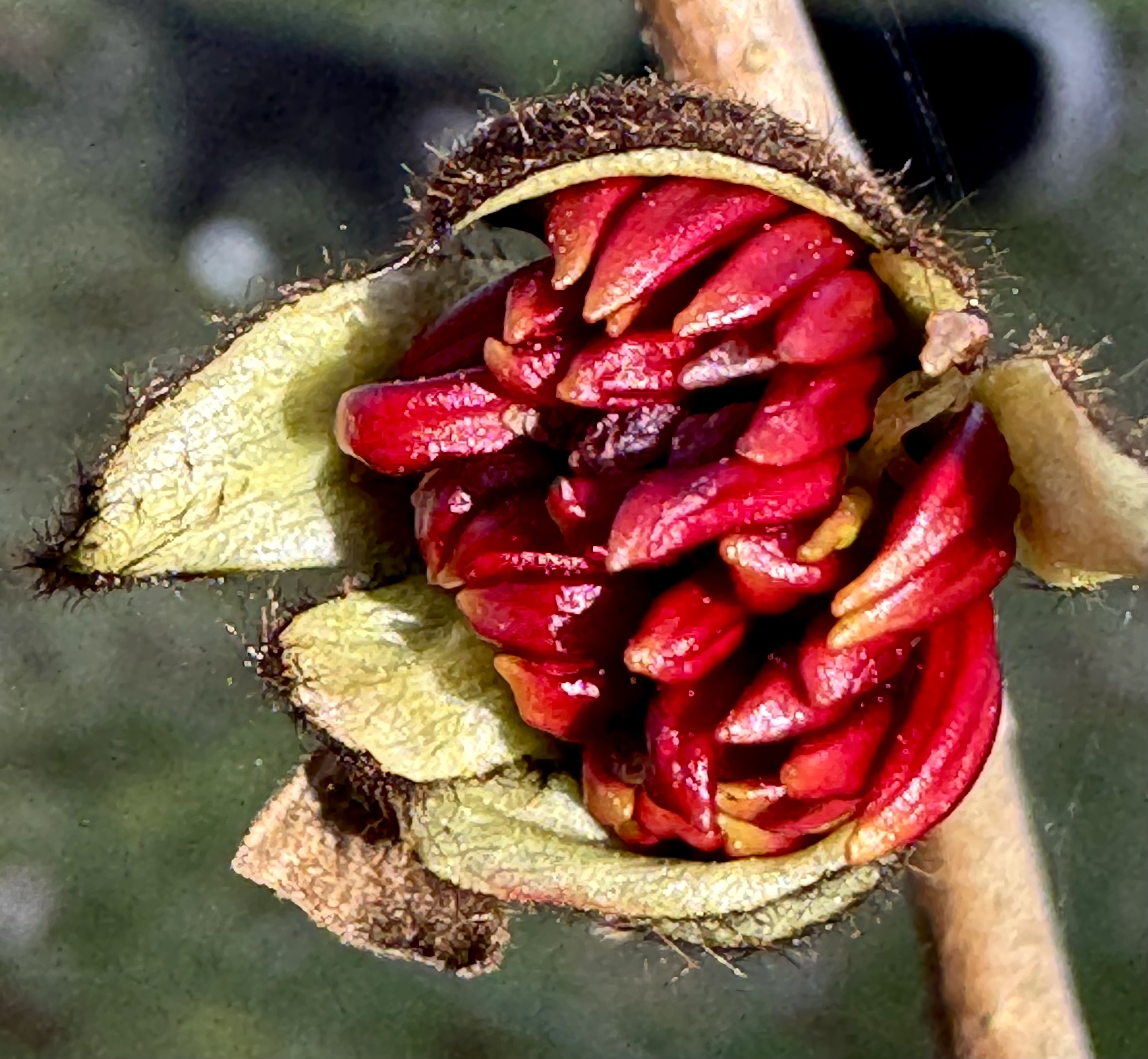
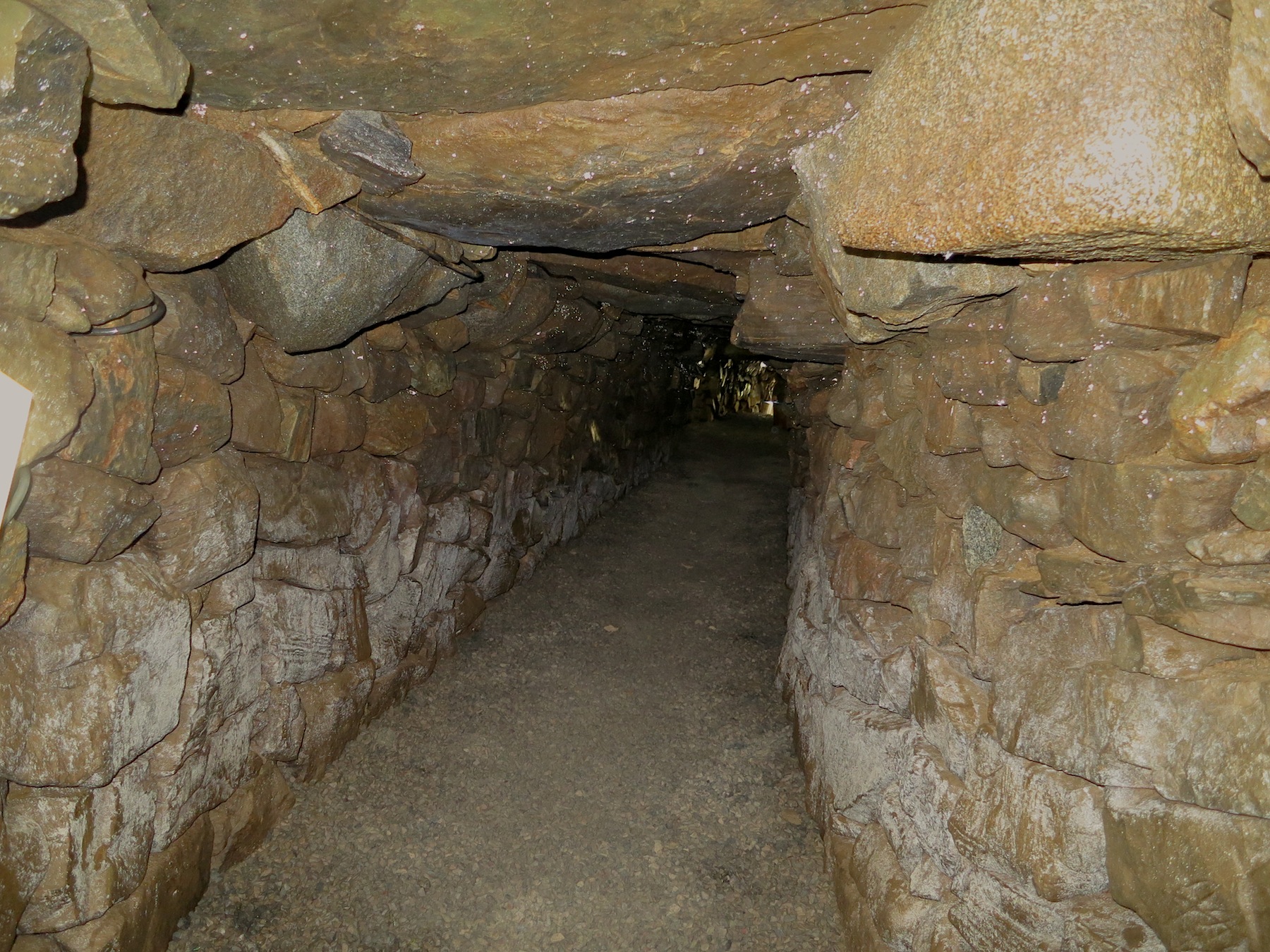
It’s deep time here, this barrow grave five thousand years old, where we follow like sheep behind the guide to the heart of its cruciform center.
I’ve never been in a space so dark. What was it like to fear that the sun would not return, that crops would wither, deer flee, that night’s dark cloak was all there was?
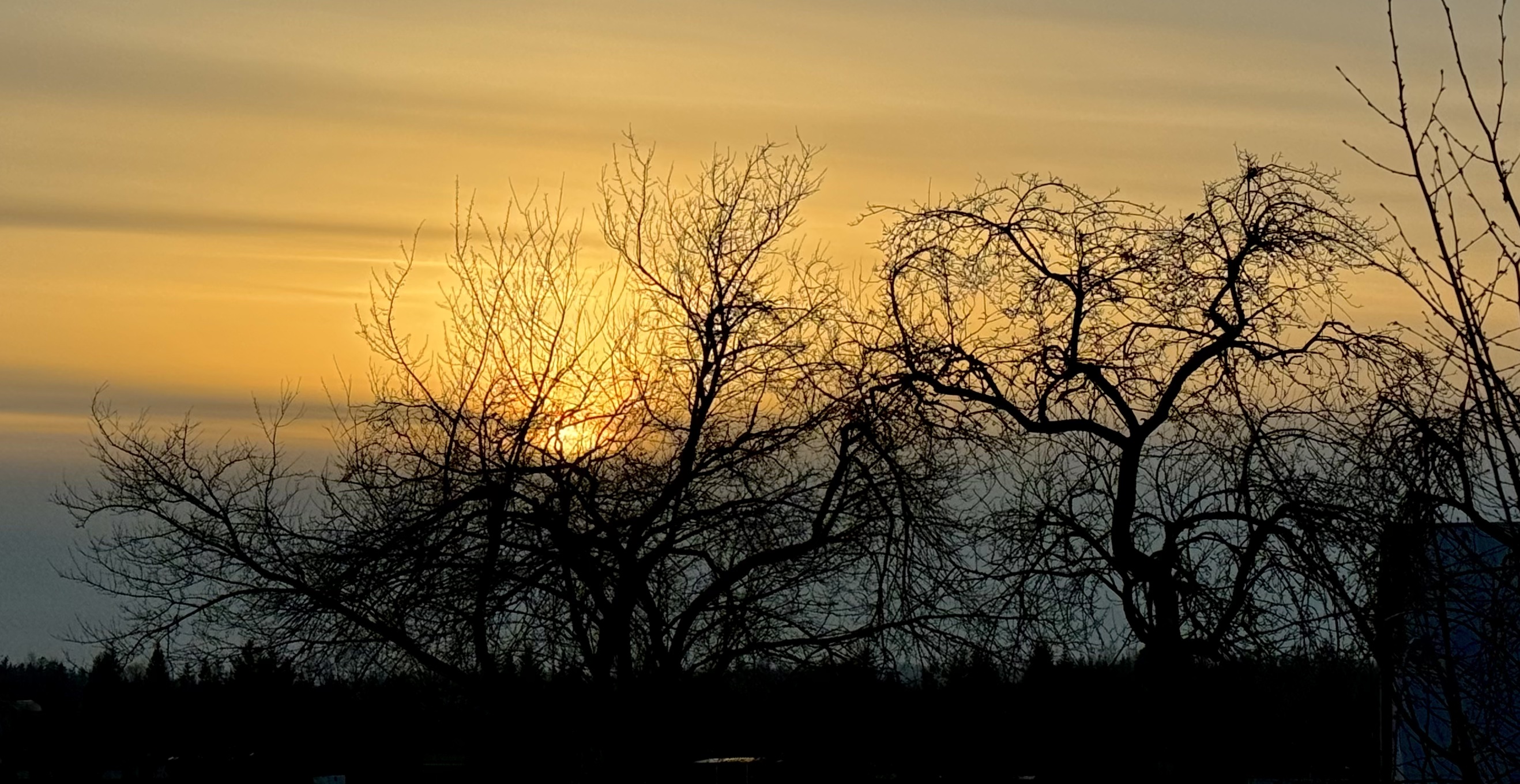
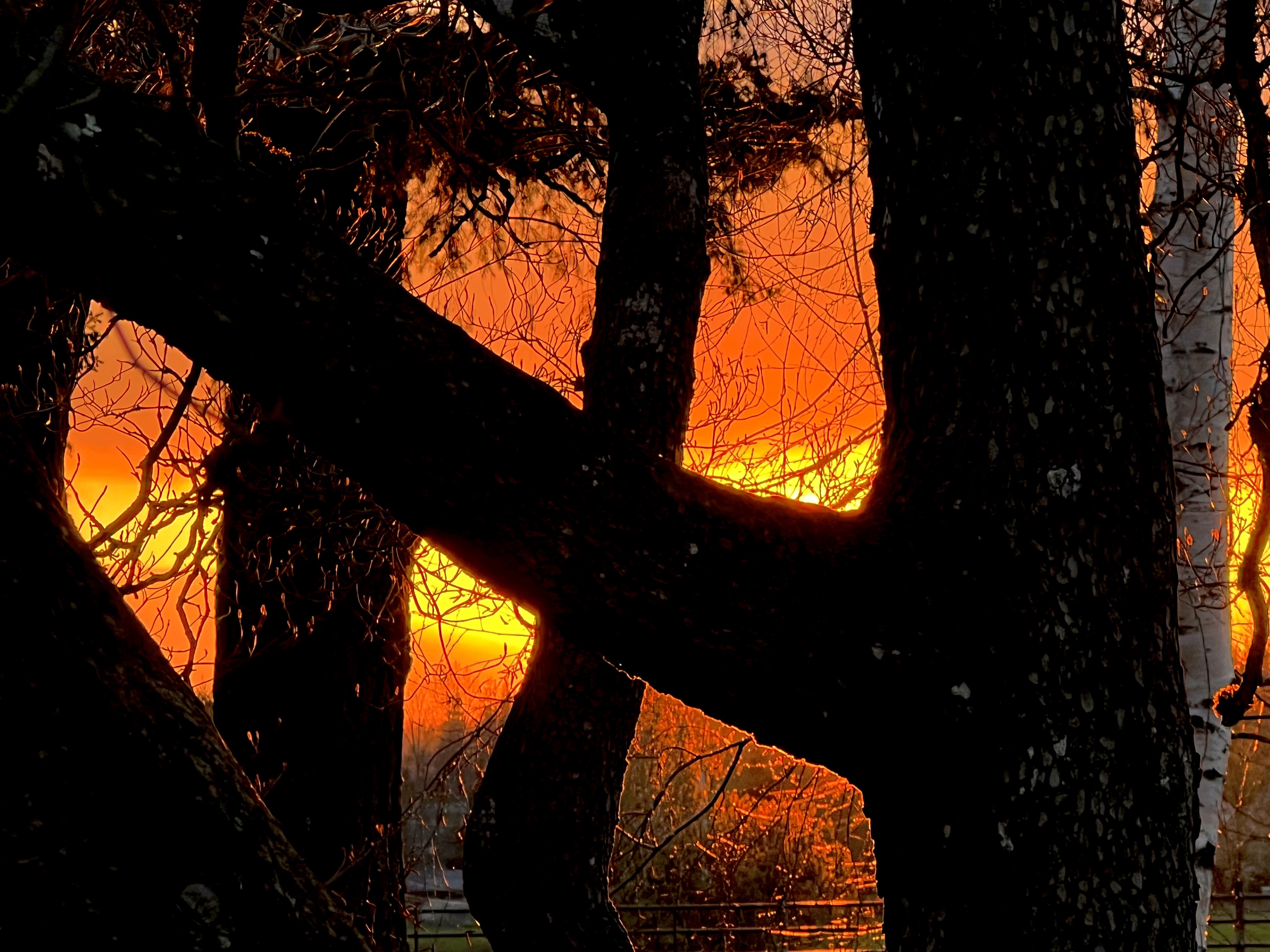
But miraculously, on the lip of the solstice, the light returned, liquid and golden, ran down the narrow corridor, hit the back wall, splashed in the stone basin, and they knew summer would come back, run to fruit. Light, dark, freeze, thaw, seedtime, harvest, wheel of the year, the spiral dance.
What would they make of our device-laden lives, fossil-fueled cars, over-stocked larders? Who stands in the dark and listens now, gaping at the stars? — Barbara Crooker, “Newgrange” from The Book of Kells
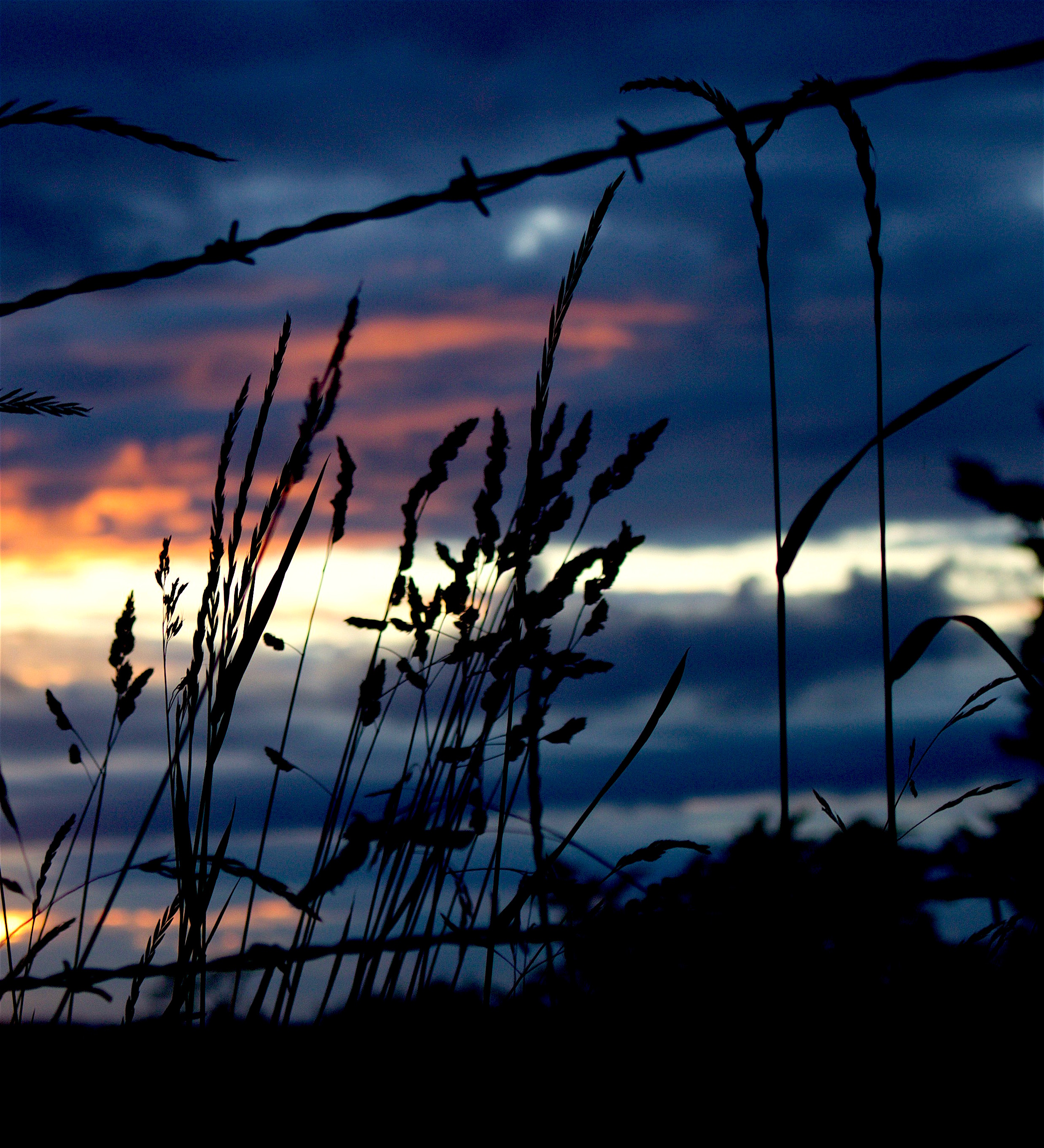
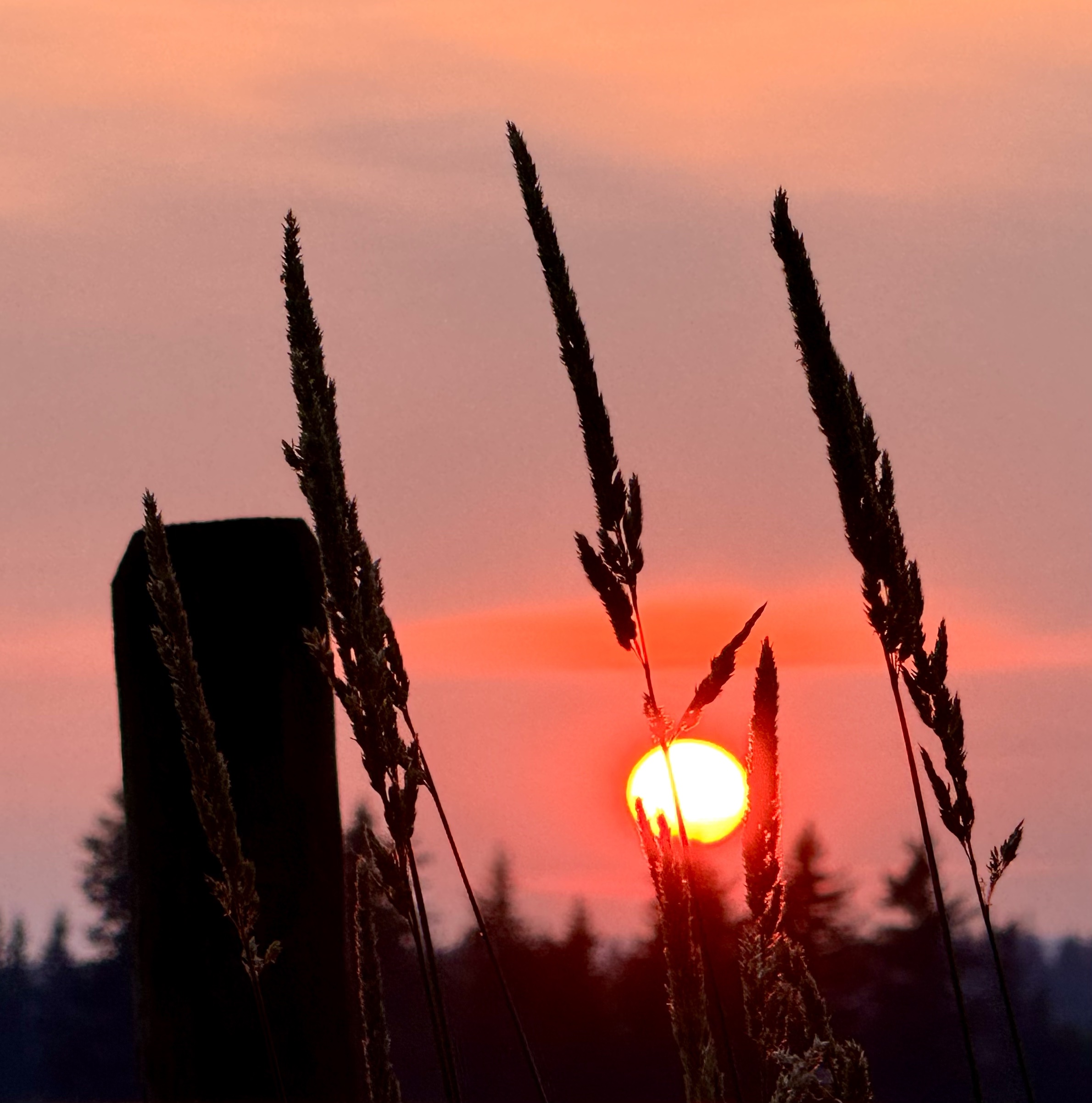
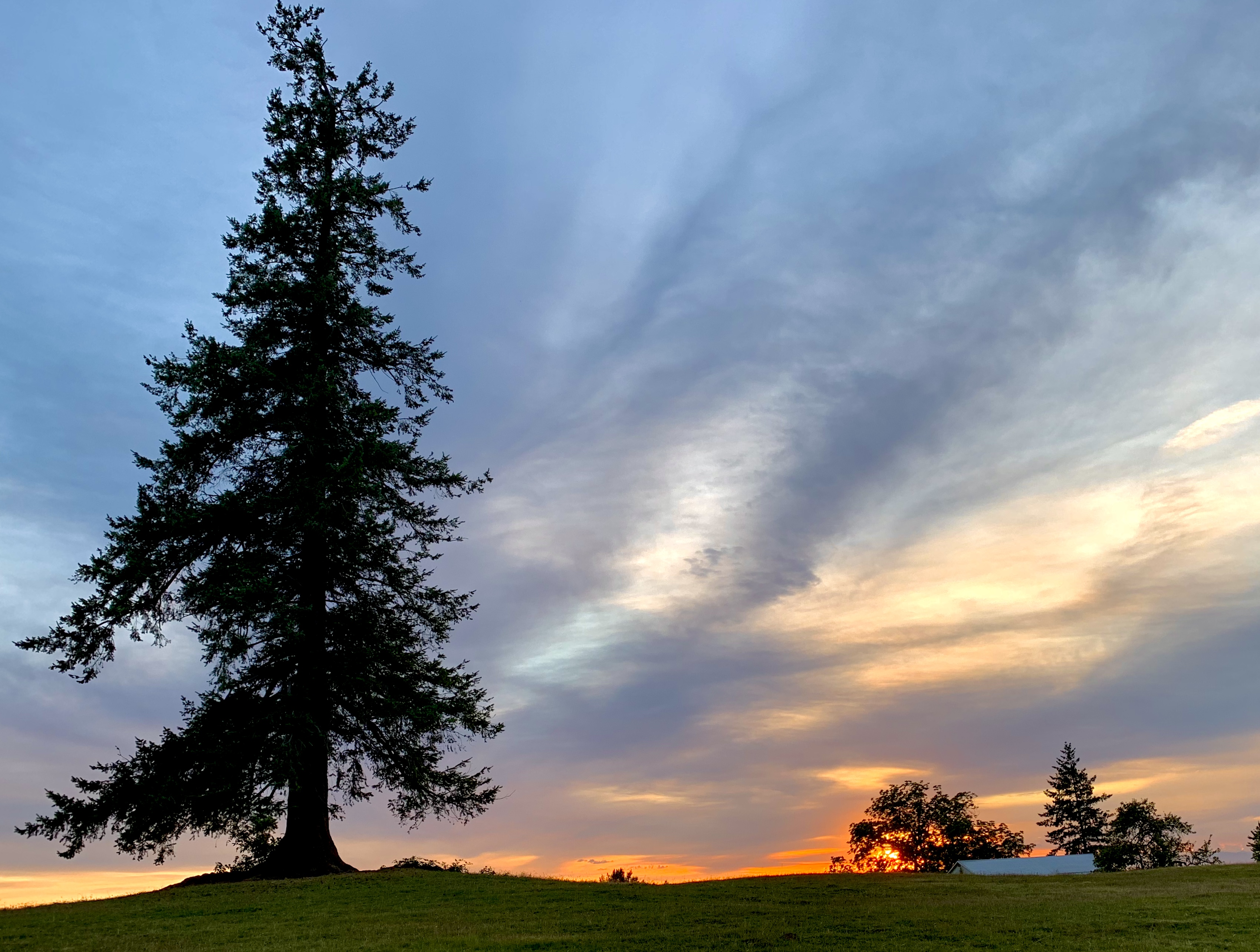
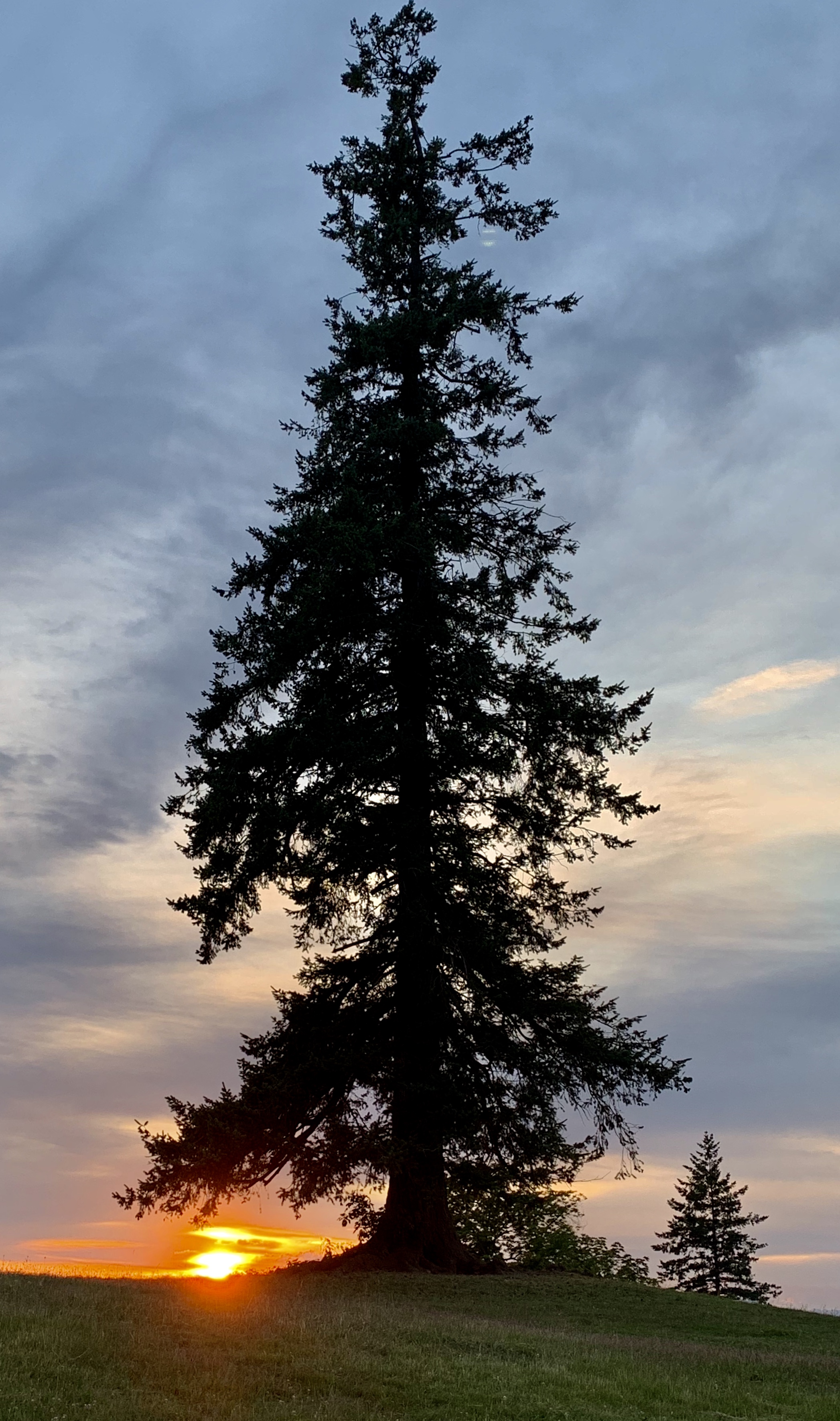
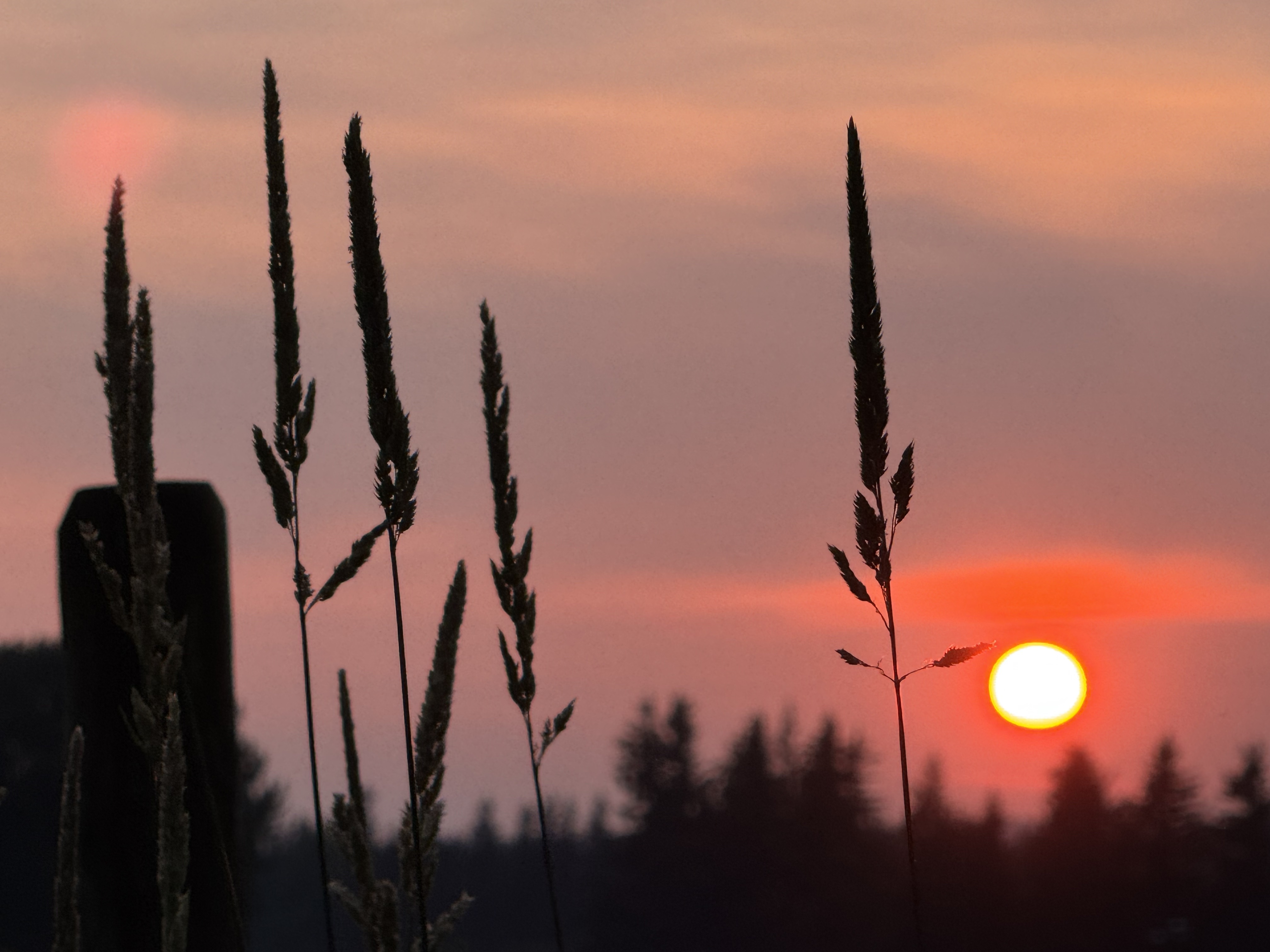
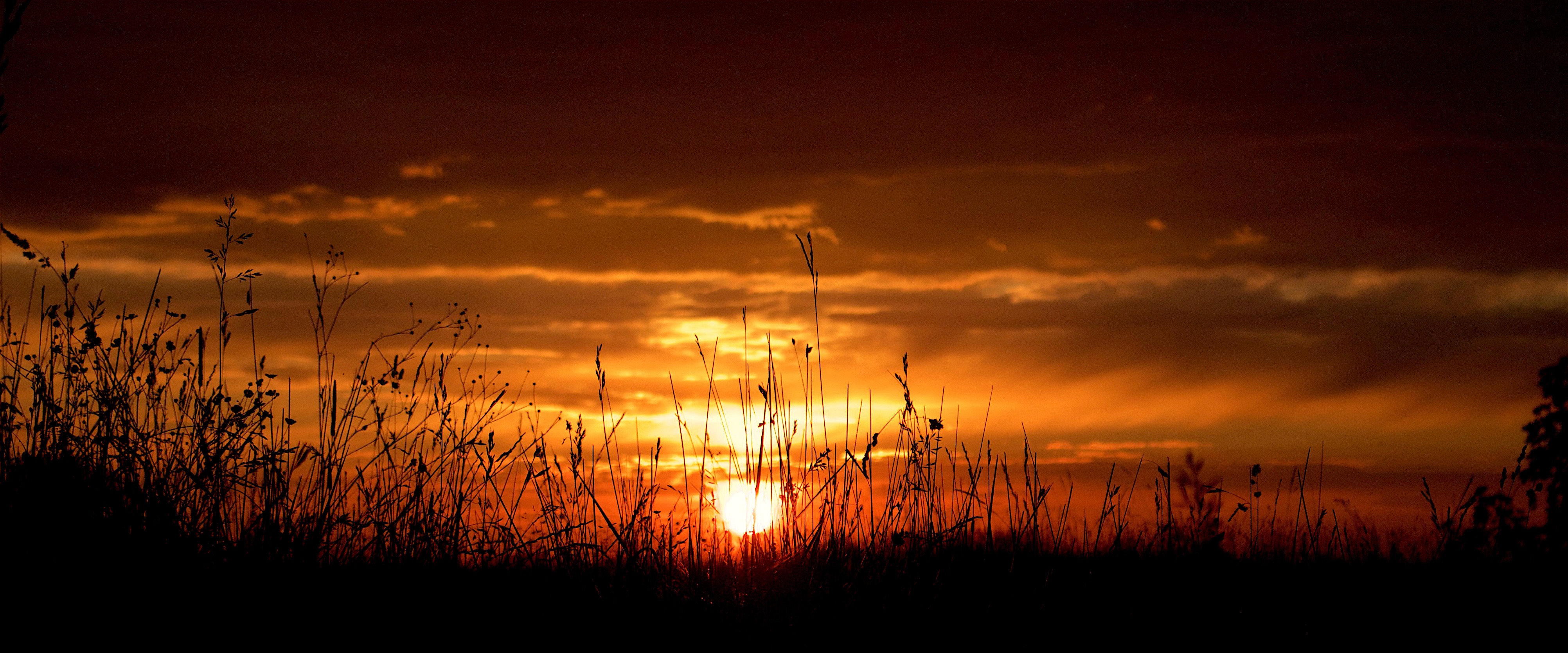
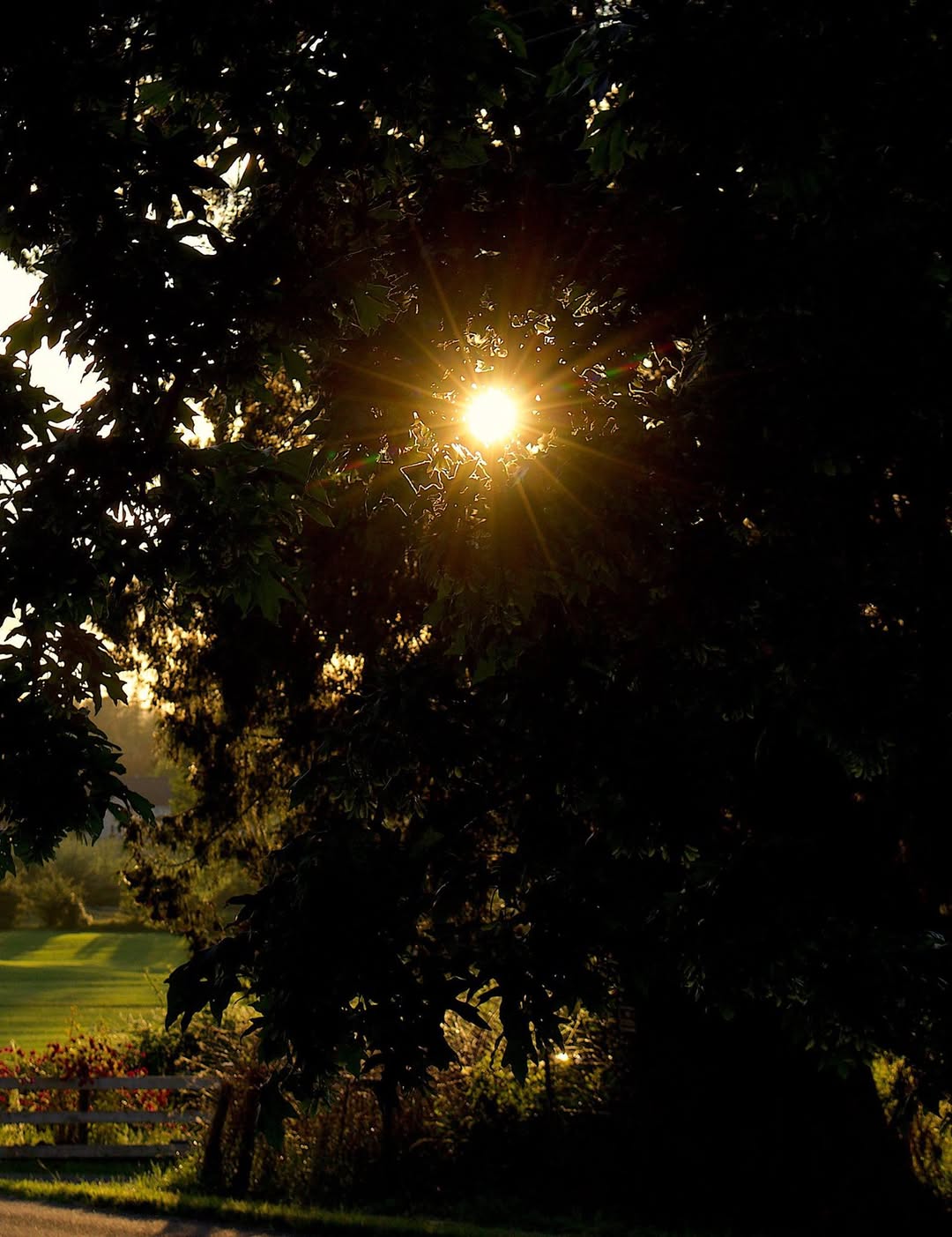
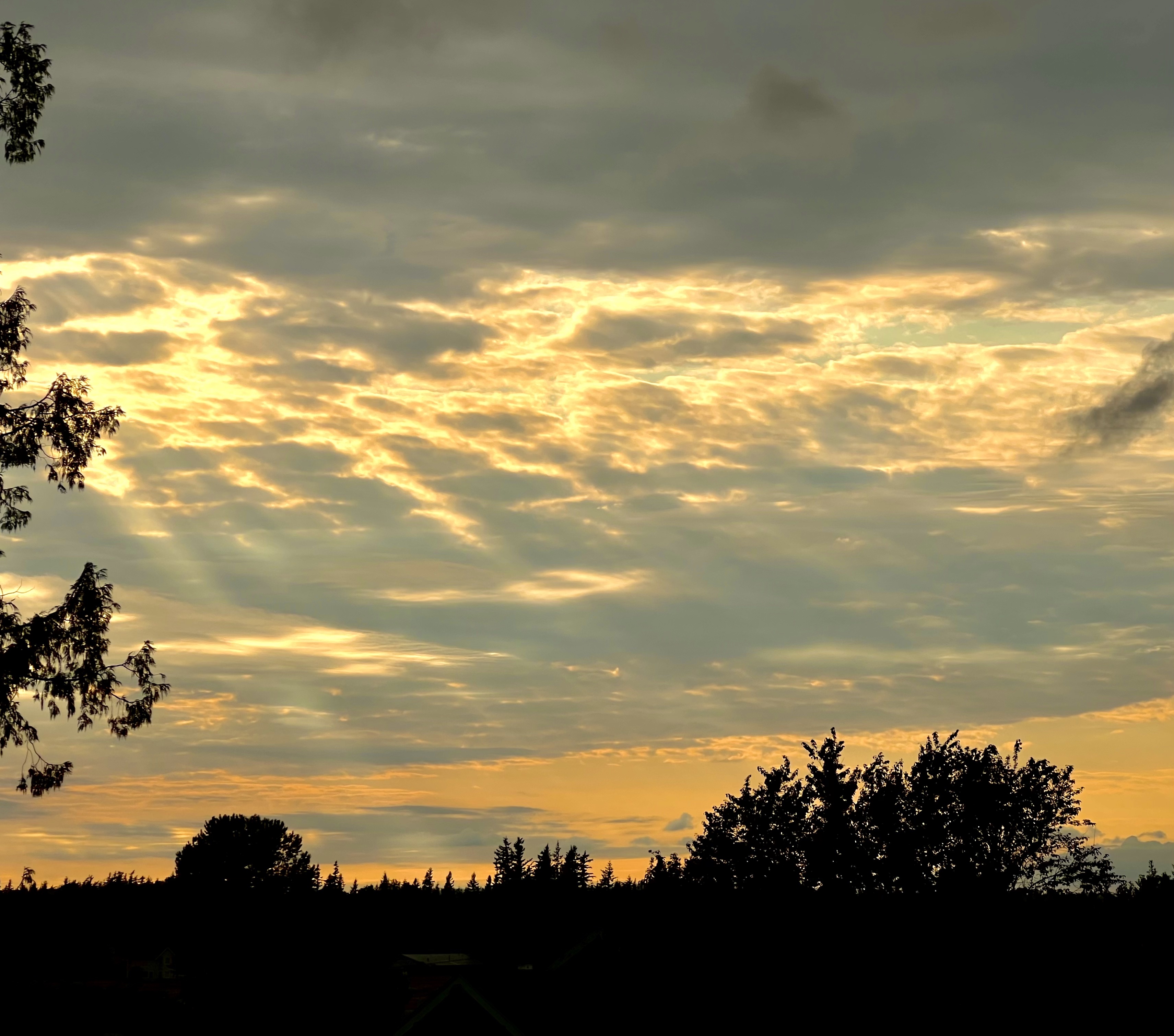
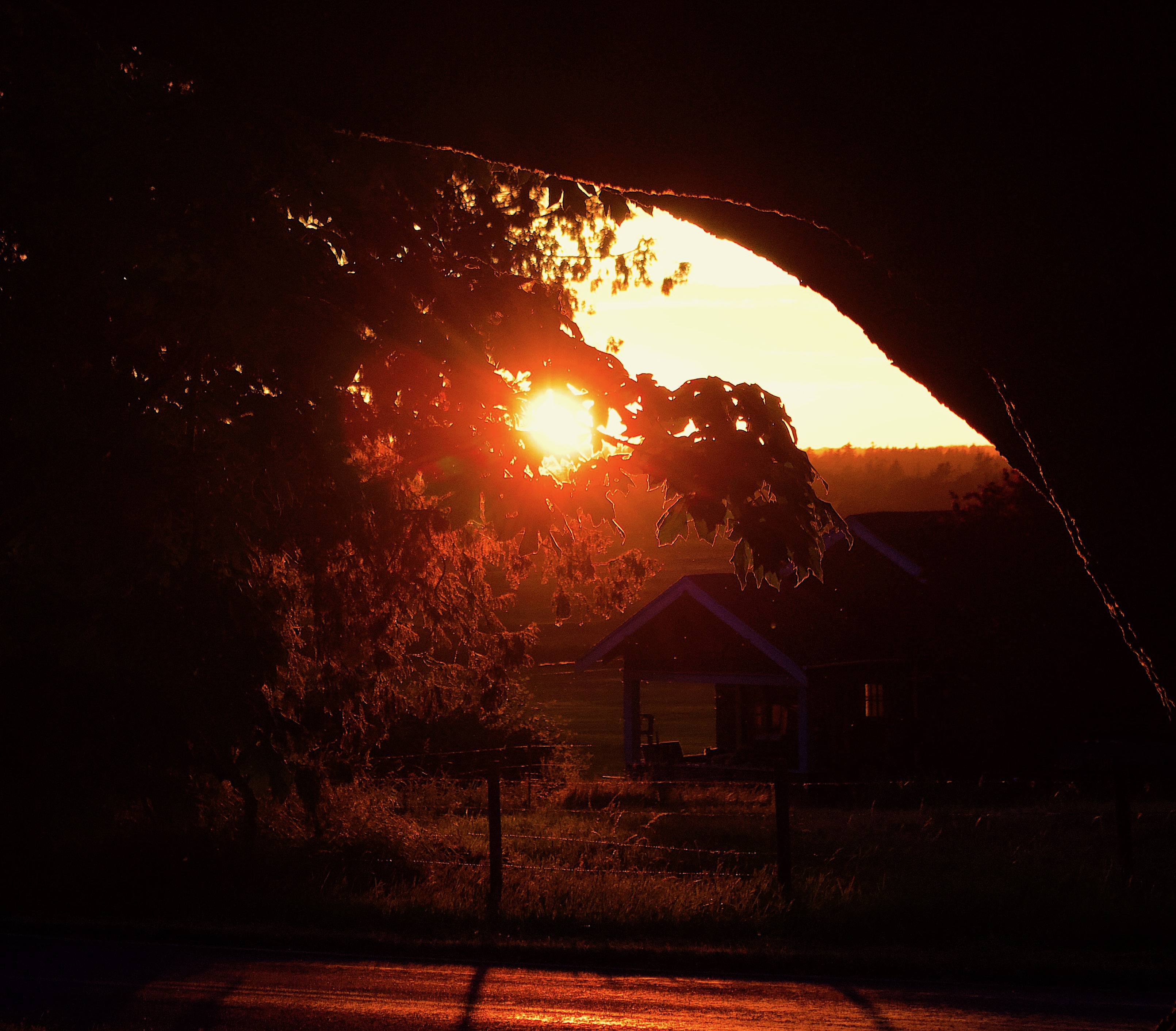
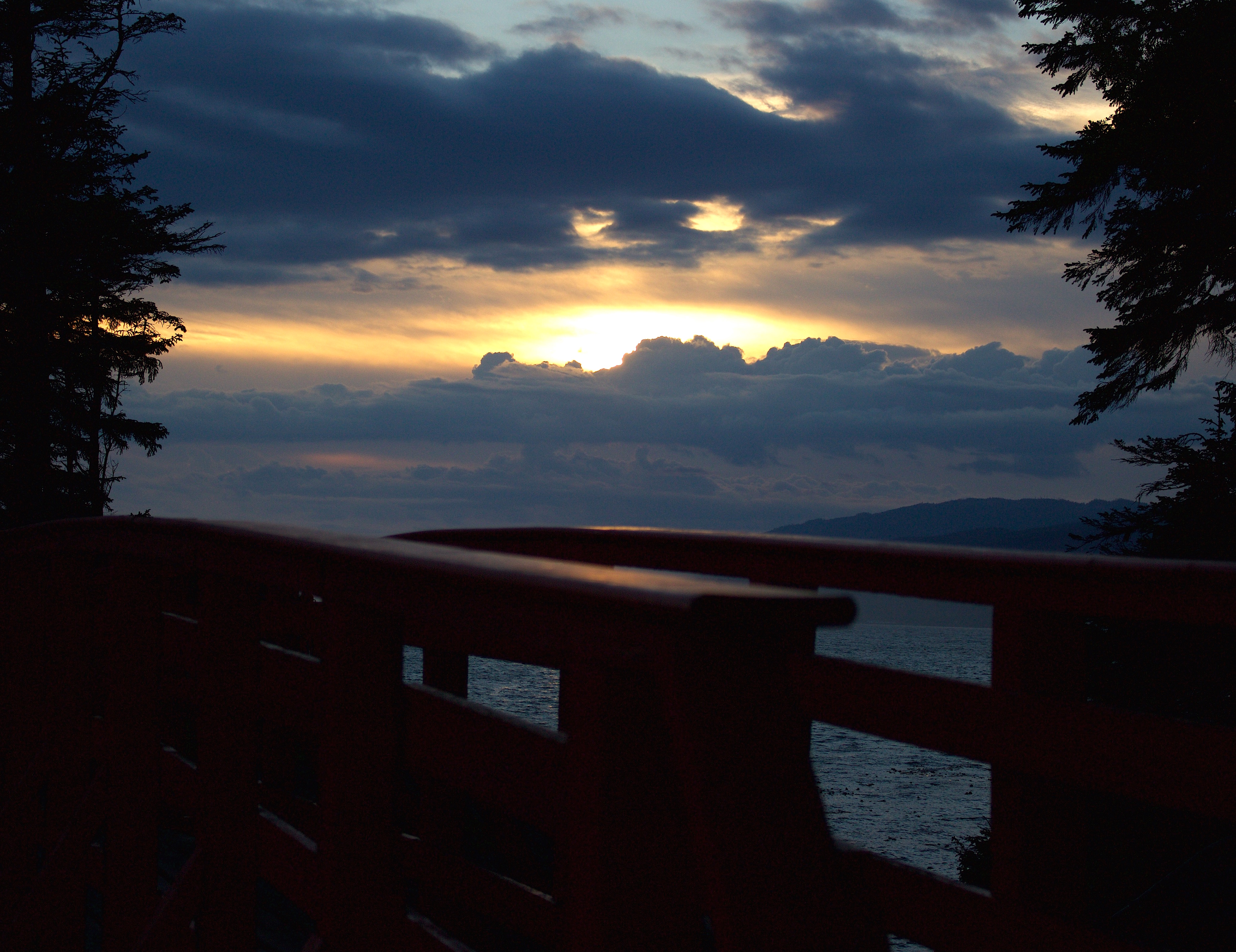
There is nothing so dark as centuries-old underground tunnels and portal tombs, some positioned with an opening to capture a beam of light exactly at either the winter or summer solstice, illuminating what dwells in blackness the rest of the year.
The more recent ninth century soutterain tunnels were refuge for Christians hiding from invaders, keeping whole villages safe from capture.
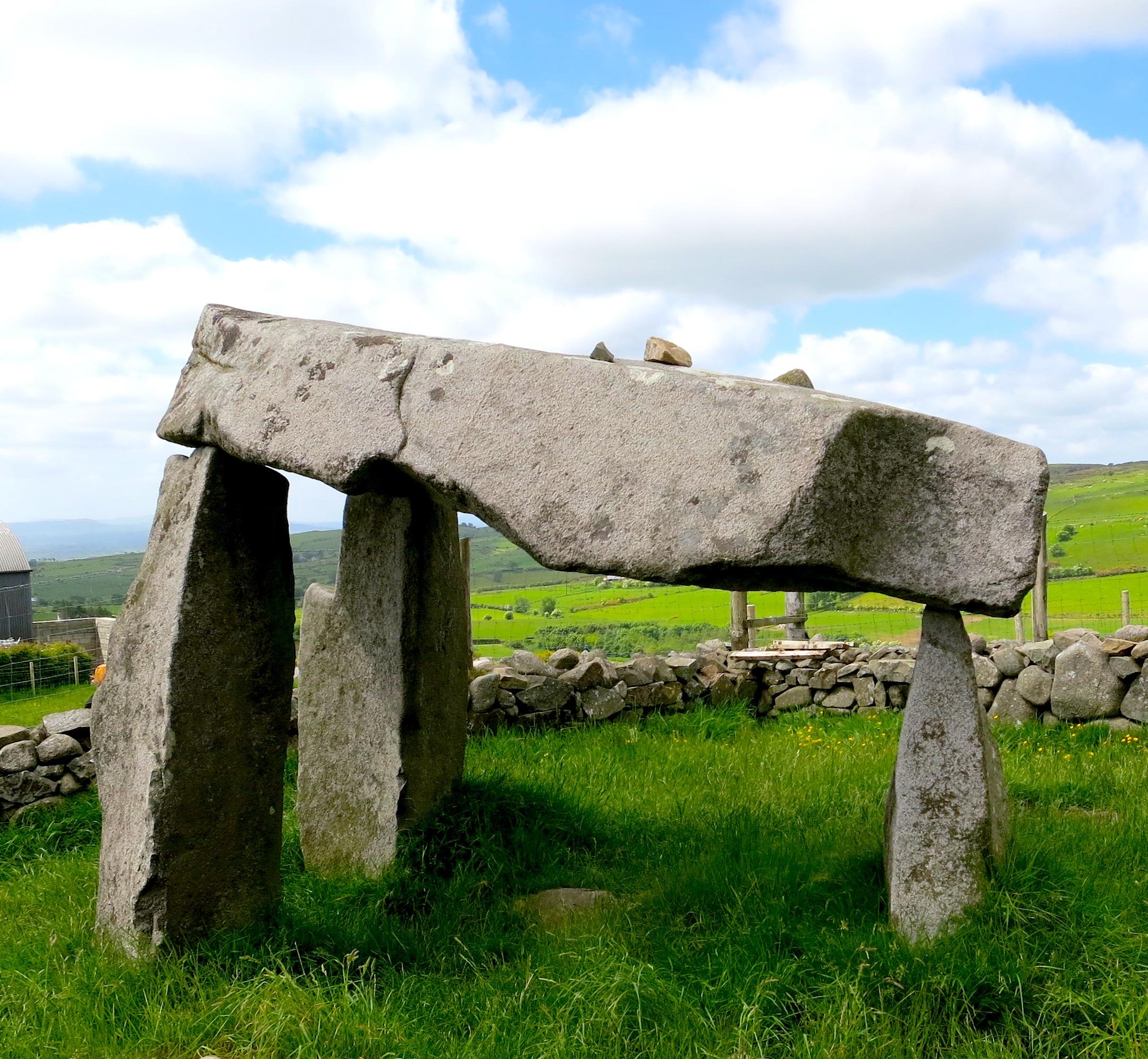
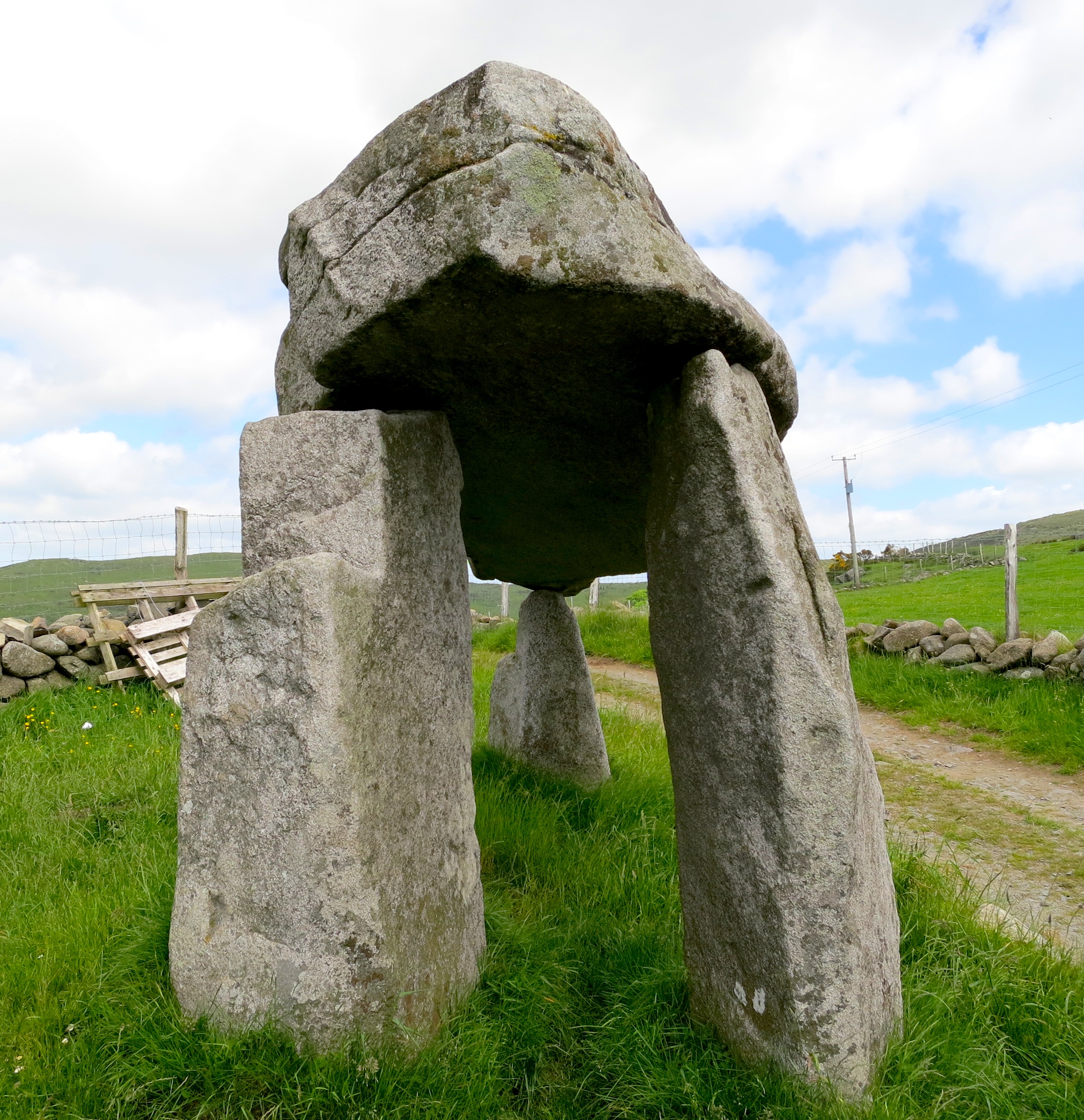
The dolmens and portal graves are Neolithic structures built before the pyramids. They still exist today as they were constructed to last by people serious about their beliefs.Though those people are long dust, the stones and tunnels remain as they were, to protect the spirits of the departed.
What would they think now of our extravagance, our plethora of goods and foods, our ways of crippling others remotely using weapons dropped from the sky, but also the weapons of internet disinformation and hacking, hallucinations and lies from artificial intelligence?
Our ways make stealing, pillaging, raping and enslaving strangers seem so… messy.
We mustn’t fool ourselves. We are still messy.
We moderns are lost in our over-abundance of light year round, scarcely noting the calendar or the passing of the longest and shortest days.
I bow my head to the remarkable people of strength who have preceded us, who sought mightily to preserve the significance of a Light returning to penetrate their darkness.
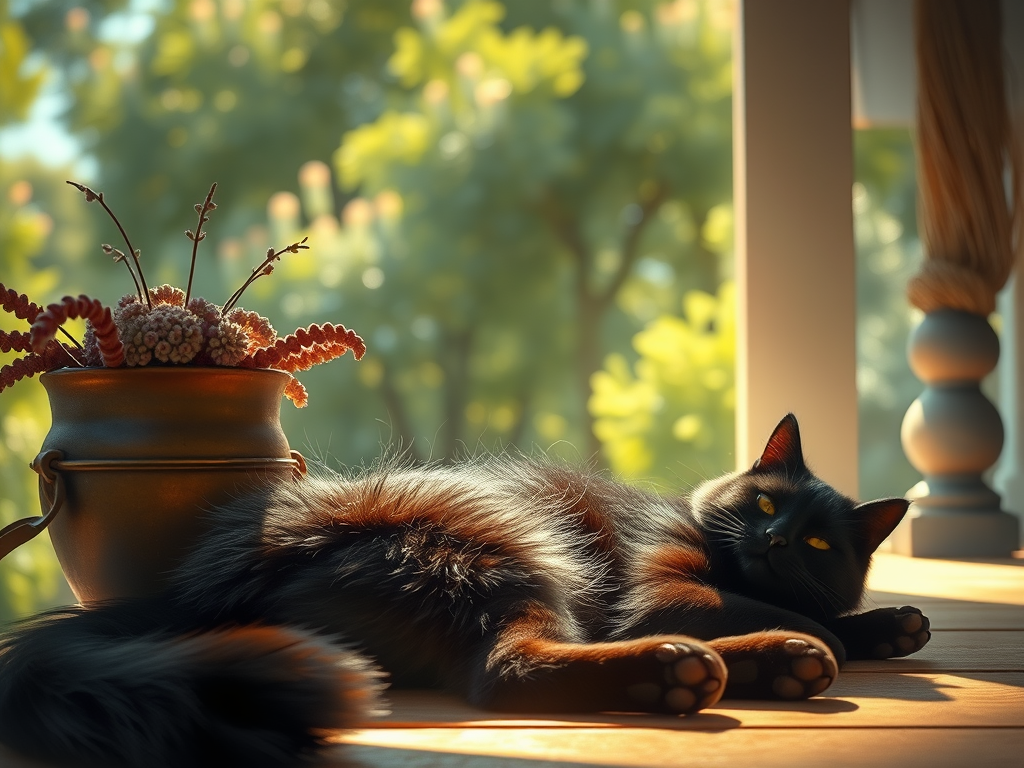
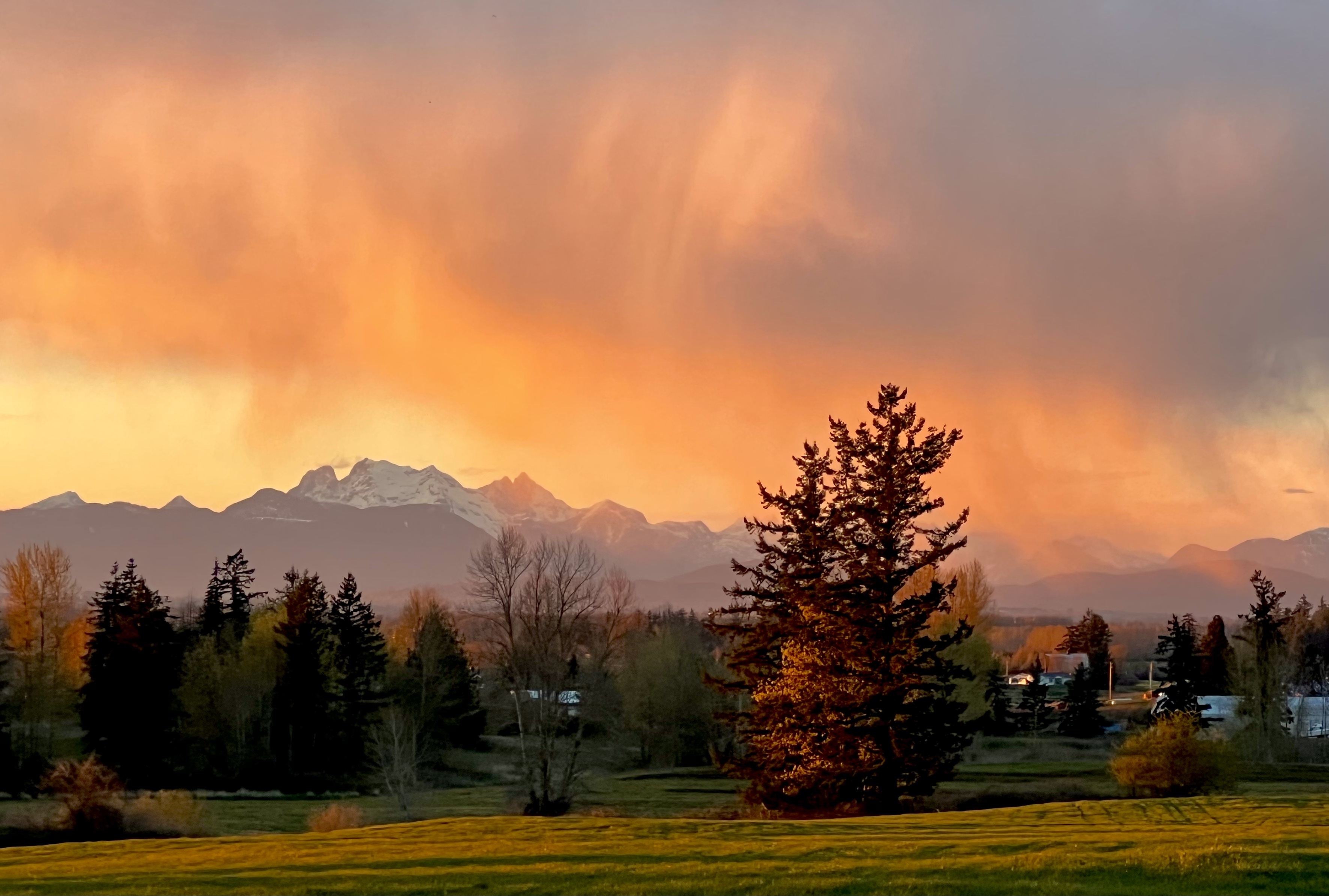
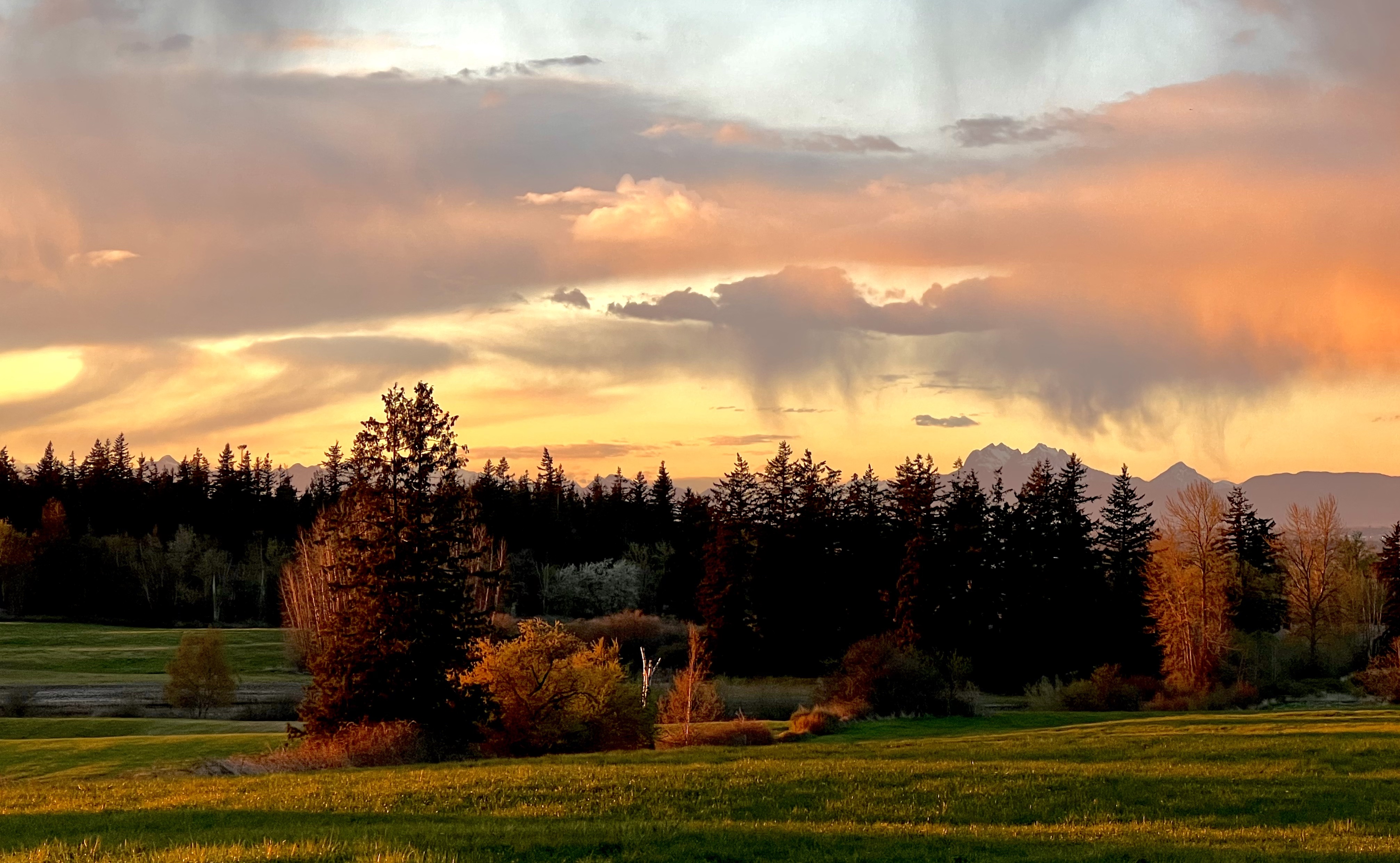
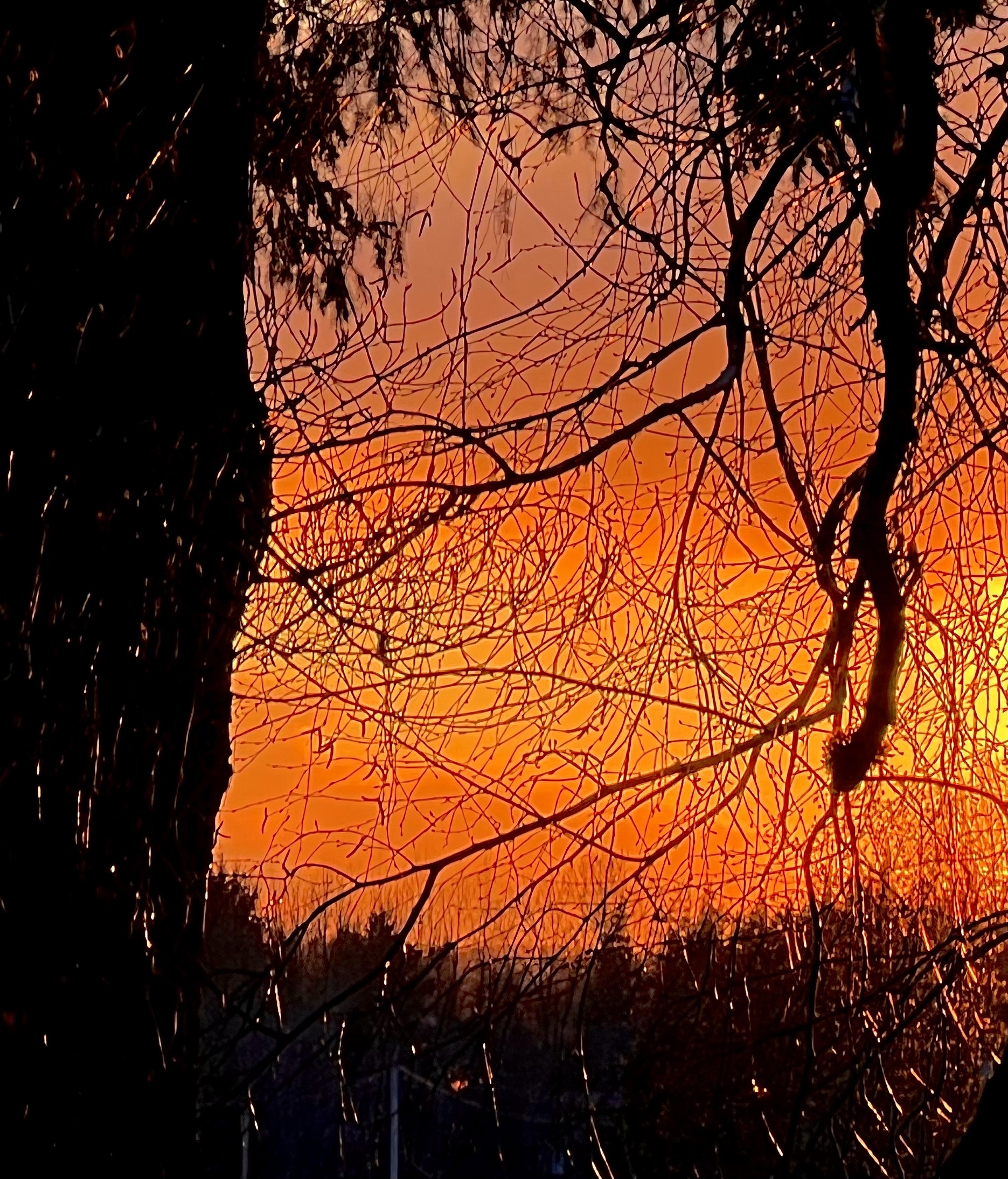
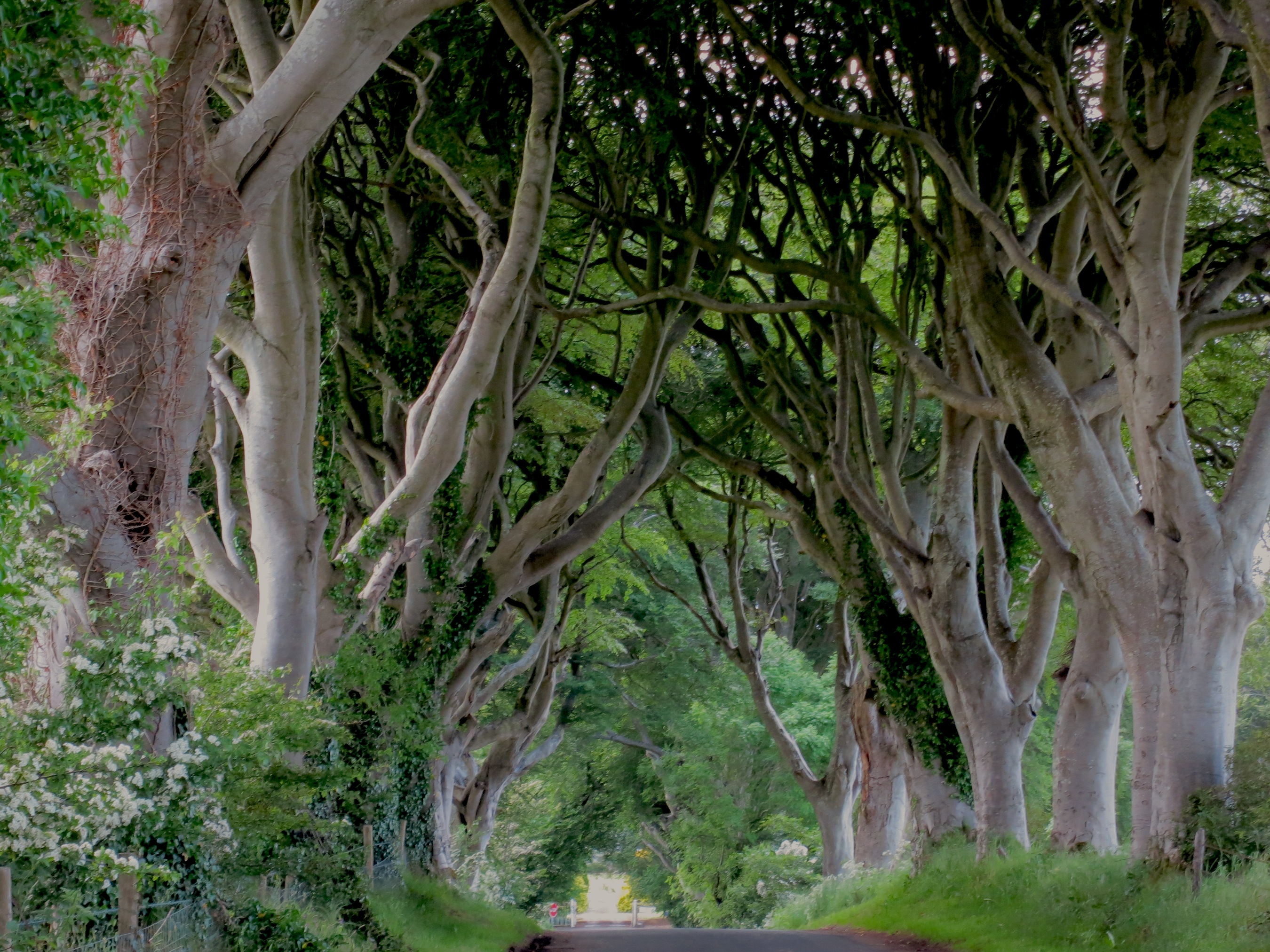
Legananny Dolmen, Northern IrelandLegananny dolmenKilfeaghan DolmenAI image created for this post
Lyrics: Daylight comes and nighttime goes, nighttime falls, day flies Round and round the cycle goes, we live and then we die and then we live and then we die. The seasons of my life go round, the sunshine and the rain The fallow and the fruitful days, the joy and then the pain and then the joy and then the pain. As light below, so light above, so light in all we see
The light is in the act of love, the light that sets us free, yes, it’s the light that sets free. Daylight comes…
One-Time
Monthly
Yearly
Make a one-time or recurring donation to support daily Barnstorming posts
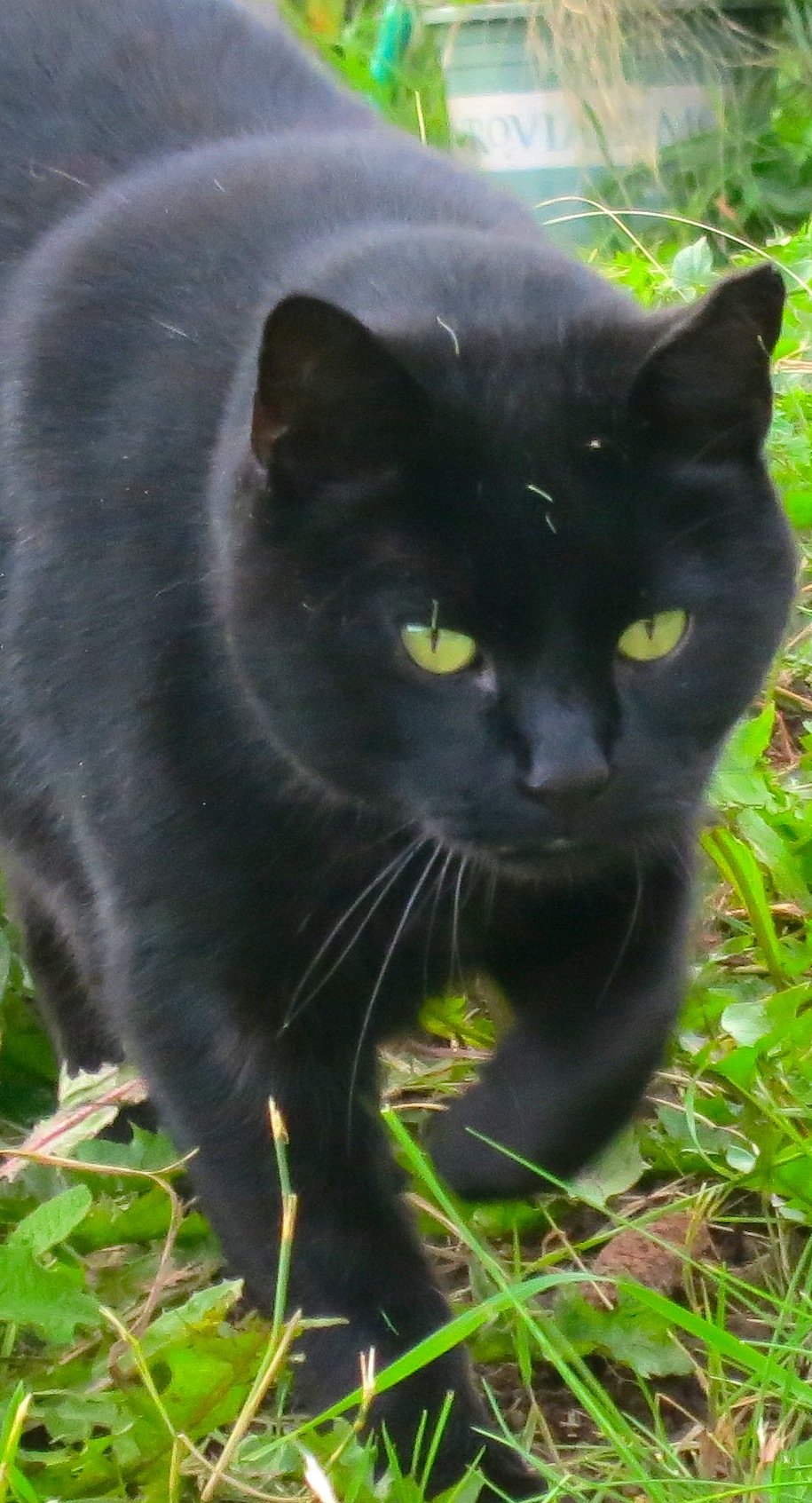
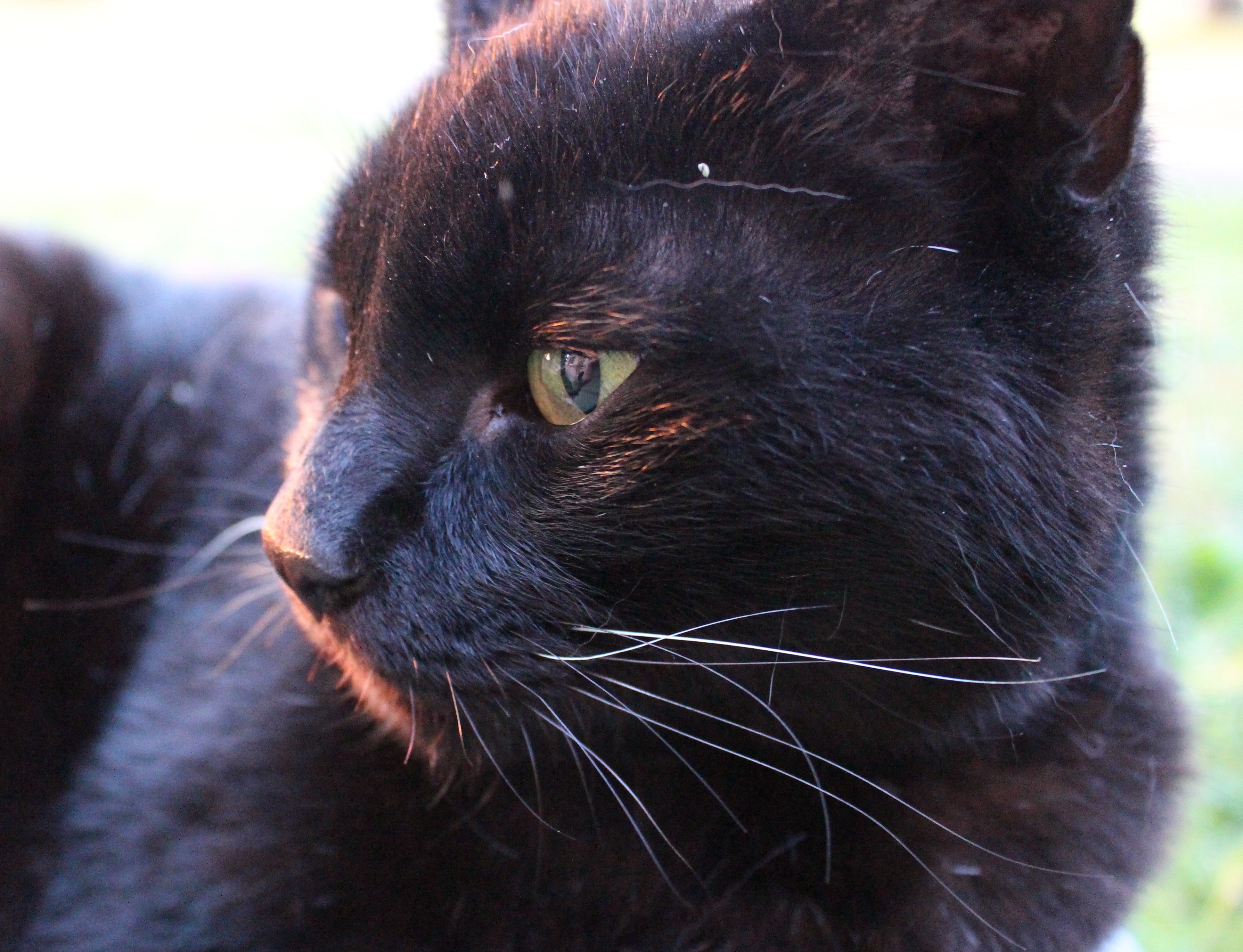
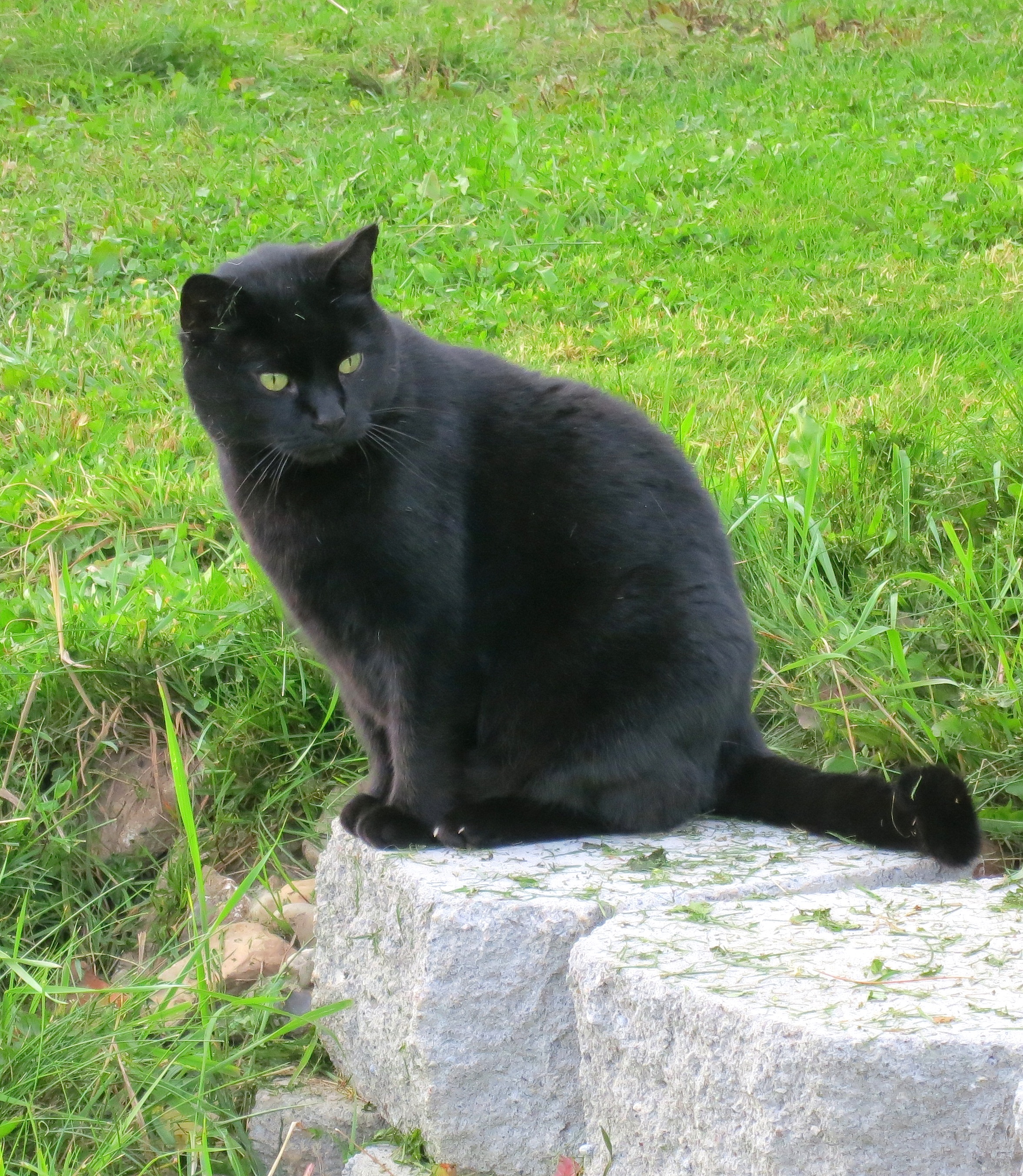
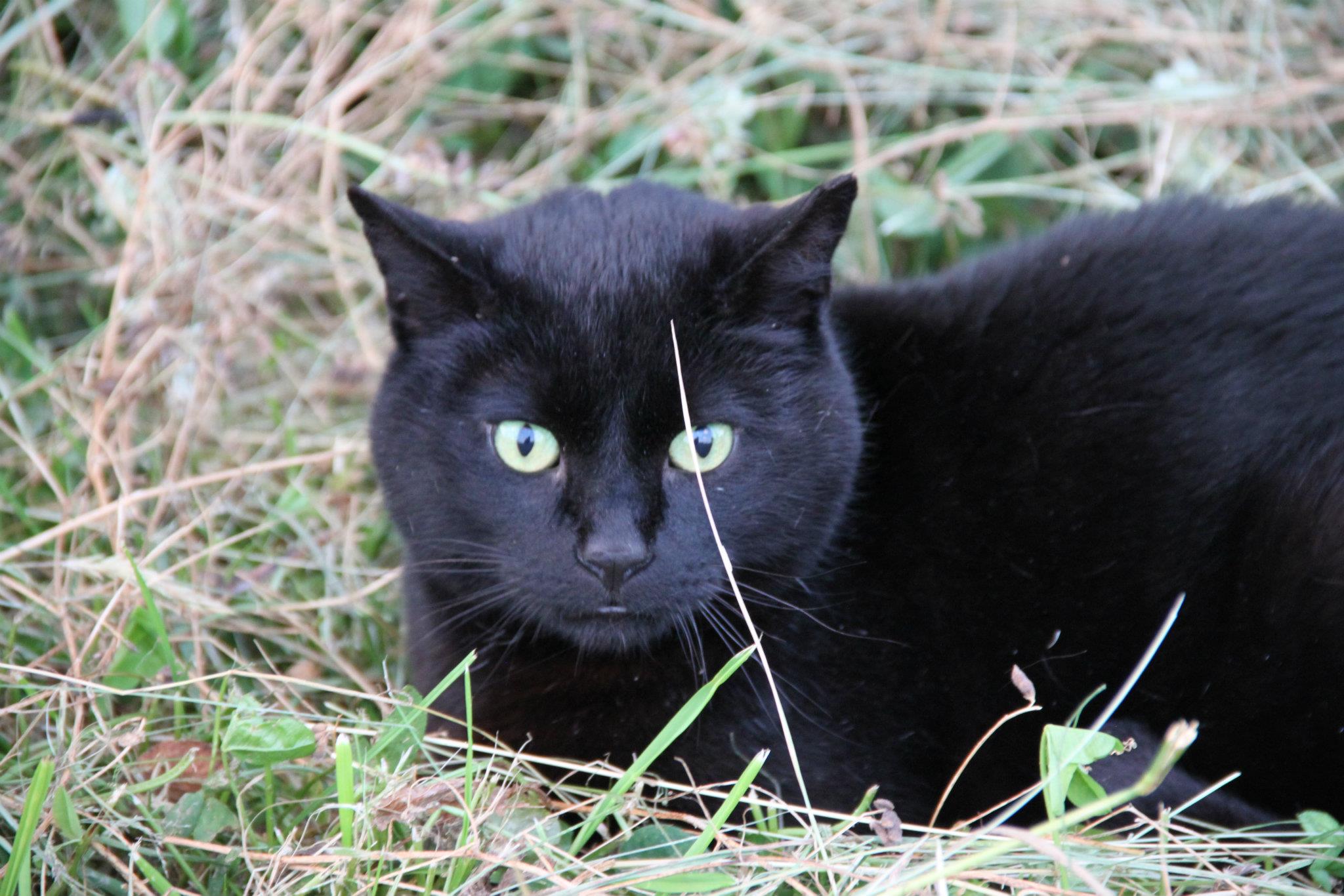
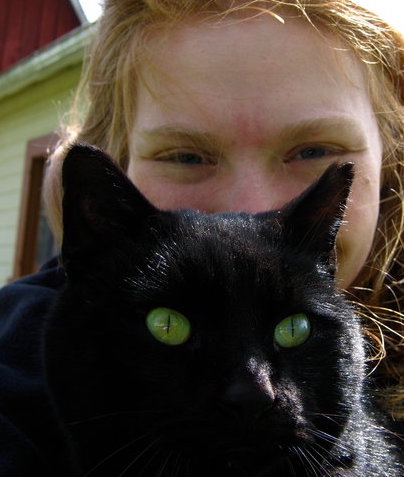
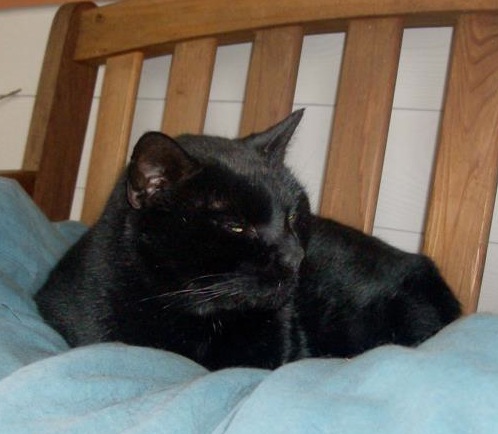
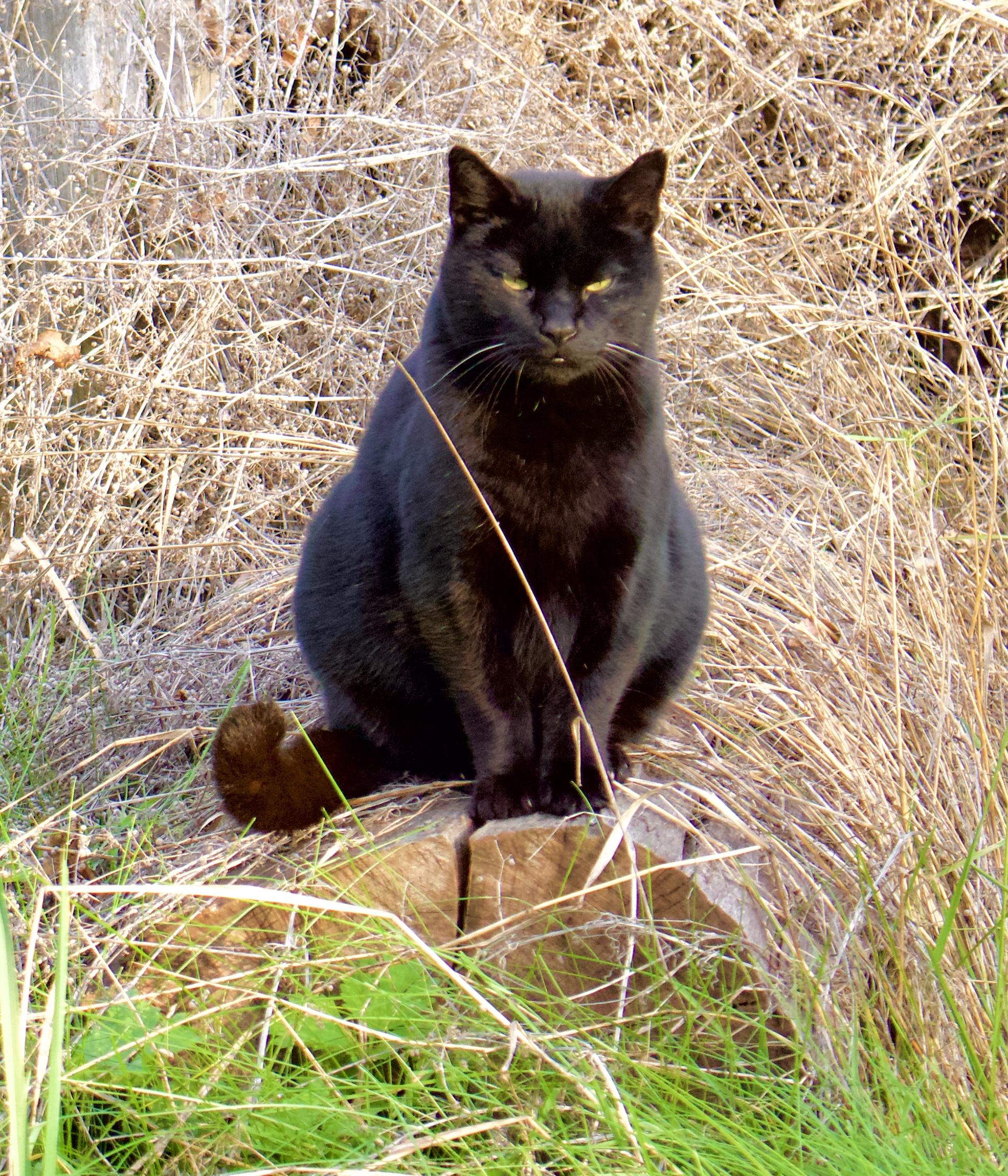
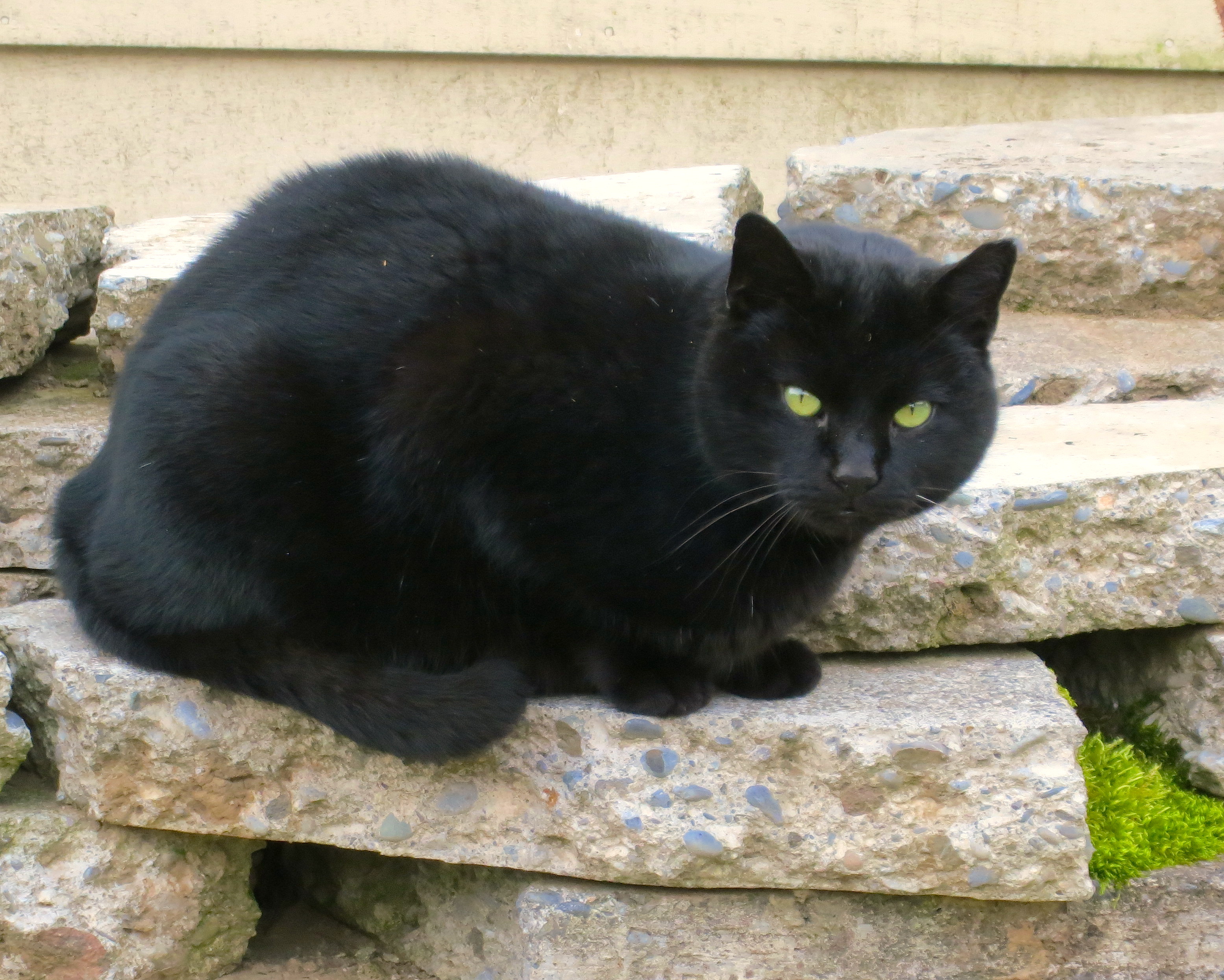
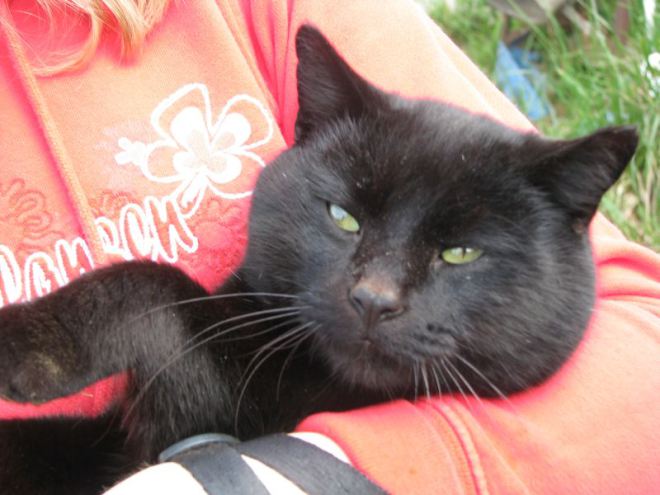
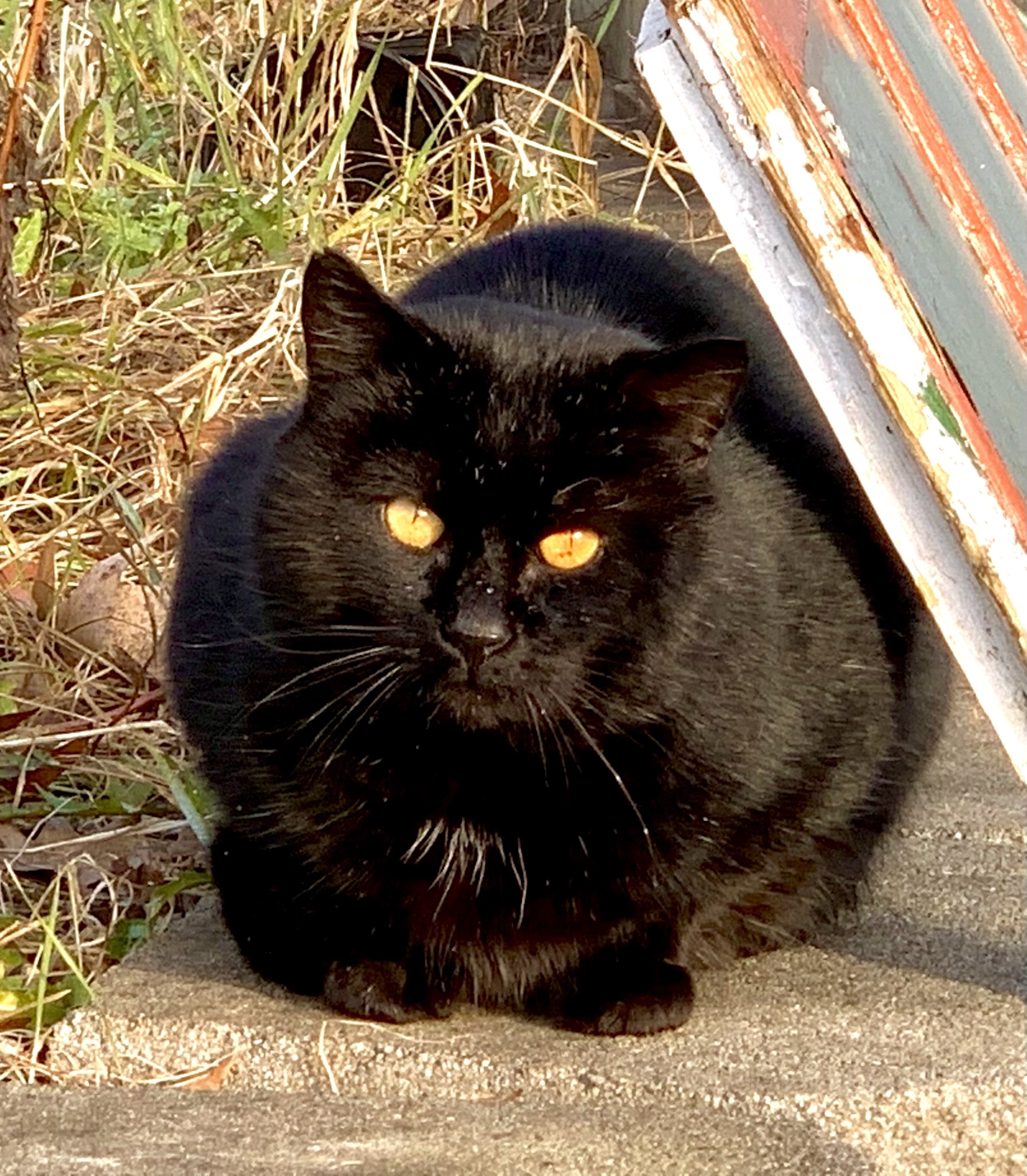
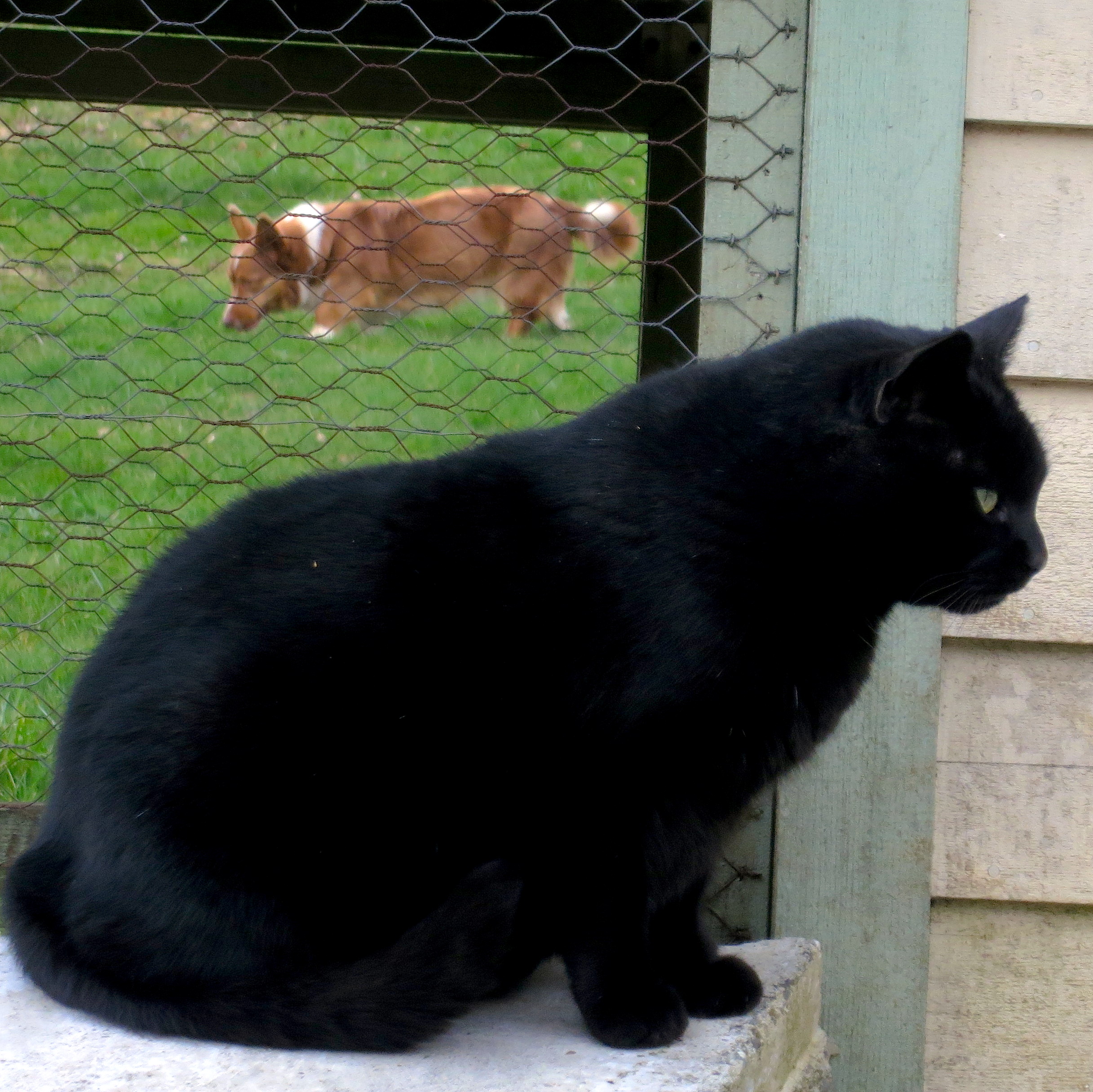
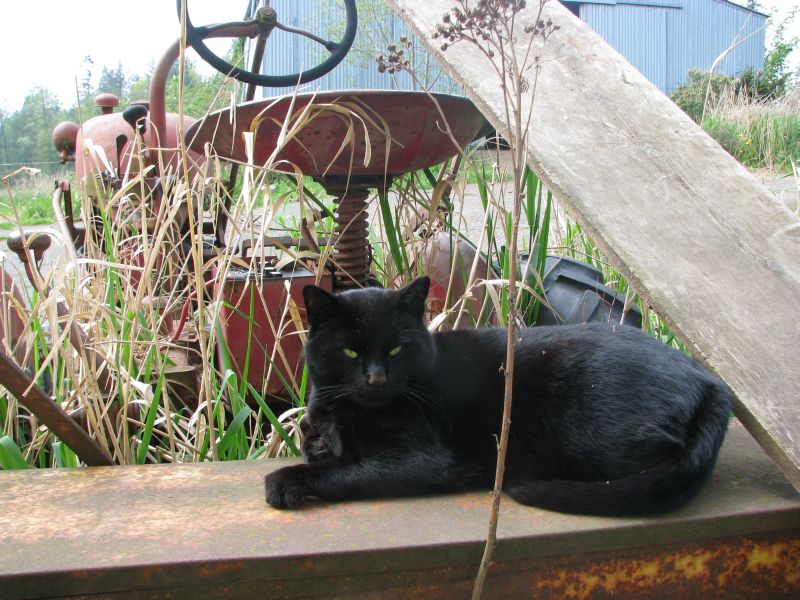
Not our garage cat, our upper barn cat, our lower barn cat or those that come and go on the farm because we’re a hospitable place where food is always on the table.
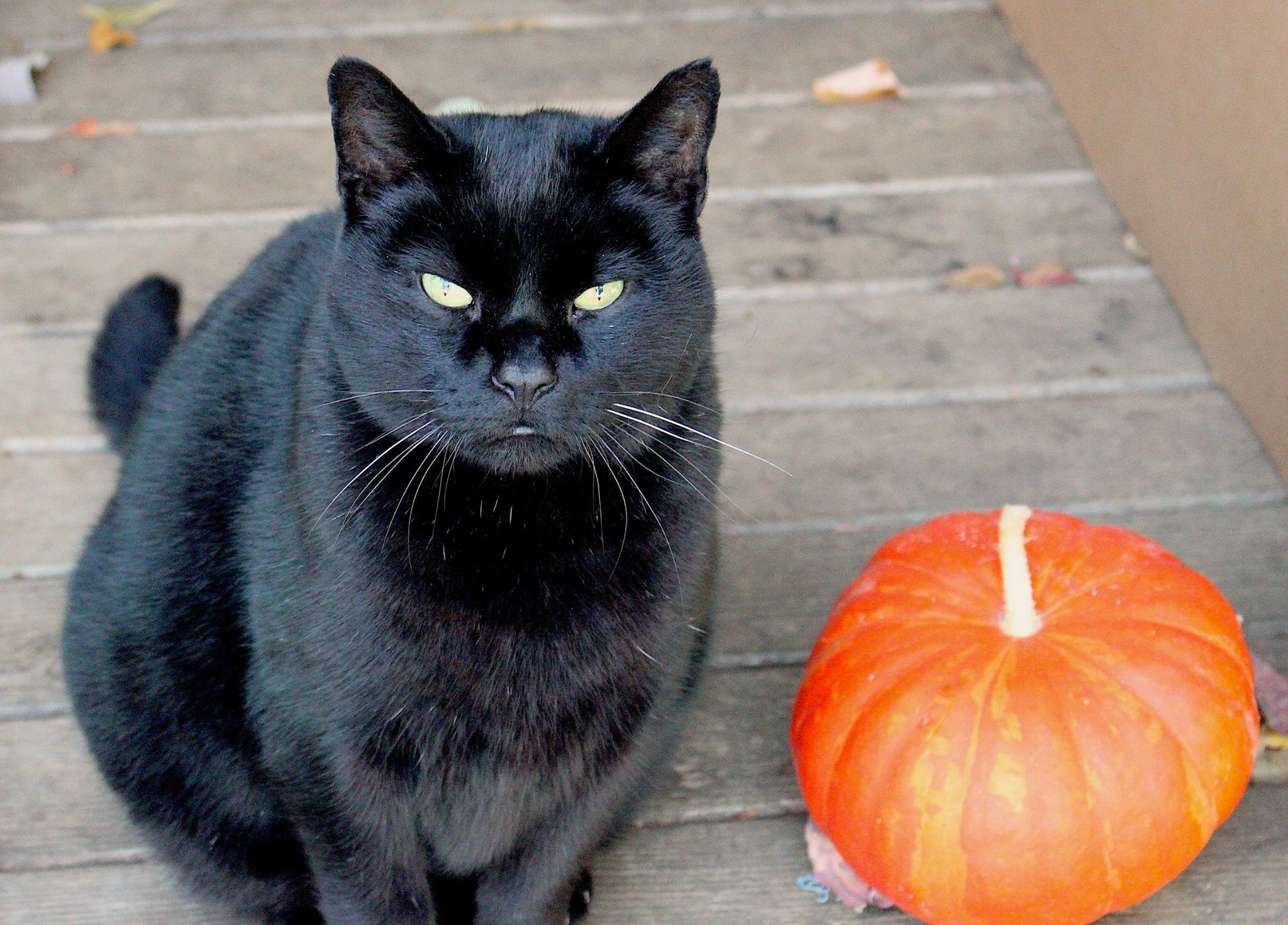
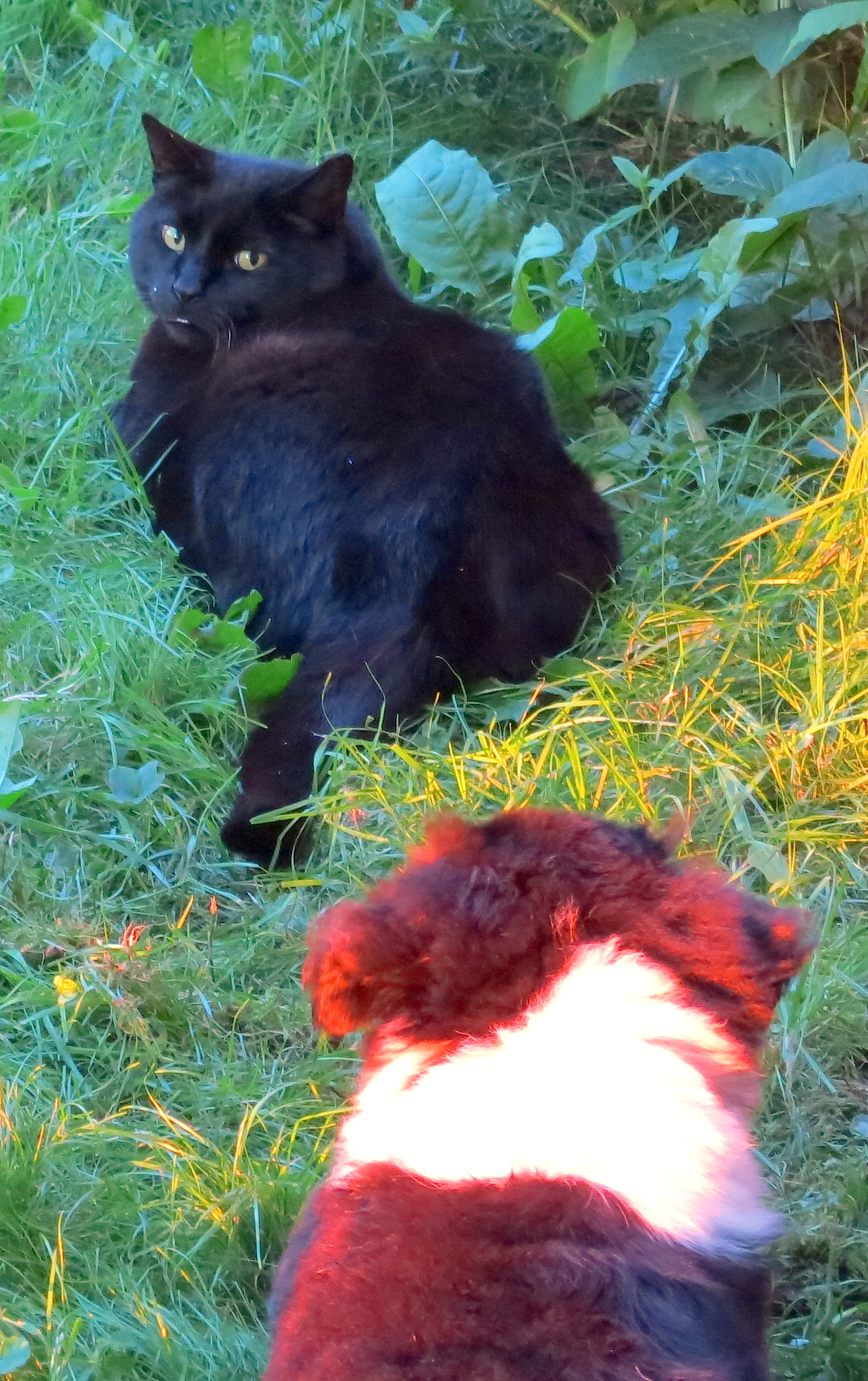
He was the king of the farm cats. No one questioned him (usually) and no one occupied his front porch bench/throne without his express permission. His Majesty showed mercy to any who showed proper submission, and every once in awhile, that included the dogs.
He trained every pup here over the years.
He was the official front porch farm greeter, rising from his throne cushion to investigate any newcomer walking up the sidewalk, mewing a cheerful little “chirp” of a meow in welcome. Then he turned around and returned to his perch.
José was a performance cat, having been trained in his younger years to ride on a bareback pad on our Haflingers, at walk, trot and over jumps (sorry, no pictures). This once again proved his ability to get any creature, large or small, to submit to his will.
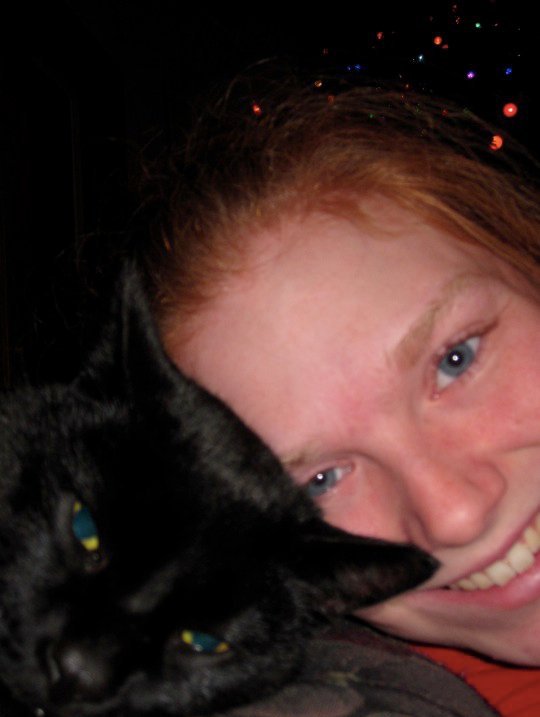
The only love of his life was our daughter, Lea. As José arrived to our farm at an indeterminate age, we didn’t really know how many years he would be with us. Before Lea headed off to college, and when home on breaks, they had many happy snuggles together for nearly 15 years.
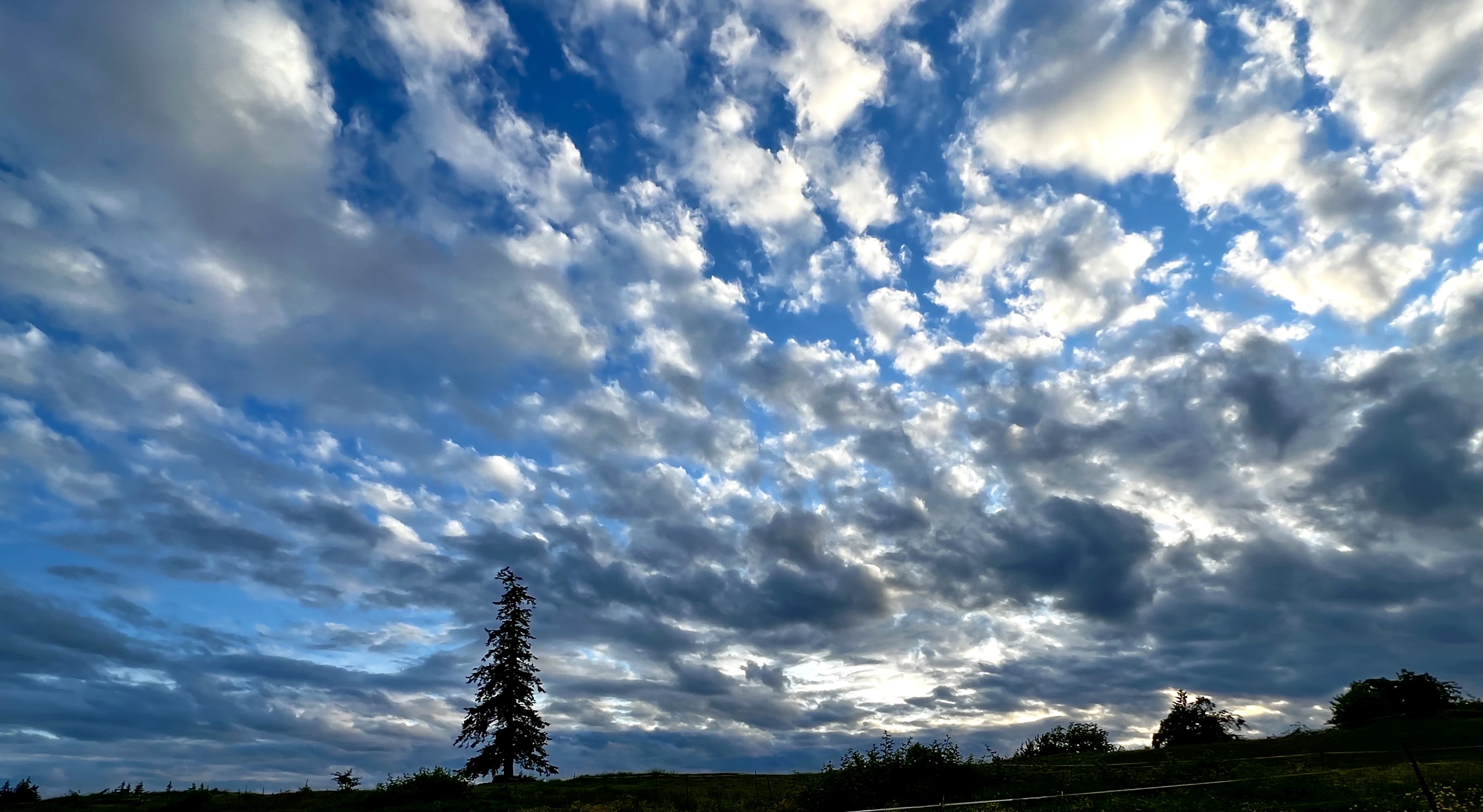
During our harsh winter storms, José would move to a warm farm building with all the necessary provisions until the storm was done, then reclaim his favorite spot on the front porch when he deemed it cozy enough to be worthy of him.
After one particularly nasty storm, when the cold northeast wind went away, José didn’t return from his hiding place.
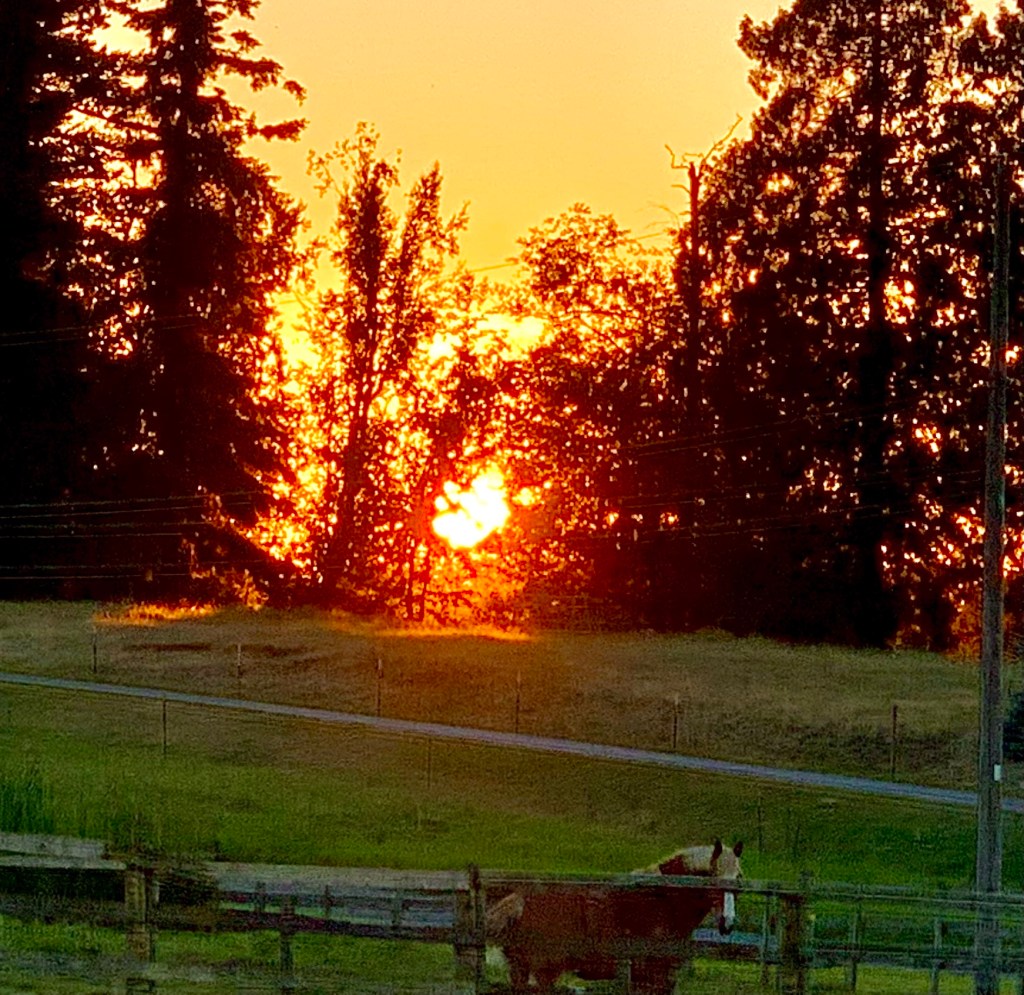
I looked, I called, I left goodies out. But no José. No chirpy meow, no yellow-eyed gaze, no black velvet fur to stroke, no rumbly purr to vibrate in my lap. I think this tough cat chose a bad winter to leave for warmer quarters far far away.
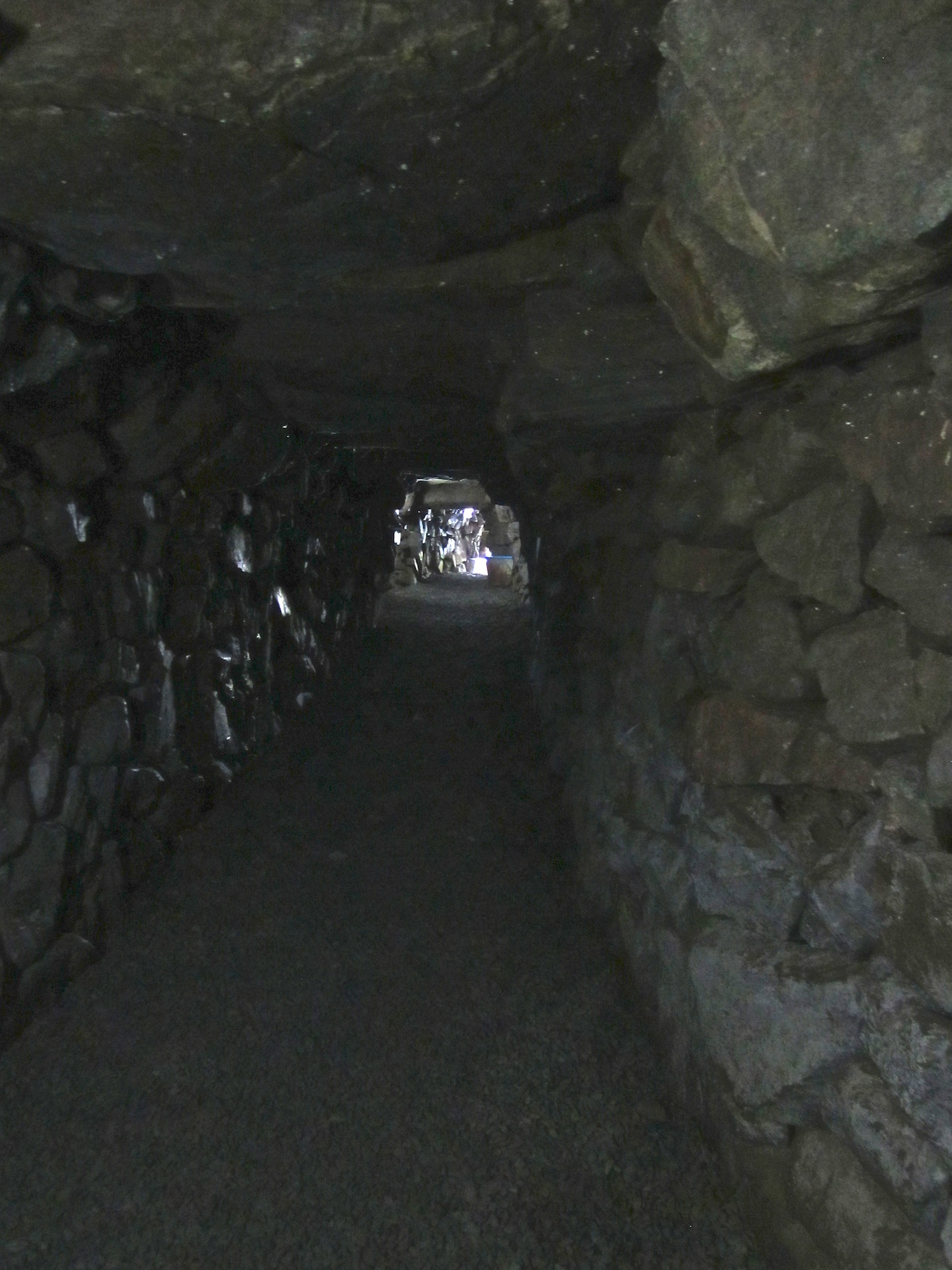
I suspect – as I still keep an eye out for it — there must be a velvety black coat he abandoned somewhere here on the farm.
He simply didn’t need it any more and unafraid, he left it behind.
On our last visit, when Lucy was fifteen And getting creaky herself, One of the nurses said to me, “Why don’t you take the cat to Mrs. Harris’ room — poor thing lost her leg to diabetes last fall — she’s ninety, and blind, and no one comes to see her.”
The door was open. I asked the tiny woman in the bed if she would like me to bring Lucy in, and she turned her head toward us. “Oh, yes, I want to touch her.”
“I had a cat called Lily — she was so pretty, all white. She was with me for twenty years, after my husband died too. She slept with me every night — I loved her very much. It’s hard, in here, since I can’t get around.”
Lucy was settling in on the bed. “You won’t believe it, but I used to love to dance. I was a fool for it! I even won contests. I wish I had danced more. It’s funny, what you miss when everything…..is gone.”
This last was a murmur. She’d fallen asleep. I lifted the cat from the bed, tiptoed out, and drove home. I tried to do some desk work but couldn’t focus.
I went downstairs, pulled the shades, put on Tina Turner and cranked it up loud and I danced.
I danced. ~Alice N. Persons“Meadowbrook Nursing Home“From Don’t Be A Stranger (Sheltering Pines Press, 2007)
photo by Lea
AI image created for this post
One-Time
Monthly
Yearly

Make a one-time or recurring donation to support daily Barnstorming posts
I’m still discovering, right up to this moment, that it is only by living completely in this world that one learns to have faith. I mean living unreservedly in life’s duties, problems, successes and failures, experiences and perplexities.
In so doing, we throw ourselves completely into the arms of God. ~Dietrich Bonhoeffer from The Cost of Discipleship
In the real world of pain, how could one worship a God who was immune to it? ~John Stott from “Cross”
With all that is happening daily in this disordered and confused world, we fall back on what we are told, each and every day, in 365 different verses in God’s Word itself:
Fear not.
Do not be overwhelmed with evil but overcome evil with good.
And so – we must overcome — despite the evil happening within our own country, despite our fear of one another and what might happen next.
As demonstrated by the anointing of Jesus’ feet by Mary of Bethany on Wednesday of Holy Week, we do what we can to sacrifice for the good of others, to live in such a way that death can never erase the meaning and significance of a life.
We are called to give up our own self-aggrandizing agendas to consider the dignity and well-being of others.
It is crystal clear from Christ’s example as we follow His journey to the cross this week: we are to cherish life – all lives – born and unborn, the stranger and the refugee. If Christ Himself forgave those who hated and murdered Him, He will forgive us for not understanding the damage we cause by our actions and inactions.
Our only defense against the evil we witness is God’s victory through His Love. Only God who knows pain can lead us to Tolkien’s “where everything sad will come untrue”, where we shall live in peace, walk hand in hand, no longer alone, no longer afraid, no longer shedding tears of grief and sorrow, but tears of relief and joy.
No longer overcome by evil but overcome with the goodness of a God who makes all things right.
All to God’s glory.
This year’s Lenten theme:
…where you go I will go… Ruth 1:16
One-Time
Monthly
Yearly
Make a one-time or recurring donation to support daily Barnstorming posts
‘Verily Thou art a God that hidest Thyself.’ is. xlv. 15.
God, though to Thee our psalm we raise No answering voice comes from the skies; To Thee the trembling sinner prays But no forgiving voice replies; Our prayer seems lost in desert ways, Our hymn in the vast silence dies.
We see the glories of the earth But not the hand that wrought them all: Night to a myriad worlds gives birth, Yet like a lighted empty hall Where stands no host or door or hearth Vacant creation’s lamps appal.
We guess; we clothe Thee, unseen King, With attributes we deem are meet; Each in his own imagining Sets up a shadow in Thy seat; Yet know not how our gifts to bring, Where seek thee with unsandalled feet.
And still th’unbroken silence broods While ages and while aeons run, As erst upon chaotic floods The Spirit hovered ere the sun Had called the seasons’ changeful moods And life’s first germs from death had won.
And still th’abysses infinite Surround the peak from which we gaze. Deep calls to deep and blackest night Giddies the soul with blinding daze That dares to cast its searching sight On being’s dread and vacant maze.
And Thou art silent, whilst Thy world Contends about its many creeds And hosts confront with flags unfurled And zeal is flushed and pity bleeds And truth is heard, with tears impearled, A moaning voice among the reeds.
My hand upon my lips I lay; The breast’s desponding sob I quell; I move along life’s tomb-decked way And listen to the passing bell Summoning men from speechless day To death’s more silent, darker spell.
Oh! till Thou givest that sense beyond, To shew Thee that Thou art, and near, Let patience with her chastening wand Dispel the doubt and dry the tear; And lead me child-like by the hand; If still in darkness not in fear.
Speak! whisper to my watching heart One word—as when a mother speaks Soft, when she sees her infant start, Till dimpled joy steals o’er its cheeks. Then, to behold Thee as Thou art, I’ll wait till morn eternal breaks. ~Gerard Manley Hopkins “Nondum (Not Yet)”
There is great darkness right now in our country’s leadership, spilling shadows over the rest of the world.
Each day brings a new proclamation of presumed earthly power, exacting great cost to those who are most vulnerable and powerless.
Though it may seem God is silent, He is not.
God broods, as do parents who protect their offspring. He hears the cries of His people who are harmed and helpless. He will respond, and His children understand we are still in the “not yet” of His kingdom on earth, and we wait for His return to set all things right.
This year’s Lenten theme:
…where you go I will go… Ruth 1:16
AI image created for this post
One-Time
Monthly
Yearly

Make a one-time or recurring donation to support daily Barnstorming posts
All the paths of the Lord are loving and faithful. Psalm 25:10
All does not mean “all – except the paths I am walking in now” or “nearly all” – except this especially difficult and painful path. All must mean all. So, your path with its unexplained sorrow or turmoil, and mine with its sharp flints and briers – and both our paths, with their unexplained perplexity, their sheer mystery – they are His paths, on which he will show Himself loving and faithful. Nothing else; nothing less. ~Amy Carmichael–from You Are My Hiding Place
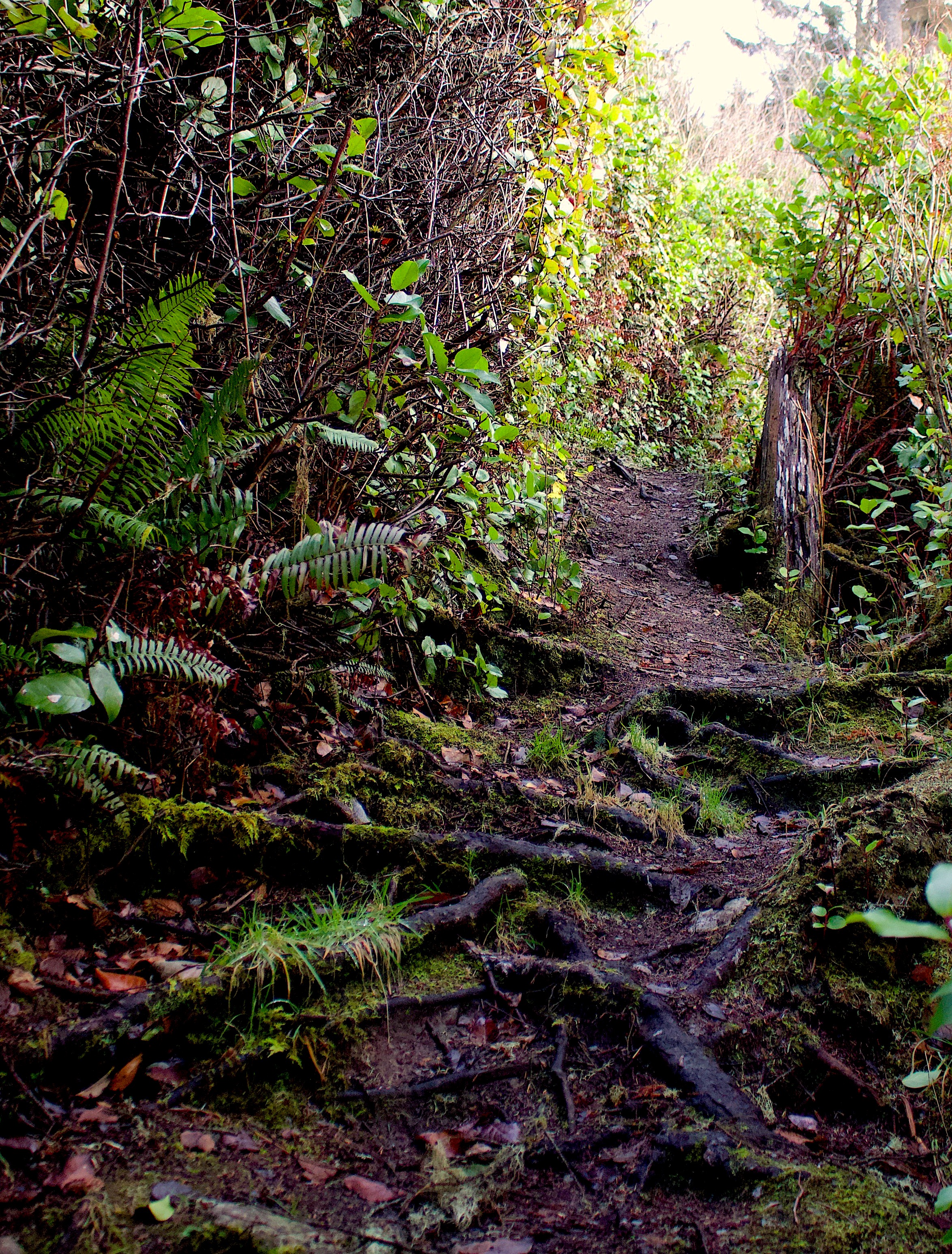
Sometimes we come to forks in the road where we may not be certain which path to take.
Perhaps explore the Robert Frost “less traveled” one?
Or take the one that seems less tangled and uncertain from all appearances?
Or in the recent email to U.S. federal employees, take the forced resignation or choose to wait and be fired?
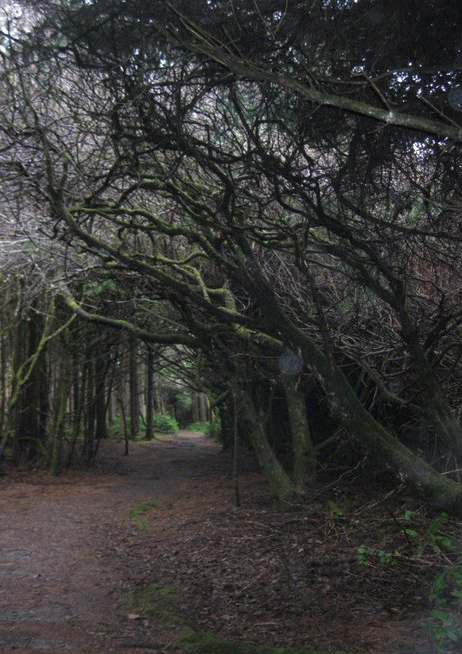
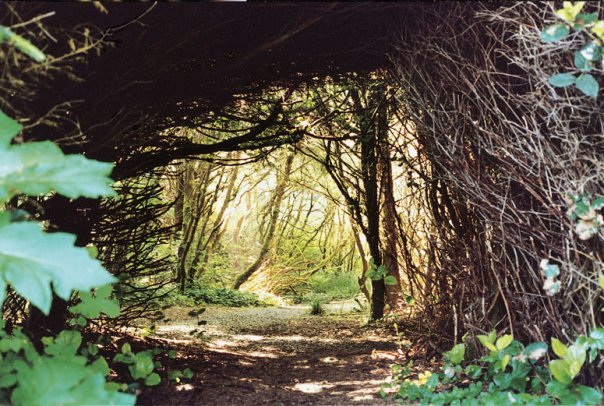
Perhaps we chose a particular path which looked inviting at the time, trundling along minding our own business, yet we start bonking our heads on low hanging branches, or get grabbed by stickers and thorns that rip our clothes and skin, or trip over prominent roots and rocks that impede our progress and bruise our feet.
Sometimes we come to a sudden end in a path and face a steep cliff with no choice but to leap — or turn back through the mess we have just slogged through.
Navigating the road to the cross must have felt like ending up at that steep cliff. There was no turning back, no choosing or negotiating a different pathway or taking time to build a downward staircase into the rocks.
Christ’s words reflect His uncertainty and terror. His words reflect our deepest doubts and fears– how are we to trust we are set on the right path?
When we take that next step, no matter which way or which one, we end up in the Father’s loving and faithful arms.
He has promised this.
Nothing else; nothing less.
This year’s Lenten theme:
…where you go I will go… Ruth 1:16
AI image created for this post
One-Time
Monthly
Yearly
Make a one-time or recurring donation to support daily Barnstorming posts
Sometimes from sorrow, for no reason, you sing. For no reason, you accept the way of being lost, cutting loose from all else and electing a world where you go where you want to.
Arbitrary, a sound comes, a reminder that a steady center is holding all else. If you listen, that sound will tell you where it is and you can slide your way past trouble.
Certain twisted monsters always bar the path—but that’s when you get going best, glad to be lost, learning how real it is here on earth, again and again. ~William Stafford “Cutting Loose” from Dancing with Joy: 99 Poems
Things fall apart; the centre cannot hold; Mere anarchy is loosed upon the world, The blood-dimmed tide is loosed, and everywhere The ceremony of innocence is drowned; The best lack all conviction, while the worst Are full of passionate intensity. ~William Butler Yeats from The Second Coming
Life is a hard battle anyway. If we laugh and sing a little as we fight the good fight of freedom, it makes it all go easier. I will not allow my life’s light to be determined by the darkness around me. ~Sojourner Truth
There are so many twists and turns in this life, we lose sight of the Center of all things. We don’t always know what is around the next corner. It can feel like things are falling apart, and we could be swallowed up.
Getting lost, tripping on rocks and falling into holes is part of reality. Bruises and scrapes remind us where we have been and what we have been through, yet we keep going.
We do not honor the arbitrary whims of bullies, nor dim ourselves within the darkness where they dwell.
So we sing:
We shall overcome. We’ll walk hand in hand. We are not alone. We are not afraid. We shall all be free. We shall live in peace. Someday.
God will see us through.
Thank you to Parker Palmer and Carrie Newcomer who spoke about the Stafford poem “Cutting Loose” here
AI image created for this post
Oh, deep in my heart I do believe We shall overcome some day
One-Time
Monthly
Yearly
Make a one-time or recurring donation to support daily Barnstorming posts
There are three kinds of men. The ones that learn by reading. The few who learn by observation. The rest of them have to pee on the electric fence for themselves. ~Will Rogers
We living creatures learn from the moment we take our first breath. We continue to learn until our last breath. With that lifetime of learning, one would think eventually we should find some semblance of wisdom.
But we don’t. We tend to learn the hard way especially when it comes to matters having to do with our (or others’) health and well-being.
Within a community, we want autonomy to do as we like, no matter what the science says. You’d think we’d know better, but as fallible human beings, we may impulsively make decisions about health issues. Is it evidence-based or simply an anecdotal story about what “worked” or “didn’t work” for someone else?
We’re facing at least four years of a new administration encouraging us all to “pee on the electric fence” and learn for ourselves rather than trust science. Careful research, years of observed experience, and plain common sense isn’t enough to trust public health and infectious disease experts to make wise recommendations about community and individual risk and prevention strategies.
The cows and horses on our farm need to touch an electric fence only once when reaching for greener grass on the other side. That moment provides a potent learning curve for them to make important future decisions. They won’t try testing it again no matter how alluring thngs appear on the other side. Humans should learn as quickly as animals but unfortunately don’t.
I know all too well what a shock feels like and I want to avoid repeating that experience. Even so, in unguarded careless moments of feeling invulnerable (it can’t happen to me!) or annoyed at being told what I can and can’t do, or simply indulging in magical thinking, I find myself reaching for the greener grass.
I suspect I’m not alone in my surprise when I’m jolted back to reality.
Many great minds have worked out various theories of effective learning, but, great mind or not, Will Rogers confirms a common sense suspicion: an adverse experience, like a “bolt out of the blue,” can be a powerful teacher.
So we call peeing on an electric fence it “a teachable moment.”
Sadly, when we learn the hard way, it often ends up hurting everyone.
AI image created for this post
One-Time
Monthly
Yearly
Make a one-time or recurring donation to support daily Barnstorming posts
I like the slants of light; I’m a collector. That’s a good one, I say… ~Annie Dillard from Pilgrim at Tinker Creek
How valuable it is in these short days, threading through empty maple branches, the lacy-needled sugar pines.
Its glint off sheets of ice tells the story of Death’s brightness, her bitter cold.
We can make do with so little, just the hint of warmth, the slanted light... ~Molly Fisk, “Winter Sun” from The More Difficult Beauty
There’s a certain Slant of light On winter afternoons — That oppresses, like the Heft of cathedral tunes. When it comes, the Landscape listens — Shadows hold their breath — When it goes, ’tis like the Distance On the look of Death. ~Emily Dickinson
During our northwest winters, there is usually so little sunlight on gray cloudy days that I routinely turn on the two light bulbs in the big hay barn any time I need to fetch hay bales for the horses. This is so I avoid falling into the holes that inevitably develop in the hay stack between bales. Winter murky lighting tends to hide the dark shadows of the leg-swallowing pits among the bales, something that is particularly hazardous when attempting to move a 60 pound hay bale.
Sometimes in mid-winter, when I go to grab hay bales for the horses at sunset, before I flip the light switch, I can see light already blazing in the big barn. The last of the day’s sun rays are at a precise winter slant, streaming through the barn slat openings, ricocheting off the roof timbers onto the bales, casting an almost fiery glow onto the hay. The barn is ignited and ablaze without fire and smoke — the last things one would ever want in a hay barn.
Thanks to occasional late afternoon winter light, I can scramble among the bales without worry.
It seems as I age I have been running into more dark holes. Even when I know where they lie and how deep they are, some days I will manage to step right in anyway. Each time it knocks the breath out of me, makes me cry out, makes me want to quit trying to lift the loads which need carrying. It leaves me fearful to venture where the footing is uncertain.
Then, on the darkest of days, light comes from the most unexpected of places, blazing a trail to help me see where to step, what to avoid, how to navigate the hazards to avoid collapsing on my face. I’m redirected, inspired anew, granted grace, gratefully calmed and comforted amid my fears.
For many Americans, tomorrow represents the dark holes getting even darker. But we know — love, respect, and kindness will eventually reignite again.
The Light always returns so we can climb out of any dark holes that try to swallow us whole.
Yet another slant of Light for our collection…
Tell all the truth but tell it slant — Success in Circuit lies Too bright for our infirm Delight The Truth’s superb surprise As Lightning to the Children eased With explanation kind The Truth must dazzle gradually Or every man be blind — ~Emily Dickinson
AI image created for this post
One-Time
Monthly
Yearly
Make a one-time or recurring donation to support daily Barnstorming posts
In the quiet misty morning When the moon has gone to bed, When the sparrows stop their singing And the sky is clear and red, When the summer’s ceased its gleaming When the corn is past its prime, When adventure’s lost its meaning – I’ll be homeward bound in time
Bind me not to the pasture Chain me not to the plow Set me free to find my calling And I’ll return to you somehow
If you find it’s me you’re missing If you’re hoping I’ll return, To your thoughts I’ll soon be listening, And in the road I’ll stop and turn Then the wind will set me racing As my journey nears its end And the path I’ll be retracing When I’m homeward bound again
Bind me not to the pasture Chain me not to the plow Set me free to find my calling And I’ll return to you somehow
In the quiet misty morning When the moon has gone to bed, When the sparrows stop their singing I’ll be homeward bound again. ~Marta Keen “Homeward Bound”
Eighty-two years ago, my parents married on Christmas Eve. It was not a conventional wedding day but a date of necessity, only because a justice of the peace was available to marry a score of war-time couples in Quantico, Virginia, shortly before the newly trained Marine officers were shipped out to the South Pacific to fight in WWII.
When I look at my parents’ young faces – ages 22 and just turned 21 — in their only wedding portrait, I see a hint of the impulsive decision that led to that wedding just a week before my father left for 30 months. They had known each other at college for over a year, had talked about a future together, but with my mother starting a teaching job in a rural Eastern Washington town, and the war potentially impacting all young men’s lives very directly, they had not set a date.
My father put his college education on hold to enlist, knowing that would give him some options he wouldn’t have if drafted, so they went their separate ways as he headed east to Virginia for his Marine officer training, and Mom started her high school teaching career as a speech and drama teacher. One day in early December of 1942, he called her and said, “If we’re going to get married, it’ll need to be before the end of the year. I’m shipping out the first week in January.” Mom went to her high school principal, asked for a two week leave of absence which was granted, told her astonished parents, bought a dress, and headed east on the train with a friend who had received a similar call from her boyfriend.
This was a completely uncharacteristic thing for my overly cautious mother to do, so… it must have been love.
They were married in a brief civil ceremony with another couple as the witnesses. They stayed in Virginia only a couple days and took the train back to San Diego, and my father was shipped out. Just like that. Mom returned to her teaching position and the first three years of their married life was composed of letter correspondence only, with gaps of up to a month during certain island battles when no mail could be delivered or posted.
As I sorted through my mother’s things following her death over a decade ago, I found their war-time letters to each other, stacked neatly and tied together in a box.
In my father’s nearly daily letters home to my mother during WWII, month after month after month, he would say, over and over, while apologizing for the repetition:
“I will come home to you, I will return, I will not let this change me, we will be joined again…”
This was his way of convincing himself even as he carried the dead and dying after island battles: men he knew well and the enemy he did not know. He knew they were never returning to the home they died protecting and to those who loved them.
He shared little of battle in his letters as each letter was reviewed and signed off by a censor before being sealed and sent. This story, however, made it through:
“You mentioned a story of Navy landing craft taking the Marines into Tarawa. It reminded me of something which impressed me a great deal and something I’m sure I’ll never forget.
So you’ll understand what I mean I’ll try to start with an explanation. In training – close order drill- etc. there is a command that is given always when the men form in the morning – various times during the day– after firing– and always before a formation is dismissed. The command is INSPECTION – ARMS. On the command of EXECUTION- ARMS each man opens the bolt of his rifle. It is supposed to be done in unison so you hear just one sound as the bolts are opened. Usually it is pretty good and sounds O.K.
Just to show you how the morale of the men going to the beach was – and how much it impressed me — we were on our way in – I was forward, watching the beach thru a little slit in the ramp – the men were crouched in the bottom of the boat, just waiting. You see- we enter the landing boats with unloaded rifles and wait till it’s advisable before loading. When we got about to the right distance in my estimation I turned around and said – LOAD and LOCK – I didn’t realize it, but every man had been crouching with his hand on the operating handle and when I said that — SLAM! — every bolt was open at once – I’ve never heard it done better – and those men meant business when they loaded those rifles.
A man couldn’t be afraid with men like that behind him.”
My father did return home to my mother after nearly three years of separation. He finished his college education to become an agriculture teacher to teach others how to farm the land while he himself became bound to the pasture and chained to the plow.
He never forgot those who died, making it possible for him to return home. I won’t forget either.
My mother and father could not have foretold the struggles that lay ahead for them. The War itself seemed struggle enough for the millions of couples who endured the separation, the losses and grieving, as well as the eventual injuries–both physical and psychological. It did not seem possible that beyond those harsh and horrible realities, things could go sour after reuniting.
The hope and expectation of happiness and bliss must have been overwhelming, and real life doesn’t often deliver. After raising three children, their 35 year marriage fell apart with traumatic finality. When my father returned home (again) over a decade later, asking for forgiveness, they remarried and had five more years together before my father died in 1995.
Christmas is a time of joy, a celebration of new beginnings and new life when God became man, humble, vulnerable and tender. But it also gives us a foretaste for the profound sacrifice made in giving up this earthly life, not always so gently.
As I peer at my father’s and mother’s faces in their wedding photo, I remember those eyes, then so trusting and unaware of what was to come. I find peace in knowing they both have returned home to behold the Light, the Salvation and the Glory~~the ultimate Christmas~~in His presence.
AI image created for this postAI image created for this post
One-Time
Monthly
Yearly
Make a one-time or recurring donation to support daily Barnstorming posts
And in despair I bowed my head; “There is no peace on earth,” I said; “For hate is strong, And mocks the song Of peace on earth, good-will to men!”
Then pealed the bells more loud and deep: “God is not dead, nor doth He sleep; The Wrong shall fail, The Right prevail, With peace on earth, good-will to men.” ~Henry Wadsworth Longfellowfrom Christmas Bells
On the whole, I do not find Christians, outside of the catacombs, sufficiently sensible of conditions. Does anyone have the foggiest idea what sort of power we so blithely invoke?
The churches are children playing on the floor with their chemistry sets, mixing up a batch of TNT to kill a Sunday morning. It is madness to wear ladies’ straw hats and velvet hats to church; we should all be wearing crash helmets. Ushers should issue life preservers and signal flares; they should lash us to our pews. For the sleeping god may wake someday and take offense, or the waking god may draw us out to where we can never return. ~Annie Dillard from Teaching a Stone to Talk: Expeditions and Encounters
Let the stable still astonish; Straw – dirt floor, dull eyes, Dusty flanks of donkeys, oxen; Crumbling, crooked walls; No bed to carry that pain, And then, the child, Rag-wrapped, laid to cry In a trough. Who would have chosen this? Who would have said: “Yes, Let the God of all the heavens and earth Be born here, in this place?” Who but the same God Who stands in the darker, fouler rooms Of our hearts And says, “Yes, Let the God of Heaven and Earth Be born here – In this place. ~Leslie Leyland Fields “Let the Stable Still Astonish”
During Advent, I too am guilty of nostalgia and sentiment, invoking the gentle bedtime story of that silent night, with the infant napping away in a hay-filled manger, His devoted parents hovering, the humble shepherds peering in the stable door.
All is calm. All is bright.
No, this is not a sentimental story. It is astonishing.
God never sleeps.
This is no gentle bedtime story: – a teenage mother gives birth in a smelly among animals, with no alternative but to lay her baby in a rough feed trough.
– the heavenly host appearing to shepherds – the lowest of the low in society – shouting and singing glories which causes terror.
– Herod’s response to the news that a Messiah had been born was to kill a legion of male children whose parents undoubtedly begged for mercy, clinging to their children about to be murdered.
– a family’s flight to Egypt as refugees seeking asylum so their son would not be yet another victim of Herod.
– Jesus grew up to become itinerant and homeless, tempted while fasting in the wilderness, owning nothing, rejected by His own people, betrayed by His disciples, sentenced to death by acclamation before Pilate, tortured, hung on a cross until He gave up his spirit.
– Jesus understood He was not of this world. He knew the power that originally brought him to earth as a helpless infant lying in an unforgiving stone trough would eventually move the stone covering His tomb.
He would be sacrificed, He would die and rise again, He would return again as King of all nations.
When I hear skeptics scoff at Christianity as a “crutch for the weak”, they underestimate the courage it takes to walk into church each week admitting we are a desperate people seeking rescue. We cling to the life preserver found in the Word, lashed to our seats and hanging on. It is only because of grace that we survive the tempests of temptation, shame, guilt and self-doubt to worship an all-knowing God who is not dead and who never ever sleeps.
This bedtime story is not for the faint of heart. It is meant to astonish. The power invoked created the very dust we are made of, and breathed His life into us.
So be not afraid: the wrong shall fail the Right prevail. He chose this place. Peace on earth, good-will to men.
The grass withers, the flower fades, But the word of our God stands forever. Isaiah 40:8
AI image created for this post
One-Time
Monthly
Yearly
Make a one-time or recurring donation to support daily Barnstorming posts