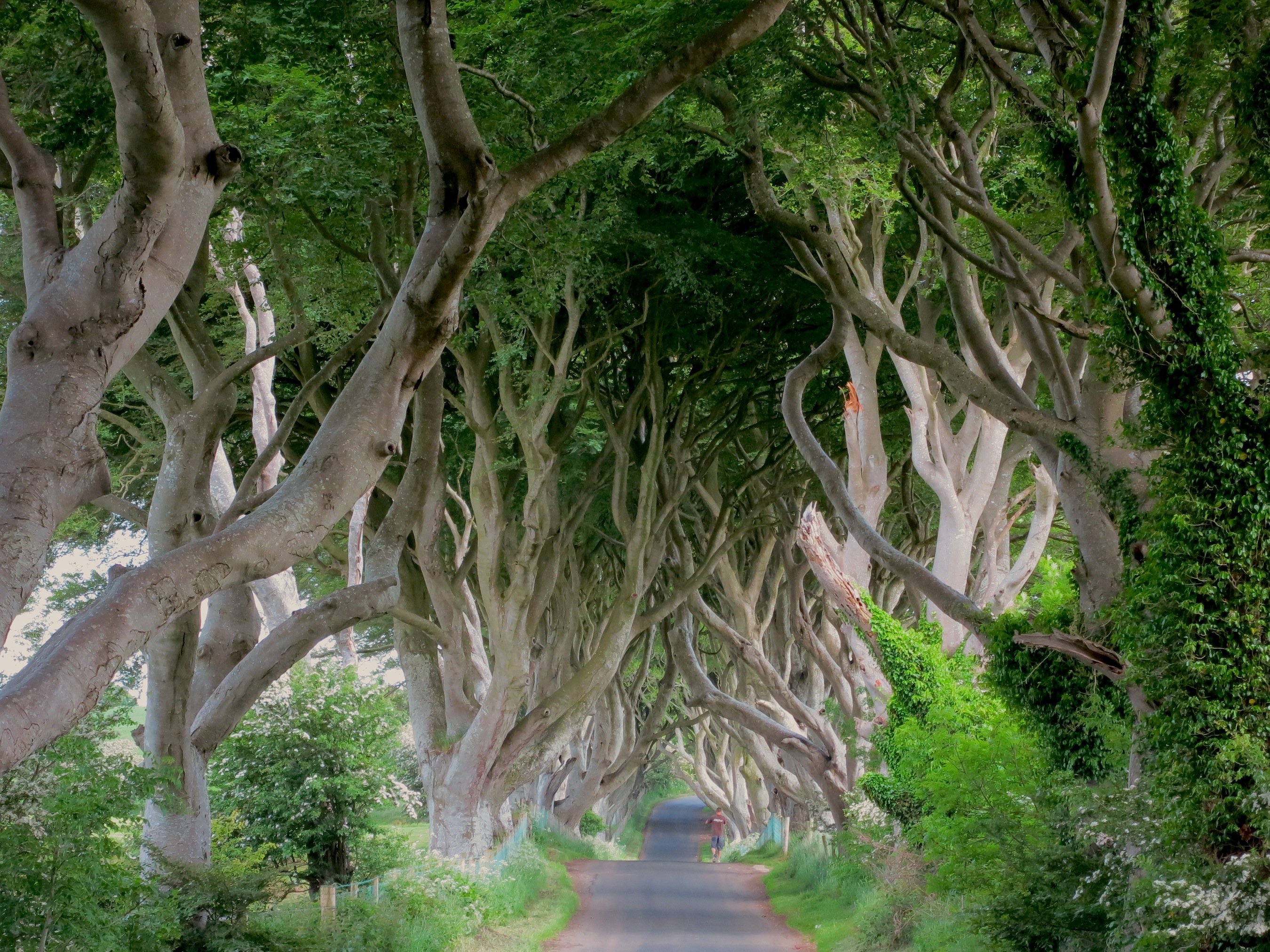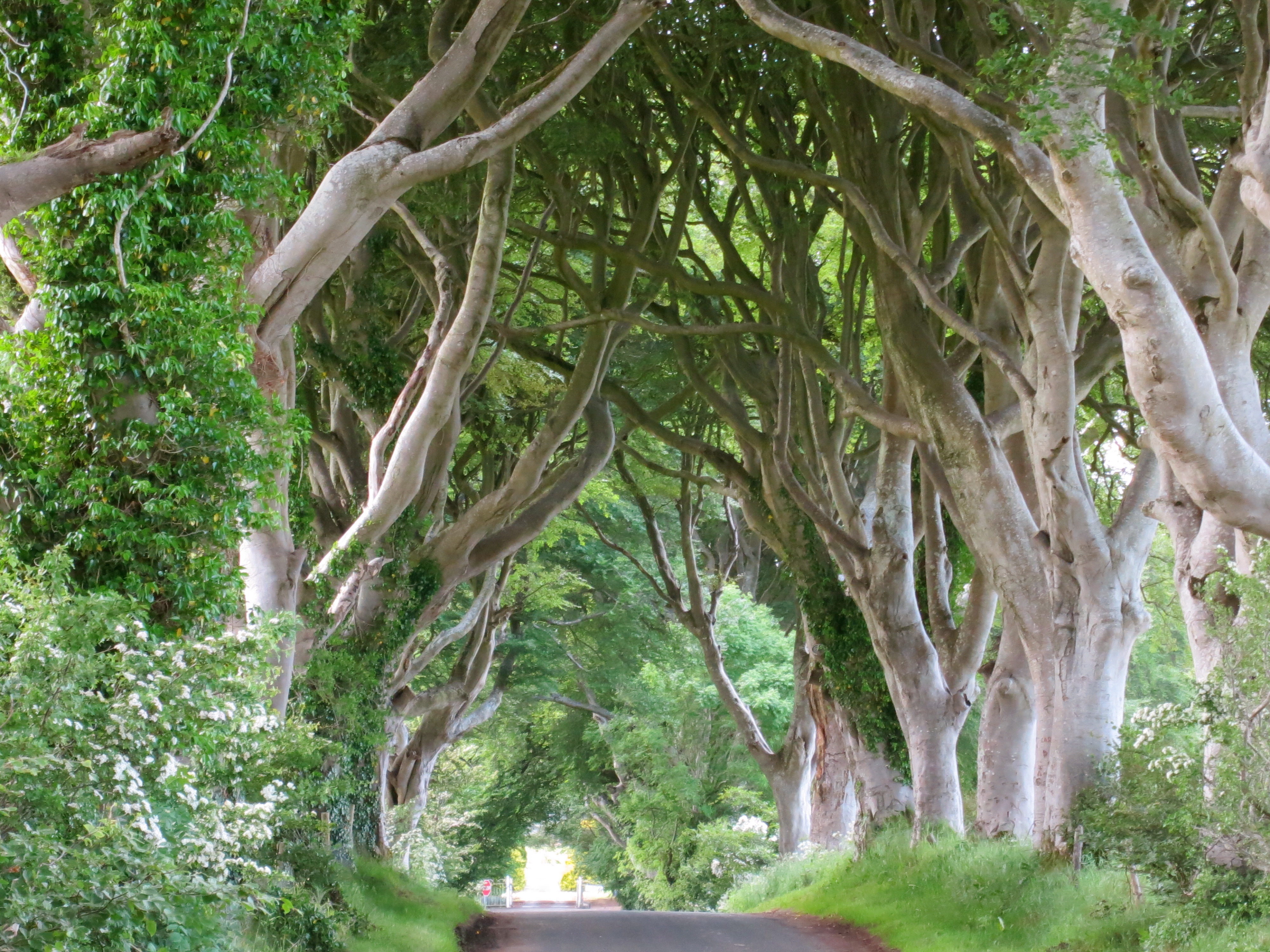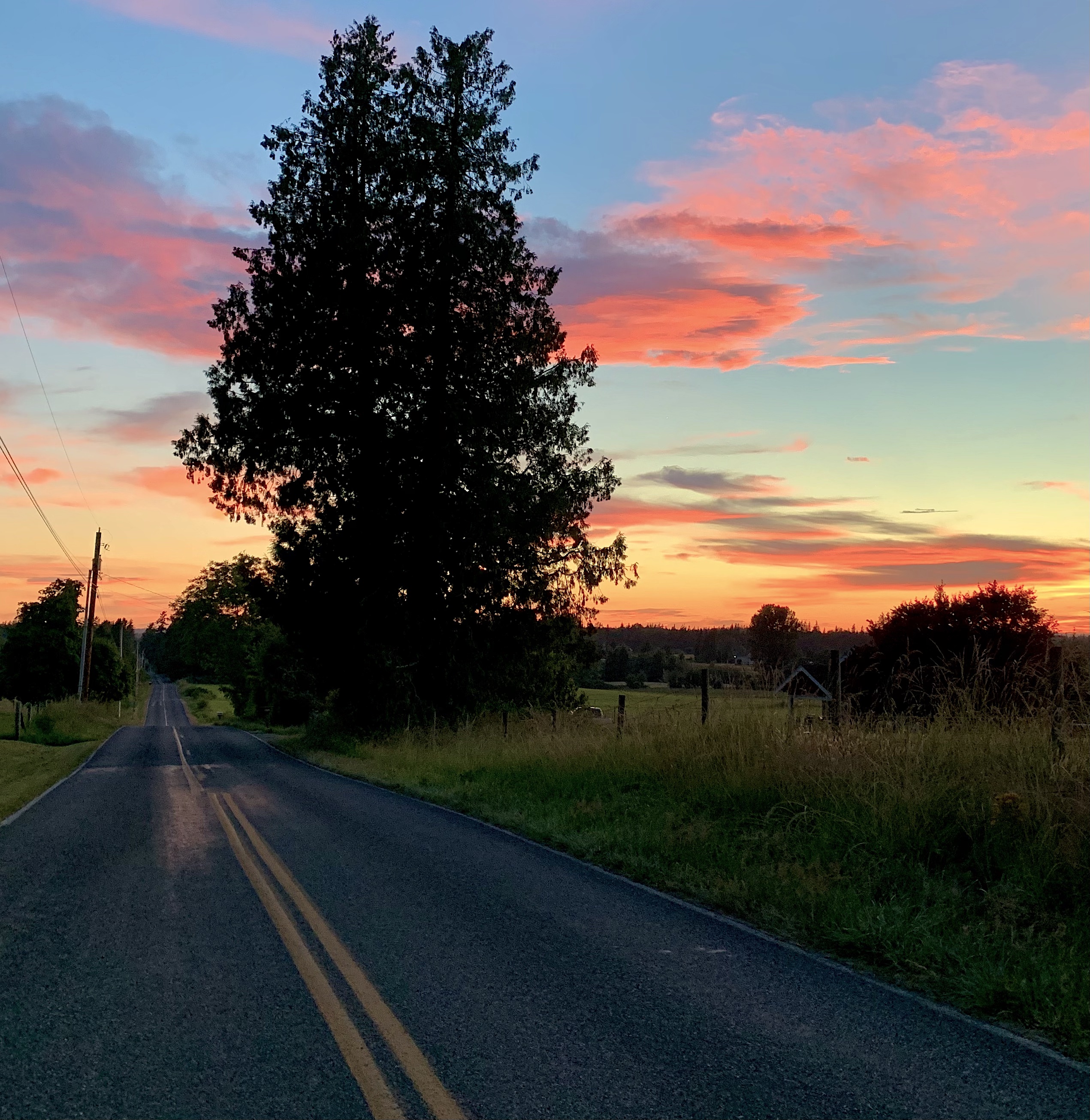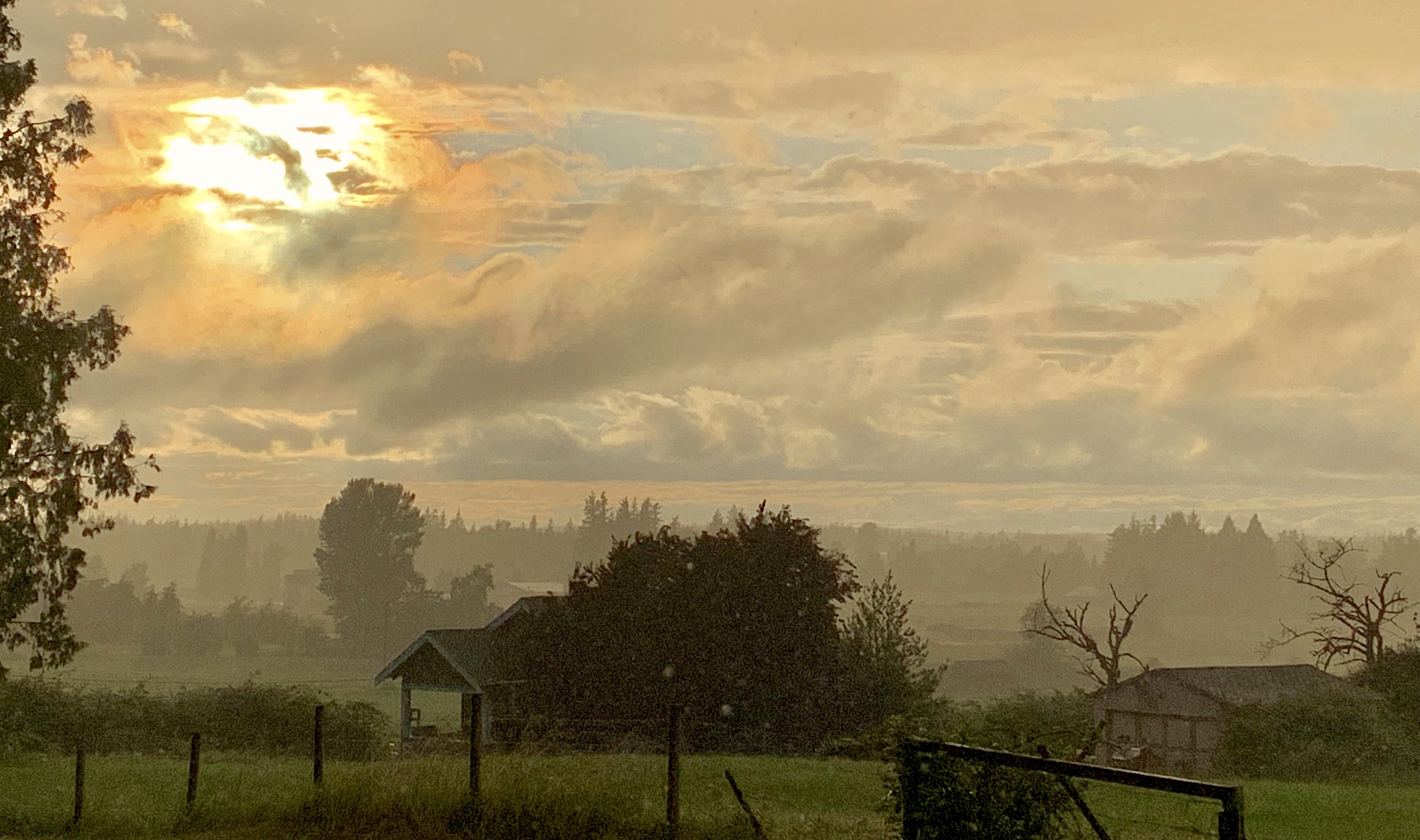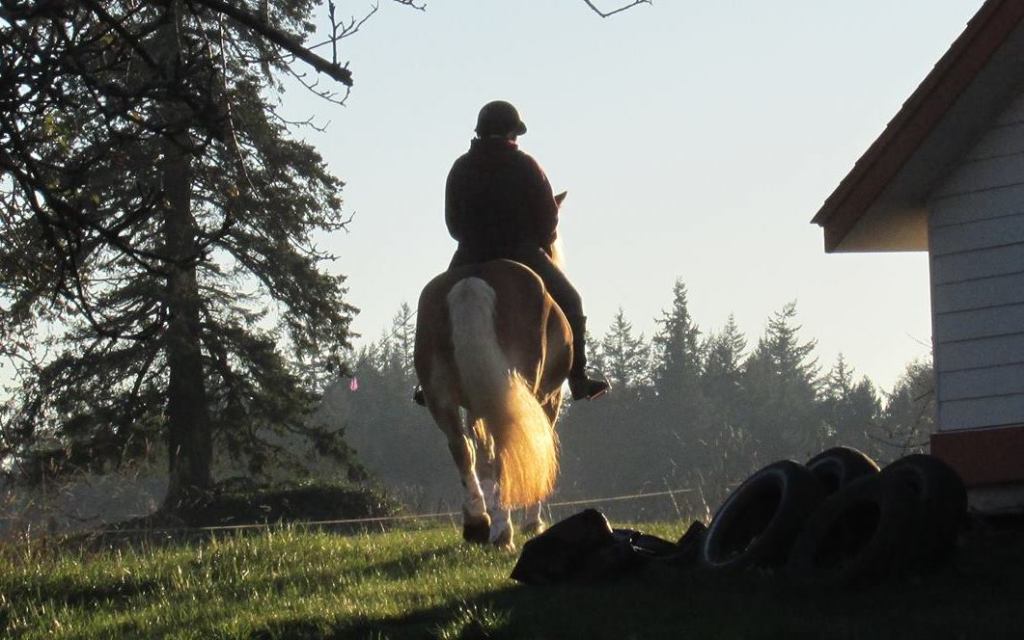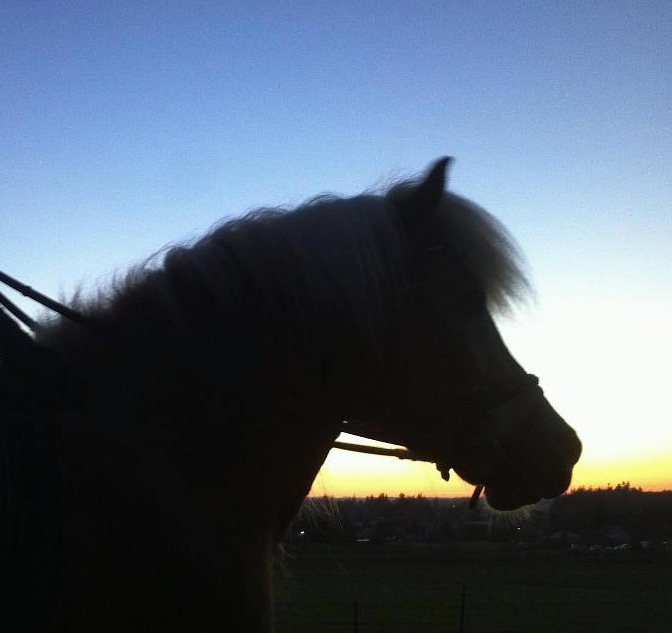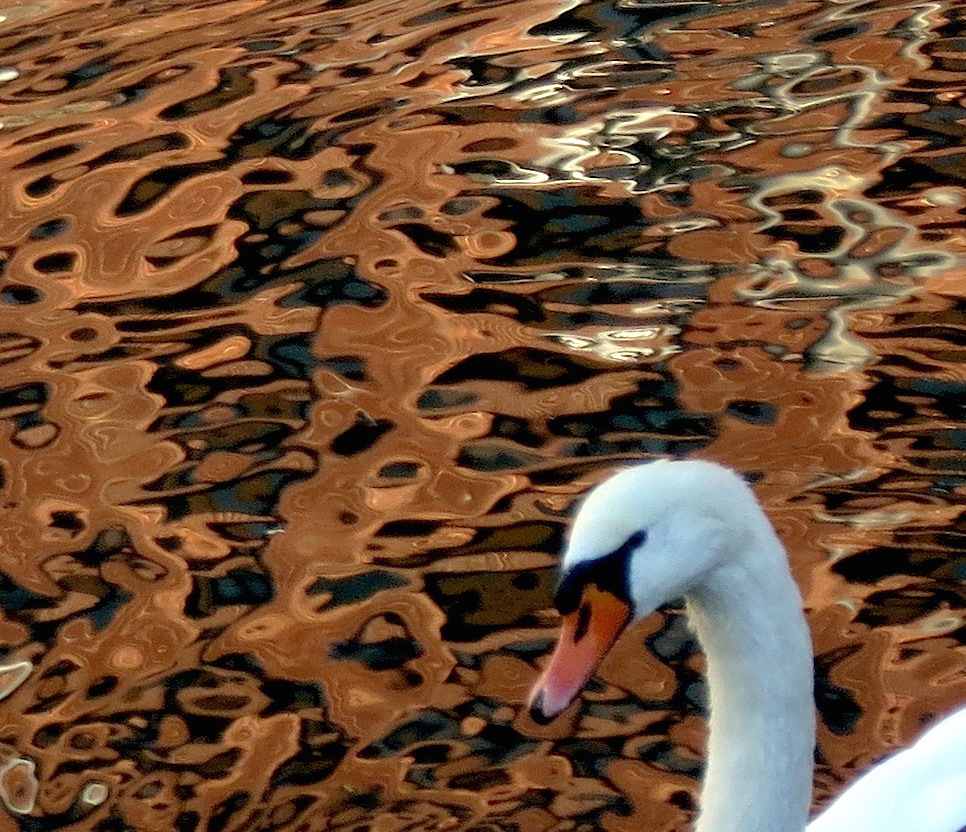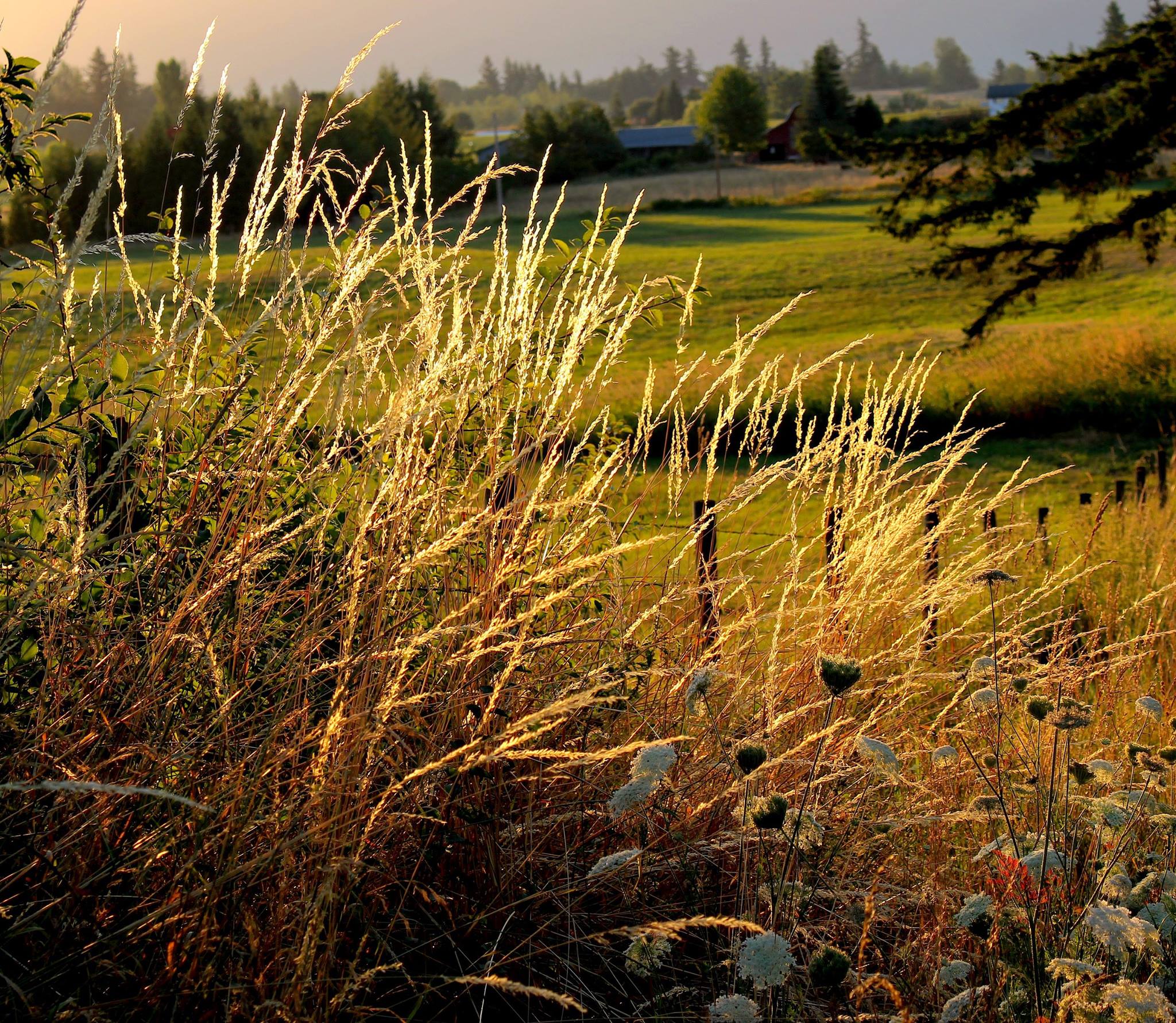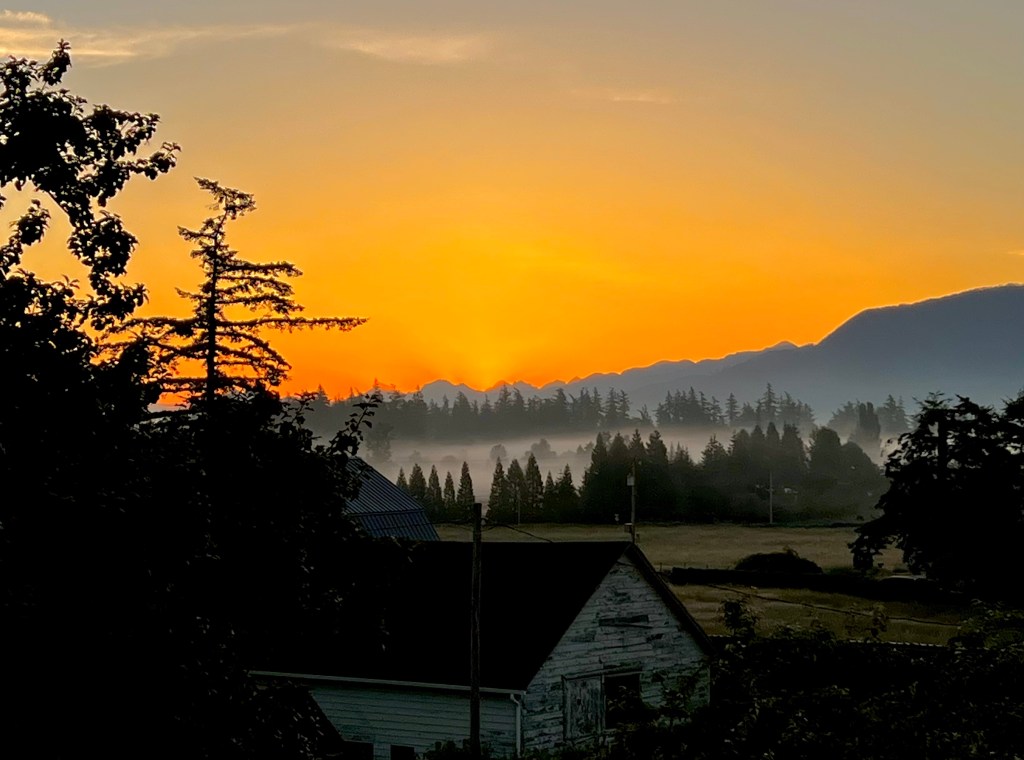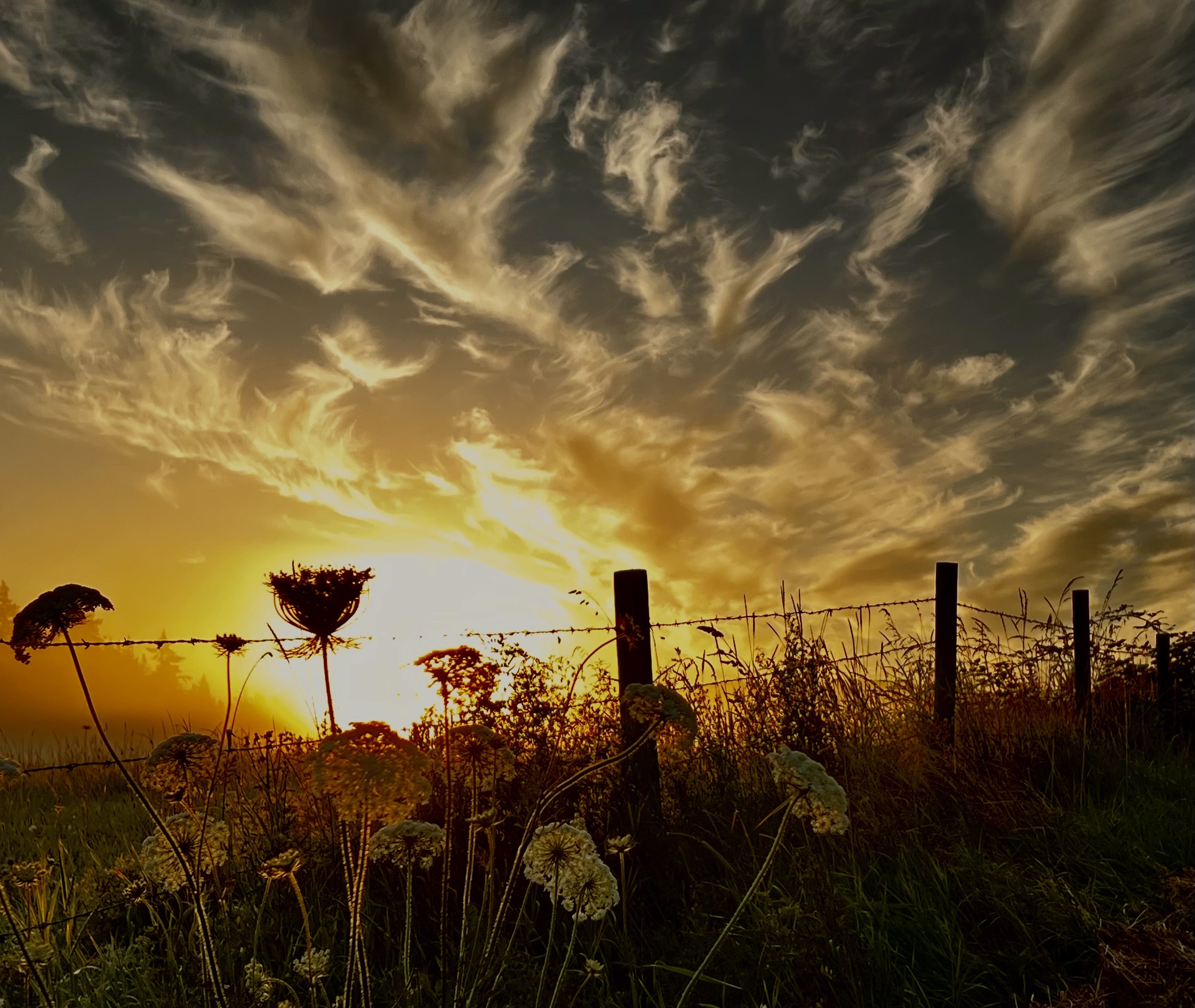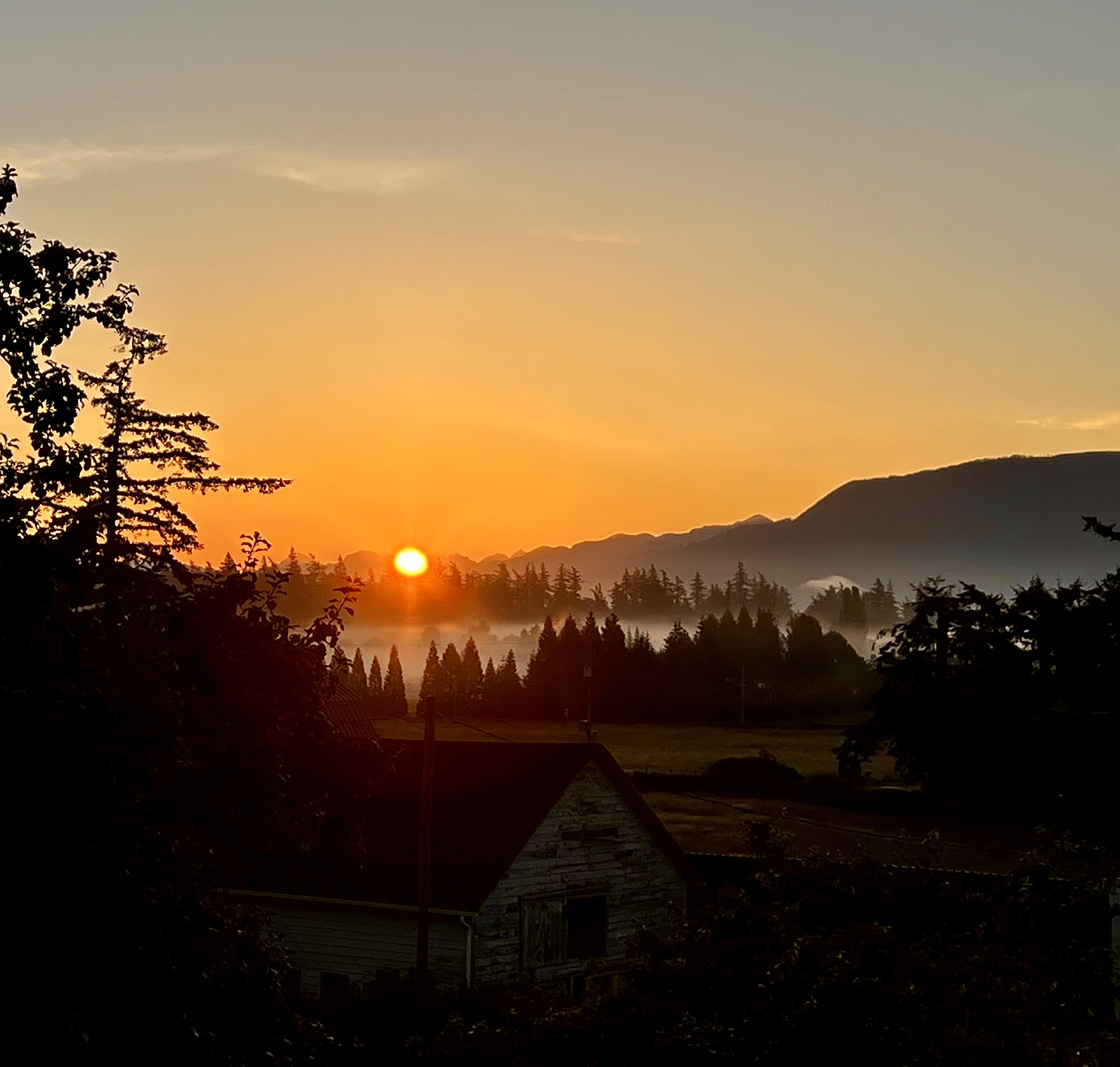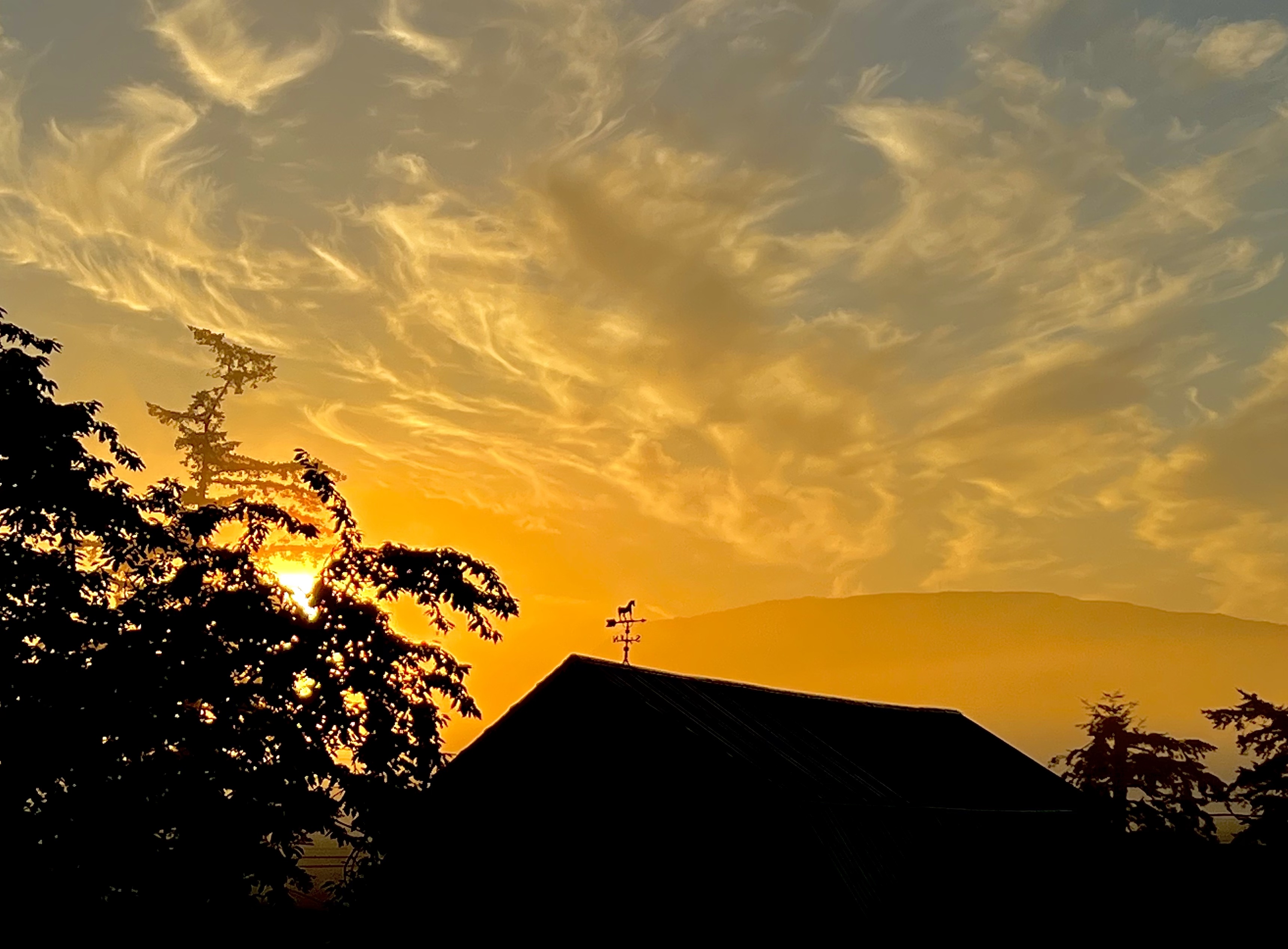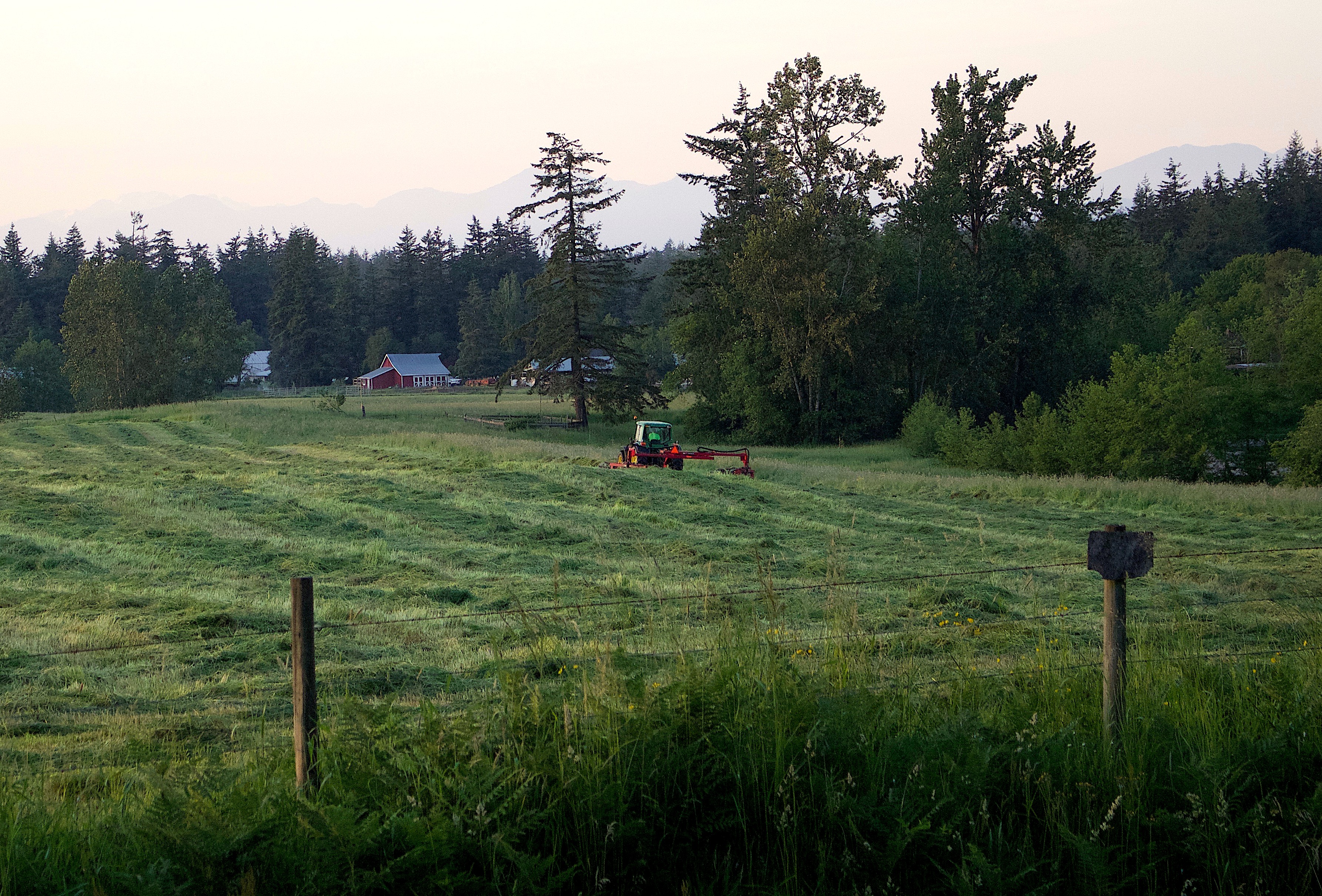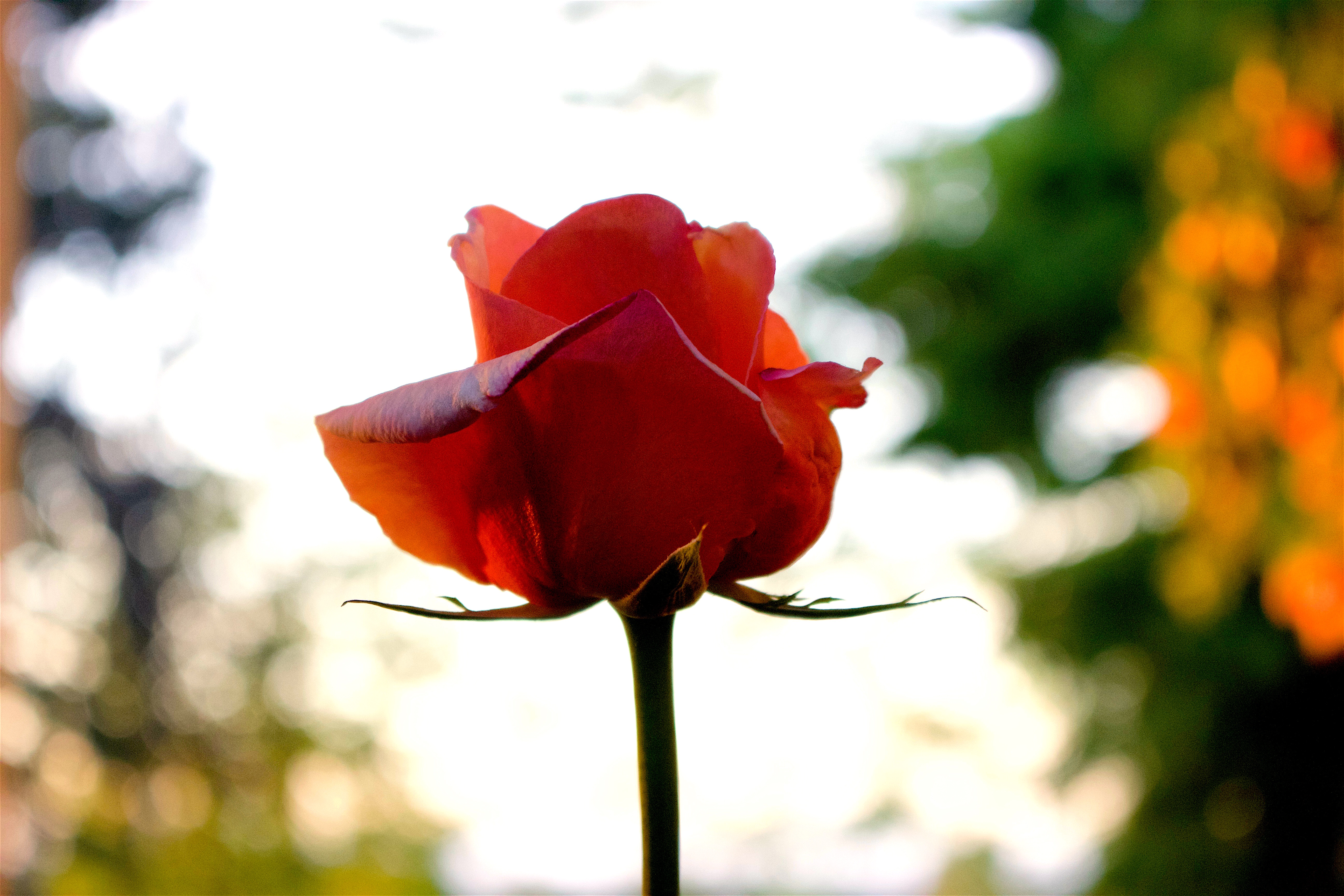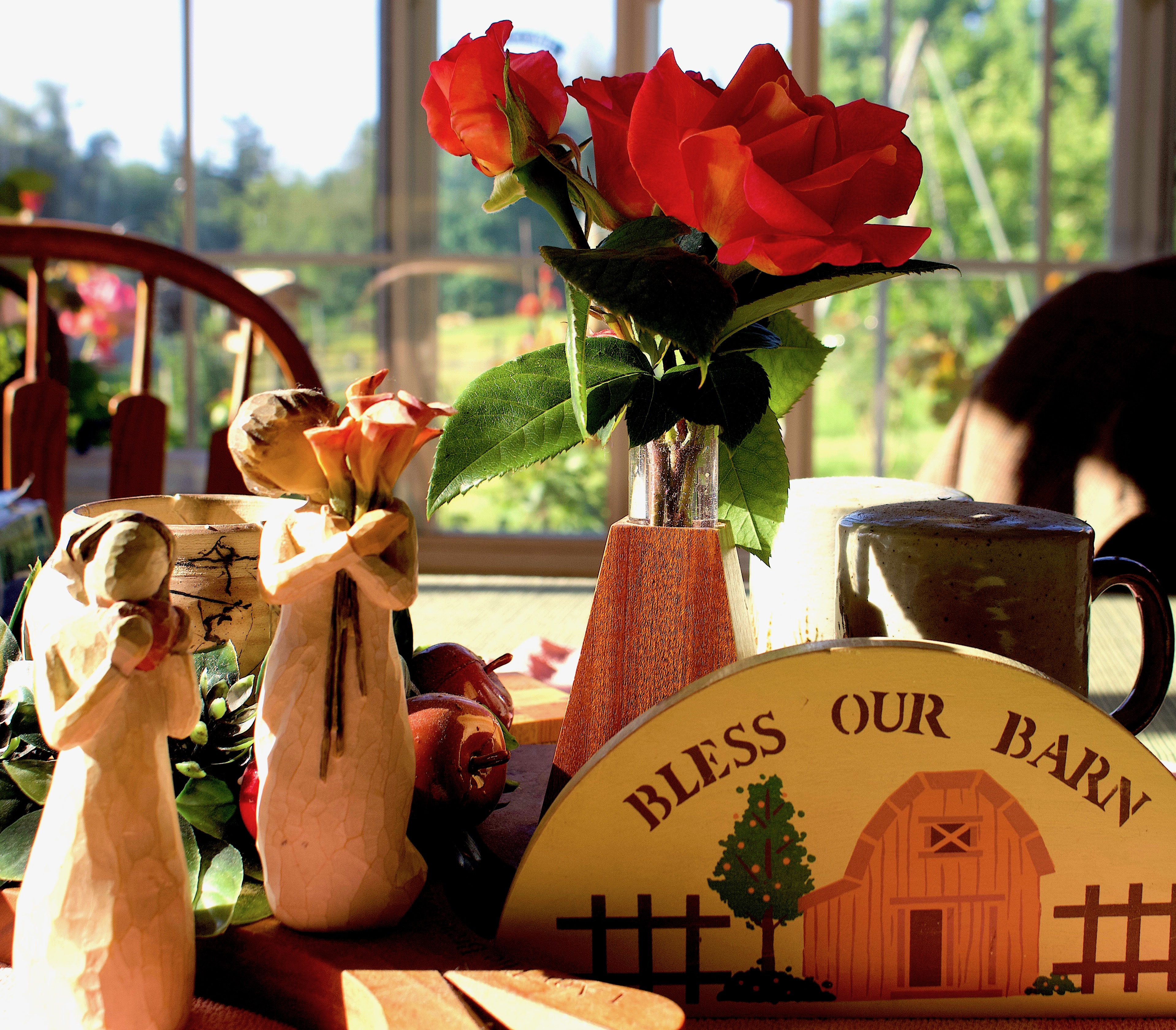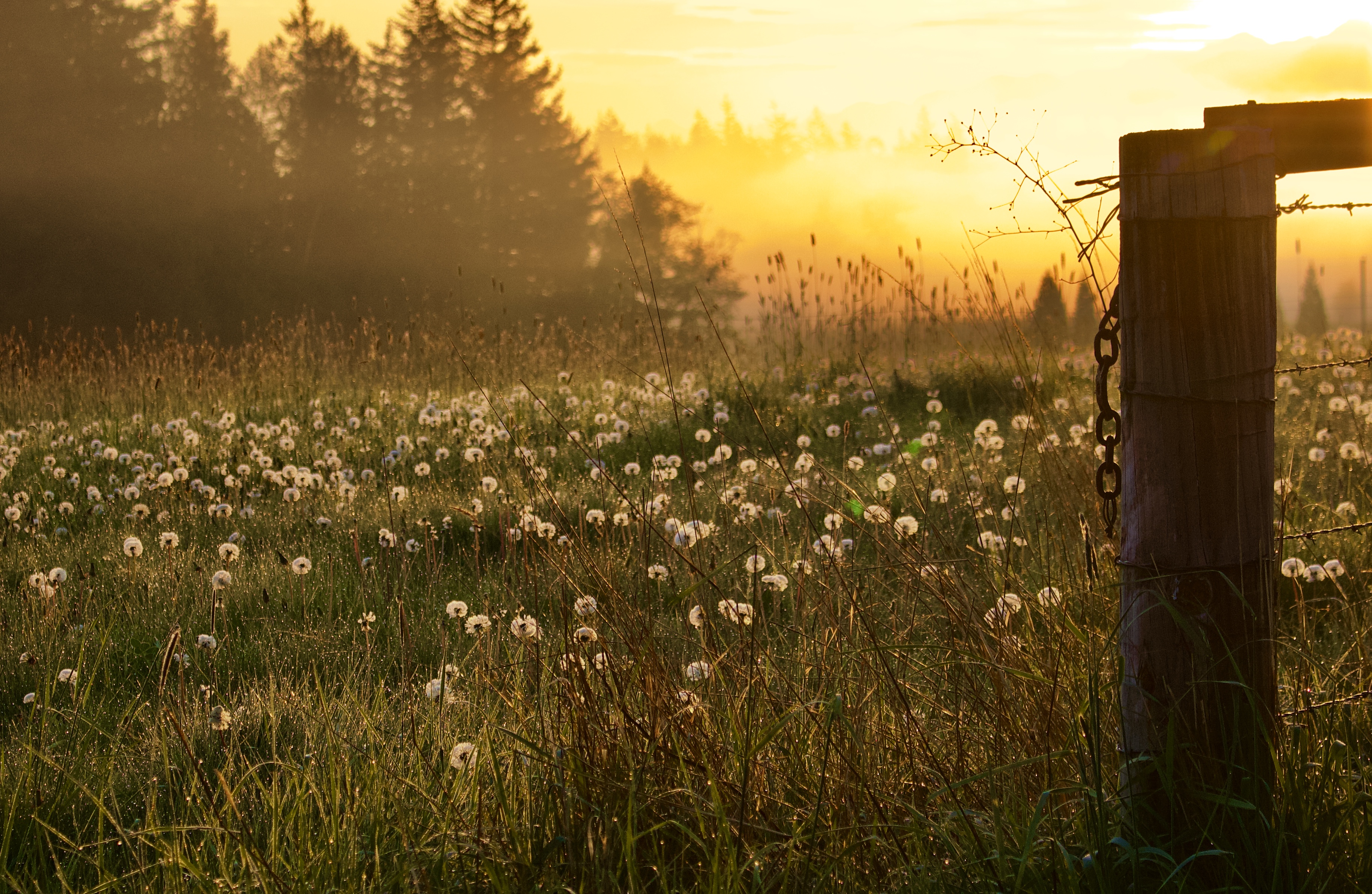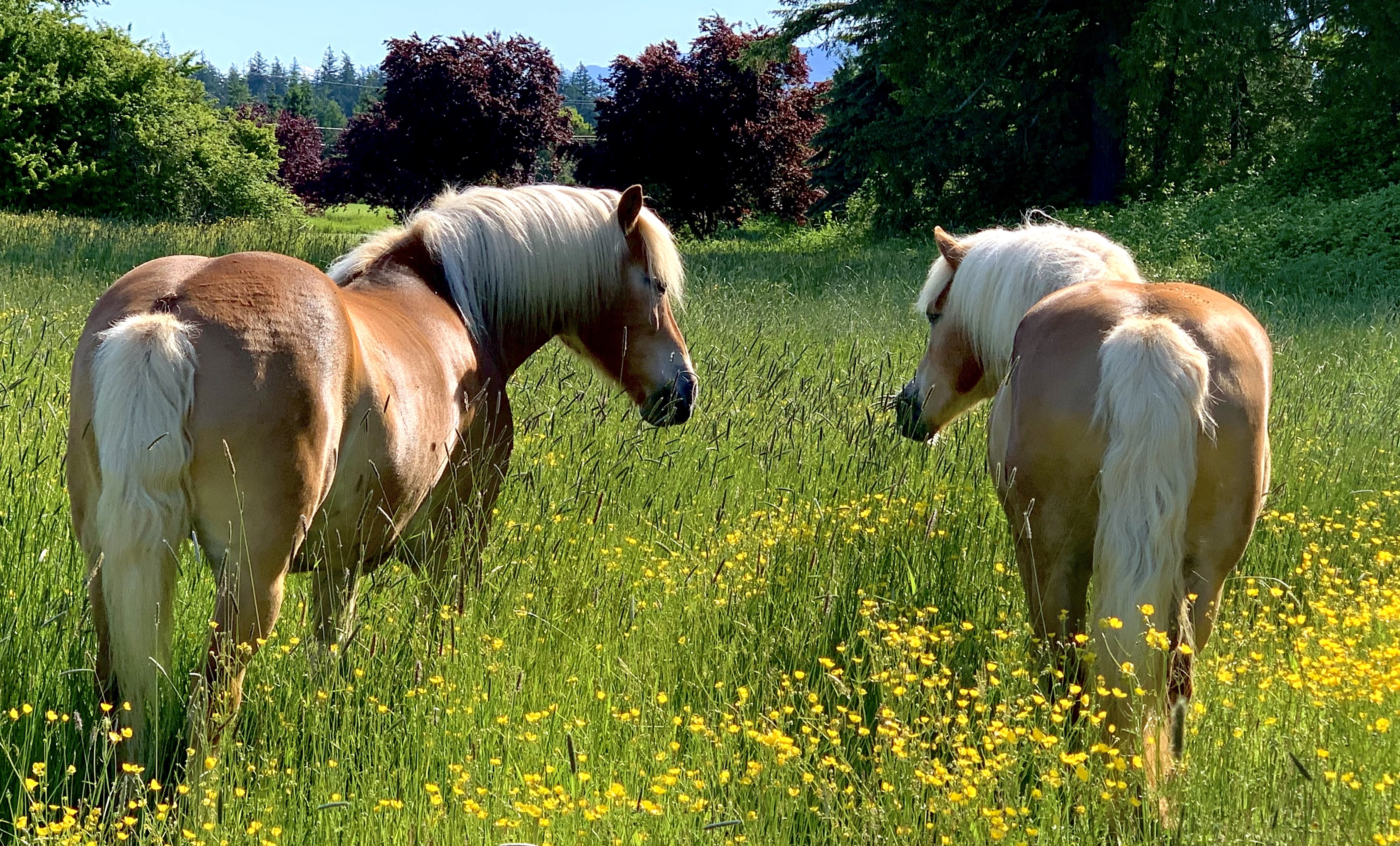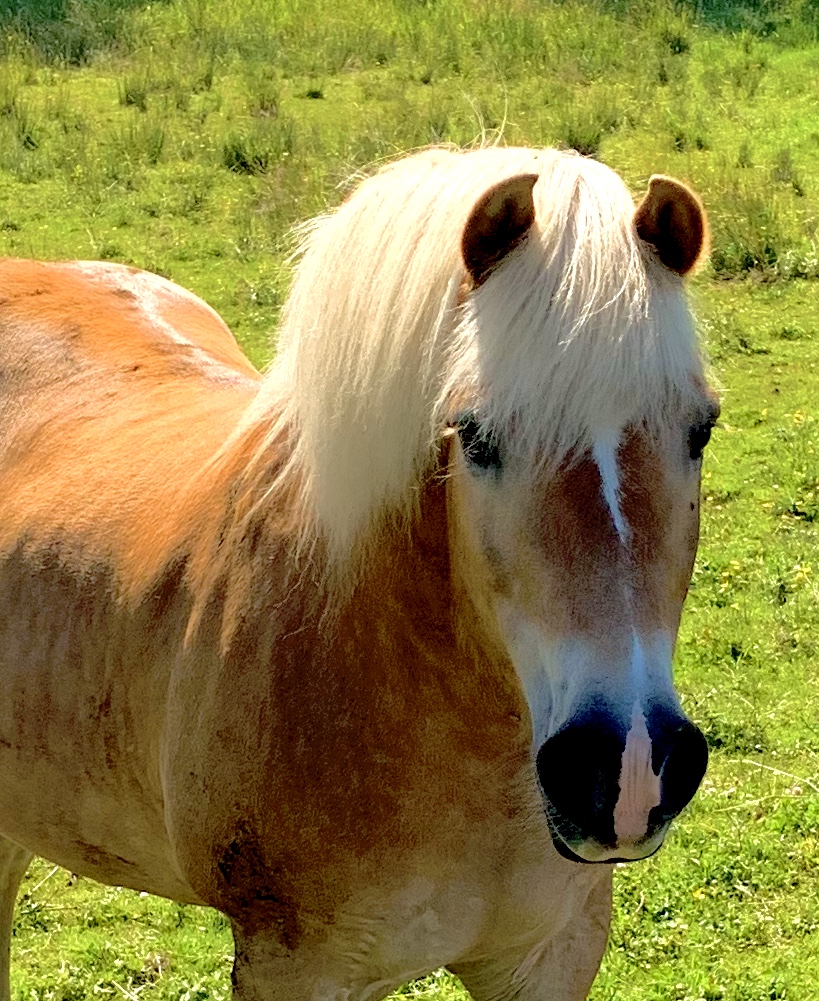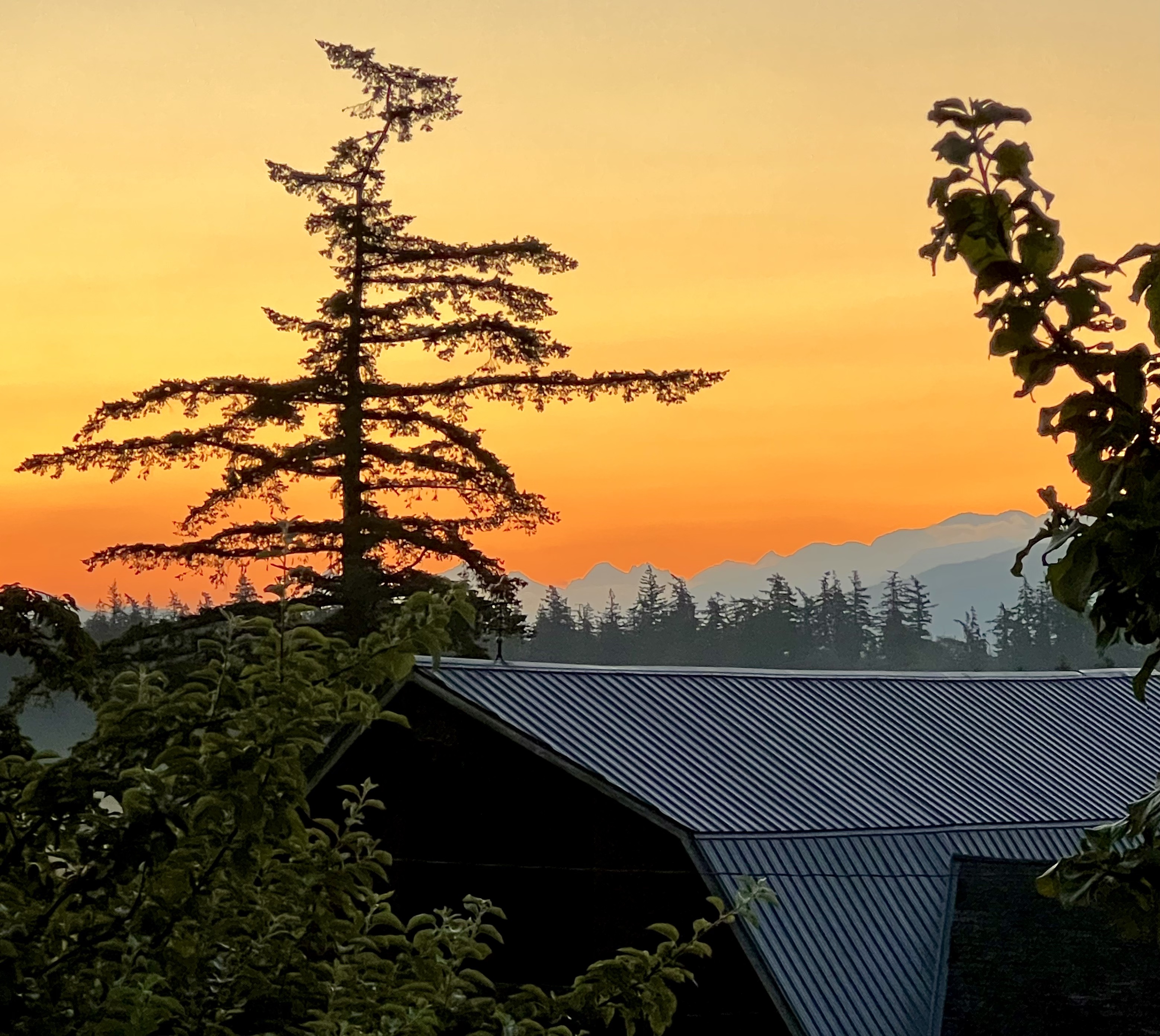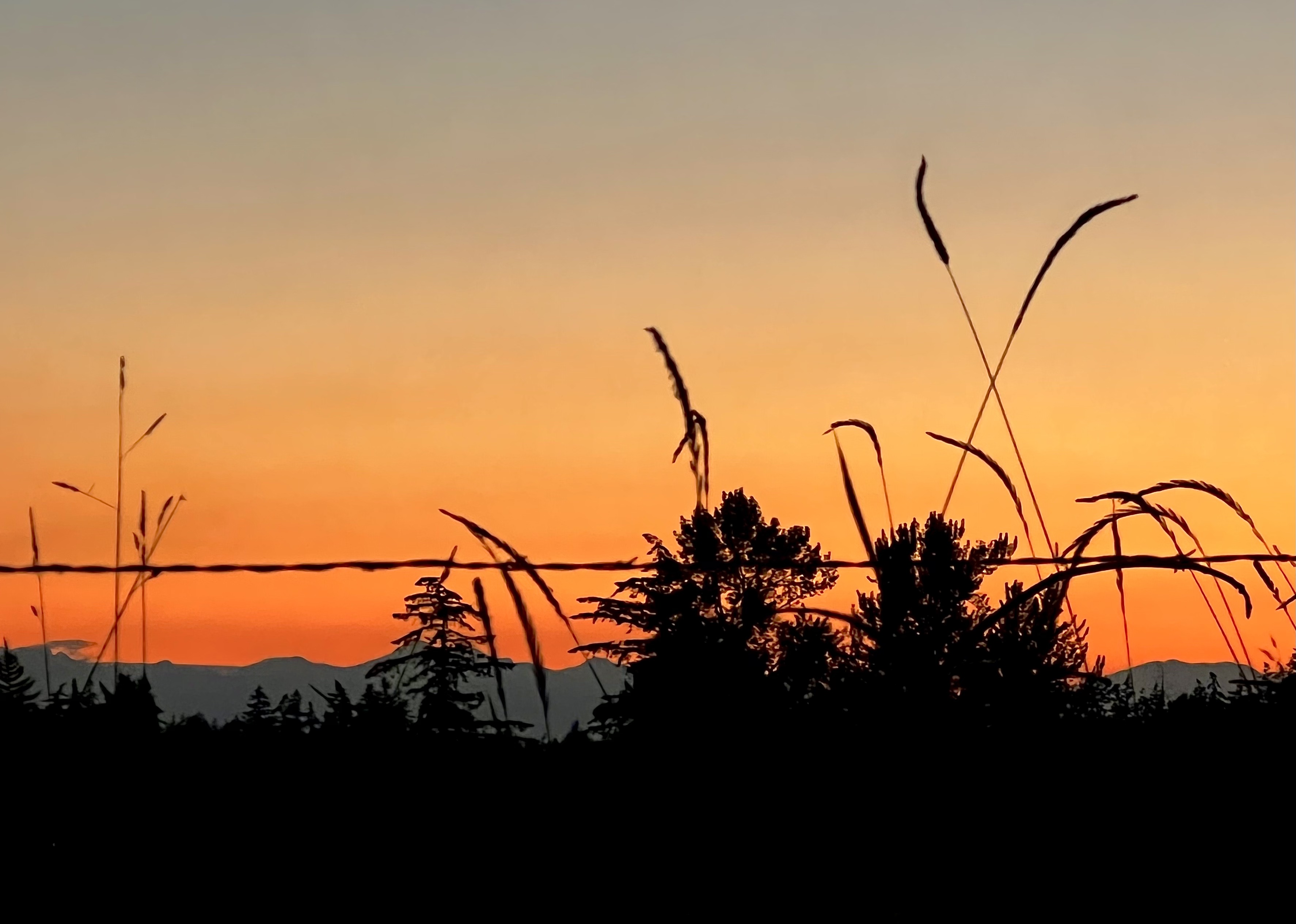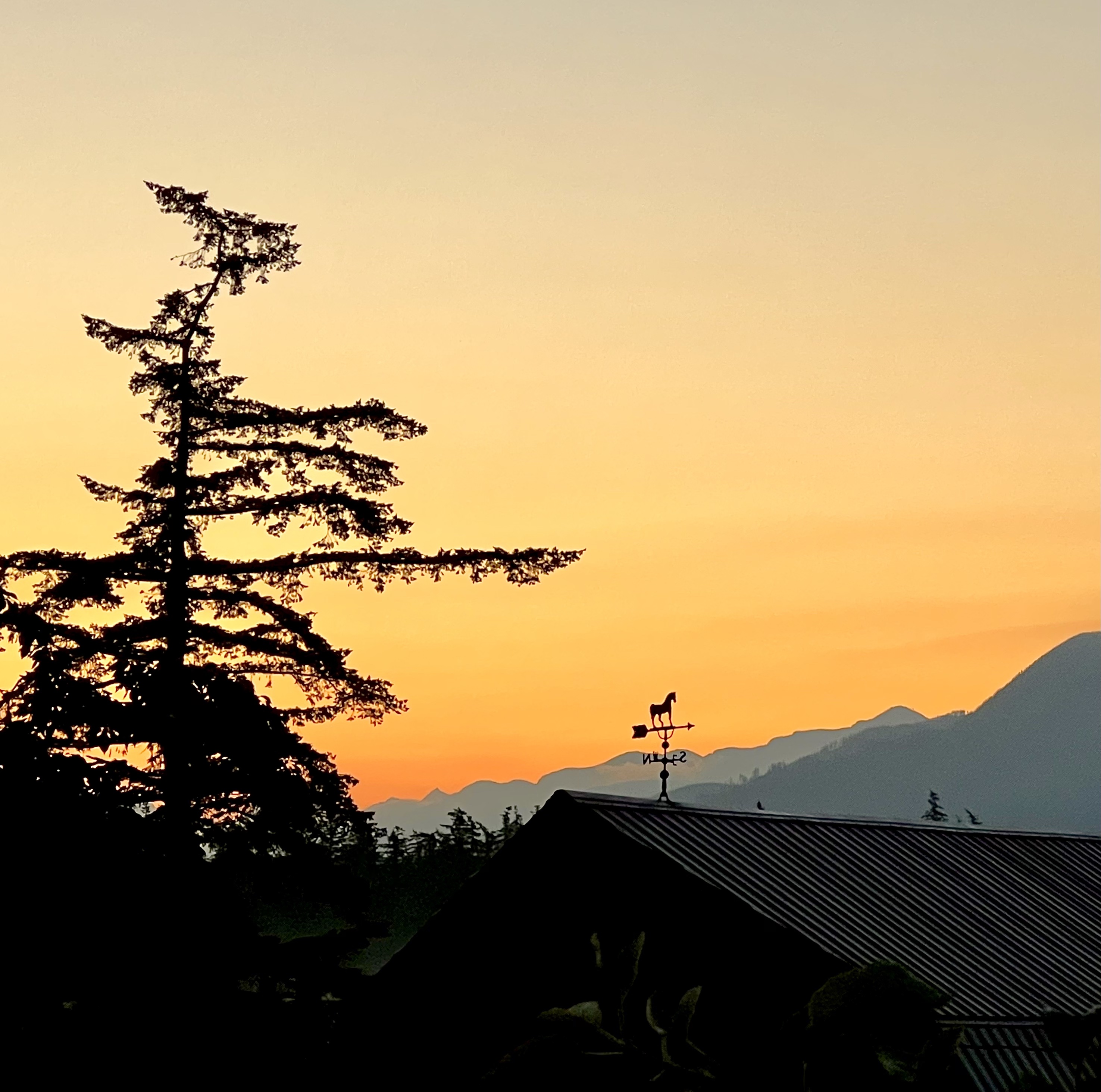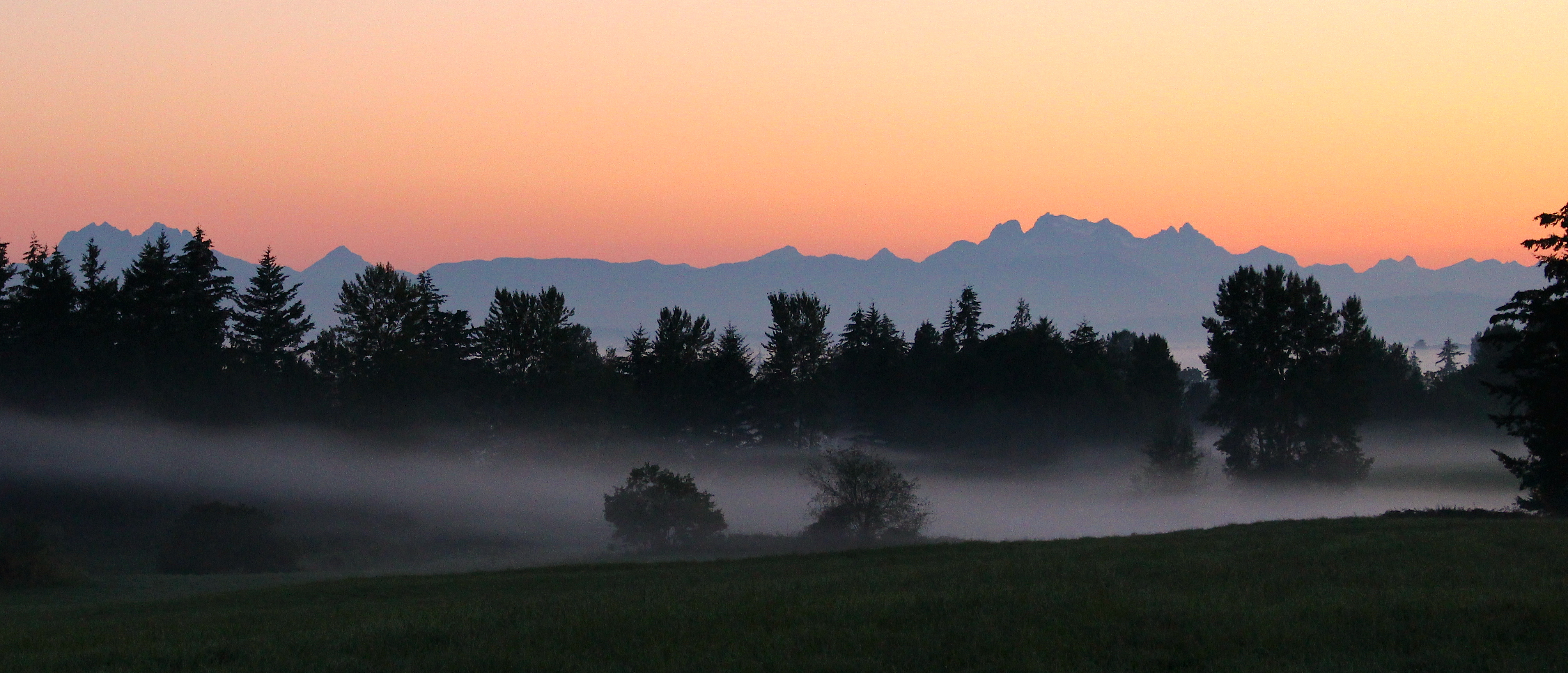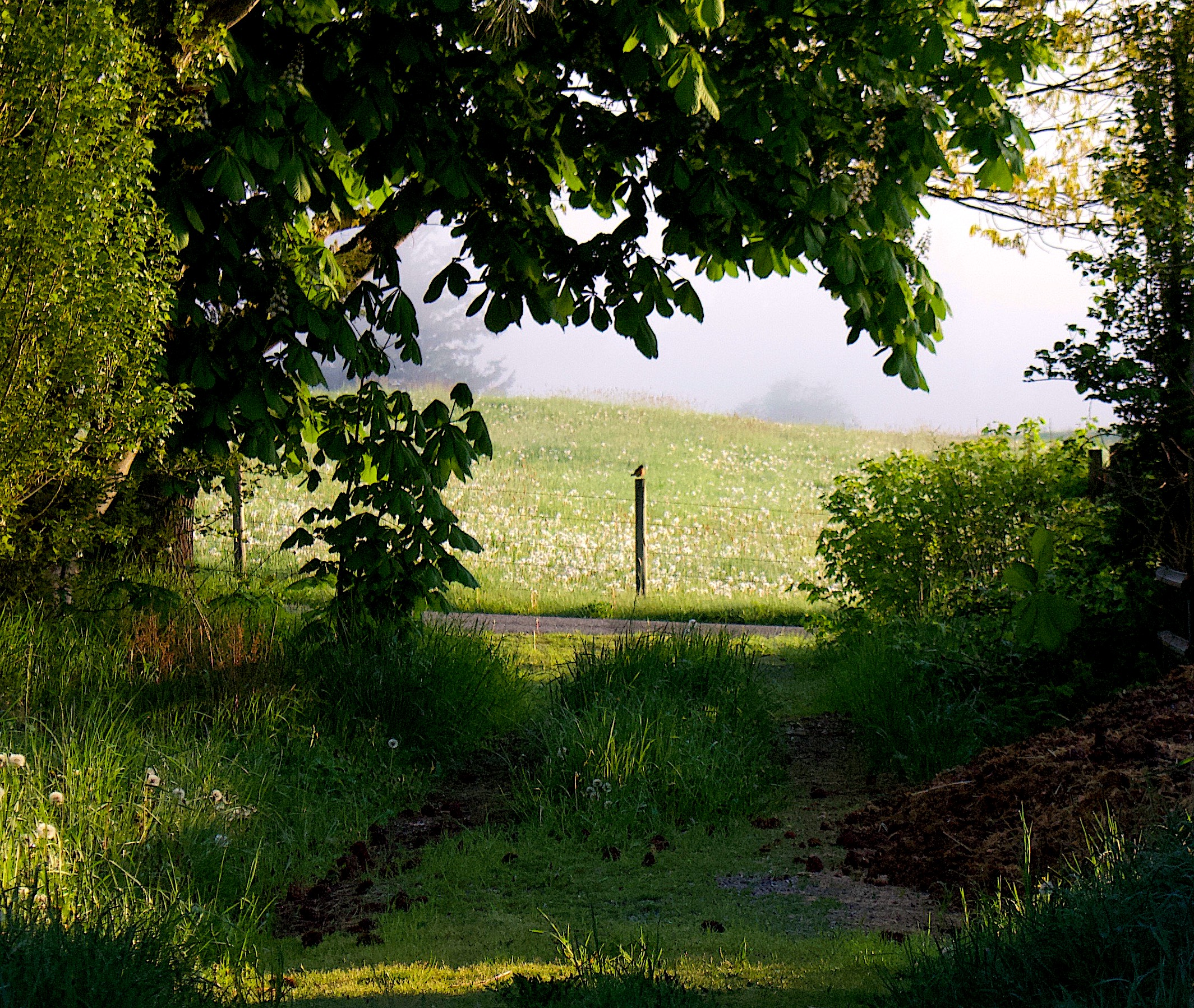
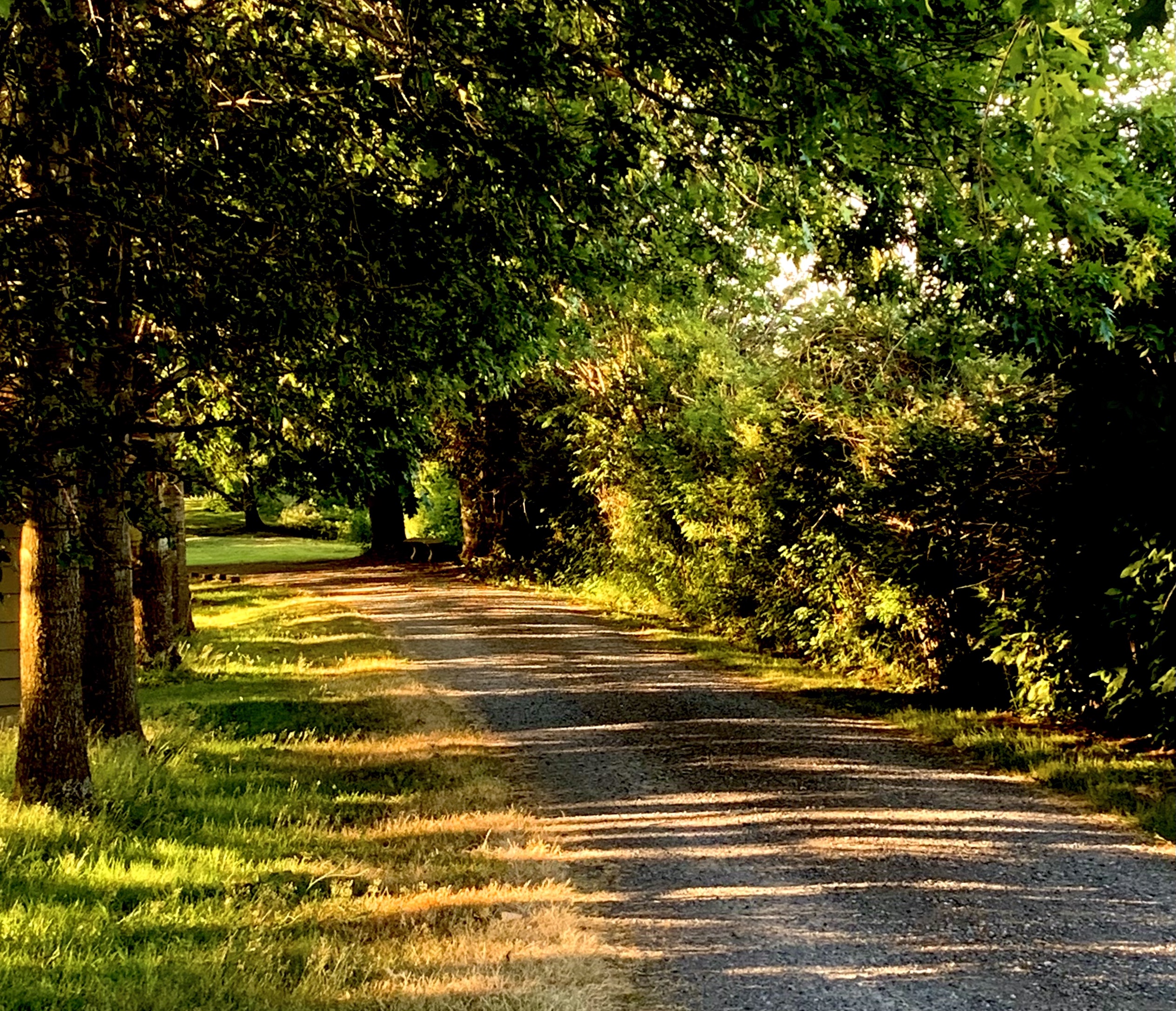
An Enticing Driveway

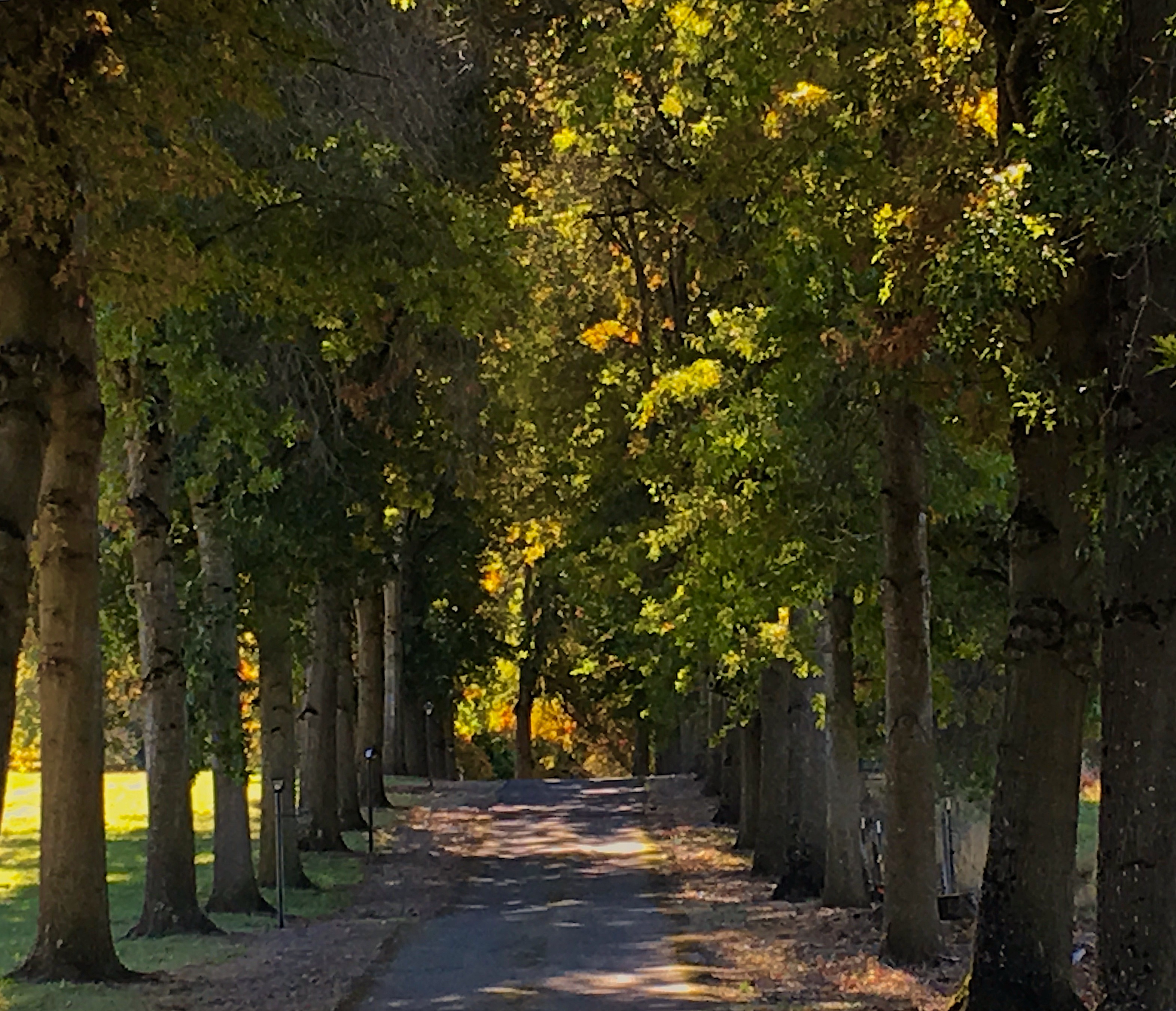
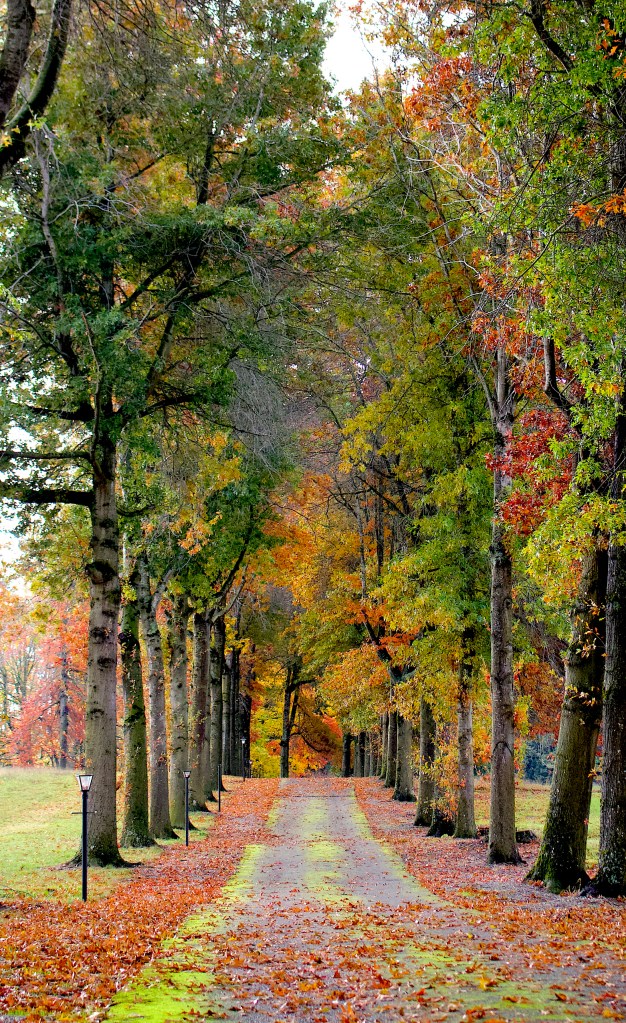
What lies at the end of enticing
country driveways, curving
off among trees?


The big trees enclose
an expanse of sky, trees and sky
together protect the clearing.
One is sheltered here
from the assaultive world
as if escaped from it, and yet
once arrived, is given (oneself
and others being a part of that world)
a generous welcome.
It’s paradise
as a paradigm for how
to live on earth,
how to be private and open
quiet and richly eloquent.

It is paradise, and paradise
is a kind of poem; it has
a poem’s characteristics:
inspiration; starting with the given;
unexpected harmonies; revelations.
It’s rare among
the worlds one finds
at the end of enticing driveways.

~Denise Levertov, “A Clearing” from This Great Unknowing.
I’d made up my mind to it, I’d stay in and read.
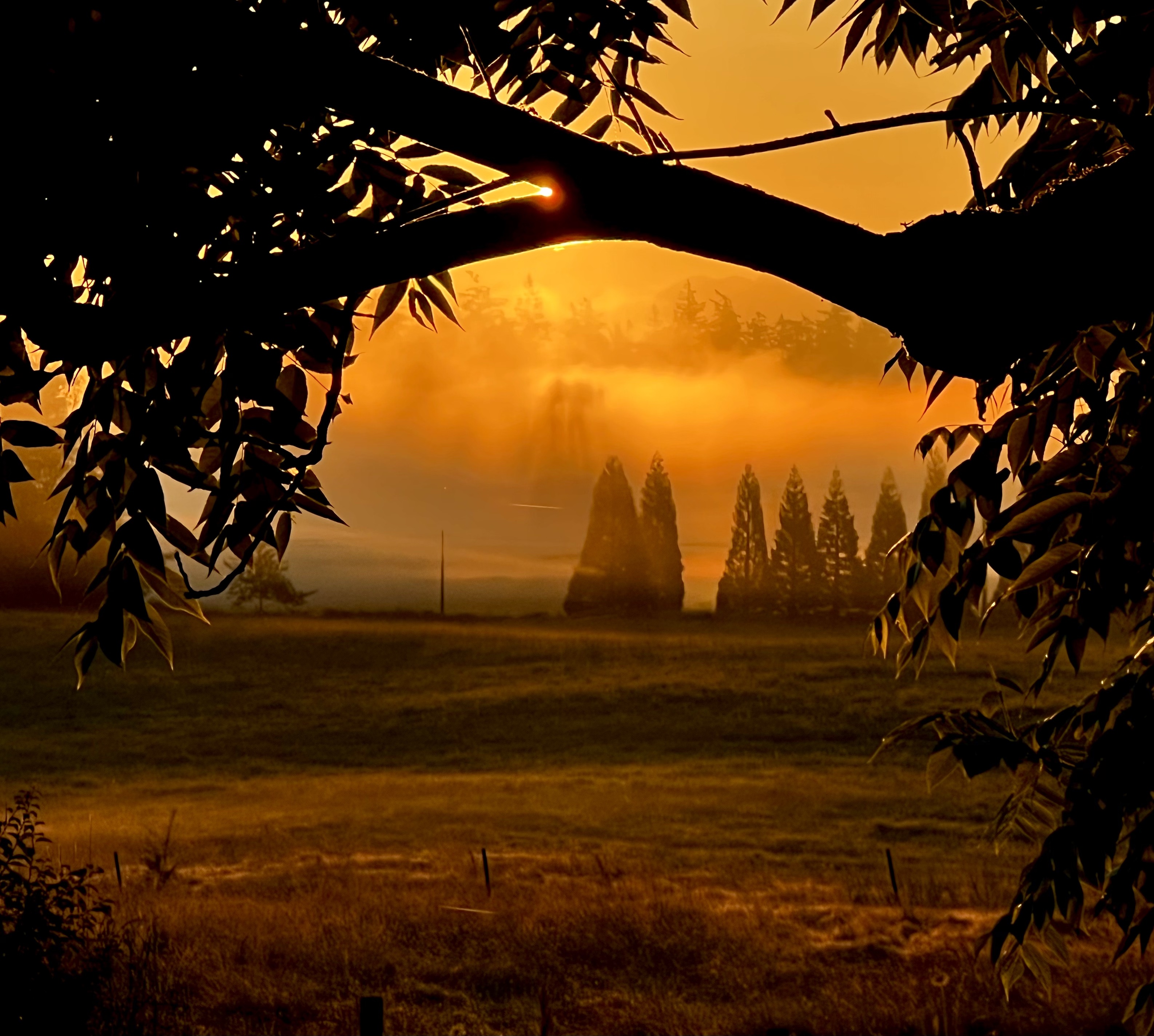
But a light shower, earlier, had imbued the woods
with a peculiar sweetness
that drifted in through the open window
and tempted me out of doors.

And now, with the mountains reflecting
that last slanting light
that dusts everything in gold,
there was no help for it;
I felt an enchantment
that encouraged me to venture to deeper realms,
deeper far and more mysterious
than my favorite armchair would have allowed.

I paused at an opening in the trees,
where a russet needled path
beckoned inward with an irresistible charm.

Under a canopy of branches,
a tiny bird flitted back and forth,
as if to guide me on my way;
and, on either side, forget-me-nots nodded,
sprinkled there, no doubt, from a truant elf’s watering can.

A curve ahead…
and I took the strange fancy that at its end
I would find a thatched cottage
with a chubby “Hansel” peeking ‘round the corner.

Ah, such is the magical quality of a little lane
winding its way through the woods.
I will return often to wander here,
where dreams and reality
merge and meet
in the moment.

~Melody Rhodes “A Country Lane”
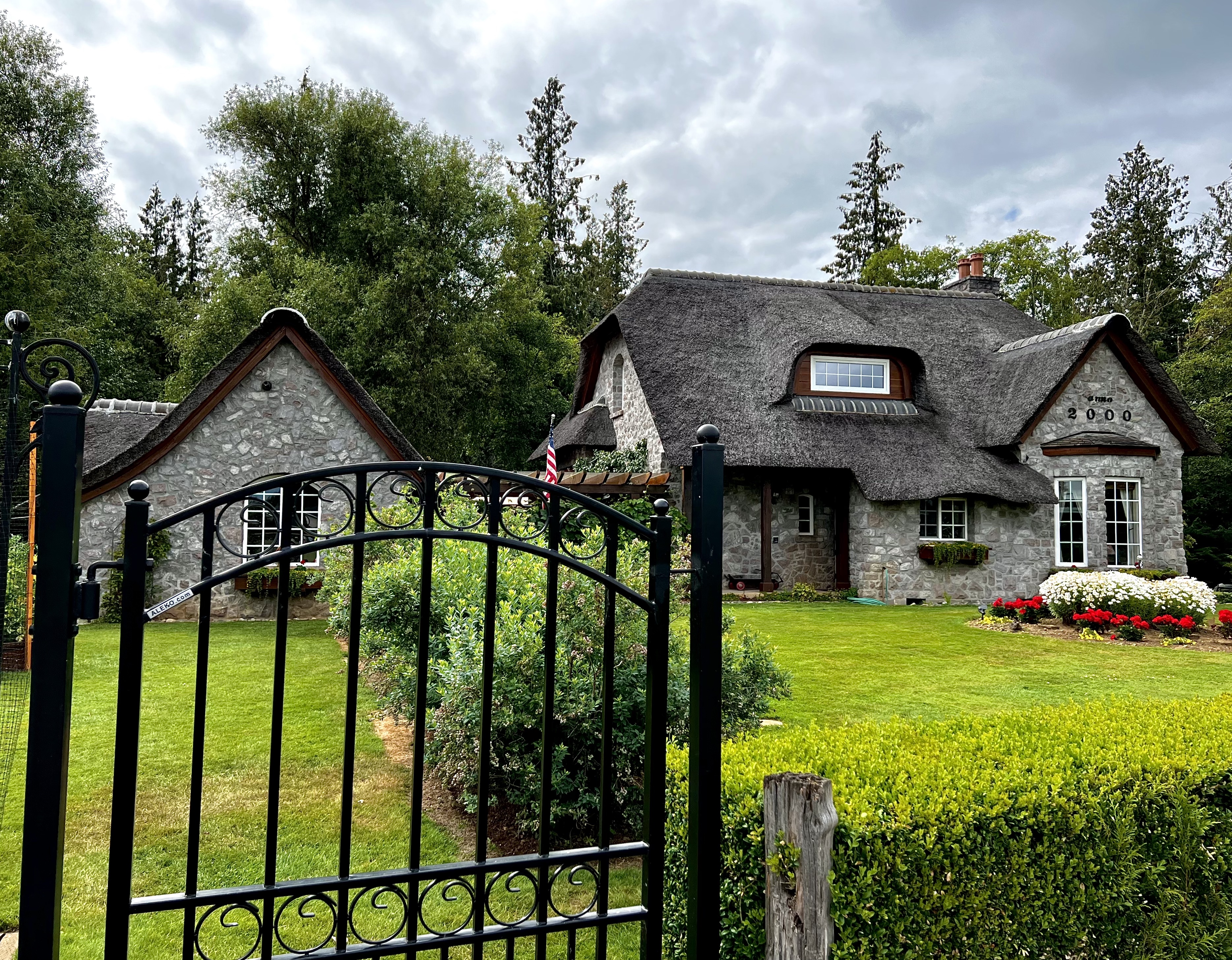
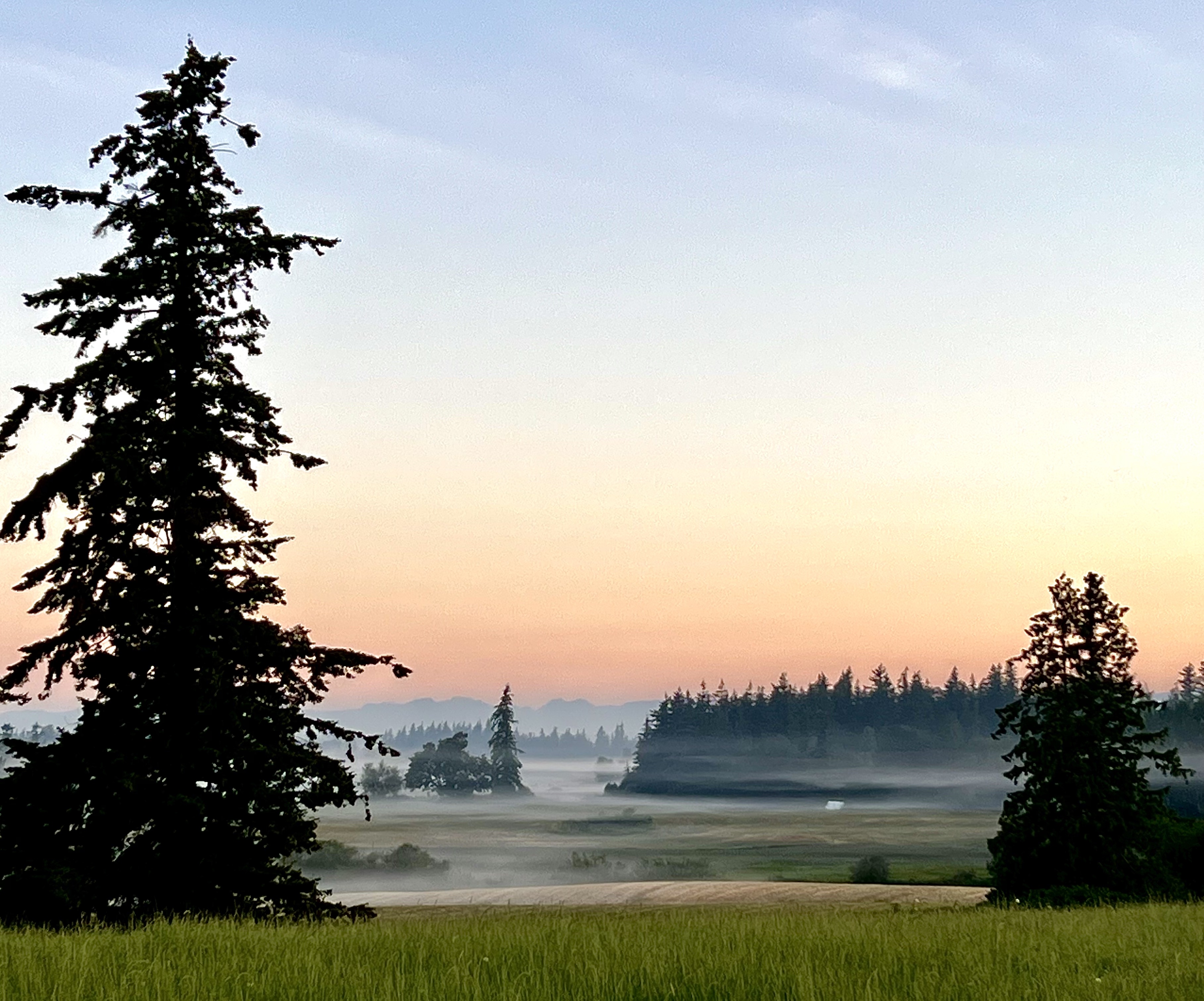
I have always longed to live at the end of a long driveway but have not ever had that opportunity despite living in some lovely rural settings. I think I come from highly practical people who saw long driveways as unnecessary fluff when you can build your home right next to a road.

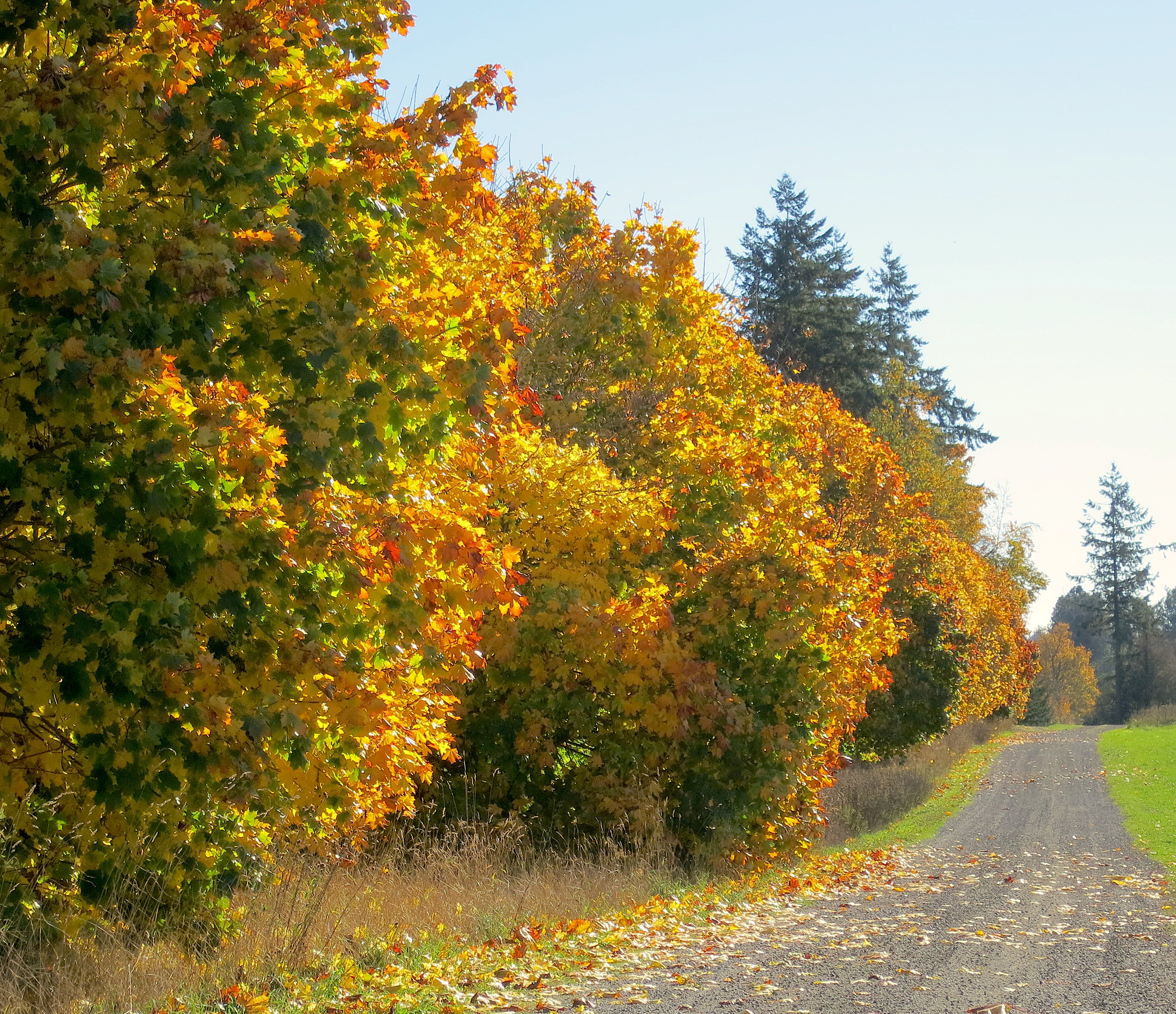
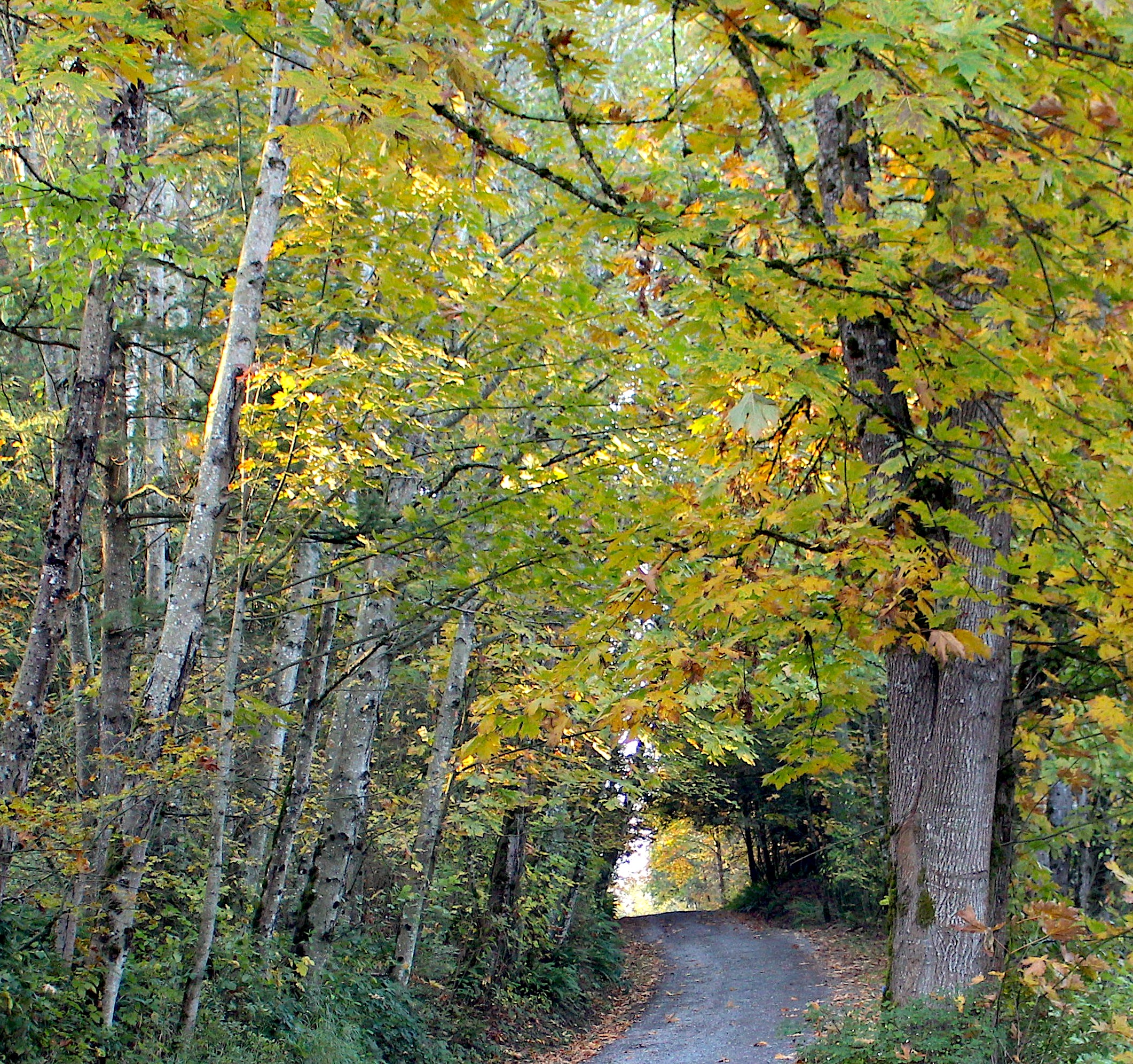
So, driveway-deprived as I am, I look for enticing country lanes wherever I go. It is partly the anticipation of what my imagination might find beyond the curve and the trees, but much of my pleasure is in looking for the perfect lane to make the mental journey.

Life of course is never perfect and certainly there is plenty that impedes the journey to my destination. Yet I know what all is promised and how I must persist to get to that most heavenly of homes, waiting just around that curve.
One-Time
Monthly
Yearly

Make a one-time or recurring donation to support daily Barnstorming posts

Make a monthly donation

Make a yearly donation

Choose an amount

¤5.00
¤10.00
¤20.00
¤5.00
¤15.00
¤100.00
¤5.00
¤15.00
¤100.00

Or enter a custom amount

¤

Your contribution is deeply appreciated.

Your contribution is appreciated.

Your contribution is appreciated.

DonateDonate monthlyDonate yearly
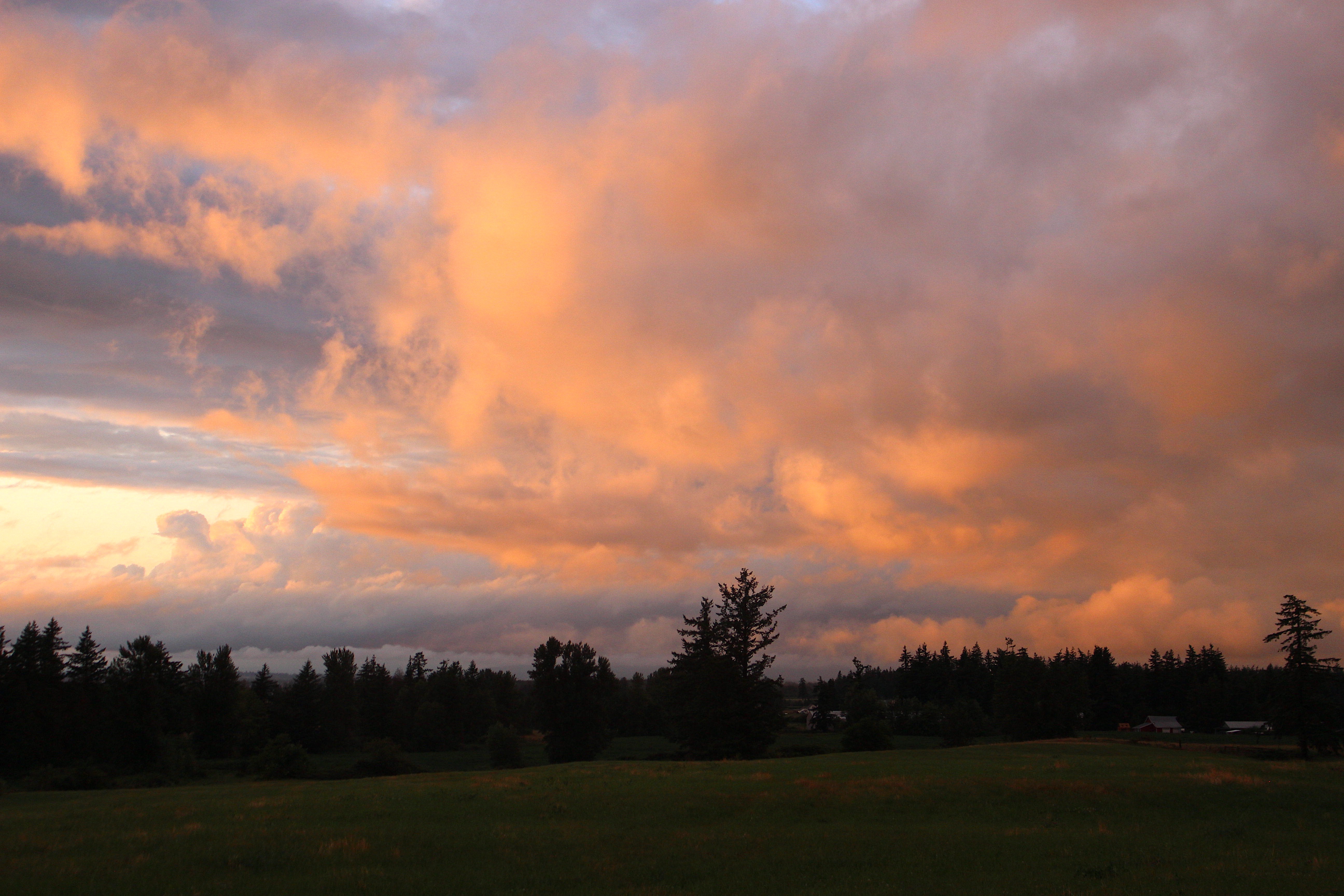
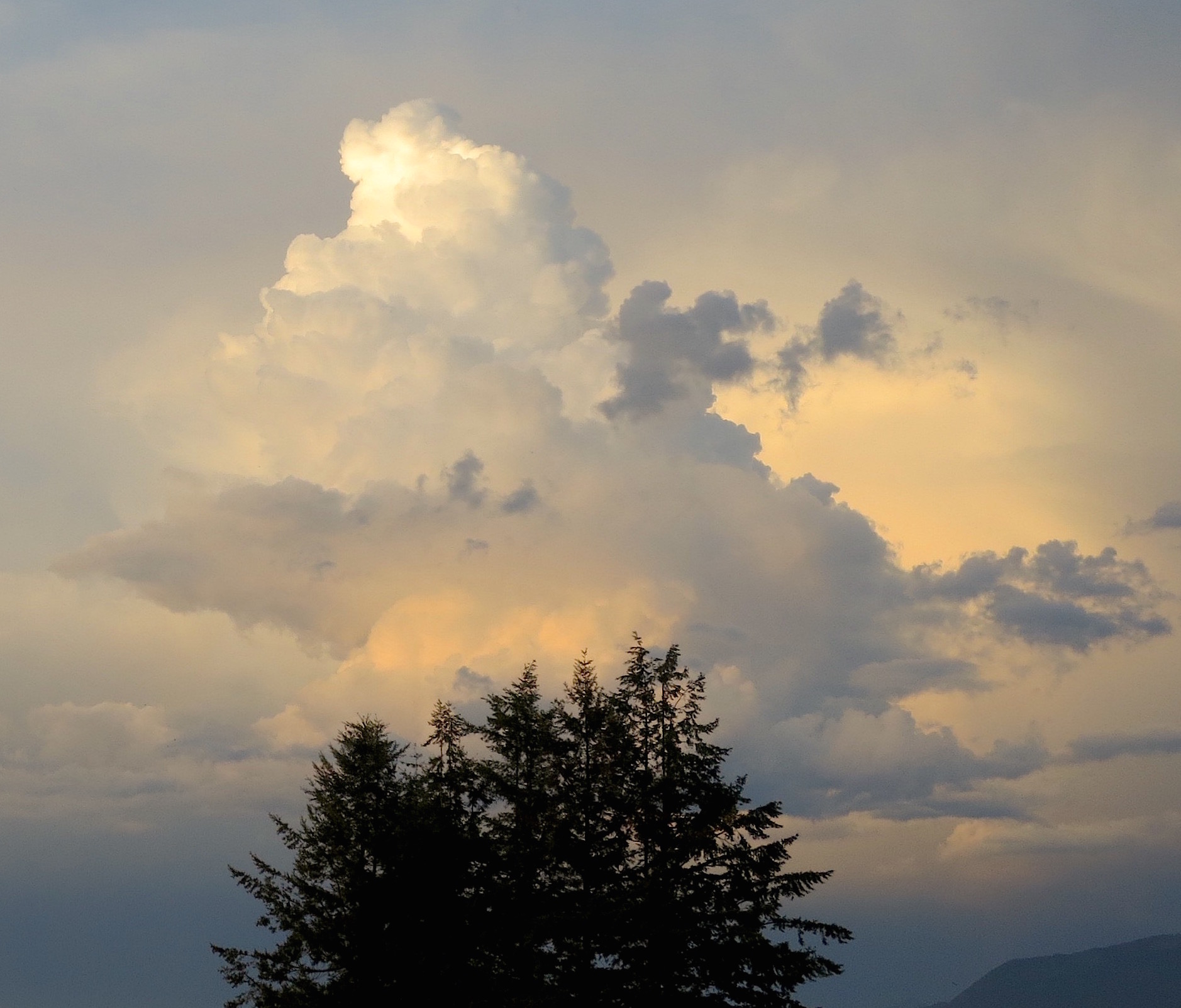
Days Continuing Hot

In the ordinary weather of summer
with storms rumbling from west to east
like so many freight trains hauling
their cargo of heat and rain,
the dogs sprawl on the back steps, panting,
insects assemble at every window,
and we quarrel again, bombarding
each other with small grievances,
our tempers flashing on and off
in bursts of heat lightning.
In the cooler air of morning,
we drink our coffee amicably enough
and walk down to the sea
which seems to tremble with meaning
and into which we plunge again and again.
The days continue hot.
At dusk the shadows are as blue
as the lips of the children stained
with berries or with the chill
of too much swimming.
So we move another summer closer
to our last summer together—
a time as real and implacable as the sea
out of which we come walking
on wobbly legs as if for the first time,
drying ourselves with rough towels,
shaking the water out of our blinded eyes.

~Linda Pastan, “The Ordinary Weather of Summer” from Carnival Evening: New and Select Poems 1968-1998

I grew up near Puget Sound and only a couple hours from the Washington Pacific Ocean coastline. Our annual trips to the ocean were early morning clamming harvests, usually returning home by noon to process the bounty we had dug up at the shore. Vacations at the beach were a few days spent in a rented cabin at Birch Bay on Puget Sound (now Salish Sea) or on Camano Island. These were short stays, usually no more than two or three nights but it gave our family a chance to live together in a different way.

It wasn’t easy for a family of five to sleep in a tiny two bedroom cabin with very little privacy – we siblings easily got on each other’s nerves as we teased each other or played hyper-competitive card or board games or futilely tried to distance ourselves from one another. We didn’t understand that these few summers in the 60’s were the last opportunities we would spend time together simply to “play”. Storms were on the horizon, our tempers flared when the weather was hot and humid. We had no awareness time was slipping through our fingers.

How this family time at the beach affected my parents is something I can only guess. Their marriage was on shaky ground ten years prior to their separation and divorce, even though we children were oblivious to it at the time. Whether being forced out of their routine was helpful or made their tensions worse, I don’t know. I do know quarreling children, small living quarters and sweaty temperatures can be a challenging combination.

Something about our current heat wave this week places me back to those hot nights in the beach cabins, unable to fall asleep due to a combination of itchy sweat and the world pressing down on me. The crankiness of those family vacations tends to infect my words and attitudes all these decades later.

Although the literal and figurative storms of those years have long since blown over, I still remember the musty smell of those beach cabins that had seen so many different families come and go over the decades, some thriving while others were wobbly and struggling to stay glued together. To the cabins that housed them, they looked all alike. But they weren’t. Only time would tell how well they weathered the storm.

One-Time
Monthly
Yearly

Make a one-time or recurring donation to support daily Barnstorming posts

Make a monthly donation

Make a yearly donation

Choose an amount

¤5.00
¤10.00
¤20.00
¤5.00
¤15.00
¤100.00
¤5.00
¤15.00
¤100.00

Or enter a custom amount

¤

Your contribution is deeply appreciated.

Your contribution is appreciated.

Your contribution is appreciated.

DonateDonate monthlyDonate yearly
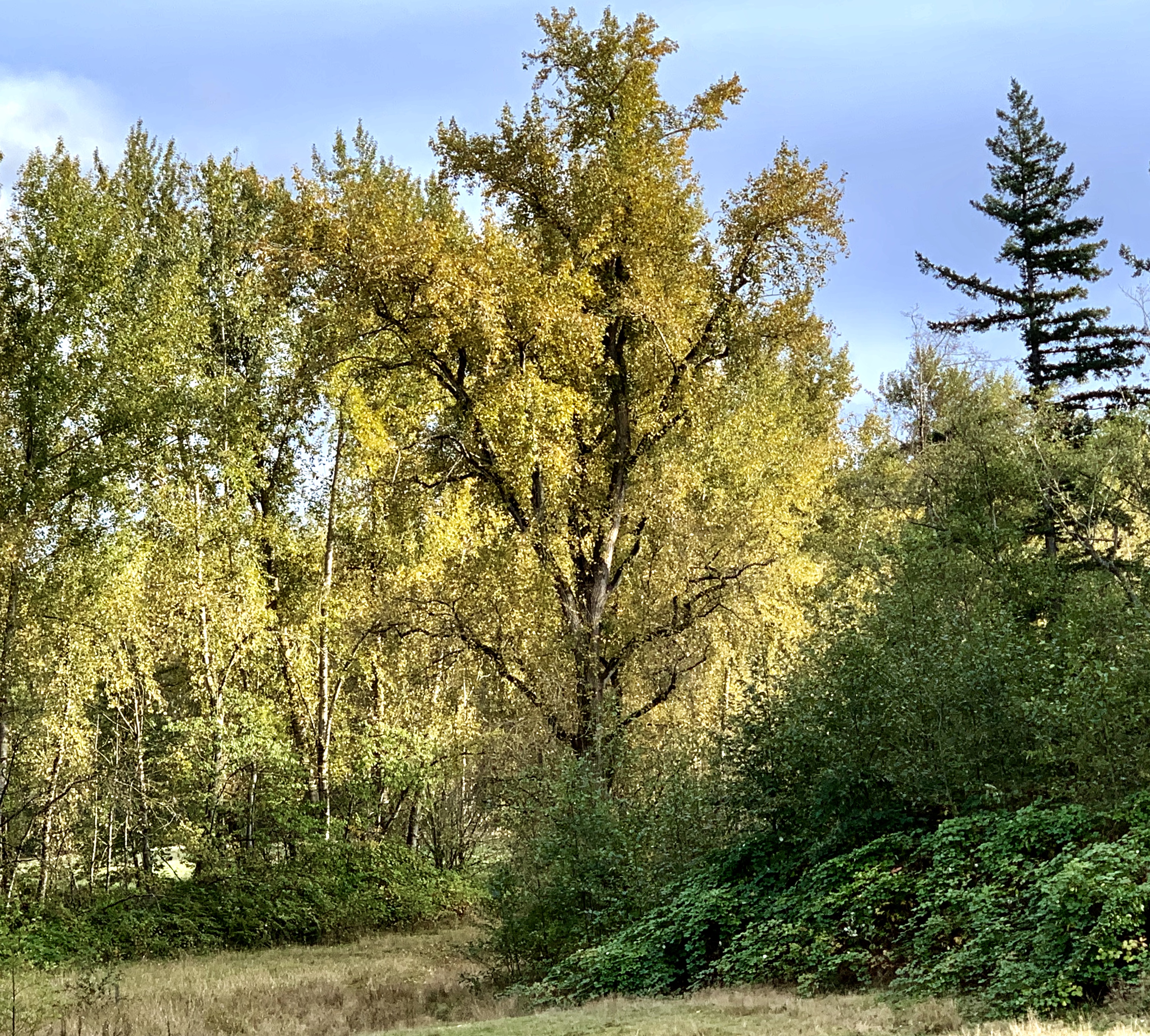
Prayer at Dusk For a Weeping World

At dusk, everything blurs and softens.
From here out over the long valley,
the fields and hills pull up
the first slight sheets of evening,
as, over the next hour,
heavier, darker ones will follow.

Quieted roads, predictable deer
browsing in a neighbor’s field, another’s
herd of heifers, the kitchen lights
starting in many windows. On horseback
I take it in, neither visitor
nor intruder, but kin passing, closer
and closer to night, its cold streams
rising in the sugarbush and hollow.
Half-aloud, I say to the horse,
or myself, or whoever: let fire not come
to this house, nor that barn,
nor lightning strike the cattle.
Let dogs not gain the gravid doe, let the lights
of the rooms convey what they seem to.

And who is to say it is useless
or foolish to ride out in the falling light
alone, wishing, or praying,
for particular good to particular beings,
on one small road in a huge world?
The horse bears me along, like grace,

making me better than what I am,
and what I think or say or see
is whole in these moments, is neither
small nor broken. For up, out of
the inscrutable earth, have come my body
and the separate body of the mare:
flawed and aching and wronged. Who then
is better made to say be well, be glad,

or who to long that we, as one,
might course over the entire valley,
over all valleys, as a bird in a great embrace
of flight, who presses against her breast,
in grief and tenderness,
the whole weeping body of the world?
~Linda McCarriston, "Riding Out at Evening"


photo by Emily Vander Haak

On this, my 68th birthday, I pray for the world as if I am carried by the grace of a horse who bears not only me but all burdens as well. I am a bird who embraces the air that lifts its wings, tenderly holding to its breast the weeping world.

I have seen much goodness in seven decades, sometimes through tears of sorrow; I hope to see much more before I’m done.

I am grateful, so very grateful to have lived these years learning how love can heal, how tears are dried, and how the only thing that lasts forever is God’s covenant to carry us with grace through it all.

photo by Brandon Dieleman
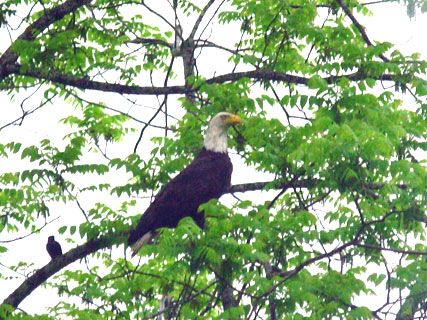
video of juvenile bald eagle by Peter Tamminga (down the road from our farm)

Whilst the world is weeping, let us do our bit.
We have the time to sympathise, to listen and to sit.
No needless thoughts, of the things we cannot do.
But appreciate all the good bits and look at them anew.
 
The warmth and comfort of our homes, the food we have to eat.
The family and friends we have, although we cannot meet.
The village that we live in, and the community we share.
So precious to us right now, so sit and think and care.
 
Whilst the world is full of sadness, anxiety and pain,
It’s hard to imagine our lives ever carefree again.
But nothing lasts forever, the clouds will always clear.
Let’s heal the world with love, so the sunshine can appear.
~Sandra Rickman “Whilst the World is Weeping”

One-Time
Monthly
Yearly

Make a one-time or recurring donation to support daily Barnstorming posts

Make a monthly donation

Make a yearly donation

Choose an amount

¤5.00
¤10.00
¤20.00
¤5.00
¤15.00
¤100.00
¤5.00
¤15.00
¤100.00

Or enter a custom amount

¤

Your contribution is deeply appreciated.

Your contribution is appreciated.

Your contribution is appreciated.

DonateDonate monthlyDonate yearly
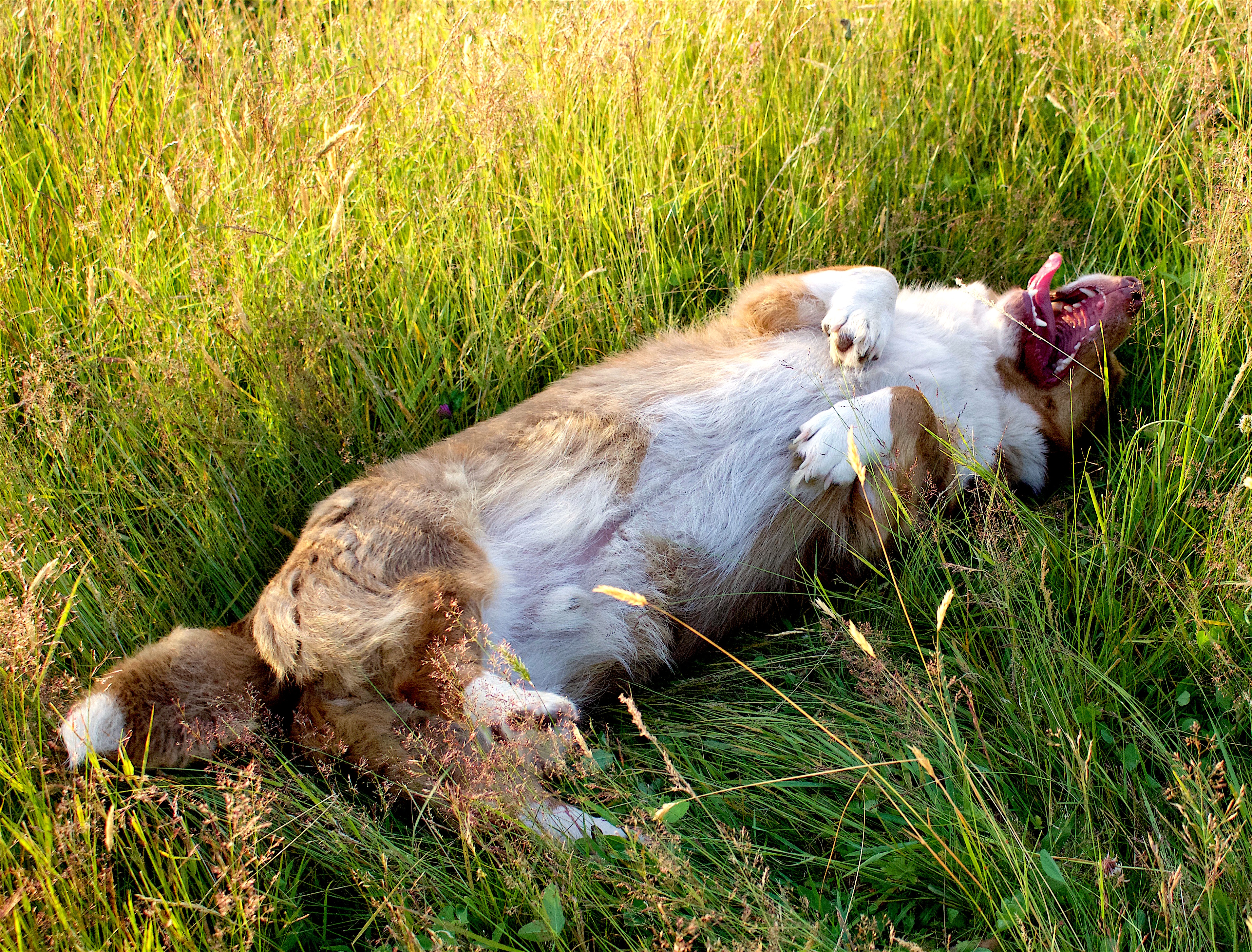
Not Remotely Mystical

When it’s over, I want to say all my life
I was a bride married to amazement.
I was the bridegroom, taking the world into my arms.

When it’s over, I don’t want to wonder
if I have made of my life something particular, and real.

I don’t want to find myself sighing and frightened,
or full of argument.

I don’t want to end up simply having visited this world.

~Mary Oliver from “When Death Comes”

Probably Mary Oliver doesn’t stress out
about her hair or quote Led Zeppelin or start
to go upstairs to write something mystical
about a wood duck, but get sidetracked
by The Millionaire Matchmaker, watching four episodes
until, panicked by self-loathing, she hits the remote.

She lives somewhere kind of remote.
Is there even a Walmart out
in Provincetown? Mary never, in an episode
of frugality, shops there instead of the food co-op and starts
lying about where the Moose Tracks
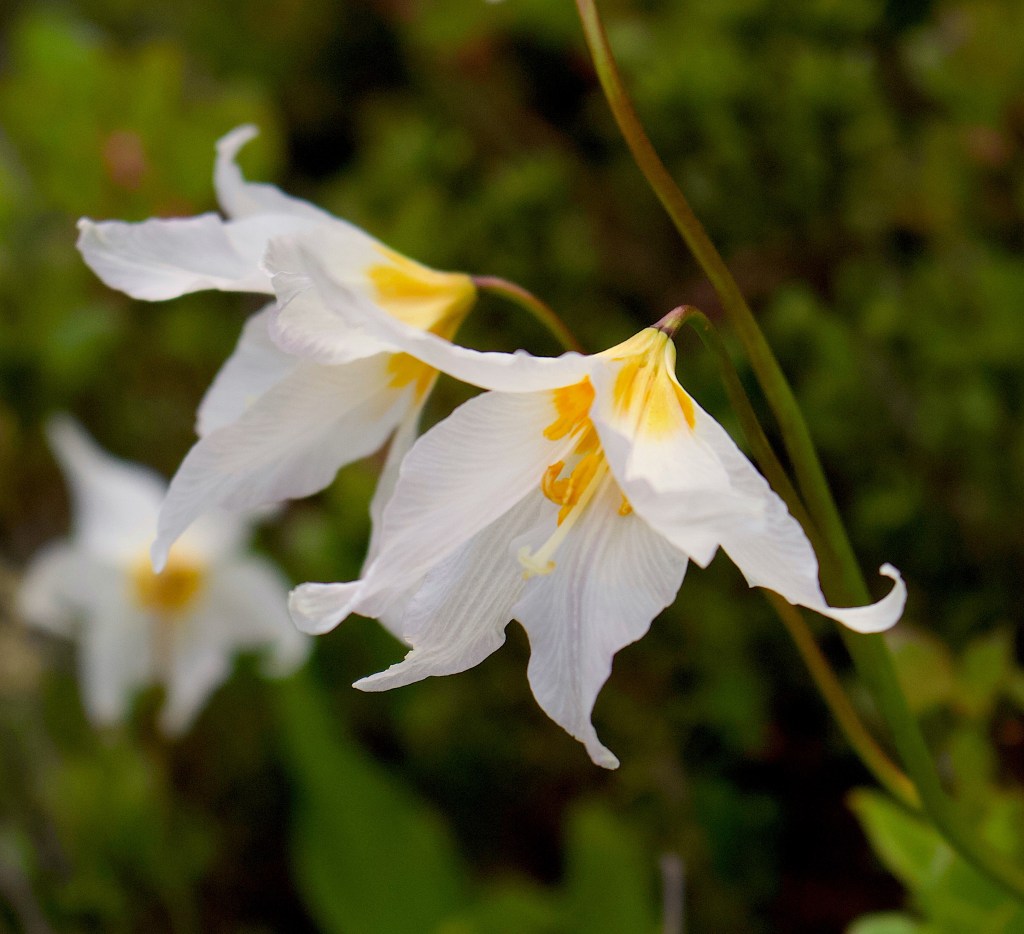
ice cream came from, feigning loyalty to the mystical


oils and bulk grains of the co-op where Mystical
Mac ‘N Cheese costs an absurd $3.95 a box. There’s a remote
chance Mary, while pondering lilies, would get sidetracked
by a voicemail from her agent. Even Mary Oliver spaces out
on occasion and forgets to turn off her phone. Her days start
before dawn; wouldn’t she sometimes have episodes

of thinking, “To hell with the swan, I’m going to watch episodes
of Lost in bed all day?” It must be exhausting to be mystical
all the time, having to think up poems that start
with a smelly turtle and end with the glory of the soul. The remote,
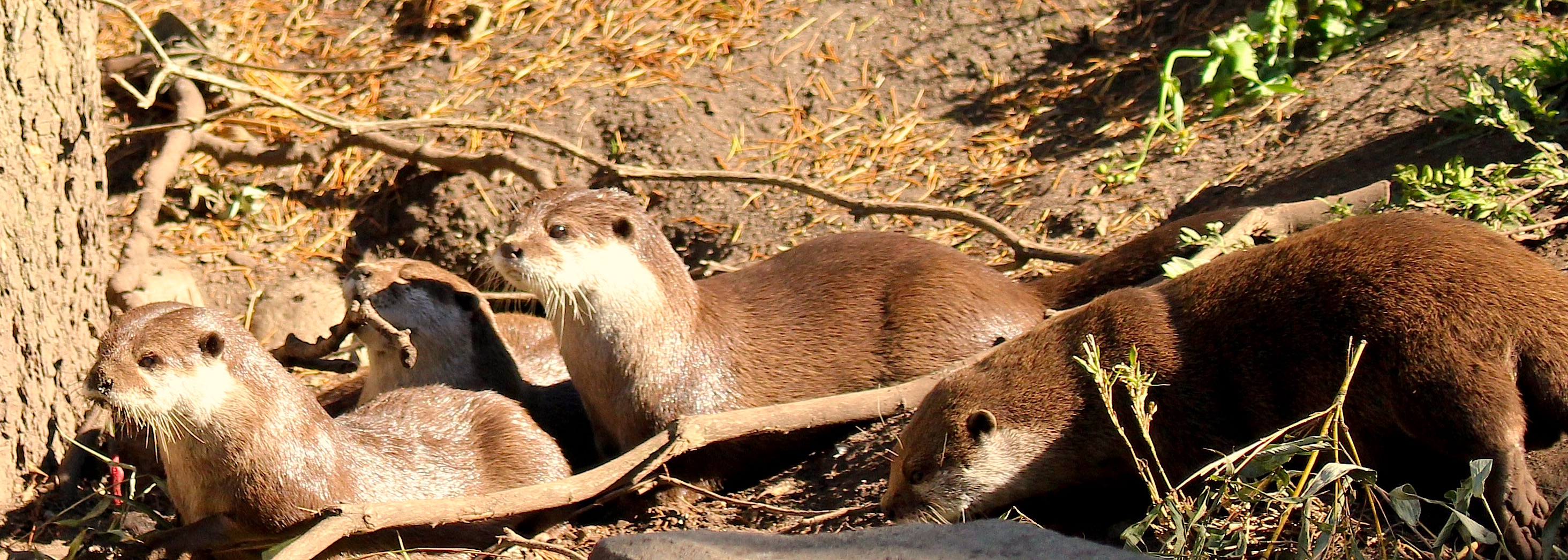
sleek as an otter, lolls on her nightstand, calling out 
for her to take just this one morning off, to follow the tracks


of Matt Lauer and Dr. Phil instead of mucky tracks
left in the marsh by tick-ridden deer. Euphoric episodes
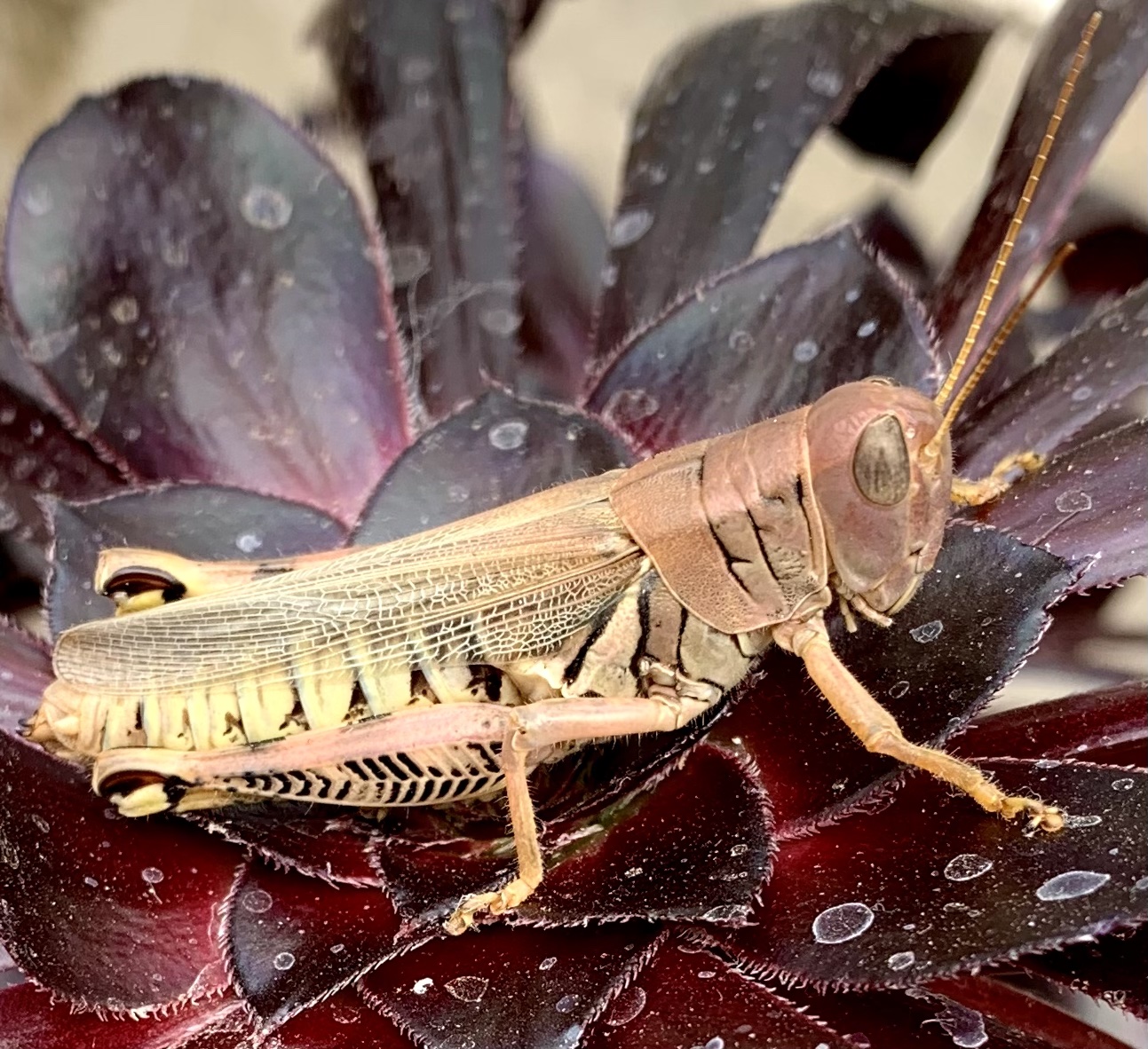
bound like grasshoppers through St. Mary’s poems, but out
in nature there must be days when nothing is special, when mystical epiphanies can’t break through the clouds. Is Mary ever so remote from it all that touching a leaf leaves her blank?

Does she start to get frantic, to fear she’s lost the connection?
She starts picturing herself in a smock with a nametag,
cleaning finger tracks off the automatic doors while wearing Mona Lisa’s remote smile, a smile barely wide enough to keep her employed. Fighting episodes of despair, she can’t figure out how to turn a shopping cart into a mystical symbol for death—piece of cake for most poets, but not for our Mary, out


there with the flora and fauna, not remotely accustomed to the episodes comprising life for those of us not “married to amazement,” the unmystical singles’ club, sidetracked by diversions. We start toward the door, but we rarely make it out.
~Christine Heppermann, “Pure” from  Poisoned Apples: Poems for You, My Pretty

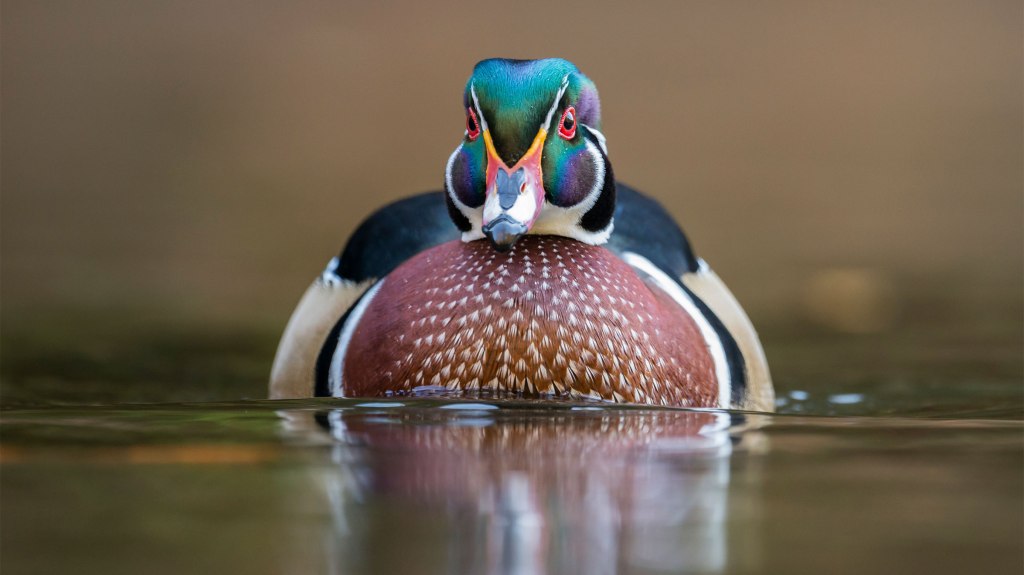
wood duck photo from Audobon Society

Moose Tracks ice cream has nothing on Tillamook Mudslide ice cream. And I can quote Simon and Garfunkel but not Led Zeppelin. Cracker Barrel Mac n Cheese is better than any other. If I’m going to take a day to get lost in a binge of streaming episodes, it is most likely going to be Outlander. And I don’t fuss about my hair.

<sigh>

I am well aware I fall far short from the example set by Mary Oliver, Jane Kenyon, Annie Dillard and others for whom writing became a mystical passion of self-discovery in their observation of creation and search for understanding of the Creator.

As someone who as a child could spend hours fascinated by the tiniest bug or follow ant tracks through the woods or catch pollywogs in the creek or lie motionless in a hideaway of tall grass watching clouds roll by on a summer afternoon, I can easily be accused of way too much “blissing out” on sunrises and sunsets as I walk through my days on earth.

The reality is something completely different. I compose my writing and photos as I go about my day, whether it is scooping manure in the barn, taking quick breaks to see how the light is changing outside, or gardening, or hanging up the laundry on the clothesline. I pull over on my way to work for a quick picture if something catches my eye. A trip to the grocery store offers opportunities for a back-roads drive to see how the surrounding cornfields are growing and raspberries are ripening. When I’m fortunate, I’ll spot an eagle in a roadside tree or a new calf nursing.

So every day is a new exploration of what is in my own backyard, not remotely mystical but simply there to be seen and mused over. Rather than married to amazement, I’m attracted to the remarkably mundane. But it does mean I need to walk out the door to meet it head-on.

Even
After
All this time
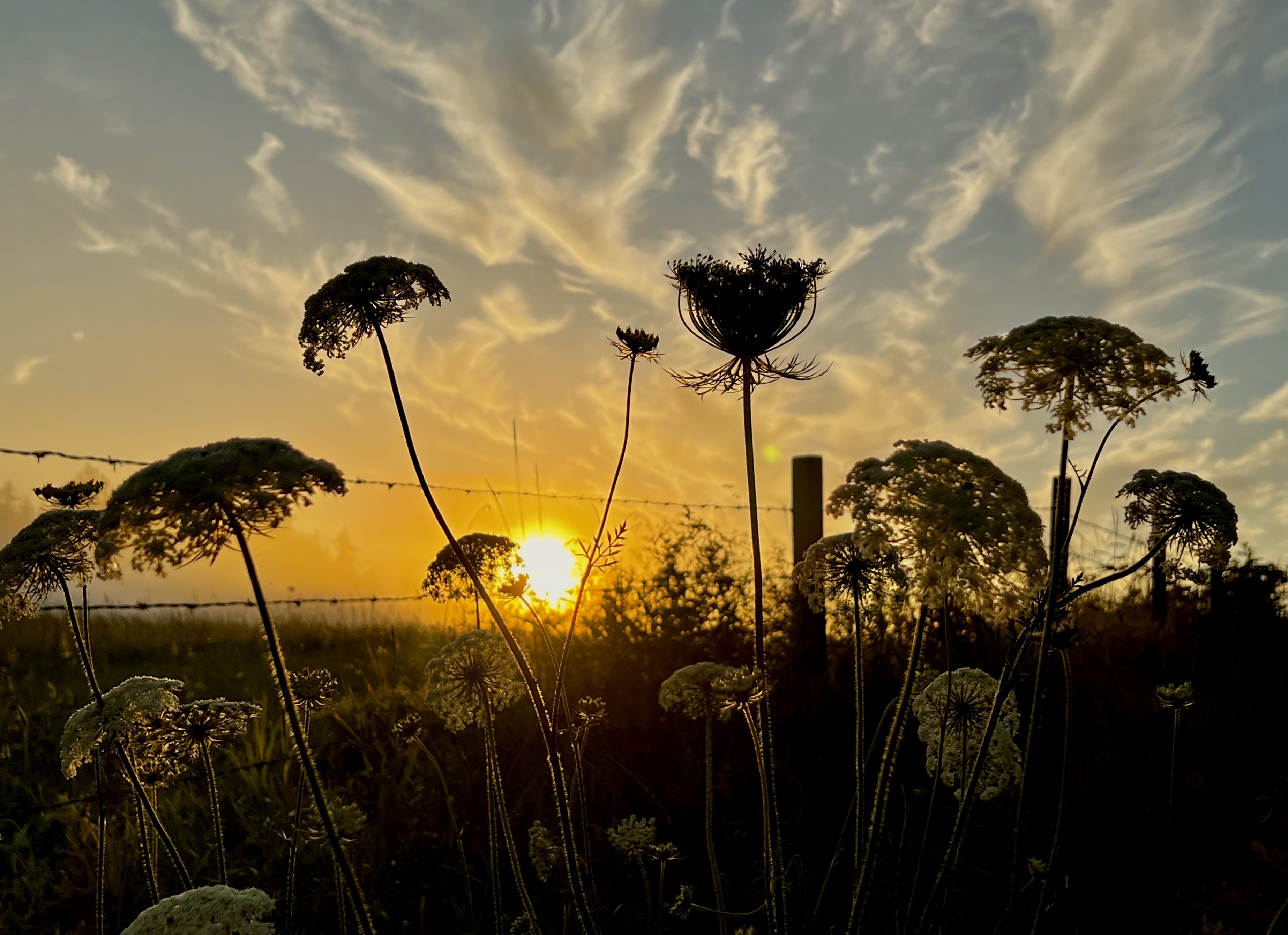
The sun never says to the earth,

“You owe
Me.”

Look
What happens
With a love like that,
It lights the
Whole
Sky.
~Daniel Ladinsky, from “The Gift”

One-Time
Monthly
Yearly

Make a one-time or recurring donation to support daily Barnstorming posts

Make a monthly donation

Make a yearly donation

Choose an amount

¤5.00
¤10.00
¤20.00
¤5.00
¤15.00
¤100.00
¤5.00
¤15.00
¤100.00

Or enter a custom amount

¤

Your contribution is deeply appreciated.

Your contribution is appreciated.

Your contribution is appreciated.

DonateDonate monthlyDonate yearly

Gray Things Made Golden

Whence comes Solace?—Not from seeing
What is doing, suffering, being,
Not from noting Life’s conditions,
Nor from heeding Time’s monitions;
But in cleaving to the Dream,
And in gazing at the gleam
Whereby gray things golden seem.

II

Thus do I this heyday, holding
Shadows but as lights unfolding,
As no specious show this moment
With its irised embowment;
But as nothing other than
Part of a benignant plan;
Proof that earth was made for man.

~Thomas Hardy “On a Fine Morning”

Earth was made for man

We tend to forget our original task of caring for the Garden we were placed within. Soiling our own nest, we can’t abandon this place for another greener, brighter, happier planet. Of all the planetary options in this infinite universe, we were placed right here and here we remain.

Our solace is that all that ordinarily seems gray gleams golden in the Light that shines down on our shadows. Even when the news is dismal, and the pain is great, and history seems to keep repeating itself despite our best efforts, our Creation is purposeful and preserved through divine sacrifice.

The solace of gray shadows turns to gold.

One-Time
Monthly
Yearly

Make a one-time or recurring donation to support daily Barnstorming posts

Make a monthly donation

Make a yearly donation

Choose an amount

¤5.00
¤10.00
¤20.00
¤5.00
¤15.00
¤100.00
¤5.00
¤15.00
¤100.00

Or enter a custom amount

¤

Your contribution is deeply appreciated.

Your contribution is appreciated.

Your contribution is appreciated.

DonateDonate monthlyDonate yearly

Summer Nap

In the afternoon of summer, sounds
come through the window: a tractor
muttering to itself as it

Pivots at the corner of the
hay field, stalled for a moment
as the green row feeds into the baler.

The wind slips a whisper behind
an ear; the noise of the highway
is like the dark green stem of a rose.

From the kitchen the blunt banging
of cupboard doors and wooden chairs
makes a lonely echo in the floor.

Somewhere, between the breeze
and the faraway sound of a train,
comes a line of birdsong, lightly
threading the heavy cloth of dream.

~Joyce Sutphen, “Soundings” from Naming the Stars

As a young child, I remember waking from my summer afternoon naps to the sights and sounds of our rural community. I could hear tractors working fields in the distance, farm trucks rumbling by on the road, the cows and horses in the fields, a train whistle in the distance and the ever-present birdsong from dawn to dusk.

These were the sounds of contentment and productivity, both together. Surely this is how heaven must be: always a sense of something wonderful happening, always a reason to celebrate, always a profound sense of respite and sanctuary.

Even now, there is that moment of awakening of my heart and soul from a summer nap when I try to listen for the chorus of angels outside my open window.

photo by Harry Rodenberger

One-Time
Monthly
Yearly

Make a one-time or recurring donation to support daily Barnstorming posts

Make a monthly donation

Make a yearly donation

Choose an amount

¤5.00
¤10.00
¤20.00
¤5.00
¤15.00
¤100.00
¤5.00
¤15.00
¤100.00

Or enter a custom amount

¤

Your contribution is deeply appreciated.

Your contribution is appreciated.

Your contribution is appreciated.

DonateDonate monthlyDonate yearly
In a Cloud of Gold

Photo of Aaron Janicki haying with his Oberlander team in Skagit County courtesy of Tayler Rae
Benjamin Janicki of Sedro Woolley raking hay with his team of Oberlanders

Travel as a backward step.
You journey until you find
a meadow where wildflowers
grow with pre-factory-farming
copiousness, a horse-drawn
landscape where hay is saved
in older ways, to revive
the life you lived once,
catch up with your past.
~Dennis O’Driscoll from Time Pieces (2002)

… The Amish have maintained what I like to think is a proper scale, largely by staying with the horse. The horse has restricted unlimited expansion. Not only does working with horses limit farm size, but horses are ideally suited to family life. With horses you unhitch at noon to water and feed the teams and then the family eats what we still call dinner. While the teams rest there is usually time for a short nap. And because God didn’t create the horse with headlights, we don’t work nights.
Amish farmer David Kline in Great Possessions

photo by Tayler Rae

One evening I stopped by the field to watch the hay rake
drawn toward me by two black, tall, ponderous horses
who stepped like conquerors over the fallen oat stalks,
light-shot dust at their heels, long shadows before them.
At the ditch the driver turned back in a wide arc,
the off-horse scrambling, the near-horse pivoting neatly.
The big side-delivery rake came about with a shriek—
its tines were crashing, the iron-bound tongue groaned aloud—
then, Hup, Diamond! Hup, Duke! and they set off west,
trace-deep in dust, going straight into the low sun.

The clangor grew faint, distance and light consumed them;
a fiery chariot rolled away in a cloud of gold
and faded slowly, brightness dying into brightness.
The groaning iron, the prophesying wheels,
the mighty horses with their necks like storms—
all disappeared; nothing was left but a track
of dust that climbed like smoke up the evening wind.

~Kate Barnes “The Hay Rake” from Where the Deer Are

My grandparents owned the land,
worked the land, bound
to the earth by seasons of planting
and harvest.

They watched the sky, the habits
of birds, hues of sunset,
the moods of moon and clouds,
the disposition of air.
They inhaled the coming season,
let it brighten their blood
for the work ahead.

Soil sifted through their fingers
imbedded beneath their nails
and this is what they knew;
this rhythm circling the years.
They never left their land;
each in their own time
settled deeper.
~Lois Parker Edstrom “Almanac” from Night Beyond Black.

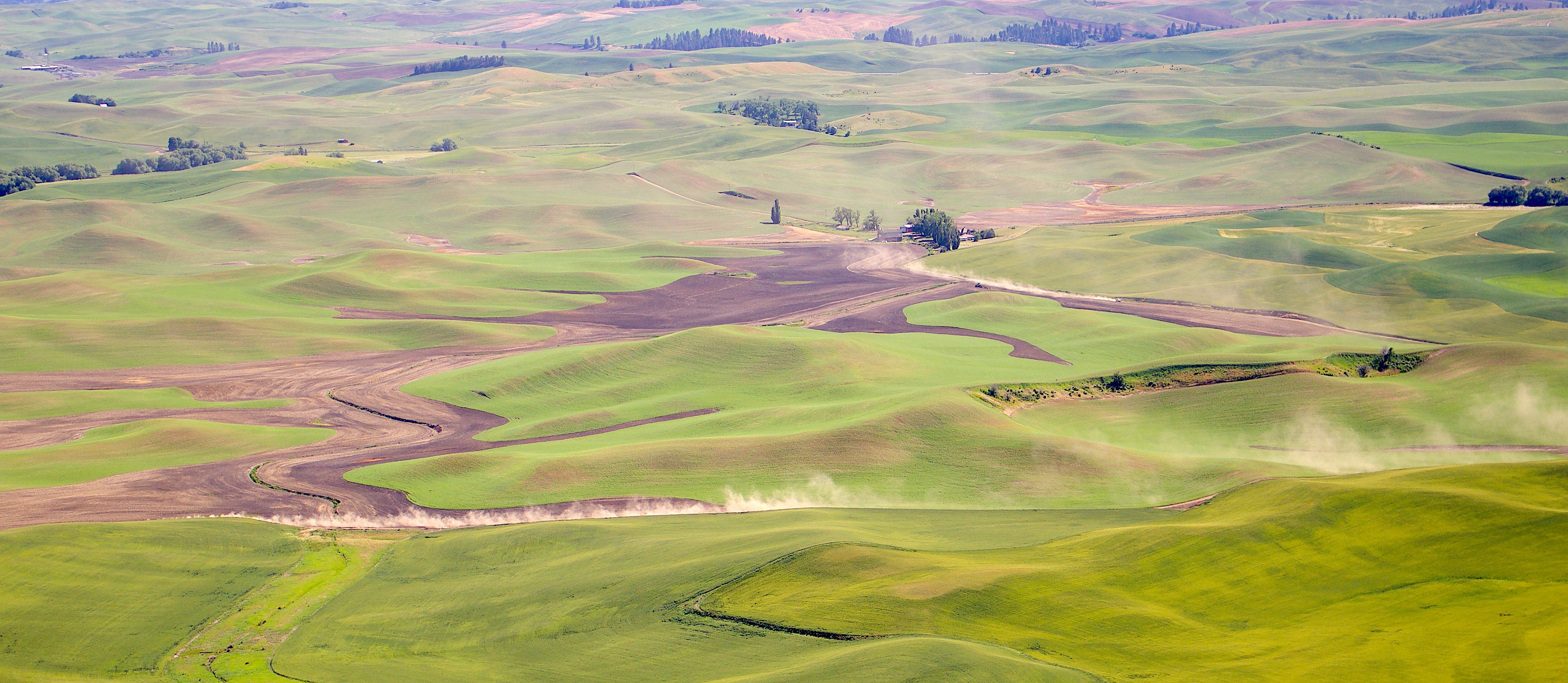
Nearing 68, I am old enough to have parents who both grew up on farms worked by horses, one raising wheat and lentils in the Palouse country of eastern Washington and the other logging in the woodlands of Fidalgo Island of western Washington.  The horses were crucial to my grandfathers’ success in caring for and tilling the land, seeding and harvesting the crops and bringing supplies from town miles away.  Theirs was a hardscrabble life in the early 20th century with few conveniences.  Work was year round from dawn to dusk; caring for the animals came before any human comforts.  Once night fell, work ceased and sleep was welcome respite for man and beast.

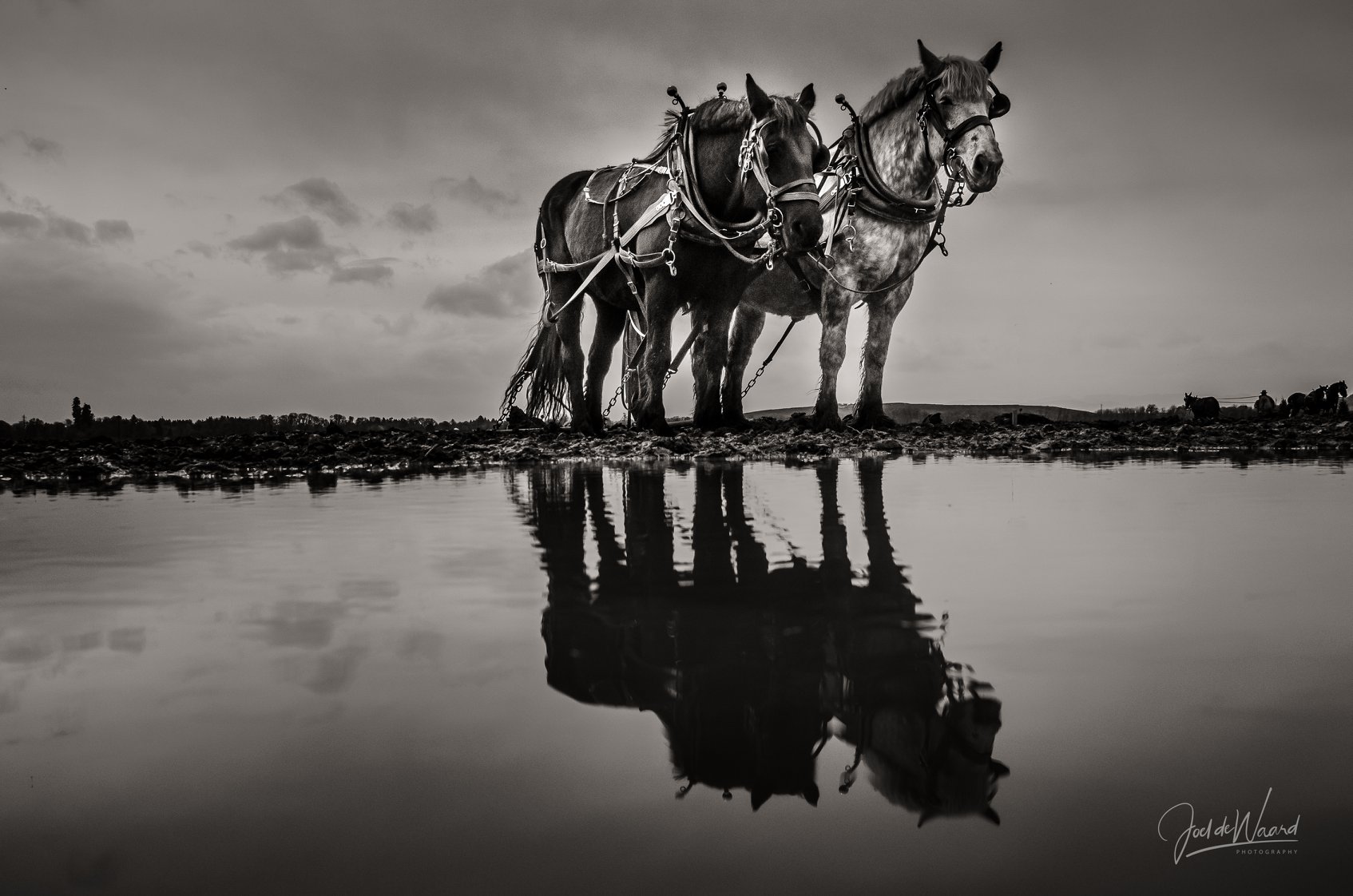
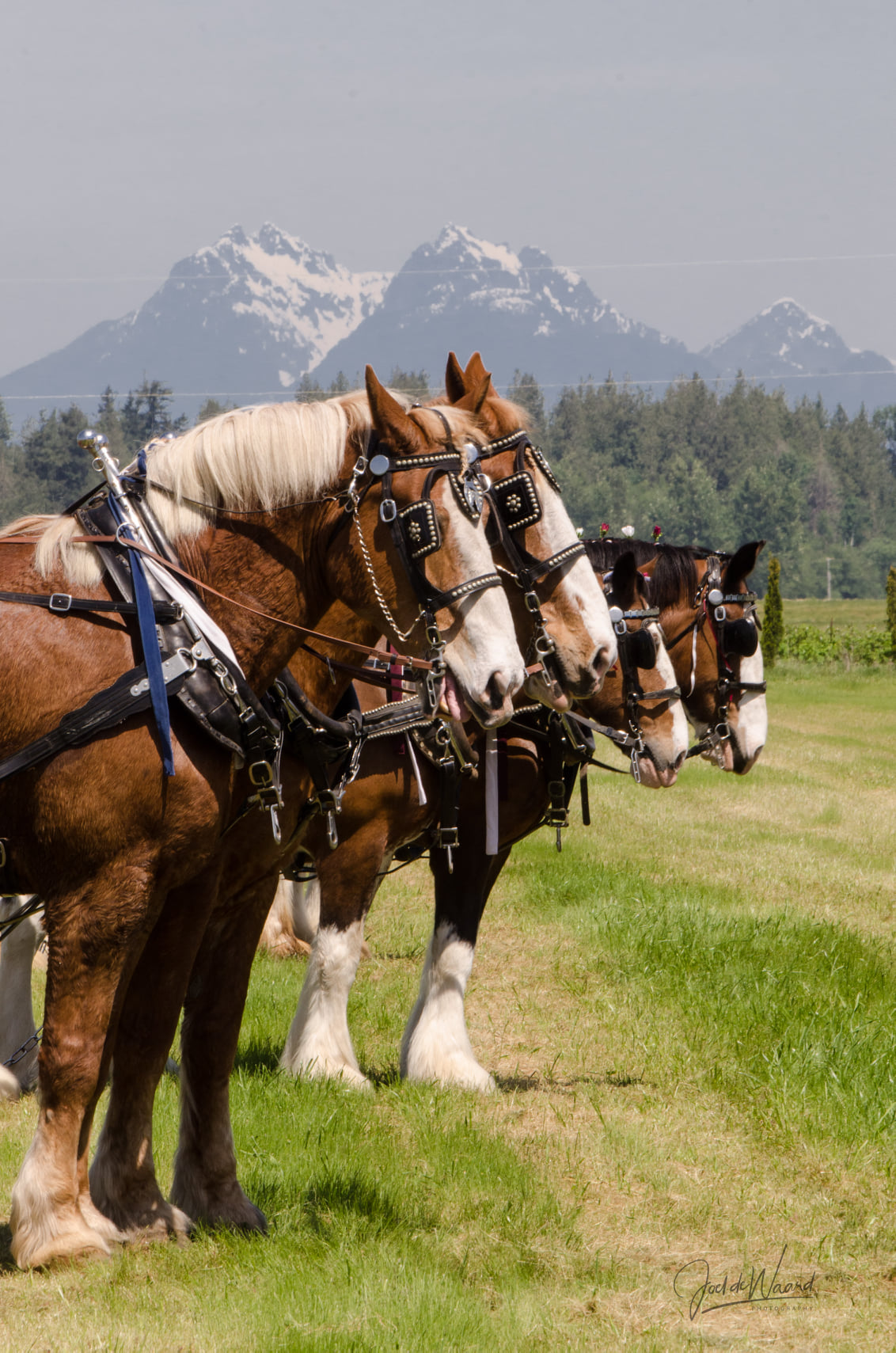
In the rural countryside where we live now, we’ve been fortunate enough to know people who still dabble in horse farming, whose draft teams are hitched to plows and mowers and manure spreaders as they head out to the fields to recapture the past.  Watching a good team work with no diesel motor running means hearing bird calls from the field, the steady footfall of the horses, the harness chains jingling, the leather straps creaking, the machinery shushing quietly as gears turn and grass lays over in submission.  No ear protection is needed.  There is no clock needed to pace the day.   There is a rhythm of nurture when animals instead of engines are part of the work day.   The gauge for taking a break is the amount of foamy sweat on the horses and how fast they are breathing. It is time to stop and take a breather, it is time to start back up do a few more rows, it is time to water, it is time for a meal, it is time for a nap, it is time for a rest in a shady spot.  This is gentle use of the land with four footed stewards who deposit right back to the soil the digested forage they have eaten only hours before.

Our modern agribusiness megafarm fossil-fuel-powered approach to food production has bypassed the small family farm which was so dependent on the muscle power of humans and animals.  In our move away from horses worked by skilled teamsters,  what has been gained in high production values has meant loss of self-sufficiency and dedicated stewardship of a particular plot of ground.  Draft breeds, including the Haflinger horses we raise, now are bred for higher energy with lighter refined bone structure meant more for eye appeal and floating movement,  rather than the sturdy conformation and unflappable low maintenance mindset needed for pulling work.   Modern children are bred for different purpose as well, no longer raised to work together with other family members for a common purpose of daily survival.   Their focus at school is waning as they have no morning farm chores when they get up, too little physical work to do before they arrive at their desks in the morning.   Their physical energy, if directed at all,  is directed to competitive sports, engaged in fantasy combat rather than winning a very real victory over hunger.

I am encouraged when young people still reach for horse collars and bridles, hitch up their horses and do the work as it used to be done.   All is not lost if we can still make incremental daily progress,  harnessed together as a team with our horses, tilling for truth and harvesting hope.

photo by Joel DeWaard


I like farming. I like the work. I like the livestock and the pastures and the woods.  It’s not necessarily a good living, but it’s a good life.  I now suspect that if we work with machines the world will seem to us to be a machine, but if we work with living creatures the world will appear to us as a living creature.  That’s what I’ve spent my life doing, trying to create an authentic grounds for hope. ~Wendell Berry, horse farmer, essayist, poet, professor

One-Time
Monthly
Yearly

Make a one-time or recurring donation to support daily Barnstorming posts

Make a monthly donation

Make a yearly donation

Choose an amount

¤5.00
¤10.00
¤20.00
¤5.00
¤15.00
¤100.00
¤5.00
¤15.00
¤100.00

Or enter a custom amount

¤

Your contribution is deeply appreciated.

Your contribution is appreciated.

Your contribution is appreciated.

DonateDonate monthlyDonate yearly
Be Winged

O! for a horse with wings! 
~William Shakespeare from Cymbeline

photo by Bette Vander Haak

Be winged. Be the father of all flying horses.
~C.S. Lewis from The Magician’s Nephew

photo by Bette Vander Haak

One reason why birds and horses are happy is because they are not trying to impress other birds and horses. 
~Dale Carnegie

photo by Bette Vander Haak

When I bestride him, I soar, I am a hawk:
he trots the air; the earth sings when he touches it;
~William Shakespeare from Henry V

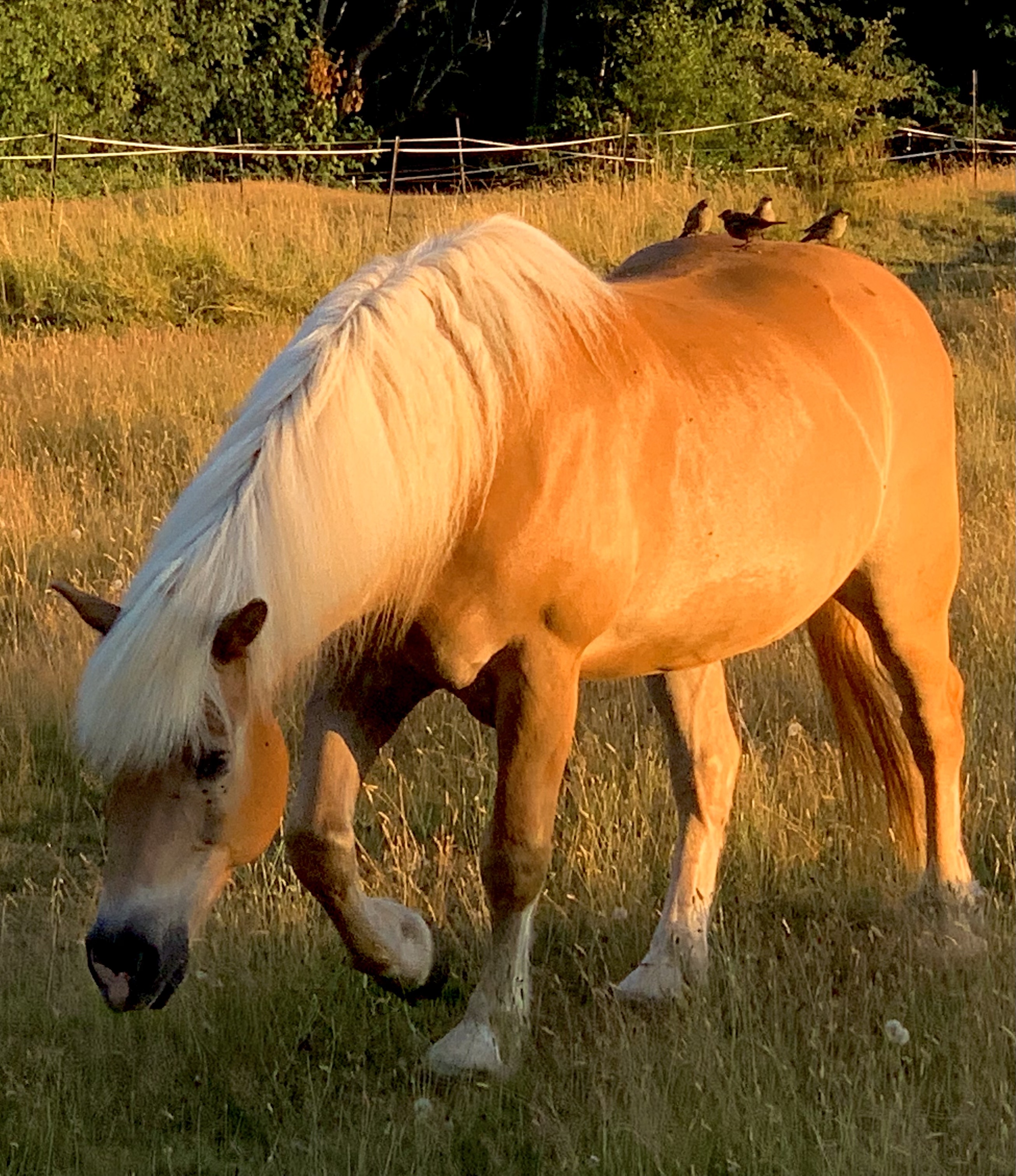
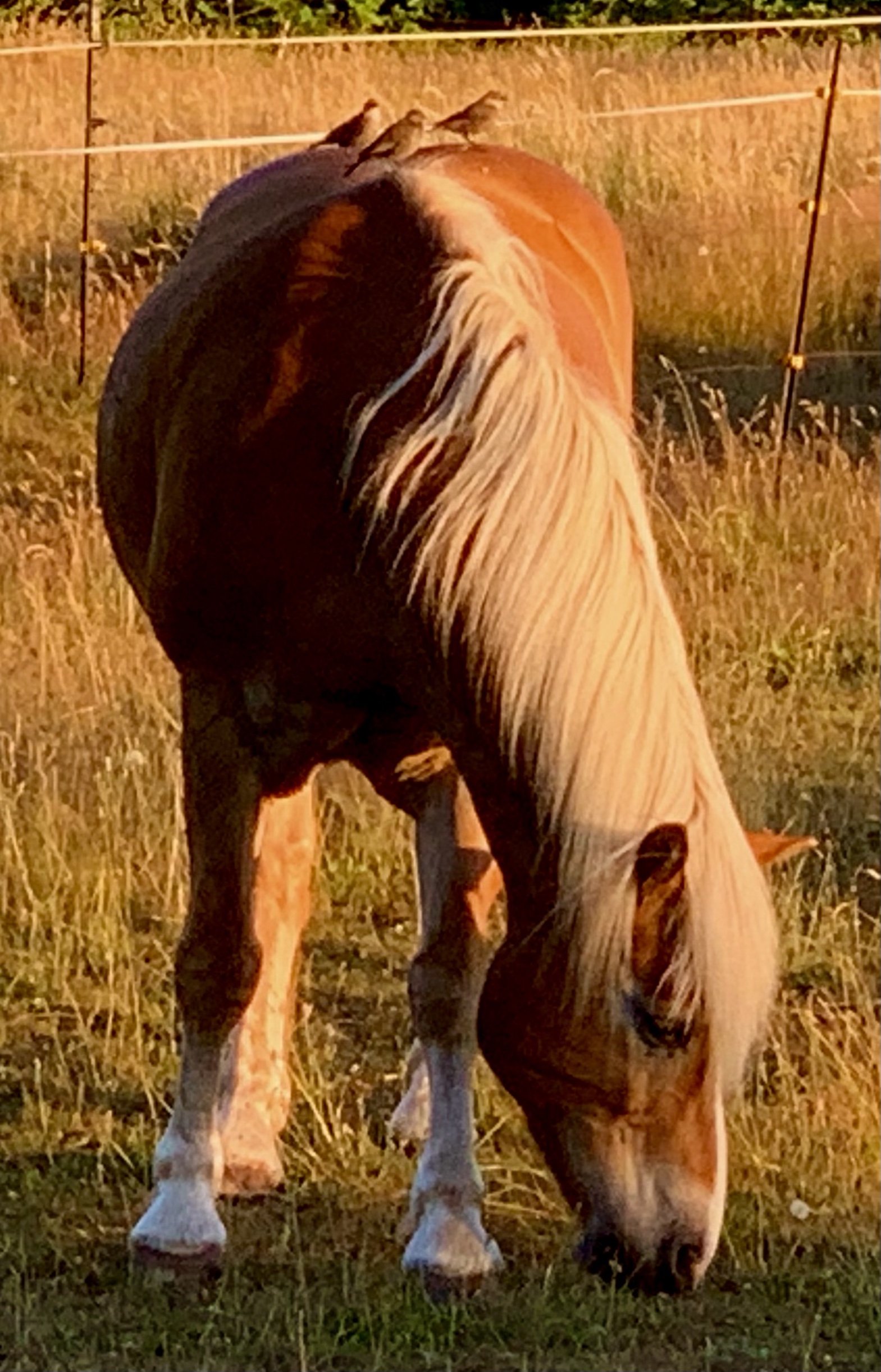
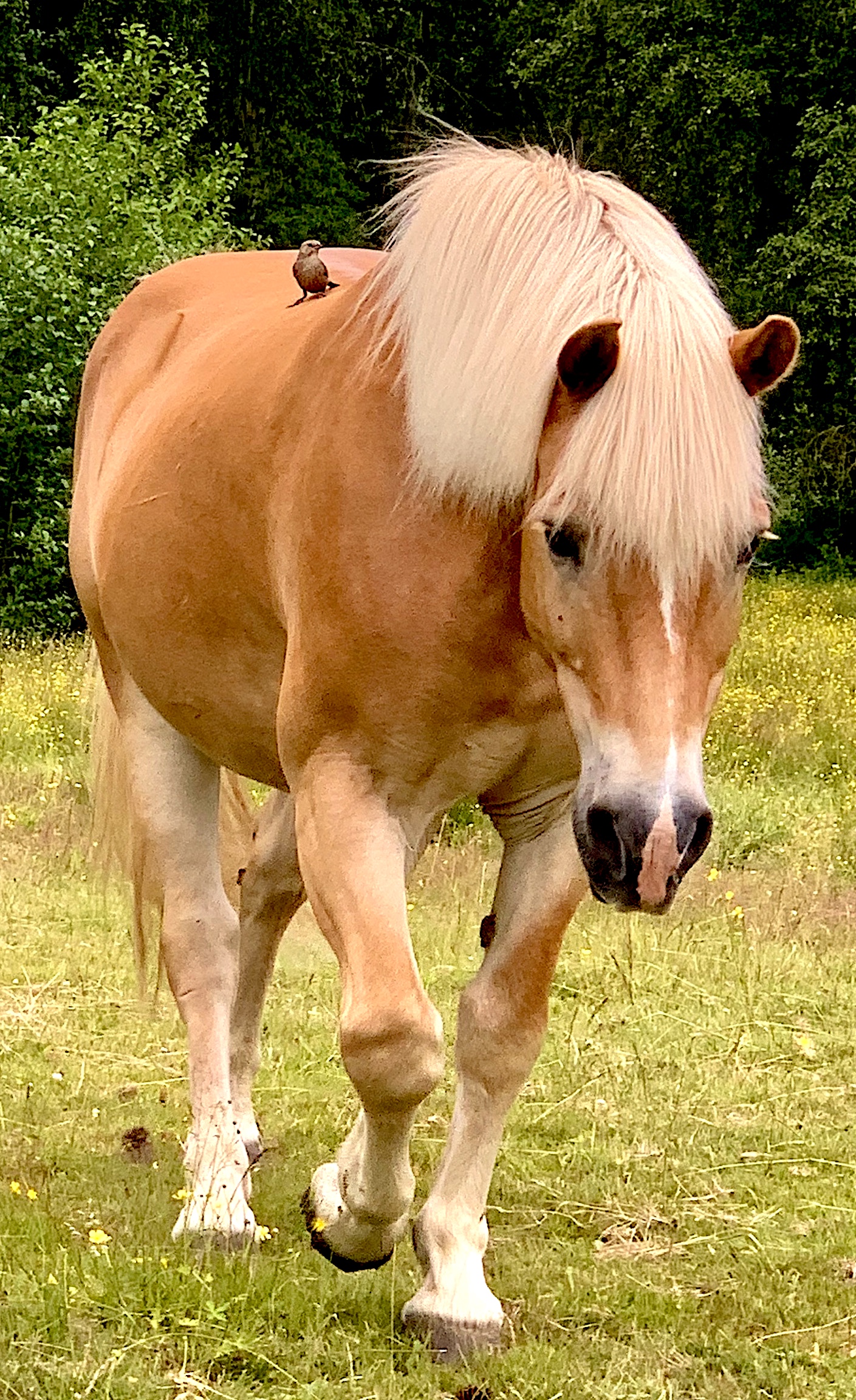
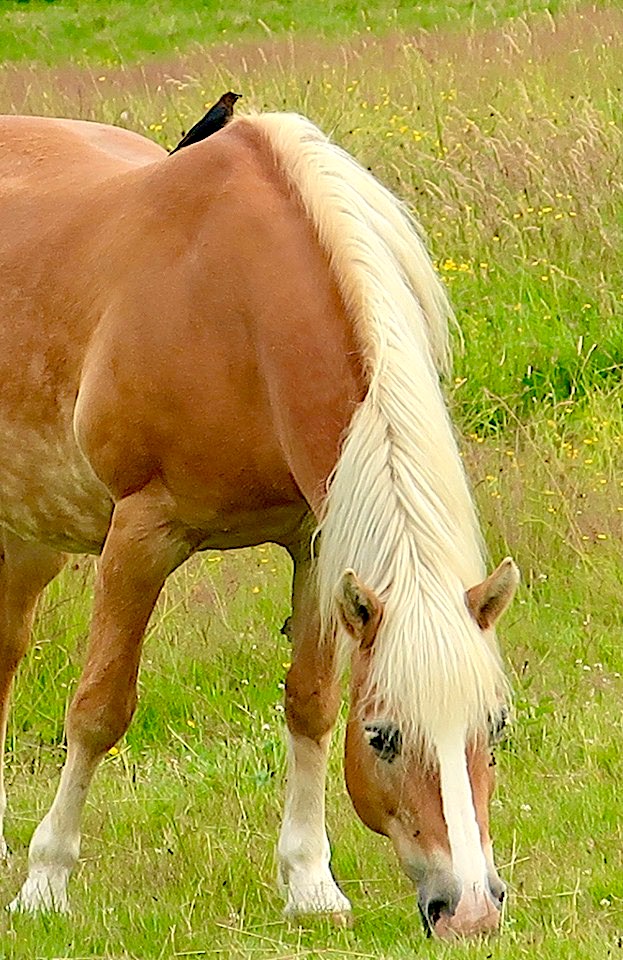
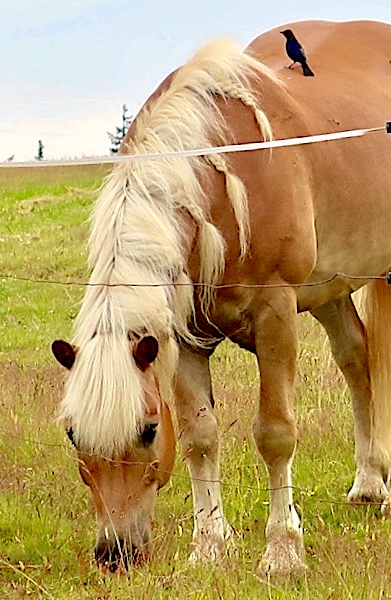
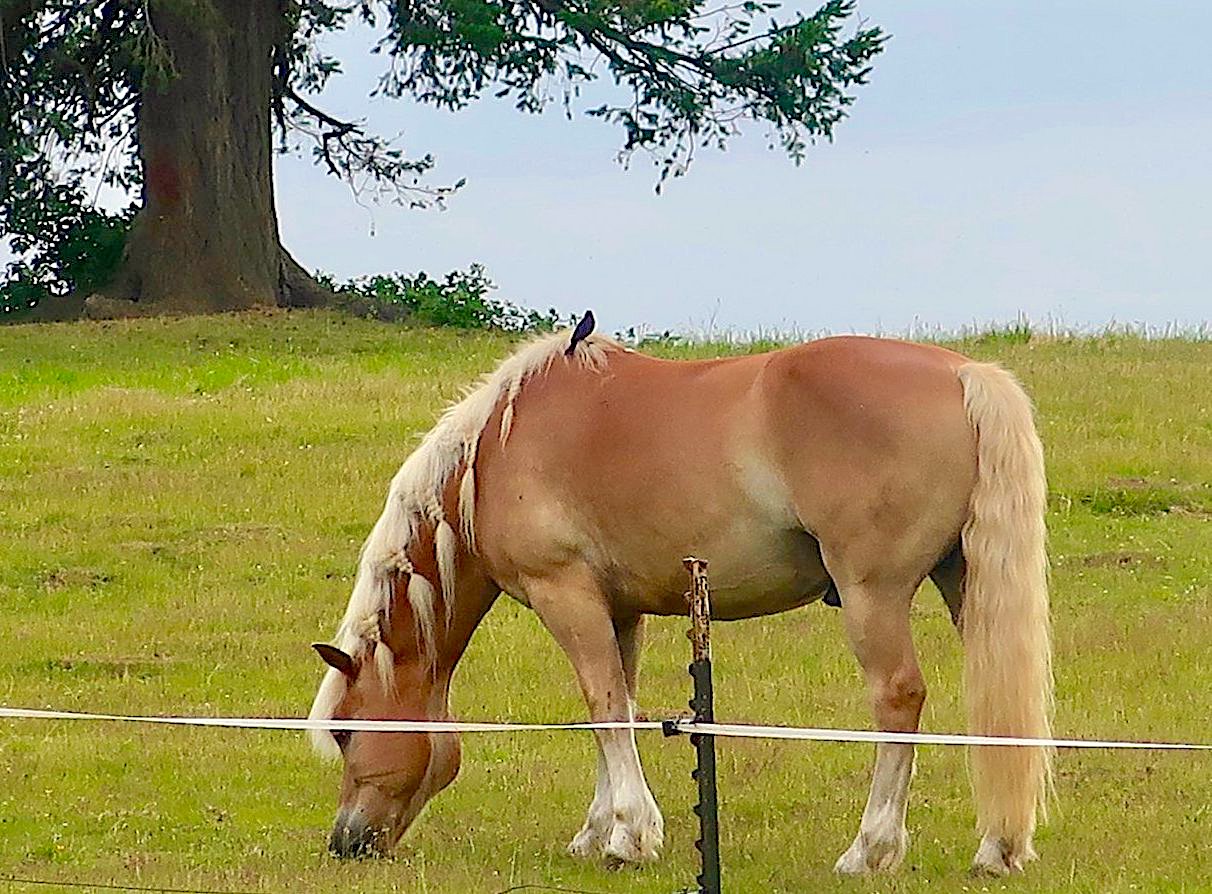
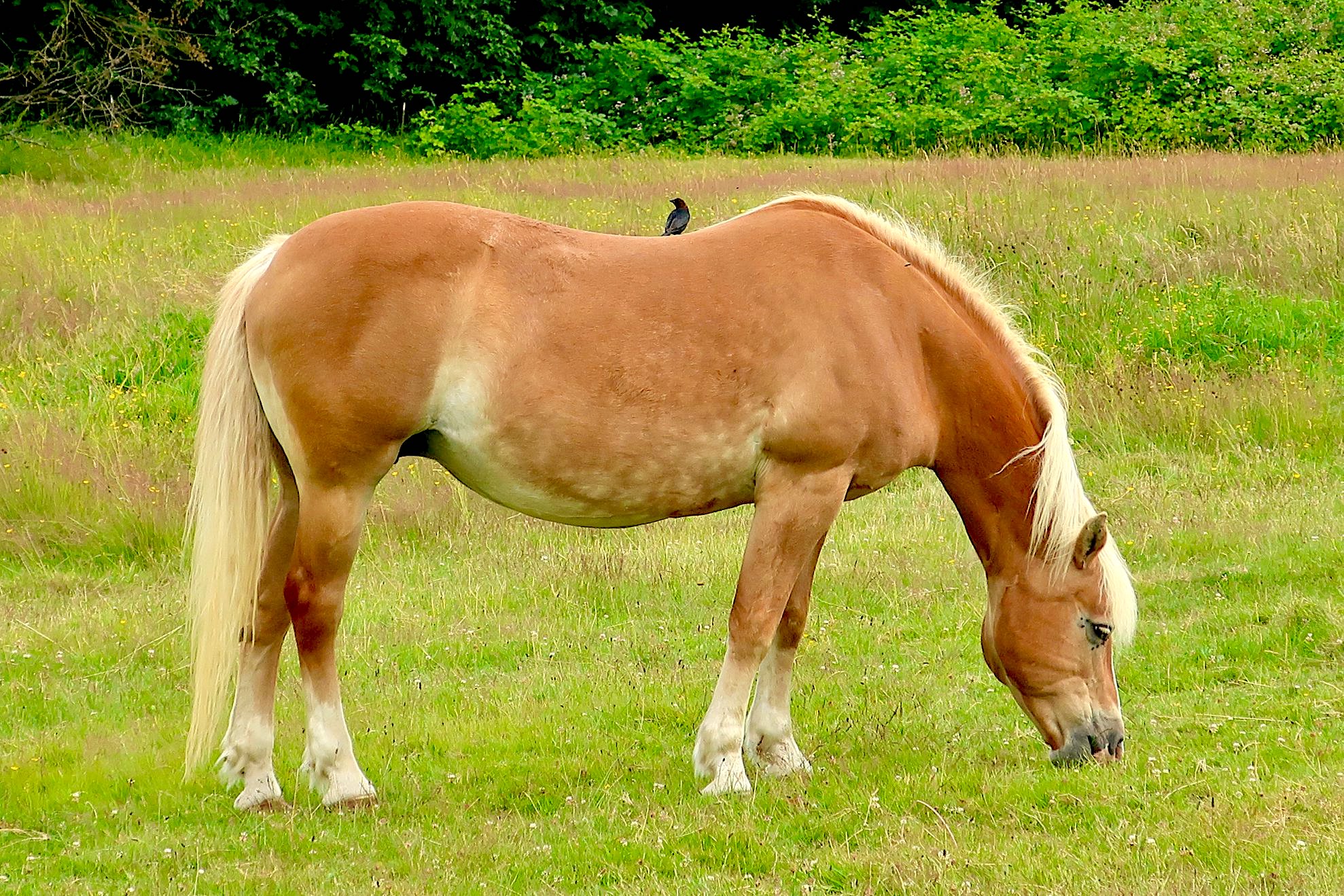
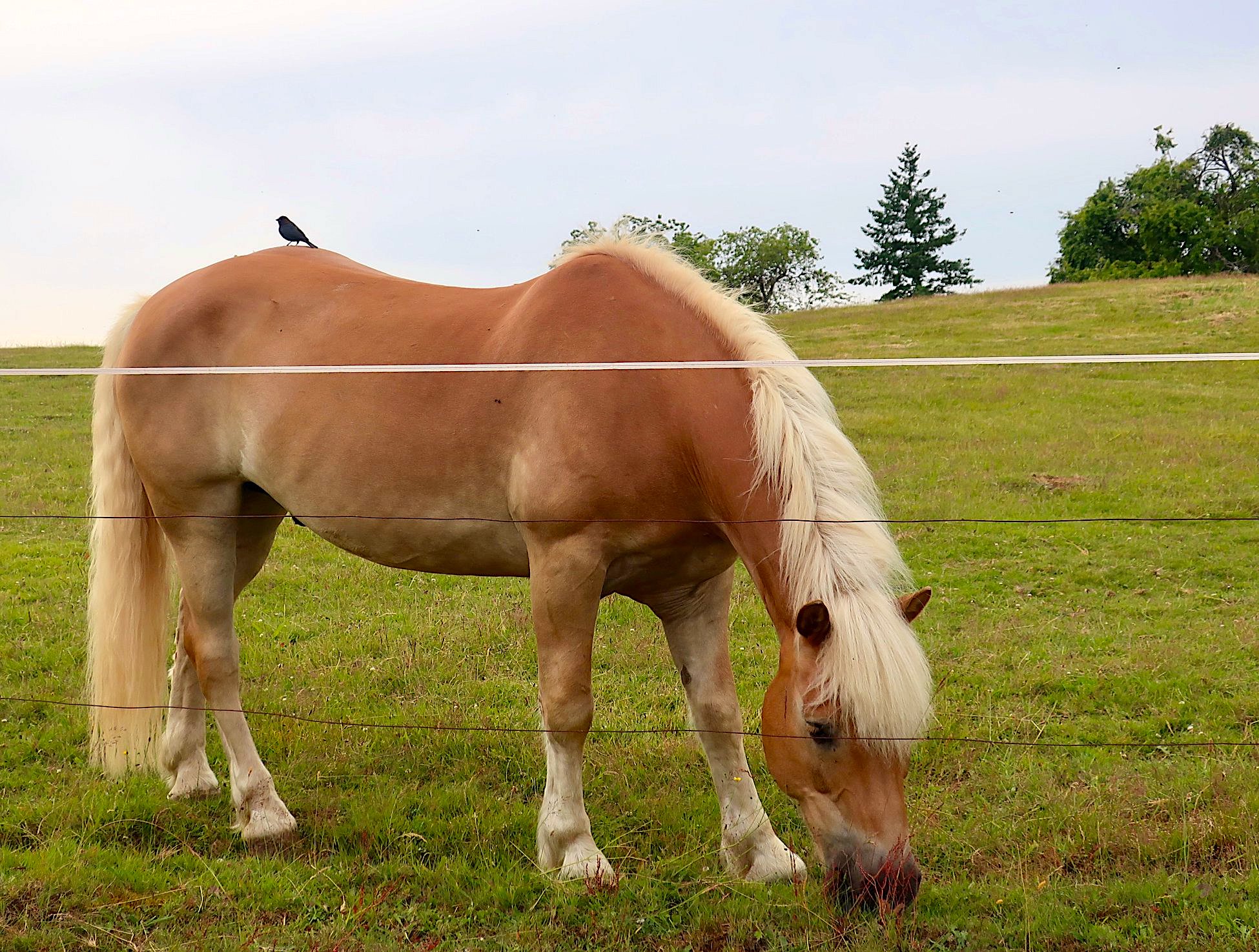
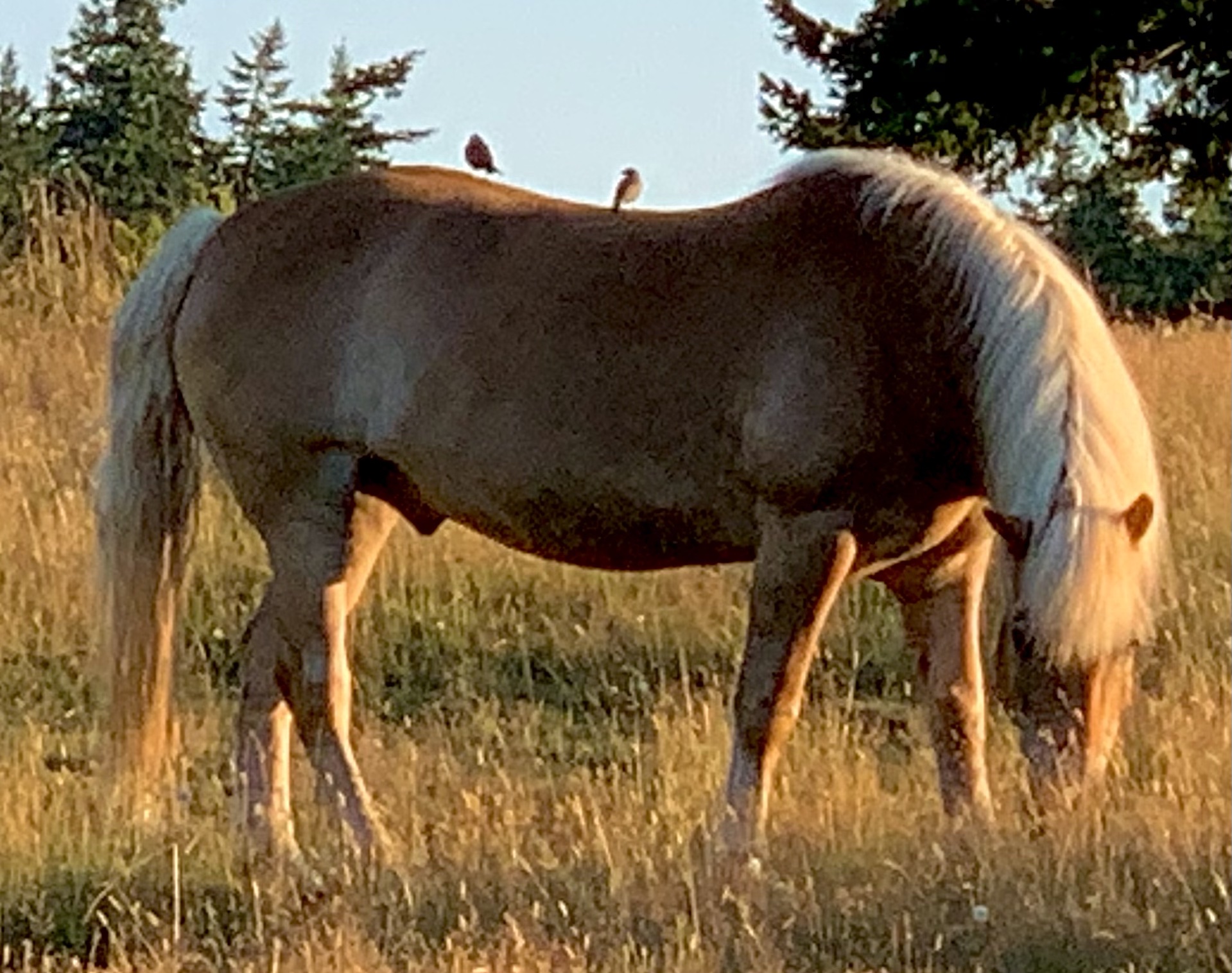
We all need someone along for the ride with us, blessing us with their company — a precious friend who has our back and scratches it wonderfully – helping to keep the biting flies away by gobbling them up.

It is symbiosis at its best: a relationship built on mutual trust and helpfulness. In exchange for relief from annoying insects that a tail can’t flick off, a Haflinger horse serves up bugs on a smorgasbord landing platform located safely above farm cats and marauding coyotes.

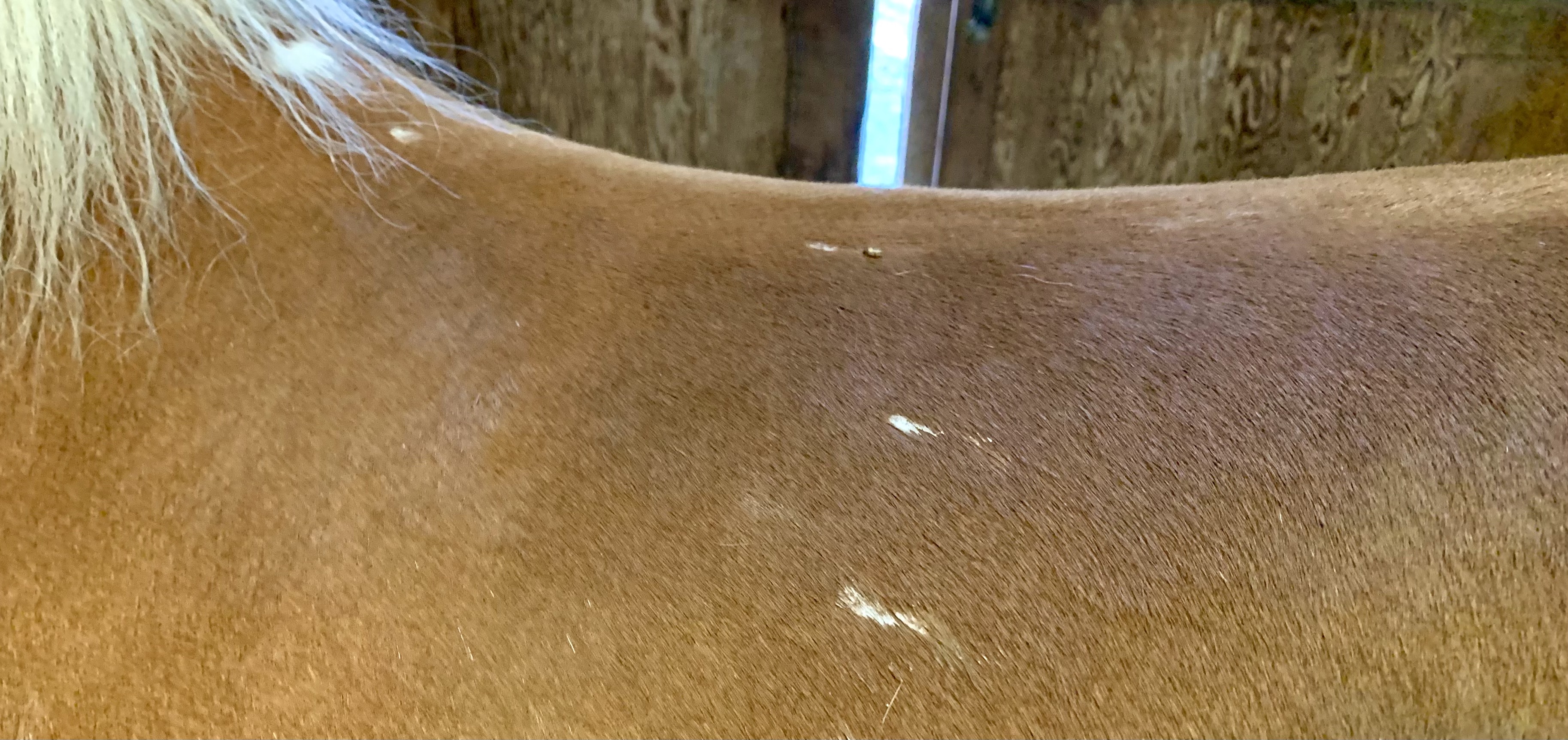
Thanks to their perpetual full meal deals, these cowbirds do leave generous “deposits” behind that need to be brushed off at the end of the day. Like any good friendship, cleaning up the little messes left behind is a small price to pay for the bliss of companionable comradeship.

We’re buds after all – best forever friends, trotting the air while the earth sings along.

And this is exactly what friends are for: one provides the feast while the other provides the wings, even when things get messy.

Be winged. Be fed. Together.

One-Time
Monthly
Yearly

Make a one-time or recurring donation to support daily Barnstorming posts

Make a monthly donation

Make a yearly donation

Choose an amount

¤5.00
¤10.00
¤20.00
¤5.00
¤15.00
¤100.00
¤5.00
¤15.00
¤100.00

Or enter a custom amount

¤

Your contribution is deeply appreciated.

Your contribution is appreciated.

Your contribution is appreciated.

DonateDonate monthlyDonate yearly

Too Much is Too Much

Every spring
I hear the thrush singing
in the glowing woods
he is only passing through.
His voice is deep,
then he lifts it until it seems
to fall from the sky.
I am thrilled.
I am grateful.
Then, by the end of morning,
he’s gone, nothing but silence
out of the tree
where he rested for a night.
And this I find acceptable.
Not enough is a poor life.
But too much is, well, too much.
Imagine Verdi or Mahler
every day, all day.
It would exhaust anyone.
~Mary Oliver “In Our Woods, Sometimes a Rare Music ” from “A Thousand Mornings”

What does it say about me that six months ago, in the darkness of December mornings, I was yearning for the early sunrises of June but once I’m well into the June calendar, these early mornings are no longer so compelling?  It confirms my suspicion that I’m incapable of reveling in the moment at hand, something that would likely take years of therapy to undo.  I’m sure there is some deep seated issue here, but I’m too sleep deprived to pursue it.

My eyes popped open this morning at 4:17 AM, aided and abetted by vigorous birdsong in the trees surrounding our farm house.  There was daylight sneaking through the venetian blinds at that unseemly hour as well.  Once the bird chorus started, with one lone chirpy voice in the apple tree by our bedroom window, it rapidly became a full frontal onslaught symphony orchestra from all manner of avian life-forms, singing from the plum, cherry, walnut, fir and chestnut.   Sleep became irretrievable.

It would be such a poor life without the birdsong.

I remember wishing for early morning birdsong last December when it seemed the sun would never rise and the oppressive silence would never lift.  I had conveniently forgotten those mornings a few years ago when we had a flock of over a dozen young roosters who magically found their crows very early in the morning a mere 10 weeks after hatching.  Nothing before or since could match their alarm clock expertise after 4 AM.  No barbecue before or since has tasted as sweet (apologies to my vegan/vegetarian readers, but too much was too much).

So I remind myself how bad it can really be; this morning’s backyard birdsong was a veritable symphony in comparison.

I already need a nap.

Faith is the bird that feels the light and sings when the dawn is still dark.
~Rabindranath Tagore

photo by Harry Rodenberger

One-Time
Monthly
Yearly

Make a one-time or recurring donation to support daily Barnstorming posts

Make a monthly donation

Make a yearly donation

Choose an amount

¤5.00
¤10.00
¤20.00
¤5.00
¤15.00
¤100.00
¤5.00
¤15.00
¤100.00

Or enter a custom amount

¤

Your contribution is deeply appreciated.

Your contribution is appreciated.

Your contribution is appreciated.

DonateDonate monthlyDonate yearly

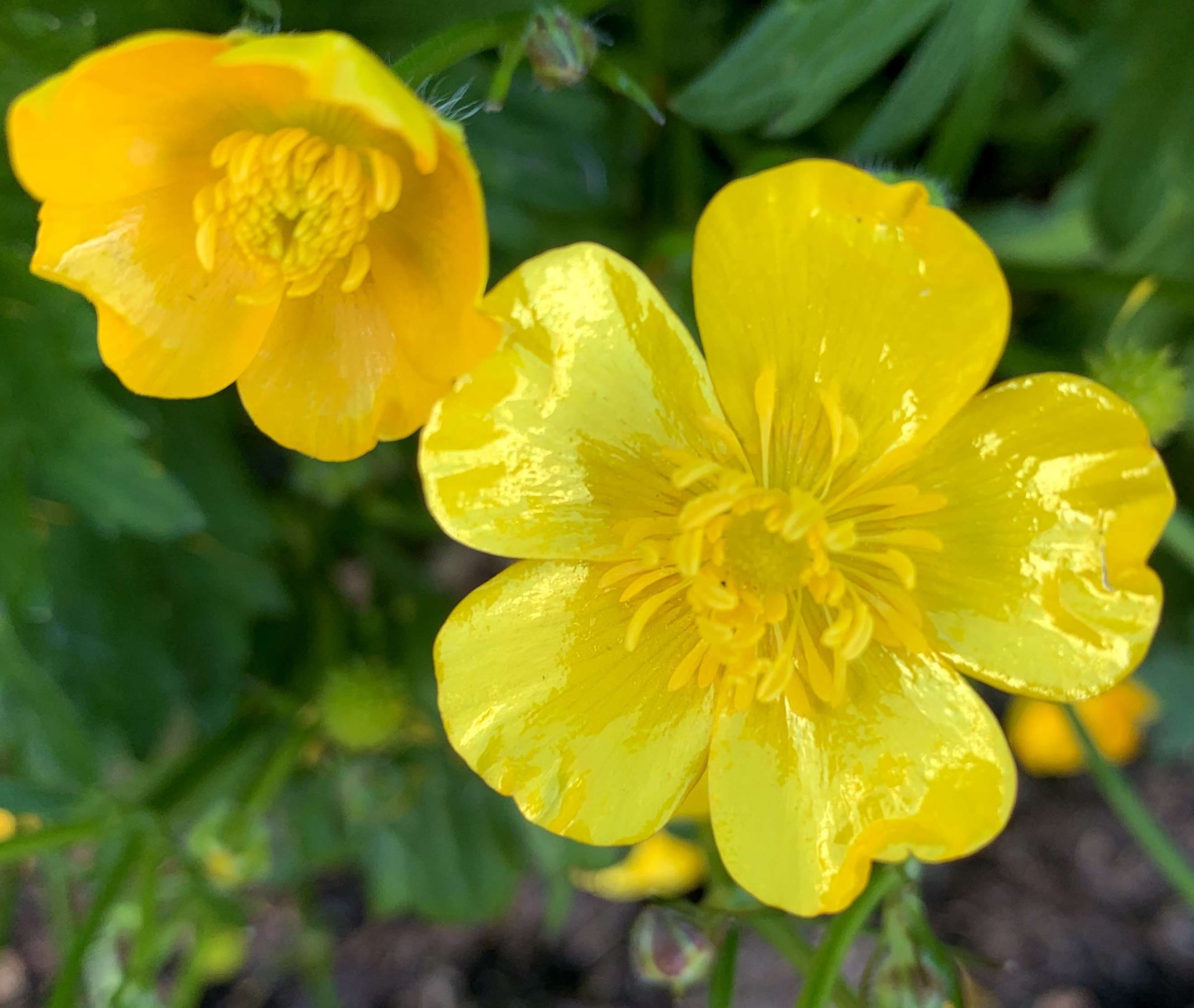
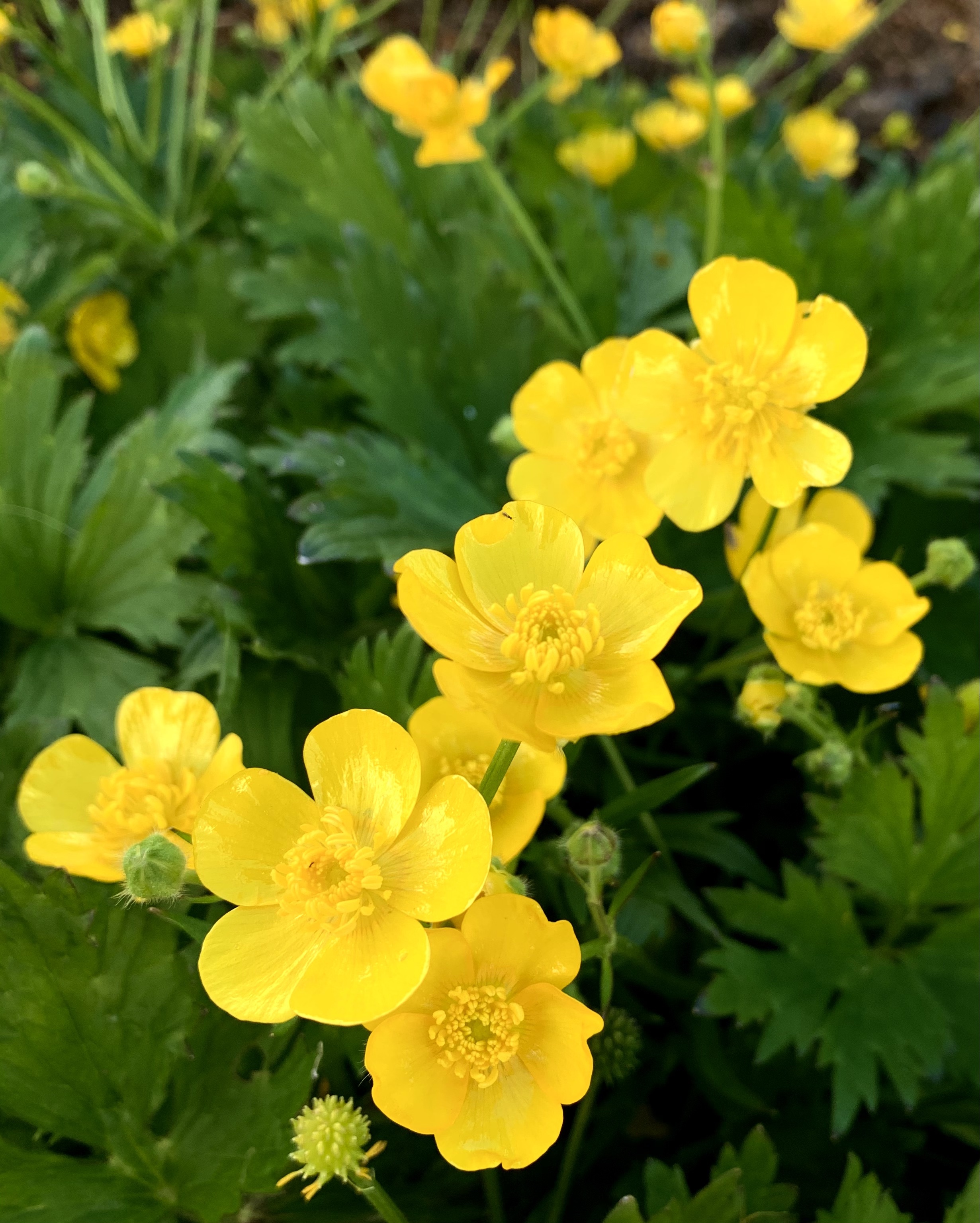
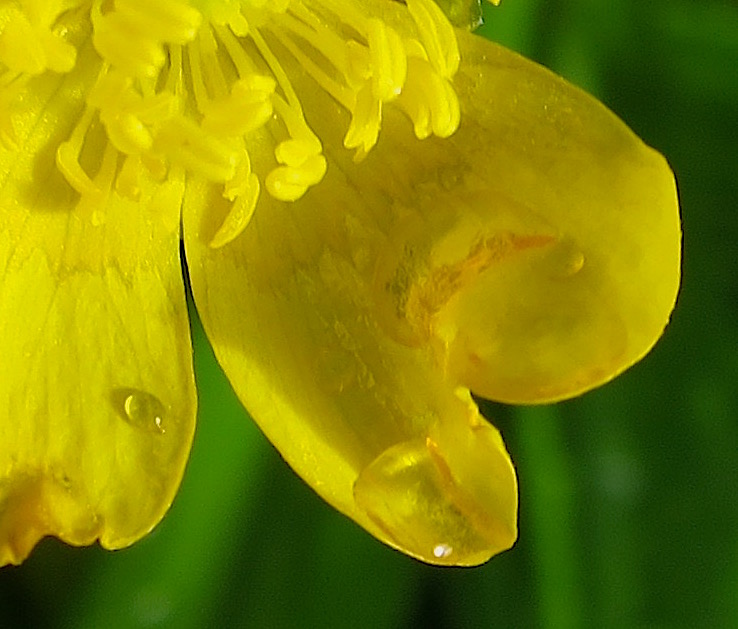
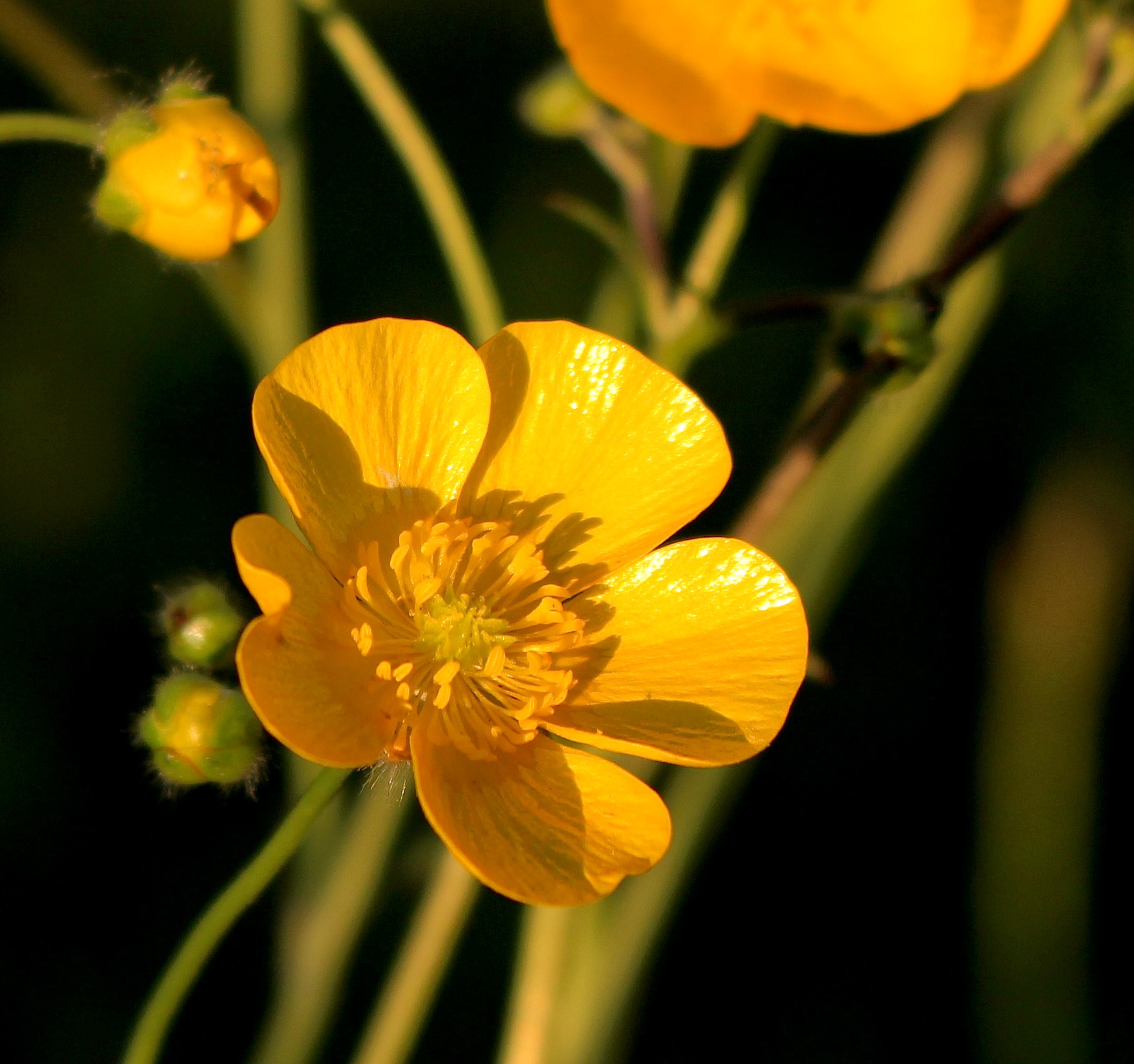
Build Me Up, Buttercup

Buttercup’s heart was a secret garden and the walls were very high…

Buttercup: “Anything there is that I can do for you, I will do for you; anything there is that I cannot do, I will learn to do.” And with that, she dared the bravest thing she’d ever done; she looked right into his eyes…

Buttercup: We’ll never survive.
Westley: Nonsense. You’re only saying that because no one ever has.

Westley: Hear this now. I will always come for you.
Buttercup: But how can you be sure?
Westley: This is true love. You think this happens every day?

That day, she was amazed to discover that when he was saying “As you wish”, what he meant was, “I love you.” And even more amazing was the day she realized she truly loved him back.
~William Golding, all above quotes from The Princess Bride

However did I find a farm boy who decades later
still makes me smile and laugh and builds me up?

This farm boy of mine says “I love you” in so many ways every day;
the walls of my secret garden heart come tumbling down…

Like butter, I am melted by his willingness to love someone like me.

One-Time
Monthly
Yearly

Make a one-time or recurring donation to support daily Barnstorming posts

Make a monthly donation

Make a yearly donation
Choose an amount

¤5.00
¤10.00
¤20.00
¤5.00
¤15.00
¤100.00
¤5.00
¤15.00
¤100.00

Or enter a custom amount

¤

Your contribution is deeply appreciated.
Your contribution is appreciated.

Your contribution is appreciated.

DonateDonate monthlyDonate yearly