
Still Here, Giving Warmth Before Going Cold Again

When I was sick with a head cold, my head
full of pressure, my father would soak a washcloth
in hot water, then ball it up, ring it out. He would
open it above my head, then place it against
my face like a second skin, the light around me
disappearing entirely except through the spaces
between the stitching. I would inhale the steam
in that darkness, hearing his voice on the other side,
otherwise almost devoid of any other bodily sense
but the warmth and depth of his voice, as if
I had already died and was on the other side
of life waiting for the sickness to lift, but I wasn’t.
I was still on this earth, the washcloth going cold
on my face, my body still sick, and my father still
there when I opened my eyes, as he always was,
there to give me warmth before going cold again.

~William Fargason “Elegy with Steam”
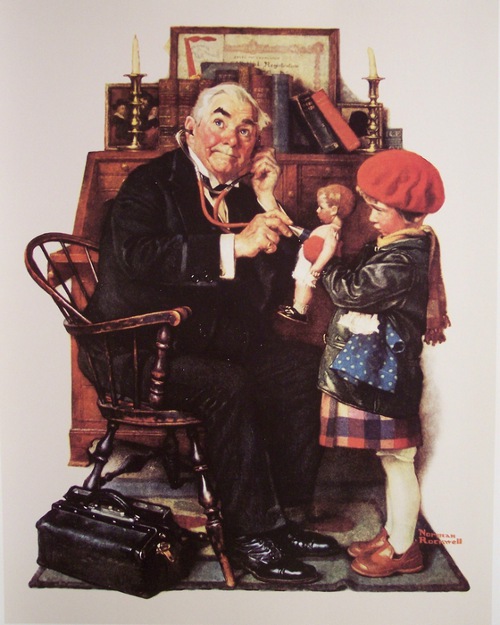
A common clinic conversation this time of year:

I’ve been really miserable with a cold for three days, and as my COVID test is negative, I need that 5 day Z-pack antibiotic to get better faster.

It really can be miserable suffering from cold symptoms. Ninety eight percent of the time these symptoms are due to a viral infection and since your rapid RSV and influenza nasal swab tests are also negative today, your illness should resolve over the next few days without you needing a prescription medication.

But I can’t breathe and I can’t sleep.

You can use salt water rinses and a few days of decongestant nose spray to ease the congestion.

But my face feels like there is a blown up balloon inside.

Try applying a warm towel to your face – the heat will help improve circulation in your sinuses and ease your discomfort. When it cools off, warm it up again – basically rinse and repeat.

And I’m feverish and having sweats at night.

Your temp today is 99.2 so not a concern. You can use ibuprofen or acetominophen to help the feverish feeling.

But my snot is green.

That’s not unusual with viral upper respiratory infections and not necessarily an indicator of a bacterial infection.

And my teeth are starting to hurt and my ears are popping.

Let me know if that is not resolving over the next few days.

But I’m starting to cough.

Your lungs are clear today so it is likely from post nasal drainage irritating your upper airway. Best way to help that is to breathe steam to keep your bronchial tubes moist, push fluids and prop up with an extra pillow.

But sometimes I cough to the point of gagging. Isn’t whooping cough going around?

Your illness doesn’t fit the typical timeline for pertussis.  You can consider using an over the counter cough suppressant if needed.

But I always end up needing antibiotics. This is just like my regular sinus infection thing I get every year.

There’s plenty of evidence antibiotics can do more harm than good, eliminating healthy bacteria in your gut.  They really aren’t indicated at this point in your illness and could have nasty side effects.

But I always get better faster with antibiotics. Doctors always give me antibiotics.

Studies show that two weeks later there is no significant difference in symptoms between those treated with antibiotics and those who did self-care without them.

But I have a really hard week coming up and my whole family is sick and I won’t be able to rest.

This could be your body’s way of saying that you need to take the time you need to recover – is there someone who can help pick up the load your carry?

But I just waited an hour to see you.

I really am sorry about the wait; we’re seeing a lot of sick people with so much viral illness going around and needing to test to rule out COVID and influenza.

But I paid a $20 co-pay today for this visit.

We’re very appreciative of you paying so promptly on the day of service.

But I can go down the street to the urgent care clinic or do one of those telehealth doctor visits and for $210 they will write me an antibiotic prescription without making me feel guilty for asking.

I wouldn’t recommend taking unnecessary medication that can lead to bacterial resistance, side effects and allergic reactions. I truly believe you can be spared the expense, inconvenience and potential risk of taking something you don’t really need.

So that’s it?  Salt water rinses, warm towels on my face and just wait it out?  That’s all you can offer?

Let me know if your symptoms are unresolved or worsening over the next few days.

So you spent all that time in school just to tell people they don’t need medicine?

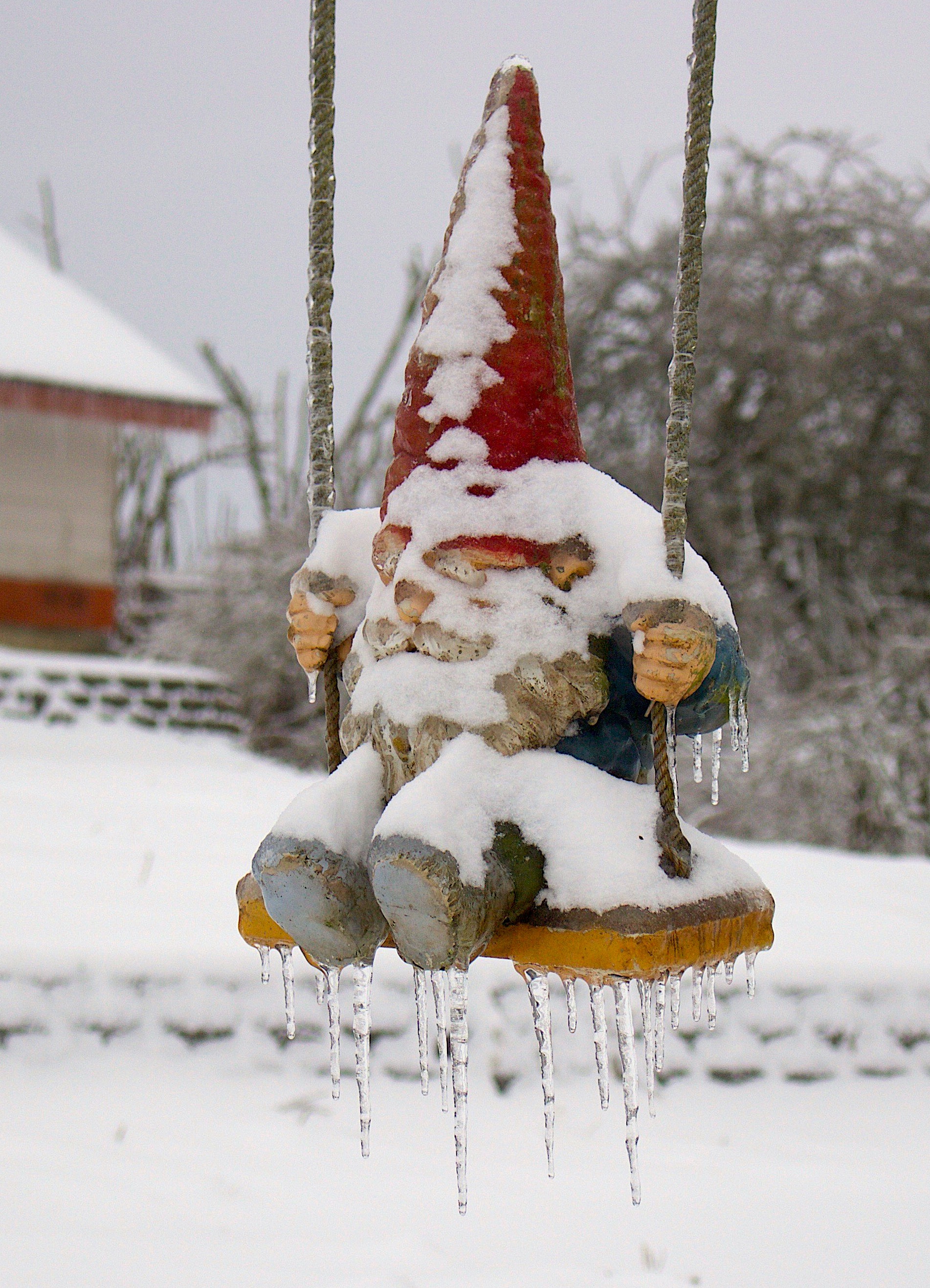
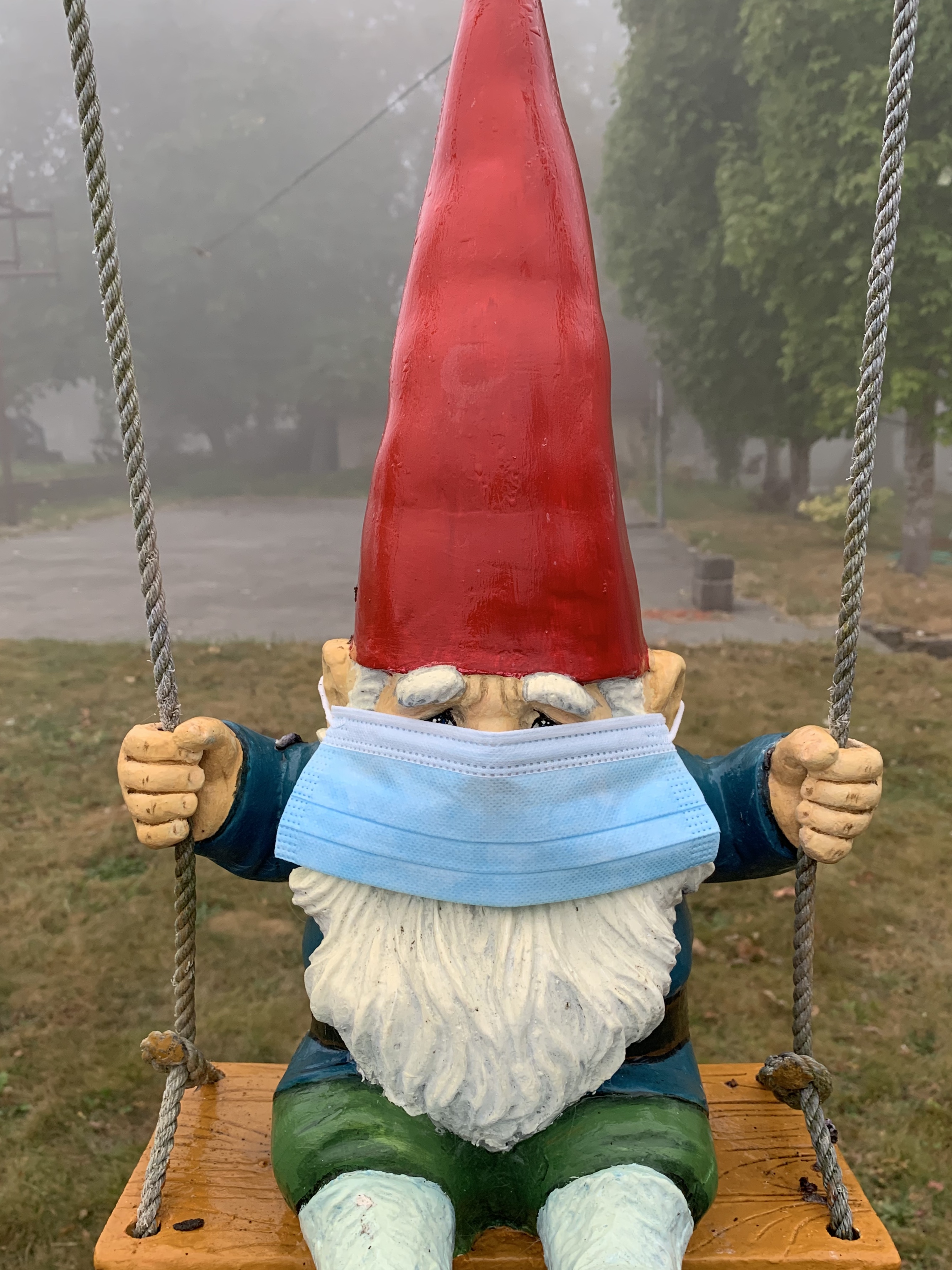
I believe I can help most people heal themselves with self-care at home. I try to educate my patients about when they do need medicine and then facilitate appropriate treatment. Also, I want to thank you for wearing your mask today to reduce the chance of transmitting your virus to those around you.

I’m going to go find a real doctor who will actually listen to me and give me what I need.

It certainly is a choice you can make. A real doctor vows to first do no harm while always listening to what you think, what your physical examination shows, then takes into account what evidence-based clinical data says is the best and safest course of action. I realize you want something other than what I’m offering you today. If you are feeling worse over the next few days or develop new symptoms, please let me know so we can reevaluate how best to treat you.

I’ll bet you’ll tell me next you want me to get one of those COVID vaccines too, won’t you?

Actually, I prefer you be feeling a bit better before you receive both the COVID and influenza vaccines. That would offer extra immunity protection for you through the next few months. Shall we schedule you for a time for your vaccination updates next week? Remember, I’m still here if you need to review your options again…

One-Time
Monthly
Yearly

Make a one-time or recurring donation to support daily Barnstorming posts

Make a monthly donation

Make a yearly donation

Choose an amount

¤10.00
¤20.00
¤50.00
¤5.00
¤15.00
¤100.00
¤5.00
¤15.00
¤100.00

Or enter a custom amount

¤

Your contribution is deeply appreciated.

Your contribution is appreciated.

Your contribution is appreciated.

DonateDonate monthlyDonate yearly
We Couldn’t Do Anything


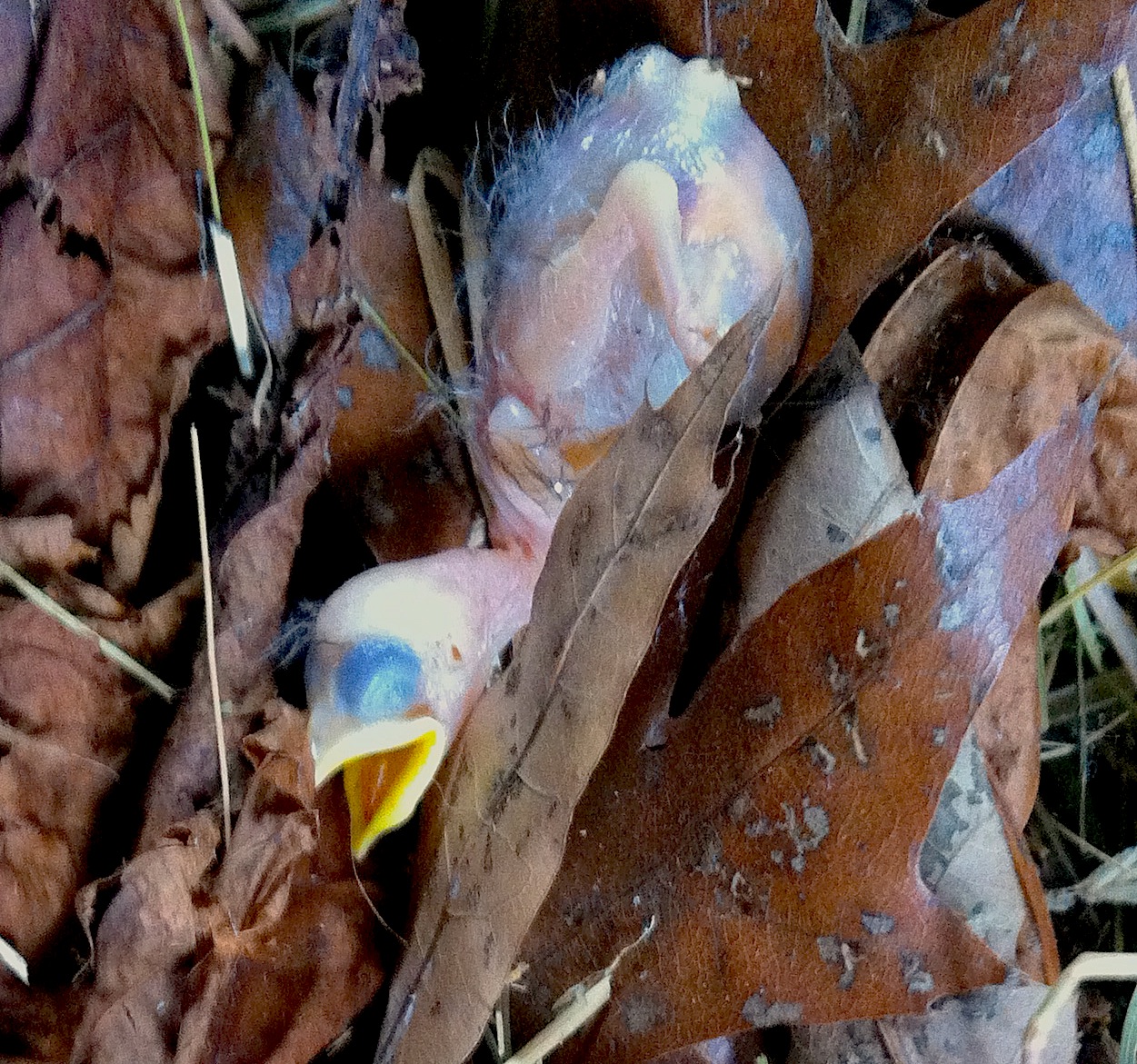
Yesterday our children, playing
in a tree, watched as the tiniest bird
fell from above them,
where it belonged,
to land below them,
where it did not.
The dog, animal and eager,
stepped on the bird, then
lowered his head. Our daughter
screamed, hauled him back,
then cupped her trembling hands
around the trembling bird,
Its one wing stretched and bent.
Our son ran inside, obedient
to our daughter’s instructions.
I was in the shower, useless.
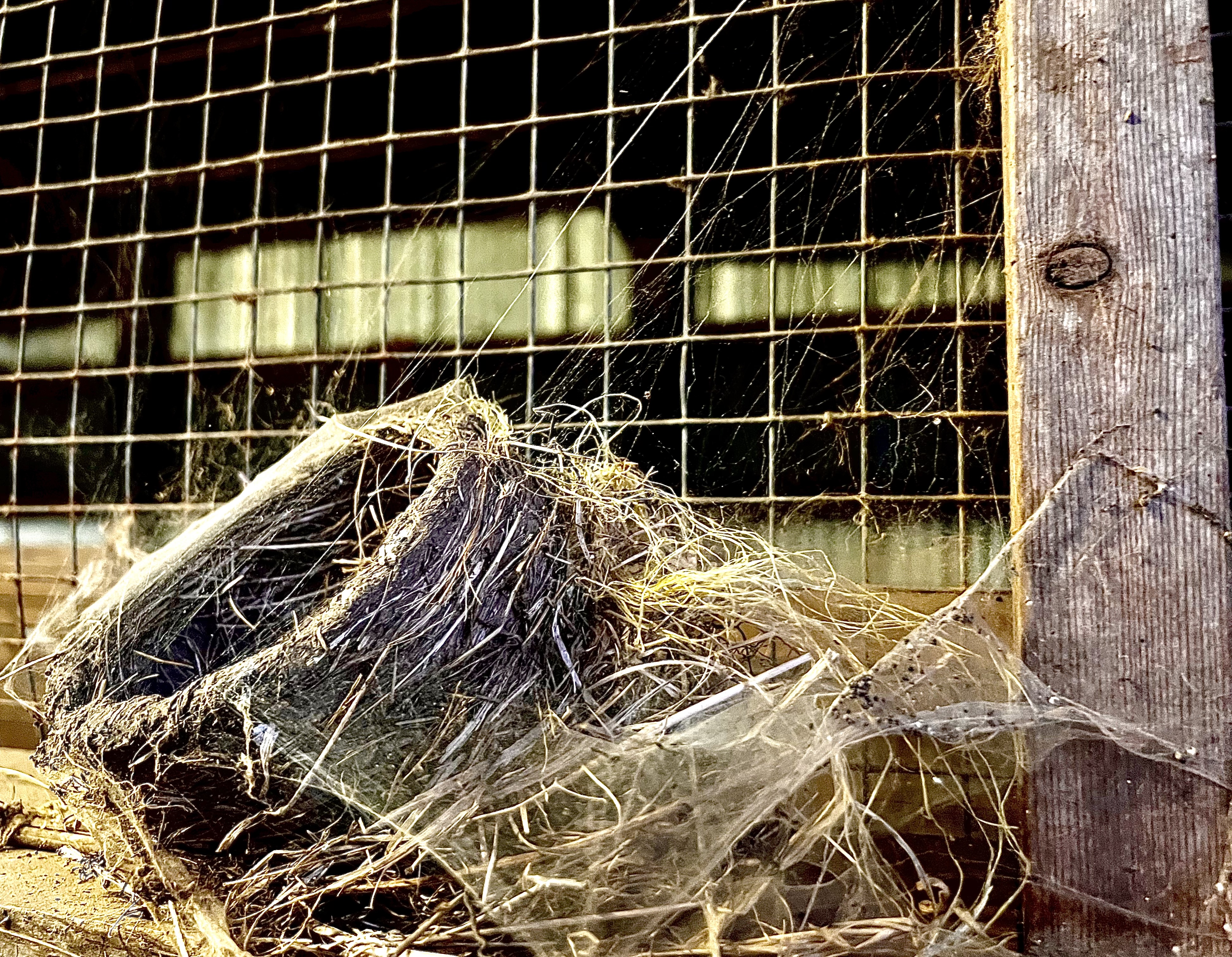
You found a shoebox, sheltered the bird,
helped our children find leaves and twigs,
perched the box in the tree. At supper,
we prayed for the bird while its mother
visited the shoebox,
her beak full. She fretted
and fluttered. She couldn’t do anything,
and we couldn’t do anything,
and after supper, we found the trowel.
Dust to dust,
I said.
O how I longed to gather you,
you said, as a mother hen gathers
her young beneath her wings.
Our son pushed a stick into the soft earth.
Our daughter told him not to push too far.

~Shea Tuttle “After reading our daughter’s poem” from Image Journal

Hope is the thing with feathers
That perches in the soul,
And sings the tune without the words,
And never stops at all,

And sweetest in the gale is heard;
And sore must be the storm
That could abash the little bird
That kept so many warm.

I’ve heard it in the chillest land,
And on the strangest sea;
Yet, never, in extremity,
It asked a crumb of me.

~Emily Dickinson

I have known the helplessness of watching life ebb away from a living creature and not be able to do a thing to change what is happening.

As a teenage nurse aide in a rest home for the elderly, I saw much of dying over those years before going to medical school – some deaths were anticipated and some unexpected. What was most apparent to me in that setting is that my primary role was to be a caring witness and comforter. I could not change what was happening but I could be there, not leaving my patients to die alone. I hoped that I was useful in some way.

Later, when I worked as a physician in a hospital, there were certainly things we would do to respond to a sudden cardiac event, and it was very dramatic to see someone’s pulse restored and stabilized due to our intervention. But more often than not, what we could do wouldn’t change the reality – dying still happened and we were gathered to witness the end. We often left the bedside feeling useless.

Now I have grandchildren who are learning about death through observing the natural cycles of animals living and dying on our farm. They discover a dead bird or vole on the ground; they were aware one of our elderly horses recently died. They are aware our beloved farm dogs are aging and so are grandma and grandpa.

Children naturally ask “why?” and we do our best to explain there is always hope and comfort, even when physical bodies are dust in the ground, marked by a stick or stone or only a memory.

It is “Hope” that sings alive within us, even when we’re naked and featherless, even if we fall far from the nest we were born to. We are caught and safe under our Savior’s wings for the rest of eternity, never to be “just dust” again.

One-Time
Monthly
Yearly

Make a one-time or recurring donation to support daily Barnstorming posts

Make a monthly donation

Make a yearly donation

Choose an amount

¤10.00
¤20.00
¤50.00
¤5.00
¤15.00
¤100.00
¤5.00
¤15.00
¤100.00

Or enter a custom amount

¤

Your contribution is deeply appreciated.

Your contribution is appreciated.

Your contribution is appreciated.

DonateDonate monthlyDonate yearly
Taking Time to Talk

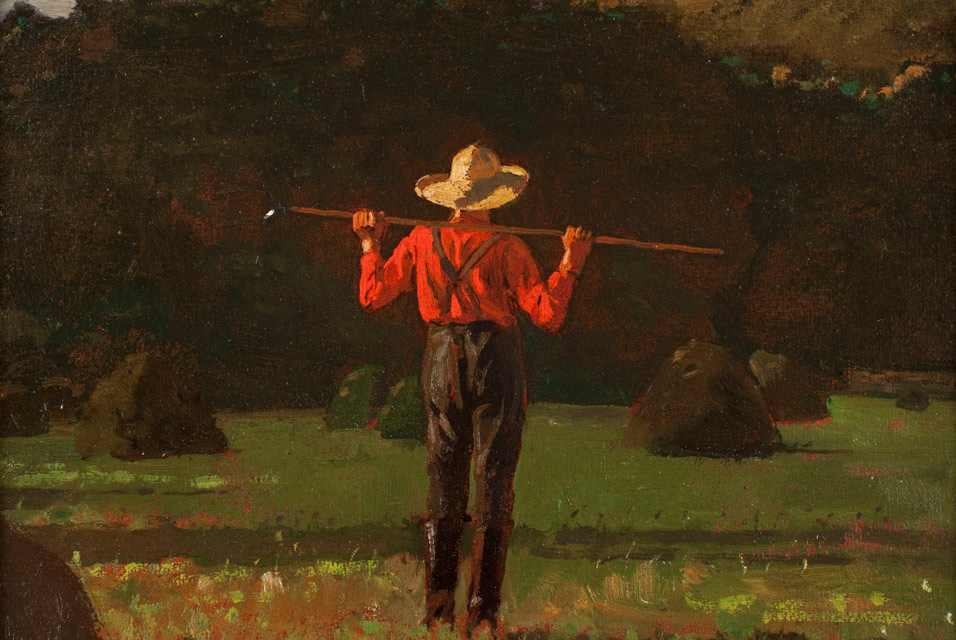
Farmer with a pitchfork by Winslow Homer

When a friend calls to me from the road
And slows his horse to a meaning walk,
I don’t stand still and look around
On all the hills I haven’t hoed,
And shout from where I am, ‘What is it?’
No, not as there is a time to talk.
I thrust my hoe in the mellow ground,
Blade-end up and five feet tall,
And plod: I go up to the stone wall
For a friendly visit.

~Robert Frost “A Time to Talk” from The Poetry of Robert Frost.

Conversations these days often take place asynchronously – text messages back and forth, voicemails, instant messages, emails – all composed and sent when most convenient so not necessarily as time-responsive as they could be.

Chatting over a fence, or on a front porch or even over the phone just doesn’t happen easily any more, especially during the pandemic years of avoiding face-to-face encounters.

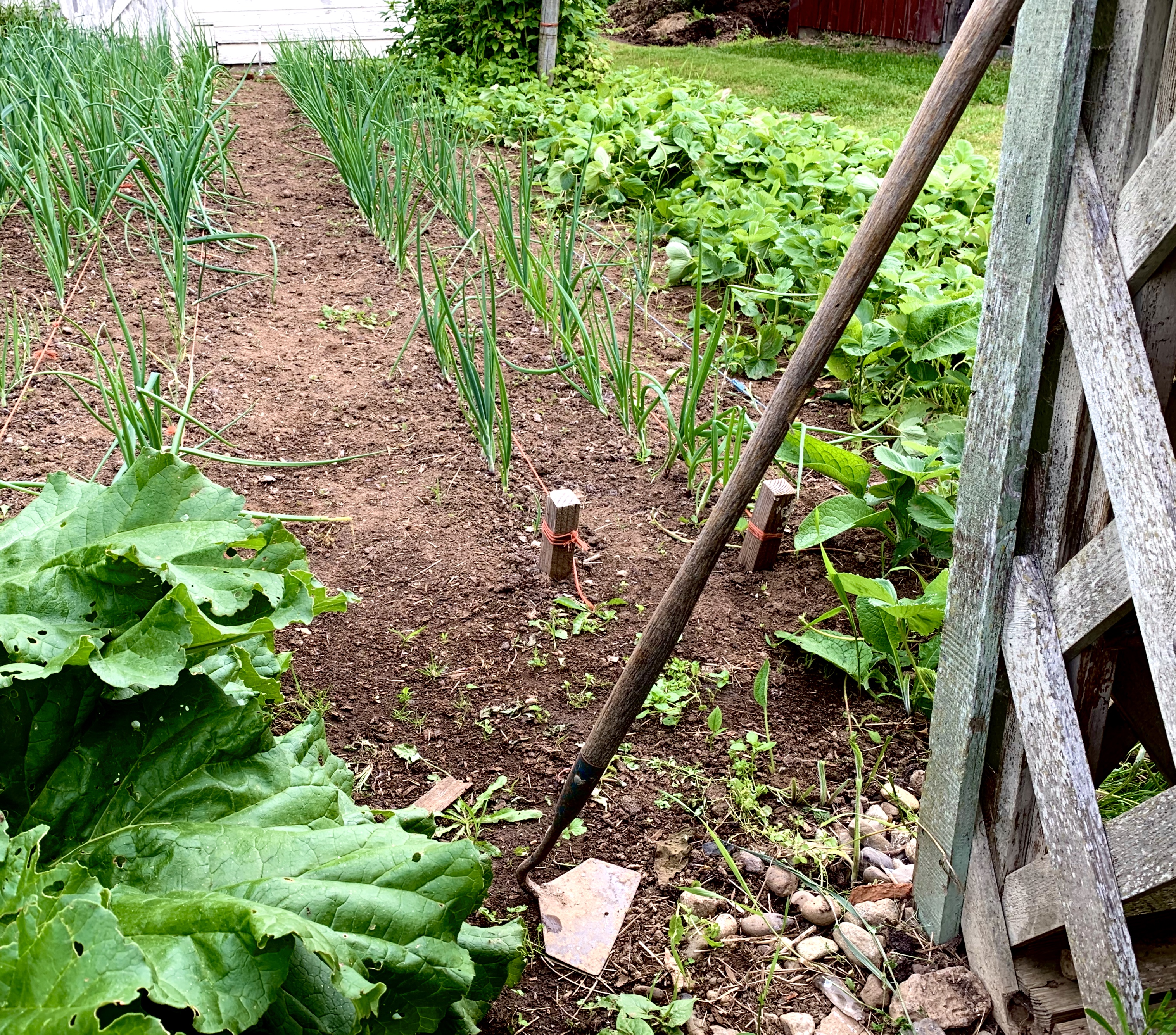
Even more unusual is taking time during the work day to talk. Interruptions leading to setting aside the computer mouse or the stethoscope or the hoe can be challenging when there are only so many hours in the day.

I’m really terrible at conversation because I’ve always been shy and awkward at small talk. It’s all good when it is part of my work in an exam room, but to be honest, I don’t make time to go out to coffee with someone, or meet over a meal, or even enjoy a spontaneous visit while out for a walk or the grocery store. I’d rather be washing dishes at our weekly church potlucks.

And I’m missing out on an opportunity to love and be loved. Forgive me, friends, for my reticent nature.

The next time someone shouts at me “Howdy!” – I won’t just wave and keep on with whatever business I’m doing. I’ll stop, set aside my work tools and come over to chat. Putting two heads together in conversation is what our life and language is all about

Howdy back at you!

One-Time
Monthly
Yearly

Make a one-time or recurring donation to support daily Barnstorming posts

Make a monthly donation

Make a yearly donation

Choose an amount

¤10.00
¤20.00
¤50.00
¤5.00
¤15.00
¤100.00
¤5.00
¤15.00
¤100.00

Or enter a custom amount

¤

Your contribution is deeply appreciated.

Your contribution is appreciated.

Your contribution is appreciated.

DonateDonate monthlyDonate yearly
Just Keep Going

In winter the steep lane
is often icy
one in four, and today
it brings me
to my hands and
dodgy knees

absurd under trees
tall as the sky
a mile or two to go

I crawl for a while
then scrabble
to my feet but stay low,

young old man
I stop at a dry
stone wall then step

up
atop
a stile

owl call
far city
constellation

then down
to a field
that might be snow

nothing to do
but keep going
~Peter Sansom “In Winter the Steep Lane”

When faced with navigating an icy path ahead of me, I am rendered helpless. An icy path on a slope is even more intimidating.

Our farm is located on a hill, which is wonderful 50+ weeks out of the year, but in winter during arctic wind flow days, plus rain or sleet, it becomes a skating rink on an incline. Even the best traction devices won’t keep me on my feet.

I’m thankful my husband has much better balance than I do, but even the last ice storm was even too much for him. We don’t have much choice but to slide and crawl to our barnyard destination to complete our chores. It is exceedingly humbling to be brought to our knees, but that has always been the best position for sorely needed prayer and petition.

We pray to keep our aging bones intact.
We pray to keep our backs and noggins functional.
We pray for the thaw to come soon.

Despite an unsure landing for each footstep, there is nothing to do but keep going.
So we do.

One-Time
Monthly
Yearly

Make a one-time or recurring donation to support daily Barnstorming posts

Make a monthly donation

Make a yearly donation

Choose an amount

¤10.00
¤20.00
¤50.00
¤5.00
¤15.00
¤100.00
¤5.00
¤15.00
¤100.00

Or enter a custom amount

¤

Your contribution is deeply appreciated.

Your contribution is appreciated.

Your contribution is appreciated.

DonateDonate monthlyDonate yearly
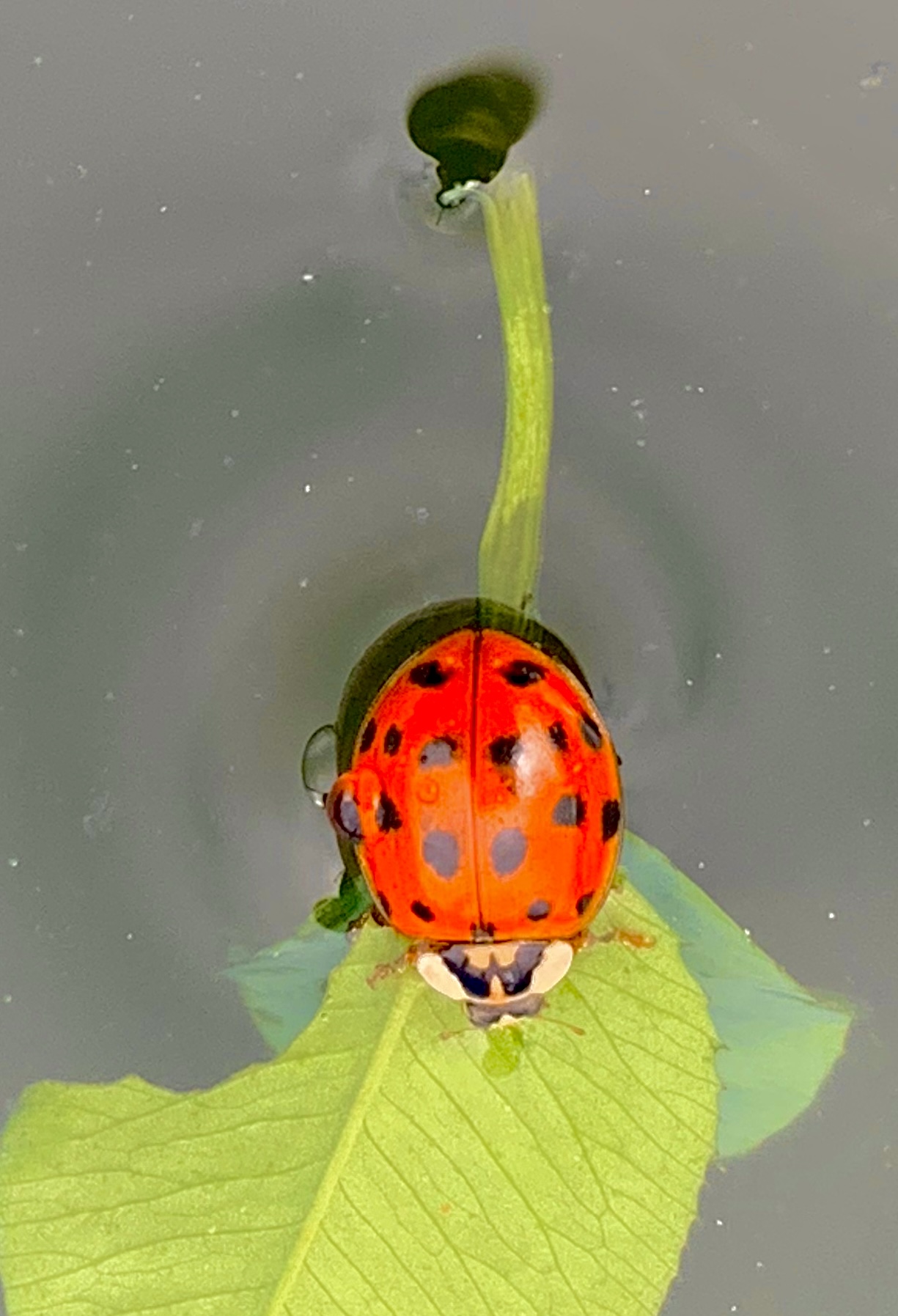
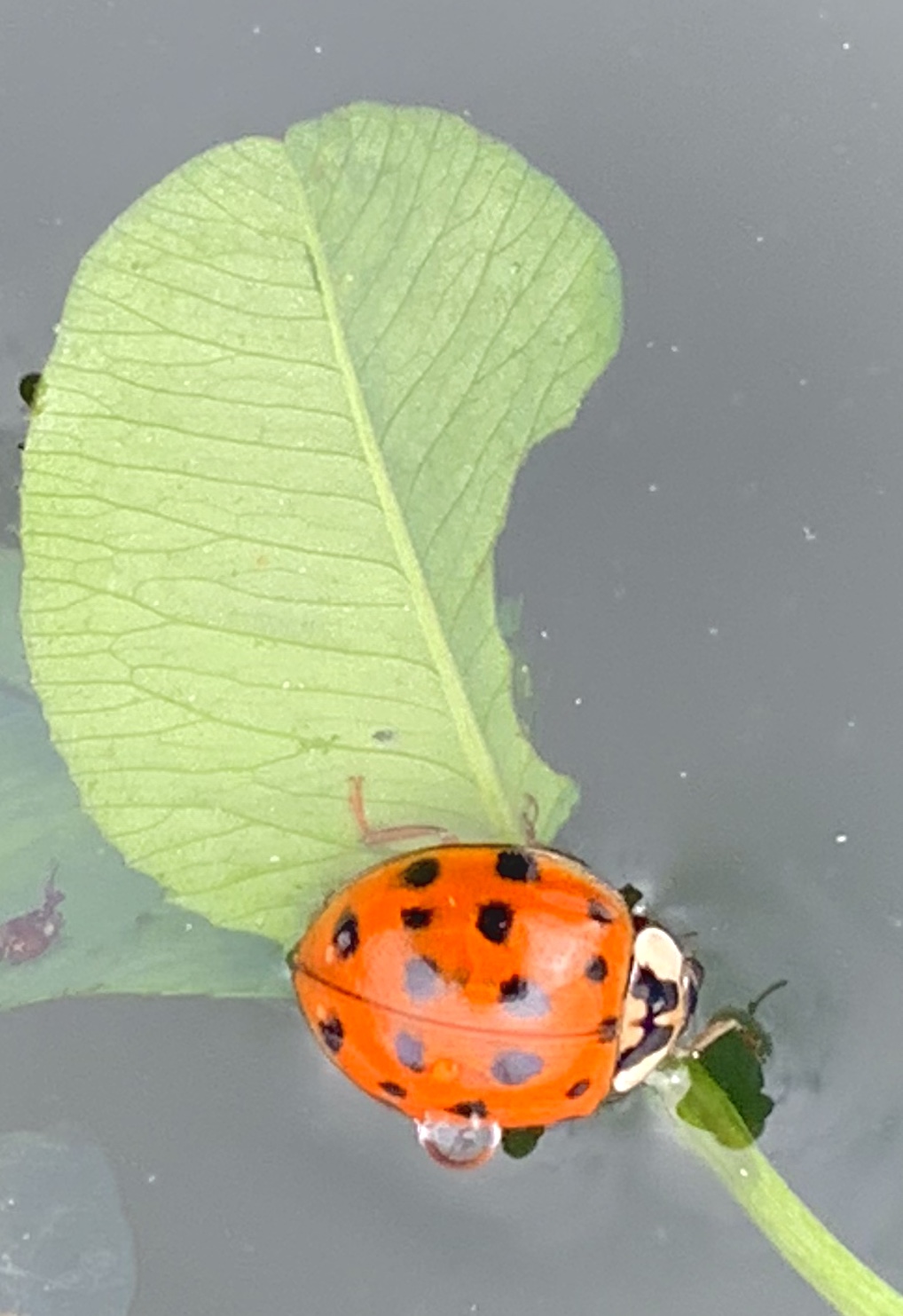
Lifted From the Water

I couldn’t let it drown. I ripped off a piece
of my sandwich bag, lifted it to safety.
Its little legs reached behind its back
to stroke its wings dry.
I, too, have stretched my legs
in strange positions. Is this a leap?
What did you expect? For me to let the bug
just be a bug. To leave it alone
when it already planned on dying.
To reach out and not imagine myself the God
I wish would lift me from the water.
~Daniella Toosie-Watson “The Bug”

You are not your own; you were bought at a price.
1 Corinthians 6: 19b-20a

There is a well known story with a number of variations, all involving a scorpion that stings a good-souled frog/turtle/crocodile/person who tries to rescue it from drowning. Since the sting dooms the rescuer and as a result the scorpion as well, the scorpion explains “to sting is in my nature”. In one version, the rescuer tries again and again to help the scorpion, repeatedly getting stung, only to explain before he dies “it may be in your nature to sting but it is in my nature to save.”

This is actually a story originating from Eastern religion and thought, the purpose of which is to illustrate the “dharma”, or orderly nature of things. The story ends perfectly for the Eastern religions believer even though both scorpion and the rescuer die in the end, as the dharma of the scorpion and of the rescuer is realized, no matter what the outcome. Things are what they are, without judgment, and actualization of that nature is the whole point.

However, this story only resonates for the Christian if the nature of the scorpion is forever transformed by the sacrifice of the rescuer on its behalf. The scorpion is no longer its own so no longer slave to its “nature” – no longer just a scorpion with a need and desire to sting whatever it sees. It has been “bought” through the sacrifice of the Rescuer. It no longer is “just” a bug, planning on drowning.

So we too are no longer our own,
no longer the helpless victim of our nature
no longer the stinger
no longer the stung
no longer who we used to be before we were rescued.

We are bought at a price beyond imagining.

And our nature to hurt, to punish, to sting, even to die – shall be no more.

Where, O death, is your victory? Where, O death, is your sting?
1 Corinthians 15: 55

One-Time
Monthly
Yearly

Make a one-time or recurring donation

Make a monthly donation

Make a yearly donation

Choose an amount

¤10.00
¤20.00
¤50.00
¤5.00
¤15.00
¤100.00
¤5.00
¤15.00
¤100.00

Or enter a custom amount

¤

Your contribution is deeply appreciated.

Your contribution is appreciated.

Your contribution is appreciated.

DonateDonate monthlyDonate yearly
A New Definition of Greatness

…if I respond to hate with a reciprocal hate I do nothing but intensify the cleavage in broken community. I can only close the gap in broken community by meeting hate with love. If I meet hate with hate, I become depersonalized, because creation is so designed that my personality can only be fulfilled in the context of community.
Booker T. Washington was right: “Let no man pull you so low as to make you hate him.”

~Martin Luther King, Jr.

As nightfall does not come at once, neither does oppression.
In both instances, there is a twilight when everything remains seemingly unchanged.
And it is in such twilight that we all must be most aware of change in the air
– however slight – lest we become unwitting victims of the darkness.
~William O. Douglas
from The Douglas Letters

Be careful whom you choose to hate.
The small and the vulnerable own a protection great enough,
if you could but see it,
to melt you into jelly.

~Leif Enger from Peace Like a River

We have a new definition of greatness:
it means that everybody can be great, because everybody can serve. 
You don’t have to have a college degree to serve. 
You don’t have to make your subject and your verb agree to serve. 
You don’t have to know about Plato and Aristotle to serve. 
You don’t have to know Einstein’s theory of relativity to serve. 
You don’t have to know the second theory of thermodynamics in physics to serve. 
You only need a heart full of grace, a soul generated by love. 
And you can be that servant.
~Martin Luther King, Jr.  in a February 1968 sermon:  “The Drum Major Instinct” from A Knock At Midnight: Inspiration from the Great Sermons of Reverend Martin Luther King, Jr.

Dr. King’s words and wisdom in his sermons spoken over sixty years ago continue to inform us of our shortcomings as we flounder in flaws and brokenness. To often we resist considering others before ourselves, to serve one another out of humility, grace and love.

Today we unite in shared tears:
shed for continued strife and disagreements,
shed for the injustice that results in senseless emotional and physical violence,
shed for our inability to hold up one another as a holy in God’s eyes.

We weep together as the light dawns today, knowing, as Dr. King knew, a new day will come when the Lord God wipes the tears away from the remarkable and beautiful faces of all people — as all are created in His image.

Naming Your Hopelessness

Instead of depression,
try calling it hibernation.
Imagine the darkness is a cave
in which you will be nurtured
by doing absolutely nothing.
Hibernating animals don’t even dream.
It’s okay if you can’t imagine
Spring. Sleep through the alarm
of the world. Name your hopelessness
a quiet hollow, a place you go
to heal, a den you dug,
Sweetheart, instead
of a grave.
~Andrea Gibson “Instead of Depression” from You Better Be Lightning

We didn’t say fireflies
but lightning bugs.
We didn’t say carousel
but merry-go-round.
Not seesaw,
teeter-totter
not lollipop,
sucker.
We didn’t say pasta, but
spaghetti, macaroni, noodles:
the three kinds.
We didn’t get angry:
we got mad.
And we never felt depressed
dismayed, disappointed
disheartened, discouraged
disillusioned or anything,
even unhappy:
just sad.
~Sally Fisher “Where I Come From”  from Good Question.

…if you could distinguish finer meanings within “Awesome” (happy, content, thrilled, relaxed, joyful, hopeful, inspired, prideful, adoring, grateful, blissful.. .), and fifty shades of “Crappy” (angry, aggravated, alarmed, spiteful, grumpy, remorseful, gloomy, mortified, uneasy, dread-ridden, resentful, afraid, envious, woeful, melancholy.. .), your brain would have many more options for predicting, categorizing, and perceiving emotion, providing you with the tools for more flexible and functional responses.
~Lisa Feldman Barrett from How Emotions Are Made: The Secret Life of the Brain

Our own experience with loneliness, depression, and fear can become a gift for others, especially when we have received good care. As long as our wounds are open and bleeding, we scare others away. But after someone has carefully tended to our wounds, they no longer frighten us or others….
We have to trust that our own bandaged wounds will allow us to listen to others with our whole being. That is healing.
— Henri Nouwen from Bread for the Journey

If there is anything I came to understand over the decades I served as a primary care physician, it is that every person experiences painful emotions that make them miserable, making it even more difficult to share with others. Sometimes those feelings build up such pressure that they leak out of our cells as physical symptoms: headaches, muscle tightness, stomach upset, hypertension. Other times they are so overwhelming we can no longer function in a day to day way – described clinically as rage, panic, mood disorder, depression, self-destructive, suicidal.

Somehow we’ve lost permission to be sad.
Just sad. Sometimes unbearably, hopelessly sad.
 
Sadness happens to us all, some longer than others, some worse than others, some deeper than others. What makes sadness more real and more manageable is if we can say it out loud — whatever ‘sad’ means to us on a given day and if we describe our feelings in detail, explaining to others who can understand because they’ve been there too, then they can listen and help.

Painful emotions don’t always need a “fix” in the short term, particularly chemical, but that is why I was usually consulted. Alcohol, marijuana and other self-administered drugs tend to be the temporary anesthesia that people seek to stop feeling anything at all but it can erupt even stronger later.

Sometimes an overwhelming feeling just needs an outlet so it no longer is locked up, unspoken and silent, threatening to leak out in ways that tear us up and pull us apart.

Sometimes we need a healing respite/hibernation, with permission to sleep through the world’s alarms for a time. At times, medical management with antidepressants can be incredibly helpful along with talk therapy.

It helps to find words to express how things felt before this sadness, where you are now in the midst of it and where you wish you could be rather than being swallowed by sorrow. Healing takes time and like anything else that is broken, it hurts as it repairs. Armed with that self-knowledge and some gentle compassion, tomorrow and the next day and the next might feel a little less hopeless and overwhelming.

One-Time
Monthly
Yearly

Make a one-time or recurring donation to support daily Barnstorming posts

Make a monthly donation

Make a yearly donation

Choose an amount

¤10.00
¤20.00
¤50.00
¤5.00
¤15.00
¤100.00
¤5.00
¤15.00
¤100.00

Or enter a custom amount

¤

Your contribution is deeply appreciated.

Your contribution is appreciated.

Your contribution is appreciated.

DonateDonate monthlyDonate yearly

Immortal Flowers

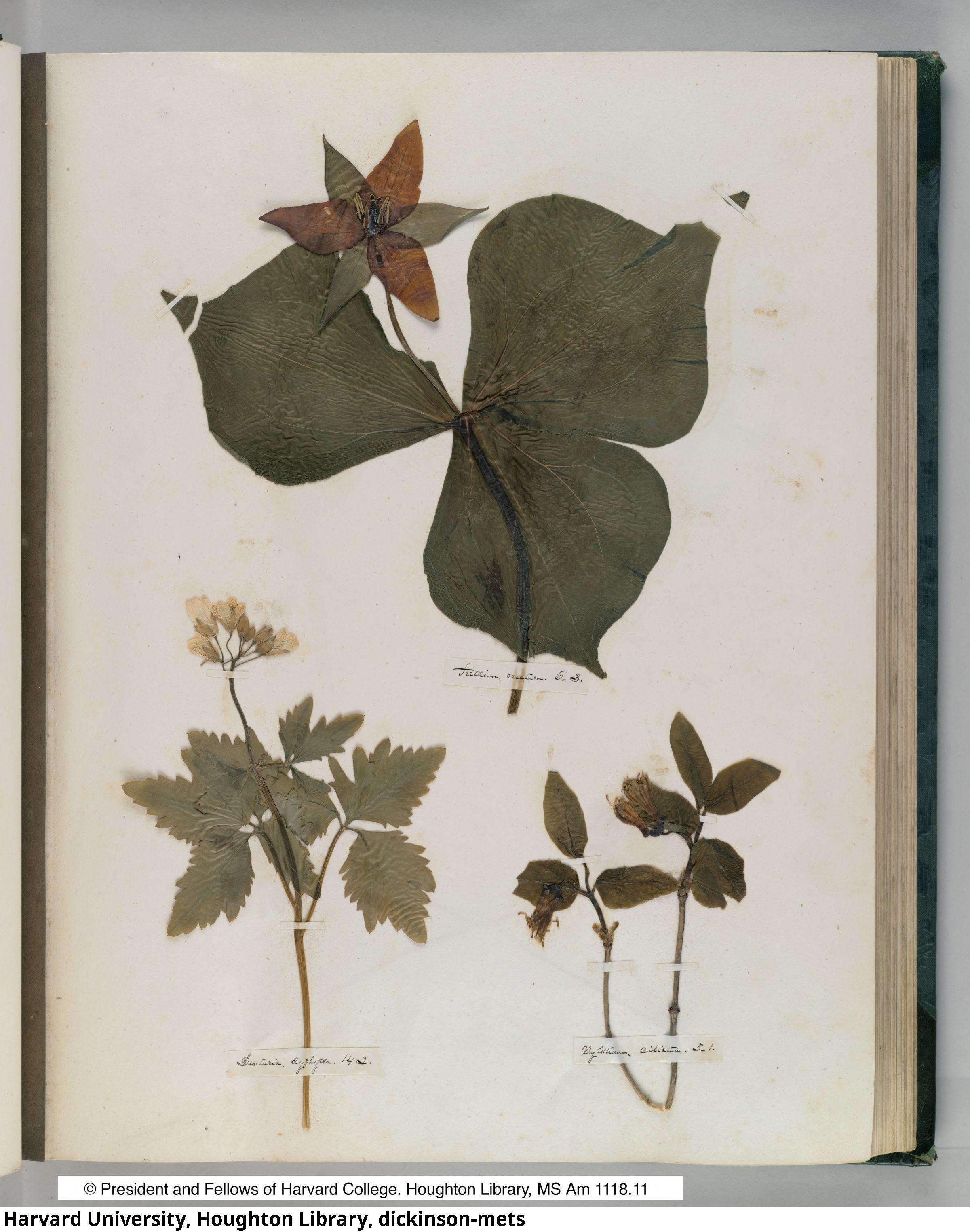
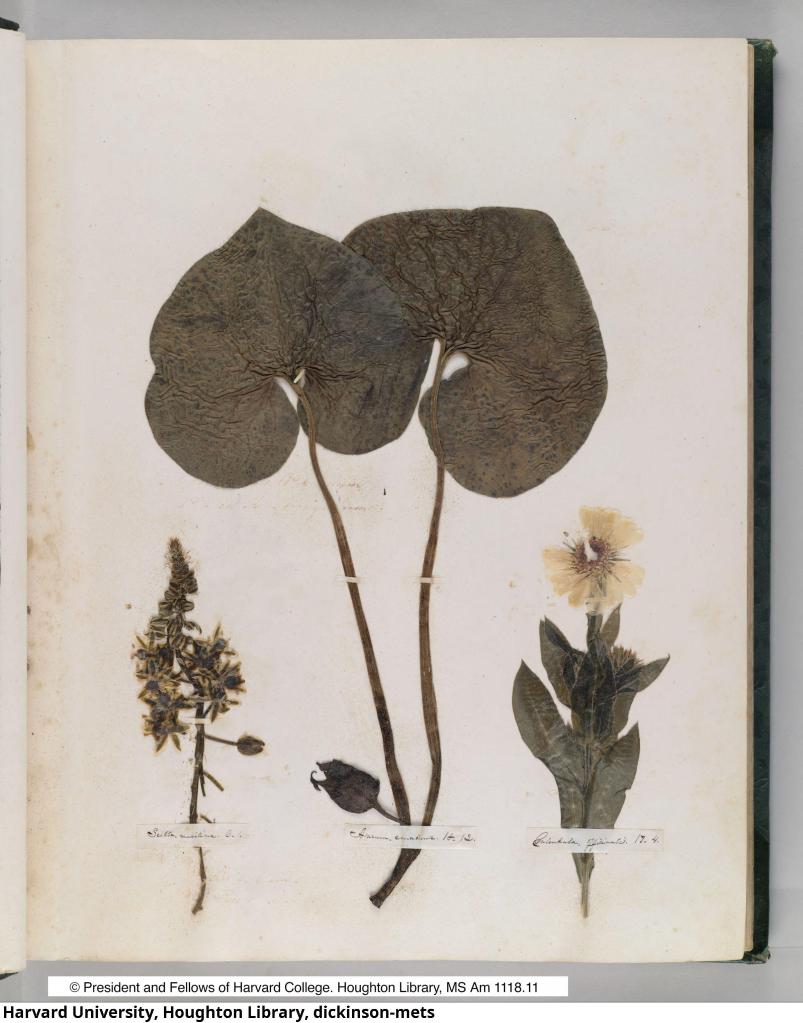
“Did you ever know that a flower, once withered and freshened again, becomes an immortal flower, – that is, that it rises again?”
~Emily Dickinson in a letter to a friend

Emily Dickinson Herbarium – preservation of trillium

Emily Dickinson herbarium- preservation of wild ginger (asarum)

While I was fearing it, it came—
But came with less of fear
Because that fearing it so long
Had almost made it fair—

There is a Fitting—a Dismay—
A Fitting—a Despair
’Tis harder knowing it is Due
Than knowing it is Here.

The Trying on the Utmost
The Morning it is new
Is Terribler than wearing it
A whole existence through.

~Emily Dickinson

Over a decade ago, as I was going through my mother’s boxed-up possessions after her death, I found the 1956 Webster’s New Dictionary of the Twentieth Century that I grew up with. This book was massive, easily weighing 10 pounds, and served as a booster seat for haircuts, a step stool for trying to reach the cookie jar on the kitchen cupboard, and of course, for looking up any obscure word that ever existed in all of history. Or so it seemed.

It was an amazing tome. And as I flipped through the pages, I found some old familiar friends that were neither black nor white nor read all over. They had survived over half a century.

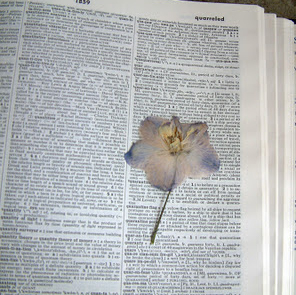
Wildflowers had been carefully pressed between the pages–over two dozen specimens paper thin themselves, their existence squeezed into two dimensions–still showing faint pink or blue, or purple color, almost exuding a long ago fragrance from a summer over fifty years ago. As a child I regularly wandered out to our fields and woods to gather crimson clover blossoms, buttercup, dandelions, daisies, wild violets, wild ginger, calypso lady slippers for bouquets for my mother, and she would select the most perfect to slide between the pages of the dictionary. Occasionally she would pull one out to gently paste on a hand written card she sent to a friend.

Here were my perfect flowers, preserved and pressed for time, just waiting for the senior-citizen me to rediscover them lying between wonderful words that I love to roll in my mouth and type on a page. They are too fragile to paste to a greeting card, or even to handle due to their brittleness. They need to stay right where they are, for another generation or two or three to discover.

As a child, I was always very worried about losing my parents, fearing their death would be the end of me as well. But as Emily Dickinson writes “fearing it so long/Had almost made it fair” – as an adult, I was more prepared for the day each parted from this life. As the poet suggests, fearing it for years was much harder than the acceptance when that time had come.

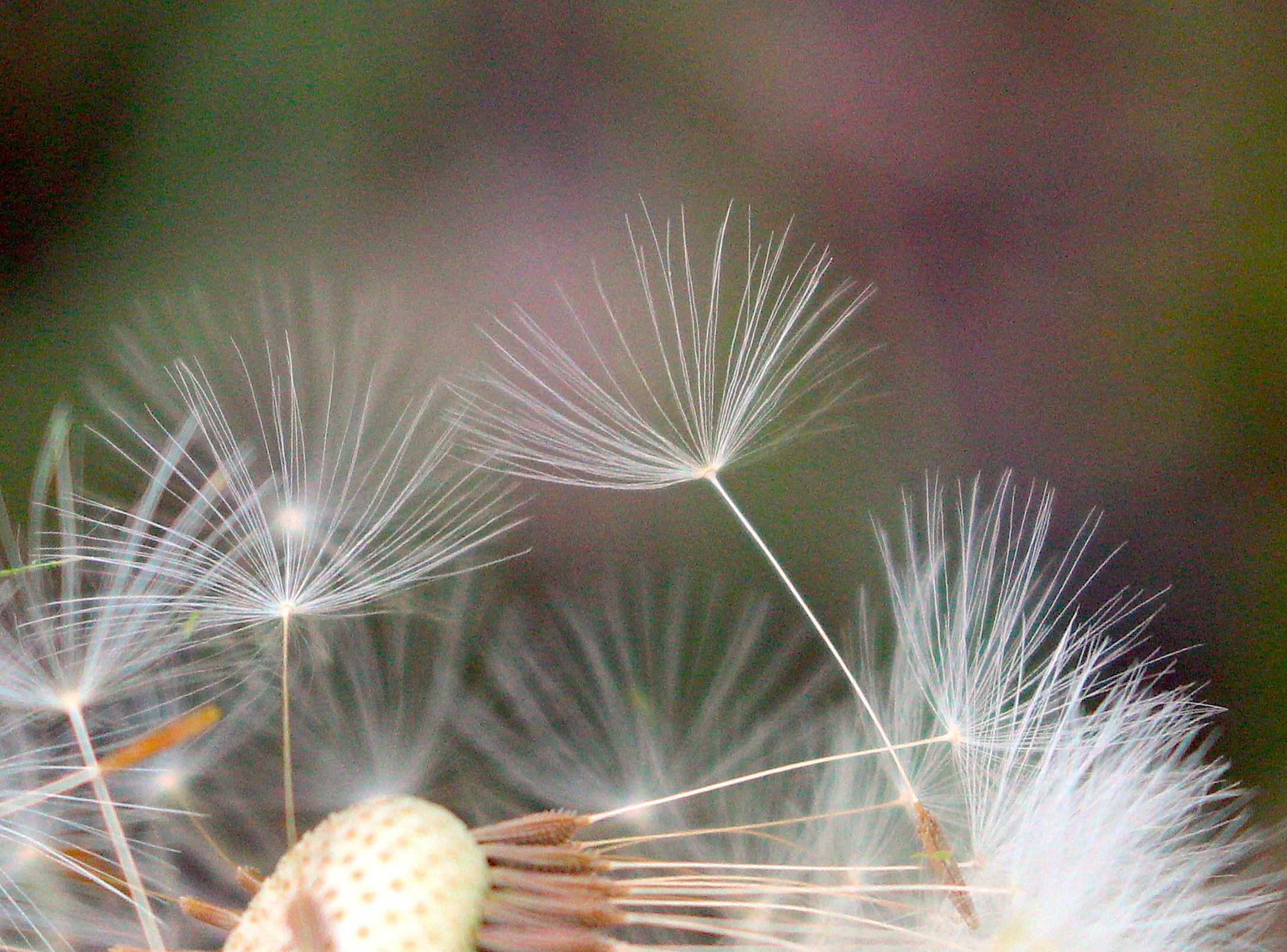
Now I too am pressed for time, fading and more fragile, perhaps more brittle than I care to admit. My mother and father have blown away like the puff ball seeds of the dandelion, on to other horizons, but the sturdy old dictionary is going nowhere. It will be passed down, its delicate passengers preserved inside from a long-ago-far-away summer afternoon of flower gathering. They will be shared as a great grandchild opens the book to look up a favorite word sometime in the not-so-far-off future.

One-Time
Monthly
Yearly

Make a one-time or recurring donation to support daily Barnstorming posts

Make a monthly donation

Make a yearly donation

Choose an amount

¤10.00
¤20.00
¤50.00
¤5.00
¤15.00
¤100.00
¤5.00
¤15.00
¤100.00

Or enter a custom amount

¤

Your contribution is deeply appreciated.

Your contribution is appreciated.

Your contribution is appreciated.

DonateDonate monthlyDonate yearly
Thanks to Blowing Snow

May the wind always be in her hair
May the sky always be wide with hope above her
And may all the hills be an exhilaration
the trials but a trail,
all the stones but stairs to God.

May she be bread and feed many with her life and her laughter
May she be thread and mend brokenness and knit hearts…
~Ann Voskamp from “A Prayer for a Daughter”

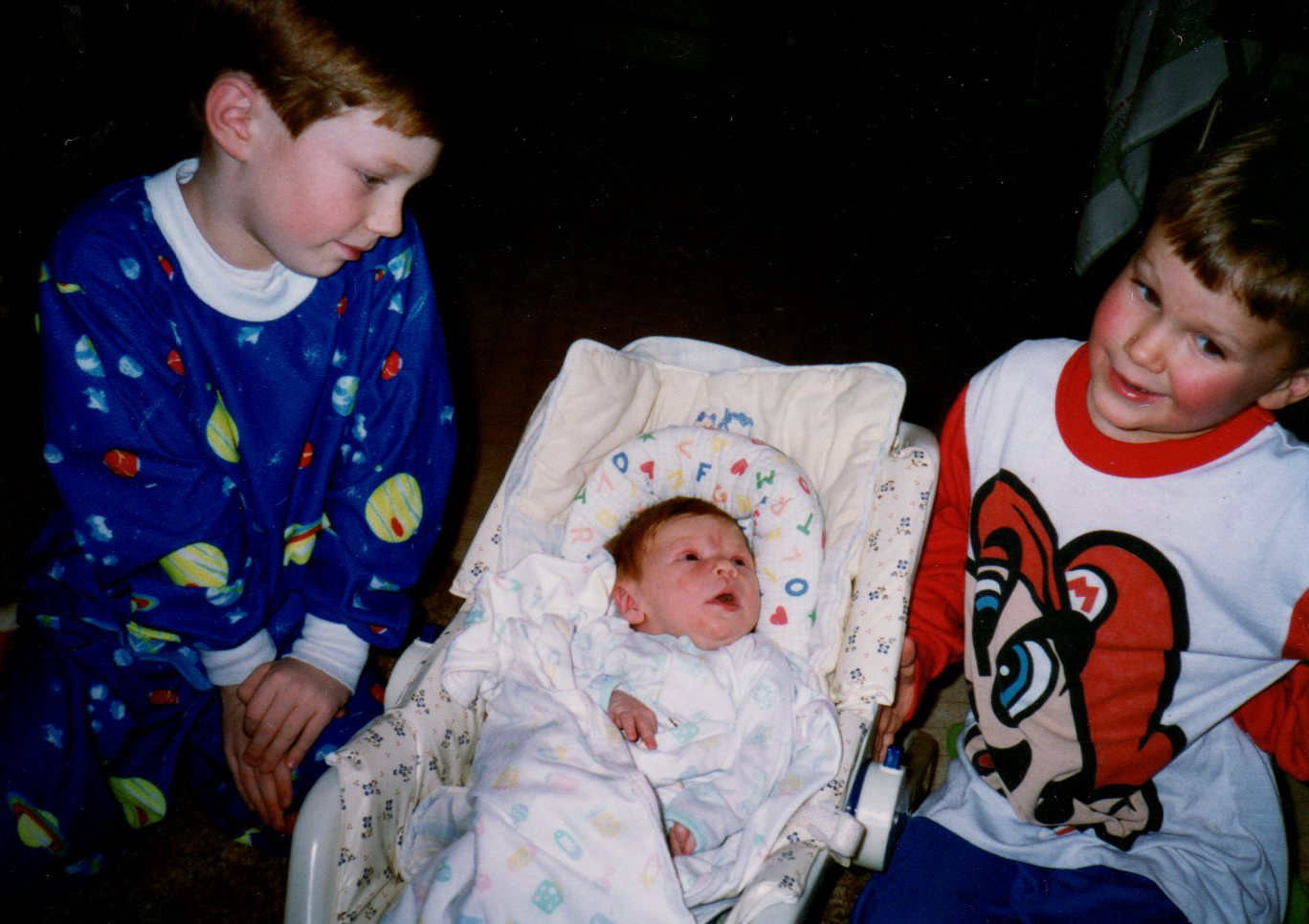
Nate and Ben and brand new baby Lea
Daddy and Lea
Mommy and Lea

“I have noticed,” she said slowly, “that time does not really exist for mothers, with regard to their children. It does not matter greatly how old the child is – in the blink of an eye, the mother can see the child again as she was when she was born, when she learned to walk, as she was at any age — at any time, even when the child is fully grown….”
~Diana Gabaldon from Voyager

Just checking to see if she is real…

Your rolling and stretching had grown quieter that stormy winter night
thirty years ago, but still no labor came as it should.
Already a week overdue post-Christmas,
you clung to amnion and womb, not yet ready.
Then as the wind blew more wicked
and snow flew sideways, landing in piling drifts,
the roads became more impassable, nearly impossible to traverse.

So your dad and I tried,
concerned about your stillness and my advanced age,
worried about being stranded on the farm far from town.
When a neighbor came to stay with your brothers overnight,
we headed down the road
and our car got stuck in a snowpile in the deep darkness,
our tires spinning, whining against the snow.
Another neighbor’s earth mover dug us out to freedom.

You floated silent and still, knowing your time was not yet.

Creeping slowly through the dark night blizzard,
we arrived to the warm glow of the hospital,
your heartbeat checked out steady, all seemed fine.

I slept not at all.

The morning’s sun glistened off sculptured snow as
your heart ominously slowed.
You and I were jostled, turned, oxygenated, but nothing changed.
You beat even more slowly,
threatening to let go your tenuous grip on life.

The nurses’ eyes told me we had trouble.
The doctor, grim faced, announced
delivery must happen quickly,
taking you now, hoping we were not too late.
I was rolled, numbed, stunned,
clasping your father’s hand, closing my eyes,
not wanting to see the bustle around me,
trying not to hear the shouted orders,
the tension in the voices,
the quiet at the moment of opening
when it was unknown what would be found.

And then you cried. A hearty healthy husky cry,
a welcomed song of life uninterrupted.
Perturbed and disturbed from the warmth of womb,
to the cold shock of a bright lit operating room,
your first vocal solo brought applause
from the surrounding audience who admired your purplish pink skin,
your shock of damp red hair, your blue eyes squeezed tight,
then blinking open, wondering and wondrous,
emerging and saved from a storm within and without.

You were brought wrapped for me to see and touch
before you were whisked away to be checked over thoroughly,
your father trailing behind the parade to the nursery.
I closed my eyes, swirling in a brain blizzard of what-ifs.

If no snow storm had come,
you would have fallen asleep forever within my womb,
no longer nurtured by my aging and failing placenta,
cut off from what you needed to stay alive.
There would have been only our soft weeping,
knowing what could have been if we had only known,
if God had provided a sign to go for help.

So you were saved by a providential storm
and dug out from a drift:
I celebrate when I hear your voice singing-
your students love you as their teacher and mentor,
you are a thread born to knit and mend hearts,
all because of a night of blowing snow.

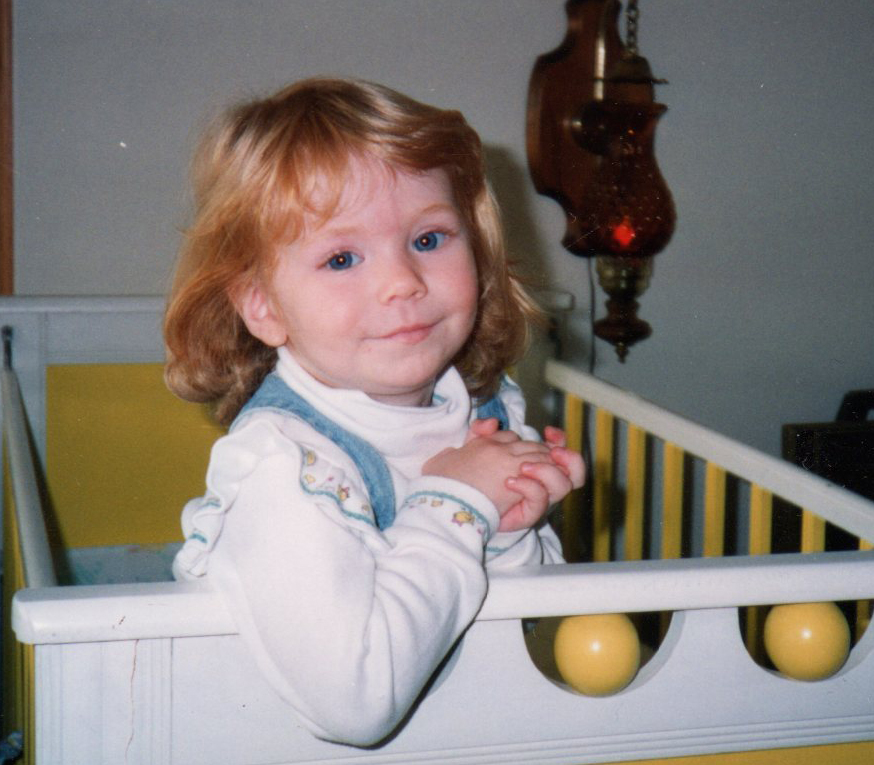
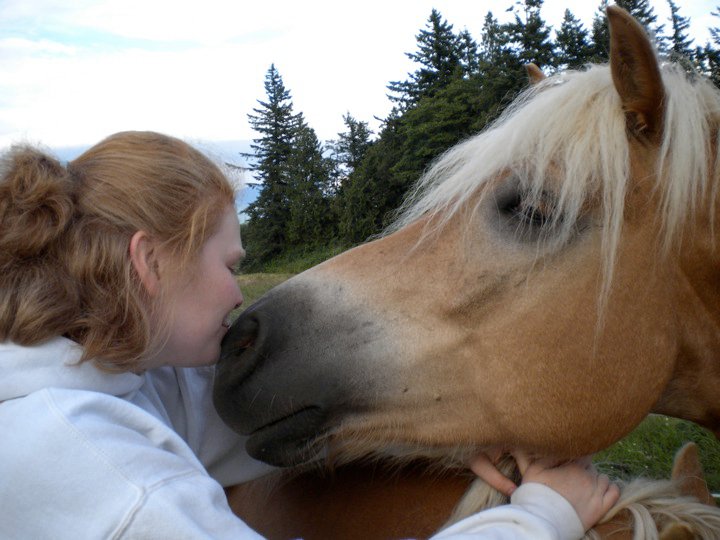
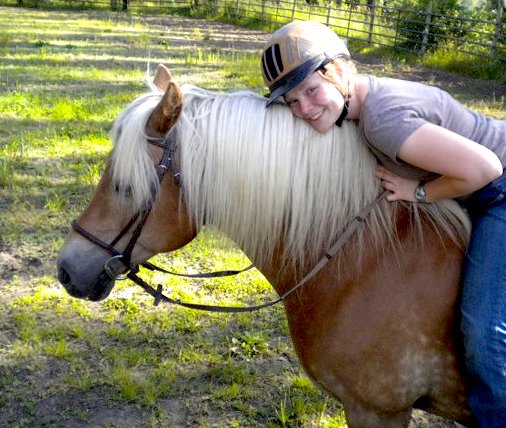
My annual retelling of the most remarkable day of my life thirty years ago today when our daughter Eleanor (“Lea”) Sarah Gibson was born, hale and hearty because the good Lord sent a wind and snow storm to blow us into the hospital in time to save her. She is now married to her true love Brian–another gift sent from the Lord; we know you will be awesome parents when your turn comes!

Keeping Watch in the New Year

The object of a New Year is not that we should have a new year. It is that we should have a new soul and a new nose; new feet, a new backbone, new ears, and new eyes. Unless a man starts afresh about things, he will certainly do nothing effective. 
~G.K.Chesterton “A Chesterton Calendar”

All days are sacred days to wake
New gladness in the sunny air.
Only a night from old to new;
Only a sleep from night to morn.
The new is but the old come true;
Each sunrise sees a new year born.
~Helen Hunt Jackson from “New Year’s Morning”

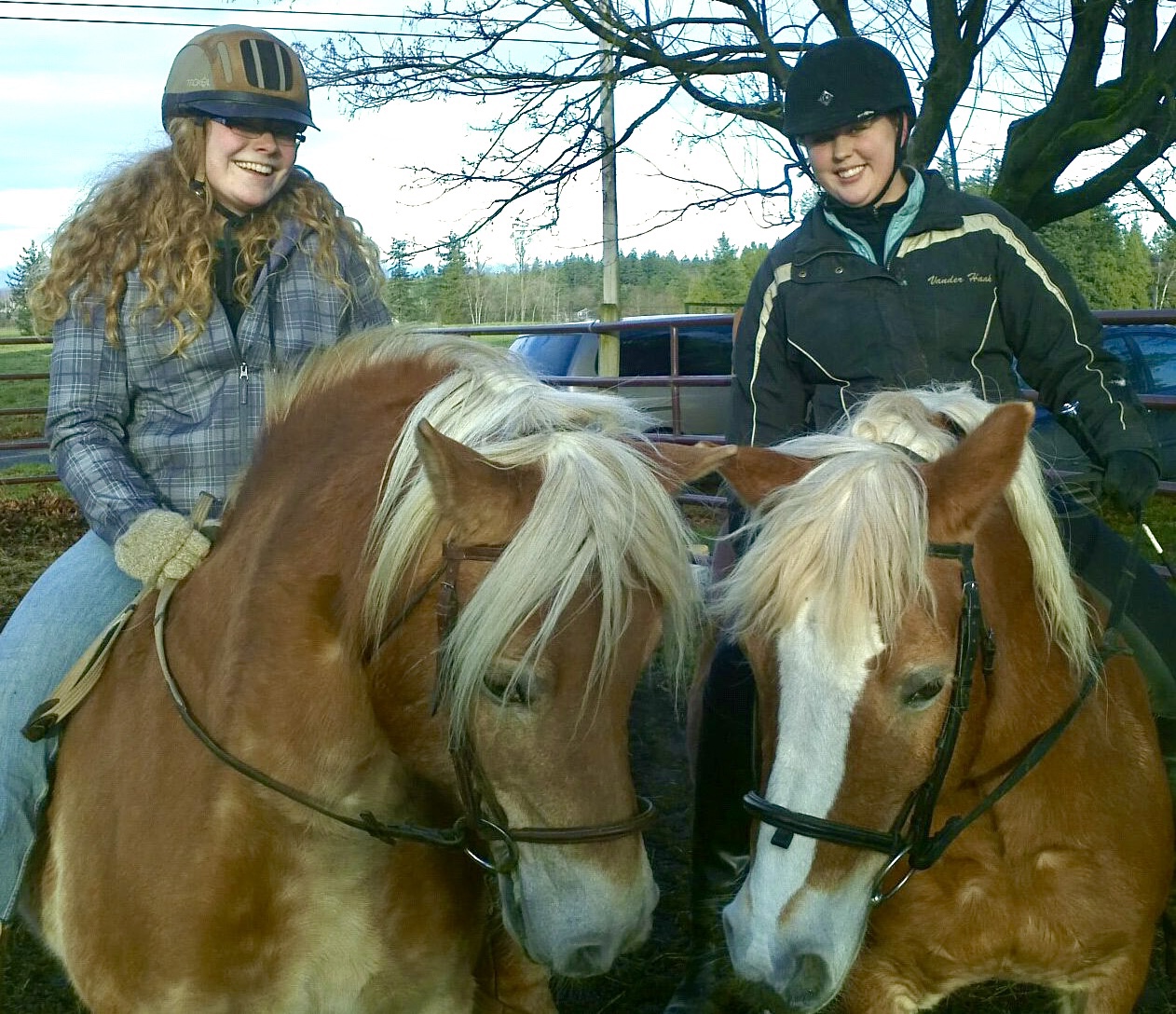
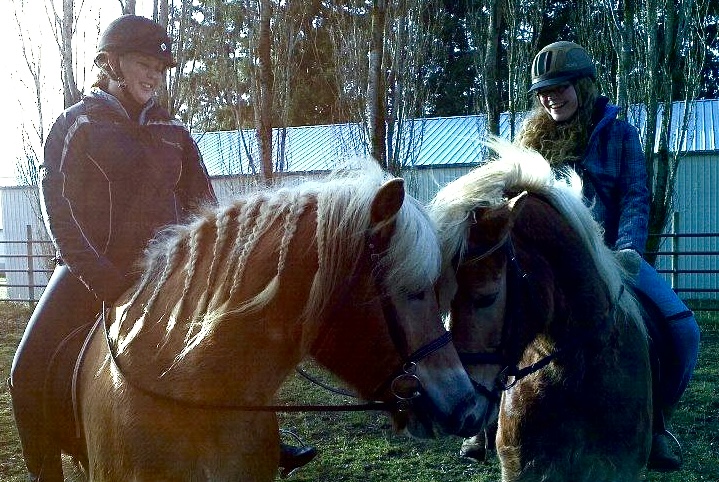
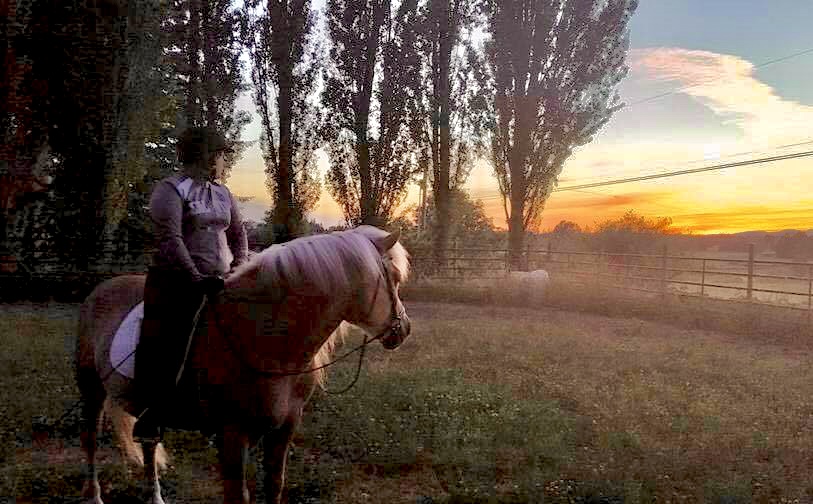
On this New Year’s Day, I resolve to adopt better coping skills based on observing my horses’ adaptation to change.

As a horse keeper, I know how important a predictable routine is to my animals. They thrive on a schedule, with meal times at the same time every day and familiar people feeding and handling them. But it doesn’t always work out to keep things comfortably identical day to day.

Some days I have to feed early before the sun is up, so I’m flipping lights on in the barn when it is still night outside. The horses blink in their adjustment to the sudden light, leaping up from their shavings beds to shake off the sawdust remnants that cling to their coats. Some days I don’t get out to the barn quite when I’m expected, and I can hear them bouncing their empty water buckets and knocking the sides of their stalls with their hoofs, declaring their impatience at my tardiness.

On the days when the weather is terribly windy, wet and cold, the routine of going outside for the day is changed, and the horses must adapt to a day inside their stalls.  After several days of establishing their indoor routine, the weather brightens and they are able to go back outside again. I vary their stalls so they become used to going in and out of any stall I ask them to use. I vary the walk to their outdoor enclosure as much as I’m able, to get them accustomed to a new path with unfamiliar sights, sounds and smells, and to trust me that I will get them safely to their destination even if it isn’t the way we took yesterday.

And I expect obedience even if things aren’t the same. Sometimes there is a subtle change in the scenery that I haven’t noticed but the horses always do. If something is a bit out of place from the previous day, or there is something new that wasn’t there before, the horse I’m leading often stops, gives a soft snort, and takes in the new configuration, trying to absorb it and accept it. Once settled, then the horse will move on, satisfied that all is well, even if everything is not the same.

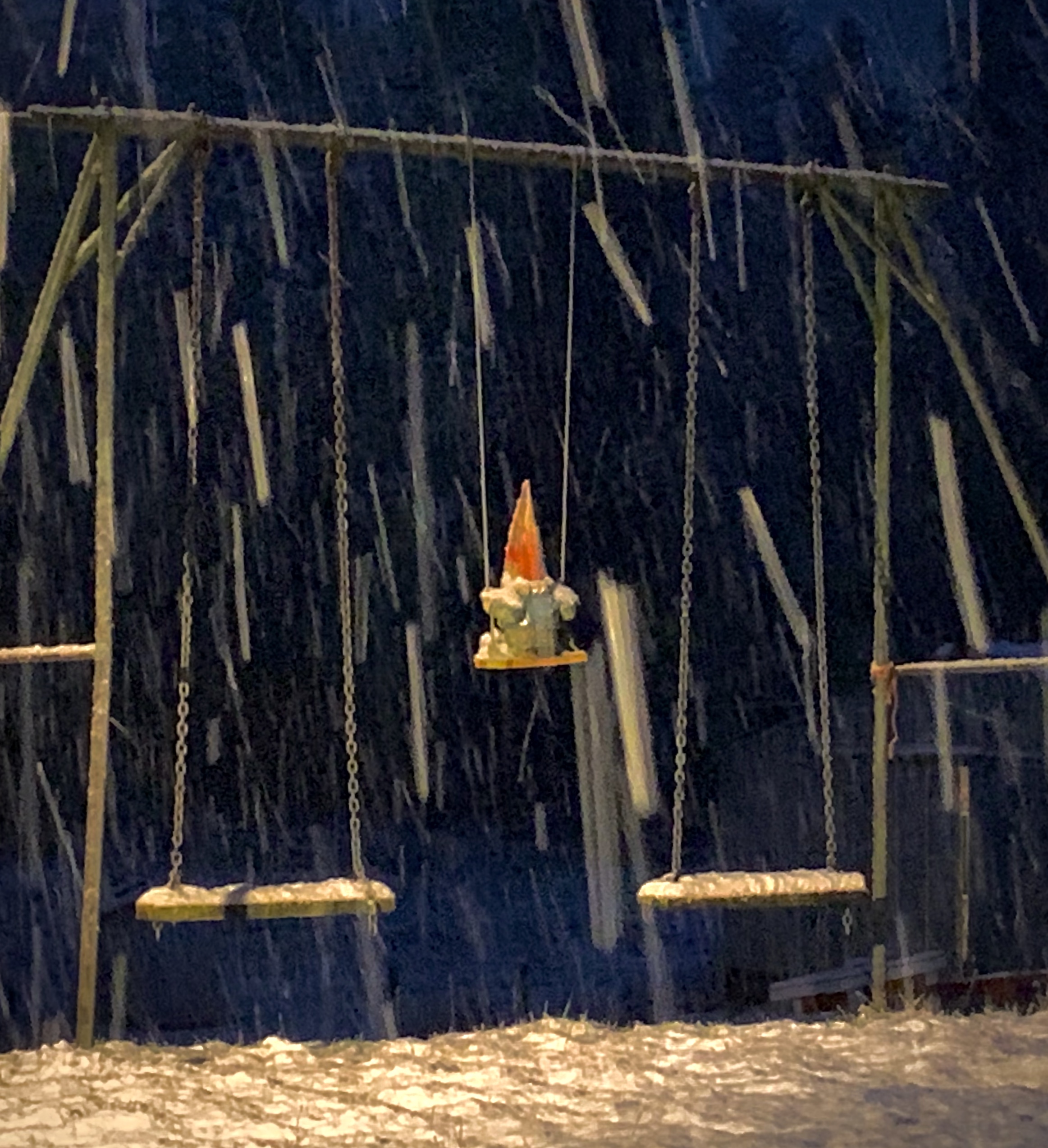
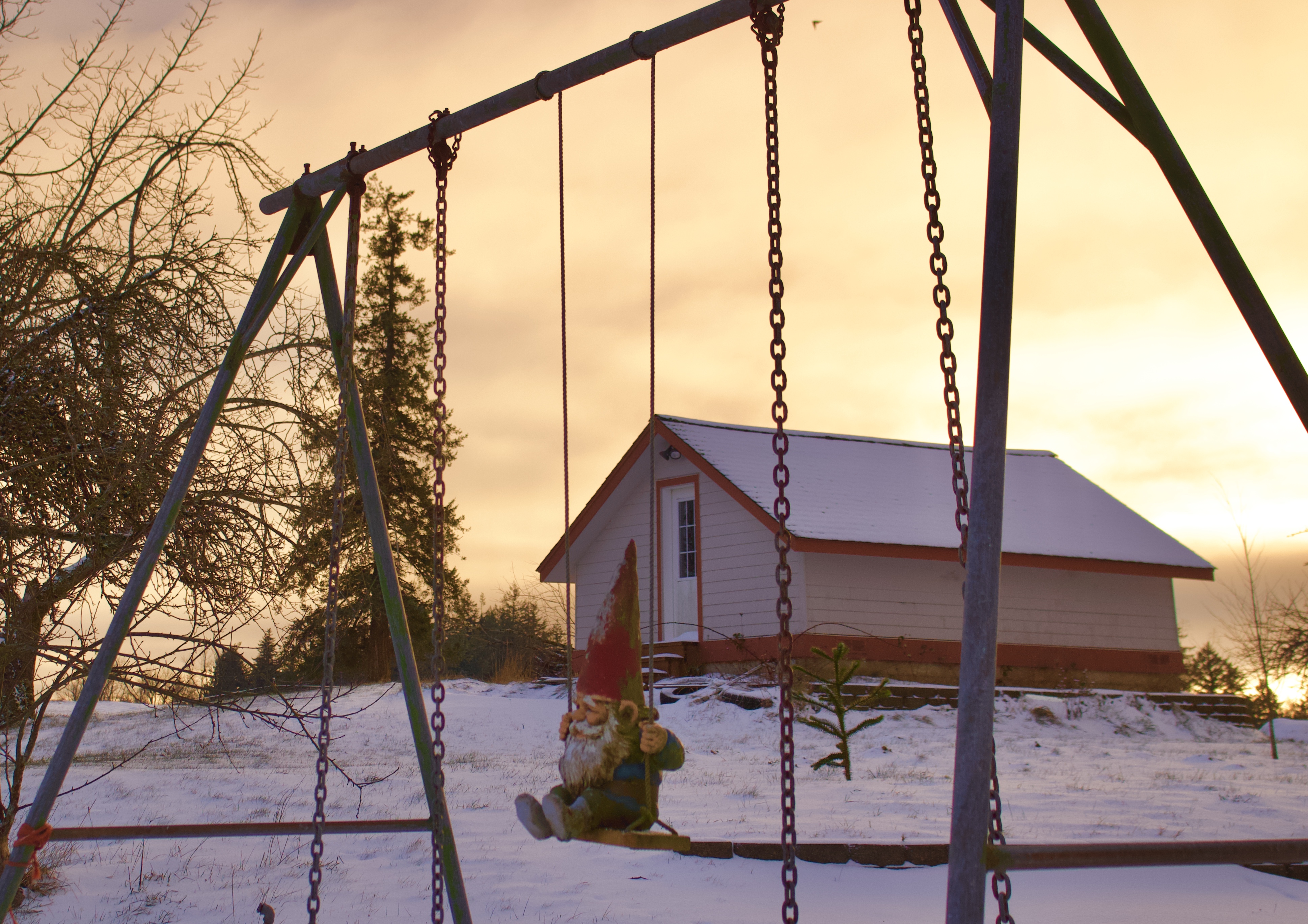
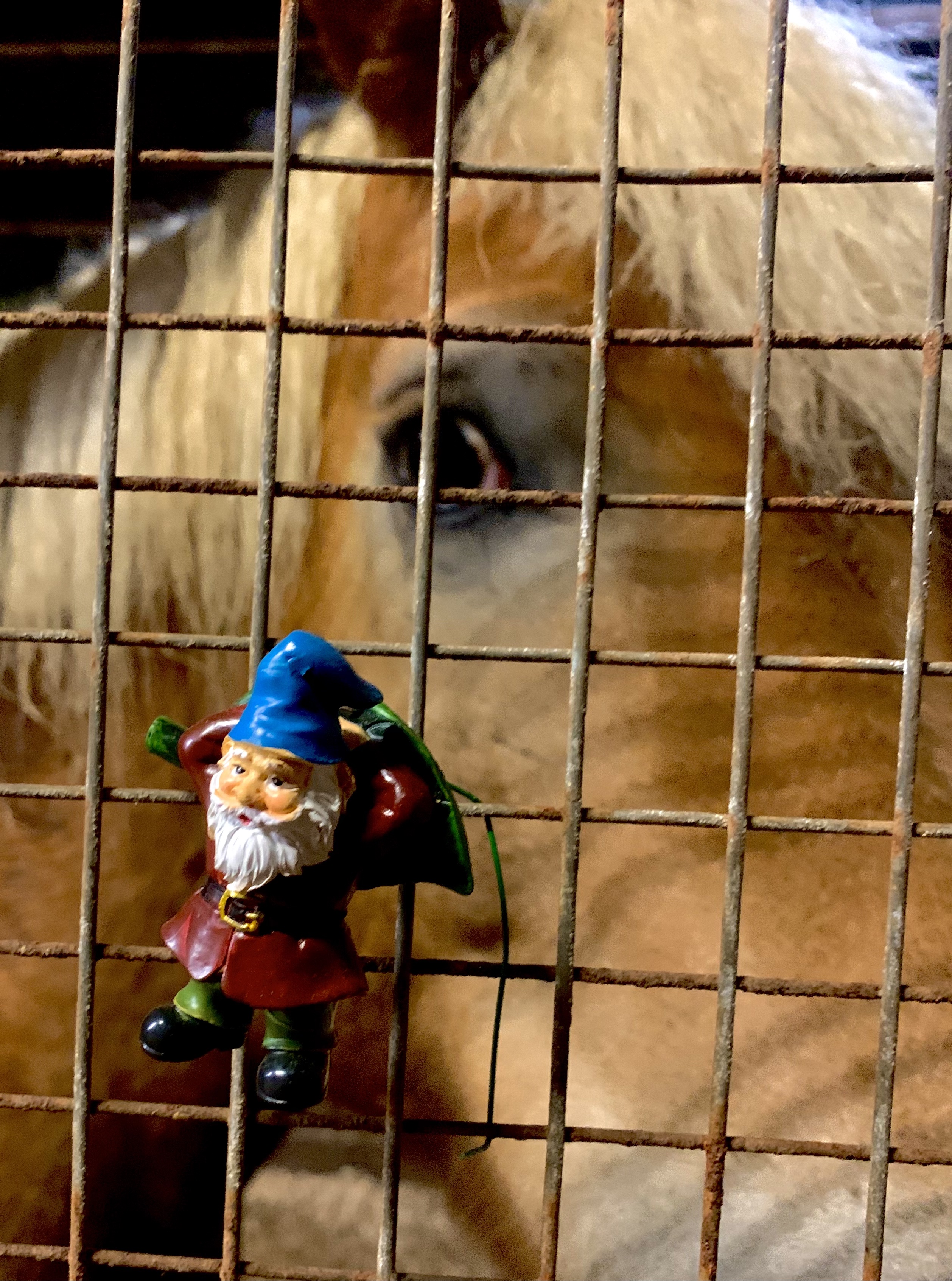
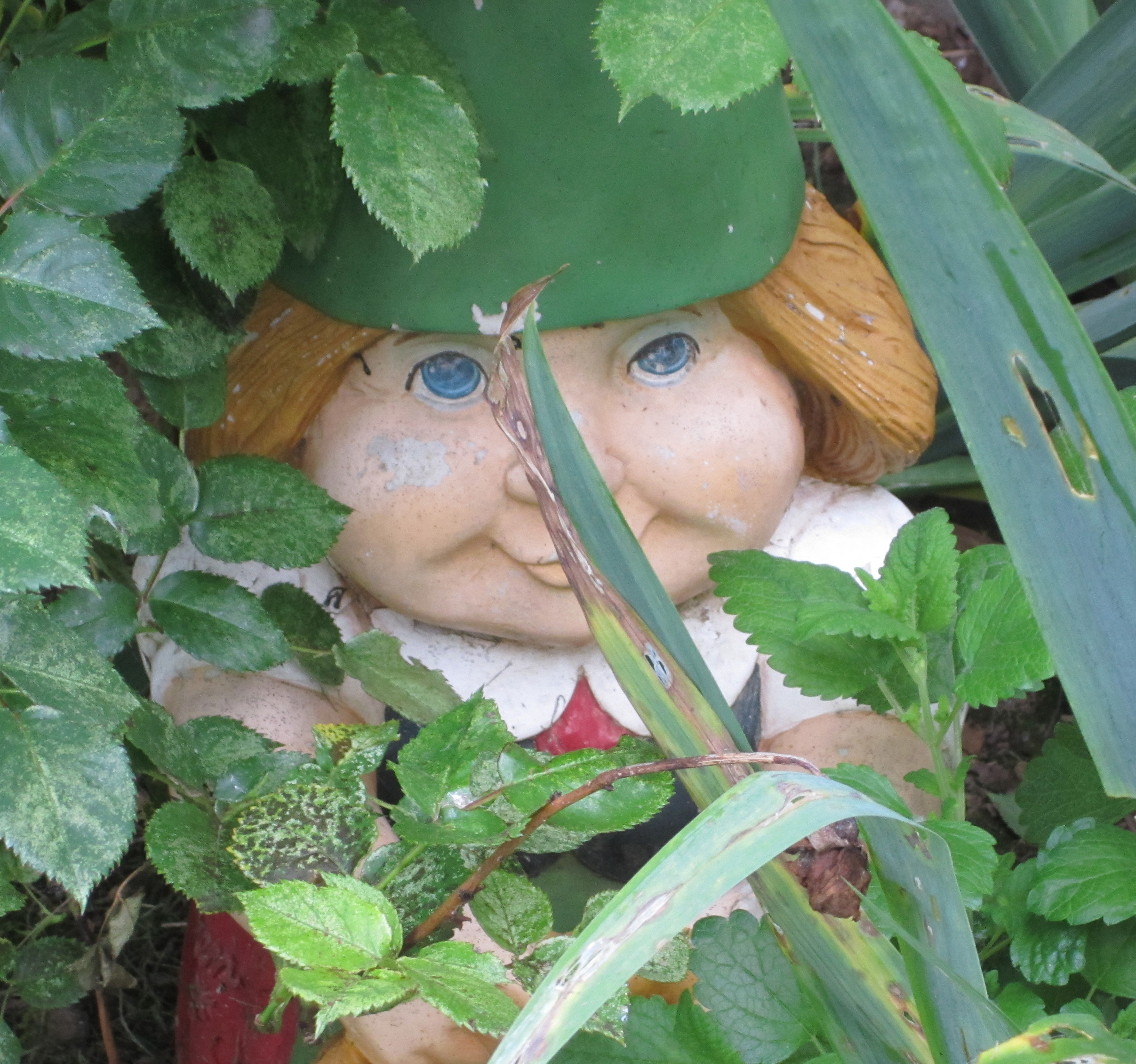
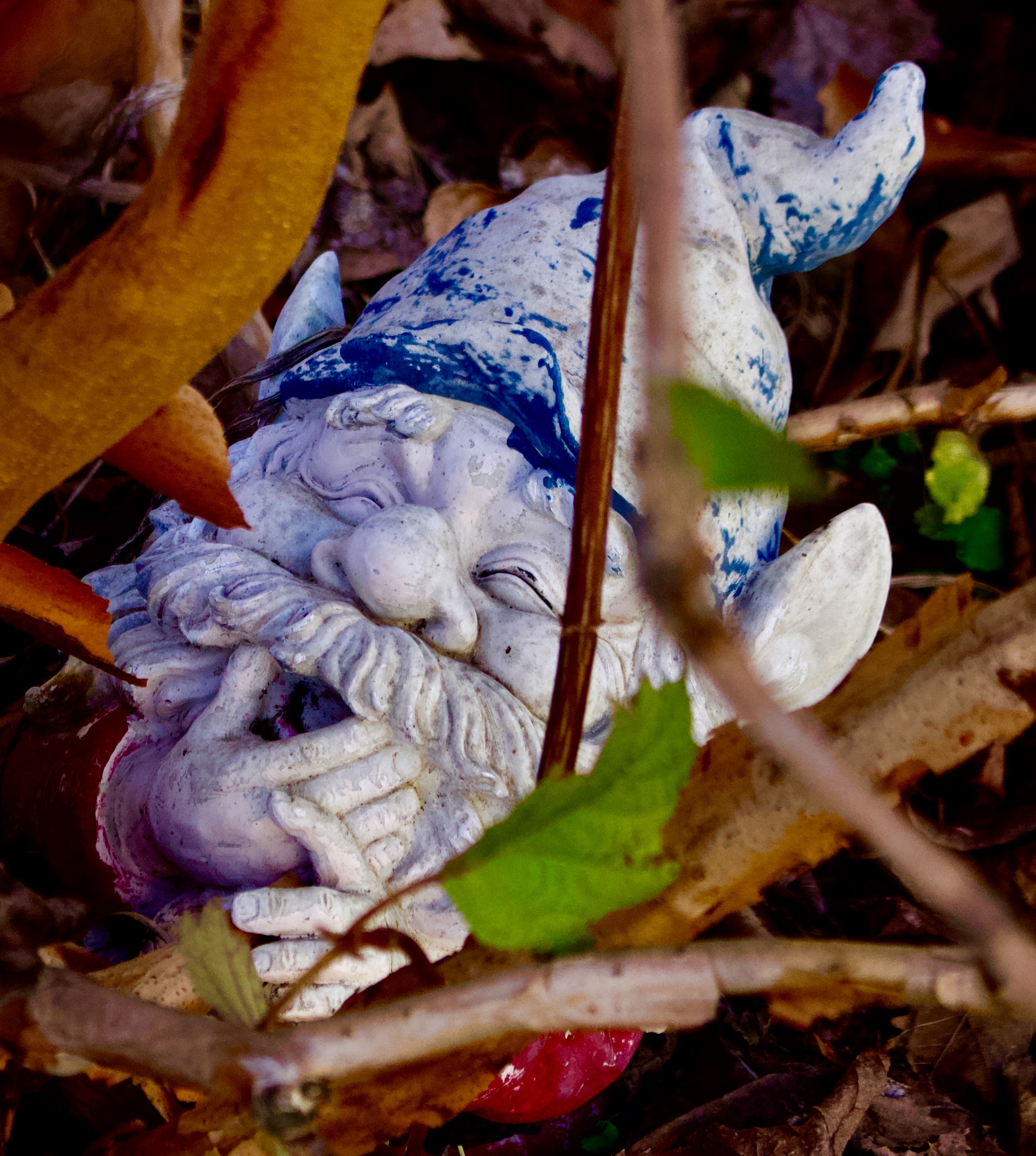
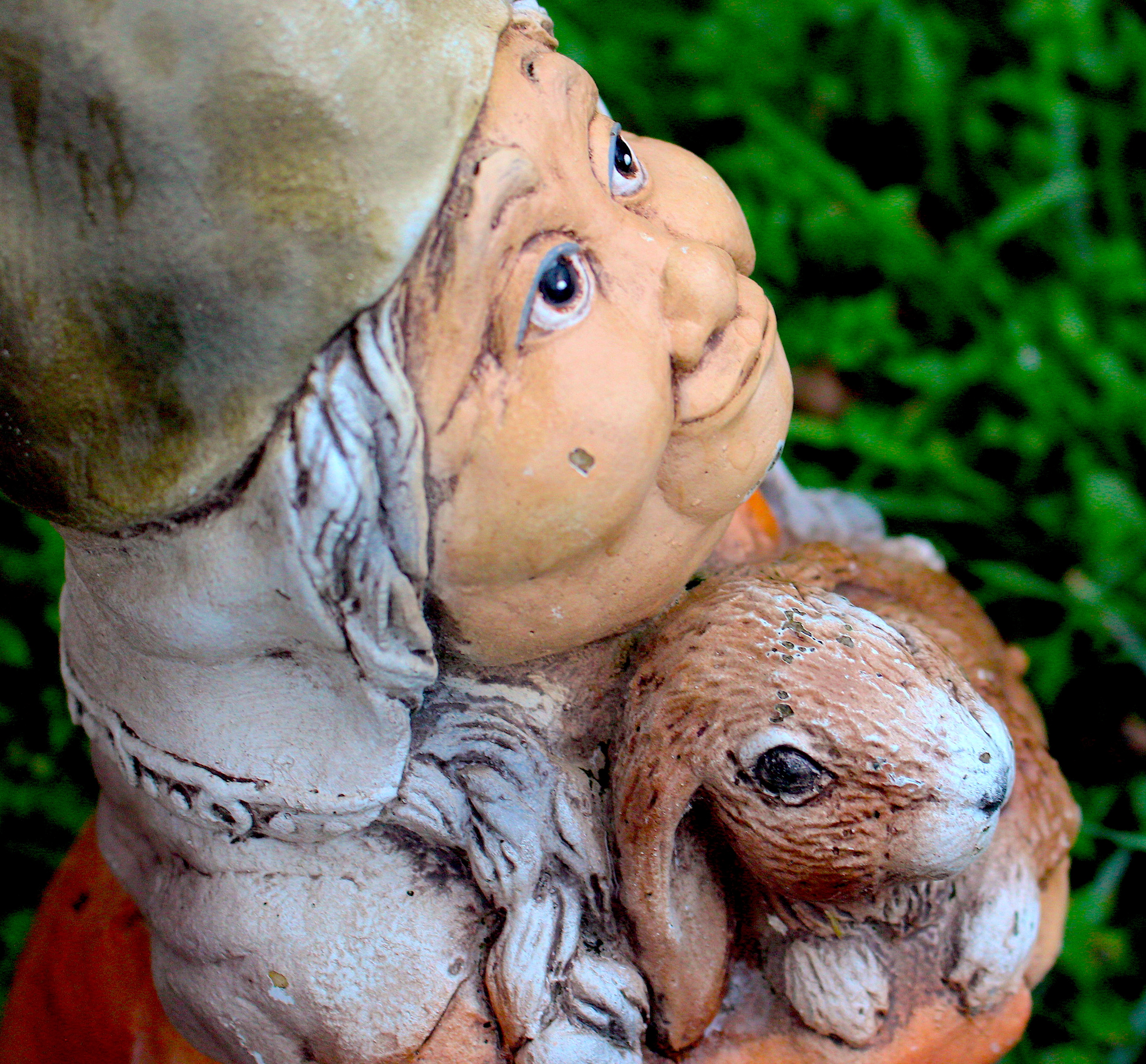
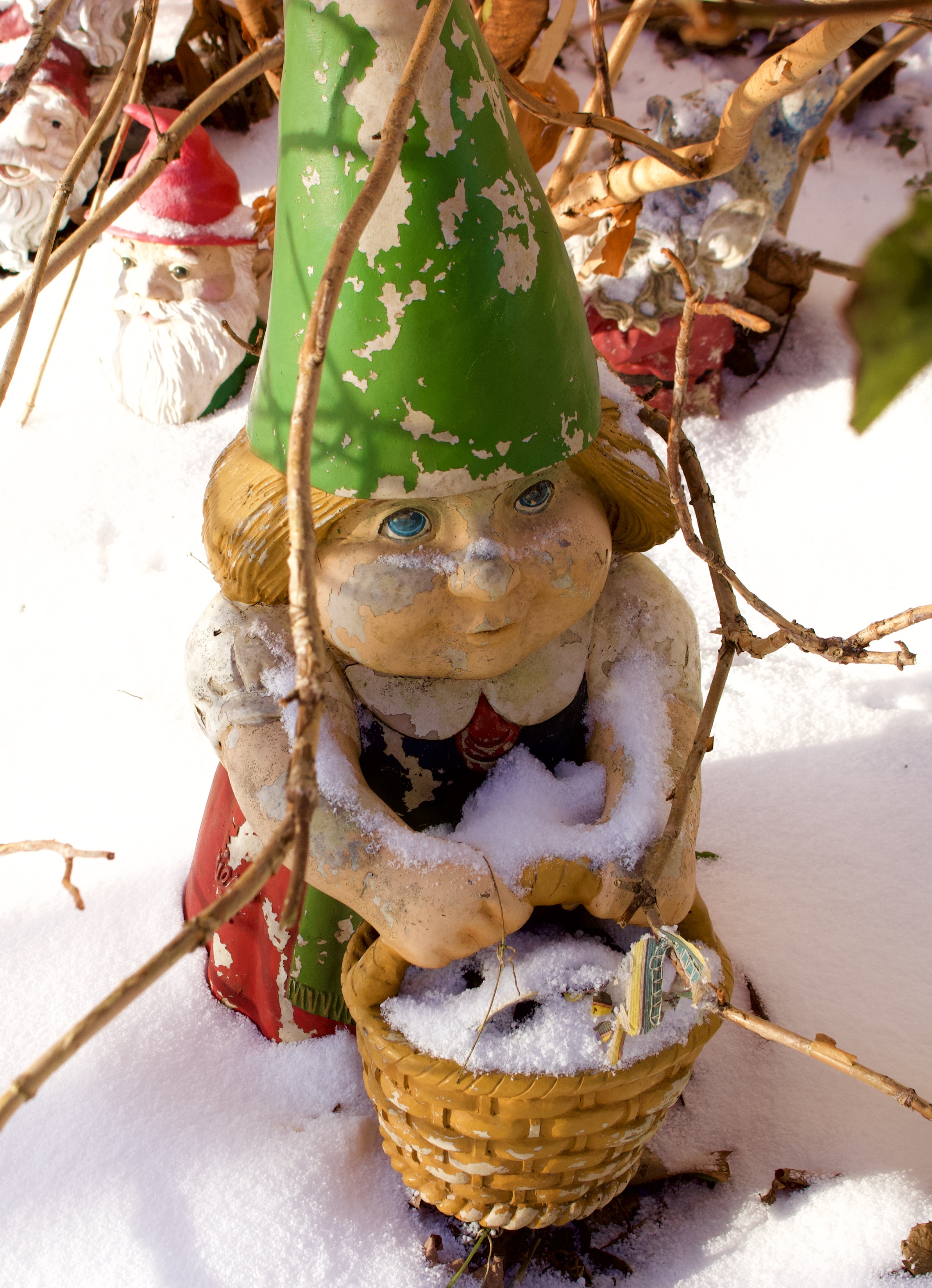
One day, I moved one of our garden gnomes to a new outpost in the yard. The horses were not amused.  In their minds, he was not where he belonged and seeing him someplace unfamiliar undid them one by one. Once they accepted him in his new home, it was no longer a problem for them–until I moved him again just to keep them on their toes.

Today, I feel I’m too often like my horses in my reluctance to gracefully accept change.  I prefer things familiar, safe and comfortable. Life rarely serves that up tidily, and in fact, most days are a jumble of coping with the unexpected. I’m not always sure the path I’m on is the straightest one, or the one with the fewest potholes, nor am I that confident that I’ve chosen the best path. I may stop, pull back, try to turn around, even snort a bit.  Sometimes I may refuse to take another step.

But there is no turning back. Time leads irrevocably forward, with us in tow, and we must follow, however reluctant we may be. I’m grateful for the gentle flow of the hours and days into years, all too aware of the quickening pace as far more of my life has been lived out than lies ahead of me.

Perhaps what I’m needing most this new year is a slower walk – taking the time to look at all things with new eyes – breathing each breath appreciatively, to become keenly aware it was not my last.

One-Time
Monthly
Yearly

Make a one-time or recurring donation to support daily Barnstorming posts

Make a monthly donation

Make a yearly donation
Choose an amount

¤10.00
¤20.00
¤50.00
¤5.00
¤15.00
¤100.00
¤5.00
¤15.00
¤100.00

Or enter a custom amount

¤

Your contribution is deeply appreciated.
Your contribution is appreciated.

Your contribution is appreciated.

DonateDonate monthlyDonate yearly