A Palouse Farmgirl

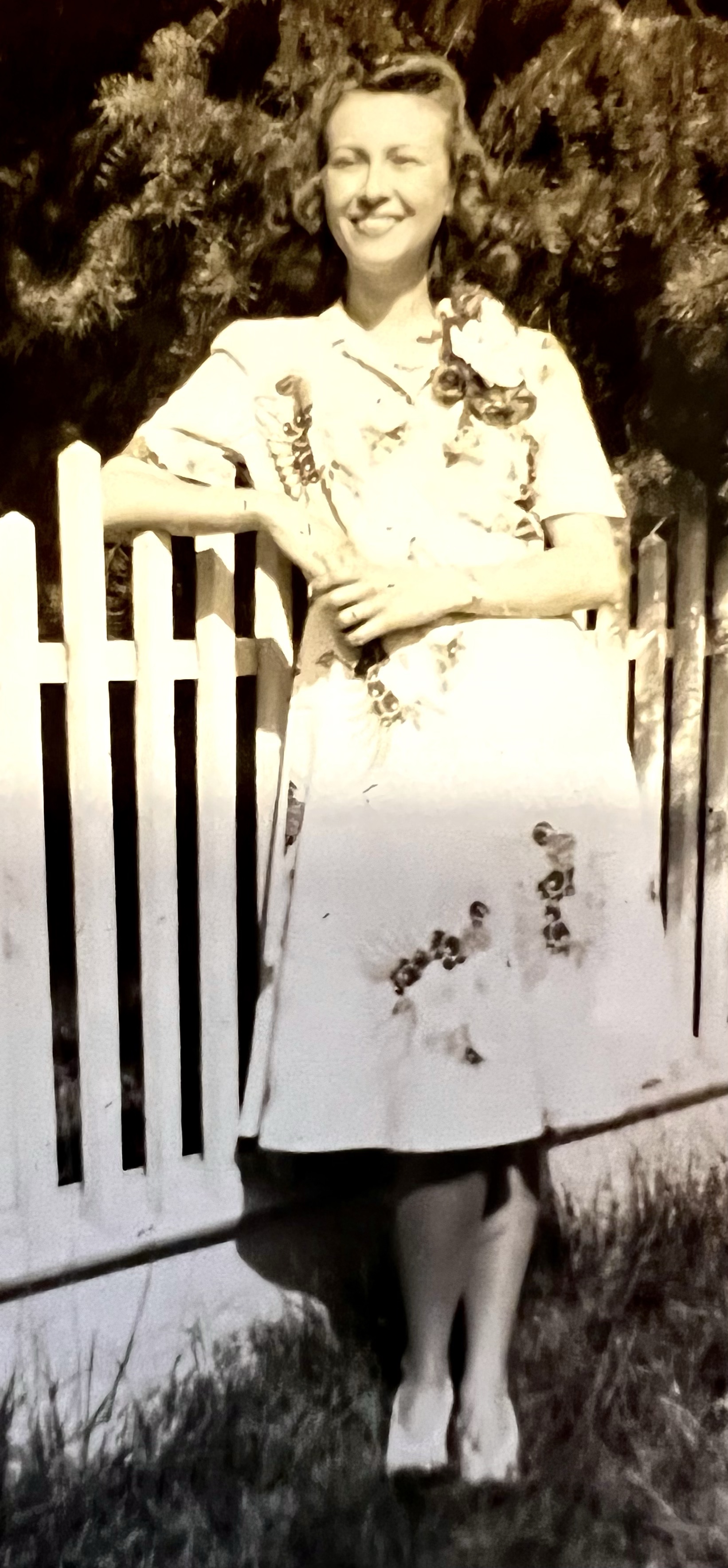
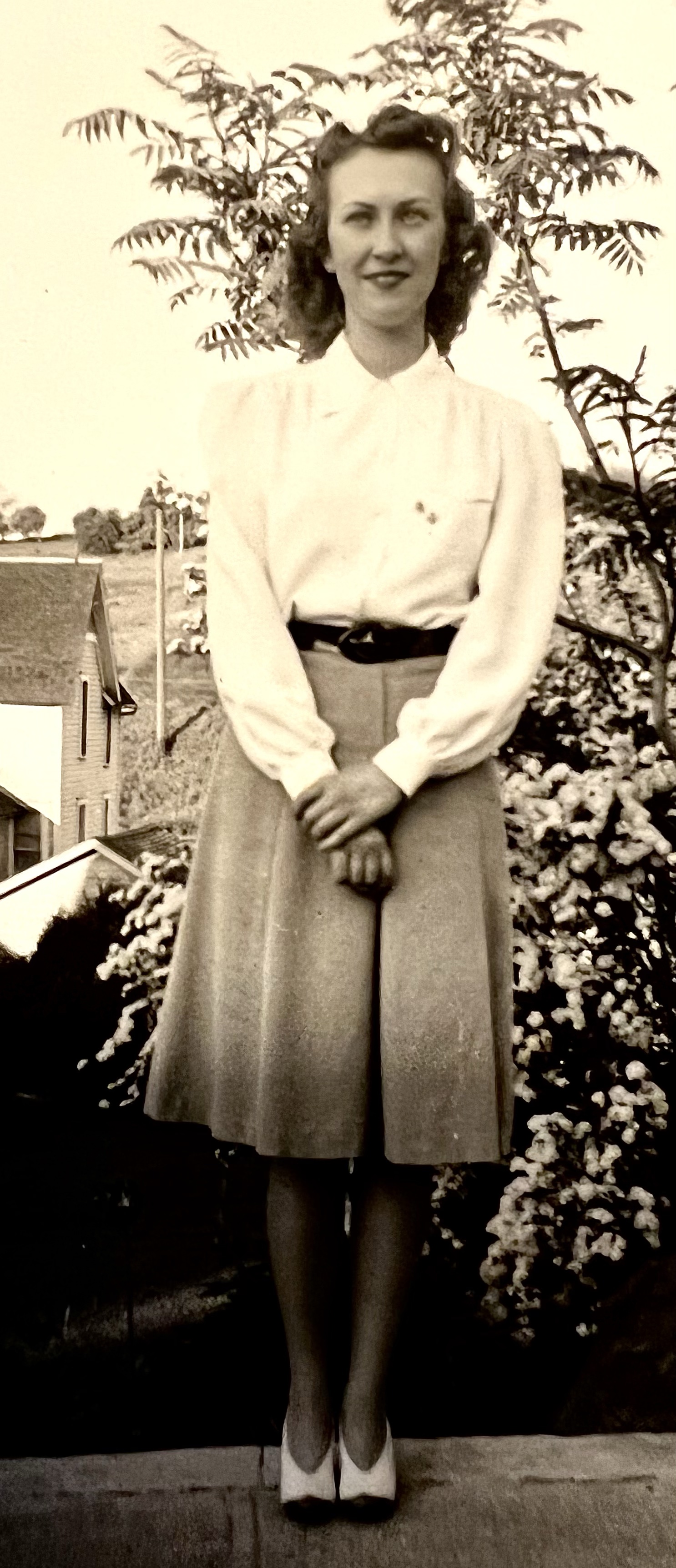
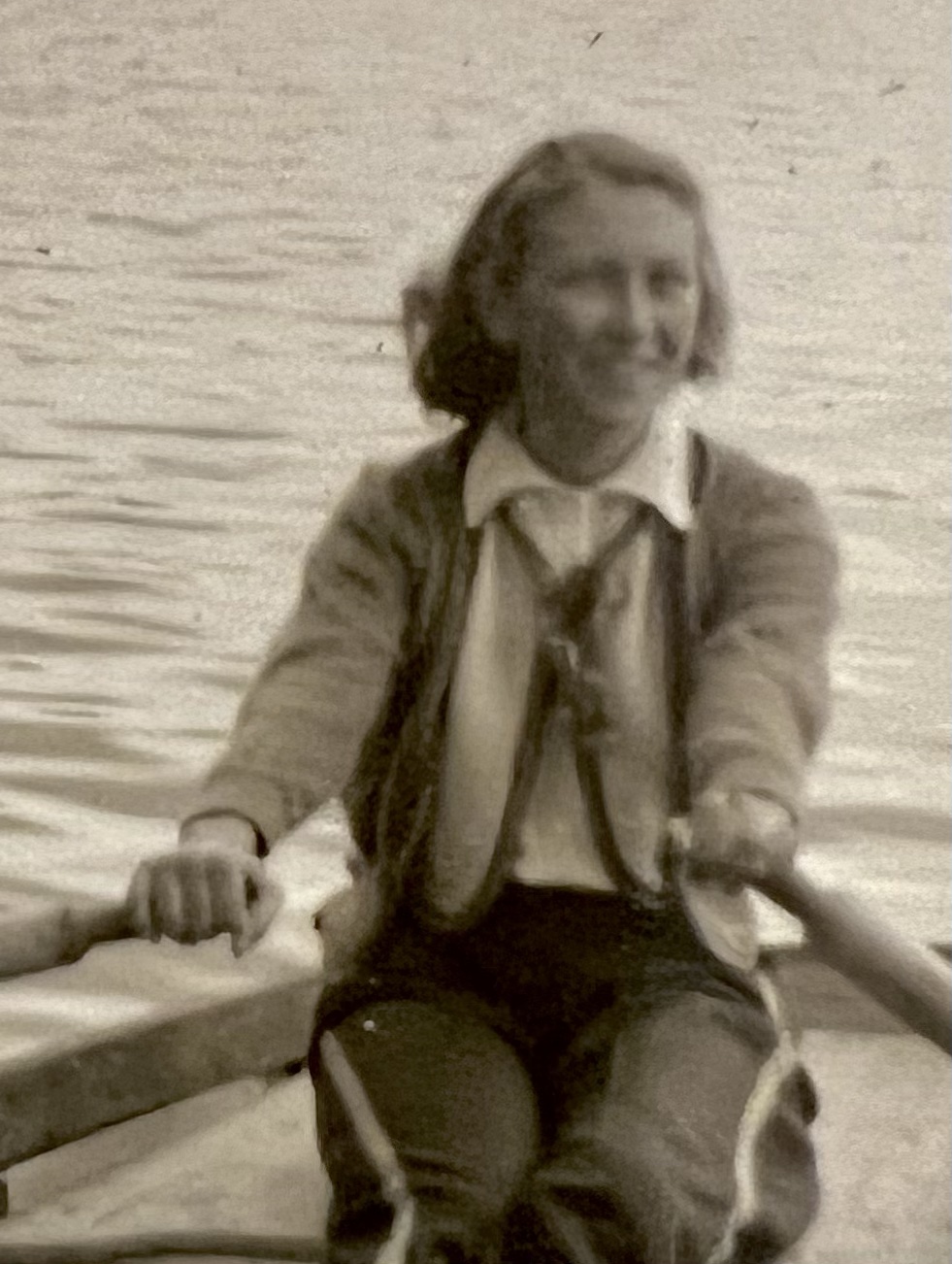
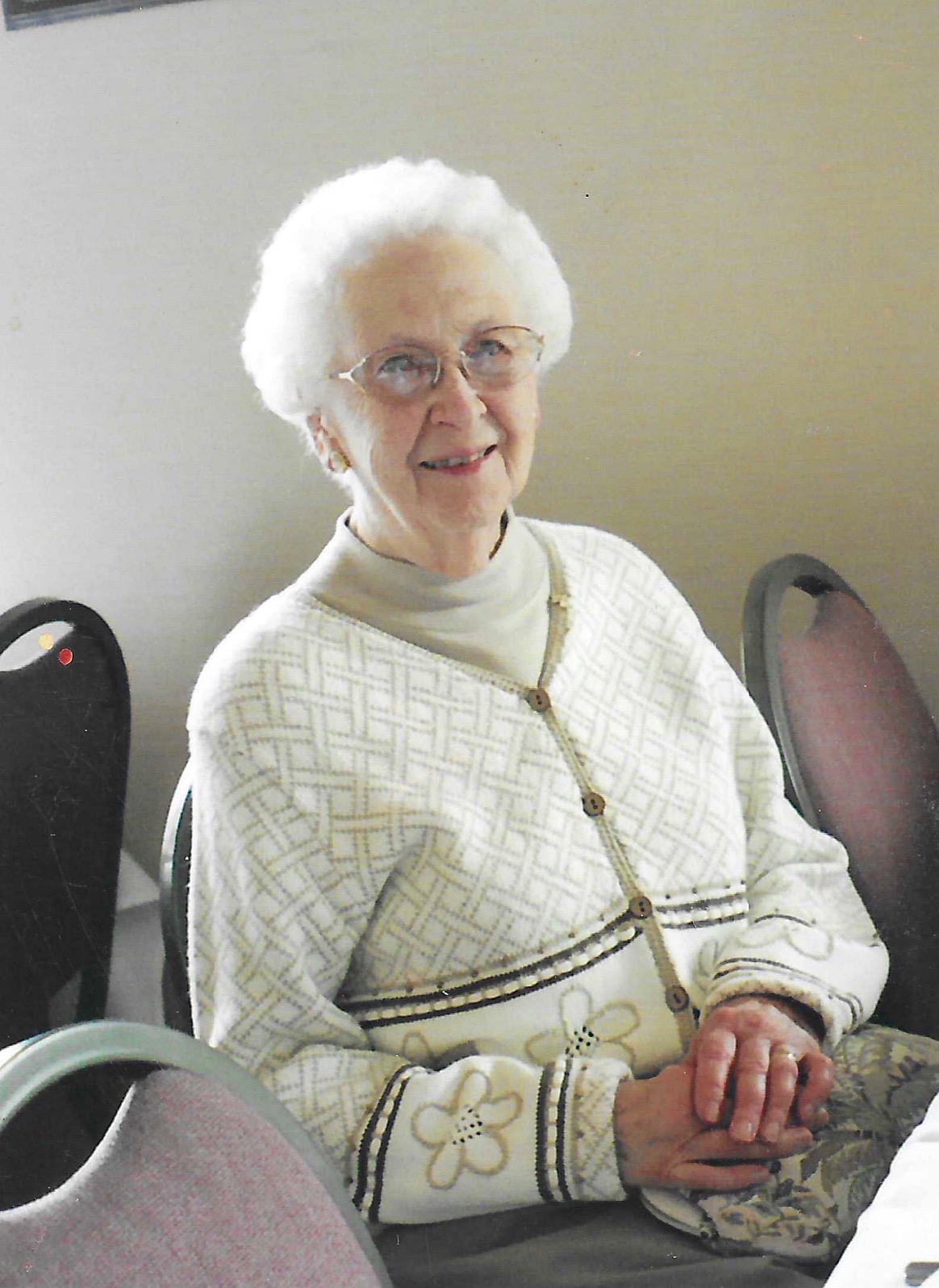
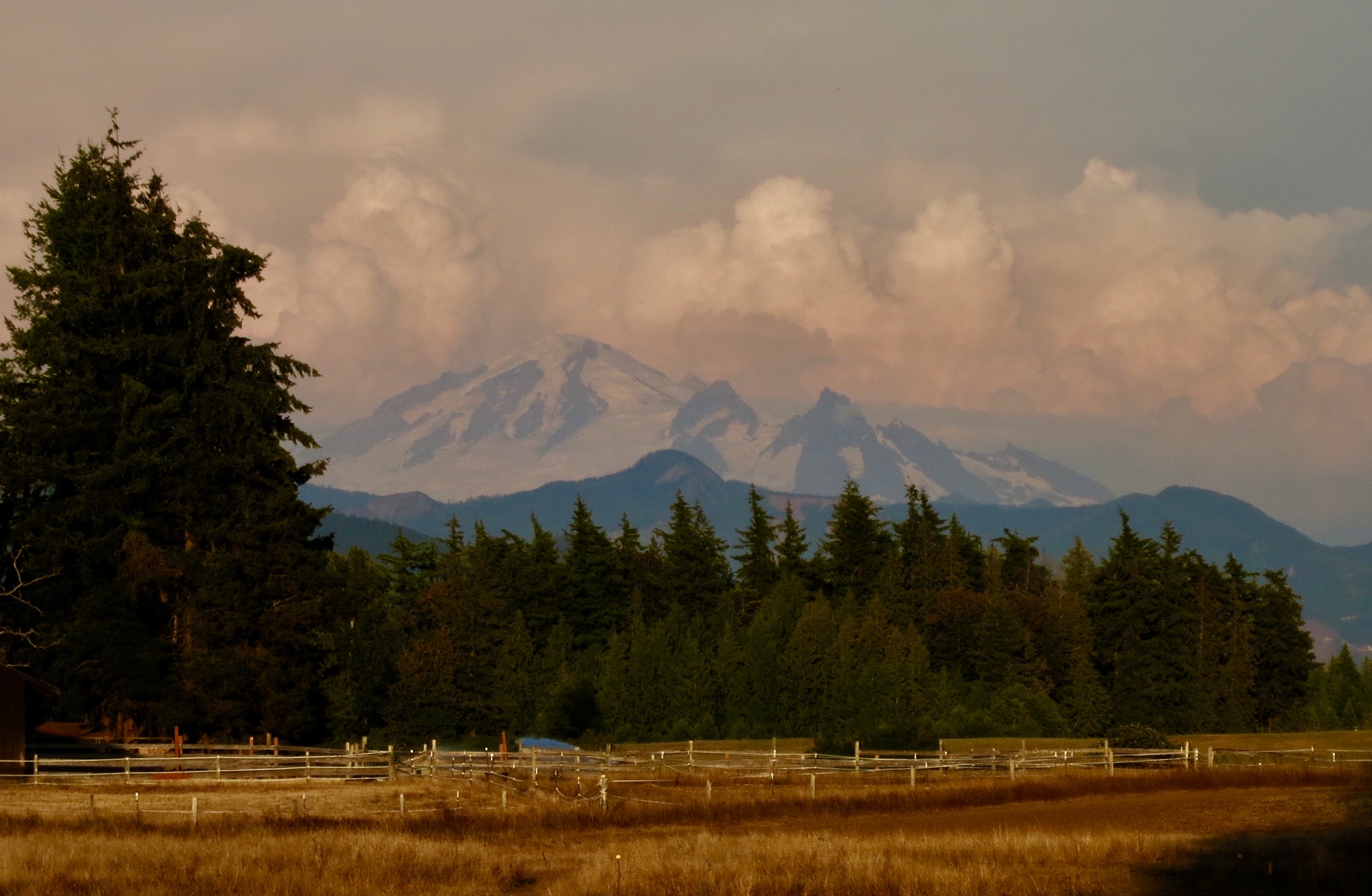
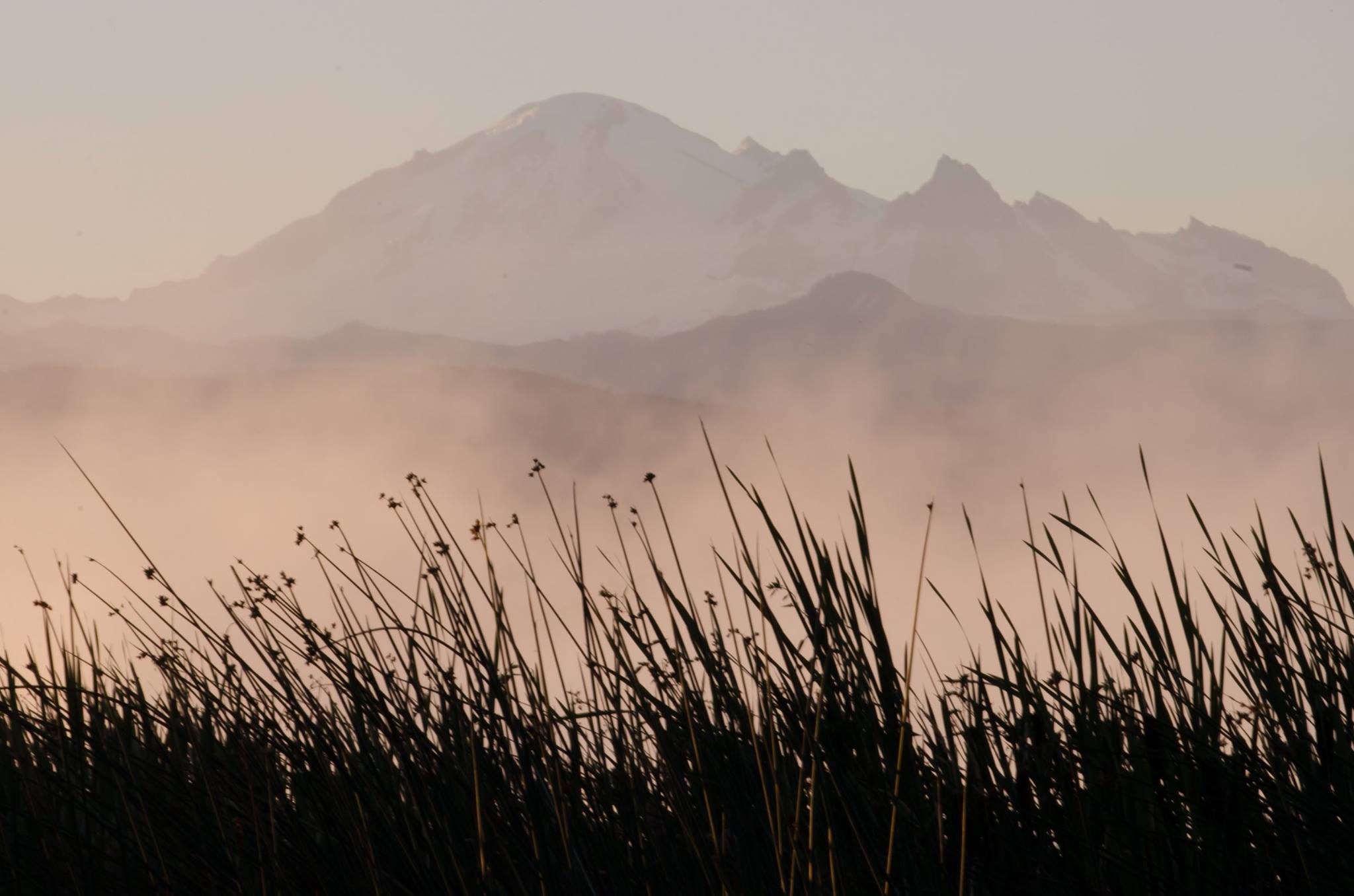
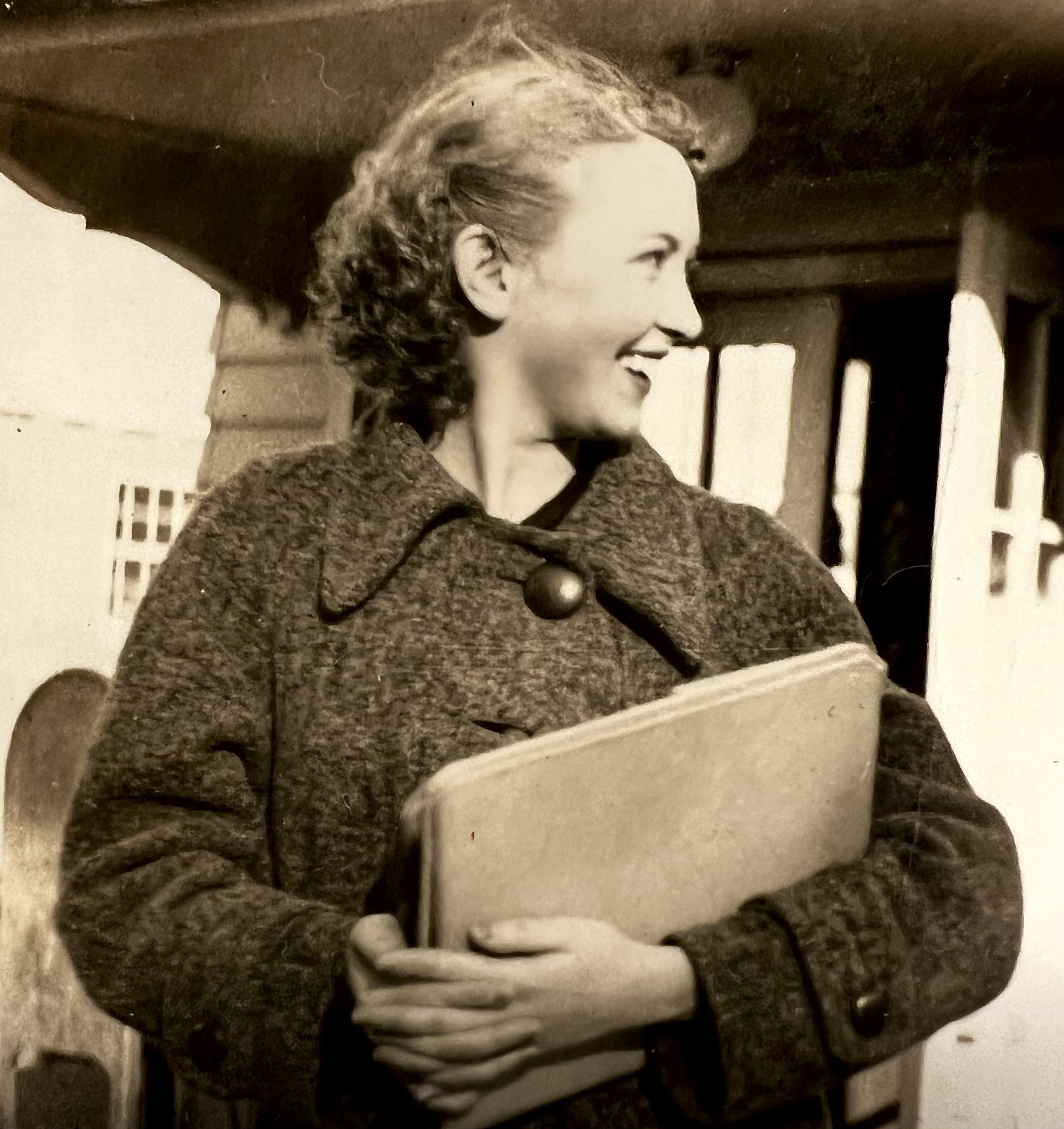
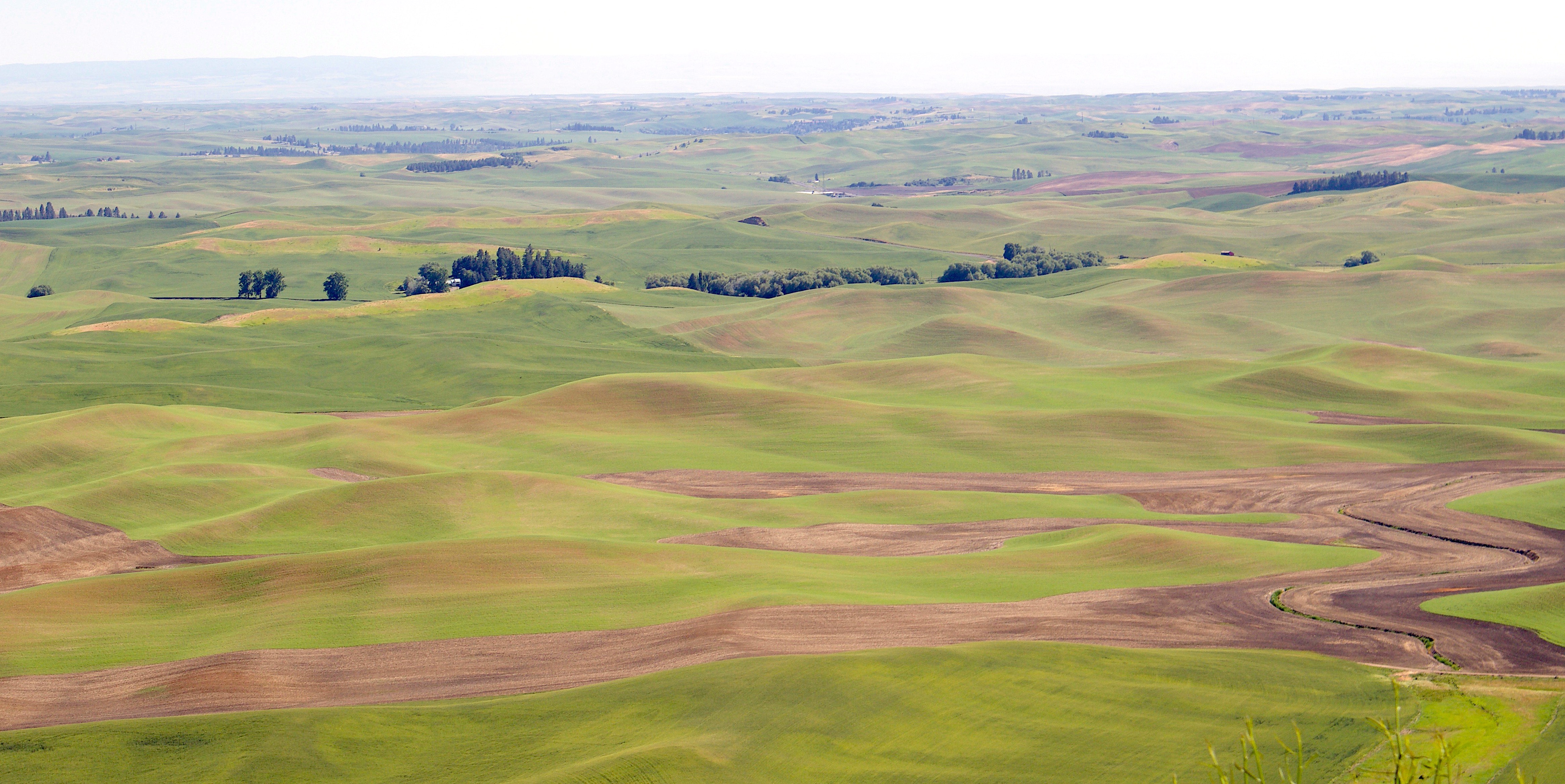
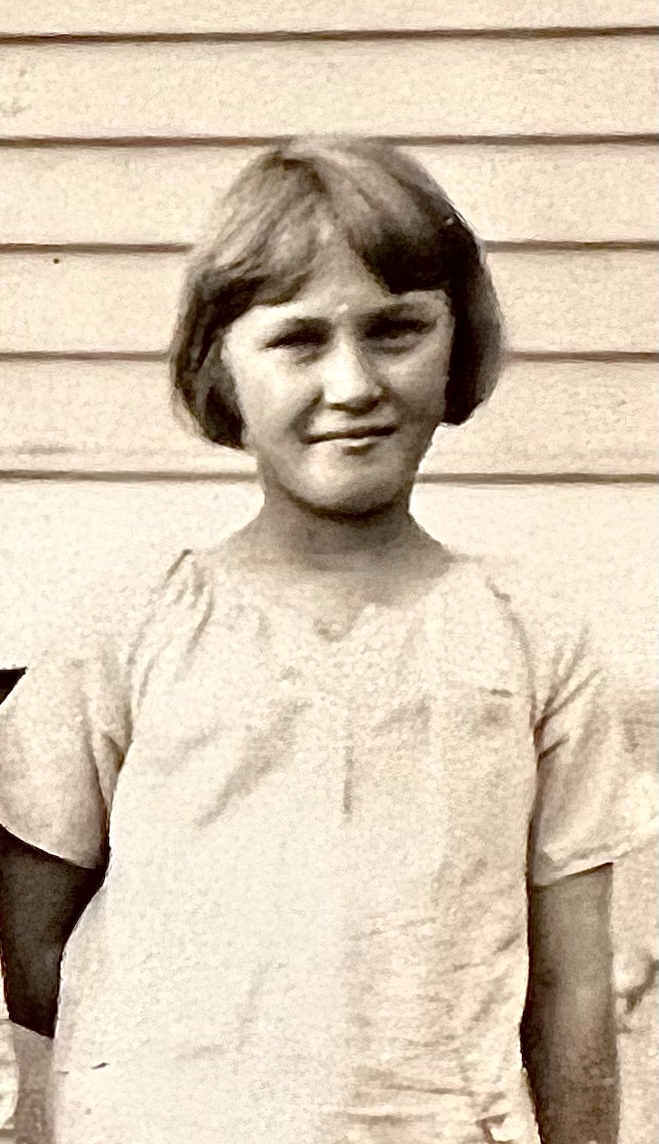
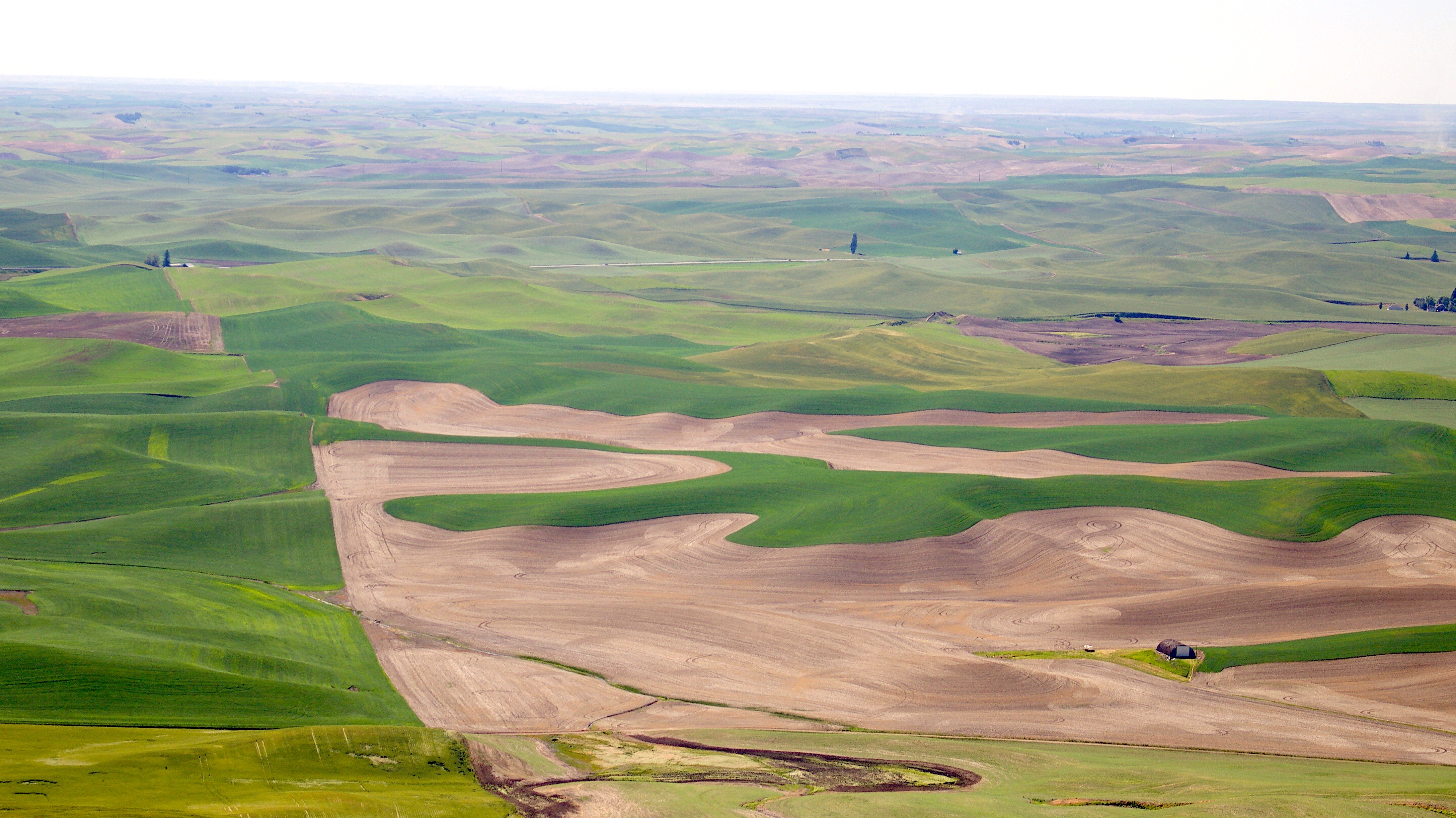
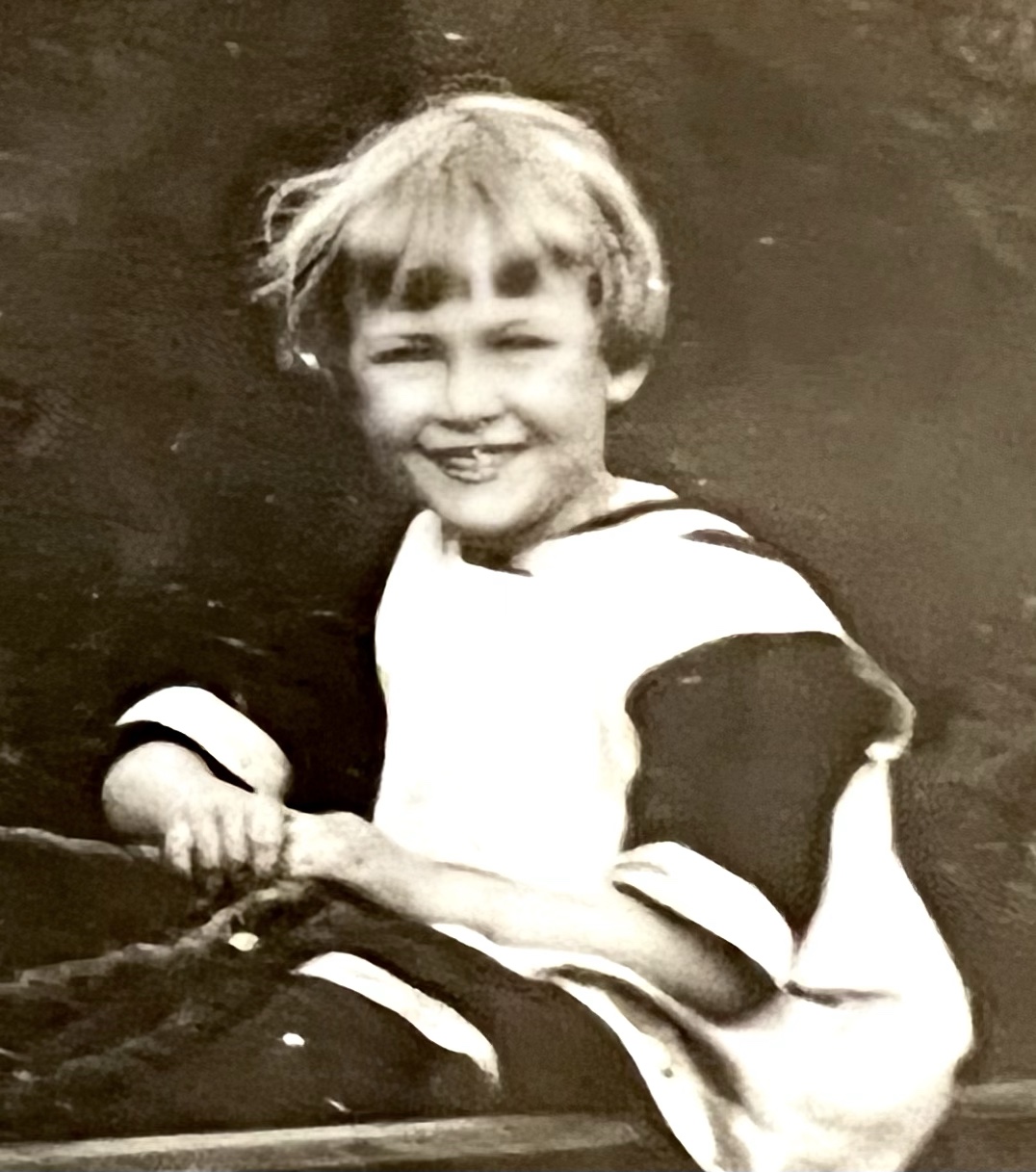
My mother, Elna Schmitz Polis, was born 103 years ago today in the lonely isolation of a Palouse wheat and lentil farm in eastern Washington. She drew her first breath in a two story white house located down a long poplar-lined lane and nestled in a draw between the undulating hills.

She attended a one room school house until 8th grade, located a mile away in the rural countryside, then moved in with her grandmother “in town” in Rosalia to attend high school, seeing her parents only a couple times a month.

It was a childhood which accustomed her to solitude and creative play inside her mind and heart – her only sibling, an older brother, was busy helping their father on the farm. All her life and especially in her later years, she would prefer the quiet of her own thoughts over the bustle of a room full of activities and conversation.

Her childhood was filled with exploration of the rolling hills, the barns and buildings where her father built and repaired farm equipment, and the chilly cellar where the fresh eggs were stored after she reached under cranky hens to gather them. She sat in the cool breeze of the picketed yard, watching the huge windmill turn and creak next to the house. She helped her weary mother feed farm crews who came for harvest time and then settled in the screened porch listening to the adults talk about lentil prices and bushel production. She woke to the mourning dove call in the mornings and heard the coyote yips and howls at night.

She nearly died at the age of 13 from a ruptured appendix, before antibiotics were an option. That near-miss seemed to haunt her life-long, filling her with worry that it was a mistake that she survived that episode at all. Yet she thrived despite the anxiety, and ended up, much to her surprise, living a long life full of family and faith, letting go at age 88 after fracturing a femur, breaking her will to continue to live.

As a young woman, she was ready to leave the wheat farm behind for college, devoting herself to the skills of speech, and the creativity of acting and directing in drama, later teaching rural high school students, including a future Pulitzer Prize winning poet, Carolyn Kizer. She loved words and the power and beauty they wielded.

Marrying my father was a brave and impulsive act, traveling by train to the east coast only a week before he shipped out for almost 3 years to the South Pacific to fight as a Marine in WWII. She must have wondered about the man who returned from war changed and undoubtedly scarred in ways she could not see or touch. They worked it out mostly in silence, as rocky as it must have been at times. Her episode of Graves’ disease, before I was born, must have been agonizing, as her storm of thyroid overactivity resulted in months of sleepless full time panic. Only thyroid removal saved her, but even radical surgeries take their toll. Their marriage never fully recovered.

In their reconciliation after a painful divorce years later, I finally could see the devotion and mutual respect between life companions who had found shared purpose and love.

As a wife and mother, she rediscovered her calling as a steward of the land and a tireless steward of her family, gardening and harvesting fruits, vegetables and us children. When I think of my mother, I most often think of her tending us children in the middle of the night whenever we were ill; her over-vigilance was undoubtedly due to her worry we might die in childhood as she almost did.

She never did stop worrying until the last few months. As she became more dependent on others in her physical decline, she gave up the control she thought she had to maintain through her “worry energy” and became much more accepting about the control the Lord maintains over all we are and will become.

I know from where my shyness comes, my preference for birdsongs rather than radio music, my love of naps, and my tendency to be serious and straight-laced with a twinkle in my eye. This is my German Palouse side–immersing in the quietness of solitude, thrilling to the sight of the spring wheat flowing like a green ocean wave in the breeze and appreciating the warmth of rich soil held in my hands. From that heritage came my mother and it is the legacy she left with me. I am forever grateful for her unconditional love and her willingness to share the sunshine and warmth of her nest whenever we felt the need to fly back home and shelter, overprotected but safe nonetheless, under her wings.

One-Time
Monthly
Yearly

Make a one-time or recurring donation to support daily Barnstorming posts

Make a monthly donation

Make a yearly donation

Choose an amount

¤10.00
¤25.00
¤50.00
¤5.00
¤15.00
¤100.00
¤5.00
¤15.00
¤100.00

Or enter a custom amount

¤

Your contribution is deeply appreciated.

Your contribution is appreciated.

Your contribution is appreciated.

DonateDonate monthlyDonate yearly
Contagious

Good things as well as bad, you know
are caught by a kind of infection.

If you want to get warm you must stand near the fire:
if you want to be wet you must get into the water.
If you want joy, power, peace, eternal life,
you must get close to, or even into, the thing that has them. 

They are not a sort of prize which God could,
if He chose, just hand out to anyone.
They are a great fountain of energy and beauty

spurting up at the very centre of reality.
If you are close to it, the spray will wet you:

if you are not, you will remain dry.

Once a man is united to God, how could he not live forever?
Once a man is separated from God, what can he do but wither and die?

~C.S. Lewis- Mere Christianity

Now looking back over four decades as a working physician, I remember struggling after the observance of rest and worship each Sunday, to return to the sterile world of a busy secular clinic.

Although freshly exposed to the Spirit, immersed in the reality of a loving God, I was restricted from sharing my infection while close to my patients. Each Monday, my responsibility was to prevent contagion, measuring my words and washing my hands thoroughly upon entering each exam room.

At times I failed in my efforts, even as I donned a protective mask and gloves to keep us from spreading our respective infections.

I hope now, with masks and gloves removed, if I’m contagious, may it be because I’m overwhelmed with the Spirit rather than engulfed in the infections of this world.

One-Time
Monthly
Yearly

Make a one-time or recurring donation to support daily Barnstorming posts

Make a monthly donation

Make a yearly donation

Choose an amount

¤10.00
¤25.00
¤50.00
¤5.00
¤15.00
¤100.00
¤5.00
¤15.00
¤100.00

Or enter a custom amount

¤

Your contribution is deeply appreciated.

Your contribution is appreciated.

Your contribution is appreciated.

DonateDonate monthlyDonate yearly
A World Where Much is Missing

Leave a door open long enough,
a cat will enter.
Leave food, it will stay.
Soon, on cold nights,
you’ll be saying “Excuse me”
if you want to get out of your chair.
But one thing you’ll never hear from a cat
is “Excuse me.”
Nor Einstein’s famous theorem.
Nor “The quality of mercy is not strained.”
In the dictionary of Cat, mercy is missing.
In this world where much is missing,
a cat fills only a cat-sized hole.
Yet your whole body turns toward it
again and again because it is there.

~Jane Hirshfield “A Small-Sized Mystery” from Come, Thief.

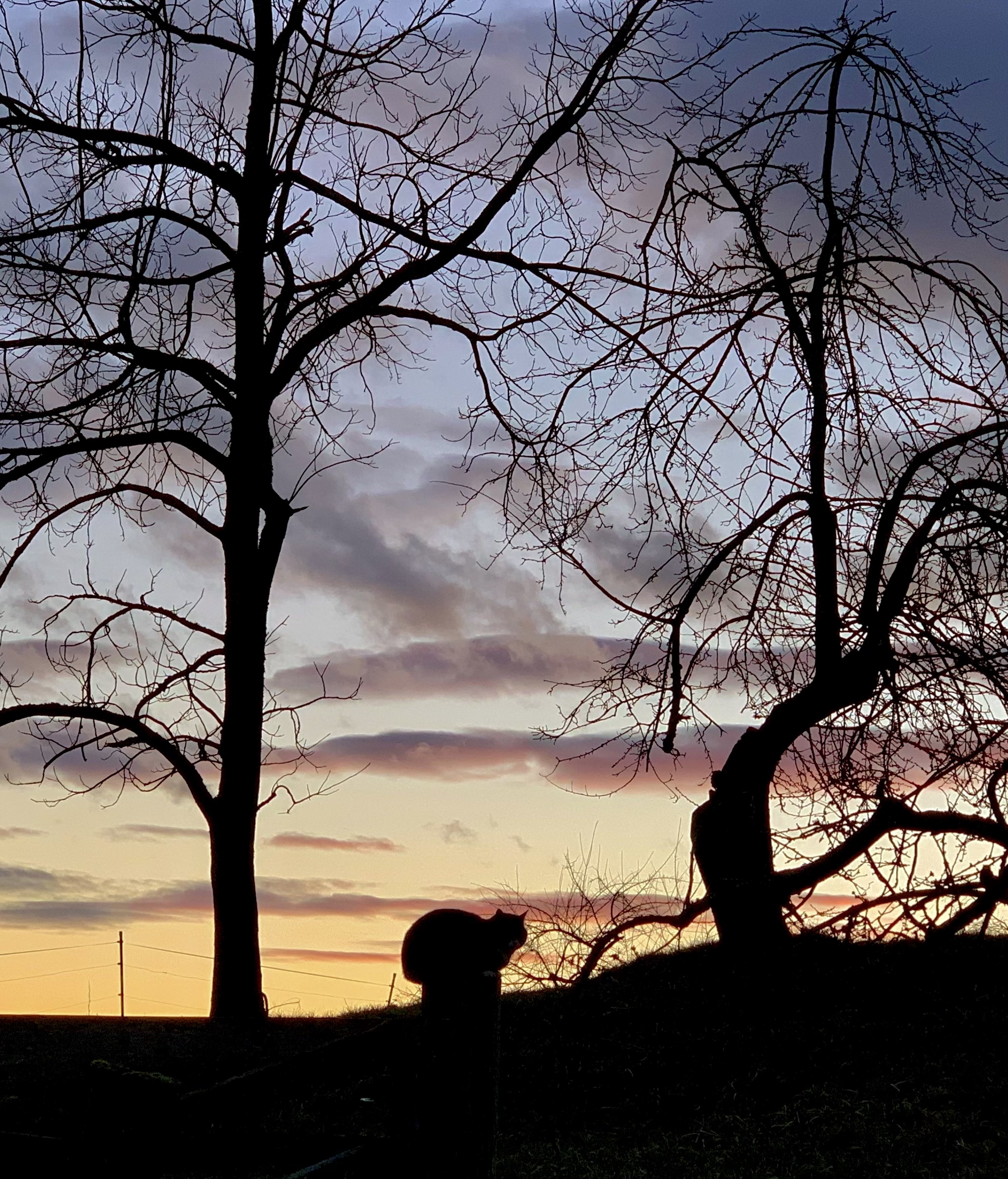
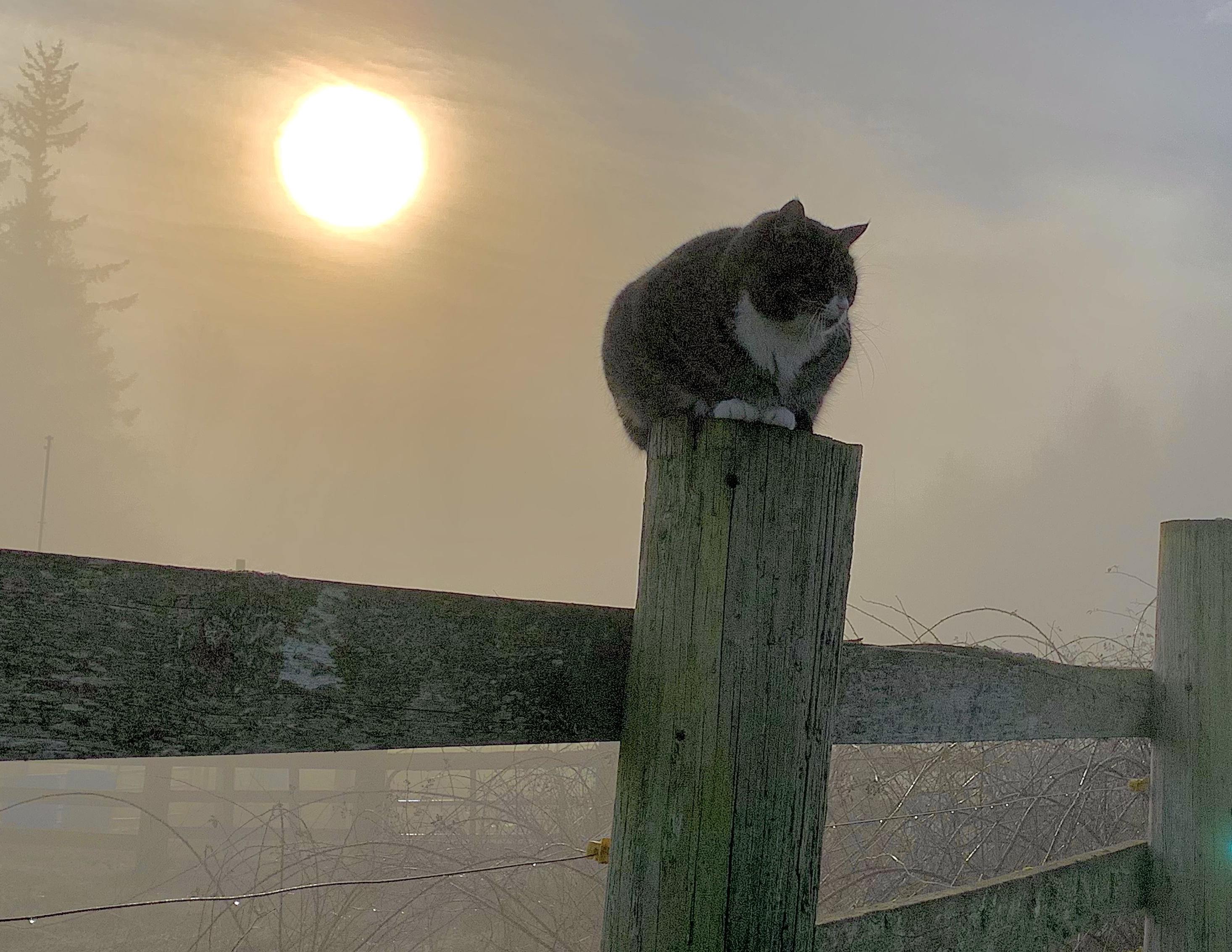
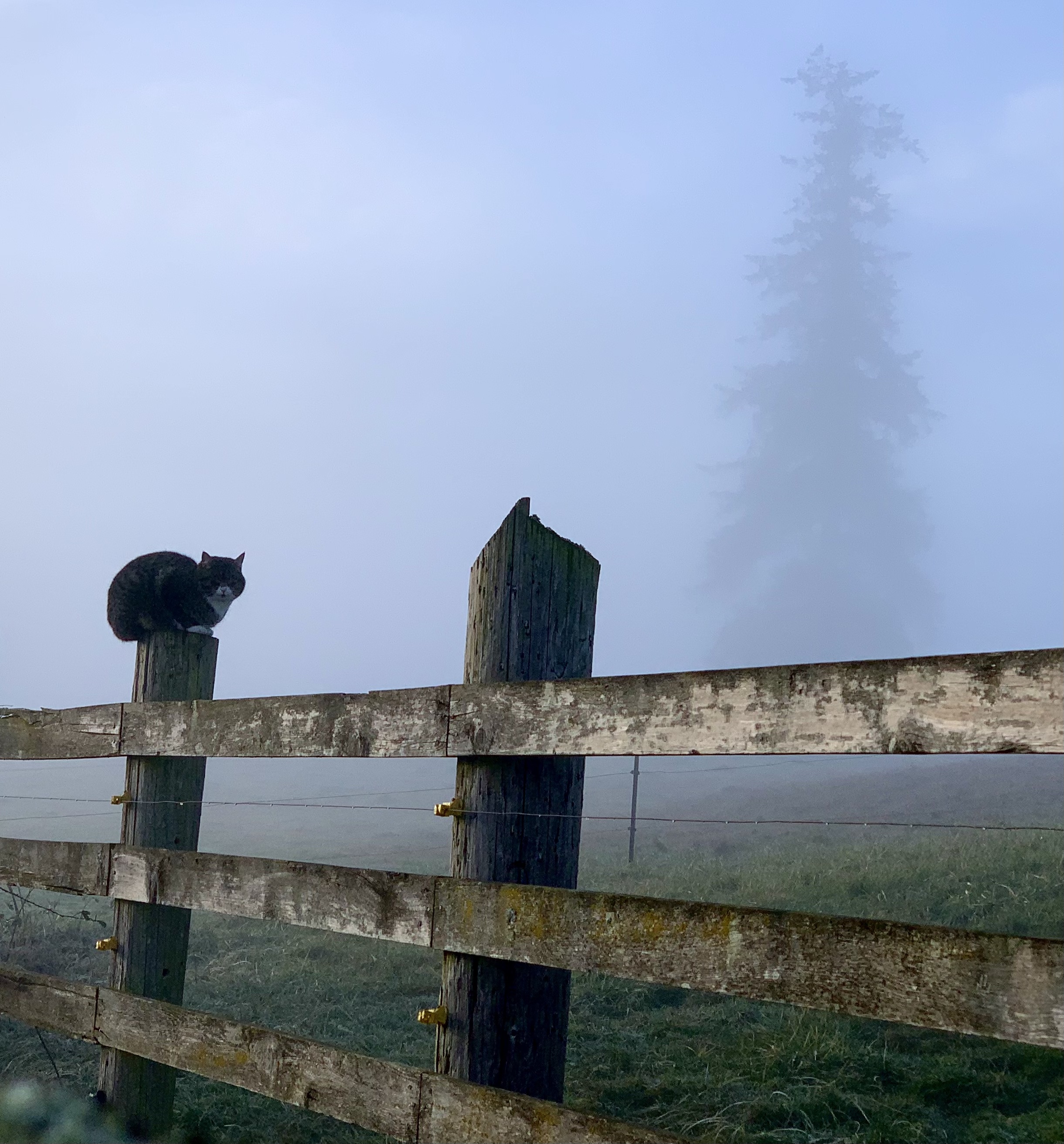
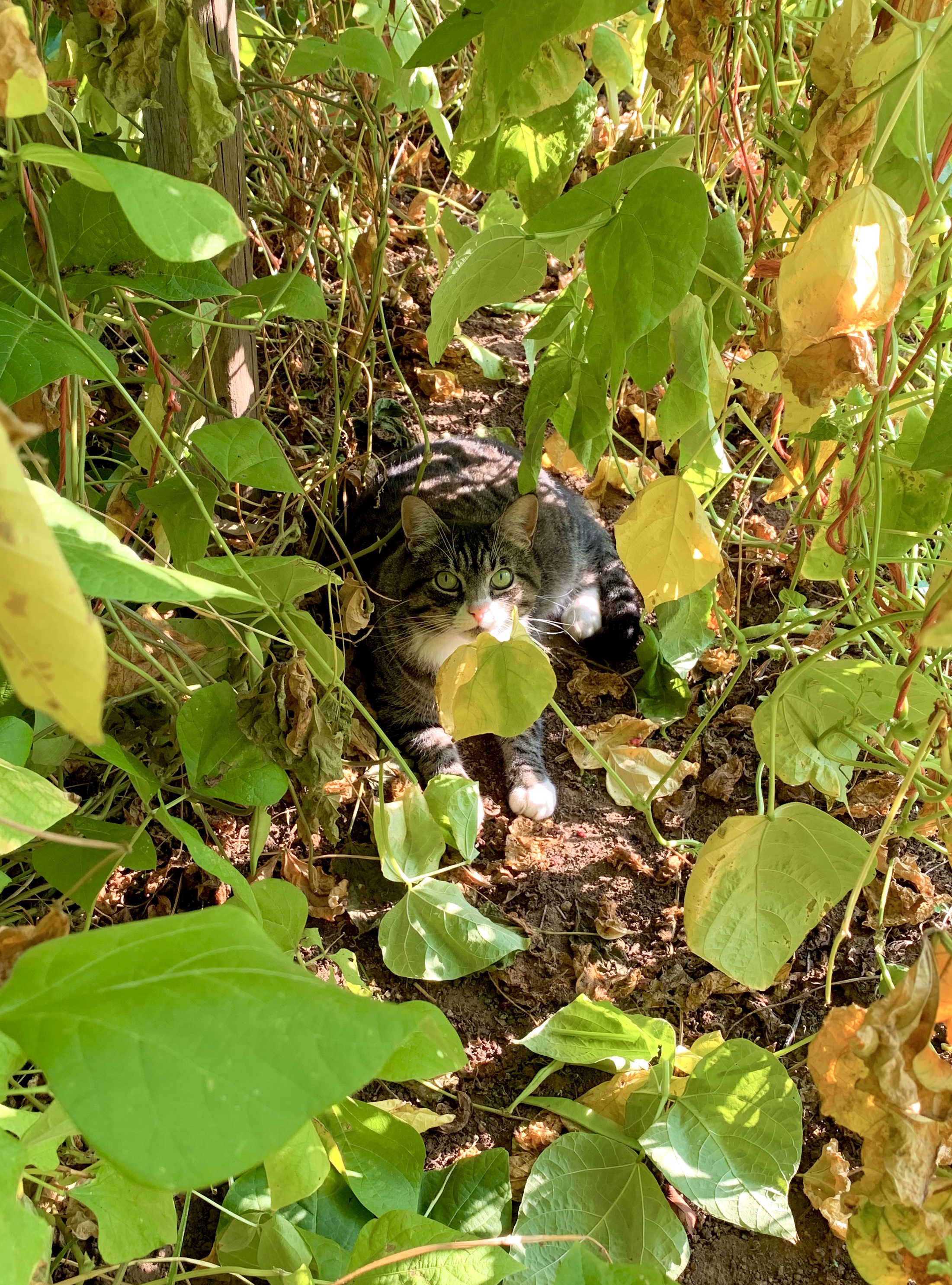
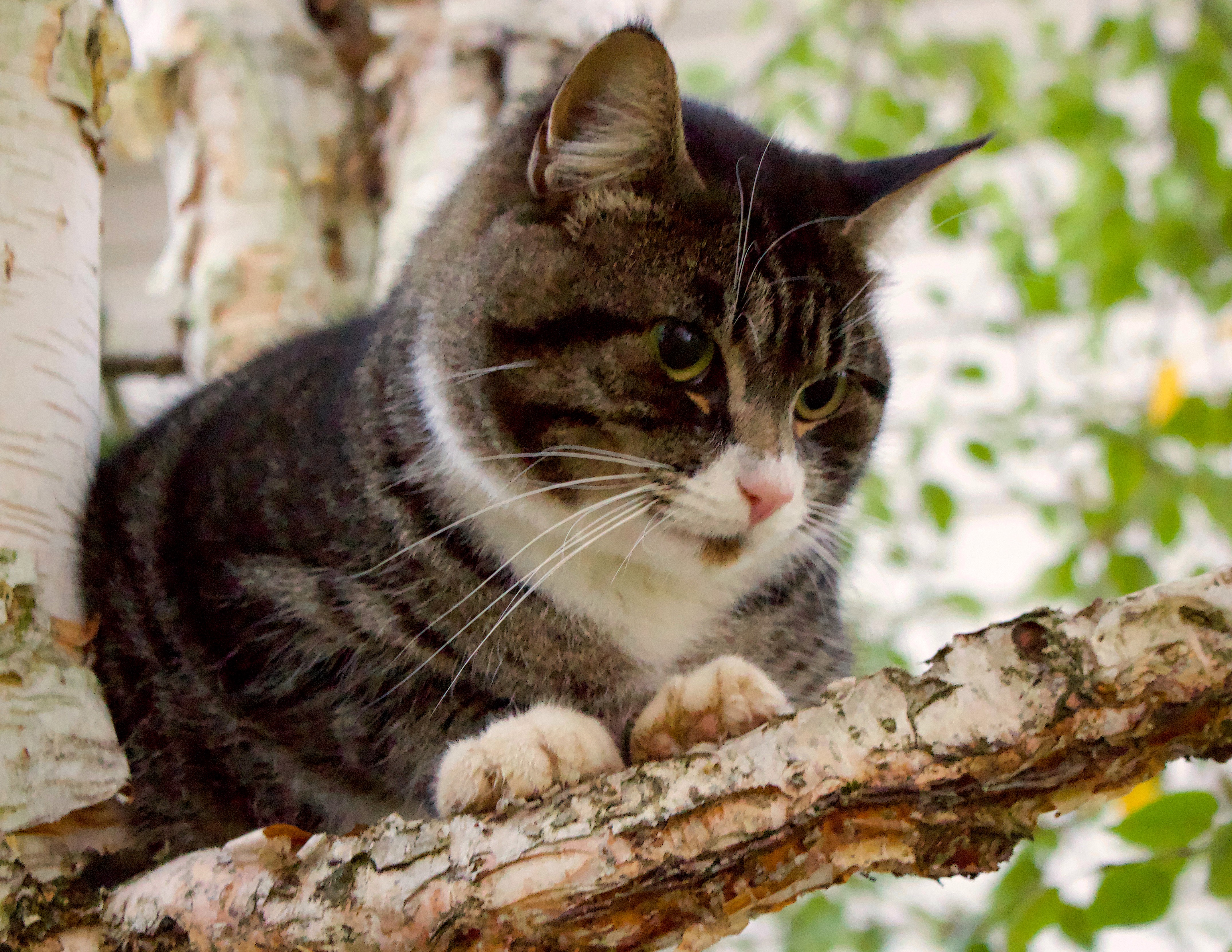
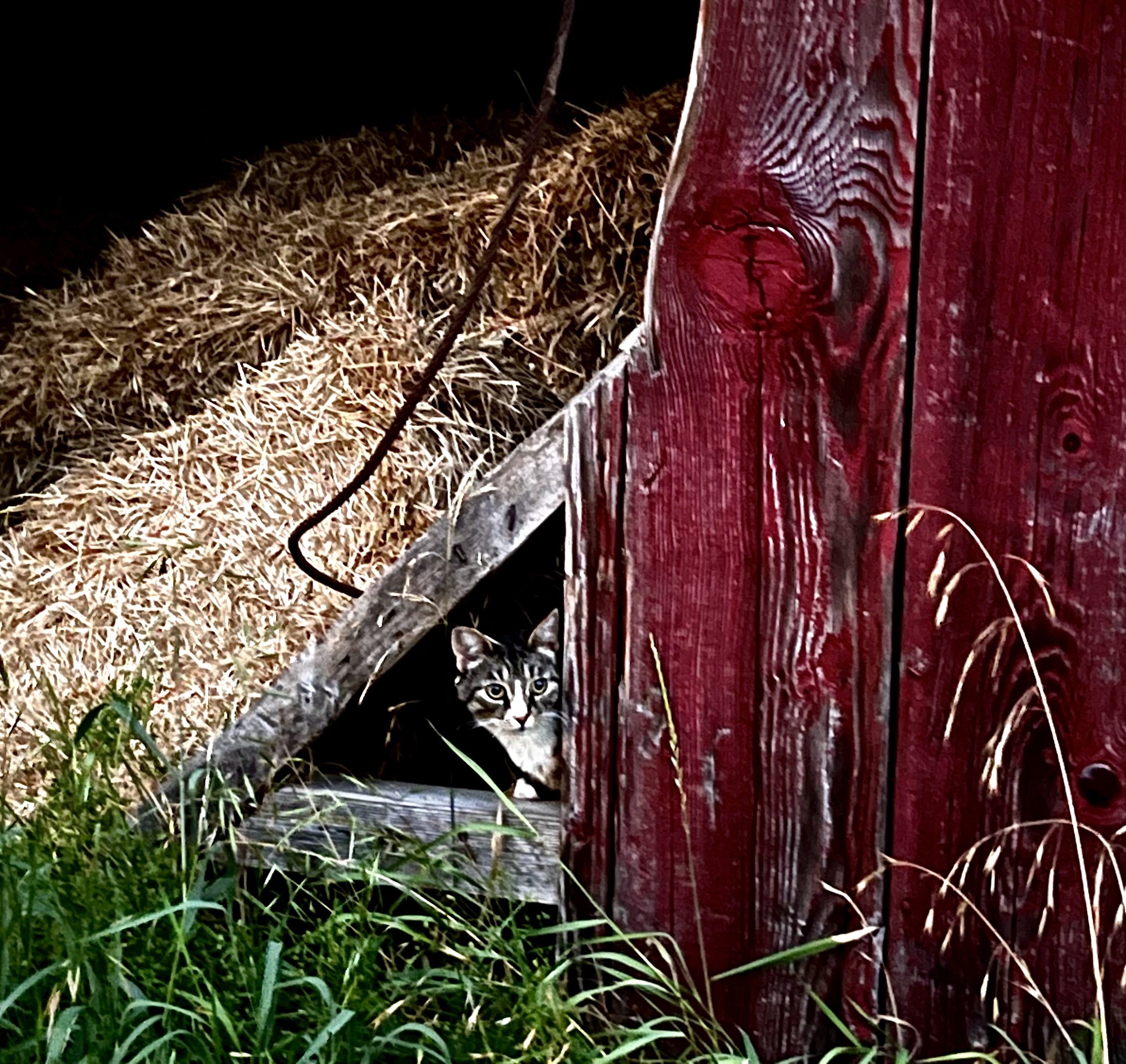
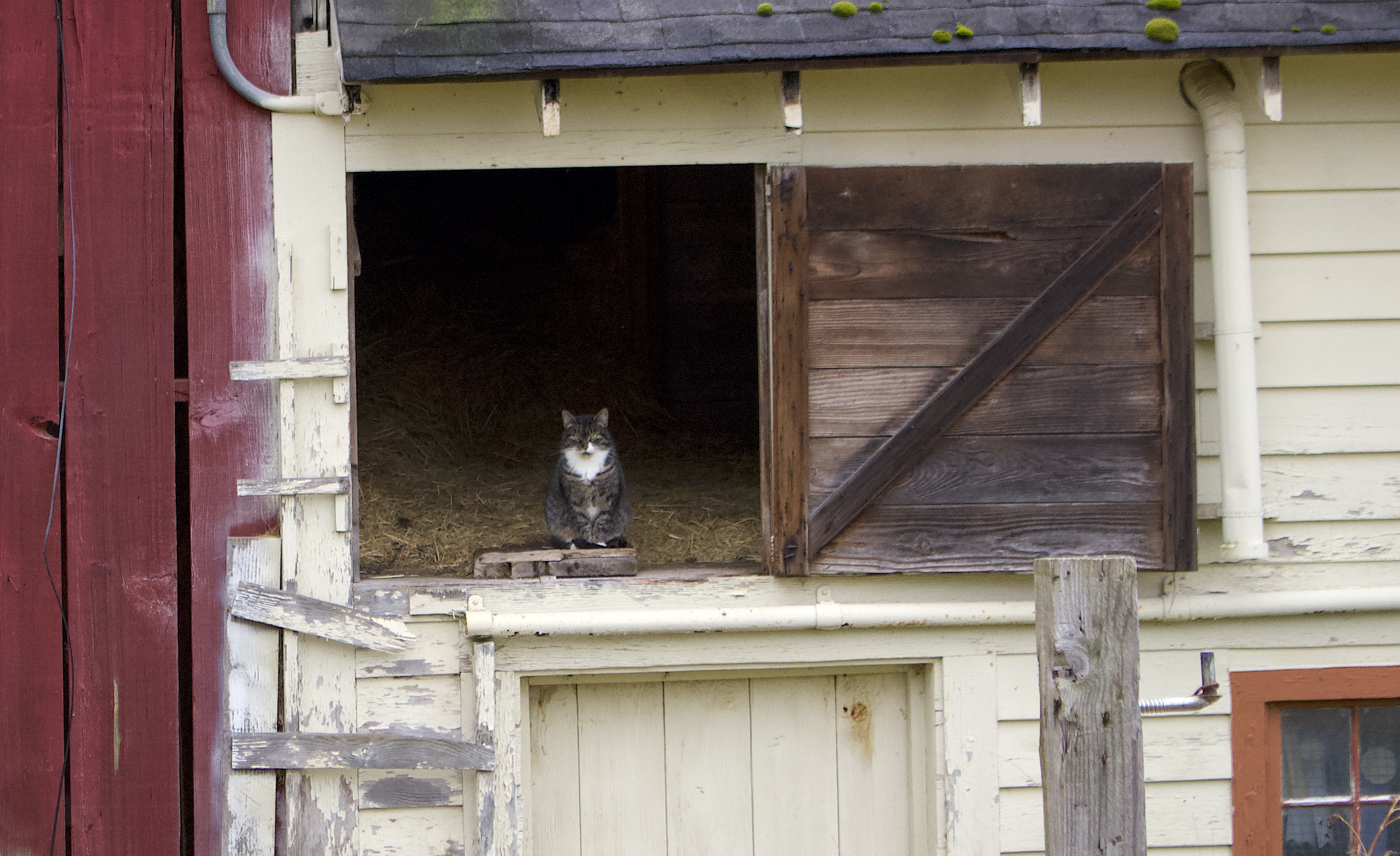
The first time I saw him, it was just a flash of gray ringed tail
disappearing into autumn night mist as I opened the back door
to pour kibble into the empty cat dish on the porch:
just another stray cat among many who visit the farm.

A few linger and stay.

So he did, keeping a distance in the shadows under the trees,
a gray tabby with white nose and bib, serious yet skittish,
watching me as I moved about feeding dogs, cats, birds, horses,
creeping to the cat dish only when the others drifted away.

There was something in the way he held his head,
an oddly forward ear; a stilted swivel of the neck.
I startled him one day as he ate his fill at the dish.

He ran, the back of his head flashing red, scalp completely gone.

Not oozing, nor something new, but recent. A nearly mortal scar
from an encounter with coyote, or eagle or bobcat.
This cat thrived despite trauma and pain, tissue still raw, trying to heal.

He had chosen to live; life had chosen him.

My first thought was to trap him, to put him humanely to sleep
to end his suffering mercifully, in truth to end my distress at seeing him every day,
envisioning florid flesh even as he hunkered invisible
in the shadowlands of the barnyard.

Yet the scar did not keep him from eating well or licking clean his pristine fur.

As much as I wanted to look away, to avoid confronting his mutilation,
I always greeted him from a distance, a nod to his maimed courage,
through wintry icy blasts and four foot snow,
through spring rains and summer heat with flies.

His wounds remained always visible,
a reminder of his inevitable fate.

I never did stroke that silky fur,
or feel his burly purr, assuming he still knew how,
but still fed his daily fill,
as he fed my need to know:
the value of a life so broken,
each breath taken is filled with sacred air.

The depth of his wounds show how much he bleeds.

my wounded friend, as close as he would allow

One-Time
Monthly
Yearly

Thank you your support for daily Barnstorming posts through a one-time or recurring donation

Make a monthly donation

Make a yearly donation

Choose an amount

¤10.00
¤25.00
¤50.00
¤5.00
¤15.00
¤100.00
¤5.00
¤15.00
¤100.00

Or enter a custom amount

¤

Your contribution is deeply appreciated.

Your contribution is appreciated.

Your contribution is appreciated.

DonateDonate monthlyDonate yearly
Fixing Eyes on the Unseen – Expecting the Impossible

…to break through earth and stone of the faithless world
back to the cold sepulchre, tearstained
stifling shroud; to break from them
back into breath and heartbeat, and walk
the world again, closed into days and weeks again,
wounds of His anguish open, and Spirit
streaming through every cell of flesh
so that if mortal sight could bear
to perceive it, it would be seen
His mortal flesh was lit from within, now,
and aching for home. He must return,
first, In Divine patience, and know
hunger again, and give
to humble friends the joy
of giving Him food – fish and a honeycomb.
~Denise Levertov “Ikon: The Harrowing of Hell” from A Door in the Hive

The Holy Saturday of our life must be the preparation for Easter,
the persistent hope for the final glory of God. 

The virtue of our daily life is the hope which does what is possible
and expects God to do the impossible. 

To express it somewhat paradoxically, but nevertheless seriously: 
the worst has actually already happened; 
we exist,
and even death cannot deprive us of this. 

Now is the Holy Saturday of our ordinary life, 
but there will also be Easter, our true and eternal life. 
~Karl Rahner “Holy Saturday” in The Great Church Year

This is the day in between when nothing makes sense
 we are lost, hopeless, grieving, aching.

We are brought to our senses by this one Death, this premeditated killing, this senseless act that darkened the skies, shook the earth and tore down the curtained barriers to the Living Eternal God.

The worst has already happened, despite how horrific are the constant tragic events filling our headlines.

Today, this Holy Saturday we are in between, stumbling in the darkness but aware of hints of light, of buds, of life, of promised fruit to come.

The best has already happened; it happened even as we remained oblivious to its impossibility.

We move through this Saturday, doing what is possible even when it feels senseless, even as we feel split apart, torn and sundered.

Tomorrow it will all make sense: our hope brings us face to face with our God who is and was and does the impossible.

This year’s Lenten theme:
So we fix our eyes not on what is seen, but on what is unseen, since what is seen is temporary, but what is unseen is eternal.
2 Corinthians 4: 18

Fixing Eyes on the Unseen – Waiting for the Door to Open

In a daring and beautiful creative reversal, 
God takes the worse we can do to Him
and turns it into the very best He can do for us.
~Malcolm Guite from The Word in the Wilderness

Samwise, one of our two Cardigan Corgis, does barn chores with me, always has.  He runs up and down the aisles as I fill buckets, throw hay, and he’ll explore the manure pile out back and the compost pile and check out the dove house and have stand offs with the barn cats (which he always loses).  We have our routine.  When I get done with chores, I whistle for him and we head to the house. 

We always return home together.

Except this particular morning.  I whistled when I was done and his furry little fox face didn’t appear as usual.  I walked back through both barns calling his name, whistling, no signs of Sam.  I walked to the fields, I walked back to the dog yard, I walked the road (where he never ever goes), I scanned the pond where he once fell in as a pup (yikes), I went back to the barn and glanced inside every stall, I went in the hay barn where he likes to jump up and down on stacked bales, looking for a bale avalanche he might be trapped under, or a hole he couldn’t climb out of.  Nothing.

I’m really anxious about him at this point, fearing the worst. He was nowhere to be found, utterly lost.

Passing through the barn again, I heard a little faint scratching inside one Haflinger’s stall, which I had just glanced in 10 minutes before.  The mare was peacefully eating hay.  Sure enough, there was Sam standing with his feet up against the door as if asking what took me so long.  He must have scooted in when I filled up her water bucket, and I closed the door not knowing he was inside, and it was dark enough that I didn’t see him when I checked.  He and his good horse friend kept it their secret.
Making not a whimper or a bark when I called out his name, passing that stall at least 10 times looking for him, he just patiently waited for me to open the door and set him free.
It’s a Good Friday.

The lost is found even when he never felt lost to begin with.  

Yet he was lost to me.  And that is all that matters. We have no idea how lost we are until someone comes looking for us, doing whatever it takes to bring us home.

Sam was just waiting for a closed door to be opened.  And today, of all days, that door is thrown wide open.

photo by Nate Gibson

This year’s Lenten theme:
So we fix our eyes not on what is seen, but on what is unseen, since what is seen is temporary, but what is unseen is eternal.
2 Corinthians 4: 18

Though you are homeless
Though you’re alone
I will be your home
Whatever’s the matter
Whatever’s been done
I will be your home
I will be your home
I will be your home
In this fearful fallen place
I will be your home
When time reaches fullness
When I move my hand
I will bring you home
Home to your own place
In a beautiful land
I will bring you home
From this fearful fallen place
I will bring you home
~Michael Card

Fixing Eyes on the Unseen – Everything Sad is Going to Come Untrue

He will wipe away every tear from their eyes, and death shall be no more, neither shall there be mourning, nor crying, nor pain anymore, for the former things have passed away. And he who was seated on the throne said, “Behold, I am making all things new.” Also he said, “Write this down, for these words are trustworthy and true.  Revelation 21: 4-5

“Gandalf! I thought you were dead! But then I thought I was dead! Is everything sad going to come untrue?”
~J.R.R. Tolkien as Samwise Gamgee wakes to find his friends all around him in The Lord of the Rings

“The answer is yes. And the answer of the Bible is yes. If the resurrection is true, then the answer is yes. Everything sad is going to come untrue.”
~Pastor Tim Keller’s response in a sermon given in an ecumenical prayer service memorial in Lower Manhattan on the fifth anniversary of Sept. 11.

photo by Joel De Waard

In our minds, we want to rewind and replay the sad events of this week in a way that would prevent them from happening in the first place.

We want those in a broken relationship to come back together, hug and forgive. The devastating diagnosis would be proven an error and, in reality, only a transient illness. When a terrible tragedy happens, we want the dead and injured to rise up again. The destructive earthquake becomes a mere tremor, the flooding tsunami is only one foot, not over thirty feet tall, the hijackers are prevented from ever boarding a plane, the shooter changes her mind at the last minute and lays down her arms, the terrorist disables his suicide bombs and walks away from his training and misguided mission.

We want so badly for it all to be untrue. The bitter reality of horrendous suffering and sadness daily all over the earth is too much for us to absorb. We plead for relief and beg for a better day.

Our minds may play mental tricks like this, but God does not play tricks. He knows and feels what we do. He too wants to see it rewound and replayed differently. He has known grief and sadness, He has wept, He has suffered, He too has died in terrible humiliating and painful circumstances. 

And because of this, because of a God who came to dwell with us, was broken, died and then rose again whole and holy, we are assured, in His time, everything sad is going to come untrue.

Our tears will be dried, our grief turned to joy, our pain nonexistent, not even a memory.  It will be a new day, a better day–as it is written, trustworthy and true.

May it come.

Quickly.

photo by Nate Gibson

This year’s Lenten theme:
So we fix our eyes not on what is seen, but on what is unseen, since what is seen is temporary, but what is unseen is eternal.
2 Corinthians 4: 18

Fixing Eyes on the Unseen – In Sorrow, Scraped and Torn

“I wish it need not have happened in my time,” said Frodo.
“So do I,” said Gandalf,

“and so do all who live to see such times.
But that is not for them to decide.
All we have to decide
is what to do with the time that is given us.”

The world is indeed full of peril,
and in it there are many dark places;
but still there is much that is fair,
and though in all lands
love is now mingled with grief,
it grows perhaps the greater.
― J.R.R. Tolkien, from The Fellowship of the Ring

God is not only the God of the sufferers but the God who suffers. … It is said of God that no one can behold his face and live. I always thought this meant that no one could see his splendor and live. A friend said perhaps it meant that no one could see his sorrow and live. Or perhaps his sorrow is splendor. …

Instead of explaining our suffering God shares it.

How is faith to endure, O God, when you allow all this scraping and tearing on us? You have allowed rivers of blood to flow, mountains of suffering to pile up, sobs to become humanity’s song–all without lifting a finger that we could see. You have allowed bonds of love beyond number to be painfully snapped. If you have not abandoned us, explain yourself.

We strain to hear. But instead of hearing an answer we catch sight of God himself scraped and torn. Through our tears we see the tears of God.
~Nicholas Wolterstorff  in Lament for a Son

“My God, My God,” goes the Psalm 22, “hear me, why have you forsaken me?”  This is the anguish all we of Godforsaken heart know well. But hear the revelation to which Christ directs us, further in the same psalm:

For He has not despised nor scorned the beggar’s supplication,
Nor has He turned away His face from me;
And when I cried out to Him, He heard me.

He hears us, and he knows, because he has suffered as one Godforsaken. Which means that you and I, even in our darkest hours, are not forsaken. Though we may hear nothing, feel nothing, believe nothing, we are not forsaken, and so we need not despair. And that is everything. That is Good Friday and it is hope, it is life in this darkened age, and it is the life of the world to come.
~Tony Woodlief from “We are Not Forsaken”

Scratch the surface of a human being and the demons of hate and revenge … and sheer destructiveness break forth.

    Again and again we read the stories of violence in our daily papers, of the mass murders and ethnic wars still occurring in numerous parts of our world. But how often do we say to ourselves: “What seizes people like that, even young people, to make them forget family and friends, and suddenly kill other human beings?” We don’t always ask the question in that manner. Sometimes we are likely to think, almost smugly: “How different those horrible creatures are from the rest of us. How fortunate I am that I could never kill or hurt other people like they did.”

    I do not like to stop and, in the silence, look within, but when I do I hear a pounding on the floor of my soul. When I open the trap door into the deep darkness I see the monsters emerge for me to deal with. How painful it is to bear all this, but it is there to bear in all of us. Freud called it the death wish, Jung the demonic darkness. If I do not deal with it, it deals with me. The cross reminds me of all this.

    This inhumanity of human to human is tamed most of the time by law and order in most of our communities, but there are not laws strong enough to make men and women simply cease their cruelty and bitterness. This destructiveness within us can seldom be transformed until we squarely face it in ourselves. This confrontation often leads us into the pit. The empty cross is planted there to remind us that suffering is real but not the end, that victory still is possible…
~Morton Kelsey from “The Cross and the Cellar”

I’m depending on others’ words right now. The maelstrom of emotions following this week’s latest school shooting silences everything but my tears.

Have mercy, Holy God, on your people.

This year’s Lenten theme:
So we fix our eyes not on what is seen, but on what is unseen, since what is seen is temporary, but what is unseen is eternal.
2 Corinthians 4: 18

Fixing Eyes on the Unseen – A Safe and Kindly Light

Send me your light and your faithful care,
    let them lead me;
let them bring me to your holy mountain,
    to the place where you dwell.

Psalm 43:3

Lead, kindly light, amidst the grey and gloom
The night is long and I am far from home
Here in the dark, I do not ask to see
The path ahead–one step enough for me
Lead on, lead on, kindly light.

I was not ever willing to be led
I could have stayed, but I ran instead
In spite of fear, I followed my pride
My eyes could see, but my heart was blind
Lead on, lead on, kindly light.

And in the night, when I was afraid
Your feet beside my own on the way
Each stumbling step where other men have trod
shortens the road leading home to my God
Lead on, lead on,
my God, my God,
lead on, lead on, kindly light.
~Audrey Assad
inspired by Ven. John Henry Cardinal Newman’s poem “Lead Kindly Light”


Once in awhile, I awake in a windstorm-tossed night,
in pitch blackness with no flashlight within reach.

The familiar path to bathroom and kitchen
becomes obstacle course,
full of places to trip
and stub my toes
and bump my head.

Illumination for just the next step
is all I need.

A small circle of light that shows
where to safely put my foot.

You, Lord, come alongside
You, Lord, make the dark less fearsome
You, Lord, are that safe and kindly light
that shows me where to step next.
One step at a time, one again, and then another…

This year’s Lenten theme:
So we fix our eyes not on what is seen, but on what is unseen, since what is seen is temporary, but what is unseen is eternal.
2 Corinthians 4: 18

Fixing Eyes on the Unseen – Leave the Rest to God

I think there is no suffering greater than
what is caused by the doubts of those who want to believe. 

I know what torment this is, but I can only see it, 
in myself anyway, as the process by which faith is deepened. 
What people don’t realize is how much religion costs. 
They think faith is a big electric blanket, 
when of course it is the cross. 


It is much harder to believe than not to believe. 
If you feel you can’t believe, you must at least do this: 
keep an open mind. 
Keep it open toward faith, 
keep wanting it, 
keep asking for it, 
and leave the rest to God.
~Flannery O’Connor from The Habit of Being: Letters of Flannery O’Connor

And those are called blessed who make the effort to remain open-hearted. 

Nothing that comes from God,
even the greatest miracle, can be proven like 2 x 2 = 4.
It touches one;
it is only seen and grasped when the heart is open and the spirit purged of self.
Then it awakens faith. 

… the heart is not overcome by faith,
there is no force or violence there, compelling belief by rigid certitudes. 
What comes from God
touches gently,
comes quietly;
does not disturb freedom;
leads to quiet, profound, peaceful resolve within the heart.
~Romano Guardini from The Living God

On my doubting days, when my faith is weak,
I remember the risen Christ reaching out
to place Thomas’s hand in His very real wounds,
guiding the doubter to believe
His painful sacrifice is reality.

His open wounds call out to my mind and heart-
Christ’s flesh and blood fortifies my faith
by such a gentle guiding touch.

This year’s Lenten theme:
So we fix our eyes not on what is seen, but on what is unseen, since what is seen is temporary, but what is unseen is eternal.
2 Corinthians 4: 18

What will be left when I’ve drawn my last breath
Besides the folks I’ve met and the folks who know me
Will I discover a soul saving love or
Just the dirt above and below me?

I’m a doubting Thomas
I took a promise
I do not feel safe
O’ me of little faith

Sometimes I pray for a slap in the face
Then I beg to be spared cause I’m a coward
If there’s a master of death I bet he’s holding his breath
Cause I show the blind and tell the deaf
About his power

I’m a doubting Thomas
I can’t keep my promises
Cause I don’t know what’s safe
O’ me of little faith

Can I be used to help others find truth
When I’m scared that I’ll find proof that it’s a lie
Can I be led down a trail dropping bread crumbs
To prove I’m not ready to die

Please give me time to decipher the signs
Please forgive me for time that I’ve wasted

I’m a doubting Thomas
I’ll take your promise
Though I know nothing’s safe
O’ me of little faith
~Chris Thile

Fixing Eyes on the Unseen – Don’t Worry, You’ll Make It

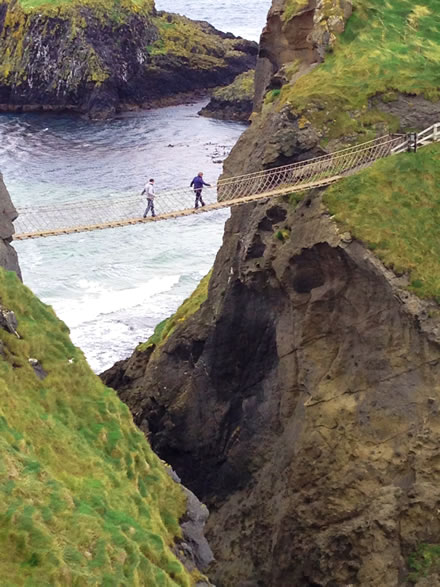
To the shepherd herding his flock
through the gorge below, it must appear as if I walk
on the sky. I feel that too: so little between me

and The Fall. But this is how faith works its craft.
One foot set in front of the other, while the wind
rattles the cage of the living and the rocks down there

cheer every wobble, your threads keep
this braided business almost intact saying: Don’t worry.
I’ve been here a long time. You’ll make it across.
~Matthew Olzmann “Letter to a Bridge Made of Rope”

I have never walked a rope bridge though I’ve seen one from a distance in Northern Ireland. It swayed far above a rocky gorge, hanging almost miraculously in the air as walkers trekked blithely across.

Not for me, I said.

I feel disoriented and dizzy when the surface beneath my feet sways and moves with the wind and due to my own movement. I make my own wobbling worse with my fear. The rocks below seem menacing; I don’t trust my own ability to navigate over and through them.

Oh, me of little faith. So little between me and The Fall.

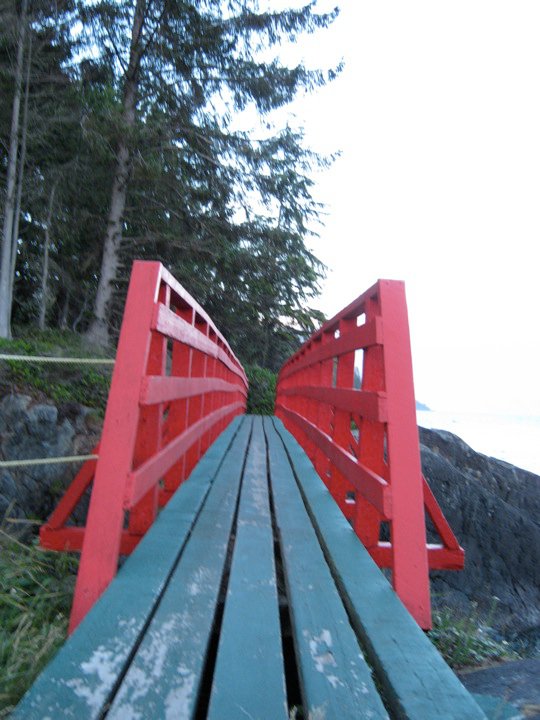
Simply crossing a narrow wooden bridge built over a fallen large old-growth tree trunk takes all my courage. I try to focus on my feet taking each step, testing the solid wood beneath me rather than looking down at the rushing water and sharp rocks below.

In the course of life, I have to take steps that feel uncertain and unsupported. I freeze in place, afraid to move forward, reluctant to leave the security of where I am to do what it takes to get safely to the other side.

Yet I need to trust what holds firm for others will hold firm for me.

Christ is the bridge for those like me who fear, who don’t trust their own feet, who can’t stop seeing the taunting and daunting rocks below. He has braided Himself around me to keep me safe, no matter what and no matter where. He’s been here a long time and will always be.

I can step out in that confidence.

This year’s Lenten theme:
So we fix our eyes not on what is seen, but on what is unseen, since what is seen is temporary, but what is unseen is eternal.
2 Corinthians 4: 18

Loving shepherd of Thy sheep,
Keep Thy lamb, in safety keep;
Nothing can Thy power withstand,
None can pluck me from Thy hand.

I will praise Thee everyday,
Gladly Thy all will obey;
Like Thy ones blessed above,
Happy in Thy presence love.

Loving shepherd, ever near,
Teach Thy lamb Thy voice to hear;
Suffer not my steps to stray,
From the straight and narrow way.

Where Thou leadest I would go,
Walking in Thy steps below;
Till before my Father’s throne,
I shall know as I am known.