Fenced Off

14119_552516830110_42904068_32556259_1112150_n

My grandmother’s house had been torn down after she sold her property on Similk Bay near Anacortes, Washington to a lumber company.  This was the house where her four babies were born, where she and my grandfather loved and fought and separated and loved again, and where our family spent chaotic and memorable Thanksgiving and Christmas meals.  After Grandpa died suddenly, she took on boarders, trying to afford to remain there on the wooded acreage fronted by stump farm meadows where her Scottish Highland cattle grazed.   She reached an age when it was no longer possible to make it work.   A deal was struck with the lumber company and she had moved to a small apartment, bruised by the move from her farm.

My father realized what her selling to a lumber company meant and it was a crushing thought.  The old growth woods would soon also be stumps on the rocky hill above the bay, opening a view to Mt. Baker to the east, to the San Juan Islands to the north, and presenting an opportunity for development into a subdivision.   He woke my brother and me early one Saturday in May and told us we were driving the 120 miles to Anacortes.  He was on a mission.

As a boy growing up on that land, he had wandered the woods, explored the hill, and helped his dad farm the rocky soil.  There was only one thing he felt he needed from that farm and he had decided to take us with him, to trespass where he had been born and raised to bring home a most prized treasure–his beloved lady slippers from the woods.

These dainty flowers enjoy a spring display known for its brevity–a week or two at the most–and they tend to bloom in small little clusters in the leafy duff mulch of the deep woods, preferring only a little indirect sunlight part of the day.  They are not easy to find unless you know where to look.  My father remembered exactly where to look.

We hauled buckets up the hill along with spades, looking as if we were about to dig for clams at the ocean.  Dad led us up a trail into the thickening foliage, until we had to bushwhack our way into the taller trees where the ground was less brush and more hospitable ground cover.  He would stop occasionally to get his bearings as things were overgrown.   We reached a small clearing and he knew we were near.  He went straight to a copse of fir trees standing guard over a garden of lady slippers.

There were almost thirty of them blooming, scattered in an area about the size of my tiny bedroom at home.  Each orchid-like pink and lavender blossom had a straight backed stem that held it with sturdy confidence.  To me, they looked like they could be little shoes for fairies who may have hung them up while they danced about barefoot.    To my father, they represented the last redeeming vestiges of his often traumatic rearing by an alcoholic father, and were about to be trammeled by bulldozers.  We set to work gently digging them out of their soft bedding, carefully keeping their bulb-like corms from losing a protective covering of soil and leafy mulch.  Carrying them in the buckets back to the car, we felt some vindication that even if the trees were to be lost to the saws, these precious flowers would survive.

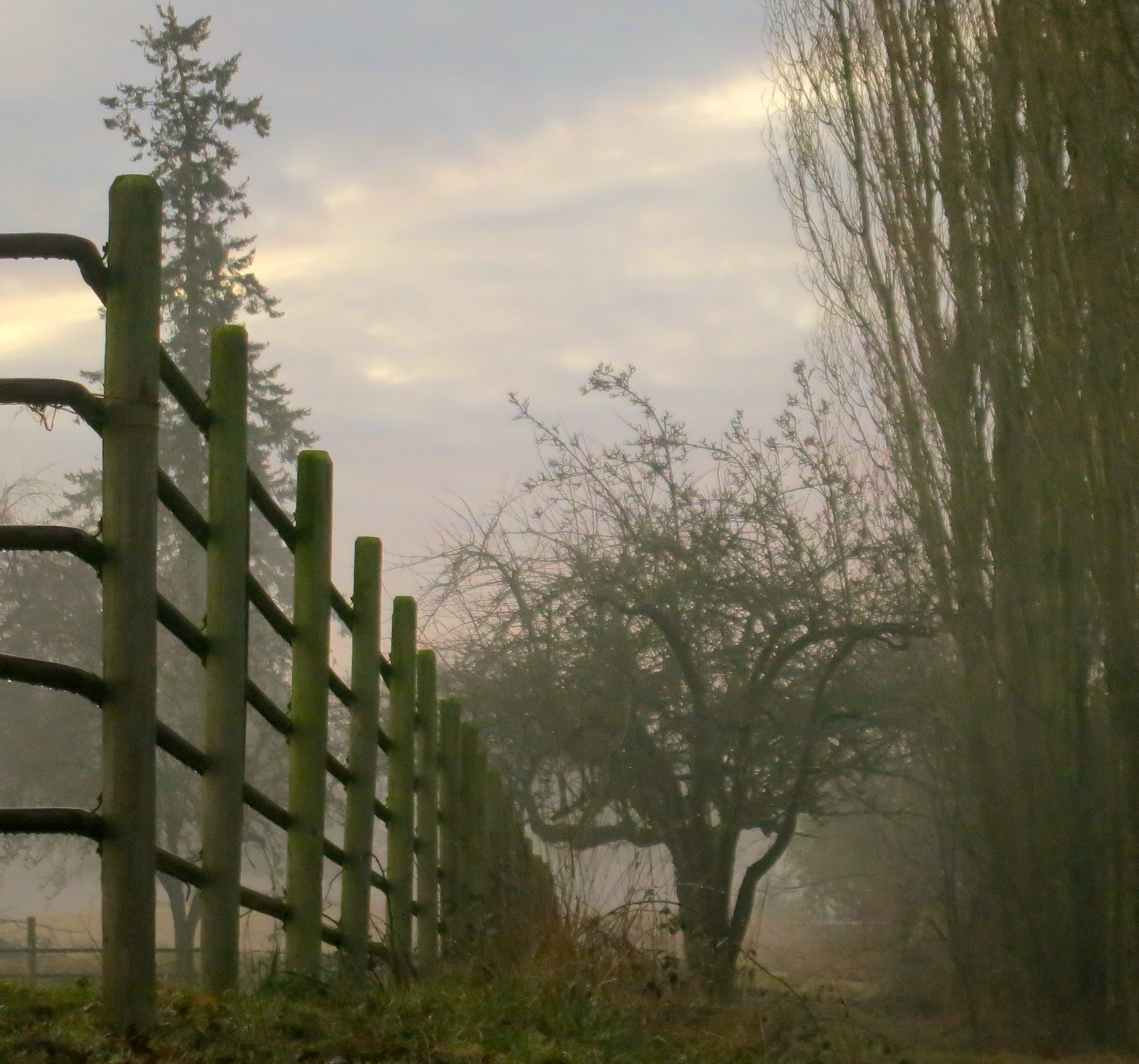
When we got home, Dad set to work creating a spot where he felt they could thrive in our own woods.  He found a place with the ideal amount of shade and light, with the protection of towering trees and the right depth of undisturbed leaf mulch.  We carefully placed the lady slippers in their new home, scattered in a pattern similar to how we found them.  Then Dad built a four foot split rail fence in an octagon around them, as a protection from our cattle and a horse who wandered the woods, and as a way to demarcate that something special was contained inside.

The next spring only six lady slippers bloomed from the original thirty.  Dad was disappointed but hoped another year might bring a resurgence as the flowers established themselves in their new home.  The following year there were only three.  Two years later my father left us and them, not looking back.

Sometime after, when my mother had to sell our farm after the divorce, I visited our lady slipper sanctuary in the woods for the last time in the middle of May.  The split rail fence was still there, guarding nothing but old memories.  No lady slippers bloomed.  There was not a trace they had ever been there.  They had simply given up and disappeared.

The new owners of our farm surely puzzled over the significance of the small fenced-off area in the middle of our woods.  They probably thought it surrounded a graveyard of some sort.

And so it did.
Things Are Not Like They Were

 fencerow
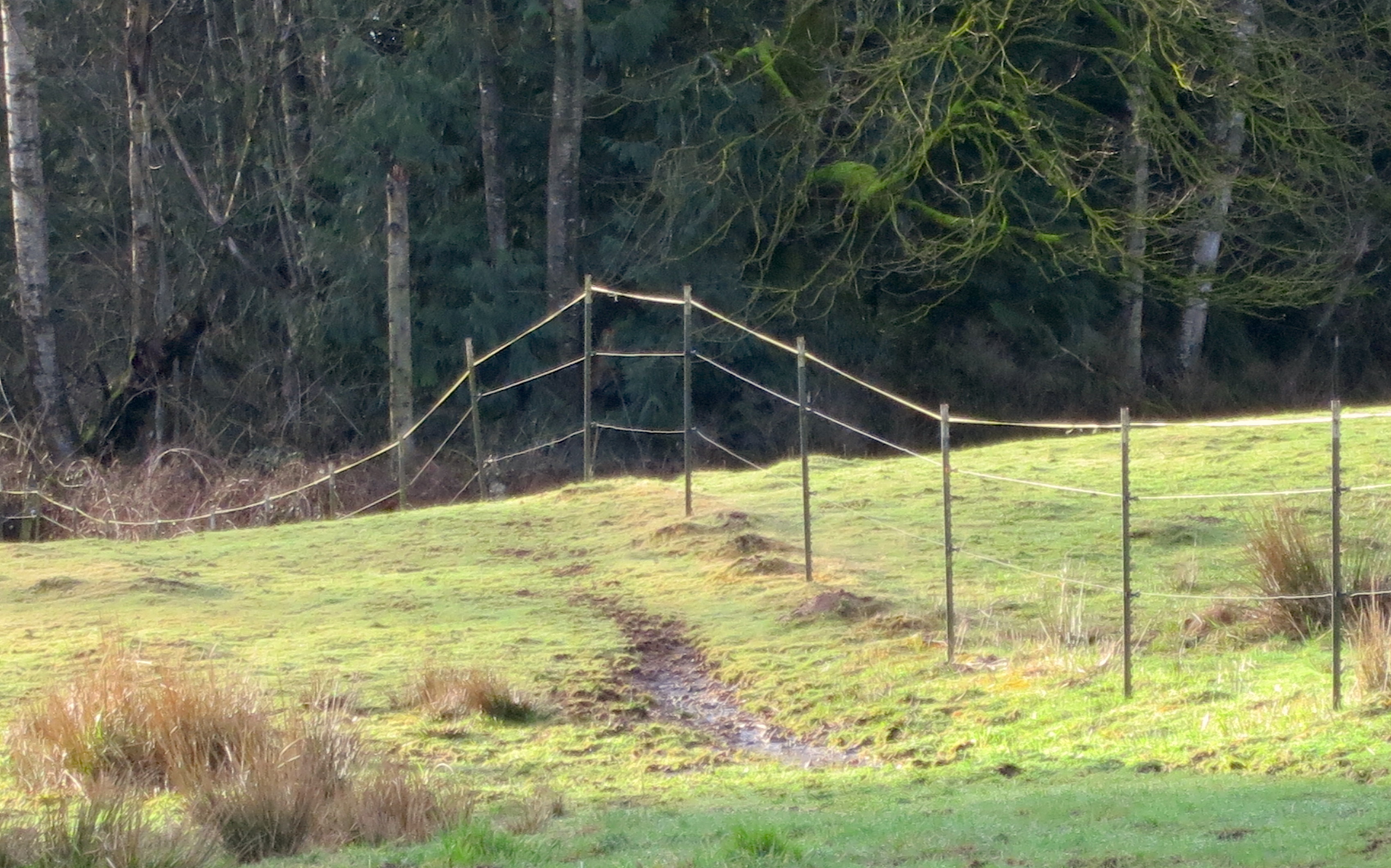
The machine shed is damp,
the dirt floor milled to powder
from years of boot and tractor
and machine traffic.
I look for the spade
I used when I was young,
when my grandfather said dig
and I dug holes
the depth I’d been taught
so the posts would stand,
hold the miles of barbed and hog wire
dividing our ground…
Dig, he would say,
and all morning, afternoon,
until it rained, until dark,
until I couldn’t lift the spade and grub
and he said enough,
I dug through dry brown
until it turned yellow clay
or black earth caked
to the tip of the steel. He taught me to measure
strength by depth,
narrow the hole around the oiled post,
and sturdy the line he’d laid
before I was old enough
to blister from work,
acquire the knowledge of straight,
of strength, cool soil,
rusted staples and splintered wood,
the knowledge of bending spikes
new, splicing wire,
swinging a hammer down hard,
the ache from hours of digging,
calloused hands and sunburn.
He trained me to rake,
tamp, stomp, pack dirt and clay,
the weight of the earth around the post,
its strength into the line.
Now the hammers, pliers and cutters are gone.
No rolls of wire hang from the beams.
No boxes of staples and spikes jam the shelves.
The tamping stick is broken.
Someone has wrapped duct tape around the spade handle;
the steel has rusted brown and rough;
a crack climbs from the tip to the mud-caked neck.
He would say it is useless,
that things are not like they were,
and I could repeat his words
but I have left the machine shed;
my hands have lost their calloused ridges;
my sweat, strain and ache are buried…
~Curtis Bauer from “A Fence Line Running Through It”
The old farmers in our county are dying off,
the ones who remember
when horse and human muscle provided the power
instead of diesel engines.
They have climbed down off their tractors
and into their beds
for a good night’s sleep
and stay good asleep.
Their machine sheds are cleared
in an auction,
their animals trucked away
for butcher,
their fence lines leaning
yet the corner posts,
set solid and sure in the hard ground,
keep standing
when the old farmer no longer does.
These old farmers knew hard work.
knew there were no days off
no shirking duty,
knew if anyone was going to do
what needed doing
it was them,
no one else.
Things are not like they were
though the strong posts remain,
ready to hold up another fence line,
showing a new generation
of farmers
what hard work yields.
mistyfence

Best of Barnstorming Photos Summer/Fall 2014

potintilla

photo by Tomomi Gibson

sunset713141

wwupetunia

pnpsunset714

sunset72114

bobbiewindow

augustmorn3

morningdew95143

sunset722142

sunset92horses

sunset8165

sunset8168

qal814

thistledown824142


wetweb2


webdew2

sunrise82414

homer81014

morningdew95146

sunrise97147

cactusbloom

sunrise97148

frog96141

tonypony

raindrops1126

autumn9271415

shadow2

clouds101143

octobermtbakerarea3

octobertwinlakes9

octobertwinlakes20

octobermtbakerarea

morningdew95145

rainjewels2

nasturtiumleaf

blueberryleaf

octobermaple

sunset11914

pampas2

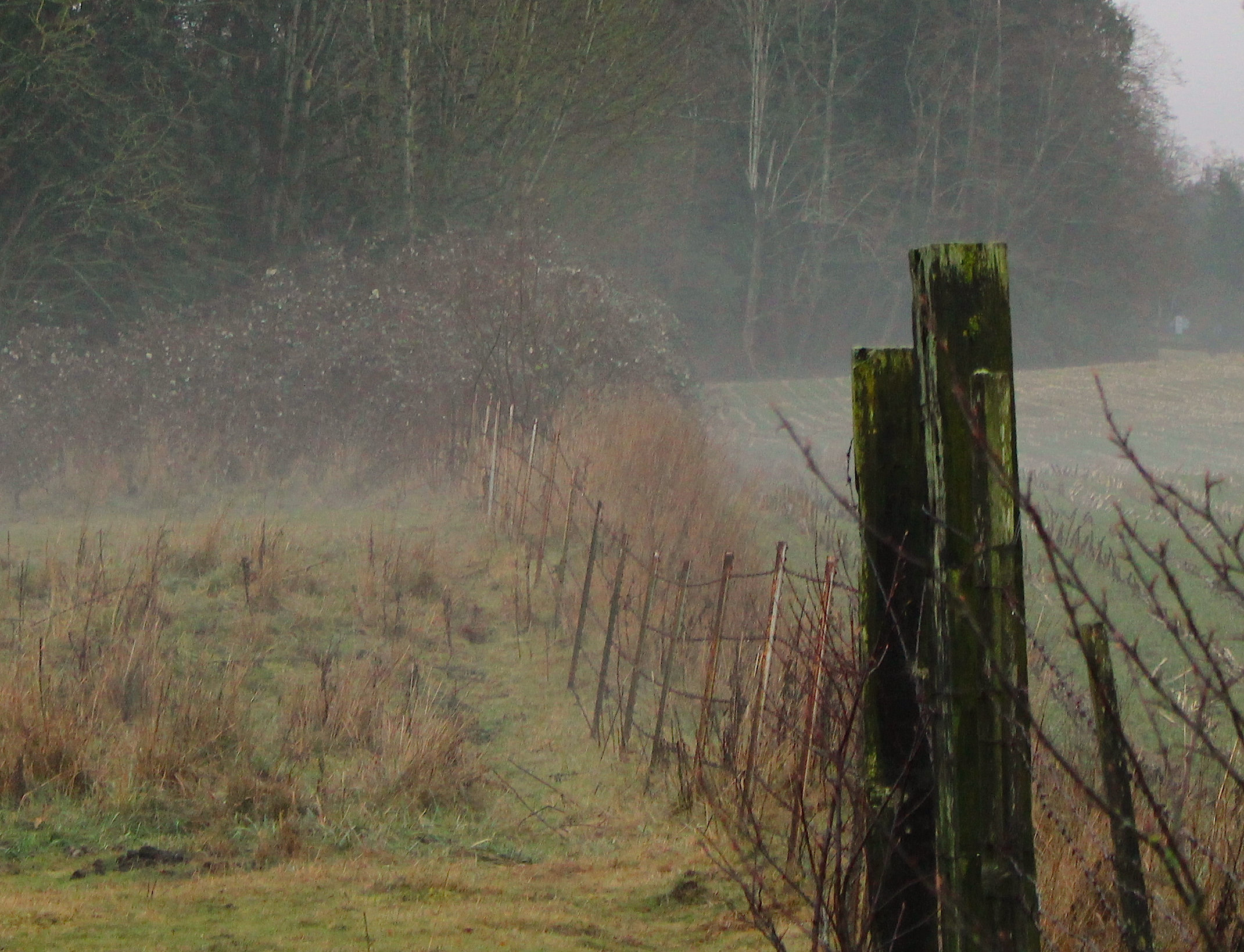
mistyfence

sunset1224145

tree141pampas4

adventfull2

thebuds

Bring the Frost

newyear8

mapleleafcolor

Season of ripening fruit and seeds, depart;
There is no harvest ripening in the heart.

Bring the frost that strikes the dahlias down
In one cruel night. The blackened buds, the brown
And wilted heads, the crippled stems, we crave –
All beauty withered, crumbling to the grave.
Wind, strip off the leaves, and harden, ground,
Till in your frozen crust no break is found.
Then only, when man’s inner world is one
With barren earth and branches bared to bone,
Then only can the heart begin to now
The seeds of hope asleep beneath the snow;
Then only can the chastened spirit tap
The hidden faith still pulsing in the sap.

Only with winter-patience can we bring
The deep-desired long-awaited spring.
~Anne Morrow Lindbergh “No Harvest Ripening”

lace4


sistersfence

dawn1118

A Calling

webdew1

Something is calling to me
from the corners of fields,
where the leftover fence wire
suns its loose coils, and stones
thrown out of the furrow
sleep in warm litters;
where the gray faces
of old No Hunting signs
mutter into the wind,
and dry horse tanks
spout fountains of sunflowers;
where a moth
flutters in from the pasture,
harried by sparrows,
and alights on a post,
so sure of its life
that it peacefully opens its wings.
~Ted Kooser “In the Corners of Fields”


sunflower2

butterflythistle

Morning Breaks to Silence

sunrise97143

sunrise971411

sunrise97147

sunrise971410

Well I know now the feel of dirt under the nails,
I know now the rhythm of furrowed ground under foot,
I have learned the sounds to listen for in the dusk,
the dawning and the noon.

I have held cornfields in the palm of my hand,
I have let the swaying wheat and rye run through my fingers,
I have learned when to be glad for sunlight and for sudden
thaw and for rain.

I know now what weariness is when the mind stops
and night is a dark blanket of peace and forgetting
and the morning breaks to the same ritual and the same
demands and the silence.
~Jane Clement from No One Can Stem the Tide


sunrise97145

sunrise97141

sunrise97148

sunrise9714


Keeping Watch

qal814

ladybugthistleweb

slugdandy

thistledown8142

I will try.
I will step from the house to see what I see and hear and I will praise it…

But this too, I believe, is a place
where God is keeping watch
until we rise, and step forth again…
~Mary Oliver from “Red Bird”

thistledownlight2

weed8141

thornberry

thistleweb

thistledownlight

weed814

Fade Into Glooms

sunset62514

sunset625143

hayfield

I love at eventide to walk alone
Down narrow lanes o’erhung with dewy thorn…

Right glad to meet the evening’s dewy veil
And see the light fade into glooms around.
~John Clare from “Summer Moods”

cloudgloom

sunset625141


Ache of Memory

sunset617142

Only be it understood,
It shall be no trespassing
If I come again some spring
In the grey disguise of years,
Seeking ache of memory here.
~Robert Frost from “On the Sale of My Farm”

sunsetgrasses8

sunsetgrasses12