With All My Heart

Leave the dishes.
Let the celery rot in the bottom drawer of the refrigerator
and an earthen scum harden on the kitchen floor.
Leave the black crumbs in the bottom of the toaster.
Throw the cracked bowl out and don’t patch the cup.
Don’t patch anything. Don’t mend. Buy safety pins.
Don’t even sew on a button.
Let the wind have its way, then the earth
that invades as dust and then the dead
foaming up in gray rolls underneath the couch.
Talk to them. Tell them they are welcome.
Don’t keep all the pieces of the puzzles
or the doll’s tiny shoes in pairs, don’t worry
who uses whose toothbrush or if anything
matches, at all.
Except one word to another. Or a thought.
Pursue the authentic—decide first
what is authentic,
then go after it with all your heart.
Your heart, that place
you don’t even think of cleaning out.
That closet stuffed with savage mementos.
Don’t sort the paper clips from screws from saved baby teeth
or worry if we’re all eating cereal for dinner
again. Don’t answer the telephone, ever,
or weep over anything at all that breaks.
Pink molds will grow within those sealed cartons
in the refrigerator. Accept new forms of life
and talk to the dead
who drift in through the screened windows, who collect
patiently on the tops of food jars and books.
Recycle the mail, don’t read it, don’t read anything
except what destroys
the insulation between yourself and your experience
or what pulls down or what strikes at or what shatters
this ruse you call necessity

~Louise Erdrich “Advice to Myself”
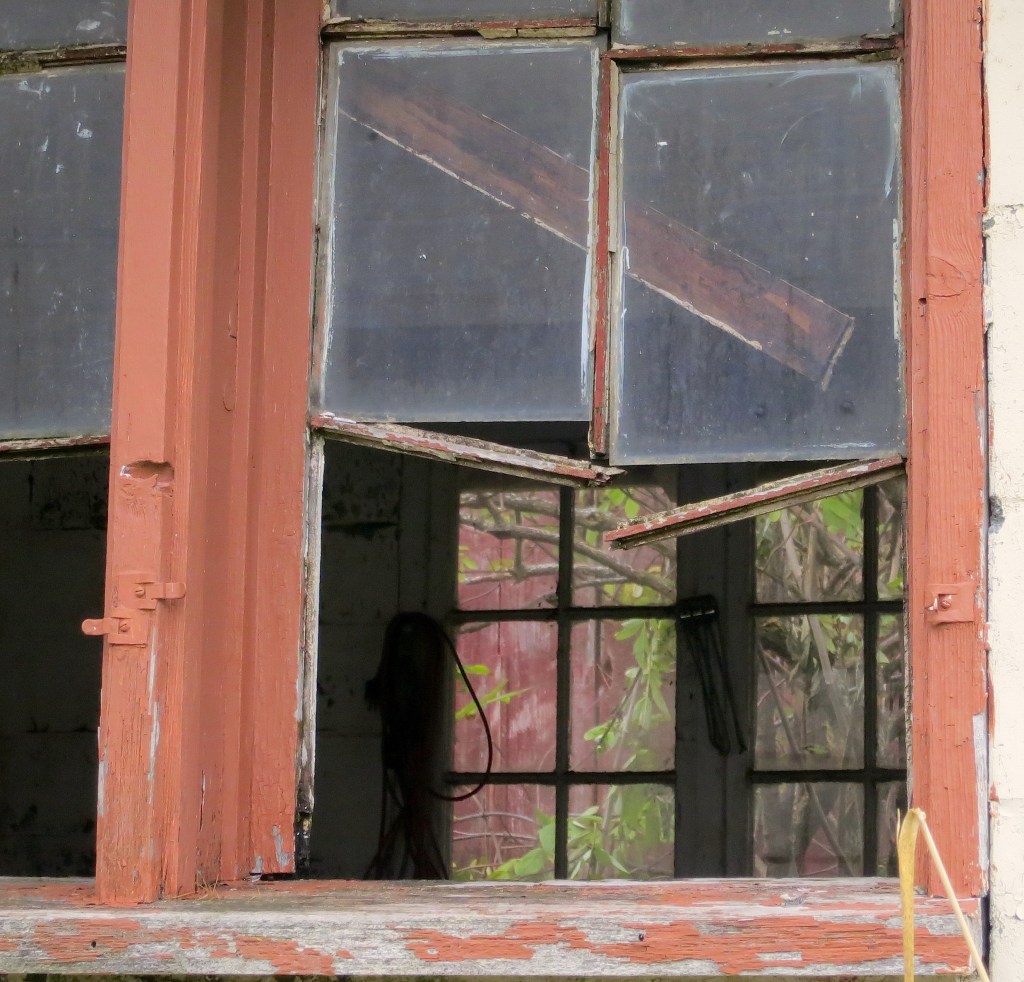
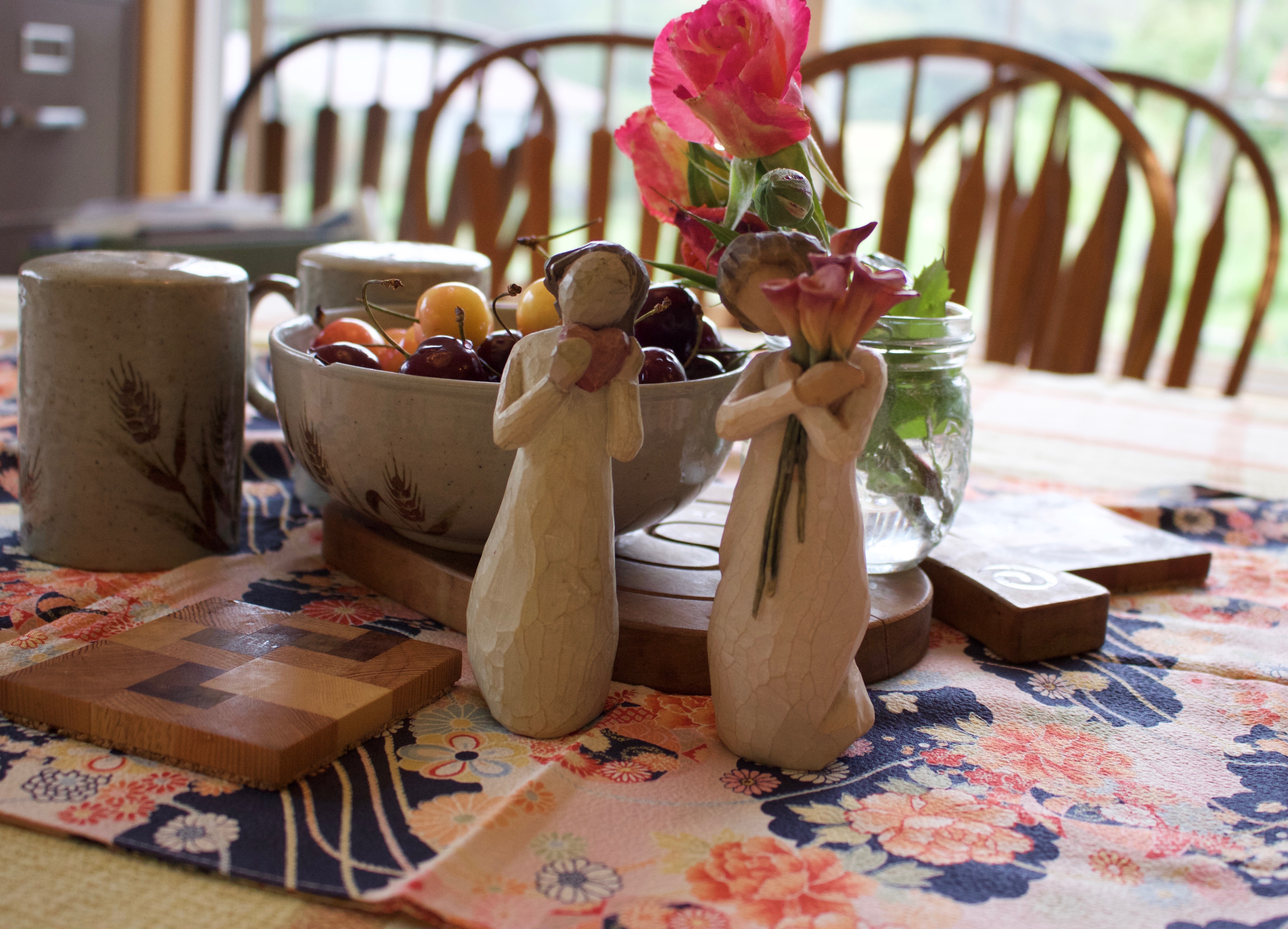
I am a messy person, coming from a long line of messy people. My paternal grandmother never had a clear kitchen counter, or a dining room table without piles of books and papers, spilling over with knickknacks and half-completed craft projects everywhere. I loved the chaos of her house since the messes left behind by her grandchildren weren’t as noticeable. I always felt at home, as if I was not being constantly monitored as a potential mess about to happen.

During this past (very hot) week, in our own home some sixty years later, we have grown from two residents to twelve with a lovely reunion of our children and grandchildren after four years of living far-flung and unable to gather. With four children under six years of age together, our house became even more of a whirlwind than it ordinarily is. I took no photos to demonstrate this, but trust me, the floor was covered with all manner of organic and inorganic matter most of the time. This was bliss, as long as I didn’t step on something sharp or suspiciously slimy in my bare feet.

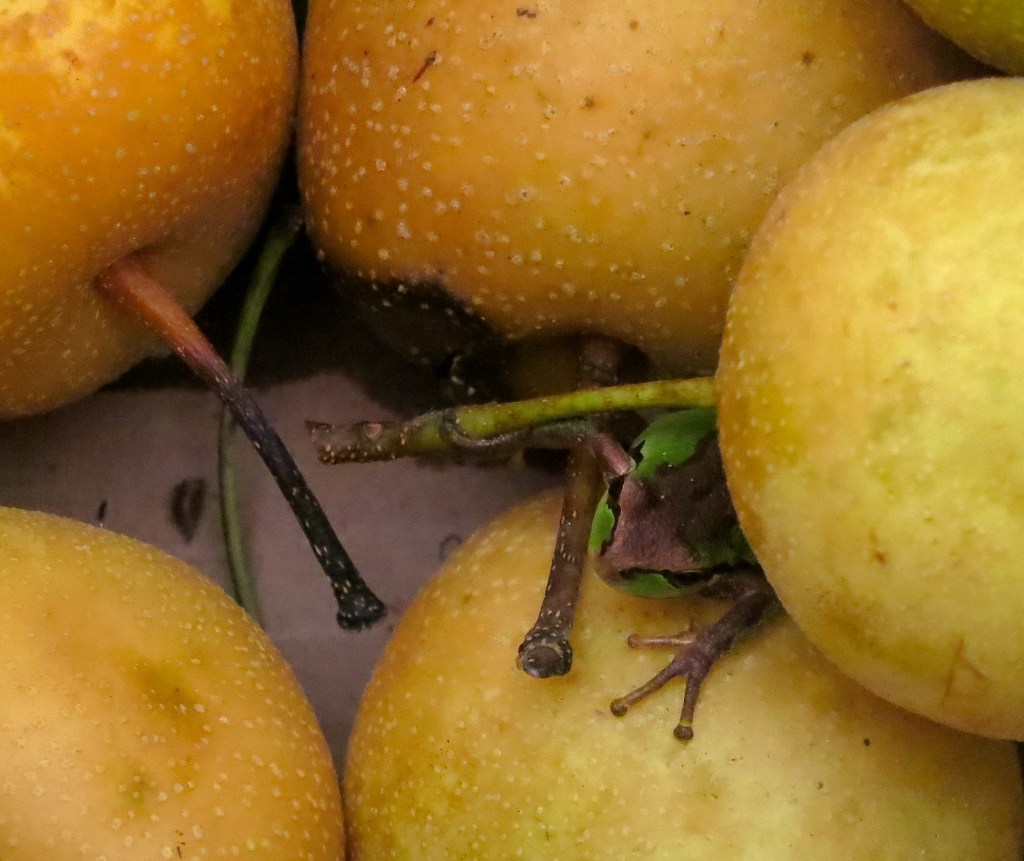
The biggest surprise was a very early morning, about 4:30 AM, when the house was still dark and quiet except for our ten month old grandson who had not adapted yet to our time zone, so was up early for his breakfast. As I tiptoed quietly into my <very messy chaotic> kitchen to retrieve something, I noticed a good sized dust bunny on the linoleum floor and bent down to pick it up to toss in the trash can. To my surprise, it leaped away from my fingers!

It kept jumping away and when my eyes finally focused in the early morning light, I realized it wasn’t an escaping dust bunny, but a tree frog covered in dust fuzz from my less than tidy floor. It must have come in the house from the perpetually open front door and hidden under a piece of furniture, being transformed into a furry froggy Frankenstein.

I caught it and carried it outside into the morning dawn, setting it free into the chaos of the world outside, rather than coping inside with my insufficient housekeeping. No, I didn’t think to get a photo. Oh, well. Some things you just have to take on faith.

After all, my heart has been leaping and rejoicing all week to have our family under one roof for a brief few days and whether the house was clean was simply a secondary concern. It actually is not a concern at all.

You can’t clean out a mama’s heart; it carries so much over the years that may need sweeping and scrubbing, but this was not the week to worry about it. My worth is not in what I own or how pristine I keep things, but in the depth of my commitment to those who I am given the privilege to know and love.
One-Time
Monthly
Yearly

Make a one-time or recurring donation to sponsor daily Barnstorming posts

Make a monthly donation

Make a yearly donation

Choose an amount

¤5.00
¤10.00
¤20.00
¤5.00
¤15.00
¤100.00
¤5.00
¤15.00
¤100.00

Or enter a custom amount

¤

Your contribution is deeply appreciated.

Your contribution is appreciated.

Your contribution is appreciated.

DonateDonate monthlyDonate yearly

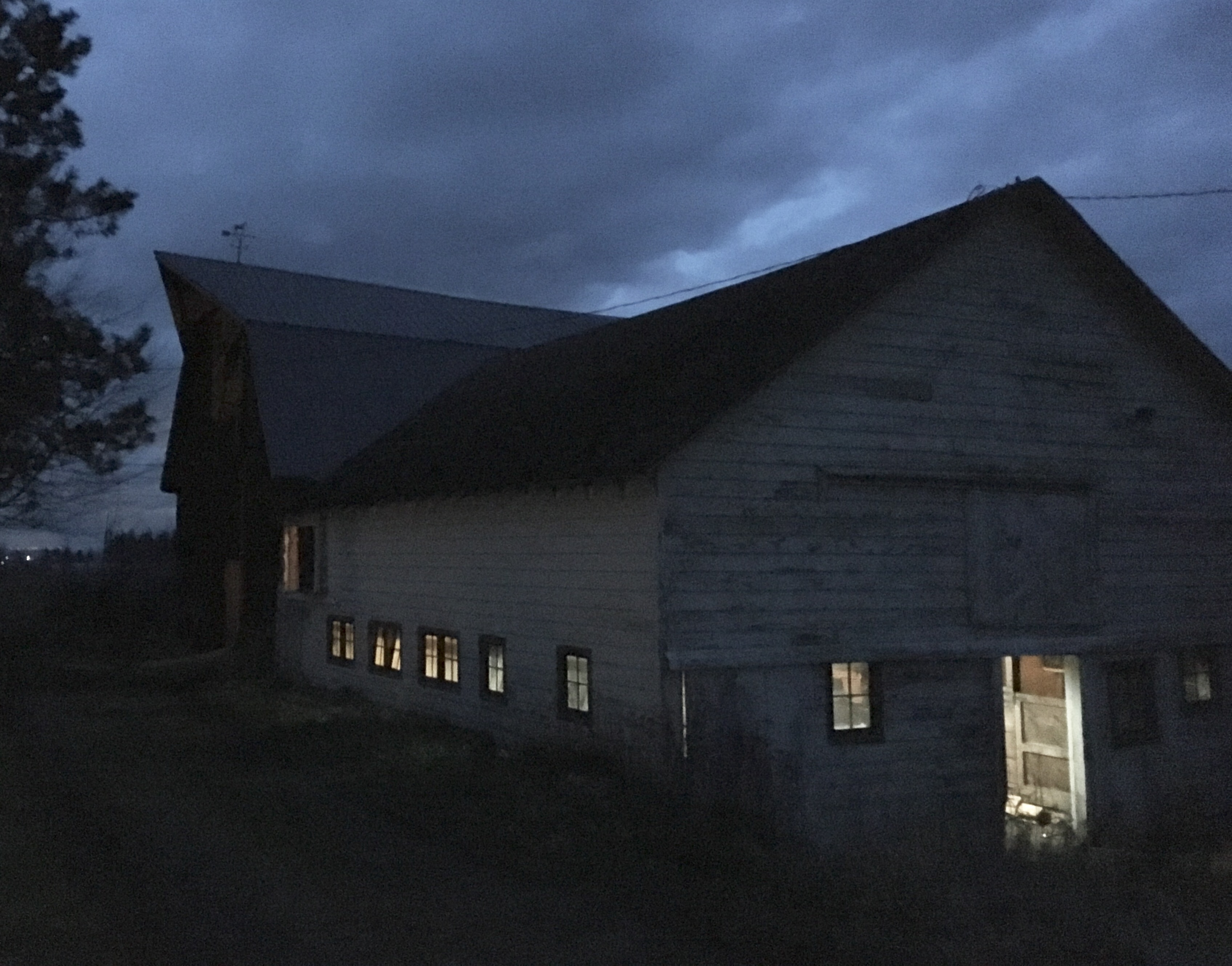
Prayer at Dusk For a Weeping World

At dusk, everything blurs and softens.
From here out over the long valley,
the fields and hills pull up
the first slight sheets of evening,
as, over the next hour,
heavier, darker ones will follow.

Quieted roads, predictable deer
browsing in a neighbor’s field, another’s
herd of heifers, the kitchen lights
starting in many windows. On horseback
I take it in, neither visitor
nor intruder, but kin passing, closer
and closer to night, its cold streams
rising in the sugarbush and hollow.
Half-aloud, I say to the horse,
or myself, or whoever: let fire not come
to this house, nor that barn,
nor lightning strike the cattle.
Let dogs not gain the gravid doe, let the lights
of the rooms convey what they seem to.

And who is to say it is useless
or foolish to ride out in the falling light
alone, wishing, or praying,
for particular good to particular beings,
on one small road in a huge world?
The horse bears me along, like grace,

making me better than what I am,
and what I think or say or see
is whole in these moments, is neither
small nor broken. For up, out of
the inscrutable earth, have come my body
and the separate body of the mare:
flawed and aching and wronged. Who then
is better made to say be well, be glad,

or who to long that we, as one,
might course over the entire valley,
over all valleys, as a bird in a great embrace
of flight, who presses against her breast,
in grief and tenderness,
the whole weeping body of the world?
~Linda McCarriston, "Riding Out at Evening"


photo by Emily Vander Haak

On this, my 68th birthday, I pray for the world as if I am carried by the grace of a horse who bears not only me but all burdens as well. I am a bird who embraces the air that lifts its wings, tenderly holding to its breast the weeping world.

I have seen much goodness in seven decades, sometimes through tears of sorrow; I hope to see much more before I’m done.

I am grateful, so very grateful to have lived these years learning how love can heal, how tears are dried, and how the only thing that lasts forever is God’s covenant to carry us with grace through it all.

photo by Brandon Dieleman
video of juvenile bald eagle by Peter Tamminga (down the road from our farm)

Whilst the world is weeping, let us do our bit.
We have the time to sympathise, to listen and to sit.
No needless thoughts, of the things we cannot do.
But appreciate all the good bits and look at them anew.
 
The warmth and comfort of our homes, the food we have to eat.
The family and friends we have, although we cannot meet.
The village that we live in, and the community we share.
So precious to us right now, so sit and think and care.
 
Whilst the world is full of sadness, anxiety and pain,
It’s hard to imagine our lives ever carefree again.
But nothing lasts forever, the clouds will always clear.
Let’s heal the world with love, so the sunshine can appear.
~Sandra Rickman “Whilst the World is Weeping”

One-Time
Monthly
Yearly

Make a one-time or recurring donation to support daily Barnstorming posts

Make a monthly donation

Make a yearly donation

Choose an amount

¤5.00
¤10.00
¤20.00
¤5.00
¤15.00
¤100.00
¤5.00
¤15.00
¤100.00

Or enter a custom amount

¤

Your contribution is deeply appreciated.

Your contribution is appreciated.

Your contribution is appreciated.

DonateDonate monthlyDonate yearly
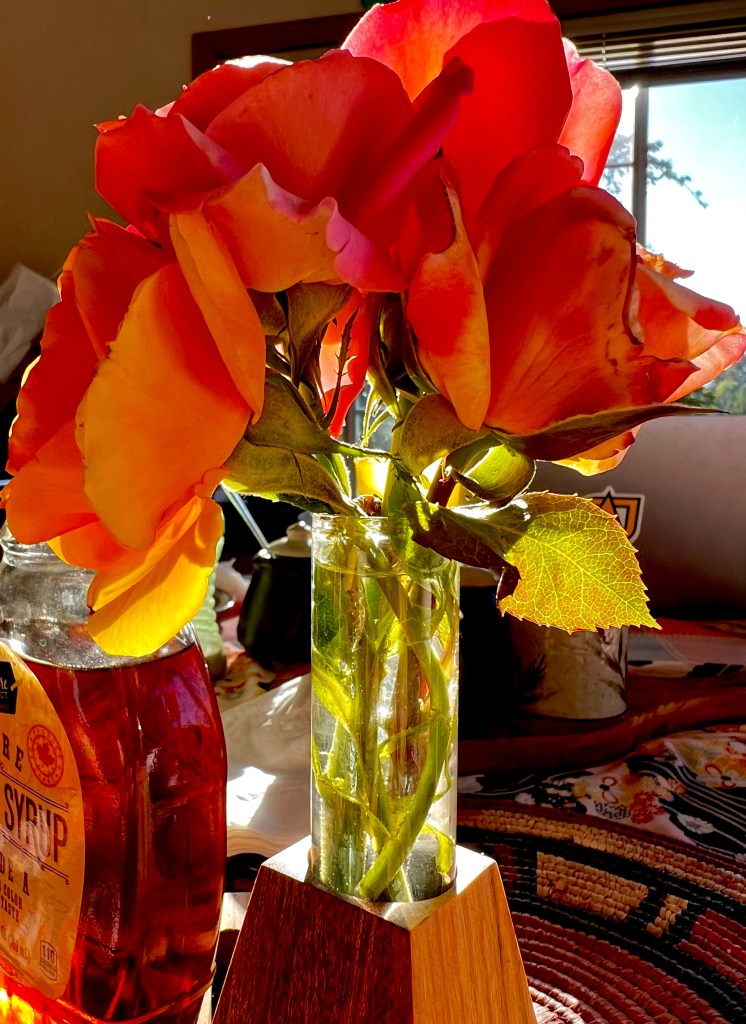
In Long Straight Rows

It’s not spring yet, but I can’t
wait anymore. I get the hoe,
pull back the snow from the old
furrows, expose the rich dark earth.
I bare my hand and dole out shriveled peas,
one by one.
I see my grandmother’s hand,
doing just this, dropping peas
into gray gumbo that clings like clay.
This moist earth is rich and dark
as chocolate cake.
Her hands cradle
baby chicks; she finds kittens in the loft
and hands them down to me, safe beside
the ladder leading up to darkness.
I miss
her smile, her blue eyes, her biscuits and gravy,
but mostly her hands.
I push a pea into the earth,
feel her hands pushing me back. She’ll come in May,
she says, in long straight rows,
dancing in light green dresses.
~Linda Hasselstrom “Planting Peas”

My earliest childhood memories include the taste and smell of fresh peas.  We lived in farming country north of Seattle where 50 years ago hundreds of acres of peas were grown for canning and freezing.  During the harvest, large pea harvesting machines would arrive for several days and travel down the road in caravans of 10 or 12, going from farm to farm to farm. They worked 24 hours a day to harvest as quickly as possible and traveled the roads late at night because they were so huge, they would take up both lanes of the country roads.  Inevitably a string of cars would form behind the pea harvesters, unable to pass, so it became a grand annual parade celebrating the humble pea.

The smell in the air when the fields were harvested was indescribable except to say it was most definitely a “green” and deliciously fresh smell.  The vines and pods would end up as silage for cattle and the peas would be separated to go to the cannery.  I figured those peas were destined for the city dwellers because in our back yard garden, we grew plenty of our own.

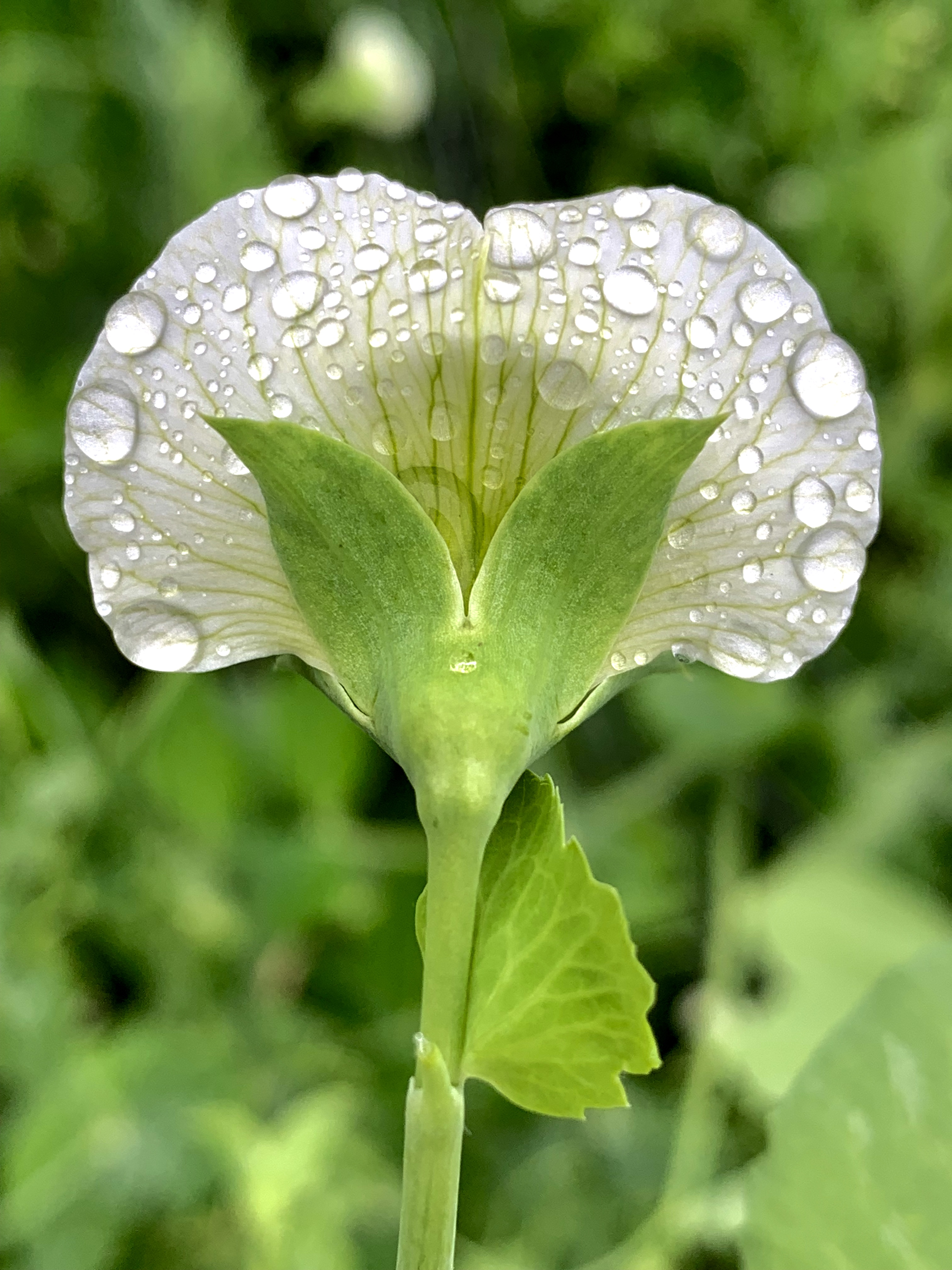
Pea seeds, wrinkled and frankly a little boring, could be planted even before the last frost was done with us in March, or even sometimes on Washington’s birthday in February.  The soil needed to not be frozen and not be sopping.  True, the seeds might sit still for a few weeks, unwilling to risk germination until the coast was clear and soil warmed a bit, but once they were up out of the ground, there was no stopping them.  We would generally have several rotations growing, in the hope of a 6 week pea eating season if we were fortunate, before the heat and worms claimed the vines and the pods.

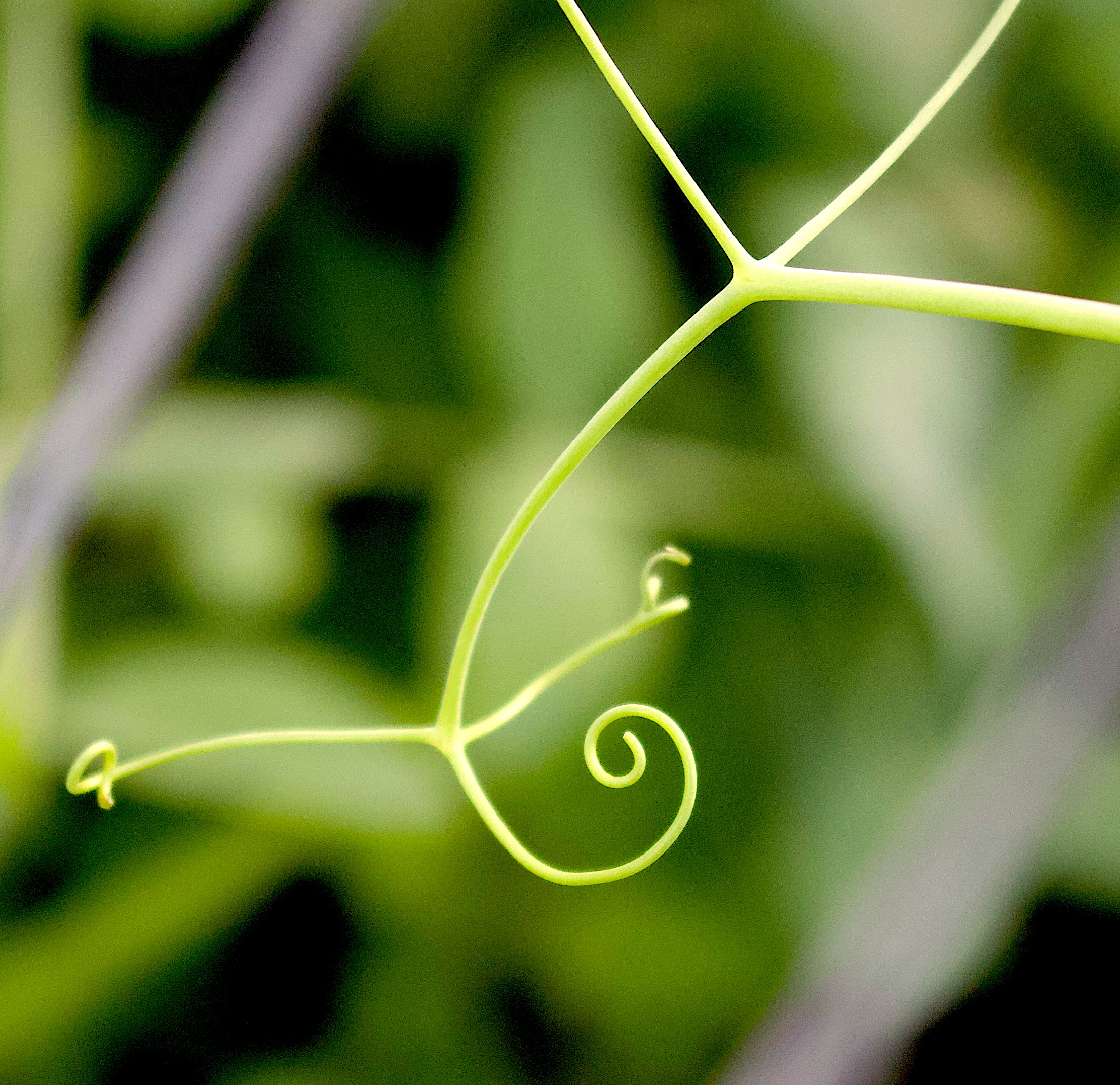
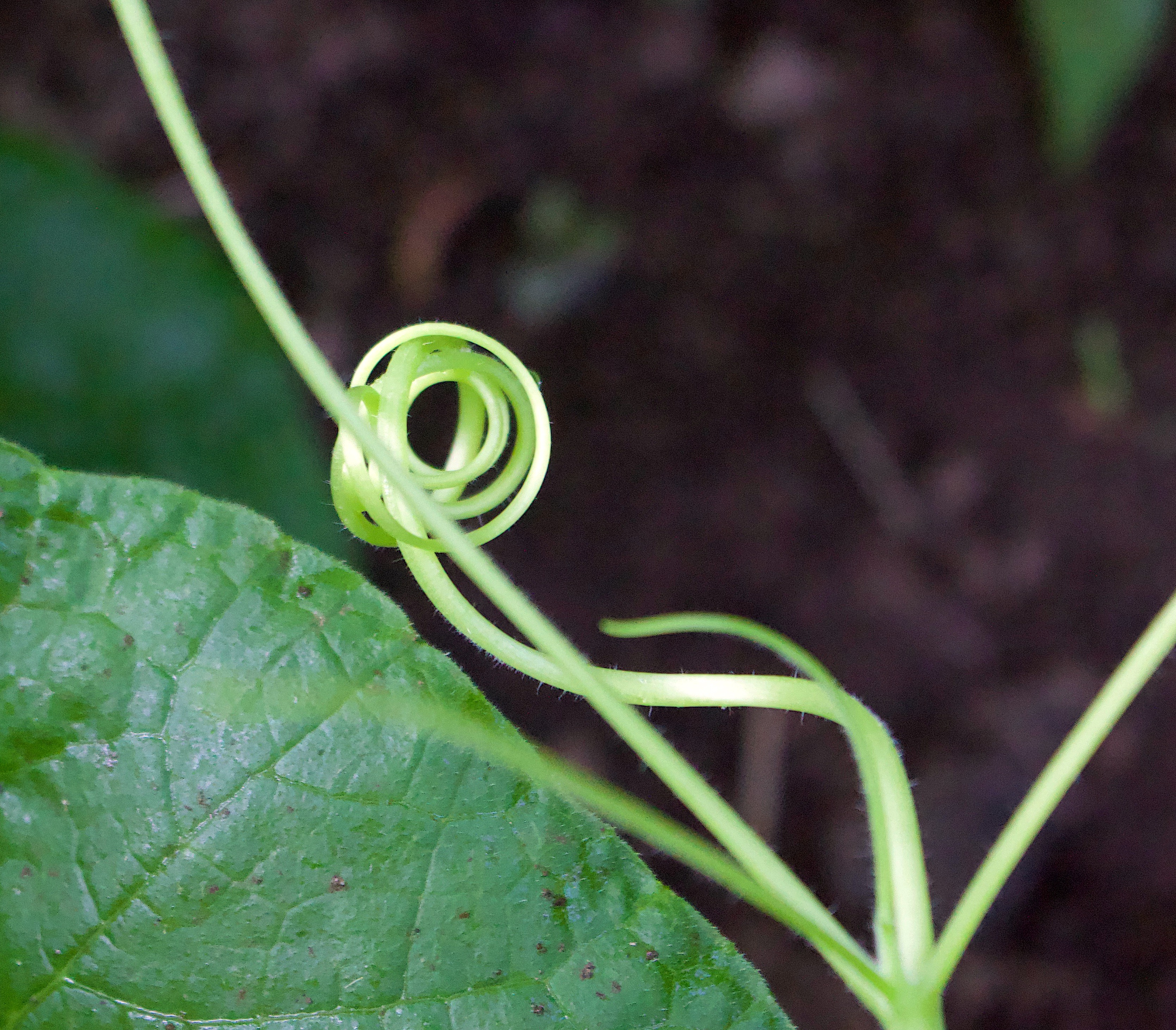
We always planted telephone peas, so the support of the vines was crucial–we used hay twine run up and down between two taut smooth wires attached high and low between two wooden posts.  The vines could climb 6 feet tall or better and it was fascinating to almost literally watch the pea tendrils wind their way around the strings (and each other), erotically clinging and wrapping themselves in their enthusiasm.

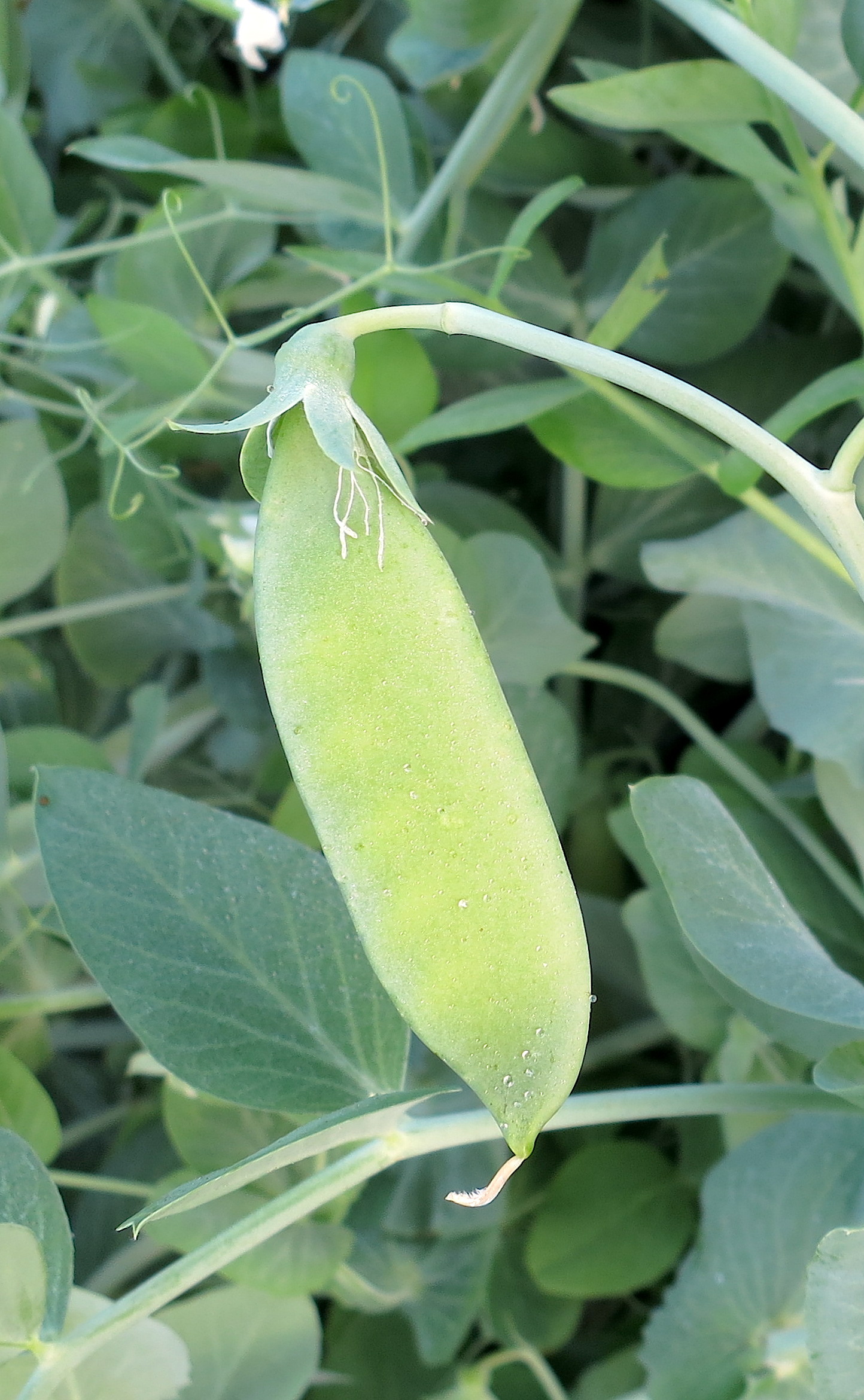
Once the pods start to form,  impatience begins.  I’d be out in the garden every day copping feels, looking for that first plump pod to pick and pop open.  It never failed that I would pick too soon, and open a pod to find only weenie little peas, barely with enough substance to taste.  Within a day or two, however, the harvest would be overwhelming, so we’d have to pick early in the morning while the peas were still cool from the night dew.

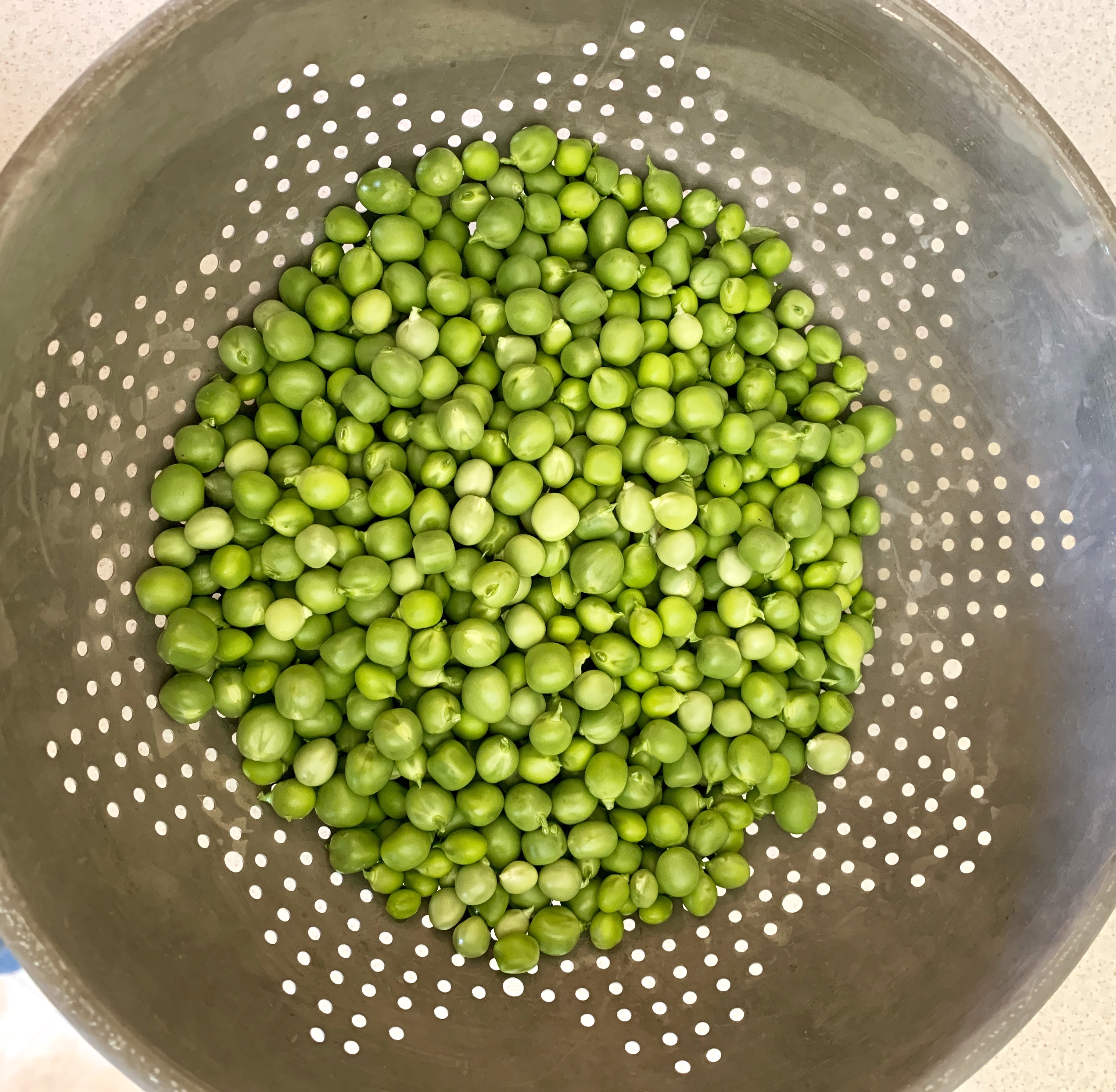
Then it was shelling time, which involved several siblings on a back porch, one mother supervising from a distance to make sure there weren’t too many peas being pelted in pique at an annoying little brother, and lots of bowls to catch the peas and the pods.  A big paper sack of intact pods would yield only a few cups of peas, so this was great labor for small yield.   Opening a pod of peas is extremely satisfying though;  there is a tiny audible “pop” when the pod is pressed at the bottom, and then as your thumb runs down the inner seam of the pod loosening all the peas, they make a dozen little “pings” in the bowl when they fall.  A symphony of pea shelling often accompanied by the Beach Boys and the Beatles.

Once the weather got hot, the pea worms would be at work in the pods, so then one encountered wiggly white larvae with little black heads and their webs inside the pods.  We actually had a “Wormie” song we sung when we found one, even in the 60’s recognizing that our organic garden meant sharing the harvest with crawling protein critters. The peas would be bored through, like a hollowed out jack o’lantern, so those got dumped in the discard bowl.

The dull green coat of the raw pea turns bright green during the several minutes of blanching in boiling water, then they are plunged into ice water until cool and packed in ziplock bags.  Those peas are welcomed to the table during the other 11 months out of the year, sometimes mixed with carrots, sometimes with mushrooms, sometimes chased with a little fresh garlic.  They are simply the most lovely food there is other than chocolate.

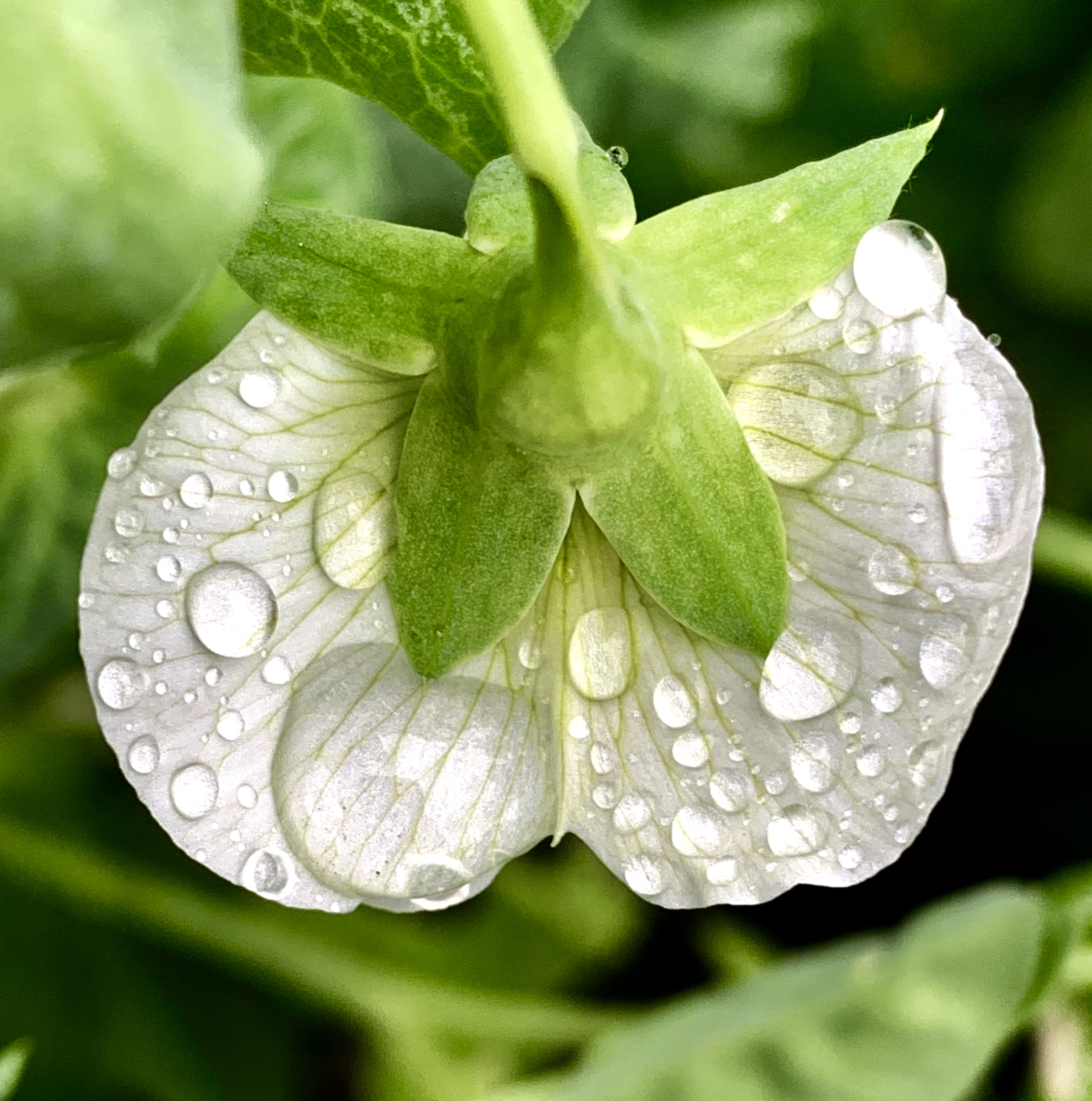
From an undistinguished pea seed to intricate vines and coiling tendrils–from pregnant pods bursting at the seams to a bounty at meals: the humble pea does indeed deserve a grand parade in the middle of the night and the close attention of only the best grandmas.

One-Time
Monthly
Yearly

Make a one-time or recurring donation to support daily Barnstorming posts

Make a monthly donation

Make a yearly donation

Choose an amount

¤5.00
¤10.00
¤20.00
¤5.00
¤15.00
¤100.00
¤5.00
¤15.00
¤100.00

Or enter a custom amount

¤

Your contribution is appreciated.

Your contribution is appreciated.

Your contribution is appreciated.

DonateDonate monthlyDonate yearly
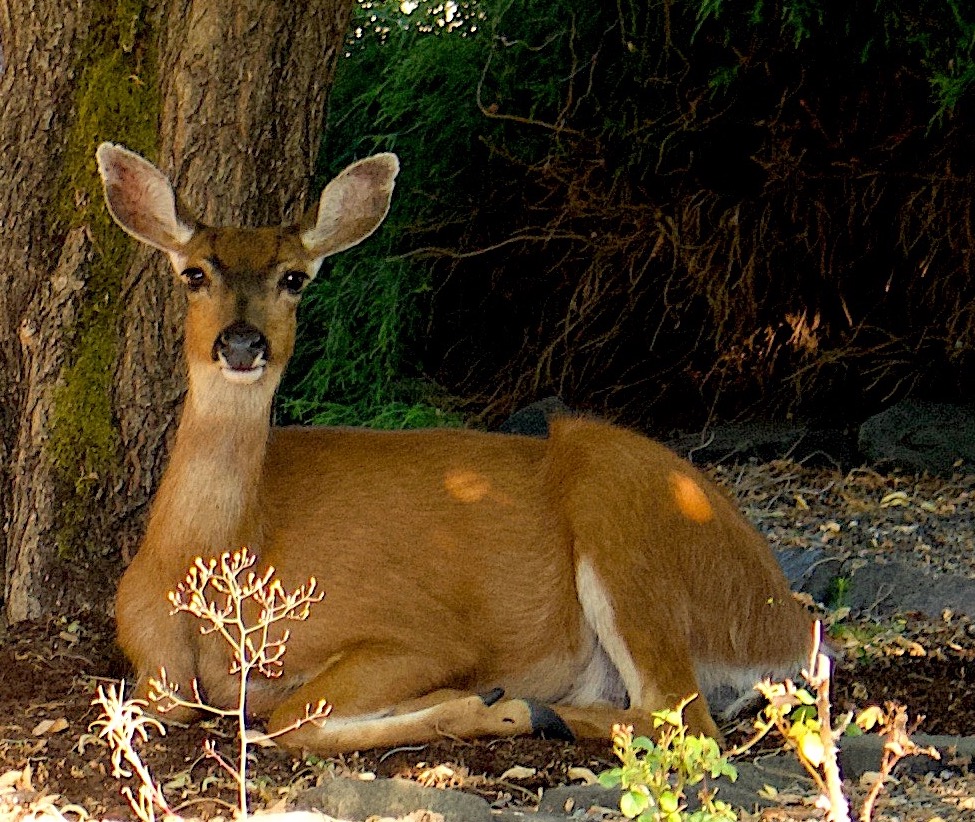
Astonished

It’s an early summer day, going to be a hot one.
I’m away from home, I’m working; the sky is solidly blue
with just a chalk smear of clouds. So why this melancholy?
Why these blues? Nothing I’ve done seems to matter; I
could leave tomorrow and no one would notice, that’s how
invisible I feel. But look, there’s a pair of cardinals
on the weathered table, pecking at sunflower seeds
which I’ve brought from home. They don’t seem
particularly grateful. Neither does the sky, no matter
how I transcribe it. I wanted to do more in this life,
not the elusive prizes, but poems that astonish. A big flashy jay
lands on the table, scattering seeds and smaller birds.
They regroup, continue to hunt and peck on the lawn.
~Barbara Crooker, “Melancholia” from Some Glad Morning

When despair for the world grows in me
and I wake in the night at the least sound
in fear of what my life and my children’s lives may be,
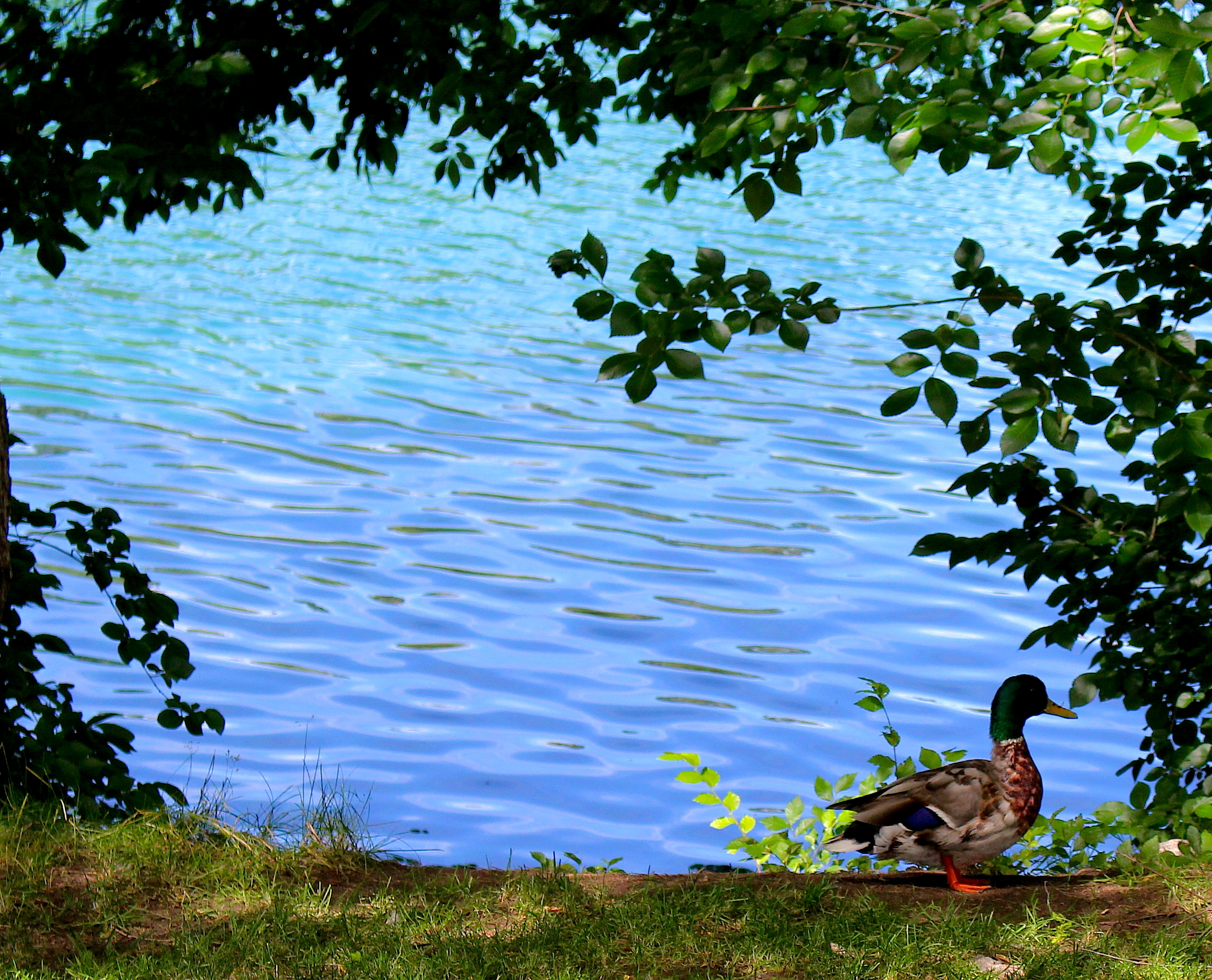
I go and lie down where the wood drake
rests in his beauty on the water, and the green heron feeds.

I come into the peace of wild things
who do not tax their lives with forethought
of grief. I come into the presence of still water.
And I feel above me the day-blind stars
waiting with their light. For a time
I rest in the grace of the world, and am free.
~Wendell Berry “The Peace of Wild Things” from The Selected Poems of Wendell Berry

I lay awake last night worrying over our son and his family’s ten hour overnight flight from Tokyo. Our two young grandchildren arrive today after 30 months of pandemic separation – to them, we are just faces on a screen.

We go soon to collect them from half-way around the world where they said a sorrowful sayonara to grandparents and family there, arriving here to a new life, new language, new everything, with their worldly belongings in suitcases.

From the largest city in the world to our little corner of the middle of nowhere.

I will watch them discover for themselves
the joys and sorrows of this world.
When I look through their eyes,
I will be reminded there is light beyond the darkness I fear,
there is peace amid the chaos,
there is a smile behind the tears,
there is stillness within the noisiness
there is rest despite my restlessness,
there is grace as old gives way to new.

I do not need to do anything astonishing myself.
Astonishing happens all around me.

I need only notice and cherish it.

One-Time
Monthly
Yearly

Make a one-time donation

Make a monthly donation

Make a yearly donation

Choose an amount

$5.00
$15.00
$100.00
$5.00
$15.00
$100.00
$5.00
$15.00
$100.00

Or enter a custom amount

$

Your contribution is appreciated.

Your contribution is appreciated.

Your contribution is appreciated.

DonateDonate monthlyDonate yearly
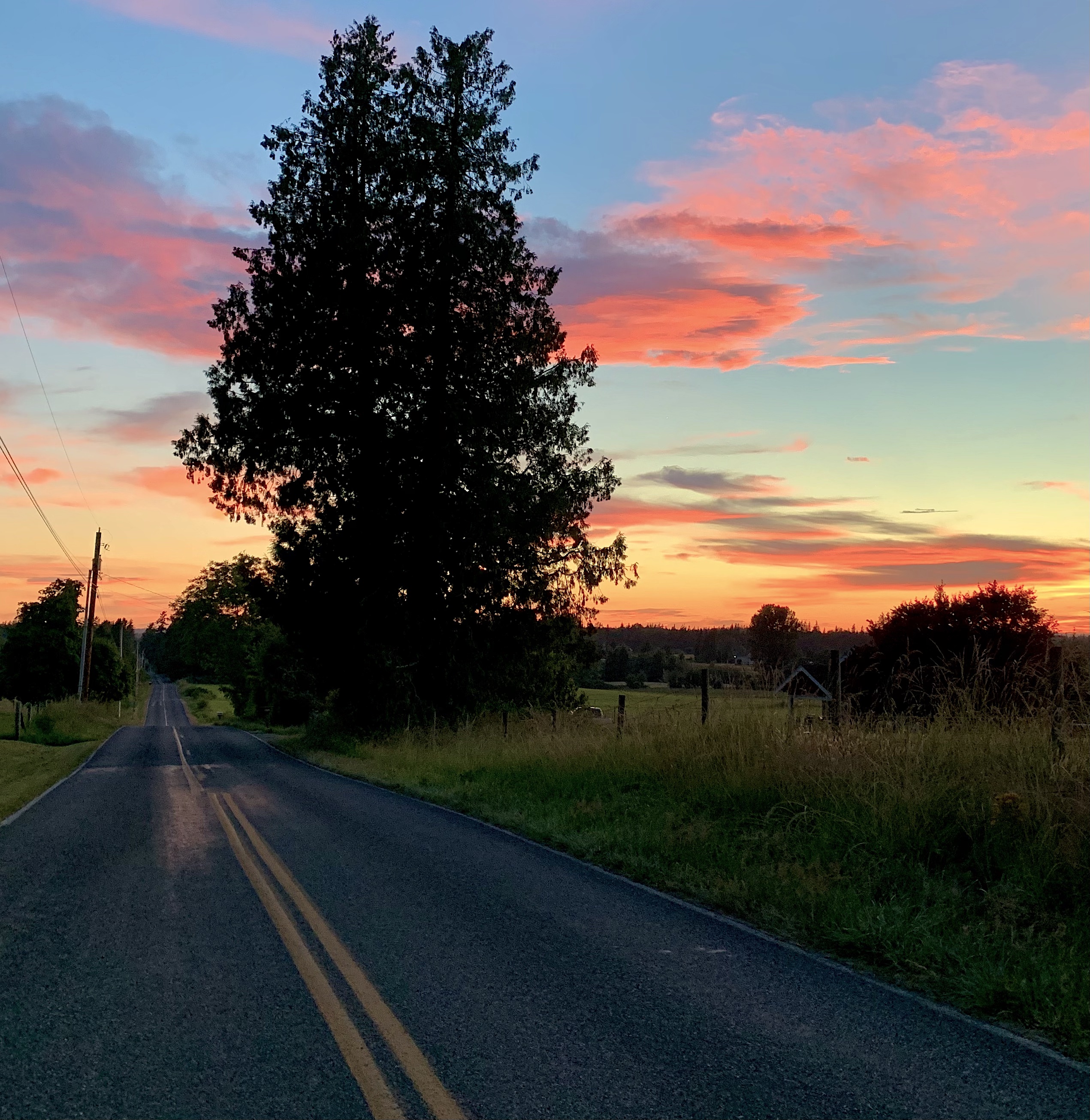
Wondering How She Came to Be There

She wasn’t looking
when they took this picture:
sitting on the grass
in her bare feet
wearing a cotton dress,
she stares off to the side
watching something on the lawn
the camera didn’t catch.
What was it?
A ladybug? A flower?
Judging from her expression,
possibly nothing at all,
or else
the lawn was like a mirror,
and she sat watching herself,
wondering who she was
and how she came to be there
sitting in this backyard,
wearing a cheap, white dress,
imagining that tomorrow
would be like all her yesterdays,
while her parents chatted
and watched, as I do
years later,
too distantly to interfere.
~Dana Gioia, “Photograph of My Mother as a Young Girl” from Daily Horoscope

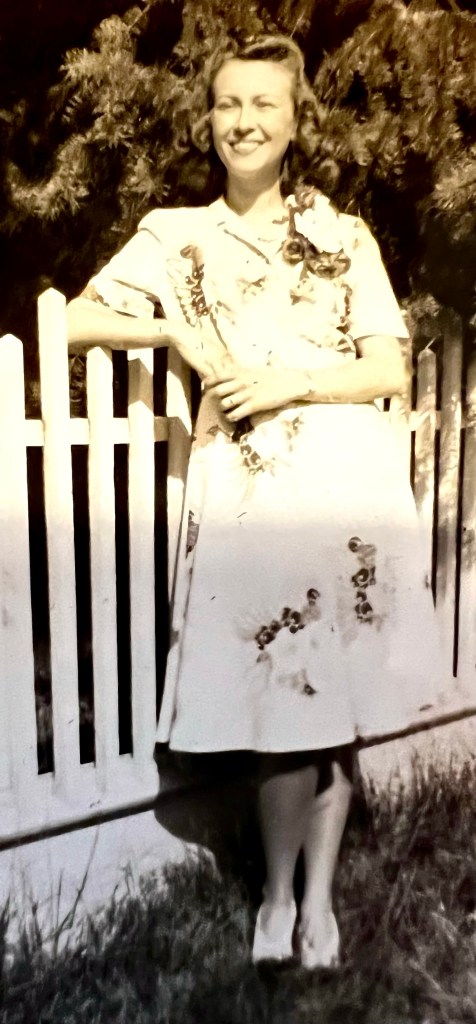
Yesterday was my mother Elna Schmitz Polis’ 102nd birthday though she left us behind nearly 14 years ago. I wrote the poem below while she was fading from this life.

Vigil at my mother’s bedside

Lying still, your mouth gapes open as
I wonder if you breathe your last.
Your hair a white cloud
Your skin baby soft
No washing, digging, planting gardens
Or raising children
Anymore.

Where do your dreams take you?
At times you wake in your childhood home of
Rolling wheat fields, boundless days of freedom.
Other naps take you to your student and teaching days
Grammar and drama, speech and essays.
Yesterday you were a young mother again
Juggling babies, farm and your wistful dreams.

Today you looked about your empty nest
Disguised as hospital bed,
Wondering aloud about
Children grown, flown.
You still control through worry
and tell me:
Travel safely
Get a good night’s sleep
Take time to eat
Call me when you get there

I dress you as you dressed me
I clean you as you cleaned me
I love you as you loved me
You try my patience as I tried yours.
I wonder if I have the strength to
Mother my mother
For as long as she needs.

When I tell you the truth
Your brow furrows as it used to do
When I disappointed you~
This cannot be
A bed in a room in a sterile place
Waiting for death
Waiting for heaven
Waiting

And I tell you:
Travel safely
Eat, please eat
Sleep well
Call me when you get there.

Dad and Mom in their early thirties
Mom’s favorite song to sing
One-Time
Monthly
Yearly

Make a one-time or recurring donation to support daily Barnstorming posts

Make a monthly donation

Make a yearly donation

Choose an amount

¤5.00
¤10.00
¤20.00
¤5.00
¤15.00
¤100.00
¤5.00
¤15.00
¤100.00

Or enter a custom amount

¤

Your contribution is deeply appreciated.

Your contribution is appreciated.

Your contribution is appreciated.

DonateDonate monthlyDonate yearly
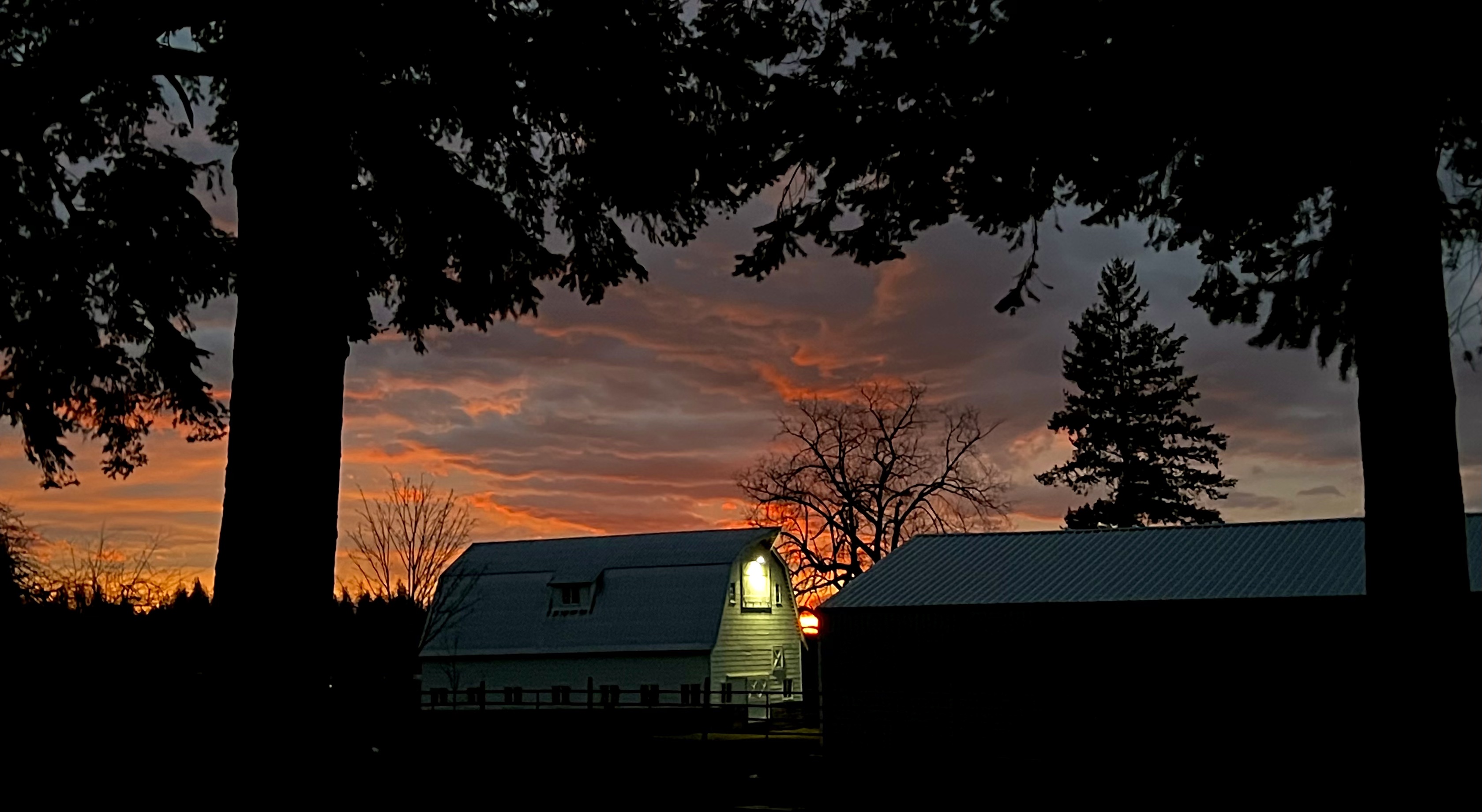
A Refuge in Briars and Brambles

What’s incomplete in me seeks refuge
in blackberry bramble and beech trees,
where creatures live without dogma
and water moves in patterns
more ancient than philosophy.
I stand still, child eavesdropping on her elders.
I don’t speak the language
but my body translates best it can,
wakening skin and gut, summoning
the long kinship we share with everything.
~Laura Grace Weldon, “Common Ground” from  Blackbird

When despair for the world grows in me
and I wake in the night at the least sound
in fear of what my life and my children’s lives may be,
I go and lie down where the wood drake
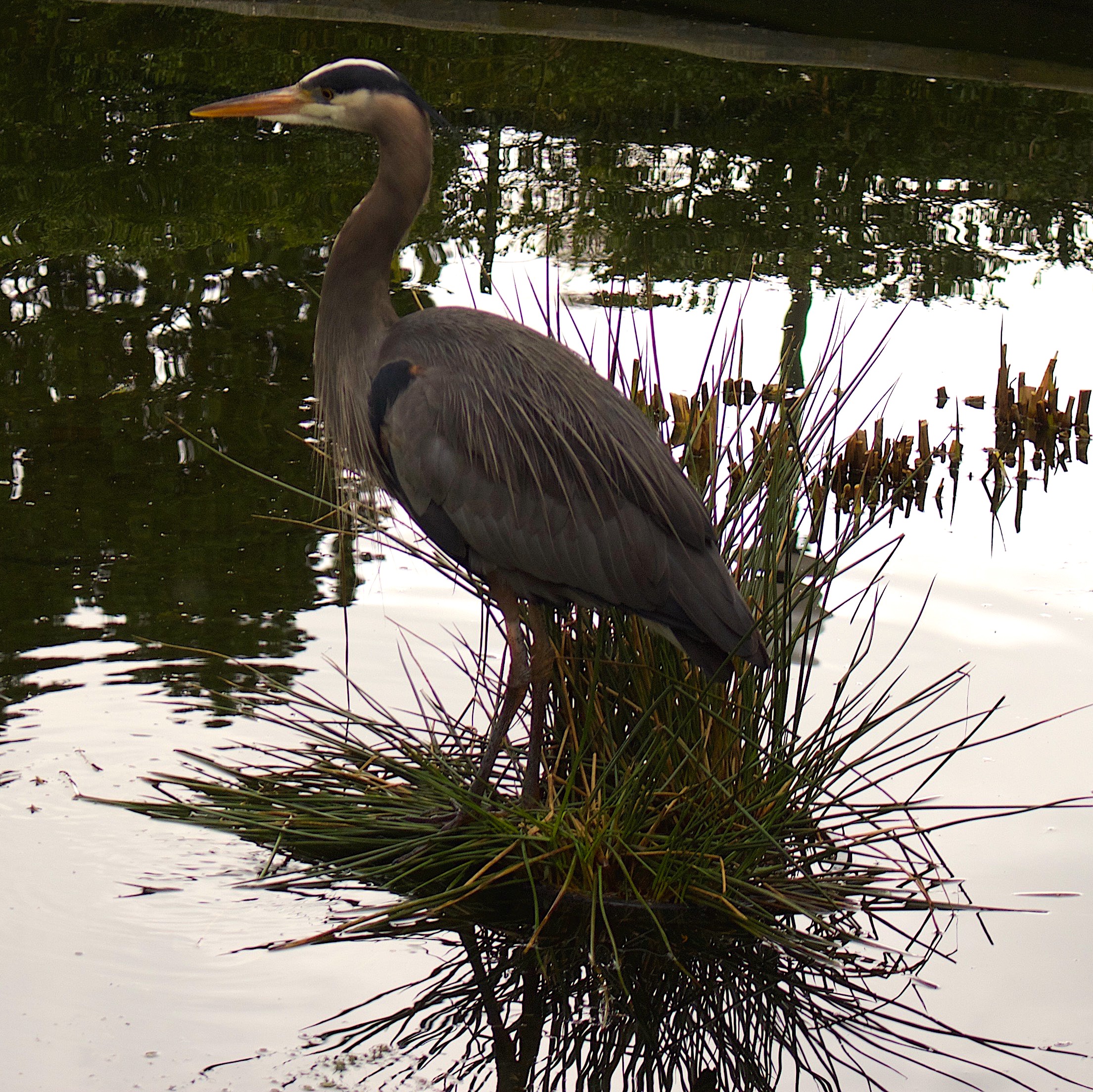
rests in his beauty on the water, and the great heron feeds.
I come into the peace of wild things
who do not tax their lives with forethought
of grief. I come into the presence of still water.
And I feel above me the day-blind stars
waiting with their light. For a time
I rest in the grace of the world, and am free.
~Wendell Berry “The Peace of Wild Things”

Nearly thirty months of pandemic separation and
I long to share our farm with our far-flung grandchildren
who live across the ocean, to watch them discover
the joys and sorrows of this place we inhabit.
I will tell them there is light beyond this darkness,
there is refuge amid the brambles,
there is kinship with what surrounds us,
there is peace amid the chaos,
there is a smile behind the tears,
there is stillness within the noisiness,
there is rescue when all seems hopeless,
there is grace as the old gives way to new.

One-Time
Monthly
Yearly

Make a one-time or recurring donation to support daily Barnstorming posts

Make a monthly donation

Make a yearly donation

Choose an amount

¤5.00
¤10.00
¤20.00
¤5.00
¤15.00
¤100.00
¤5.00
¤15.00
¤100.00

Or enter a custom amount

¤

Your contribution is deeply appreciated.

Your contribution is appreciated.

Your contribution is appreciated.

DonateDonate monthlyDonate yearly
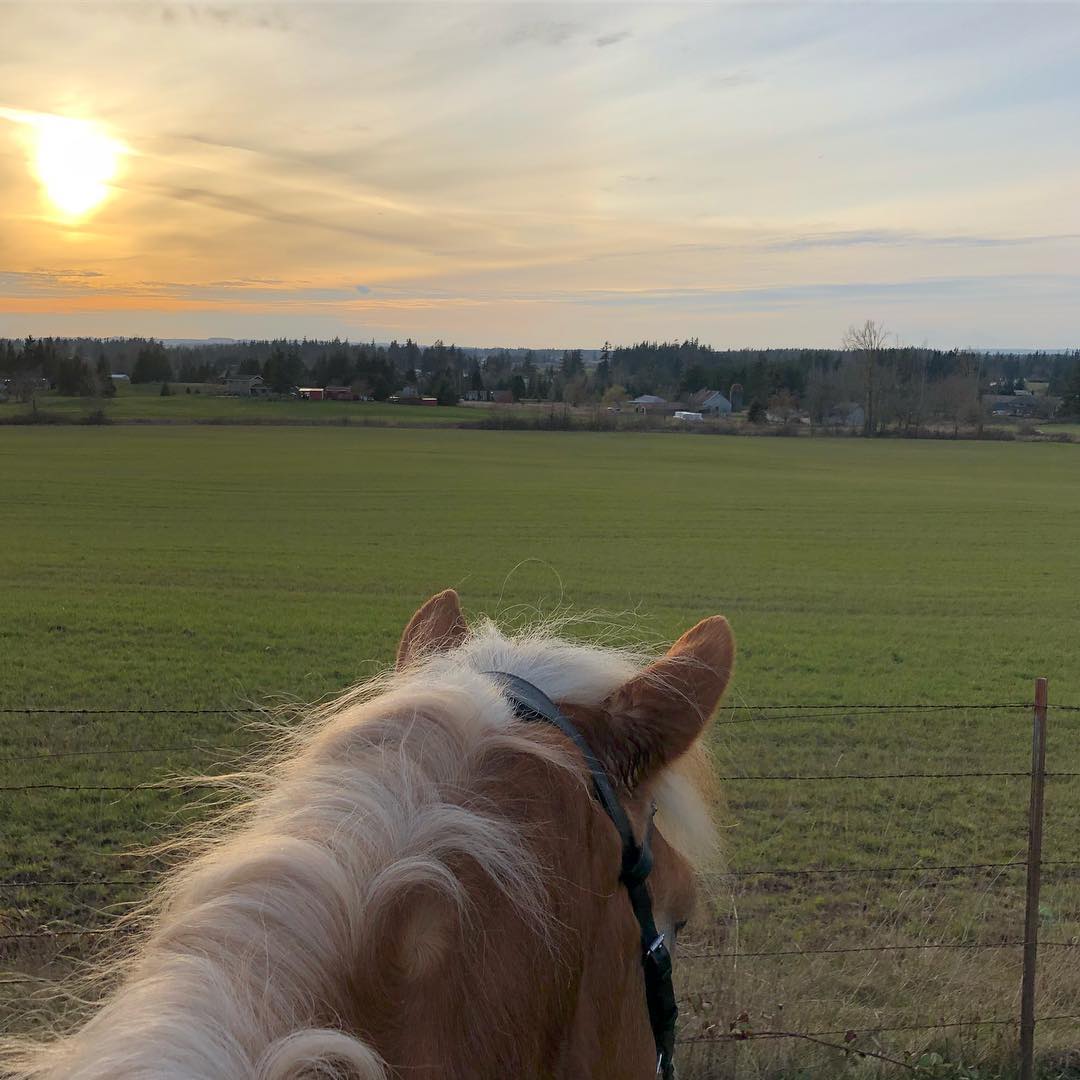
Acknowledging the Abyss

The cradle rocks above an abyss, and common sense tells us that our existence is but a brief crack of light between two eternities of darkness. Although the two are identical twins, man, as a rule, views the prenatal abyss with more calm than the one he is heading for.
~Vladimir Nabokov from Speak Memory

I think Nabokov had it wrong. This is the abyss.
That’s why babies howl at birth,
and why the dying so often reach
for something only they can apprehend.

At the end they don’t want their hands
to be under the covers, and if you should put
your hand on theirs in a tentative gesture
of solidarity, they’ll pull the hand free;
and you must honor that desire,
and let them pull it free.

~Jane Kenyon from “Reading Aloud to My Father”

Great Grandma Emma, granddaughter Andrea, great-grandson Zealand – photo by Andrea Nipges

Great Grandpa Harry holding baby Emerson, photo by mama Abby Mobley
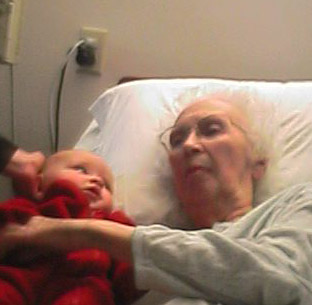
Great-Grandma Elna and Noah

And once, for no special reason,
I rode in the back of the pickup, leaning against the cab.
Everything familiar was receding fast…

Whatever I saw
I had already passed…
(This must be what life is like
at the moment of leaving it.)
~Jane Kenyon from “What It’s Like”

The farther I am down the road, everything familiar seems to be receding fast. What I see on my journey, I have already passed by as I watch it disappear into the horizon.

I too often mistake this world, this existence,  as the only light there is,  a mere beam of illumination in the surrounding night of eternity, the only relief from overwhelming darkness.  If we stand looking up from the bottom, we might erroneously assume we are the source of the light, we are all there is.

Yet looking at this world from a different perspective, gazing down into the abyss from above, it is clear the light does not come from below –it is from beyond us.

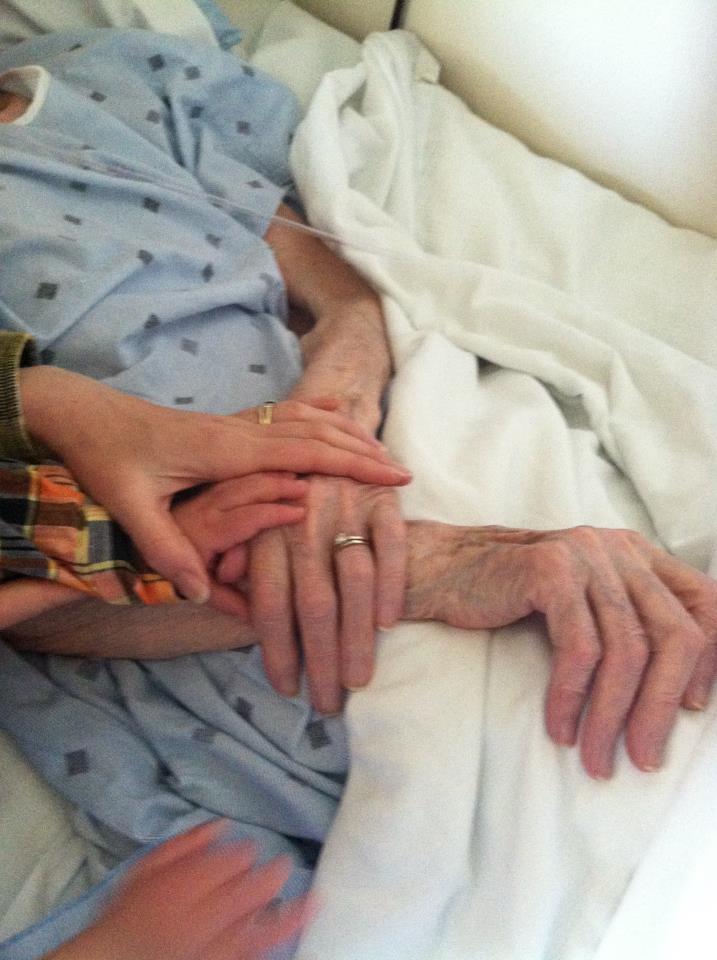
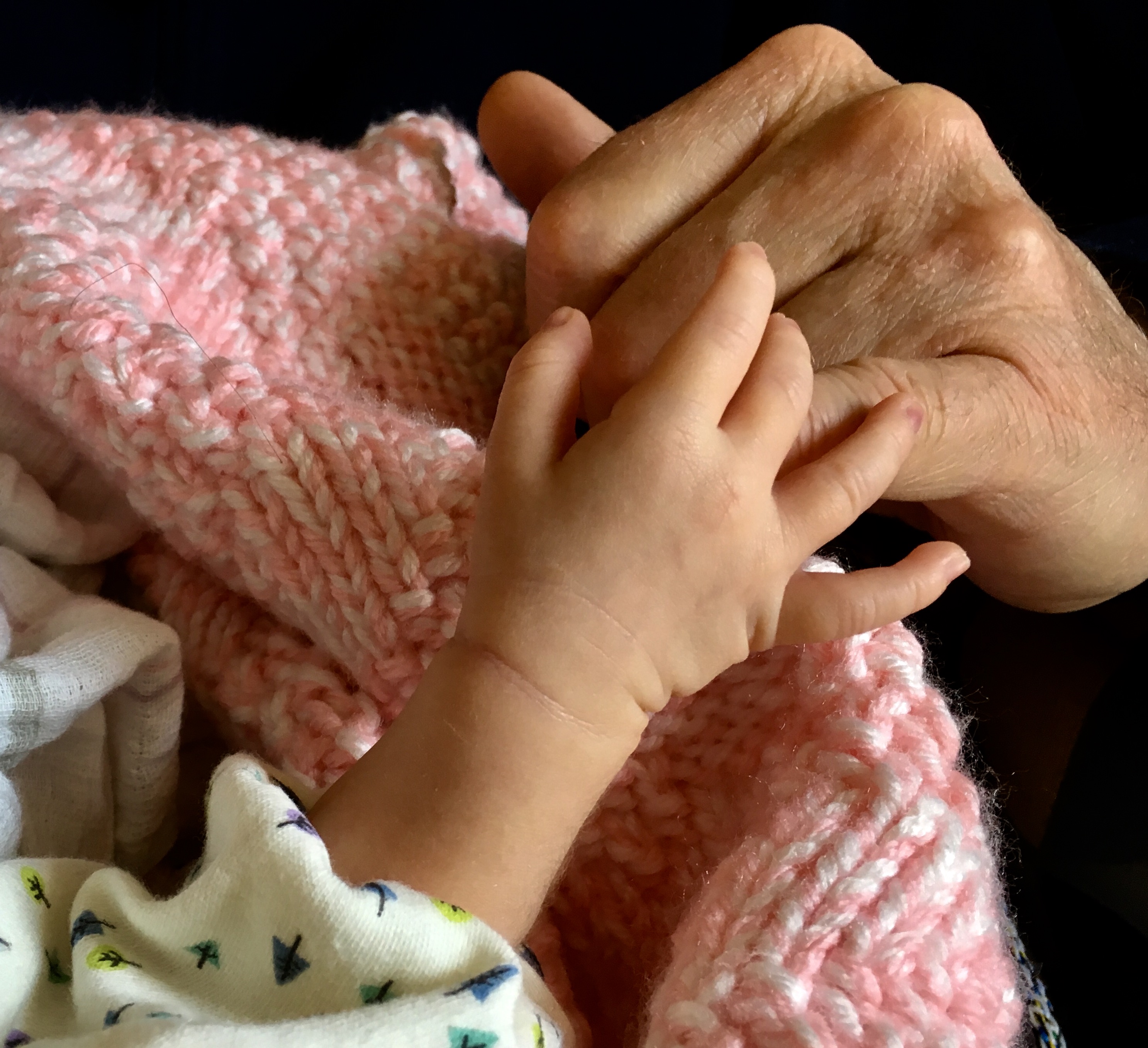
The newborn and the dying know this.  They signal their transition into and out of this world with their hands.  An infant holds tightly to whatever their fist finds,  grasping and clinging to not be lost to this darkness they have entered.  The dying instead loosen their grip on this world, reaching up and picking the air on their climb back to heaven.

We hold babies tightly so they won’t lose their way in the dark.  We loosen our grip on the dying to honor their outreach to the light that leads to something greater.

In the intervening years, we struggle in our blindness to climb out of the abyss to see vistas of great beauty and grace as we pass through the shadows of our lives.  Only then we acknowledge, with great calm and serenity, where we are headed.

Ben packaged in a paper bag by Grandpa Hank
One-Time
Monthly
Yearly

Make a one-time or recurring donation to support daily Barnstorming posts

Make a monthly donation

Make a yearly donation

Choose an amount

¤5.00
¤10.00
¤20.00
¤5.00
¤15.00
¤100.00
¤5.00
¤15.00
¤100.00

Or enter a custom amount

¤

Your contribution is deeply appreciated.

Your contribution is appreciated.

Your contribution is appreciated.

DonateDonate monthlyDonate yearly
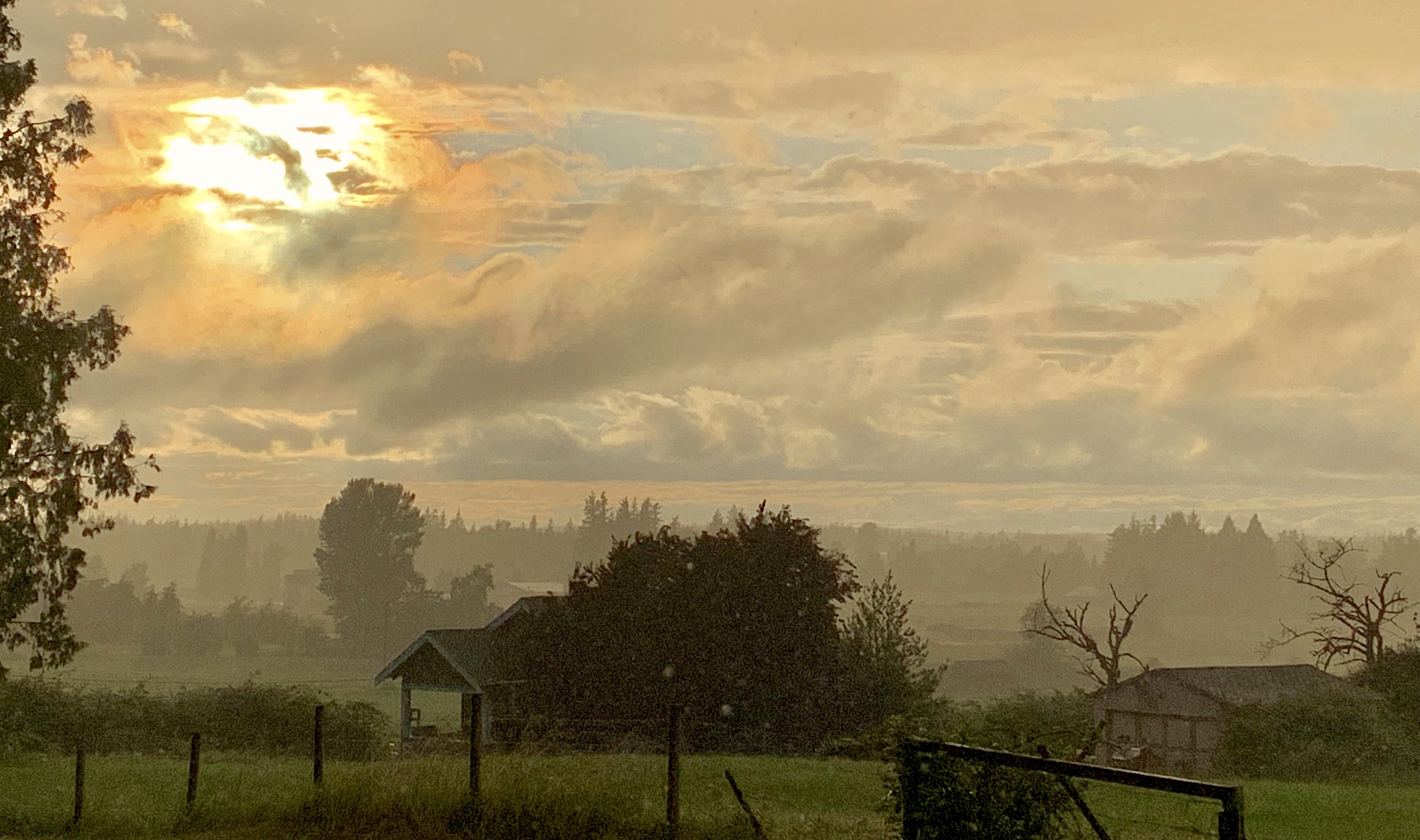
A Voice in My Ear

when my father had been dead a week
I woke
with his voice in my ear
                                           I sat up in bed
and held my breath
and stared at the pale closed door

white apples and the taste of stone

if he called again
I would put on my coat and galoshes
~Donald Hall “White Apples”

She skimmed the yellow water like a moth,
Trailing her feet across the shallow stream;
She saw the berries, paused and sampled them
Where a slight spider cleaned his narrow tooth.
Light in the air, she fluttered up the path,
So delicate to shun the leaves and damp,
Like some young wife, holding a slender lamp
To find her stray child, or the moon, or both.
Even before she reached the empty house,
She beat her wings ever so lightly, rose,
Followed a bee where apples blew like snow;
And then, forgetting what she wanted there,
Too full of blossom and green light to care,
She hurried to the ground, and slipped below.
~James Wright “My Grandmother’s Ghost from Above the River: The Complete Poems 

I saw my grandma’s ghost once.

She was my only grandparent I actually knew and who actually knew me — the others were lost before I was born or too young to realize what I had lost.

She had lived a hard life: losing her mother when she was 12, taking over the household duties for her father and younger brother while leaving school forever. She married too young to an abusive alcoholic, lost her first child to lymphoma at age 8 before treatment was possible and took her three remaining children to safety away from their father for a year to live above a seedy restaurant where she cooked seven days a week to make ends meet.

But there was grace too. The marriage somehow got patched together after Grandpa found God and sobriety – after his sudden death sitting in church, Grandma’s faith never wavered. Her garden soil yielded beautiful flowers she planted and nurtured and picked to sell, her children and grandchildren welcomed her many open armed visits and hugs.

She was busy planning her first overseas trip of a lifetime at age 72 when we noticed her eyes looked yellow. Only two weeks later she was bed-bound in unrelenting pain due to pancreatic cancer, gazing heaven-ward instead of Europe-bound. Her dreams had been dashed so quickly, she barely realized her itinerary and destination had changed.

I was 16 at the time, too absorbed in my own teenage cares and concerns to really notice how quickly she was fading and failing like a wilted flower. Instead I was picking fights with my stressed parents, worrying over taking my driver’s license driving test, distracted by all the typical social pressures of high school life.

Her funeral was unbearable as I had never really said goodbye – only one brief hospital visit when she was hardly recognizable in her anguish and jaundice. I didn’t even get to hold her hand.

Soon after she had been lowered into the ground next to her husband and young daughter, she came back to me in a dream.

I was asleep when my bedroom door opened into the dark, wakening me as the bright hallway light pushed its way via a shimmering beam to my bed. Grandma Kittie stood in my bedroom doorway, backlit by the light surrounding her silhouette. She silently stood there, just looking at me.

Startled, I sat up in my bed and said to her, “Grandma, why are you here? You died and we buried you!”

She nodded and smiled. And then she said to me:

“I want you to know I’m okay and always will be. You will be too.”

She gave a little wave, turned and left, closing the door behind her. I woke suddenly with a gasp in my darkened bedroom and knew I had just been visited.

She hadn’t come to say goodbye or to tell me she loved me — that I knew already.

She had come to shine with her light blossoming around her, mending my broken heart by planting it with peace.

Grandma Kittie and Grandpa Leslie in their courting days

You’re in a better place
I’ve heard a thousand times
And at least a thousand times
I’ve rejoiced for you

But the reason why I’m broken
The reason why I cry
Is how long must I wait to be with you

I close my eyes and I see your face
If home’s where my heart is then I’m out of place
Lord, won’t you give me strength
To make it through somehow
I’ve never been more homesick than now

Help me Lord cause I don’t understand your ways
The reason why I wonder if I’ll ever know
But, even if you showed me
The hurt would be the same
Cause I’m still here so far away from home

In Christ, there are no goodbyes
And in Christ, there is no end

So I’ll hold onto Jesus
With all that I have
To see you again
To see you again

And I close my eyes and I see your face
If home’s where my heart is then I’m out of place
Lord, won’t you give me strength
To make it through somehow

Won’t you give me strength
To make it through somehow
Won’t you give me strength
To make it through somehow
I’ve never been more homesick than now
~Millard Bart Marshall

One-Time
Monthly
Yearly

Make a one-time or recurring donation to support Barnstorming

Make a monthly donation

Make a yearly donation

Choose an amount

¤5.00
¤10.00
¤20.00
¤5.00
¤15.00
¤100.00
¤5.00
¤15.00
¤100.00

Or enter a custom amount

¤

Your contribution is deeply appreciated.

Your contribution is appreciated.

Your contribution is appreciated.

DonateDonate monthlyDonate yearly
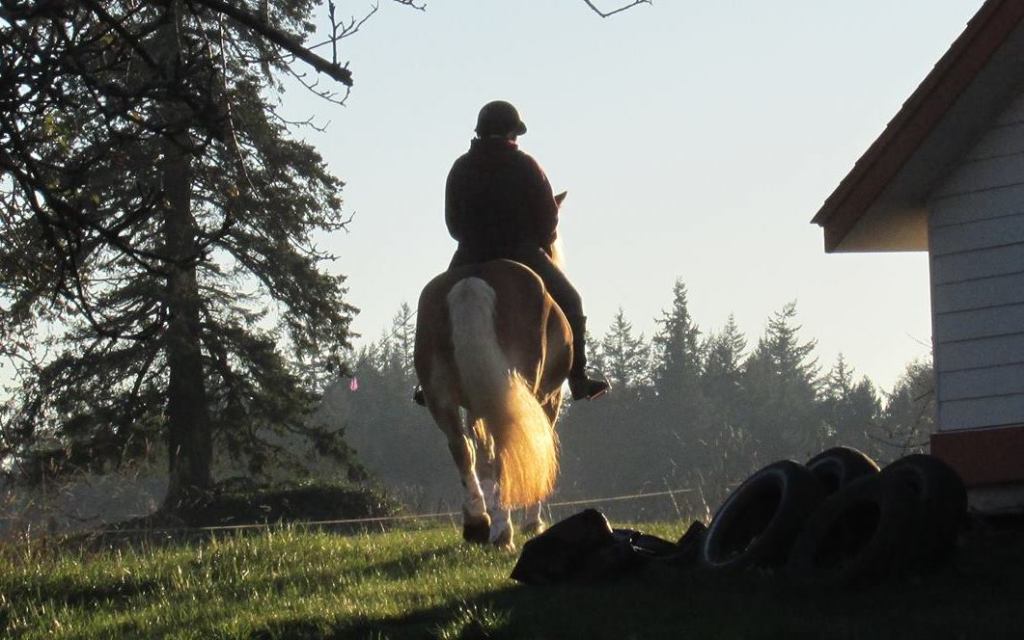
Seeking What Could No Longer Be Found

photo by Kate Steensma

Though I know well enough
To hunt the Lady’s Slipper now
Is playing blindman’s-buff,
For it was June She put it on
And grey with mist the spider’s lace
Swings in the autumn wind,
Yet through this hill-wood, high and low,
I peer in every place;
Seeking for what I cannot find
I do as I have often done
And shall do while I stay beneath the sun.
~Andrew Young “Lady’s Slipper Orchid”

My grandmother’s house where my father was born had been torn down. She sold her property on Fidalgo Island near Anacortes, Washington to a lumber company – this was the house where all four of her babies were born, where she and my grandfather loved and fought and separated and finally loved again, and where we spent chaotic and memorable Thanksgiving and Christmas meals.  After Grandpa died, Grandma took on boarders, trying to afford to remain there on the homesteaded wooded acreage on Similk Bay, fronted by meadows where her Scottish Highland cattle grazed.   Her own health was suffering and she reached a point when it was no longer possible to make it work. A deal was struck with the lumber company and she moved to a small apartment for the few years left to her, remaining bruised by leaving her farm.

My father realized what her selling to a lumber company meant and it was a crushing thought. The old growth woods would soon be stumps on the rocky hill above the bay, opening a view to Mt. Baker to the east, to the San Juan Islands to the north, and presenting an opportunity for development into a subdivision. He woke my brother and me early one Saturday in May and told us we were driving the 120 miles to Anacortes.  He was on a mission.

As a boy growing up on that land, he had wandered the woods, explored the hill, and helped his dad farm the rocky soil.  There was only one thing he felt he needed from that farm and he had decided to take us with him, to trespass where he had been born and raised to bring home a most prized treasure–his beloved lady slippers from the woods.

These dainty flowers enjoy a spring display known for its brevity–a week or two at the most–and they tend to bloom in small little clusters in the leafy duff mulch of the deep woods, preferring only a little indirect sunlight part of the day.  They are not easy to find unless you know where to look. 

My father remembered exactly where to look.

We hauled buckets up the hill along with spades, looking as if we were about to dig for clams at the ocean.  Dad led us up a trail into the thickening foliage, until we had to bushwhack our way into the taller trees where the ground was less brush and more hospitable ground cover.  He would stop occasionally to get his bearings as things were overgrown.   We reached a small clearing and he knew we were near.  He went straight to a copse of fir trees standing guard over a garden of lady slippers.

There were almost thirty of them blooming, scattered about in an area the size of my small bedroom.  Each orchid-like pink and lavender blossom had a straight backed stem that held it with sturdy confidence.  To me, they looked like they could be little shoes for fairies who may have hung them up while they danced about barefoot.    To my father, they represented the last redeeming vestiges of his often traumatic childhood, and were about to be trammeled by bulldozers.  We set to work gently digging them out of their soft bedding, carefully keeping their bulb-like corms from losing a protective covering of soil and leafy mulch.  Carrying them in the buckets back to the car, we felt some vindication that even if the trees were to be lost to the saws, these precious flowers would survive.

When we got home, Dad set to work creating a spot where he felt they could thrive in our own woods.  He found a place with the ideal amount of shade and light, with the protection of towering trees and the right depth of undisturbed leaf mulch.  We carefully placed the lady slippers in their new home, scattered in a pattern similar to how we found them.  Then Dad built a four foot split rail fence in an octagon around them, as a protection from our cattle and a horse who wandered the woods, and as a way to demarcate that something special was contained inside.

The next spring only six lady slippers bloomed from the original thirty.  Dad was disappointed but hoped another year might bring a resurgence as the flowers established themselves in their new home.  The following year there were only three.  A decade later, my father himself had left farm and family, not looking back.

Sometime after the divorce, when my mother had to sell the farm, I visited our lady slipper sanctuary in the woods for the last time in the middle of May, seeking what I hoped might still be there, but I knew was no longer.  The split rail fence still stood, guarding nothing but old memories.  No lady slippers bloomed. There was not a trace they had ever been there.  They had simply given up and disappeared.

The new owners of the farm surely puzzled over the significance of the small fenced-in area in the middle of our woods.  They probably thought it surrounded a graveyard of some sort.

And they would be right – it did.

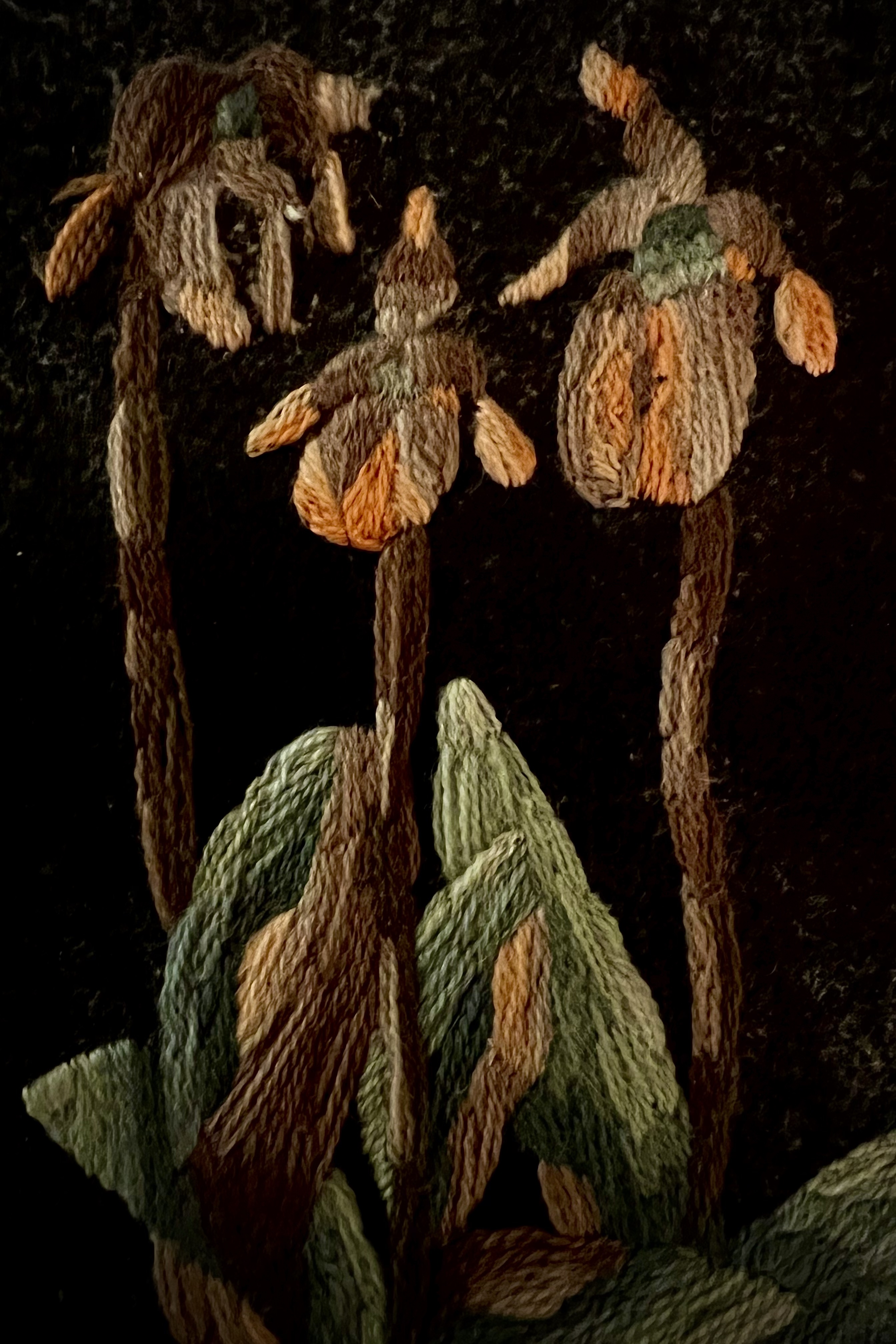
An embroidery I made for my father after he replanted the lady slippers — on the back I wrote “The miracle of creation recurs each spring in the delicate beauty of the lady slipper – may we ourselves be recreated as well…”

Once more, once more into the sunny fields
Oh, let me stray!
And drink the joy that young existence yields
On a bright, cloudless day.
Once more let me behold the summer sky,
With its blue eyes,
And join the wild wind’s voice of melody,
As far and free it flies.
Once more, once more, oh let me stand and hear
The gushing spring,
As its bright drops fall starlike, fast and clear,
And in the sunshine sing.
~Frances Kemble “A Farewell”

One-Time
Monthly
Yearly

Make a one-time or recurring donation to support Barnstorming

Make a monthly donation

Make a yearly donation

Choose an amount

¤5.00
¤10.00
¤20.00
¤5.00
¤15.00
¤100.00
¤5.00
¤15.00
¤100.00

Or enter a custom amount

¤

Your contribution is deeply appreciated.

Your contribution is appreciated.

Your contribution is appreciated.

DonateDonate monthlyDonate yearly
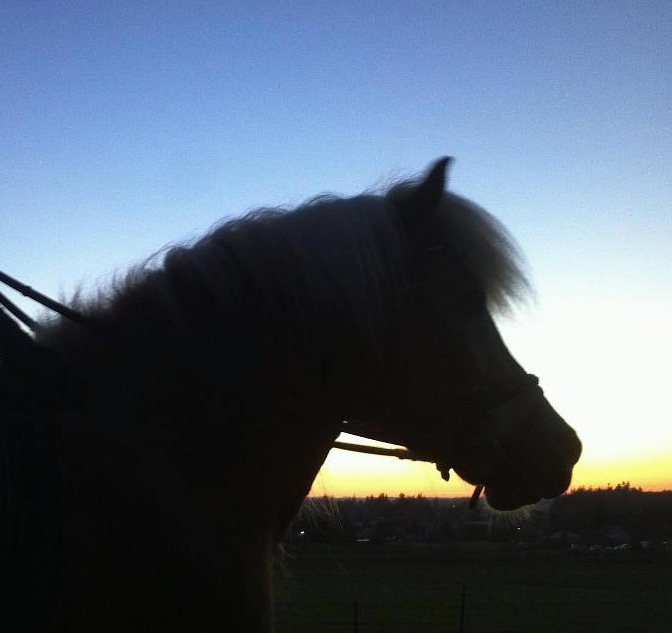
No Forwarding Address

Body is something you need in order to stay
on this planet and you only get one.
And no matter which one you get, it will not
be satisfactory. It will not be beautiful
enough, it will not be fast enough, it will
not keep on for days at a time, but will
pull you down into a sleepy swamp and
demand apples and coffee and chocolate cake.

Body is a thing you have to carry
from one day into the next. Always the
same eyebrows over the same eyes in the same
skin when you look in the mirror, and the
same creaky knee when you get up from the
floor and the same wrist under the watchband.
The changes you can make are small and
costly—better to leave it as it is.

Body is a thing that you have to leave
eventually. You know that because you have
seen others do it, others who were once like you,
living inside their pile of bones and
flesh, smiling at you, loving you,
leaning in the doorway, talking to you
for hours and then one day they
are gone. No forwarding address.

~Joyce Sutphen, “Living in the Body” from Coming Back to the Body.

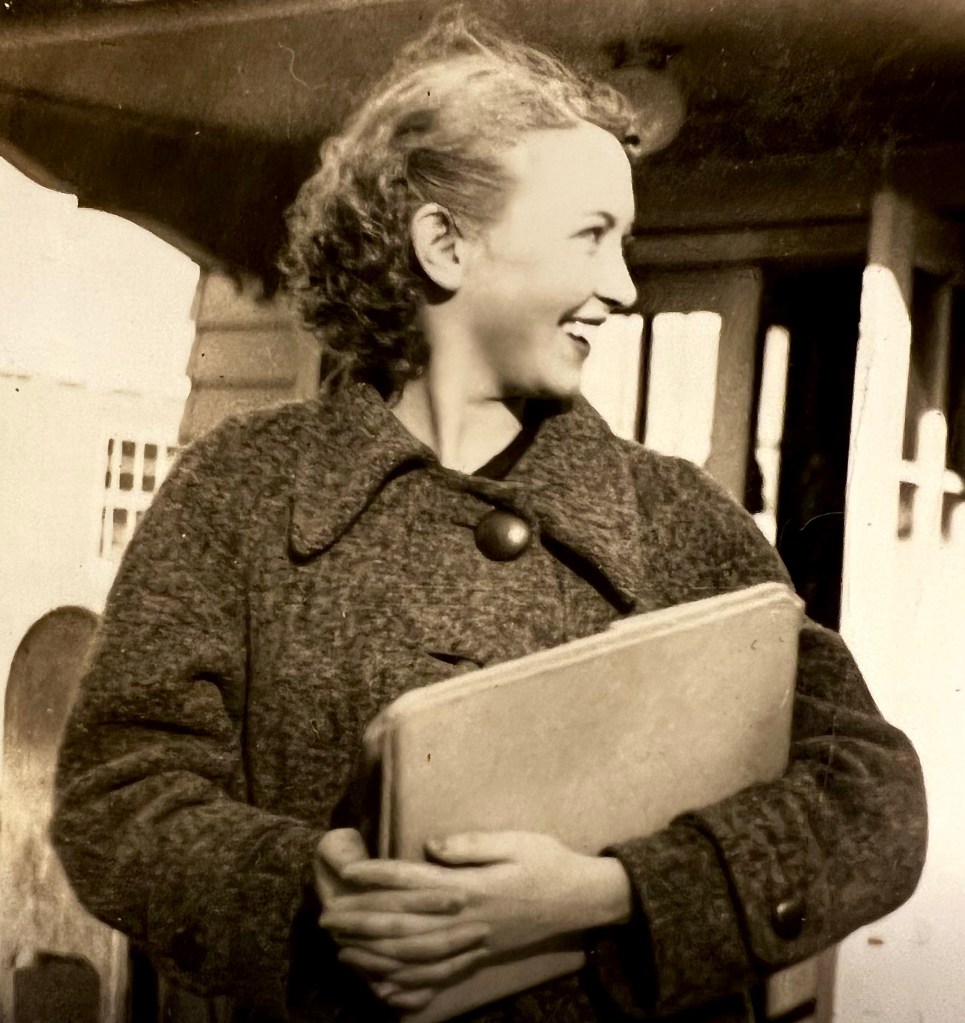
All bodies are fragile vessels, right from the beginning. I know this because I live inside an aging one and experience its limitations daily. Yet it is the only one I’ll ever have, though an imperfect reflection of my Creator – like it or not. Frankly, I greatly respect it having kept me going for 68 years so far and hoping for a few more.

I grieve for the young and strong who are often dissatisfied with the body they are given, spending immense time and resources to change what they can and agonizing over what is unchangeable.

What is unchangeable is that we’ll leave this empty husk behind at some point when we move on, leaving no forwarding address other than @heavenabove. We have watched it happen to those we love who have died too young because of system failure from an impossible-to-survive insult, and it happens to those who simply ran out of breaths after multiple decades of functioning heart and lungs.

My imperfect body doesn’t define me as it didn’t define those who have left before me. It isn’t who I was when I came to be, and it isn’t who I will be after I depart. But it deserves my ongoing admiration, awe and honor, along with my commitment to keep it in running order as long as I am able.

And I’ll try to confirm a forwarding address before I go.

One-Time
Monthly
Yearly

Make a one-time or recurring donation to support Barnstorming

Make a monthly donation

Make a yearly donation
Choose an amount

¤5.00
¤10.00
¤20.00
¤5.00
¤15.00
¤100.00
¤5.00
¤15.00
¤100.00

Or enter a custom amount

¤

Your contribution is deeply appreciated.
Your contribution is appreciated.

Your contribution is appreciated.

DonateDonate monthlyDonate yearly