All the art of living lies in a fine mingling of letting go and holding on. ~Henry Ellis
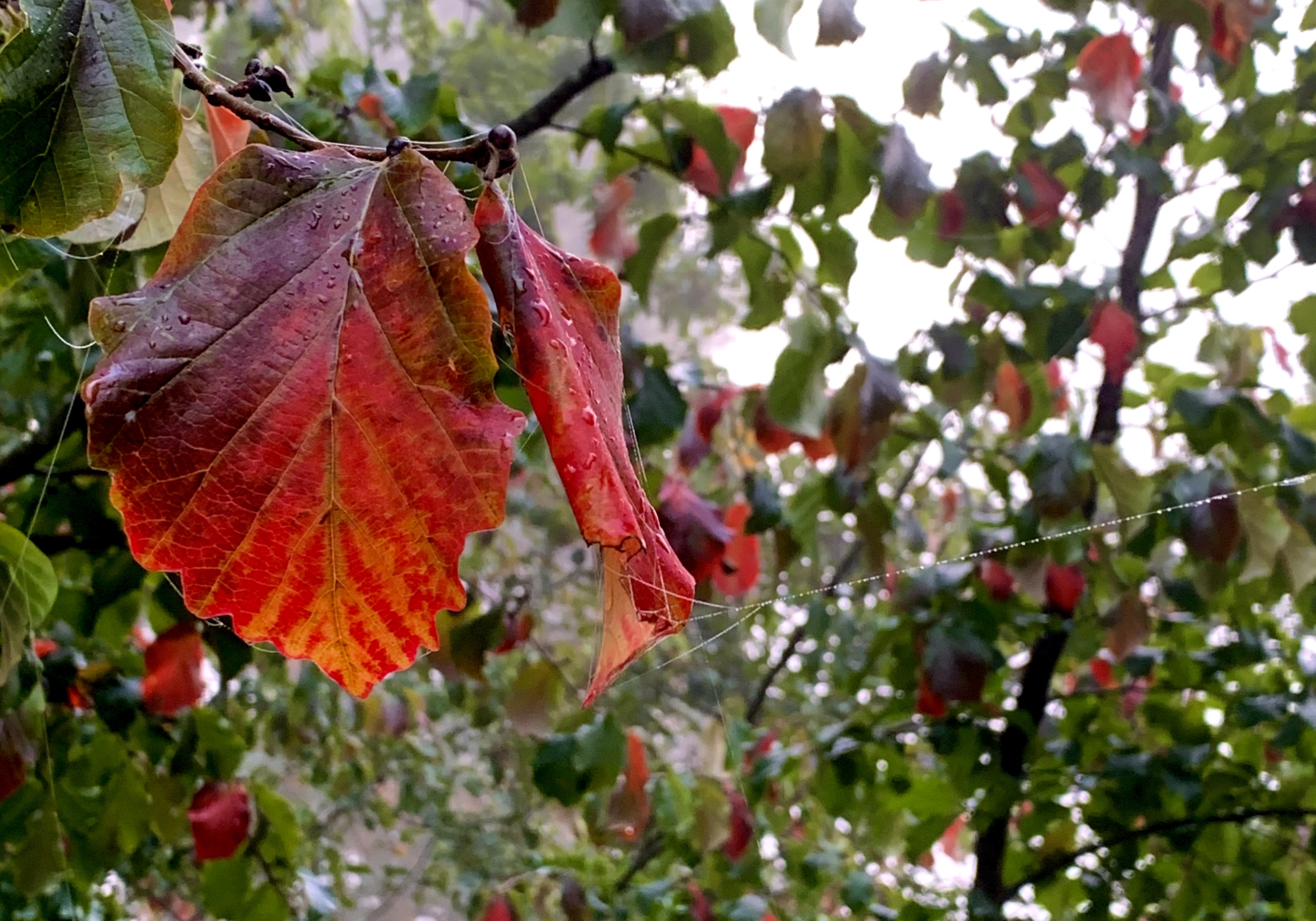
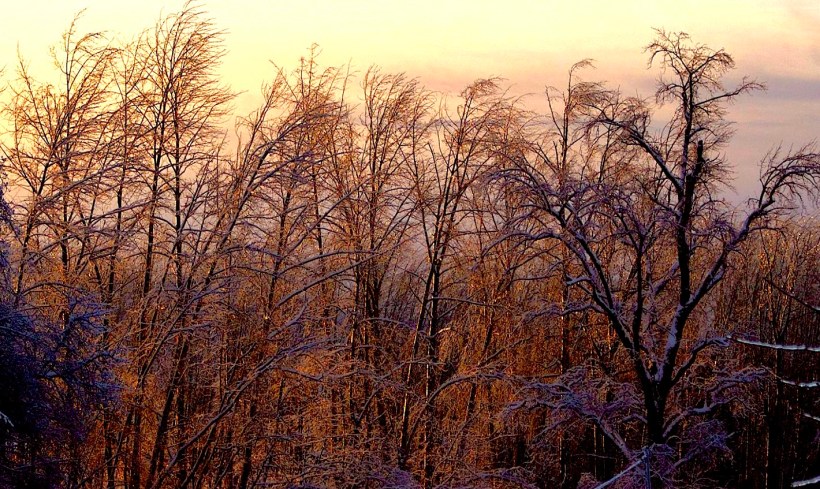
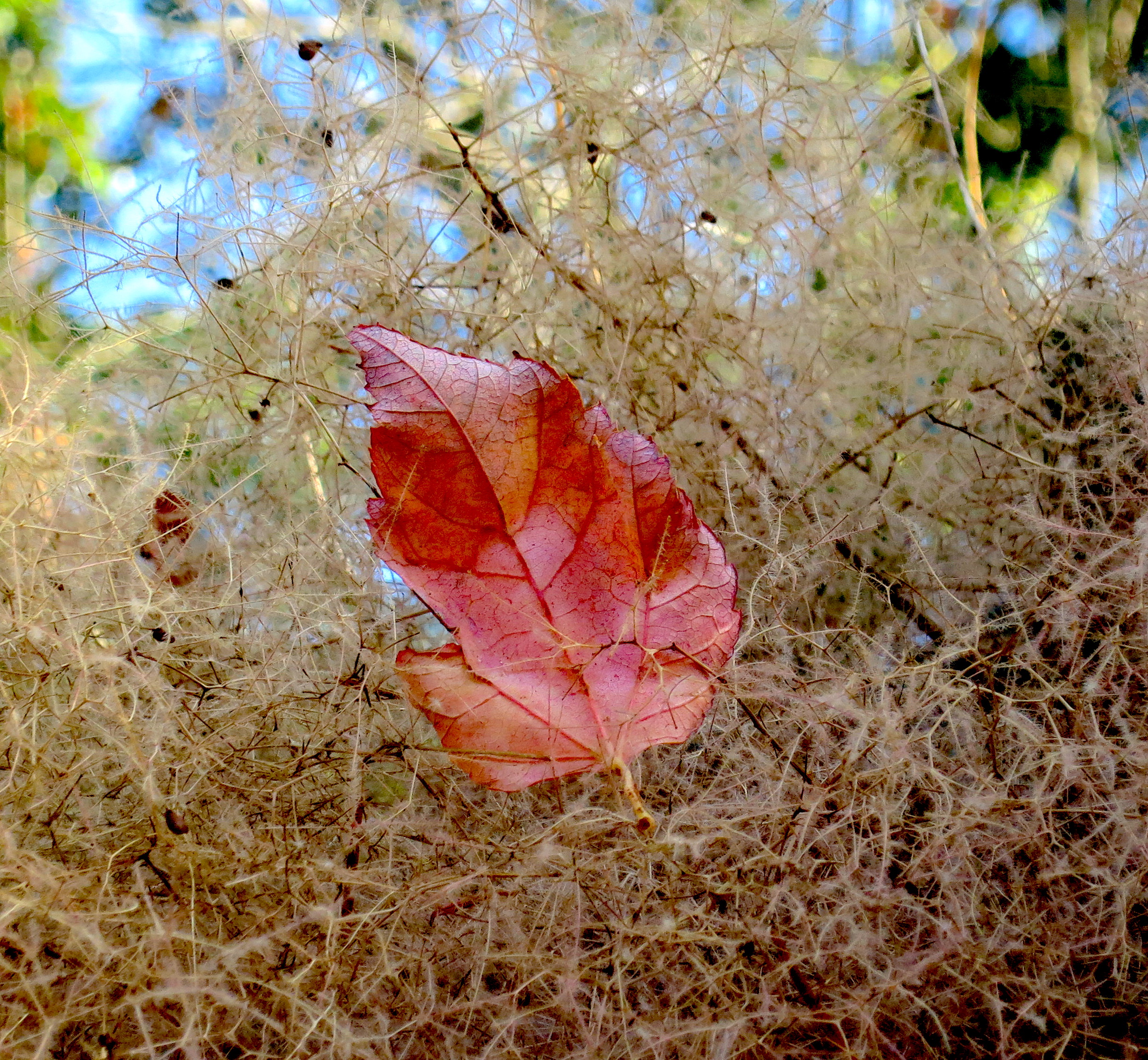
The trees are undressing, and fling in many places— On the gray road, the roof, the window-sill— Their radiant robes and ribbons and yellow laces; A leaf each second so is flung at will, Here, there, another and another, still and still.
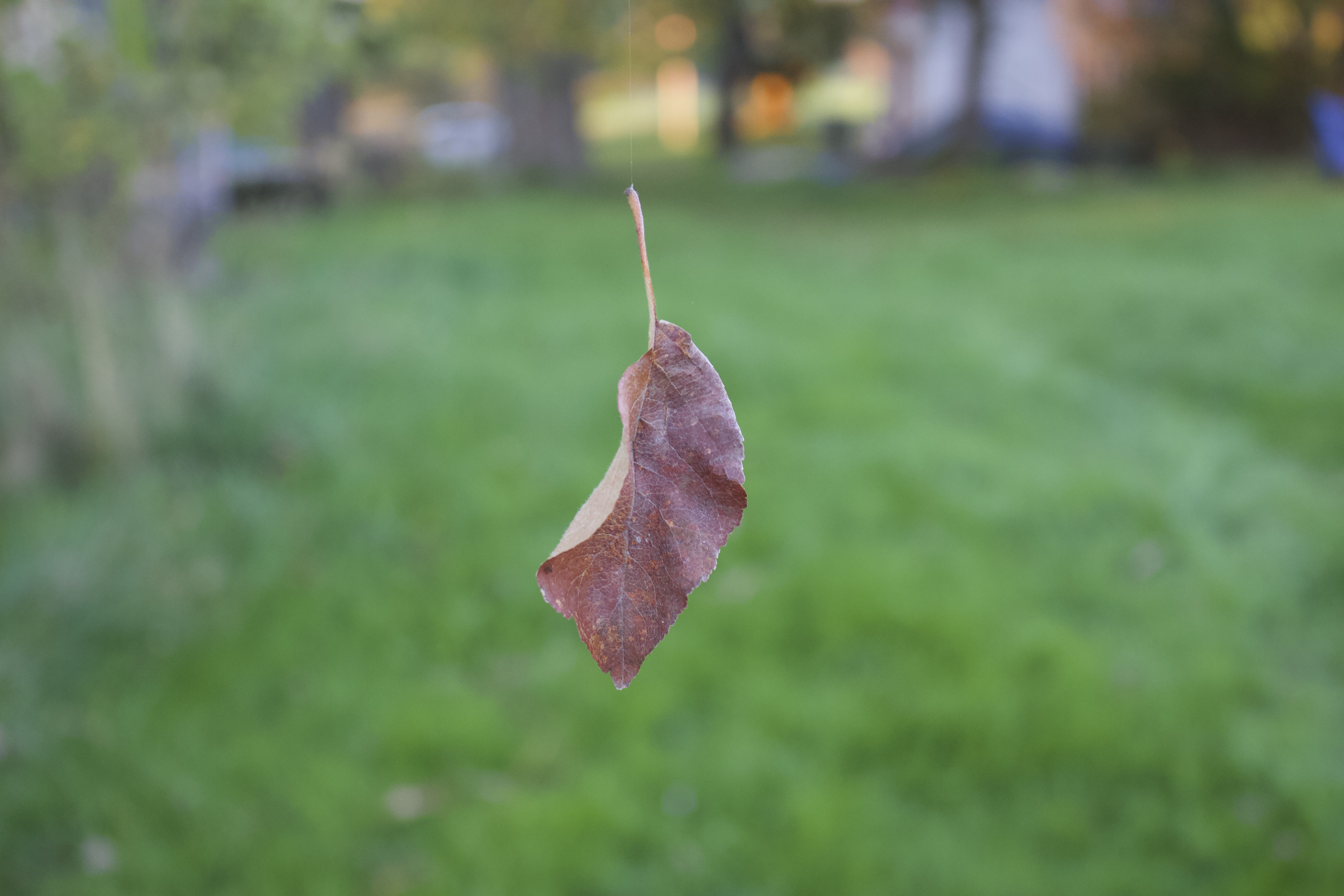
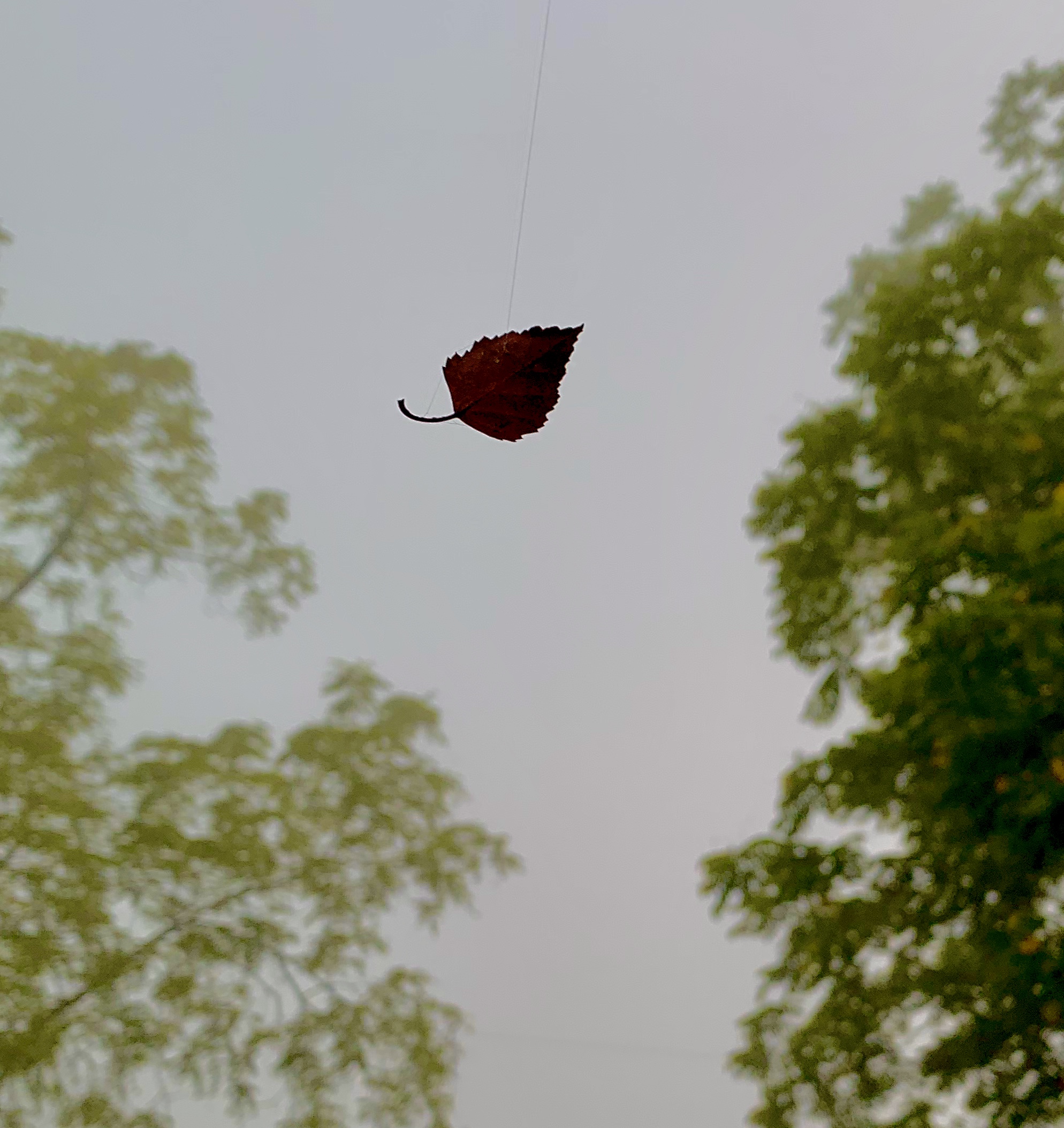
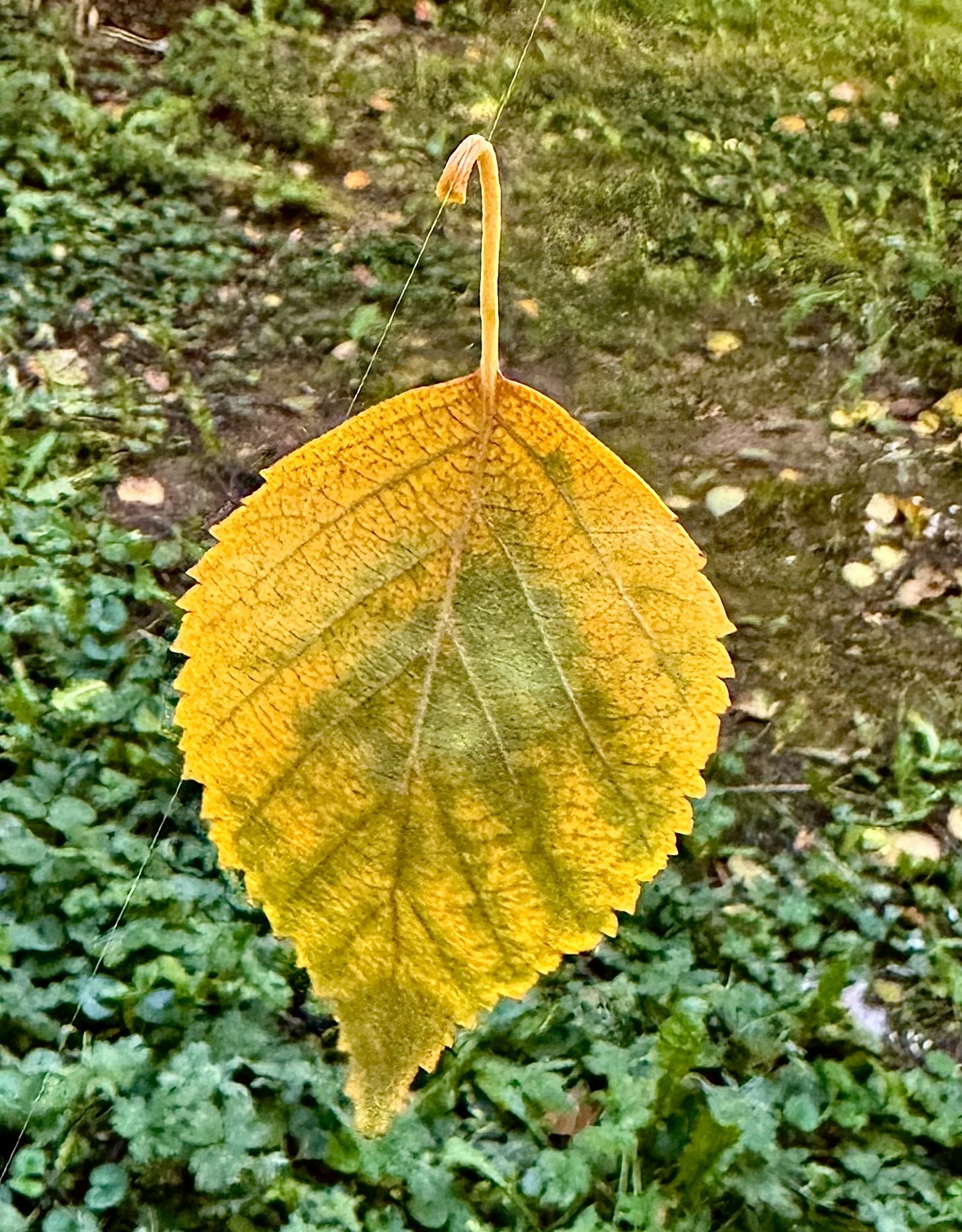
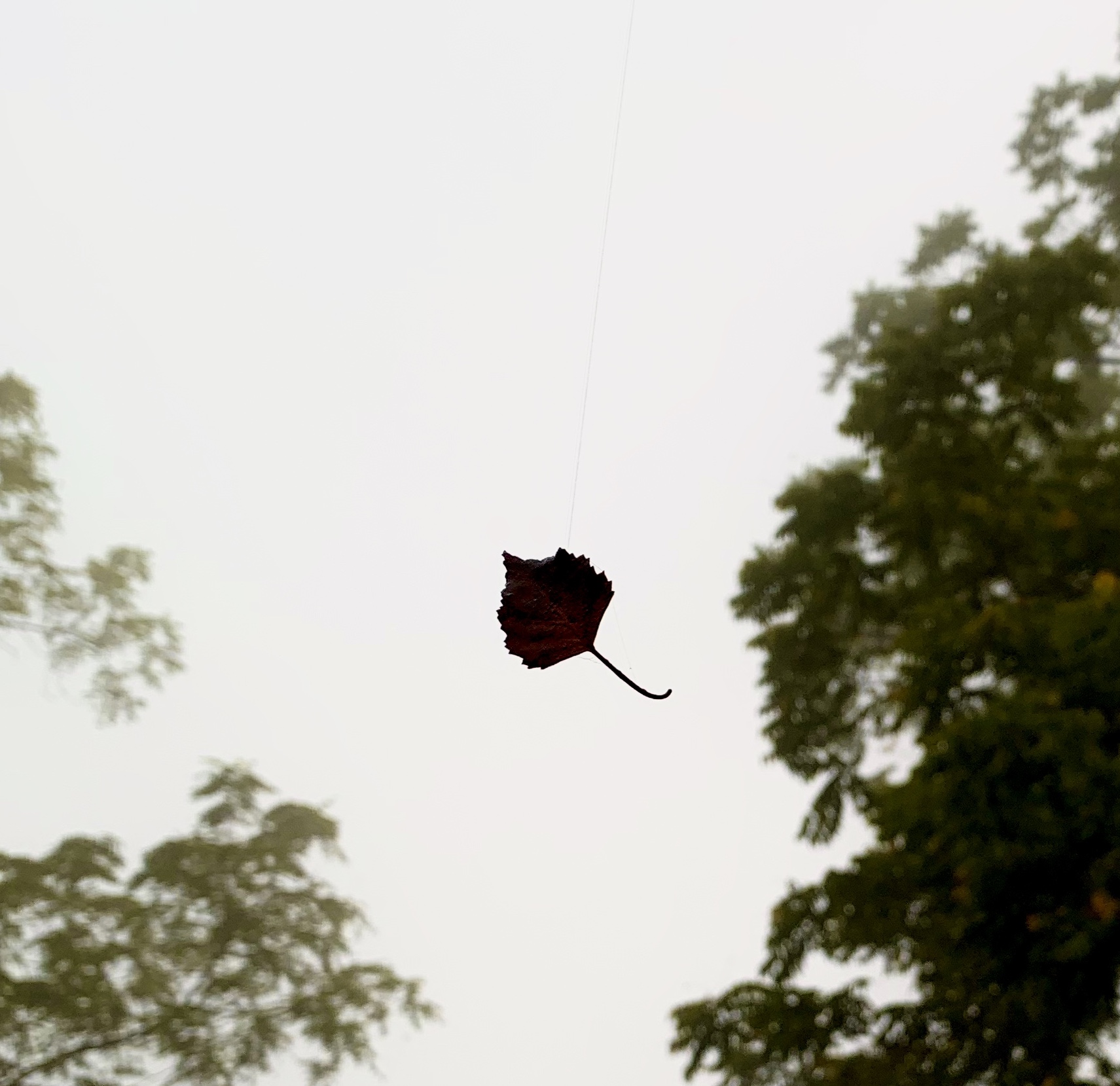
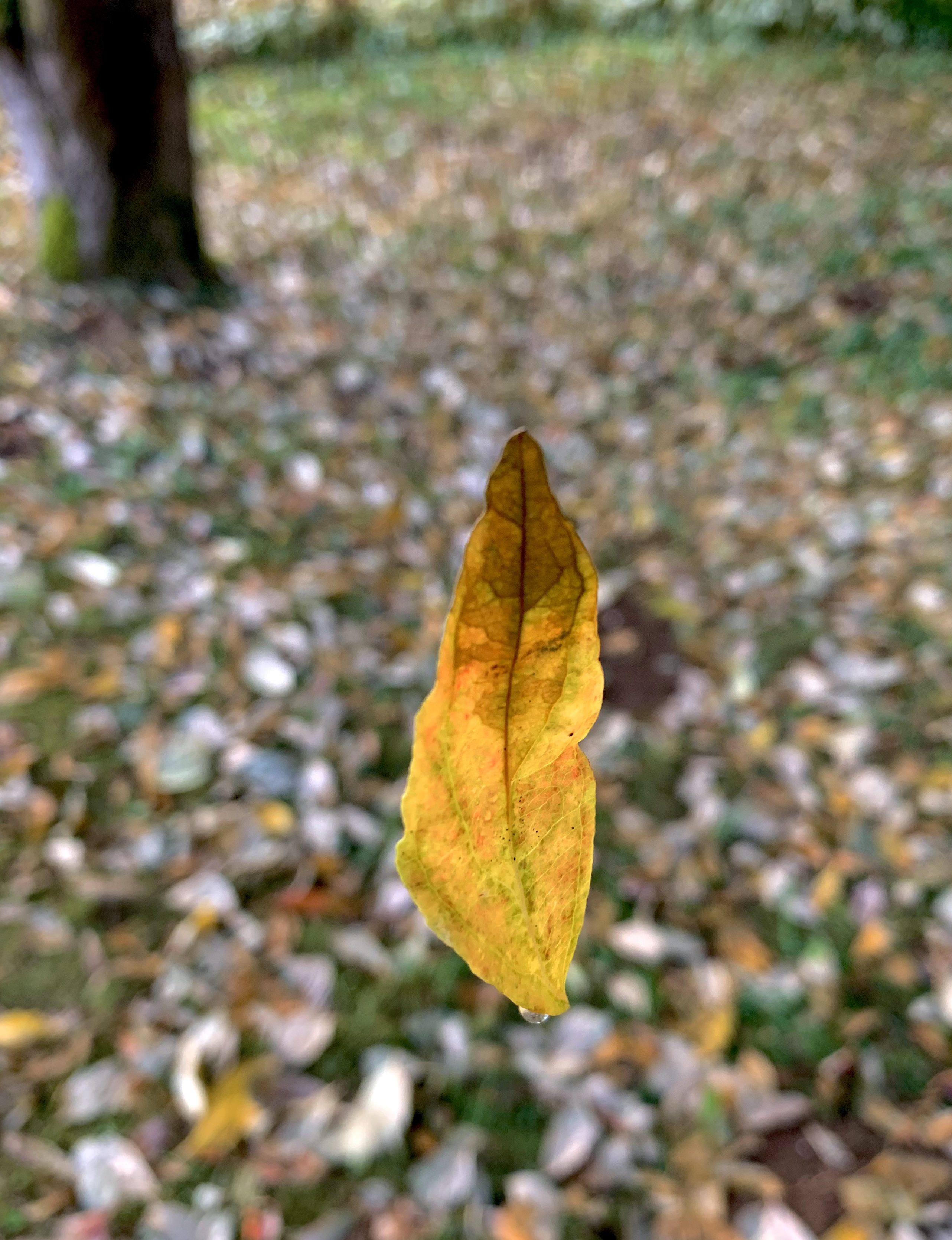
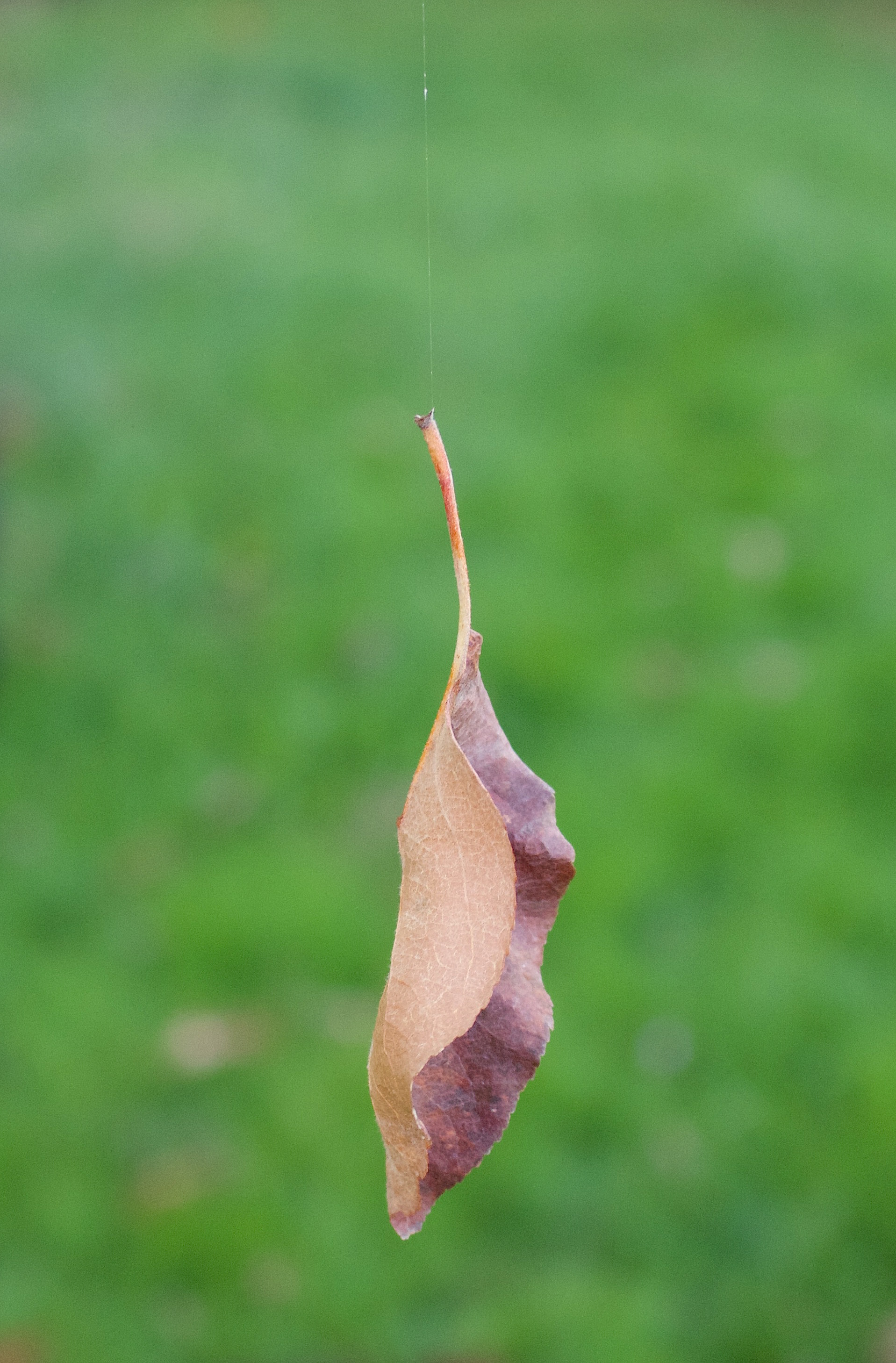
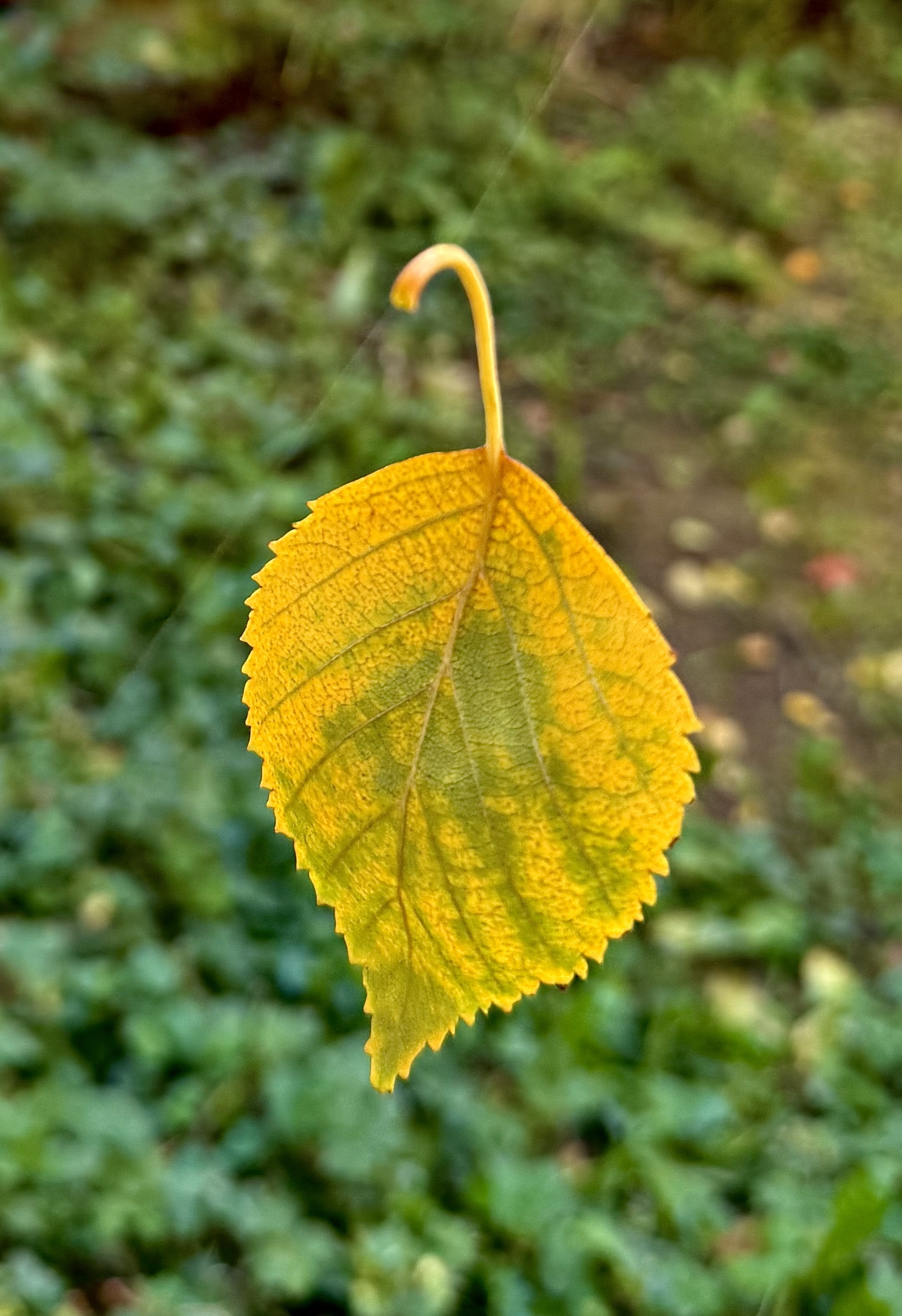
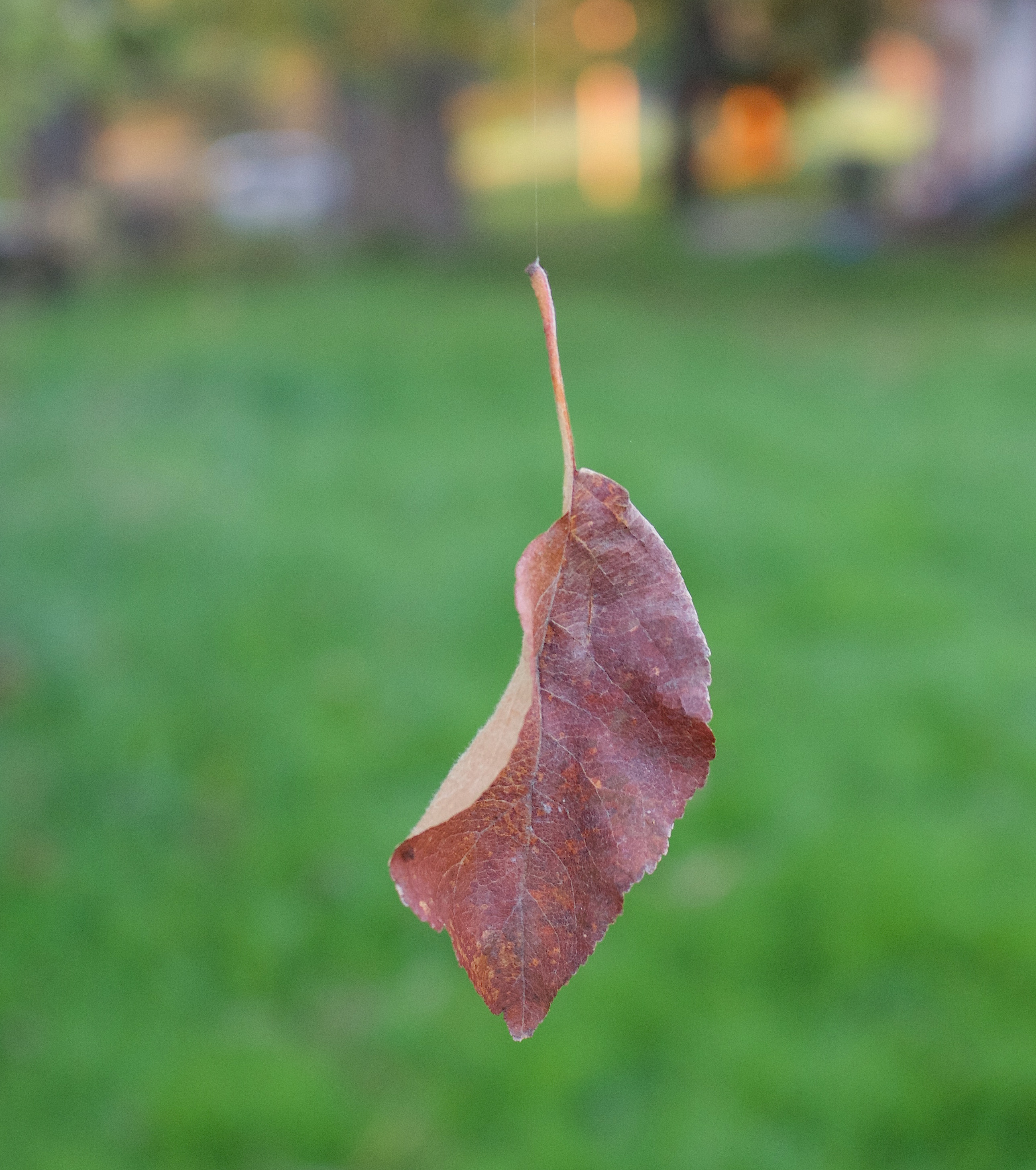
A spider’s web has caught one while downcoming, That stays there dangling when the rest pass on; Like a suspended criminal hangs he, mumming In golden garb, while one yet green, high yon, Trembles, as fearing such a fate for himself anon. ~Thomas Hardy “Last Week in October”
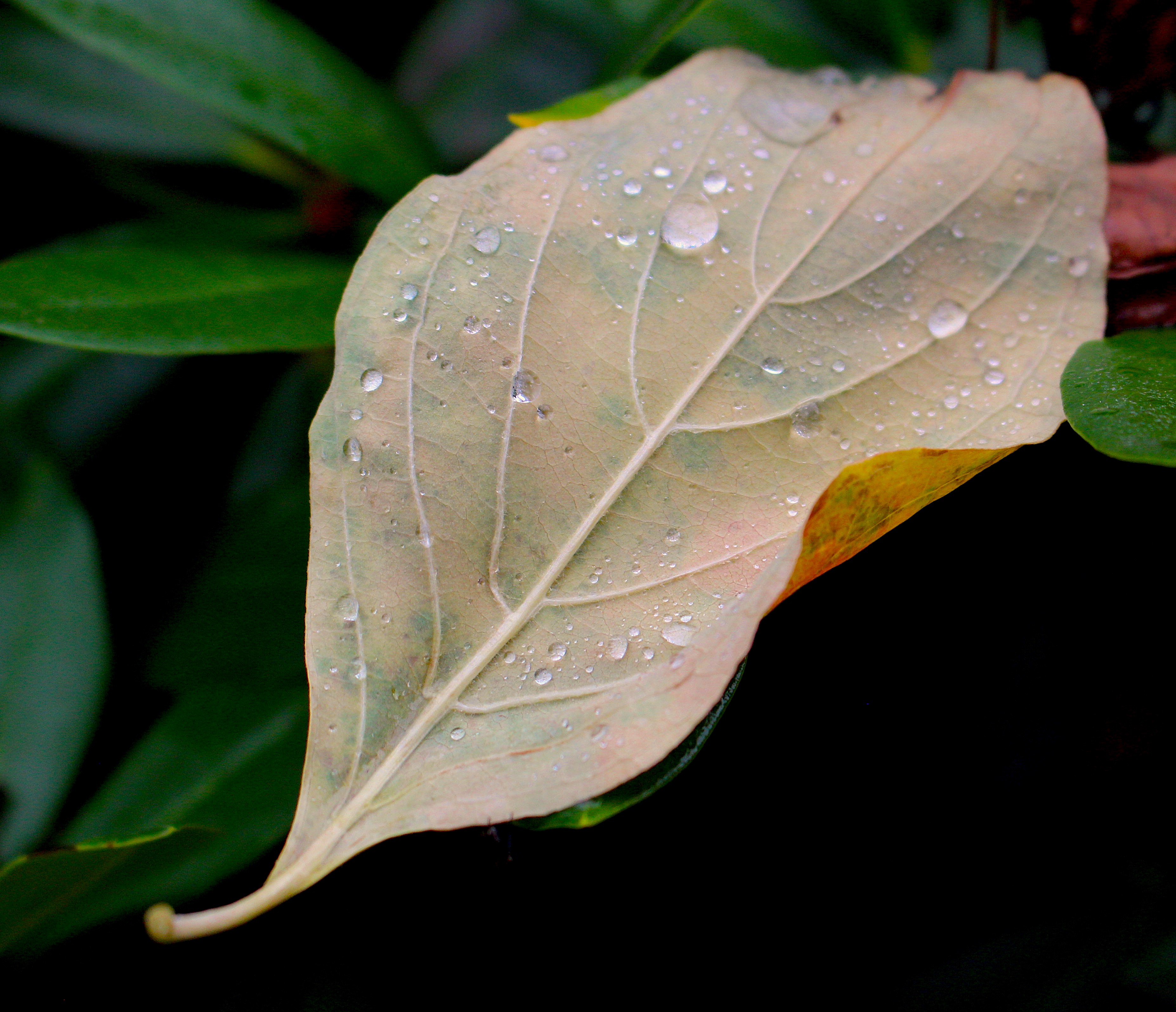
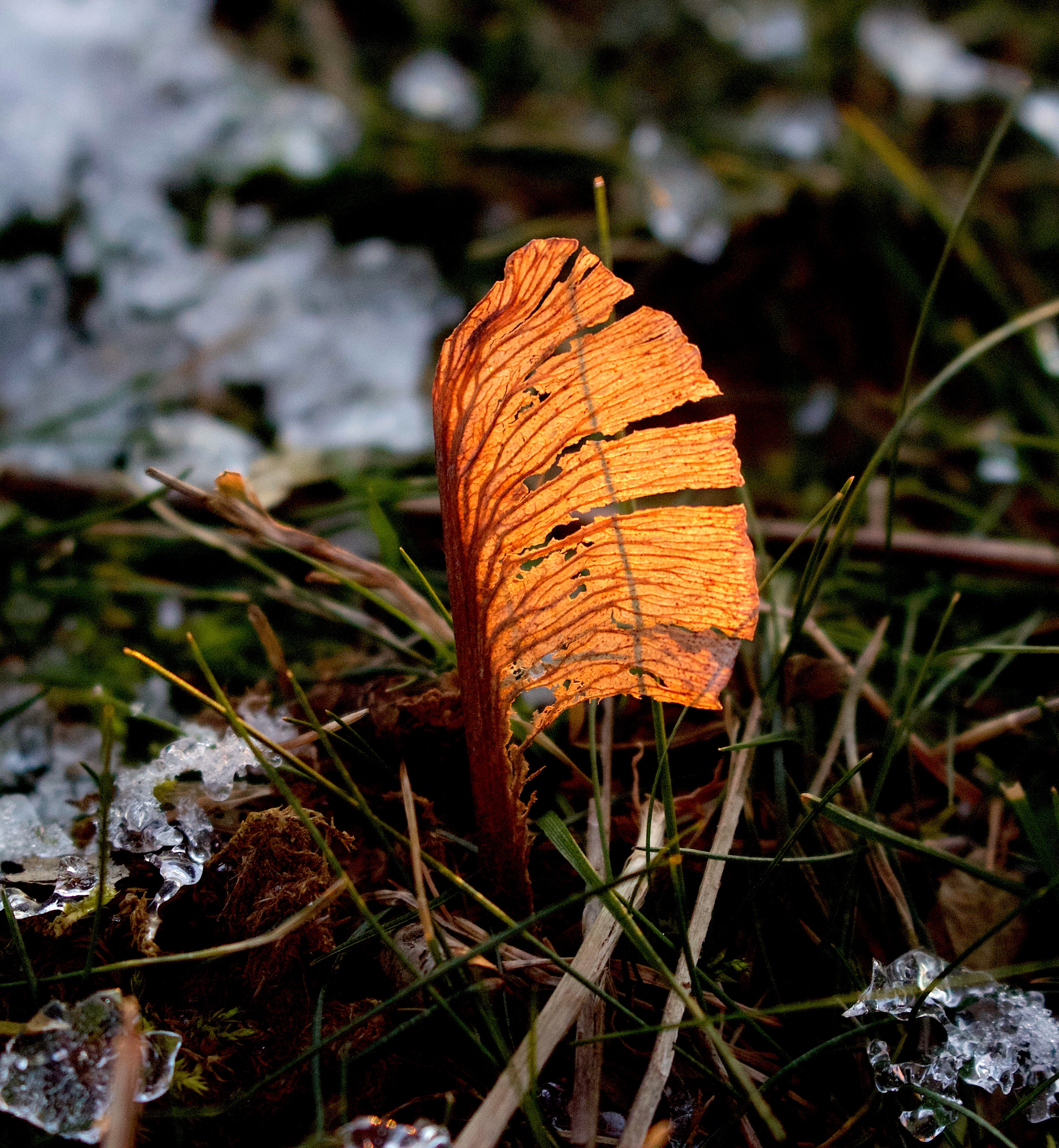
Watching a dry leaf twirl in the wind, its stem still
tethered to the tree, I think of how stubborn I’ve been,
refusing to let go of what was never intended for me,
not knowing something better was waiting if I’d let myself lift
The builder who first bridged Niagara’s gorge, Before he swung his cable, shore to shore, Sent out across the gulf his venturing kite Bearing a slender cord for unseen hands To grasp upon the further cliff and draw A greater cord, and then a greater yet; Till at the last across the chasm swung The cable then the mighty bridge in air! So we may send our little timid thought Across the void, out to God’s reaching hands— Send out our love and faith to thread the deep— Thought after thought until the little cord Has greatened to a chain no chance can break, And we are anchored to the Infinite! ~Edwin Markham “Anchored to the Infinite”
I feel like the only one who failed to fall from the tree along with all the others, caught in an invisible silken strand, dangling suspended and helpless, twisting and turning in the storms of winter.
I wish I had the faith to trust in this slender thread bridging the chasm between heaven and earth, assured rescue will come as others pass me by ~~ another and another, still and still.
So I remain suspended in the void, anchored to God’s reaching hands.
I’ll never again be let go.
One-Time
Monthly
Yearly
Make a one-time or recurring donation to support daily Barnstorming posts
Deep midwinter, the dark center of the year, Wake, O earth, awake, Out of the hills a star appears, Here lies the way for pilgrim kings, Three magi on an ancient path, Black hours begin their journeyings.
Their star has risen in our hearts, Empty thrones, abandoning fears, Out on the hills their journey starts, In dazzling darkness God appears. ~Judith Bingham “Epiphany”
It might have been just someone else’s story, Some chosen people get a special king. We leave them to their own peculiar glory, We don’t belong, it doesn’t mean a thing. But when these three arrive they bring us with them, Gentiles like us, their wisdom might be ours; A steady step that finds an inner rhythm, A pilgrim’s eye that sees beyond the stars. They did not know his name but still they sought him, They came from otherwhere but still they found; In temples they found those who sold and bought him, But in the filthy stable, hallowed ground. Their courage gives our questing hearts a voice To seek, to find, to worship, to rejoice. ~Malcolm Guite “Epiphany”
…the scent of frankincense and myrrh arrives on the wind, and I long to breathe deeply, to divine its trail. But I know their uses and cannot bring myself to breathe deeply enough to know whether what comes is the fragrant welcoming of birth or simply covers the stench of death. These hands coming toward me, is it swaddling they carry or shroud? ~Jan Richardson from Night Visions –searching the shadows of Advent and Christmas
Unclench your fists Hold out your hands. Take mine. Let us hold each other. Thus is his Glory Manifest. ~Madeleine L’Engle “Epiphany” from the Weather of the Heart
All this was a long time ago, I remember, And I would do it again, but set down This set down This: were we led all that way for Birth or Death? There was a Birth, certainly We had evidence and no doubt. I had seen birth and death, But had thought they were different; this Birth was Hard and bitter agony for us, like Death, our death. ~T.S. Eliot from “Journey of the Magi”
The Christmas season is a wrap, put away for another year. However, our hearts are not so easily boxed up and stored as the lights and decorations and ornaments of the season.
Our troubles and concerns go on; our frailty a daily reality. We can be distracted with holidays for a few weeks, but our time here slips away ever more quickly.
The Christmas story is not just about light and birth and joy to the world. It is about how swaddling clothes became a shroud that wrapped Him tight. There is not one without the other.
God came to be with us; Delivered so He could deliver. Planted on and in the earth. Born so He could die in our place To leave the linen strips behind, neatly folded.
Christmas: a dazzling unwrapping of glory to free us from darkness. Epiphany: the Seed of His Spirit takes root in our hearts.
One-Time
Monthly
Yearly
Make a one-time or recurring donation to support daily Barnstorming posts
May the wind always be in her hair May the sky always be wide with hope above her And may all the hills be an exhilaration the trials but a trail, all the stones but stairs to God. May she be bread and feed many with her life and her laughter May she be thread and mend brokenness and knit hearts… ~Ann Voskamp from “A Prayer for a Daughter”
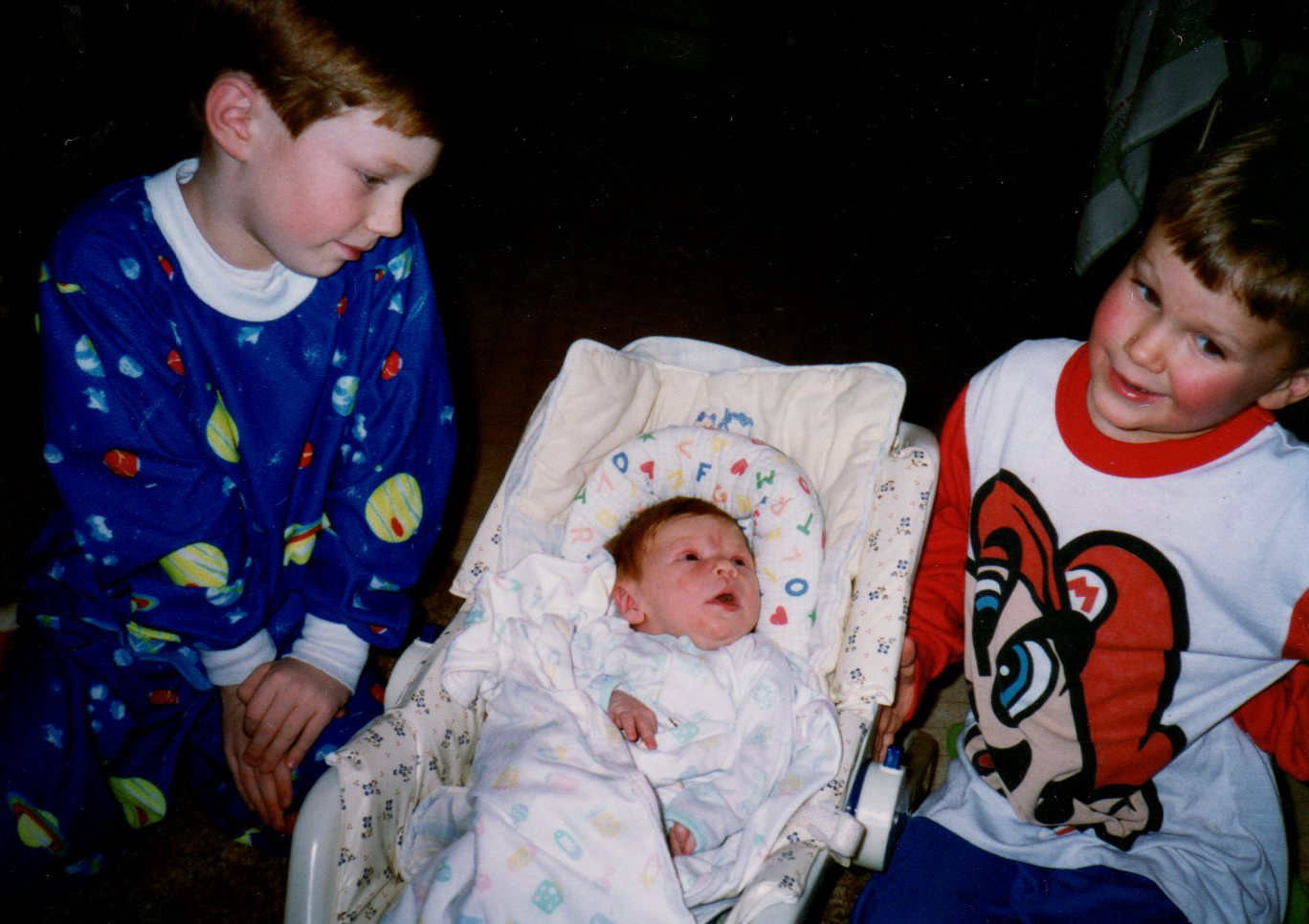
Nate and Ben and brand new baby LeaDaddy and Lea
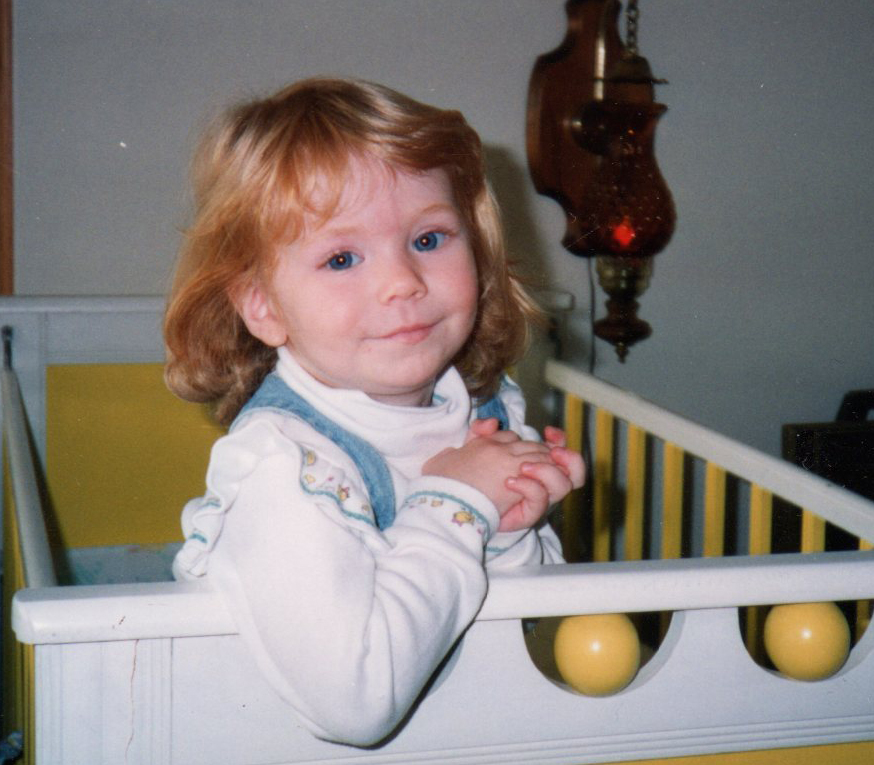
Mommy and Lea
“I have noticed,” she said slowly, “that time does not really exist for mothers, with regard to their children. It does not matter greatly how old the child is – in the blink of an eye, the mother can see the child again as she was when she was born, when she learned to walk, as she was at any age — at any time, even when the child is fully grown….” ~Diana Gabaldon from Voyager
Just checking to see if she is real…
Your rolling and stretching had grown quieter that stormy winter night thirty-three years ago, but still no labor came as it should.
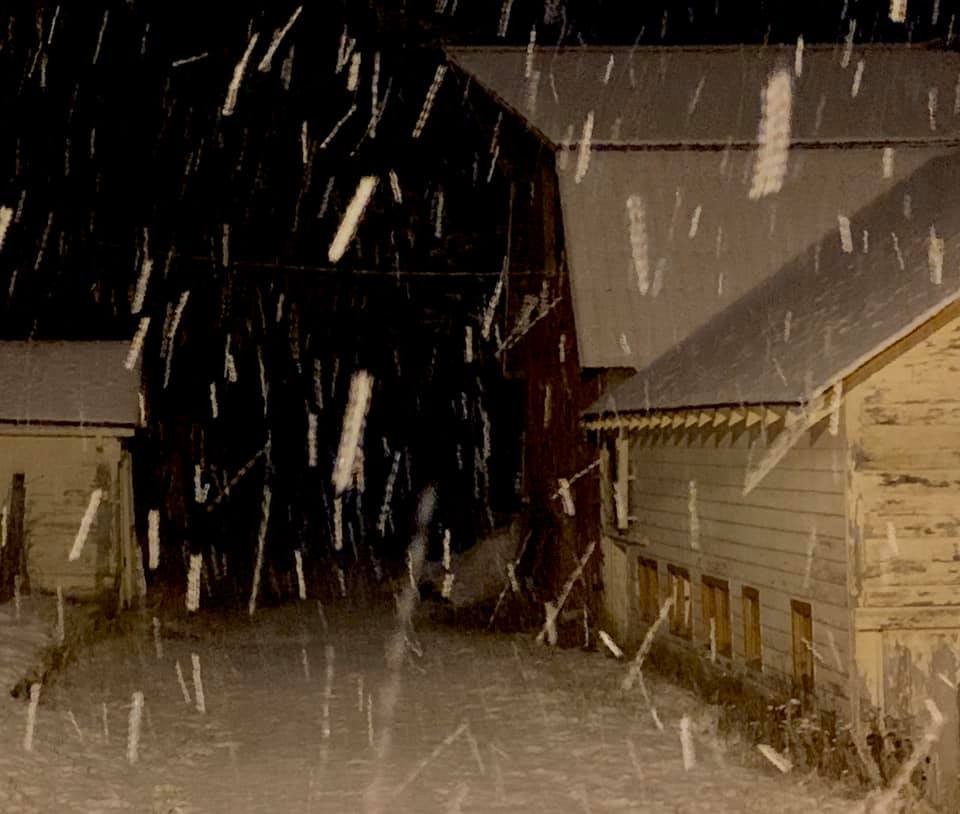
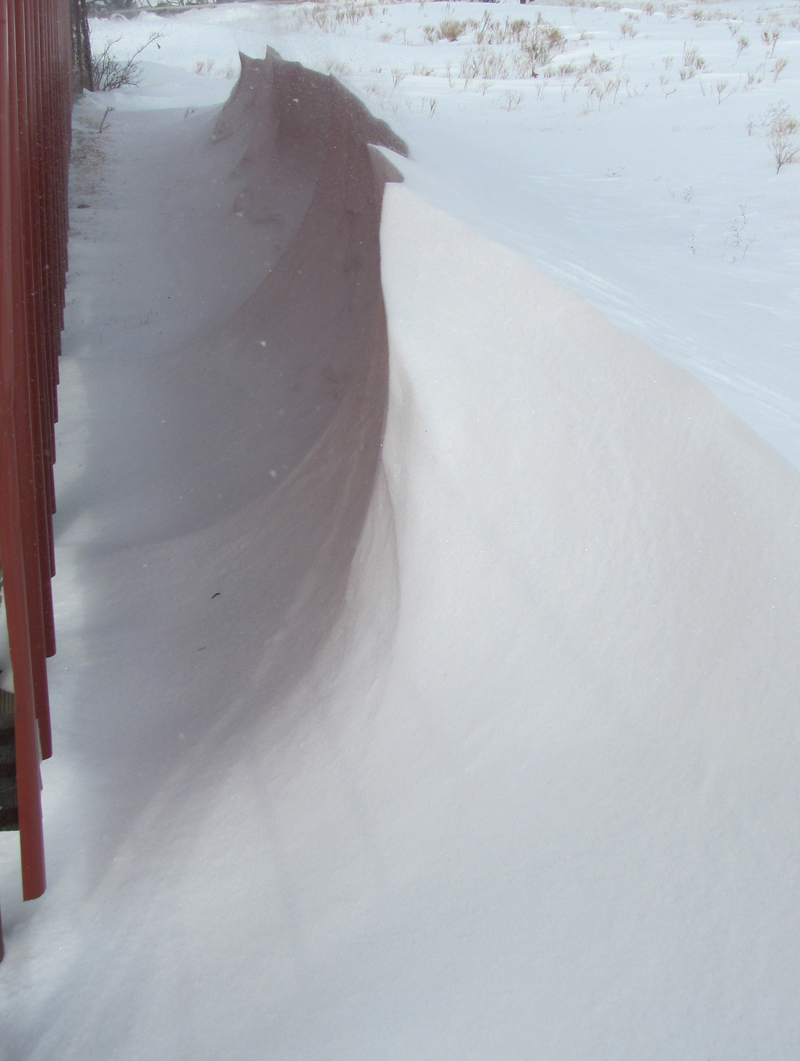
Already a week overdue post-Christmas, you clung to amnion and womb, not yet ready. Then as the wind blew more wicked and snow flew sideways, landing in piling drifts, the roads became more impassable, nearly impossible to traverse.
So your dad and I tried to drive to the hospital, concerned about your stillness and my advanced age, worried about being stranded on the farm far from town. When a neighbor came by tractor to stay with your brothers overnight, we headed down the road and our car got stuck in a snowpile in the deep darkness, our tires spinning, whining against the snow.
Another neighbor’s earth mover dug us out to freedom.
You floated silent and still, knowing your time was not yet.
Creeping slowly through the dark night blizzard, we arrived to the warm glow of the hospital, your heartbeat checked out steady, all seemed fine.
I slept not at all.
The morning’s sun glistened off sculptured snow as your heart ominously slowed. You and I were jostled, turned, oxygenated, but nothing changed. Your heart beat even more slowly, threatening to let go your tenuous grip on life.
The nurses’ eyes told me we had trouble. The doctor, grim faced, announced delivery must happen quickly, taking you now, hoping we were not too late. I was rolled, numbed, stunned, clasping your father’s hand, closing my eyes, not wanting to see the bustle around me, trying not to hear the shouted orders, the tension in the voices, the quiet at the moment of opening when it was unknown what would be found.
And then you cried. A hearty healthy husky cry, a welcomed song of life uninterrupted. Perturbed and disturbed from the warmth of womb, to the cold shock of a bright lit operating room, your first vocal solo brought applause from the surrounding audience who admired your purplish pink skin, your shock of damp red hair, your blue eyes squeezed tight, then blinking open, wondering and wondrous, emerging and saved from a storm within and without.
You were brought wrapped for me to see and touch before you were whisked away to be checked over thoroughly, your father trailing behind the parade to the nursery. I closed my eyes, swirling in a brain blizzard of what-ifs.
If no snow storm had come, you would have fallen asleep forever within my womb, no longer nurtured by my failing placenta, cut off from what you needed to stay alive. There would have been only our soft weeping, knowing what could have been if we had only known, if only God had provided a sign to go for help.
So you were saved by a providential storm sent from God and we were dug out from a drift: I celebrate whenever I hear your voice – your students love you as their teacher and mentor, you are a thread born to knit and mend hearts, all because of the night God sent drifting snow.
My annual retelling of a most remarkable day:: Thirty-three years ago today, our daughter Lea Gibson was born in an emergency C-section, hale and hearty because the good Lord sent a wind and snow storm to blow us into the hospital in time to save her.
Thanks to that blizzard, Lea is a school teacher, serves the youth ministry in her church, and will soon receive her Masters in School Counseling.
She is married to her true love Brian– he also is a blessing sent from the Lord. Together they have their own miracle child, happily born in the middle of the summer rather than snow-drift season.
The Lord wanted her in this world: May she be bread and feed many with her life and her laughter May she be thread and mend brokenness and knit hearts…
One-Time
Monthly
Yearly
Make a one-time or recurring donation to support daily Barnstorming posts
Now there was a man of the Pharisees named Nicodemus, a ruler of the Jews.This man came to Jesus by night and said to him, “Rabbi, we know that you are a teacher come from God, for no one can do these signs that you do unless God is with him.”
Jesus answered him, “Truly, truly, I say to you, unless one is born again he cannot see the kingdom of God.”
Nicodemus said to him, “How can a man be born when he is old? Can he enter a second time into his mother’s womb and be born?”
Jesus answered, “Truly, truly, I say to you, unless one is born of water and the Spirit, he cannot enter the kingdom of God. That which is born of the flesh is flesh, and that which is born of the Spirit is spirit. Do not marvel that I said to you, ‘You must be born again.’ The wind blows where it wishes, and you hear its sound, but you do not know where it comes from or where it goes. So it is with everyone who is born of the Spirit.”
Nicodemus said to him, “How can these things be?”
Jesus answered him, “Are you the teacher of Israel and yet you do not understand these things?Truly, truly, I say to you, we speak of what we know, and bear witness to what we have seen, but you do not receive our testimony. If I have told you earthly things and you do not believe, how can you believe if I tell you heavenly things? No one has ascended into heaven except he who descended from heaven, the Son of Man. And as Moses lifted up the serpent in the wilderness, so must the Son of Man be lifted up, that whoever believes in him may have eternal life. John 3: 1-15
When I lay these questions before God I get no answer. But a rather special sort of “No answer.”
It is not the locked door. It is more like a silent, certainly not uncompassionate, gaze.
As though he shook his head not in refusal but waiving the question.Like, “Peace, child; you don’t understand.”
Can a mortal ask questions which God finds unanswerable? Quite easily, I should think. All nonsense questions are unanswerable.
How many hours are there in a mile? Is yellow square or round?
Probably half the questions we ask – half our great theological and metaphysical problems – are like that. ~C.S. Lewis from A Grief Observed
I know now, Lord, why you utter no answer. You are yourself the answer. Before your face questions die away. ~C.S. Lewis from Till We Have Faces
At present we are on the outside of the world, the wrong side of the door. We discern the freshness and purity of morning, but they do not make us fresh and pure. We cannot mingle with the splendors we see. But all the leaves of the New Testament are rustling with the rumor that it will not always be so. Someday, God willing, we shall get in. ~C.S. Lewis from The Weight of Glory
And now brothers, I will ask you a terrible question, and God knows I ask it also of myself. Is the truth beyond all truths, beyond the stars, just this: that to live without him is the real death, that to die with him the only life? ~Frederich Buechner from The Magnificent Defeat
And that is just the point… how the world, moist and beautiful, calls to each of us to make a new and serious response. That’s the big question, the one the world throws at you every morning. “Here you are, alive. Would you like to make a comment?” ~Mary Oliver from Long Life
Some days, it is impossible to be a silent observer of the world. I ask so many unanswerable questions.
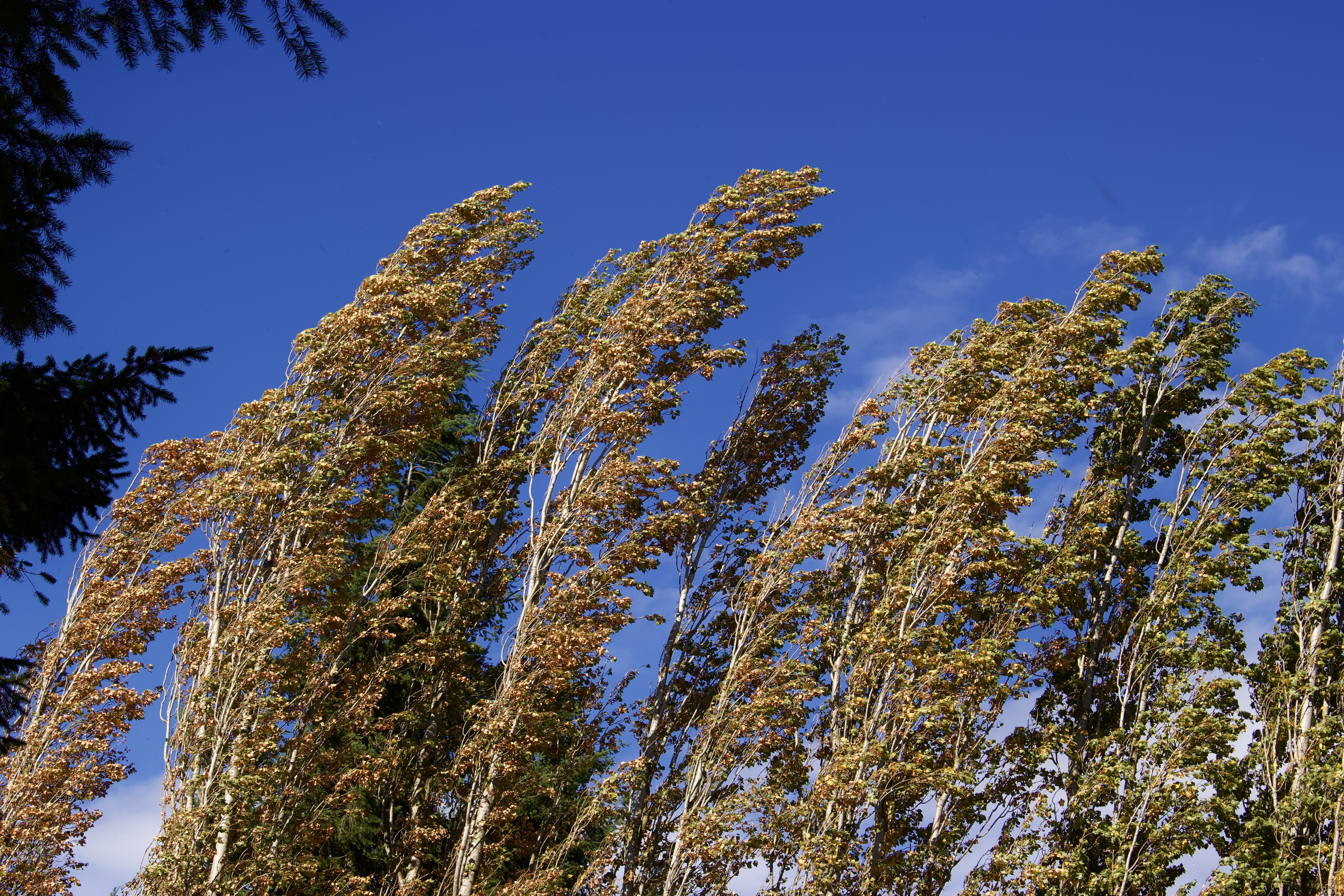
When the wind and rain pulls down nearly every leaf, the ground is carpeted with the dying evidence of last spring’s rebirth, there can be no complacency in witnessing life in progress.
It blusters, rips, drenches, encompasses, buries. Nothing remains as it was. And neither do we.
And yet here I am, alive. Awed. Born to be a witness to all this. Called to comment. Dying to hear a response.
I am reading slowly through the words in the Book of John over the next year. Once a week, I will invite you to “come and see” what those words might mean as we explore His promises together.
One-Time
Monthly
Yearly
Make a one-time or recurring donation to support daily Barnstorming posts
No one has ever regarded the First of January with indifference. ~Charles Lamb from “New Year’s Eve”
Do I dare Disturb the universe? In a minute there is time For decisions and revisions which a minute will reverse… ~T.S. Eliot from “The Love Song of J. Alfred Prufrock”
This New Year’s Day, like so many that have come before, arrived with the ordinary and annoying hour-long revelry of gunshots and fireworks across our rural neighborhood.
Yet this time a new year enters under a cloud: a lingering odor remains from the mess our nation made of 2025.
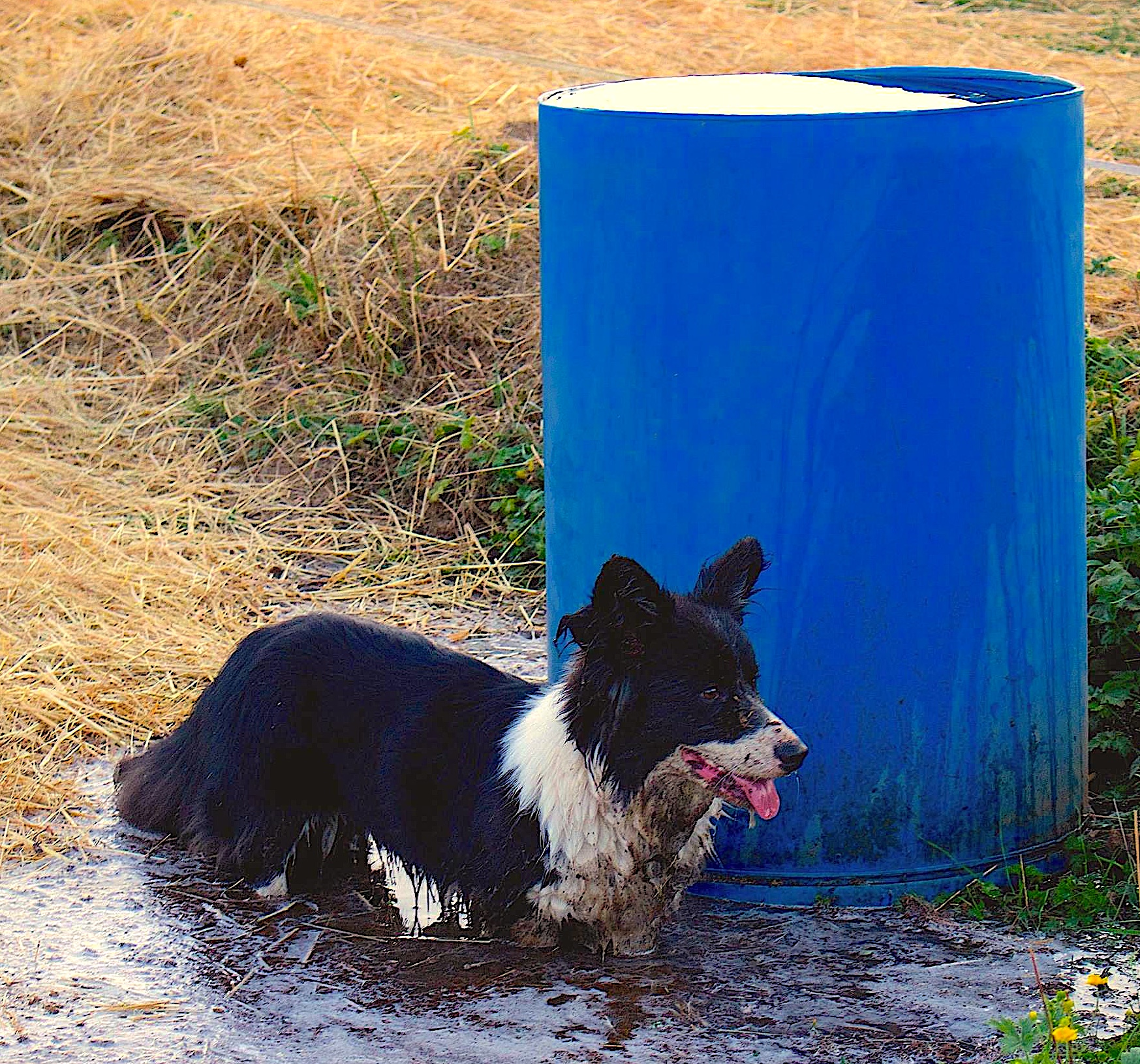
Like a dog rolling in something stinky simply because it is there, 2026 may look squeaky clean but reeks of what has come before. It can’t be ignored and, even brand spanking new, this year is already badly in need of a bath.
Like a dog, we like what is familiar and comfortable, even if that means we roll about where we shouldn’t, still smelling like yesterday, if not last year.
Time leads irrevocably forward, with us in tow. There is no turning back or staying stubbornly with how things used to be. Perhaps this new year we shower off the mud, stay clear of the stinky stuff in the headlines, and take time to look at all things with new eyes.
Do we dare disturb the universe?
One-Time
Monthly
Yearly
Make a one-time or recurring donation to support daily Barnstorming posts
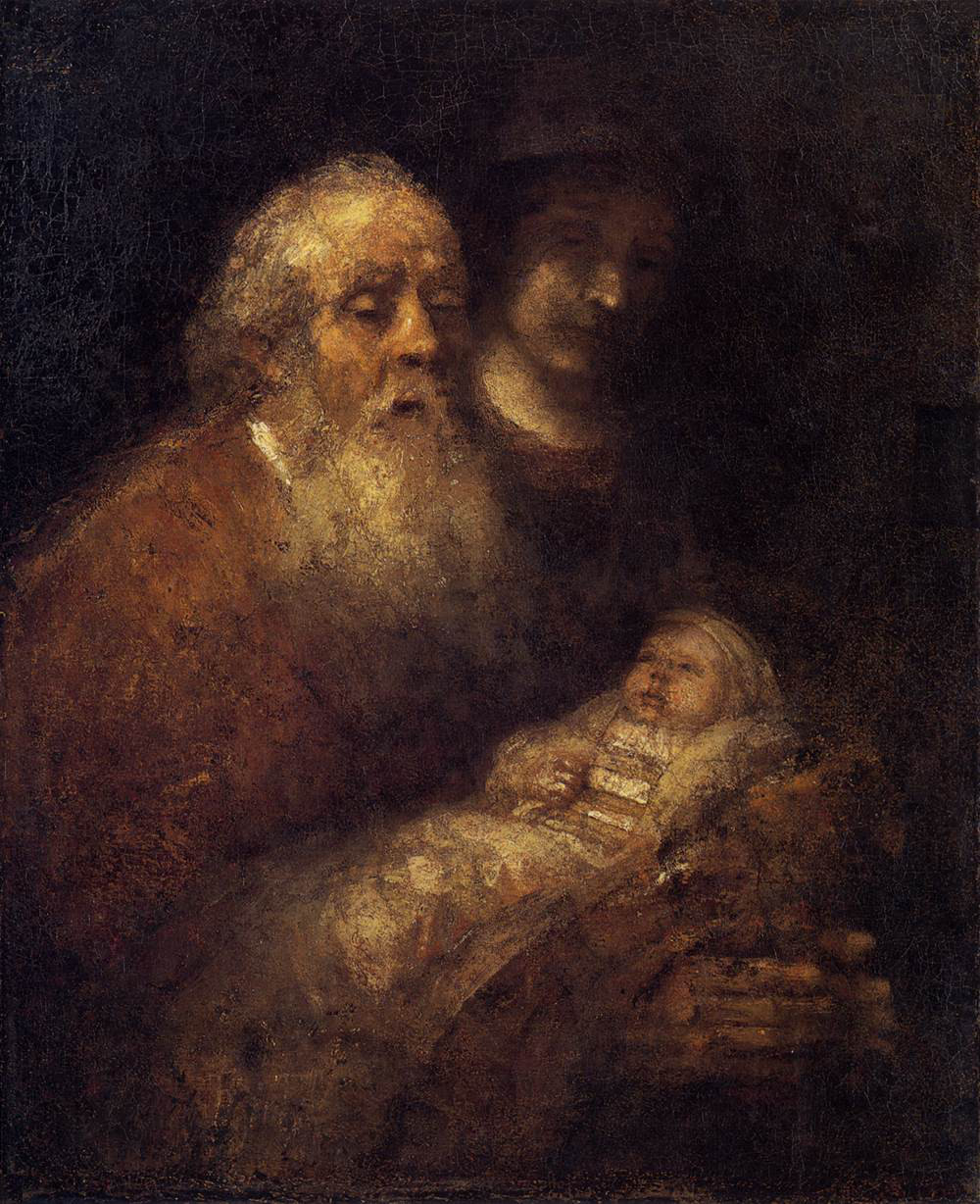
Lord, now You are letting Your servant depart in peace, according to Your word; For my eyes have seen Your salvation. Luke 2:29-30 (Simeon’s Song)
The Song of Simeon by Rembrandt
Cards in each mailbox, angel, manger, star and lamb, as the rural carrier, driving the snowy roads, hears from her bundles the plaintive bleating of sheep, the shuffle of sandals, the clopping of camels. At stop after stop, she opens the little tin door and places deep in the shadows the shepherds and wise men, the donkeys lank and weary, the cow who chews and muses. And from her Styrofoam cup, white as a star and perched on the dashboard, leading her ever into the distance, there is a hint of hazelnut, and then a touch of myrrh. ~Ted Kooser “Christmas Mail”
the utterly unexpected a star, a light, a voice shakes us awake opens our sleepy eyes interrupts familiar routines as
our hearts tremble, muscles tighten; do we run to prepare for battle or do we freeze in place?
the animals also rustle and stand up- confused like us
they see the exploding sky and yet they sense no threat but instead merely listen,
huddled together for warmth as unearthly music fills their ears.
we quickly make plans to see this great thing, a revelation- word has become flesh and we have been invited to catch the first glimpse. ~Steve Bell “First Glimpse”
…Grant us thy peace. Before the stations of the mountain of desolation, Before the certain hour of maternal sorrow, Now at this birth season of decease, Let the Infant, the still unspeaking and unspoken Word, Grant Israel’s consolation To one who has eighty years and no to-morrow. According to thy word. They shall praise Thee and suffer in every generation With glory and derision, Light upon light, mounting the saints’ stair. Not for me the martyrdom, the ecstasy of thought and prayer, Not for me the ultimate vision. Grant me thy peace. (And a sword shall pierce thy heart, Thine also). ~T.S. Eliot from “A Song for Simeon”
Simeon had waited and waited for this promised “first glimpse” moment of meeting the Son of God face to face, not knowing when or how, not knowing he would be able to hold him fast in his arms, not knowing he would be able to personally bless the parents of this holy child.
He certainly could not know this child would be the cause of so much joy and sorrow for those who love Him deeply.
That sword of painful truth pierces into our soul, opening us with the precision of a surgeon under high beam lights in the operating room where nothing is left unilluminated. We are, by the birth of Jesus, bared completely, our darkness thrust into dawn, our hearts revealed as never before, no matter who we are, our place of origin, our faith or lack thereof.
God is an equal opportunity heart surgeon.
It is terrifying, this mountain of desolation, all cracks and crevices thrust into the light. And it should be, given what we are, every one of us.
We wait for this incarnate God, longing and hungry for His peace. We are tired, too tired to continue to hide within the darkness of our troubles and conflict of our sin. We, like Simeon, are desperate for a first glimpse of the promise of His appearance dwelling with us, when we can gather Him into our arms and He gathers us into His, when all becomes known and understood and forgiven.
His birth is the end of our death, the beginning of the outward radiance of His peace, and wide open to all who open themselves to Him.
Light upon Light.
One-Time
Monthly
Yearly
Make a one-time or recurring donation to support daily Barnstorming posts
And in despair I bowed my head; “There is no peace on earth,” I said; “For hate is strong, And mocks the song Of peace on earth, good-will to men!”
Then pealed the bells more loud and deep: “God is not dead, nor doth He sleep; The Wrong shall fail, The Right prevail, With peace on earth, good-will to men.” ~Henry Wadsworth Longfellowfrom Christmas Bells
When the song of the angels is stilled, When the star in the sky is gone, When the kings and princes are home, When the shepherds are back with their flock, The work of Christmas begins: To find the lost, To heal the broken, To feed the hungry, To release the prisoner, To rebuild the nations, To bring peace among others, To make music in the heart. ~Howard Thurman “The Work of Christmas”
The core truth of Christ’s birth is that when God became man, he entered the world in a posture of extreme humility and extreme vulnerability, and that posture never changed.
Jesus, God made flesh, spent his life as a carpenter and an itinerant preacher. He proved so vulnerable that he was easily executed by the Roman Empire, with only the tiniest band of followers still clinging to their faith.
And if we who call ourselves Christians are to truly imitate Christ, then shouldn’t we also place little regard on our own worldly status? Jesus told us to take up our own cross, not to nail others to that terrible tree. Yes, Christ is King, but of a very different kind of kingdom, where the first are last, where you love your enemies, where you bless those who persecute you, and where you sacrifice to serve your neighbor. ~David French from Christianity is a Dangerous Faith in the New York TImes -12/21/25
Let the stable still astonish; Straw – dirt floor, dull eyes, Dusty flanks of donkeys, oxen; Crumbling, crooked walls; No bed to carry that pain, And then, the child, Rag-wrapped, laid to cry In a trough. Who would have chosen this? Who would have said: “Yes, Let the God of all the heavens and earth Be born here, in this place?” Who but the same God Who stands in the darker, fouler rooms Of our hearts And says, “Yes, Let the God of Heaven and Earth Be born here – In this place. ~Leslie Leyland Fields “Let the Stable Still Astonish”
During Advent, I am guilty of nostalgia and sentiment, invoking the gentle bedtime story of that silent night, with the infant napping away in a hay-filled manger, His devoted parents hovering, the humble shepherds peering in the stable door.
All is calm. All is bright.
Yet no – this is not a sentimental story. It is astonishing.
God never sleeps.
This is no gentle bedtime story: – a teenage mother gives birth in a smelly cave among domestic animals, with no alternative but to lay her baby in a rough feed trough.
– the heavenly host appears to shepherds – the lowest of the low in society – shouting and singing glories which causes terror.
– Herod’s response to the news that a Messiah had been born is to kill a legion of male children whose parents undoubtedly begged for mercy, clinging to their about-to-be murdered sons.
– a family’s flight to Egypt as refugees seeking asylum so their son would not be yet another victim of Herod.
– Jesus grows up to become itinerant and homeless, tempted while fasting in the wilderness, owns nothing, rejected by His own people, betrayed by His disciples, sentenced to death by acclamation before Pilate, tortured, hung on a cross until He gave up his spirit.
– Jesus understood He was not of this world. He knew the power that originally brought him to earth as a helpless infant lying in an unforgiving stone trough would eventually move the stone covering His tomb.
He would be sacrificed, He would die and rise again, He would return again as King of all nations.
When I hear skeptics scoff at Christianity as a “crutch for the weak”, they underestimate the courage it takes to walk into church each week admitting we are a desperate people seeking rescue. We cling to the life preserver found in the Word, hanging on for dear life. It is only because of grace that we survive the tempests of temptation, shame, guilt and self-doubt to worship an all-knowing God who is not dead and who never ever sleeps.
This bedtime story is not for the faint of heart. It is meant to astonish. The Power invoked created the very dust we are made of, and breathed His life into us.
So be not afraid: the wrong shall fail the Right prevail. He chose this place to be among us. Peace on earth, good-will to men.
The grass withers, the flower fades, But the word of our God stands forever. Isaiah 40:8
One-Time
Monthly
Yearly
Make a one-time or recurring donation to support daily Barnstorming posts
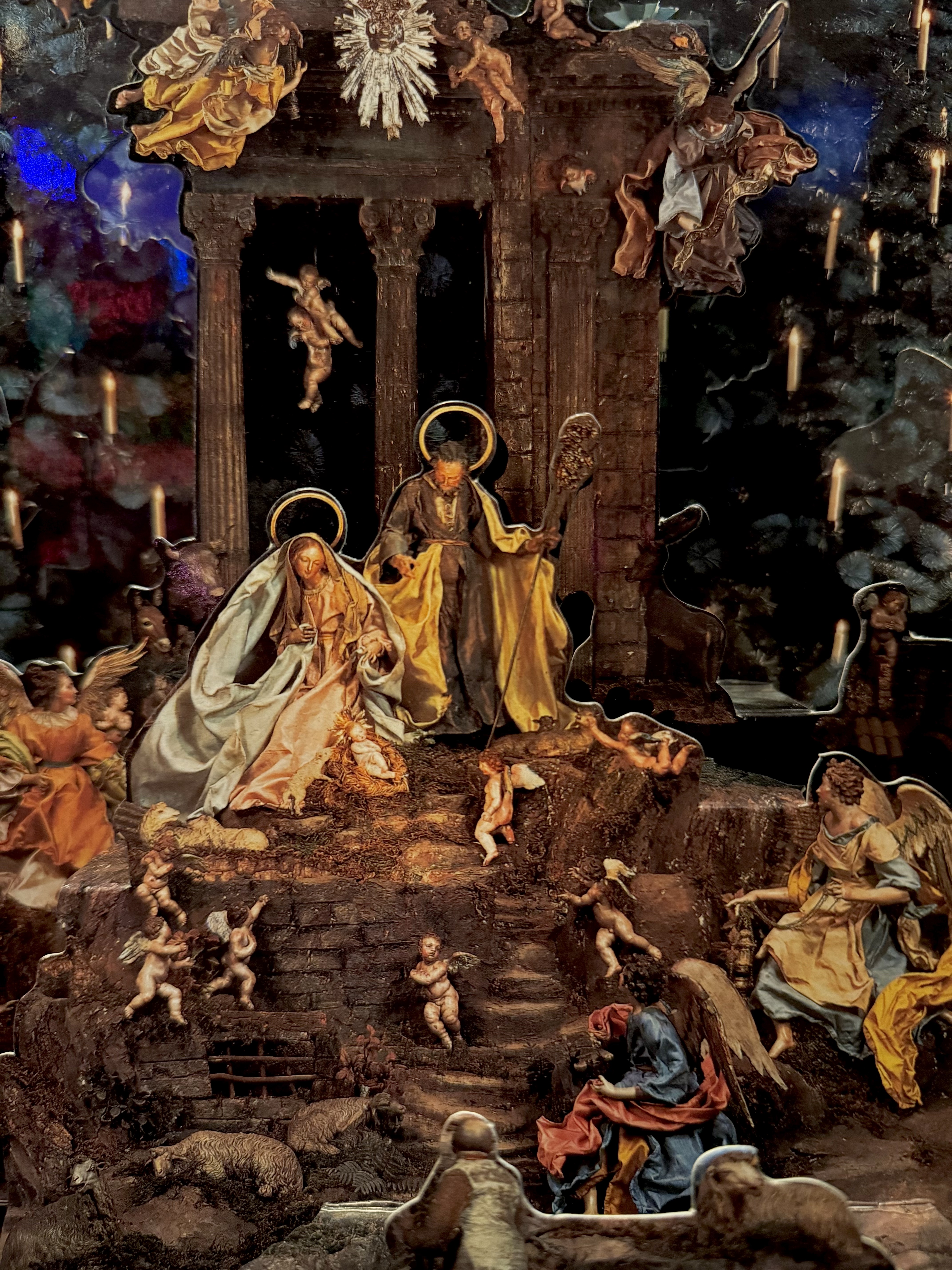
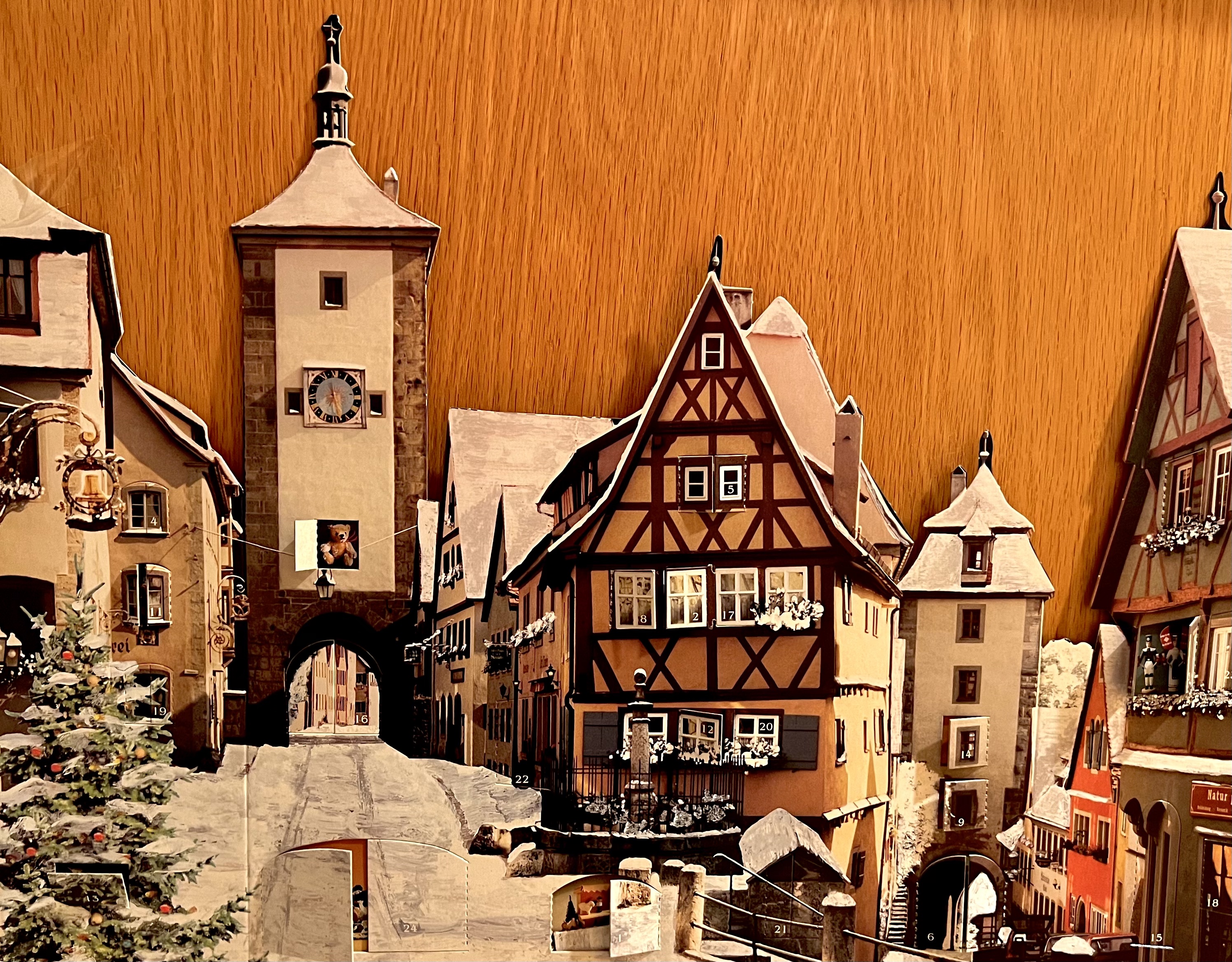
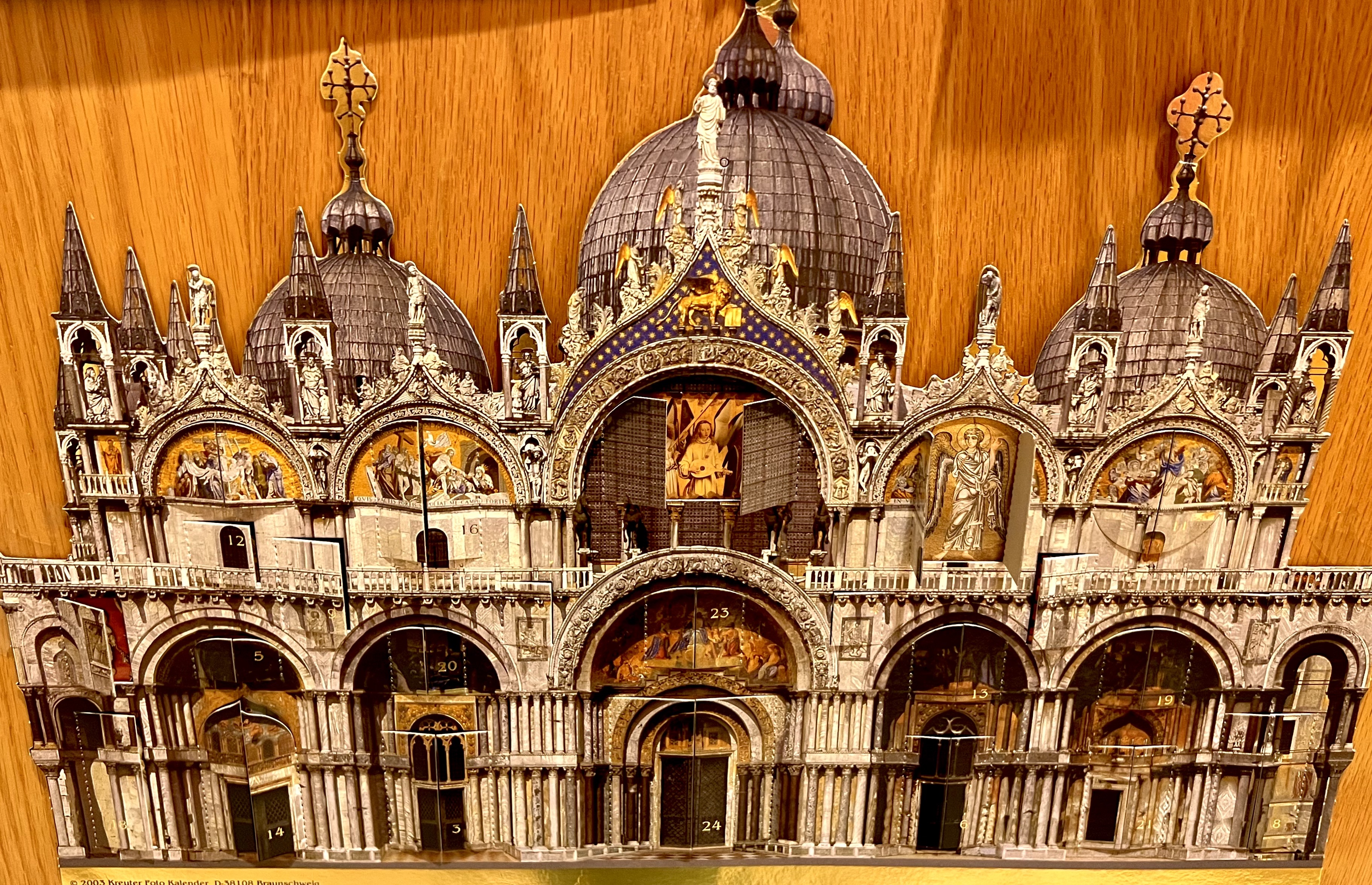
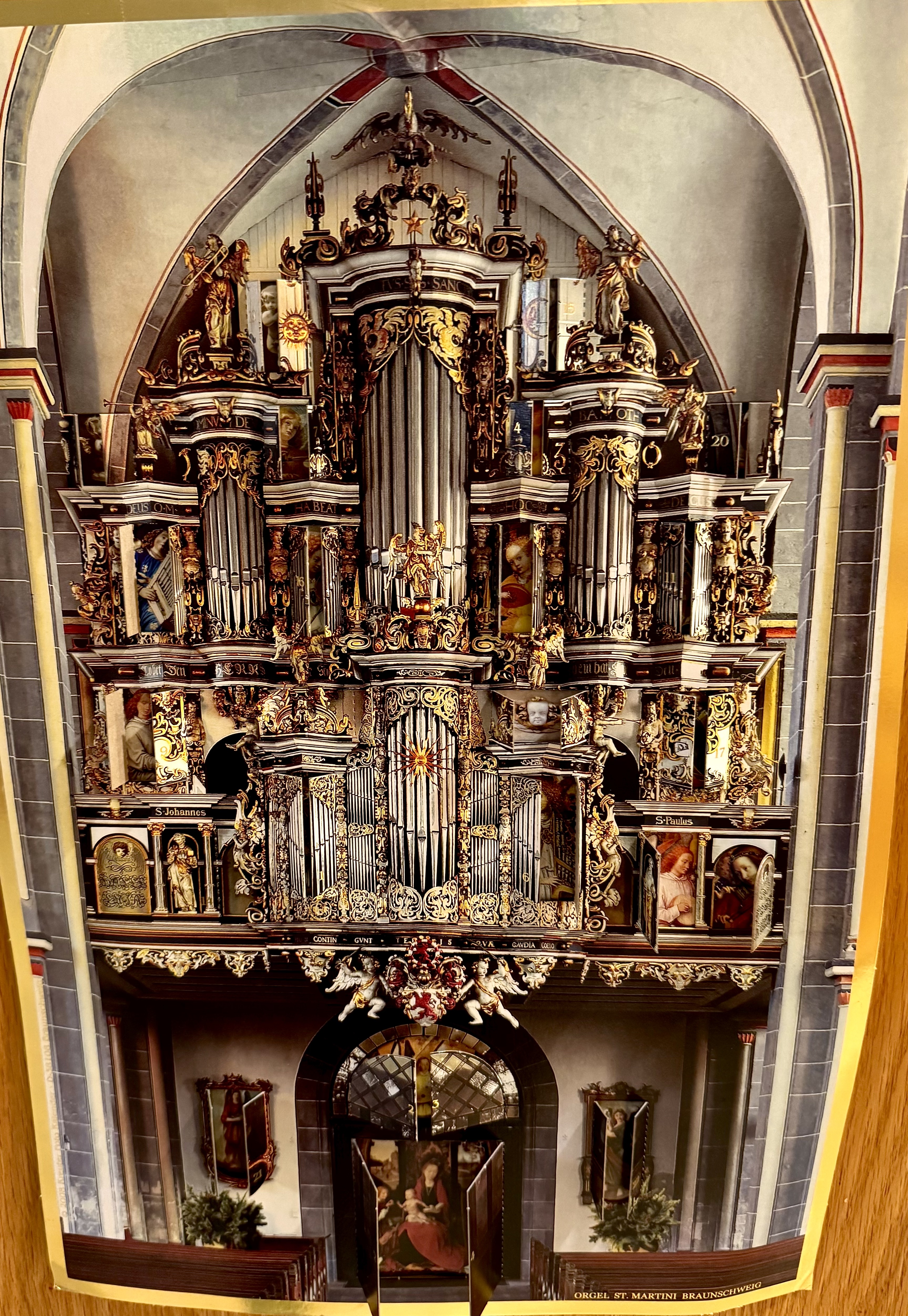
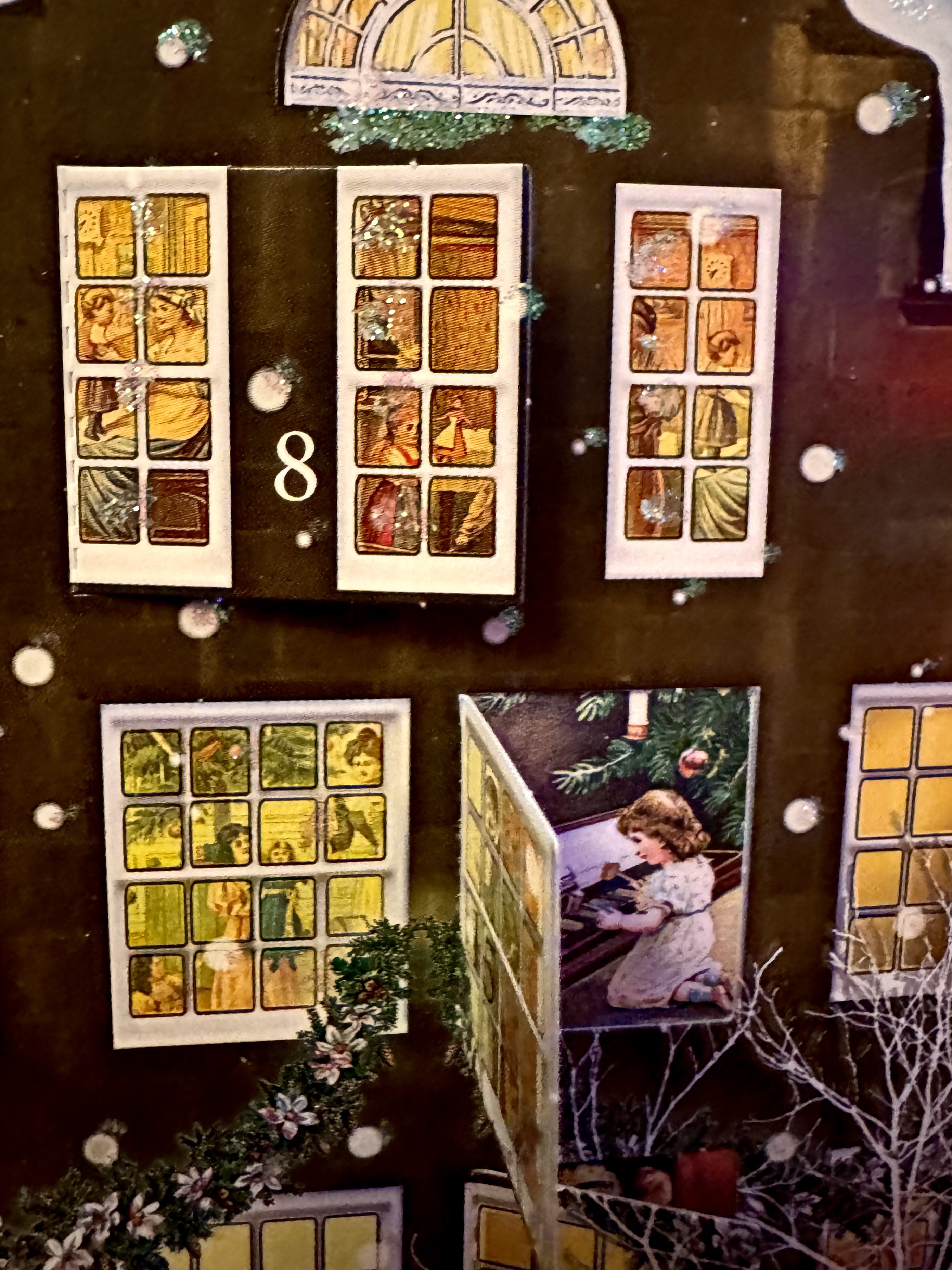
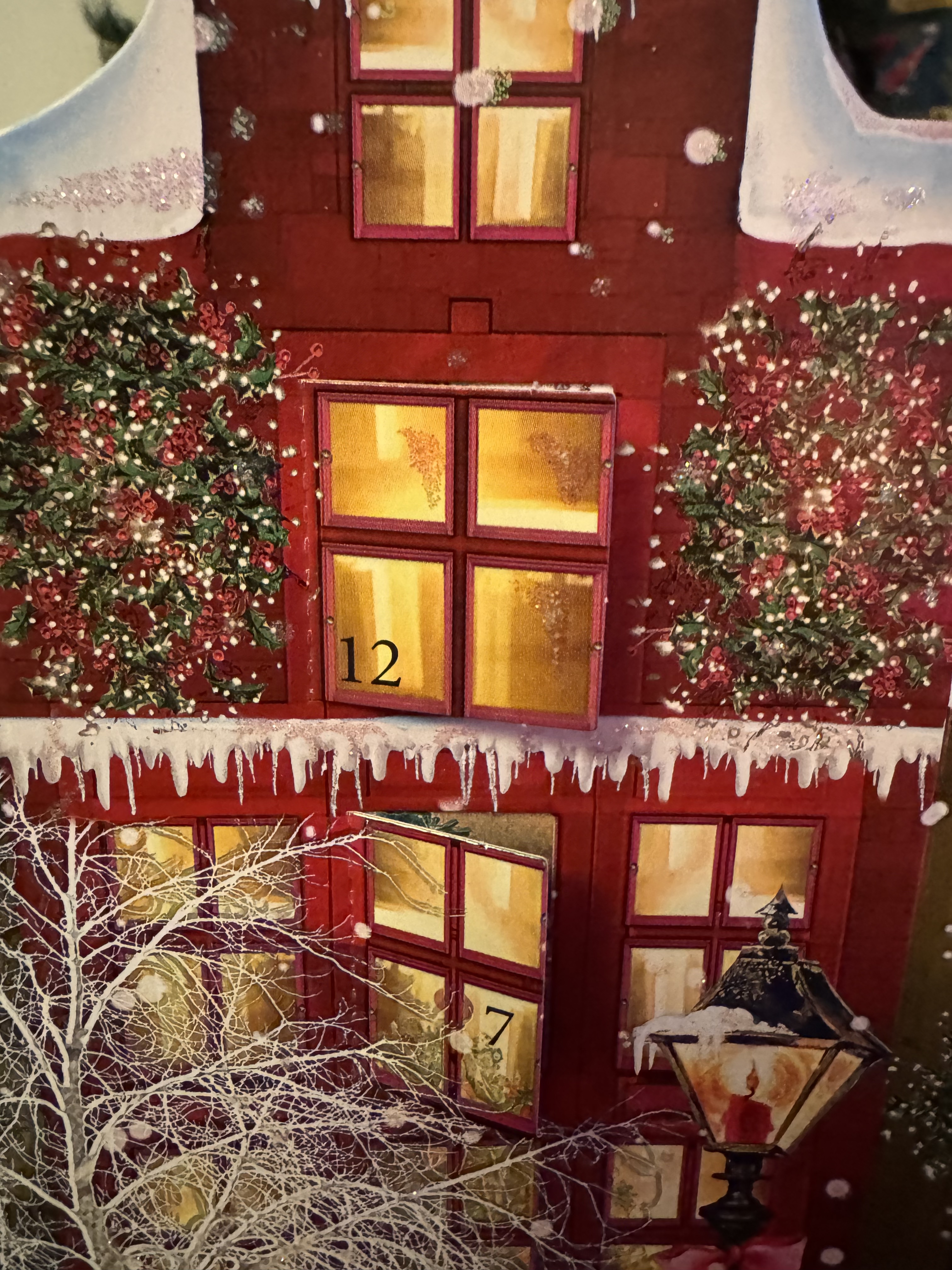
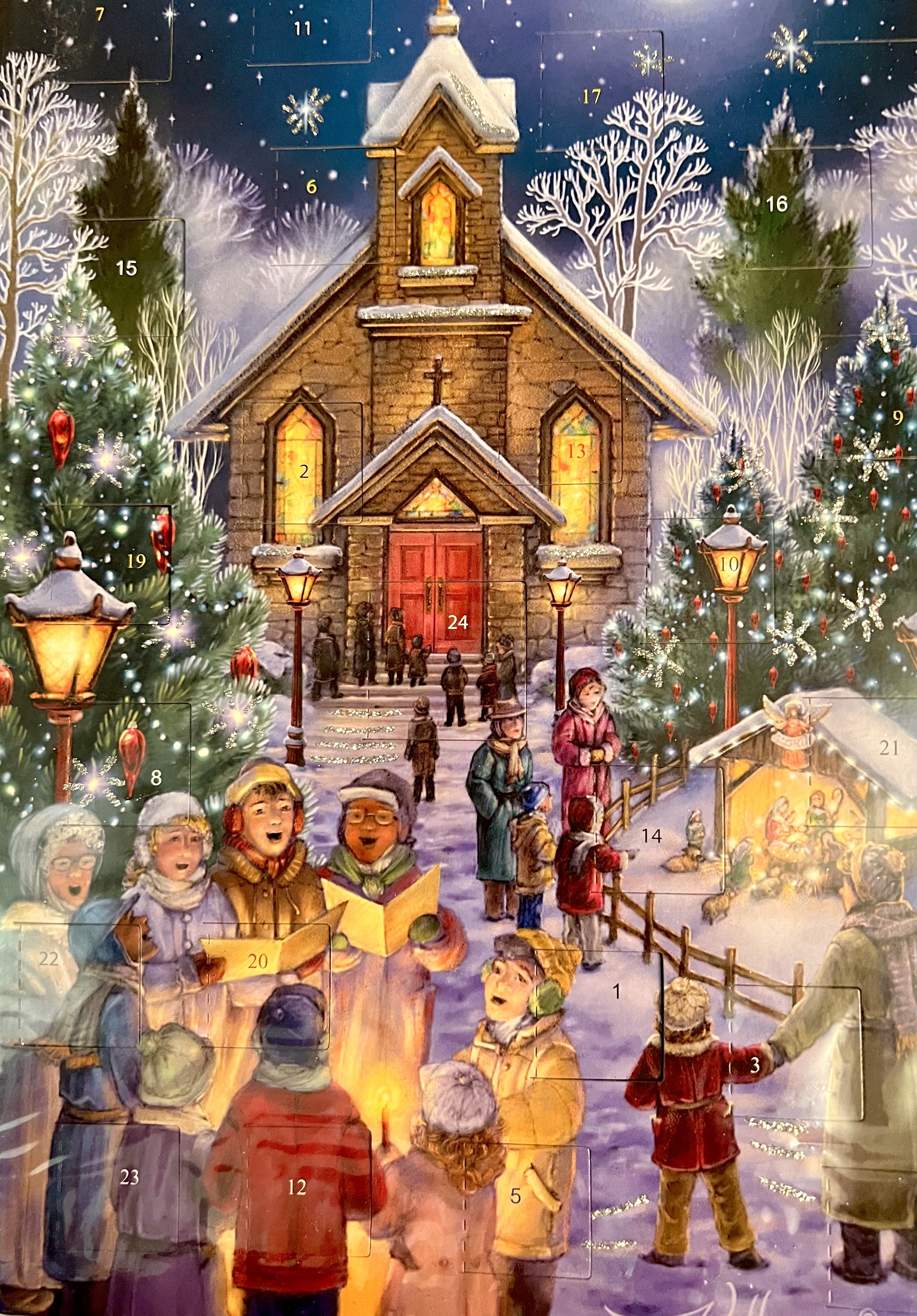
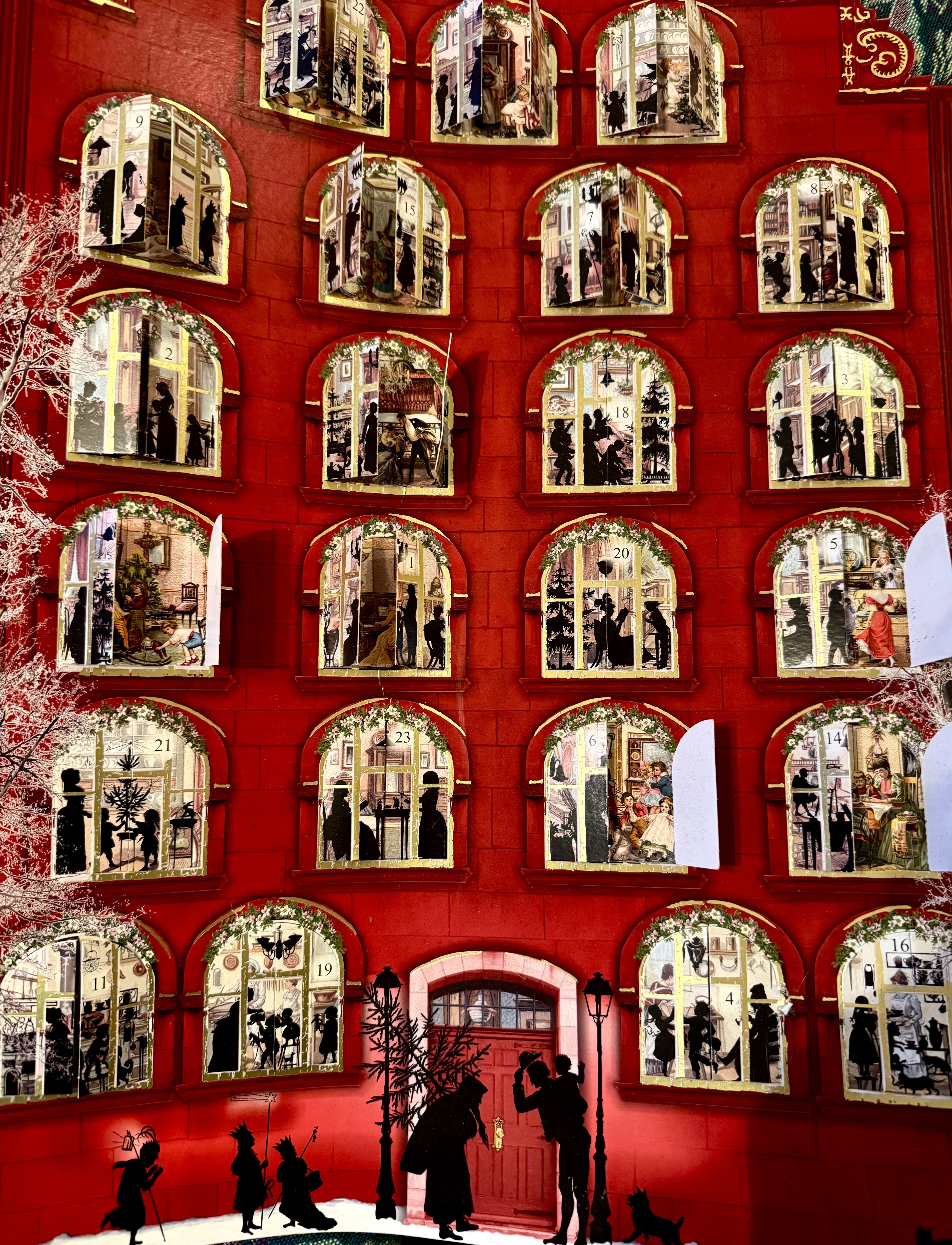
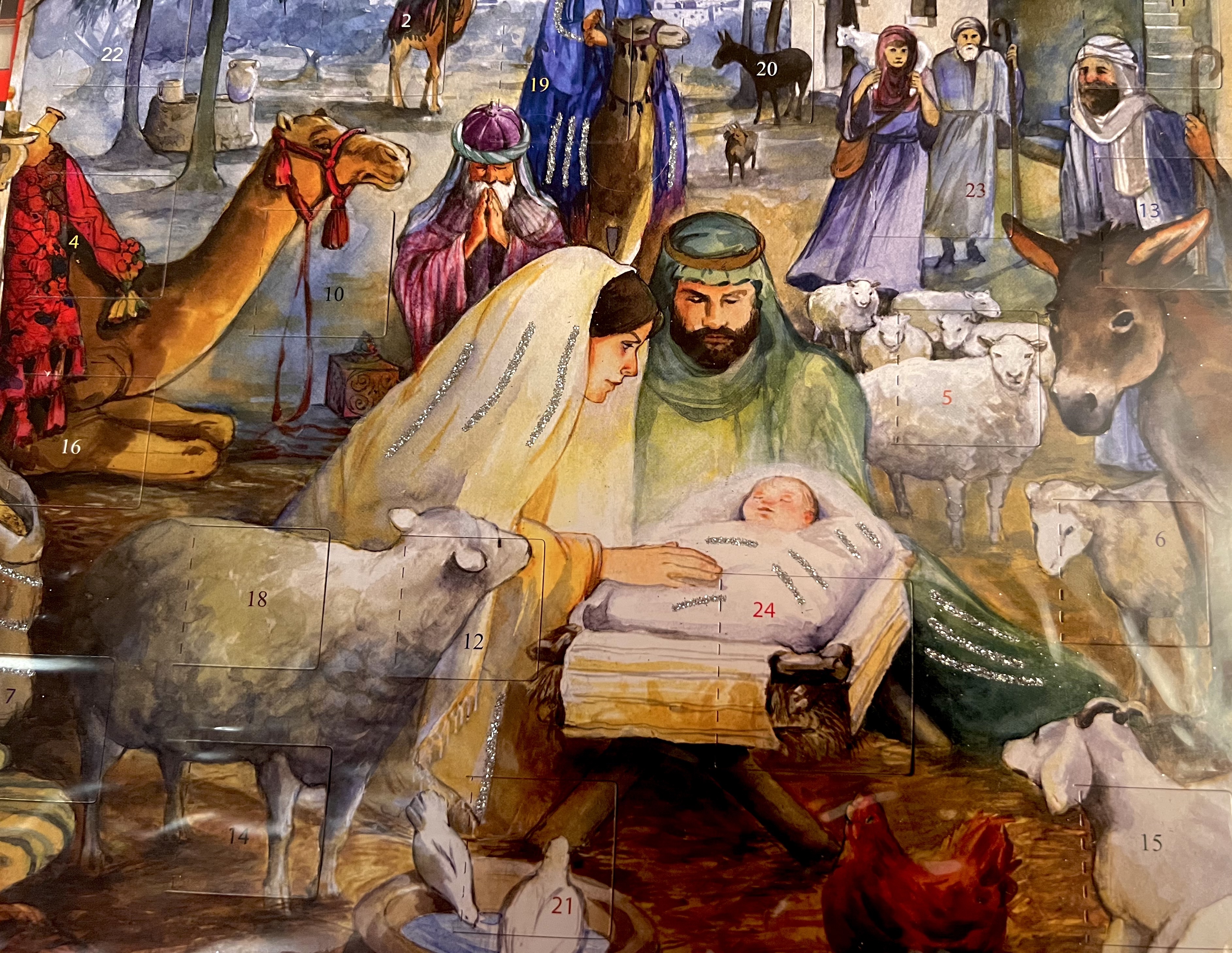
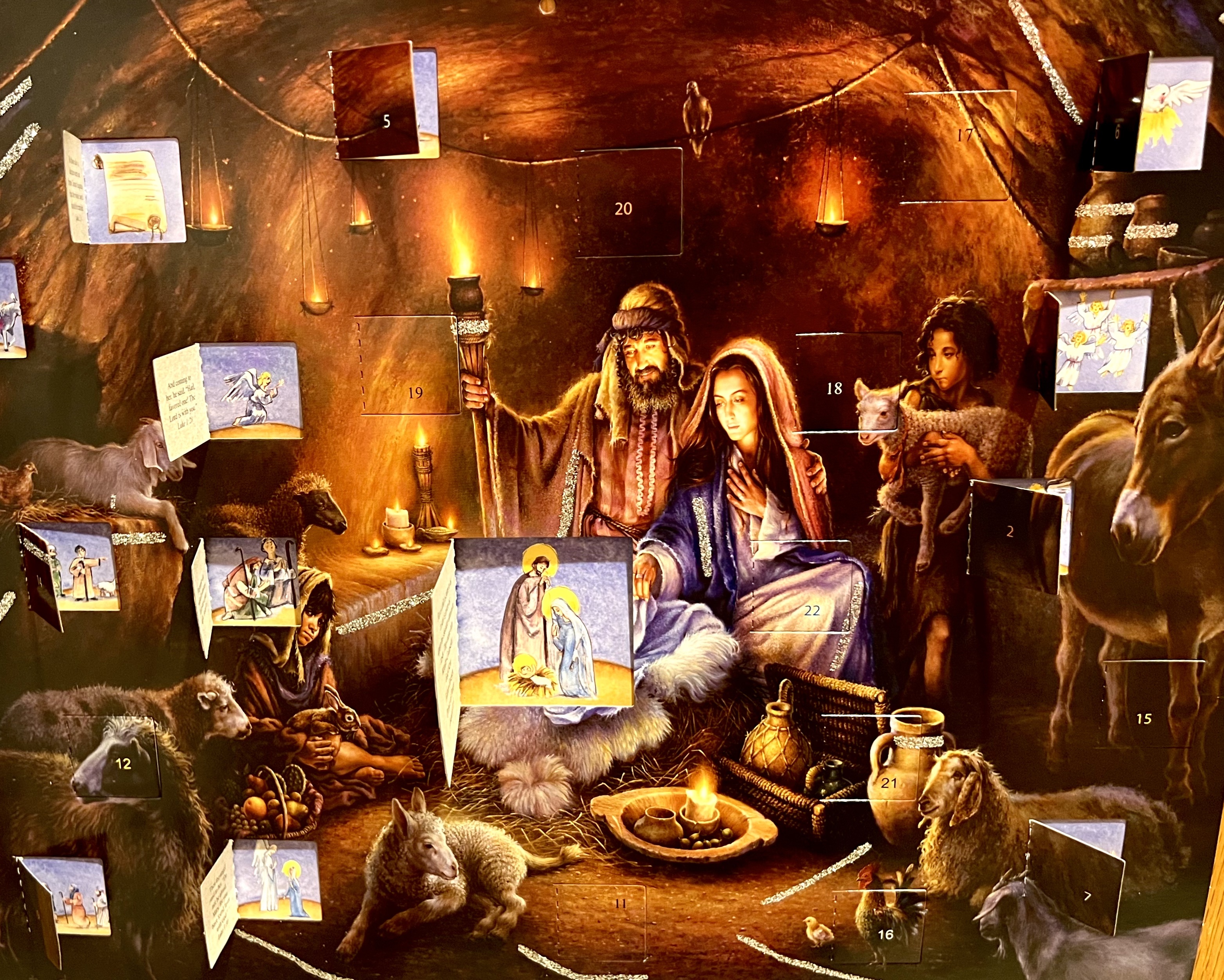
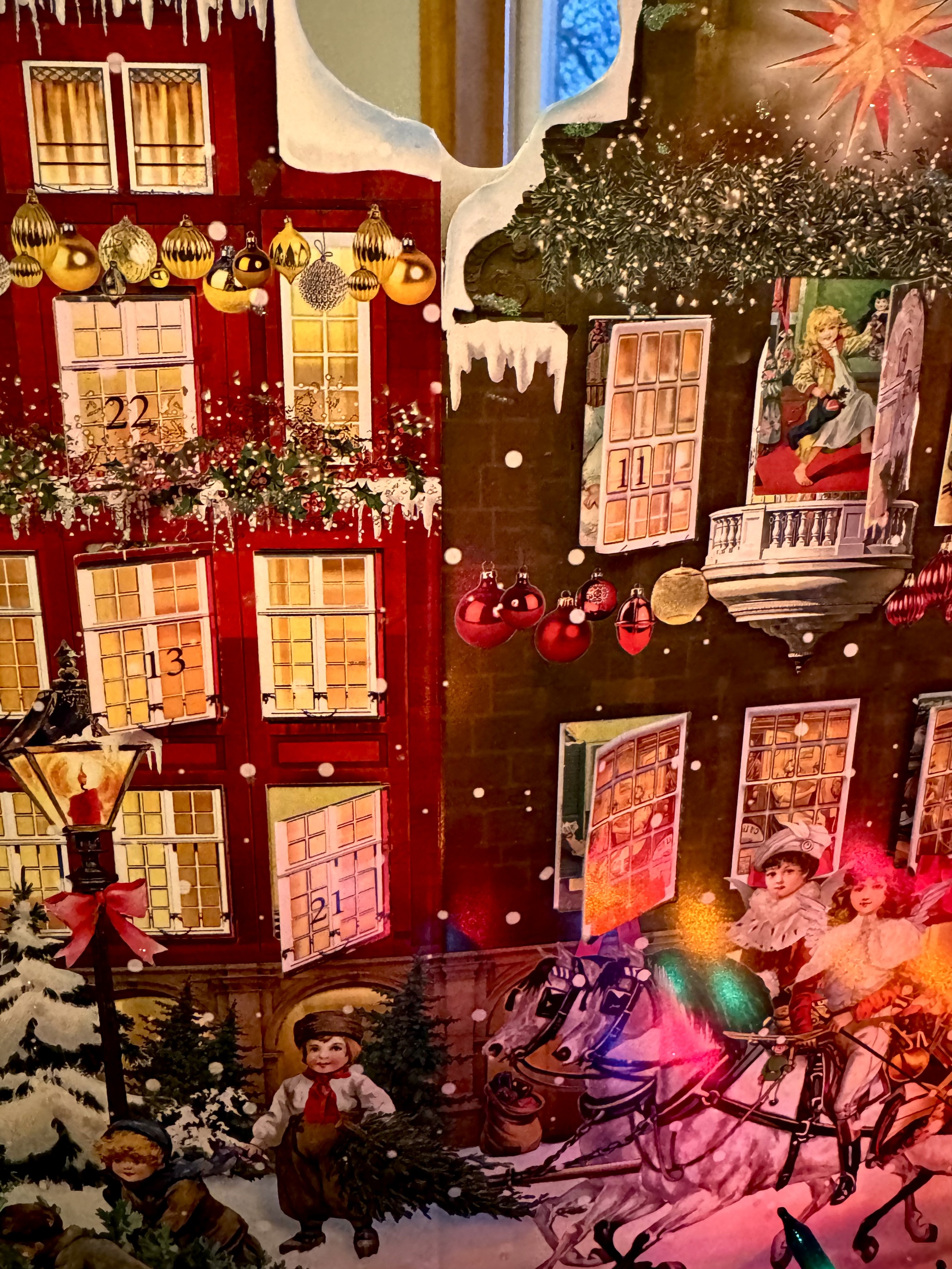
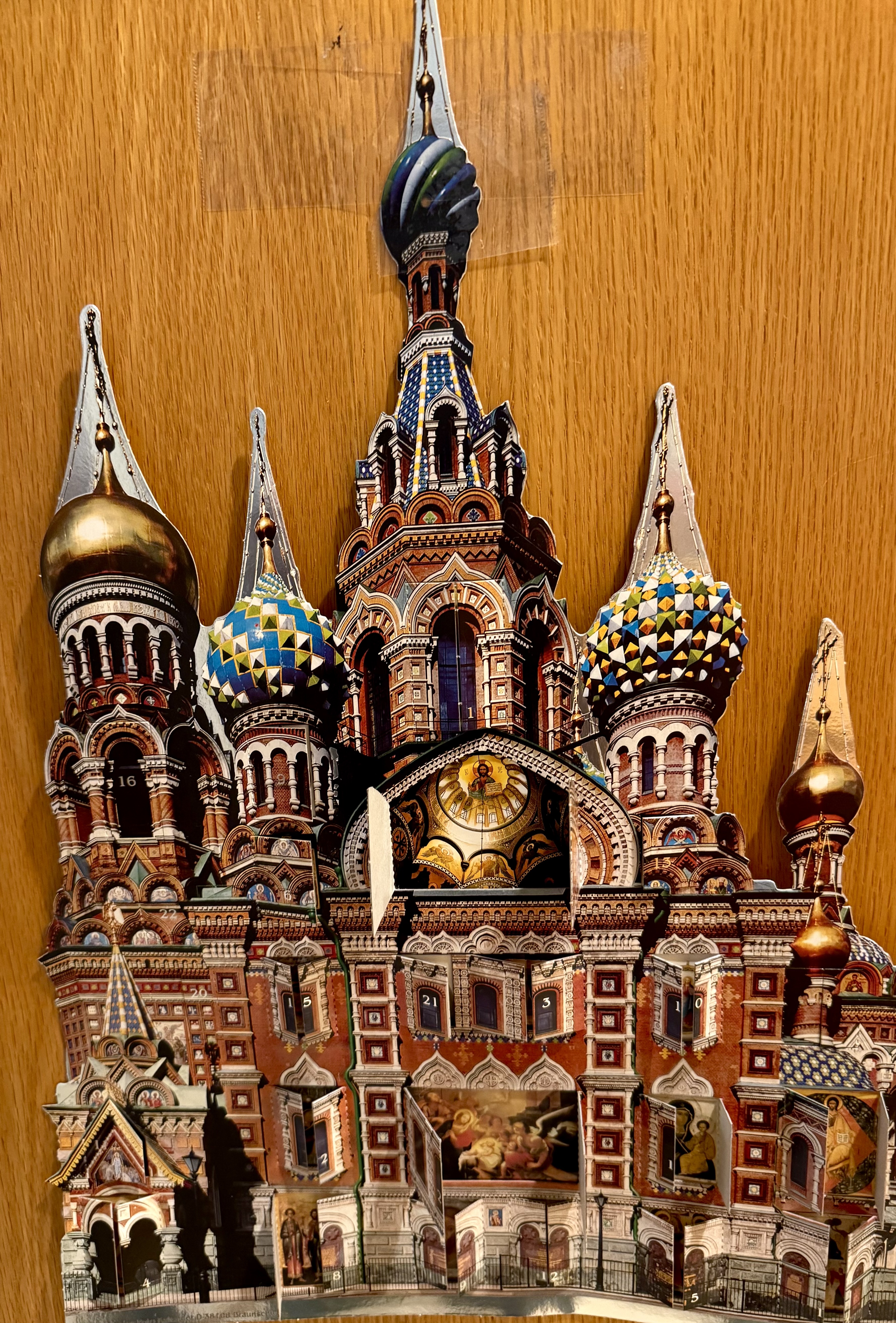
Bethlehem in Germany, Glitter on the sloping roofs, Breadcrumbs on the windowsills, Candles in the Christmas trees, Hearths with pairs of empty shoes: Panels of Nativity Open paper scenes where doors Open into other scenes, Some recounted, some foretold. Blizzard-sprinkled flakes of gold Gleam from small interiors, Picture-boxes in the stars Open up like cupboard doors In a cabinet Jesus built.
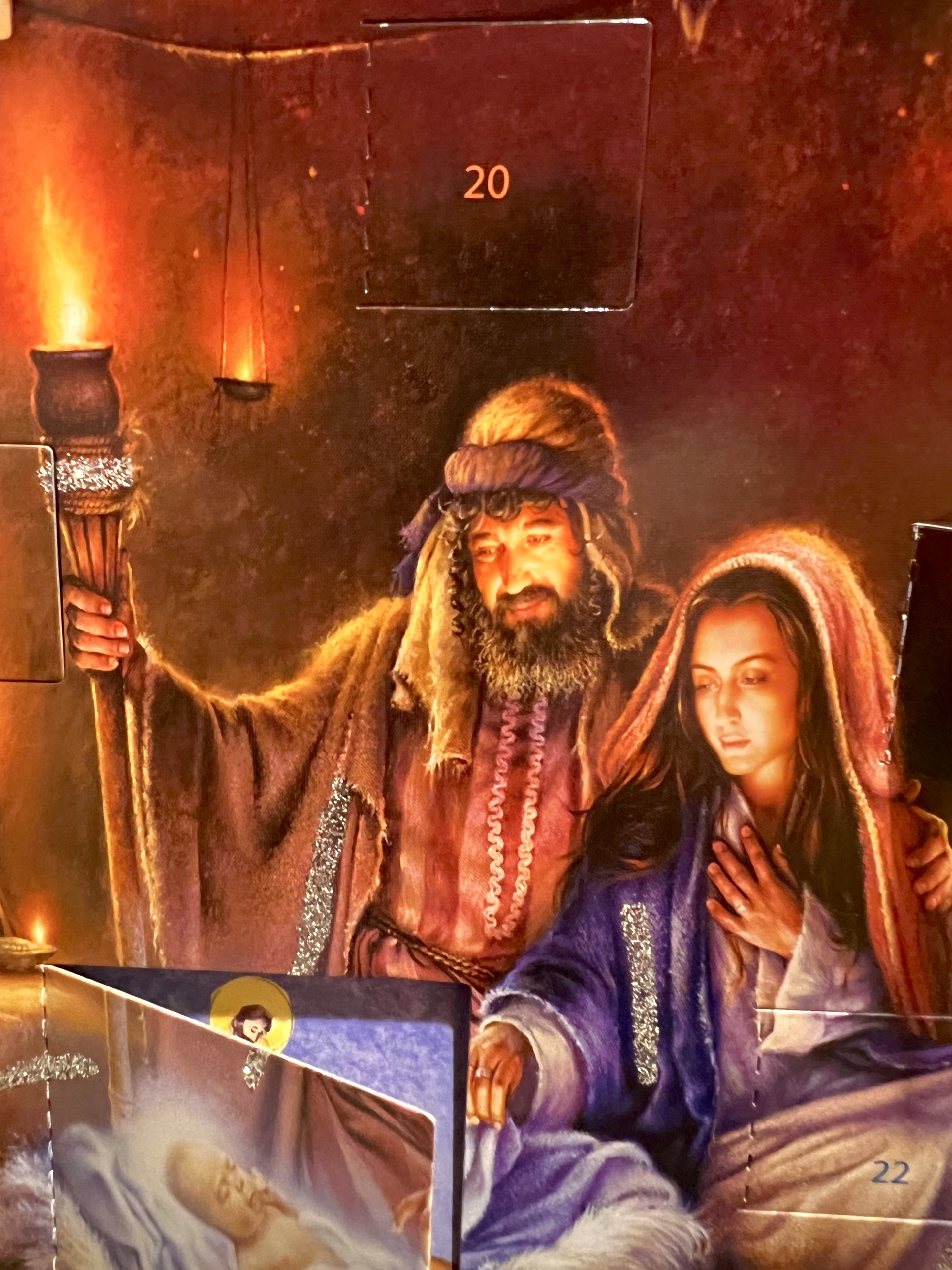
Leaning from the cliff of heaven, Indicating whom he weeps for, Joseph lifts his lamp above The infant like a candle-crown. Let my fingers touch the silence Where the infant’s father cries. Give me entrance to the village From my childhood where the doorways Open pictures in the skies. But when all the doors are open, No one sees that I’ve returned. When I cry to be admitted, No one answers, no one comes. Clinging to my fingers only Pain, like glitter bits adhering, When I touch the shining crumbs. ~Gjertrud Schnackenberg,from “Advent Calendar” from Supernatural Love: Poems 1976-1992.
He will come like last leaf’s fall. One night when the November wind has flayed the trees to the bone, and earth wakes choking on the mould, the soft shroud’s folding.
He will come like frost. One morning when the shrinking earth opens on mist, to find itself arrested in the net of alien, sword-set beauty.
He will come like dark. One evening when the bursting red December sun draws up the sheet and penny-masks its eye to yield the star-snowed fields of sky.
He will come, will come, will come like crying in the night, like blood, like breaking, as the earth writhes to toss him free. He will come like child. ~Rowan Williams “Advent Calendar”
Who has not considered Mary And who her praise would dim, But what of humble Joseph Is there no song for him?
If Joseph had not driven Straight nails through honest wood If Joseph had not cherished His Mary as he should;
If Joseph had not proved him A sire both kind and wise Would he have drawn with favor The Child’s all-probing eyes?
Would Christ have prayed, ‘Our Father’ Or cried that name in death Unless he first had honored Joseph of Nazareth ? ~Luci Shaw “Joseph The Carpenter”
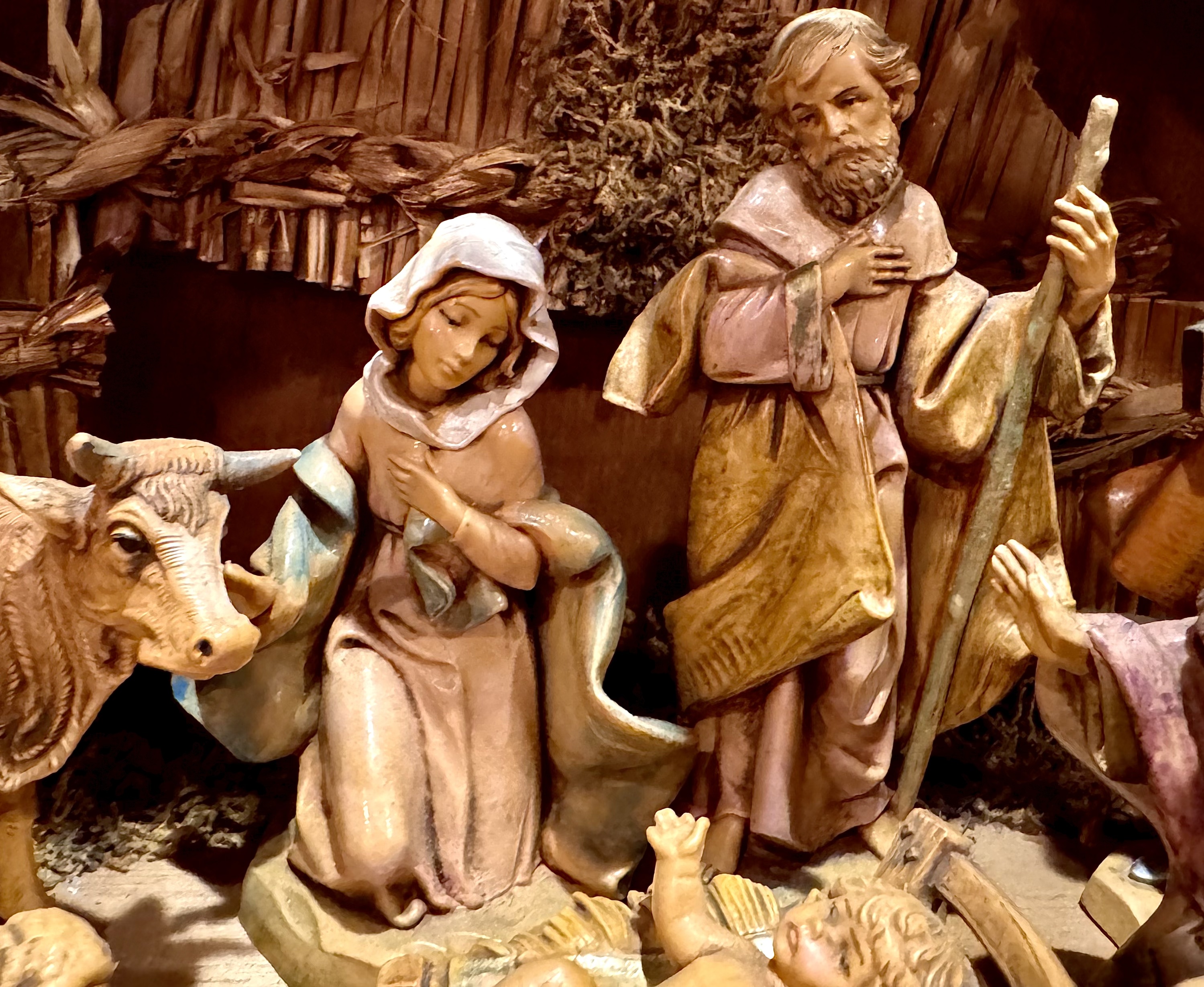
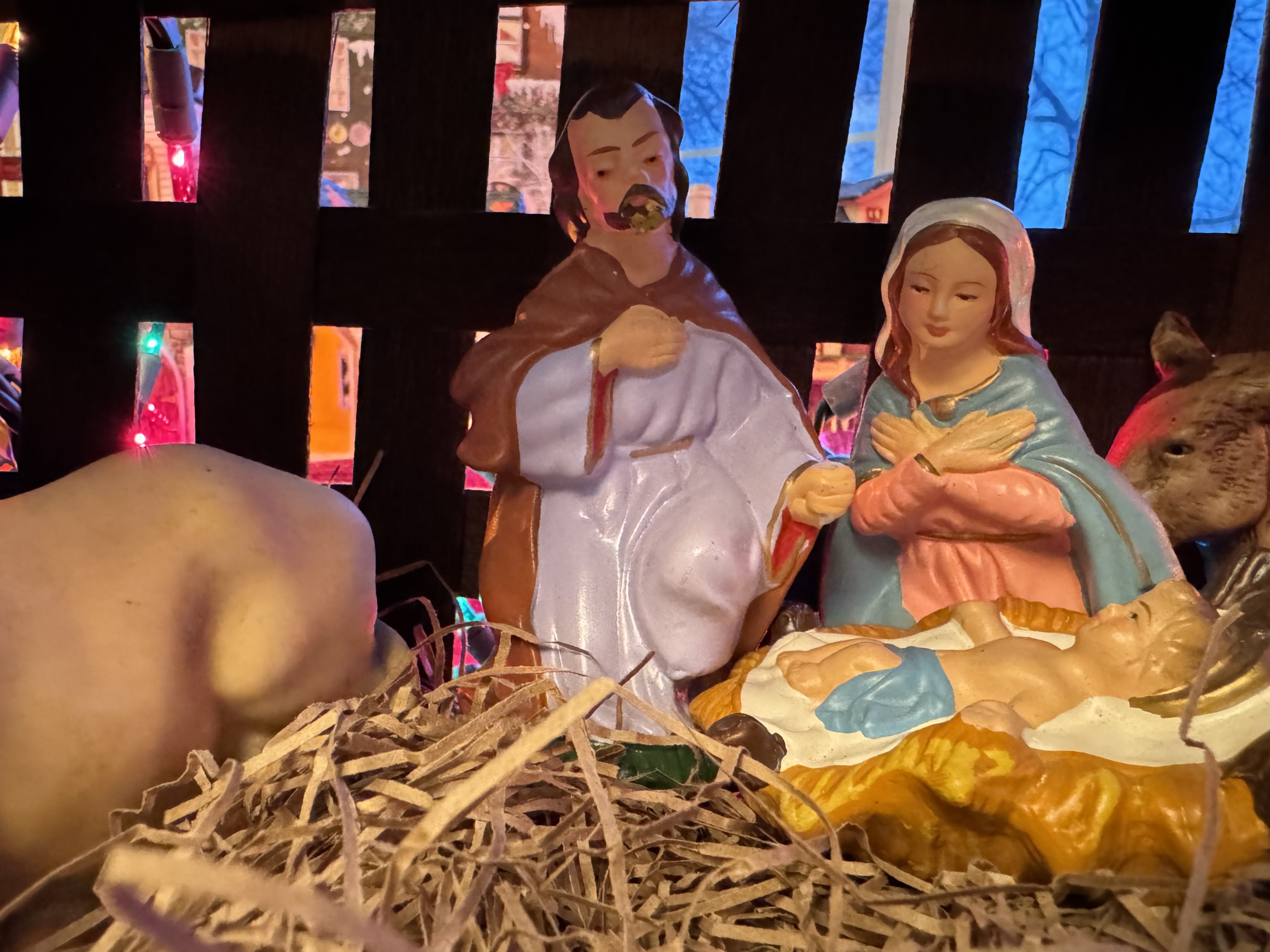
The hero of the story this season is the man in the background of each creche, the old master Nativity paintings, and the Advent Calendar doors that open each day.
He is the adoptive father who does the right thing rather than what he has legal right to do, who listens to his dreams and believes, who leads the way over dusty roads to be counted, who searches valiantly for a suitable place to stay, who does whatever he can to assist her labor, who stands tall over a vulnerable mother and infant while the poor and curious pour out of the hills, the wise and foreign appear bringing gifts, who takes his family to safety when the innocents are slaughtered.
He is only a carpenter, not born for heroics, but strong and obedient, stepping up when called.
He is a humble man teaching his son a living, until his son leaves to save the dying.
This man Joseph is the Chosen father, the best Abba a God could possibly hope for.
My 2025 Advent theme: On the threshold between day and night
On that day there will be neither sunlight nor cold, frosty darkness. It will be a unique day—a day known only to the Lord— with no distinction between day and night. When evening comes, there will be light. Zechariah 14:6-7
So once in Israel love came to us incarnate, stood in the doorway between two worlds, and we were all afraid. ~Annie Dillard in Teaching a Stone to Talk
One-Time
Monthly
Yearly
Make a one-time or recurring donation to support daily Barnstorming posts
Beyond the brimming ages Gabriel waits, his foremost message burning on his breath. Through time men slide, creeping through the gates of birth and out again the doors of death.
He sees kings rise and kingdoms fall to dust; he sees unnumbered souls unfleshed; to some he gives slight hints, but the full knowledge must wait, for his best words are not for them.
Then at last, coming from afar he sees, gleaming like a golden pin in time’s folds, Mary, rising like a star above the fretted seas of what had been;
bright hinge on which the gate of Heaven creaks, to her he turns, inclines himself, and speaks. ~J.C.Sharl “Annunciation”
Be patient and without bitterness, realizing the least we can do is make coming into existence no more difficult for Him than the earth does for spring when it wants to come. ~Rainier Marie Rilkefrom Letters to a Young Poet
And in all of this, nature is never spent; There lives the dearest freshness deep down things; And though the last light off the black West wind went Oh, morning, at the brown brink eastward springs— Because the Holy Ghost over the bent World broods with warm breast and with ah! bright wings. ~Gerard Manley Hopkins from “God’s Grandeur”
Kings and kingdoms come and go, reduced to dust over time.
So the Word waited, like the earth waits for spring, for a golden point of light to overwhelm the dark.
She says “let it be”, not “no, not me, not now.”
Transformed, simply by accepting Him: a simple, but oh so difficult faith, like a tender shoot breaking through the crust of frozen earth seeking the Sun, needing now to bloom.
My 2025 Advent theme: On the threshold between day and night
On that day there will be neither sunlight nor cold, frosty darkness. It will be a unique day—a day known only to the Lord— with no distinction between day and night. When evening comes, there will be light. Zechariah 14:6-7
So once in Israel love came to us incarnate, stood in the doorway between two worlds, and we were all afraid. ~Annie Dillard in Teaching a Stone to Talk
The next day again John was standing with two of his disciples,and he looked at Jesus as he walked by and said, “Behold, the Lamb of God!”
The two disciples heard him say this, and they followed Jesus. Jesus turned and saw them following and said to them, “What are you seeking?” And they said to him, “Rabbi” (which means Teacher), “where are you staying?”
He said to them, “Come and you will see.” So they came and saw where he was staying, and they stayed with him that day, for it was about the tenth hour.
One of the two who heard John speak and followed Jesus was Andrew, Simon Peter’s brother. He first found his own brother Simon and said to him, “We have found the Messiah” (which means Christ).He brought him to Jesus. Jesus looked at him and said, “You are Simon the son of John. You shall be called Cephas” (which means Peter).
The next day Jesus decided to go to Galilee. He found Philip and said to him, “Follow me.”Now Philip was from Bethsaida, the city of Andrew and Peter.Philip found Nathanael and said to him, “We have found him of whom Moses in the Law and also the prophets wrote, Jesus of Nazareth, the son of Joseph.” Nathanael said to him, “Can anything good come out of Nazareth?”
Philip said to him, “Come and see.”
Jesus saw Nathanael coming toward him and said of him, “Behold, an Israelite indeed, in whom there is no deceit!” Nathanael said to him, “How do you know me?” Jesus answered him, “Before Philip called you, when you were under the fig tree, I saw you.” Nathanael answered him, “Rabbi, you are the Son of God! You are the King of Israel!” Jesus answered him, “Because I said to you, ‘I saw you under the fig tree,’ do you believe? You will see greater things than these.” And he said to him, “Truly, truly, I say to you, you will see heaven opened, and the angels of God ascending and descending on the Son of Man.” John 1:35-51
I never knew what was going on.
He would say, “Let’s go,” and we would follow. “Follow” was his word.
And we would. Fools we were to let that take us all that way. Why we did to this day
I don’t know. Look how it ended. Look what it became. But what did we have
to stay for? Nothing. There wasn’t much work. Nothing much to do. There were no
stories left. Bread. Fish. So we ended up with more bread and fish. But we did find
stories and stories. Well, what else is there? I never did much along the way. Look it up…
I will say, though, that it was his words. Words!
Imagine. Words had never done what his did. I’d listen, and I wasn’t much of a listener. Then
later I would try to make sense of them. I couldn’t. But I could feel them. And maybe that was it, how
they got inside you and made you wonder and wrinkle. They got in my brain’s garden and made it seem like
the roots were above ground and all the flowers and vegetables, all the nourishing, were now below…
See? See how hard it is to explain this stuff? You just started seeing everything with a
new mind. You began to be drawn to a whole new world, and it was a world.
You might say, okay, whatever, and yet those words did become flesh, my flesh. And my flesh, my body, held
the kingdom of God, and if it’s a place that’s a place for children, then most of what I know really doesn’t matter.
Labor doesn’t, and money, and reason, and, well, you go make a list. He’d get me so confused. And then we’d
head off worrying about how we would eat and where we’d sleep. Our feet were filthy. My God, we were always
filthy. We stank. And then he’d go and point at birds or stalks of grain, even stop and have us kneel before a flower,
and then he’d smile. That haunts me still. That smile. And then he died. He brought out hate, not love. He had
a terrifying sense of justice. Nothing he said or did was impossible. Maybe that was it. It was all possible. ~Jack Ridl from “Bartholomew: Disciple”
What are you seeking? What are you looking for in your life?
Jesus asks the new disciples because He needs to know whether they are expecting a wise rabbi/teacher, or a prophesied Messiah come to change the world, or a mighty king who will liberate them from political oppression.
No matter what our expectation is, Jesus asks that we come to see what he is doing, following him to witness what will happen as he speaks, allowing his words to become our new flesh and skin.
He takes us to the threshold of heaven and throws the gate wide open. Nothing he says or does is impossible.
He shows us what is possible simply by asking us what we hope for.
I am reading slowly through the words in the Book of John over the next year or so. Each week, I will invite you to “come and see” what those words might mean as we explore His promises together.
My 2025 Advent theme: On the threshold between day and night
On that day there will be neither sunlight nor cold, frosty darkness. It will be a unique day—a day known only to the Lord— with no distinction between day and night. When evening comes, there will be light. Zechariah 14:6-7
So once in Israel love came to us incarnate, stood in the doorway between two worlds, and we were all afraid. ~Annie Dillard in Teaching a Stone to Talk
One-Time
Monthly
Yearly
Make a one-time or recurring donation to support daily Barnstorming posts





























 Barnstorming