Doing This Hard Thing

I finished loading the woodshed today. Every year
I tell myself, This is it, the last time. It’s just too
much work, too painful, and I’m too old.
And then, the next year, when fall rolls
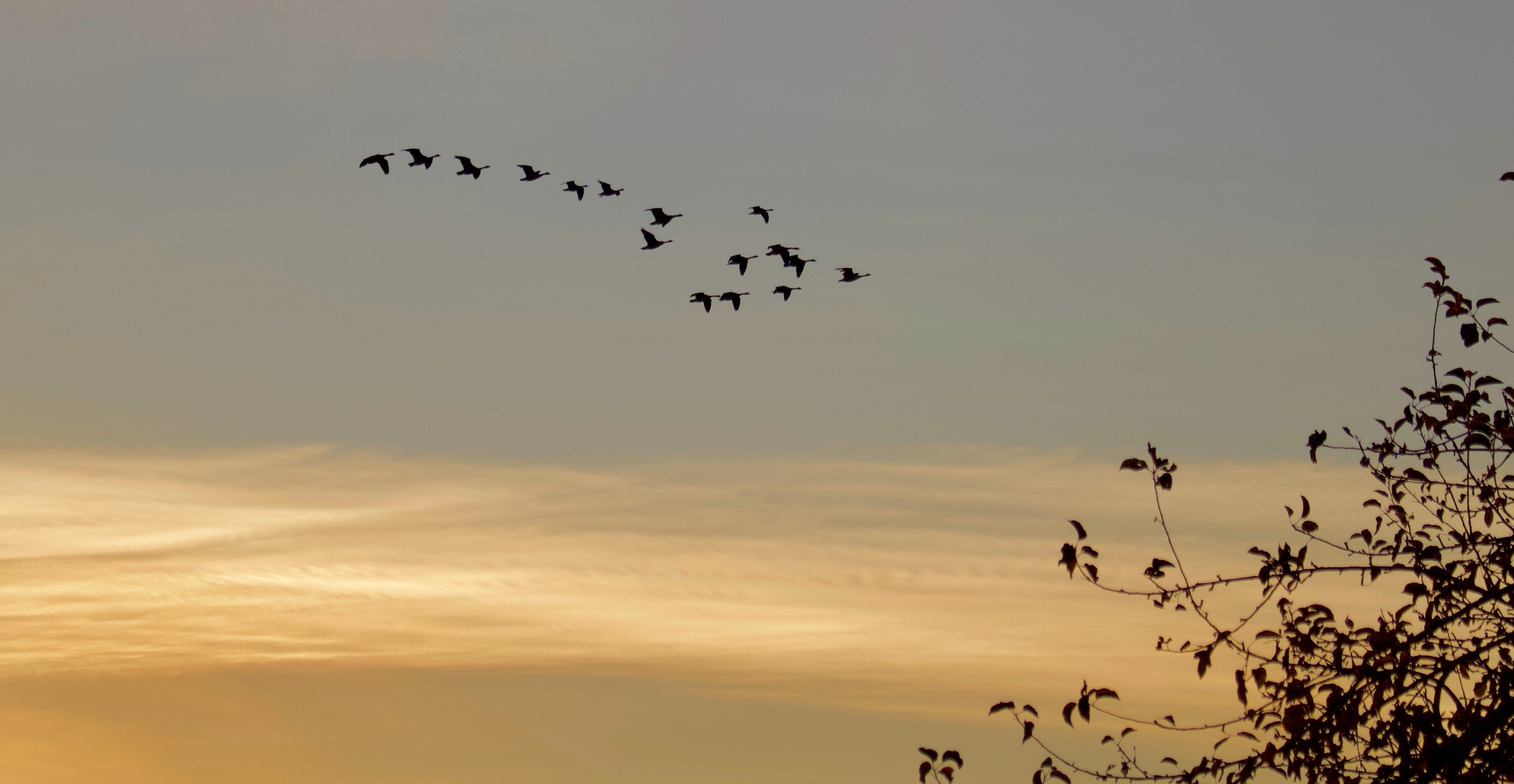
around, the air gets cold, and the geese go south, I
load the woodshed again.

How long will this go on? I’m seventy-two.
Every year it takes me longer to recover,
yet every year I keep doing it.

It’s just, now that I’m done, I can go out into
the woodshed, sit in a chair, and look at all those
neatly stacked rows, six and a half feet high, six feet
long and sixteen inches deep, two sets of rows like that,
left and right, four full cord — not much by some standards —
but enough to keep us warm all winter.

When I go out and look at what I’ve done, I get such a deep
sense of satisfaction from this backaching labor that I can’t

imagine a year without going through all that pain again.
~David Budbill, “Loading the Woodshed” from Tumbling toward the End.
Long-johns top and bottom, heavy socks, flannel shirt, overalls,
steel-toed work boots, sweater, canvas coat, toque, mittens: on.


Out past grape arbor and garden shed, into the woods.
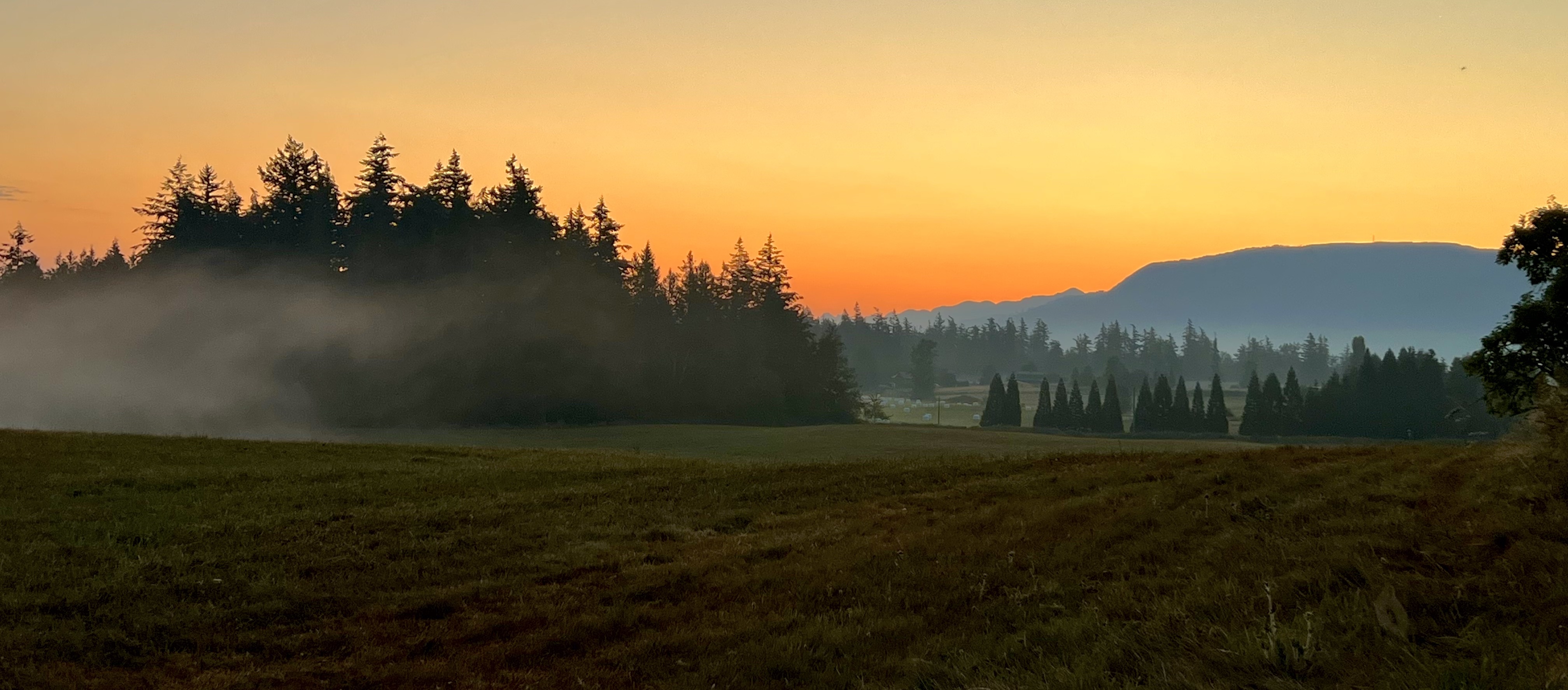
Sun just coming through the trees. There really is such a thing


as Homer’s rosy-fingered dawn. And here it is, this morning.
Down hill, across brook, up hill, and into the stand of white pine


and red maple where I’m cutting firewood. Open up workbox,
take out chain saw, gas, bar oil, kneel down, gas up saw, add

bar oil to the reservoir, stand up, mittens off, strap on and buckle
chaps from waist to toe, hard hat helmet: on. Ear protectors: down,

face screen: down, push in compression release, pull out choke,
pull on starter cord, once, twice, go. Stall. Pull out choke, pull on


starter cord, once, twice, go. Push in choke. Mittens: back on.
Cloud of two-cycle exhaust smoke wafting into the morning air


and I, looking like a medieval Japanese warrior, wade through
blue smoke, knee-deep snow, revving the chain saw as I go,


headed for that doomed, unknowing maple tree.
~David Budbill”Into the Winter Woods”, from Happy Life
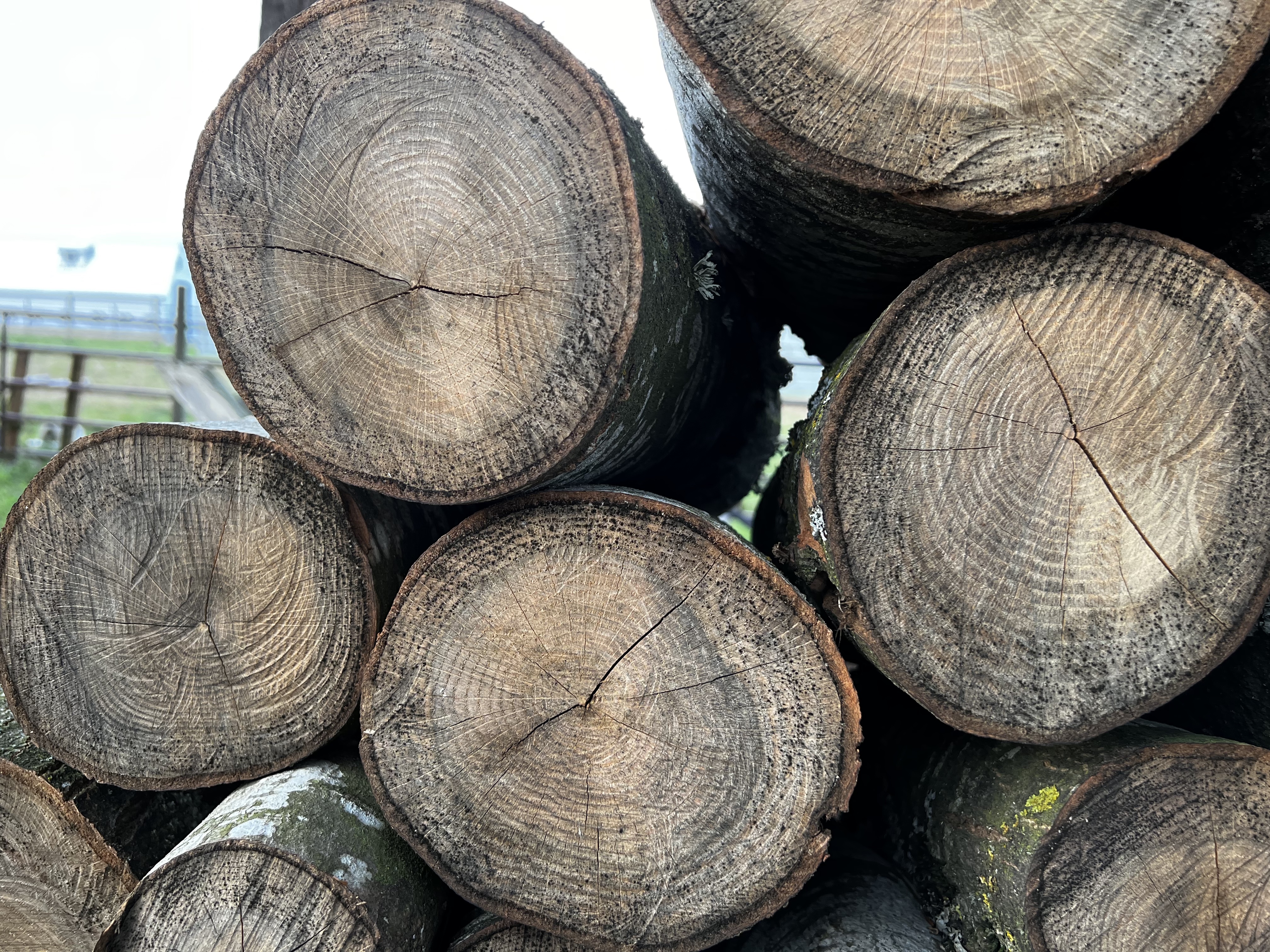
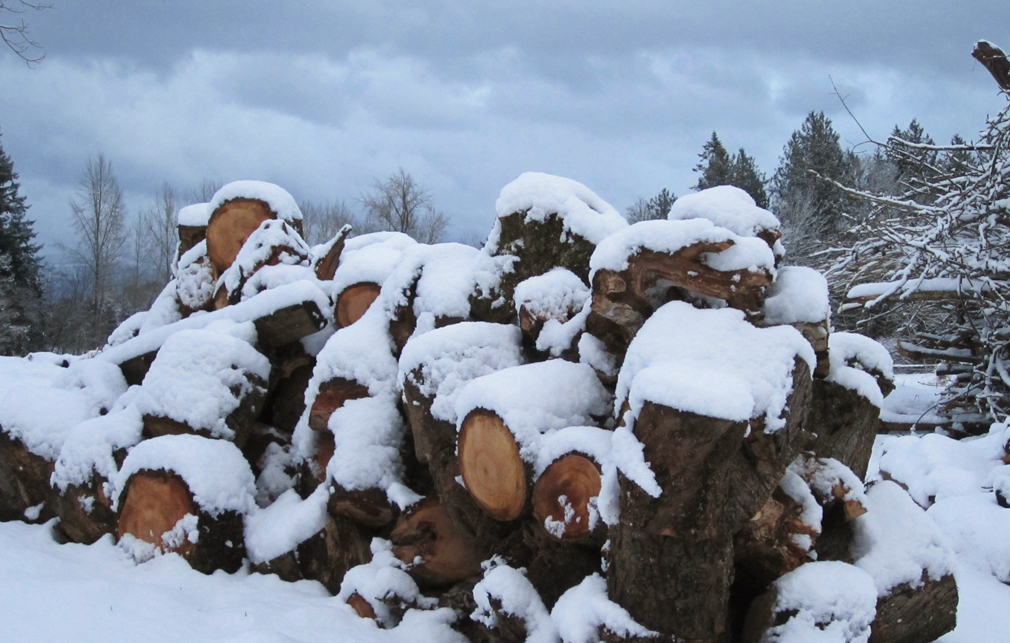
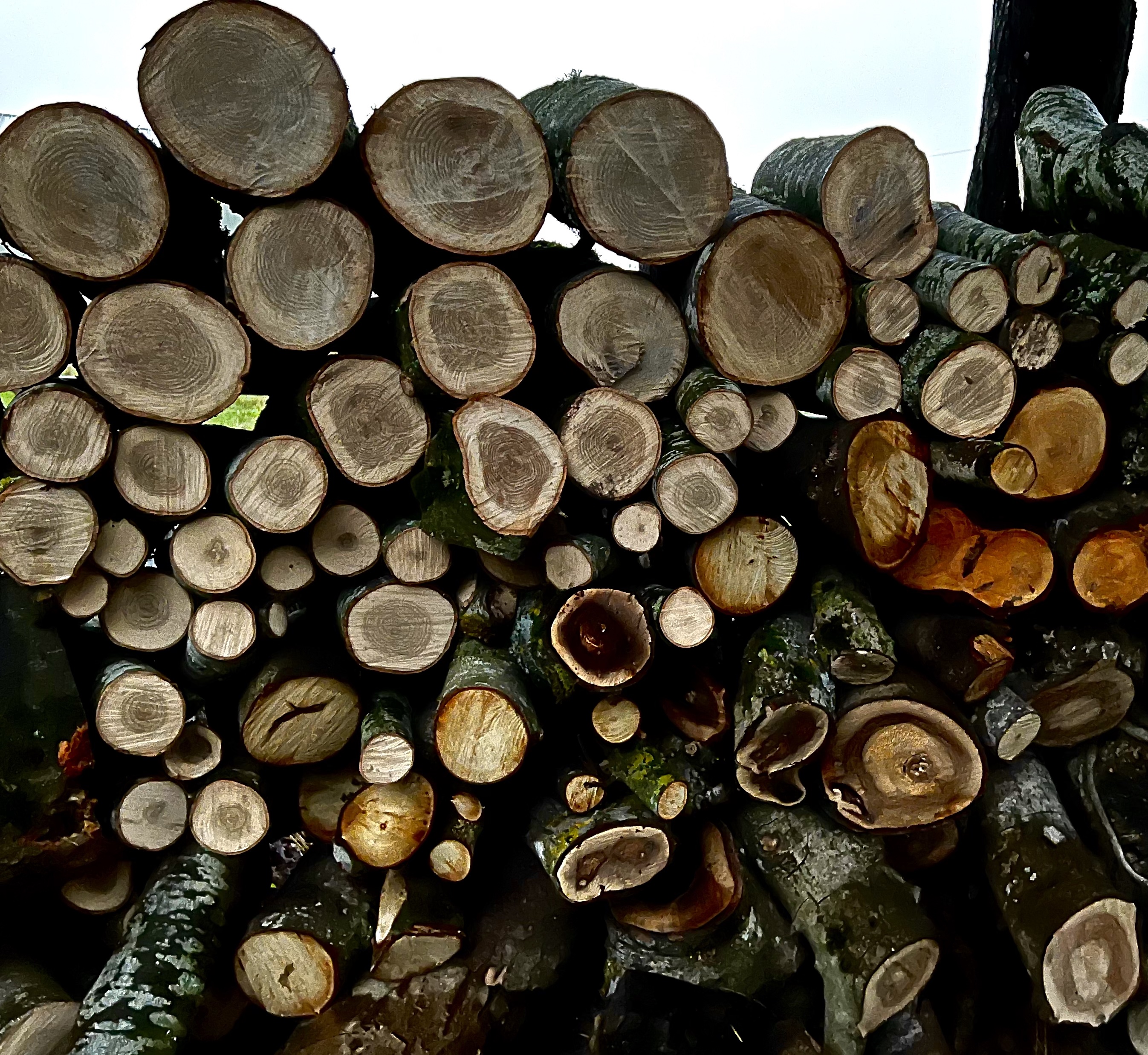
The other day, I was visiting with a recently widowed neighbor who is now well into her 70’s. She said she had finished loading her woodshed and was now ready for winter, dependent on wood stove heat over the next 6 months or so. She is someone who takes her independence seriously after her husband died, having lived in the same house for over fifty years – not at all ready to move into town to an apartment or condo, much less assisted living. She assists herself, thank you very much, even if it means climbing a step ladder to overhead-toss the firewood chunks onto the top row, and later to pull them down again to haul into the house to the stove.

I asked her why she continued to do such hard physical work when she has sons who live nearby as well as the means to hire help if she needed it. She also could choose to install a furnace, making it easier to stay warm.

She told me she likes to look at the stack every day when she does her farmyard chores, which include bringing in her day’s worth of wood. It gives her a deep sense of satisfaction to know that she was able to neatly stack several cords of wood under cover for yet another year, just as she has done year after year after year. It is a reminder of what she is capable of doing on her own, now that she is alone.

It makes her feel good to look at the fruit of her labor.

And that, of course, is reason enough to keep doing a hard thing. We each work at living out our days the best we can despite how painful they can be. We are blessed to be able to do it.

One-Time
Monthly
Yearly

Make a one-time or recurring donation to support daily Barnstorming posts

Make a monthly donation

Make a yearly donation

Choose an amount

¤10.00
¤20.00
¤50.00
¤5.00
¤15.00
¤100.00
¤5.00
¤15.00
¤100.00

Or enter a custom amount

¤

Your contribution is deeply appreciated.

Your contribution is appreciated.

Your contribution is appreciated.

DonateDonate monthlyDonate yearly
These Dark Days of Autumn Rain

My Sorrow, when she’s here with me,
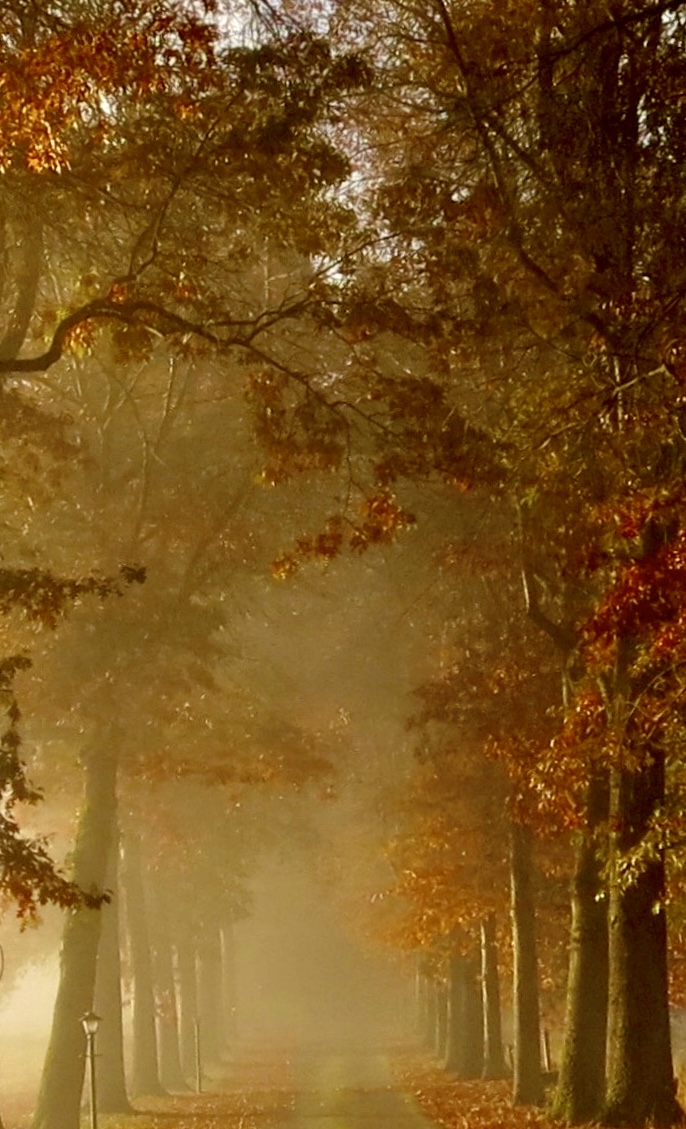
     Thinks these dark days of autumn rain
Are beautiful as days can be;
She loves the bare, the withered tree;
     She walks the sodden pasture lane.

Her pleasure will not let me stay.
     She talks and I am fain to list:
She’s glad the birds are gone away,
She’s glad her simple worsted gray
     Is silver now with clinging mist.

The desolate, deserted trees,
     The faded earth, the heavy sky,
The beauties she so truly sees,
She thinks I have no eye for these,
     And vexes me for reason why.

Not yesterday I learned to know
     The love of bare November days
Before the coming of the snow,
But it were vain to tell her so,
     And they are better for her praise.
~Robert Frost “My November Guest”

November,
this month of rapid darkening,
transforms itself
to a recounting of gratitude
of our daily thanksgiving and blessings~~
it is good to dwell on our gifts.

Even so, it is right
to invite Sorrow
to sit in silence with us,
her tears ever-blending with ours.

These deepening days
of bare stripped branches
feed our growing need
for the covering grace
of His coming light.

The mountains are steep and the valley’s low
And already I’m weary but I have so far to go
Oh, and sorrow holds my hand and suffering sings me songs
But when I close my eyes I know to whom I belong
And who makes me strong
And I will be free, I will be free to run the mountains
I will be free, free to drink from the living fountain
Oh, I’ll never turn back ’cause he awaits for me
Oh, I will be free
A wise man, a rich man in pauper’s clothes
A shepherd to lead us through the land of woes
Though many battles I have lost so many rivers yet to cross
But my eyes behold the Son who bore my loss and who paid the cost
I will be free, I will be free to run the mountains
I will be free, oh, free to drink from the living fountain
Oh, I’ll never turn back ’cause He awaits for me, oh
Oh, I will be free, oh
Oh and I’ll dance on silver moonlight and I’ll walk through velvet fields
Oh, and I’ll run into the arms the arms that set me free
Oh, I will be free to run the mountains, I will be free
Free to drink from the living fountain
Oh, I’ll never turn back ’cause He awaits, oh
I’ll never turn back
Don’t you ever turn back
‘Cause someday, someday we’re gonna see
That we will be free
Songwriter: Cindy Lavonne Morgan

One-Time
Monthly
Yearly

Make a one-time or recurring donation to support daily Barnstorming posts

Make a monthly donation

Make a yearly donation

Choose an amount

¤10.00
¤20.00
¤50.00
¤5.00
¤15.00
¤100.00
¤5.00
¤15.00
¤100.00

Or enter a custom amount

¤

Your contribution is deeply appreciated.

Your contribution is appreciated.

Your contribution is appreciated.

DonateDonate monthlyDonate yearly
Spark of Consciousness

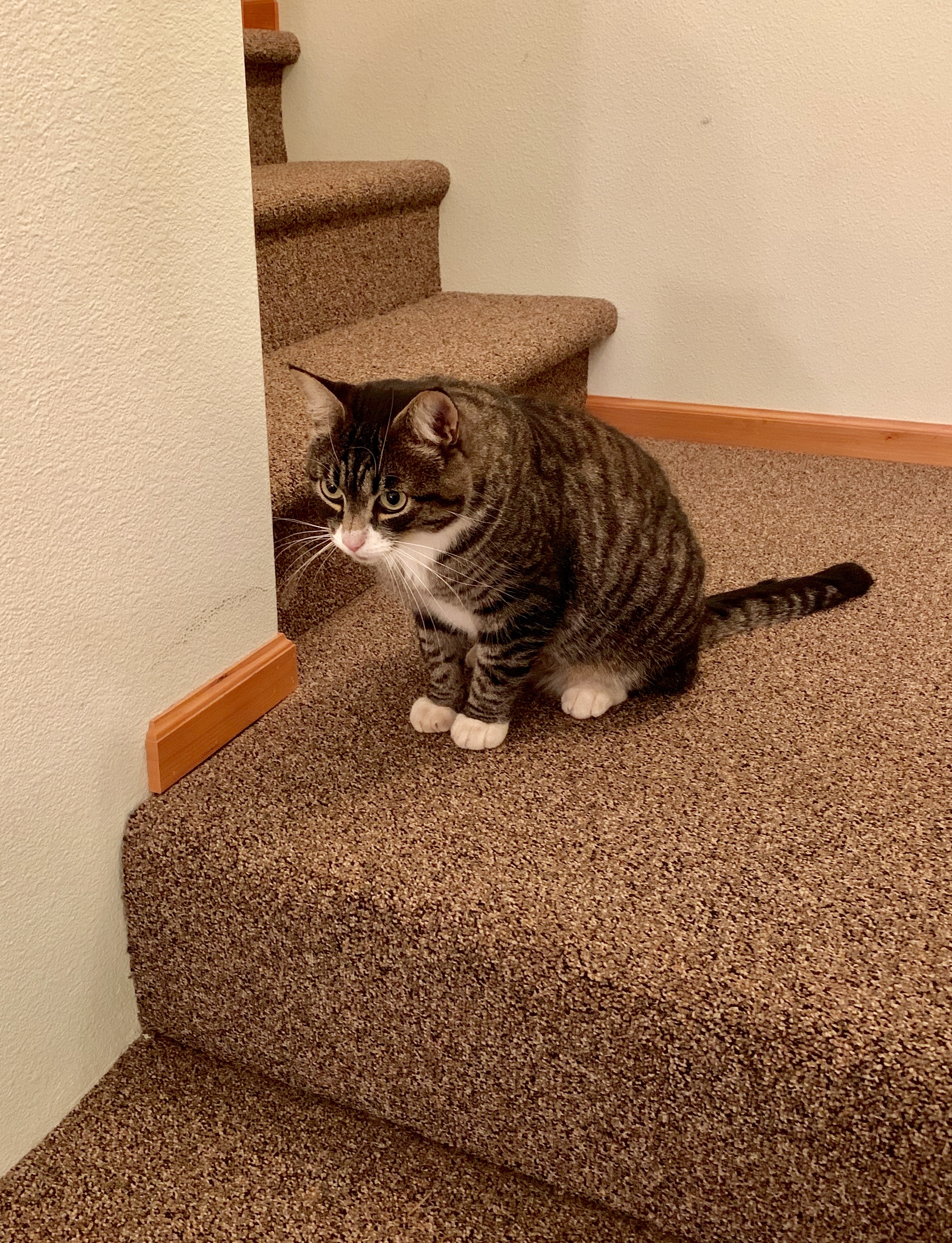
This was our pretty gray kitten,
hence her name; who was born
in our garage and stayed nearby
her whole life. There were allergies;
so she was, as they say,
an outside cat.
But she loved us. For years,
she was at our window.
Sometimes, a paw on the screen
as if to want in, as if
to be with us
the best she could.
She would be on the deck,
at the sliding door.
She would be on the small
sill of the window in the bathroom.
She would be at the kitchen
window above the sink.
We’d go to the living room;
anticipating that she’d be there, too,
hop up, look in.
She’d be on the roof,
she’d be in a nearby tree.
She’d be listening
through the wall to our family life.
She knew where we were,
and she knew where we were going
and would meet us there.
Little spark of consciousness,
calm kitty eyes staring
through the window.

After the family broke,
and when the house was about to sell,
I walked around it for a last look.
Under the eaves, on the ground,
there was a path worn in the dirt,
tight against the foundation —
small padded feet, year after year,
window to window.

When we moved, we left her
to be fed by the people next door.
Months after we were gone,
they found her in the bushes
and buried her by the fence.
So many years after,
I can’t get her out of my mind.

~Philip F. Deaver, “Gray” from How Men Pray

Our pets witness the routine of our lives. They know when the food bowl remains empty too long, or when no one offers their lap to stroke their fur.

They sit silently waiting and wondering, a little spark of consciousness, aware of our family life. They know when things aren’t right at home. They hear the raised voices and they hear the strained silences.

Sometimes a farm cat moves on, looking for a place with more consistency and better feeding grounds. Most often they stick close to what they know, even if it isn’t entirely a happy or welcoming place. After all, it’s home; that’s where they stay, through thick and thin.

When my family broke as my parents split, after the furniture was removed and the dust of over thirty five years of marriage swept up, I wondered if our cat and dog had seen it coming before we did. They had been peering through the window at our lives, gauging what amount of spilled-out love might be left over for them.

I still can’t get them out of my mind – they, like me, became children of divorce. We all knew when we left behind the only home we had ever known, we could never truly feel at home again.

One-Time
Monthly
Yearly

Make a one-time or recurring donation to support daily Barnstorming posts

Make a monthly donation

Make a yearly donation

Choose an amount

¤10.00
¤20.00
¤50.00
¤5.00
¤15.00
¤100.00
¤5.00
¤15.00
¤100.00

Or enter a custom amount

¤

Your contribution is deeply appreciated.

Your contribution is appreciated.

Your contribution is appreciated.

DonateDonate monthlyDonate yearly
Heart Sore

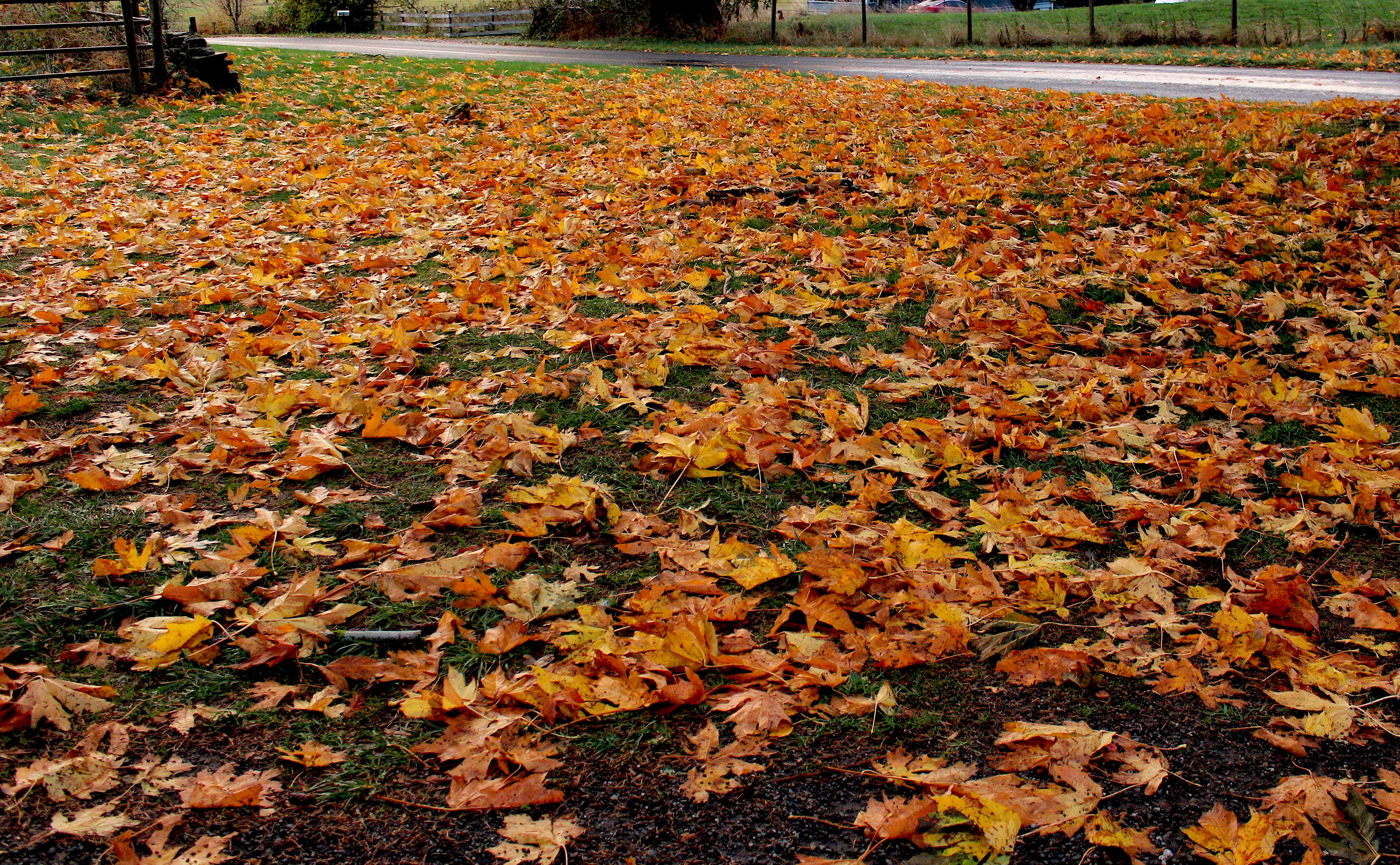
The trees are in their autumn beauty,   
The woodland paths are dry,
Under the October twilight the water   
Mirrors a still sky;
Upon the brimming water among the stones   
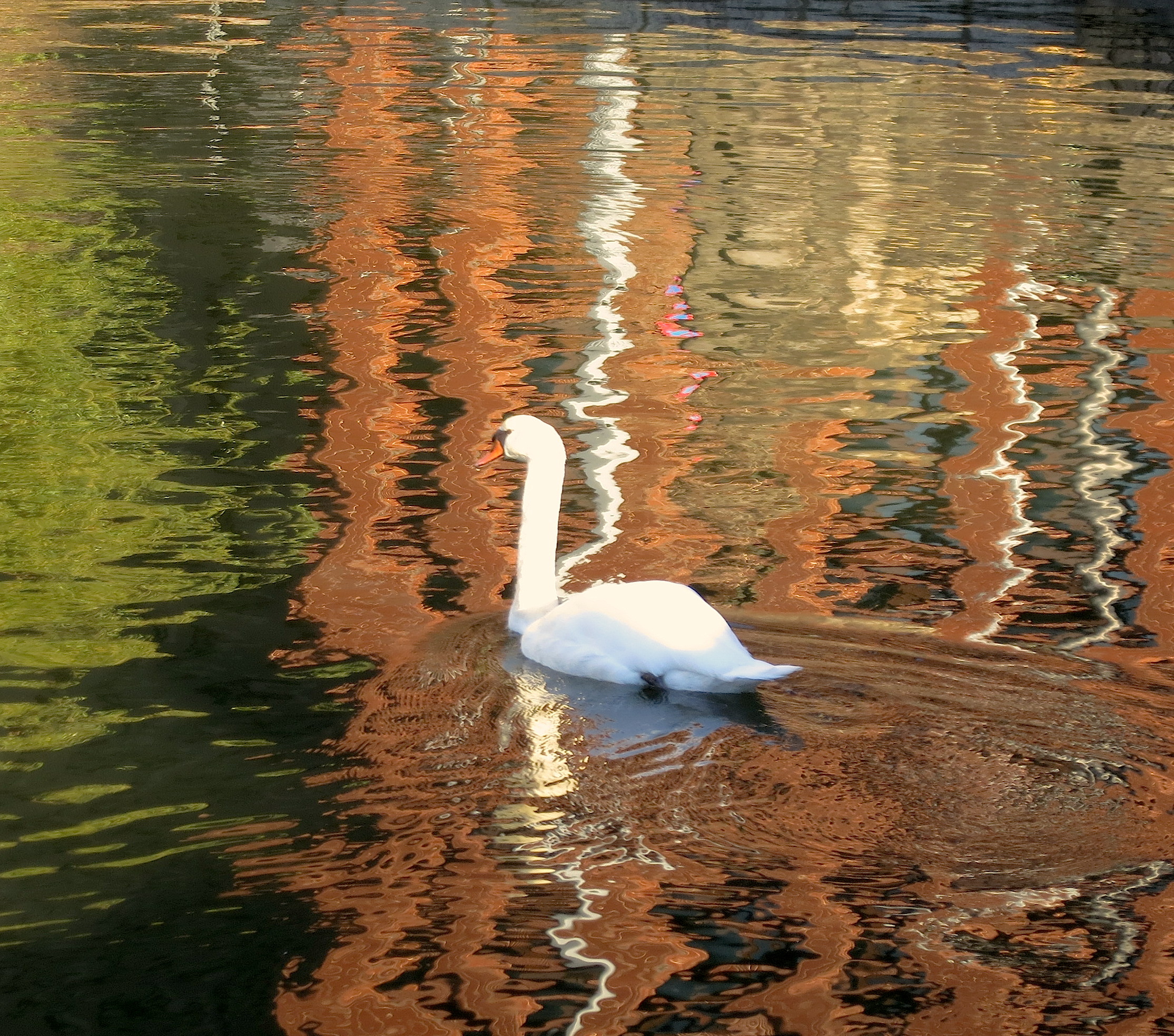
Are nine-and-fifty swans.

The nineteenth autumn has come upon me   
Since I first made my count;
I saw, before I had well finished,
All suddenly mount
And scatter wheeling in great broken rings  
Upon their clamorous wings.

I have looked upon those brilliant creatures,   
And now my heart is sore.
All’s changed since I, hearing at twilight,   
The first time on this shore,
The bell-beat of their wings above my head,   
Trod with a lighter tread.

Unwearied still, lover by lover,
They paddle in the cold
Companionable streams or climb the air;   
Their hearts have not grown old;
Passion or conquest, wander where they will,   
Attend upon them still.

But now they drift on the still water,   
Mysterious, beautiful;   
Among what rushes will they build
By what lake’s edge or pool
Delight men’s eyes when I awake some day   
To find they have flown away?
~William Butler Yeats “The Wild Swans at Coole”

All is changing
yet even though
my pace has slowed
from younger days,
my heart aches
to know I finally behold
this mysterious beauty,
a witness now because I no longer
choose to hurry headlong through life.

One-Time
Monthly
Yearly

Make a one-time or recurring donation to support daily Barnstorming posts

Make a monthly donation

Make a yearly donation

Choose an amount

¤10.00
¤20.00
¤50.00
¤5.00
¤15.00
¤100.00
¤5.00
¤15.00
¤100.00

Or enter a custom amount

¤

Your contribution is deeply appreciated.

Your contribution is appreciated.

Your contribution is appreciated.

DonateDonate monthlyDonate yearly
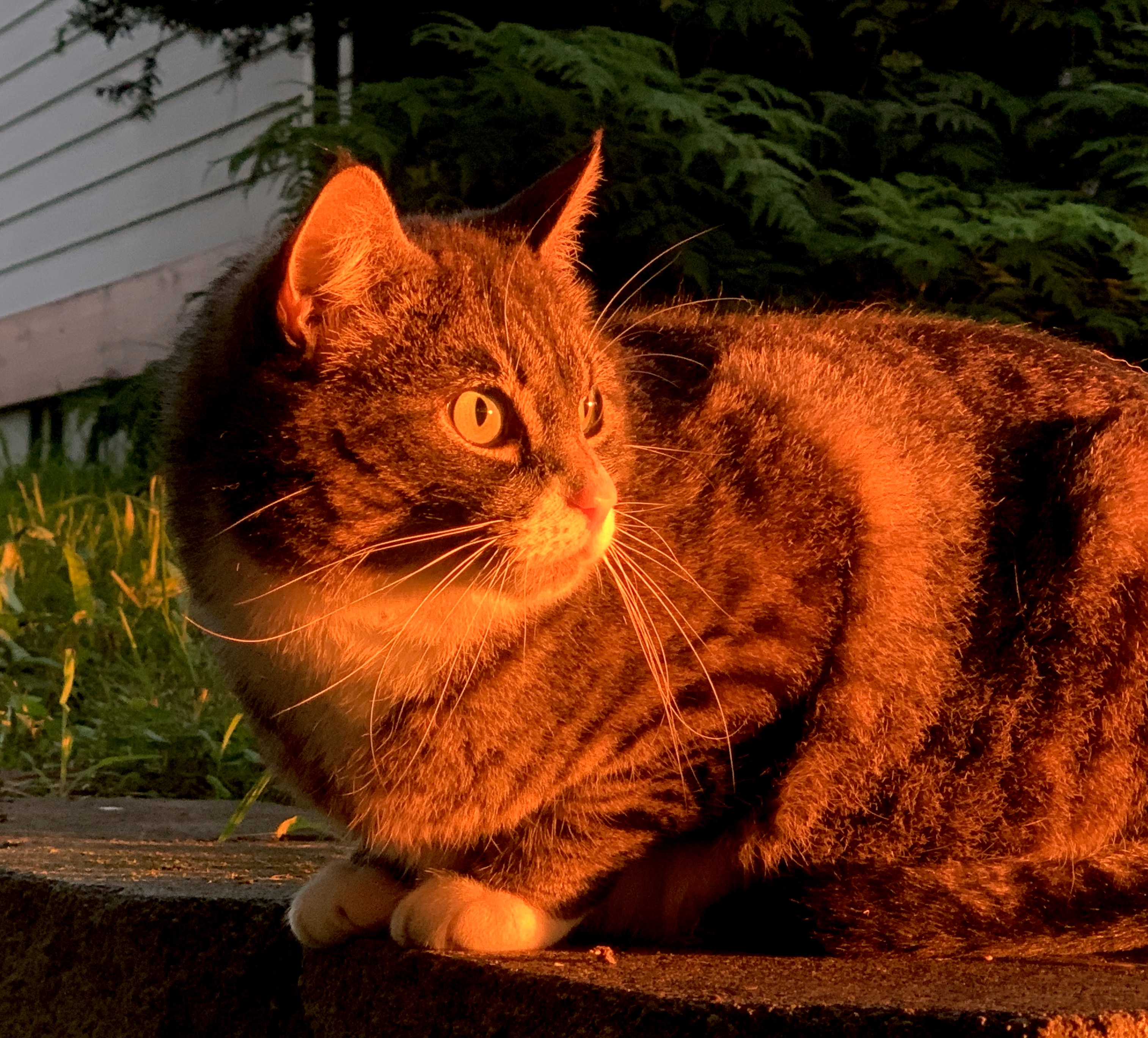
So Like a Queen

She seems to hide all looks that have ever fallen
into her, so that, like an audience,
she can look them over, menacing and sullen,
and curl to sleep with them. But all at once

as if awakened, she turns her face to yours;
and with a shock, you see yourself, tiny,
inside the golden amber of her eyeballs
suspended, like a prehistoric fly.

~Rainer Maria Rilke from “Black Cat”

photo by Nate Gibson

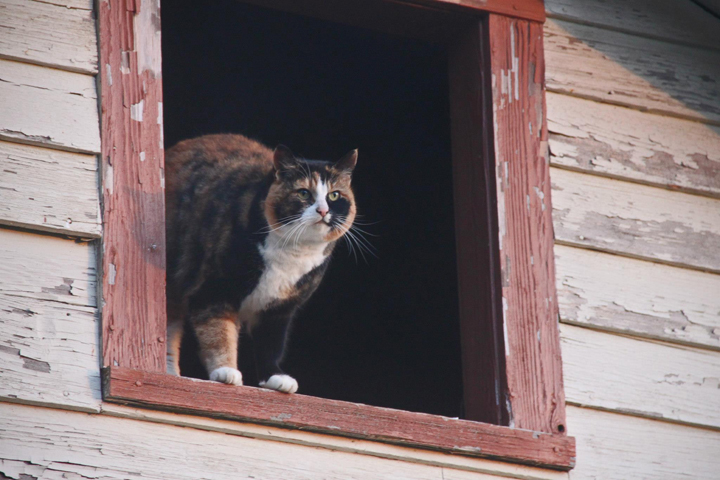
With the recent loss of Queen Elizabeth II, I must honor a queen of our own here on our farm:

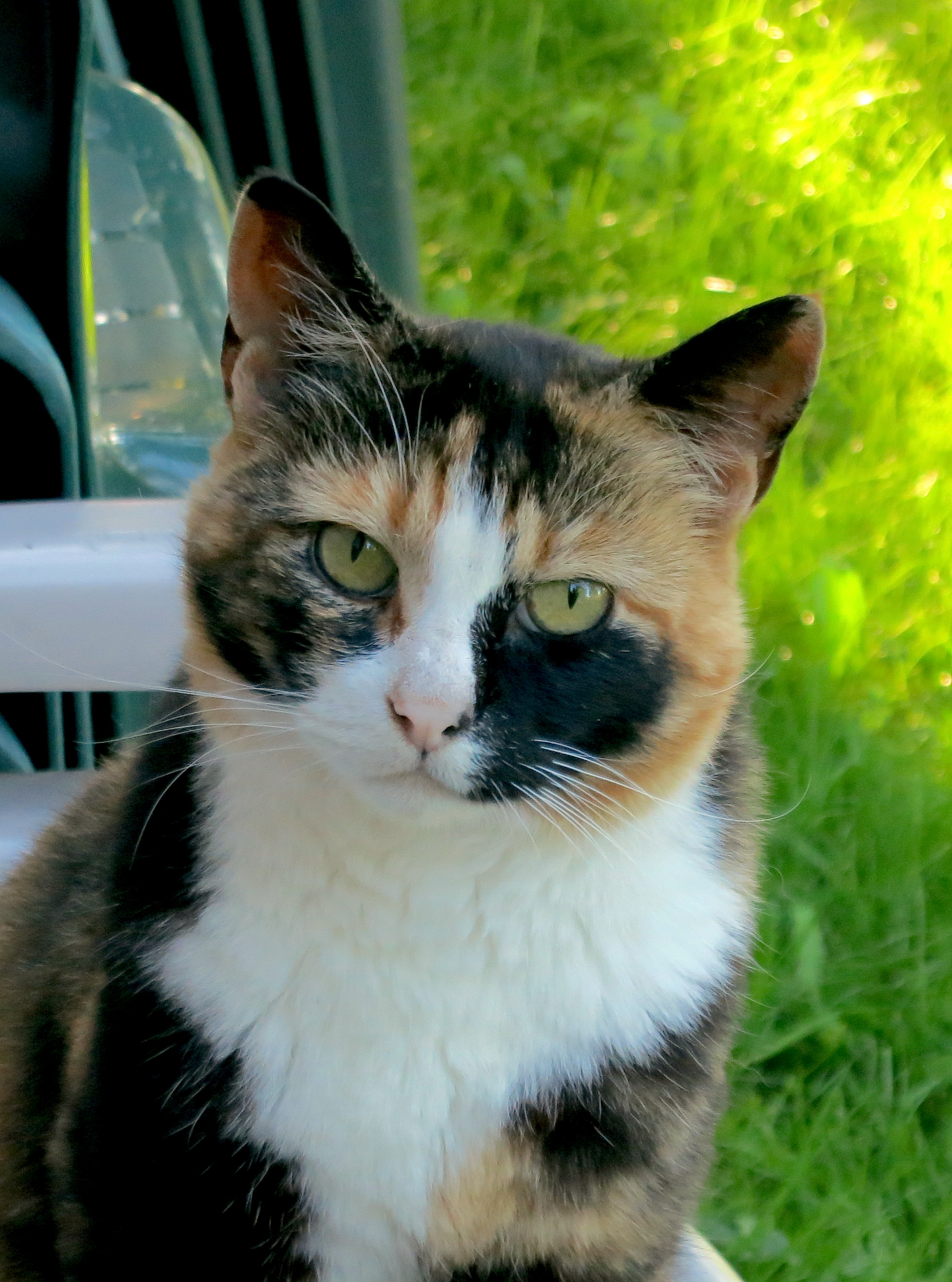
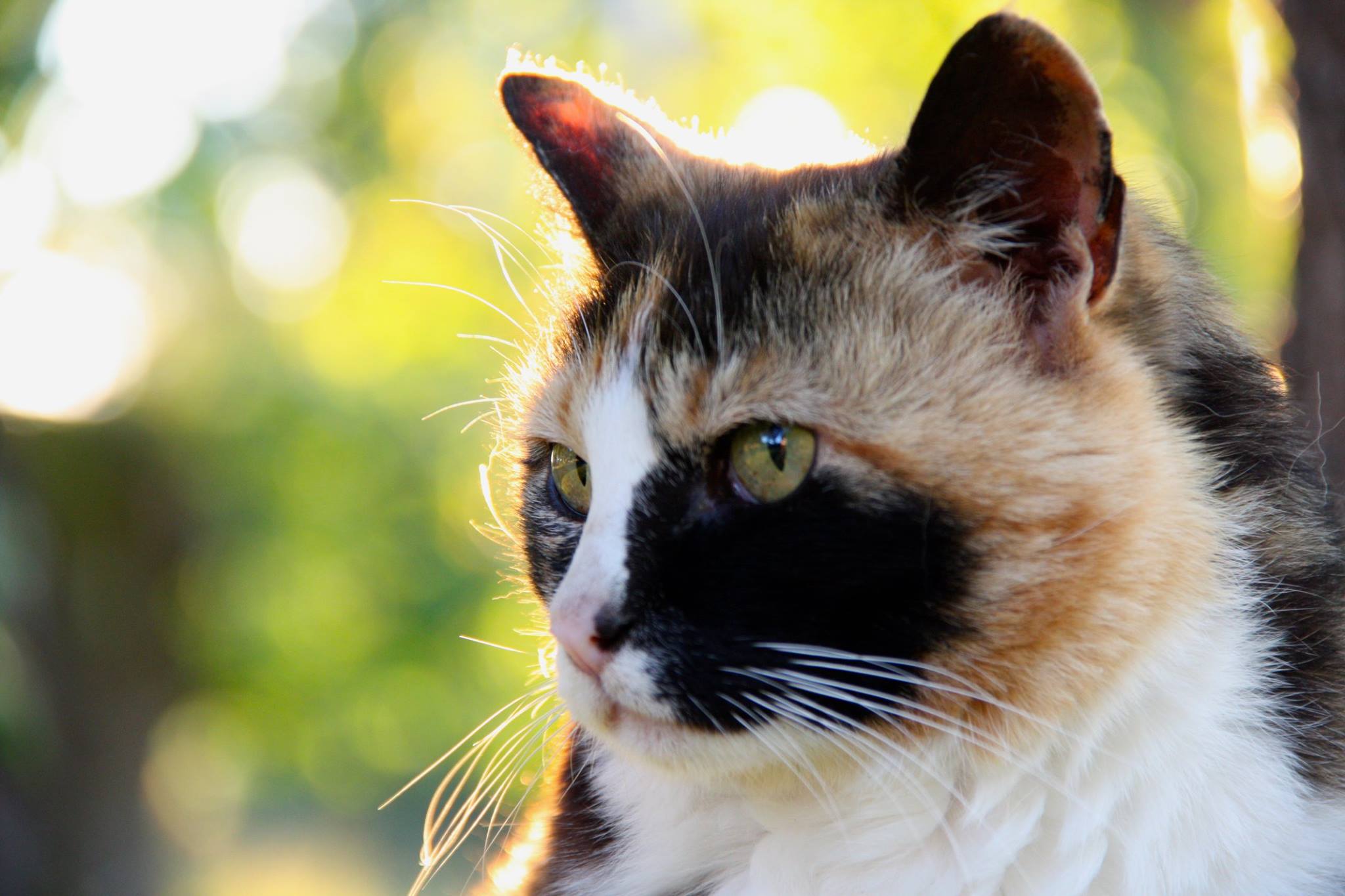
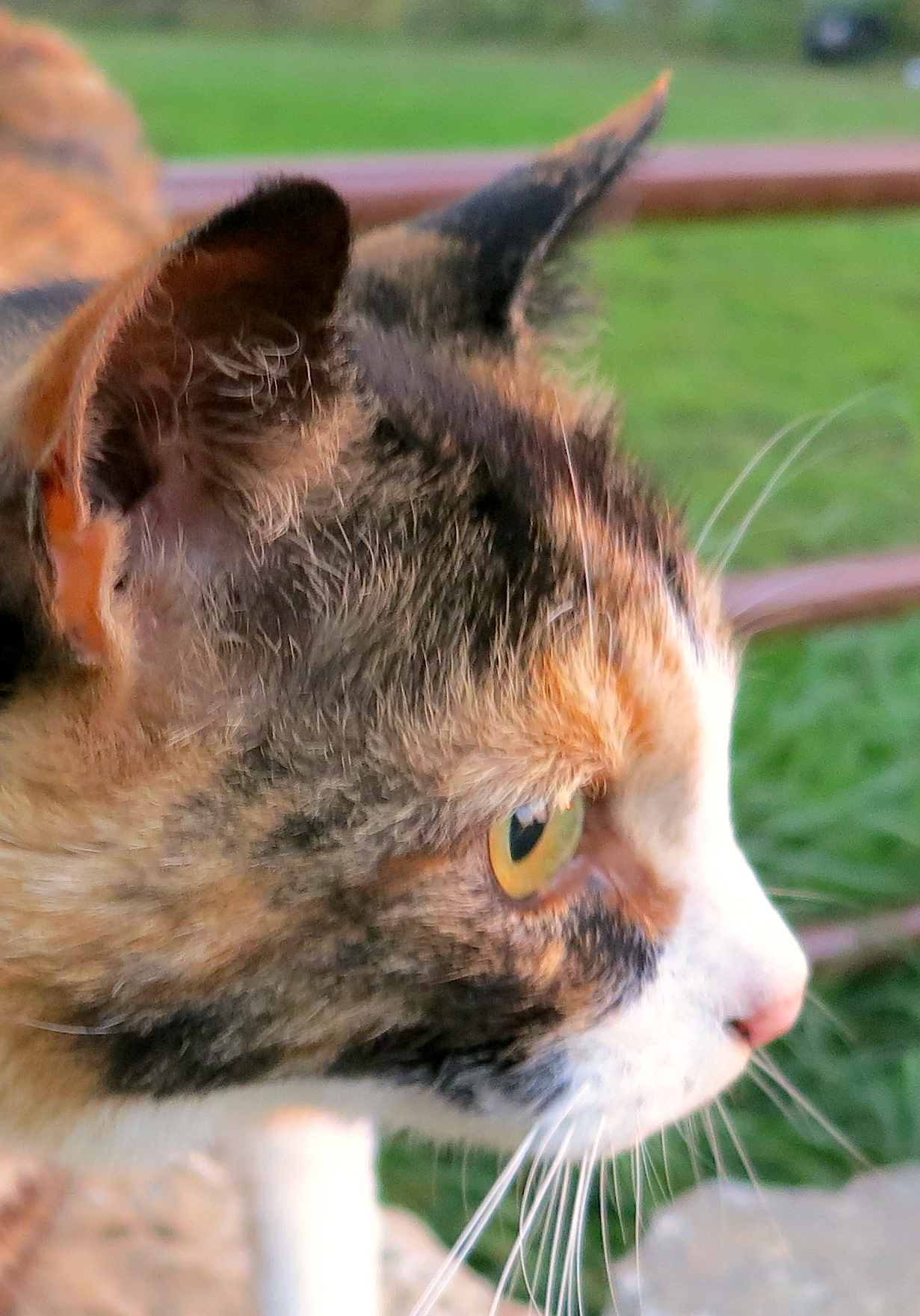
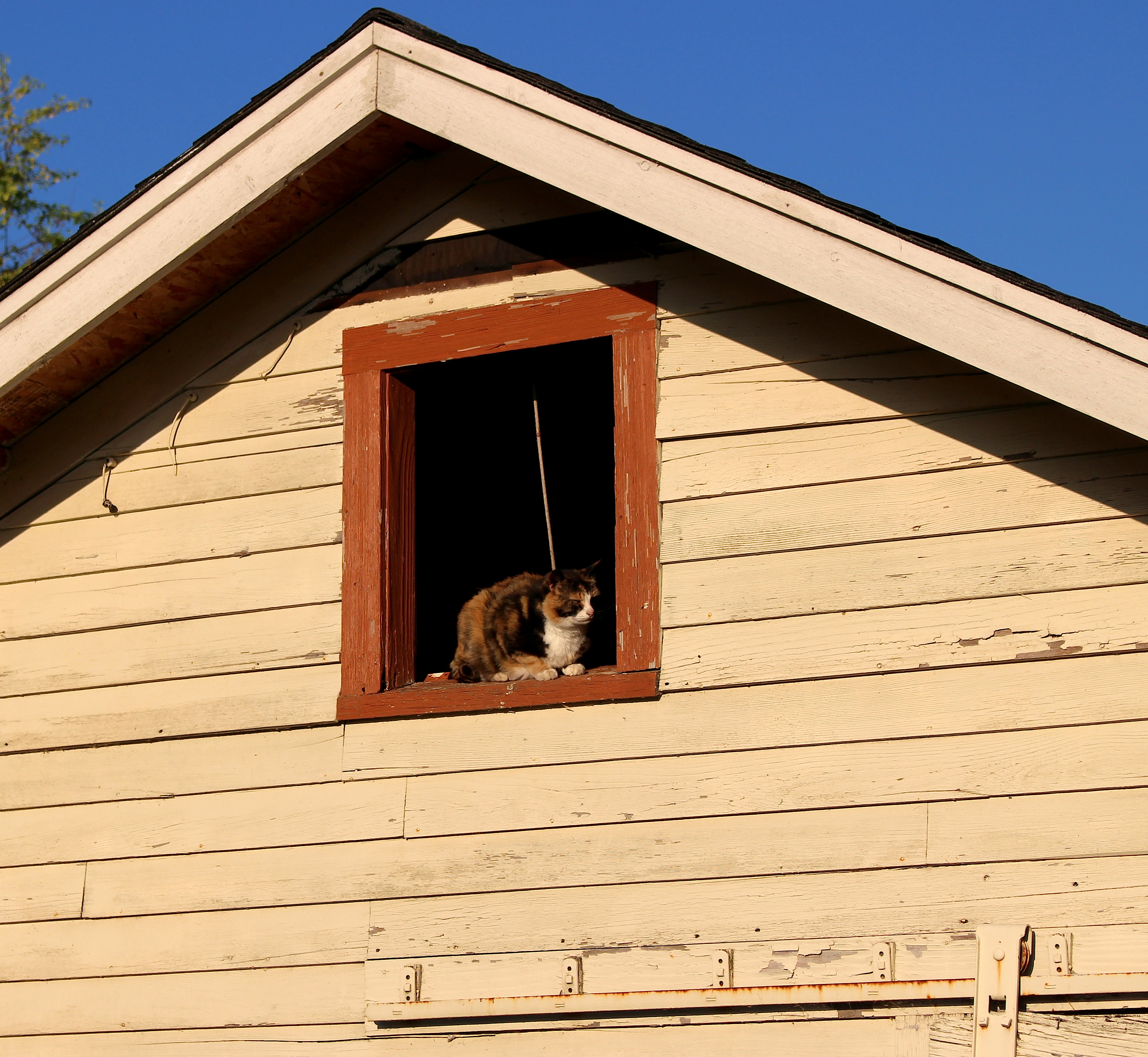
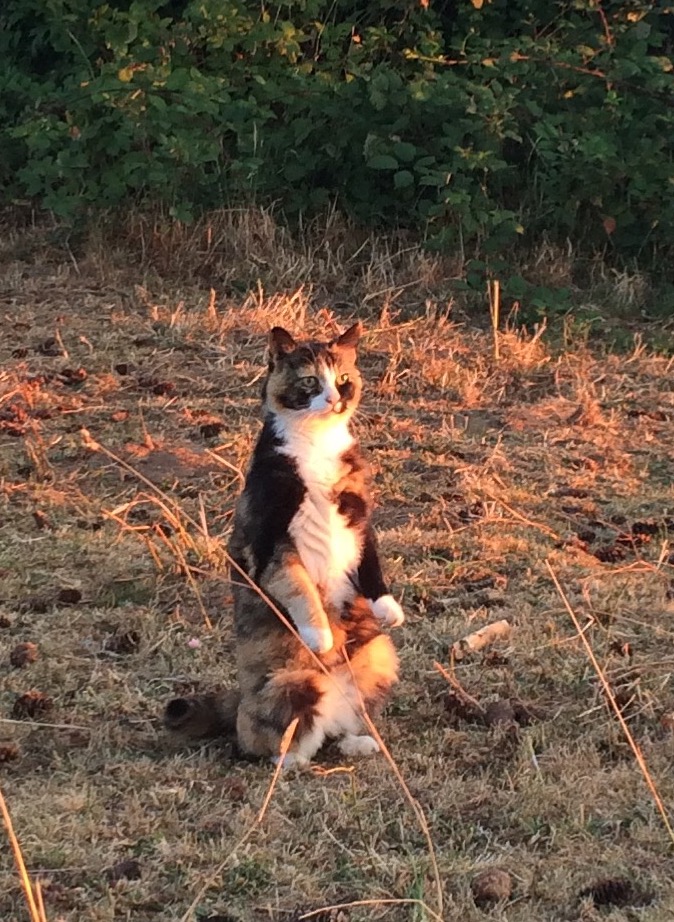
Bobbi was a young calico who arrived on our farm after two years of a luxurious indoor life in town. She couldn’t accompany her physician owner to life in the big city to move in with a cat-allergic boyfriend, so Bobbi arrived to the farm in a van full of her own cat furniture – a climbing tree, a personal chair, toys, and special cuisine. When she strode out of her cat carrier, took a look around and immediately climbed into the nearest real tree, she never looked back at the accoutrements of her former pristine yet restrictive indoor life.  She became Queen of the farm, undisputed and regal, watching the goings-on from a carefully calculated and royal distance, never interacting with her subjects unless it was absolutely necessary.

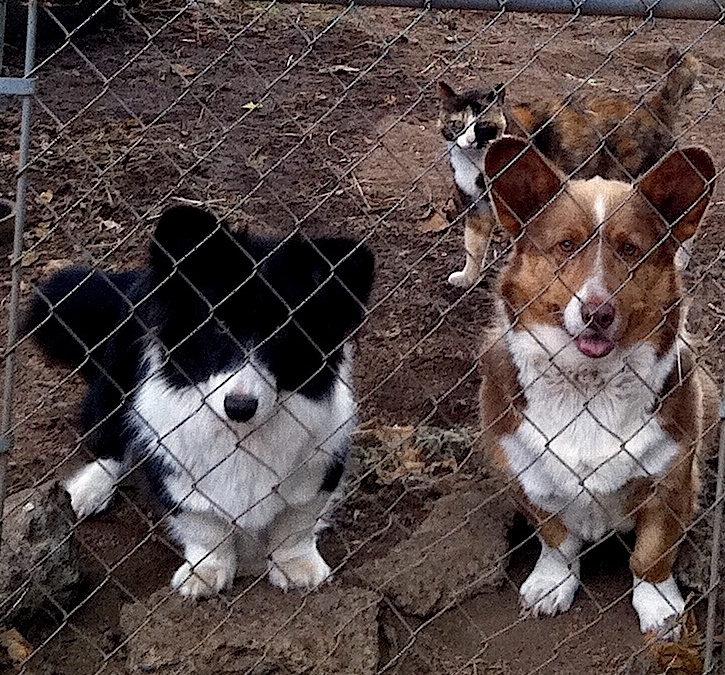
She tolerated other cats, but barely. They scattered when she came in view.  She thought dogs were a waste of fur covering empty skulls, but when they met her needs, like on a chilly night, she would happily bunk down with them. They were baffled but grateful for her royal blessing when she climbed over their kennel fencing to sleep curled up between them: a two-dog and one-cat night.

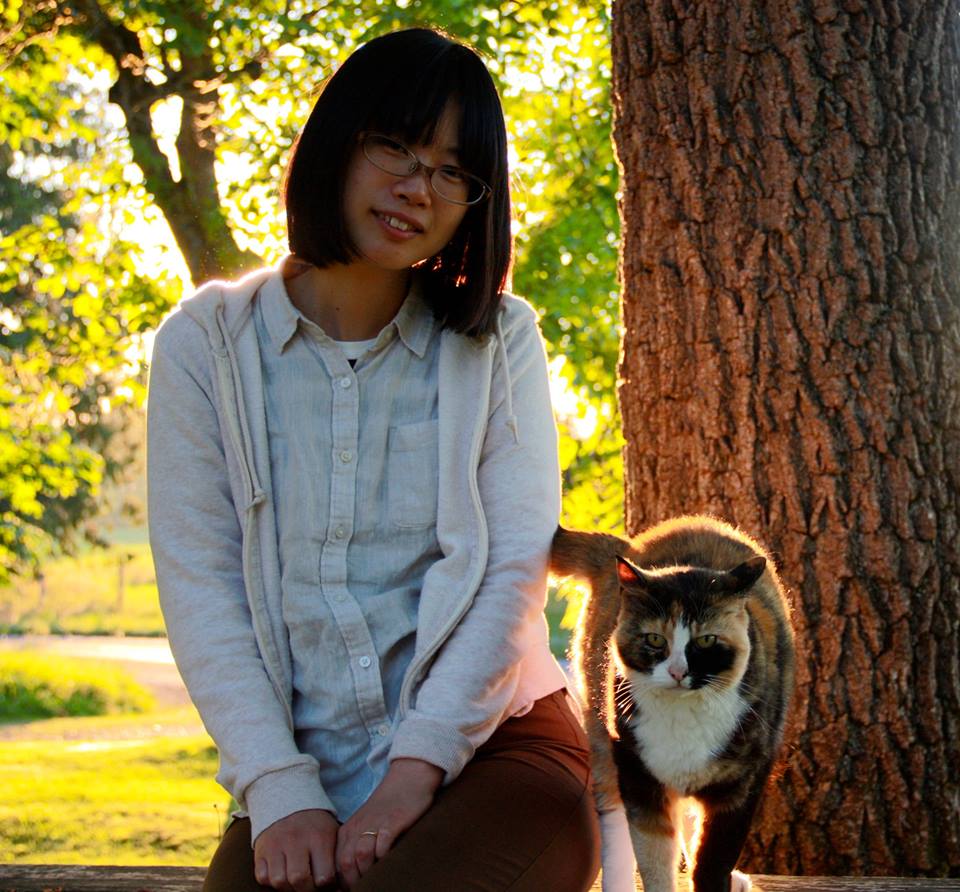
She chose only one human to be subject to: our daughter-in-law Tomomi.  On Tomomi’s initial visit from Japan years ago, Bobbi approached her and decided then and there they were meant for each other. During Tomomi’s annual summer visits, Bobbi brought her mice on the welcome mat and followed her like a puppy, coming only when Tomomi called, and deigned to allow her to touch her calico coat.

When she was 16 years old, Bobbi took over the front porch bench throne when our long-lived black cat Jose died.  She preferred a closer view of our comings and goings, seemingly less disdainful and distant.  When two kittens arrived to live in the barn yet within a week formed a coup and took over the front porch, Bobbi retreated again to her other retreats on the farm. I worried a bit that she had given in too easily with no yowls or flying fur.

Still, I was surprised to find her one morning lying still on the grassy slope of our front yard as she was never one to take her naps where her subjects could see her. So I knew her long life of queenly surveillance and service was over.

Long live Queen Bobbi. You remain irreplaceable. May you forever continue to reign in our hearts.

photo by Nate Gibson
Tomomi and Bobbi, photo by Nate Gibson
Original Barnstorming artwork note cards available as a gift to you with a $50 donation to support Barnstorming – information here

Let Evening Come

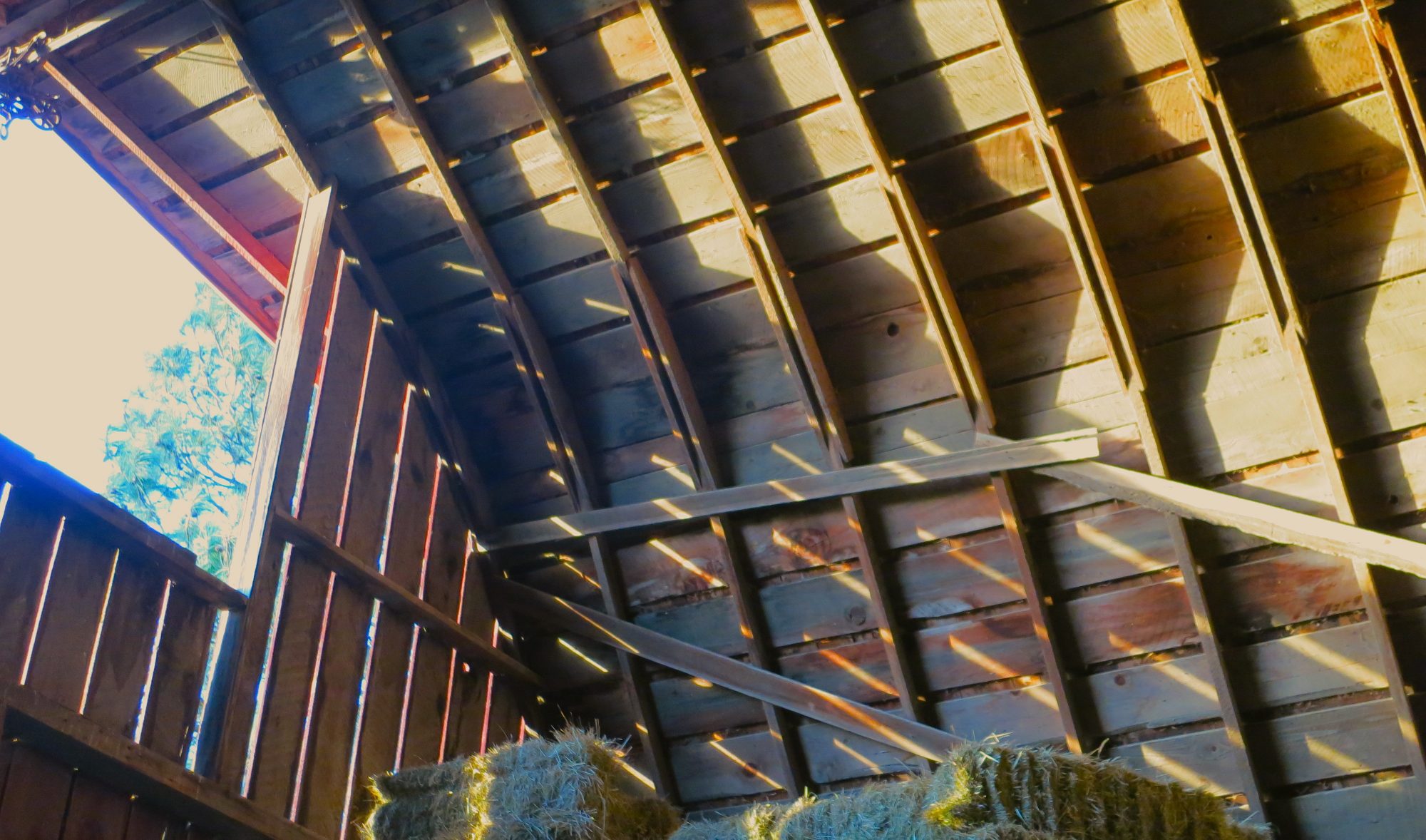
Let the light of late afternoon
shine through chinks in the barn, moving   
up the bales as the sun moves down.

Let the cricket take up chafing   
as a woman takes up her needles   
and her yarn. Let evening come.

Let dew collect on the hoe abandoned   
in long grass. Let the stars appear
and the moon disclose her silver horn.

Let the fox go back to its sandy den.   
Let the wind die down. Let the shed   
go black inside. Let evening come.

To the bottle in the ditch, to the scoop   
in the oats, to air in the lung   
let evening come.

Let it come, as it will, and don’t   
be afraid. God does not leave us 
comfortless, so let evening come.

~Jane Kenyon “Let Evening Come”

We resist the arrival of the evening of our lives. I wish I could remain forever sunshiny, vital and irreplaceable, living each moment of the day with the energy I feel with the morning light. But I know that the forward momentum of time inevitably will wind me down to sunset.

The poet Jane Kenyon learned this at far too young an age, diagnosed and beginning treatment for leukemia before turning fifty. I thought of Jane’s poem above when I learned today of the death of a courageous local nurse in her thirties who survived six years of treatment for metastatic cancer after being diagnosed only a few months after the birth of her first and only child. She and her family and medical team tried to postpone her evening coming for as long as possible, knowing God ultimately counts our days.

This week, her evening has come. God comforts those who weep with the loss of this remarkable loving wife, mother, daughter – a woman who trusted her heavenly Father for all the things she needed.

We all are created in the image of a God who remembered to rest. We are not alone in our need to catch our breath.

So let evening come, as it will – there is no stopping it – allowing our lungs to be filled with the loving breath of God, our Creator. To Him, we are most definitely irreplaceable.

One-Time
Monthly
Yearly

Make a one-time or recurring donation to support daily Barnstorming posts

Make a monthly donation

Make a yearly donation

Choose an amount

¤10.00
¤20.00
¤50.00
¤5.00
¤15.00
¤100.00
¤5.00
¤15.00
¤100.00

Or enter a custom amount

¤

Your contribution is deeply appreciated.

Your contribution is appreciated.

Your contribution is appreciated.

DonateDonate monthlyDonate yearly
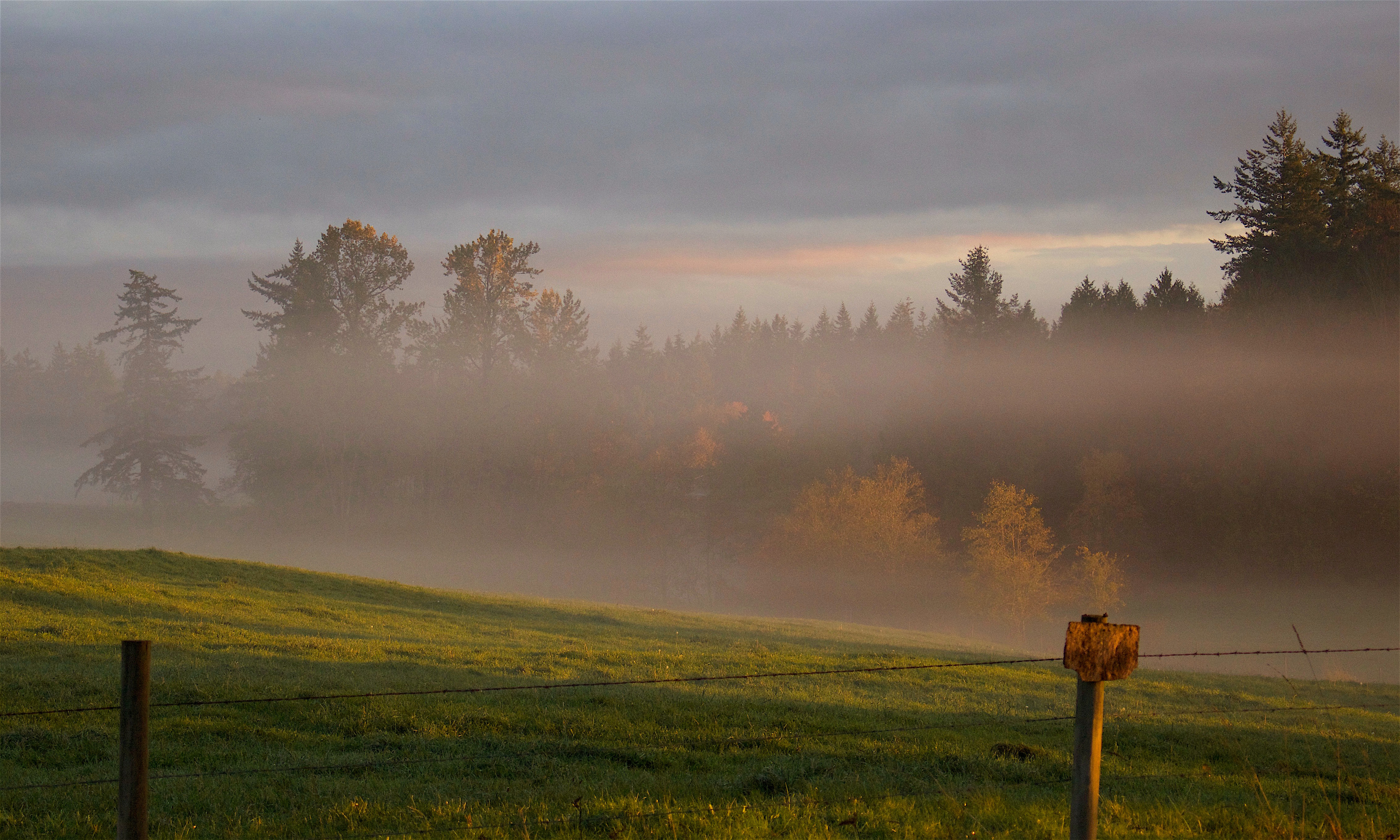
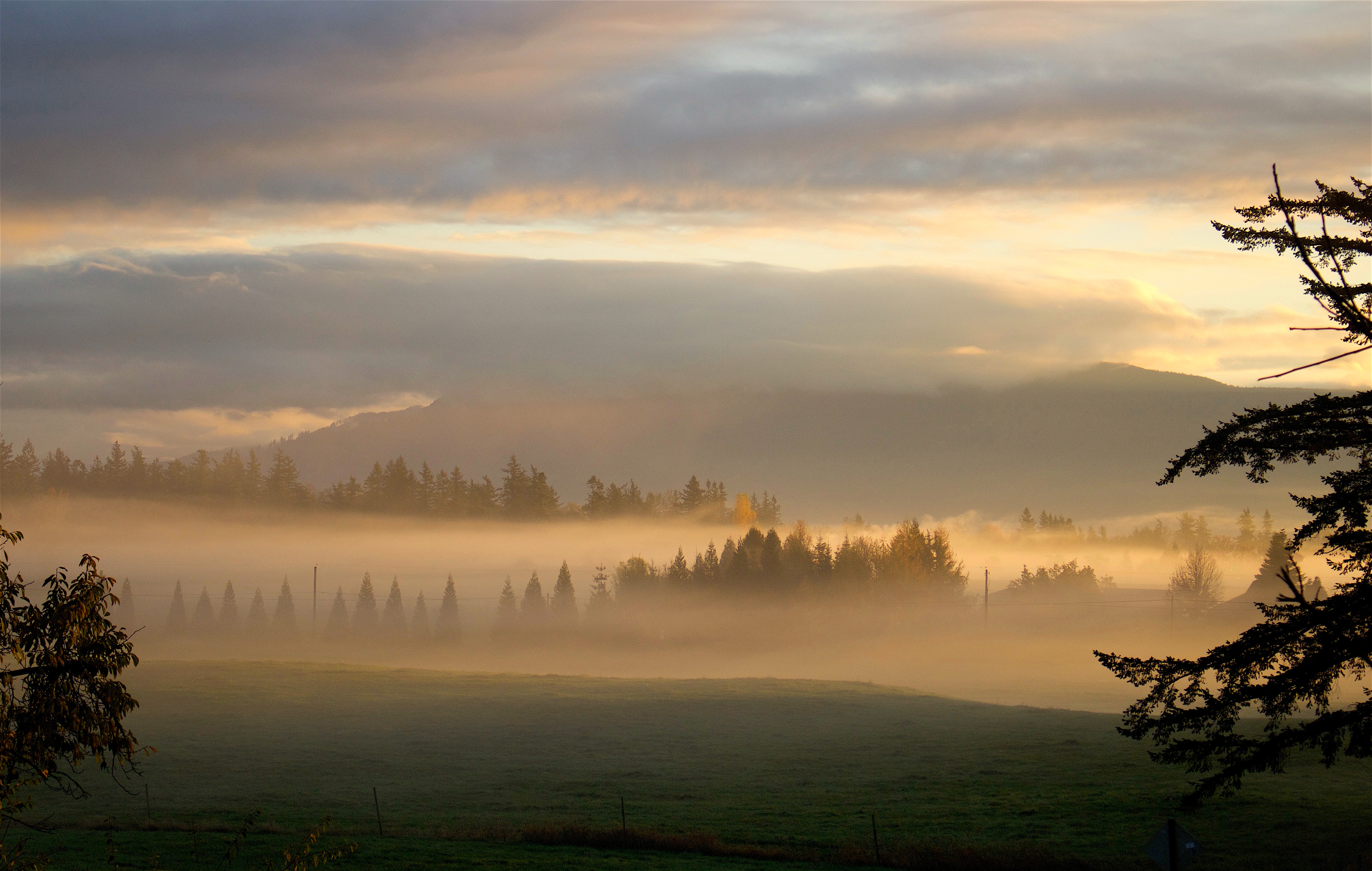
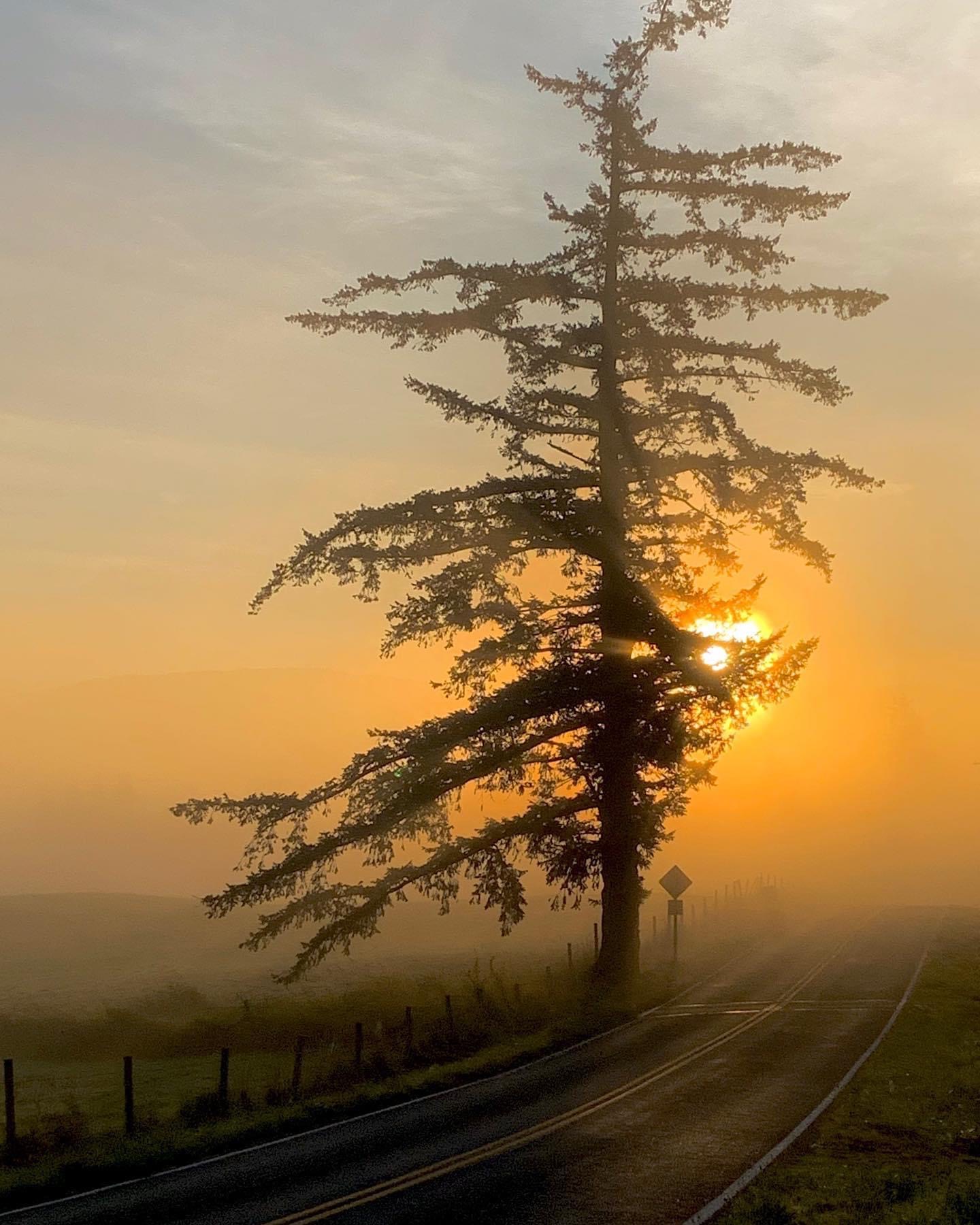
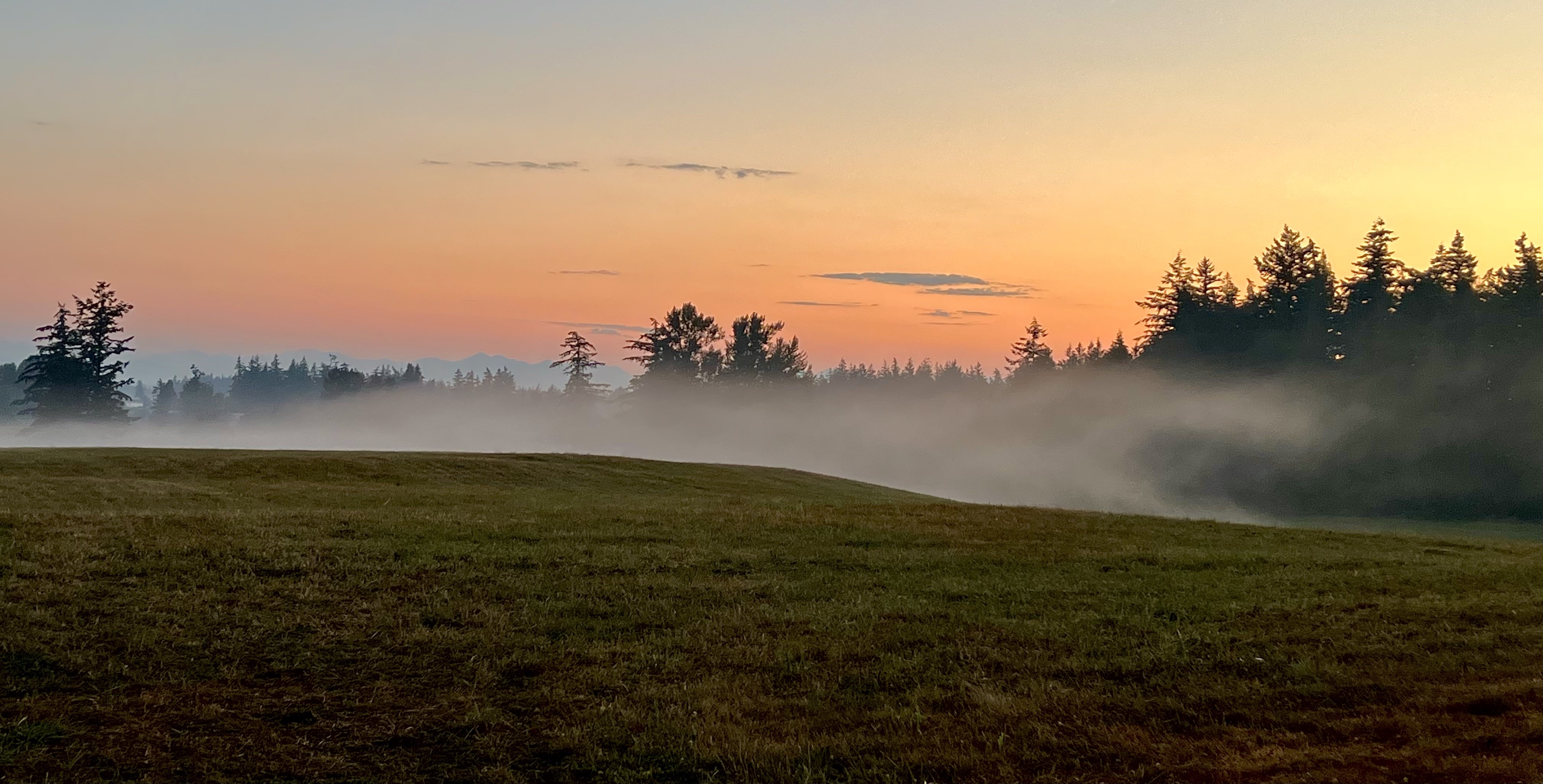
The Fog is Rising

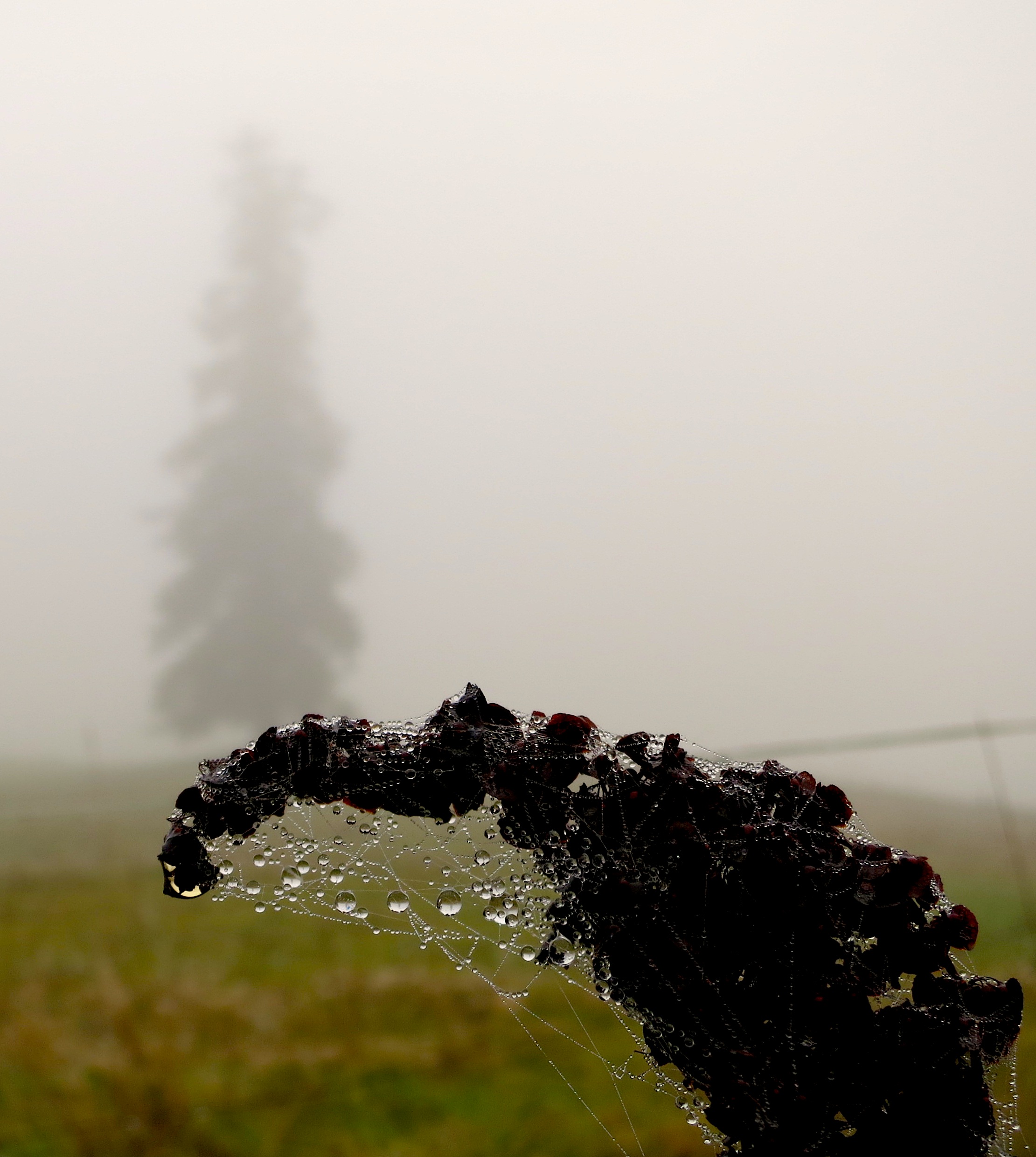
I must go in; the fog is rising…
~Emily Dickinson, her last words

I have watched the dying
in their last hours:
often through the fog of waning breaths,
they see what I cannot,
they listen to what I do not hear,
stretching their arms overhead
as their fingers extend and grasp
to touch what is, as yet,
far beyond my reach.

I watch and wonder how it is
to reverse the journey that brought me here
from the fog of my amnion.

The mist of living lifts.

I will enter a place
unsurpassed in brilliance and clarity;
the mystery of what lies beyond solved
only by going in to it,
welcomed back to where I started.

One-Time
Monthly
Yearly

Make a one-time or recurring donation to support daily Barnstorming posts

Make a monthly donation

Make a yearly donation

Choose an amount

¤5.00
¤10.00
¤20.00
¤5.00
¤15.00
¤100.00
¤5.00
¤15.00
¤100.00

Or enter a custom amount

¤

Your contribution is deeply appreciated.

Your contribution is appreciated.

Your contribution is appreciated.

DonateDonate monthlyDonate yearly
So Gradual the Grace

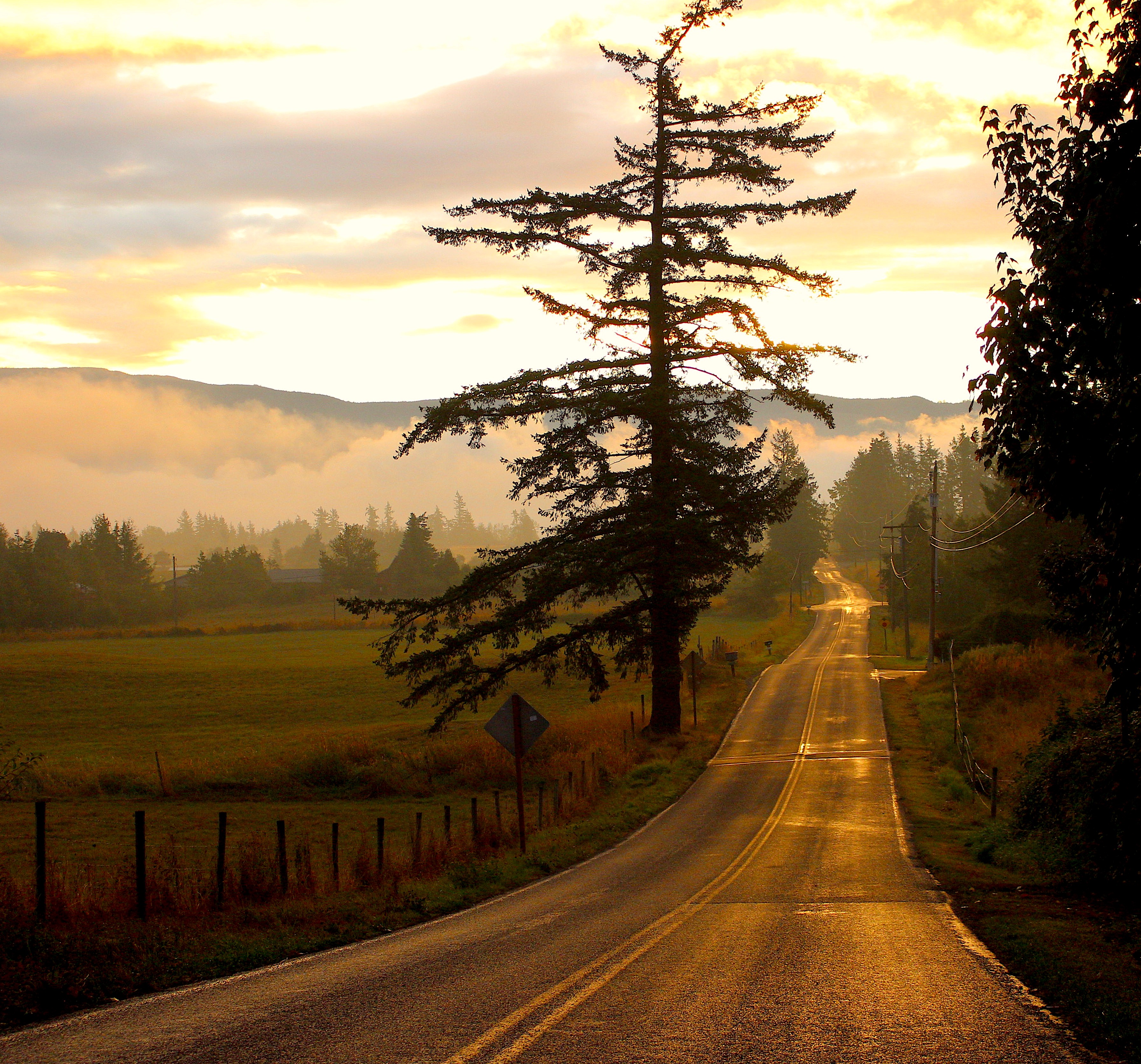
Further in Summer than the Birds
Pathetic from the Grass
A minor Nation celebrates
Its unobtrusive Mass.

No Ordinance be seen
So gradual the Grace
A pensive Custom it becomes
Enlarging Loneliness.

Antiquest felt at Noon
When August burning low
Arise this spectral Canticle
Repose to typify

Remit as yet no Grace
No Furrow on the Glow
Yet a Druidic Difference
Enhances Nature now
~Emily Dickinson

…<Dickinson’s Further in Summer is> one of the great poems of American literature. The statement of the poem is profound; it remarks the absolute separation between man and nature at a precise moment in time.  The poet looks as far as she can into the natural world, but what she sees at last is her isolation from that world.  She perceives, that is, the limits of her own perception. But that, we reason, is enough. This poem of just more than sixty words comprehends the human condition in relation to the universe:

So gradual the Grace
A pensive Custom it becomes
Enlarging Loneliness.

But this is a divine loneliness, the loneliness of a species evolved far beyond all others. The poem bespeaks a state of grace. In its precision, perception and eloquence it establishes the place of words within that state.  Words are indivisible with the highest realization of human being.
~N.Scott Momaday from The Man Made of Words

Silence again. The glorious symphony
Hath need of pause and interval of peace.
Some subtle signal bids all sweet sounds cease,
Save hum of insects’ aimless industry.
Pathetic summer seeks by blazonry
Of color to conceal her swift decrease.
Weak subterfuge! Each mocking day doth fleece
A blossom, and lay bare her poverty.
Poor middle-agèd summer! Vain this show!
Whole fields of golden-rod cannot offset
One meadow with a single violet;
And well the singing thrush and lily know,
Spite of all artifice which her regret
Can deck in splendid guise, their time to go!

~Helen Hunt Jackson “August”

On the first day I took his class on Native American Mythology and Lore in 1974 at Stanford, N.Scott Momaday strolled to the front, wrote the 60 words of this Dickinson poem on the blackboard.  He told us we would spend at least a week working out the meaning of what he considered the greatest poem written — this in a class devoted to Native American writing and oral tradition.  In his resonant bass, he read the poem to us many times, rolling the words around his mouth as if to extract their sweetness. This man of the plains, a member of the Kiowa tribe, loved this poem put together by a New England recluse poet — someone as culturally distant from him and his people as possible.

But grace works to unite us, no matter our differences, and Scott knew this as he led us, mostly white students, through this poem.  What on the surface appears a paean to late summer insect droning – doomed to extinction by oncoming winter – is a statement of the transcendence of man beyond our understanding of nature and the world in which we, its creatures, find ourselves. As summer begins its descent into the dark death of winter, we, unlike cicadas and crickets, become all too aware we too are descending.  There is no one as lonely as an individual facing their mortality and no one as lonely as a poet facing the empty page, in search of words to describe the sacrament of sacrifice and perishing.

The poem “August” by Helen Hunt Jackson has similar themes without the acknowledgement of grace. Helen was a childhood friend of Dickinson, and she comments on August heralding the coming silence of the winter of our lives.

Yet the written Word is not silent; the Word brings Grace unlike any other, even when the summer, pathetic and transient as it is, is gone. The Word brings Grace, like no other, to pathetic and transient man who will emerge transformed.

There is no furrow on the glow.  There is no need to plow and seed our salvaged souls, already lovingly planted by our Creator God, yielding a fruited plain.

One-Time
Monthly
Yearly

Make a one-time or recurring donation to support daily Barnstorming posts

Make a monthly donation

Make a yearly donation

Choose an amount

¤5.00
¤10.00
¤20.00
¤5.00
¤15.00
¤100.00
¤5.00
¤15.00
¤100.00

Or enter a custom amount

¤

Your contribution is deeply appreciated.

Your contribution is appreciated.

Your contribution is appreciated.

DonateDonate monthlyDonate yearly
The Salt Water Cure

The cure for anything is salt water–sweat, tears or the sea.
~Isak Dinesen

I go down to the shore in the morning
and depending on the hour the waves
are rolling in or moving out,
and I say, oh, I am miserable,
what shall —
what should I do? And the sea says
in its lovely voice:
Excuse me, I have work to do.
~Mary Oliver “I Go Down to the Shore”

photo by Nate Gibson

…when he looked at the ocean,
he caught a glimpse of the One he was praying to.

Maybe what made him weep was
how vast and overwhelming it was

and yet at the same time as near
as the breath of it in his nostrils,
as salty as his own tears.

~Frederick Buechner writing about Paul Tillich in Beyond Words

I grew up an easy crier.  Actually growing up hasn’t cured it, nor has getting older.  I’m still an easy crier – a hard thing to admit especially when my tears flow at an inopportune time in a public place. These days, it is most often in church, while singing favorite hymns, but I can cry just about anywhere.

These days, simply reading the headlines warrants weeping.

It might have had something to do with being a middle child, bombarded from both directions by siblings who recognized how little aggravation it took to make me cry, or it may have been my hypersensitive feelings about …. everything.  I felt really alone in my tearful travails until my formidable grandmother, another easy weepy, explained that my strong/tall/tough/nothing-rocks-him former WWII Marine father had been a very weepy little boy.  She despaired that he would ever get past being awash in tears at every turn.  His alcoholic father tormented him about it, wondering if he would ever learn to “man up.”

So this is a congenital condition – my only excuse and I’m sticking to that story.

A few years ago I read about how different kinds of tears (tears of joy, tears of pain, tears of grief, tears of frustration, tears of irritated eyes, tears of onion cutting) all look different and remarkably apt, when dried and pictured under the microscope.  This is more than mere salt water leaking from our eyes — this is our heart and soul and hormonal barometer streaming down our faces – a visible litmus test of our deepest feelings.

I witnessed many tears every day in my clinical practice, usually not tears of joy.  These were tears borne of pain and loss and rejection and failure, of hopelessness and helplessness, loneliness and anguish.  Often my patients would describe having a “break down” by which they meant uncontrollable crying.  It was one of the first-mentioned symptoms they wanted relief from.

Tears do come less frequently as depression lifts and anxiety lessens but I let my patients know (and I remind myself) that tears are a transparent palette for painting the desires and concerns of our heart.  Dry up the tears and one dries up emotions that express who we are and who we strive to be.

When I’m able, I celebrate the salt water squeezing from my eyes, knowing it means I’m so fully human that I leak my humanity everywhere I go.  Even God wept while dwelling among us on earth, and what’s good enough for Him is certainly good enough for me.

One-Time
Monthly
Yearly

Make a one-time or recurring donation to support daily Barnstorming posts

Make a monthly donation

Make a yearly donation

Choose an amount

¤5.00
¤10.00
¤20.00
¤5.00
¤15.00
¤100.00
¤5.00
¤15.00
¤100.00

Or enter a custom amount

¤

Your contribution is deeply appreciated.

Your contribution is appreciated.

Your contribution is appreciated.

DonateDonate monthlyDonate yearly
A Morning Luminous with Mystery and Pain

Heart,
I implore you,
it’s time to come back
from the dark,
it’s morning,
the hills are pink
and the roses
whatever they felt

in the valley of night
are opening now
their soft dresses,
their leaves

are shining.
Why are you laggard?
Sure you have seen this
a thousand times,

which isn’t half enough.
Let the world
have its way with you,
luminous as it is

with mystery
and pain–
graced as it is
with the ordinary.

~Mary Oliver “Summer Morning”

I love to stay in bed
All morning,
Covers thrown off, naked,
Eyes closed, listening.

There’s a smell of damp hay,
Of horses, laziness,
Summer sky and eternal life.

I know all the dark places
Where the sun hasn’t reached yet,
Where the last cricket
Has just hushed; anthills

Where it sounds like it’s raining,
Slumbering spiders spinning wedding dresses.

The good tree with its voice
Of a mountain stream
Knows my steps.
It, too, hushes.

I stop and listen:
Somewhere close by
A stone cracks a knuckle,
Another turns over in its sleep.

I hear a butterfly stirring
Inside a caterpillar.
I hear the dust talking
Of last night’s storm.

Farther ahead, someone
Even more silent
Passes over the grass
Without bending it.

And all of a sudden
In the midst of that quiet,
It seems possible
To live simply on this earth.

~Charles Simic from “Summer Morning”

Reading headlines about yet more unimaginable losses and grieving people is extraordinarily painful on a summer morning when all should be luminous and lighthearted. My heart isn’t feeling the light at all; I struggle to leave behind those dark places where the sun hasn’t reached yet.

Yet if I’m still and quiet, I can hear life going on all around me. My sadness doesn’t change the mystery of a world God created in beauty and peace, now overshadowed by our fall into darkness, yet redeemed by a sacrificial Love we cannot possibly comprehend.

What a summer morning revelation. It’s as extraordinarily ordinary and simple as that.

One-Time
Monthly
Yearly

Make a one-time or recurring donation to support daily Barnstorming posts

Make a monthly donation

Make a yearly donation
Choose an amount

¤5.00
¤10.00
¤20.00
¤5.00
¤15.00
¤100.00
¤5.00
¤15.00
¤100.00

Or enter a custom amount

¤

Your contribution is deeply appreciated.
Your contribution is appreciated.

Your contribution is appreciated.

DonateDonate monthlyDonate yearly