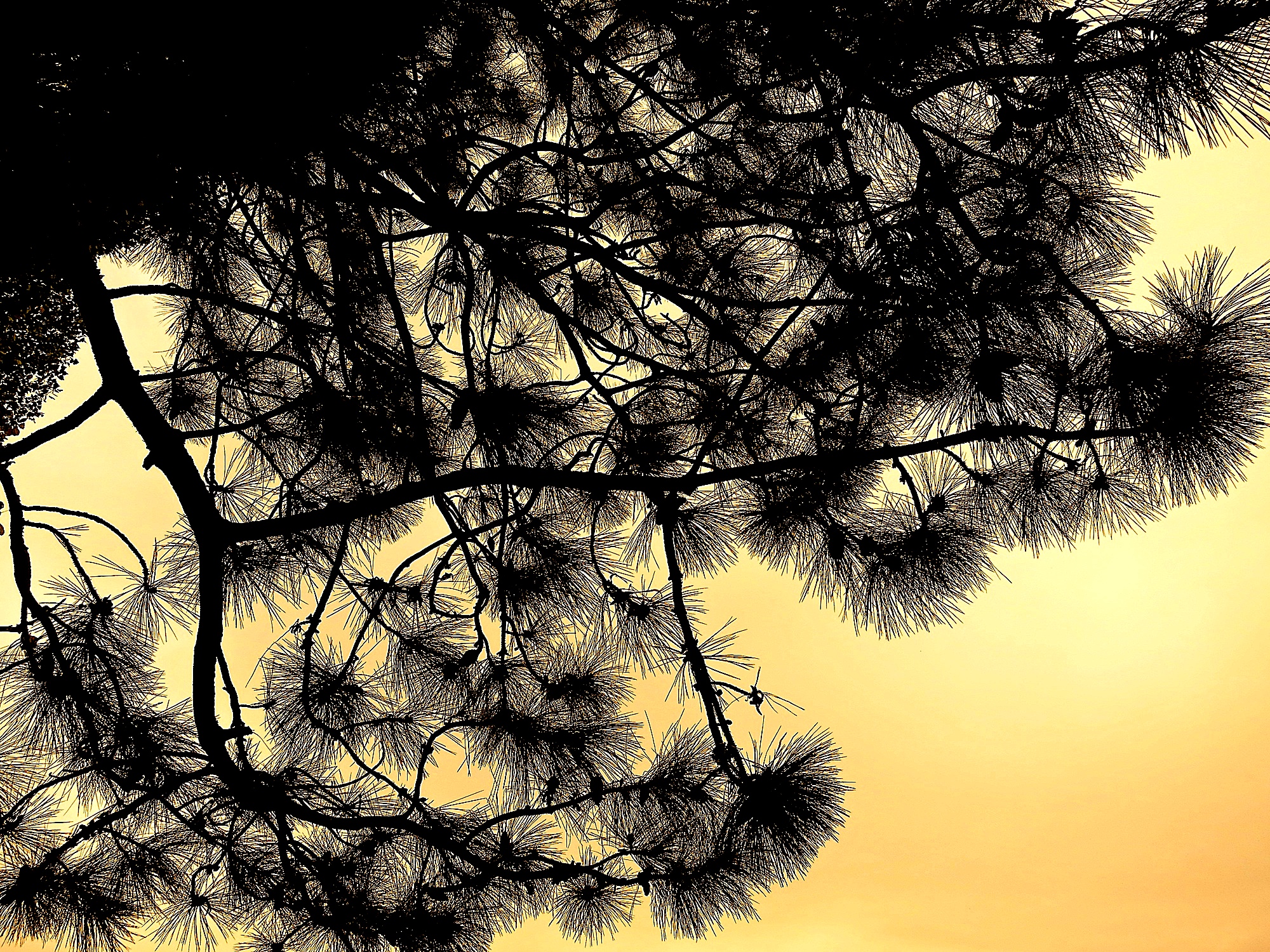
A Light of Beginnings

For seasons the walled meadow
south of the house built of its stone
grows up in shepherd’s purse and thistles
the weeds share April as a secret
finches disguised as summer earth
click the drying seeds
mice run over rags of parchment in August
the hare keeps looking up remembering 
a hidden joy fills the songs of the cicadas

two days’ rain wakes the green in the pastures
crows agree and hawks shriek with naked voices
on all sides the dark oak woods leap up and shine
the long stony meadow is plowed at last and lies
all day bare
I consider life after life as treasures
oh it is the autumn light

that brings everything back in one hand
the light again of beginnings
the amber appearing as amber
~ W. S. Merwin, “September Plowing” from Flower & Hand

photo by Joel De Waard

When you are already here
you appear to be only
a name that tells of you
whether you are present or not


and for now it seems as though
you are still summer
still the high familiar
endless summer
yet with a glint
of bronze in the chill mornings
and the late yellow petals
of the mullein fluttering
on the stalks that lean
over their broken
shadows across the cracked ground

but they all know
that you have come
the seed heads of the sage
the whispering birds
with nowhere to hide you
to keep you for later

you
who fly with them

you who are neither
before nor after
you who arrive
with blue plums
that have fallen through the night

perfect in the dew
~W.S. Merwin “To the Light of September”

Now that it has rained a bit, the light of September is a filtered, more gentle illumination than we have experienced for the past several months of dry summer glare.

It is more lambent: a soft radiance that simply glows at certain times of the day when the angle of the sun is just right, and the clouds are in position to soften and cushion the luminence.

It is also liminal: it is neither before or after, on the threshold between seasons when there is both promise and caution in the air.

Sometimes I think I can breathe in light like this, if not through my lungs, then through my eyes.

It is a temptation to bottle it up with a stopper somehow, stow it away hidden in a back cupboard. Then I can bring it out on the darkest days, pour a bit into a glass, and imbibe.

But for now, I fill myself full to the brim. And my only means of preservation is with a camera and a few words.

So I share it now with all of you to tuck away for a future day.
Perhaps you too will be thirsty for a lambent light.

Lest I Forget…

Let me remember you, voices of little insects, 
Weeds in the moonlight, fields that are tangled with asters, 
Let me remember, soon will the winter be on us, 
Snow-hushed and heavy. 

Over my soul murmur your mute benediction, 
While I gaze, O fields that rest after harvest, 
As those who part look long in the eyes they lean to, 
Lest they forget them.
~Sara Teasdale from “September Midnight”

The tumult and the shouting dies;
The Captains and the Kings depart:
Still stands Thine ancient sacrifice,
An humble and a contrite heart.
Lord God of Hosts, be with us yet,
Lest we forget—lest we forget!
~Rudyard Kipling from “Recessional”

If I were called upon to identify briefly the principal trait of the entire twentieth century, here too, I would be unable to find anything more precise and pithy than to repeat once again:
Men have forgotten God.
~Aleksandr Solzhenitzyn from his 1983 acceptance speech for the Templeton Prize

Lest I forget…

I look long in the eyes I lean to

whether a loved one, or the mountains, or summer-weary fields,
or the face of God Himself.

I cannot risk forgetting Who must be remembered —
He is encased in my heart
like a treasured photograph,
like a precious gem,
like a benediction soothing me quiet when anxious.

It is His ultimate promise:
Neither will He forget me –
looking long in my eyes that lean in to Him.

[And the Lord answered] Can a woman forget her nursing child, that she should not have compassion on the son of her womb?
Yes, they may forget, yet I will not forget you.
Isaiah 49:15

The Bees of the Invisible

Let us go forward quietly,
forever making for the light,
and lifting up our hearts in the knowledge
that we are as others are
(and that others are as we are),
and that it is right to love one another
in the best possible way –
believing all things,
hoping for all things,
and enduring all things. 
~Vincent Van Gogh from a Letter to Theo Van Gogh – 3 April 1878

I have lived so long
On the cold hills alone . . .
I loved the rock
And the lean pine trees,
Hated the life in the turfy meadow,
Hated the heavy, sensuous bees.
I have lived so long
Under the high monotony of starry skies,
I am so cased about
With the clean wind and the cold nights,
People will not let me in
To their warm gardens
Full of bees.

~Janet Loxley Lewis “Austerity”


Everywhere transience is plunging into the depths of Being.
It is our task to imprint this temporary, perishable earth
into ourselves, so deeply, so painfully and passionately,
that its essence can rise again, invisible, inside of us.
We are the bees of the invisible.
We wildly collect the honey of the visible,
to store it in the great golden hive of the invisible.
~Rainier Maria Rilke in a letter to his friend Witold Hulewicz, 1925

I am convinced,
reading the news,
too many people are forced to survive
in a world cold and cruel,
without warmth or safety,
too many empty stomachs,
no healing hands for injury or disease.

Our country was trying to help
up until the last few months
when so much has been pulled away.

No longer are we, the helper bees, sent to the invisible,
bringing tangible hope and light, food and meds,
to those who have so little.

No longer do we bring collected honey
to the suffering, the ill, the poor and
invisible who share this planet.

Oh Lord, turn us away from such austerity.
Let us not forget how to share
the humming riches of Your warm garden.

AI image created for this post

Best of Barnstorming Photos: Winter/Spring 2025

A Soft Landscape

Now have come the shining days
When field and wood are robed anew,
And o’er the world a silver haze
Mingles the emerald with the blue.

Summer now doth clothe the land
In garments free from spot or stain—
The lustrous leaves, the hills untanned,
The vivid meads, the glaucous grain.

The day looks new, a coin unworn,
Freshly stamped in heavenly mint;
The sky keeps on its look of morn;
Of age and death there is no hint.

How soft the landscape near and far!
A shining veil the trees infold;
The day remembers moon and star;
A silver lining hath its
gold.

Again I see the clover bloom,
And wade in grasses lush and sweet;
Again has vanished all my gloom
With daisies smiling at my feet.

Again from out the garden hives
The exodus of frenzied bees;
The humming cyclone onward drives,
Or finds repose amid the trees.

At dawn the river seems a shade—
A liquid shadow deep as space;
But when the sun the mist has laid,
A diamond shower smites its face.

The season’s tide now nears its height,
And gives to earth an aspect new;
Now every shoal is hid from sight,
With current fresh as morning dew.
~John Burroughs “June’s Coming”

Out of the deep and the dark,
A sparkling mystery, a shape,
Something perfect,
Comes like the stir of day:
One whose breath is a fragrance,
One whose eyes reveal the road to stars,
The wind in his countenance,
The glory of heaven upon his back.
He steps like a vision hung in air,
Diffusing the passion of eternity;
His abode is the sunlight of morn,
The music of eve his speech:
In his sight,
One shall turn from the dust of the grave,
And move upward to the woodland.

~Yone Noguchi The Poet”

Each month is special in its own way:  I tend to favor April and October for how the light plays on the landscape during transitional times — a residual of what has been, with a hint of what lies ahead.

Then there is June.  Dear, gentle, abundant and overwhelming June.  Nothing is dried up, there is such a rich feeling of ascension into lushness of summer with an “out of school” attitude, even if someone like me has graduated long ago.

And the light, and the birdsong and the dew and the greens — such vivid verdant greens. The stir of the day stirs my heart…

As lovely as June is, 30 days is more than plenty or I would become helplessly saturated. Then I can be released from my sated stupor to wistfully hunger for June for 335 more.

Morning Has Come Again

when the sun peeks over the horizon to greet
the day and spread golden honey warmth
to the dark, sleepy earth

when the birds begin to stir and twitter
and tune their songs to one another

when the trees rustle as the morning breeze
opens her eyes from slumber, and the dew is heavy
on the blades of grass

when I know morning has come once again
and we are not lost to the night, even as we
are not lost to the day

light dawns, and I can move again
breathing in streams of fresh morning air
lighting a candle for rejuvenation
and praying the day in with ginger and
salt and clay

oh how lovely it feels to be alive
how magical to wake with the light
and live

~Juniper Klatt “when the sun” from I was raised in a house of water.

Each morning is a fresh try at life,
a new chance to get things right
when our yesterdays are broken.

So I drink deeply of the golden dawn,
take a full breath of cool air and dive in head first
into luminous light and bushels of blossoms,
hoping I too might float on the morning magic.

AI image created for this post

I’m Comfortable in this Spot

There are no creatures you cannot love.
A frog calling at God
From the moon-filled ditch
As you stand on the country road in the June night.
The sound is enough to make the stars weep
With happiness.
In the morning the landscape green
Is lifted off the ground by the scent of grass.
The day is carried across its hours
Without any effort by the shining insects
That are living their secret lives.
The space between the prairie horizons
Makes us ache with its beauty.
Cottonwood leaves click in an ancient tongue
To the farthest cold dark in the universe.
The cottonwood also talks to you
Of breeze and speckled sunlight.
You are at home in these
great empty places
along with red-wing blackbirds and sloughs.
You are comfortable in this spot
so full of grace and being
that it sparkles like jewels
spilled on water.

~Tom Hennen “From a Country Overlooked”, from Darkness Sticks to Everything

There are some God’s creatures I struggle to love –
fleas, chiggers, mosquitoes, ticks, slugs, yellow jackets among them. Also poisonous snakes, spiders and scorpions come to mind.
And then there are pathogenic bacteria, parasites and viruses…

It is not their fault I struggle to find their value –
only God knows why He made them as He did.

What I have learned over 7 decades is to try to look for beauty wherever I am.

To listen to the breezes and the birds, to look for how the light plays with leaves and water and how it is all created to help us feel at home for the time we are here.

Yet, this is an imperfect world where beauty doesn’t provide shelter to those with their basic needs unfulfilled – where there is no comfort, no safety, no hope.

God, deliver us from being too comfortable when others suffer.
Help us feel Your love to pass on to those in need.
Help us to know how to make a difference for them.
We know that makes a difference to You.

AI image created for this post

A Meadow of Delight

On the day when
The weight deadens
On your shoulders
And you stumble,
May the clay dance
To balance you.


May a flock of colours,
Indigo, red, green
And azure blue,
Come to awaken in you
A meadow of delight.

May the nourishment of the earth be yours,
May the clarity of light be yours,
May the fluency of the ocean be yours,
May the protection of the an
cestors be yours.

And so may a slow
Wind work these words
Of love around you,
An invisible cloak
To mind your life.
~John O’Donohue from “Beannacht

We all stumble, bearing the bruises and scars of our fall.
We all waken to gray days when there seems no point in going on.
We all can be sucked into the darkest thoughts,
tunneling ever more deeply.

In those moments, those days, those months,
may we be wrapped tightly in love’s cloak of invisibility:
and darkness swallow us no longer~
we follow a brightening path of light and color,
with contentment and encouragement,
our failing feet steadied,
the gray kaleidoscoped,
the way to go illuminated with hope.

May our brokenness be forever covered in such blessings.

AI image created for this post

The Grass Forgiving the Scythe

Winslow Homer’s The Veteran in a New Field
Man Scything Hay by Todd Reifers

There was never a sound beside the wood but one,
And that was my long scythe whispering to the ground.
What was it it whispered? I knew not well myself;
Perhaps it was something about the heat of the sun,
Something, perhaps, about the lack of sound—
And that was why it whispered and did not speak.

To the earnest love that laid the swale in rows,
The fact is the sweetest dream that labor knows.
My long scythe whispered and left the hay to make.
~Robert Frost in “Mowing”

Mowers, weary and brown, and blithe,
What is the word methinks ye know,
Endless over-word that the Scythe
Sings to the blades of the grass below?
Scythes that swing in the grass and clover,
Something still, they say as they pass;
What is the word that, over and over,
Sings the Scythe to the flowers and grass?

Hush, ah hush, the Scythes are saying,
Hush, and heed not, and fall asleep;
Hush, they say to the grasses swaying,
Hush, they sing to the clover deep!
Hush – ’tis the lullaby Time is singing –
Hush, and heed not, for all things pass,
Hush, ah hush! and the Scythes are swinging
Over the clover and over the grass!

~Andrew Lang (1844-1912) “The Scythe Song”

It is blue May. There is work
to be done. The spring’s eye blind
with algae, the stopped water
silent. The garden fills
with nettle and briar.
Dylan drags branches away.
I wade forward with my scythe.

There is stickiness on the blade.
Yolk on my hands. Albumen and blood.
Fragments of shell are baby-bones,
the scythe a scalpel, bloodied and guilty
with crushed feathers, mosses, the cut cords
of the grass. We shout at each other
each hurting with a separate pain.

From the crown of the hawthorn tree
to the ground the willow warbler
drops. All day in silence she repeats
her question. I too return
to the place holding the pieces,
at first still hot from the knife,
recall how warm birth fluids are.

~Gillian Clarke “Scything” from Letter from a Far Country (1982)

The grass around our orchard and yet-to-be-planted garden is now thigh-high. It practically squeaks while it grows. Anything that used to be in plain sight on the ground is rapidly being swallowed up in a sea of green: a ball, a pet dish, a garden gnome, a hose, a tractor implement, a bucket. In an effort to stem this tidal flood of grass, I grab the scythe out of the garden shed and plan my attack.

When the pastures are too wet yet for heavy hooves, I have hungry horses to provide for and there is more than plenty fodder to cut down for them.

I’m not a weed whacker kind of gal. First there is the necessary fuel, the noise necessitating ear plugs, the risk of flying particles requiring goggles–it all seems too much like an act of war to be remotely enjoyable. Instead, I have tried to take scything lessons from my husband.

Emphasis on “tried.”

I grew up watching my father scythe our hay in our field because he couldn’t afford a mower for his tractor. He enjoyed physical labor in the fields and woods–his other favorite hand tool was a brush cutter that he’d take to blackberry bushes. He would head out to the field with the scythe over this shoulder, grim reaper style. Once he was standing on the edge of the grass needing to be mowed, he would then lower the scythe, curved blade to the ground, turn slightly, positioning his hands on the two handles just so, raise the scythe up past his shoulders, and then in a full body twist almost like a golf swing, he’d bring the blade down. It would follow a smooth arc through the base of the standing grass, laying clumps flat in a tidy pile alongside the 2 inch stubble left behind. It was a swift, silky muscle movement — a thing of beauty.

Once, when I was three years old, I quietly approached my dad in the field while he was busily scything grass for our cows, but I didn’t announce my presence. The handle of his scythe connected with me as he swung it, laying me flat with a bleeding eyebrow. I still bear the scar, somewhat proudly, as he abruptly stopped his fieldwork to lift me up as I bawled and bled on his sweaty shirt. He must have felt so badly to have injured his little girl and drove my mom and I to the local doctor who patched my brow with sticky tape rather than stitches.

So I identify a bit with the grass laid low by the scythe. I forgave my father, of course, and learned never again to surprise him when he was working in the field.

Instead of copying my father’s graceful mowing technique, I tended to chop and mangle rather than effect an efficient slicing blow to the stems. I unintentionally trampled the grass I meant to cut. I got blisters from holding the handles too tightly. It felt hopeless that I’d ever perfect that whispery rise and fall of the scythe, with the rhythmic shush sound of the slice that is almost hypnotic.

Not only did I become an ineffective scything human, I also learned what it is like to be the grass laid flat, on the receiving end of a glancing blow. Over a long career, I bore plenty of footprints from the trampling. It can take awhile to stand back up after being cut down.

Sometimes it makes more sense to simply start over as the oozing stubble bleeds green, with deep roots that no one can reach. As I have grown back over the years, singing rather than squeaking or bawling, I realize, I forgave the scythe every time it came down on my head.

photo by Nate Gibson

So Starved for Hope

I know what you planned, what you meant to do, teaching me
to love the world, making it impossible
to turn away completely, to shut it out completely ever again –
it is everywhere; when I close my eyes,
birdsong, scent of lilac in early spring, scent of summer roses:
you mean to take it away, each flower, each connection with earth –
why would you wound me, why would you want me
desolate in the end, unless you wanted me so starved for hope
I would refuse to see that finally
nothing was left to me, and would believe instead
in the end you were left to me.
~Louise Glück “Vespers”
 (one of ten Vespers poems)

I wait for the Lord, my soul waits,
    and in his word I hope;
~Psalm 130:5

Mid-spring days like this:
bright, so promising with potential,
birdsong constantly in the air,
scent of orchard blossoms, lilacs,
early roses and a flush of color everywhere…

how can we not love the world so much we never want to leave it?

Yet we must hold this loosely.

It is but a tiny show of the glories to come,
of what You have waiting for us next.

I am wounded knowing I must eventually let this go.

I am hungry for hope that isn’t found
in all this beauty and lushness,
the fulfilling hope that is only
You as my Father and Creator.

You provide only a taste here.
I know what I starve for,
so starved with hope for what You have in store.

I will wait for you
I will wait for you
in the end You were left for me.

Amen and Amen.

AI image created for this post