I have never been fishing on the Susquehanna or on any river for that matter to be perfectly honest.
Not in July or any month have I had the pleasure — if it is a pleasure — of fishing on the Susquehanna.
I am more likely to be found in a quiet room like this one — a painting of a woman on the wall, a bowl of tangerines on the table — trying to manufacture the sensation of fishing on the Susquehanna.
There is little doubt that others have been fishing on the Susquehanna,
rowing upstream in a wooden boat, sliding the oars under the water then raising them to drip in the light. But the nearest I have ever come to fishing on the Susquehanna was one afternoon in a museum in Philadelphia,
when I balanced a little egg of time in front of a painting in which that river curled around a bend
under a blue cloud-ruffled sky, dense trees along the banks, and a fellow with a red bandana
sitting in a small, green flat-bottom boat holding the thin whip of a pole.
That is something I am unlikely ever to do, I remember saying to myself and the person next to me.
Then I blinked and moved on to other American scenes of haystacks, water whitening over rocks,
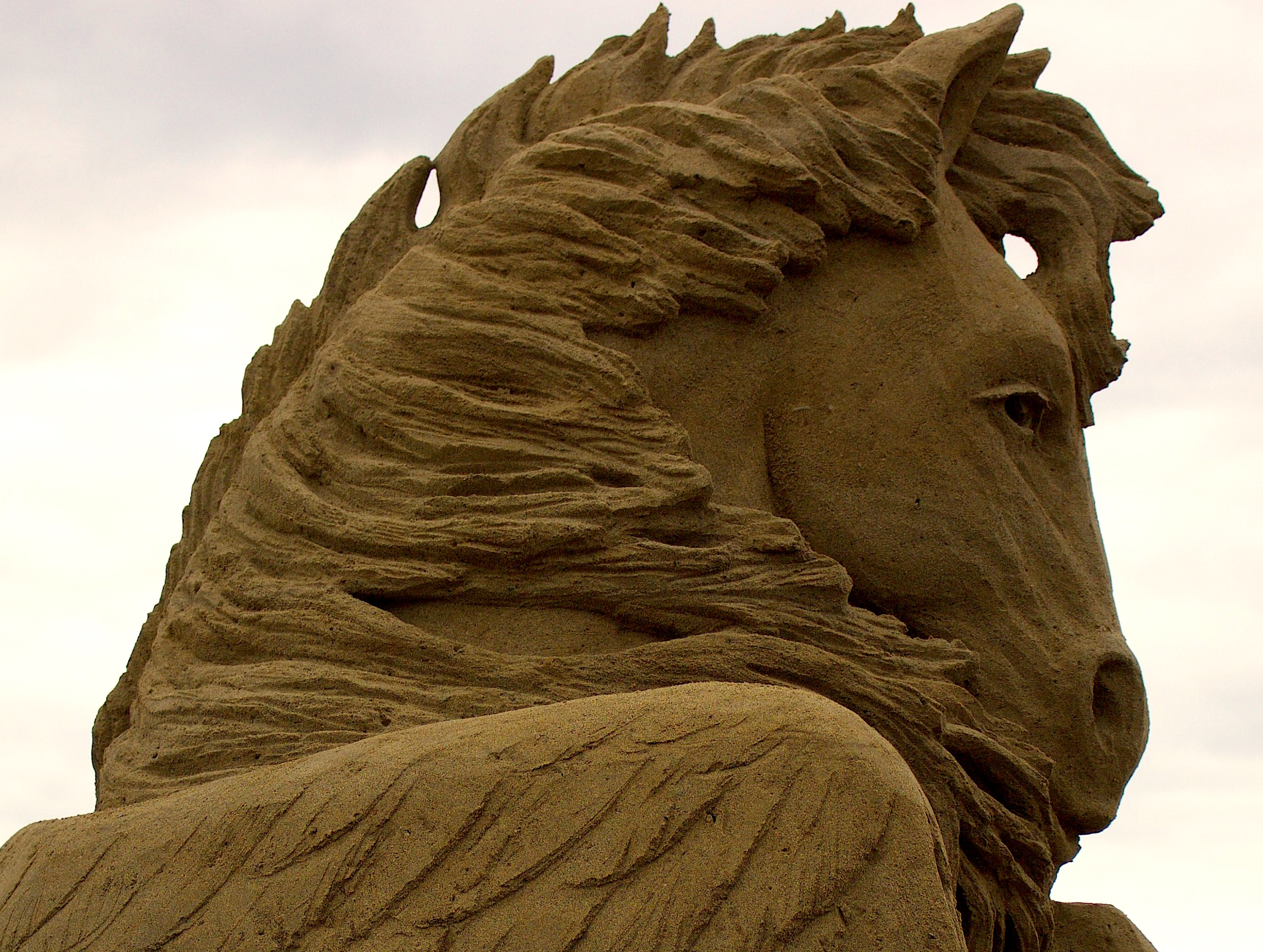
even one of a brown hare who seemed so wired with alertness I imagined him springing right out of the frame. ~Billy Collins Fishing On The Susquehanna In July
The difficulty to think at the end of day, When the shapeless shadow covers the sun And nothing is left except light on your fur—
….and August the most peaceful month.
To be, in the grass, in the peacefullest time, And to feel that the light is a rabbit-light In which everything is meant for you And nothing need be explained;
I live a quiet life in a quiet place. There are many experiences not on my bucket list that I’m simply content to just imagine others doing.
I’m not a rock climber or a zip liner nor willing to jump out of an airplane. I won’t ride a horse over a four foot jump nor race one around a track. Not for me waterskis or unicycles or motorcycles.
I’m grateful there are adventurers who seek out the extremes of life so the rest of us can admire their courage and applaud their explorations.
My imagination is powerful enough, thanks to the words and pictures of others – sometimes too vivid.
I contentedly explore the corners of my quiet places, both inside and outside, to see what I can build from what’s here.
When the light is just right, what I see in my mind seems ready to spring right out of the frame.
One-Time
Monthly
Yearly
Make a one-time or recurring donation to support daily Barnstorming posts
When a great moment knocks on the door of your life, it is often no louder than the beating of your heart, and it is very easy to miss it. ~Boris Pasternak
‘Is there anybody there?’ said the Traveller, Knocking on the moonlit door; And his horse in the silence champed the grasses Of the forest’s ferny floor: And a bird flew up out of the turret, Above the Traveller’s head: And he smote upon the door again a second time; ‘Is there anybody there?’ he said. But no one descended to the Traveller; No head from the leaf-fringed sill Leaned over and looked into his grey eyes, Where he stood perplexed and still. But only a host of phantom listeners That dwelt in the lone house then Stood listening in the quiet of the moonlight To that voice from the world of men: Stood thronging the faint moonbeams on the dark stair, That goes down to the empty hall, Hearkening in an air stirred and shaken By the lonely Traveller’s call. And he felt in his heart their strangeness, Their stillness answering his cry, While his horse moved, cropping the dark turf, ’Neath the starred and leafy sky; For he suddenly smote on the door, even Louder, and lifted his head:— ‘Tell them I came, and no one answered, That I kept my word,’ he said. Never the least stir made the listeners, Though every word he spake Fell echoing through the shadowiness of the still house From the one man left awake: Ay, they heard his foot upon the stirrup, And the sound of iron on stone, And how the silence surged softly backward, When the plunging hoofs were gone. ~Walter De La Mare “The Listeners”
Years ago, a young woman I’d been treating for depression for several weeks in my clinic called unexpectedly on a Friday afternoon and canceled an upcoming appointment for the following Monday and did not reschedule.
The receptionist sent me a message as was our policy for patients who “cancel and do not reschedule.” It gave me a bad feeling that she was turning her back on her treatment plan and I was uneasy about the upcoming weekend without knowing what was going on with her.
I could have just put on my coat and headed home at the end of that long Friday after a very stressful work week and even more stressful year. I was discouraged about many aspects of my clinic work load and my after-hours responsibilities only seemed to get heavier. I was frustrated at how ineffectively I was communicating to administrative supervisors about the need for change.
I was ready to quit and walk away.
Even so, in a moment of clarity about my role and commitment to those I was responsible for, I called my patient to find out how she was doing. She didn’t answer her phone.
I mulled over my options. Protocol was to call the police to go to her address for a “well-being” check. I looked up her apartment address and decided instead to drive the few blocks to get there.
As I approached her door, I could hear someone moving around in her apartment, but she ignored my knocks and my voice and when I tried to open the door, it was locked.
So I stayed right there, talking to her through the door for about 15 minutes, letting her know I wasn’t leaving until she opened up the door. I finally told her she could decide to open the door or I would call 911 and ask the police to come to make sure she was okay. She then unlocked the door, tears streaming down her face. She had been drinking heavily, with liquor bottles strewn around on the floor. She admitted an intent to overdose on aspirin and vodka. The vodka was already consumed but the unopened aspirin bottle was in her hand.
I was the last person she expected to see at her door.
Miraculously, the inpatient mental health unit at the local hospital had an open bed. I told my patient that we could save time and hassle by heading over there together right then and there, and avoid the emergency room chaos and delay, and the possibility of an involuntary detainment.
She agreed to come with me and be admitted voluntarily for stabilization. When I went to the hospital to see ger the next day, she greeted me with a hug and thanked me for not giving up on her when she had given up on herself.
In sobriety, her eyes were brighter and she was more hopeful. She never expected anyone to care enough to come knock on her door when she was at her lowest point. It was the start of her climb out of her pain and depression.
Four years later, a small card arrived in my clinic mailbox on another most challenging work day from an unfamiliar address two thousand miles away. The name looked vaguely familiar to me but when I opened and read the contents, this time it became the knock on the door to get my attention, to focus the beating of my heart on what was most important – not the stresses of my work place — and it was my turn to let tears flow:
“Dear Doctor,
I am not sure if you will remember me considering you see a number of patients daily; however, I am a patient whose life you changed in the most positive way. I never truly THANKED YOU for listening to me and hearing my silent words of grief and hearing my cries for help. If it had not been for you, had you not knocked on my door, I would not be writing this letter to you today. I don’t know exactly what to say to the person who saved me from hurting myself fatally. You were a stranger in my life, but a dear friend in my time of need. THANK YOU, for everything that you did for me. You have a permanent place in my heart, you have given my spirit hope, you have reminded me that a life is worth living. Thank you, thank you, thank you! Sincerely, L_____”
Somehow I had the sense that I needed to go knock on her door because I was keeping my word to take care of her at her lowest point. I had the stubbornness to stay put until she responded, and most of all, I’m appreciative for her gracious note letting me know it made a difference.
When I needed it the most, she made a difference for me that kept me on the job for another twenty years.
With her letter, she knocked, oh so gently, on my own locked door. I opened it, amazed that someone cared enough to let me know I kept my word.
One-Time
Monthly
Yearly
Make a one-time or recurring donation to support daily Barnstorming posts
Hours and hours of taffy pulled and stretched to the furthest reaches of neighborhood lawns, universe of grasses cool and tickling, cushions for our bodies somersaulting and cartwheeling, tagging you’re it, while somewhere above us
the dimmer switch of Heaven would be turning down to lavender rose and deeper rose, and then the voices of the mothers streaming in through the darkening air to come home, come home. ~Andrea Potos “Summer, Childhood” from Her Joy Becomes
Once when we were playing hide-and-seek and it was time to go home, the rest gave up on the game before it was done and forgot I was still hiding. I remained hidden as a matter of honor until the moon rose. ~Galway Kinnell “Hide-and-Seek 1933” from Strong Is Your Hold.
We all long for home.
As the day wanes, the sky dims to pastels, the breezes pick up, I want to be called home: to warmth, to a good evening meal, to hugs and cozy bed.
No matter what excitement exists outside the four walls of home, I am eager for the comfort of finding my way home.
In the villages and towns all across Japan, there is a traditional folk song played daily in the early evening over loudspeakers in the streets – a reminder to the children of the neighborhood that it is time to give up their games and head home. They stream out of the parks and streets, each to their own house or apartment.
The song that thousands of U.S. soccer fans belted out after the World Cup soccer games was “Take me home, country roads.”
Last night, as I left an evening meeting at our local homeless mission shelter, I passed through the huge room housing over a hundred sleeping people on cots and floor mattresses. The overhead lights had been dimmed, each person safe, warm, fed, and welcome – no longer invisible and hidden away in the woods or alleys.
May we all know how it is to be welcomed home, when overwhelming darkness comes, knowing the Light always returns.
~Lustravit lampade terras~ (He has illumined the world with a lamp) The weather and my mood have little connection. I have my foggy and my fine days within me; my prosperity or misfortune has little to do with the matter. – Blaise Pascal from “Miscellaneous Writings”
Tired and hungry, late in the day, impelled to leave the house and search for what might lift me back to what I had fallen away from, I stood by the shore waiting. I had walked in the silent woods: the trees withdrew into their secrets. Dusk was smoothing breadths of silk over the lake, watery amethyst fading to gray. Ducks were clustered in sleeping companies afloat on their element as I was not on mine. I turned homeward, unsatisfied. But after a few steps, I paused, impelled again to linger, to look North before nightfall—the expanse of calm, of calming water, last wafts of rose in the few high clouds. And was rewarded: the heron, unseen for weeks, came flying widewinged toward me, settled just offshore on his post, took up his vigil. If you ask why this cleared a fog from my spirit, I have no answer. ~Denise Levertov “A Reward” from Evening Train
Flee for a while from your tasks, hide yourself for a little space from the turmoil of your thoughts. Come, cast aside your burdensome cares, and put aside your laborious pursuits. For a little while give your time to God, and rest in him for a little while. Enter into the inner chamber of your mind, shut out all things save God and whatever may aid you in seeking God; and having barred the door of your chamber, seek him. ~Anselm of Canterbury: The Major Works
And so you have a life that you are living only now, now and now and now, gone before you can speak of it, and you must be thankful for living day by day, moment by moment … a life in the breath and pulse and living light of the present… ~Wendell Berry from Hannah Coulter
There were long days during my doctoring years when I would be near tears, physically spent, too fried to keep listening, problem solving, comforting.
I needed to feel something other than needed. I needed neediness myself — a sorry place to be for a physician and healer.
Of course it had happened before, many times: middle of the night mothering a vomiting child, middle of the night mothering a frail mother, middle of the night reassuring a frightened patient, middle of the night worried about the state of the world.
Yet morning always comes because God has never left, maybe not bright and shining and wondrous, maybe still hidden behind a fog, maybe not hidden at all but waiting inside my muddled thoughts –
I found if I gently closed the door to all that is not God, I would find Him looking for me and all would become clear.
Text by George Matheson: O Love that will not let me go, I rest my weary soul in thee; I give thee back the life I owe, That in thy ocean depths its flow May richer, fuller be.
O Joy that seeks me through pain, I cannot close my heart to thee; I trace the rainbow through the rain, And feel the promise is not vain, That morn shall tearless be.
When the dawn O’er hill and dale Throws her bright veil, Oh, think of me!
When the laugh With silver sound Goes echoing round, Oh, think of me!
When the rain With starry showers Fills all the flowers, Oh, think of me!
When the wind Sweeps along, Loud and strong, Oh, think of me!
When the earth Sleeping sound Swings round and round, Oh, think of me!
When the night With solemn eyes Looks from the skies, Oh, think of me!”
-Frances Anne Kemble
One-Time
Monthly
Yearly
Make a one-time or recurring donation to support daily Barnstorming posts
We have not yet encountered any god who is as merciful as a man who flicks a beetle over on its feet. ~Annie Dillard from The Force That Drives the Flower
What inference might one draw about the nature of God from a study of his works? An inordinate fondness for beetles. The Creator would appear as endowed with a passion for stars, on the one hand, and for beetles on the other. ~ J.B.S. Haldane, British biologist
Indeed, we stranded folk do encounter a God who saves us by flipping us back onto our feet as we lie helplessly waving our arms and legs in the air, so stuck and pitiful.
God knows all about the helplessness of suffering and hears our cry for mercy.
Once we are righted back to our feet, we walk forth forever changed – restored to the world, ready to help anyone we encounter who finds themselves stuck upside down in their misery.
When beetles fight these battles in a bottle with their paddles and the bottle’s on a poodle and the poodle’s eating noodles… …they call this a muddle puddle tweetle poodle beetle noodle bottle paddle battle. ~ Dr. Seuss from Fox in Socks
One-Time
Monthly
Yearly
Make a one-time or recurring donation to support daily Barnstorming posts
At dusk, everything blurs and softens. From here out over the long valley, the fields and hills pull up the first slight sheets of evening, as, over the next hour, heavier, darker ones will follow.
Quieted roads, predictable deer browsing in a neighbor’s field, another’s herd of heifers, the kitchen lights starting in many windows. On horseback I take it in, neither visitor nor intruder, but kin passing, closer and closer to night, its cold streams rising in the sugarbush and hollow.
Half-aloud, I say to the horse, or myself, or whoever: let fire not come to this house, nor that barn, nor lightning strike the cattle. Let dogs not gain the gravid doe, let the lights of the rooms convey what they seem to.
And who is to say it is useless or foolish to ride out in the falling light alone, wishing, or praying, for particular good to particular beings, on one small road in a huge world?
The horse bears me along, like grace, making me better than what I am, and what I think or say or see is whole in these moments, is neither small nor broken. For up, out of the inscrutable earth, have come my body and the separate body of the mare: flawed and aching and wronged. Who then is better made to say be well, be glad,
or who to long that we, as one, might course over the entire valley, over all valleys, as a bird in a great embrace of flight, who presses against her breast, in grief and tenderness, the whole weeping body of the world? ~ Linda McCarriston, “Riding Out at Evening” fromTalking Soft Dutch
photo by Emily Vander Haak
On this, my 72nd birthday, I pray for this troubled world, reminding myself: be well, be glad…
I’m still here by the grace of God who carries not just me on His back through each day, but all earthly burdens.
I pray like a bird embracing the air which lifts its wings, tenderly holding to its breast a soaring freedom to transcend the weeping world.
I have seen so much goodness over 72 years, sometimes through tears of sorrow. I know there will be more joy and sadness before I’m done.
I am grateful, so very grateful to have lived all these years seeing tears shed, then dried, learning how love heals, knowing the only thing to last forever is God’s covenant promise to always carry us home.
photo by Brandon Dielemanphoto by Brandon Dieleman
video by Peter Tamminga
Whilst the world is weeping, let us do our bit. We have the time to sympathise, to listen and to sit. No needless thoughts, of the things we cannot do. But appreciate all the good bits and look at them anew.
The warmth and comfort of our homes, the food we have to eat. The family and friends we have, although we cannot meet. The village that we live in, and the community we share. So precious to us right now, so sit and think and care.
Whilst the world is full of sadness, anxiety and pain, It’s hard to imagine our lives ever carefree again. But nothing lasts forever, the clouds will always clear. Let’s heal the world with love, so the sunshine can appear. ~Sandra Rickman
Lyrics: Drop, drop, slow tears, and bathe those beauteous feet, which brought from heaven the news and Prince of Peace. Cease not, wet eyes, his mercies to entreat; to cry for vengeance sin doth never cease. In your deep floods drown all my faults and fears; nor let his eye see sin, but through my tears.
One-Time
Monthly
Yearly
Make a one-time or recurring donation to support daily Barnstorming posts
“Truly, truly, I say to you, he who does not enter the sheepfold by the door but climbs in by another way, that man is a thief and a robber.But he who enters by the door is the shepherd of the sheep.To him the gatekeeper opens. The sheep hear his voice, and he calls his own sheep by name and leads them out.
When he has brought out all his own, he goes before them, and the sheep follow him, for they know his voice. A stranger they will not follow, but they will flee from him, for they do not know the voice of strangers.“
This figure of speech Jesus used with them, but they did not understand what he was saying to them.
So Jesus again said to them, “Truly, truly, I say to you, I am the door of the sheep.All who came before me are thieves and robbers, but the sheep did not listen to them.I am the door. If anyone enters by me, he will be saved and will go in and out and find pasture. The thief comes only to steal and kill and destroy. I came that they may have life and have it abundantly.
I am the good shepherd. The good shepherd lays down his life for the sheep. He who is a hired hand and not a shepherd, who does not own the sheep, sees the wolf coming and leaves the sheep and flees, and the wolf snatches them and scatters them.He flees because he is a hired hand and cares nothing for the sheep.
I am the good shepherd. I know my own and my own know me, just as the Father knows me and I know the Father; and I lay down my life for the sheep.And I have other sheep that are not of this fold. I must bring them also, and they will listen to my voice.
So there will be one flock, one shepherd.“ John 10: 1-16
Not one that’s gently hinged or deftly hung, Not like the ones you planed at Joseph’s place, Not like the well-oiled openings that swung So easily for Pilate’s practiced pace, Not like the ones that closed in Mary’s face From house to house in brimming Bethlehem, Not like the one that no man may assail, The dreadful curtain, The forbidding veil That waits your breaking in Jerusalem. Not one you made but one you have become: Load-bearing, balancing, a weighted beam To bridge the gap, to bring us within reach Of your high pasture. Calling us by name, You lay your body down across the breach, Yourself the door that opens into home. ~Malcolm Guite “I Am the Door of the Sheepfold” from Parable and Paradox
The fence was down. Led by their bellwether bellies, the sheep had toddled astray. The neighbor farmer’s woods or coyotes might have got them, or the far road. I remember the night, the moon-colored grass we waded through to look for them, the oaks tangled and dark, like starting a story midway. We gazed over seed heads to the barn toppled in the homestead orchard. Then we saw the weather of white wool, a cloud in the blue moving without sound as if charmed by the moon beholding them out of bounds. Time has not tightened the wire or righted the barn. The unpruned orchard rots in its meadow and the story unravels, the sunlight creeping back like a song with nobody left to hear it. ~David Mason from “Mending Time” in The Sound: New and Selected Poems
When so much shepherding has gone so wrong, So many pastors hopelessly astray, The weak so often preyed on by the strong, So many bruised and broken on the way, The very name of shepherd seems besmeared, The fold and flock themselves are torn in half, The lambs we left to face all we have feared Are caught between the wasters and the wolf. Good Shepherd now your flock has need of you, One finds the fold and ninety-nine are lost Out in the darkness and the icy dew, And no one knows how long this night will last. Restore us; call us back to you by name, And by your life laid down, redeem our shame. ~Malcolm Guite “I Am the Good Shepherd” from Parable and Paradox
On the surface, a sheep’s life looks pretty easy – grazing in beautiful pastoral settings, blending in as a member of a flock, with the primary job being prolific in wool and lamb production.
Sounds pretty swell, all in all.
Yet it can be a hard-scrabble existence with not enough food or water in rocky terrain that is steep and tough to traverse. The wool coat can be incredibly burdensome and hooves can get too long or too short and watch out for the “bloat.”
And then there are the enemies: just ready to pounce, eager to pick off the too young or too old or anyone just not paying attention. That’s why a Shepherd is so critical to our survival because they pay attention to threats and needs and are there to defend the defenseless.
I’ve been labeled a sheep for unquestioningly following directions given to me, preferring to blend in, and appreciating the wisdom of the Shepherd. I don’t consider being considered a sheep an insult. I know I don’t know everything, nor am I capable of finding everything I need when I need it and I’m certainly not strong enough to fend off my worst enemies.
How often do we, like sheep, wander astray – out of the broken down barn, or through the fallen fence, into the orchards of rotting delights?
And Someone, always Someone, comes looking for us, lost and always hungering and endangered. Someone, always Someone, lays down in the doorway to become the breach we need to stay safe and whole.
We need our Shepherd. We know His voice. He leads us home.
I am reading slowly through the words in the Book of John over the next year alongside my church family. Once a week, I will invite you to “come and see” what those words might mean as we explore His promises together.
One-Time
Monthly
Yearly
Make a one-time or recurring donation to support daily Barnstorming posts
Whence comes Solace?—Not from seeing What is doing, suffering, being, Not from noting Life’s conditions, Nor from heeding Time’s monitions; But in cleaving to the Dream, And in gazing at the gleam Whereby gray things golden seem.
II
Thus do I this heyday, holding Shadows but as lights unfolding, As no specious show this moment With its irised embowment; But as nothing other than Part of a benignant plan; Proof that earth was made for man. ~Thomas Hardy “On a Fine Morning”
Whence comes Solace? Cleaving to the dream, gazing at the gleam…
nothing other than Part of a benignant plan; Proof that earth was made for man.
I had to look up “benignant” – it is like being told a concerning tumor is “benign” – granting gracious kindness and beneficence in the midst of deep-seated worry.
A new lease on life.
We forget our original task of caring for the Garden. Having soiled our own nest, we can’t abandon earth for another greener, brighter, happier planet. Of all the planetary options in this infinite universe, we were placed right here for good reason, and here we remain.
Our solace: all that ordinarily seems gray gleams golden illuminated by the Light shining down on our shadowy selves.
Even when the news headlines are dismal, when our individual struggles are great, when human history seems to keep repeating itself, our Creation is purposeful, eternally preserved through divine sacrifice.
The solace of gray shadows melts to gold: as part of the overall “benignant plan” we have been given our life back.
One-Time
Monthly
Yearly
Make a one-time or recurring donation to support daily Barnstorming posts
And on those hot afternoons in July, when my father was out on the tractor cultivating rows of corn, my mother would send us out with a Mason jar filled with ice and water, a dish towel wrapped around it for insulation.
Like a rocket launched to an orbiting planet, we would cut across the fields in a trajectory calculated to intercept— or, perhaps, even—surprise him in his absorption with the row and the turning always over earth beneath the blade.
He would look up and see us, throttle down, stop, and step from the tractor with the grace of a cowboy dismounting his horse, and receive gratefully the jar of water, ice cubes now melted into tiny shards, drinking it down in a single gulp, while we watched, mission accomplished. ~Joyce Sutphen“Carrying Water to the Field”
It was my special responsibility to carry cold water out to my dad when he was on the tractor doing field work.
Yes, he could have carried a thermos along but then he would not have seen his kid walking carefully from the house over the fresh-turned dirt, he would not have an excuse for a short break to wipe the sweat from his face with his bright red kerchief, nor sit and survey the straightness of his furrows.
He would not have lifted her up to sit beside him on the tractor, allowing her to “drive,” steering down the rows, curving around the killdeer nests so their young are spared.
Indeed – it is a a special responsibility to nurture someone at work who doesn’t stop to refill themselves. It happens rarely any more – whether in the field or factory or home or even – creating a daily blog like this.
What wondrous love to carry water to those who thirst. What wondrous grace then fills our furrowed lives.
Thank you, faithful readers and supporters, for you who carry water to me when I am dry and thirsty convince me my work here is not in vain: mission accomplished.
Once a year I ask my readers to fill out the feedback form at the bottom left of my blog home page, or this link to a feedback form
Questions I hope you will answer to assist me in making Barnstorming worth your time: *how long have you been following Barnstorming? *how often do you share Barnstorming with others? *what does Barnstorming content mean to you personally? *what Barnstorming content do you most appreciate? *do you have a favorite post, photo, or moment from the blog? *what Barnstorming content would you rather see less often? *do you listen to the music links at the end of posts? *do you ever click on the links to sources for poems and quotes? *how can I make your time on Barnstorming more worthwhile?
One-Time
Monthly
Yearly
Make a one-time or recurring donation to support daily Barnstorming posts
It’s the immemorial feelings I like the best: hunger, thirst, their satisfaction; work-weariness, earned rest; the falling again from loneliness to love; the green growth the mind takes from the pastures in March; the gayety in the stride of a good team of Belgian mares that seems to shudder from me through all my ancestry. ~Wendell Berry “Goods”
photo by Joel De Waardphoto by Joel De Waard
The plow has savaged this sweet field Misshapen clods of earth kicked up Rocks and twisted roots exposed to view Last year’s growth demolished by the blade.
I have plowed my life this way Turned over a whole history Looking for the roots of what went wrong Until my face is ravaged, furrowed, scarred.
Enough. The job is done. Whatever’s been uprooted, let it be Seedbed for the growing that’s to come. I plowed to unearth last year’s reasons—
The farmer plows to plant a greening season. ~Parker Palmer “Harrowing”
photo by Joel De Waardphoto by Joel De Waard
It’s not likely anyone would say I didn’t work hard enough.
After all, I come from a long line of human work-horses who knew it takes sweat and tears, and sometimes bleeding.
Even so, all those years I know I could have plowed more deeply than I did.
I could have thrown myself more fully into the pull on the tugs, shared the load more effectively, shouldered the yoke with greater enthusiasm, bent my neck down low with unbroken determination.
You could say somewhere I lost the gayety in my stride, and you would be right — toward the end, I was trudging through the furrow, bruised from turning up too many submerged rocks, bumping into immoveable tree stumps, tripping on hidden roots, stuck in the deep mud of long and lonely post-midnight hours.
You might even say the knowledge of a job well-done lay at a depth my plow could ever reach.
I had seen others die in the harness, never able to rest easy.
A few years ago I knew the time had come to shrug off the yoke, shake off the bridle and bit, shudder free of the harness.
On this side of the ground, I find myself wondering and wandering, the blinkers no longer impeding my vision, feeling the morning sun on my unyoked withers.
Yet when I see an untilled field, something in me even now still tries to hold on to the plow —
photo by Joel De Waardphoto by Joel De Waardphoto by Joel De Waard
One-Time
Monthly
Yearly
Make a one-time or recurring donation to support daily Barnstorming posts