Groaning Too Deep for Words

What stood will stand, though all be fallen,
The good return that time has stolen.
Though creatures groan in misery,
Their flesh prefigures liberty
To end travail and bring to birth
Their new perfection in new earth.
At word of that enlivening
Let the trees of the woods all sing
And every field rejoice, let praise
Rise up out of the ground like grass.
What stood, whole in every piecemeal
Thing that stood, will stand though all
Fall–field and woods and all in them
Rejoin the primal Sabbath’s hymn.
~Wendell Berry, from “Sabbaths” (North Point Press, 1987)
.

We live in a time where the groaning need and dividedness of humankind is especially to be felt and recognized…

Yet this terrific human need and burden of the times causes us to see how weak and powerless we are to change this. Then we must see that if we are to advocate change, we must start with ourselves. We must recognize that we as individuals are to blame for social injustice, oppression, and the downgrading of others, whether personal or on a broader plane. We must see that a revolution must take place against all that destroys life. This revolution must become a revolution different from any the world has ever seen. God must intervene and lead such a revolution with his Spirit and his justice and his truth.
~Dwight Blough from the introduction to When the Time was Fulfilled (1965)
22 For we know that the whole creation has been groaning together in the pains of childbirth until now. 23 And not only the creation, but we ourselves, who have the firstfruits of the Spirit, groan inwardly as we wait eagerly for adoption as sons, the redemption of our bodies. 24 For in this hope we were saved. Now hope that is seen is not hope. For who hopes for what he sees? 25 But if we hope for what we do not see, we wait for it with patience.

26 Likewise the Spirit helps us in our weakness. For we do not know what to pray for as we ought, but the Spirit himself intercedes for us with groanings too deep for words.
Romans 8: 22-26
We are groaning in anticipation of what might come next – so many ill, so many lost. What can we make of this, how can we make sense of it?

We could groan together in the hard labor of birthing a newly unified people all facing the same viral enemy. Instead we groan angry and bitter, irritable with one another, wanting to find someone else, anything to blame for our misery.

God willingly pulls our groanings onto Himself and out of us.
He understands even when we are too inarticulate to form the words we want Him to hear.

We must cling tenaciously to the mystery of God’s magnetism
for our weakness and suffering and allow His healing us to begin.

By His Spirit
we will be forever changed
and our groanings will be no more.

Upheld from Falling

I had grasped God’s garment in the void 
but my hand slipped on the rich silk of it. 

The ‘everlasting arms’ my sister loved to remember 
must have upheld my leaden weight from falling, even so, 

for though I claw at empty air and feel nothing, no embrace, 
I have not plummetted.
~Denise Levertov “Suspended”

Ah, but a man’s reach should exceed his grasp,
Or what’s a heaven for? 
~Robert Browning from “Andrea Del Sarto”

As richly dressed as the world is this time of year,
beauty abounds everywhere I look,
it slips through my fingers when I try to capture it and hold on,
I cannot save myself by my own grasp.

Yet I’m not allowed to plummet
despite my flailing panic
as the bottom drops out beneath my feet

The air around me is not empty~
it is full of His breath
and where God breathes,
He suspends the fallen.

Cleansing Tears

We human beings do real harm.
History could make a stone weep.
~Marilynne Robinson from Gilead

As humankind was created with the freedom to choose our own way, we tend to opt for the path of least resistance with the highest return.

Hey, after all, we’re human and that’s our excuse and we’re sticking to it.

No road less traveled on for most of us–instead we blindly head down the superhighway of what’s best for #1, no matter what the means of transportation, what it costs to get there, how seedy the billboards or how many warning signs appear, or where the ultimate destination takes us.

History is full of the piled-high wrecking yards of demolition remnants from crashes along the way.

It’s enough to make a stone weep.

Certainly God wept.

And He wept even after creating man in His own image, emphatically declaring our creation good, even knowing how everything was going to turn out.

Despite the harm we continue to cause, despite our suffering too many crashes along the way, we are declared good only because His breath remains full within us while His tears never fail to wash us clean.

Mystery Becomes Visible

I go my way,
and my left foot says ‘Glory,’
and my right foot says ‘Amen’:
in and out of Shadow Creek,
upstream and down,
exultant,
in a daze, dancing,
to the twin silver trumpets of praise.

~Annie Dillard from Pilgrim at Tinker Creek

This fevers me, this sun on green,
On grass glowing, this young spring.
The secret hallowing is come,
Regenerate sudden incarnation,
Mystery made visible
In growth, yet subtly veiled in all,
Ununderstandable in grass,
In flowers, and in the human heart,
This lyric mortal loveliness,
The earth breathing, and the sun…

~Richard Eberhart from “This Fevers Me”

Every day should be a day of dancing
and loveliness and breathing deeply,
of celebrating the fact we woke afresh,
a new start.

If I’m honest, I don’t always feel like dancing,
my feet each going their own way
and my head barely attached to my neck.

As I stumble about in my morning daze,
readying myself for the onslaught to come,
I step out and mumble “Glory”
and then blink a few times and murmur “Amen”
and breathe it out again a little louder
until I really feel it
and believe the ununderstandable
and know it in my bones.

A little praise never hurt anyone.
A little worship goes a long way.
It’s the only way mystery becomes visible,
tangible, touchable and tastable.

Amen
and Amen again.

But By His Grace: Paying Attention

For grace to be grace, it must give us things we didn’t know we needed and take us places where we didn’t know we didn’t want to go. As we stumble through the crazily altered landscape of our lives, we find that God is enjoying our attention as never before. 
~Kathleen Norris from Acedia & Me: A Marriage, Monks, and a Writer’s Life

My grace is sufficient for you,
for my power is made perfect in weakness. 
Therefore I will boast all the more gladly about my weaknesses,

so that Christ’s power may rest on me.  
That is why, for Christ’s sake, I delight in weaknesses, in insults, in hardships, in persecutions, in difficulties.
For when I am weak, then I am strong.
2 Corinthians 12: 9-10

Inundated moment by moment
by overwhelmingly bad news of a pandemic world,
highlighted in rapidly changing headlines,
blasted from cable news 24/7,
tweeted real time from every nook and cranny,
I stumble in my frailty to find something, anything,
to hold me up.

I cling to the mystery of His magnetism for my weakness.

God now has my full attention:
He willingly pulls despair out of me onto Himself
and replaces it with strength I didn’t know
I would need nor would have ever wanted.

Two months ago,
not one of us knew we were to go where
we never expected to go:
by His grace, we have always had
God’s full attention.


This year’s Lenten theme for Barnstorming:

God sees us as we are,
loves us as we are,
and accepts us as we are.
But by His grace,
He does not leave us where we are.
~Tim Keller

He Accepts Us As We Are: Love Renders Us Worthy

Our job is to love others
without stopping to inquire
whether or not they are worthy.
That is not our business and, in fact,
it is nobody’s business.

What we are asked to do is to love,
and this love itself will render
both ourselves and our neighbors
worthy if anything can.
~Thomas Merton from  Catholic Voices in a World on Fire

This is a time of too many seriously ill people and too few resources to care for them intensively, therefore doctors and nurses are placed in an ethical dilemma: they must decide who receives the critical care needed to save them and who doesn’t. It is an awful and awe-filled dilemma – no one wants to be in the position of deciding who is “worthy” of the only ventilator available, or the scarce medication, or the only empty ICU bed. Yet medical professionals are trained in triage to assess who is most likely to survive thanks to an extreme and immediate intervention and who would be unlikely to survive – essentially, who is “worthy.”

Thankfully, God doesn’t have to triage His children, deciding who gets His intervention and who must wait or go without care. God is not faced with limited resources. God has no dilemma about our worthiness: we are worthy because He loves us and we are His.

So should we love one another as best we can, even in times like these. We share, we give, we serve, and yes, we will sacrifice.

No less than what God has done for us.

This year’s Lenten theme for Barnstorming:

God sees us as we are,
loves us as we are,
and accepts us as we are.
But by His grace,
He does not leave us where we are.
~Tim Keller

1 O Love that wilt not let me go,
I rest my weary soul in thee;
I give thee back the life I owe,
that in thine ocean depths its flow
may richer, fuller be.

2 O Light that follow’st all my way,
I yield my flick’ring torch to thee;
my heart restores its borrowed ray,
that in thy sunshine’s blaze its day
may brighter, fairer be.

3 O Joy that seekest me through pain,
I cannot close my heart to thee;
I trace the rainbow thro’ the rain,
and feel the promise is not vain
that morn shall tearless be.

4 O Cross that liftest up my head,
I dare not ask to fly from thee;
I lay in dust life’s glory dead,
and from the ground there blossoms red,
life that shall endless be.

He Loves Us As We Are: Draining the Ocean Dry

Could we with ink the ocean fill,
And were the skies of parchment made,
Were every stalk on earth a quill,
And every man a scribe by trade,
To write the love of God above,
Would drain the ocean dry.
Nor could the scroll contain the whole,
Though stretched from sky to sky.
~from the hymn “The Love of God”
by Frederick Lehman, derived from Jew­ish poem Had­da­mut,
writ­ten in Ara­ma­ic in 1050 by Meir Ben Isaac Ne­hor­ai

We try to wrap our arms and minds around a love so immense, so infinite, so eternal, so mysterious, so unimaginable — in the hope we can hold it in our consciousness, even if momentarily.

We can try with metaphor and parable and poetry and our finite imagination.

Yet God’s love permeates everything from the empty space between tiny atomic particles to the clinging/flinging forces of the galaxies in the vast universe.  It is impossible to fathom or describe.

We may try but we can’t — so He writes it out for us to read and remind ourselves every day.

He loves us not only as He created us to be – His image bearers – but also as we actually are.

This year’s Lenten theme on Barnstorming:

God sees us as we are,
loves us as we are,
and accepts us as we are.
But by His grace,
He does not leave us where we are.
~Tim Keller

He Sees Us As We Are: Coming Together

This mystery is that through the gospel the Gentiles are heirs together with Israel, members together of one body, and sharers together in the promise in Christ Jesus.
Ephesians 3:6

photo by Barb Hoelle

The journey begins when Christians leave their homes and beds. They leave, indeed, their life in this present and concrete world, and whether they have to drive 15 miles or walk a few blocks, a sacramental act is already taking place…

For they are now on their way to constitute the Church, or to be more exact, to be transformed into the Church of God. They have been individuals, some white, some black, some poor, some rich, they have been the ‘natural’ world and a natural community. And now they have been called to “come together in one place,” to bring their lives, their very world with them and to be more than what they were: a new community with a new life.

We are already far beyond the categories of common worship and prayer. The purpose of this ‘coming together’ is not simply to add a religious dimension to the natural community, to make it ‘better’ – more responsible, more Christian. The purpose is to fulfill the Church, and that means to make present the One in whom all things are at their end, and all things are at their beginning.
~ Father Alexander Schmemann from For the Life of the World

Human beings by their very nature are worshipers. Worship is not something we do; it defines who we are.
You cannot divide human beings into those who worship and those who don’t.
Everybody worships; it’s just a matter of what, or whom, we serve.

~Paul Tripp

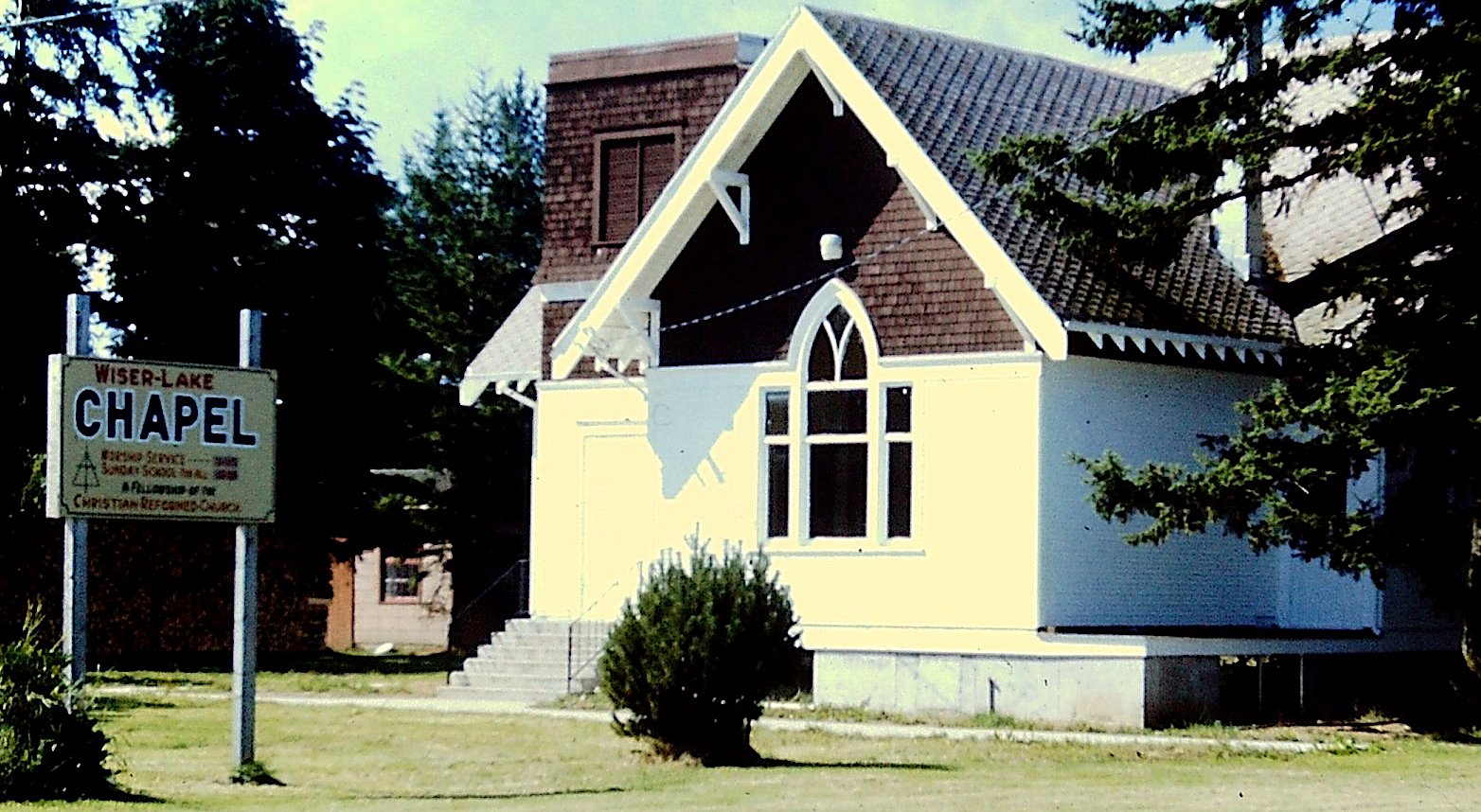
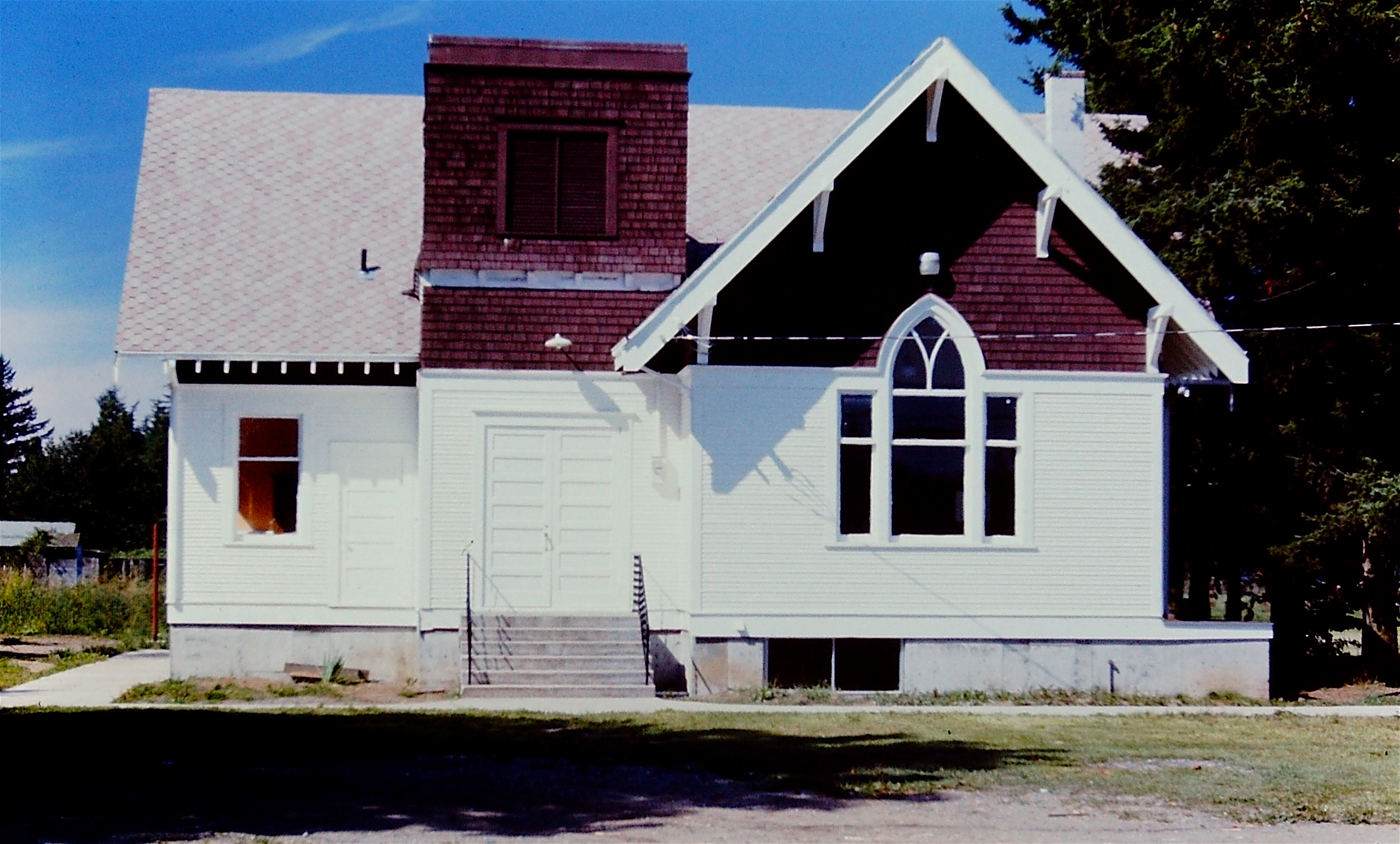
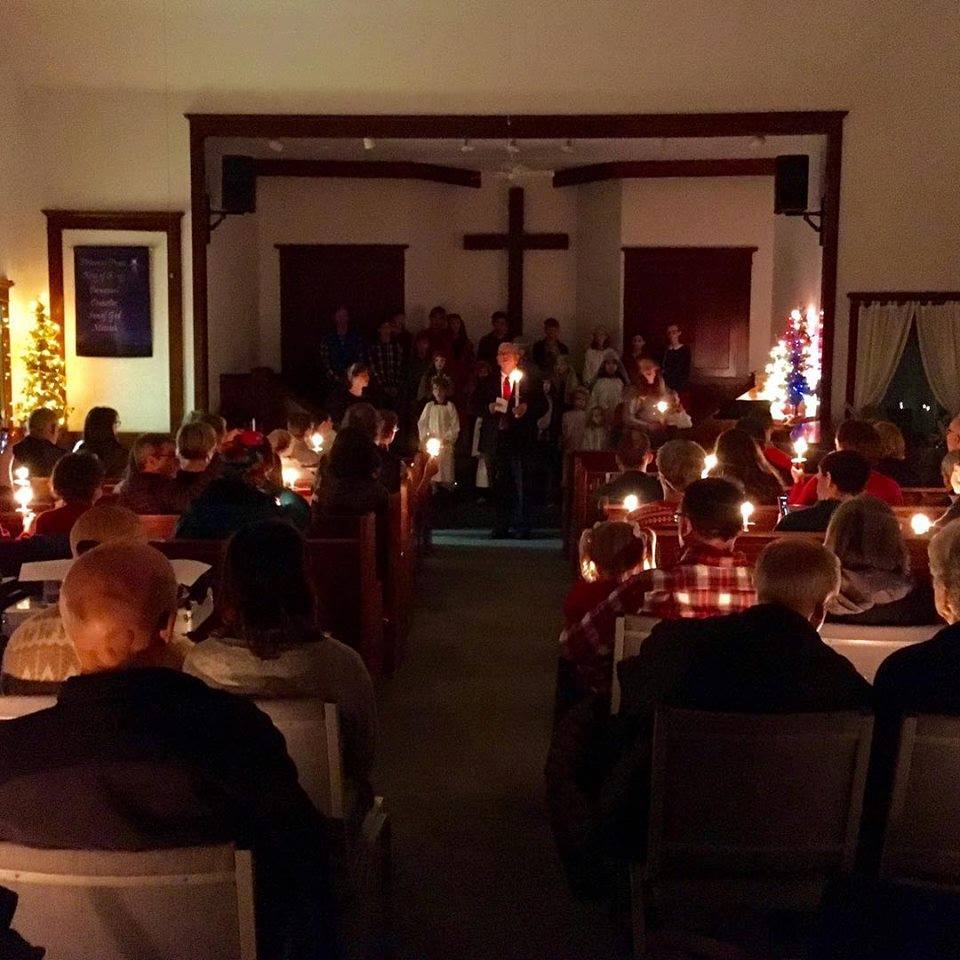
Back in the early days of Whatcom County,  the little church on Wiser Lake had been constructed through “contributions of the people” in a rural neighborhood only a few miles from where we now live.  $600 in lumber was provided by a local farmer whose trees were cut and milled and brought by horse drawn wagon to a building site adjacent to a one room school house along a corrugated plank road. The total property was “valued at $1800, but of even more value to the community.” The dedication ceremony was held on Sunday, August 27, 1916 followed by “a basket dinner—come with well filled baskets for a common table, under the direction of the Ladies Aid”. This was to be followed by a “Fellowship Meeting, special music and fraternal addresses” and the day ended at 8 PM with a Young People’s Meeting.  So began the long history of the “Wiser Lake Church”.

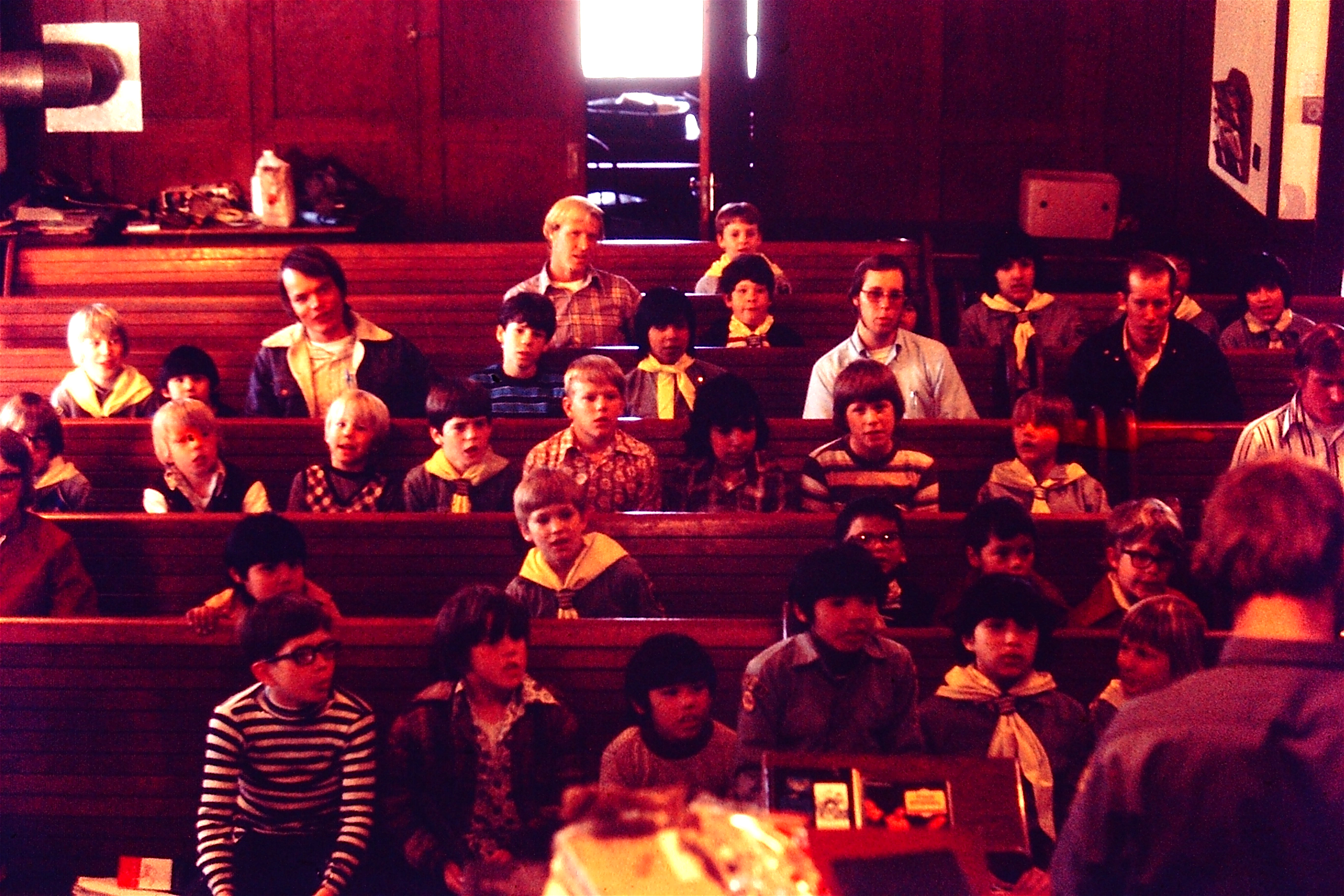
For reasons unrecorded in the history of the church, the original denomination closed its doors thirty years later, and for awhile the building was empty and in need of a congregation. By the fifties, it became a mission church of the local Christian Reformed Churches and launched a Sunday School program for migrant farm and Native American children in the surrounding rural neighborhood.  No formal church services started until the sixties. By the time the building was sixty years old, so many children were arriving for Sunday School, there was not enough room so the building was hoisted up on jacks to allow a hole to be dug underneath for a basement full of classrooms. Over the course of a summer, the floor space doubled, and the church settled back into place, allowed to rest again on its foundation.

Over seventy years after its dedication ceremony, our family drove past the boxy building countless times hurrying on our way to other places, barely giving it a second glance. It had a classic design, but showed its age with peeling paint,  a few missing shingles, an old fashioned square flat roofed belfry, and arched windows. The hand lettered sign spelling out “Wiser Lake Chapel” by the road constituted a humble invitation of sorts, simply by listing the times of the services.

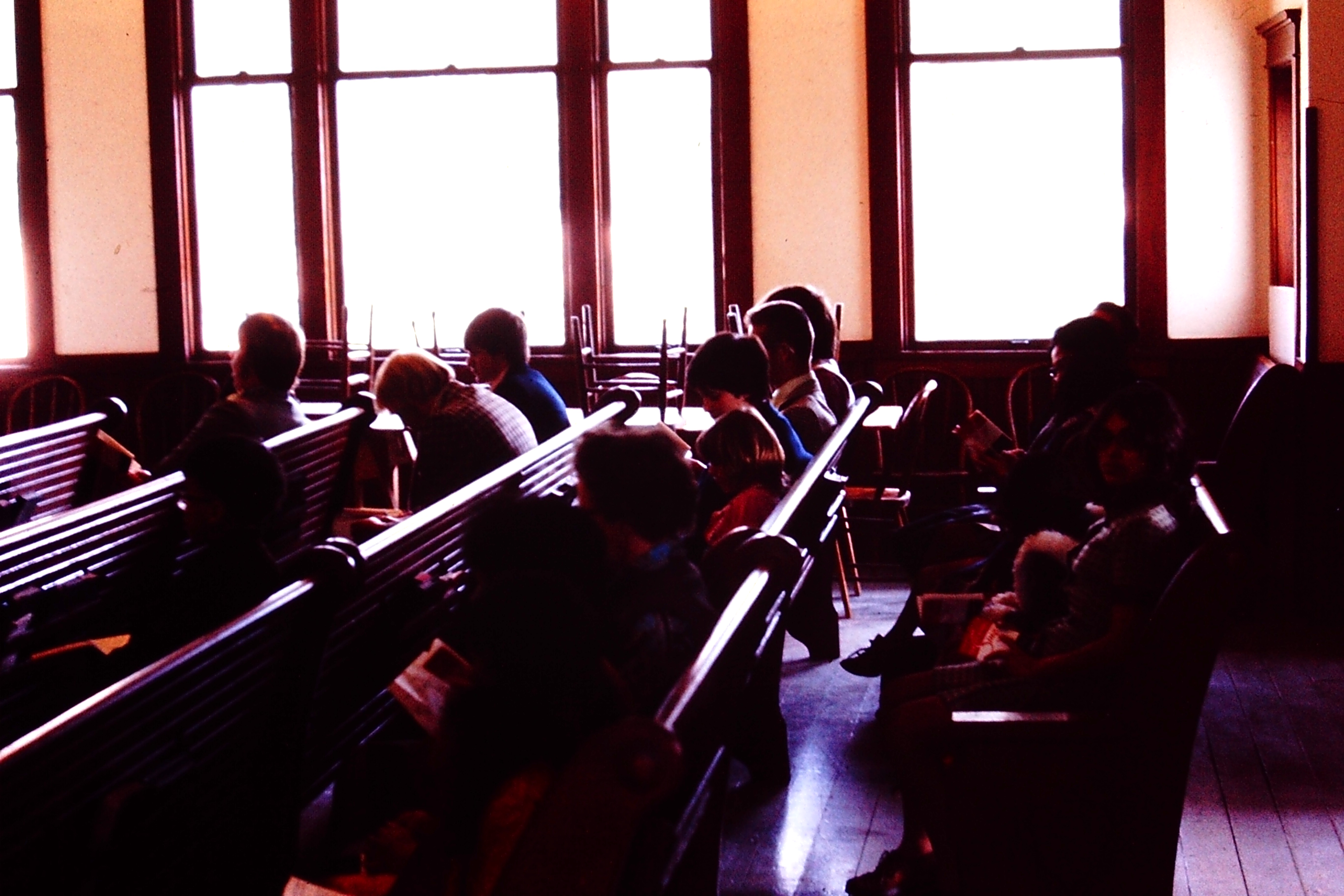
It felt like home. We had found our church. We’ve never left. Over 30 years it has had peeling paint and missing shingles, a basement that floods when the rain comes down hard, toilets that don’t always flush, and though it smells heavenly on potluck days, there are times when it can be just a bit out of sorts and musty. It also has a warmth and character and uniqueness that is unforgettable.

It’s really not so different from the folks who gather there.  We know we belong there, even if we too are musty, a bit out of sorts, yet still warm and loving and welcoming — no matter what, every Sabbath we are called to come together to be very clear about Who we worship.

This year’s Lenten theme on Barnstorming:

God sees us as we are,
loves us as we are,
and accepts us as we are.
But by His grace,
He does not leave us where we are.
~Tim Keller

So Then, Live

It is not only prayer that gives God glory but work.
Smiting on an anvil,
sawing a beam,
whitewashing a wall,
driving horses,
sweeping,
scouring,
everything gives God some glory
if being in his grace you do it as your duty.
To go to communion worthily gives God great glory,
but to take food in thankfulness and temperance
gives him glory too.
To lift up the hands in prayer gives God glory,
but a man with a dungfork in his hand,
a woman with a slop pail,
gives him glory too.
He is so great that all things give him glory
if you mean they should.
So then, my brethren, live.
~Gerard Manley Hopkins – Poems and Prose of Gerard Manley Hopkins

Photo of Aaron Janicki haying with his Oberlander team in Skagit County courtesy of Tayler Rae
photo by Tayler Rae

Thanks in large part to how messily we humans live, this world is a grimy place.  

As an act of worship, we work at cleaning up after ourselves.  Hands that clean toilets, scrub floors, carry bedpans, pick up garbage might as well be clasped in prayer–it is in such mundane tasks God is glorified.

I spend time every day carrying buckets and wielding a pitchfork because it is my way of restoring order to the disorder inherent in human life.  It is with gratitude that I’m able to pick up one little corner of my world, making stall beds tidier for our farm animals by mucking up their messes and in so doing, I’m cleaning up a piece of me at the same time.

I never want to forget the mess I’m in and the mess I am.  I never want to forget to clean up after myself.  I never want to feel it is a mere and mundane chore to worship with dungfork and slop pail.

It is my privilege.  It is His gift to me.
It is Grace that comes alongside me, to keep pitching the muck and carrying the slop when I am too weary to do it myself.

Stillness of the Heart

It was like a church to me.
I entered it on soft foot,
Breath held like a cap in the hand.
It was quiet.
What God there was made himself felt,
Not listened to, in clean colours
That brought a moistening of the eye,
In a movement of the wind over grass.

There were no prayers said. But stillness
Of the heart’s passions – that was praise
Enough; and the mind’s cession
Of its kingdom. I walked on,
Simple and poor, while the air crumbled
And broke on me generously as bread.
~R.S. Thomas “The Moor” Collected Poems: R. S. Thomas

This is a Sabbath morning
when I’m surrounded by His stilling presence~
when God is felt,
neither seen or heard,
overtaking me
within each breath taken,
following the path of each glistening tear,
feeding me manna from sky and body,
becoming the ground reaching to meet my foot
with each step I take.