Fixing Eyes on the Unseen – Footsore

Mo sheasamh ort lá na choise tinne…
(You are the place where I stand on the day when my feet are sore…)
~Irish saying translated by poet and theologian Pádraig Ó Tuama

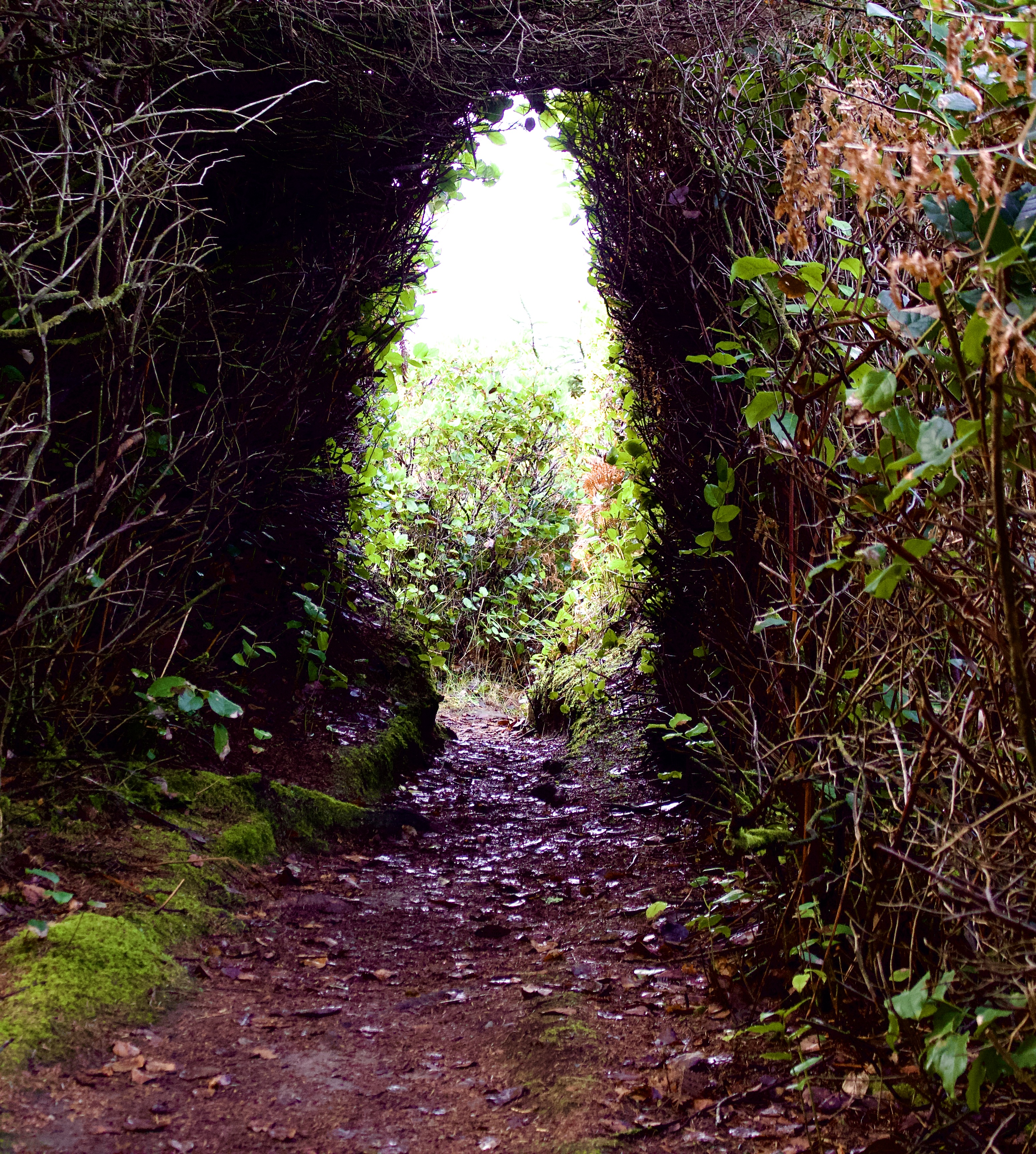
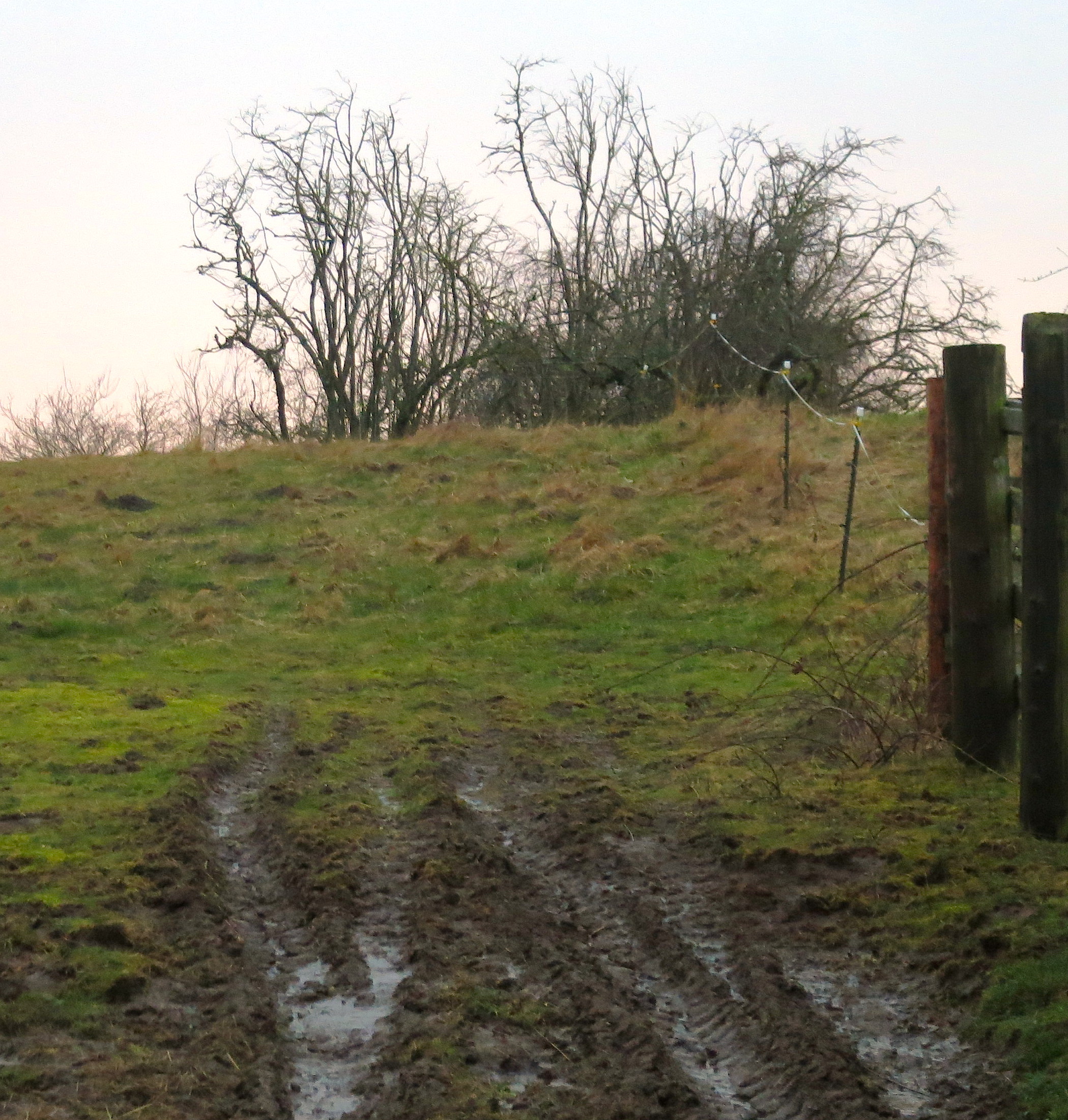
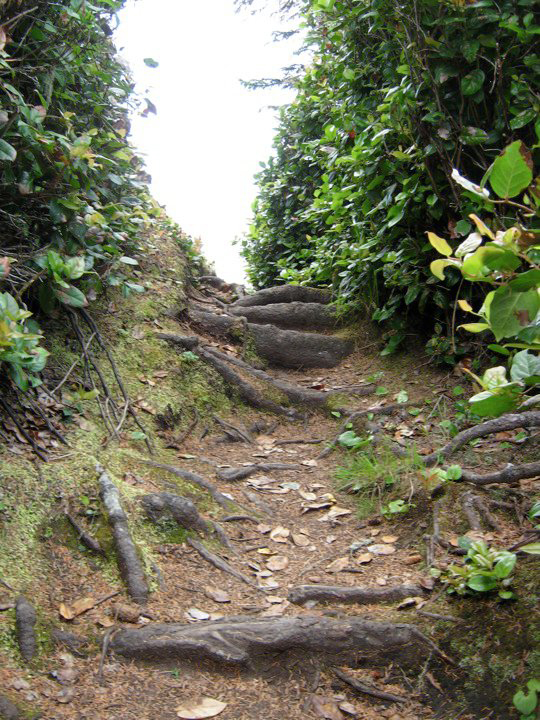
I’ve been foot sore the last few days, most likely from trying in vain to pull my feet out of some boot-sucking mud in the barnyard while pushing a heavy wheelbarrow. With each painful step I now take, I am reminded how dependent I am on strong legs and feet to carry me through the pathways of life.

I have stumbled into holes, picked my way carefully over sharp rocks, scrambled up steep climbs and pulled my way through the muddiest mire.

Yes, of course I’ve had sore feet before:
blisters and callouses, tendonitis and fasciitis, bruised toes and stressed arches. When every step I take points out my failures and frailty, I begin to beg for a soft landing with each stride.

But more than comfort, I seek a stable place of trust to put my feet, to stand firm even when standing feels impossible.

Lord, be my landing place when I hurt and pull me out when I get stuck up to my ankles. May your gentle road rise to meet my sore feet.

This year’s Lenten theme:
So we fix our eyes not on what is seen, but on what is unseen, since what is seen is temporary, but what is unseen is eternal.
2 Corinthians 4: 18

Take this fainted heart
Take these tainted hands
Wash me in Your love
Come like grace again

Even when my strength is lost
I’ll praise You
Even when I have no song
I’ll praise You
Even when it’s hard to find the words
Louder then I’ll sing Your praise
I will only sing Your praise

Take this mountain weight
Take these ocean tears
Hold me through the trial
Come like hope again

Even when the fight seems lost
I’ll praise You
Even when it hurts like hell
I’ll praise You
Even when it makes no sense to sing
Louder then I’ll sing Your praise, oh-ooh
I will only sing Your praise, oh-ooh

I will only sing Your praise, oh, God
I will only sing Your praise

And my heart burns only for You
You are all, You are all I want
And my soul waits only for You
And I will sing ’til the morning has come

Lord my heart burns only for You
You are all, You are all I want
And my soul waits only for You
And I will sing ’til the miracle comes, yeah

I will only sing Your praise
I will only sing Your praise, ooh-oh, oh
I will only sing Your praise

Even when the morning comes
I’ll praise You
Even when the fight is won
I’ll praise You
Even when my time on earth is done
Louder then I’ll sing your praise
I will only sing Your praise
~Joel Houston

Fixing Eyes on the Unseen – Leave the Rest to God

I think there is no suffering greater than
what is caused by the doubts of those who want to believe. 

I know what torment this is, but I can only see it, 
in myself anyway, as the process by which faith is deepened. 
What people don’t realize is how much religion costs. 
They think faith is a big electric blanket, 
when of course it is the cross. 


It is much harder to believe than not to believe. 
If you feel you can’t believe, you must at least do this: 
keep an open mind. 
Keep it open toward faith, 
keep wanting it, 
keep asking for it, 
and leave the rest to God.
~Flannery O’Connor from The Habit of Being: Letters of Flannery O’Connor

And those are called blessed who make the effort to remain open-hearted. 

Nothing that comes from God,
even the greatest miracle, can be proven like 2 x 2 = 4.
It touches one;
it is only seen and grasped when the heart is open and the spirit purged of self.
Then it awakens faith. 

… the heart is not overcome by faith,
there is no force or violence there, compelling belief by rigid certitudes. 
What comes from God
touches gently,
comes quietly;
does not disturb freedom;
leads to quiet, profound, peaceful resolve within the heart.
~Romano Guardini from The Living God

On my doubting days, when my faith is weak,
I remember the risen Christ reaching out
to place Thomas’s hand in His very real wounds,
guiding the doubter to believe
His painful sacrifice is reality.

His open wounds call out to my mind and heart-
Christ’s flesh and blood fortifies my faith
by such a gentle guiding touch.

This year’s Lenten theme:
So we fix our eyes not on what is seen, but on what is unseen, since what is seen is temporary, but what is unseen is eternal.
2 Corinthians 4: 18

What will be left when I’ve drawn my last breath
Besides the folks I’ve met and the folks who know me
Will I discover a soul saving love or
Just the dirt above and below me?

I’m a doubting Thomas
I took a promise
I do not feel safe
O’ me of little faith

Sometimes I pray for a slap in the face
Then I beg to be spared cause I’m a coward
If there’s a master of death I bet he’s holding his breath
Cause I show the blind and tell the deaf
About his power

I’m a doubting Thomas
I can’t keep my promises
Cause I don’t know what’s safe
O’ me of little faith

Can I be used to help others find truth
When I’m scared that I’ll find proof that it’s a lie
Can I be led down a trail dropping bread crumbs
To prove I’m not ready to die

Please give me time to decipher the signs
Please forgive me for time that I’ve wasted

I’m a doubting Thomas
I’ll take your promise
Though I know nothing’s safe
O’ me of little faith
~Chris Thile

The Salt Water Cure

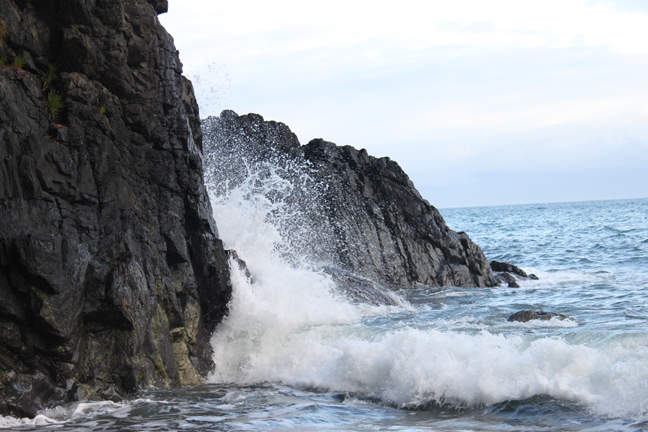
The cure for anything is salt water–sweat, tears or the sea.
~Isak Dinesen

I go down to the shore in the morning
and depending on the hour the waves
are rolling in or moving out,
and I say, oh, I am miserable,
what shall —
what should I do? And the sea says
in its lovely voice:
Excuse me, I have work to do.
~Mary Oliver “I Go Down to the Shore”

photo by Nate Gibson

…when he looked at the ocean,
he caught a glimpse of the One he was praying to.

Maybe what made him weep was
how vast and overwhelming it was

and yet at the same time as near
as the breath of it in his nostrils,
as salty as his own tears.

~Frederick Buechner writing about Paul Tillich in Beyond Words

I grew up an easy crier.  Actually growing up hasn’t cured it, nor has getting older.  I’m still an easy crier – a hard thing to admit especially when my tears flow at an inopportune time in a public place. These days, it is most often in church, while singing favorite hymns, but I can cry just about anywhere.

These days, simply reading the headlines warrants weeping.

It might have had something to do with being a middle child, bombarded from both directions by siblings who recognized how little aggravation it took to make me cry, or it may have been my hypersensitive feelings about …. everything.  I felt really alone in my tearful travails until my formidable grandmother, another easy weepy, explained that my strong/tall/tough/nothing-rocks-him former WWII Marine father had been a very weepy little boy.  She despaired that he would ever get past being awash in tears at every turn.  His alcoholic father tormented him about it, wondering if he would ever learn to “man up.”

So this is a congenital condition – my only excuse and I’m sticking to that story.

A few years ago I read about how different kinds of tears (tears of joy, tears of pain, tears of grief, tears of frustration, tears of irritated eyes, tears of onion cutting) all look different and remarkably apt, when dried and pictured under the microscope.  This is more than mere salt water leaking from our eyes — this is our heart and soul and hormonal barometer streaming down our faces – a visible litmus test of our deepest feelings.

I witnessed many tears every day in my clinical practice, usually not tears of joy.  These were tears borne of pain and loss and rejection and failure, of hopelessness and helplessness, loneliness and anguish.  Often my patients would describe having a “break down” by which they meant uncontrollable crying.  It was one of the first-mentioned symptoms they wanted relief from.

Tears do come less frequently as depression lifts and anxiety lessens but I let my patients know (and I remind myself) that tears are a transparent palette for painting the desires and concerns of our heart.  Dry up the tears and one dries up emotions that express who we are and who we strive to be.

When I’m able, I celebrate the salt water squeezing from my eyes, knowing it means I’m so fully human that I leak my humanity everywhere I go.  Even God wept while dwelling among us on earth, and what’s good enough for Him is certainly good enough for me.

One-Time
Monthly
Yearly

Make a one-time or recurring donation to support daily Barnstorming posts

Make a monthly donation

Make a yearly donation

Choose an amount

¤5.00
¤10.00
¤20.00
¤5.00
¤15.00
¤100.00
¤5.00
¤15.00
¤100.00

Or enter a custom amount

¤

Your contribution is deeply appreciated.

Your contribution is appreciated.

Your contribution is appreciated.

DonateDonate monthlyDonate yearly

The Stones Themselves Will Start to Sing: We Are Not Overcome

Put no trust in the earth
in the sod you stand upon
Flowers fade into the dust
The Lord will make a place for us
Because of His great Love
We are not overcome

~Robert Heiskell/Rachel Briggs

In the real world of pain, how could one worship a God who was immune to it?
~John Stott from “Cross”

With all that happens daily in this disordered world, in order to even walk out the door in the morning, we fall back on what we are told, each and every day, in 365 different verses in God’s Word itself:

Fear not.

Do not be overwhelmed with evil but overcome evil with good.

And so – we must overcome — despite evil and our fear of each other.

As demonstrated by the anointing of Jesus’ feet by Mary of Bethany on Wednesday of Holy Week, we must do what we can to sacrifice for others, to live in such a way that death cannot erase the meaning and significance of a life.  We are called to give up our selfish agendas in order to consider the dignity of others and their greater good.

It is crystal clear from Christ’s example as we observe His journey to the cross this week: we are to cherish life, all lives, born and unborn, even unto death. If Christ Himself forgave those who hated and murdered Him, He will forgive us as well.

Our only defense against the evil we witness is God’s offense through His Love. Only God can lead us to Tolkien’s “where everything sad will come untrue”, where we shall live in peace, walk hand in hand, no longer alone, no longer afraid, no longer shedding tears of grief and sorrow, but tears of relief and joy.

No longer overcome by evil but overcome with goodness, all to God’s glory.

This year’s Lenten theme for Barnstorming is a daily selection from songs and hymns about Christ’s profound sacrifice on our behalf.

If we remain silent about Him, the stones themselves will shout out and start to sing (Luke 19:40).

In His name, may we sing…

The Lord our God is good
Full of kindness and compassion
Merciful and just
The Lord our God is good

Who else knows our deepest pain
Bears it as his own
Finds us in our naked shame,
Clothes and brings us home
Who takes his inheritance
And gives it all away
Welcomes guests to feast with him
Who never can repay

Flesh will fail and bones will break
thieves will steal, the earth will shake
Night will fall, the light will fade
The Lord will give and take away

Because of His great Love
We are not overcome
Because of His great Love
We are not overcome

Put no trust in the earth
in the sod you stand upon
Flowers fade into the dust
The Lord will make a place for us

Because of His great Love
We are not overcome
Because of His great Love
We are not overcome

Offer up your shoes and shirt
Turn your cheek, turn your cheek
Bear the yoke of love and death
The Lord will give all life and breath

Because of His great Love
We are not overcome
Because of His great Love
We are not overcome

We shall overcome

We shall live in peace

We’ll walk hand in hand

We shall all be free

We are not afraid

We are not alone

God will see us through

We shall overcome

Oh, deep in my heart
I do believe
We shall overcome some day

One-Time
Monthly
Yearly

Make a one-time or recurring donation to support daily Barnstorming posts

Make a monthly donation

Make a yearly donation

Choose an amount

¤5.00
¤10.00
¤20.00
¤5.00
¤15.00
¤100.00
¤5.00
¤15.00
¤100.00

Or enter a custom amount

¤

Your contribution is deeply appreciated.

Your contribution is appreciated.

Your contribution is appreciated.

DonateDonate monthlyDonate yearly

The Stones Themselves Will Start to Sing: I’ll Not Stumble or Fall

For you have delivered me from death
    and my feet from stumbling,
that I may walk before God
    in the light of life.
Psalm 56:13

God alone can deliver a soul from its death,
lift a life from a wasteland of need.
God alone can replenish with blessings untold
until into His light we are freed we are freed.
~Susan Boersma from
“Father of Light

Wait, for now.
Distrust everything, if you have to.
But trust the hours. Haven’t they
carried you everywhere, up to now?
Personal events will become interesting again.
Hair will become interesting.
Pain will become interesting.
Buds that open out of season will become lovely again.
Second-hand gloves will become lovely again,
their memories are what give them
the need for other hands. And the desolation
of lovers is the same: that enormous emptiness
carved out of such tiny beings as we are
asks to be filled; the need
for the new love is faithfulness to the old.

Wait.
Don’t go too early.
You’re tired. But everyone’s tired.
But no one is tired enough.
Only wait a while and listen.
Music of hair,
Music of pain,
music of looms weaving all our loves again.
Be there to hear it, it will be the only time,
most of all to hear,
the flute of your whole existence,
rehearsed by the sorrows, play itself into total exhaustion.
~Galway Kinnell “Wait”
 from A New Selected Poems 

If everyone abandons you and even drives you away by force,
then when you are left alone
fall on the earth and kiss it,
water it with your tears,
and it will bring forth fruit
even though no one has seen or heard you in your solitude.
Believe to the end, even if all people went astray
and you were left the only one faithful;
bring your offering even then and praise God in your loneliness. 
~Fyodor Dostoyevsky from The Brothers Karamazov

Suicide rates of teenagers in the United States increased well over 30% since 2009. Their voices echo loudly:

“It would be easier if I were dead”
“No one cares if I live or die”
“The world would be better off without me”
“It’s too painful to continue”
“I’m not worthy to be here”
“It is my right and no one can stop me”

Let us protect our holiness as created in the image of God
even though weak and frail and prone to helpless hopelessness. We will be restored. In His Light, He will not let us stumble and fall.

Dear ones,
please wait a little longer, only a little longer:
don’t go too early – your bud will soon bloom in His Light.

This year’s Lenten theme for Barnstorming is a daily selection from songs and hymns about Christ’s profound sacrifice on our behalf.

If we remain silent about Him, the stones themselves will shout out and start to sing (Luke 19:40).

In His name, may we sing…

From the comments on this video:
Written by Susan Boersma and based loosely on Psalm 56, this piece was commissioned by the Sanctuary Choir of Third Presbyterian Church in Richmond, Virginia, in memory of Jonathan Richard White, the son of its music director John Stone White. Jonathan was a teenager who struggled with long-term depression and who, despite his persistent faith in God, in the end took his own life. In the aftermath of this tragedy, Jonathan’s family came to more deeply appreciate the magnitude of his struggle, as witnessed by what he wrote in his journal and Bible, and they noted that he returned frequently to the Psalms to find comfort in his distress. In contrast to the sadness surrounding this young man’s death, Craig Courtney’s writing in this piece is uniformly strong and triumphant. “Father of Light” opens with a vocal solo—indicative perhaps of a personal statement of faith—expressing confidence in God’s leading and protection. This solo is followed by unison singing in the lower voices which echoes the sentiments of the soloist. As the piece progresses, more parts are added and the harmonies become richer, until at last the music moves into a higher key, the piano drops out, and all the voices reiterate the words of the opening solo at a loud dynamic. A final entry of the soloist brings this work to its close and reminds the listener that God is sovereign in all things—even great suffering.

All praise to the name of the Father of Light
One Who listens and hears when I call
Ev’ry step He ordains, I shall walk without fear in His light
I’ll not stumble or fall In His light
I’ll not stumble or fall


What can mortal man do while I’m safe in His hand?
He is God on His word
I rely in the midst of my fear
I will trust in His name for I know He will hear when I cry
He knows all of my feelings,
the depths of despair all the limits my soul can endure.
I will trust in His name,
I have nothing to lose, for in Him all my hopes are secure.


All praise to the name of the Father of Light
One Who listens and hears when I call
Ev’ry step He ordains, I shall walk without fear
In His light I’ll not stumble or fall

God alone can deliver a soul from its death,
lift a life from a wasteland of need.
God alone can replenish with blessings untold
until into His light we are freed we are freed.


All praise to the name of the Father of Light
One Who listens and hears when I call
Ev’ry step He ordains, I shall walk without fear
In His light I’ll not stumble or fall In His light
I’ll not stumble or fall
Ev’ry step He ordains, I shall walk without fear
In His light I’ll not stumble or fall

One-Time
Monthly
Yearly

Make a one-time or recurring donation to support daily Barnstorming posts

Make a monthly donation

Make a yearly donation

Choose an amount

¤5.00
¤10.00
¤20.00
¤5.00
¤15.00
¤100.00
¤5.00
¤15.00
¤100.00

Or enter a custom amount

¤

Your contribution is deeply appreciated.

Your contribution is appreciated.

Your contribution is appreciated.

DonateDonate monthlyDonate yearly

The Scar of Proud Flesh

There are names for what binds us:
strong forces, weak forces.
Look around, you can see them:
the skin that forms in a half-empty cup,
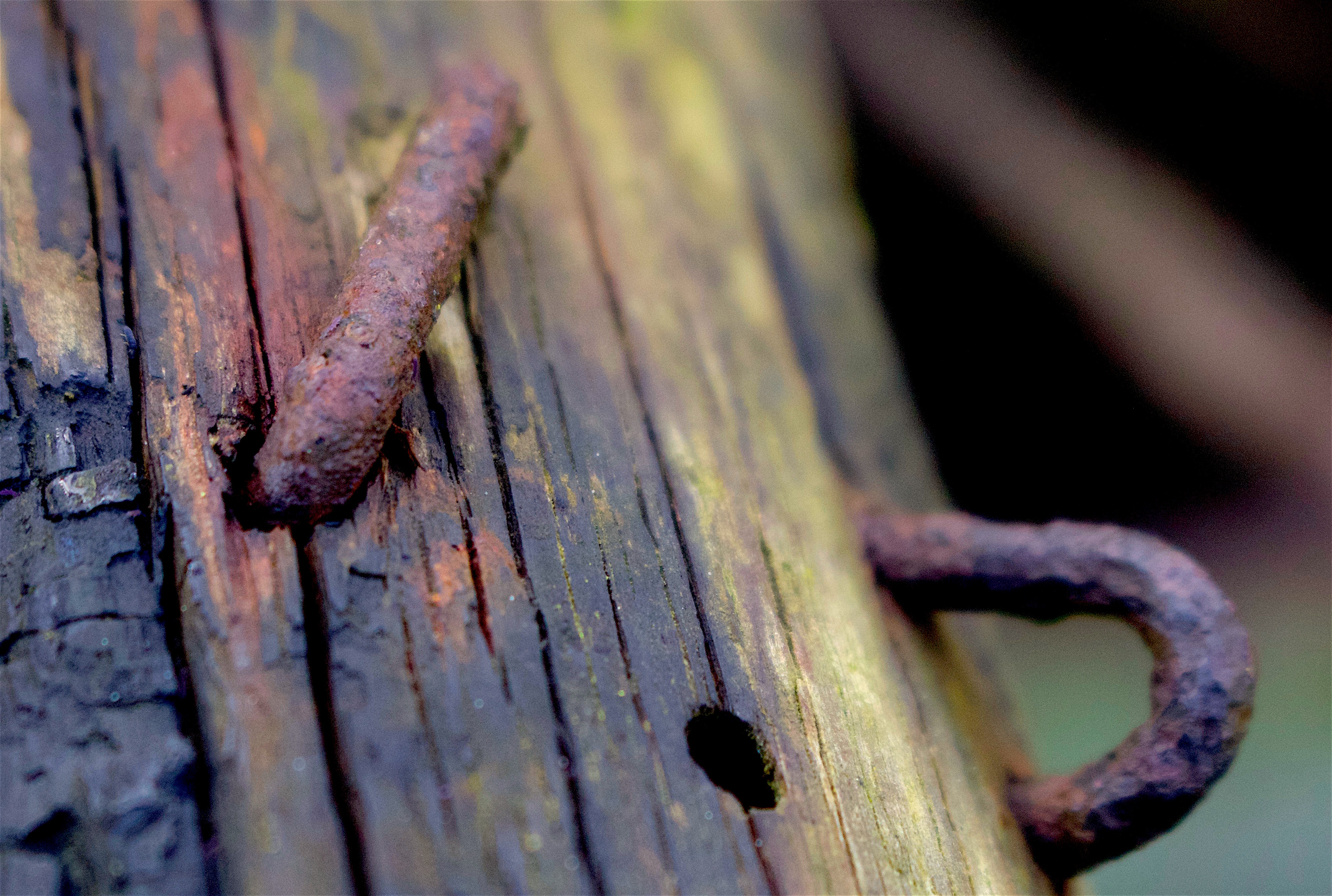
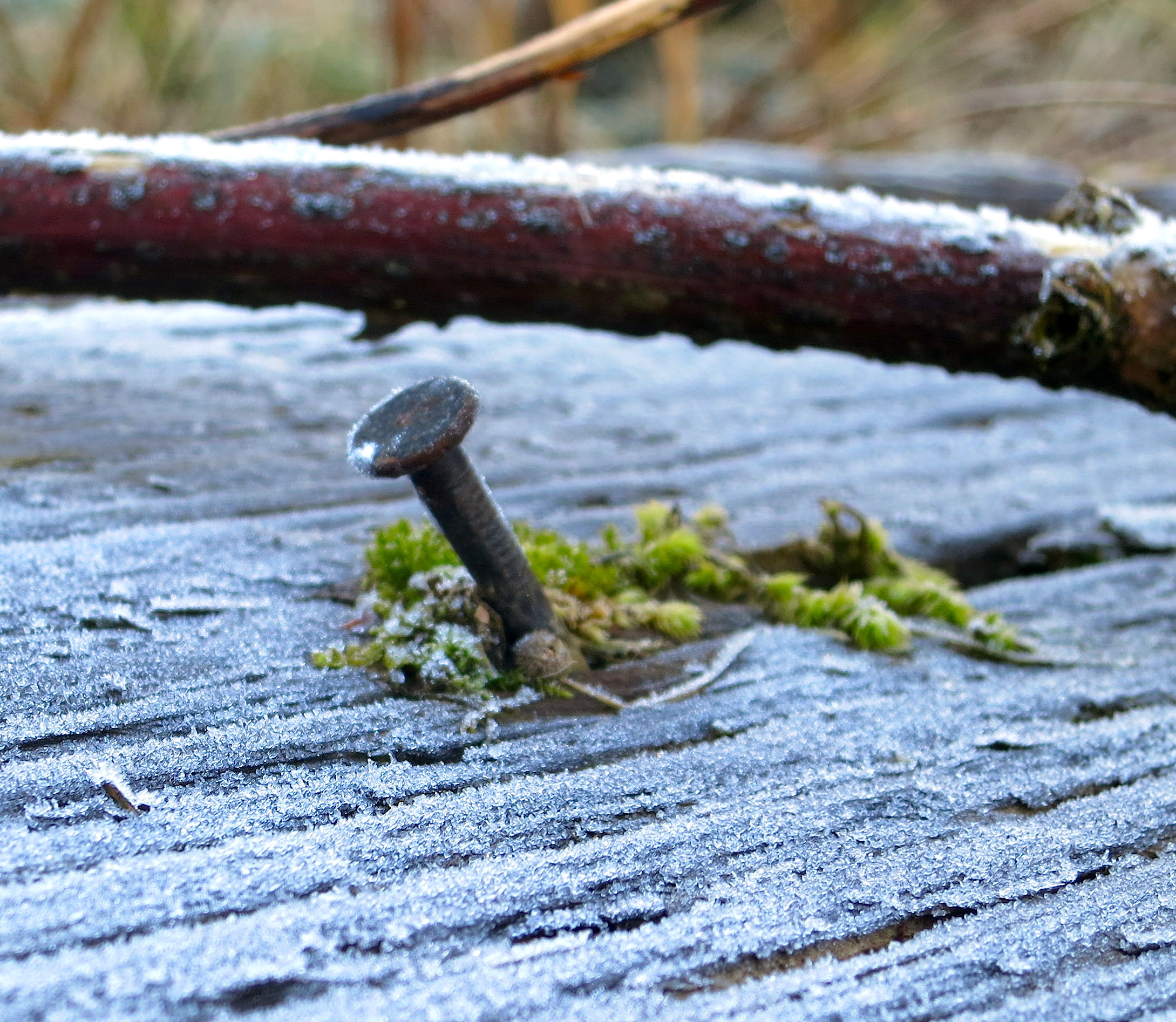
nails rusting into the places they join,
joints dovetailed on their own weight.

The way things stay so solidly whenever they’ve been set down –
and gravity, scientists say, is weak.

And see how the flesh grows back across a wound, with a great vehemence,
more strong than the simple, untested surface before.

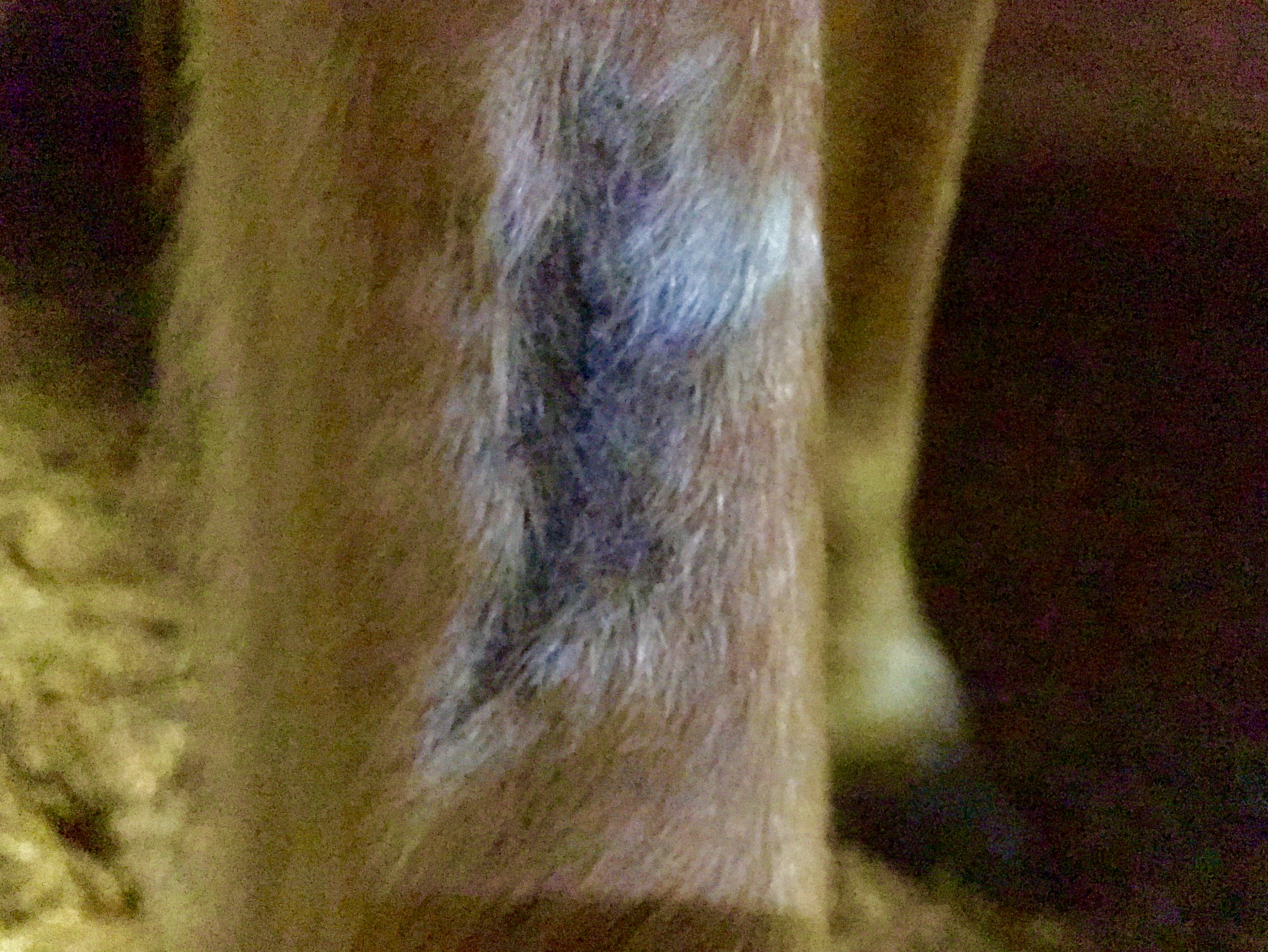
There’s a name for it on horses, when it comes back darker and raised:
proud flesh, as all flesh is proud of its wounds,
wears them as honors given out after battle,
small triumphs pinned to the chest –

And when two people have loved each other,
see how it is like a scar between their bodies,
stronger, darker, and proud;
how the black cord makes of them a single fabric
that nothing can tear or mend.
~Jane Hirshfield  “For What Binds Us”

Scars come in various sizes and shapes, some hidden, some quite obvious to all.  How they are inflicted also varies–some accidental, others therapeutic, and too many intentional. 

The most insidious are the ones so deep inside,  no one can see or know they are there.

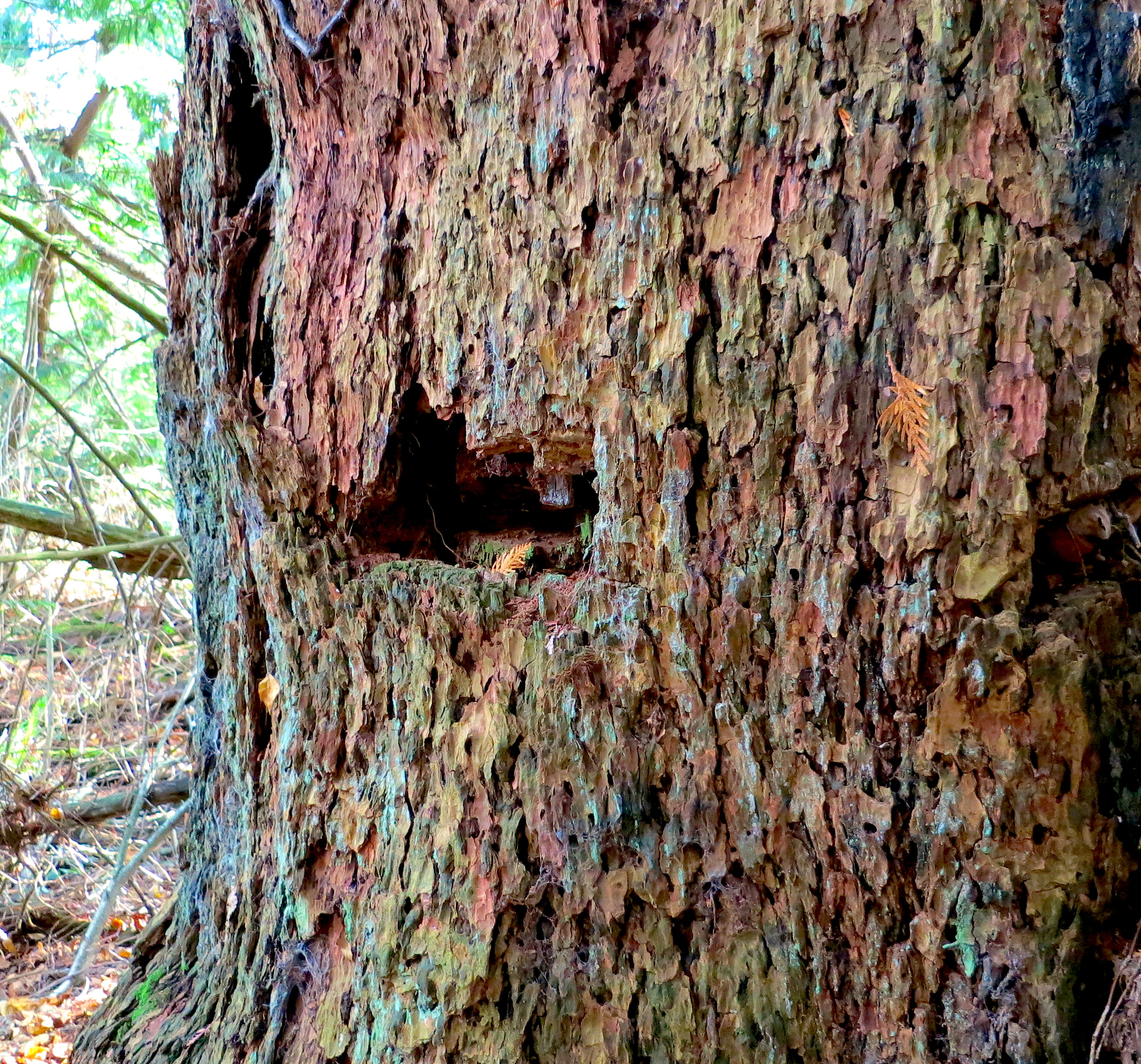
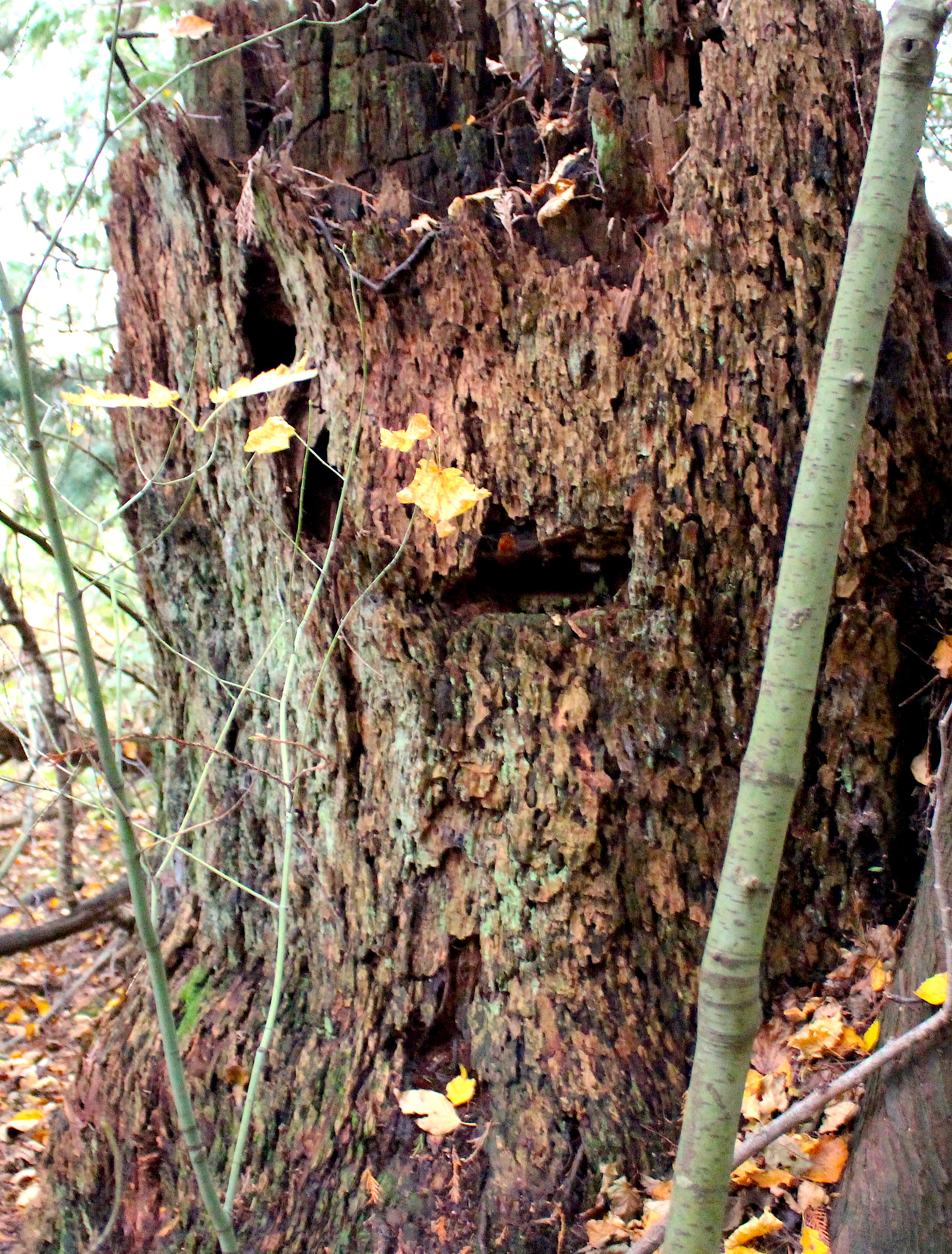
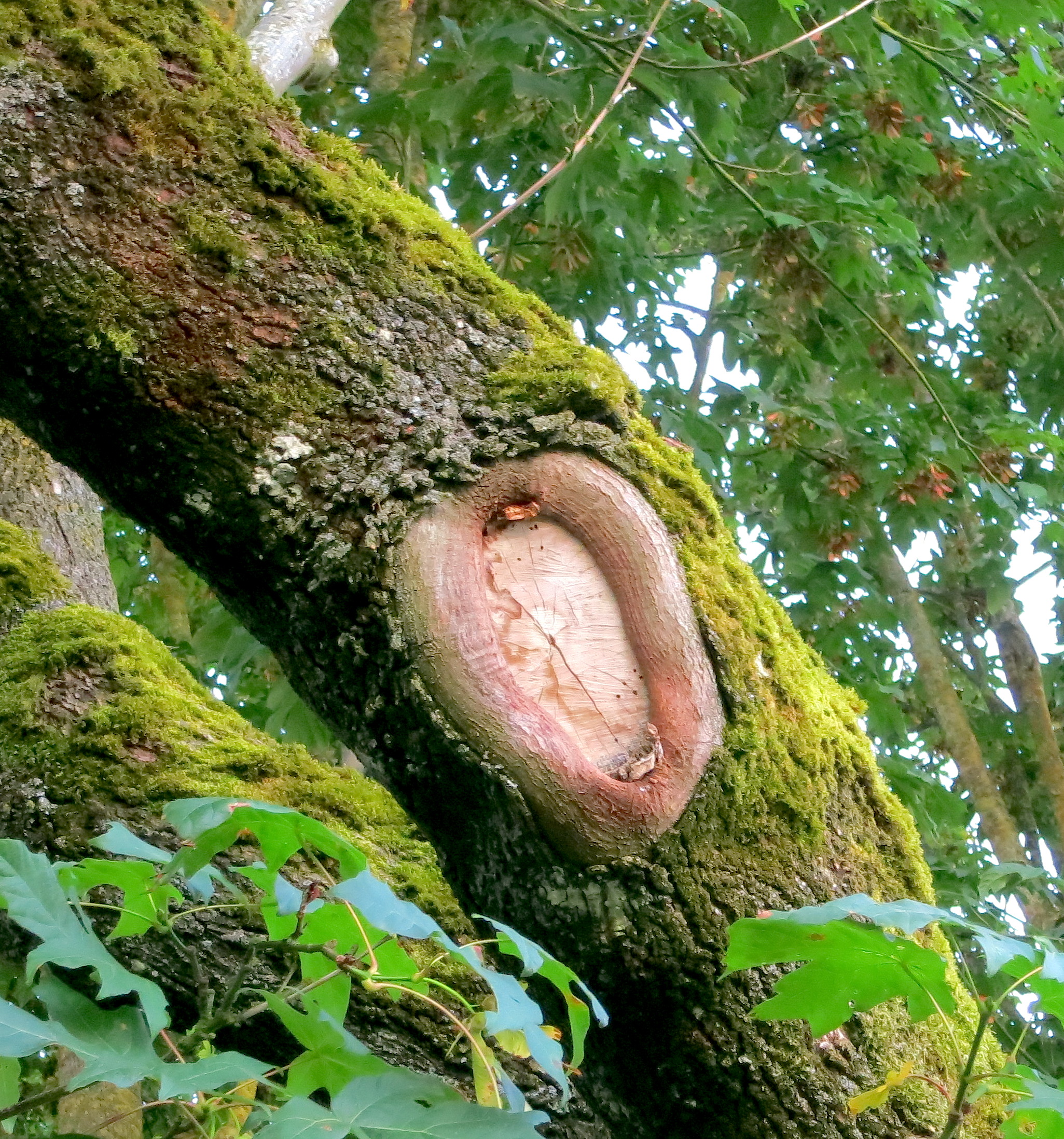
Back in our woodlot stands a sawed off stump of a cedar that was old growth in virgin forest over a hundred years ago.  One day clearcut loggers came through and took every tree they could to haul to the local sawmills to become beams and lumber for the growing homesteading population in the region.  This cedar once was grand and vast, covering an immense part of the forest floor, providing protection to trillium at its feet and finches’ nests and raptors hunting in its branches.   It nurtured its environment until other plans were made, and one day, axes fell on its sides to cut out the notches for the springboards where two loggers stood either side of the proud trunk to man the saw which brought the tree down. 

Where the wood went is anyone’s guess.  It could be one of the mighty beams supporting our old hay barn roof or it could have become the foundation flooring of a nearby one room school house.  It surely had a productive and meaningful life as part of a structure somewhere until rot or carpenter ants or fire brought it once again to its knees.

But this ghost of a stump remains, a tombstone of remembrance of a once grand tree, the notch scars embedded deep in its sides, nursing new seedlings from its center and moss, lichen and ferns from its sides.

I come from logger stock so I don’t begrudge these frontier settlers their hard scrabble living, nor minimize their dangerous work in order to feed themselves and their families.  It’s just I’m struck by those scars over one hundred years later — such a visible reminder of what once was a vital living organism toppled for someone’s need and convenience.

Trees are not unique.  It happens to people too.  Everyday scars are inflicted for reasons hard to justify.  Too often I see them self-inflicted in an effort to feel something other than despair.  Sometimes they are inflicted by others out of fear or need for control.

Sometimes they are simply the scars of living – on our horses they are a dark tough scar of leathery “proud flesh”. These are the wounds that accumulate on our journey through our numbered days.

None of them are as deep and wide as the scars that were accepted on our behalf, nor as wondrous as the Love that oozed from them, nor as amazing as the Grace that abounds to this day because of the promise they represent. 

These are scars from the Word made Flesh, a proud flesh that won’t give way, lasting forever.

As a result, that Tree lives, and so do we.

One-Time
Monthly
Yearly

Make a one-time donation to support Barnstorming

Make a monthly donation

Make a yearly donation

Choose an amount

¤5.00
¤10.00
¤20.00
¤5.00
¤15.00
¤100.00
¤5.00
¤15.00
¤100.00

Or enter a custom amount

¤

Your contribution is deeply appreciated.

Your contribution is appreciated.

Your contribution is appreciated.

DonateDonate monthlyDonate yearly

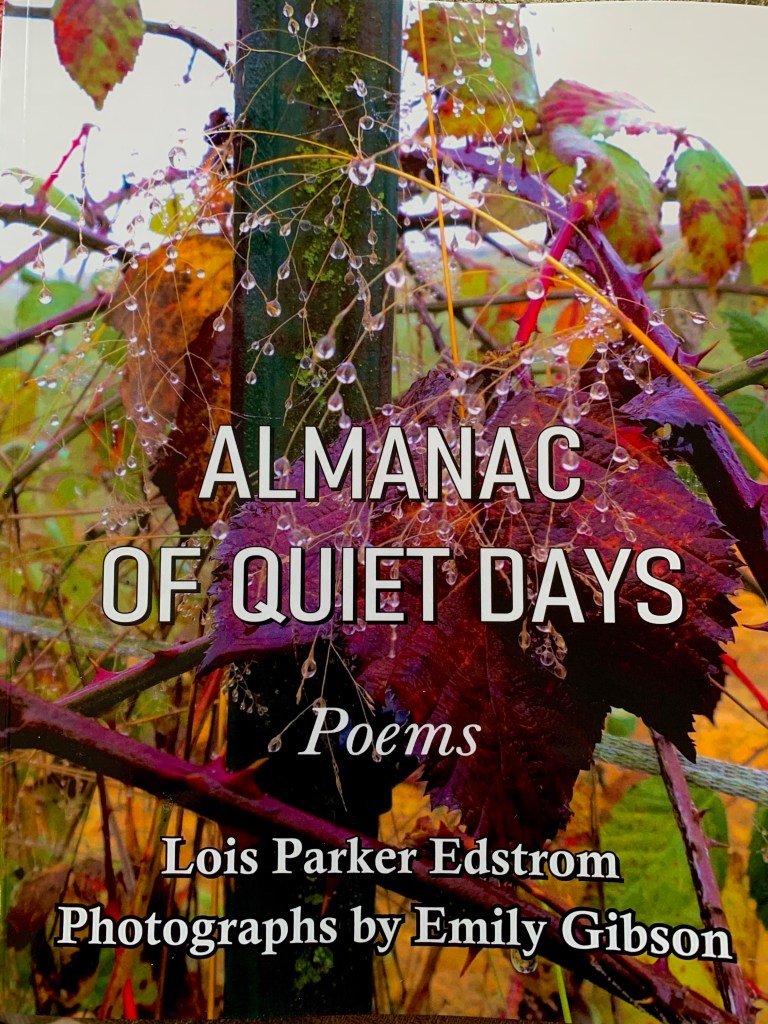
A book of beauty in words and photography, available to order here:

Holding Back My Heart

The others bent their heads and started in.
Confused, I asked my neighbor
to explain—a sturdy, bright-cheeked girl
who brought raw milk to school from her family’s
herd of Holsteins. Ann had a blue bookmark,
and on it Christ revealed his beating heart,
holding the flesh back with His wounded hand.
Ann understood division. . . .

Miss Moran sprang from her monumental desk
and led me roughly through the class
without a word. My shame was radical
as she propelled me past the cloakroom
to the furnace closet, where only the boys
were put, only the older ones at that.
The door swung briskly shut.

The warmth, the gloom, the smell
of sweeping compound clinging to the broom
soothed me. I found a bucket, turned it
upside down, and sat, hugging my knees.
I hummed a theme from Haydn that I knew
from my piano lessons. . . .
and hardened my heart against authority.
And then I heard her steps, her fingers
on the latch. She led me, blinking
and changed, back to the class.

~Jane Kenyon “Trouble with Math in a One-room Country School”

I avoided all potential trouble in school by avoiding the trouble-makers.
I never was disciplined or even looked at crossly by a teacher. They loved me and I wanted badly to be loved by them.

I looked away whenever another student got in trouble; I didn’t want to be a lookie-loo enjoying the travails of another child. It was painful for me to see another kid disciplined. I know I would have been crushed to be publicly called out, sent to the hallway, name on the board, or worse yet, banished to the principal.

So my heart broke when I saw another child cry,
or be defiant or be removed from class.
I knew I couldn’t fix it or them.
I knew I couldn’t help the teacher to like them.
I knew some kids have their own secret pain they endure.
I knew it would change me to know what their pain felt like.
So I just imagined being good and compliant and rule-abiding and lovable.

Forever.

Of course, I wasn’t and I’m not, sixty years later.
I too changed, just like everyone else.
It still makes me sad to think how much we change, how many hearts we break,
how our innocence is so fragile and as a result, how badly we need forgiveness
so we can learn to love ourselves as we are loved.

A book of beauty in words and photography available to order here:

In My Hunger

I made for grief a leaden bowl
and drank it, every drop.
And though I thought I’d downed it all
the hurting didn’t stop.

I made of hope a golden sieve
to drain my world of pain.
Though I was sure I’d bled it dry
the void filled up again.

I made of words a silver fork
and stabbed love in the heart,
and when I found the sweetness gone
I chewed it into art.
~Luci Shaw “What I Needed to Do”

How can I stow away our hurt and grief
when it keeps refilling, leaking everywhere?
Where can hope be found when all feels hopeless?
When I have been loved beyond all measure,
with bleeding hands and feet and side;
why not turn to the Word,
its sweetness never exhausted
no matter how often I chew through it
in my hunger.

A book of art in words and photography, available to order here:

Waiting in Wilderness: Removing a Splinter

To pull the metal splinter from my palm
my father recited a story in a low voice.
I watched his lovely face and not the blade.
Before the story ended, he’d removed
the iron sliver I thought I’d die from.

I can’t remember the tale,
but hear his voice still, a well
of dark water, a prayer.
And I recall his hands,
two measures of tenderness
he laid against my face,
the flames of discipline
he raised above my head.

Had you entered that afternoon
you would have thought you saw a man
planting something in a boy’s palm,
a silver tear, a tiny flame.
Had you followed that boy
you would have arrived here,
where I bend over my wife’s right hand.

Look how I shave her thumbnail down
so carefully she feels no pain.
Watch as I lift the splinter out.
I was seven when my father
took my hand like this,
and I did not hold that shard
between my fingers and think,
Metal that will bury me,
christen it Little Assassin,
Ore Going Deep for My Heart.
And I did not lift up my wound and cry,
Death visited here!
I did what a child does
when he’s given something to keep.
I kissed my father.
~Li-Young Lee, “The Gift” from Rose

I did, without ever wanting to, remove my own children’s splinter, lanced a boil, immobilized a broken arm, pulled together sliced skin, cleaned many dirty wounds. It felt like I crossed the line between mommy and doctor.  But someone had to do it, and a four hour wait in the emergency room didn’t seem warranted.

My own children learned to cope with hurt made worse by someone they trusted to be comforter.

I dealt with inflicting pain, temporary though it may be, to flesh that arose from my flesh.  It hurt as much as if it were my own wound needing cleansing, not theirs.

Our wounds are His – He is constantly feeling our pain as He performs healing surgeries in our lives, not because He wants to but because He must, to save us from our own destruction. Too often we yell and kick and protest in our distress, making it all that much more difficult for both of us.

If only we can come to acknowledge His intervention is our salvage:
our tears to flow in relief, not anguish,
we cling to His protection rather than pushing Him away,
we kiss Him in gratitude as we are restored again and yet again.

Waiting in Wilderness: The Deal with Pain

The pain I feel now is the happiness I had before.
That’s the deal.
~C.S. Lewis from A Grief Observed

The beach at Tohoku, Japan where the tsunami hit 10 years ago today.

For thus says the LORD of hosts,
Once more in a little while,
I am going to shake the heavens and the earth,

the sea also and the dry land.
I will shake all the nations;

and they will come with the wealth of all nations,
and I will fill this house with glory,’ says the LORD of hosts.
Haggai 2:6-7

the rubble still piled on the beach at Tohoku, Japan, a year after the 3/11/11 tsunami
She recognizes its crest in the way he looks at her. 
The wave is as vast as the roiling mass in the Japanese
Print they had paused in front of at the museum,
Capped with ringlets of foam, all surging sinew.
That little village along the shore would be
Totally lost. There is no escaping this.
The wave is flooding his heart,
And he is sending the flood
Her way. It rushes
Over her.

Can you look at one face
For the whole of a life?

Does the moon peer down
At the tides and hunger for home?

~Michele Wolf “The Great Tsunami”

In March 2012, we stayed with our friends Brian and Bette Vander Haak at their cabin on a bluff just above the beach at Sendai, Japan, just a few dozen feet above the devastation that wiped out an entire fishing village below during the 3/11/11 earthquake and tsunami. We walked that stretch of beach, learning of the stories of the people who had lived there, some of whom did not survive the waves that swept their houses and cars away before they could escape. We walked past the footprints of foundations of hundreds of demolished homes, humbled by the rubble mountains yet to be hauled away to be burned or buried and scanned acres of wrecked vehicles now piled one on another, waiting to become scrap metal. It was visual evidence of life suddenly and unexpectedly disrupted.

This was a place of recreation and respite for some who visited regularly, commerce and livelihood for others who stayed year round and then, in ongoing recovery efforts, was struggling to be restored to something familiar. Yet it looked like a foreign ghostly landscape. Even many trees perished, lost, broken off, fish nets still stuck high on their scarred trunks. There were small memorials to lost family members within some home foundations, with stuffed animals and flowers wilted from the recent anniversary observance.

It was a powerful place of memories for those who lived there and knew what it once was, how it once looked and felt, and painfully, what it became in a matter of minutes on 3/11. The waves swept in inexplicable suffering, then carried their former lives away. Happiness gave ground to such terrible pain. It could never have hurt as much without the joy that preceded it.

We want to ask God why He doesn’t do something about the suffering that happens anywhere a disaster occurs –but if we do, He will ask us the same question right back: why don’t you do something about the suffering you see around you?

We need to be ready with our answer and our action.

God knows suffering, far more than we do. He took it all on Himself, feeling His pain amplified, as it was borne out of His love and joy in His creation.

Now ten years later, on March 11,  beautiful Tohoku and Sendai, and its dedicated survivors have mostly recovered, but their inner and outer landscape is forever altered. What remains the same is the tempo of the waves, the tides, and the rhythm of the light and the night, happening just as originally created.

In that realization, our pain gives way as God soars above the storm. Pain cannot stand up to His love, His joy, and His sacrifice on our behalf.

photo by Nate Gibson at Sendai, Japan

Hide me now
Under Your wings
Cover me
Within Your mighty hand

When the oceans rise and thunders roar
I will soar with You above the storm
Father, you are King over the flood
I will be still, know You are God

Find rest, my soul
In Christ alone
Know His power
In quietness and trust