The gaps are the thing. The gaps are the spirit’s one home, the altitudes and latitudes so dazzlingly spare and clean that the spirit can discover itself like a once-blind man unbound. The gaps are the clefts in the rock where you cower to see the back parts of God; they are fissures between mountains and cells the wind lances through, the icy narrowing fiords splitting the cliffs of mystery. Go up into the gaps. If you can find them; they shift and vanish too. Stalk the gaps. Squeak into a gap in the soil, turn, and unlock… a universe. ~Annie Dillard from Pilgrim at Tinker Creek
Something will have gone out of us as a people if we ever let the remaining wilderness be destroyed … We simply need that wild country available to us, even if we never do more than drive to its edge and look in. ~Wallace Stegner, The Sound of Mountain Water
There is a yawning separation threatening us all right now as we peer over the frightening edge of another tight election.
Once again there is a fissuring gap between us.
People who have eaten at our tables, who were good friends, who we have worshiped alongside – became estranged. This separation was buoyed by blowing of the chill wind of politics where once there had been warmth and nurture and caring.
We disagreed then and continue to disagree. We no longer understand one another’s points of view.
How did we allow these gaps between us to develop? How do we close these fissures so something new and vital can grow? How can we stalk the gaps together?
Not one of us has the corner on the Truth; if we are honest with ourselves and each other, we cower together for safety in the cracks of this world, watching helplessly as the backside of God passes by, His face too holy for us to gaze upon.
He places us there together for our own good. I see you there alongside me.
We are weaker together when one side wins and the other loses. We are dependent together. We need to hold each other up as we look over the edge of the upcoming cliff.
Only His Word – nothing else – can fill the open gaping hollow before us. His Grace is great enough to fill every hole bridge every gap bring hope to the hopeless plant seeds for the future and restore us wholly to each other.
One-Time
Monthly
Yearly
Make a one-time or recurring donation to support daily Barnstorming posts
Just down the road… around the bend, Stands an old empty barn; nearing the end. It has sheltered no animals for many years; No dairy cows, no horses, no sheep, no steers. The neigh of a horse; the low of a cow; Those sounds have been absent for some time now. There was a time when the loft was full of hay, And the resounding echoes of children at play. At one time the paint was a bold shade of red; Gradually faded by weather and the sun overhead. The doors swing in the wind… the hinges are loose, Windows and siding have taken a lot of abuse. The fork, rope and pulleys lifted hay to the mow, A task that always brought sweat to the brow. But those good days are gone; forever it seems, And that old barn now stands with sagging beams. It is now home to pigeons, rats and mice; The interior is tattered and doesn’t look very nice. Old, abandoned barns have become a trend, Just down the road… around the bend. ~Vance Oliphant “Old Barn”
We will call this place our home The dirt in which our roots may grow Though the storms will push and pull We will call this place our home
We’ll tell our stories on these walls Every year, measure how tall And just like a work of art We’ll tell our stories on these walls
Let the years we’re here be kind, be kind Let our hearts, like doors, open wide, open wide Settle our bones like wood over time, over time Give us bread, give us salt, give us wine
A little broken, a little new We are the impact and the glue Capable more than we know To call this fixer upper home
With each year, our color fades Slowly, our paint chips away But we will find the strength And the nerve it takes To repaint and repaint and repaint every day
Let the years we’re here be kind, be kind Let our hearts, like doors, open wide, open wide Settle our bones like wood over time, over time
Give us bread, give us salt, give us wine Let the years we’re here be kind, be kind Let our hearts, like doors, open wide, open wide Settle our bones like wood over time, over time
Give us bread, give us salt, give us wine Give us bread, give us salt, give us wine
Smaller than dust on this map Lies the greatest thing we have The dirt in which our roots may grow And the right to call it home ~Ryan O’Neal “North” (listen to the choral versions below)
Each of us needs a home. Every creature needs a place to put down roots and rest their head.
Yet, due to ravages of time, a poverty of spirit and strength, discouragement and discord, natural disasters and drought, or the devastation of politics and war — too many find themselves chipped away until nothing is left.
It is time for restoration. It is time for renewal.
It is time for kindness: the broken repaired, the lonely made welcome, the hungry fed.
Somehow, someway, we rebuild, repaint and restore so all put down roots and thrive and are welcomed home.
AI image created for this post
One-Time
Monthly
Yearly
Make a one-time or recurring donation to support daily Barnstorming posts
When we look long at one another, we soften, we relent, listen,
might forgive. We allow for silence —and when we see each other,
are known, and in that moment might change
though nothing has moved or been spoken.
There are some who say the walls cannot be broken,
but suddenly we are in a free place, and the fields
that extend from its center stretch for miles
as if out of the pupil and the iris of that momentary kingdom. ~Annie Lighthart “When We Look” from Pax
The weasel was stunned into stillness as he was emerging from beneath an enormous shaggy wild rose bush four feet away. I was stunned into stillness twisted backward on the tree trunk. Our eyes locked, and someone threw away the key.
Our look was as if two lovers, or deadly enemies, met unexpectedly on an overgrown path when each had been thinking of something else: a clearing blow to the gut.
It was also a bright blow to the brain, or a sudden beating of brains, with all the charge and intimate grate of rubbed balloons. It emptied our lungs. It felled the forest, moved the fields, and drained the pond; the world dismantled and tumbled into that black hole of eyes.
If you and I looked at each other that way, our skulls would split and drop to our shoulders. But we don’t. We keep our skulls. So. ~Annie Dillard from “Living Like Weasels”
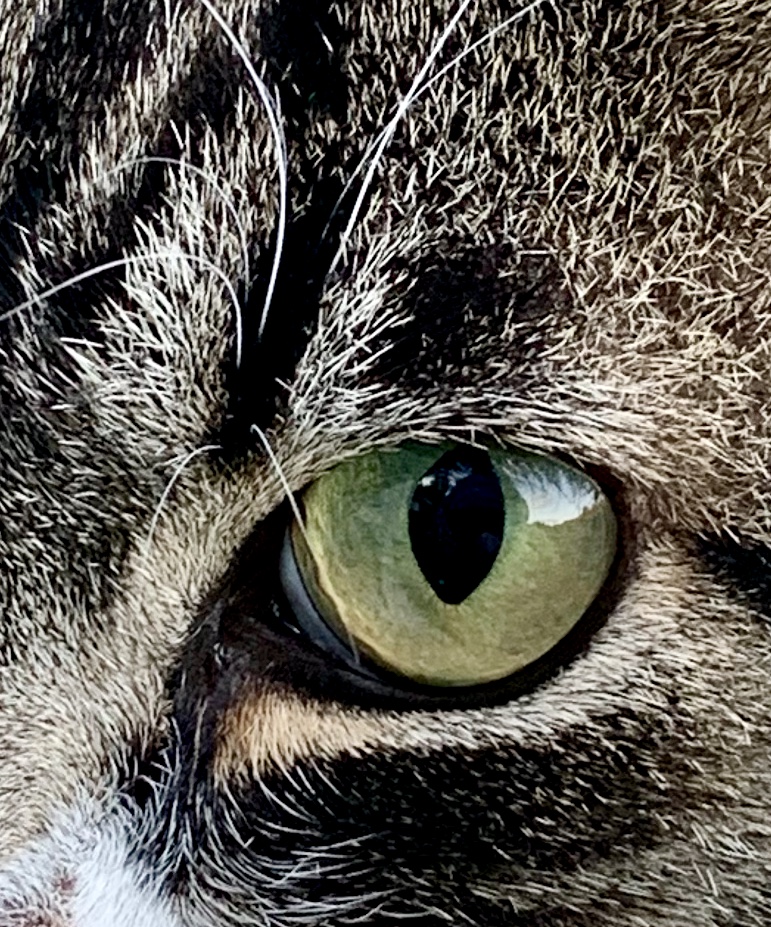
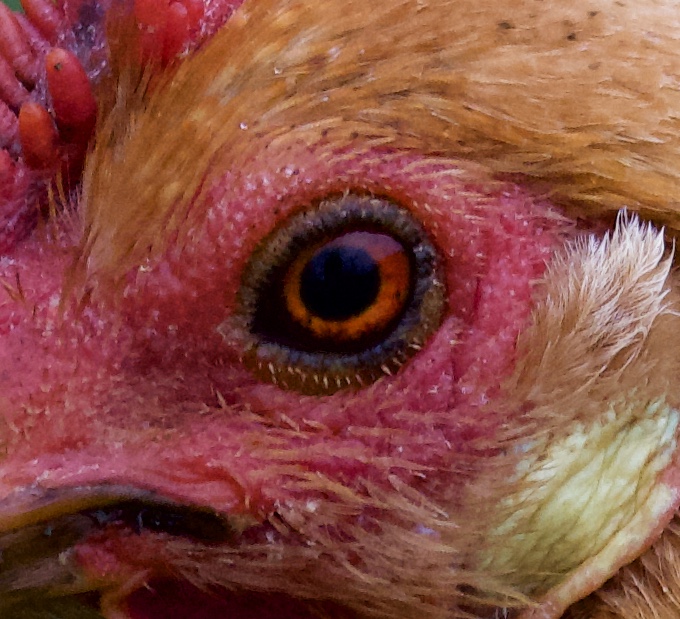
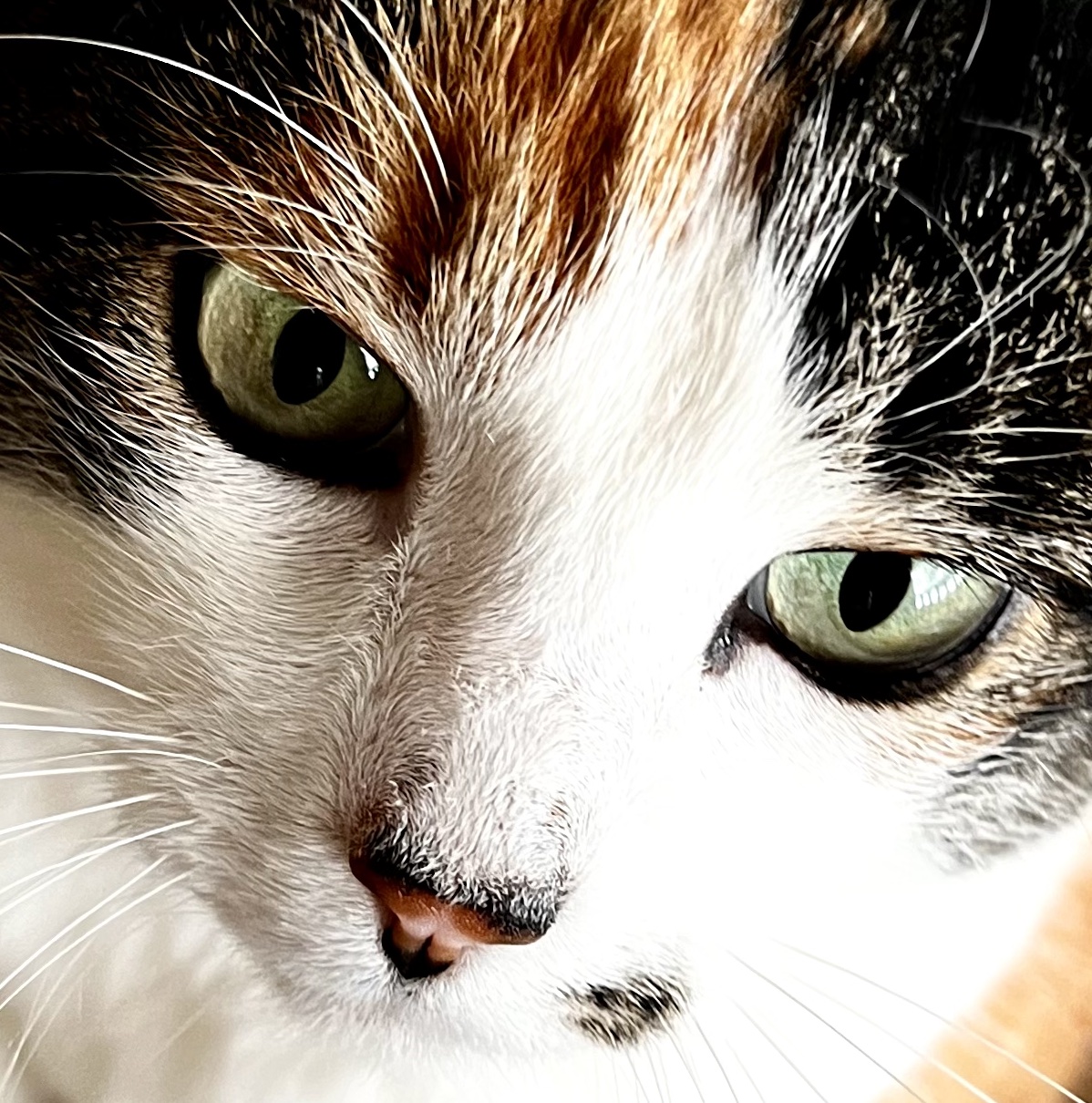
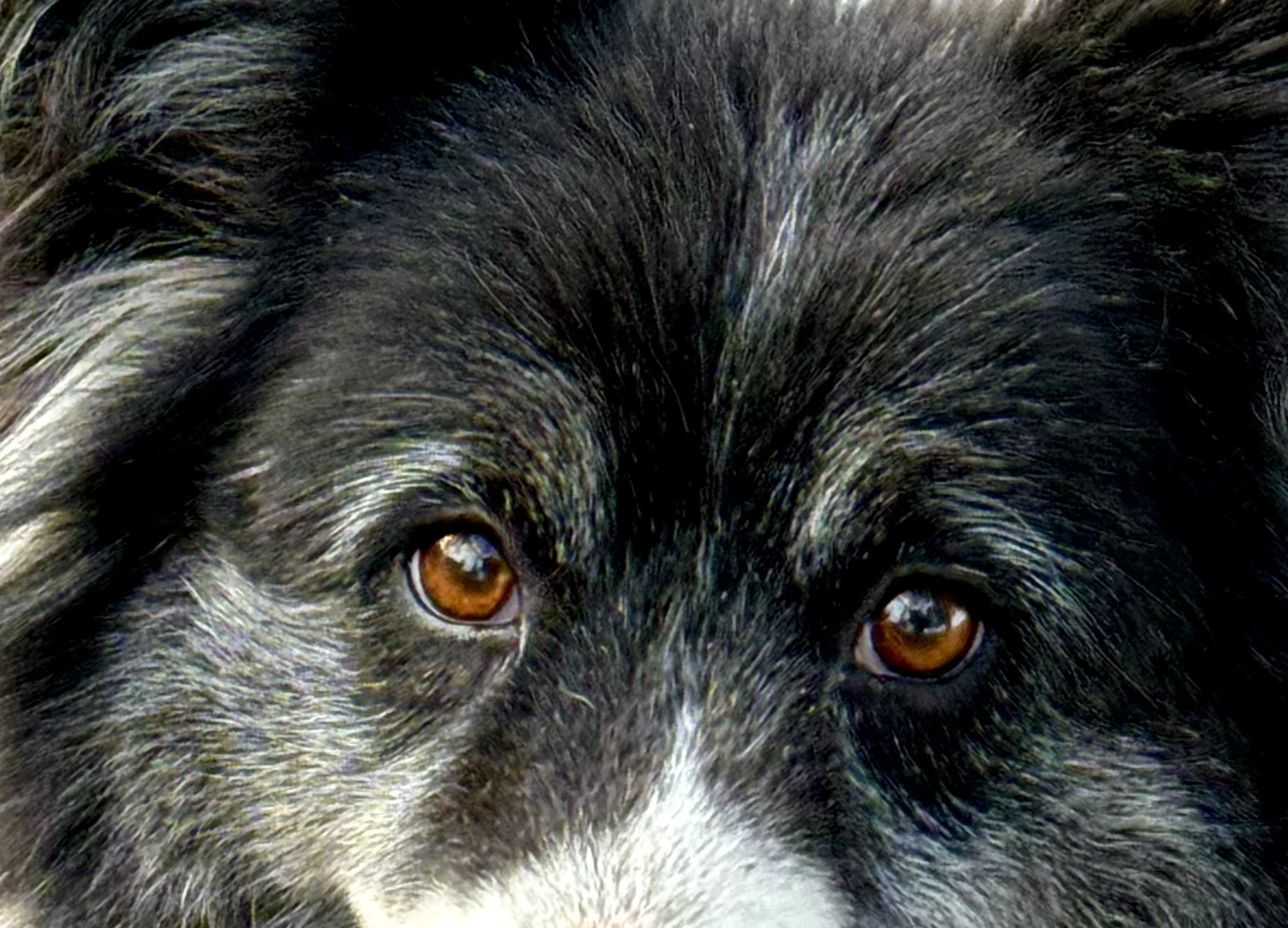
The pupil and iris are a portal to our thoughts, our dreams, our passions and our fears. They are simultaneously window and mirror, revealing feelings we try to keep to ourselves.
Locking eyes can be one of the most thrilling, stomach-butterflies, ecstatic moments of connection. It can be tender, loving, reassuring and encouraging.
Or it can be intimidating and terrifying. I tend to avoid eye contact when passing a stranger on a dark street, or when engaged in a very stressful public interaction. I don’t want to reveal my insecurity, vulnerability, or worry through direct eye contact. While studying primates in Africa, I learned never to look a baboon in the eye as it can communicate aggression and instigate an attack.
So instead, I learned to look at my feet.
I’d much rather lock eyes and learn everything I can about you. I want to dive deep into who you are, breaking down the walls and dismantle the barriers that keep us apart from one another. Then I’m letting you in too. The black holes of our inner universe.
After all, this is preparation when we see the face of God and allow Him to lock into our eyes, knowing our truth.
No keys needed forevermore.
AI image created for this post
One-Time
Monthly
Yearly
Make a one-time or recurring donation to support daily Barnstorming posts
I tell you folks, all politics is applesauce. ~Will Rogers
Applesauce-making is one of my more satisfying domestic activities. Peeling and coring apples can be tedious, as there are always plenty of bad spots to cut out. Though uncommon in our organic orchard, there is the occasional wiggling worm to find and dispose of before cooking.
Our late summer transparent apples make a creamy tart sauce smooth to the tongue. With all the careful preparation before cooking, all blemishes are removed, with any extra unwanted wormy protein deposited in the compost bucket along with mountains of peel, cores and seeds.
If only our two main political parties would pick and prepare their presumptive nominees with as much concern and care…
Would that we could similarly pare out, peel off, dispose in the compost all the political flyers flooding our mailbox, the robo-call telephone messages asking for donations, the radio, TV and internet ads that burden us all until we crack and break under the weight. Most of the election fruit ends up rotting on the tree, turning us all to mush in the process. I’m weary just thinking about the millions of dollars spent in advertising these two (as yet) unofficial presidential candidates that could be used for far greater good and benefit for the citizenry.
Now we have a televised debate where one candidate is clearly incapable of providing coherent answers and the other, a convicted felon who spouts lies that go unchallenged as a result. It is clear now the whole kettle of sauce is spoiled. We could cook it all day long and there still are worms waving in the air, rotten cores festering, scabby peels floating on top, with the bottom scalding with the heat of the cook stove.
Our political parties have profoundly failed the American people by propping up candidates unworthy of the office. I pray for a day when we can set our differences aside and raise up leaders who can do so as well. We must blend together our diverse flavors and characteristics for the good of all. Then, “applesauce” politics won’t simply be a mixture of nonsense and BS, as Will Rogers implies, but something actually nourishing for a flourishing future.
That’ll be the day…
There are men running governments who shouldn’t be allowed to play with matches. ~Will Rogers
One-Time
Monthly
Yearly
Make a one-time or recurring donation to support daily Barnstorming posts
There you are this cold day boiling the water on the stove, pouring the herbs into the pot, hawthorn, rose; buying the tulips & looking at them, holding your heart in your hands at the table saying please, please, to nobody else there in the kitchen with you. How hard, how heavy this all is. How beautiful, these things you do, in case they help, these things you do that, although you haven’t said it yet, say that you want to live. ~Victoria Adukwei Bulley“There You Are”
Our daily rituals are so routine and mundane, unless they are disrupted by unexpected and unwanted events. Then we desire nothing more than to get back to what is routine, familiar and comforting.
Right now, I’m aware of at least four friends in our small church congregation who are undergoing treatment for cancer, and a couple others who are waiting on testing results. They would love nothing more than a boringly routine day like they had known pre-diagnosis. Instead, nothing seems as if it will ever be the same again, except an awareness of how precious and valued each day of life is.
Thankfully, very few people are forced to share their life-threatening illnesses with the world via headlines, videos and photos like the King of England and Princess of Wales. Surely, that adds another layer of hard heaviness on top of dealing with such difficult, exhausting treatments and interventions.
For those coping with challenging medical illness, I pray for comforting rituals and routines that remind you how much you are loved. These beautiful moments of everyday life are reasons you want to live, even as you do these hard things.
May your heart and soul be held in loving hands as you see this through.
AI image created for this post
One-Time
Monthly
Yearly
Make a one-time or recurring donation to support daily Barnstorming posts
I pray because I can’t help myself. I pray because I’m helpless. I pray because the need flows out of me all the time — waking and sleeping. It doesn’t change God — it changes me. ~attributed to C.S. Lewis in “Shadowlands”
A recovering Faye with her sister Merry
Last week, on May 1, I found a surprise hanging on our front door – a little May Day basket full of little perennial blooms, along with a cheery message and a rainbow sticker. It hung from the door handle as a symbol of spring renewal, as well as a bit of a mystery – the flowers came with no hint of who had left them.
So I did a little sleuthing (actually A LOT of sleuthing) and found out they were delivered by our nearby neighbor Faye, who turned 11 just last week. She has a very special history some of you may remember:
Nine years ago, on this Barnstorming blog, I wrote about our little neighbor, two year old Faye, sickened by E.Coli 0157 infection/toxin to the point of becoming critically ill with Hemolytic Uremic Syndrome (plummeting cell counts and renal failure requiring dialysis to keep her alive). My original post about her illness is found here. I asked for your prayers on her (and others’) behalf.
At the worst point of her hospitalization at Seattle Children’s, when the doctors were sounding very worried on her behalf, Faye’s mother Danyale, in the midst of her helplessness, wrote to our Wiser Lake Chapel Pastor Bert Hitchcock with a plea for prayers from our church.
Here is how Pastor Bert responded to Danyale and her husband Jesse who remained at home, caring for their four other children:
“I understand that Faye (and everyone dealing with her) is fighting for her life. And that’s the way I am praying: that God in his merciful power, would deliver her, even if her condition looks hopeless.
If you were able to be in church this morning, you might hear my sense of urgency, for I have chosen this benediction, with which to close the service — and I give it to you right now, from the mouth of our Lord:
Jesus said: “Do not be afraid, Danyale! I am the First and the Last. I am the Living One. I died, but look – I am alive forever and ever! And I hold the keys of death and the grave.
Neither you nor I know how this will turn out — the possibilities are terrifying. But we do know who holds the keys of life and health and death; He is the Life-giver, who heals all our diseases — nothing can rip our lives (or little Faye’s life) out of His hands. And, when He does allow these bodies to give out, He promises to give us glorious new life, safe forever in His presence. These are not pious platitudes; these are the rock-hard promises of the one who loves us more than life, and who is absolutely in control of what is happening today.
Safe in the arms of Jesus, Safe on His gentle breast; There by His love o’ershaded, Sweetly my soul shall rest.
I’m praying for you all; and your Chapel Family will be praying this morning, as we gather in the Lord’s presence.
Love you, and yours, Danyale, Pastor Bert Hitchcock
That week, Faye’s renal failure reversed itself. She was able to return home with normal kidney function and improved cell counts, having also survived a bout with pneumonia.
Here is what her mother wrote to share with you all once she came home:
“Dear Friends and readers of Barnstorming,
Some of you we know, but so many of you we do not. Whichever the case, Emily tells me you have prayed for our little girl, Faye, throughout her sickness and into her recovery. What can parents say when people–many of whom we may never be privileged to meet in this life–have come alongside us to beseech the Lord for our daughter’s life and pray for her healing? Thank you. Thank you!
Faye is doing so well; stronger every day, more and more herself! It is wonderful to see.
This week we head back down to Seattle Children’s for a check up–we’ll get to say hello to the good folks who saw her through her sickness. A special stop will be made on the dialysis unit to see Nurse Kathy, a favorite of Faye’s. We anticipate a good report!
Thanks again for your love and support, far and wide. Truly astounding. Danyale and Jesse, for Faye, too
—————————————
Now Faye is a delightful, healthy eleven year old girl who secretly blessed me with a basket of May Day flowers. She doesn’t remember the crisis that nearly took her from us nine years ago, but she does know about God’s rainbow promises. And she certainly knows about the power of prayer in the face of helplessness.
As Pastor Bert said: our faith in an unchanging and steadfast God who loves and holds us, can change us – forever.
We should always endeavour to wonder at the permanent thing, not at the mere exception. We should be startled by the sun, and not by the eclipse. We should wonder less at the earthquake, and wonder more about the earth. ~ G.K. Chestertonfrom ILLUSTRATED LONDON NEWS, October 21, 1905
As a physician, I was trained to perform physical examinations by learning first what was normal about the human body. As young, theoretically healthy, medical students, we practiced physical examinations on each other, and then had to demonstrate our skills in front of a professor for our class grade in physical assessments.
Since I went to medical school at a time when fewer than 1 in 5 students was a woman, each female student was placed in a physical exam group of three men, taught by a male physician, and then evaluated by a male professor. These were full examinations, including internal assessments, conducted in a typical open-backed hospital gown, in a classroom with long black lab tables to substitute for exam tables.
It was the ultimate feeling of vulnerability to be exposed to one’s classmates, supervisors and evaluators in such a way. Yet, it helped me understand the naked vulnerability of a patient undressing for a physician’s evaluation in the exam room.
After learning to assess and document what was normal in the physical exam, I was then trained to take note of the exceptions – the human body equivalent of an eclipse or an earthquake, a wildfire or drought, a hurricane or flood, or merely an annoying pothole or molehill.
A physician’s attention is rarely focused on everything that is going well with the human body, but instead concentrating on what is aberrant, failing, or could be made better.
This is unfortunate; there is much beauty and amazing design to behold in every person I meet, especially those with chronic illness who feel nothing is as it should be — they feel despair and frustration at how their mind or body is aging, failing or faltering.
To counter this tendency to just find what’s wrong and needed fixing, I learned over the years to talk out loud as I was trained to do during those medical school physical assessments: you have no concerning skin lesions, your eardrums look clear, your eyes react normally, your tonsils are fine, your thyroid feels smooth, your lymph nodes are tiny, your lungs auscultate clear, your heart sounds are perfect, your breasts reveal no palpable lumps, your belly exam is reassuring, your reflexes are symmetrical, your prostate is smooth and normal, your cervix, uterus and ovaries are healthy, your emotional response to your stress level and your tears are completely understandable.
I also wrote messages to patients meant to reassure: your labs are in a typical range or are getting better or at least maintaining, your xray shows no concerns, or isn’t getting worse, those medication side effects are to be expected and could go away.
I chose to acknowledge what was working well before attempting to intervene in what is not.
I’m not sure how much difference it made to my patient. But it made a difference to me to wonder first at who this whole patient was before I focused in on what was broken and causing dis-ease.
I remain startled nearly 50 years later, and always astonished, by the sheer wonder that is our bodies – the Artist’s masterpiece.
One-Time
Monthly
Yearly
Make a one-time or recurring donation to support daily Barnstorming posts
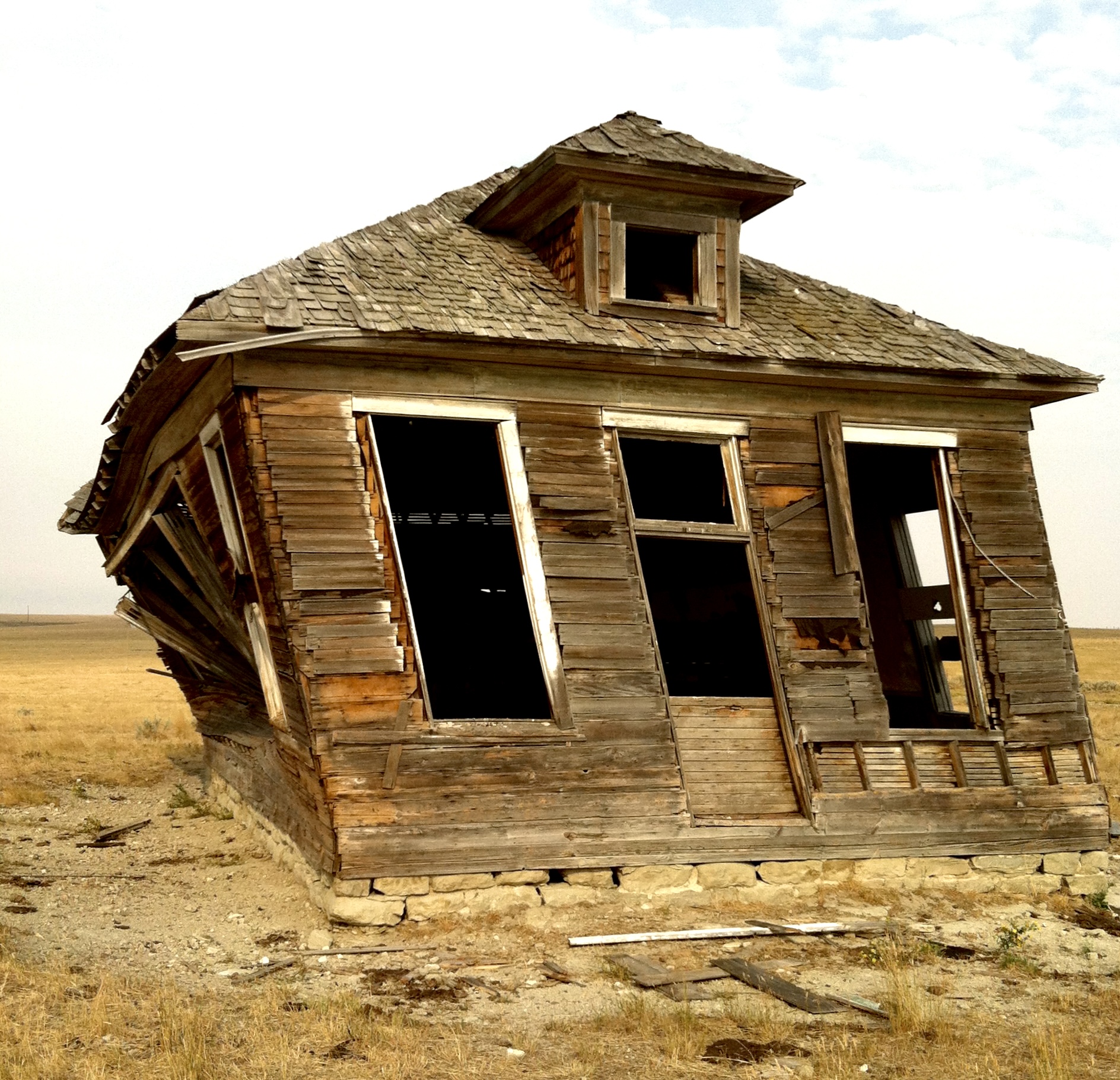
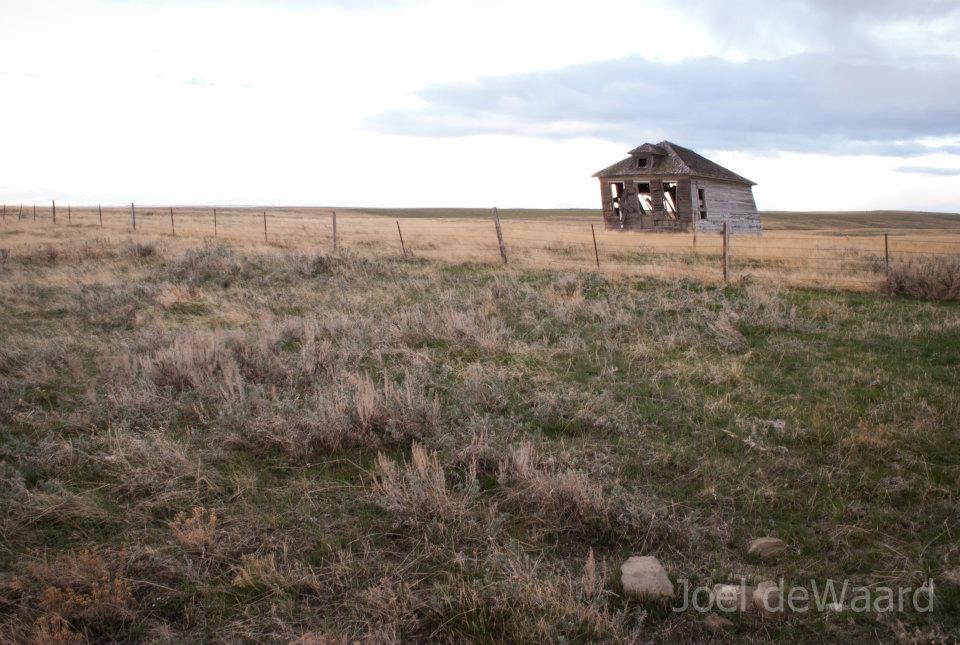
As through a long-abandoned half-standing house only someone lost could find,
which, with its paneless windows and sagging crossbeams, its hundred crevices in which a hundred creatures hoard and nest,
seems both ghost of the life that happened there and living spirit of this wasted place,
wind seeks and sings every wound in the wood that is open enough to receive it,
shatter me God into my thousand sounds.
~Christian Wiman “Small Prayer in a Hard Wind”from Every Riven Thing
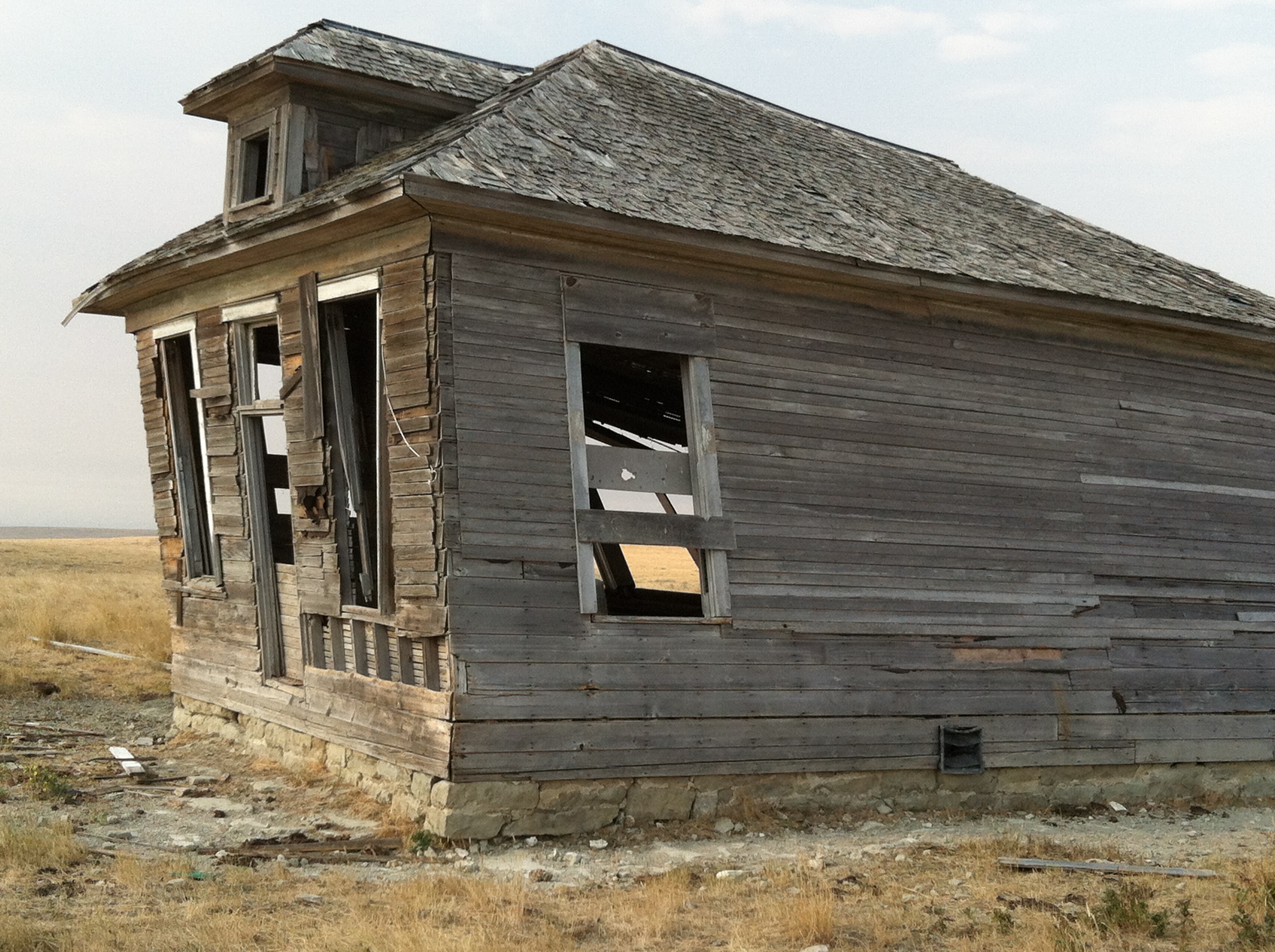
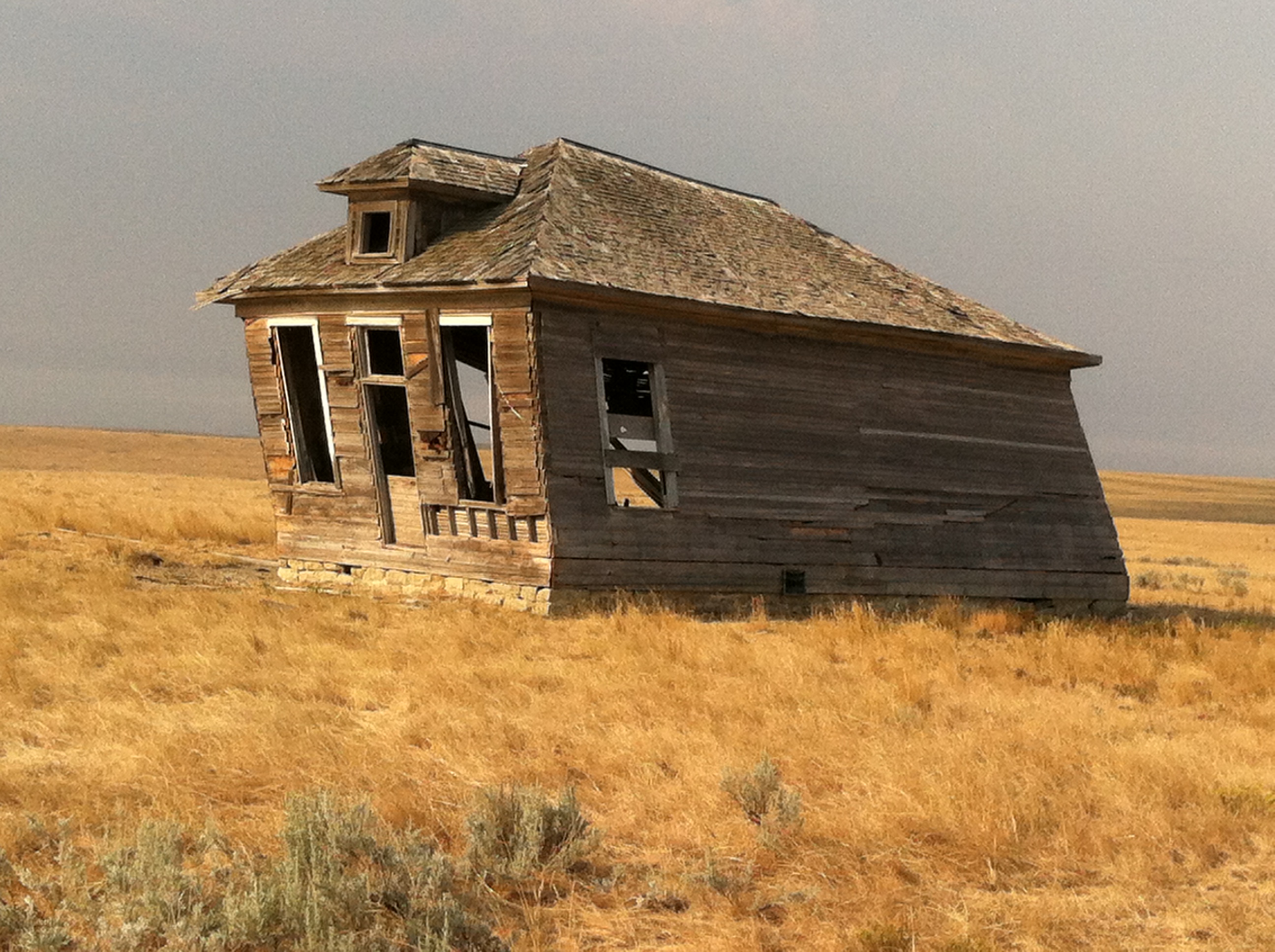
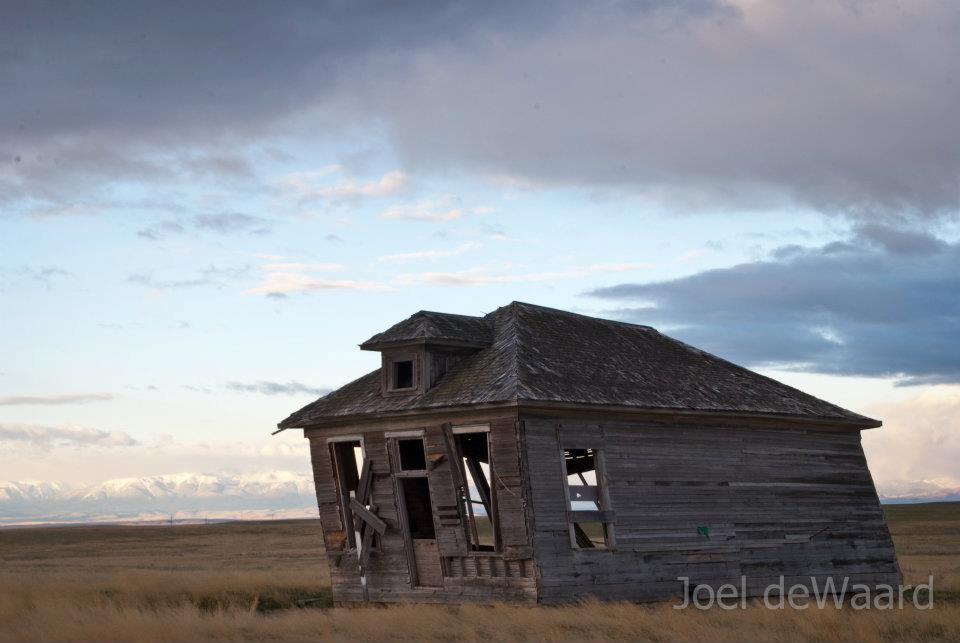
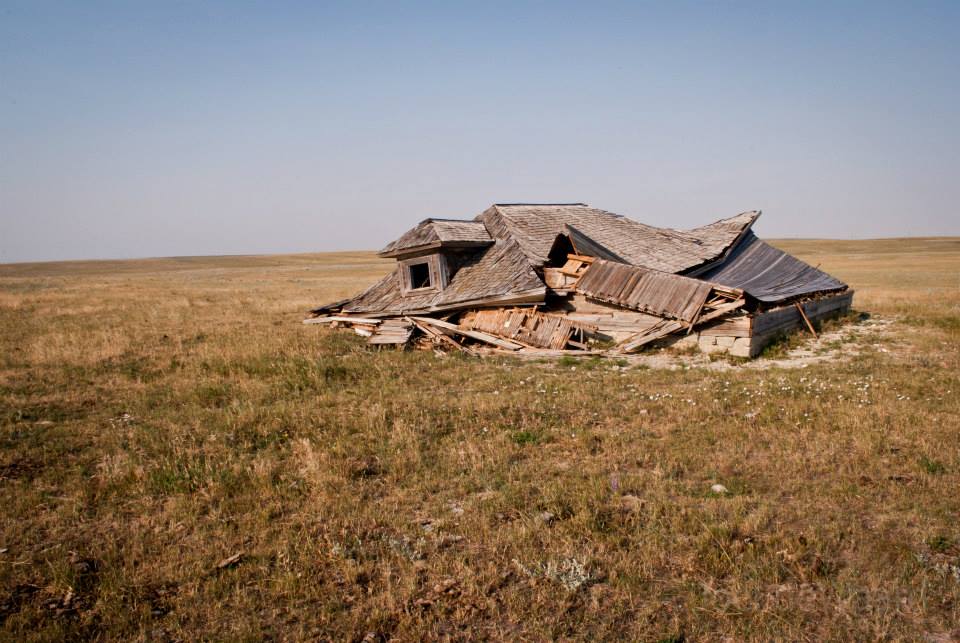
the same abandoned school house near Rapalje, Montana a few years later, this photo by Joel DeWaard
May I, though sagging and gray, perilously leaning, be porous enough to allow life’s gusts to blow through me without pushing me over in a heap.
The wind may fill my every crack, crevice, and defect, causing me to sing out.
Someday, when I do shatter, toppling over into pieces into the ground, it will be amidst a mosaic of praises.
photo by Joel DeWaard
‘I am not a prophet. I am a farmer; the land has been my livelihood since my youth.’ If someone asks, ‘What are these wounds on your body?’ they will answer, ‘The wounds I was given at the house of my friends.’ Zechariah 13: 5-6
But he was pierced for our transgressions, he was crushed for our iniquities; the punishment that brought us peace was on him, and by his wounds we are healed. Isaiah 53:5
photo by Joel DeWaard
This Lenten season I reflect on the words of the 19th century southern spiritual hymn “What Wondrous Love is This”
One-Time
Monthly
Yearly
Make a one-time or recurring donation to support daily Barnstorming posts
Now I become myself. It’s taken Time, many years and places; I have been dissolved and shaken, Worn other people’s faces, Now to stand still, to be here, Feel my own weight and density!
All fuses now, falls into place From wish to action, word to silence, My work, my love, my time, my face Gathered into one intense Gesture of growing like a plant. Now there is time and Time is young. Stand still, stand still, and stop the sun! ~May Sarton from “Now I Become Myself”
My grade school took part in an educational experiment in the early 1960’s. It was one of the first schools to mainstream special needs children into “regular” classrooms. At that time, the usual approach was to put kids with disabilities in separate rooms, if not entirely separate schools.
During those years, the average class size for a grade school teacher was 32-35 kids, with no teacher’s aides, rare parent volunteers, (except for field trips and room mothers who threw the holiday parties) and no medications or special accommodations for ADHD or dyslexia. I’m not sure how teachers coped with nearly three dozen noisy disruptive kids, but somehow they managed to teach in spite of the obstacles. Adding in children with mental and physical challenges without additional adult help must have been very difficult.
So some kids got recruited to help out the kids with disabilities. It helped the teacher by creating a buddy system for the special needs kids who might need help with class work or who might have difficulty getting around.
I was assigned to Michael so our desks were side by side for the year. He was a thin little boy with cerebral palsy and hearing aids, thick glasses hooked with a wide band around the back of his head, and spastic muscles never going where he wanted them to go. He could not remain still, try as he might. He walked independently with some difficulty, mostly on his tiptoes because of his shortened leg tendons, frequently falling when he got going too quickly. His thick orthopedic shoes with leg braces would trip him up. His hands were intermittently in a grip of contracted muscles, and his face was always contorting and grimacing. He drooled a lot, so perpetually carried a Kleenex in his hand to catch the drips of spit that ran out of his mouth and dropped on his desk, threatening to spoil his coloring and writing papers.
His speech consisted of all vowels, as his tongue couldn’t quite connect with his teeth or palate to sound out the consonants, so it took some time and patience to understand what he said. He could write with great effort, gripping the pencil awkwardly in his tight palm and found he could communicate better at times on paper than by talking.
I made sure he had help to finish assignments if his muscles were too tight to write, and I learned his speech so I could interpret for the teacher. He was brave and bright, with a finer mind than most of the kids in our class. He loved a good joke and his little body would shudder as he roared his appreciation. I was always impressed at how he expressed himself and how little bitterness he had about his limitations. He was the most articulate inarticulate person I had ever met.
As Michael appeared around the corner of the grade school building every morning, he would walk quickly in his careful tip-toe cadence, arms flailing, shoes scuffing, raising up dust with each step. He would wave at me and call out my name in his indecipherable voice.
Once, as he approached, a group of kids playing tag swooped past him, purposely a little too close, spinning him off his feet like a top and onto the ground. Glasses askew, he lay momentarily still, and realizing I was needed, I ran to help him up. Despite all he endured, I never saw Michael cry, not even once, not even when he fell down hard. When he got angry or frustrated, he’d get very quiet. His muscles would tense up so much he would go into even greater spasms.
I had no tolerance for anyone who bullied him. I could see the pain in his grimacing face. Although he would give me a huge toothy smile of thanks, his eyes, as usual, said what his mouth could not. Michael knew I needed him as much as he needed me. I relished my new role as the life preserver thrown to him as he struggled to stay afloat in a sea of classroom hostility.
There were many times when I resented being teased by other students about Michael being my boyfriend. Although he would blush bright red when he heard that, Michael really had become a good friend, who just happened to be a boy.
The following academic year, he moved to another school district, so I never saw Michael again. However, I heard him on local radio six years later, reading an essay he’d written for the county Voice of Democracy contest on what it meant to be a free citizen. His essay was one of the top three award winners that year. I was amazed at how understandable his speaking voice had become.
Years later, I went on to medical school, learning from patients who lived with even far greater limitations than Michael. I realized that my initial training in compassionate care had been as I sat by his side helping him navigate 5th grade. He showed me how important it was to take the time to understand his voice and his heart when others would or could not.
I didn’t appreciate it then as I do now, but he taught me far more than I ever taught him: patience, perseverance and respect for the journey through obstacles rather than focusing just on the destination.
He helped me surpass my own less visible limitations. I was his special friend – one who just happened to be a girl.
So let’s not get tired of doing what is good. At just the right time we will reap a harvest of blessing if we don’t give up. Galatians 6:9
This Lenten season I reflect on the words of the 19th century southern spiritual hymn “What Wondrous Love is This”
One-Time
Monthly
Yearly
Make a one-time or recurring donation to support daily Barnstorming blog posts
I was always a compliant kid; I wouldn’t raise a fuss at home or at school when asked to do something I didn’t want to do. But, inside my head, my protests were loud, prolonged and dramatic, my arguments on point and logical. I just learned to keep my opinions to myself in order to keep the peace. I did what I had to do.
These days, I might not be so demure anymore. When the world is asking unreasonable things, I tend to say what I think. That doesn’t always go well so let the chips fall where they may.
There is something to be said for plodding ahead meekly, having said what needed to be said. The world needs plodders in order to keep turning. We can’t all throw tantrums; we need to face the hard things head on.
But at least, you will know how I feel about it…
One-Time
Monthly
Yearly
Make a one-time or recurring donation to support daily Barnstorming posts


















 Barnstorming