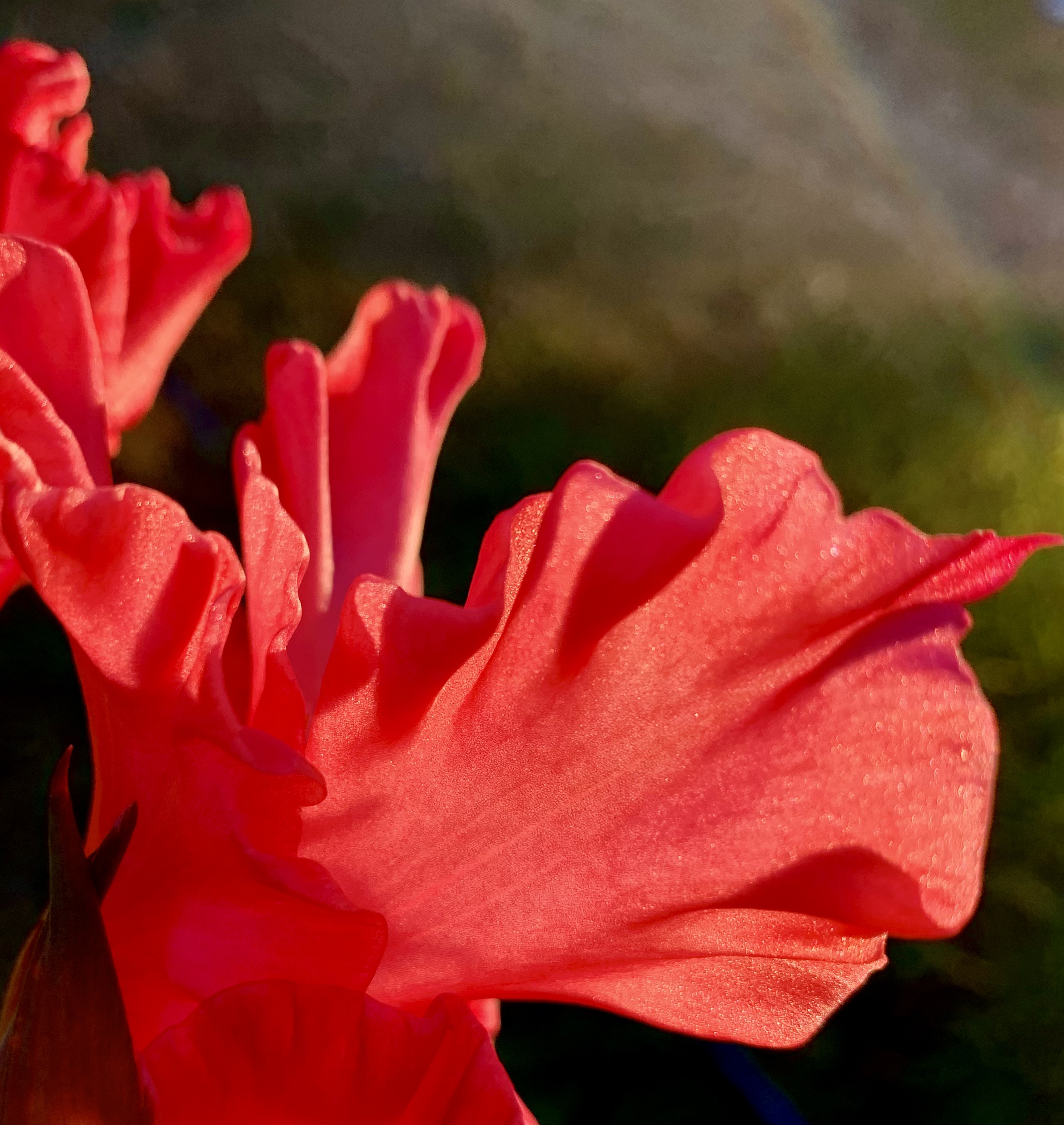
Evening, and all the birds In a chorus of shimmering sound Are easing their hearts of joy For miles around.
The air is blue and sweet, The few first stars are white,– Oh let me like the birds Sing before night. ~Sara Teasdale “Dusk in June”
I am half agony, half hope… ~Jane Austen from Persuasion
Sure on this shining night Of star made shadows round, Kindness must watch for me This side the ground. The late year lies down the north. All is healed, all is health. High summer holds the earth. Hearts all whole. Sure on this shining night I weep for wonder wand’ring far alone Of shadows on the stars. ~James Agee “Sure on this Shining Night”
This time of uncertainty holds the earth captive; our hearts fearful of war in a shimmering summer dusk.
I weep for wonder in hope for a healing peace, at this time, at this place, singing under these stars.
May we rest assured, on another shining night, sometime, we know not when, we know not how, we will lay down arms and live without threat of war.
Amen and Amen.
One-Time
Monthly
Yearly
Make a one-time or recurring donation to support daily Barnstorming posts
Green was the silence, wet was the light the month of June trembled like a butterfly ~Pablo Neruda from “Sonnet XL”
Why do we bother with the rest of the day, the swale of the afternoon, the sudden dip into evening, then night with his notorious perfumes, his many-pointed stars?
This is the best— throwing off the light covers, feet on the cold floor, and buzzing around the house on espresso— maybe a splash of water on the face, a palmful of vitamins—
but mostly buzzing around the house on espresso, dictionary and atlas open on the rug, the typewriter waiting for the key of the head, a cello on the radio, and, if necessary, the windows— trees fifty, a hundred years old out there, heavy clouds on the way and the lawn steaming like a horse in the early morning. ~Billy Collins “Morning”
We are now four days into summer but aside from the date on the calendar, it would be difficult to prove otherwise. After a dry stretch of warm late spring weather, it is now unseasonably cool, the skies stony gray, the rivers running full and fast, the ground peppered with puddles. Rain has fallen at night, hiding behind the cover of darkness as if ashamed of itself.
As it should be.
What all this moisture will yield is acres and acres of towering grass growth, more grass than imaginable, more grass than we can keep mowed, burying the horses up to their backs as they dive head long into the pasture. The Haflingers don’t need to lower their necks to graze, choosing instead to simply strip off the ripe tops of the grasses as they forge paths through five foot forage. It is like children at a birthday party swiping the frosting off cupcake after cupcake, licking their fingers as they go. Instead of icing, the horses’ muzzles are smeared with dandelion fluff, grass seed and buttercup petals.
In the northwest, June can tend to shroud its promise of longer days under clouds. Outdoor weddings brace for rain and wind with a supply of umbrellas, graduation potlucks are served in the garage and Fourth of July picnics stay safely under cover. There is a wary anticipation of solstice as it signals the slow inexorable return of darkness from which we have barely recovered.
So I tremble as I too splash through the squishiness of late June, quivering like a wet butterfly emerging from its cocoon ready to unfurl its wings to dry, but unsure how to fly and uncertain of the new world that awaits. In fact the dark empty cocoon can look mighty inviting on a rainy June night. If I could manage to squeeze myself back in, it might be worth a try.
After all, there is no place like home.
One-Time
Monthly
Yearly
Make a one-time or recurring donation to support daily Barnstorming posts
In science we have been reading only the notes to a poem: in Christianity we find the poem itself. ~C.S. Lewis from Miracles
Science itself fails to love us when we’re alone, to feed us when we’re starving, to lead us to water when we’re thirsty, to grasp the hand of the dying, to give hope to the weak and afraid, to become sacrifice for our sin, to offer us everlasting forgiveness and grace.
Science is only one of God’s footnotes within His poetic Word, a well-timed fermata allowing His creation to pause and listen, reflecting for a moment on the symphony of His redeeming Work.
One-Time
Monthly
Yearly
Make a one-time or recurring donation to support daily Barnstorming posts
Now have come the shining days When field and wood are robed anew, And o’er the world a silver haze Mingles the emerald with the blue.
Summer now doth clothe the land In garments free from spot or stain— The lustrous leaves, the hills untanned, The vivid meads, the glaucous grain.
The day looks new, a coin unworn, Freshly stamped in heavenly mint; The sky keeps on its look of morn; Of age and death there is no hint.
How soft the landscape near and far! A shining veil the trees infold; The day remembers moon and star; A silver lining hath itsgold.
Again I see the clover bloom, And wade in grasses lush and sweet; Again has vanished all my gloom With daisies smiling at my feet.
Again from out the garden hives The exodus of frenzied bees; The humming cyclone onward drives, Or finds repose amid the trees.
At dawn the river seems a shade— A liquid shadow deep as space; But when the sun the mist has laid, A diamond shower smites its face.
The season’s tide now nears its height, And gives to earth an aspect new; Now every shoal is hid from sight, With current fresh as morning dew. ~John Burroughs “June’s Coming”
Out of the deep and the dark, A sparkling mystery, a shape, Something perfect, Comes like the stir of day: One whose breath is a fragrance, One whose eyes reveal the road to stars, The wind in his countenance, The glory of heaven upon his back. He steps like a vision hung in air, Diffusing the passion of eternity; His abode is the sunlight of morn, The music of eve his speech: In his sight, One shall turn from the dust of the grave, And move upward to the woodland. ~Yone Noguchi“The Poet”
Each month is special in its own way: I tend to favor April and October for how the light plays on the landscape during transitional times — a residual of what has been, with a hint of what lies ahead.
Then there is June. Dear, gentle, abundant and overwhelming June. Nothing is dried up, there is such a rich feeling of ascension into lushness of summer with an “out of school” attitude, even if someone like me has graduated long ago.
And the light, and the birdsong and the dew and the greens — such vivid verdant greens. The stir of the day stirs my heart…
As lovely as June is, 30 days is more than plenty or I would become helplessly saturated. Then I can be released from my sated stupor to wistfully hunger for June for 335 more.
One-Time
Monthly
Yearly
Make a one-time or recurring donation to support daily Barnstorming posts
My father taught me how to eat breakfast those mornings when it was my turn to help him milk the cows. I loved rising up from
the darkness and coming quietly down the stairs while the others were still sleeping. I’d take a bowl from the cupboard, a spoon
from the drawer, and slip into the pantry where he was already eating spoonfuls of cornflakes covered with mashed strawberries
from our own strawberry fields forever. Didn’t talk much—except to mention how good the strawberries tasted or the way
those clouds hung over the hay barn roof. Simple—that’s how we started up the day. ~Joyce Sutphen, “Breakfast” from First Words, Red Dragonfly.
By the time I was four years old, my family owned several Guernsey and Jersey dairy cows my father milked by hand twice a day. My mother pasteurized the milk on our wood stove and we grew up drinking the best milk on earth, as well as enjoying home-made butter and ice cream.
One of my fondest early memories is getting up early with my dad, before he needed to be at school teaching FFA agriculture students (Future Farmers of America). I would eat breakfast with him and then walk out into the foggy fall mornings with our dog to bring in the cows for milking. He would boost me up on top of a very bony-backed chestnut and white patchwork cow while he washed her udder and set to work milking.
I would sometimes sing songs from up there on my perch and my dad would whistle since he didn’t sing.
I can still hear the rhythmic sound of the milk squirting into the stainless steel bucket – the high-pitched metallic whoosh initially and then a more gurgling low wet sound as the bucket filled up. I can see my dad’s capped forehead resting against the flank of the cow as he leaned into the muscular work of squeezing the udder teats, each in turn. I can hear the cow’s chewing her breakfast of alfalfa and grain as I balanced on her prominent spine feeling her smooth hair over her ribs. The barn cats circulated around us, mewing, attracted by the warm milky fragrance in the air.
Those were preciously simple starts to the day for me and my father, whose thoughts he didn’t articulate nor I could ever quite discern. But I did know I wasn’t only his daughter on mornings like that – I was one of his future farmers of America he dedicated his life to teaching.
Dad, even without you saying much, those were mornings when my every sense was awakened. I’ve never forgotten that- the best start to the day.
AI image created for this post
One-Time
Monthly
Yearly
Make a one-time or recurring donation to support daily Barnstorming posts
…you mustn’t be frightened … if a sadness rises in front of you, larger than any you have ever seen; if an anxiety, like light and cloud-shadows, moves over your hands and over everything you do. You must realize that something is happening to you, that life has not forgotten you, that it holds you in its hand and will not let you fall. Why do you want to shut out of your life any uneasiness, any misery, any depression, since after all you don’t know what work these conditions are doing inside you? ~Rainer Maria Rilke from Letters to a Young Poet
…difficulties are magnified out of all proportion simply by fear and anxiety. From the moment we wake until we fall asleep we must commend other people wholly and unreservedly to God and leave them in his hands, and transform our anxiety for them into prayers on their behalf: With sorrow and with grief… God will not be distracted. ~Dietrich Bonhoeffer in Letters from Prison
During my decades as a primary care physician for a university health center, my clinic days were often filled with young adults who were so consumed by anxiety they were immobilized in their ability to move forward through life’s inevitable obstacles and difficulties. They were so stuck in overwhelming feelings, they couldn’t sleep or eat or think clearly. They tended to self-medicate, self-injure and self-hate. Unable to nurture themselves or others, they withered like a flower without roots deep enough to reach the vast reservoir untapped beneath them. In epidemic numbers, some decide to die, even before life really has fully begun for them.
My role was to help find healing solutions, whether it was counseling therapy, a break from school, or a medicine that may give some form of relief.
My heart knows the ultimate answer is not as simple as choosing the right prescription – light and cloud shadows differ for each person – it can feel like the sun is blocked forever, all that is left is rain and snow and gray.
I too have known anxiety and how it can distort every thought.
We who are anxious can depend upon a Creator who is not distracted from His care for us even if we have turned away in our worry and sorrow, unable to look past our own eyelashes.
Like a thirsty withering plant, we need to reach higher and deeper: asking for help and support, working through solutions with those helpers, acknowledging there exists a healing power greater than ourselves.
So we are called to pray for ourselves and for others. Self compassion and caring for others can disable anxiety and fear by transforming it to growth, gratitude and grace.
No longer withering, we just might bloom.
AI image created for this post
One-Time
Monthly
Yearly
Make a one-time or recurring donation to support daily Barnstorming posts
Before the second summit party began the ascent of the princess of mountains, an ominous black cloud settled slowly around the summit block, persuading us to take a rest day, but morale was good. The next day at seven in the evening, my daughter Devi was on her last pitch, and it took her until midnight to haul up over the final lip. A long day.
Two days later, a blizzard kept us in our tents, but the next morning, Devi was stricken, saying calmly, “She is calling me. I am going to die,” before she fell into unconsciousness. I tried to revive her, mouth-to-mouth, but felt her lips grow cold against mine. We had lost her. My daughter was gone. I and the other climbers wept.
Her fiancé Andy and I bundled her in her sleeping bag and slipped her off the precipice of the North- East face. I said we had committed her to the deep. She had been the driving force behind this expedition, as she was inexorably drawn to her namesake. The Bliss-Giving Goddess had claimed her own. An excerpt from her last diary is inscribed on a stone placed in a high-altitude meadow of Patai:
“I stand on a windswept ridge at night with the stars bright above and I am no longer alone but I waver and merge with all the shadows that surround me. I am part of the whole and I am content.” ~Eleanor Swanson, Last Light on the West Face of Nanda Devifrom Non Finito
Nanda Devi peak, courtesy of Stanford Alpine Club
The ripple effect from Nanda Devi Unsoeld’s arrival as a new junior in Olympia High School in 1970 reached me within minutes, as I felt the impact of her presence on campus immediately. One of my friends elbowed me, pointing out a new girl being escorted down the hall by the assistant principal. Students stared at the wake she left behind: Devi had wildly flowing wavy long blonde hair, a friendly smile and bold curious eyes greeting everyone she met.
From the neck up, she fit right in with the standard appearance at the time: as the younger sisters of the 60’s generation of free thinking flower children, we tried to emulate them in our dress and style, going braless and choosing bright colors and usually skirts that were too short and tight. There was the pretense we didn’t really care how we looked, but of course we did care very much, with hours spent daily preparing the “casual carefree” look that would perfectly express our freedom from fashion trends amid our feminist longings.
Practicing careful nonconformity perfectly fit our peers’ expectations and aggravated our parents.
But Devi never looked like she cared what anyone else thought of her. The high school girls honestly weren’t sure what to make of her, speculating together whether she was “for real” and viewed her somewhat suspiciously, as if she was putting on an act.
The high school boys were mesmerized.
She preferred baggy torn khaki shorts or peasant skirts with uneven hems, loose fitting faded T shirts and ripped tennis shoes without shoelaces. Her bare legs were covered with long blonde hair, as were her armpits which she showed off while wearing tank tops. She pulled whole cucumbers from her backpack in class and ate them like cobs of corn, rind and all. She smelled like she had been camping without a shower for three days, but then riding her bike to school from her home 11 miles away in all kinds of weather accounted for that. One memorable day she arrived a bit late to school, pushing her bike through 6 inches of snow in soaking tennis shoes, wearing her usual broad smile of satisfaction.
As a daughter of two Peace Corps workers who had just moved back to the U.S. after years of service in Nepal, Devi had lived very little of her life in the United States. Her father Willi Unsoeld, one of the first American climbers to reach the summit of Mt. Everest up the difficult west face, had recently accepted a professorship in comparative religion at new local Evergreen College. He moved his wife and family back to the northwest to be near his beloved snowy peaks, suddenly immersing four children in an affluent culture that seemed foreign and wasteful.
Devi recycled before there was a word for it simply by never buying anything new and never throwing anything useful away, involved herself in social justice issues before anyone had coined the phrase, and was an activist behind the scenes more often than a leader, facilitating and encouraging others to speak out at anti-war rallies, organizing sit-ins for world hunger and volunteering in the local soup kitchen. She mentored adolescent peers to get beyond their self-consciousness and self-absorption to explore the world beyond the security of high school walls.
Regretfully, few of us followed her lead. We preferred the relative security and camaraderie of hanging out at the local drive-in to taking a shift at the local 24-hour crisis line. We showed up for our graduation ceremony in caps and gowns while the rumor was that Devi stood at the top of Mt. Rainier with her father that day.
I never saw Devi after high school but heard of her plans in 1976 to climb with an expedition to the summit of Nanda Devi, the peak in India for which she was named. She never returned, dying in her father’s arms as she suffered severe abdominal pain and irreversible high altitude sickness just below the summit. She lies forever buried in the ice on that faraway peak in India.
Her father died in an avalanche only a few years later, as he led an expedition of Evergreen students on a climb on Mt. Rainier, only 60 miles from home. Her mother, Jolene, later served in Congress from our district in Washington state.
Had Devi lived these last 50 years, I have no doubt she would have led our generation with her combination of charismatic boldness and excitement about each day’s new adventure. She lived without pretense, without hiding behind a mask of fad and fashion and conformity and without any desire for wealth or comfort.
I wish I had learned what she had to teach me when she sat beside me in class, encouraging me by her example to become someone more than the dictates of societal expectations. I secretly admired the freedom she embodied in not being concerned in the least about fitting in. Instead, I still mourn her loss all these years later, having to be content with the legacy she has now left behind on a snowy mountain peak that called her by name.
Mt. Shuksan, Washington state
One-Time
Monthly
Yearly
Make a one-time or recurring donation to support daily Barnstorming posts
The fields are snowbound no longer; There are little blue lakes and flags of tenderest green. The snow has been caught up into the sky— So many white clouds—and the blue of the sky is cold. Now the sun walks in the forest, He touches the boughs and stems with his golden fingers; They shiver, and wake from slumber. Over the barren branches he shakes his yellow curls. … Yet is the forest full of the sound of tears…. A wind dances over the fields. Shrill and clear the sound of her waking laughter, Yet the little blue lakes tremble And the flags of tenderest green bend and quiver. ~Katherine Mansfield “Very Early Spring”
You might say that clouds have no nationality Being flags of no country, flaunting their innocent neutrality Across frontiers, ignorant of boundaries; But these clouds are clearly foreign, such an exotic clutter Against the blue cloth of the sky I want to rummage among them, I want to turn them over With eager fingers, I want to bargain For this one or that one, I want to haggle and dicker Over the prices, and I want to see my clouds wrapped up In sheets of old newspapers, and give them away To young girls to pin in their hair Or tuck them, glossy as gardenias, behind an ear, Or stretch one out to the length of a lacy shawl And toss it over a shoulder, or around a waist. ~Constance Urdang “Clouds”
Our farm sits about 9 miles from an international border. The sky and clouds are oblivious to the line drawn by two governments, and don’t bother to stop at the border stations controlling access of humans across that line.
The clouds are free to go where they please, so they do, while we watch. They are both a foreign and domestic cloud of witnesses to our earthbound follies and foolishness.
No passports or IDs, no being pulled into “secondary” for more intensive searches and questioning, no being “turned back” not allowed across, no deportations.
They simply float and glide where the breezes take them, assuming whatever shape, identity or characteristics they wish.
What a beautiful day in the neighborhood if one happens to be a cloud or a cloud of witnesses…
AI image created for this post
One-Time
Monthly
Yearly
Make a one-time or recurring donation to support daily Barnstorming posts
How can I feel so warm Here in the dead center of January? I can Scarcely believe it, and yet I have to, this is The only life I have. ~James Wright from “A Winter Daybreak Above Vence”
Once I saw a chimpanzee gaze at a particularly beautiful sunset for a full 15 minutes, watching the changing colors [and then] retire to the forest without picking a pawpaw for supper. ~Adriaan Krotlandt, Dutch ethologist in Scientific American (1962)
To-day I shall be strong, No more shall yield to wrong, Shall squander life no more; Days lost, I know not how, I shall retrieve them now; Now I shall keep the vow I never kept before.
Ensanguining the skies How heavily it dies Into the west away; Past touch and sight and sound Not further to be found, How hopeless under ground Falls the remorseful day. ~A.E. Houseman from “How Clear, How Lovely Bright”
to the northwest
It was like a church to me. I entered it on soft foot, Breath held like a cap in the hand. It was quiet. What God there was made himself felt, Not listened to, in clean colours That brought a moistening of the eye, In a movement of the wind over grass. There were no prayers said. But stillness Of the heart’s passions — that was praise Enough; and the mind’s cession Of its kingdom. I walked on, Simple and poor, while the air crumbled And broke on me generously as bread. ~ R.S. Thomas “The Moor”
The dead center of January here in the Pacific Northwest is usually pouring-rain gray-skies monochrome-mist.
But at times, mid-January sunsets are an evolving array of crimson and purple color and patterns, streaks and swirls, gradation and gradual decline.
It all takes place in silence. No bird song, no wind, no spoken prayer. Yet communion takes place – the air breaks and feeds us like manna from heaven.
Filled to the brim with a reminder:
May I squander my life no more and treasure each moment.
May I vow to cherish God, church, family, friends, alongside those unknown and struggling in my community.
May I witness to the winter’s bleeding out at the last light of day.
AI image created for this post
One-Time
Monthly
Yearly
Make a one-time or recurring donation to support daily Barnstorming posts
Make a monthly donation
Make a yearly donation
Choose an amount
$10.00
$25.00
$50.00
$5.00
$15.00
$100.00
$5.00
$15.00
$100.00
Or enter a custom amount
$
Your contribution is deeply appreciated to help offset the cost of maintaining an ad-free website.