The Snail’s Huffle

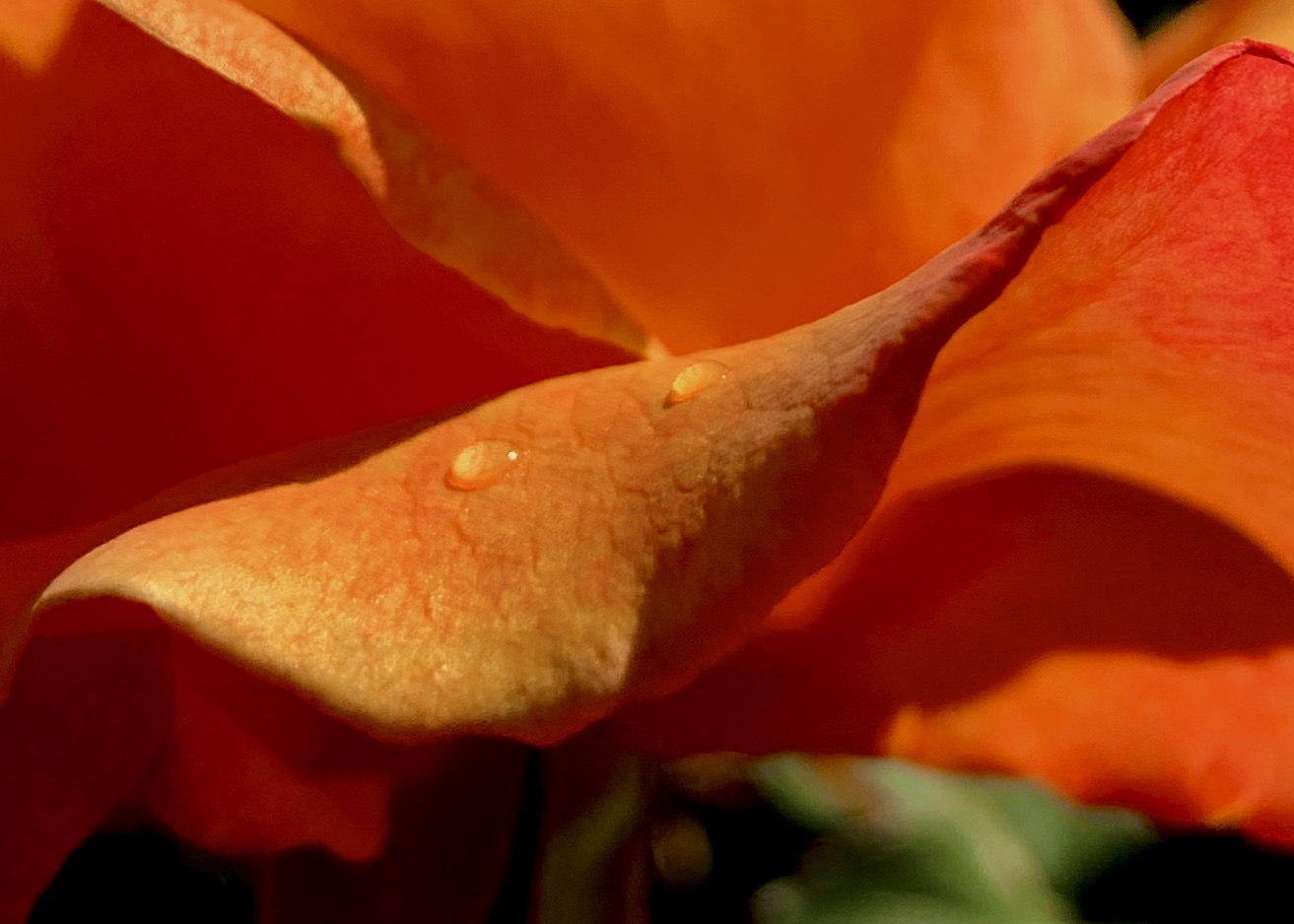
Little snail,
Dreaming you go.
Weather and rose
Is all you know.
Weather and rose
Is all you see,
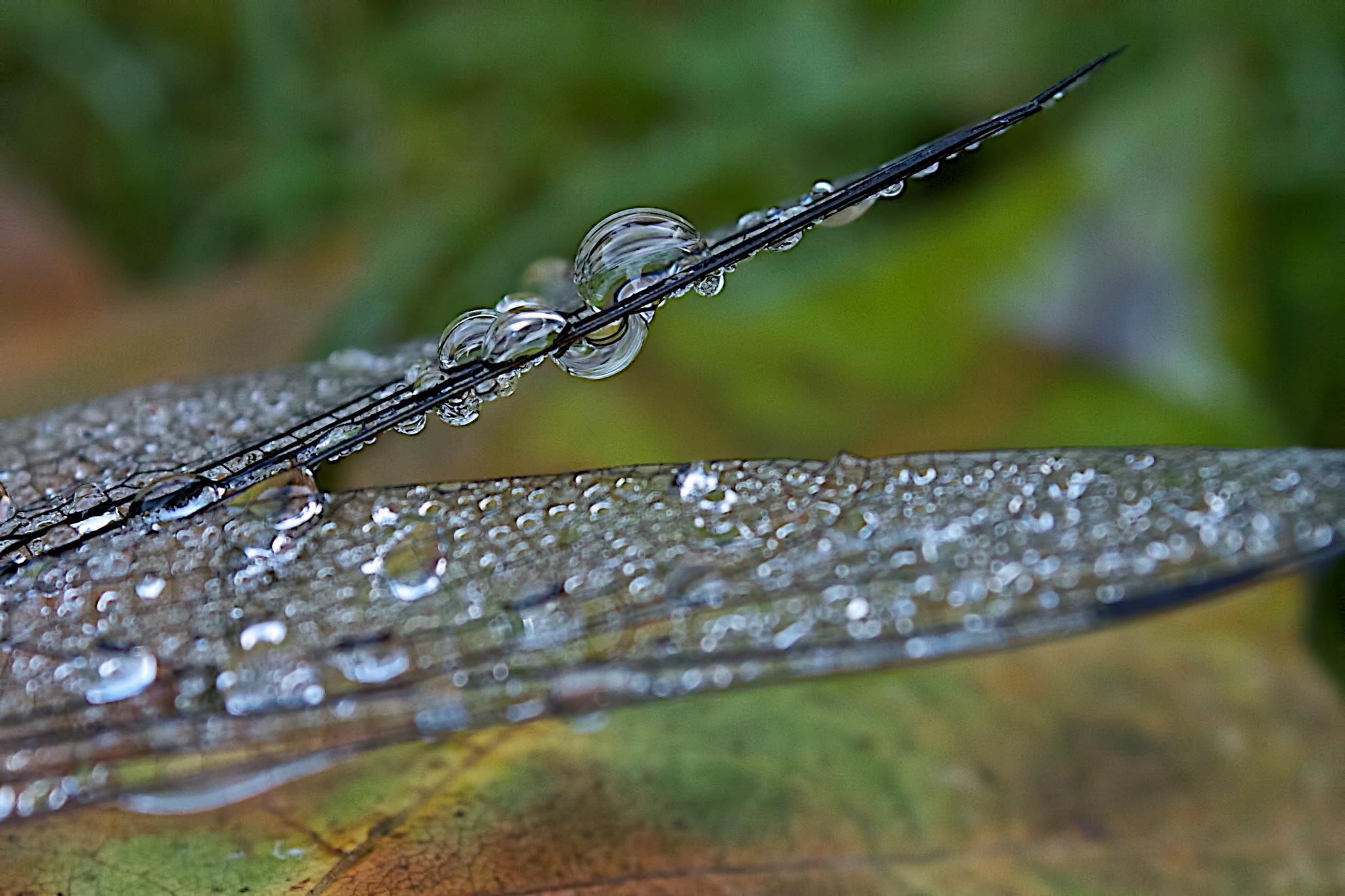
Drinking
The dewdrop’s
Mystery.
~Langston Hughes “Snail”
   A walk, a rout, an escargatroire
of snails—do you envy their elasticity? To each,
      an aria, the tender antennae perceiving,
         smelling and feeling, heeding
         an orchestration, inborn: Seek. Glean.
      O this thirst! Dare we risk
   spiraling outward, onward, a frangible
ode-in-motion? Dear Earth, why show us
   these rippling, quicksilver guides,
      their boneless glide,
         the fearless right-angle ascent,
         with a cellular hope’s acrobatic
      sheen—even upside-down? Surely,
   an ancient desert mother advised,
Your shell will teach you everything.

~Laurie Klein “A Walk, a Rout, An Escargatroire”
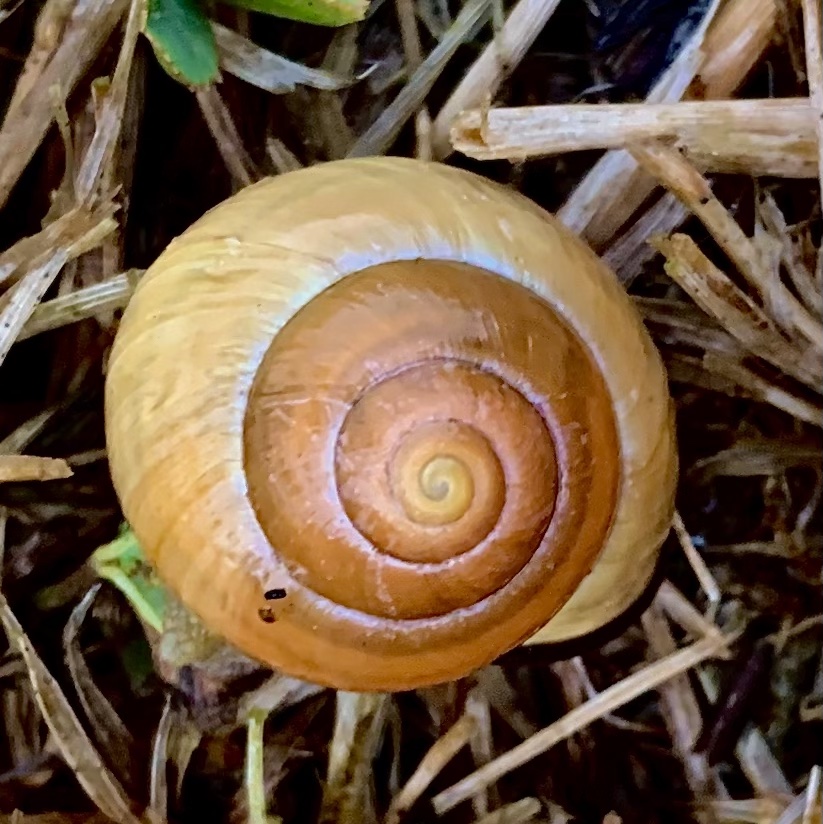
James was a very small snail…
and gave the huffle of a snail in danger.
And nobody heard him at all.
~A.A.Milne from The Four Friends from  “When We Were Very Young”
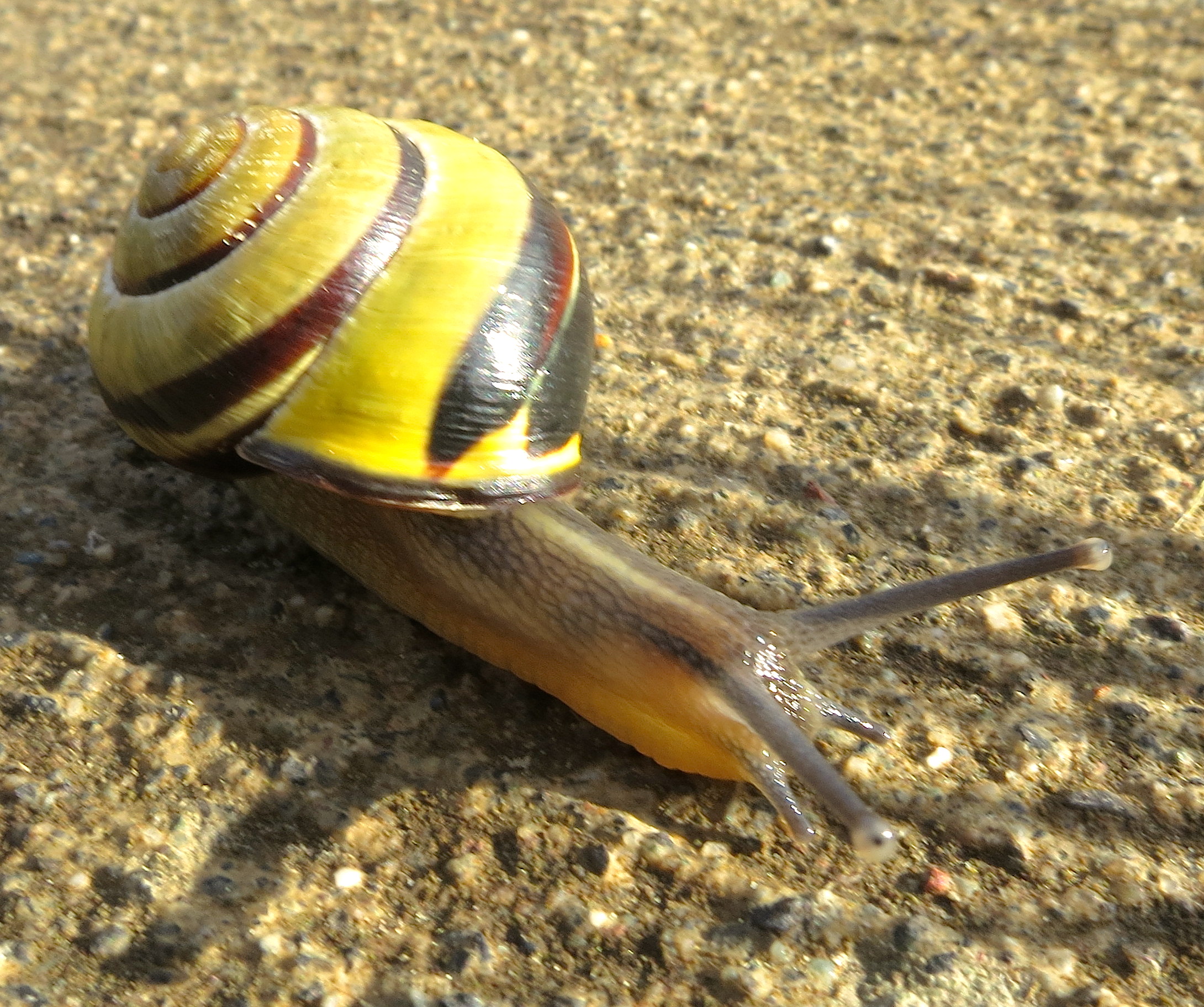
I mean, the analogy writes itself
like the onion in a grand conceit
though we really are like two slugs
in a derelict mausoleum.
Google “snails are…”
Dangerous. Slow.
Destroying my garden.
Our jobs and our women.

You, who cannot speak snail,
wouldn’t understand how the shell
was the gift and curse of diaspora,
how our songs and laments resound
in our half-remembered houses
that we carry to forget, to carry on.

~Samatar Elmi “The Snails”
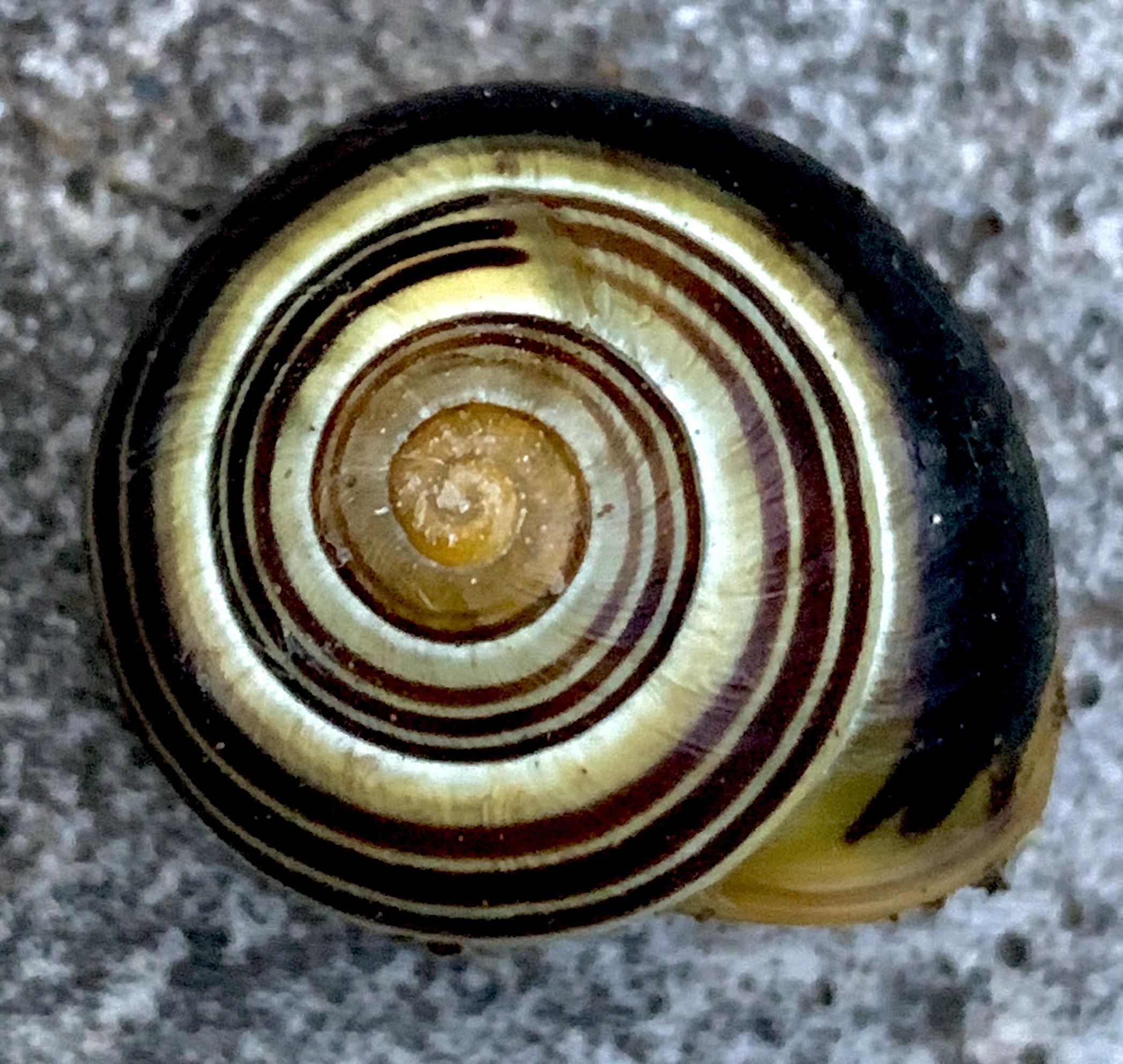
…who has a controlled sense of wonder
before the universal mystery,
whether it hides in a snail’s eye

or within the light that impinges on that delicate organ?
~Loren Eiseley from The Star Thrower
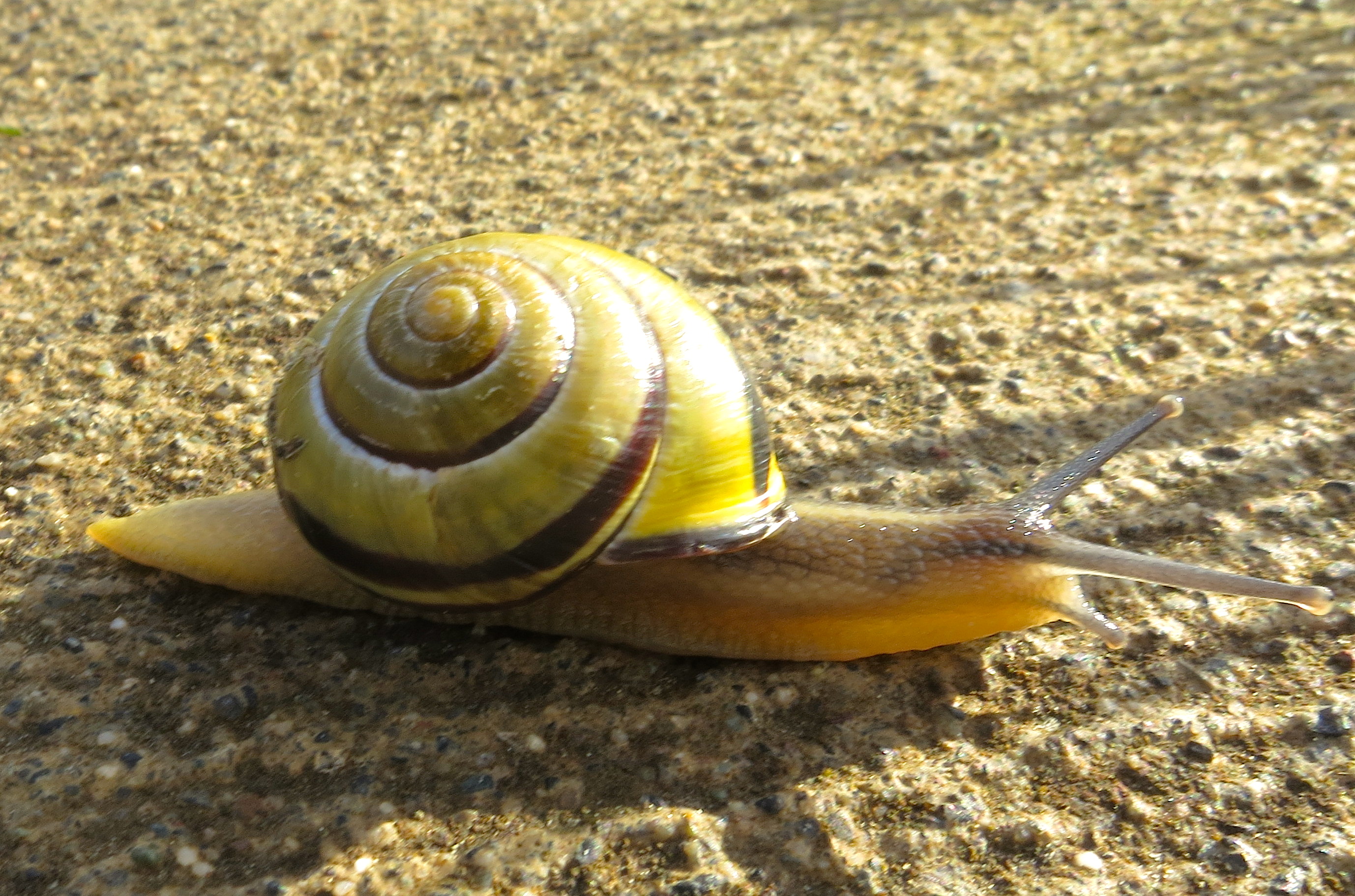
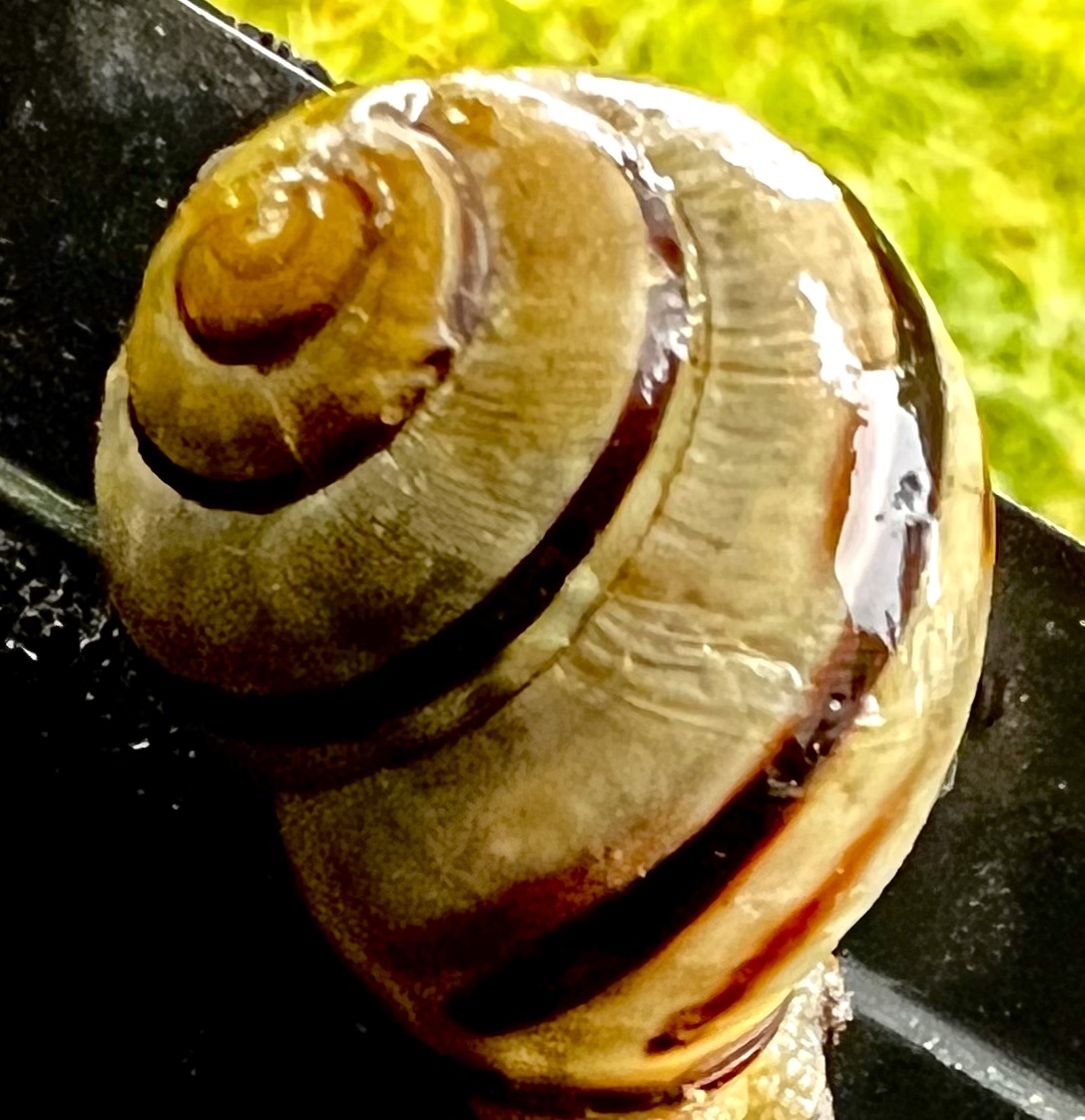
If a snail’s shell gets injured, a repair can be made quickly. New shell material is secreted by the mantle, and where there was once a crack, a scar appears, looking much like a skin scar. Even a missing shell section can be replaced.

Oliver Goldsmith described this in 1774:
Sometimes these animals are crushed seemingly to pieces, and, to all appearance, utterly destroyed; yet still they set themselves to work, and, in a few days, mend all their numerous breaches . . . to the re-establishment of the ruined habitation. But all the junctures are very easily seen, for they have a fresher colour than the rest; and the whole shell, in some measure, resembles an old coat patched with new pieces.
― Elisabeth Tova Bailey, The Sound of a Wild Snail Eating

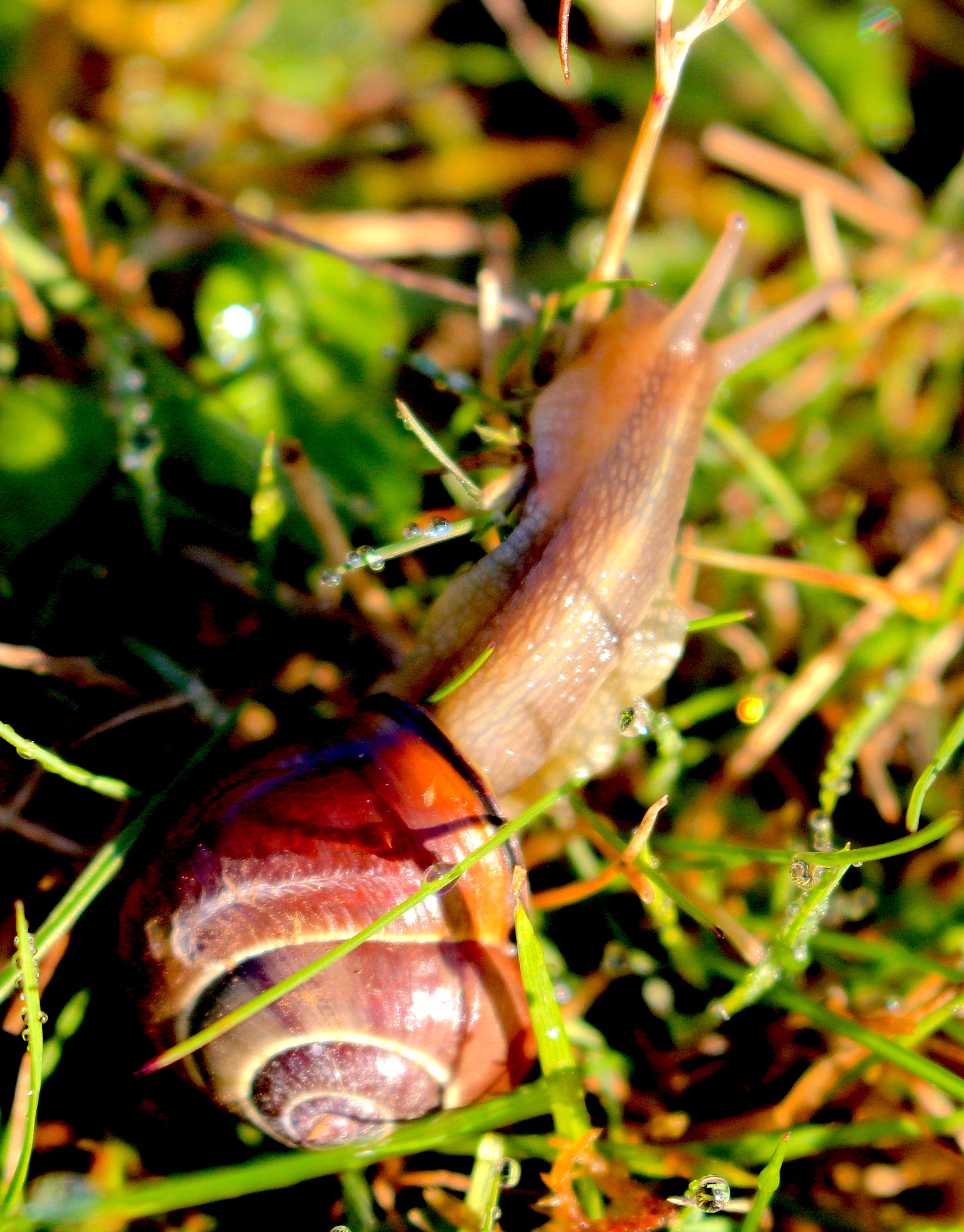
A gastropod brave enough
to cross a busy sidewalk
appears in no particular rush~

no hurry toward the grassy expanse
on the other side.
The lawn will still be there
whether an hour from now
or tomorrow.

Its waving little snail eyes
trying see and smell the future.

To assure it would not be crushed underfoot
I decide to intervene in history
and give it a lift
as Someone has done for me
when I was in danger.

So today,
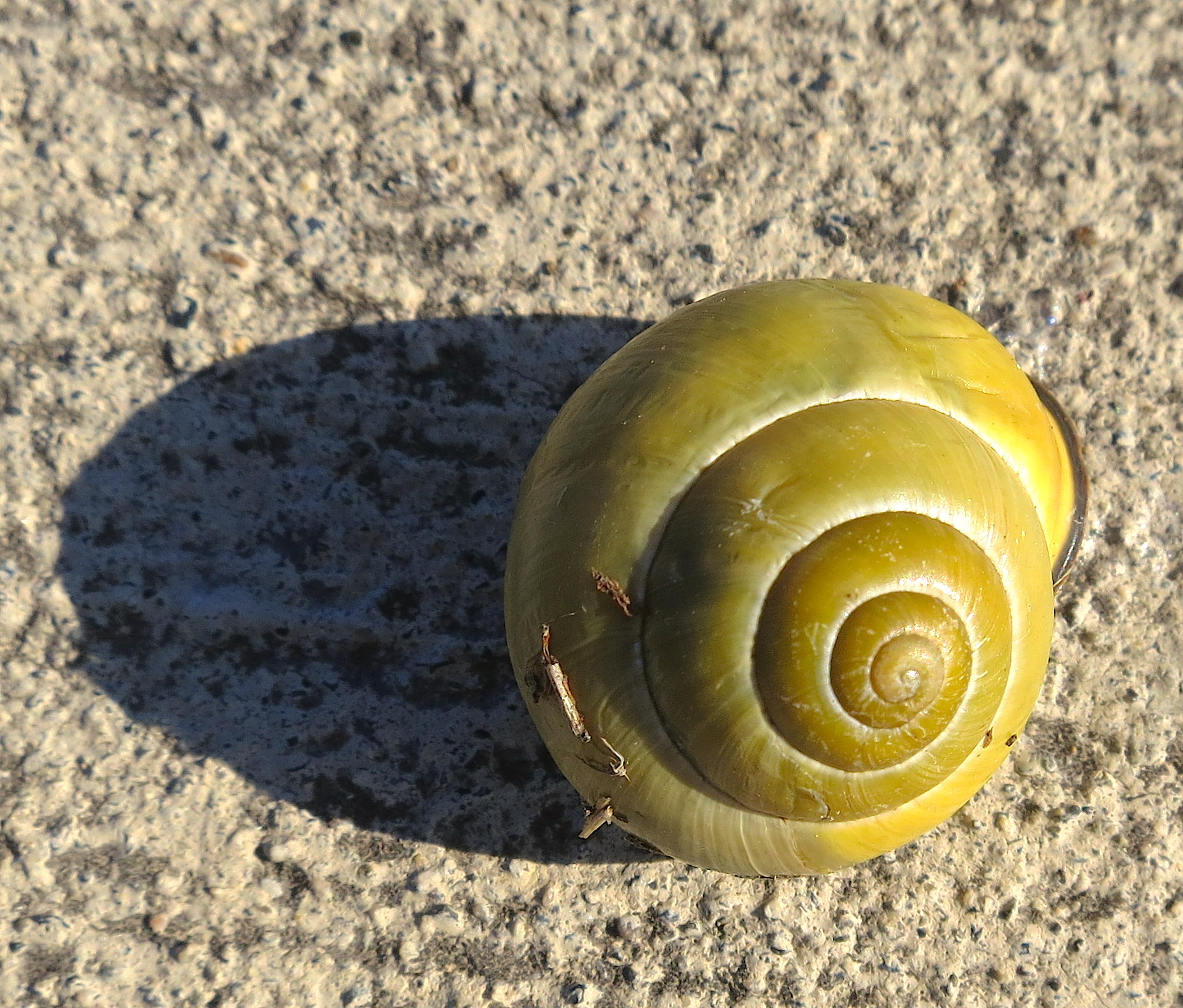
I saw a snail at risk of being crushed
and didn’t need to hear its cry
to do the right thing.
One-Time
Monthly
Yearly

Make a one-time or recurring donation to support daily Barstorming posts

Make a monthly donation

Make a yearly donation

Choose an amount

¤10.00
¤25.00
¤50.00
¤5.00
¤15.00
¤100.00
¤5.00
¤15.00
¤100.00

Or enter a custom amount

¤

Your contribution is deeply appreciated.

Your contribution is appreciated.

Your contribution is appreciated.

DonateDonate monthlyDonate yearly
To Clean Up Our Messes

It is not only prayer that gives God glory but work.
Smiting on an anvil, sawing a beam, whitewashing a wall,
driving horses, sweeping, scouring,
everything gives God some glory if being in his grace
you do it as your duty.

To go to communion worthily gives God great glory,
but to take food in thankfulness and temperance gives him glory too.
To lift up the hands in prayer gives God glory,
but a man with a dung fork in his hand,
a woman with a slop pail,
give him glory too.

He is so great that all things give him glory
if you mean they should.

So then, my brethren, live.
~Gerard Manley Hopkins from Seeking Peace

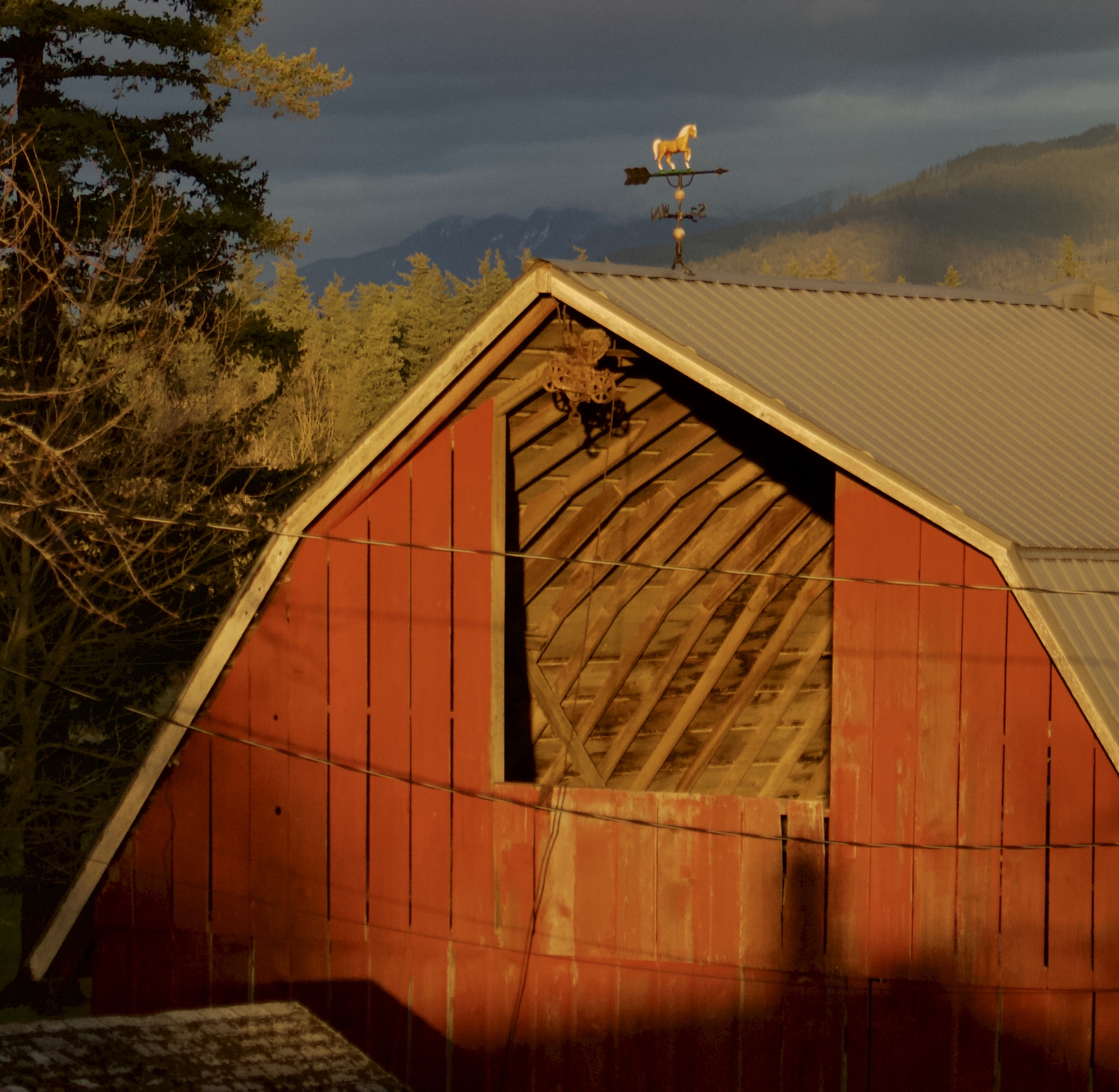
On Earth Day, I am reminded that thanks in large part to how messily we humans live, this world is grimy.  

So it is an act of worship as well as respect for our nest to work at cleaning up after ourselves.  Hands that clean toilets, scrub floors, carry bedpans, pick up garbage might as well be clasped in prayer – within such everyday necessary tasks, God is glorified.

I spend time every day carrying buckets and wielding a pitchfork because it is my way of restoring order to the disorder inherent in my little corner of the planet.  It is with gratitude that I’m able to put things to rights, making stall beds tidier for our farm animals by mucking up their messes and in so doing, I’m cleaning up a piece of me at the same time.

I never want to forget the mess I’m in and the mess I am.  I never want to forget to clean up after myself.  I never want to feel it is a mere and mundane chore to worship with dungfork and slop pail.

It is my privilege in winter, spring, summer or fall, not just on Earth Day.  This is His gift to me. It is His Grace that comes alongside me, to help pitch the muck and carry the slop when I think I am too weary to do it myself.

In so doing, I live and breathe in a place made a little cleaner.

photo from Emily Vander Haak
One-Time
Monthly
Yearly

Make a one-time or recurring donation to support daily Barnstorming posts

Make a monthly donation

Make a yearly donation

Choose an amount

¤10.00
¤25.00
¤50.00
¤5.00
¤15.00
¤100.00
¤5.00
¤15.00
¤100.00

Or enter a custom amount

¤

Your contribution is deeply appreciated.

Your contribution is appreciated.

Your contribution is appreciated.

DonateDonate monthlyDonate yearly

It’s Happening to All of Us

There is weather on the day you are born
and weather on the day you die. There is
the year of drought, and the year of floods,
when everything rises and swells,
the year when winter will not stop falling,
and the year when summer lightning
burns the prairie, makes it disappear.
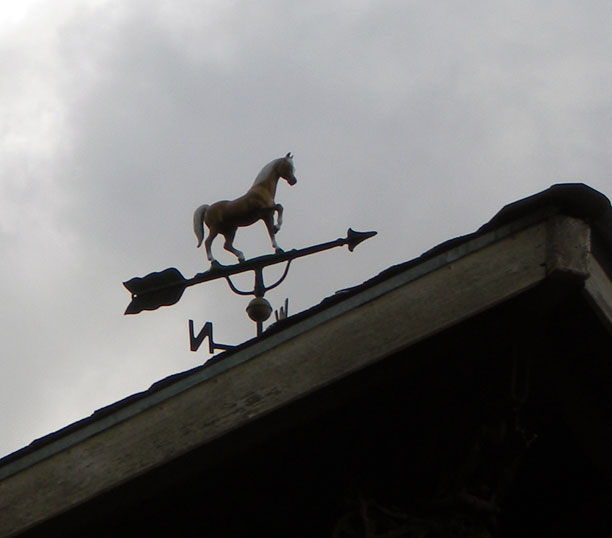
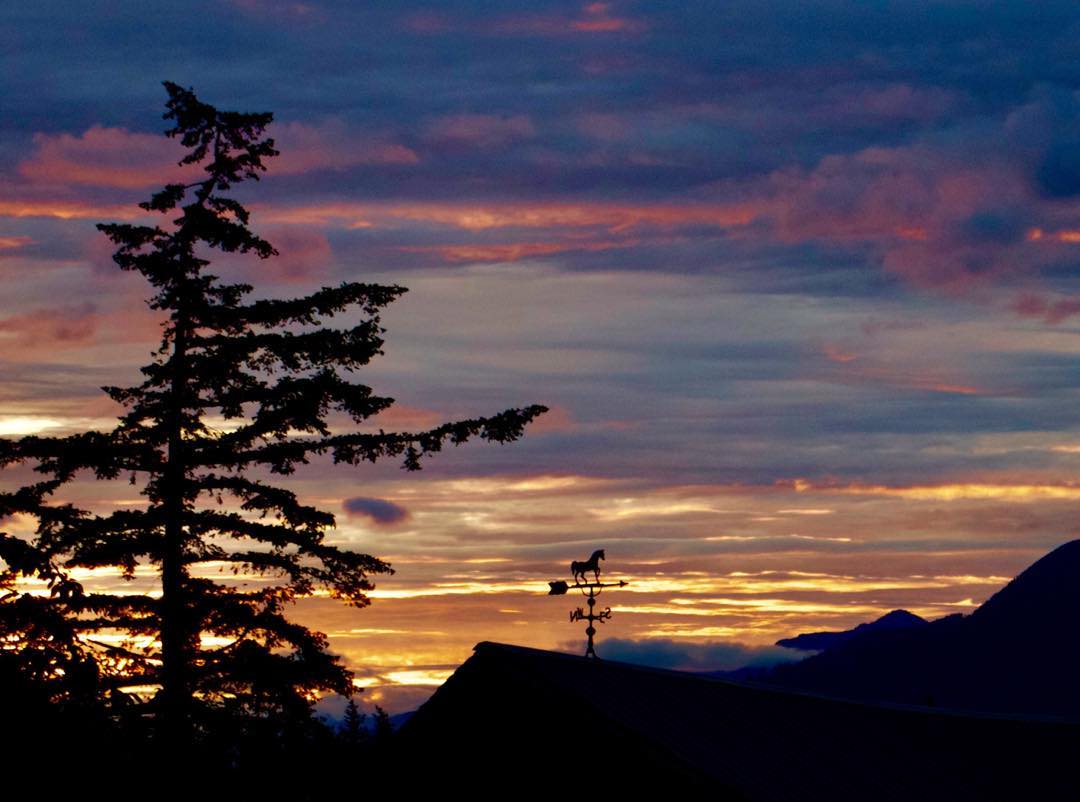
There are the weathervanes, dizzy
on top of farmhouses, hurricanes
curled like cats on a map of sky:
there are cows under the trees outlined
in flies. There is the weather that blows
a stranger into town and the weather
that changes suddenly: an argument,
a sickness, a baby born
too soon. Crops fail and a field becomes
a study in hunger; storm clouds
billow over the sea;
tornadoes appear like the drunk
trunks of elephants. People talking about
weather are people who don’t know what to say
and yet the weather is what happens to all of us:
the blizzard that makes our neighborhoods
strange, the flood that carries away
our plans. We are getting ready for the weather,
or cleaning up after the weather, or enduring
the weather. We are drenched in rain
or sweat: we are looking for an umbrella,
a second mitten; we are gathering
wood to build a fire.

~Faith Shearin “Weather” from Orpheus, Turning.

On the planet the winds are blowing: the polar easterlies, the westerlies, the northeast and southeast trades…
Lick a finger, feel the now.
~Annie Dillard from Pilgrim at Tinker Creek

I’m still discovering, right up to this moment, that it is only by living completely in this world that one learns to have faith. I mean living unreservedly in life’s duties, problems, successes and failures, experiences and perplexities. In so doing, we throw ourselves completely into the arms of God.
~Dietrich Bonhoeffer from The Cost of Discipleship

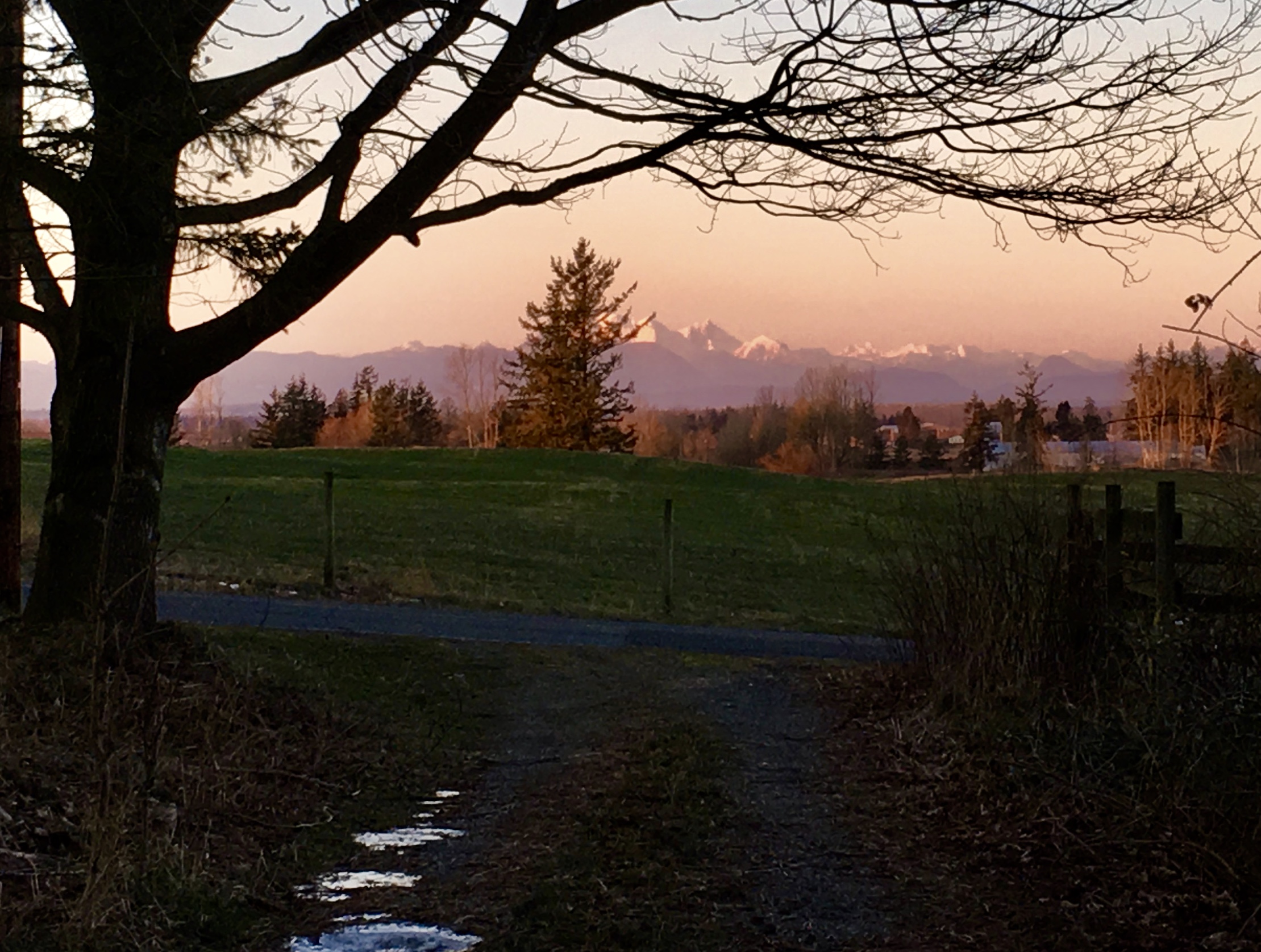
Never before in the history of humanity have we had the ability to pull the weather forecast out of our pocket and know not only what to anticipate in the next 24 hours, but what is happening right now. Prior to phone apps, we scanned the skies, checked the barometer, monitored the thermometer, and put a licked finger up to test the wind direction. As obsolete as those measures seem now, I confess they still make sense to me.

It’s surreal if my phone says it is raining at “my location” and I can’t find a single cloud.

I want to know what is happening around me from my own observation, trust my own eyes, feel my own physical response to the heat, the cold, the dry, the wet. I want to know we’re all in this together, right now.

I want to live completely in this world, living now, finger held to the wind. Then, having the information I need, I throw myself completely into the arms of God.

One-Time
Monthly
Yearly

Support daily Barnstorming posts by making a one-time or recurring donation

Make a monthly donation

Make a yearly donation

Choose an amount

¤10.00
¤25.00
¤50.00
¤5.00
¤15.00
¤100.00
¤5.00
¤15.00
¤100.00

Or enter a custom amount

¤

Your contribution is deeply appreciated.

Your contribution is appreciated.

Your contribution is appreciated.

DonateDonate monthlyDonate yearly
Fixing Eyes on the Unseen – Everything Sad is Going to Come Untrue

He will wipe away every tear from their eyes, and death shall be no more, neither shall there be mourning, nor crying, nor pain anymore, for the former things have passed away. And he who was seated on the throne said, “Behold, I am making all things new.” Also he said, “Write this down, for these words are trustworthy and true.  Revelation 21: 4-5

“Gandalf! I thought you were dead! But then I thought I was dead! Is everything sad going to come untrue?”
~J.R.R. Tolkien as Samwise Gamgee wakes to find his friends all around him in The Lord of the Rings

“The answer is yes. And the answer of the Bible is yes. If the resurrection is true, then the answer is yes. Everything sad is going to come untrue.”
~Pastor Tim Keller’s response in a sermon given in an ecumenical prayer service memorial in Lower Manhattan on the fifth anniversary of Sept. 11.

photo by Joel De Waard

In our minds, we want to rewind and replay the sad events of this week in a way that would prevent them from happening in the first place.

We want those in a broken relationship to come back together, hug and forgive. The devastating diagnosis would be proven an error and, in reality, only a transient illness. When a terrible tragedy happens, we want the dead and injured to rise up again. The destructive earthquake becomes a mere tremor, the flooding tsunami is only one foot, not over thirty feet tall, the hijackers are prevented from ever boarding a plane, the shooter changes her mind at the last minute and lays down her arms, the terrorist disables his suicide bombs and walks away from his training and misguided mission.

We want so badly for it all to be untrue. The bitter reality of horrendous suffering and sadness daily all over the earth is too much for us to absorb. We plead for relief and beg for a better day.

Our minds may play mental tricks like this, but God does not play tricks. He knows and feels what we do. He too wants to see it rewound and replayed differently. He has known grief and sadness, He has wept, He has suffered, He too has died in terrible humiliating and painful circumstances. 

And because of this, because of a God who came to dwell with us, was broken, died and then rose again whole and holy, we are assured, in His time, everything sad is going to come untrue.

Our tears will be dried, our grief turned to joy, our pain nonexistent, not even a memory.  It will be a new day, a better day–as it is written, trustworthy and true.

May it come.

Quickly.

photo by Nate Gibson

This year’s Lenten theme:
So we fix our eyes not on what is seen, but on what is unseen, since what is seen is temporary, but what is unseen is eternal.
2 Corinthians 4: 18

Fixing Eyes on the Unseen – In Sorrow, Scraped and Torn

“I wish it need not have happened in my time,” said Frodo.
“So do I,” said Gandalf,

“and so do all who live to see such times.
But that is not for them to decide.
All we have to decide
is what to do with the time that is given us.”

The world is indeed full of peril,
and in it there are many dark places;
but still there is much that is fair,
and though in all lands
love is now mingled with grief,
it grows perhaps the greater.
― J.R.R. Tolkien, from The Fellowship of the Ring

God is not only the God of the sufferers but the God who suffers. … It is said of God that no one can behold his face and live. I always thought this meant that no one could see his splendor and live. A friend said perhaps it meant that no one could see his sorrow and live. Or perhaps his sorrow is splendor. …

Instead of explaining our suffering God shares it.

How is faith to endure, O God, when you allow all this scraping and tearing on us? You have allowed rivers of blood to flow, mountains of suffering to pile up, sobs to become humanity’s song–all without lifting a finger that we could see. You have allowed bonds of love beyond number to be painfully snapped. If you have not abandoned us, explain yourself.

We strain to hear. But instead of hearing an answer we catch sight of God himself scraped and torn. Through our tears we see the tears of God.
~Nicholas Wolterstorff  in Lament for a Son

“My God, My God,” goes the Psalm 22, “hear me, why have you forsaken me?”  This is the anguish all we of Godforsaken heart know well. But hear the revelation to which Christ directs us, further in the same psalm:

For He has not despised nor scorned the beggar’s supplication,
Nor has He turned away His face from me;
And when I cried out to Him, He heard me.

He hears us, and he knows, because he has suffered as one Godforsaken. Which means that you and I, even in our darkest hours, are not forsaken. Though we may hear nothing, feel nothing, believe nothing, we are not forsaken, and so we need not despair. And that is everything. That is Good Friday and it is hope, it is life in this darkened age, and it is the life of the world to come.
~Tony Woodlief from “We are Not Forsaken”

Scratch the surface of a human being and the demons of hate and revenge … and sheer destructiveness break forth.

    Again and again we read the stories of violence in our daily papers, of the mass murders and ethnic wars still occurring in numerous parts of our world. But how often do we say to ourselves: “What seizes people like that, even young people, to make them forget family and friends, and suddenly kill other human beings?” We don’t always ask the question in that manner. Sometimes we are likely to think, almost smugly: “How different those horrible creatures are from the rest of us. How fortunate I am that I could never kill or hurt other people like they did.”

    I do not like to stop and, in the silence, look within, but when I do I hear a pounding on the floor of my soul. When I open the trap door into the deep darkness I see the monsters emerge for me to deal with. How painful it is to bear all this, but it is there to bear in all of us. Freud called it the death wish, Jung the demonic darkness. If I do not deal with it, it deals with me. The cross reminds me of all this.

    This inhumanity of human to human is tamed most of the time by law and order in most of our communities, but there are not laws strong enough to make men and women simply cease their cruelty and bitterness. This destructiveness within us can seldom be transformed until we squarely face it in ourselves. This confrontation often leads us into the pit. The empty cross is planted there to remind us that suffering is real but not the end, that victory still is possible…
~Morton Kelsey from “The Cross and the Cellar”

I’m depending on others’ words right now. The maelstrom of emotions following this week’s latest school shooting silences everything but my tears.

Have mercy, Holy God, on your people.

This year’s Lenten theme:
So we fix our eyes not on what is seen, but on what is unseen, since what is seen is temporary, but what is unseen is eternal.
2 Corinthians 4: 18

Fixing Eyes on the Unseen – Where to Look for the Good Parts

Once, in the cool blue middle of a lake,
up to my neck in that most precious element of all,

I found a pale-gray, curled-upwards pigeon feather
floating on the tension of the water

at the very instant when a dragonfly,
like a blue-green iridescent bobby pin,

hovered over it, then lit, and rested.
That’s all.

I mention this in the same way
that I fold the corner of a page

in certain library books,
so that the next reader will know

where to look for the good parts.
~Tony Hoagland “Field Guide” from Unincorporated Persons in the Late Honda Dynasty.

dragonfly wings photo by Josh Scholten
from The Reason for God by Tim Keller

We do not want merely to see beauty…
we want something else which can hardly be put into words-
to be united with the beauty we see,
to pass into it,
to receive it into ourselves,
to bathe in it,
to become part of it.

We discern the freshness and purity of morning,
but they do not make us fresh and pure.
We cannot mingle with the splendours we see.


But all the leaves of the New Testament
are rustling with the rumour
that it will not always be so.


Someday, God willing, we shall get in.

~C.S. Lewis from The Weight of Glory

Part of the joy of beauty
is the realization that it is part of a larger whole,
most of which appears to be just out of sight. 
We are drawn forward toward something…
and left waiting, wondering.
~N.T. Wright from Life, God and Other Small Topics

Each day brings headlines that tear at us, pull us down and rub us with mud.  We are grimy by association, sullied and smeared.

Still, in our state of disgrace, Beauty is offered up to us, sometimes out of the blue, unexpected but so welcome.

In His last act with those He loved, Jesus shared Himself through a communal meal,
then washed and toweled their dirty feet clean, immersing them, despite their protests,  in all that is beautiful and clean. He made the ugly beautiful.

He took on and wore their grime on a towel around His waist.

It is now our turn to help wash away the dirt from whoever is in need.  He showed us how to help others look for the good parts.

This year’s Lenten theme:
So we fix our eyes not on what is seen, but on what is unseen, since what is seen is temporary, but what is unseen is eternal.
2 Corinthians 4: 18

Fixing Eyes on the Unseen – A Peculiar Treasure

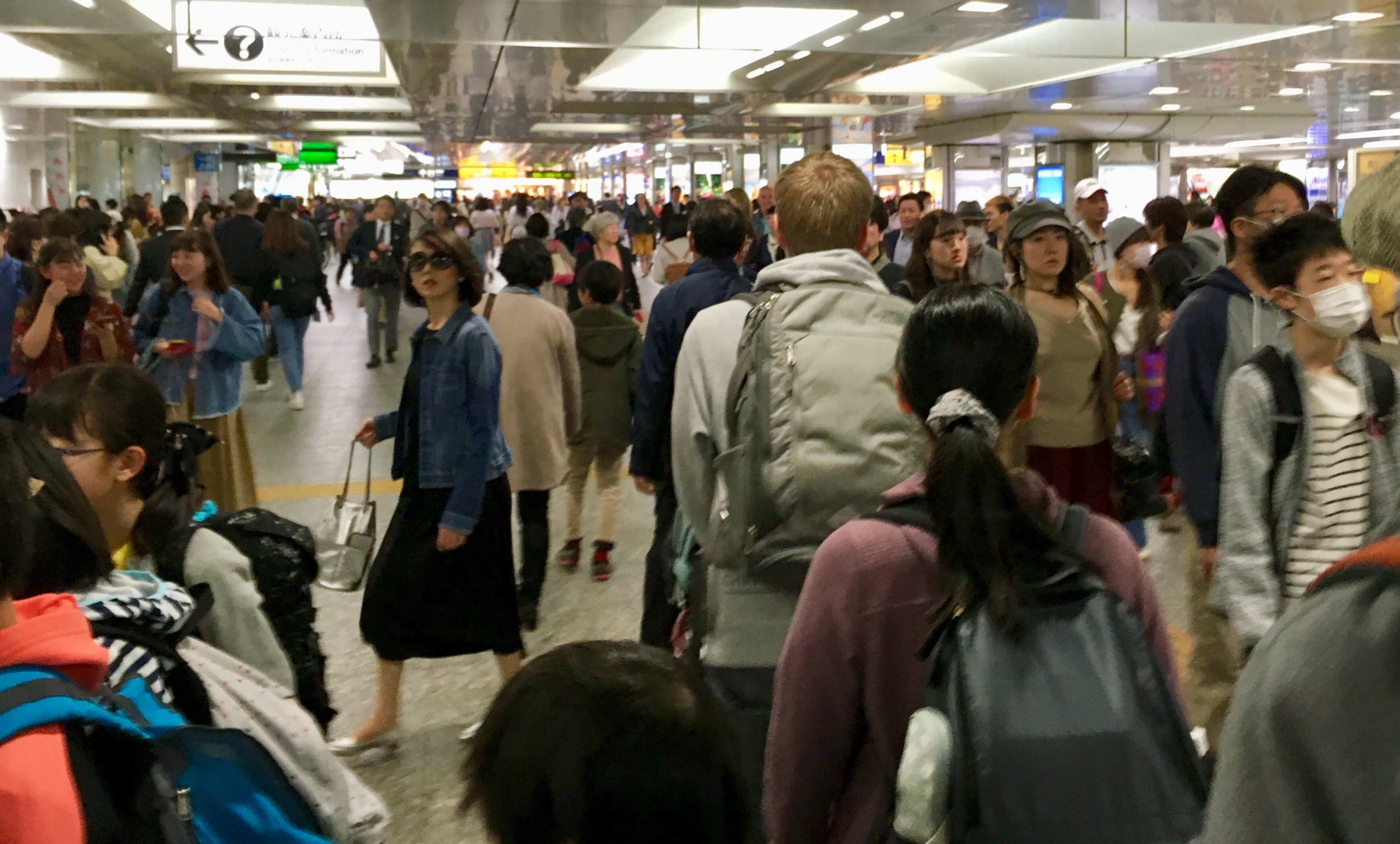
Imagine yourself in a big city in a crowd of people.  
What it would be like to see all the people in the crowd like Jesus does —
an anonymous crowd with

old ones and young ones,
fat ones and thin ones,
attractive ones and ugly ones—
think what it would be like to love them.  

If our faith is true, if there is a God,
and if God loves, he loves each one of those.  
Try to see them as loved.  
And then try to see them, these faces, as loved by you.  
What would it be like to love these people, to love these faces —
the lovable faces, the kind faces, gentle compassionate faces?  
That’s not so hard.  
But there are lots of other faces —
disagreeable faces, frightening faces, frightened faces, cruel faces, closed faces. …
they are all peculiar treasures.  


In Exodus, God said to Israel,
“You shall be a peculiar treasure unto me above all people.”  
God meant it for all of us.
~Frederick Buechner from The Remarkable Ordinary: How to Stop, Look, and Listen to Life

t doesn’t take long for me to be overwhelmed by humanity when we have visited some of the world’s largest cities. Airports are a shock of weaving lines of weary people and crying children, commuter trains are packed with individuals standing like sardines for an hour or more twice a day, the stations are a sea of bobbing heads flowing out onto the streets where the crosswalks become a mass hive of activity whenever the light changes.

Yet I’ve been struck by the effort some locals make to help visitors who look lost, or who simply look different. There is outreach at times that is spontaneous, genuine and completely unexpected. Those are easy faces to love and we do. What is much much harder to is love those hundreds of thousands who rush past us on their way to work, to shop, to return home.  How can I even begin to have the capacity?

Who greeted Jesus after he entered Jerusalem in the final week of His life? These were not all friendly faces. He loved them all any way, every single one of them were peculiar treasures to him, forgiven and redeemed by His walk to, and death on, the cross.

I realize much of the time I too feel rushed, not bothering to reach out and be helpful when needed. Even so, He loves me still, flaws and all, as His redeeming grace is meant for one such as me – a peculiar treasure.  

Because of His love, I become the real thing and not just a distorted reflection of what I think I should be.

This year’s Lenten theme:
So we fix our eyes not on what is seen, but on what is unseen, since what is seen is temporary, but what is unseen is eternal.
2 Corinthians 4: 18

Fixing Eyes on the Unseen – A Door Left Open

The world hides God from us,
or we hide ourselves from God,
or for reasons of his own God hides himself from us,
but however you account for it,
he is often more conspicuous by his absence than by his presence,
and his absence is much of what we labor under and are heavy laden by.
Just as sacramental theology speaks of a doctrine of the Real Presence,
maybe it should speak also of a doctrine of the Real Absence
because absence can be sacramental, too,
a door left open,

a chamber of the heart kept ready and waiting.
~Frederick Buechner from Telling the Truth

…my faith has weathered in a holy way;
it’s larger, gentler, especially as I have learned to bear the needs of others,
to pour myself out at least a little bit like God does for me.
In that offering, I’ve learned a lot about God’s quiet, ever-present nourishment.
A larger, patient acceptance has come to me.
I haven’t found every answer, I still ‘want’ so much more of God than I have,
and yet, I also have learned to live with the holy hunger that is the groaning

of God’s Spirit within me as I wait for the full coming of the Kingdom.⁣
~Sarah Clarkson reflecting on Buechner’s quote above

For in this hope we were saved. But hope that is seen is no hope at all. Who hopes for what they already have? But if we hope for what we do not yet have, we wait for it patiently.
Romans 8:24-25

To wait is a hard sweet paradox in the Christian life.  It is hard not yet having what we are promised will be coming – truly Real Absence for now.  But it is sweet to have certainty it is coming because of the footprints we have seen:

He has been here among us. 

Like the labor of childbirth, we groan knowing what it will take to get there, yet we are full to brimming already.

The waiting won’t be easy; it will often be painful to be patient, staying alert to possibility and hope when we are exhausted, barely able to function.  Others won’t understand why we wait, nor do they comprehend what we could possibly be waiting for. 

We persevere together, with patience, watching and hoping; we are a community groaning together in sweet expectation.

This year’s Lenten theme:
So we fix our eyes not on what is seen, but on what is unseen, since what is seen is temporary, but what is unseen is eternal.
2 Corinthians 4: 18

Fixing Eyes on the Unseen – A Ministry of Presence

More and more, the desire grows in me simply to walk around, greet people, enter their homes, sit on their doorsteps, play ball, throw water, and be known as someone who wants to live with them.

It is a privilege to have the time to practice this simple ministry of presence. Still, it is not as simple as it seems.

My own desire to be useful, to do something significant, or to be part of some impressive project is so strong that soon my time is taken up by meetings, conferences, study groups, and workshops that prevent me from walking the streets. It is difficult not to have plans, not to organize people around an urgent cause, and not to feel that you are working directly for social progress.

But I wonder more and more if the first thing shouldn’t be to know people by name, to eat and drink with them, to listen to their stories and tell your own, and to let them know with words, handshakes, and hugs that you do not simply like them, but truly love them.
~Henri Nouwen from The Practice of the Presence of God

For too many years, I was wrapped up in the trappings of the “useful” life – meetings, committees, schedules, strategic priorities – and I forgot there is so much living usefully that I neglected to do.

There needs to be more potlucks, more “oh, by the way” conversations, more connections “just because,” more showing up when extra hands are needed.

If only I could invite you all over for breakfast. We’d have a wonderful chin wag…

Actually, now that I think of it —
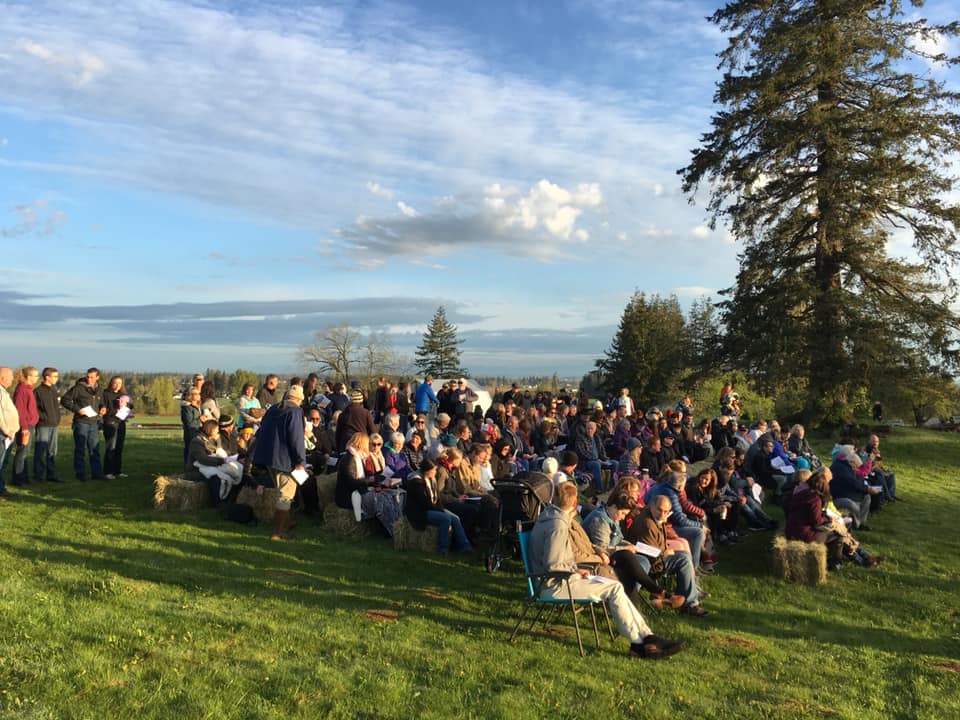
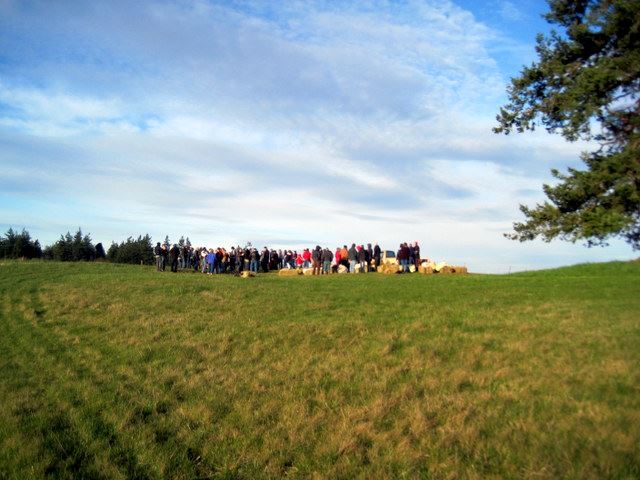
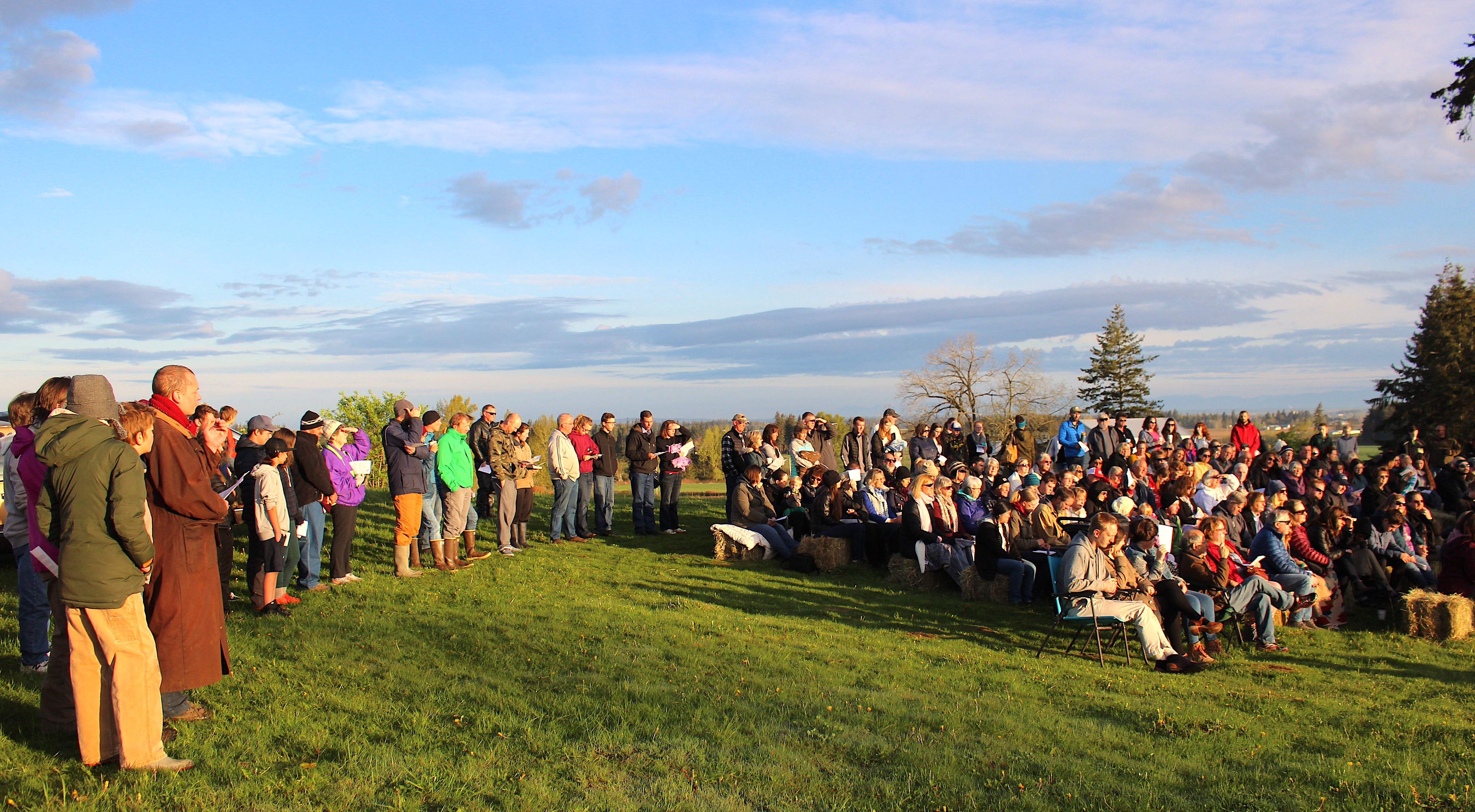
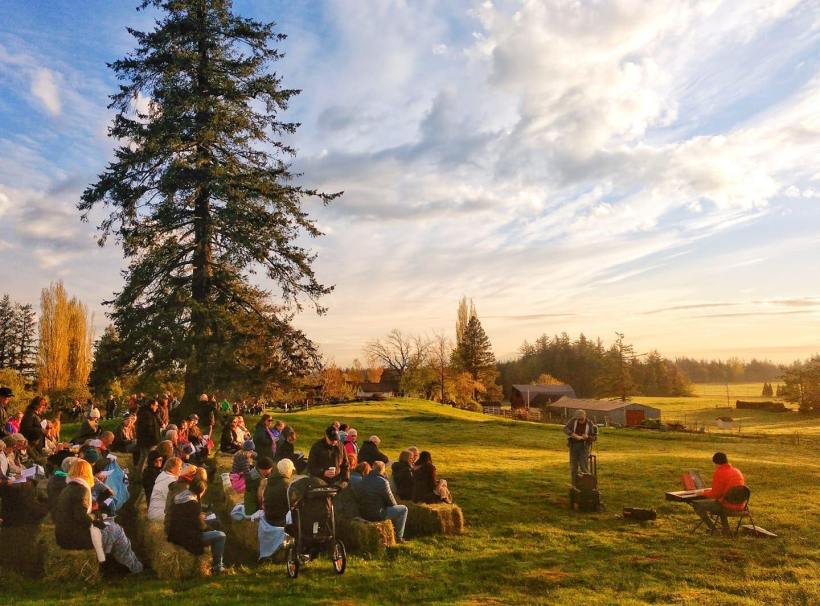
you ARE invited for breakfast – Sunday, April 9, 2023 at 7 AM.
Dress warmly. Wear boots. Come hungry and thirsty for the Word and ready for hugs.
Easter Sunrise on our hill.

photo by Joel De Waard

This year’s Lenten theme:
So we fix our eyes not on what is seen, but on what is unseen, since what is seen is temporary, but what is unseen is eternal.
2 Corinthians 4: 18

Fixing Eyes on the Unseen- Where I Am Right

From the place where we are right
Flowers will never grow
In the spring.

The place where we are right
Is hard and trampled
Like a yard.

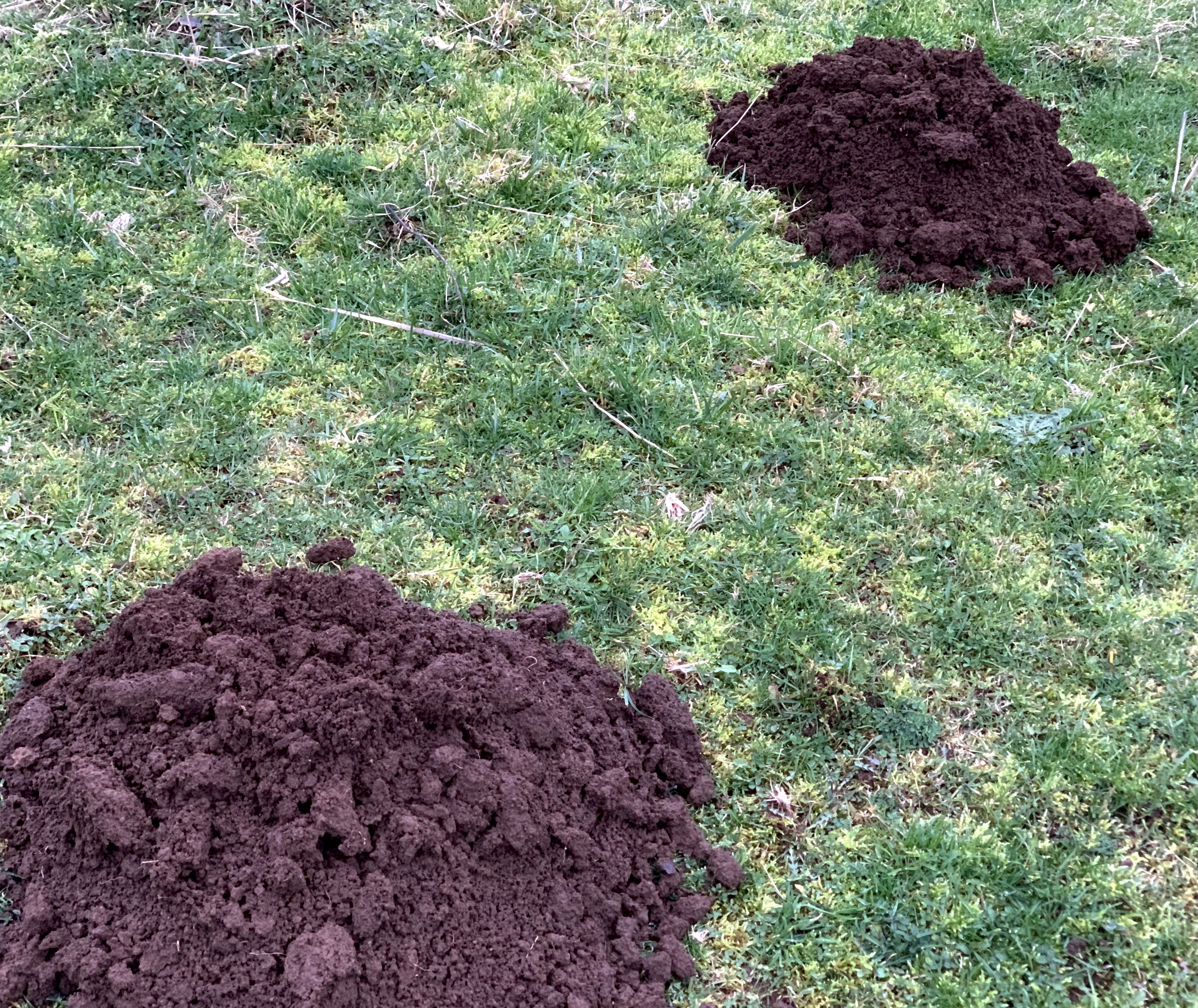
But doubts and loves
Dig up the world
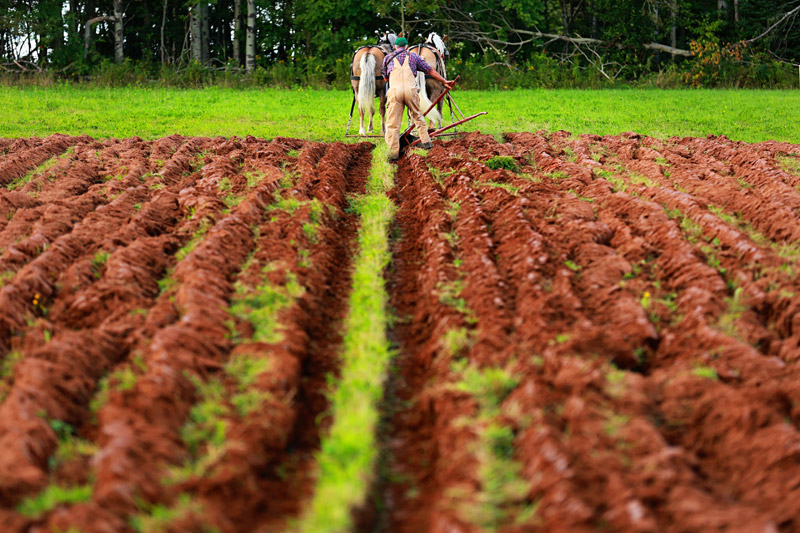
Like a mole, a plow.
And a whisper will be heard in the place
Where the ruined
House once stood.

~Yehuda Amichai “The Place Where We are Right”

plowing match photo by http://www.ninalintonphotography.com

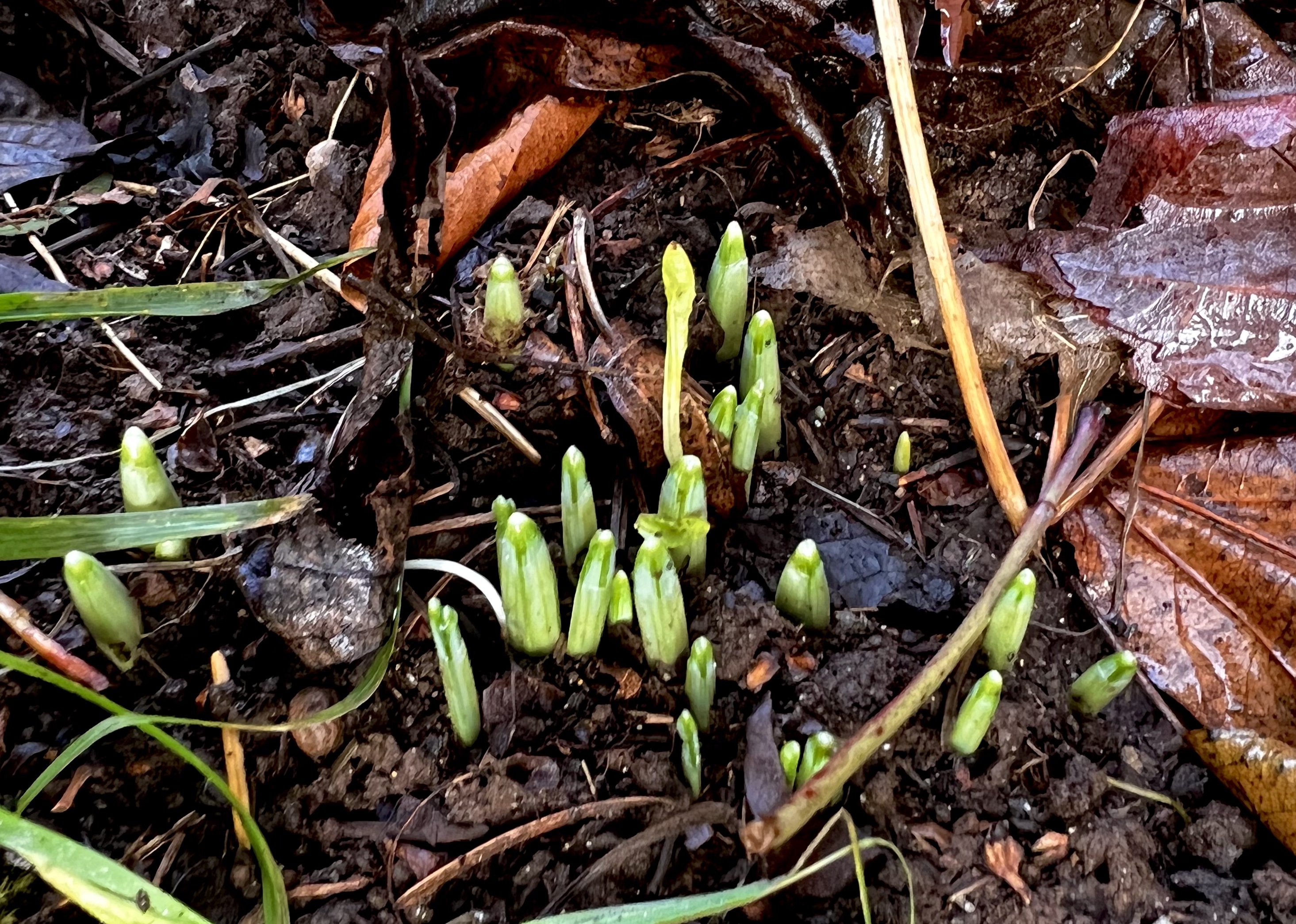
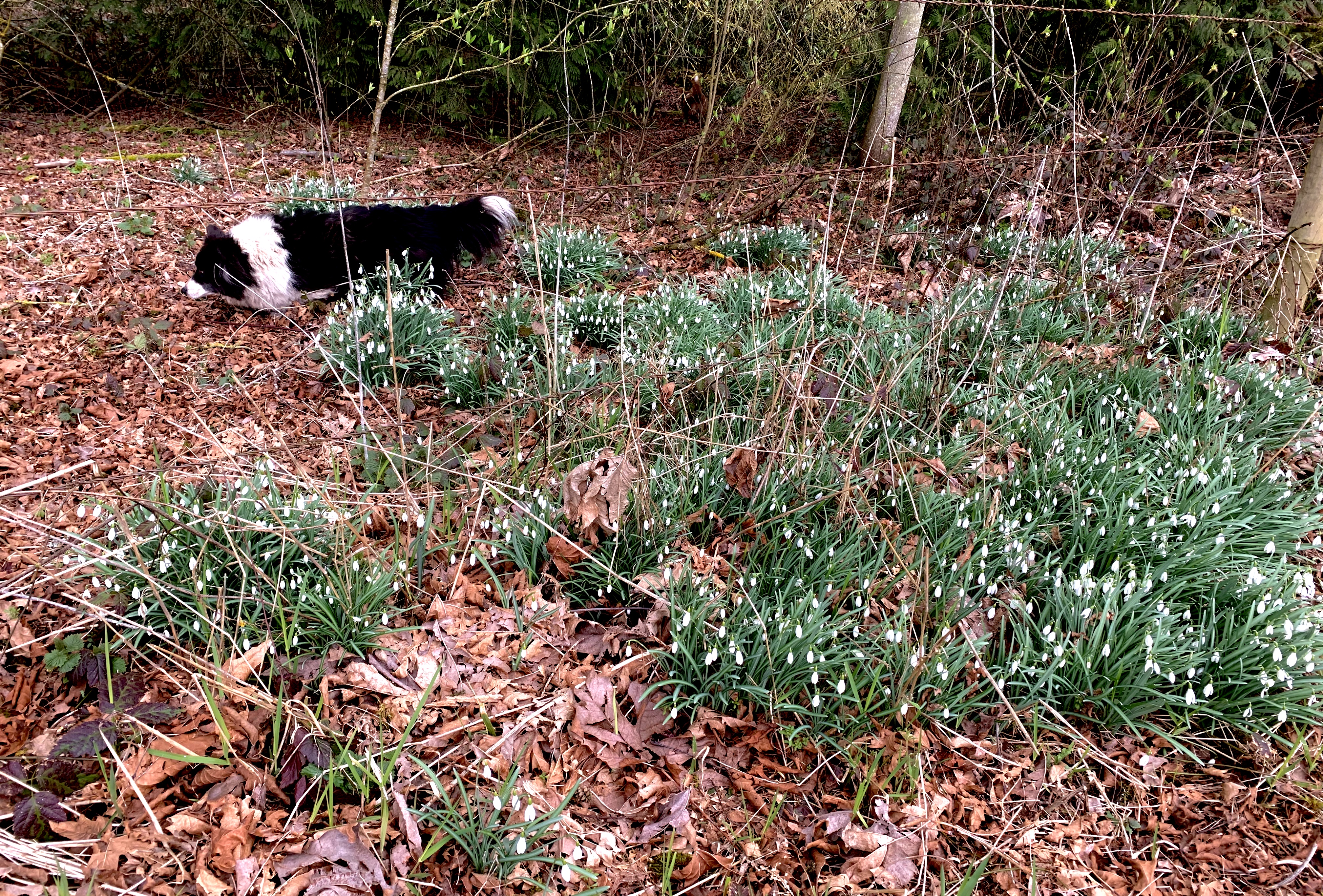
I’ve learned the hard way that my being “right” may discourage whatever sprouts and grows and blooms. Rather than find their way through my crustiness, they remain underground, safe from my strenuous protests and insistence. If they bravely try to surface, they might be trampled and broken.

Instead of being right, I need to turn over that hard ground, revealing my doubts and worries, exposed to new light and warmth.

Instead of being right, I need to love and listen and be open to the whispering of that still small voice telling the truth.

Instead of insisting on being right, I rebuild what I have ruined.

Then we may all have a chance to bloom.

This year’s Lenten theme:
So we fix our eyes not on what is seen, but on what is unseen, since what is seen is temporary, but what is unseen is eternal.
2 Corinthians 4: 18