A Bucket of Hope

We’re just a drop in the bucket, as if that’s meaningless.
But we say, “No, wait a minute. If you have a bucket, those raindrops fill it up very fast. Being a drop in the bucket is magnificent.”
The problem is we cannot see the bucket.
Our work is helping people see that there is a bucket.
There are all these people all over the world who are creating this bucket of hope.
And so our drops are incredibly significant.
~Frances Moore Lappe from Hope Dies Last

How great is God—beyond our understanding!
    The number of his years is past finding out.

 He draws up the drops of water,
    which distill as the mist to rain;
 the clouds pour down their moisture
    and abundant showers fall on mankind.

Job 36:26-28

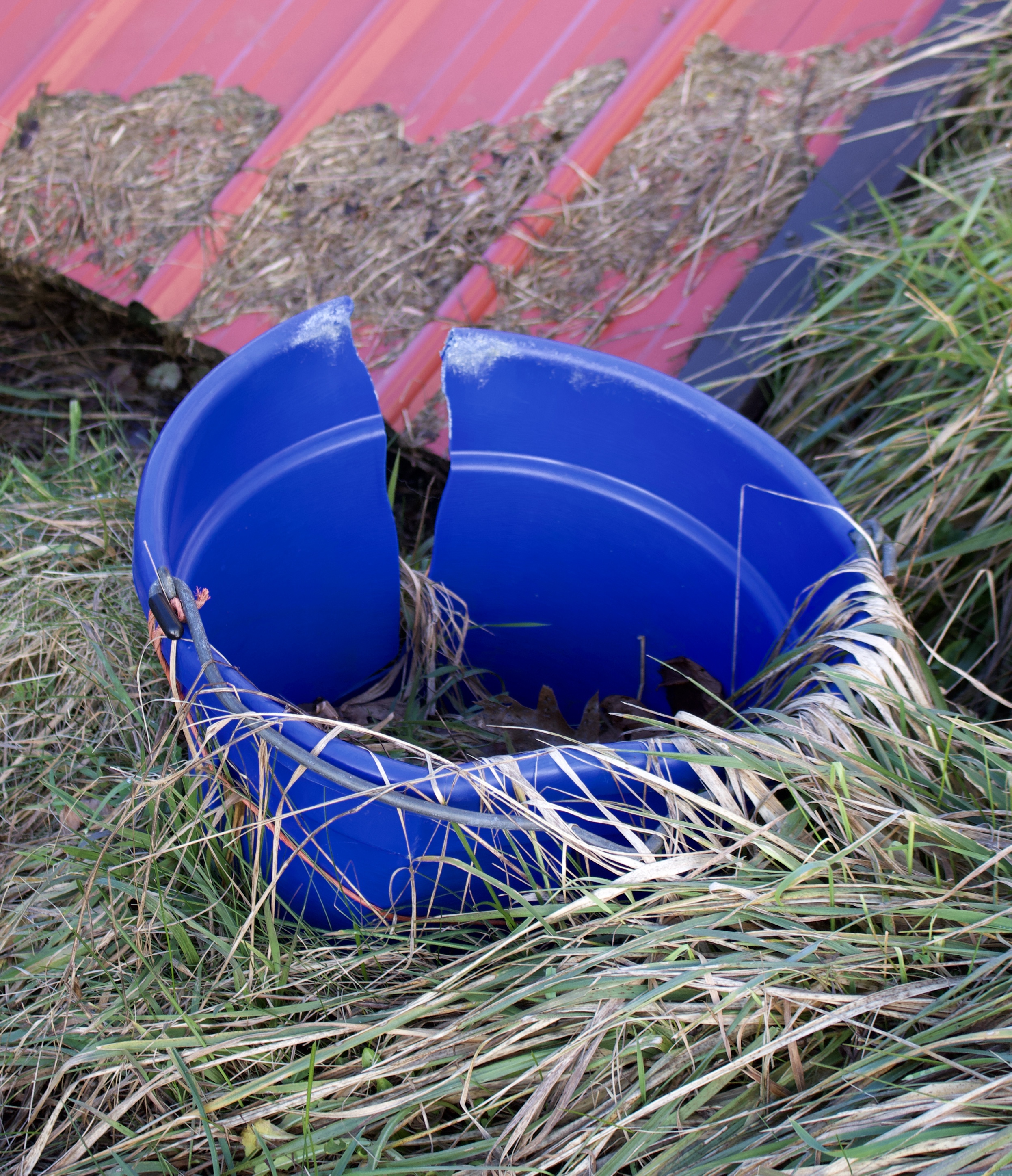
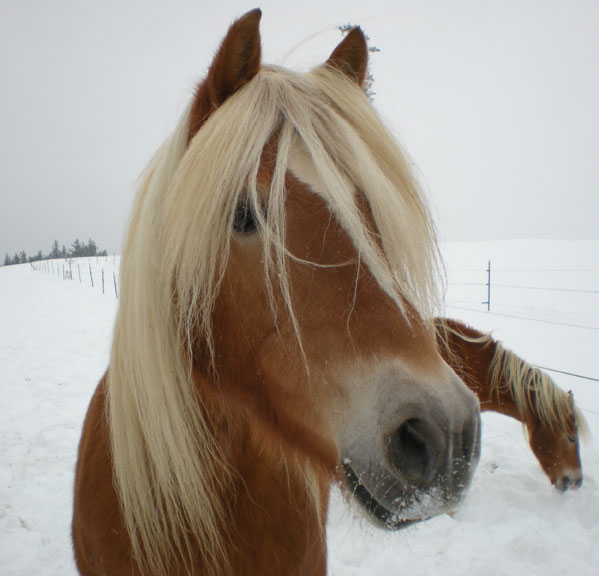
Our farm could be considered a broken bucket sanctuary; our Haflinger horses are very hard on their buckets , and in retaliatory defense the buckets have broken them back.

The best buckets are rubber, not hard plastic. They are more forgiving and flexible and can handle a fair amount of equine abuse.

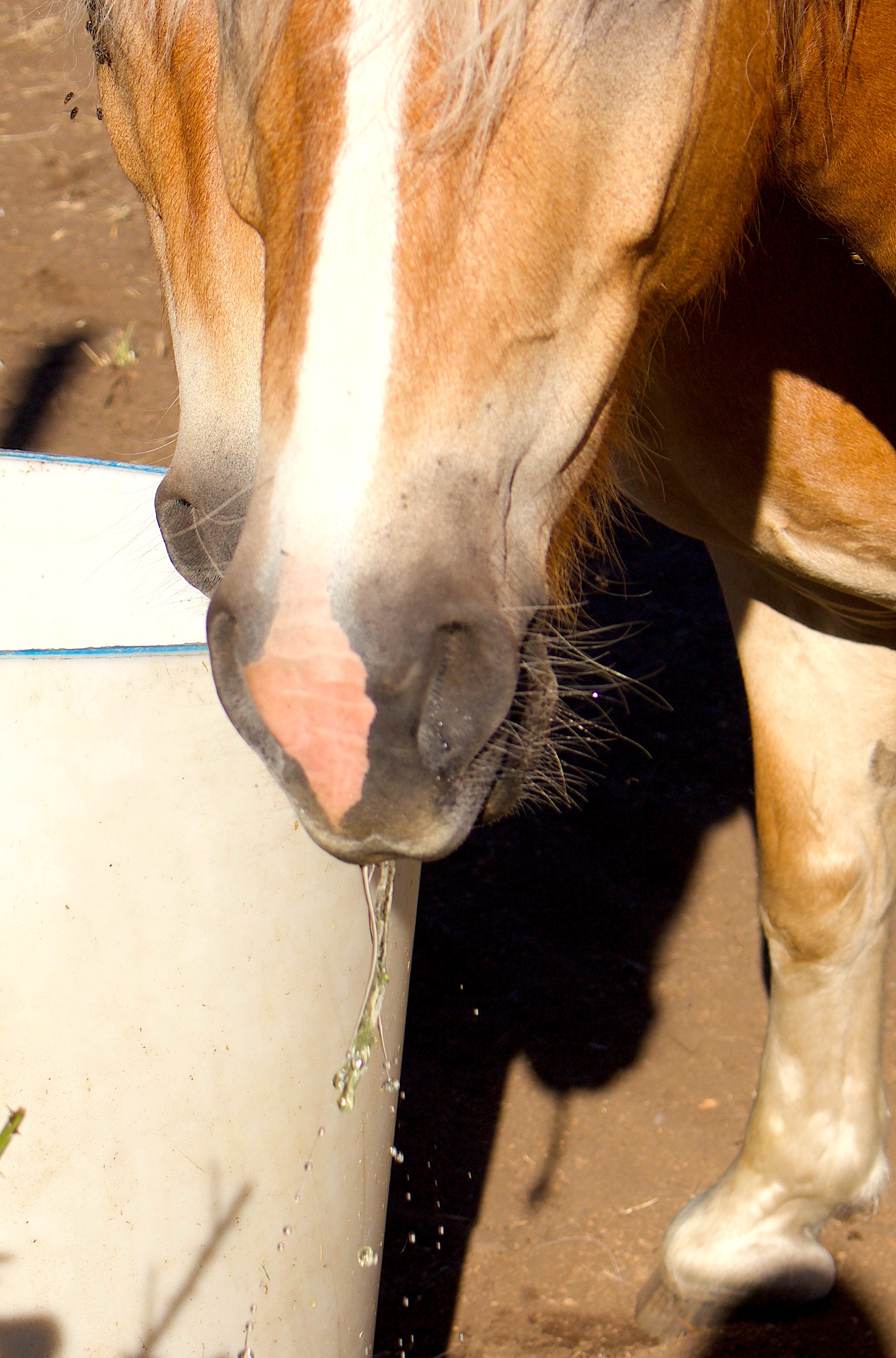
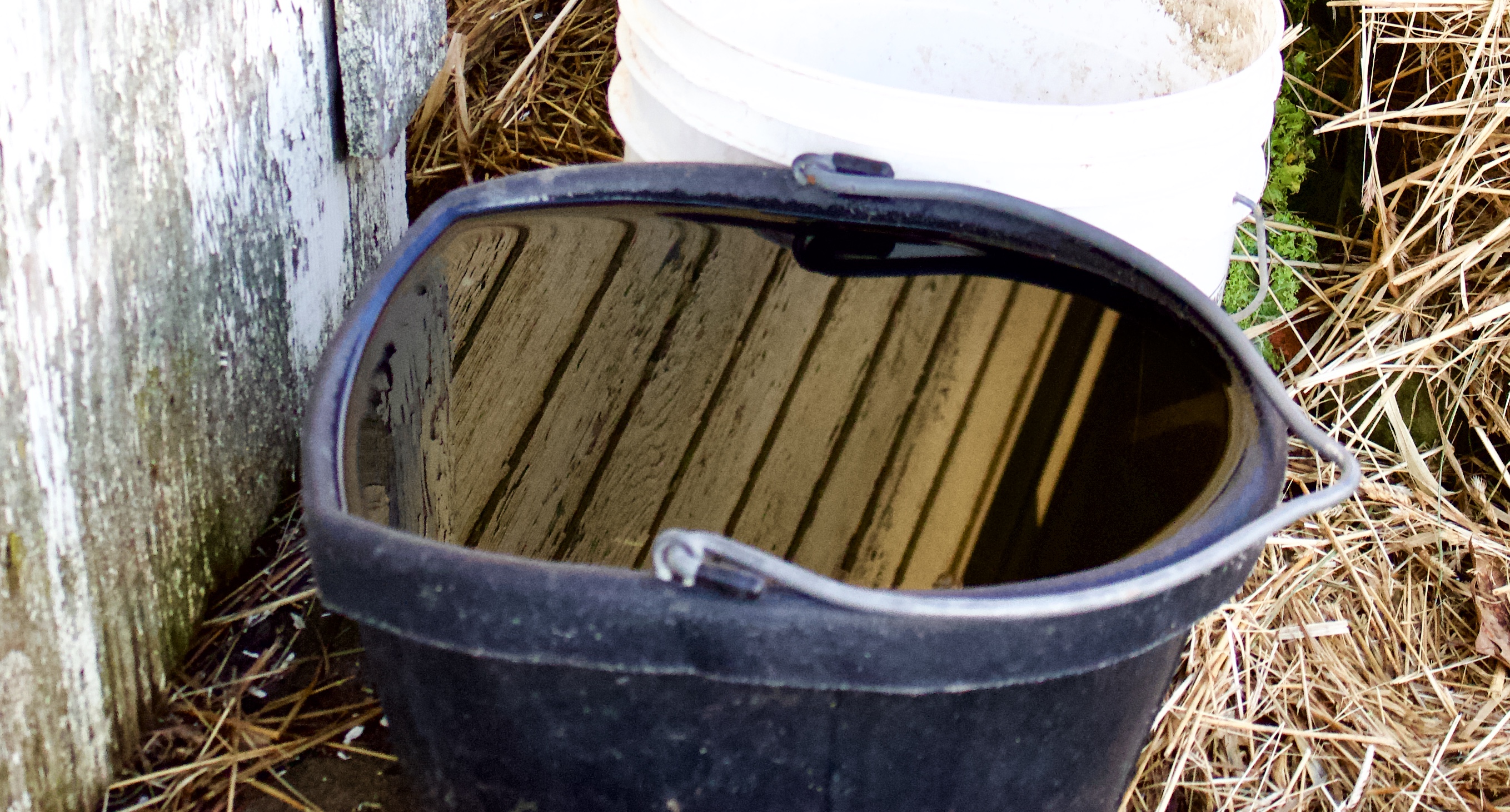
One of my jobs on the farm is to keep all buckets full, and so less likely to be the target of entertainment and abuse. It takes all those drops of water together to provide what the horse must have to quench their thirst as well as to protect the bucket itself so it will survive to be filled another day.

I can never forget: each bucket of hope starts with just one drop in the bucket, the beginning of a magnificent abundance.

The Snow Shining

The children are sleeping
and the cows and chickens are sleeping,
and the grass itself
is sleeping.
The machines are off
and the neighbor’s lights,
a half mile away, are out,
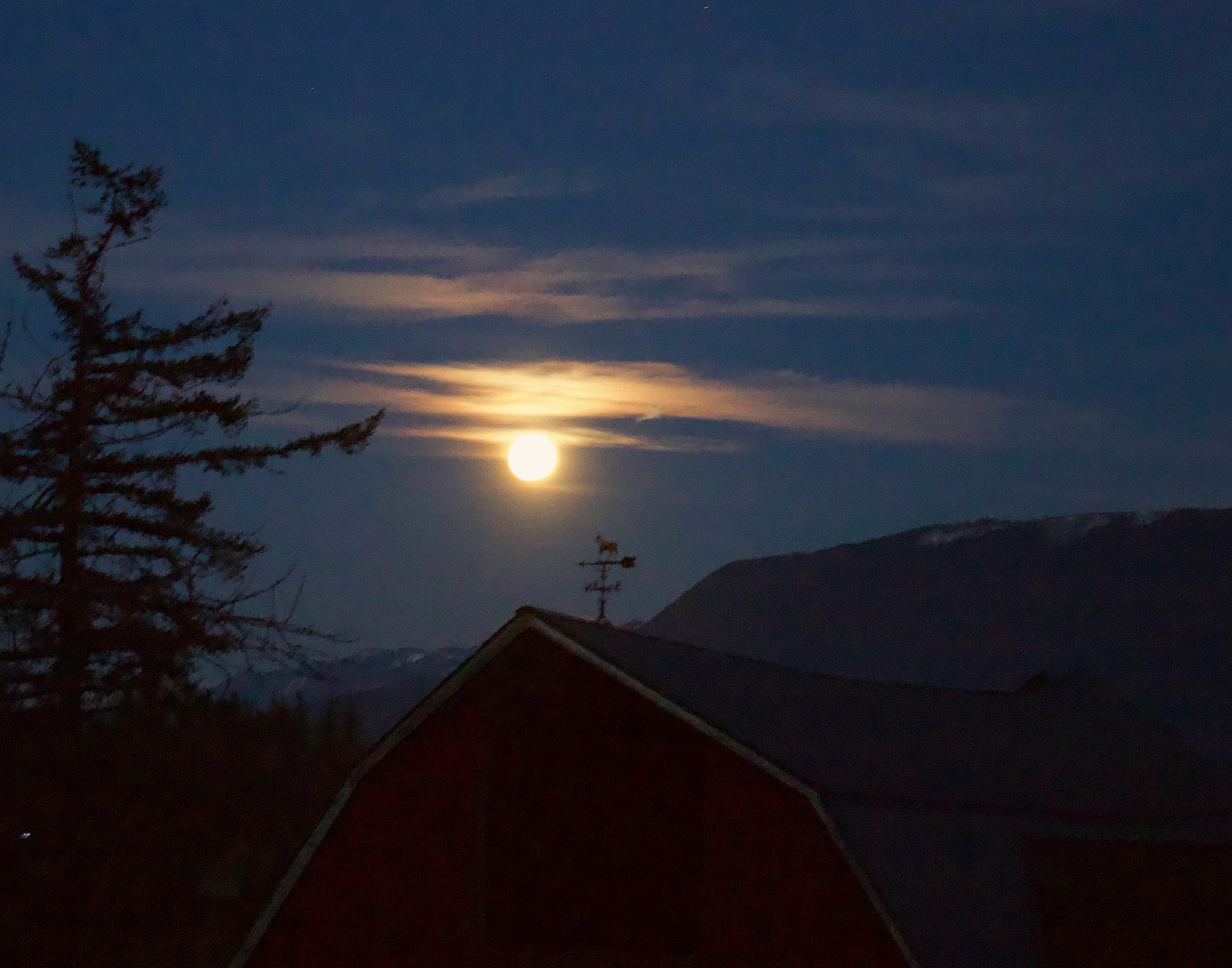
and the moon is hanging
like a powdered face
in a darkened room,
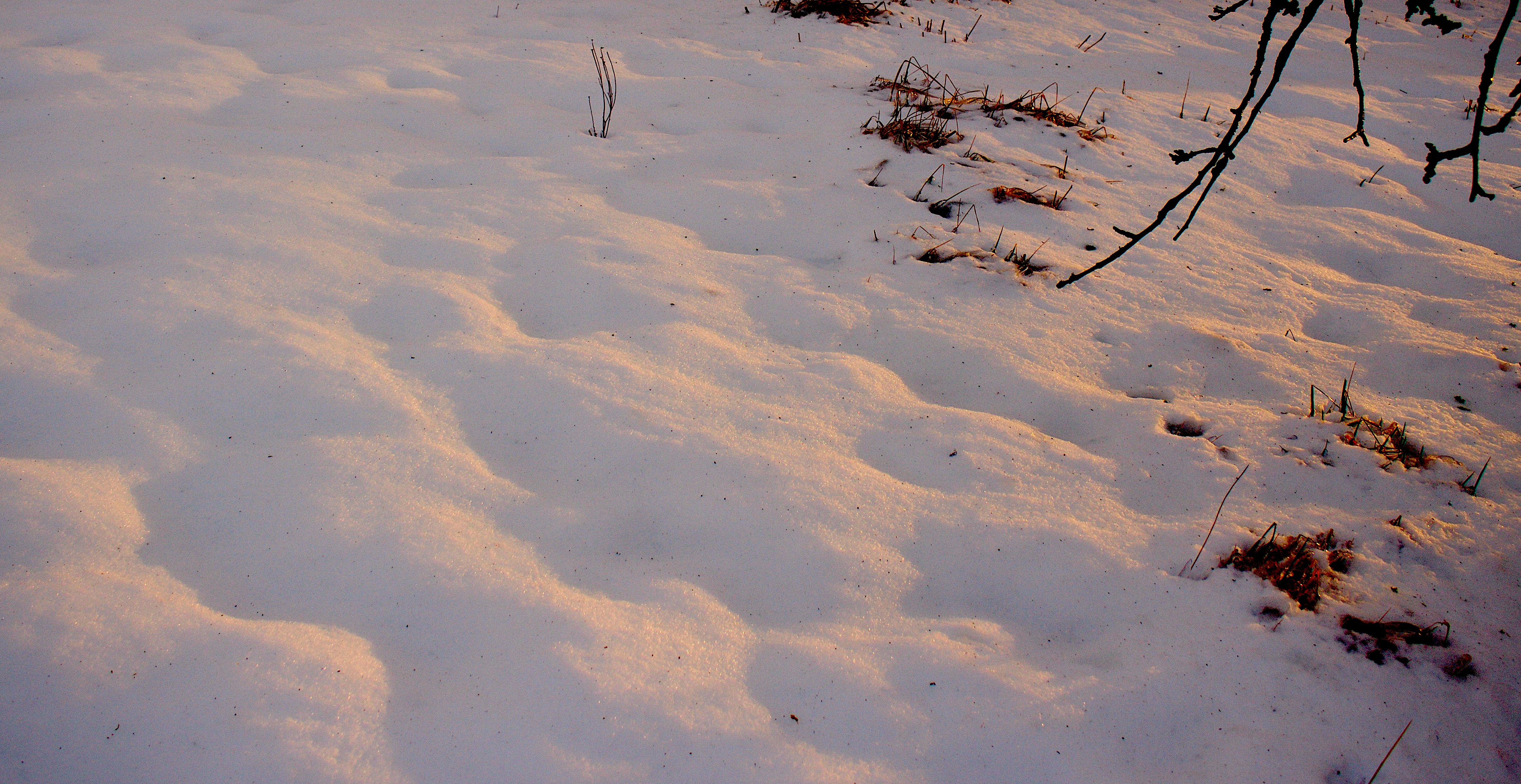
and the snow
is shining under stars
the way we are shining here
in our cold skins
under warm quilts.

There is no season, no grass
gone brown, no cold,
and no one to say we are anything
but beautiful, swimming together
across the wide channel of night.
~David Romtvedt from “Still” in Some Church

In the evening we come down to the shore
to drink our fill, and sleep, while it
flows through the regions of the dark.
It does not hold us, except we keep returning
to its rich waters thirsty. We enter,
willing to die, into the commonwealth of its joy.

I give you what is unbounded, passing from dark to dark,
containing darkness: a night of rain, an early morning.
I give you the life I have let live for the love of you:
a clump of orange-blooming weeds beside the road,
the young orchard waiting in the snow, our own life
that we have planted in the ground, as I
have planted mine in you.
~Wendell Berry from “The Country of Marriage”

Again we find ourselves alone together ~
shining in a warmth we find in each other
planted so deeply we cannot always know
where one ends and another begins,
a commonwealth of shared everything~
the soft beauty of touch and tears:
no matter what comes next.
Mine is yours.

A Last Great Splash of Light

The sun came up chased by dogs
Across a field of snow.
As they passed the pile of broken logs
Frost fluttered in the air
Between the birch trees
Standing in that spot exactly
Where the ridge becomes a hill.

The sun goes in animal delight
Over the farthest edge of earth
Not far ahead of night
And jumps into the dark pool
With a last great splash of light.
~Tom Hennen from “Winter, Thirty Below with Sundogs” from Darkness Sticks to Everything. 

Winter reduces me to my elements:
light/dark
chilled/warm
hungry/sated
empty/filled
sleep/awake
gray/gray.

It is a holding pattern of endurance, awaiting a sun that will linger longer, arrive earlier, and actually be felt, not just apparent in the distance.

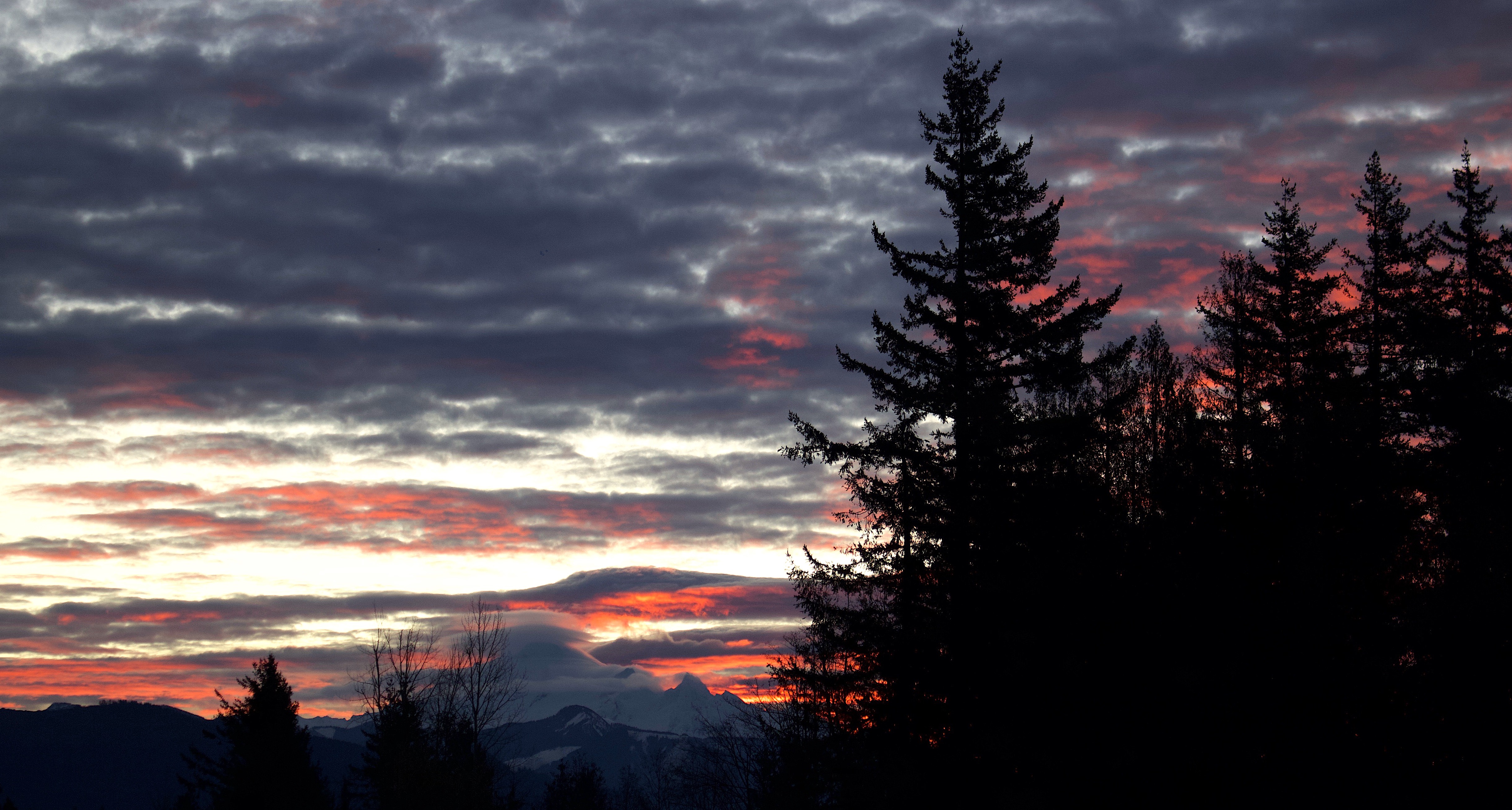
I pray for a dawn or twilight splashed with color.
Lord, any imaginable splash of color will do.

How It’s Meant to Be


There comes a time in every fall
before the leaves begin to turn
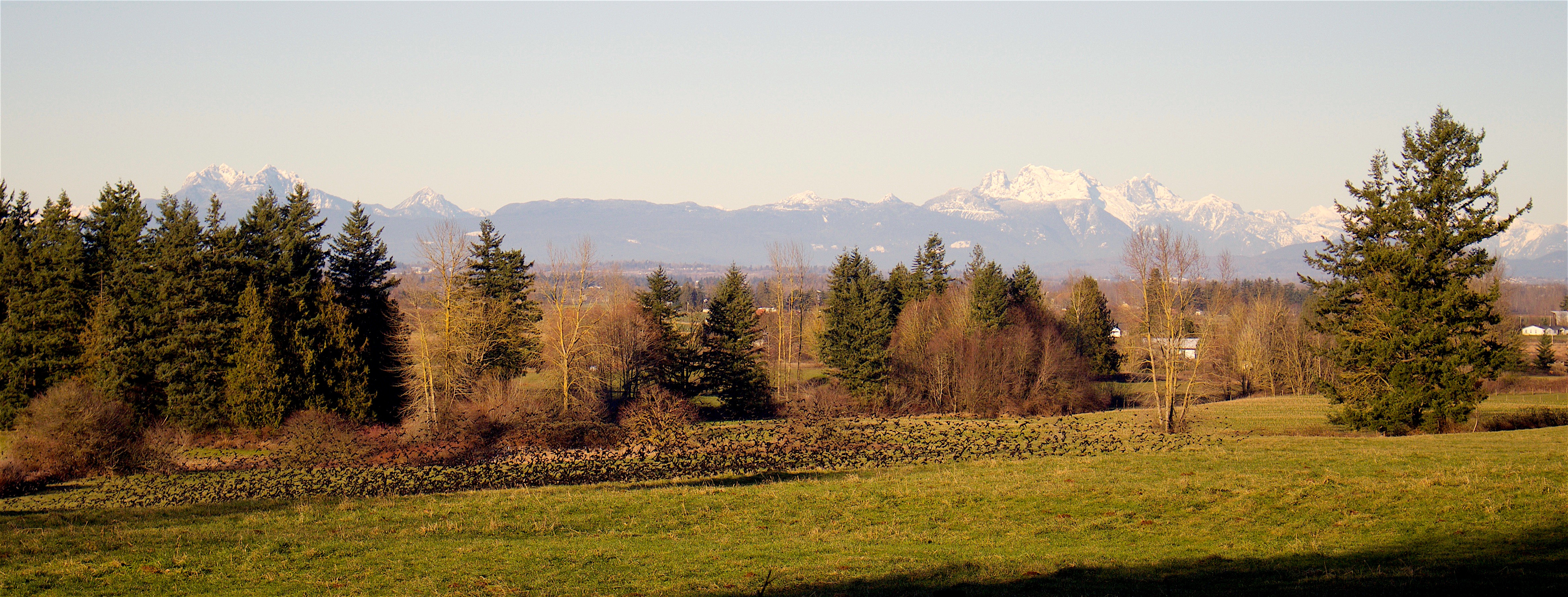
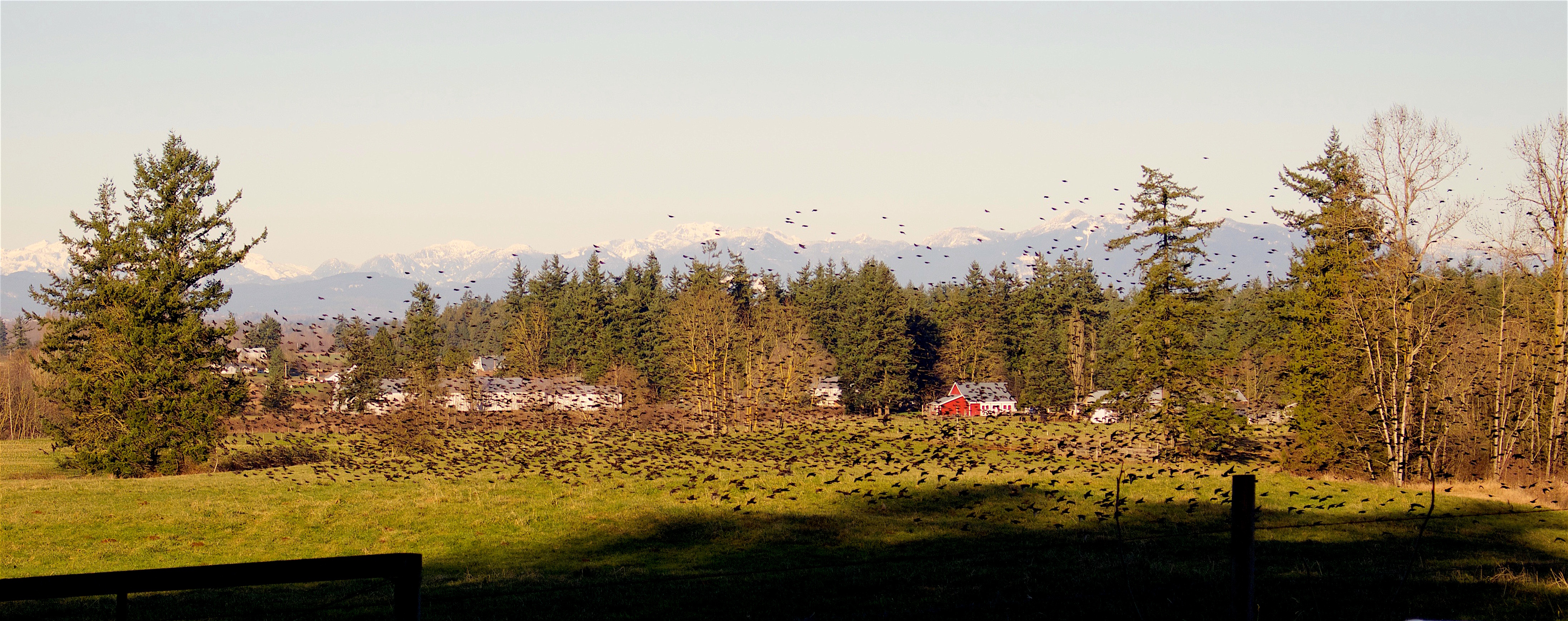
when blackbirds group and flock and gather
choosing a tree, a branch, together
to click and call and chorus and clamor
announcing the season has come for travel.

Then comes a time when all those birds
without a sound or backward glance
pour from every branch and limb
into the air, as if on a whim
but it’s a dynamic, choreographed mass
a swoop, a swerve, a mystery, a dance

and now the tree stands breathless, amazed
at how it was chosen, how it was changed.

~Julie Cadwallader Staub “Turning” from Wing Over Wing

…yesterday I heard a new sound above my head
a rustling, ruffling quietness in the spring air

and when I turned my face upward
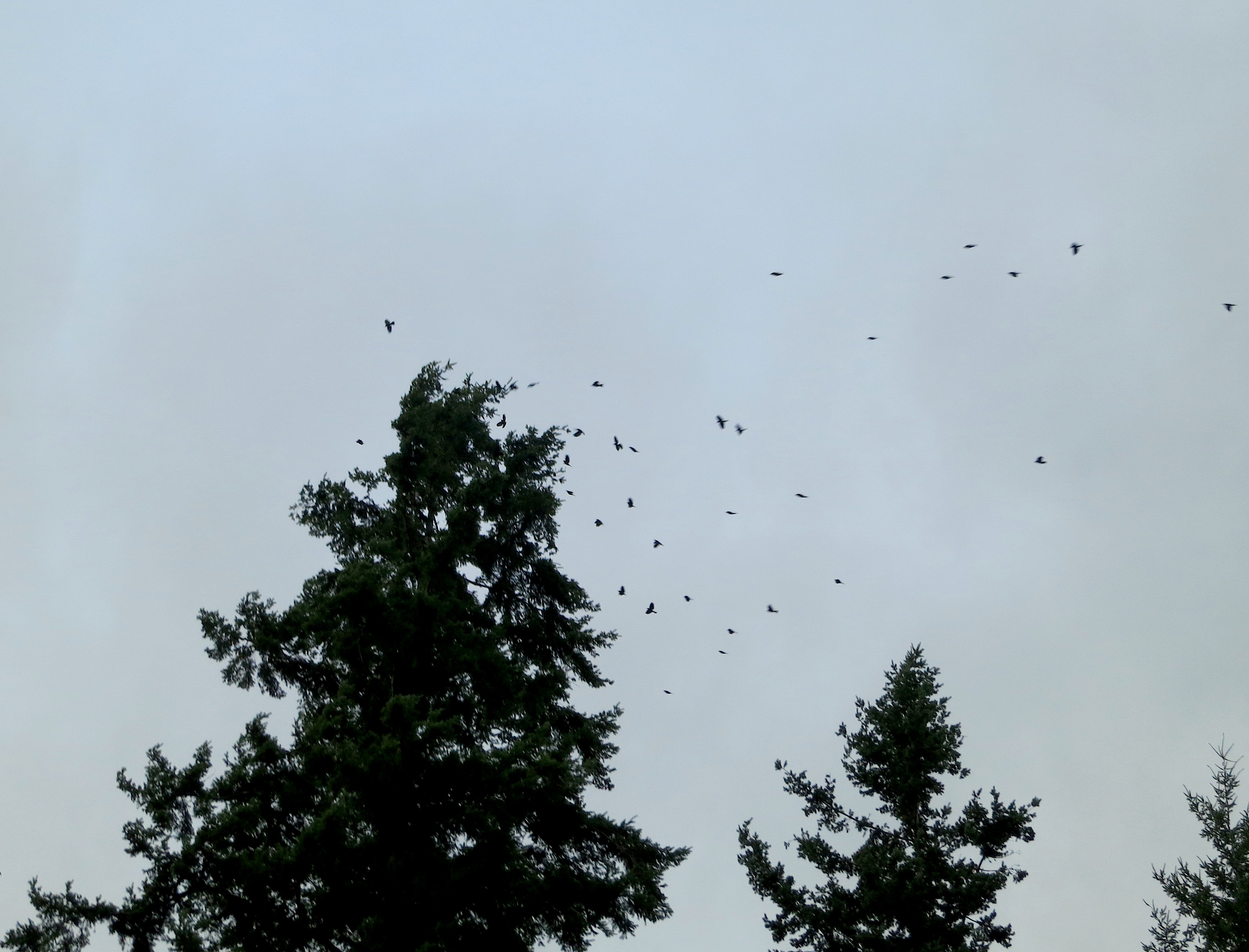
I saw a flock of blackbirds
rounding a curve I didn’t know was there
and the sound was simply all those wings,
all those feathers against air, against gravity
and such a beautiful winning:
the whole flock taking a long, wide turn
as if of one body and one mind.

How do they do that?

If we lived only in human society
what a puny existence that would be

but instead we live and move and have our being
here, in this curving and soaring world
that is not our own
so when mercy and tenderness triumph in our lives
and when, even more rarely, we unite and move together
toward a common good,

we can think to ourselves:

ah yes, this is how it’s meant to be.
~Julie Cadwallader Staub from “Blackbirds” from Wing Over Wing

Out of the dimming sky a speck appeared,
then another, and another.
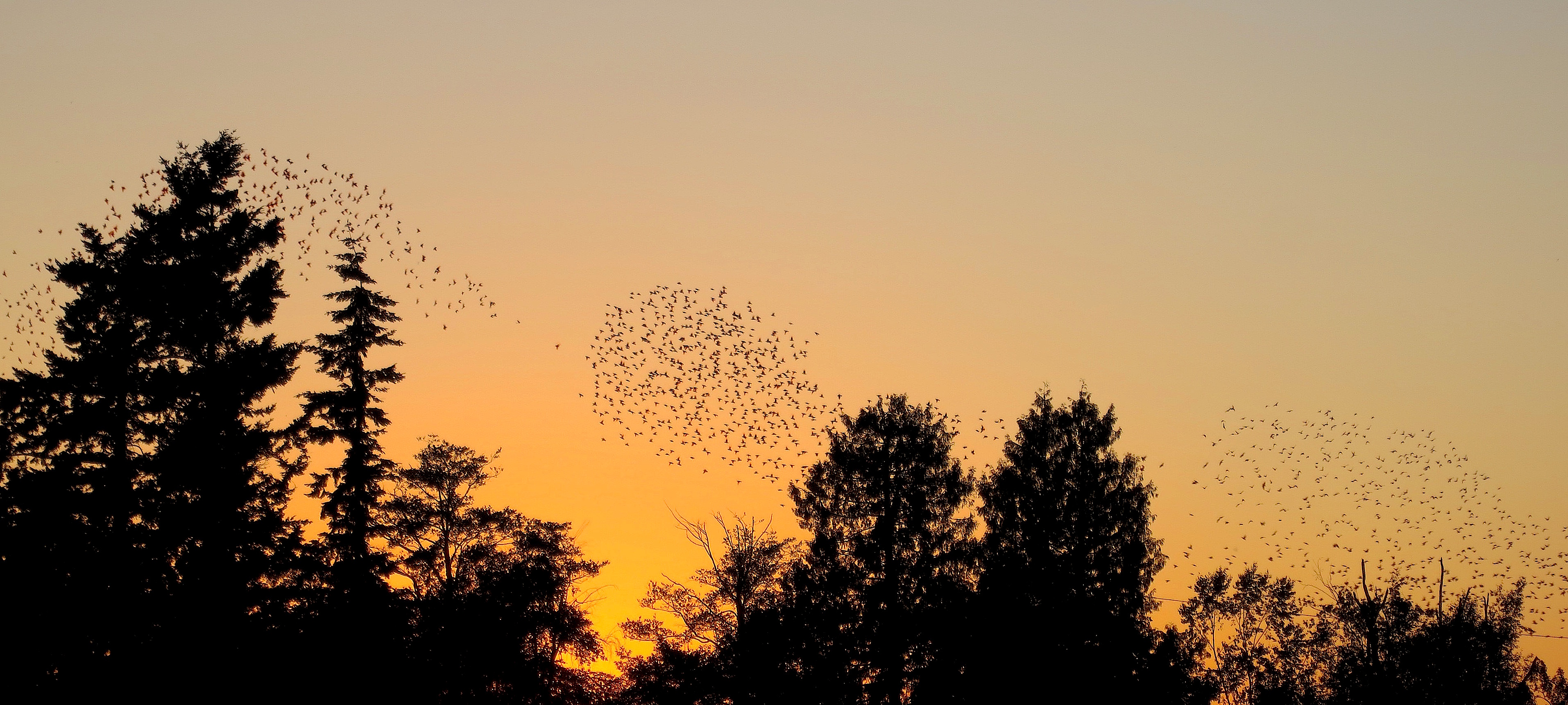
It was the starlings going to roost. 
They gathered deep in the distance,  flock sifting into flock,
and strayed towards me, transparent and whirling, like smoke.
They seemed to unravel as they flew,
lengthening in curves, like a loosened skein. 
I didn’t move;
they flew directly over my head for half an hour. 

Each individual bird bobbed and knitted up and down
in the flight at apparent random, for no known reason except
that that’s how starlings fly, yet all remained perfectly spaced.
The flocks each tapered at either end from a rounded middle, like an eye.
Overhead I heard a sound of beaten air, like a million shook rugs, a muffled whuff.
Into the woods they sifted without shifting a twig,
right through the crowns of trees, intricate and rushing, like wind.

Could tiny birds be sifting through me right now,
birds winging through the gaps between my cells,
touching nothing, but quickening in my tissues, fleet?
~Annie Dillard from Pilgrim at Tinker Creek

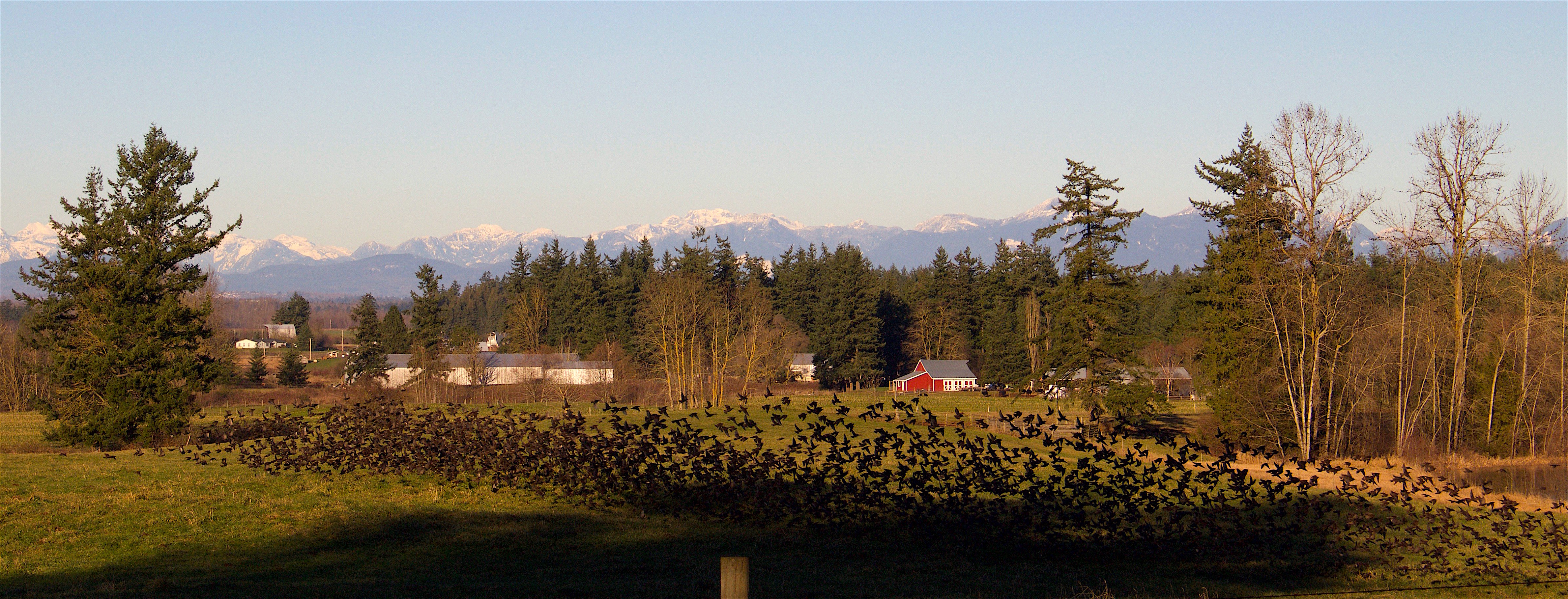
Watching the starlings’ murmuration is a visceral experience – my heart leaps to see it happen above me.  I feel queasy following its looping amoebic folding and unfolding path.

Thousands of individual birds move in sync with one another to form one massive organism existing solely because each tiny component anticipates and cooperates to avoid mid-air collisions.  It could explode into chaos but it doesn’t.  It could result in massive casualties but it doesn’t.  They could avoid each other altogether but they don’t – they come together with a purpose and reasoning beyond our imagining. Even the silence of their movement has a discernible sound of air rushing past wings.

We humans are made up of just such cooperating component parts, that which is deep in our tissues, programmed in our DNA.  Yet we don’t learn from our designed and carefully constructed building blocks.  We have become frighteningly disparate and independent creatures, each going our own way bumping and crashing without care.

We have lost our internal moral compass for how it is meant to be.

The rustling ruffling quiet of wings in the air is actually muffled weeping.

Cat and Mouse

Let us walk in the woods, says the cat.
I’ll teach you to read the tabloid of scents,
to fade into shadow, wait like a trap, to hunt.
Now I lay this plump warm mouse on your mat.

~Marge Piercy from “The Cat’s Song”

Pangur Bán and I at work,
Adepts, equals, cat and clerk:
His whole instinct is to hunt,
Mine to free the meaning pent.

Next thing an unwary mouse
Bares his flank: Pangur pounces.
Next thing lines that held and held
Meaning back begin to yield.

With his unsheathed, perfect nails
Pangur springs, exults and kills.
When the longed-for, difficult
Answers come, I too exult.

So it goes. To each his own.
No vying. No vexation.
Taking pleasure, taking pains,
Kindred spirits, veterans.

~ from “Pangur Bán” by a 9th century Irish monk

I’m still groggy every morning when I step out my front door onto the porch to make my way down a  gravel driveway to get the newspaper. More often than not, it is still quite dark out at 5:15 AM.  More often than not, my slippered foot lands on something a little crunchy and a little squishy and a lot icky on the welcome mat in front of my door.

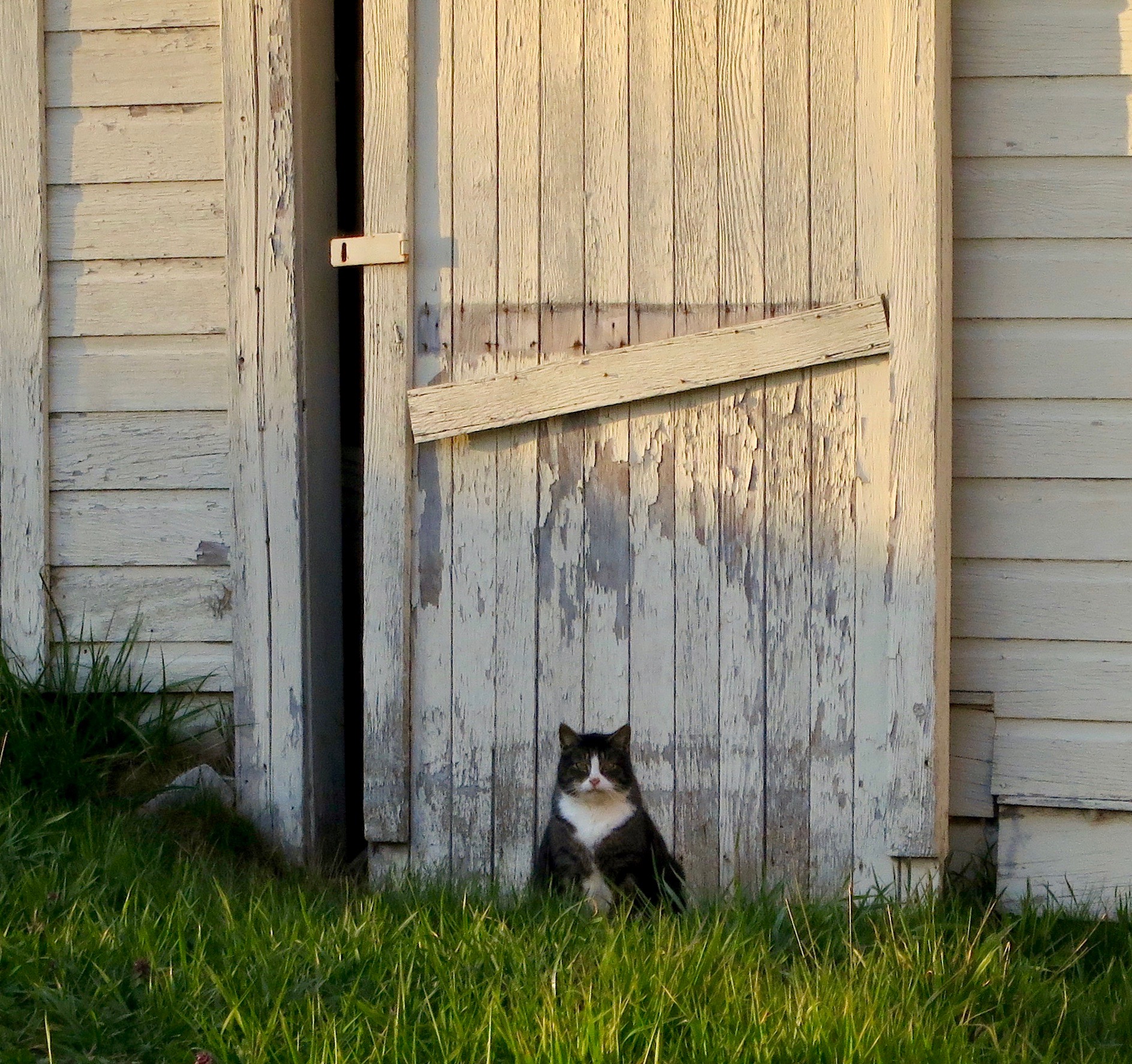
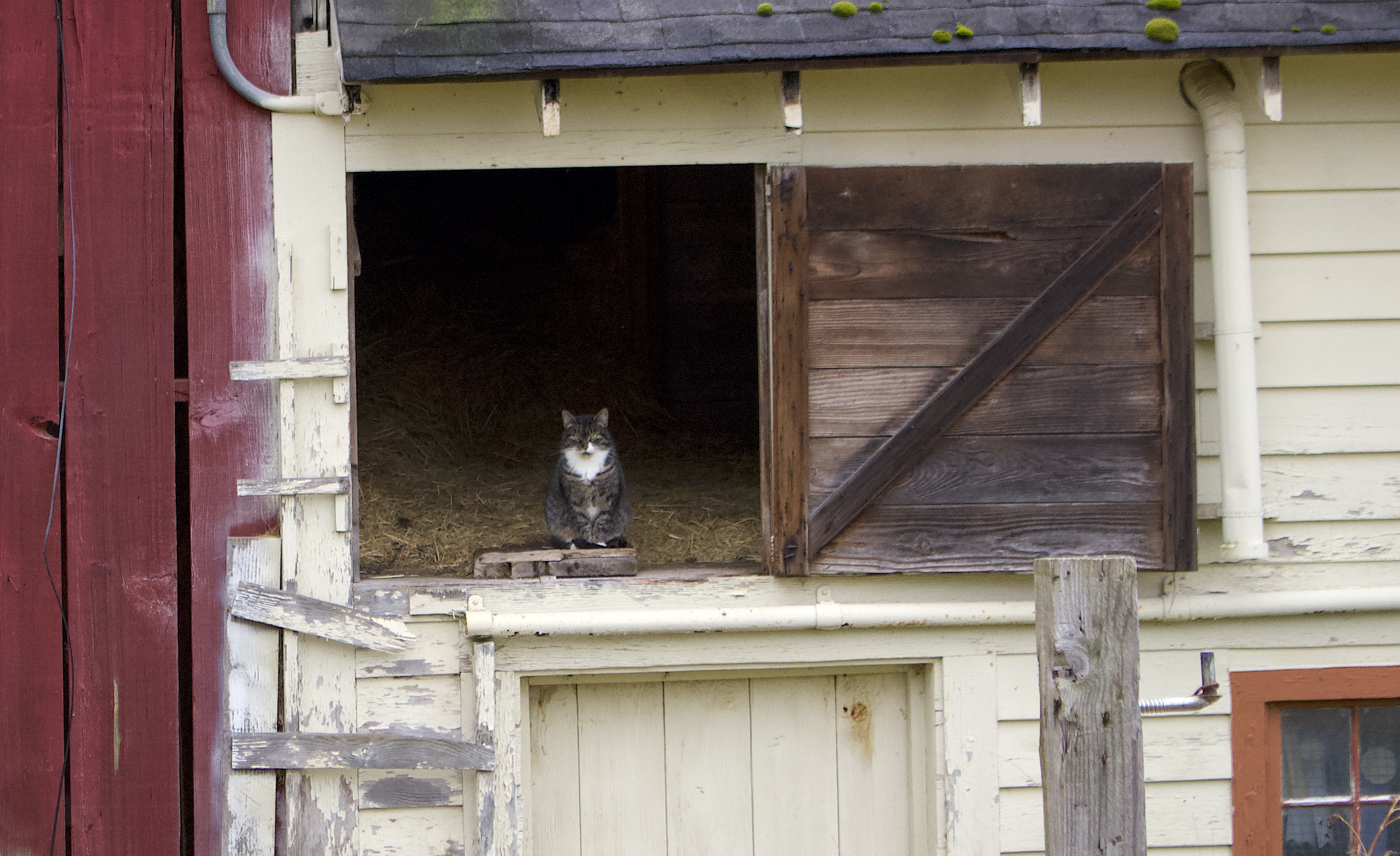
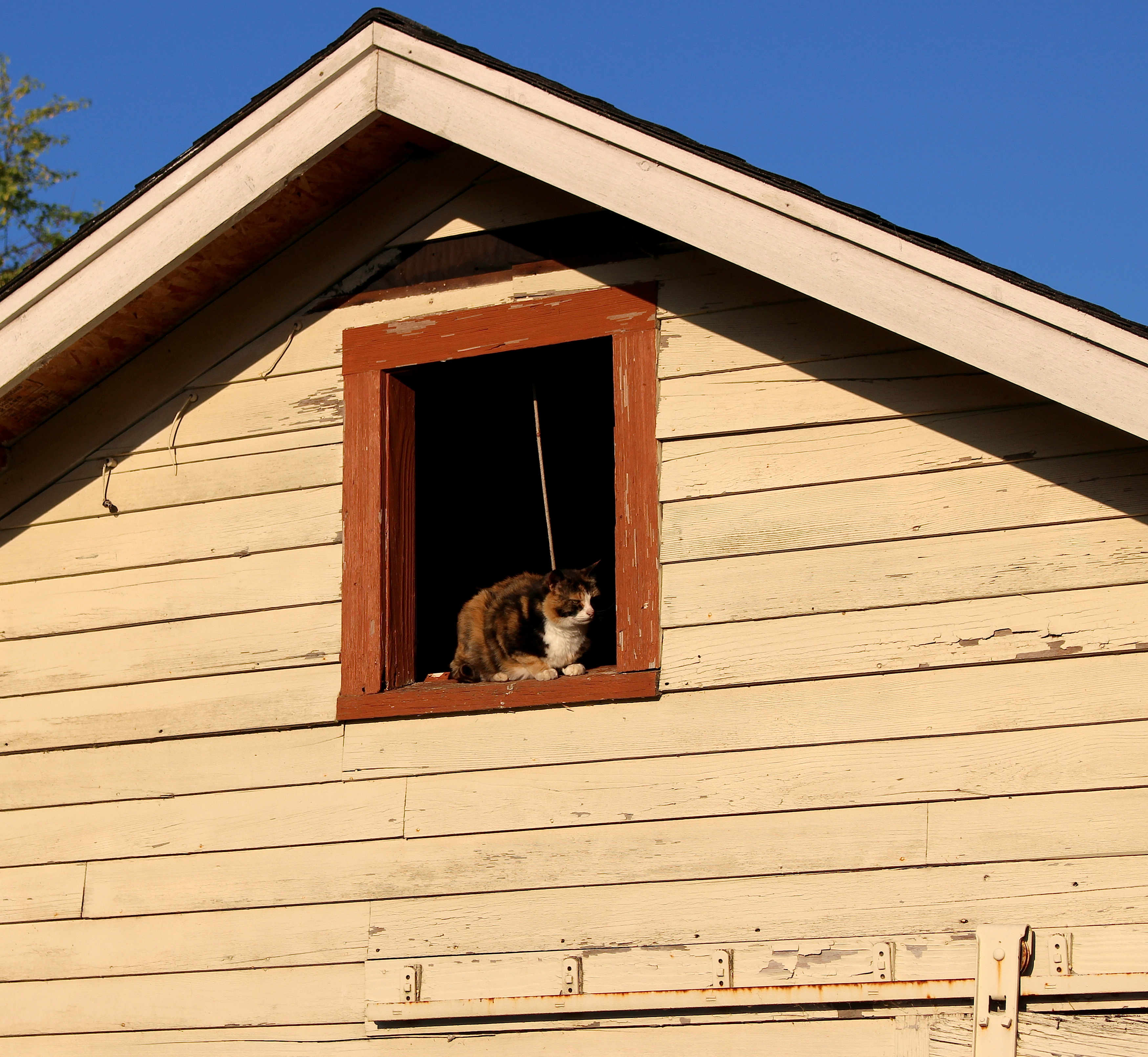
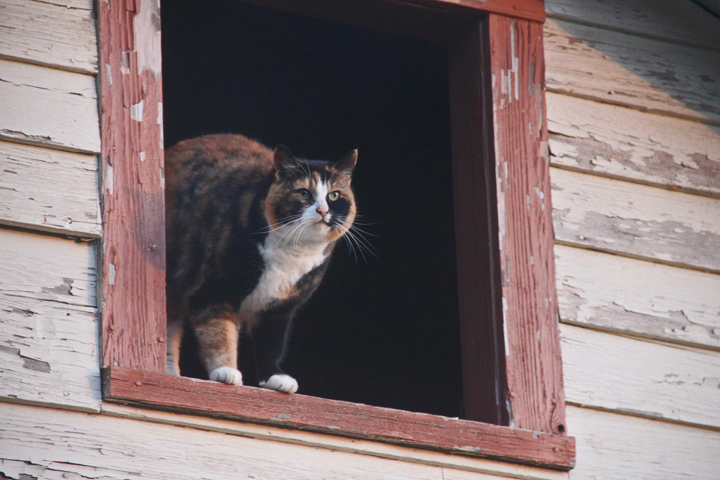
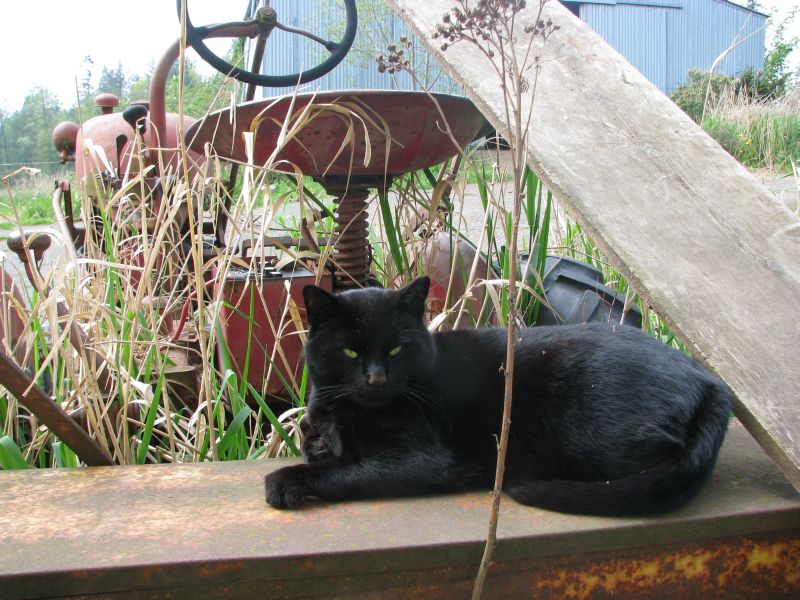
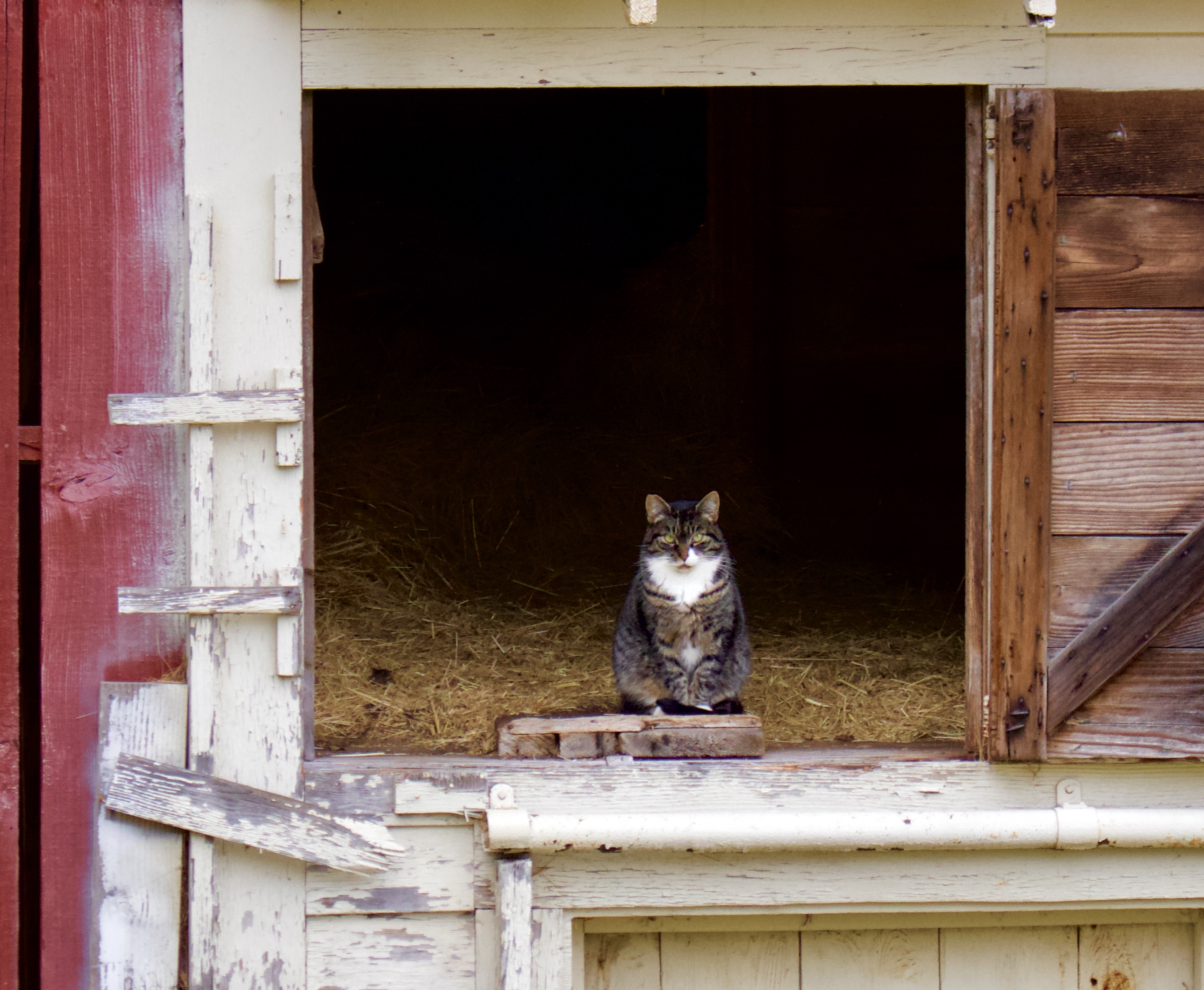
The front porch cat — as opposed to the back porch cat, the garden shed cat, the hay barn cat, the horse barn cat and the 3 feral stray cats — predator that he is, leaves behind certain remnants of his prey’s….uh, body parts.  Mousey body parts or birdie body parts.  I assume, from the consistency of this little carnivore compost pile, these are unappealing to the kitty, so become the “leavings”, so to speak,  of the kill. Typically, it is a little mouse head, complete with little beady eyes, or a little bird head, complete with little beak, and something that looks suspiciously green and bulbous, like a gall bladder.  I don’t think heads or gall bladders are on my preferred delicacy list either. And they are certainly not on my list of things I like to wear on the bottom of my slipper.  Yet I do and I have.

I’m perplexed by this habit cats have of leaving behind the stuff they don’t want on the welcome mat, even the occasional whole shrew or field mouse, seemingly untouched by claw or incisor, but yet dead as a doornail on the doormat. 
Some cat owners naively think their cats are presenting them with “gifts” –kind of a sacrificial offering to the human god that feeds them.  Nonsense.  This is the universal trash heap for cats and a testimony to their utter disdain for humans.   Leave for the human the unappetizing and truly grotesque…

In my daily walk through life, I too have my share of things from my own hunting expeditions that I unceremoniously dump into a compost pail: things I don’t want, don’t need, can’t use, or abandon when I only want the palatable so the rest can rot.  Apple cores, peach pits, corn husks, banana peels, orange rinds…none have the gross-out characteristics of a tiny gall bladder but I can at least comfort myself with the knowledge they won’t end up on the bottom of anyone’s slipper.

photo by Nate Gibson

Falling Toward Each Other

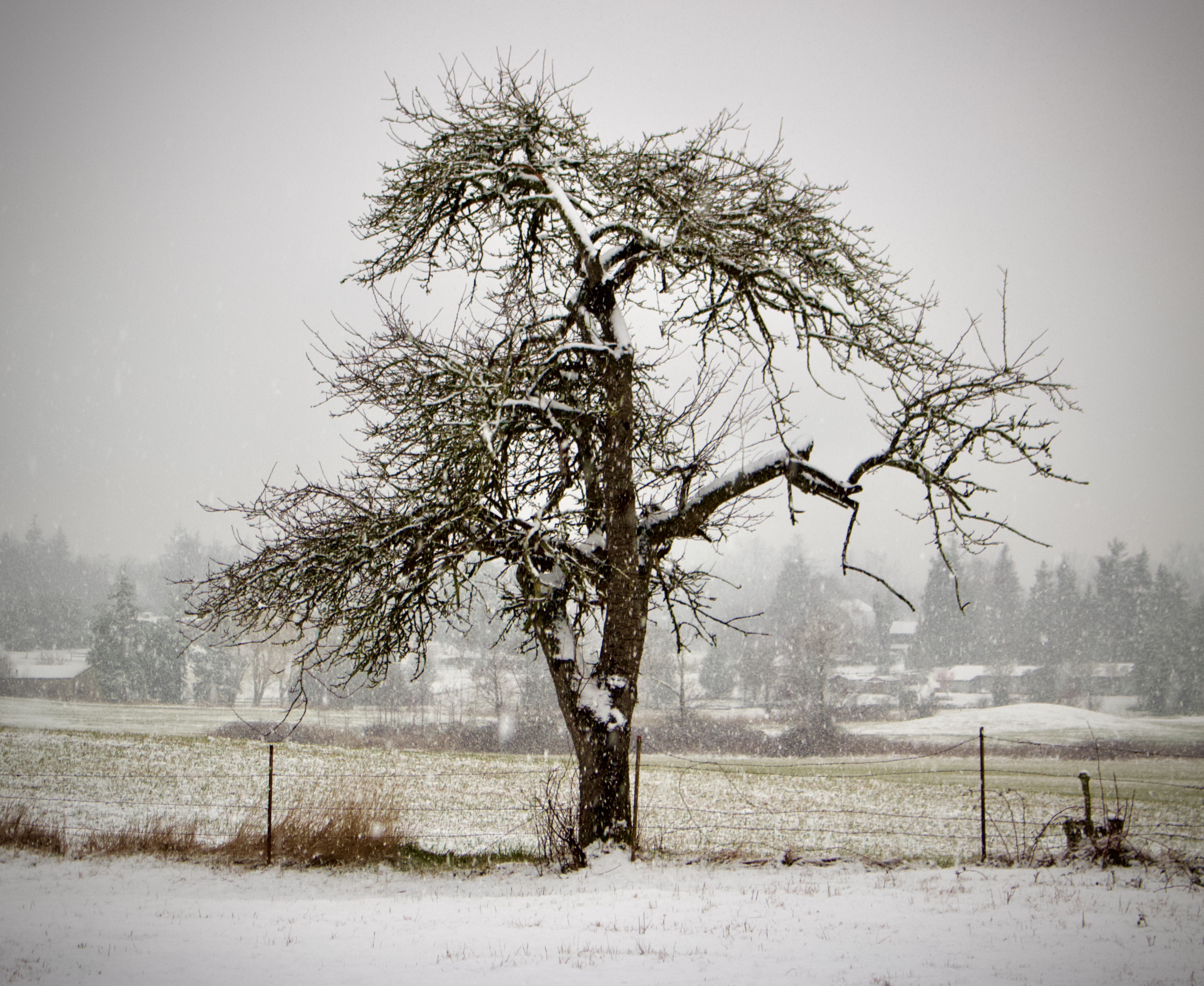
We are waiting for snow
the way we might wait
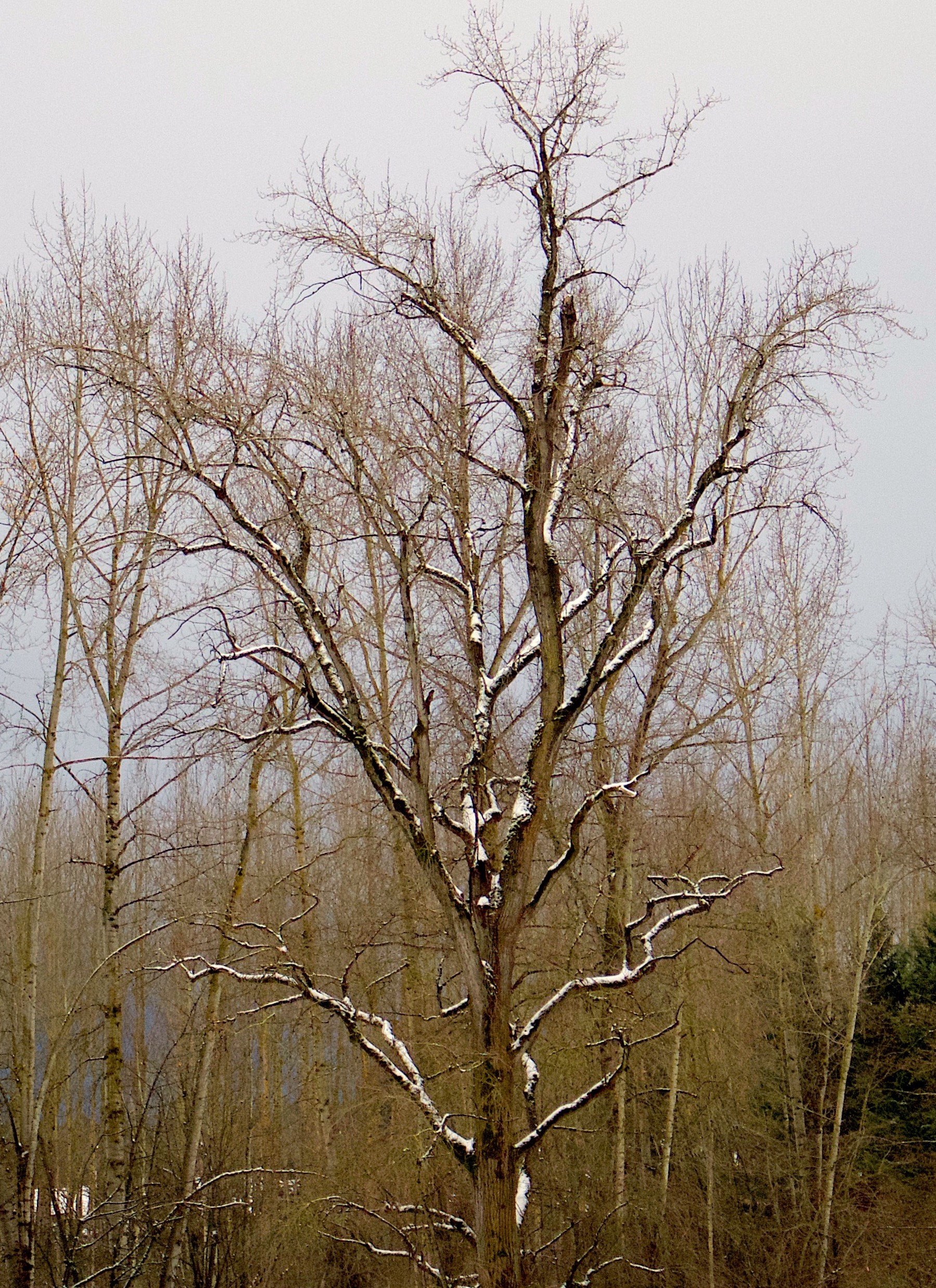
for permission
to breathe again.

For only the snow
will release us, only the snow
will be a letting go, a blind falling
towards the body of earth
and towards each other.
~Linda Pastan from “Interlude”

I wish one
could press snowflakes
in a book
like flowers.
~James Schuyler from “February 13, 1975”

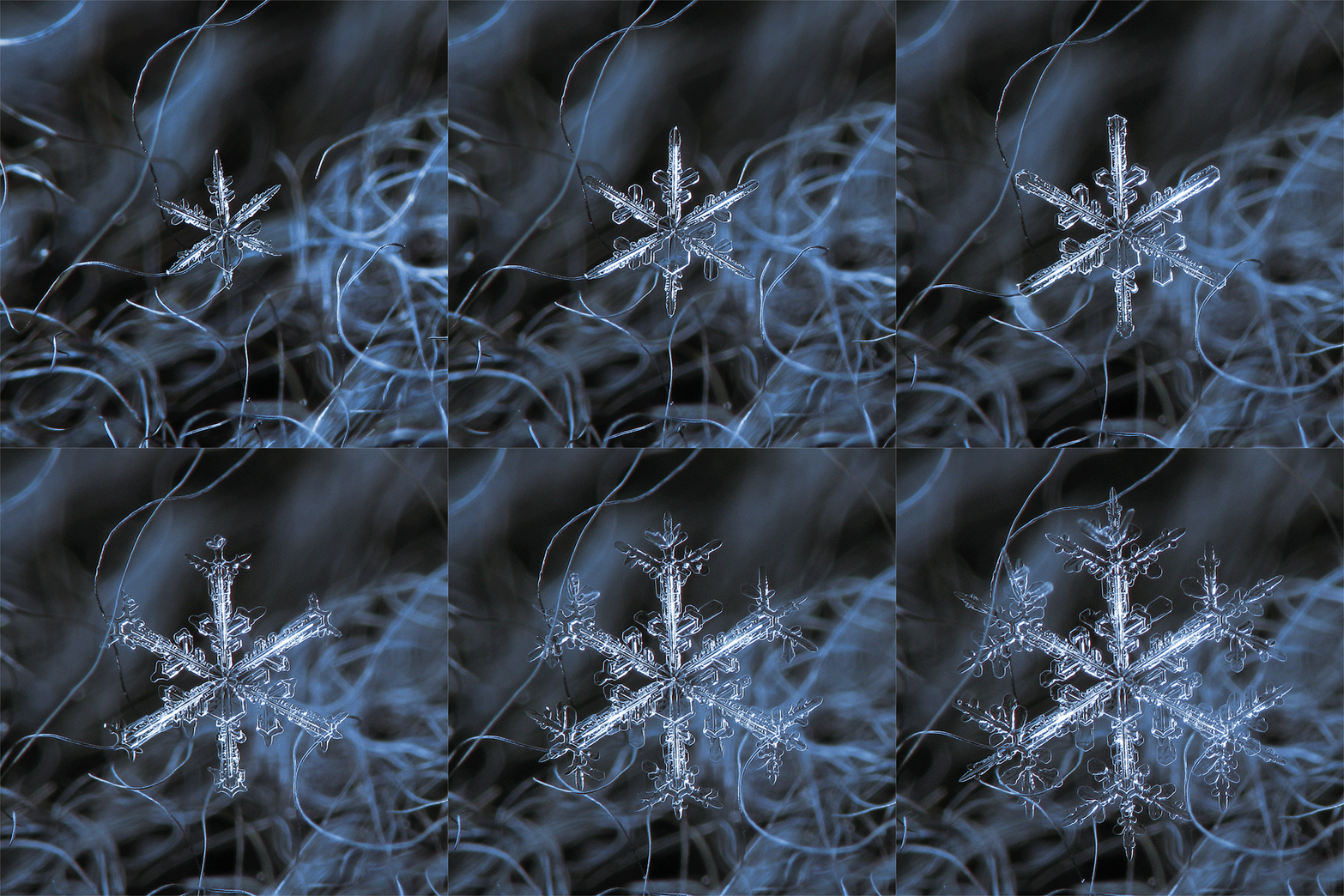
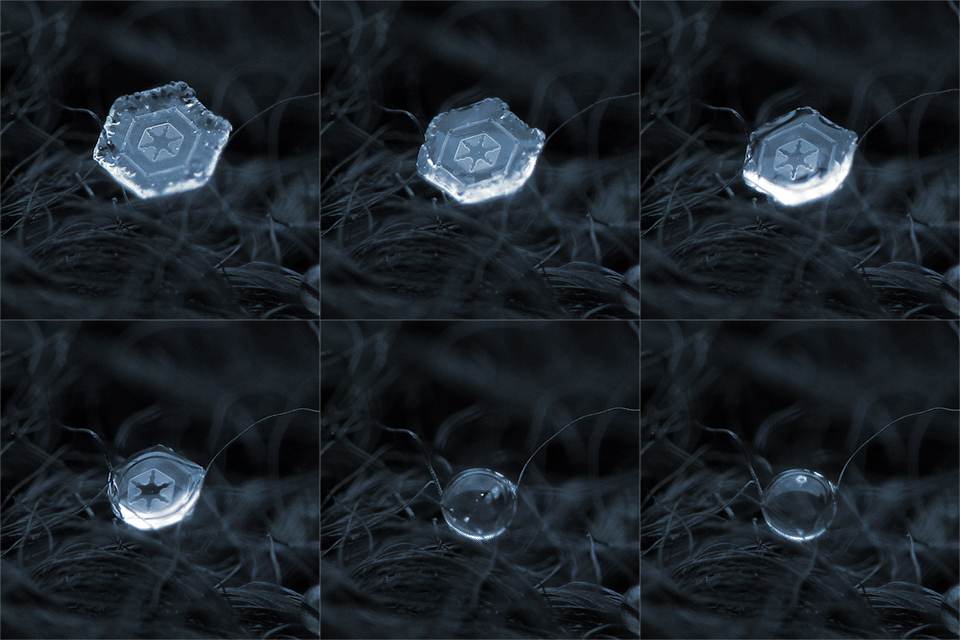
I wait with bated breath, wondrous at today’s snowfall, to see the landscape transformed. Each snowflake falls alone, settling in together in communal effort. And each is created as a singular masterpiece itself.
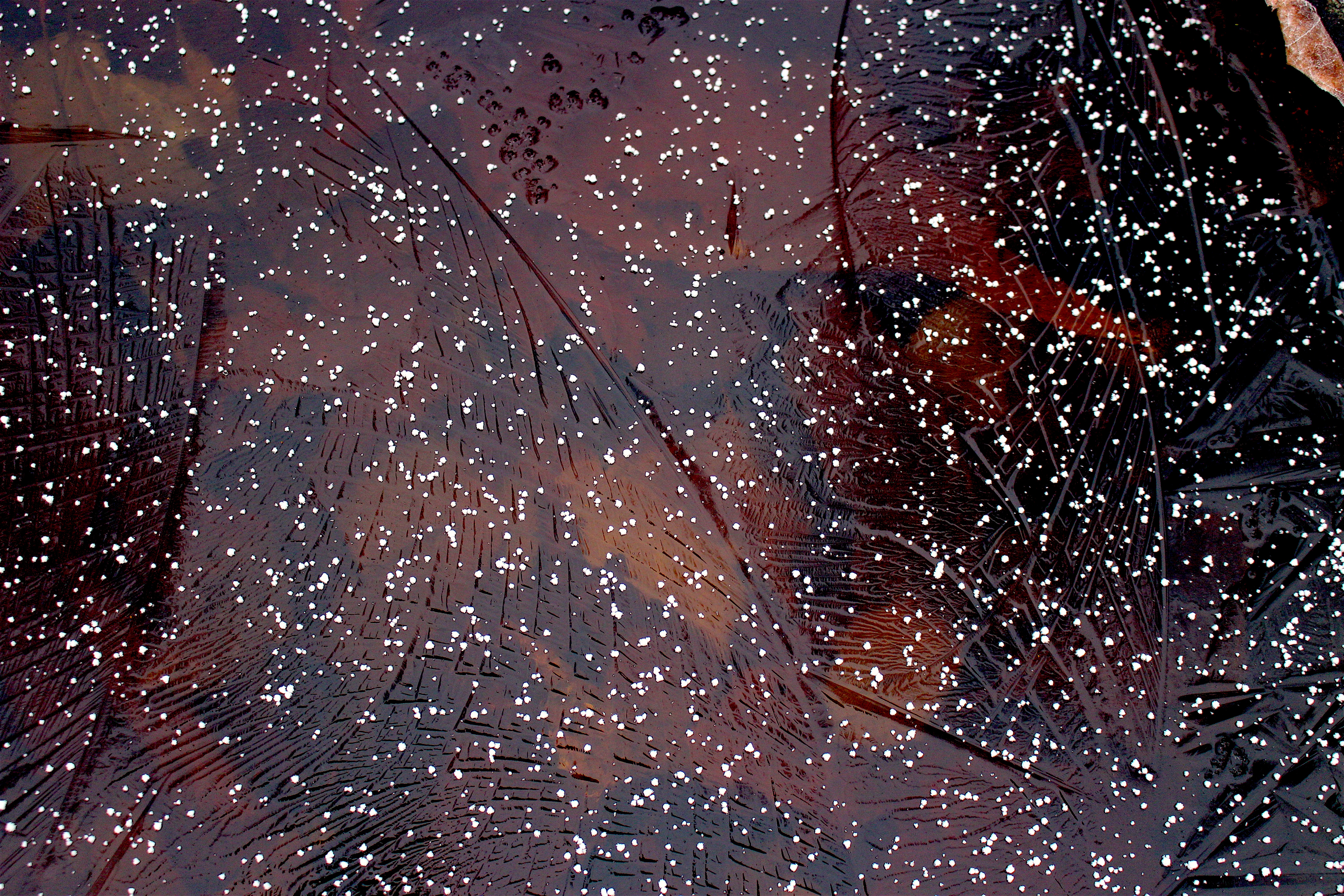
We, the created, are like each snowflake. Together we change the world, sometimes for better, too often for worse. But each of us have come from heaven uniquely designed and purposed, preciously preserved for eternity through God’s loving sacrifice.

Without Him, we melt between the pages of history.

photo by Alexay Kljatov, pbs.org

Not Just Any Drunk

I remember my grandfather as a somber quiet man who used to slowly rock in a wooden chair that now sits empty in our house.

Not too long before, my Grandpa drank heavily but he wasn’t just any drunk.  He was a mean drunk.  Surly, cursing, prone to throwing things and people, especially at home.

Grandma used to say he learned to drink in the logging camps and I suspect that is true.  He started working as a logger before he was fully grown, dropping out of school, leaving home around age sixteen and heading up to the hills where real money could be made.  He learned more than how to cut down huge old growth Douglas Fir trees, skid them down the hills using a team of horses, and then roll them onto waiting wagons to be hauled to the mills.  He learned how to live with a group of men who surfaced once or twice a month from the hills to take a bath and maybe go to church with their womenfolk. Mostly he learned how to curse and drink.

He headed home to the  farm with muscles and attitude a few years later, and started the process of felling trees there, creating a “stump farm” that was a challenge to work because huge stumps dotted the fields and hills.  He slowly worked at blasting them out of the ground so the land could be tilled.  It proved more than he had strength and motivation to do, so his fields were never very fruitful, mostly growing hay for his own animals.  He went to work in the local saw mill to make ends meet.

He cleaned up some when he met my grandmother, who at eighteen was twelve years younger, and eager to escape her role as chief cook and bottle washer for her widowed father and younger brother.   She was devout, lively and full of energy and talked constantly while he, especially when sober, preferred to let others do the talking.  It was an unusual match but he liked her cooking and she was ready to escape the drudgery of her father’s household and be wooed.

They settled on the stump farm and began raising a family, trying to eke out what living they could from the land, from the sporadic work he found at the saw mill, and every Sunday, took the wagon a mile down the road to the Bible Church where they both sang with gusto.

He still drank when he had the money, blowing his pay in the local tavern, and stumbling in the back door roaring and burping, falling into bed with his shoes on.  Grandma was a teetotaler and yelled into his ruddy face about the wrath of God anytime he drank, their four children hiding when the dishes started to fly, and when he would whip off his belt to hit anyone who looked sideways at him.

When their eldest daughter took sick and died quickly of lymphoma at age eight despite the little doctoring that was available, Grandpa got sober for awhile.  He saw it as punishment from God, or at least that is what Grandma told him through her sobs as she struggled to cope with her loss.

Over the years, he relapsed many times, losing fingers in his work at the mill, and losing the respect of his wife, his children and the people in the community.  Grandma left with the kids for several months to cook in a boarding house in a neighboring town, simply to be able to feed her family while Grandpa squandered what he had on drink.   Reconciled over and over again, Grandma would come back to him, sending their growing son to fetch him from the tavern for the night.  My Dad would bicycle to that dark and smoky place,  stand Grandpa up and guide him staggering out to their truck for the weaving drive home on country roads.  On more than one occasion, Grandpa, belligerent as ever, would resist leaving and throw a punch at his boy, usually missing by a mile.

But once the boy grew taller and strong enough to fight back, managing to knock Grandpa to the ground in self-defense, the punching and resistance stopped.   The boozing didn’t.

Grandpa sobered up for good while his boy fought in the war overseas in the forties, striking a bargain with God that his boy would come home safe as long as Grandpa left alcohol alone.  It stuck and he stayed sober.  His boy came home.  Grandpa saw it as a promise kept and became an elder in his Bible Church, taught Sunday School and gave his extra cash to the church rather than the tavern.

Sitting in a Christmas Sunday School program one Christmas Eve, Grandpa leaned toward Grandma and she noticed his face broken out in sweat, his face ashen.

“It’s hot in here, “ he said and collapsed in her lap.    He was gone, just like that, and he left the rest of his family behind while sitting in church, sober as can be,  on the day before Christmas.

Finally everlastingly forgiven, he headed one more time, not weaving or swerving but on the straight and narrow,  home.

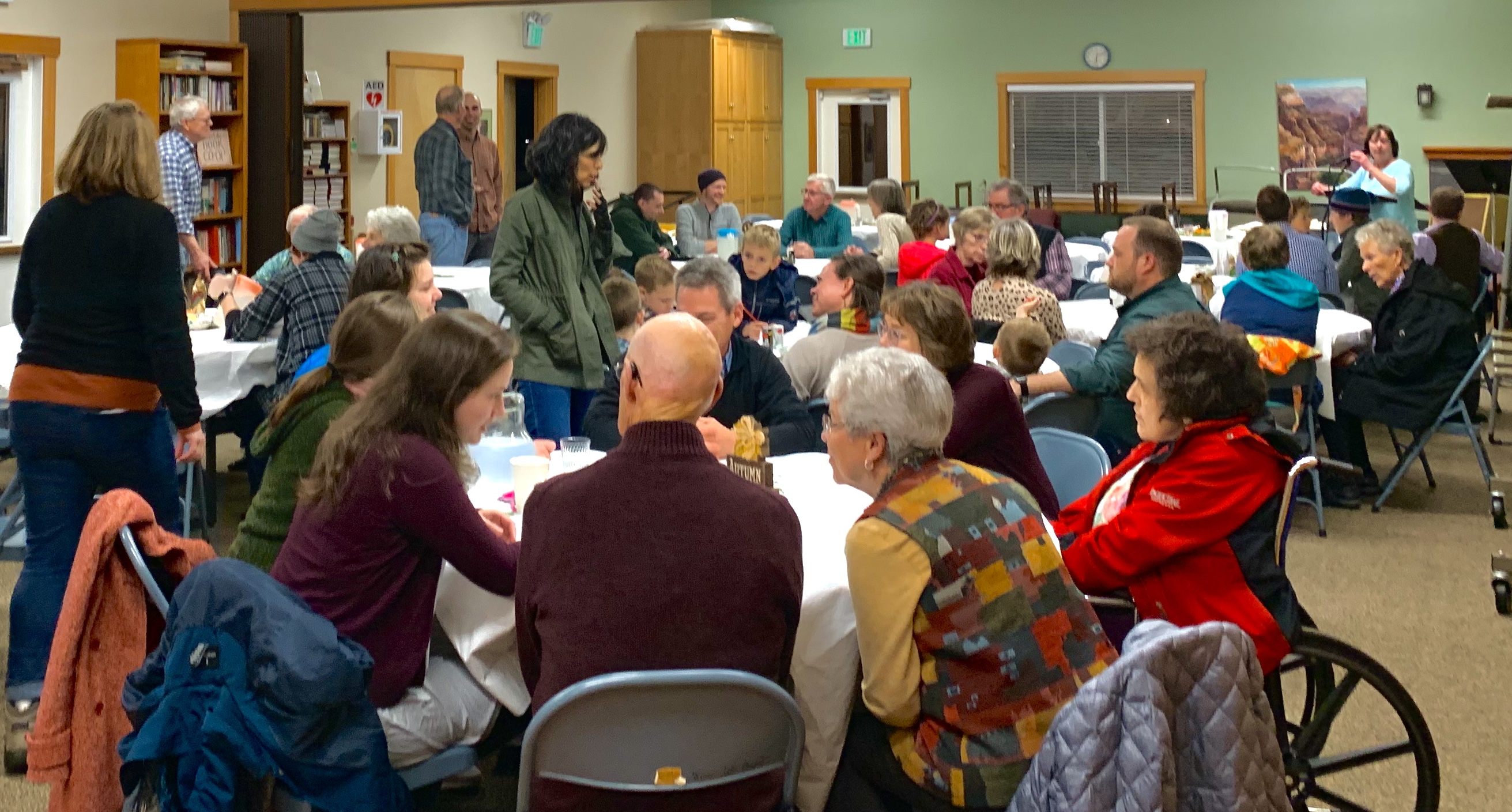
The Healing Power of a Church Potluck

The church, I think, is God’s way of saying,
“What I have in the pot is yours,
and what I have is a group of misfits
whom you need more than you know
and who need you more than they know.” 

“Take, and eat,” he says,
“and take, and eat,
until the day, and it is coming,
that you knock on my door.
I will open it, and you will see me face to face.”

He is preparing a table.
He will welcome us in.
Jesus will be there, smiling and holy,
holding out a green bean casserole.
And at that moment, what we say, what we think, and what we believe will be the same:
“I didn’t know how badly I needed this.”
~Jeremy Clive Huggins from “The Church Potluck”

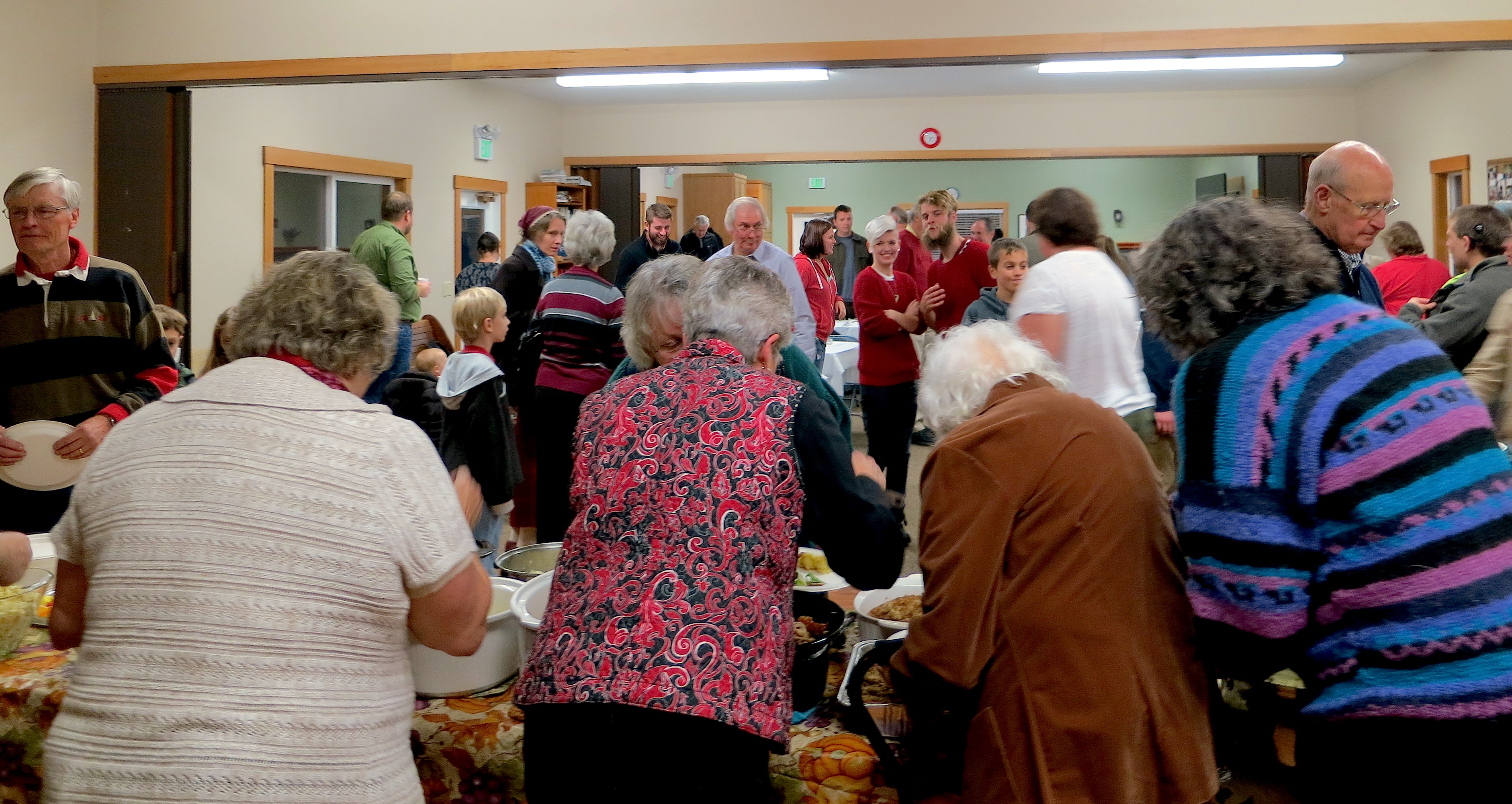
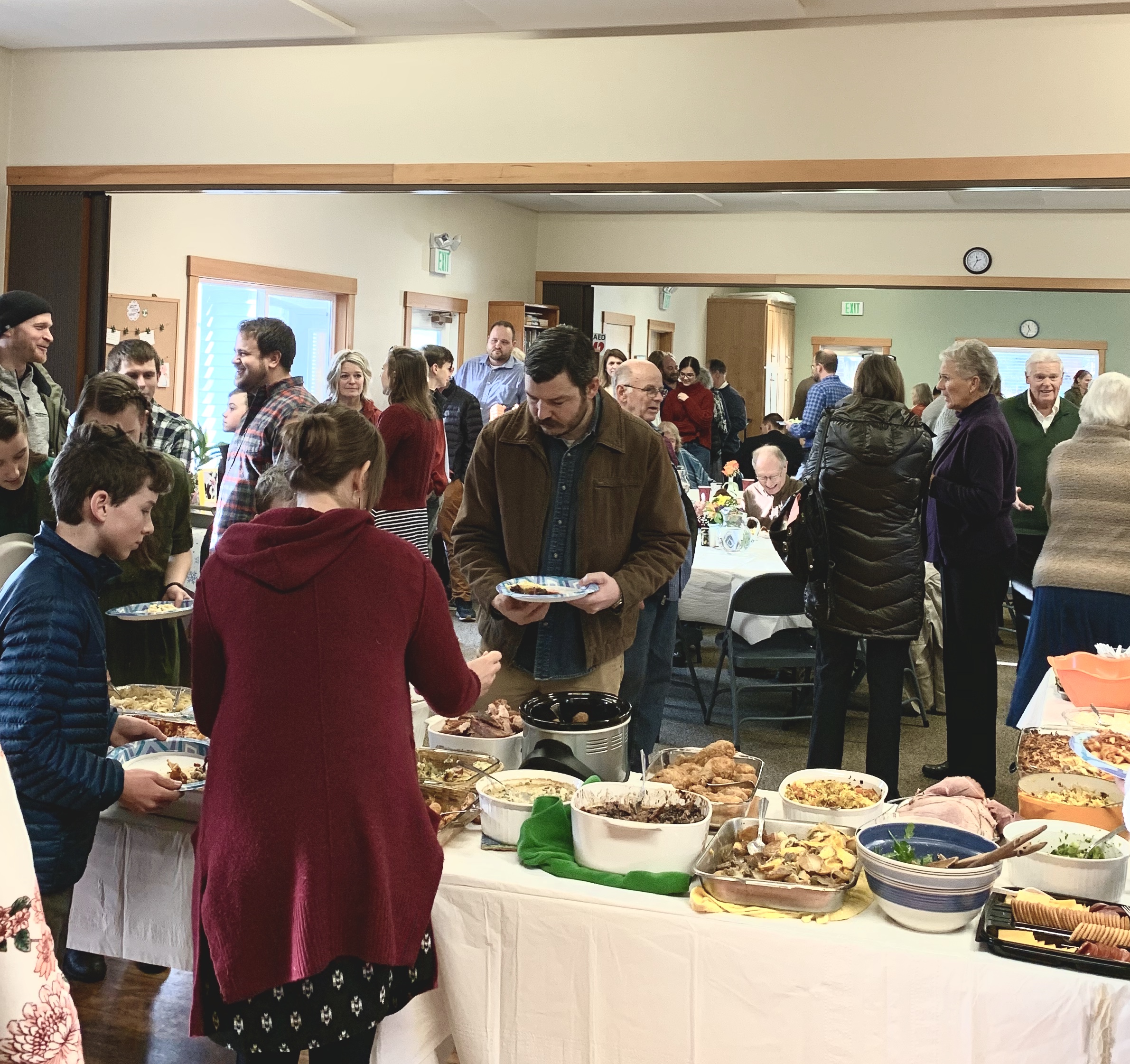
Perhaps a celebration at the end of a long cold winter month
Possibly a need of respite from a month of dieting
Likely a response to bad headline news day after day:
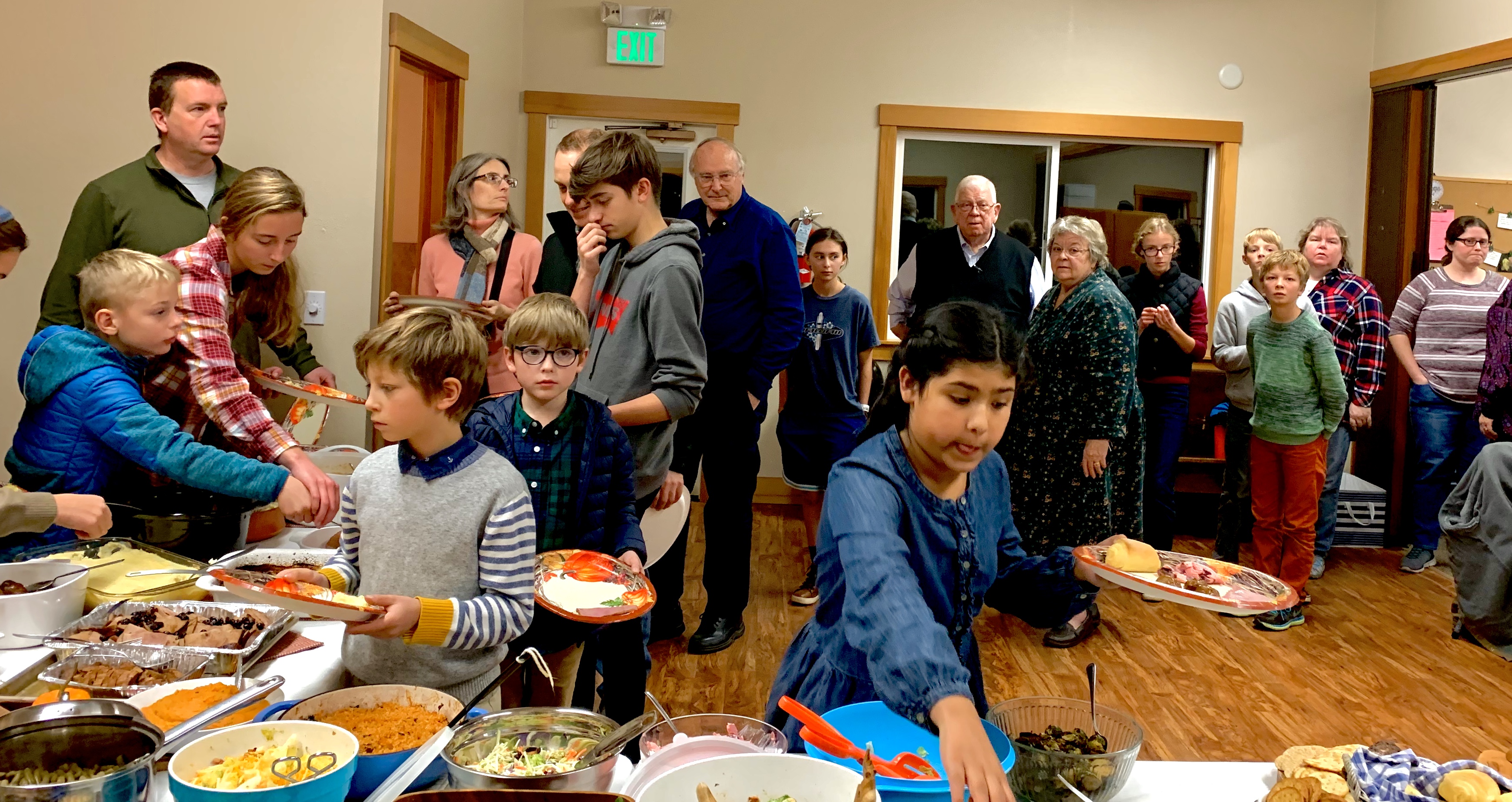
A potlatch, a potluck, a communion of comfort food.

What to bring? What soothes stomach and heart?

Macaroni and cheese, with drizzled bread cubes on top
Beef stew chuck-a-block with vegetables and potatoes
Buckets of fried chicken
Greenbean casserole
Meat loaf topped with ketchup
Tossed Caesar salad
Tator tots drizzled with cheese
Jello and ham buns

Home made bread, steaming, soft
Whole chocolate milk
And ice cream sundaes

Nothing expensive
Or extravagant
Or requiring going into debt to pay.

A fitting ending to a Sabbath of worship,
After meeting for prayer and hymns and the Word;
When times get tough, when we feel all alone,
When we drown in discouragement.

This is time for connecting congregation and community,
For huddling against life’s storm
Forgetting our worries for a time
And sharing God’s comfort food, all together, misfits that we are,
Smiling to know — we all badly needed this.

Stumbling into February

“Why, what’s the matter, 
That you have such a February face, 
So full of frost, of storm and cloudiness?” 
–  William Shakespeare,  Much Ado About Nothing

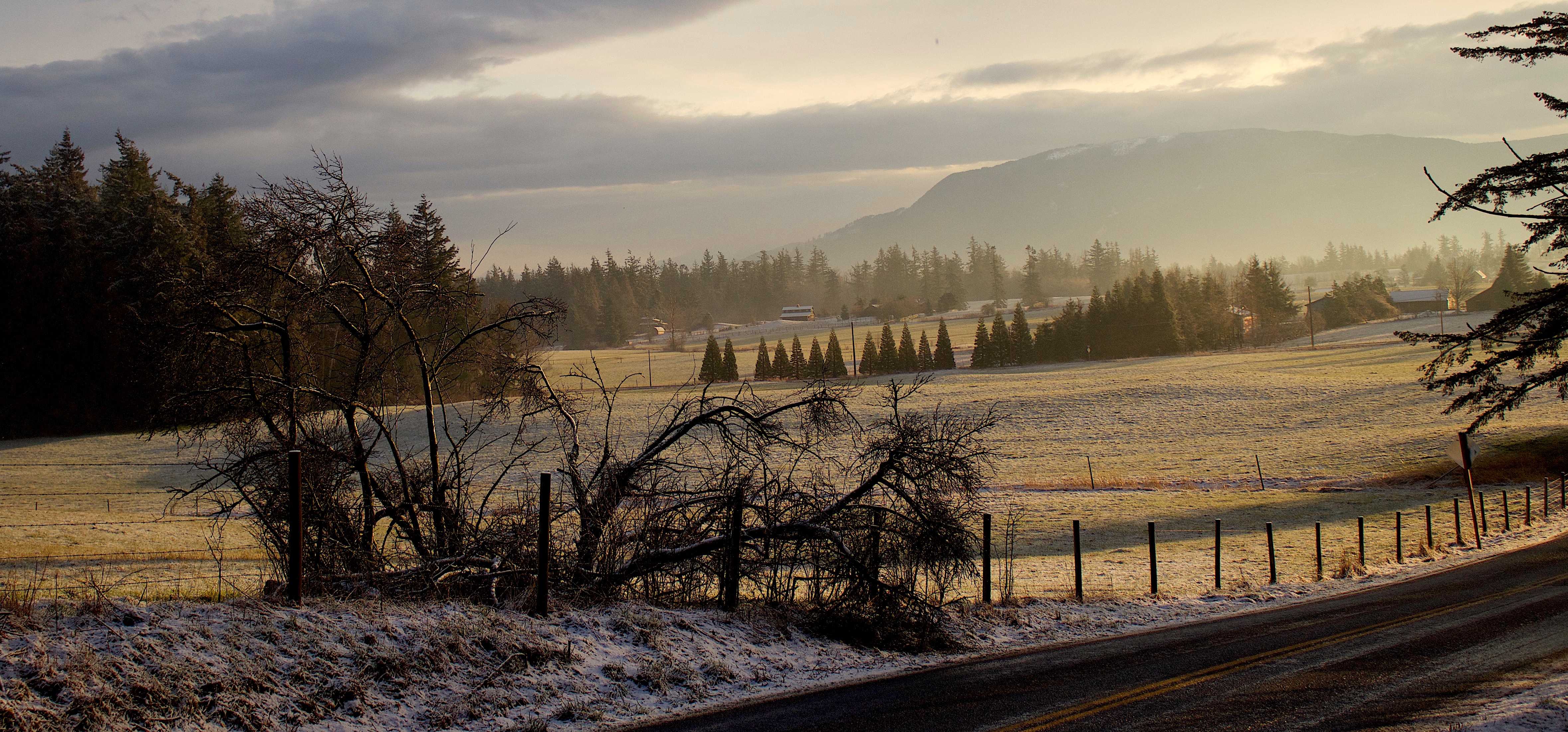
January was particularly dark and dank, especially last night as the month wrapped up with a deluge, flooding numerous roads in our rural county.  The beginning of February often feels like this: the conviction winter will never be finished messing with us. Our doldrums are deep; brief respite of sun and warmth too rare.

I feel it in the barn as I go about my daily routine.   The Haflingers are impatient and yearn for freedom, over-eager when handled, sometimes banging on the stall doors in their frustration at being shut in,  not understanding that the alternative is to stand outside all day in cold rain and wind.  To compensate for their confinement, I do some grooming of their thick winter coats, urging their hair to loosen and curry off in sheets over parts of their bodies, yet otherwise still clinging tight.  The horses are a motley crew right now, much like a worn ’60s shag carpet, uneven and in dire need of updating.  I prefer that no one see them like this and discourage visitors to the farm, begging people to wait a few more weeks until they (and I) are more presentable. Eventually I know the shag on my horses will come off, revealing the sheen of new short hair beneath, but when I look at myself, I’m unconvinced there is such transformation in store for me. Cranky, I  put one foot ahead of the other, get done what needs to be done, oblivious to the subtle renewal around me, refusing to believe even in the possibility.

It happened today.  Dawn broke bright and blinding and I heard the fields calling, so I heeded, climbing the hill and turning my face to the eastern light, soaking up all I could.  It was almost too much to keep my eyes open, as they are so accustomed to gray darkness. And then I stumbled across something extraordinary.

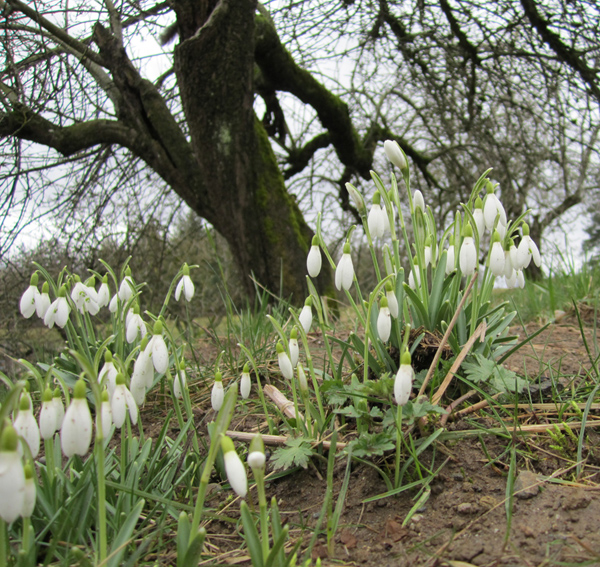
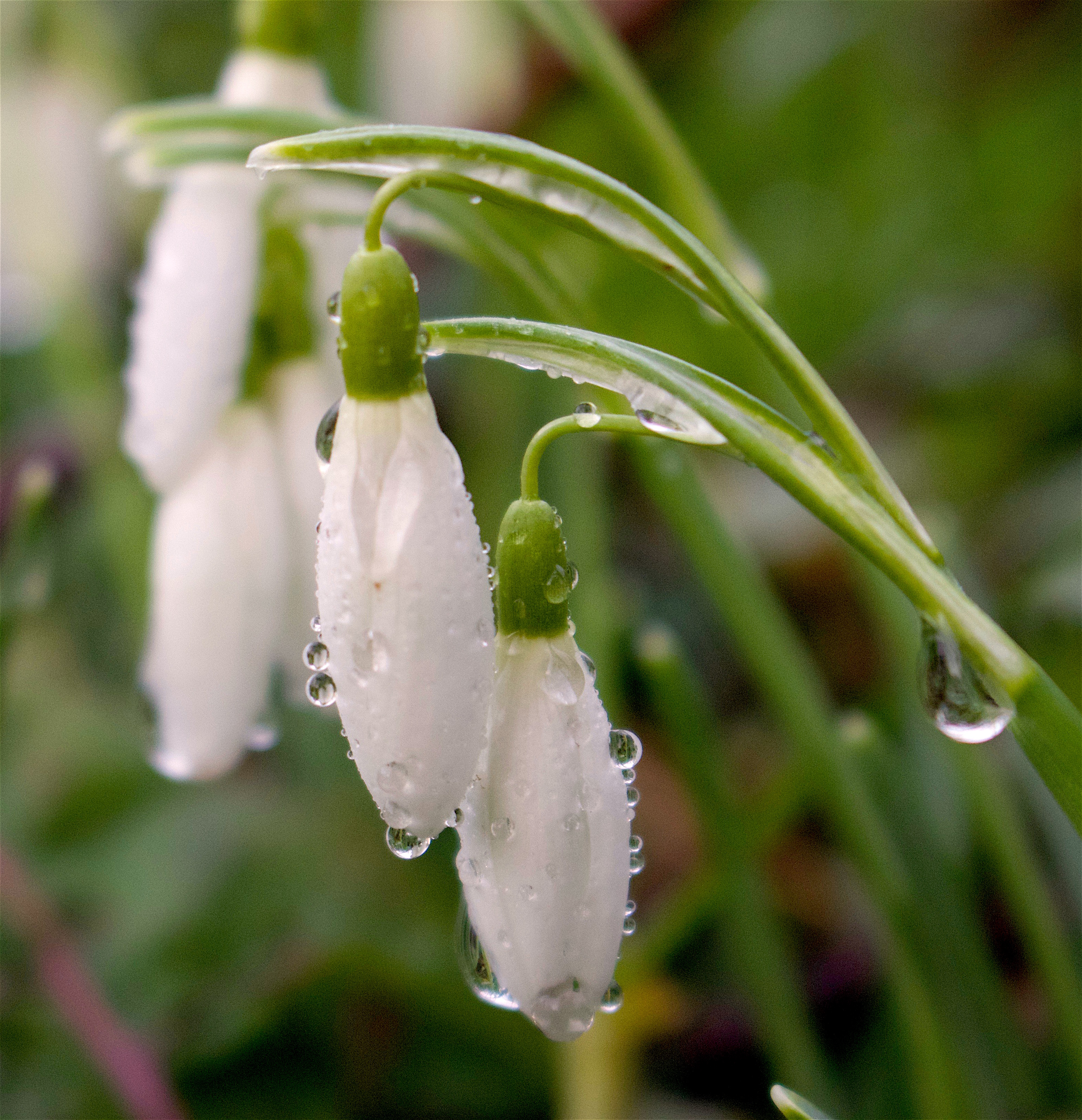
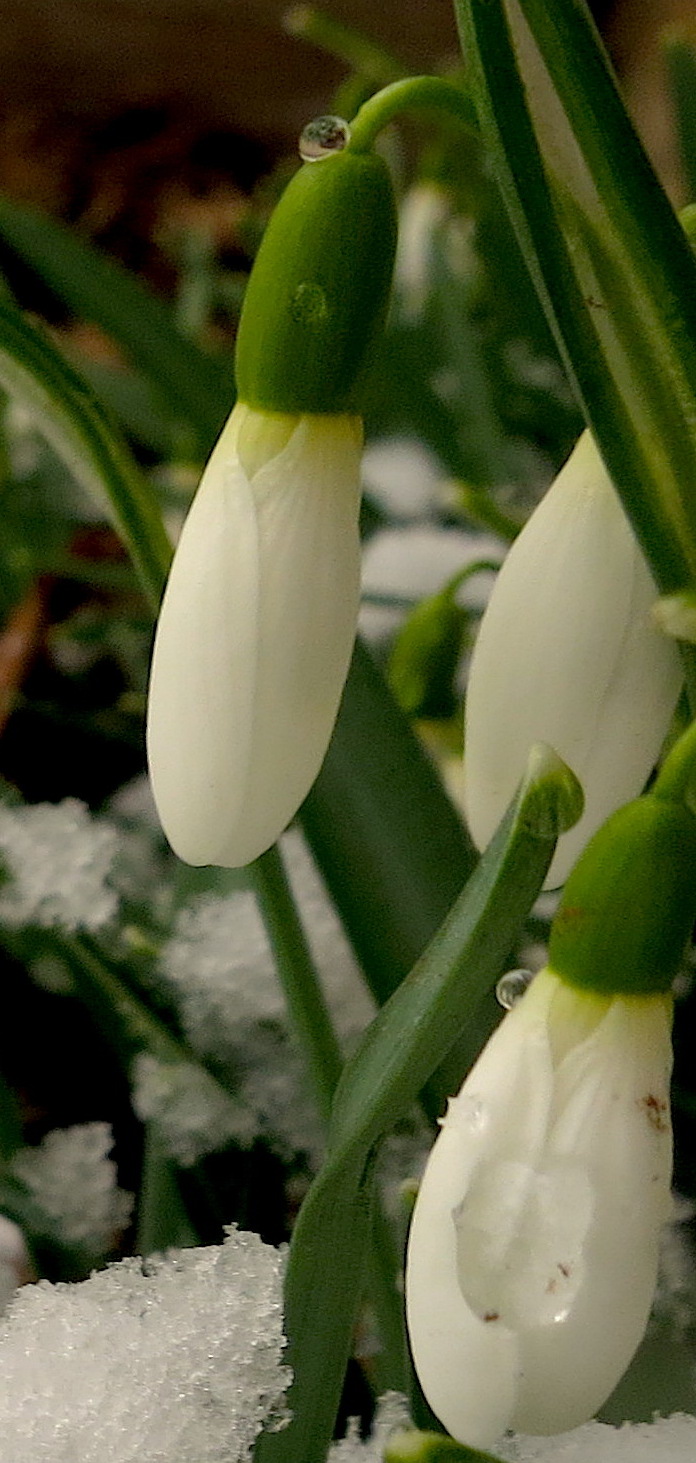
A patch of snowdrops sat blooming in an open space on our acreage, visible now only because of the brush clearing that was done last fall. Many of these little white upside down flowers were planted long ago around our house and yard, but  I had no idea they were also such a distance away, hiding underground. Yet there they’ve been, year after year, harbingers of the long-awaited spring to come in a few short weeks, though covered by the overgrowth of decades of neglect and invisible to me in my self-absorbed blindness.  I was astonished that someone, many many years ago, had carried these bulbs this far out to a place not easy to find, and planted them, hoping they might bless another soul sometime somehow.  Perhaps the spot marks a grave of a beloved pet, or perhaps it was simply a retreat of sorts, but there the blossoms had sprung from their sleep beneath the covering of years of fallen leaves and blackberry vines.

It was if I’d been physically hugged by this someone long dead,  now flesh and blood beside me, with work-rough hands, and dirty fingernails, and broad brimmed hat, and a satisfied smile.  I’m certain the secret gardener is no long living, and I reach back across those years in gratitude, to show my deep appreciation for the time and effort it took to place a foretaste of spring in an unexpected and hidden place.

I am thus compelled to look for ways to leave such a gift for someone to find 50 years hence as they likewise stumble blindly through too many gray days full of human frailty and flaw. Though I will be long gone,  I can reach across the years to grab them, hug them in their doldrums, lift them up and give them hope for what is to come.  What an astonishing thought that it was done for me and in reaffirming that promise of renewal,  I can do it for another.