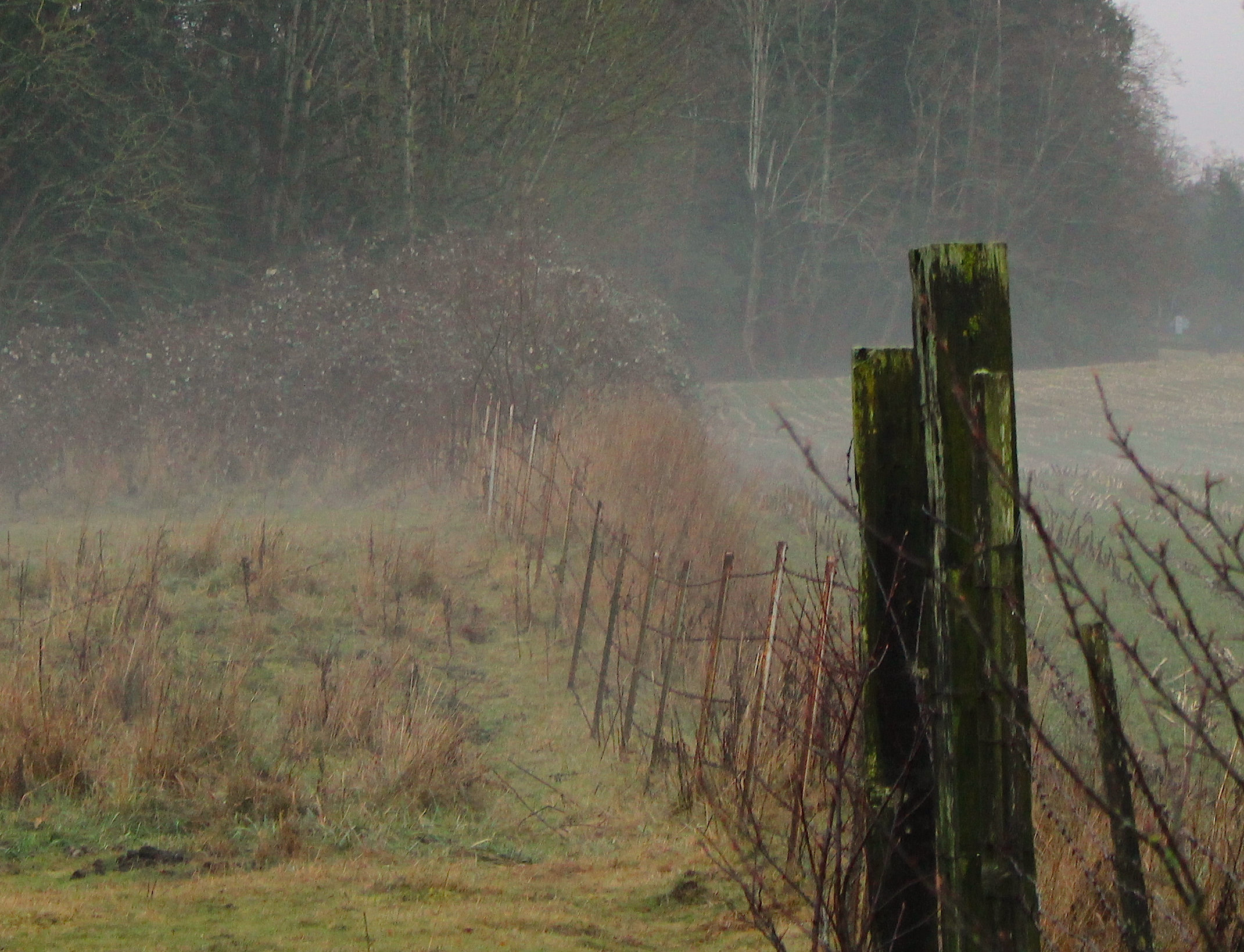
The gray path glided before me Through cool, green shadows; Little leaves hung in the soft air Like drowsy moths; A group of dark trees, gravely conferring, Made me conscious of the gaucherie of sound; Farther on, a slim lilac Drew me down to her on the warm grass. “How sweet is peace!” My serene heart said.
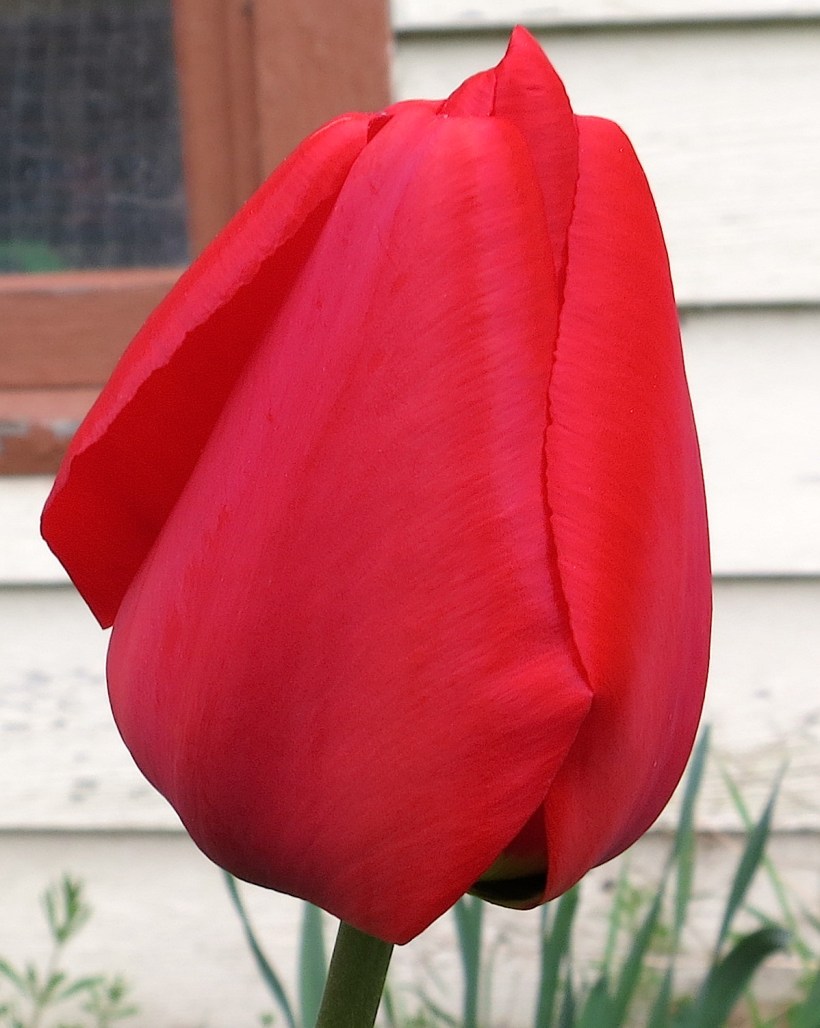
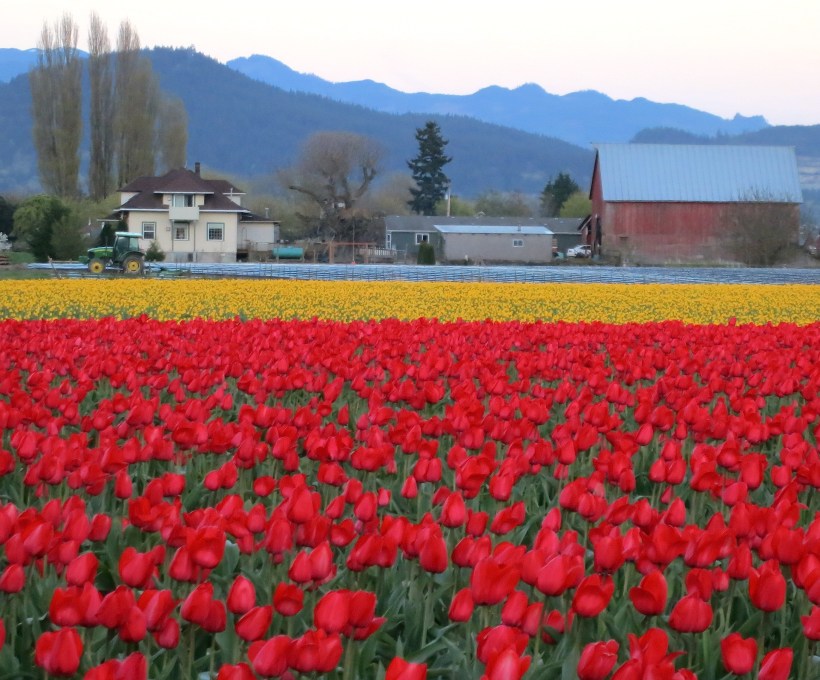
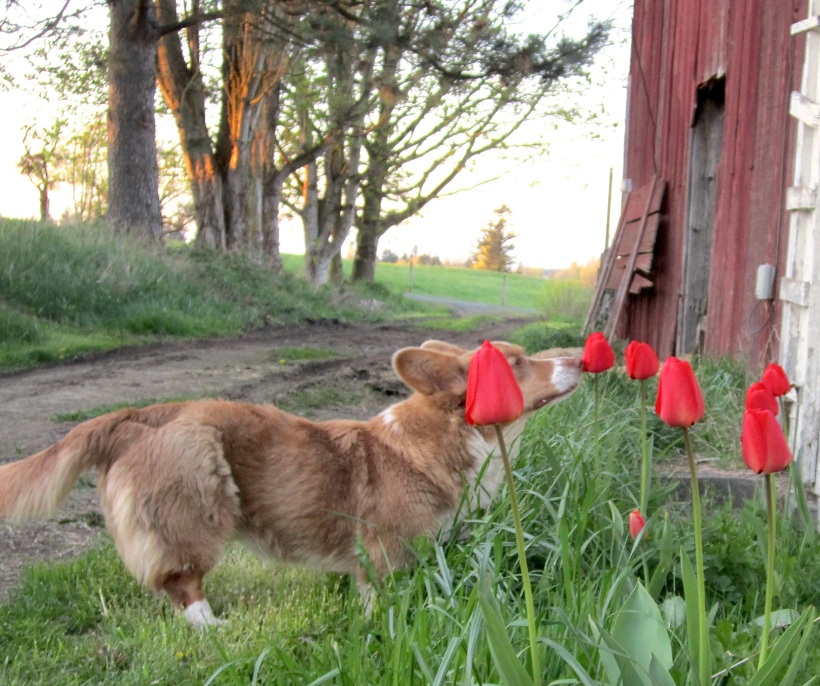
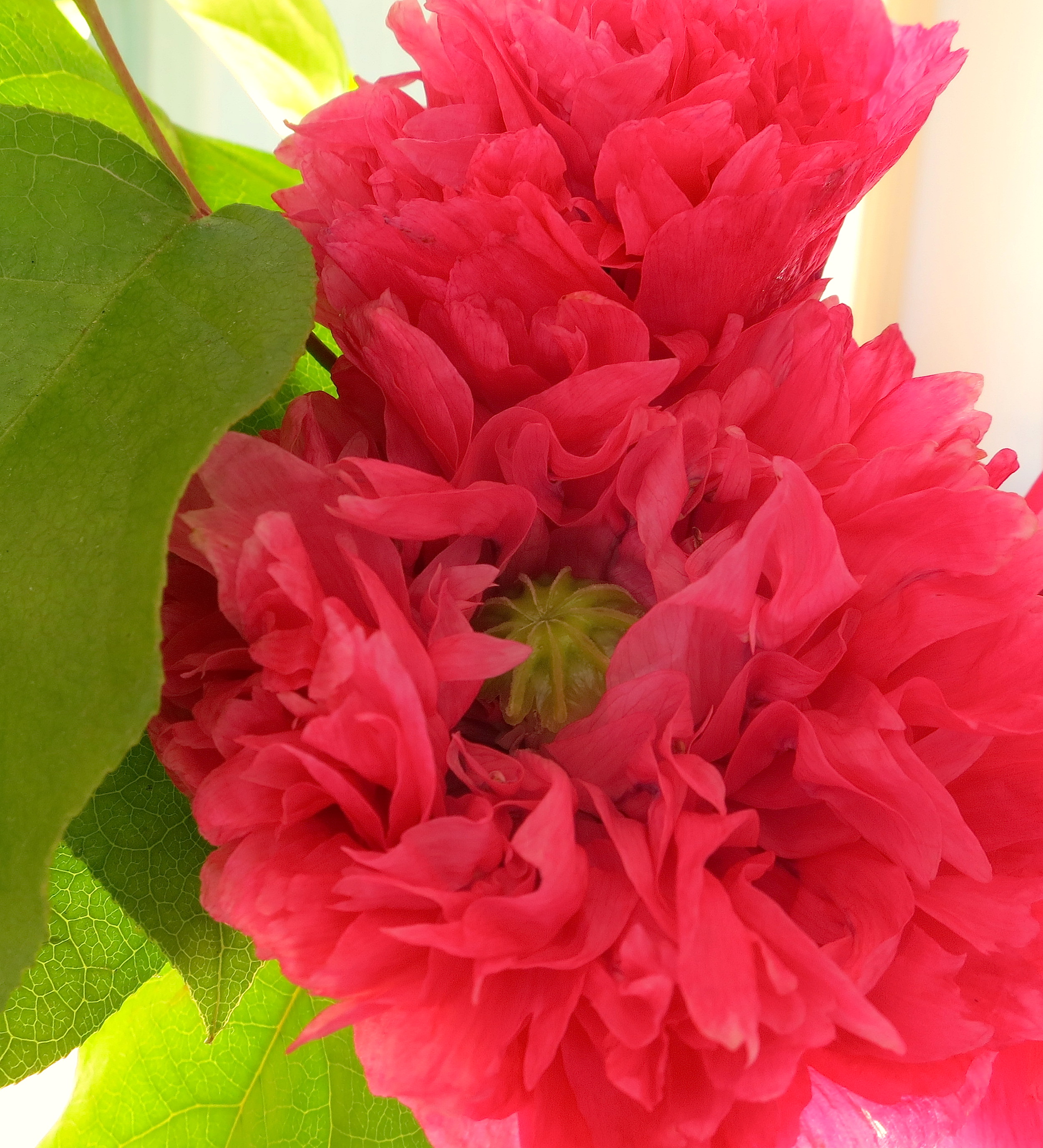
Then, suddenly, in a curve of the road, Red tulips! A bright battalion, swaying, They marched with fluttering flags, And gay fifes playing!
A swift flame leapt in my heart; I burned with passion; I was tainted with cruelty; I wanted to march in the wind, To tear the silence with gay music, And to slash the sober green Until it sobbed and bled.
I travel gray misty pathways of day to day existence, quietly below the radar and scarcely noticeable. It is a peaceful life, quiet and unassuming, utterly routine.
Yet predictability and acceptability shatters sometimes without much notice — my inner red tulip is found out, fighting for freedom, however briefly.
Seventy two years ago this week, my parents were married. Christmas Eve certainly wasn’t a typical wedding anniversary, but it did make it easy to remember during their years together. It was a date of necessity, only because a justice of the peace was available to marry a score of war-time couples in Quantico, Virginia, shortly before the newly trained Marine officers were shipped out to the South Pacific to fight in WWII.
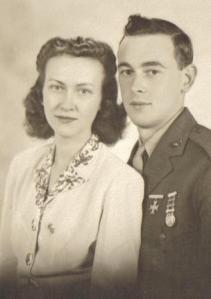
Now that they are both gone, when I look at their young faces in their only wedding portrait, I see a hint of the impulsive decision that led to that wedding just a week before my father left for 30 months. They had known each other for over a year, had talked about a future together, but with my mother starting a teaching job, and the war potentially impacting all young men’s lives very directly, they had not set a date.
My father had to put his college education on hold to enlist, knowing that would give him some options he wouldn’t have if drafted, so they went their separate ways as he headed east to Virginia for his Marine officer training, and Mom started her high school teaching career as a speech and drama teacher in rural Colville in Eastern Washington. One day in early December, he called her and said, “If we’re going to get married, it’ll need to be before the end of the year. I’m shipping out the first week in January.” Mom went to her high school principal, asked for a two week leave of absence which was granted, told her astonished parents, bought a dress, and headed east on the train with a friend who had received a similar call from her boyfriend. This was a completely uncharacteristic thing for my overly cautious mother to do so it must have been love.
They were married in a brief civil ceremony with another couple as the witnesses. They stayed in Virginia only a couple days and took the train back to San Diego, and my father left. Just like that. Mom returned to her teaching position and the first three years of their married life was letter correspondence only, with gaps of up to a month during certain island battles when no mail could be delivered or posted.
As I sorted through my mother’s things following her death six years ago, their letters to each other, stacked neatly and tied together, reside now in a box in my bedroom. I have not yet opened them but will when I’m ready. What I will find there will be words written by two young people who could not have foretold the struggles that lay ahead for them during and after the war but who both depended on faith and trust to persevere despite the unknowns. The War itself seemed struggle enough for the millions of couples who endured the separation, the losses and grieving, as well as the eventual injuries–both physical and psychological. It did not seem possible that beyond those realities, things could go sour after reuniting.
The hope and expectation of happiness and bliss must have been overwhelming, and real life doesn’t often deliver. After raising three children, their 35 year marriage fell apart with traumatic finality. When my father returned (again) over a decade later, asking for forgiveness, they remarried and had five more years together before my father died.
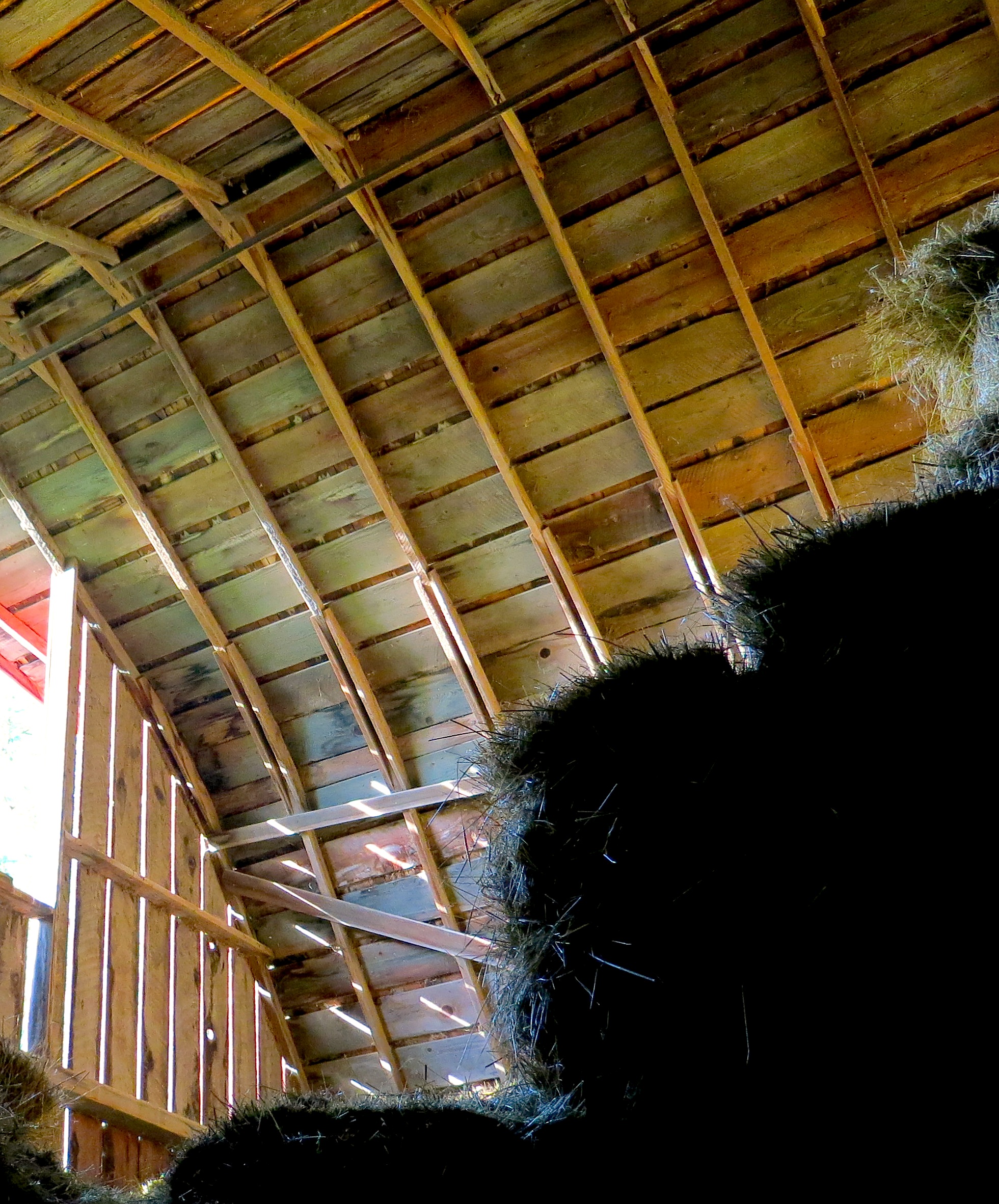
And so too there must have been expectations of happiness in the barn on that first Christmas Eve. It must have been frightening for the parents of this special Baby, knowing in their minds but not completely understanding in their hearts what responsibility lay in their arms. They had to find faith and trust, not just in God who had determined what their future held, but in each other, to support one another when things became very difficult. Those challenges mounted up quickly: there was to be no room for them, there was a baby to deliver without assistance from anyone, and the threat of Herod’s murder of innocents eventually drove them from their home country.
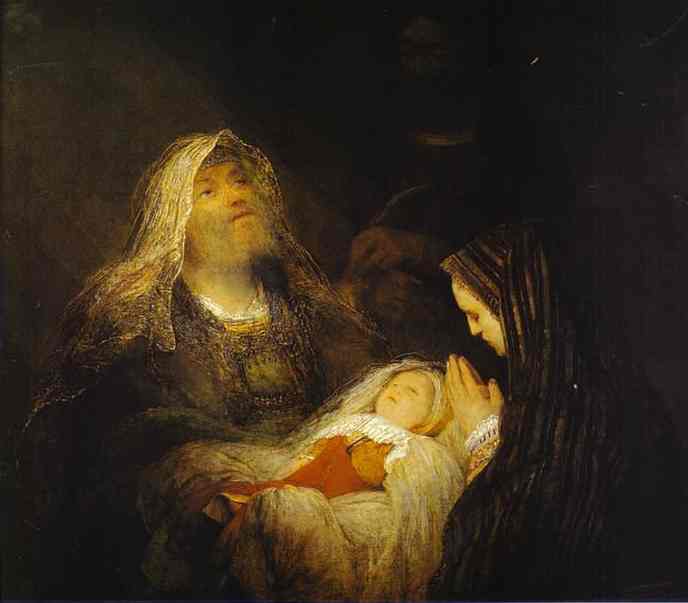
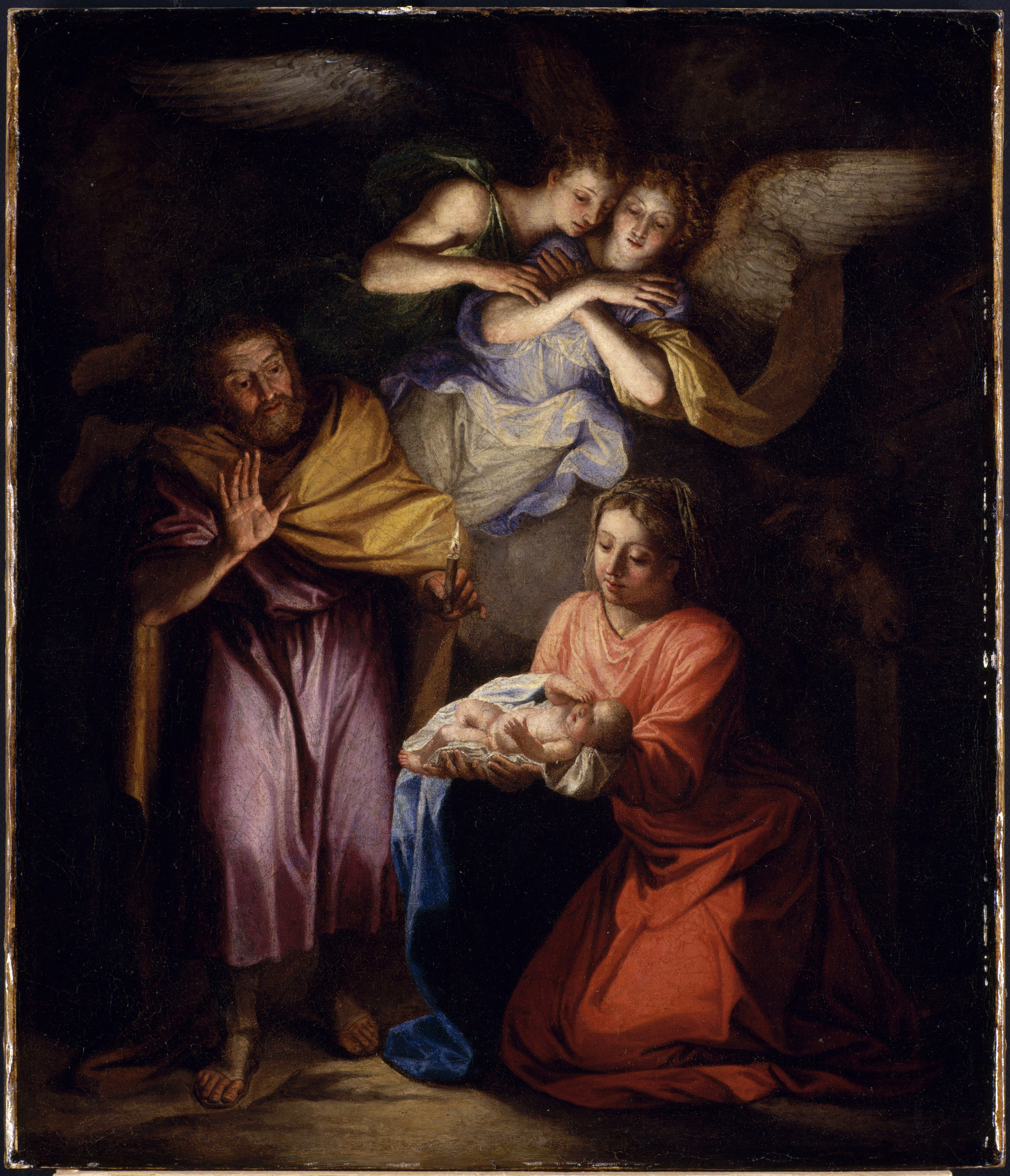
When Mary and Joseph go to the temple for the circumcision and consecration of their son the following week, they allow a “righteous and devout man”, Simeon, to hold their baby as, moved by the Holy Spirit, he tells them the role this child is to play in the world. He prays to the Lord, “As you have promised, you now dismiss your servant in peace. For my eyes have seen your salvation, which you have prepared in the sight of all people, a light for revelation to the Gentiles and for glory to your people Israel.”
It must have been like looking into a crystal ball to hear Simeon speak, as we’re told “the child’s father and mother marveled at what was said about him.” But Simeon didn’t whitewash the reality to come. It would have been easy to do so– simply mention salvation, the light and the glory that will come to the people due to this little baby, but leave out the part about how His existence would cause division in Israel as well as the rejection, anguish and suffering that He would experience. Not only that, but the pain is not His alone but will be His parents’ to bear as well. I’m sure that statement must have ended the sense of “marvel” they were feeling, and replaced it instead with great sorrow and trepidation.
Christmas is a time of joy, a celebration of new beginnings and new life when God became man, humble, vulnerable and tender. But it also gives us a foretaste for the profound sacrifice made in giving up this earthly life, not always so gently. A baby in a manger is a lovely story to “treasure up” in our hearts but once He became a bleeding Redeemer on a cross, it pierces our living beating hearts, just as Simeon foretold.
My parents, such young idealistic adults 72 years ago, now servants dismissed from this life in peace. As I peer at their faces in their wedding photo, I know those same eyes, then unaware of what was to come, now behold the light, the salvation and the glory~~the ultimate Christmas~~in His presence.
Song of Simeon by Aert De Gelder, a student of Rembrandt
We live in a time where the groaning need and dividedness of humankind is especially to be felt and recognized. Countless people are subjected to hatred, violence and oppression which go unchecked. The injustice and corruption which exist today are causing many voices to be raised to protest and cry out that something be done. Many men and women are being moved to sacrifice much in the struggle for justice, freedom, and peace. There is a movement afoot in our time, a movement which is growing, awakening.
We must recognize that we as individuals are to blame for every social injustice, every oppression, the downgrading of others and the injury that man does to man, whether personal or on a broader plane.… God must intervene with his spirit and his justice and his truth. The present misery, need, and decay must pass away and the new day of the Son of Man must dawn. This is the advent of God’s coming. This is the very essence of Christmas: that he comes to make all things new and pure, that he comes to establish his kingdom here on the earth ~Dwight Blough (written in 1965)
Then I saw “a new heaven and a new earth,”
for the first heaven and the first earth had passed away Rev. 21:5
They shall grow not old, as we that are left grow old: Age shall not weary them, nor the years condemn. At the going down of the sun and in the morning We will remember them. ~Lawrence Binyonfrom “For the Fallen” (1914)
When you go home tell them of us and say – “For your tomorrow we gave our today” from “The Kohima Epitaph
We are the dead; short days ago We lived, felt dawn, saw sunset glow, Loved and were loved, and now we lie In Flanders fields. ~John McCrae from “In Flanders Fields”
Tower of London Poppies representing the fallen soldiers from the UK and colonies in WWI from BBC London
Courage is almost a contradiction in terms. It means a strong desire to live taking the form of a readiness to die. ~ G.K. Chesterton
Well I know now the feel of dirt under the nails, I know now the rhythm of furrowed ground under foot, I have learned the sounds to listen for in the dusk, the dawning and the noon.
I have held cornfields in the palm of my hand, I have let the swaying wheat and rye run through my fingers, I have learned when to be glad for sunlight and for sudden thaw and for rain.
I know now what weariness is when the mind stops and night is a dark blanket of peace and forgetting and the morning breaks to the same ritual and the same demands and the silence.
~Jane Clement from No One Can Stem the Tide
Peace, peace peace on earth
And goodwill to all
This is the time for joy
This is the time for love
Now let us all sing together
Of peace, peace peace on earth
Silent Night, Holy Night
All is calm, all is bright
Round yon virgin, mother and child
Holy infant, so tender and mild
Sleep in heavenly peace
Sleep in heavenly peace
14 Glory to God in the highest, and on earth peace, good will toward men. Luke 2:14
There is something of heaven in the blending of voices of all ages, singing in a candle-lit Christmas Eve service, telling the old old story once again. It was like this for us at the Chapel tonight.
This is a time for joy, this is a time for love.
Now let us all sing together of peace,
peace,
peace on earth.
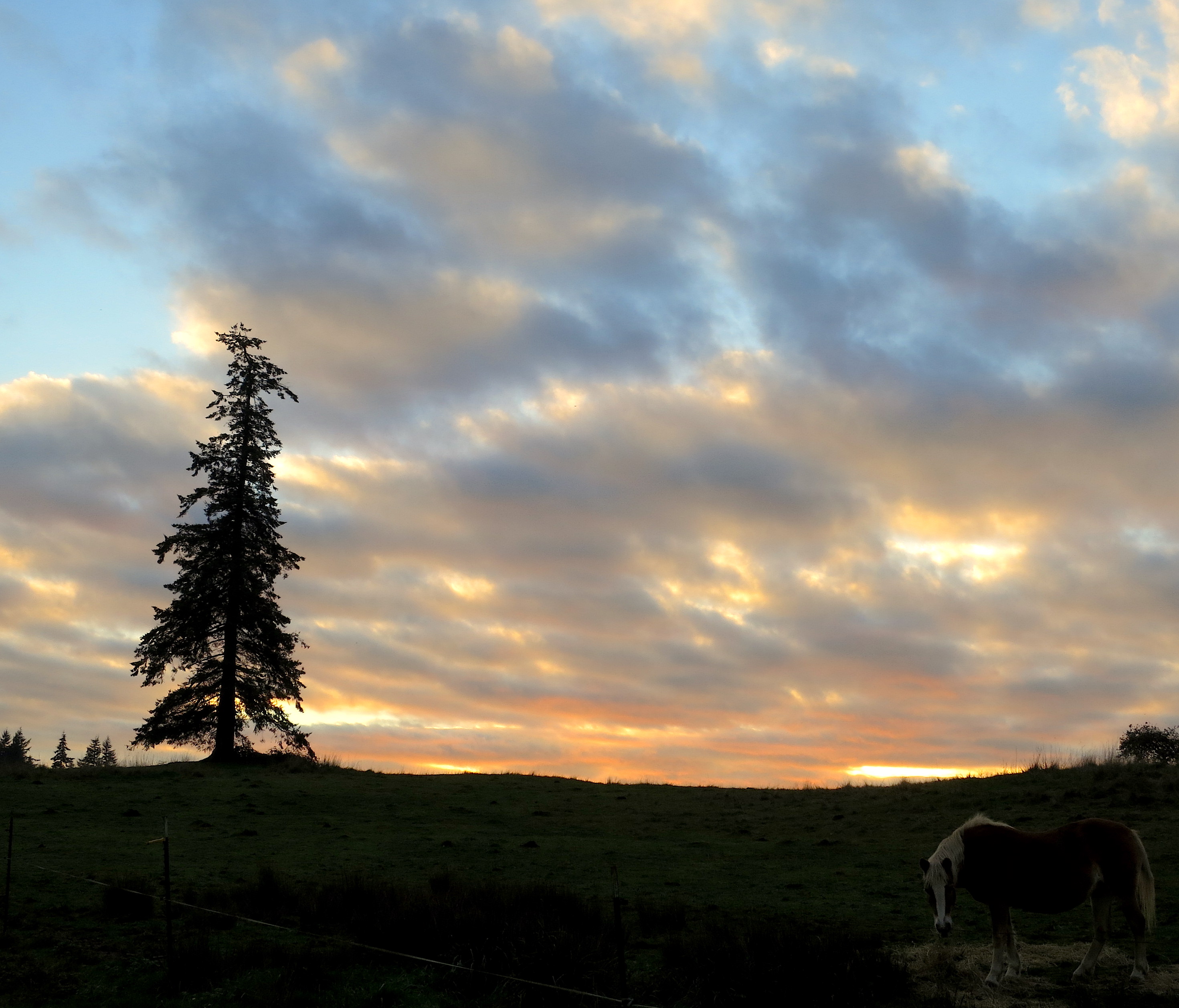
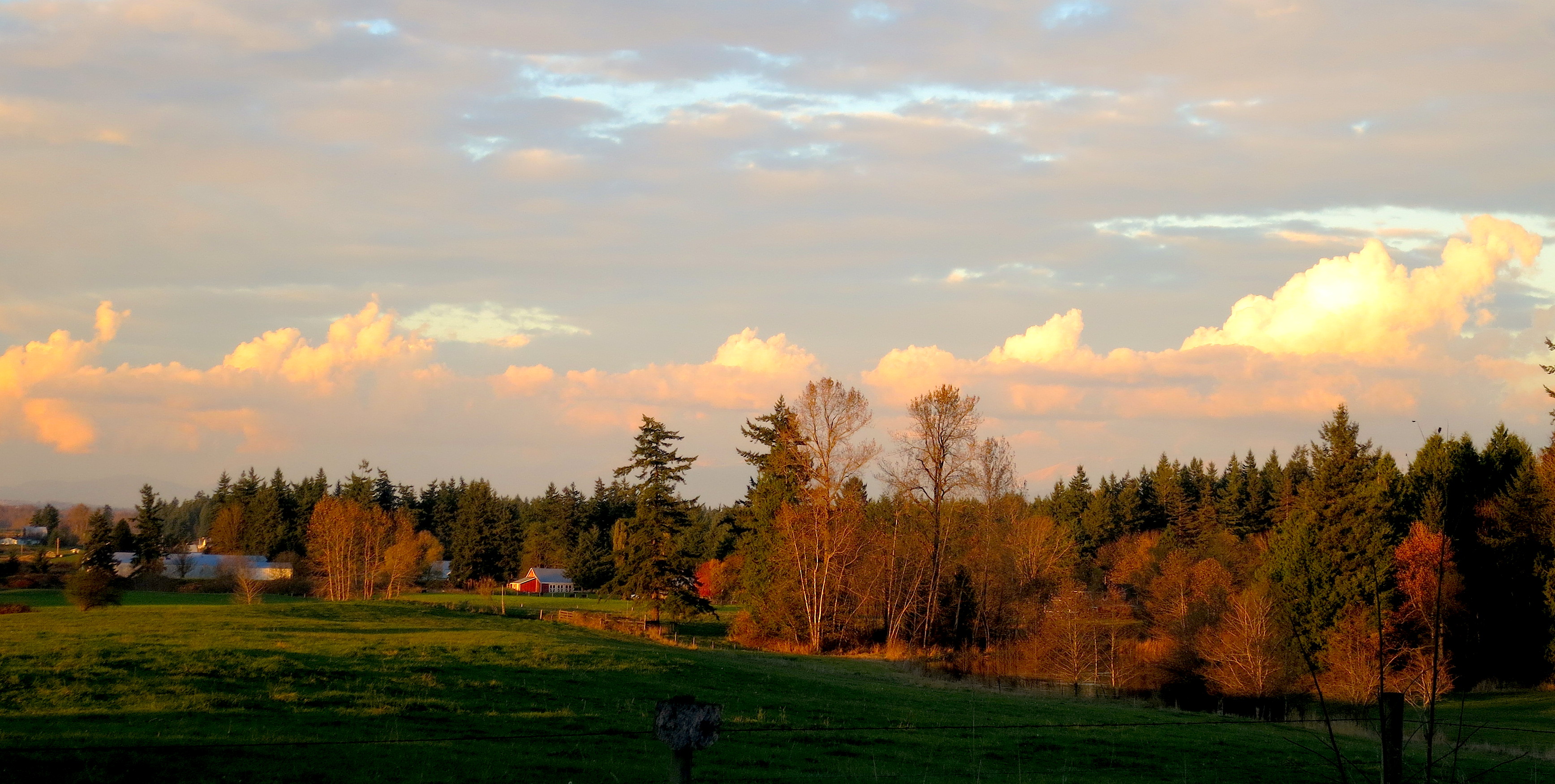
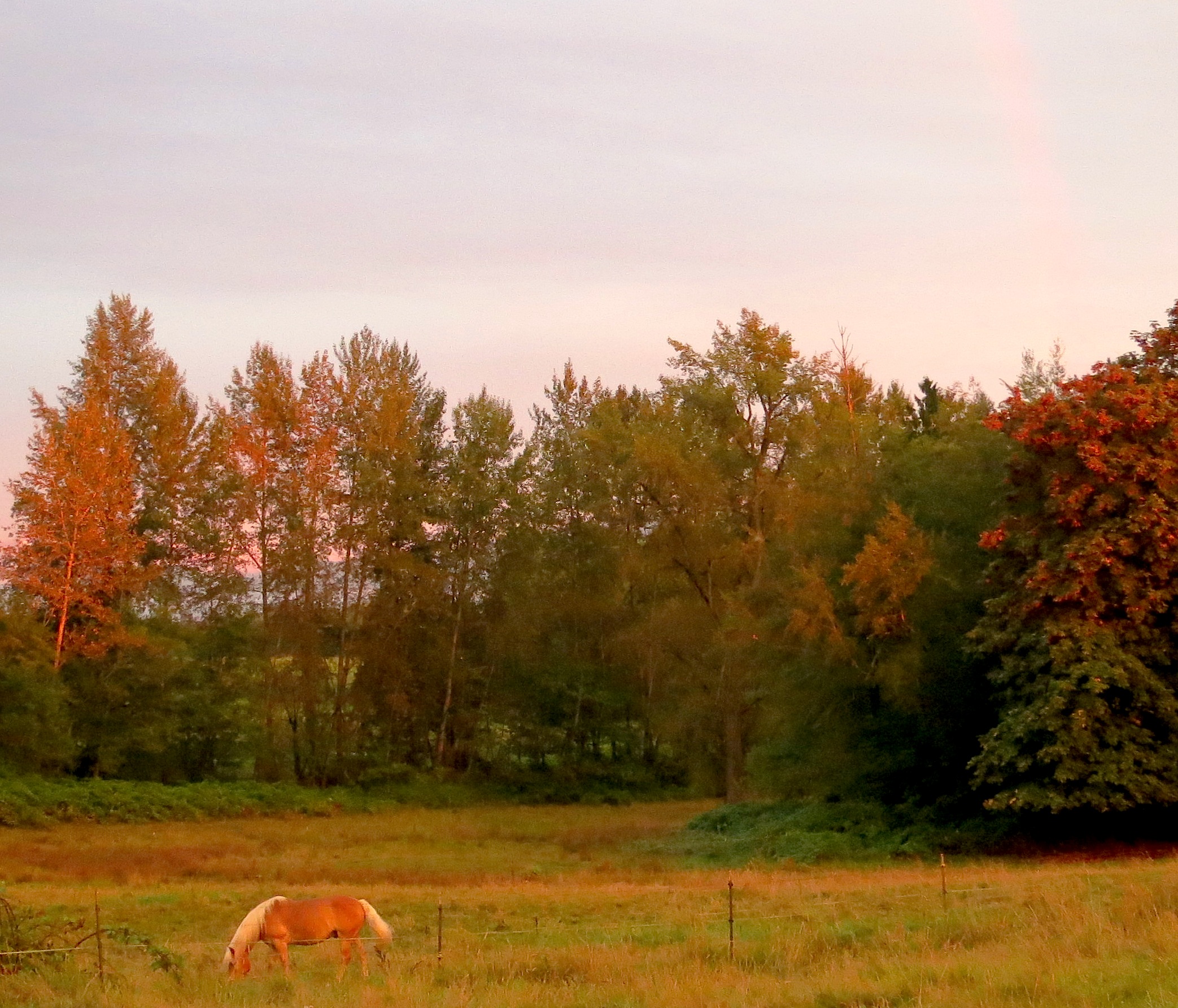
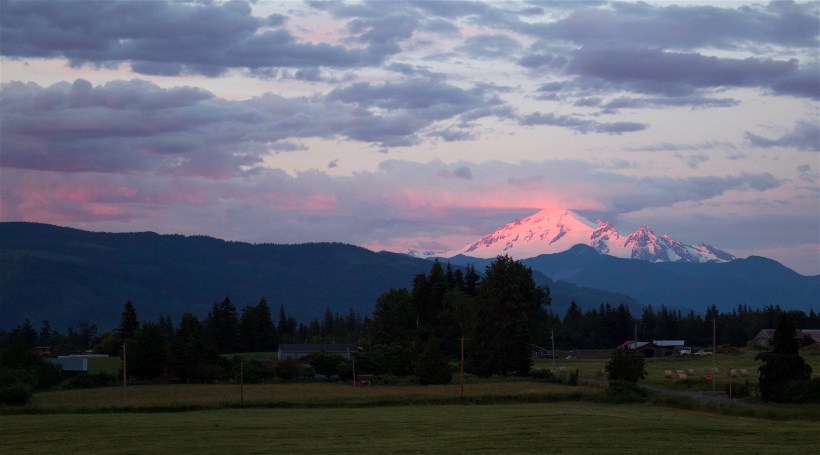
Now a red, sleepy sun above the rim Of twilight stares along the quiet weald, And the kind, simple country shines revealed In solitudes of peace, no longer dim. The old horse lifts his face and thanks the light, Then stretches down his head to crop the green. All things that he has loved are in his sight; The places where his happiness has been Are in his eyes, his heart, and they are good. ~Siegfried Sassoon from “Break of Day”
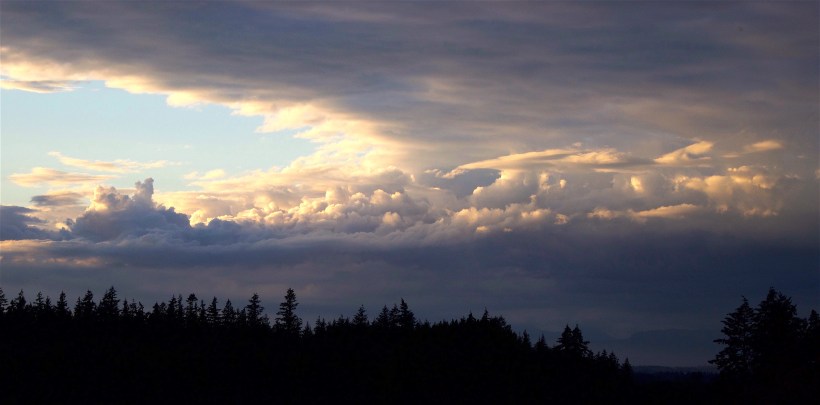
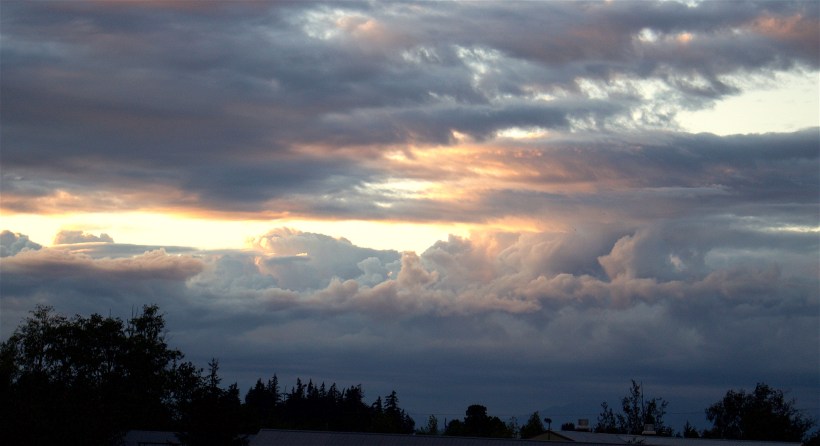
“Rest is not idleness, and to lie sometimes on the grass on a summer day listening to the murmur of water, or watching the clouds float across the sky, is hardly a waste of time.” – John Lubbock
As a child I liked to go out far into our hay field and find the tallest patch of grass. There, like a dog turning circles before a nap, I’d trample down the tall waving stems that stretched up almost to my eyes, and create a grass nest, just cozy enough for me. I’d sit or lie down in this green fortress, gazing up at the blue sky, and watch the clouds drift lazily by. I’d suck on a hollow stem or two, to savor the bitter grass juice. Scattered around my grassy cage, looking out of place attached to the broad grass stems, would be innumerable clumps of white foam. I’d tease out the hidden green spit bugs with their little black eyes from their white frothy bubble encasement. I hoped to watch them spit, to actually see them in action, but they would leap away.
The grassy nest was a time of retreat from the world by being buried within the world. I felt protected, surrounded, encompassed and free –at least until I heard my mother calling for me from the house, or a rain shower started, driving me to run for cover, or my dog found me by following my green path.
It has been years since I hid in a grass fort or tried to defoam spit bugs. I am overdue, I’m sure. It is hardly a waste to rest encased in the bubble wrap of the world.



























 Barnstorming