All day the stars watch from long ago my mother said I am going now when you are alone you will be all right whether or not you know you will know look at the old house in the dawn rain all the flowers are forms of water the sun reminds them through a white cloud touches the patchwork spread on the hill the washed colors of the afterlife that lived there long before you were born see how they wake without a question even though the whole world is burning ~W.S. Merwin “Rain Light”
My childhood fear was that my parents might die young and leave me alone to fend for myself. This fear was certainly fed by nuclear threats, bomb drills at school and the Cuban missile crisis. It felt as though the world was so uncertain that even the most routine day felt fraught with the potential of a tragic ending. As an overly-sensitive eight year old, I struggled to go to school because I was certain I would not see my mother again if bombs dropped and the world ended in fire. That prospect was more terrifying than my own life ending.
It took time, and my mother’s constant reassurance, for me to settle into the reality that life is an uncertain business. Whether or not I would know what may happen that day, I would know to look for beauty and peace and renewal. Many days started with morning rain, a quiet washing away of the night’s worries and frets.
Decades later, I would be okay when she left, which she did, at dawn. I came to sit beside her for a short time, knowing she was gone, knowing I would be all right, and knowing she had given me the tools to look each uncertain day in the eye and accept it for what it was going to be.
Now, for nearly seventy years, I wake and look out at these uncertain dawns. Even though I do not know what will come next, I have been given the gift of reassurance that I will be all right.
And so will you.
One-Time
Monthly
Yearly
Make a one-time or recurring donation to support daily Barnstorming posts
Instead of depression, try calling it hibernation. Imagine the darkness is a cave in which you will be nurtured by doing absolutely nothing. Hibernating animals don’t even dream. It’s okay if you can’t imagine Spring. Sleep through the alarm of the world. Name your hopelessness a quiet hollow, a place you go to heal, a den you dug, Sweetheart, instead of a grave. ~Andrea Gibson “Instead of Depression” from You Better Be Lightning
We didn’t say fireflies but lightning bugs. We didn’t say carousel but merry-go-round. Not seesaw, teeter-totter not lollipop, sucker. We didn’t say pasta, but spaghetti, macaroni, noodles: the three kinds. We didn’t get angry: we got mad. And we never felt depressed dismayed, disappointed disheartened, discouraged disillusioned or anything, even unhappy: just sad. ~Sally Fisher “Where I Come From” from Good Question.
…if you could distinguish finer meanings within “Awesome” (happy, content, thrilled, relaxed, joyful, hopeful, inspired, prideful, adoring, grateful, blissful.. .), and fifty shades of “Crappy” (angry, aggravated, alarmed, spiteful, grumpy, remorseful, gloomy, mortified, uneasy, dread-ridden, resentful, afraid, envious, woeful, melancholy.. .), your brain would have many more options for predicting, categorizing, and perceiving emotion, providing you with the tools for more flexible and functional responses. ~Lisa Feldman Barrett from How Emotions Are Made: The Secret Life of the Brain
Our own experience with loneliness, depression, and fear can become a gift for others, especially when we have received good care. As long as our wounds are open and bleeding, we scare others away. But after someone has carefully tended to our wounds, they no longer frighten us or others…. We have to trust that our own bandaged wounds will allow us to listen to others with our whole being. That is healing. — Henri Nouwen from Bread for the Journey
If there is anything I came to understand over the decades I served as a primary care physician, it is that every person experiences painful emotions that make them miserable, making it even more difficult to share with others. Sometimes those feelings build up such pressure that they leak out of our cells as physical symptoms: headaches, muscle tightness, stomach upset, hypertension. Other times they are so overwhelming we can no longer function in a day to day way – described clinically as rage, panic, mood disorder, depression, self-destructive, suicidal.
Somehow we’ve lost permission to be sad. Just sad. Sometimes unbearably, hopelessly sad.
Sadness happens to us all, some longer than others, some worse than others, some deeper than others. What makes sadness more real and more manageable is if we can say it out loud — whatever ‘sad’ means to us on a given day and if we describe our feelings in detail, explaining to others who can understand because they’ve been there too, then they can listen and help.
Painful emotions don’t always need a “fix” in the short term, particularly chemical, but that is why I was usually consulted. Alcohol, marijuana and other self-administered drugs tend to be the temporary anesthesia that people seek to stop feeling anything at all but it can erupt even stronger later.
Sometimes an overwhelming feeling just needs an outlet so it no longer is locked up, unspoken and silent, threatening to leak out in ways that tear us up and pull us apart.
Sometimes we need a healing respite/hibernation, with permission to sleep through the world’s alarms for a time. At times, medical management with antidepressants can be incredibly helpful along with talk therapy.
It helps to find words to express how things felt before this sadness, where you are now in the midst of it and where you wish you could be rather than being swallowed by sorrow. Healing takes time and like anything else that is broken, it hurts as it repairs. Armed with that self-knowledge and some gentle compassion, tomorrow and the next day and the next might feel a little less hopeless and overwhelming.
One-Time
Monthly
Yearly
Make a one-time or recurring donation to support daily Barnstorming posts
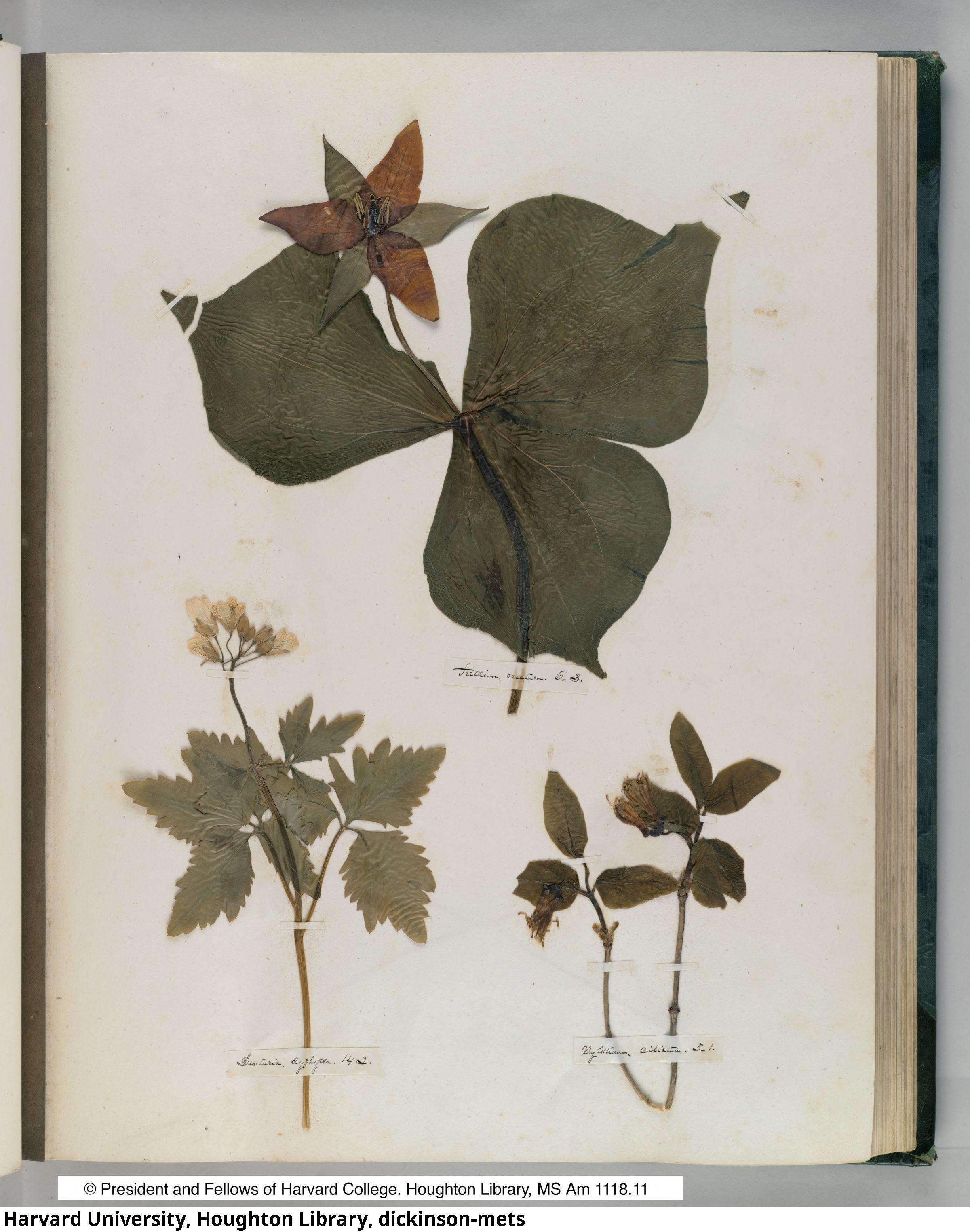
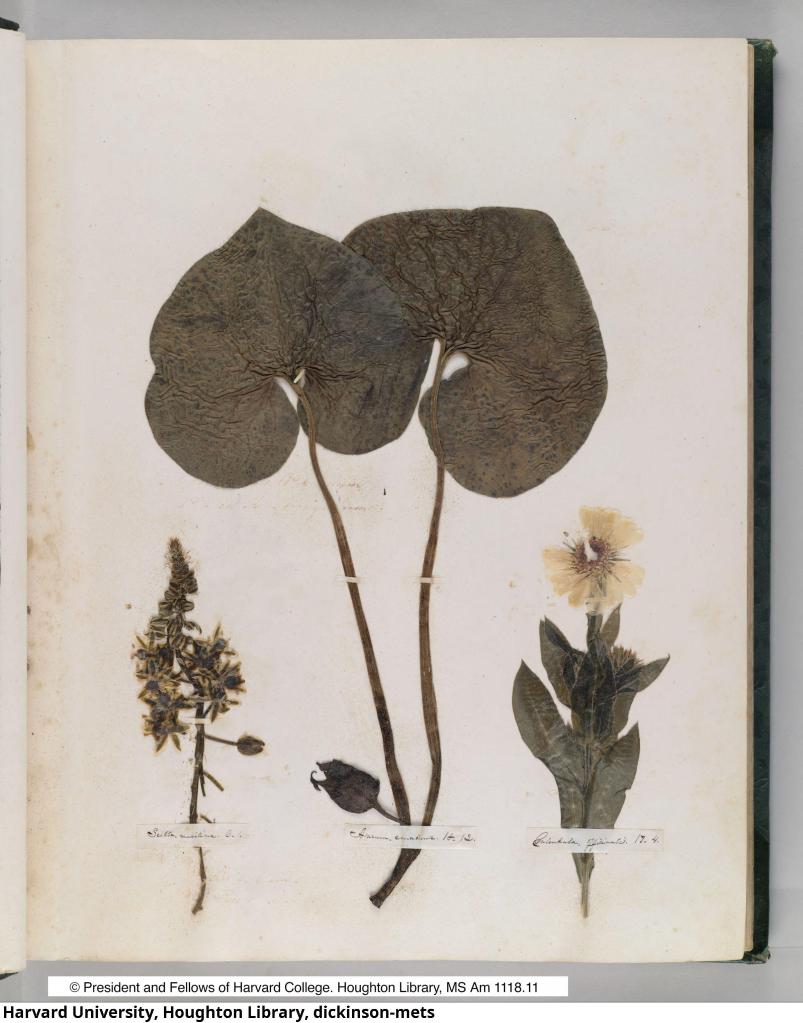
“Did you ever know that a flower, once withered and freshened again, becomes an immortal flower, – that is, that it rises again?” ~Emily Dickinson in a letter to a friend
Emily Dickinson Herbarium – preservation of trilliumEmily Dickinson herbarium- preservation of wild ginger (asarum)
While I was fearing it, it came— But came with less of fear Because that fearing it so long Had almost made it fair—
There is a Fitting—a Dismay— A Fitting—a Despair ’Tis harder knowing it is Due Than knowing it is Here.
The Trying on the Utmost The Morning it is new Is Terribler than wearing it A whole existence through. ~Emily Dickinson
Over a decade ago, as I was going through my mother’s boxed-up possessions after her death, I found the 1956 Webster’s New Dictionary of the Twentieth Century that I grew up with. This book was massive, easily weighing 10 pounds, and served as a booster seat for haircuts, a step stool for trying to reach the cookie jar on the kitchen cupboard, and of course, for looking up any obscure word that ever existed in all of history. Or so it seemed.
It was an amazing tome. And as I flipped through the pages, I found some old familiar friends that were neither black nor white nor read all over. They had survived over half a century.
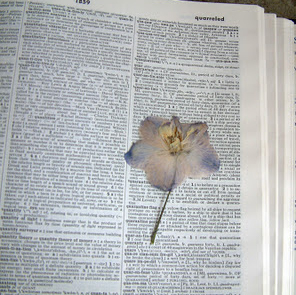
Wildflowers had been carefully pressed between the pages–over two dozen specimens paper thin themselves, their existence squeezed into two dimensions–still showing faint pink or blue, or purple color, almost exuding a long ago fragrance from a summer over fifty years ago. As a child I regularly wandered out to our fields and woods to gather crimson clover blossoms, buttercup, dandelions, daisies, wild violets, wild ginger, calypso lady slippers for bouquets for my mother, and she would select the most perfect to slide between the pages of the dictionary. Occasionally she would pull one out to gently paste on a hand written card she sent to a friend.
Here were my perfect flowers, preserved and pressed for time, just waiting for the senior-citizen me to rediscover them lying between wonderful words that I love to roll in my mouth and type on a page. They are too fragile to paste to a greeting card, or even to handle due to their brittleness. They need to stay right where they are, for another generation or two or three to discover.
As a child, I was always very worried about losing my parents, fearing their death would be the end of me as well. But as Emily Dickinson writes “fearing it so long/Had almost made it fair” – as an adult, I was more prepared for the day each parted from this life. As the poet suggests, fearing it for years was much harder than the acceptance when that time had come.
Now I too am pressed for time, fading and more fragile, perhaps more brittle than I care to admit. My mother and father have blown away like the puff ball seeds of the dandelion, on to other horizons, but the sturdy old dictionary is going nowhere. It will be passed down, its delicate passengers preserved inside from a long-ago-far-away summer afternoon of flower gathering. They will be shared as a great grandchild opens the book to look up a favorite word sometime in the not-so-far-off future.
One-Time
Monthly
Yearly
Make a one-time or recurring donation to support daily Barnstorming posts
I was still a kid interning at State he reminisces late in the meal— It was a young red-headed woman looked like my sister when the lines went flat I fell apart shook like a car with a broken axle Went to the head surgeon a fatherly man Boy, he said, you got to fill a graveyard before you know this business and you just did row one, plot one. ~Alicia Suskin Ostriker, “The Surgeon” from The Book of Seventy
As a physician-in-training in the late 1970’s, I rotated among a variety of inner city public hospitals, learning clinical skills on patients who were grateful to have someone, anyone, care enough to take care of them. There were plenty of homeless street people who needed to be deloused before the “real” doctors would touch them, and there were the alcoholic diabetics whose gangrenous toes would self-amputate as I removed stinking socks. There were people with gun shot wounds and stabbings who had police officers posted at their doors and rape victims who were beaten and poisoned into submission and silence. Someone needed to touch them with compassion when their need was greatest.
As a 25 year old idealistic and naive student, I truly believed I could make a difference in the 6 weeks I spent in any particular hospital rotation. That proved far too grandiose and unrealistic, yet there were times I did make a difference, sometimes not so positive, in the few minutes I spent with a patient. As part of the training process, mistakes were inevitable. Lungs collapsed when putting in central lines, medications administered caused anaphylactic shock, pain and bleeding caused by spinal taps–each error creates a memory that never will allow such a mistake to occur again. It is the price of training a new doctor and the patient always–always– pays the price.
I was finishing my last on-call night on my obstetrical rotation at a large military hospital that served an army base. The hospital, built during WWII was a series of far flung one story bunker buildings connected by miles of hallways–if one part were bombed, the rest of the hospital could still function. The wing that contained the delivery rooms was factory medicine at its finest: a large ward of 20 beds for laboring and 5 delivery rooms which were often busy all at once, at all hours. Some laboring mothers were married girls in their mid-teens whose husbands were stationed in the northwest, transplanting their young wives thousands of miles from their families and support systems. Their bittersweet labors haunted me: children delivering babies they had no idea how to begin to parent.
I had delivered 99 babies during my 6 week rotation. My supervising residents and the nurses on shift had kept me busy on that last day trying to get me to the *100th* delivery as a point of pride and bragging rights; I had already followed and delivered 4 women that night and had fallen exhausted into bed in the on call-room at 3 AM with no women currently in labor, hoping for two hours of sleep before getting up for morning rounds. Whether I reached the elusive *100* was immaterial to me at that moment.
I was shaken awake at 4:30 AM by a nurse saying I was needed right away. An 18 year old woman had arrived in labor only 30 minutes before and though it was her first baby, she was already pushing and ready to deliver. My 100th had arrived. The delivery room lights were blinding; I was barely coherent when I greeted this almost-mother and father as she pushed, with the baby’s head crowning. The nurses were bustling about doing all the preparation for the delivery: setting up the heat lamps over the bassinet, getting the specimen pan for the placenta, readying suture materials for the episiotomy.
I noticed there were no actual doctors in the room so asked where the resident on call was.
What? Still in bed? Time to get him up! Delivery was imminent.
I knew the drill. Gown up, gloves on, sit between her propped up legs, stretch the vulva around the crowning head, thinning and stretching it with massaging fingers to try to avoid tears. I injected anesthetic into the perineum and with scissors cut the episiotomy to allow more room, a truly unnecessary but, at the time, standard procedure in all too many deliveries. Amniotic fluid and blood dribbled out then splashed on my shoes and the sweet salty smell permeated everything. I was concentrating so hard on doing every step correctly, I didn’t think to notice whether the baby’s heart beat had been monitored with the doppler, or whether a resident had come into the room yet or not. The head crowned, and as I sucked out the baby’s mouth, I thought its face color looked dusky, so checked quickly for a cord around the neck, thinking it may be tight and compromising. No cord found, so the next push brought the baby out into my lap. Bluish purple, floppy, and not responding. I quickly clamped and cut the cord and rubbed the baby vigorously with a towel.
Nothing, no response, no movement, no breath. Nothing. I rubbed harder.
A nurse swept in and grabbed the baby and ran over to the pediatric heat lamp and bed and started resuscitation.
Chaos ensued. The mother and father began to panic and cry, the pediatric and obstetrical residents came running, hair askew, eyes still sleepy, but suddenly shocked awake with the sight of a blue floppy baby.
I sat stunned, immobilized by what had just happened in the previous five minutes. I tried to review in my foggy mind what had gone wrong and realized at no time had I heard this baby’s heart beat from the time I entered the room. The nurses started answering questions fired at me by the residents, and no one could remember listening to the baby after the first check when they had arrived in active pushing labor some 30 minutes earlier. The heart beat was fine then, and because things happened so quickly, it had not been checked again. It was not an excuse, and it was not acceptable. It was a terrible terrible error. This baby had died sometime in the previous half hour. It was not apparent why until the placenta delivered in a rush of blood and it was obvious it had partially abrupted–prematurely separated from the uterine wall so the circulation to the baby had been compromised. Potentially, with continuous fetal monitoring, this would have been detected and the baby delivered in an emergency C section in time. Or perhaps not. The pediatric resident worked for another 20 minutes on the little lifeless baby.
The parents held each other, sobbing, while I sewed up the episiotomy. I had no idea what to say, mortified and helpless as a witness and perpetrator of such agony. I tried saying I was so sorry, so sad they lost their baby, felt so badly we had not known sooner. There was nothing that could possibly comfort them or relieve their horrible loss or the freshness of their raw grief.
And of course, there were no words of comfort for my own anguish.
Later, in another room, my supervising resident made me practice intubating the limp little body so I’d know how to do it on something other than a mannequin. I couldn’t see the vocal cords through my tears but did what I was told, as I always did.
I cried in the bathroom, a sad exhausted selfish weeping. Instead of achieving that “perfect” 100, I learned something far more important: without constant vigilance, and even with it, tragedy intervenes in life unexpectedly without regard to age or status or wishes or desires. I went on as a family physician to deliver a few hundred babies during my career, never forgetting the baby that might have had a chance, if only born at a hospital with adequately trained well rested staff without a med student trying to reach a meaningless goal.
This baby would now be in his 40’s, likely with children of his own, his parents now proud and loving grandparents.
I wonder if I’ll meet him again — this little soul only a few minutes away from a full life — if I’m ever forgiven enough to share a piece of heaven with humanity’s millions of unborn babies who, through intention or negligence, never had opportunity to draw a breath.
Then, just maybe then, forgiveness will feel real and grace will flood the terrible void where, not for the first time nor the last, my guilt overwhelmed what innocence I had left.
One-Time
Monthly
Yearly
Make a one-time or recurring donation to support daily Barnstorming posts
Fourteen years ago today, my mother, Elna Schmitz Polis, returned home for good, gently picked up and carried away by the Lord before dawn. She was just over 88 1/2 years old, and had lived much of her life anticipating her death day with some apprehension, having almost been called home at the age of 13 from a ruptured appendix, before antibiotics were an option. That near-miss seemed to haunt her, filling her with worry that it was a mistake that she survived that episode at all. Yet she thrived despite the anxiety, and ended up, much to her surprise, living a long life full of family and faith.
She was born in the isolation of a Palouse wheat and lentil farm in eastern Washington, in a two story white house located down a long lane and nestled in a draw between the undulating hills. Despite having one older brother, it was a lonely childhood which accustomed her to solitude and creative play inside her mind and heart. All her life and especially in her later years, she would prefer the quiet of her own thoughts over the bustle of a room full of activities and conversation.
Her childhood was filled with exploration of the rolling hills, the barns and buildings where her father built and repaired farm equipment, and the chilly cellar where the fresh eggs were stored after she reached under cranky hens to gather them. She sat in the cool breeze of the picketed yard, watching the huge windmill turn and creak next to the house. She helped her weary mother feed farm crews who came for harvest time and then settled in the screened porch listening to the adults talk about lentil prices and bushel production. She woke to the mourning dove call in the mornings and heard the coyote yips and howls at night.
As a young woman, she was ready to leave the farm behind for college, devoting herself to the skills of speech, and the creativity of acting and directing in drama, later teaching rural high school students, including a future Pulitzer Prize winning poet, Carolyn Kizer. She loved words and the power and beauty they wielded.
Marrying my father was a brave and impulsive act, traveling by train to the east coast only a week before he shipped out for almost 3 years to the South Pacific to fight as a Marine in WWII. She must have wondered about the man who returned from war changed and undoubtedly scarred in ways she could not see or touch. They worked it out, as rocky as it must have been at times, and in their reconciliation years later after divorce, I could see the devotion and mutual respect of life companions who shared purpose and love.
As a wife and mother, she rediscovered her calling as a steward of the land and a steward of her family, gardening and harvesting fruits, vegetables and children tirelessly. When I think of my mother, I most often think of her tending us children in the middle of the night whenever we were ill; her over-vigilance was undoubtedly due to her worry we might die in childhood as she almost did.
She never did stop worrying during the last few months if her life after a devastating leg fracture. As she became more dependent on others in her physical decline, she tried to give up the control she thought she had to maintain through her “worry energy” and became more accepting about the control the Lord maintains over all we are and will become.
I know from where my shyness comes, my preference for birdsongs rather than radio music, my preference for naps, and my tendency to be serious and straight laced with a twinkle in my eye. This is my German Palouse side–immersing in the quietness of solitude, thrilling to the sight of the spring wheat flowing like a green ocean wave in the breeze and appreciating the warmth of rich soil held in my hands. From that heritage came my mother and it is the legacy she has left with me. I am forever grateful to her for her unconditional love and her willingness to share the warmth of her nest whenever we felt the need to fly back home and shelter, overprotected but safe nonetheless, under her wings.
November pierces with its bleak remembrance Of all the bitterness and waste of war. Our silence tries but fails to make a semblance Of that lost peace they thought worth fighting for. Our silence seethes instead with wraiths and whispers, And all the restless rumour of new wars, The shells are falling all around our vespers, No moment is unscarred, there is no pause, In every instant bloodied innocence Falls to the weary earth ,and whilst we stand Quiescence ends again in acquiescence, And Abel’s blood still cries in every land One silence only might redeem that blood Only the silence of a dying God. ~Malcolm Guite “Silence: a Sonnet for Remembrance Day”
So, when old hopes that earth was bettering slowly Were dead and damned, there sounded ‘War is done!’ One morrow. Said the bereft, and meek, and lowly, ‘Will men some day be given to grace? yea, wholly, And in good sooth, as our dreams used to run?‘
Aye; all was hushed. The about-to-fire fired not, The aimed-at moved away in trance-lipped song.
Calm fell. From Heaven distilled a clemency; There was peace on earth, and silence in the sky;
Some could, some could not, shake off misery… ~Thomas Hardy from “And There Was a Great Calm” (On the Signing of the Armistice, 11 Nov. 1918)
When you go home tell them of us and say – “For your tomorrow we gave our today” ~John Maxwell Edmonds from “The Kohima Epitaph”
I’m unsure why the United States does not call November 11 Remembrance Day as the Commonwealth nations did 99 years ago at the Armistice. This is a day that demands so much more than the more passive name Veterans’ Day represents.
This day calls all citizens who appreciate their freedoms to stop what they are doing and disrupt the routine rhythm of their lives. We are to remember in humble thankfulness the generations of military veterans who sacrificed time, resources, sometimes health and well being, and too often their lives in answering the call to defend their countries.
Remembrance means ~never forgetting what it costs to defend freedom. ~acknowledging the millions who have given of themselves and continue to do so on our behalf. ~never ceasing to care. ~a commitment to provide resources needed for the military to remain strong and supported. ~unending prayers for safe return home to family. ~we hold these men and women close in our hearts, always teaching the next generation about the sacrifices they made.
Most of all, it means being willing ourselves to become the sacrifice when called.
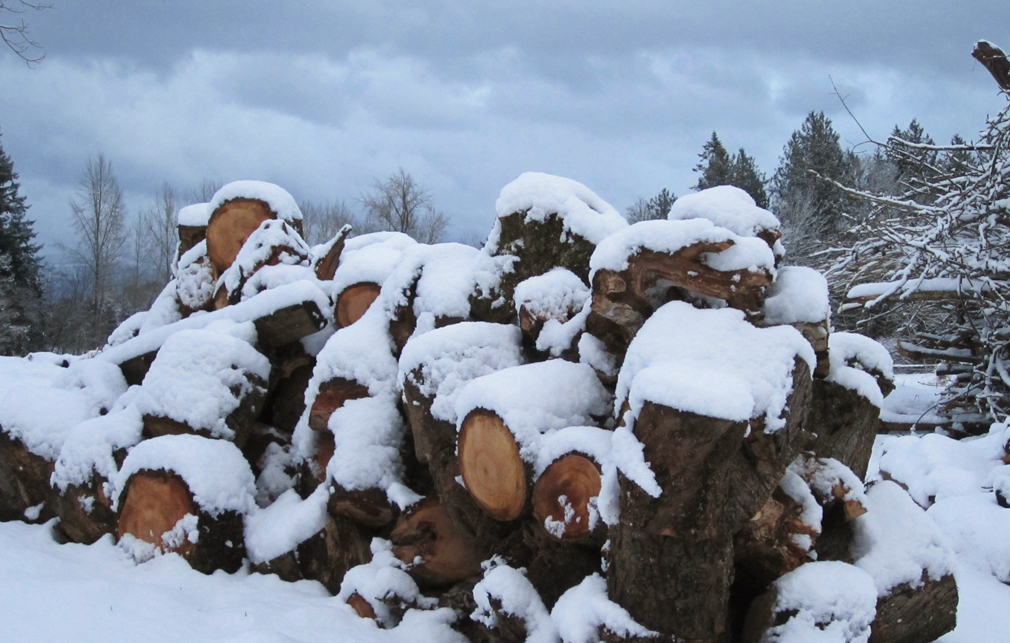
I finished loading the woodshed today. Every year I tell myself, This is it, the last time. It’s just too much work, too painful, and I’m too old. And then, the next year, when fall rolls around, the air gets cold, and the geese go south, I load the woodshed again.
How long will this go on? I’m seventy-two. Every year it takes me longer to recover, yet every year I keep doing it.
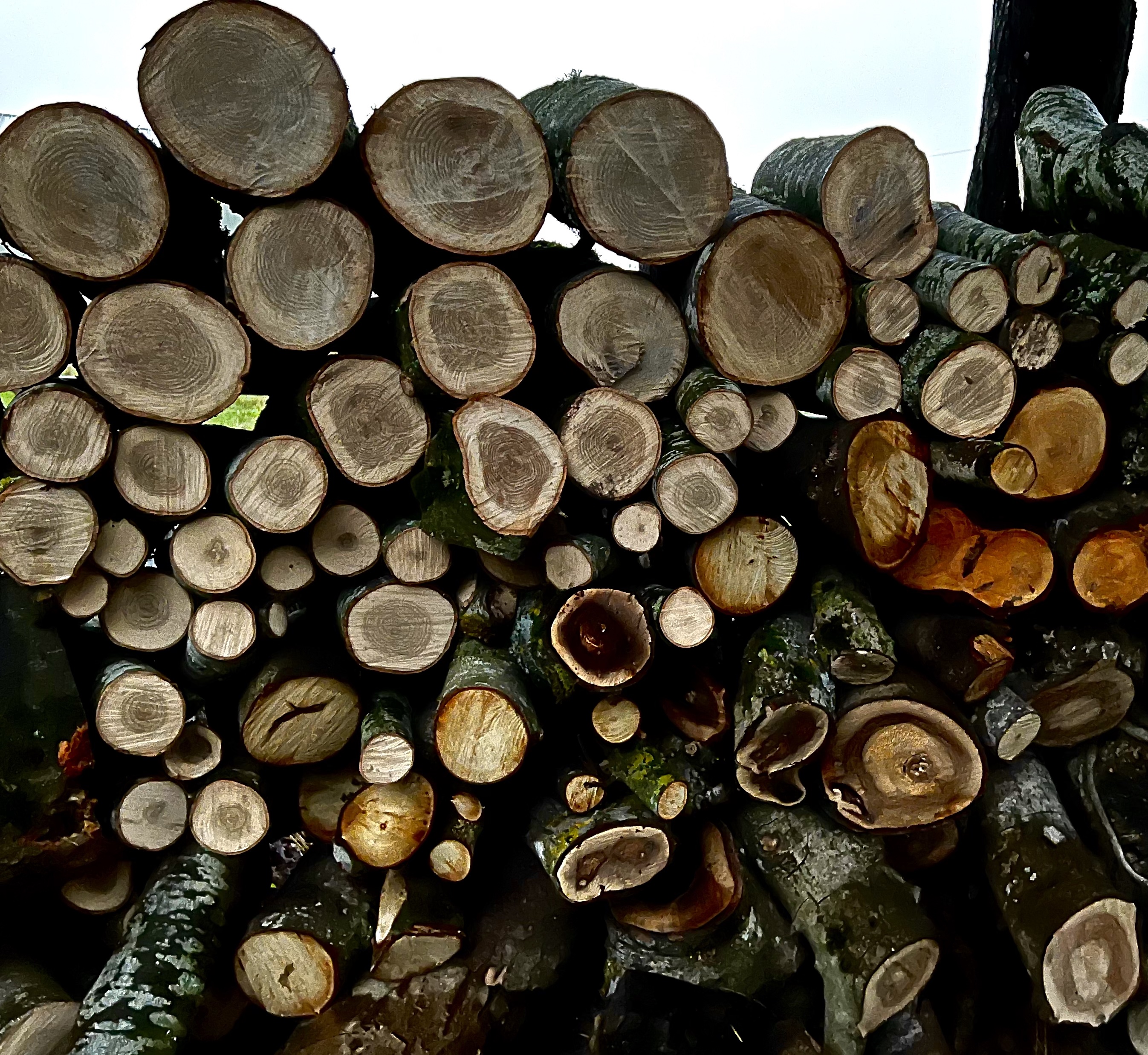
It’s just, now that I’m done, I can go out into the woodshed, sit in a chair, and look at all those neatly stacked rows, six and a half feet high, six feet long and sixteen inches deep, two sets of rows like that, left and right, four full cord — not much by some standards — but enough to keep us warm all winter.
When I go out and look at what I’ve done, I get such a deep sense of satisfaction from this backaching labor that I can’t imagine a year without going through all that pain again. ~David Budbill, “Loading the Woodshed” from Tumbling toward the End.
Long-johns top and bottom, heavy socks, flannel shirt, overalls, steel-toed work boots, sweater, canvas coat, toque, mittens: on.
Out past grape arbor and garden shed, into the woods. Sun just coming through the trees. There really is such a thing
as Homer’s rosy-fingered dawn. And here it is, this morning. Down hill, across brook, up hill, and into the stand of white pine
and red maple where I’m cutting firewood. Open up workbox, take out chain saw, gas, bar oil, kneel down, gas up saw, add
bar oil to the reservoir, stand up, mittens off, strap on and buckle chaps from waist to toe, hard hat helmet: on. Ear protectors: down,
face screen: down, push in compression release, pull out choke, pull on starter cord, once, twice, go. Stall. Pull out choke, pull on
starter cord, once, twice, go. Push in choke. Mittens: back on. Cloud of two-cycle exhaust smoke wafting into the morning air
and I, looking like a medieval Japanese warrior, wade through blue smoke, knee-deep snow, revving the chain saw as I go,
headed for that doomed, unknowing maple tree. ~David Budbill”Into the Winter Woods”, from Happy Life
The other day, I was visiting with a recently widowed neighbor who is now well into her 70’s. She said she had finished loading her woodshed and was now ready for winter, dependent on wood stove heat over the next 6 months or so. She is someone who takes her independence seriously after her husband died, having lived in the same house for over fifty years – not at all ready to move into town to an apartment or condo, much less assisted living. She assists herself, thank you very much, even if it means climbing a step ladder to overhead-toss the firewood chunks onto the top row, and later to pull them down again to haul into the house to the stove.
I asked her why she continued to do such hard physical work when she has sons who live nearby as well as the means to hire help if she needed it. She also could choose to install a furnace, making it easier to stay warm.
She told me she likes to look at the stack every day when she does her farmyard chores, which include bringing in her day’s worth of wood. It gives her a deep sense of satisfaction to know that she was able to neatly stack several cords of wood under cover for yet another year, just as she has done year after year after year. It is a reminder of what she is capable of doing on her own, now that she is alone.
It makes her feel good to look at the fruit of her labor.
And that, of course, is reason enough to keep doing a hard thing. We each work at living out our days the best we can despite how painful they can be. We are blessed to be able to do it.
One-Time
Monthly
Yearly
Make a one-time or recurring donation to support daily Barnstorming posts
Let the light of late afternoon shine through chinks in the barn, moving up the bales as the sun moves down.
Let the cricket take up chafing as a woman takes up her needles and her yarn. Let evening come.
Let dew collect on the hoe abandoned in long grass. Let the stars appear and the moon disclose her silver horn.
Let the fox go back to its sandy den. Let the wind die down. Let the shed go black inside. Let evening come.
To the bottle in the ditch, to the scoop in the oats, to air in the lung let evening come.
Let it come, as it will, and don’t be afraid. God does not leave us comfortless, so let evening come. ~Jane Kenyon “Let Evening Come”
We resist the arrival of the evening of our lives. I wish I could remain forever sunshiny, vital and irreplaceable, living each moment of the day with the energy I feel with the morning light. But I know that the forward momentum of time inevitably will wind me down to sunset.
The poet Jane Kenyon learned this at far too young an age, diagnosed and beginning treatment for leukemia before turning fifty. I thought of Jane’s poem above when I learned today of the death of a courageous local nurse in her thirties who survived six years of treatment for metastatic cancer after being diagnosed only a few months after the birth of her first and only child. She and her family and medical team tried to postpone her evening coming for as long as possible, knowing God ultimately counts our days.
This week, her evening has come. God comforts those who weep with the loss of this remarkable loving wife, mother, daughter – a woman who trusted her heavenly Father for all the things she needed.
We all are created in the image of a God who remembered to rest. We are not alone in our need to catch our breath.
So let evening come, as it will – there is no stopping it – allowing our lungs to be filled with the loving breath of God, our Creator. To Him, we are most definitely irreplaceable.
One-Time
Monthly
Yearly
Make a one-time or recurring donation to support daily Barnstorming posts
The Palace of Holyroodhouse – The Queen’s residence in Edinburgh, Scotland
The missing-ness of it all surfaced again I asked, “Grief, do you have anything new?” “No, but you do.”
I suspect this will be our dance You lead; I age. ~Jordan Sleed “Our Dance”
“Melancholie” sculpture by Albert Gyorgy in Switzerland – photo credit unknown
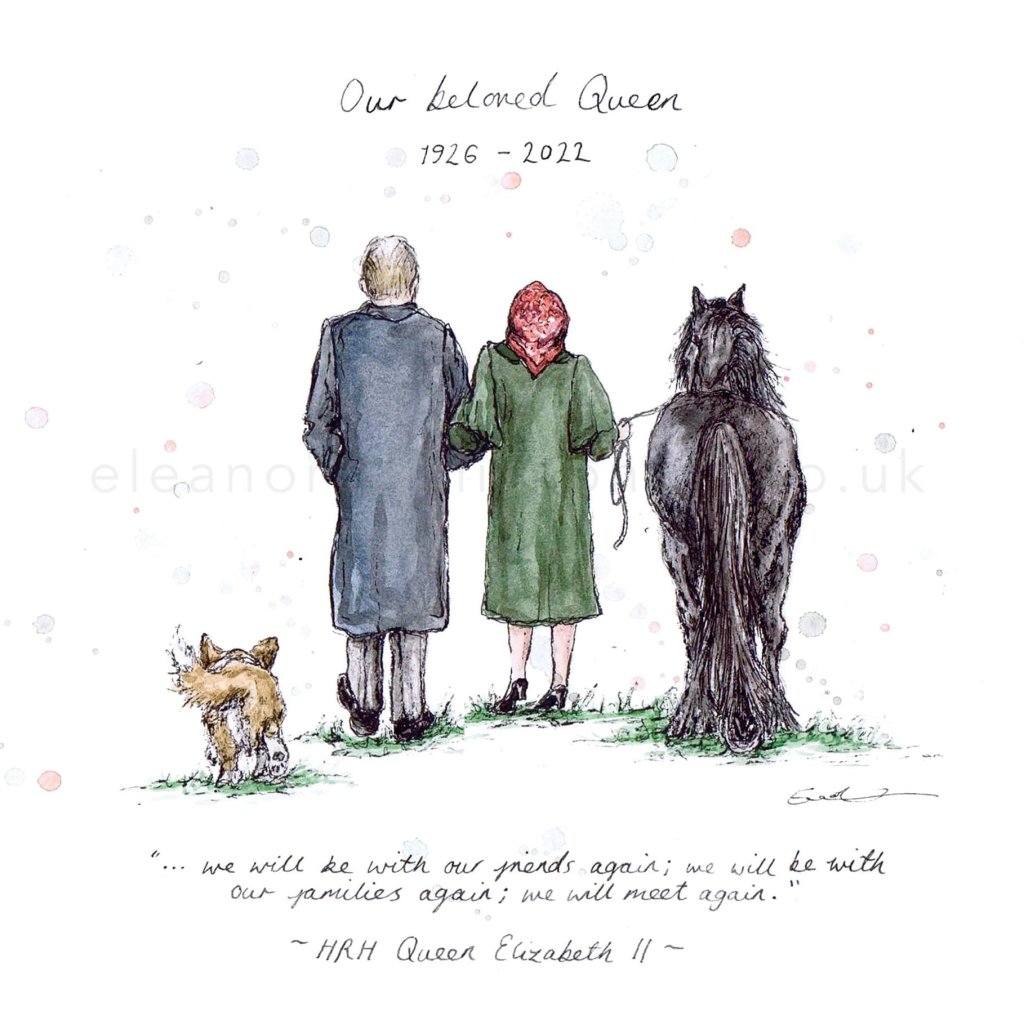
...my whole life, whether it be short or long, will be devoted to your service. ~Elizabeth in a speech on her 21st birthday
I don’t consider myself a monarchist, nor have I carefully tracked the comings and goings of the British Royal Family over my nearly seventy years of life, being a mere youngster compared to the Queen. But like many others around the world yesterday, I was moved to learn of the death of Queen Elizabeth II, only two days after she held an audience (looking very much alive with her broad smile and signature handbag) with the new Prime Minister of the United Kingdom.
Now she has moved on from us, her name and life relegated forever to the history books.
How can I possibly weep and feel grief for the passing of someone I never met, nor could have ever aspired to meet?
This is the strange way of grief — it dances with us throughout our lives, leading us into dark corners we don’t expect to visit. I am grieving for someone who was not born to be queen yet was thrust onto an international stage for 70 years of her life. When she was called to it, she did not shrink from the duty nor did she give up when it became overwhelmingly hard. She made a promise to her people and she delivered on that promise.
I did have an opportunity to speak once with someone who knew the Queen very well and who met with her regularly during her last several decades. He had nothing but great admiration for her character, perseverance, faith and love of family and country.
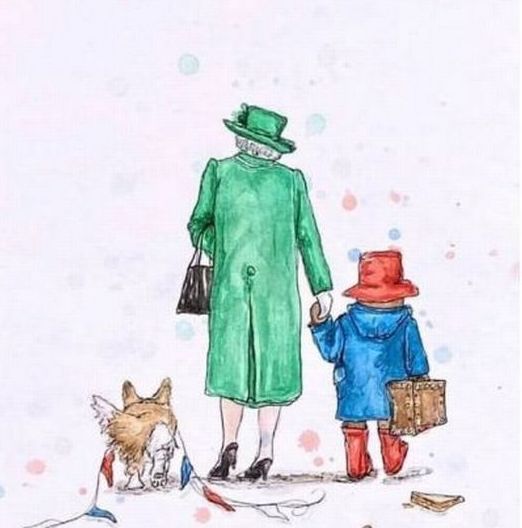
She was the real deal. And anyone who loves corgis and ponies is exactly my cup of tea.
I believe God welcomed her home with open arms just as He embraces the least of us into His Light – to God, we are all royalty, serving with humility and a duty of honor.
Bring us, O Lord God, at our last awakening into the house and gate of heav’n: to enter into that gate and dwell in that house, where there shall be no darkness nor dazzling, but one equal light, no noise nor silence, but one equal music; no fears nor hopes, but one equal possession; no ends nor beginnings, but one equal eternity; in the habitation of thy glory and dominion, world without end. Amen. ~John Donne
One-Time
Monthly
Yearly
Make a one-time or recurring donation to support daily Barnstorming posts
Now that summer’s ripen’d bloom Frolics where the winter frow n’d, Stretch’d upon these banks of broom, We command the landscape round.
Nature in the prospect yields Humble dales and mountains bold, Meadows, woodlands, heaths-and fields Yellow’d o’er with waving gold.
On the uplands ev’ry glade Brightens in the blaze of day; O’er the vales the sober shade Softens to an ev’ning gray. ~John Cunningham from “The Landscape”
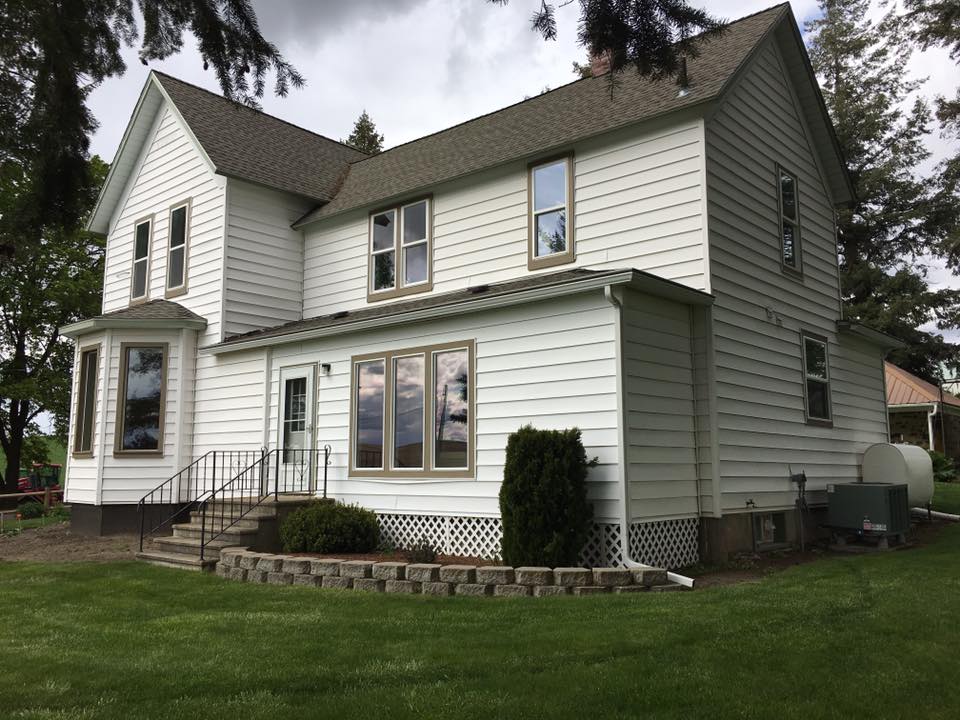
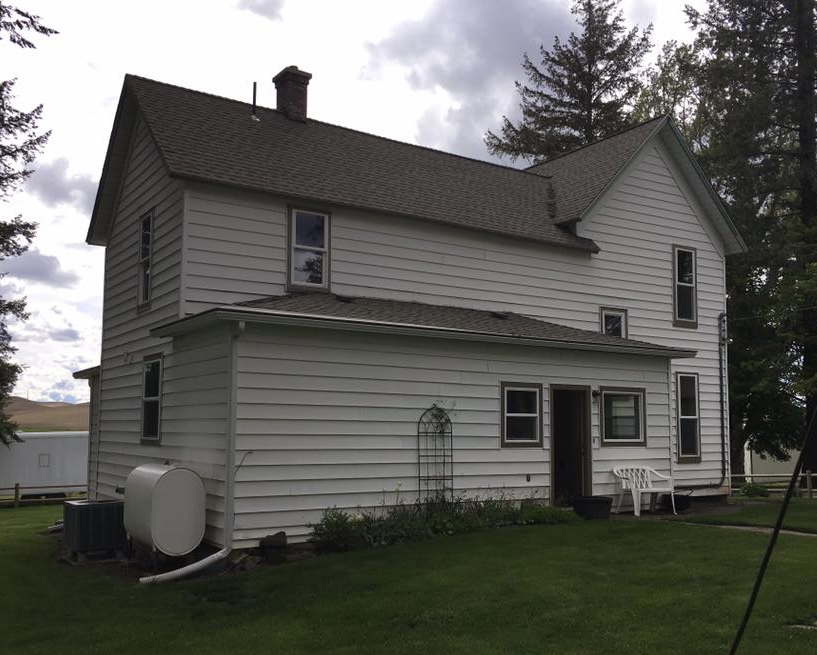
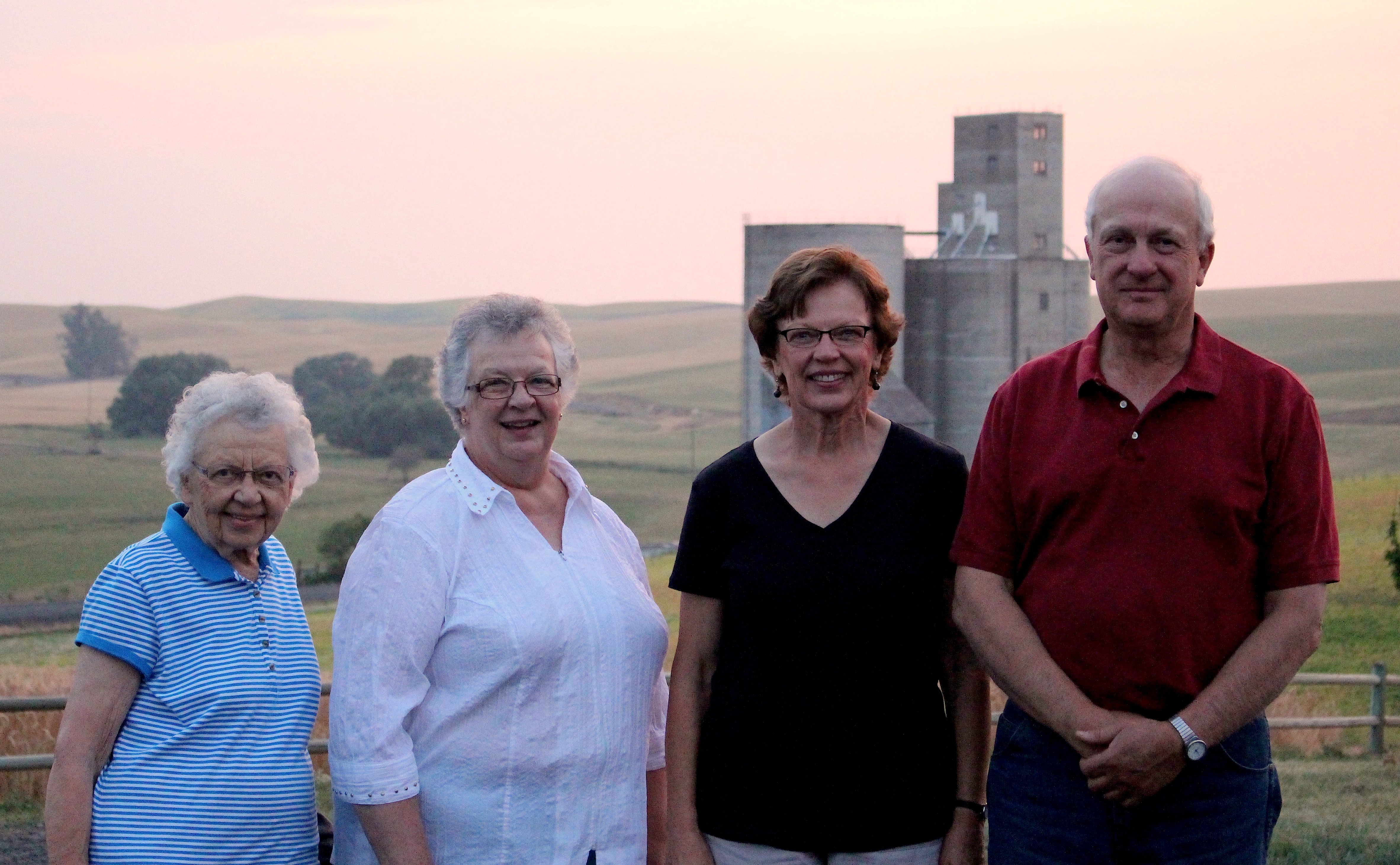
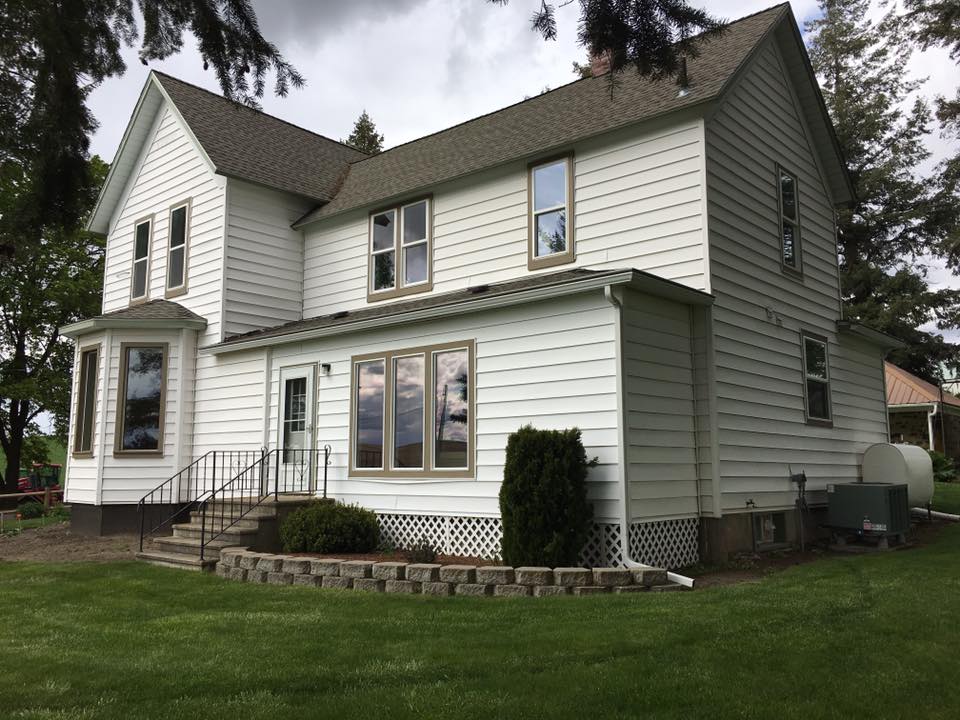
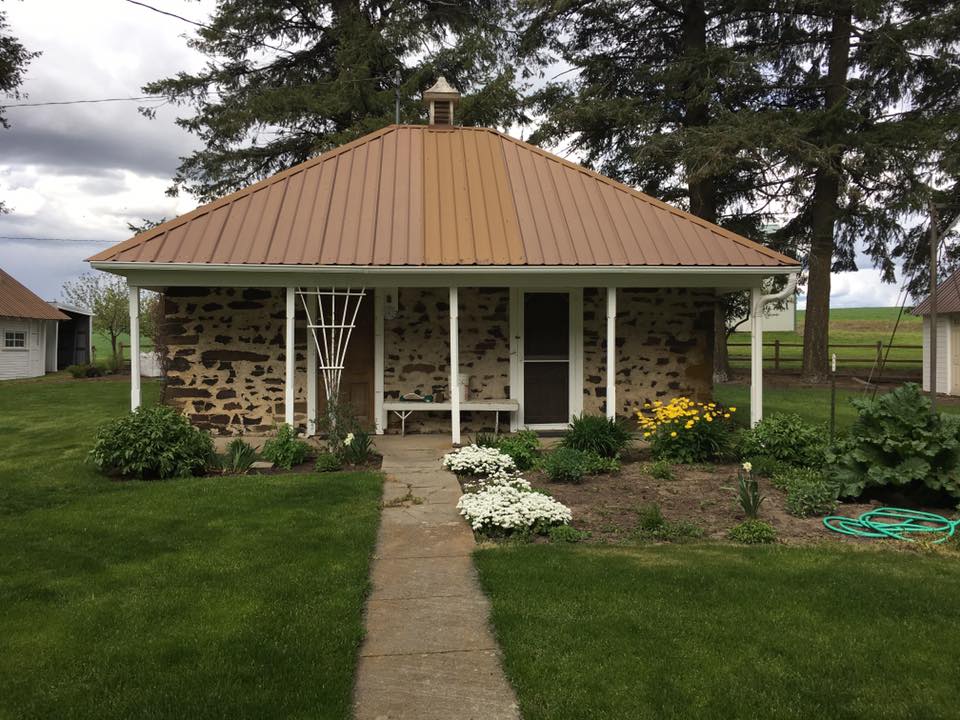
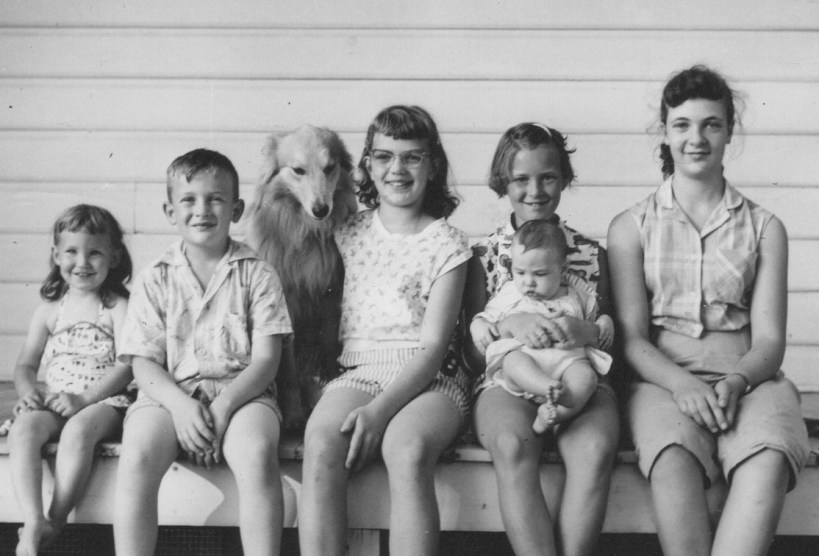
Betty with children Carol, Barbara and Joethe renovated farm housethe “egg” house where produce was kept coolOn the porch in Spring Valley in the Palouse – me at age two with Nancy holding my baby brother Steve along with the Schmitz cousins – Joe, Barbara and Carol
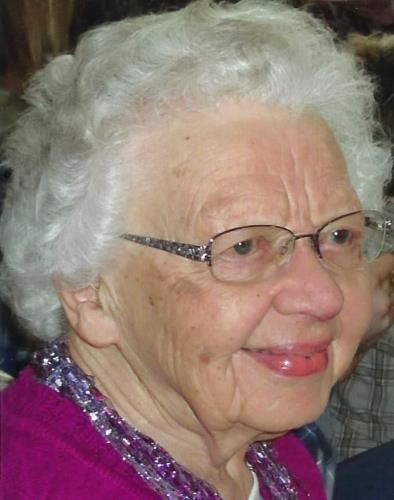
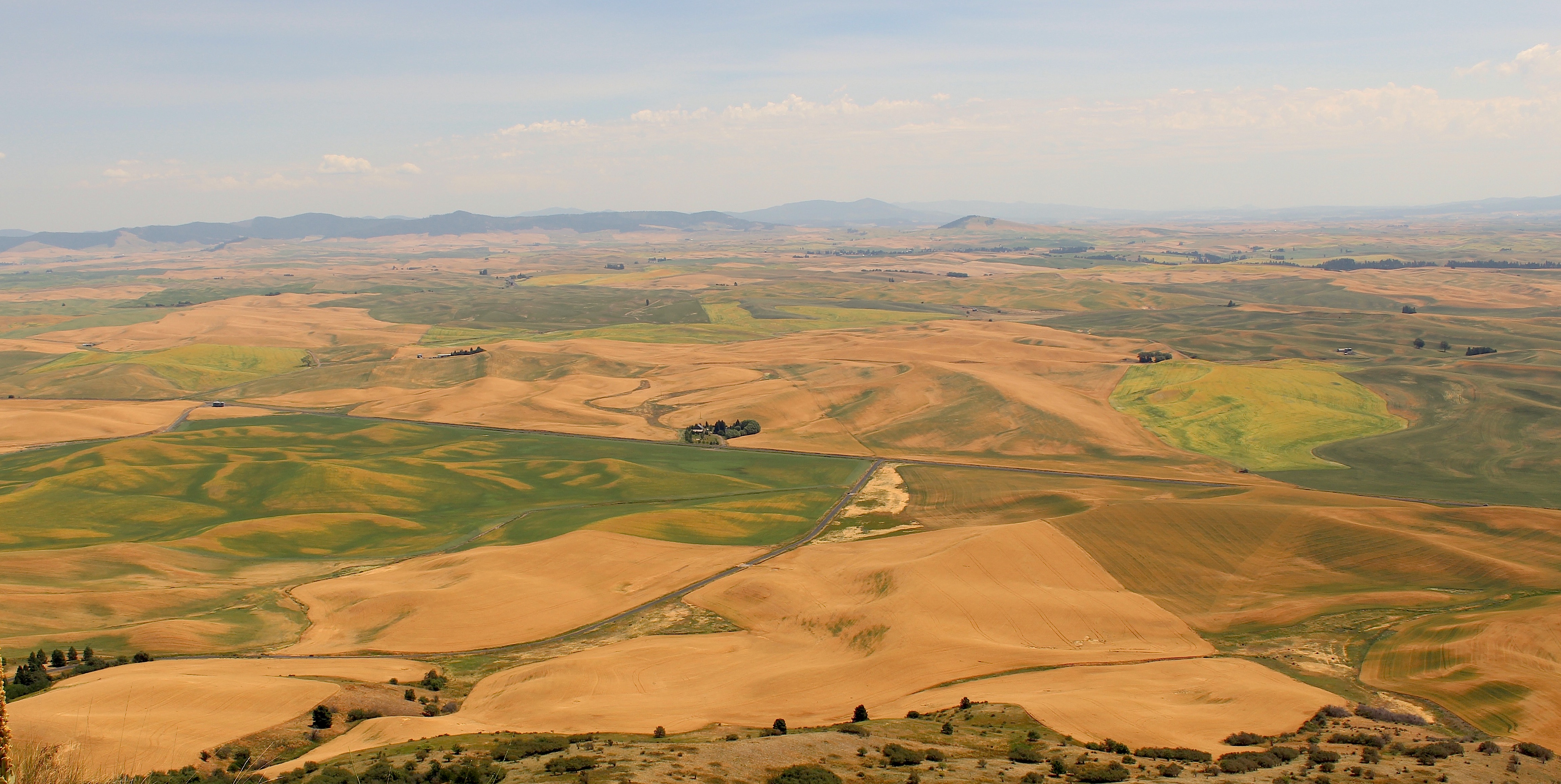
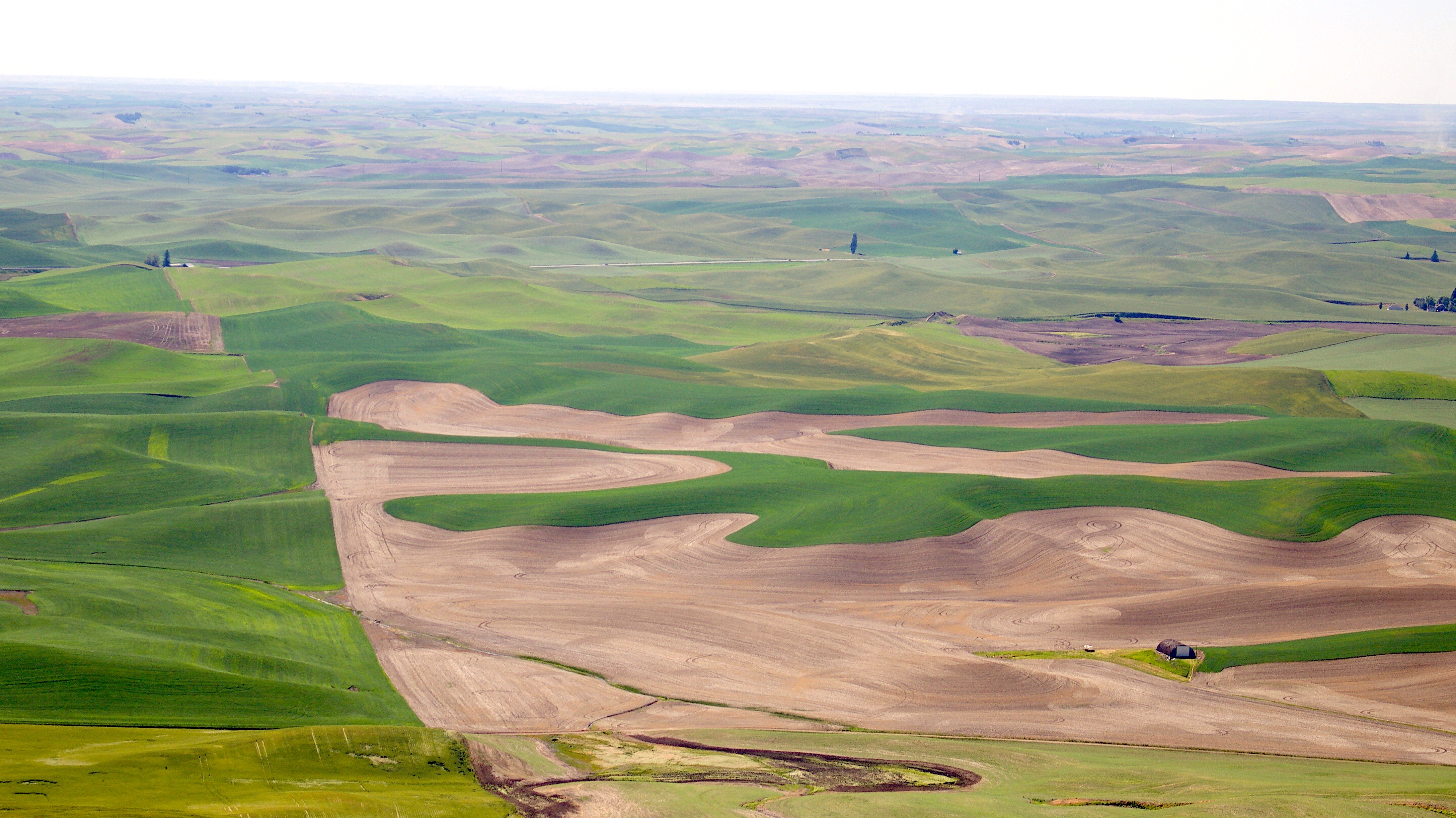
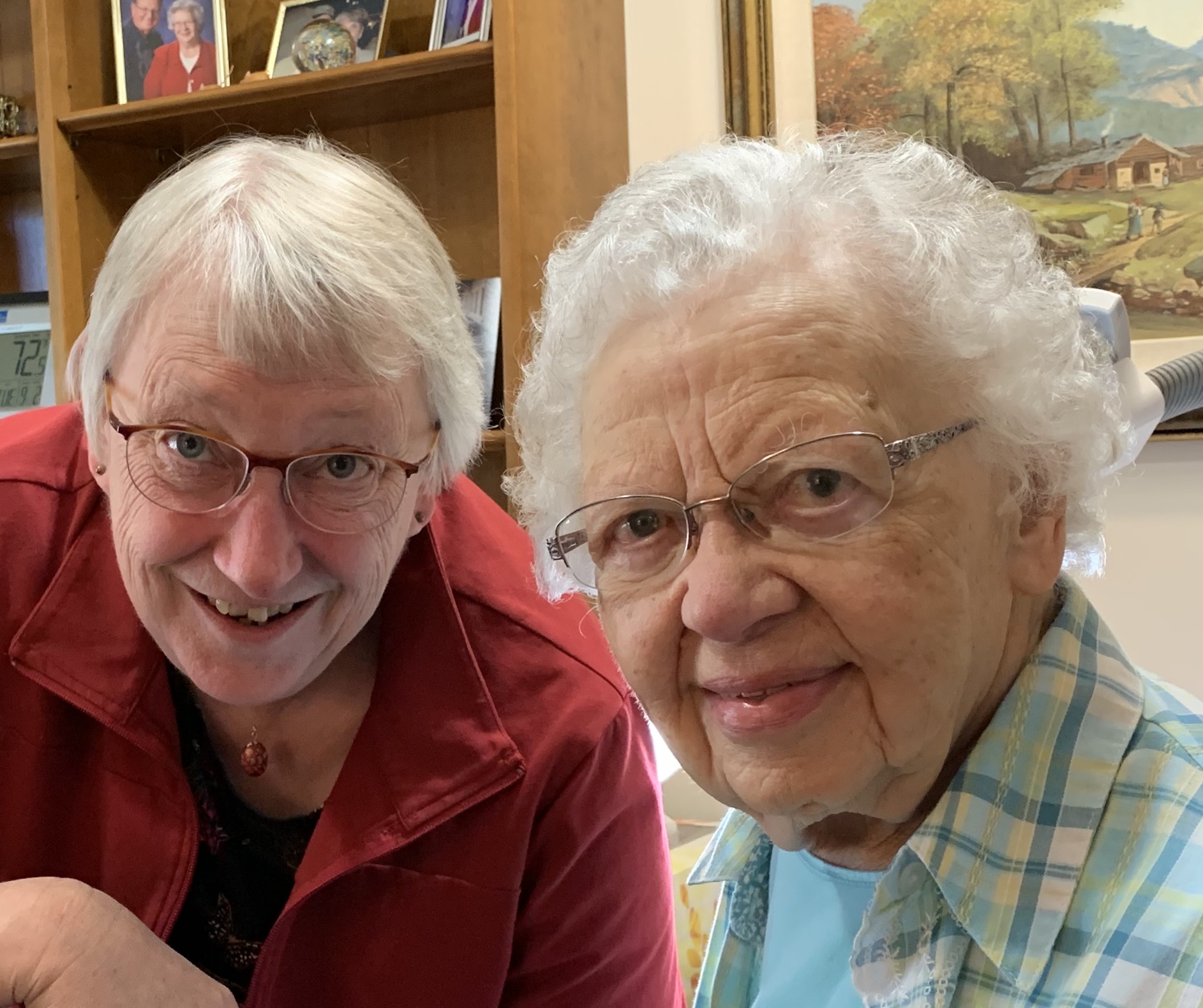
My Aunt Betty Buchholz Schmitz lived for most of her 102 years in landscapes that could be summer-rich with golden crops yet in winter, harsh, bleak and empty. She weathered it all with hard work, grace and an innate sweetness born of her faith.
She was carried away last week to her true home to join my mother’s brother, Albert, and so many family and friends who had gone before her, including my mother who always felt blessed to call Betty her sister through marriage.
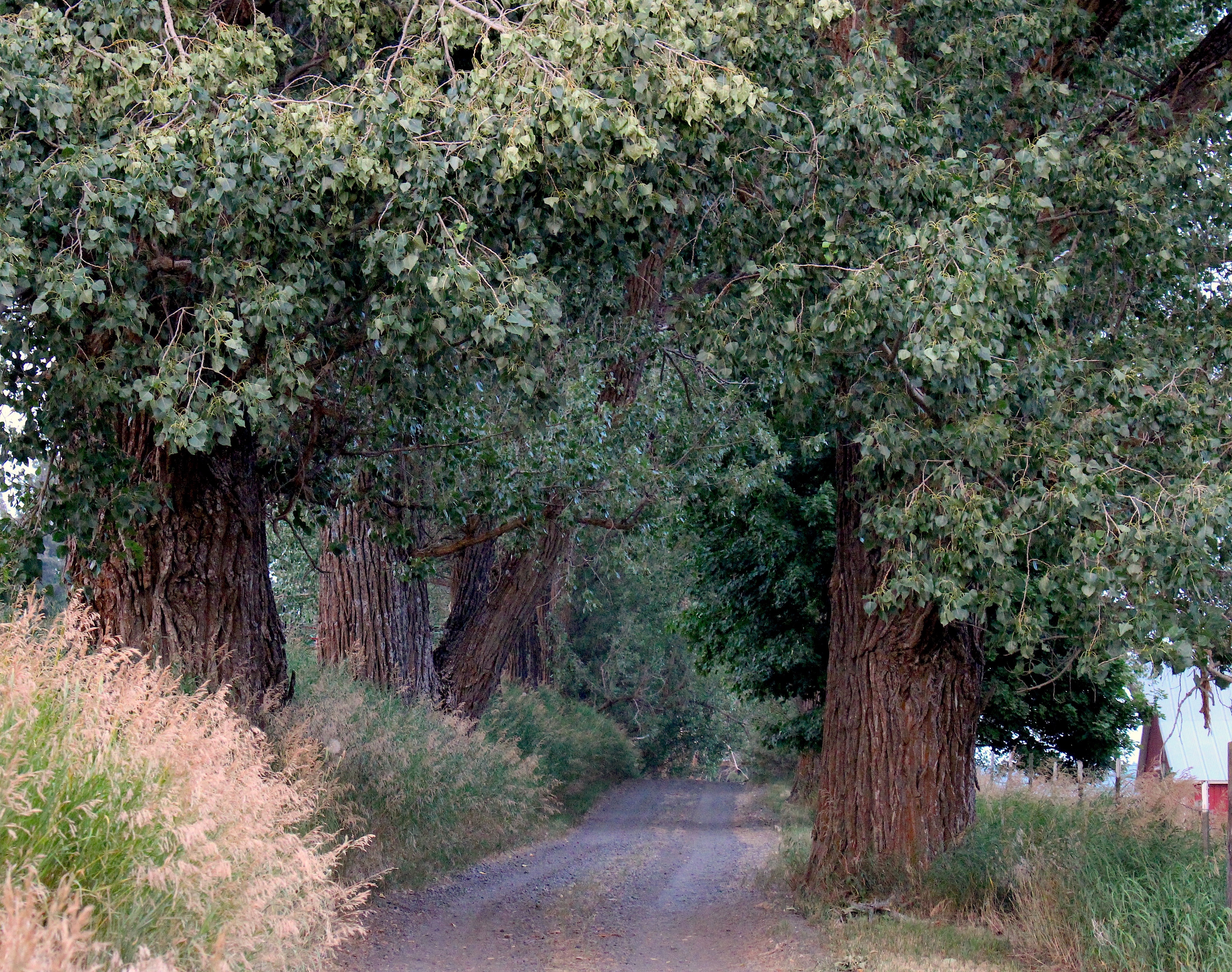
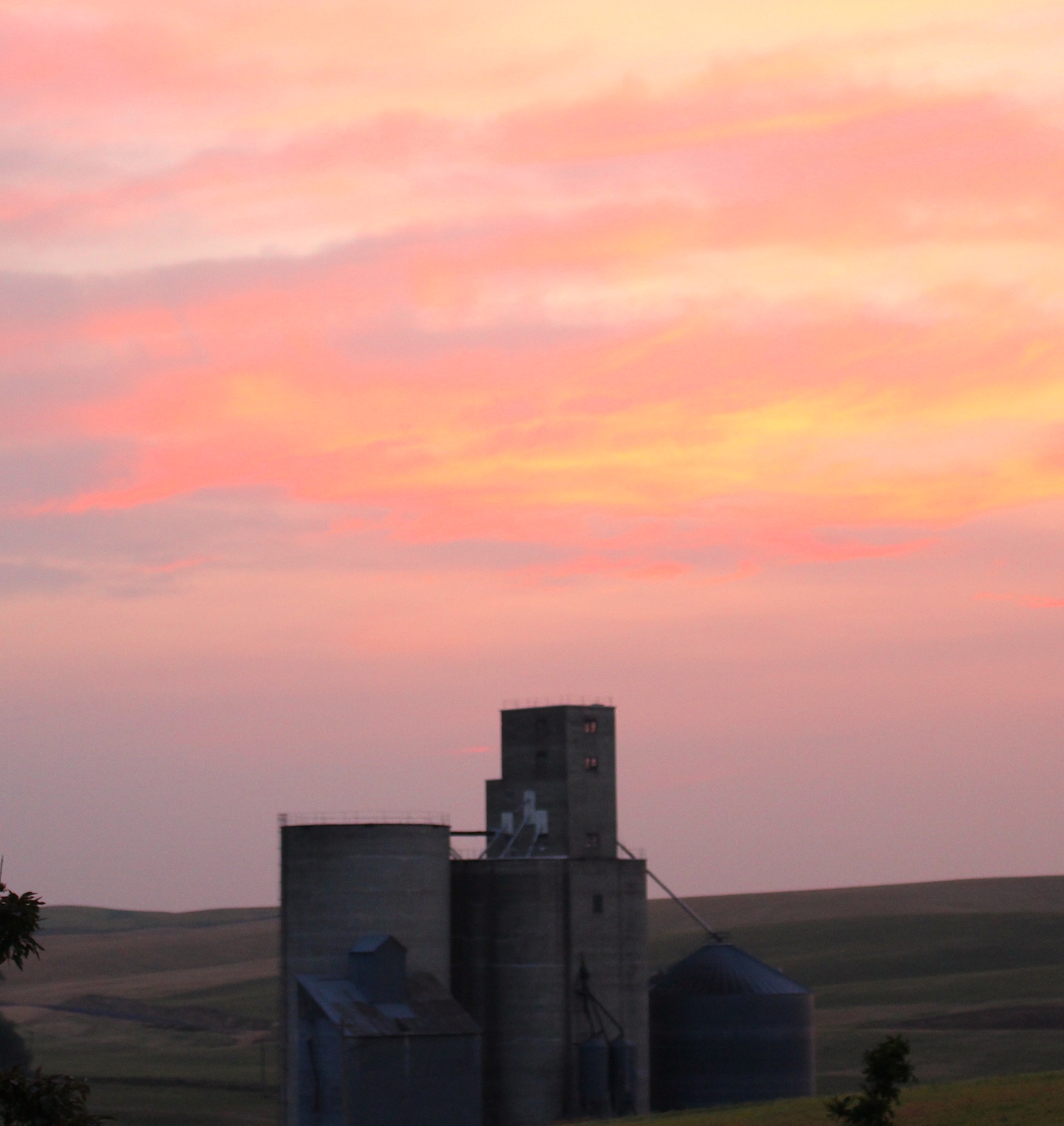
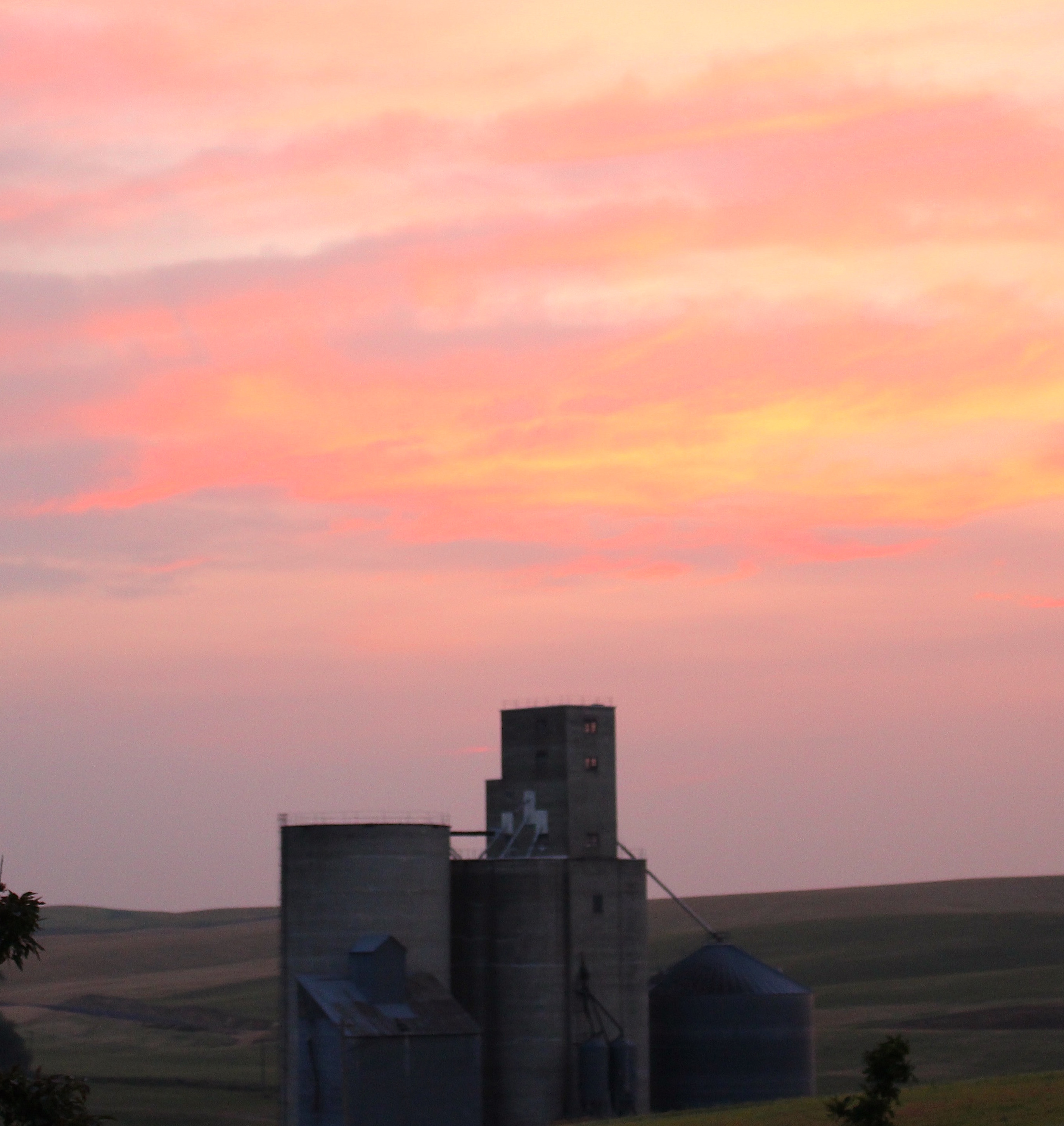
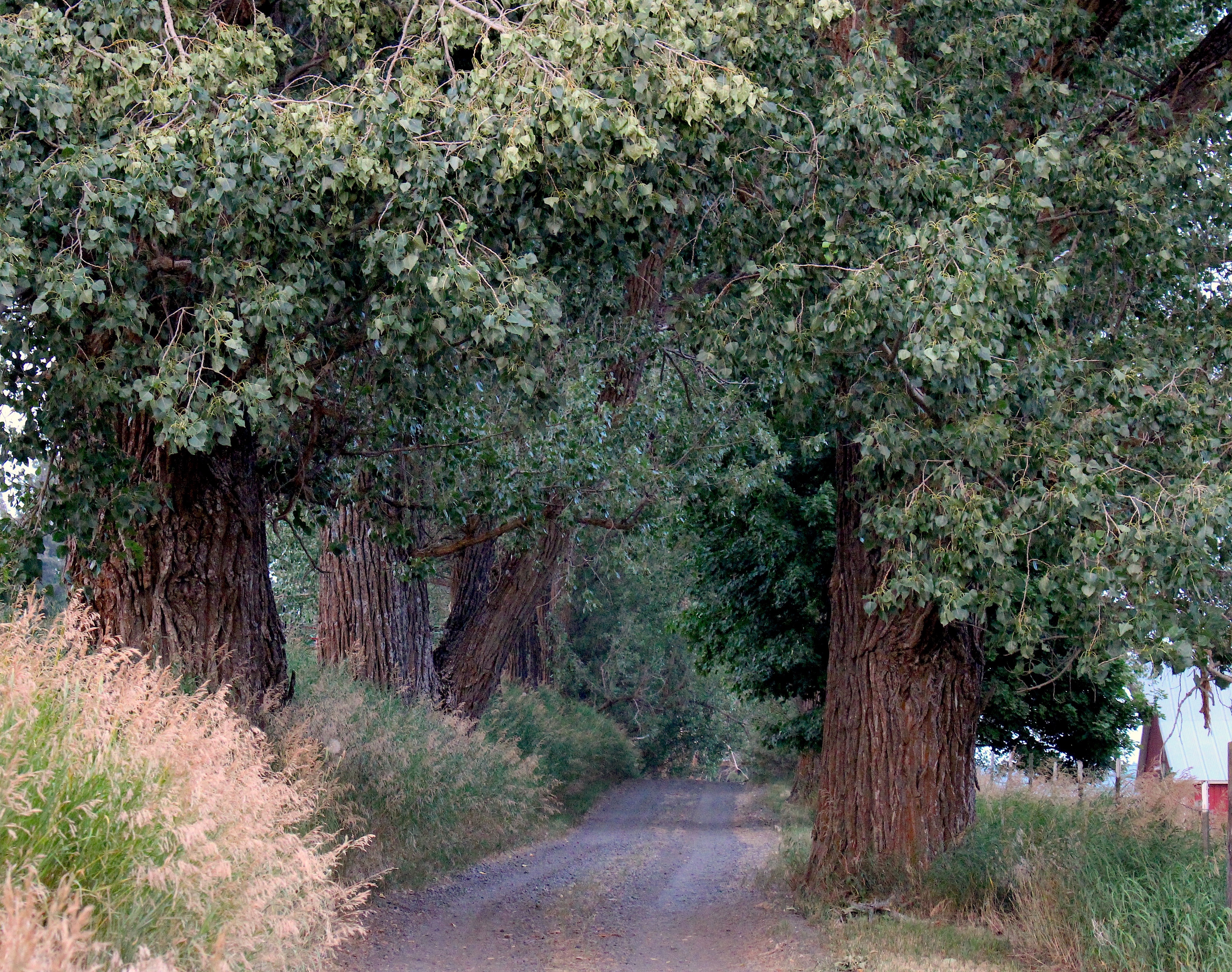
I remember Aunt Betty from my earliest days as we would make an annual summer visit to our cousins in Spring Valley, a tiny place with train tracks and a grain elevator in the middle of the rolling hills of the Palouse country of eastern Washington. I felt such a surge of excitement as we entered the long poplar-lined driveway that we could see from the road from far away.
My Palouse family lived in the farm house where my mother and uncle were born – a magical place of two stories with an enclosed staircase and many rooms, a huge basement, a sleeping porch for summer, a working windmill, as well as numerous outbuildings that contained everything Palouse wheat and lentil farmers needed to survive. The house was nestled in a small vale between the surrounding hills, to protect it from chill winter winds and stay cool in the shadows on blazing hot summer days.
Betty was a woman who was soft-spoken, always humble and eager to lend herself wherever needed. She cooked and baked huge meals, and used a wringer-washer and clothesline for never-ending loads of farm laundry. Her home was warm and welcoming with true heart-felt hospitality, even decades later after she moved to a house “in town” – a metropolis with just a few hundred neighbors.
Although a pioneer in the sense of living remotely with minimal conveniences, Betty and her brother Kenneth became pioneers in the 1960’s living donor kidney transplant program, as one of the first successful transplants. This must have required immense courage and stamina from a farm mother of three children, yet she was able to give her brother years of life that he otherwise would not have had.
Over the years, Betty sent cards and letters of encouragement to me in between our occasional visits to see her. She was the kind of aunt that modeled how I wanted to be and I have too often fallen short of her example.
I hoped to see Betty this summer, having missed visits over the last two years of COVID restrictions in her assisted living facility. Instead I will look for her smiling face and listen for her warm voice amid a lengthening list of beloved family and friends when I am called home some day myself.
I’ll see you again, Betty, in the glades of those rolling hills and the shadowed softened vales of the valleys. You will hold out your hand and make sure I feel at home there, just as you did for me during your century here.
Palouse fieldsPoplar-lined driveway to the Schmitz farm
































 Barnstorming