As If

God loves each of us as if there were only one of us to love.
~Saint Augustine

When I am one of billions
there can be nothing special
to attract attention
or affection

When I blend into the background
among so many others
indistinct and plain,
common as grains of sand

There is nothing to hold me up
as rare, unique,
or exceptional,
worthy of extra effort.

Yet it is not about my worth,
my work, my words;
it is about His infinite capacity
to love anything formed

by the touch of His vast hand,
the contraction of His immense heart,
the boundlessness of His breath reaching me
as if
as if
as if
I were the only one.

Mystery Becomes Visible

I go my way,
and my left foot says ‘Glory,’
and my right foot says ‘Amen’:
in and out of Shadow Creek,
upstream and down,
exultant,
in a daze, dancing,
to the twin silver trumpets of praise.

~Annie Dillard from Pilgrim at Tinker Creek

This fevers me, this sun on green,
On grass glowing, this young spring.
The secret hallowing is come,
Regenerate sudden incarnation,
Mystery made visible
In growth, yet subtly veiled in all,
Ununderstandable in grass,
In flowers, and in the human heart,
This lyric mortal loveliness,
The earth breathing, and the sun…

~Richard Eberhart from “This Fevers Me”

Every day should be a day of dancing
and loveliness and breathing deeply,
of celebrating the fact we woke afresh,
a new start.

If I’m honest, I don’t always feel like dancing,
my feet each going their own way
and my head barely attached to my neck.

As I stumble about in my morning daze,
readying myself for the onslaught to come,
I step out and mumble “Glory”
and then blink a few times and murmur “Amen”
and breathe it out again a little louder
until I really feel it
and believe the ununderstandable
and know it in my bones.

A little praise never hurt anyone.
A little worship goes a long way.
It’s the only way mystery becomes visible,
tangible, touchable and tastable.

Amen
and Amen again.

Something Easters Up

There is a fragrance in the air,
a certain passage of a song,
an old photograph falling out from the pages of a book,
the sound of somebody’s voice in the hall
that makes your heart leap and fills your eyes with tears.


Who can say when or how it will be
that something easters up out of the dimness
to remind us of a time before we were born and after we will die?

God himself does not give answers. He gives himself.
~Frederick Buechner from Telling the Truth: The Gospel as Tragedy, Comedy and Fairy Tale

“Let Him easter in us, be a dayspring to the dimness of us, be a crimson-cresseted east.”
― Gerard Manley Hopkins
from “The Wreck of the Deutschland”

All changed, changed utterly:   
A terrible beauty is born.
~William Butler Yeats from “Easter, 1916”

It has been a slow coming of spring this year, seeming in no hurry whatsoever as we all shelter in place, isolated and lonesome for one another.

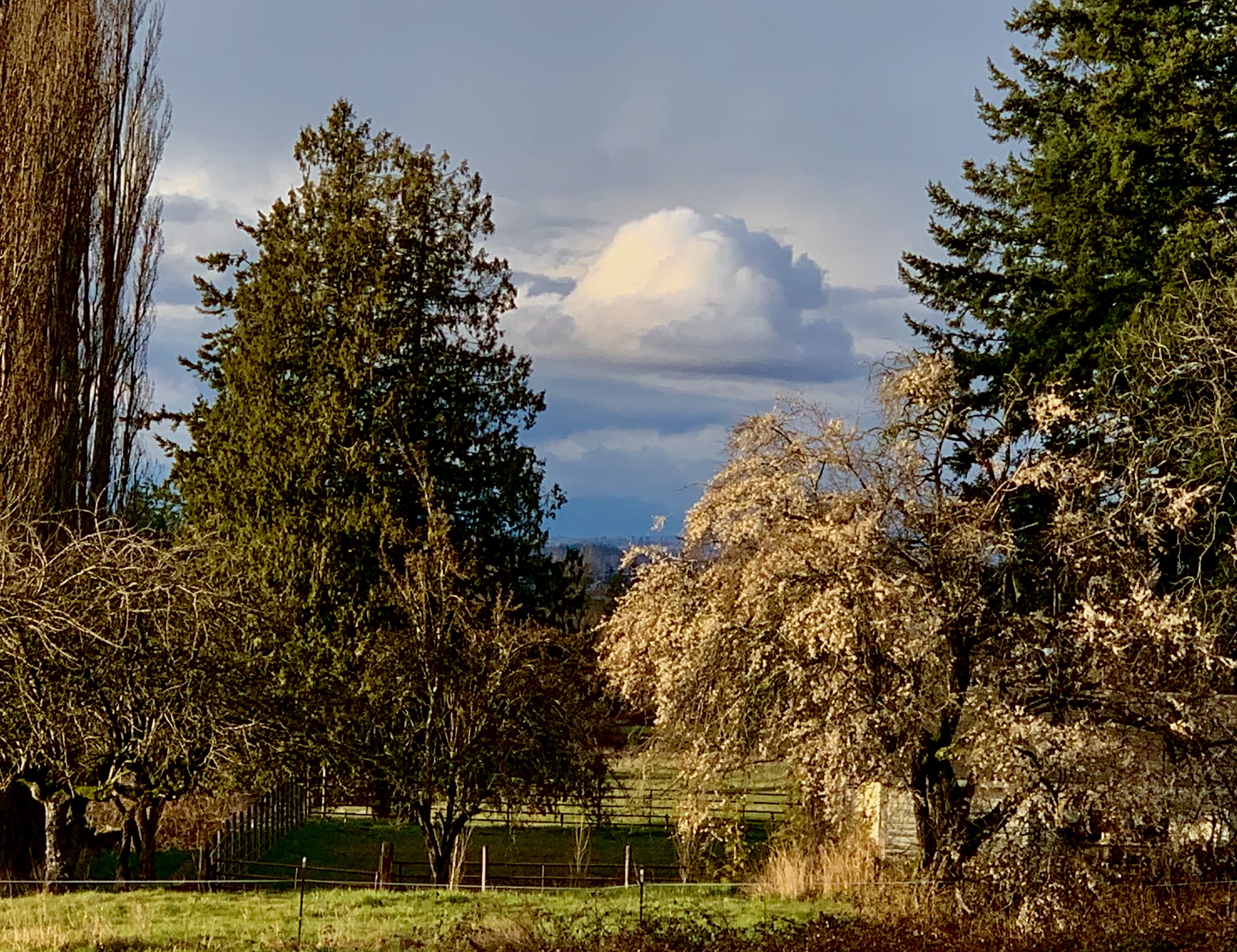
Snow remains in the foothills and the greening of the fields has only begun. The flowering plum and cherry trees finally have burst into bloom despite a continued chill.  It feels like winter at night yet the perfumed air of spring now permeates the day.

Such extreme variability is disorienting when we are desperate for something – anything – that feels routine and normal. It is almost like standing blinded in a spotlight in a darkened room.

This is exactly what eastering is like.  It is awakening out of a restless sleep, opening a door to let in fresh air, and the stone that locked us in the dark rolled back.

Overnight all has changed, changed utterly. We, who have been wintering and weathered, weary and withered, are transformed by the Light.

He is not only risen.  He is given indeed.

Beauty, Mystery and Benediction

“Why do you look for the living among the dead?  He is not here; he has risen!”
Luke 24: 5-6

Since this moment (the resurrection), the universe is no longer what it was;  nature has received another meaning; history is transformed and you and I are no more, and should not be anymore, what we were before.

Grace strikes us when we are in great pain and restlessness. It strikes us when we walk through the dark valley of a meaningless and empty life. Sometimes at that moment a wave of light breaks into our darkness, and it is as though a voice were saying: “You are accepted.”
~Paul Tillich, American theologian

So what do I believe actually happened that morning on the third day after he died?
…I speak very plainly here…

He got up.  He said, “Don’t be afraid.”

Love is the victor.  Death is not the end.  The end is life.  His life and our lives through him, in him.

Existence has greater depths of beauty, mystery, and benediction than the wildest visionary has ever dared to dream. 

Christ our Lord has risen.
~Frederick Buechner from The Magnificent Defeat

Make no mistake: if He rose at all
it was as His body;
if the cells’ dissolution did not reverse,
the molecules reknit, the amino acids rekindle,
the Church will fall…

It was not as the flowers,
each soft Spring recurrent;
it was not as His Spirit in the mouths and fuddled
eyes of the eleven apostles;
it was as His Flesh: ours.
~John Updike from “Seven Stanzas at Easter”

From the far star points of his pinned extremities, 
cold inched in—black ice and squid ink— 
till the hung flesh was empty. 
Lonely in that void even for pain, 
he missed his splintered feet, 
the human stare buried in his face. 
He ached for two hands made of meat 
he could reach to the end of. 
In the corpse’s core, the stone fist 
of his heart began to bang 
on the stiff chest’s door, and breath spilled 
back into that battered shape. Now 

it’s your limbs he comes to fill, as warm water shatters at birth, rivering every way.
~Mary Karr “Descending Theology: The Resurrection”

Our flesh is so weak, so temporary,
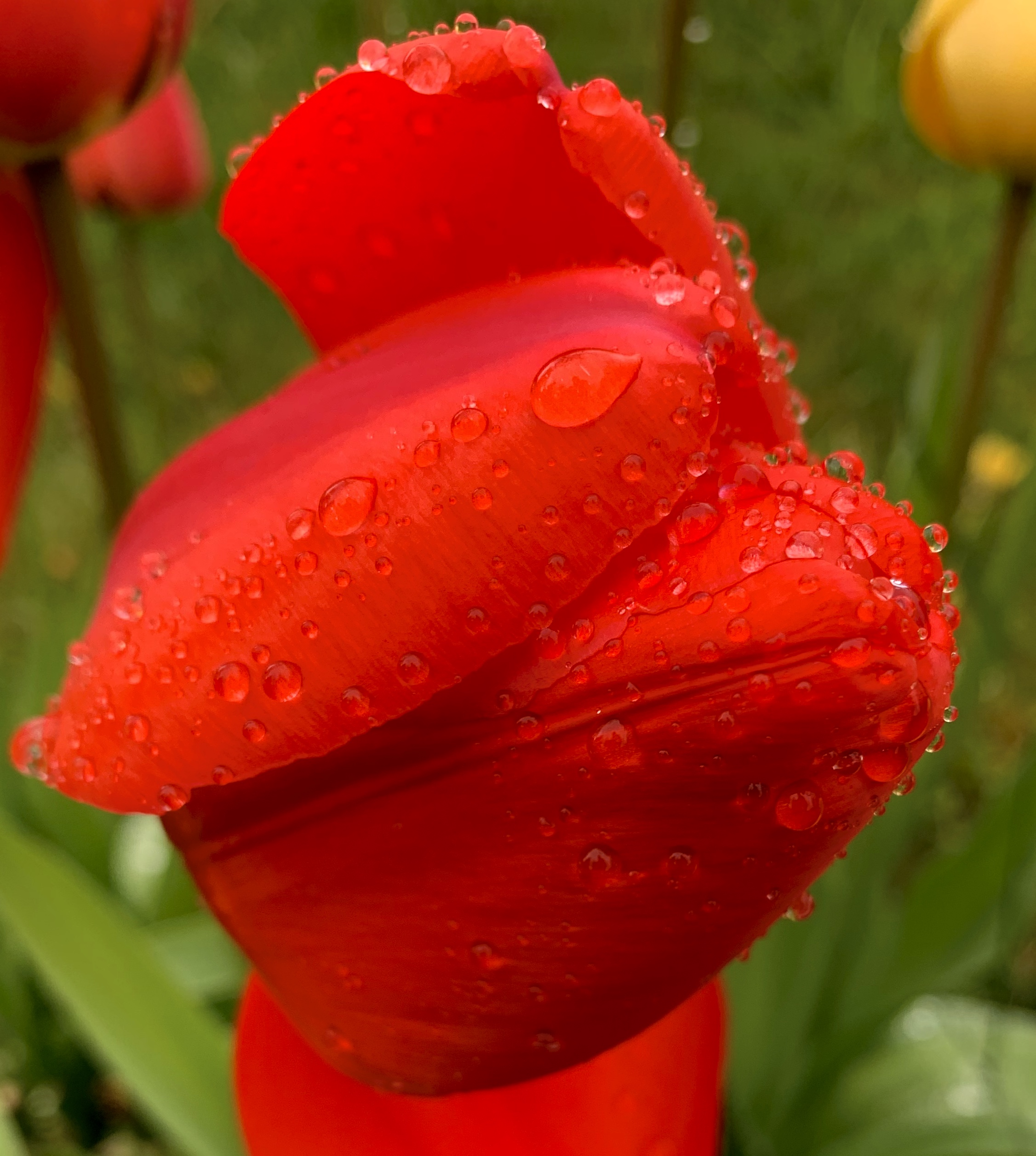
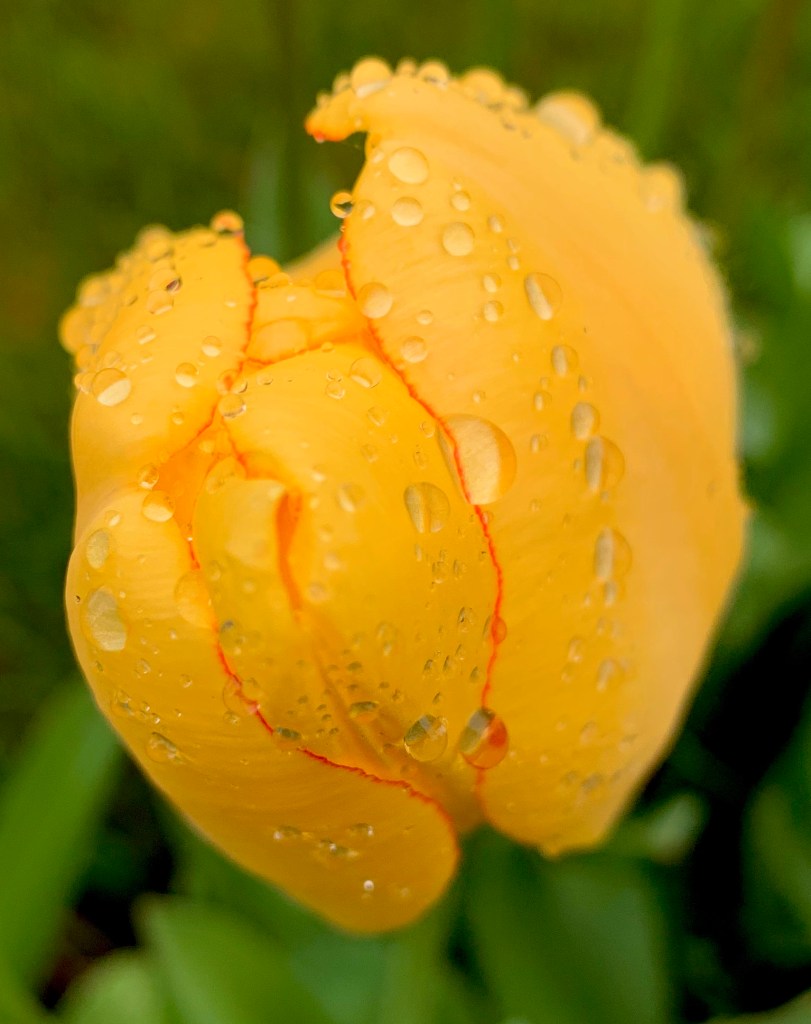
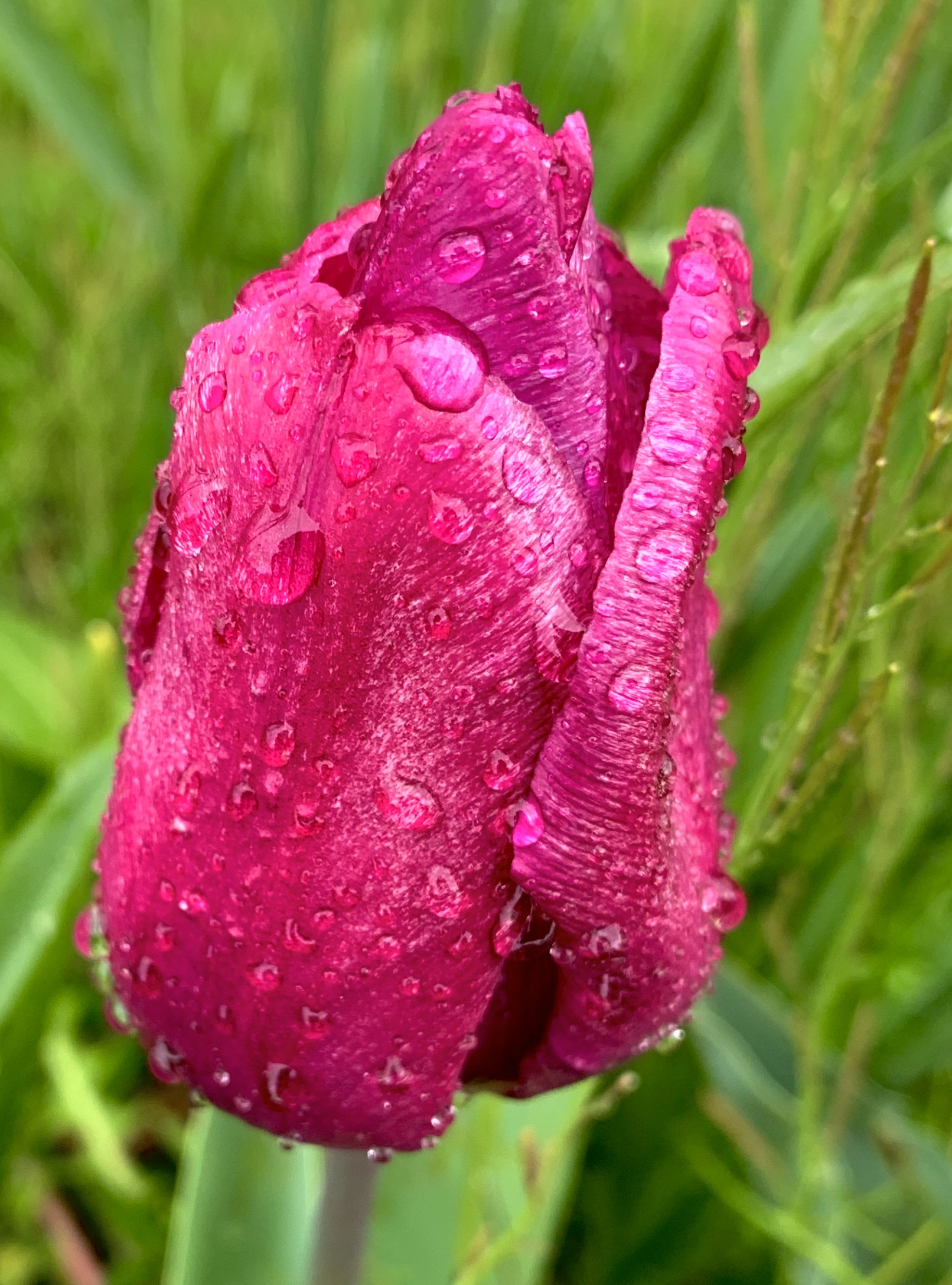
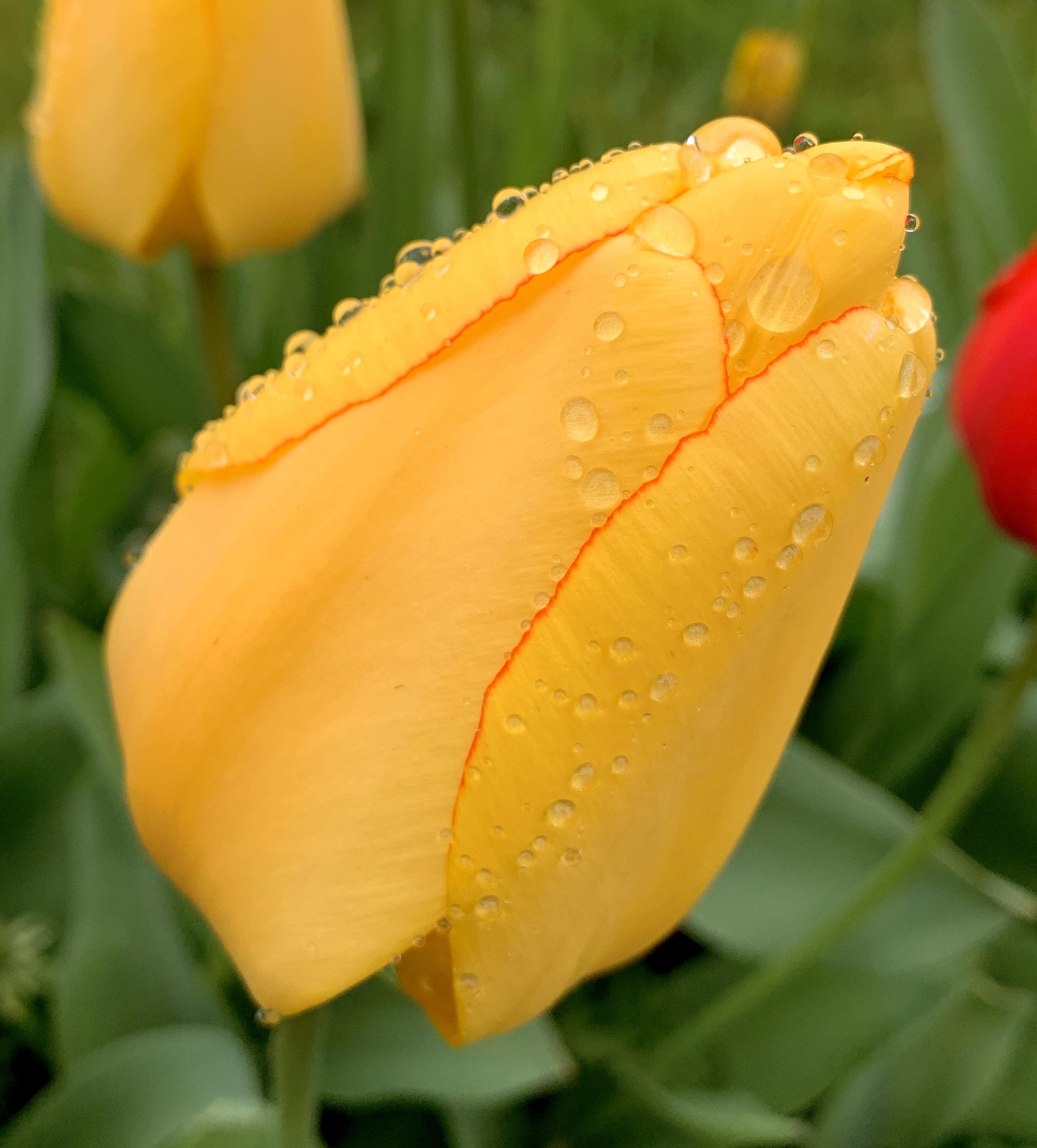
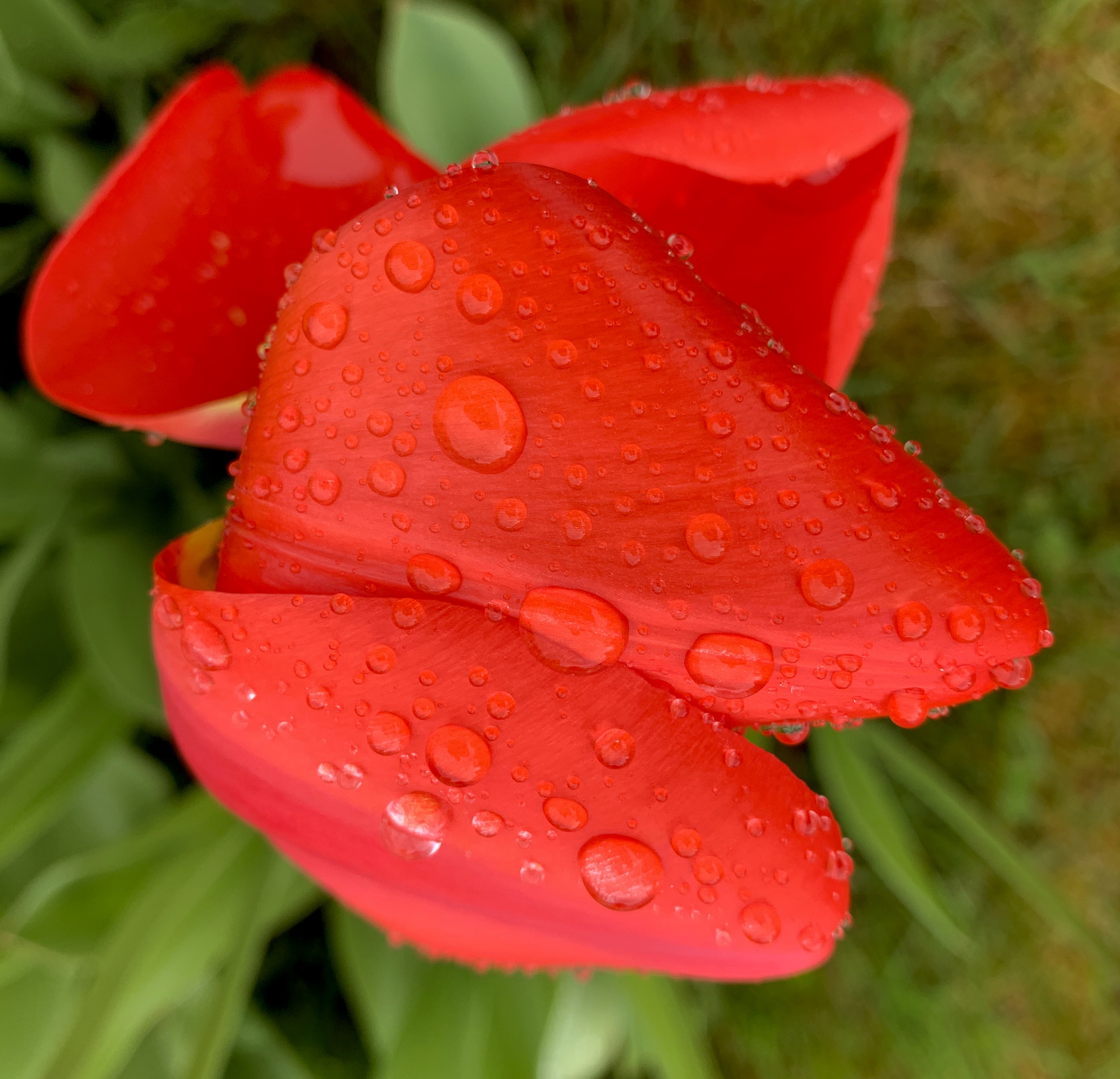
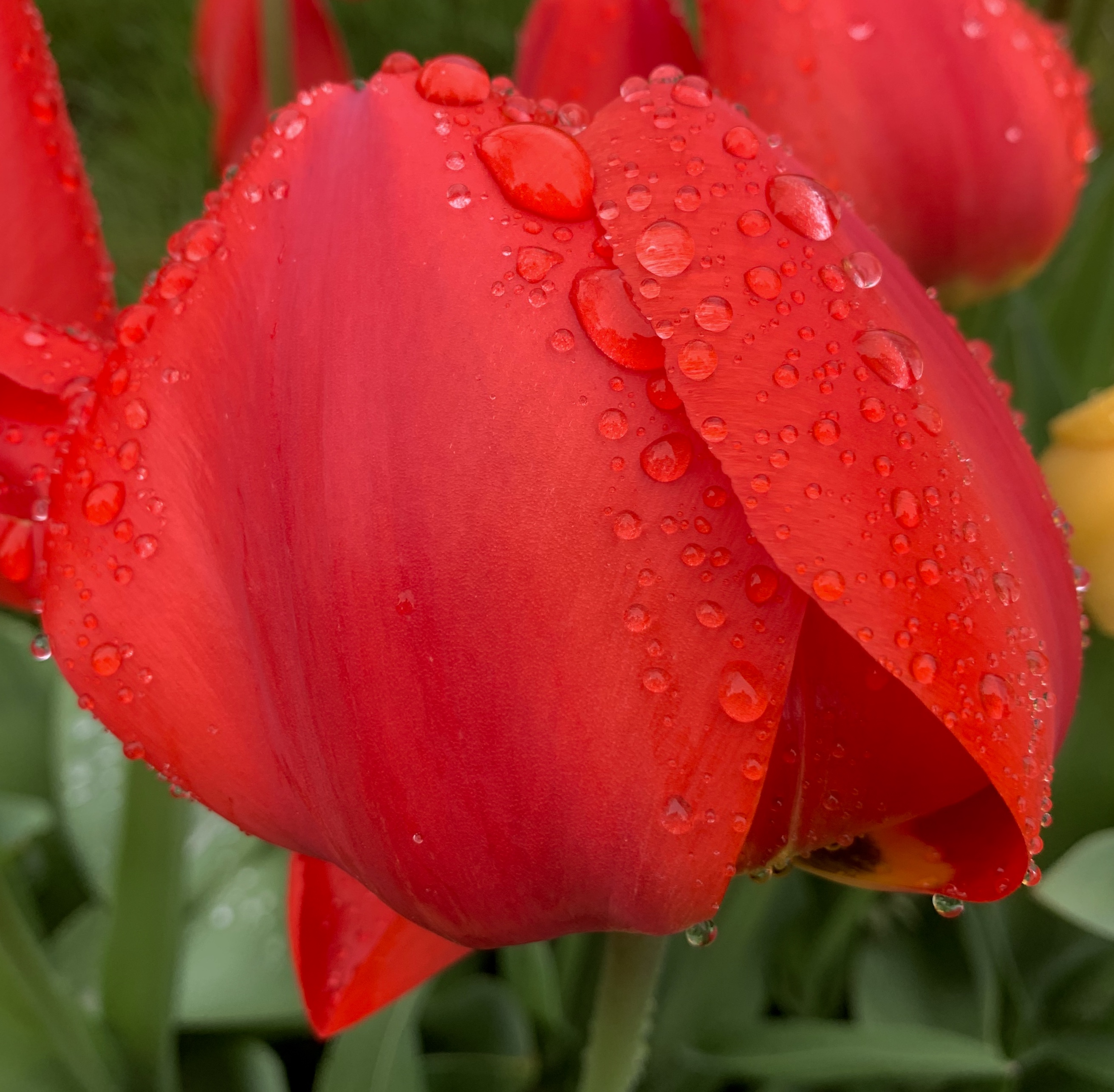
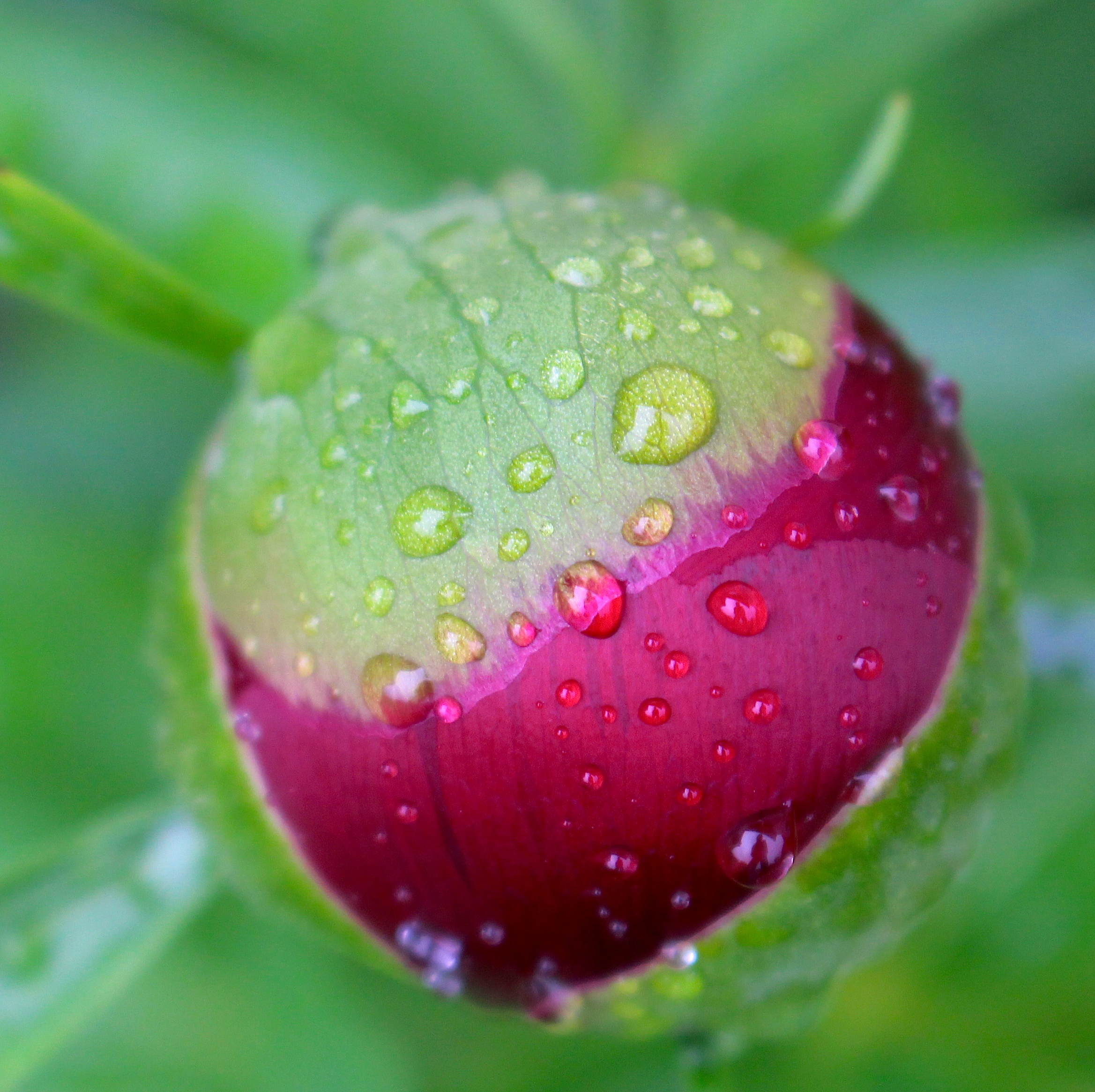
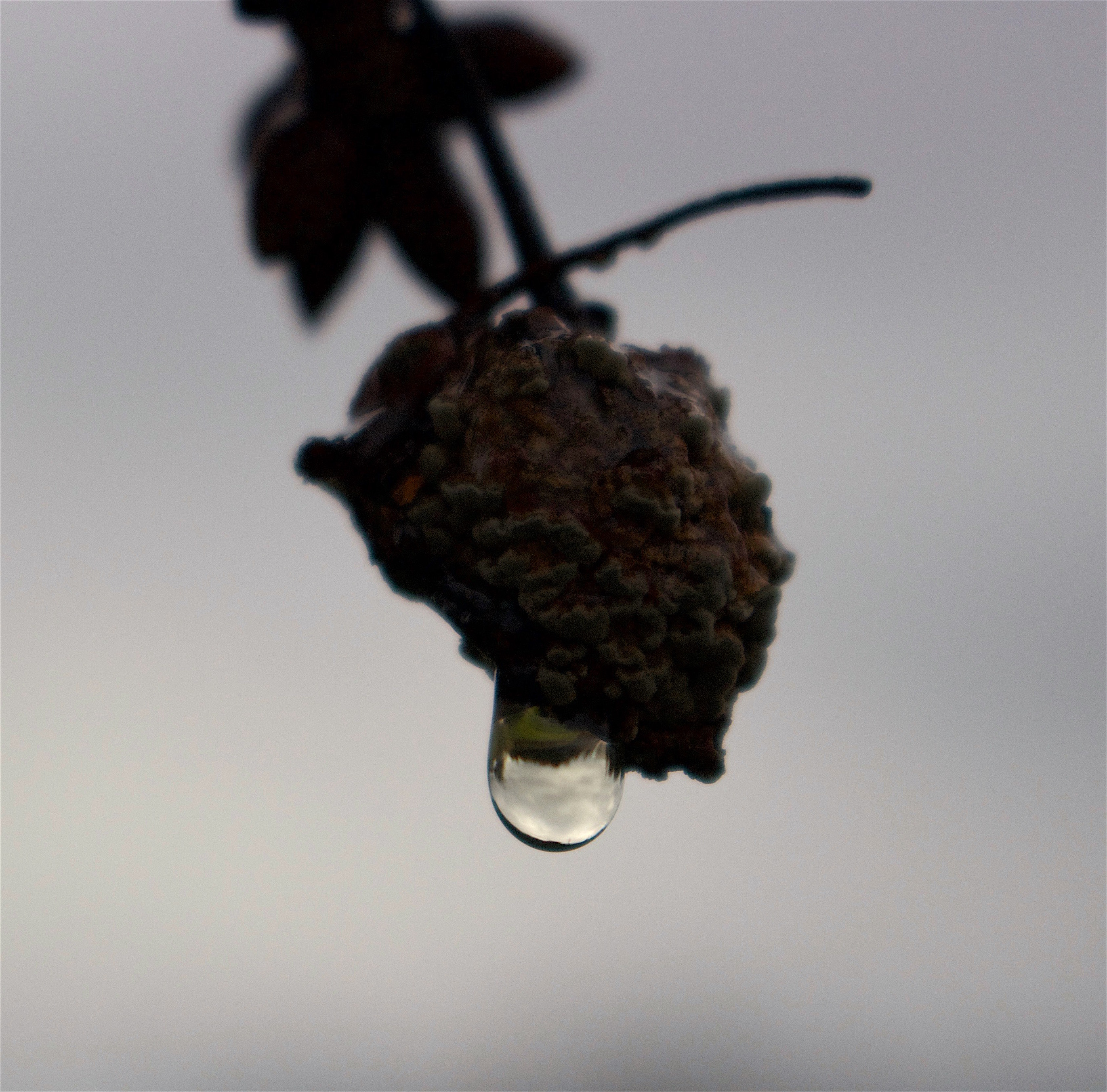
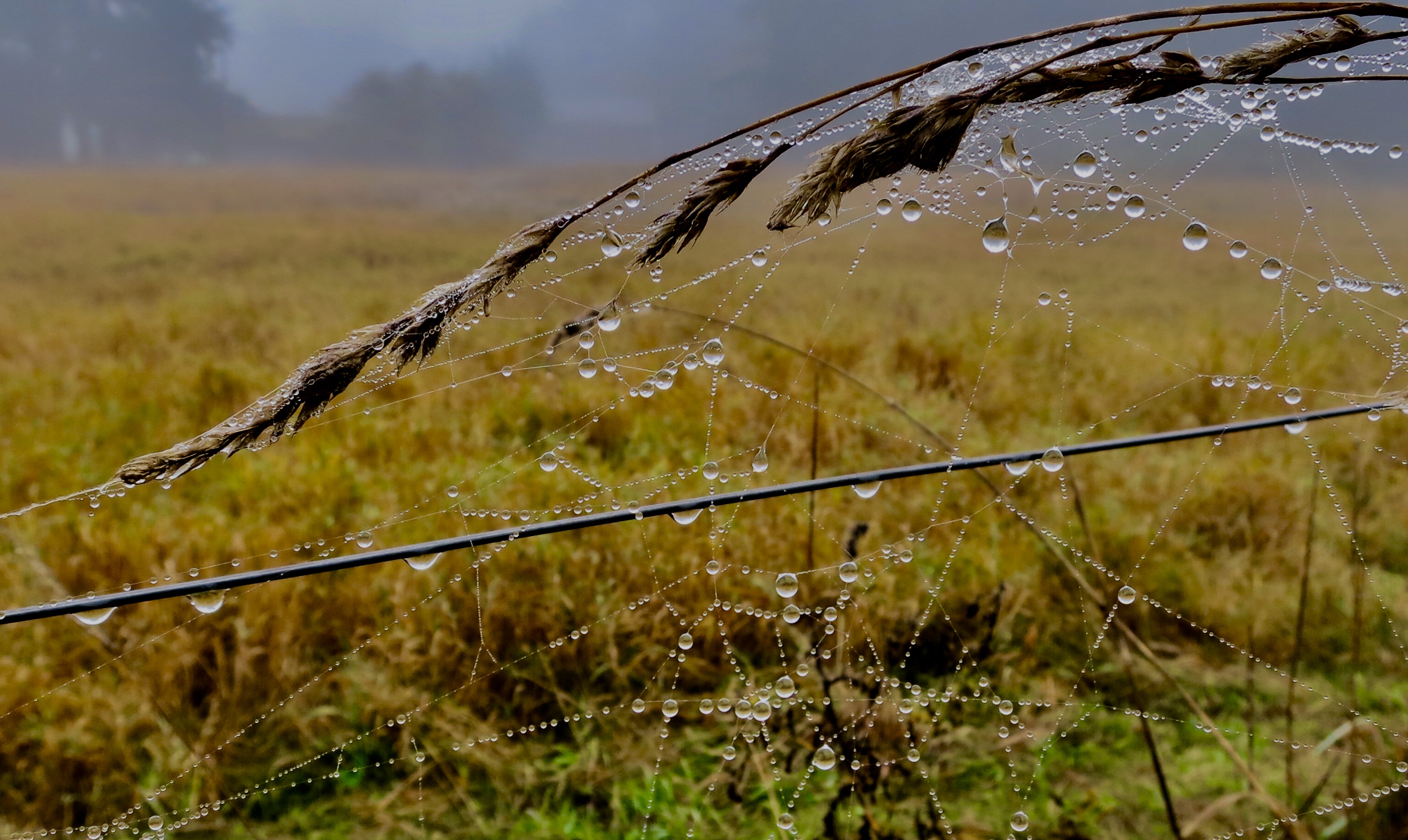
as ephemeral as a dew drop on a petal
yet with our earthly vision
it is all we know of ourselves
and it is what we trust knowing
of Him.

He was born as our flesh, from our flesh.
He walked and hungered and thirsted and slept
as our flesh.
He died, His/our flesh hanging in tatters,
blood spilling freely
breath fading to nought,
speaking those last Words
our ears can never forget.

Then He got up,
to walk and hunger and thirst alongside us
–flesh of His flesh–
here among us He is risen
–flesh of our flesh–
married forever
as the Church:
a fragile, flawed
and everlasting body
that will rise, once again, as He did.

He Sees Us As We Are: Coming Together

This mystery is that through the gospel the Gentiles are heirs together with Israel, members together of one body, and sharers together in the promise in Christ Jesus.
Ephesians 3:6

photo by Barb Hoelle

The journey begins when Christians leave their homes and beds. They leave, indeed, their life in this present and concrete world, and whether they have to drive 15 miles or walk a few blocks, a sacramental act is already taking place…

For they are now on their way to constitute the Church, or to be more exact, to be transformed into the Church of God. They have been individuals, some white, some black, some poor, some rich, they have been the ‘natural’ world and a natural community. And now they have been called to “come together in one place,” to bring their lives, their very world with them and to be more than what they were: a new community with a new life.

We are already far beyond the categories of common worship and prayer. The purpose of this ‘coming together’ is not simply to add a religious dimension to the natural community, to make it ‘better’ – more responsible, more Christian. The purpose is to fulfill the Church, and that means to make present the One in whom all things are at their end, and all things are at their beginning.
~ Father Alexander Schmemann from For the Life of the World

Human beings by their very nature are worshipers. Worship is not something we do; it defines who we are.
You cannot divide human beings into those who worship and those who don’t.
Everybody worships; it’s just a matter of what, or whom, we serve.

~Paul Tripp

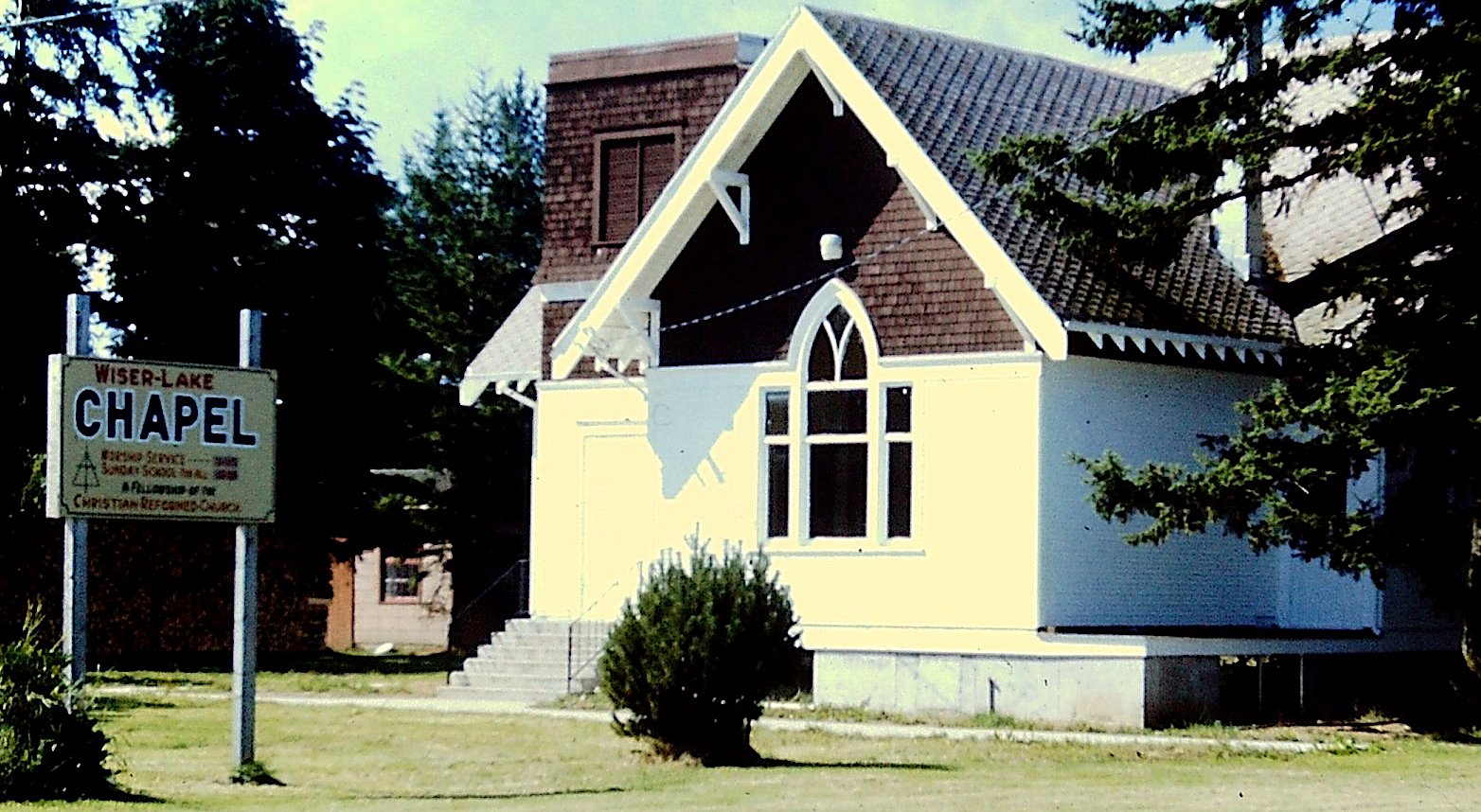
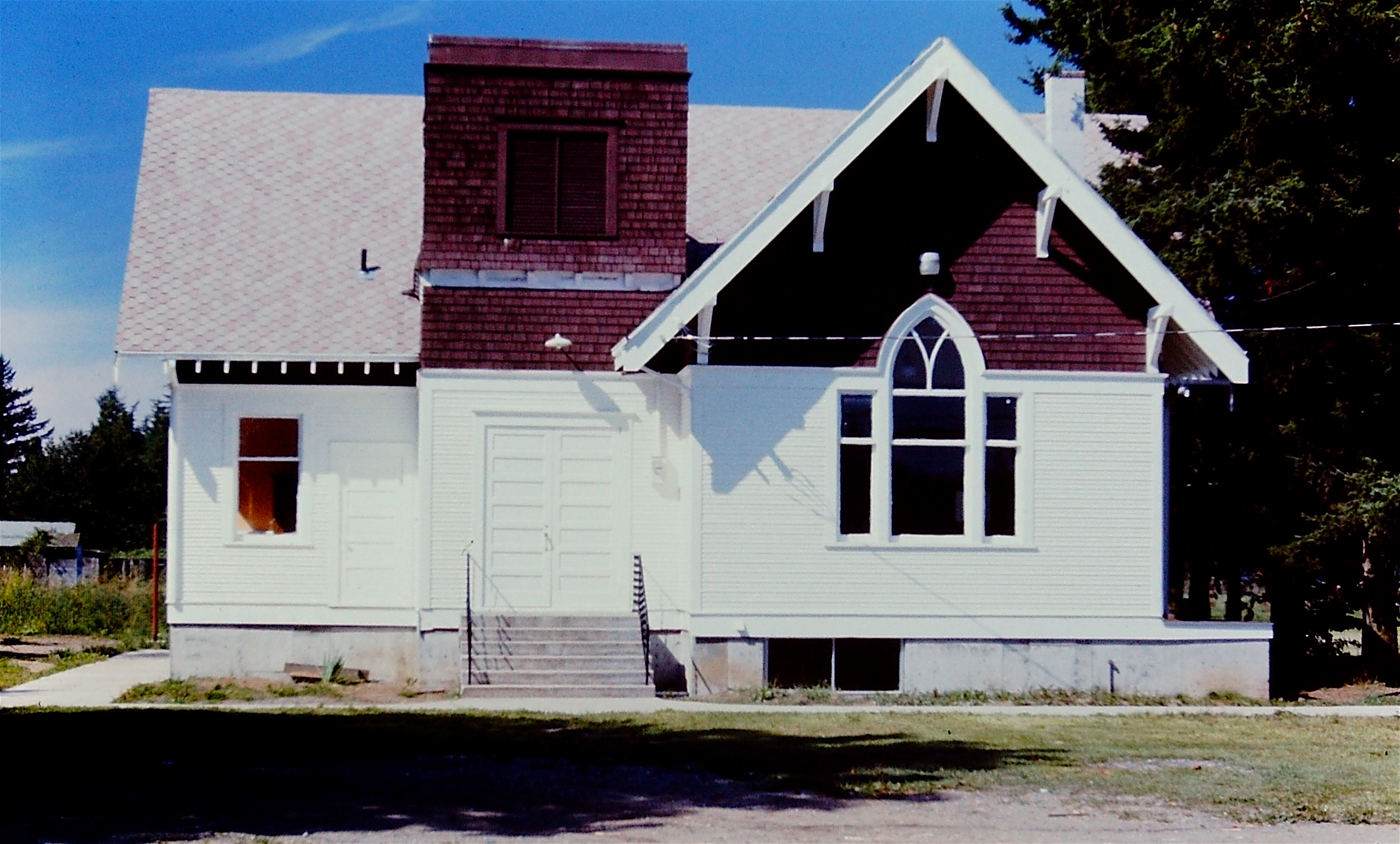
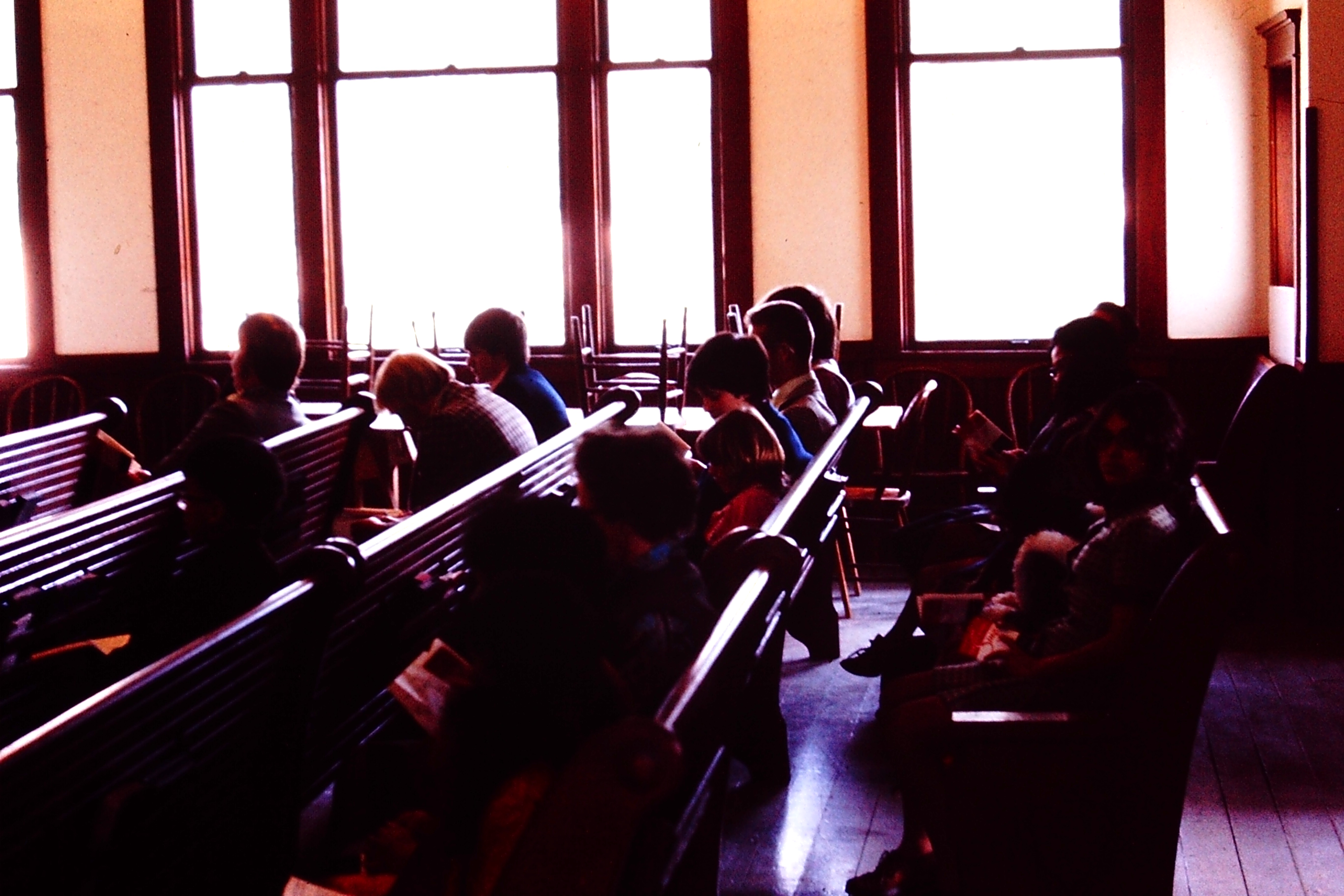
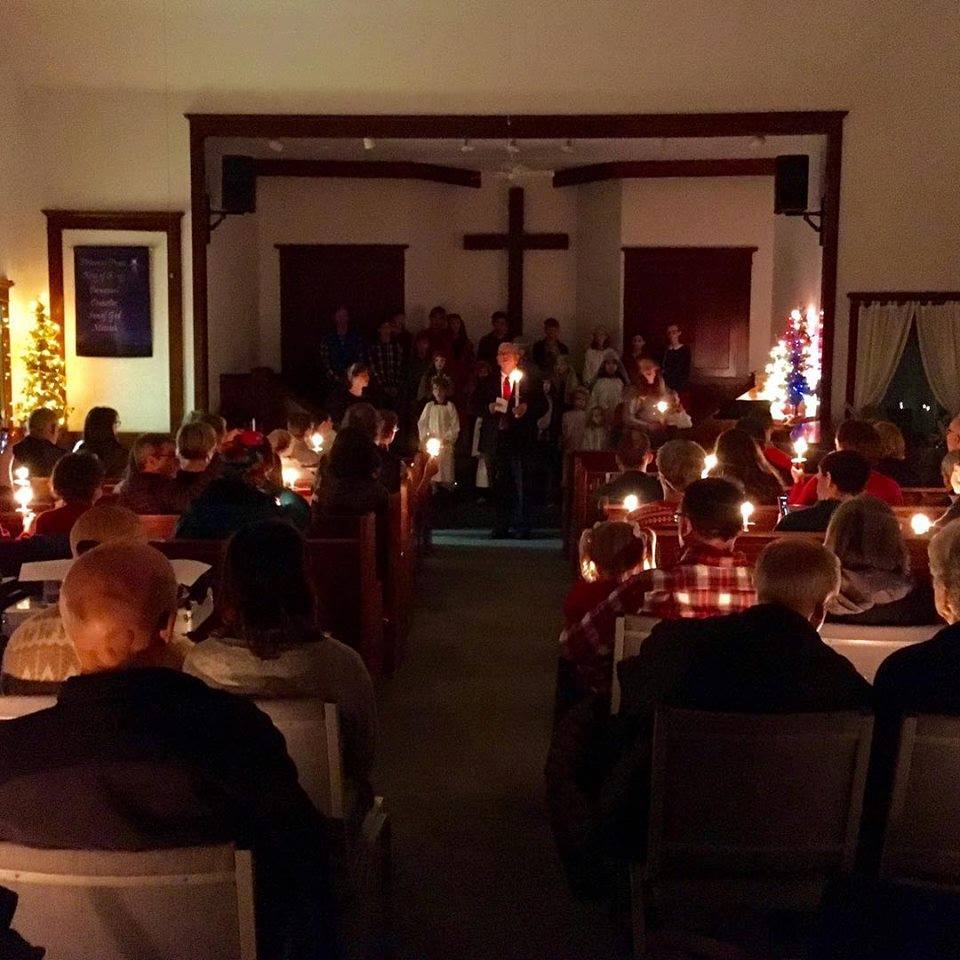
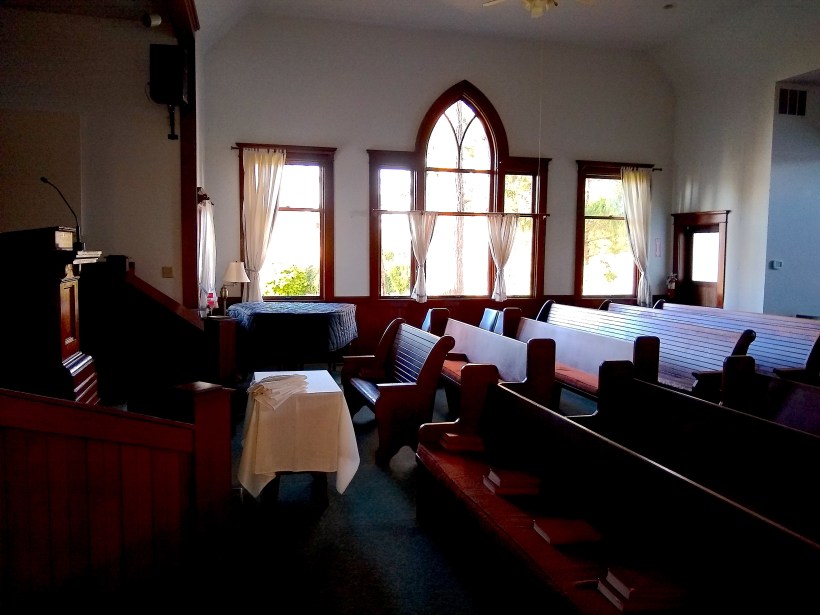
Back in the early days of Whatcom County,  the little church on Wiser Lake had been constructed through “contributions of the people” in a rural neighborhood only a few miles from where we now live.  $600 in lumber was provided by a local farmer whose trees were cut and milled and brought by horse drawn wagon to a building site adjacent to a one room school house along a corrugated plank road. The total property was “valued at $1800, but of even more value to the community.” The dedication ceremony was held on Sunday, August 27, 1916 followed by “a basket dinner—come with well filled baskets for a common table, under the direction of the Ladies Aid”. This was to be followed by a “Fellowship Meeting, special music and fraternal addresses” and the day ended at 8 PM with a Young People’s Meeting.  So began the long history of the “Wiser Lake Church”.

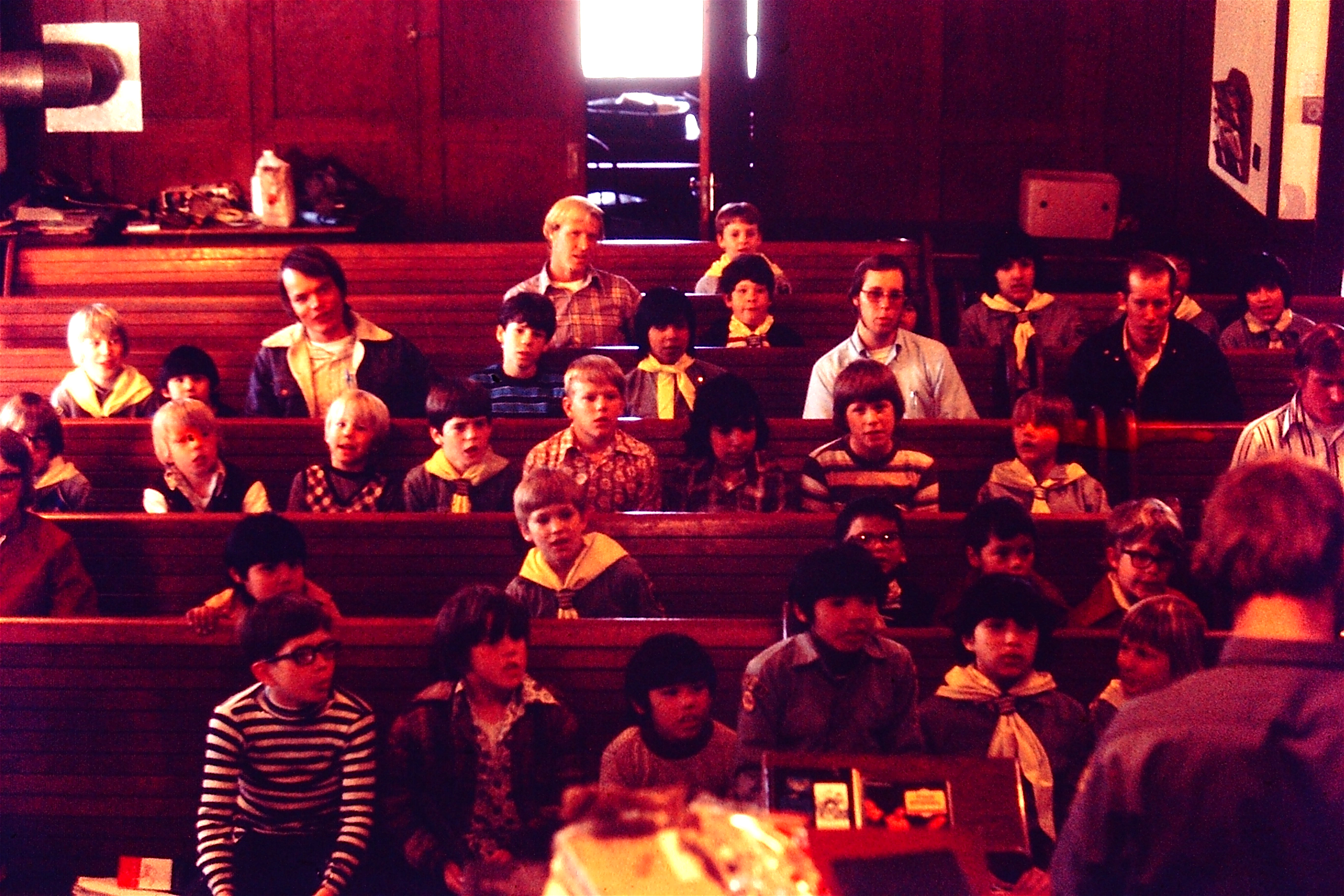
For reasons unrecorded in the history of the church, the original denomination closed its doors thirty years later, and for awhile the building was empty and in need of a congregation. By the fifties, it became a mission church of the local Christian Reformed Churches and launched a Sunday School program for migrant farm and Native American children in the surrounding rural neighborhood.  No formal church services started until the sixties. By the time the building was sixty years old, so many children were arriving for Sunday School, there was not enough room so the building was hoisted up on jacks to allow a hole to be dug underneath for a basement full of classrooms. Over the course of a summer, the floor space doubled, and the church settled back into place, allowed to rest again on its foundation.

Over seventy years after its dedication ceremony, our family drove past the boxy building countless times hurrying on our way to other places, barely giving it a second glance. It had a classic design, but showed its age with peeling paint,  a few missing shingles, an old fashioned square flat roofed belfry, and arched windows. The hand lettered sign spelling out “Wiser Lake Chapel” by the road constituted a humble invitation of sorts, simply by listing the times of the services.

It felt like home. We had found our church. We’ve never left. Over 30 years it has had peeling paint and missing shingles, a basement that floods when the rain comes down hard, toilets that don’t always flush, and though it smells heavenly on potluck days, there are times when it can be just a bit out of sorts and musty. It also has a warmth and character and uniqueness that is unforgettable.
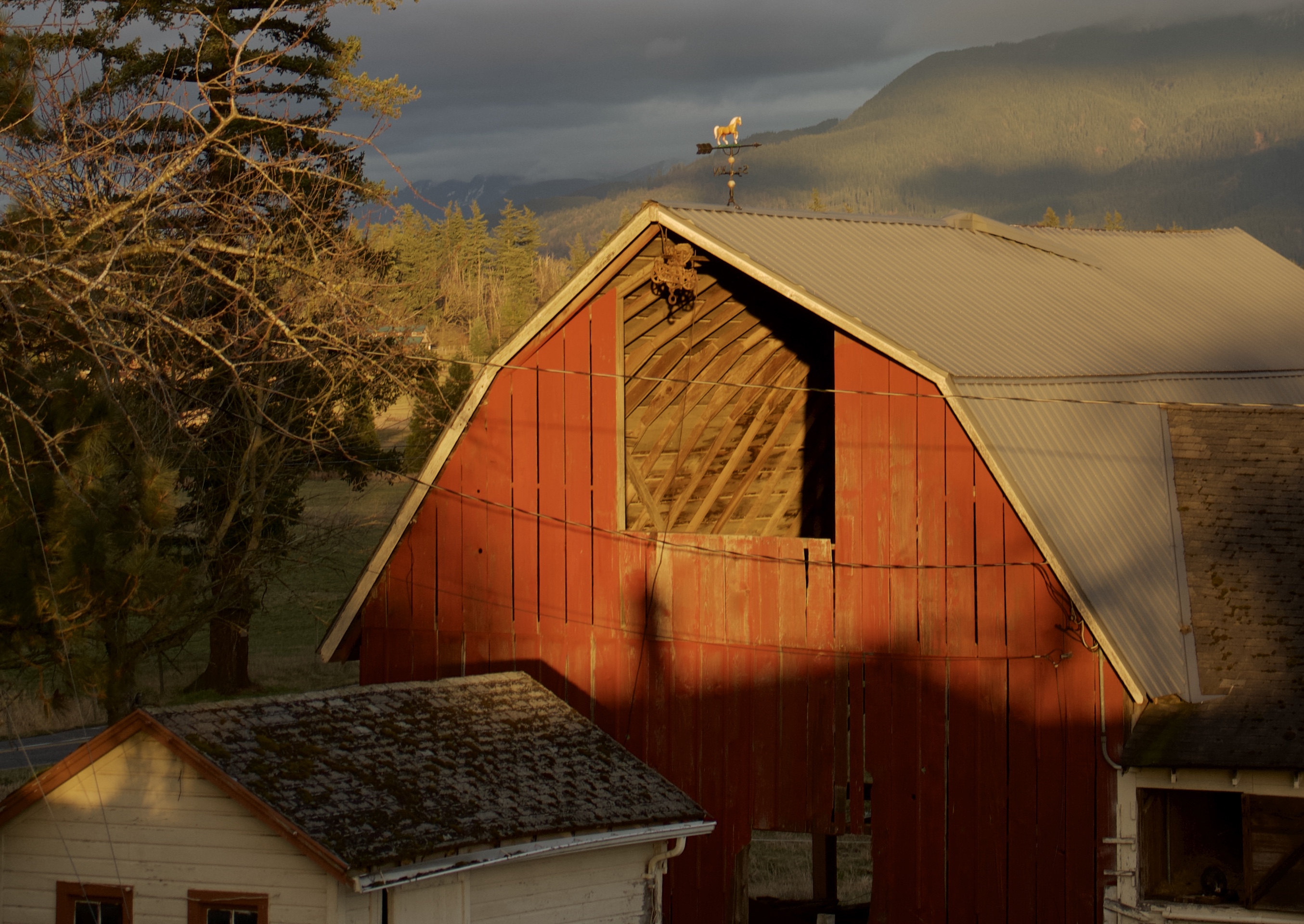
It’s really not so different from the folks who gather there.  We know we belong there, even if we too are musty, a bit out of sorts, yet still warm and loving and welcoming — no matter what, every Sabbath we are called to come together to be very clear about Who we worship.
This year’s Lenten theme on Barnstorming:

God sees us as we are,
loves us as we are,
and accepts us as we are.
But by His grace,
He does not leave us where we are.
~Tim Keller

So Then, Live

It is not only prayer that gives God glory but work.
Smiting on an anvil,
sawing a beam,
whitewashing a wall,
driving horses,
sweeping,
scouring,
everything gives God some glory
if being in his grace you do it as your duty.
To go to communion worthily gives God great glory,
but to take food in thankfulness and temperance
gives him glory too.
To lift up the hands in prayer gives God glory,
but a man with a dungfork in his hand,
a woman with a slop pail,
gives him glory too.
He is so great that all things give him glory
if you mean they should.
So then, my brethren, live.
~Gerard Manley Hopkins – Poems and Prose of Gerard Manley Hopkins

Photo of Aaron Janicki haying with his Oberlander team in Skagit County courtesy of Tayler Rae
photo by Tayler Rae

Thanks in large part to how messily we humans live, this world is a grimy place.  

As an act of worship, we work at cleaning up after ourselves.  Hands that clean toilets, scrub floors, carry bedpans, pick up garbage might as well be clasped in prayer–it is in such mundane tasks God is glorified.

I spend time every day carrying buckets and wielding a pitchfork because it is my way of restoring order to the disorder inherent in human life.  It is with gratitude that I’m able to pick up one little corner of my world, making stall beds tidier for our farm animals by mucking up their messes and in so doing, I’m cleaning up a piece of me at the same time.

I never want to forget the mess I’m in and the mess I am.  I never want to forget to clean up after myself.  I never want to feel it is a mere and mundane chore to worship with dungfork and slop pail.

It is my privilege.  It is His gift to me.
It is Grace that comes alongside me, to keep pitching the muck and carrying the slop when I am too weary to do it myself.

That Patch of Sunlight

It appears now that there is only one
age and it knows
nothing of age as the flying birds know
nothing of the air they are flying through
or of the day that bears them up
through themselves
and I am a child before there are words
arms are holding me up in a shadow
voices murmur in a shadow
as I watch one patch of sunlight moving
across the green carpet
in a building
gone long ago and all the voices
silent and each word they said in that time
silent now
while I go on seeing that patch of sunlight

~W.S. Merwin, “Still Morning” from The Shadow of Sirius

photo by Barbara Hoelle

Our memories can play tricks. A whiff of a fragrance can trigger an experience of another time and place, a song can transport us to a decade long ago, a momentary sensation will remind us of a past experience long forgotten.

We dwell inside a different age as the years go by, in a body that no longer looks or feels exactly the same, yet our memories take us powerfully back to a special moment that happened before. For those who struggle with post-trauma recollections, this is a curse to be overcome. For those whose memories bring joy and comfort, they seek to nurture and cherish what has been as if it is still here and now.

We must remember the light, just as the poet W.S. Merwin in this poem “Still Morning” remembers the moment of his baptism in a church long gone and whose voices are long-stilled. The Light of that day remains, as fresh today as it was when it moved toward him.

Our memories aren’t tricks. They are as powerfully a part of us as the here and now: a moving patch light touching us here from back then.

Stillness of the Heart

It was like a church to me.
I entered it on soft foot,
Breath held like a cap in the hand.
It was quiet.
What God there was made himself felt,
Not listened to, in clean colours
That brought a moistening of the eye,
In a movement of the wind over grass.

There were no prayers said. But stillness
Of the heart’s passions – that was praise
Enough; and the mind’s cession
Of its kingdom. I walked on,
Simple and poor, while the air crumbled
And broke on me generously as bread.
~R.S. Thomas “The Moor” Collected Poems: R. S. Thomas

This is a Sabbath morning
when I’m surrounded by His stilling presence~
when God is felt,
neither seen or heard,
overtaking me
within each breath taken,
following the path of each glistening tear,
feeding me manna from sky and body,
becoming the ground reaching to meet my foot
with each step I take.

The Healing Power of a Church Potluck

The church, I think, is God’s way of saying,
“What I have in the pot is yours,
and what I have is a group of misfits
whom you need more than you know
and who need you more than they know.” 

“Take, and eat,” he says,
“and take, and eat,
until the day, and it is coming,
that you knock on my door.
I will open it, and you will see me face to face.”

He is preparing a table.
He will welcome us in.
Jesus will be there, smiling and holy,
holding out a green bean casserole.
And at that moment, what we say, what we think, and what we believe will be the same:
“I didn’t know how badly I needed this.”
~Jeremy Clive Huggins from “The Church Potluck”

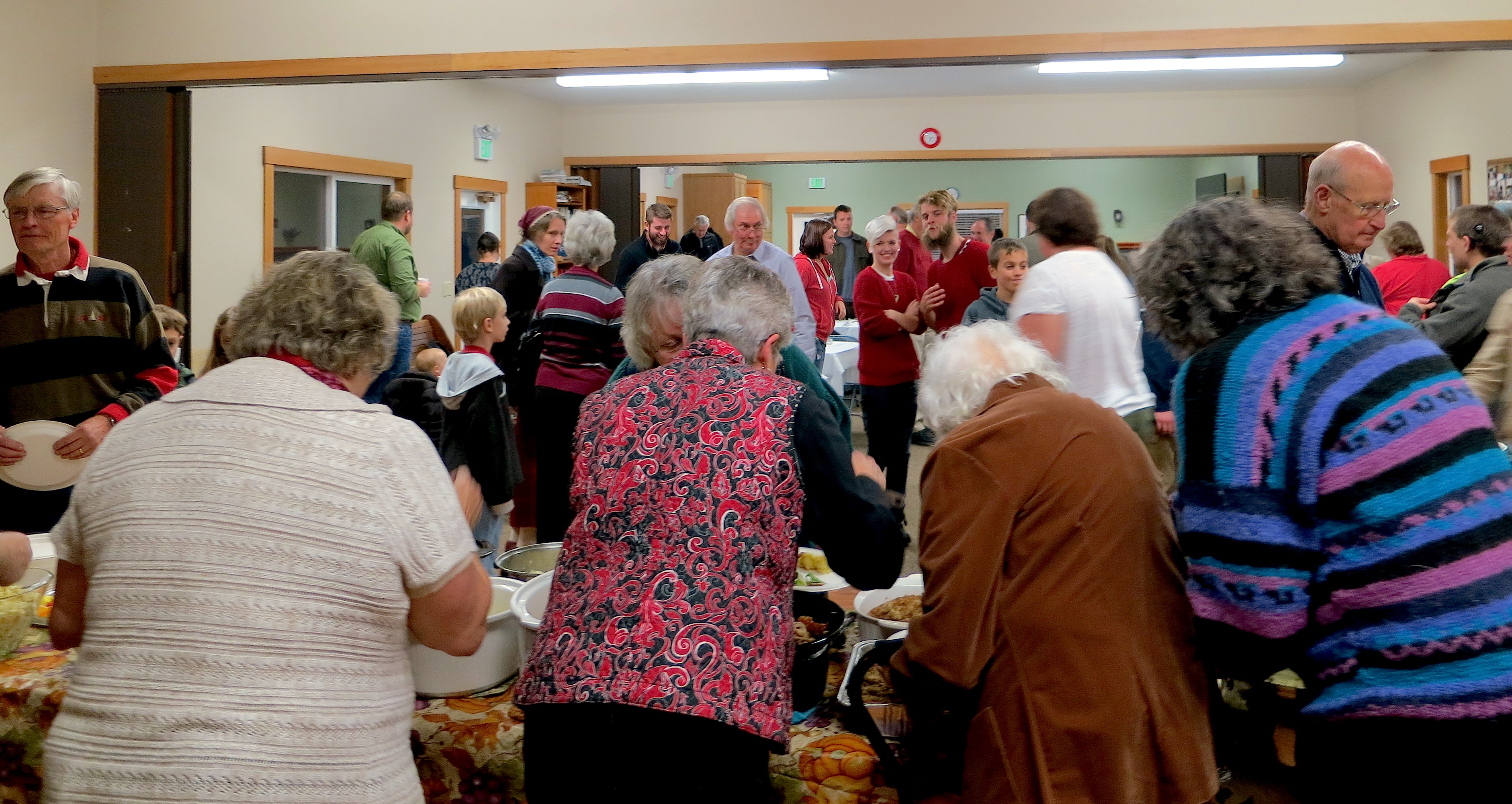
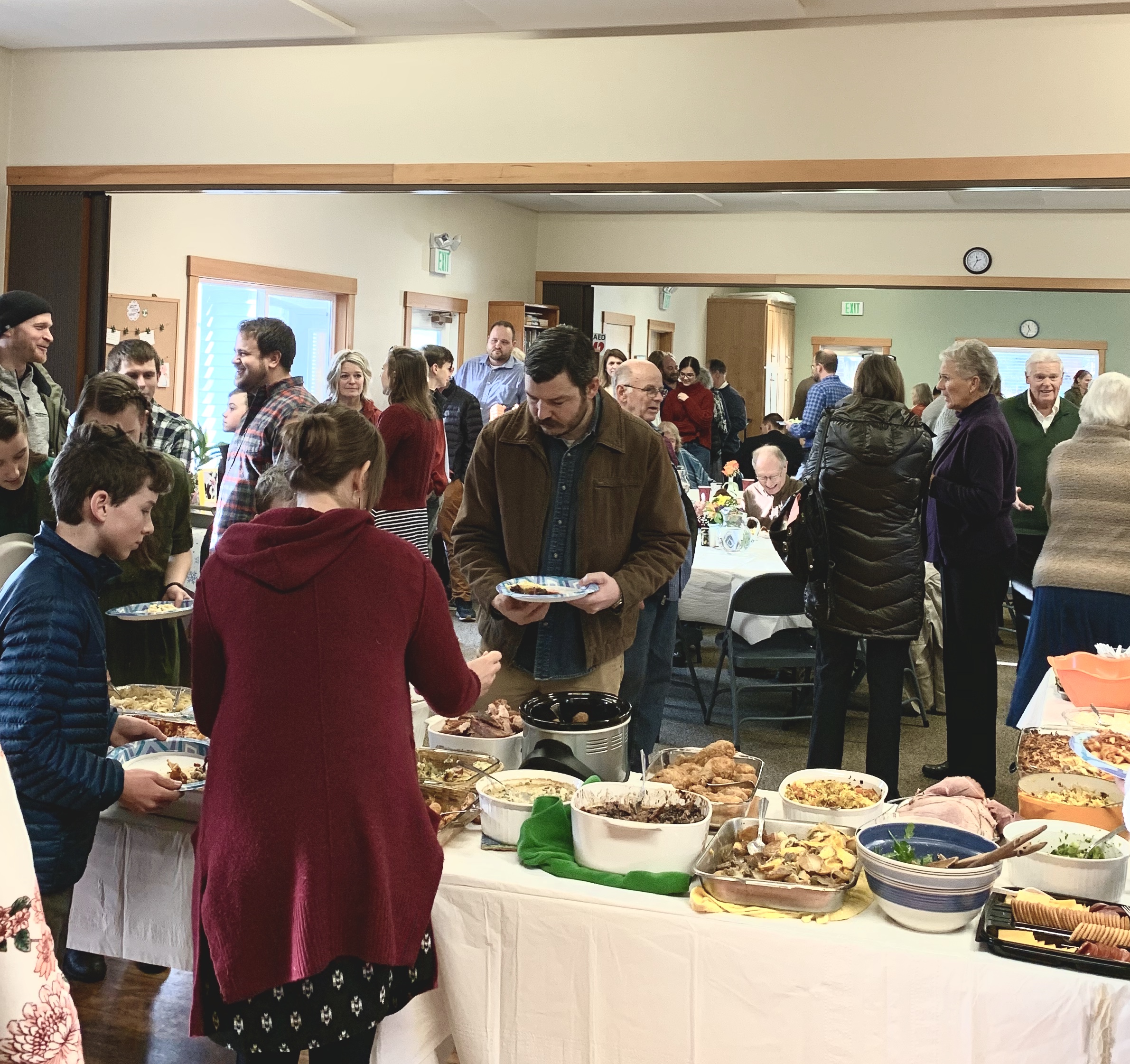
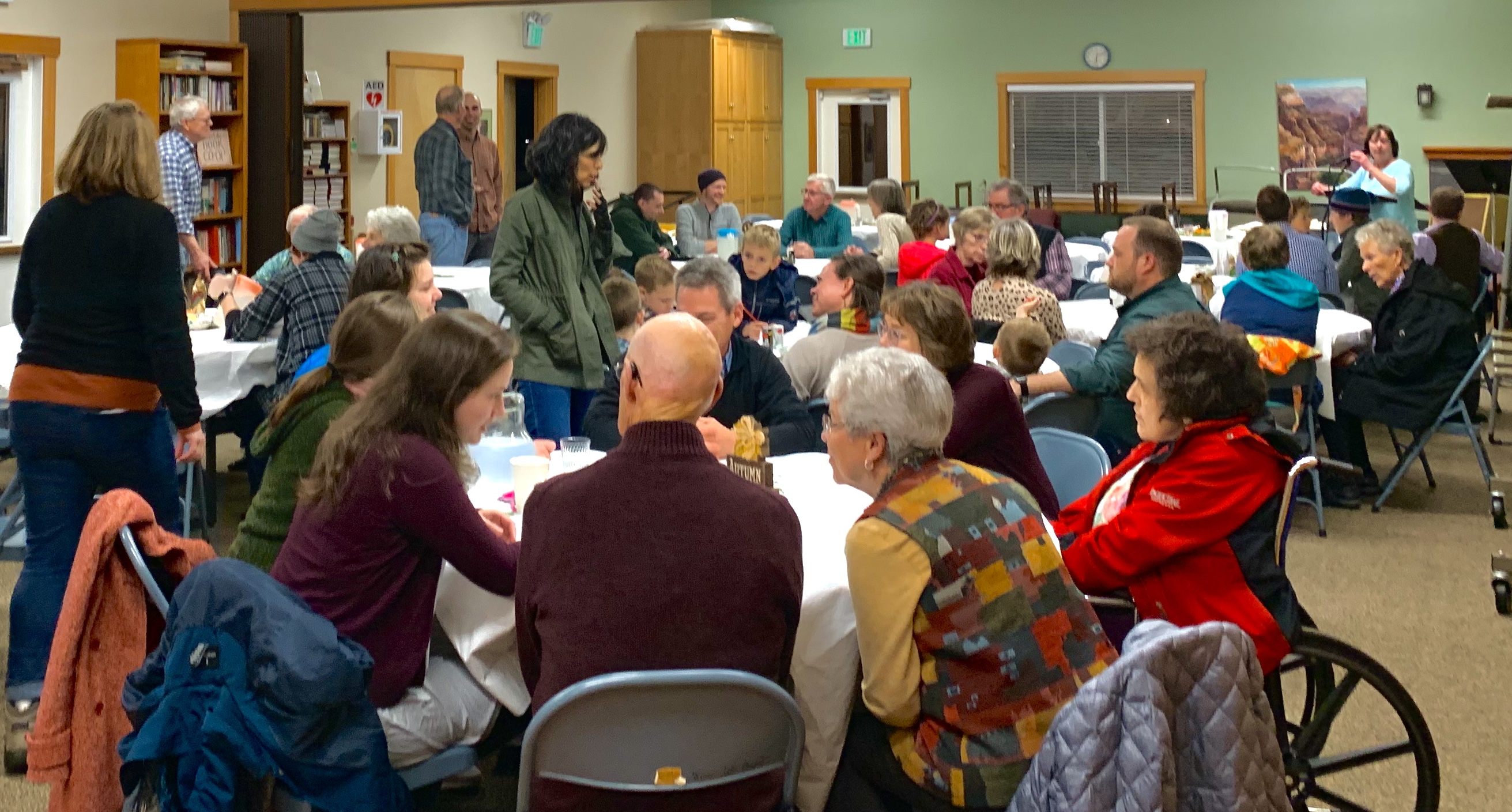
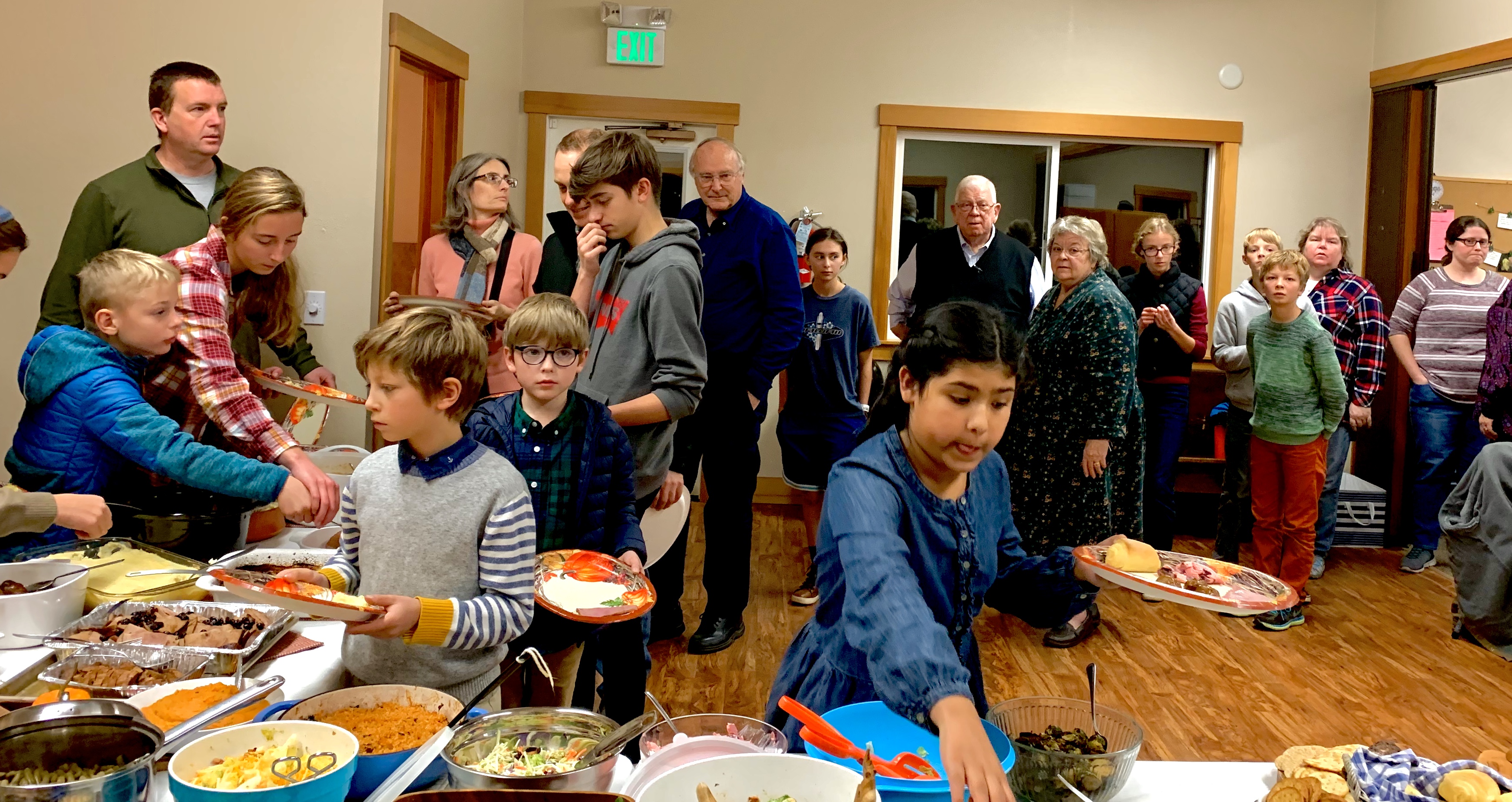
Perhaps a celebration at the end of a long cold winter month
Possibly a need of respite from a month of dieting
Likely a response to bad headline news day after day:
A potlatch, a potluck, a communion of comfort food.

What to bring? What soothes stomach and heart?

Macaroni and cheese, with drizzled bread cubes on top
Beef stew chuck-a-block with vegetables and potatoes
Buckets of fried chicken
Greenbean casserole
Meat loaf topped with ketchup
Tossed Caesar salad
Tator tots drizzled with cheese
Jello and ham buns

Home made bread, steaming, soft
Whole chocolate milk
And ice cream sundaes

Nothing expensive
Or extravagant
Or requiring going into debt to pay.

A fitting ending to a Sabbath of worship,
After meeting for prayer and hymns and the Word;
When times get tough, when we feel all alone,
When we drown in discouragement.

This is time for connecting congregation and community,
For huddling against life’s storm
Forgetting our worries for a time
And sharing God’s comfort food, all together, misfits that we are,
Smiling to know — we all badly needed this.

The Crumbling Air

It was like a church to me.
I entered it on soft foot,
Breath held like a cap in the hand.
It was quiet.
What God there was made himself felt,
Not listened to, in clean colours
That brought a moistening of the eye,
In a movement of the wind over grass.

There were no prayers said. But stillness
Of the heart’s passions – that was praise
Enough; and the mind’s cession
Of its kingdom. I walked on,
Simple and poor, while the air crumbled
And broke on me generously as bread.
~R.S. Thomas “The Moor”

There are mornings surrounded by His stilling presence~
when God is felt,
neither seen nor heard,
overtaking me
within each breath taken,
following the path of each glistening tear,
the air crumbling down around me,
its rich manna becoming the ground
reaching to meet my foot
with each step I take.