Where You Go, I Will Go: The Mourning Bench

…we all suffer.
For we all prize and love;
and in this present existence of ours,
prizing and loving yield suffering.
Love in our world is suffering love.


Some do not suffer much, though,
for they do not love much.
Suffering is for the loving.
This, said Jesus, is the command of the Holy One:
“You shall love your neighbor as yourself.”
In commanding us to love, God invites us to suffer
.

Over there, you are of no help.
What I need to hear from you is that you recognize how painful it is.
I need to hear from you that you are with me in my desperation.


To comfort me, you have to come close.
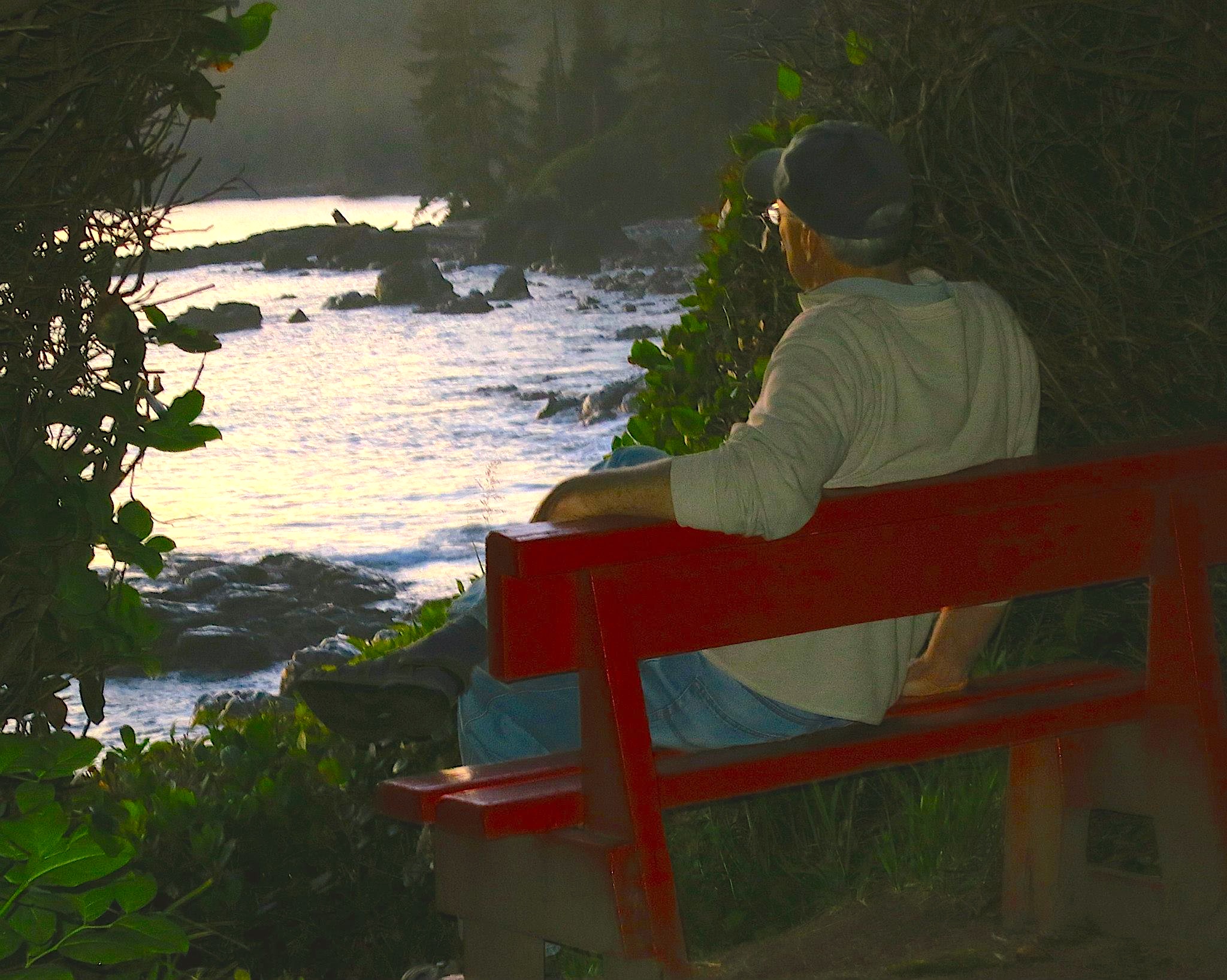
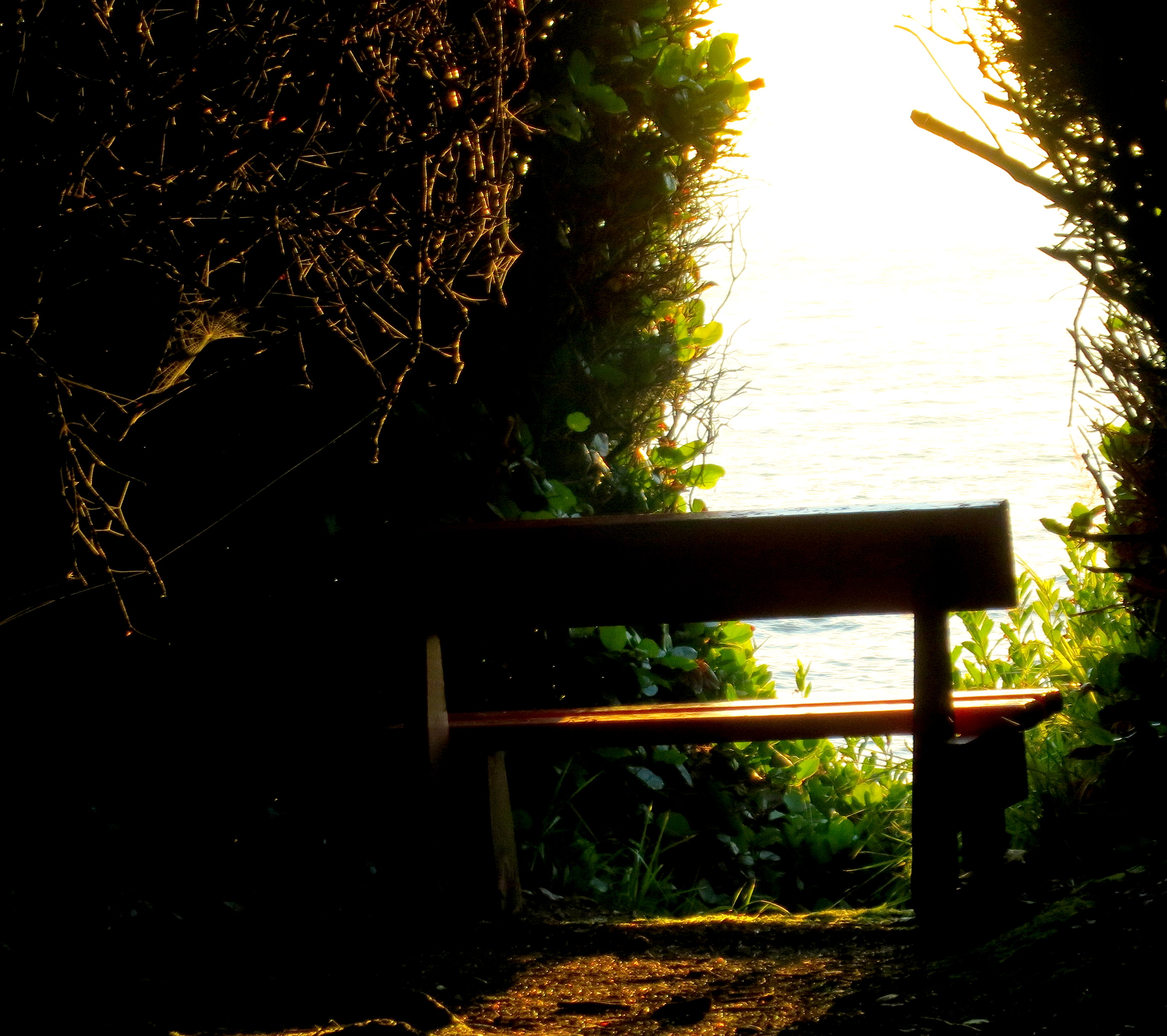
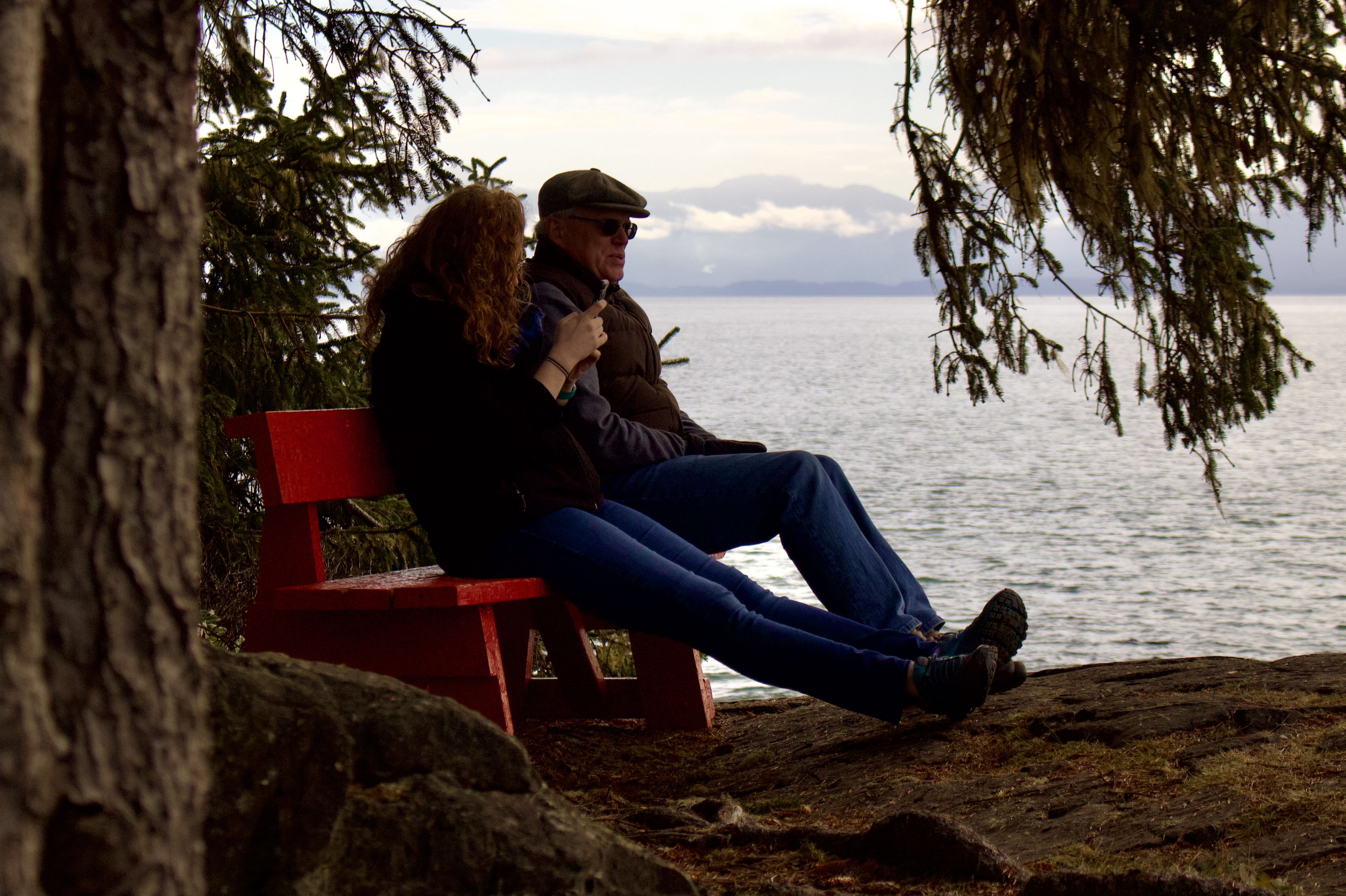
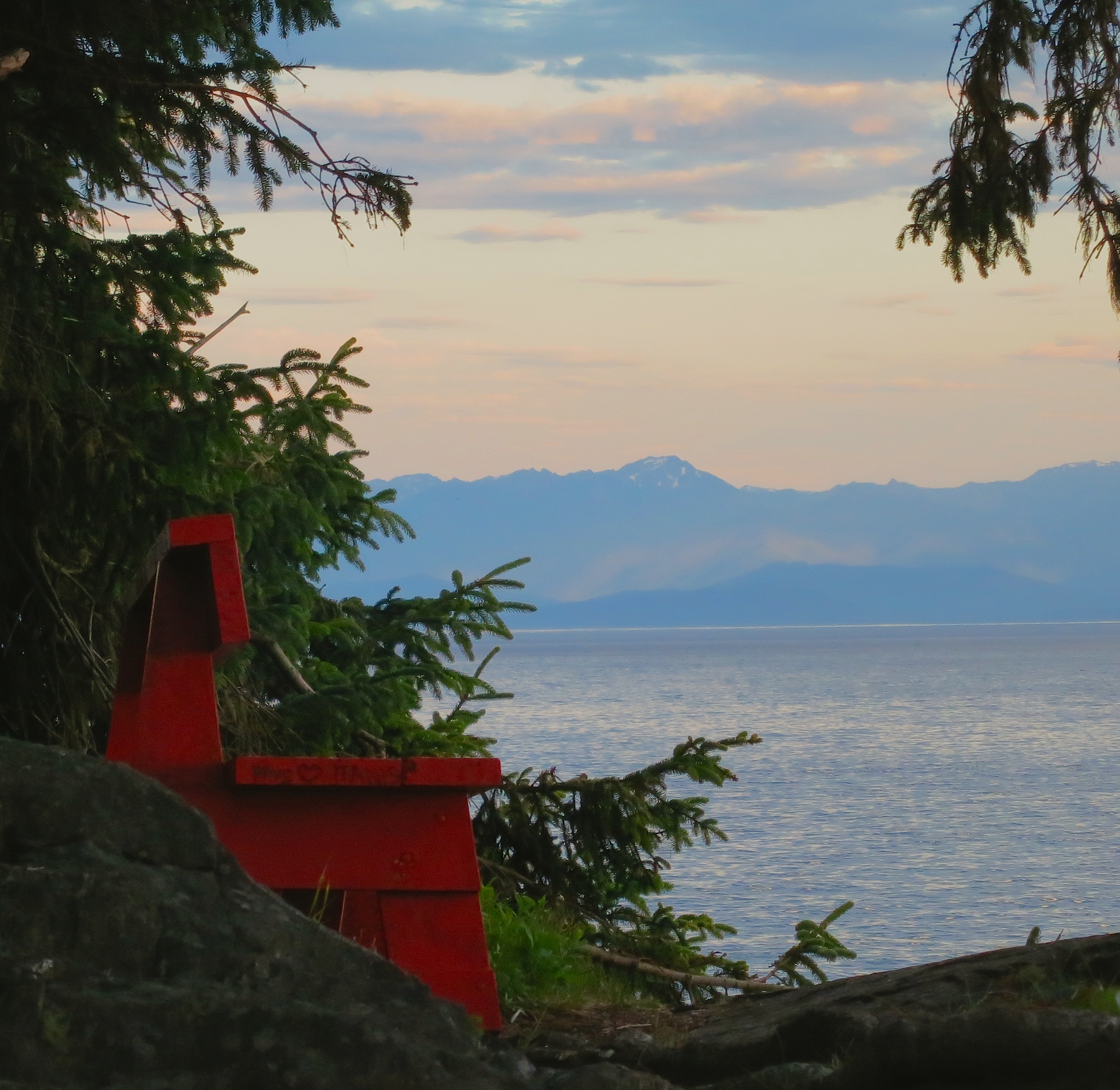
Come sit beside me on my mourning bench.
~Nicholas Wolterstorff from Lament for a Son

I wondered if 7:30 AM was too early to call her. As a sleep-deprived fourth year medical student finishing a long night admitting patients in the hospital, I selfishly needed to hear her voice.

I wanted to know how Margy was doing with the latest round of chemotherapy for breast cancer; I knew she was not sleeping well these days. She was wearing a new halo brace—a metal contraption that wrapped around her head like a scaffolding to secure her degenerating cervical spine from collapsing from metastatic tumor growths in her bones.

She knew, we all knew, she was trying to buy more time from a life of rapidly diminishing days.

Each patient I had seen the previous 24 hours while working in the Emergency Room benefited from the interviewing skills Margy had taught each medical student in our class. She reminded us that each patient had an important story to tell, and no matter how pressured our time, we needed to ask questions that gave permission for that story to be told. As a former nun now married with two teenage children, Margy had become our de facto therapist at a time no medical school hired supportive counselors.

She insisted physicians-in-training remember the suffering soul thriving inside the broken body.

“Just let the patient know with certainty, through your eyes, your body language, your words, that you want to hear what they have to say. You can heal so much hurt simply by sitting beside them and caring enough to listen…”

After her diagnosis with stage 4 cancer, Margy herself became the broken vessel who needed the glue of a good listener. She continued to teach, often from her bed at home. I planned to visit her that day, maybe help out by cleaning her house, or take her for a drive as a diversion.

Her phone rang only once after I dialed her number. There was a long pause; I could hear a clearing of her throat. A deep dam of tears welled behind a muffled “Hello?”

“Margy?”

“Yes? Emily? ”

“Margy? What is it? What’s wrong?”

Her voice shattered like glass into fragments, strangling on words that struggled to form.

“Gordy’s gone, Emily. He’s gone. He’s gone forever…”

“What? What are you saying?”

“A policeman just left. He told us our boy is dead.”

I sat in stunned silence, listening to her sobs, completely unequipped to know how to respond.

None of this made sense. I knew her son was on college spring break, heading to Mexico for a missions trip.

“I’m here, what’s happened?”

“The doorbell rang about an hour ago. Larry got up to answer it. I heard him talking to someone downstairs, so I decided to try to get up and go see what was going on. There was a policeman sitting with Larry on the couch. I knew it had to be about Gordy.”

She paused and took in a shuddering breath.

“The group was driving through the night in California. He was asleep in the back of the camper. They think he was sleepwalking and walked right out of the back of the moving camper and was hit by another car.”

Silence.  A strangling choking silence.

“They’ll bring him home to me, won’t they? I need to know I can see my boy again. I need to tell him how much I love him.”

“They’ll bring him home to you, Margy.
I’m on my way to help you get ready…

God is not only the God of the sufferers
but the God who suffers. …
It is said of God that no one can behold his face and live.
I always thought this meant
that no one could see his splendor and live.
A friend said perhaps it meant
that no one could see his sorrow and live.
Or perhaps his sorrow is splendor. …
Instead of explaining our suffering, God shares it.

~Nicholas Wolterstorff from Lament for a Son

This year’s Lenten theme:

…where you go I will go…
Ruth 1:16

One-Time
Monthly
Yearly

Make a one-time or recurring donation to support daily Barnstorming posts

Make a monthly donation

Make a yearly donation

Choose an amount

$10.00
$25.00
$50.00
$5.00
$15.00
$100.00
$5.00
$15.00
$100.00

Or enter a custom amount

$

Your contribution is deeply appreciated.

Your contribution is appreciated.

Your contribution is appreciated.

DonateDonate monthlyDonate yearly
Inviting Back the Killers of Yesteryear

Texas has been in the news as the origin of the most recent rubeola measles outbreak, continuing to spread with over 124 cases recorded and one child’s death.  This morning, travelers are informed they were exposed to measles earlier this month at LAX after an international flight brought an infected person to the U.S. Later today, there was a Seattle area case announced.

The potential exponential climb of more rubeola cases is anticipated over the next weeks due to the growing percentage of unvaccinated children due to the “anti-vaccine” movement.

Mr. Kennedy, our new HHS secretary, has a great deal to do with that change in vaccination rates, but I’m not writing about the politics of his views which are popular among a strident minority of citizens.

He does not speak or act in concert with the world’s public health scientists and experts. They have worked tirelessly for decades to develop safe life-saving preventive medical care that has significantly dropped infant and child mortality rates, as well as all-age hospitalizations and deaths from infectious diseases.

It started with the small pox vaccine, routine in the U.S. 175 years ago. It’s now been almost seventy years since effective vaccinations became standard for childhood killers like polio, measles, mumps and whooping cough. People my age and older had no choice but to suffer through childhood infectious diseases, given how quickly they spread through a non-immune community. 

Yes, most of us survived, harboring life-long natural immunity. A significant number did not survive or have suffered life-long complications from the effects of those diseases.

People living in privileged first world countries have forgotten the harsh reality of morbidity and mortality statistics, and too many turn their backs on vaccinations, considering them “too risky” for themselves and their children as these diseases become less common in a mostly vaccinated society. In contrast, millions of people without easy and affordable access to vaccines in third world countries have not forgotten the devastation of these infections. They gladly walk miles to get their children vaccinated to give them a better chance at a long life.

As most measles cases in the U.S. originate from overseas travel, it’s especially critical that Americans be vaccinated when traveling outside the U.S., even to Europe. Those who serve in third world countries and mission fields are particularly vulnerable, and I’ve found it interesting that previously unvaccinated Christians are usually more than willing to accept immunizations when they know the risk of exposure is high where medical care may be minimal.

As a society, we simply don’t think about immunizations in the same way as we did in the 1940s and 50s. When I received my first DPT vaccination at the age of 4 months, my mother wrote in my baby book: “Up most of the night with fever 104.5 degrees,  considered a good ‘take’ for the vaccine.”  She truly was relieved that it had made me so sick, as it meant that I would be safe if exposed to those common killer diseases. Now a febrile reaction like that might be considered grounds for a law suit. Our vaccines have vastly improved with ongoing research to improve their effectiveness and reduce their side effects.

When measles or mumps or pertussis outbreaks reemerge within our borders,  we act surprised when it becomes a major media event — but we shouldn’t be. Diseases that were nearly nonexistent a few years ago are occurring with greater frequency again in modern societies due to misguided and misinformed anti-vaccination campaigns.

As a college health physician, I helped enforce vaccination requirements for a public university. A week didn’t go by without my having a discussion with a prospective student (or more likely the student’s parent) about the necessity for our requirement for proof of mumps, measles, rubella vaccination immunity. 

I am accused of being a pawn (or, absurdly, a financial beneficiary??) of the pharmaceutical industry because I believe in undeniable evidence of the efficacy of modern vaccines to help keep a community free of infectious disease outbreaks that can kill healthy people. 

I helped coordinate a public health response at our university in 1995 when we had a rubeola outbreak of eleven confirmed cases over a three week period, necessitating the mass vaccinations of over 8000 students and staff over three days so our institution could safely remain open.  

Having experienced first hand what the effort and resources it takes to respond to a potentially lethal contagious disease outbreak, I am so discouraged it is now happening again and again, due to a “MAHA – Make America Healthy Again” misinformation campaign swallowed whole without questions by thousands of concerned parents.

These families are banking that everyone else will be vaccinated, which puts their own child at lower risk. The problem is: guess again.  There are too many deciding that they are the ones who can remain vaccine-free.

I don’t think any one of these parents would deny the life-saving miracle of injectable insulin for their child diagnosed with diabetes, nor would they fail to strap their child into a car seat for the rare but real possibility of a life-threatening collision on even the shortest car ride.

Vaccines are miracles and instruments of prevention too, but the rub is that we have to give them to healthy youngsters in order to keep them healthy.

I’m an old enough physician to have seen deaths from these diseases as well as the ravages of post-polio paralysis and post-polio syndrome, the sterility from mumps, and deafness from congenital rubella. My father nearly died from the mumps that I brought home from school when I was eight and he was in his early forties. My sister-in-law almost didn’t pull through when she was an infant and contracted pertussis. I’ve seen healthy people develop encephalitis and pneumonia from chicken pox. 

I’ve seen an otherwise healthy college student die of influenza within a week of getting ill despite everything modern medicine could offer him.

If only there were a shot for irrational fears and conspiratorial distrust.  When I’ve written about my stance on vaccinations over the years, I’m astonished at the vehemence of the angry responses coming from individuals who have no trust whatsoever in the advances of modern medicine to prevent the killers that have devastated mankind for centuries, but will spend resources on unproven prevention strategies.

Sure, I wish vaccines were perfect with no side effects and conferring 100% immunity — but as yet they aren’t.

I wish medications that are developed for treatment of a few of these illnesses were perfect but we can’t depend on a 100% guarantee of cure once sickened.

I wish our immune systems were perfectly able to respond to infectious diseases, but they too fail and people do die.

There will always be a new plague on the horizon – history has demonstrated that over and over with the appearance of COVID, HIV, SARS, Ebola or multidrug resistant tuberculosis, and now new strains of Avian flu are in our farmyards. There will be plenty to keep our immune systems at the ready because we don’t yet or may never have effective vaccines widely available for all diseases.

But there is simply no good reason to invite the old plagues back into our homes, our schools,  our blood streams, and onto our death certificates. They deserve to be merely a chapter in the history books as the killers of yesteryear, now wholly overcome by modern medicine.

It takes a united front against these killers to prevent them from leaping from the pages of history to once again wreak devastation upon us all.

One-Time
Monthly
Yearly

Make a one-time or recurring donation to support daily Barnstorming posts

Make a monthly donation

Make a yearly donation

Choose an amount

$10.00
$25.00
$50.00
$5.00
$15.00
$100.00
$5.00
$15.00
$100.00

Or enter a custom amount

$

Your contribution is deeply appreciated.

Your contribution is appreciated.

Your contribution is appreciated.

DonateDonate monthlyDonate yearly
Talk Softly to Your Heart

The main thing is this– 
when you get up in the morning 
you must take your heart in your two hands. 
You must do this every morning. 
Then talk softly to your heart, don’t yell. 
Say anything but be respectful. 
Say–maybe say, Heart, little heart, 
beat softly but never forget your job, the blood. 
You can whisper also, Remember, remember. 
~Grace Paley from “The Art of Growing Older” in  Just As I Thought

Approaching seventy, she learns to live,
at last. She realizes she has not
accomplished half of what she struggled for,
that she surrendered too many battles
and seldom celebrated those she won.
Approaching seventy, she learns to live
without ambition: a calm lake face, not
a train bound for success and glory. For
the first time, she relaxes her hands on the
controls, leans back to watch the coming end.
Asked, she’d tell you her life is made out of
the things she didn’t do, as much as the
things she did do. Did she sing a love song?
Approaching seventy, she learns to live
without wanting much more than the light in
the catbird window seat where, watching the
voracious fist-sized tweets, she hums along.

~Marilyn Nelson “Bird Feeder” 

I’ve been learning in retirement to let go by relaxing my grip on the controls on the runaway train of ambition. This is a change for someone driven for decades to succeed in various professional and personal roles. 

I’m aware who I am is defined both by what I haven’t gotten done and what I managed to do. And now, at seventy years old, I hope I still have some time to explore some of those things I left undone.

Except I haven’t been as robust and healthy as I wish to be. For the past month, during very chilly weather and after a prolonged bout of bronchitis, I found I couldn’t tolerate the cold air outside or in the barn while I did daily chores. My chest strangely hurt.

I finally took myself to a cardiologist who was concerned with a number of risk factors in my family and my own history and arranged testing, which I flunked yesterday.

I ended up with two stents to open blockages in my main coronary artery, plus a night in the hospital. I spent the night thinking about blessings and what needs to happen in my life now:

Reflecting with gratitude on being alive by the grace of our Lord.
Holding my heart gently and treating it well.
Humming as I go. 
Just sitting when I wish but walking when I must.
Watching out the window for the real twitters and tweeters in this crazy noisy world.
Loving up those around me.

It’s sweet to remember why I’m here. I’ve been given a new chance to enjoy every moment.

So after a lifetime of getting mostly A’s, flunking isn’t always bad.

Make a one-time or recurring donation to support daily Barnstorming posts

Breaking Through

Walking in February
A warm day after a long freeze
On an old logging road
Below Sumas Mountain
Cut a walking stick of alder,
Looked down through clouds
On wet fields of the Nooksack—
And stepped on the ice
Of a frozen pool across the road.
It creaked
The white air under
Sprang away, long cracks
Shot out in the black,
My cleated mountain boots
Slipped on the hard slick
—like thin ice—the sudden
Feel of an old phrase made real—
Instant of frozen leaf,
Icewater, and staff in hand.
“Like walking on thin ice—”
I yelled back to a friend,
It broke and I dropped
Eight inches in
~Gary Snyder “Thin Ice”
from No Nature

Everyone is treading on thin ice right now, unsure where to go next.

The trouble with overheated action and rhetoric in the middle of winter is that we all end up at risk of breaking through, no matter where we try to tread.

When we allow ourselves to be put in such peril, when we hear the creak with each step as a warning, we deserve to be doused by the chilly waters beneath our feet.

Lord, have mercy on us as we call your name in our fear and distress.
Help us recognize the cracks forming with each step we take.

Put us on our knees before you and lead us to safety.
Only you know where we need to be rather than where we are.
You’ll be there to pull us out of the mess we’re in.

AI image created for this post
One-Time
Monthly
Yearly

Make a one-time or recurring donation to support daily Barnstorming posts

Make a monthly donation

Make a yearly donation

Choose an amount

$10.00
$25.00
$50.00
$5.00
$15.00
$100.00
$5.00
$15.00
$100.00

Or enter a custom amount

$

Your contribution is deeply appreciated.

Your contribution is appreciated.

Your contribution is appreciated.

DonateDonate monthlyDonate yearly
Is There a Cure?

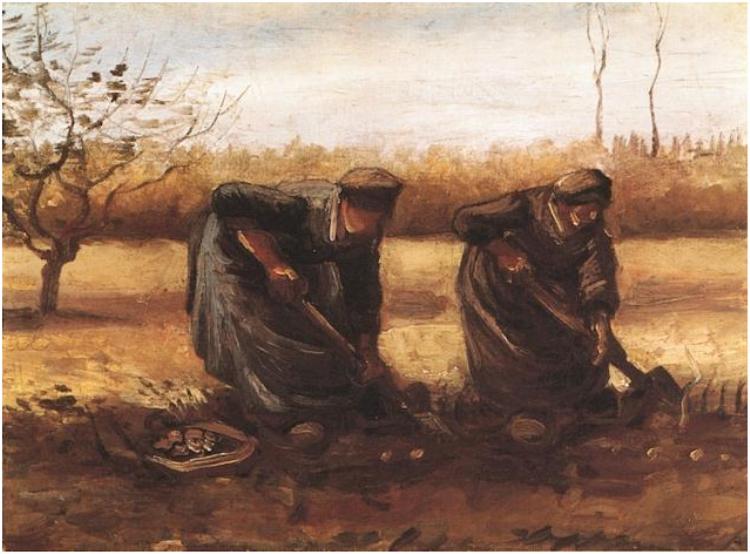
“Peasant women digging potatoes” Van Gogh 1885 Kröller-Müller Museum The Netherlands

“Do you know a cure for me?”
“Why yes,” he said, “I know a cure for everything. Salt water.”
“Salt water?” I asked him.
“Yes,” he said, “in one way or the other. Sweat, or tears, or the salt sea.”
~Isak Dinesen from Seven Gothic Tales

A good night sleep, or a ten minute bawl, or a pint of chocolate ice cream, or all three together, is good medicine.
~Ray Bradbury from Dandelion Wine

The woods are lovely, dark and deep,   
But I have promises to keep,   
And miles to go before I sleep,   
And miles to go before I sleep.
~Robert Frost from “Stopping by Woods on a Snowy Evening”

If there is anything I learned in 42 years of doctoring, it’s that physicians “practice” every day in the pursuit of getting it right. As much as MDs emphasize the science of what we do through “evidence-based” decision-making, there were still days when a fair amount of educated guessing and a gut feeling was based on past experience, along with my best hunch. 

Many patients don’t arrive with classic cookbook symptoms that fit the standardized diagnostic and treatment algorithms. The nuances of their stories require interpretation, discernment, and flexibility. A surprise once in awhile made me look at a patient in a new or unexpected way and taught me something I didn’t know before. It kept me coming back with more questions, to figure out the mystery and dig a little deeper.

I also learned that though much medical treatment comes through some intervention using surgical procedures, pills or injections, those aren’t the only options in our doctor bag.

A simple good night’s sleep can do wonders for what ails a mind and body, especially when we’ve kept our promises.

At times the most appropriate cure is simple salt water in all its forms – just feeling ocean waves lapping at our feet, or sweating it out with exertion, or feeling the flow of tears down our cheeks.

How many of us allow ourselves a good cry when we feel it welling up behind our eyes?  It could be a sentimental moment–a song that brings back bittersweet memories, a movie that touches just the right chord of feeling and connection. It may be a moment of frustration and anger when nothing seems to go right. It could be the pain of physical illness or injury or emotional turmoil. 

Or just maybe there is weeping when everything is absolutely perfect and there cannot be another moment just like it, so it is tough to let it go without our tears spilling over.

And lastly, aside from the obvious curative properties of salt water, the healing found in chocolate is unquestioned by this physician. It can fix most everything that ails a person – at least for an hour or so.

It doesn’t always take an M.D. degree to determine the best medicine. It just takes a degree in common sense.

Healing tools to consider when all else fails: 
sleep, weep, keep ( promises), and reap (chocolate!)

One-Time
Monthly
Yearly

Make a one-time or recurring donation to support daily Barnstorming posts

Make a monthly donation

Make a yearly donation

Choose an amount

$10.00
$25.00
$50.00
$5.00
$15.00
$100.00
$5.00
$15.00
$100.00

Or enter a custom amount

$

Your contribution is deeply appreciated.

Your contribution is appreciated.

Your contribution is appreciated.

DonateDonate monthlyDonate yearly
Learning the Hard Way

There are three kinds of men.
The ones that learn by reading.
The few who learn by observation. 
The rest of them have to pee on the electric fence for themselves.
~Will Rogers

We living creatures learn from the moment we take our first breath. We continue to learn until our last breath. With that lifetime of learning, one would think eventually we should find some semblance of wisdom.

But we don’t. We tend to learn the hard way especially when it comes to matters having to do with our (or others’) health and well-being.

Within a community, we want autonomy to do as we like, no matter what the science says. You’d think we’d know better, but as fallible human beings, we may impulsively make decisions about health issues. Is it evidence-based or simply an anecdotal story about what “worked” or “didn’t work” for someone else?

We’re facing at least four years of a new administration encouraging us all to “pee on the electric fence” and learn for ourselves rather than trust science. Careful research, years of observed experience, and plain common sense isn’t enough to trust public health and infectious disease experts to make wise recommendations about community and individual risk and prevention strategies.

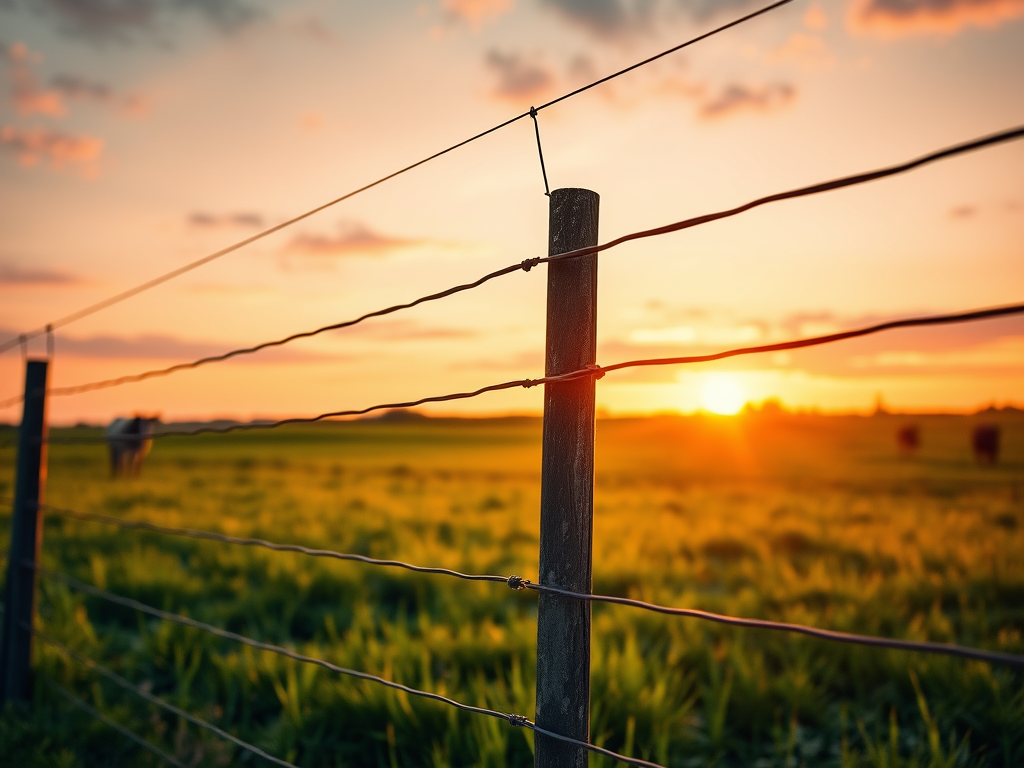
The cows and horses on our farm need to touch an electric fence only once when reaching for greener grass on the other side. That moment provides a potent learning curve for them to make important future decisions. They won’t try testing it again no matter how alluring thngs appear on the other side. Humans should learn as quickly as animals but unfortunately don’t.

I know all too well what a shock feels like and I want to avoid repeating that experience.  Even so, in unguarded careless moments of feeling invulnerable (it can’t happen to me!) or annoyed at being told what I can and can’t do, or simply indulging in magical thinking, I find myself reaching for the greener grass. 

I suspect I’m not alone in my surprise when I’m jolted back to reality.

Many great minds have worked out various theories of effective learning, but, great mind or not, Will Rogers confirms a common sense suspicion: an adverse experience, like a “bolt out of the blue,” can be a powerful teacher. 

So we call peeing on an electric fence it “a teachable moment.”

Sadly, when we learn the hard way, it often ends up hurting everyone.

AI image created for this post

One-Time
Monthly
Yearly

Make a one-time or recurring donation to support daily Barnstorming posts

Make a monthly donation

Make a yearly donation

Choose an amount

$10.00
$25.00
$50.00
$5.00
$15.00
$100.00
$5.00
$15.00
$100.00

Or enter a custom amount

$

Your contribution is deeply appreciated.

Your contribution is appreciated.

Your contribution is appreciated.

DonateDonate monthlyDonate yearly
The Hard Knuckle of the Year

I got out of bed
on two strong legs.
It might have been
otherwise. I ate
cereal, sweet
milk, ripe, flawless
peach. It might
have been otherwise.
I took the dog uphill
to the birch wood.
All morning I did
the work I love.
At noon I lay down
with my mate. It might
have been otherwise.
We ate dinner together
at a table with silver
candlesticks. It might
have been otherwise.
I slept in a bed
in a room with paintings
on the walls, and
planned another day
just like this day.
But one day, I know,
it will be otherwise.

~Jane Kenyon “Otherwise”

…this has been a day of grace
in the dead of winter,
the hard knuckle of the year,
a day that unwrapped itself
like an unexpected gift,
and the stars turn on,
order themselves
into the winter night.
~Barbara Crooker from “Ordinary Life” in
Barbara Crooker: Selected Poems

…it’s easy to forget that the ordinary is just the extraordinary that’s happened over and over again. Sometimes the beauty of your life is apparent. Sometimes you have to go looking for it. And just because you have to look for it doesn’t mean it’s not there.
God, grant me the grace of a normal day.

~Billy Coffey

…there is no such thing as a charmed life, not for any of us, no matter where we live or how mindfully we attend to the tasks at hand. But there are charmed moments, all the time, in every life and in every day, if we are only awake enough to experience them when they come and wise enough to appreciate them.
~Katrina Kenison from The Gift of an Ordinary Day

These dead of winter days are lengthening, slowly and surely. I’m thankful I’m retired now so I no longer I leave the farm in darkness to head to work in town, and return in darkness at the end of the workday.  I’m able to do my barn chores at either end of the day as the sun is rising to chase away the moon, and later as the sun is chased away by starlight.

I tend to get complacent in my daily routines, confident in the knowledge that tomorrow will be very much like yesterday. The distinct blessings of an ordinary day are lost in the rush of moving forward to whatever comes next. Poet Jane Kenyon wrote her poem with the knowledge she was dying of leukemia, which meant each ordinary day was precious indeed.

The reality is there is nothing ordinary about the events of each day.
It might have been otherwise and some day it will be otherwise. That is the hard knuckle of the days we are given, each a gift, each peaches and cream.

One-Time
Monthly
Yearly

Make a one-time or recurring donation to support daily Barnstorming posts

Make a monthly donation

Make a yearly donation

Choose an amount

$10.00
$25.00
$50.00
$5.00
$15.00
$100.00
$5.00
$15.00
$100.00

Or enter a custom amount

$

Your contribution is deeply appreciated.

Your contribution is appreciated.

Your contribution is appreciated.

DonateDonate monthlyDonate yearly
We Are No Longer Alone: Waiting for Rescue

In time the curtain-edges will grow light.   
Till then I see what’s really always there:   
Unresting death, a whole day nearer now,   
Making all thought impossible but how   
And where and when I shall myself die.  
 

…specious stuff that says No rational being
Can fear a thing it will not feel, not seeing
That this is what we fear—no sight, no sound,   
No touch or taste or smell, nothing to think with,   
Nothing to love or link with,
The anaesthetic from which none come round.

Slowly light strengthens, and the room takes shape.   
It stands plain as a wardrobe, what we know,   
Have always known, know that we can’t escape,   
Yet can’t accept. One side will have to go.

The sky is white as clay, with no sun.
Work has to be done.
Postmen like doctors go from house to house.
~Philip Larkin from “Aubade”

Sharing an essay I wrote during Advent in 2003:

We are in our darkest of dark days today in our corner of the world–about 16 hours of darkness underwhelming our senses, restricting, confining and defining us in our little circles of artificial light that we depend on so mightily.

It is so tempting to be consumed and lost in these dark days, stumbling from one obligation to the next, one foot in front of the other, bumping and bruising ourselves and each other in our blindness. Lines are long at the stores, impatience runs high, people coughing and shivering with winter viruses, others stricken by loneliness and desperation.

So much grumbling in the dark.

Yesterday, I had a conversation with a patient of mine from my clinic at the University Student Health Center, a young college student recovering at the local hospital after a near-death experience. Her testimony made me acutely aware of my self-absorbent grumbling.

Several days ago, she was snowshoeing up to Artist Point with two other students in the bright sun above the clouds at the foot of nearby Mt. Baker. A sudden avalanche buried all three–she remembers the roar and then the deathly quiet of being covered up, and the deep darkness that surrounded her. She was buried hunched over, with the weight of the snow above her too much to break through. She had a pocket of air beneath her and in this crouching kneeling position, she could only pray–not move, not shout, not anything else. Only God was with her in that small dark place. She believes that 45 minutes later, rescuers dug her out to safety from beneath that three feet of snow. In actuality, it was 24 hours later.

She had been wrapped in the cocoon of her prayers in that deep dark pocket of air, and miraculously, kept safe and warm enough to survive. Her hands and legs, blackish purple when she was pulled out of the snow, turned pink with the rewarming process at the hospital.

When I visited her, she glowed with a light that came only from within –somehow, it had kept her alive.

Tragically, one of her friends died in that avalanche, never having a chance of survival because of how she was trapped and covered with the suffocating snow. Her other friend struggled for nearly 24 hours to free himself, bravely fighting the dark and the cold to reach the light, then calling for help from nearby skiers to try to rescue his friends.

At times we must fight with the dark–wrestle it and rale against it, bruised and beaten up in the process, but so necessary to save ourselves and others from being consumed. At other times we must kneel in the darkness and wait– praying, hoping, knowing the light is to come, one way or the other. Grateful, grace-filled, not giving up to grumbling.

May the Light find and rescue you this week in your moments of darkness.

Merry merry Christmas.

The story of the avalanche and rescue is written here in the Seattle Times.

The first thing I heard this morning
was a rapid flapping sound, soft, insistent—


wings against glass as it turned out
downstairs when I saw the small bird
rioting in the frame of a high window,
trying to hurl itself through
the enigma of glass into the spacious light.


Then a noise in the throat of the cat
who was hunkered on the rug
told me how the bird had gotten inside,
carried in the cold night
through the flap of a basement door,
and later released from the soft grip of teeth.


On a chair, I trapped its pulsations
in a shirt and got it to the door,
so weightless it seemed
to have vanished into the nest of cloth.


But outside, when I uncupped my hands,
it burst into its element,
dipping over the dormant garden
in a spasm of wingbeats
then disappeared over a row of tall hemlocks.


For the rest of the day,
I could feel its wild thrumming
against my palms as I wondered about
the hours it must have spent
pent in the shadows of that room,
hidden in the spiky branches
of our decorated tree, breathing there
among the metallic angels, ceramic apples, stars of yarn,
its eyes open, like mine as I lie in bed tonight
picturing this rare, lucky sparrow
tucked into a holly bush now,
a light snow tumbling through the windless dark.

~Billy Collins “Christmas Sparrow” from Aimless Love

AI image created for this post
One-Time
Monthly
Yearly

Make a one-time or recurring donation to support daily Barnstorming posts

Make a monthly donation

Make a yearly donation

Choose an amount

$10.00
$25.00
$50.00
$5.00
$15.00
$100.00
$5.00
$15.00
$100.00

Or enter a custom amount

$

Your contribution is deeply appreciated.

Your contribution is appreciated.

Your contribution is appreciated.

DonateDonate monthlyDonate yearly

For a Little While…

Flee for a while from your tasks;
hide yourself for a little space from the turmoil of your thoughts.
Come, cast aside your burdensome cares,
and put aside your laborious pursuits.
For a little while give your time to God,
and rest in him for a little while.
Enter into the inner chamber of your mind,
shut out all things save God
and whatever may aid you in seeking God;
and having barred the door of your chamber, seek him.

~Anselm of Canterbury from Major Works

There were clinic days when I needed to leave early:
near tears, physically spent, too fried
to keep listening, problem solving, comforting.

These were times I needed to feel anything
other than being needed.
I was the picture of neediness myself — 
a sorry place to be.

Feeling overwhelmed had happened before:
middle of the night mothering a feverish vomiting child,
middle of the night mothering my frail dying mother,
middle of the night mothering a troubled world.

Yet morning still comes, after a little while,
shining and wondrous because God never left.

In my need, if I gently close the door to all worries
that are not God,
I find Him looking for me
and waiting to hear what I have to say.

AI image created for this post
One-Time
Monthly
Yearly

Make a one-time or recurring donation to support daily Barnstorming posts

Make a monthly donation

Make a yearly donation

Choose an amount

$10.00
$25.00
$50.00
$5.00
$15.00
$100.00
$5.00
$15.00
$100.00

Or enter a custom amount

$

Your contribution is deeply appreciated.

Your contribution is appreciated.

Your contribution is appreciated.

DonateDonate monthlyDonate yearly
We Will Remember Them

They shall grow not old, as we that are left grow old:
Age shall not weary them, nor the years condemn.
At the going down of the sun and in the morning
We will remember them.
~Lawrence Binyon from “For the Fallen” (1914)

In Flanders fields the poppies blow
Between the crosses, row on row,
That mark our place; and in the sky
The larks, still bravely singing, fly

Scarce heard amid the guns below.

We are the Dead. Short days ago
We lived, felt dawn, saw sunset glow,
Loved and were loved, and now we lie,
In Flanders fields.

Take up our quarrel with the foe:
To you from failing hands we throw
The torch; be yours to hold it high.
If ye break faith with us who died
We shall not sleep, though poppies grow
In Flanders fields.

~John McCrae “In Flanders Fields”

When you go home tell them of us and say –
“For your tomorrow we gave our today”
~John Maxwell Edmonds from “The Kohima Epitaph” 

November pierces with its bleak remembrance
Of all the bitterness and waste of war.
Our silence tries but fails to make a semblance
Of that lost peace they thought worth fighting for.
Our silence seethes instead with wraiths and whispers,
And all the restless rumour of new wars,
The shells are falling all around our vespers,
No moment is unscarred, there is no pause,
In every instant bloodied innocence
Falls to the weary earth ,and whilst we stand
Quiescence ends again in acquiescence,
And Abel’s blood still cries in every land
One silence only might redeem that blood
Only the silence of a dying God.
~Malcolm Guite “Silence: a Sonnet for Remembrance Day”

To our military veterans here and abroad –
in deep appreciation and gratitude for the freedoms
you have defended on behalf of us all.

No one is left untouched and unscarred in the bitterness of war:
those of you who died in service,
those of you wounded in service,
those of you who bore visible and invisible scars all your lives.

You are heroes to the cause of freedom.

As G.K. Chesterton said,
“Courage is a strong desire to live taking the form of a readiness to die.”

My father was one of the fortunate ones who came home, returning to a quiet life of farming and teaching after three years serving in the Pacific with the Marines Corp from 1942 to 1945. Hundreds of thousands of his colleagues didn’t come home, dying on beaches and battlefields. Tens of thousands more came home forever marked, through physical or psychological injury, by the experience of war and witness of death and mayhem all around them.

In my medical training in the 1970’s, I cared for veterans hospitalized for mental health care after serving in WWII, Korea and Vietnam. I witnessed for myself the sacrifices of these soldiers, and the limits of our therapies.

No matter how one views wars our nation has fought and may be obligated to fight in the future, we must support and care for the men and women who have made, on our behalf, the commitment to be on the front line for freedom’s sake.

Even our God died so we could stop fighting each other (and Him). What a waste we have not stopped to listen and understand His sacrifice enough to finally lay down our weapons against one another forever.

Support for wounded veterans:

Disabled Veterans National Foundation

Wounded Warrior Project