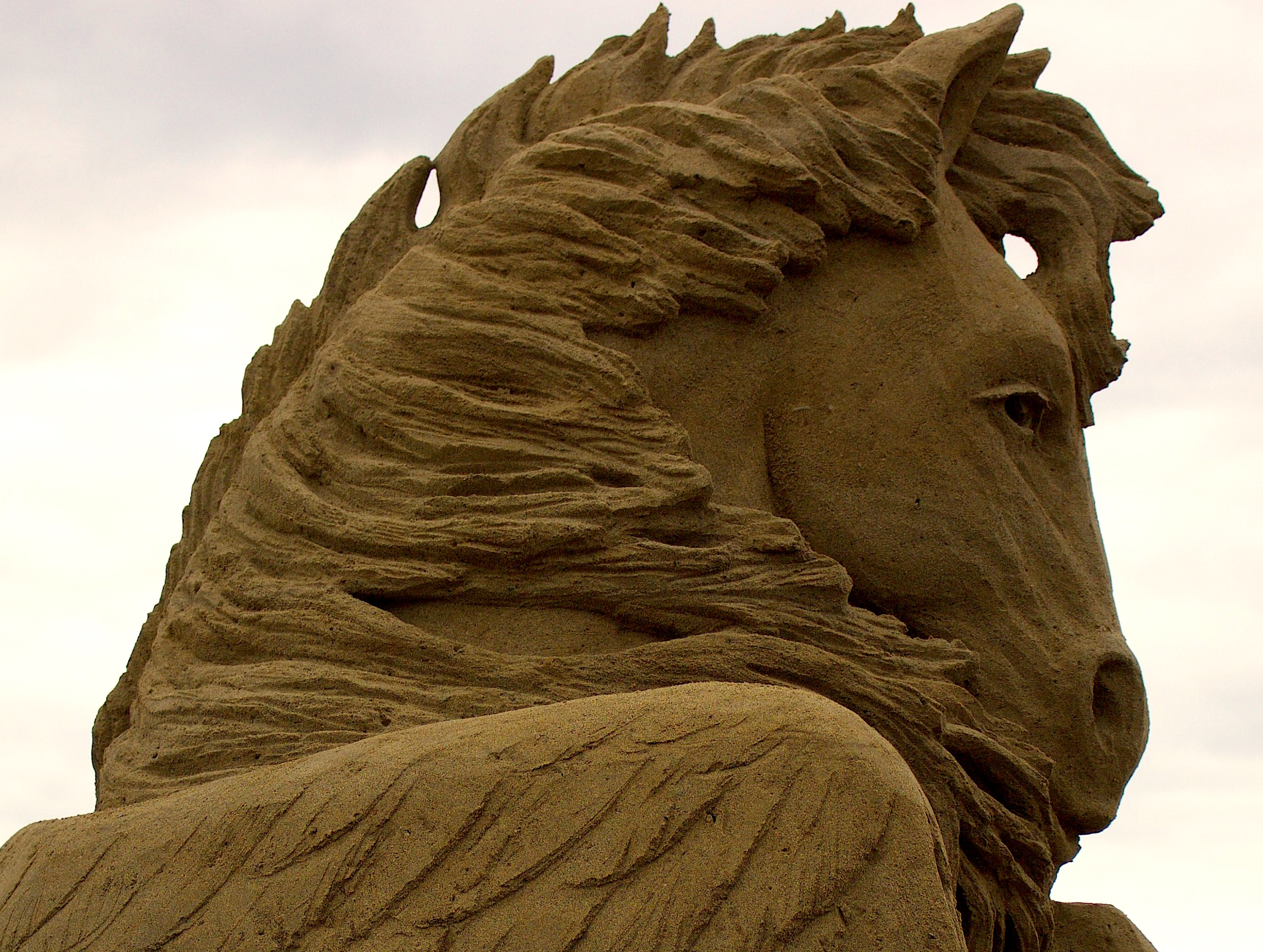
It’s the immemorial feelings I like the best: hunger, thirst, their satisfaction; work-weariness, earned rest; the falling again from loneliness to love; the green growth the mind takes from the pastures in March; the gayety in the stride of a good team of Belgian mares that seems to shudder from me through all my ancestry. ~Wendell Berry “Goods”
photo by Joel De Waardphoto by Joel De Waard
The plow has savaged this sweet field Misshapen clods of earth kicked up Rocks and twisted roots exposed to view Last year’s growth demolished by the blade.
I have plowed my life this way Turned over a whole history Looking for the roots of what went wrong Until my face is ravaged, furrowed, scarred.
Enough. The job is done. Whatever’s been uprooted, let it be Seedbed for the growing that’s to come. I plowed to unearth last year’s reasons—
The farmer plows to plant a greening season. ~Parker Palmer “Harrowing”
photo by Joel De Waardphoto by Joel De Waard
It’s not likely anyone would say I didn’t work hard enough.
After all, I come from a long line of human work-horses who knew it takes sweat and tears, and sometimes bleeding.
Even so, all those years I know I could have plowed more deeply than I did.
I could have thrown myself more fully into the pull on the tugs, shared the load more effectively, shouldered the yoke with greater enthusiasm, bent my neck down low with unbroken determination.
You could say somewhere I lost the gayety in my stride, and you would be right — toward the end, I was trudging through the furrow, bruised from turning up too many submerged rocks, bumping into immoveable tree stumps, tripping on hidden roots, stuck in the deep mud of long and lonely post-midnight hours.
You might even say the knowledge of a job well-done lay at a depth my plow could ever reach.
I had seen others die in the harness, never able to rest easy.
A few years ago I knew the time had come to shrug off the yoke, shake off the bridle and bit, shudder free of the harness.
On this side of the ground, I find myself wondering and wandering, the blinkers no longer impeding my vision, feeling the morning sun on my unyoked withers.
Yet when I see an untilled field, something in me even now still tries to hold on to the plow —
photo by Joel De Waardphoto by Joel De Waardphoto by Joel De Waard
One-Time
Monthly
Yearly
Make a one-time or recurring donation to support daily Barnstorming posts
In truth I am puzzled most in life by nine horses.
Two are on one side of the fence and seven on the other side.
They stare at one another from the same places hours and hours each day.
This is another unanswerable question to haunt us with the ordinary.
We live far out in the country where I hear creature voices night and day.
Like us they are talking about their lives on this brief visit to earth.
In truth each day is a universe in which we are tangled in the light of stars.
Stop a moment. Think about these horses in their sweet-smelling silence. ~Jim Harrison from “Horses”
What is this life is, full of care We have no time to stand and stare. No time to stand beneath the boughs And stare as long as sheep or cows. No time to see, when woods we pass, Where squirrels hide their nuts in grass. No time to see, in broad daylight, Streams full of stars, like skies at night. No time to turn at Beauty’s glance, And watch her feet, how they can dance. No time to wait till her mouth can Enrich that smile her eyes began. A poor life this if, full of care, We have no time to stand and stare. ~William Henry Davies “Leisure”
Fingers of twilight shadow begin to reach over the hill crawling down through the field up unto the bank of blackberries covering fences along the alder grove.
Our horses chew their last clover leafs before coming to the barn for night, eyelids heavy, relaxed and full, drowsy with summer evening peace at hand and hoof.
A sudden change in the air forces their heads up and ears forward; they form a line, standing and staring at the hilltop above them, riveted to the spot, alert to an incoming intruder, unfamiliar and foreign.
The roar is intermittent, like a warm wind rattling a barn roof, but inconstant; then peaking over the crest of the hill a rounded top of technicolor glory:
The hot air balloon rises.
The horses riveted, baffled, fascinated; no wild instinct prepares their response to this wizard’s act from Oz in their own backyard.
The basket riders wave and laugh at the equine audience below standing in formation with golden noses in the air and white manes blowing in the breeze.
The balloon summits the hill, dipping low, almost touchable before moving back up to race the sunset, and search out other pastures, other valleys and hills.
The horses released from the spell of “stand and stare” leap in response, snowy tails high, noses flared-
To race up the hill to capture impending darkness, our night-mares cavort, float suspended until their air is let out, gently, in softening snorts, to settle down in a straw bed in the barn where night, becomes blissfully ordinary again.
One-Time
Monthly
Yearly
Make a one-time or recurring donation to support daily Barnstorming posts
His long teeth on her withers, her rough-coated spots will grow damp and wild. Her long teeth on his withers, his oiled-teakwood smoothness will grow damp and wild. Their shadows’ chiasmus will fleck and fill with flies, the eight marks of their fortune stamp and then cancel the earth. From ear-flick to tail-switch, they stand in one body. No luck is as boundless as theirs. ~Jane Hirshfield “The Love of Aged Horses”
Two horses lean in the field clasped against each other as if in prayer, grooming each other’s manes the way my thumb strokes the back of my thumb.
Together, tall, conductive around them, fenced lightning, above, a promise of more rain to come, the force of faith condensing, cumulative—
A wave tries to return to the river what it has been given, futile.
Two swans, only ever as far apart as palms, a wingspan, float by shore, sucking up silt, throats rippling, taking in something as vast as the sea in small sips.
If, on cold nights, before bed, I pray for something as simple as the warmth of my hands— ~Ace Chu “Dear” from The Hopper
Just off the highway to Rochester, Minnesota, Twilight bounds softly forth on the grass. And the eyes of those two Indian ponies Darken with kindness. They have come gladly out of the willows To welcome my friend and me. We step over the barbed wire into the pasture Where they have been grazing all day, alone. They ripple tensely, they can hardly contain their happiness That we have come. They bow shyly as wet swans. They love each other. There is no loneliness like theirs. At home once more, They begin munching the young tufts of spring in the darkness. I would like to hold the slenderer one in my arms, For she has walked over to me And nuzzled my left hand. She is black and white, Her mane falls wild on her forehead, And the light breeze moves me to caress her long ear That is delicate as the skin over a girl’s wrist. Suddenly I realize That if I stepped out of my body I would break Into blossom. ~James Wright “A Blessing”
May we easily find one another’s itches, just as we know our own. May we greet all visitors with a gentle and humble welcome. May we bow our heads together when in need of community. May we clasp hands in prayer to God, warming each other’s hands when the world is feeling far too cold.
Lyrics: Warm summer sun, Shine kindly here, Warm southern wind, Blow softly here. Green sod above, Lie light, lie light. Good night, dear heart, Good night, good night. (Mark Twain left this poem on his daughter’s tombstone)
One-Time
Monthly
Yearly
Make a one-time or recurring donation to support daily Barnstorming posts
The mare roamed soft about the slope, Her rump was like a dancing girl’s. Gentle beneath the apple trees She pulled the grass and shook the flies, Her forelocks hung in tawny curls, She had a woman’s limpid eyes, A woman’s patient stare that grieves. And when she moved among the trees, The dappled trees, her look was shy, She hid her nakedness in leaves. A delicate though weighted dance She stepped while flocks of finches flew From tree to tree and shot the leaves With songs of golden twittering; How admirable her tender stance. And then the apple trees were new, And she was new, and we were new, And in the barns the stallions stamped And shook the hills with trumpeting. ~Ruth Stone, “The Orchard” from What Love Comes To
Only one retired Haflinger mare remains on our farm now, her small herd diminishing one at a time as they passed from old age. She now is thirty herself, living her remaining days with two geldings in their twenties.
Over four decades, we have kept over a dozen mares born on this land, where they served us well, birthing us their foals and working when asked. In their retirement, they deserved this easy life on pasture for as long as their legs and feet could carry them up and down the slopes of our hilly farm – they more and more resembled our ancient crooked crippled orchard trees, some of which have toppled in the winter winds..
We are close to the end of our horse-keeping days; hard decisions must be made at some point and I don’t feel quite prepared to determine when they are no longer enjoying their time under the sun and I am too frail to care for them as they deserve.
I don’t want them or me to topple over like an old hollow tree in the wind.
I listen for their nickers as I come into the barn each morning and gauge their eagerness to be set free to the fields. The other day, as the sky was gray with a passing rain shower, the geldings went outside happily. As I let our mare out to pasture, she stopped on her way through the gate and turned around, poised to head back to the barn rather than get wet.
I looked her in the eyes and understood exactly how she was feeling.
Perhaps I have identified a bit too much with the stiffness as my aging mares move, their need for frequent napping times in the field, swishing at flies while they dream of younger days of flirting with stallions, nursing babies, having suppler joints and the occasional wild gallop at twilight.
I sing a sad lullaby to myself as I work about the barn with slow deliberation, knowing there is a somber sorrow to life change. The years pass, never to return, leaving those limpid eyes, flowing manes and tails in their wake.
Ah, yes, I have had all the pretty little horses…
One-Time
Monthly
Yearly
Make a one-time or recurring donation to support daily Barnstorming posts
As if you needed one, as if you could help it, for no good reason a tune out of nowhere pops into your head when you least expect, riffs effortlessly in the folds of your cerebrum—
your own private jukebox, your personal music device on random minus the earbuds— drumming itself up to keep you company: here, a little Janis Joplin while you vacuum cat hair; there, a John Denver line as you peel potatoes at the sink.
How can others not hear it, this frequent odd gift? Sometimes you forget and blurt the words to the chorus, which, after all, is all you can remember, those take me home, country roads, that feelin’ good was good enough for me, even conjuring
the gas station in Colorado back where you, wearing those bell bottoms and that paisley, were about to fill a tank of freedom into the blue VW Bug when Carole King belted out and it’s too late baby, now it’s too late though we really did try to make it
and you couldn’t move, couldn’t quit sobbing to the steering wheel that would not console those blues or say what you had left to lose, wouldn’t question why in hell you were going down that road where for no good reason you seemed to be heading. ~Twyla M. Hansen “For No Good Reason” from Rock. Tree. Bird.
He (the professor) asked what I made of the other students (at Oxford) so I told him. They were okay, but they were all very similar… they’d never failed at anything or been nobodies, and they thought they would always win. But this isn’t most people’s experience of life.
He asked me what could be done about it. I told him the answer was to send them all out for a year to do some dead-end job like working in a chicken processing plant or spreading muck with a tractor. It would do more good than a gap year in Peru.
He laughed and thought this was tremendously witty. It wasn’t meant to be funny. ~James Rebanks from The Shepherd’s Life (how a sheep farmer succeeds at Oxford and then goes back to the farm)
In our barn we have a very beat up old AM/FM radio that sits on a shelf next to the horse stalls and serves as company to the horses during the rainy stormy days they stay inside, and serves as distraction to me as I clean stalls of manure and wet spots morning and evening.
We live about 10 miles south of the Canadian border, so most stations that come in well on this radio’s broken antenna are from the lower mainland of British Columbia. This includes a panoply of stations spoken in every imaginable language– a Babel of sorts that I can tune into: Spanish, Japanese, Chinese, Hindi, Russian, French and of course, proper British accent English.
But standard issue American melting-pot genetic mix that I am, I prefer to tune into the “Oldies” Station and reminisce.
There is a strange comfort in listening to songs that I enjoyed 50+ years ago, and I’m somewhat miffed and perplexed that they should be called “oldies”. Oldies used to refer to music from the 20’s, 30’s and 40’s, not the 50’s, 60’s, and 70’s and (heavens to Betsy) the 80’s and 90’s!
I listen and sing along with a mixture of feeling ancient and yet transported back to my teens. I can remember faces and names I haven’t thought of in decades, recall special summer days picking berries and hear the long lost voices from school days. I can smell and taste and feel things all because of the trigger of a familiar song.
There is something primordial –deep in my synapses– that is stirred by this music. It’s almost like instant time travel without magic needed. In fact, I shoveled manure to these same songs 65 years ago, and somehow, it seems not much as changed.
Or has it? One (very quick) glance in the mirror tells me it has, and I have.
Yesterday – I Got You, Babe and you were a Bridge Over Troubled Waters for this Natural Womanwho just wants to be Close to Youso You’ve Got a Friend. There’sSomething in the way ICherish The Way We Were and of courseLove Will Keep Us Together.If You Leave Me Now, You’re So Vain. I’ve always wanted it My Way but How Sweet It Is when I Want To Hold Your Hand. Come Saturday Morning, Here Comes the Sun as we’re Born to Be Wild
Help!Do You Know Where You’re Going To?Me and You and A Dog Named Boo will travel Country Roadsand Rock Around the Clock even though God Didn’t Make the Little Green Apples to grow in a Moonshadow. Fire and Rain will make things All Right Nowonce Morning is Broken, I’ll Say a Little Prayer For You so just Let It Be.
I Can’t Get No Satisfactionfrom the Sounds of Silence —If— Those Raindrops Keep Fallin’ on My Head. Stand By Me as It’s Just My Imaginationthat I am a Rock, when really I only want Time in a Bottle and to just Sing, Sing a Song.
They just don’t write songs like they used to. I seem to remember my parents saying that about the songs I loved so well in the 60’s and 70’s. Somehow in the midst of decades of change, there are some constants. Music still touches our souls, no matter how young or old we are.
And every day there will always be manure that needs shoveling.
One-Time
Monthly
Yearly
Make a one-time or recurring donation to support daily Barnstorming posts
The great affair, the love affair with life, is to live as variously as possible, to groom one’s curiosity like a high-spirited thoroughbred, climb aboard, and gallop over the thick, sun-struck hills every day.
Where there is no risk, the emotional terrain is flat and unyielding, and, despite all its dimensions, valleys, pinnacles, and detours, life will seem to have none of its magnificent geography, only a length. It began in mystery, and it will end in mystery, but what a savage and beautiful country lies in between. ~Diane Ackerman from A Natural History of the Senses
…once more the quiet mystery is present to me, the throng’s clamor recedes: the mystery that there is anything, anything at all, let alone cosmos, joy, memory, everything, rather than void: and that, O Lord, Creator, Hallowed One, You still, hour by hour sustain it. ~Denise Levertov “Primary Wonder” from Selected Poems
It’s strange to be here. The mystery never leaves you. ~John O’Donohue from Anam Cara
We must learn to acknowledge that the creation is full of mystery; we will never entirely understand it. We must abandon arrogance and stand in awe. We must recover the sense of the majesty of creation, and the ability to be worshipful in its presence. ~Wendell Berry from The Art of the Commonplace: The Agrarian Essays
…being a living mystery: means to live in such a way that one’s life would not make sense if God did not exist. ~ Emmanuel Cardinal Suhard of Parisquoted in Walking on Water
It is our love affair with each day: even when the going is rough and the way is unknown territory.
The road I walk makes no sense without the knowledge God’s Hand created me, His breath becoming mine.
He forms the bridge over the chasm, so I may safely cross.
It’s astonishing, to be truthful. I want to point out the mystery to anyone who will listen so we can bow down together, amazed and awed.
One-Time
Monthly
Yearly
Make a one-time or recurring donation to support daily Barnstorming posts
Of the two spoiled, barn-sour geldings we owned that year, it was Red— skittish and prone to explode even at fourteen years—who’d let me hold to my face his own: the massive labyrinthine caverns of the nostrils, the broad plain up the head to the eyes. He’d let me stroke his coarse chin whiskers and take his soft meaty underlip in my hands, press my man’s carnivorous kiss to his grass-nipping upper half of one, just so that I could smell the long way his breath had come from the rain and the sun, the lungs and the heart, from a world that meant no harm. ~Robert Wrigley “Kissing a Horse”
…and there was once, oh wonderful, a new horse in the pasture, a tall, slim being–a neighbor was keeping her there– and she put her face against my face, put her muzzle, her nostrils, soft as violets, against my mouth and my nose, and breathed me, to see who I was, a long quiet minute–minutes– then she stamped her feet and whisked tail and danced deliciously into the grass away, and came back. She was saying, so plainly, that I was good, or good enough. ~Mary Oliver from “The Poet Goes to Indiana”
It was dragging my hands along its belly, loosing the bit and wiping the spit from its mouth that made me a snatch of grass in the thing’s maw, a fly tasting its ear. It was touching my nose to his that made me know the clover’s bloom, my wet eye to his that made me know the long field’s secrets. But it was putting my heart to the horse’s that made me know the sorrow of horses. Made me forsake my thumbs for the sheen of unshod hooves. And in this way drop my torches. And in this way drop my knives. Feel the small song in my chest swell and my coat glisten and twitch. And my face grow long. And these words cast off, at last, for the slow honest tongue of horses. ~Ross Gay “Becoming A Horse”
Living the dream of nearly every young girl, I grew up with a horse in our back field. The first was a raw-boned old paint who allowed my older sister and toddler me to sit atop him, walk around the barnyard and on the driveway at no more than a walk. He was arthritic and sore, but patient and tolerant to the attention of little girls. When we moved away to another part of the state, he didn’t come with us and I was too young to fully understand where he had been sent.
The horse on our new farm was my sister’s 4H project who was a spiffy chestnut mare with a penchant for a choppy trot and speedy canter. My sister would go miles with friends on horseback down back-country roads. Sadly, my sister soon became allergic (hives and swelling) to any contact with horses. I was barely old enough to start riding by myself in our fields.The little mare missed her adventures with my sister but seemed to adapt to my inexperience and took care of me as best she could – I never fell off. One night, she broke through a fence and ate her fill in a field of growing oat grass. The next day she was euthanized due to terrible colic. I was inconsolable, crying for days when visiting her burial spot on our property.
These first two horses tolerated the inexperience of their handlers and tried to compensate for it. I’ve since owned a few horses who knew exactly how to take advantage of such inexperience. Horses size up people quickly as our feelings and fear can be so transparent; it takes much longer for us to understand the complexity of their equine mind. Many diverse training techniques are marketed as testimony to that mystery.
I have learned that horses appreciate a patient and quiet approach, reflecting their consistency and honesty. They like to be looked in the eye and appreciate a soft breath blown over their whiskers. They want us to find their itchy spots rather than act the part of a pseudo-predator with intent to harm.
That’s not asking too much of us.
In return, we learn how best to communicate what we need from them. They are remarkably willing to work when they understand the job and feel appreciated. In return, we are given a chance to experience the world through their eyes and ears and lips, to comprehend the remarkable sensitivity of a skin able to shiver a fly away.
I’ve spent much of my life learning with horses and hope there are a few years still left to learn more. Whatever sorrow they feel in their hearts is when I’ve failed to be who they need me to be. Their gift to me is an honest willingness to forgive, again and yet again.
One-Time
Monthly
Yearly
Make a one-time or recurring donation to support daily Barnstorming posts
At the gate, I sit in a row of blue seats with the possible company of my death, this sprawling miscellany of people— carry-on bags and paperbacks—
that could be gathered in a flash into a band of pilgrims on the last open road. Not that I think if our plane crumpled into a mountain
we would all ascend together, holding hands like a ring of skydivers, into a sudden gasp of brightness, or that there would be some common place
for us to reunite to jubilize the moment, some spaceless, pillarless Greece where we could, at the count of three, toss our ashes into the sunny air.
It’s just that the way that man has his briefcase so carefully arranged, the way that girl is cooling her tea, and the flow of the comb that woman
passes through her daughter’s hair . . . and when you consider the altitude, the secret parts of the engines, and all the hard water and the deep canyons below . . .
well, I just think it would be good if one of us maybe stood up and said a few words, or, so as not to involve the police, at least quietly wrote something down. ~Billy Collins “Passengers”
Tell us of a bypassed heart beating in 12C, how the woman holds a stranger’s hand to the battery sewn in beneath her collarbone, and says feel this. Tell us of the man’s ear listening across the aisle, hugging itself, a fist long since blistered by blaze. Outside, morning sun buckling up. Inside, twitching bonesacks of bat, birdsong erupting as light cracks the far jungle canopy. Ten thousand feet below ours, a grey cat tongues the morning’s butter left out to soft. Last night we broke open the sweet folds around two paper fortunes. One said variety. One said caution. The woman in 12C would hold that her heart needs its hidden spark, but the man shows how some live the rest of their lives with half a face remembering its before expression. Who was it that said our souls know one another by smell, like horses? ~Jenny Browne “Love Letter to a Stranger”
These days, I spend as little time as possible in airports and airplanes among strangers. As an introvert who prefers to read quietly and stay securely in my shell, I politely converse with the people next to me but prefer a book and silence.
It is always a wonder to me when seat partners across from me or in front of me will spend the trip finding out all about each other’s lives, destinations and feelings about the state of the world.
Even so, like Billy Collins in his poem, I’m struck by the affinity I feel for my fellow passengers as we embark on a trip by air – so different from each of us independently traveling down a highway in our individual vehicles.
In an airplane, our fates are lashed together. What happens to one will happen to all.
Because we are bound together – sometimes randomly, sometimes not – I do believe that we should try to find kindred and sympathetic souls in a mysterious way when we are thrust among strangers.
We are created for connection, whether by smell or sight or spirit.
And perhaps, scrolling through the internet, as we all do at times, you ran across this Barnstorming blog…not expecting a connection to happen.
And here we are –connected because I wrote something quietly down. One never knows how we may become bound together.
One-Time
Monthly
Yearly
Make a one-time or recurring donation to support daily Barnstorming posts
Trust that there is a tiger, muscular Tasmanian, and sly, which has never been seen and never will be seen by any human eye. Trust that thirty thousand sword- fish will never near a ship, that far from cameras or cars elephant herds live long elephant lives. Believe that bees by the billions find unidentified flowers on unmapped marshes and mountains. Safe in caves of contentment, bears sleep. Through vast canyons, horses run while slowly snakes stretch beyond their skins in the sun. I must trust all this to be true, though the few birds at my feeder watch the window with small flutters of fear, so like my own. ~Susan Kinsolving “Trust”
It’s like so many other things in life to which you must say no or yes. So you take your car to the new mechanic. Sometimes the best thing to do is trust. The package left with the disreputable-looking clerk, the check gulped by the night deposit, the envelope passed by dozens of strangers— all show up at their intended destinations. The theft that could have happened doesn’t. Wind finally gets where it was going through the snowy trees, and the river, even when frozen, arrives at the right place. And sometimes you sense how faithfully your life is delivered, even though you can’t read the address. ~Thomas Smith “Trust”
When I stand at the window watching the flickers, sparrows, finches, juncos, grosbeaks, chickadees, and red-winged blackbirds come and go from the feeders, I wonder who is watching who.
They remain wary of me, fluttering away quickly if I approach with lens in hand. They fear capture, even within a camera. They have a life to be lived without my witness or participation. So much happens that I never see or know about.
I understand: I fear being captured too. I prefer to remain an enigma.
Even if only for a moment as an image preserved forever, I know it doesn’t represent all I am, all I’ve done, all I feel, all my moments put together. The birds and bees and snakes and horses are, and I am, so much more than one moment.
Only God sees us fully in every moment, witness to our freedom and captivity, our loneliness and grief, our joy and tears, our sleeping and waking, knowing our best and our worst.
And because He knows us so well and knows the address to which we will be delivered – in Him we must trust.
photo by Tomomi Gibson
One-Time
Monthly
Yearly
Make a one-time or recurring donation to support daily Barnstorming posts
This post is from April 14, 2025 – about a special mare who still lives in our hearts:
Marlee has gone home this morning, far sooner than we planned. She was only twenty two, born only two months after our daughter’s birth, much too young an age for a Haflinger to die.
But something dire was happening to her over the last two weeks — not eating much, an expanding girth, then shortness of breath, and last week it was confirmed she had untreatable lymphoma.
Her bright eyes were shining to the end so it was very hard to ask the vet to turn the light off. But the time had come.
Marlee M&B came to us as a six month old “runty orphan” baby by the lovely stallion Sterling Silver, but she was suddenly weaned at three days when her mama Melissa died of sepsis.
She never really weaned from her bottle/bucket feeding humans Stefan and Andrea Bundshuh at M&B Farm in Canada. From them she knew people’s behavior, learned their nonverbal language, and understood human subtleties that most horses never learn. This made her quite a handling challenge as a youngster as it also meant there was no natural reserve nor natural respect for people. She had no boundaries taught by a mother, so we tried to teach her the proper social cues.
When turned out with the herd as a youngster, she was completely clueless–she’d approach the dominant alpha mare incorrectly, without proper submission, get herself bitten and kicked and was the bottom of the social heap for years, a lonesome little filly with few friends and very few social skills. She had never learned submission with people either, and had to have many remedial lessons on her training path.
Once she was a mature working mare, her relationship with people markedly improved as there was structure to her work and predictability for her, and after having her own foals, she picked up cues and signals that helped her keep her foal safe, though she had always been one of our most relaxed “do whatever you need to do” mothers when we handled her foals as she simply never learned that she needed to be concerned.
Over the years, as the herd has changed, Marlee became the alpha mare, largely by default and seniority, so I don’t believe she really trusted her position as “real”. She tended to bully, and react too quickly out of her own insecurity about her inherited position. She was very skilled with her ears but she was also a master at the tail “whip” and the tensed upper lip–no teeth, just a slight wrinkling of the lip. The herd scattered when they saw her face change. The irony of it all is that when she was “on top” of the herd hierarchy, she was more lonely than when she was at the bottom and I think a whole lot less happy as she had few grooming partners any more.
She accompanied us to the fair for a week of display of our Haflingers year after year after year — she could be always counted on to greet the public and enjoy days of braiding and petting and kids sitting on her back.
The day she started formal under saddle training under Val Bash was when the light bulb went off in her head–this was a job she could do! This was constant communication and interaction with a human being, which she craved! This was what she was meant for! And she thrived under saddle, advancing quickly in her skills, almost too fast, as she wanted so much to please her trainer.
She had, at the time, an unequaled record among North American Haflingers. She was not only regional champion in her beginner novice division of eventing as a pregnant 5 year old, but also received USDF Horse of the Year awards in First and Second Level dressage that year as the highest scoring Haflinger.
With Jessica Heidemann she did a “bridleless” ride display in front of hundreds of people at the annual Haflinger event, and with Garyn Heidemann as instructor, she became an eventing pony for a young rider whose blonde hair matched Marlee’s. She galloped with abandon in the field on bareback rides with Emily Vander Haak and became our daughter Lea’s special riding horse over the last few years.
She had a career of mothering along with intermittent riding work, with 5 foals –Winterstraum, Marquisse, Myst, Wintermond, and Nordstrom—each from different stallions, and each very different from one another.
This mare had such a remarkable work ethic, was “fine-tuned” so perfectly with a sensitivity to cues–that our daughter said: “Mom, it’s going to make me such a better rider because I know she pays attention to everything I do with my body–whether my heels are down, whether I’m sitting up straight or not.”
Marlee was, to put it simply, trained to train her riders.
We will miss her high pitched whinny from the barn whenever she heard the back door to the house open. We will miss her pushy head butt on the stall door when it was time to close it up for the night. We will miss that beautiful unforgettable face and those large deep brown eyes where the light was on.
What a ride she had for twenty two years, that dear little orphan. What a ride she gave to many who trained her and who she trained over the years. Though I never climbed on her back, what joy she gave me, the surrogate mom who loved and fed her, unable to resist those bright eyes, which are now closed in peace.
Photo Montage by Emily Vander Haak
One-Time
Monthly
Yearly
Make a one-time or recurring donation to support daily Barnstorming posts