Not Choose Not To Be

sunrise1042

fallyard3

Not, I’ll not, carrion comfort, Despair, not feast on thee;
Not untwist — slack they may be — these last strands of man
In me ór, most weary, cry I can no more. I can;
Can something, hope, wish day come, not choose not to be.
But ah, but O thou terrible, why wouldst thou rude on me
Thy wring-world right foot rock? lay a lionlimb against me? scan
With darksome devouring eyes my bruisèd bones? and fan,
O in turns of tempest, me heaped there; me frantic to avoid thee and flee?
   Why? That my chaff might fly; my grain lie, sheer and clear.
Nay in all that toil, that coil, since (seems) I kissed the rod,
Hand rather, my heart lo! lapped strength, stole joy, would laugh, chéer.
Cheer whom though? the hero whose heaven-handling flung me, fóot tród
Me? or me that fought him? O which one? is it each one? That night, that year
Of now done darkness I wretch lay wrestling with (my God!) my God.
~Gerard Manley Hopkins
sunrise97148

I hear the same anguish
from one patient after another:

their struggle with life makes them
frantic to avoid the fight and flee~

they would
commit suicide,
yet not believing
in God
would mean
jumping from
the pain of living
into

…nothing at all…

I thought
feeling nothing
was the
point
of ceasing
to be

still in their unbelief
they do not recognize
the God who wrestles relentless with them,
who heaven-flung them here
for such sacred struggle

Perhaps they can’t imagine
a God
(who created
doubters
sore afraid
of His caring
enough to die)

so no one
is ever now,
nor ever will be,
~nothing.

sunrise109151

An Obesity of Grief

fallleaf162

octleaves2

…to love life, to love it even
when you have no stomach for it
and everything you’ve held dear
crumbles like burnt paper in your hands,
your throat filled with the silt of it.
When grief sits with you, its tropical heat
thickening the air, heavy as water
more fit for gills than lungs;
when grief weights you like your own flesh
only more of it, an obesity of grief,
you think, How can a body withstand this?
Then you hold life like a face
between your palms, a plain face,
no charming smile, no violet eyes,
and you say, yes, I will take you
I will love you, again.
— Ellen Bass  “The Thing Is…” from Mules of Love

willowsun

It begins again, even though I’m unprepared.  No matter which way I turn,  autumn’s kaleidoscope displays new patterns, new colors, new empty spaces as I watch the world die into itself once again.  Some dying is flashy, brilliant, blazing – a calling out for attention.  Then there is the hidden dying that happens without anyone taking notice: just a plain, tired, rusting away letting go.

I will spend the morning adjusting to the change in season by occupying myself with the familiar task of moving manure.  Cleaning barn is a comforting chore, allowing me to transform tangible benefit from something objectionable and just plain stinky to the nurturing fertilizer of the future. It feels like I’ve actually accomplished something.

As I scoop and push the wheelbarrow, I recall another barn cleaning fifteen years ago, when I was one of three or four friends left cleaning over ninety stalls after a Haflinger horse event that I had organized at our local fairgrounds. Some people had brought their horses from over 1000 miles away to participate for several days.  There had been personality clashes and harsh words among some participants along with criticism directed at me as the organizer that I had taken very personally.  As I struggled with the umpteenth wheelbarrow load of manure, tears stung my eyes and my heart.  I was miserable with regret. After going without sleep and making personal sacrifices over many months planning and preparing for the benefit of our group,  my work felt futile and unappreciated.

One friend had stayed behind with her young family to help clean up the large facility and she could see I was struggling to keep my composure.  Jenny put herself right in front of my wheelbarrow and looked me in the eye, insisting I stop for a moment and listen:

“You know,  none of these troubles and conflicts will amount to a hill of beans years from now.  People will remember a fun event in a beautiful part of the country,  a wonderful time with their Haflingers, their friends and family, and they’ll be all nostalgic about it, not giving a thought to the infighting or the sour attitudes or who said what to whom.   So don’t make this about you and whether you did or didn’t make everyone happy.  You loved us all enough to make it possible to meet here and the rest was up to us.  So quit being upset about what you can’t change.  There’s too much you can still do for us.”

During tough times since (and there have been plenty),  Jenny’s advice replays, reminding me to cease seeking appreciation from others or feeling hurt when harsh words come my way.   She was right about the balm found in the tincture of time.  She was right about giving up the upset in order to die to self and self absorption, and instead to focus outward.

I have remembered.

Jenny herself did not know that day fifteen years ago she would subsequently spend six years dying while still loving her life every day, fighting a relentless cancer that was only slowed in the face of her faith and intense drive to live.    She became a rusting leaf gone holy, fading imperceptibly over time, crumbling at the edges until five years ago this past week, she finally had to let go.   Her dying did not flash brilliance, nor draw attention at the end.  Her intense focus during the years of her illness had always been outward to others, to her family and friends, to the healers she spent so much time with in medical offices, to her firm belief in the plan God had written for her and those who loved her.

So Jenny let go her hold on life here.   And we reluctantly let her go.   Brilliance cloaks her as her focus is now on things eternal.

You were so right, Jenny.  Nothing from fifteen years ago amounts to a hill of beans now. Except the words you spoke to me that day, teaching me to love life even when I have no stomach for it.

And I won’t be upset that I can’t change what is past and the fact that you have left us.

We’ll catch up later.

287002_2173899514184_1447703673_32236745_2133974484_o
Jenny R in her final year –photo by Ginger Kathleen Coombs

whitehydra

mejierface

End of September

fog101929

novfield

10624782_10152714718926119_2066228923689523676_n

it rained in my sleep
and in the morning the fields were wet

I dreamed of artillery
of the thunder of horses

in the morning the fields were strewn
with twigs and leaves

as if after a battle
or a sudden journey

I went to sleep in the summer
I dreamed of rain

in the morning the fields were wet
and it was autumn
~Linda Pastan “September”

morningrise

sunrise916163

I can choose to fight the inevitable march of time with sighs and sorrows,
thus arm myself with sour bitterness for what is no more,

or I can flow unmoved for as long as I can stay afloat,
only passively aware of the passage of all around me,

or I can smile with awaking each morning, whether to sun or wind or rain,
grateful I’ve been given one more day to get it right,

or at least to care enough to try.

rainylane2

sunrise929161

Send Our Roots Rain

redsquare

Justus quidem tu es, Domine, si disputem tecum; verumtamen
justa loquar ad te: Quare via impiorum prosperatur? (Jeremiah 12)

Thou art indeed just, Lord, if I contend
With thee; but, sir, so what I plead is just.
Why do sinners’ ways prosper? and why must
Disappointment all I endeavour end?
    Wert thou my enemy, O thou my friend,
How wouldst thou worse, I wonder, than thou dost
Defeat, thwart me? Oh, the sots and thralls of lust
Do in spare hours more thrive than I that spend,
Sir, life upon thy cause. See, banks and brakes

Now, leavèd how thick! lacèd they are again
With fretty chervil, look, and fresh wind shakes
Them; birds build — but not I build; no, but strain,
Time’s eunuch, and not breed one work that wakes.

Mine, O thou Lord of life, send my roots rain
~Gerard Manley Hopkins  “Thou art indeed just, Lord”

rainstorm

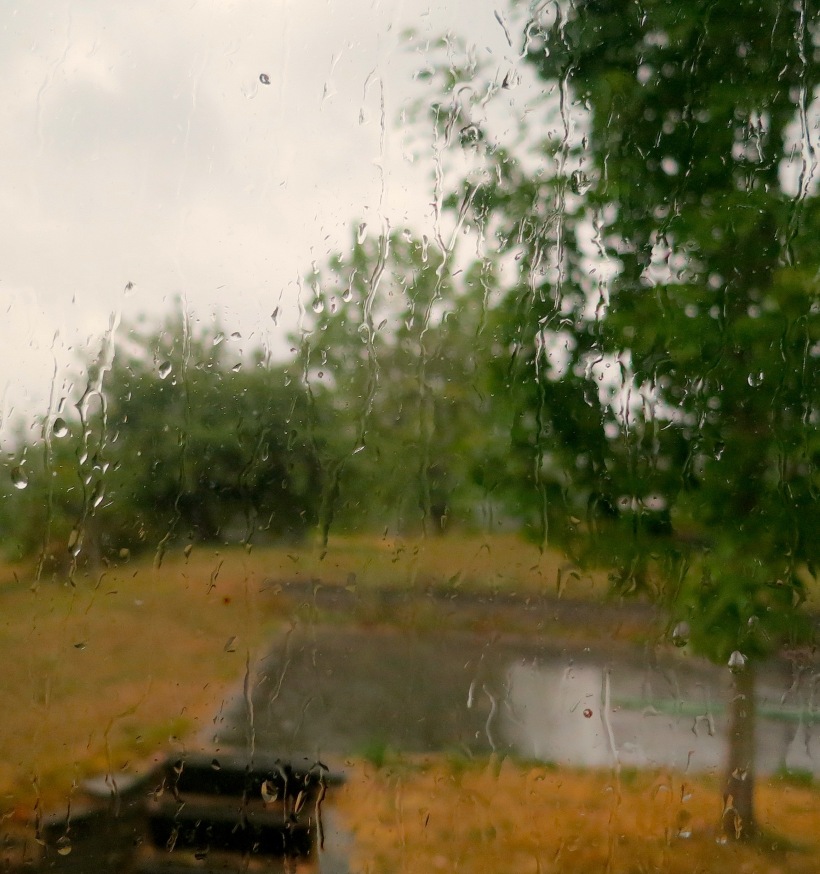
As I look out through a tear-streaked window at the beginning of this dark day,
I feel inadequate to the task before me.

Parched and struggling patients will line my schedule in weeks to come;
they are anxious and already weary and barren, seeking something, anything
to ease their distress in a hostile world.
Preferably an easy pill to swallow.
Nothing that hurts going down.

While others thrive around them,
they wilt and wither, wishing to die.

Lord of Life, equip me to find the words to say that might help.
May it be about more than
genetics, neurotransmitters and physiology.

In this dry season for young lives,
send your penetrating rain to reach them
and those who guide them.
Reach down and shake our roots fiercely
to slake our continual thirst.

1031drops7

When to be Glad

embrace

gardengrass

Well I know now the feel of dirt under the nails,
I know now the rhythm of furrowed ground under foot,
I have learned the sounds to listen for in the dusk,
the dawning and the noon.

I have held cornfields in the palm of my hand,
I have let the swaying wheat and rye run through my fingers,
I have learned when to be glad for sunlight and for sudden
thaw and for rain.

I know now what weariness is when the mind stops
and night is a dark blanket of peace and forgetting
and the morning breaks to the same ritual and the same
demands and the silence.
~Jane Tyson Clement from No One Can Stem the Tide

sunset98163

Soon to arrive, a wave of 15,000 young people
with such potential to grow,
their health needs entrusted to us
as if we tend them as gardeners:
most thriving and flourishing,
yet some already withering,
their roots thirsting.

As the winds of time bring
new thousands to our care,
blown in from places unknown,
I weary weep for those who may not bloom,
wondering if I will fail to water or care enough~

or is it me with thirst unceasing,
my roots drying from each new morning’s
same ritual and same demands unceasing,
as if I’ve forgotten how to be glad for this work,
being met with the silence
of my own gardeners.

rainyleaf7

dillweb


On Mine Aëry Nest

cloudstudy92165

sunset93163
And when Sunset may breathe, from the lit sea beneath,
Its ardours of rest and of love,
And the crimson pall of eve may fall
From the depth of Heaven above,
With wings folded I rest, on mine aëry nest,
As still as a brooding dove.
~Percy Bysse Shelley from “The Cloud”
cloudstudy9216

To make myself understood and to diminish the distance between us, I called out: “I am an evening cloud too.” They stopped still, evidently taking a good look at me. Then they stretched towards me their fine, transparent, rosy wings. That is how evening clouds greet each other. They had recognized me.
~Rainer Maria Rilke from Stories of God

cloudstudy92166

cloudstudy92165

From this hill, we can see for miles.  At certain times of morning and evening, it can feel as if we are aloft, closer up to the clouds, seeing the terrain from their vantage point.  There are the snow-covered peaks to the east, the craggy Canadian coastal range to the north, the stretch of river valley to the north west, the Salish Sea to the west and the forest to the south.

Surrounding us is the farmland and the good people who feed this community: the expanse of dairy land and its vast pastures, the corn fields, berry rows and potato mounds, acres of orchard espaliers and local farm-to-market and CSA growers.

The ever-moving, ever-changing immensity of the clouds covers us all.  As those clouds touch, embrace, release, mold and transform, they show us how connection with others is done.  As we county folk pass on the roads during an evening walk, as we are running late to town jobs, as we meet in the store or at church or community events, we too should touch and greet one another, nod and encourage, acknowledge the shared light that comes from beyond us that restores and transforms us.

Most of all, like the clouds, we are too often full to brimming, a shedding of shared tears at how easily this land can be taken away — whether remembering the sad history of people group domination and removal from their ancestral homes, or the ravages of flood or volcanoes, the effects of drought and wildfire, of blight or sickness, or the currentover-regulation of government ensuring no farmer can afford to continue to do what they know best to preserve the land, the habitat and their crops.

We weep in recognition, like these clouds, to make ourselves understood and to diminish the distance between us.

cloudstudy92163

cloudstudy92162

Puddle-wonderful

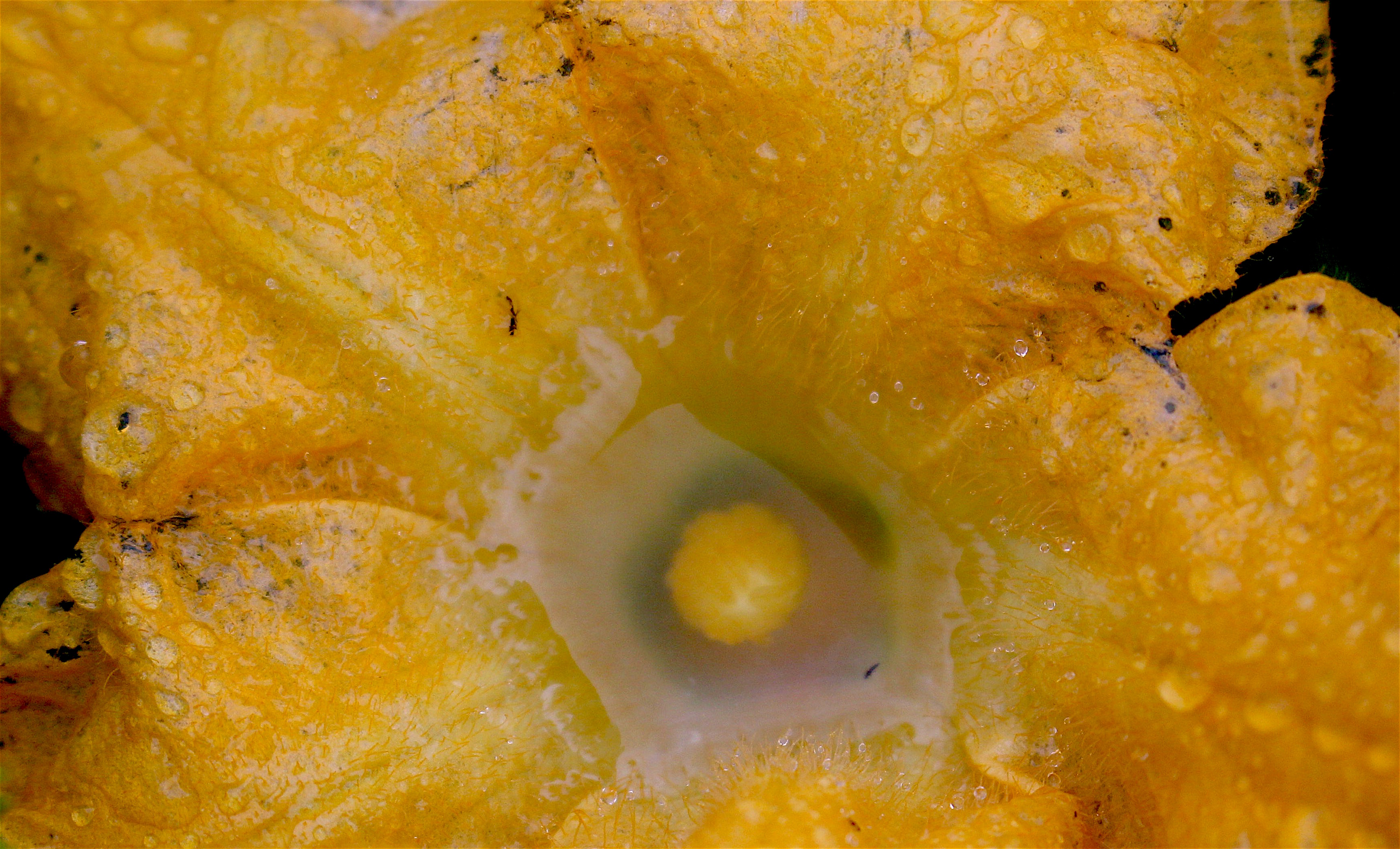
squashblossompuddle

mud36141

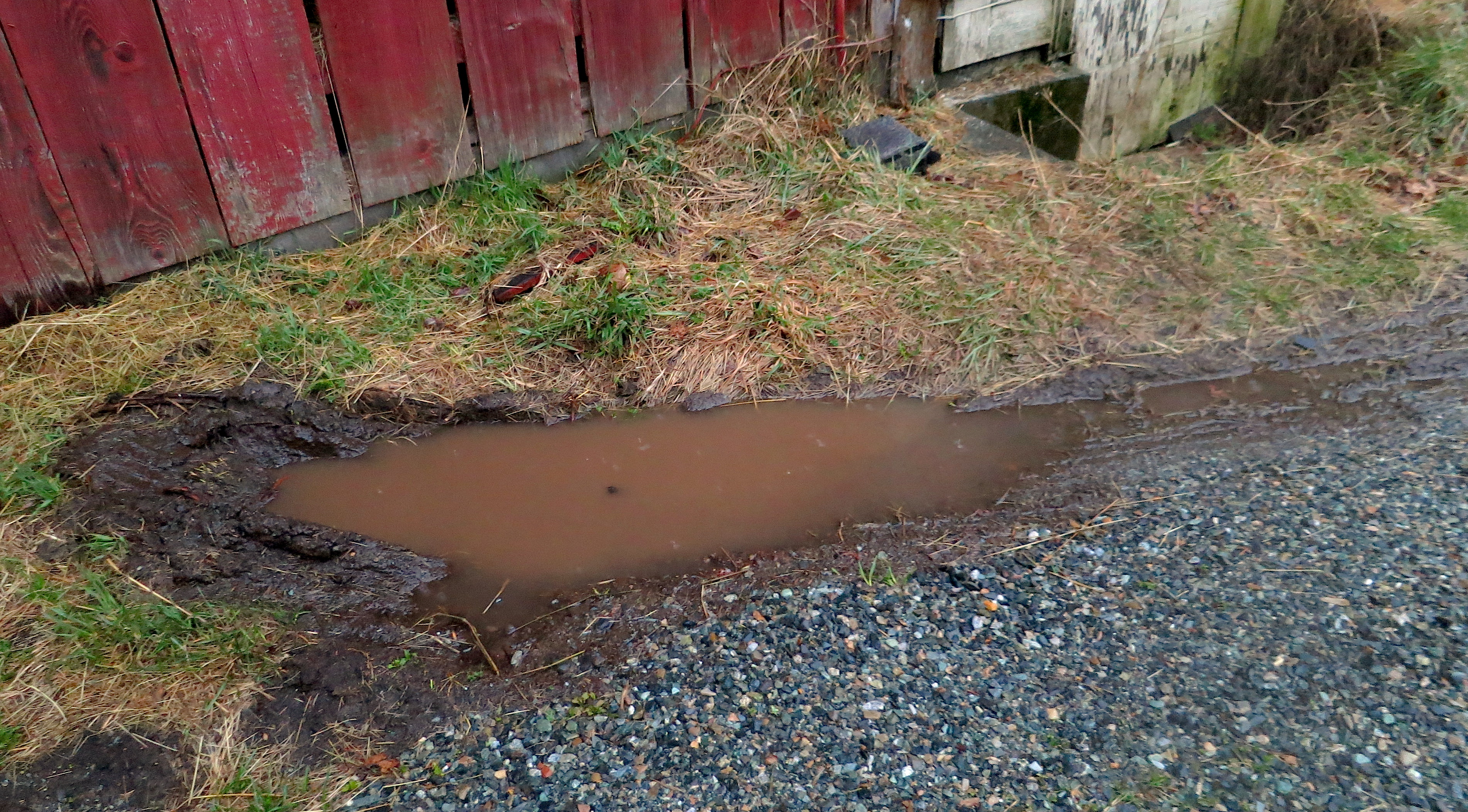
The world is mud-lucious and puddle-wonderful.
~e.e. cummings

rainstorm

…he sought the privacy of rain,
the one time no one was likely to be
out and he was left to the intimacy
of drops touching every leaf and tree in
the woods and the easy muttering of
drip and runoff…
~Robert Morgan from “Working in the Rain”

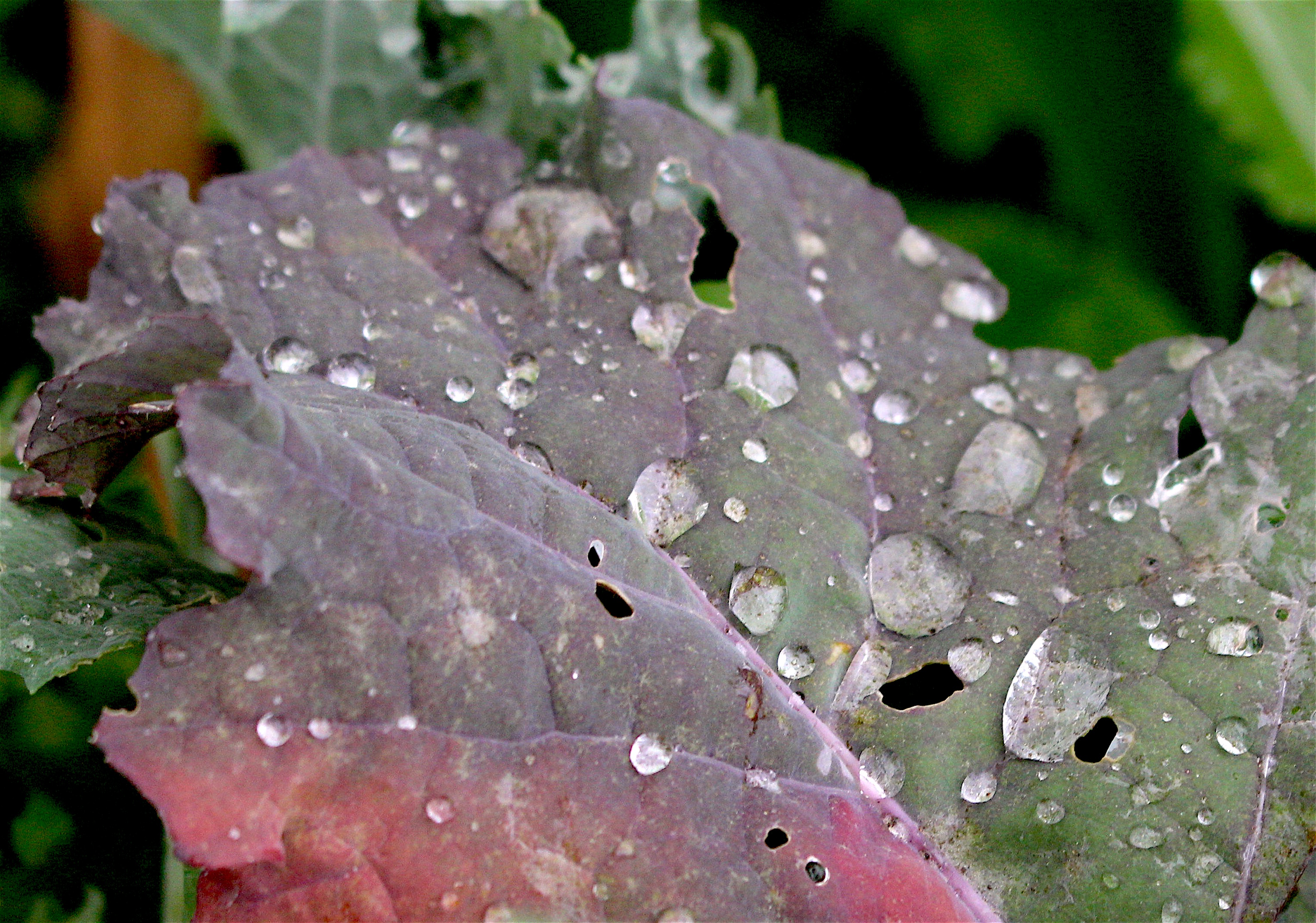
rainykale2

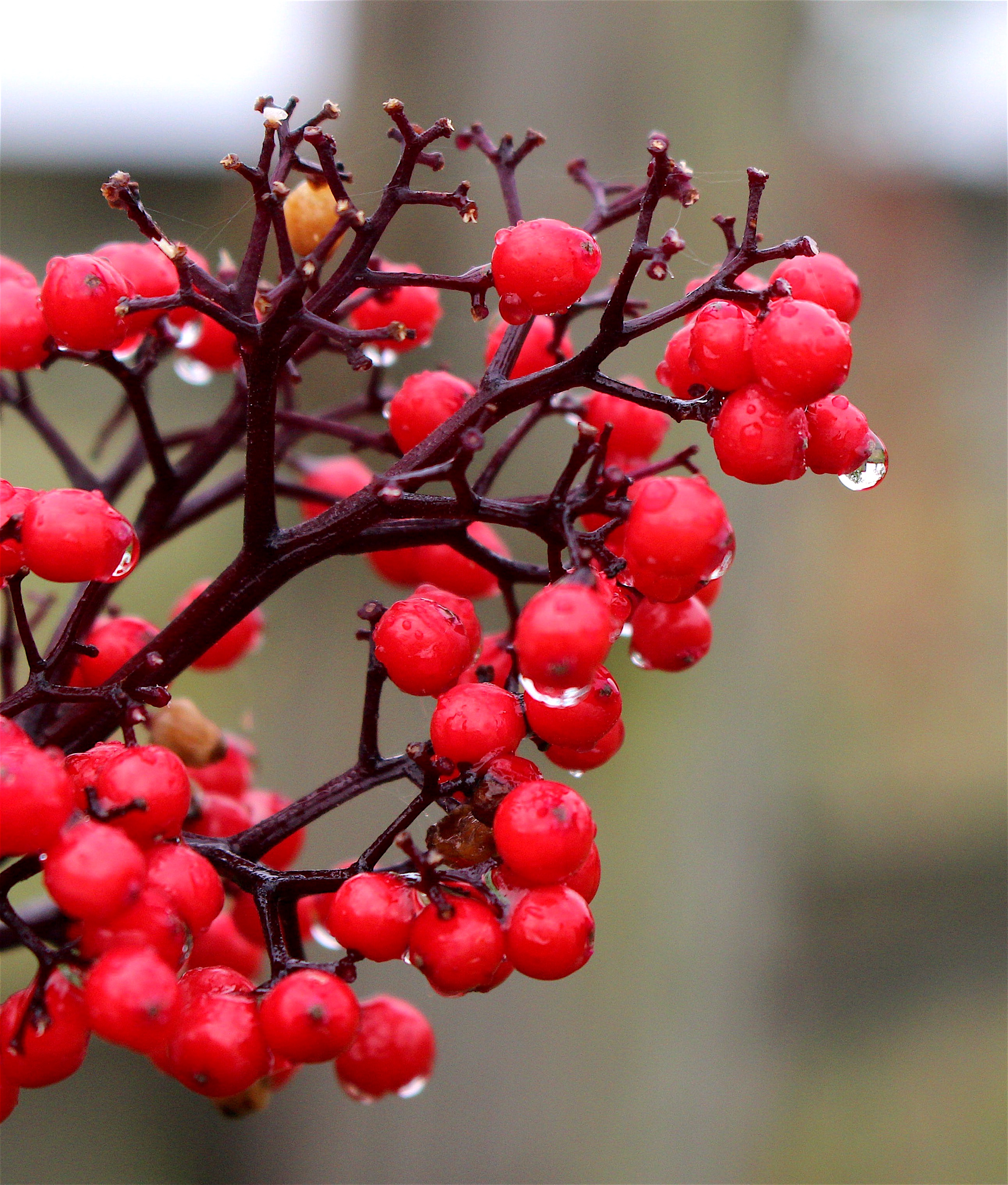
rainyelderberry

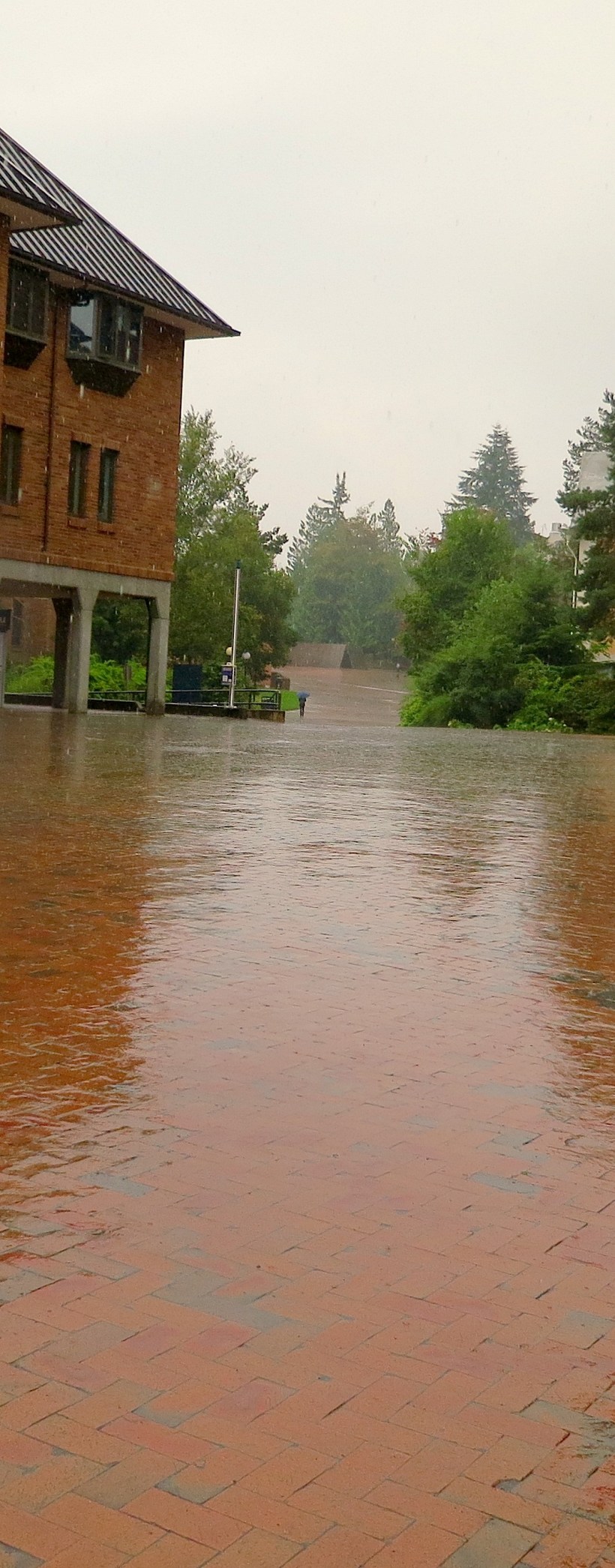
There is plenty of muttering, both private and public, since the rain started yesterday.  And not all of it is from dripping and runoff into puddles.  Anytime a holiday weekend is predicted to be rained out, plenty of people mutter too.

I’m celebrating as it has been weeks — no, months — since we have had a decent rain and everything, including me, has been far too tinder-dry.

Rain is what makes this part of the world special, but like Camelot,  most would prefer it never fall till after sundown.   To them we live not in a more congenial spot — than Camelot.

I may be an oddity, though somewhat typical of northwest-born natives.  I celebrate rain whenever it comes, whether before sundown or after sunrise, as I grew up working outside in the intimacy of a drenching shower.  Yet rain, this falling weather, gives me an excuse to stay indoors to putter around instead of mutter.

He could not resist the long
ritual, the companionship and freedom
of falling weather, or even the cold
drenching, the heavy soak and chill of clothes
and sobbing of fingers and sacrifice
of shoes that earned a baking by the fire
and washed fatigue after the wandering
and loneliness in the country of rain.
~Robert Morgan, conclusion of “Working in the Rain”

rainygold

fogdrops2


Time at Arm’s Length

sunrise7214

morning113159

Light wakes us – there’s the sun
climbing the mountains’ rim, spilling across the valley,
finding our faces.
It is July,
            between the hay and harvest,
a time at arm’s length from all other time…

It is the time
to set aside all vigil, good or ill,
to loosen the fixed gaze of our attention
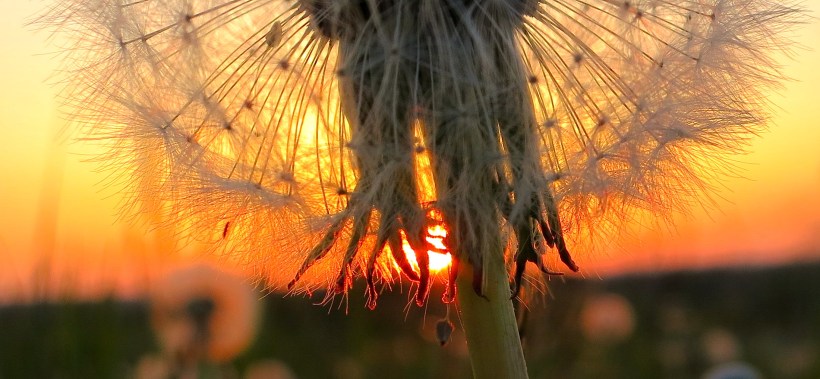
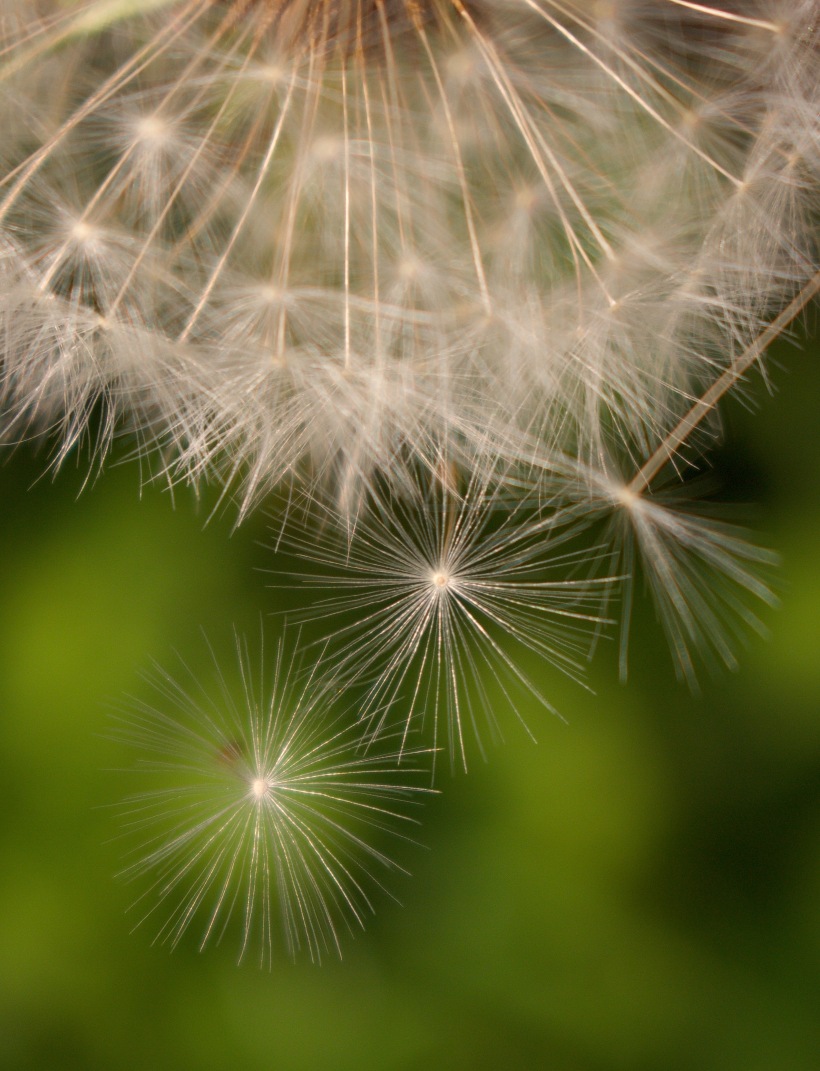
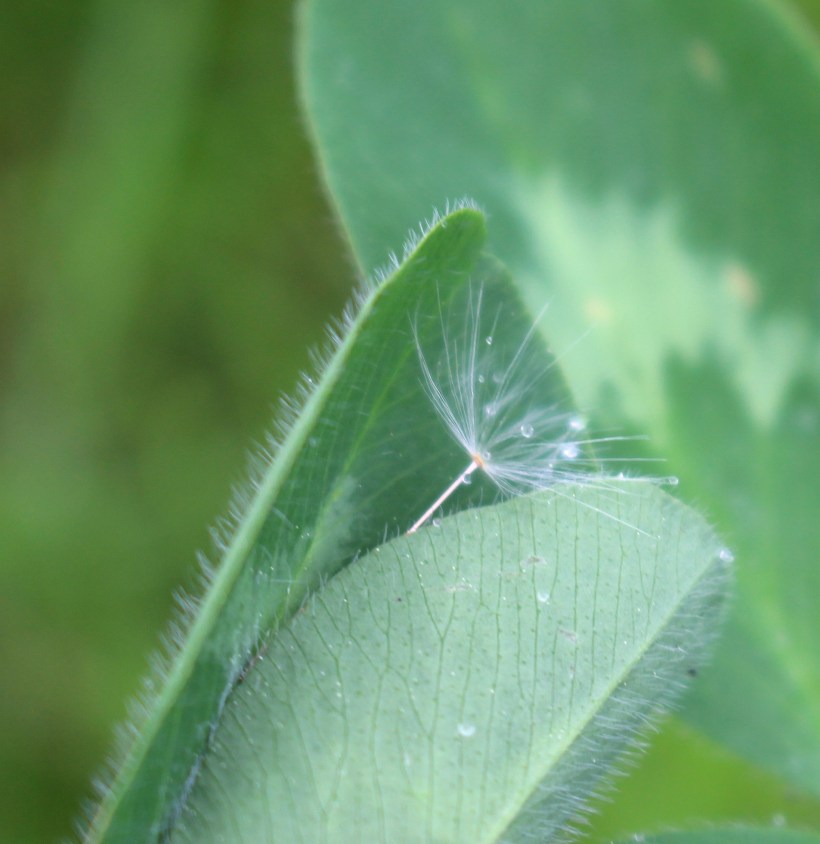
as dandelions let seedlings to the wind.
Wake with the light.
Get up and go about the day and watch
its surfaces that brighten with the sun.
~Kerry Hardie from “Sleep in Summer”

field52151

sumasmountain

During intense election seasons like this one, I find myself seeking safety hiding under a rock where moderates tend to congregate.   There is no political convention for us with rousing impassioned speeches, photo-op embraces for the cameras, or balloons falling on our heads.

Extremist views serve to keep us at arm’s length, to make the opposition appear more clearly the “other.”  There is no discussion of compromise, negotiation or collaboration as that would be perceived as a sign of weakness.  Instead it is “my way or the wrong way” rather than “our way.”

No way.
There is no choosing a “lesser of evils” this time.
When evil is too great, it is never a choice.

And so it goes.  Each election cycle brings out the worst in our “leadership” as facts are distorted, the truth is stretched or completely abandoned, unseemly pandering abounds and curried favors are served for breakfast, lunch and dinner.

Enough already.

I’m ready to come out from under the rock,
loosen my attention from campaign and election news
and find the Light on my face.

Thank God there is still a Light to shine in the darkness.

dandysunset18

dandyseeds

dandeclover2

We Are As Others Are


Let us go forward quietly, forever making for the light, and lifting up our hearts in the knowledge that we are as others are (and that others are as we are), and that it is right to love one another in the best possible way – believing all things, hoping for all things, and enduring all things. ~Vincent Van Gogh in “Letters”


We like to believe it is in our DNA to be tribal, to justify setting ourselves apart from the “other”, to be discontent with whatever we are given — but that belief is how humanity’s troubles began.

Every election and convention season only intensifies our sense of “otherness”, further driving us apart and further into the darkness.

We are slaves to divisiveness: even worshiping and voting for it in the name of “becoming great again”, emphasizing our own “truth” in the name of “unity.”

I can’t watch it and I can’t listen to prayers for one political party over another.

I want to know it is still possible to love each other in all our differences in the best possible way,  with quiet endurance and hope. No shouting, no balloons, no  ridiculous rhetoric.

We are as others are — denying it is folly.  Believing it is the beginning of selfless love, something God did intend for our DNA. He became the “other” among us to show us how it can be done.

Gayety of Stride

image
Photo by Joel DeWaard

imageimageevening612163

It’s the immemorial feelings
I like the best: hunger, thirst,
their satisfaction; work-weariness,
earned rest; the falling again
from loneliness to love;
the green growth the mind takes
from the pastures in March;
the gayety in the stride 
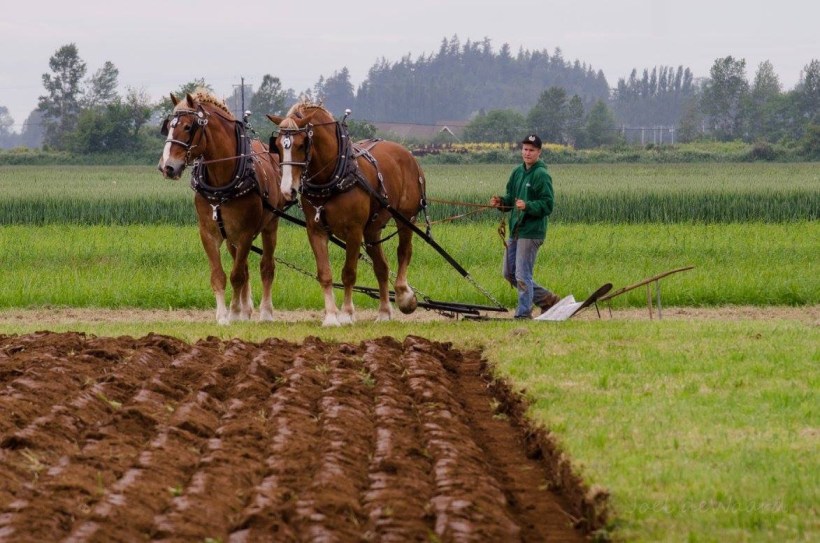
of a good team of Belgian mares
that seems to shudder from me
through all my ancestry.
~Wendell Berry “Goods”

No one can say I haven’t worked hard enough.

Pulling on the tugs, pushing into the yoke that I willingly allowed to weigh me down,

my ancestry birthed me for this hard work weariness.

But they might say I have lost the gayety in my stride, having hit too many rocks and run head-long into stumps.

They might say the joy lies deeper than my plow can reach.