The world is charged with the grandeur of God. It will flame out, like shining from shook foil; It gathers to a greatness, like the ooze of oil Crushed. Why do men then now not reck his rod? Generations have trod, have trod, have trod; And all is seared with trade; bleared, smeared with toil; And wears man’s smudge and shares man’s smell: the soil Is bare now, nor can foot feel, being shod.
And for all this, nature is never spent; There lives the dearest freshness deep down things; And though the last lights off the black West went Oh, morning, at the brown brink eastward, springs Because the Holy Ghost over the bent World broods with warm breast and with ah! bright wings. ~Gerard Manley Hopkins “God’s Grandeur”
Whom thou conceivst, conceived; yea thou art now Thy Maker’s maker, and thy Father’s mother; Thou hast light in dark, and shutst in little room, Immensity cloistered in thy dear womb. ~John Donne from “Annunciation”
I know this sound, first birds of morning. As a child, I waited for hours for the drape of night to roll up again. Leaning into the first hint of the fresh day, the fragile lace of hesitant light, the receding darkness dappled with bird song, able at last to close my eyes. I know this sound, some kind of redemption, waking me from scattered sleep, a healing fragment even as the work of the previous day marks my bones in notches. Night leaves its small fur as the dawn pushes, as the birds persist, and morning unfurls like a promise you hoped someone would keep. ~Susan Moorhead “First Light” from Carry Darkness, Carry Light
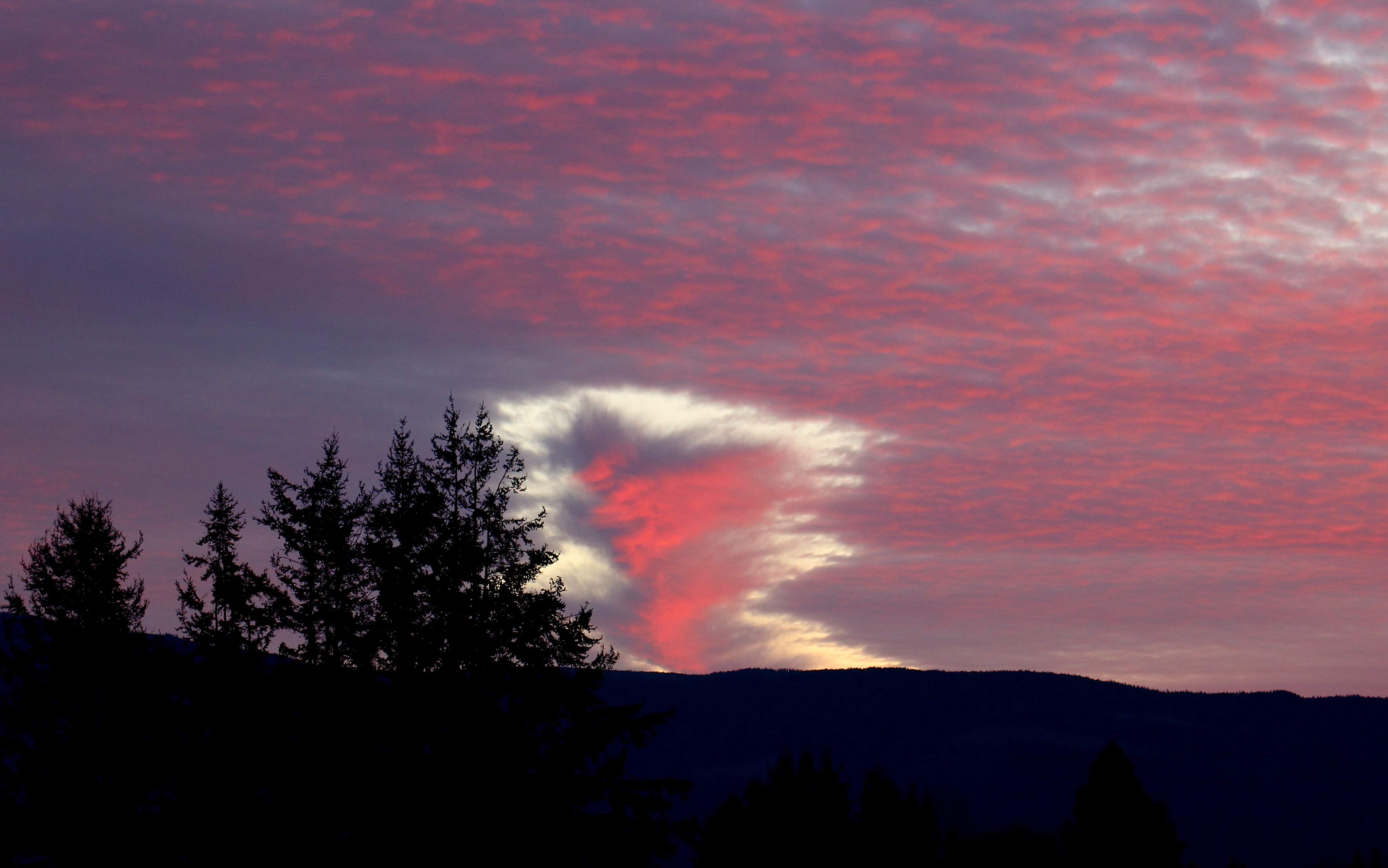
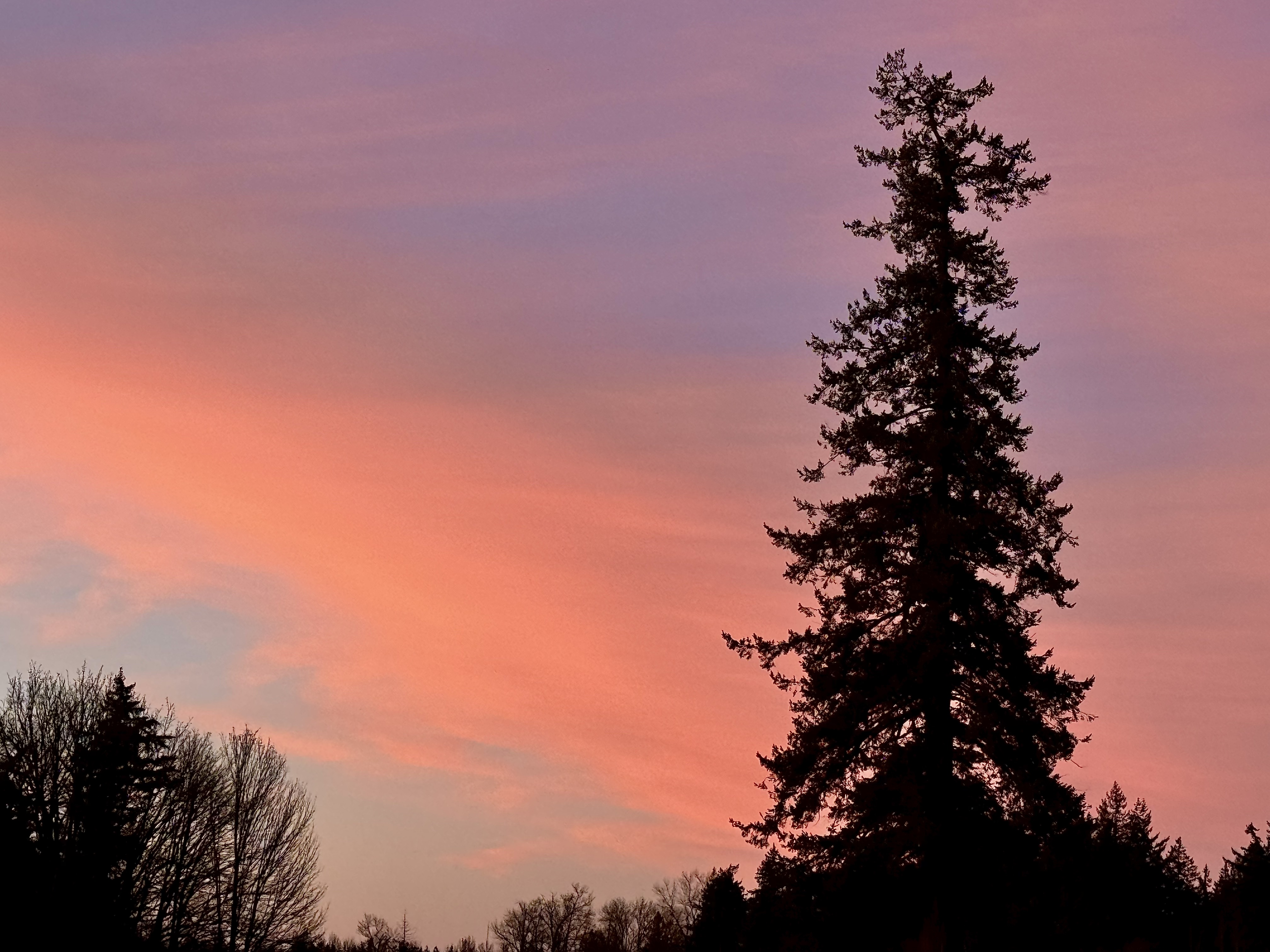
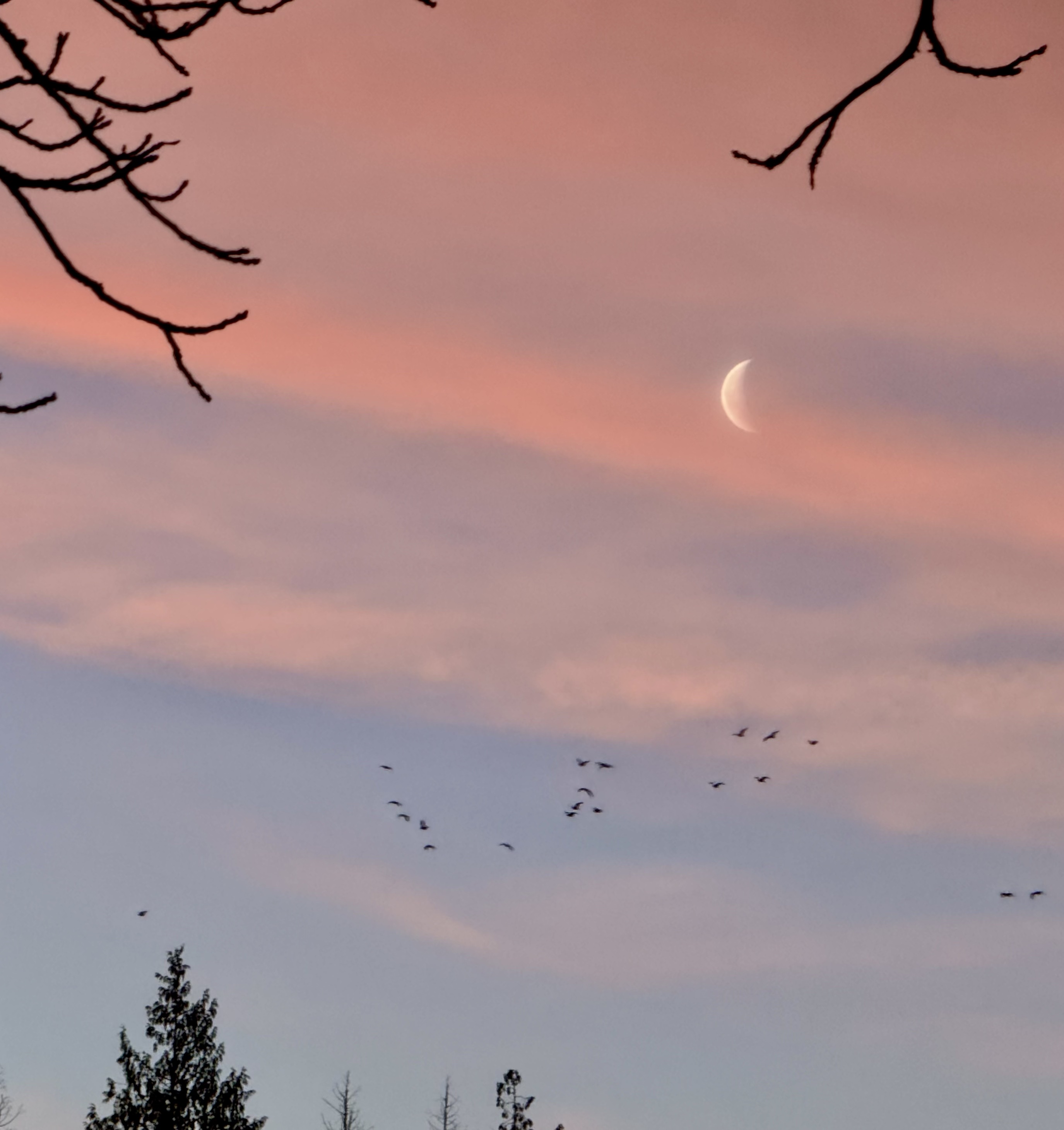
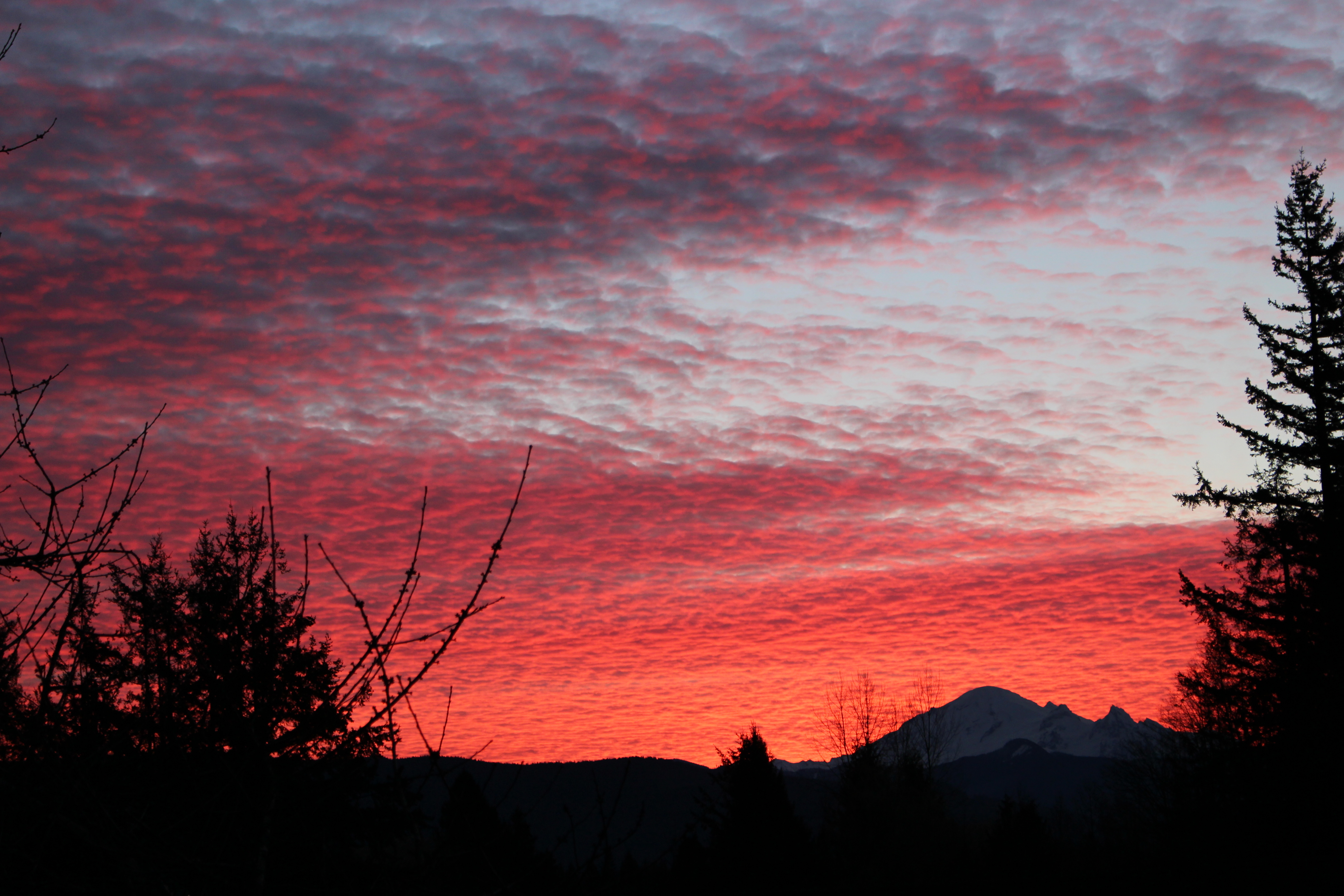
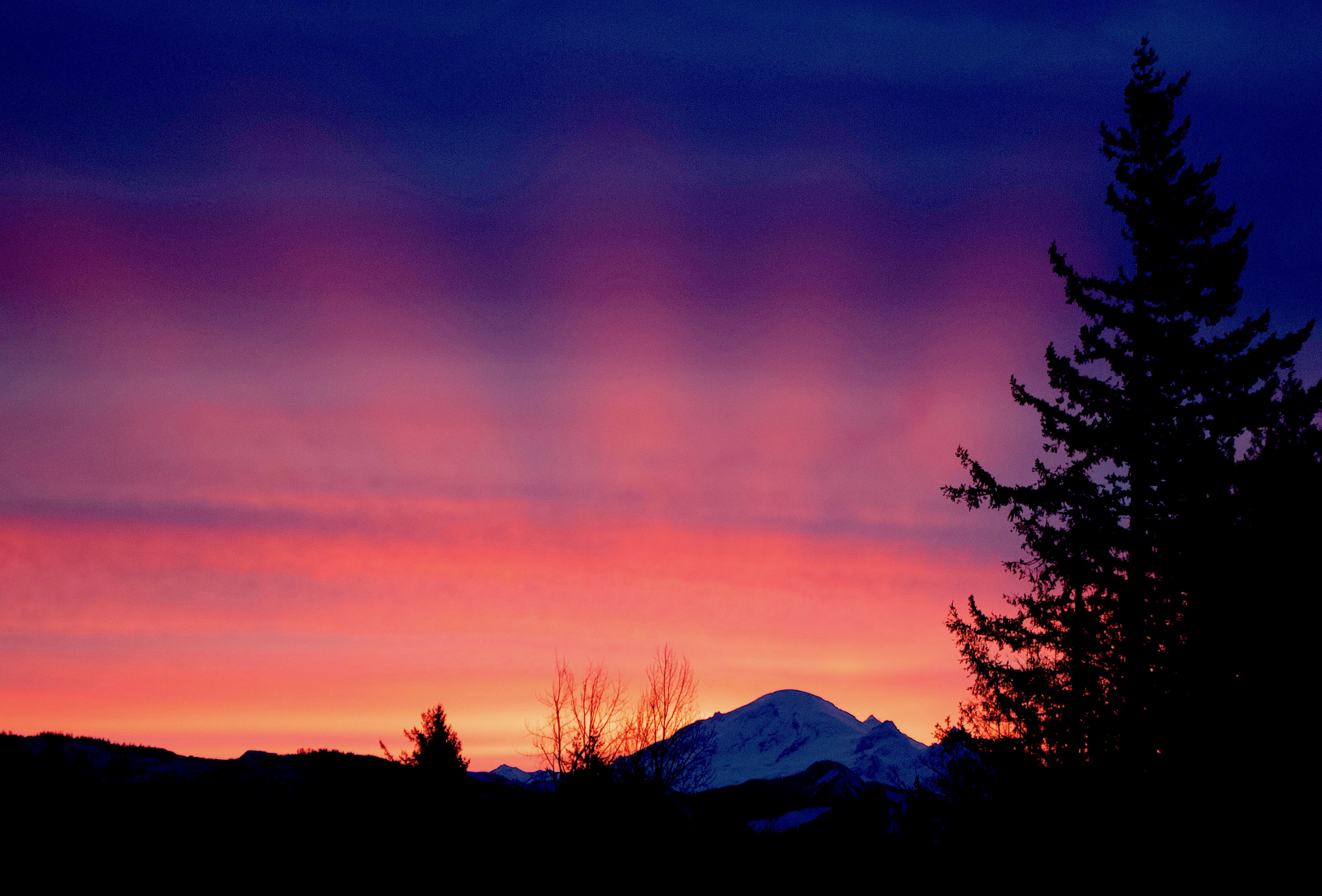
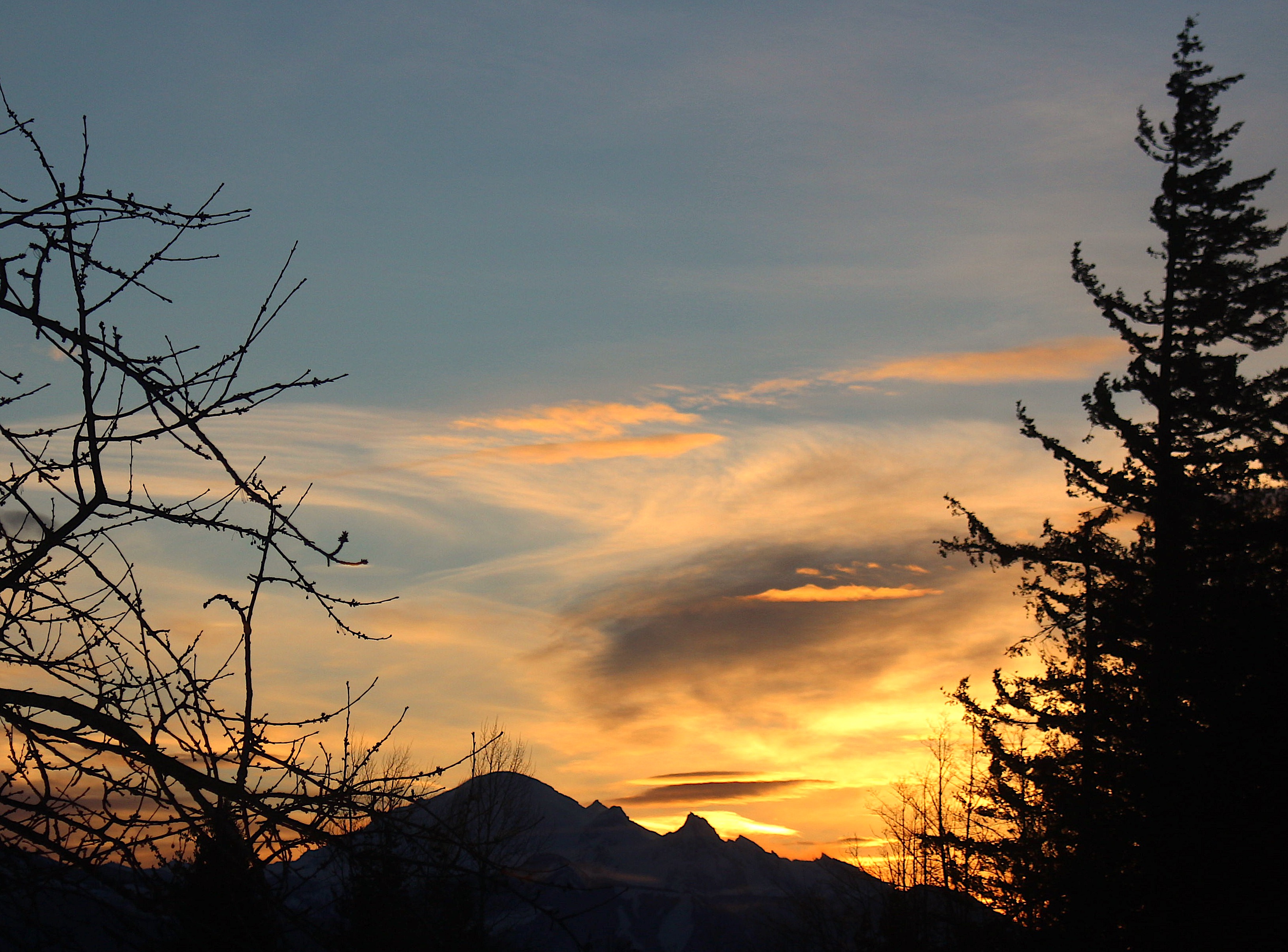
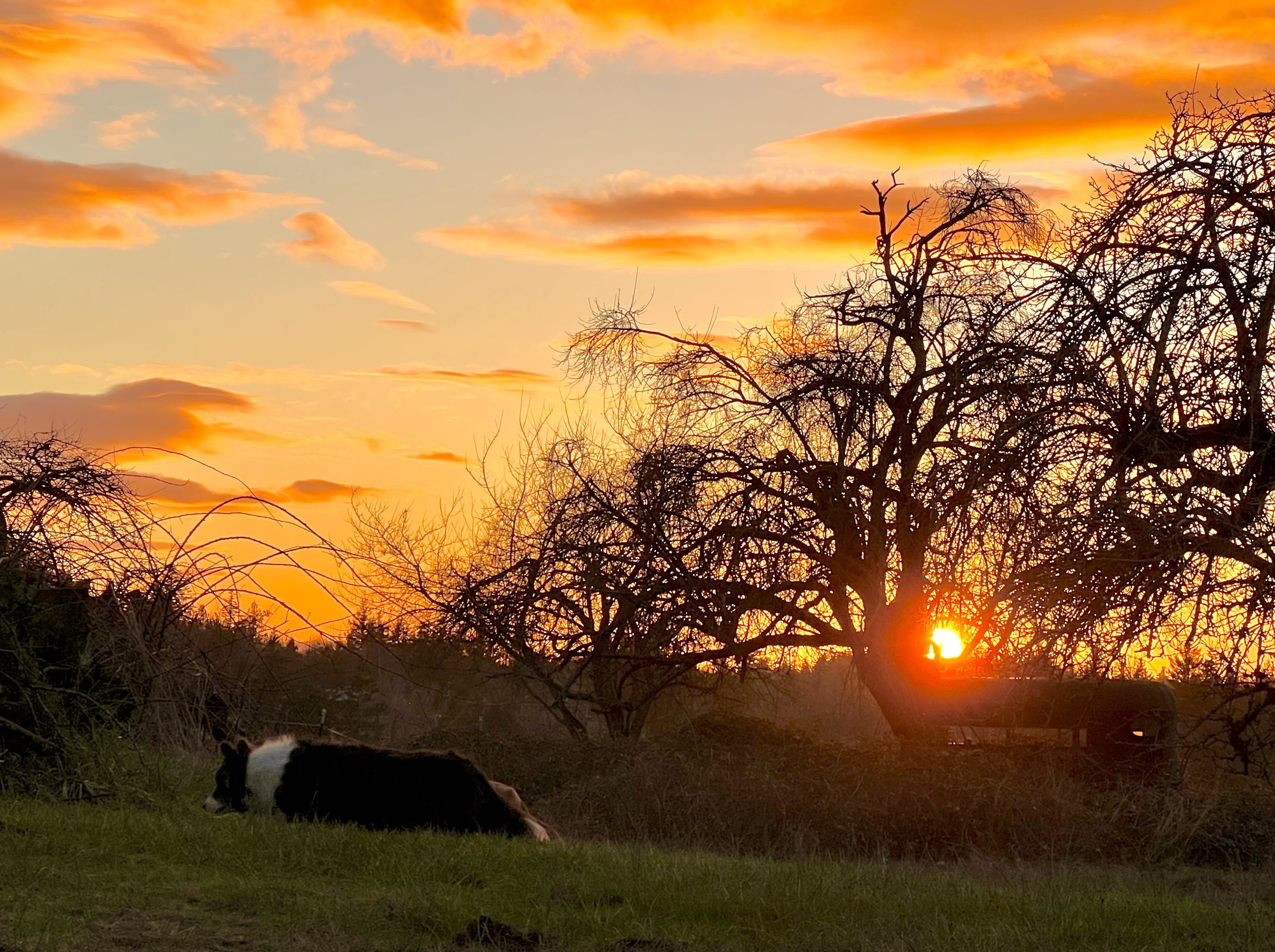
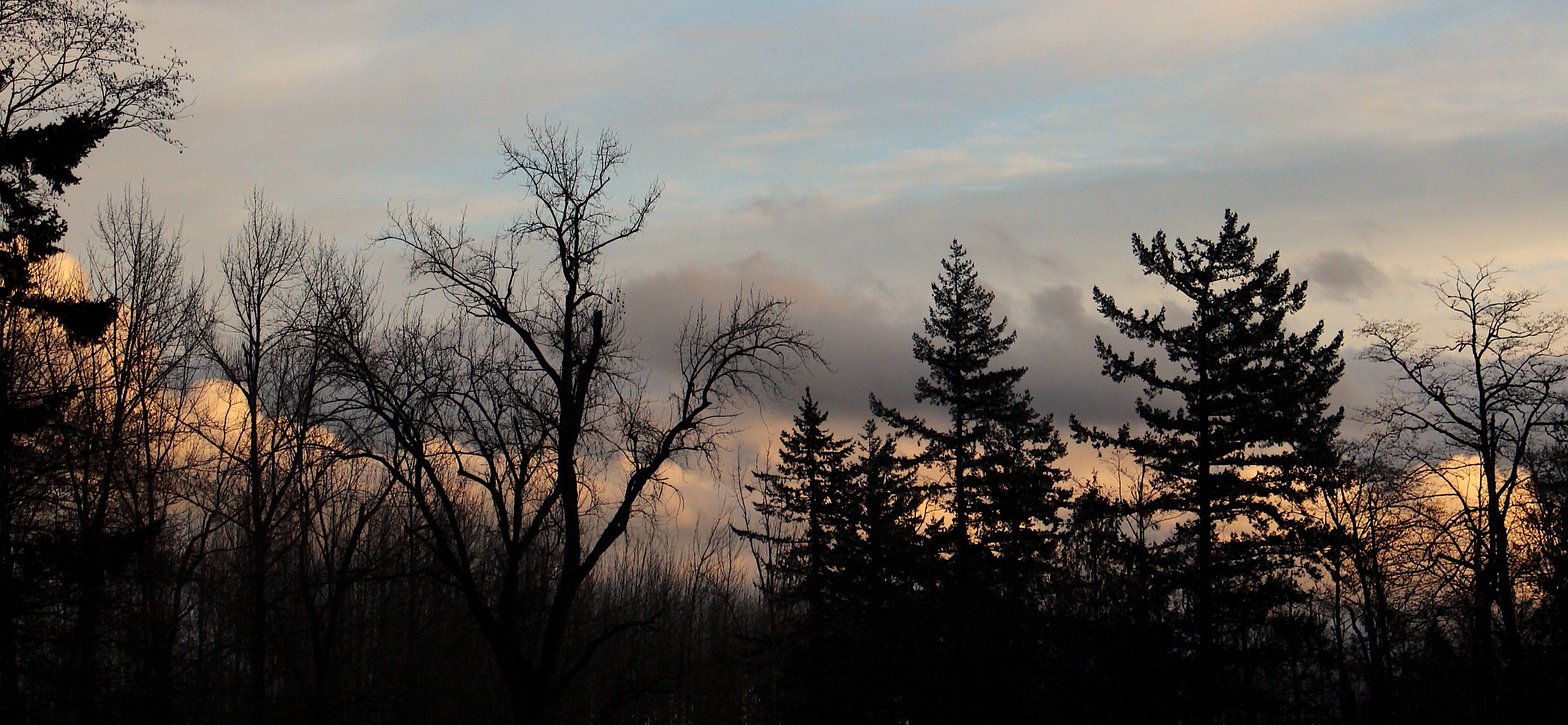
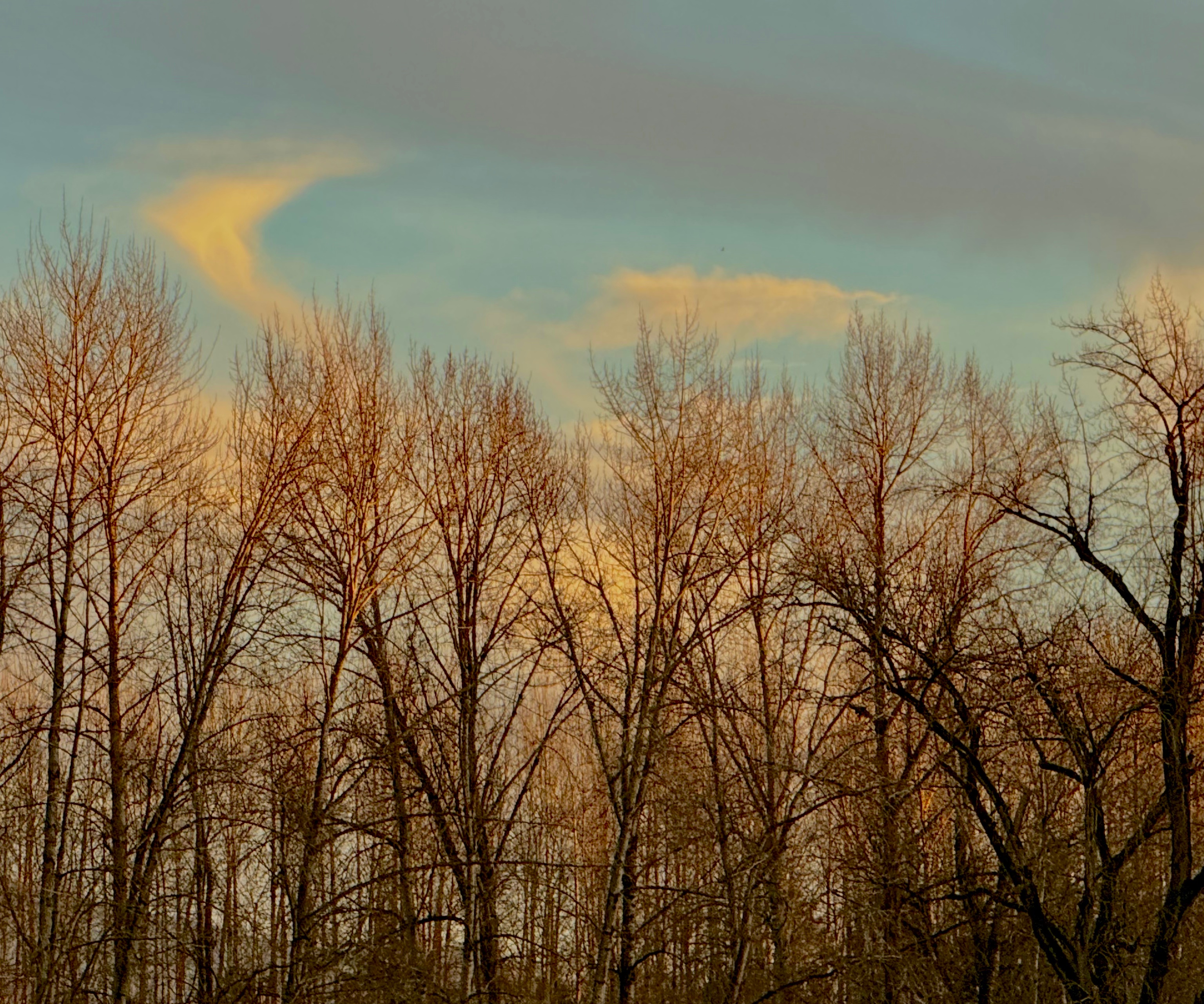
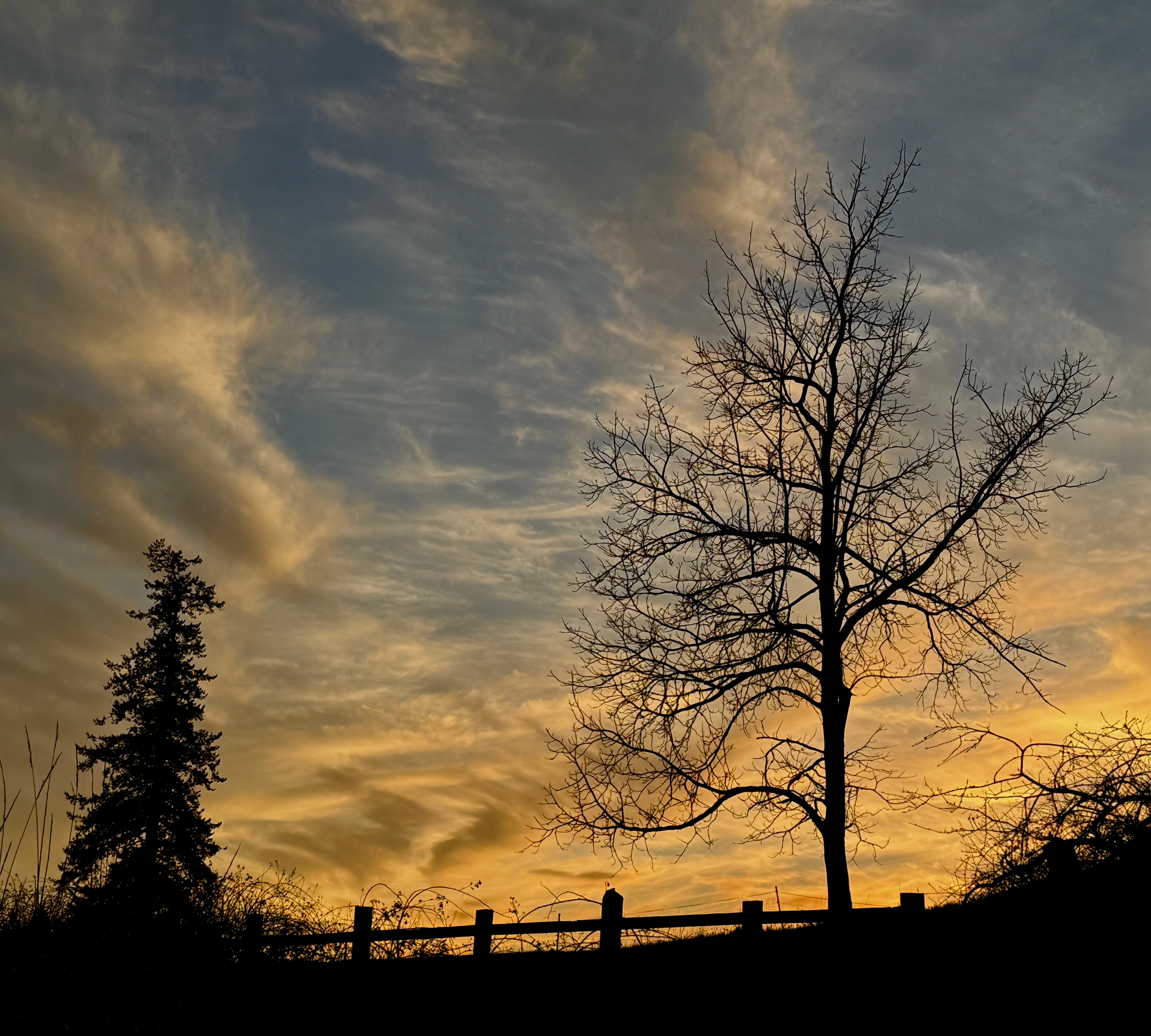
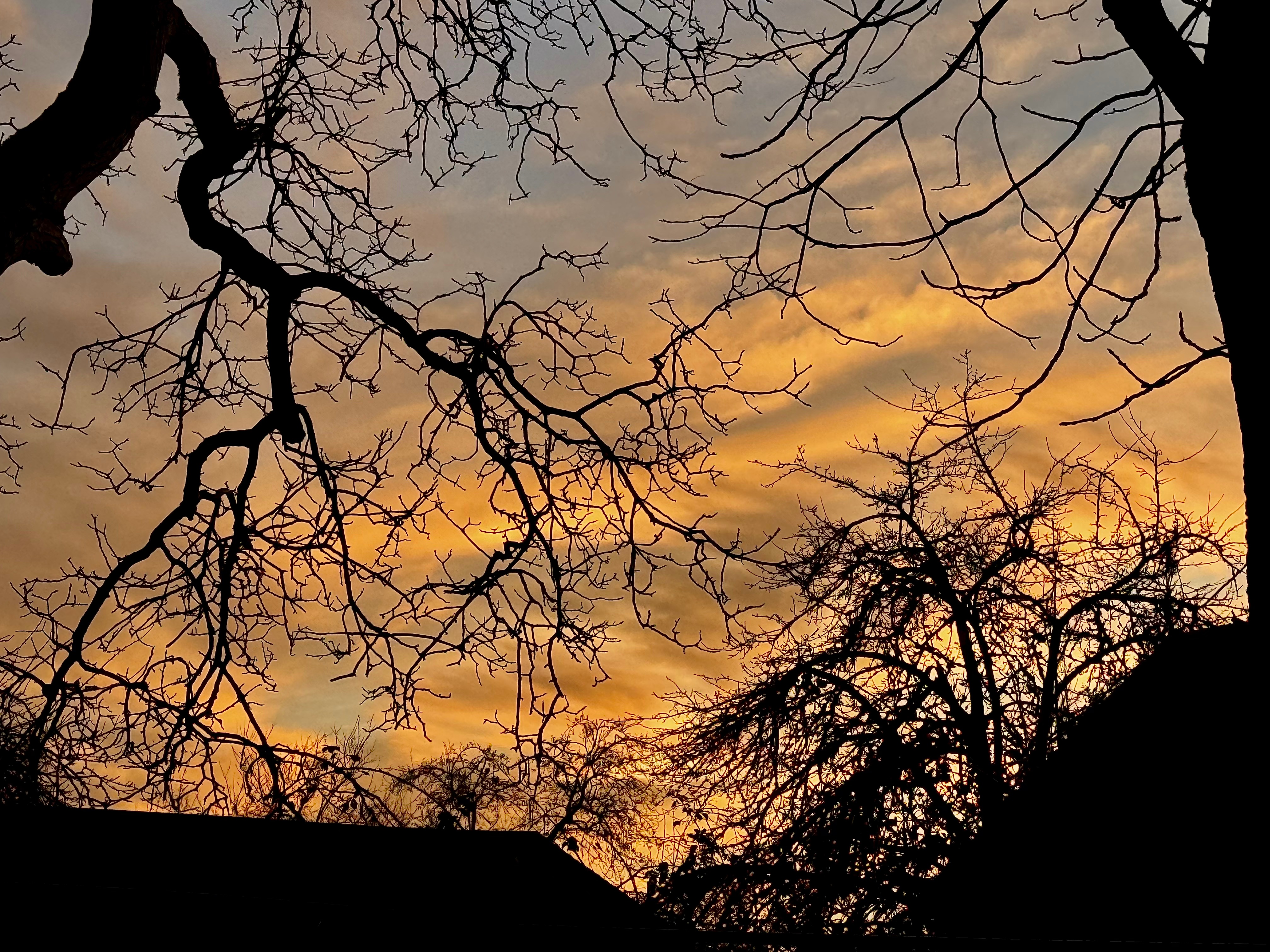
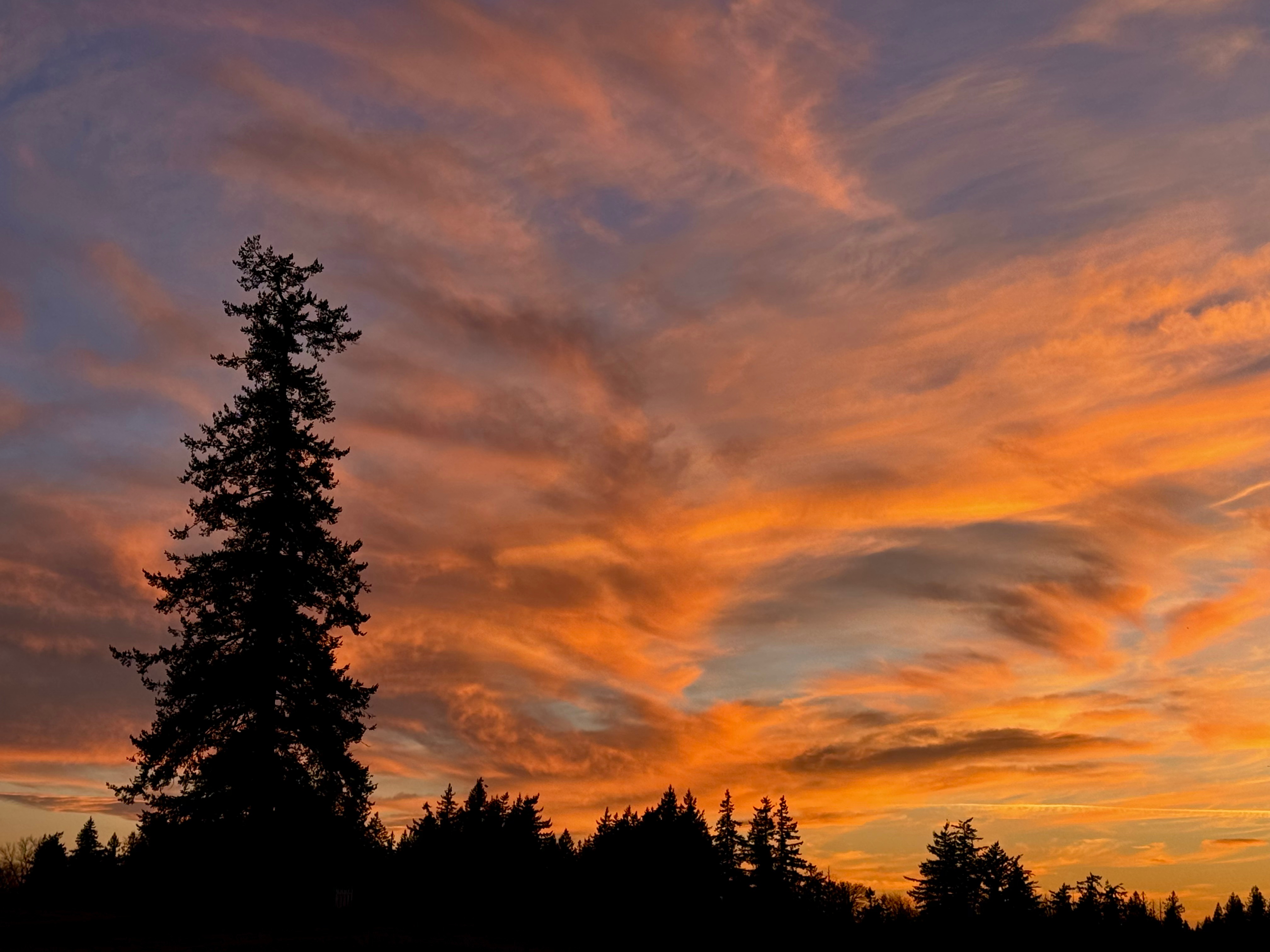
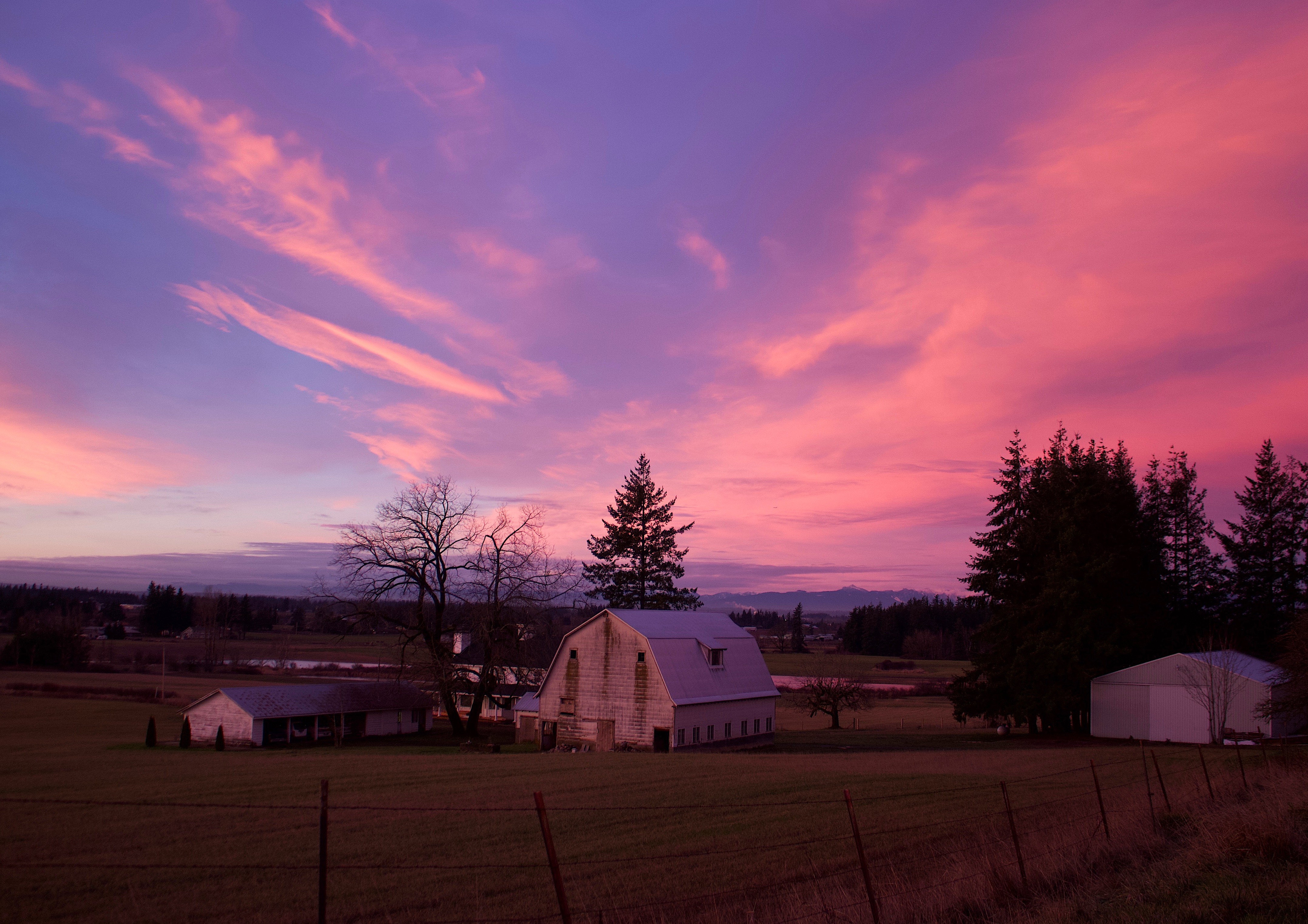
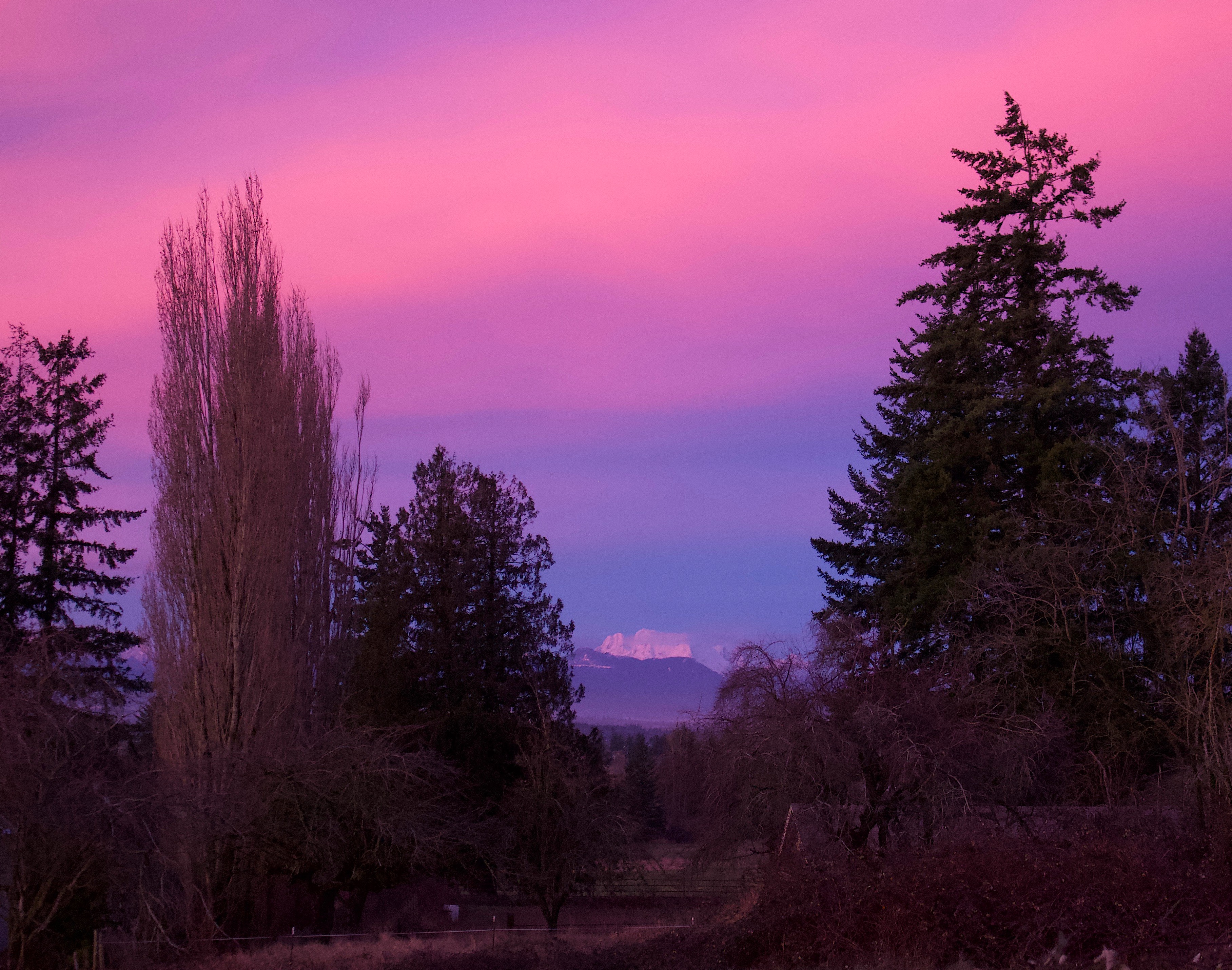
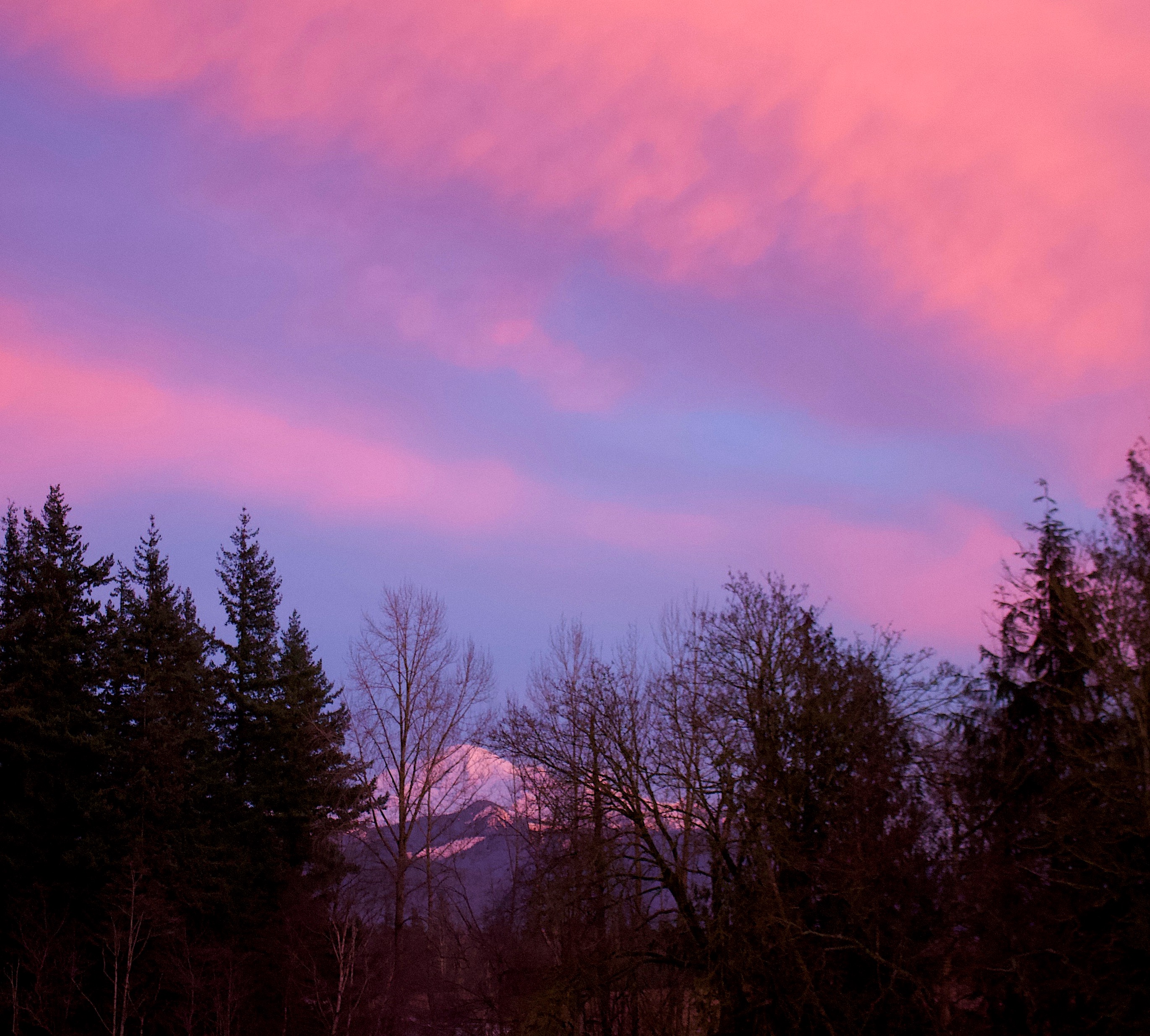
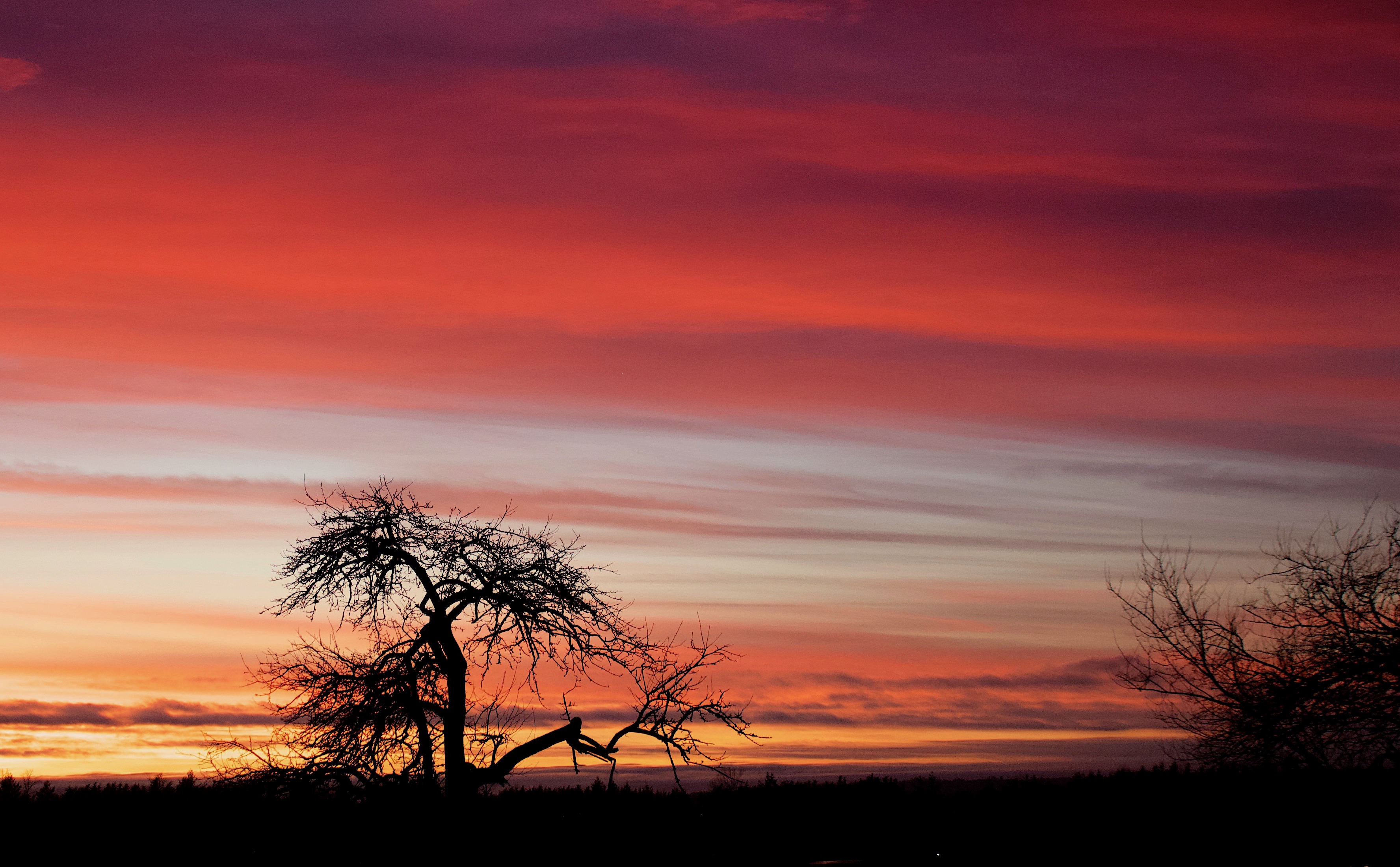
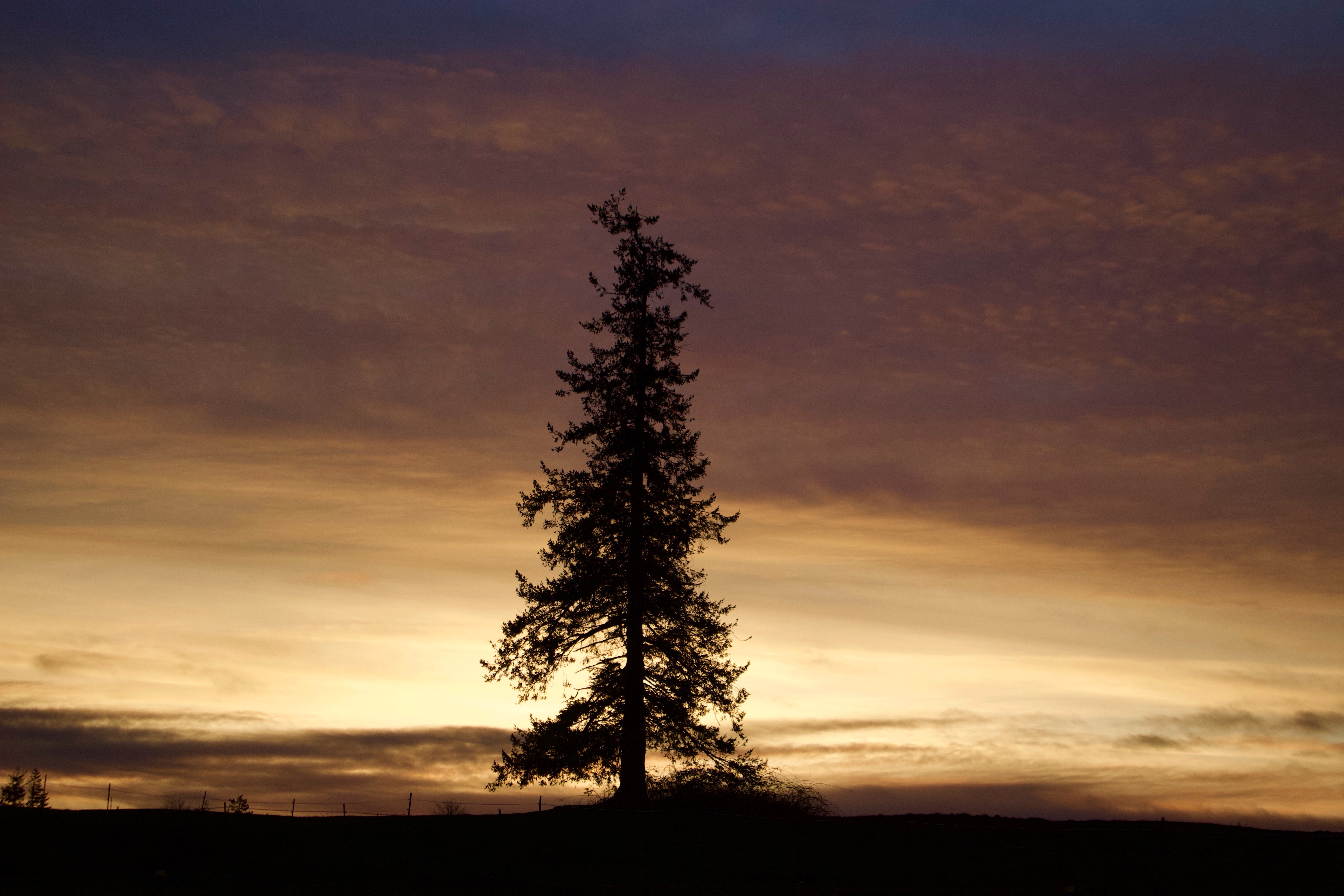
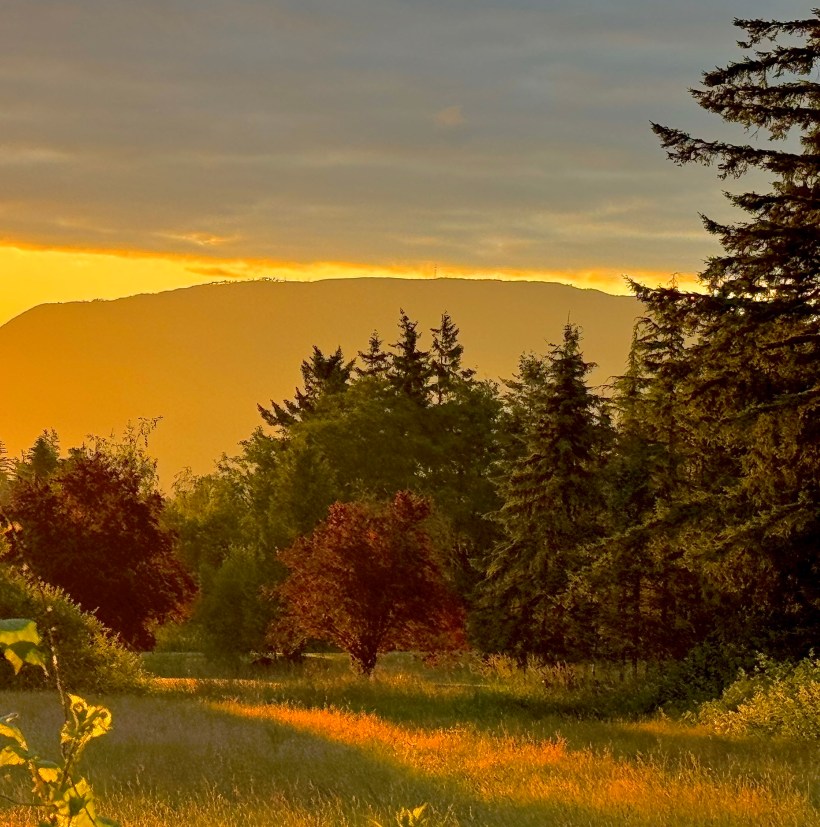
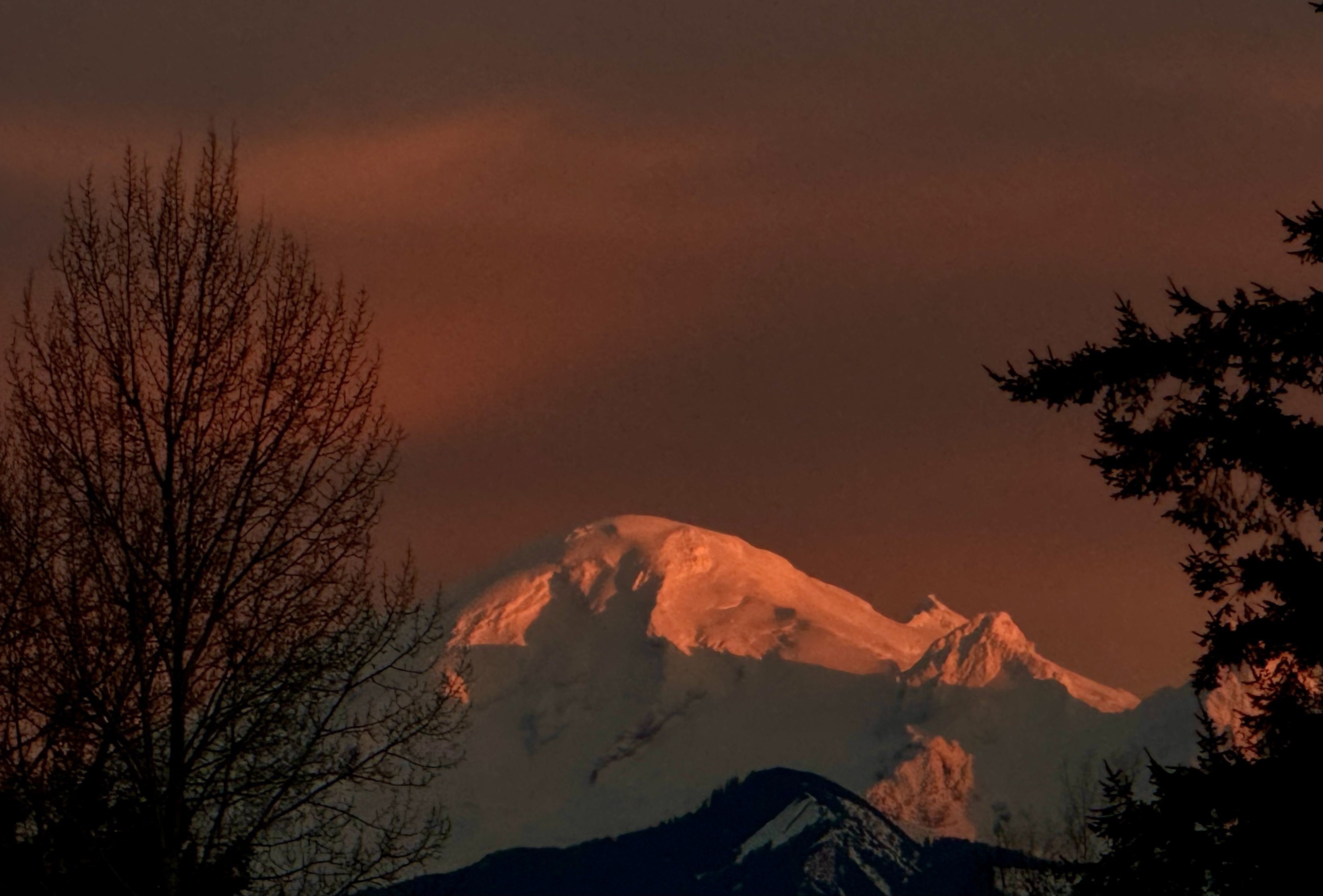
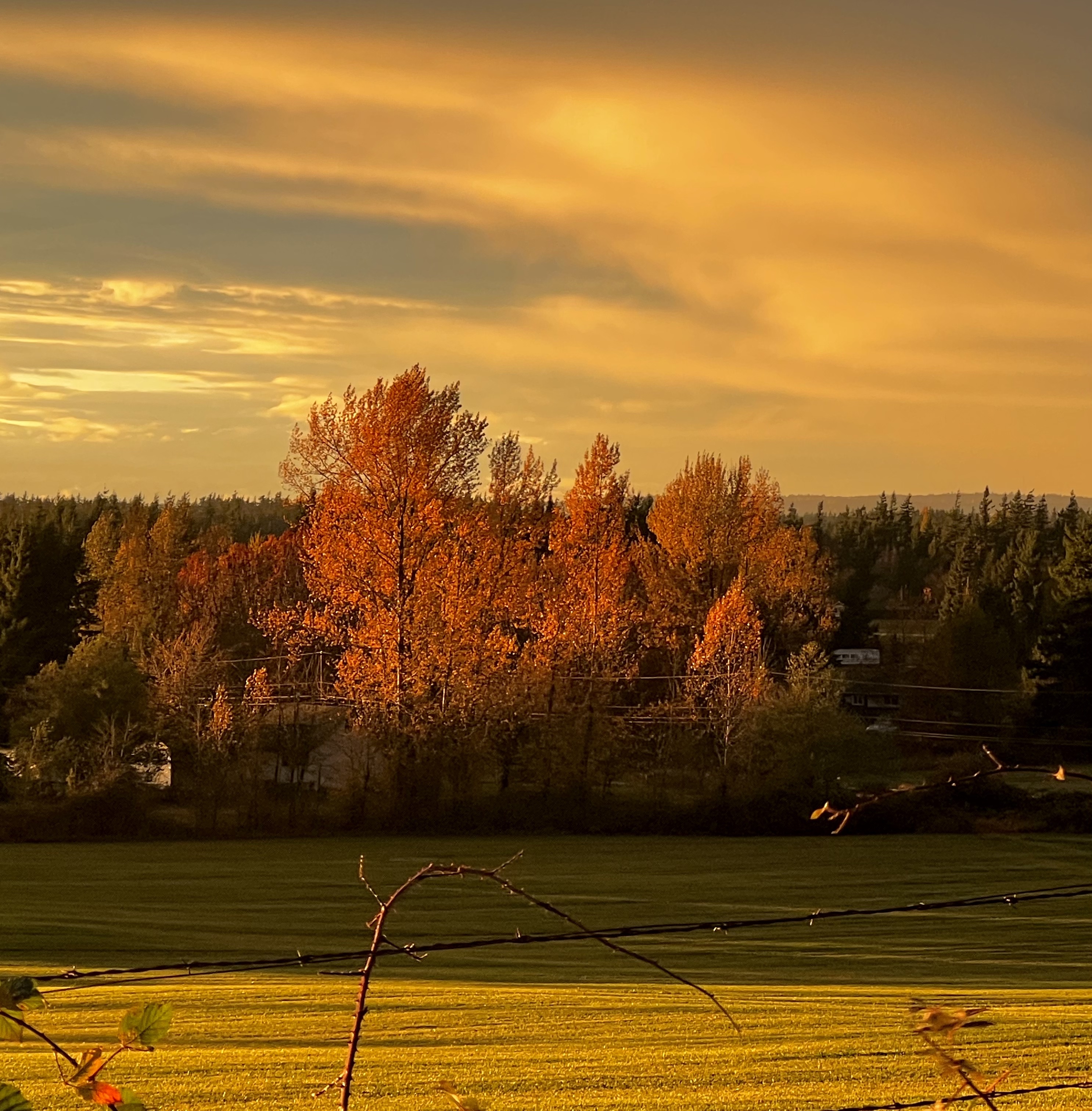
Our February farm sunrises have always been full of promise over the three decades we’ve been here. The birds are waking earlier each day and when mornings are soaked, dripping with light and color, the air itself is alive.
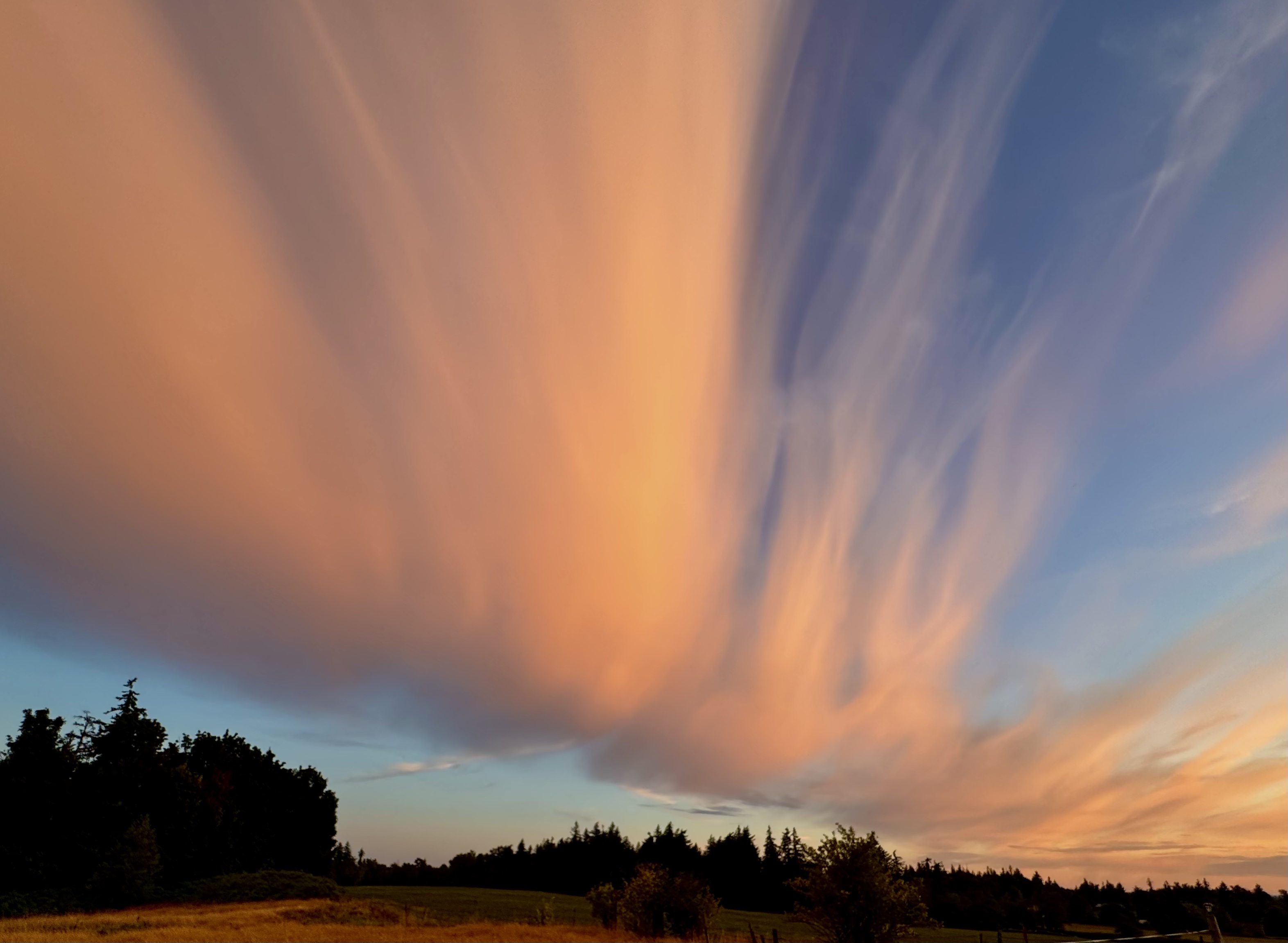
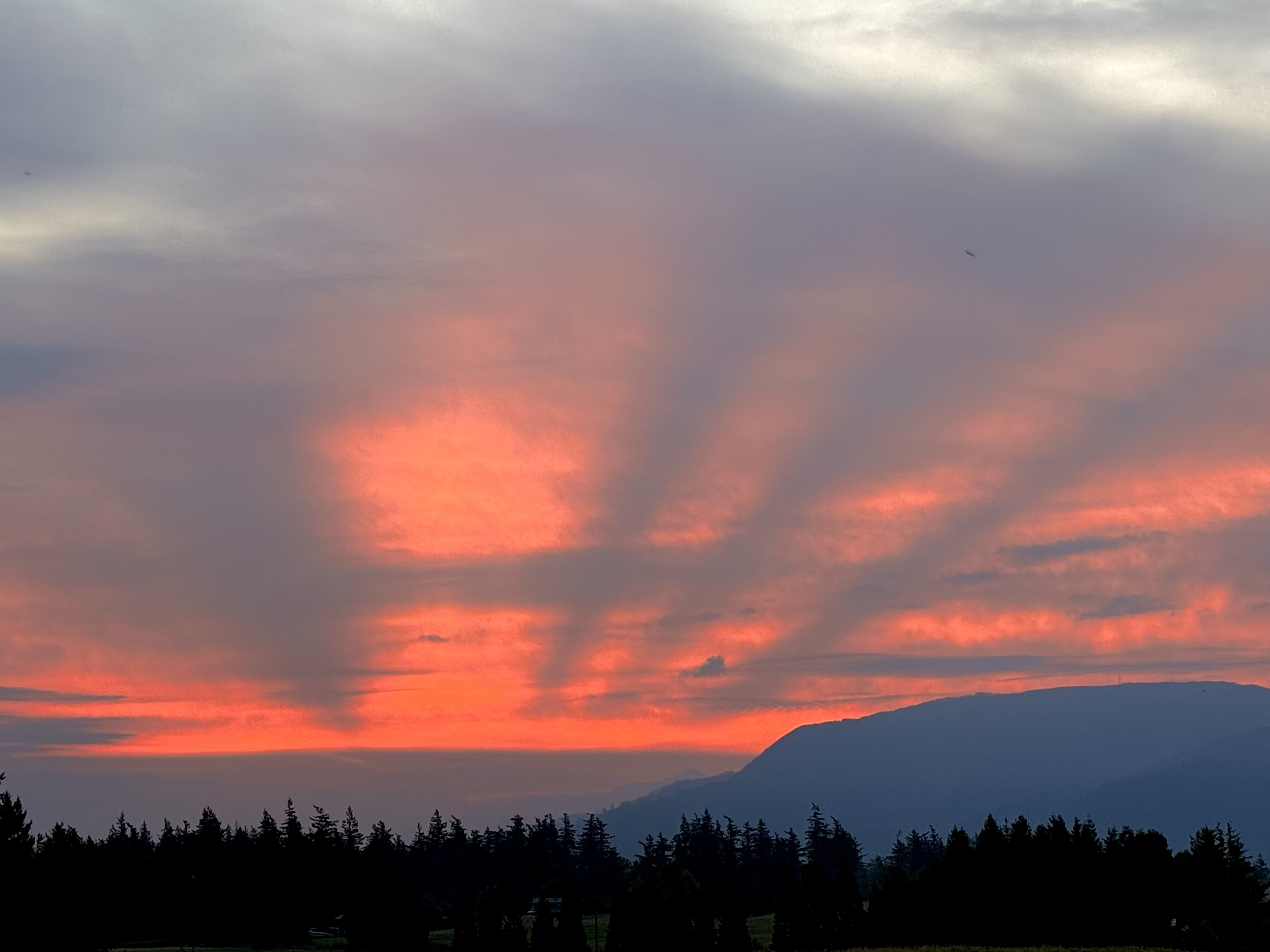
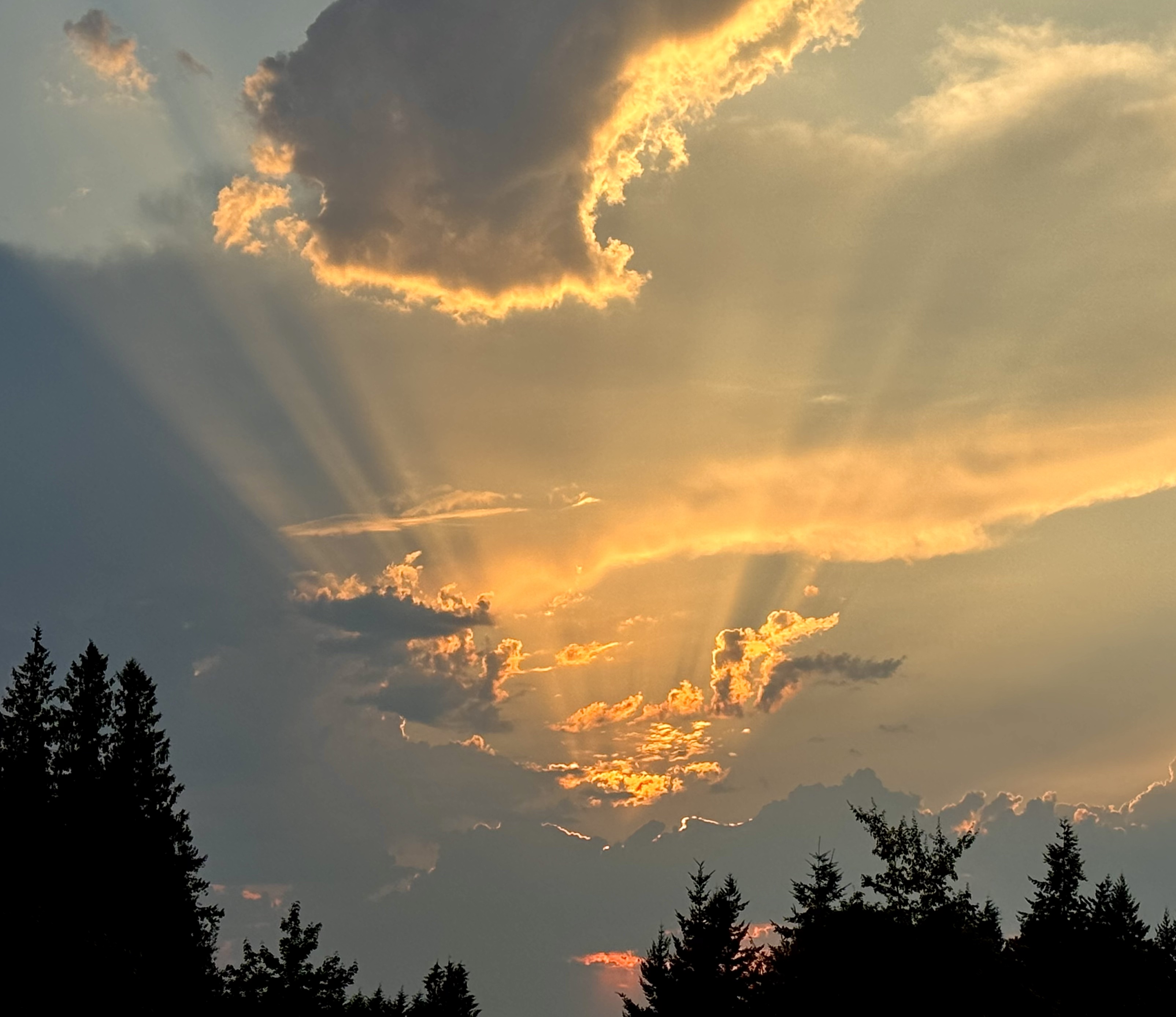
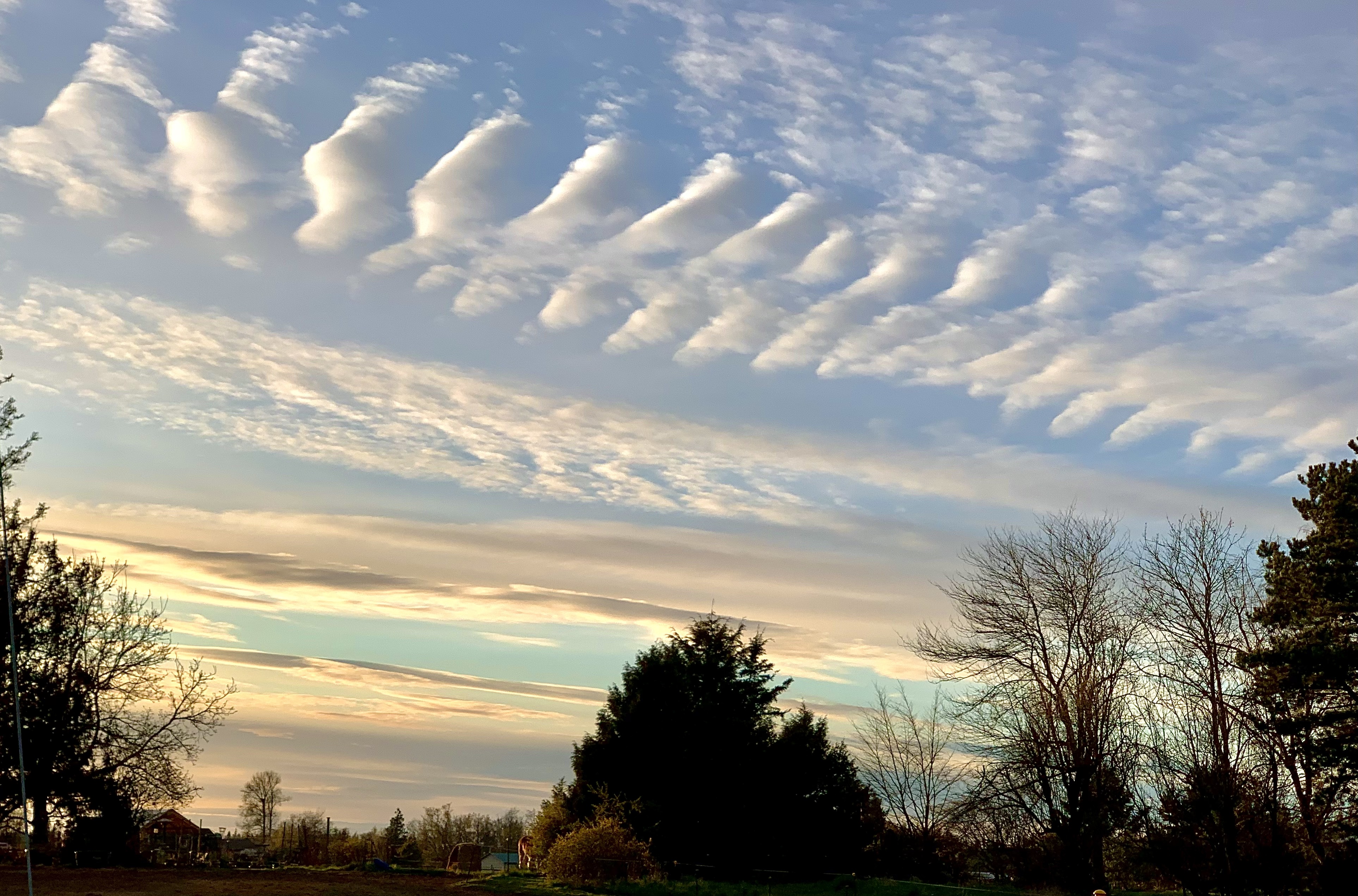
Nothing though quite matches the phenomenon in February 2015 (top photo) when a fall streak hole or “key hole” cloud formed over nearby foothills.
It looked to me as if angels were bursting through an unfurling break in heaven’s moving veil. Though it didn’t last long, it was seen for miles around us.
When morning breaks the night, it is like the first morning which came into being with His Words:
“Let there be light” — and there continues to be the most amazing light…
One-Time
Monthly
Yearly
Make a one-time or recurring donation to support daily Barnstorming posts
This saying good-by on the edge of the dark And the cold to an orchard so young in the bark Reminds me of all that can happen to harm An orchard away at the end of the farm All winter, cut off by a hill from the house. I don’t want it girdled by rabbit and mouse, I don’t want it dreamily nibbled for browse By deer, and I don’t want it budded by grouse.
I don’t want it stirred by the heat of the sun. (We made it secure against being, I hope, By setting it out on a northerly slope.) No orchard’s the worse for the wintriest storm; But one thing about it, it mustn’t get warm. “How often already you’ve had to be told, Keep cold, young orchard. Good-by and keep cold. Dread fifty above more than fifty below.”
I have to be gone for a season or so. My business awhile is with different trees, Less carefully nourished, less fruitful than these, And such as is done to their wood with an ax— Maples and birches and tamaracks.
I wish I could promise to lie in the night And think of an orchard’s arboreal plight When slowly (and nobody comes with a light) Its heart sinks lower under the sod. But something has to be left to God. ~Robert Frost from “Good-by and Keep Cold”
Silence and darkness grow apace, broken only by the crack of a hunter’s gun in the woods. Songbirds abandon us so gradually that, until the day when we hear no birdsong at all but the scolding of the jay, we haven’t fully realized that we are bereft — as after a death. Even the sun has gone off somewhere… Now we all come in, having put the garden to bed, and we wait for winter to pull a chilly sheet over its head. ~Jane Kenyon from her essay “Good-by and Keep Cold”found in A Hundred White Daffodils
For two months now, we’ve heard hunters firing in the woods and the wetlands around our farm, most likely aiming for the ducks and geese that have stayed in the marshes through the winter.
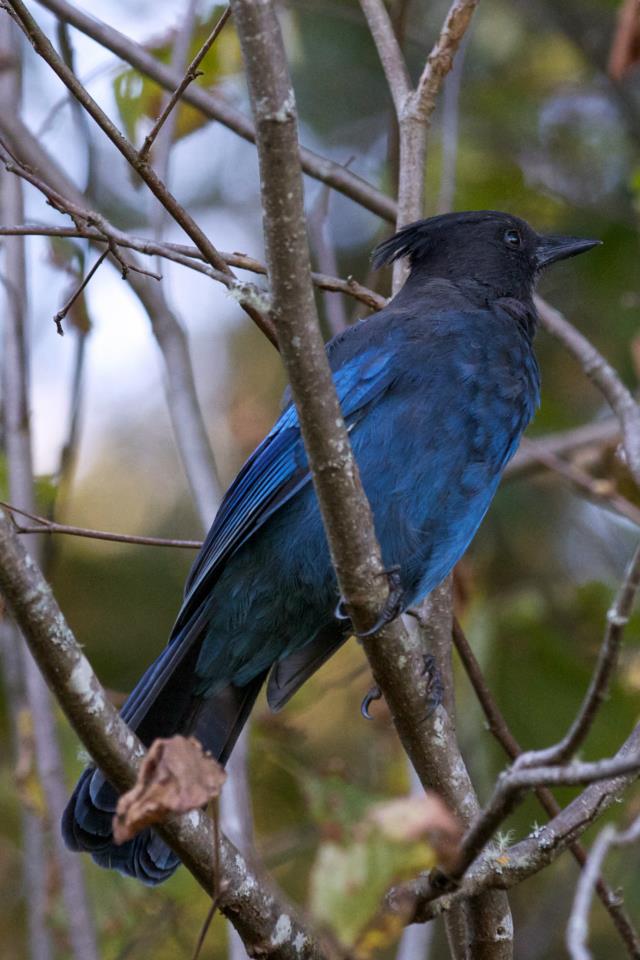
The usual day-long symphony of birdsong is replaced by shotguns popping, in addition to hawks and eagle chittering, the occasional dog barking, while the bluejays and squirrels argue over the last of the filbert nuts.
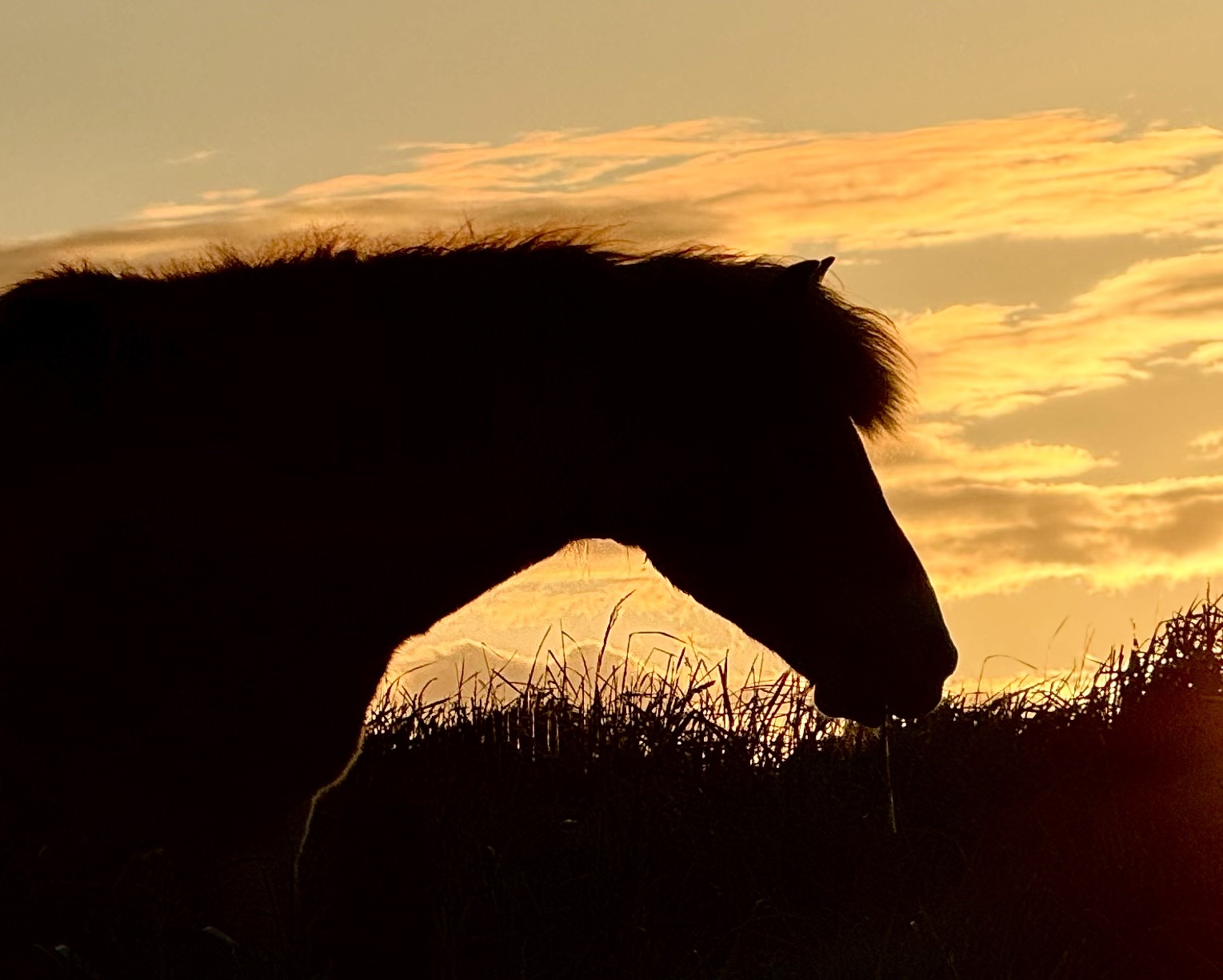
In the clear cold evenings, when coyotes aren’t howling in the moonlight, the owls hoot to each other across the fields from one patch of woods to another, their gentle resonant conversation echoing back and forth.
The horses confined to their stalls in the barns snort and blow as they bury their noses in flakes of last summer’s bound hay.
Yet today felt different – today, with unseasonably spring-like temperatures in early February, things feel about to change.
As yet, there have been no birdsong arias. I am bereft, listening for their blending musical tapestry waking me at 4 AM in the spring. And soon, the peeper orchestra from the swamps will rise and fall on the evening breeze.
It has been too, too quiet. I long for the music to return, not just the surround-sound of gunshot percussion, which is no melody at all.
I listen intently for early morning and evening serenades to return. It won’t be long.
One-Time
Monthly
Yearly
Make a one-time or recurring donation to support daily Barnstorming posts
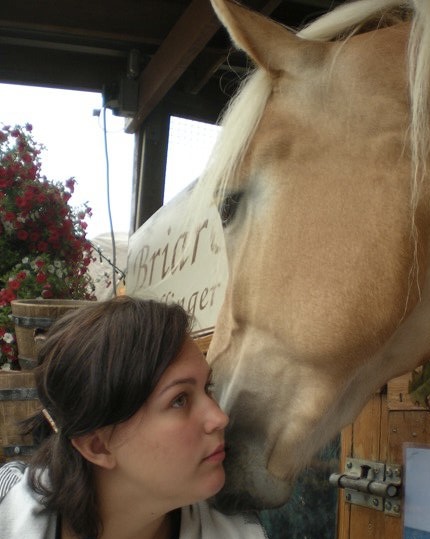
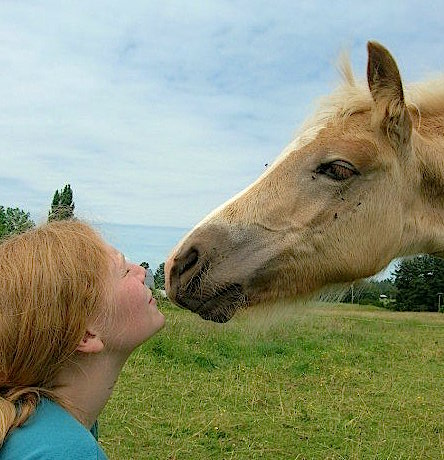
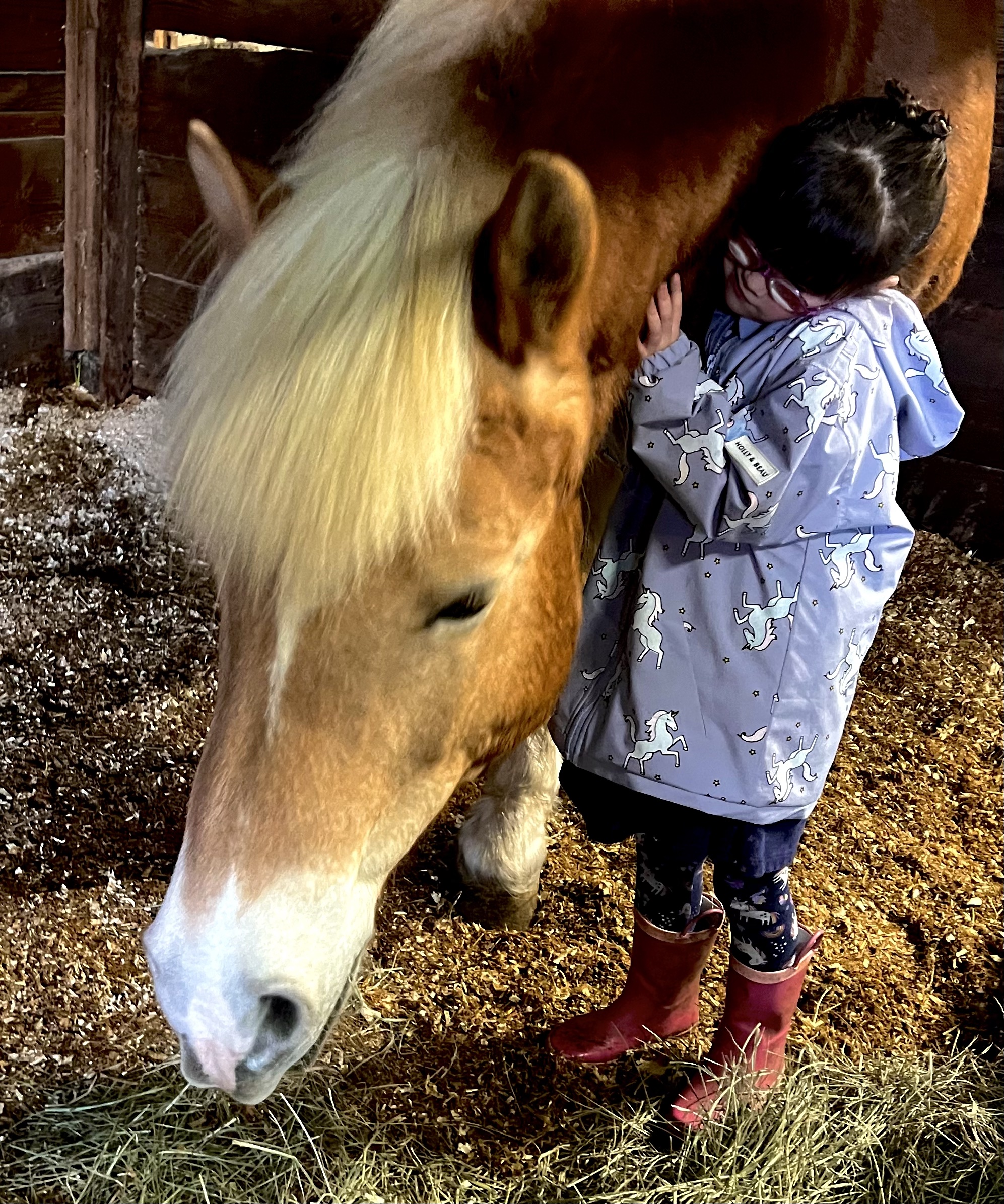
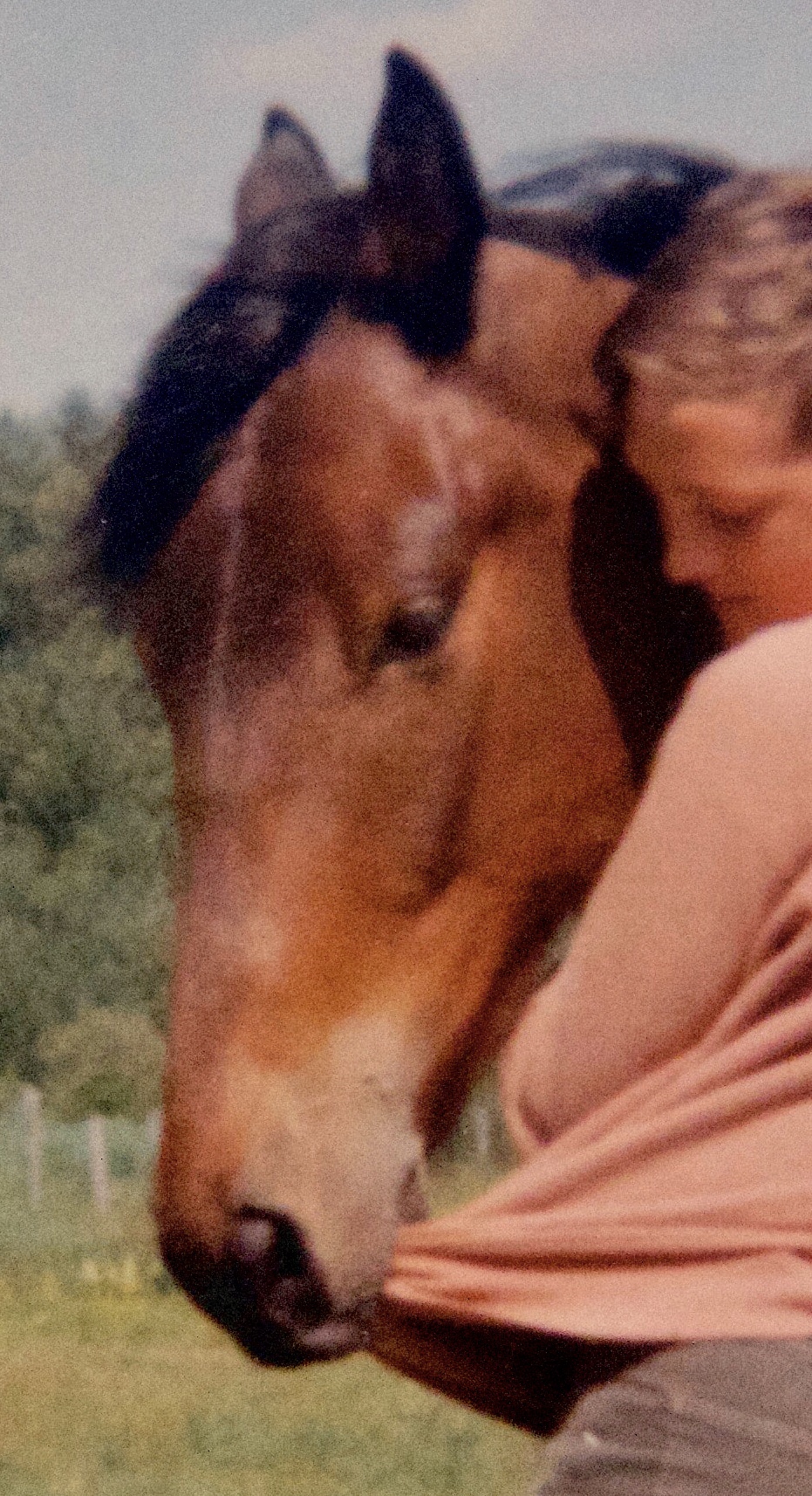
…and there was once, oh wonderful, a new horse in the pasture, a tall, slim being–a neighbor was keeping her there– and she put her face against my face, put her muzzle, her nostrils, soft as violets, against my mouth and my nose, and breathed me, to see who I was, a long quiet minute–minutes– then she stamped her feet and whisked tail and danced deliciously into the grass away, and came back. She was saying, so plainly, that I was good, or good enough. ~Mary Oliver from “The Poet Goes to Indiana”
photo by Lea Gibson
photo by Emily Vander Haak
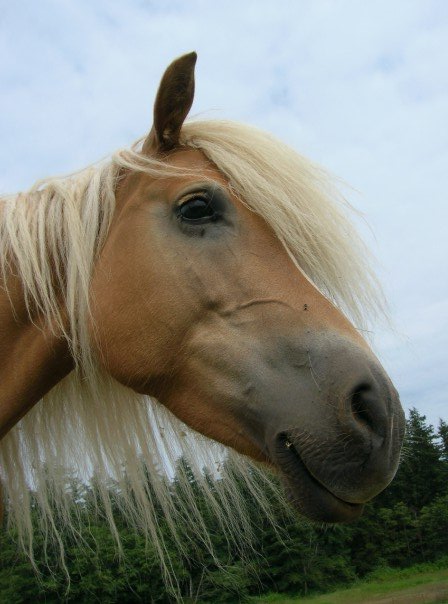
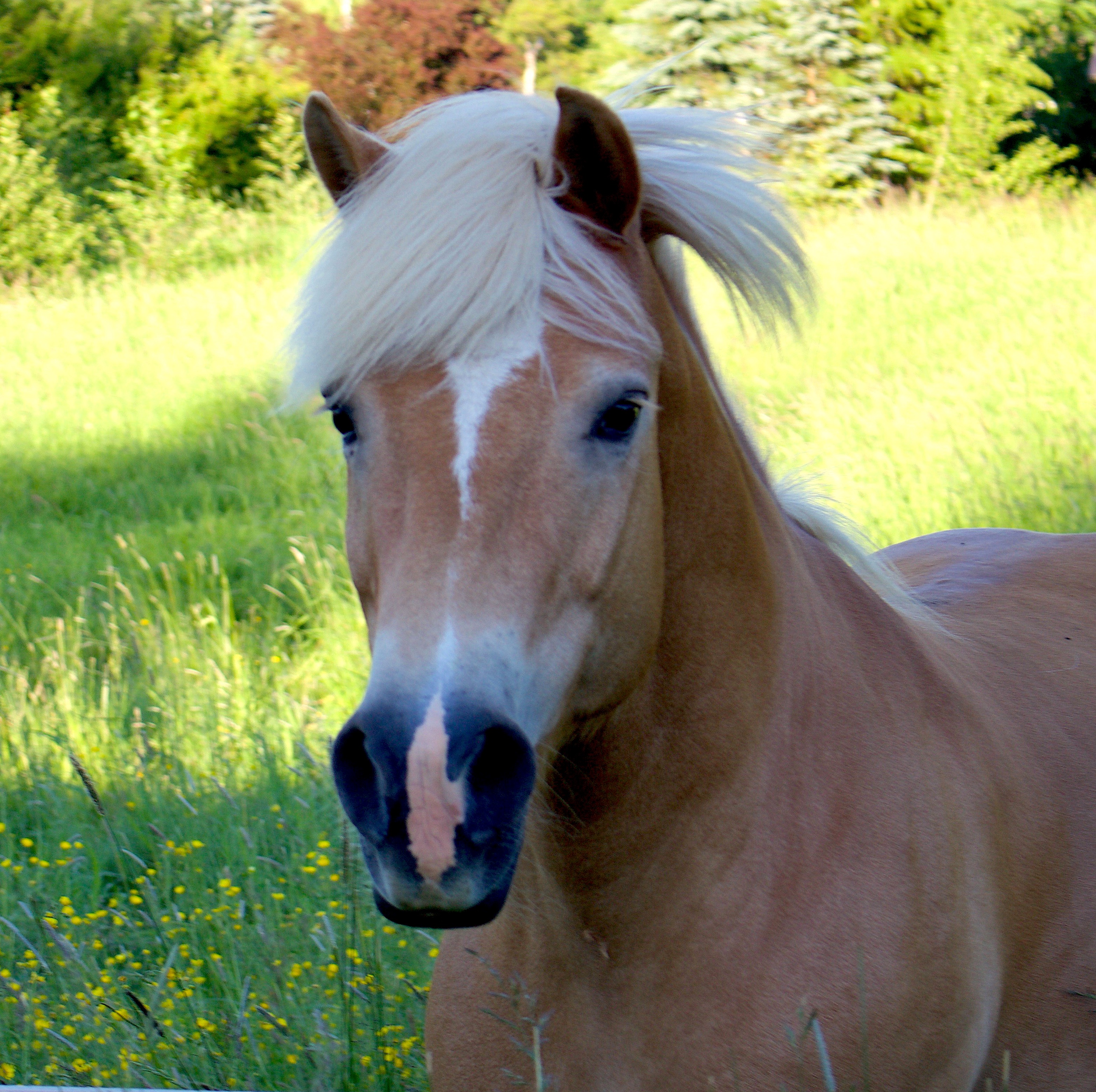
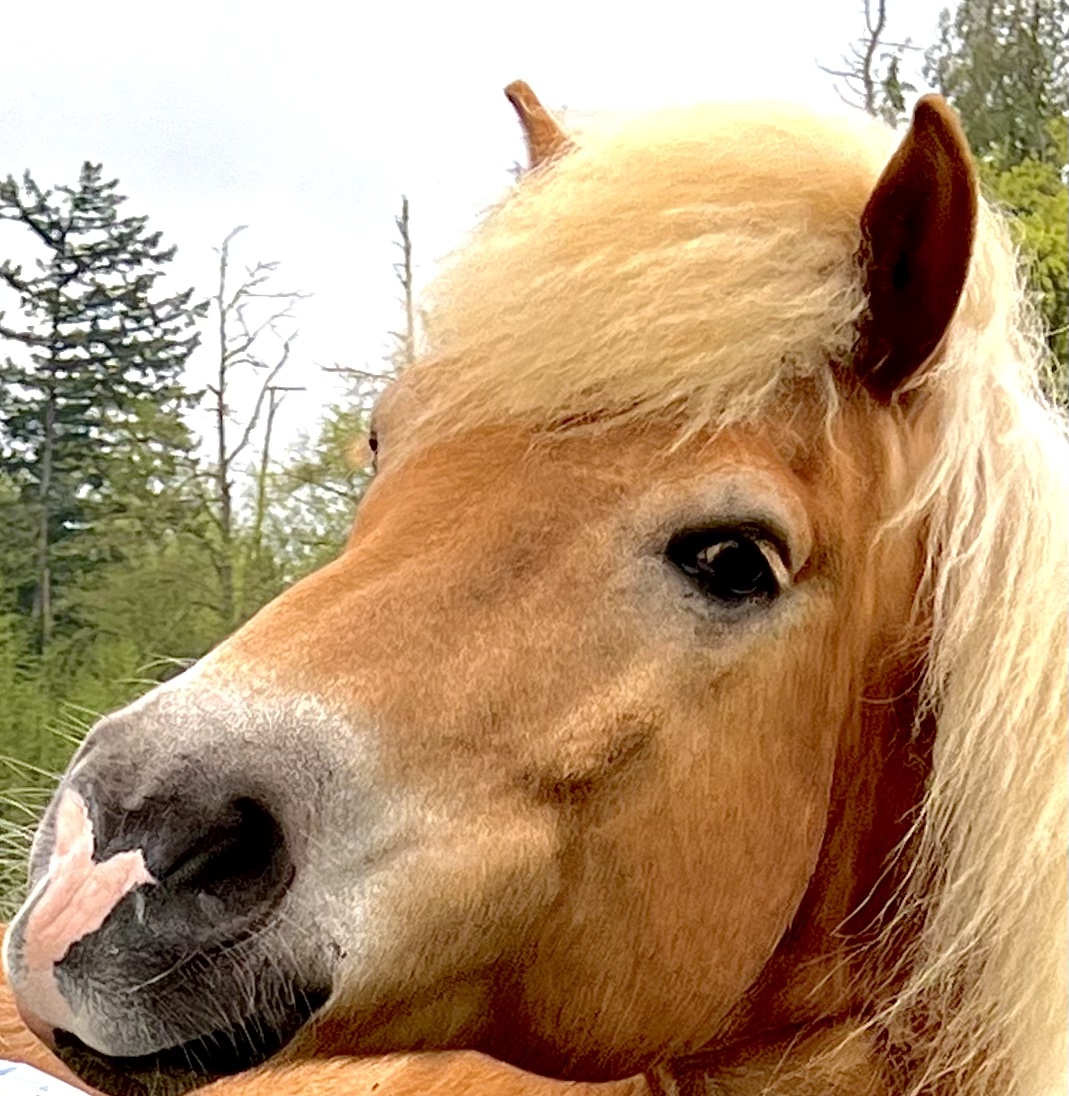
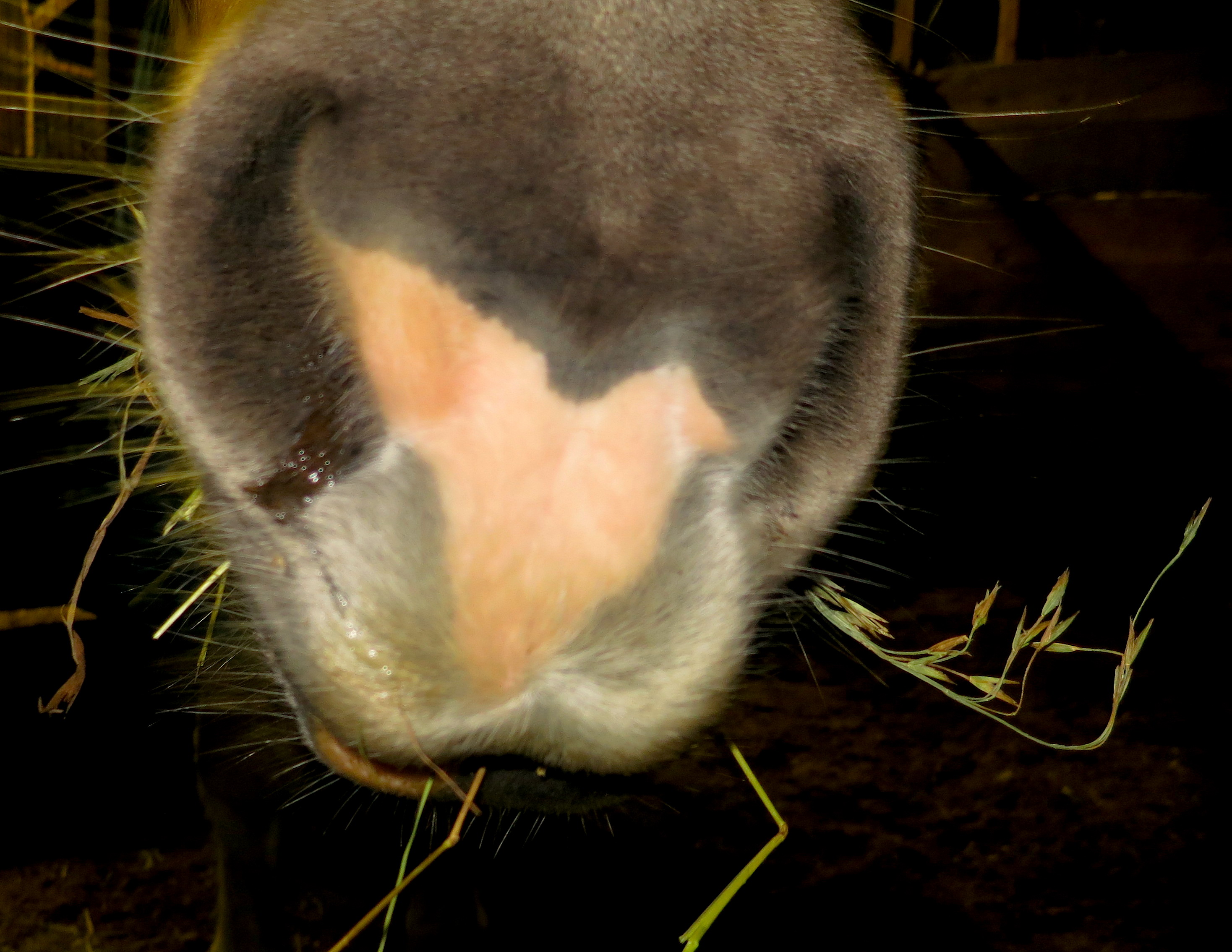
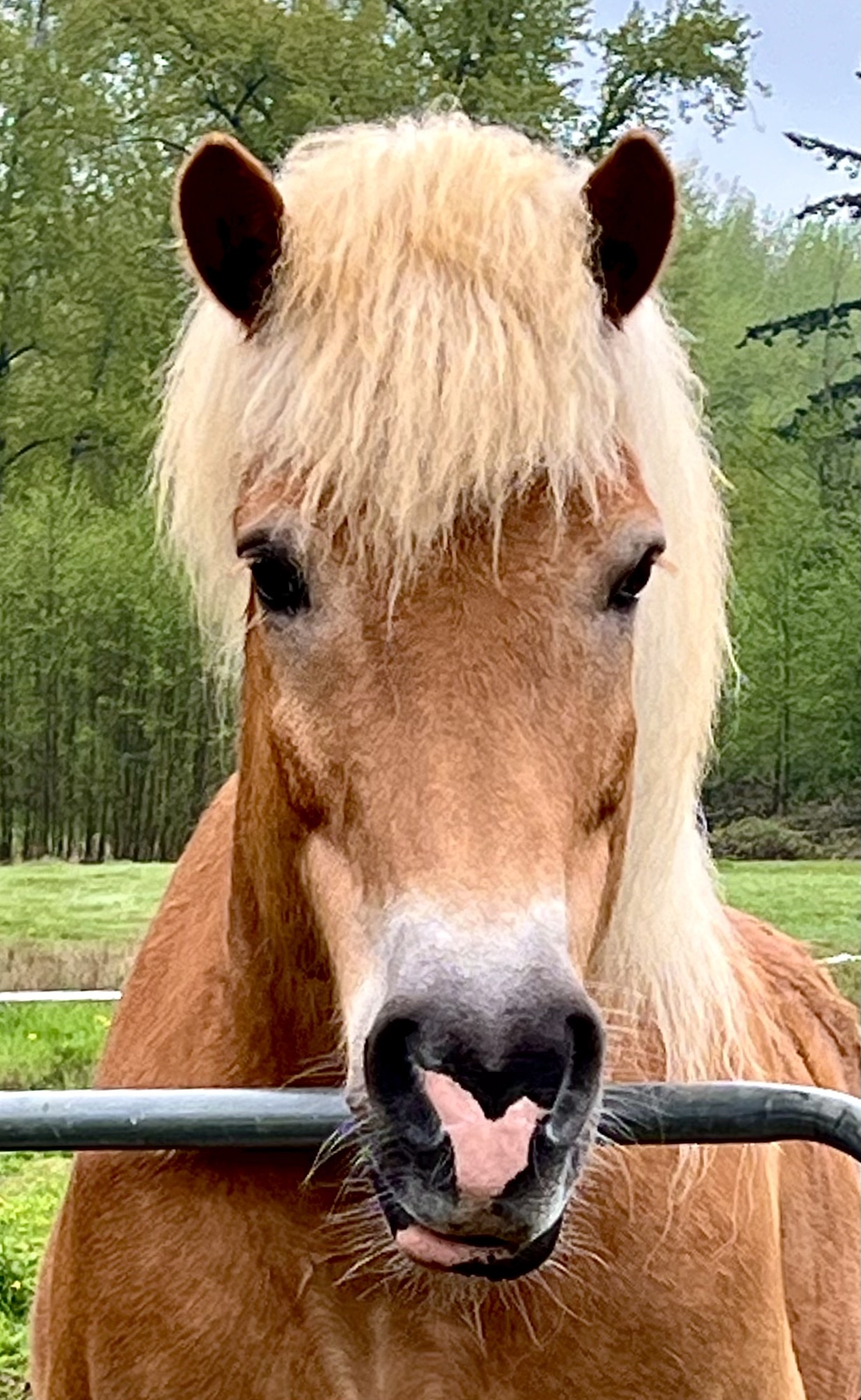
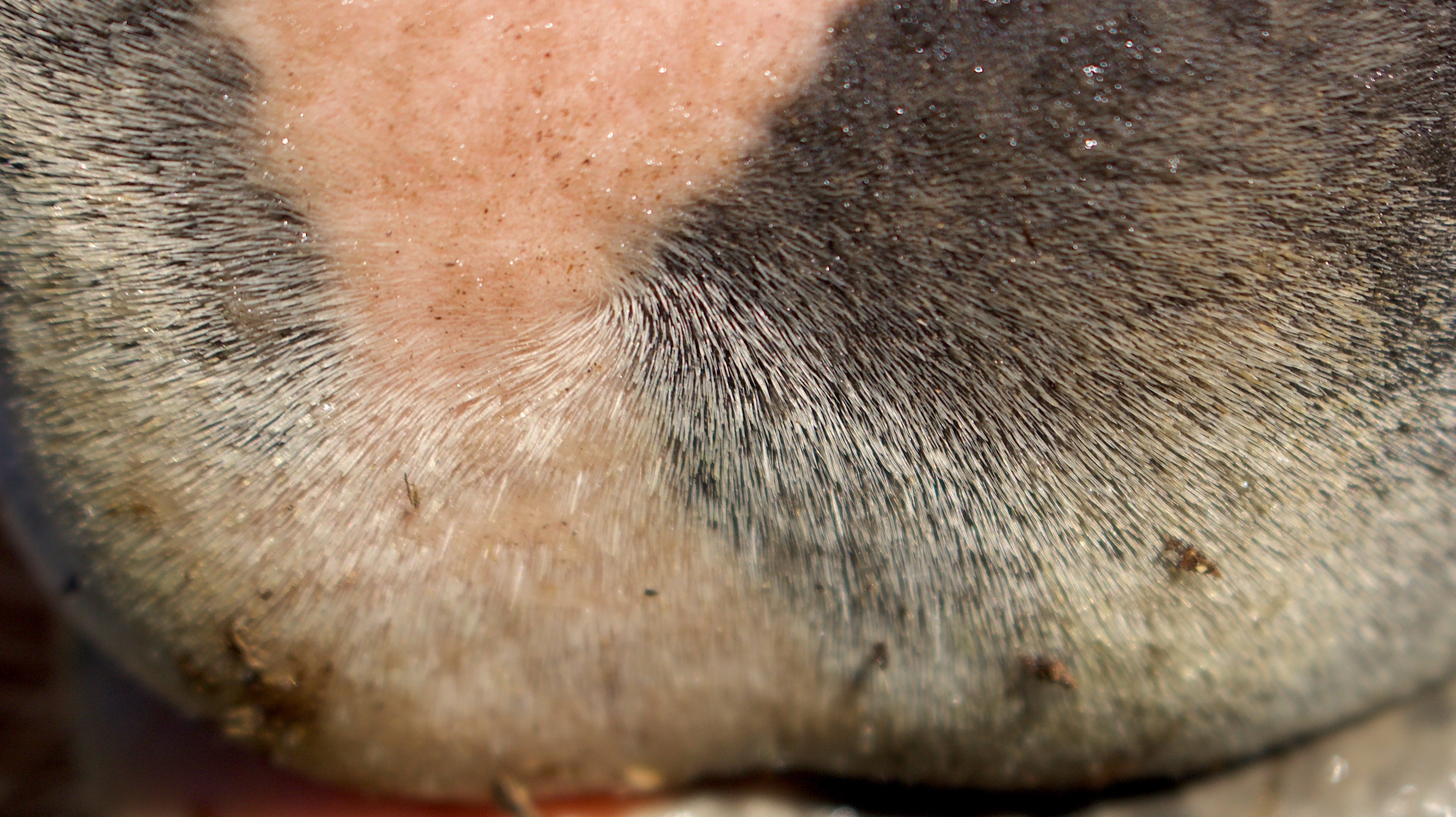
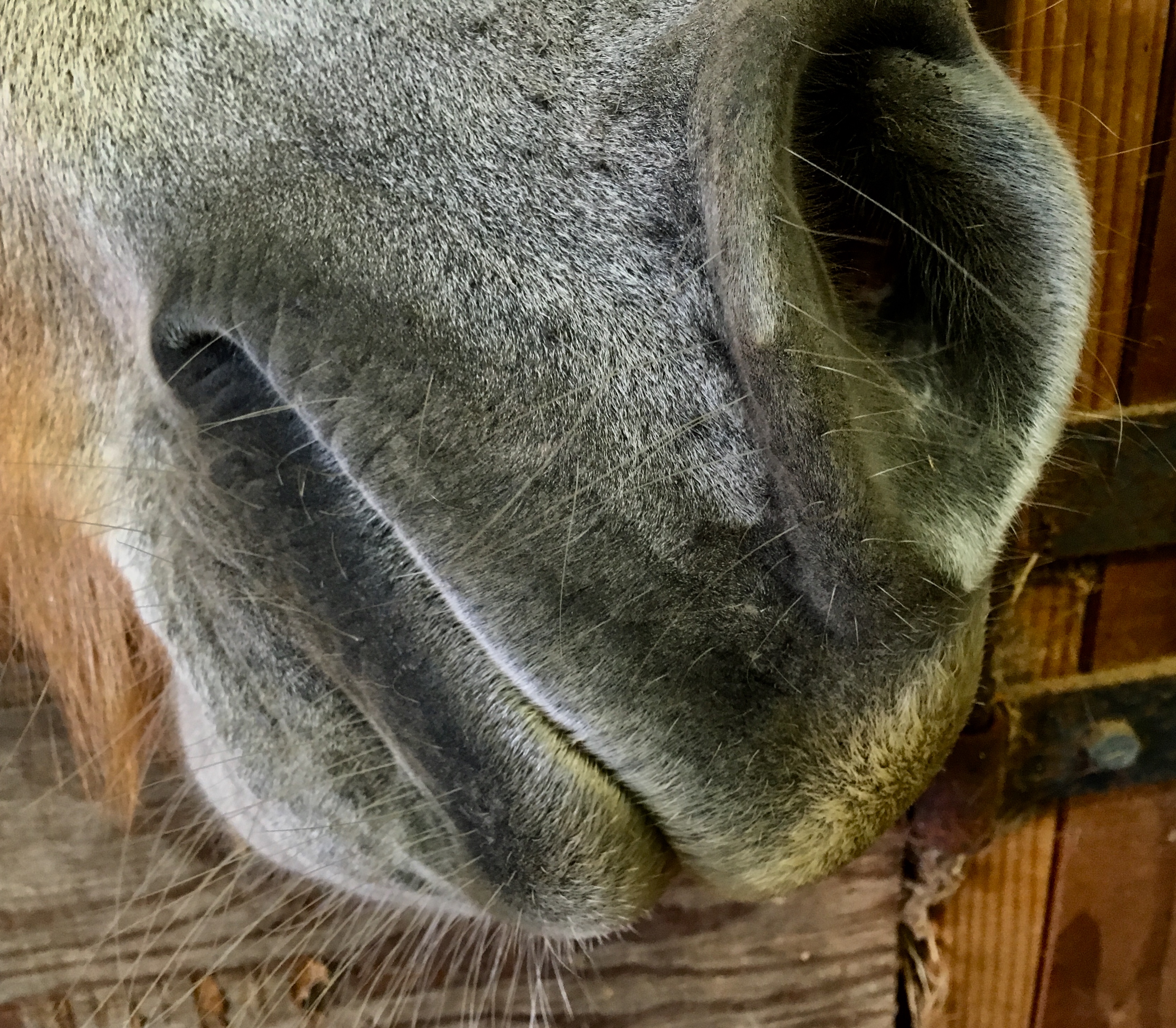
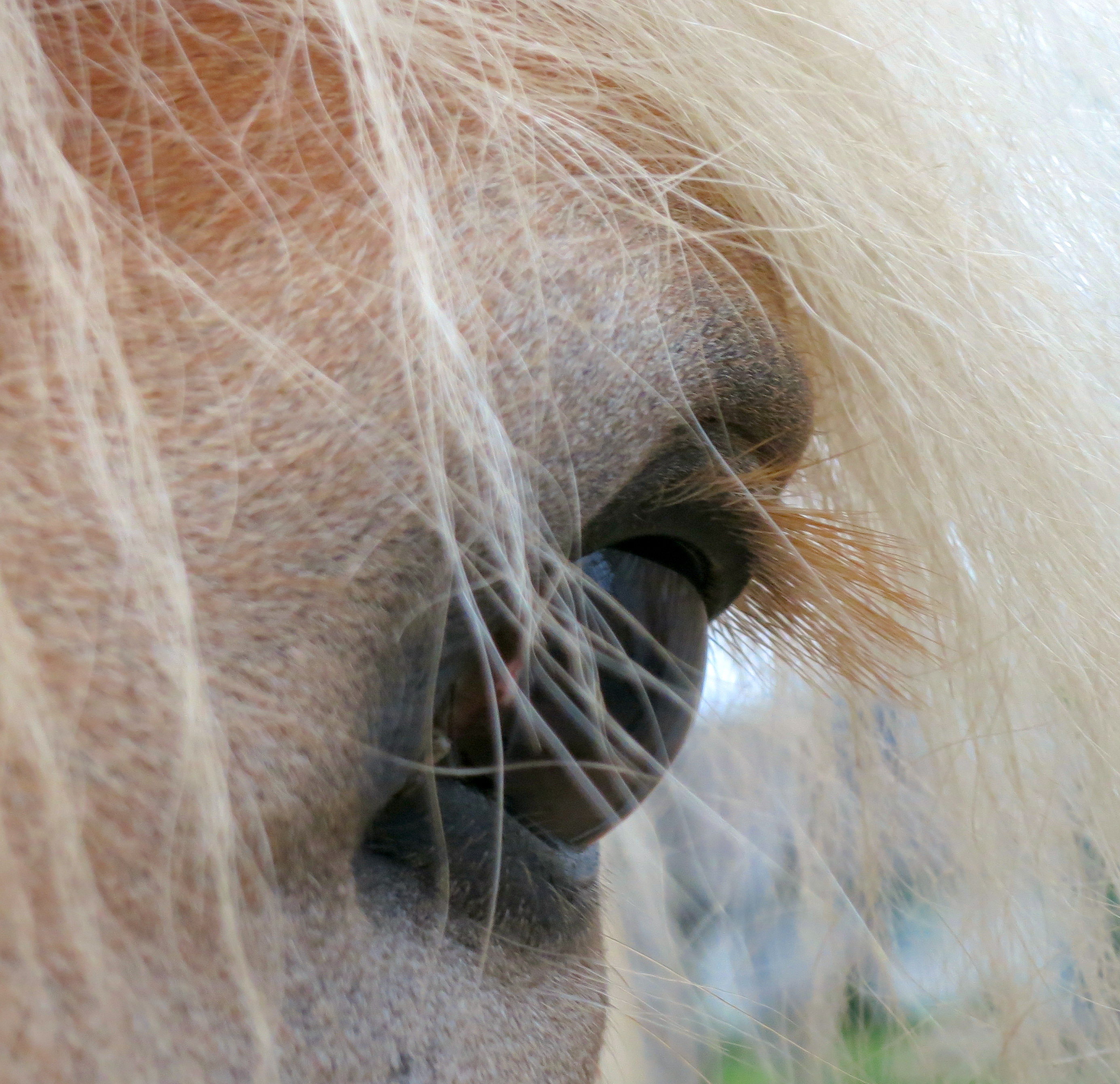
Our farm has had many nuzzling muzzles here over the years–
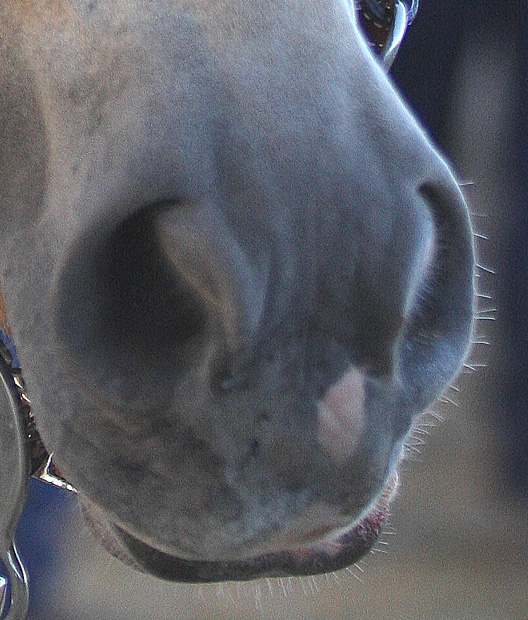
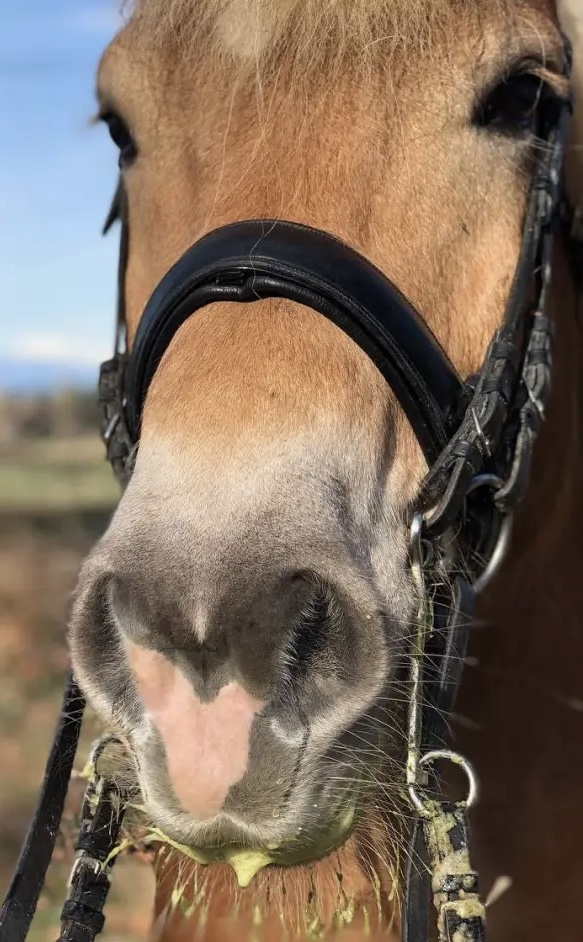
Pink noses, gray noses, nondescript not-sure-what-color noses, noses that have white stripes, diamonds, hearts, triangles, or absolutely no marks at all.
Hot breath that exudes warm grassy fragrance better than any pricey perfume, lips softer than the most elegant velvet.
Noses that reach out in greeting to: blow, sniff, caress, push, search, breathe me in and breathe for me, to see who I am, or who I will become,
smudge my face and shower snot.
I guess I’m just good enough to be blessed by a nuzzling baptism of grace.
How can I feel so warm Here in the dead center of January? I can Scarcely believe it, and yet I have to, this is The only life I have. ~James Wright from “A Winter Daybreak above Vence”
to the northwestto the north
To-day I shall be strong, No more shall yield to wrong, Shall squander life no more; Days lost, I know not how, I shall retrieve them now; Now I shall keep the vow I never kept before. Ensanguining the skies How heavily it dies Into the west away; Past touch and sight and sound Not further to be found, How hopeless under ground Falls the remorseful day. ~A.E. Houseman from “How Clear, How Lovely Bright”
to the northeastto the eastto the southeast
It was like a church to me. I entered it on soft foot, Breath held like a cap in the hand. It was quiet. What God there was made himself felt, Not listened to, in clean colours That brought a moistening of the eye, In a movement of the wind over grass. There were no prayers said. But stillness Of the heart’s passions — that was praise Enough; and the mind’s cession Of its kingdom. I walked on, Simple and poor, while the air crumbled And broke on me generously as bread. ~R.S. Thomas “The Moor”
to the southto the southwest
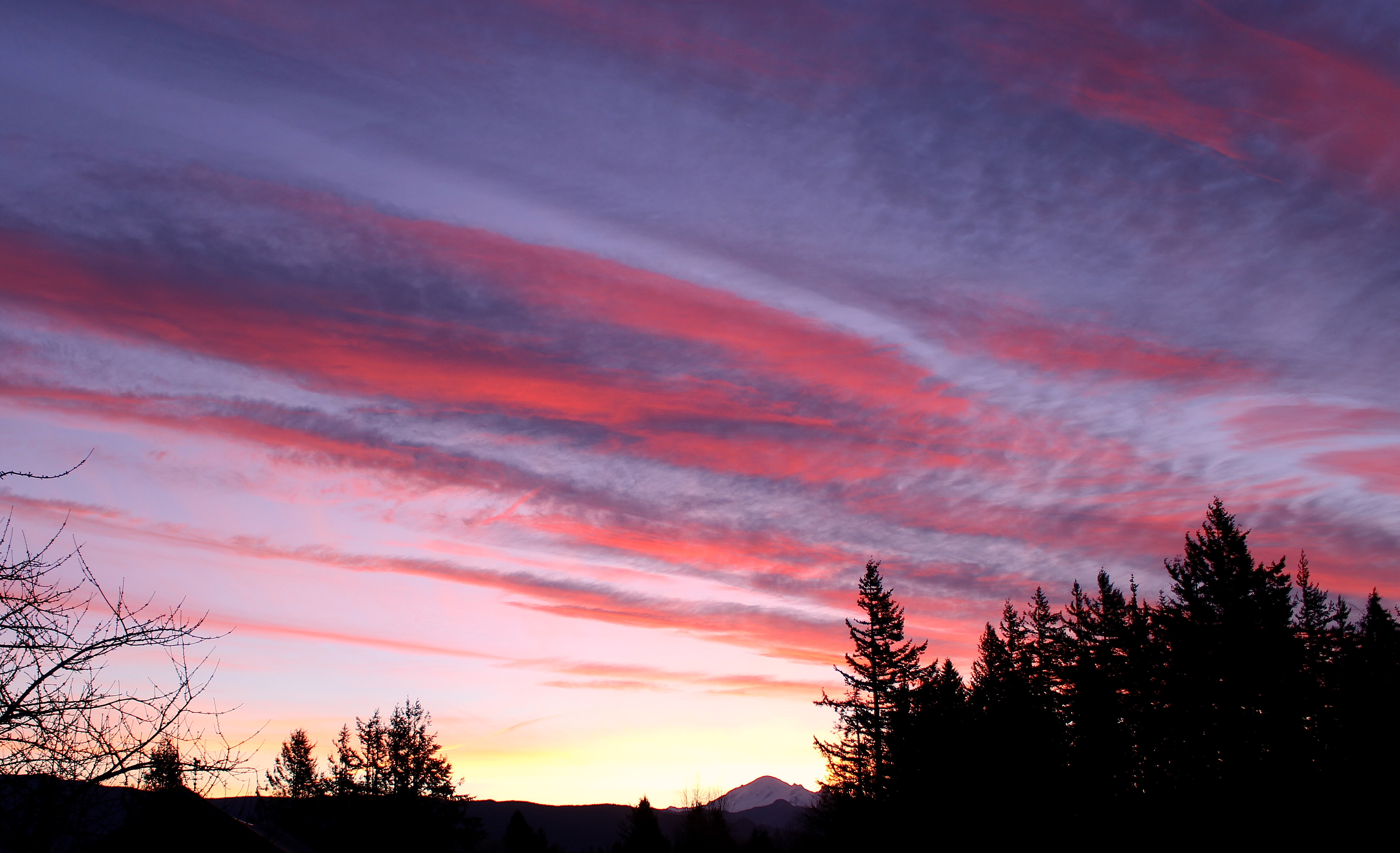
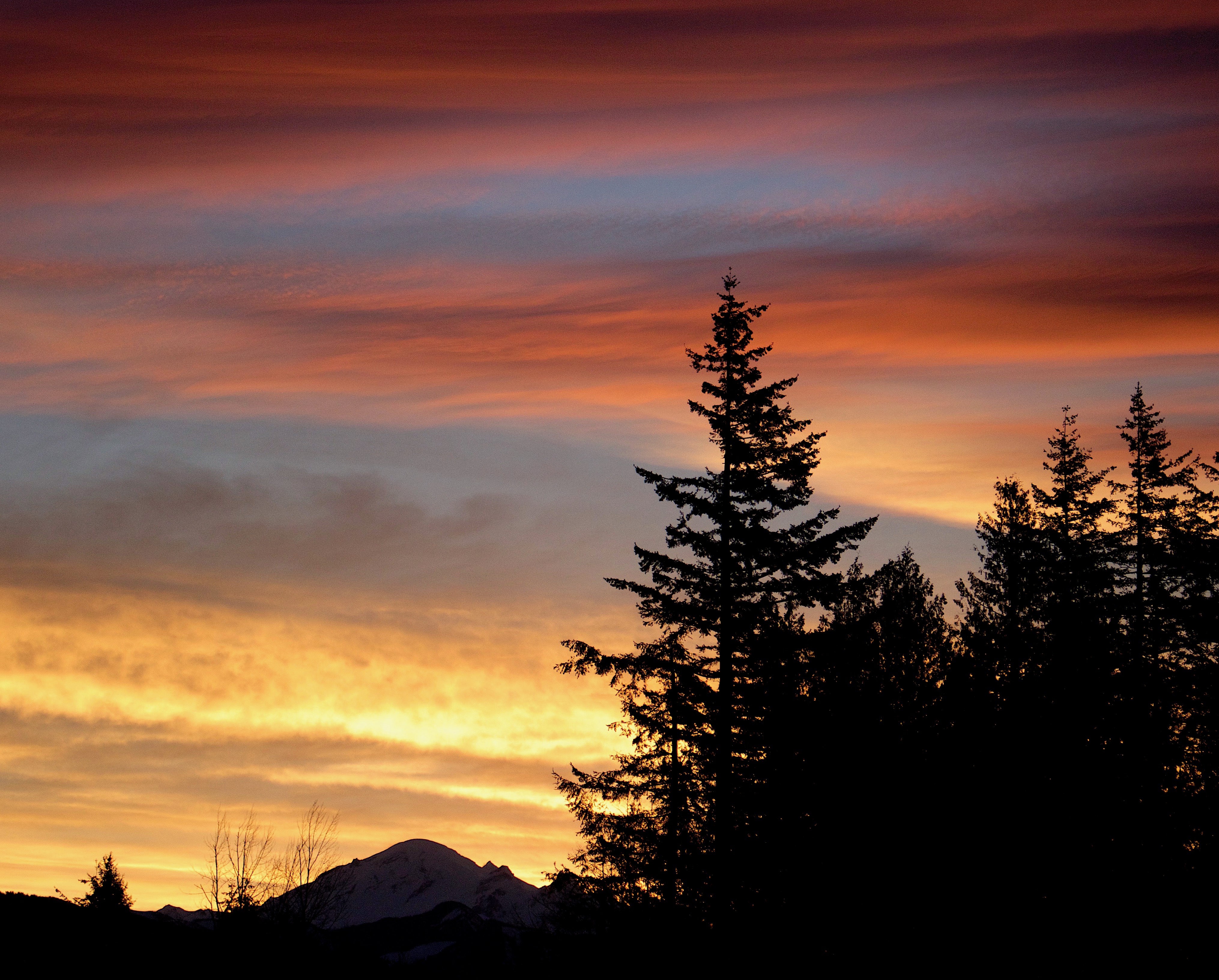
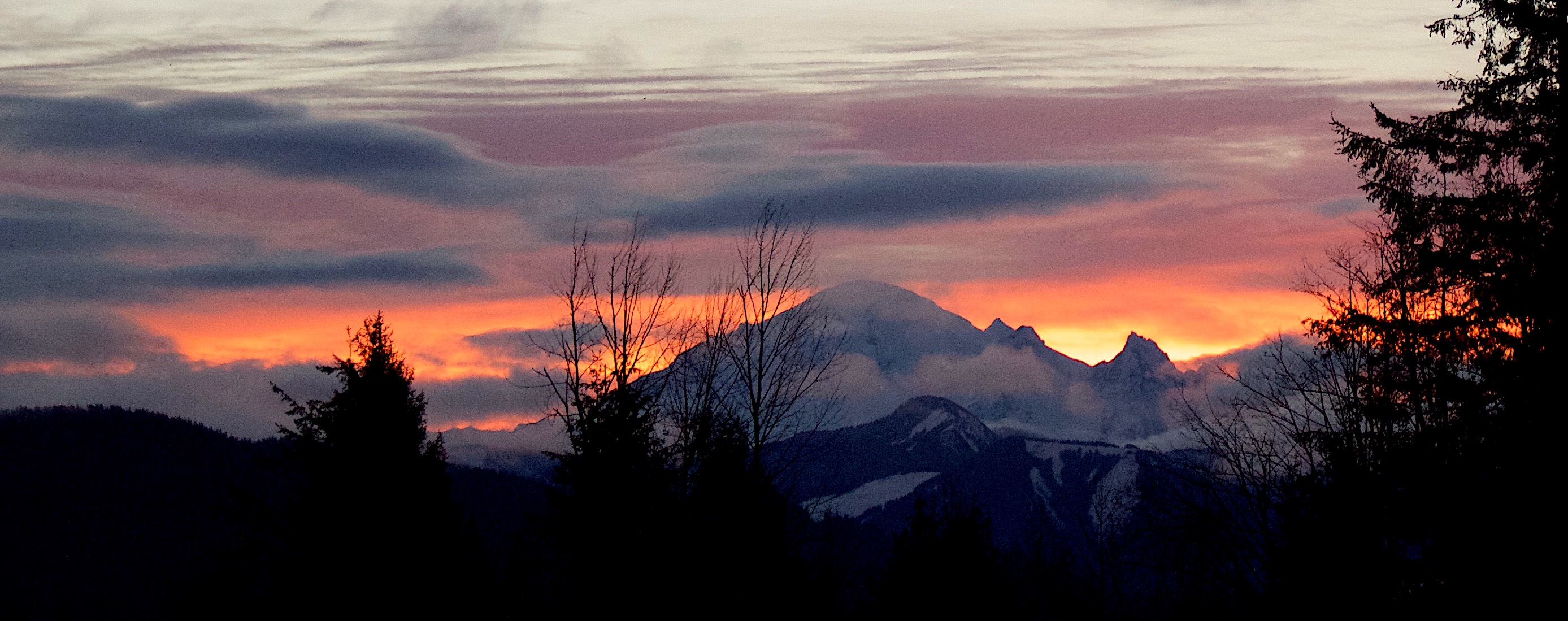
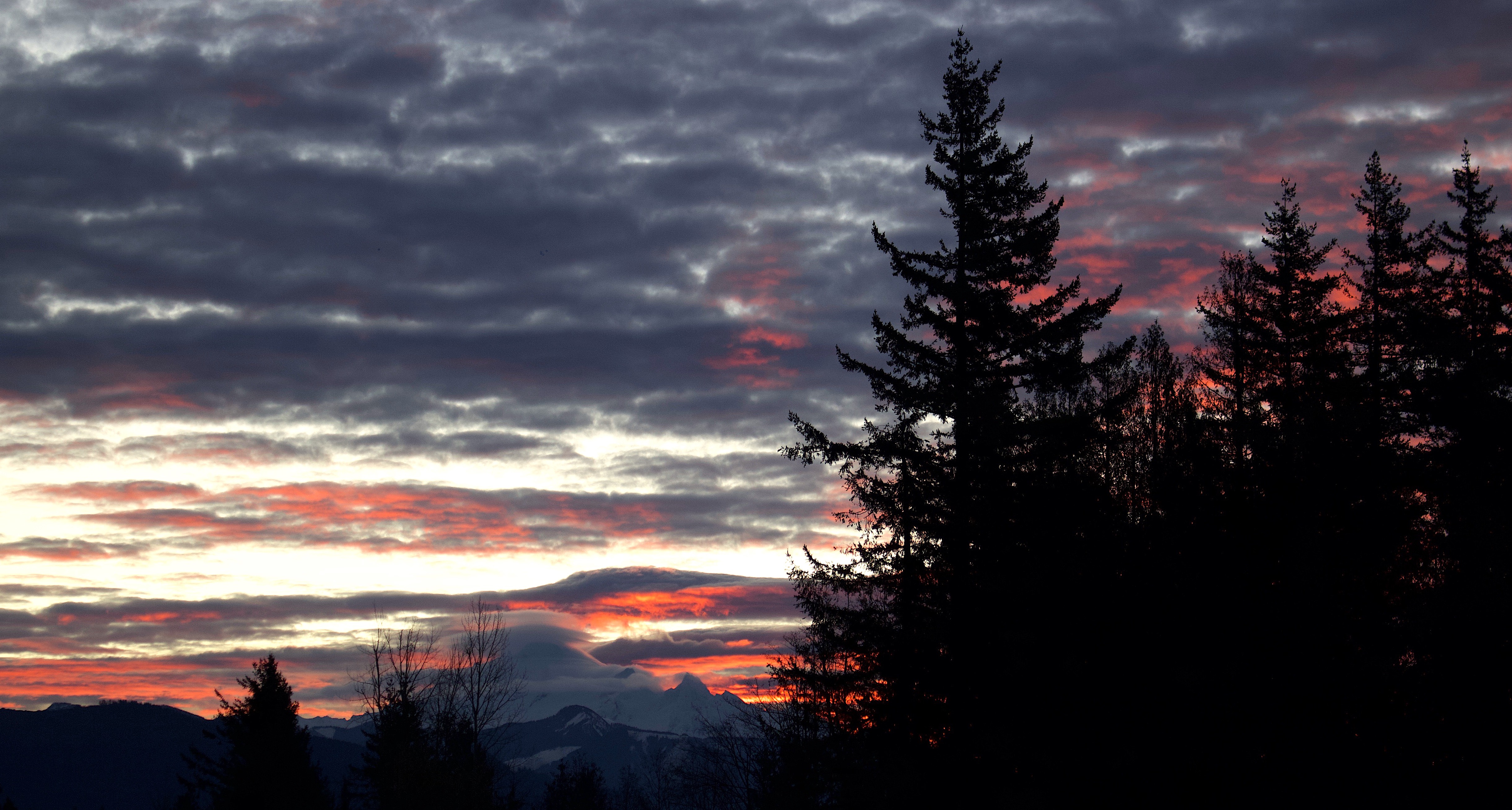
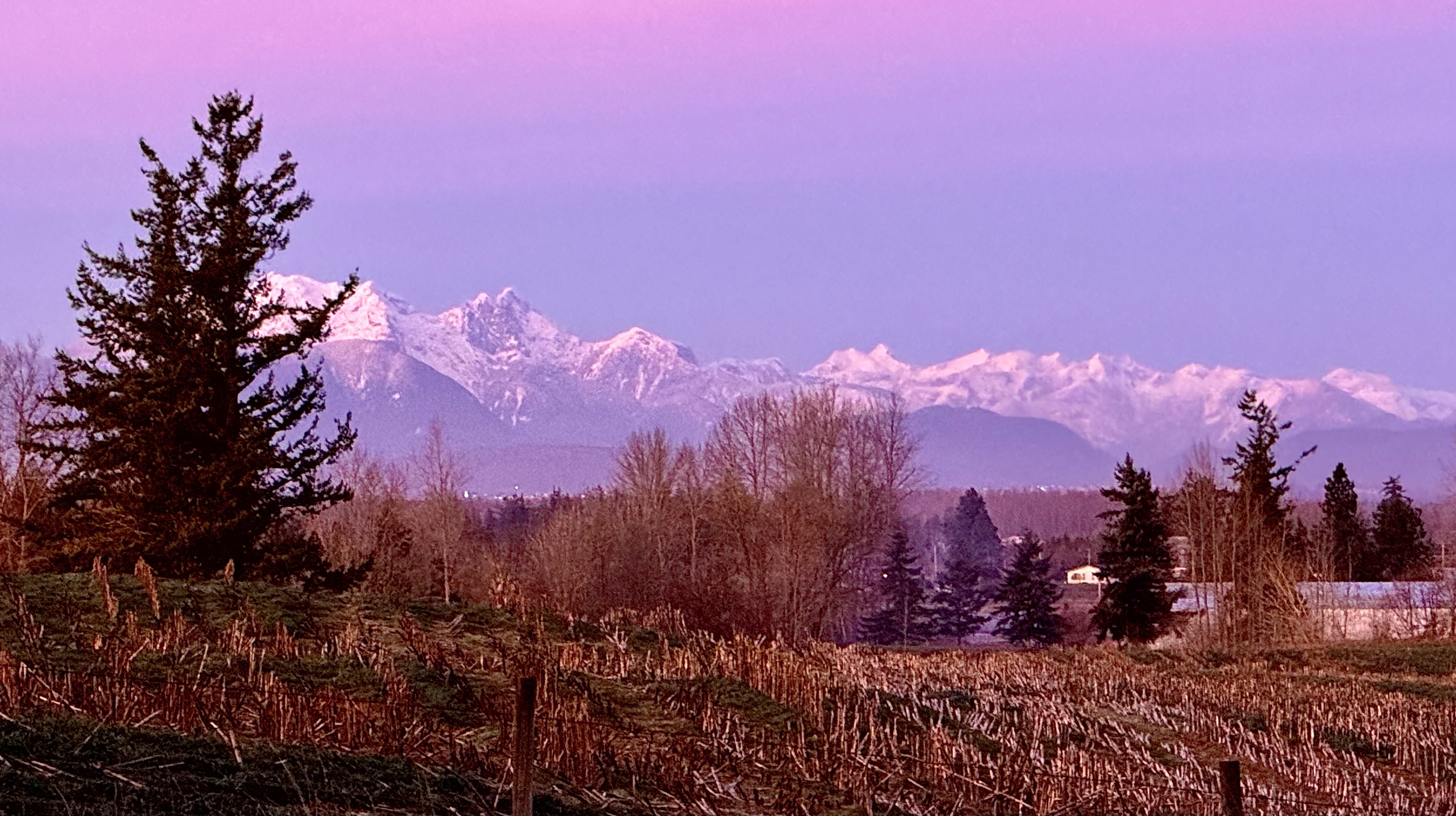
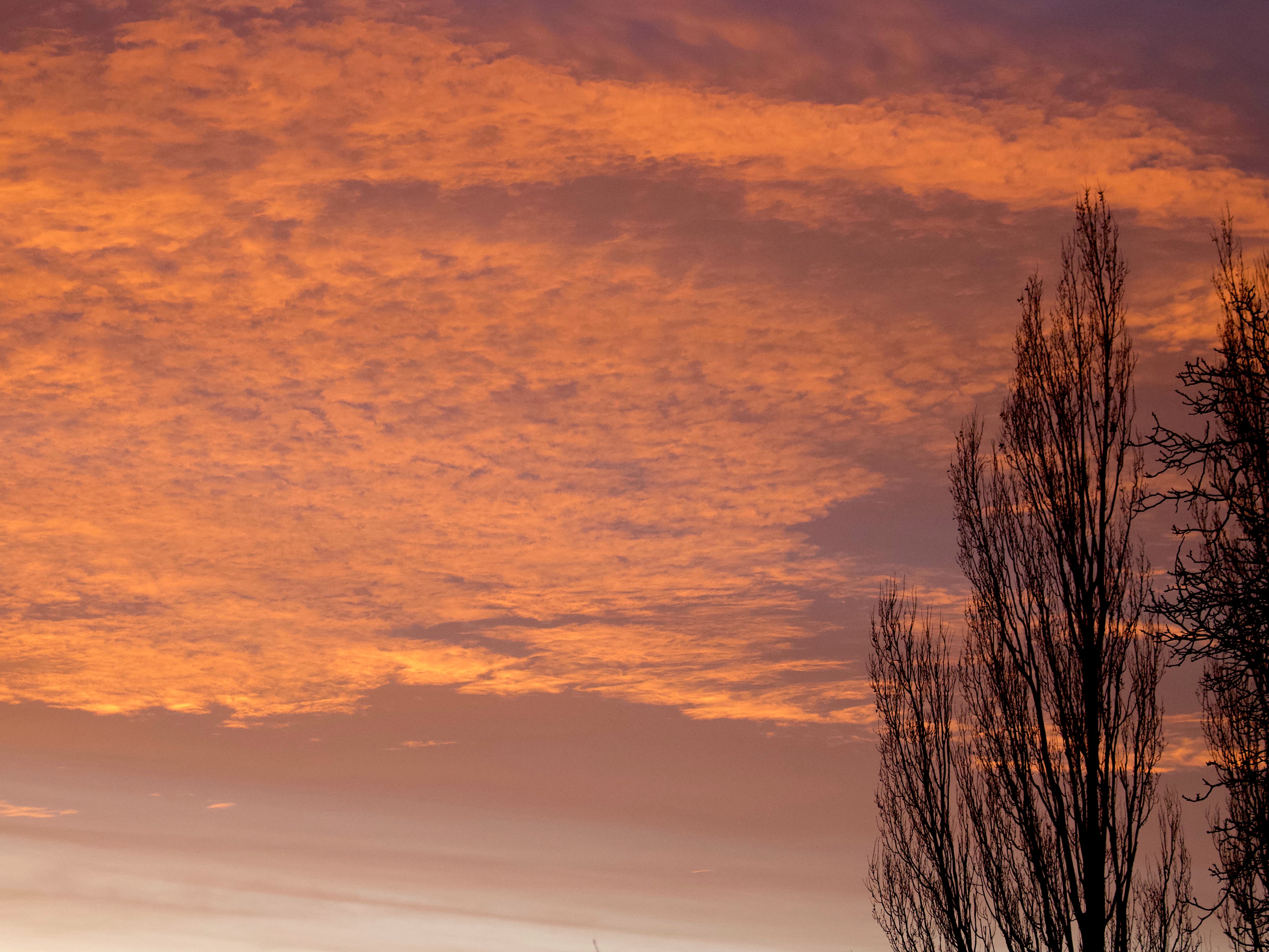
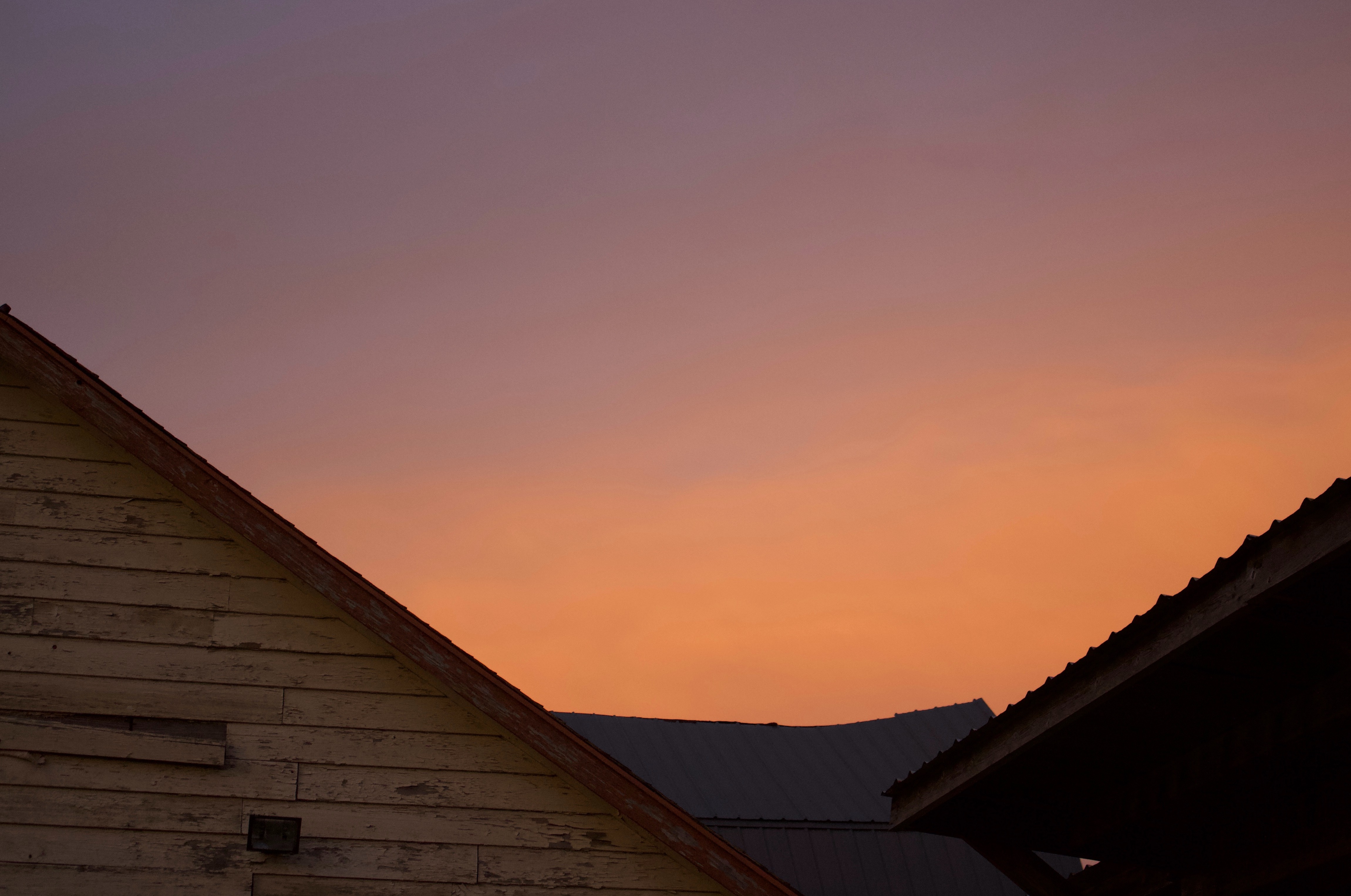
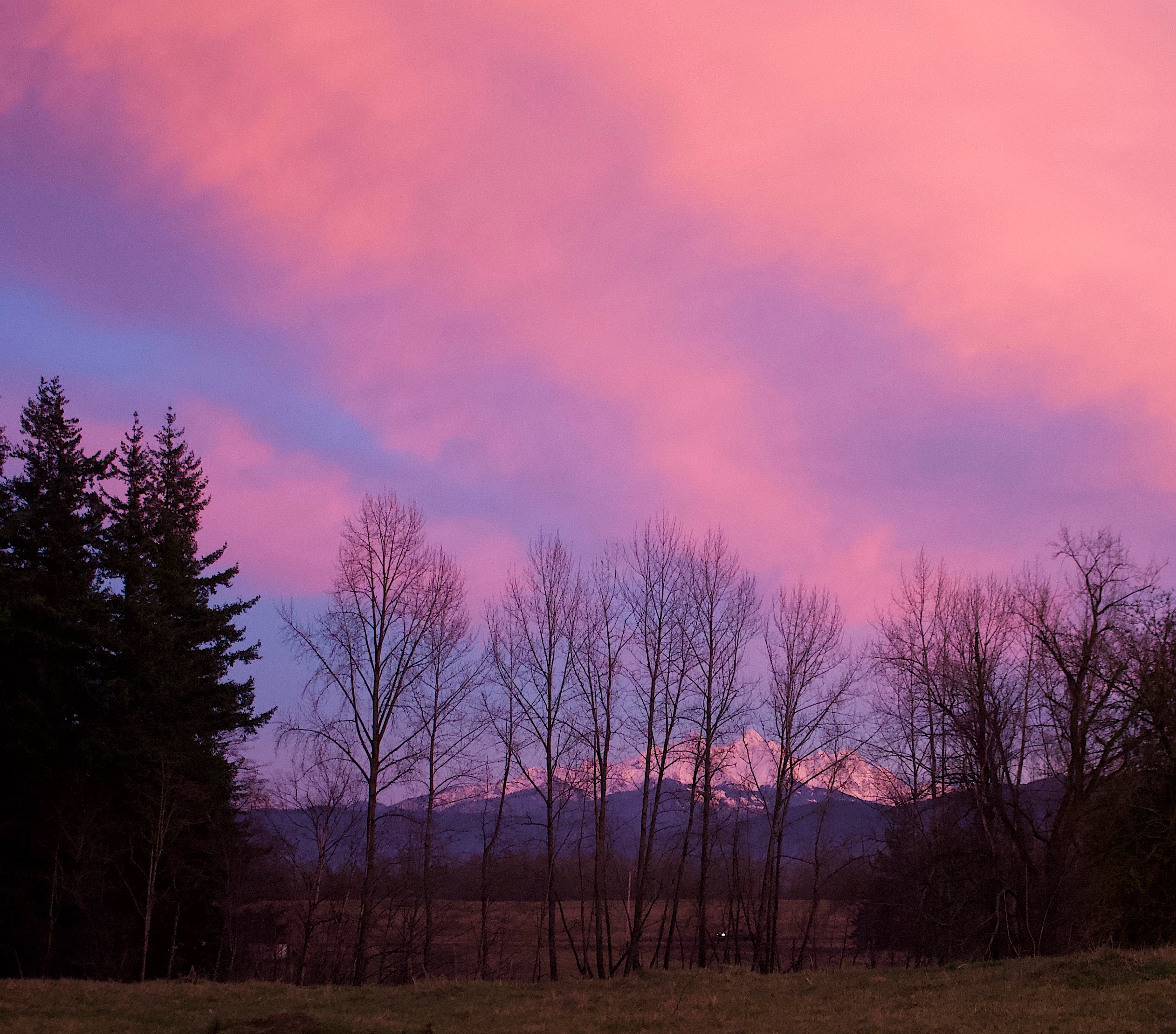
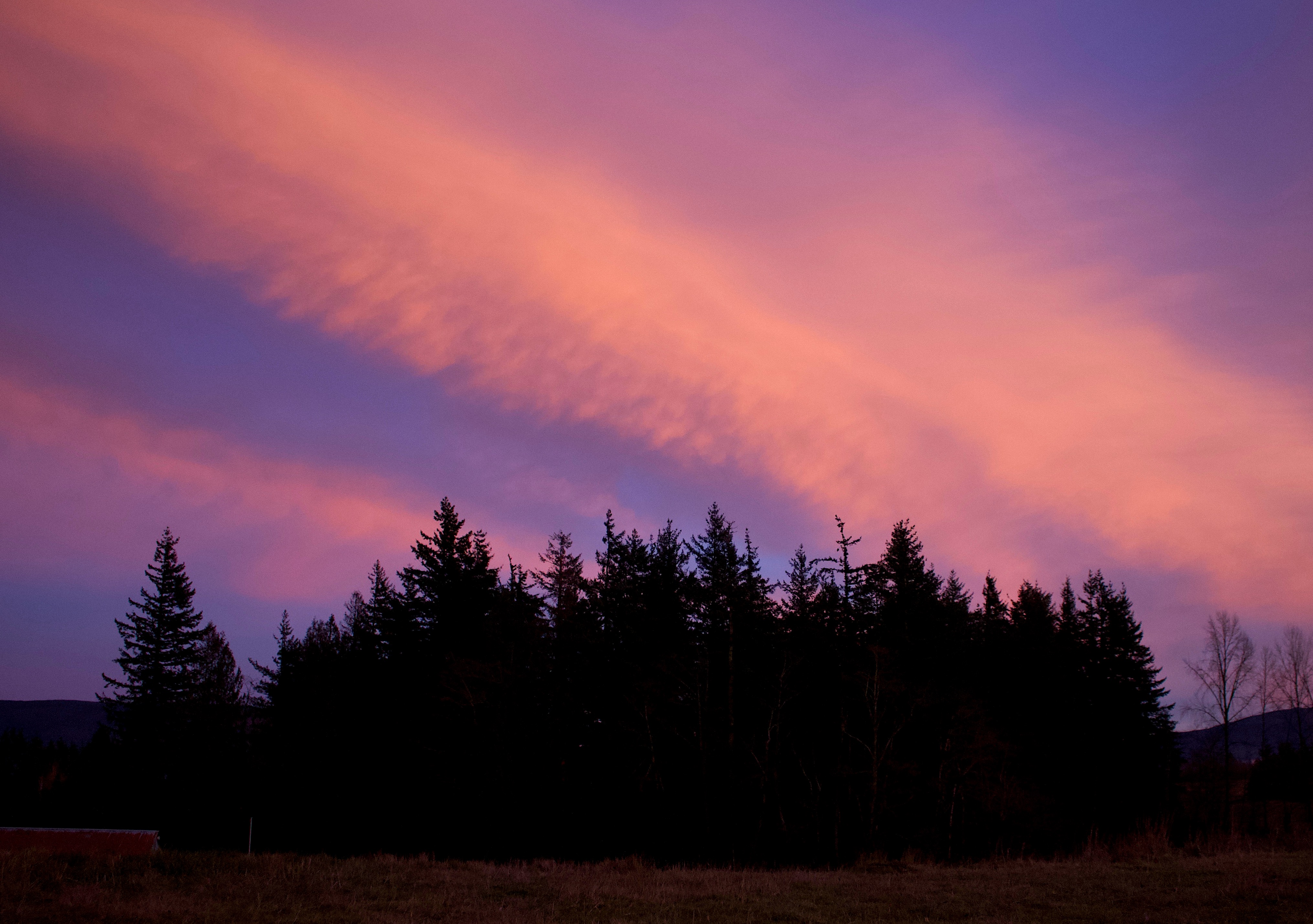
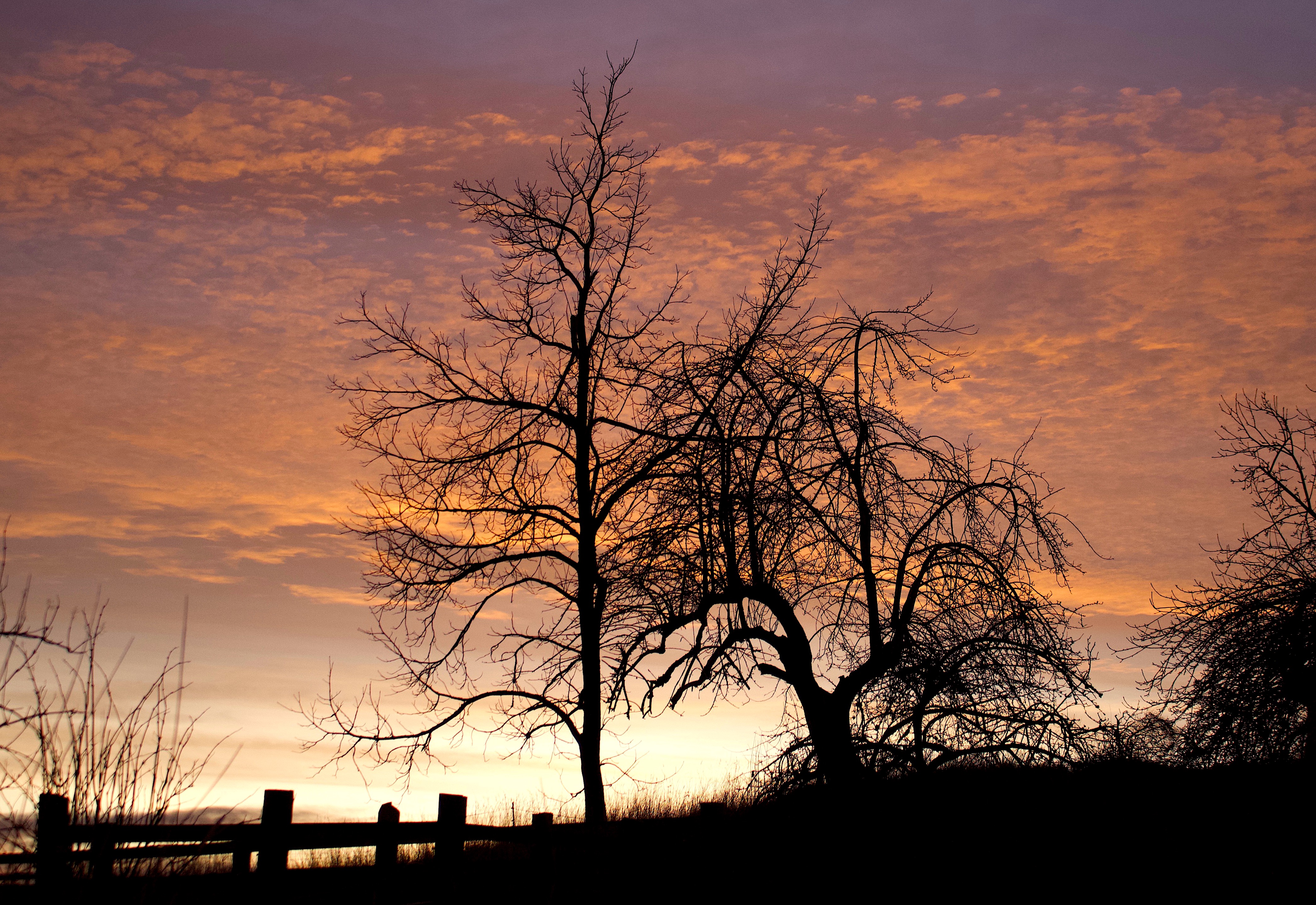
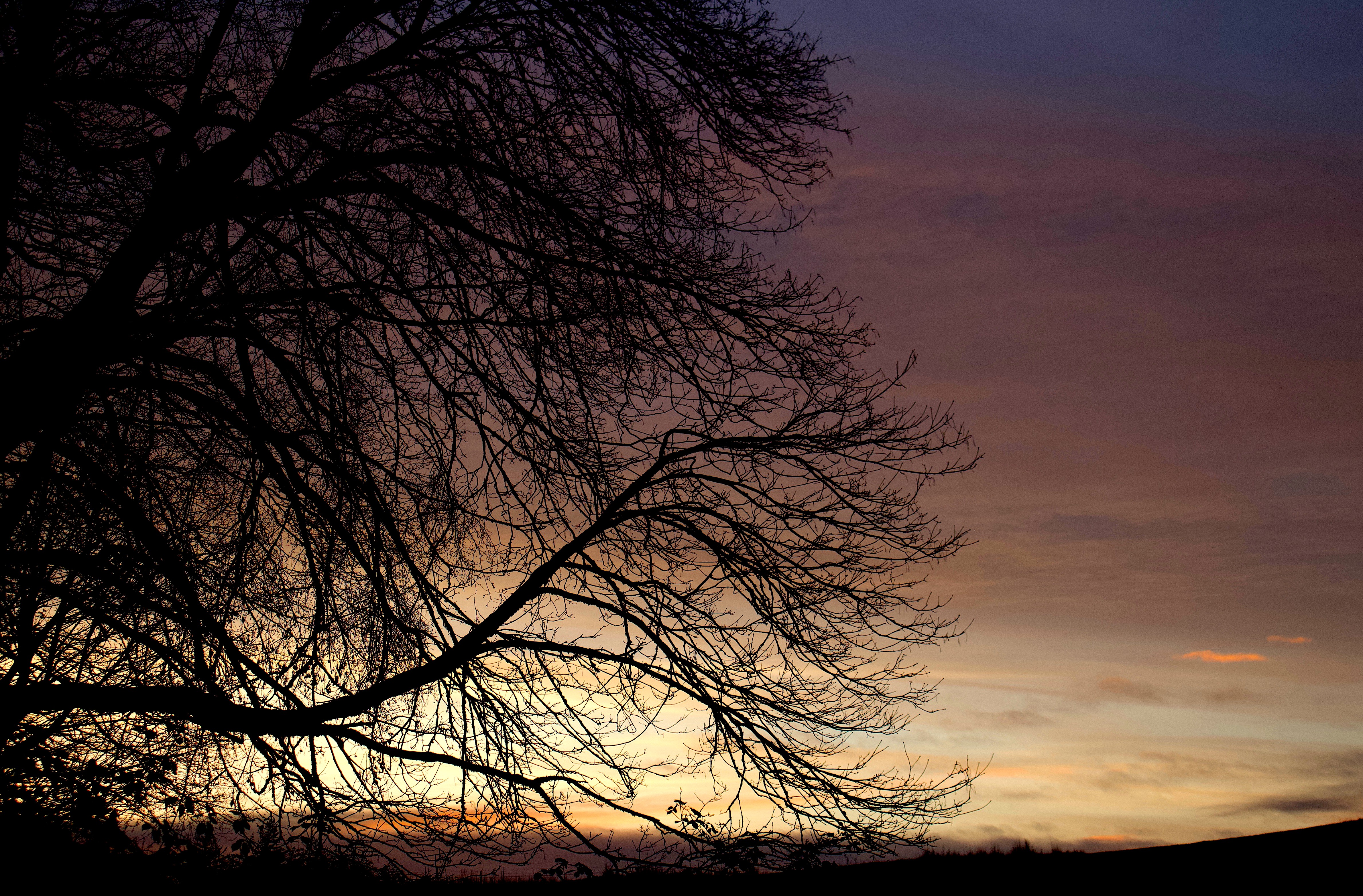
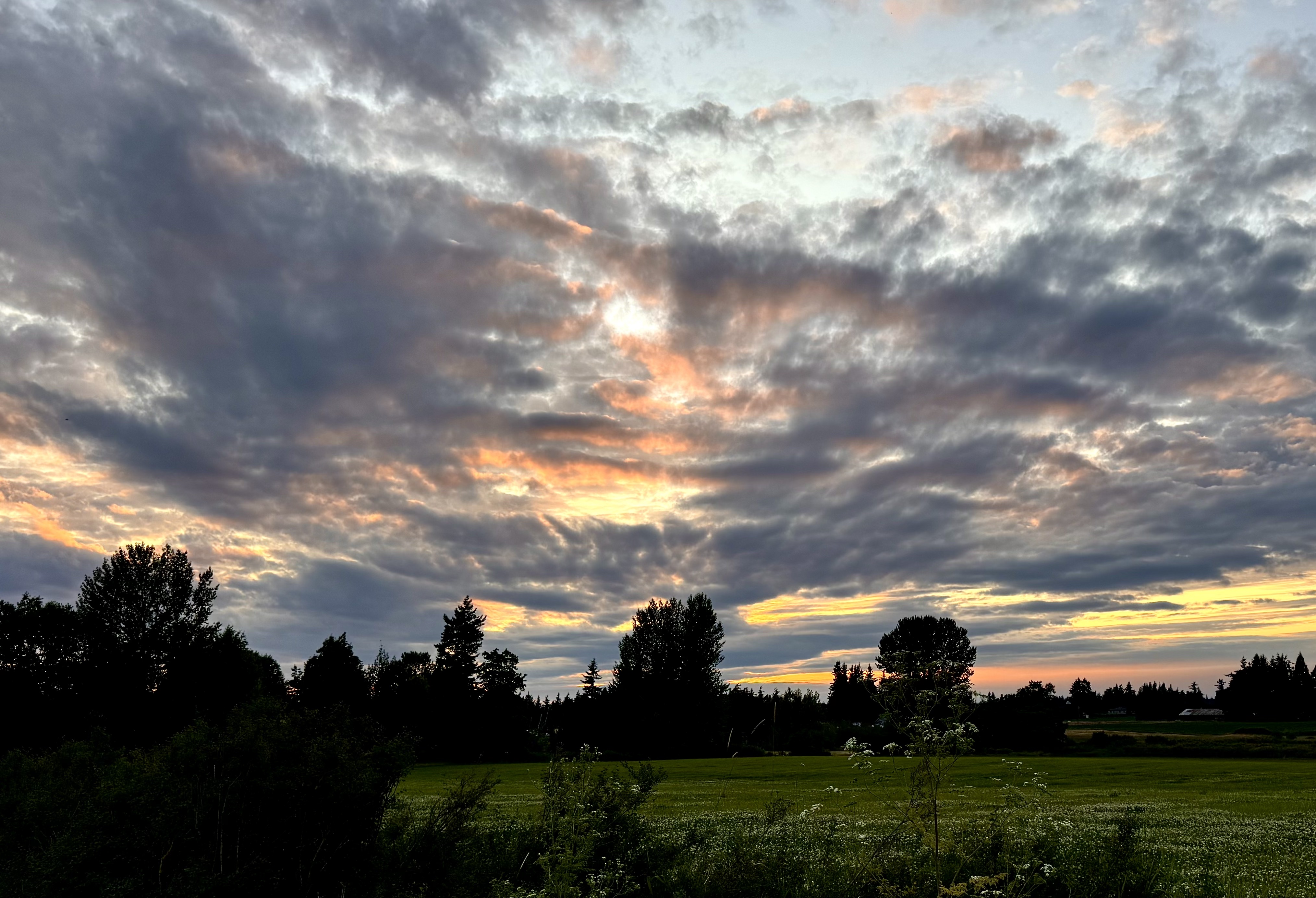
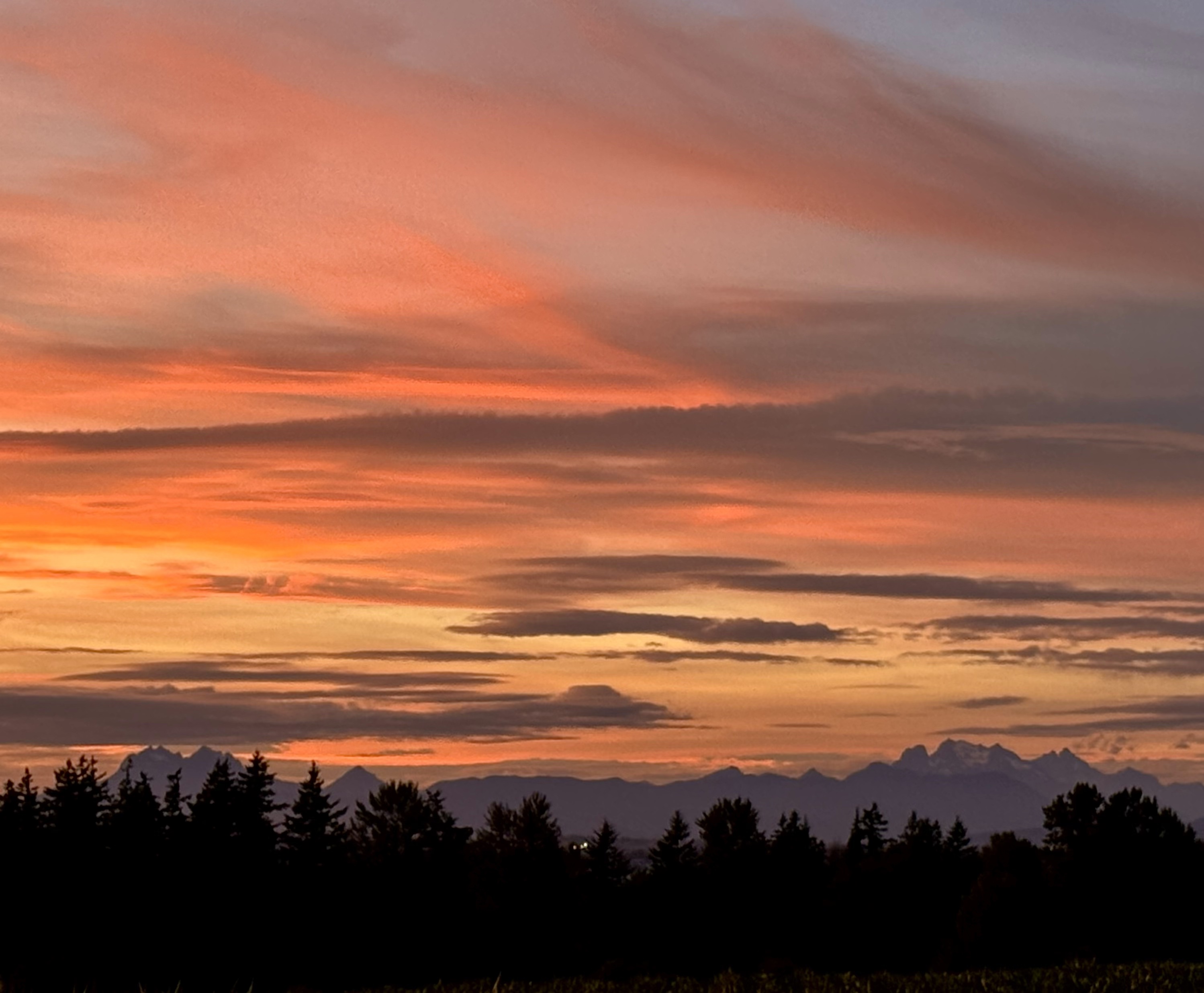
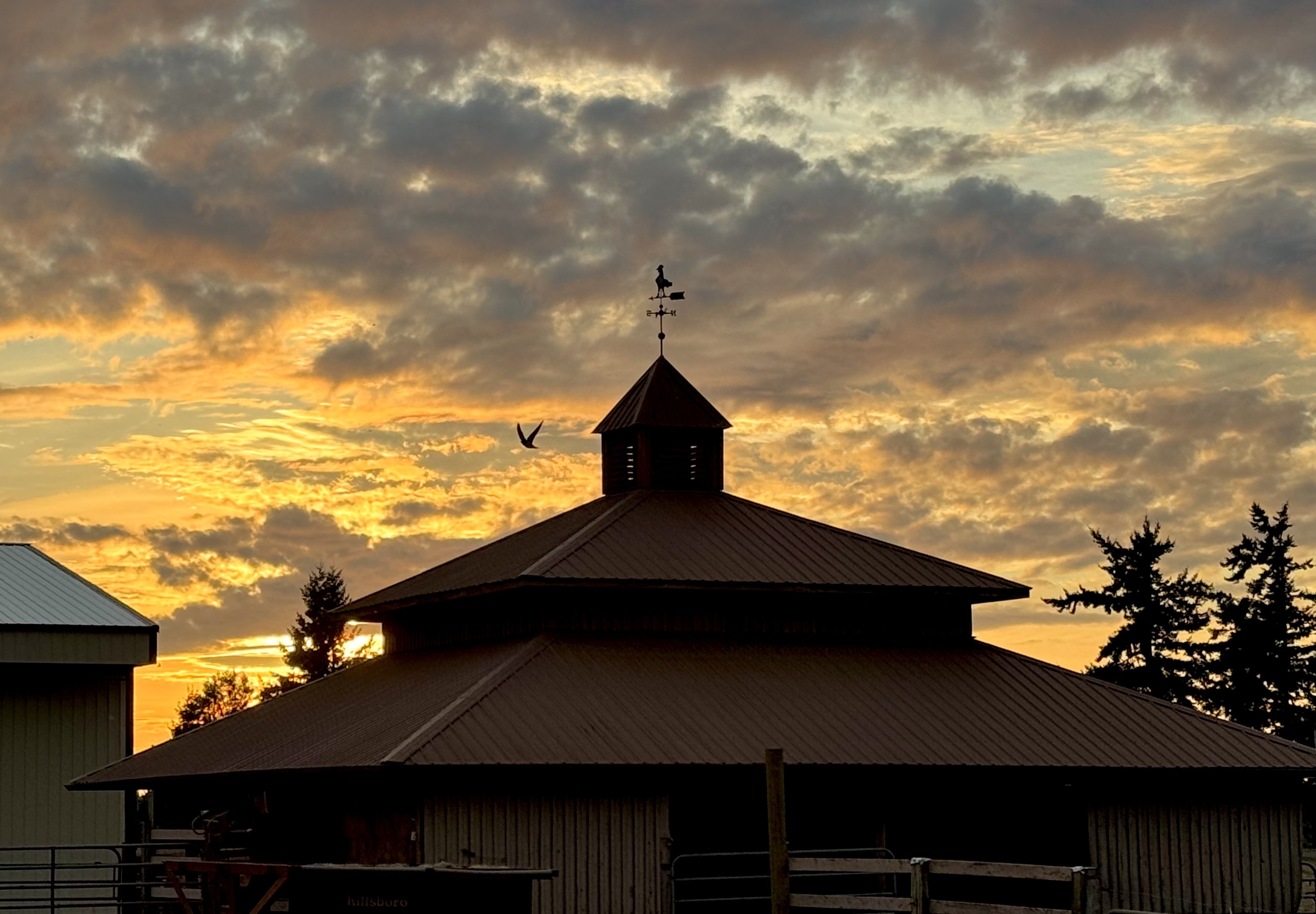
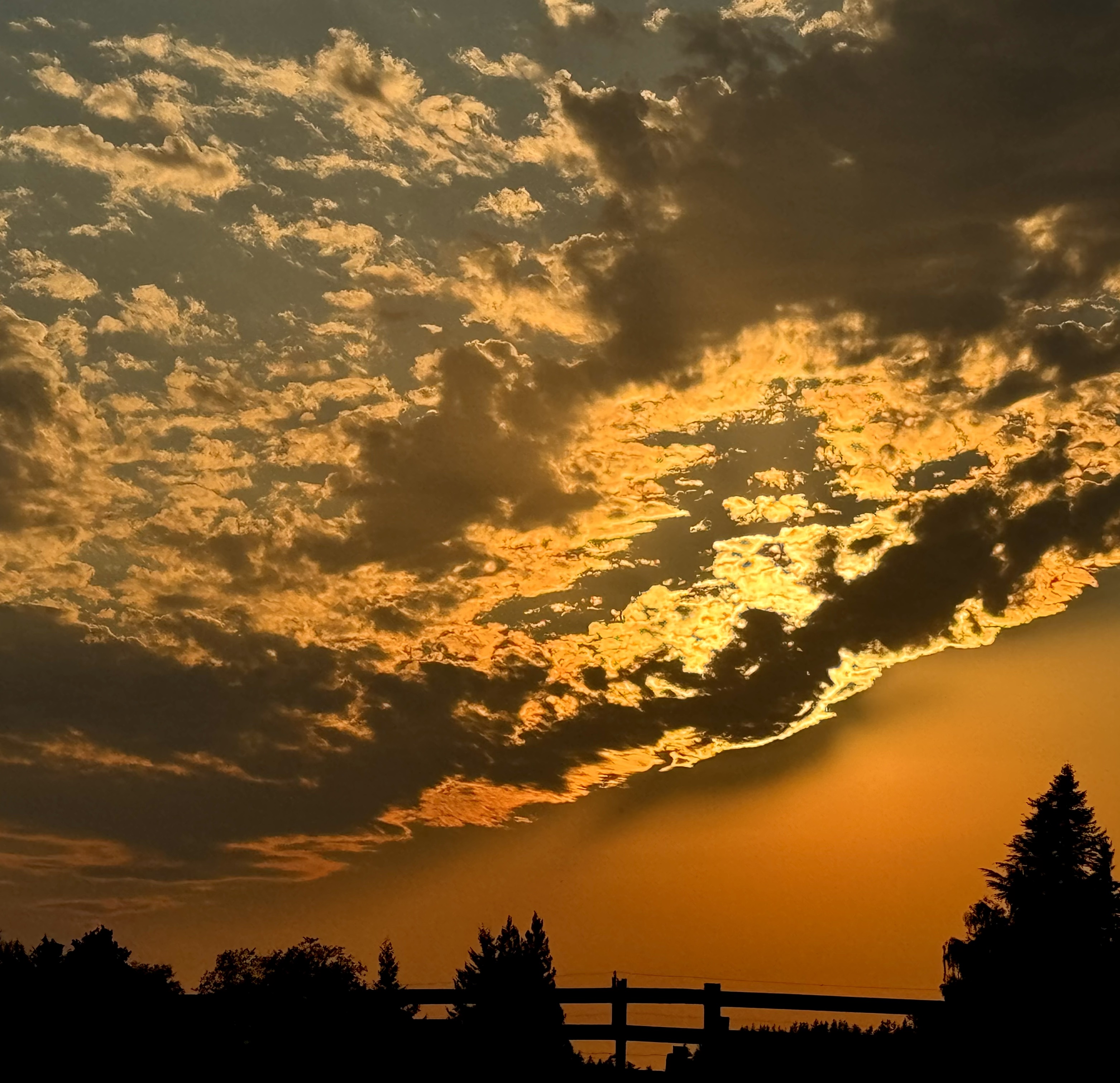
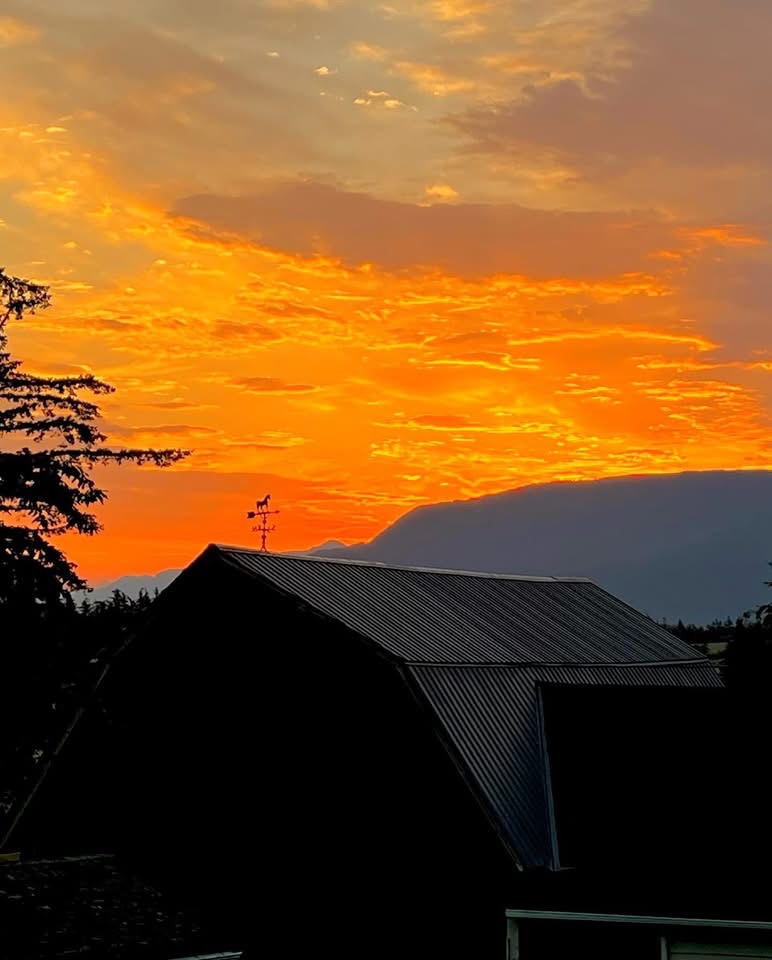
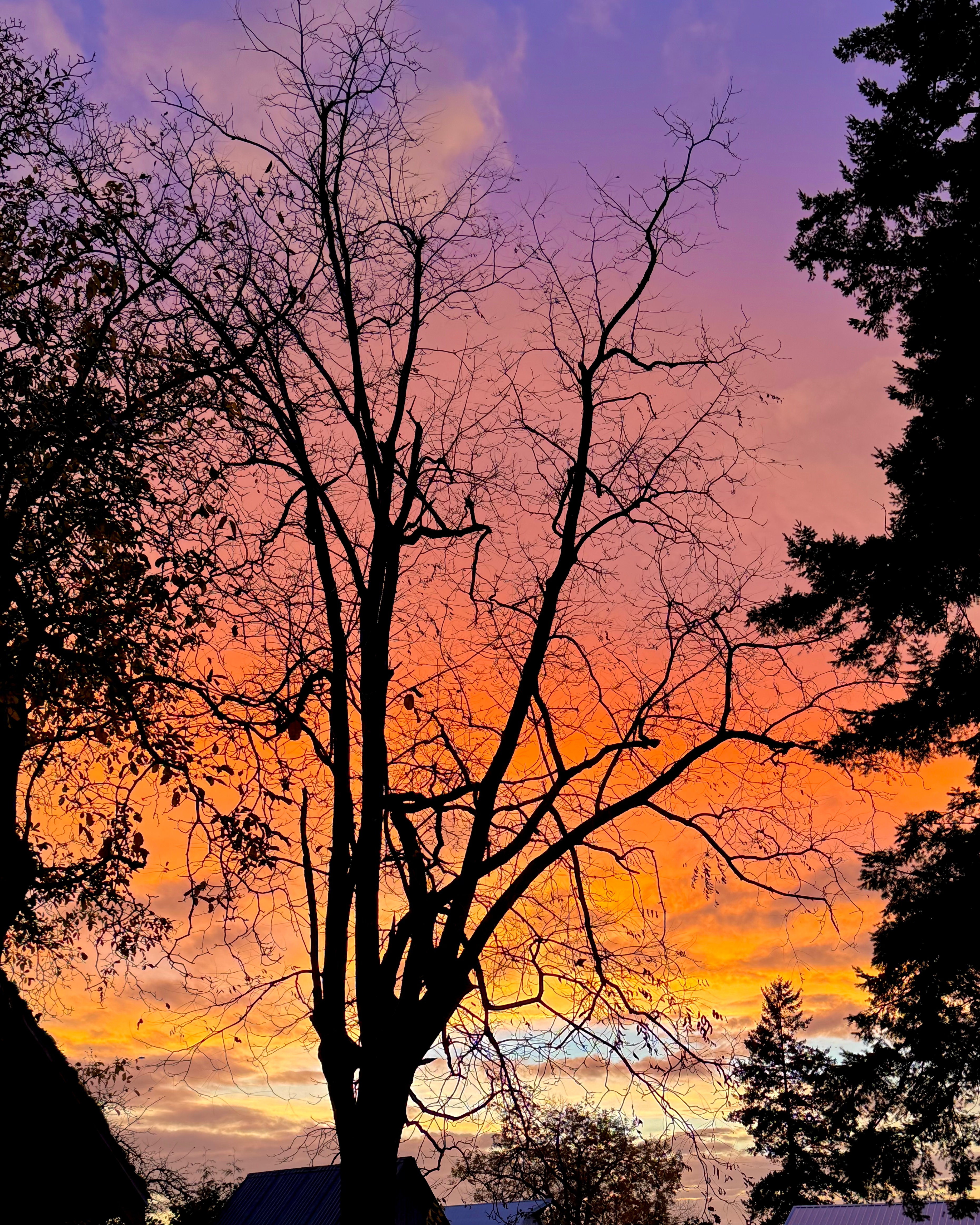
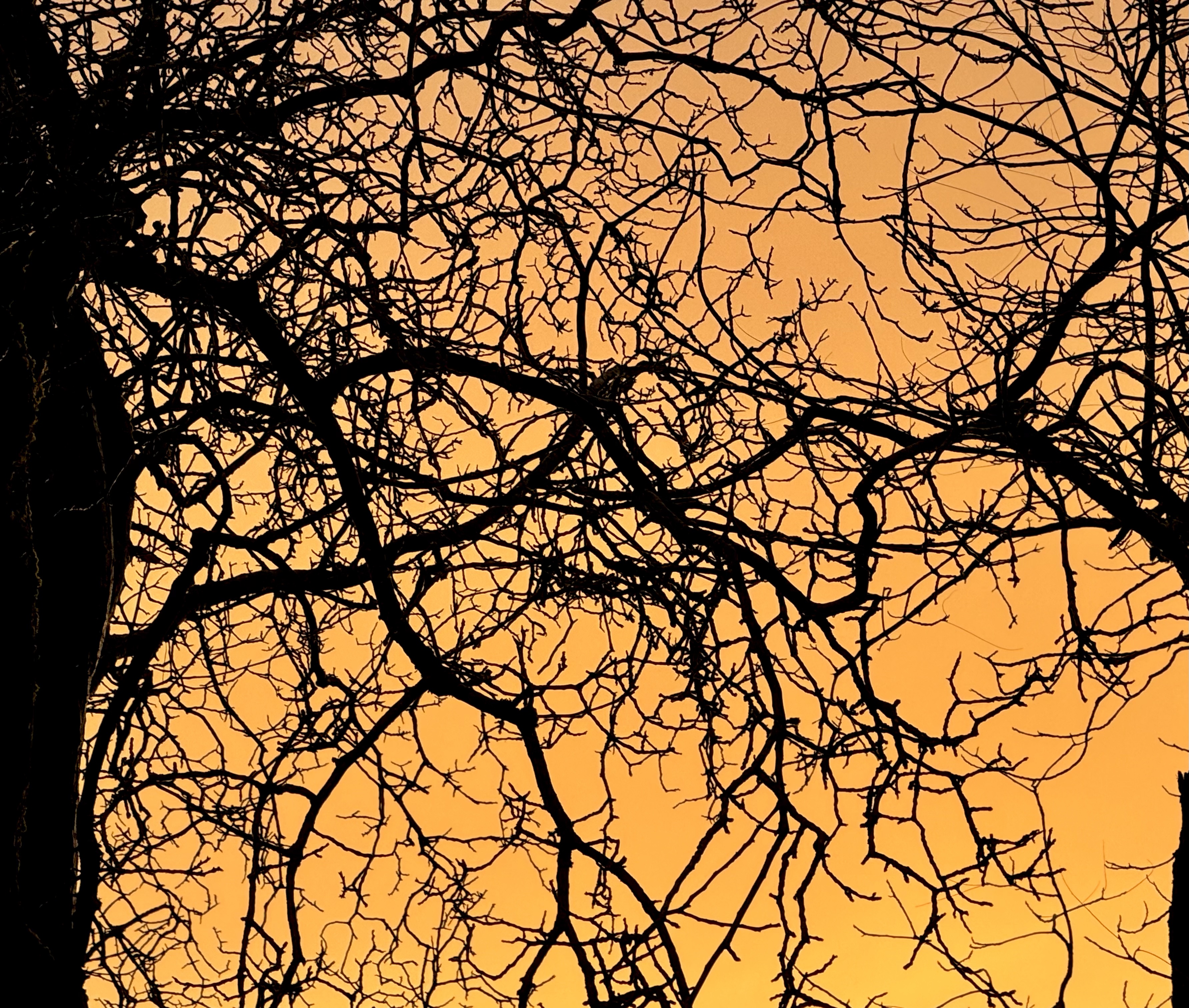
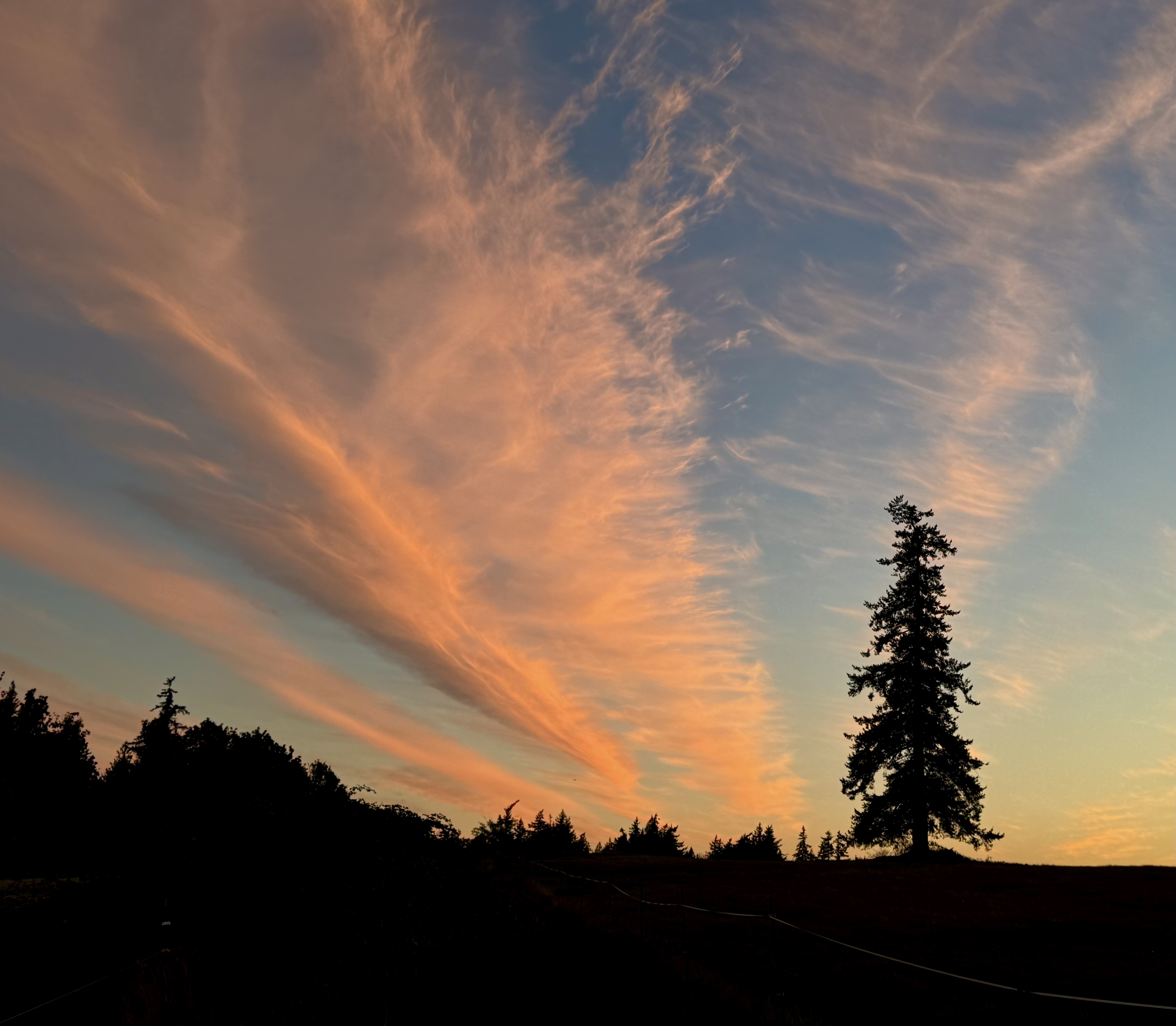
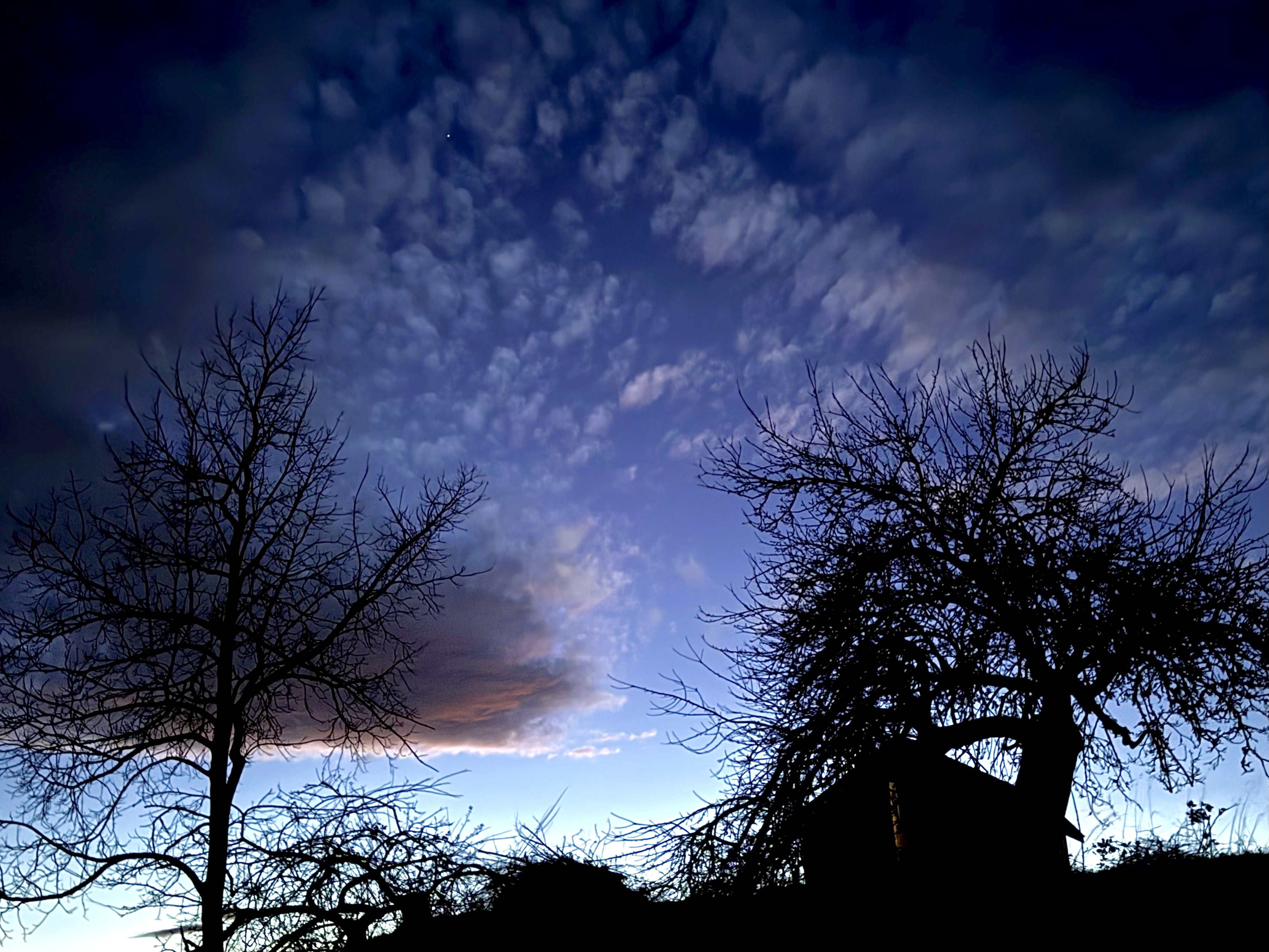
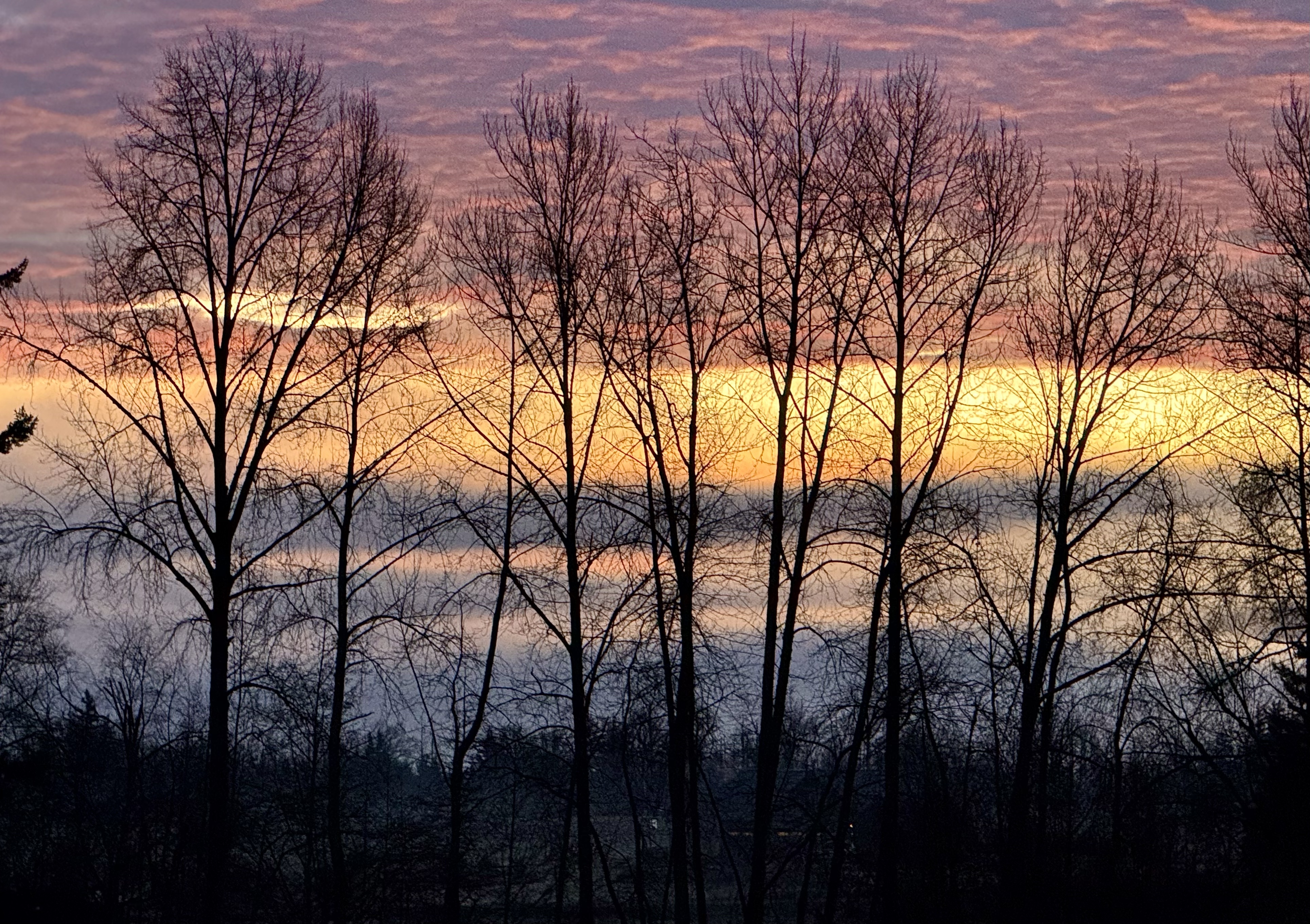
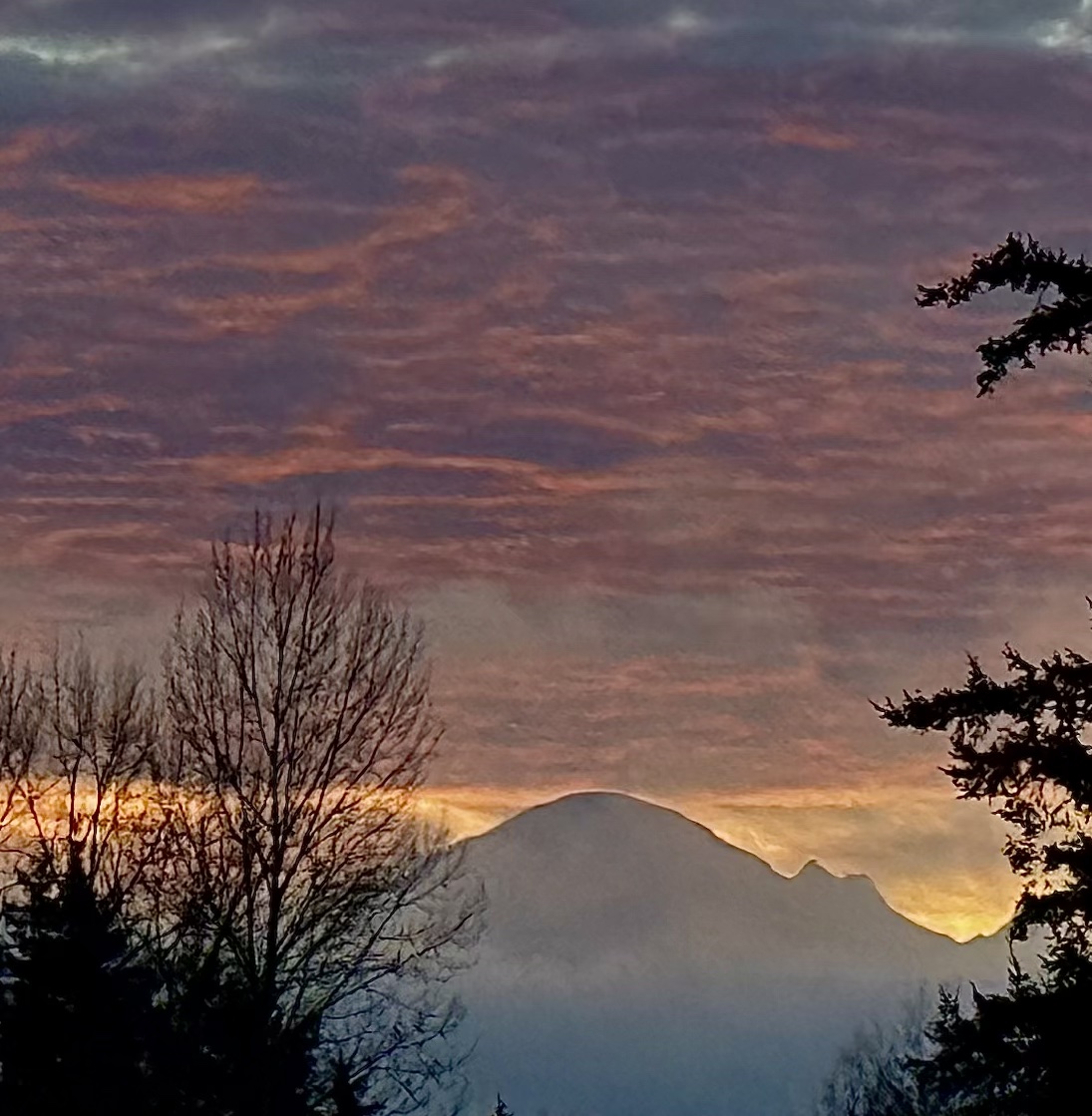
So welcome in the dead center of January: a surround-sunset experience on our farm – 360 degrees of evolving color and patterns, streaks and swirls, gradation and gradual decline.
All is silent. No bird song, no wind, no spoken prayer. Yet communion takes place with the air breaking and feeding me like manna from heaven.
Witnessing the light bleeding out all around me:
I will squander my days no more, treasuring each as sheer gift. I will seek to serve my God, church, family, friends, and community. I will be warmed on this chilly winter day even as it descends to darkness, knowing light and hope will return.
to the westto the westto the west
One-Time
Monthly
Yearly
Make a one-time or recurring donation to support daily Barnstorming posts
The house had gone to bring again To the midnight sky a sunset glow. Now the chimney was all of the house that stood, Like a pistil after the petals go.
The barn opposed across the way, That would have joined the house in flame Had it been the will of the wind, was left To bear forsaken the place’s name.
No more it opened with all one end For teams that came by the stony road To drum on the floor with scurrying hoofs And brush the mow with the summer load.
The birds that came to it through the air At broken windows flew out and in, Their murmur more like the sigh we sigh From too much dwelling on what has been.
Yet for them the lilac renewed its leaf, And the aged elm, though touched with fire; And the dry pump flung up an awkward arm: And the fence post carried a strand of wire.
For them there was really nothing sad. But though they rejoiced in the nest they kept, One had to be versed in country things Not to believe the phoebes wept. ~Robert Frost “The Need of Being Versed in Country Things”
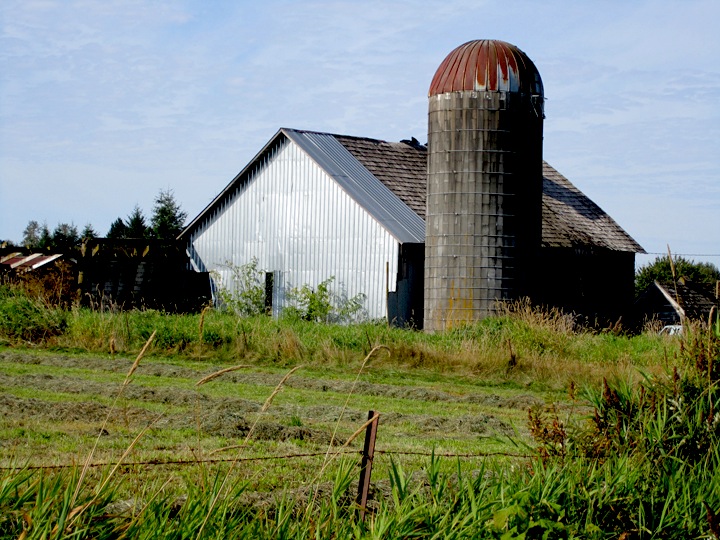
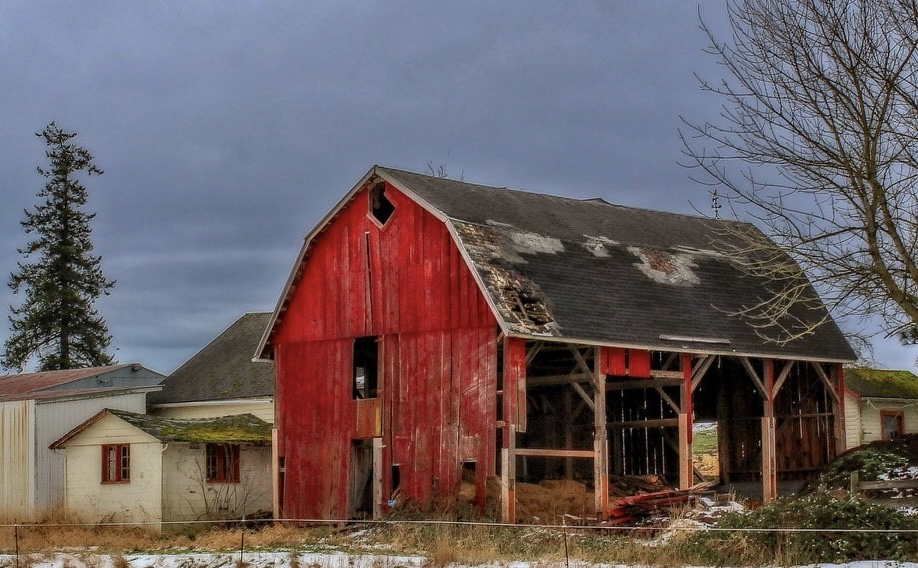
Photo of Aaron Janicki haying with his Oberlander team in Skagit County – courtesy of Tayler RaeThe field of my childhood farm (1954-59) with the red barn visible on the right. The house was destroyed by fire in the mid-60s but the barn was sparedphoto by Harry Rodenberger
My family sold our first farm in East Stanwood, Washington, when my father took a job working for the state in Olympia, moving to supervising high school agriculture teachers rather than being an ag teacher himself.
It was a difficult transition for us all: we moved to a smaller home and a few acres, selling the large two story house, a huge hay barn and chicken coop as well as fields and a woods where our dairy cows had grazed.
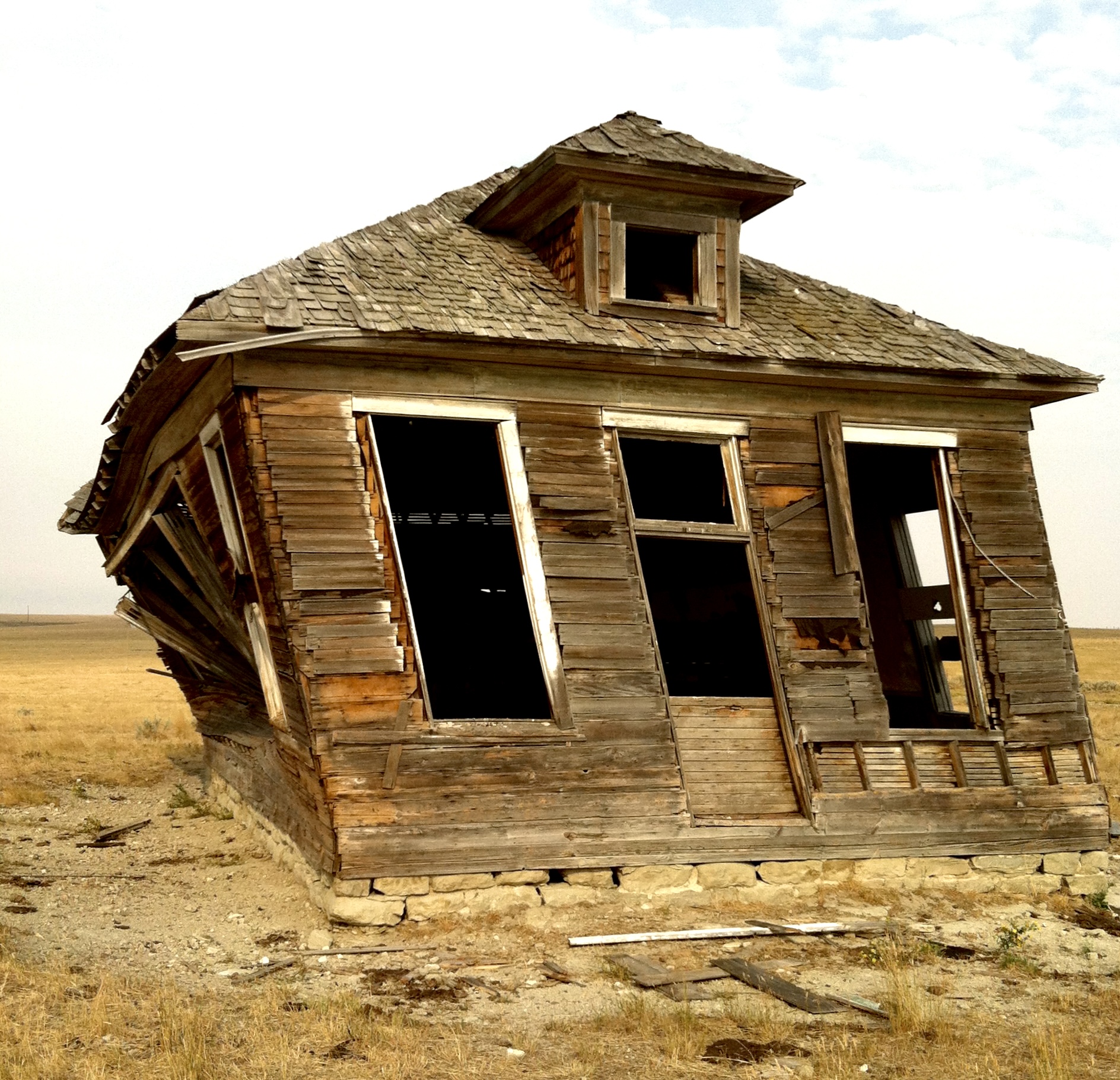
Only a few years later, that old farmhouse burned down but the rest of the buildings were spared. It passed through a few hands and when we had occasion to drive by, we were dismayed to see how nature was taking over the place. The barn still stood but unused it was weathering and withering. Windows were broken, birds flew in and out, the former flower garden had grown wild and unruly.
This was the place I was conceived, where I learned to walk and talk, developing a love for wandering in the fields among the farm animals we depended upon. I remember as a child of four sitting at the kitchen table looking out the window at the sunrise rising over the woods and making the misty fields turn golden.
This land returned to its essence before the ground was ever plowed or buildings were constructed. It no longer belonged to our family (as if it ever did) but it forever belongs to our memories.
I am overly prone to nostalgia, dwelling more on what has been than what is now or what I hope is to come. It is easy to weep over the losses when time and circumstances reap something unrecognizable.
I may weep, but nature does not. The sun continues to rise over the fields, the birds continue to build nests, the lilacs grow taller with outrageous blooms, and each day ends with a promise of another to come.
So I must dwell on what lies ahead, not what has perished in the ashes.
photo by Harry Rodenberger
Tell me, where is the road I can call my own That I left, that I lost So long ago? All these years I have wandered Oh, when will I know There’s a way, there’s a road That will lead me home After wind, after rain When the dark is done As I wake from a dream In the gold of day Through the air there’s a calling From far away There’s a voice I can hear That will lead me home Rise up, follow me Come away, is the call With the love in your heart As the only song There is no such beauty As where you belong Rise up, follow me I will lead you home
One-Time
Monthly
Yearly
Make a one-time or recurring donation to support daily Barnstorming posts
Twenty years ago My generation learned To be afraid of mud. We watched its vileness grow, Deeper and deeper churned From earth, spirit, and blood.
From earth, sweet-smelling enough As moorland, field, and coast; Firm beneath the corn, Noble to the plough; Purified by frost Every winter morn.
From blood, the invisible river Pulsing from the hearts Of patient man and beast: The healer and life-giver; The union of parts; The meaning of the feast.
From spirit, which is man In triumphant mood, Conquerer of fears, Alchemist of pain Changing bad to good; Master of the spheres.
Earth, the king of space, Blood, the king of time, Spirit, their lord and god, All tumbled from their place, All trodden into slime, All mingled into mud. ~Richard Thomas Church “Mud” written in the 1930s
The world is mud-luscious and puddle-wonderful. ~E. E. Cummings from “In Just”
The work of the world is common as mud. Botched, it smears the hands, crumbles to dust. But the thing worth doing well done has a shape that satisfies, clean and evident. ~Marge Piercy from “To Be of Use” from Circles on the Water: Selected Poems of Marge Piercy
Several weeks of rain along with dismal headlines can take its toll in a variety of ways on the human psyche; the bleakness seeps into my brain, making my gray matter much grayer than usual. Everything slows down to a crawl and climbing out of bed to another dark day requires commitment and effort.
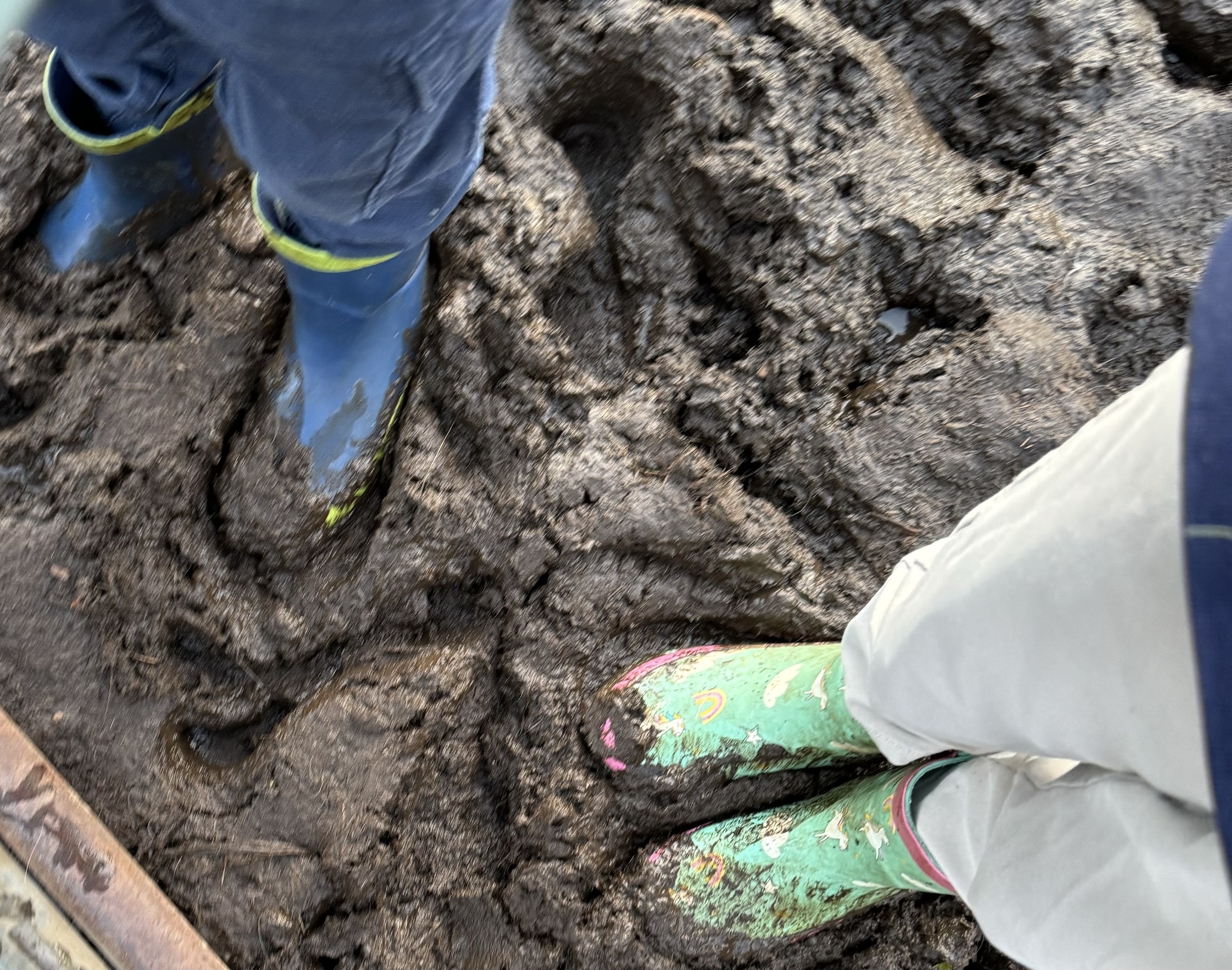
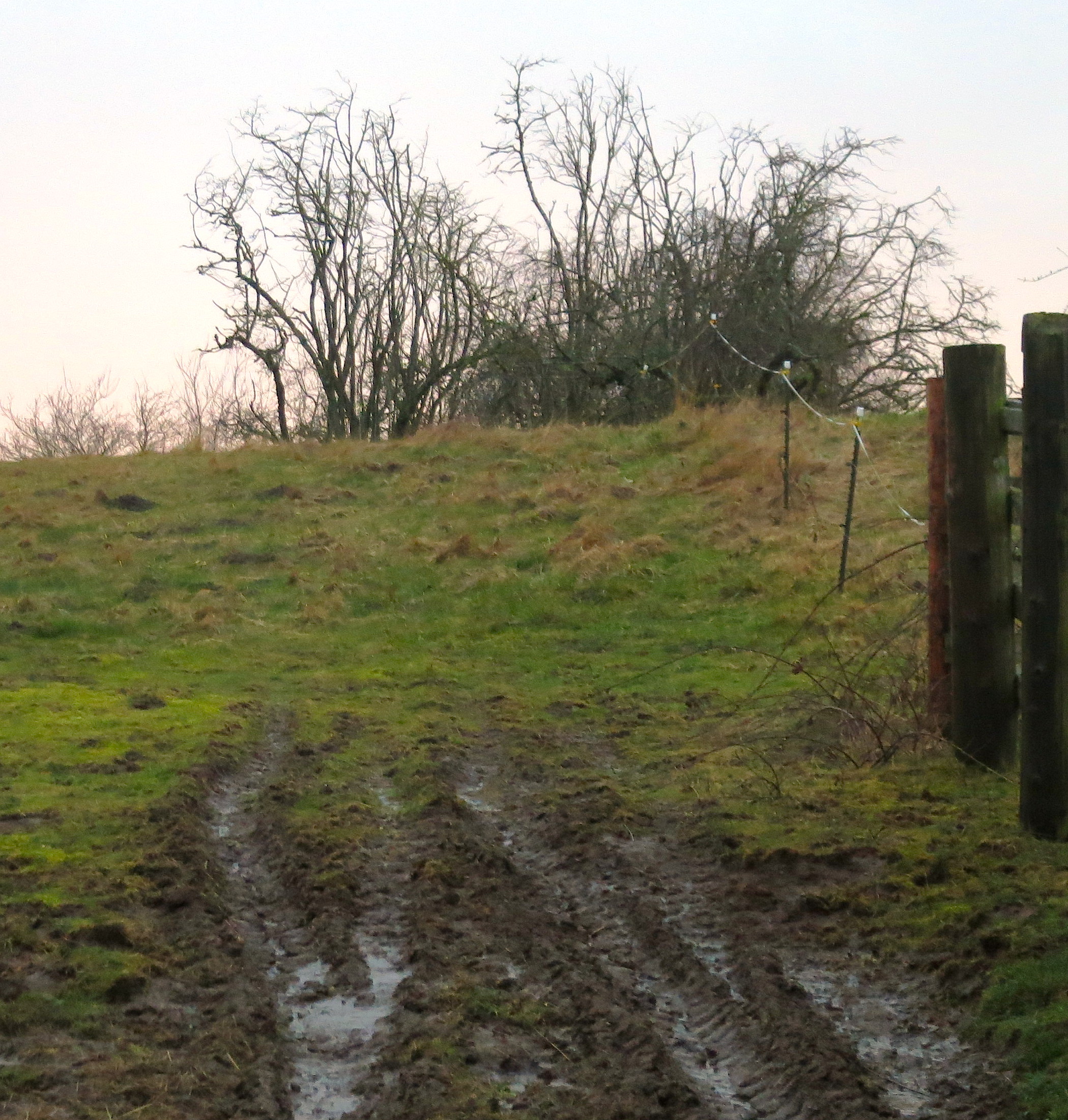
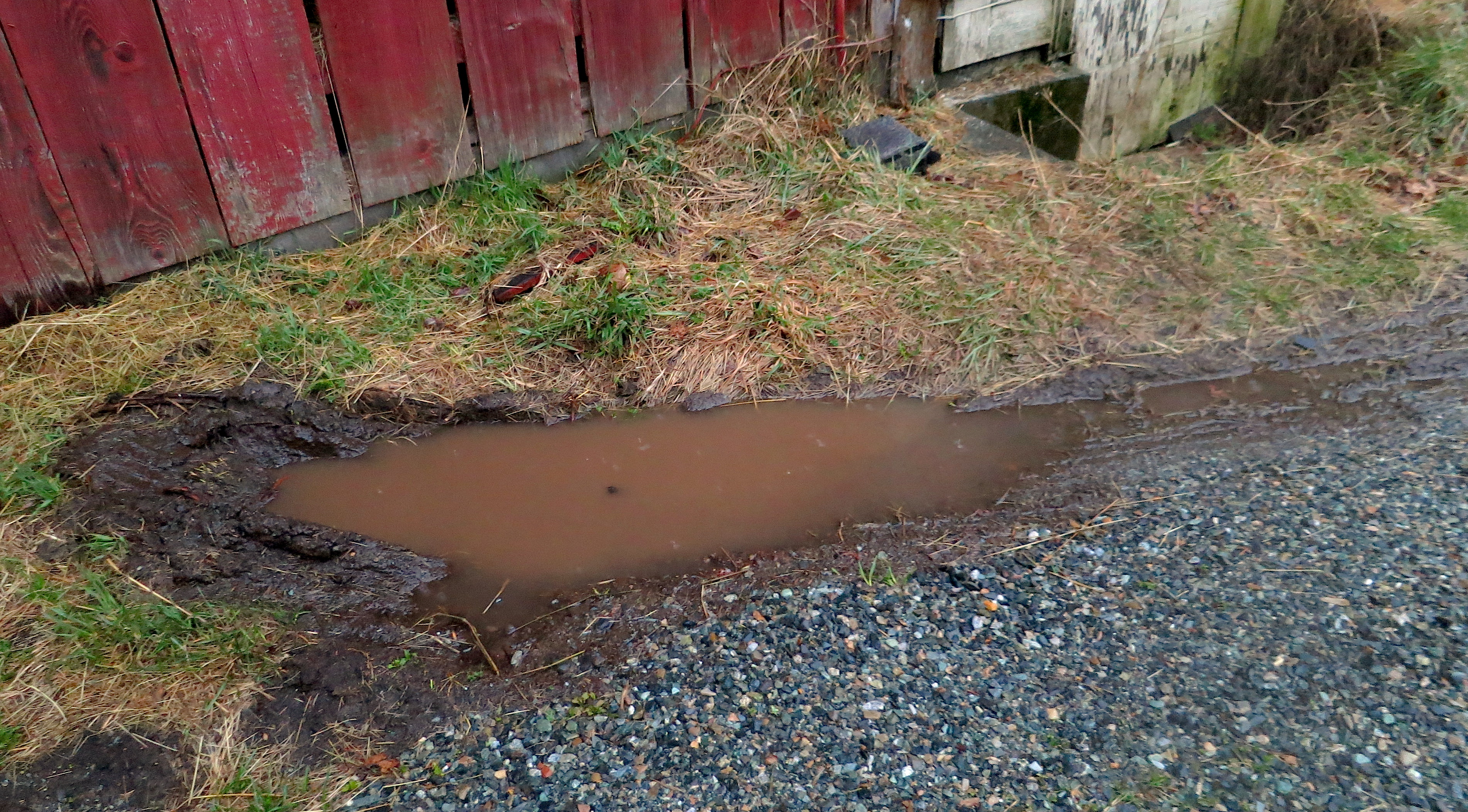
Managing barn chores and horses on days like these is a challenge. Despite years of effort to create well drained paddocks with great footing, there is no such thing when the ground is super saturated from unrelenting inches of rain, and when the barn and paddocks are unfortunately placed on the downside of a hill.
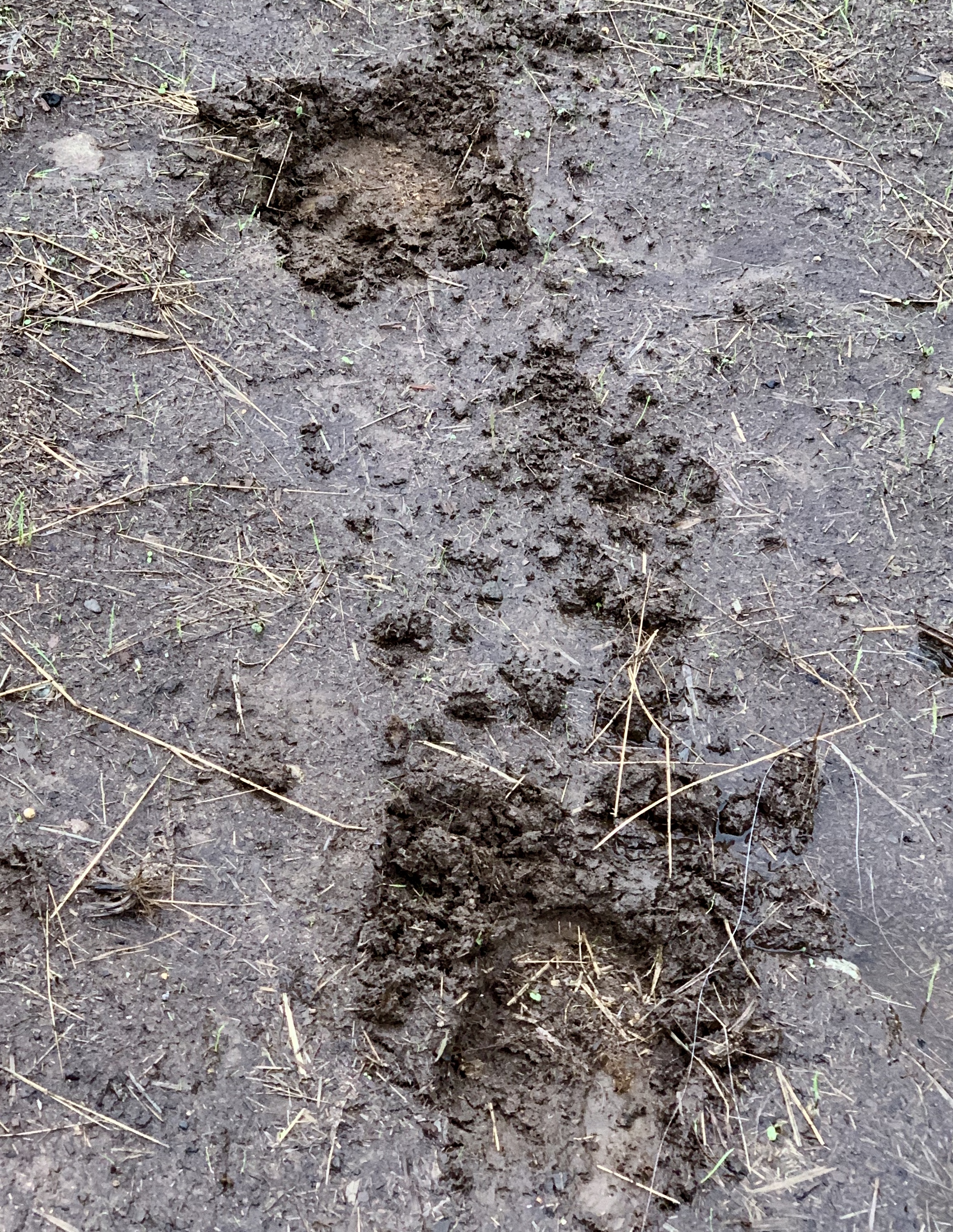
Every bare inch of ground has become mud soup with more water pouring off the hill every moment.
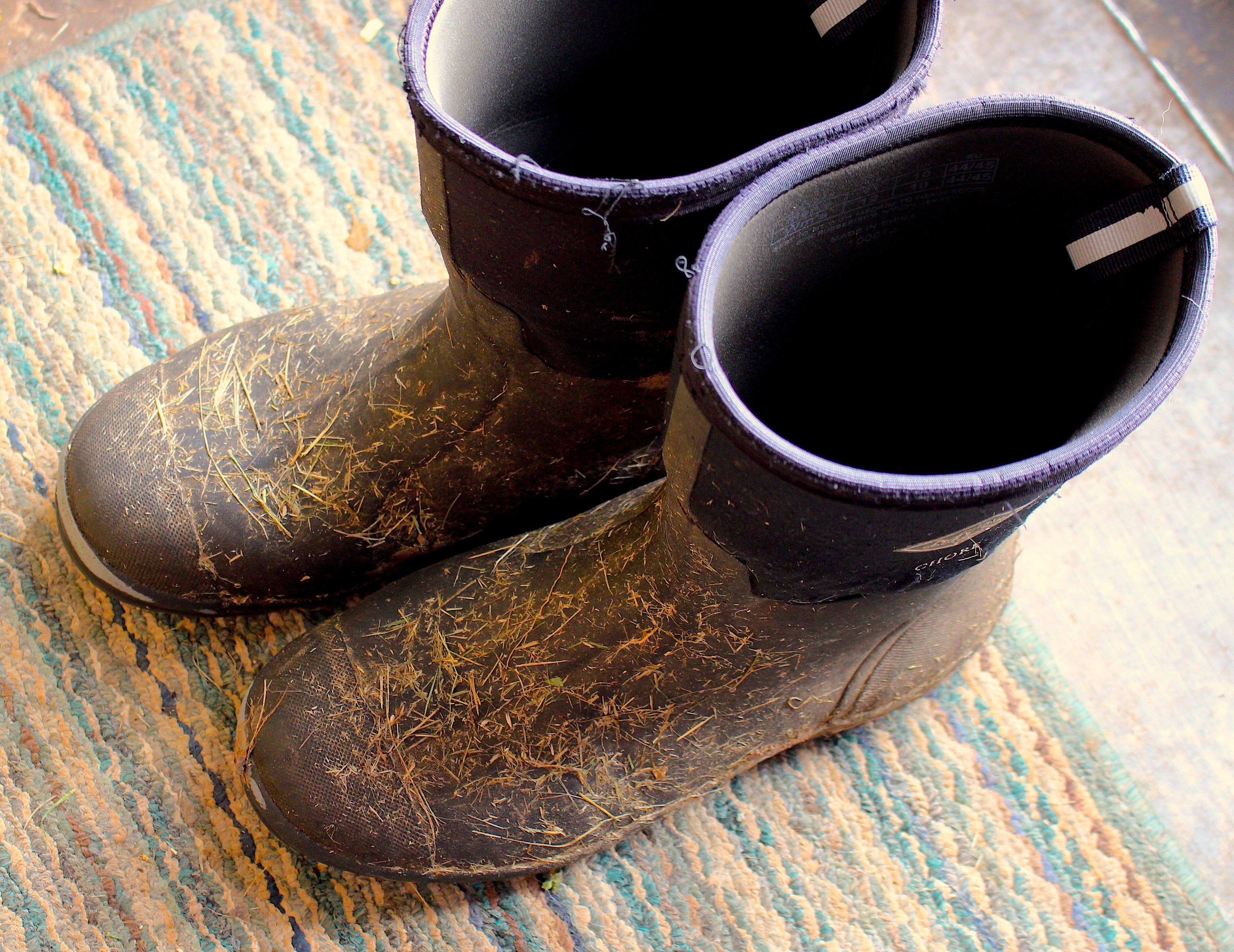
Mud in all its glory rivals ice for navigation hazard. Yesterday it was a boot magnet as I tried carefully to make my way with a load of hay to a bit drier area in a paddock, and found with one step that my boot had decided to remain mired in the muck and my foot was waving bootless in the air trying to decide whether to land in the squishy stuff or go back to the relative safety of the stuck boot. Standing there on one foot, with a load of hay in my arms, I’m sure I looked even more absurd than I felt at the moment, and at least I gave comic relief to people driving by.
I won’t say how I figured my way out, but it did require doing laundry later.
I remember years ago when my daughter was about 5 years old, I was busy with chores as she was exploring a similar muddy paddock and I realized I hadn’t seen her for a few minutes and I went looking. There she stood, wailing, with one stocking foot in the mud, an empty boot stuck up to its top, and her other boot so mired, she couldn’t move without abandoning it too. By the time I got her extracted, we were both laughing muddy messes.
More laundry.
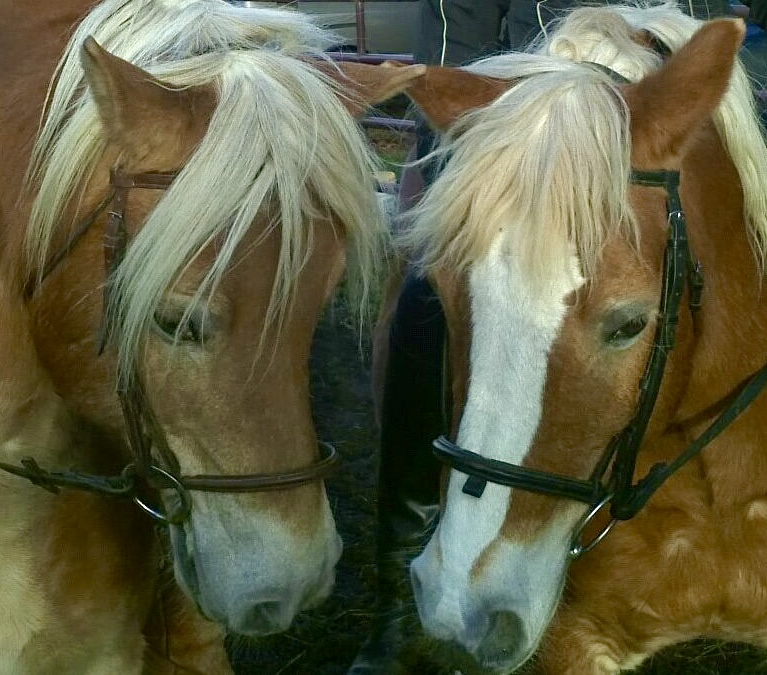
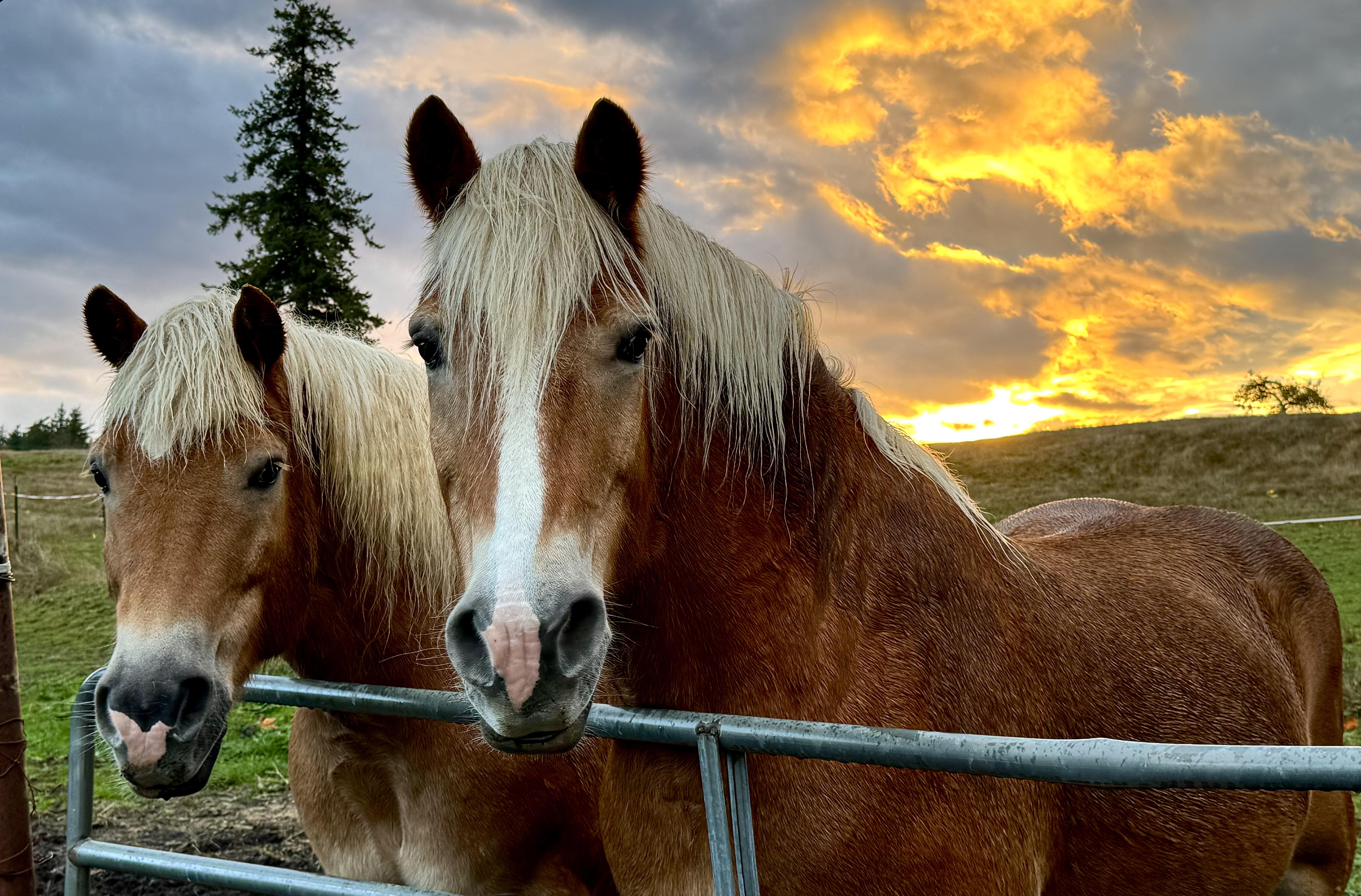
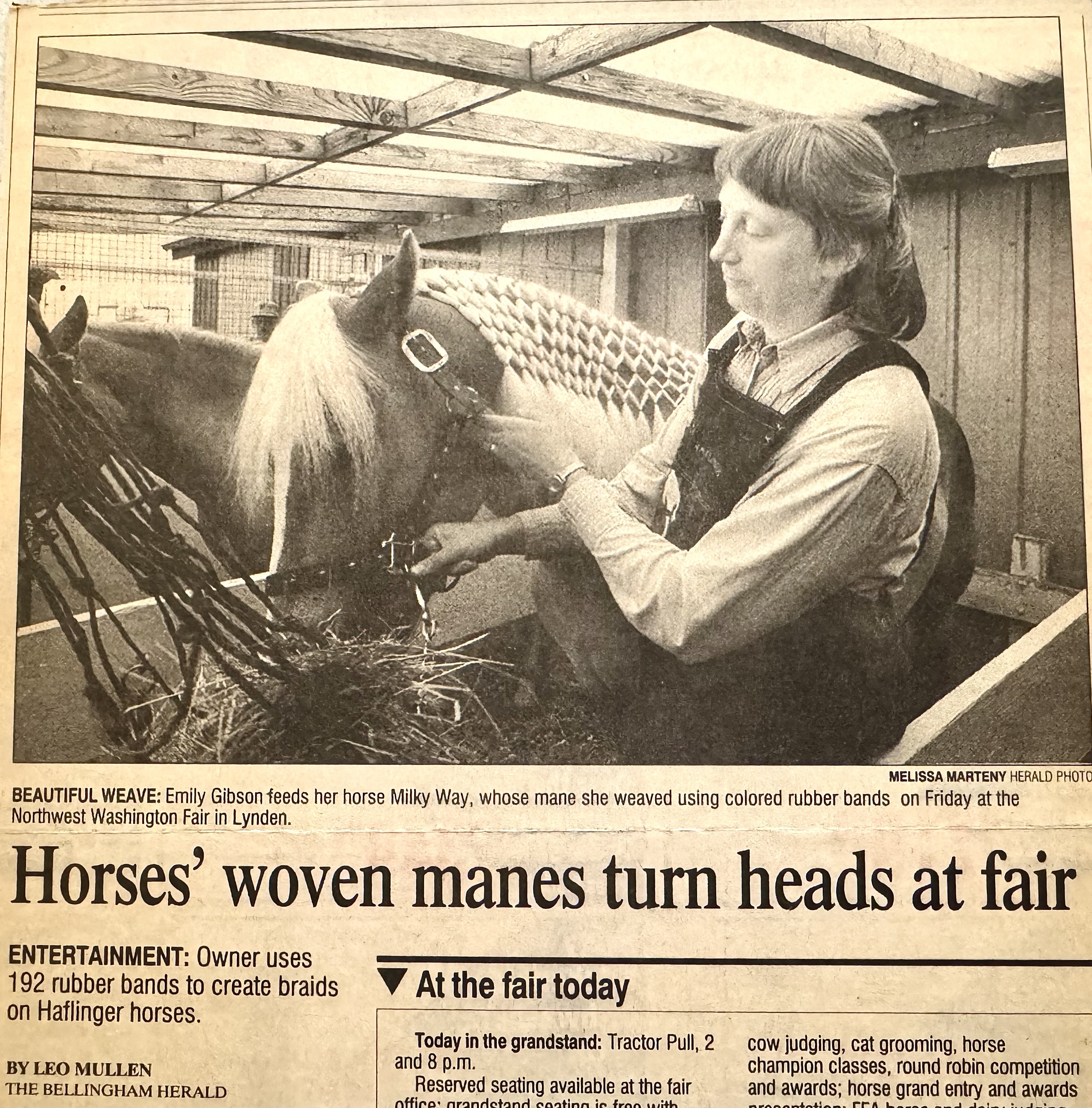
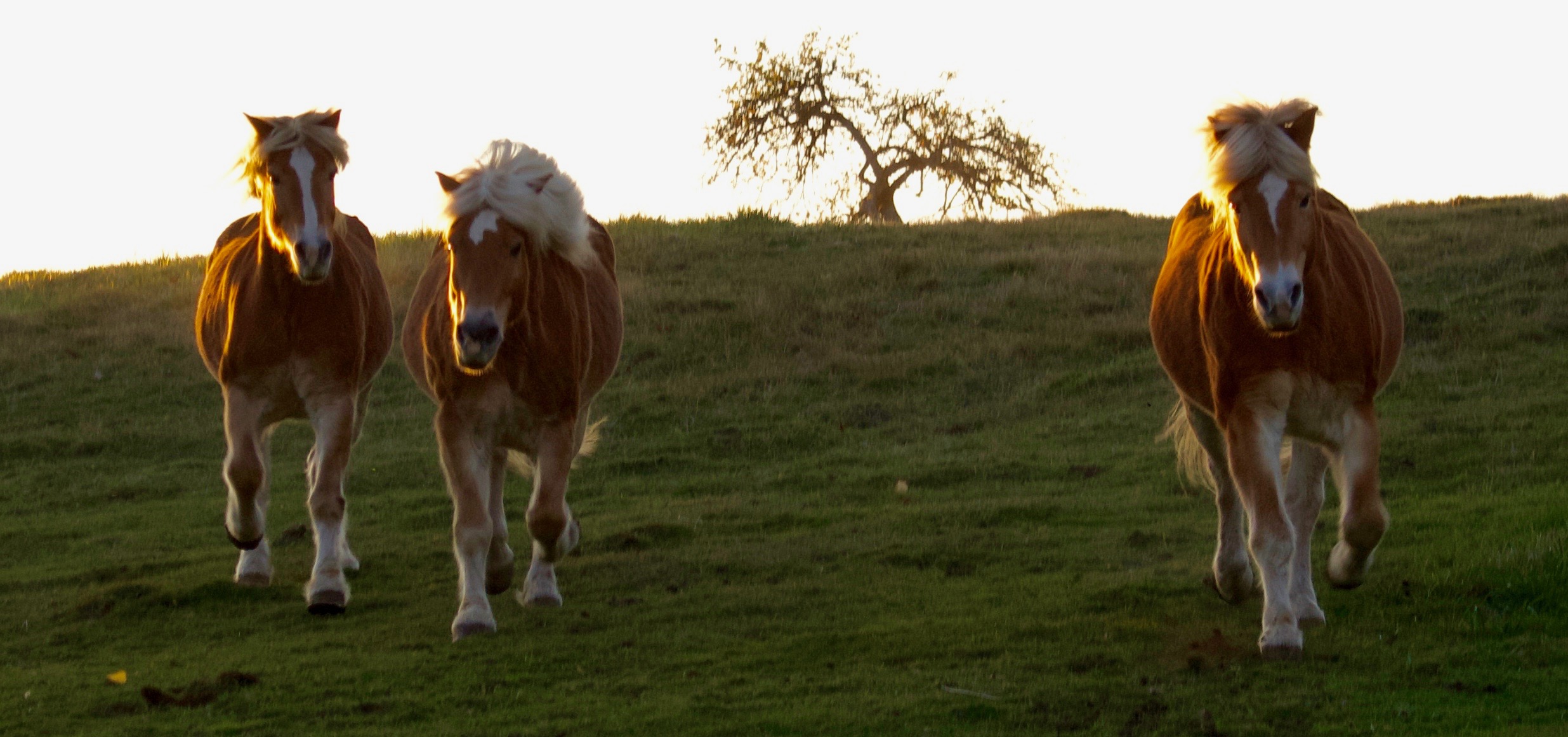
The Haflinger horses are not averse to the mud if they are hungry enough. They’ll hesitate momentarily before they dive in to reach their meal but dive in they do. Those clean blonde legs and white tails are only a memory from last summer. Even their bellies are flecked with brown now. Later, back in the barn, as the mud dries, it curries off in chunks and I start to see my golden horses revealed again, but it seems they and I will never be truly clean again.
What lures me into the mud, enticing me deeper in muck that covers and coats me so thoroughly that it feels I’ll never be clean again? Whatever I want so badly that I’m willing to get hopelessly dirty to reach it, once there, it has become tainted by the mud as well, and is never as good as I had hoped.
I become hopelessly mired and stuck, sinking deeper by the minute. Reading the daily headlines only makes it worse.
Rescue comes from an outreached hand with strength greater than my own. Cleansing may be merely skin deep, only to last until my next dive into the mud, or it can be thorough and lasting–a sort of future “mud protective coating” so to speak. I can choose how dirty to get and how dirty to stay and how clean I want to be.
I think the whole world needs to do laundry daily.
One-Time
Monthly
Yearly
Make a one-time or recurring donation to support daily Barnstorming posts
I thank you, each of you, who visit this page with your hearts open to the ever-changing seasons. Your encouragement and support keeps me looking for beauty in words and images to share each day.
Here’s to another year passed by and yet another to come, full of rich blessings yet to be discovered…
There is nothing like looking, if you want to find something. You certainly usually find something, if you look, but it is not always quite the something you were after. ~J.R.R. Tolkienfrom The Hobbit
These sudden ends of time must give us pause. We fray into the future, rarely wrought Save in the tapestries of afterthought. More time, more time. ~Richard Wilbur from “Year’s End”
In a dark time, the eye begins to see… ~Theodore Roethke from “In a Dark Time”
How much can come, how much can go When the December moon is bright, What worlds of play we’ll never know Sleeping away the cold white night After a fall of snow. – May Sarton, from December Moon
Previous collections of “Best of Barnstorming” photos:
I wanted a horse. This was long after we sold the work horses, and I was feeling
restless on the farm. I got up early to help my father milk the cows, talking
a blue streak about TV cowboys he never had time to see and trying to
convince him that a horse wouldn’t cost so much and that I’d do all the work.
He listened while he leaned his head against the flank of a Holstein, pulling
the last line of warm milk into the stainless bucket. He kept listening
while the milk-machine pumped like an engine, and the black and silver cups fell off and
dangled down, clanging like bells when he stepped away, balancing the heavy milker
against the vacuum hose and the leather belt. I knew he didn’t want the trouble
of a horse, but I also knew there was nothing else I wanted the way I wanted a horse—
another way of saying I wanted to ride into the sunset and (maybe)
never come back—I think he knew that too. We’ll see, he said, we’ll see what we can do. Joyce Sutphen – “What Every Girl Wants”
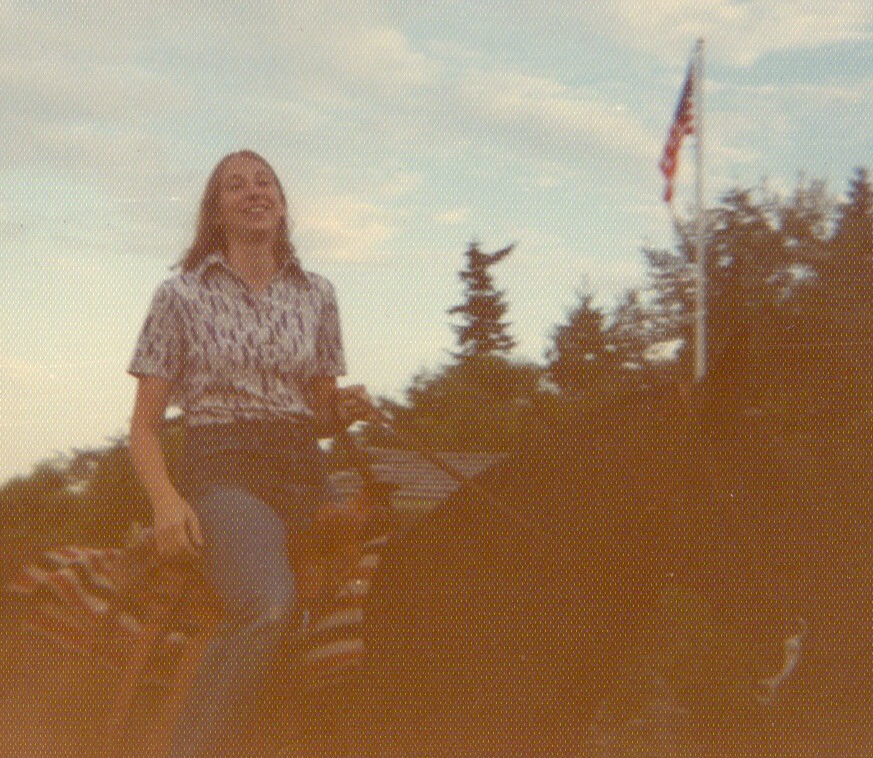
I once was a skinny freckled eleven year old girl who wanted nothing more than to have her own horse. Every inch of my bedroom wall had posters of horses, all my shelves were filled with horse books and horse figurines and my bed was piled with stuffed horses.
I suffered an extremely serious case of horse fever. I wished for a horse more than anything.
I had learned to ride my big sister’s horse while my sister was off to college, but the little mare had pushed down a hot wire to get into a field of spring oats which resulted in a terrible case of colic and had to be put down. I was inconsolable until I set my mind to buy another horse. We had only a small shed, not a real barn, and no actual fences other than the electric hot wire. Though I was earning money as best I could picking berries at 3 cents a pound and babysitting at 30 cents an hour, I was a long way away from the $150 it would take to buy a trained horse back in 1965.
I pestered my father about my dreams of another horse, and since he was the one to dig the hole for my sister’s horse to be buried, he was not enthusiastic. “We’ll see,” he said. “We will see what we can do.”
So I dreamed my horsey dreams, mostly about golden horses with long white manes, hoping one day those dreams might come true.
In fall 1965, the local radio station KGY’s Saturday morning horse news program announced their “Win a Horse” contest. I knew I had to try. The prize was a weanling bay colt, part Appaloosa, part Thoroughbred, and the contest was only open to youth ages 9 to 16 years old. All I had to do was write a 250 word or less essay on “Why I Should Have a Horse”.
I worked and worked on my essay, crafting the right words and putting all my heart into it, hoping the judges would see me as a worthy potential owner. My parents took me to visit the five month old colt named “Prankster”, a fuzzy engaging little fellow who was getting plenty of attention from all the children coming to visit him, and that visit made me even more determined.
When I read these words now, I realize there is nothing quite like the passion of an eleven year old girl:
“Why I Should Have a Horse”
When God created the horse, He made one of the best creatures in the world. Horses are a part of me. I love them and want to win Prankster for the reasons which follow:
To begin with, I’m young enough to have the time to spend with the colt. My older sister had a horse when she was in high school and her school activities kept her too busy to really enjoy the horse. I’ll have time to give Prankster the love and training needed.
Another reason is that I’m shy. When I was younger I found it hard to talk to anybody except my family. When my sister got the horse I soon became a more friendly person. When her horse recently died (about when Prankster was born), I became very sad. If I could win that colt, I couldn’t begin to describe my happiness.
Also I believe I should have a horse because it would be a good experience to learn how to be patient and responsible while teaching Prankster the same thing.
When we went to see Prankster, I was invited into the stall to brush him. I was never so thrilled in my life! The way he stood there so majestically, it told me he would be a wonderful horse.
If I should win him, I would be the happiest girl alive. I would work hard to train him with love and understanding. If I could only get the wonderful smell and joy of horses back in our barn!
I mailed in my essay and waited.
Sixty years ago on November 27, 1965, my mother and I listened to the local horse program that was always featured on the radio at 8 AM on Saturday mornings. They said they had over 300 essays to choose from, and it was very difficult for them to decide who the colt should go to. I knew then I didn’t have a chance. They had several consolation prizes for 2nd through 4th place, so they read several clever poems and heartfelt essays, all written by teenagers. My heart was sinking by the minute.
The winning essay was next. The first sentence sounded very familiar to me, but it wasn’t until several sentences later that we realized they were reading my essay, not someone else’s. My mom was speechless, trying to absorb the hazards of her little girl owning a young untrained horse.
I woke up my dad, who was sick in bed with an early season flu bug. He opened one eye, looked at me, and said, “I guess I better get a fence up today, right?” Somehow, fueled by the excitement of a daughter whose one wish had just come true, he pulled himself together and put up a wood corral that afternoon, despite feeling so miserable.
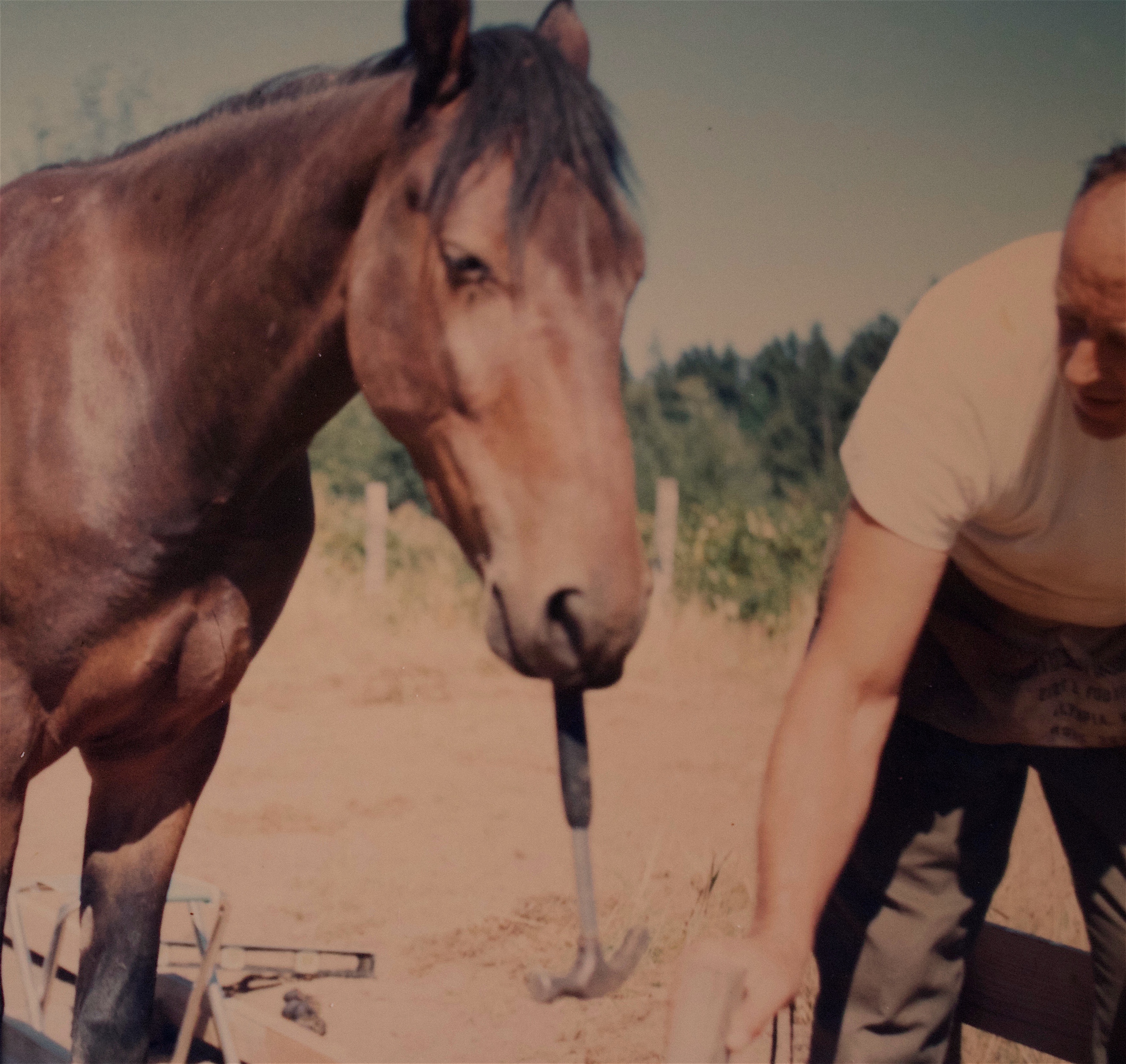
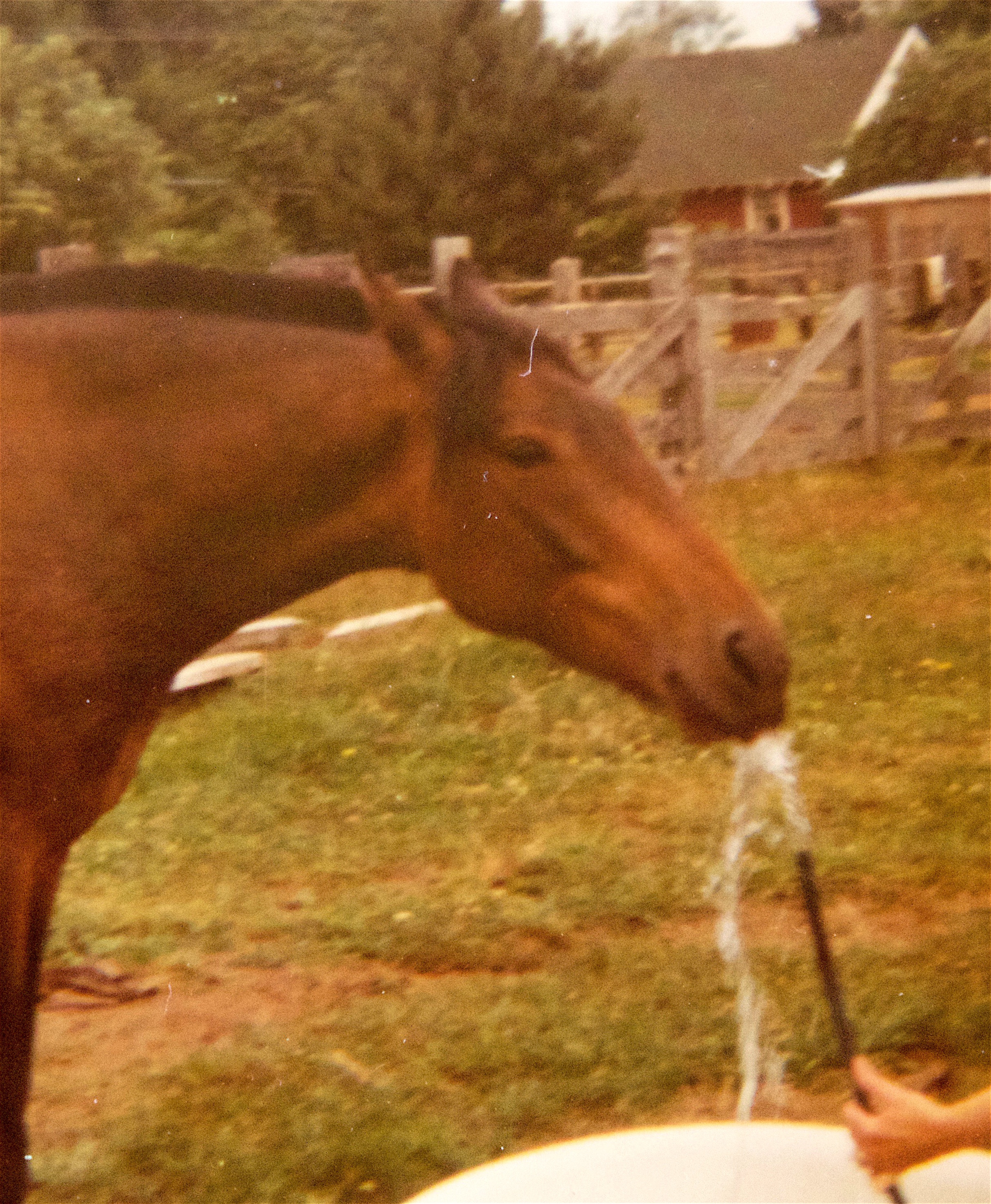
That little bay colt came home to live with me the next day. Over the next few months he and I did learn together, as I checked out horse training books from the library, and joined a 4H group with helpful leaders to guide me. I made plenty of mistakes along the way, learning from each one, including those that left behind scars I still bear.
Prankster was a typical adolescent gelding who lived up to his name — full of mischief with a sense of humor and a penchant for finding trouble, but he was mine and that was all that mattered.
Dreams do come true.
…that and a dad who saw what he needed to do for his passionate kid. I’ll never forget how he showed his love for me by doing what was needed in that moment.
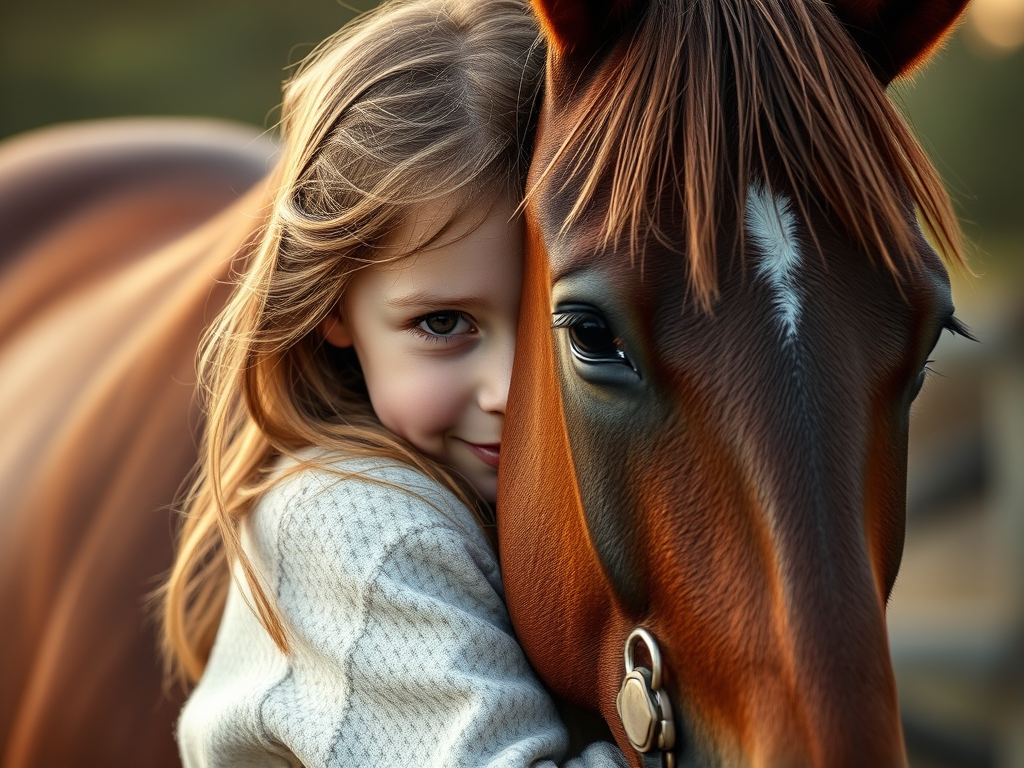
AI image created for this post
One-Time
Monthly
Yearly
Make a one-time or recurring donation to support daily Barnstorming posts
There is a basic lesson that all young horses must learn (and a fewer older horses must relearn) on our farm. It is to stand still when asked and move only when asked. This does not come naturally to a young horse–they tend to be impatient and fidgety and fretful and full of energy. If they are hungry, they want food now and if they are bored, they want something different to do and if they are fearful, they want to be outta there.
Teaching a horse to be still is actually a greater lesson in persistence and consistency for the human handler, which means I don’t always do well in teaching this to my horses and they (and I) lapse frequently–wiggly pushy horses and a weary frustrated handler. It means correcting each little transgression the horse makes, asking them to move back to their original spot, even if there is hay waiting just beyond their nose, asking them to focus not on their hunger, their boredom, their fear, but asking them to focus only on me and where they are in relationship to me. It means they must forget about themselves and recognize something outside of themselves that is in control–even if I move away from them to do other things.
The greatest trust is when I can stand a horse in one spot, ask them to be still, walk away from them, briefly go out of sight, and return to find them as I left them, still focused on me even when I was not visible.
I was reminded of this during our pastor’s sermon on the book of Exodus when he preached on the moments before Moses parted the Red Sea, allowing the Hebrews an escape route away from Pharoah and the Egyptian chariots and soldiers. In those moments beforehand, the Hebrews were pressed up against the Sea with the Egyptians bearing down on them and they lamented they should never have left Egypt in the first place, and that generations of bondage in slavery would have been preferable to dying in the desert at the hands of the soldiers or drowning in the Sea.
Moses told them to “be still”. Or as our pastor said, he told them to “shut up”. Stay focused, be obedient, trust in the Lord’s plan. And the next thing that happened was the Sea opened up. Then the Hebrews rejoiced in thanksgiving for their freedom.
Thanksgiving, as it has developed over the years from the first historical observance of a meal shared jointly between the Pilgrims and their patient and generous Native American hosts, is just such a moment to “be still and know” about the gifts from our God. Yet in our hurried and harried culture, Thanksgiving is about buying the best bargain turkey, creating the most memorable recipes, decorating in perfect Martha Stewart style, eating together in Norman Rockwell style extended family gatherings, watching football and parades on the biggest flat screen TV, while preparing for the mad dash out the door the next day to start the Christmas shopping season.
Instead of all that fol de rol – be still.
Like my horses, I need correction when I start to agitate out of “hunger”–wanting to literally stuff myself full, or out of my boredom– seeking the latest in entertainment or satisfaction, or out of my fear– feeling the threats that surround us all in the world today. I need to be reminded continually that my focus must be outside myself and my perceived needs, and to be still long enough to know God is with us even though we cannot see Him every moment.
I do not do well at this.
My horses learn much faster than I do. I am restless, rarely taking the time to be still and acknowledge God who continually watches, waiting for me to settle down and focus on Him.
May this Thanksgiving remind me of my need for God, and my gratitude for His patient persistence in moving me back into place when I wiggle and fret and stuff myself even when I’m really not hungry.
May I remember that to be still and know God is the greatest gift I can give and that I can receive.
And may His Stillness be with you today as well.
One-Time
Monthly
Yearly
Make a one-time or recurring donation to support daily Barnstorming posts
We all know that something is eternal. And it ain’t houses and it ain’t names, and it ain’t earth, and it ain’t even the stars . . . everybody knows in their bones that something is eternal, and that something has to do with human beings. All the greatest people ever lived have been telling us that for five thousand years and yet you’d be surprised how people are always losing hold of it. There’s something way down deep that’s eternal about every human being. We can only be said to be alive in those moments when our hearts are conscious of our treasures. Do any human beings ever realize life while they live it – every, every minute? ~Thornton Wilder, quotes from “Our Town”
The words from the stage play “Our Town”, written nearly 90 years ago still ring true: at that time our country was crushed under the Great Depression. Though now most people are more economically secure than the 1930’s, many of us are emotionally bankrupt.
Our country staggers under a Great Depression of the spirit~ despite greater connection electronically (often too much…), many of us are more isolated from community, family, and faith.
We need reminding to be conscious of our many treasures and abundance, never forgetting to care of others in greater need.
God, in His everlasting recognition of our eternal need of Him, cares for us, even as we turn our faces away from Him.
We all feel His Love, deep in our bones.
So I search the soil of this life, this farm, this faith to find what yearns to grow, to bloom, to fruit, to be harvested to share with others.
My deep gratitude goes to you who visit here and to those who let me know the small and the good I share with you makes a difference in your day. I am beyond thankful you are here, listening.
Many blessings in your own thanksgiving this week, Emily
One-Time
Monthly
Yearly
Make a one-time or recurring donation to support daily Barnstorming posts















 Barnstorming