It is not only prayer that gives God glory but work.
Smiting on an anvil, sawing a beam, whitewashing a wall,
driving horses, sweeping, scouring,
everything gives God some glory if being in his grace
you do it as your duty.
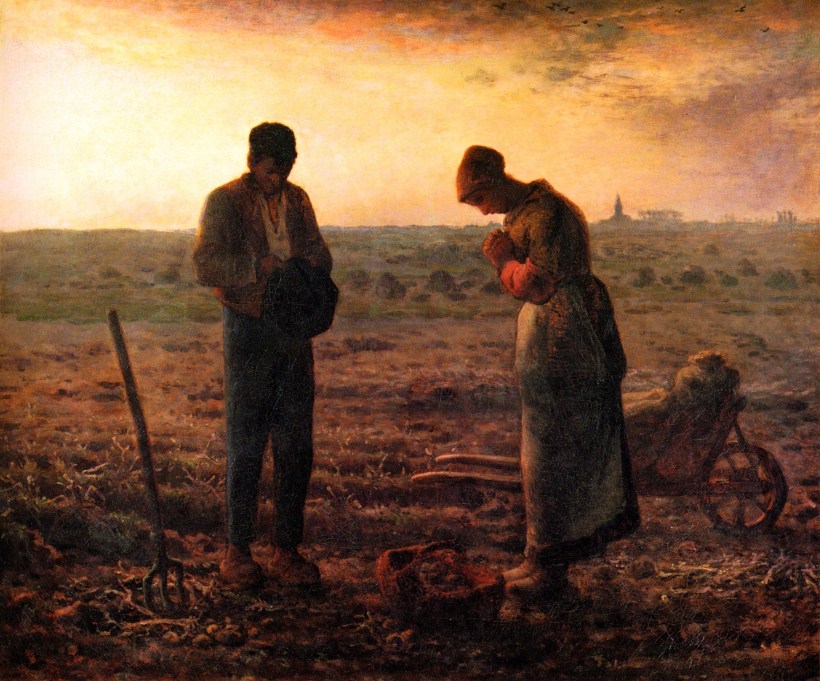
To go to communion worthily gives God great glory, but to take food in thankfulness and temperance gives him glory too. To lift up the hands in prayer gives God glory, but a man with a dung fork in his hand,
a woman with a slop pail,
give him glory too.
He is so great that all things give him glory
if you mean they should. So then, my brethren, live.
~Gerard Manley Hopkins fromSeeking Peace
Thanks in large part to how messy we humans are, this world is a grimy place. As an act of worship, we must keep cleaning up after ourselves. The hands that clean the toilets, scrub the floors, carry the bedpans, pick up the garbage might as well be clasped in prayer–it is in such mundane tasks God is glorified.
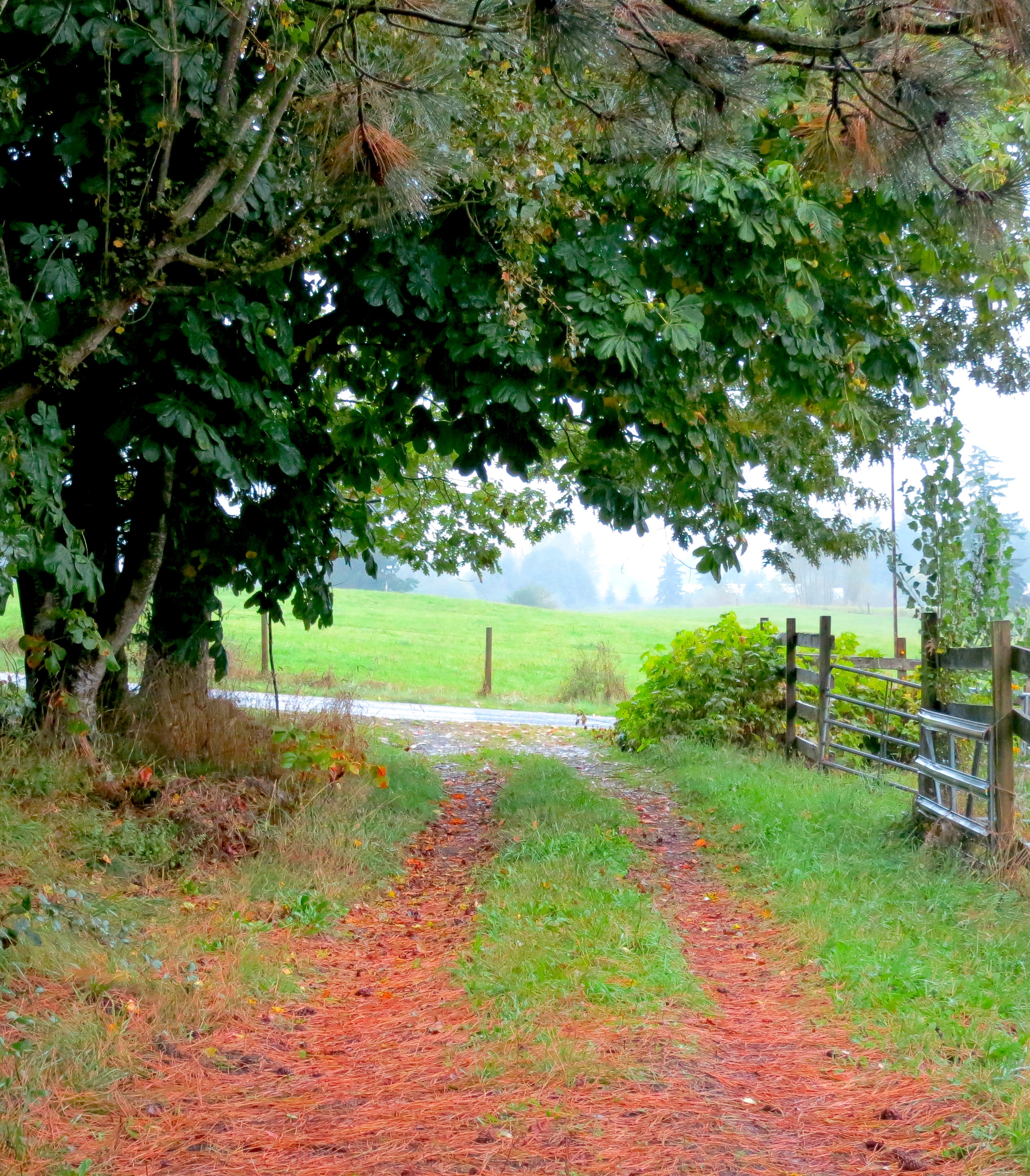
I spend over an hour every day year round through all seasons and weather, carrying dirty buckets and wielding a pitchfork and moving manure down this barnyard lane because it is my way of restoring order to the disorder inherent in human life. It is with gratitude that I’m able to pick up one little corner of my world, making stall beds tidier for our farm animals by mucking up their messes.
In so doing, I’m cleaning up a piece of me at the same time.
I never want to forget the mess I’m in and the mess I am. I never want to forget to clean up after myself. I never want to feel it is a mere and mundane chore to worship our God with dungfork and slop pail and wheelbarrow.
It is my privilege. It is His gift to me.
It is Grace that comes alongside me, helping me to live out each day, pitching the muck and carrying the slop and making me clean again – spring, summer, fall and winter.
Under the grass are ignorant, as they eat the earth,
Of the good they confer on us, that their silence
Isn’t a silent reproof for our bad manners,
Our never casting earthward a crumb of thanks
For their keeping the soil from packing so tight
That no root, however determined, could pierce it?
Imagine if they suspected how much we owe them,
How the weight of our debt would crush us
Even if they enjoyed keeping the grass alive,
The garden flowers and vegetables, the clover,
And wanted nothing that we could give them,
Not even the merest nod of acknowledgment.
A debt to angels would be easy in comparison,
Bright, weightless creatures of cloud, who serve
An even brighter and lighter master. ~Carl Dennis from “Worms”
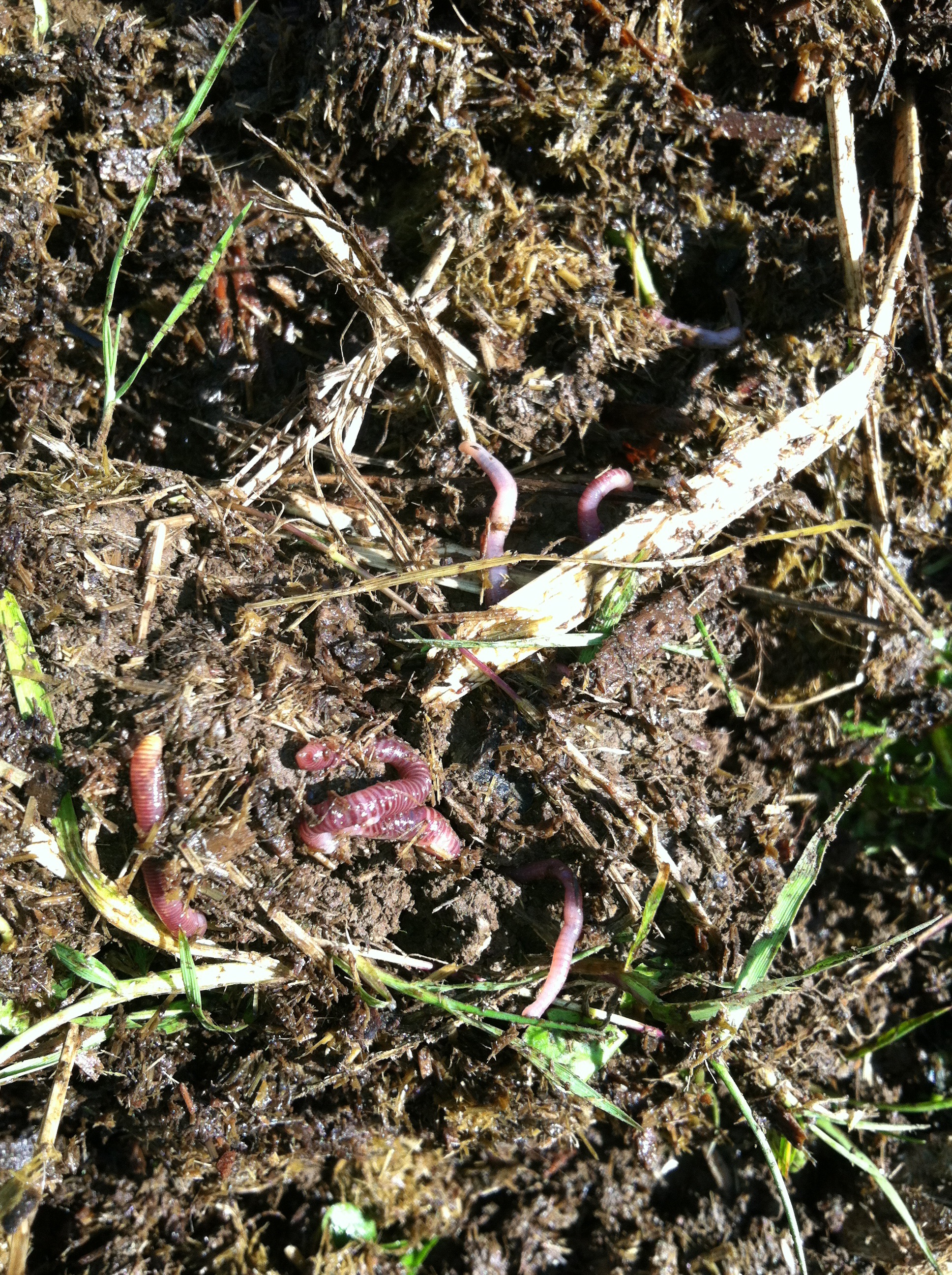
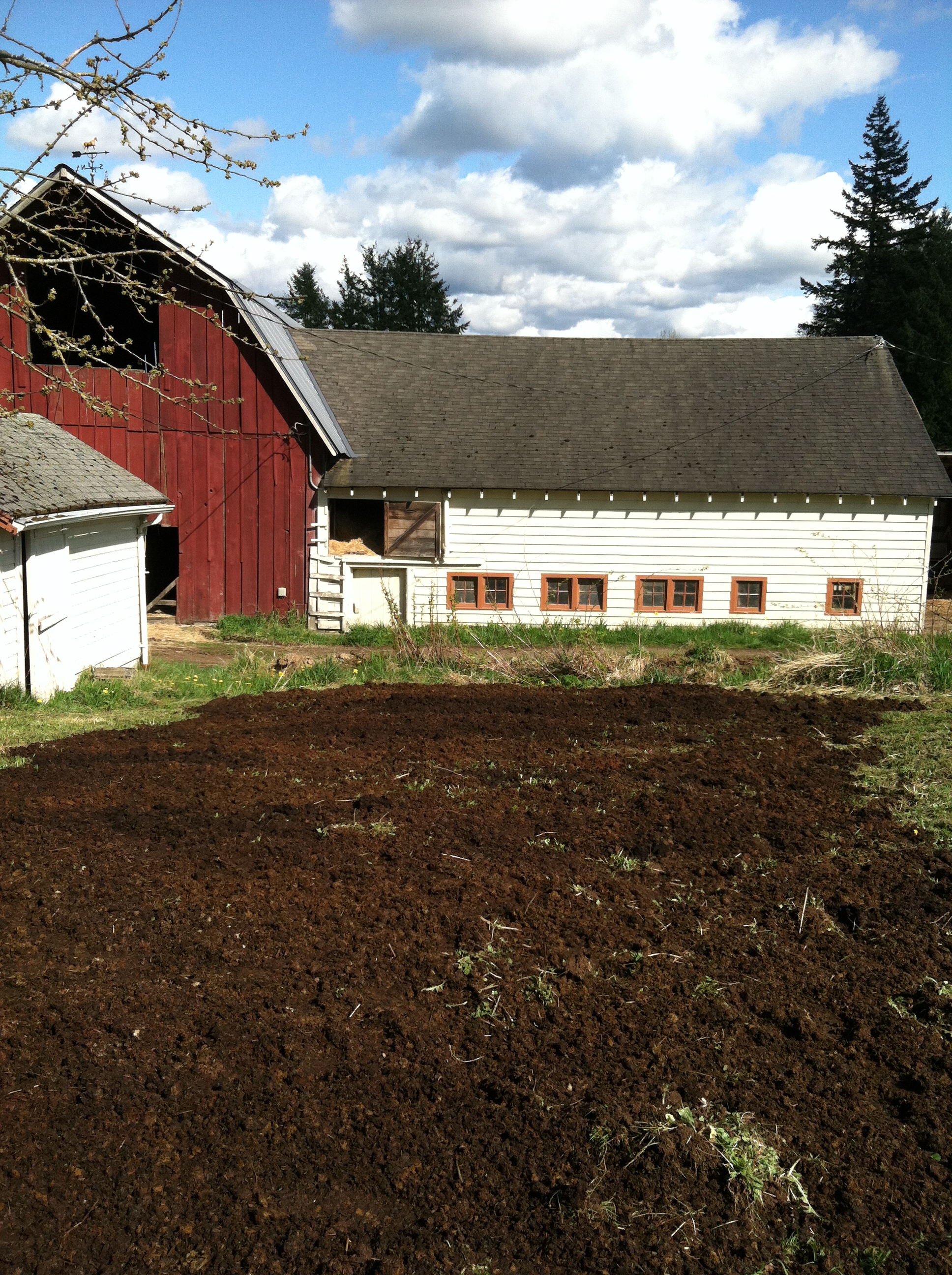
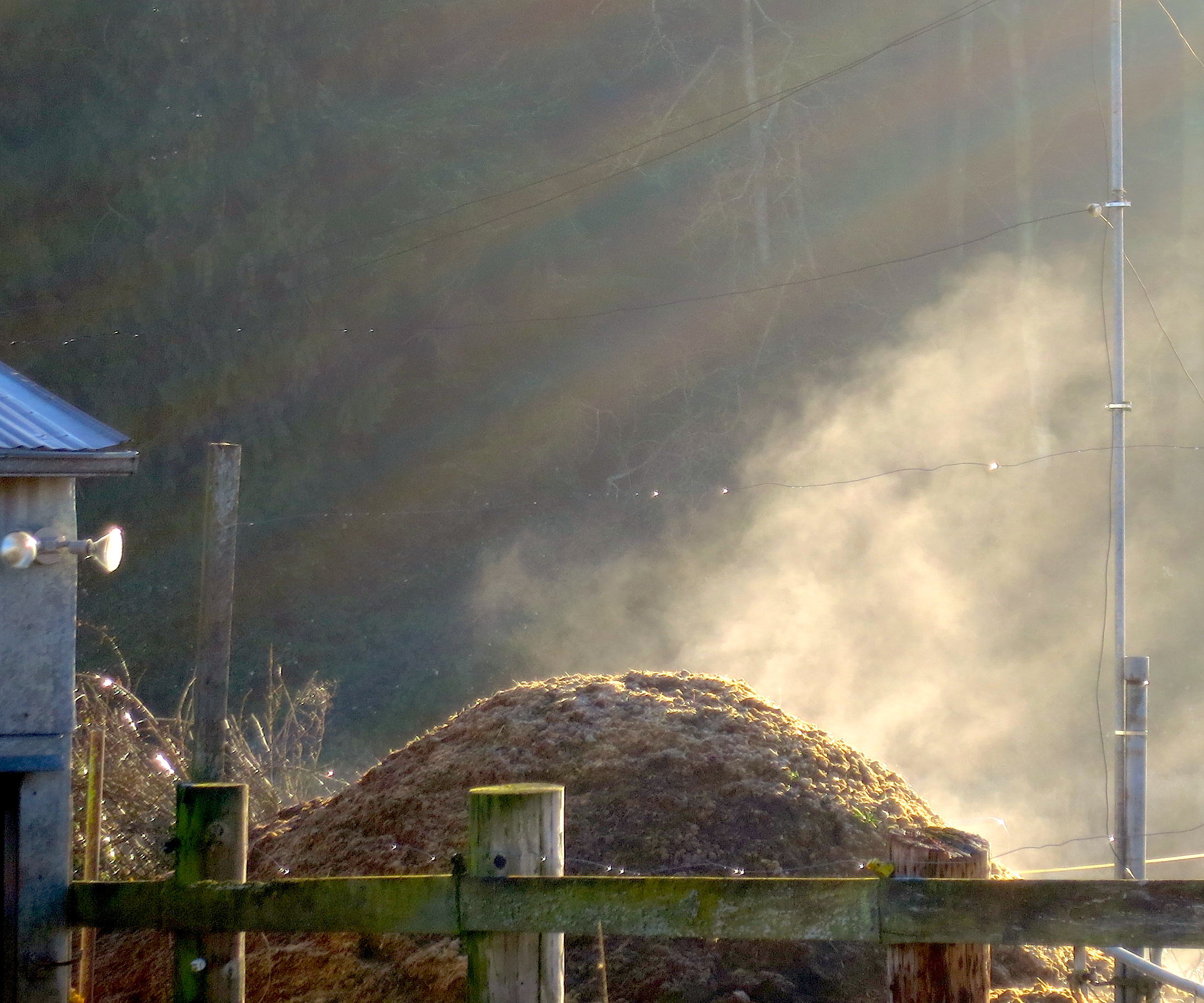
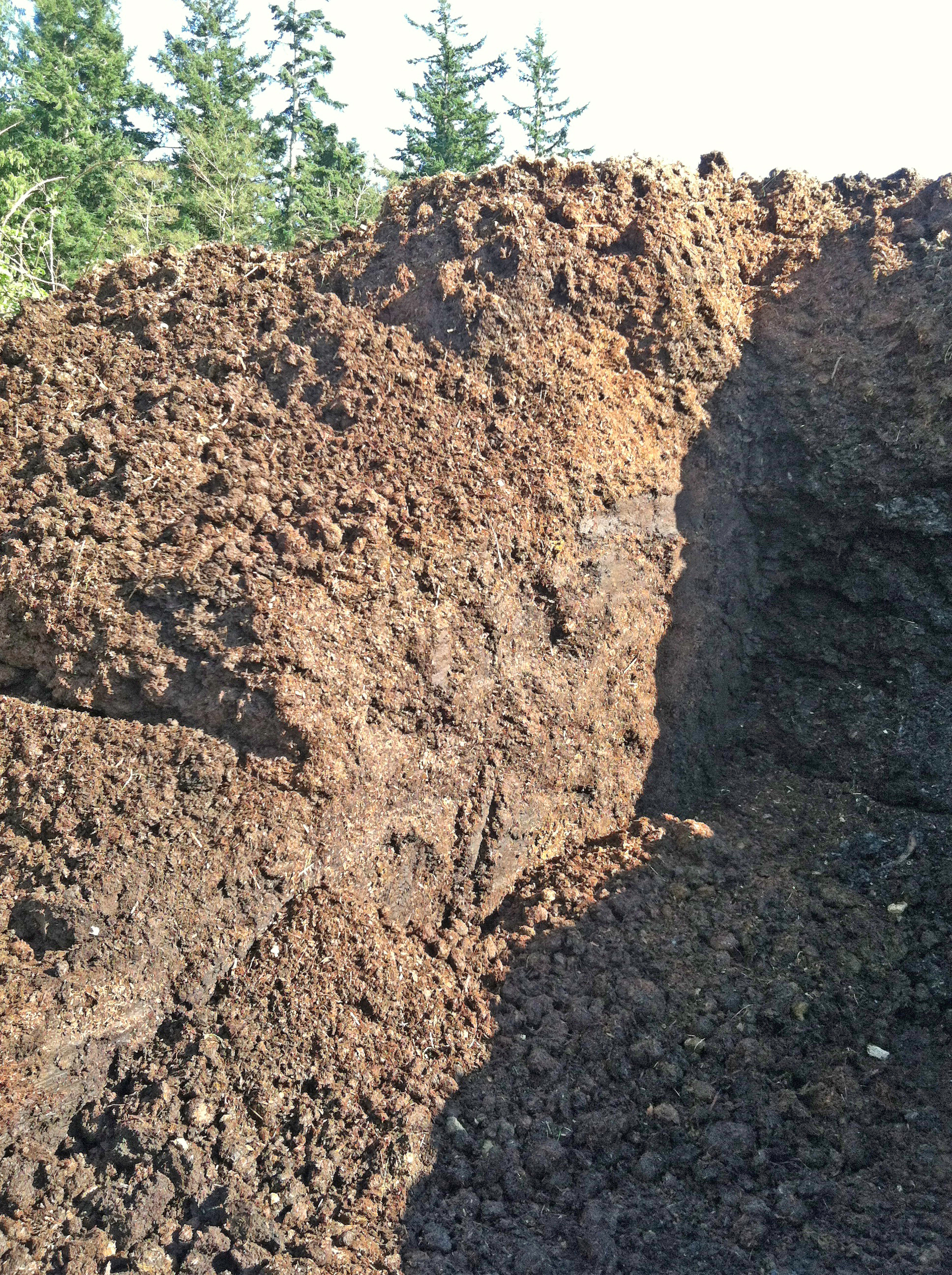
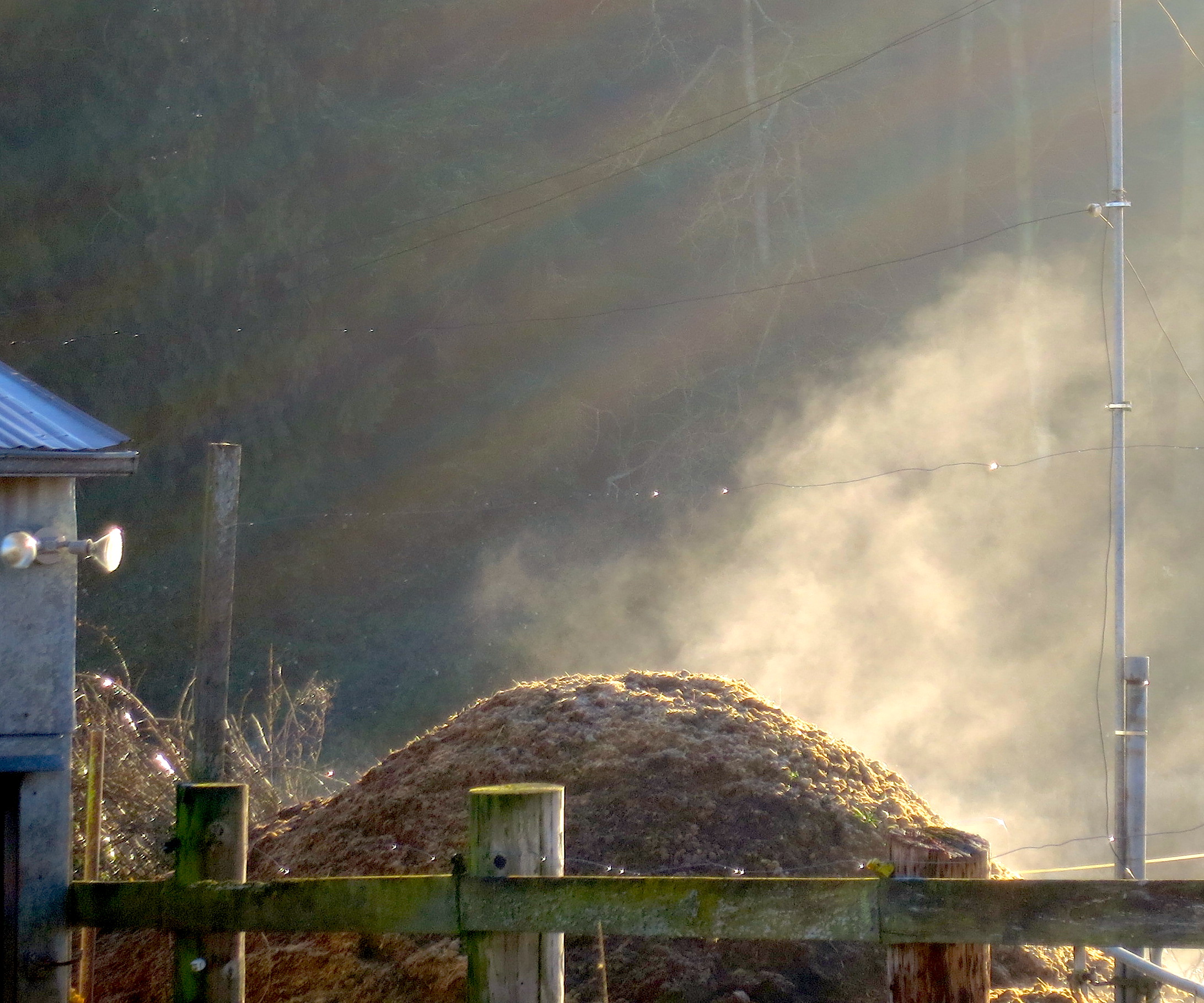
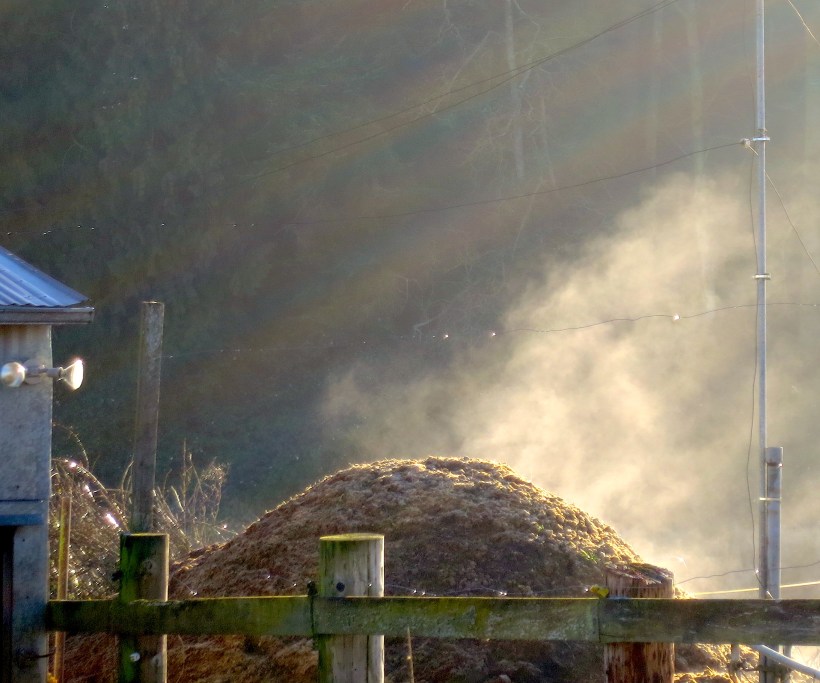
We hope for a sunny spring day soon to lure us outside for yard and garden prep before the anticipated grass and weed explosion in a few short weeks. We’ve been carefully composting horse manure for over ten years behind the barn, and it is time to dig in to the 10 foot tall pile to spread it on our garden plot. As Dan pushes the tractor’s front loader into the pile, steam rises from its compost innards. As the rich soil is scooped, thousands of newly exposed red wiggler worms immediately dive for cover. Within seconds, thousands of naked little creatures …worm their way back into the security of warm dirt, rudely interrupted from their routine. I can’t say I blame them.
Hundreds of thousands of wigglers end up being forced to adapt to new quarters, leaving the security of the manure mountain behind. As I smooth the topping of compost over the garden plot, the worms–gracious creatures that they are–tolerate being rolled and raked and lifted and turned over, waving their little bodies expectantly in the cool air before slipping back down into the dark. There they will begin their work of digesting and aerating the tired soil of the garden, reproducing in their unique hermaphroditic way, leaving voluminous castings behind to further feed the seedlings to be planted.
Worms are unjustly denigrated by humans primarily because we don’t like to be surprised by them. We don’t like to see one in our food, especially only part of one, and are particularly distressed to see them after we’ve digested our food. Once we get past that bit of squeamishness, we can greatly appreciate their role as the ultimate recyclers, leaving the earth a lot better off once they are finished with their work.
We humans actually suffer by comparison, so for man to be called “a worm” is really not as bad as it sounds at first although the worm may not think so.
I hope to prove a worthy innkeeper for these new tenants. May they live long and prosper. May worms be forgiving for the continual disruption of their routine.
May I smile in gratitude the next time someone calls me a worm.
But I am a worm and not a man, scorned by mankind and despised by the people. ~Psalm 22:6
6 Then he told this parable: “A man had a fig tree growing in his vineyard, and he went to look for fruit on it but did not find any.7 So he said to the man who took care of the vineyard, ‘For three years now I’ve been coming to look for fruit on this fig tree and haven’t found any. Cut it down! Why should it use up the soil?’
8 “‘Sir,’ the man replied, ‘leave it alone for one more year, and I’ll dig around it and fertilize it.9 If it bears fruit next year, fine! If not, then cut it down.’” Luke 13:6-9
As a farmer, I spend over an hour a day cleaning my barn, and wheel heavy loads of organic material to a large pile in our barnyard which composts year round. Piling up all that messy stuff that is no longer needed is crucial to the process: it heats up quickly to the point of steaming, and within months, it becomes rich fertilizer, ready to help the fields to grow grass, or the garden to produce vegetables, or the fragrant blooms in the flower beds. It becomes something far greater and more productive than what it was to begin with, thanks to transformation of muck to fruit.
That’s largely what I do in clinic as well.
As clinicians, we help our patients “clean up” the parts of their lives they really don’t need, that they can’t manage any longer, that are causing problems with their health, their relationships and obligations. There isn’t a soul walking this earth who doesn’t struggle in some way with things that take over our lives, whether it is school, work, computer use, food, gambling, porn, you name it. For the chemically dependent, it comes in the form of smoke, a powder, a bottle, a syringe or a pill. There is nothing that has proven more effective than “piling up together” learning what it takes to walk the road to health and healing, “heating up”, so to speak, in an organic process of transformation that is, for lack of any better description, primarily a spiritual treatment process. When a support group becomes a crucible for the “refiner’s fire”, it does its best work melting people down to get rid of the impurities before they can be built back up again, stronger than ever. They become compost, productive, ready to grow others.
This work with a spectrum of individuals of all races, backgrounds and creeds has transformed me.
As Jesus says in Matthew 25: 40–‘I tell you the truth, whatever you did for one of the least of these brothers of mine, you did for me.’
It’s crucial to fertilize those who otherwise may be cut down. Only then can they bear fruit.
May my eyes see, my ears hear, my heart understand. He prepares me with parable.
In Summer, in a burst of summertime Following falls and falls of rain, When the air was sweet-and-sour of the flown fineflower of Those goldnails and their gaylinks that hang along a lime;
~Gerard Manley Hopkins from “Cheery Beggar”
Sweet and sour extends far beyond a Chinese menu; it is the daily air I breathe. Dichotomy is so much of my life and times, more distinct than the bittersweet of simple pleasures laced with twinges and tears.
I am but a cheery beggar in this world,
desiring to hang tight to the overwhelming sweetness of each glorious moment–
the startling late summer sunrise,
the renewed green coming through the dead of spent fields,
the warm hug of a compassionate word,
a house filled with love and laughter.
But as beggars aren’t choosers, I can’t only have sweet alone;
I must endure the sour that comes as part of the package —
the deepening dark of a sleepless night,
the muddy muck of endless rain,
the sting of a biting critique,
the loneliness of a home emptying and much too quiet.
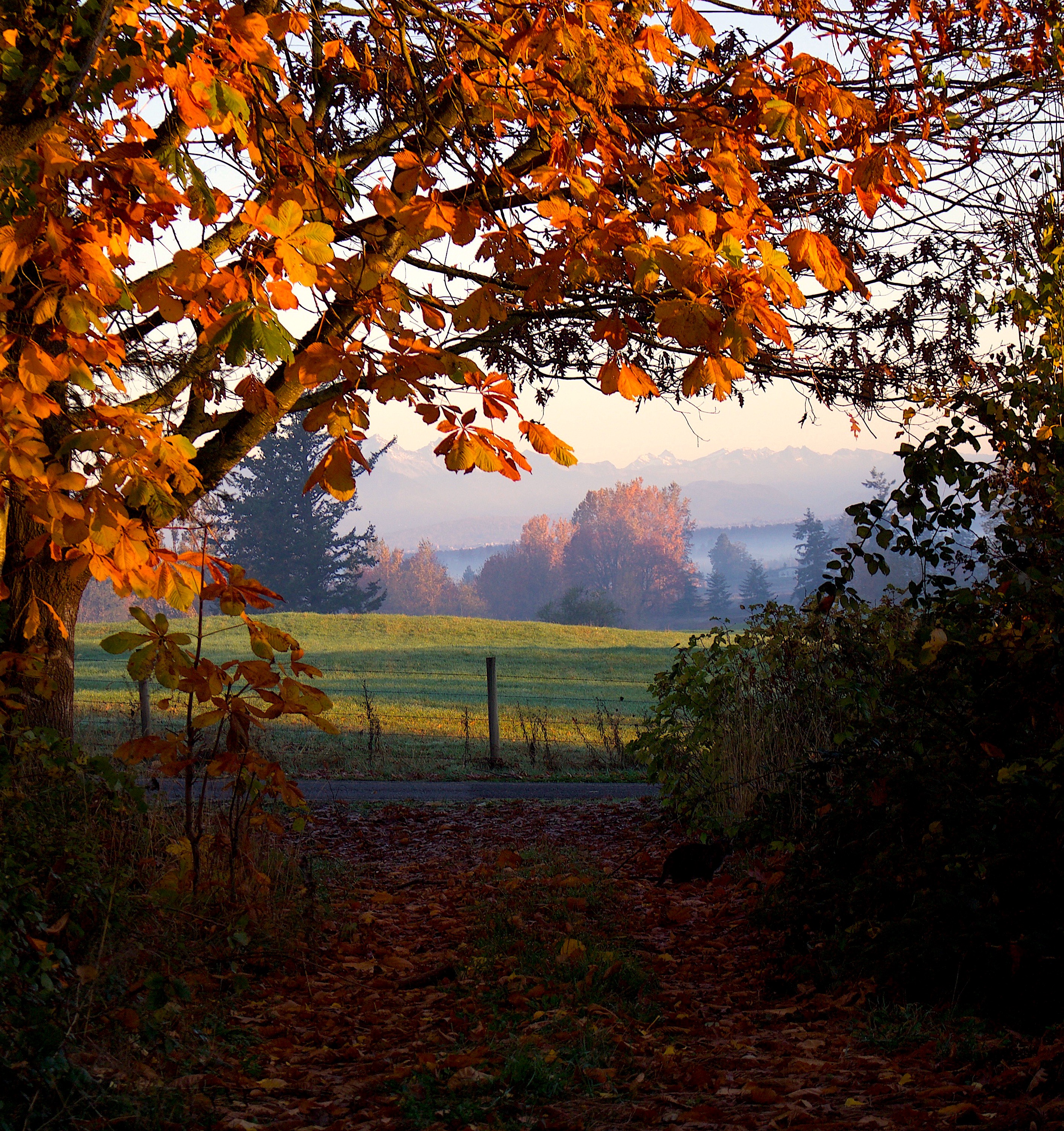
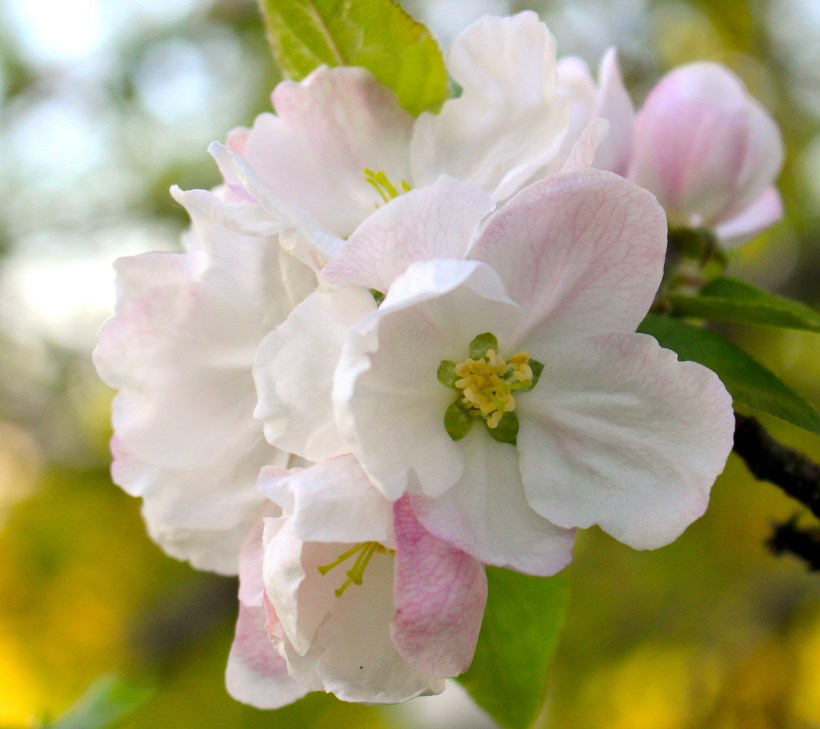
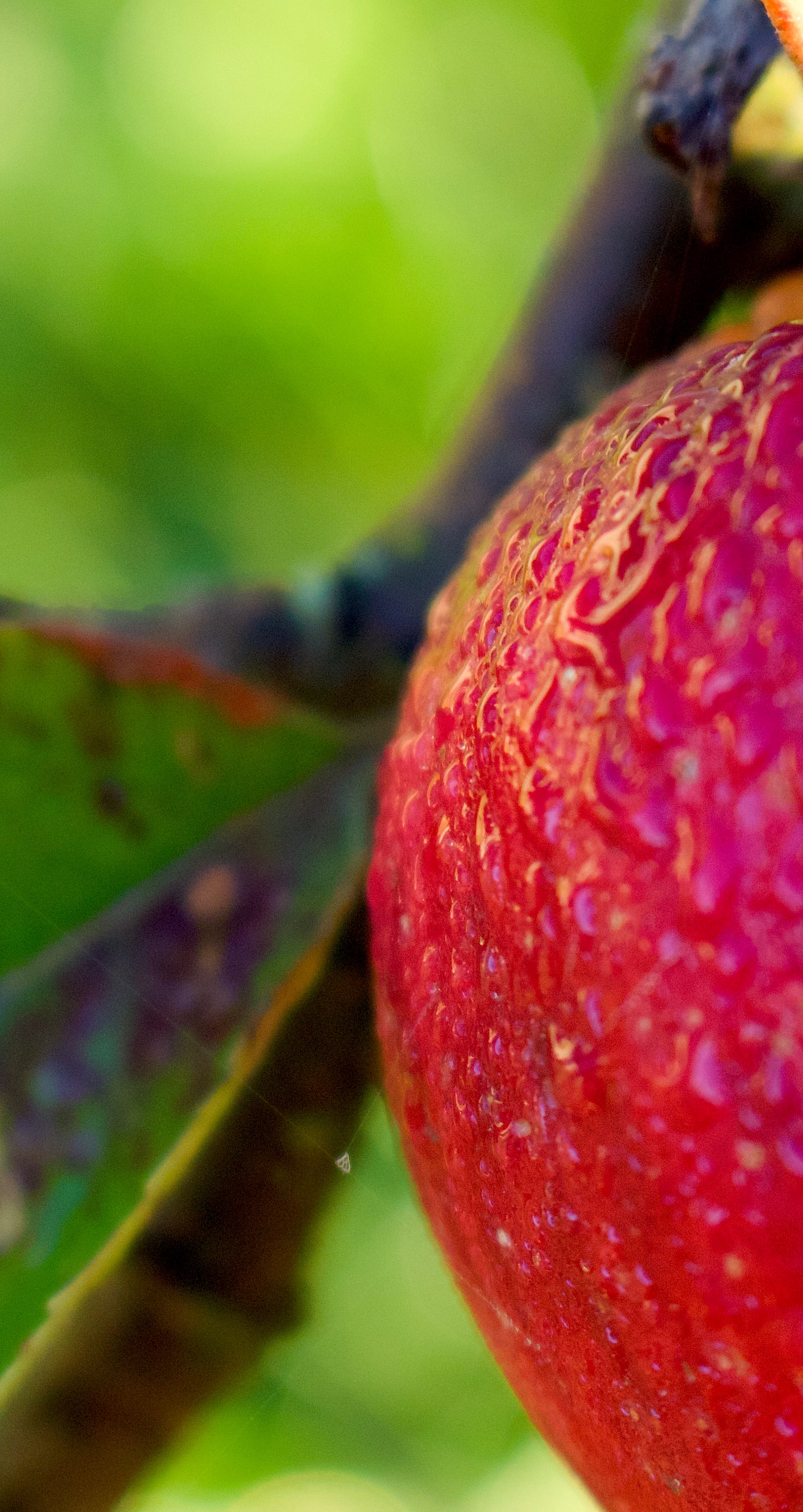
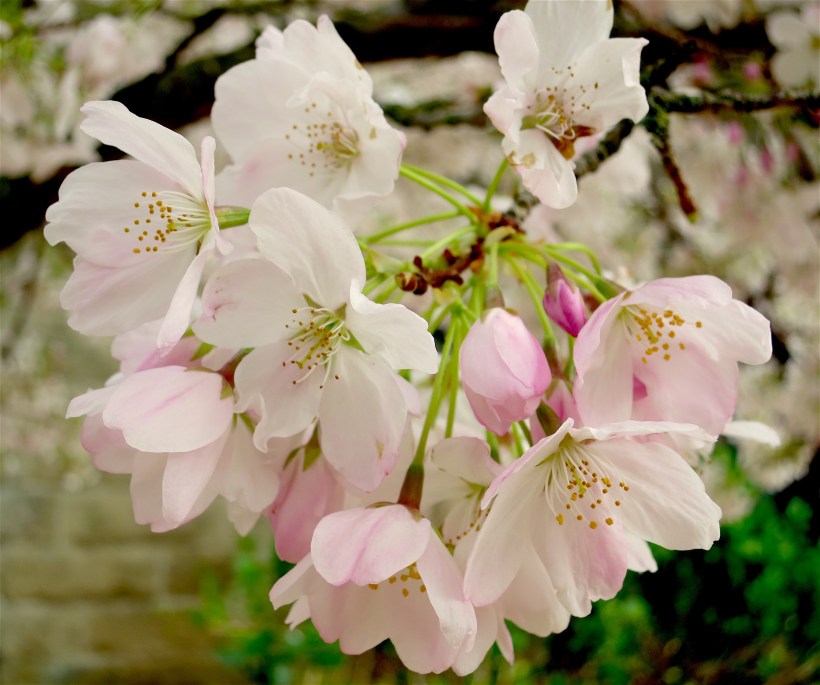
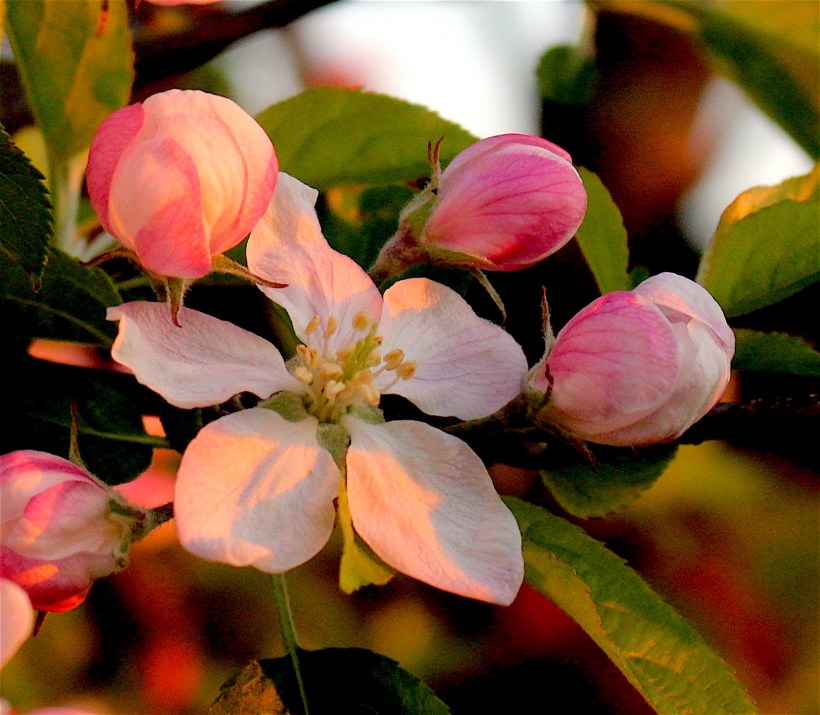
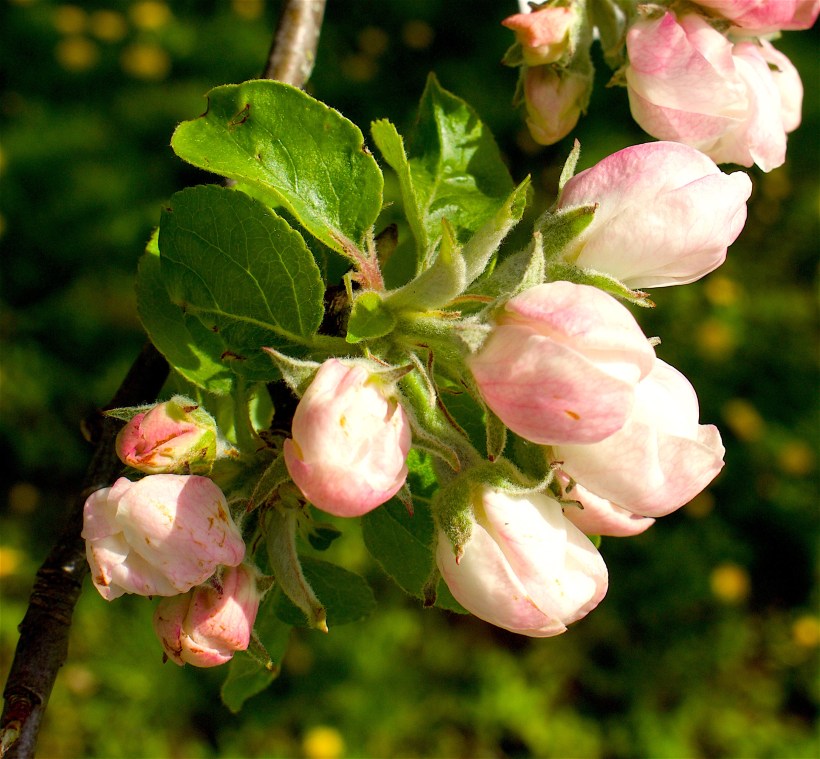
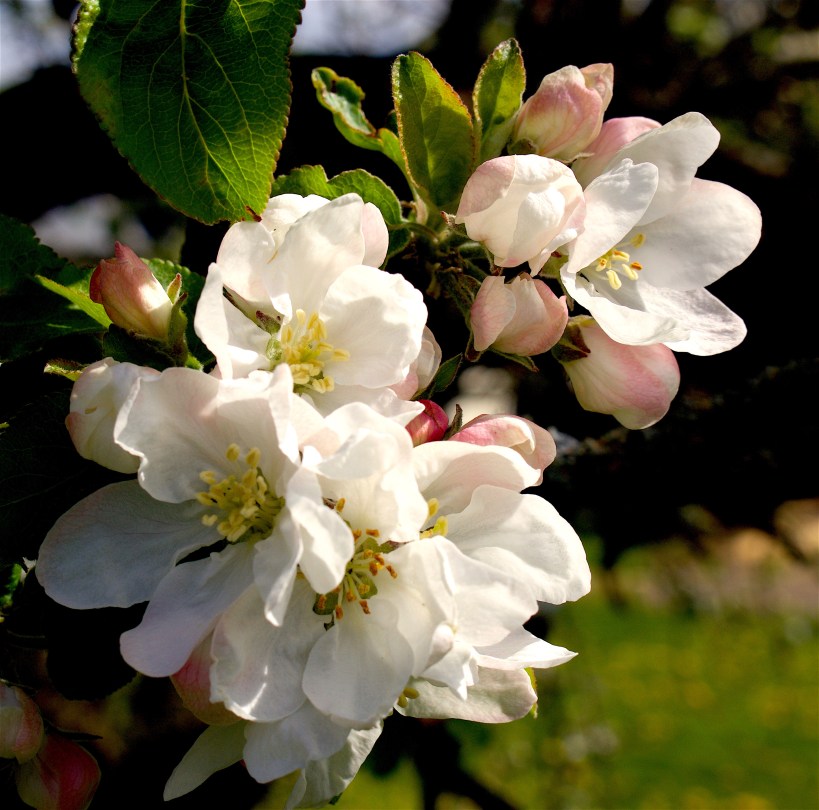
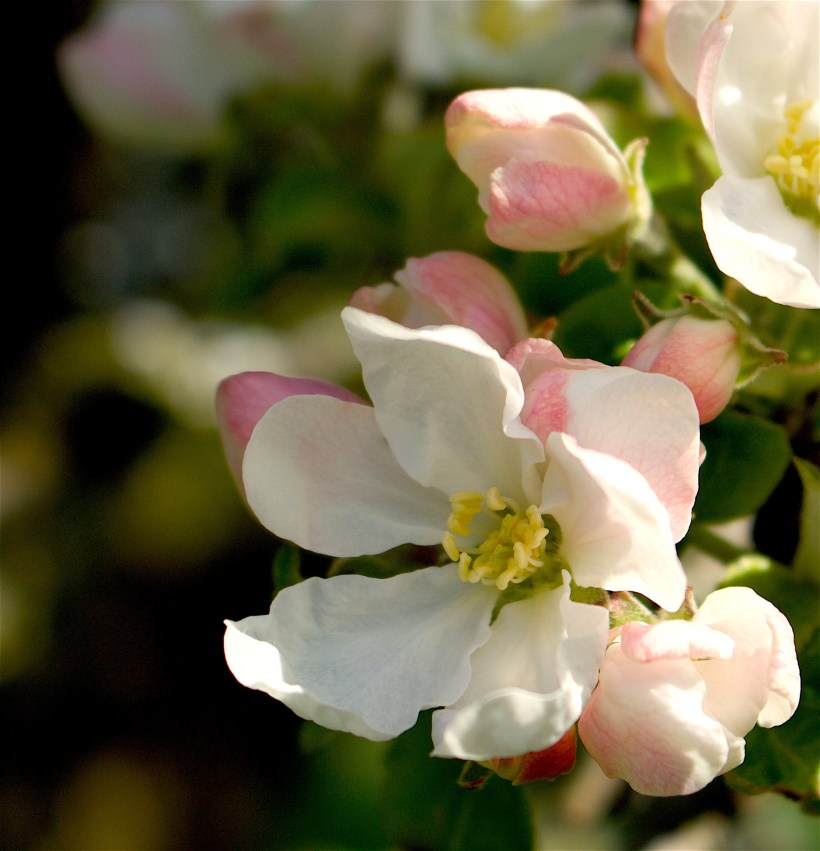
So I slog through sour to revel some day, even more so, in sweet. Months of manure-permeated air is overcome one miraculous morning by the unexpected and undeserved fragrance of apple blossoms, so sweet, so pure, so full of promise of the wholesome fruit to come.
The manure makes the sweet sweeter months later, long after the stench is gone.
And I breathe in deeply now, content and grateful for this moment of sweet grace and bliss, wanting to hold it in the depths of my lungs forever and overwhelm the memory of sour.
Financial Support for the Barnstorming Blog from our Readers
Your financial support helps to keep this blog an ad-free daily offering. Your contribution of any amount is encouragement to me and deeply appreciated.
It is in these afflictions, which succeed one another each moment,
that God, veiled and obscured, reveals himself,
mysteriously bestowing his grace in a manner
quite unrecognized by the souls
who feel only weakness in bearing their cross… ~Jean Pierre du Caussade from The Sacrament of the Present Moment
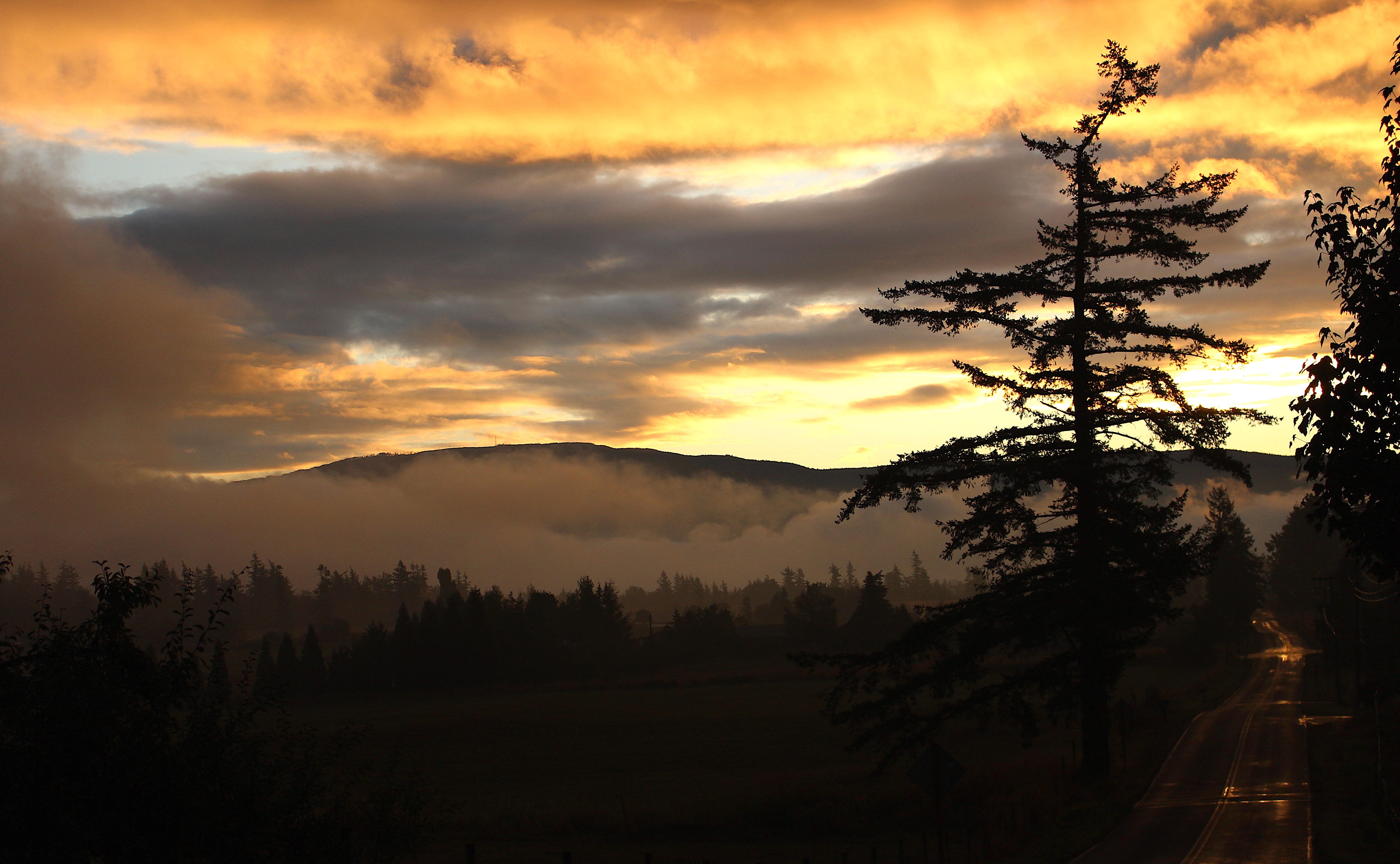
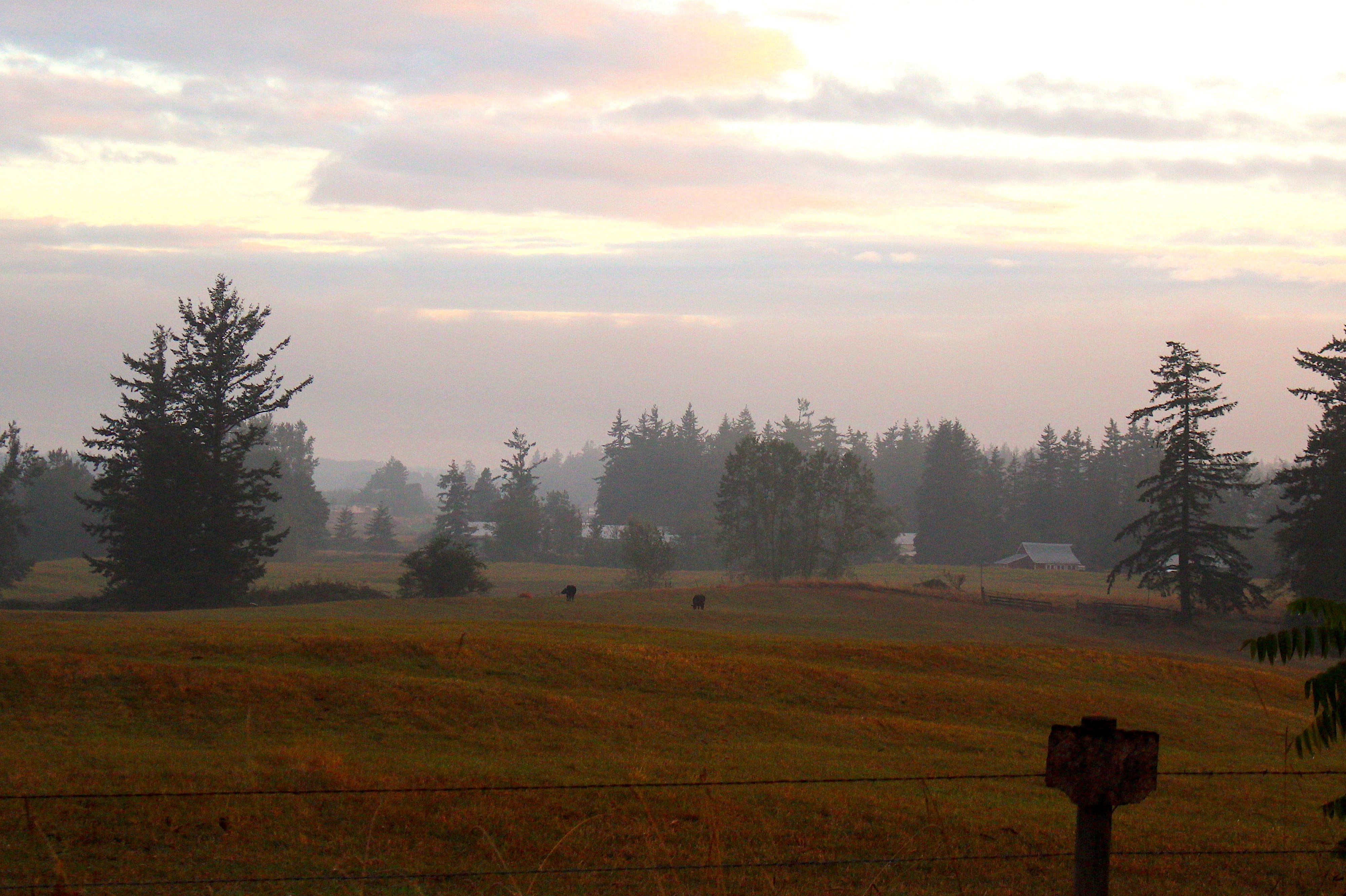
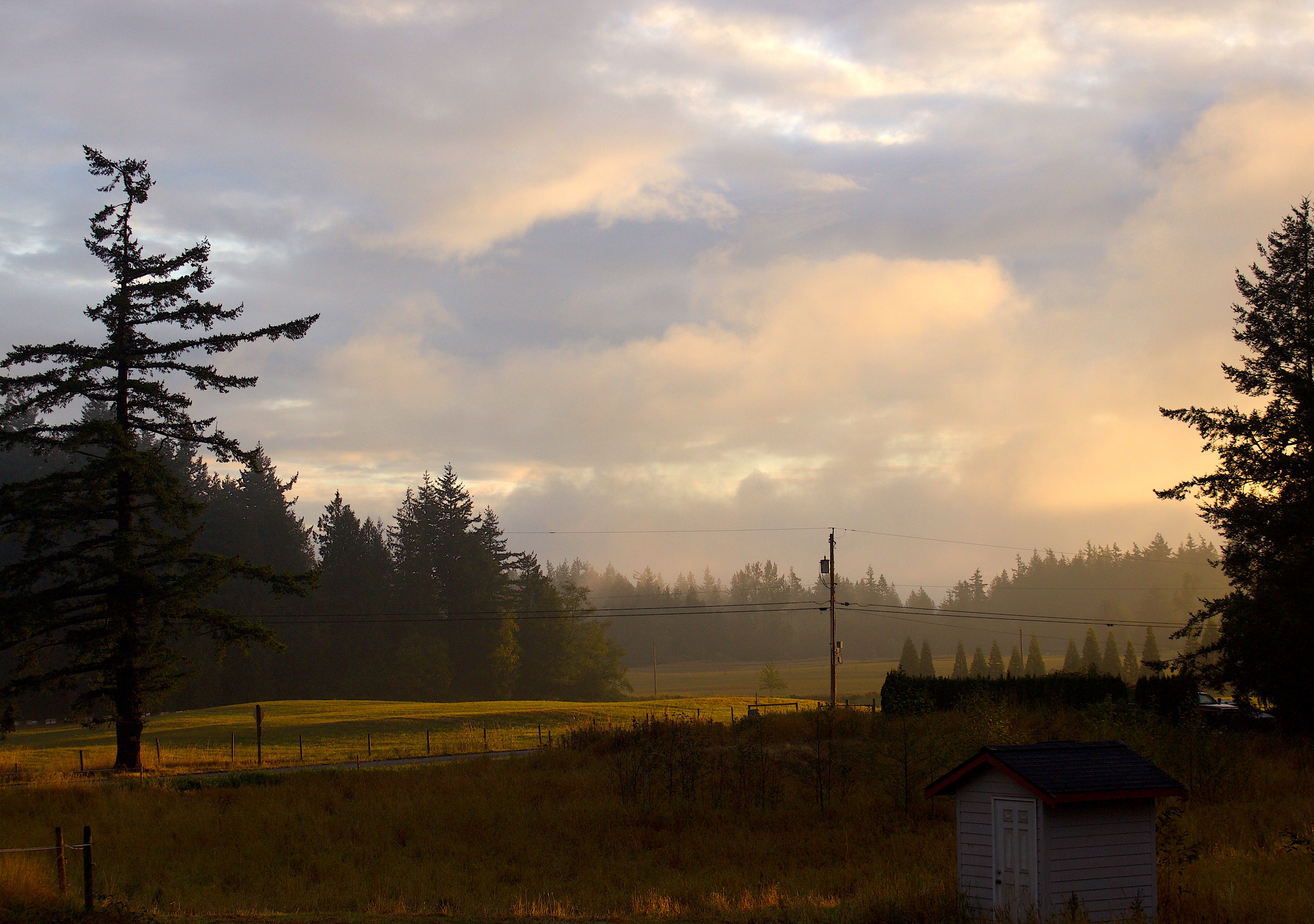
The past few mornings have been unveiled in snow flurries, mist and fog, tentative spring dawns of freezing air and warming soil trying to break loose from the vise grip of a tired and dying winter.
I am struggling under the load of 14 hour days working with despairing and suicidal people, in addition to keeping a barn clean and animals and humans fed. Even sleep is not restful when there is so little time to quiet myself in reflection and gratitude.
I am keenly reminded of my weakness as my strength wanes at the end of a long day, having slipped in the mud while trying to gain traction unloading a couple hundred pounds of manure from the wheelbarrow. Landing on my backside, my pants soaking through, I can choose to laugh or cry.
I choose to see the baptism of mud as a sacrament of the present moment, reminding me of my need for a cleansing grace.
I laugh and cry.
Though obscured from view, God is nevertheless revealed in these moments of being covered in the soil of earth and the waste of its creatures.
He knows I need reminding that I too am dust and to dust shall return.
He knows I am too often wasteful and a failed steward,
so need reminding by landing me amidst it.
He knows I need to laugh at myself,
so puts me right on my backside.
He knows I need to cry,
so sends me those with the saddest stories and greatest needs.
He knows I need Him, always and ever more,
to restore a sacrament of grace evident in the present moment
and every moment to come.
To be known for who I am
by a God who laughs with me,
weeps for me
and groans with pain I have caused~
I will know
no greater love.
When Jesus wept, the falling tear
in mercy flowed beyond all bound;
when Jesus groaned, a trembling fear
seized all the guilty world around.
~William Billings
For outlandish creatures like us, on our way to a heart, a brain, and courage, Bethlehem is not the end of our journey but only the beginning – not home but the place through which we must pass if ever we are to reach home at last. ~Frederick Buechner from The Magnificent Defeat
Though I’ve worked with many homeless people as a physician, I’ve never known homelessness myself. However, I have been room-less and those experiences were enough to acquaint me with the dilemma for Joseph and Mary searching for a place to sleep in Bethlehem.
It was my ninth birthday, July 26, 1963, and my family was driving to Washington D.C. for a few days of sightseeing. We had planned to spend the night in a motel somewhere in eastern Ohio or western Pennsylvania but my father, ever the determined traveler, felt we should push on closer to our destination. By the time 11 PM rolled around, we were all tired and not just a little cranky so we started looking for vacancy signs at road-side motels. Most were posted no vacancy by that time of night, and many simply had shut off their lights. We stopped at a few with vacancy still lit, but all they had available would never accommodate a family of five.
We kept driving east, and though I was hungry for sleep, I became ever more anxious that we really would never find a place to lay our heads. My eyes grew wider and I was more awake than ever, having never stayed up beyond 1 AM before and certainly, I’d never had the experience of being awake all night long. It still goes down in my annals as my longest birthday on record.
By 2 AM we arrived in Harrisburg, Pennsylvania and my dad had reached his driving limit and my mom had declared we were not traveling another mile. We headed downtown where the brick Harrisburg Hotel stood some 10 stories high, an old structure in a questionable area of town, but the lights were on and there were signs of life inside.
They did have a room that gave us two saggy double beds to share for eight dollars, with sheets and blankets with dubious laundering history, a bare light bulb that turned on with a chain and a bathroom down the hall. I’m surprised my mother even considered laying down on that bed, but she did. I don’t remember getting much sleep that night, but it was a place to rest, and the sirens and shouts out on the street did make for interesting background noise.
Some 12 years later, I had another experience of finding no room to lay my head after arriving late at night in Dar es Salaam in Tanzania, with supposed reservations at the local YMCA for myself and my three student friends traveling together on our way to Gombe to study wild chimpanzees. We landed at the airport after midnight after a day long flight from Brussels, managed to make it through customs intact and find a taxi, only to arrive at the Y to find it dark and locked. It took some loud knocking to rouse anyone and with our poor Swahili, we were able to explain our dilemma–we were supposed to have two rooms reserved for the four of us. He said clearly “no room, all rooms taken”.
The host was plainly perplexed at what to do with four Americans in the middle of the night. He decided to parse us out one each to occupied rooms and hope that the occupants were willing to share. He looked at me, a skinny white girl with short hair and decided I was some kind of strange looking guy, and tried to stick me in a room with a rather intoxicated French man and I said absolutely not. Instead my female traveling partner and I ended up sharing a cot (sort of) in a room with a German couple who allowed us into their room, which I thought was an amazing act of generosity at 2 AM in the morning. I didn’t sleep a wink, amazed at the magical sounds and smells of my first dawn in Africa, hearing the morning prayers coming from the mosque across the street, only a few hours later.
So I can relate in a small way to what it must have felt like over 2000 years ago to have traveled over hard roads to arrive in a dirty little town temporarily crammed with too many people, and find there were no rooms anywhere to be had. And to have doors shut abruptly on a young woman in obvious full term pregnancy is another matter altogether. They must have felt a growing sense of panic that there would be no safe and clean place to rest and possibly deliver this Child.
Then there came the offer of an animals’ dwelling, with fodder for bedding and some minimal shelter. This stable and its manger became sanctuary for the weary and burdened, remarkable in how unremarkable it was. We are all invited in to rest there, and I never enter a barn without somehow acknowledging that fact.
There are so many ways we continue to refuse access and shut the doors in the faces of those two (plus one) weary travelers, forcing them to look elsewhere to stay. We say “no room” dozens of times every day, not realizing who and what we are shutting out.
There is no room in our busy and “important” lives–from the moment we rise through the frenetic pace of work and home activities, there is no room for the solitude of quiet prayer and reflection, and for shared gratitude and grace.
There is no room in our schools, where all mention of religious practices outside of academic study is unwelcome and eagerly litigated.
There is no room in our city squares or buildings, where nativity scenes are banished and replaced with winter festival scenes of snowflakes and snowmen, or any symbol of religious significance is matched with a statement from the “Freedom from Religion” organizations declaring atheism as valid a faith.
There is no room in our homes where TV, computer, and social media become the altars of worship and occupy more of our time than anything else.
There is no room in our hearts and minds as we crave entertainment, sex, and drugs more than the freely offered gift of life.
Small wonder we pay no attention to who is waiting patiently outside the back door of our lives, where it is inhospitable and cold and dank. Few of us would invite our special company into the barn first and foremost. Yet these travelers don’t seek an invitation to come in the front door, with fancy meals and feather beds and fresh flowers on the cupboard. It is the dark and manure strewn parts of our lives where they are needed most. That is where He was born to dwell, and that is where He remains, in the humblest parts of our beings, the parts we do not want to show off, and indeed, most often want to hide.
There will always be plenty of room there.
Into this world, this demented inn in which there is absolutely no room for him at all, Christ comes uninvited.
~Thomas Merton
In Summer, in a burst of summertime Following falls and falls of rain, When the air was sweet-and-sour of the flown fineflower of Those goldnails and their gaylinks that hang along a lime;
~Gerard Manley Hopkins from “Cheery Beggar”
Sweet and sour extends far beyond a Chinese menu; it is the daily air we breathe. Dichotomy is so much of our life and times, more distinct than the bittersweet of simple pleasures laced with twinges and tears.
We are but cheery beggars in this world, desiring to hang tight to the overwhelming sweetness of each glorious moment — the startling sunrise, the lush green and golden blooms following spring showers, the warm hug of a compassionate word, the house filled with love and laughter. But as beggars aren’t choosers, we can’t only have sweet alone; we must endure the sour that comes as part of the package — the deepening dark of a sleepless night, the muddy muck of endless rain, the sting of a biting critique, the loneliness of an home emptying and much too quiet.
So we slog through sour to revel some day, even more so, in sweet. Months of manure-permeated air is overcome one miraculous morning by the unexpected and undeserved fragrance of apple and pear blossoms, so sweet, so pure, so full of promise of the fruit to come. The manure makes the sweet sweeter and once again the earth turns upside down.
And we breathe in deeply, content and grateful for a moment of grace and bliss, wanting to hold it in the depths of our lungs forever.
I admit it. Right this minute, I should be doing our taxes. We’re down to the last minute and I have all the paperwork stacked on the desk beside me, but I’m not doing it. It is too miserable a task to even contemplate. Instead I go outside to capture spring.
The last few mornings, when I have risen just before dawn, I have gone outside to breathe deeply of the scents that hang heavy in the cool moist air. The perfume from thousands of orchard blossoms on our farm is heady and intoxicating. There is nothing quite like these two weeks each year when our farm becomes a mass of snow white and pink scented flowers, busy with honey bees and eventually showering petals to the ground as the fruit starts to form.
Unfortunately, I’m allergic to tree pollen. I breathe deeply and… sneeze and wheeze. Even the best medicine can’t stop my reaction. So much loveliness causes so much misery. So I retreat back to the house and look out the window and enjoy the view from afar, dabbing my dripping nose.
Ironically, this is the same time of year our dairy farm neighbors start to empty their manure lagoons and begin to spread their thousands of gallons of liquid manure on the surrounding fields, readying the ground for the hay or corn crop to come later on this summer. That scent hangs heavy in the cool moist air as well, pungent and unforgettable, penetrating even into our clothing so we carry the smell back into the house with us. Of course I’m not allergic to manure. After all, it’s only grass and water transformed. In fact, as nasty a smell as it is, it’s invigorating in a perverse sort of way. I know where it comes from, I know what its potential is, and I know the crop it yields. It is, in itself, as treasured as the blossoms that yield fruit on our farm.
Taxes are the manure in our lives. They are pretty stinky too, just like manure, an inevitable part of our daily existence, yet even more onerous. However, spread out where needed, those collective taxes fertilize and grow our communities, our schools, our roads, our health care (and a few other things we may wish would not be funded).
So I must get to work spreading numbers across my desktop in the hope they may make sense and yield fruit of their own, sometime, somewhere.
To lift up the hands in prayer gives God glory, but a man with a dungfork in his hand, a woman with a slop pail, give Him glory, too. God is so great that all things give Him glory if you mean that they should. ~Gerard Manley Hopkins
Thanks in large part to how messy we humans are, this world is a grimy place. As an act of worship, we must keep cleaning up after ourselves. The hands that clean the toilets, scrub the floors, carry the bedpans, pick up the garbage might as well be clasped in prayer–it is in such mundane tasks God is glorified.
I spend over an hour every day carrying dirty buckets and wielding a pitchfork because it is my way of restoring order to the disorder inherent in human life. It is with gratitude that I’m able to pick up one little corner of my world, making stall beds tidier for our farm animals by mucking up their messes and in so doing, I’m cleaning up a piece of me at the same time.
I never want to forget the mess I’m in and the mess I am. I never want to forget to clean up after myself. I never want to feel it is a mere and mundane chore to worship with dungfork and slop pail.
It is my privilege. It is His gift to me.
It is Grace that comes alongside me, to keep pitching the muck and carrying the slop when I get weary.
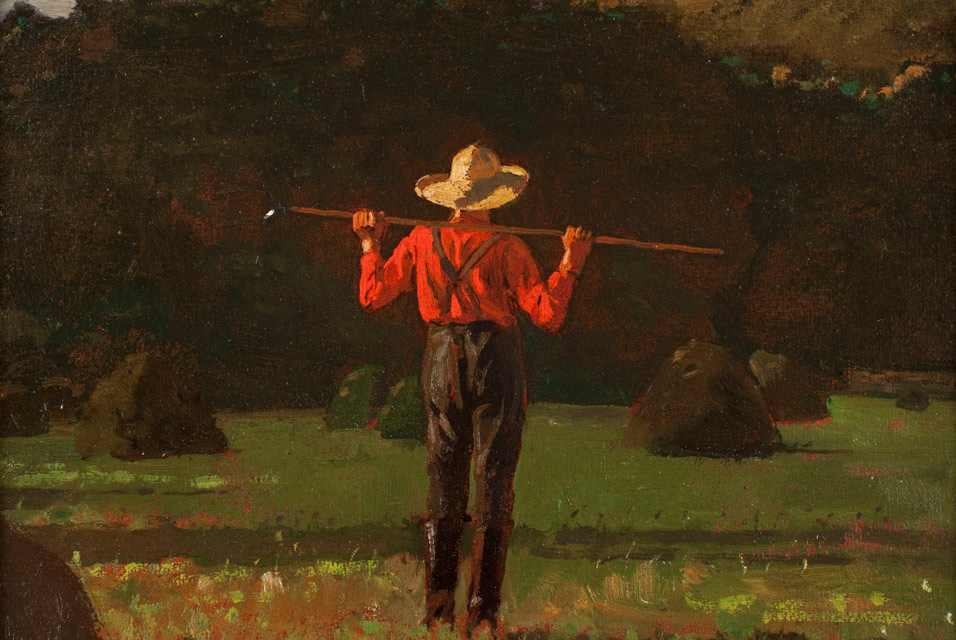
Farmer with a pitchfork by Winslow Homer
During this Lenten season, I will be drawing inspiration from the new devotional collection edited by Sarah Arthur —Between Midnight and Dawn
“He (the professor) asked what I made of the other students (at Oxford) so I told him.
They were okay, but they were all very similar…
they’d never failed at anything or been nobodies,
and they thought they would always win.
But this isn’t most people’s experience of life.
He asked me what could be done about it.
I told him the answer was to send them all out for a year
to do some dead-end job
like working in a chicken processing plant
or spreading muck with a tractor.
It would do more good than a gap year in Peru.
For almost thirty years, I have spent about an hour a day shoveling manure out of numerous horse stalls and I’m a better person for it. Wheeled to a mountainous pile in our barnyard, this daily collection of manure happily composts year round, becoming rich fertilizer in a matter of months through a crucible-like heating process of organic chemistry, bacteria and earthworms. Nothing mankind has achieved quite matches the drama of useless and basically disgusting stuff transforming into the essential elements needed for productive growth and survival. This is a metaphor I can <ahem> happily muck about in.
I’m in awe, every day, at being part of this process — in many ways a far more tangible improvement to the world than anything else I manage to accomplish every day. The horses, major contributors that they are, act underwhelmed by my enthusiasm. I guess some miracles are relative, depending on one’s perspective, but if the horses understood that the grass they contentedly eat in the pasture, or the hay they munch on during the winter months, was grown thanks to their carefully recycled waste products, they might be more impressed.
Their nonchalance about the daily mucking routine is understandable. If they are outside, they probably don’t notice their beds are clean when they return to the stalls at night. If they are inside during the heavy rain days, they feel duty-bound to be in my face as I move about their stall, toting my pitchfork and pushing a wheelbarrow. I’m a source of constant amusement as they nose my jacket pockets for treats that I never carry, as they beg for scratches on their unreachable itchy spots, and as they attempt to overturn an almost full load, just to see balls of manure roll to all corners of the stall like breaking a rack of billiard balls in a game of pool.
Good thing I’m a patient person always seeking an object lesson in whatever I see or do ~ mucking out stalls every day helps me tolerate the proverbial muck I encounter every day off the farm. And spending an hour a day getting dirty in the real stuff somehow makes the virtual manure less noxious. Everyone should be mucking out as I think the world would generally be a better place.
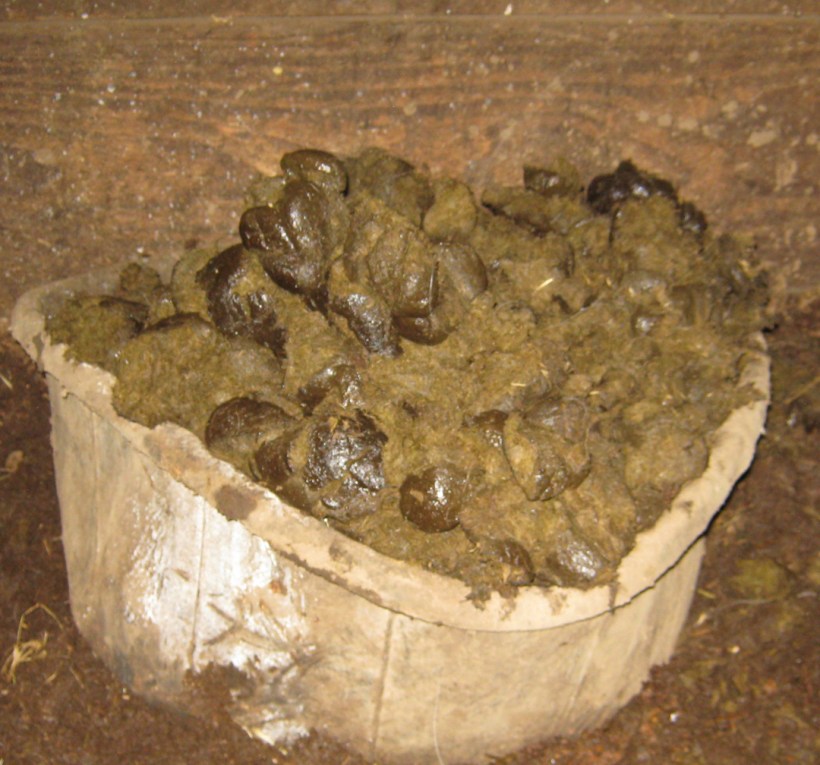
My former stallion, now gelded, discovered a way to make my life easier rather than complicating it. He hauled a rubber tub into his stall from his paddock, by tossing it into the air with his teeth and throwing it, and it finally settled against one wall. Then he began to consistently pile his manure, with precise aim, right in the tub. I didn’t ask him to do this. It had never occurred to me. I hadn’t even thought it was possible for a horse to house train himself. But there it is, proof that some horses prefer neat and tidy rather than the whirlwind eggbeater approach to manure distribution. After a day of his manure pile plopping, it is actually too heavy for me to pick up and dump into the wheelbarrow all in one tub load, but it takes 1/4 of the time to clean his stall than the others, and he spares all this bedding.
What a guy. He provides me unending inspiration in how to keep my own personal muck concentrated rather than spreading it about, contaminating the rest of the world.
Now, once I teach him to put the seat back down when he’s done, he’s welcome to move into the house…












 Barnstorming