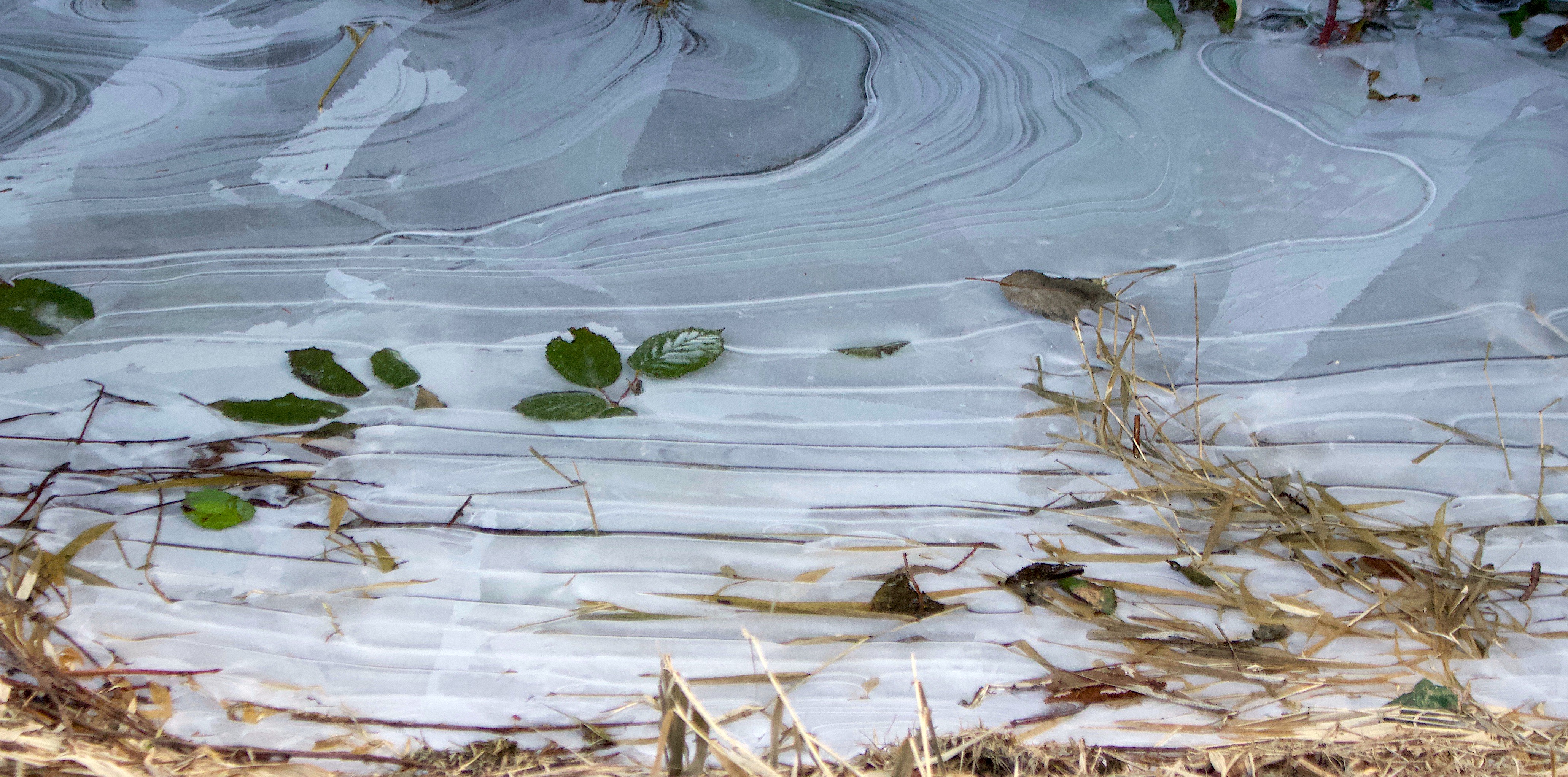
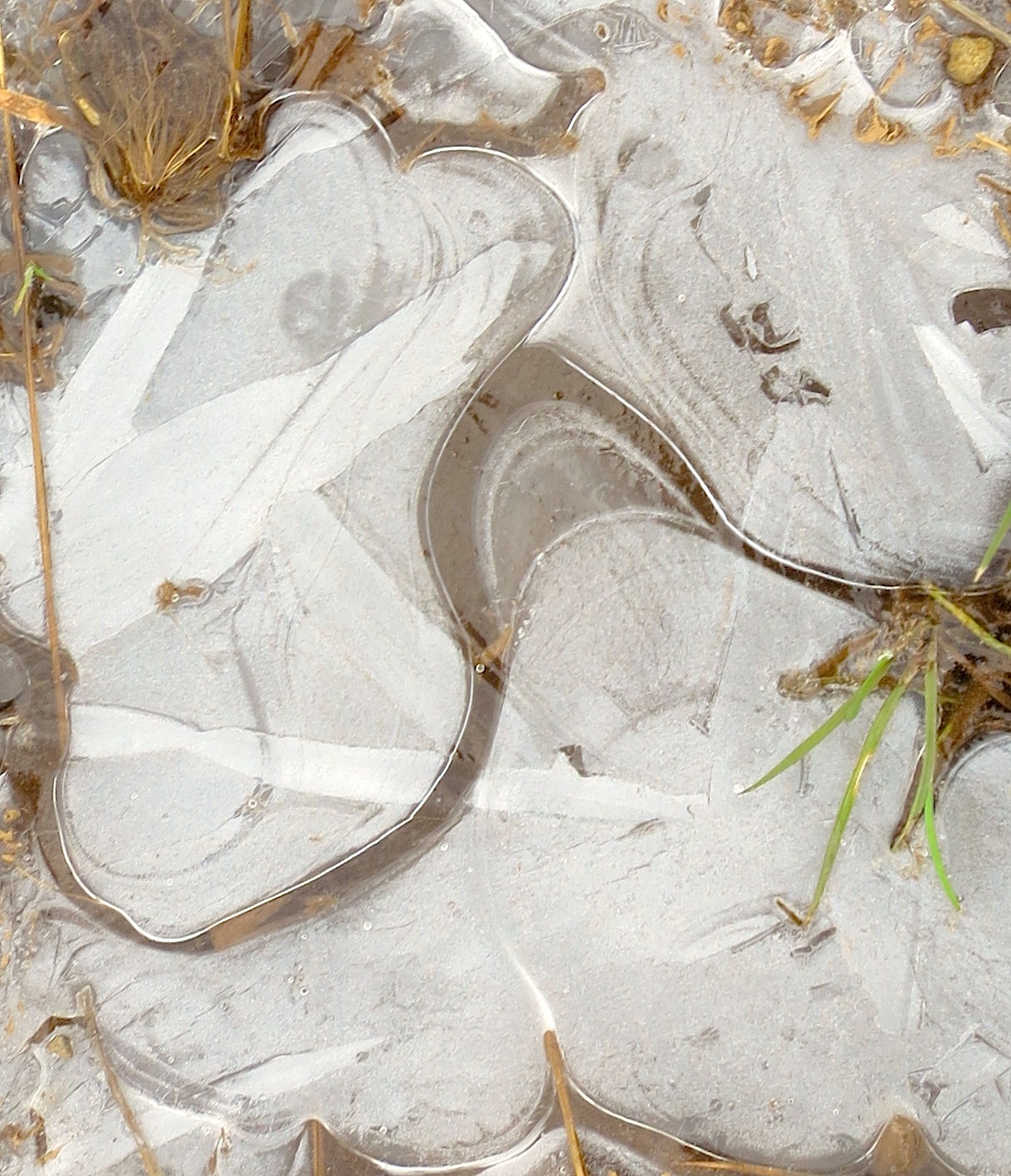
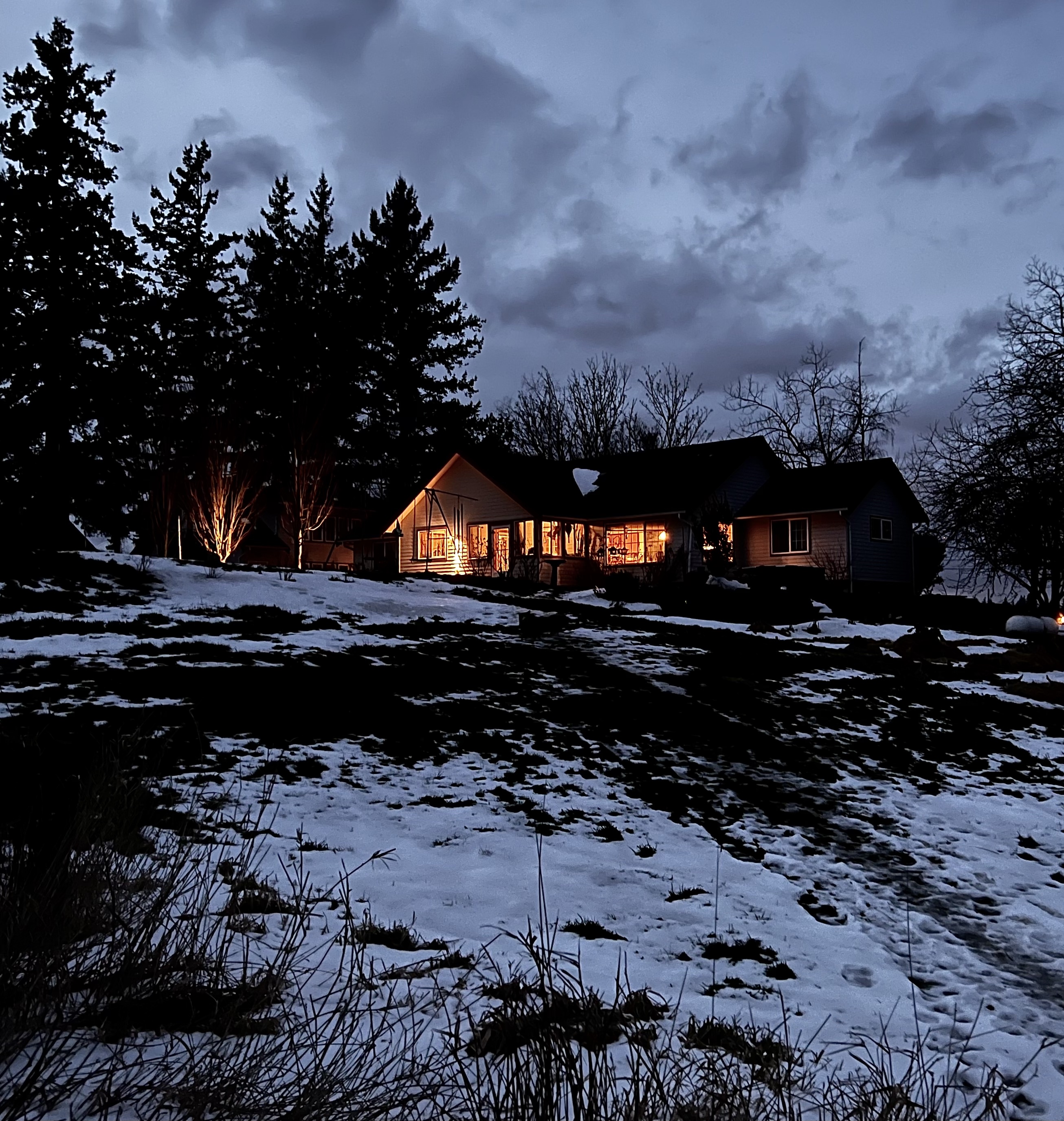
When faced with navigating an icy path ahead of me, I am rendered helpless. An icy path on a slope is even more intimidating.
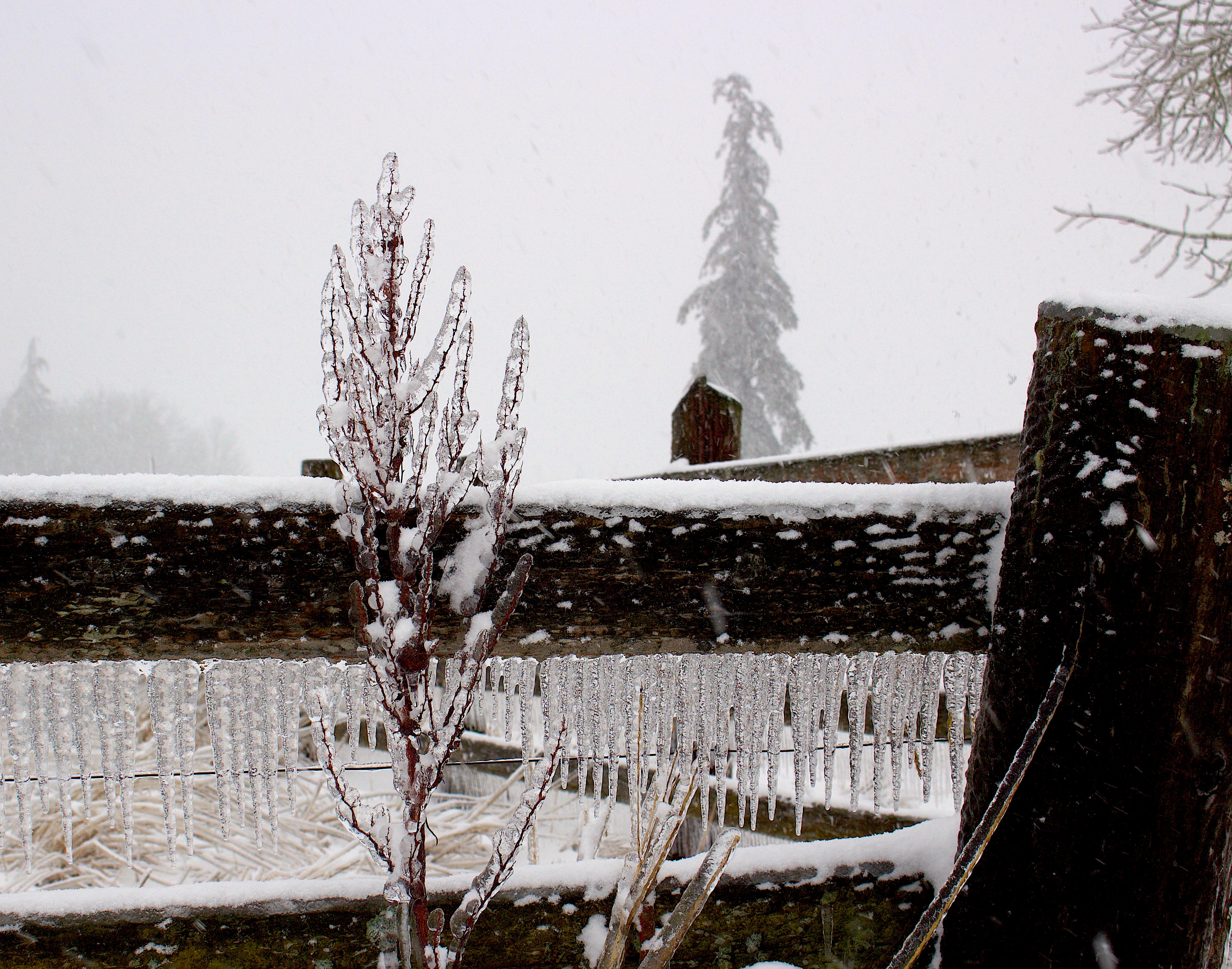
Our farm is located on a hill, which is wonderful 50+ weeks out of the year, but in winter during arctic wind flow days, plus rain or sleet, it becomes a skating rink on an incline. Even the best traction devices won’t keep me on my feet.
I’m thankful my husband has much better balance than I do, but even the last ice storm was even too much for him. We don’t have much choice but to slide and crawl to our barnyard destination to complete our chores. It is exceedingly humbling to be brought to our knees, but that has always been the best position for sorely needed prayer and petition.
We pray to keep our aging bones intact. We pray to keep our backs and noggins functional. We pray for the thaw to come soon.
Despite an unsure landing for each footstep, there is nothing to do but keep going. So we do.
One-Time
Monthly
Yearly
Make a one-time or recurring donation to support daily Barnstorming posts
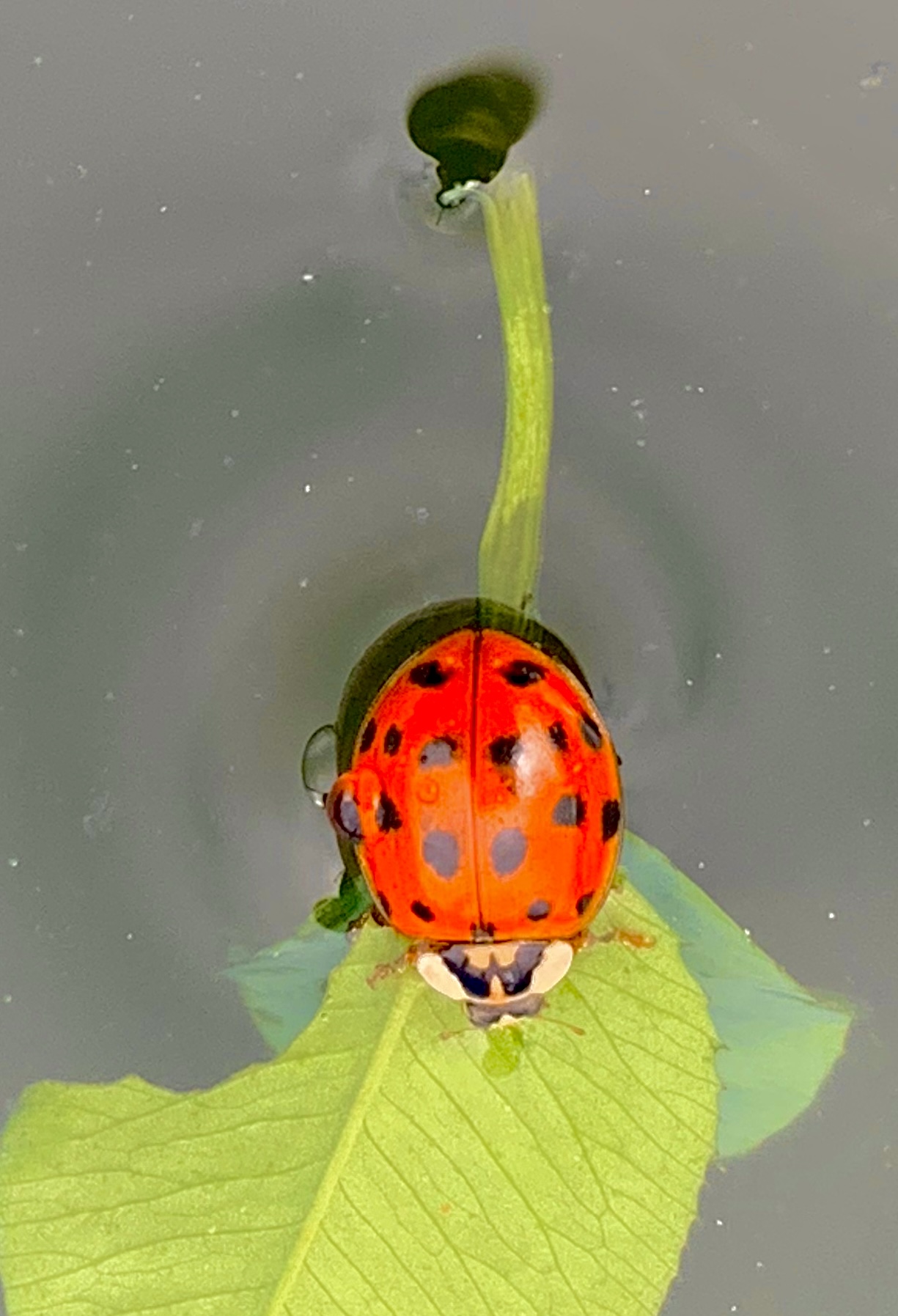
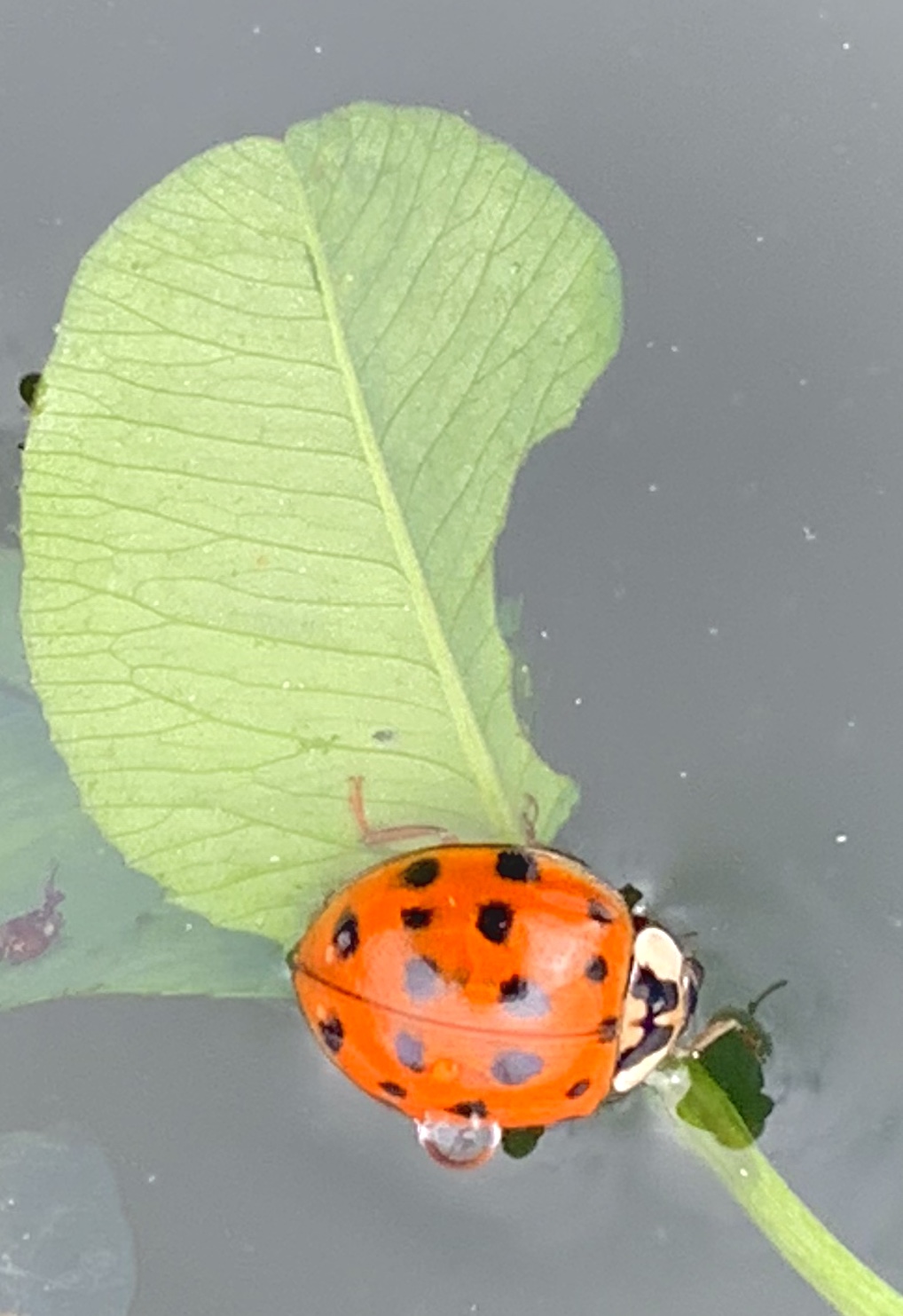
I couldn’t let it drown. I ripped off a piece of my sandwich bag, lifted it to safety. Its little legs reached behind its back to stroke its wings dry. I, too, have stretched my legs in strange positions. Is this a leap? What did you expect? For me to let the bug just be a bug. To leave it alone when it already planned on dying. To reach out and not imagine myself the God I wish would lift me from the water. ~Daniella Toosie-Watson “The Bug”
You are not your own; you were bought at a price. 1 Corinthians 6: 19b-20a
There is a well known story with a number of variations, all involving a scorpion that stings a good-souled frog/turtle/crocodile/person who tries to rescue it from drowning. Since the sting dooms the rescuer and as a result the scorpion as well, the scorpion explains “to sting is in my nature”. In one version, the rescuer tries again and again to help the scorpion, repeatedly getting stung, only to explain before he dies “it may be in your nature to sting but it is in my nature to save.”
This is actually a story originating from Eastern religion and thought, the purpose of which is to illustrate the “dharma”, or orderly nature of things. The story ends perfectly for the Eastern religions believer even though both scorpion and the rescuer die in the end, as the dharma of the scorpion and of the rescuer is realized, no matter what the outcome. Things are what they are, without judgment, and actualization of that nature is the whole point.
However, this story only resonates for the Christian if the nature of the scorpion is forever transformed by the sacrifice of the rescuer on its behalf. The scorpion is no longer its own so no longer slave to its “nature” – no longer just a scorpion with a need and desire to sting whatever it sees. It has been “bought” through the sacrifice of the Rescuer. It no longer is “just” a bug, planning on drowning.
So we too are no longer our own, no longer the helpless victim of our nature no longer the stinger no longer the stung no longer who we used to be before we were rescued.
We are bought at a price beyond imagining.
And our nature to hurt, to punish, to sting, even to die – shall be no more.
Where, O death, is your victory? Where, O death, is your sting? 1 Corinthians 15: 55
Years ago in the Hebrides, I remember an old man who walked every morning on the grey stones to the shore of baying seals, who would press his hat to his chest in the blustering salt wind and say his prayer to the turbulent Jesus hidden in the water,
and I think of the story of the storm and everyone waking and seeing the distant yet familiar figure far across the water calling to them
and how we are all preparing for that abrupt waking, and that calling, and that moment we have to say yes, except it will not come so grandly so Biblically but more subtly and intimately in the face of the one you know you have to love
so that when we finally step out of the boat toward them, we find everything holds us, and everything confirms our courage, and if you wanted to drown you could, but you don’t because finally after all this struggle and all these years you simply don’t want to any more you’ve simply had enough of drowning and you want to live and you want to love and you will walk across any territory and any darkness however fluid and however dangerous to take the one hand you know belongs in yours. ~David Whyte from “TrueLove” in The Sea in You
When the mystery of God’s love breaks through into my consciousness, do I run from it? Or am I virgin enough to respond from my deepest, truest self, and say a “yes” that will change me forever? ~Kathleen Norris from Amazing Grace – A Vocabulary of Faith
Again and again, we are called to do something that takes all our courage – we feel we will sink and drown, perishing in our humiliation, our weakness, our sheer lack of faith in what we are able to accomplish.
Eventually, we tire of the fear of drowning so we just say yes to the invitation to do this hard thing and we take the hand that guides us home.
He calls on us to trust He’ll reach out and hold us up when our faith, and our feet, waver and stumble.
We are not left to drown.
This year’s Advent theme “Dawn on our Darkness” is taken from this 19th century Christmas hymn:
Brightest and best of the sons of the morning, dawn on our darkness and lend us your aid. Star of the east, the horizon adorning, guide where our infant Redeemer is laid. ~Reginald Heber -from “Brightest and Best”
One-Time
Monthly
Yearly
Make a one-time or recurring donation to support daily Barnstorming posts
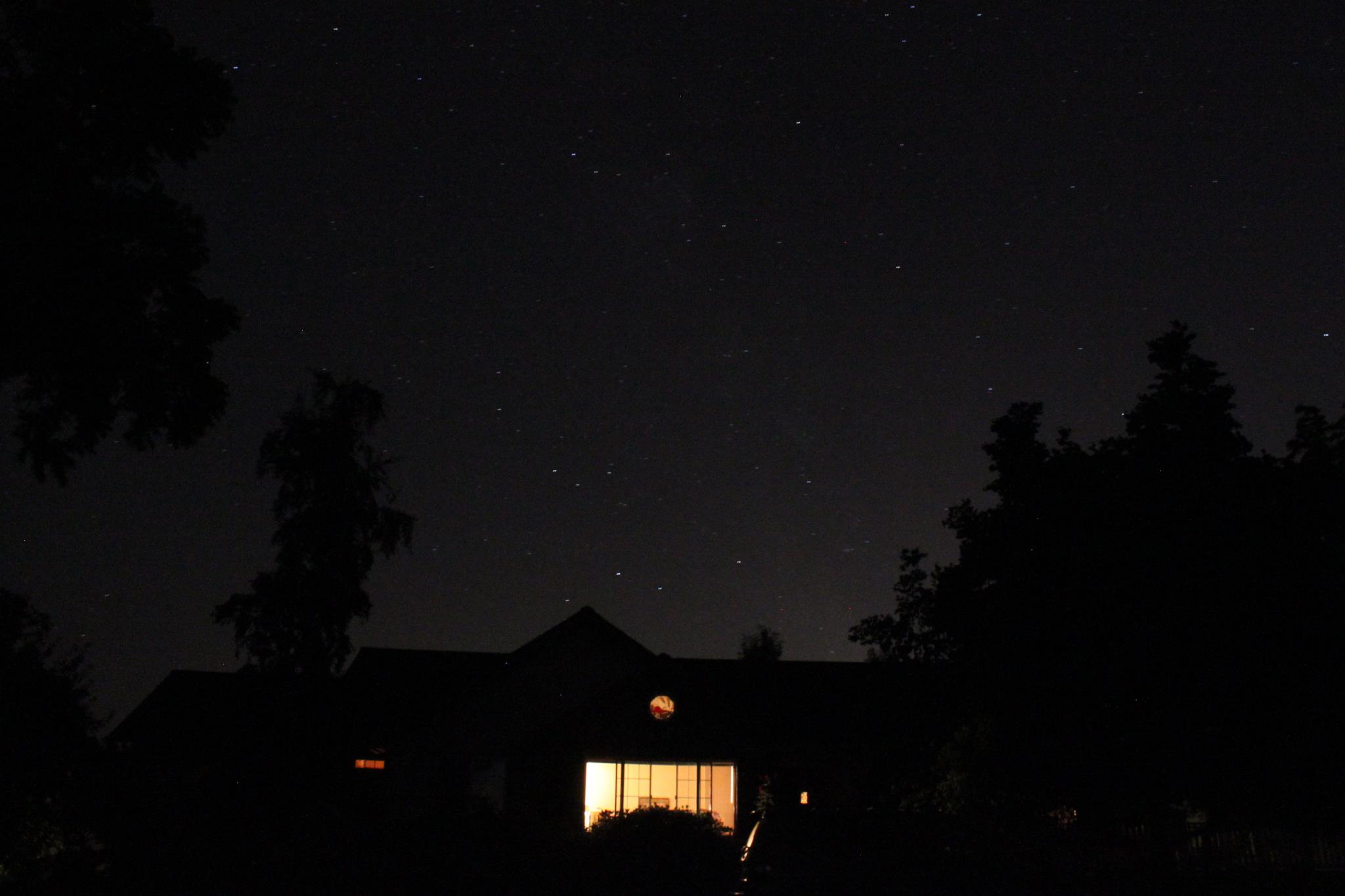
We grow accustomed to the Dark — When Light is put away — As when the Neighbor holds the Lamp To witness her Good bye —
A Moment — We Uncertain step For newness of the night — Then — fit our Vision to the Dark — And meet the Road — erect —
And so of larger — Darknesses — Those Evenings of the Brain — When not a Moon disclose a sign — Or Star — come out — within —
The Bravest — grope a little — And sometimes hit a Tree Directly in the Forehead — But as they learn to see —
Either the Darkness alters — Or something in the sight Adjusts itself to Midnight — And Life steps almost straight. ~Emily Dickinson
photo by Bob Tjoelker
So few grains of happiness measured against all the dark and still the scales balance.
The world asks of us only the strength we have and we give it. Then it asks more, and we give it. ~Jane Hirschfield from “The Weighing”
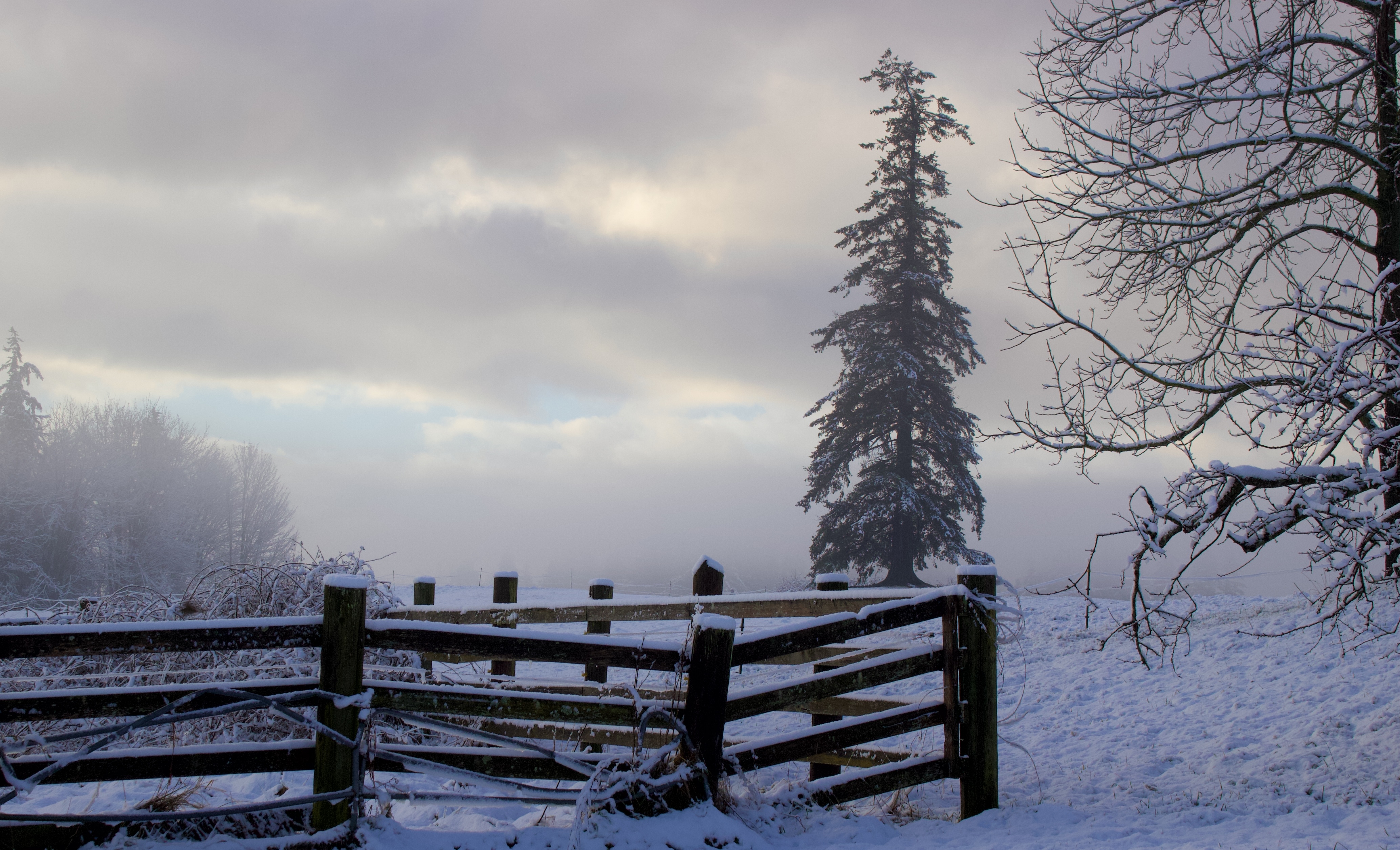
I admit that I’m stumbling about in the dark right now, bearing the bruises and scrapes of random collisions with objects hidden by the night.
My eyes must slowly adjust to such bare illumination, as the Lamp has been carried away.
I’m feeling my way through this time of life.
I suspect there are fellow darkness travelers who also have lost their way and their Light, giving what they can and sometimes more.
And so, blinded as we each are, we run forehead-first into the Tree which has always been there and always will be, the symbol of our salvation.
Because of who we are and Who loves us, we, now free and forgiven, safely follow a darkened road made nearly straight, all the way Home.
This year’s Advent theme “Dawn on our Darkness” is taken from this 19th century Christmas hymn.
Brightest and best of the sons of the morning, dawn on our darkness and lend us your aid. Star of the east, the horizon adorning, guide where our infant Redeemer is laid. ~Reginald Heber -from “Brightest and Best”
May you see God’s light on the path ahead when the road you walk is dark. May you always hear even in your hour of sorrow the gentle singing of the lark. When times are hard may hardness never turn your heart to stone. May you always remember when the shadows fall– You do not walk alone.
One-Time
Monthly
Yearly
Make a one-time or recurring donation to support daily Barnstorming posts
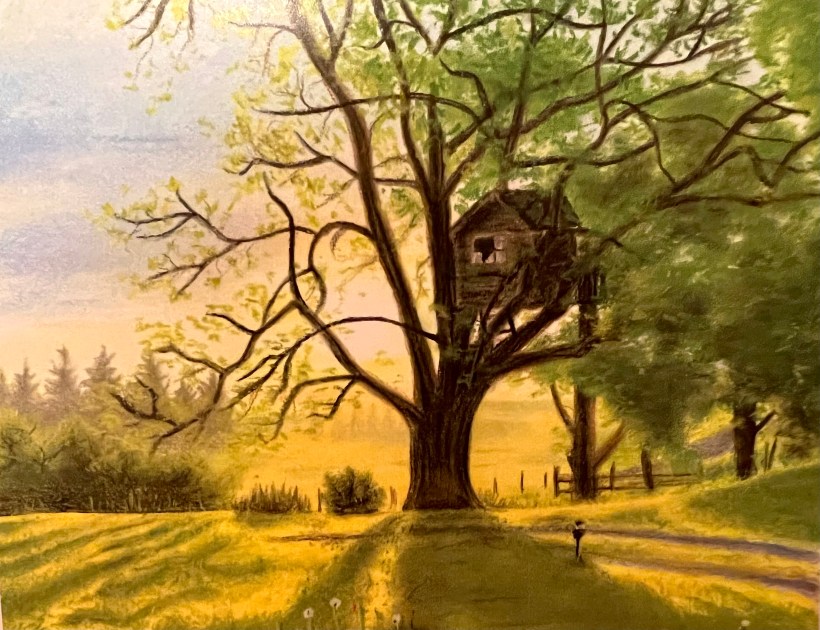
It’s in the perilous boughs of the tree out of blue sky the wind sings loudest surrounding me.
And solitude, a wild solitude ’s reveald, fearfully, high I’d climb into the shaking uncertainties,
part out of longing, part daring my self, part to see that widening of the world, part
to find my own, my secret hiding sense and place, where from afar all voices and scenes come back
—the barking of a dog, autumnal burnings, far calls, close calls— the boy I was calls out to me
here the man where I am “Look! I’ve been where you most fear to be.” ~Robert Duncan “Childhood’s Retreat”
And this is where we went, I thought, Now here, now there, upon the grass Some forty years ago.
The days being short now, simply I had come To gaze and look and stare upon The thought of that once endless maze of afternoons. But most of all I wished to find the places where I ran
What’s happened to our boys that they no longer race And stand them still to contemplate Christ’s handiwork: His clear blood bled in syrups from the lovely wounded trees? Why only bees and blackbird winds and bending grass? No matter. Walk. Walk, look, and sweet recall.
I came upon an oak where once when I was twelve I had climbed up and screamed for Skip to get me down. It was a thousand miles to earth. I shut my eyes and yelled. My brother, richly compelled to mirth, gave shouts of laughter And scaled up to rescue me. “What were you doing there?” he said. I did not tell. Rather drop me dead. But I was there to place a note within a squirrel nest On which I’d written some old secret thing now long forgot.
{Now} I lay upon the limb a long while, thinking. I drank in all the leaves and clouds and weathers Going by as mindless As the days. What, what, what if? I thought. But no. Some forty years beyond!
I brought forth: The note.
I opened it. For now I had to know. I opened it, and wept. I clung then to the tree And let the tears flow out and down my chin. Dear boy, strange child, who must have known the years And reckoned time and smelled sweet death from flowers In the far churchyard. It was a message to the future, to myself. Knowing one day I must arrive, come, seek, return. From the young one to the old. From the me that was small And fresh to the me that was large and no longer new. What did it say that made me weep?
I remember you. I remember you. ~Ray Bradbury from “Remembrance”
Not long ago, we drove the country roads where I grew up, over sixty years later, and though some trees are taller, and others cut down – it looked just as I remembered. The scattered houses on farms still standing, a bit more worn, the fields open and flowing as always, the turns and bends, the ups and downs of the asphalt lanes unchanged where once I tread with bicycle tires and sneakered feet.
My own childhood home a different color but so familiar as we drive slowly by, full of memories of laughter and games, long winter days and longer summer evenings full of its share of angry words and tears and eventual forgiveness.
I too left notes to my future self, in old barns, and lofts, and yes, in trees, but won’t go back to retrieve them. I remember what I wrote. My young heart tried to imagine itself decades hence, with so much to fear – bomb drills and shelters in the ground, such anxiety and joy would pass through me like pumping blood, wondering what wounds would I bear and bleed, what love and tears would trace my aging face?
I have not forgotten that I wish to be remembered.
No, I have never forgotten that I remember that child: this is me, as I was, and, deep down, still am.
One-Time
Monthly
Yearly
Make a one-time or recurring donation to support daily Barnstorming posts
November pierces with its bleak remembrance Of all the bitterness and waste of war. Our silence tries but fails to make a semblance Of that lost peace they thought worth fighting for. Our silence seethes instead with wraiths and whispers, And all the restless rumour of new wars, The shells are falling all around our vespers, No moment is unscarred, there is no pause, In every instant bloodied innocence Falls to the weary earth ,and whilst we stand Quiescence ends again in acquiescence, And Abel’s blood still cries in every land One silence only might redeem that blood Only the silence of a dying God. ~Malcolm Guite “Silence: a Sonnet for Remembrance Day”
So, when old hopes that earth was bettering slowly Were dead and damned, there sounded ‘War is done!’ One morrow. Said the bereft, and meek, and lowly, ‘Will men some day be given to grace? yea, wholly, And in good sooth, as our dreams used to run?‘
Aye; all was hushed. The about-to-fire fired not, The aimed-at moved away in trance-lipped song.
Calm fell. From Heaven distilled a clemency; There was peace on earth, and silence in the sky;
Some could, some could not, shake off misery… ~Thomas Hardy from “And There Was a Great Calm” (On the Signing of the Armistice, 11 Nov. 1918)
When you go home tell them of us and say – “For your tomorrow we gave our today” ~John Maxwell Edmonds from “The Kohima Epitaph”
I’m unsure why the United States does not call November 11 Remembrance Day as the Commonwealth nations did 99 years ago at the Armistice. This is a day that demands so much more than the more passive name Veterans’ Day represents.
This day calls all citizens who appreciate their freedoms to stop what they are doing and disrupt the routine rhythm of their lives. We are to remember in humble thankfulness the generations of military veterans who sacrificed time, resources, sometimes health and well being, and too often their lives in answering the call to defend their countries.
Remembrance means ~never forgetting what it costs to defend freedom. ~acknowledging the millions who have given of themselves and continue to do so on our behalf. ~never ceasing to care. ~a commitment to provide resources needed for the military to remain strong and supported. ~unending prayers for safe return home to family. ~we hold these men and women close in our hearts, always teaching the next generation about the sacrifices they made.
Most of all, it means being willing ourselves to become the sacrifice when called.
Now you hear what the house has to say. Pipes clanking, water running in the dark, the mortgaged walls shifting in discomfort, and voices mounting in an endless drone of small complaints like the sounds of a family that year by year you’ve learned how to ignore.
But now you must listen to the things you own, all that you’ve worked for these past years, the murmur of property, of things in disrepair, the moving parts about to come undone, and twisting in the sheets remember all the faces you could not bring yourself to love.
How many voices have escaped you until now, the venting furnace, the floorboards underfoot, the steady accusations of the clock numbering the minutes no one will mark. The terrible clarity this moment brings, the useless insight, the unbroken dark. ~Dana Gioia, “Insomnia” from 99 Poems: New and Selected.
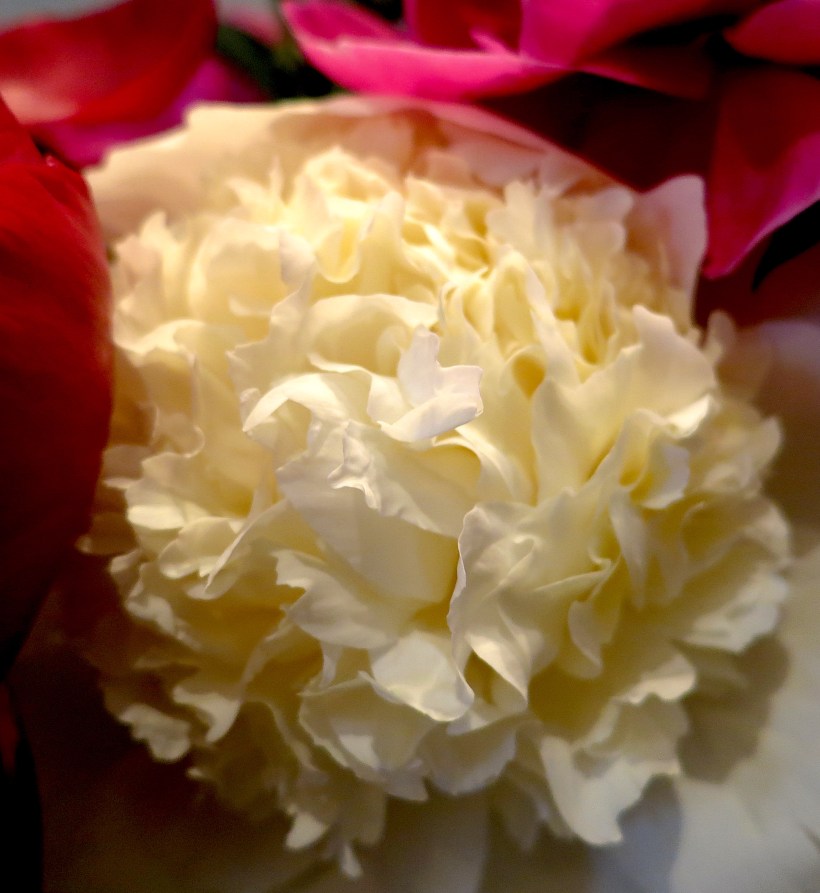
The almost disturbing scent of peonies presses through the screens, and I know without looking how those heavy white heads lean down under the moon’s light. A cricket chafes and pauses, chafes and pauses, as if distracted or preoccupied.
When I open my eyes to document my sleeplessness by the clock, a point of greenish light pulses near the ceiling. A firefly . . . In childhood I ran out at dusk, a jar in one hand, lid pierced with airholes in the other, getting soaked to the knees in the long wet grass.
The light moves unsteadily, like someone whose balance is uncertain after traveling many hours, coming a long way. Get up. Get up and let it out.
But I leave it hovering overhead, in case it’s my father, come back from the dead to ask, “Why are you still awake? You can put grass in their jar in the morning.” ~Jane Kenyon from “Insomnia” from Collected Poems
Sleep comes its little while. Then I wake in the valley of midnight or three a.m. to the first fragrances of spring which is coming, all by itself, no matter what My heart says, what you thought you have you do not have. My body says, will this pounding ever stop? My heart says: there, there, be a good student. My body says: let me up and out, I want to fondle those soft white flowers, open in the night ~Mary Oliver from A Thousand Morning Poems
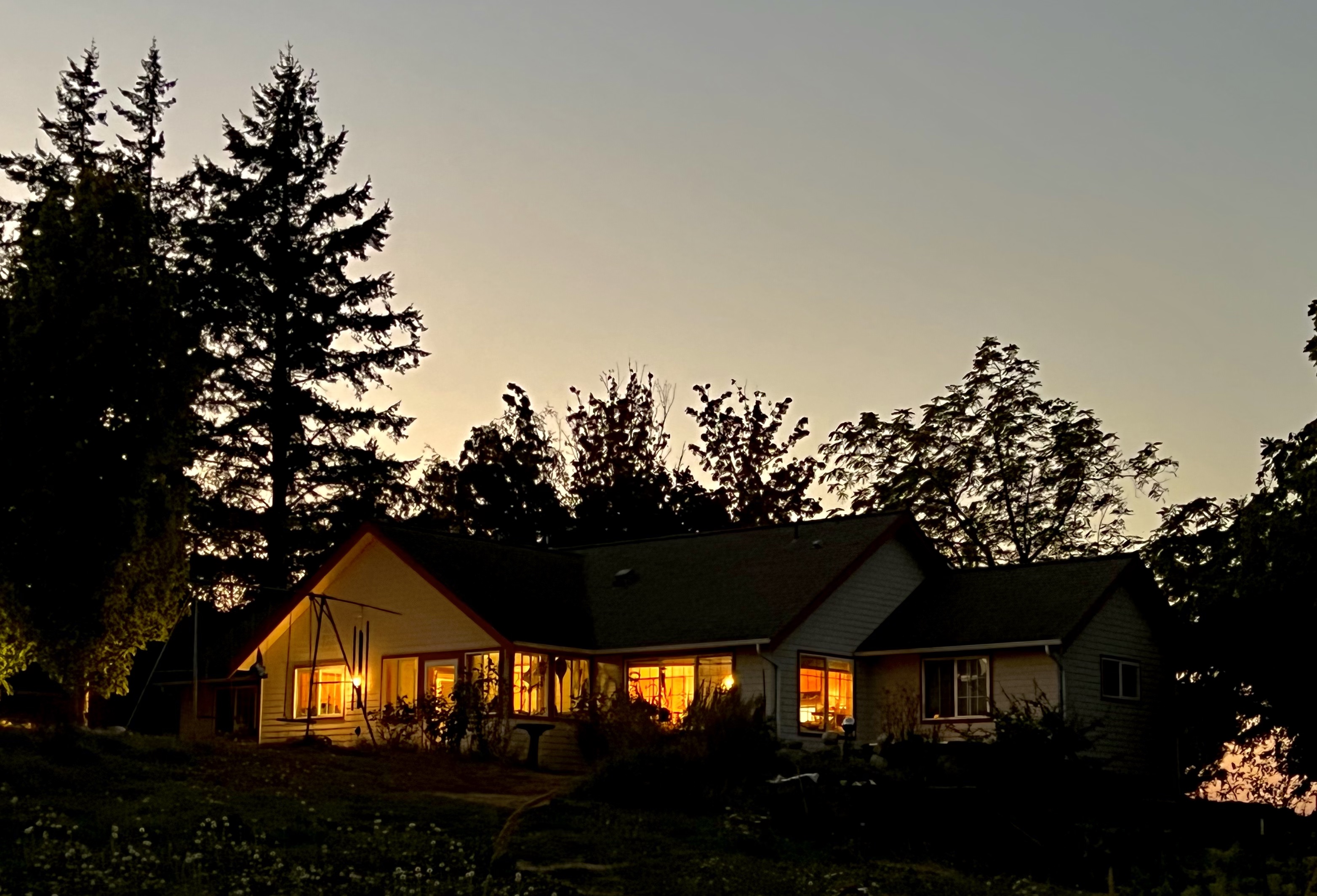
Our house does make sounds at night. It has many stories to tell, and does.
I’ve become accustomed to its various voices after almost thirty years sleeping (and too often not sleeping) here, yet hearing new noises are disconcerting – whether thumps that come from the attic, pattering of little feet across the roof, clinking and clunking of the furnace, or inexplicable wild sounds right outside the bedroom window.
Listening in the night reminds me I’m a mere visitor here. The house, the farm, all that surrounds me here remains long after I’m gone. Awake or asleep, I want to spend my time well here; tossing and turning in my thoughts gives me a chance to consider what the house, the land, the the wild and not-so-wild critters outside have to say. The “terrible clarity” of the unbroken dark is often disconcerting and downright frightening.
It is then, and only then – God’s still, small voice breaks the dark. Always has. Always will.
I will seek You Lord Search with all my heart till I find You Waiting patiently Longing for one word to breath new life Your words are life
I will listen, ever listen For Your still small voice Lord I’m longing to know You more So I will listen for Your still small voice
Take me to a place Sheltered from the noise and distraction Lord be my escape Open up my heart to whispers of Your life and love
I will listen, ever listen For Your still small voice Lord I’m longing to know You more So I will listen for Your still small voice
I will listen, ever listen For Your still small voice Lord I’m longing to know You more So I will listen for Your still small voice ~Jay Stocker
Original Barnstorming artwork note cards available as a gift to you with a $50 donation to support Barnstorming – information here
When I was five, my father, who loved me, ran me over with a medium-sized farm tractor.
I was lucky though; I tripped and slipped into a small depression, which caused the wheels to tread
lightly on my leg, which had already been broken (when I was three) by a big dog, who liked to play rough,
and when I was nine, I fell from the second-floor balcony onto the cement by the back steps,
and as I went down I saw my life go by and thought: “This is exactly how Wiley Coyote feels, every time!”
Luckily, I mostly landed on my feet, and only had to go on crutches for a few months in the fifth grade—
and shortly after that, my father, against his better judgment, bought the horse I’d wanted for so long.
All the rest of my luck has to do with highways and ice—things that could have happened, but didn’t. ~Joyce Sutphen, “My Luck” from First Words.
at twenty
I understand catastrophic thinking, particularly when “in the moment” tragedies play out real-time in the palm of my hand and I feel helpless to do anything but watch it unfold.
Those who know me well know I fret and worry better than most. Medical training only makes this worse. I’m taught to first think disastrously. That is what I have done for a living: to always be ready for the worse case scenario and simply assume it will happen.
Sometimes it does happen and no amount of wishing it away will work.
When I rise to face a day of uncertainty as we all must do every morning~ after careful thought, I reach for the certainty I am promised over the uncertainty I can only imagine:
What is my only comfort in life and in death? That I am not my own, but belong —body and soul, in life and in death— to my faithful Savior, Jesus Christ.
“Supposing it didn’t” — says our Lord (and we are comforted by this) but even if it did … even if it did – as awful things sometimes do – we are never left on our own to deal with it.
One-Time
Monthly
Yearly
Make a one-time or recurring donation to support daily Barnstorming posts
The grace of God means something like: “Here is your life. You might never have been, but you are, because the party wouldn’t have been complete without you.
Here is the world. Beautiful and terrible things will happen. Don’t be afraid. I am with you. Nothing can ever separate us. It’s for you I created the universe. I love you.”
There’s only one catch. Like any other gift, the gift of grace can be yours only if you’ll reach out and take it.
Maybe being able to reach out and take it is a gift too. ~Frederick Buechner from Wishful Thinking
photo by Nate Gibson
Do not be afraid, for I have redeemed you. I have called you by your name; you are mine. When you walk through the waters, I’ll be with you; you will never sink beneath the waves. When the fire is burning all around you, you will never be consumed by the flames. When the fear of loneliness is looming, then remember I am at your side. When you dwell in the exile of a stranger, remember you are precious in my eyes. You are mine, O my child, I am your Father, and I love you with a perfect love. ~Gerard Markland “Do Not Be Afraid”
Most days I depend on discovering beauty in the most unexpected places. I am always looking for it.
But when the unexpected terrible happens– crushes, bleeds and fractures me, and beauty appears to hide its face, what I fear most is that I’ll not ever see beauty in the world again.
We are told in scripture: the Words written again and again and again, -365 times in total- once for every day of the year:
if only I can truly believe them, if only I can reassure others so they reach out and take them to heart
He is here, with us, in this broken world- do not be afraid do not be afraid do not be afraid
One-Time
Monthly
Yearly
Make a one-time or recurring donation to support daily Barnstorming posts
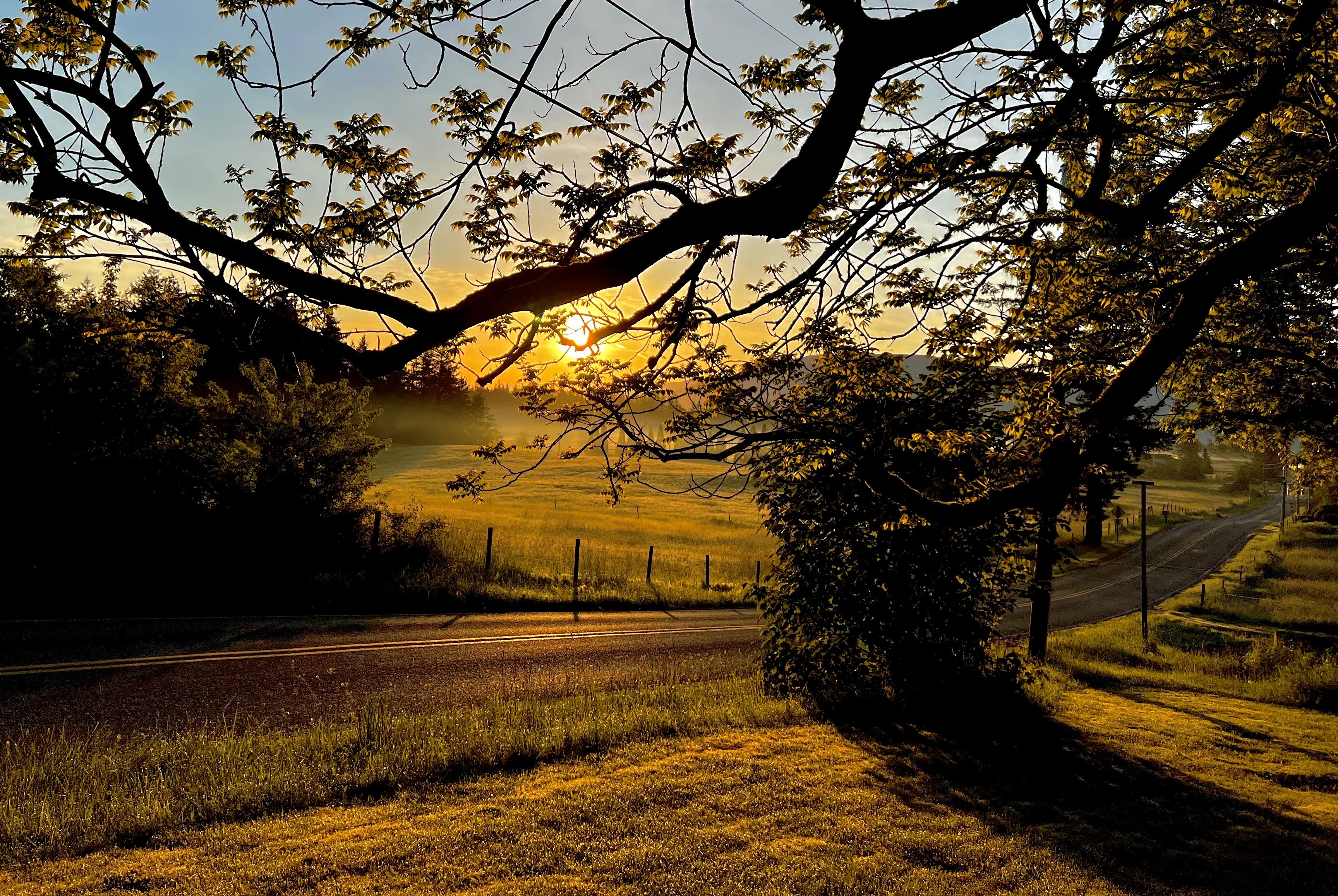
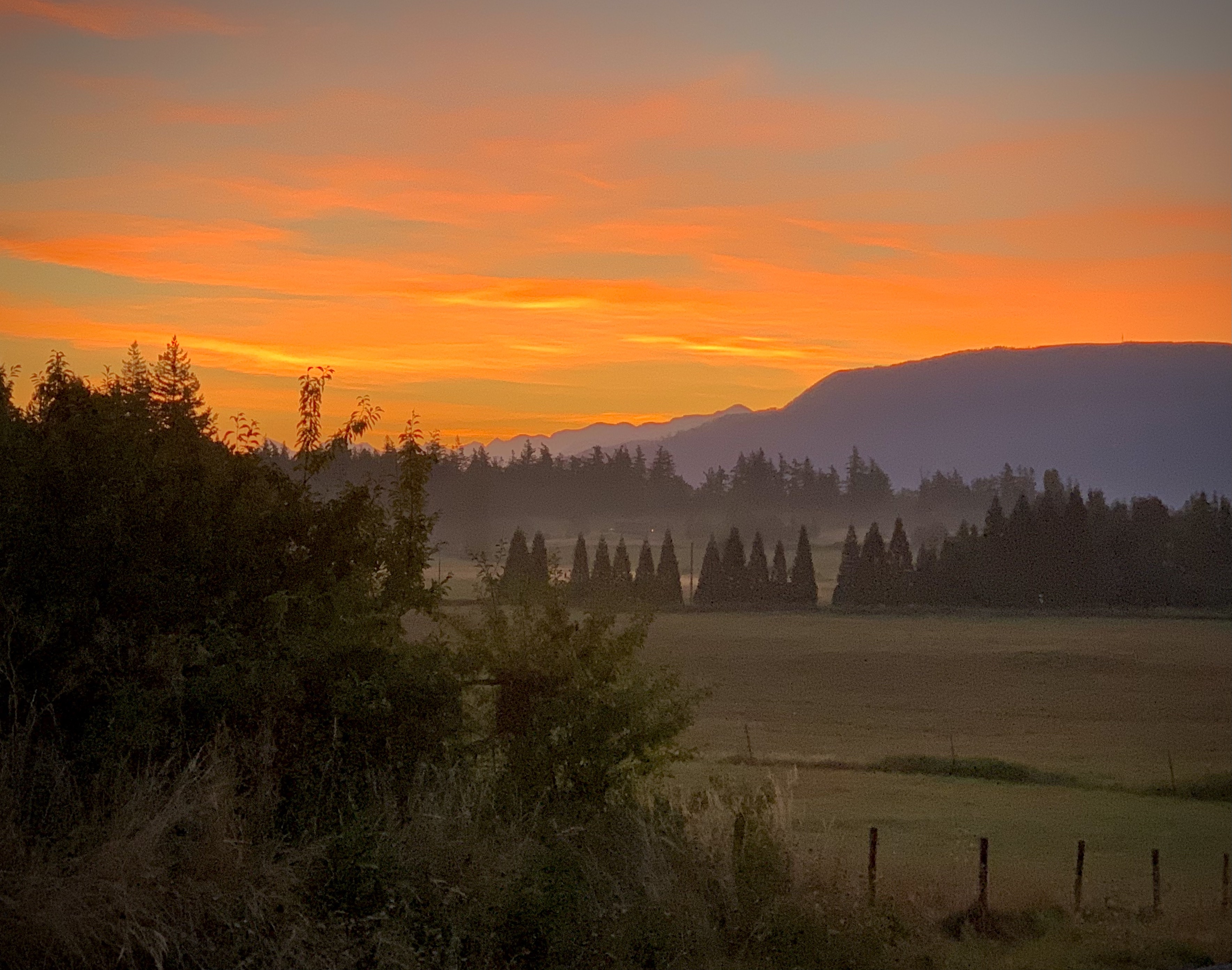
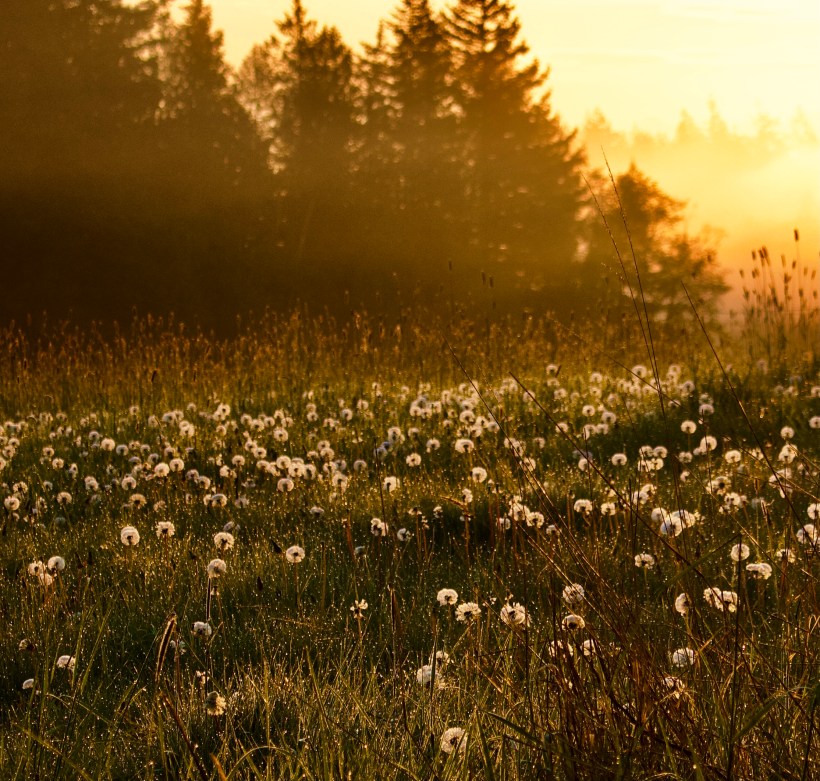
The rising sun had crowned the hills, And added beauty to the plain; O grand and wondrous spectacle! That only nature could explain.
I stood within a leafy grove, And gazed around in blissful awe; The sky appeared one mass of blue, That seemed to spread from sea to shore.
Far as the human eye could see, Were stretched the fields of waving corn. Soft on my ear the warbling birds Were heralding the birth of morn.
While here and there a cottage quaint Seemed to repose in quiet ease Amid the trees, whose leaflets waved And fluttered in the passing breeze.
O morning hour! so dear thy joy, And how I longed for thee to last; But e’en thy fading into day Brought me an echo of the past.
‘Twas this,—how fair my life began; How pleasant was its hour of dawn; But, merging into sorrow’s day, Then beauty faded with the morn. ~Olivia Ward Bush-Banks “Morning on Shinnecock”
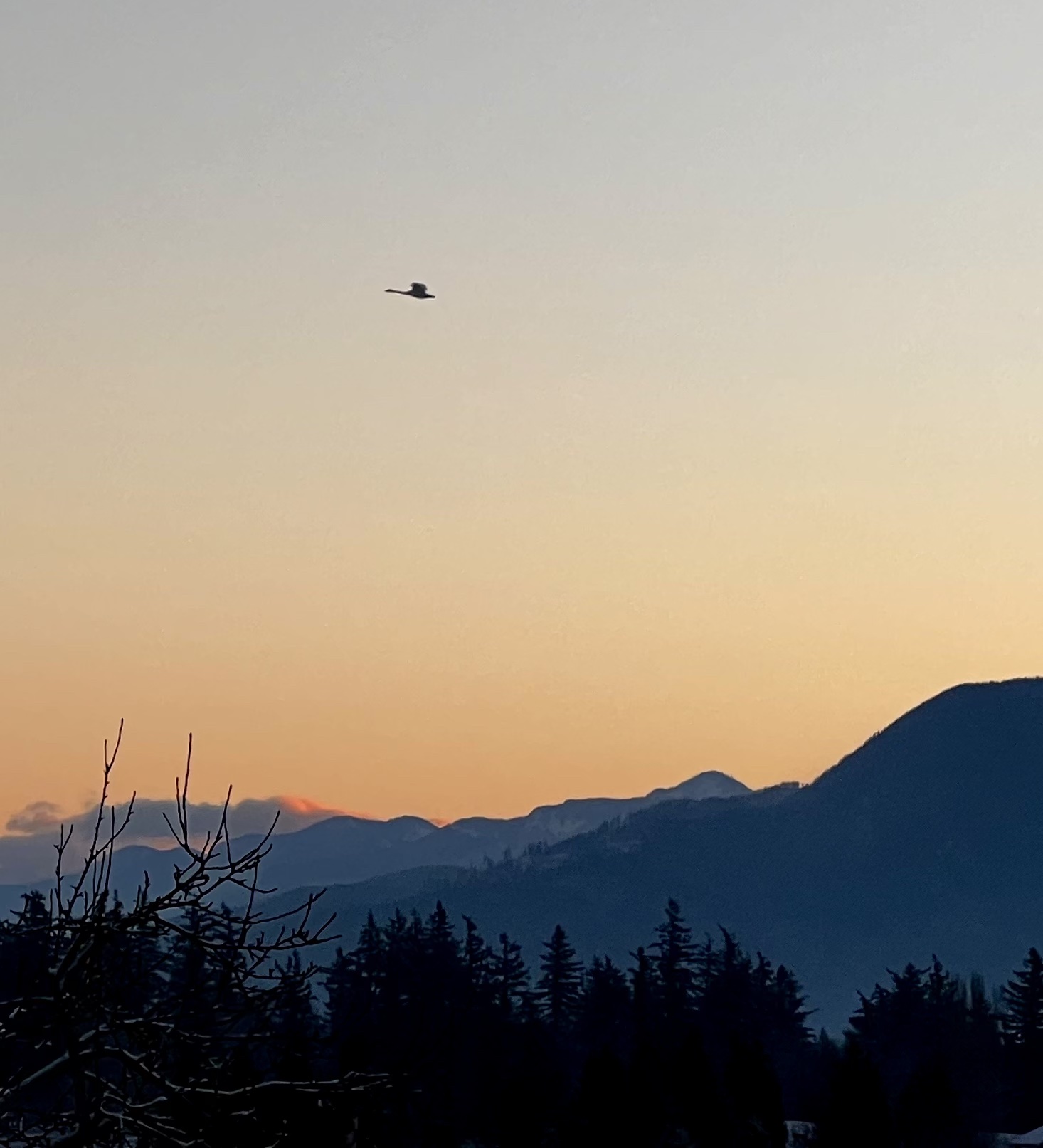
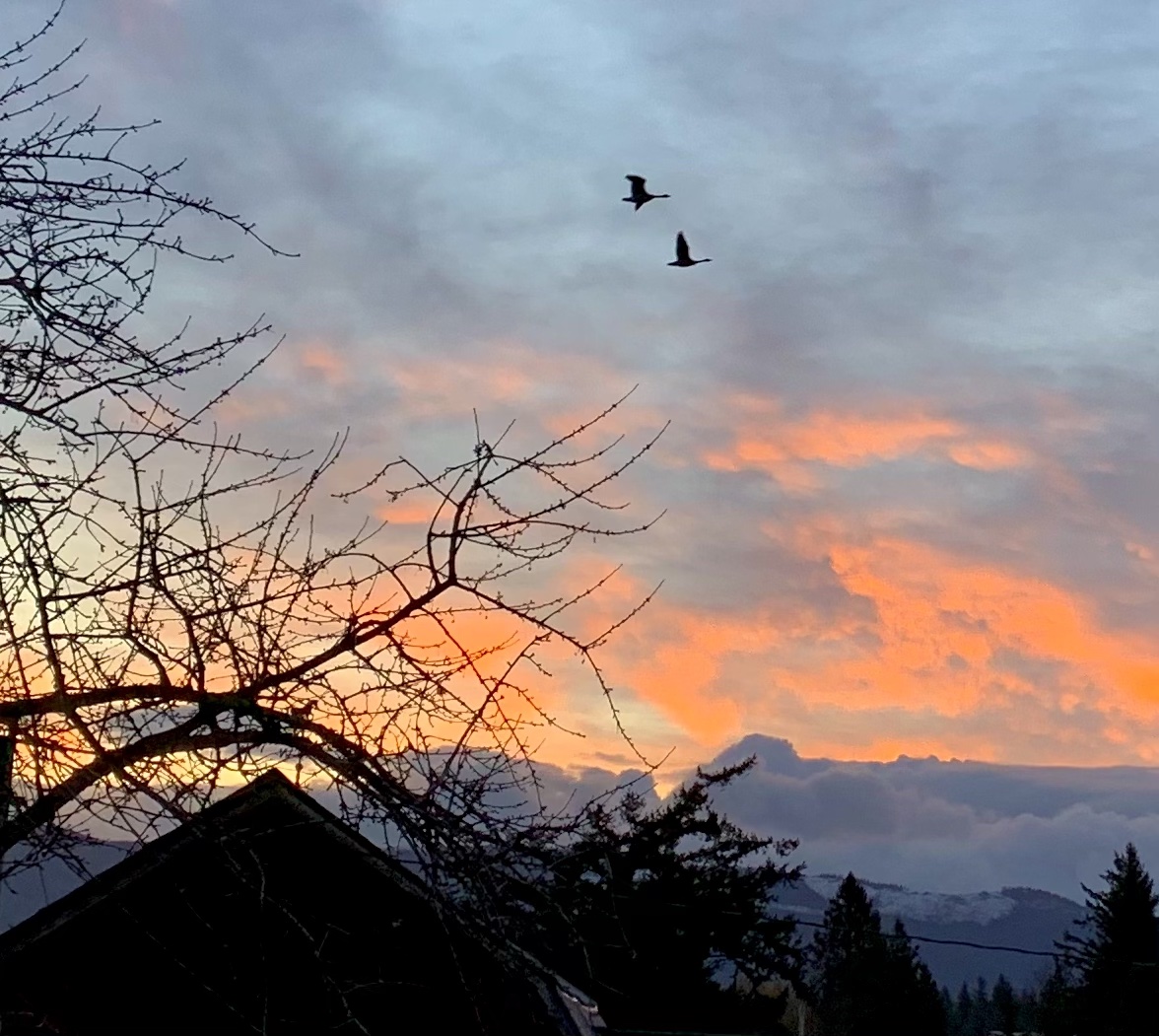
The heart of a woman goes forth with the dawn, As a lone bird, soft winging, so restlessly on, Afar o’er life’s turrets and vales does it roam In the wake of those echoes the heart calls home. ~Georgia Douglas Johnson from The Heart of a Woman and Other Poems
For what human ill does not dawn seem to be an alleviation? ~Thornton Wilder from The Bridge of San Luis Rey
There are some days, as I look at what tasks lie ahead, when I must fling my heart out ahead of me in the hope before the sun goes down, I might catch up and retrieve it back home to me.
I wonder if anyone else might find it first or even notices it fluttering and stuttering its way through the day.
Perhaps, once flung with the dawn, my heart will wing its way home and I’ll find it patiently waiting for me when I return, readying itself for another journey tomorrow.
One-Time
Monthly
Yearly
Make a one-time or recurring donation to support daily Barnstorming posts































 Barnstorming