
The Light Turned On

On Epiphany day,
     we are still the people walking.
     We are still people in the dark,
          and the darkness looms large around us,
          beset as we are by fear,
                                        anxiety,
                                        brutality,
                                        violence,
                                        loss —
          a dozen alienations that we cannot manage.

We are — we could be — people of your light.
     So we pray for the light of your glorious presence
          as we wait for your appearing;
     we pray for the light of your wondrous grace
          as we exhaust our coping capacity;
     we pray for your gift of newness that
          will override our weariness;
     we pray that we may see and know and hear and trust
          in your good rule.

That we may have energy, courage, and freedom to enact
         your rule through the demands of this day.
         We submit our day to you and to your rule, with deep joy and high hope.
~Walter Brueggemann from  Prayers for a Privileged People 

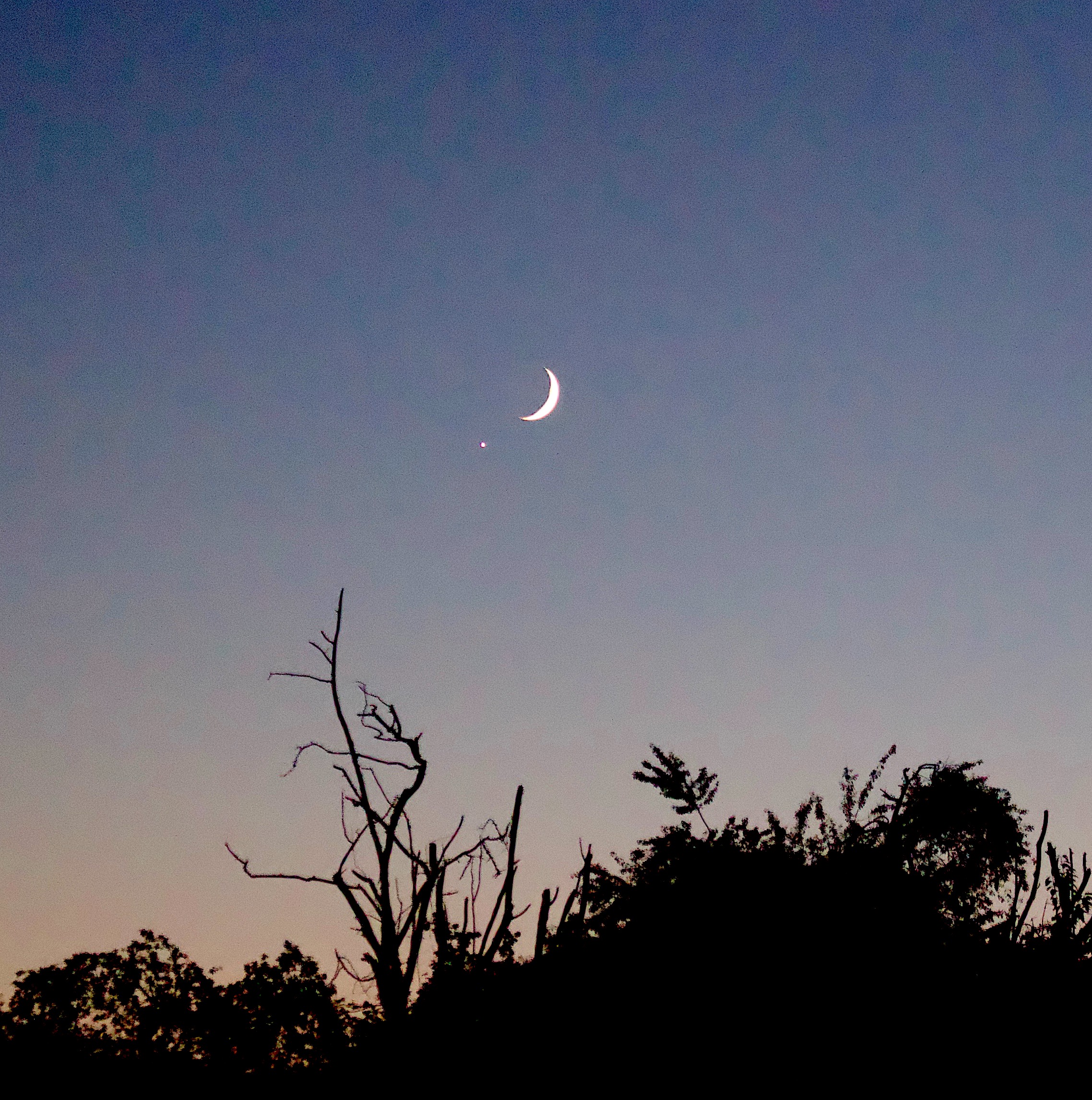
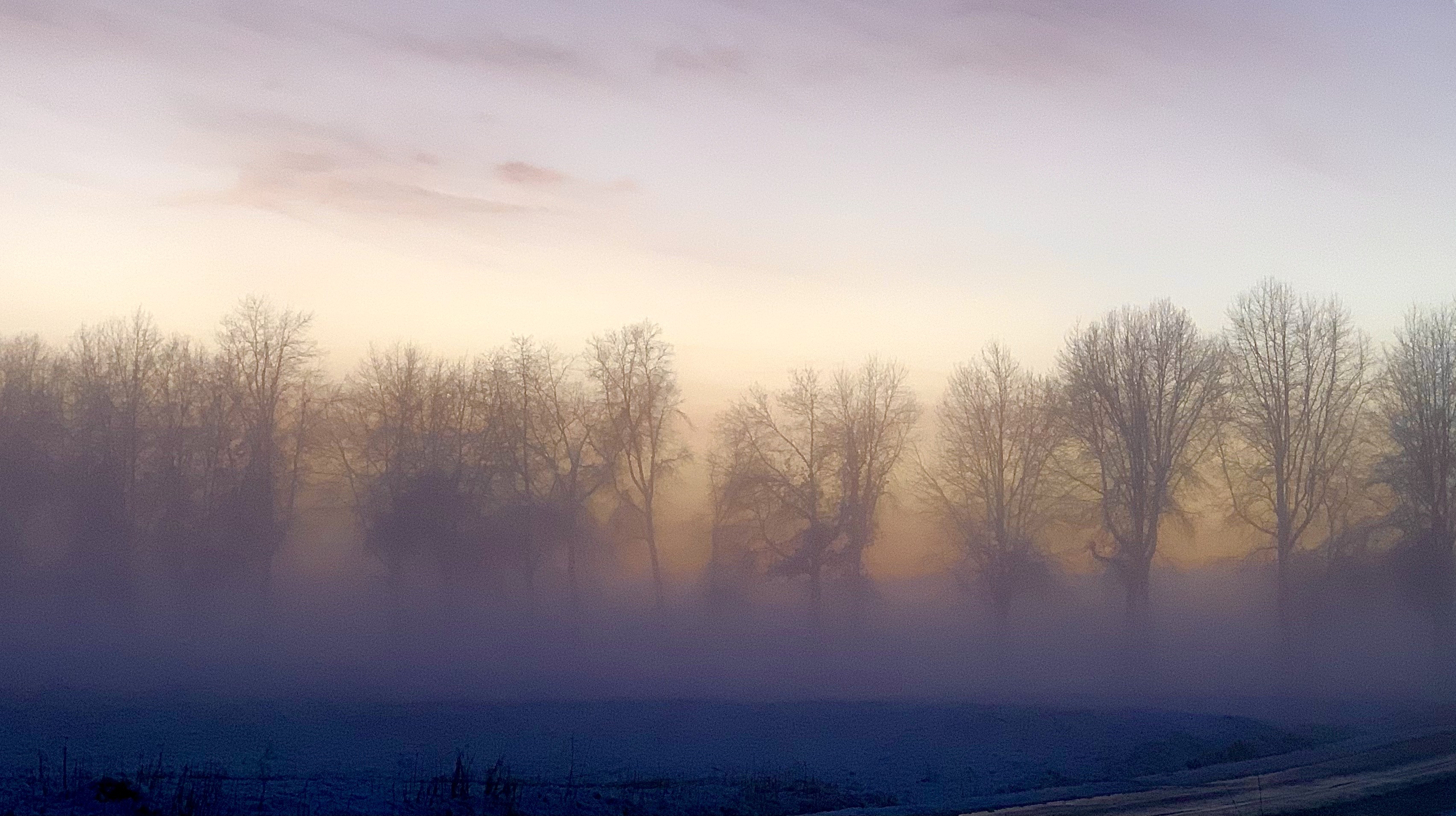
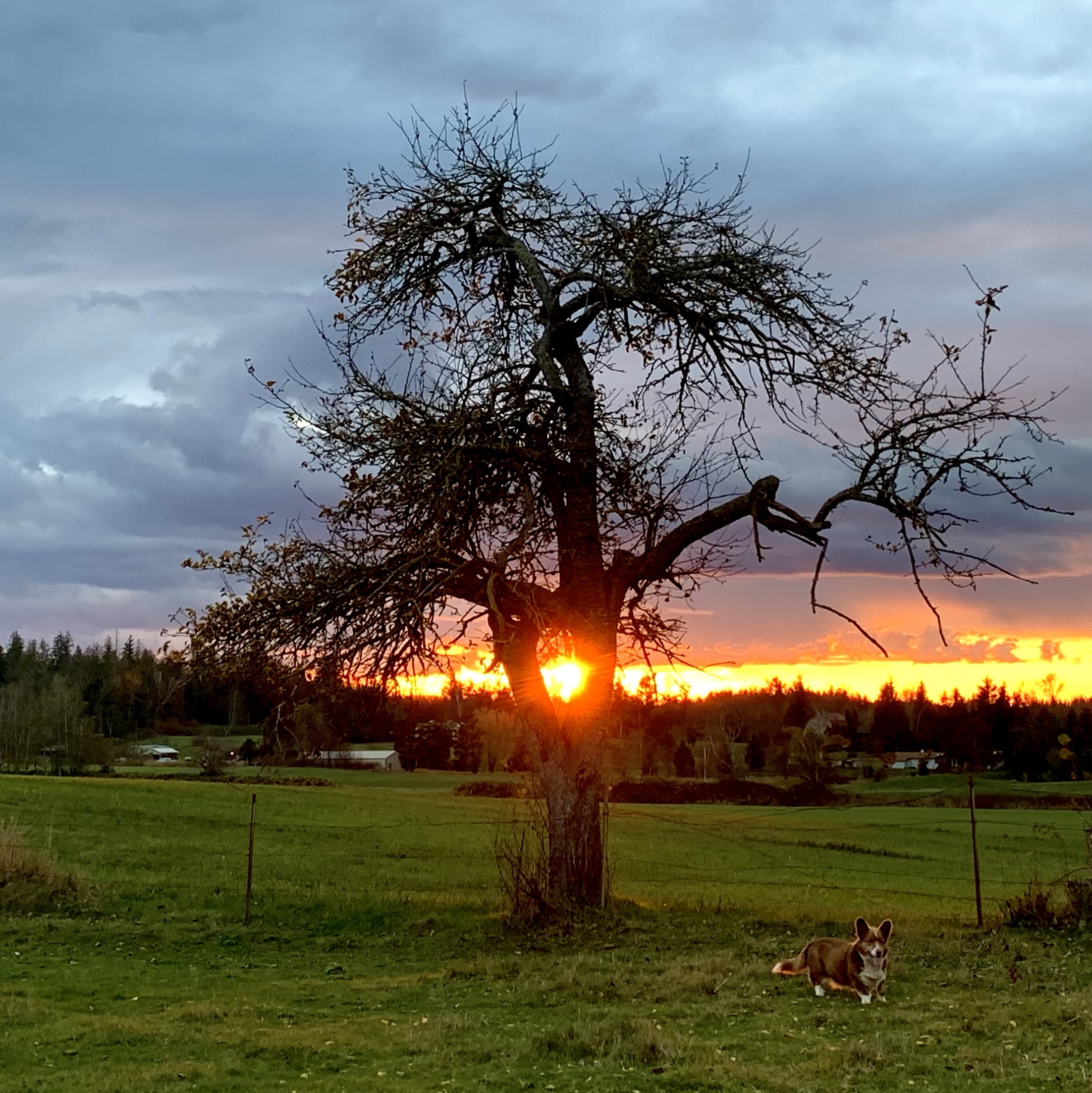
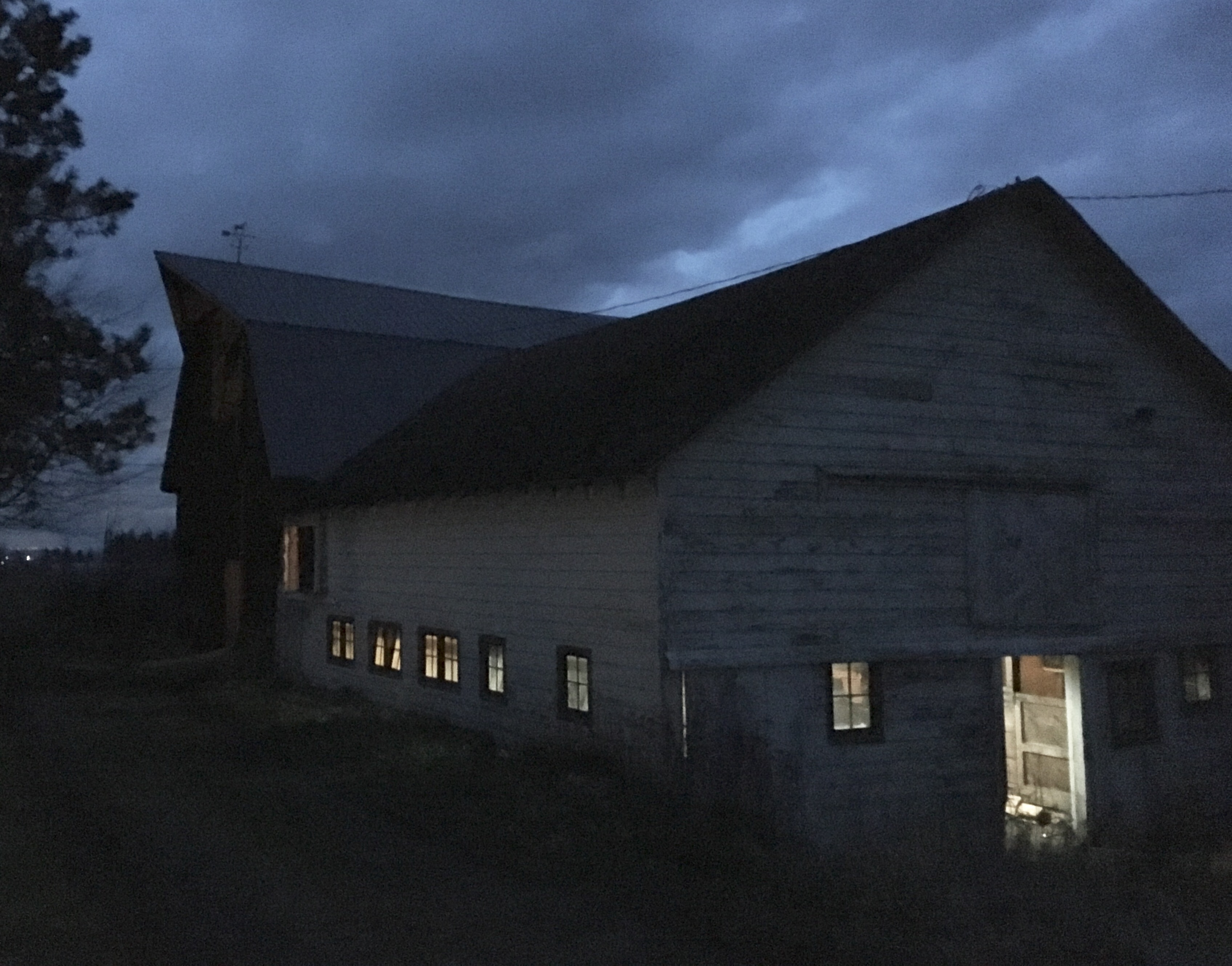
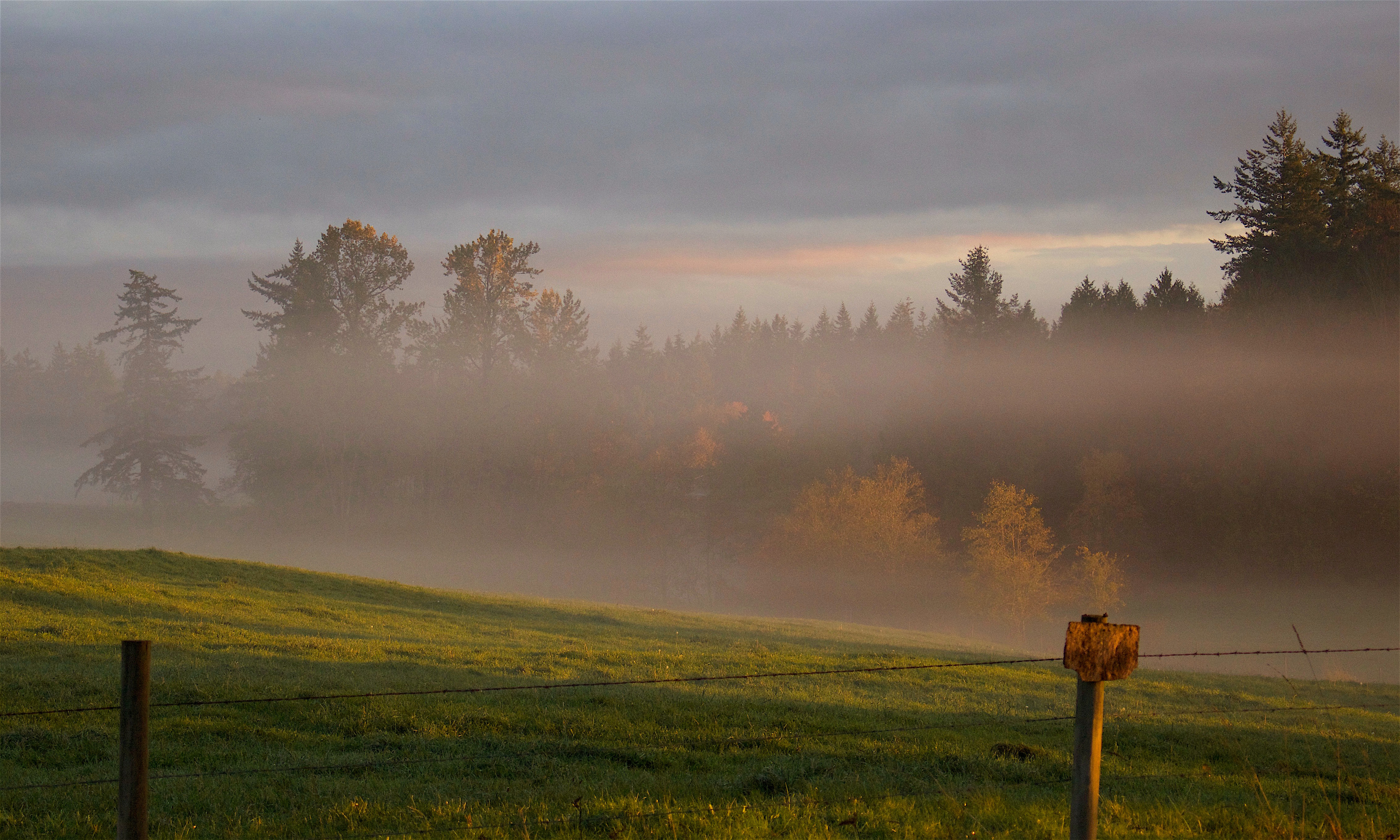
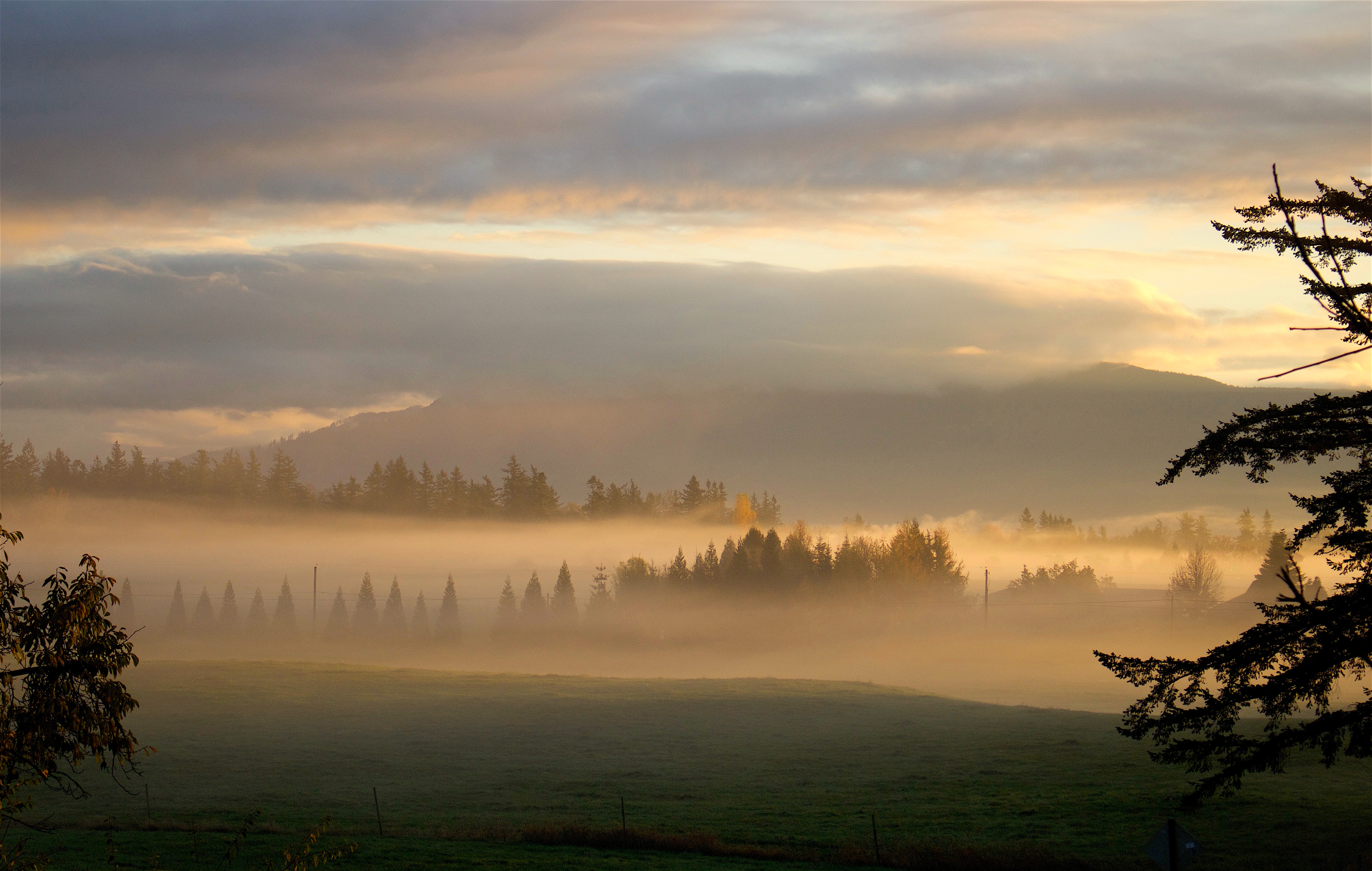
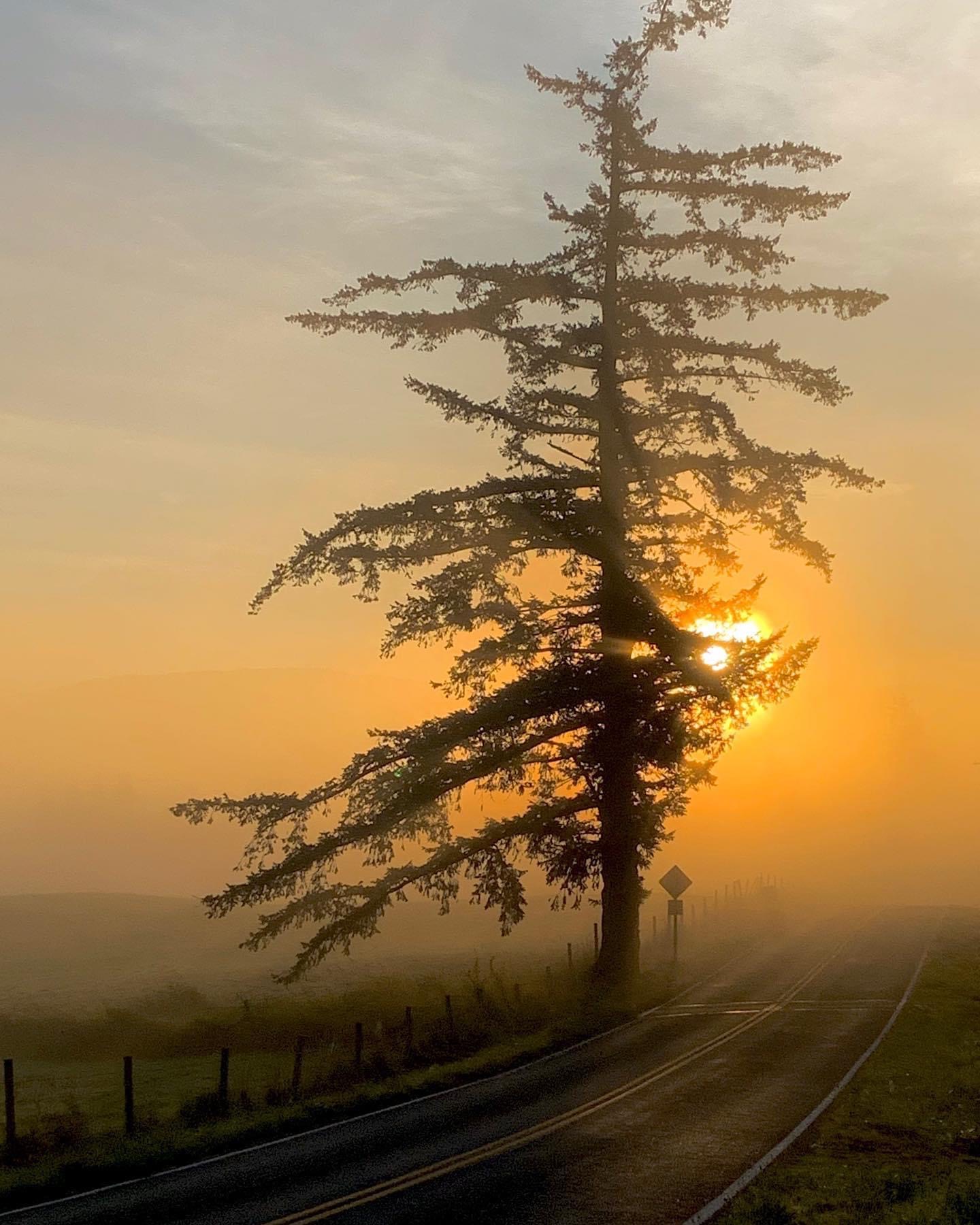
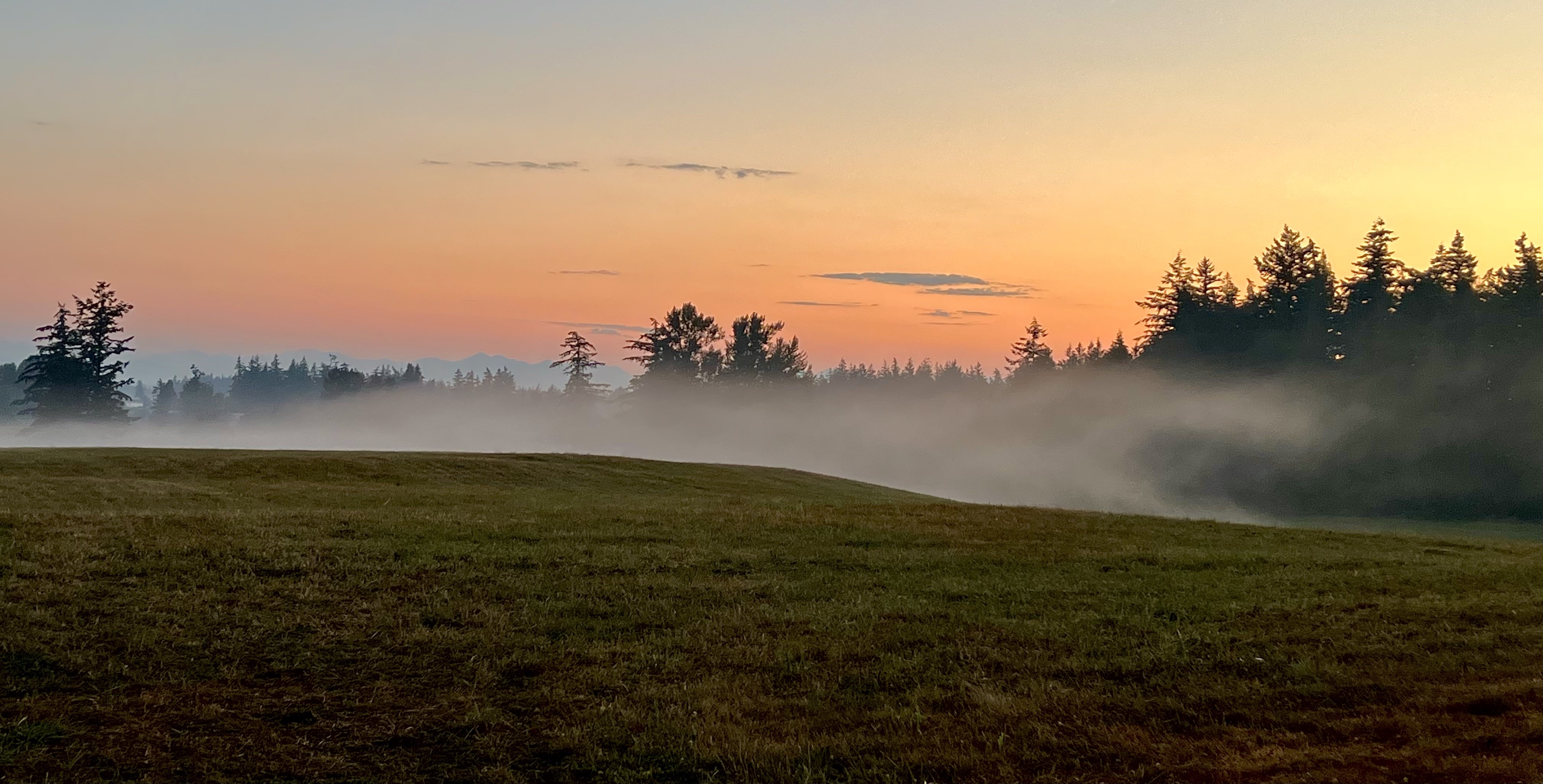
photo by Nate Gibson

All this was a long time ago, I remember,
And I would do it again, but set down
This set down
This: were we led all that way for
Birth or Death? There was a Birth, certainly
We had evidence and no doubt. I had seen birth and death,
But had thought they were different; this Birth was
Hard and bitter agony for us, like Death, our death.
~T.S. Eliot from “Journey of the Magi”

…the scent of frankincense
and myrrh
arrives on the wind,
and I long
to breathe deeply,
to divine its trail.
But I know their uses
and cannot bring myself
to breathe deeply enough
to know
whether what comes
is the fragrant welcoming
of birth
or simply covers the stench of death.
These hands
coming toward me,
is it swaddling they carry
or shroud?
~Jan Richardson from Night Visions –searching the shadows of Advent and
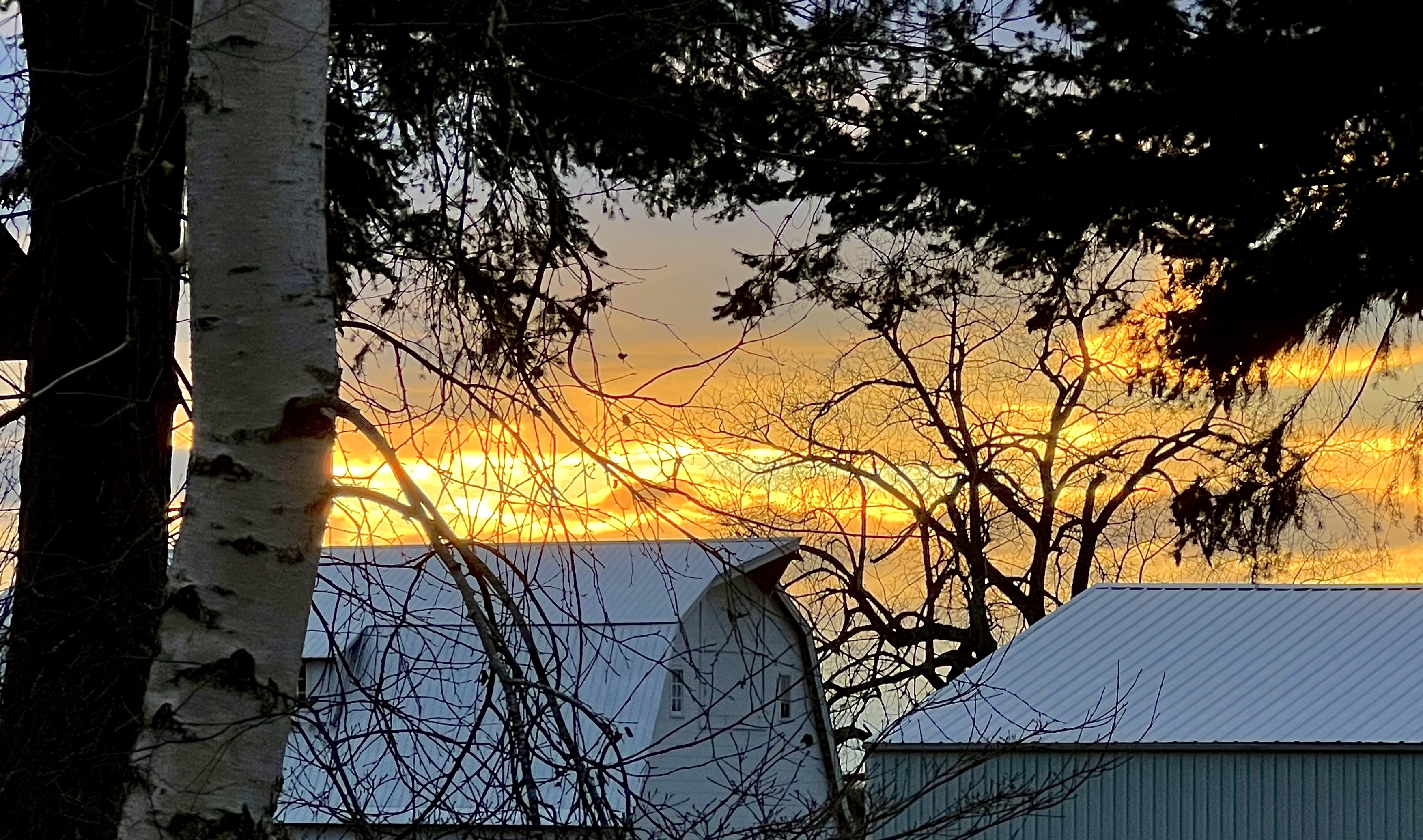
The Christmas season is a wrap, put away for another year.
However, our hearts are not so easily boxed up and stored as the decorations and ornaments of the season.

Our troubles and concerns go on; our frailty and failures a daily reality.
We can be distracted with holidays for a few weeks, but our time here slips away ever more quickly.

The Christmas story is not just about light and birth and joy to the world.
It is about how swaddling clothes became a shroud that wrapped Him tight,
yet He broke free to liberate us.
There is no swaddling without the shroud.

God came to be with us;
Delivered so He could deliver.
Planted on and in the earth.
Born so He could die in our place
To leave the linen strips behind, neatly folded.

Christmas: the swaddled unwrapped, freeing us forever from the shroud.
Epiphany: His Light illuminates the Seed taking root in our hearts.

The Light is turned on, as if a switch has been flipped.
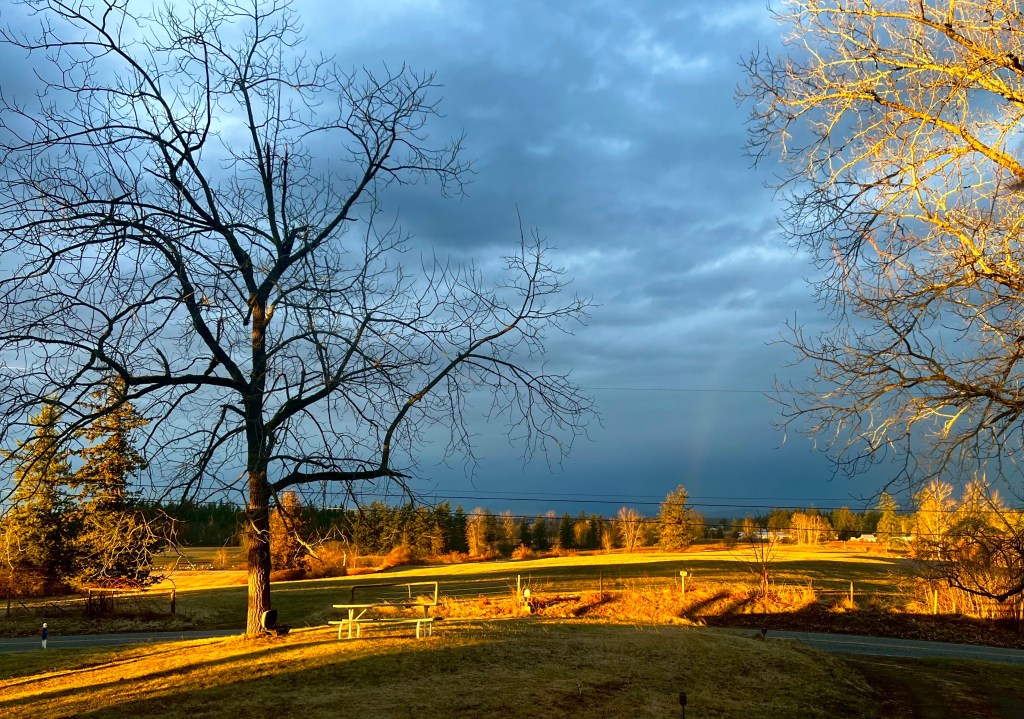
Translation:
Light, warm and heavy as pure gold and angels sing softly to the new-born babe.

Through love to light!
Oh, wonderful the way
That leads from darkness to the perfect day!
From darkness and from sorrow of the night
To morning that comes singing o’er the sea.
Through love to light!
Through light, O God, to thee,
Who art the love of love, the eternal light of light!
One-Time
Monthly
Yearly

Make a one-time or recurring donation to support daily Barnstorming posts

Make a monthly donation

Make a yearly donation

Choose an amount

¤10.00
¤20.00
¤50.00
¤5.00
¤15.00
¤100.00
¤5.00
¤15.00
¤100.00

Or enter a custom amount

¤

Your contribution is deeply appreciated.

Your contribution is appreciated.

Your contribution is appreciated.

DonateDonate monthlyDonate yearly
Hearing the Forsaken Cry

About suffering they were never wrong,
The old Masters: how well they understood
Its human position: how it takes place
While someone else is eating or opening a window or just walking dully along;
How, when the aged are reverently, passionately waiting
For the miraculous birth, there always must be
Children who did not specially want it to happen, skating
On a pond at the edge of the wood:
They never forgot
That even the dreadful martyrdom must run its course
Anyhow in a corner, some untidy spot
Where the dogs go on with their doggy life and the torturer’s horse
Scratches its innocent behind on a tree.

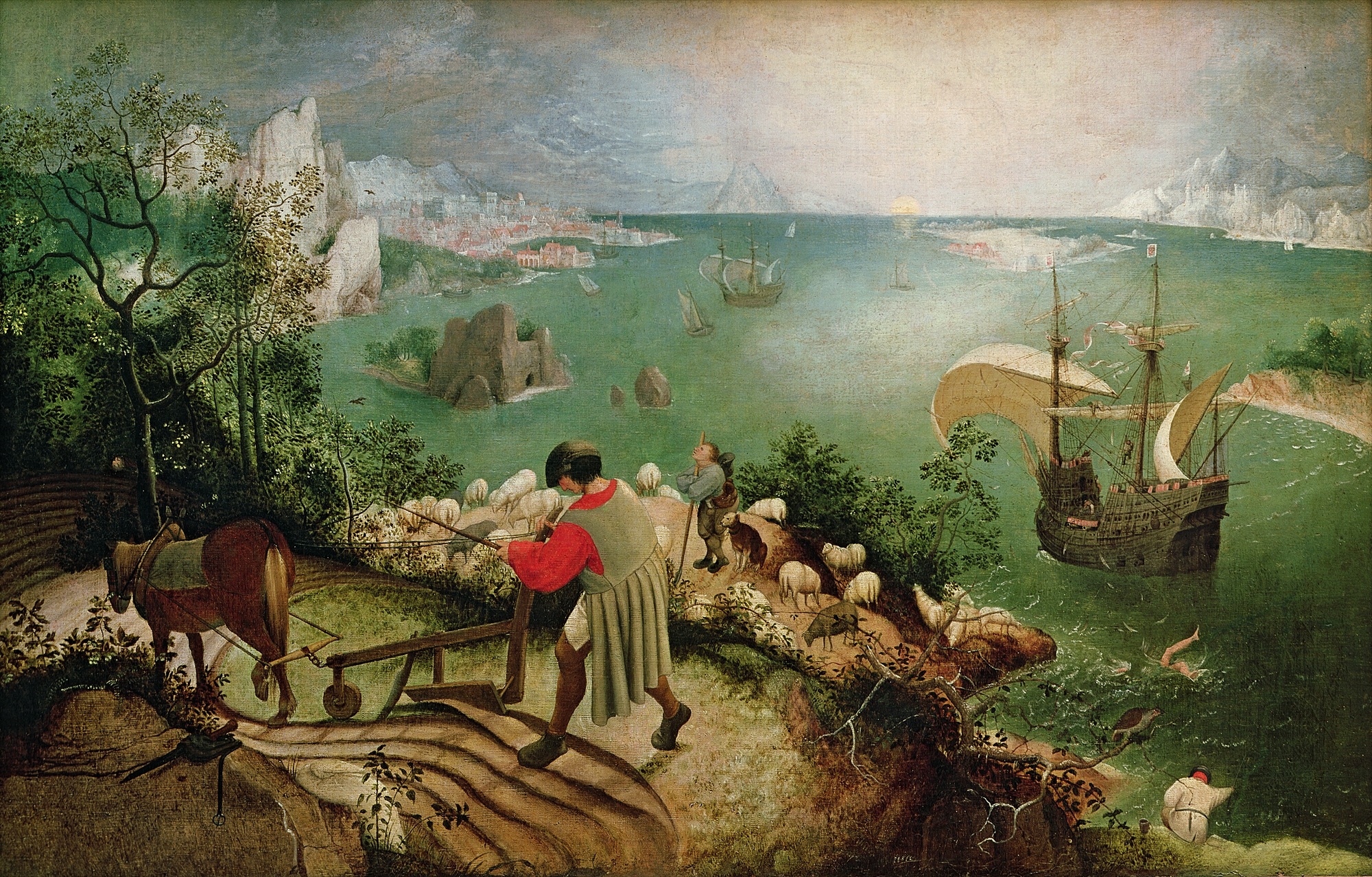
In Breughel’s Icarus, for instance: how everything turns away
Quite leisurely from the disaster; the ploughman may
Have heard the splash, the forsaken cry,
But for him it was not an important failure; the sun shone
As it had to on the white legs disappearing into the green
Water, and the expensive delicate ship that must have seen
Something amazing, a boy falling out of the sky,
Had somewhere to get to and sailed calmly on.

~W.H. Auden “Musée des Beaux Arts”

Landscape with the Fall of Icarus, c.1555 (oil on canvas) by Bruegel, Pieter the Elder (c.1525-69); Musees Royaux des Beaux-Arts de Belgique, Brussels, Belgium;

“Census in Bethlehem” by Pieter Bruegel -Musees Royaux des Beaux-Arts de Belgique, Brussels, Belgium;
“Massacre of the Innocents” by Pieter Bruegel

…as you sit beneath your beautifully decorated tree, eat the rich food of celebration, and laugh with your loved ones, you must not let yourself forget the horror and violence at the beginning and end of the Christmas story. The story begins with the horrible slaughter of children and ends with the violent murder of the Son of God. The slaughter depicts how much the earth needs grace. The murder is the moment when that grace is given.

Look into that manger representing a new life and see the One who came to die. Hear the angels’ celebratory song and remember that sad death would be the only way that peace would be given. Look at your tree and remember another tree – one not decorated with shining ornaments, but stained with the blood of God.

As you celebrate, remember that the pathway to your celebration was the death of the One you celebrate, and be thankful.
~Paul Tripp

God weeps
when tragedy and suffering happens.

Such evil comes not from God
yet humankind expects it,
walking dully past, barely noticing.
It is simply part of existence –
easier to not stop and feel the pain
or get involved.

But God does not walk past our hurt and trouble,
does not ignore, nor pretend to not see or hear our cries.

Only God glues together
what evil has shattered.
Only God could become the Man
who loves us enough to take our suffering
upon His own shoulders
— becoming forsaken
so that we are not.

One-Time
Monthly
Yearly

Make a one-time or recurring donation to support daily Barnstorming posts

Make a monthly donation

Make a yearly donation

Choose an amount

¤10.00
¤20.00
¤50.00
¤5.00
¤15.00
¤100.00
¤5.00
¤15.00
¤100.00

Or enter a custom amount

¤

Your contribution is deeply appreciated.

Your contribution is appreciated.

Your contribution is appreciated.

DonateDonate monthlyDonate yearly

A Girl from Spring Valley

Fourteen years ago today, my mother, Elna Schmitz Polis, returned home for good, gently picked up and carried away by the Lord before dawn. She was just over 88 1/2 years old, and had lived much of her life anticipating her death day with some apprehension, having almost been called home at the age of 13 from a ruptured appendix, before antibiotics were an option. That near-miss seemed to haunt her, filling her with worry that it was a mistake that she survived that episode at all. Yet she thrived despite the anxiety, and ended up, much to her surprise, living a long life full of family and faith.

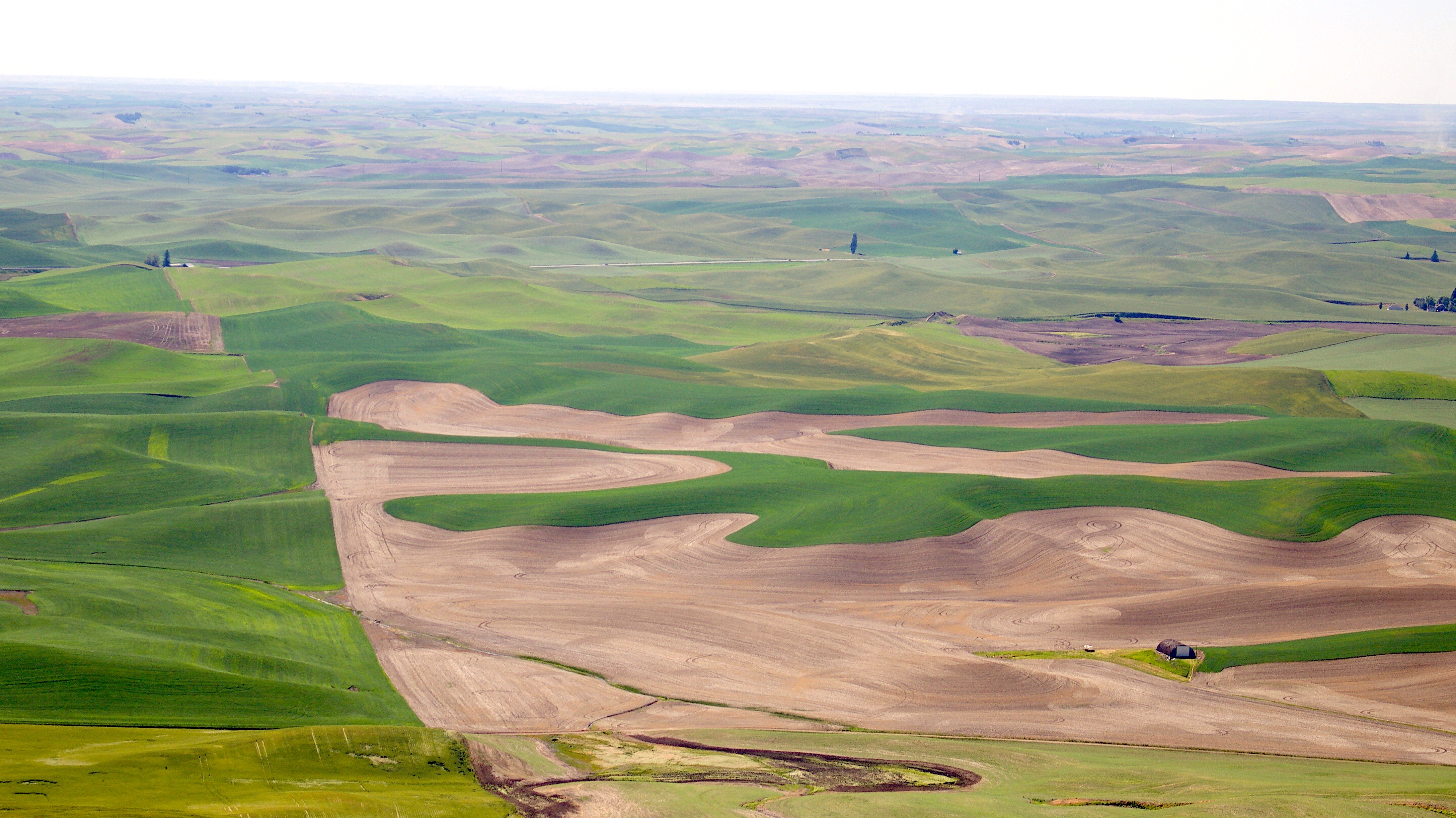
She was born in the isolation of a Palouse wheat and lentil farm in eastern Washington, in a two story white house located down a long lane and nestled in a draw between the undulating hills. Despite having one older brother, it was a lonely childhood which accustomed her to solitude and creative play inside her mind and heart. All her life and especially in her later years, she would prefer the quiet of her own thoughts over the bustle of a room full of activities and conversation.

Her childhood was filled with exploration of the rolling hills, the barns and buildings where her father built and repaired farm equipment, and the chilly cellar where the fresh eggs were stored after she reached under cranky hens to gather them. She sat in the cool breeze of the picketed yard, watching the huge windmill turn and creak next to the house. She helped her weary mother feed farm crews who came for harvest time and then settled in the screened porch listening to the adults talk about lentil prices and bushel production. She woke to the mourning dove call in the mornings and heard the coyote yips and howls at night.

As a young woman, she was ready to leave the farm behind for college, devoting herself to the skills of speech, and the creativity of acting and directing in drama, later teaching rural high school students, including a future Pulitzer Prize winning poet, Carolyn Kizer. She loved words and the power and beauty they wielded.

Marrying my father was a brave and impulsive act, traveling by train to the east coast only a week before he shipped out for almost 3 years to the South Pacific to fight as a Marine in WWII. She must have wondered about the man who returned from war changed and undoubtedly scarred in ways she could not see or touch. They worked it out, as rocky as it must have been at times, and in their reconciliation years later after divorce, I could see the devotion and mutual respect of life companions who shared purpose and love.

As a wife and mother, she rediscovered her calling as a steward of the land and a steward of her family, gardening and harvesting fruits, vegetables and children tirelessly. When I think of my mother, I most often think of her tending us children in the middle of the night whenever we were ill; her over-vigilance was undoubtedly due to her worry we might die in childhood as she almost did.

She never did stop worrying during the last few months if her life after a devastating leg fracture. As she became more dependent on others in her physical decline, she tried to give up the control she thought she had to maintain through her “worry energy” and became more accepting about the control the Lord maintains over all we are and will become.

I know from where my shyness comes, my preference for birdsongs rather than radio music, my preference for naps, and my tendency to be serious and straight laced with a twinkle in my eye. This is my German Palouse side–immersing in the quietness of solitude, thrilling to the sight of the spring wheat flowing like a green ocean wave in the breeze and appreciating the warmth of rich soil held in my hands. From that heritage came my mother and it is the legacy she has left with me. I am forever grateful to her for her unconditional love and her willingness to share the warmth of her nest whenever we felt the need to fly back home and shelter, overprotected but safe nonetheless, under her wings.

The Silence of a Dying God

November pierces with its bleak remembrance
Of all the bitterness and waste of war.
Our silence tries but fails to make a semblance
Of that lost peace they thought worth fighting for.
Our silence seethes instead with wraiths and whispers,
And all the restless rumour of new wars,
The shells are falling all around our vespers,
No moment is unscarred, there is no pause,
In every instant bloodied innocence
Falls to the weary earth ,and whilst we stand
Quiescence ends again in acquiescence,
And Abel’s blood still cries in every land
One silence only might redeem that blood
Only the silence of a dying God.
~Malcolm Guite “Silence: a Sonnet for Remembrance Day”

So, when old hopes that earth was bettering slowly
Were dead and damned, there sounded ‘War is done!’
One morrow. Said the bereft, and meek, and lowly,
‘Will men some day be given to grace? yea, wholly,
And in good sooth, as our dreams used to run?

Aye; all was hushed. The about-to-fire fired not,
The aimed-at moved away in trance-lipped song.

Calm fell. From Heaven distilled a clemency;
There was peace on earth, and silence in the sky;

Some could, some could not, shake off misery

~Thomas Hardy from “And There Was a Great Calm” 

(On the Signing of the Armistice, 11 Nov. 1918)

When you go home tell them of us and say –
“For your tomorrow we gave our today”
~John Maxwell Edmonds from “The Kohima Epitaph” 

I’m unsure why the United States does not call November 11 Remembrance Day as the Commonwealth nations did 99 years ago at the Armistice. This is a day that demands so much more than the more passive name Veterans’ Day represents.

This day calls all citizens who appreciate their freedoms to stop what they are doing and disrupt the routine rhythm of their lives. We are to remember in humble thankfulness the generations of military veterans who sacrificed time, resources, sometimes health and well being, and too often their lives in answering the call to defend their countries.

Remembrance means
~never forgetting what it costs to defend freedom.
~acknowledging the millions who have given of themselves and continue to do so on our behalf.
~never ceasing to care.
~a commitment to provide resources needed for the military to remain strong and supported.
~unending prayers for safe return home to family.
~we hold these men and women close in our hearts, always teaching the next generation about the sacrifices they made.

Most of all,
it means being willing ourselves to become the sacrifice when called.

So Like a Queen

She seems to hide all looks that have ever fallen
into her, so that, like an audience,
she can look them over, menacing and sullen,
and curl to sleep with them. But all at once

as if awakened, she turns her face to yours;
and with a shock, you see yourself, tiny,
inside the golden amber of her eyeballs
suspended, like a prehistoric fly.

~Rainer Maria Rilke from “Black Cat”

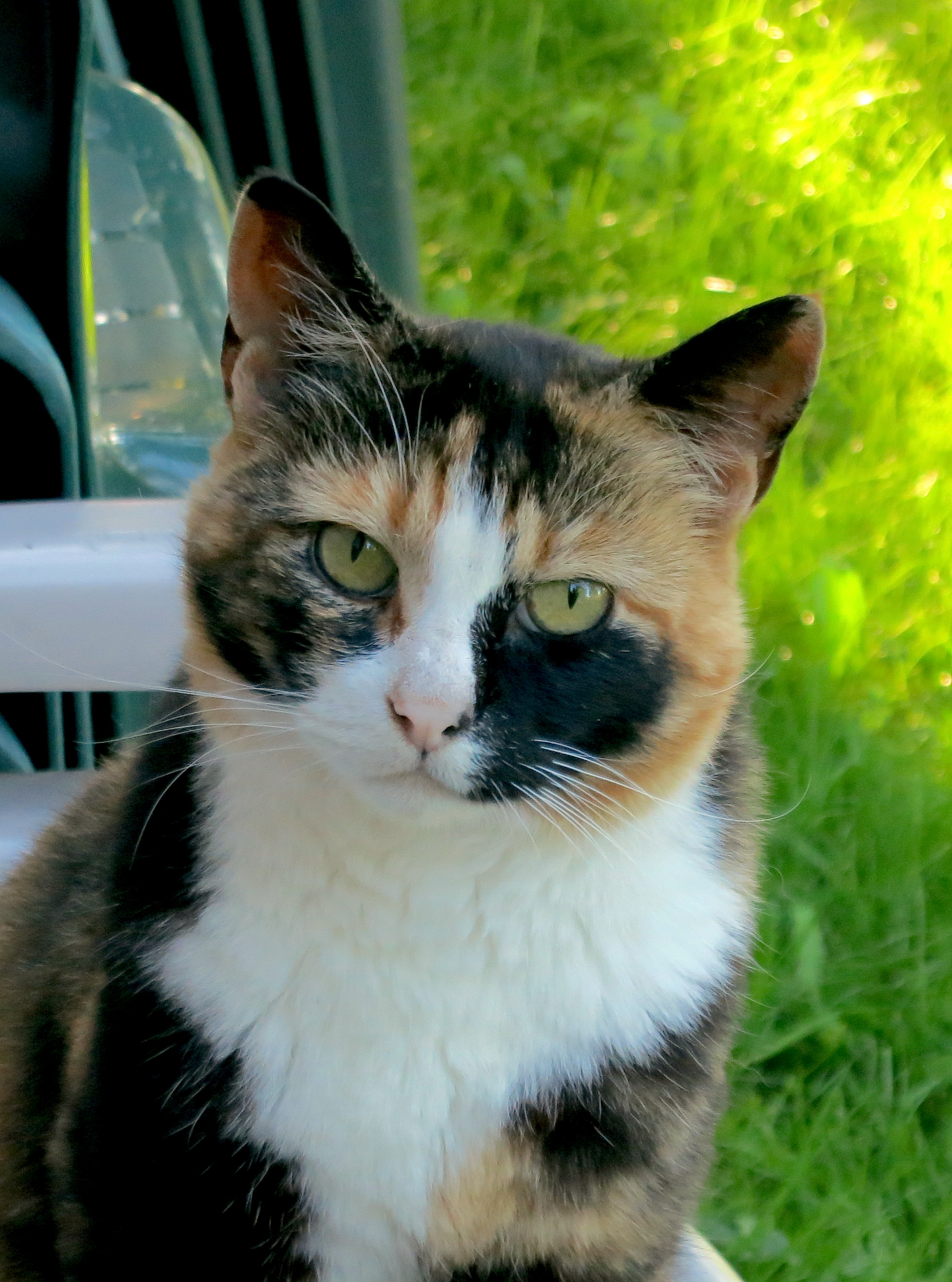
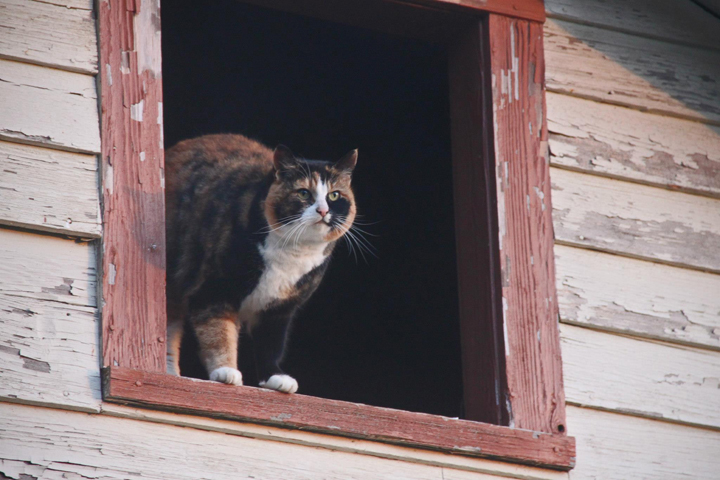
photo by Nate Gibson

With the recent loss of Queen Elizabeth II, I must honor a queen of our own here on our farm:

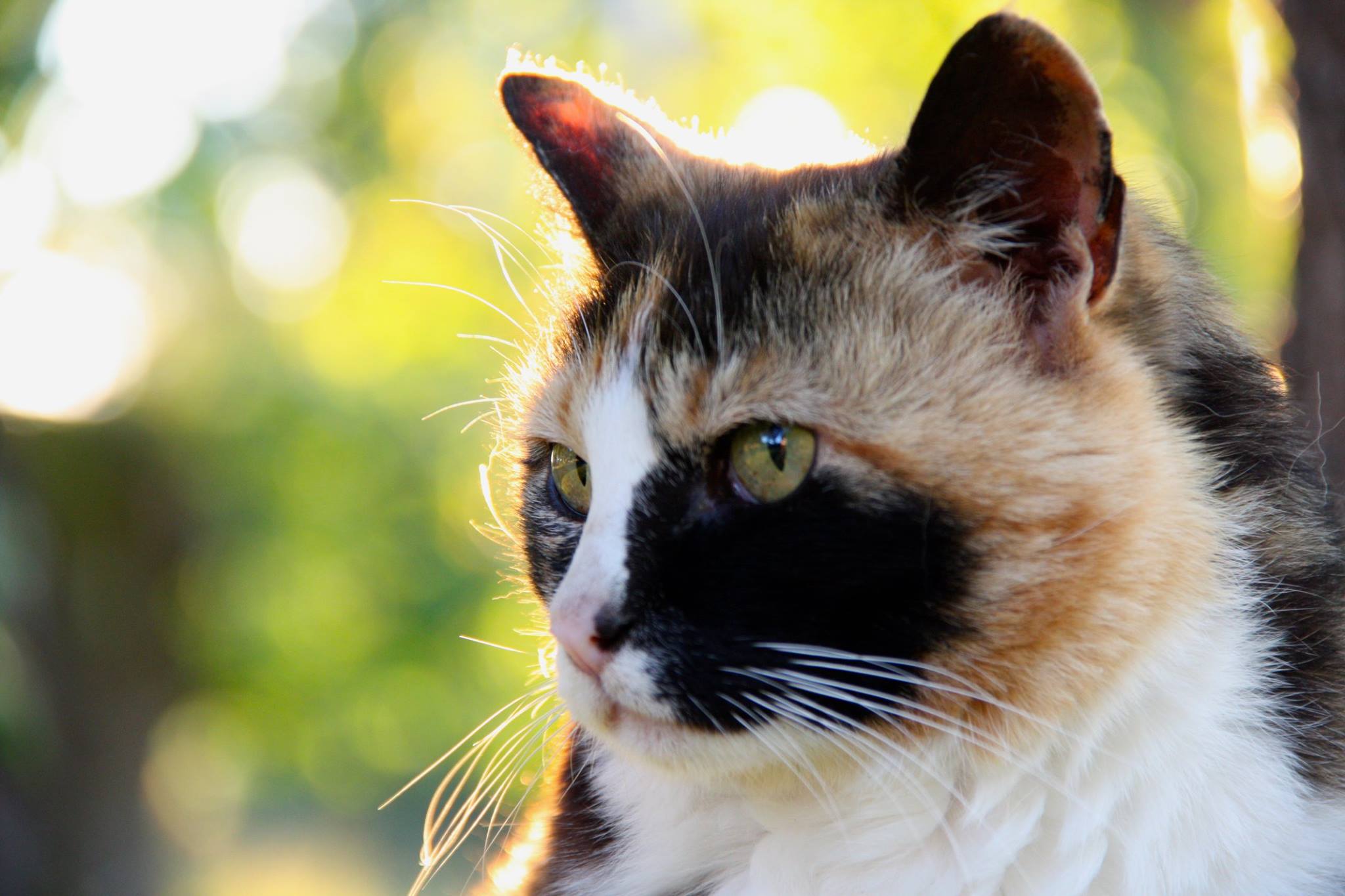
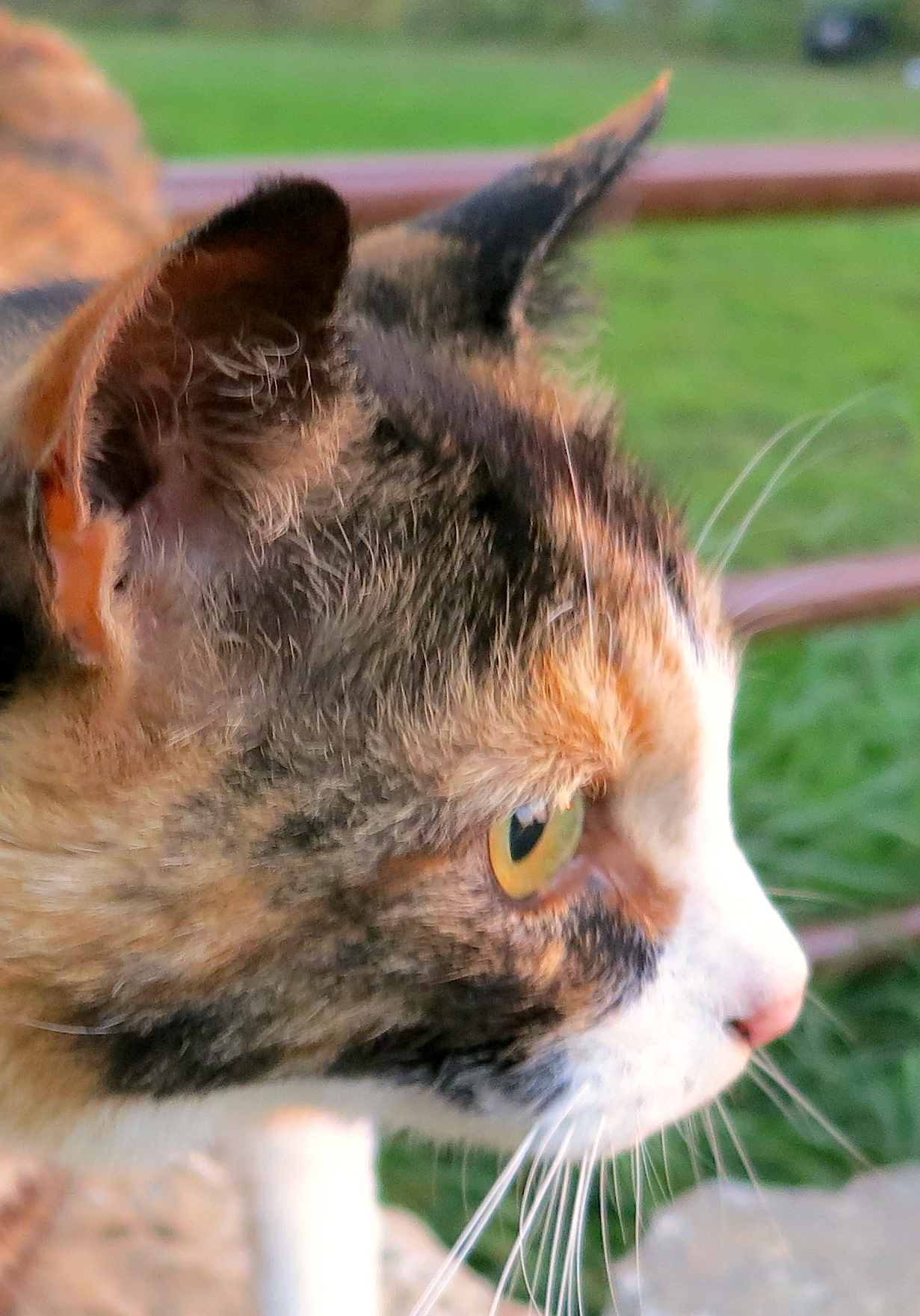
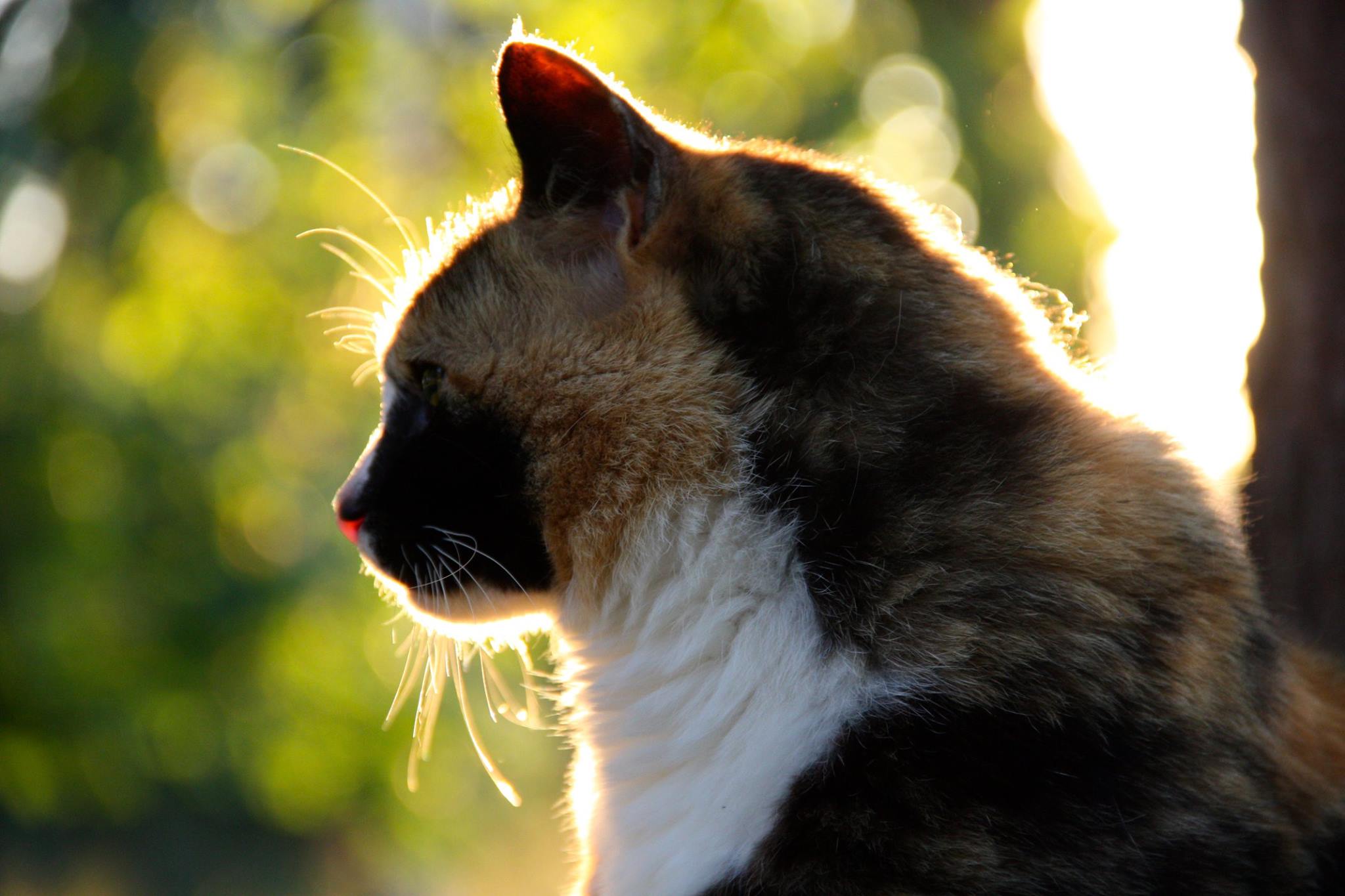
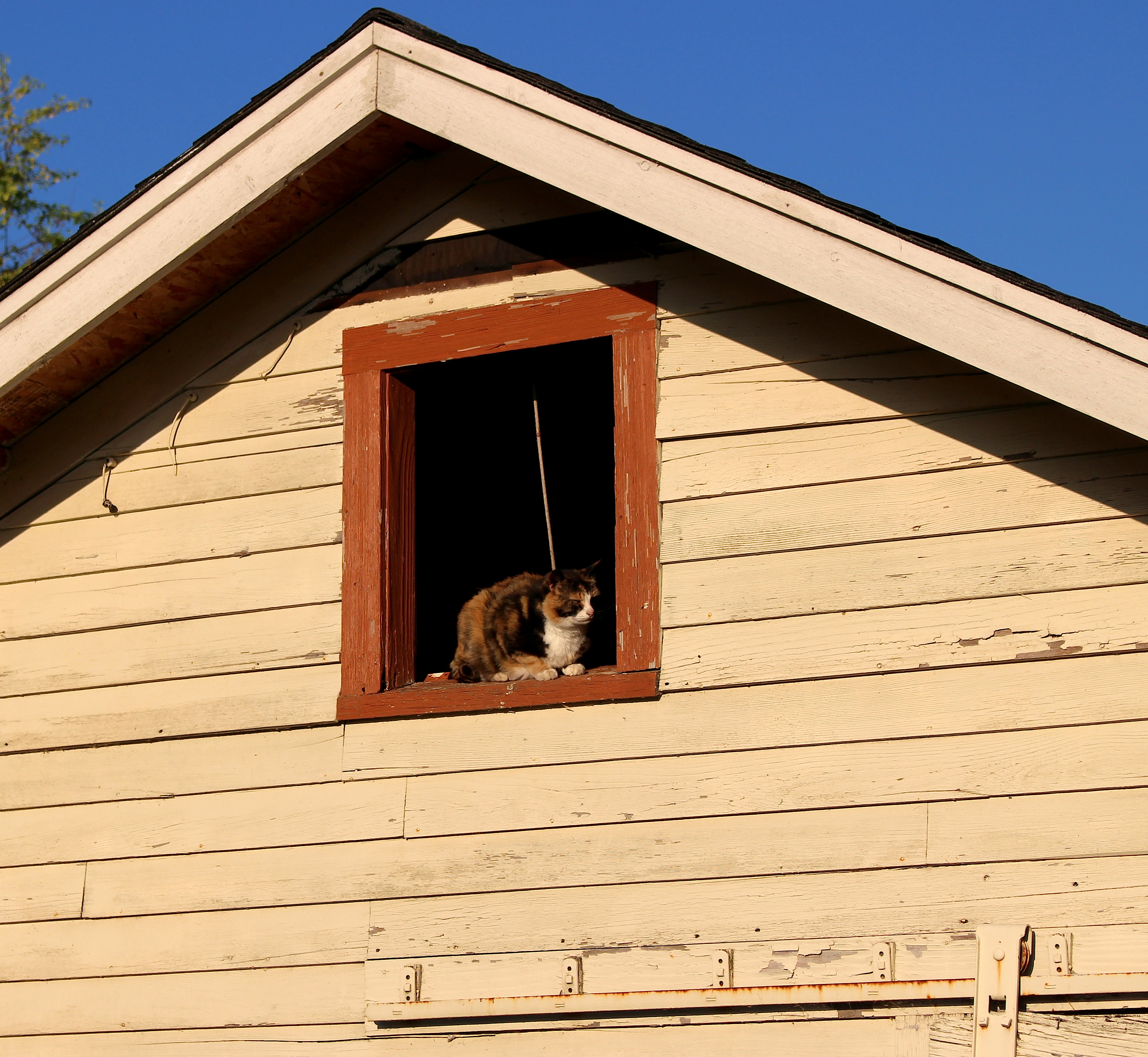
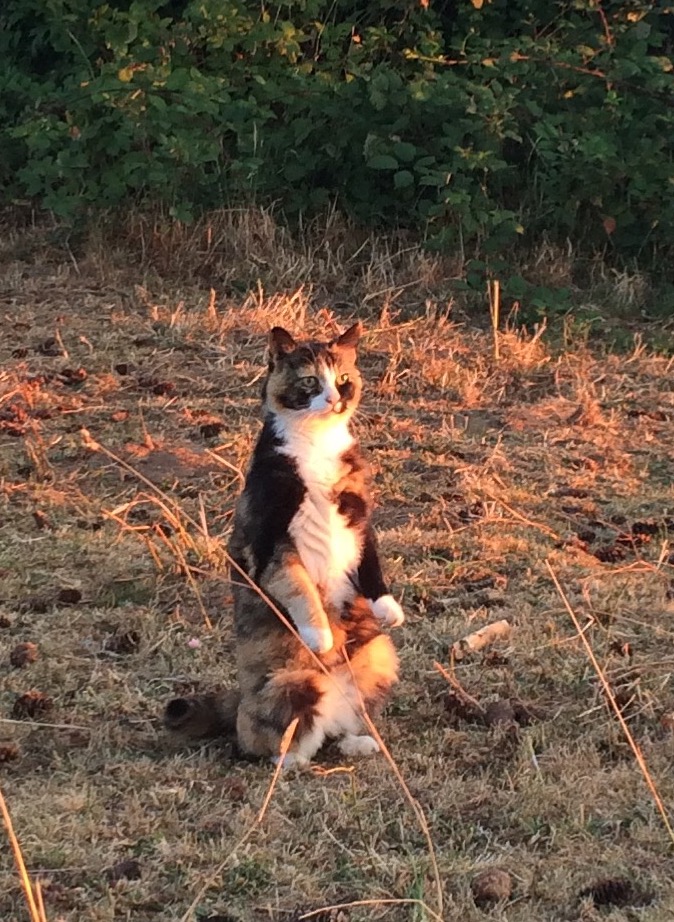
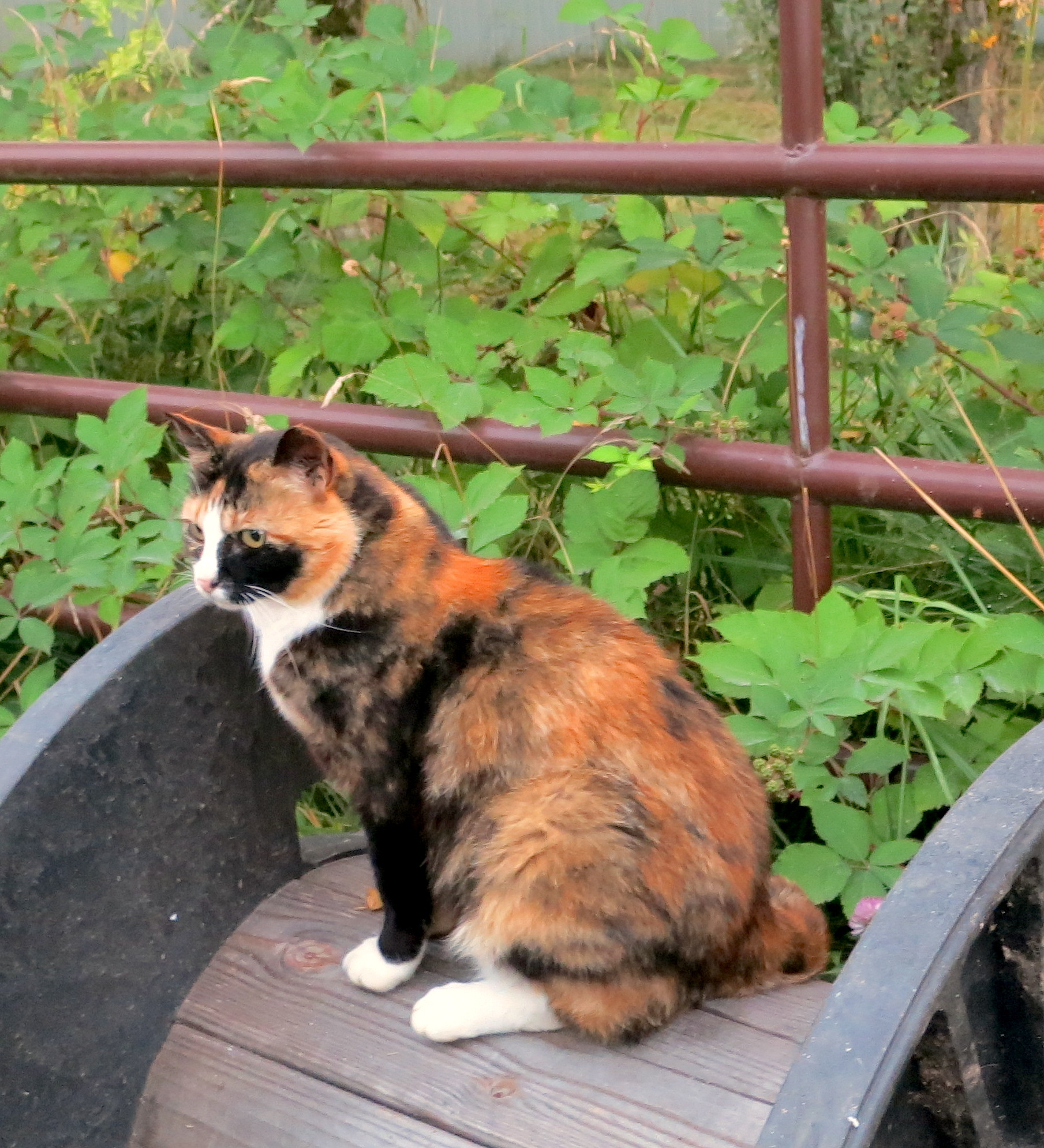
Bobbi was a young calico who arrived on our farm after two years of a luxurious indoor life in town. She couldn’t accompany her physician owner to life in the big city to move in with a cat-allergic boyfriend, so Bobbi arrived to the farm in a van full of her own cat furniture – a climbing tree, a personal chair, toys, and special cuisine. When she strode out of her cat carrier, took a look around and immediately climbed into the nearest real tree, she never looked back at the accoutrements of her former pristine yet restrictive indoor life.  She became Queen of the farm, undisputed and regal, watching the goings-on from a carefully calculated and royal distance, never interacting with her subjects unless it was absolutely necessary.

She tolerated other cats, but barely. They scattered when she came in view.  She thought dogs were a waste of fur covering empty skulls, but when they met her needs, like on a chilly night, she would happily bunk down with them. They were baffled but grateful for her royal blessing when she climbed over their kennel fencing to sleep curled up between them: a two-dog and one-cat night.

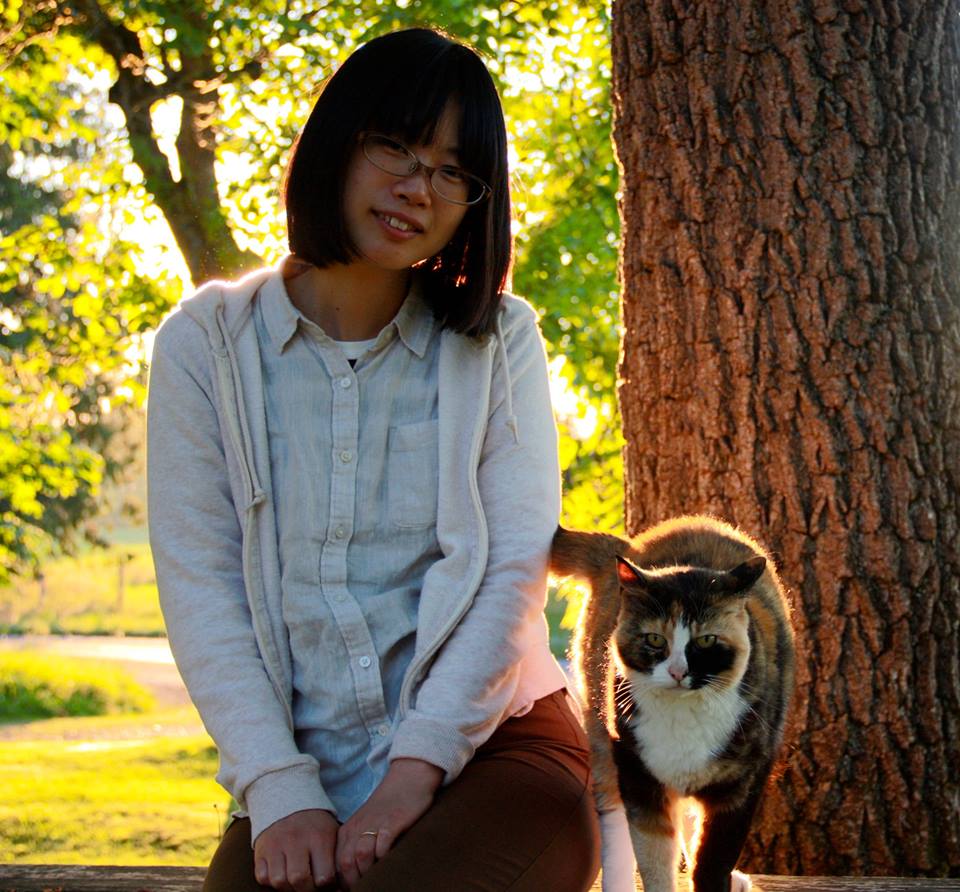
She chose only one human to be subject to: our daughter-in-law Tomomi.  On Tomomi’s initial visit from Japan years ago, Bobbi approached her and decided then and there they were meant for each other. During Tomomi’s annual summer visits, Bobbi brought her mice on the welcome mat and followed her like a puppy, coming only when Tomomi called, and deigned to allow her to touch her calico coat.

When she was 16 years old, Bobbi took over the front porch bench throne when our long-lived black cat Jose died.  She preferred a closer view of our comings and goings, seemingly less disdainful and distant.  When two kittens arrived to live in the barn yet within a week formed a coup and took over the front porch, Bobbi retreated again to her other retreats on the farm. I worried a bit that she had given in too easily with no yowls or flying fur.

Still, I was surprised to find her one morning lying still on the grassy slope of our front yard as she was never one to take her naps where her subjects could see her. So I knew her long life of queenly surveillance and service was over.

Long live Queen Bobbi. You remain irreplaceable. May you forever continue to reign in our hearts.

photo by Nate Gibson
Tomomi and Bobbi, photo by Nate Gibson
Original Barnstorming artwork note cards available as a gift to you with a $50 donation to support Barnstorming – information here

Let Evening Come

Let the light of late afternoon
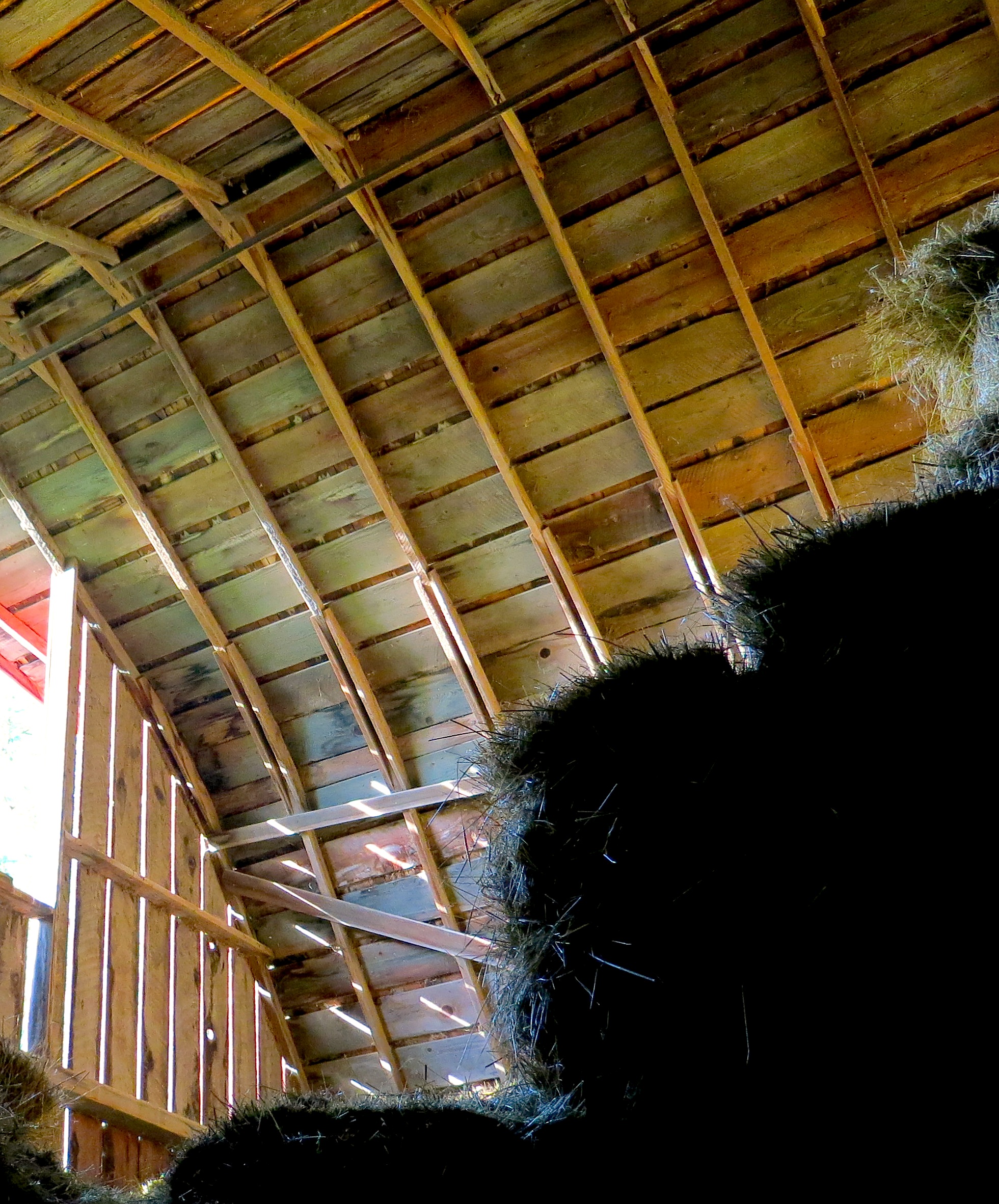
shine through chinks in the barn, moving   
up the bales as the sun moves down.

Let the cricket take up chafing   
as a woman takes up her needles   
and her yarn. Let evening come.

Let dew collect on the hoe abandoned   
in long grass. Let the stars appear
and the moon disclose her silver horn.

Let the fox go back to its sandy den.   
Let the wind die down. Let the shed   
go black inside. Let evening come.

To the bottle in the ditch, to the scoop   
in the oats, to air in the lung   
let evening come.

Let it come, as it will, and don’t   
be afraid. God does not leave us 
comfortless, so let evening come.

~Jane Kenyon “Let Evening Come”

We resist the arrival of the evening of our lives. I wish I could remain forever sunshiny, vital and irreplaceable, living each moment of the day with the energy I feel with the morning light. But I know that the forward momentum of time inevitably will wind me down to sunset.

The poet Jane Kenyon learned this at far too young an age, diagnosed and beginning treatment for leukemia before turning fifty. I thought of Jane’s poem above when I learned today of the death of a courageous local nurse in her thirties who survived six years of treatment for metastatic cancer after being diagnosed only a few months after the birth of her first and only child. She and her family and medical team tried to postpone her evening coming for as long as possible, knowing God ultimately counts our days.

This week, her evening has come. God comforts those who weep with the loss of this remarkable loving wife, mother, daughter – a woman who trusted her heavenly Father for all the things she needed.

We all are created in the image of a God who remembered to rest. We are not alone in our need to catch our breath.

So let evening come, as it will – there is no stopping it – allowing our lungs to be filled with the loving breath of God, our Creator. To Him, we are most definitely irreplaceable.

One-Time
Monthly
Yearly

Make a one-time or recurring donation to support daily Barnstorming posts

Make a monthly donation

Make a yearly donation

Choose an amount

¤10.00
¤20.00
¤50.00
¤5.00
¤15.00
¤100.00
¤5.00
¤15.00
¤100.00

Or enter a custom amount

¤

Your contribution is deeply appreciated.

Your contribution is appreciated.

Your contribution is appreciated.

DonateDonate monthlyDonate yearly
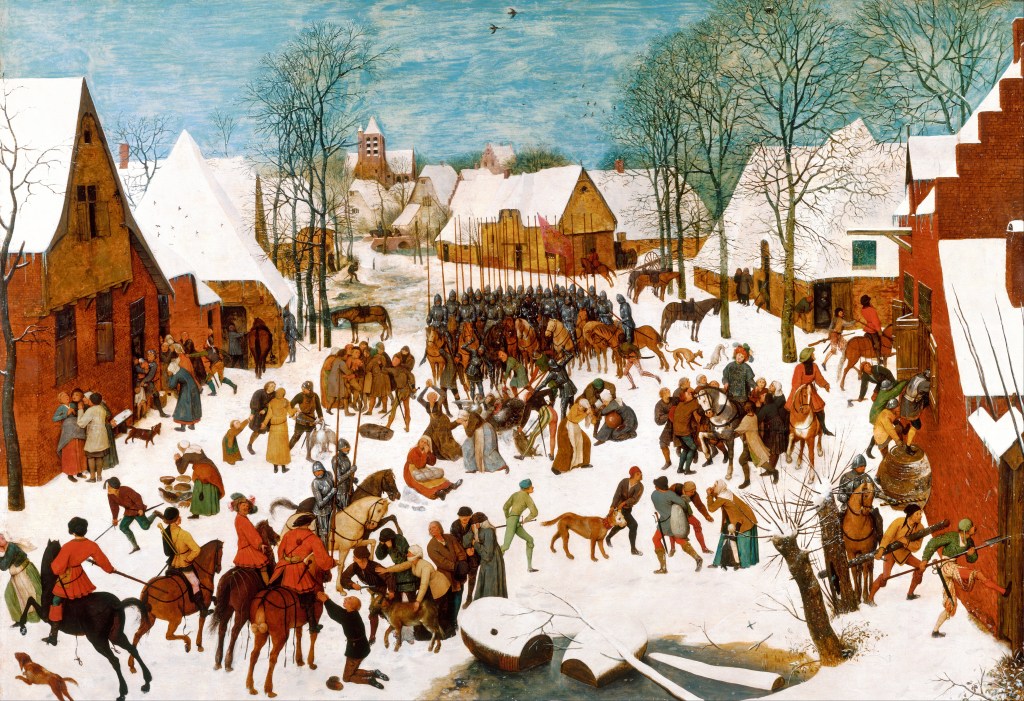
Dancing with Grief

The Palace of Holyroodhouse – The Queen’s residence in Edinburgh, Scotland

The missing-ness of it all surfaced again
I asked, “Grief, do you have anything new?”
“No, but you do.”

I suspect this will be our dance
You lead; I age.
~Jordan Sleed “Our Dance”

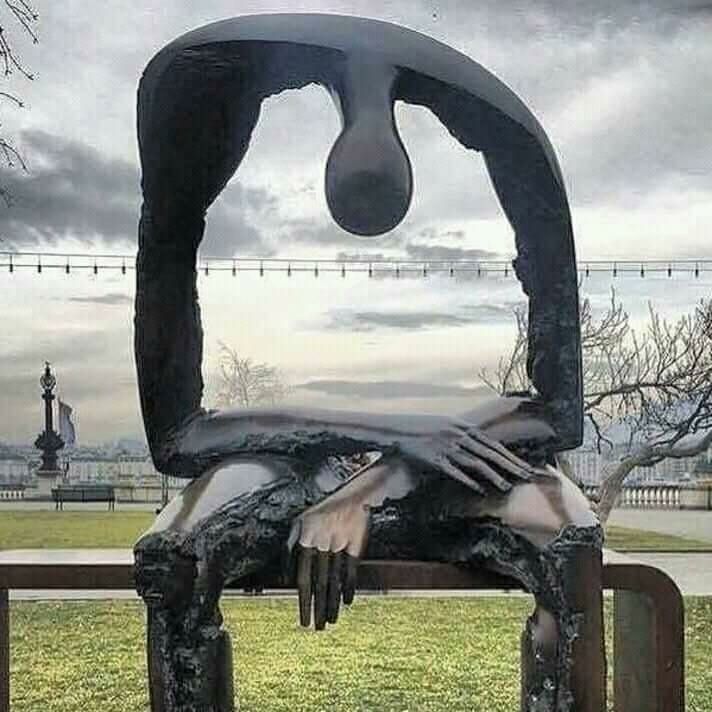
“Melancholie” sculpture by Albert Gyorgy in Switzerland – photo credit unknown

...my whole life, whether it be short or long, will be devoted to your service.
~Elizabeth in a speech on her 21st birthday

I don’t consider myself a monarchist, nor have I carefully tracked the comings and goings of the British Royal Family over my nearly seventy years of life, being a mere youngster compared to the Queen. But like many others around the world yesterday, I was moved to learn of the death of Queen Elizabeth II, only two days after she held an audience (looking very much alive with her broad smile and signature handbag) with the new Prime Minister of the United Kingdom.

Now she has moved on from us, her name and life relegated forever to the history books.

How can I possibly weep and feel grief for the passing of someone I never met, nor could have ever aspired to meet?

This is the strange way of grief — it dances with us throughout our lives, leading us into dark corners we don’t expect to visit. I am grieving for someone who was not born to be queen yet was thrust onto an international stage for 70 years of her life. When she was called to it, she did not shrink from the duty nor did she give up when it became overwhelmingly hard. She made a promise to her people and she delivered on that promise.

I did have an opportunity to speak once with someone who knew the Queen very well and who met with her regularly during her last several decades. He had nothing but great admiration for her character, perseverance, faith and love of family and country.

She was the real deal. And anyone who loves corgis and ponies is exactly my cup of tea.

I believe God welcomed her home with open arms just as He embraces the least of us into His Light – to God, we are all royalty, serving with humility and a duty of honor.

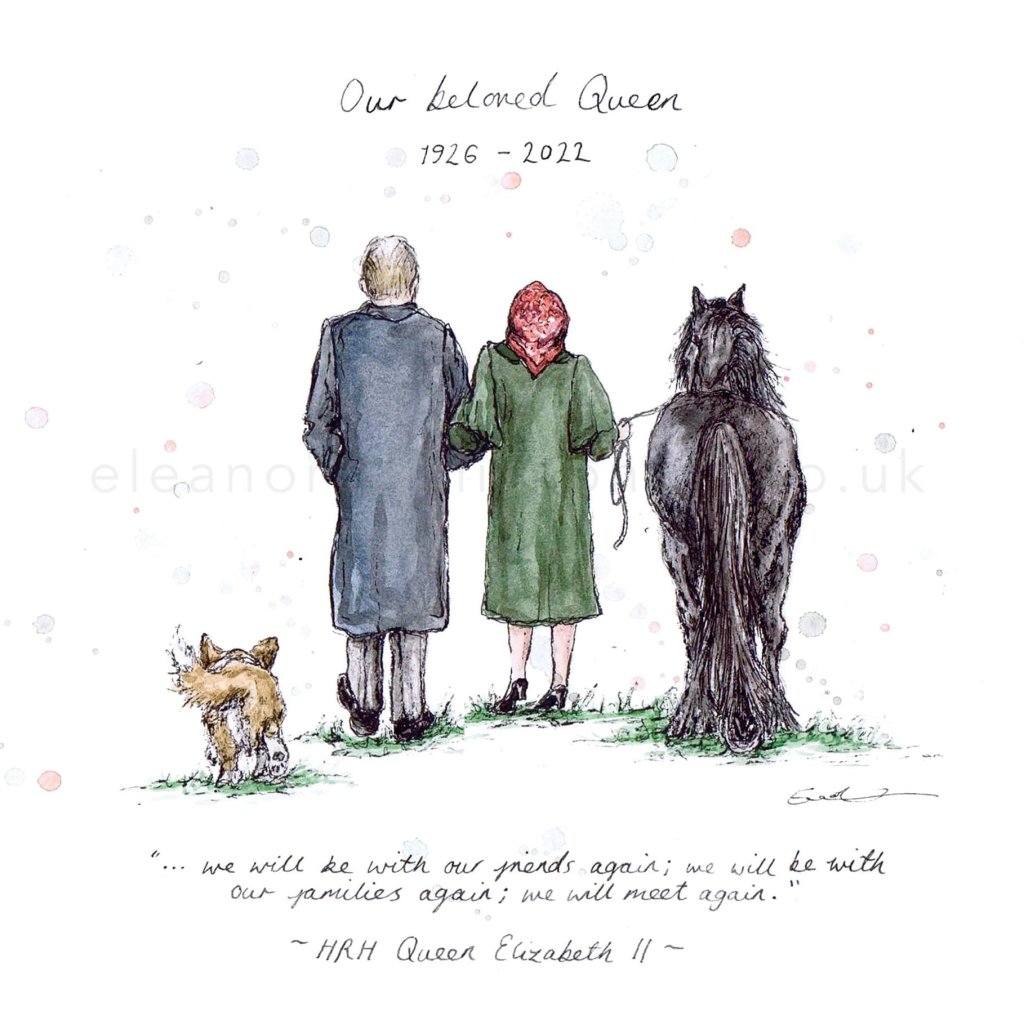
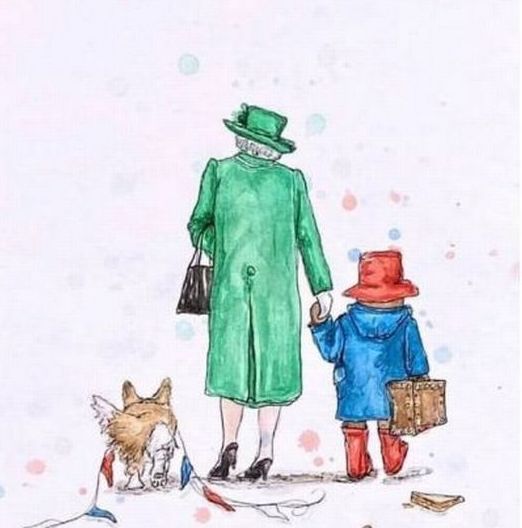
Art by Eleanor Tomlinson

Bring us, O Lord God,
at our last awakening into the house and gate of heav’n:
to enter into that gate and dwell in that house,
where there shall be no darkness nor dazzling, but one equal light,
no noise nor silence, but one equal music;
no fears nor hopes, but one equal possession;
no ends nor beginnings, but one equal eternity;
in the habitation of thy glory and dominion,
world without end. Amen.
~John Donne

One-Time
Monthly
Yearly

Make a one-time or recurring donation to support daily Barnstorming posts

Make a monthly donation

Make a yearly donation

Choose an amount

¤5.00
¤10.00
¤20.00
¤5.00
¤15.00
¤100.00
¤5.00
¤15.00
¤100.00

Or enter a custom amount

¤

Your contribution is deeply appreciated.

Your contribution is appreciated.

Your contribution is appreciated.

DonateDonate monthlyDonate yearly
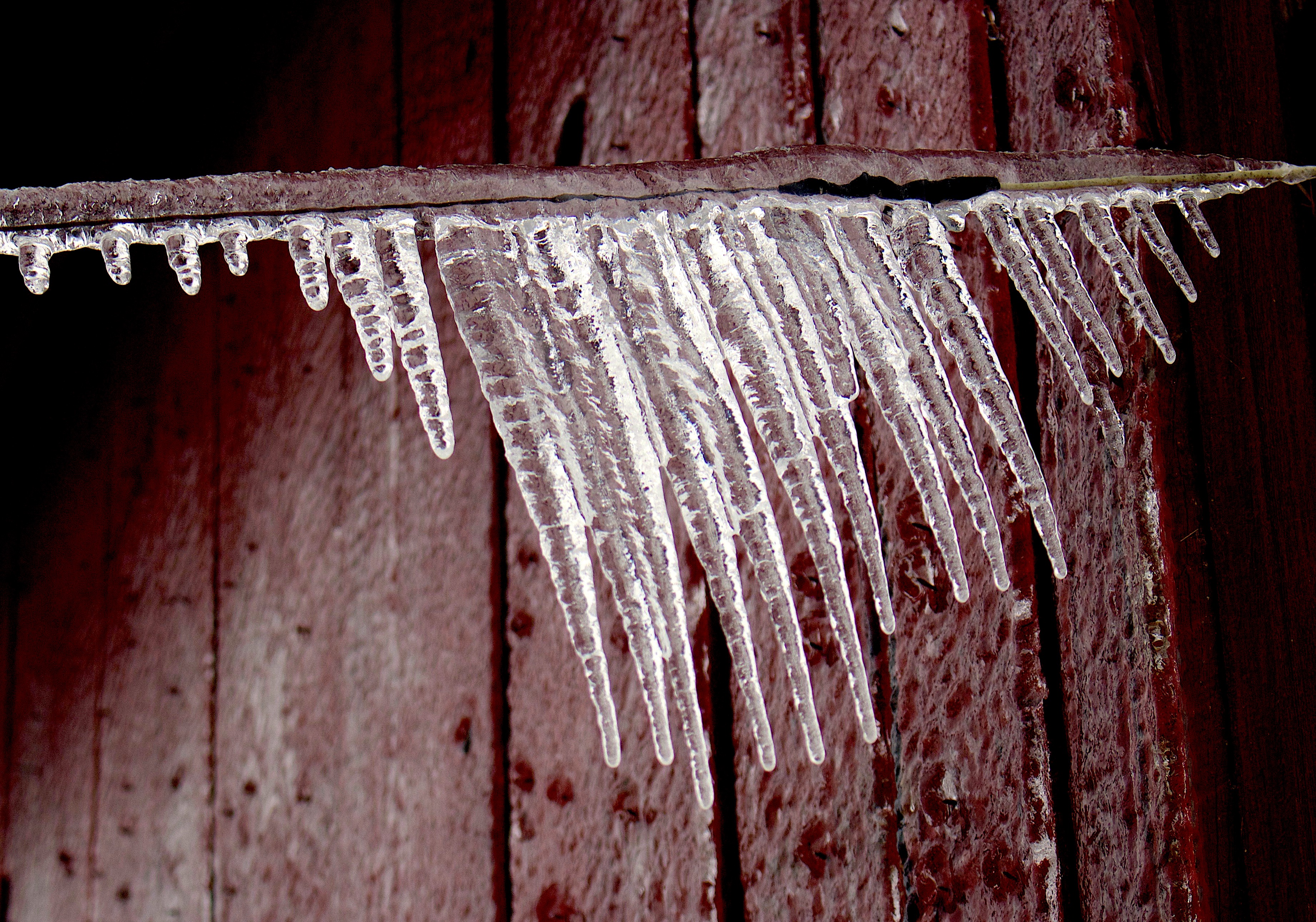
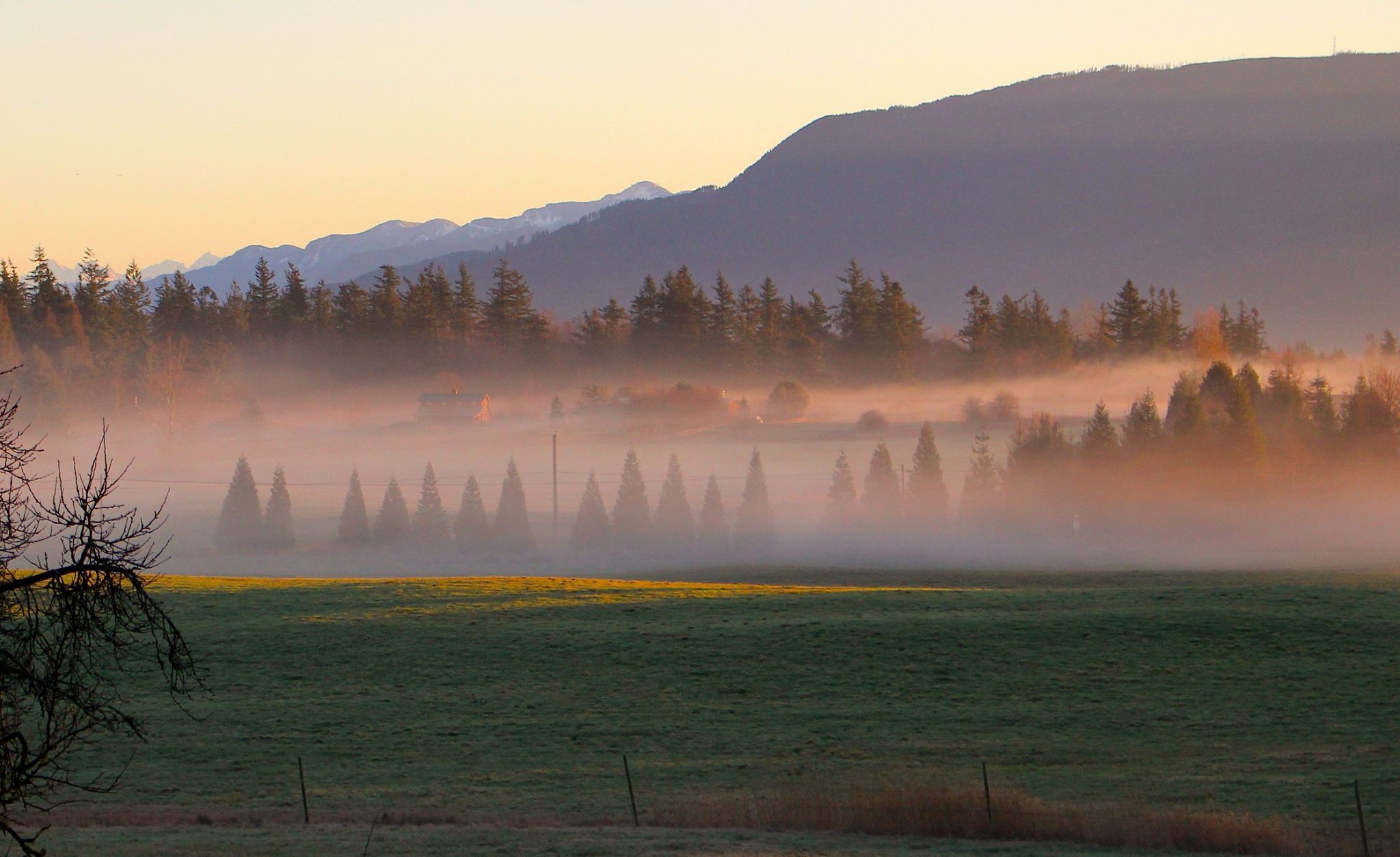
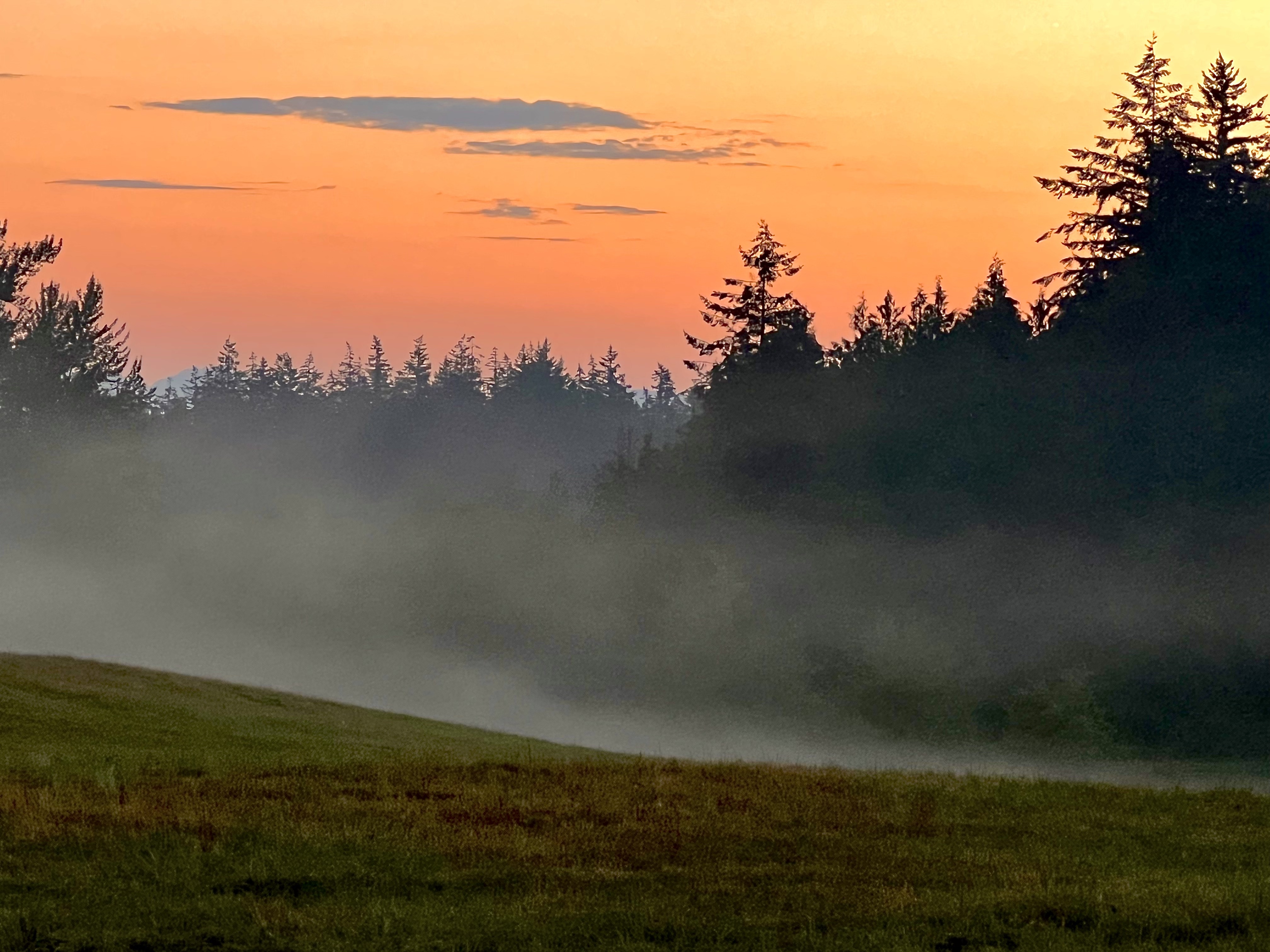
The Fog is Rising

I must go in; the fog is rising…
~Emily Dickinson, her last words

I have watched the dying
in their last hours:
often through the fog of waning breaths,
they see what I cannot,
they listen to what I do not hear,
stretching their arms overhead
as their fingers extend and grasp
to touch what is, as yet,
far beyond my reach.

I watch and wonder how it is
to reverse the journey that brought me here
from the fog of my amnion.

The mist of living lifts.

I will enter a place
unsurpassed in brilliance and clarity;
the mystery of what lies beyond solved
only by going in to it,
welcomed back to where I started.

One-Time
Monthly
Yearly

Make a one-time or recurring donation to support daily Barnstorming posts

Make a monthly donation

Make a yearly donation

Choose an amount

¤5.00
¤10.00
¤20.00
¤5.00
¤15.00
¤100.00
¤5.00
¤15.00
¤100.00

Or enter a custom amount

¤

Your contribution is deeply appreciated.

Your contribution is appreciated.

Your contribution is appreciated.

DonateDonate monthlyDonate yearly
Postpone Until Monday

I was relief, once, for a doctor on vacation
and got a call from a man on a window sill.
This was New York, a dozen stories up.
He was going to kill himself, he said.
I said everything I could think of.
And when nothing worked, when the guy
was still determined to slide out that window
and smash his delicate skull
on the indifferent sidewalk, “Do you think,”
I asked, “you could just postpone it
until Monday, when Dr. Lewis gets back?”


The cord that connected us—strung
under the dirty streets, the pizza parlors, taxis,
women in sneakers carrying their high heels,
drunks lying in piss—that thick coiled wire
waited for the waves of sound.


In the silence I could feel the air slip
in and out of his lungs and the moment
when the motion reversed, like a goldfish
making the turn at the glass end of its tank.
I matched my breath to his, slid
into the water and swam with him.
“Okay,” he agreed.

~Ellen Bass “Phone Therapy” from Mules of Love

Love your neighbor as yourself is part of the great commandment.

The other way to say it is, ‘Love yourself as your neighbor.’ Love yourself not in some egocentric, self-serving sense but love yourself the way you would love your friend in the sense of taking care of yourself, nourishing yourself, trying to understand, comfort, strengthen yourself.

Ministers in particular, people in the caring professions in general, are famous for neglecting their selves with the result that they are apt to become in their own way as helpless and crippled as the people they are trying to care for and thus no longer selves who can be of much use to anybody. 

It means pay mind to your own life, your own health and wholeness, both for your own sake and ultimately for the sake of those you love too. Take care of yourself so you can take care of them.

A bleeding heart is of no help to anybody if it bleeds to death.
~Frederick Buechner from Telling Secrets

We are reminded every time we hear safety instructions on an airplane before a flight takes off: “in the event of a sudden pressure change in the cabin, oxygen masks will appear – remember to put your own on before helping others with their masks.”   

If we aren’t able to breathe ourselves, we won’t last long enough to be of assistance to anyone around us.  We must breathe, we must stay afloat to save the drowning. Too often,  sacrificing our self-care threatens others’ well-being.

A headline appeared in my email from the American Psychiatric Association this morning: “Physicians Experience the Highest Suicide Rate of Any Profession” – there is rampant depression and burn-out among those who should know best how to recognize and respond to the danger signs — for women physicians, nearly 1 out of 5 are afflicted.   Yet the work load only seems to increase, not diminish, the legal and moral responsibility weighs more heavily, and the hours available for sleep and respite shrink.  In forty plus years of practicing medicine (my father liked to remind me “when are you going to stop ‘practicing’ and actually ‘do’ it?”),  the work never got easier, only harder and heavier to carry.

I saw suicidal patients every day and am immensely grateful I myself have never been suicidal, thank God, but anxiety is embedded deep in my DNA from my non-physician fretful farmer ancestors.  Anxiety becomes the fuel and driver of the relentless physician journey on long lonely roads, spurring us to stay awake too many hours when we should be resting our eyes and taking a break to breathe, just breathe.

However, we are trained to respond to our own anxiety from the first day in anatomy class:
“and while you, Miss Polis, are trying to think of the name of that blood vessel, your patient is exsanguinating in front of you– drip, drip, drip….”

Terror-stricken at the thought I was inadequate to the task of saving a life, it took years for me to realize the name of the vessel didn’t bloody matter as long as I knew instinctively to clamp it, compress it, or by the love of the Living God, transfuse my own blood from my bleeding heart into my patient’s.

I learned those many years ago:
to save another life, I must first preserve my own.

Your bleeding heart, in your hands –
It’s been there a while you’re just now noticing –
I wish I could help you –
The way that you want me to –
We all have our own bleeding heart to attend to –

Your bleeding heart, let it go –
You feel like it’s hopeless, but you never know –
I wish I could help you –
The way that you want me to –
We all have our own bleeding heart to mend
~Kim Taylor
One-Time
Monthly
Yearly

Make a one-time or recurring donation to support daily Barnstorming posts

Make a monthly donation

Make a yearly donation

Choose an amount

¤5.00
¤10.00
¤20.00
¤5.00
¤15.00
¤100.00
¤5.00
¤15.00
¤100.00

Or enter a custom amount

¤

Your contribution is deeply appreciated.

Your contribution is appreciated.

Your contribution is appreciated.

DonateDonate monthlyDonate yearly
Softening to an Evening Gray

Now that summer’s ripen’d bloom
Frolics where the winter frow n’d,
Stretch’d upon these banks of broom,
We command the landscape round.

Nature in the prospect yields
Humble dales and mountains bold,
Meadows, woodlands, heaths-and fields
Yellow’d o’er with waving gold.

On the uplands ev’ry glade
Brightens in the blaze of day;
O’er the vales the sober shade
Softens to an ev’ning gray.
~John Cunningham from “The Landscape”

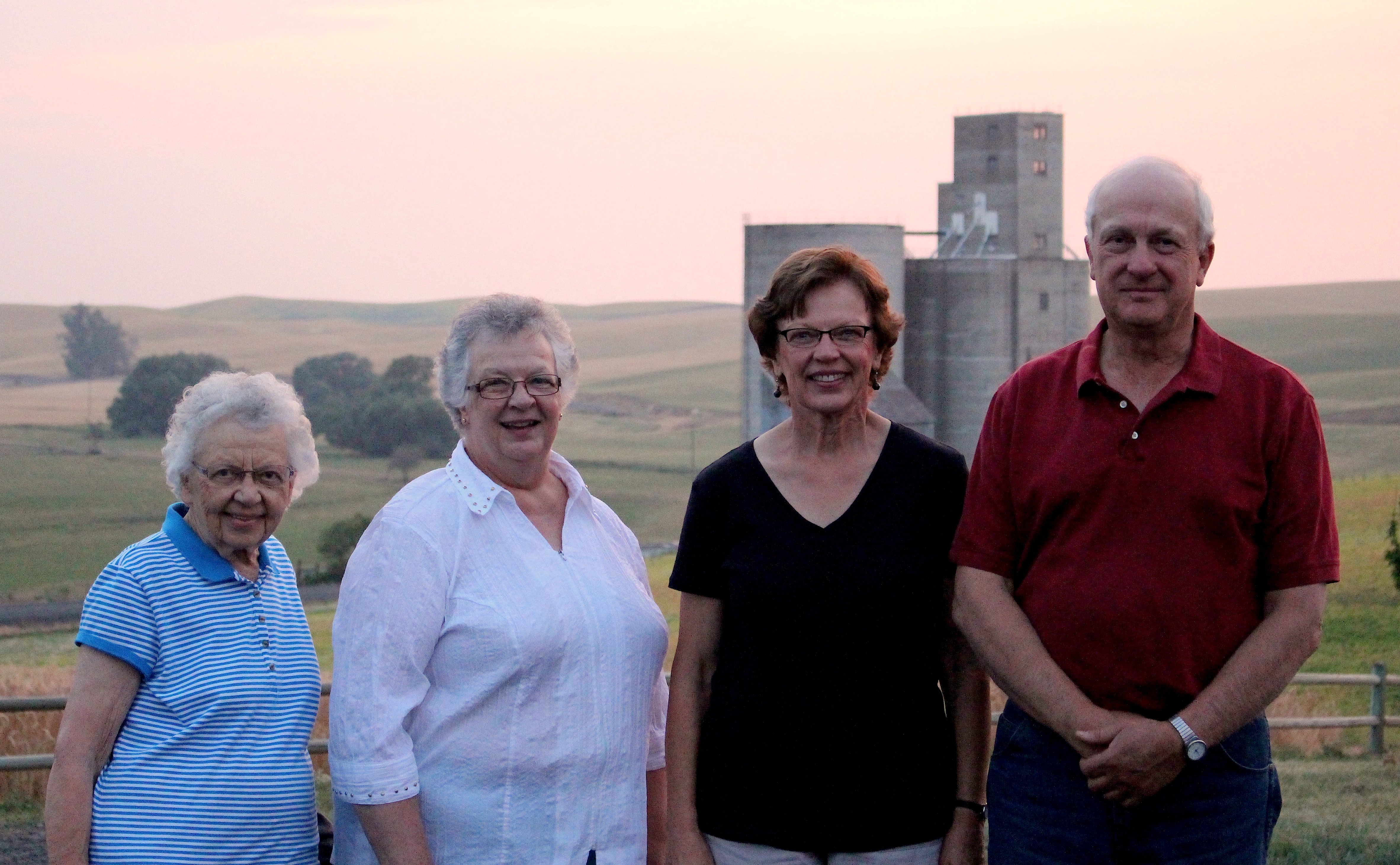
Betty with children Carol, Barbara and Joe
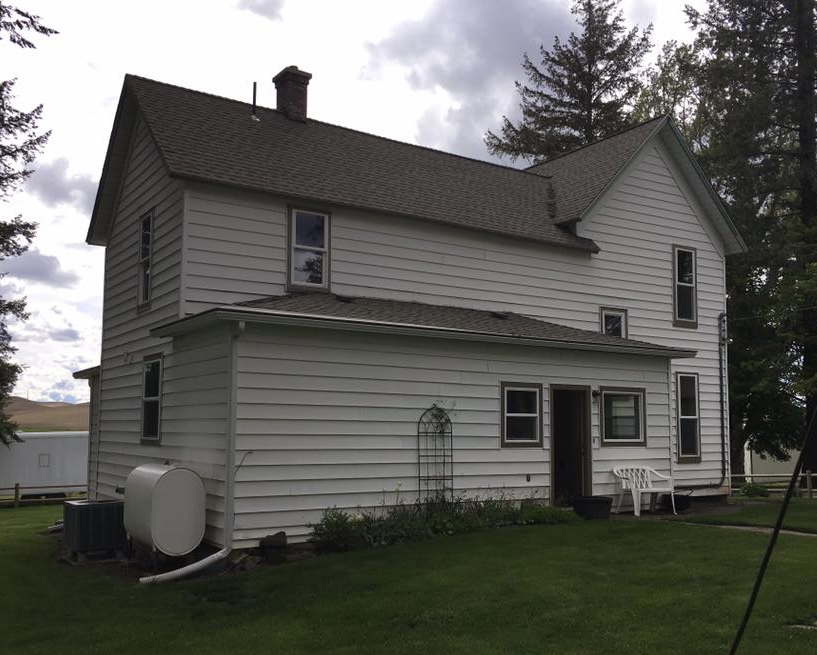
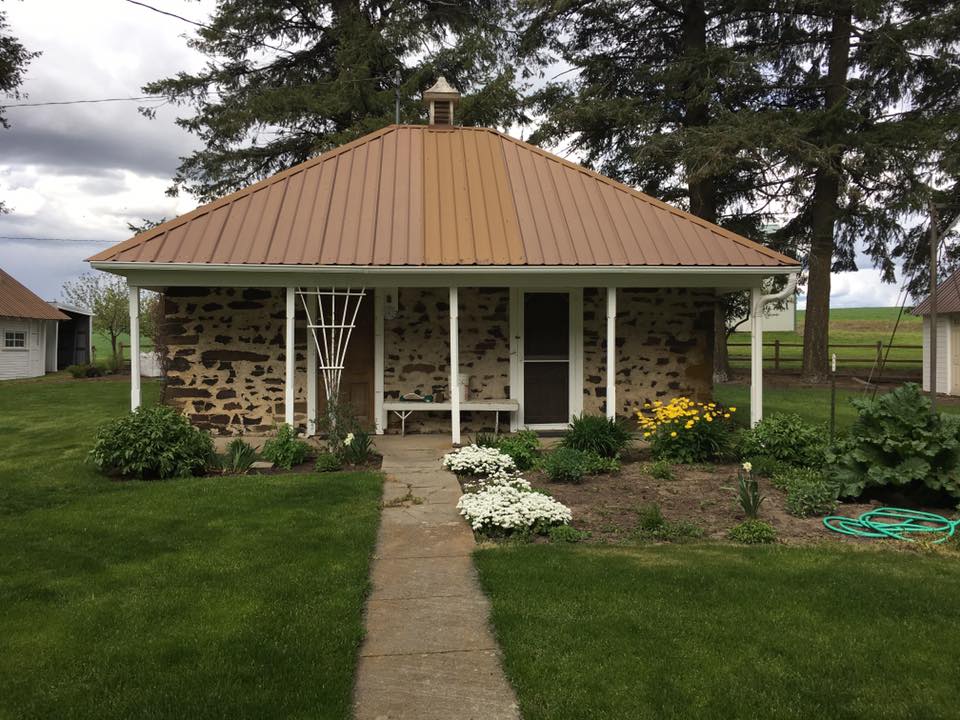
the renovated farm house
the “egg” house where produce was kept cool
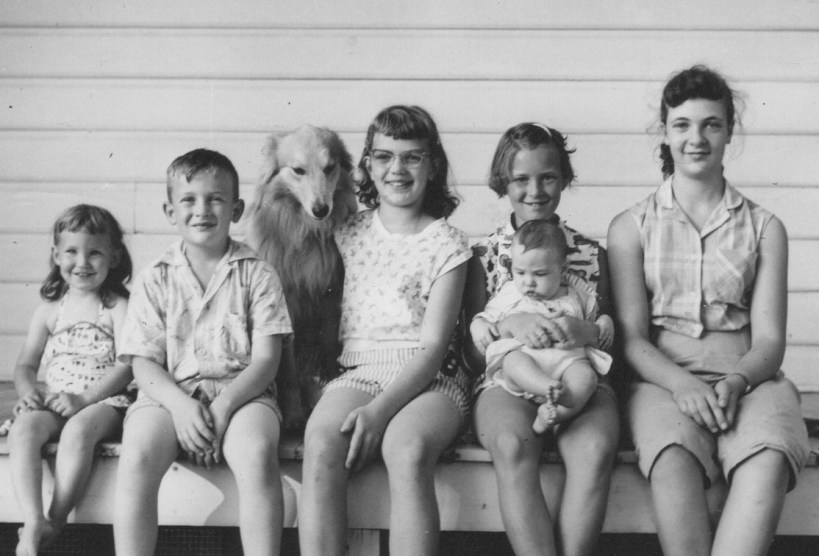
On the porch in Spring Valley in the Palouse – me at age two with Nancy holding my baby brother Steve along with the Schmitz cousins – Joe, Barbara and Carol

My Aunt Betty Buchholz Schmitz lived for most of her 102 years in landscapes that could be summer-rich with golden crops yet in winter, harsh, bleak and empty. She weathered it all with hard work, grace and an innate sweetness born of her faith.

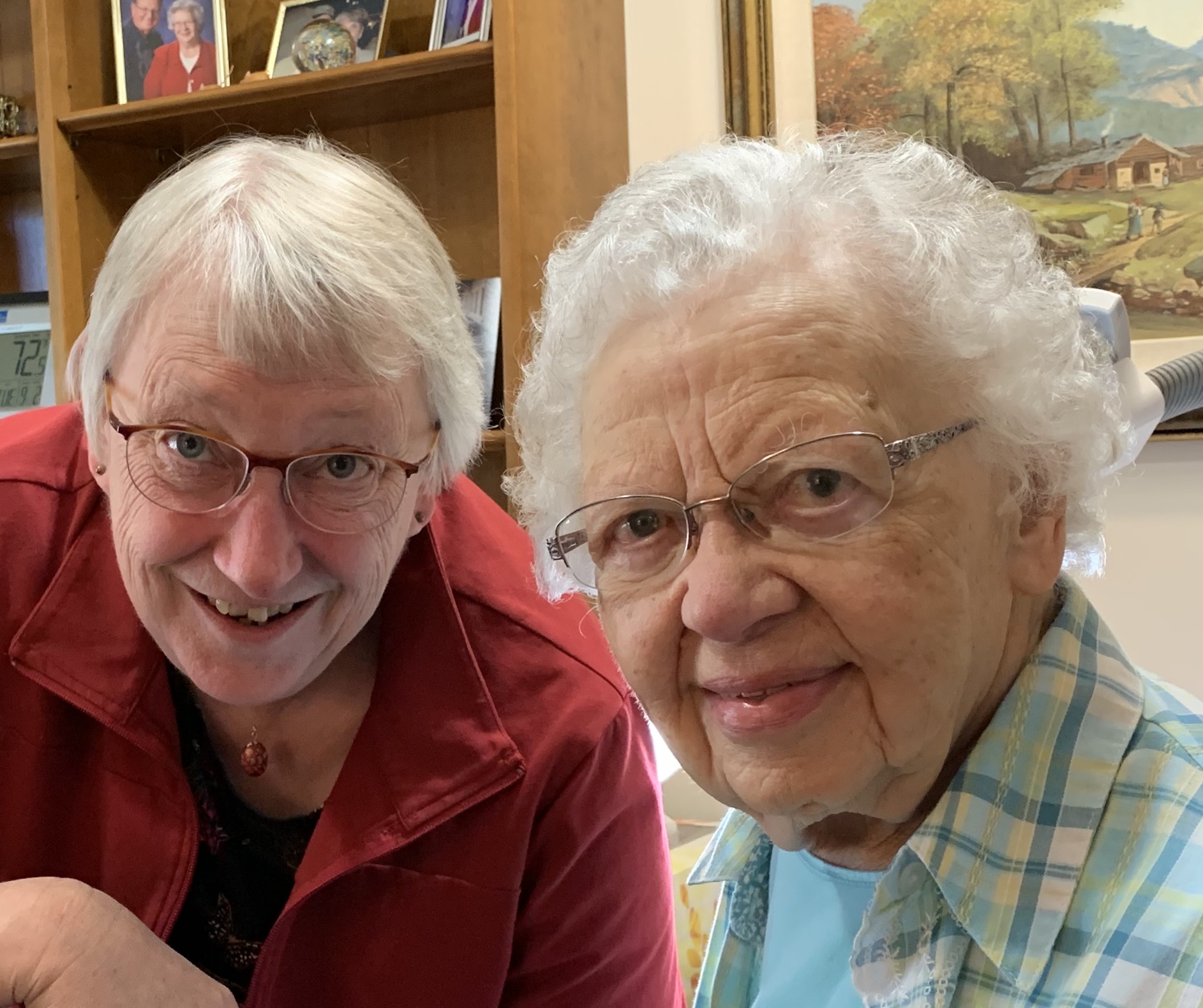
She was carried away last week to her true home to join my mother’s brother, Albert, and so many family and friends who had gone before her, including my mother who always felt blessed to call Betty her sister through marriage.
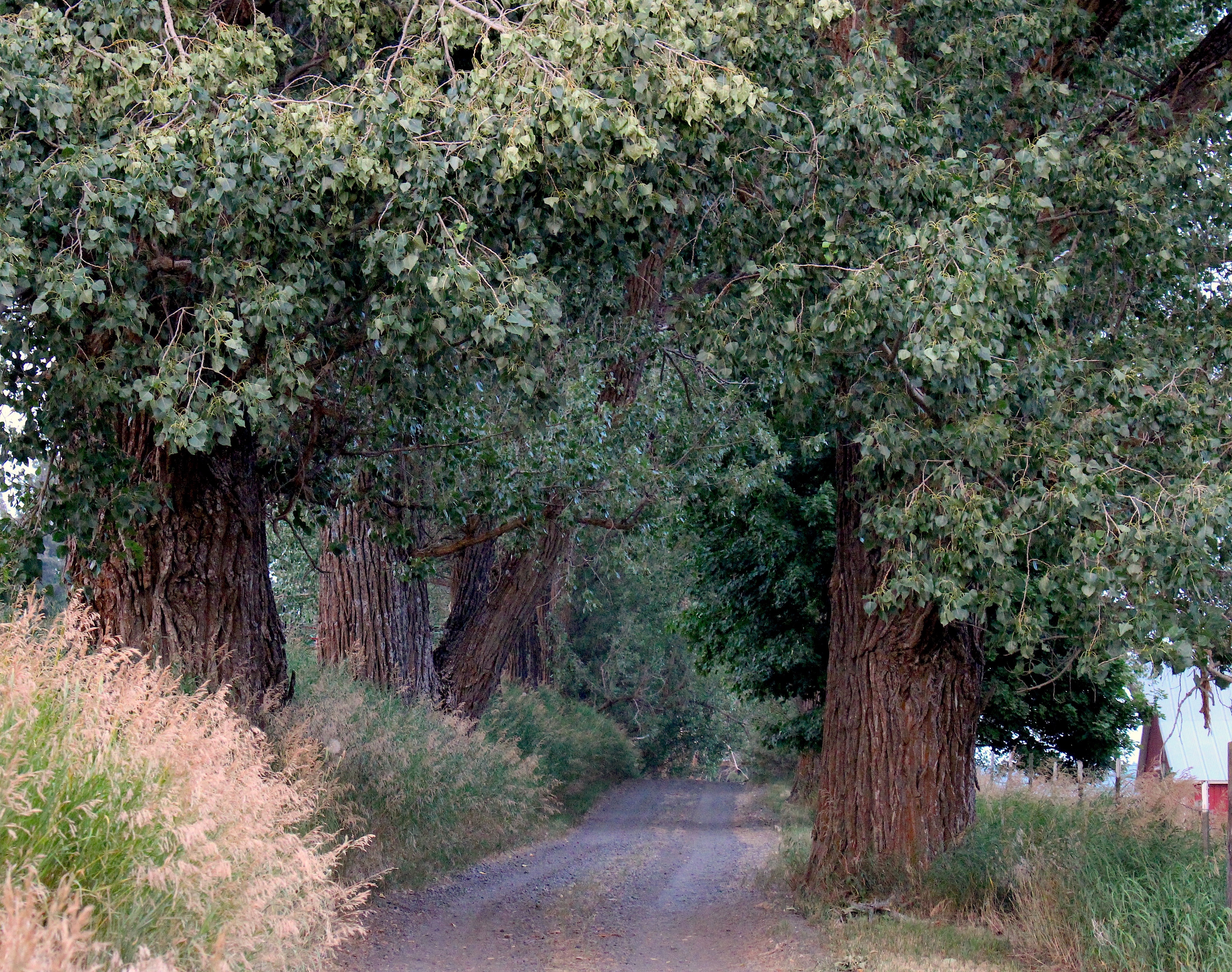
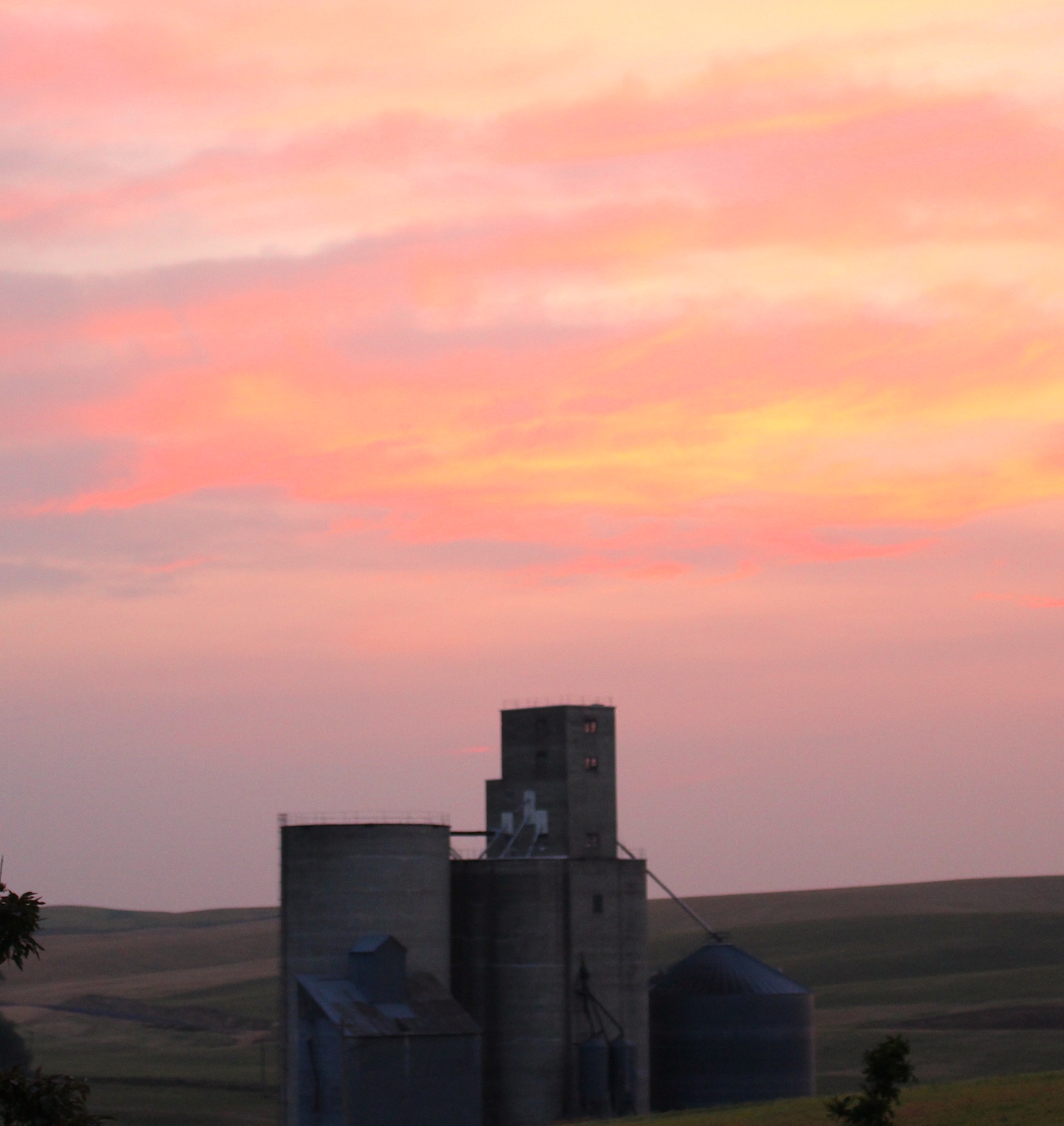
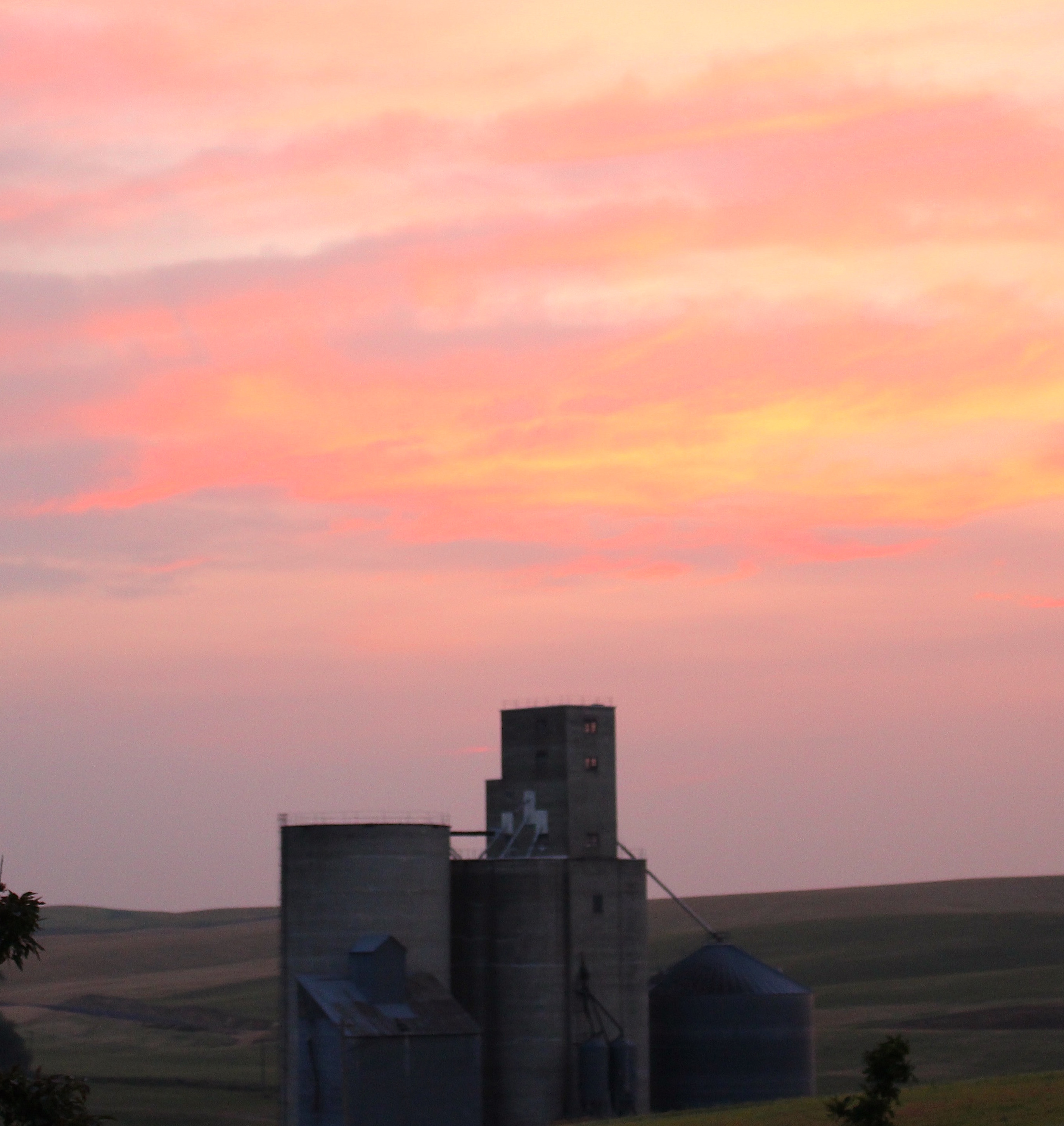
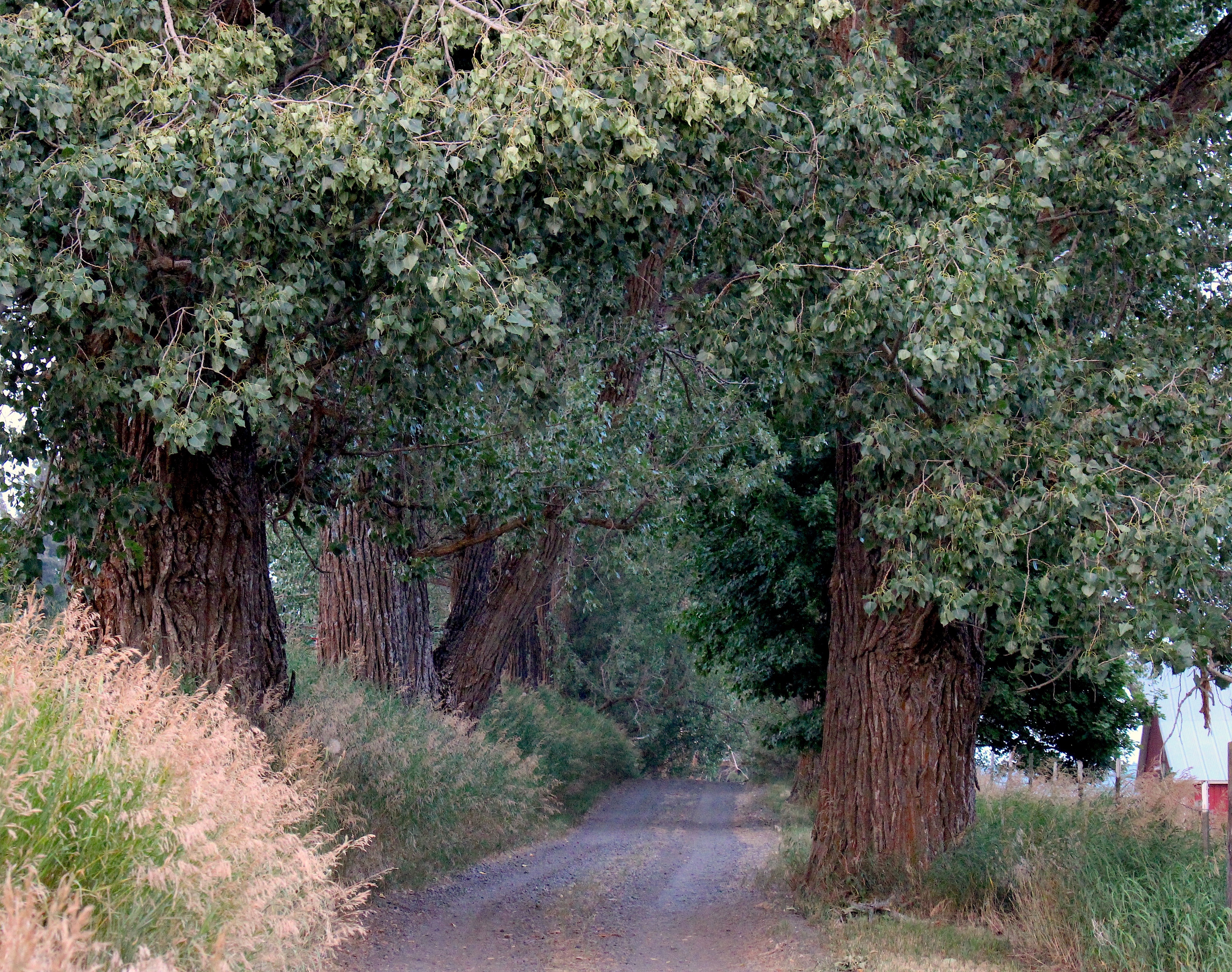
I remember Aunt Betty from my earliest days as we would make an annual summer visit to our cousins in Spring Valley, a tiny place with train tracks and a grain elevator in the middle of the rolling hills of the Palouse country of eastern Washington. I felt such a surge of excitement as we entered the long poplar-lined driveway that we could see from the road from far away.

My Palouse family lived in the farm house where my mother and uncle were born – a magical place of two stories with an enclosed staircase and many rooms, a huge basement, a sleeping porch for summer, a working windmill, as well as numerous outbuildings that contained everything Palouse wheat and lentil farmers needed to survive. The house was nestled in a small vale between the surrounding hills, to protect it from chill winter winds and stay cool in the shadows on blazing hot summer days.

Betty was a woman who was soft-spoken, always humble and eager to lend herself wherever needed. She cooked and baked huge meals, and used a wringer-washer and clothesline for never-ending loads of farm laundry. Her home was warm and welcoming with true heart-felt hospitality, even decades later after she moved to a house “in town” – a metropolis with just a few hundred neighbors.

Although a pioneer in the sense of living remotely with minimal conveniences, Betty and her brother Kenneth became pioneers in the 1960’s living donor kidney transplant program, as one of the first successful transplants. This must have required immense courage and stamina from a farm mother of three children, yet she was able to give her brother years of life that he otherwise would not have had.

Over the years, Betty sent cards and letters of encouragement to me in between our occasional visits to see her. She was the kind of aunt that modeled how I wanted to be and I have too often fallen short of her example.

I hoped to see Betty this summer, having missed visits over the last two years of COVID restrictions in her assisted living facility. Instead I will look for her smiling face and listen for her warm voice amid a lengthening list of beloved family and friends when I am called home some day myself.

I’ll see you again, Betty, in the glades of those rolling hills and the shadowed softened vales of the valleys. You will hold out your hand and make sure I feel at home there, just as you did for me during your century here.

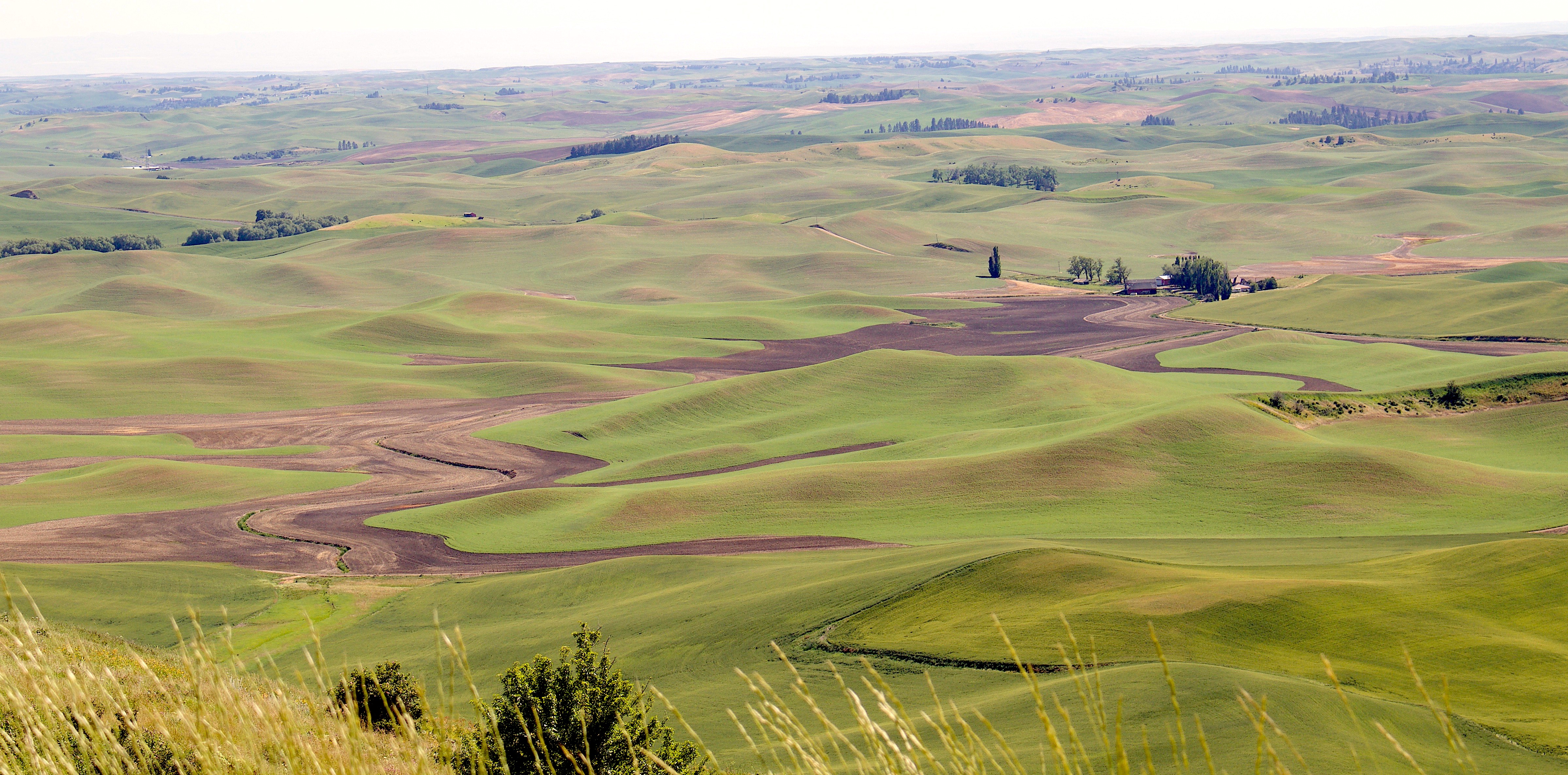
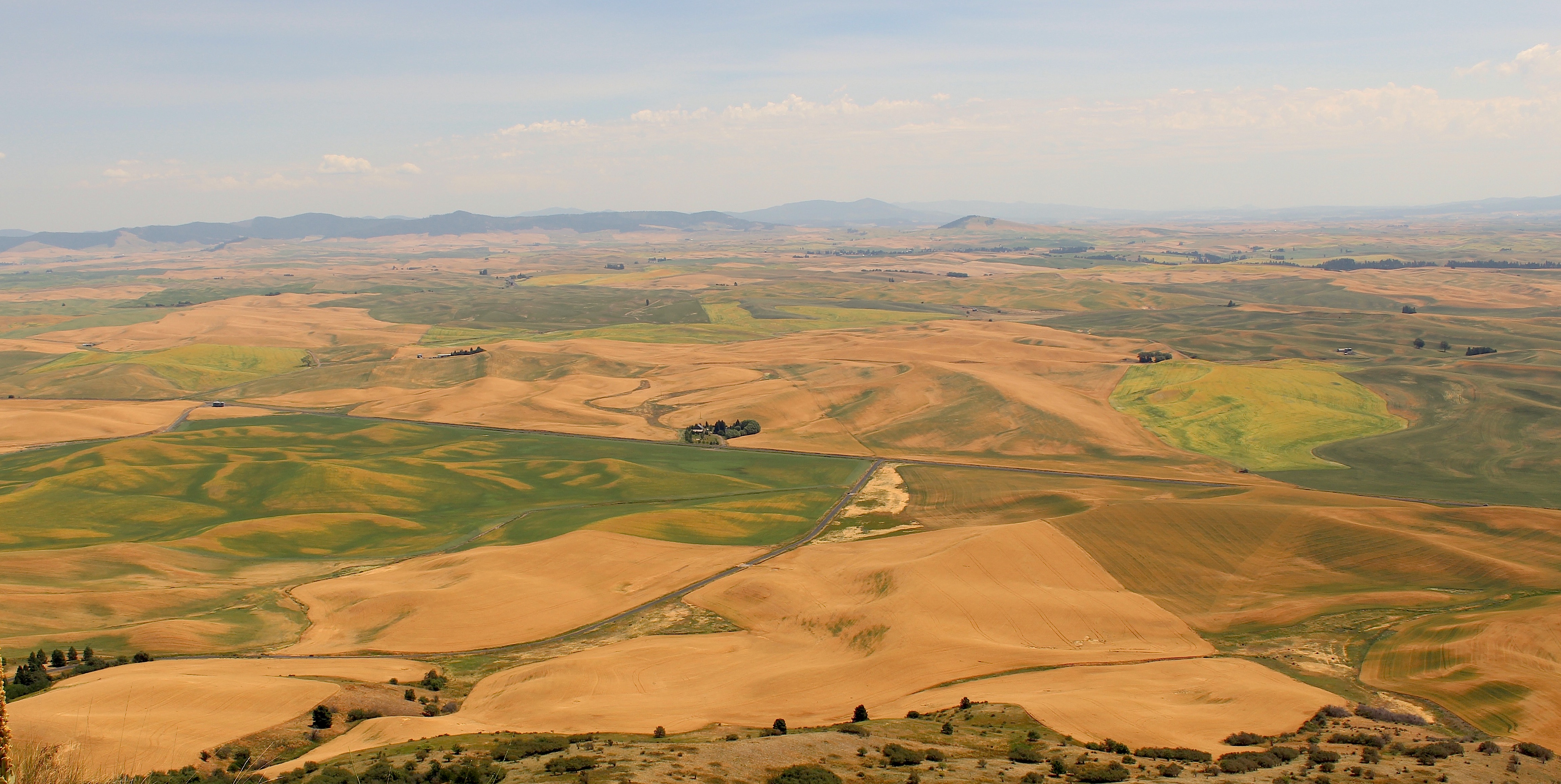
Palouse fields
Poplar-lined driveway to the Schmitz farm