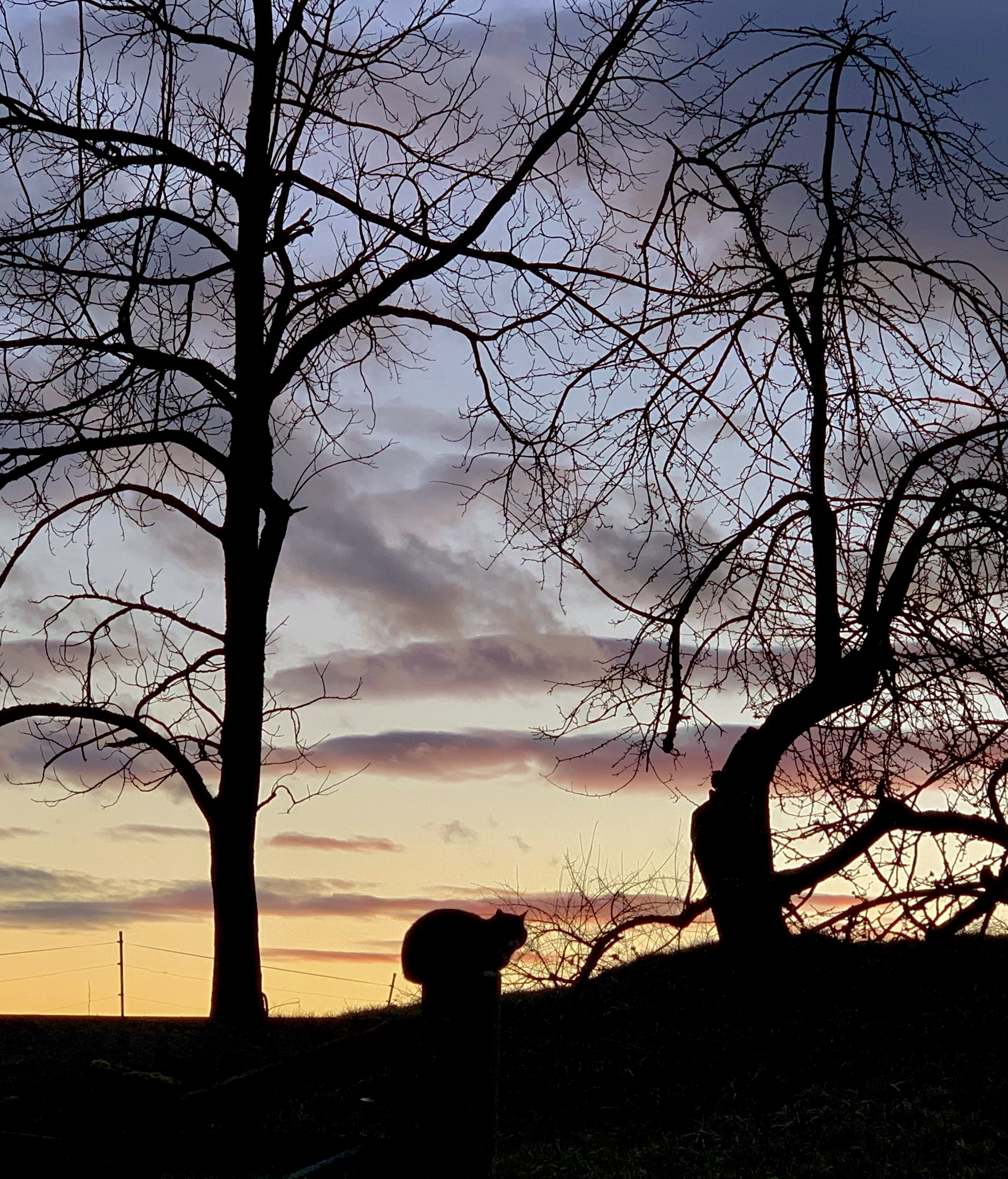
Where the Cat Begins

It takes a peculiar vision to be able to detect
Precisely where

The field grasses brushed by blowing
Stars and the odor of spring
In the breath of sweet clover buds
And the star-mingled calls of the toads

In the threading grasses and the paws
Of the clover brushing through the field
Of stars and the star-shaped crickets
In the ears of the sweet grasses
And the tail of the night flicking
Through the calls of the clover and the spring
Stars slinking past the eyes of midnight
And the hour of the field mouse passing
Through the claws of the stars and the brushing
Haunches of the weeds and starry grasses
Threading through the eyes of the mouse
And the buds of the stars calling
With the sweet breath of the field

End
And the cat begins.
~Pattiann Rogers “Finding the Cat in a Spring Field at Midnight”

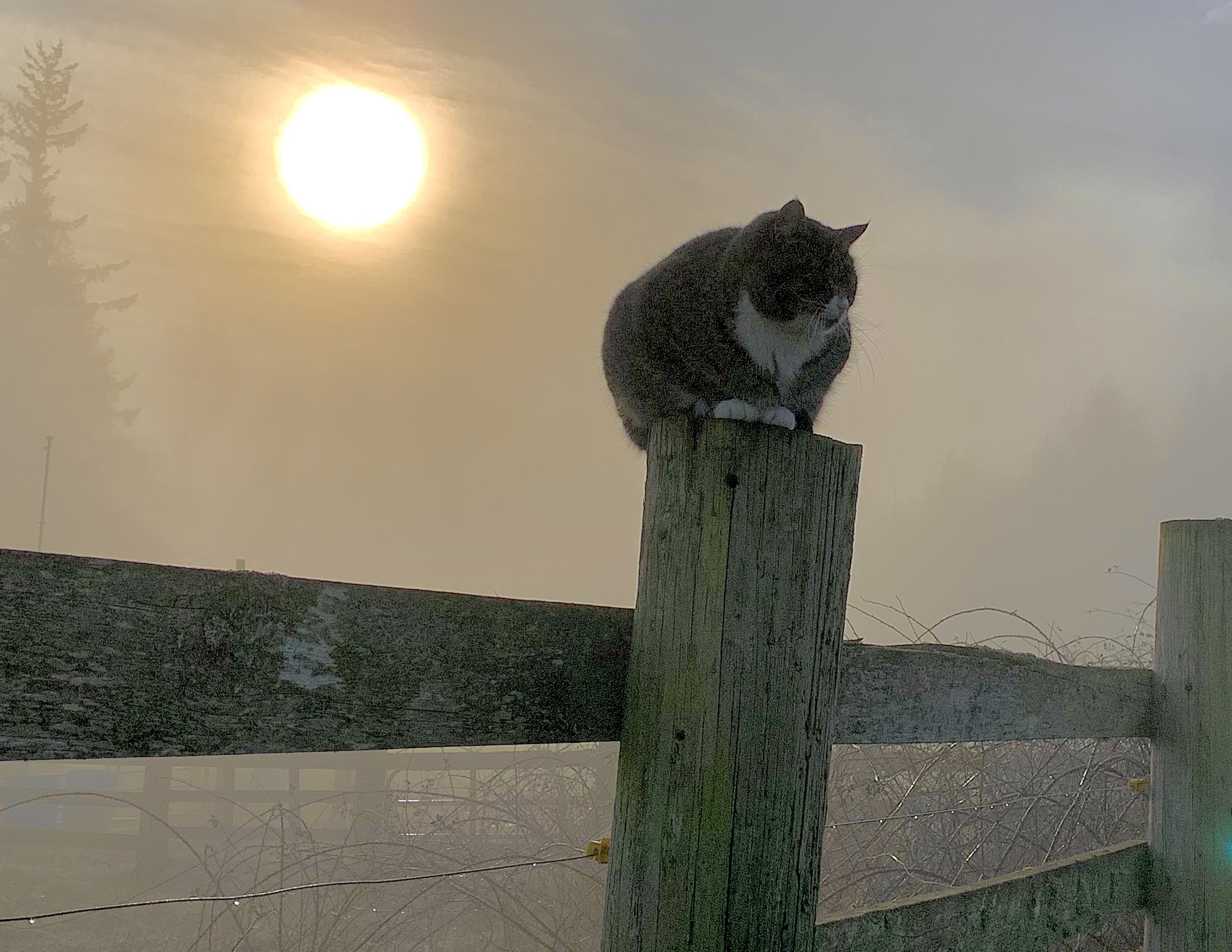
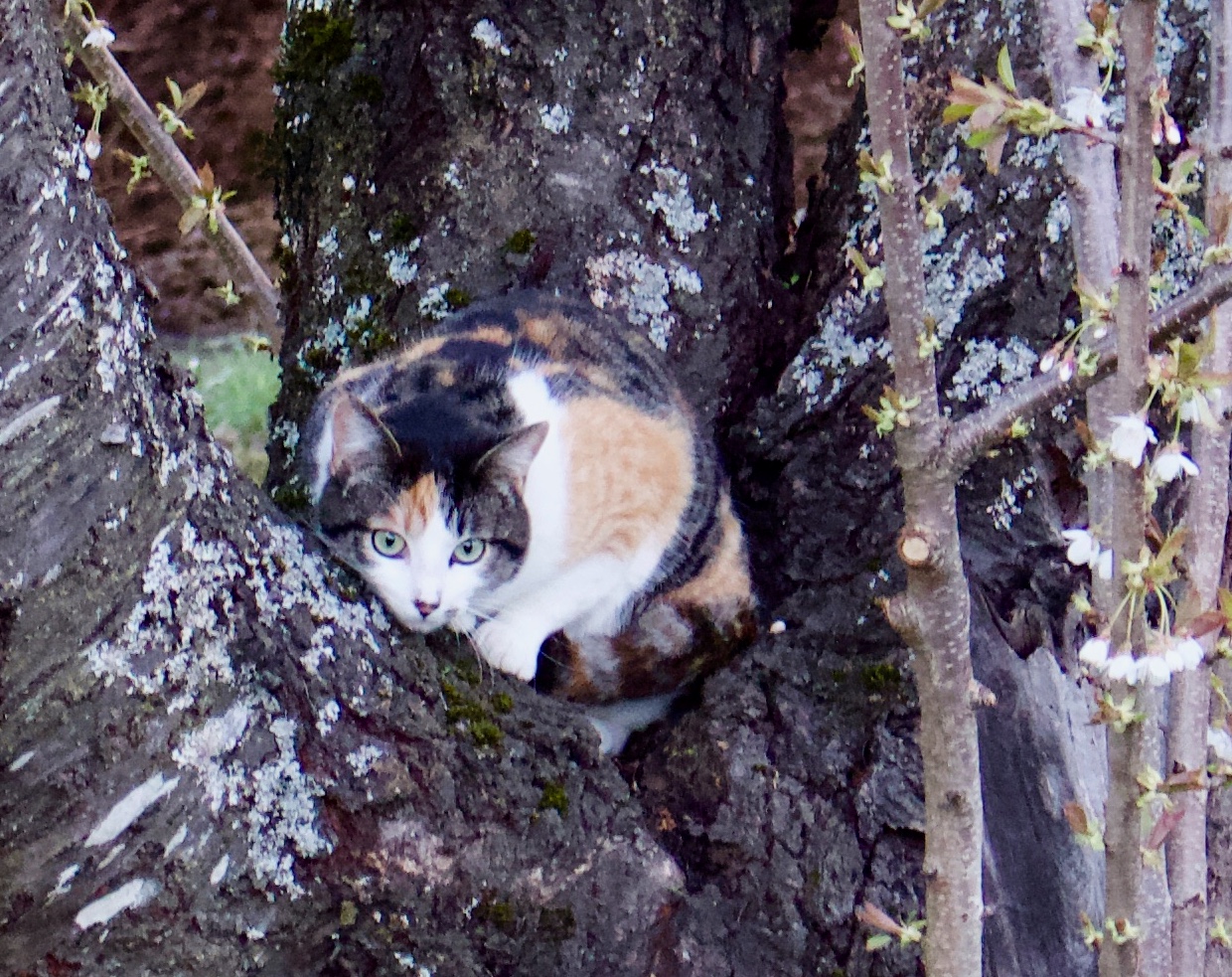
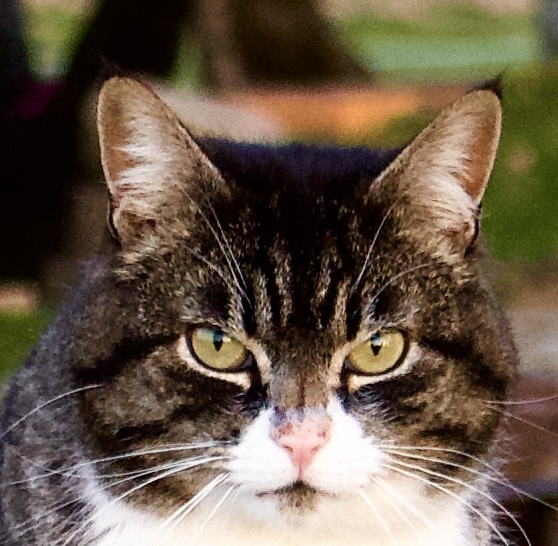
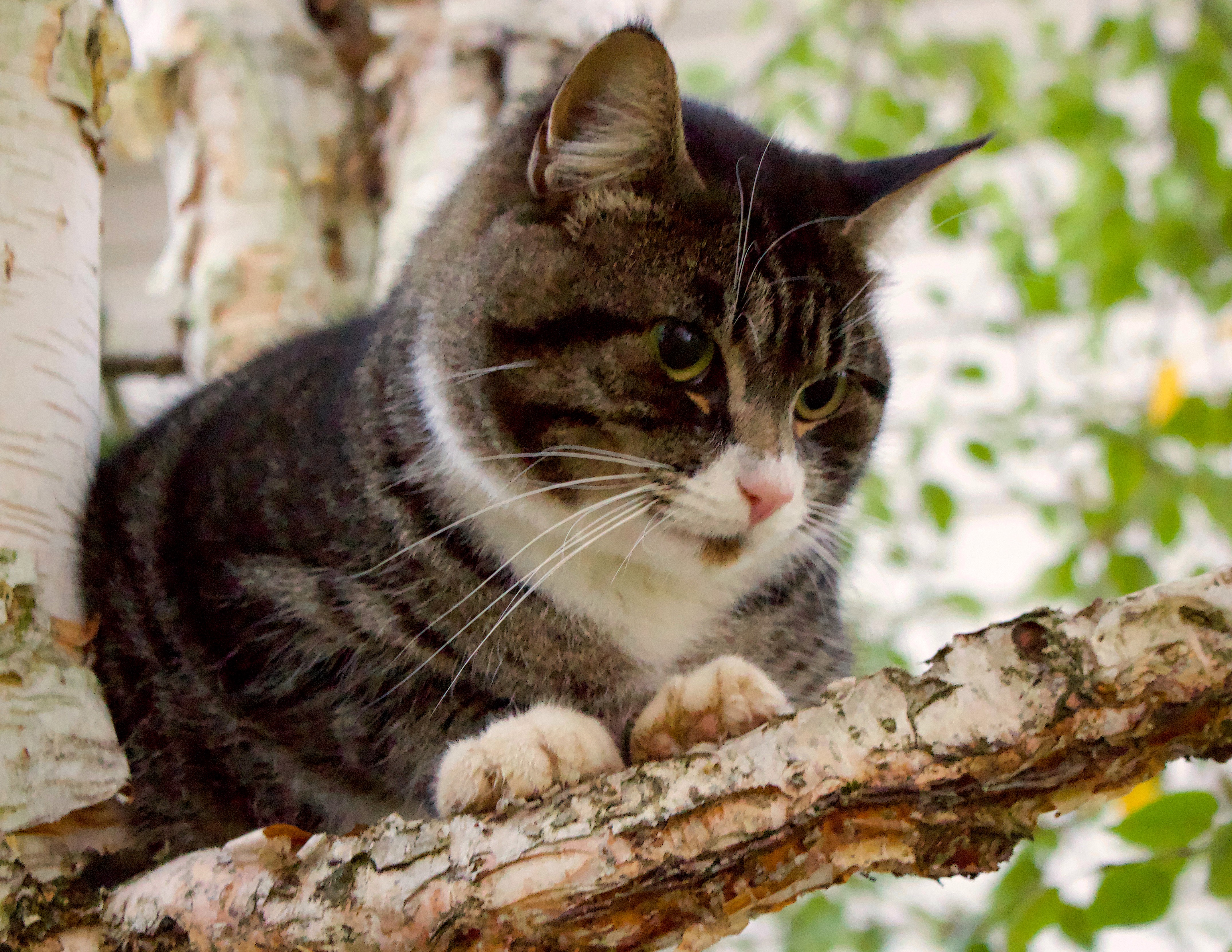
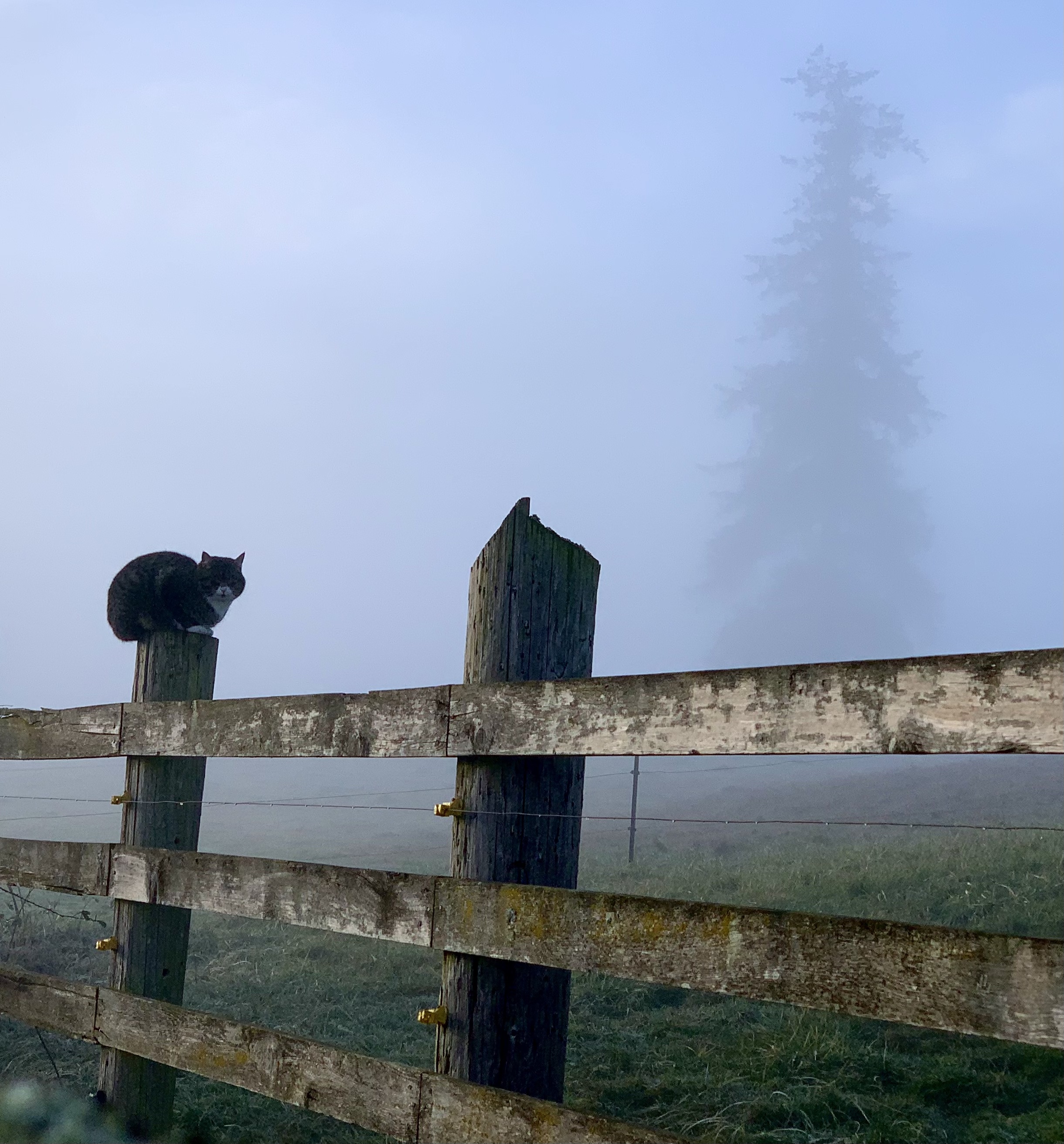
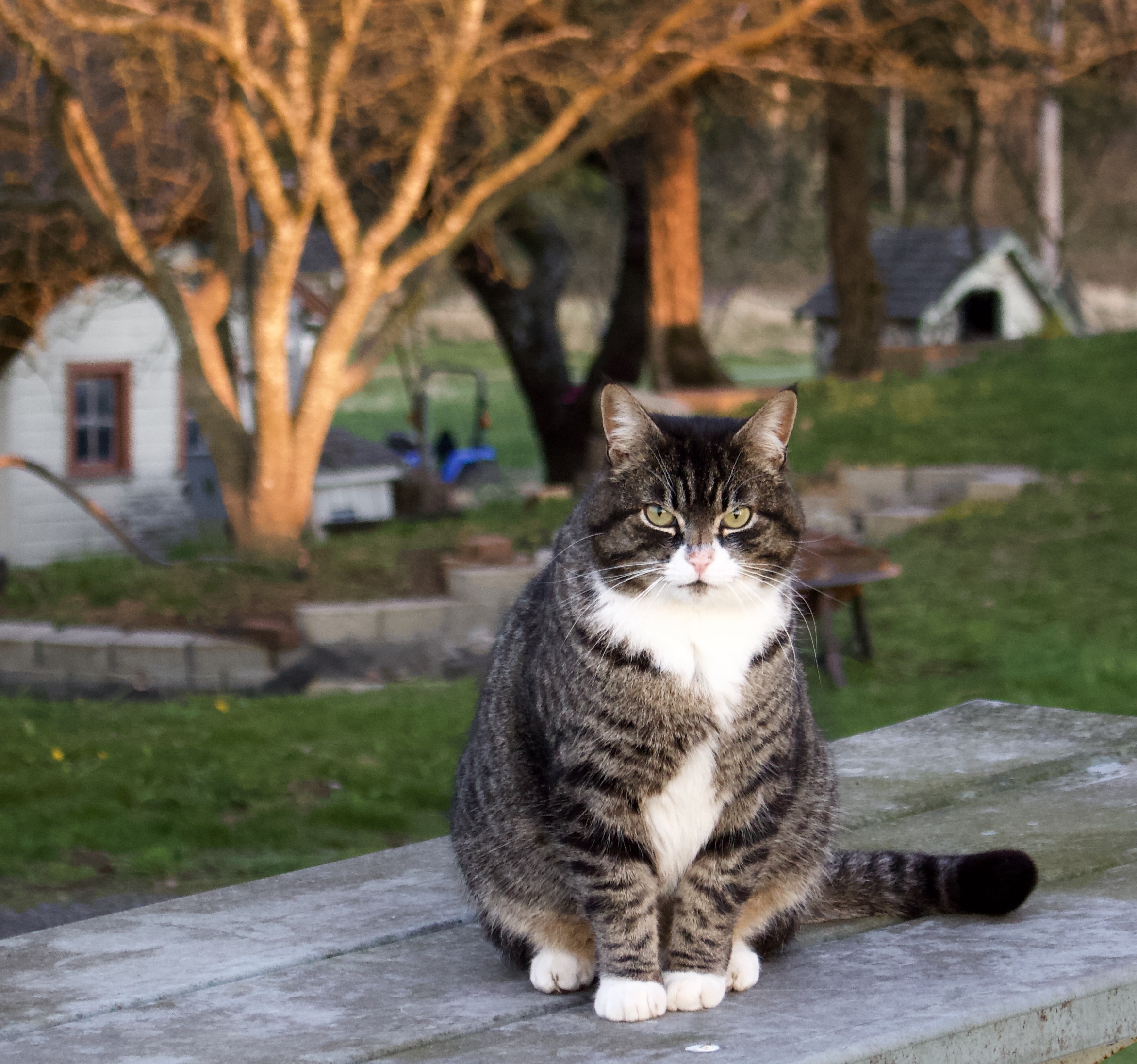
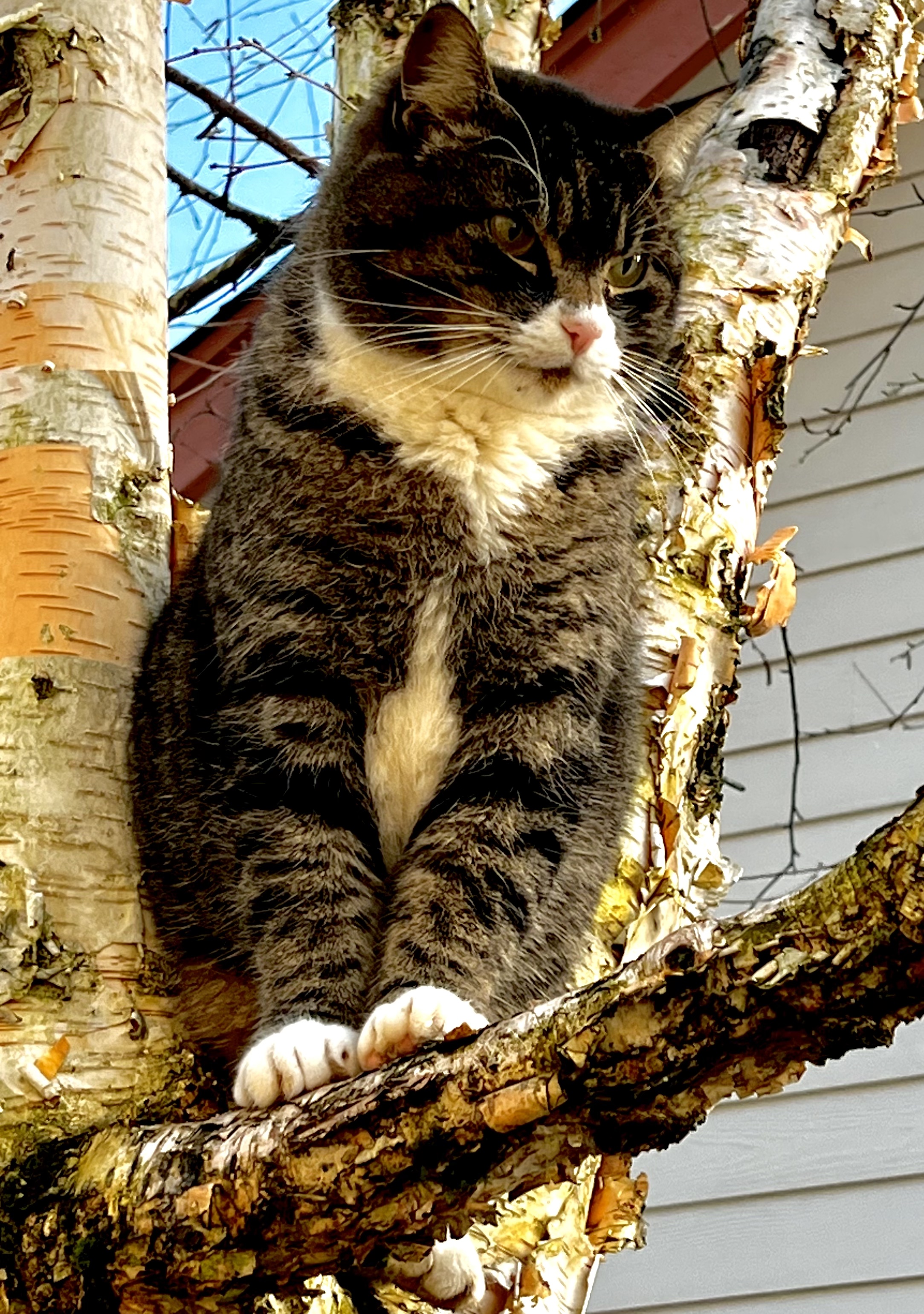
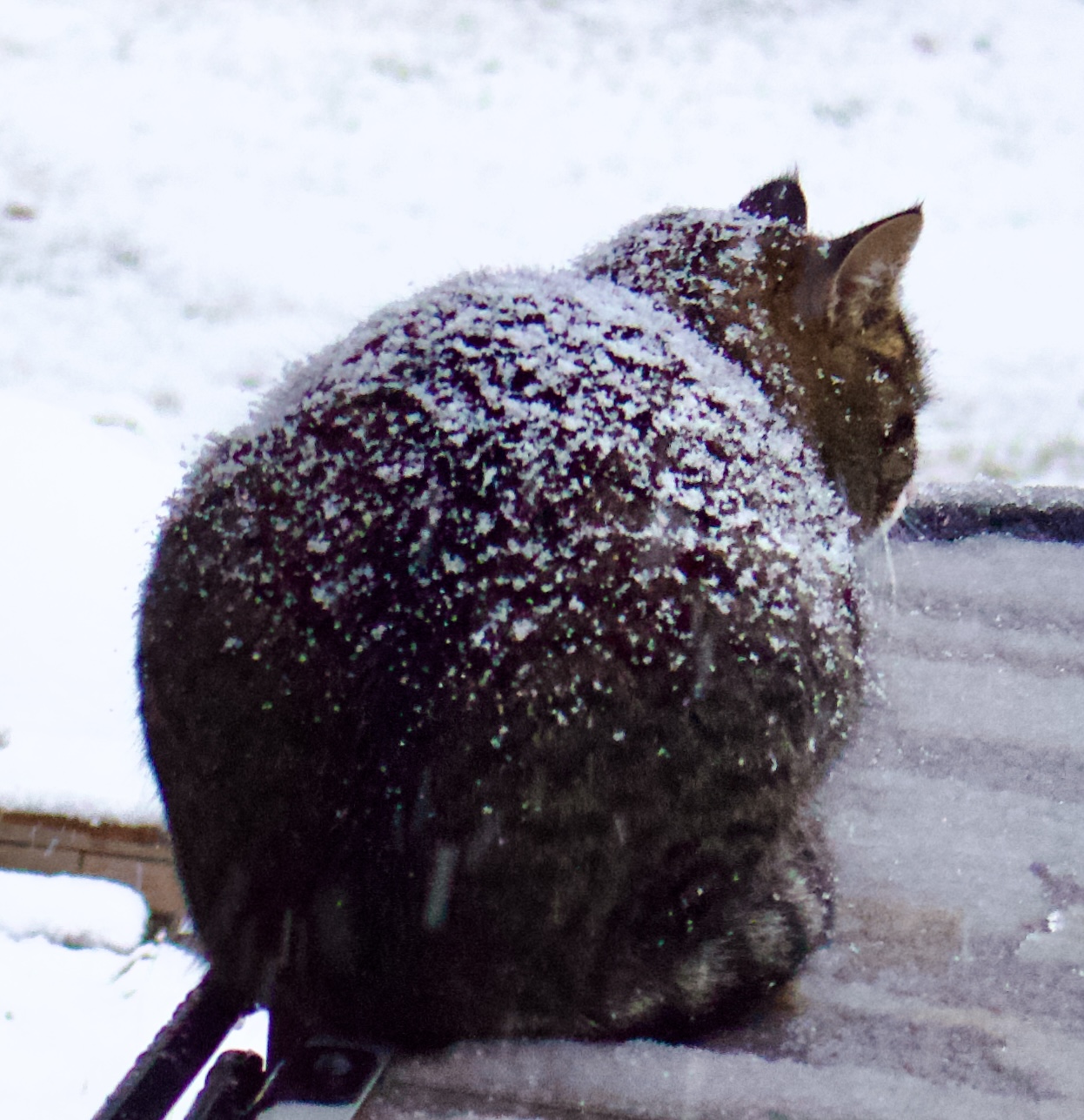
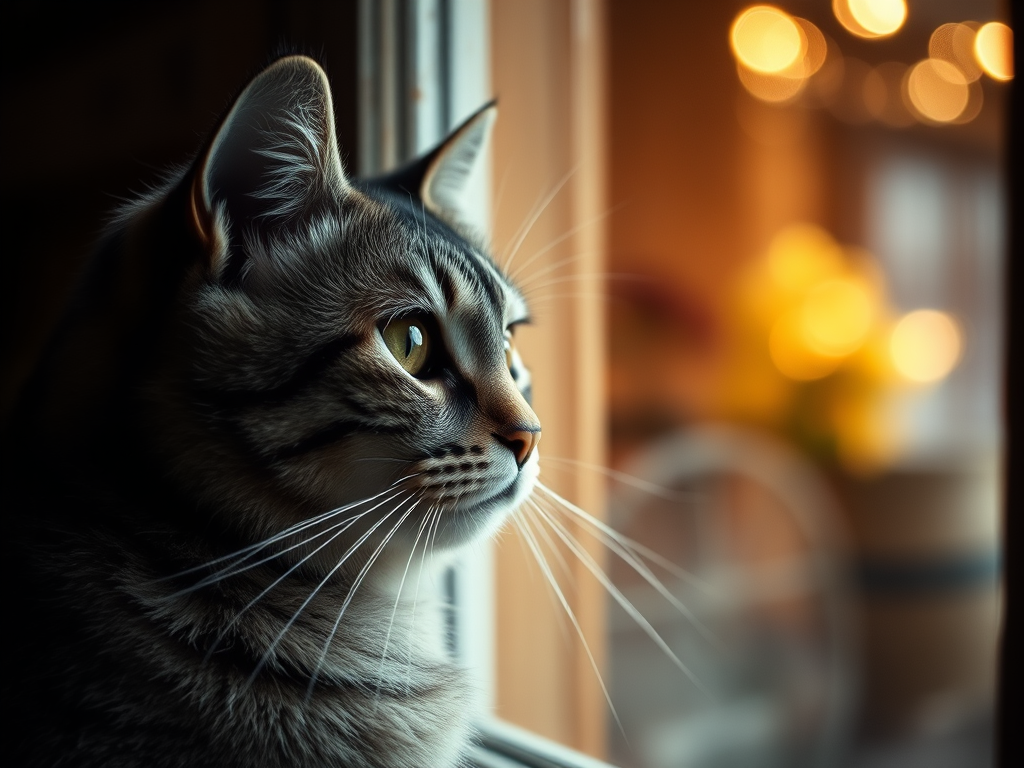
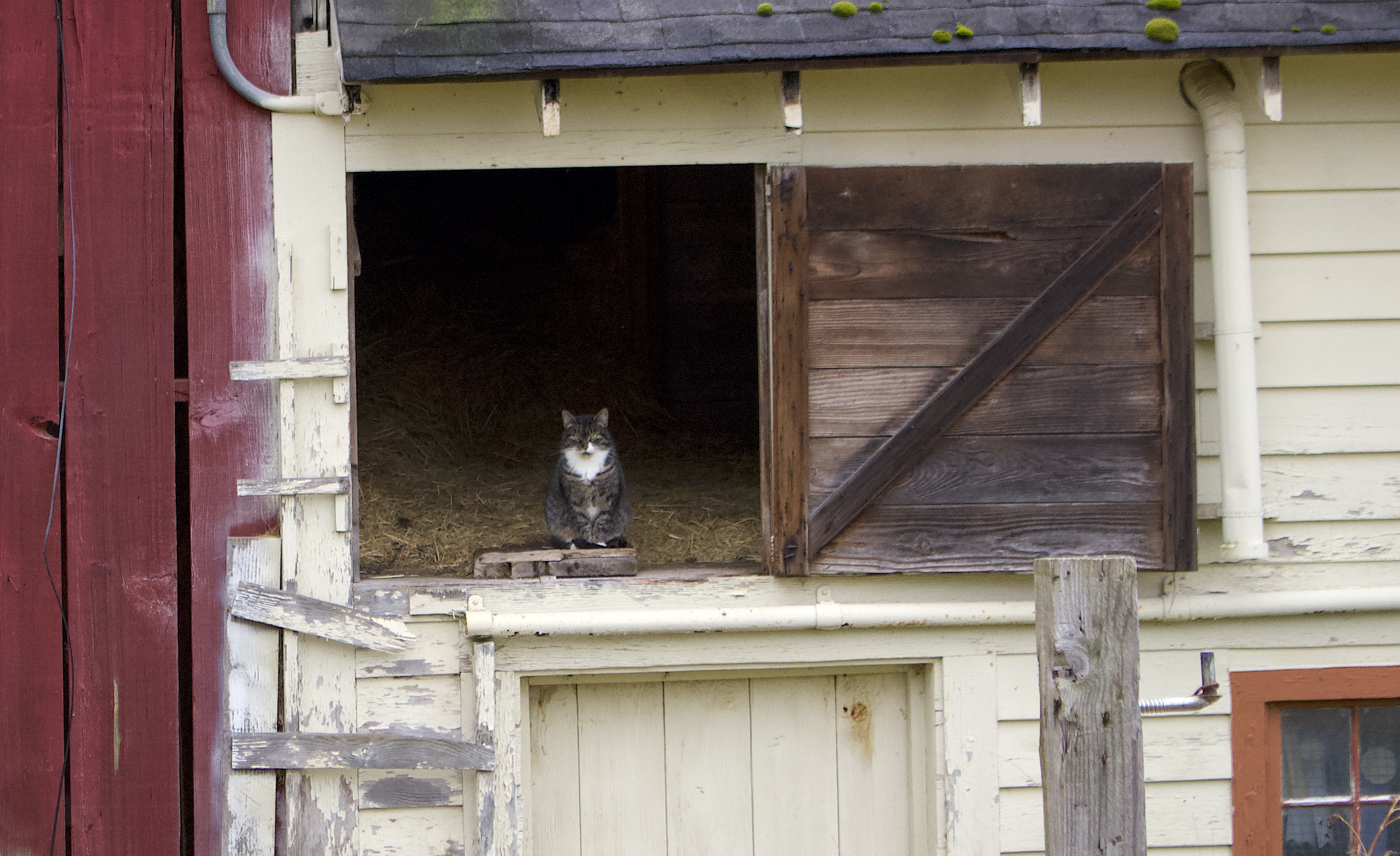
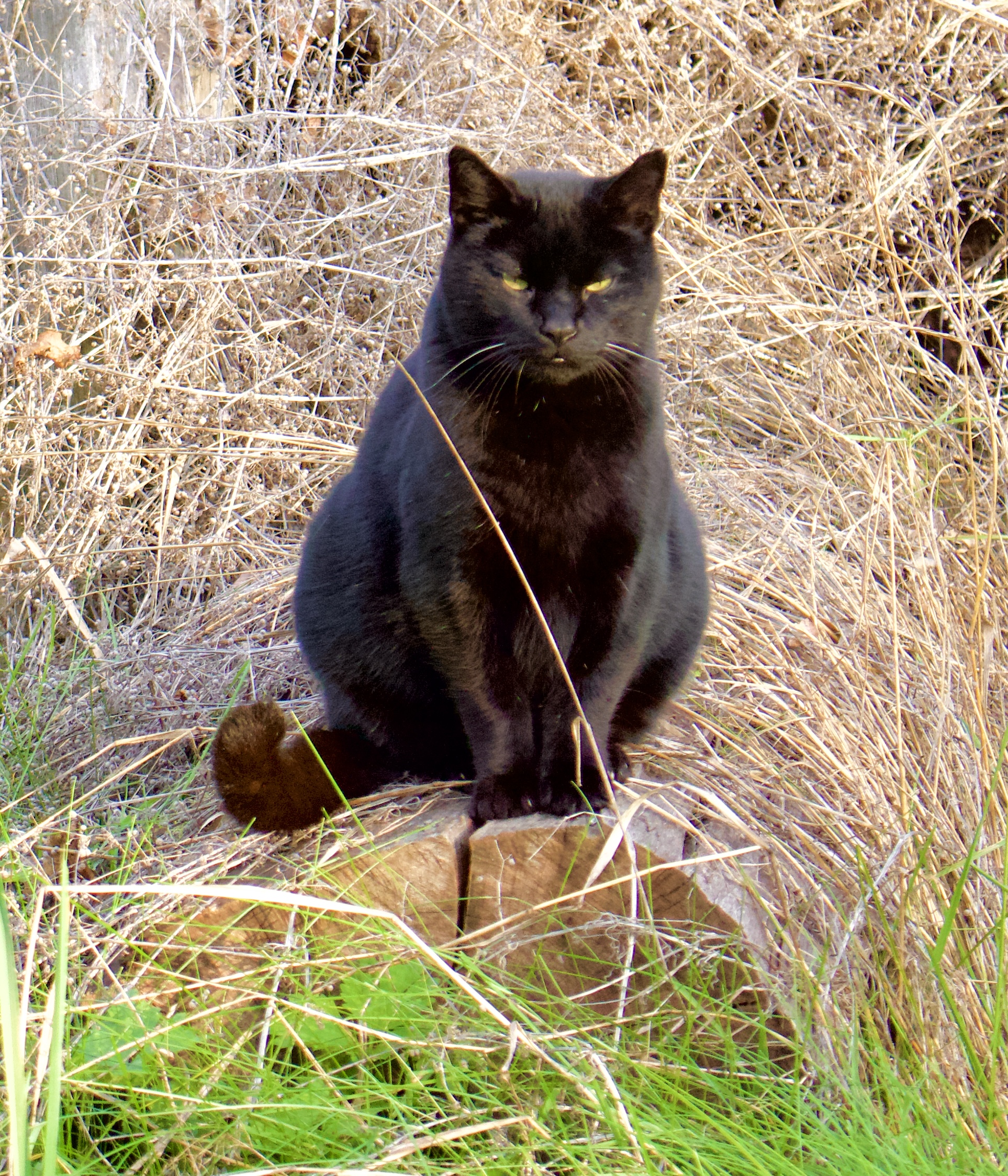
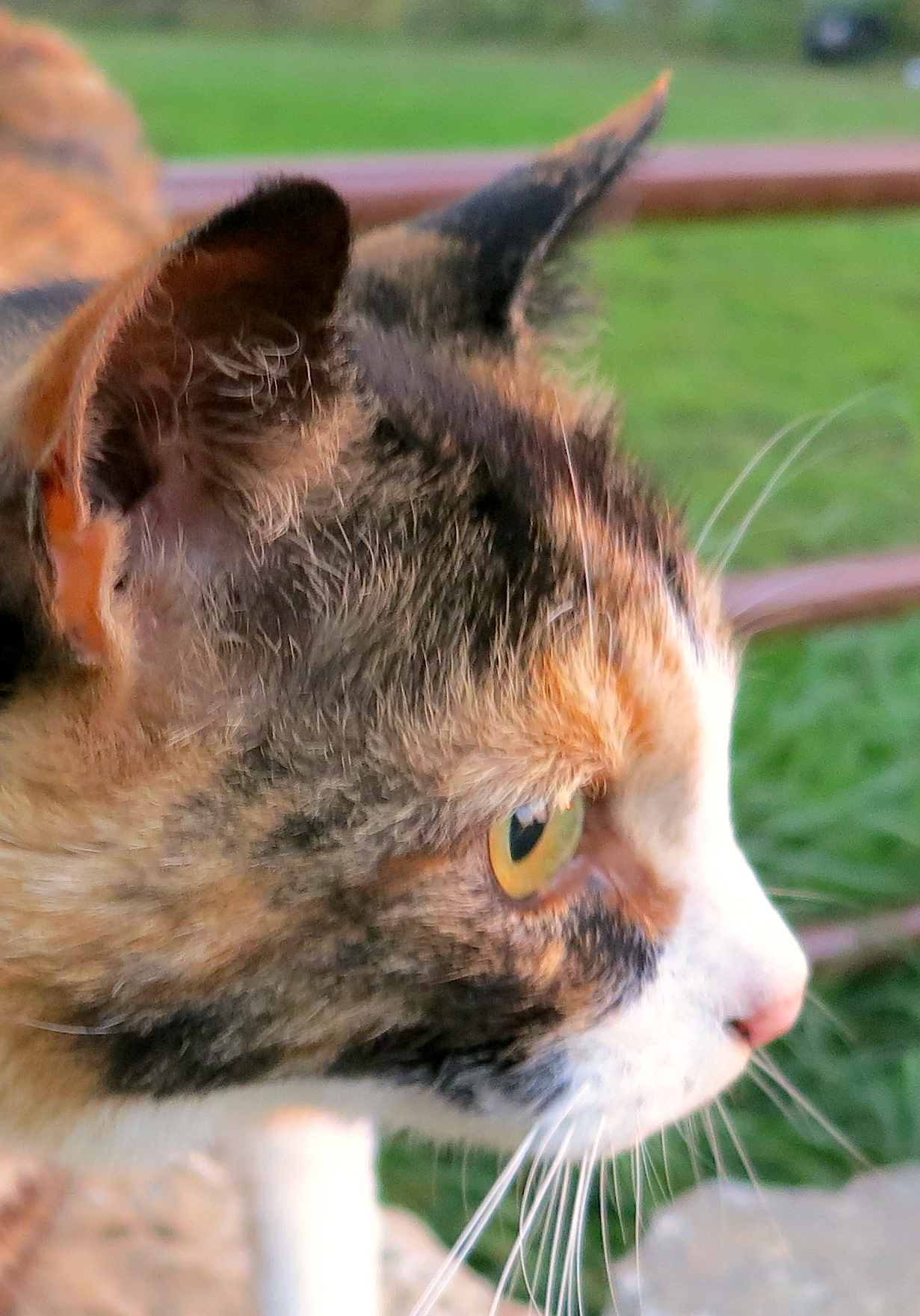
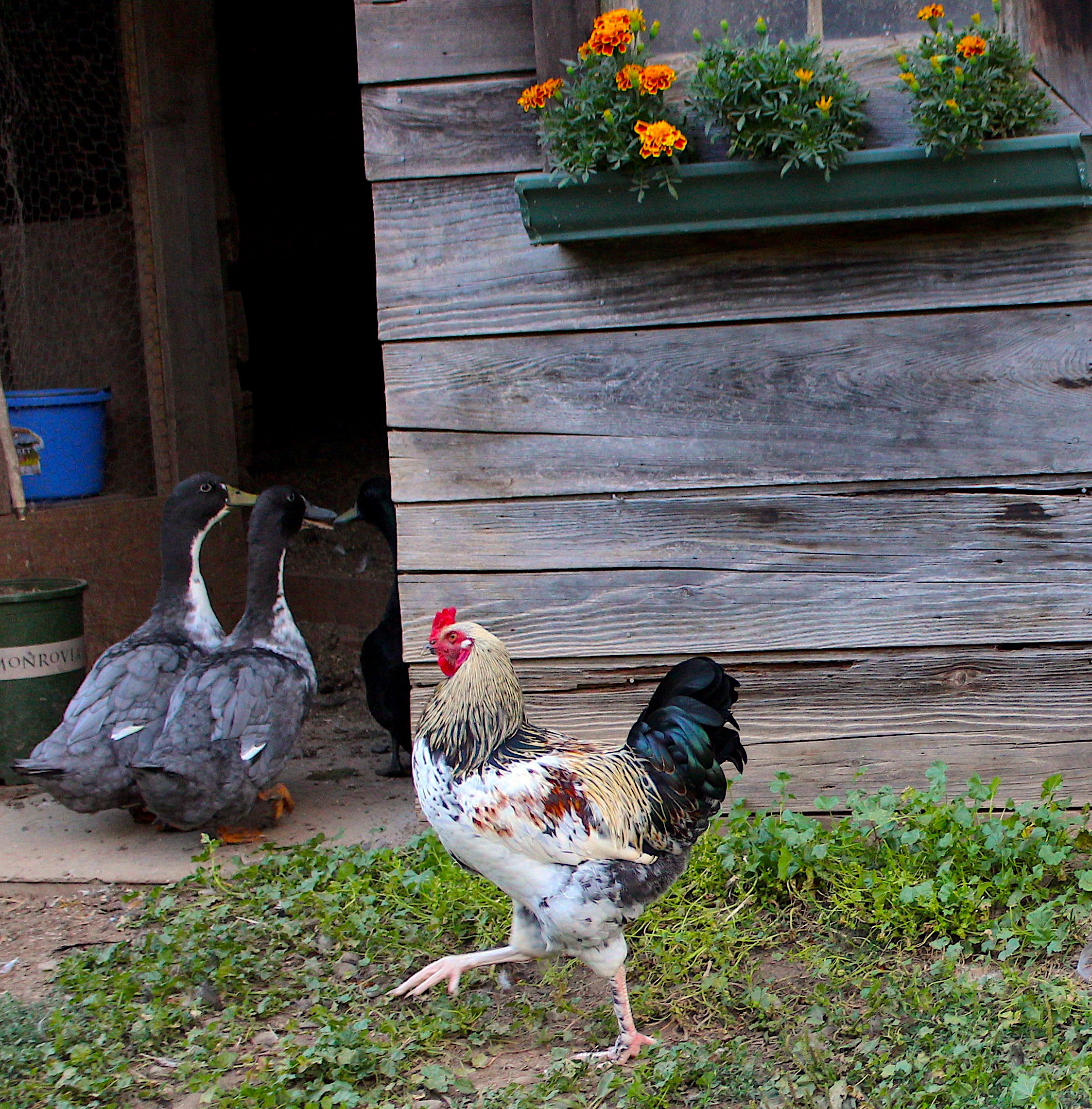
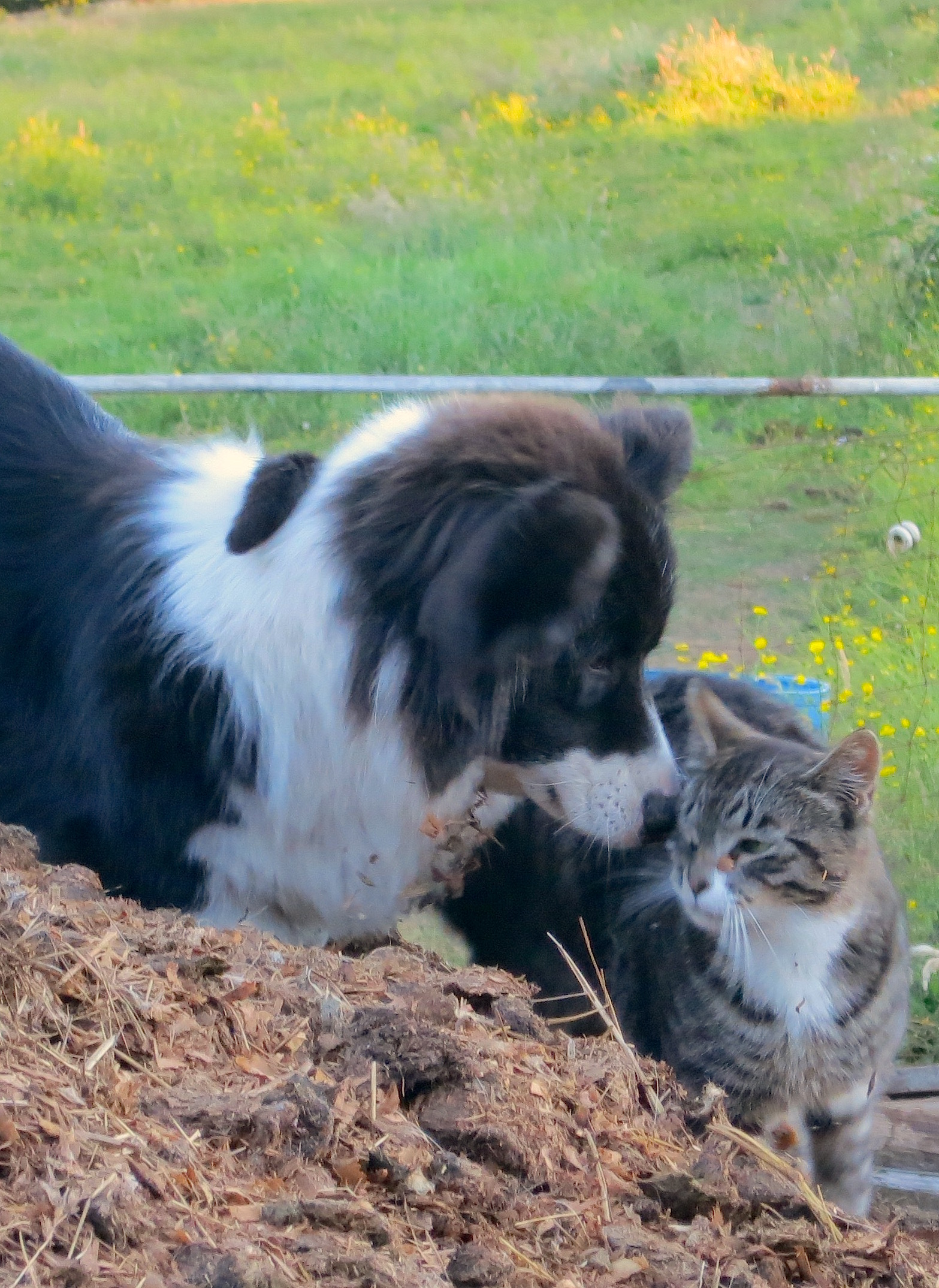
photo by Nate Gibson

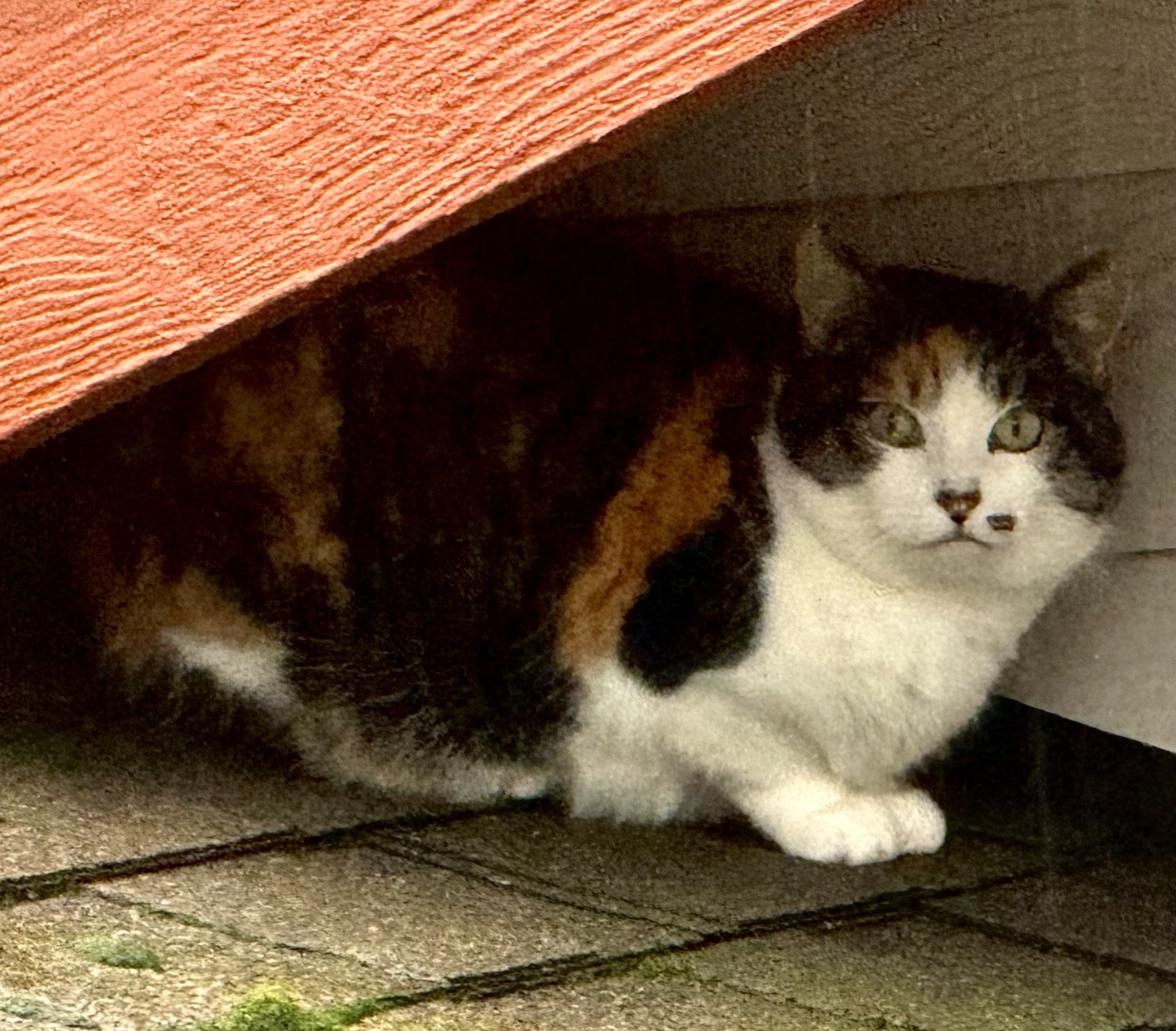
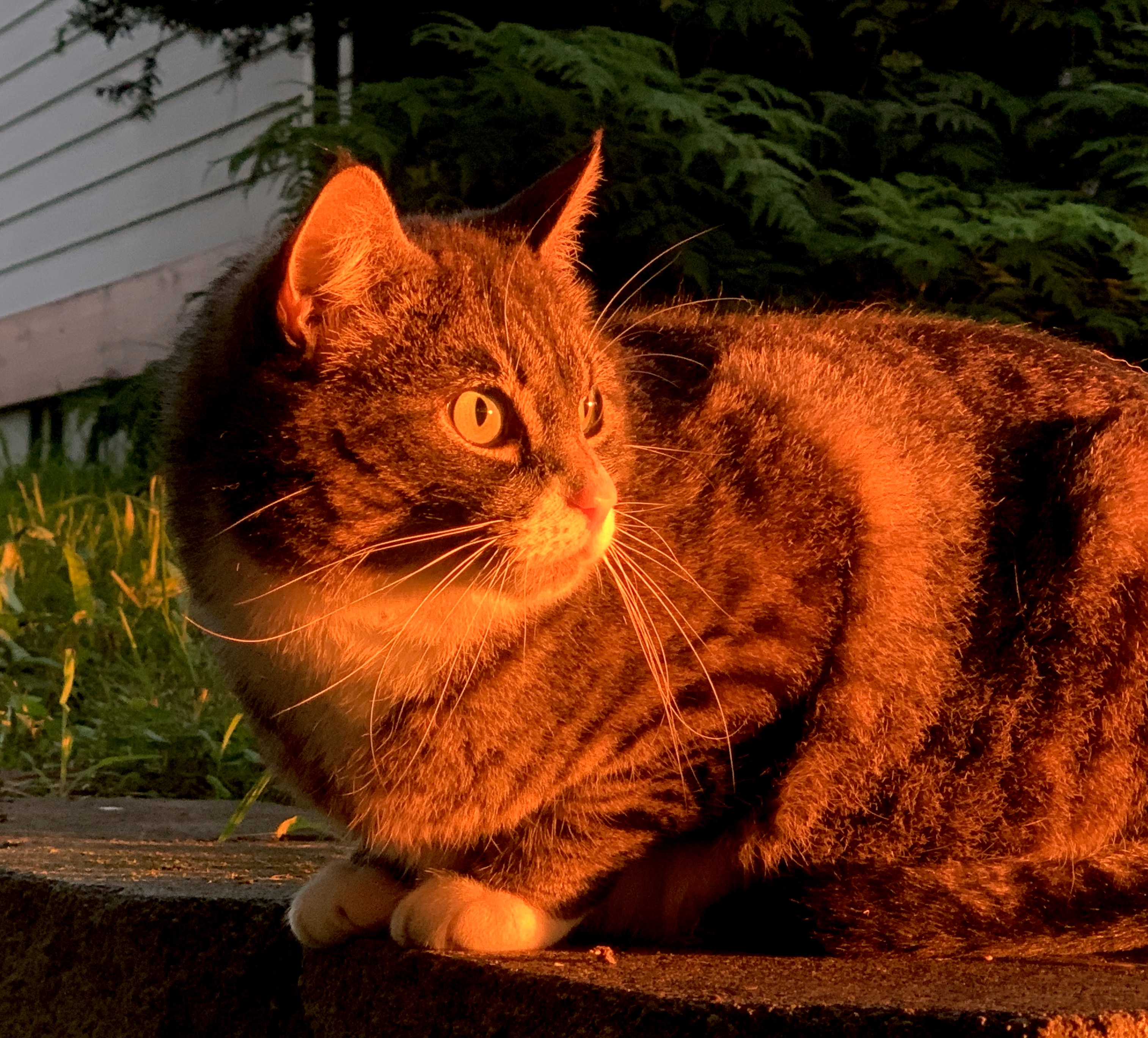
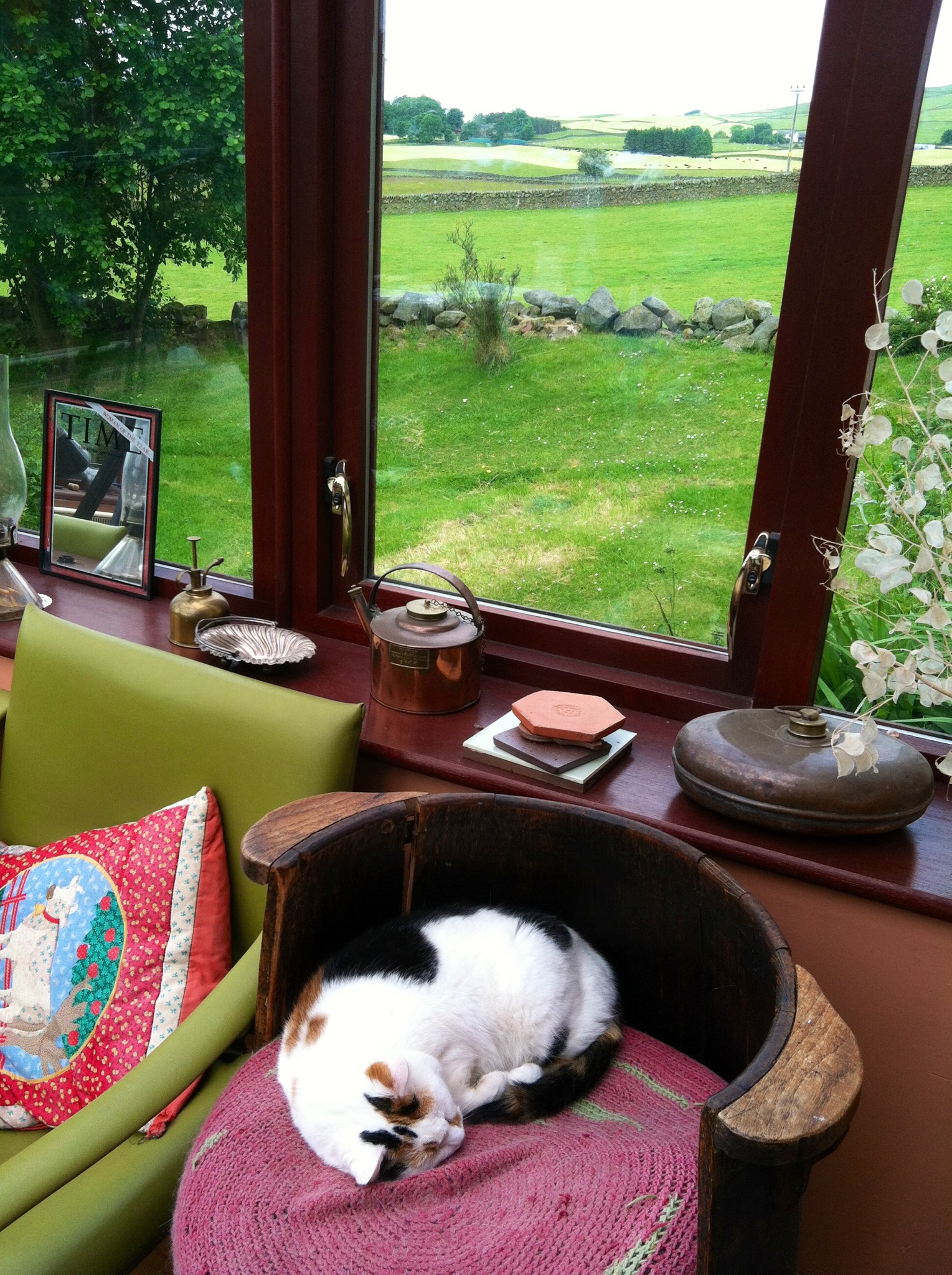
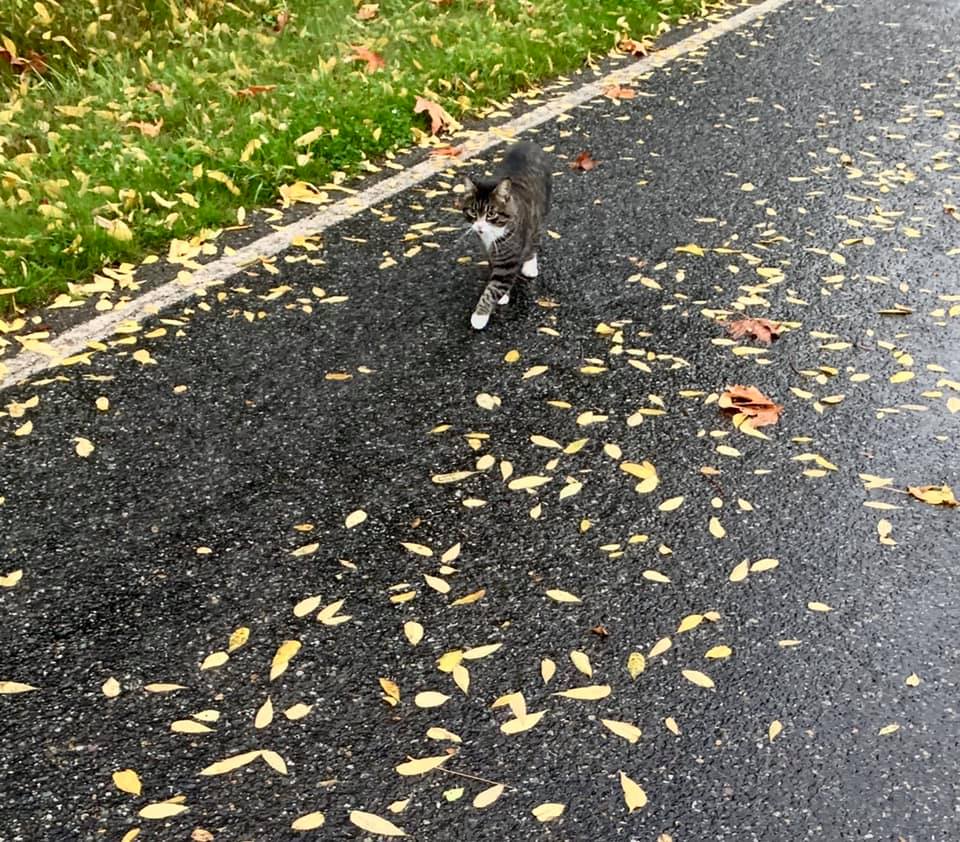
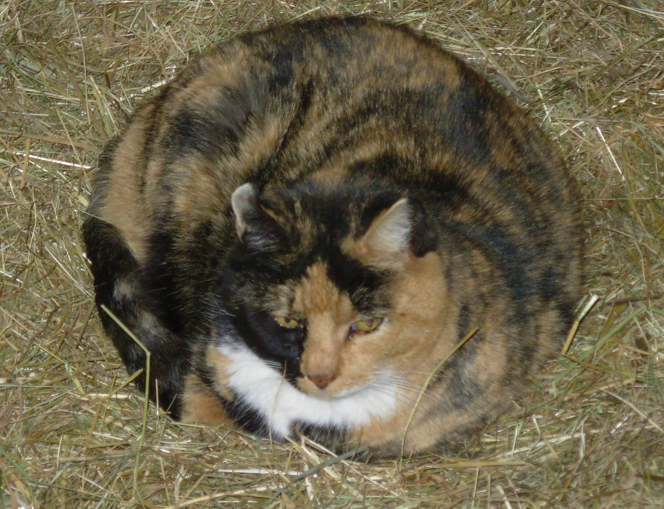
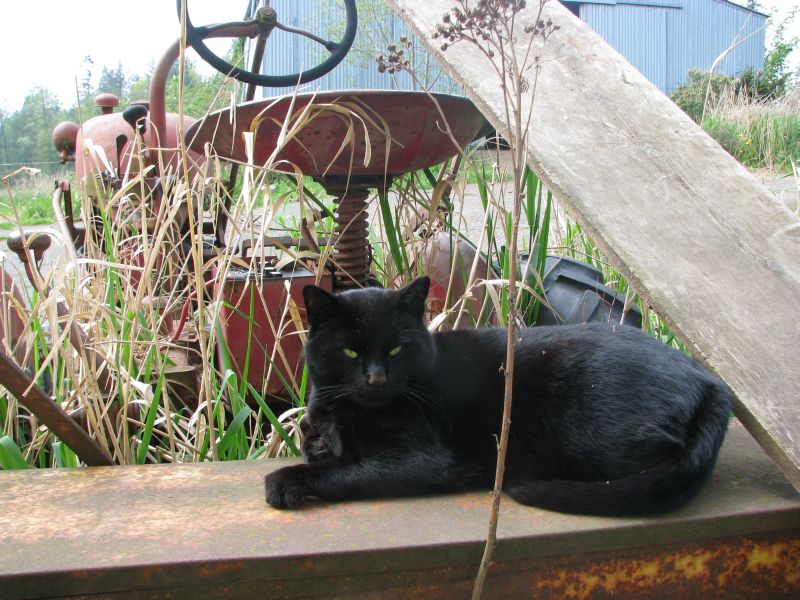
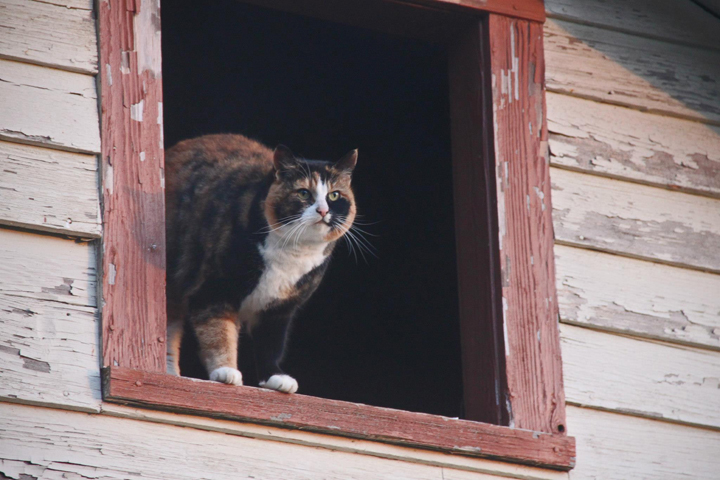
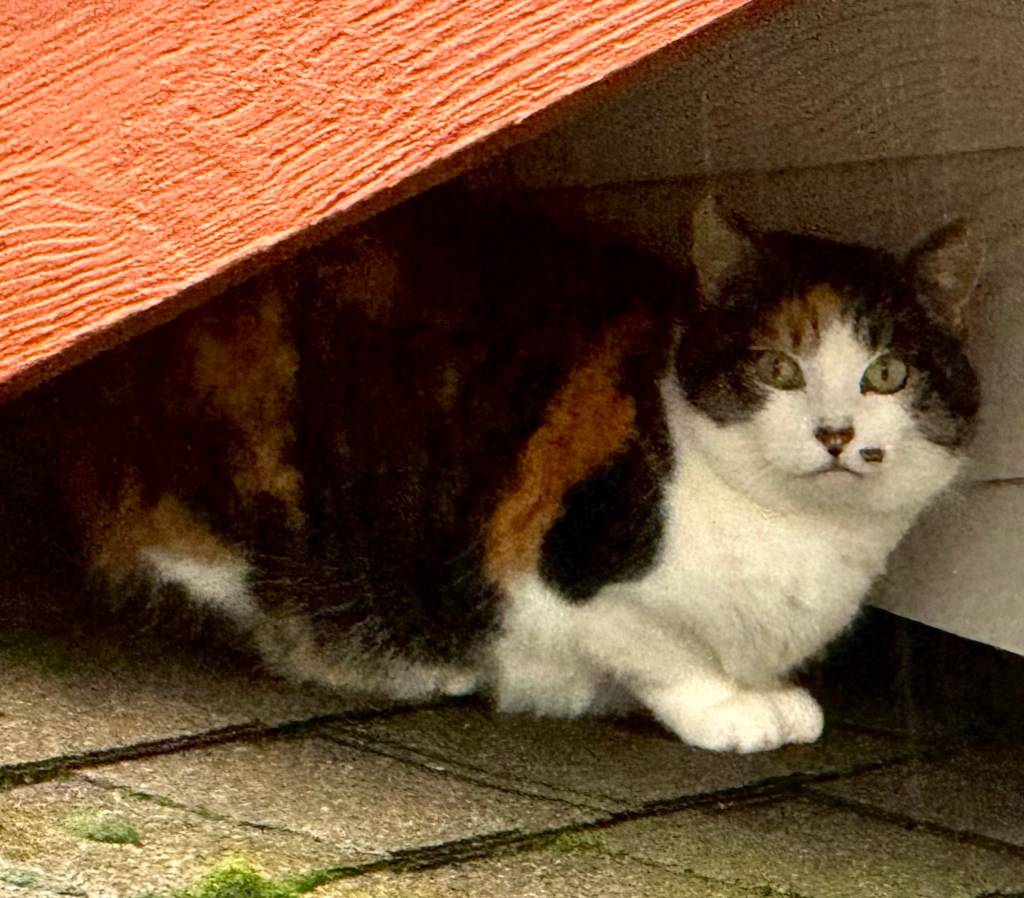
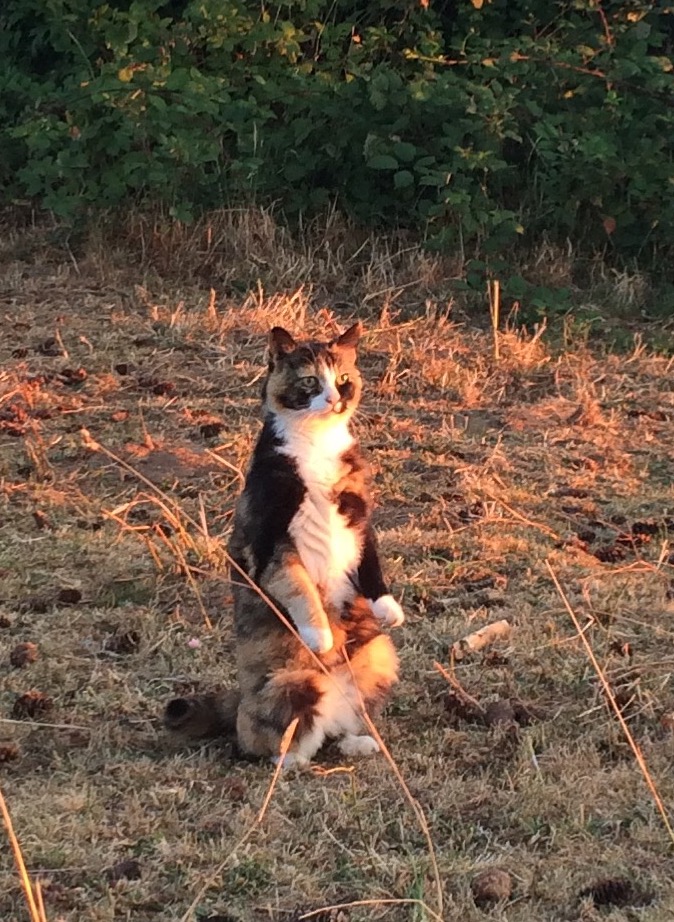
Six years ago, our calico cat Nala had an unexpected adventure.

The knock on the door seemed urgent: – “did we know we have an injured cat?” – the pest control serviceman was spraying the perimeter of our house for carpenter ants and saw our young calico farm cat crawling along the ground in the bushes, dragging her hind legs.

I grabbed my jacket and a towel to wrap her in, preparing for a quick trip to the vet clinic, but she had vanished by the time I got outside. I searched for an hour in all the likely places Nala typically hangs out but she was no where. I kept an eye out for her every day, calling her, but I never saw her or heard her distinctive voice.

Nine days later, there she was on the front porch, thin and weak and hungry, meowing for a meal. She was walking but with still-weakened hind legs and two healing wounds on either side of her lower spine. Something very traumatic had certainly happened, but she had survived, using up several of her nine lives.

As I inspected the wounds, I began to surmise what may have happened:
We have nesting bald eagles who spend time in the high trees around our farm house, watching for wild rabbits or other small prey. This cat is smallish, with plenty of white fur to be easily seen in the tall grass with sharp eagle vision. I suspect she was picked up by eagle talons as a tempting meal, pierced on either side of her spine to carry her away up to a treetop, but feisty as she is, she would have been more trouble than she was worth, so dropped from a significant height, causing a spinal cord contusion and temporary lower leg paralysis.

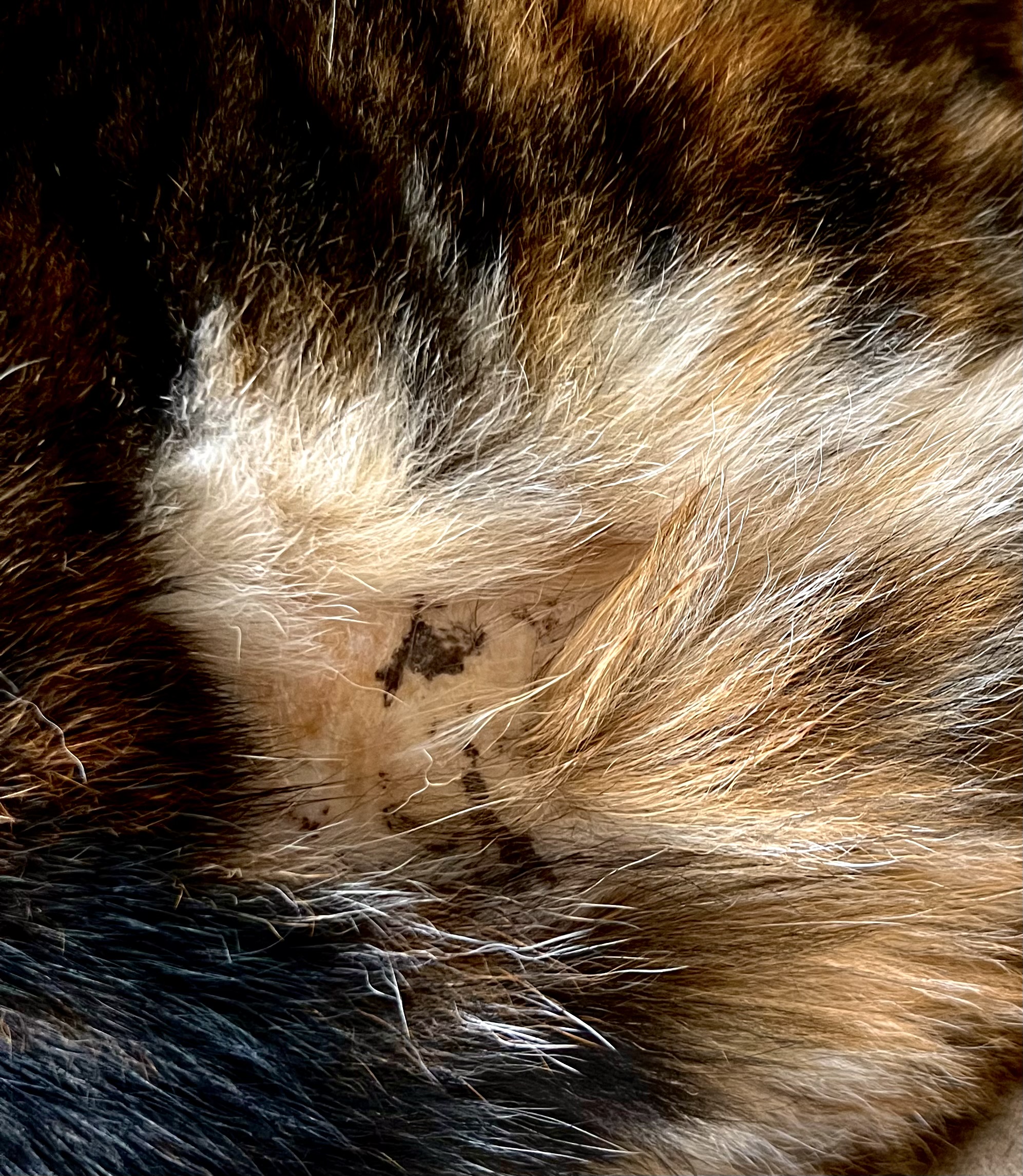
Little Nala has since recovered completely except for the bald patch scars on either side of her spine. She is a noisy communicator, insistent and bold. I think her loud voice and attitude saved her from becoming a raptor’s lunch.

Not many more lives to go, dear feisty Nala. Spend them well.

One-Time
Monthly
Yearly

Make a one-time or recurring donation to support daily Barnstorming posts

Make a monthly donation

Make a yearly donation

Choose an amount

$10.00
$25.00
$50.00
$5.00
$15.00
$100.00
$5.00
$15.00
$100.00

Or enter a custom amount

$

Your contribution is deeply appreciated.

Your contribution is appreciated.

Your contribution is appreciated.

DonateDonate monthlyDonate yearly
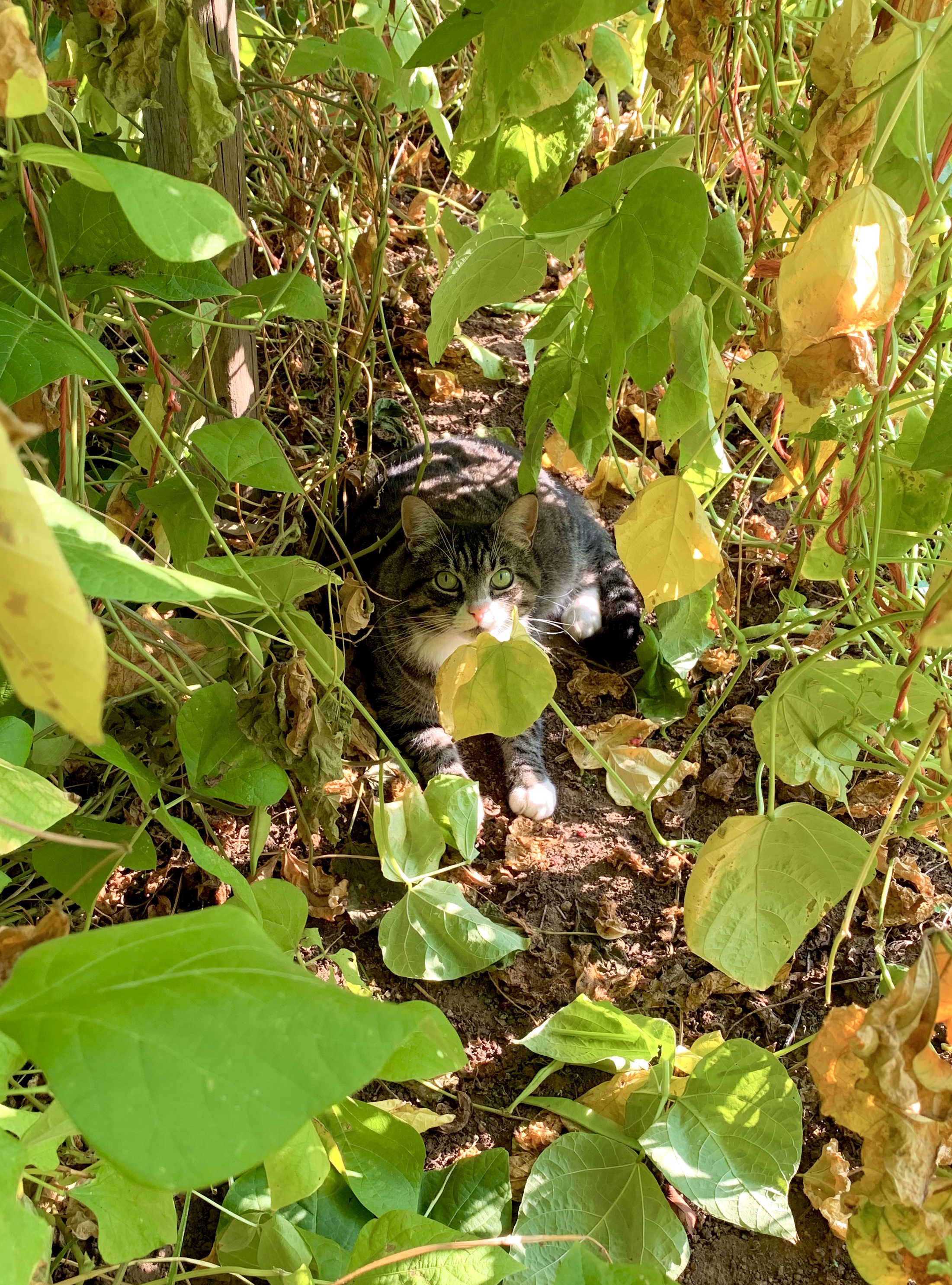
The Color of an Eggplant

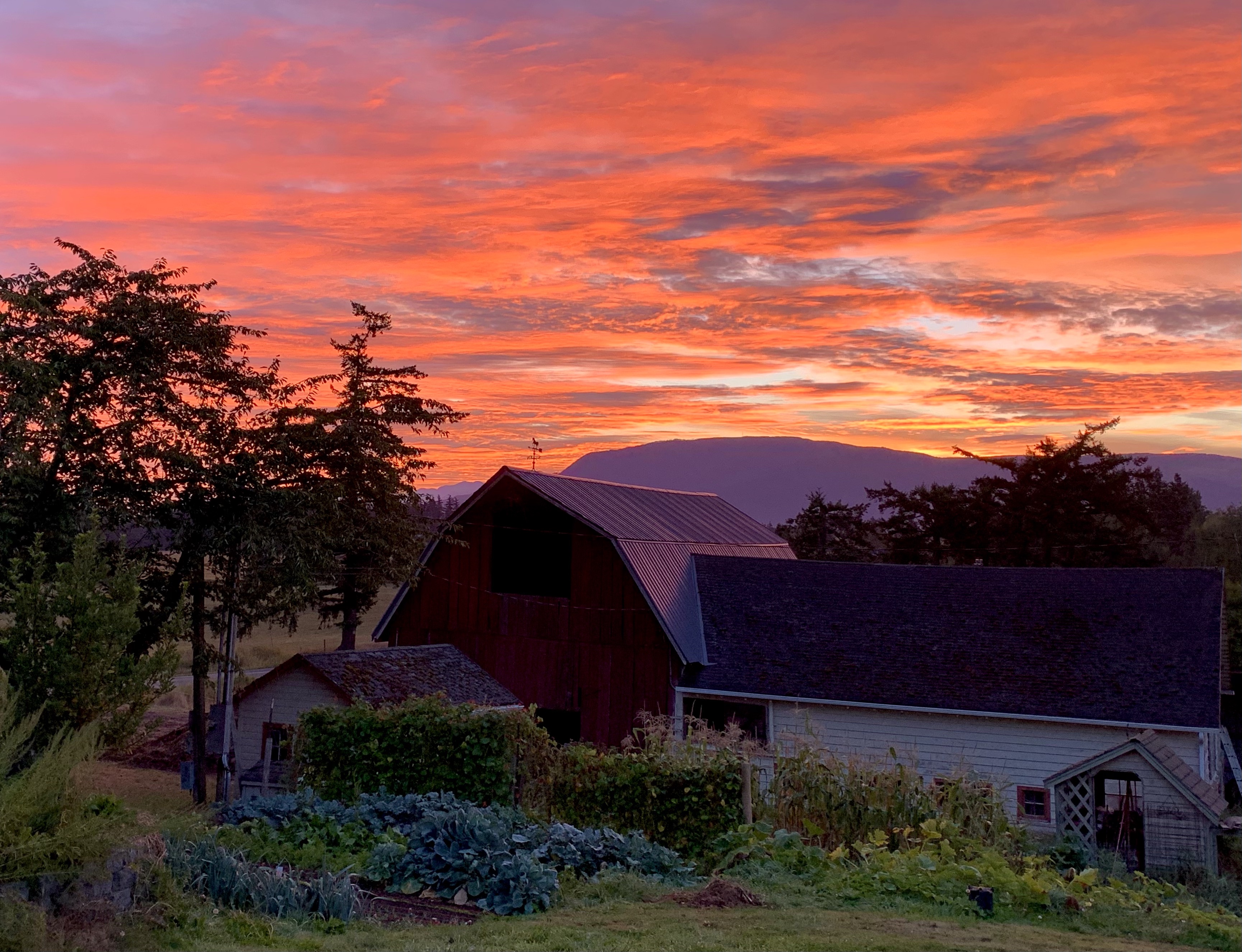
Every morning, cup of coffee
in hand, I look out at the mountain.
Ordinarily, it’s blue, but today
it’s the color of an eggplant.
And the sky turns
from gray to pale apricot
as the sun rolls up…

I study the cat’s face
and find a trace of white
around each eye, as if
he made himself up today
for a part in the opera.
~Jane Kenyon, from “In Several Colors” from Collected Poems
.

If you notice anything
it leads you to notice
more
and more.

And anyway
I was so full of energy.
I was always running around, looking
at this and that.

If I stopped
the pain
was unbearable.

If I stopped and thought, maybe
the world can’t be saved,
the pain
was unbearable.
~Mary Oliver from “The Moths” from Dream Work

I try to look at things in a new way as I wander about my day,
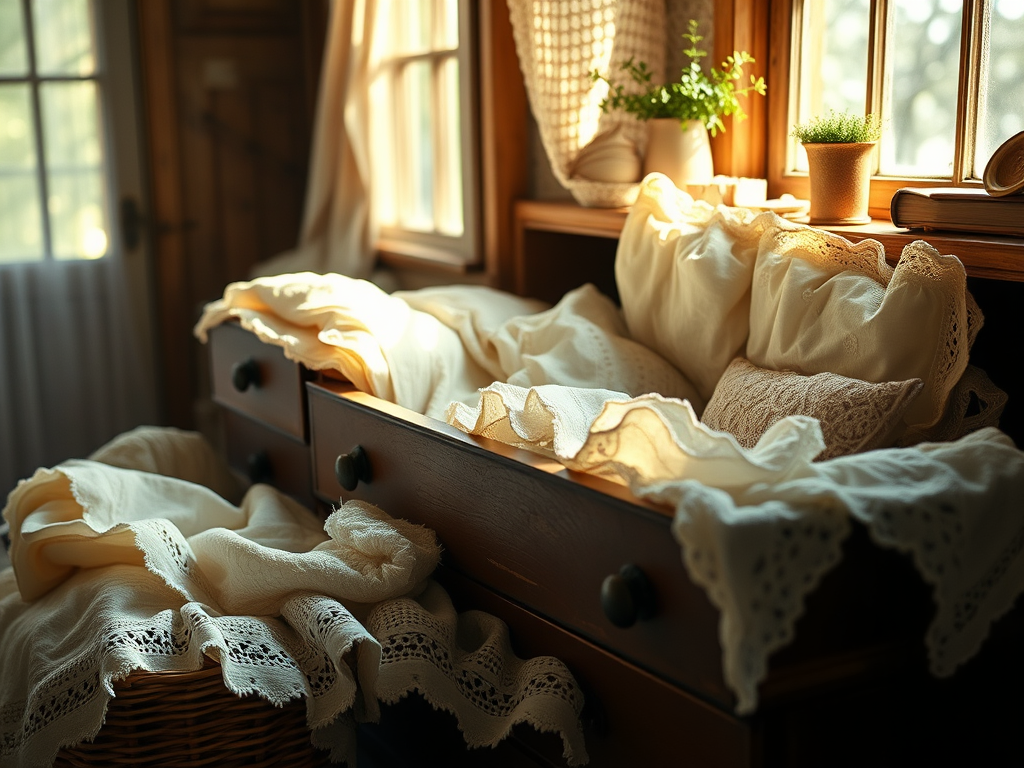
my eyes scanning for how the hidden dusty corners of my life
become illuminated by a penetrating morning sunbeam
when the angle is just right.

The rest of the time, cobwebs, dust bunnies and smudges
remain invisible to me until the searching light finds them.

What was “blue” becomes “eggplant” in the new light.

Trying to clean up a grungy messed-up
upside-down world of pain is hard work.

It means admitting my own laziness,
while falling down on the job again and again,
I must always be willing to get back up.

If I stop acknowledging my own and others’ messiness,
if I refuse to stay on top of the grime,
if I give up the work of salvage and renewal,
I then abandon God’s promise to transform this world.

He’s still here, ready and waiting,
handing me a broom, a duster, and cleaning rags,
so I shall keep at it –
mopping up the messes I can reach,
seeking what tries to stay hidden.

AI image created for this post
One-Time
Monthly
Yearly

Make a one-time or recurring donation to support daily Barnstorming posts

Make a monthly donation

Make a yearly donation

Choose an amount

$10.00
$25.00
$50.00
$5.00
$15.00
$100.00
$5.00
$15.00
$100.00

Or enter a custom amount

$

Your contribution is deeply appreciated.

Your contribution is appreciated.

Your contribution is appreciated.

DonateDonate monthlyDonate yearly
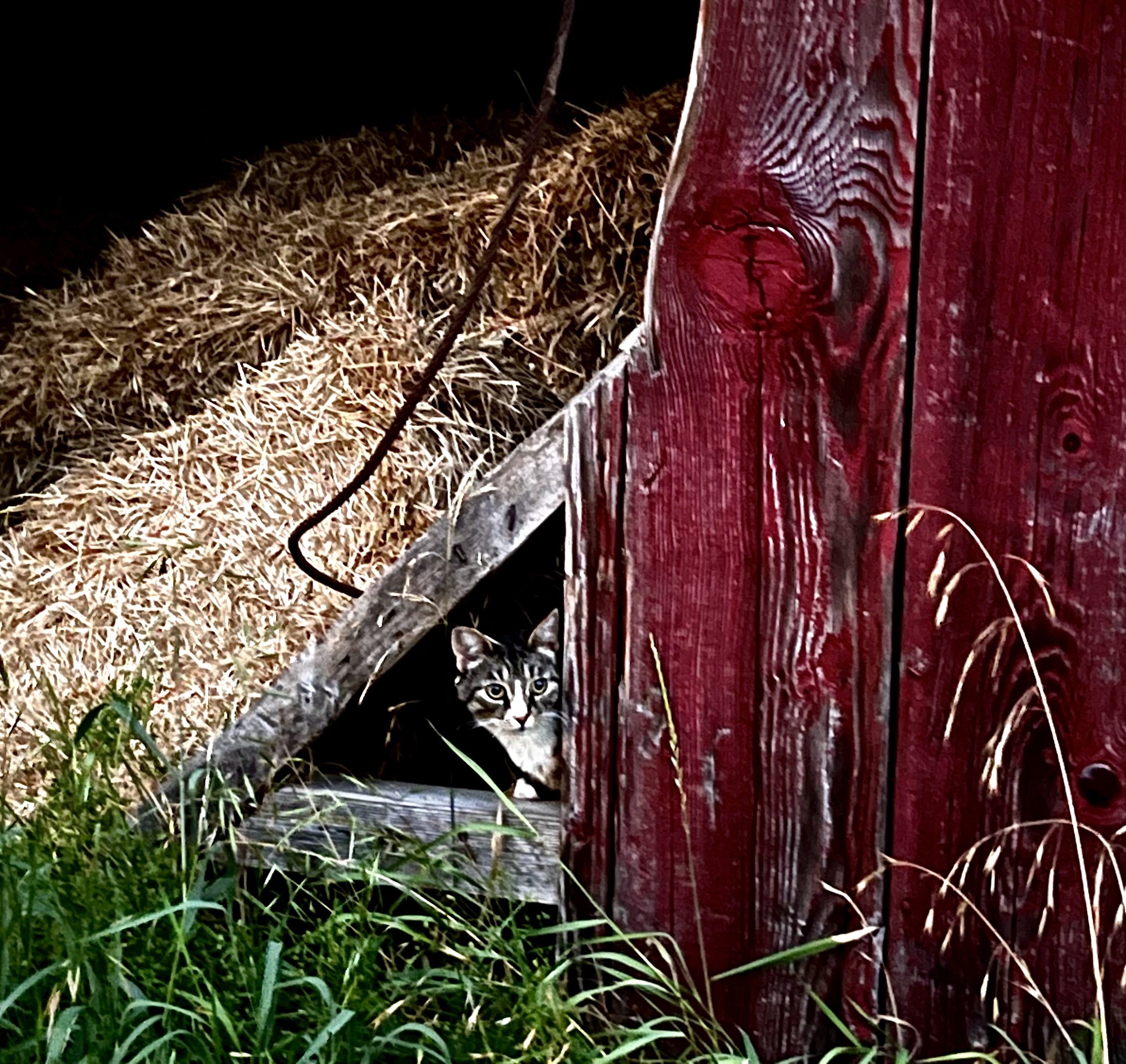
The Cat Knew…

This was our pretty gray kitten,
hence her name; who was born
in our garage and stayed nearby
her whole life. There were allergies;
so she was, as they say,
an outside cat.
But she loved us. For years,
she was at our window.
Sometimes, a paw on the screen
as if to want in, as if
to be with us
the best she could.
She would be on the deck,
at the sliding door.
She would be on the small
sill of the window in the bathroom.
She would be at the kitchen
window above the sink.
We’d go to the living room;
anticipating that she’d be there, too,
hop up, look in.
She’d be on the roof,
she’d be in a nearby tree.
She’d be listening
through the wall to our family life.
She knew where we were,
and she knew where we were going
and would meet us there.
Little spark of consciousness,
calm kitty eyes staring
through the window.

After the family broke,
and when the house was about to sell,
I walked around it for a last look.
Under the eaves, on the ground,
there was a path worn in the dirt,
tight against the foundation —
small padded feet, year after year,
window to window.

When we moved, we left her
to be fed by the people next door.
Months after we were gone,
they found her in the bushes
and buried her by the fence.
So many years after,
I can’t get her out of my mind.

~Philip F. Deaver, “Gray” from How Men Pray

Our pets witness the routine of our lives. They know when the food bowl remains empty too long, or when no one offers their lap to stroke their fur.

They sit silently waiting and wondering, a little spark of consciousness, aware of our family life. They know when things aren’t right at home. They hear the raised voices and they hear the strained silences.

Sometimes a farm cat moves on, looking for a place with more consistency and better feeding grounds. Most often they stick close to what they know, even if it isn’t entirely a happy or welcoming place. After all, it’s home; that’s where they stay, through thick and thin.

When my family broke as my parents split, after the furniture was removed and the dust of over thirty five years of marriage swept up, I wondered if our cat and dog had seen it coming before we did, witnesses to the fact. They had been peering through the window at our lives, gauging what amount of spilled-out love might be left over for them.

I still can’t get them out of my mind – they, like me, became children of divorce. We all knew when we left behind the only home we had ever known, we could never truly feel at home again.

AI image created for this post
One-Time
Monthly
Yearly

Make a one-time or recurring donation to support daily Barnstorming posts

Make a monthly donation

Make a yearly donation

Choose an amount

$10.00
$25.00
$50.00
$5.00
$15.00
$100.00
$5.00
$15.00
$100.00

Or enter a custom amount

$

Your contribution is deeply appreciated to help offset the cost of maintaining an ad-free website.

Your contribution is appreciated.

Your contribution is appreciated.

DonateDonate monthlyDonate yearly
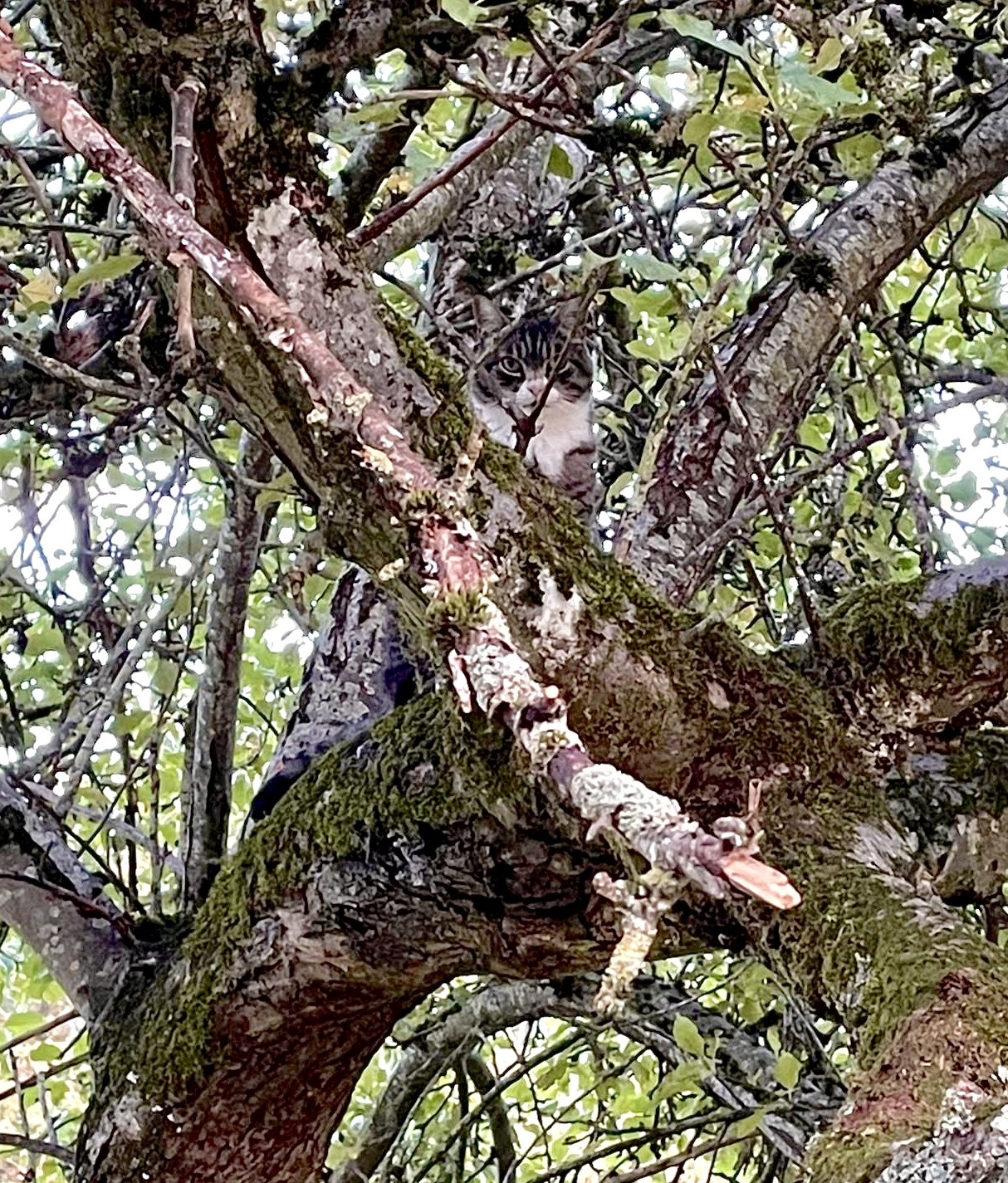
Scuttling

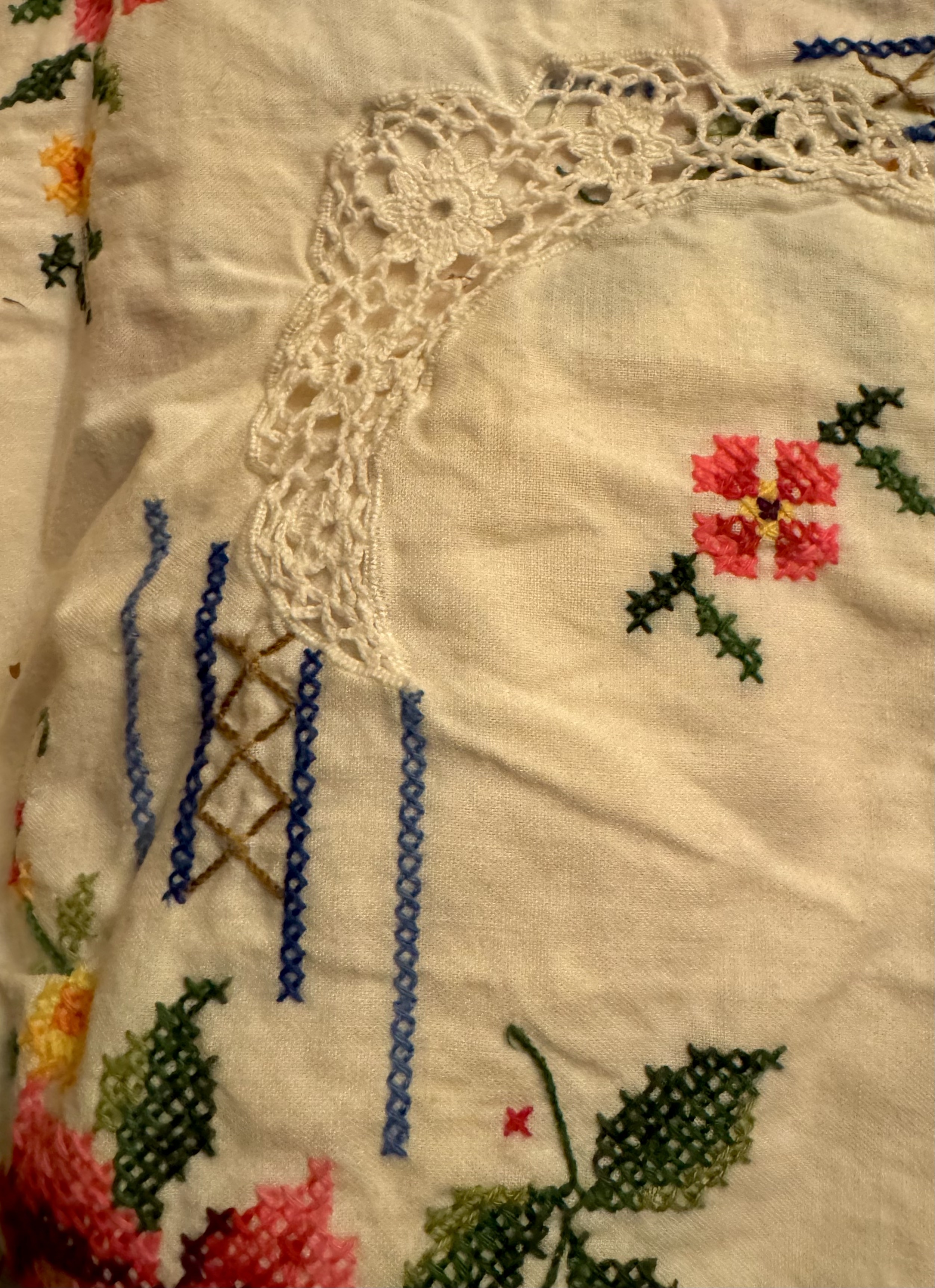
Searching for pillowcases trimmed  
with lace that my mother-in-law
once made, I open the chest of drawers   
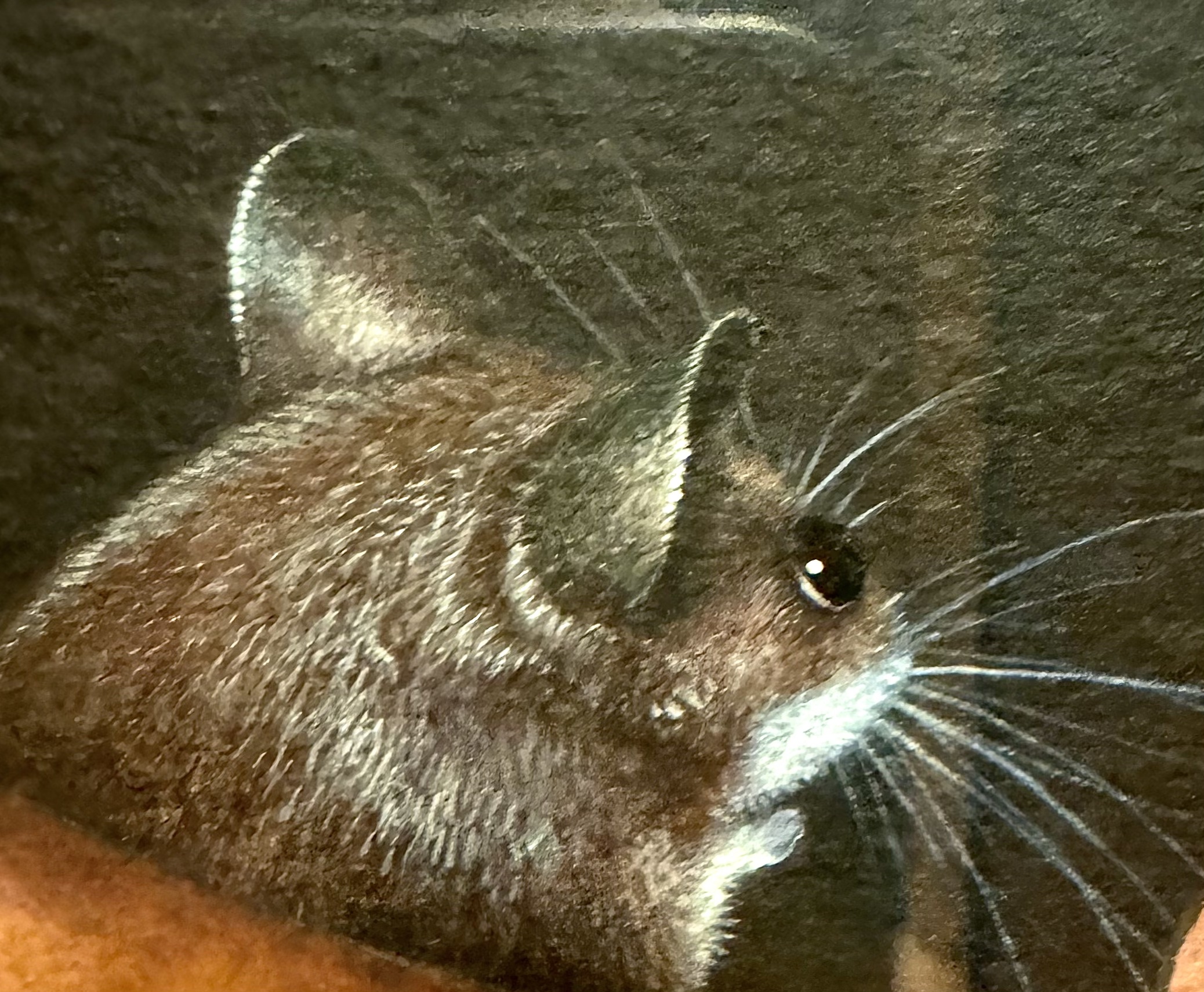
upstairs to find that mice
have chewed the blue and white linen   
dishtowels to make their nest,
and bedded themselves
among embroidered dresser scarves   
and fingertip towels.

Tufts of fibers, droppings like black   
caraway seeds, and the stains of birth   
and afterbirth give off the strong   
unforgettable attar of mouse
that permeates an old farmhouse   
on humid summer days.

A couple of hickory nuts
roll around as I lift out
the linens, while a hail of black
sunflower shells
falls on the pillowcases,
yellow with age, but intact.

I’ll bleach them and hang them in the sun   
to dry. There’s almost no one left
who knows how to crochet lace…. 
  

The bright-eyed squatters are not here.   
They’ve scuttled out to the fields   
for summer, as they scuttled in
for winter—along the wall, from chair   
to skirted chair, making themselves   
flat and scarce while the cat
dozed with her paws in the air,
and we read the mail
or evening paper, unaware.
~Jane Kenyon, “Not Here” from Collected Poems

1

In a shoe box stuffed in an old nylon stocking
Sleeps the baby mouse I found in the meadow,
Where he trembled and shook beneath a stick
Till I caught him up by the tail and brought him in,
Cradled in my hand,
A little quaker, the whole body of him trembling,
His absurd whiskers sticking out like a cartoon-mouse,
His feet like small leaves,
Little lizard-feet,
Whitish and spread wide when he tried to struggle away,
Wriggling like a minuscule puppy.


Now he’s eaten his three kinds of cheese and drunk from his
bottle-cap watering-trough—
So much he just lies in one corner,
His tail curled under him, his belly big
As his head; his bat-like ears
Twitching, tilting toward the least sound.


Do I imagine he no longer trembles
When I come close to him?
He seems no longer to tremble.

2

But this morning the shoe-box house on the back porch is empty.
Where has he gone, my meadow mouse,
My thumb of a child that nuzzled in my palm? —
To run under the hawk’s wing,
Under the eye of the great owl watching from the elm-tree,
To live by courtesy of the shrike, the snake, the tom-cat.
I think of the nestling fallen into the deep grass,
The turtle gasping in the dusty rubble of the highway,
The paralytic stunned in the tub, and the water rising,—
All things innocent, hapless, forsaken.
~Theodore Roethke “The Meadow Mouse”

Let us walk in the woods, says the cat.
I’ll teach you to read the tabloid of scents,
to fade into shadow, wait like a trap, to hunt.
Now I lay this plump warm mouse on your mat.

~Marge Piercy from “The Cat’s Song”

Our autumn house guests returned this week. They don’t tend to announce themselves; they prefer to creep in silently when we’re unaware, usually in the dark of the night, using whatever portal I haven’t plugged thoroughly enough with steel wool.

They leave for the summer, happier camping outside. Once the nights start feeling chilly, we might spot them out of the corner of our eye, scooting across the kitchen floor searching for any crumbs from dinner. I open the cupboard under the sink and see the evidence they surreptitiously have been back in residence for some time.

I’ve found their indoor camps in closets, and in storage boxes. They like to bring their outdoor treasures with them.

Our farm cats have been asleep at the wheel – they are supposed to be guarding all potential entry points. Yet these wee scuttlers got past them.

So I resort to primitive rodent control, traps baited with peanut butter and wait to hear the tell-tale snap of the spring. Instead, the bait is gone the next morning, with no furry body and no evidence of bloodshed. These are clever little scuttlers.

It is hard to outwit a smart mouse, and of course if one mouse is caught, there are at least thirty of its buddies yet to be caught.

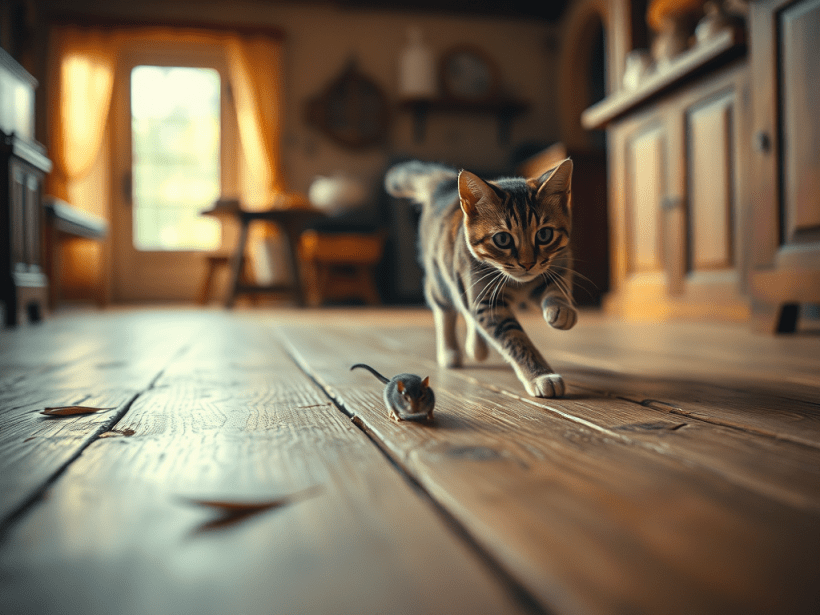
Between the cats and the mice, the farm cats prove most wily. They pick their hapless victims at random, knowing they have job security as long as they allow only a few mice access to the house. Every few days, they leave scattered dissected mouse parts on the front porch to make a grisly impression, just to prove they, better than me, still know how to catch a mouse.

AI image created for this post
One-Time
Monthly
Yearly

Make a one-time or recurring donation to support daily Barnstorming posts

Make a monthly donation

Make a yearly donation

Choose an amount

$10.00
$25.00
$50.00
$5.00
$15.00
$100.00
$5.00
$15.00
$100.00

Or enter a custom amount

$

Your contribution is deeply appreciated.

Your contribution is appreciated.

Your contribution is appreciated.

DonateDonate monthlyDonate yearly
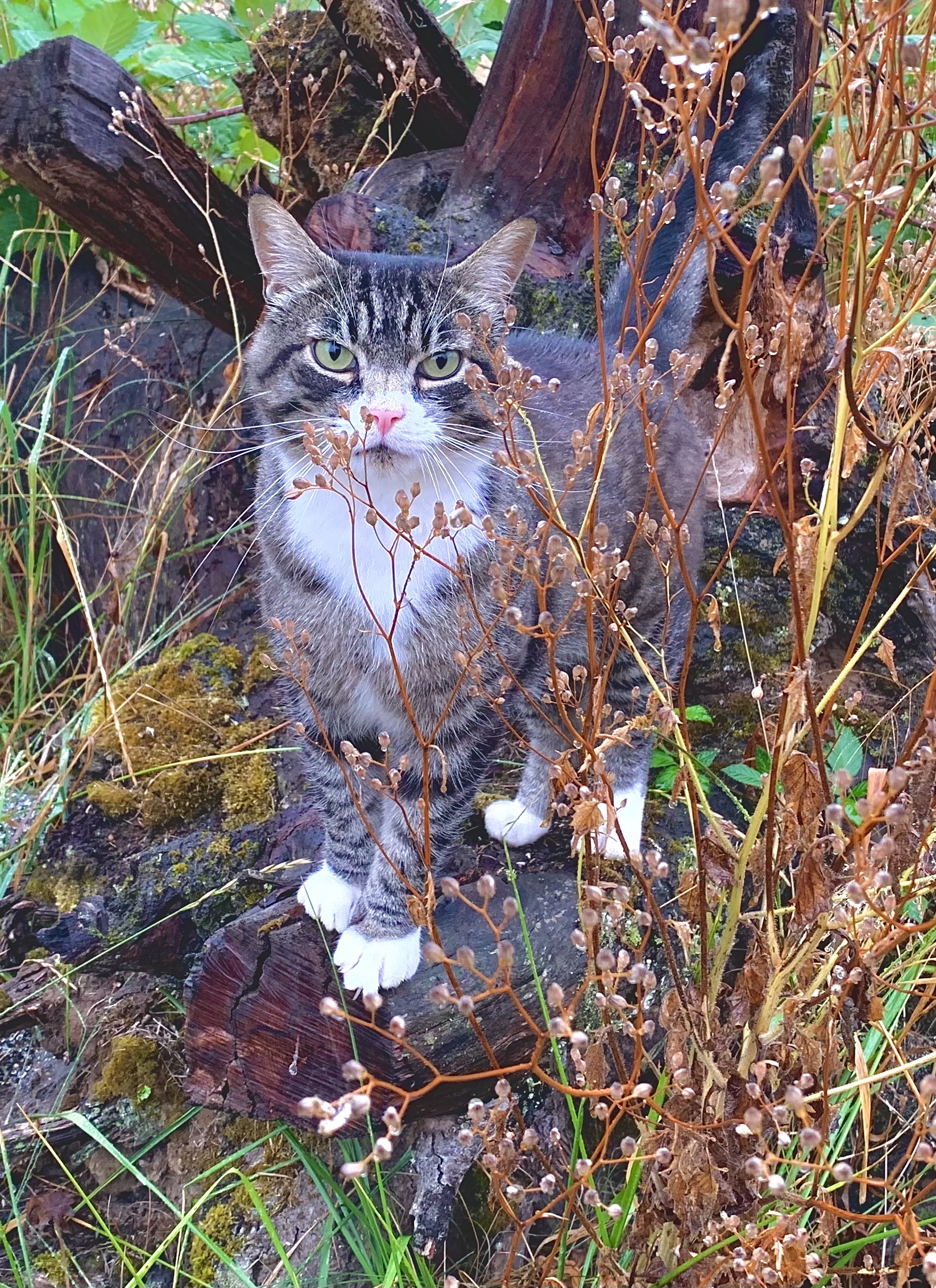
Like a Cat Asleep

All that matters is to be at one with the living God
to be a creature in the house of the God of Life.

Like a cat asleep on a chair
at peace, in peace
and at one with the master of the house, with the mistress,
at home, at home in the house of the living,
sleeping on the hearth, and yawning before the fire.

Sleeping on the hearth of the living world
yawning at home before the fire of life
feeling the presence of the living God
like a great reassurance
a deep calm in the heart
a presence
as of the master sitting at the board
in his own and greater being,
in the house of life.

~D.H. Lawrence “Pax”

When you notice a cat in profound meditation,
     The reason, I tell you, is always the same:
His mind is engaged in a rapt contemplation
     Of the thought, of the thought, of the thought of his name:
          His ineffable effable
          Effanineffable
Deep and inscrutable singular name.
~T.S. Eliot from The Naming of Cats

The fat cat on the mat
may seem to dream
of nice mice that suffice
for him, or cream;
~J.R.R. Tolkien from “Cat” from Tales of the Perilous Realm

I don’t know where prayers go,
or what they do.
Do cats pray, while they sleep
half-asleep in the sun?

Is a prayer a gift, or a petition,
or does it matter?
The sunflowers blaze, maybe that’s their way.
Maybe the cats are sound asleep. Maybe not.

~Mary Oliver from “I Happened to be Standing” from A Thousand Mornings

Our cats seem to have no sense of time — until it is mealtime.

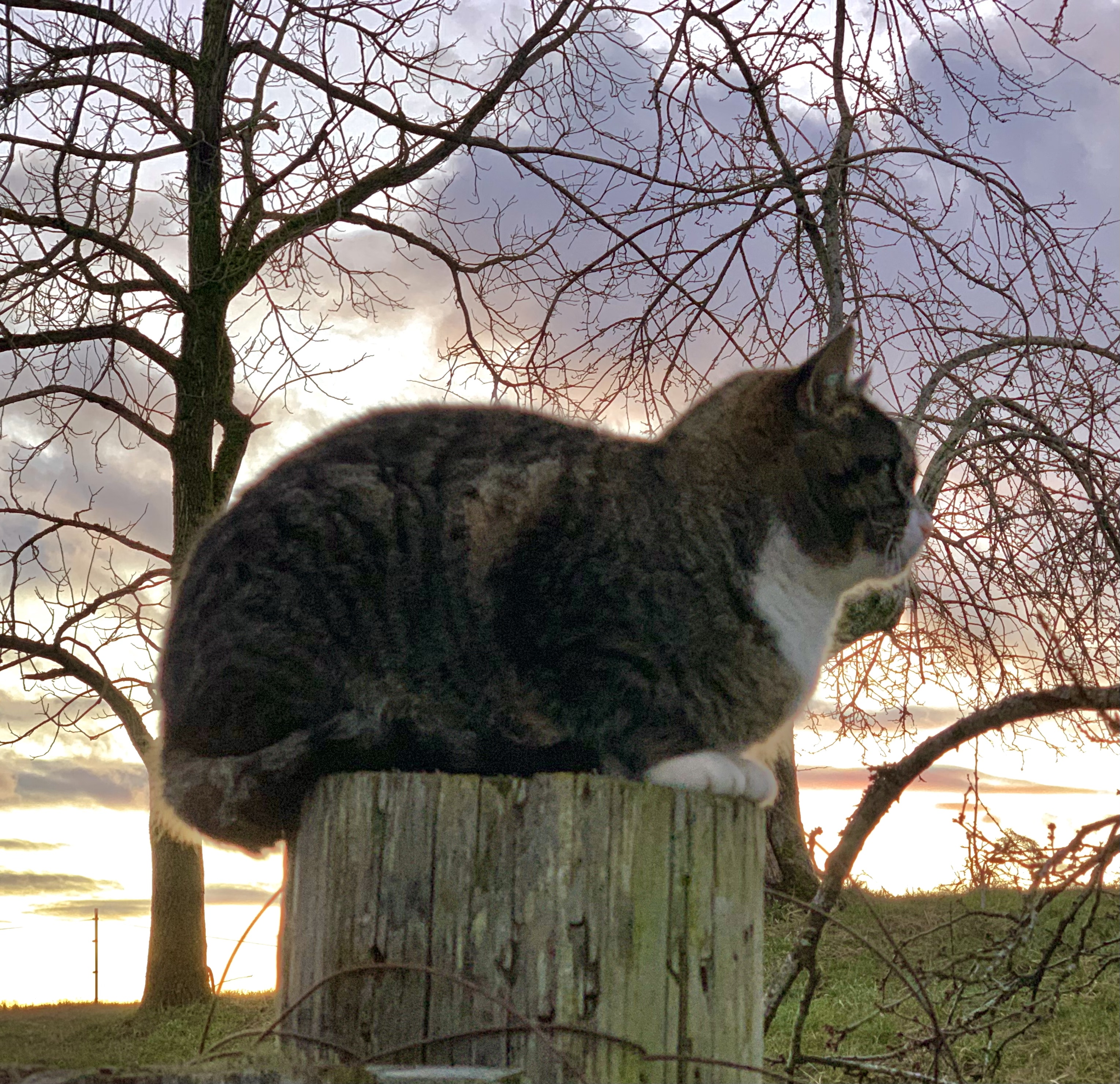
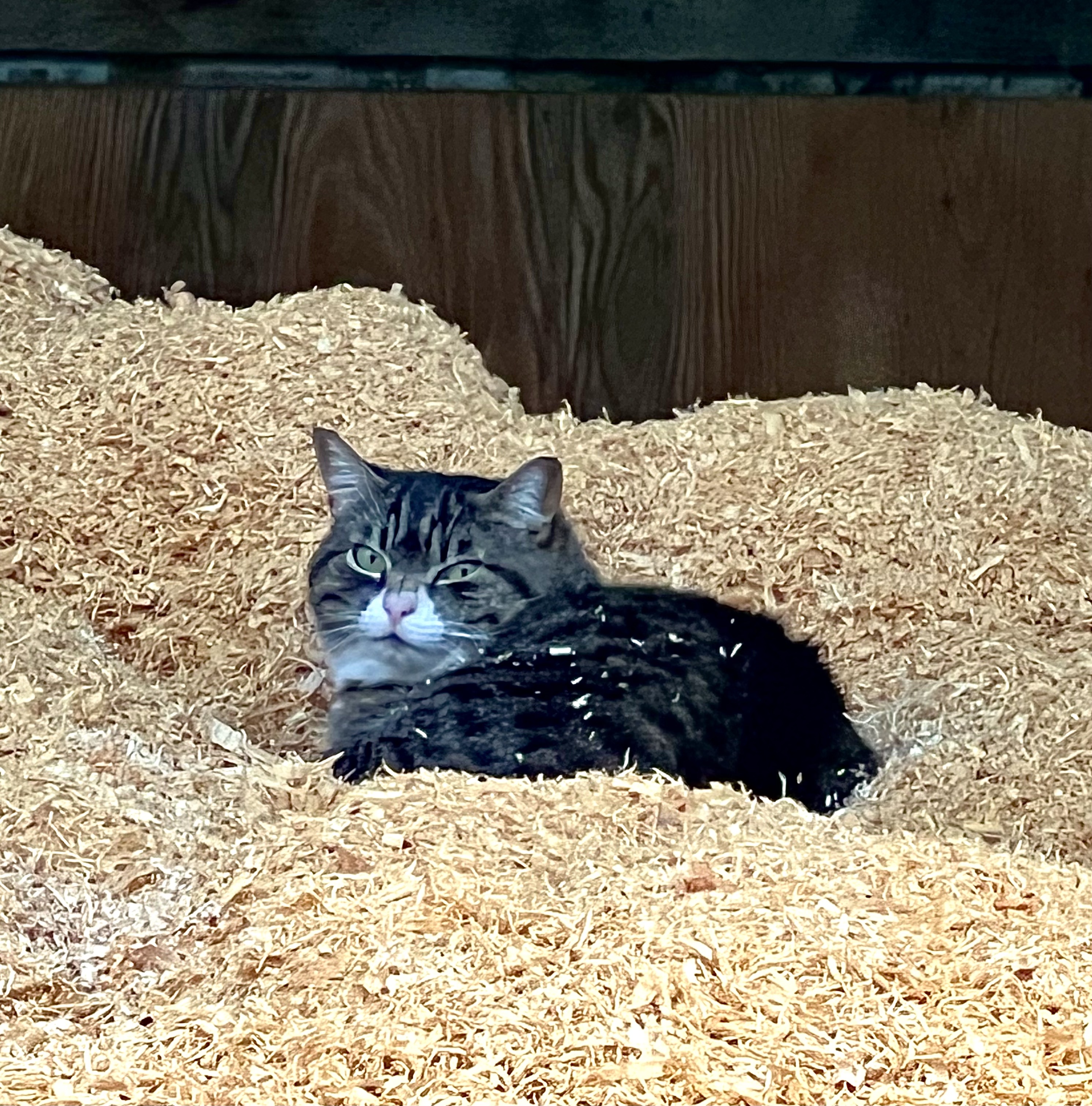
Otherwise they pussyfoot through the hours of the day, unworried about what comes next, or what just happened. They find a convenient patch of sun, or a particularly soft cushion, or sometimes a most unlikely place like a cardboard box or pile of shavings or top of a fencepost.

Then they yawn, become rubber-boned and curl up for a nap.

How do they contemplate the fact of their existence?
How do they appear so relaxed, in peace and serenity?
Do they understand their place in creation and give thanks?

God wants us to rest comfortably in our own skins, as adaptable as a sleeping cat. And He wants us to count our days without wasting a moment for thankfulness. We are meant to be more than just hungry and sleepy and rubber-boned.

We are created in His image, acutely aware of the privilege of our existence.

One-Time
Monthly
Yearly

Make a one-time or recurring donation to support daily Barnstorming posts

Make a monthly donation

Make a yearly donation

Choose an amount

$10.00
$25.00
$50.00
$5.00
$15.00
$100.00
$5.00
$15.00
$100.00

Or enter a custom amount

$

Your contribution is deeply appreciated.

Your contribution is appreciated.

Your contribution is appreciated.

DonateDonate monthlyDonate yearly
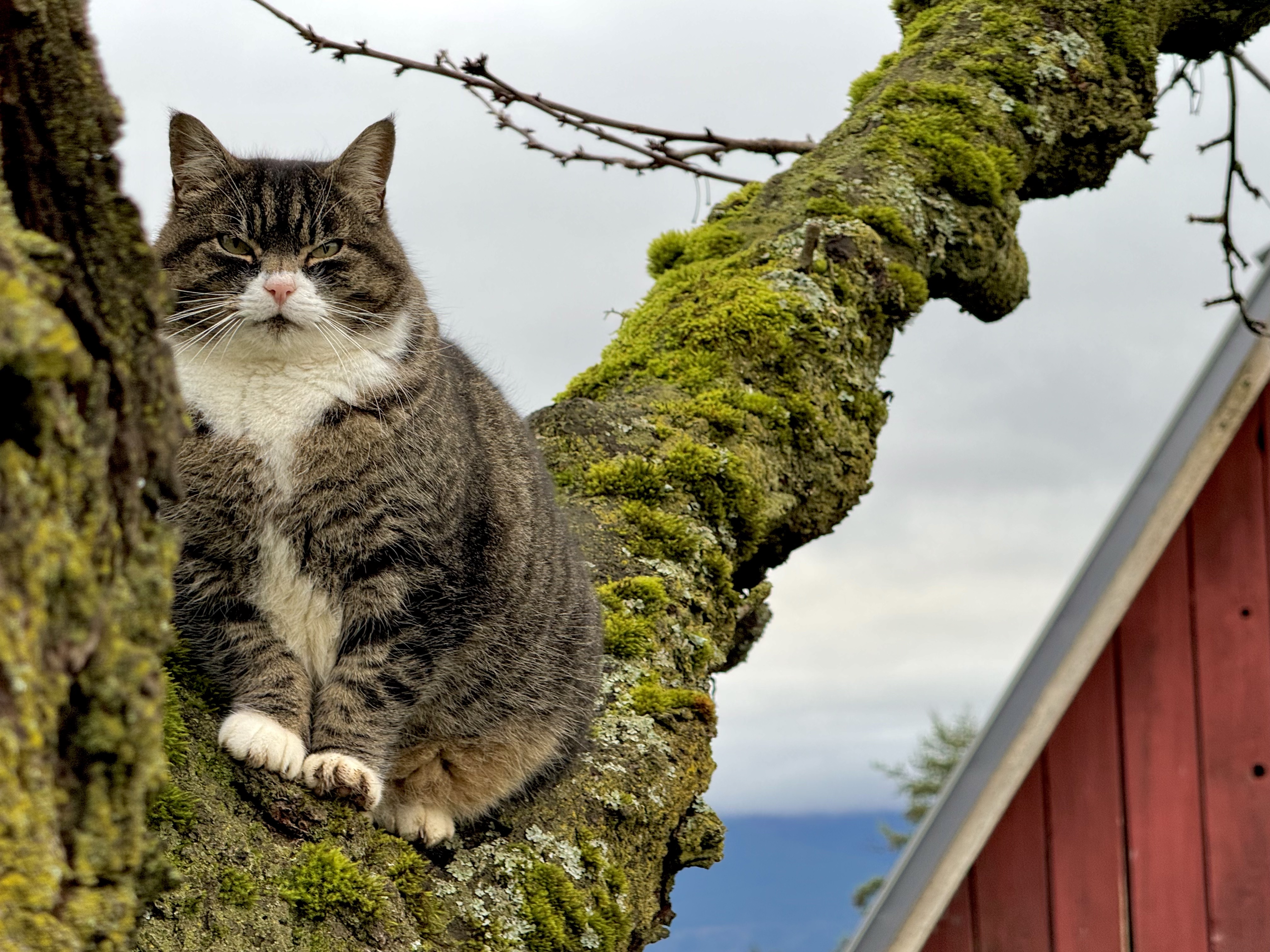
Winter Kitties

White cat Winter
prowls
the farm,
tiptoes
soft
through withered corn,
creeps
along low walls
of stone,
falls asleep
beside
the barn.

~Tony Johnson “White Cat Winter”

Salt shining behind its glass cylinder.
Milk in a blue bowl. The yellow linoleum.
The cat stretching her black body from the pillow.
The way she makes her curvaceous response to the small, kind gesture.
Then laps the bowl clean.
Then wants to go out into the world
where she leaps lightly and for no apparent reason across the lawn,
then sits, perfectly still, in the grass.
I watch her a little while, thinking:
what more could I do with wild words?
I stand in the cold kitchen, bowing down to her.
I stand in the cold kitchen, everything wonderful around me.

~Mary Oliver, New and Selected Poems

Cat, if you go outdoors, you must walk in the snow.
You will come back with little white shoes on your feet,
little white shoes of snow that have heels of sleet.
Stay by the fire, my Cat.  Lie still, do not go.
See how the flames are leaping and hissing low,
I will bring you a saucer of milk like a marguerite,
so white and so smooth, so spherical and so sweet –
stay with me, Cat. Outdoors the wild winds blow.

Outdoors the wild winds blow, Mistress, and dark is the night,
strange voices cry in the trees, intoning strange lore,
and more than cats move, lit by our eyes green light,
on silent feet where the meadow grasses hang hoar –
Mistress, there are portents abroad of magic and might,
and things that are yet to be done.  Open the door!

~Elizabeth Coatsworth “On a Night of Snow”

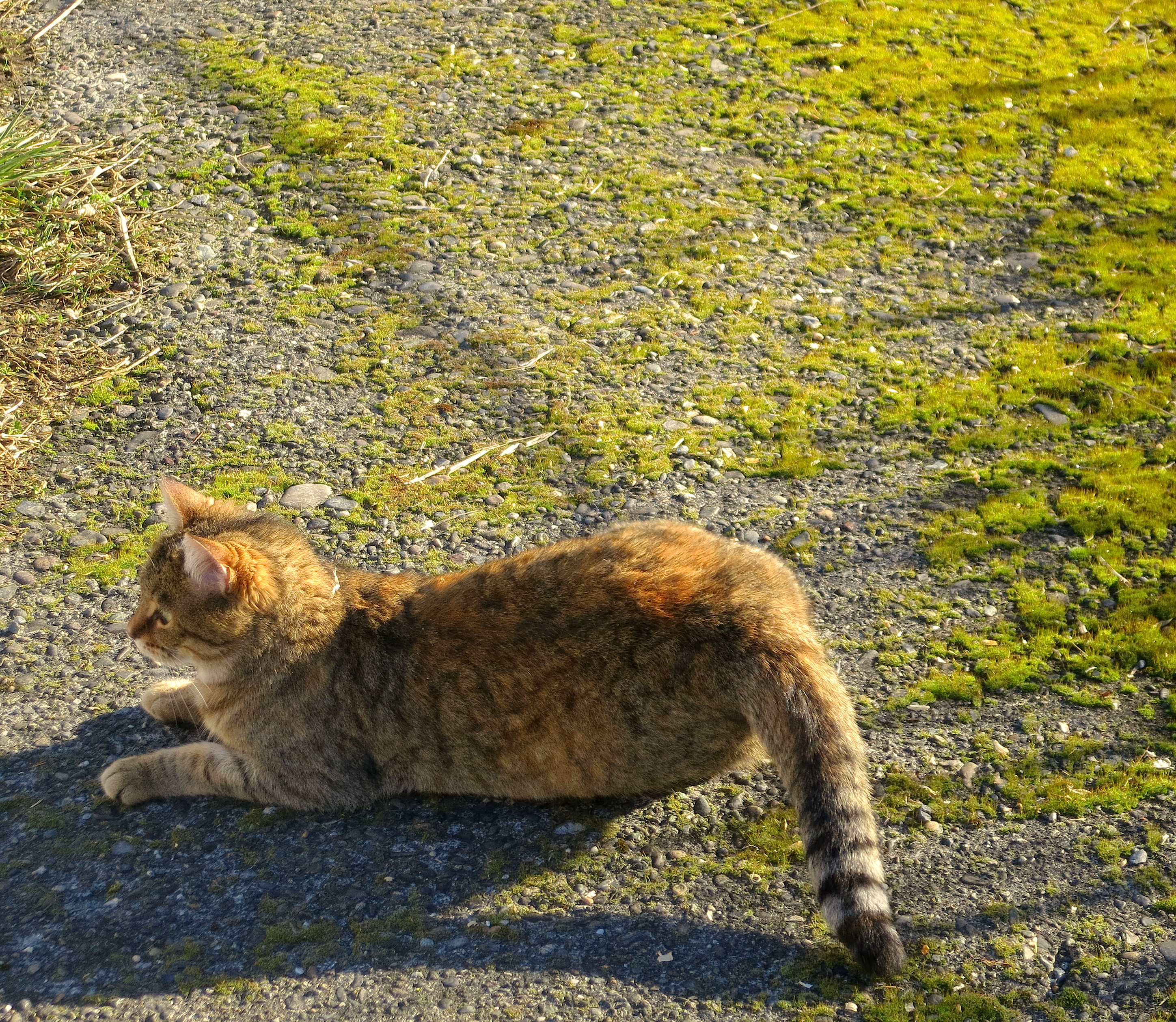
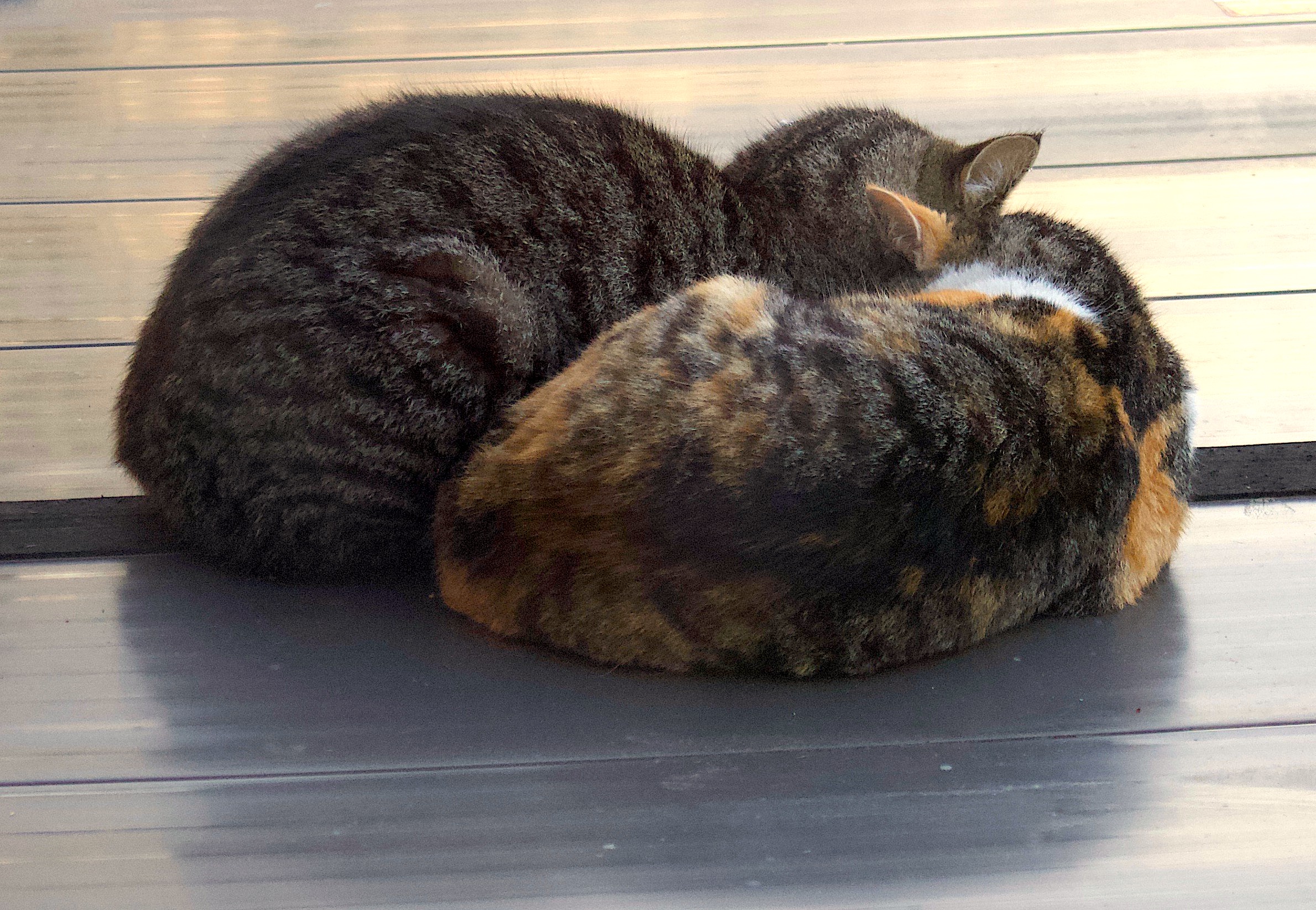
I know folks who worry about our farm cats’ well-being during the recent harsh winter weather. Our farm cats don’t know what it is like to live in a house, and certainly know nothing about the use of kitty litter boxes. They are independent souls, used to being on outdoor patrol and never question the conditions of their employment to manage all aspects of vermin control.

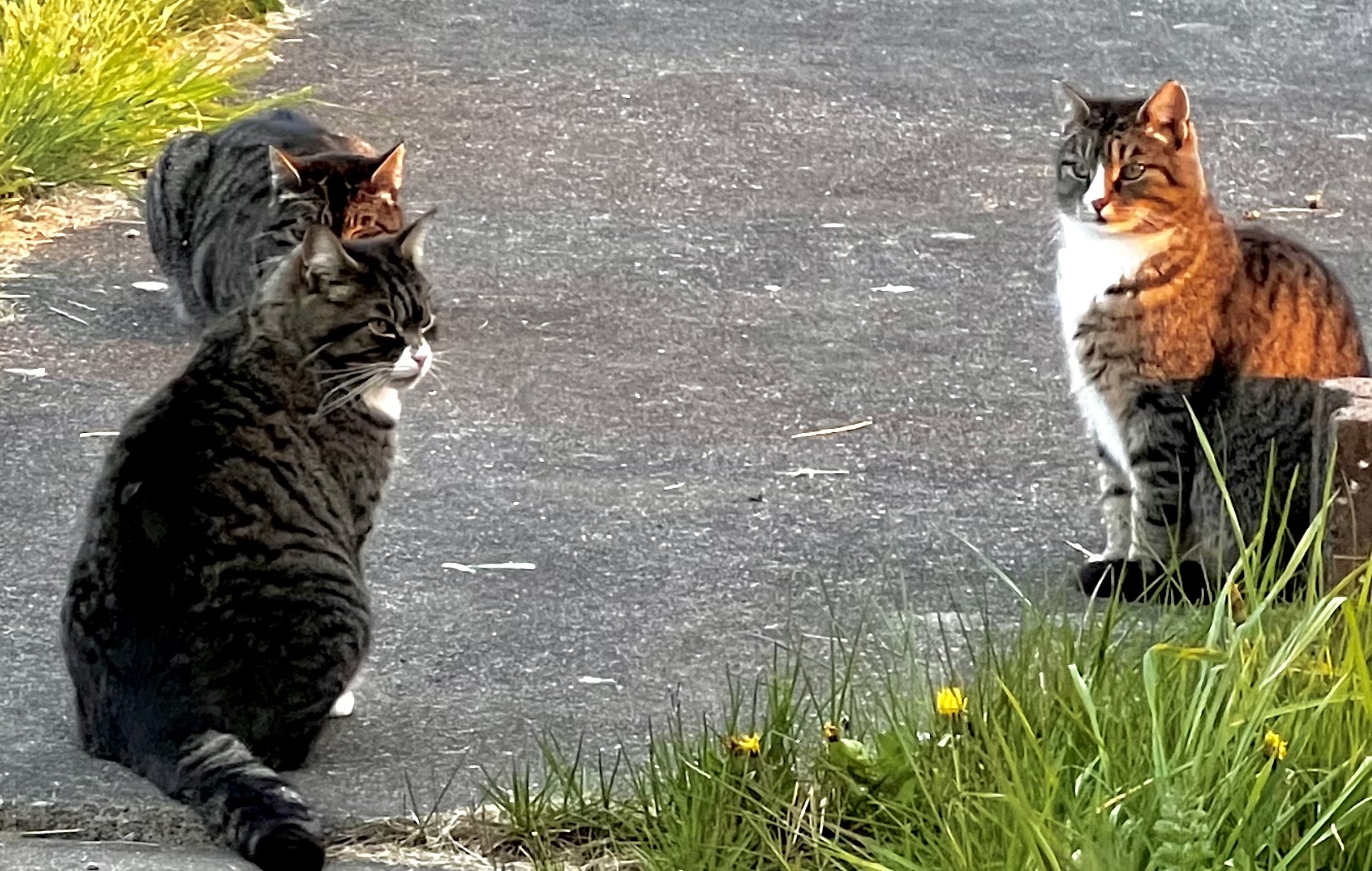
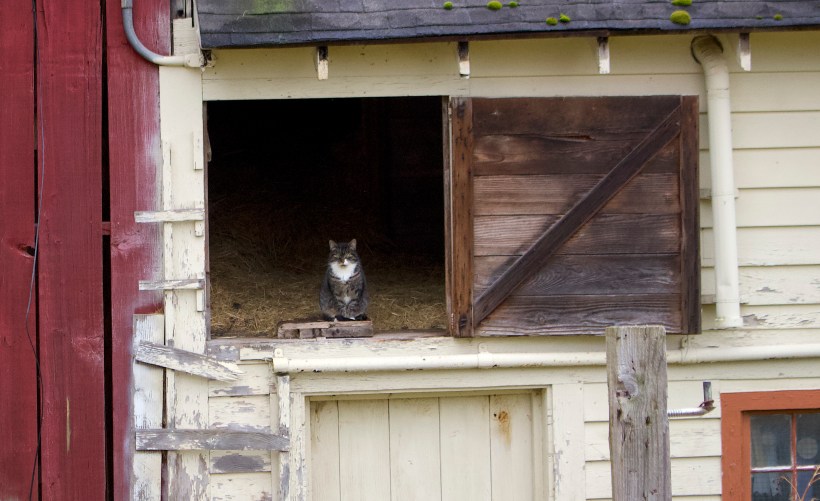
The cats own the barns, pure and simple. This is not a matter for debate among the farm dogs (who also live in the barns during very cold weather) or from the horses, or from us farmers who come and go doing the feeding and watering and cleaning. We all bow down to the cats’ supremacy. Four farm cats distribute themselves among several buildings according to who they like and who they don’t like and then settle in for the duration. They scoot in and out as they please as we open and close the big barn doors against the chill winds and happily lap up whatever treats we bring them.

So please don’t worry. Our cats and other critters are doing just fine this winter. It’s the two humans here who are creakier while we navigate the snow and ice and must bundle up head to toe to face the northeast wind.

As wonderful as farm living can be, it is always more challenging in the winter, especially since it is up to us to supply our own treats…

photo by Nate Gibson
One-Time
Monthly
Yearly

Make a one-time or recurring donation to support daily Barnstorming posts

Make a monthly donation

Make a yearly donation

Choose an amount

$10.00
$25.00
$50.00
$5.00
$15.00
$100.00
$5.00
$15.00
$100.00

Or enter a custom amount

$

Your contribution is deeply appreciated.

Your contribution is appreciated.

Your contribution is appreciated.

DonateDonate monthlyDonate yearly
Like Wild Animals

…the real problem of the Christian life comes where people do not usually look for it. It comes the very moment you wake up each morning.

All your wishes and hopes for the day rush at you like wild animals.

And the first job each morning consists in shoving them all back;
in listening to that other voice,
taking that other point of view,
letting that other, larger, stronger life come flowing in.

And so on, all day.
~C.S. Lewis
from Mere Christianity

When I feel my faith wavering and doubts begin to overwhelm,
it takes determination to keep those wild animals at bay;
they leap and snarl and roar with hungry expectation and entitlement,
yet I seek only prayerful calm and quiet.

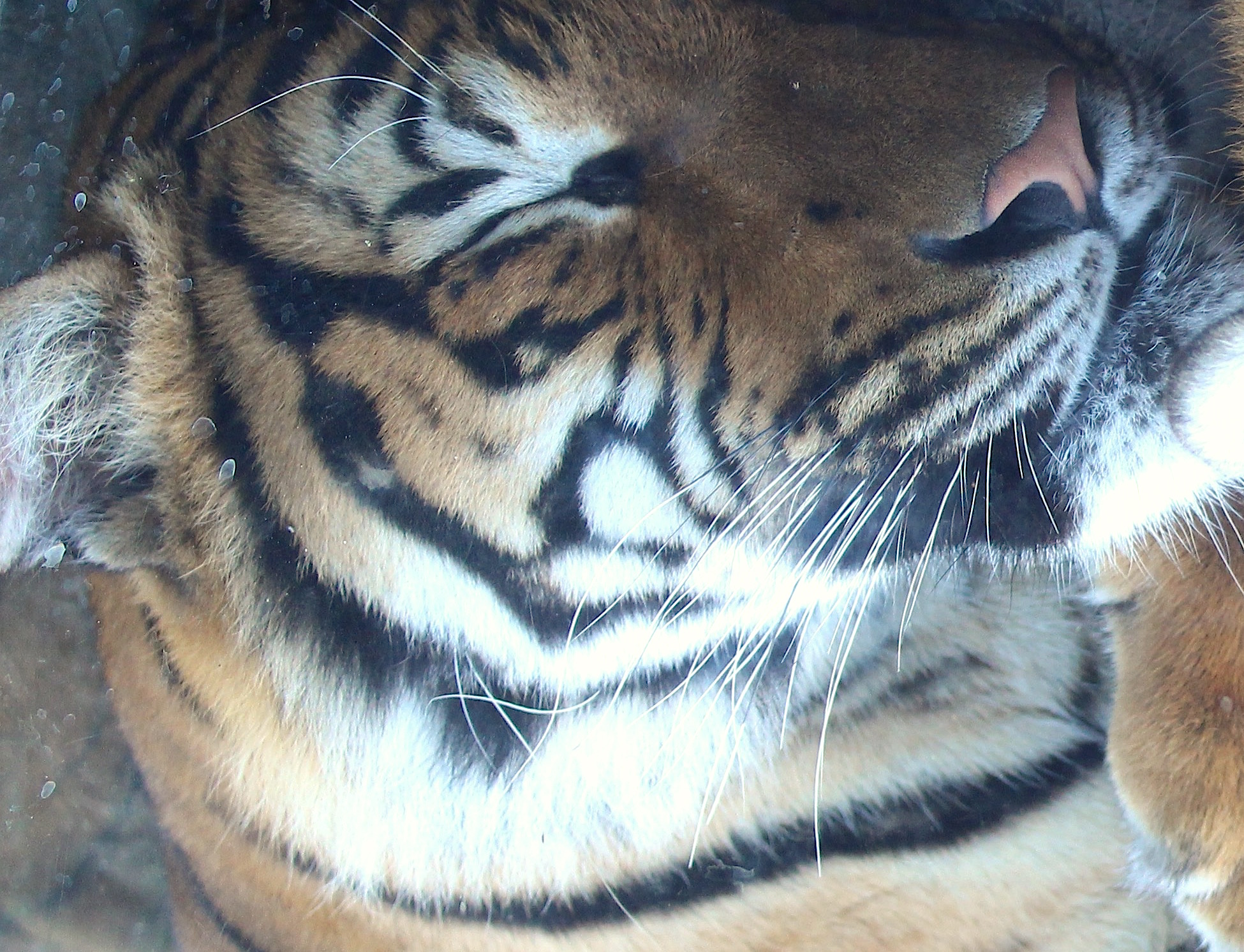
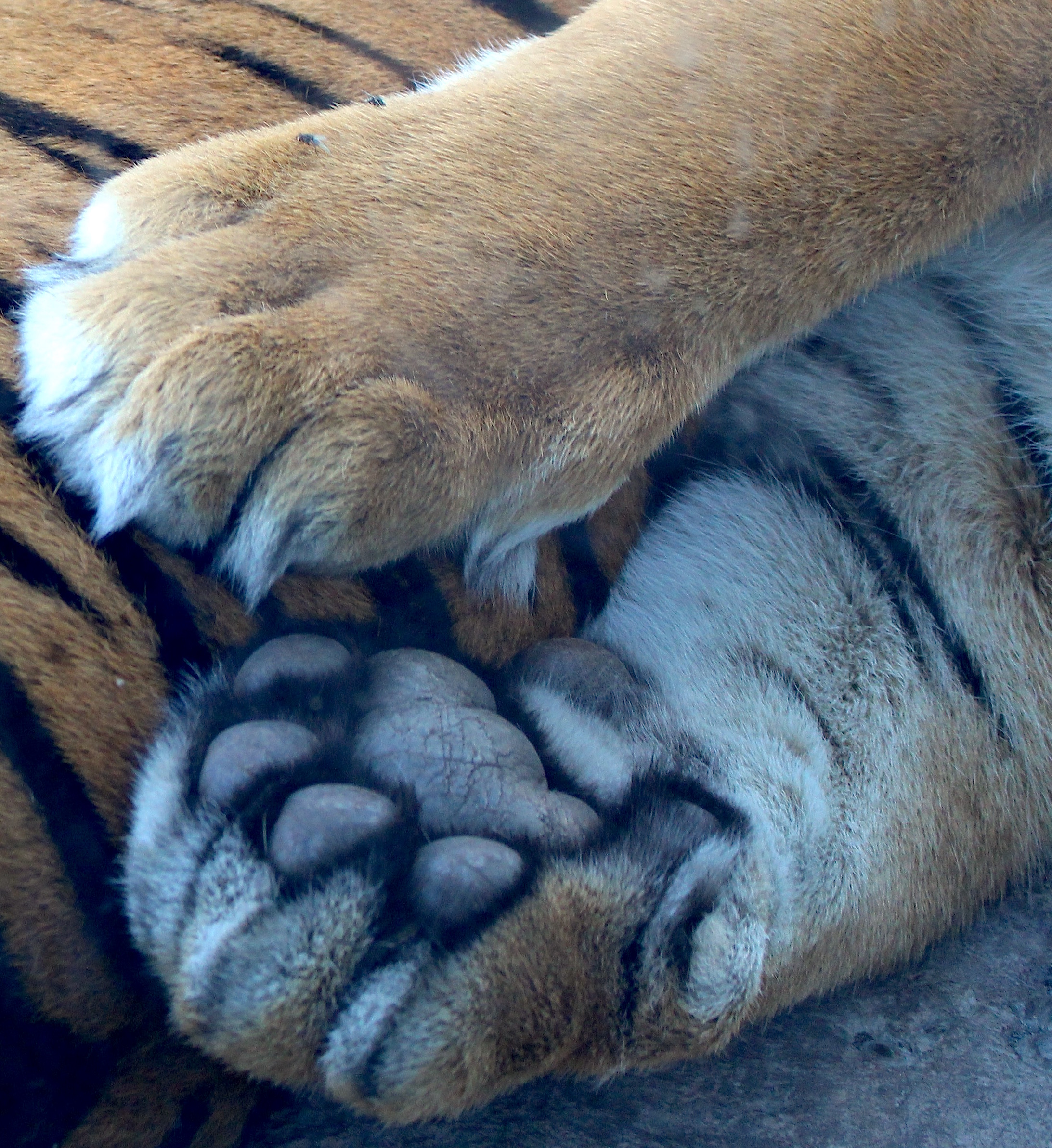
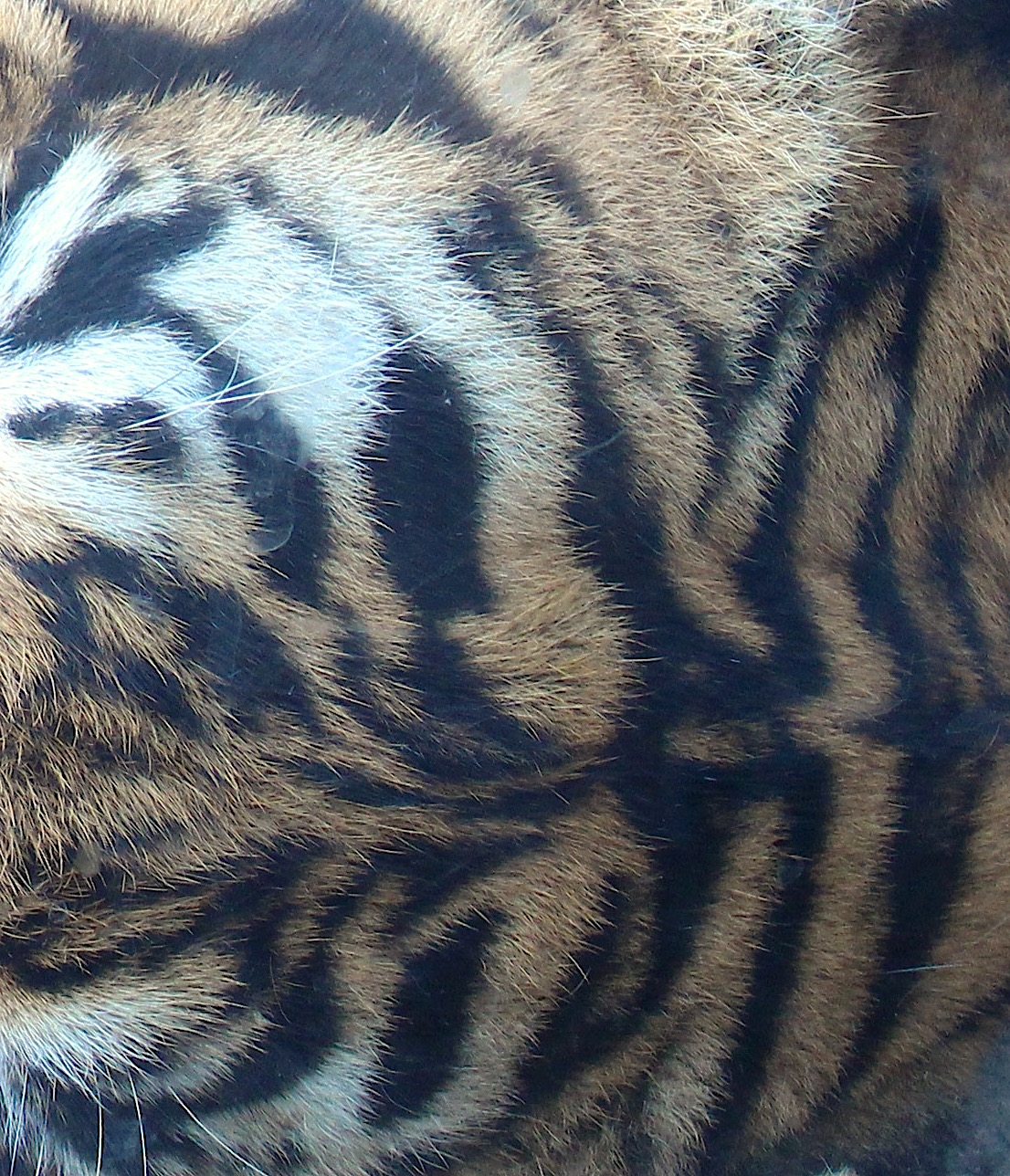
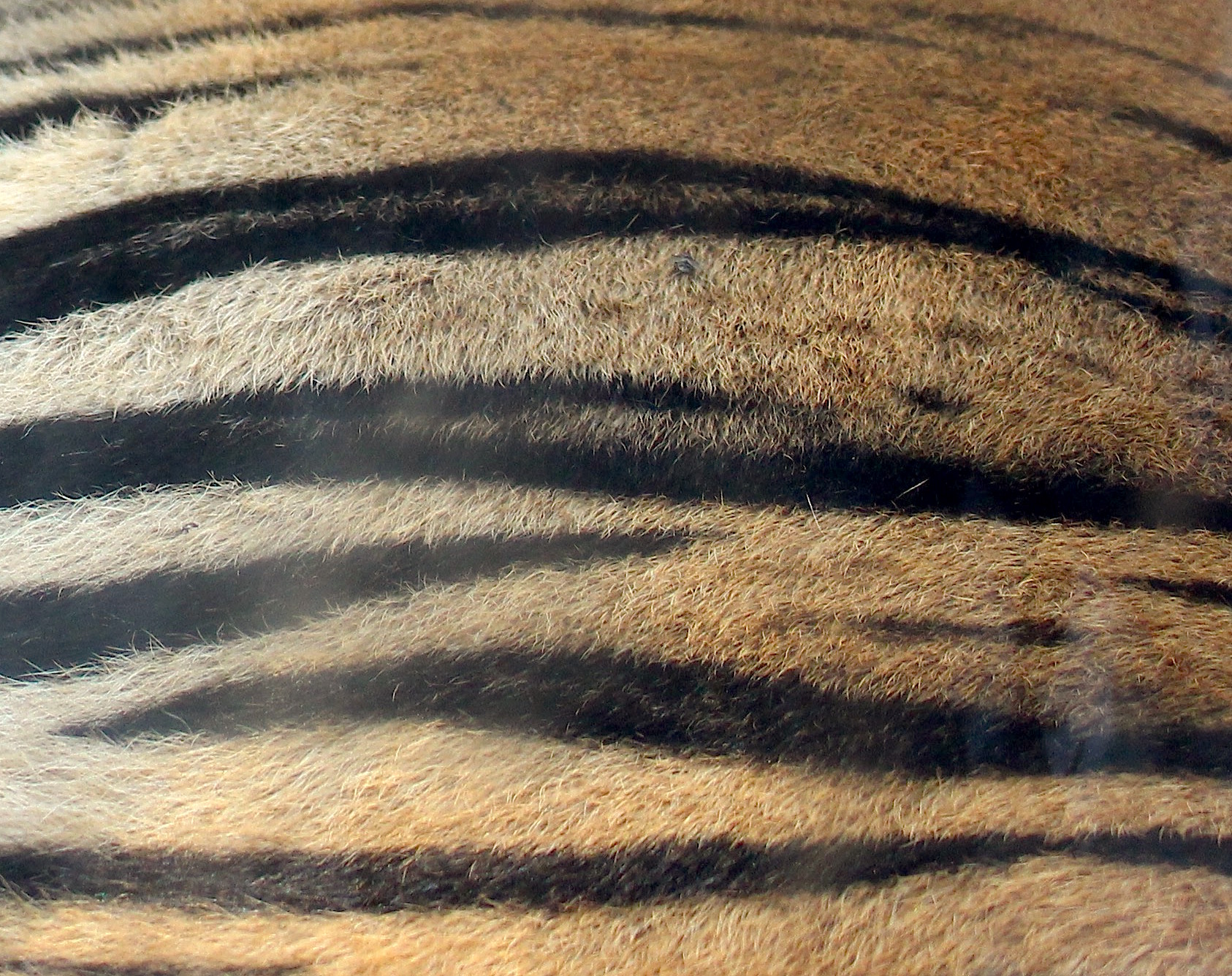
Rather than throw myself recklessly to the lions and tigers,
feeding their relentless appetites,
I step back, take a deep breath,
and watch them purr as they nap.

photo by Tomomi Gibson

One-Time
Monthly
Yearly

Make a one-time or recurring donation to support daily Barnstorming posts

Make a monthly donation

Make a yearly donation

Choose an amount

¤5.00
¤10.00
¤20.00
¤5.00
¤15.00
¤100.00
¤5.00
¤15.00
¤100.00

Or enter a custom amount

¤

Your contribution is deeply appreciated.

Your contribution is appreciated.

Your contribution is appreciated.

DonateDonate monthlyDonate yearly
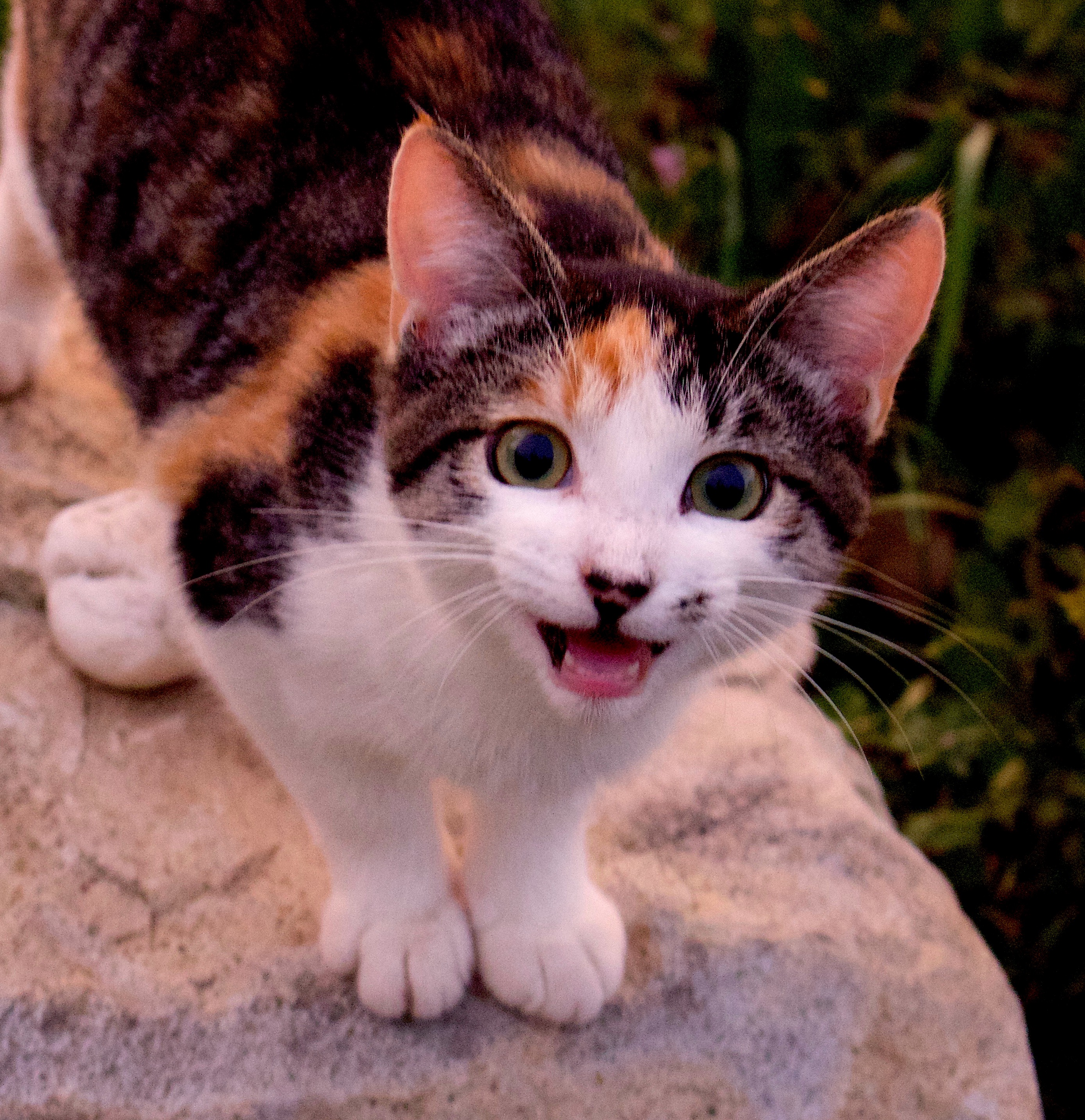
A Peaceable Kingdom

She seems to hide all looks that have ever fallen
into her, so that, like an audience,
she can look them over, menacing and sullen,
and curl to sleep with them. But all at once

as if awakened, she turns her face to yours;
and with a shock, you see yourself, tiny,
inside the golden amber of her eyeballs
suspended, like a prehistoric fly.
~Ranier Maria Rilke from “Black Cat”

Pangur Bán and I at work,
Adepts, equals, cat and clerk:
His whole instinct is to hunt,
Mine to free the meaning pent.

All the while, his round bright eye
Fixes on the wall, while I
Focus my less piercing gaze
On the challenge of the page.

With his unsheathed, perfect nails
Pangur springs, exults and kills.
When the longed-for, difficult
Answers come, I too exult.

So it goes. To each his own.
No vying. No vexation.
Taking pleasure, taking pains,
Kindred spirits, veterans.

Day and night, soft purr, soft pad,
Pangur Bán has learned his trade.
Day and night, my own hard work
Solves the cruxes, makes a mark.
~Anonymous Irish monk from “Pangur Bán”
, translated by Seamus Heaney

Cally, our first adopted calico cat, was quite elderly and fading fast. Winter is always a tough time for barn cats, even with snug shelter, plentiful food and water. We had lost our 16+ year old tuxedo kitty just a couple months previously, and now Cally, not much younger,  was not going to last much longer. She still got up to eat and potty, and still licked her front paws clean, but couldn’t manage much else.  Her frame was thin and frail, her coat dull and matted in places, she had been deaf for some time and her eyes were rheumy.  She spent her days and nights in a nest of hay on the floor of our horse barn, watching the comings and goings of horse hooves and people rolling by with wheelbarrows full of manure.  One evening she allowed me to bring her a little rug to give her a bit more cushion and protection from drafts, as I wouldn’t be surprised to find her permanently curled up there the next morning.  Her time was soon to come.

Cally was one of a litter raised in the mid-90’s by good friends, the VanderHaaks, on their acreage a few miles from here. When they had to make a move to a city on the east coast, their Cally and an orange colored kitty were in need of a new home. On arrival, the orange cat immediately ran into the woods, only rarely to be spotted at a distance for a few months and then completely disappeared, possibly a victim of the local coyote pack.  Cally strolled onto our farm and decreed it satisfactory.  She moved right in, immediately at home with the cows, horses, chickens, our aging dog Tango (who loved cats) and our other cats. In no time, she became the undisputed leader, with great nobility and elegance. There was no one who would dare to question her authority.

We knew Cally was unusual from the start. Tango initially approached her somewhat warily, given the reaction Tango elicited from our other cats (typically a hair raising hiss, scratch and spit). Instead, Cally marched right up, rubbed noses with Tango, and they became fast friends, cuddling together on our front porch whenever it was time to take a nap. They were best pals. Tango surely loved anyone who would snuggle up to her belly and keep her warm and Cally was the perfect belly warmer (as Garrison Keillor says, “a heater cat”).

Our free range rooster seriously questioned this dog/cat relationship.  He was a bit indignant about a front porch communal naptime and would strut up the sidewalk, walk up and down the porch and perch on the railing,  muttering to himself about how improper it was, and at times getting quite loud and insistent about it. They completely ignored him, which obviously bugged him, proud and haughty bird that he was.

One fall morning, as I opened the front door to go down the driveway to get the newspaper in the pre-dawn mist, I was astonished to see not just a cat and dog snuggled together on the porch mat, but the rooster as well, tucked up next to Tango’s tail. As usual,  Tango and Cally didn’t move a muscle when I appeared, as was their habit–I always had to step over them to get to where I needed to go. The rooster, however, was very startled to see me,  almost embarrassed.  He stood up quickly, flapped his wings a few times, and swaggered off crowing, just to prove he hadn’t compromised his cock-sure raison d’etre.

No, I didn’t have my camera with me and I never found them all together ever again. The reader will have to just take it on faith.

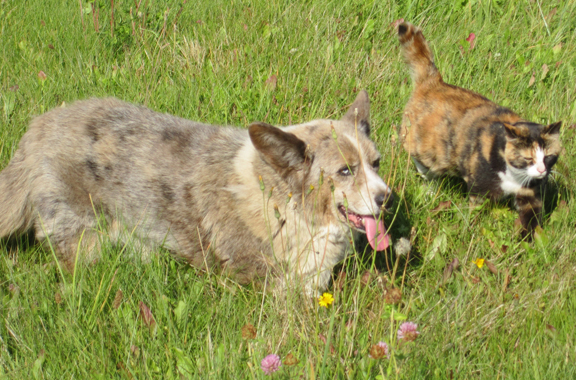
After Tango died, Cally rebounded by taking on the training of our new corgi pup and making sure he understood her regal authority in all things, and demanding, in her silent way, his respect and servitude.  He would happily chase other cats, but never Cally. They would touch noses, she would rub against his fur, and tickle his chin with her tail and all he could think to do was smile and wag at her.

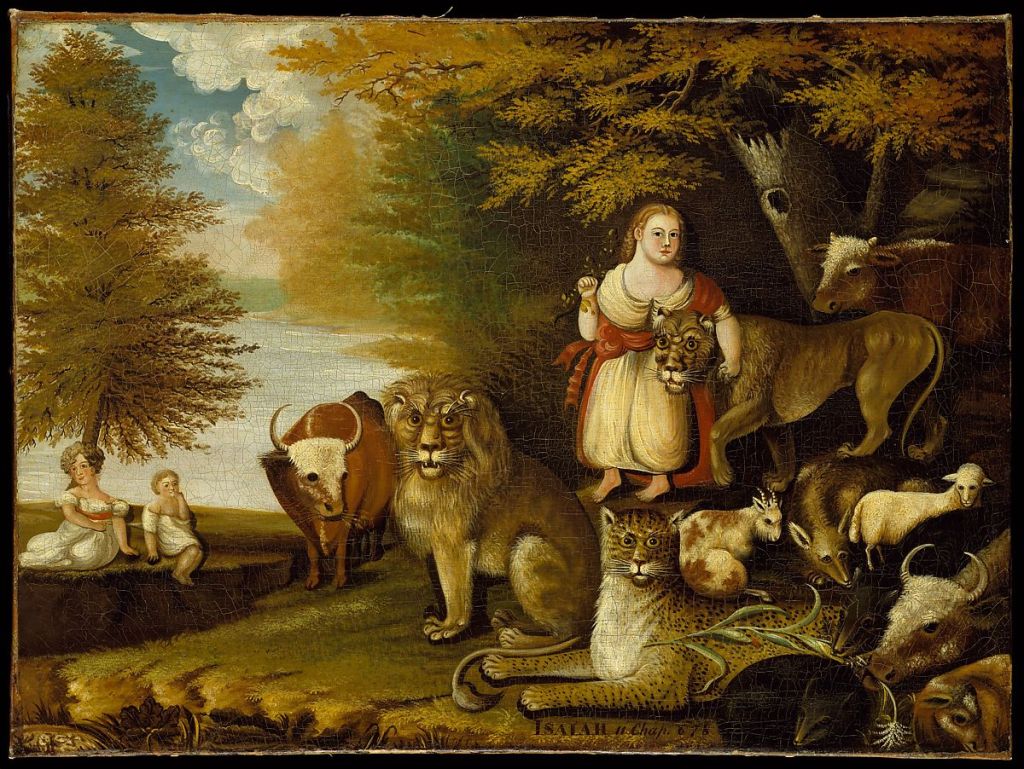
So I figure a dog, a cat and a rooster sleeping together was our little farm’s version of the lion and lamb lying down together.  We can learn something from the peaceable kingdom right outside our front door,  a harbinger of what is possible for the rest of us.  Despite claws, sharp teeth, and talons and too many inflexible opinions, it is possible to snuggle together in harmony and mutual need for warmth and comfort.

Our special Cally made it happen here on earth. Up in heaven, I suspect she has met up with Tango, and one rooster with attitude, for a nice nap on the other side.

The wolf also shall dwell with the lamb, and the leopard shall lie down with the goat; and the calf and the young lion and the yearling together; and a little child shall lead them.
Isaiah 11:6

Peaceable Kingdom by Edward Hicks, The Met

One-Time
Monthly
Yearly

Make a one-time or recurring donation to support Barnstorming

Make a monthly donation

Make a yearly donation

Choose an amount

¤5.00
¤10.00
¤20.00
¤5.00
¤15.00
¤100.00
¤5.00
¤15.00
¤100.00

Or enter a custom amount

¤

Your contribution is deeply appreciated.

Your contribution is appreciated.

Your contribution is appreciated.

DonateDonate monthlyDonate yearly
Starting the Day

My father taught me how to eat breakfast
those mornings when it was my turn to help
him milk the cows. I loved rising up from

the darkness and coming quietly down
the stairs while the others were still sleeping.
I’d take a bowl from the cupboard, a spoon

from the drawer, and slip into the pantry
where he was already eating spoonfuls
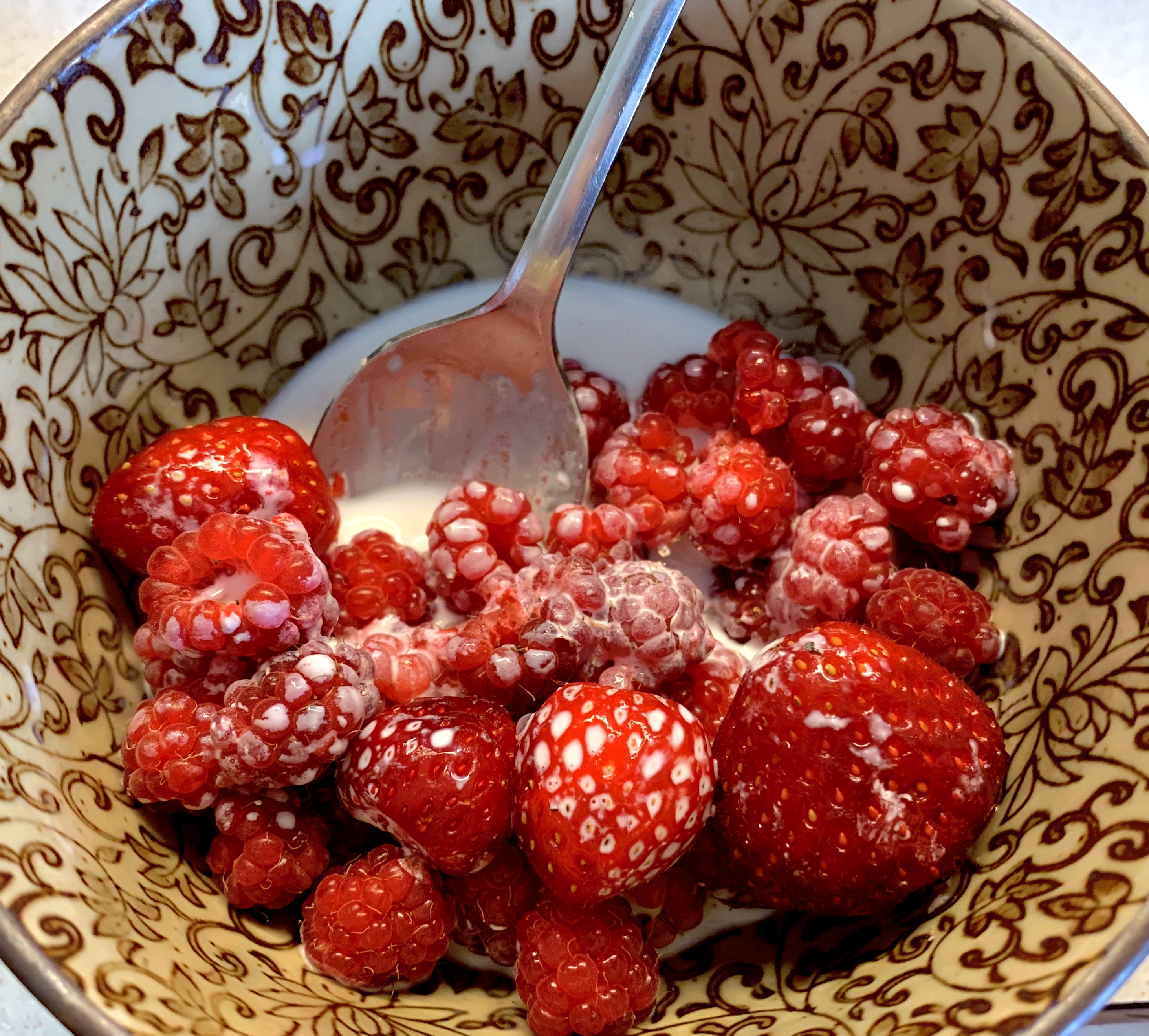
of cornflakes covered with mashed strawberries

from our own strawberry fields forever.
Didn’t talk much—except to mention how
good the strawberries tasted or the way

those clouds hung over the hay barn roof.
Simple—that’s how we started up the day.

~Joyce Sutphen, “Breakfast” from First Words, Red Dragonfly.

By the time I was four years old, my family owned several Guernsey and Jersey dairy cows who my father milked by hand twice a day. My mother pasteurized the milk on our wood stove and we grew up drinking the best milk on earth, as well as enjoying home-made butter and ice cream.

One of my fondest memories is getting up early with my dad, before he needed to be at school teaching FFA agriculture students (Future Farmers of America). I would eat breakfast with him and then walk out into the foggy fall mornings with our dog to bring in the cows for milking. He would boost me up on top of a very bony-backed chestnut and white patchwork cow while he washed her udder and set to work milking.
I would sometimes sing songs from up there on my perch and my dad would whistle since he didn’t sing.

I can still hear the rhythmic sound of the milk squirting into the stainless steel bucket – the high-pitched metallic whoosh initially and then a more gurgling low wet sound as the bucket filled up. I can see my dad’s capped forehead resting against the flank of the cow as he leaned into the muscular work of squeezing the udder teats, each in turn. I can hear the cow’s chewing her breakfast of alfalfa and grain as I balanced on her prominent spine feeling her smooth hair over her ribs. The barn cats circulated around us, mewing, attracted by the warm milky fragrance in the air.

Those were preciously simple starts to the day for me and my father, whose thoughts he didn’t articulate nor I could ever quite discern. But I did know I wasn’t only his daughter on mornings like that – I was one of his future farmers of America he dedicated his life to teaching.

Dad, even without you saying much, those were mornings when my every sense was awakened. I’ve never forgotten that- the best start to the day.

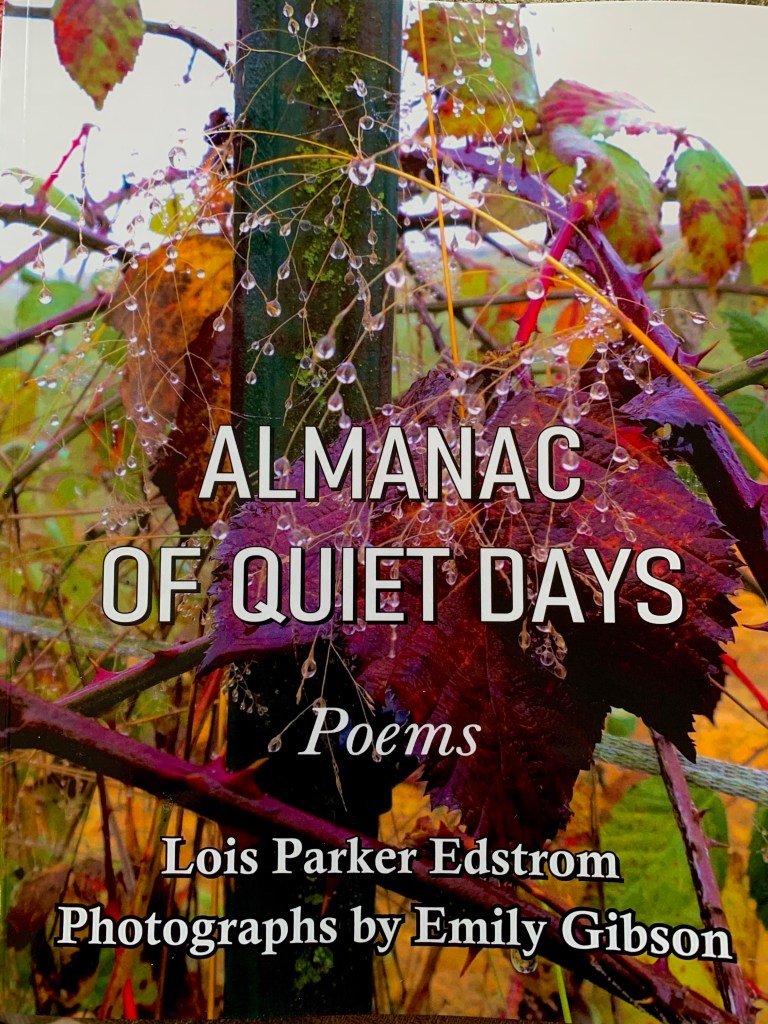
A new shipment of this book is arriving soon – you can order here:

Earth Day Lamenting

More often than not, I’m still groggy every morning when I step out the front door onto the porch to make my way down the gravel driveway to fetch the newspaper. More often than not, it is still quite dark out at 5:15 AM.  More often than not, my slippered foot lands on something a little crunchy and a little squishy and a lot icky on the welcome mat in front of my door.

The front porch cat (as opposed to the back porch cat, the garden shed cat, the hay barn cat, the horse barn cat and an average of 3 additional stray cats), predator that he is, leaves behind certain remnants of his prey’s….um, body parts.  Mousey body parts or birdie body parts.  I assume, from the consistency of this little carnivore compost pile, these are unappealing to the kitty, so become the “leavings”, so to speak,  of the kill. Typically, it is a little mouse head, complete with little beady eyes, or a little bird head, complete with little beak, and something that looks suspiciously green and bulbous, like a gall bladder.  I don’t think heads or gall bladders are on my preferred delicacy list either. And they are certainly not on my list of things I like to wear on the bottom of my slipper.  Yet I do and I have.

I’m perplexed by this habit cats have of leaving behind the stuff they don’t want on the welcome mat, even the occasional whole shrew or field mouse, seemingly untouched by claw or incisor, but yet dead as a doornail on the doormat.  Some cat owners naively think their cats are presenting them with “gifts” – kind of a sacrificial offering to the human god that feeds them.  Nonsense.  Ask the mouse or bird how they feel about becoming the blood sacrifice.

I believe the welcome mat is the universal trash heap for cats and a testimony to their utter disdain for humans.   Leave for the human the unappetizing and truly grotesque…

So humanity is not alone of earth’s creatures to create garbage heaps of unwanted stuff.  Not only cats, but barn owls are incredibly efficient at tossing back what they don’t want out of their furry meals.   Our old hay barn is literally peppered with pellets, popular with high school biology classes and my grand-nephews for dissection instruction.  These dried up brown fuzzy poop shaped objects are regurgitated by the owl after sitting in one of its  two stomachs for a number of hours. 

Bird barf.  

It’s fairly interesting stuff, which is why these pellets (which we recycle by donating by the  dozens to local schools) are great teaching material.  It is possible to practically reconstruct a mouse or bird skeleton from a pellet, or perhaps even both on a night when the hunting was good.  There is fur and there are feathers.  Whatever isn’t easily digestible doesn’t have much purpose to the owl, so up it comes again and becomes so much detritus on the floor and rafters of our barn.  Ask the mouse or rabbit (or occasional kitten) how they feel about becoming owl litter.  There should be a law.
Then there is the rather efficient Haflinger horse eating machine which leaves no calorie unabsorbed, which vacuums up anything remotely edible within reasonable reach, even if reasonable means contortions under a gate or fence with half of the body locked under the bottom rung, and the neck stretched 6 feet sideways to grab that one blade of grass still standing.  The reason why Haflingers don’t eventually explode from their intake is that Haflinger poop rivals elephant poop pound for pound per day, so there must be a considerable amount ingested that is indigestible and passed on, so to speak – like part of a cloth tail wrap, and that halter that went missing… you know, like those black holes in outer space–that’s what a Haflinger represents on earth.

At least we have figured out how to recycle all that poop back to the fields to feed the next generation of grass, which feeds the next generation of Haflingers, which becomes poop to feed the next generation of grass, and so on and so on and so on…

This is quite different from the recycled “cud” of the typical herbivore cow who regurgitates big green gobs of  grass/hay/silage to chew it  again in a state of (udder) contentment and pleasure.   If humans could figure out how to recycle a good meal for another good chew or two, the obesity rate would surely drop precipitously.   So would attendance at most happy hours. But then, how many skinny cows have I seen?  Probably as many as purple cows.  I never hope to see one, but I’d rather see than be one.

In my daily walk through life, I have my share of things I unceremoniously dump that I don’t want, don’t need,  can’t use, or abandon when I only want the palatable so figure the rest can rot. 

Today is Earth Day, and I feel properly shamed and guilty for my contribution to landfills, despite my avid recycling efforts for the past 50 years.  Nonetheless, I am in good company with my fellow carnivores and omnivores who daily leave behind and (sometimes) recycle what they don’t want or need.
I now need to figure out that herbivore cud thing.  I can go green, just might save on the grocery bill and my bathroom scale would thank me.