We human beings do real harm. History could make a stone weep. ~Marilynne Robinson from Gilead
As humankind was created with the freedom to choose our own way, we tend to opt for the path of least resistance with the highest return.
Hey, after all, we’re human and that’s our excuse and we’re sticking to it.
No road less traveled on for most of us–instead we blindly head down the superhighway of what’s best for #1, no matter what the means of transportation, what it costs to get there, how seedy the billboards or how many warning signs appear, or where the ultimate destination takes us.
History is full of the piled-high wrecking yards of demolition remnants from crashes along the way.
It’s enough to make a stone weep.
Certainly God wept.
And He wept even after creating man in His own image, emphatically declaring our creation good, even knowing how everything was going to turn out.
Despite the harm we continue to cause, despite our suffering too many crashes along the way, we are declared good only because His breath remains full within us while His tears never fail to wash us clean.
For the essence of sin is man substituting himself for God, while the essence of salvation is God substituting Himself for man.
Man asserts himself against God and puts himself where only God deserves to be; God sacrifices Himself for man and puts Himself where only man deserves to be.
Man claims prerogatives that belong to God alone; God accepts penalties that belong to man alone. ~John Stott, The Cross of Christ
Our struggle, from God’s first breath into our nostrils, is wanting to forget we are made from dust, molded from mud, and will return to the ground, no matter what.
We make a poor substitute for God.
Between the womb and the tomb we can act as though we own the earth and somehow the earth owes us.
Instead we must tread lightly, knowing each breath, each morsel, each day is an undeserved gift given by Him having taken our place, becoming our substitution.
When we acknowledge we broke His heart on earth, He bled so our hearts continue to beat, so we may laugh, cry, love and worship.
Only then we are right with God, instead of insisting we be God.
His heart broken so we are made whole; God, the perfect substitution for man, made manifest both in heaven and on earth.
Legalistic remorse says, “I broke God’s rules,” while real repentance says, “I broke God’s heart.” ~Tim Keller
This year’s Lenten theme on Barnstorming:
God sees us as we are, loves us as we are, and accepts us as we are. But by His grace, He does not leave us where we are. ~Tim Keller
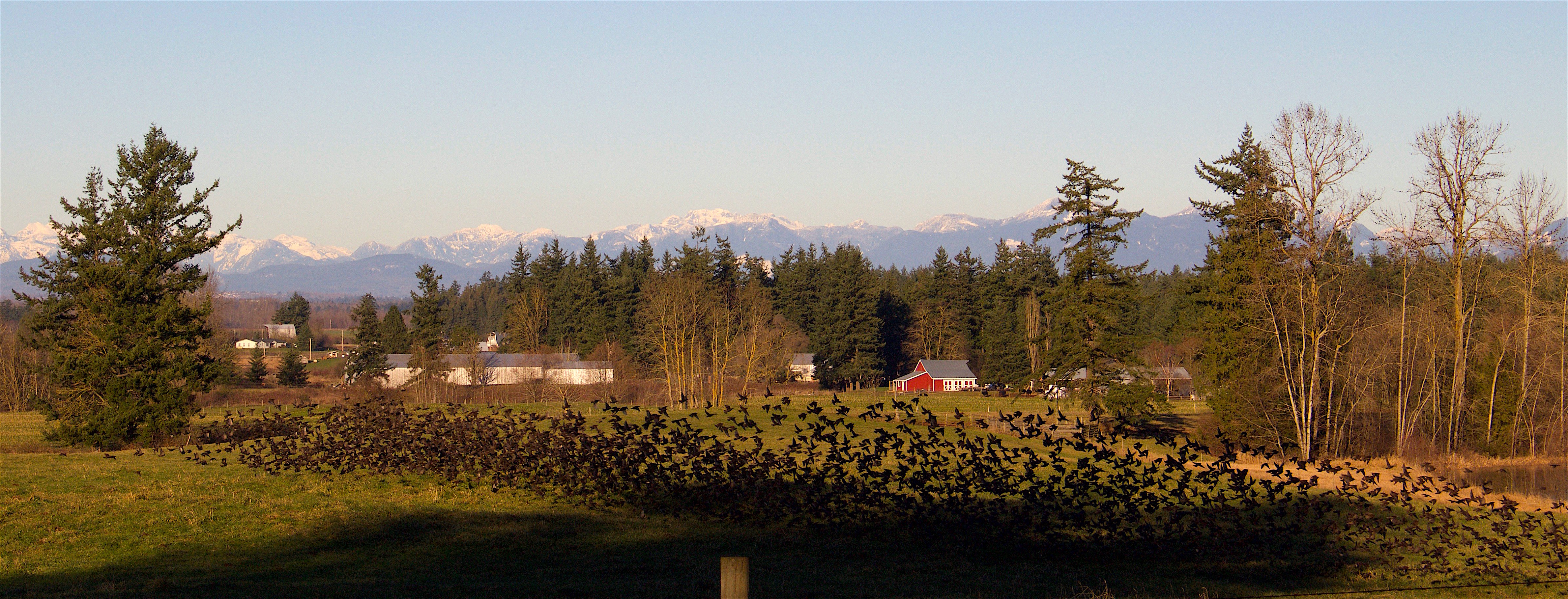
It was like the moment when a bird decides not to eat from your hand, and flies, just before it flies, the moment the rivers seem to still and stop because a storm is coming, but there is no storm, as when a hundred starlings lift and bank together before they wheel and drop, very much like the moment, driving on bad ice, when it occurs to you your car could spin, just before it slowly begins to spin, like the moment just before you forgot what it was you were about to say, it was like that, and after that, it was still like that, only all the time. ~Marie Howe “Part of Eve’s Discussion”
We all know how vulnerable we are to temptation; we know our failings and weaknesses yet how quickly we can go from knowing to forgetting.
There is a stillness, a suspension of time, in that moment of knowing – there is constant internal debate about the choices we face and what to do with that knowledge.
How many of us, knowing well the consequences, still do what we ought not to do? How many of us, having been previously told, having learned from history, having already experienced our own banishment, still make the wrong decision?
All of us, all the time, that’s how many. We are helpless despite our knowledge of good and evil. We forget, over and over.
Thank God for His grace in the face of our poor memories. Thank God He still feeds us wholly from His loving hands.
Moonless darkness stands between. Past, O Past, no more be seen! But the Bethlehem star may lead me To the sight of Him who freed me From the self that I have been. Make me pure, Lord: Thou art holy; Make me meek, Lord: Thou wert lowly; Now beginning, and alway: Now begin, on Christmas day. ~Gerard Manley Hopkins
Between the darkness and the illumination of the star is the beginning of who we were created to be.
We are led away from the past to the hope of a new self – pure and meek and loved and freed through forgiveness.
Christmas is the day we all begin again.
Sing this night, for a boy is born in Bethlehem, Christ our Lord in a lowly manger lies; Bring your gifts, come and worship at his cradle, Hurry to Bethlehem and see the son of Mary!
See his star shining bright In the sky this Christmas night! Follow me joyfully; Hurry to Bethlehem and see the son of Mary!
Angels bright, come from heaven’s highest glory, Bear the news with its message of good cheer: “Sing, rejoice, for a King is come to save us, Hurry to Bethlehem to see the son of Mary!”
See, he lies in his mother’s tender keeping; Jesus Christ in her loving arms asleep. Shepherds poor, come to worship and adore him, Offer their humble gifts before the son of Mary.
Let us all pay our homage at the manger, Sing his praise on this joyful Christmas Night; Christ is come, bringing promise of salvation; Hurry to Bethlehem and see the son of Mary!
We thought we were the perfect family— loyal, stable, a brick wall you couldn’t topple with a wrecking ball. Parents dependable as the frozen Minute Maid juice we squeezed from cardboard cans and drank mornings, reconstituted.
We’d come to this place just to be together. October in Ogunquit, record heat, no need for the sweaters we’d packed. Dad had died but Mom, in her 80s, sat pouring green tea, our wicker chairs on the small porch, six sets of knees touching.
She didn’t mean to mention Dad’s first wife.
To our collective what? she sputtered lasted a year, before the war, her name: Phyllis. Remember that chest in the basement? It was hers.
Some moments passed, then mutely we agreed to let it go. Radium glowed green in our brains but didn’t burn. The knowing, a relief: We didn’t have to be perfect.
The August-warm wind felt pleasant and odd. We sat on that porch, orange leaves pinwheeling down the street. ~Karen Paul Holmes “Rental Cottage, Maine” from No Such Thing as Distance
Surfacing to the street from a thirty two hour hospital shift usually means my eyes blink mole-like, adjusting to searing daylight after being too long in darkened windowless halls. This particular day is different. As the doors open, I am immersed in a subdued gray Seattle afternoon, with horizontal rain soaking my scrubs.
Finally remembering where I had parked my car in pre-dawn dark the day before, I start the ignition, putting the windshield wipers on full speed. I merge onto the freeway, pinching myself to stay awake long enough to reach my apartment and my pillow.
The freeway is a flowing river current of head and tail lights. Semitrucks toss up tsunami waves cleared briefly by my wipers frantically whacking back and forth.
Just ahead in the lane to my right, a car catches my eye — it looks just like my Dad’s new Buick. I blink to clear my eyes and my mind, switching lanes to get behind. The license plate confirms it is indeed my Dad, oddly 100 miles from home in the middle of the week. I smiled, realizing he and Mom, the best parents ever, have probably planned to surprise me by taking me out for dinner.
I decide to surprise them first, switching lanes to their left and accelerating up alongside. As our cars travel side by side in the downpour, I glance over to my right to see if I can catch my Dad’s eye through streaming side windows. He is looking away to the right at that moment, obviously in conversation. It is then I realize something is amiss. When my Dad looks back at the road, he is smiling in a way I have never seen before. There are arms wrapped around his neck and shoulder, and a woman’s auburn head is snuggled into his chest.
My mother’s hair is gray.
My initial confusion turns instantly to fury. Despite the rivers of rain obscuring their view, I desperately want them to see me. I think about honking, I think about pulling in front of them so my father would know I have seen and I know. I think about ramming them with my car so that we’d perish, unrecognizable, in an explosive storm-soaked mangle.
At that moment, my father glances over at me and our eyes meet across the white line separating us. His face is a mask of betrayal, bewilderment and then shock, and as he tenses, she straightens up and looks at me quizzically.
I can’t bear to look any longer.
I leave them behind, speeding beyond, splashing them with my wake. Every breath burns my lungs and pierces my heart. I can not distinguish whether the rivers obscuring my view are from my eyes or my windshield.
Somehow I made it home to my apartment, my heart still pounding in my ears. The phone rings and remains unanswered.
I throw myself on my bed, bury my wet face in my pillow and pray — for a sleep without dreams, without secrets, without lies, without the burden of knowing the truth I alone now knew and wished I didn’t.
There seemed a smell of autumn in the air At the bleak end of night; he shivered there In a dank, musty dug-out where he lay, Legs wrapped in sand-bags,—lumps of chalk and clay Spattering his face. Dry-mouthed, he thought, “To-day We start the damned attack; and, Lord knows why, Zero’s at nine; how bloody if I’m done in Under the freedom of that morning sky!” And then he coughed and dozed, cursing the din.
Was it the ghost of autumn in that smell Of underground, or God’s blank heart grown kind, That sent a happy dream to him in hell?— Where men are crushed like clods, and crawl to find Some crater for their wretchedness; who lie In outcast immolation, doomed to die Far from clean things or any hope of cheer, Cowed anger in their eyes, till darkness brims And roars into their heads, and they can hear Old childish talk, and tags of foolish hymns.
He sniffs the chilly air; (his dreaming starts). He’s riding in a dusty Sussex lane In quiet September; slowly night departs; And he’s a living soul, absolved from pain. Beyond the brambled fences where he goes Are glimmering fields with harvest piled in sheaves, And tree-tops dark against the stars grown pale; Then, clear and shrill, a distant farm-cock crows; And there’s a wall of mist along the vale Where willows shake their watery-sounding leaves. He gazes on it all, and scarce believes That earth is telling its old peaceful tale; He thanks the blessed world that he was born…. Then, far away, a lonely note of the horn.
They’re drawing the Big Wood! Unlatch the gate, And set Golumpus going on the grass: He knows the corner where it’s best to wait And hear the crashing woodland chorus pass; The corner where old foxes make their track To the Long Spinney; that’s the place to be. The bracken shakes below an ivied tree, And then a cub looks out; and “Tally-o-back!” He bawls, and swings his thong with volleying crack,— All the clean thrill of autumn in his blood, And hunting surging through him like a flood In joyous welcome from the untroubled past; While the war drifts away, forgotten at last.
Now a red, sleepy sun above the rim Of twilight stares along the quiet weald, And the kind, simple country shines revealed In solitudes of peace, no longer dim. The old horse lifts his face and thanks the light, Then stretches down his head to crop the green. All things that he has loved are in his sight; The places where his happiness has been Are in his eyes, his heart, and they are good. * * * * Hark! there’s the horn: they’re drawing the Big Wood. ~Siegfried Sassoon “Break of Day” (written about his memories as a WWI soldier)
When we are at war, whether deep in the foxhole hiding from the enemy, or deeper yet in a hole of our own making, trying to conceal our sins.
Amidst that mire and mud, we dream of better days and an untroubled past, when the hunter and hunted was merely a game, not life and death.
May we know the means of peace was brought to earth.
May we surface in mutual surrender, begging for reprieve, longing for redemption. May the solitudes of peace overwhelm those who are angry and conflicted. May we lift our faces up and thank the Light.
The pain and tears of all the years were met together on Calvary. The sorrow of heaven joined with the anguish of earth; the forgiving love stored up in God’s future was poured out into the present; the voices that echo in a million human hearts, crying for justice, longing for spirituality, eager for relationship, yearning for beauty, drew themselves together into a final scream of desolation. ~N.T. Wright from Simply Jesus
To live coram Deo is to live one’s entire life in the presence of God, under the authority of God, to the glory of God. To live in the presence of God is to understand that whatever we are doing and wherever we are doing it, we are acting under the gaze of God. To live all of life coram Deo is to live a life of integrity. It is a life of wholeness that finds its unity and coherency in the majesty of God. It is a life that is open before God. It is a life in which all that is done is done as to the Lord. It is a life lived by principle, not expediency; by humility before God, not defiance. It is a life lived under the tutelage of conscience that is held captive by the Word of God. ~R.C. Sproul
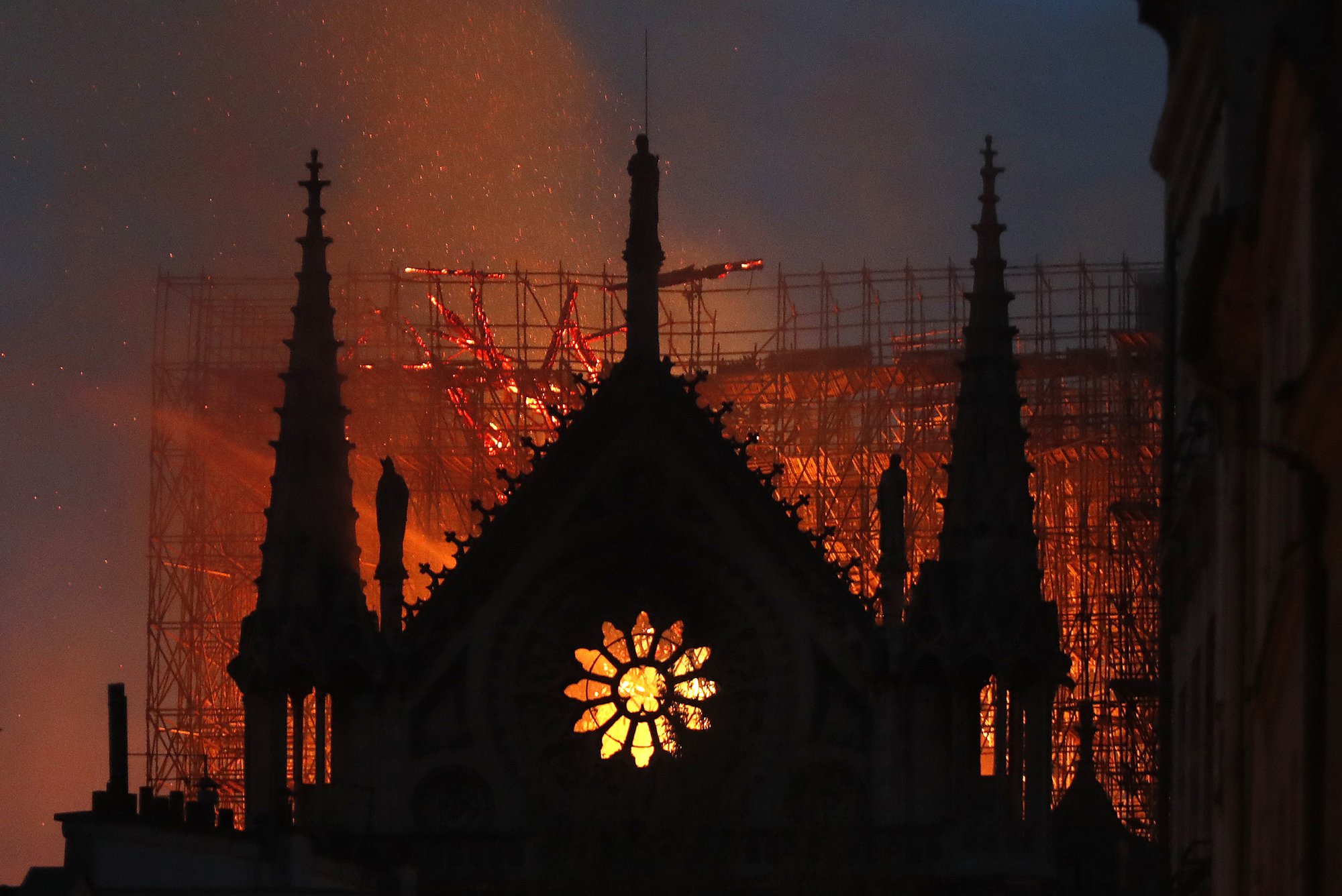
As millions watched and wept over the burning of a venerated cathedral built to the glory of God, we must remember even this anguish happened under the gaze of God. Our sorrow over a building destroyed is trivial compared to the loss felt during Christ’s suffering and death.
The temporal ashes of the Notre Dame Cathedral mix now with our own mortal ashes. We have been redeemed through no action of our own. Our debt has been paid out of Christ’s sheer grace and love.
As we walk together with our Christian brothers and sisters through Holy Week and beyond into the holiness of every day, may we remain under the gaze of God, under the authority of God, open before God, captivated by the Word of God.
We see the gaping hole in the ceiling of a great cathedral just as we witness the open hole of Christ’s tomb: whatever we do, wherever we do it, it is to be in His name, to His glory, under His Holy gaze.
A cross and nails are not always necessary. There are a thousand ways to kill him, some of them as obvious as choosing where you will stand when the showdown between the weak and the strong comes along, others of them as subtle as keeping your mouth shut when someone asks if you know him.
Today, while he dies, do not turn away. Make yourself look in the mirror. Today no one gets away without being shamed by his beauty. Today no one flees without being laid bare by his light. ~Barbara Brown Taylor

Shame is considered old-fashioned these days; too erosive to self-esteem, a drag on our self-worth, an inconvenient truth.
Yet how else do we see ourselves through the glass darkly than to see our shame convicted, and be convinced in our guilt: our darkness exposed by a Light that reveals all shadows, forgiving as it illuminates all – there is no place to hide, nor should we want to.
For now we see through a glass, darkly; but then face to face: now I know in part; but then shall I know even as also I am known. 1Corinthians 13:12
I lift mine eyes, but dimm’d with grief No everlasting hills I see; My life is in the fallen leaf: O Jesus, quicken me.
My life is like a frozen thing, No bud nor greenness can I see: Yet rise it shall–the sap of Spring; O Jesus, rise in me. ~Christina Rossetti from “A Better Resurrection”
I remember panicking as a small child when my mother would help me put on or take off a sweater with a particularly tight turtleneck opening, as my head would get “stuck” momentarily until she could free me. It caused an intense feeling of being unable to breathe or see – literally shrouded. I was trapped and held captive by something as innocuous as a piece of clothing.
That same feeling still overwhelms me at times when I’m frozen in a winter of my flaws and deficiencies, bruised and fallen in my struggles to be freed.
My only hope for salvage is a new life quickening within me. There is no freedom without spring sap flowing, His life blood rising in what is left of my dried husk.
And rise it shall — the confining shroud of discouragement discarded and cast aside.
Now that it is spring once again, I can breathe free, quickened.
“When a newspaper posed the question, ‘What’s Wrong with the World?’ the Catholic thinker G. K. Chesterton reputedly wrote a brief letter in response:
‘Dear Sirs: I am. Sincerely Yours, G. K. Chesterton.’
That is the attitude of someone who has grasped the message of Jesus.” ~Timothy Keller, The Prodigal God
O lovely apple! beautifully and completely rotten hardly a contour marred–
perhaps a little shrivelled at the top but that aside perfect in every detail! O lovely
apple! what a deep and suffusing brown mantles that unspoiled surface! No one
has moved you since I placed you on the porch rail a month ago to ripen.
No one. No one! ~William Carlos Williams “Perfection”
I am what’s wrong with the world and so are you.
Not one of us escapes the rottenness that lies not-so-deep beneath our shiny surface. We are full of wormholes, inviting the worms of the world to eat us alive.
One look at the news headlines of the day is enough mar the most perfect surface. No one moves to save us from our over-ripening fate; we sit untouched, withering and shriveling.
We are the problem and the problem is us.
We need rescue by a Savior who is the one good apple among a barrel of contagiously bad apples. We are so tainted, it takes Someone who truly is Perfect to transform us from the inside out, from worm-holes back to wholeness and on to holiness.
May we fall to our knees, weeping and grateful, that Christ, who is the Leader of all in His Kingdom, will grant us a grace and sanctuary we emphatically don’t deserve.
May He pick us before the worms do. We are in this together.